



A round face can look soft and fresh in the best way. It can also get swallowed up fast by the wrong hairstyle. If the style adds width right at the cheeks, sits too low, or has volume in all the wrong places, the whole face starts reading wider than it really is.
That’s why dry hairstyles for round faces need a little strategy. Dry hair is honest hair. It shows where your part sits, where your crown falls flat, and whether your style has shape or just puff. The good news is that dry hair also holds pins, braids, bends, and product better than freshly washed hair that slips out of everything.
The trick is not to hide your face. That’s a dead end. The better move is to stretch the silhouette with height, angles, and a bit of movement that falls below the widest part of the face. A style can be polished, playful, messy, or sleek and still do that job if the line of the hair works with the face instead of against it.
A round face usually looks best when the eye moves up and down, not side to side. So you’ll see a lot of crown lift, side parts, one-sided volume, and length that drops past the jaw in the styles below. I’m also leaning into looks that work on fully dry hair, whether that means second-day texture, a quick refresh with dry shampoo, or hair that has already air-dried and needs shape more than softness.
1. High Ponytail With a Lifted Crown for Round Faces
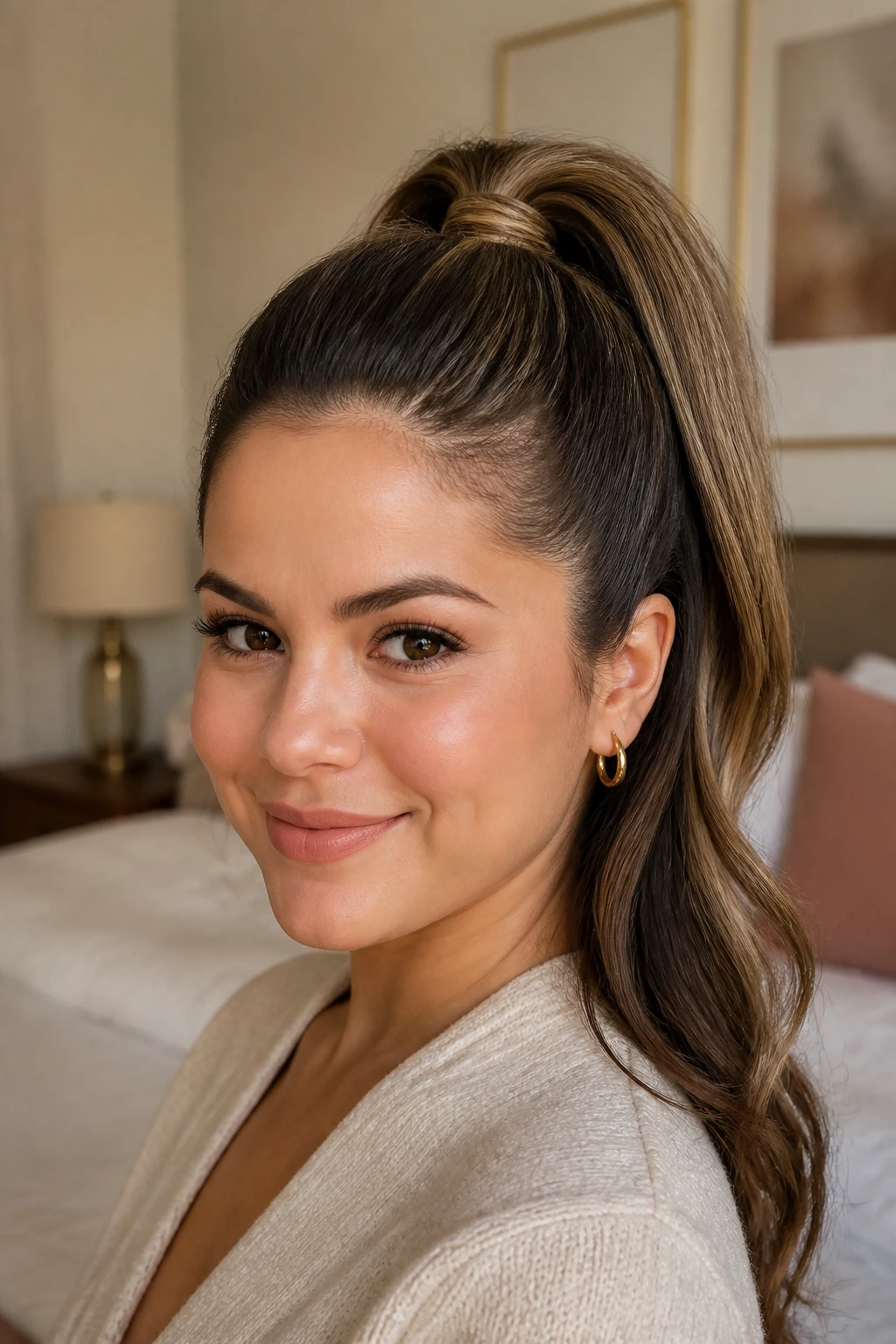
A high ponytail is one of those styles that sounds ordinary until you place it high enough. Then it changes everything. The ponytail pulls the eye upward, and that vertical line is gold for a round face.
The crown matters here. If you slick the whole top flat, the style can feel severe. If you lift the roots by about 1 to 2 inches before tying it off, you get height without making the hair look stiff. A small strand wrapped around the elastic also makes the ponytail look finished instead of rushed.
Why It Works
The ponytail should sit at the highest point of the head, or just behind it. That placement gives the face more length and keeps the style from widening the sides. Keep the hair near the temples smooth, but don’t drag it so tight that your face looks compressed.
- Use a medium-hold brush or comb to smooth the surface first.
- Tie the ponytail with a strong elastic, then tug the crown gently for lift.
- Wrap a 1-inch strand around the elastic and pin it underneath.
- Leave the ends sleek, wavy, or softly curled. All three work.
Best tip: Pull the ponytail slightly upward after it’s secured. That tiny lift does more for a round face than another layer of hairspray ever will.
2. Side-Swept Low Ponytail
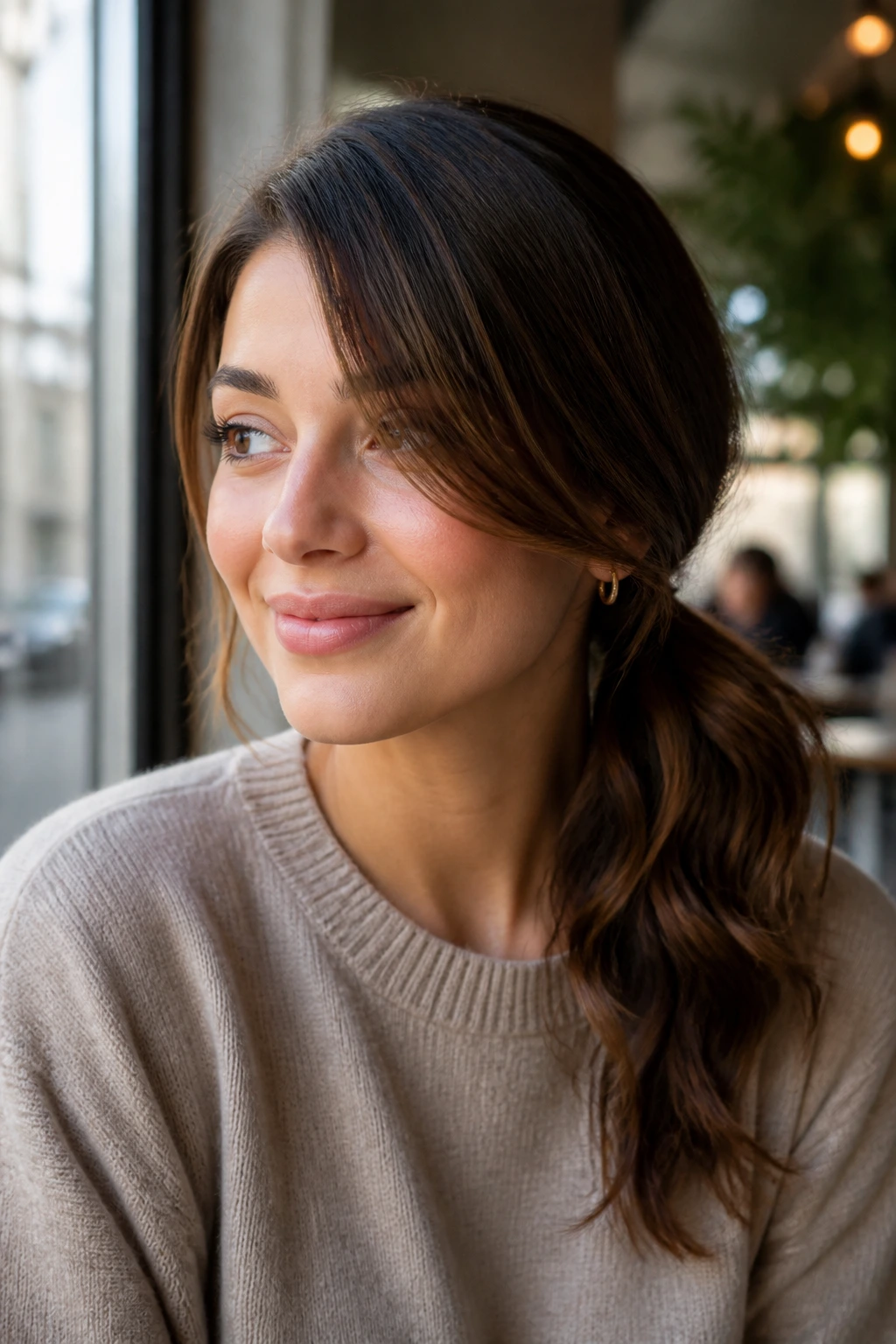
This is the easiest ponytail to get right when you want softness without width. The side sweep breaks the circle of a round face and gives the whole style a long diagonal line.
I like this one when the hair is dry and a little rough around the edges. That texture keeps the pony from sliding around all day. A middle-low ponytail can sit too neatly across the back of the head and flatten things out, but a side-swept version feels looser and smarter.
Start with a deep side part, then gather the ponytail just behind one ear and low at the nape. Keep the opposite side of the part a little sleeker so the shape reads clean, not messy. If you want more polish, hide the elastic with a thin strand and mist the ends with a light shine spray.
It’s a small thing, but the angle matters. One diagonal line. That’s the whole trick.
3. Deep Side Part With Soft Waves for Dry Hair
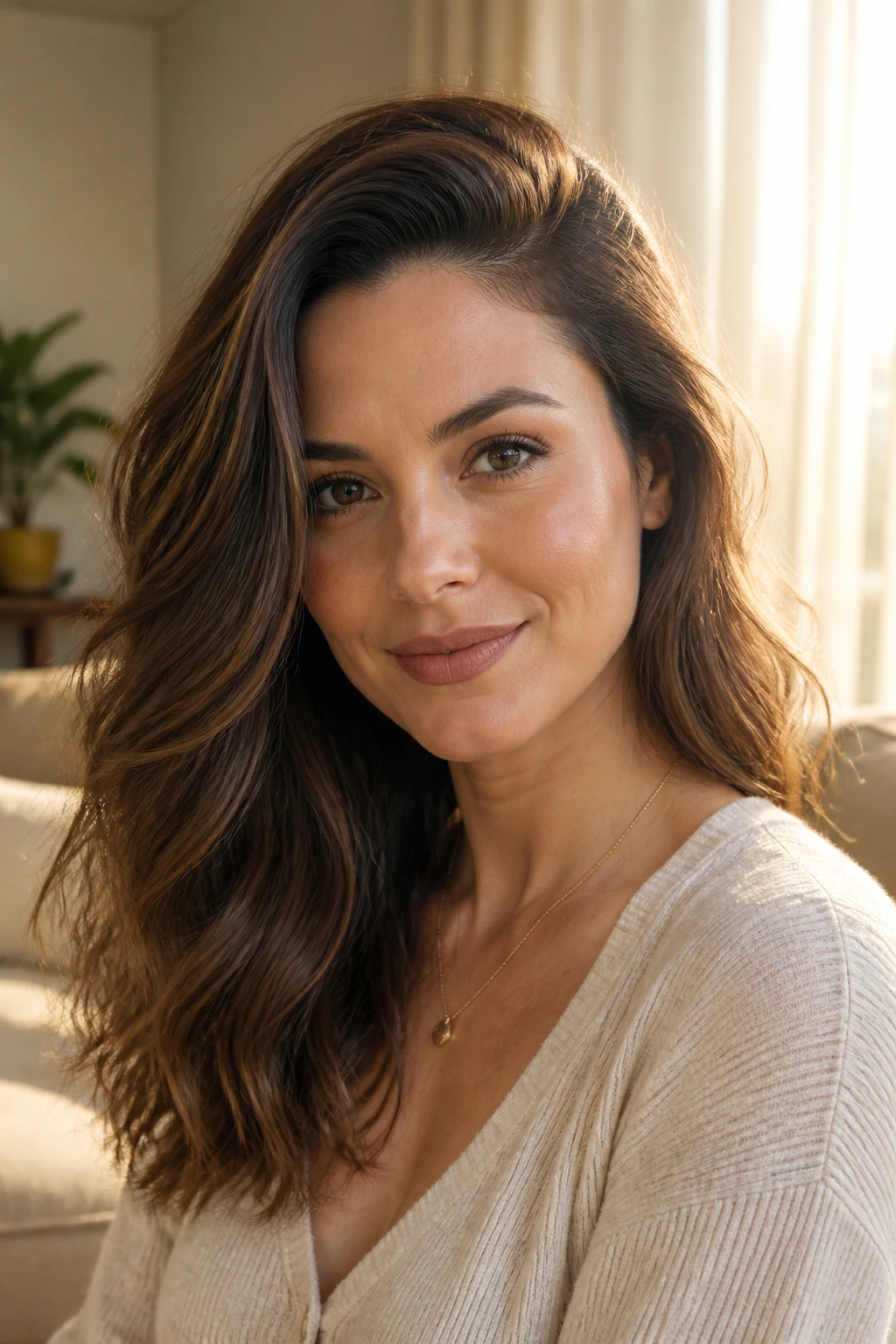
Can a simple part really change a face shape? Yes. More than most people think. A deep side part shifts the visual balance away from the widest point of the cheeks and builds a longer line across the forehead.
Soft waves help, but they need to be loose. Tight curls that start at the cheekbone can add width right where you do not want it. A 1.25-inch curling iron or a few bent sections with a flat iron usually gives the right kind of movement. Leave the ends a little straighter if your hair is fine; that keeps the look from ballooning.
How to Shape It
Take the part back 2 to 3 inches from your natural line if your hair allows it. Then curl the mid-lengths away from the face and break the waves up with your fingers, not a brush. A brush can overblend everything and make the style puff out.
- Clip the front section while it cools so the wave sets away from the cheek.
- Use a light texturizing spray on the mid-lengths, not the roots.
- Keep the volume higher near the crown than near the ear line.
- Finish with a tiny drop of serum through the ends only.
That last part matters. Too much product at the side of the face makes the wave collapse.
4. Half-Up Top Knot
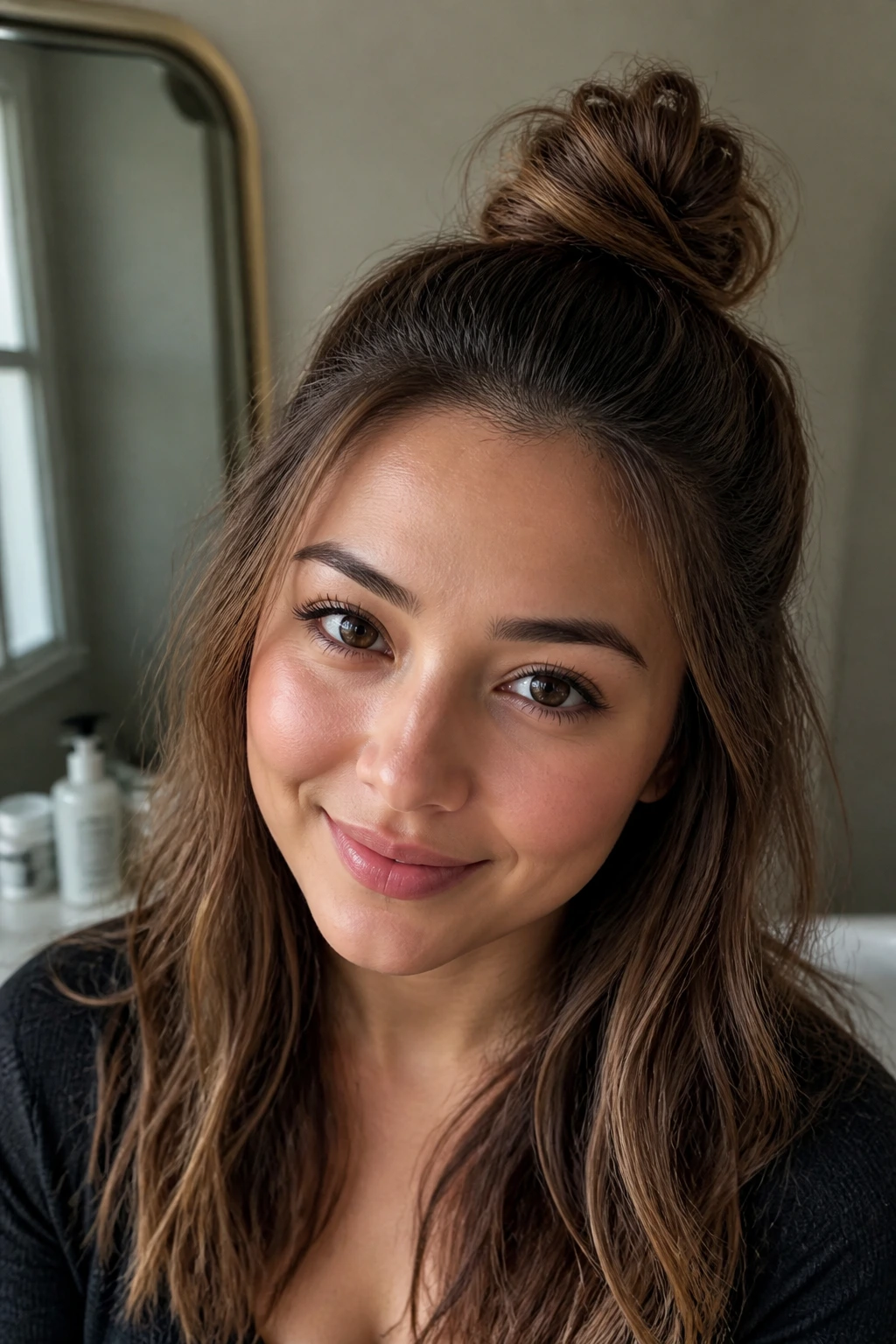
The half-up top knot is a good answer when you want height but don’t want to give up length. It sits somewhere between casual and deliberate, which is useful because round faces often look best when the top gets a little lift and the sides stay soft.
The knot should be small. Not a giant bun perched on the head like a donut. A smaller knot, placed near the crown, gives the face a taller shape without making the top feel bulky. Leave the lower half loose, and let a few pieces around the temples stay out if your hairline likes a little softness.
This style works especially well on dry hair that has some grit. Freshly washed hair tends to slip, but day-two hair grips better and stays put. If you need extra hold, mist the top section with dry shampoo first. It gives the hair more bite and keeps the knot from sliding down by lunchtime.
Quick, easy, done. That’s the appeal.
5. Sleek Low Bun With Center Part
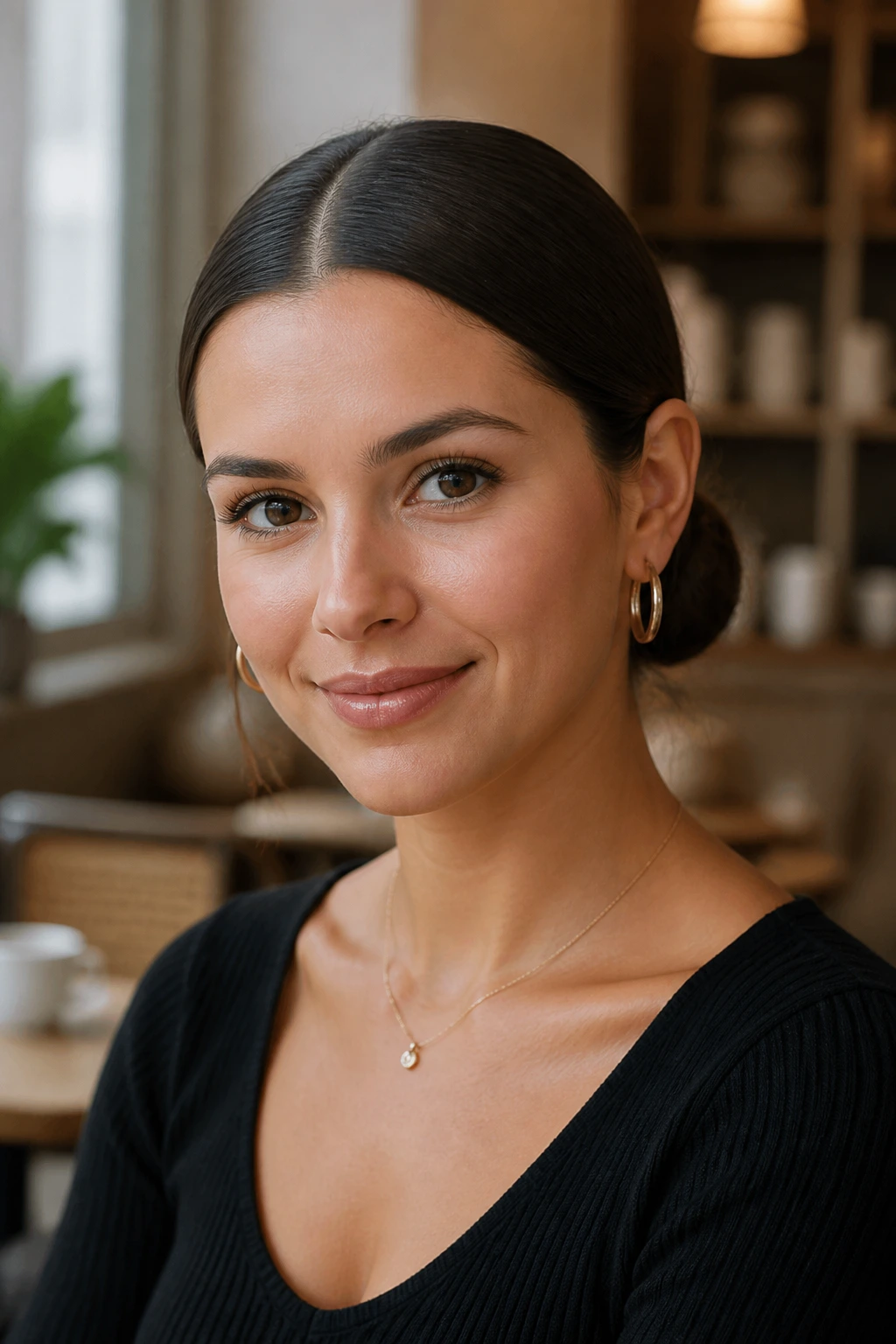
A center part can be tricky on a round face, but only if the rest of the style is also flat and wide. Put the hair into a low bun at the nape, and the whole picture changes. The face gets a neat frame, and the bun keeps the eye low.
This one lives or dies by finish. The top should be smooth, not wet-looking. A little pomade or styling cream on the surface helps control flyaways, but don’t pile it on. Too much product near the roots can make the style look greasy and heavy, which is the last thing a round face needs.
Keep the bun compact and low. If it sits at the middle of the head, it can widen the profile. At the nape, it reads cleaner. A tiny face-framing piece on each side can help, but I’d keep them narrow and long, not fluffy and chin-length.
It’s a serious-looking style. That’s part of the charm.
6. Voluminous Blowout With Root Lift
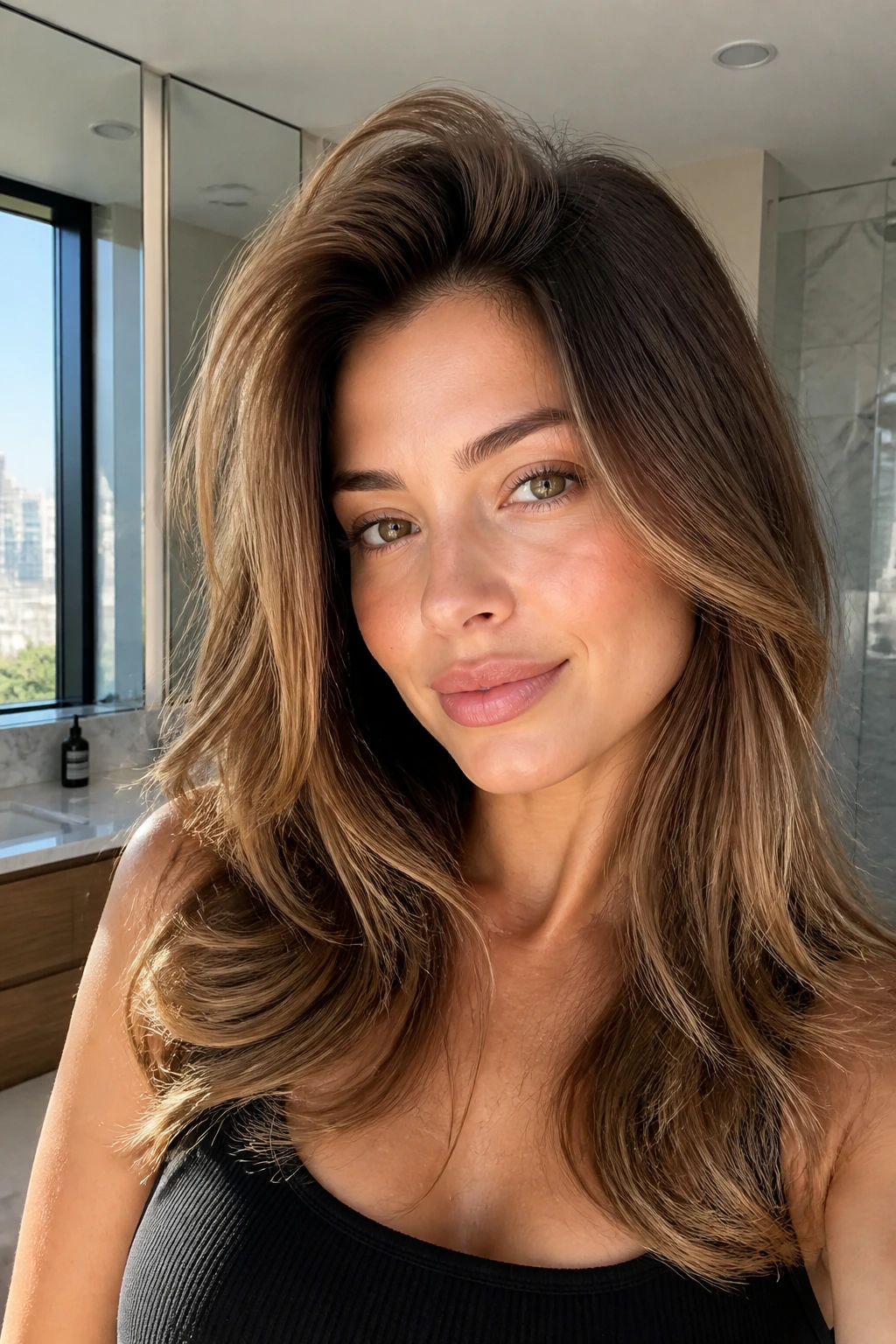
A good blowout is one of the most flattering dry hairstyles for round faces because it builds length through the crown and sides without making the hair sit heavy against the jaw. The shape is the point. Not the shine. Not the bounce. Shape.
Compared with straight, flat hair, a blowout gives the head more vertical balance. Use a round brush or large Velcro rollers if you already have dry hair and want to revive the bend without rewetting everything. A little root lift at the front and crown makes a big difference, especially if your hair normally falls very close to the face.
The best blowouts for round faces keep the volume higher than the cheek line. If the hair flips outward right at the sides, it can make the face look broader. I prefer a soft curve that starts below the chin. It feels much cleaner.
If you only do one thing, lift the roots around the crown for a few minutes with clips. That bit of structure is worth the effort.
7. Curtain Bangs and Long Layers for Dry Hair
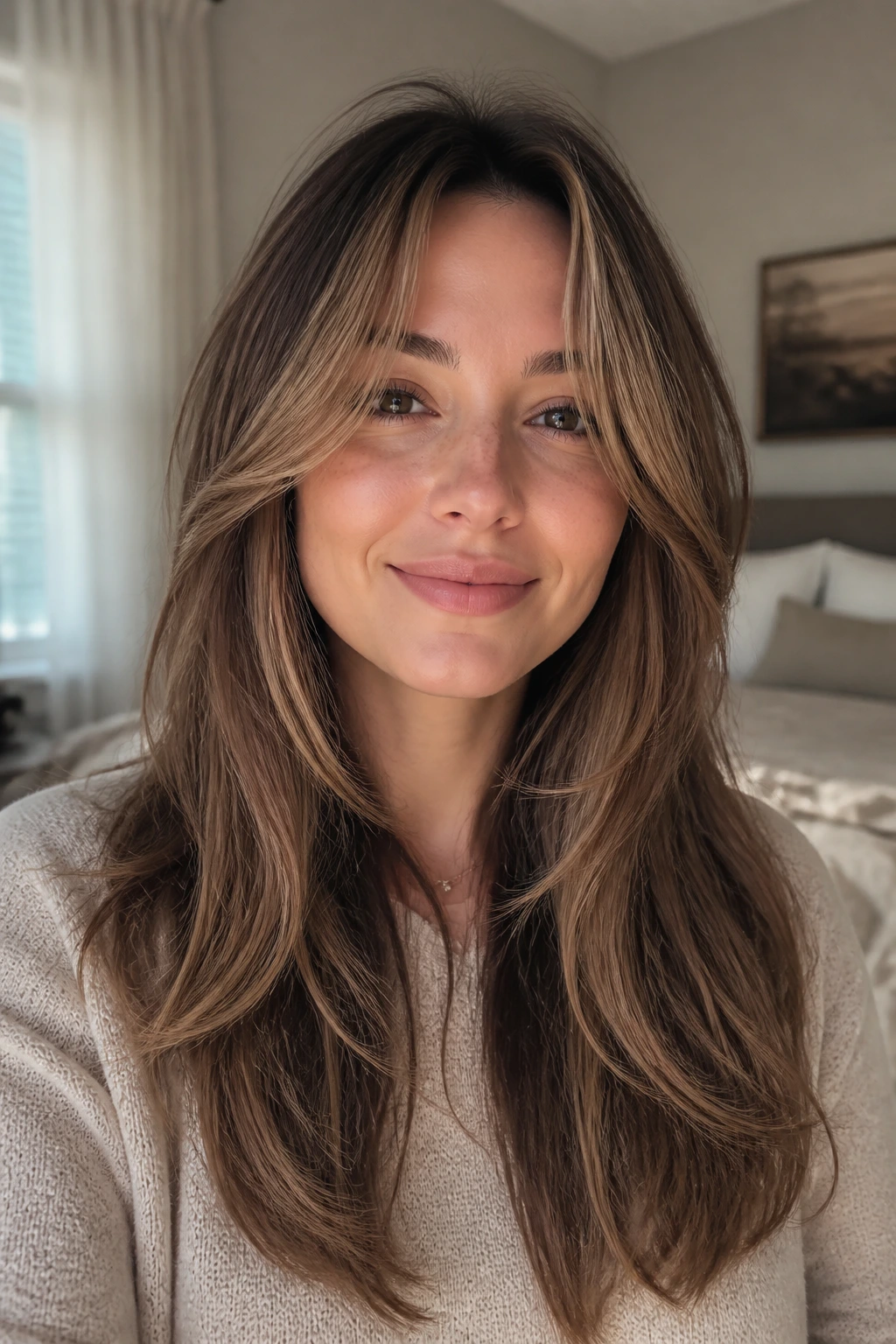
Curtain bangs are one of the easiest ways to make a round face feel a little longer without going dramatic. They open in the middle, skim the forehead, and blend into longer layers that move down past the cheeks.
The cut matters more than the styling here. Ask for bangs that hit around the cheekbone or just below it, then keep the layers long enough to fall past the jaw. Short bangs that end at the widest part of the face can make the face look fuller. Longer, feathered pieces do the opposite. They cut the roundness without looking severe.
What to Ask For
- Bangs that open from a soft center split.
- Layers that start below the cheekbone.
- Ends that stay light, not chunky.
- A bit of movement around the collarbone, where the hair can taper out.
Styling on dry hair is easy. A quick twist of the front sections with a round brush or a flat iron bend usually does the job. Keep the bangs airy. Heavy bangs lie. Airy bangs frame.
8. Messy Top Knot With Face-Framing Pieces
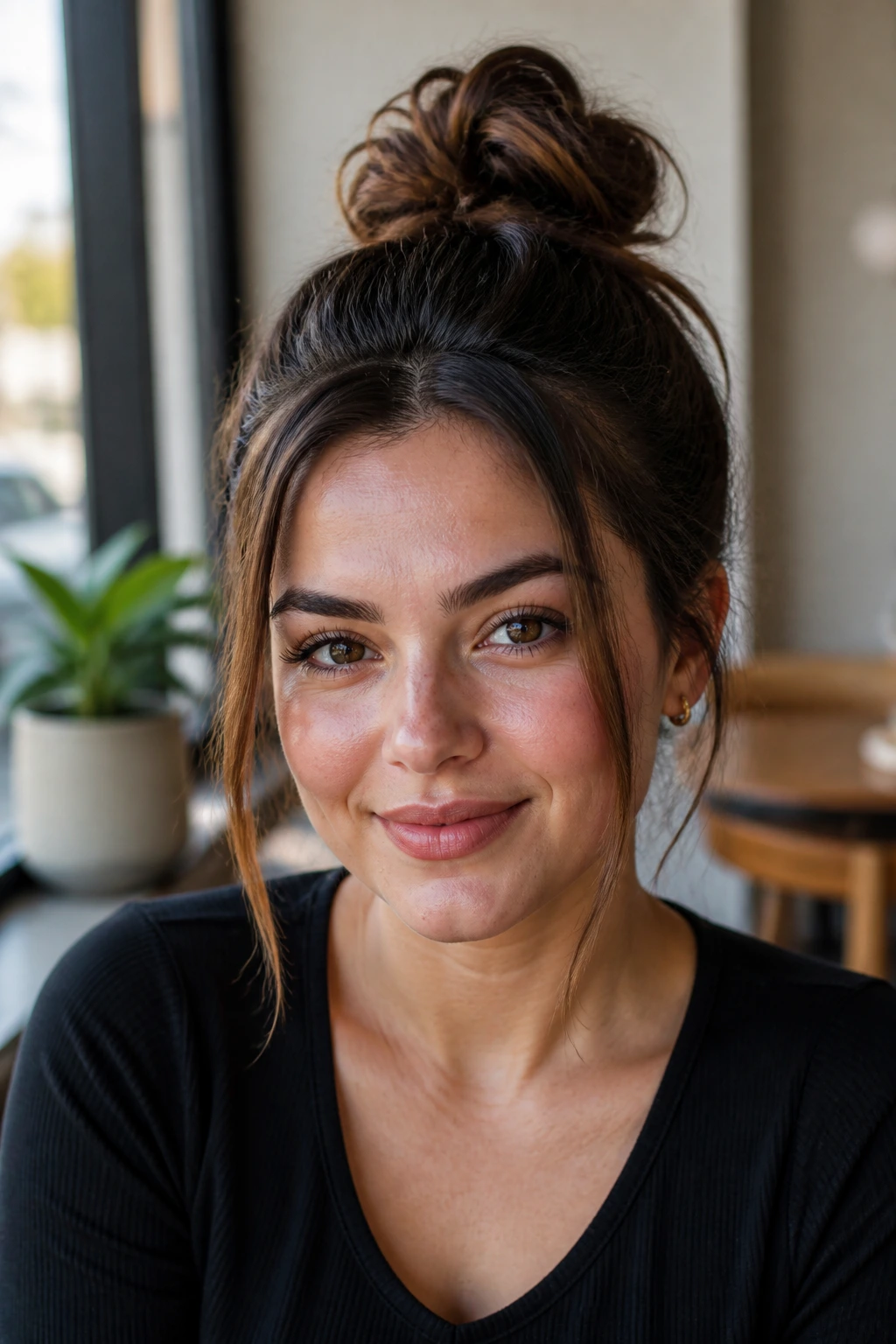
Messy can be good. Messy can also be a disaster. For a round face, the difference usually comes down to placement and proportion. A messy top knot works when it’s high, compact, and balanced by a couple of slim pieces falling beside the face.
I like this style best when the knot sits just above the crown, not all the way at the back of the head. That position gives the face a little more height. Then pull out two narrow strands at the temples and let them fall naturally. Don’t over-curl them. A soft bend is enough.
The important thing is to avoid puffing the sides. If the knot spreads out too wide, it adds horizontal weight. Keep the bun tighter than your instinct says. Loosen only the crown and a few edges, not the whole thing.
It’s the kind of style that looks casual in a good way, not accidental. There’s a difference.
9. Claw-Clip French Twist
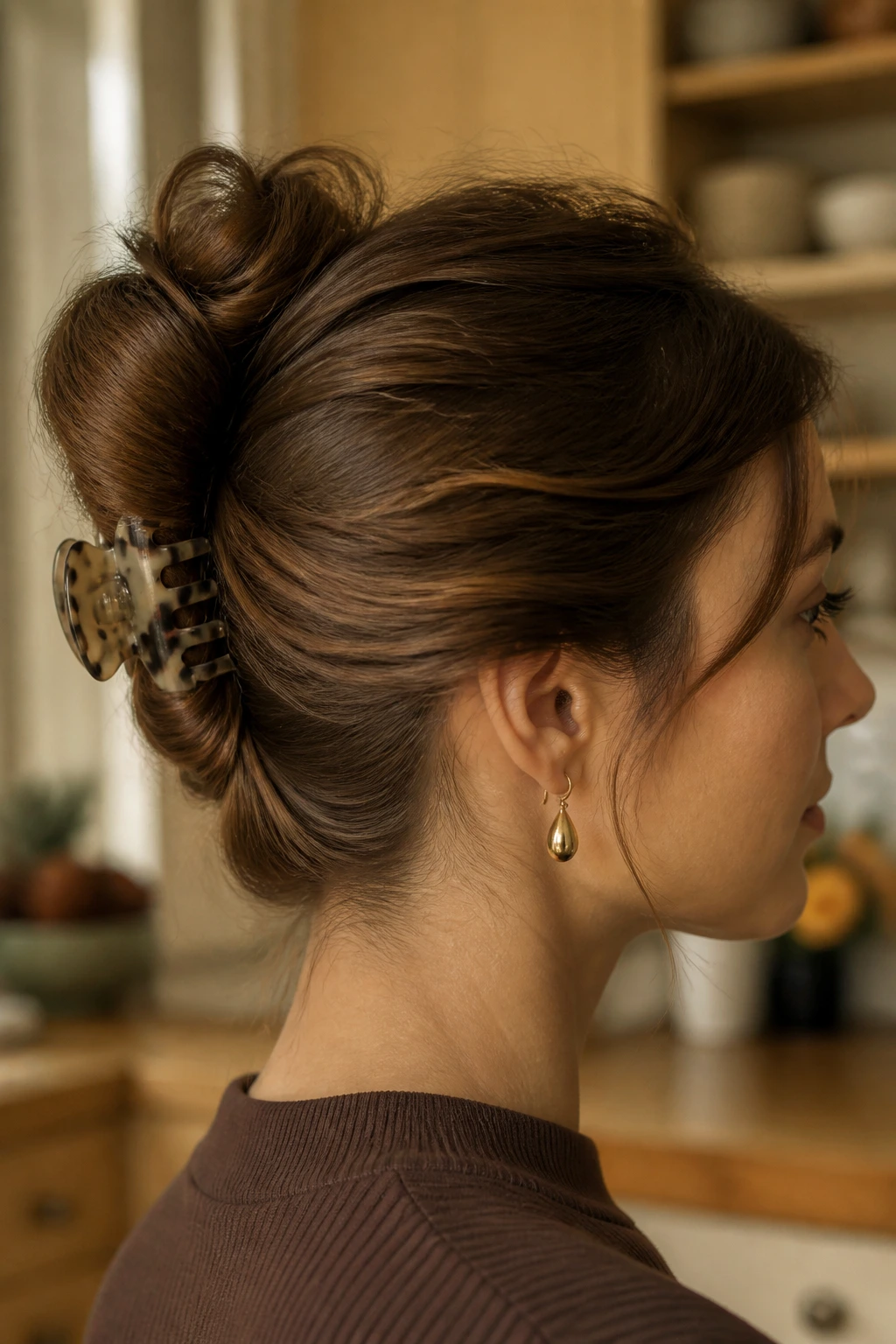
A claw-clip French twist is a lifesaver when the hair is dry, slightly frizzy, and not in the mood to behave. It pulls the length upward in one clean line, which is exactly why it flatters a round face so well.
Unlike a low clip that sits flat and wide, the French twist keeps the hair traveling vertically. The shape narrows the face visually and keeps the neck area open. If your hair is medium to long, twist the length upward from the nape, tuck the ends inside, and secure the twist with a sturdy clip that actually grips the hair. Flimsy clips fail fast here.
A little texture is helpful. Hair that is too silky slips out. If yours is slippery, mist the mid-lengths with dry shampoo or texture spray before twisting. That gives the clip something to hold onto.
It’s polished enough for dinner. It’s also fast enough for a rushed morning. Hard to argue with that.
10. Shoulder-Length Lob With Bends for Round Faces
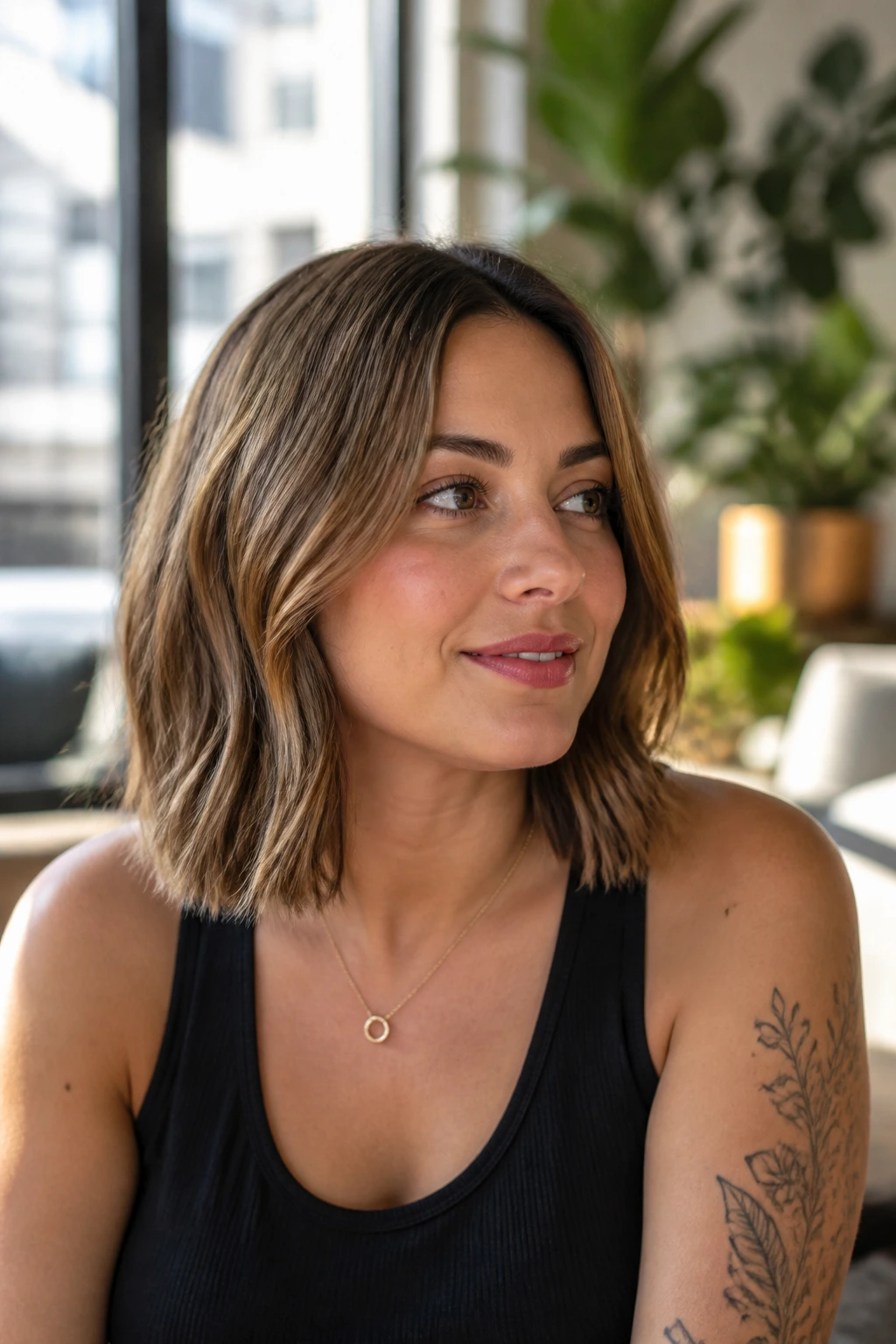
A lob that hits just below the jaw is often better for a round face than one that ends exactly at the chin. That tiny difference matters. Hair that stops at the widest point of the face can make the cheeks feel more dominant, while a slightly longer cut extends the line.
Soft bends suit this length better than tight curls. A bend every few inches creates movement without ballooning the sides. If your hair is dry, a flat iron or medium barrel wand works fine. Just keep the waves loose and alternate their direction so the ends don’t all kick out together.
The best part about a lob is that it can go sleek one day and textured the next. On dry hair, a small amount of cream on the ends can keep it from looking frayed. On fine hair, use almost none. Too much product kills the shape.
This is one of my favorite cuts for round faces. It’s forgiving, which is rare.
11. Braided Side Ponytail
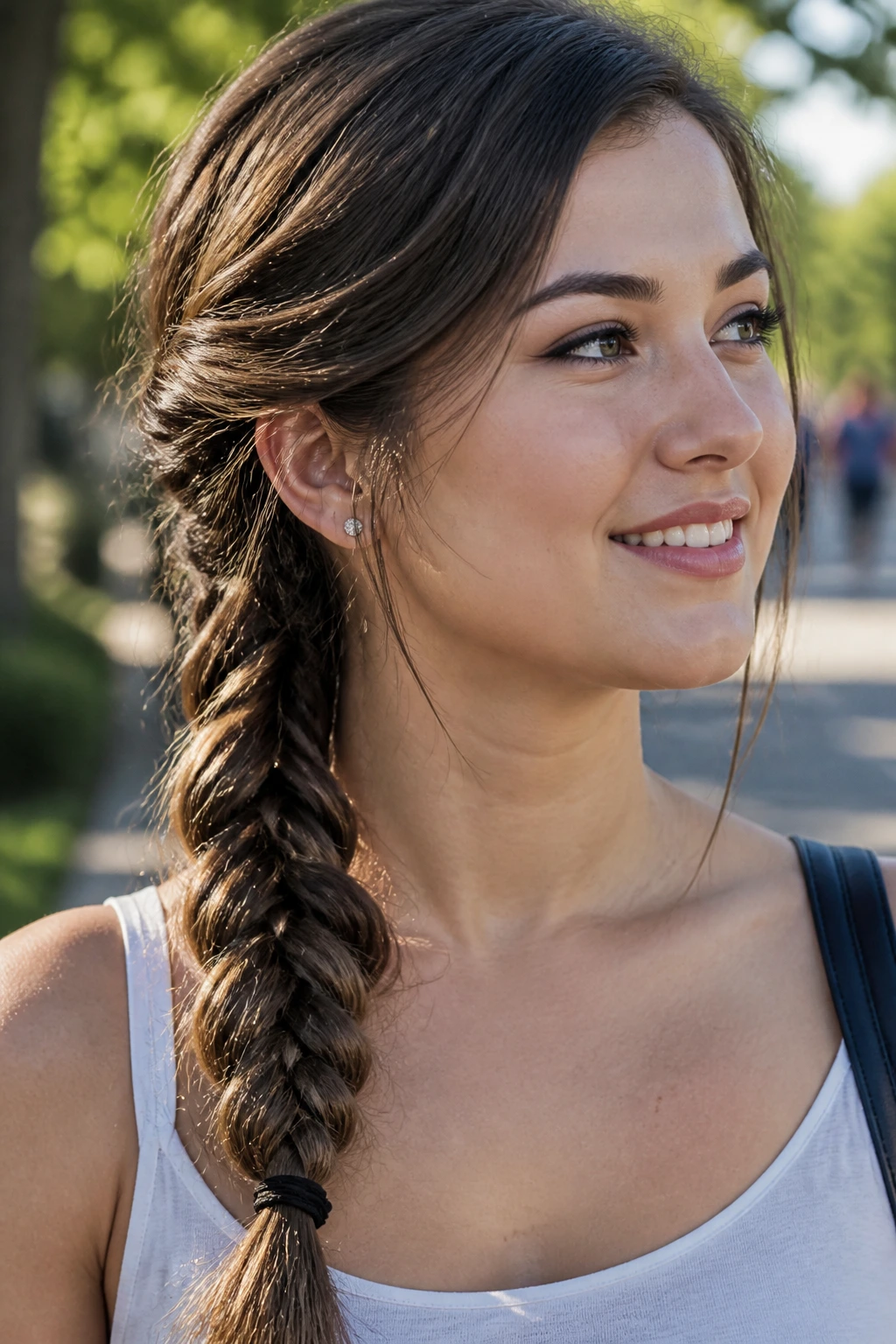
A braid pulled to one side changes the geometry of the face in a way a centered braid never does. The line goes diagonal instead of straight down, and that diagonal is what helps a round face look a little longer.
You can keep this simple with a standard three-strand braid, or go for a Dutch braid if you want more texture. Start the braid just behind one ear, then sweep it over the shoulder. Leave the braid a touch loose, especially near the top, so it doesn’t sit like a stiff rope. The looseness softens the cheek area without adding bulk.
Dry hair is ideal here because it grips better. Slippery hair makes braids unravel by the third hour. If the ends are frizzier than you like, wrap them with a clear elastic and hide it with a small strand. That’s a cleaner finish than stuffing the ends in with a dozen bobby pins.
It’s practical. It also looks better than people expect.
12. High Half Ponytail
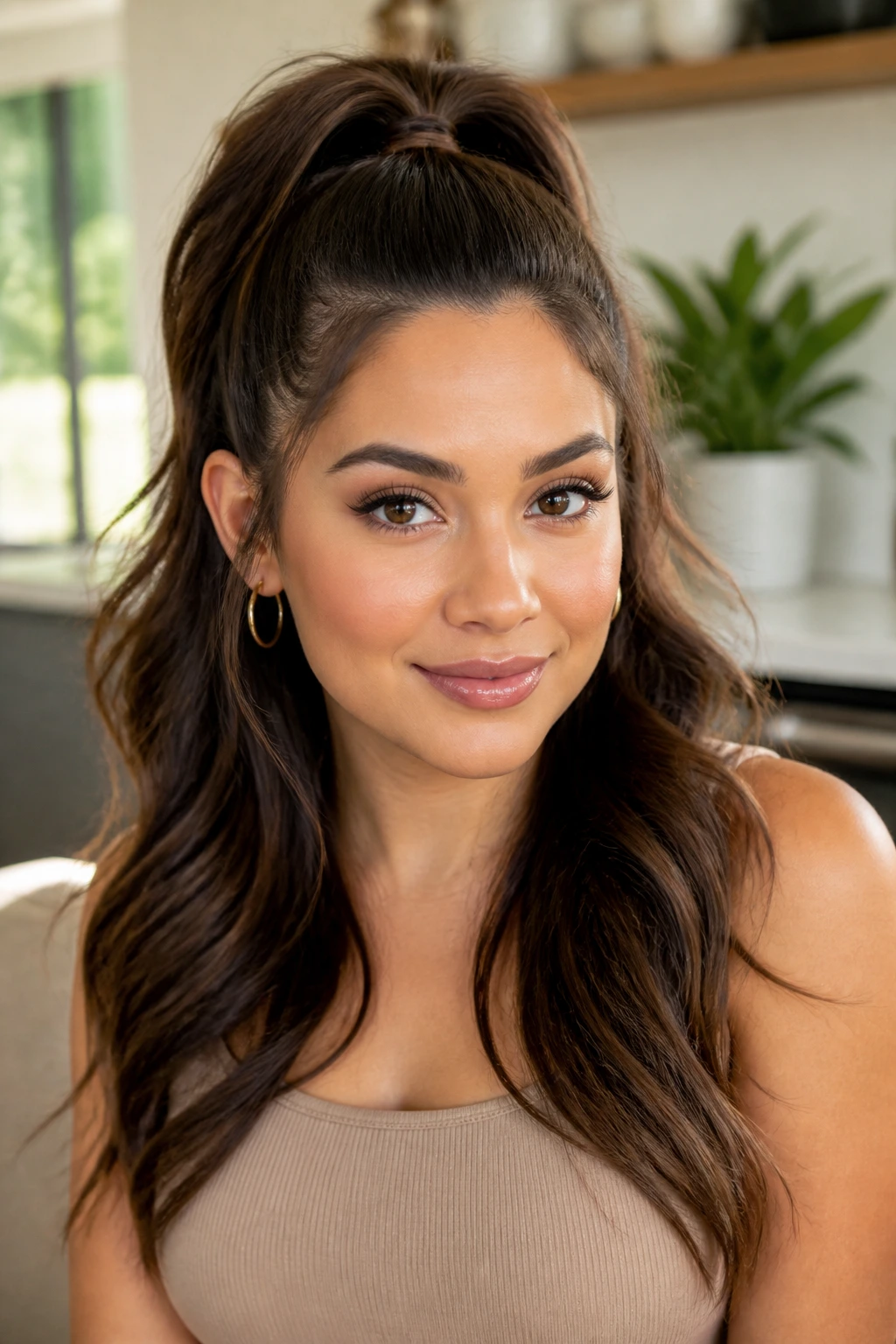
A high half ponytail gives you the lift of a ponytail and the softness of wearing your hair down. For a round face, that mix works because the top section adds height while the loose bottom section keeps the look from feeling boxy.
The sectioning matters. Take hair from the temples upward and gather it high enough that it doesn’t sit right in the middle of the head. Too low, and the style loses its lengthening effect. Too wide, and it starts to widen the face again. Keep the gathered section narrow and centered.
I especially like this on wavy or curly dry hair. The top section lifts the face, and the bottom curls keep the style from looking too stiff. If you want more polish, wrap a small strand around the elastic. If you want more lift, tug the crown a little after securing it.
Short answer: it’s flattering, fast, and not fussy. That earns it a place.
13. Tucked-Under Ends With a Headband
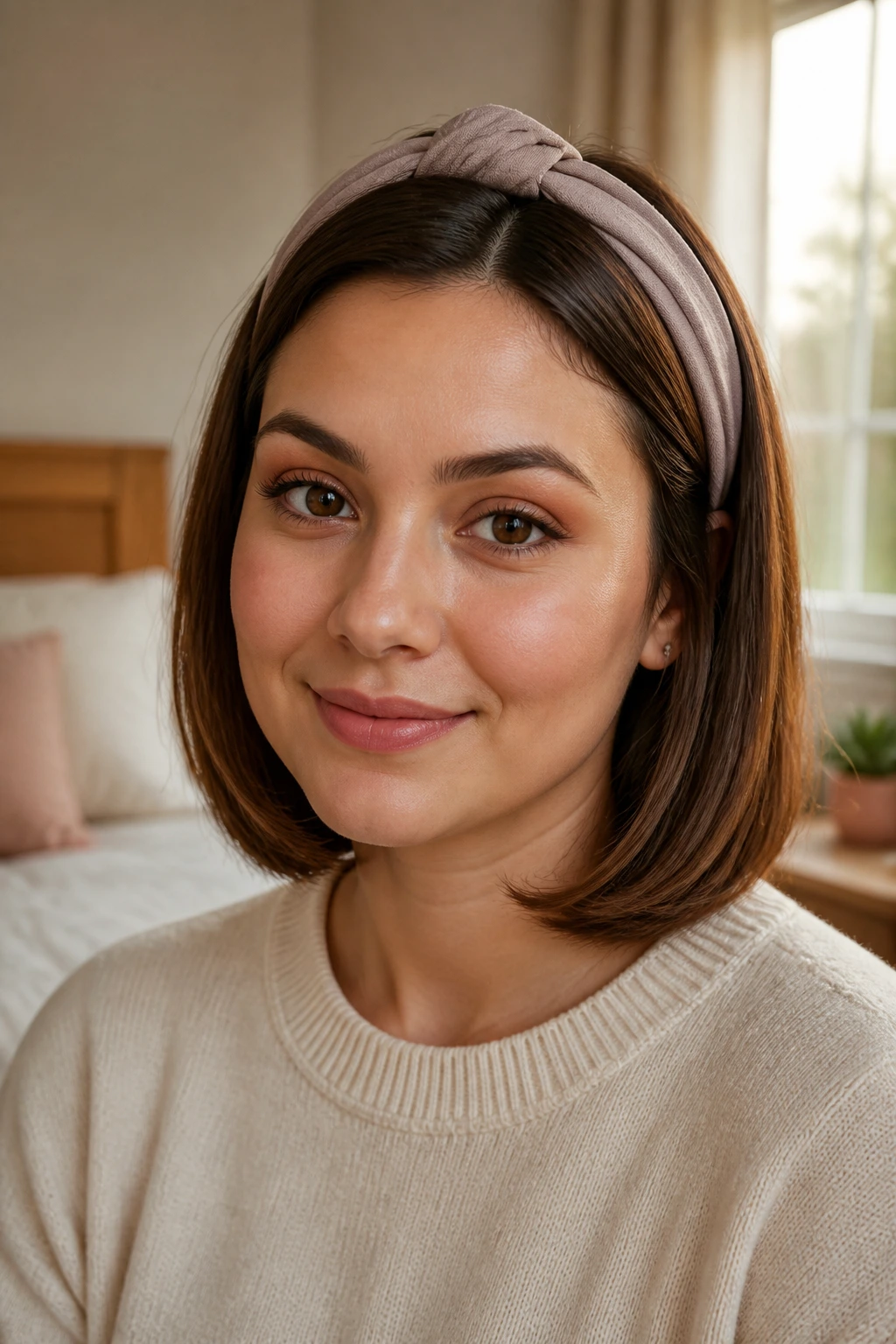
A soft headband and tucked-under ends can rescue hair that’s dry, flat, or frayed at the bottom. The shape is neat, but not severe, and the headband adds a small lift near the crown that helps a round face look more balanced.
Choose a band that is about 1 to 2 inches wide. Anything too wide can swallow the forehead and drag the style down. Fabric bands are easier on dry hair than stiff plastic ones, and they usually sit better through the day. Tuck the ends under at the nape so the line falls below the jaw instead of stopping right at it.
This style is underrated because it looks intentional without requiring heat. If the hair is a little puffy, smooth just the top and sides with a tiny amount of cream. Leave the tucked length slightly loose so it doesn’t look helmet-like.
There’s a calmness to this look. I like that.
14. Asymmetrical Bob With Side Sweep
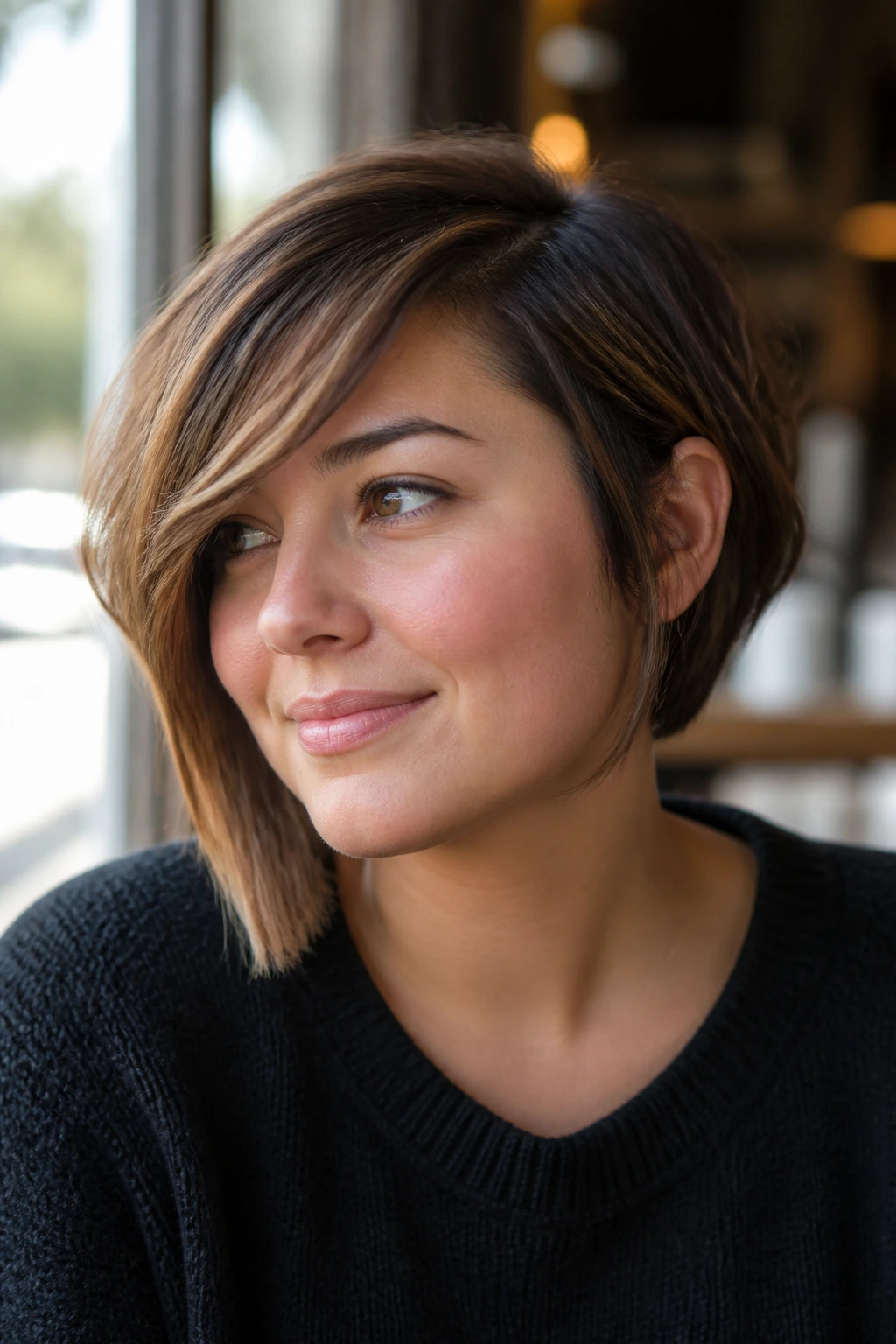
A good asymmetrical bob is one of the few short cuts that can flatter a round face without making you fight the shape every morning. The reason is simple: one side is longer, the sweep is directional, and the whole cut creates angles.
The longer side should graze the jaw or sit just below it, while the shorter side stays just above. That uneven line breaks up the roundness. Add a side-swept fringe, and the eye keeps moving instead of settling on the cheeks. That movement is doing a lot of work.
Dry hair loves this cut because the texture helps define the edges. A touch of paste or pomade at the ends can make the cut look piecey instead of blunt. Just keep the product light. Too much will flatten the shorter side and erase the shape.
If you like short hair but hate the mushroom effect, this is the one to try.
15. Loose Fishtail Braid Over One Shoulder
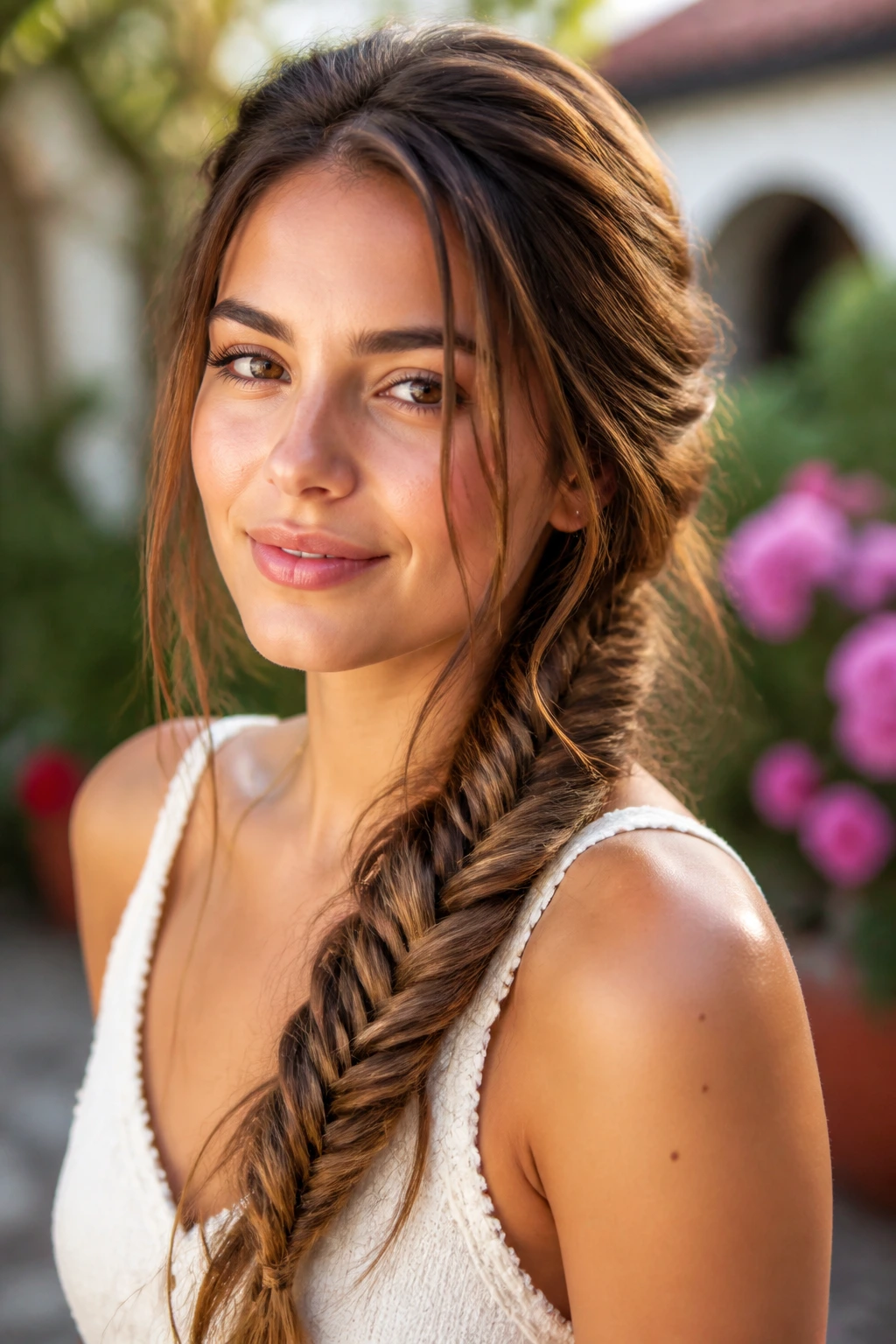
A fishtail braid over one shoulder feels a little more dressed up than a standard braid, but the real advantage is the line it creates. It drops diagonally across the chest, which pulls the eye downward and away from the width of the face.
Keep the braid low and slightly loose. A super-tight fishtail can look sharp and a bit hard around a round face. The better version has texture near the crown and a thicker-looking braid through the middle. Gently pull the outer edges apart after braiding if you want more volume without extra puff.
This style works well on dry hair because the strands hold the pattern better. If your hair slips, mist it lightly with texture spray before braiding. That little bit of grip makes the braid easier to control and keeps it from looking too polished.
It’s one of those styles that looks much harder than it is. Which is convenient.
16. Slicked-Back Bun With a Crown Puff
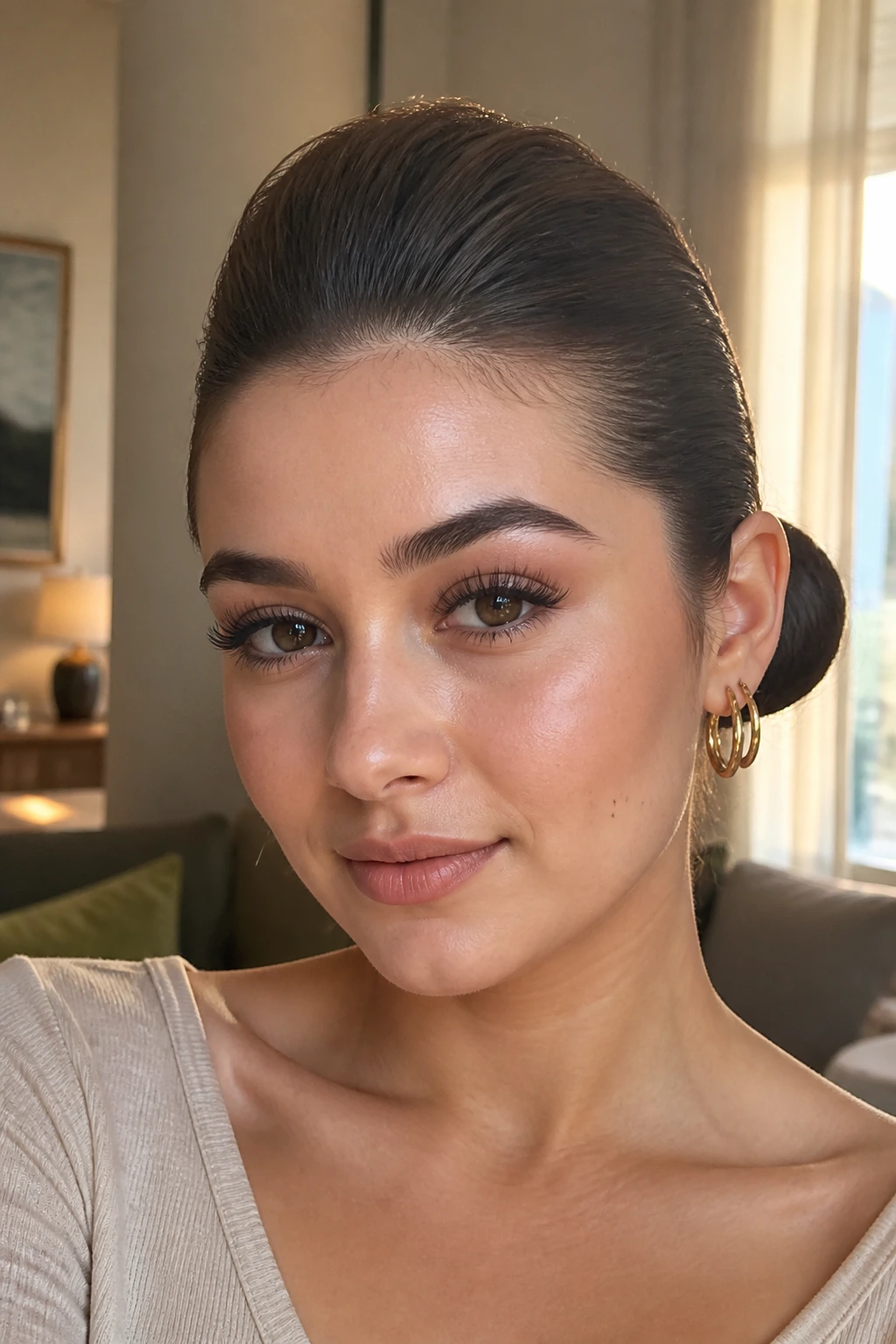
A slicked-back bun can be a great choice for a round face, but only if the top has a little lift. Without that puff at the crown, the face can look wider because the hair pulls everything straight back and down.
The fix is small. Tease the roots at the crown by about half an inch, smooth the surface gently, and then pin the bun low at the nape. That tiny bit of height changes the ratio. It gives the face a longer outline without making the style look teased from another era.
This is a better choice than a fully flat bun if you have a fuller cheek area or a broad jaw. The puff softens the top and keeps the profile from collapsing. Use gel only on the surface. You want control, not shine that looks wet under indoor lights.
Formal, clean, and a little sharper than people expect. Good bun. Good shape.
17. Soft Shag With Piecey Texture for Dry Hair
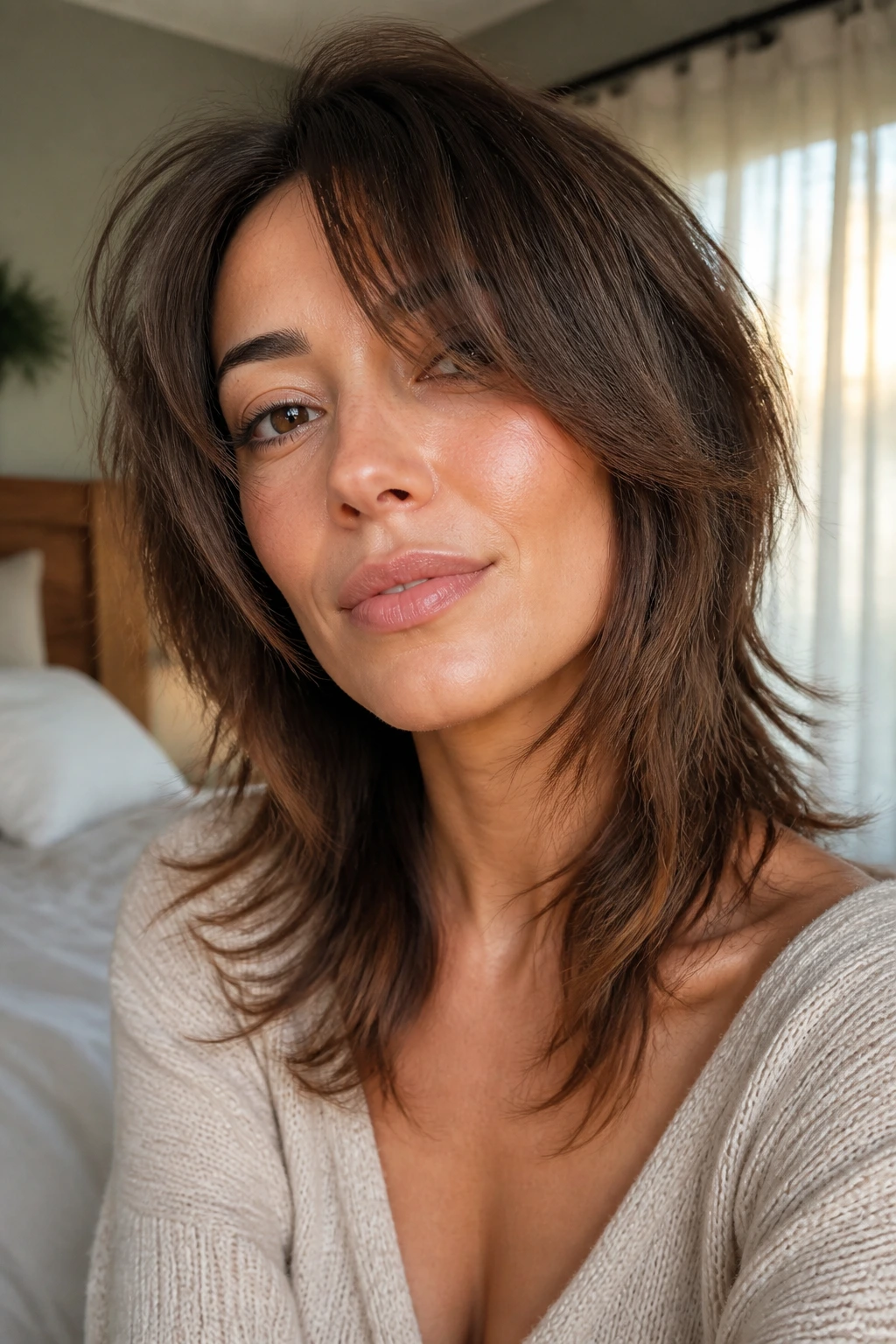
A shag can be brilliant on a round face if the layers are longer and the texture is broken up in pieces instead of puffed out in a halo. The point is movement, not volume for volume’s sake.
Short, choppy shag layers can widen the face if they all land at cheek level. Longer pieces that fall from the cheekbone down to the collarbone work better because they create vertical motion. A side part helps too. So does a little grit at the roots.
How to Keep It From Puffing Out
Dry hair can go fluffy fast, so use a small amount of texturizing spray only where the layers need separation. Then twist a few face-framing pieces around your fingers while they’re still warm from a blow dryer or flat iron bend. That gives the hair a lived-in shape without turning it into a triangle.
This cut has opinions. That’s why I like it. It doesn’t pretend to be neat, but when it’s cut well, it does something very flattering for round faces.
18. Low Double Buns With Loose Tendrils
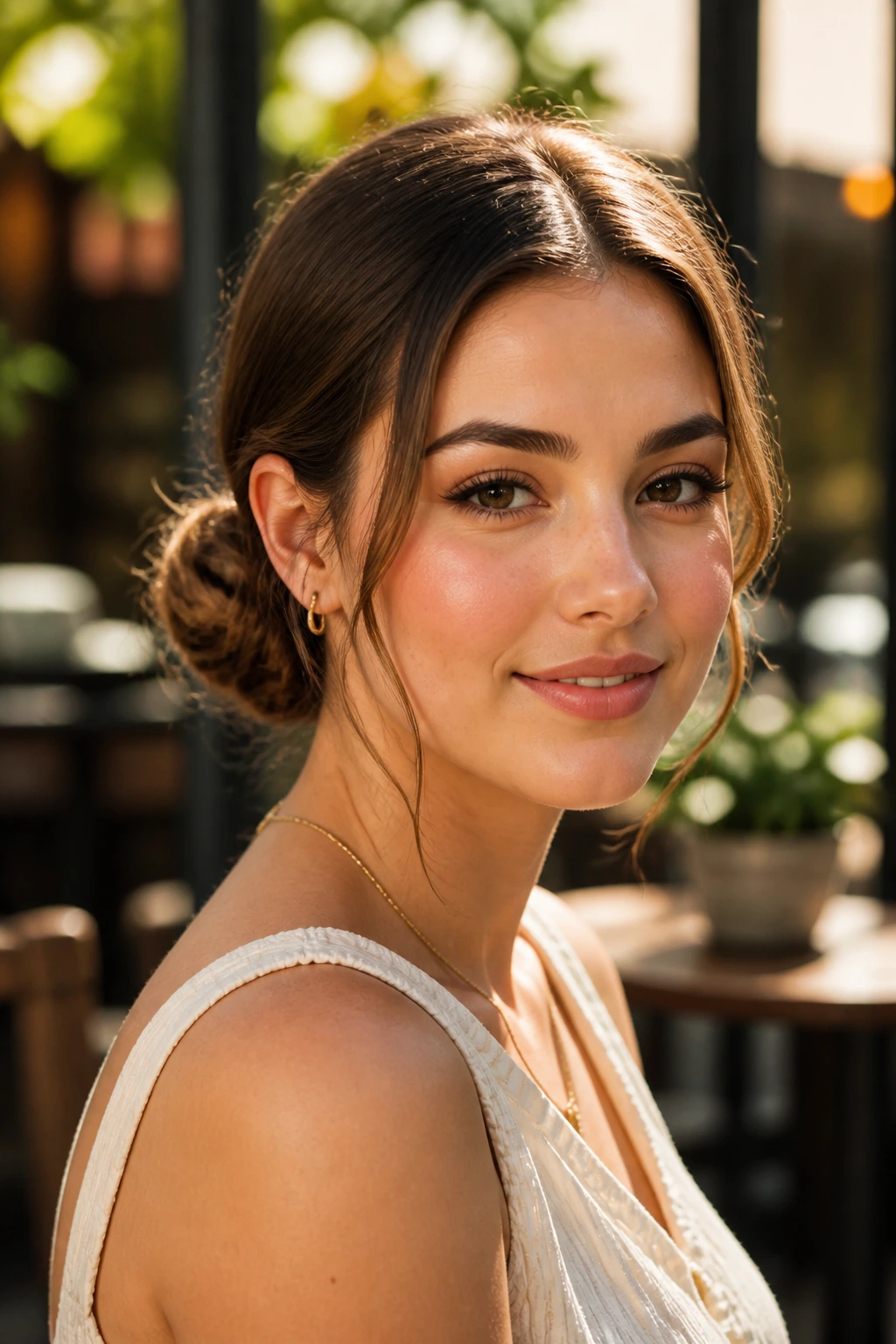
Low double buns can look playful or awkward depending on placement. For a round face, keep them small, low, and a little separated. Think of them as two soft anchors near the nape, not two giant shapes on the sides of the head.
The loose tendrils matter a lot here. Pull out a few pieces near the temples and leave them narrow. That keeps the face from feeling boxed in. If the buns sit too high or too wide, the style can make the face look shorter. Low buns solve that problem because they pull the shape downward.
This works especially well with naturally wavy or curly dry hair. The texture gives the buns enough grip and keeps the tendrils from looking too perfect. If your hair is straight, add a quick bend with a curling iron before styling. A little irregularity helps the buns read softer.
It’s a fun look. Just keep the scale small.
19. Low Twist Ponytail
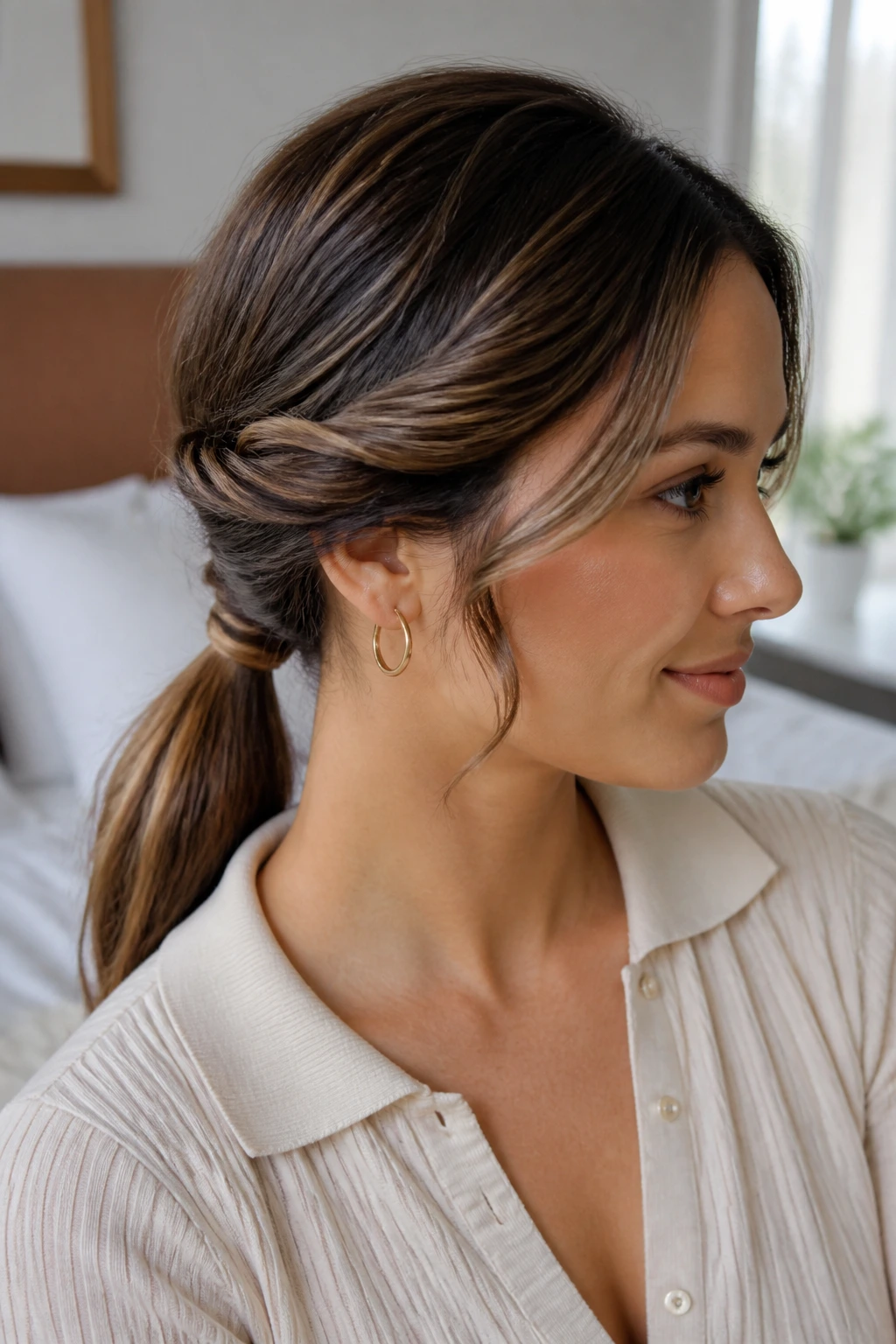
A low twist ponytail is one of the quietest styles in the bunch, which is exactly why it works so well. It doesn’t shout for attention. It just gives the hair a clean line that falls from one side into the nape.
Start by twisting one side of the hair back toward the other, then secure everything into a low ponytail. You can keep the twist tight for a more polished look or loosen it slightly for softness. Either way, the movement travels diagonally first and then down, which is nice on a round face.
I prefer this when the hair is dry and a little rough, because the twist holds better. A couple of bobby pins crossed in an X at the twist will keep it steady. If you want a little more finish, curl just the ponytail ends so they don’t hang stiffly.
Understated. That’s the word.
20. Vintage Side Roll or Pin-Curl Wave
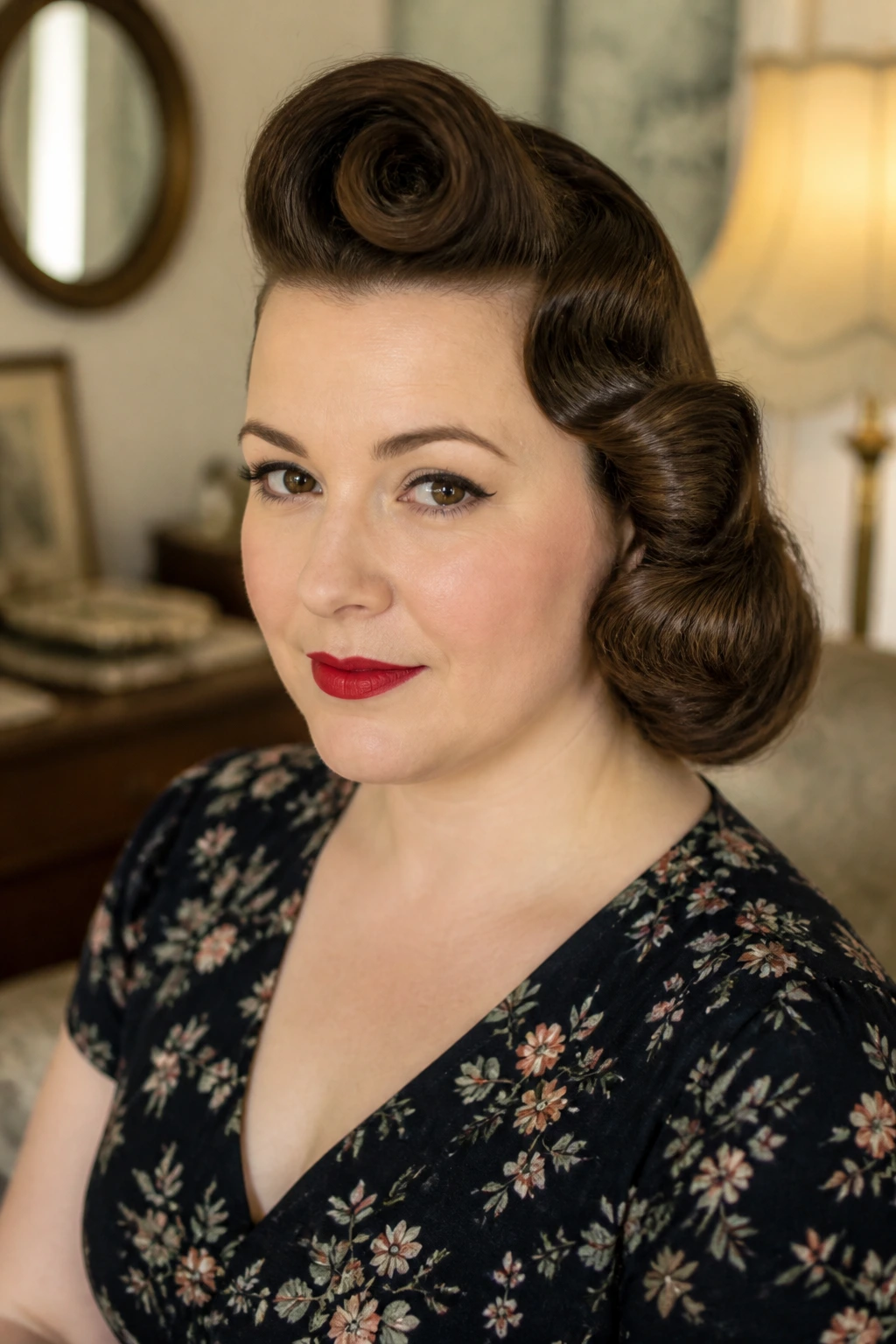
A vintage side roll sounds dressy, maybe even fussy, but it’s secretly one of the best shapes for round faces. The reason is the same one that keeps coming back here: the style creates a strong diagonal and keeps the height concentrated above the face.
A side roll near the temple gives the hair direction. A pin-curl wave across one side adds shape without making the whole style wide. If you have medium-length dry hair, this can be a lovely way to use what’s already there instead of trying to force it flat.
The trick is restraint. One strong roll, one clean wave, maybe a tucked side behind the ear. That’s enough. If you build too many curls around the face, the effect turns sweet in a way that can feel heavy on a round face.
This is not an everyday look for most people. It is, however, a very good one when you want the hair to feel deliberate.
21. Straight and Tucked Behind One Ear
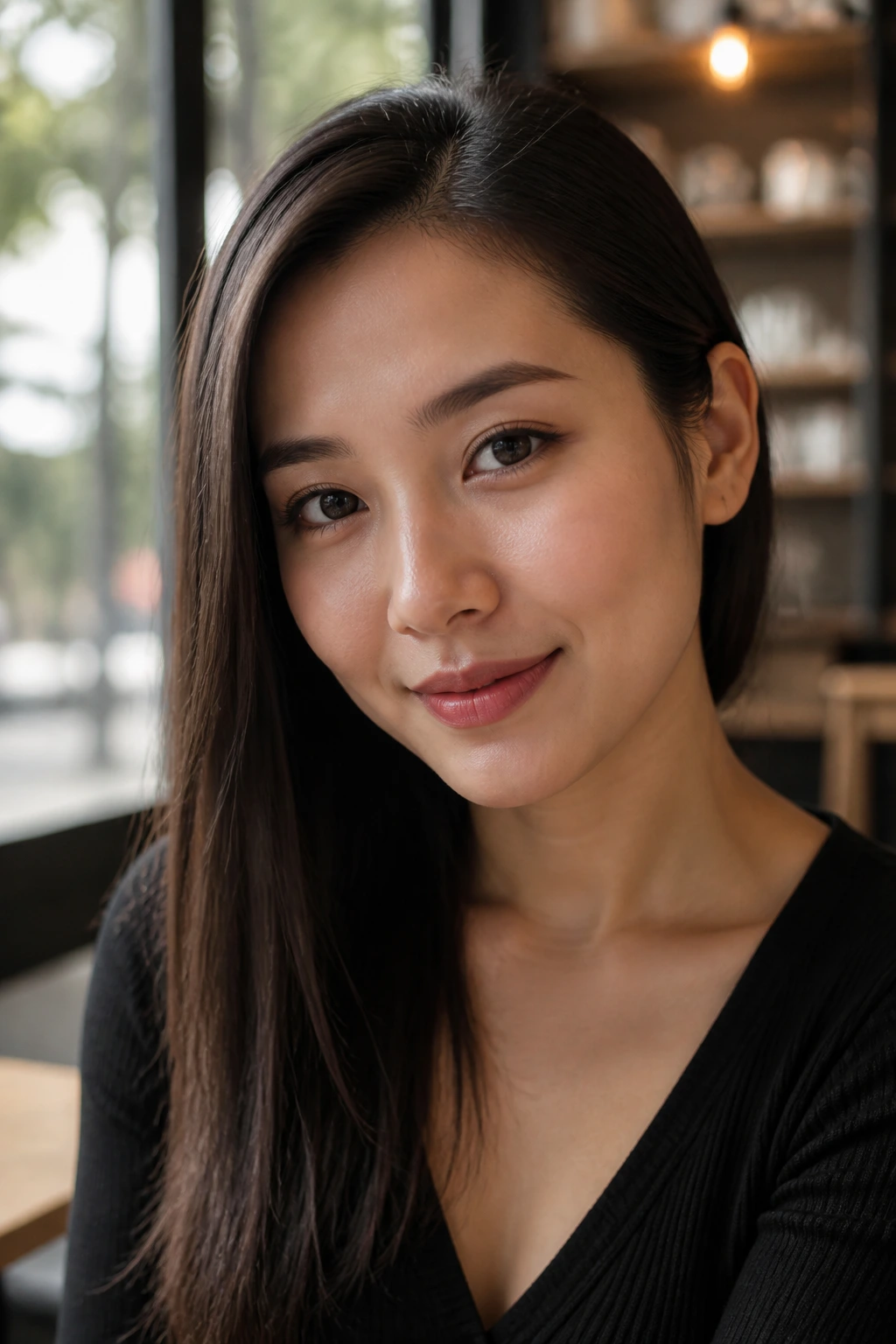
Straight hair can work for a round face, but it needs a little help. The mistake is wearing it pin-straight, parted in the middle, and tucked behind both ears. That combination tends to make the face look widest.
A better version is one side tucked and one side left free. The asymmetry matters. It creates a longer line down one side of the face and keeps the look from becoming boxy. A side part helps too, even a small one. If your hair is dry, a flat iron pass through the mid-lengths can smooth things out without erasing movement at the ends.
Keep the tuck loose. You want the hair to slide behind one ear, not disappear completely. That little interruption in the line gives the style shape. If the front wants to puff, smooth the roots with a pea-sized amount of cream before tucking.
Simple doesn’t have to mean flat.
22. Messy Chignon
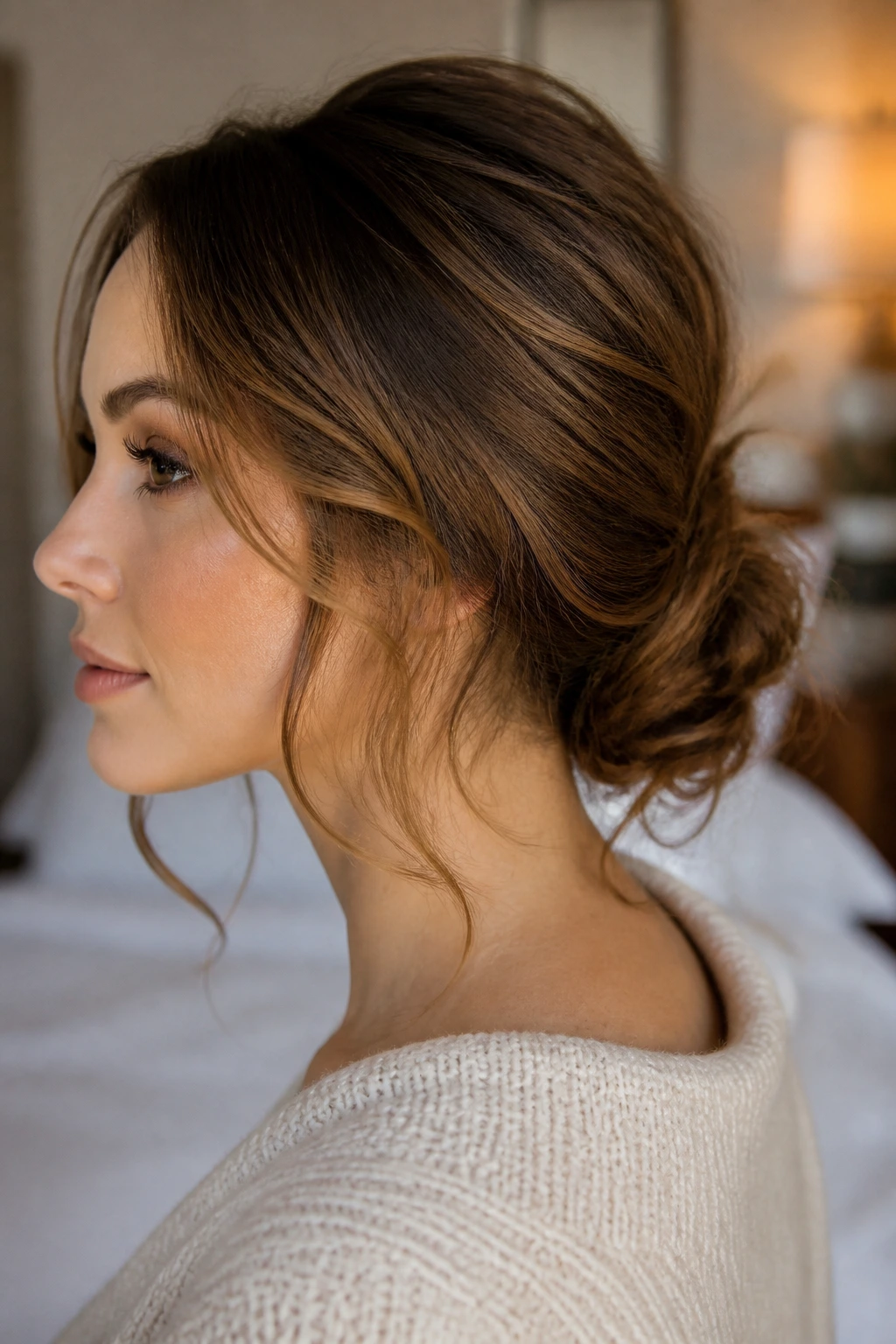
A messy chignon works when it looks softly pinned, not dragged into a ball at the back of the head. The low placement is what helps a round face; it keeps the shape below the jaw and away from the cheeks.
Compared with a tight bun, a looser chignon feels less severe and gives you more movement around the neck. Twist the hair into a low coil, pin the ends underneath, and leave a few small pieces loose if your hairline needs softness. Don’t pull the whole thing apart. That’s how you end up with a wide, floppy shape.
This is one of the best dry hairstyles for round faces when you want something that reads polished but not stiff. Dry hair tends to hold the pinning better, especially if the texture has a little grit. A smoothing cream on the outer layer and a few pins crossed discreetly underneath usually does the job.
It’s not flashy. It doesn’t need to be.
23. Rope Braid Half-Up
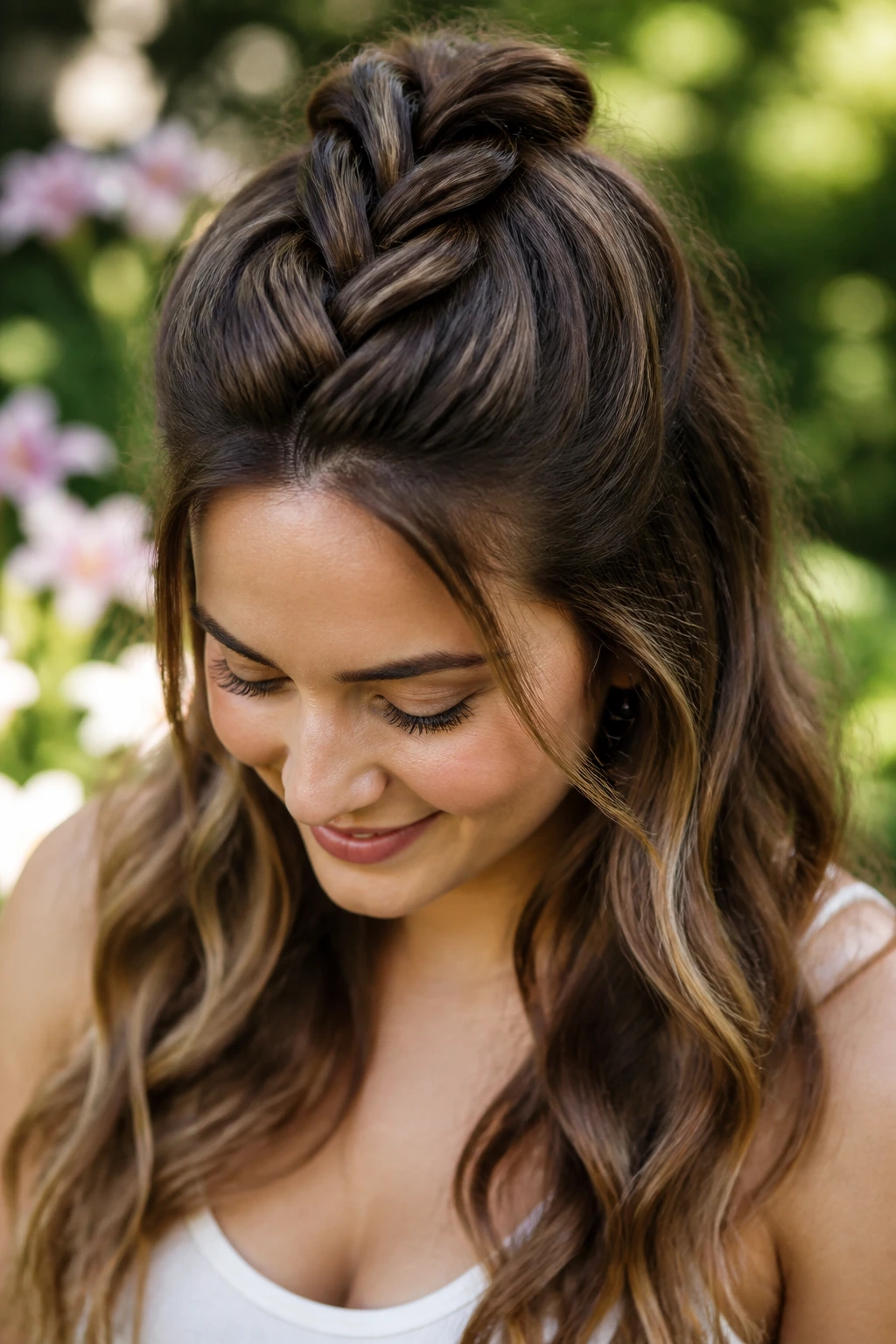
A rope braid half-up style gives you a strong vertical line at the crown while leaving the rest of the hair down. That combination is useful on a round face because it adds a bit of lift without covering the whole profile.
Rope braids are easy once you remember the trick: twist two sections in the same direction, then wrap them around each other in the opposite direction. On dry hair, the twist holds nicely and looks a little fuller than a standard braid. Secure it at the back of the head, about halfway between the crown and the nape, so the line stays higher.
The style is nice on straight, wavy, and curly hair. If the bottom section is long, it helps stretch the face even more. If your hair is shorter, keep the braid tight enough that it doesn’t puff out near the temples.
It’s the kind of style that looks more complicated than it is. Those are usually the useful ones.
24. Pinned-Back Waves With a Dramatic Side Part
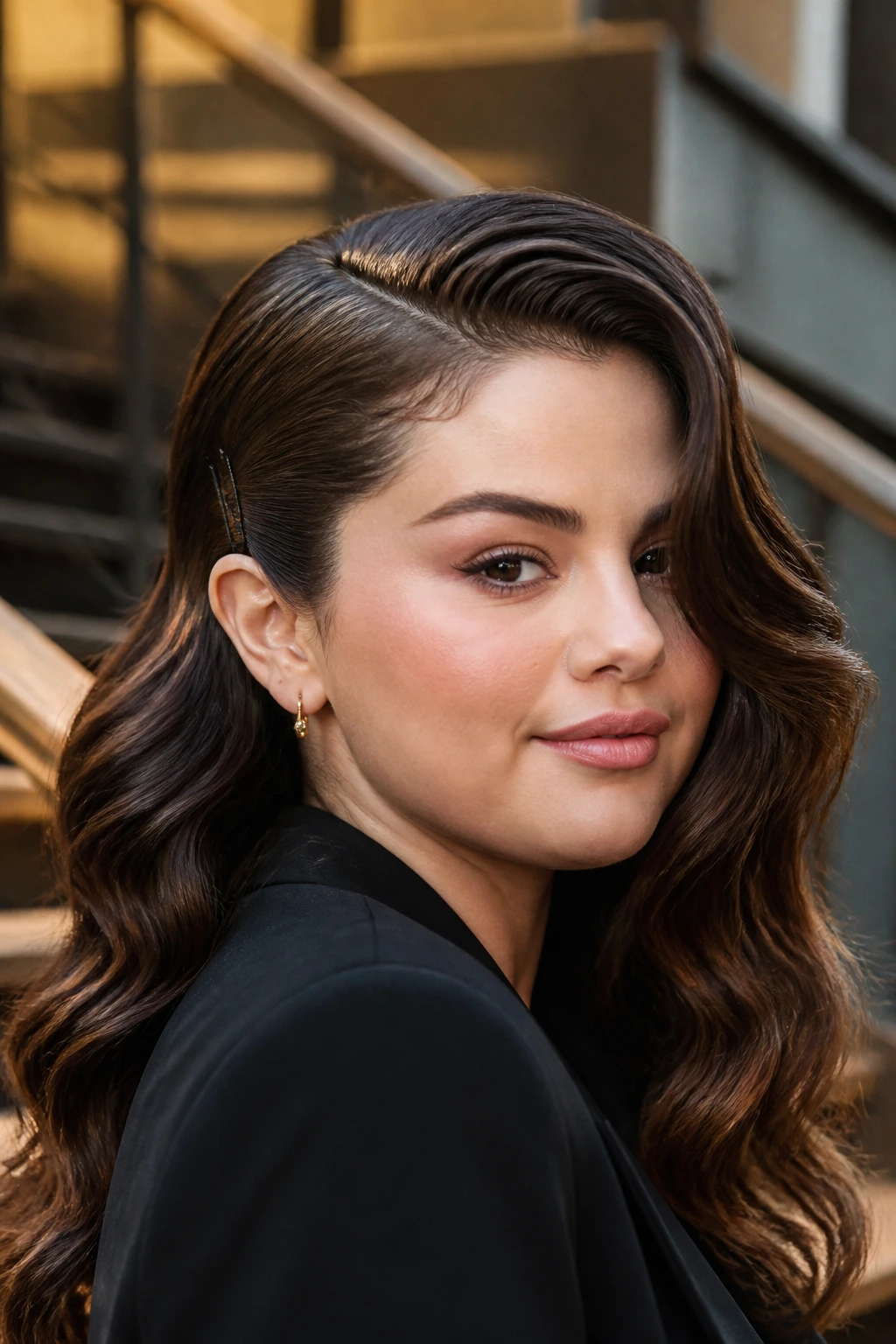
Pinned-back waves can be incredibly flattering on a round face because they open one side of the face while letting the other side fall in a controlled line. The dramatic side part does a lot of the shaping before the pins even go in.
The key is to pin one side back just behind the ear with two bobby pins crossed in an X. That holds the wave without making it look stiff. Leave the other side loose and a little fuller, but not so full that it swells at the cheeks. The contrast between open and closed gives the face a longer outline.
I reach for this when I want something soft but not fussy. It works on dry hair that already has wave or bend, and it can be dressed up with a clip if you want a little shine. Avoid pinning both sides flat. That can make the face look broader, and the whole point here is the opposite.
One side. That’s enough.
25. High Puff or Curly Pineapple for Round Faces
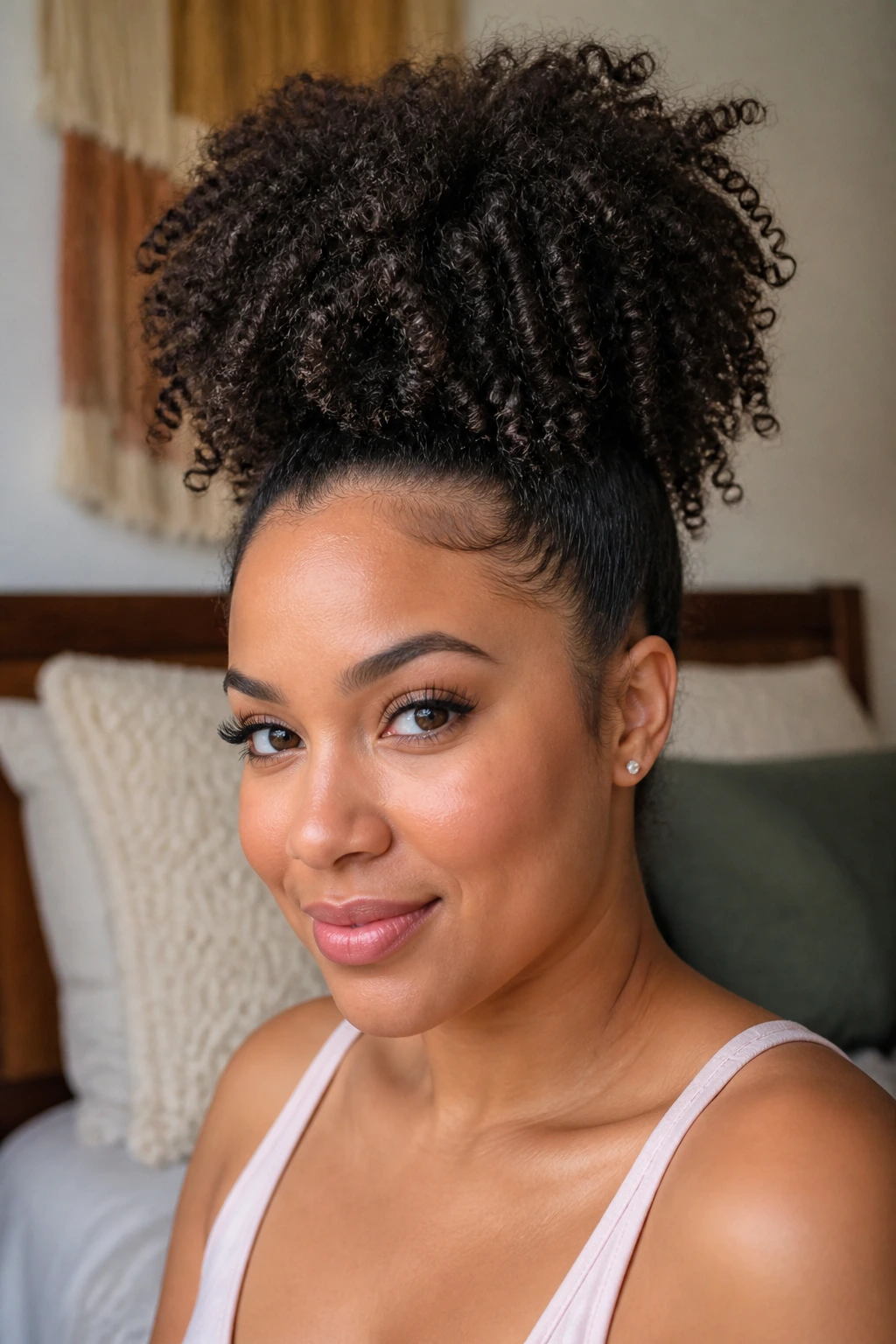
Curly hair has its own rules, and a high puff or pineapple is one of the best examples. It lifts the hair up and away from the sides of the face, which helps a round face look longer without forcing the curls into a shape they don’t want.
The puff should sit high, not low. If it drops toward the middle of the head, the face can look wider. Use a satin scrunchie or a soft elastic and gather the curls 2 to 3 inches above the crown if your length allows it. Let the curls fall where they want at the top, but keep the sides smooth enough that they don’t spread out near the cheeks.
This is also one of the kinder styles for dry or textured curls because it avoids too much handling. You can refresh the ends with a little water mist if needed, but the shape itself should stay loose. If you want a softer look, pull out a few curls around the front. If you want a sharper profile, keep the temples neat and let the height do the work.
For curly hair, this is a smart, honest style. No pretending. No fighting the curl pattern.
One Last Thing
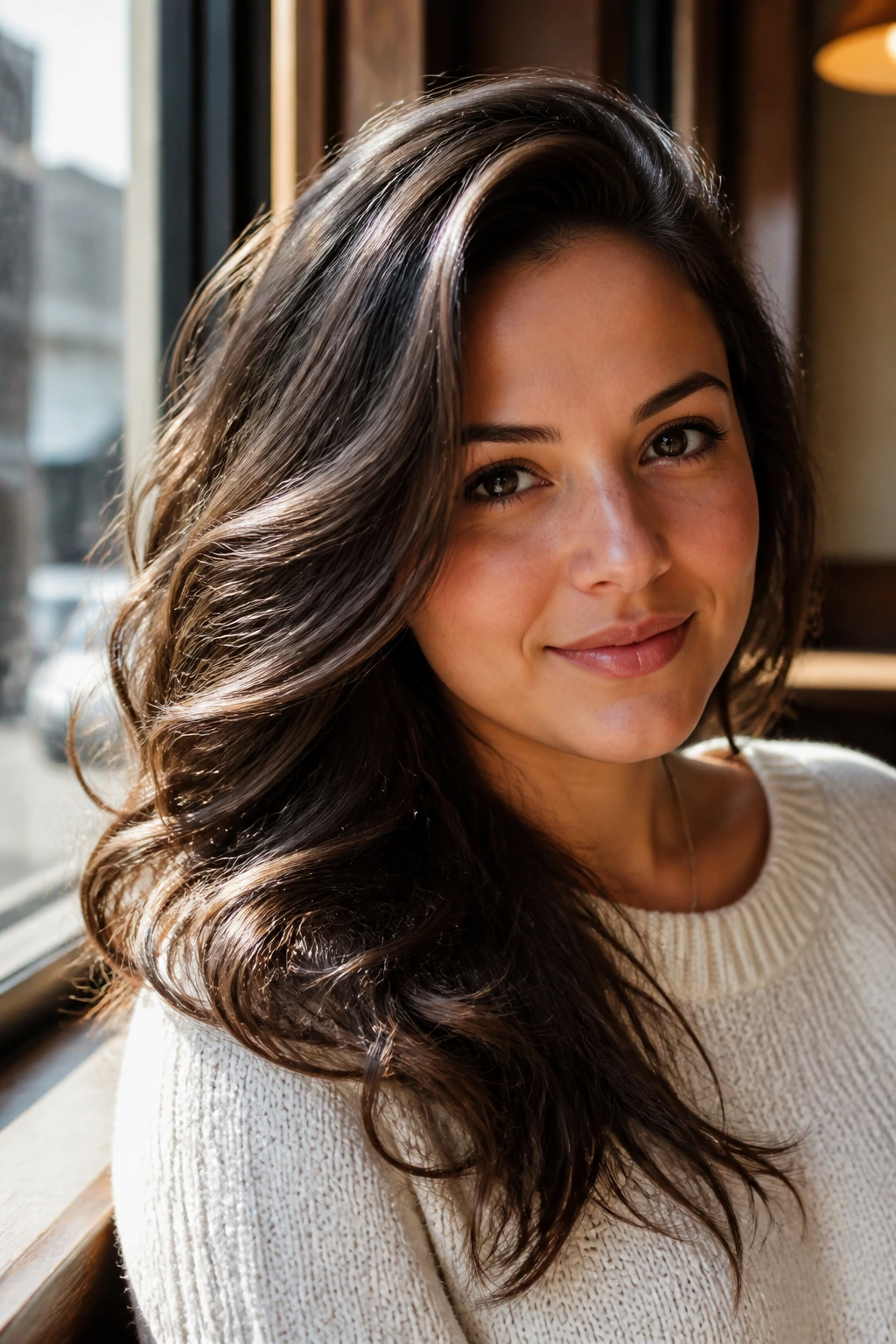
The best dry hairstyles for round faces tend to do one of three things: lift the crown, pull the eye diagonally, or keep volume away from the cheeks. That pattern keeps showing up for a reason. It works.
If your hair is dry in the frizzy, brittle sense, be a little gentler with tension and product. A style can still look polished without being tight. A touch of texture, a smart part, and the right placement usually beat over-smoothing the hair into something that fights back by noon.
If I had to pick the safest bets, I’d start with the high ponytail, side-swept waves, and shoulder-length lob. Those are hard to mess up, and they give a round face shape in a way that feels natural rather than forced.
