



Some of the best hairstyles for round faces do not try to hide the face—they give it a cleaner shape. A little height at the crown, a side part, or a piece that falls below the cheekbone can change the whole read of a haircut.
That old advice to “cover the cheeks” misses the point.
Round faces usually have similar width and length, with softness through the jaw and fuller cheeks. That does not mean you need sharp angles everywhere or some dramatic, harsh cut. It means the best haircuts create vertical movement, diagonal lines, and a little breathing room around the widest part of the face.
Texture matters, too. So does hair density, curl pattern, and how much time you want to spend styling before coffee. The right style is not one magic shape. It is the one that makes your features feel balanced when you catch your reflection from the side, which is the detail most people notice first.
1. Long Layers With a Deep Side Part for Round Faces
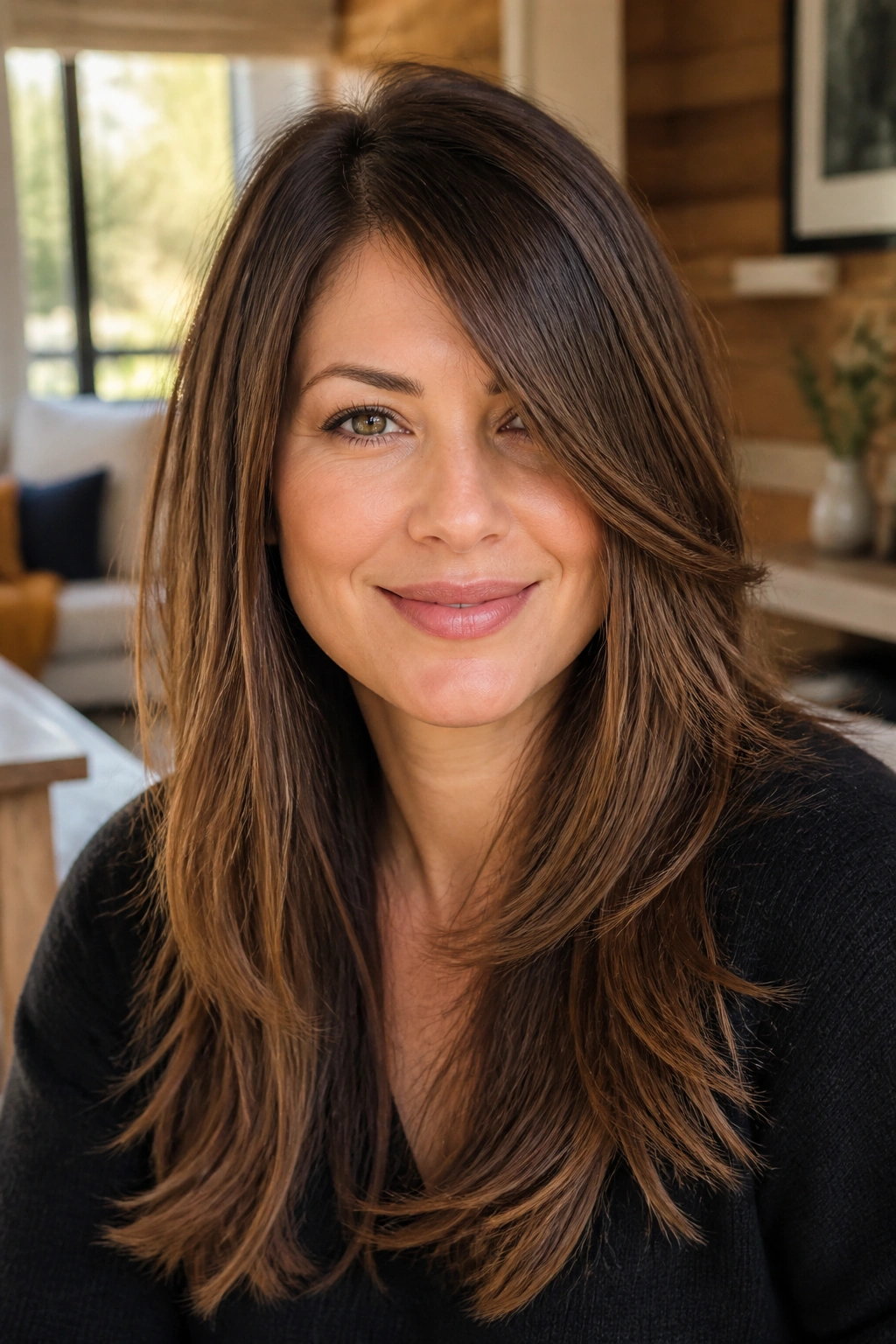
Long layers are the dependable choice for round faces, and I mean that as a compliment. They work because the length pulls the eye downward while the side part breaks up any sense of width across the forehead and cheeks.
Why It Works on Round Faces
Ask for the first layer to start below the cheekbone, not right at it. That tiny shift matters more than people think, because a layer that lands too high can land right on the widest part of the face and make the shape feel broader.
The side part does a lot of the heavy lifting. It creates a diagonal line across the forehead and gives the top of the head a little lift, especially if you blow-dry the roots upward and away from the part for the first few inches. If your hair is straight, a soft bend from mid-length down keeps it from falling flat and drawing the eye sideways.
- Best for medium to thick hair
- Ask for layers that start around the chin or lower
- Style with a 1.25-inch curling iron or a round brush
- Finish with a light mist of texture spray on the ends, not the roots
Pro tip: keep the shortest layer long enough to tuck behind your shoulder. If it stops at the jaw, the whole look gets boxy fast.
2. Collarbone Lob With Face-Framing Pieces
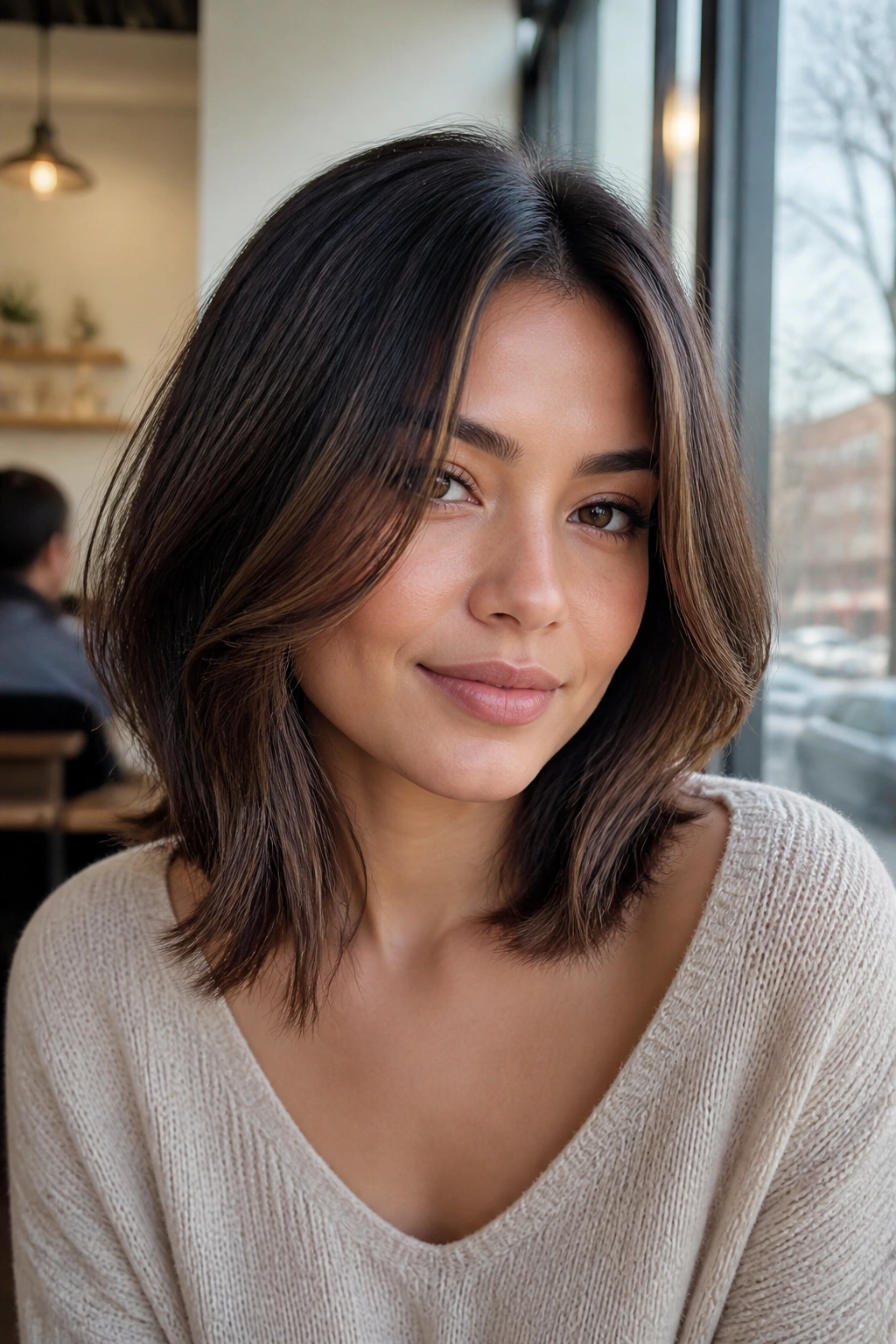
If you want one cut that stays neat for work and still looks easy on a weekend, the collarbone lob is hard to beat. It sits in that sweet spot just below the chin, which means it gives a round face length without feeling severe.
The face-framing pieces should begin lower than most people ask for. I prefer them to start around the mouth or just below it, then taper softly toward the collarbone. That keeps the attention moving down the face instead of parking it right at the cheeks.
This cut is especially useful if your hair has a little natural wave. Air-dry it with a cream, or do a quick bend with a flat iron and leave the ends slightly undone. If you like a polished finish, tuck one side behind the ear and leave the other side loose. That tiny asymmetry keeps the cut from looking too symmetrical, which is where round faces can lose shape.
It’s a practical haircut, not a fussy one. That’s why people keep coming back to it.
3. High Ponytail With Crown Lift
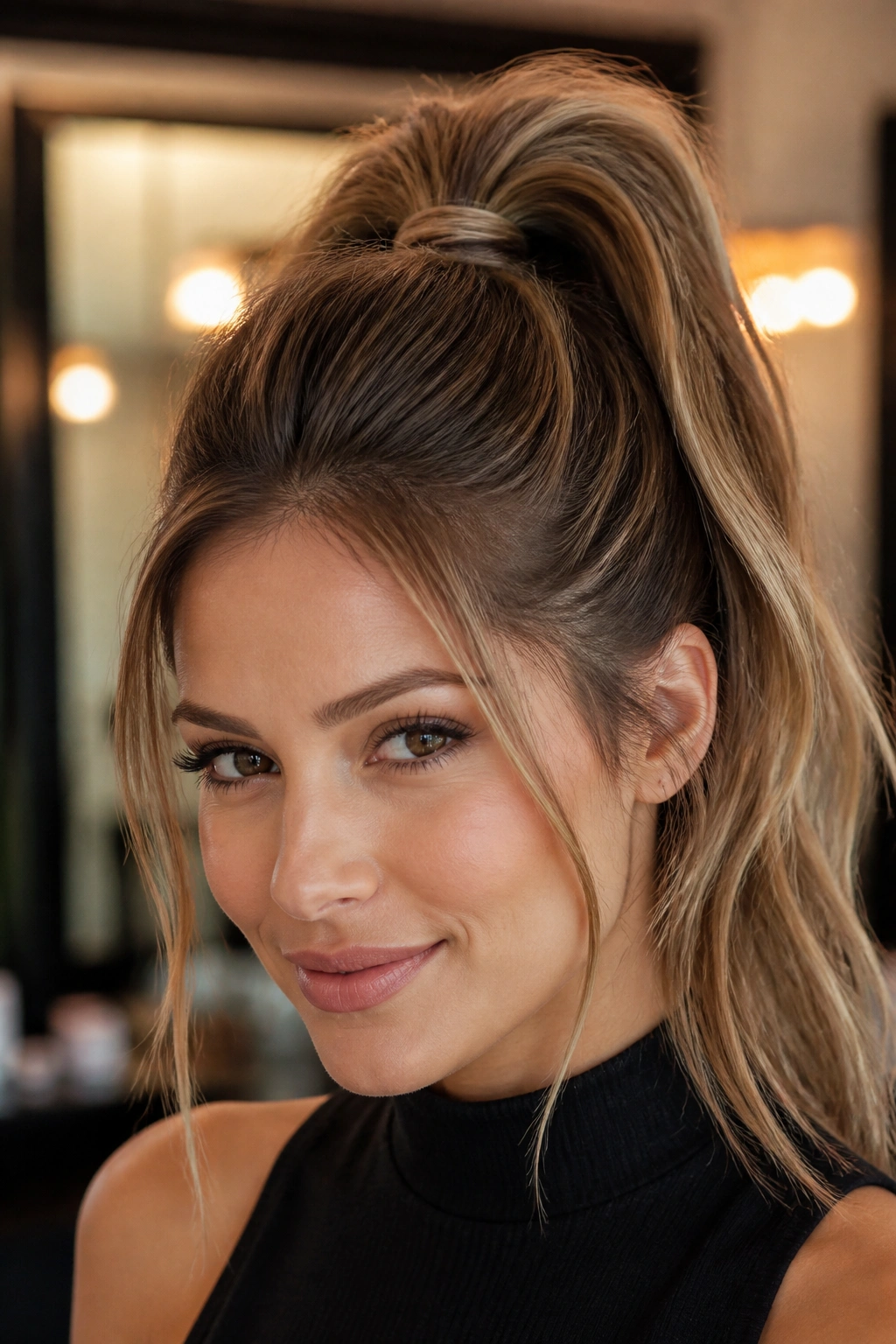
Why does a high ponytail make a round face look longer in seconds? Because it pulls the visual weight upward and leaves the sides open, which changes the whole balance of the face.
The trick is placement. Put the ponytail at the crown or just above it, not in the middle of the back of the head. A mid-level pony tends to widen the face because it draws a straight horizontal line across the widest point. A higher one does the opposite. It sends the eye up.
How to Wear It
- Tease the crown lightly before securing the ponytail
- Use a small amount of dry shampoo or texture spray at the roots if your hair is fine
- Wrap a 1-inch strand of hair around the elastic for a cleaner finish
- Leave a few face pieces loose if your hairline feels too tight
If your hair is very thick, don’t slick the sides down like you’re auditioning for a runway show. Leave just a hint of softness around the temples. That keeps the ponytail from turning into a hard line across the head.
4. Curtain Bangs and Shoulder-Length Waves for Round Faces
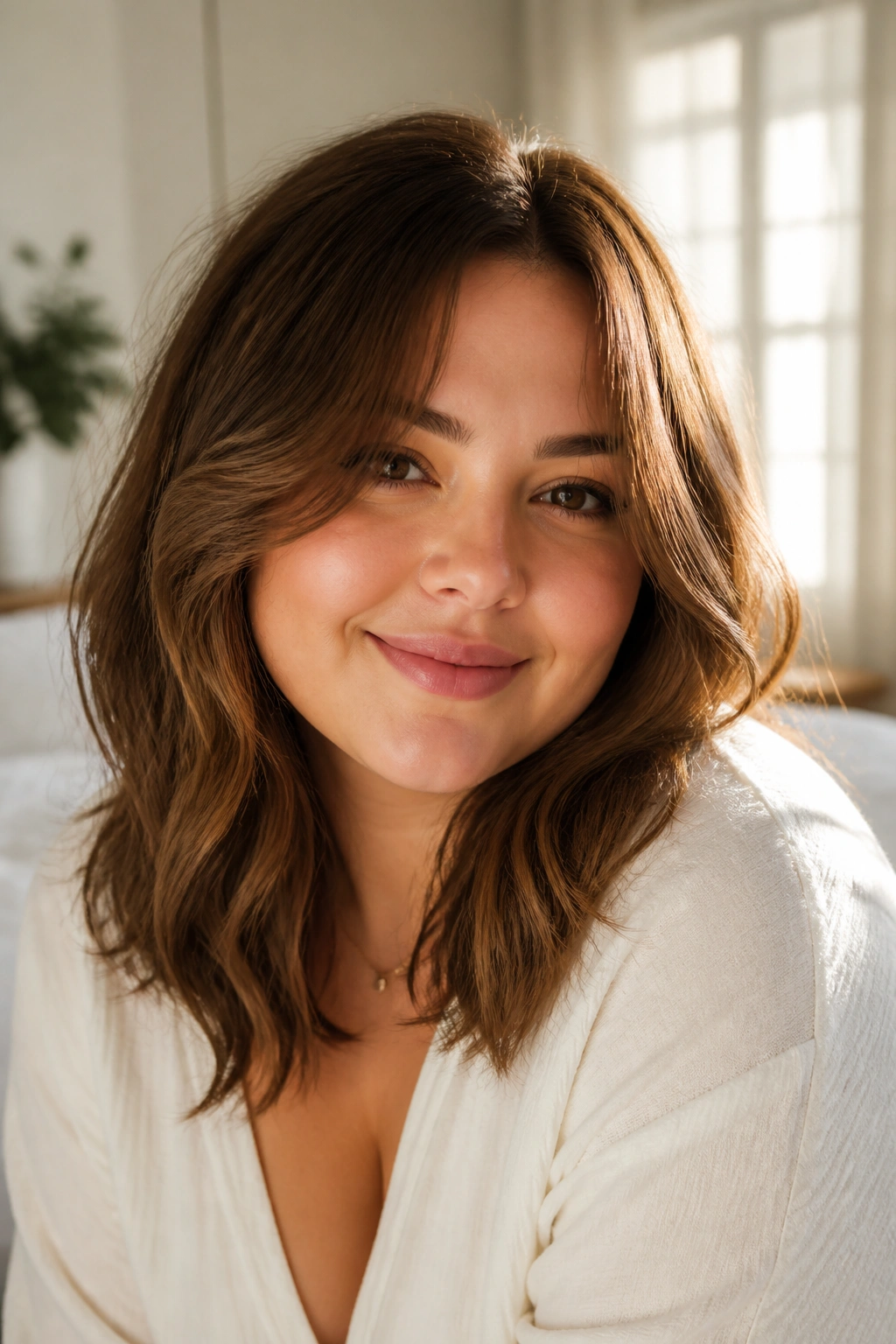
Picture the awkward grow-out stage after a blunt cut. Curtain bangs solve a lot of that misery, because they soften the front without chopping the face into a short, boxy shape.
The best version starts at the cheekbone and opens toward the temples. That shape acts like a frame, but not the rigid kind. It gives a round face a little angle at the front while the shoulder-length waves add vertical movement below. Together, they make the haircut feel light, not heavy.
- Keep the bangs long enough to split in the middle
- Use a 1-inch curling iron or a flat iron bend
- Aim the shortest bang pieces toward the cheekbone, not the brow
- Brush the waves out a little so they fall airy, not stiff
Heavy bangs can crowd the face. Curtain bangs should look soft and a little undone, like they settled there naturally after a good blow-dry. That is the difference between cute and fussy.
5. Angled Blunt Bob
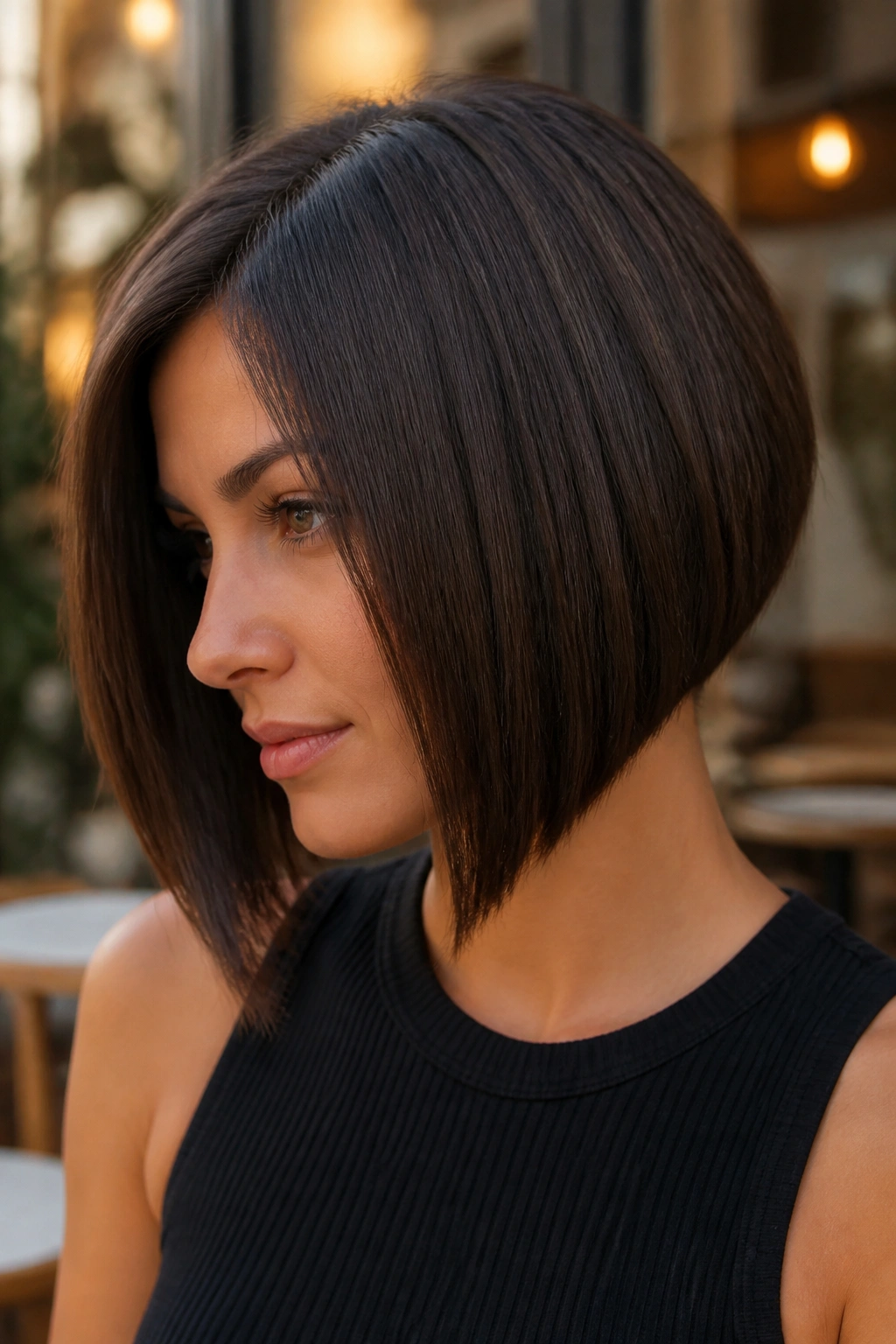
A blunt bob can be a risky cut on a round face if it stops right at the jaw. An angled version changes that equation fast.
The back sits slightly shorter, and the front drops longer toward the chin or collarbone. That diagonal line matters. It gives the face a longer edge and keeps the eye moving instead of stopping at one horizontal line. I like this cut on straight or slightly wavy hair, where the shape can stay crisp without too much daily effort.
The other reason it works is the clean edge. A messy, overly layered bob can puff out at the sides and make the face feel wider. An angled blunt bob stays neat, which gives the cut its strength. You can tuck one side behind the ear, wear it with a subtle off-center part, or do a sleek bend with a flat iron and call it done.
If you want a bob that feels grown-up rather than cute, this is the one. It has structure without looking severe.
6. Half-Up Top Knot
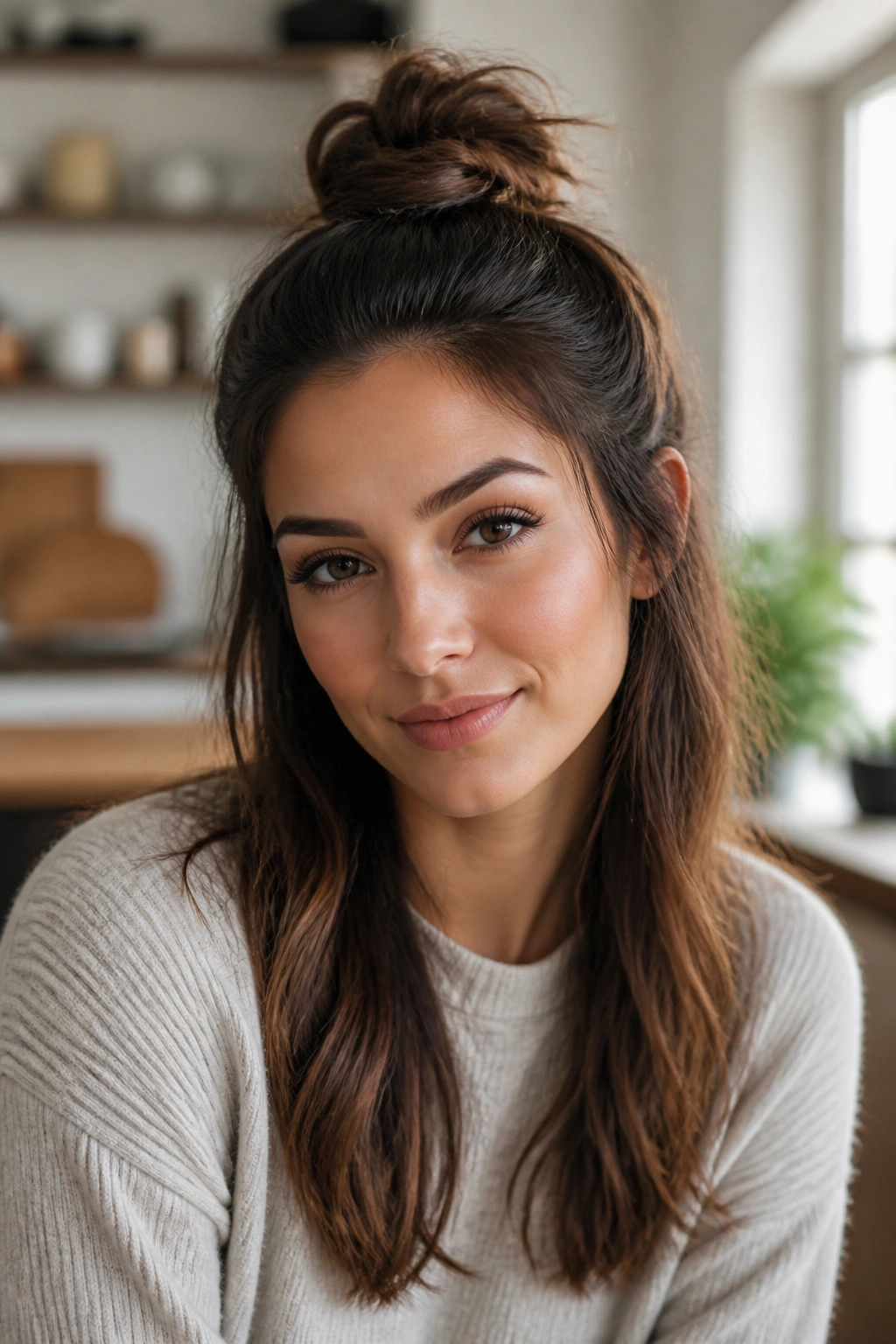
Unlike a full bun, the half-up top knot keeps some length on the sides, so the face doesn’t feel boxed in. That makes it a smart choice for round faces, especially when you want an easy style that still has some lift.
The placement matters more than the bun size. Put the knot high, near the crown, and keep it small enough that it doesn’t pull all the weight to the top. If the bun gets too wide, it starts adding bulk where you do not want it. The rest of the hair should fall loosely over the shoulders, which keeps the line long.
This style is best on second-day hair, because the grip from natural texture makes it hold. If your hair is slippery, rough it up with a little dry shampoo first. And if your face feels extra round that day, leave out a few thin strands near the temples. Not too many. Just enough to soften the edges.
It’s casual, quick, and better than it has any right to be.
7. Soft Shag With Wispy Fringe
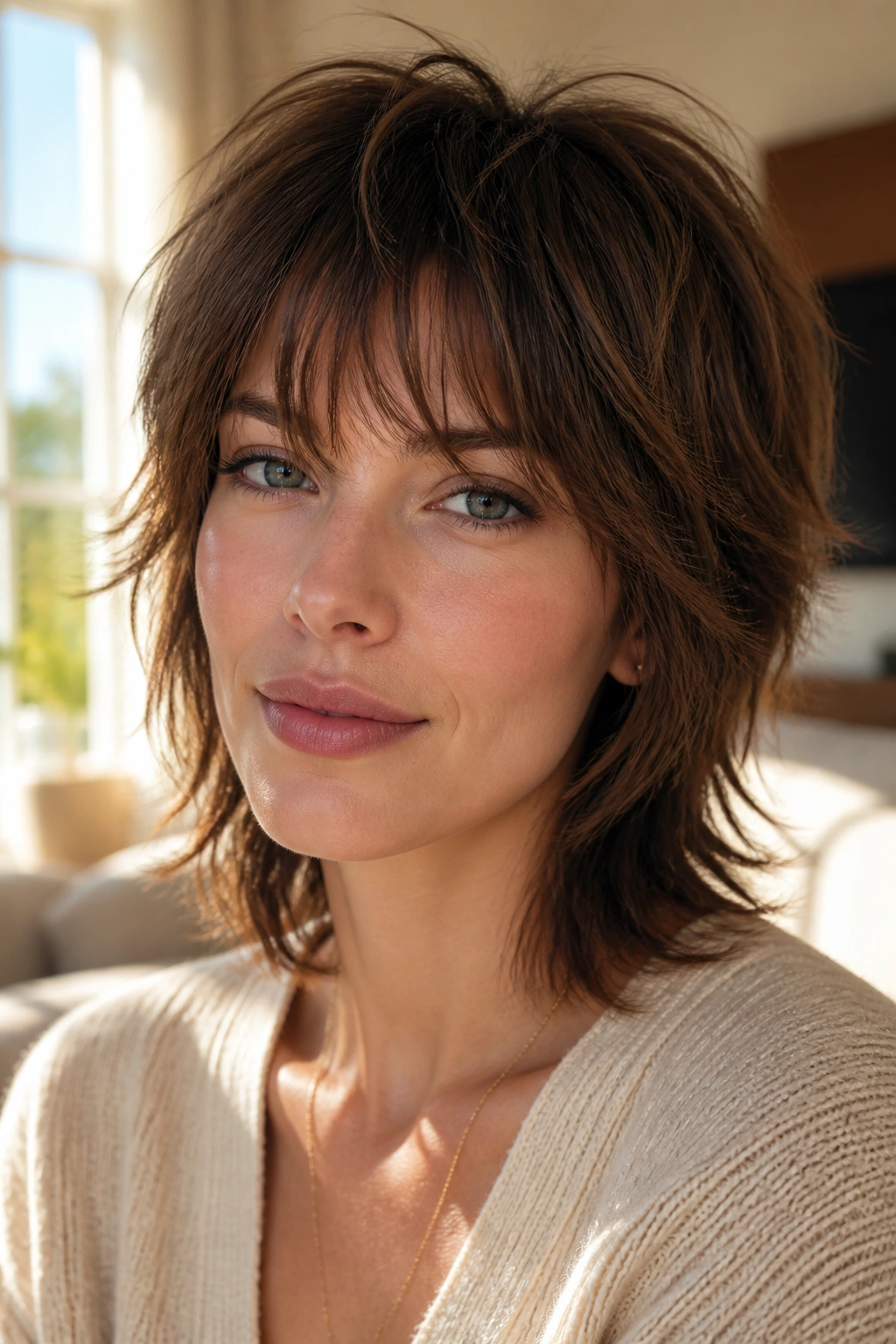
Soft shags are one of my favorite hairstyles for round faces because they break up the shape without turning the head into a triangle. The key word is soft. You want movement, not a crunchy, over-layered mess.
Why It Works on Round Faces
Ask for layers that start around the cheekbone or just below the chin, then taper down through the ends. That keeps the sides from puffing outward. A wispy fringe helps, too, because it adds texture across the forehead without creating a hard line that shortens the face.
How to Style It
- Use a lightweight mousse on damp hair
- Scrunch or diffuse on low heat
- Keep the fringe piecey, not dense
- Finish with a touch of matte paste at the ends
A shag only works if the layers move. If the cut looks helmet-like, the layers are too blunt or too short at the sides. Ask for softness through the bottom length. That one adjustment keeps the style easy instead of heavy.
8. Sleek Center-Part Long Hair for Round Faces
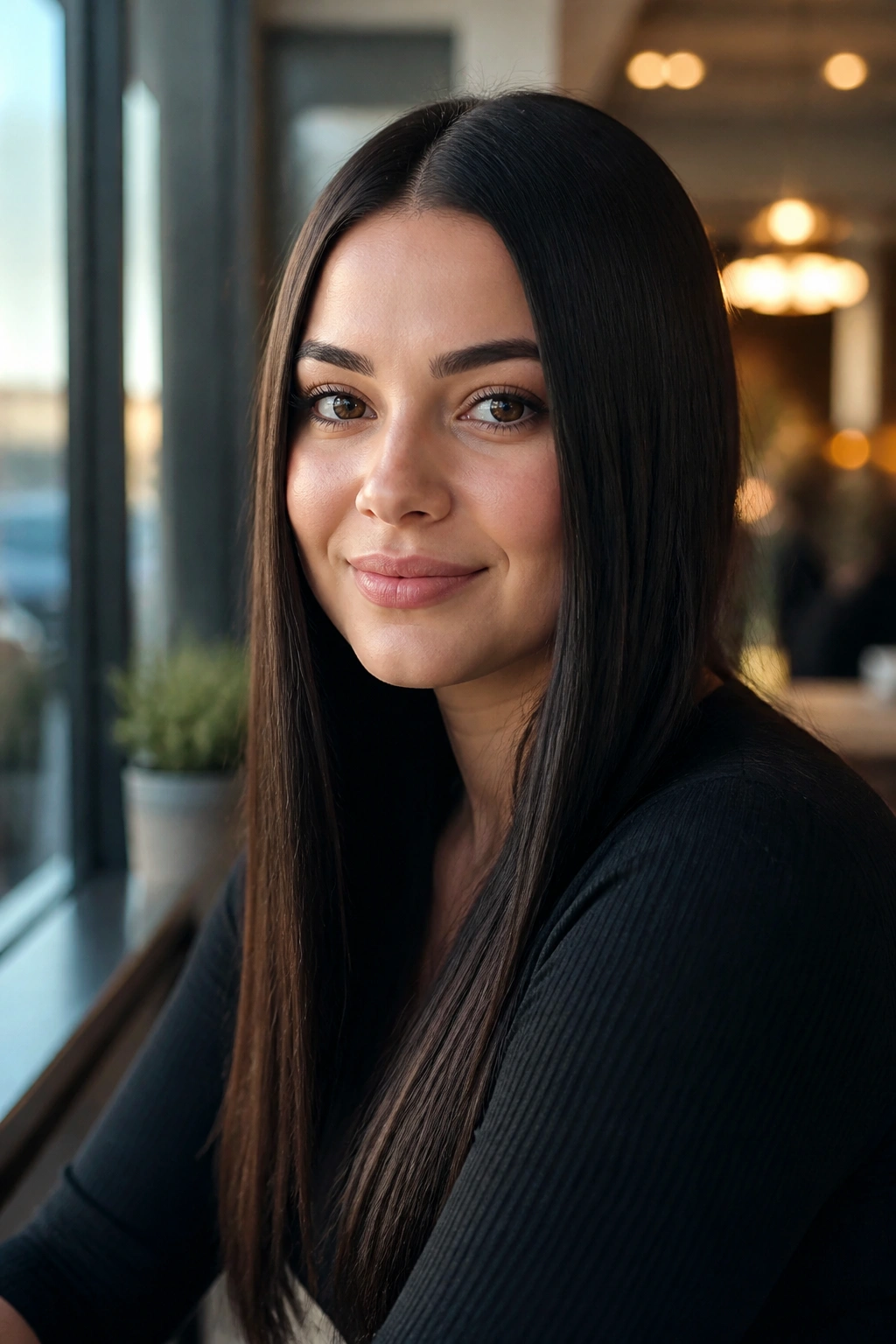
A middle part isn’t off-limits for round faces. It just has to be disciplined.
The reason this look works is simple: the center line gives the face a long, vertical anchor. If the hair is sleek at the crown and falls straight past the shoulders, the eye reads length before width. The problem comes when the hair puffs out at the cheeks or flips outward at chin level. Then the shape opens back up, and you lose the point.
Keep the top smooth with a blow-dryer nozzle or a flat brush. Run a small amount of smoothing cream through the mids and ends, then keep the strands close to the head for the first few inches below the part. If you want movement, put it lower down where the hair hits the chest.
This style looks sharpest on medium to thick hair, but fine hair can wear it too if you create a little root lift. It’s clean, unfussy, and a bit more confident than people expect from a center part.
9. Side-Swept Pixie Cut
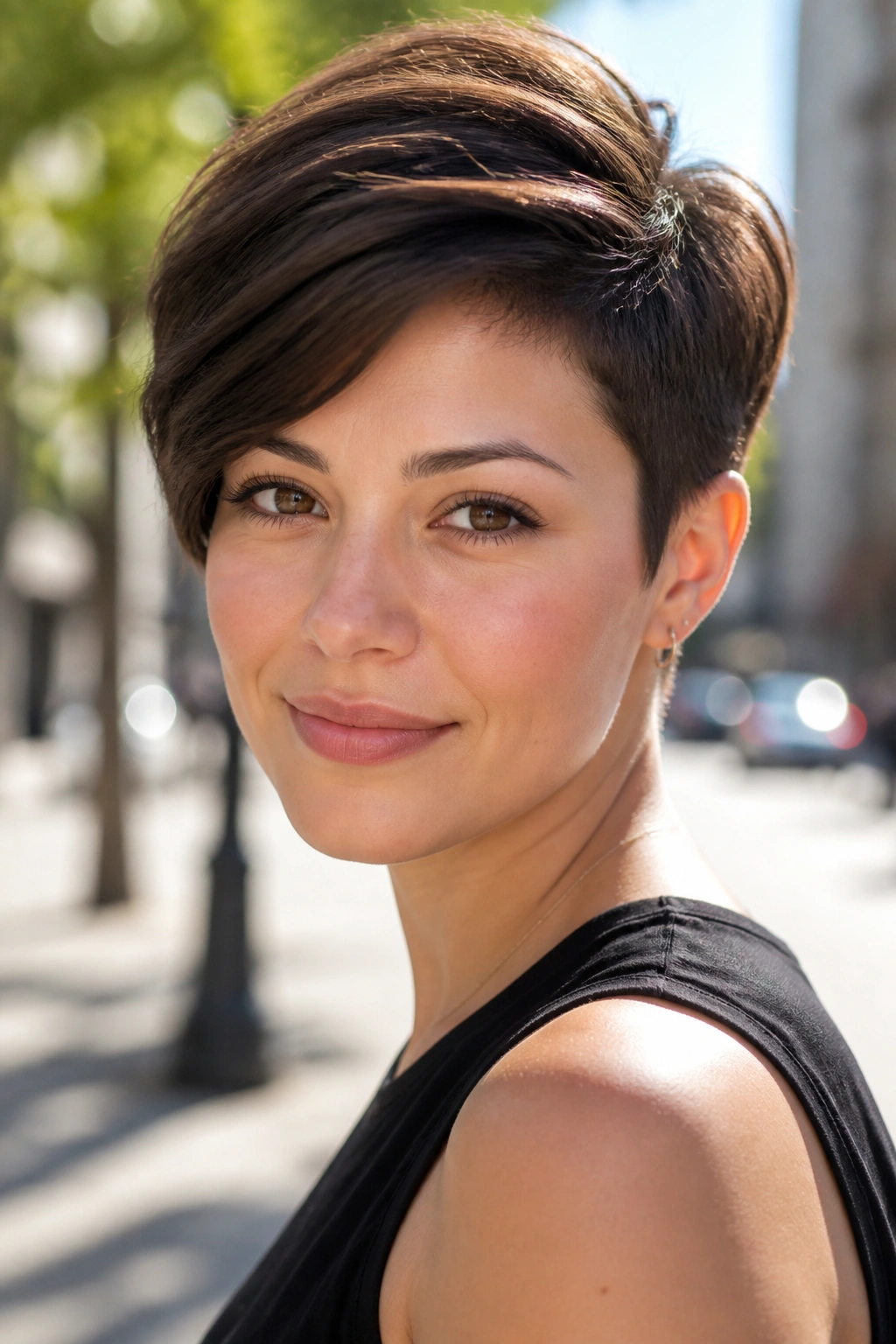
Can a pixie work on a round face? Absolutely, if the top has height and the fringe sweeps diagonally instead of sitting straight across the forehead.
The shape should be close on the sides and back, but not shaved up too high near the temples. Leave enough length on top to brush forward and to one side. That side-swept line is what changes the face shape. It cuts across the roundness and keeps the cut from looking too circular.
How to Style It
- Work a pea-size amount of styling paste into dry hair
- Push the top upward at the roots for a little lift
- Sweep the fringe to one side with your fingers
- Keep the neckline clean so the cut stays crisp
This cut is especially good if your hair is thick, because the shorter sides remove bulk fast. Fine hair can wear it too, but it needs a little texture spray or it may go flat by noon. Short hair on a round face is not the problem. The wrong short haircut is.
10. Voluminous Blowout With Flipped Ends
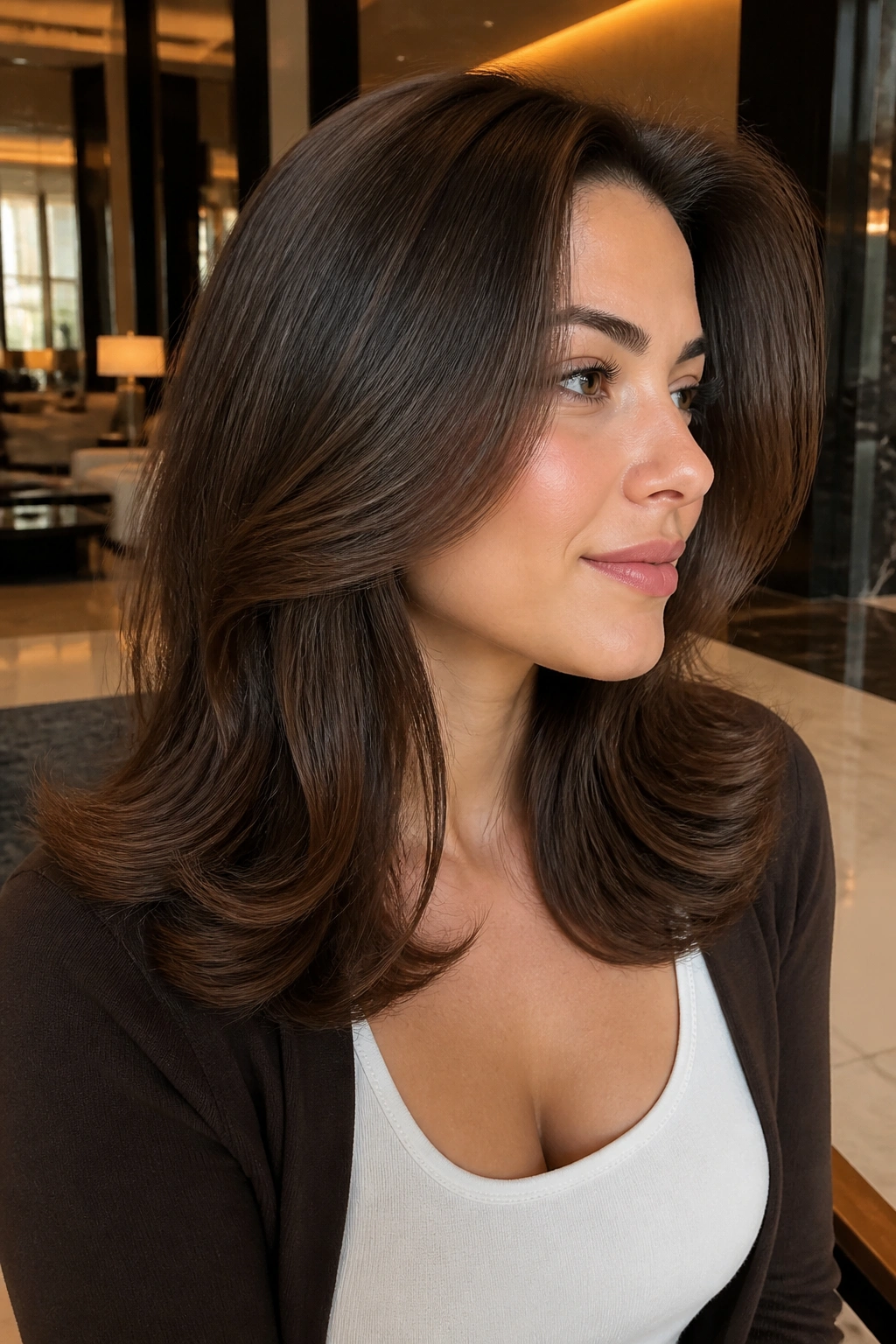
You know that salon blowout that makes the face look longer the second you turn your head? That shape is mostly about root lift and the direction of the ends.
The crown should have height, but not the stiff kind. Think soft lift at the roots, then smooth movement through the mids. At the ends, a slight flip away from the cheeks helps the haircut open up instead of hugging the face. A round brush around 1.5 inches wide usually gives the best control for shoulder-length hair.
A mousse at the roots on damp hair helps keep the style from collapsing. Dry in sections, clip the top layers out of the way, and let each section cool on the brush before moving on. That cooling part matters. Skip it and the whole blowout drops faster than you want.
It’s a glamorous style, sure, but it’s also practical. The shape does the flattering for you.
11. Braided Crown
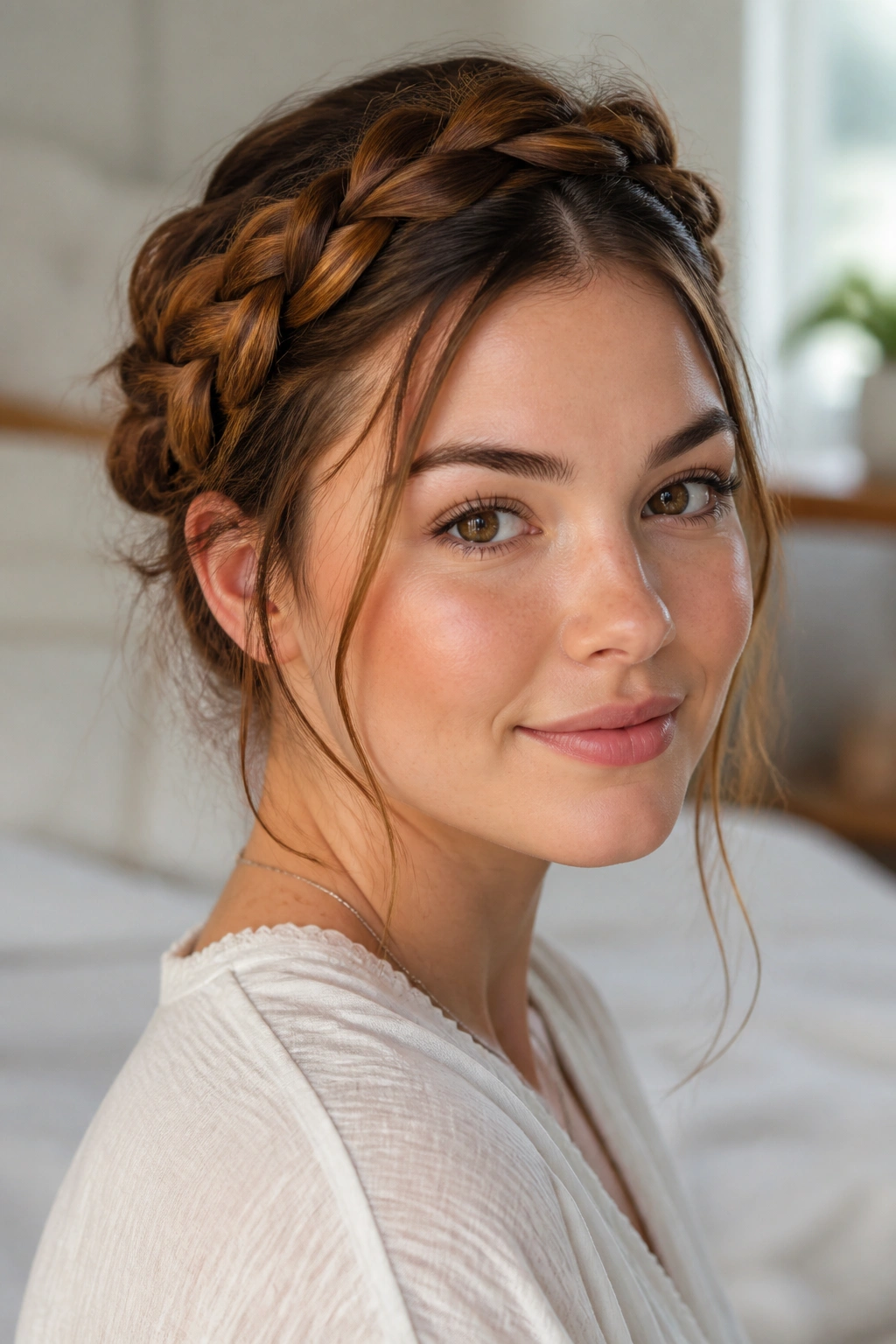
A braided crown can look regal on a round face, but only if the braid sits high enough. If it hugs the widest part of the head too closely, it adds width where you’re trying to keep things slim.
The best version starts near the temples and wraps around just above the hairline. That keeps the visual weight up top, which gives the face a little lift. I also like a few loose wisps near the ears and nape. Too-tight braids can turn the whole style into a helmet, and nobody wants that.
This style makes sense for medium to long hair, especially if you need something that holds through a long day. Second-day texture helps, so does a bit of dry shampoo at the roots. If your hair is slippery, braid it before it’s fully clean. Freshly washed hair can be too soft to grip.
It’s one of those styles that looks far more complicated than it is. That part I appreciate.
12. French Bob With Texture for Round Faces
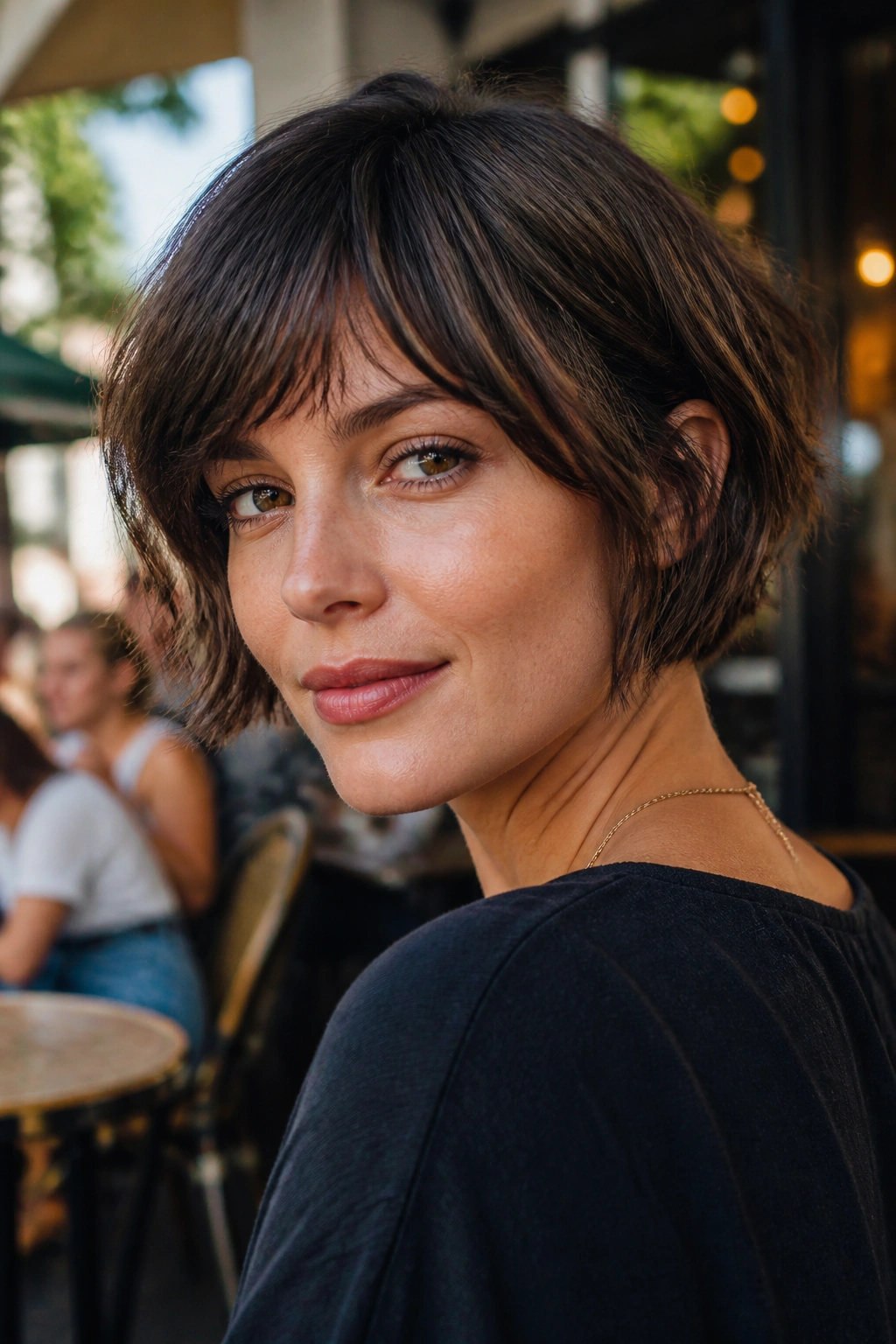
Unlike a blunt chin-length bob, the French bob earns its charm from texture and a shorter, cheekbone-skimming fringe. That difference matters on round faces, because a flat, even line can widen the face faster than people expect.
A good French bob should feel a little effortless, but not careless. The ends should be softly beveled or lightly point-cut so they don’t sit like a block. The fringe can graze the brows or split in the middle, depending on how much forehead you want to show. If your hair has natural wave, the cut almost styles itself with a bit of cream and finger-drying.
This is a strong choice if you like a little attitude in your haircut. It’s not shy. It asks for a face that can handle a short line and some texture around the jaw, which is why it suits round faces that want a sharper edge without going full pixie.
If your hair is very curly, ask for a slightly longer version. That keeps the shape from puffing too wide.
13. Shoulder-Length Curls With Layers
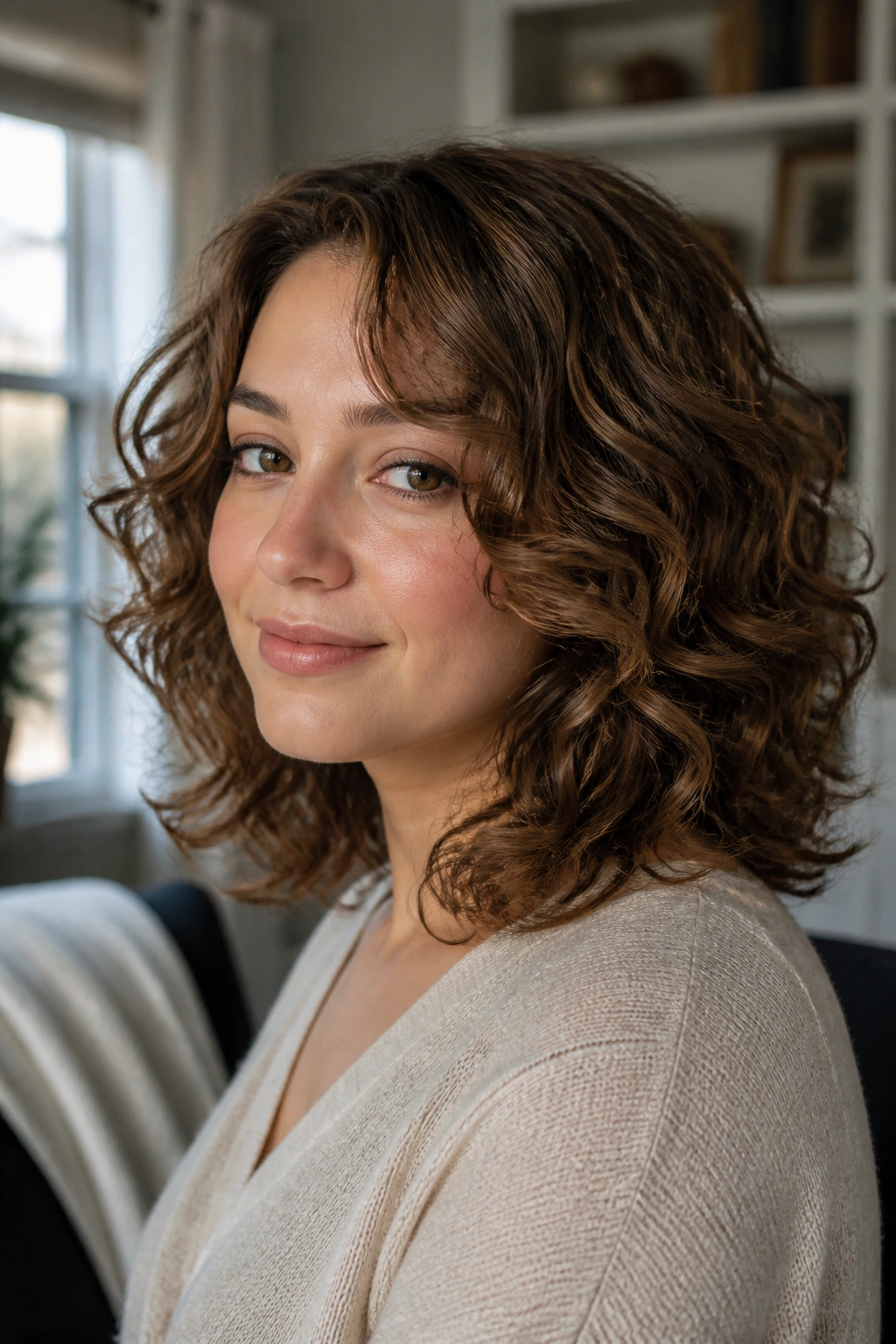
Curly hair and round faces can be a beautiful pair when the layers are cut with the right intention. The shape should build up and down, not out to the sides.
That means the layers need to start below the chin, often closer to the collarbone, so the curls fall in a vertical rhythm. A dry cut is often easier for curly hair because the stylist can see where each curl naturally sits. If the shortest layers land too high, the crown gets wide fast. If they sit too low, the shape can drag and lose bounce.
What to Ask For
- Layers that start below the jawline
- A shape that keeps curl volume off the cheeks
- A rounded silhouette, not a triangle
- A lightweight curl cream or gel that doesn’t weigh the hair down
Diffusing upside down for a few minutes can help the roots lift, but don’t overdo it. Too much scrunching adds width. Curls need room to move, and this cut gives them that room without swallowing the face.
14. Low Bun With Crown Volume
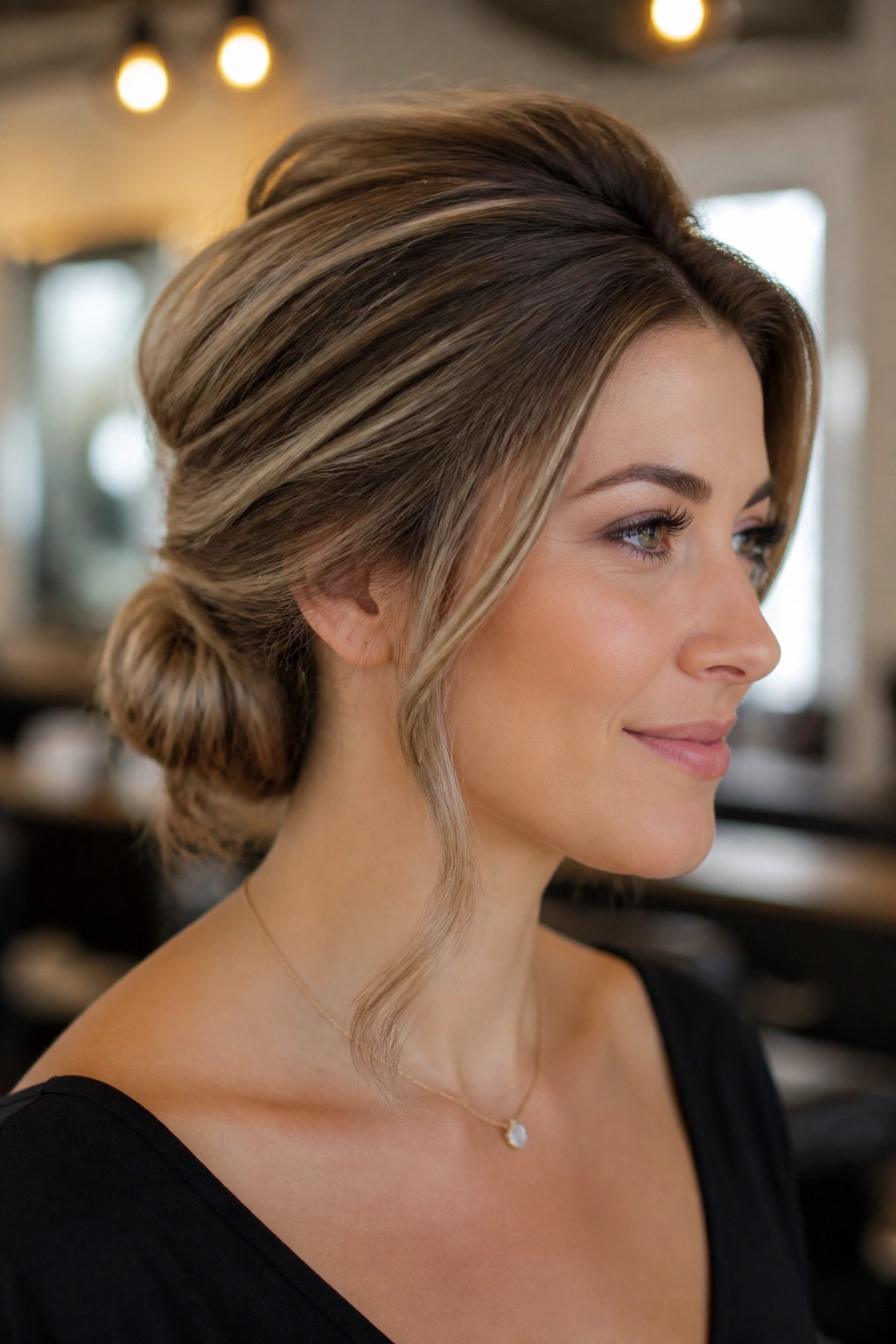
A low bun can flatter a round face if you keep the crown alive. Pin the hair too flat to the scalp, and the face reads wider. Add a little height at the top, and the whole style changes.
The best version starts with a soft side part or a slightly off-center part. Then the crown gets a bit of lift through teasing, volume spray, or even a gentle blow-dry at the roots. The bun itself should sit low at the back of the neck and stay clean, not bulky. I like a few face pieces left out if the look feels too formal.
This style is useful for weddings, dinners, or any day when you want your hair off your neck but still shaped. It’s especially good with earrings, because the exposed jawline and ear area create a longer visual line.
The mistake people make is turning the top into a smooth helmet. Don’t do that. A little height is the whole point.
15. Knotless Braids With a Side Part
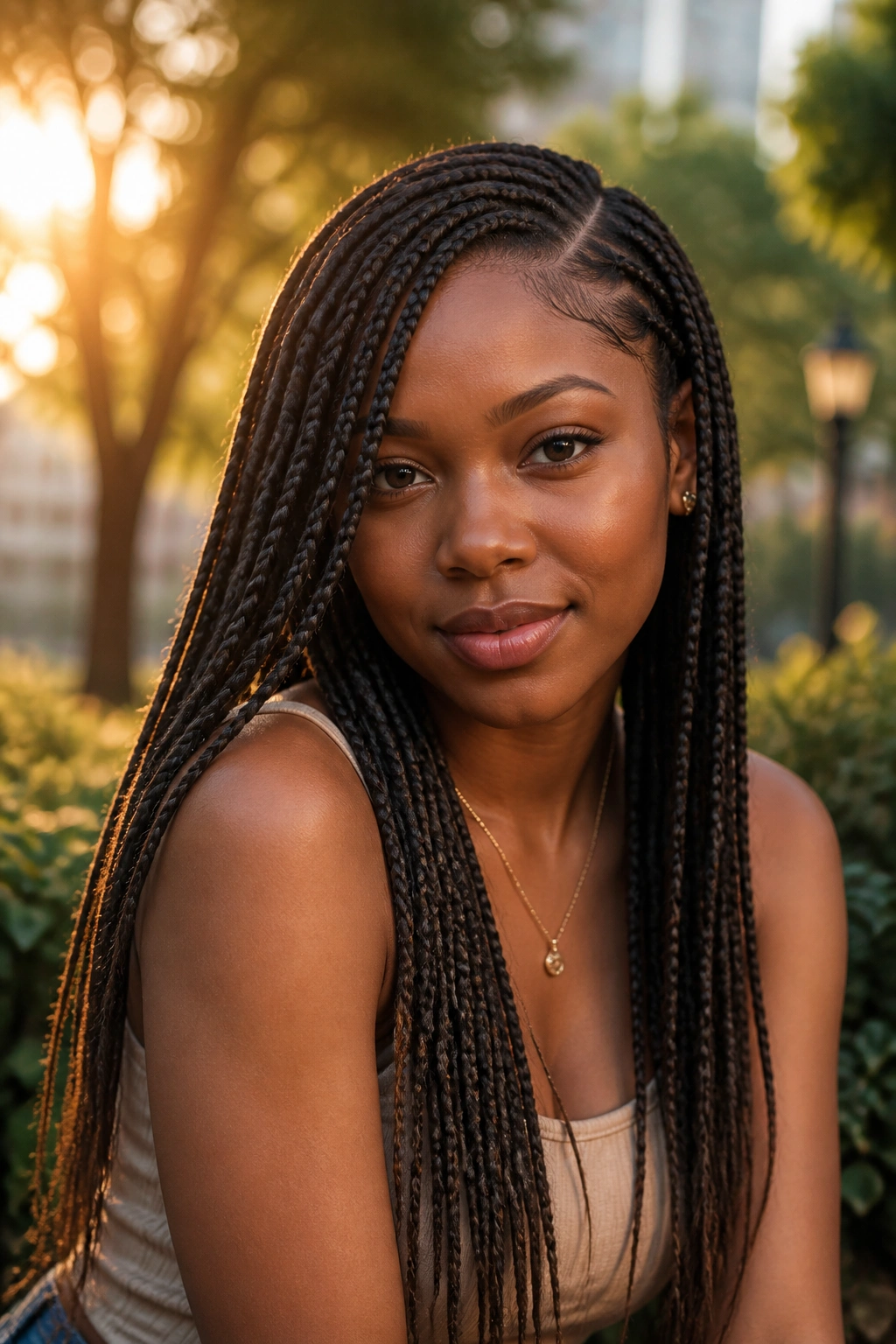
Can protective styles flatter a round face without feeling too tight? Yes, and knotless braids are one of the best answers.
The side part is the part that matters most. A clean off-center part breaks the face up and adds a diagonal line, which is easier on a round shape than a straight-down center part. Length helps, too. Braids that fall below the collarbone keep the eye moving downward, while shorter braids can sit right at the cheeks and make the face feel broader.
How to Wear It
- Ask for a side part that starts slightly off the middle
- Keep the braids a little longer than chin length
- Add a few slimmer face-framing braids if you want softness
- Avoid piling all the braids straight back from the hairline
Knotless braids also sit more naturally at the scalp, so the crown doesn’t feel heavy. That makes it easier to wear a little lift up top without the style looking bulky. Clean, long, and slightly angled—that is the formula.
16. Asymmetrical Cut With One Longer Side
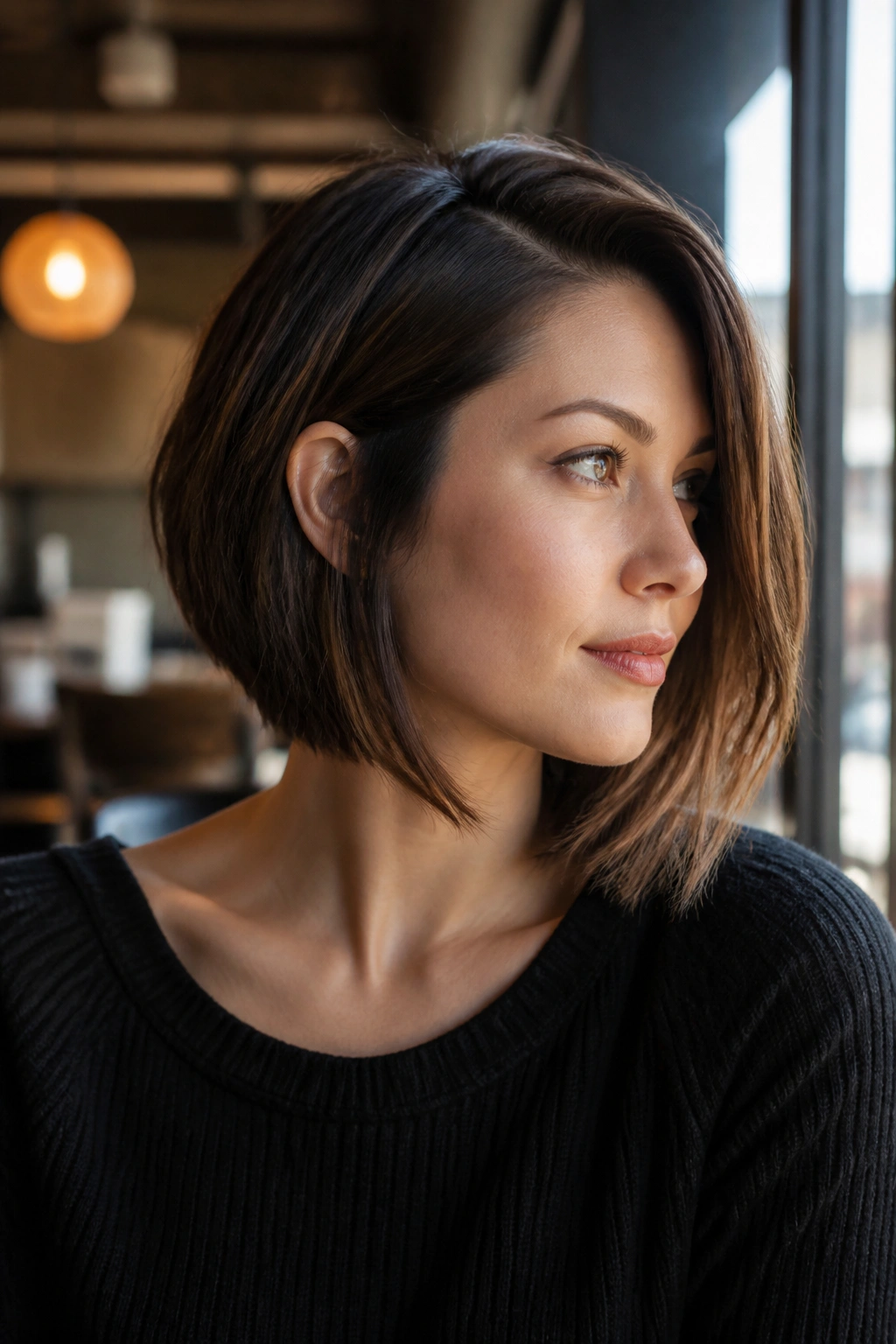
An asymmetrical cut is one of the strongest shapes for a round face because it refuses to sit evenly. That uneven line creates interest, and interest is what keeps the eye moving.
Usually, one side is cut a little longer than the other, sometimes by an inch or two, sometimes more. The longer side can fall toward the jaw or collarbone while the shorter side stays tucked closer to the face. That contrast creates a slim diagonal across the head, which is exactly the kind of line round faces wear well.
- Keep the shorter side below the cheekbone
- Let the longer side skim the neck or collarbone
- Style it with a little bend, not pin-straight perfection
- Tuck the shorter side behind the ear when you want more shape
This haircut works especially well if you like something that feels a little sharper than a standard bob. It has edge. It also has enough movement to stay wearable, which matters more than fashion people sometimes admit.
17. Messy Layered Midi Cut
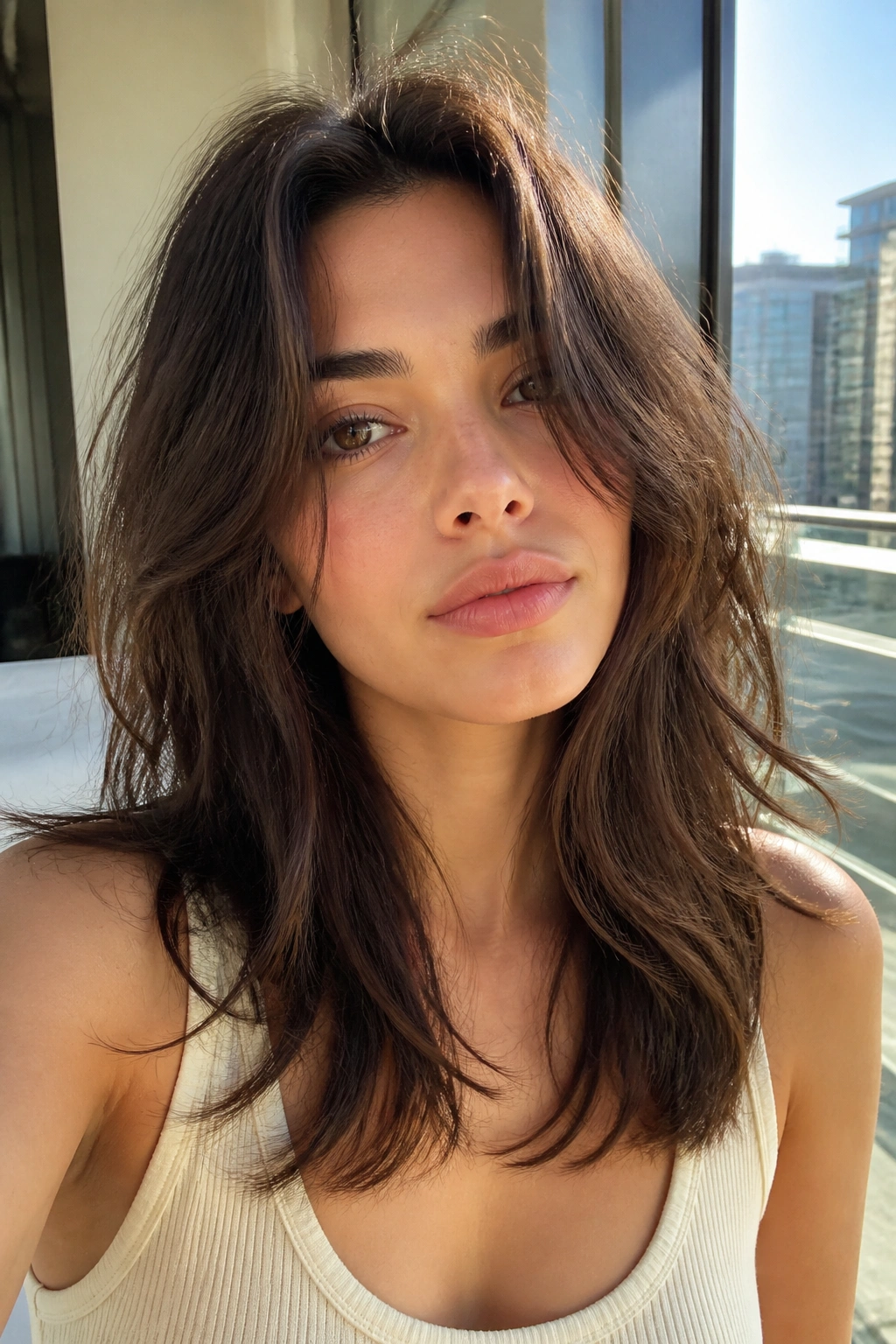
A messy layered midi cut is one of those styles people end up living in because it behaves without feeling boring. It usually lands between the shoulders and the chest, which gives a round face length without pushing the hair so far down that it feels heavy.
The layers should be invisible enough to move, not so choppy that they separate into stripes. I like this cut on hair that air-dries with a bit of texture, because the natural bend adds shape around the jaw and collarbone. If your hair is straight, a light wave through the mids keeps it from looking flat. If your hair is wavy, the cut should work with that pattern, not fight it.
There’s a sweet spot here. Too many layers and the shape gets frizzy. Too few and the style turns into a curtain. The best version feels relaxed but still planned, which is harder to fake than people think.
A little sea-salt spray can help, but use a light hand. Messy should still have a shape.
18. A-Line Lob With Tucked Side for Round Faces
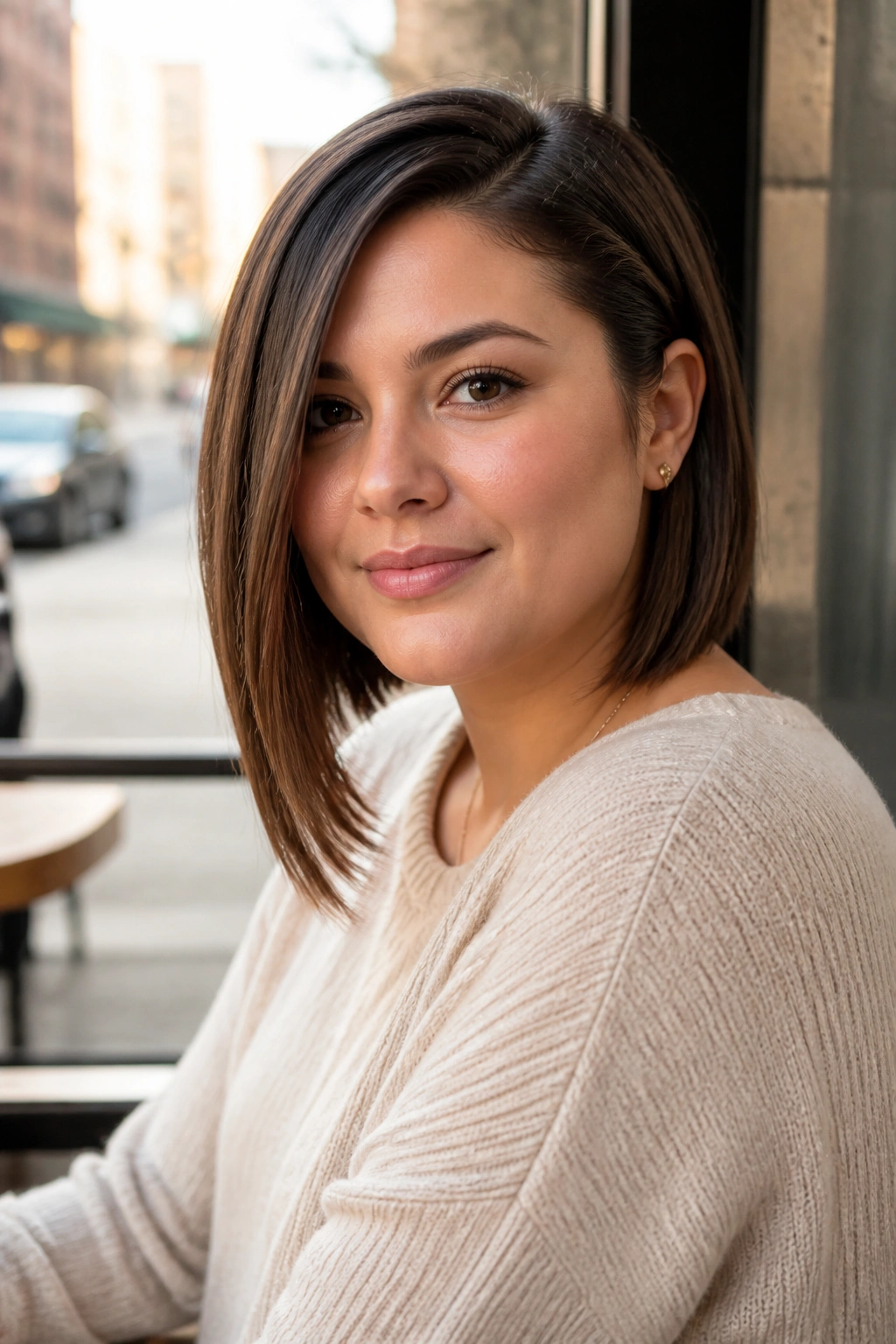
If a blunt lob feels too boxy, the A-line version keeps the front longer and the back slightly shorter. That shape gives a round face more vertical pull, and it leaves room for a little styling choice, which I always appreciate.
The nicest part is how easy it is to wear. Tuck one side behind the ear and let the longer front fall forward on the other side. That small asymmetry softens the face without adding width. A slight off-center part usually makes it even better, because the eye gets a diagonal line before it reaches the longer front pieces.
This cut suits people who want polish without too much effort. It looks clean with straight hair, but it also handles a soft wave well. If you style it with a flat iron, keep the ends blunt and smooth. If you air-dry it, put a little cream at the mids and leave the ends loose.
That’s the cut I’d point to when someone wants a bob that feels light, not boxy.
