



Fine hairstyles for round faces work best when they create length without stealing density. That sounds simple until you sit in the chair and realize a few inches in the wrong place can make the cheeks look wider and the hair look thinner at the same time.
The fix is usually less dramatic than people expect. A side part, a clean edge, or a little lift at the crown can do more for a round face than a pile of choppy layers that puff out at the sides and leave the ends looking see-through.
Fine hair has its own little set of rules. Too many short layers can make the perimeter look wispy. Too much length with no shape can drag everything flat. The sweet spot lives somewhere in the middle, and it changes depending on whether you want a bob, a lob, a pixie, or a style you can throw up in five minutes before leaving the house.
What follows is a mix of cuts and styles that keep the silhouette long, the crown lifted, and the ends honest. Some are low-maintenance. Some need a little styling. All of them can work hard for a round face if the shape is handled with care.
What Actually Flatters Fine Hair on a Round Face
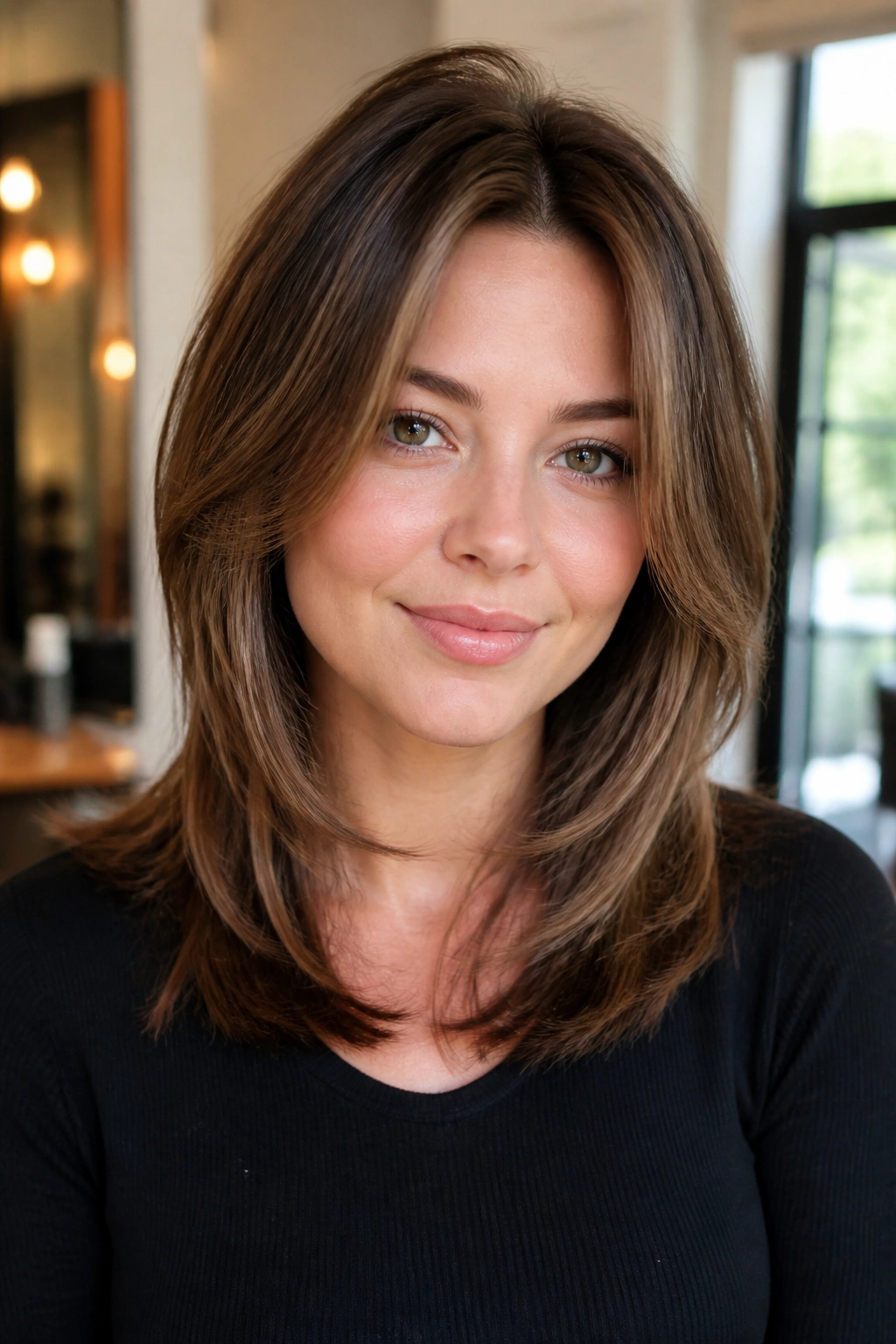
Round faces usually read widest through the cheeks, so the goal is not to hide the face. It is to guide the eye up and down instead of letting it settle on one broad horizontal line.
Crown height matters more than side puff. A little lift at the top adds length. Volume parked right at the cheeks does the opposite, which is why some cute cuts look strange the second you turn your head in daylight.
The other thing people miss is the edge of the haircut. Fine hair often looks thicker when the perimeter stays clean, blunt, or softly beveled. Once the ends get over-thinned, the whole shape can look tired. Fast.
- Length below the widest part of the cheeks keeps the face from stopping at its broadest point.
- A side part or off-center part breaks up symmetry and makes the face read longer.
- Blunt or softly beveled ends help fine strands look fuller.
- Diagonal movement from layers, bangs, or a tuck behind one ear keeps the shape from feeling too round.
Too much texture is the trap. Fine hair needs shape first, texture second.
1. Long Layers with a Soft Side Part
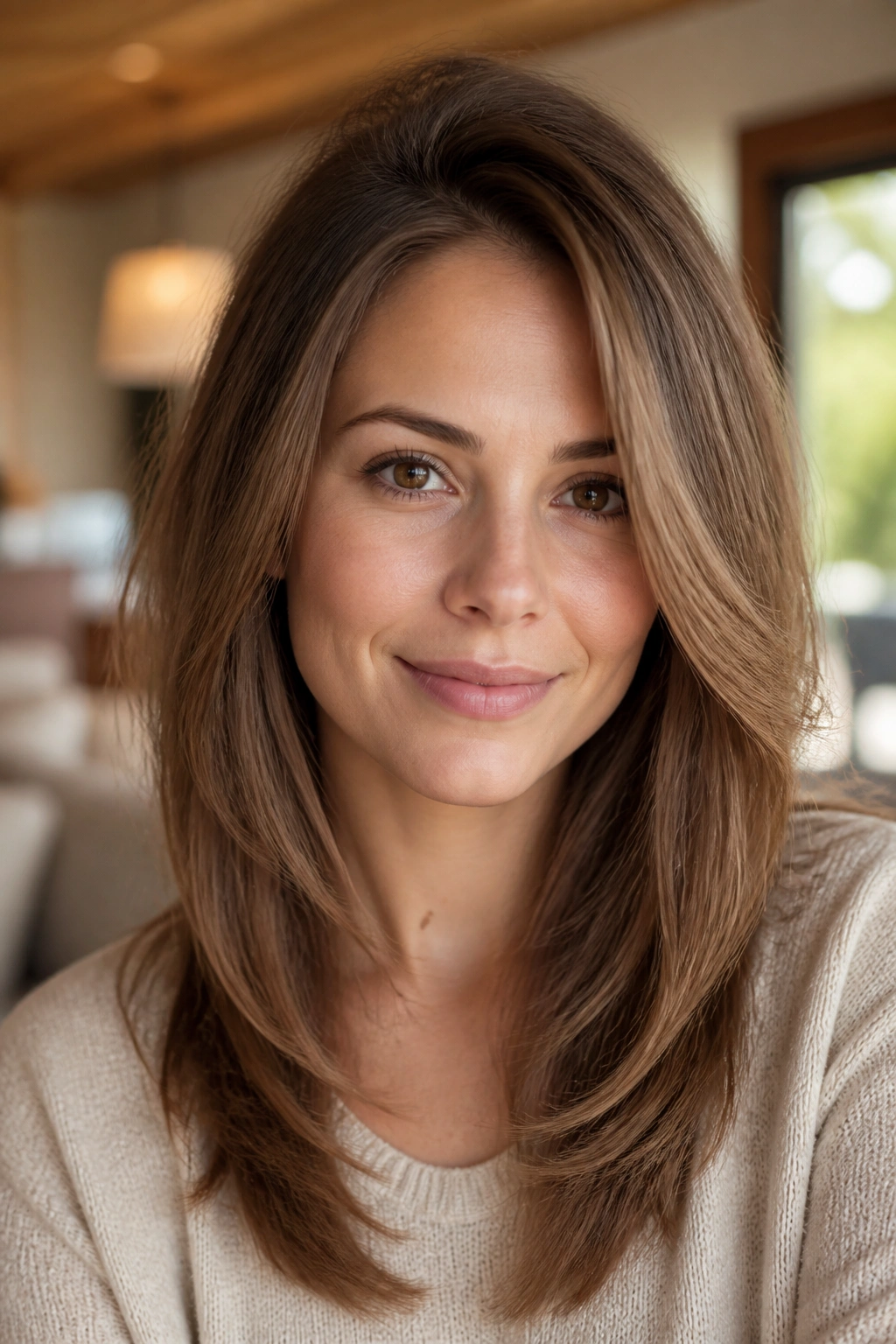
Long layers are where I’d start if you want something safe but not dull. The side part gives the face a gentle diagonal line, and the length keeps the lower half from ballooning out at the cheeks.
Why It Works
Fine hair does better when the shape stays clean through the ends. If the shortest layers start at the cheekbone, the cut can widen the face right where you do not want it.
The better move is to let the layers begin lower, around the chin-to-collarbone zone. That keeps the outline smooth and lets the hair fall instead of puffing outward.
What to Ask For
- Layers that begin below the chin
- A side part placed slightly off center
- Face-framing pieces that end near the collarbone
- A blow-dry with lift at the roots, not fluffy sides
One warning: skip razor-thin ends. They look airy for five minutes and then disappear.
2. Collarbone Lob with Blunt Ends
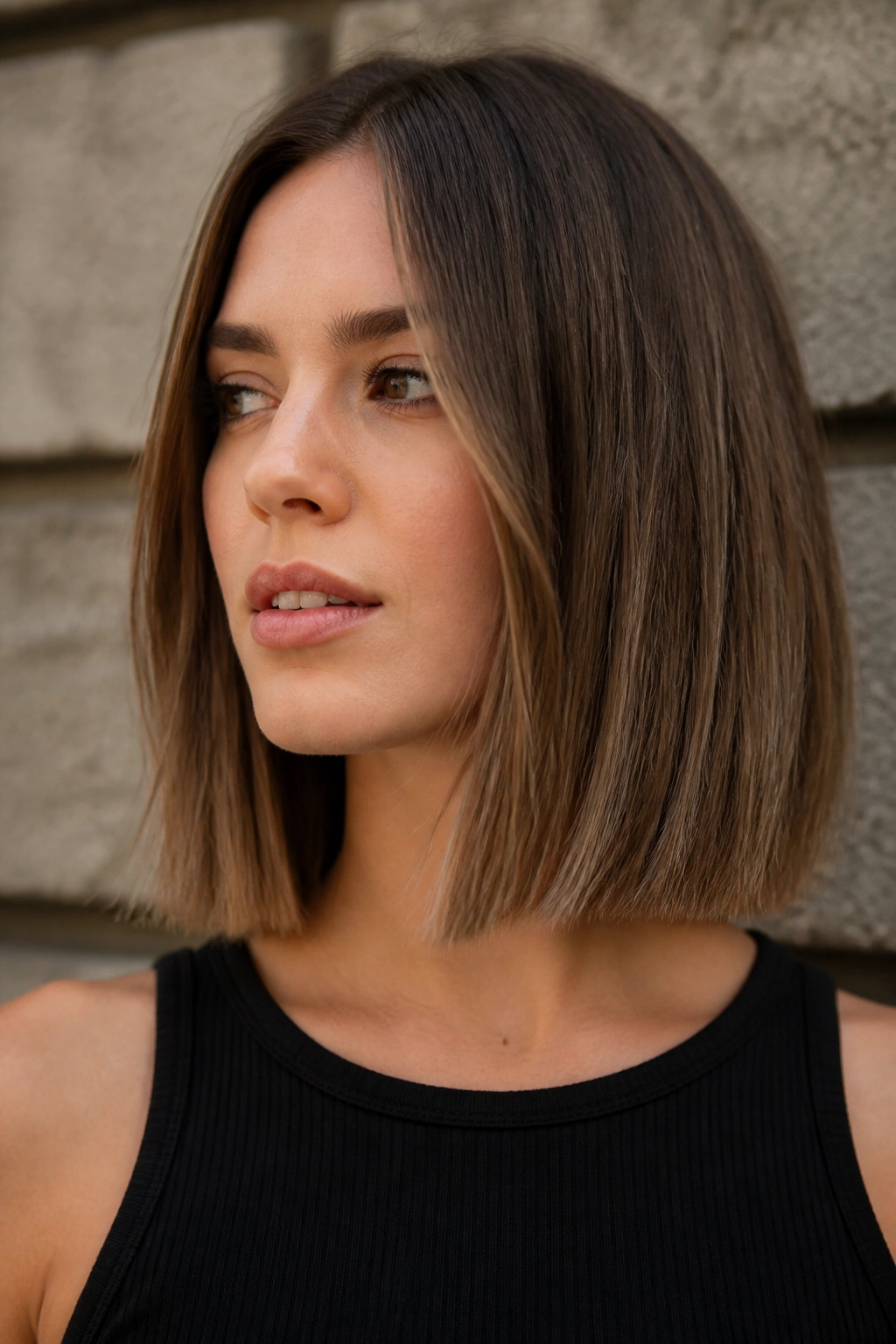
If you want your hair to look thicker fast, a blunt collarbone lob is hard to beat. The cut lands in that middle zone where the hair still moves, but the line looks dense enough to hold its shape.
A round face usually benefits from length that sits just below the jaw, and the collarbone is a smart place to stop. It draws the eye downward without dragging the style so long that it feels heavy.
This one works especially well when you keep the ends clean and resist the urge to over-layer the sides. Tiny layers can be useful. Too many are not.
The style grows out well, too. That matters more than people admit. A lob with a strong edge can survive a few awkward weeks better than a heavily shredded cut that falls apart the minute the trim loses its crispness.
3. Angled Bob with Longer Front Pieces
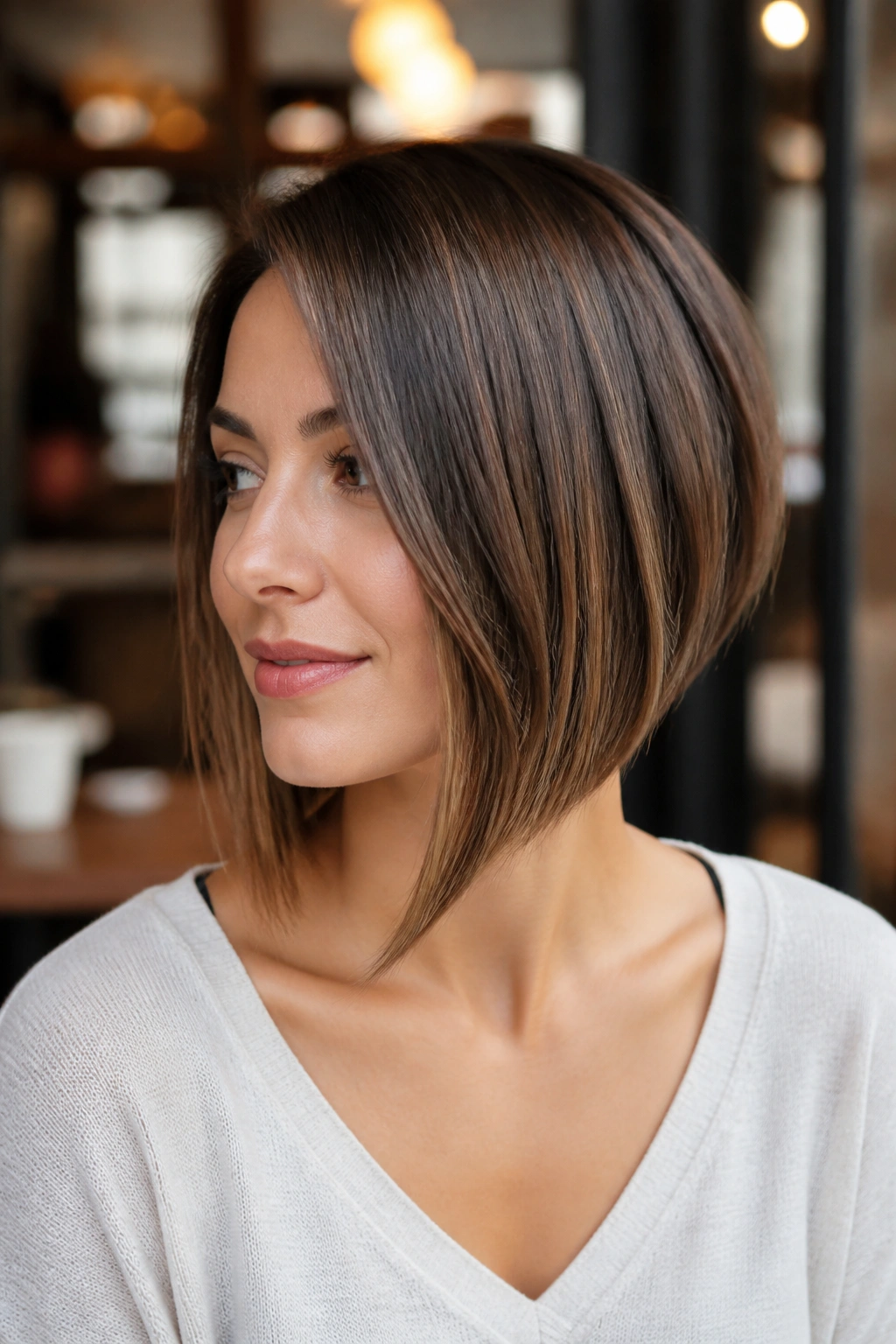
Picture a bob that is shorter at the nape and drops a little longer toward the front. That diagonal line is doing a lot of work.
The Shape Advantage
The shorter back gives fine hair a bit of lift, which helps the cut avoid that flat, helmet-like look. The longer front pieces skim past the jaw and pull the eye down, which is exactly what a round face needs.
This is one of those cuts that looks simple in a mirror and smarter in motion. The angle shows up when you turn your head, tuck the hair back, or let one side sit a little closer to the cheek.
What to Keep in Mind
- Keep the back tidy and compact
- Let the front length fall at or just below the chin
- Ask for a soft A-line, not a stacked wedge
- Style with a slight bend at the ends, not big curls
Do not over-texturize the perimeter. The line should look sharp, not shredded.
4. Curtain Bangs with Shoulder-Length Layers
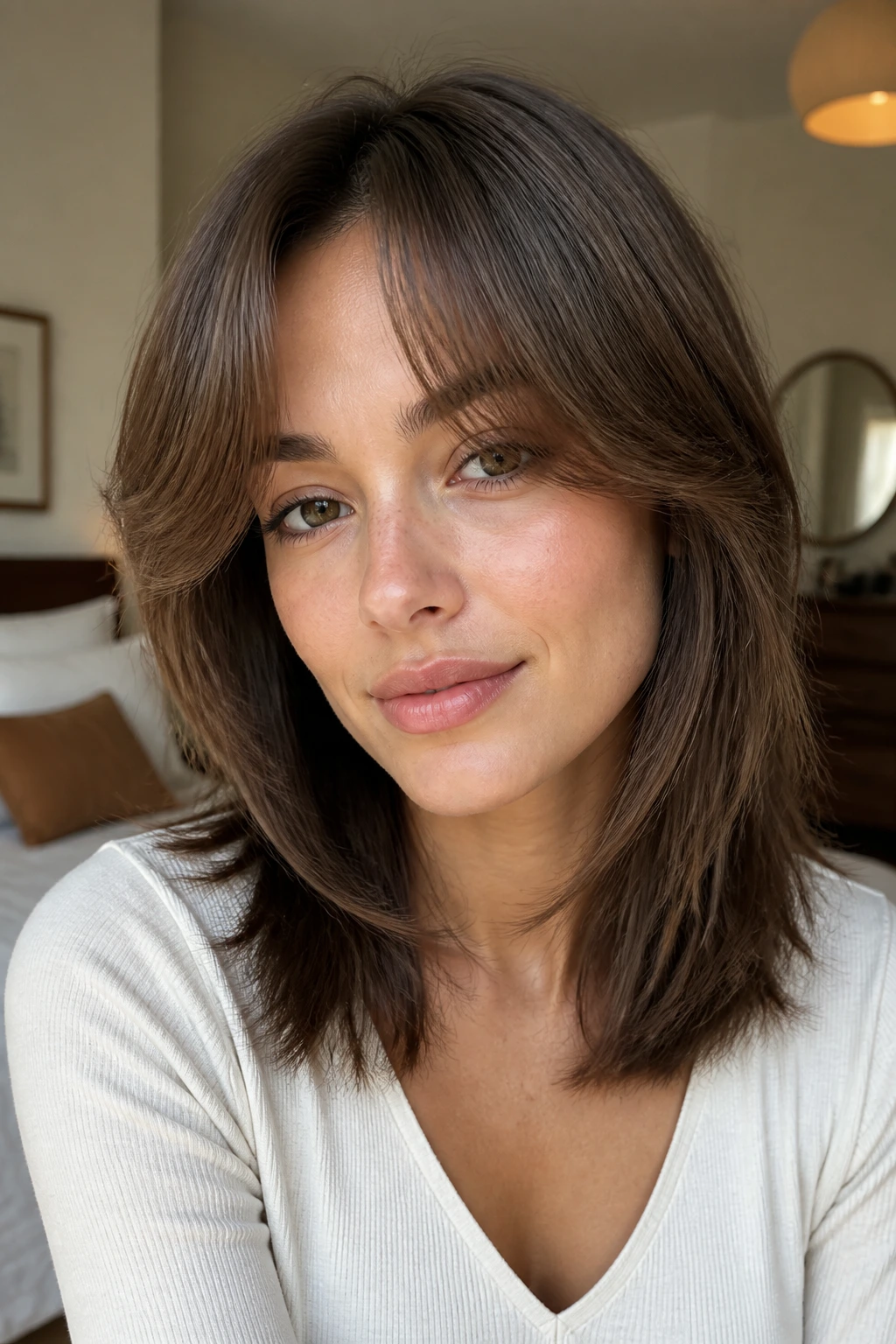
Curtain bangs can work beautifully on a round face, but only when they stay light. Heavy fringe can chop the face into smaller pieces and make it feel wider.
The softer version opens in the middle and sweeps away from the cheeks. That gives the face room while still adding interest up front. On fine hair, that matters because the bangs can act like a frame without taking much density away from the rest of the cut.
Shoulder-length layers help keep the shape from feeling too boxed in. They also make the grow-out less annoying, which is a small mercy if you do not want to trim fringe every few weeks.
The key is softness at the corners. You want a bang that drapes, not one that sits like a little curtain rod.
5. Pixie Cut with Height at the Crown
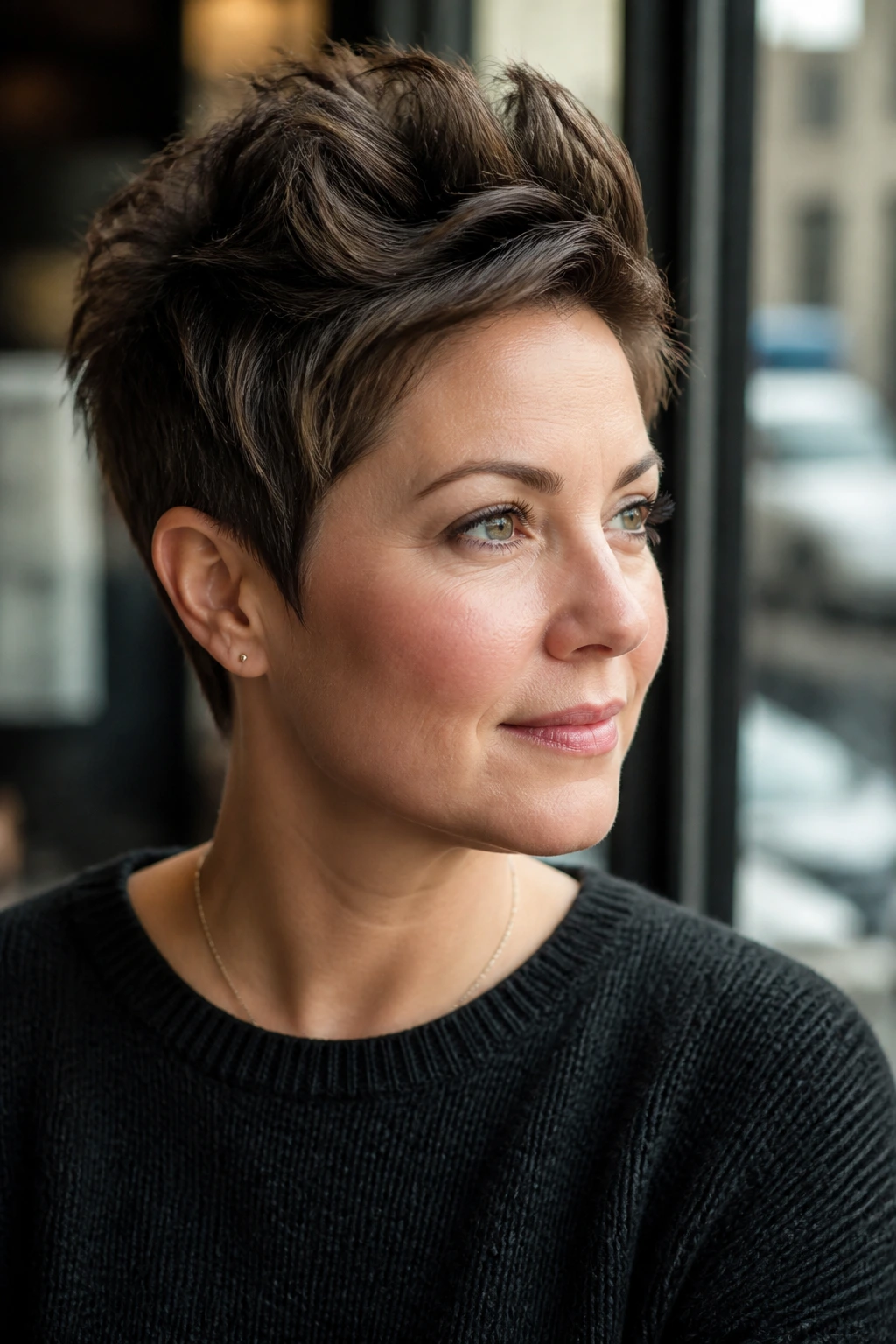
Short hair can flatter a round face when the bulk lives on top instead of at the sides. That is the whole trick with a pixie.
Why It Works
Fine hair often looks better with less weight, and a pixie removes the length that can pull the hair flat. The crown height adds vertical space, while the tapered sides keep the face from looking wider.
A good pixie on a round face is not all about being edgy. It is about control. The top should have enough length to lift and move, and the sides should stay close enough to the head to keep the shape tidy.
Ask for These Details
- Tapered sides and nape
- Longer, piecey layers on top
- A little extra length at the crown
- Styling with mousse or a light paste, not heavy cream
Short does not mean flat. Blow-dry the crown up and slightly forward, then finish with your fingers.
6. Textured Shag with Soft Ends
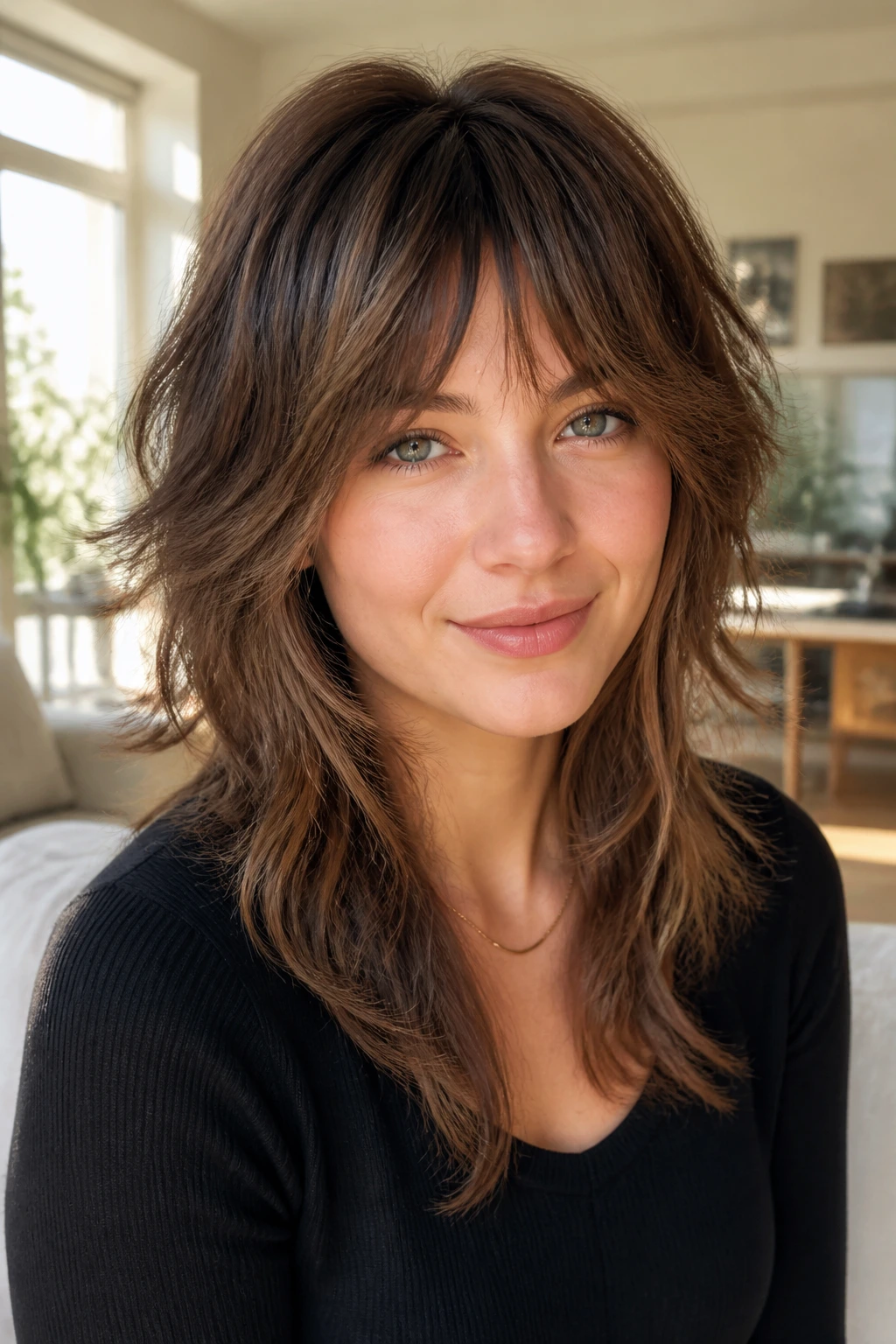
A soft shag is not the same thing as a choppy mess. On fine hair, the wrong shag can leave you with flyaway ends and no real body. The right one keeps longer pieces around the face and a little texture through the top.
Unlike a heavy layered haircut, this version does not try to create volume at every level. It saves the lift for the crown and upper sides, then lets the lower lengths hang more cleanly. That balance keeps the face from reading boxy.
This cut is happiest on hair that has a little bend, wave, or grit. If your strands are slippery and straight, use a small amount of mousse at the roots and rough-dry before adding any shape with a 1-inch iron.
I keep coming back to this one because it looks lived-in without looking sloppy. There is a difference.
7. Deep Side-Part Waves
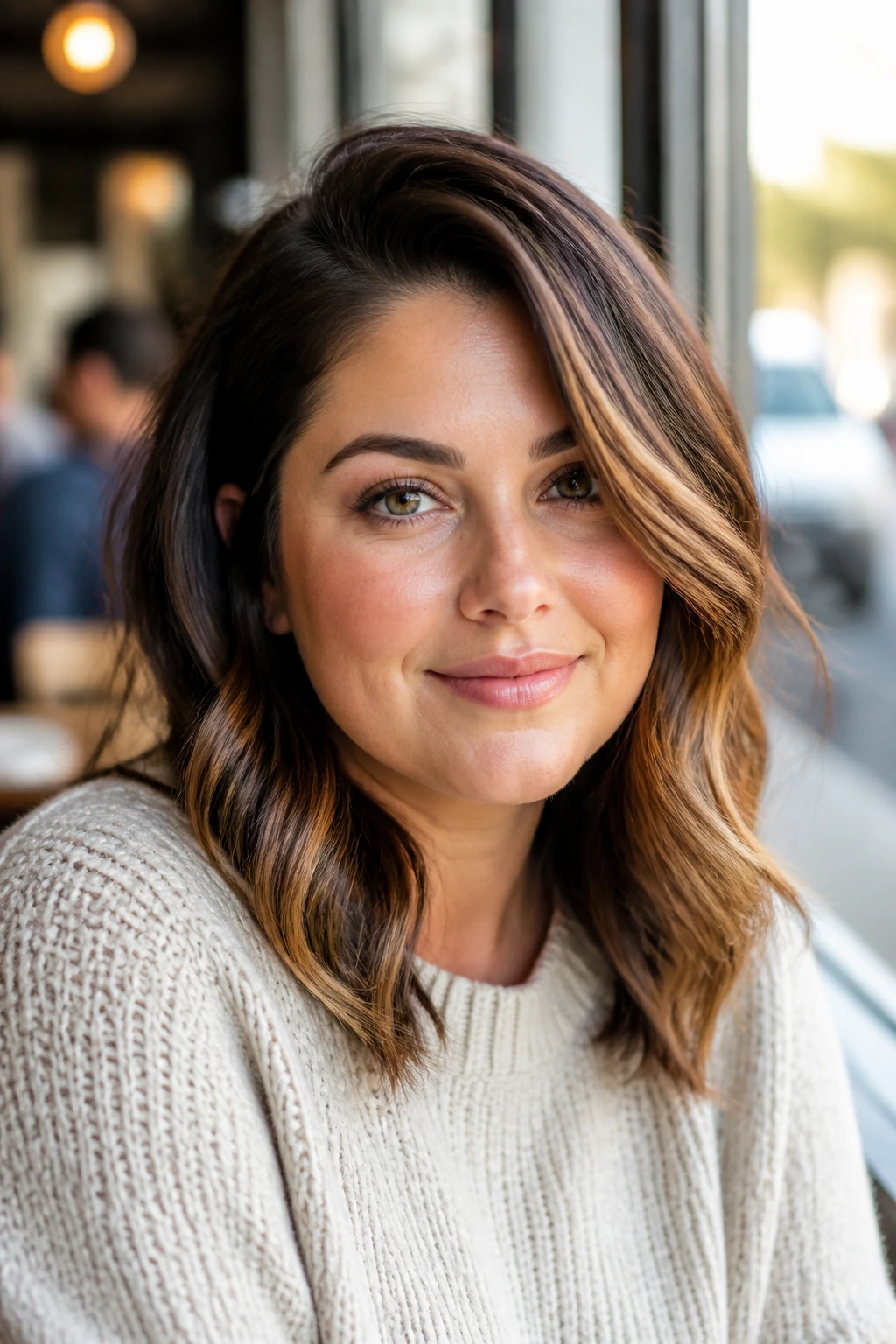
Why does a deep side part do so much? Because it breaks symmetry before you even touch a curling iron.
The bigger side of the part adds lift at the root, and the smaller side helps the face read a little longer. On a round face, that asymmetry matters. It pulls the eye diagonally instead of letting it stop at the widest point.
Fine hair loves this style because the waves do not have to be huge. A loose bend through the mid-lengths is enough. If the hair starts to puff at the sides, the whole point gets lost.
- Use a root-lift spray at the heavier side of the part
- Curl away from the face with a 1 to 1.25-inch iron
- Leave the ends a touch straighter for a softer finish
- Pin the lifted side while it cools if you want the shape to last longer
One small detail changes everything: put the part a full inch farther over than feels normal.
8. Sleek Straight Lob
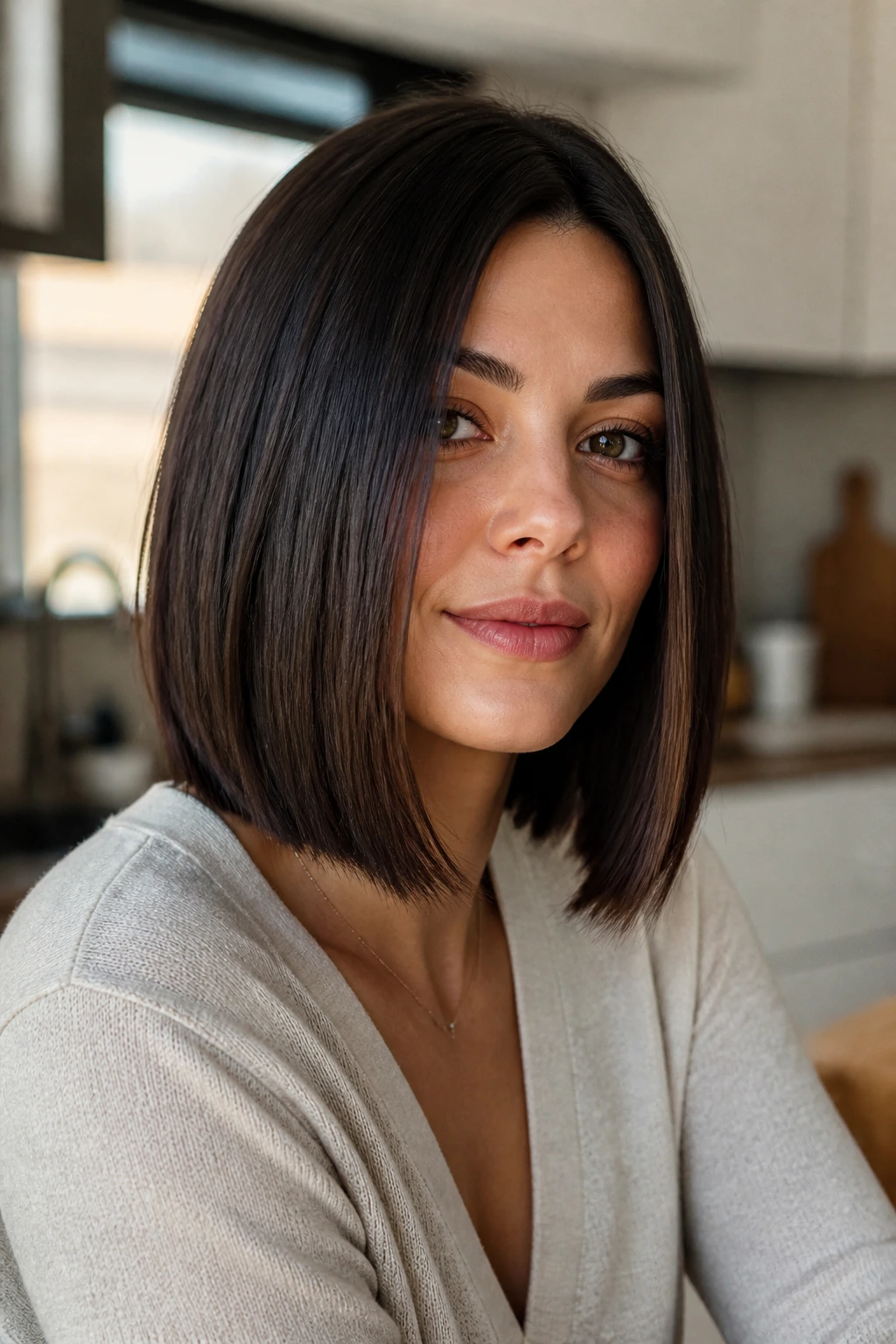
Sleek is not boring here. In fact, a straight lob can be one of the smartest choices if your fine hair tends to fray out instead of holding waves.
The reason is simple. A smooth vertical line makes the hair look denser, and the length below the chin helps the face feel longer. The style is especially good when the ends stay blunt or only slightly beveled, because that edge gives the illusion of more body.
What you do not want is a pin-straight, limp finish that hugs the cheeks. Add a slight inward bend or keep the line floating just off the jaw.
The styling matters more than people think. A heat protectant, a blow-dry with a paddle brush, and a tiny bit of shine spray at the mid-lengths will do more than a can of heavy hairspray ever will.
9. Butterfly Layers
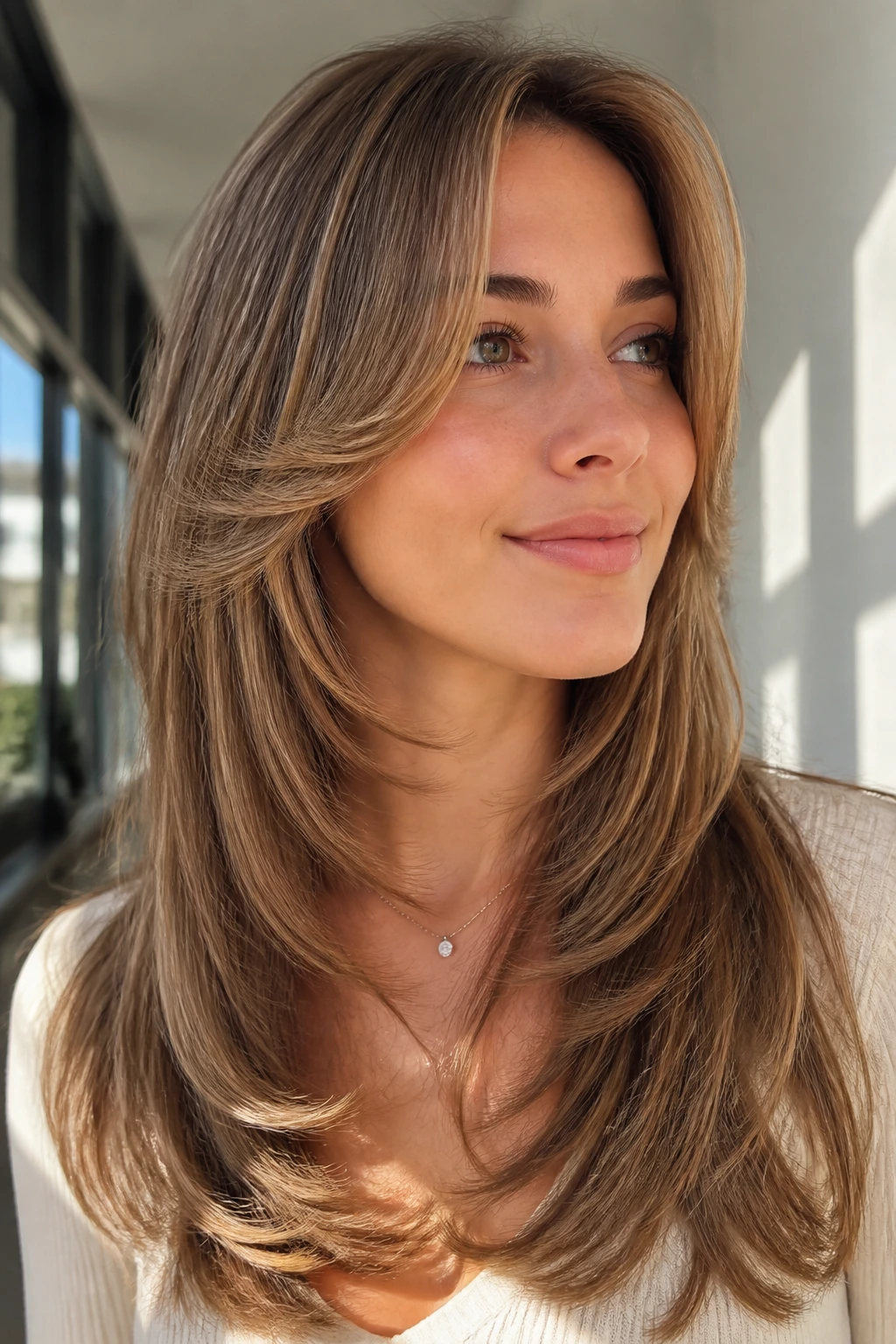
Butterfly layers are a nice middle ground when you want movement but do not want to lose length. The shorter face-framing layers create softness around the cheekbones, while the longer length stays intact underneath.
That split in the shape is the appeal. The front gets lift and motion, and the bottom keeps enough weight to stop fine hair from looking too sparse. On a round face, the result is flattering because the eye moves through the layers instead of stopping at one wide point.
This cut works best when the layers start around the cheekbone or a little below, then blend back into longer hair. If the short pieces start too high, the style can feel airy in a bad way.
Ask for fewer interior layers if your hair is very fine. You want visible movement, not a haircut that disappears halfway down the shaft.
10. Soft Wolf Cut

A soft wolf cut is the gentler cousin of the sharper version people see online. That matters, because an aggressive wolf cut can eat up fine hair faster than it helps it.
The softer take keeps length in the perimeter and uses controlled layers up top to add a little lift. For a round face, that lift is useful as long as it stays above the widest part of the cheeks. The sides should not flare out like a mushroom.
Best Features of the Softer Version
- Longer crown layers
- Face-framing pieces that fall past the jaw
- Minimal thinning through the ends
- Texture spray used lightly, not sprayed until the hair feels dry
This style likes a bit of chaos, but only a bit. A rough, piecey finish gives it life. A frizzy finish makes it look like you ran out of patience halfway through.
11. Chin-Skimming Bob Tucked Behind One Ear
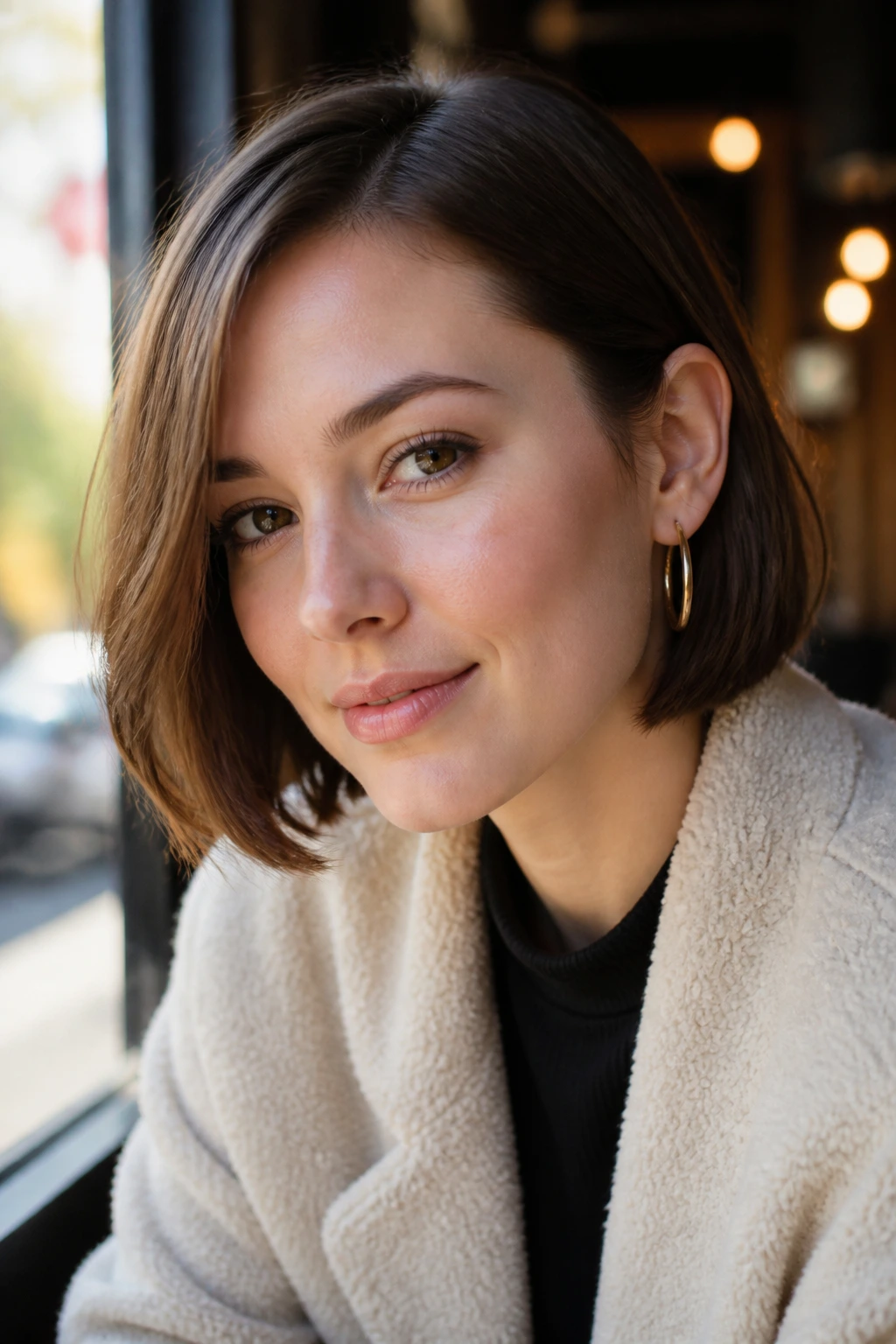
Unlike a perfectly even bob, this one uses imbalance on purpose.
A chin-skimming length is flattering because it lands near the jaw without stopping right at the cheek’s widest point. Then you tuck one side behind the ear, which opens up one cheekbone and creates a diagonal line across the face.
That tiny asymmetry does a lot of visual work. It keeps the style from feeling too round, and it gives fine hair a little instant shape without teasing or heavy product.
This is one of my favorite low-effort tricks. One side stays tucked, the other side falls free, and suddenly the whole cut feels more directional.
Little asymmetry goes a long way. You do not need a dramatic undercut to get the effect.
12. Blunt Bob with a Soft Bevel
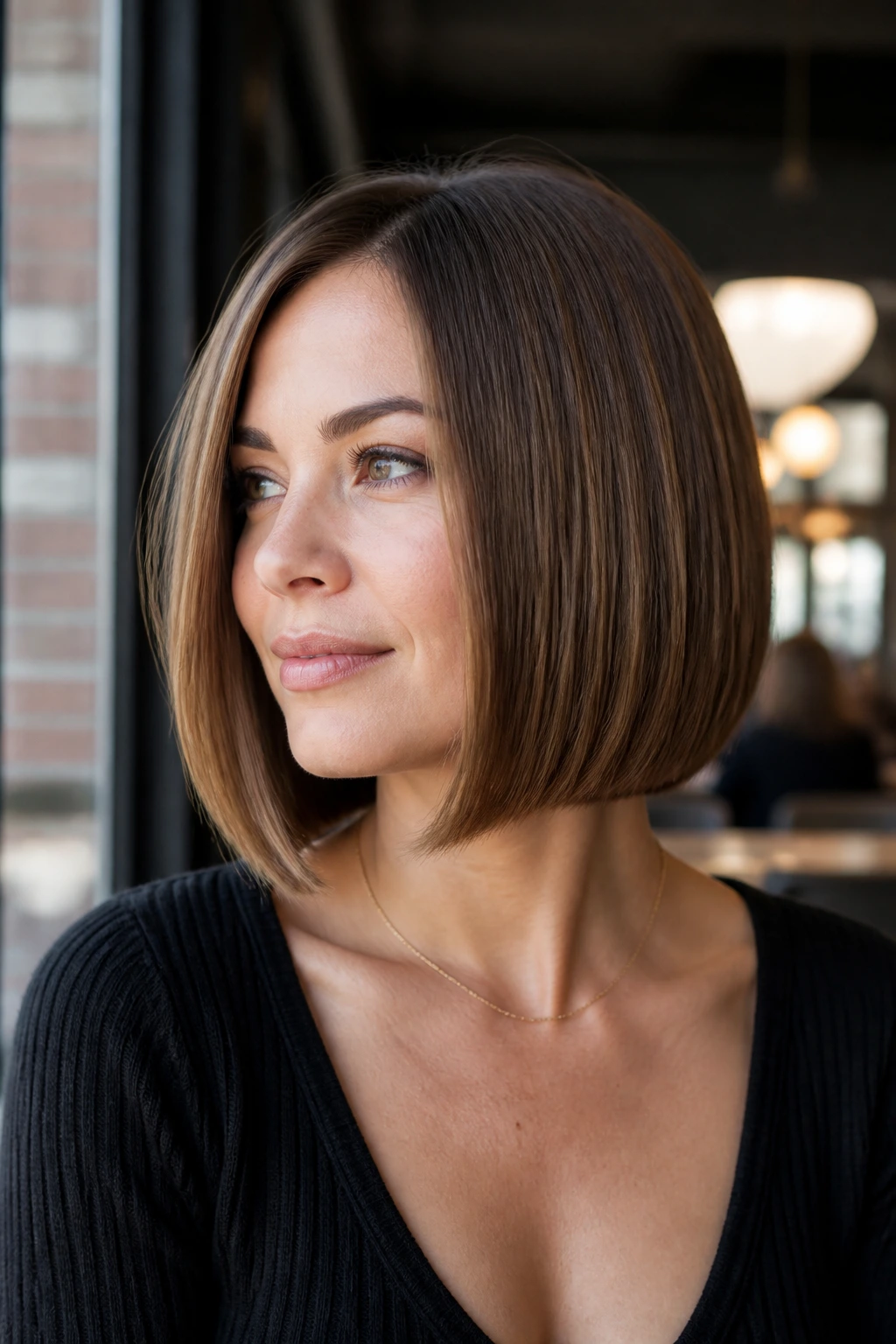
A blunt bob can make fine hair look thicker in a way few other cuts can. The key is to keep the edge strong while softening the very ends so the style does not feel boxy.
How to Keep It Slim
The bob should sit just below the jaw or at the collarbone, depending on how much length you want to keep. If it lands exactly at the widest part of the face, it can make the roundness more obvious.
A soft bevel at the bottom keeps the line polished and stops it from jutting out. That little curve is enough. You do not need a big round-brush flip.
Ask Your Stylist For
- A clean perimeter
- A subtle bevel, not a curl
- Slightly off-center parting
- Minimal layering through the sides
This cut is blunt, not heavy. There is a difference, and it matters.
13. Wispy Bangs with a Shoulder Cut

Wispy bangs are for people who want fringe without the hard line. On a round face, that lightness helps because it softens the forehead without chopping the face into a shorter shape.
The shoulder-length cut underneath keeps the overall silhouette long enough to balance the cheeks. Fine hair benefits here because the bangs do not need to be dense to do their job. A little separation is better than a thick, packed fringe that sits like a curtain across the whole front.
I would keep the bangs a touch longer than you think at first. Fine hair can spring up, especially if it has any wave, and bangs that are too short tend to fight you every morning.
A light dry shampoo at the roots can help them sit where they should. Not a ton. Just enough to take away the slip.
14. Feathered Mid-Length Cut with Flipped Ends

What makes a feathered cut different from a plain layered cut? It is the way the ends move.
Feathering removes some weight without making the shape feel shredded. On fine hair, that is useful because it lets the hair swing a little while still keeping enough body to look full. For a round face, the effect is even better when the flip stays below the chin.
The ends can turn slightly outward or inward, but they should not bloom at cheek height. That is the part that widens the face. A little flip near the collarbone is fine. A lot of bend near the cheeks is not.
Style Notes
- Use a medium round brush for the ends
- Keep the root area smooth
- Set the front pieces away from the face
- Finish with a light mist of flexible spray
The movement should feel airy, not puffy.
15. Half-Up Crown Lift
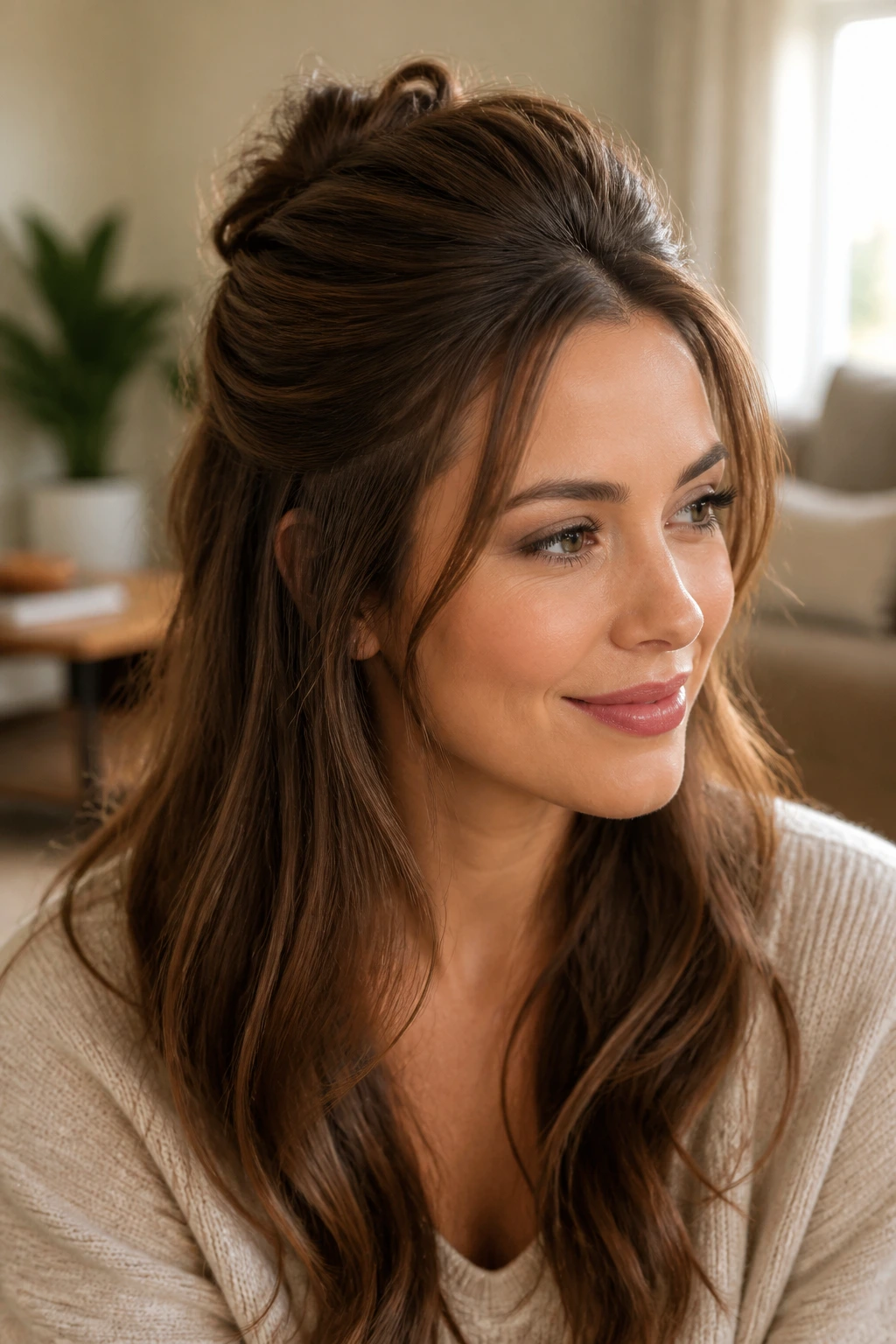
A half-up style can be a lifesaver on fine hair because it creates height without asking the entire head of hair to do the work.
The trick is simple: lift the top third of the hair, secure it loosely, and leave the lower half to carry the length. On a round face, that crown lift adds vertical space, which helps the face feel a little longer. The lower lengths keep the rest from looking too tiny or compressed.
You can make this as polished or as casual as you want. A small claw clip gives a softer look. A tiny elastic and a wrapped strand of hair feel neater. Either way, the top should not be pulled slick and tight.
A little looseness matters. If the half-up section is yanked back hard, the style can make the cheeks look fuller instead of slimmer.
16. Low Ponytail with Volume at the Crown
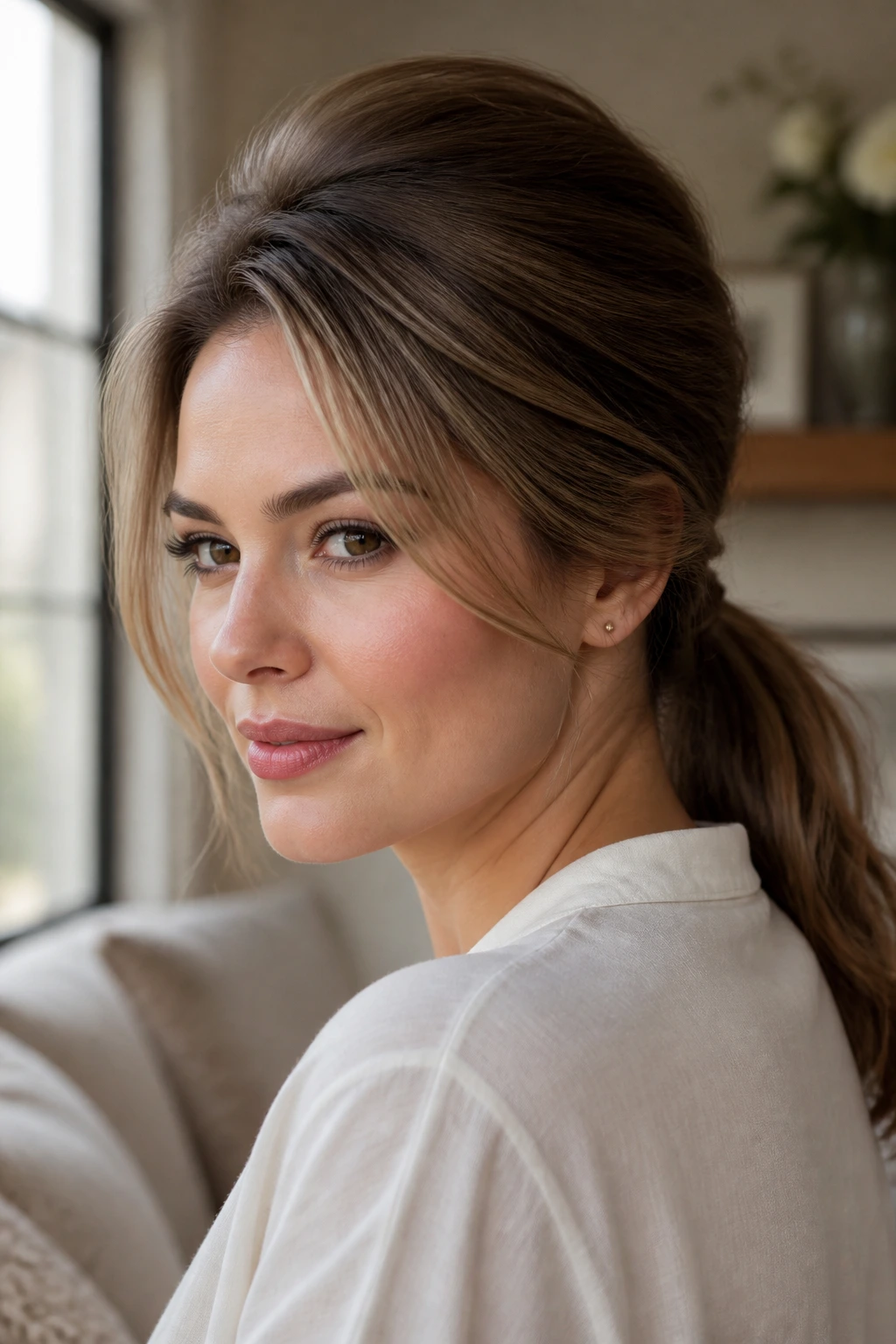
A low ponytail only works for a round face if you give it a little lift first. Otherwise it can sit so flat that the face reads broader by comparison.
The shape I like keeps a side part or slight center drift, then adds a small amount of height at the crown before the ponytail is secured at the nape. That gives the head more length from top to bottom. Fine hair benefits because the ponytail itself does not need to be thick to look neat.
Wrap a small piece of hair around the elastic if you want the finish to look cleaner. It is a tiny thing, but it stops the style from looking rushed.
You can also leave a couple of narrow front pieces out to soften the cheeks. Just do not leave so many that the style loses its clean line.
17. Messy Bun with a Side Part and Loose Tendrils
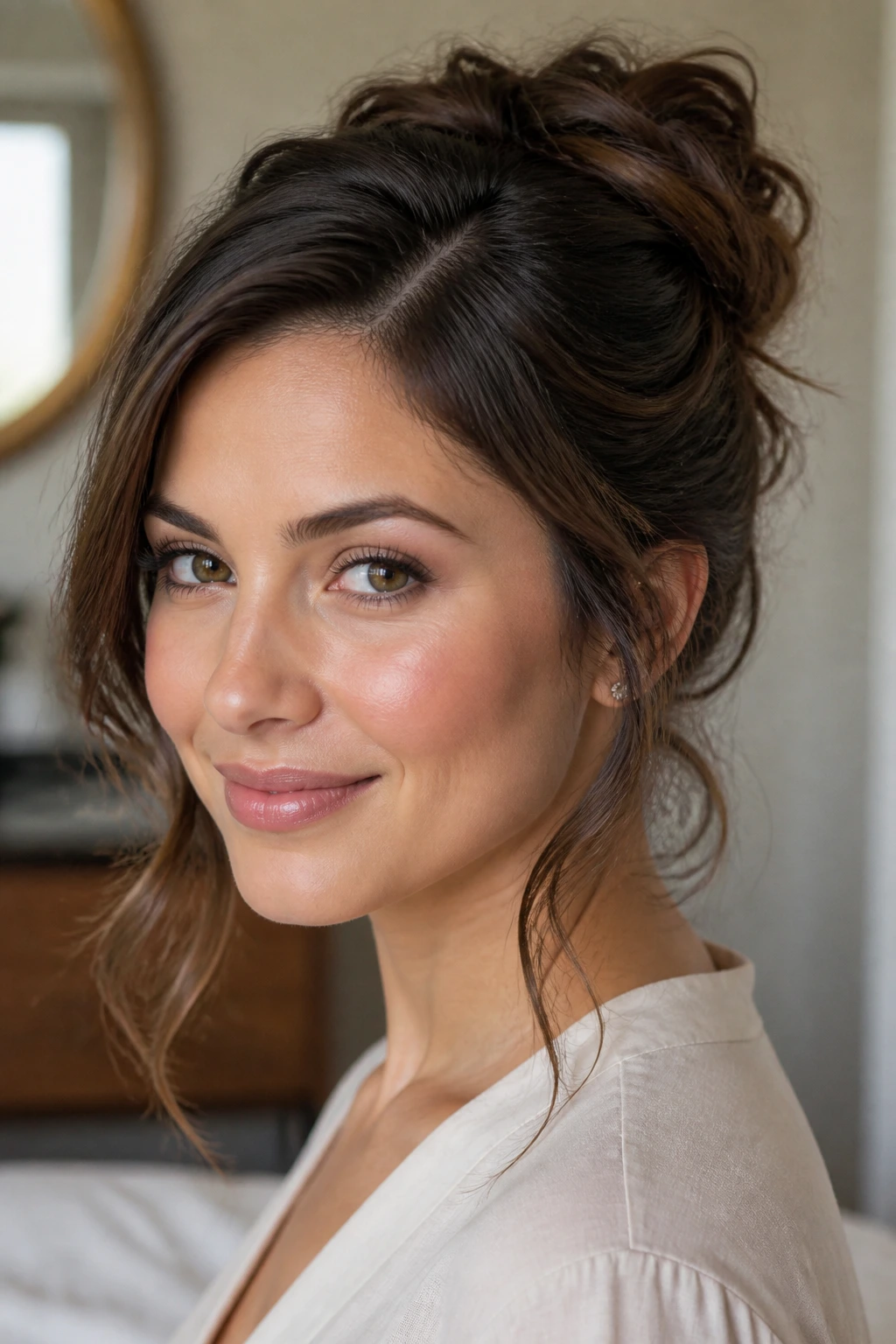
A tight ballerina bun can make a round face look wider because it flattens the crown and puts all the attention at the sides. A messier bun with a side part does the opposite.
The side part helps the top of the style feel lifted, and the loose tendrils soften the line around the jaw. Fine hair usually needs a bit of texturizing spray or dry shampoo before it goes into a bun, because freshly clean hair can be too slippery to hold.
The important thing is restraint. Two soft tendrils are enough. Six little face pieces is too many and starts to look fussy.
Keep the bun a touch higher than the nape. That tiny shift makes the neck look longer and the face less circular.
18. Side-Swept Braid with a Pinned Crown
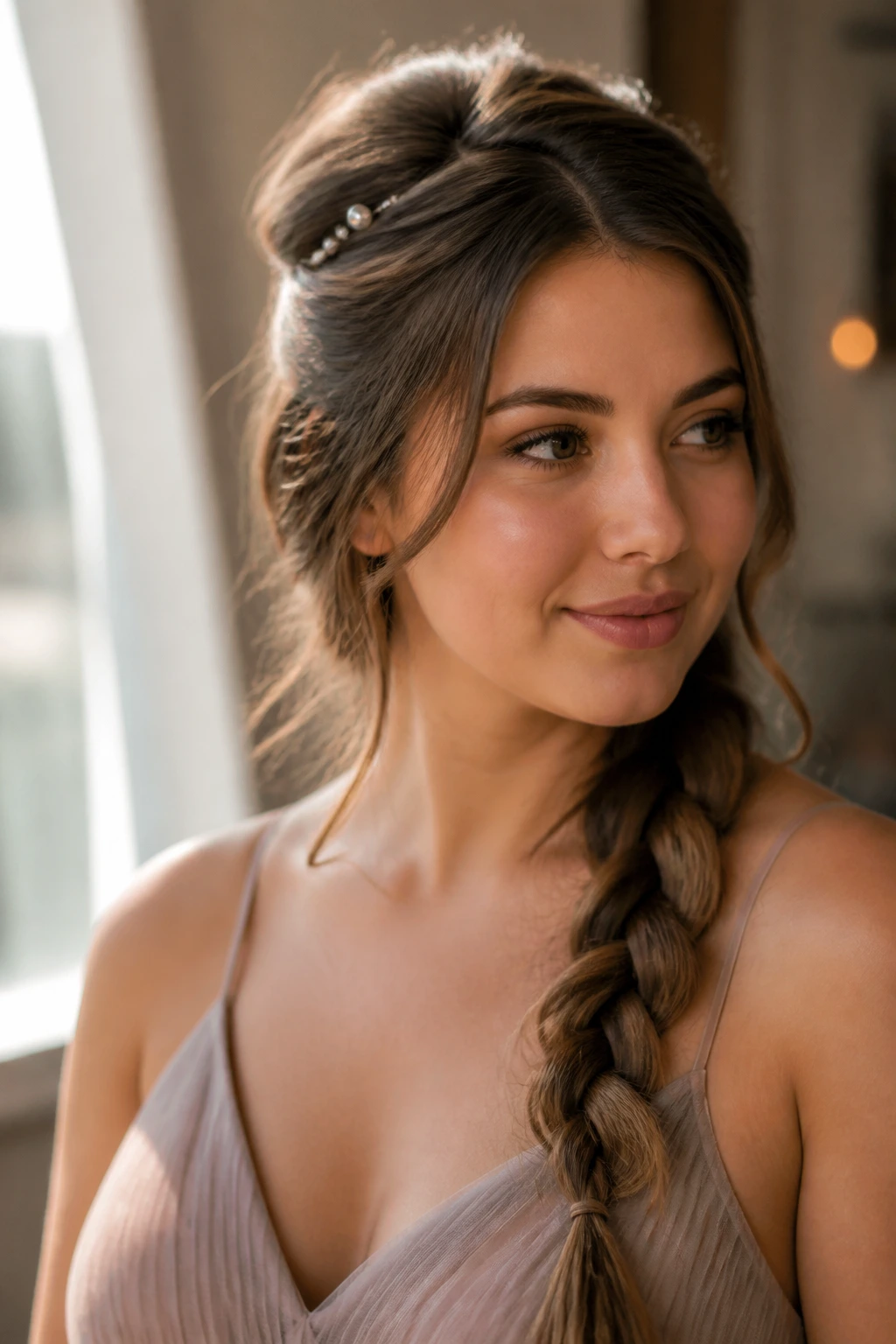
A side-swept braid creates a long diagonal line, which is exactly why it works on a round face. The eye follows the braid across the body instead of stopping at the cheeks.
Fine hair can wear this style well if you build a little texture first. A dry texture spray or light mousse gives the strands enough grip to braid without slipping apart. Once the braid is done, gently pull it wider with your fingers so it looks fuller.
How to Make It Flatter the Face
- Start with a side part
- Braid loosely over one shoulder
- Pin the crown lightly for lift
- Pancake the braid a little for width and softness
This is a smart style for weddings, long days, or any time you want hair off your neck without losing shape. It is also kinder to fine hair than a tight braid, which can show every thin spot.
Final Thoughts
The cuts and styles that do the most for fine hair and a round face usually share the same trick: they add shape where the eye needs it, not where the hair is already widest. That means a little crown lift, a little diagonal movement, and a perimeter that still looks like hair, not mist.
If you are choosing between two looks, I would pick the one with the cleaner edge every time. Fine hair rarely benefits from being shredded to pieces, and round faces rarely benefit from extra width parked at the cheeks.
Bring a photo to the salon that shows the silhouette you want, not just the front view. That single move saves a lot of awkward interpretation, and it keeps the conversation focused on shape, which is the whole point here anyway.
