



A round face doesn’t need to be hidden. It needs shape.
That’s the part a lot of people miss. The wrong short cut can widen the cheeks, flatten the crown, and leave the whole look feeling a little too circular. The right one does the opposite: it adds lift, breaks up width, and gives the eye somewhere to travel besides straight across.
Short hairstyles for round faces work best when they bring in angles, height, or a bit of movement around the cheeks and jaw. Not every cut needs to be sharp. Some are soft. Some are messy. Some are sleek enough to look almost strict. The common thread is simple: they create lines that work with a round face instead of echoing it.
One more thing. A good cut on a round face is rarely about chasing length for its own sake. It’s about where the length sits, how the fringe falls, and whether the sides puff out or stay close. That difference is huge.
1. Side-Swept Pixie for Round Faces
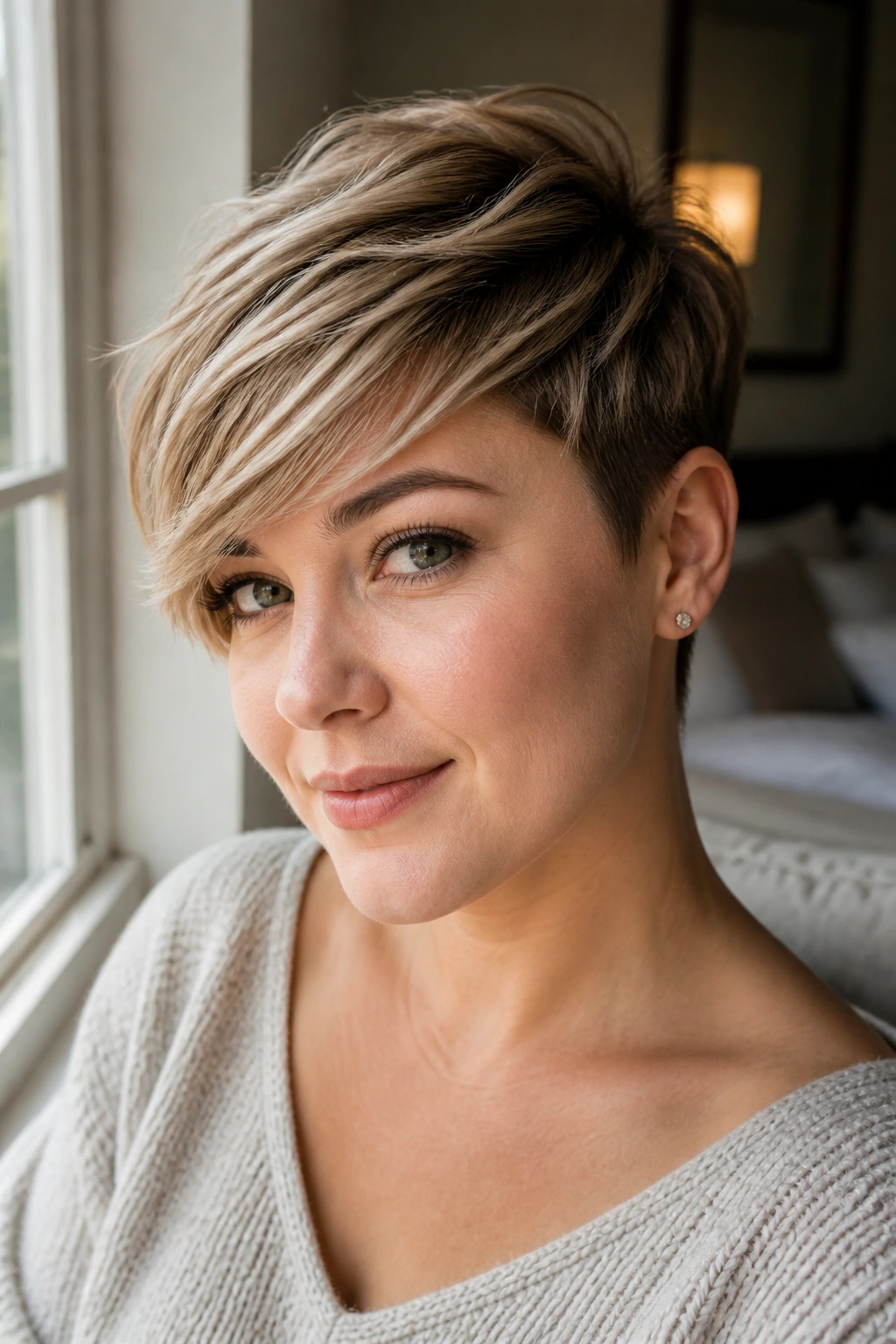
A side-swept pixie is one of the easiest short styles to get right on a round face because the fringe does the shaping for you. The diagonal line of the front softens the width at the cheeks and pulls the eye off-center, which gives the face a longer read.
Why It Works
The trick is keeping the top long enough to sweep across the forehead without turning into a heavy cap. You want movement, not bulk. A little extra height at the crown helps too, especially if the sides are tapered close to the head.
Ask for this:
- Longer top layers that reach the eyebrow or a little past it
- Tight, neat sides around the ears
- A soft, not blunt, fringe line
- Texture through the top so it does not fall flat
Styling tip: Use a pea-sized amount of matte paste and push the fringe to one side while the hair is still warm from the dryer. That small diagonal line does more work than people expect.
2. Textured Crop with Piecey Fringe
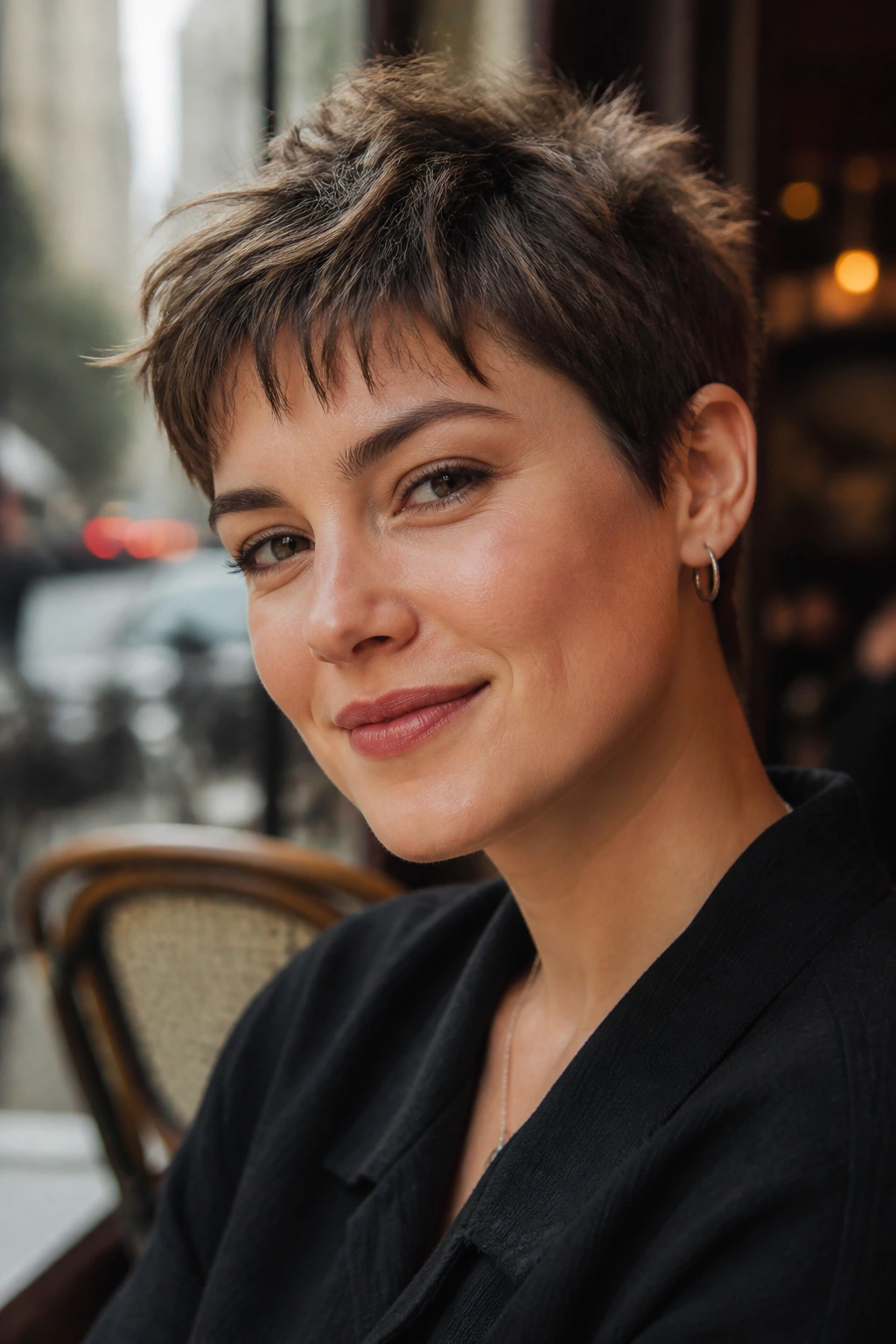
Can a crop be soft and still flatter a round face? Absolutely. The answer is texture. A piecey fringe breaks up the outline around the forehead, and broken ends keep the style from forming one wide shape around the face.
This cut works especially well when the hair has a little natural grit or wave. Fine hair can do it too, but it needs a light mousse or root spray so the top doesn’t collapse. Heavy cream is the enemy here. It weighs the texture down and turns a neat crop into a flat one.
The best version sits close to the head at the sides, with a bit of lift at the crown and random-looking separation through the front. Random-looking is the key phrase. It should feel loose, not styled to death.
3. Long Pixie with Crown Volume
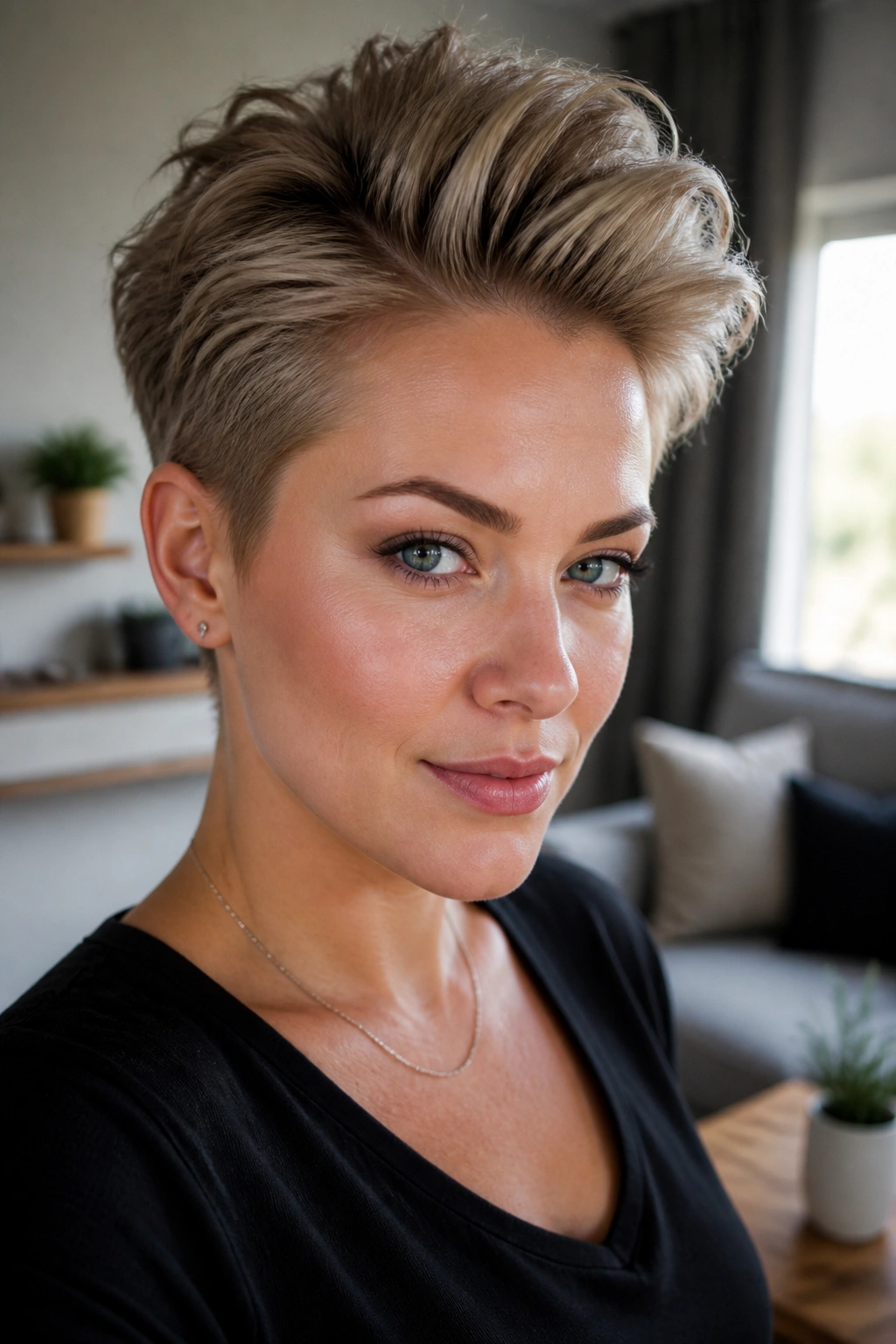
Picture a pixie that keeps enough length on top to brush upward and slightly back, with the nape cropped clean and the sides kept narrow. That shape gives a round face a vertical line without making the haircut feel severe.
The crown volume matters more than most people think. Even an extra inch at the top changes the whole silhouette. It makes the face feel a little longer and stops the cut from sitting right on the widest part of the cheeks.
This is a good pick if you want short hair but still want some styling options. You can wear it sleek, airy, or with a slightly messy lift. If your hair is thick, ask for interior debulking so the top doesn’t balloon. If your hair is fine, keep the layers clean and light.
4. Asymmetrical Bob for Round Faces
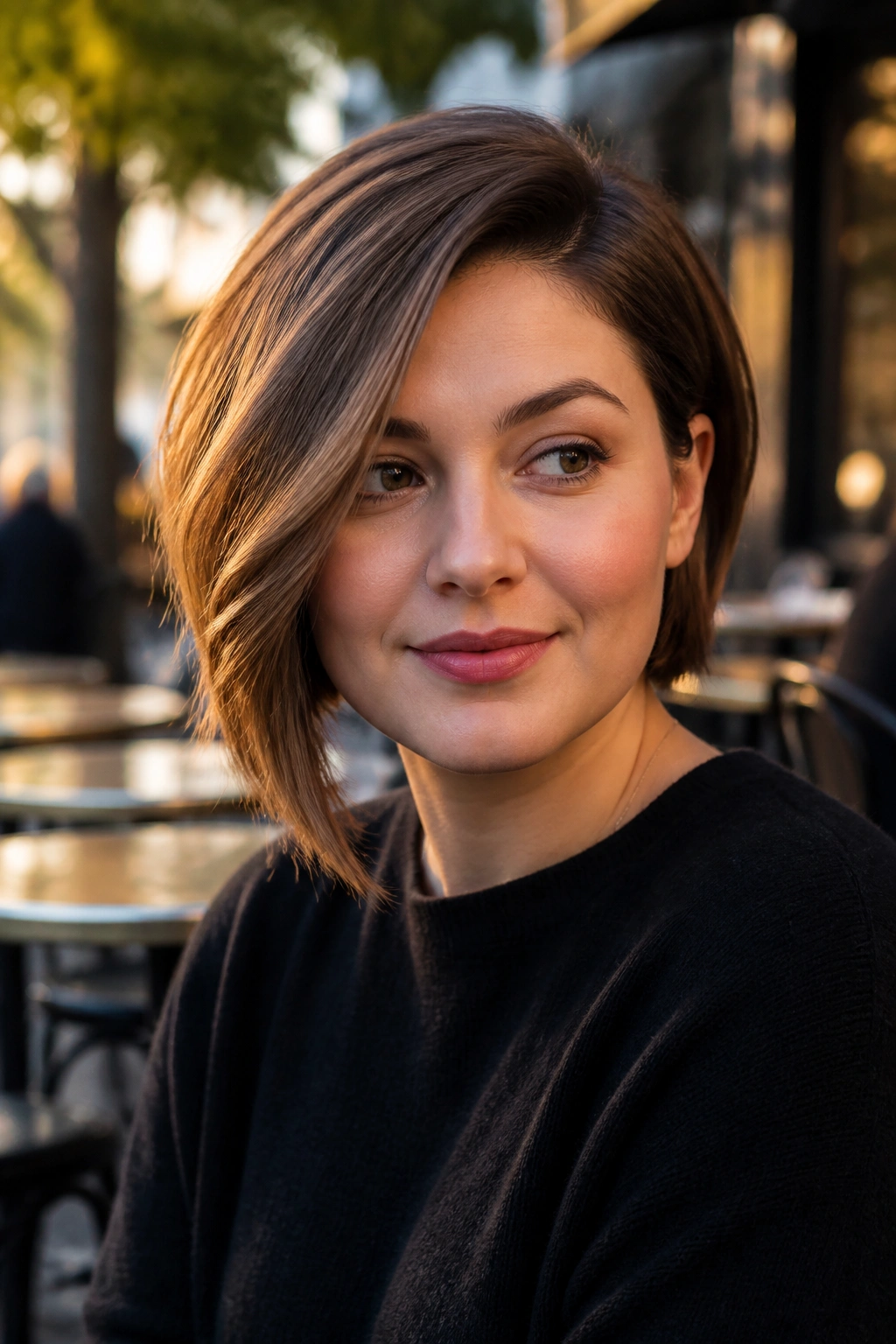
A perfectly even bob can be the least helpful thing for a round face. A bob with one side a little longer often fixes that problem in one move.
That asymmetry creates a diagonal line from the part down toward the jaw, which gives the face more length. It also stops the haircut from sitting as one solid circle around the head. I’d keep the difference subtle—about 1 to 2 inches is enough. You want shape, not drama for the sake of it.
The neatest version hits somewhere between the chin and the collarbone on the longer side. That keeps the front from flaring out at cheek level. Straight hair shows the line clearly, while wavy hair softens it a little and makes the cut feel less exact.
5. Chin-Length Blunt Bob
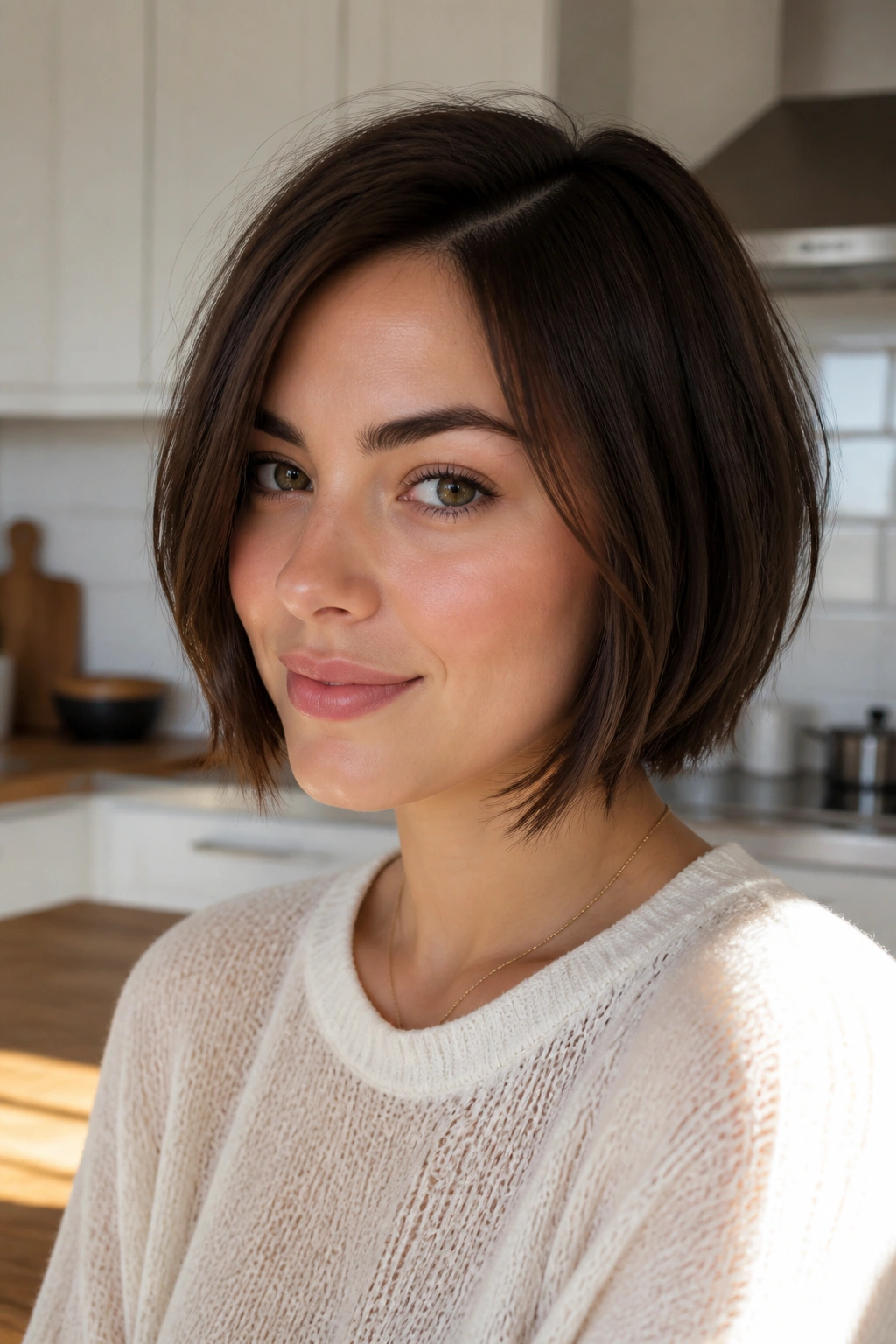
A chin-length bob has a crisp, clean feel the second it’s cut right. The ends skim the jaw, the line looks tidy, and the whole haircut has a quiet kind of confidence.
For a round face, the danger is obvious: if the blunt edge lands exactly at the fullest part of the cheeks, the cut can make the face read wider. The fix is simple but non-negotiable. Keep the line slightly below the chin, or add a side part and a little bend so the shape doesn’t sit in one hard ring.
This one works best on straight to slightly wavy hair. Very thick hair can turn a blunt bob into a shelf if it isn’t thinned correctly. Fine hair can wear it well, but you’ll want root lift or a round-brush blowout so the top doesn’t collapse.
6. French Bob with Soft Bangs

Chin-skimming. Soft at the edges. A fringe that falls just a little unevenly.
That’s the feel of a French bob done for a round face, and I like it more than the ultra-perfect version. The softness keeps the cut from looking boxy, while the bang line gives the forehead some presence without cutting the face in half.
Keep the Fringe Wispy
The fringe should graze the brows or land slightly above them. Heavy, dense bangs can make the face feel shorter. A lighter fringe opens the front back up and lets the cheekbones breathe.
- Ask for bangs that are lightly textured, not cut blunt across
- Keep the sides slightly tucked in, not puffed out
- Blow-dry the fringe with a small round brush so it bends, not kinks
- Use a dab of styling cream on the ends only
If you wear glasses, this cut can look sharp. If you have very curly hair, it needs a curl-by-curl approach, not a rushed dry cut.
7. Angled A-Line Bob
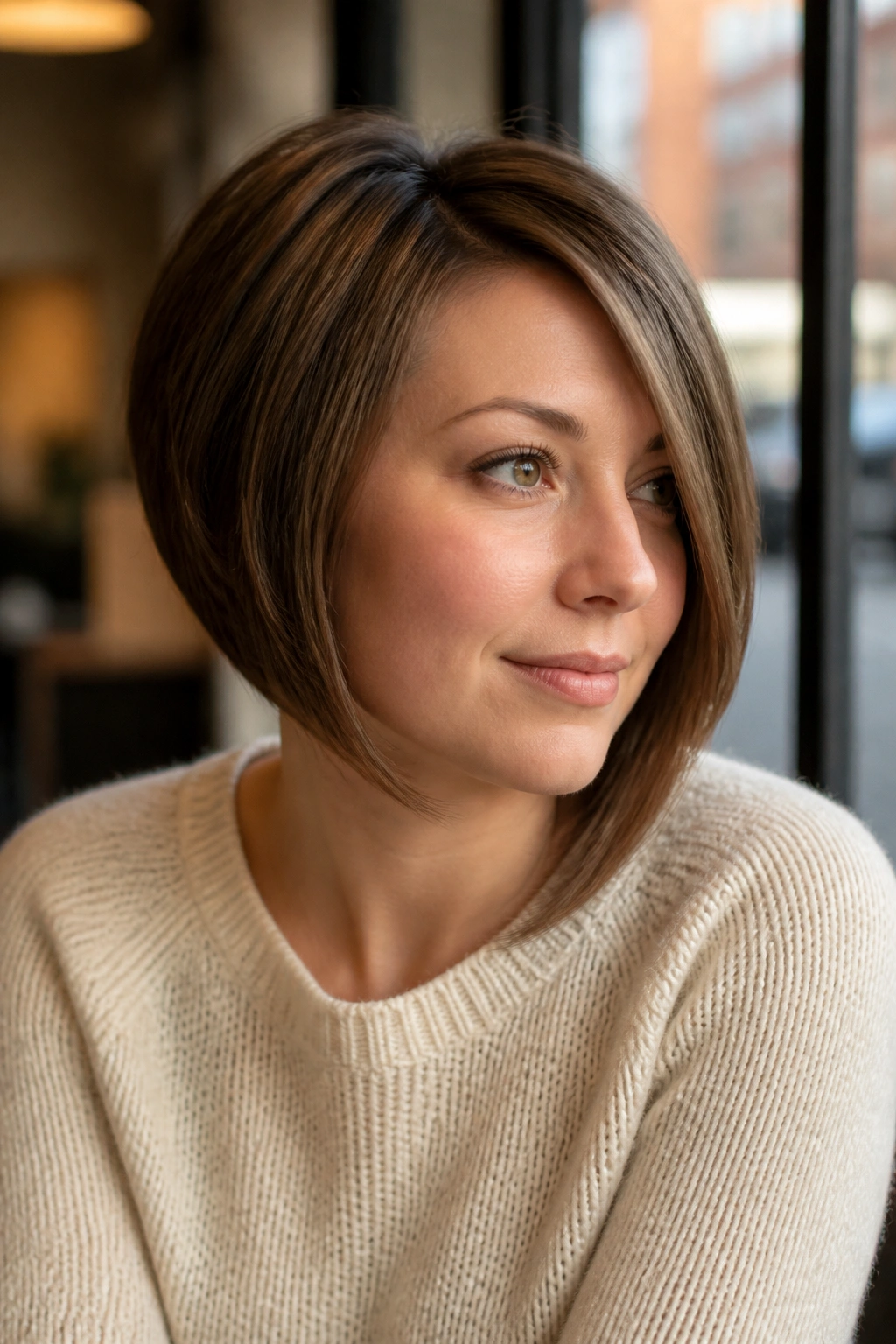
Two inches shorter in the back and longer in the front can change the whole read of the face. That’s the beauty of an A-line bob.
The forward angle pulls the eye down and inward, which helps narrow a round face without making the haircut look severe. The back stays neat and lifted, while the front drapes along the jawline or just below it. That longer front edge is doing a lot of work. A lot.
I’d keep the angle gentle rather than extreme. A steep A-line can start to feel dated fast, and on thick hair it may kick out at the corners. The cleaner version uses a soft slope, a side part, and just enough bevel at the ends to keep the line from looking blunt in a harsh way.
8. Shaggy Bob
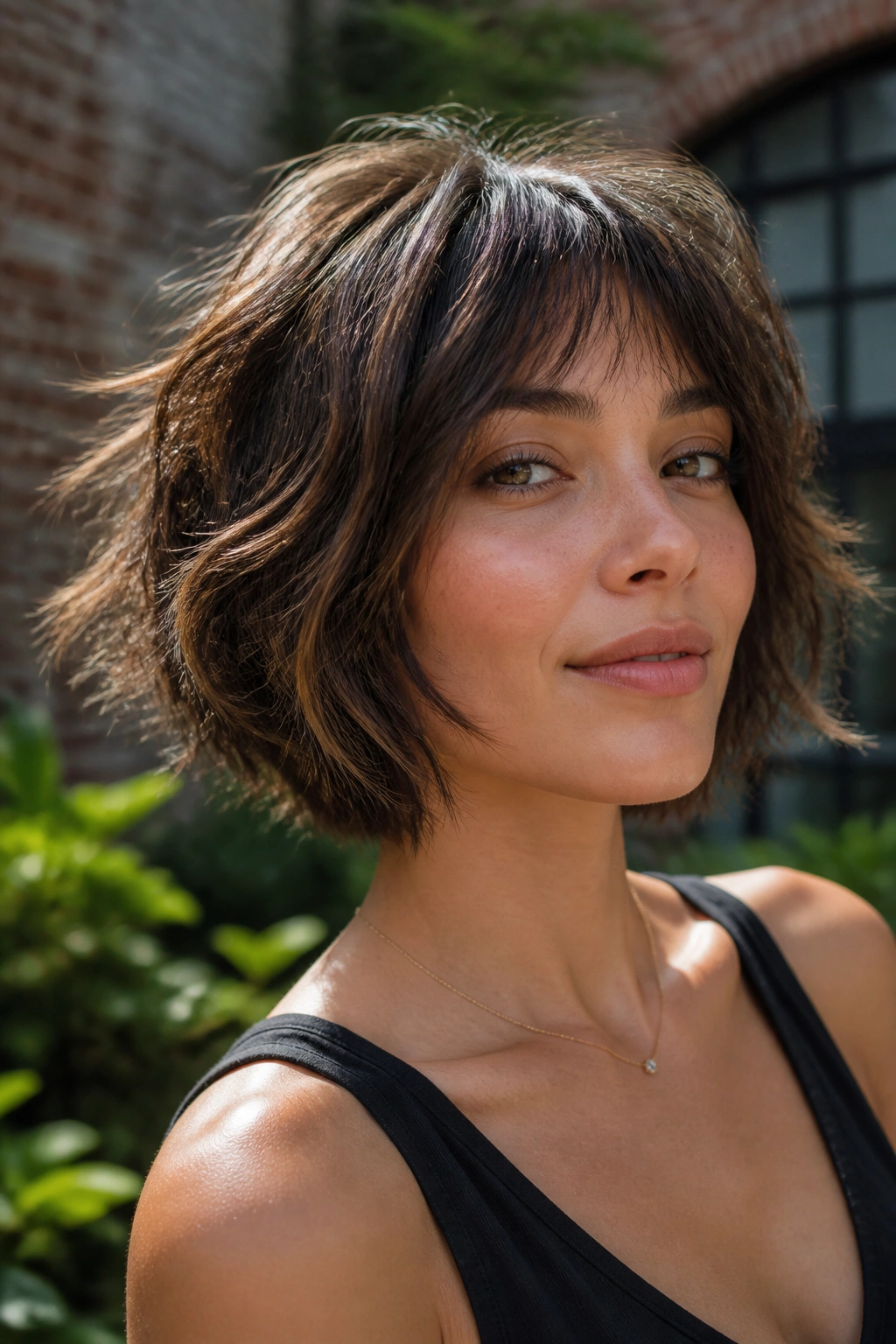
Messy is the point.
A shaggy bob works on round faces because it breaks the outline into smaller pieces. Instead of one full, wide shape, you get layers, bends, and ends that move around the cheeks. That movement matters more than neatness here.
What Makes It Different
The best shaggy bob has light layers through the crown and face-framing pieces that start around the cheekbone, not too low. If the layers begin too far down, the cut can widen the face instead of softening it.
- Use mousse at the roots before drying
- Scrunch or rough-dry for lift
- Keep the ends piecey with a tiny bit of wax
- Avoid heavy brushing once it’s dry
This cut is a good fit for hair that wants texture already. Straight hair can wear it too, but it needs a little help from a wave iron or a few bends with a flat iron.
9. Curly Bob
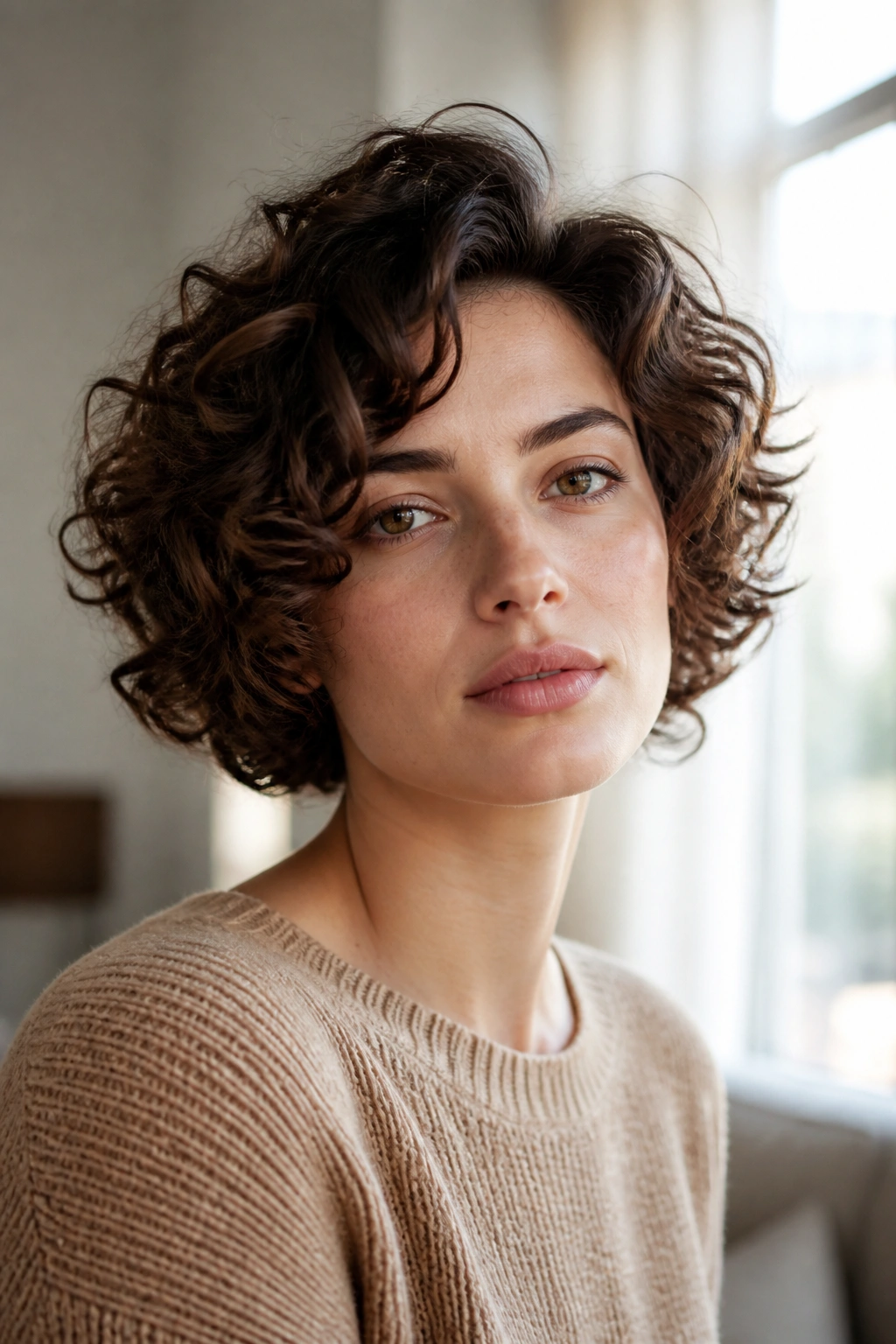
Can curls make a round face look wider? Only when the shape is off.
A curly bob can be one of the best short hairstyles for round faces because curls naturally add lift and movement. The key is where the width lives. You want fullness higher up or around the perimeter that doesn’t sit dead on the cheeks. A good curly bob feels buoyant, not puffy.
How to Style It
Cut it dry if possible, or at least let the stylist see how your curl pattern actually springs. That changes everything. Curly hair shrinks, and a bob that looks jaw length wet can land much higher once it dries.
- Keep the front slightly longer than the sides if your curls are tight
- Use a diffuser on low heat
- Scrunch in a light curl cream, not a heavy butter
- Don’t brush it out once it’s dry
The best versions have a little asymmetry built in. Perfect symmetry can turn curls into a circle. That’s the one thing I’d avoid.
10. Wavy Crop with Deep Side Part
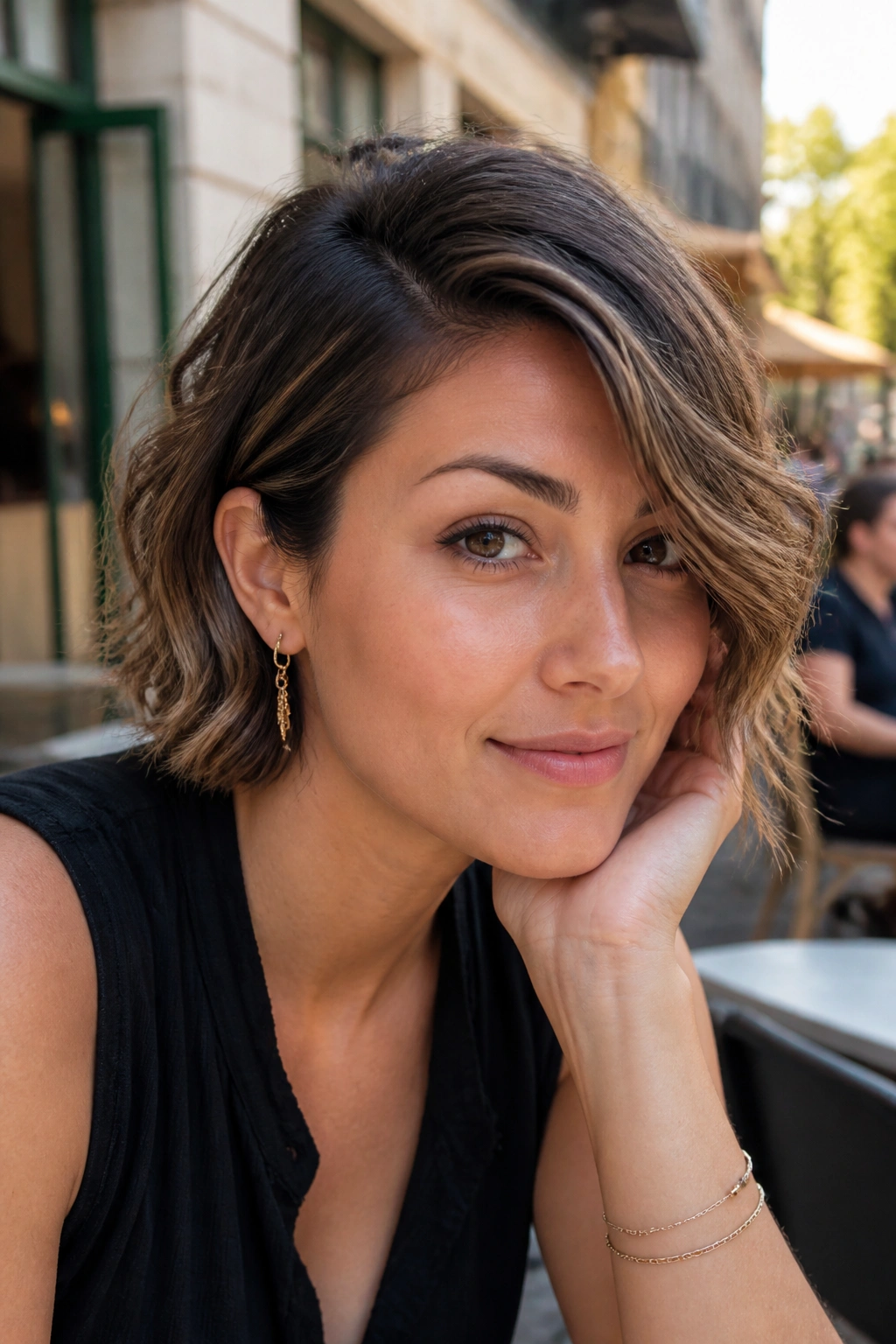
Picture a crop that hits between the cheekbone and jaw, then gets swept hard to one side. That deep side part changes the whole haircut.
The side part creates asymmetry, and asymmetry is your friend when you’re working with a round face. It pulls the eye diagonally across the face instead of letting it stop right at the cheeks. The wave gives the cut air, so it doesn’t sit flat or stiff.
A cut like this is easy to wear if your hair naturally bends a little. If it’s straight, you’ll want to bend just the front sections with a 1-inch iron and leave the back loose. That contrast keeps the style from looking overworked.
Best when you want: a short cut that still feels soft, some cheekbone coverage, and a shape that looks good with a tucked-behind-the-ear moment.
11. Undercut Pixie
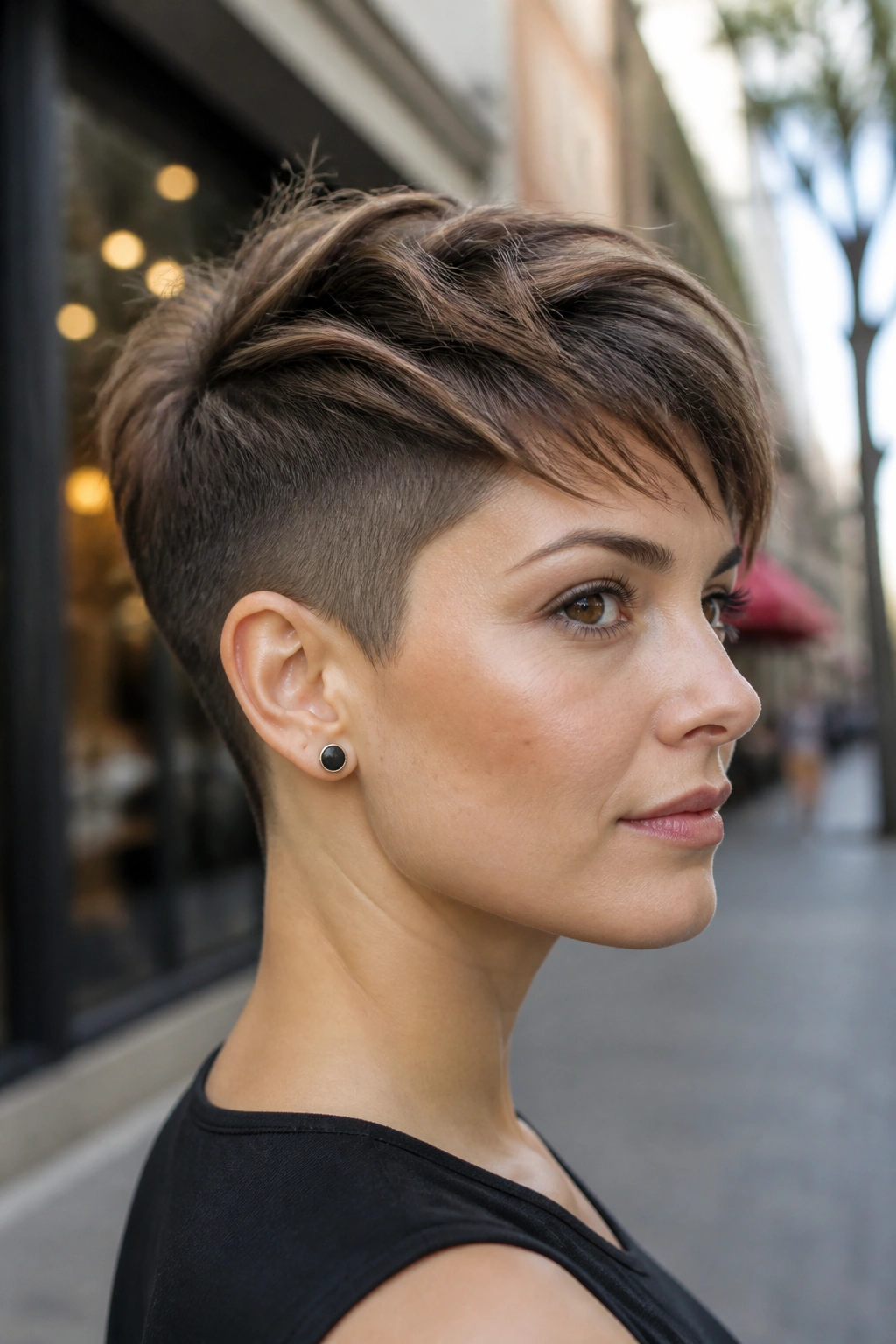
An undercut pixie is not shy. That is exactly why it works.
When the sides and back are clipped shorter, the haircut loses bulk where a round face does not need more width. The top can stay longer and a little messy, which gives you height and shape without adding a helmet effect. It’s a sharp cut, but it doesn’t have to feel hard.
Bulk at the ears is gone. That matters.
This is a smart move for thick hair, especially if your hair tends to puff up around the sides. The undercut removes that problem at the root. If you want a softer look, keep the sideburns a little longer and leave more movement around the temple. If you want it bolder, keep the top textured and let it stand up a little.
12. Bixie Cut
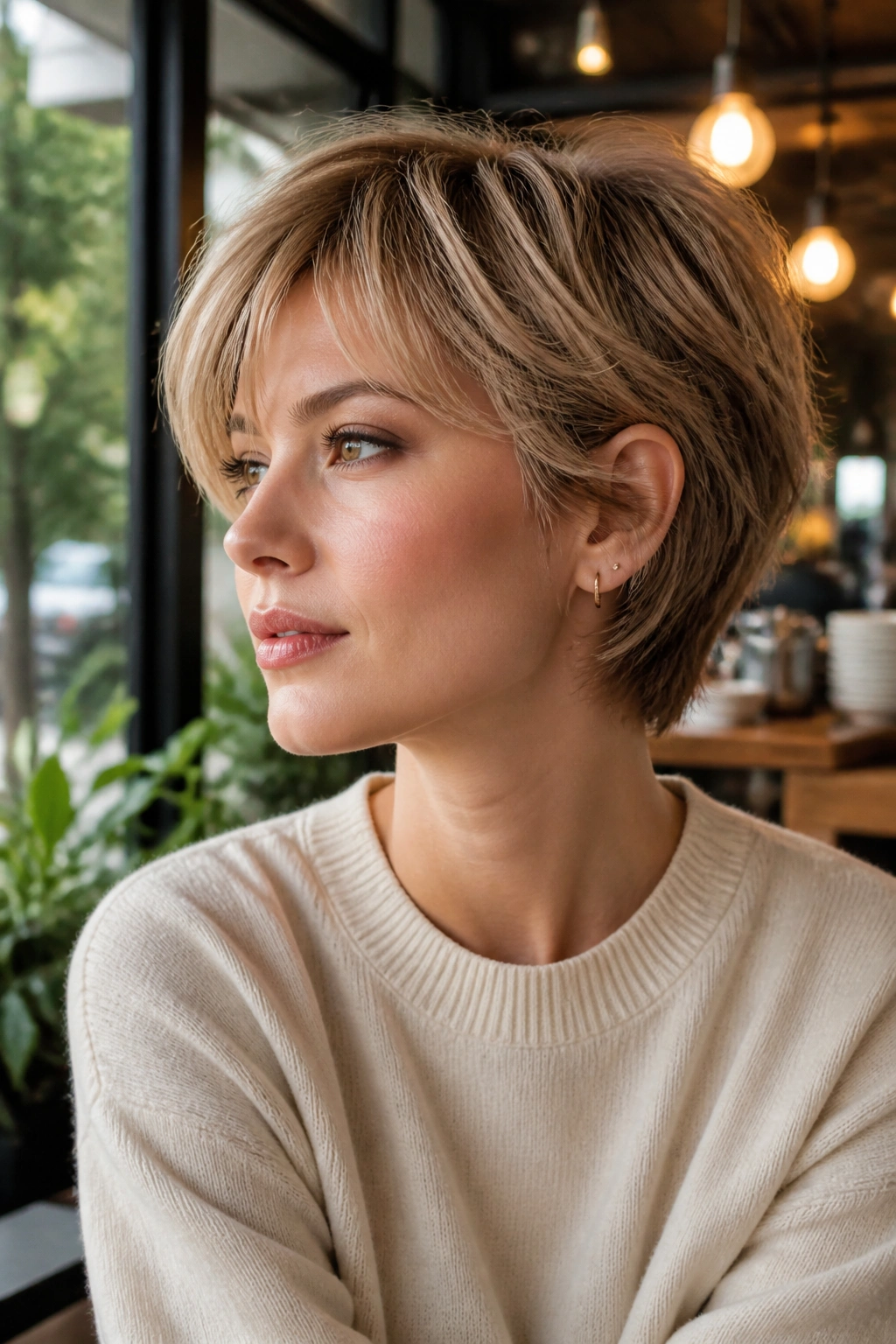
A bixie sits in the middle of a bob and a pixie, and that middle ground is exactly why so many round faces wear it well.
Unlike a pixie, the bixie keeps enough length to brush forward or tuck behind the ear. Unlike a bob, it stays light around the cheeks and doesn’t create one heavy outline. That gives you flexibility without the bulk that can fight a rounder face shape.
The cut usually has a soft nape, longer top layers, and slightly broken edges around the sides. It’s good for people who want short hair but are nervous about going all the way to a true pixie. Styling is easy: air-dry with a little mousse for bend, or blow-dry with a small brush if you want more polish.
If you like haircuts that still move when you turn your head, this one earns its place.
13. Stacked Bob
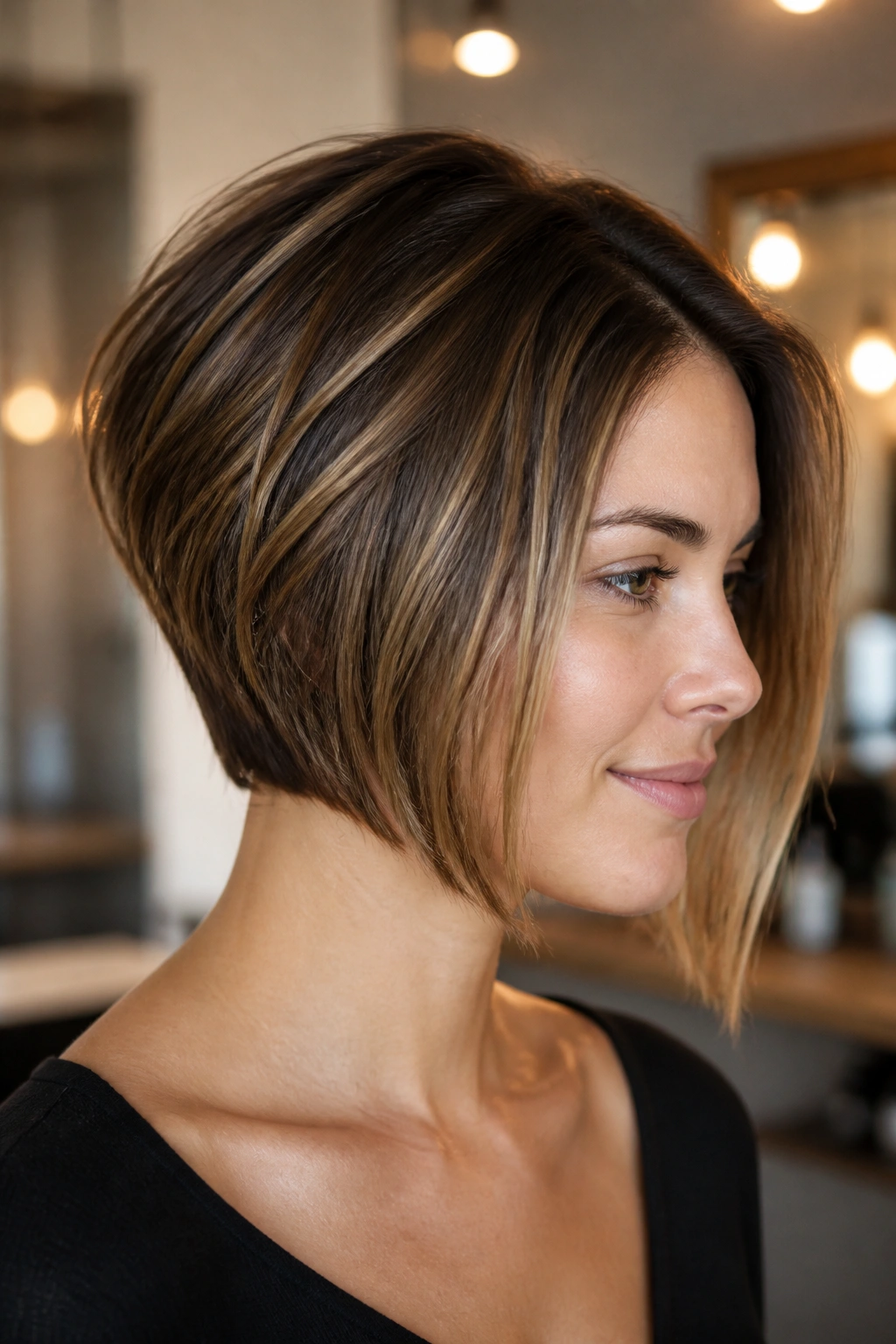
A stacked bob has that tucked-in, curved back that feels neat the second it’s cut well. On a round face, the back stacking gives lift where you want it while keeping the front cleaner and longer.
The only catch is over-stacking. Too much volume in the back can puff the head outward and make the whole shape feel wider than it should. So the trick is restraint. Keep the stack controlled, let the nape hug close, and leave enough length in the front to graze the jaw or sit just below it.
If your hair is fine, a stacked bob can give it structure it would never have on its own. If your hair is thick, ask for softer graduation so the back doesn’t become too bulky. A slight side part helps, too. It stops the bob from feeling too round.
14. Feathered Crop
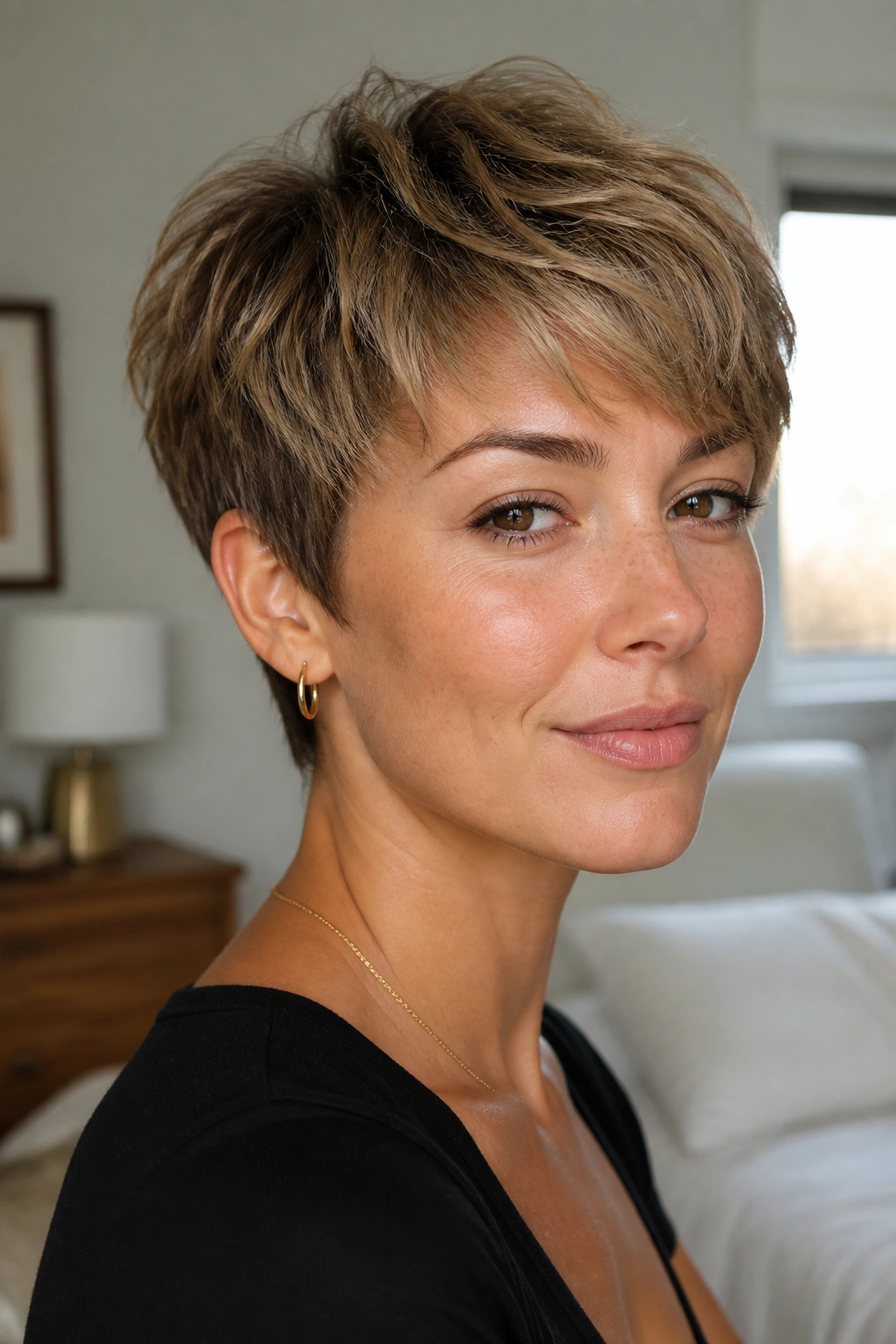
Feathering is underrated.
It softens the edges of a short cut without turning the hair into a fuzzy halo, and that matters on a round face. The lightness through the top and sides keeps the shape from sitting too solidly against the cheeks. You still get a clean haircut. It just breathes more.
This cut works especially well for fine hair or hair that lays flat at the crown. Feathered layers make the top look airy without needing a lot of product. On thicker hair, the layers should stay controlled, or the shape can get too wide. That’s the part that gets missed. Feathering should remove weight, not add fluff.
I like this cut best with a side-swept fringe or a soft side part. It gives the crop a little line and keeps the front from looking too open.
15. Tapered Cut
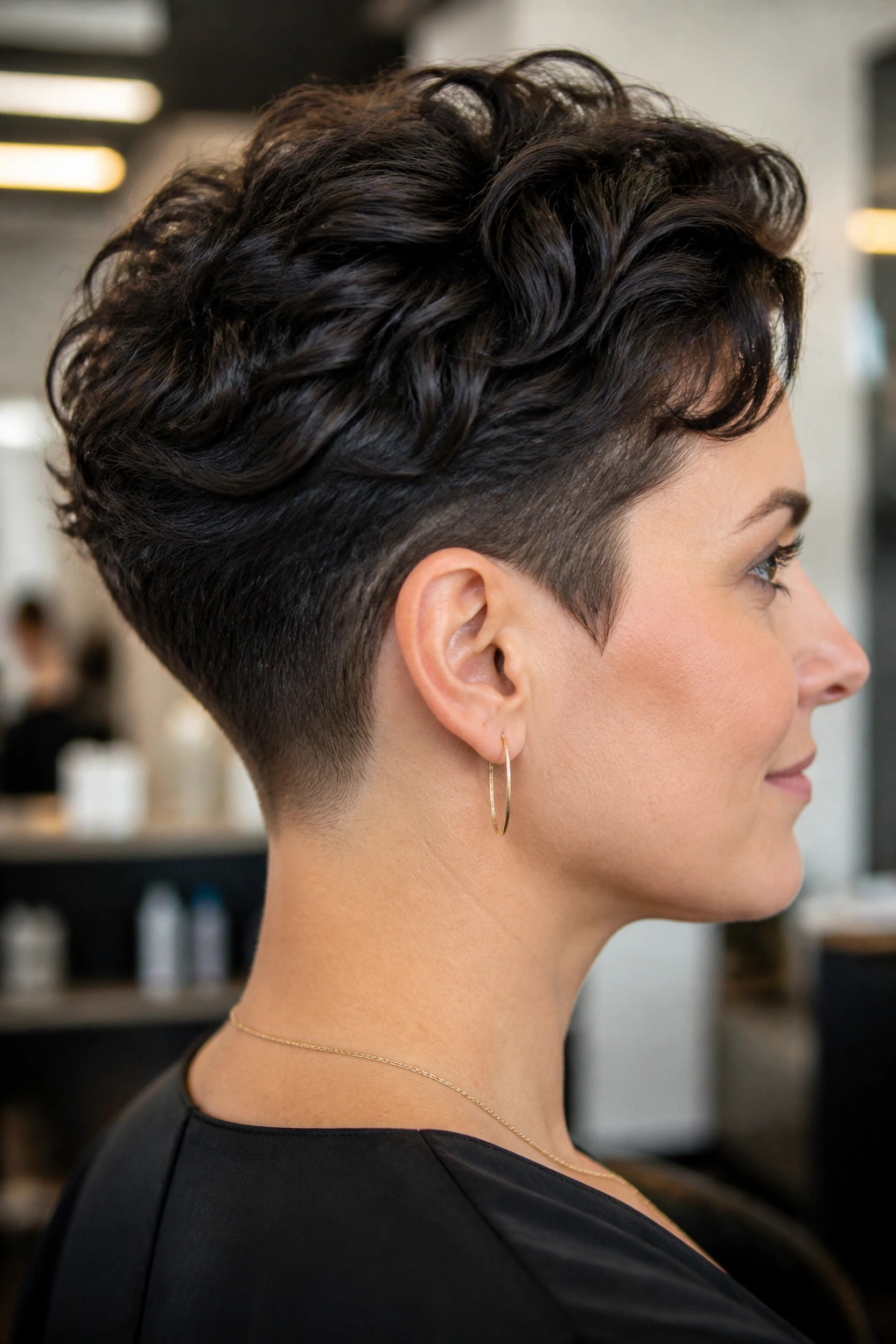
A tapered cut narrows neatly at the nape and around the ears, which gives a round face a cleaner lower outline. The hair gets shorter where you want less width and fuller where you want lift.
Best Hair Types for It
This shape works on straight, wavy, and curly hair, but each texture needs a different hand. Straight hair needs movement through the top so it doesn’t look severe. Wavy hair can keep more softness in the front. Curly hair needs the taper to follow the curl pattern, or it can puff strangely at the sides.
- Ask for a close taper at the nape
- Keep some length on top for height
- Leave a little softness at the temples
- Trim every 5 to 7 weeks to keep the shape crisp
The best tapered cuts do not look fussy. They look clean. That’s the appeal.
16. Sleek Center-Part Bob for Round Faces
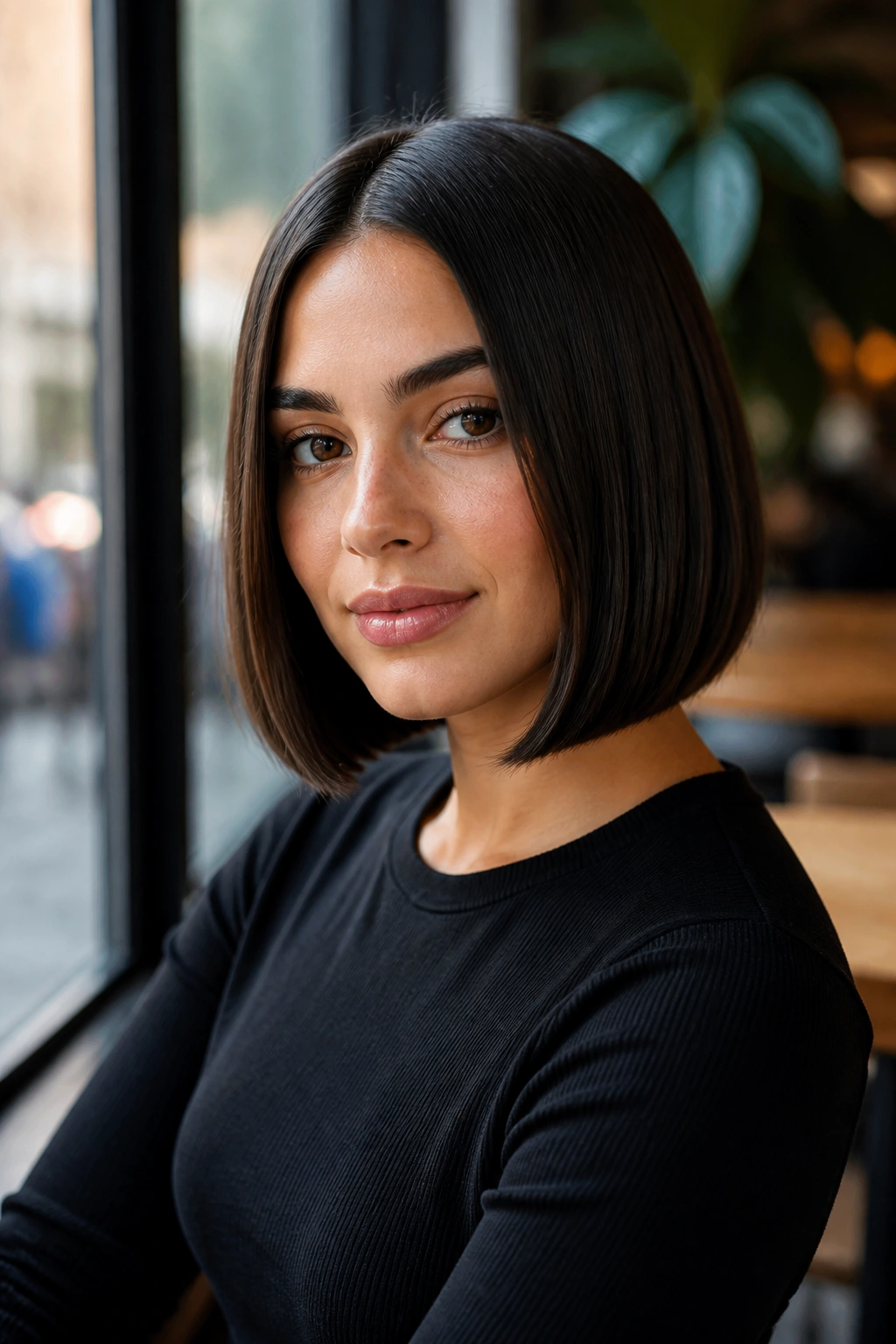
A center part is not off-limits.
People act like it never works on a round face, but that’s too rigid. If the bob falls just below the chin and the ends are gently beveled, a center part can create a long, straight line down the middle that lengthens the face instead of widening it. The haircut needs to be controlled, though. Loose and puffy is not the goal.
This version is strongest on straight hair or hair that takes a smooth blowout well. Keep the roots lifted a bit and the ends tucked in, not flipped out. If your hair is naturally very wide at the sides, I’d soften the center part with a tiny off-center shift. That tiny move is often enough.
A sleek bob can look very polished on a round face. Clean, not stiff.
17. Choppy Micro Bob
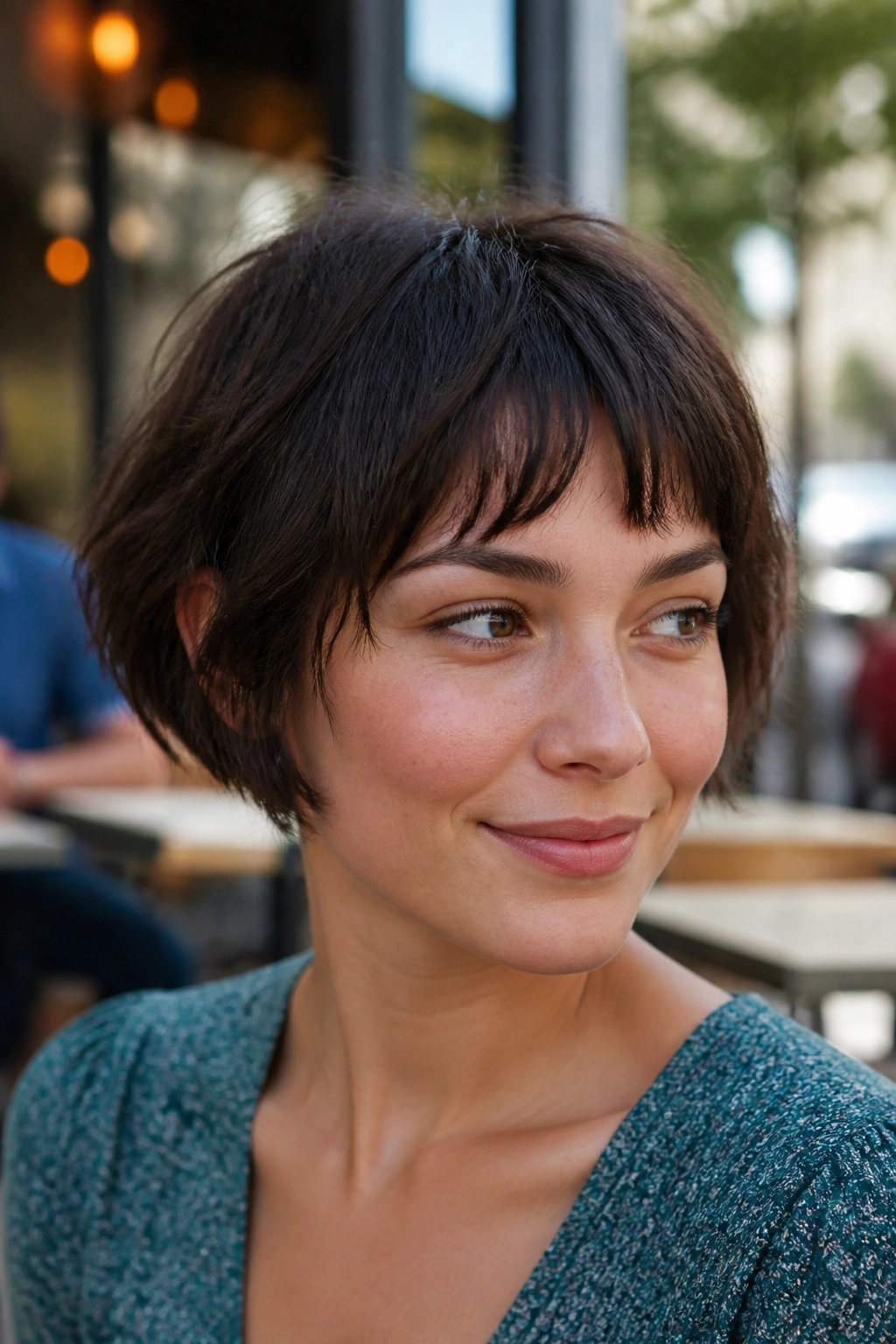
Short does not automatically mean wide.
A choppy micro bob can work beautifully on a round face if the ends are broken up and the top has a little lift. The cut usually sits above the jaw, which sounds risky, but the shorter length can actually expose the neck and make the face feel longer. The texture is what keeps it from becoming a block.
Clean edges matter here.
If the bob is cut too blunt and too dense, it can look boxy. But when the ends are point-cut or razor-softened, the shape gets air. This is a strong choice for someone who likes a little edge and doesn’t mind a haircut that needs shaping every few weeks. It’s not the most forgiving cut, so I wouldn’t recommend it if you want to ignore your hair between trims.
18. Ear-Length Crop
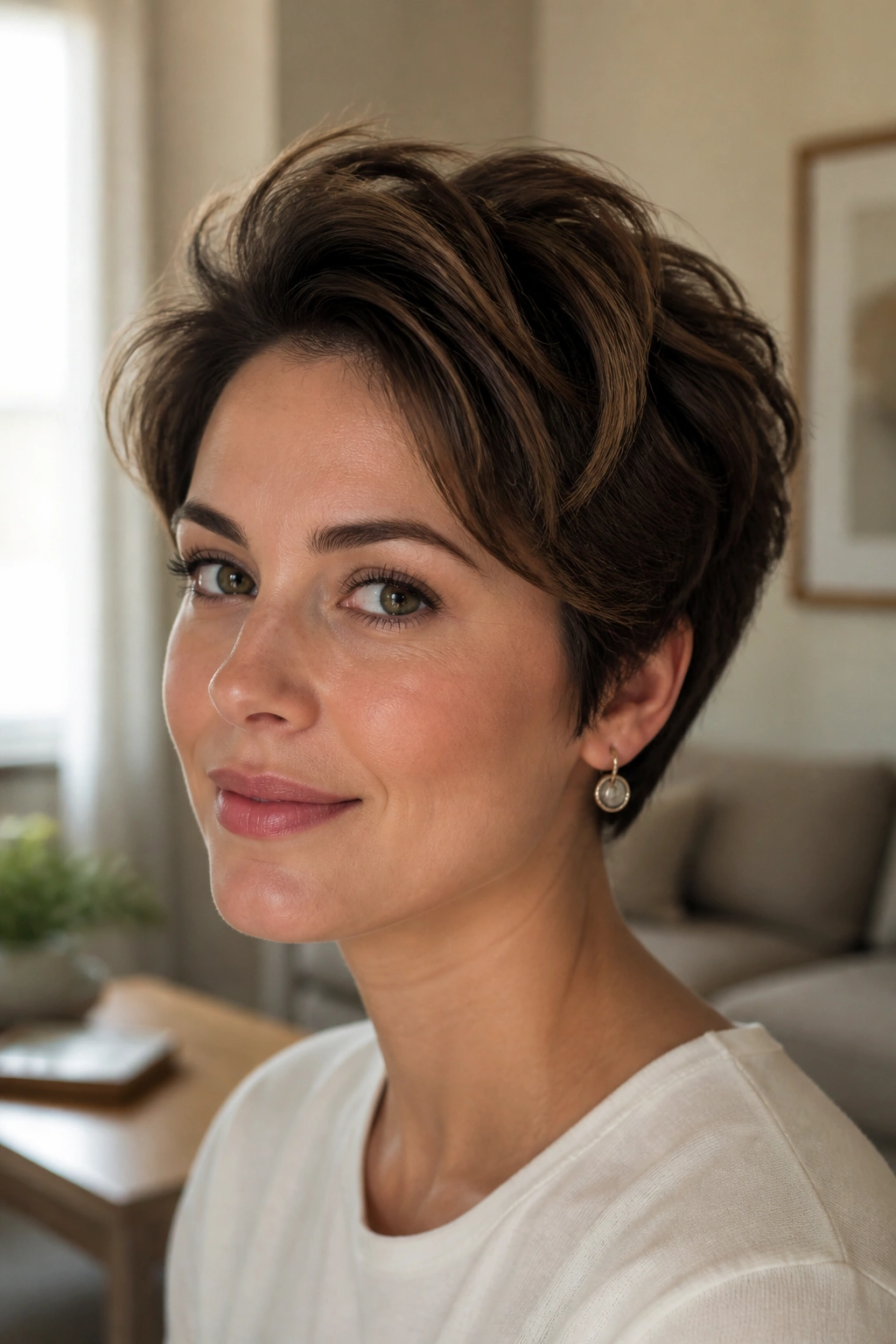
Can hair this short still flatter a round face? Yes, if the top has height and the sides stay clean.
An ear-length crop is bold, but the shape can be kind to a round face because it strips away width and leaves room around the jaw. The face reads more clearly when the hair doesn’t sit heavy beside it. That clarity helps.
The cut needs balance, though. If the top is too flat, the whole thing can feel too close to the head. If the sides are too bulky, it widens the face again. So ask for lift through the crown, soft pieces around the temple, and a neat nape. Styling takes almost no time. A little paste, a quick blow-dry, and done.
This is the haircut for someone who wants short hair to look intentional, not accidental.
19. Side-Part Layered Bob
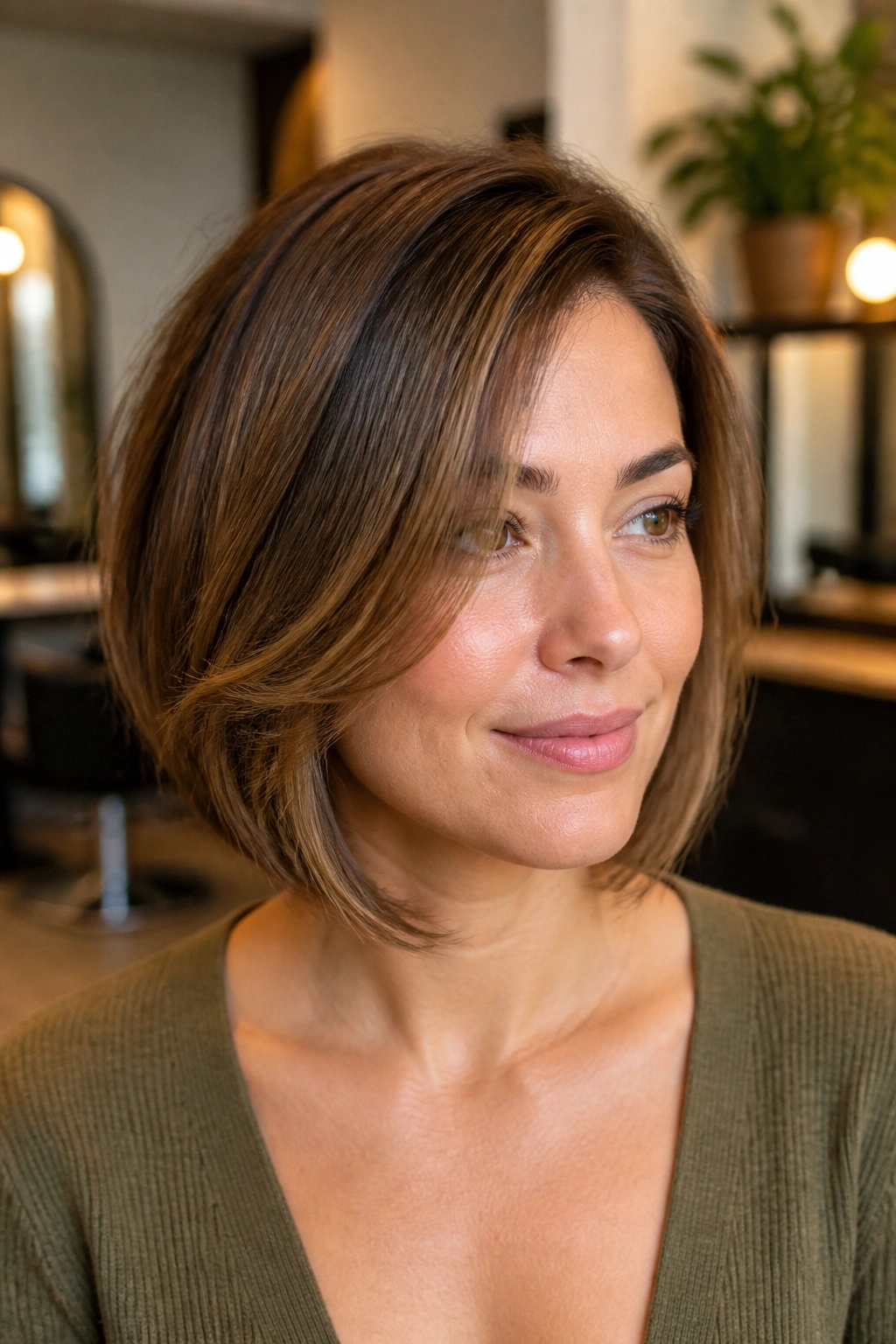
A side part lets a layered bob fall across the face instead of sitting like a bowl. That’s the whole advantage.
The layers give the haircut movement, but the part decides where the weight lands. On a round face, that weight should fall slightly off-center so the eye gets a diagonal line to follow. A few longer pieces at the front help too, especially if they start at the cheekbone and taper down.
Where to Ask for the Layers
Tell the stylist you want the layers to remove bulk without making the cut too choppy. That matters if your hair is thick. If it’s fine, keep the layers softer so the ends don’t thin out too much.
A side-part layered bob can be blown smooth or worn with a slight bend. Both work. The shape stays friendly either way.
20. Curly Pixie
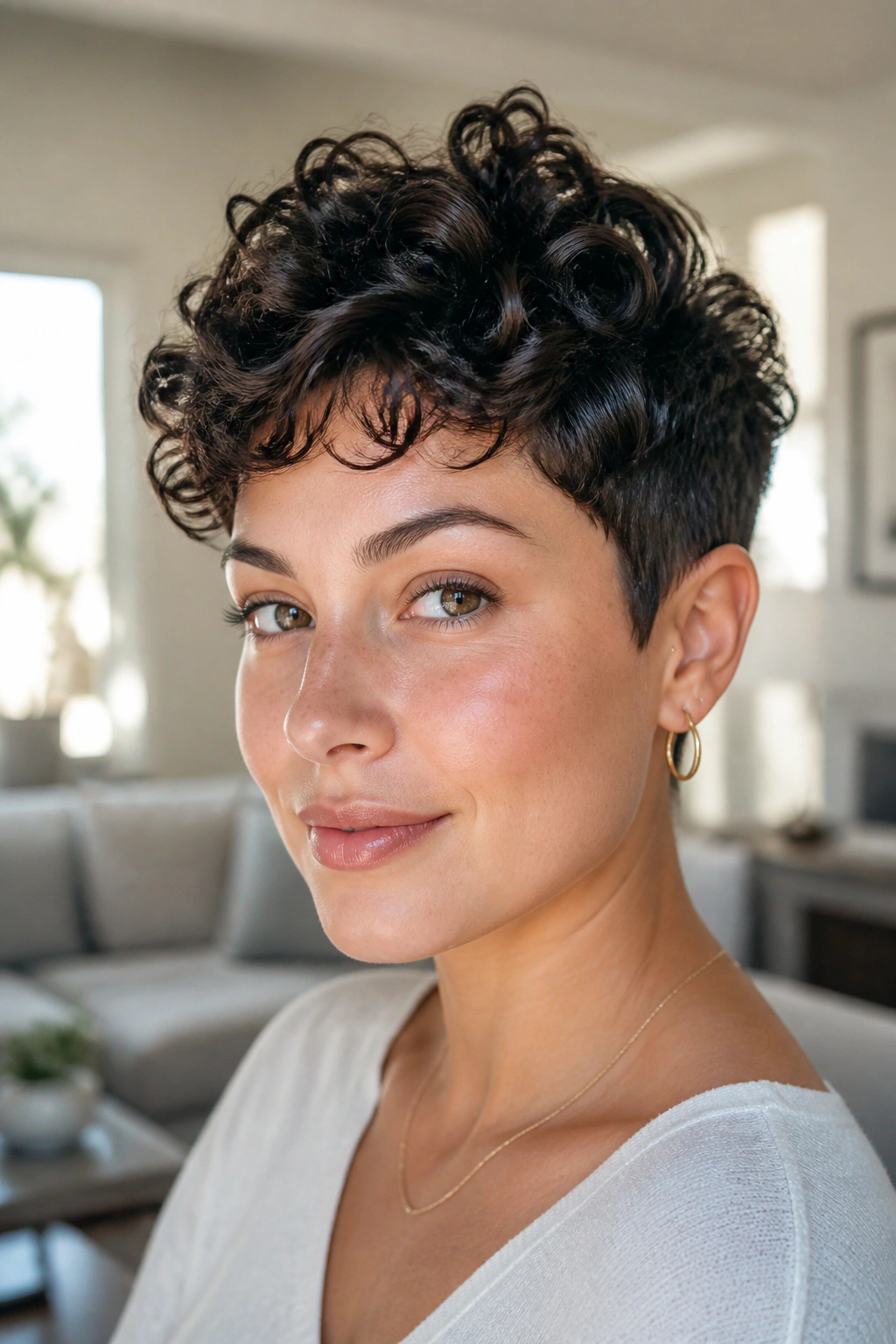
A curly pixie is not the same thing as a curly bob. The shorter sides and back keep the curl from spreading outward too much, while the top gives the hair a little height and life.
That height is useful on a round face. It brings the focus upward, not sideways. The cut also keeps curls from forming a big ring around the cheeks, which is the main thing to avoid. If your curls are loose, the pixie can look airy and modern. If they’re tight, the shape gets stronger and more graphic.
Use curl cream sparingly and diffuse on low heat. Don’t stretch the curls too much while drying. That’s how the shape loses its shape. A little softness around the hairline keeps it from feeling severe, and a tapered nape helps the profile stay neat.
21. Mullet-Lite Shag
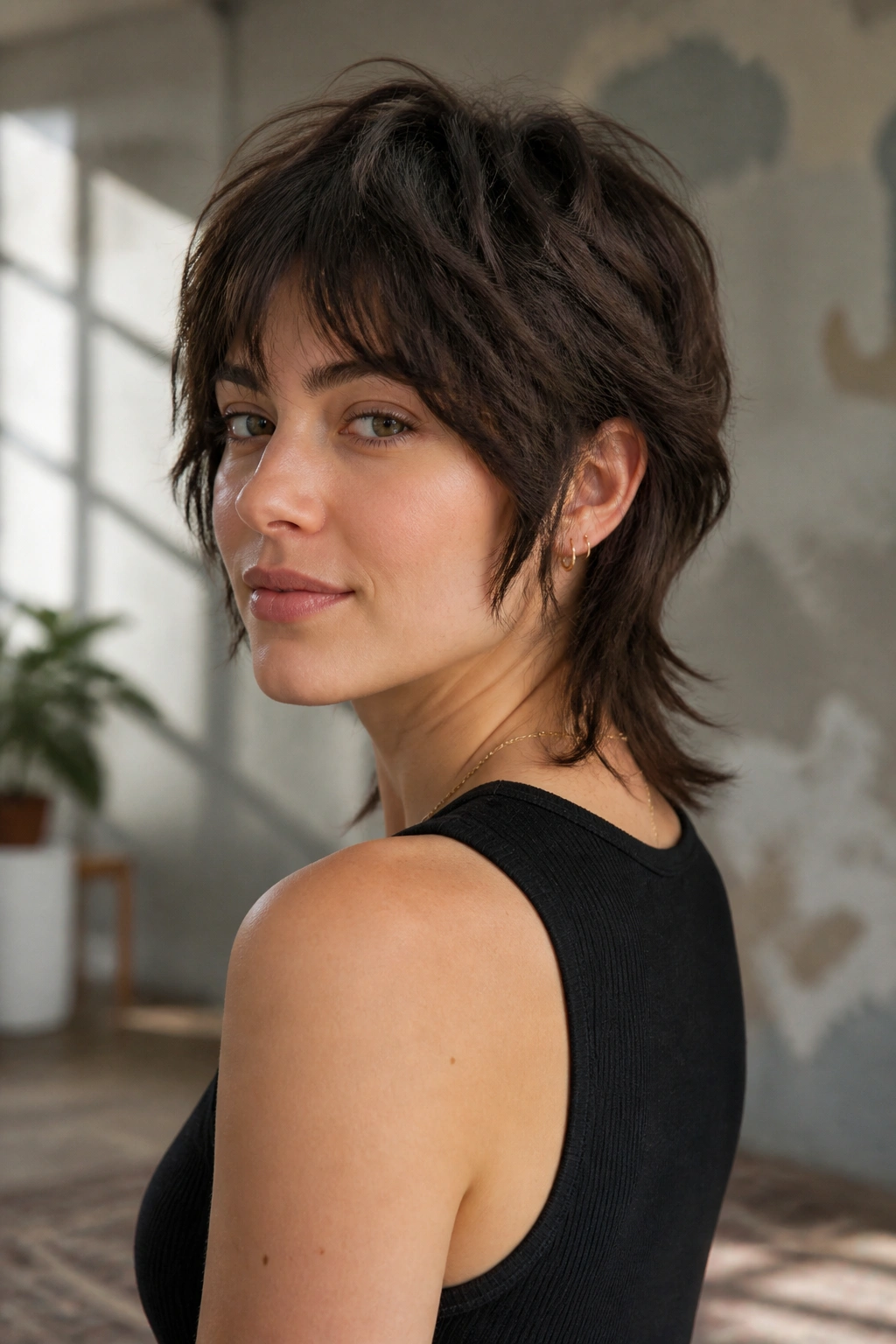
If you like edge, a mini mullet can flatter a round face better than a safe little bob. Strange as that sounds, the extra length in the back and the shorter face-framing pieces create a vertical line that a round face can use.
What to Ask For
Keep the front pieces around cheekbone length, not chin length, if you want the face to look stretched. The crown should stay textured, and the back should taper longer without becoming a full-on retro mullet. That in-between shape is what makes it wearable.
- Ask for soft layering at the crown
- Keep the front pieces broken, not heavy
- Let the nape stay a little longer
- Style with texture spray or a light wave cream
This cut is not for someone who wants tidy. It’s for someone who wants movement and a little attitude. Fair warning: it looks best when it’s not over-styled.
22. Box Bob with Soft Edges

A box bob sounds strict, but it doesn’t have to be. The square outline can actually help a round face if the edges are softened just enough to keep the haircut from looking like a helmet.
The useful part is the line. A box bob keeps the hair from flaring wide at the sides, which is exactly what you want to avoid. But the ends should be lightly beveled, not hard and blunt all the way around. I’d also keep it a touch below the jaw so it doesn’t sit right at the cheek line.
This cut suits straight or slightly wavy hair best. On very thick hair, it needs careful internal shaping so it doesn’t pile up. On fine hair, it can look sleek and strong with very little effort. That’s the nice thing about it. The shape does most of the work.
23. Cropped Cut with Curtain Fringe
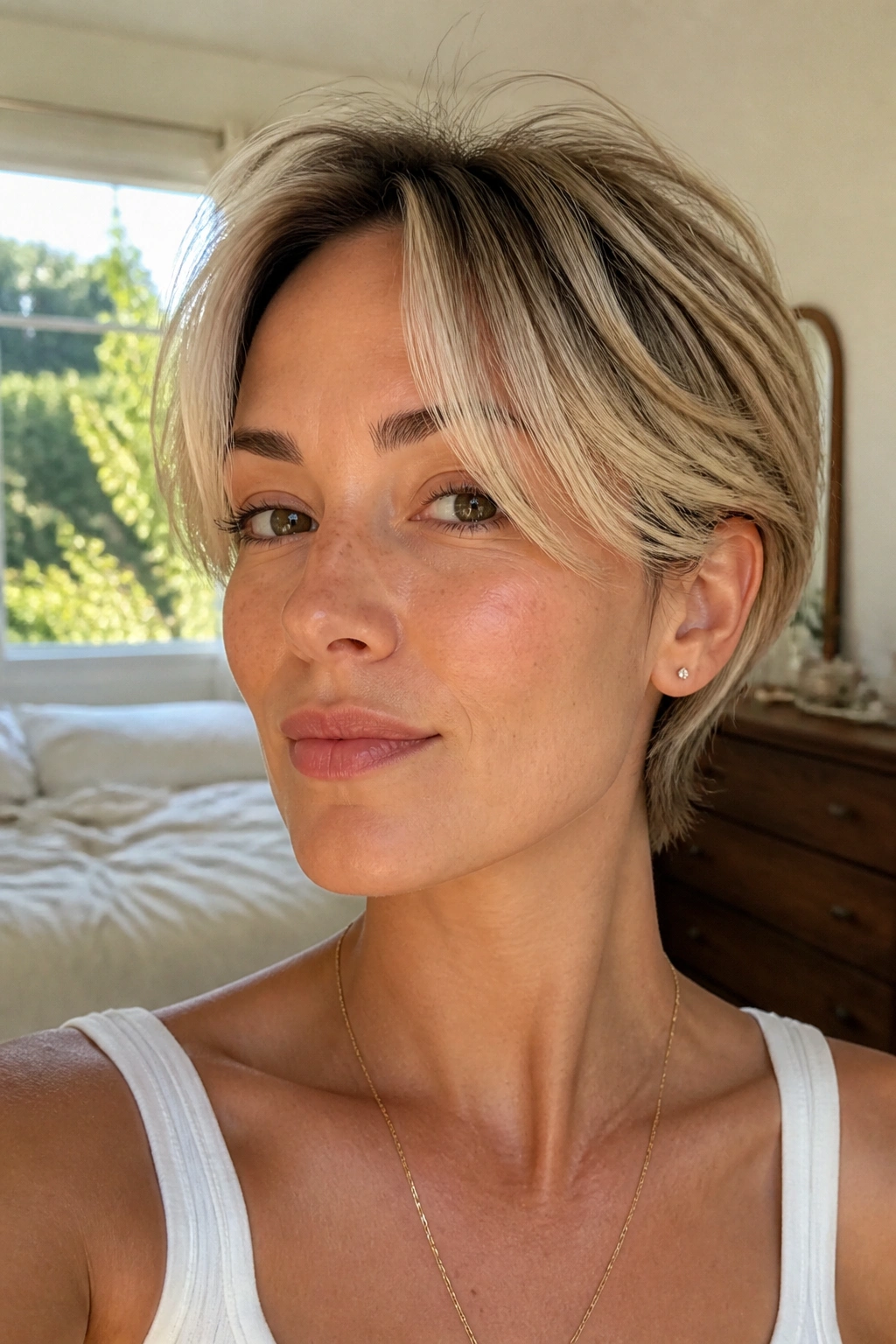
Do curtain bangs work on short hair? Yes, if the fringe starts high enough and the side pieces are kept light.
A cropped cut with curtain fringe gives a round face two helpful things at once: lift at the center and softness along the sides. The middle part of the fringe opens the forehead, while the longer outer pieces fall away from the cheeks. That little split in the front matters more than people think.
How to Style the Fringe
- Blow-dry the fringe forward first, then sweep it apart with your fingers
- Use a round brush only at the ends if you want a soft bend
- Keep the fringe lighter through the center so it doesn’t sit heavy on the forehead
- Trim the front often enough that the pieces still hit the right spot
This style works best when the crop underneath stays clean and narrow. Too much bulk on the sides ruins the effect.
24. Rounded Bob with Face-Framing Pieces
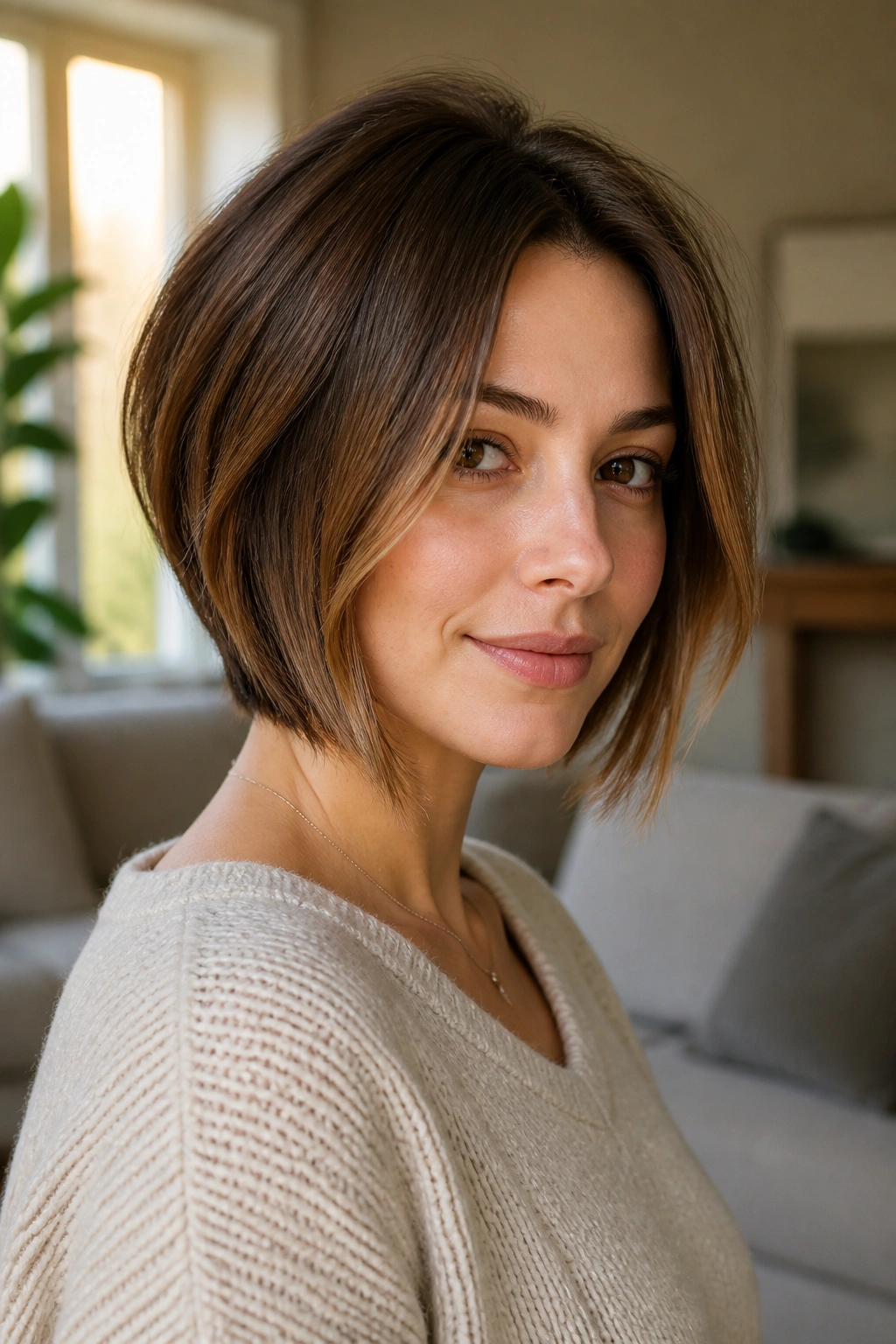
This cut is soft at the ends and clean at the jaw, with a few longer pieces that swing toward the collarbone. Those front pieces are the part that keeps it from turning into one big circle.
For a round face, the face-framing bits should start around the cheekbone or just under it, then taper down. That gives the front some direction without dragging the whole style into extra width. I’d keep the internal layers light. Too many layers can puff the sides and make the bob lose its shape.
This is a nice option if you want a softer look than a blunt bob but don’t want heavy shag layers. It sits in the middle, which is often where the best cuts live anyway. The shape feels easy, but it still does a job.
25. Mini Wolf Cut

A mini wolf cut is the playful one in the bunch.
It takes the shag idea and shortens it, leaving the crown a little fuller and the nape a little longer. That contrast gives a round face some vertical pull without making the haircut feel stiff. The broken layers stop the style from forming one smooth circle, which is exactly the issue you’re trying to dodge.
The best version keeps the front pieces light and the top slightly lifted. Not spiky. Just a little wild around the crown. If your hair has natural wave, this cut can look alive with almost no effort. Straight hair needs a bit more work, usually a bend through the top and a touch of texture spray.
Final Thoughts
The strongest short hairstyles for round faces usually share one quiet trait: they create direction. Up, down, diagonal—something has to move the eye instead of letting the haircut sit as a single round shape.
That doesn’t mean every flattering cut has to look sharp or severe. Some of the best ones are soft, a little messy, even a bit romantic. What matters is the outline. If the cut gives you lift at the crown, keeps the sides from puffing too wide, or lets the fringe fall off-center, you’re on the right track.
Bring photos to the salon, but bring a specific opinion too. Say where you want the length to land and what you do not want sitting at your widest point. That one conversation saves a lot of regret later.
