



A blunt stripe of color across the cheeks is the fastest way to make a round face look wider than it is.
The smarter move is a peekaboo hairstyle for round faces that keeps the bright pieces tucked under the top layer, so the eye reads length first and color second. That hidden placement is the whole trick. It gives you movement, surprise, and a little edge without turning the sides of the face into the loudest thing in the room.
Placement matters more than shade. A caramel panel near the nape, a plum ribbon under a lob, or a blue strip hidden inside a shag can change the whole read of a cut, especially when the front has a side part, a longer fringe, or a little bend through the ends.
The best versions below use that idea in different ways. Some are soft and polished, some lean edgy, and a few are sneaky in the nicest possible way.
1. Deep Side-Part Lob with Caramel Underlayers for Round Faces
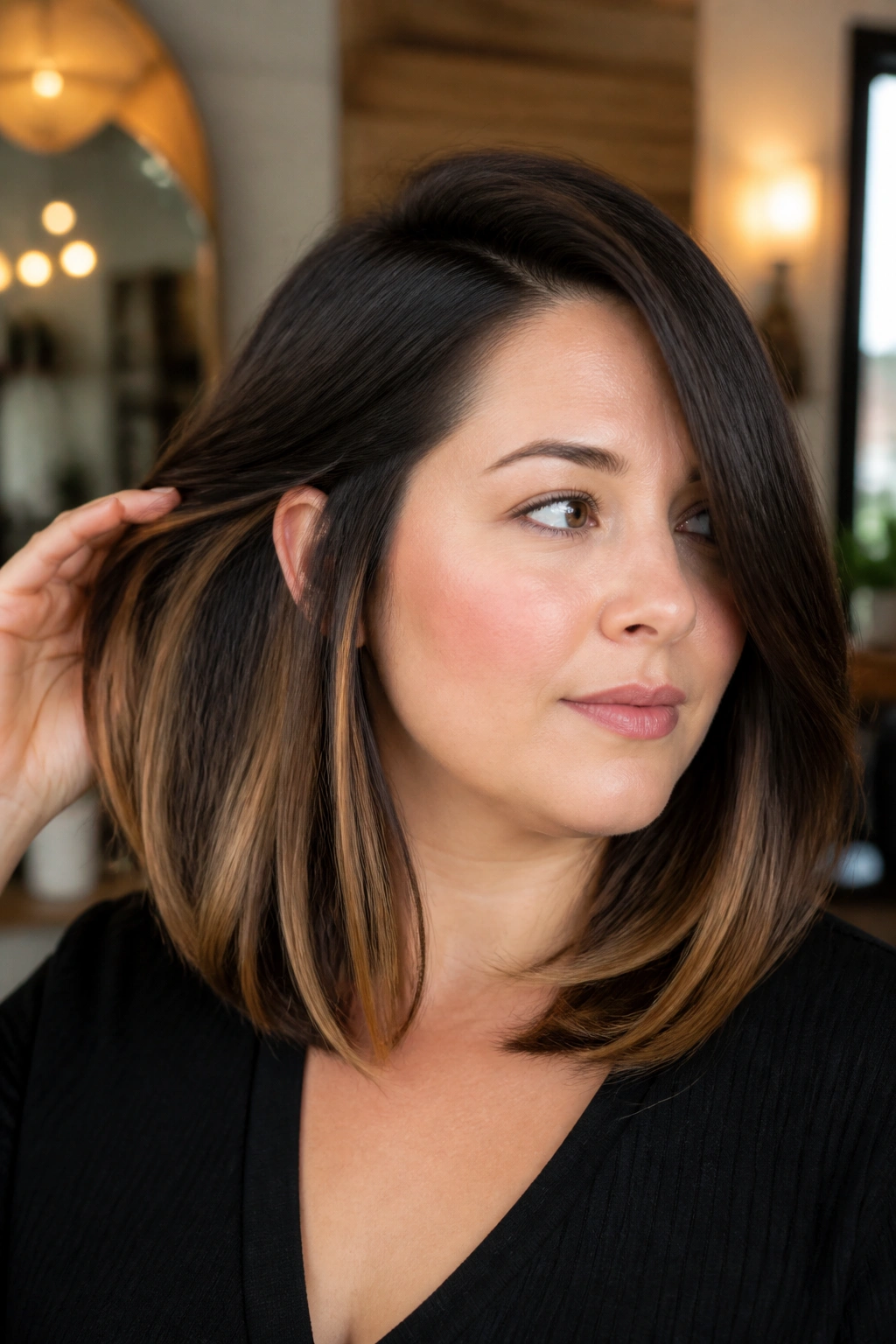
A deep side part gives the face a longer read before the color even shows.
That’s why this lob works so well. The top layer stays smooth and controlled, while the caramel underlayers sit lower, usually from the ear down toward the ends. When the hair moves, the warm pieces flash through without sitting right at cheek level. That keeps the focus vertical instead of wide.
Why It Works
The side part breaks up the symmetry that can make a round face look fuller. The lob length also lands below the jaw, which helps the face feel a little leaner.
- Keep the brightest caramel a few inches below the cheekbone.
- Add a soft bend with a 1¼-inch iron, not a tight curl.
- Ask for the front pieces to skim the collarbone, not stop at the chin.
Ask your colorist to keep the contrast under the top veil, not in the front strips. That one detail changes everything.
2. Angled Bob with Copper Panels
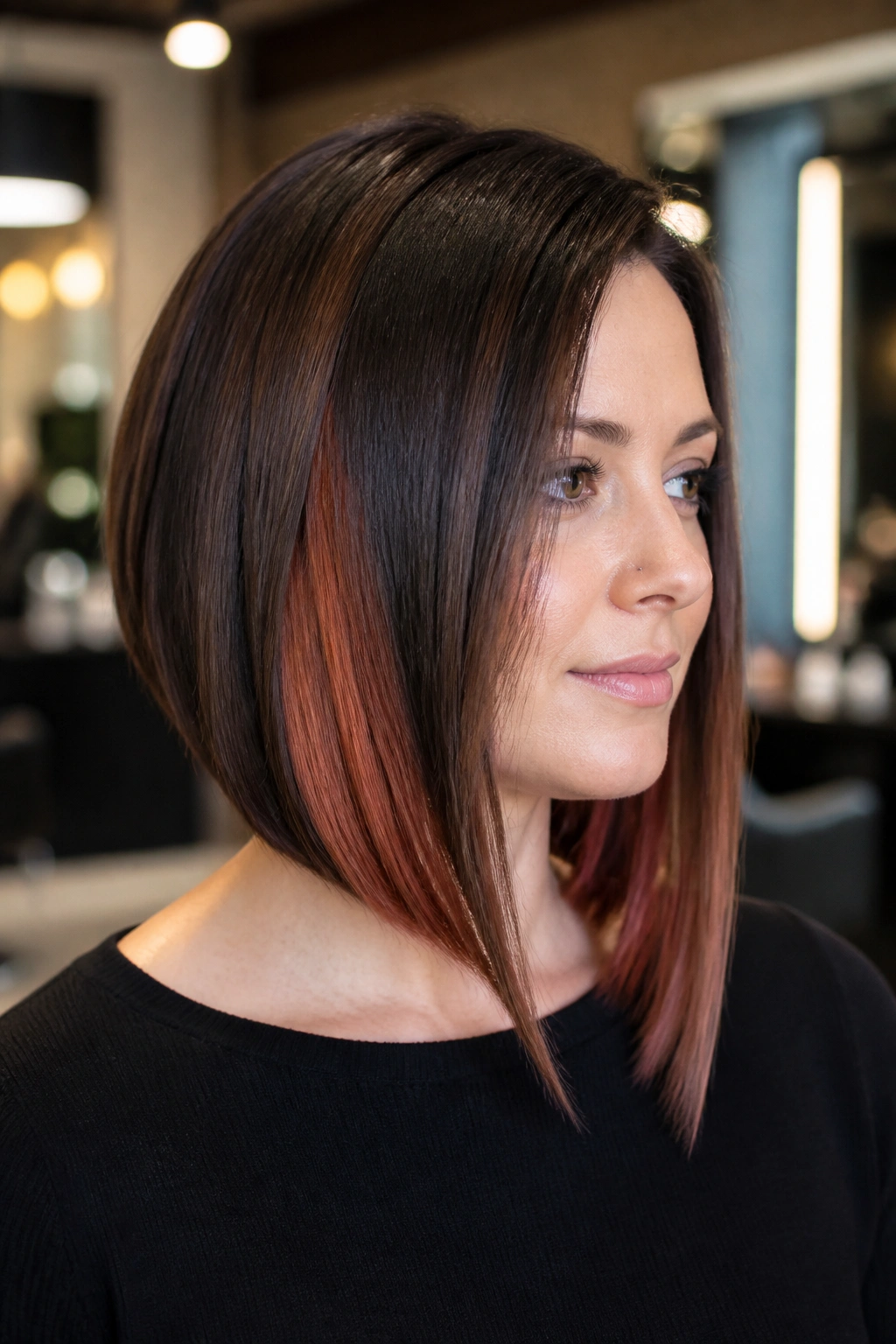
An angled bob can do more for a round face than a lot of people expect. The longer front pieces pull the eye downward, and the shorter back keeps the shape neat instead of boxy.
Copper panels tucked into the interior make the cut feel sharp without piling brightness around the cheeks. They show most when you turn your head, tuck one side behind the ear, or wear the bob with a little tuck and wave. The look has energy, but it does not puff out the sides.
If your hair is fine, keep the panels slim. Thick sections can read heavy fast, especially on short cuts. A clean angle, a soft copper, and a blunt edge around the bottom are enough.
3. Long Curtain Layers with Honey Ends
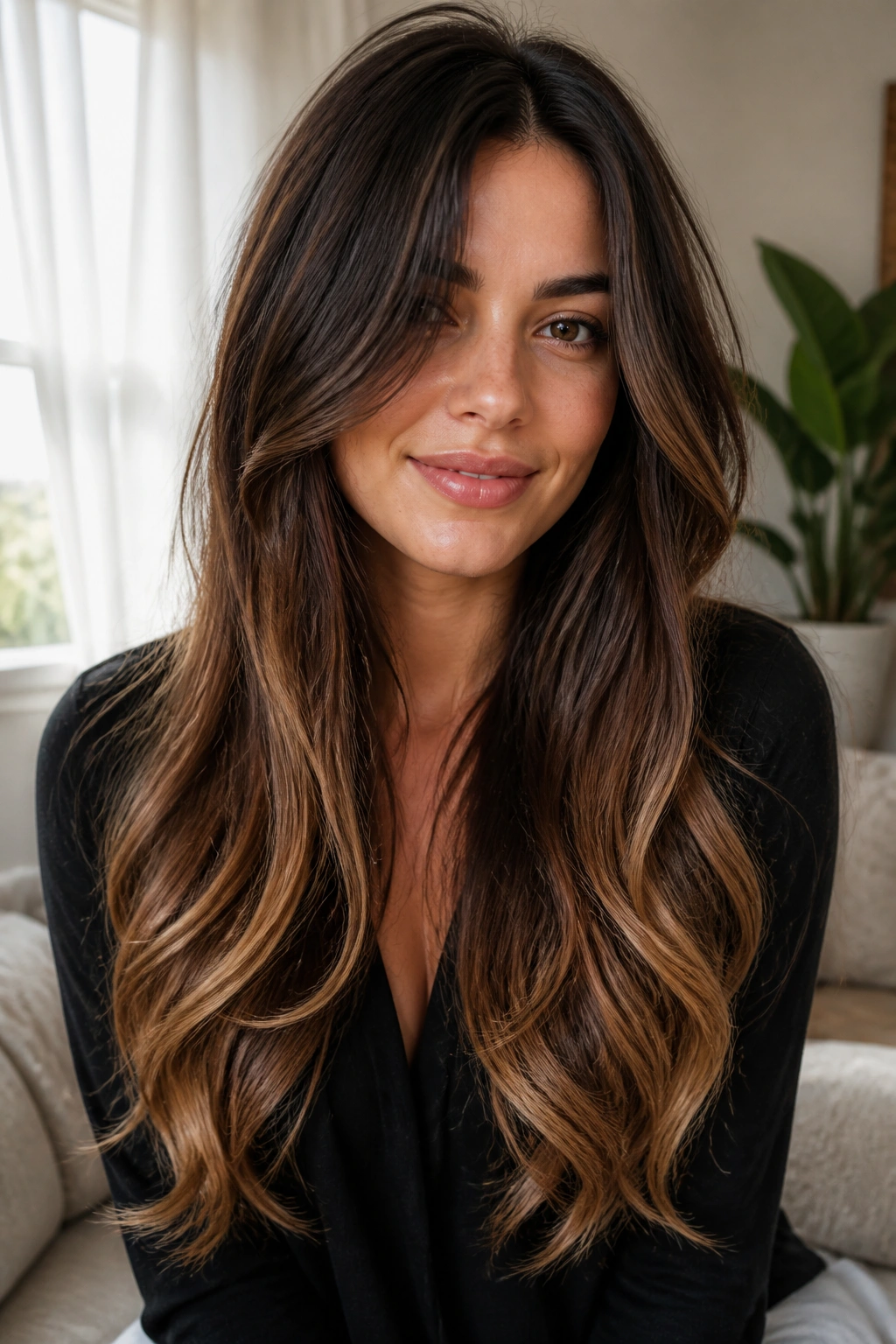
Where should the color go if you want brightness without widening the face? Lower than you think.
Honey ends are the safest bet here. The curtain layers open around the face, but the color stays concentrated through the bottom third, so the eye moves down the length of the hair instead of across the cheeks. On long hair, that long vertical line is doing a lot of work.
How to Wear It
A middle part can work, but a slight off-center part usually feels softer on round faces. Keep the honey soft, not icy, if your skin leans warm.
- Let the front layers start below the cheekbone.
- Keep the lightest tone at the ends.
- Add loose waves only from mid-length down.
The result looks easy, and that’s the point. No loud stripe. No chunky face frame. Just a long curtain with a quiet flash of color underneath.
4. Soft Shag with Midnight Blue Ribbons
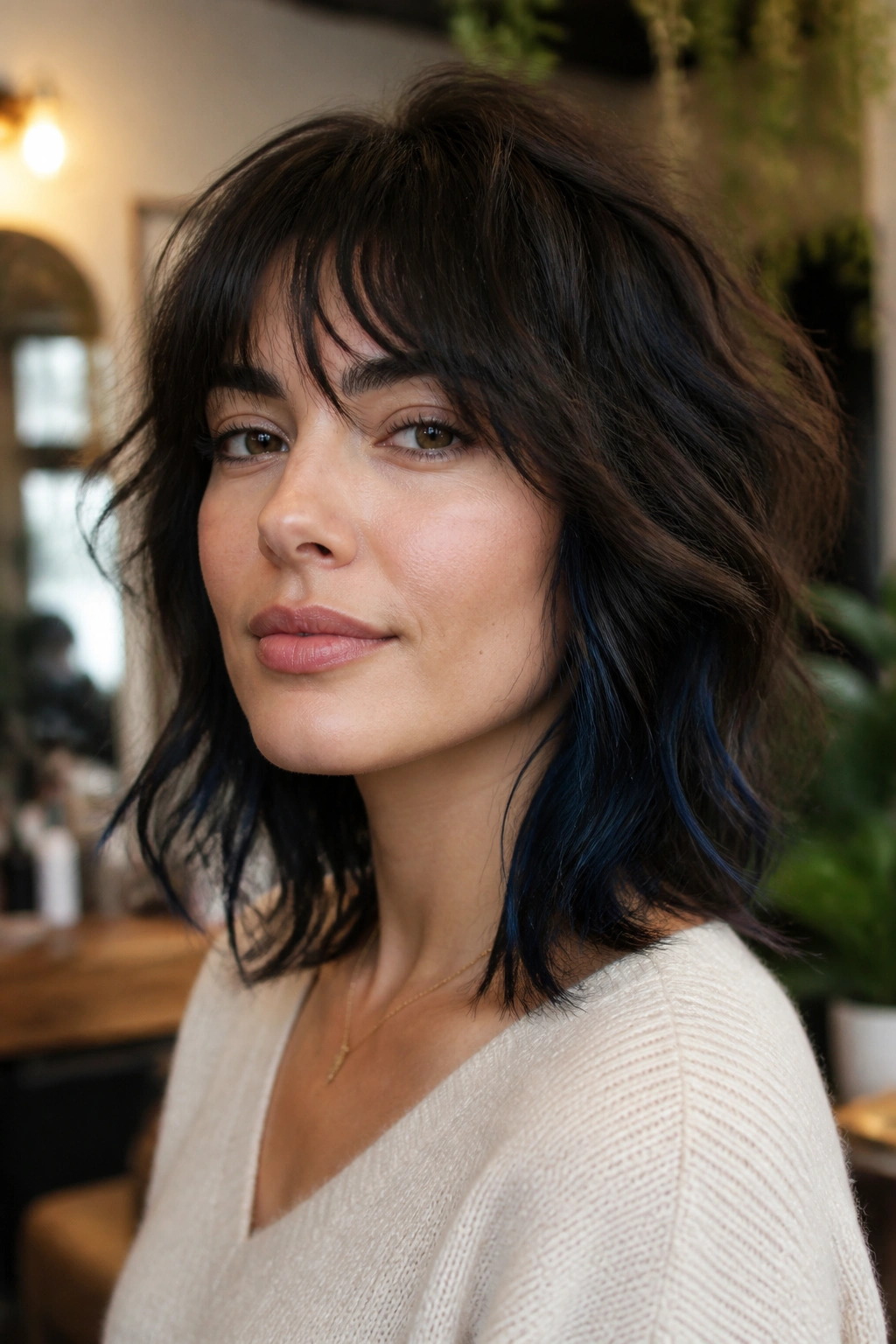
A shag can turn puffy in a hurry if the color sits too high.
Midnight blue ribbons solve that problem by living inside the cut, not on top of it. They peek through the wispy layers around the ears and collar, which gives the hair movement without adding width at the fullest part of the face. On a round face, that lower placement matters more than the shade itself.
What to Watch For
The cut needs enough internal texture to keep the blue from looking like one solid block. A shag that is too heavy at the sides will just balloon out.
- Ask for shattered ends and light crown volume.
- Keep the blue in narrow slices.
- Style with rough-dried waves, then break them up with fingers.
I like this one on hair that already has a little natural bend. Straight hair can wear it too, but it needs more texture spray and a touch of bend at the ends or the color disappears into the layers.
5. Pixie Cut with Rose-Gold Nape Color
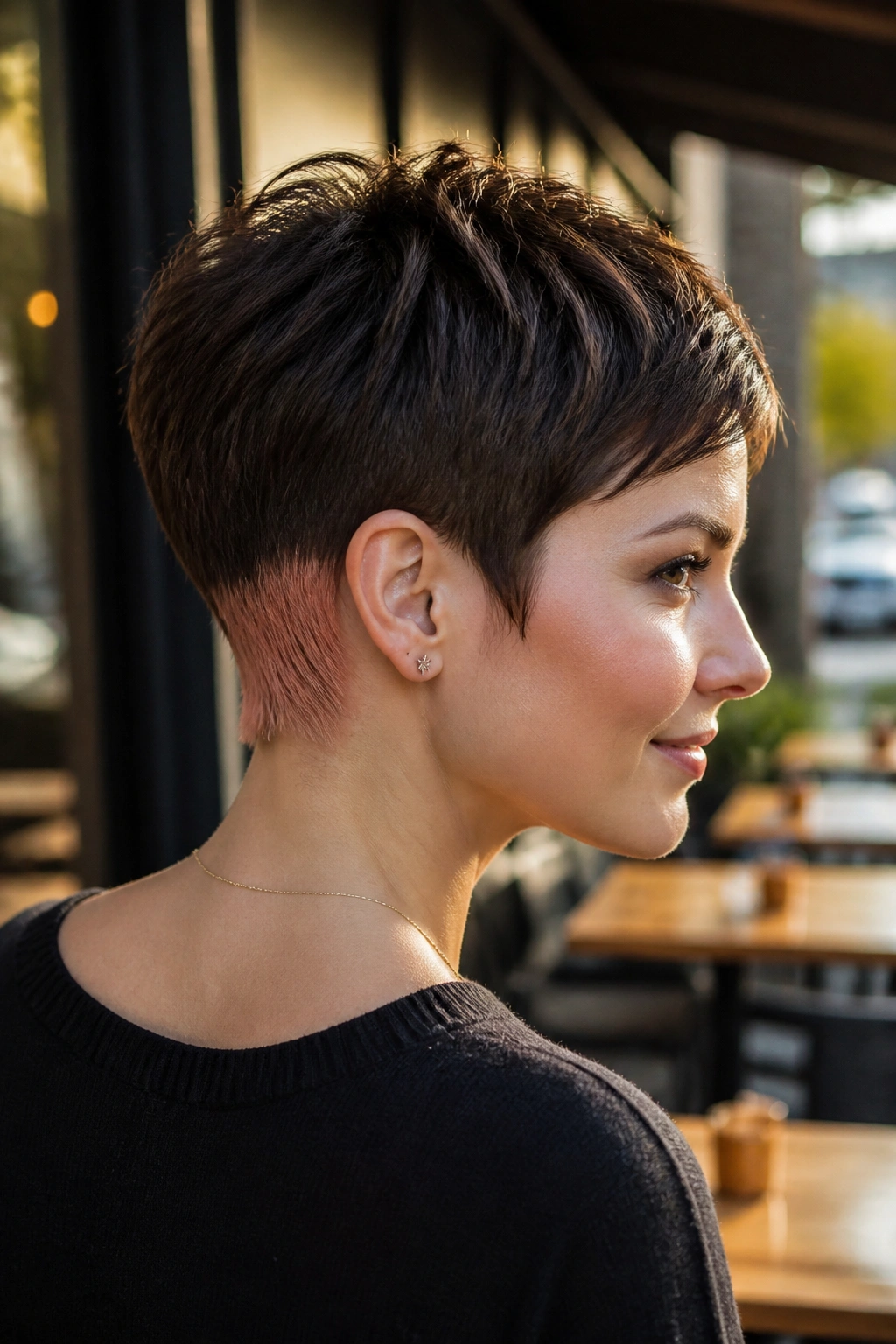
Tiny cut. Big payoff.
A pixie with a rose-gold nape panel is one of those styles that looks plain from the front and far more interesting the second you turn your head. On a round face, the short sides and longer top keep the shape lifted, while the hidden color stays low and sleek instead of sitting beside the cheeks.
The rose-gold tone softens the cut in a way neon colors do not. It feels warm, not flashy. If you tuck hair behind one ear or wear glasses, the little reveal at the nape becomes even better because the rest of the shape stays clean and close.
This is also a smart pick if you do not want a lot of styling time. A pea-sized bit of cream, a quick finger lift at the crown, done.
6. Wavy Blunt Lob with Blonde Underlights
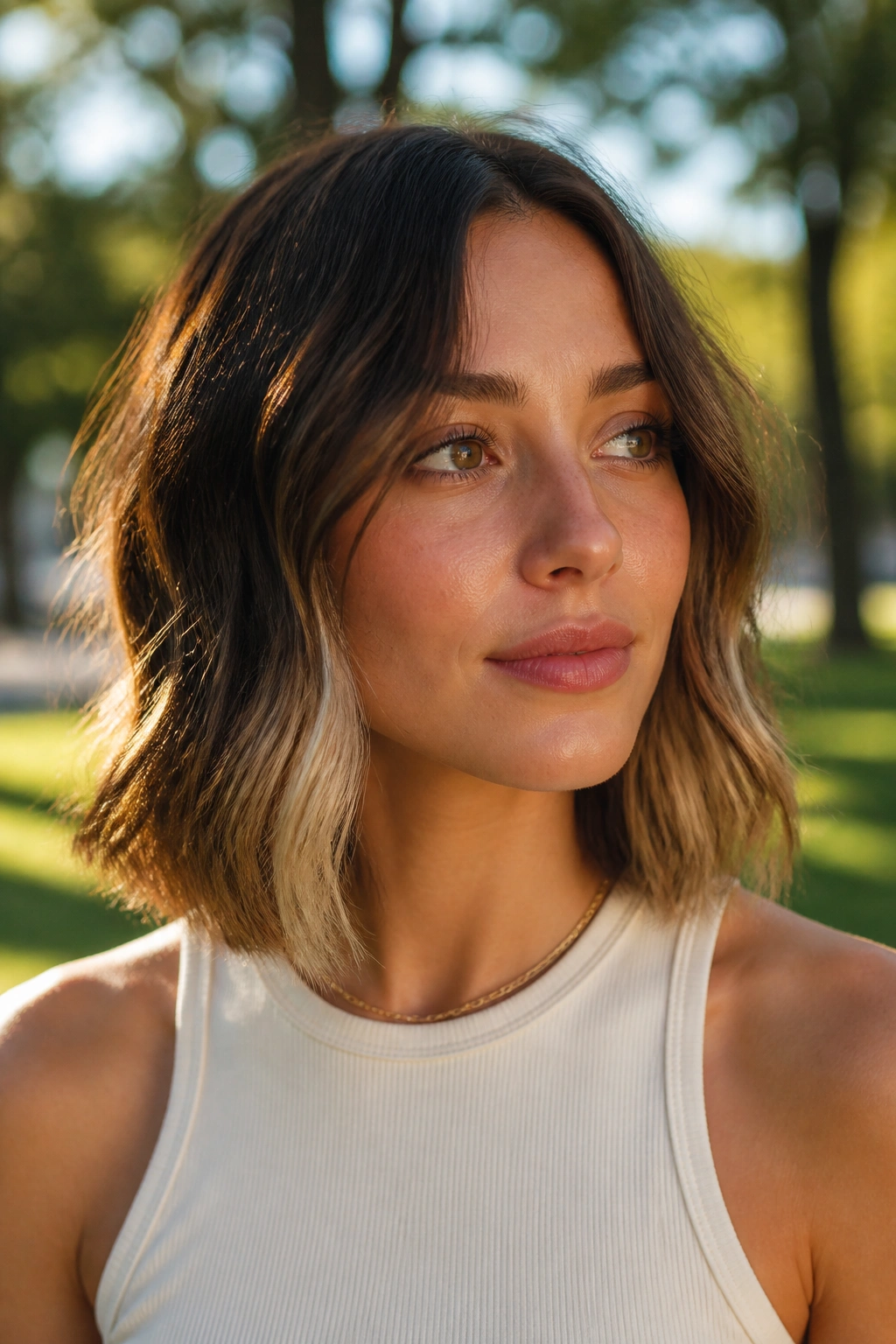
Underlights are sneaky in the best way. They stay hidden when the hair falls flat, then show up the second the waves split and move.
That makes them a strong match for round faces. A blunt lob gives the face structure, while blonde underlights keep the cut from feeling heavy. Because the lightest pieces sit underneath, they do not fight with the cheeks. They flash near the lower half of the hair instead, which keeps the shape long.
A blunt edge works here because the color has something clean to sit inside. If the ends are too broken up, the contrast can look messy. Keep the waves loose, almost lazy, and let the blonde appear in thin flashes, not big panels.
7. Sleek Straight Lob with Emerald Interior
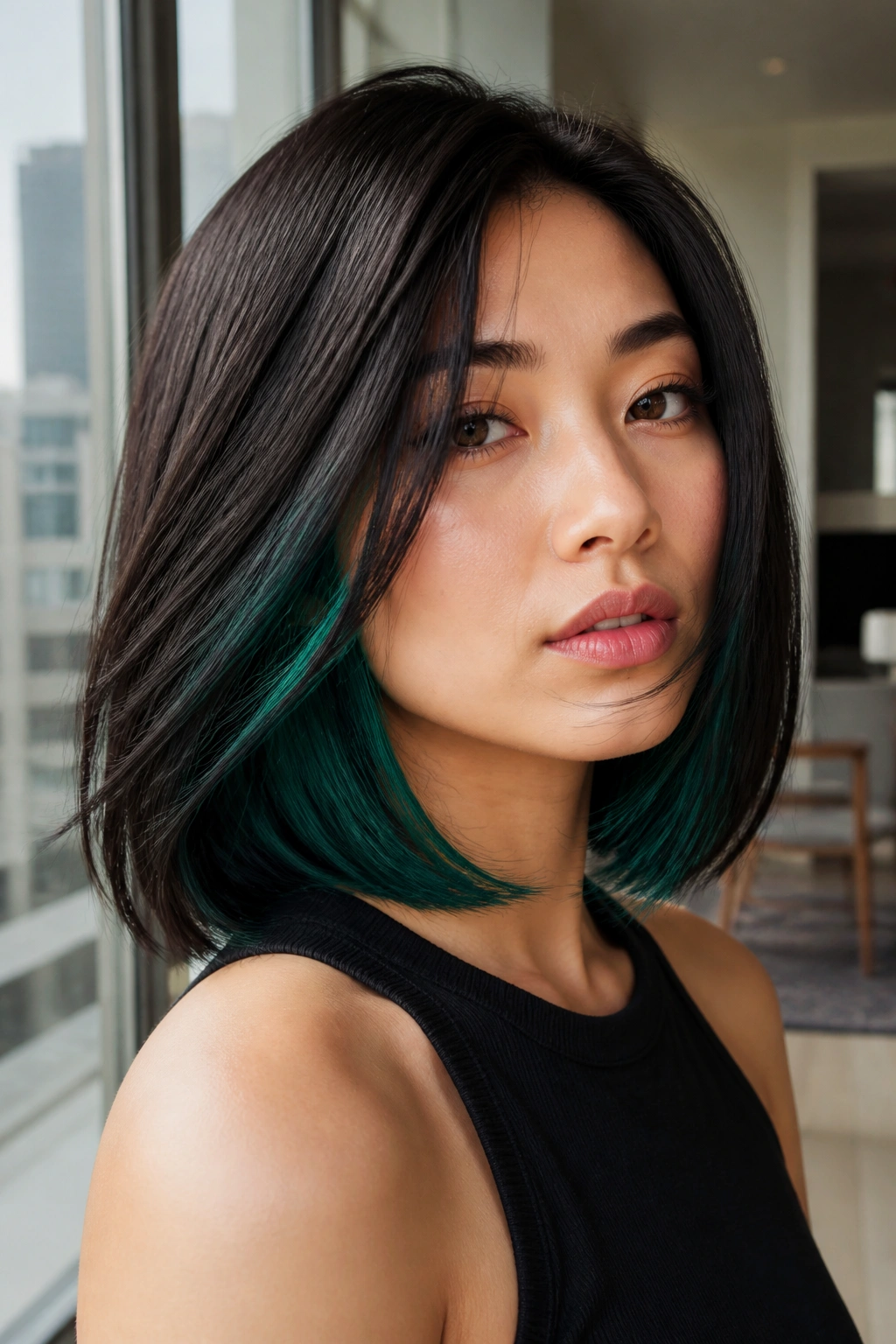
Straight hair can handle peekaboo color better than people think.
In fact, the cleaner the line, the sharper the reveal. An emerald interior on a sleek lob looks almost like lining inside a coat. The outer layer stays dark or neutral, and the green sits underneath, mostly visible when the hair swings or one side gets tucked back.
For round faces, that straight vertical drop is useful. It elongates the profile, especially if the lob ends just below the collarbone. Keep the emerald hidden through the lower interior, not in a thick front strip, or the face can start to look broader than you want.
This one has a polished feel. Not stiff. Just tidy, glossy, and a little sly.
8. Curly Shoulder Cut with Cinnamon Peekaboo
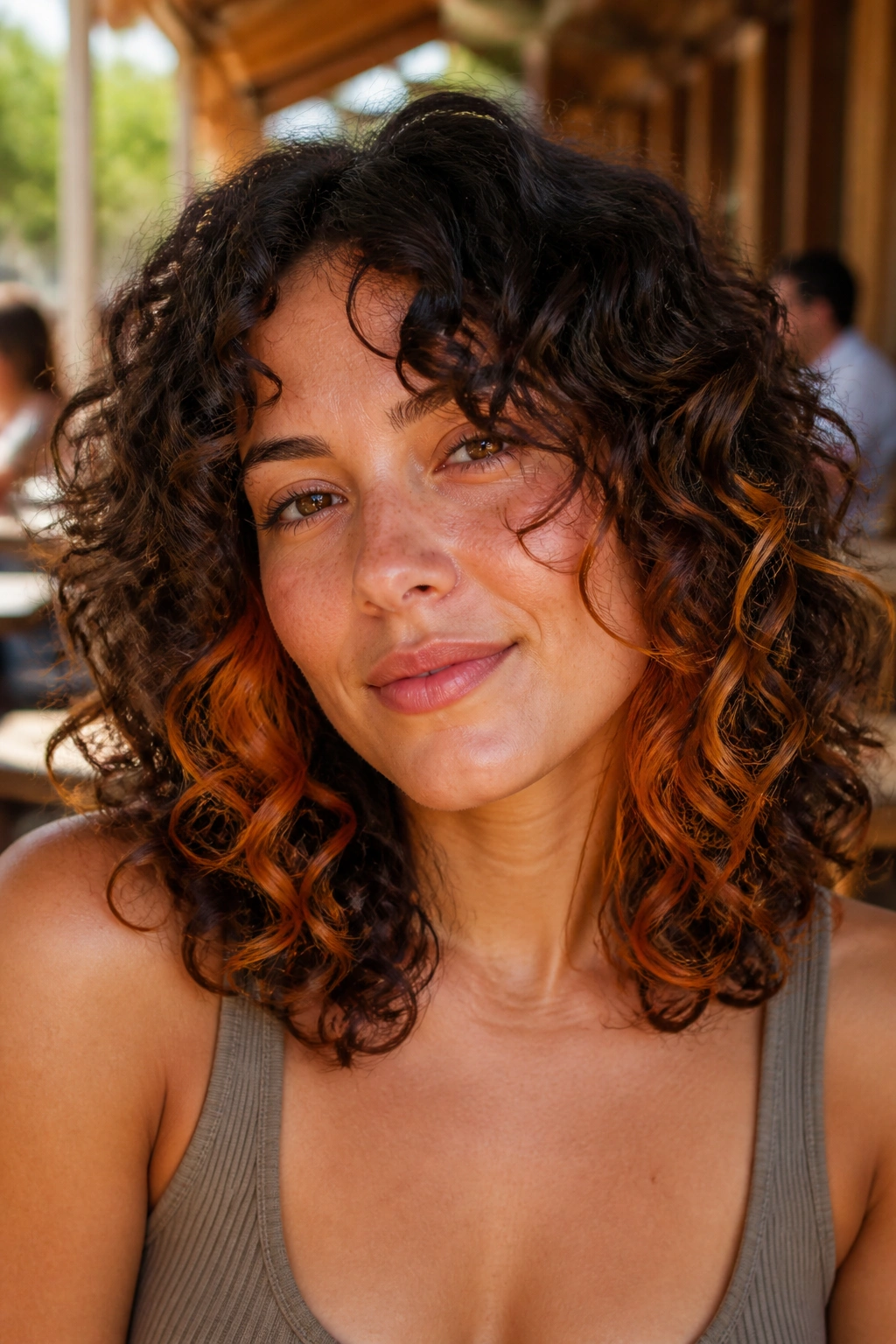
Do curls hide peekaboo color? Not if you place it with the curl pattern in mind.
Cinnamon tones work beautifully under shoulder-length curls because they warm the whole shape without sitting at the widest point of the face. The trick is to place the color where the curls fall forward and then swing back, usually beneath the top layer around the ears and into the lower half of the cut.
Placement That Works With Shrinkage
Curly hair shrinks, and that changes the way color shows. What looks low on wet hair can climb higher once it dries.
- Put the brightest cinnamon 2 to 3 inches below the visible surface.
- Keep the top layer a little longer than you think.
- Diffuse on low heat to keep the curl clumps defined.
That extra planning saves you from ending up with color that sits right beside the cheekbone when the curls bounce up.
9. High Ponytail with Hidden Color at the Base
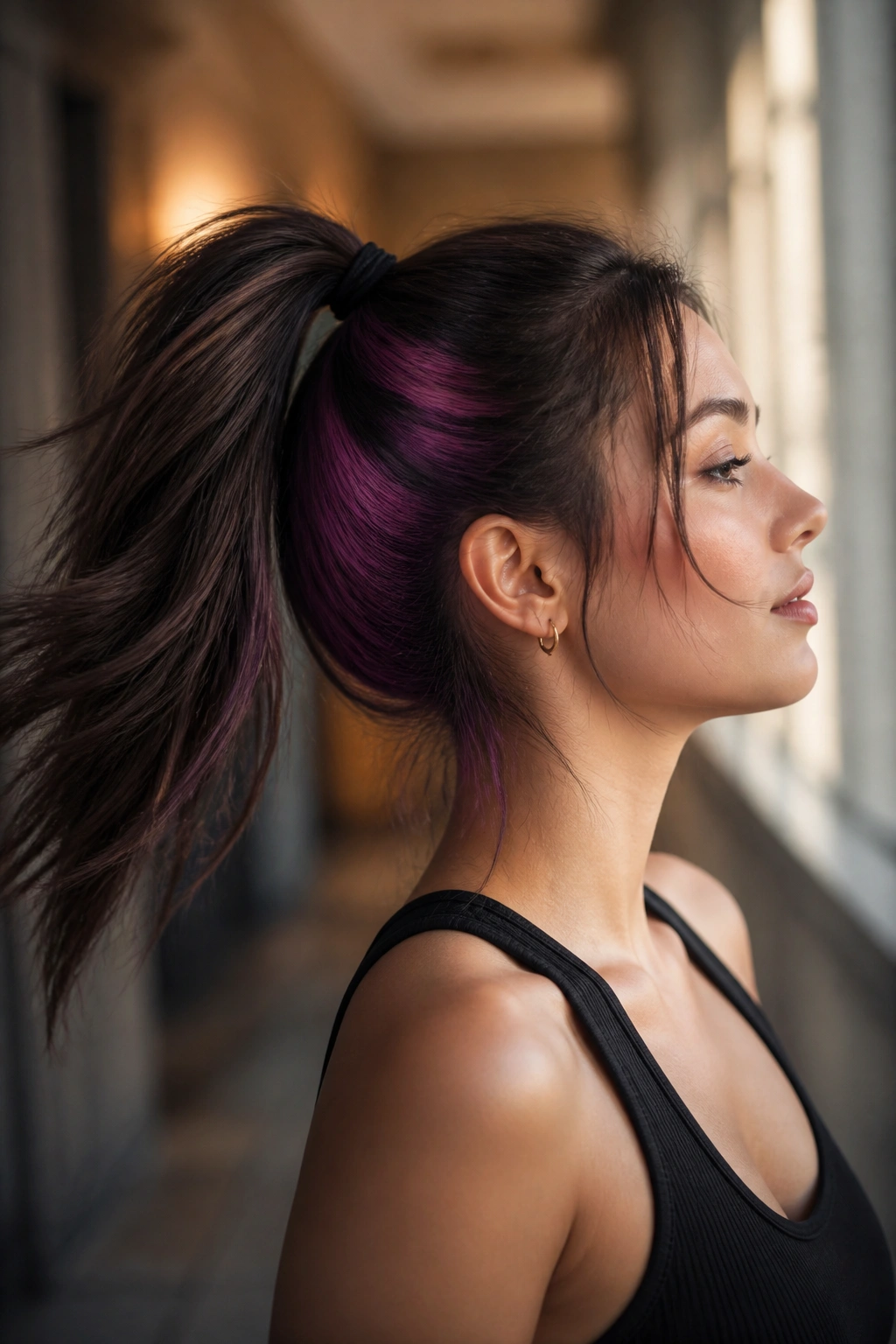
A high ponytail can make a round face look lifted fast.
Now add hidden color at the base, and the whole style gets better. The pony pulls the eye upward, while the secret color stays tucked near the elastic or just below it. That gives you a clean front view and a little flash from the side and back. It’s neat, but not boring.
The placement matters. If the color sits too high, it starts competing with the cheek line. Keep it near the base of the pony, or even in a thin slice underneath, so the reveal happens when the hair swings.
This is one of those styles that works for gym days, evenings out, and anything in between. It also looks better when the pony is slightly loose, not ironed into a hard knot.
10. Half-Up Twist with Jewel-Tone Underlayers for Round Faces
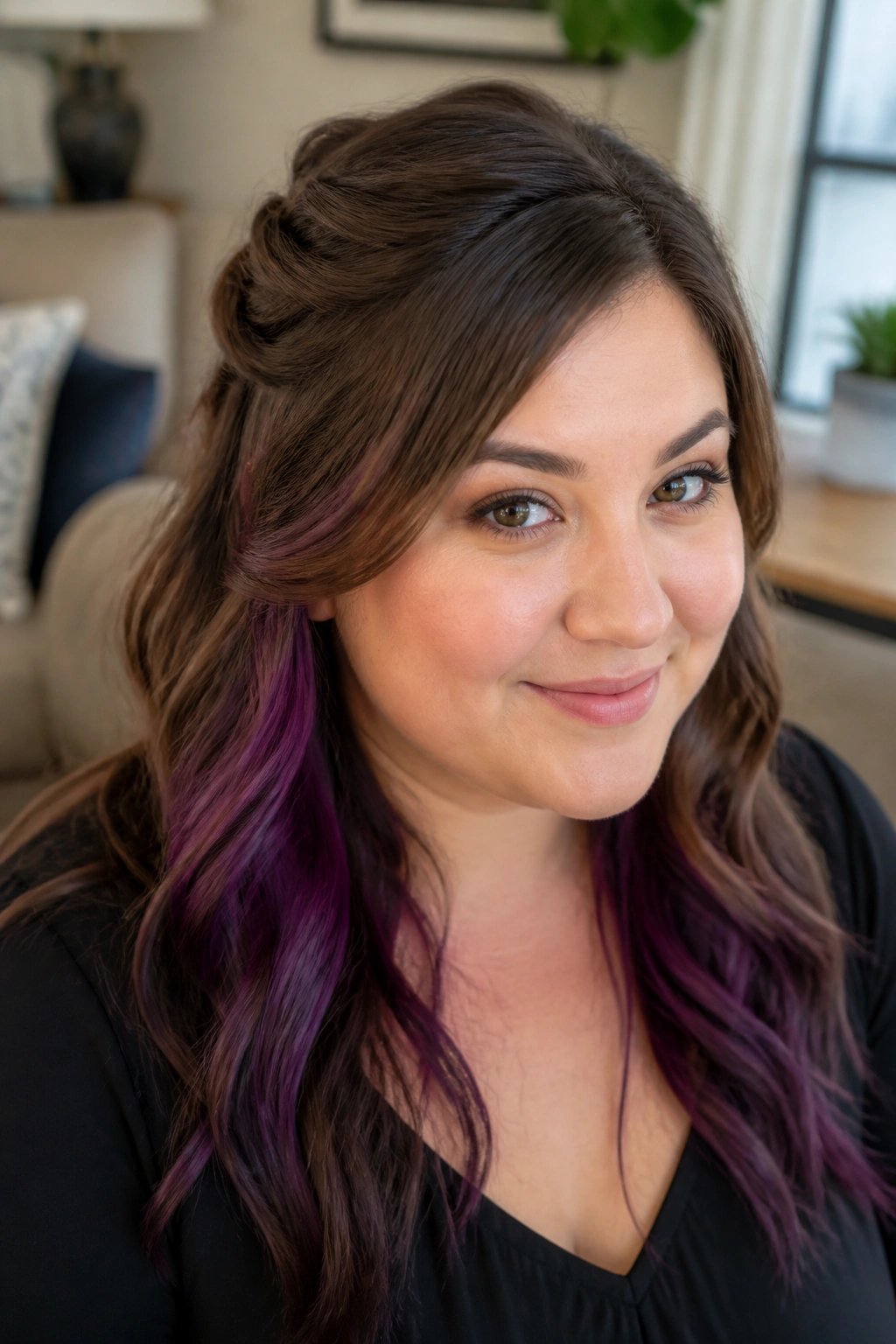
A half-up twist gives height at the crown, and that alone helps a round face look longer.
The jewel-tone underlayers do the rest. Whether you pick amethyst, sapphire, or deep green, the color should live below the twist so it appears as a second layer, not a wide frame around the face. That keeps the front open and light while the back carries the drama.
The twist itself can be neat or loose. I prefer loose, honestly, because a hard, tight half-up can start to feel formal in a way that fights the color. Leave a few face-framing strands out, but keep them long enough to skim the jaw. Short pieces around the cheeks can widen the face faster than anyone wants.
11. Braided Crown with Underbraid Color
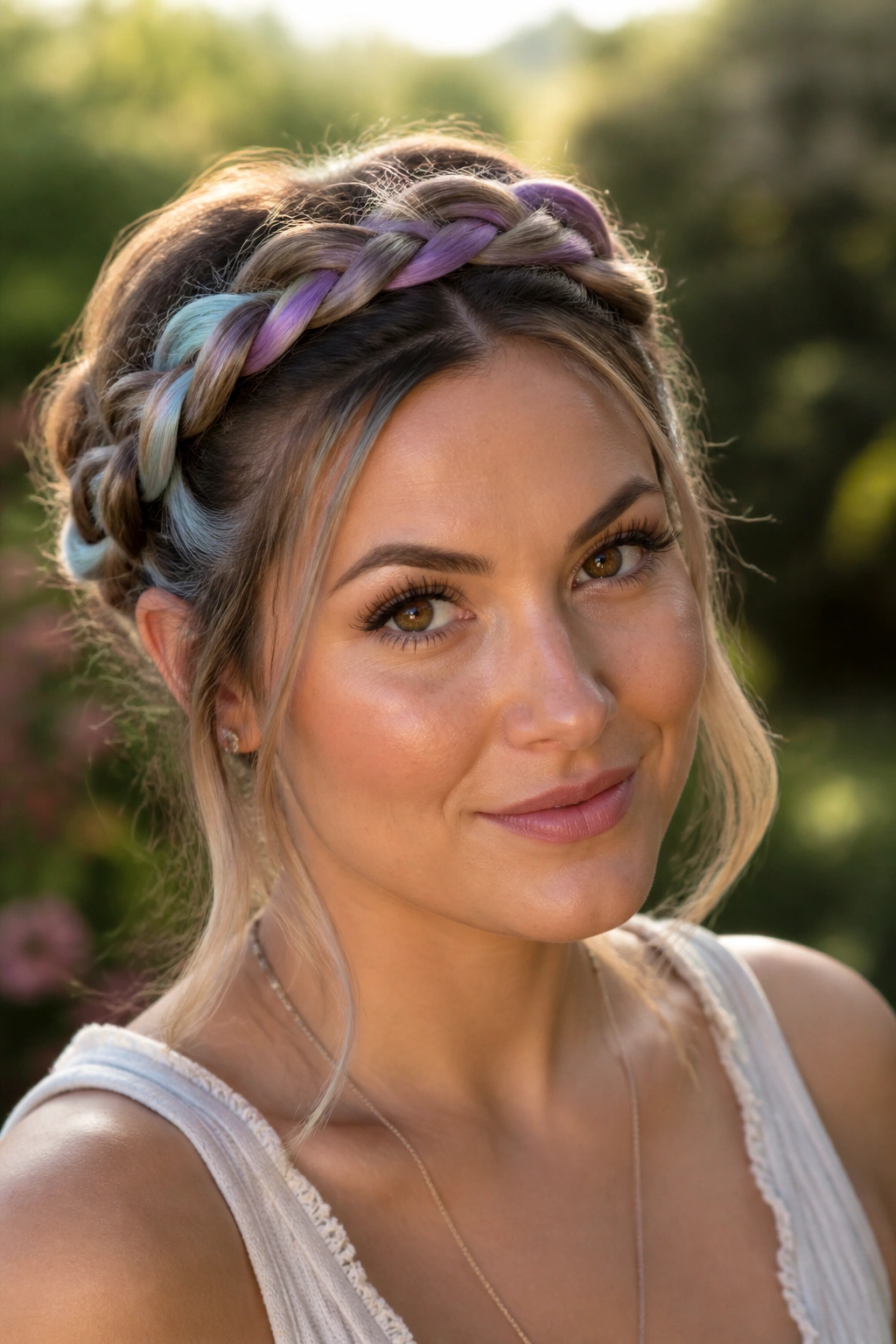
Unlike a plain crown braid, this version gives you a little surprise every time the braid crosses over itself.
Underbraid color works because the twists expose hidden pieces in small flashes instead of one big reveal. That keeps the eye moving up and around the head rather than stopping at the widest point of the face. On a round face, the raised crown shape is flattering on its own. The color just makes it more interesting.
The best shades for this are rich and slightly darker than you’d expect: burgundy, deep plum, forest green. Bright blondes can work too, but they read louder. If your goal is polish with a secret, go deeper.
A little shine cream on the braid keeps the crossings clear. Frizz makes the reveal fuzzy, and you want the opposite.
12. Wolf Cut with Teal Interior Panels
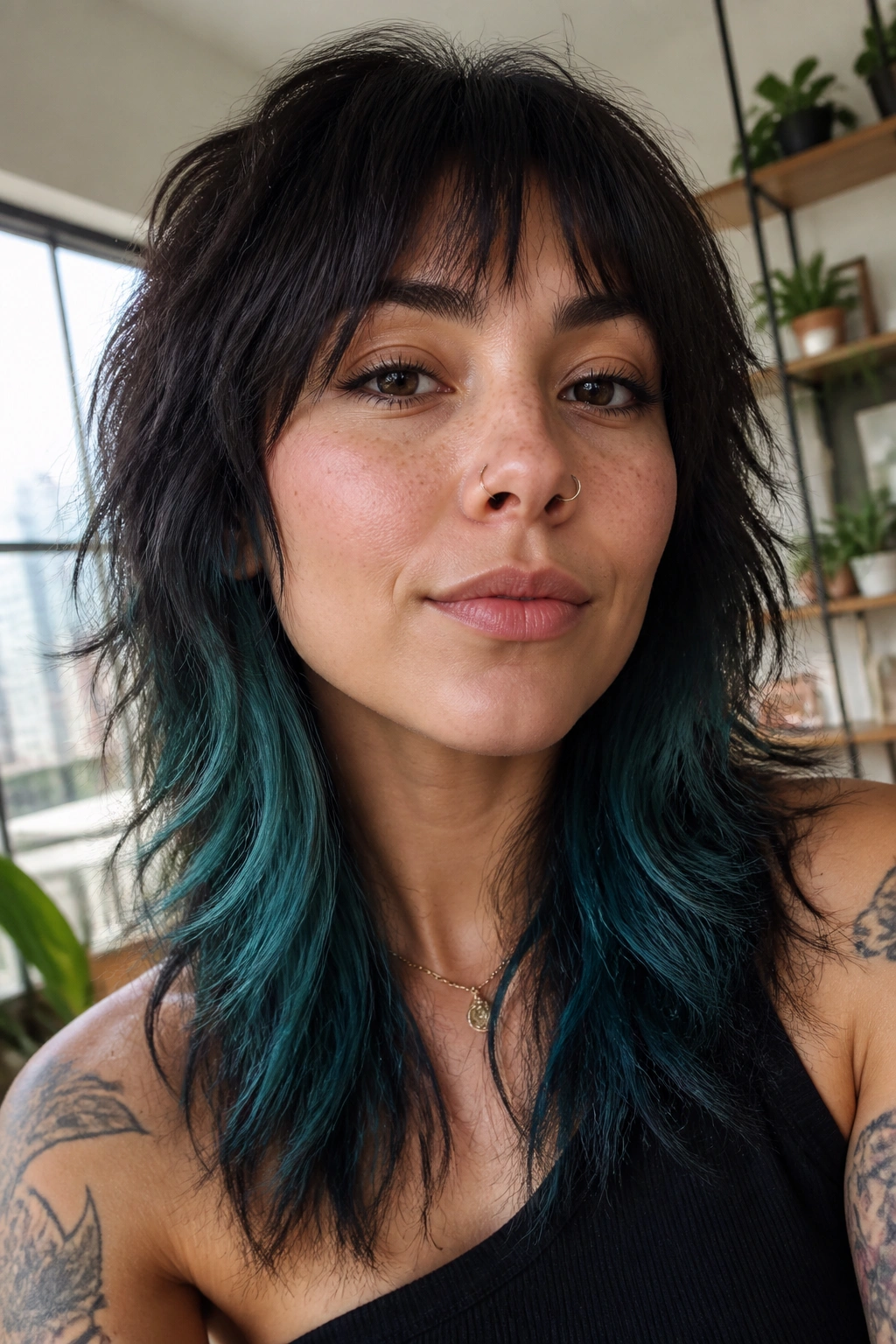
A wolf cut already has attitude. Teal interior panels turn that attitude into a deliberate shape.
The choppy crown lifts the eye upward, while the longer lower pieces keep the face from feeling too wide. Teal works best when it sits inside those lower layers and peeks out as the hair breaks apart. You do not want a teal halo around the cheeks. You want flashes. Small ones.
How to Ask for It
Tell the stylist you want the color hidden through the interior and around the back, not placed in thick face-framing blocks.
- Keep the top layers soft and airy.
- Make the teal pieces narrow and irregular.
- Style with a bit of paste on the ends so the texture stays separated.
This look does need maintenance. Teal fades fast on porous hair, so a color-safe wash and cool rinse are worth the trouble.
13. Butterfly Layers with Auburn Underlayers
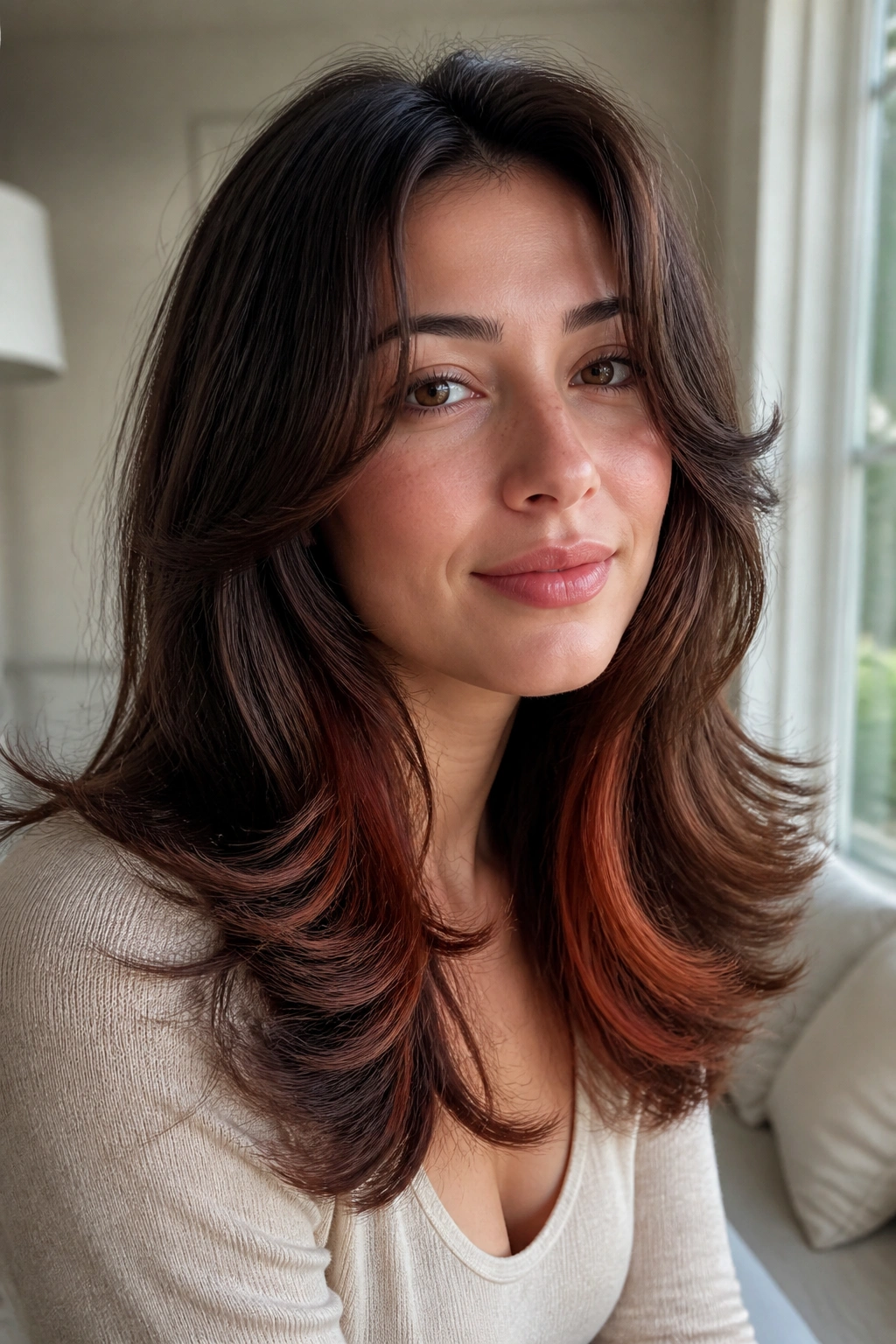
Butterfly layers are good at one thing most cuts struggle with: they create length without killing volume.
That helps round faces because the layers flare around the shoulders, not the cheeks. Auburn underlayers keep the movement warm and grounded. The color should live beneath the floating top pieces, especially in the lower half of the cut, where it can show when the hair swings but stay hidden when it lies flat.
This style suits medium to thick hair best. Thin hair can wear it too, but the layers need to stay a little longer or the ends start to look sparse. Blow-dry the crown up and away from the face, then curve the ends in just a touch. Too much curl can puff the sides. Too little and the layers lose that soft wing shape.
14. French Bob with Shadow-Root Dimension
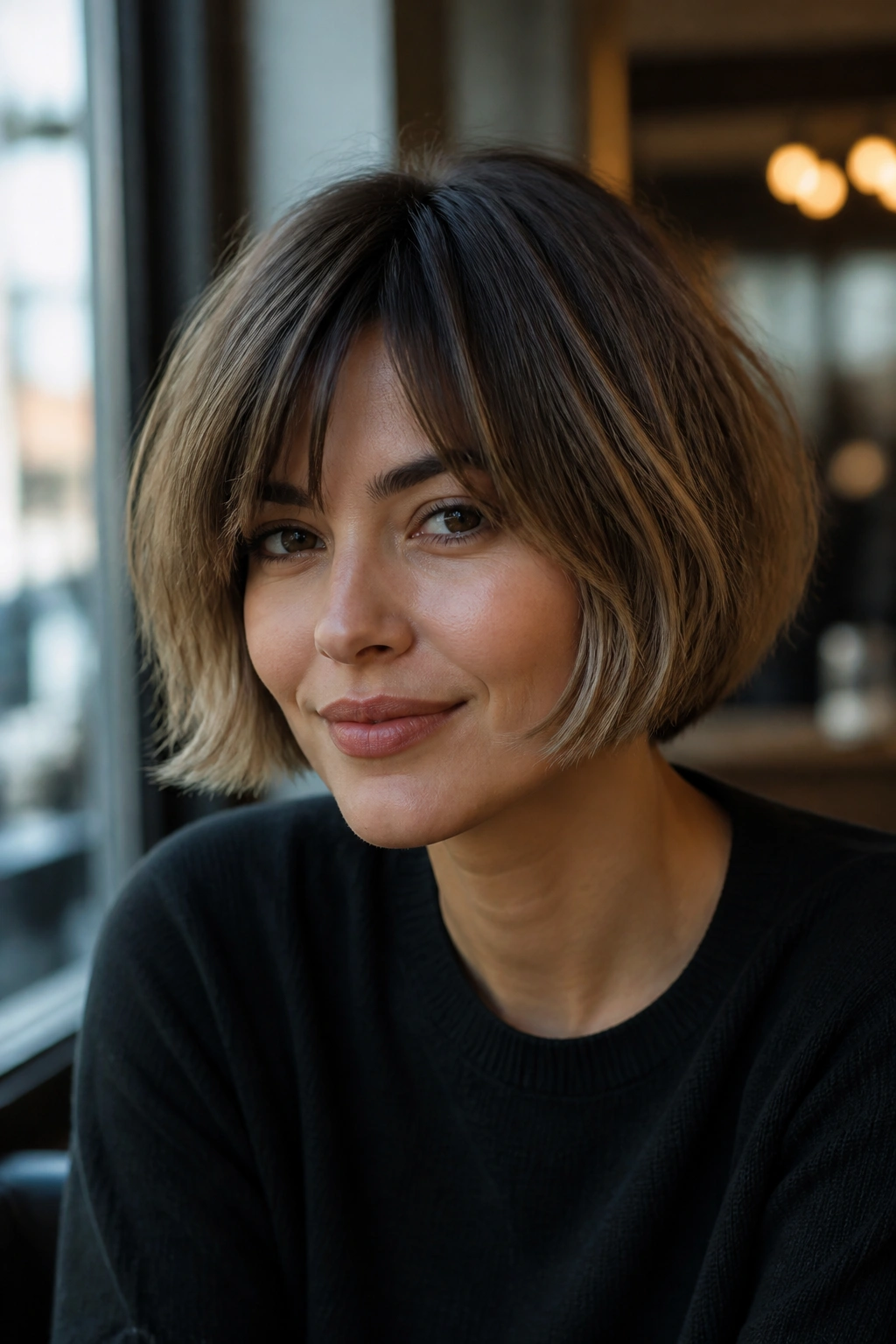
A French bob can be lovely on a round face, but only if it stays crisp.
The shadow root gives that bob depth at the top without adding bulk around the cheeks. The color shift is subtle, usually just enough to break up the helmet effect that short bobs can get when they are all one shade. A jaw-skimming length works best here, though I’d push it a little longer if the face is very full.
What Keeps It Flat?
The shape needs clean edges and a bit of air at the roots. Not poof. Air.
- Blow-dry with a small round brush.
- Bend the ends under just slightly.
- Keep the root shade deeper than the mids by one to two levels.
That tiny shift is enough to make the cut feel finished. If the bob is too blunt and the root is too flat, the style can land hard on a round face. Softness at the top solves that.
15. Side-Swept Bangs with Soft Contrast
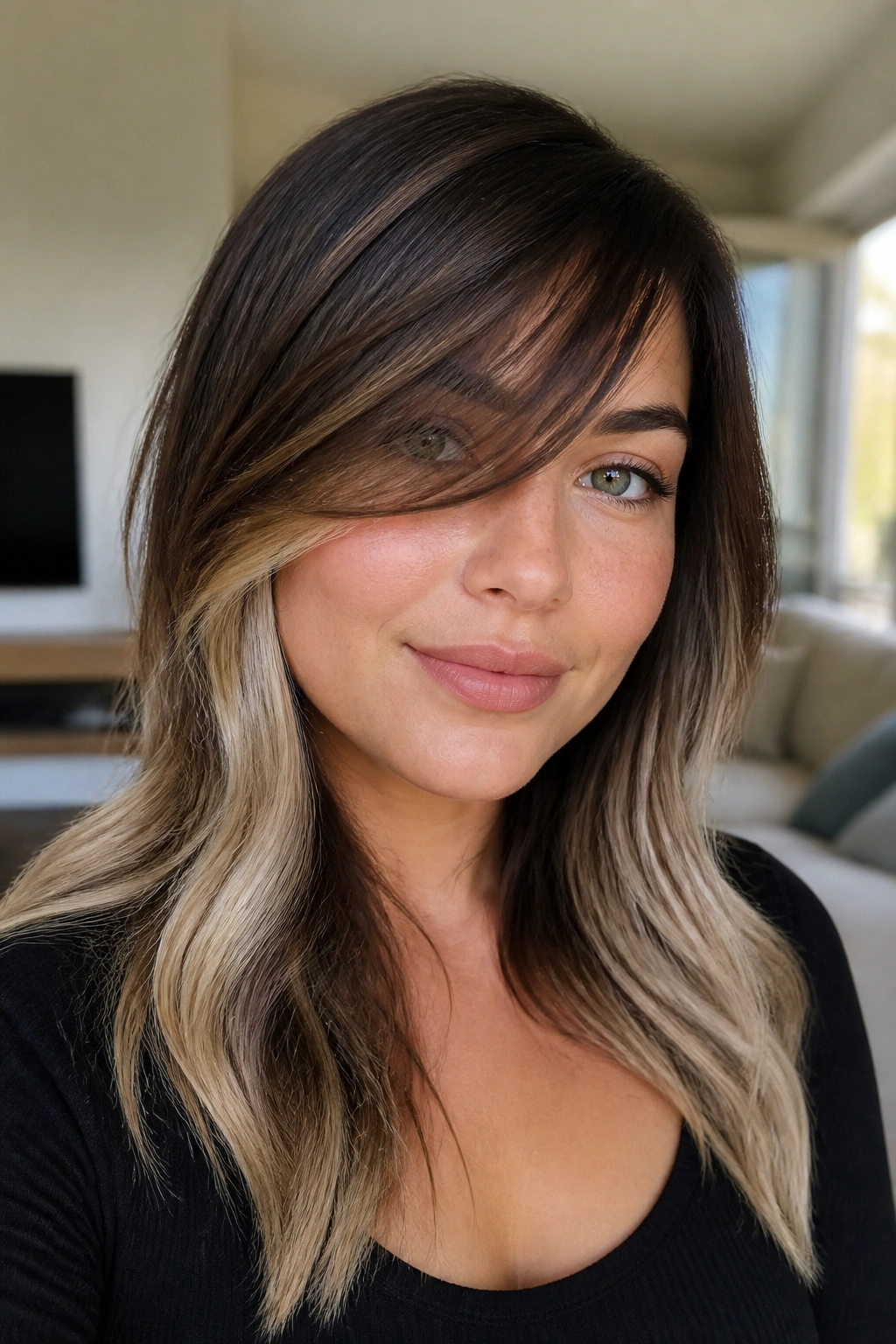
Blunt bangs can make a round face feel shorter. Side-swept bangs do the opposite.
They cut diagonally across the forehead, which naturally pulls the eye off the widest parts of the face. Add soft contrast through the underneath layers, and the whole cut gets a little more shape. The contrast should be quiet here — nothing stripey, nothing heavy. Think melted brown to beige, or espresso to soft copper.
The best thing about this combo is how easy it is to grow out. If you get tired of bangs, the side sweep just blends into layers. No awkward shelf. No strange middle stage. Keep the color low and the sweep long, and the face stays open instead of boxed in.
16. Messy Bun with Crown Streaks
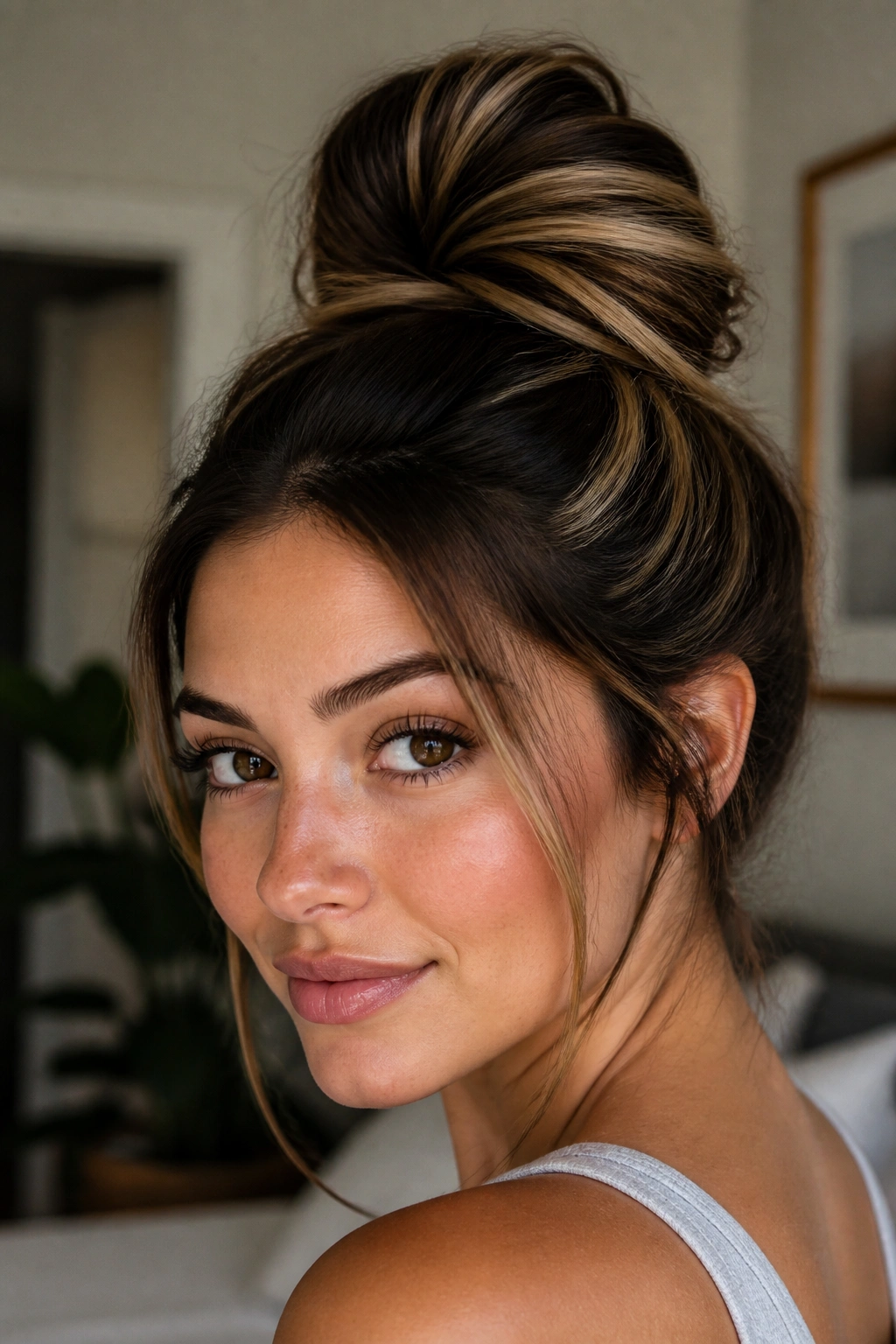
Second-day hair loves this style.
A messy bun with crown streaks gives round faces height at the top and interest where most buns go plain. The streaks should live near the crown and peek out only when the bun loosens a little. That adds texture without making the sides feel crowded.
Best Way to Wear It
Pull the bun high enough to lift the face, but not so high that it looks stiff. A few loose pieces around the ears help, though they should be long and narrow, not short and puffy.
- Tease the crown lightly before pinning.
- Leave the hidden streaks just under the surface.
- Use 3 to 5 bobby pins instead of one tight elastic.
A glossy finish keeps this from looking like a rushed knot. A little flyaway is fine. A halo of frizz is not.
17. Tapered Pixie with Neon Nape Surprise
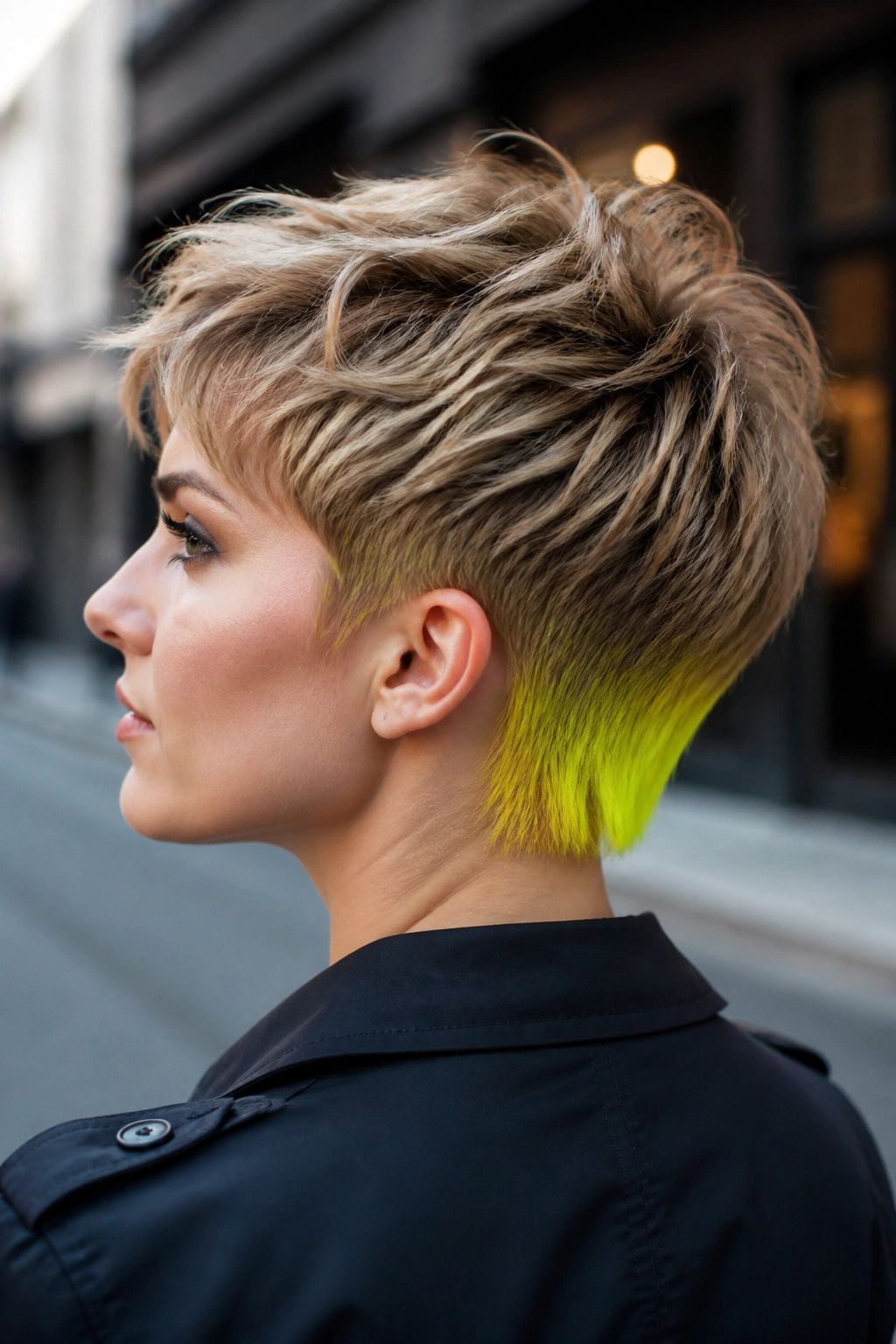
A tapered pixie is one of the smartest short cuts for round faces.
The sides stay close, the top keeps some lift, and the nape becomes the place where color gets to be loud. Neon at the back sounds wild, but because it sits low, it does not widen the face the way a bright front panel can. You get the surprise without the bulk.
This cut also grows out well if the taper is clean. The shape stays neat for longer than a shaggy short cut, which matters if you do not want to visit the salon every few weeks. Keep the top piecey, not flat. That small amount of lift changes the whole silhouette.
If neon feels too much, a vivid coral or electric plum gives the same idea with a softer punch.
18. U-Cut with Champagne Underlights
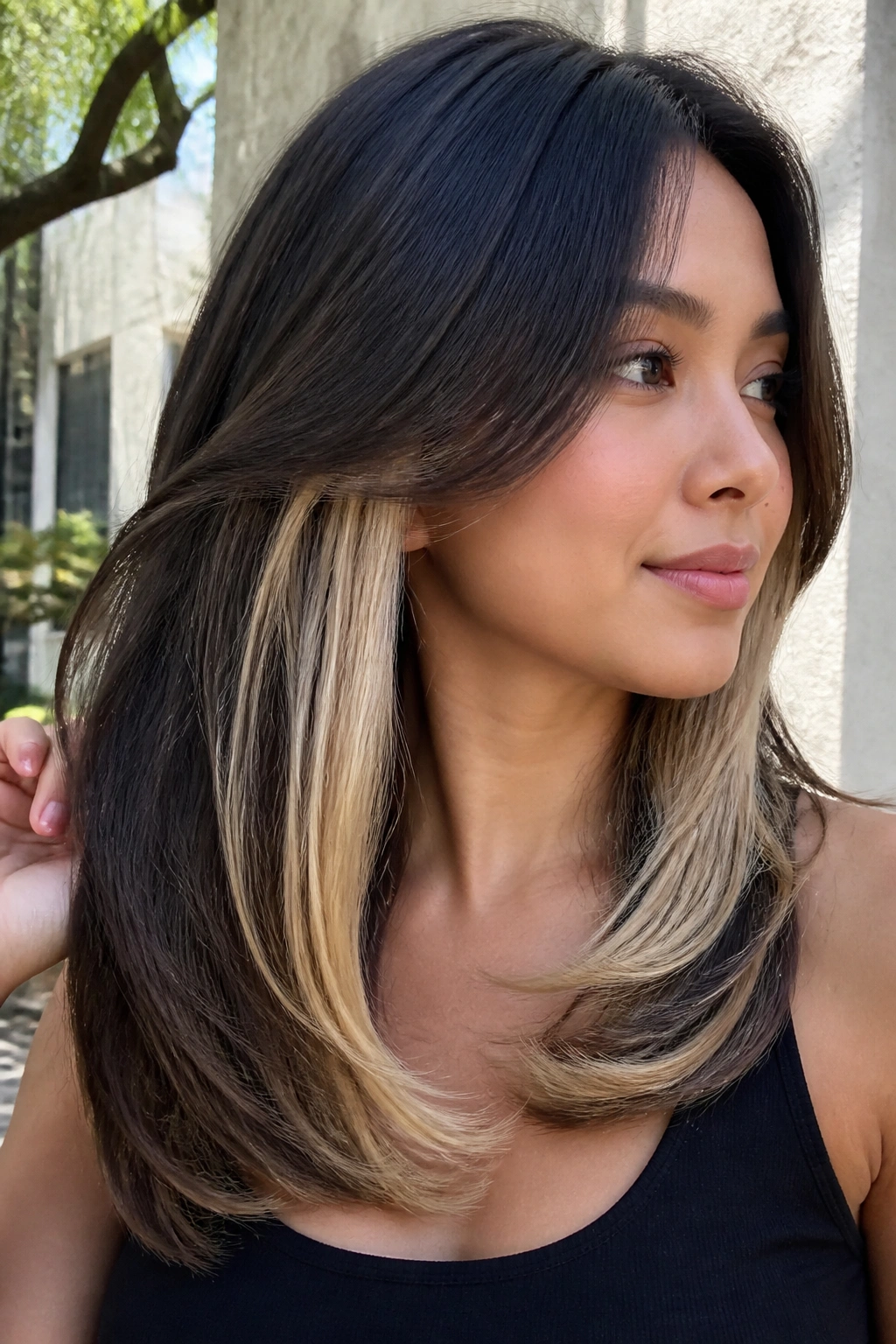
A U-cut is quieter than a V-cut, and that softness matters here.
The rounded edge at the back mirrors the shape of the face a little, but the long length keeps everything from feeling boxy. Champagne underlights sit underneath the outer veil and flash when the hair moves. Because the color is tucked lower, it does not sit against the cheeks. That keeps the shape long and light.
This is a nice choice for thick hair that needs some movement without losing fullness. The U shape keeps the ends feeling plush, while the hidden color keeps the style from looking too heavy. Loose waves work better than tight curls here. Tight curls can make the whole outline expand in a way that fights the point of the cut.
19. Spiral Curls with Burgundy Beneath
Can peekaboo color disappear in spiral curls? Sure, if you place it too high.
Burgundy beneath the curls fixes that. The color sits in the lower interior, so it peeks through when the spirals separate and bounce. On a round face, that is useful because the curls already bring softness. The hidden burgundy adds depth without piling more width at the sides.
How to Keep It Visible
The real job is sectioning. Curls eat color if the placement is sloppy.
- Put the burgundy under the mid-lengths and ends.
- Leave the top curl pattern darker and cleaner.
- Diffuse until the curls are set, then separate only a little.
The result feels rich, not flashy. Burgundy on curls also ages nicely between salon visits because the fade still looks intentional.
20. Sleek Blunt Cut with Bold Underlayer
A sleek blunt cut looks simple until the underlayer moves.
That hidden band of color gives the cut a pulse. Think deep violet, cherry, or even a cool ash blonde under a dark top layer. The key is keeping the color one to two inches inside the perimeter so the front stays clean and the face keeps its length. On round faces, that clean outer line matters more than almost anything else.
This style works best when the hair is straightened just enough to show the edges, but not so pressed that it loses body. A little bend at the ends keeps the blunt cut from feeling severe. The color flashes when the hair swings or when you hook one side behind the ear. That’s the moment it earns its keep.
21. Low Bun with Ribbon-Placement Color
A low bun can feel sleepy unless the color gives it a reason to exist.
Ribbon-placement color solves that by hiding thin colored strips near the temples, the nape, or just under the bun base. The bun itself stays low and clean, which is good for a round face because it keeps the top from getting wider. The colored ribbons act like a quiet frame, not a loud border.
I like this on hair that has a little shine. Flat, dry hair can make the reveal look dull. A small amount of serum through the lengths — not the roots — keeps the hidden pieces glossy enough to flash when they catch light.
This is also one of the easiest looks to dress up. Swap a plain elastic for a wrapped one, pin the bun a little looser, and let the color do the talking.
22. Layered Mid-Length Cut with Two-Tone Panels
Two-tone panels can look busy if they sit too high. Here, they sit lower and smarter.
A layered mid-length cut gives you movement around the jaw and shoulders, while the two-tone panels live mostly in the interior and lower back. The contrast can be soft, like chestnut and beige, or sharper, like espresso and copper. What matters is that the brightest bits are not sitting on the outer cheeks.
This style is a nice middle ground if you want something noticeable without going full dramatic. It also grows out well because the panels stay hidden as the layers shift. On wavy hair, the layers show off the color best. On straight hair, tuck one side behind the ear once in a while so the hidden section gets its moment.
23. Shattered Lob with Apricot Underlights
A shattered lob has enough texture to keep apricot underlights from reading flat.
The broken ends and uneven movement make the color peek through in little bites. That matters on a round face because the texture creates vertical interruption instead of one broad, smooth shape. Apricot is especially nice if you want warmth without going copper-heavy. It feels lighter, almost sunlit, but still visible.
What to Ask For
Tell the stylist you want a lob with piecey ends and color tucked into the lower interior.
- Keep the length at or just below the collarbone.
- Use a razor or point-cut finish for softness.
- Blow-dry with a round brush, then rough up the ends a little.
This cut looks best when it is not overstyled. Too much polish makes the layers collapse into one shape, and then the peekaboo color loses its spark.
24. Tucked-Behind-Ear Cut with Subtle Contrast
Some of the best peekaboo looks are nearly invisible until you tuck the hair back.
That’s the charm here. A shoulder-length or collarbone cut with subtle contrast gives you a clean front and a tiny reveal near the ear. On a round face, that tucked shape opens the cheeks without adding width, because the color sits back and slightly lower. It feels office-friendly, but not dull.
The contrast should stay soft. A level or two lighter, or one shade deeper, is enough. You want a whisper, not a shout. This style is especially good if you wear glasses, because the color peeks out from behind the frame and gives the whole look some movement.
Low fuss. Nice payoff. That’s usually a good sign.
25. Soft Face-Framing Layers with Dimensional Ends for Round Faces
Can face-framing layers work on a round face? Absolutely, if the shortest pieces are long enough.
The danger is cutting them too high and making the face look fuller. Keep the first layer below the cheekbone, then let the color live more through the ends than the front. Dimensional ends — a bit darker underneath, a bit lighter at the tips — help pull the eye down the length of the hair.
This is the sort of cut that looks calm on day one and even better after a few wears. The hair settles, the layers swing, and the hidden tones start to show in movement rather than all at once. If you like hair that feels soft but not flat, this one does the job without being fussy.
26. Choppy Shoulder Cut with Violet Hidden Pieces
A choppy shoulder cut likes a color that can keep up with the texture.
Violet hidden pieces do that well. They flash in the gaps between uneven layers, which keeps the cut lively and stops it from looking too one-note. On a round face, the shoulder length helps stretch the line downward, while the violets stay tucked inside the movement instead of spreading across the cheeks.
The texture needs a bit of separation. A dab of styling paste on the ends, plus a quick twist with the fingers, is enough. If the pieces are too soft, the violet sinks into the hair and disappears. If they’re too chunky, the style starts to feel heavy. It’s a narrow lane, but a good one.
27. Long Glam Waves with Dark-to-Light Peekaboo Melt
Long glam waves can wear peekaboo color without losing their softness.
The trick is keeping the fade inside the wave, not across the widest part of the face. A dark-to-light melt that starts deeper near the roots and lightens toward the hidden lengths gives the hair depth from top to bottom. The waves then show tiny shifts of tone as they move, which keeps the look rich instead of flat.
For round faces, that length is doing important work. The waves should begin below the cheekbone, and the brightest point should sit lower than that. If the lightest pieces sit beside the face too early, the effect turns wide fast. Keep the glam in the motion, not the sides. That’s the line.
28. Collarbone Cut with Face-Slimming Peekaboo Finish for Round Faces
A collarbone cut is one of the easiest shapes to live with, and the peekaboo finish makes it feel more considered.
Keep the bright pieces below the jaw, tucked into the lower layer or wrapped around the back, and the whole cut starts reading longer and leaner. The front can stay soft and movable. The magic is in the hidden contrast. When the hair shifts, the color appears in just enough places to feel intentional without framing the fullest part of the face.
If you are choosing only one rule from this whole list, make it this one: put the brightest contrast lower than the widest point of the face. That simple placement choice is what separates a cute color job from a flattering one.
And if you want the look to last, ask for a cut that grows cleanly. Collarbone length usually does. The color can fade a bit, the shape can loosen, and it still holds together. That is the kind of haircut worth keeping.
