



Straight hair is honest. Every cut line shows, every split end shows, and every awkward growth pattern shows, too. That is exactly why short hairstyles for straight hair can look so sharp when they’re done well—and so flat when they’re not. A blunt edge can look expensive. A lazy layer job can look like you trimmed your own hair in a bathroom mirror.
The good news is that straight hair gives you a clean canvas. It holds a line, it makes symmetry obvious, and it can handle cuts that would get swallowed up by waves or curls. The catch is that you cannot hide behind texture. If the shape is weak, you’ll see it from the front, the side, and probably in every photo.
What works best usually comes down to two things: perimeter and weight. A short cut on straight hair needs a perimeter that makes sense—chin length, jaw length, cheekbone length, or even shorter—and it needs the internal weight removed in the right places, not hacked away at random. That’s the part a lot of people miss. The shape matters more than the styling trick.
1. Blunt Chin-Length Bob
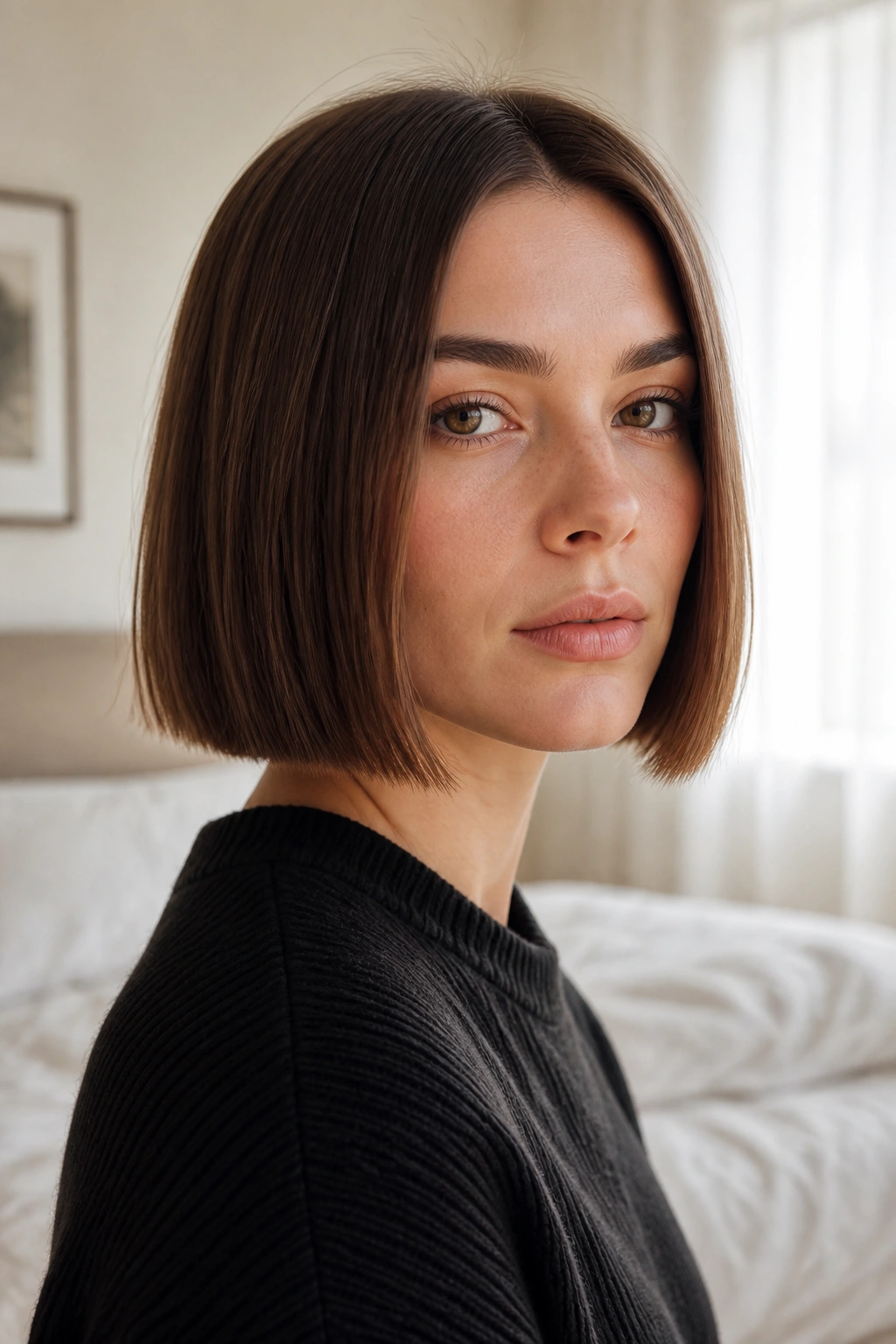
A blunt chin-length bob is the haircut that makes straight hair look deliberate without trying too hard. The whole point is the line. No feathery ends, no choppy confusion, just a clean edge that lands around the chin and holds its shape.
Why It Works on Straight Hair
Straight hair shows bluntness in the best possible way. The ends sit where they’re cut, so the bob looks dense even when the hair itself is fine. That makes this one of the smartest short hairstyles for straight hair if your biggest complaint is limpness.
Ask for a one-length perimeter and keep the front corners only slightly longer if you want the face to look softer. If the hair is very fine, scissors usually beat a razor here. A razor can leave the ends too wispy, and wispy is not the goal.
- Best length: just under the chin or right at it
- Best part: center or soft side part
- Best styling tool: paddle brush or flat iron on low heat
- Best finish: a pea-size drop of light serum on the ends
Pro tip: leave the front ¼ to ½ inch longer than the back if your jaw is narrow. It keeps the bob from bunching right at the chin.
2. French Bob

The French bob gets copied badly all the time, mostly because people think “short” is enough. It isn’t. What makes this cut work is the attitude of it: short, a little cheek-skimming, and not overly polished to the point of looking stiff.
Straight hair is a good match because the shape reads clearly. A French bob usually sits between the mouth and the jaw, sometimes with a brow-grazing fringe, and the ends often have the tiniest bend under. Nothing fussy. Nothing overworked.
I like this cut on people who want their hair to frame the face without swallowing it. The fringe keeps the forehead from feeling too open, and the shorter length makes earrings, necklines, and collars stand out. It’s a clean look, but not a severe one.
If you ask for it, be specific: keep the ends blunt, keep the bangs light, and do not over-layer the sides. Straight hair does the rest.
3. Pixie with Side-Swept Fringe
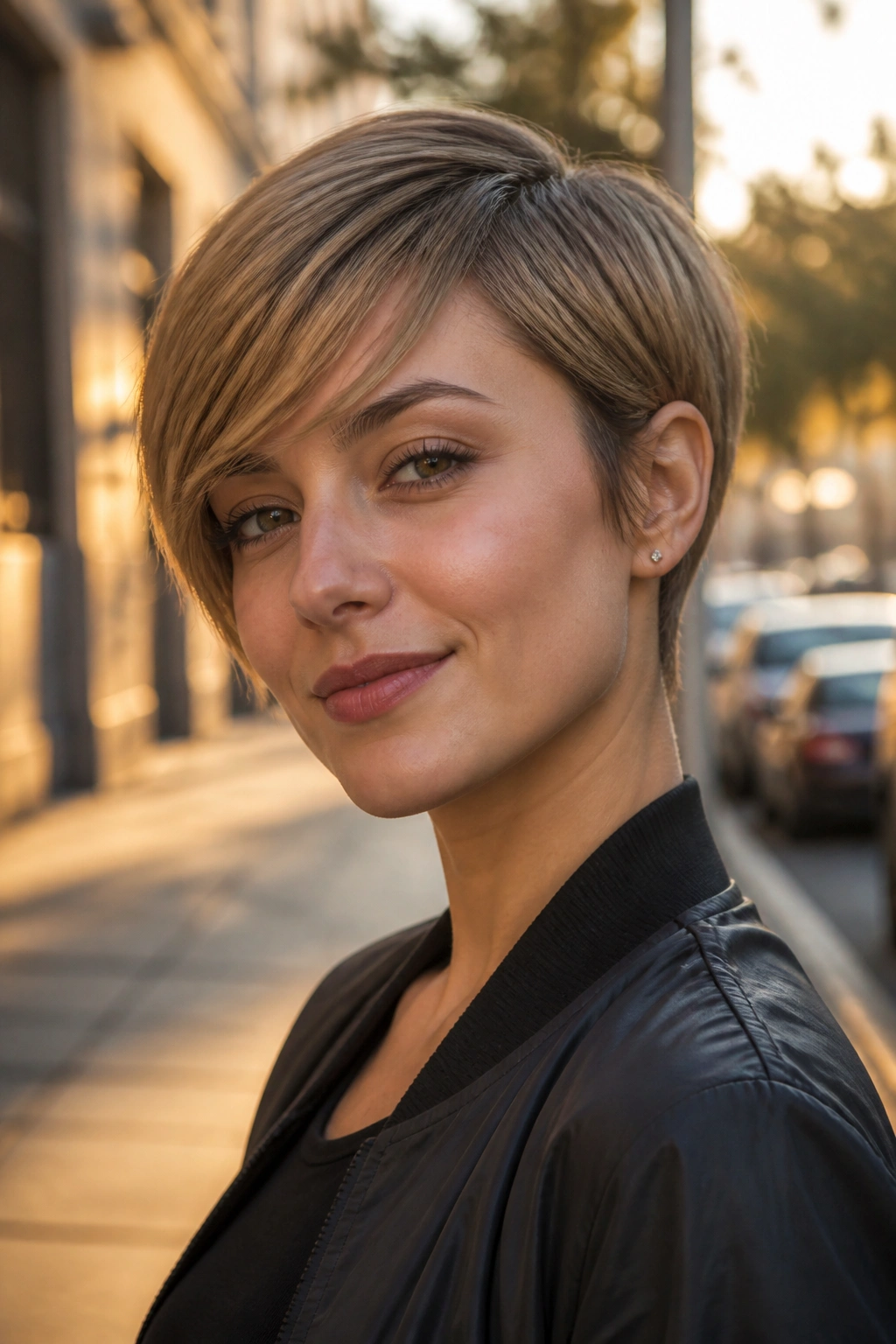
Want something short without going all the way to a crop? This is the version I’d point you to first. A pixie with a side-swept fringe keeps the neck and sides light, but the longer fringe gives the cut some movement and stops it from feeling exposed.
How to Ask for It
Tell your stylist you want 2 to 3 inches on top, tapered sides, and a fringe that falls diagonally across the forehead. On straight hair, that diagonal line looks crisp instead of fluffy, which is half the appeal.
The fringe should be long enough to tuck behind the ear on the heavier side if you need it. That little bit of flexibility matters on windy days, hot days, or any day you don’t want hair sitting in your eyes.
- Best for: fine to medium straight hair
- Styling time: about 5 minutes
- Product: light paste or cream, no heavy wax
- Maintenance: every 4 to 6 weeks
If your hairline is uneven or your forehead is very short, the fringe length becomes more important than the side taper. Get that part right and the cut feels easy.
4. Micro Bob
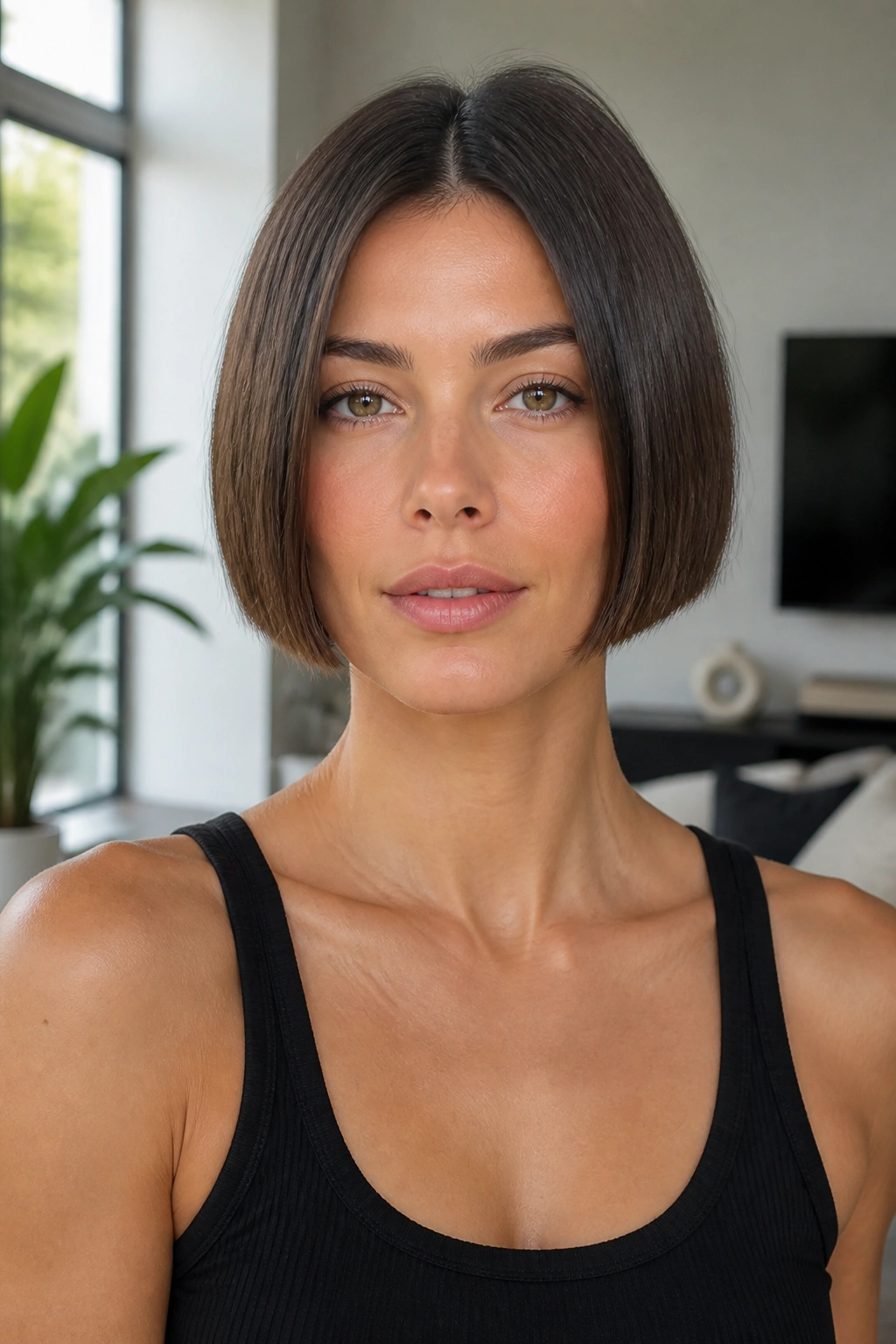
A micro bob is for the person who looks at a bob and thinks, “Shorter. But not pixie-short.” The difference between a micro bob and a chin-length bob can be barely an inch, and on straight hair that inch changes everything. The cut ends up hovering around the cheekbone or just below it, which gives the face a tighter frame.
That tiny shift works because straight hair doesn’t blur the edges. It shows the line exactly where it lands. If the bob is too long, it can sag. Too short, and it can start to look square in the wrong way. The micro bob sits in that narrow sweet spot where the haircut itself does the talking.
- Best on dense straight hair that needs shape
- Best with a center part for symmetry
- Needs trims about every 5 weeks
- Looks strongest when the ends are blunt, not sliced thin
The main thing to watch: don’t overload it with layers. A micro bob lives and dies on its perimeter.
5. Sleek Ear-Length Crop
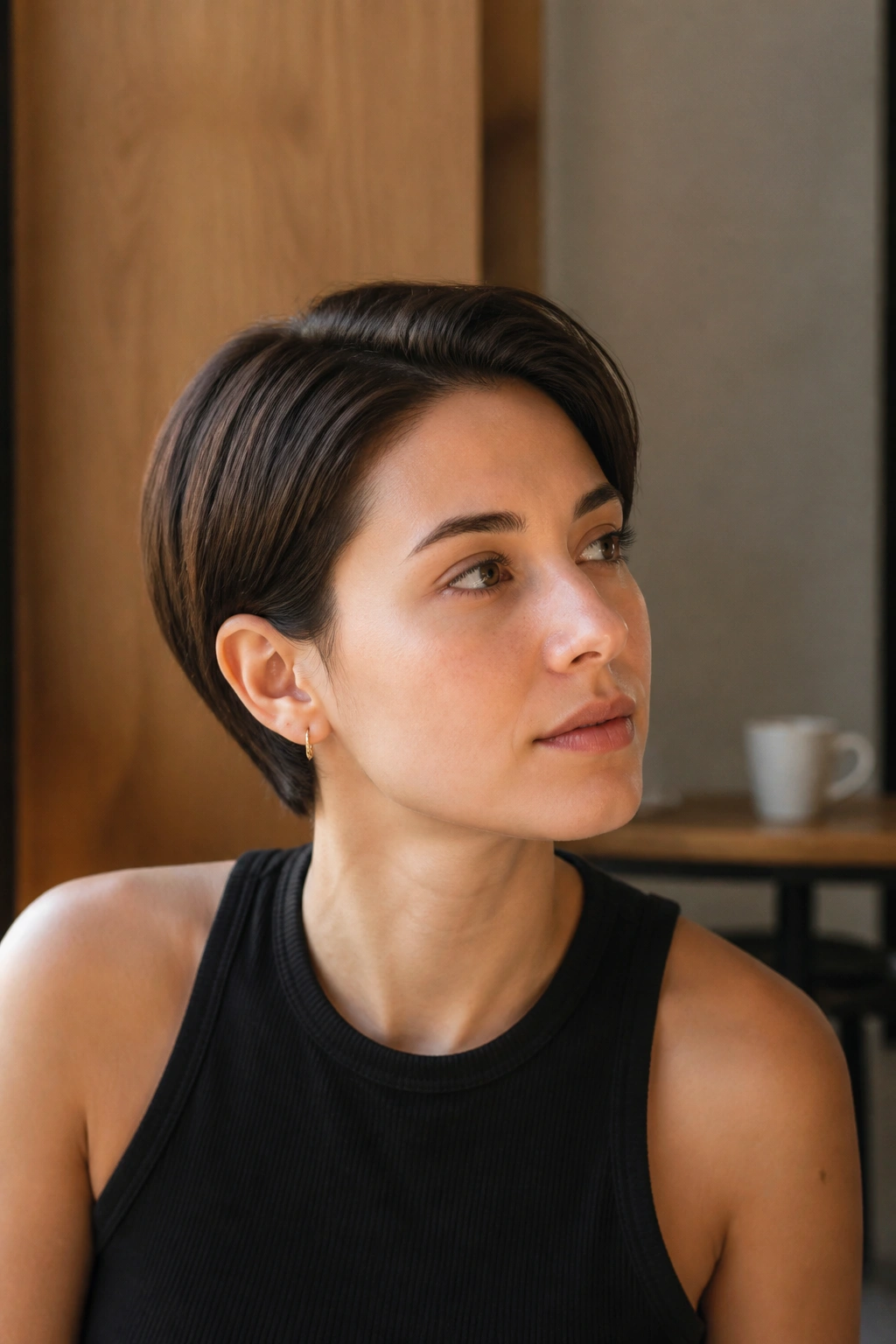
This is one of those cuts that looks almost quiet until you notice how precise it is. An ear-length crop sits right around the top of the ear or a touch below it, with a clean neckline and enough length to tuck behind the ear on one side. Straight hair makes the shape feel even sharper.
The appeal is in the neatness. The hair falls flat in a good way, not a limp way, and the ears become part of the frame. If you wear glasses, this cut can be excellent because it keeps the arms of the frames from fighting with the hair. If you like high collars, the crop also clears the neck beautifully.
Styling is simple, but it has to be intentional. A quick blow-dry with a small brush, or even a flat brush aimed downward from the crown, keeps the top smooth. A little serum on the ends is enough. Too much product and the cut starts to look greasy, which is a shame because the whole point is the crisp outline.
It’s a very clean haircut. Very.
6. Bixie Cut
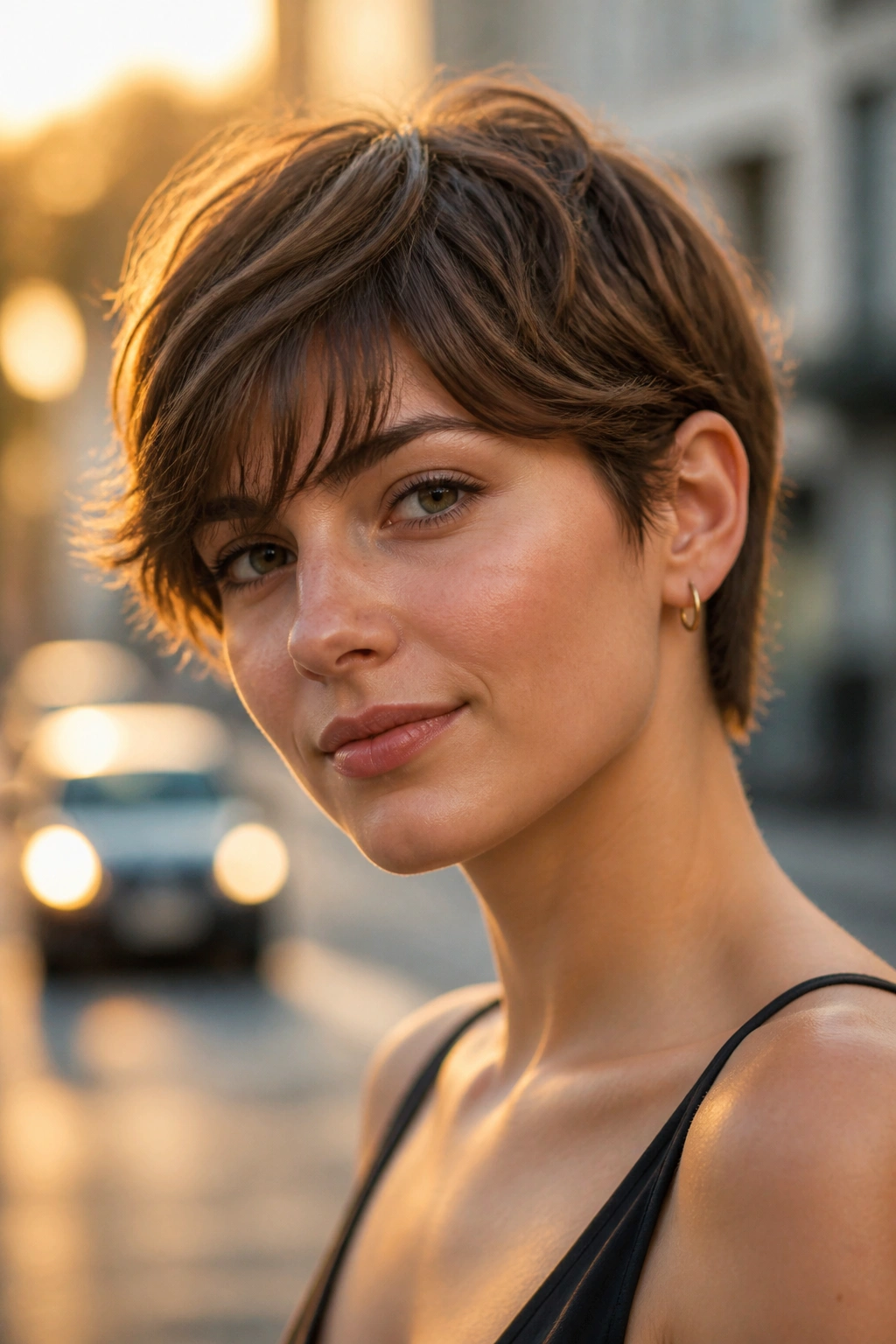
A bixie sits between a bob and a pixie, but not in a vague, mushy way. On straight hair, that in-between length gets a real shape: short enough to feel light, long enough to brush forward around the face, and cropped enough at the nape to keep the neck open.
What Makes It Different
The top usually carries more length than the sides, and that matters. A pixie can feel too exposed if you’re not used to short hair. A bob can feel too heavy if your hair is fine. The bixie gives you some of both worlds without pretending they’re the same thing.
This cut is especially good if your hair tends to lie flat and you want a little movement without daily styling drama. Ask for longer layers on top, tapered sides, and a soft fringe. If the stylist takes the sides too short, the balance is gone. If they leave everything too long, you end up with a grown-out bob instead.
Who It Suits Best
- People who want short hair but still like some face framing
- Fine straight hair that needs lift at the crown
- Thick straight hair that needs weight removed carefully
- Anyone who wants a low-fuss grow-out
I’d choose this over a full pixie if you’re nervous. It gives you room to adjust.
7. Jaw-Length Layered Bob
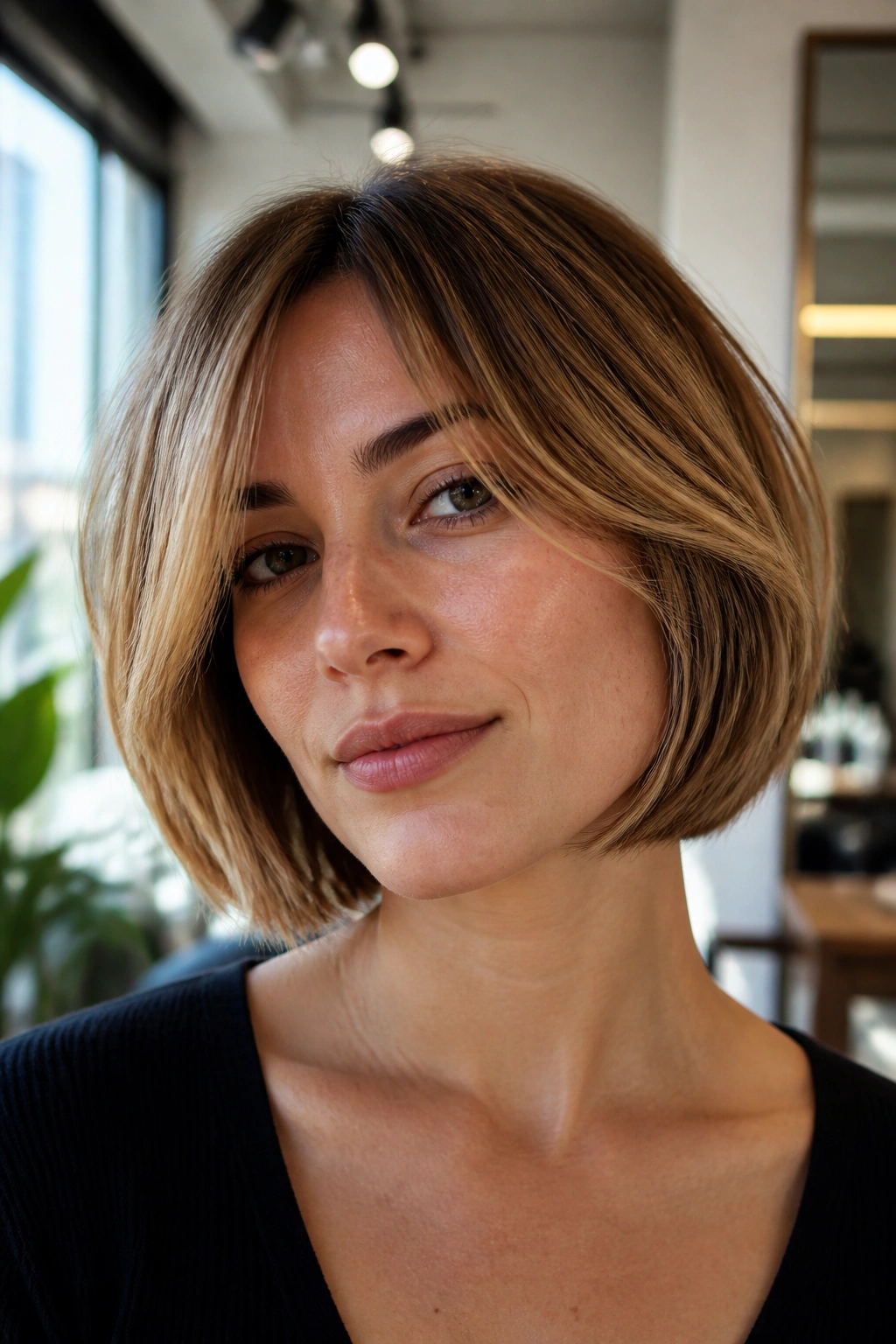
Here’s the unpopular truth: layers on straight hair can work, but only when they’re controlled. A jaw-length layered bob is proof. If the layers are too short or too many, the hair breaks into awkward shelves. If they’re long and soft, the cut gets lift without losing the outline.
The Kind of Layering That Works
The useful layers start below the cheekbone and move down. They’re there to remove bulk and give the hair some movement, not to shred the whole shape. Point-cutting at the ends can help, but the perimeter should stay visible.
That’s why this cut works so well on medium to thick straight hair. It takes some weight out from underneath, which stops the bob from swinging like a helmet. The top still looks smooth, and the sides don’t puff out at the wrong place.
A few practical notes:
- Ask for long internal layers, not short choppy ones
- Keep the front at jaw level or slightly below
- Use a round brush only at the ends if you want a soft turn
- Avoid razor thinning if your hair is already fine
I like this version when someone wants motion but refuses to give up structure. Fair enough.
8. Asymmetrical Bob
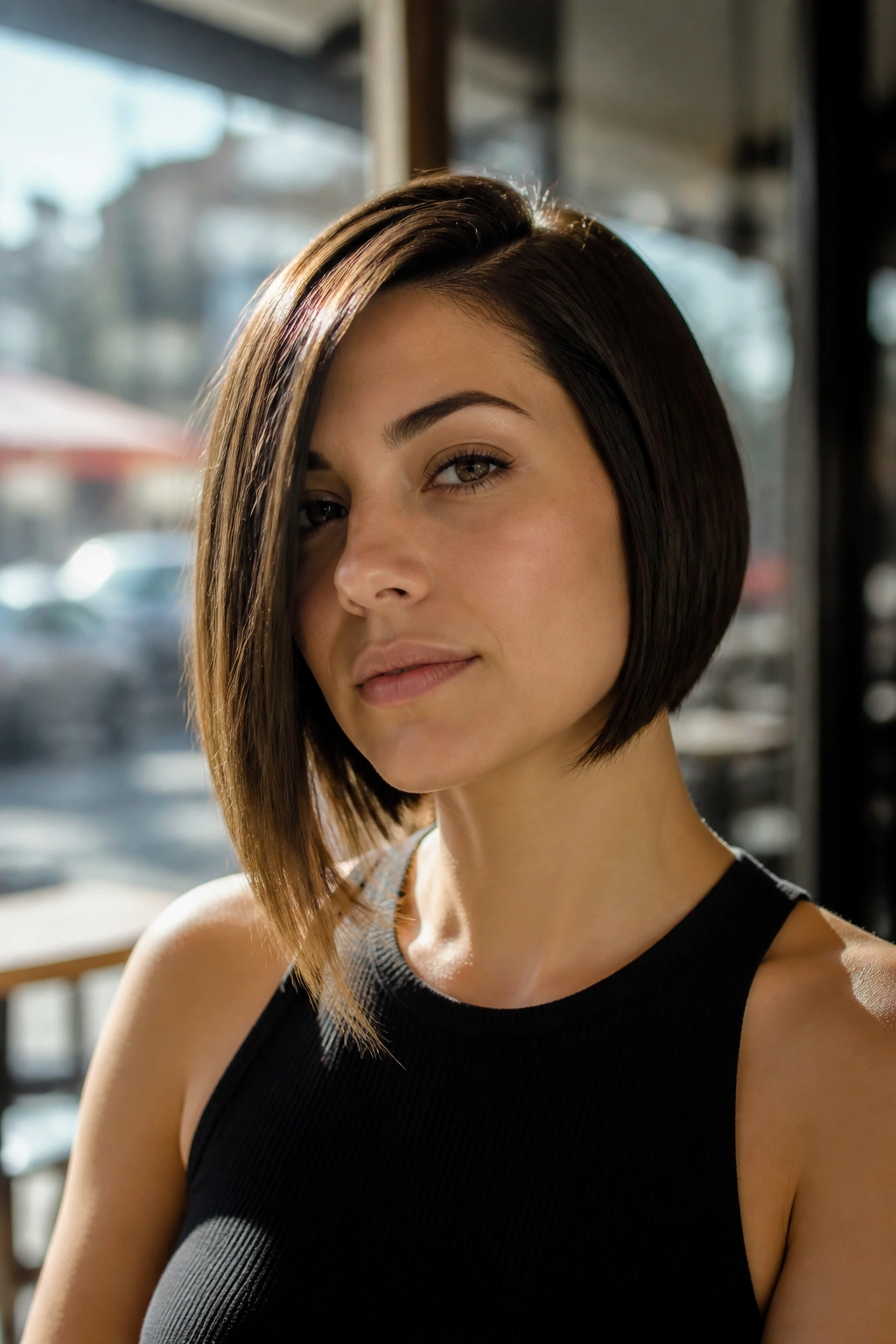
A slight asymmetry changes straight hair fast. One side a little longer than the other gives the eye something to follow, and that diagonal line can make a simple cut feel much more alive. It is one of the easiest ways to make a short haircut look intentional.
The best version is not dramatic. You do not need one side at the collarbone and the other at the ear. A difference of 1 to 2 inches is often enough, especially when the hair is straight and the line stays clean. A deep side part can add even more movement without adding any extra length.
What to Watch For
The asymmetry should look like a decision, not an accident. If the longer side is too long, the shape starts to feel uneven in a bad way. If the shorter side is too short, the cut can feel top-heavy.
This one suits people who like a little edge but still want a haircut they can wear with a blazer, a T-shirt, or anything in between. It also flatters strong cheekbones because the diagonal line pulls attention upward.
My advice: keep the back blunt and let the front carry the asymmetry. That usually reads best.
9. Pageboy Cut
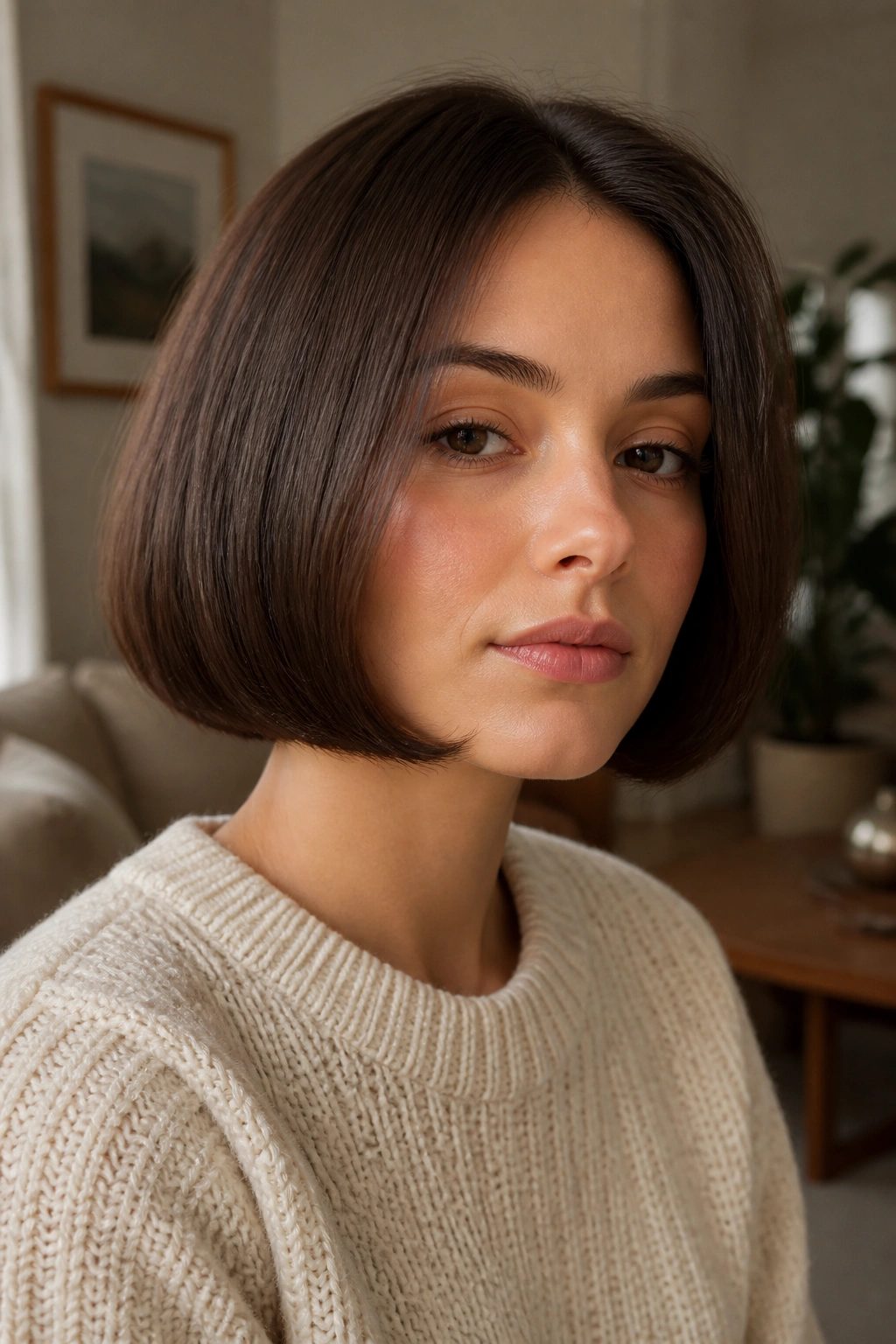
A pageboy is the haircut people remember from old photos, but the modern version can look polished in a way that feels fresh rather than costume-y. The shape is the whole point: a curved-under silhouette with straight sides, often ending near the jaw or just below the ears.
Straight hair is made for this kind of line. The ends can be coaxed inward with a brush, and the body of the cut stays clean. You get that little bend at the bottom, which softens the face without making the cut fluffy.
Styling Notes That Matter
A pageboy looks best when the curve at the ends is deliberate. A 1½-inch or 2-inch round brush is usually enough. Blow-dry the hair downward first, then tuck the ends under while the hair is still warm. A cool shot at the end helps lock the shape.
- Best on straight hair with medium density
- Best length: ear to jaw
- Best part: center or soft off-center
- Best finish: light shine spray, not heavy oil
If you like clean lines and a little retro feel, this cut is worth a serious look. It has character without needing much styling gymnastics.
10. Curtain-Bang Bob
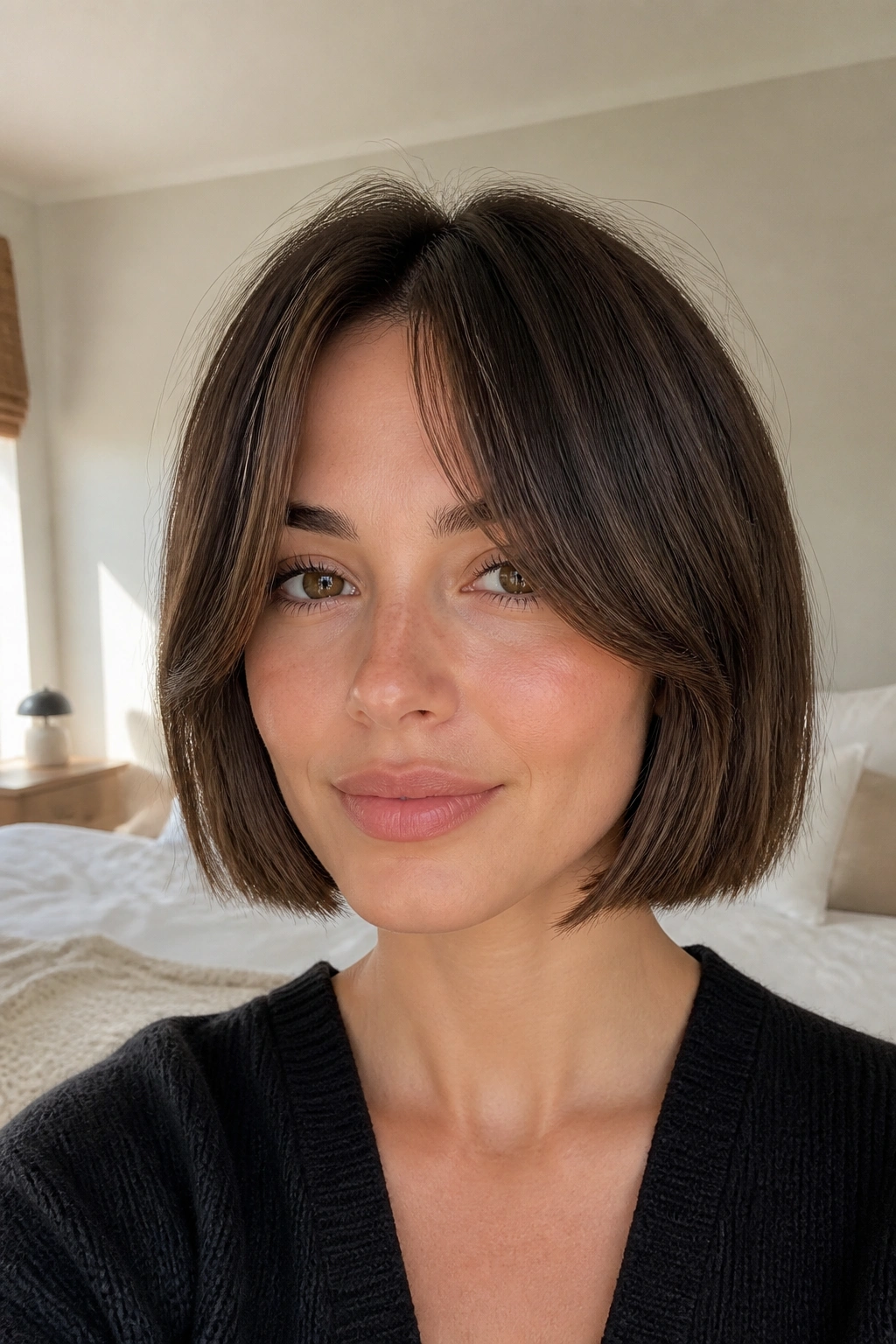
Want cheekbone framing without committing to a full fringe? This is the cut. A curtain-bang bob gives straight hair a soft front edge while keeping the rest of the haircut neat and short.
The bangs should open from the center and sweep outward, landing somewhere around the cheekbone or upper jaw. On straight hair, that shape stays visible instead of disappearing into texture, which is the whole attraction. The bob itself can sit at chin level or a touch above, depending on how much face you want to show.
How to Keep the Fringe From Splitting
The front pieces need direction. Blow-dry them forward first, then roll them slightly away from the face with a round brush or your fingers. If you try to force curtain bangs into place while they’re wet, they often dry in odd little forks.
A few details help:
- Keep the shortest point around the bridge of the nose
- Leave the outer corners longer so they graze the cheeks
- Use a small amount of heat protectant before styling
- Don’t pack dry shampoo into the fringe every morning
This is a smart choice if you like the idea of bangs but hate the feeling of being trapped by them.
11. Box Bob
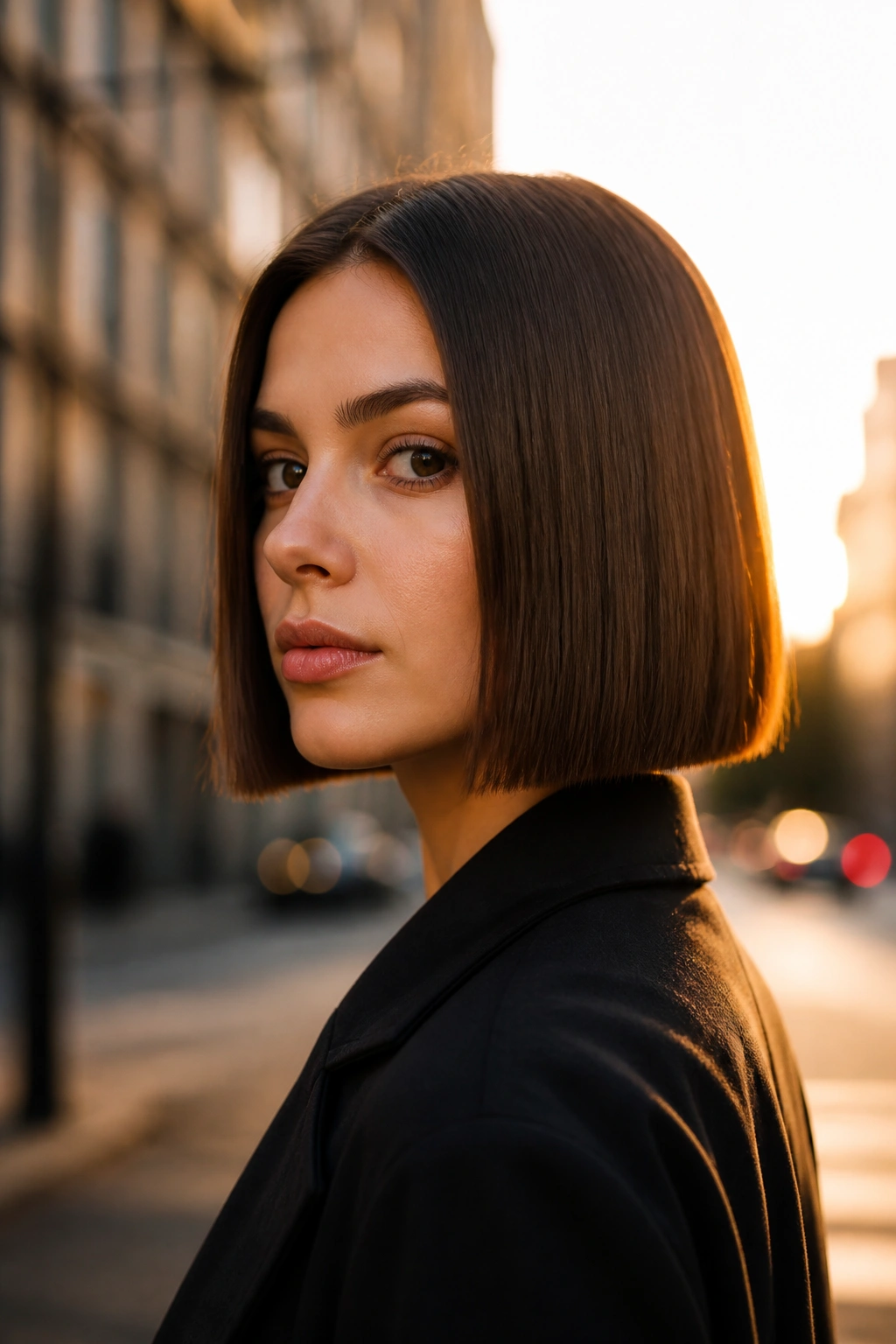
A box bob is one of my favorites when the hair is straight and the cut needs structure more than softness. The outline is almost square: blunt sides, a strong bottom line, and enough width through the body to make the shape read clearly from every angle.
It can feel severe if it’s cut badly. That’s the difference. With the right length and density balance, though, it looks crisp and modern in a very honest way. No hiding, no fuzzing around the edges, no pretending the hair has movement it does not have.
I like this cut on people with defined jawlines or oval faces because the square frame can sharpen the whole look. If the hair is thick, some internal weight removal underneath helps the bob sit better. If the hair is fine, you want to keep the perimeter intact and avoid too much texturizing at the ends.
The styling routine is almost boring, which I mean as a compliment. A flat brush, a blow-dryer, and a drop of serum are usually enough. That’s the charm. It’s a cut that doesn’t need a lot of help.
12. Shaggy Bob

A shaggy bob is the opposite of the box bob, and that contrast is exactly why it works. Instead of one clean outer line, you get a softer, broken-up shape with layers that create movement around the crown and a little looseness through the ends.
On straight hair, this cut needs discipline. Too many short layers and it turns wispy fast. Too little layering and it turns into an ordinary bob with some random texture. The sweet spot is a controlled shag: enough piece-y movement to stop the hair from sitting like a sheet, but not so much that the shape disappears.
Keep the Layers Tame
A good shaggy bob usually keeps the shortest layers near the top and crown, while the bottom line stays fairly full. That lets the hair move without going stringy. A light texture spray can help, but heavy sea salt spray can make straight hair look dry in a bad way.
Who it suits:
- Fine straight hair that needs body
- Thicker straight hair that feels too solid in a blunt cut
- People who like hair that looks a touch undone
- Anyone who does not want a polished finish every day
I wouldn’t recommend this if you crave sharp edges. If you want softness and motion, though, it’s a strong pick.
13. Rounded Bob with Tucked Ends
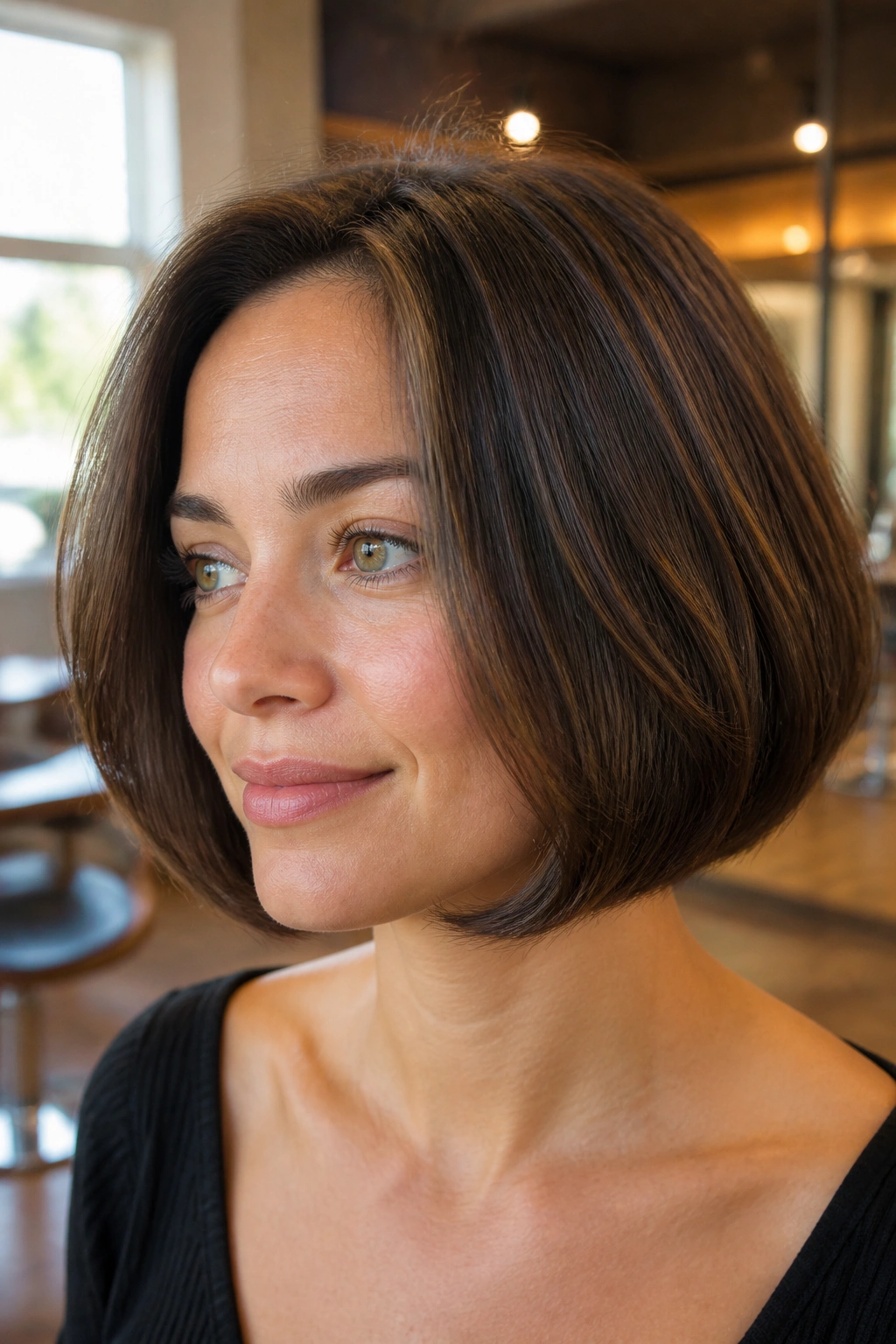
If your straight hair keeps flipping outward at the ends, a rounded bob can calm the whole shape down. The trick is to cut the bob with a gentle curve and then style the ends inward so the hair sits close to the head instead of sticking out at the sides.
The length usually works best around the chin or just below it. Shorter than that and the roundness can get too full. Longer than that and the inward bend can disappear. The right balance gives you a soft halo shape without making the haircut feel old-fashioned.
What to Ask For
Ask for a bob that is slightly shorter at the back and a touch longer in front, then finish the ends with a rounded undercurve. That little angle helps the hair sit cleanly against the jaw.
- Use a 1½-inch round brush for the ends
- Blow-dry from roots to mid-lengths first
- Turn the brush under only on the last 1 to 2 inches
- Finish with a cool shot so the curve stays put
This cut is especially good if your straight hair has a stubborn outer flip. It gives you a shape that works with the hair instead of arguing with it.
14. Short Wolf Cut
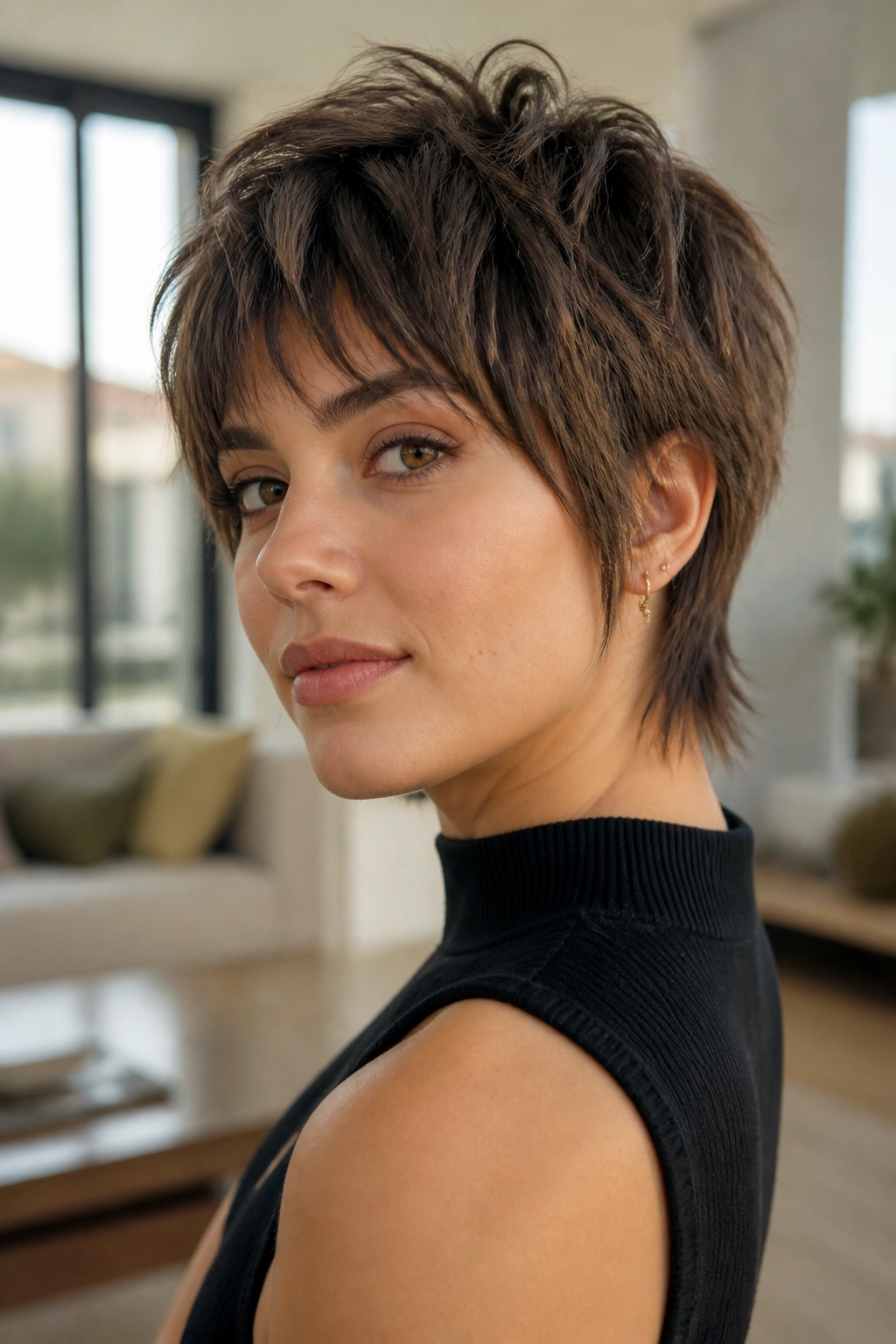
A wolf cut does not have to look wild to work. On straight hair, the trick is keeping the crown short enough to lift the head shape while controlling the bottom so the cut doesn’t drift into mullet territory.
How to Avoid Mullet Territory
That is the line to watch. The top needs choppy layers and a bit of height, but the nape should still be tidy. The face frame can start around the cheekbone, and the back should stay a little softer than the top. Done well, the whole cut looks purposely messy rather than over-thinned.
Straight hair gives the wolf cut a sharper outline than wavy hair does. That can be good or bad. Good, if you want edge and movement. Bad, if you want something soft and tidy. I’d only steer someone here if they actually like the slightly rougher look.
- Best with a little natural bend or a willingness to style with a wave
- Good for people who like volume at the crown
- Needs texture spray or a small amount of mousse
- Works better when the layers are feathered, not shredded
If you want structure with attitude, this one delivers.
15. Hime Cut
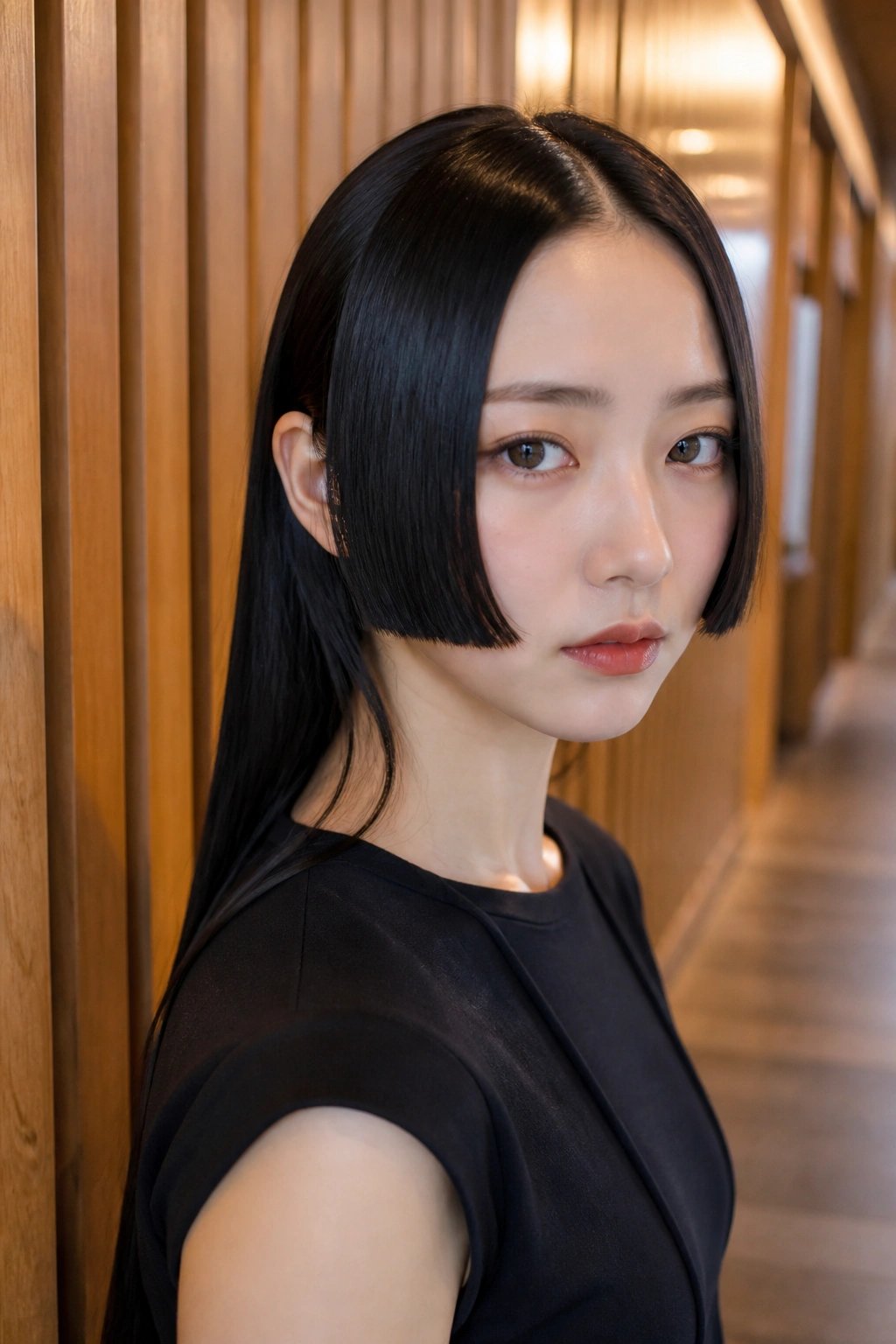
Can straight hair pull off a hime cut? Yes. In fact, straight hair is probably the cleanest canvas for it because the geometry reads so sharply. The style depends on contrast: blunt front pieces around the cheeks, a crisp main length, and a strong separation between the two.
The face-framing pieces usually hit around the cheekbone or chin, while the back stays longer and straight. That difference is what creates the look. On hair with a lot of wave, the lines can blur. On straight hair, they stay exact, which makes the cut feel graphic instead of messy.
The Part Nobody Gets Right
The front sections need to connect to the rest of the hair without looking cut off by accident. A good stylist will blend the transition just enough that the style feels intentional, but not so much that the shape loses its bite.
This cut suits people who like a strong visual statement and don’t mind keeping the line fresh. The front pieces need trims more often than the back, especially if you want the cheeks framed neatly. I’d also recommend a center part with this one; it keeps the structure honest.
It’s not subtle. That’s the point.
16. Tapered Pixie
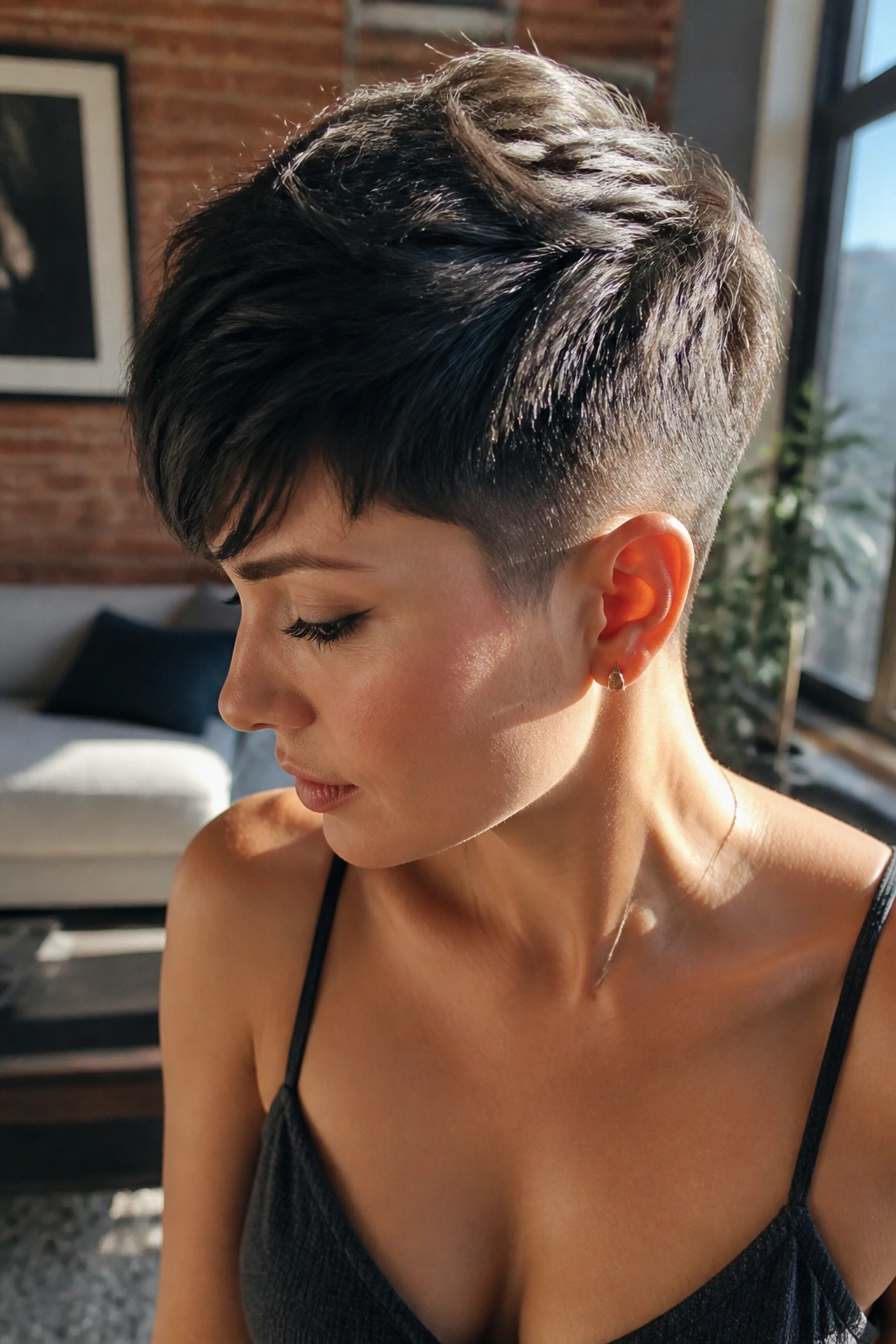
A tapered pixie is the neat cousin of the longer, more textured pixie. The sides and back are trimmed close to the head, while the top is left with enough length—usually 2 to 3 inches—to sweep forward, sideways, or a little up.
Straight hair makes the taper look especially clean. The neckline stays sharp, the ears stay visible, and the top can be styled with a matte paste or light cream in a minute or two. If your hair collapses at the roots, this cut can actually make your life easier because it removes the bulk where you don’t want it and leaves length where you do.
Who It’s Best For
- Fine straight hair that needs shape at the crown
- Thick straight hair that needs the sides cleaned up
- People who want fast morning styling
- Anyone who likes a tidy grow-out between salon visits
I prefer this over a more heavily layered pixie when the hair is very straight. The taper keeps the cut from looking puffy around the ears, which is a common problem with short hair that has too much volume in the wrong place.
17. Side-Parted Crop
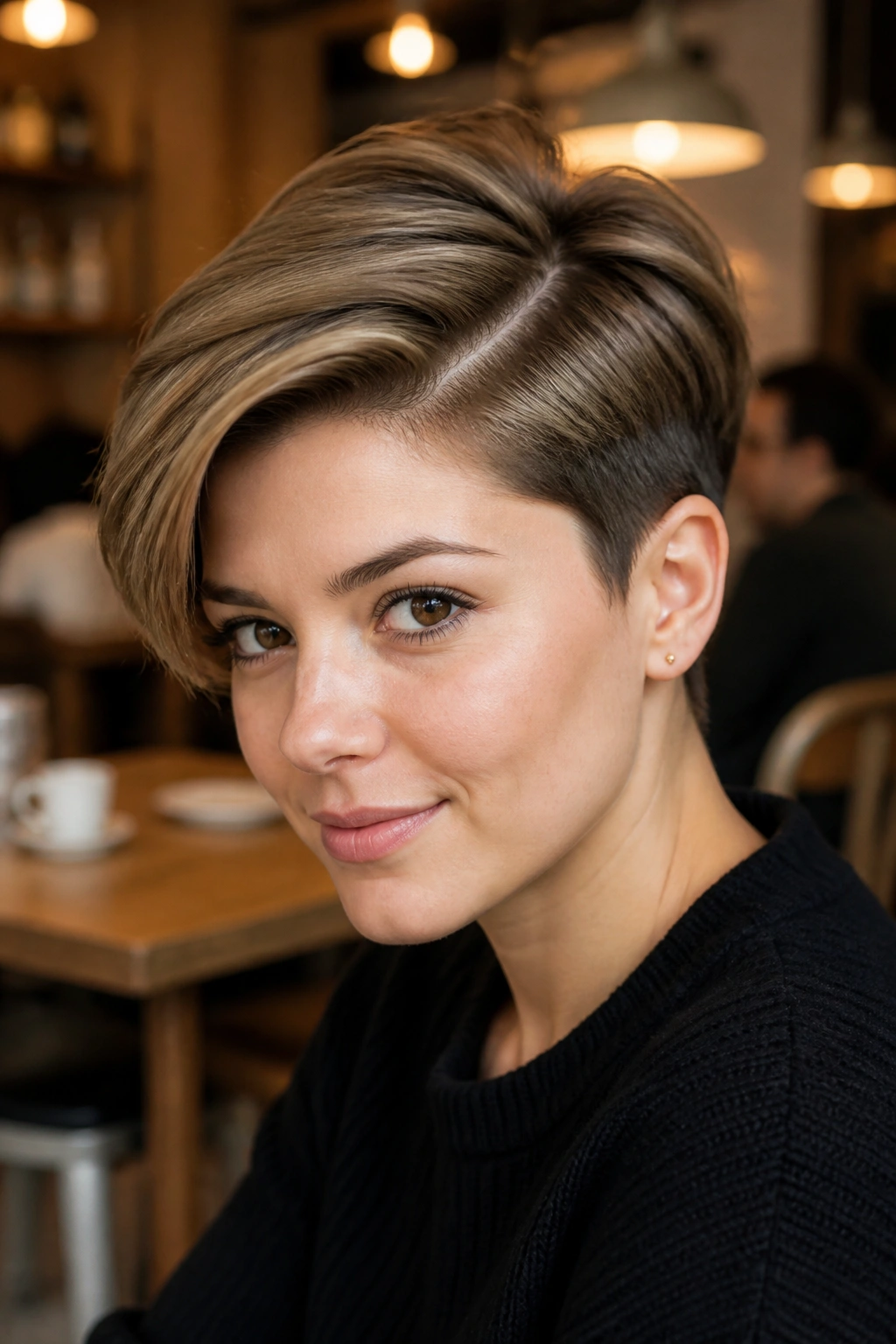
One deep side part can change the whole mood of a haircut. A side-parted crop uses that idea to create lift at the roots and a little asymmetry without relying on length. On straight hair, the part line stays crisp, which makes the whole style look intentional from the first glance.
How to Keep It From Flattening
The root area matters here. Blow-dry the hair in the opposite direction of the part first, then switch it back once it’s almost dry. That little trick gives the roots a small lift that lasts longer than the lazy version of just combing it over.
The cut itself can be short all around or slightly longer on top, but the side part should always feel like part of the design. I like this cut on people with flat crowns because it creates the illusion of shape without needing a lot of bulk.
- Use a root spray or light mousse at the crown
- Clip the part while the hair cools if it falls flat easily
- Keep the sides neat, not bulky
- Ask for the top to be left long enough to sweep across the forehead
It’s a simple move. That’s why it works.
18. Soft Buzz Cut
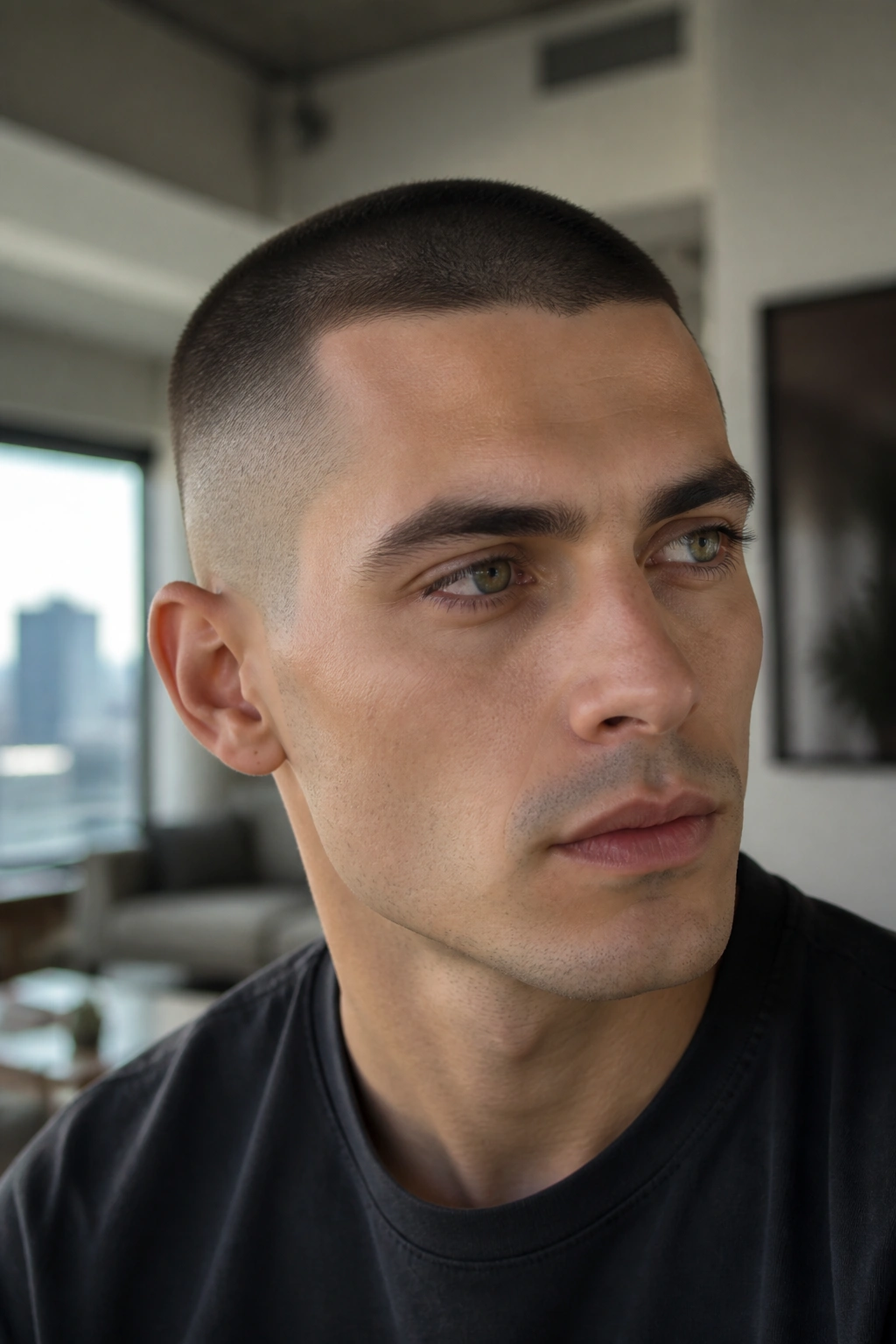
A soft buzz cut is the shortest option here, and honestly, it has no business being this elegant when it’s cut well. Straight hair makes the whole shape look clean because there’s nowhere to hide. The head shape shows, the hairline shows, and the cut itself becomes the style.
You can keep it close with a longer guard on top—something in the 1/8-inch to 3/16-inch range—or go shorter if you want the full bare-bones feel. A soft fade around the ears and neckline can make the haircut feel finished rather than abrupt. That little bit of fade work matters more than people expect.
This is not a haircut for someone who wants to camouflage anything. It’s for someone who likes certainty. The maintenance is minimal, the styling is almost nonexistent, and the face takes center stage. If your straight hair has been fighting every longer cut you’ve worn, a buzz cut can feel like a relief instead of a risk.
And that is the truth of short hair: once the length is gone, the line is everything.
