



Fine hair on a round face can feel oddly stubborn. You get lift at the wrong spots, collapse at the roots, and a cut that looks tidy in the salon mirror can go limp by lunchtime.
The right short fine hairstyles for round faces work by changing the silhouette. They add height where the eye needs it, keep width away from the cheeks, and use angles, side parts, and soft ends to make the face look a little longer and a little leaner. Not harsh. Just smarter.
Fine hair needs a different kind of help than thick hair does. Too much layering can strip out density and leave the ends wispy; too little layering can leave the whole shape stuck to the head. So the sweet spot is usually somewhere in the middle: enough structure to create movement, enough weight to keep the cut from looking sparse.
The 30 looks below cover pixies, bobs, crops, shags, and a few hybrids that sit between categories. Some are neat. Some are a bit messy. All of them can work hard for fine hair and a round face if the proportions are right.
1. Textured Pixie With Side-Swept Fringe
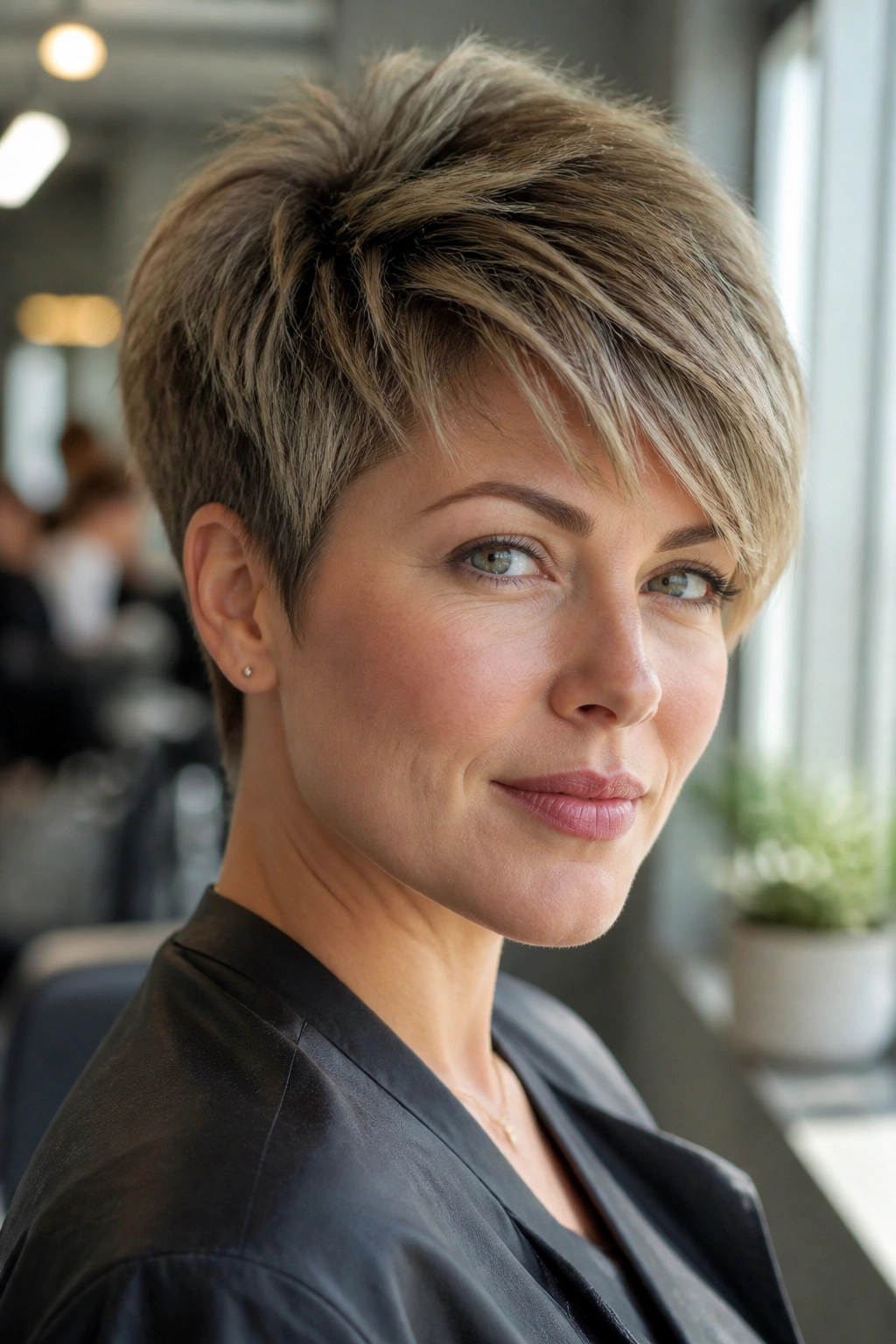
This is the cut I reach for when someone says, “My hair goes flat in ten minutes.” A textured pixie with a side-swept fringe gives you lift at the crown, breaks up roundness at the forehead, and keeps the sides close enough that the face does not get wider.
What to Ask For
- Keep the top about 1 to 2 inches longer than the sides.
- Leave the fringe long enough to sweep across one eyebrow.
- Keep the temple area soft, not bulky.
- Avoid over-thinning the crown; fine hair needs some body left behind.
A pea-sized dab of matte paste or lightweight cream is enough. Work it through dry hair with your fingertips, then push the fringe diagonally across the face. That diagonal line matters. It gives the eye somewhere to travel besides straight outward.
Best trick: lift the roots with a blow-dryer for 20 to 30 seconds, then let the hair cool before touching it again. That little pause helps the shape hold.
2. Asymmetrical Chin-Length Bob
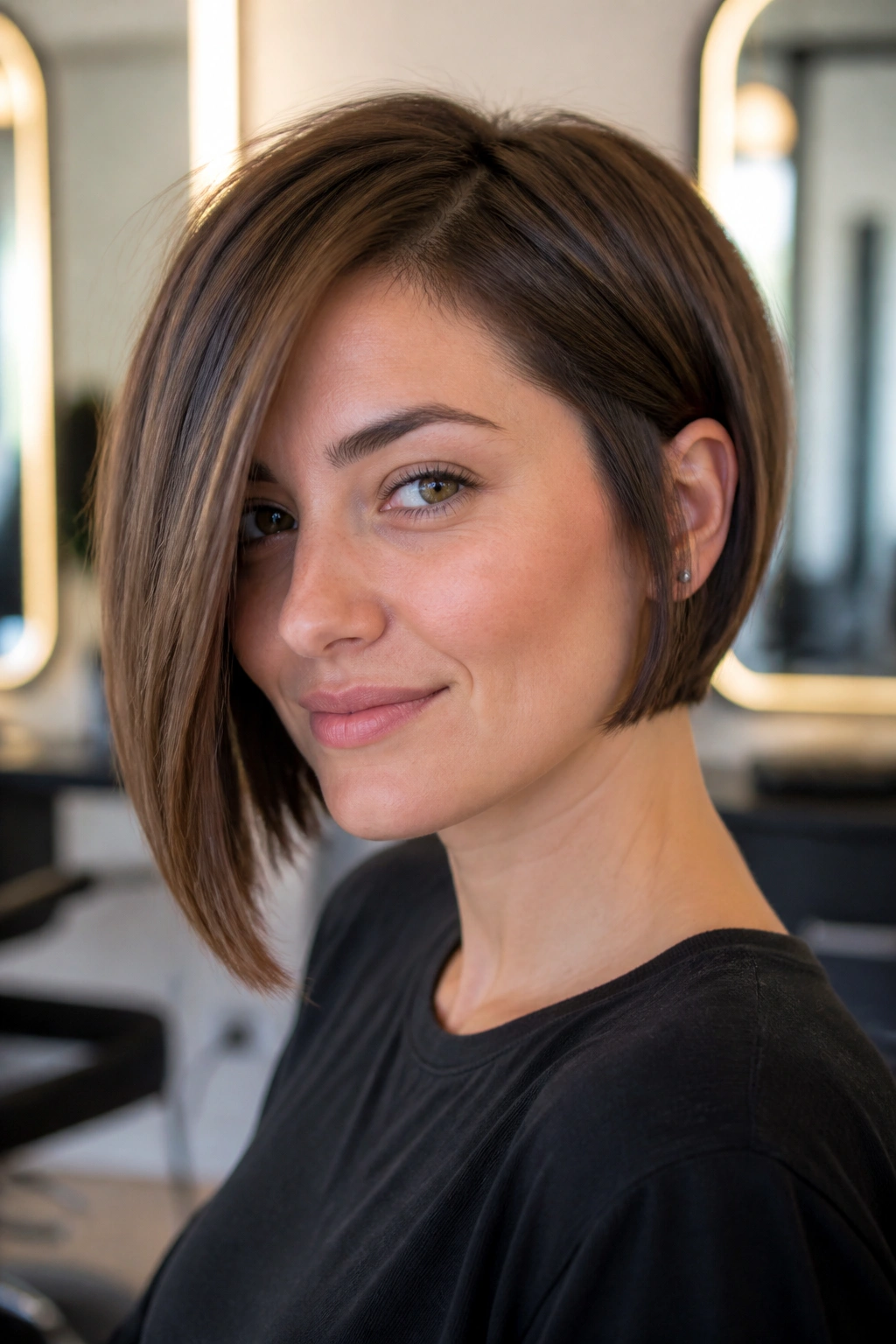
Can a bob make a round face look slimmer? Yes, if one side is a touch longer than the other. An asymmetrical chin-length bob creates a built-in diagonal, which is exactly the kind of line that fine hair and round faces both like.
The longer side should skim just past the jaw, not stop at the widest point of the cheek. That small difference changes the whole read of the cut. One side feels sharp. The other side keeps it soft enough to wear every day.
How to Style It
- Blow-dry with a side part.
- Bend the longer front pieces away from the cheeks with a flat iron.
- Keep the ends smooth, not poker-straight.
- Use a light mist of shine spray only on the mid-lengths.
This cut looks expensive when it is neat, but it also forgives a little natural movement. If your hair is fine and tends to split apart, this shape gives you a clean outline without looking helmet-like. That balance is the whole point.
3. Jawline Layered Bob
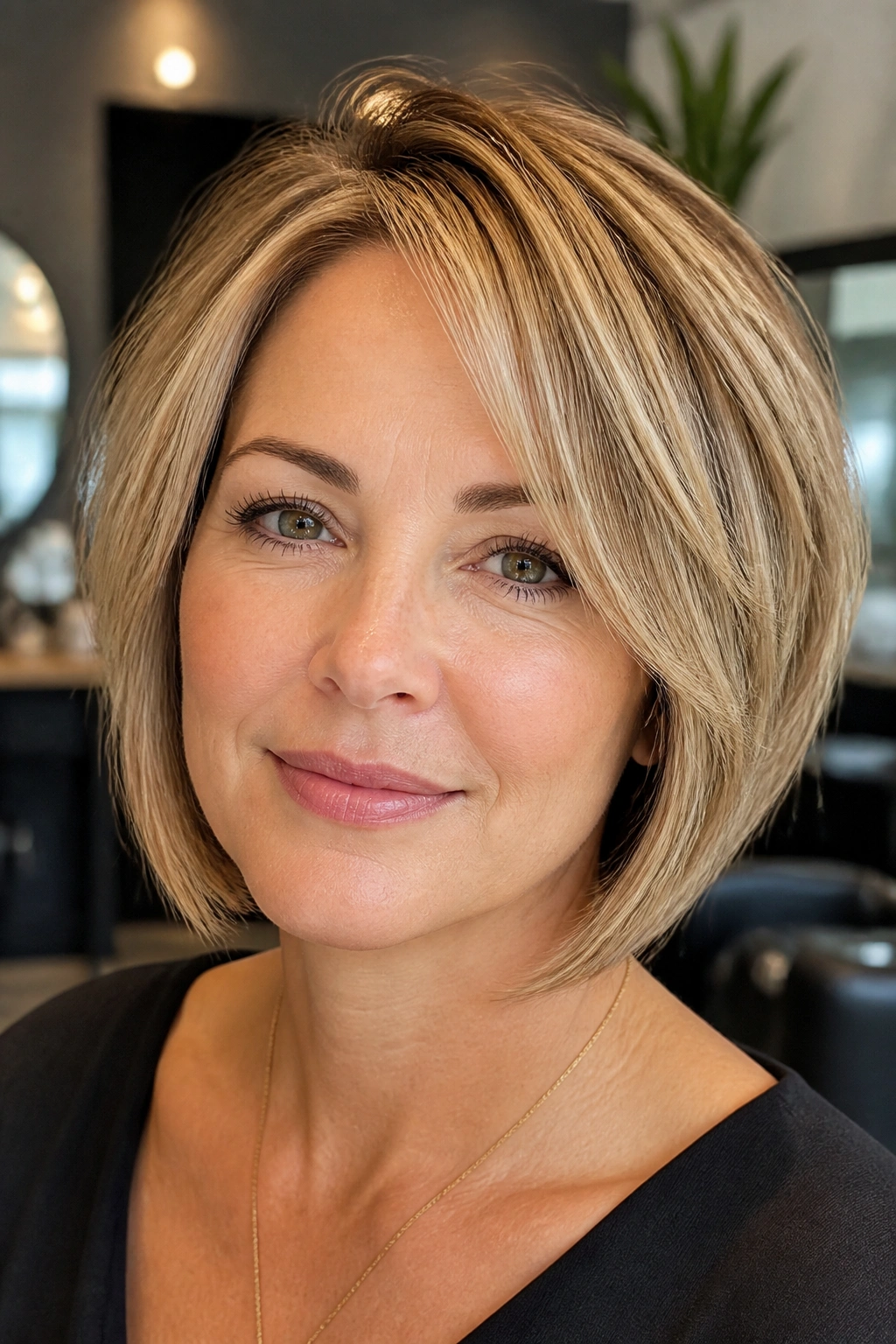
A bob that sits right at the jaw can be tricky on a round face. A jawline layered bob works because the layers stop the hair from forming one solid ring around the face.
The best version is soft at the ends, not choppy all over. You want the perimeter to stay visible, while the inside carries just enough movement to keep the shape from collapsing. Fine hair loves that kind of controlled texture.
If you blow-dry it with a small round brush, aim the roots upward and the ends slightly inward. Not under. Slightly inward. That keeps the hair close to the face without curling it into the cheeks.
A lot of people think layering and density are enemies. They are not. The wrong layers are the problem. Keep the layers long and discreet, and this cut gives you a cleaner jawline plus more air in the crown.
4. Bixie Cut
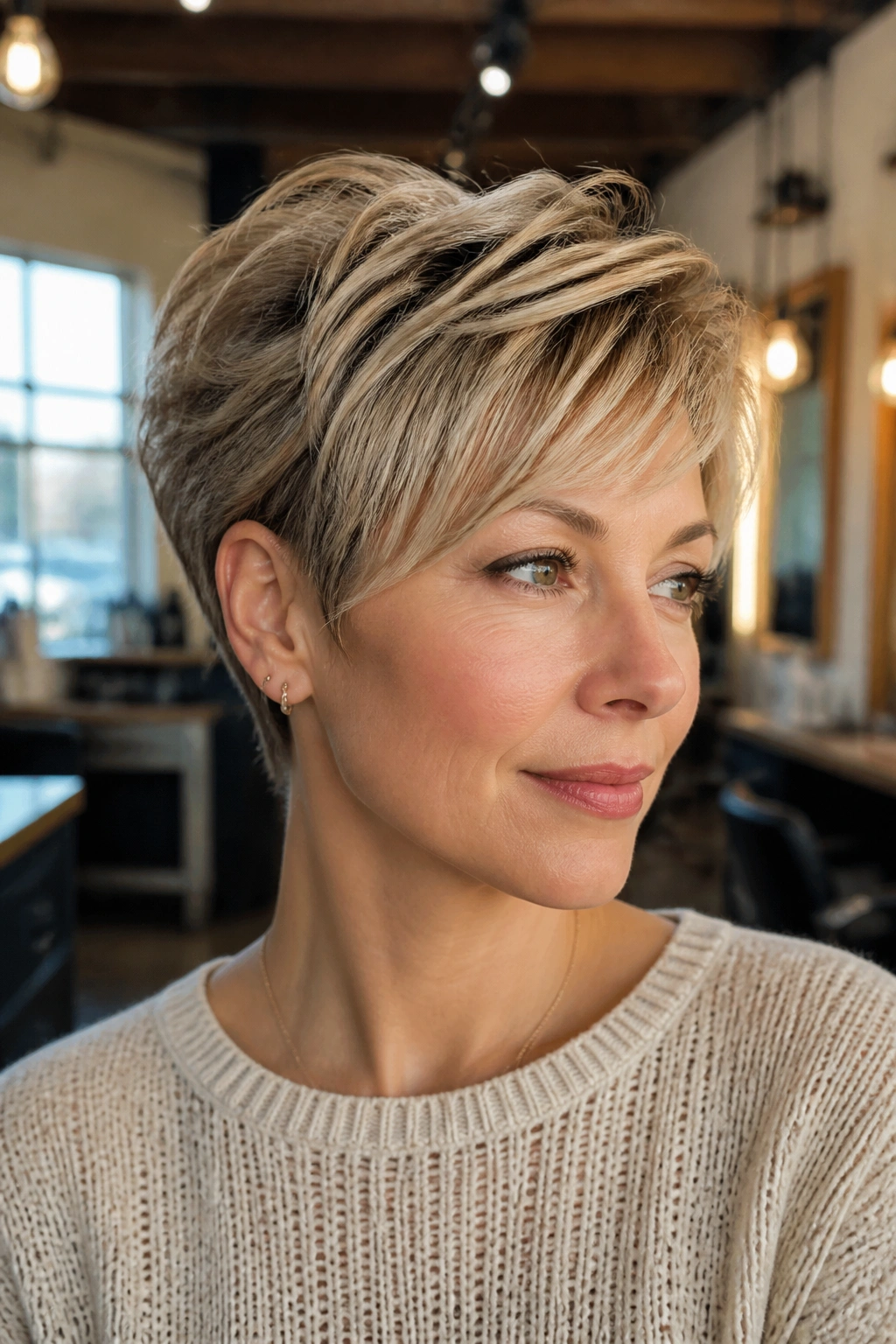
The bixie sits between a bob and a pixie, which sounds vague until you see what it does on fine hair. You get the shortness that keeps the shape light, but you also keep enough length on top to create lift and movement.
Round faces usually do well with this kind of cut because the top stays taller than the sides. The silhouette narrows a bit near the temples, then opens up in a controlled way through the crown. It sounds technical. It just looks good.
Why It Works
The bixie is one of the easiest ways to make fine hair look fuller without pretending the hair is thicker than it is. The cut uses texture instead of bulk. That matters.
Ask for:
- Shorter sides and nape
- Longer, piecey top layers
- A soft fringe that can be swept sideways
- Minimal thinning near the ends
This is the kind of haircut that looks better with a little mess in it. A few finger-combed bends. A little dry shampoo at the roots. That’s enough.
5. Stacked Bob With Crown Lift
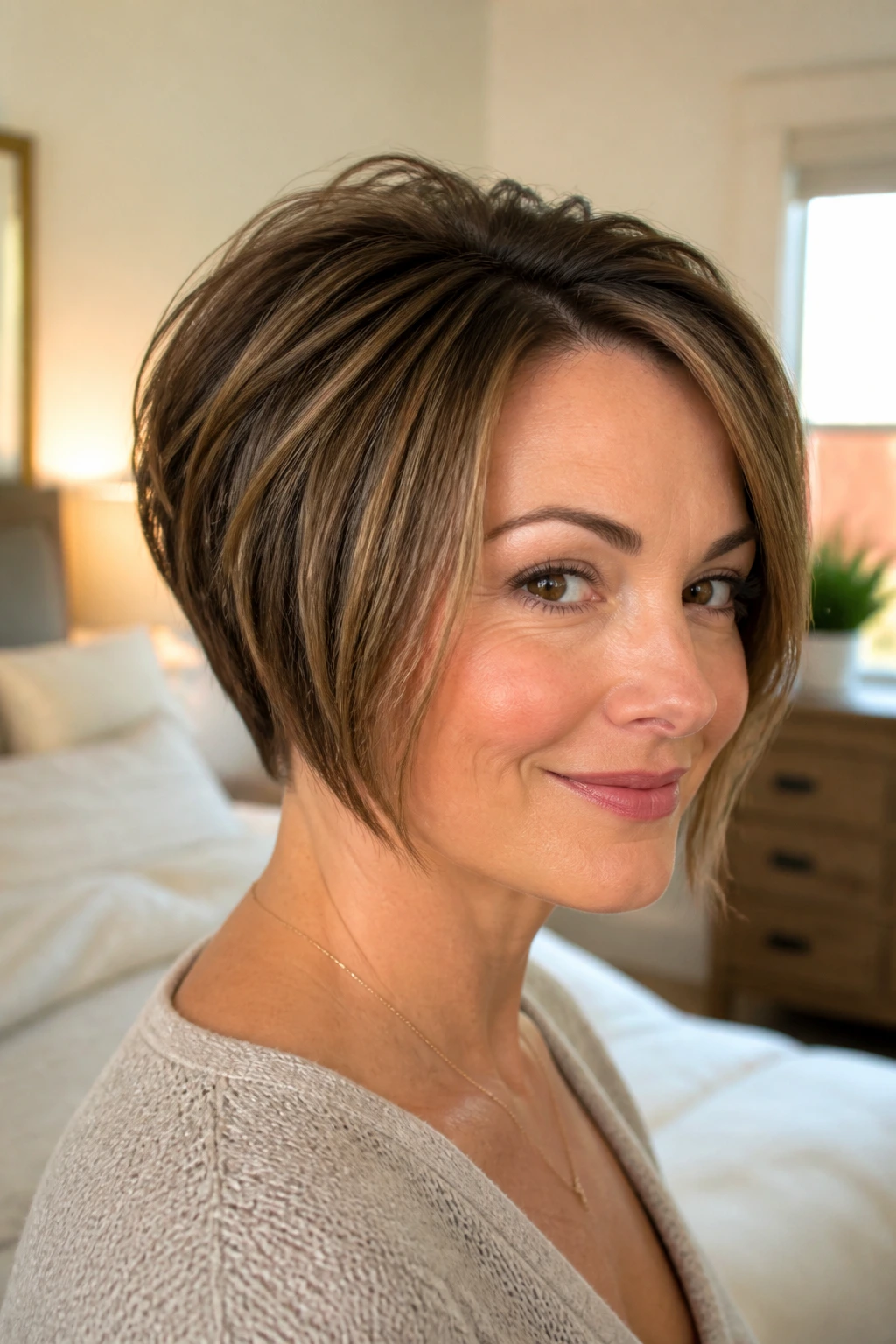
A stacked bob can be a lifesaver for flat hair, but only if the stacking stays controlled. The back gets a bit more build-up, the crown gets lift, and the front stays long enough to skim the face instead of puffing out at the cheeks.
That last part matters. A stacked bob that sits too high can widen a round face. A stacked bob that tapers gently in the back and angles forward feels lighter and cleaner. Fine hair usually benefits from that angle because it creates the illusion of density where you want it most.
Styling Notes
- Blow-dry the crown first.
- Use a root-lifting mousse at the roots only.
- Keep the side sections smooth.
- Finish with a flexible hold spray, not a hard shell.
One good stack can make hair look twice as full from the back. From the front, it should still feel soft.
6. French Bob With Soft Ends

A French bob is usually cut short, clean, and slightly cheeky. On a round face, the safer version is a French bob with soft ends, not a super blunt block. The line should skim the jaw or sit just under it, with ends that move a little when you turn your head.
This cut works when the fringe is light and the sides are not puffed out. A dense, straight fringe can shorten the face; a softer fringe opens the forehead and keeps the look airy.
There’s a nice honesty to this haircut. It doesn’t try to hide fine hair. It simply gives it a shape that behaves. If you like air-dried texture, this is one of the easiest options on the list.
Ask your stylist for a clean base, then a whisper of texture through the ends. Too much razoring can make the bob look see-through. A little goes a long way.
7. Long-Top Crop With Deep Side Part
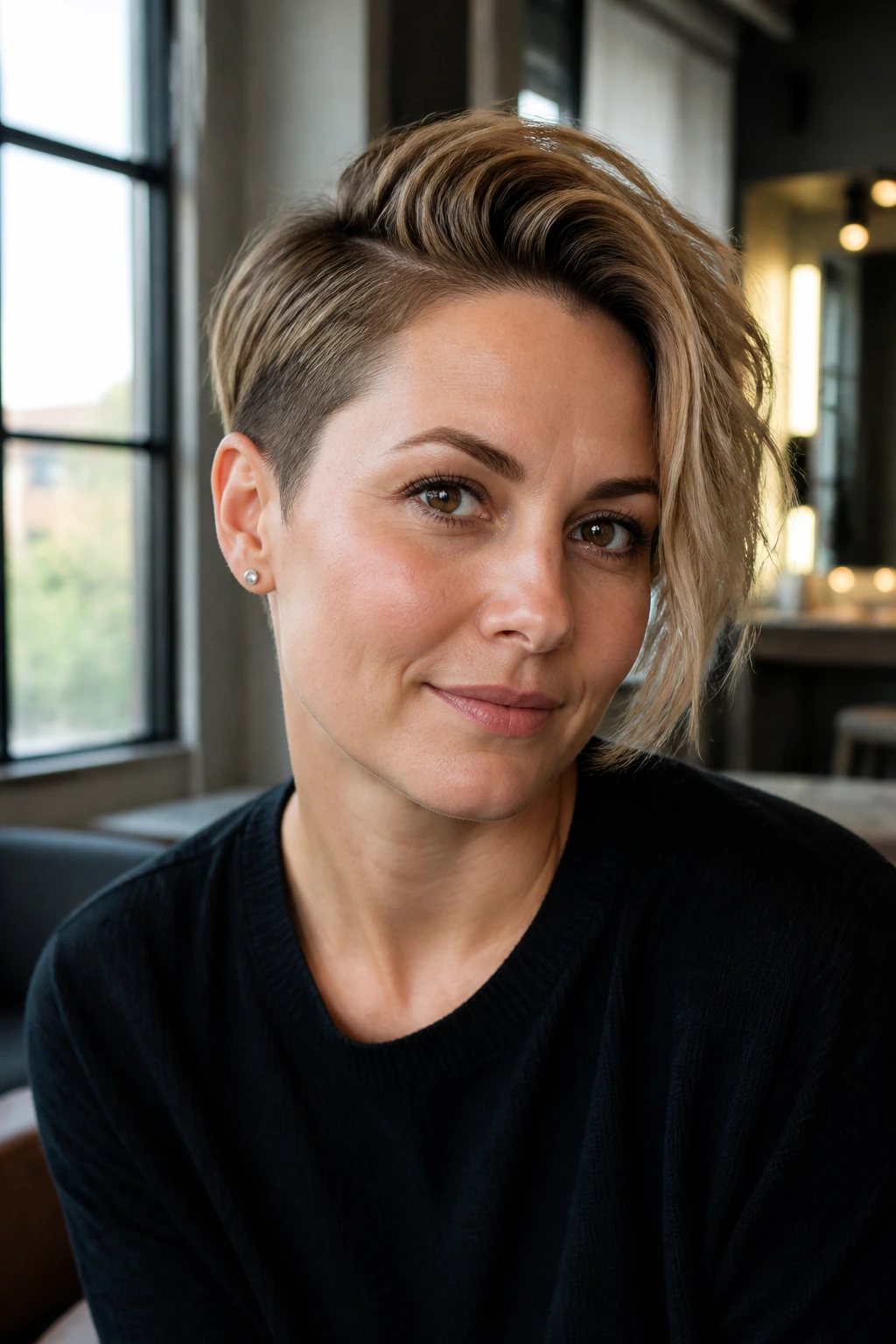
Deep side parts are not dead on round faces. They are just underused. A long-top crop with a deep side part gives you height on one side and a slimming diagonal across the forehead, which fine hair can usually hold better than a dramatic center part.
The top stays long enough to sweep, bend, or tuck, while the sides are cropped close enough to keep the silhouette narrow. It’s tidy, but not stiff.
Best For
- Hair that goes flat at the crown
- Faces that need a little more vertical line
- People who want a short cut without going full pixie
- Quick styling with a blow-dryer and fingers
A small round brush is helpful, but not required. Dry the roots in the opposite direction of the part first, then flip them back. That little trick creates lift without teasing, which is kinder to fine hair. And kinder usually wins here.
8. Shaggy Pixie With Feathered Crown
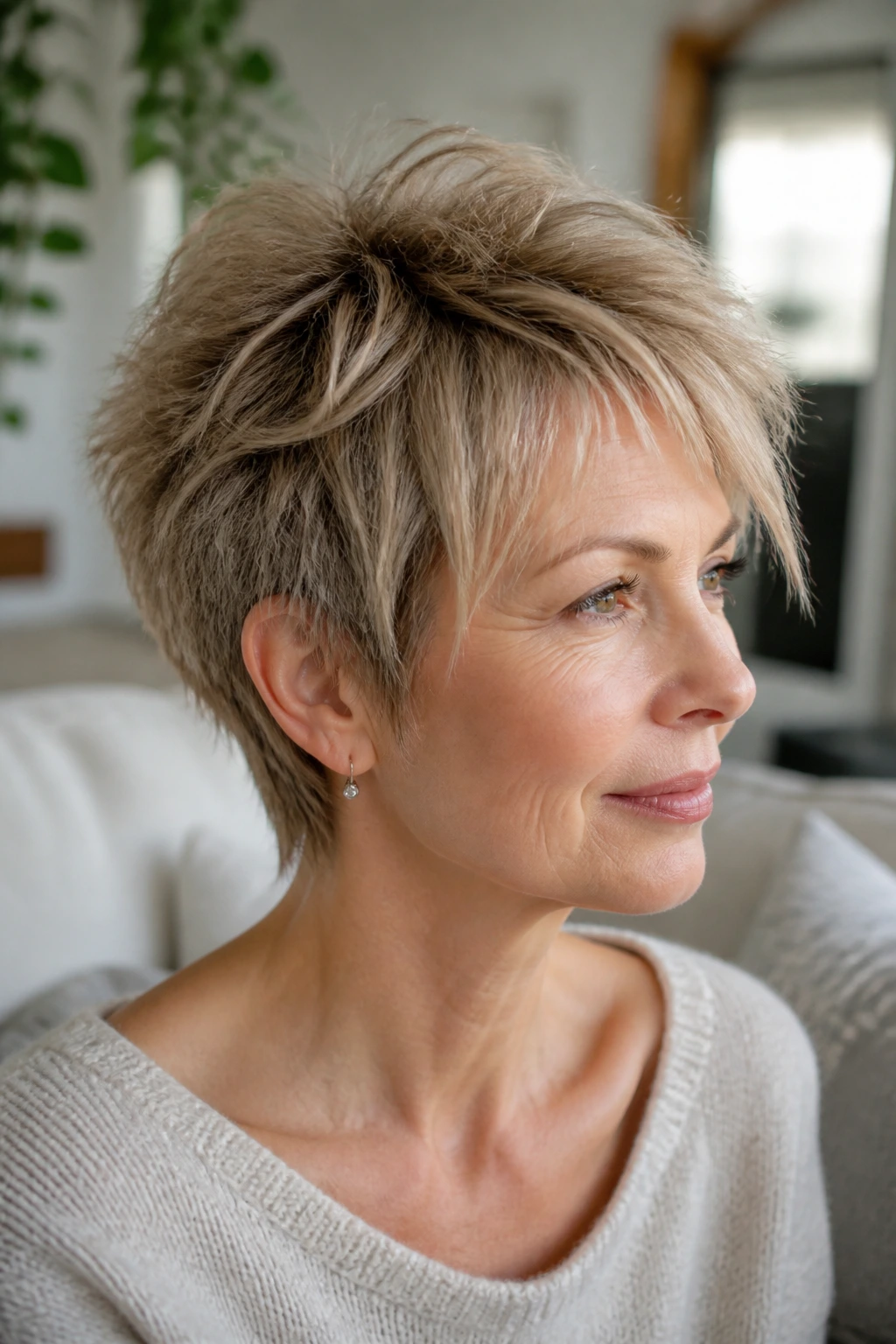
If your hair has almost no body, this cut cheats it. A shaggy pixie with a feathered crown breaks the top into small, airy pieces so the hair looks fuller without becoming bulky at the sides.
The crown should feel soft and lightly layered, not shredded. That is where a lot of cuts go wrong. Over-texturizing fine hair can leave the top frayed and the ends fragile. You want lift, not dust.
A little sea-salt spray can help, but keep it light. One or two sprays too many and the cut turns crunchy fast. I prefer a pea-sized amount of paste warmed in the hands and pressed into the crown and fringe.
This shape is good if you like movement and do not want to spend ten minutes with a brush every morning. It looks relaxed on purpose. That is part of the appeal.
9. A-Line Bob With Tapered Back
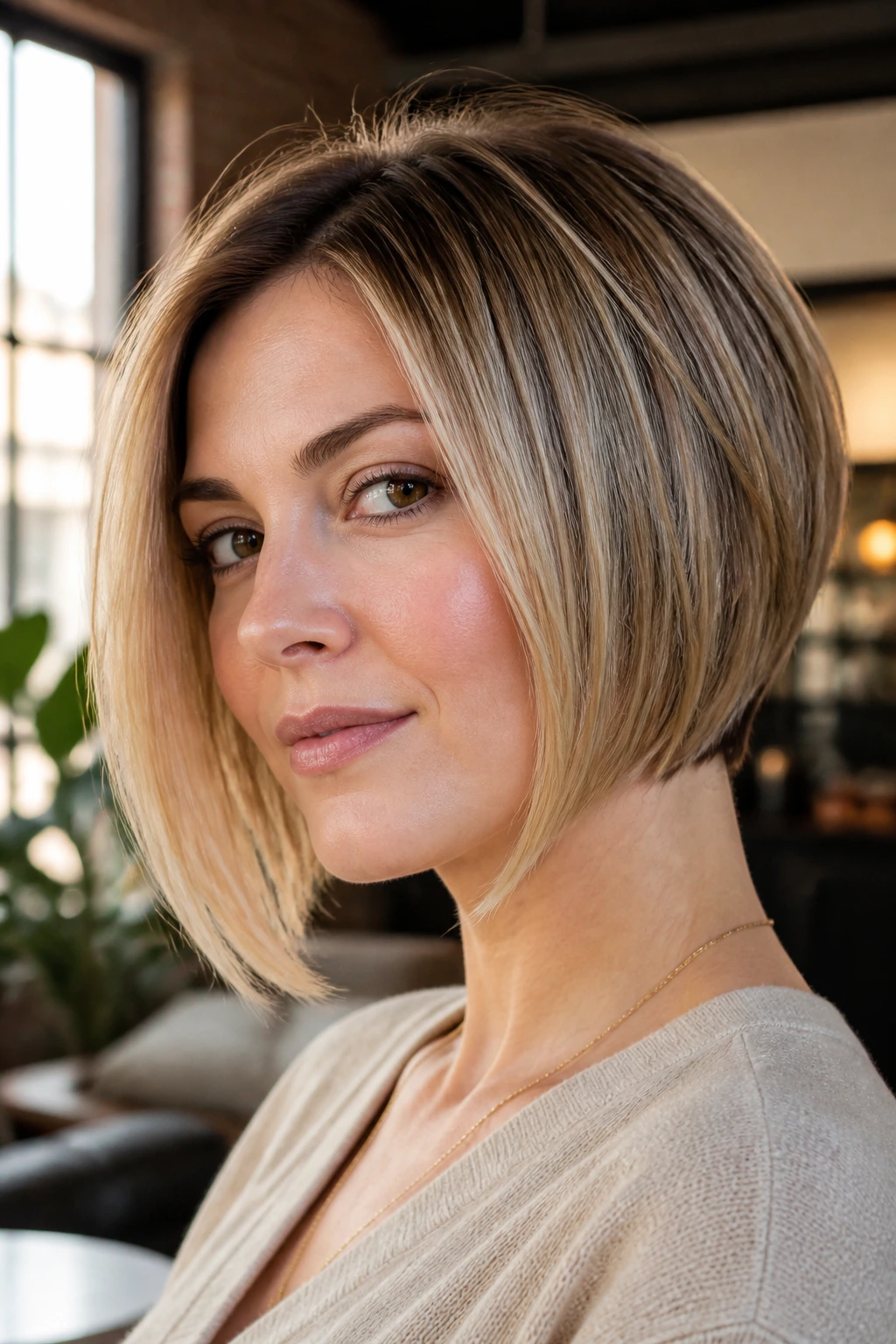
A A-line bob gives you a longer front and a shorter back, which is one of the easiest ways to stretch a round face visually. The front pieces create vertical lines near the cheeks, while the tapered back keeps the haircut from feeling heavy.
Fine hair benefits from the clean perimeter. Too many layers can make the ends look thin, but a subtle A-line keeps enough weight in the shape to look full.
How the Shape Should Sit
The front should fall just below the jaw, or even to the top of the neck if you want more polish. The back can be slightly shorter, but not so short that it spikes outward. A soft bevel is better than a hard shelf.
This is a great cut if you wear earrings or glasses, because the front pieces frame the face without crowding it. It also grows out well. That matters more than people admit.
10. Feathered Crop With Piecey Bangs
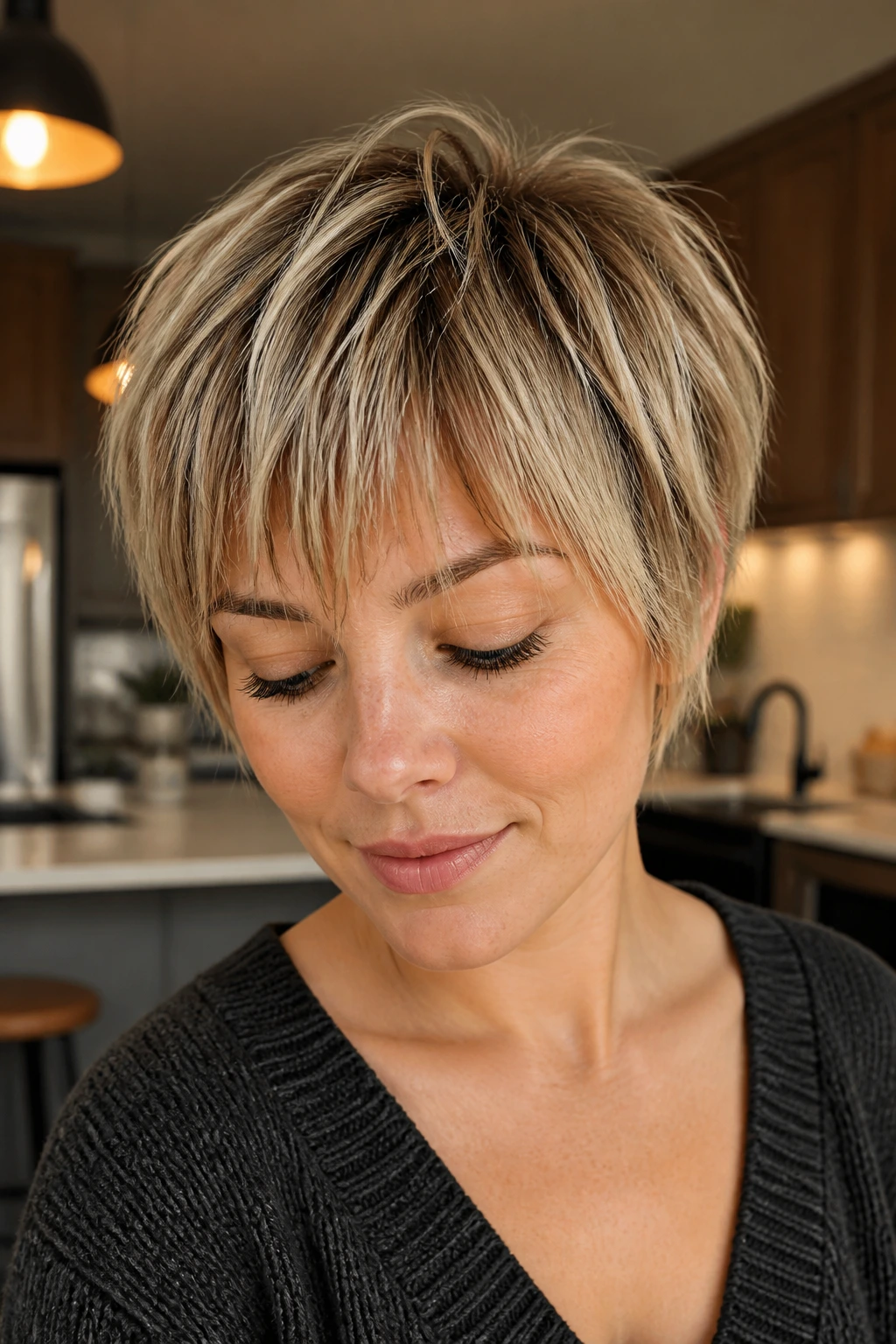
A feathered crop gives fine hair movement without asking it to do too much. Add piecey bangs, and the whole haircut starts to look lighter around the forehead and cheek area, which helps a round face feel less boxed in.
The bangs should not be dense. They should break apart a little, with tiny gaps of skin showing through. That keeps the front from swallowing the face. Fine hair is good at this kind of softness because it naturally separates.
What Makes It Different
The feathers should travel toward the temples, not straight across the forehead. That diagonal motion is what keeps the cut from looking blunt. Use a light mousse at the roots, then blow-dry with your fingers to keep the pieces separated.
This is a smart choice if you want something playful, low-fuss, and not overly polished. It looks best when it has a bit of air in it.
11. Curly Pixie With Height
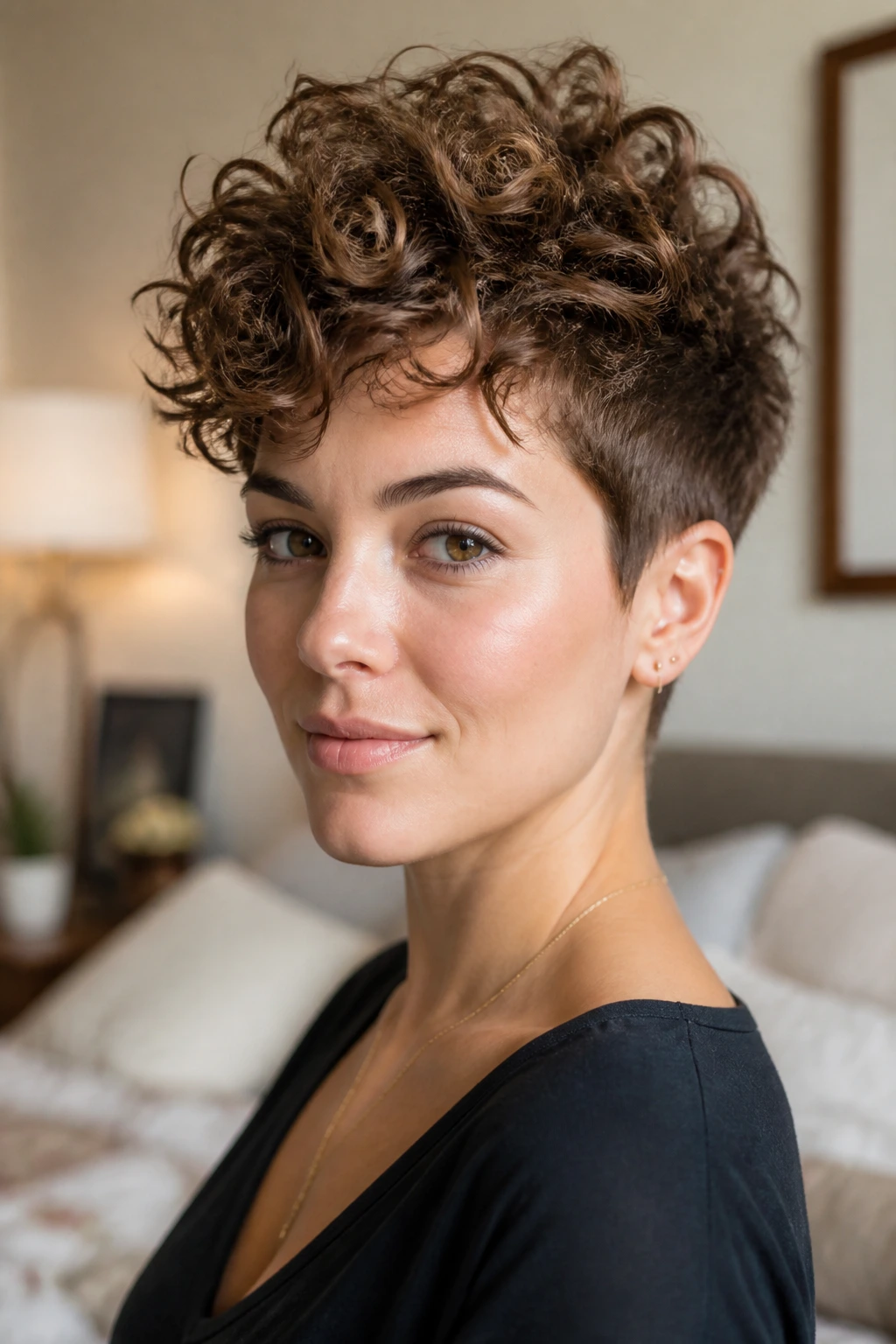
Curly fine hair has its own personality. Shorter does not mean flatter. A curly pixie with height can actually give a round face more structure because curls rise up instead of spreading outward when the cut is shaped well.
The sides should stay close. The top should keep enough length for the curls to spring upward, not just outward. That difference changes everything. If the curls are cut too short on top, they puff. If they are left a little longer, they stack into a soft vertical shape.
A diffuser on low heat is your friend here. So is a lightweight gel or curl cream. Skip heavy oils near the roots; they can drag the whole look down by lunch.
This cut is one of the few that can feel both fresh and easy. It does require a good curl cut, though. Short curly hair needs a hand that understands shrinkage.
12. Curtain Bang Bob

Curtain bangs can be very good on round faces, but only when the rest of the cut cooperates. A curtain bang bob works because the bangs open in the middle and drift away from the cheeks, which draws the eye downward instead of outward.
Keep the bob around chin length or a touch below. If it sits too high, the curtain fringe and the cheekbones can compete. Fine hair does better when the cut has one clear focal point.
The bangs should start a little back from the hairline and get longer as they reach the jaw. That soft slope makes the face look longer. It also helps the hair blend if you wear it tucked behind the ears some days and loose on others.
This is one of those cuts that looks easy in the best way. Not boring. Just unfussy.
13. Tapered Nape Pixie
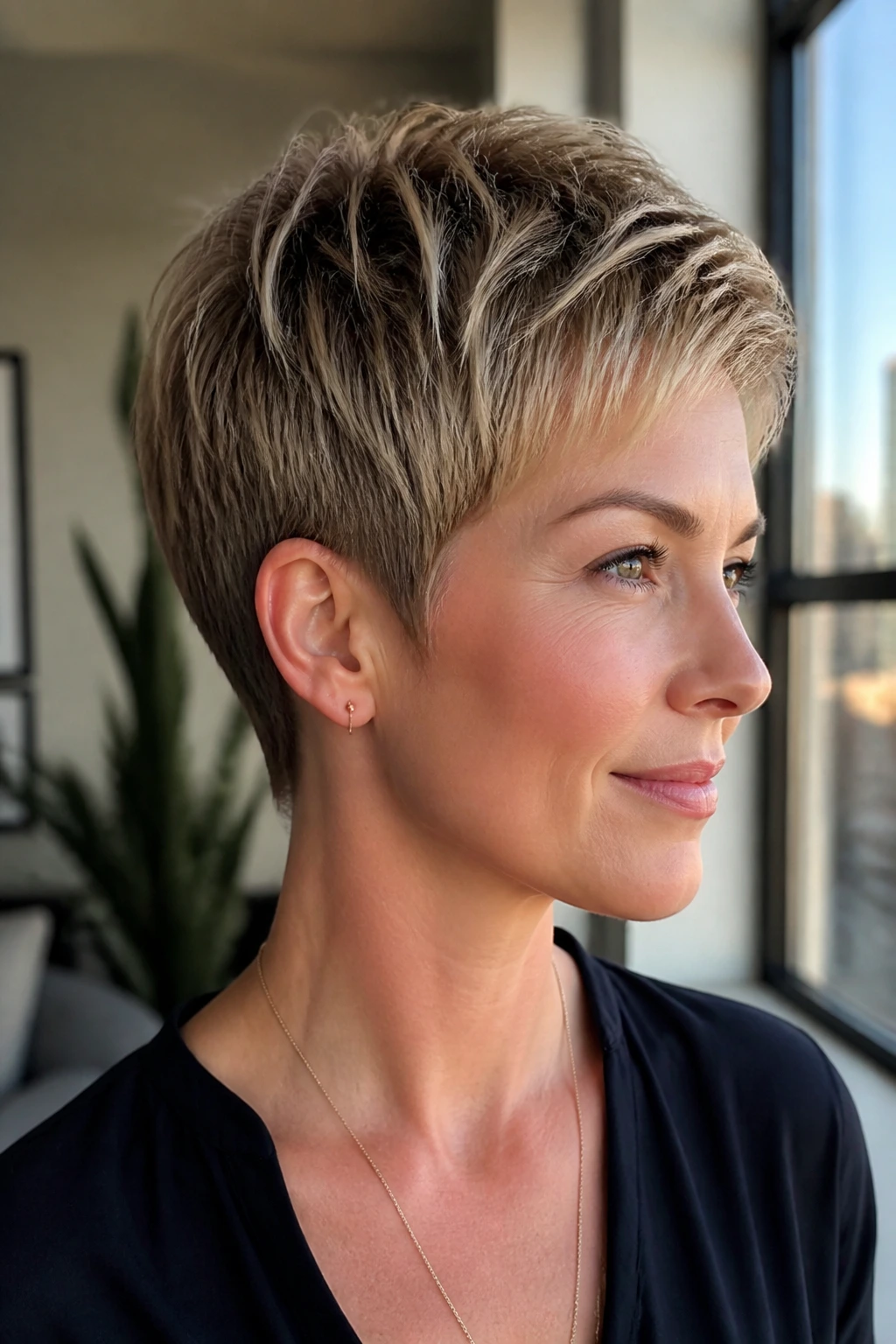
A tapered nape pixie keeps the back clean and close, which makes the crown look fuller by contrast. On a round face, that little lift at the top matters more than a lot of people think.
The nape should hug the neck neatly. The top can be longer and softly choppy. The sides should be slim, with just enough length to blend into the fringe or sideburn area.
Short. Sharp. Useful.
What makes this cut work for fine hair is the visual contrast. A neat back and a bit of top texture create the sense of shape without having to build bulk everywhere. That keeps the look crisp, not puffy.
If you want a cut that can be styled in two minutes, this is a good one. Rub in a small amount of paste, lift the top with your fingers, and leave the rest alone.
14. Razored Bob With Airy Ends
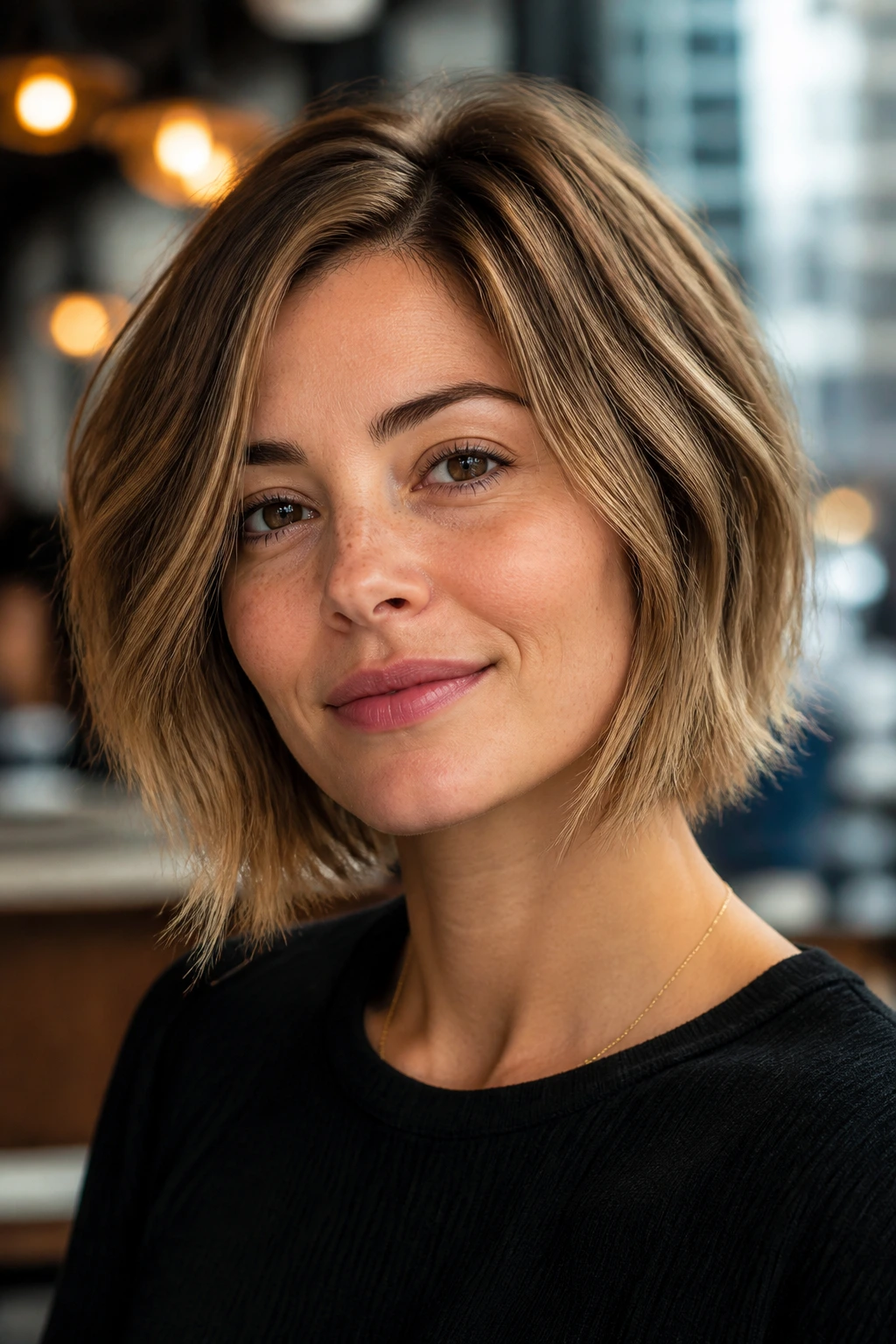
A razored bob can be lovely on fine hair when the razor is used lightly. The ends get a softer, airier edge, which stops the bob from feeling heavy around a round face. Used badly, a razor can make the hair look thin and frayed. Used well, it creates movement that scissors sometimes miss.
The key is restraint. You want texture, not shredded ends. The shape should still hold a line. That line is what keeps the haircut from spreading sideways.
What to Watch For
- Ask for light razor work, not heavy thinning.
- Keep the perimeter at chin length or lower.
- Use a smoothing cream if the ends tend to fly apart.
- Avoid too much layering near the cheeks.
This cut looks especially good with a side part and a small bend at the ends. It has a little edge to it. Not too much. Just enough.
15. Tucked Ear-Length Bob

An ear-length bob sounds simple, and that is part of why it works. On a round face, a shorter bob that can be tucked behind one ear creates asymmetry without looking fussy. Fine hair often behaves better at this length because there is less weight pulling it down.
The trick is to keep the front pieces soft and slightly longer than the back corners. If everything stops at the same spot, the cut can feel boxy. A small difference in length around the face makes it easier to shape with your hands.
One tucked side. One loose side. That’s the whole mood.
This is a good option if you wear bold earrings, glasses, or a strong lip color. The haircut gives those things room to show up. And yes, that matters. Hair that stays out of the way is sometimes the most flattering thing you can do.
16. Tousled French Crop
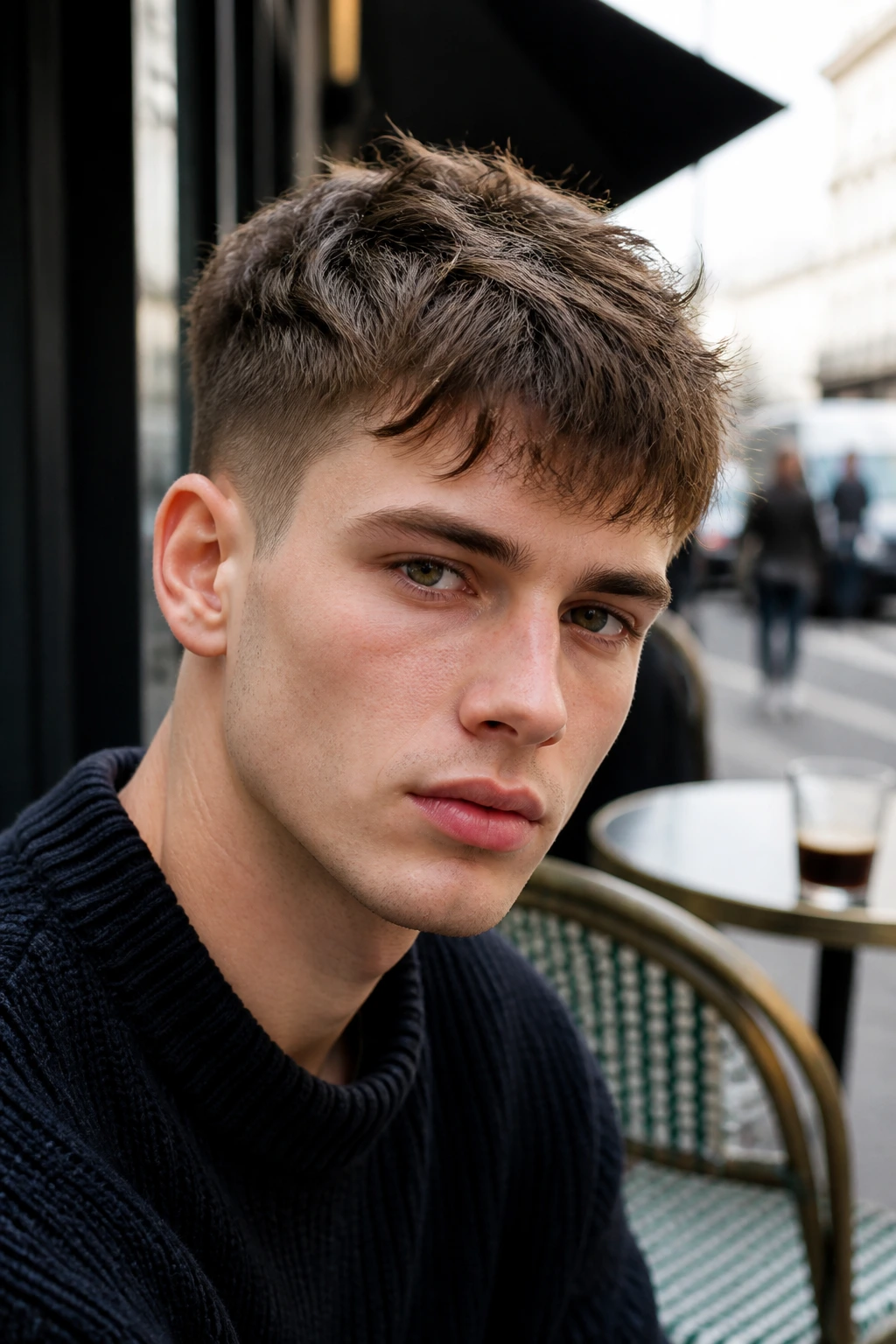
The tousled French crop is neat at the outline and loose on top, which is a nice combination for fine hair. It gives round faces some structure without making the style feel severe.
What I like here is the balance. The sides stay close, the top gets a little roughness, and the fringe can be worn forward or swept slightly sideways. That little bit of chaos keeps the haircut from sitting too perfectly on the head.
How to Get the Look
Start with damp hair and a dab of mousse. Scrunch the top with your fingers, then dry it until the roots feel set and the ends still have a little give. Finish with a matte paste worked only into the top layer.
A crop like this is not about shine or precision. It is about shape and lift. If your hair falls limp after washing, this one gives you a better fighting chance.
17. Layered Crop With Wispy Fringe
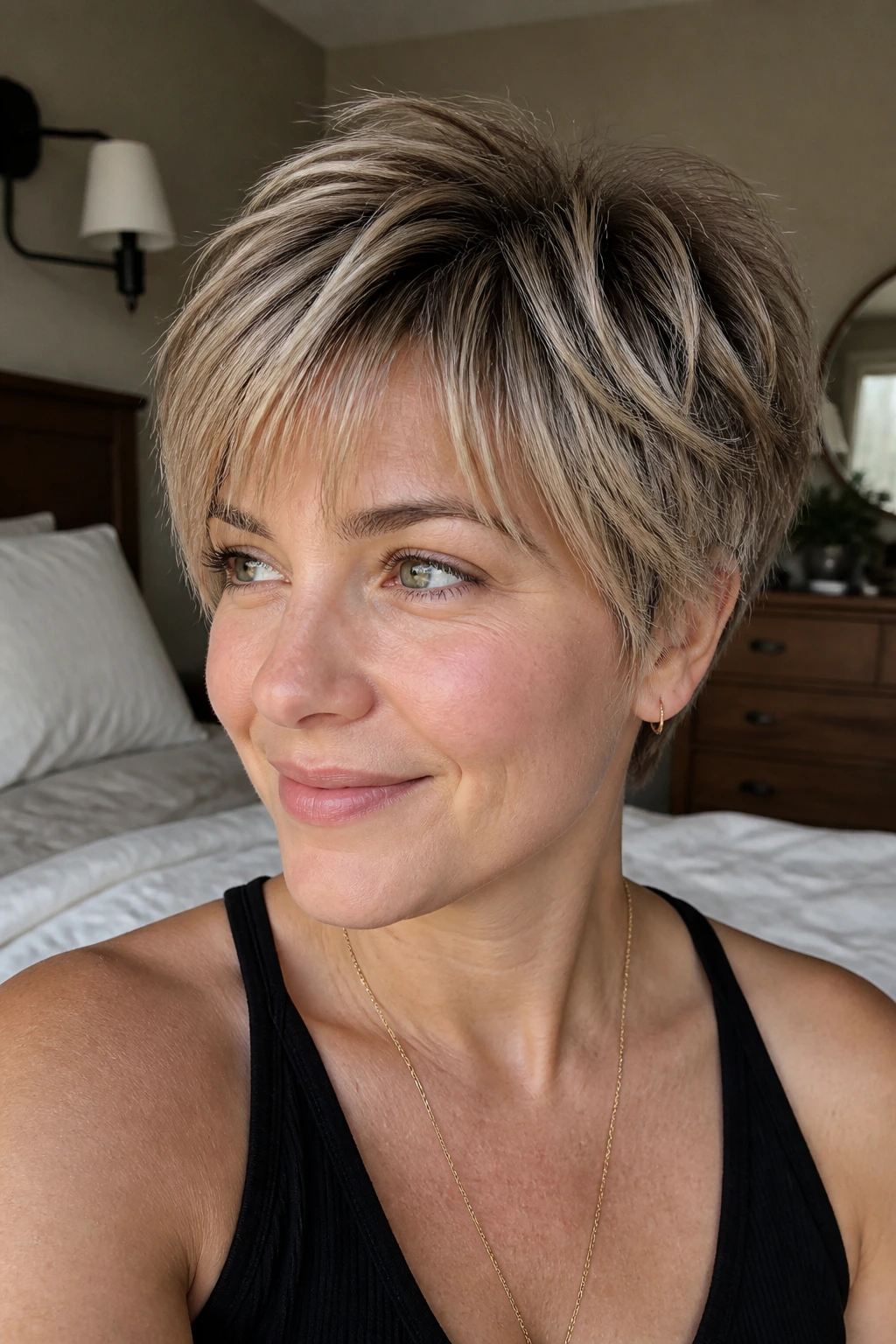
A layered crop with wispy fringe softens the forehead and lifts the overall silhouette, which is helpful if your round face feels widest through the center. The fringe should be light enough to move, not thick enough to form a curtain.
Fine hair likes this cut because the layers are short enough to create bounce, but not so short that the shape disappears. The crop should still feel like a haircut, not a haircut attempt.
Wispy bangs can be a little fussy if they are cut too blunt. Ask for point-cut ends and a soft taper toward the temples. That keeps the front open and the face more visible.
This is a good choice if you want something feminine without going soft everywhere. A little edge in the crown, a little lightness around the eyes. Done properly, it looks easy from across the room and detailed up close.
18. Side-Swept Asymmetrical Pixie
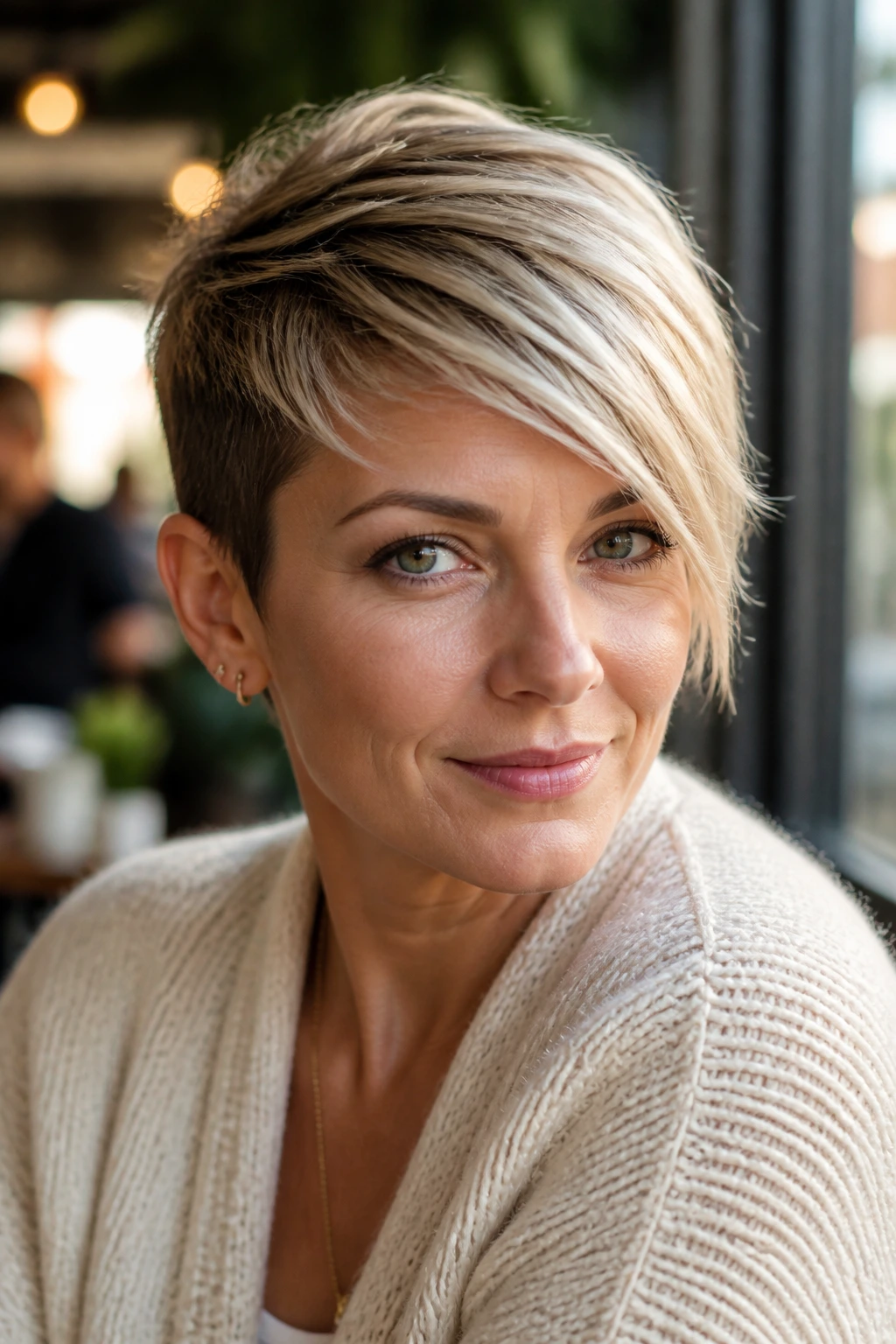
This cut is like the first pixie’s sleeker cousin. A side-swept asymmetrical pixie keeps one side longer and lets the top sweep across the forehead in one clean motion. That line is flattering on round faces because it creates a diagonal shape across the upper third of the face.
It also works well for fine hair because the longer top gives you styling options. You can push it across, tuck a side back, or separate it into small pieces with a bit of paste. Short hair should give you choices. If it does not, something is off in the cut.
The asymmetry should be obvious enough to matter, but not so dramatic that it looks like two different haircuts fighting each other. One longer panel, one shorter side, and a balanced nape. That’s the sweet spot.
A clean, side-swept pixie can look sharp with very little effort. That is a rare and useful thing.
19. Short Wedge Bob
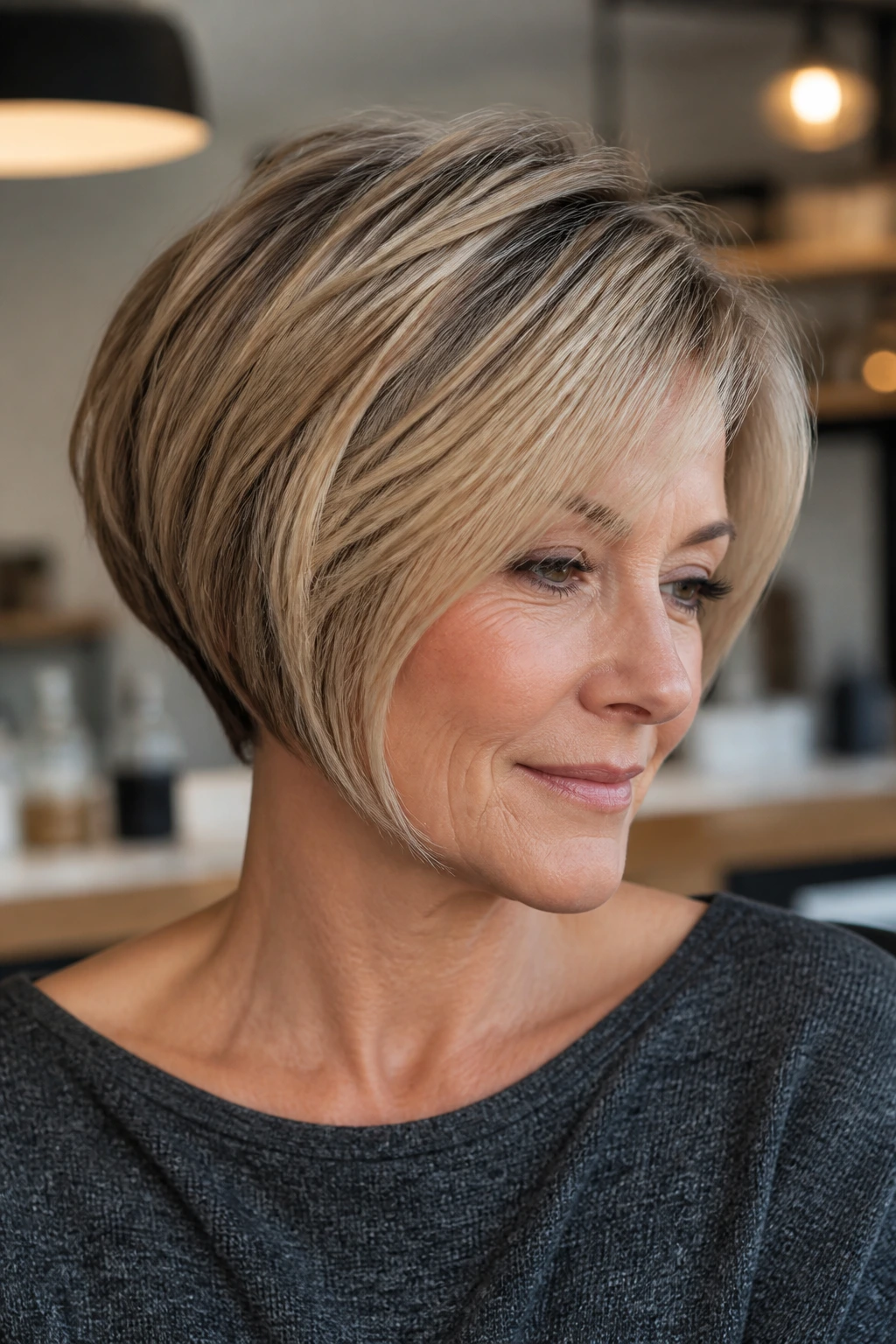
A short wedge bob gives you lift through the back and a narrow outline at the sides, which can be a nice match for fine hair. On a round face, it works best when the wedge is subtle and the front pieces are left a little longer.
The cut has a kind of built-in shape. That helps hair that wants to lie flat. The back stacks just enough to create volume, while the front stays soft enough to avoid widening the cheeks.
Do not let the wedge become too round. That is the trap. A round bob on a round face can feel too circular. Keep the perimeter sharp and the front slightly elongated, and the cut stays flattering.
This style has a tidy, almost tailored feel. If you like hair that sits in place and still has a bit of body at the crown, it earns its keep.
20. Shattered Bob With Deep Side Part
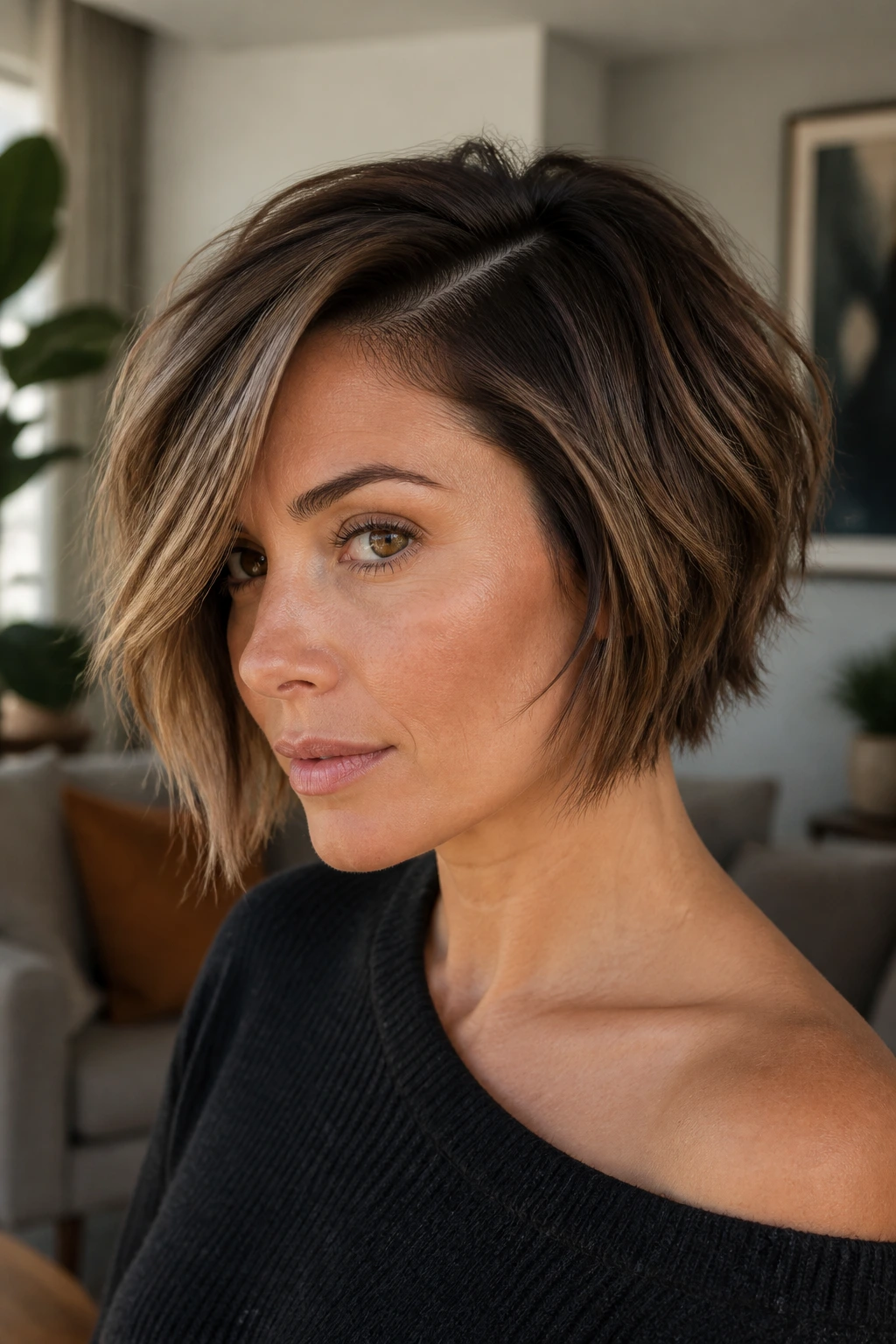
A shattered bob is a cleaner, lighter-looking cousin of the classic bob. The ends are broken up just enough to soften the line, and a deep side part brings a slimming angle across the face. That combination helps fine hair look more alive.
Quick Shape Check
- Part the hair well off center.
- Keep the bob at jaw or chin length.
- Leave the ends piecey, not feathered to nothing.
- Use a root spray before blow-drying.
The important thing is that the haircut still has an outline. Too much choppiness and the bob can look unfinished. Too little and it goes flat.
This is a cut for someone who likes movement, but not mess for the sake of mess. It looks especially good when the top has a little bend and the lower half stays fairly smooth. Clean at the base. Loose through the edges.
21. Mini Shag Bob

A mini shag bob gives fine hair the kind of texture it usually wishes it had on its own. The layers are short enough to add bounce, but the length stays near the chin so the cut still reads as a bob.
Round faces do well with the lifted top and broken ends, because the haircut stops the eye from settling on one wide horizontal line. The shape feels a little undone in a good way.
This is not the cut for someone who wants polished perfection. It wants a bit of grit. A little mousse, a quick rough dry, a touch of dry shampoo at the roots the next day. That is the routine.
If your hair is fine and tends to separate into sparse sections, ask the stylist to keep the top airy but not overly cut away at the sides. The shag should add movement, not make the edges disappear.
22. Cropped Lob With Hidden Layers

A cropped lob sits on the longer edge of “short,” but it is still close enough to count when you want a face-flattering shape without going too short. Hidden layers are the trick here. They add body inside the haircut while leaving the outer line calm and clean.
That matters for fine hair. Too many visible layers can make the cut look skimpy. Hidden layers give you the lift without giving away the mechanism.
Round faces usually benefit when the front pieces fall a little below the jaw, because that visually lengthens the face. If the lob is all one length and sits exactly at the widest point, it can feel boxier than intended. Move it down an inch. That one inch does work.
This is one of the easiest cuts to style with a round brush or a quick wave from a flat iron. It holds shape without asking for much.
23. Pixie With Tapered Temples
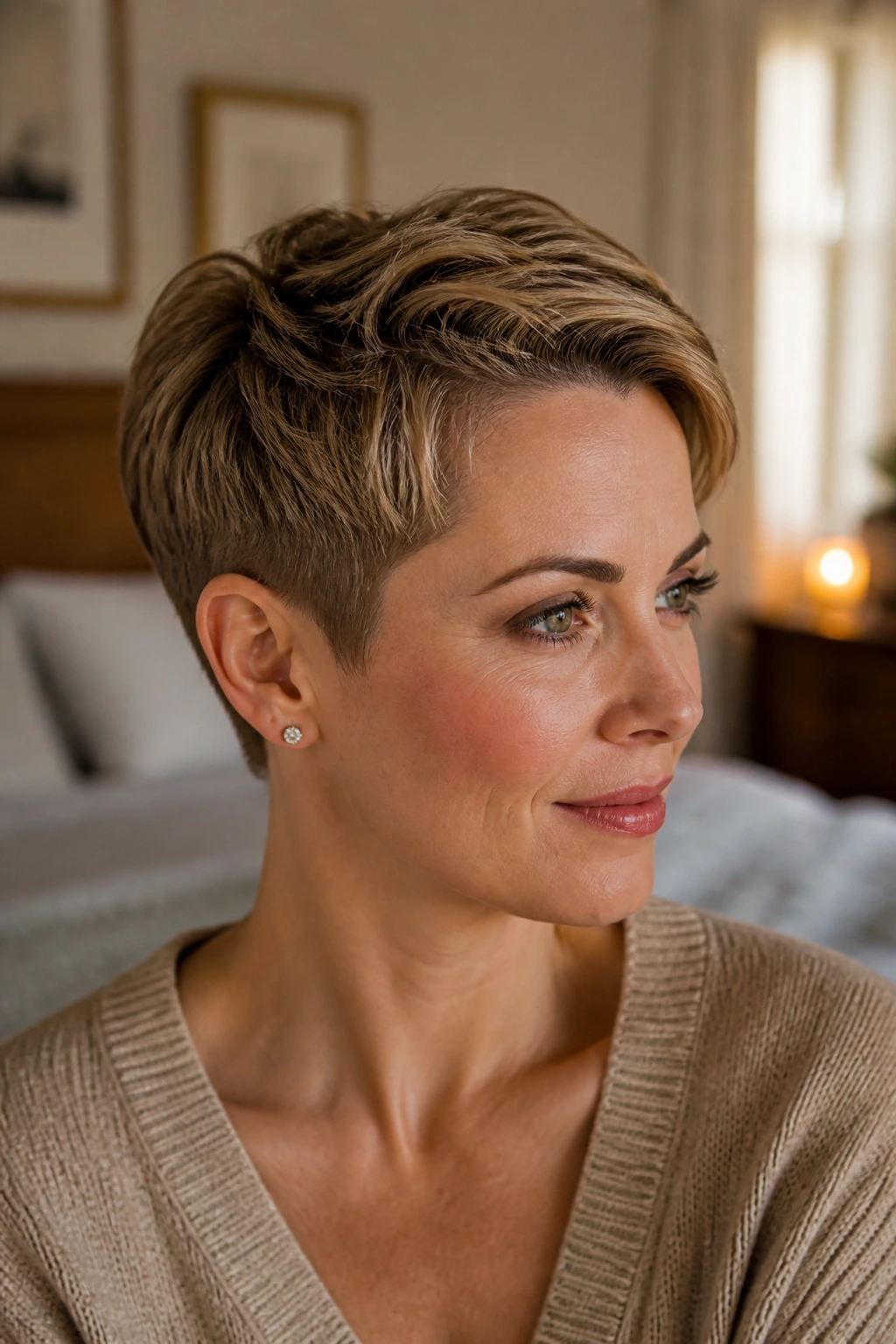
Temples matter more than people think. A pixie with tapered temples pulls the sides in close where the face tends to feel widest, which can sharpen the outline of a round face without making the haircut harsh.
The top stays longer and softer, usually with a little lift or a diagonal sweep. The temple area should be neat, almost sculpted, but still blended. That blend keeps fine hair from looking patchy around the ears.
A lot of short cuts fail because they add volume everywhere. That is not the move here. Control the sides. Leave the crown some freedom. The result is cleaner and more flattering.
This cut is especially good if your hairline is a little soft or your sideburn area grows in unevenly. A tidy temple shape can make the whole style feel intentional without extra styling.
24. Blunt Chin Bob With Root Lift
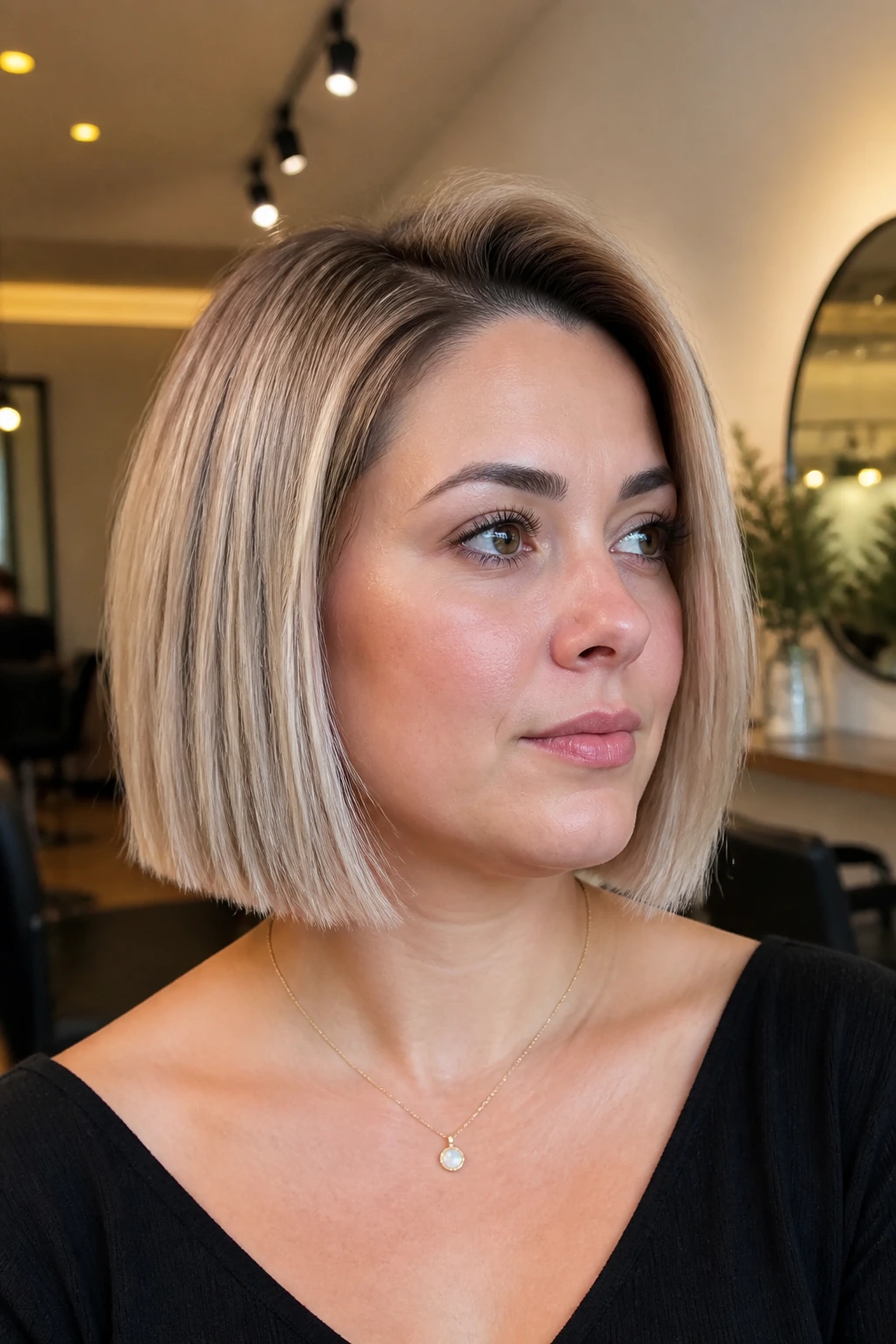
A blunt cut on fine hair can sound risky, but a blunt chin bob with root lift works when the hair is not too sparse and the crown is styled properly. The solid line at the bottom gives the illusion of thickness, while the lifted roots keep the face from feeling boxed in.
The trick is to keep the part slightly off center and build volume only at the roots, not at the cheeks. If the hair puffs out mid-length, the cut loses its slim shape. If the roots rise and the perimeter stays clean, it feels sharp.
This is one of the most polished looks on the list. It is also one of the easiest to ruin with the wrong blow-dry. Dry the roots first, use a paddle brush or a large round brush, and keep the ends straight enough to preserve the line.
A blunt bob does not have to be severe. It just has to be precise.
25. Wavy Crop With Soft Center Part
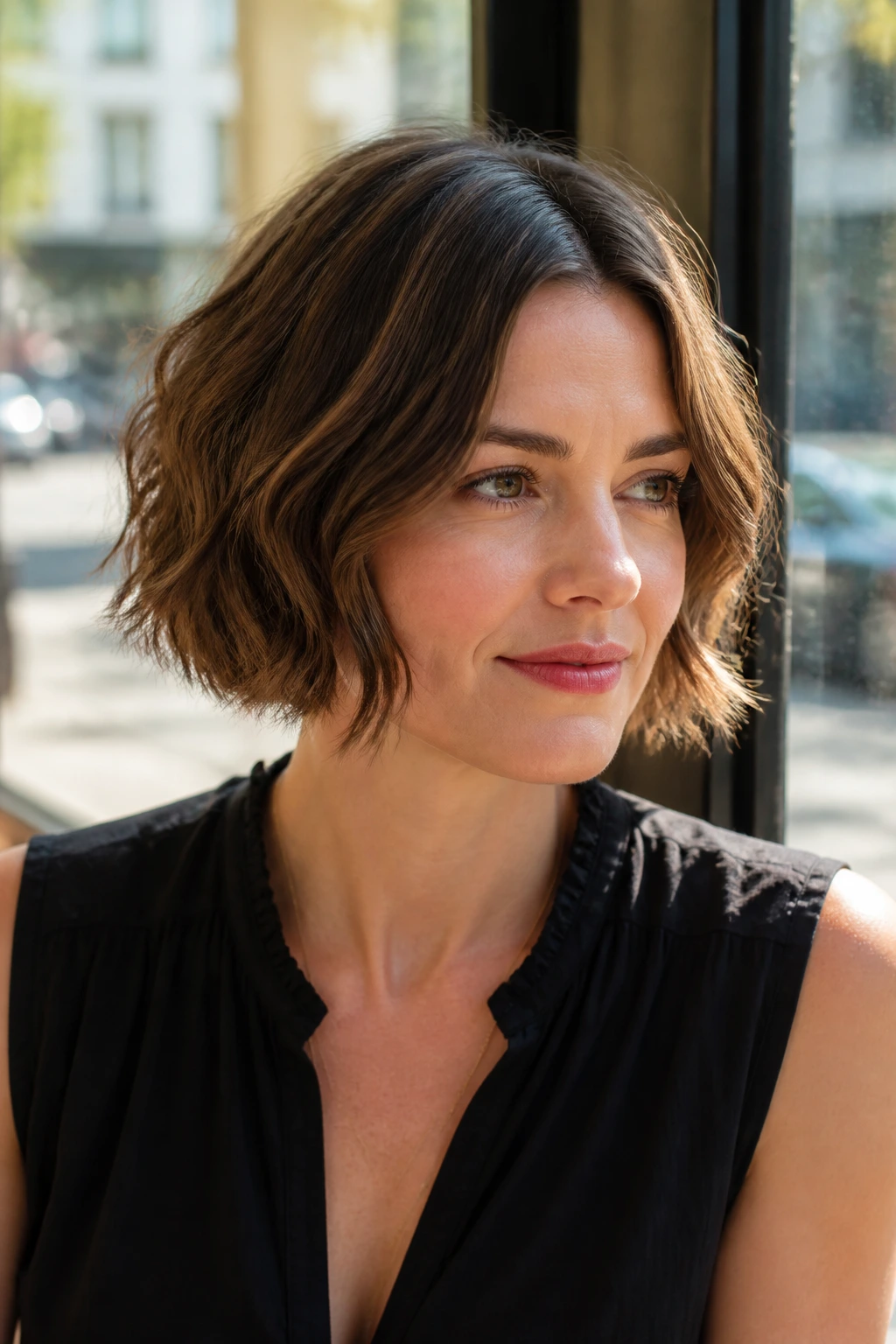
A center part can work on a round face. It just needs help. A wavy crop with a soft center part uses short waves and a slightly longer top to break up the face without pushing all the weight to the sides.
This cut is good when the waves start below the cheekbone rather than right at it. That keeps the width lower and the shape longer. Fine hair usually benefits from waves that are loose and separated, not tight and bouncy all over.
A little salt spray or a light mousse helps here, but the product should never stiffen the hair. You want movement. The part should look relaxed, not perfectly measured with a ruler.
Not every round face needs a side part. Sometimes the cleaner center line, paired with soft wave and the right length, looks fresher. That is worth remembering.
26. Undercut Pixie Bob
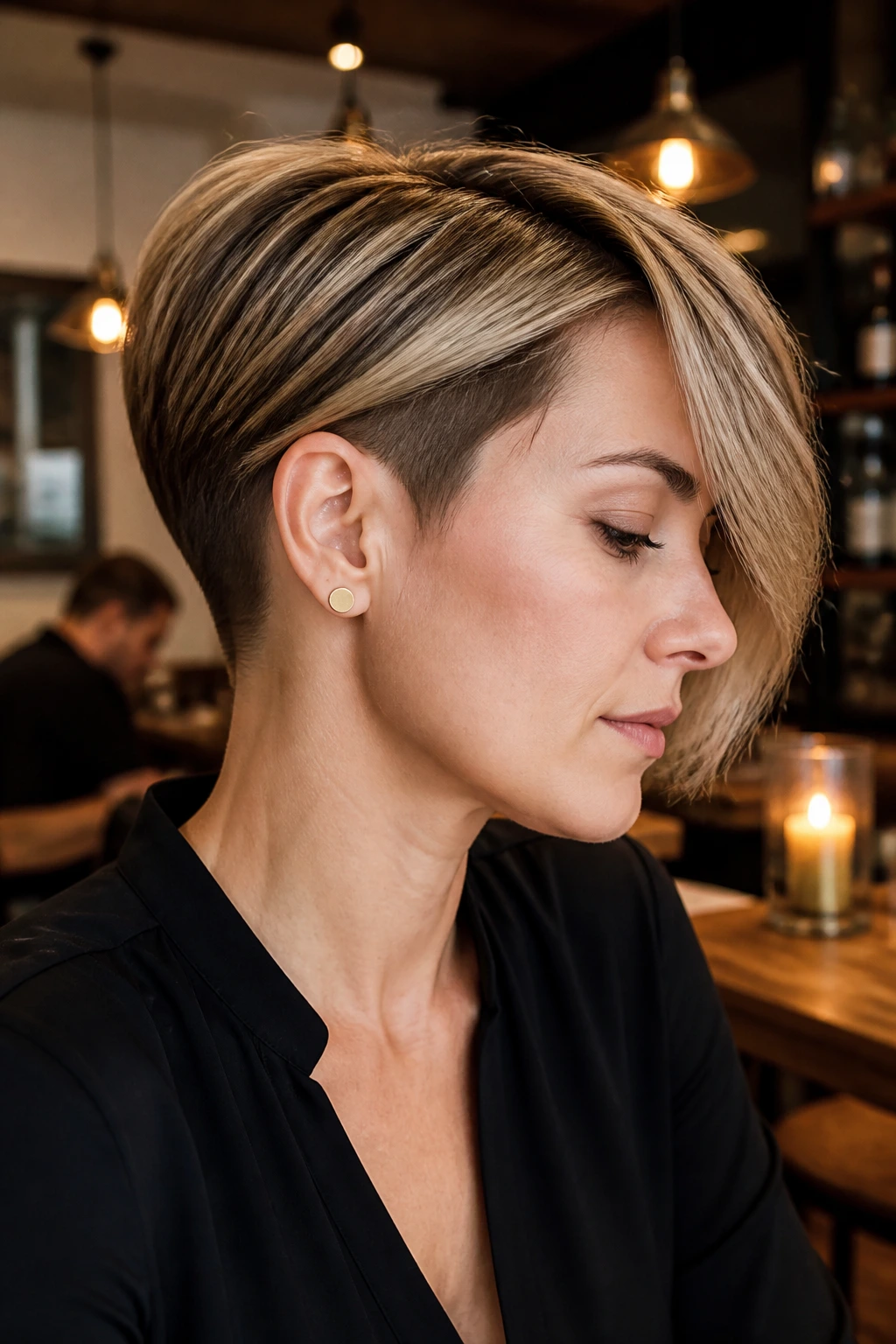
An undercut pixie bob removes bulk where fine hair does not need it and leaves enough length on top to style. It sounds edgy, and it can be, but the version most people can wear is subtle: a little shorter underneath, a little longer over the top, and soft movement around the face.
Why It Helps
The undercut keeps the lower half from puffing out. The top keeps the cut from looking too severe. The front pieces can sweep across the face or tuck back depending on the day.
Ask for the undercut to stay hidden unless you want it visible. That gives you flexibility without making the haircut hard to grow out. Fine hair often looks fuller when a bit of hidden weight is removed near the nape, because the top can then sit better.
It is a practical cut. Also a little bit cool. No harm in that.
27. Rounded Bob With Long Face-Framing Pieces
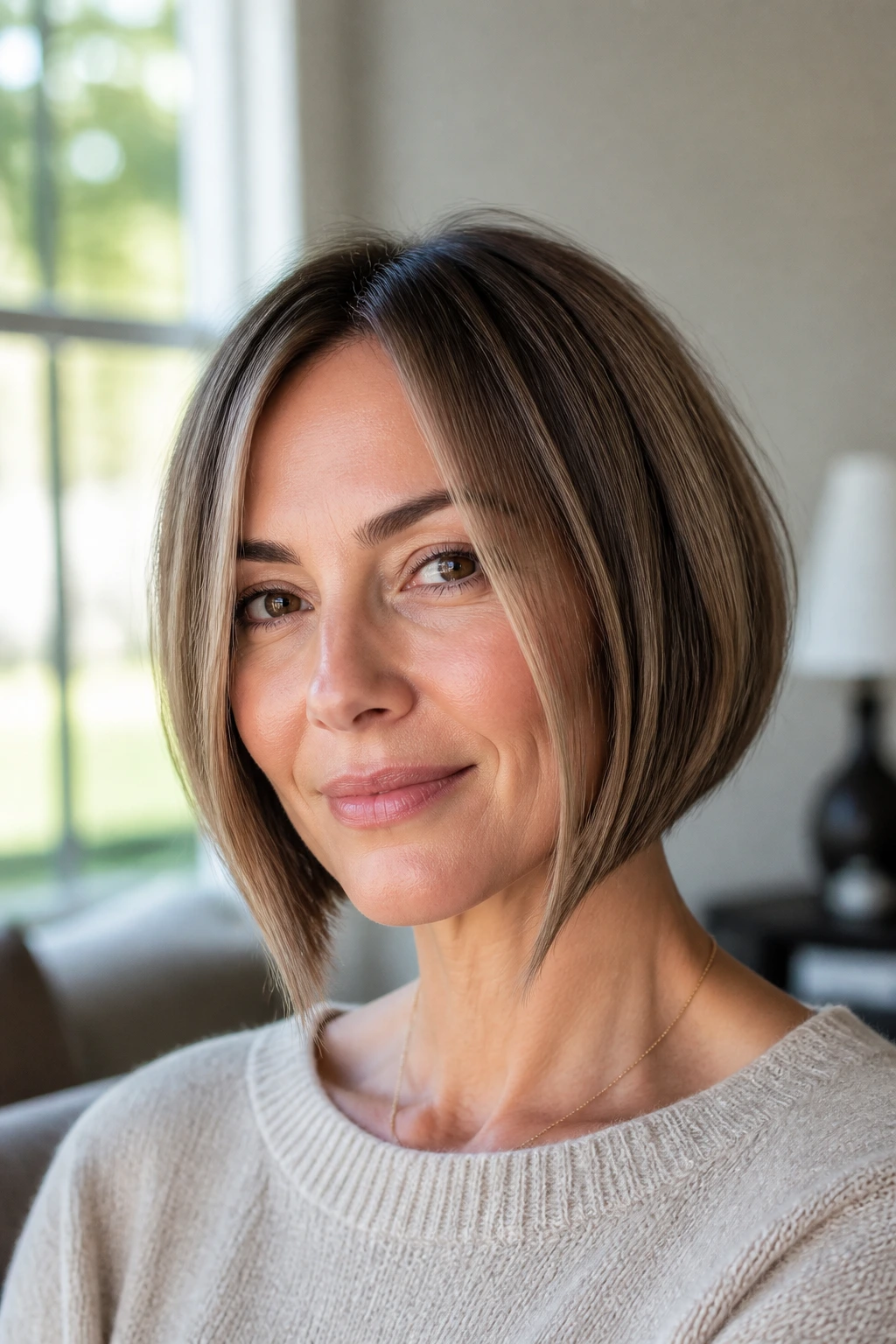
A rounded bob can sound wrong for a round face, and if it is cut poorly, it is. But a rounded bob with long face-framing pieces changes the equation. The back stays softly curved for body, while the front drops longer and slimmer around the cheeks and jaw.
That long front line is what saves it. It stops the cut from becoming one big circle. Fine hair often looks fuller in a rounded silhouette, especially if the crown is lifted slightly during styling.
Keep the curve at the back gentle. Aggressive rounding can overstate the face shape. The front should do the work of lengthening, while the back quietly supports the volume.
This style is a good pick if you want something softer than an A-line bob but still structured. It has shape. It has movement. It also grows out in a forgiving way, which is a practical bonus.
28. Broken-Line Bob With Jagged Ends
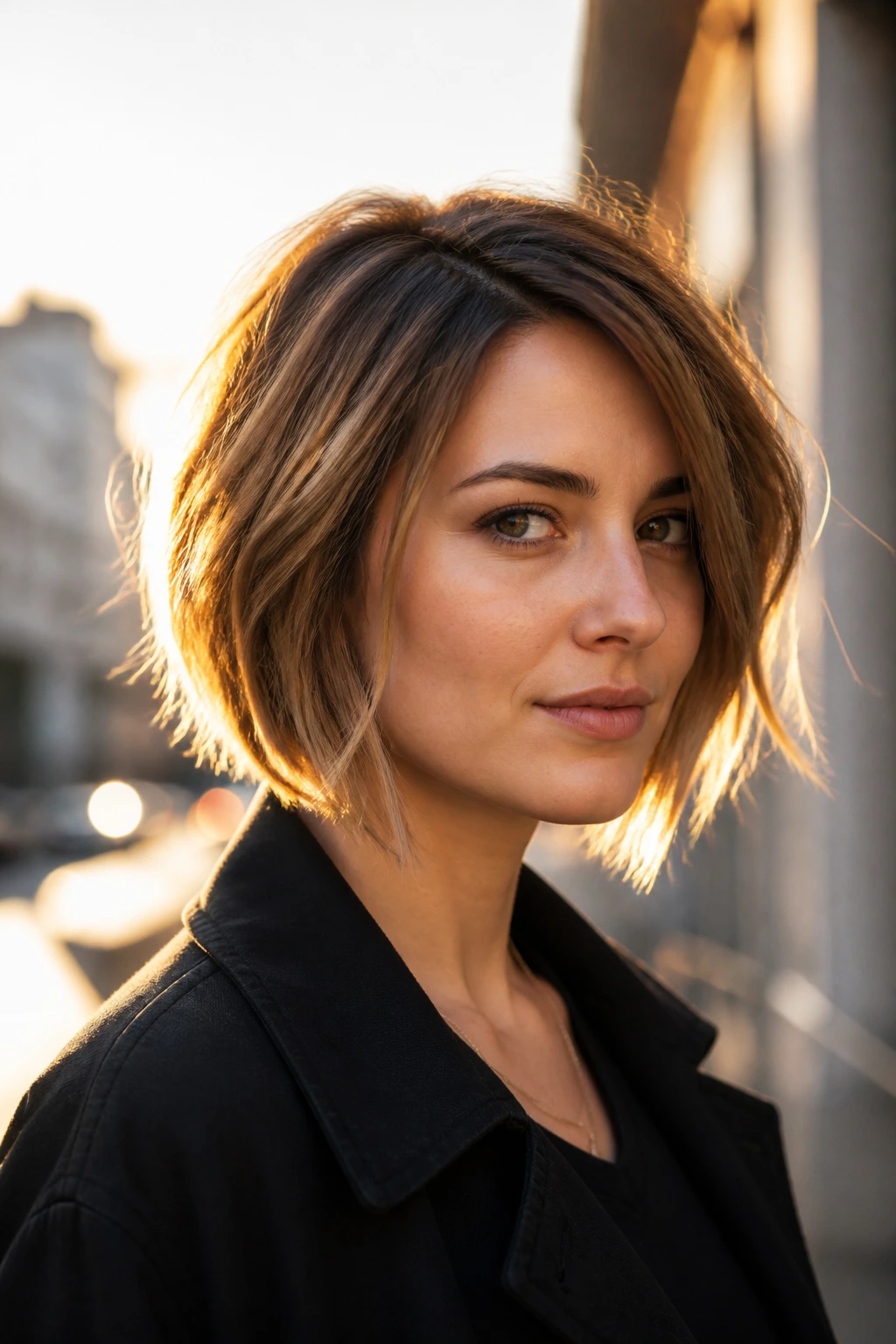
A broken-line bob is for anyone who wants movement without the softness turning mushy. The jagged ends give fine hair a little edge and keep the cut from sitting in one solid block across the face.
Round faces benefit when the eye does not get stuck on a blunt horizontal line. The uneven edge interrupts that. It also makes the hair look a touch thicker because the ends are not all stacked on the same plane.
The style works best with a side part or a slightly off-center part. That keeps the shape from feeling too symmetrical. If your hair tends to lose body fast, this cut can help the edges keep some life between washes.
A small amount of dry texture spray is enough. Do not overdo it. The cut should look piecey, not dusty. There’s a difference, and it matters.
29. Piecey Crop With Clean Nape
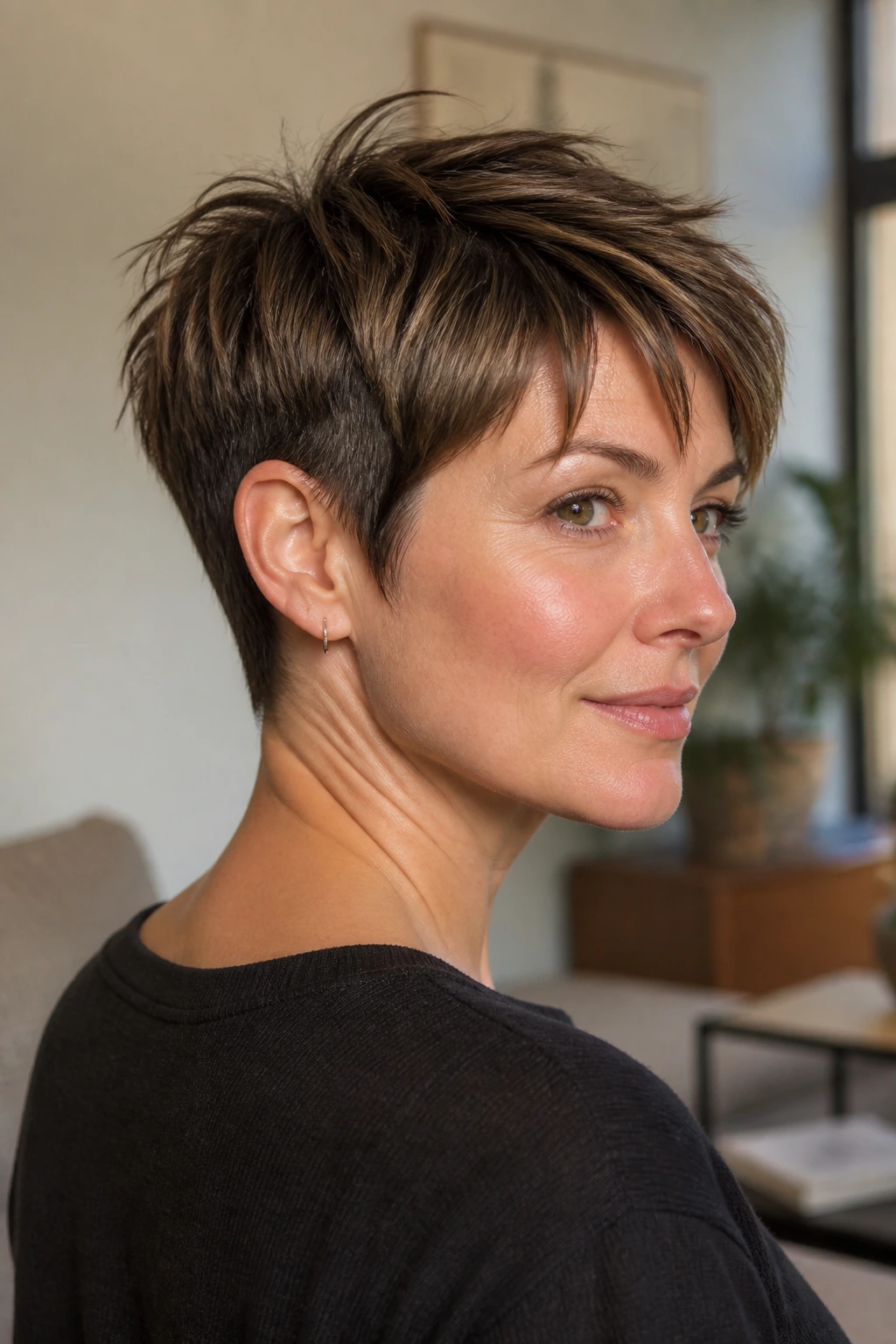
A piecey crop with a clean nape is one of those cuts that looks simple until you notice how well it sits. The nape stays neat and close, while the top and fringe are separated into small pieces that create lightness around the face.
For fine hair, that separation is useful. It keeps the haircut from looking like one flat cap. For round faces, the longer bits on top add a little vertical line, which helps the face feel less wide.
Styling in Real Life
- Dry the roots first.
- Rub a tiny amount of paste between your fingers.
- Pinch the top pieces into place.
- Leave the fringe slightly imperfect.
This style is low-drama in the best way. It works for office days, errands, and the kind of mornings when you do not want to fuss but still want to look put together. Clean back. Light top. That formula holds up.
30. Below-Jaw Soft Bob
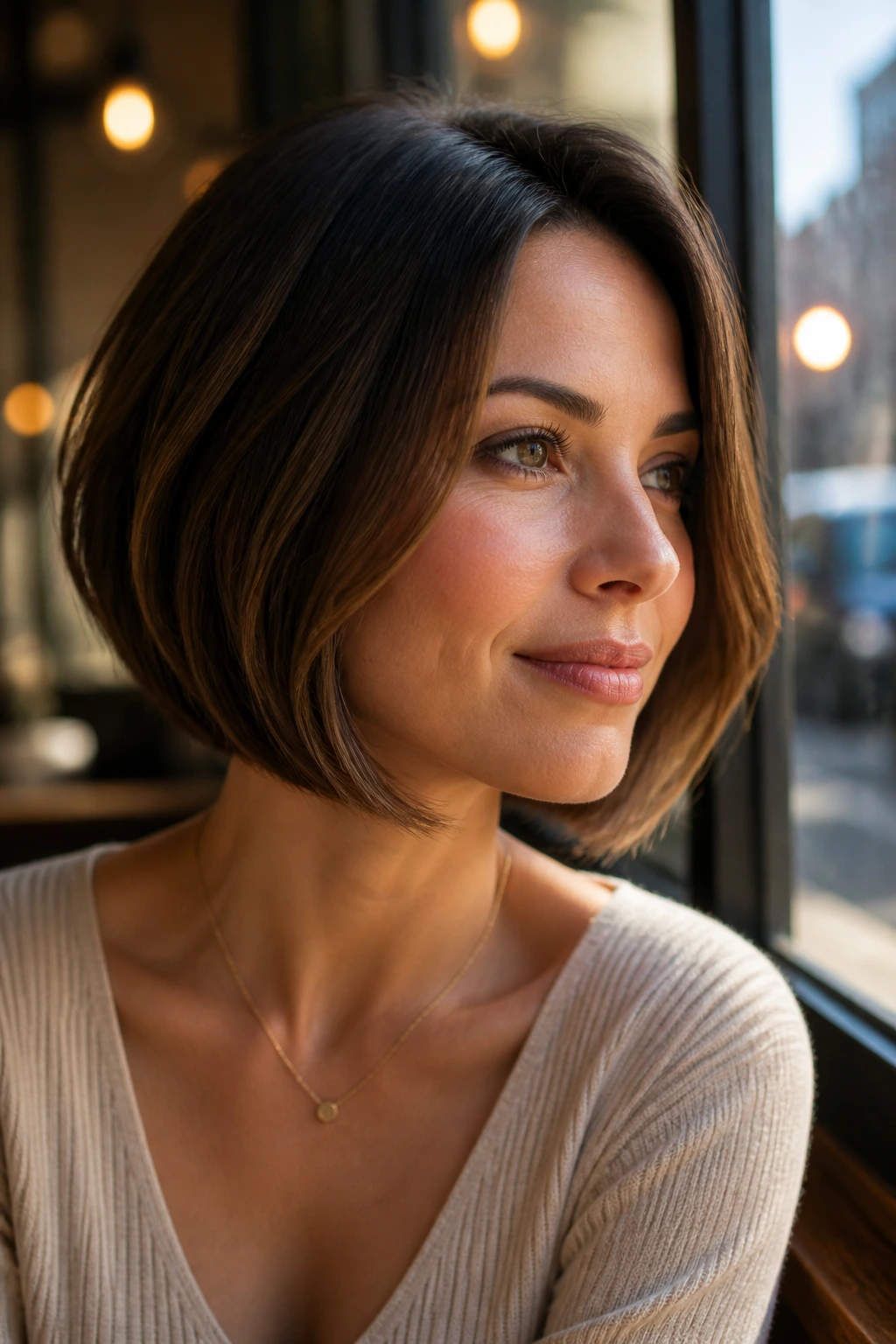
A below-jaw soft bob is the safest place to land if you want a short haircut that flatters a round face without asking for too much styling. The ends sit just below the jawline, which helps lengthen the face, and the soft internal layering keeps fine hair from falling flat.
This is not a stiff bob. The line should move a little. The front pieces can be a bit longer than the back, and a side part usually helps more than a center part. If you like a polished finish, this cut can take a round brush well. If you prefer air-drying, it still behaves.
The best part is the shape holds even when the hair is not freshly done. That is a gift with fine hair. A little dry shampoo at the roots, a quick bend through the ends, and the cut looks awake again.
If you want one short style to start with, this is the one I would hand over first. It is steady, flattering, and easy to live with.
