



Soft hairstyles for round faces work best when they pull the eye up and down, not straight across. That sounds simple, but it makes a huge difference. Hair that lands right at the widest part of the cheek can make the face look fuller; hair that skims below the cheekbone, then breaks up into movement, usually feels lighter and longer.
The best cuts are rarely stiff. They bend. They swing a little. They leave space around the jaw instead of crowding it, which is why curtain bangs, side parts, long layers, soft shags, and airy updos keep coming back around in salons. They do the job without looking fussy.
There’s also a trap people fall into: they ask for “soft” and end up with hair that is flat and shapeless. Soft doesn’t mean limp. The good versions keep a little lift at the crown, a little swing through the ends, and a face shape that looks deliberate rather than hidden. Start with the first style and read down with your own hair texture in mind.
1. Long Face-Framing Layers for Round Faces
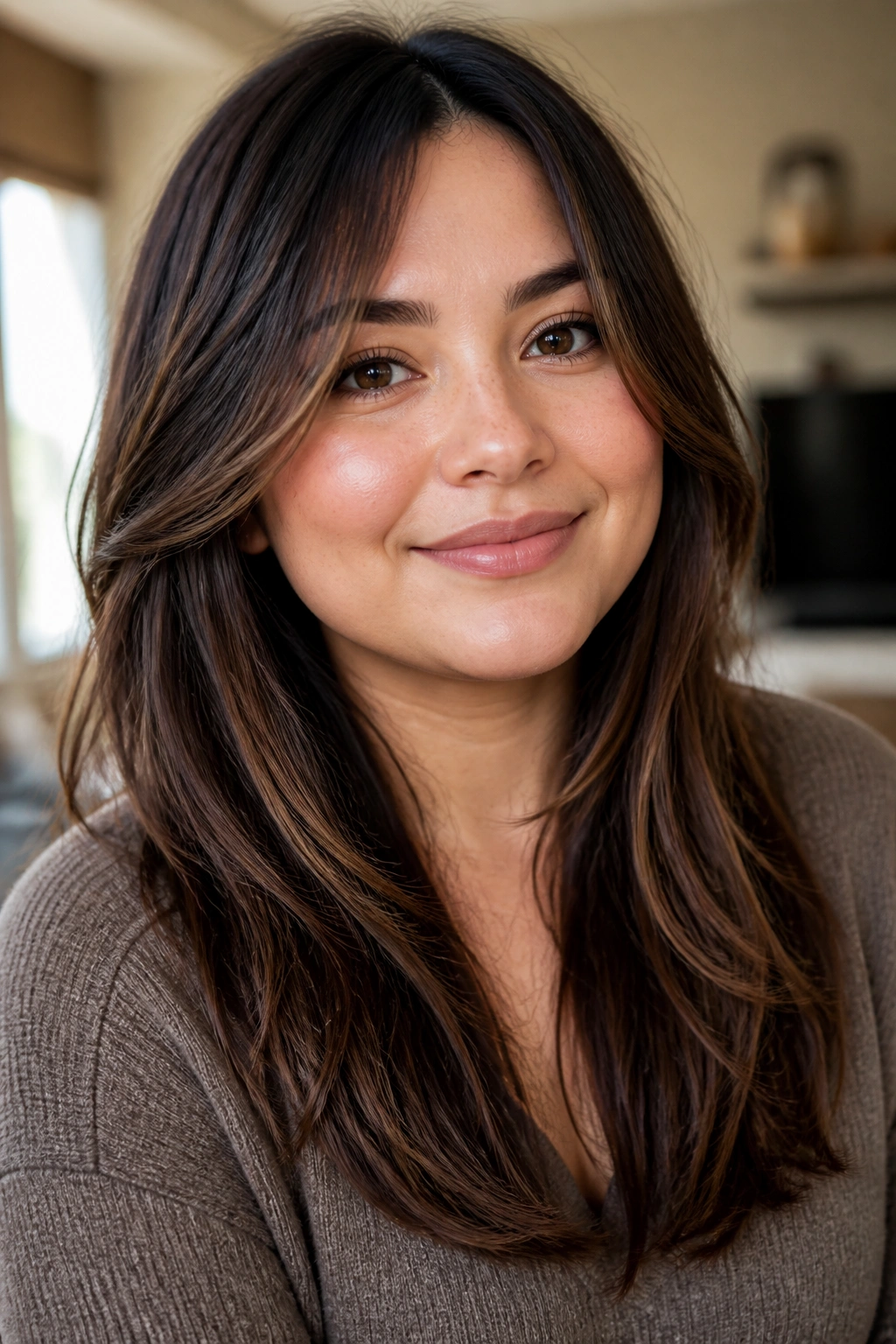
Long face-framing layers are one of the easiest wins for a round face because they create vertical lines right where you need them. The shortest pieces should fall below the cheekbone, not at it. That small detail changes the whole feel of the haircut.
Ask your stylist for a gentle face frame that starts around the mouth or chin and tapers into the length. You want movement near the front, but not a bulky shelf at the cheeks. A round brush and a quick bend away from the face will keep the shape soft, not heavy.
If your hair is thick, these layers can take a lot of weight out without making the ends look thin. If your hair is fine, keep the layers long and subtle. Choppy, short front pieces tend to widen the face. These do the opposite.
2. Curtain Bangs with a Collarbone-Length Cut
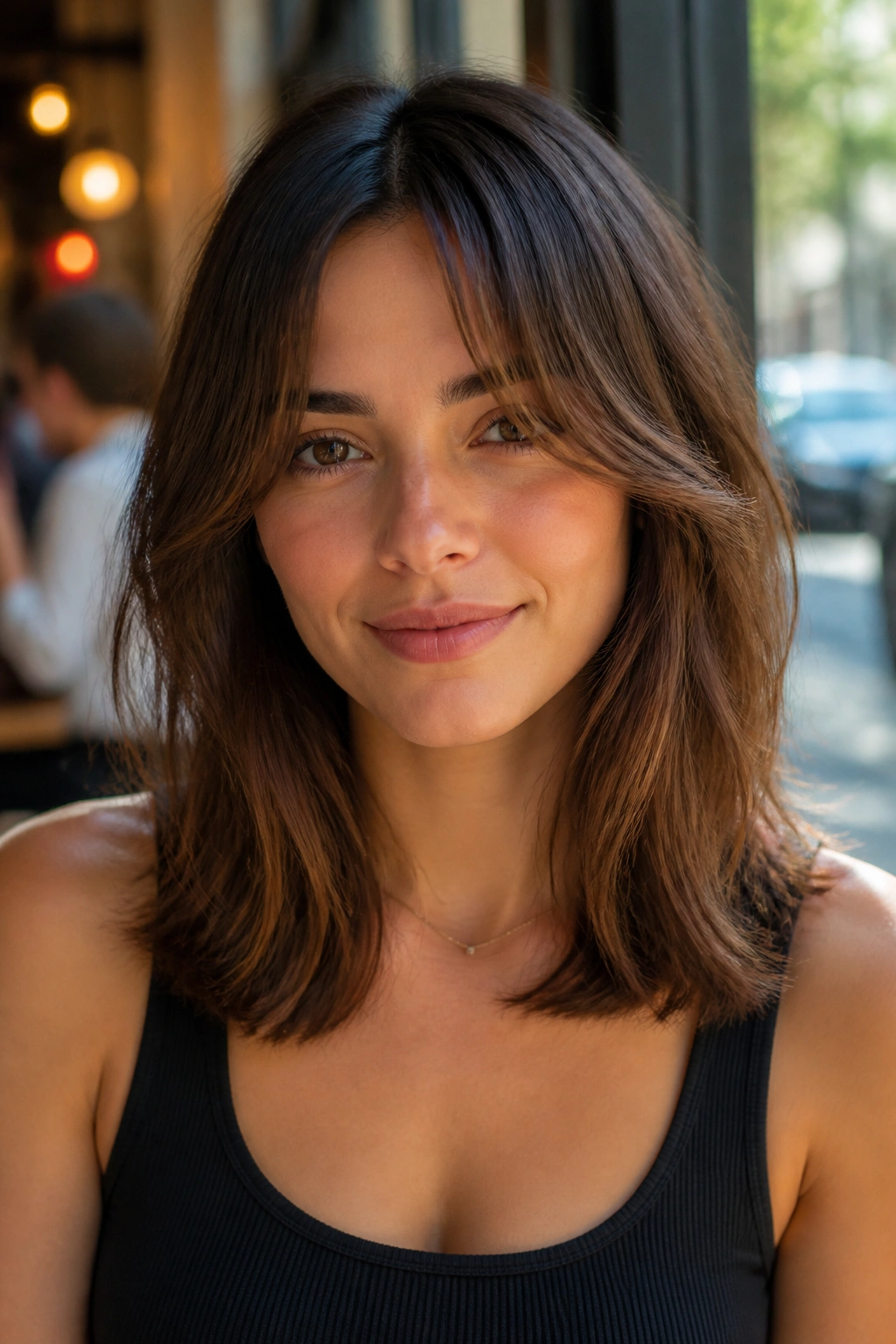
Curtain bangs are a strong choice when the rest of the cut stays below the jaw. They open in the middle, sweep out at the sides, and leave the center of the face looking a little longer. The collarbone length matters here. Too short, and the whole cut starts to puff out at cheek level.
How to Ask for It
- Ask for bangs that part in the center and graze the cheekbones.
- Keep the longest fringe pieces near the jaw or upper lip.
- Let the rest of the hair hit the collarbone with soft ends, not a blunt edge.
- Style with a round brush or a large roller so the bangs bend away from the face.
Best for: medium to thick hair that can hold shape without going flat.
Skip this if: your fringe is so short that it sits above the brows with no room to grow out. That version can make a round face look shorter.
3. A Soft Shag with Wispy, Broken Ends

Why does the soft shag work so well on a round face? Because it breaks up the outline. A clean, solid shape can make the face feel wider. A shag cuts little openings into the silhouette, which is exactly what you want when you need movement around the cheeks and jaw.
What Makes It Different
The soft version is the one to ask for. Not the heavy, choppy one. Keep the crown layers light, the fringe feathered, and the ends a little broken so they don’t sit in one solid ring around the face. A touch of mousse at the roots gives lift; a cream on the ends keeps it from looking frizzy.
How to Wear It
- Air-dry with a light curl cream for bend.
- Diffuse if your hair already has wave.
- Use a 1-inch iron to create loose bends, not tight curls.
- Finish by shaking the roots with your fingers, not a brush.
That last part matters. A brushed-out shag can lose its shape fast.
4. A Side-Swept Lob with Bent Under Ends
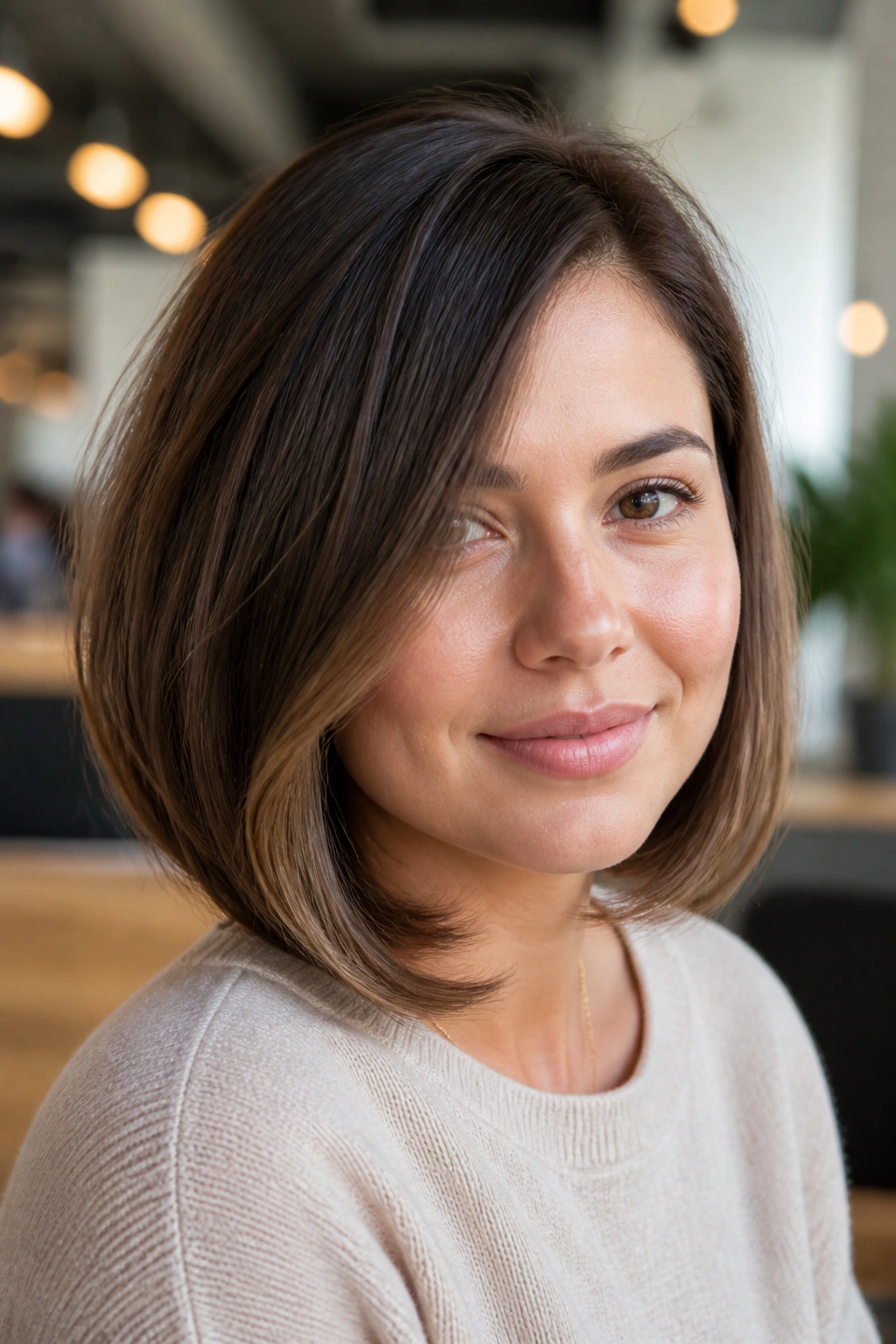
Picture a lob that lands just below the chin, but not in a blunt line. One side is swept softly back, the ends tuck under, and the whole shape feels a little diagonal. That diagonal is gold on a round face. It changes the width of the haircut without making it look severe.
The trick is to keep the front longer than the sides and let the bend happen low, near the collarbone. If the ends flip out at cheek level, the style starts to spread sideways. If they curl under just a touch, the line becomes cleaner and longer.
This cut is especially good when you want something polished for work but not boring. It holds up with a quick blow-dry, and it still looks fine when it air-dries with a bit of wave. Easy hair. No drama.
5. Butterfly Layers with Crown Lift
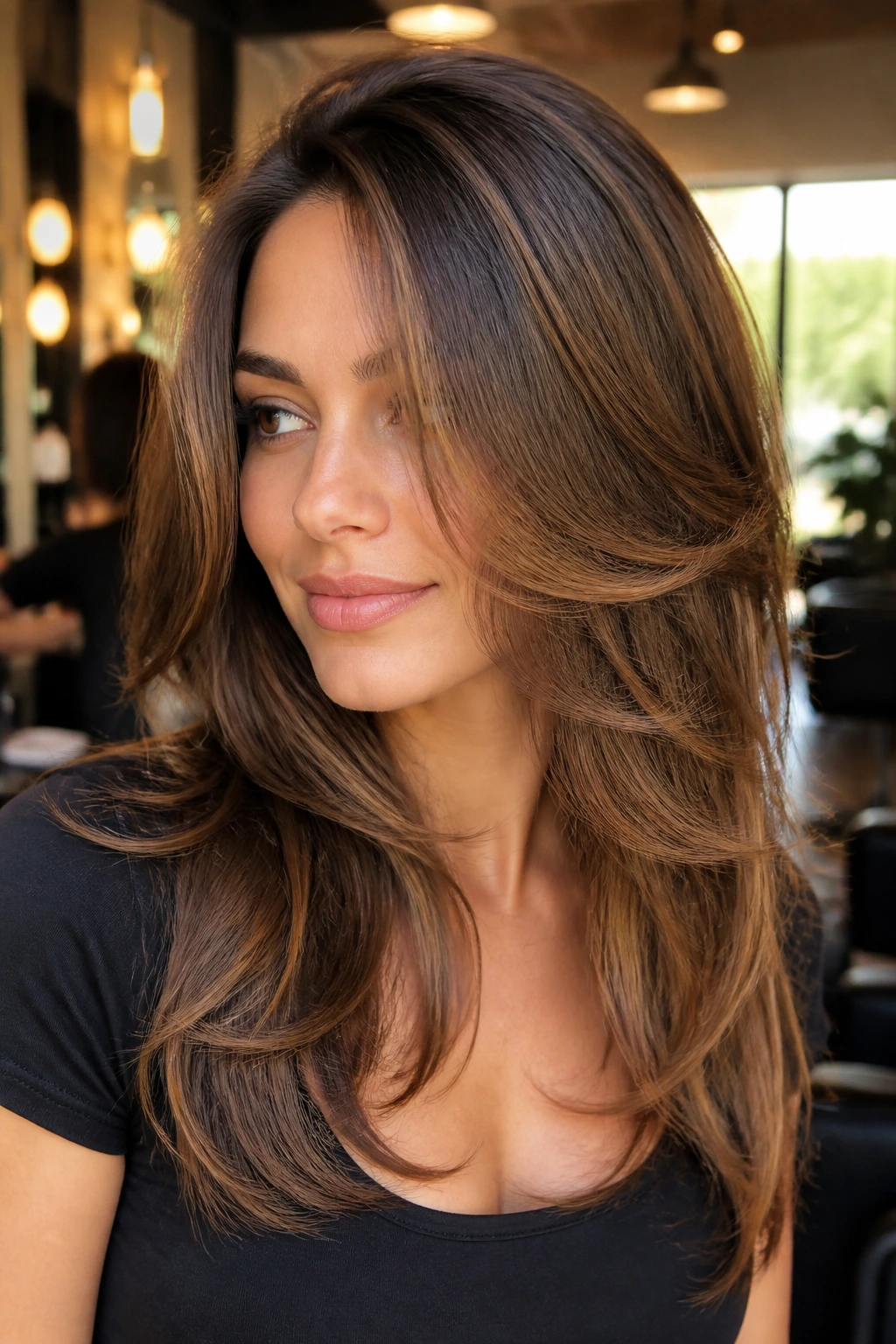
Butterfly layers are the kind of cut that gives you a soft face frame without sacrificing length. The shorter top layers lift the hair away from the sides of the face, while the longer bottom layers keep the silhouette flowing down. On a round face, that separation is the whole point.
You do need a stylist who understands where to place the shortest layer. If it lands too high and too wide, you get a triangle effect that fights the face shape. Keep the shortest pieces around the cheekbone or just below, then let the rest fall through the shoulders.
A big round brush helps here. Pull the crown up and forward as you dry, then bend the front pieces away from the face. It sounds minor. It isn’t. That bit of lift changes the haircut from wide to long.
6. Loose Waves with an Off-Center Part
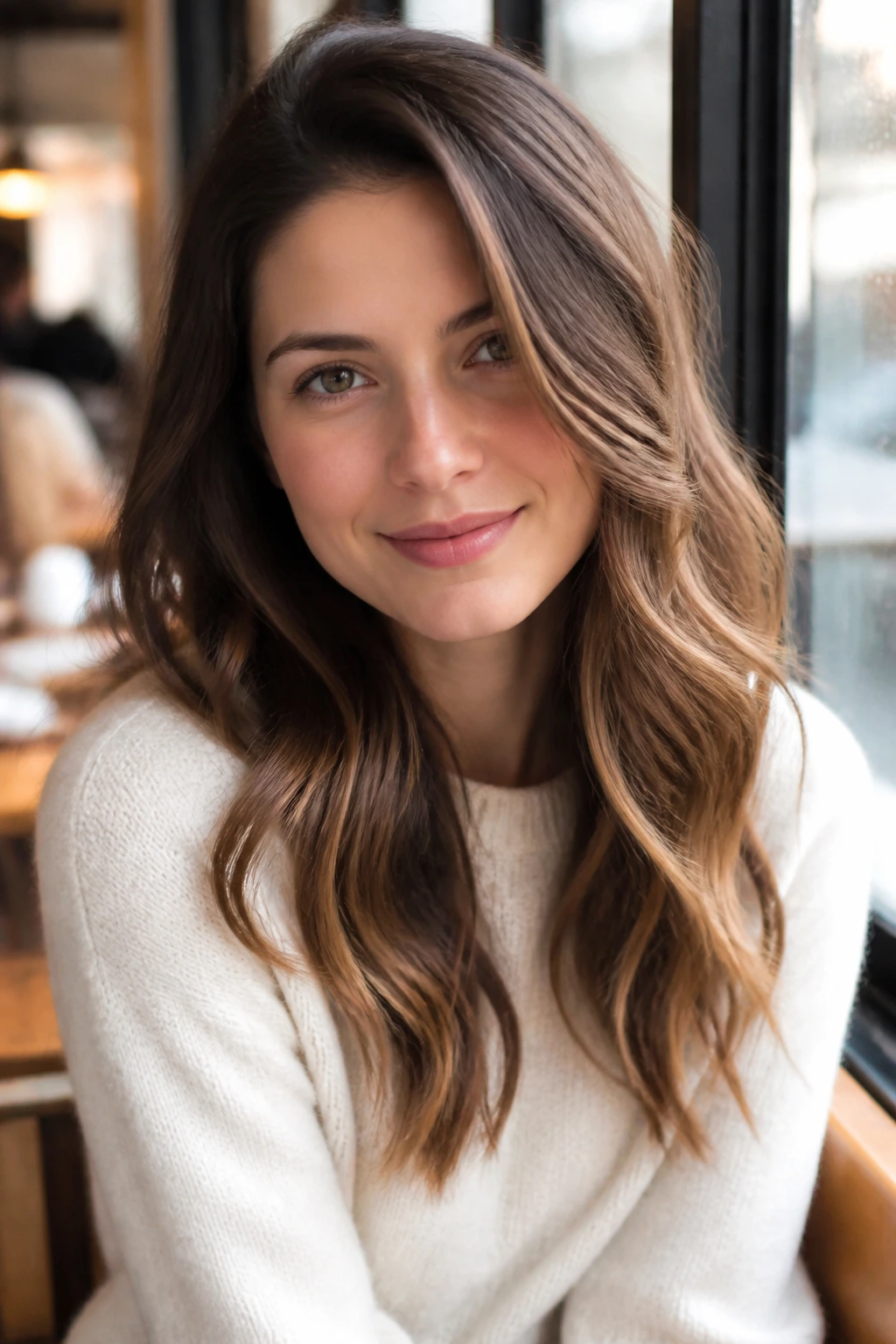
A dead-center part can be lovely, but on a round face it can also feel a little too symmetrical. An off-center part breaks that shape and gives the face a longer line on one side. Add loose waves, and the effect gets even softer.
The waves should be loose enough to move, not packed together like a tight curl pattern. A 1¼-inch curling iron or a flat iron bend works well. Leave the ends a little straighter so the hair doesn’t balloon out around the cheeks. That’s the part people forget.
A quick note: wave direction matters. Curl away from the face on the front pieces, then alternate the back for softness. If every section bends the same way, the style can look too uniform. Hair with a little mess in it usually looks better here.
7. A Rounded Collarbone Cut with an Inward Curve
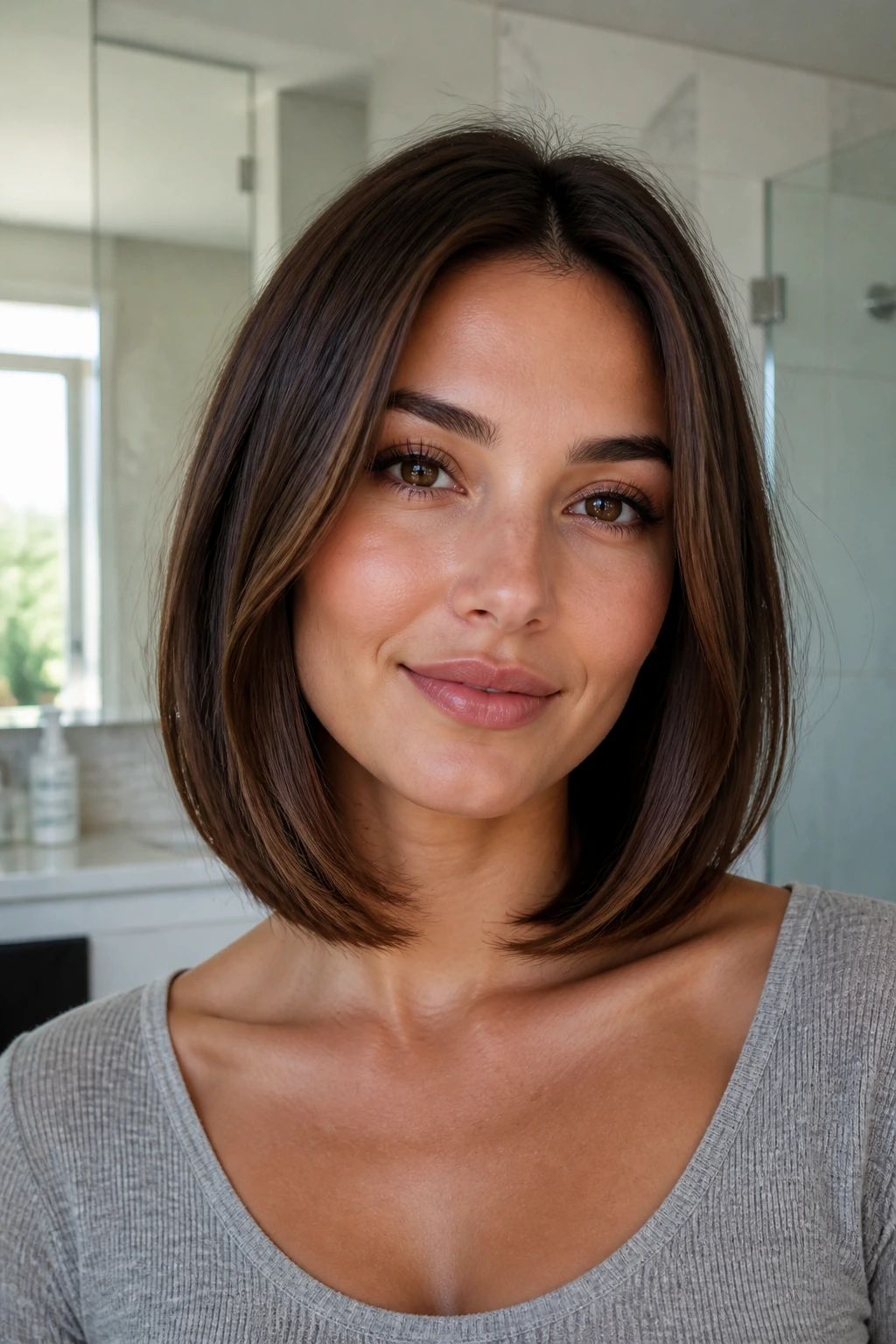
This is a quietly smart haircut. The length sits at the collarbone, which already helps lengthen a round face, and the ends curve inward just enough to keep the shape soft. It doesn’t scream for attention. It simply works.
The inward curve is what keeps the cut from puffing out. Blow-dry with a medium round brush and roll the ends under for the last few seconds of heat. Let them cool in that shape. Once the hair sets, it will sit closer to the body instead of swinging wide.
Best Hair Types for This Cut
- Straight hair that needs shape without layers.
- Wavy hair that wants a neater outline.
- Thick hair that benefits from a little weight removal at the bottom.
- Fine hair that looks fuller when the ends are controlled.
If you like tidy hair with a soft finish, this is one of the safest choices on the list.
8. Invisible Layers in a Long Bob
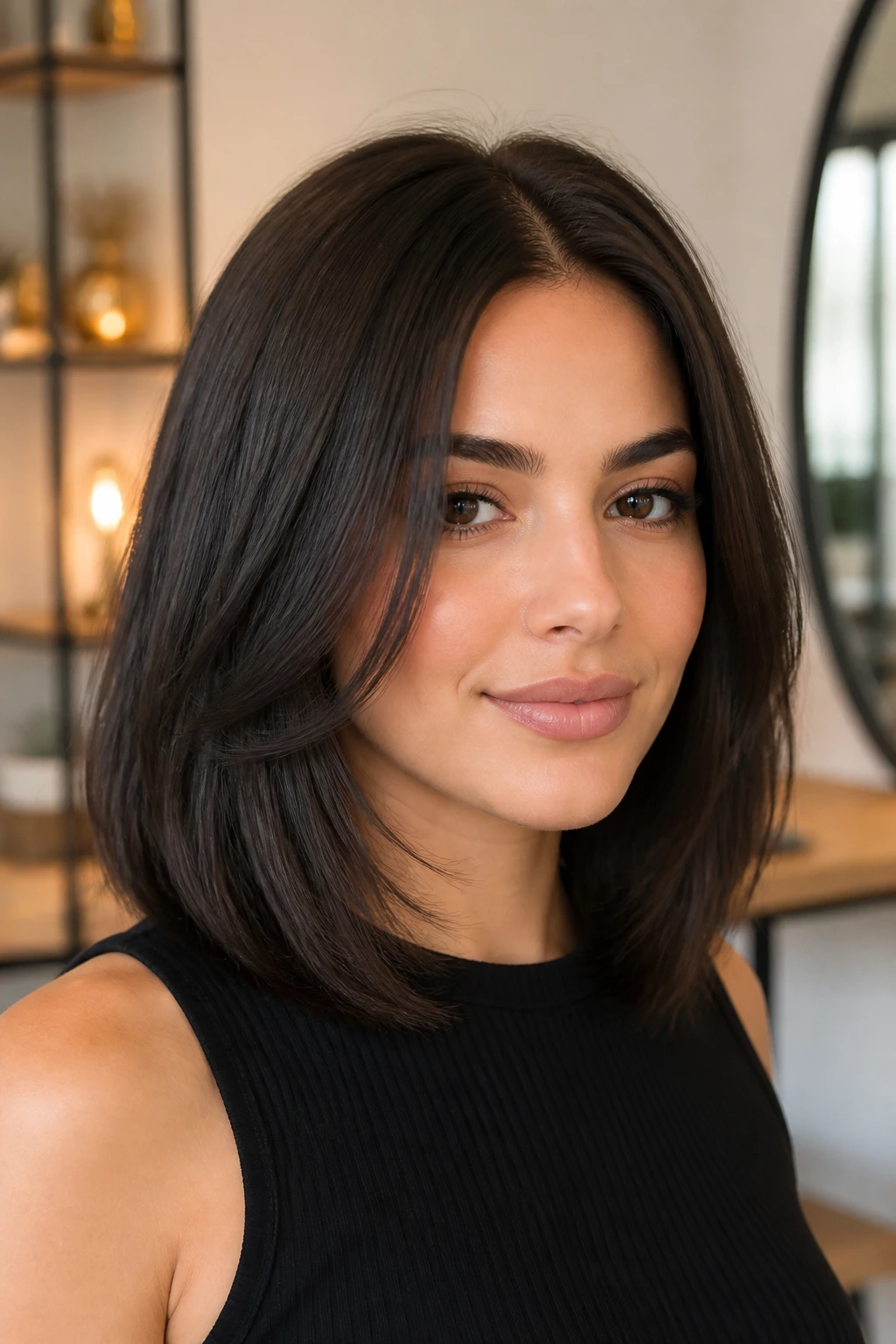
Invisible layers are exactly what they sound like: shaping that you feel more than you see. They take bulk out of a long bob without creating obvious steps through the haircut. For a round face, that means you get movement without extra width.
The best version sits at or just below the jaw, never right on top of it. Ask for subtle internal layering through the mid-lengths and ends so the hair falls in a softer column. If the cut is too blunt, it can look boxy. If it’s too layered, it can fray.
Best for Fine Hair
Fine hair often needs help moving without collapsing. Invisible layers give a little lift under the surface, so the bob has shape but still looks full. Use a light volumizing spray at the roots and keep the ends polished with a small amount of serum.
Skip heavy texture creams here. They can flatten the whole thing in half a day.
9. A Soft Pixie with Height on Top
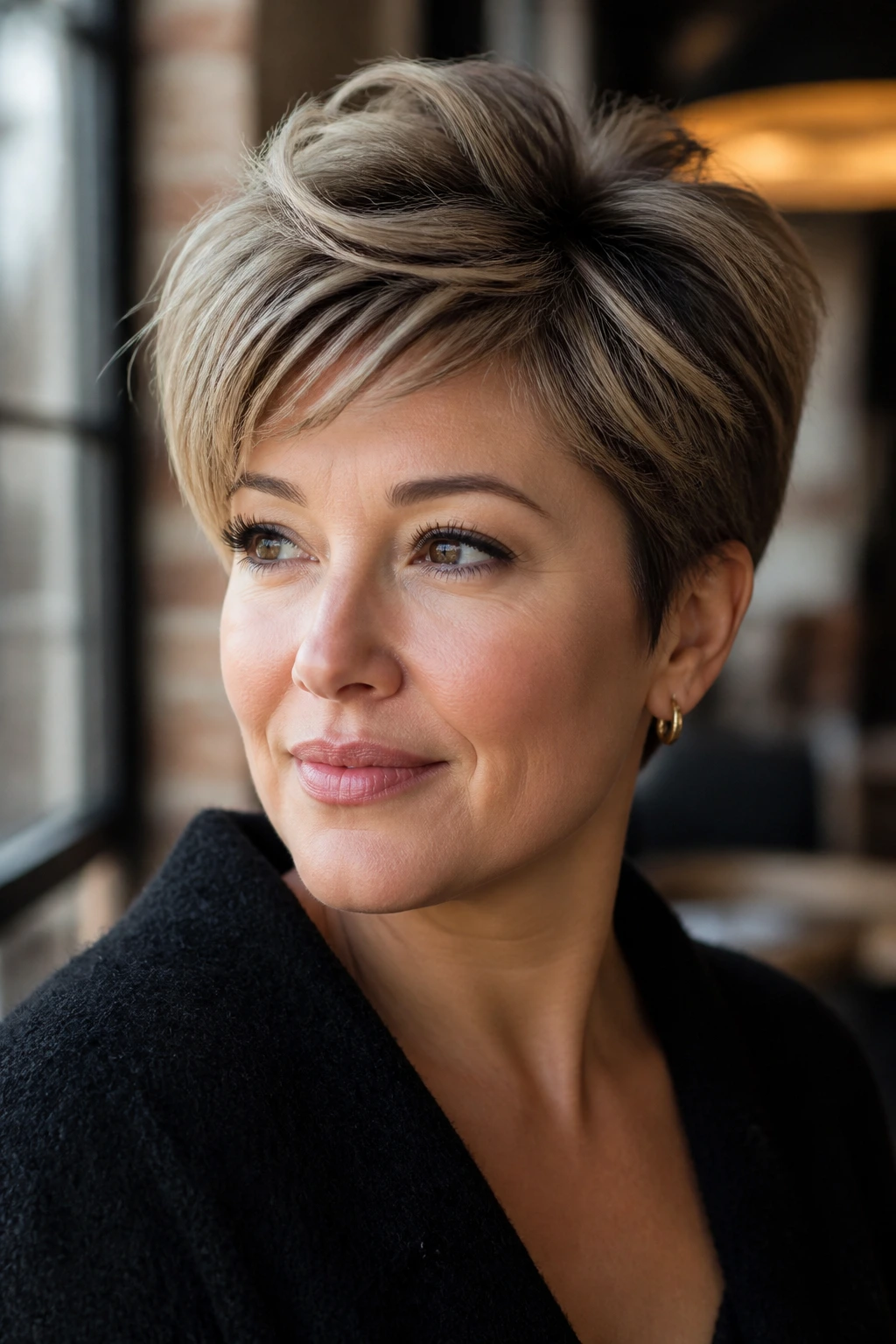
A soft pixie can be flattering on a round face when the top is longer than the sides. That extra height creates a vertical line, which makes the face look less wide. The sides should stay close enough to the head that they don’t puff out at ear level.
The fringe matters too. A short, blunt bang can feel hard. A side-swept fringe or a longer piece that falls across the forehead keeps the cut gentle. You want movement, not helmet hair. Nobody wants helmet hair.
This cut does need maintenance. It grows out fast, and the shape changes fast. But if you like short hair and hate spending forever styling it, a soft pixie can be a real relief. A little wax on the ends and a quick lift at the roots is usually enough.
10. A Feathered Bixie with a Side Fringe
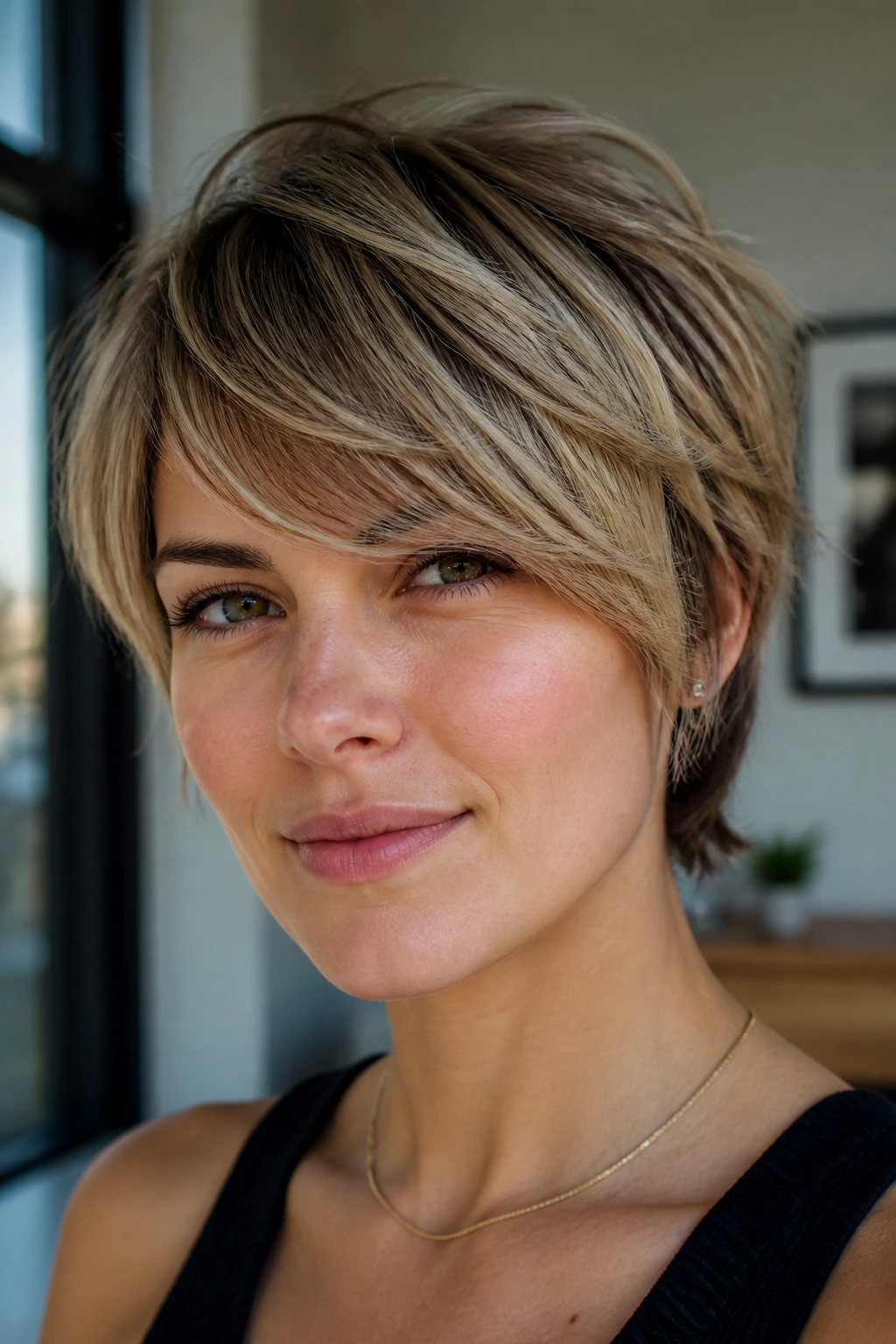
A bixie sits between a bob and a pixie, which makes it one of the easiest short cuts to wear on a round face. The feathering keeps the edges airy, and the side fringe cuts across the forehead at a slant. Slant is your friend. It breaks up the roundness.
What Makes It Different
Unlike a blunt pixie, the bixie leaves enough length around the crown and temples to play with. Unlike a full bob, it won’t sit heavily against the jaw. That middle ground is why it works so well for people who want short hair without a hard outline.
How to Style It
- Blow-dry the top forward, then lift it back with your fingers.
- Keep the fringe soft with a pea-sized amount of cream.
- Use a small round brush at the crown for a little lift.
- Let the nape stay neat so the shape doesn’t spread outward.
It’s a little playful. That’s the point.
11. A Sleek Mid-Length Cut with Tucked Ends
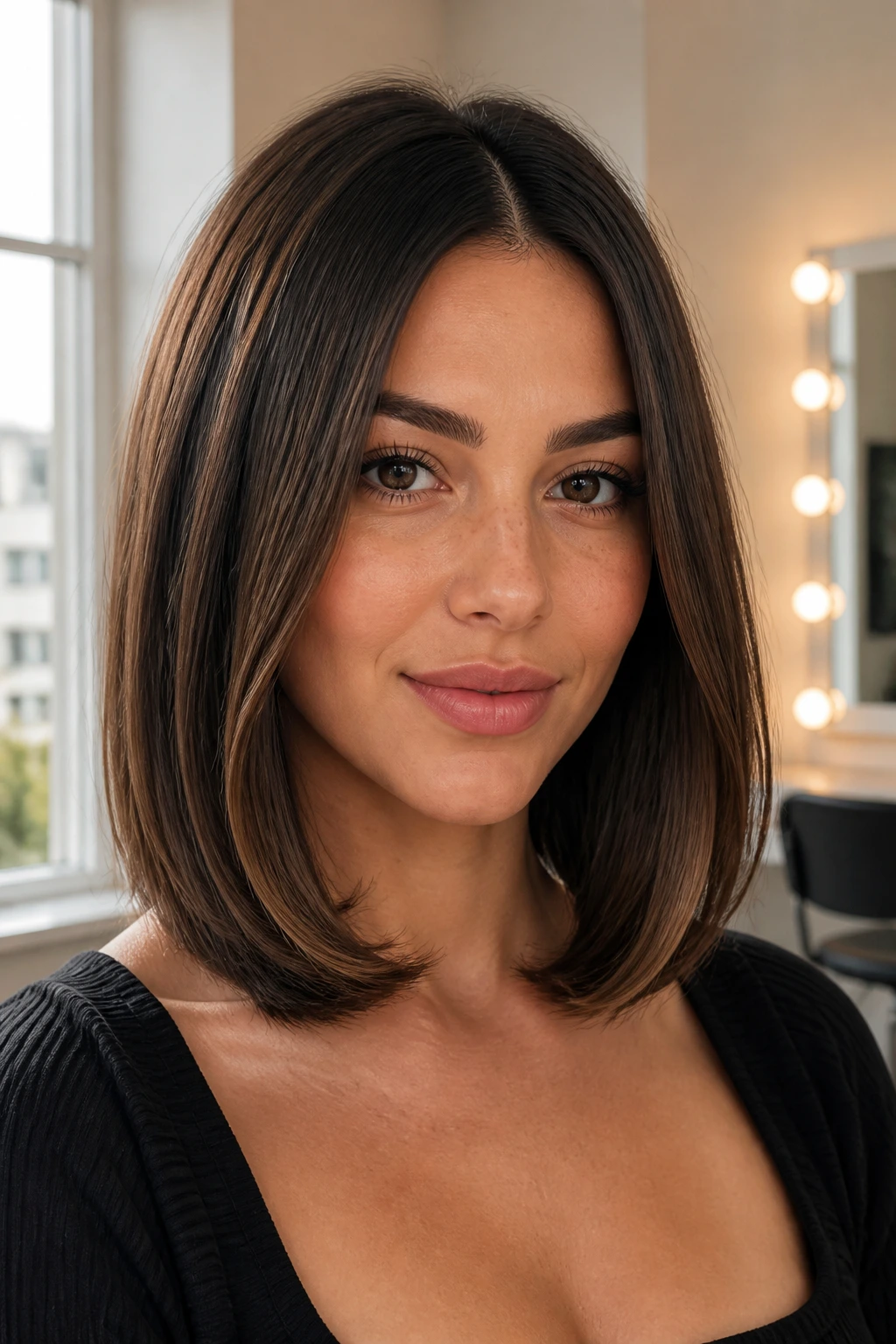
Sleek hair can flatter a round face when the ends are handled carefully. The cut should hit between the chin and the shoulders, with the tips tucked slightly under instead of flaring out. That small curve keeps the line long and neat.
This style is not about volume at the sides. It’s about smoothness and control. A center part can work if the length is past the collarbone, but an off-center part often feels softer. If your hair is naturally straight, you may only need a brush and a blow-dryer. If it bends easily, finish with a flat iron pass on the bottom two inches.
The shape feels clean without looking sharp. That’s the sweet spot.
12. A Half-Up Style with Loose Face Pieces
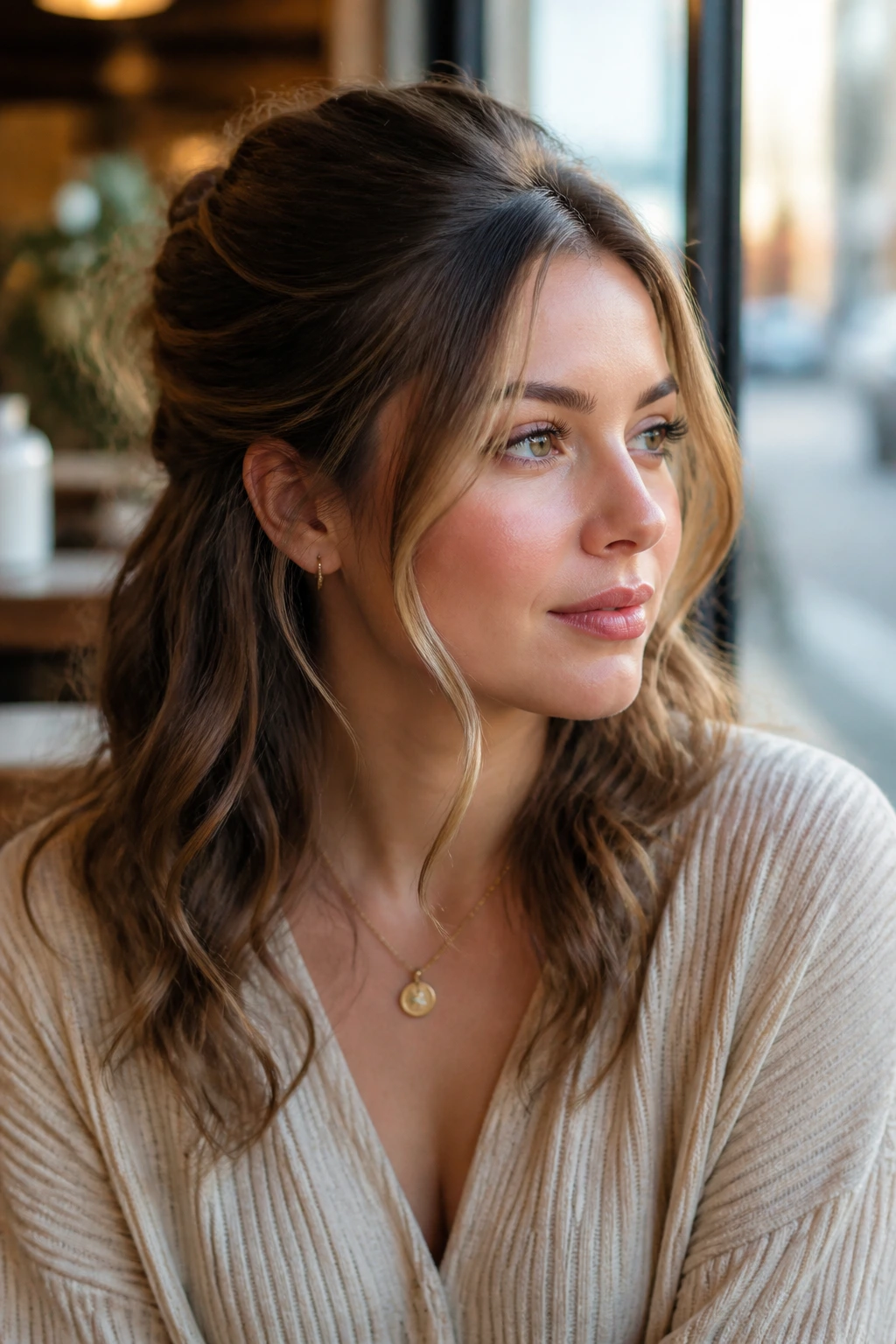
Half-up styles can do a lot for round faces when the crown gets a bit of lift and the front stays soft. Pulling hair away from the cheeks opens the face, and leaving a few front pieces loose keeps the shape from feeling severe.
Tie the back section a little higher than you think. If the knot sits too low, it can drag the face downward. A small clip, a knot, or a wrapped elastic all work. What matters is that the top has height and the front pieces fall in a gentle curve.
This is one of those styles that looks polished with almost no effort. It’s useful for second-day hair, but it also works for dinner, weddings, and long days when you want your hair off your face without losing shape.
13. Old Hollywood Waves with a Deep Side Part
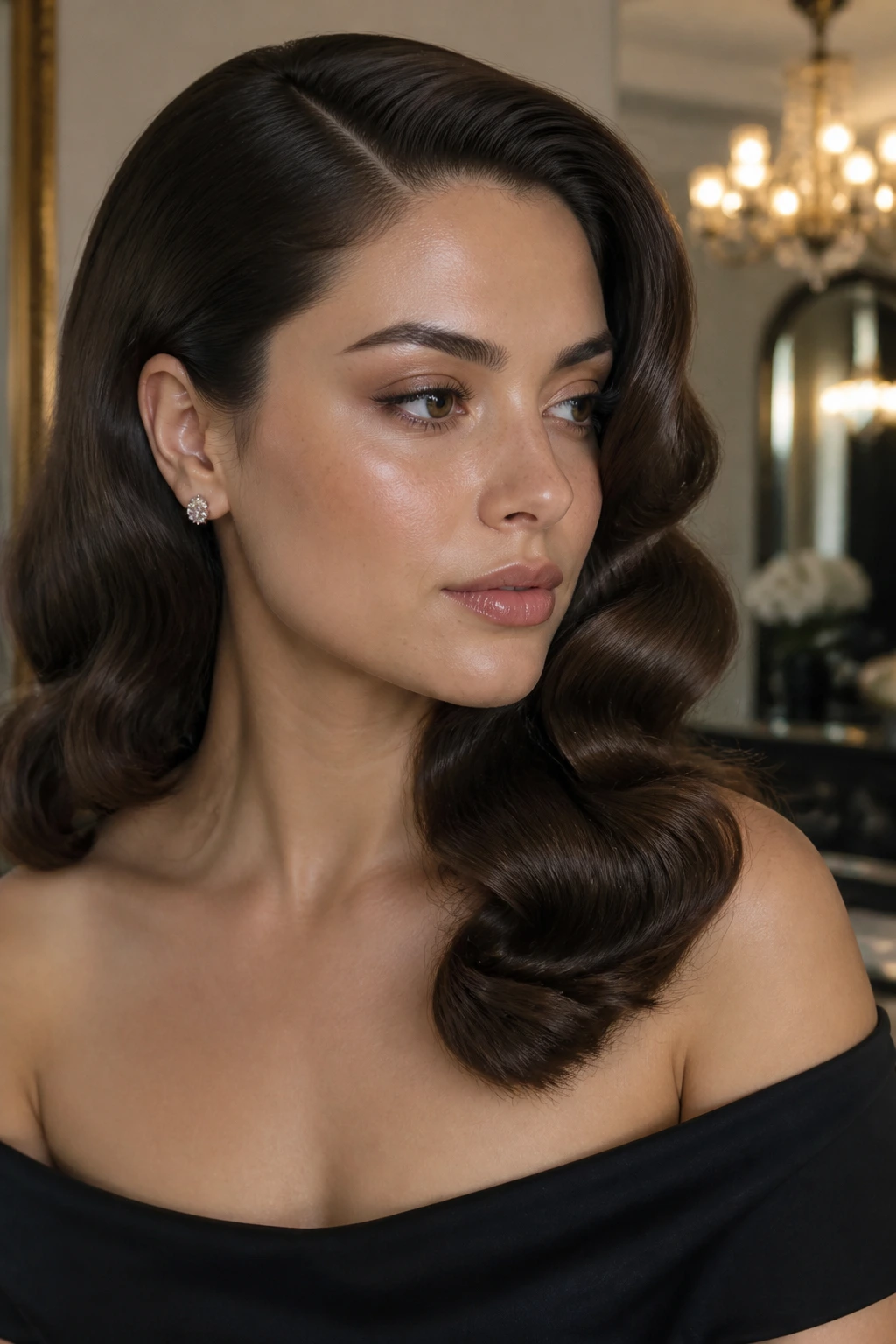
Old Hollywood waves have a built-in advantage for round faces: they create long, smooth curves that move in one direction. The deep side part adds even more length. It’s a dressy style, yes, but the shape itself is doing smart work.
Why the Side Part Matters
A deep side part cuts across the forehead and shifts the weight of the hair to one side. That breaks the symmetry that can make a round face look wider. The waves should start below the eye level and sweep toward the shoulders, not puff out at the temples.
Brush the waves out once they cool. Don’t leave them too tight. The finished look should feel glossy and soft, not set in stone. A light-hold spray is enough. Heavy spray can make the wave pattern stiff, and that kills the whole effect.
This is the style I’d pick when you want hair that looks expensive without being fussy. It does not need to be loud to work.
14. A Textured Ponytail with Crown Lift
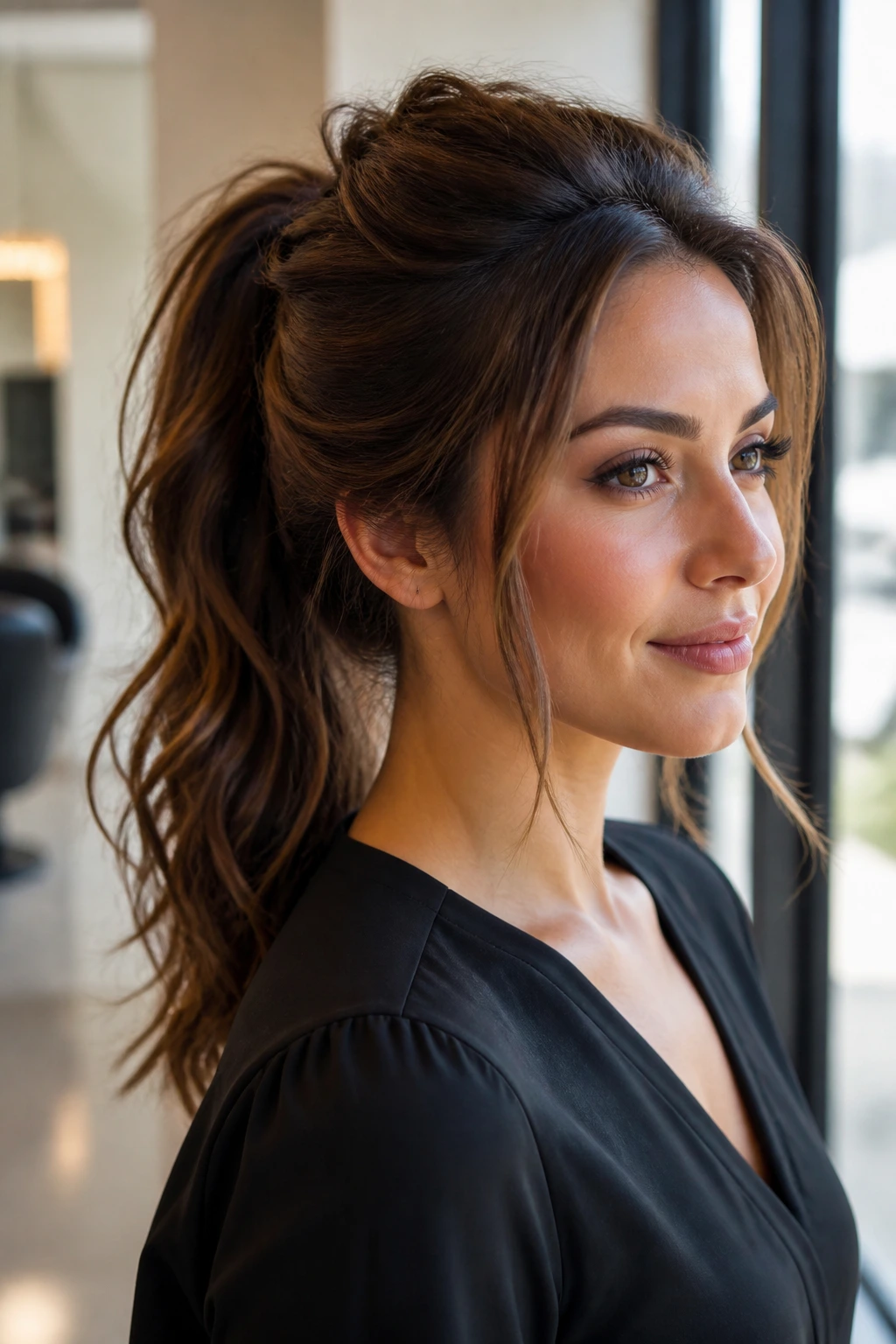
A ponytail can flatter a round face if the crown is lifted first and the tail sits a little higher than the lowest part of the head. The goal is to stretch the silhouette, not flatten it. A flat ponytail at the back of the neck can make the face seem wider by comparison.
Quick Setup
- Tease the crown lightly or use a root spray for lift.
- Leave a few soft pieces around the temples.
- Secure the ponytail at mid-height or slightly above.
- Wrap a small strand of hair around the elastic for a cleaner finish.
The texture keeps it from looking too strict. If your hair is fine, curl the tail with a large iron for a bit of bounce. If it’s thick, a loose blowout through the top keeps the roots from collapsing. It’s a simple style, but the height is non-negotiable.
15. A Soft Low Bun with Face-Framing Tendrils
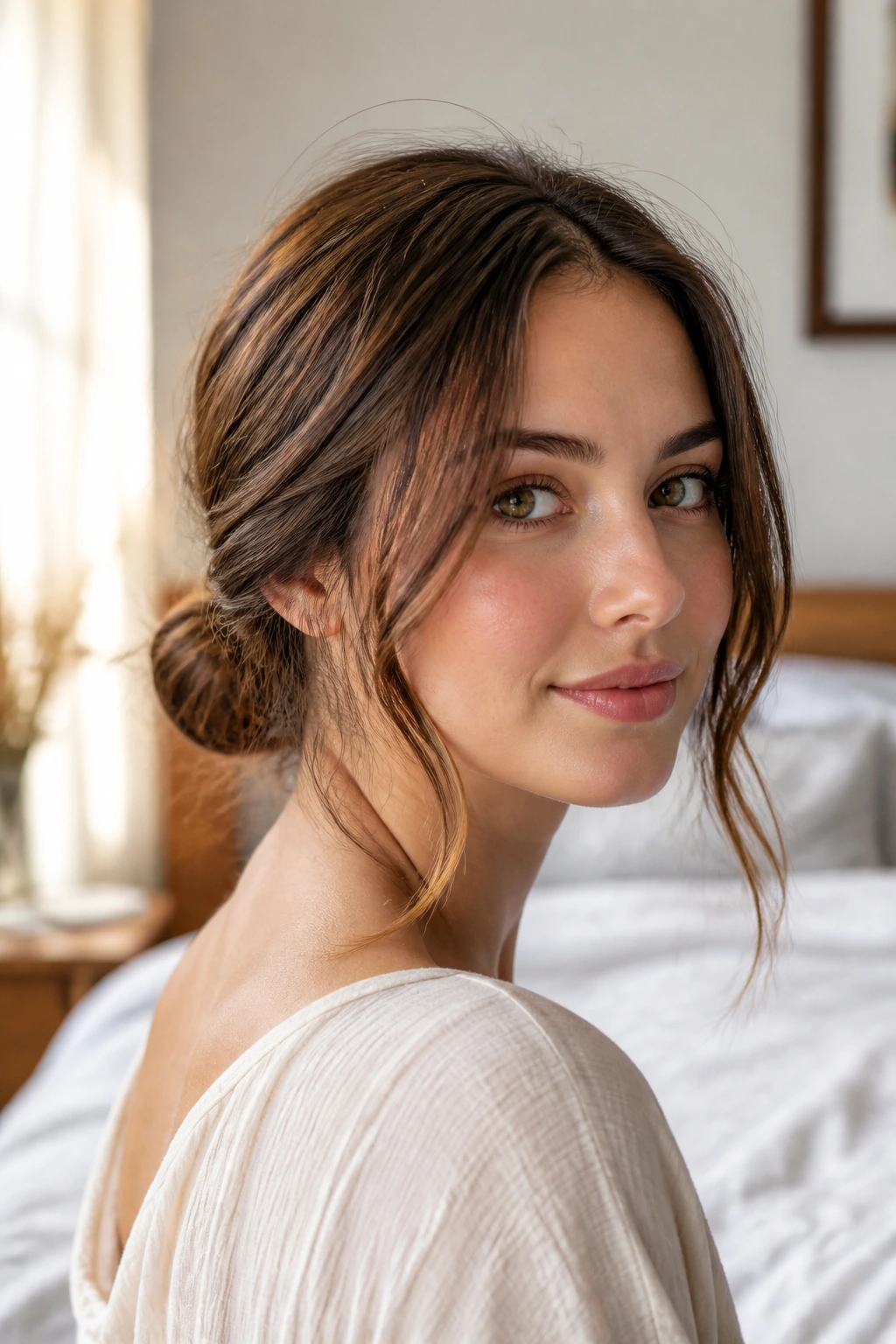
A low bun can absolutely work on a round face, as long as it doesn’t sit too tight or too round. The bun should rest low at the nape, with a few soft tendrils left out near the temples and jaw. Those little pieces soften the outline and keep the look from feeling severe.
You want a little looseness at the crown too. Pulling the top down flat can make the face feel shorter. A soft lift gives the head a longer line, and that matters more than people think. Small things. Big effect.
This is a good option for days when you need your hair secure but still want some shape around the face. A few strategic pieces around the front, a light mist of spray, and you’re done. The bun itself should look tucked, not packed.
16. A Softened Wolf Cut with Airy Layers
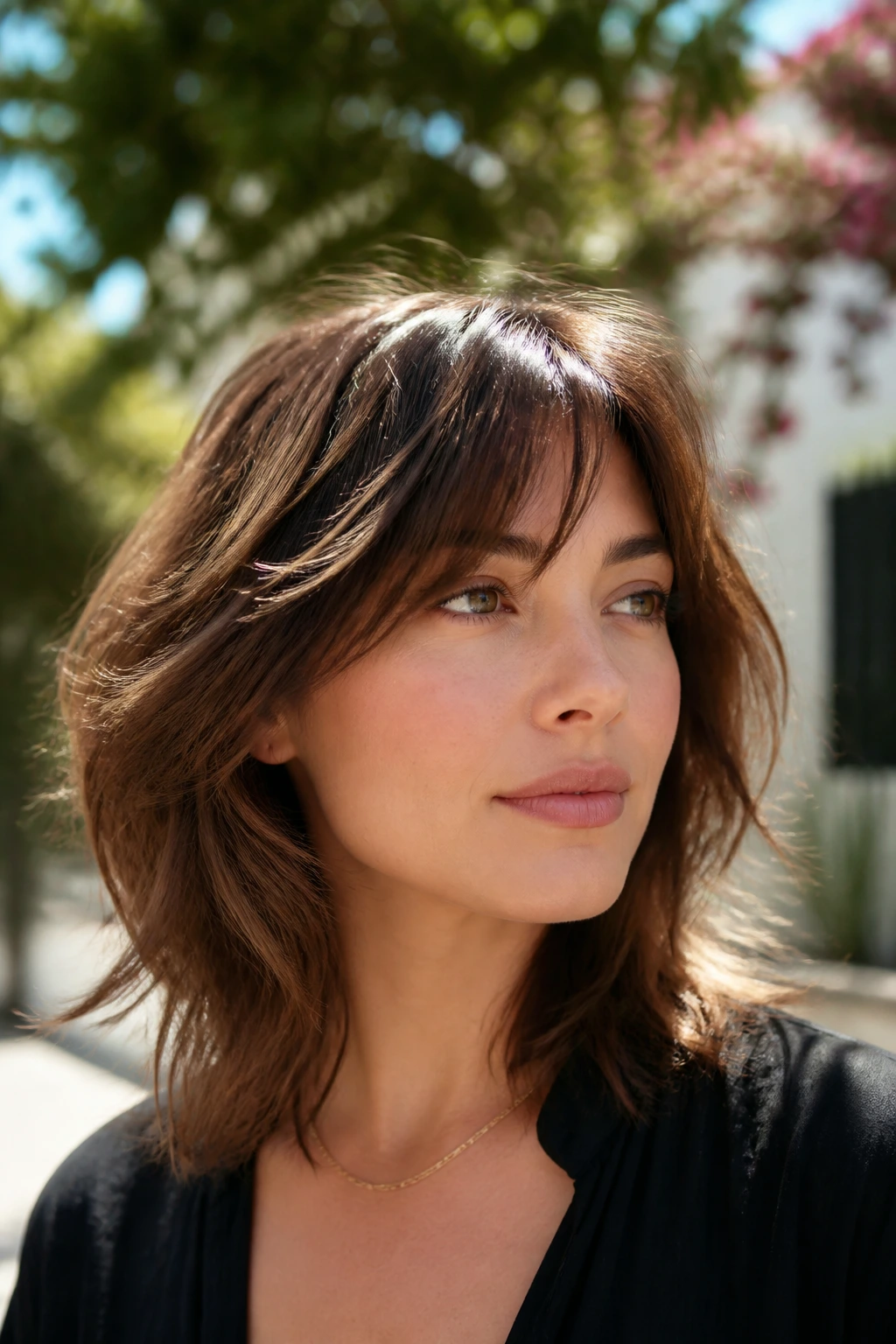
The wolf cut gets a bad reputation when it’s too aggressive, too short, or too full around the cheeks. The softened version is much easier to wear. The layers are still there, but they’re broken up and airy rather than sharp and stacked.
On a round face, the top layers should lift the hair up and away from the sides. The longer layers then fall through the shoulders, giving the face room to breathe. If the fringe is there, keep it wispy. Heavy fringe can crowd the forehead and make the cut feel boxy.
A touch of texture spray on dry hair works better than a heavy paste. You want movement, not stiffness. This is one of the most forgiving choices if your hair has natural wave and you like a little edge without losing softness.
17. A U-Shaped Long Cut with Smooth Ends
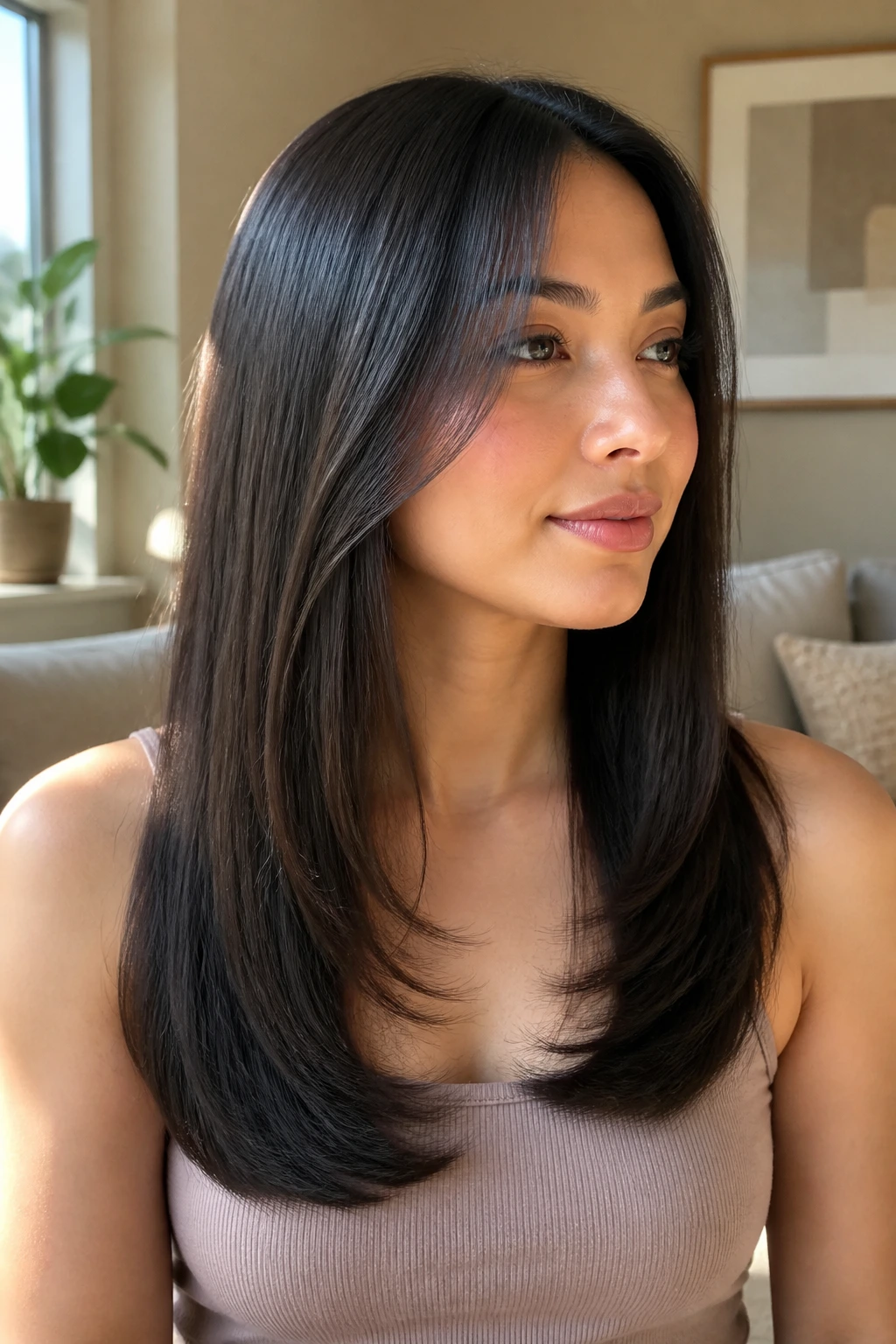
A U-shaped cut is one of those quiet haircuts that people underestimate. The sides are slightly shorter than the back, which lets the hair fall in a soft curve instead of one flat horizontal line. On a round face, that curve helps draw the eye downward.
The ends should stay smooth. Too many short layers can make the outline wider, and a blunt edge can feel heavy. Keep the length past the shoulders, then bevel the very ends so they move. If your hair is thick, this shape removes just enough weight to keep it from hanging like a curtain.
It’s especially nice if you wear your hair straight a lot. The shape looks polished even on low-effort days. That kind of haircut earns its keep fast.
18. A Razored Shoulder Cut with Movement

A razor cut is a good move when the hair is dense and needs to lose bulk without losing softness. On a round face, the shoulder length keeps the overall shape from getting too wide, while the razor work breaks the perimeter into something lighter.
What to Watch For
- Ask for razor shaping through the mid-lengths, not the entire head.
- Keep the ends soft, not wispy to the point of looking thin.
- Use a smoothing cream if your hair frizzes easily.
- Avoid overtexturizing fine hair; it can look patchy fast.
This cut has an easy swing to it. It looks better with a little bend than with a perfectly straight blow-dry. If your hair feels heavy by noon, this is the kind of haircut that can make a noticeable difference without asking you to change your routine.
19. C-Curl Layers for Straight Hair
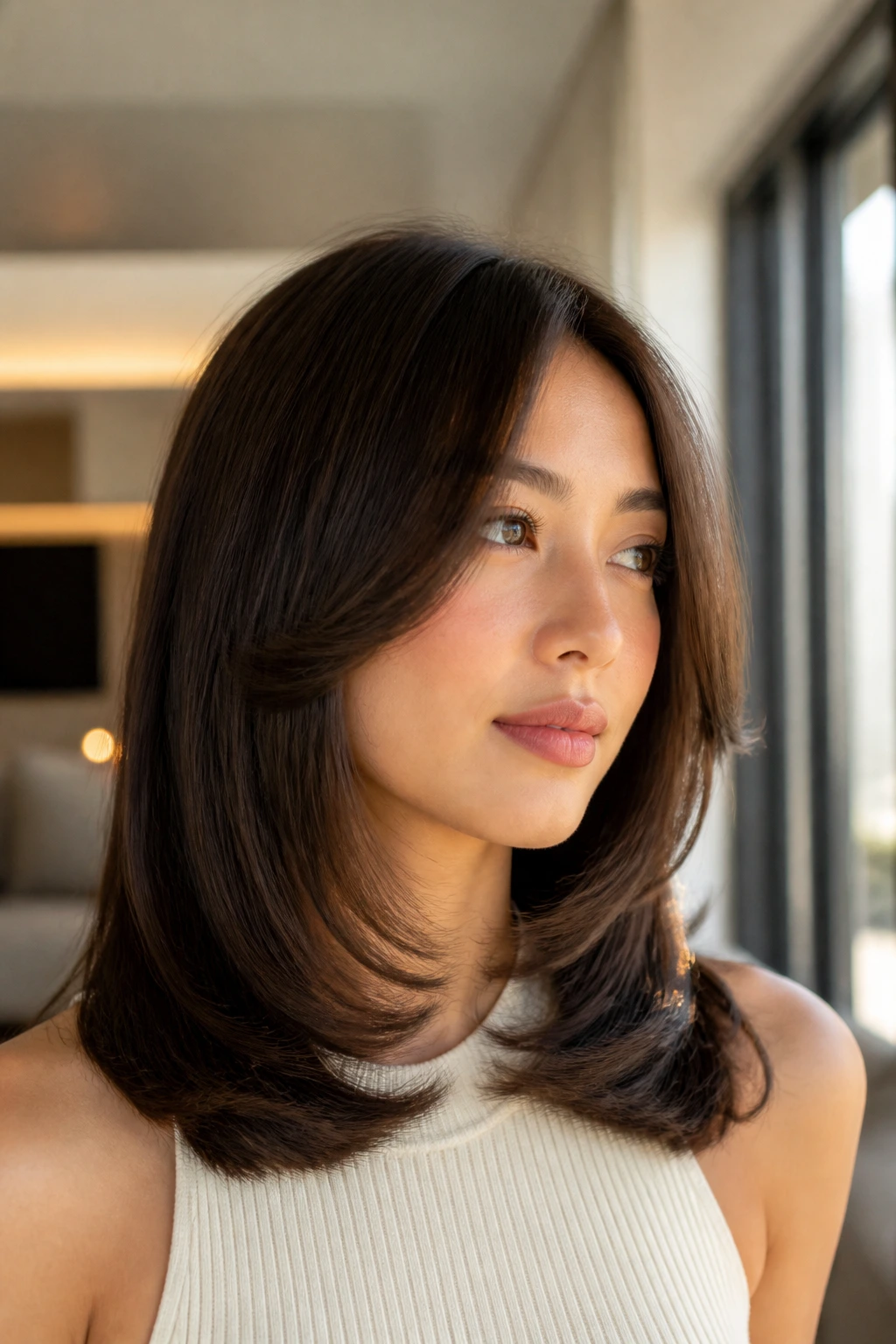
C-curl layers work because they create a soft inward bend that follows the line of the face without matching its width. The curves are subtle. Not curly, not flat. Just enough bend to keep straight hair from hanging in a hard block.
How to Get the Most From It
A round brush or a straightening iron with a slight wrist turn will do most of the work. Focus on the front sections first, and keep the bend lower than the cheekbones. If the curve starts too high, it can make the face look fuller. If it starts lower, the face gets a cleaner line.
This is a smart choice for anyone who wants hair that feels neat but not severe. It’s especially handy for straight hair that tends to fall flat and wide. A little shape solves a lot.
20. A Rounded Blowout with Lift at the Roots
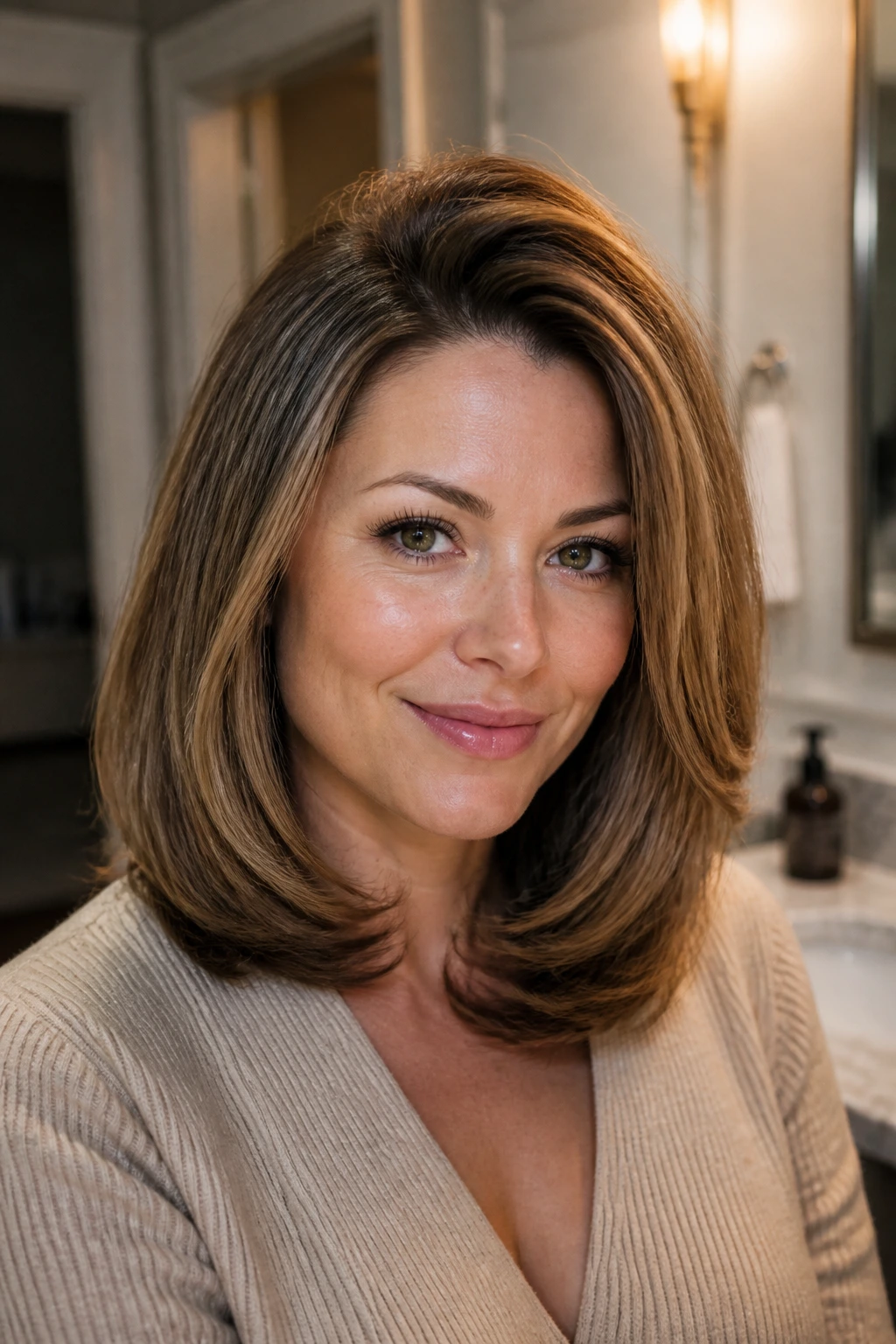
A rounded blowout is one of my favorite soft styles because it brings polish without harsh edges. The roots lift, the mid-lengths move, and the ends curve under just enough to keep the shape smooth. On a round face, that upward movement at the crown matters more than extra length alone.
The trick is not to over-roll the sides. Keep the brush moving vertically, not side-to-side, so the hair doesn’t balloon out at cheek level. A medium barrel brush usually gives the best balance. Finish with a cool shot to lock the bend in place.
This style has a nice advantage: it works on hair that’s layered, one-length, or somewhere in between. If you like a soft salon finish that still feels light, it’s hard to beat.
21. A Loose Side Braid with Soft Face Pieces
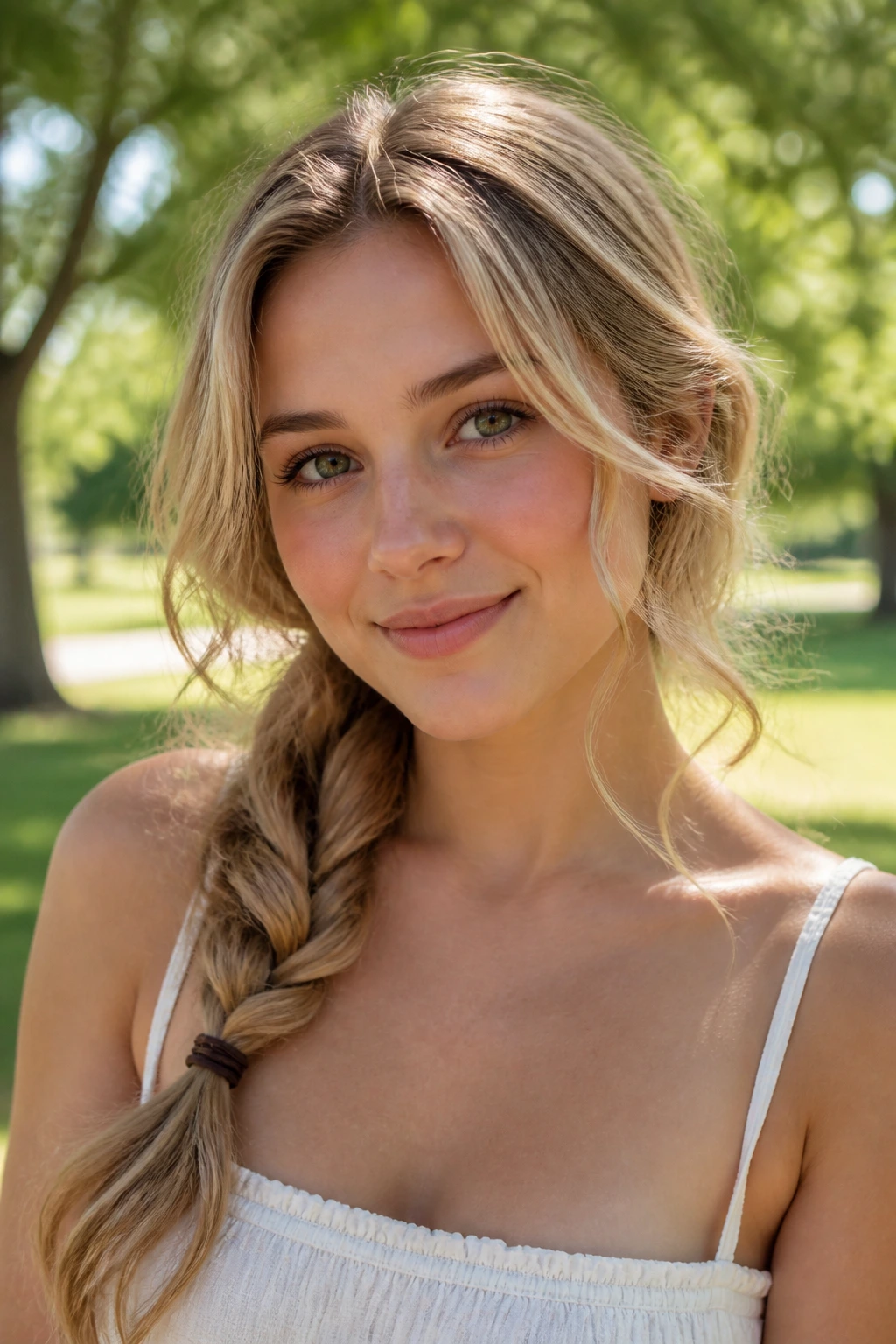
A side braid can be surprisingly flattering on a round face when it’s worn low and a little loose. The braid itself pulls the mass of the hair to one side, which creates asymmetry. Then the loose pieces around the front soften the forehead and cheeks.
Don’t braid it too tight. A tight braid can feel severe and pull the face wider by contrast. Keep the plait relaxed, then tug lightly at the sections to give it a fuller, softer shape. If your hair is layered, secure the shortest pieces with a small pin near the temple so they don’t stick out.
This style works for casual days, but it also looks nice with earrings and a clean neckline. There’s something honest about it. Nothing overthought. Just good shape.
22. A Low Knot with Side Volume
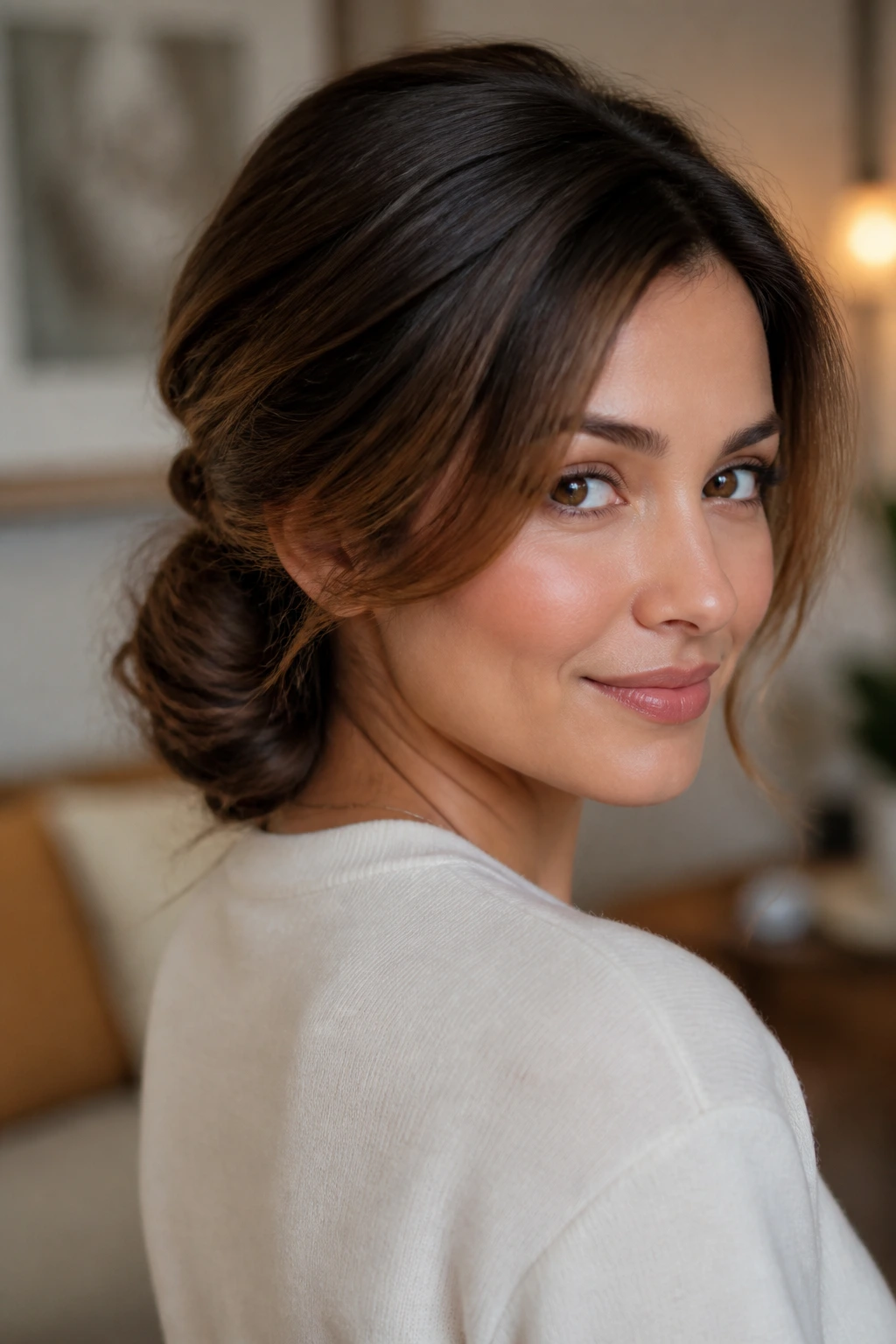
A low knot is cleaner than a bun but softer than a chignon that’s pulled tight. For a round face, the side volume is what keeps the style from looking flat. A little lift at the temples and a little fullness at the crown make the whole head look longer.
Best Way to Wear It
- Start with a loose side part or a soft center part.
- Backcomb the crown very lightly for height.
- Twist the hair low at the nape, then pin it into a small knot.
- Leave the front hair a touch loose so the face is framed, not boxed in.
This is the kind of style that can look formal or relaxed depending on how neat you make it. It’s also useful when you want your hair off your neck but don’t want the severe feel of a slicked-back bun.
23. Layered Curls That Fall Below the Chin
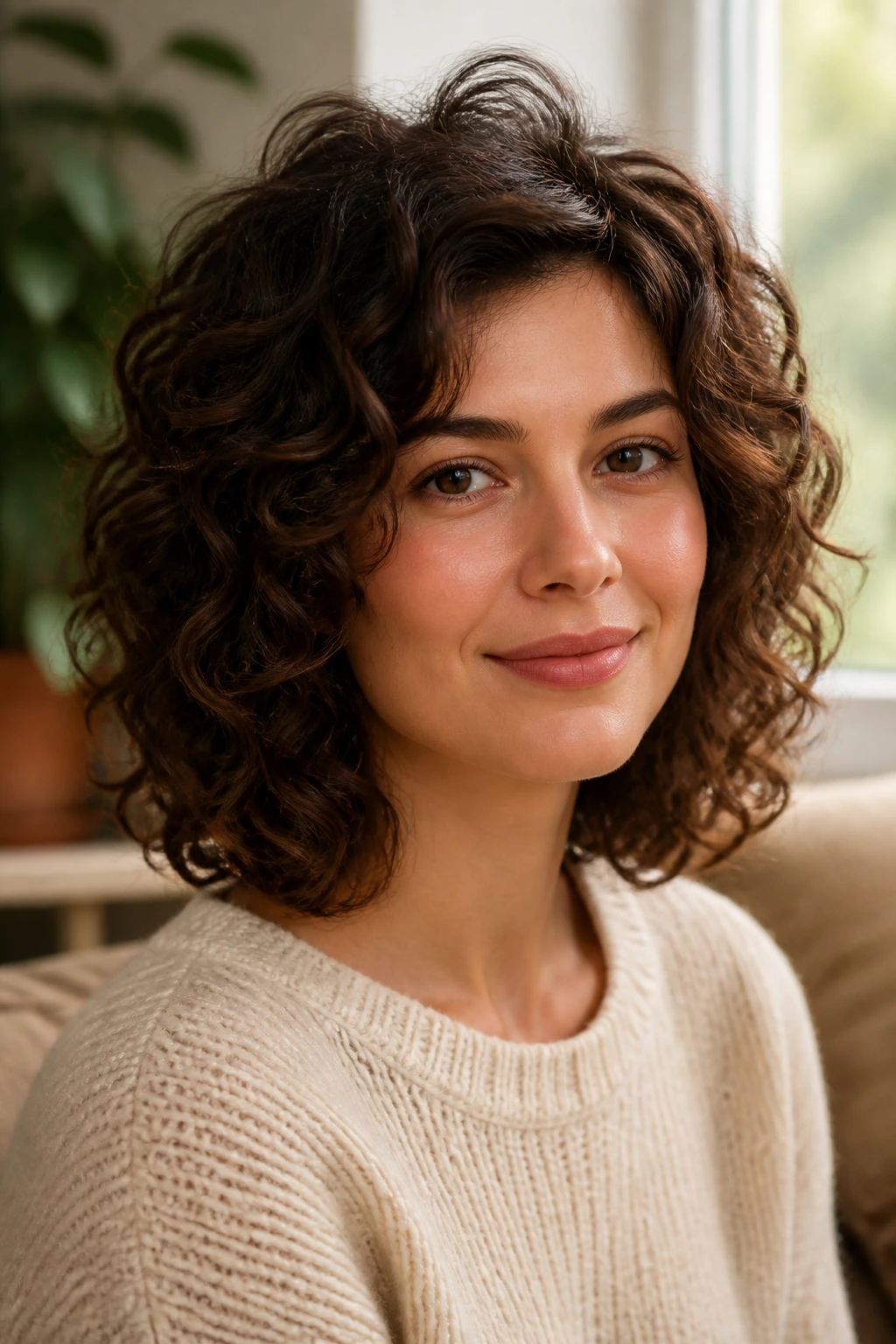
Curly hair on a round face does best when the curls are shaped with length in mind. If the shortest layers sit at the chin, the face can look wider. If the layers fall below the chin, the curls have room to stack without crowding the cheeks.
The shape should follow the curl pattern, not fight it. Ask for layers that encourage the curls to drop downward, then use a diffuser or air-dry with a curl cream. A strong gel can help the front pieces keep their line, especially if your curls have a mind of their own.
Don’t brush curls dry unless you want a cloud. Separate them with your fingers or a wide-tooth comb while they’re damp. That preserves the shape and keeps the style soft around the face, which is the whole point here.
24. A Shaggy Lob with Bottleneck Bangs
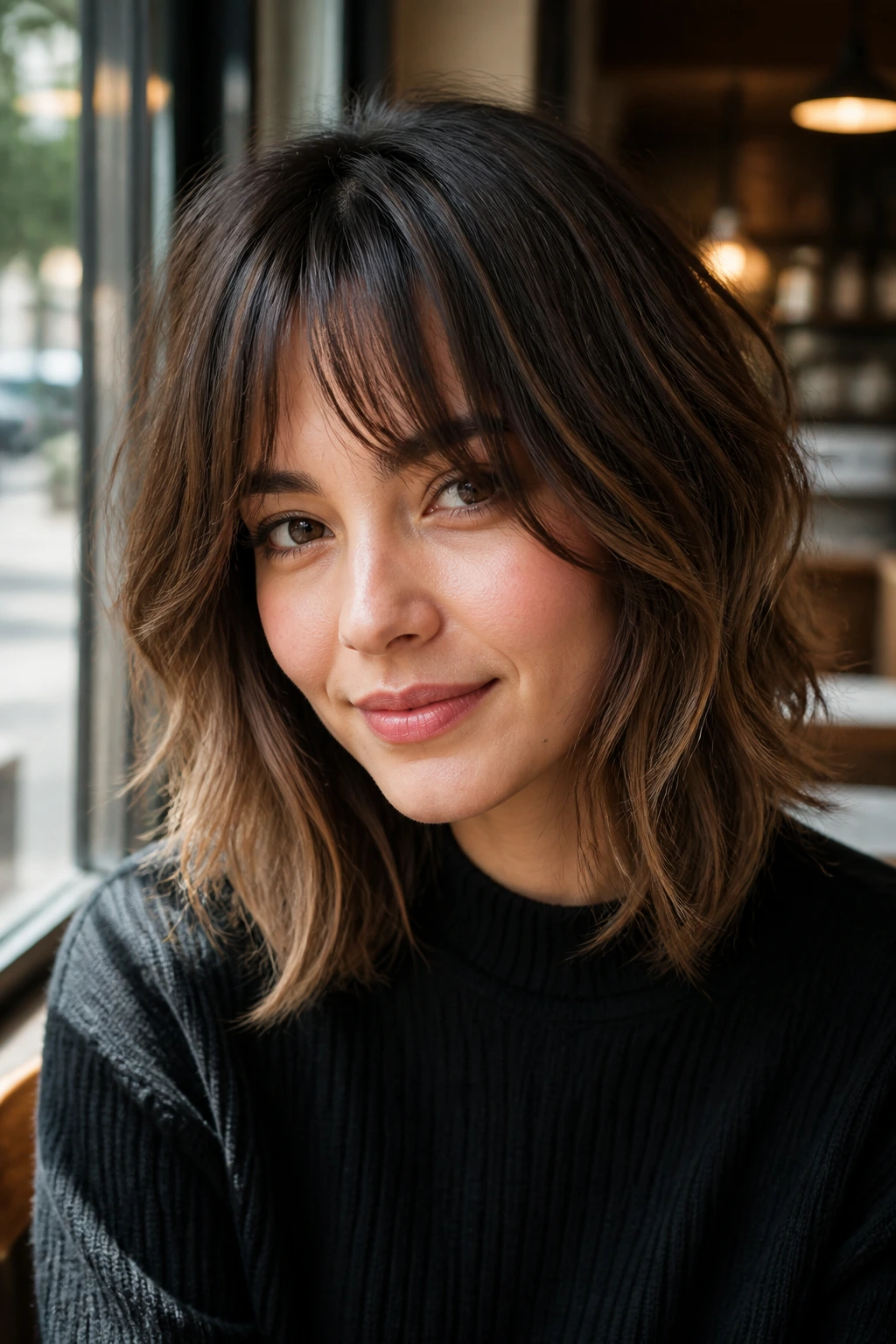
Bottleneck bangs are a smart middle ground: narrower at the forehead, wider around the cheekbones, and soft at the edges. Paired with a shaggy lob, they create movement without a heavy curtain of fringe. On a round face, that widening-and-narrowing shape is a useful trick.
What Makes It Work
The lob keeps the overall length long enough to slim the face, while the shag layers stop the cut from feeling flat. The bangs open the middle of the face and then sweep out gently, which gives the eyes a place to go. That’s a tiny design detail, but it matters.
Use a texturizing spray on the mids and ends, not at the roots. Too much at the roots can make the cut puff out. A little pinch at the fringe is enough. This style has a cool, lived-in look when it’s done right.
25. A Long Straight Cut with Softly Beveled Ends
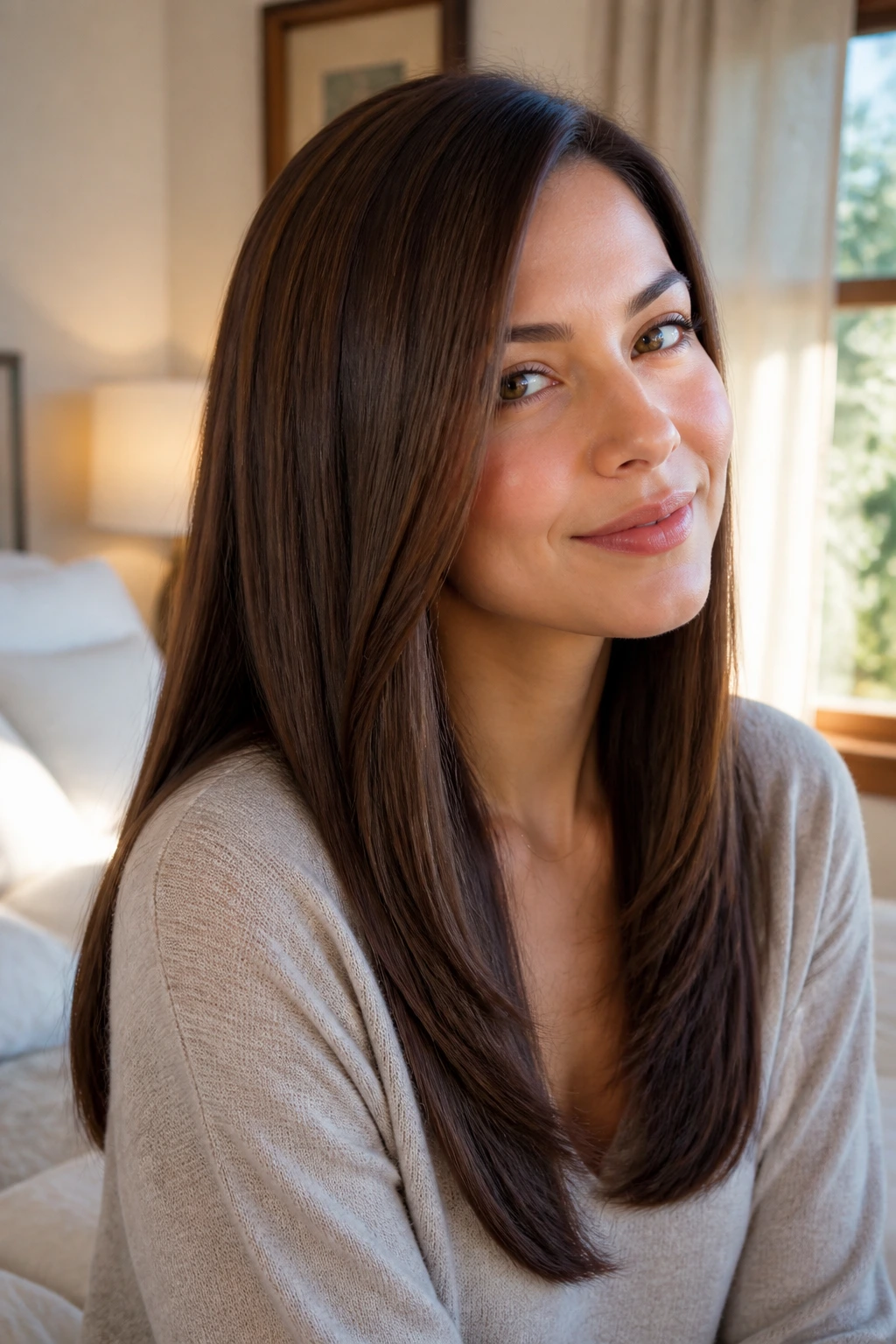
Long straight hair can work beautifully on a round face if the ends are shaped instead of blunt. Softly beveled ends keep the cut from forming a hard horizontal line, and that line is what tends to widen the face. The bevel makes the hair fall in a cleaner column.
A side part or even a slightly off-center part helps here too. It breaks the symmetry and gives the cut a longer feel. If your hair is naturally straight, a flat iron on the bottom few inches can polish the shape. If it bends easily, a blow-dry with a paddle brush is enough.
This look is understated, but it isn’t plain. The softness is in the edges. That’s where the shape lives.
26. A Deep Side-Part Bob with Swept Volume
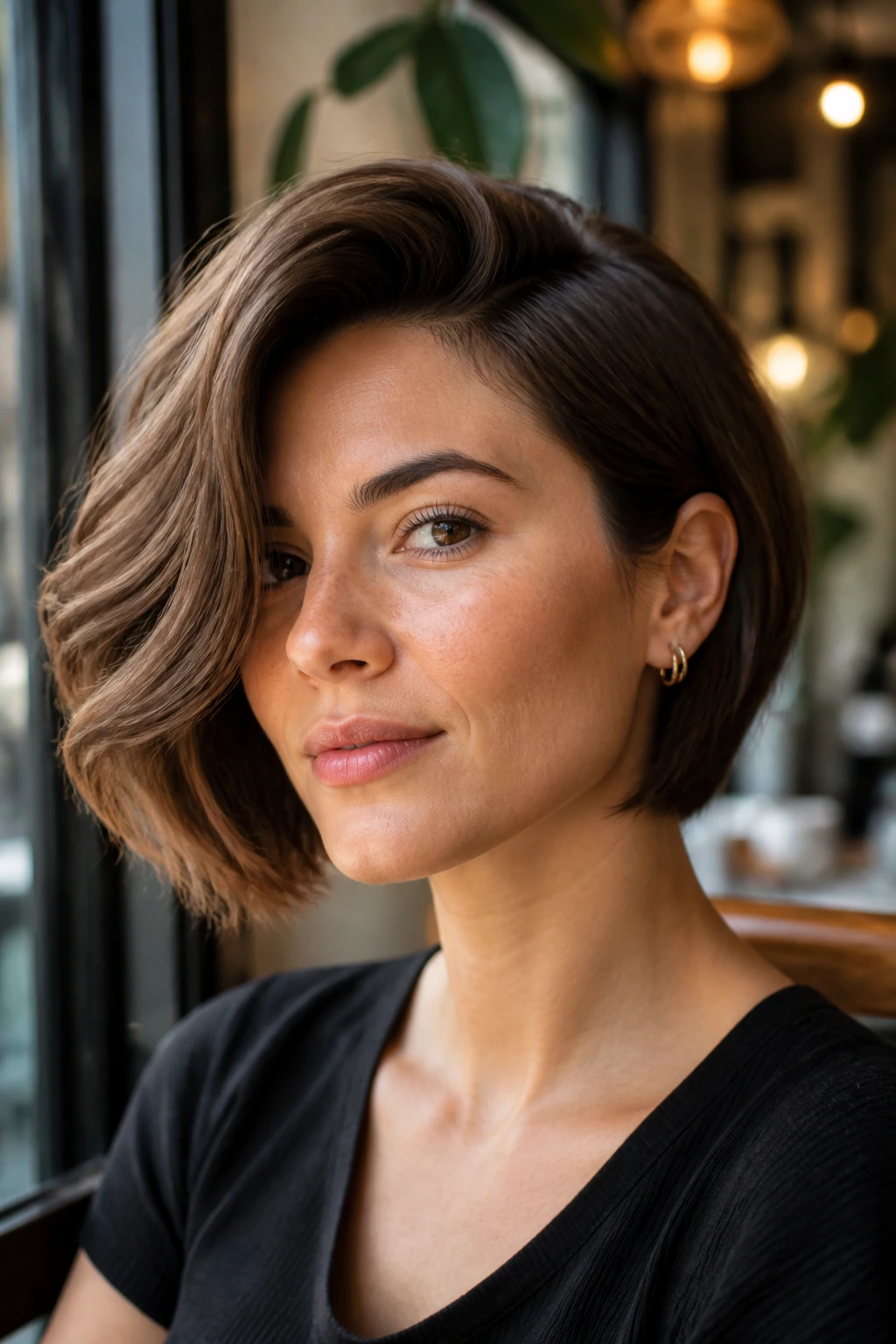
A bob can flatter a round face when it sits below the jaw and has one side swept back with a deep part. The sweep creates a diagonal line across the forehead, which changes the face shape in a useful way. A blunt chin-length bob is a different story. That one can feel boxy fast.
The volume should sit higher on one side and lower on the other. That asymmetry keeps the style from wrapping evenly around the cheeks. A large round brush helps, but so does a bit of root lift spray at the crown. Use it sparingly. Too much product and the bob gets puffy.
This is a sharp look, but not a hard one. It has enough softness to feel wearable in daily life.
27. Feathered Jaw-Skimming Layers
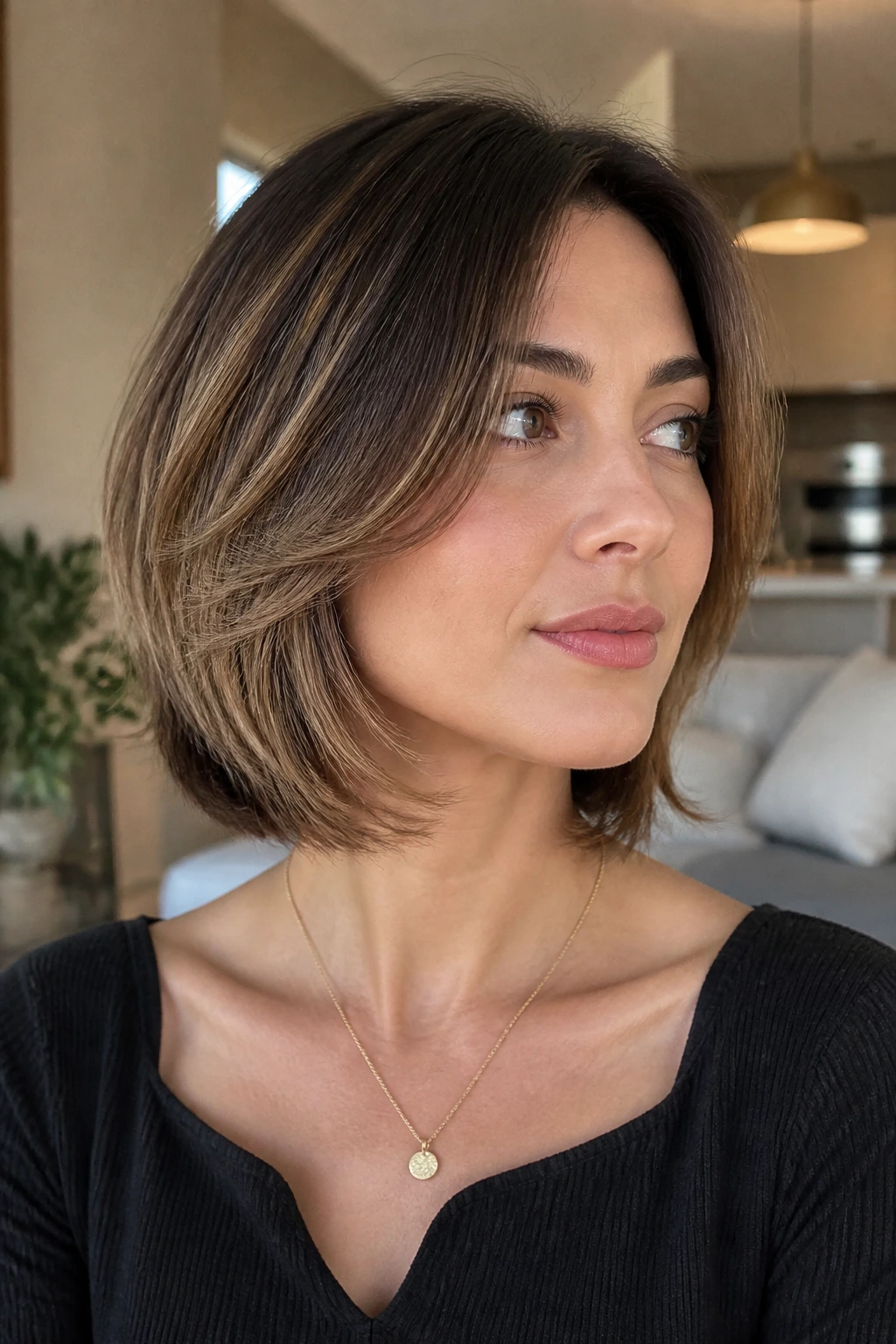
Feathered layers near the jaw can look lovely when they are placed with care. The key is not to let them sit exactly at the widest part of the face. Start them a touch below the cheekbone and let them taper down. That keeps the eye moving instead of stopping right at the jaw.
A Small but Useful Detail
The feathering should be light, almost airy. Heavy feathering from the 1970s can feel dated fast. What you want here is a modern, soft edge that moves when you turn your head. A blowout brush or a smoothing cream will keep the ends from splitting apart too much.
This style works best if the rest of the length is smooth. Too much texture everywhere and the haircut loses its line. A little discipline in the ends makes the whole thing feel intentional.
28. A Soft French Twist with Loose Pieces
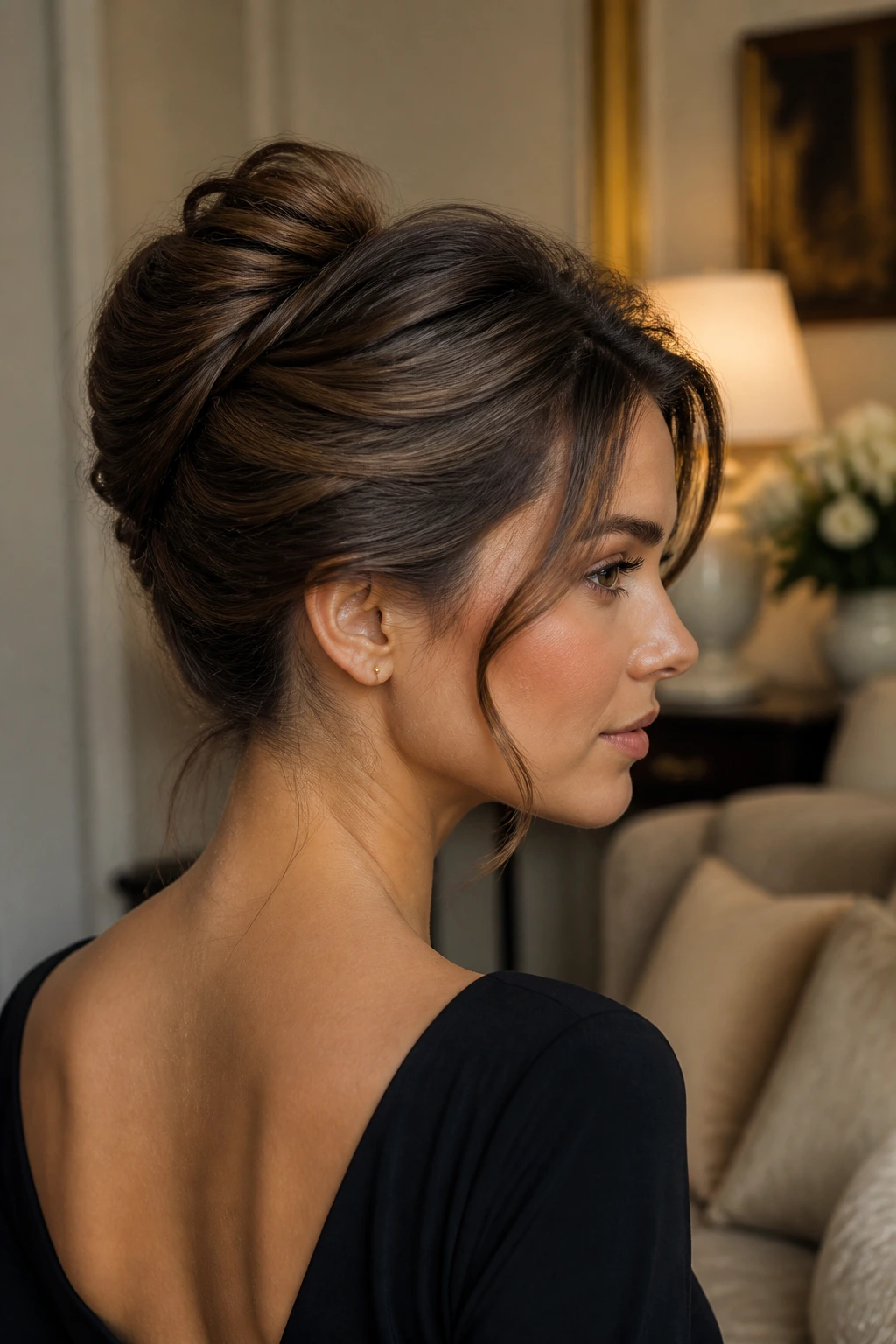
A French twist can be very flattering on a round face when it’s softened at the edges and lifted a little at the crown. The twist draws the eye upward, which lengthens the look of the face and neck. Loose pieces around the temples keep it from becoming too strict.
You do not want a tight, shellacked version. That tends to flatten the head and can make the face feel fuller. Leave a few strands around the ears and soften the top with your fingers before pinning. A little texture spray helps the twist hold without feeling crunchy.
This is a good formal style when you want elegance without that stiff, prom-night look. It’s cleaner than loose hair, but still gentle around the face.
29. Shoulder-Length Curls with Tapered Ends
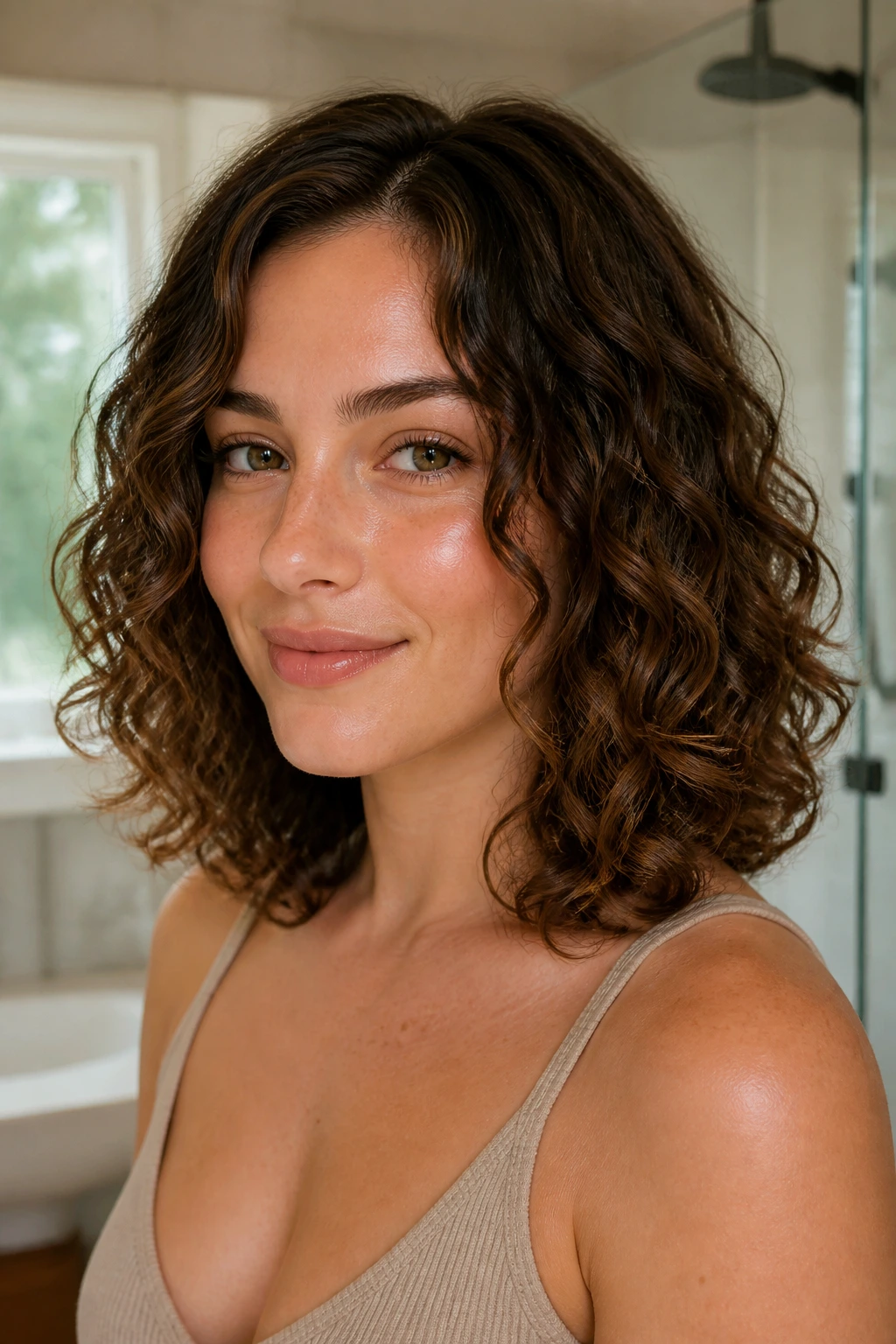
Shoulder-length curls can sit beautifully on a round face if the ends are tapered instead of chopped bluntly. The taper keeps the curl pattern from stopping at one hard line. That matters. A hard line at the shoulders can widen the whole silhouette.
How to Style It
- Use a curl cream or light gel on damp hair.
- Scrunch gently, then diffuse on low heat.
- Finger-coil the front pieces away from the cheeks.
- Finish with a light mist of flexible hairspray.
The curl shape should fall, not puff outward. If your hair is thick, ask for long layers that remove weight without taking away too much curl. If it’s fine, keep the layers longer so the curls don’t frizz into a halo. Either way, the shoulder length gives you enough room to shape the face.
30. Airy Long Layers with Soft S-Waves for Round Faces
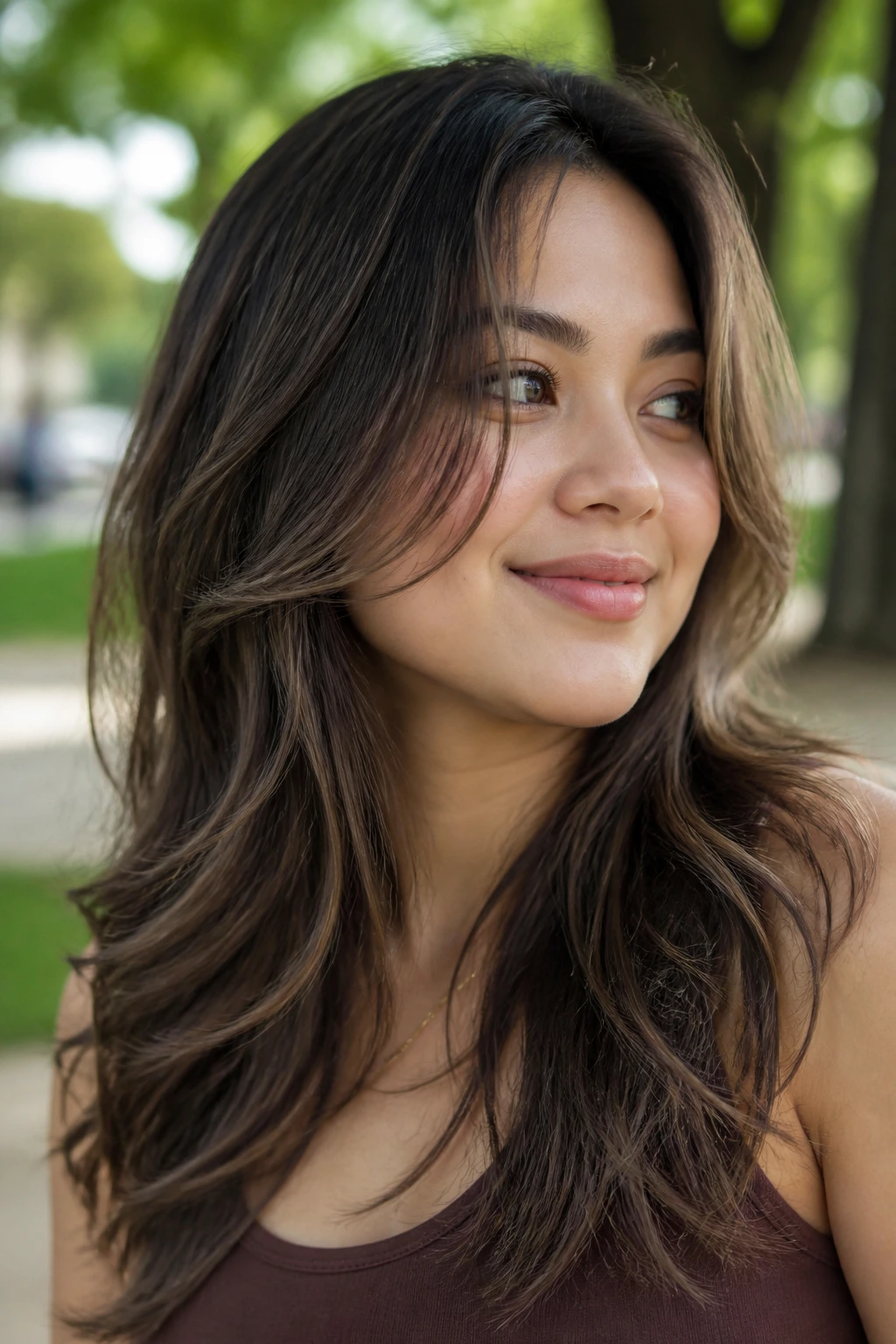
If you want one haircut that’s hard to mess up, this is it. Airy long layers with soft S-waves keep the face open, add movement through the lengths, and avoid that heavy line that can make round faces look wider. The waves should bend softly, not stack in big round clumps at the cheeks.
The best version keeps the shortest layers below the cheekbone and the longest layers well past the shoulders. That spacing gives the eye a clean path downward. A center part can work here if the length is long enough, though a slight off-center part often feels a little easier on the face. Use a large iron, brush the waves out once they cool, and leave the ends loose.
This is the style I’d hand to someone who wants softness, length, and a shape that behaves in real life. It’s calm. It’s wearable. And it doesn’t fight your face.
