



Thick natural hair has presence before you do. It fills a room, holds shape when it wants to, and pushes back hard against styles that depend on limp texture for drama. That is exactly why the best thick natural hairstyles are the ones that work with density instead of trying to flatten it into obedience.
If you have ever spent half an hour smoothing, brushing, and pinning only to watch your roots swell back up by lunch, you already know the deal. Thick curls, coils, and kinks need room, moisture, and a shape that makes sense for the amount of hair on your head. Give them that, and they look full, rich, and intentional. Fight them, and the style starts negotiating with gravity.
The good news is that thick natural hair gives you more options than most people realize. Puffy styles look plush instead of sparse. Twists hold their shape. Braids can look carved and clean. Even a simple bun has more character when there is real density behind it. So let’s get practical and walk through styles that actually work in real life, not just in photos.
1. Defined Wash-and-Go Curls for Thick Natural Hair
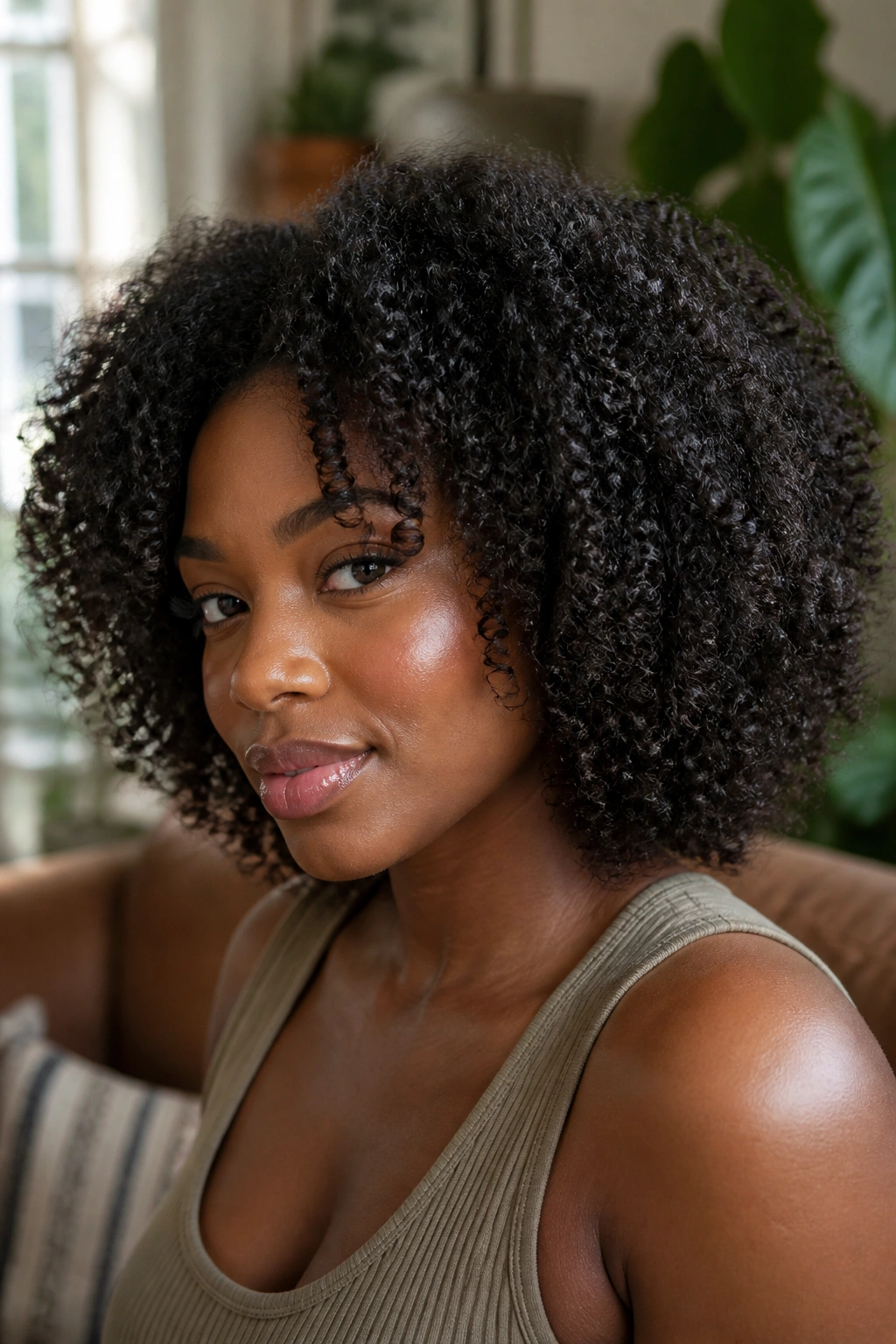
A good wash-and-go on thick natural hair is not about trying to make every strand behave the same way. It’s about giving your curls enough moisture and hold so the pattern stays visible once the hair dries. When it works, the result is full, rounded, and springy instead of puffy in random places.
Why It Works
Thick hair usually needs more product than people expect. Not a swamp of product. Just enough leave-in, curl cream, and gel to coat the outer layer and keep the pattern together. I like to work in sections no wider than 1 to 2 inches, rake the product through, then smooth the outside with praying hands before scrunching.
- Start on hair that is damp, not dripping.
- Use a light leave-in first, then a cream, then a gel with enough hold.
- Clip the roots if they dry flat at the crown.
- Let the hair dry all the way before touching it.
Best for: 3c through 4c hair that wants shape without stretching.
Watch out for: too much product near the scalp, which can leave the roots tacky for hours.
My favorite detail: the final look is better when you leave the curls a little bit imperfect. Perfectly uniform curl clumps can look stiff. Slight variation looks human.
2. High Puff With Slicked Sides
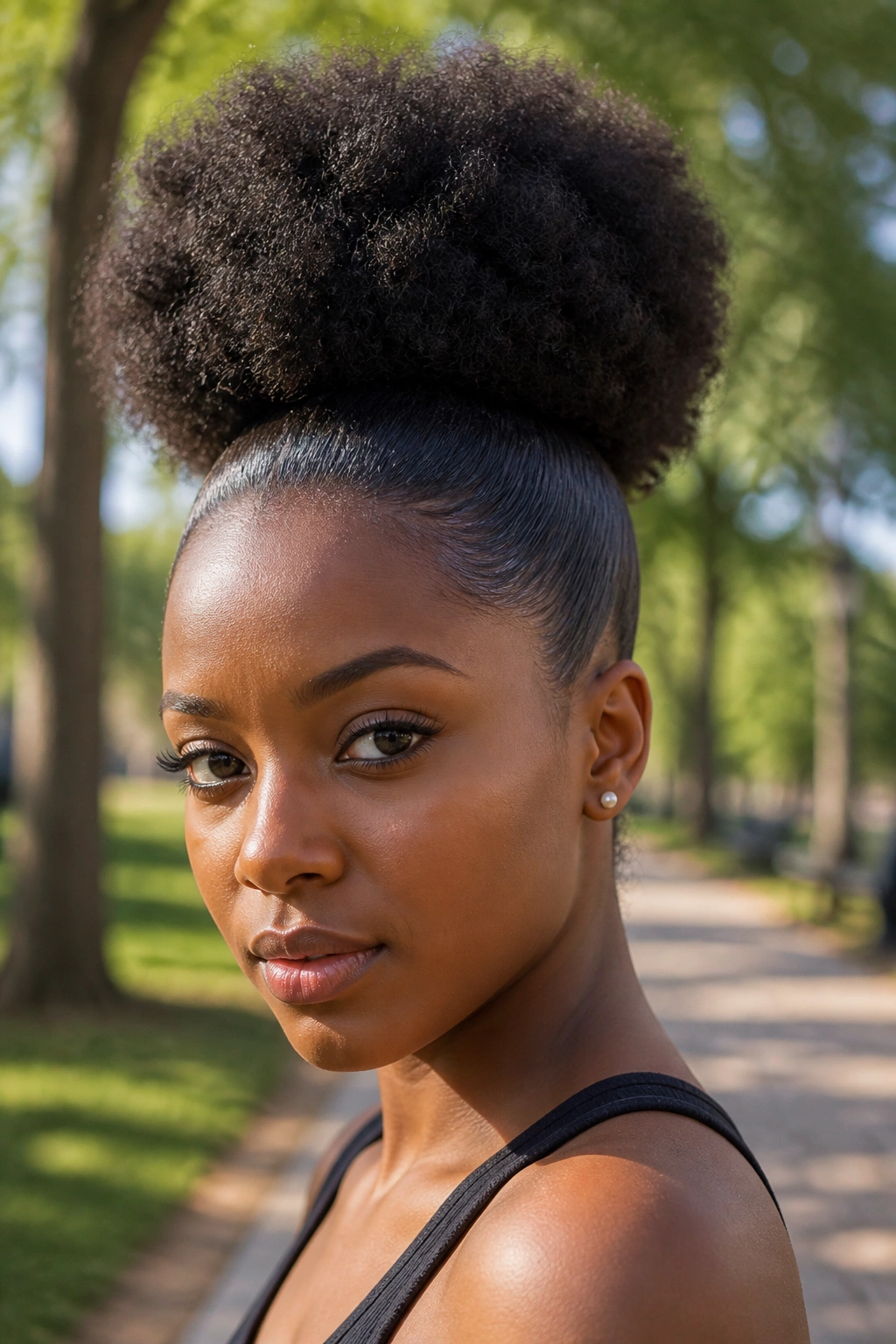
A high puff is one of those styles that looks simple until you notice how much shape it can give the face. On thick natural hair, it turns density into height, and height is flattering in a way that flat styles often are not. The trick is to keep the sides neat without crushing the puff itself.
Brush the sides and back upward with a soft bristle brush, then gather the hair at the crown with a wide elastic or puff cuff. Don’t yank the hairline until it squeaks. That is how edges get irritated, and thick hair rarely needs that kind of force anyway. A small amount of gel or edge control on the perimeter is enough if you smooth it with a brush or your fingertips.
This style works especially well when your hair is stretched a little first. A quick twist-out, blow-dry on low heat, or an overnight banding session makes the puff sit higher and look fuller. If you want polish, wrap a scarf around the front for 10 minutes before heading out. It helps the top lie down without making the puff feel squeezed.
3. Twist-Out With Soft Separation
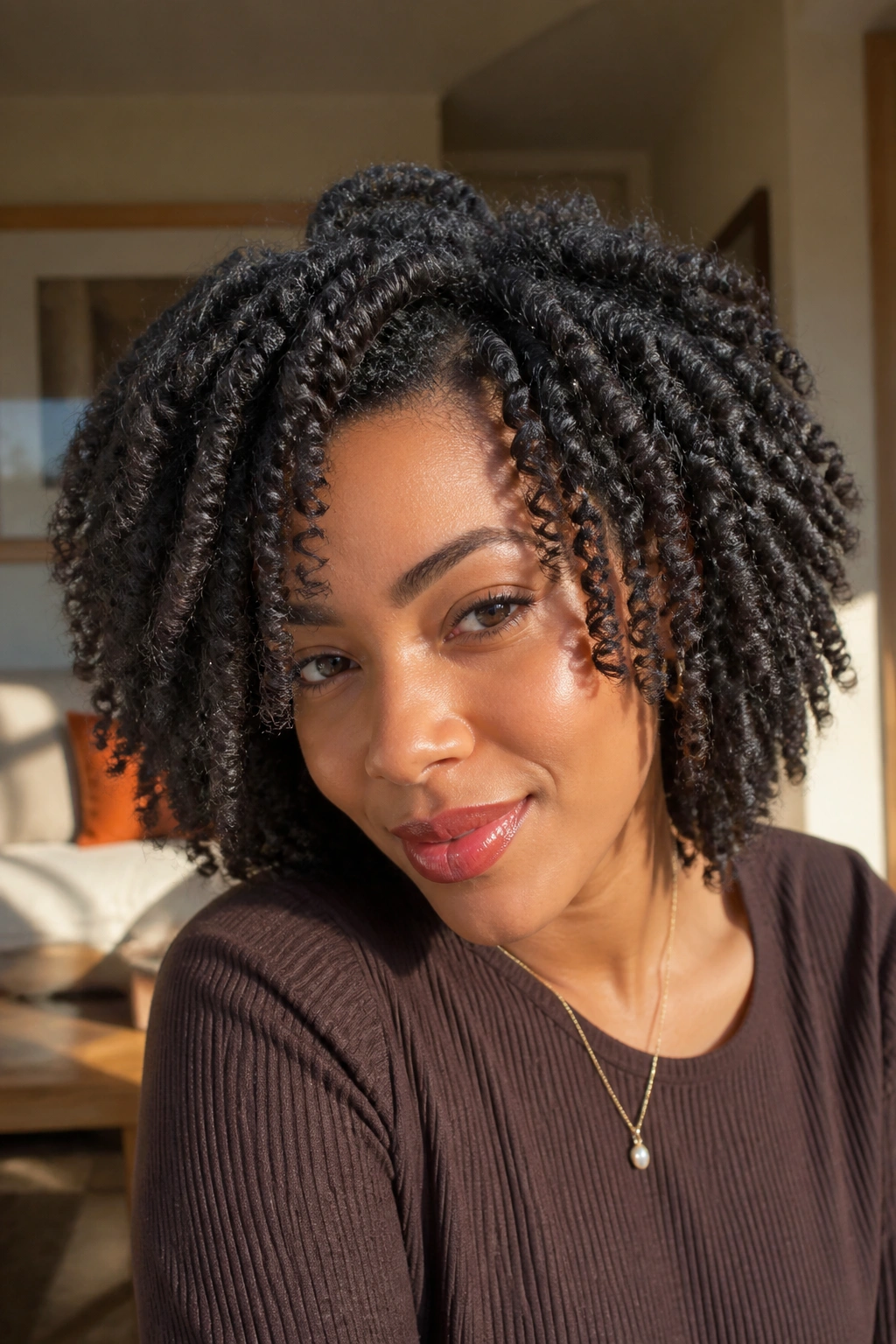
Why do twist-outs stay popular? Because they do a lot with very little. Thick natural hair can take two-strand twists beautifully, and once you unravel them, the hair falls into chunky, soft sections that still have movement. That combination is hard to beat.
How to Make It Last
The setup matters more than the takedown. Start with moisturized hair, then add a cream or butter that gives slip. Part in medium sections if your hair is dense; tiny parts can take forever, and huge ones won’t hold definition. Twist tightly enough that the coil stays together, but not so tight that the hair looks ropey or stressed.
- Let the twists dry fully, ideally overnight.
- Unravel with a little oil on your fingertips.
- Separate only once or twice.
- Lift the roots with a pick if you want more volume.
A twist-out is a good choice when you want softness around the face. It looks a touch dressier than a wash-and-go, but it still feels natural and easy. If your hair is very thick, the style usually looks best on day two, not day one. The curls loosen just enough to stop looking too fresh and start looking lived in.
4. Braid-Out With Stretched Length
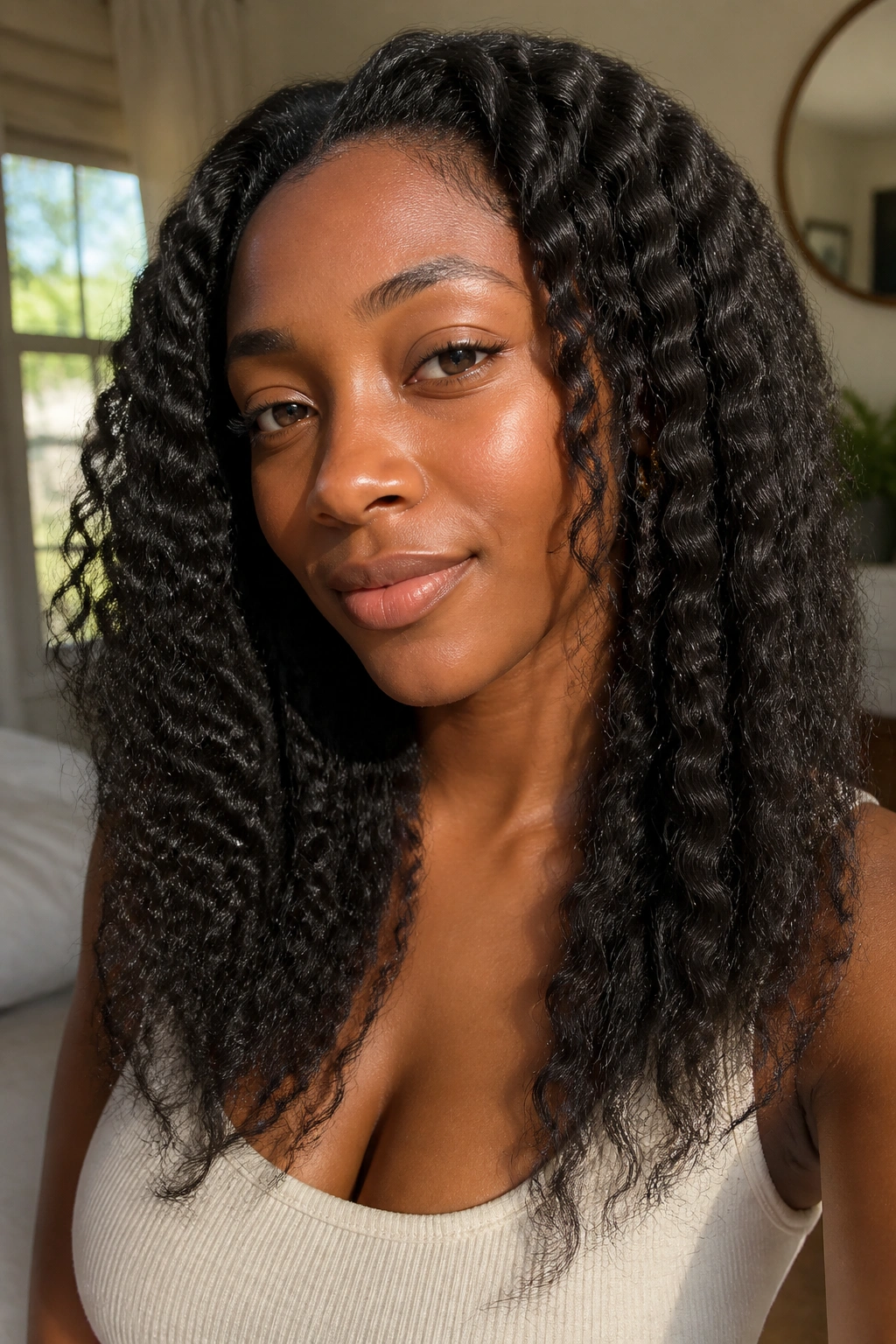
A braid-out gives thick natural hair a different kind of finish than a twist-out. The pattern comes out looser, more elongated, and a little more wave-like at the ends. If your hair shrinks hard and you want a bit more length without blow-drying every time, this style is worth keeping in rotation.
The braid pattern should be neat at the roots and not overly tight through the mid-lengths. Three-strand braids create more stretch, while flat braids keep the roots smoother. I prefer medium sections because thick hair can swallow tiny braids, and large ones can leave a chunky look that feels unfinished. Once the braids are dry, separate them slowly so you keep the wave pattern intact.
A braid-out also gives you a little forgiveness. If one section is a touch frizzy, it blends in instead of screaming for attention. That is the quiet advantage of this style. It does not need everything to be perfect. It just needs enough definition to show the shape.
5. Flat Twist Updo That Sits Close to the Head
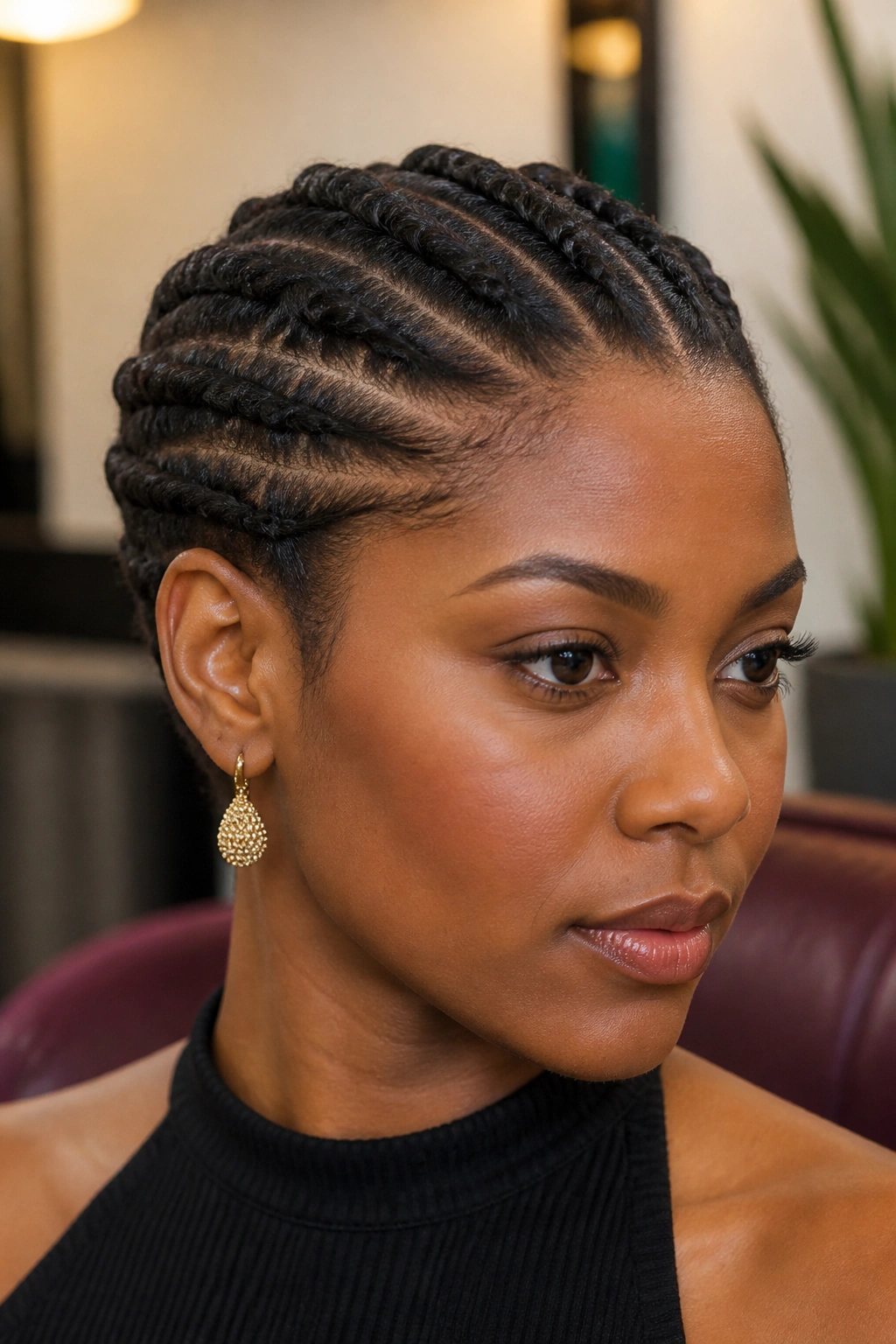
Flat twists are one of the smartest moves for thick natural hair when you need the style to stay put. They hug the scalp, they keep the bulk controlled, and they can be tucked into a bun, a roll, or a pinned shape that lasts for days. They also put less tension on the hairline than tight cornrows if you’re careful with your parting.
Start with moisturized hair and a small amount of styling cream. Create clean sections, then twist each side close to the scalp, feeding in hair as you go. If your hair is extra dense, keep the parts slightly larger than you think you need. Tiny flat twists look neat, but they can take forever and sit too flat against very thick hair.
The best part is the finish. You can leave the ends out for a softer look, or tuck them under and pin them for something more formal. I like this style for long days because it keeps the volume close to the head and does not collapse the way softer styles sometimes do. Practical. Clean. Solid.
6. Chunky Two-Strand Twists
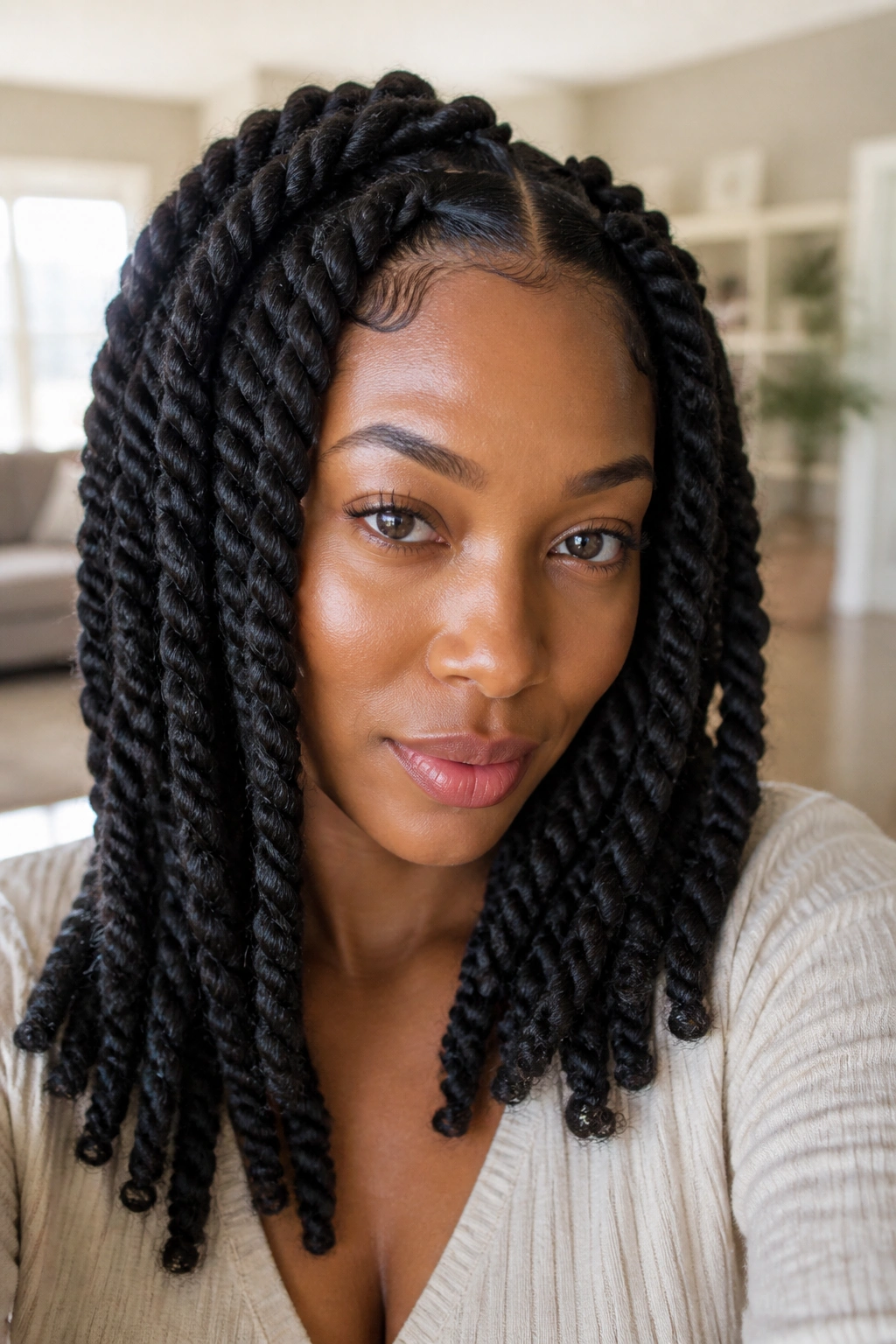
Chunky two-strand twists are the kind of style that makes thick natural hair look even thicker, in the best way. Each twist acts like a little rope of texture, so the final look feels full and intentional. It is also one of the least fussy protective styles if you like to keep your own hair visible.
Unlike mini twists, chunky twists go up faster and feel less delicate. They are a good fit if you want a style that lasts several days but still moves when you walk. The section size matters here: if your hair is dense, aim for medium-large parts so the twist doesn’t turn into a tiny, tight coil that shrinks into nothing.
This style suits people who do not want to spend forever at the mirror. It also works well when the hair is a little stretched first, because the twists hang better and tangle less. If you want a softer finish, twist on damp hair with a cream that has slip. If you want a firmer hold, add a small amount of gel at the roots only.
7. Mini Twists That Hold for Days
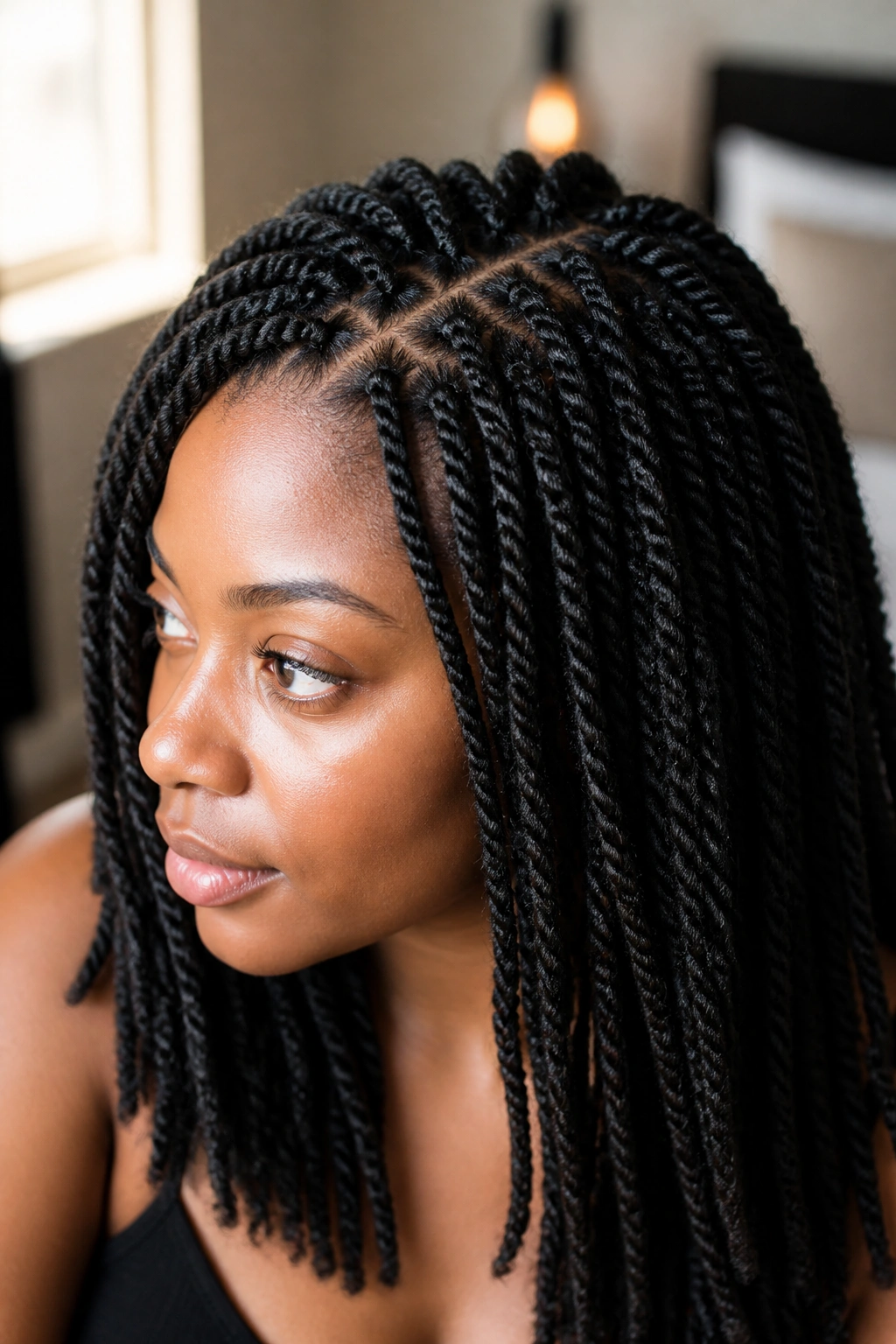
Mini twists are not quick. Let’s be honest about that. But if you want a style that can last and still let you access your scalp, they earn their keep. Thick natural hair gives mini twists a full, ropey look that feels polished without trying too hard.
What Makes Them Different
The smaller the twist, the more movement you get. That matters when your hair is dense, because huge sections can turn into heavy blocks that sit stiffly. Mini twists sway, separate a little, and keep their shape better between wash days. They also make detangling easier later, which is worth the extra time up front.
- Use a light leave-in so the hair stays soft.
- Add a cream or jelly with hold if your ends unravel fast.
- Keep the parts clean, since thick hair can hide messy sections.
- Sleep with a satin bonnet so the twist pattern does not fray.
The main drawback is time. You will spend it. But if you like low-manipulation styles, this one pays back with convenience. It can also be dressed up easily with clips, cuffs, or a deep side part.
8. Bantu Knots All Over
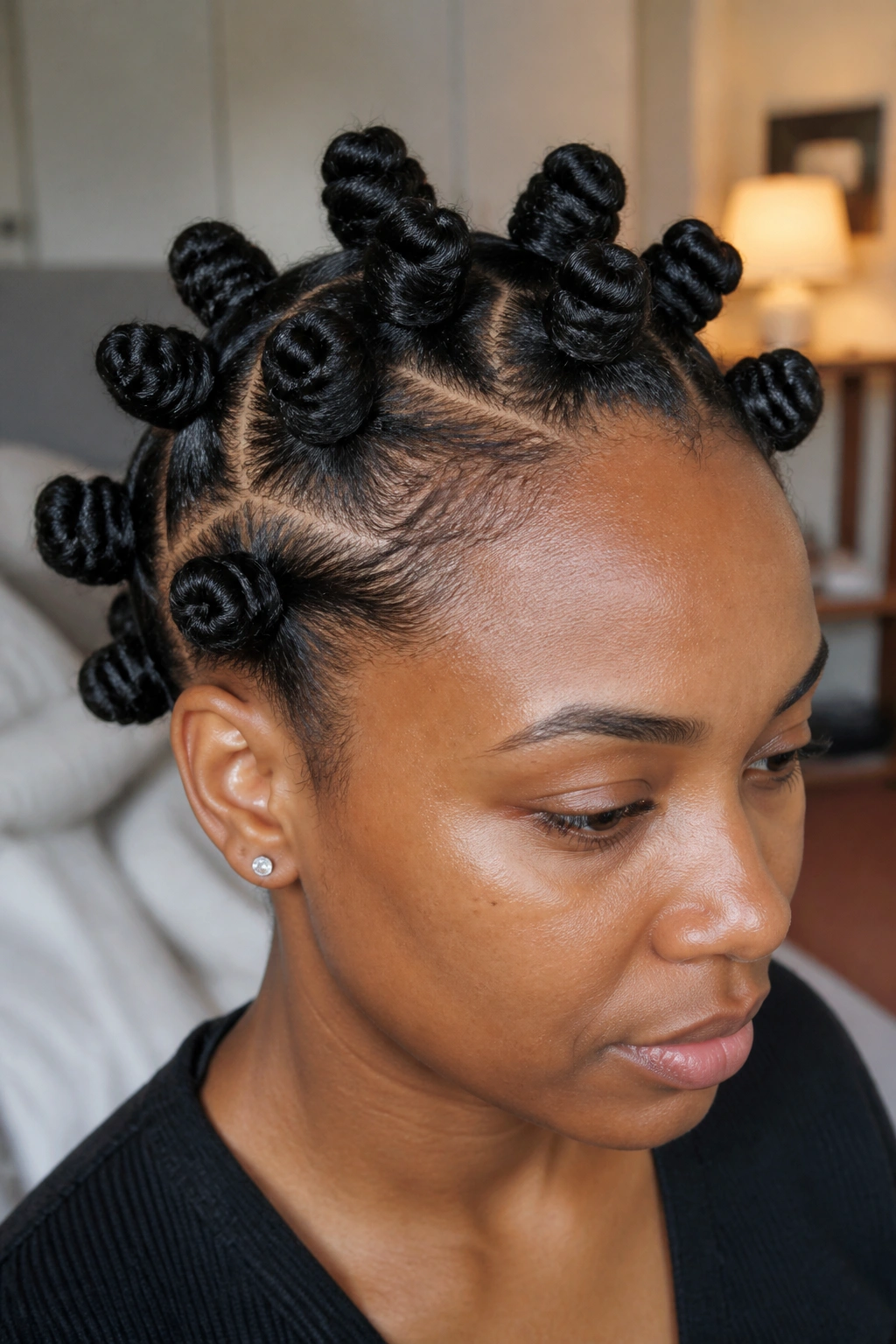
Bantu knots give thick natural hair a sculptural look that feels bold without needing extra hair or extensions. The style is built from sectioned hair twisted around itself into little coiled knots. On dense hair, the knots have a nice round shape and sit visibly on the head instead of disappearing.
How to Set Them Up
Part the hair into neat squares or triangles, depending on the look you want. Apply a cream or setting lotion, then twist each section from root to end before wrapping the coil around itself. Secure the end by tucking it under. If the hair is very thick, you may need slightly smaller sections than you expect so the knot stays flat and does not pop open.
The style can be worn as is, or taken down later for a knot-out. That’s where the fun starts. The knots make a springy curl pattern with a lot of body, and thick hair tends to keep that pattern surprisingly well. If your hair is long, the knots can look playful. If it’s short, they look crisp and compact.
9. Bantu Knot-Out With Springy Volume
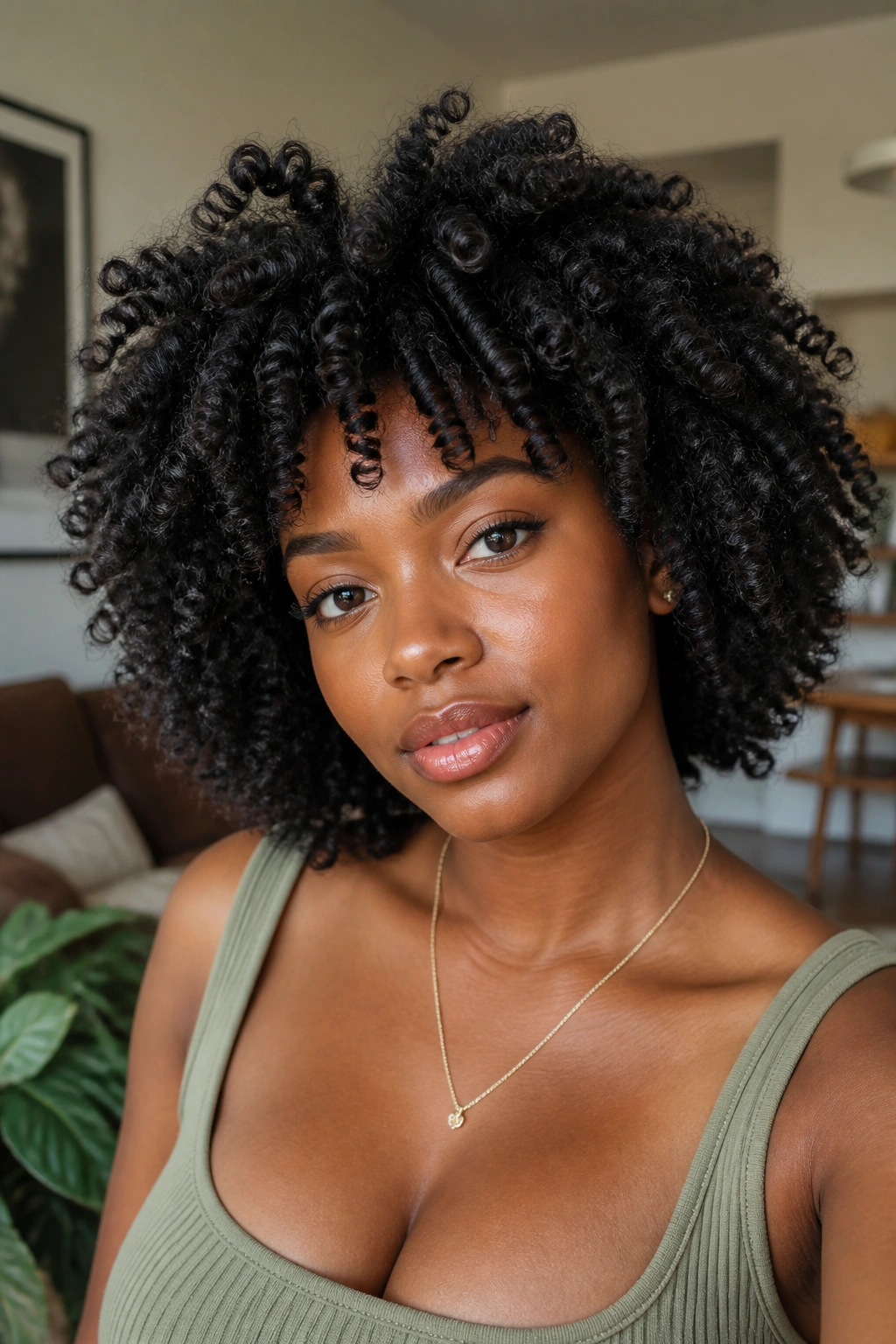
A bantu knot-out turns those little coiled buns into a full cloud of definition. The curls come out tighter than a braid-out and often more springy than a twist-out, which is handy if your thick hair tends to fall flat after styling. The shape is rounded, bouncy, and a little bit cheeky.
Do not take the knots down while the hair is even slightly damp. That is the fastest way to wreck the curl pattern and invite frizz before the style has a chance to shine. I usually wait until the knots feel completely dry at the roots and the center of each knot is cool to the touch. Then I separate with oiled fingers and stop before the hair starts turning fuzzy.
This style does best when you want volume on purpose. The roots lift easily, so a small pick at the crown goes a long way. You do not need to tease it into oblivion. Just enough to free the base. The result is one of the most flattering ways to show off thick natural texture.
10. Rounded Afro Shape for Thick Natural Hair
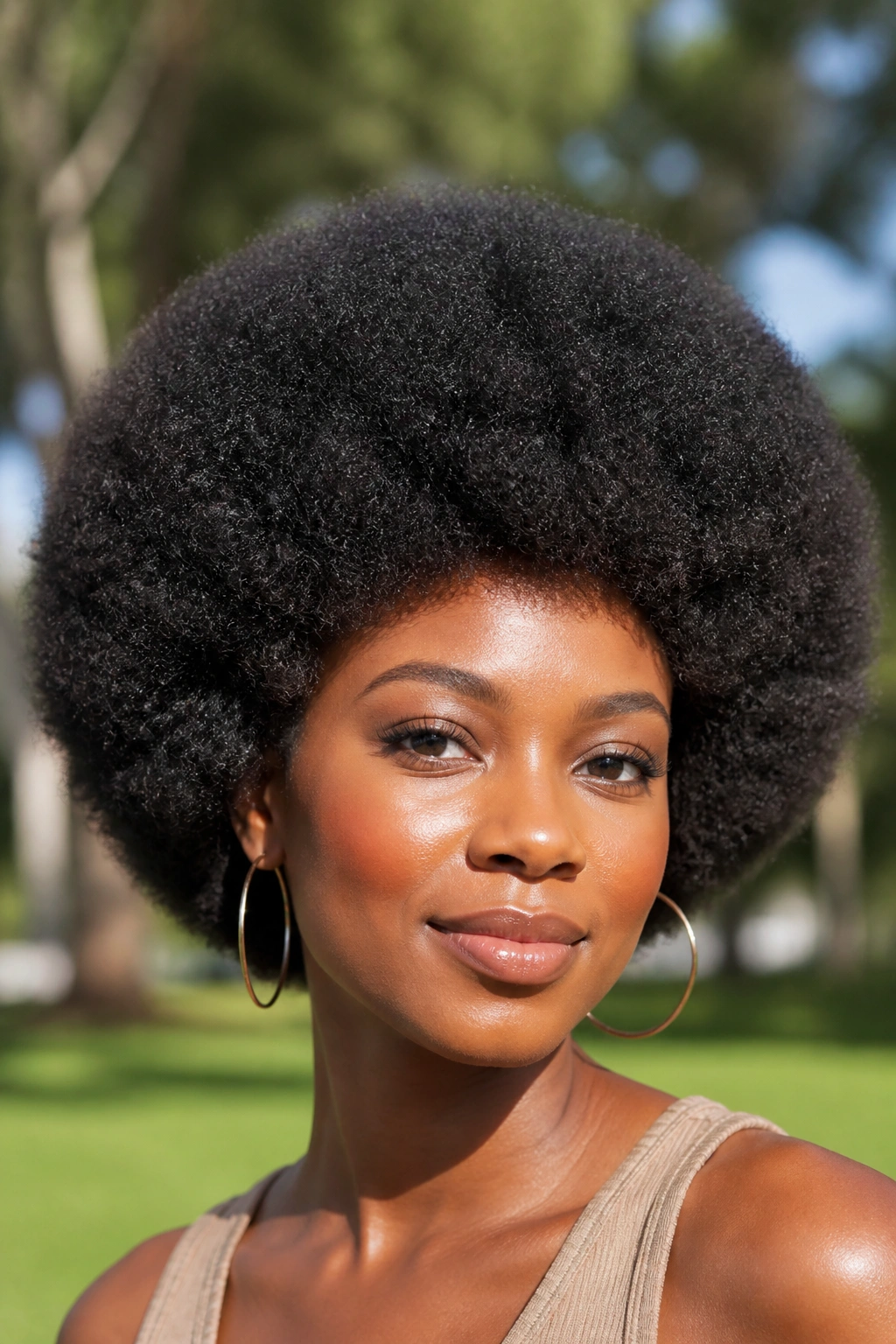
A rounded afro shape is one of the cleanest ways to wear thick natural hair when you want the texture to speak for itself. No trick. No disguise. Just shape, balance, and a good pick. The rounded silhouette works because it gives density a plan instead of letting it expand in random directions.
Start with stretched or fully dry hair. Pick the roots first, then stop. That part matters. If you over-pick the ends, the outline gets fuzzy and starts to look wide instead of rounded. A wide-tooth comb can help lift the hair at the crown, but a pick gives better control over the outline. Use your hands to gently shape the sides inward if one side is puffing out more than the other.
This is one of the strongest thick natural hairstyles for people who like a visible texture and a strong profile. It can look soft or dramatic depending on how high you lift the crown. Either way, it never looks like an afterthought. It looks like hair with a point of view.
11. Frohawk With Pinned Sides
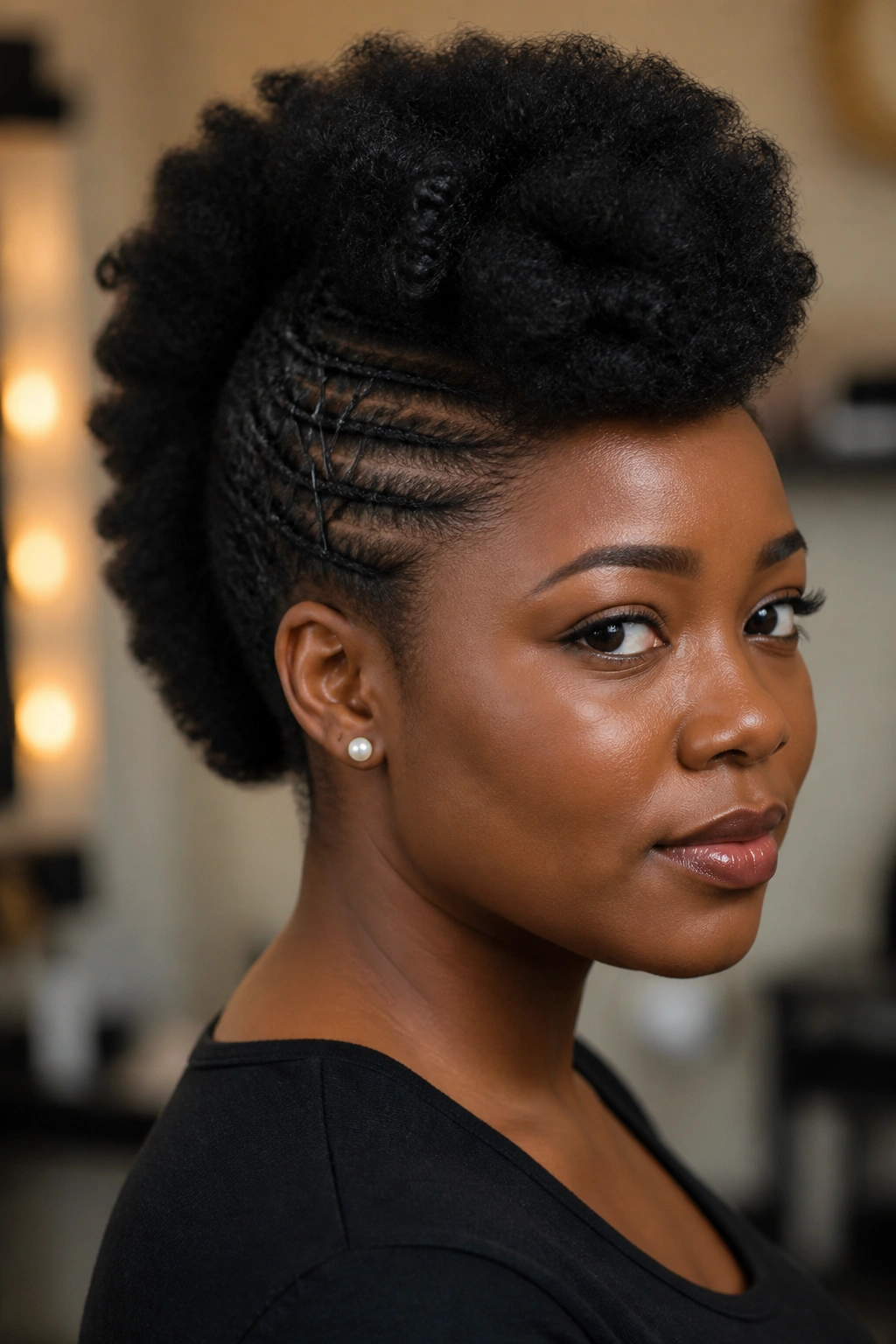
Why does the frohawk work so well on dense hair? Because it uses the bulk where you want attention and hides it where you do not. Thick natural hair creates a fuller center ridge, so the shape looks intentional even when the side sections are just pinned or braided back.
How to Pin It
Part the hair from temple to nape on both sides. Smooth those sections back with a little gel, then pin them upward toward the center ridge. You can leave the middle section fluffy, twist it, or stretch it first for extra height. If your hair is long enough, the sides can be braided flat before being pinned, which gives a cleaner finish.
- Use long bobby pins, not tiny decorative ones.
- Anchor the pins in crossed pairs if the hair is heavy.
- Keep the side tension light near the hairline.
- Finish the center with a pick if you want extra lift.
The frohawk is especially good when you want something that feels energetic without taking all morning. It also handles thick hair better than styles that expect the whole head to lie flat. It won’t.
12. Low Puff at the Nape
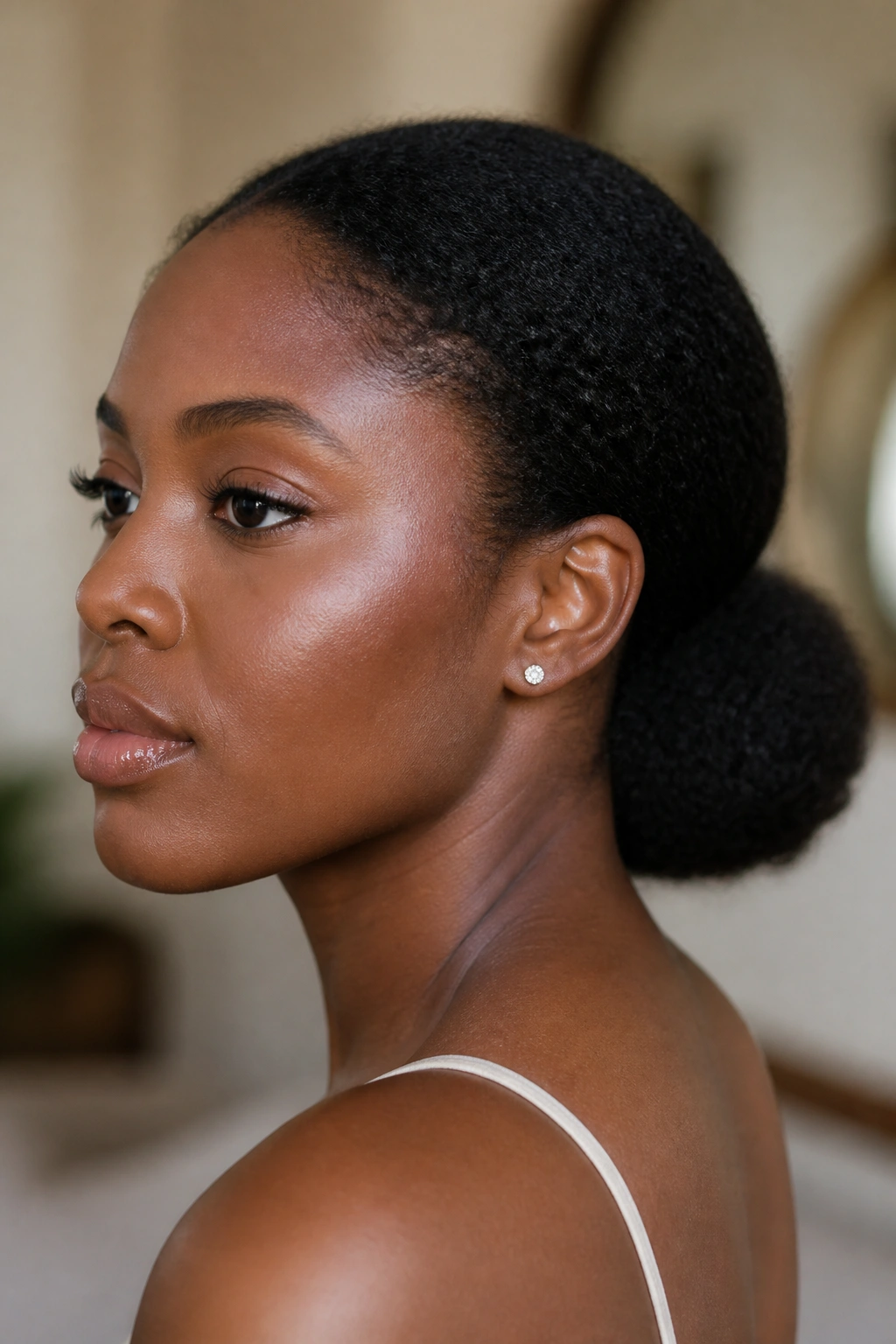
A low puff is the calmer cousin of the high puff. It keeps the volume low and close to the neck, which makes it feel softer, more relaxed, and easier on the scalp if your hairline is tender. Thick natural hair fills this shape nicely, so the puff looks plush instead of thin.
Compared with a high puff, this style puts less pressure on the crown and edges. That makes it a better choice on days when you do not want your roots pulled upward. Brush the hair back gently, secure it low at the nape, then fluff the puff with your fingers so it rounds out instead of hanging limp. A satin scrunchie works better than a hard elastic because it grips without biting into the hair.
This is one of those styles that looks especially good with earrings and a clean neckline. Simple. That is the point. It does not ask for much, and it gives back a tidy shape that still shows off your hair’s thickness.
13. Pineapple Updo for Sleep or Daywear
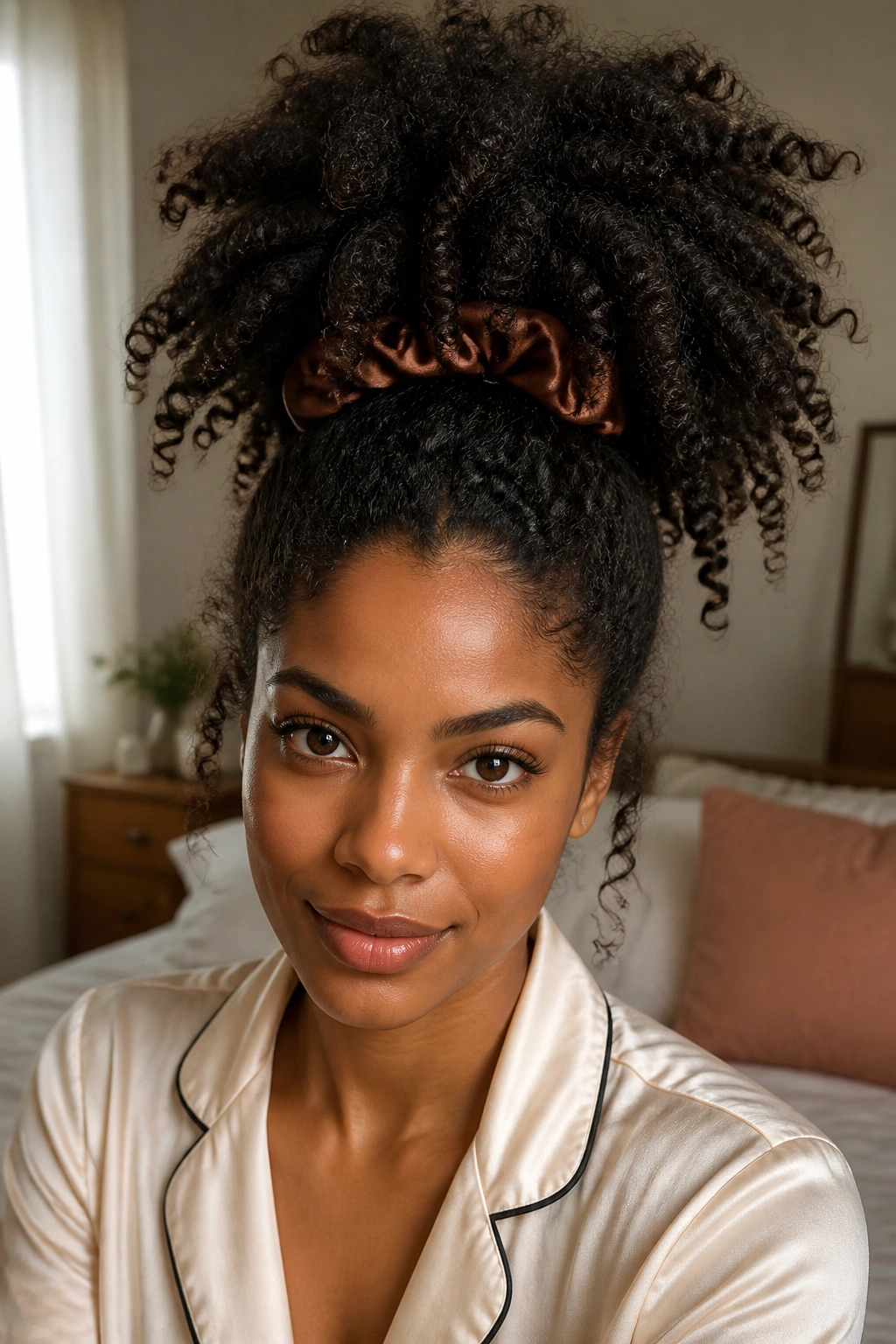
A pineapple is basically a high, loose gathering of hair at the crown, and thick natural hair makes the shape look generous instead of skimpy. I like it because it works as a style and as a way to preserve curls overnight. Two jobs. One move.
The base should be loose enough that the hair keeps its shape. Use a satin scrunchie or a soft tie, not a tight elastic that leaves a dent around the perimeter. For daytime wear, let the curls fan out a little and keep the front softly framed. For night, gather the hair high enough that the back stays off the pillow. That helps reduce flattening and friction.
- Works best on stretched curls or a twist-out.
- Needs a soft tie, never a hard band.
- Can be refreshed by misting the ends lightly in the morning.
- Looks fuller when you shake the roots before leaving the house.
It is not fancy, and I mean that as praise. It is practical, and thick hair makes it look better than it has any right to.
14. Half-Up, Half-Down Curls
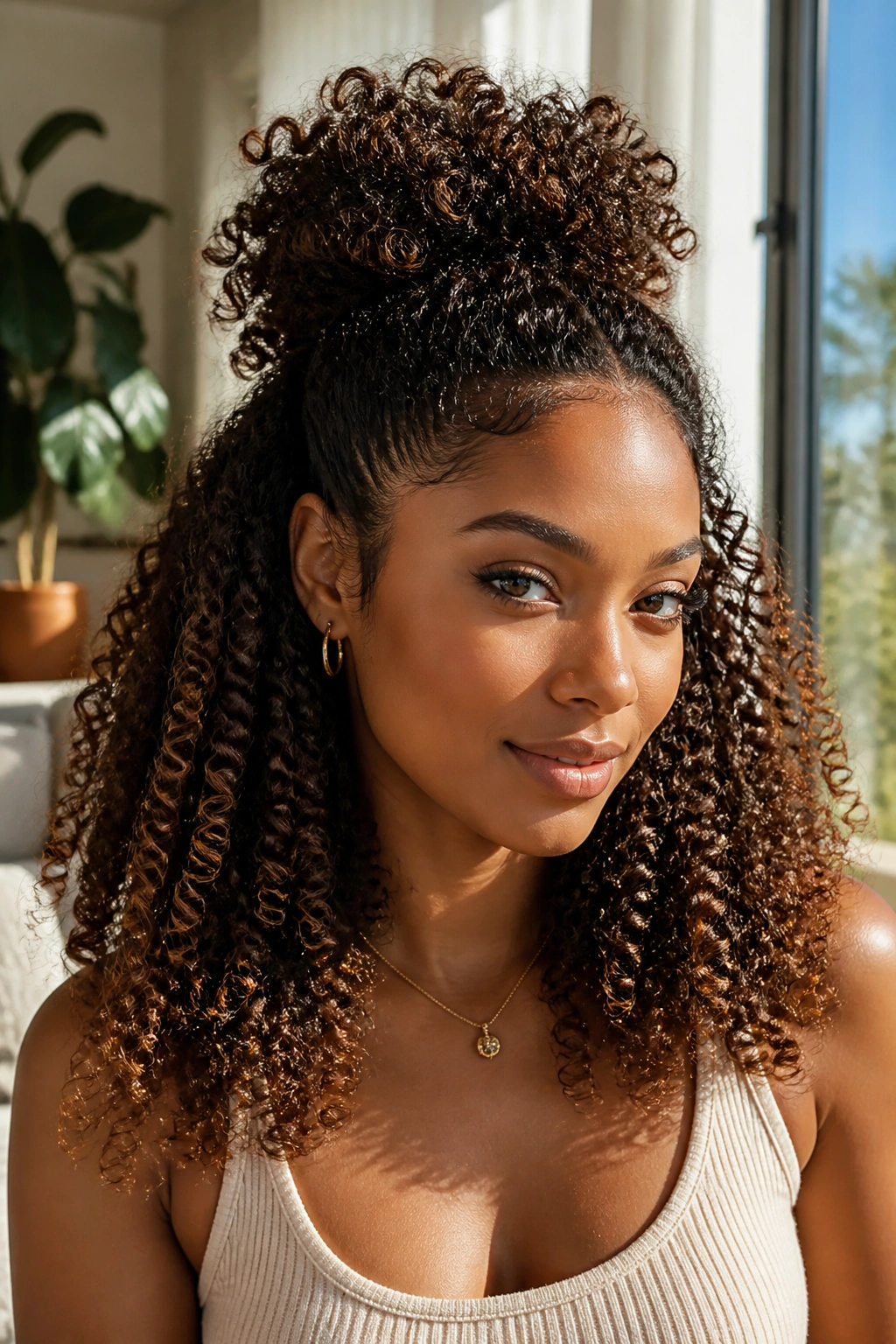
Half-up, half-down styles are ideal when your thick natural hair is too pretty to hide and too much to leave completely loose. The top section gets controlled, while the bottom half keeps the volume and texture moving. That balance is what makes the style feel easy.
You can gather the top into a puff, a small bun, a clip, or a twisted knot. The bottom can stay in curls, coils, or a stretched blowout. I like this style when the hair has good shape but not every section is cooperating. The top gives structure. The bottom gives personality.
One sentence says it all: it’s a compromise that usually looks better than either extreme. If your hair is very thick, keep the parting clean so the top section does not swallow too much of the head. A deep side part can make the whole thing feel more polished, while a center part gives symmetry. Both work. Just do not make the top too tight, or the style stops feeling relaxed.
15. Cornrow Ponytail
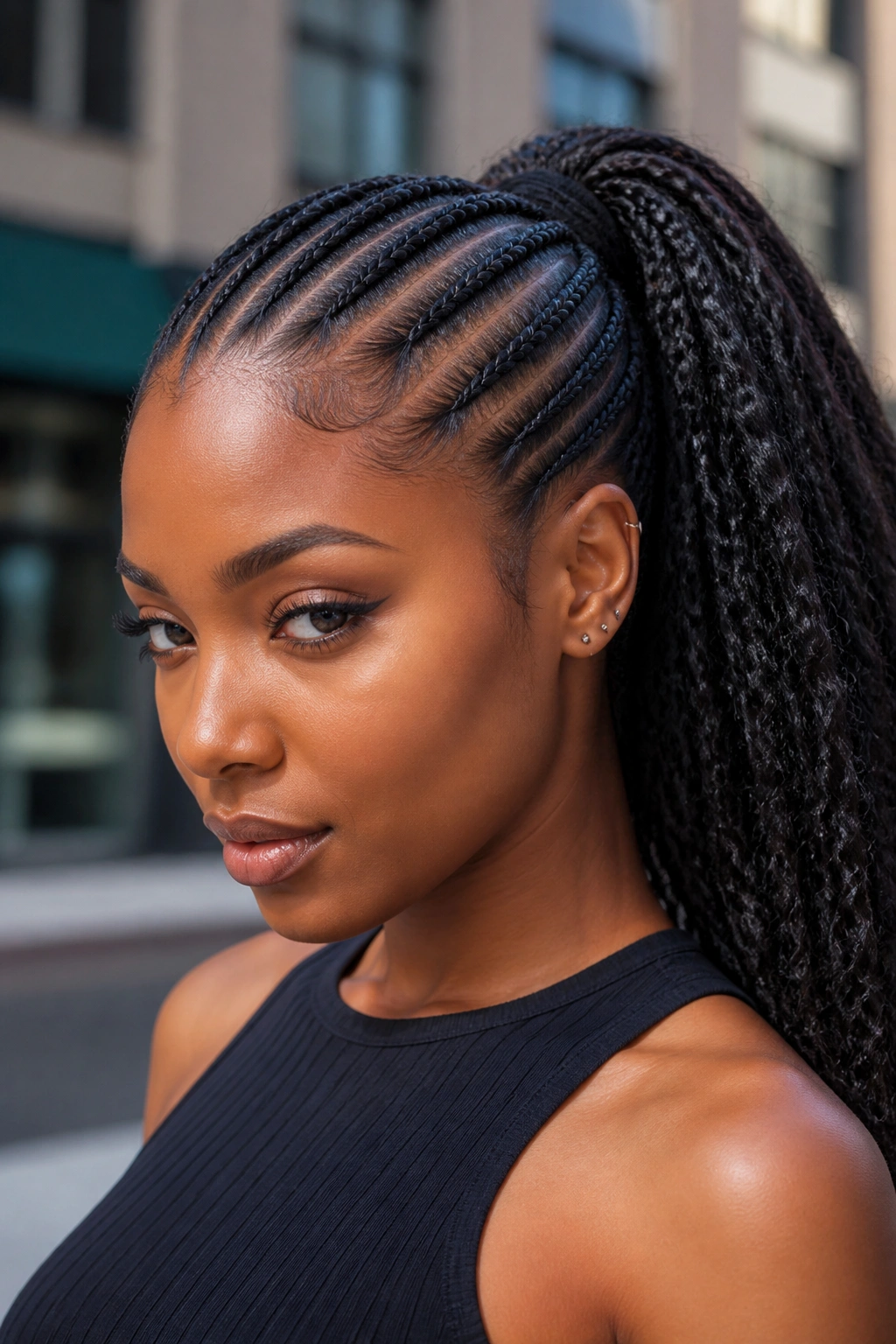
A cornrow ponytail is one of the most practical styles for thick natural hair when you want the front flat and the back collected. The cornrows keep the roots sleek, and the ponytail lets the length and density show off at the end. It is neat without being boring.
This style shines when the hair is freshly moisturized and detangled, because cornrowing thick hair on rough strands is a fight nobody needs. Keep the braid parts even, but not tiny. Too many narrow rows can take forever and create more tension than the scalp likes. A few sturdy cornrows that flow into a ponytail are often enough.
Who should wear it? People who need a style that can survive a long day without turning into a puffball by noon. It also works well under hats, with statement earrings, or when you need the front of your hair off your face. If your edges are sensitive, ask for a looser braid at the hairline. Clean does not have to mean painful.
16. Halo Braid Crown
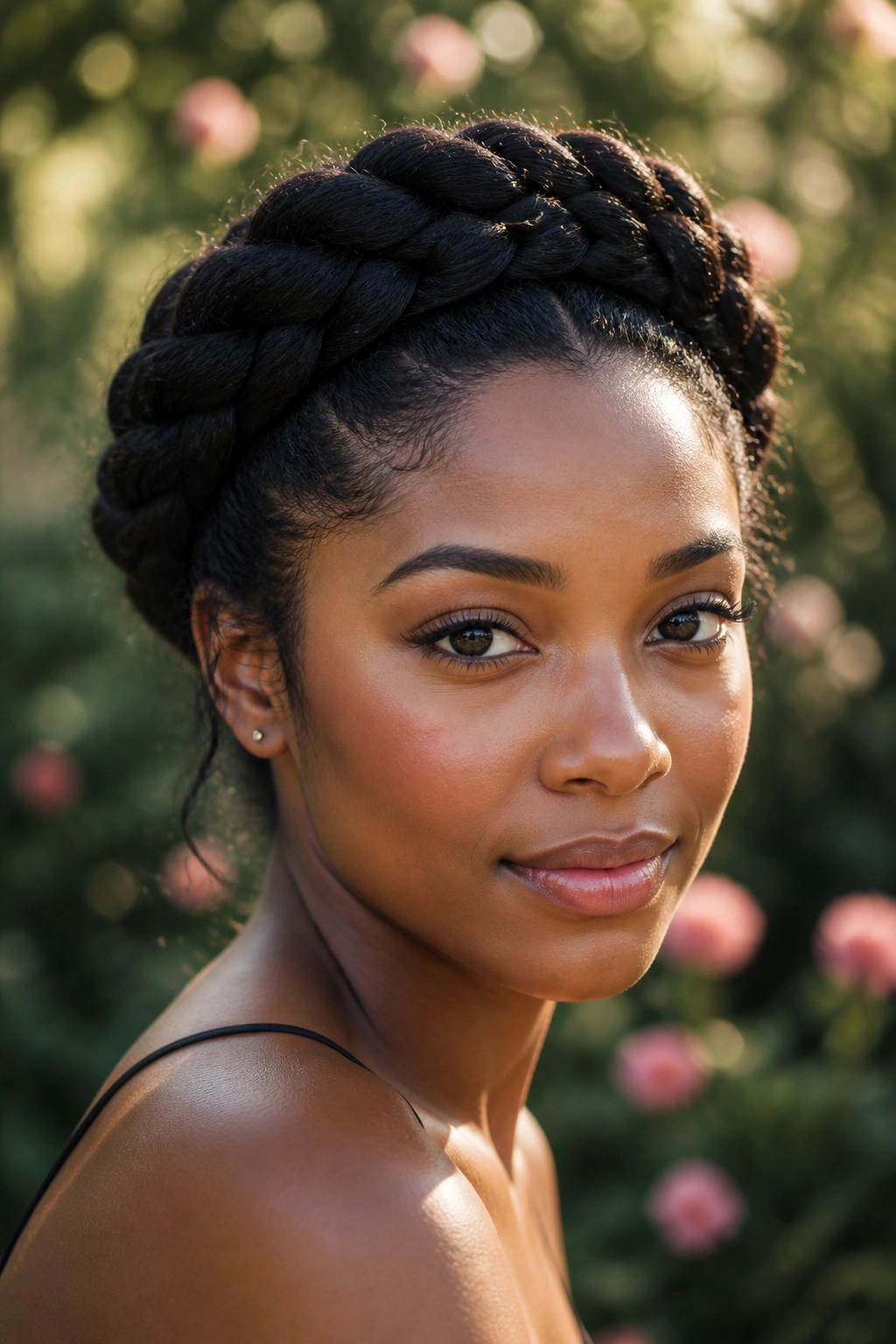
Can thick natural hair pull off a halo braid without looking bulky? Yes, and that bulk is half the point. The braid wraps around the head like a crown, and dense texture gives it enough size to look full instead of stringy. It is one of the most flattering styles when you want the face and neckline to stay clear.
How to Build the Crown
Begin with stretched hair if possible. Part from one ear, braid around the perimeter of the head, and tuck the ends under once you reach the starting point. If the hair is too thick to manage in one braid, split the perimeter into two braids and pin them together at the back. That often looks cleaner than forcing one huge braid to do everything.
The style can look formal fast, which is why it shows up so often for weddings and events. But it also works for ordinary days when you need your hair out of the way and still want shape. A little shine cream on the braid surface helps, though you should use it sparingly. Too much product on thick hair can make the crown feel heavy.
17. Double Space Buns
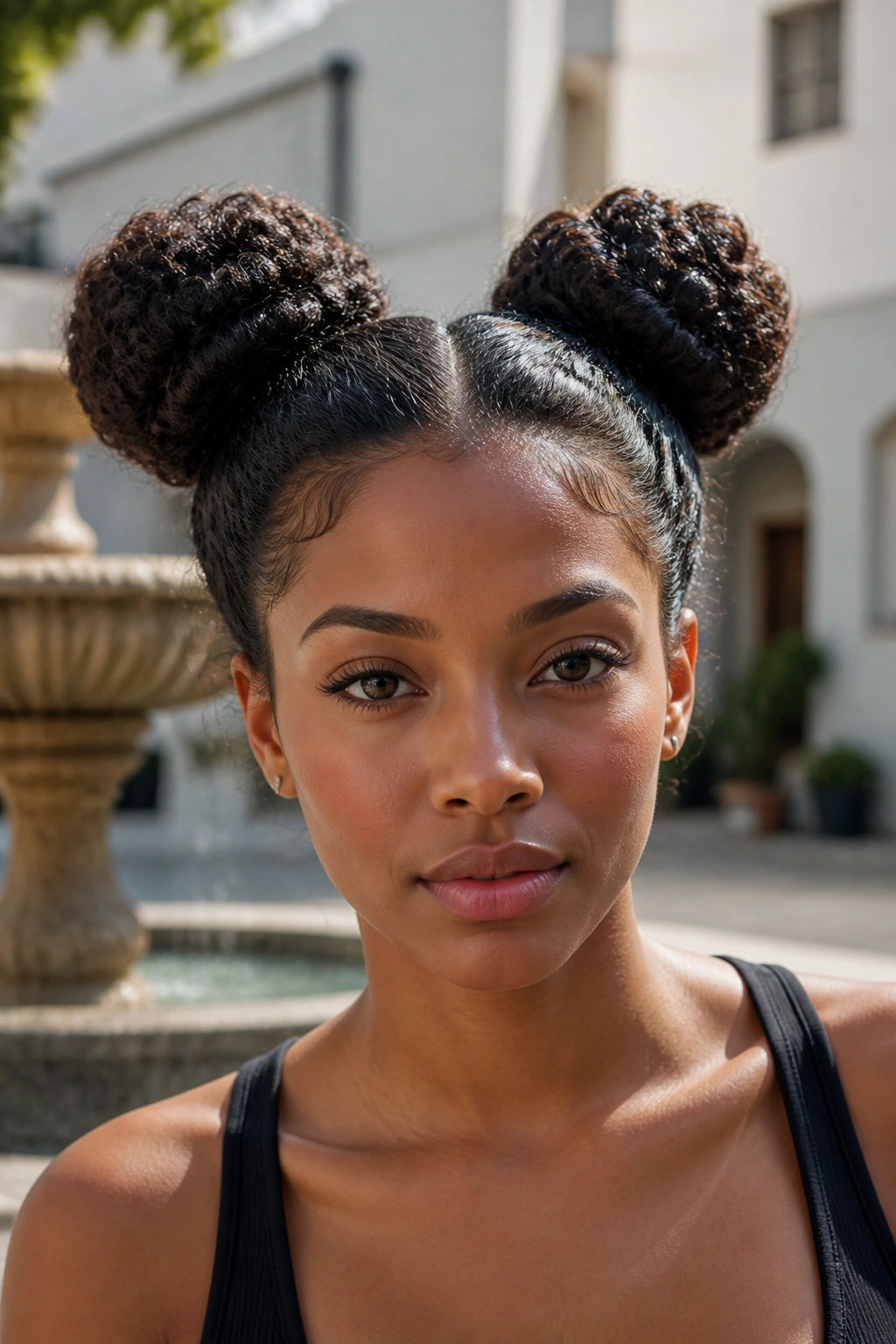
Double space buns are playful, but they are not only for playful days. Thick natural hair gives them a fuller, rounder shape than most textures can manage, and the buns sit with real presence. The style is especially good when you want to distribute volume evenly instead of piling it all in one place.
Part the hair down the middle, then create two high puffs or buns on each side. Leave the ends tucked or loosely wrapped if your hair is long enough. If the hair is very dense, a little twisting at the base helps each bun sit tighter and keeps the shape from flopping. A bit of gel at the part helps the middle line stay crisp.
This style has a practical side too. It keeps hair off the neck, which matters when the weather is warm or you simply do not want to feel every strand touching your skin. The vibe is light, but the structure is doing real work.
18. Finger Coils for Tight Definition
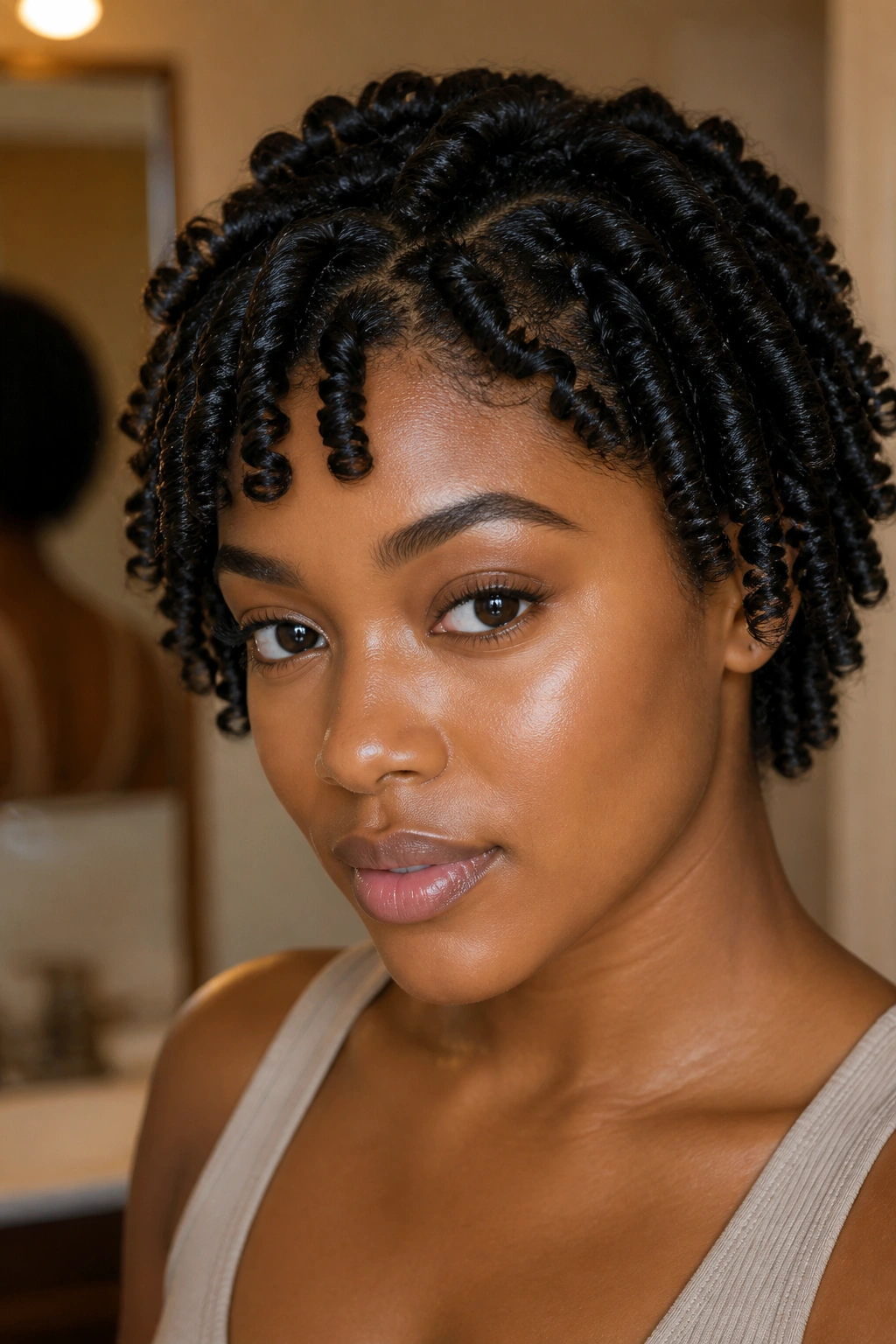
Finger coils are slow. They also look fantastic on thick natural hair when you want every curl to show up with purpose. Each coil is formed by twirling a small section around your finger until it springs back into a neat spiral. The result is dense, defined, and tidy without looking rigid.
Start with very damp hair and a product that gives slip. Take small sections, maybe half an inch or less if your hair is extremely dense, and coil from root to end. Let the sections dry completely before separating or fluffing. If you touch them early, they lose their shape fast. That is the one rule I’d keep in bold.
This style is best when you need definition more than volume. The coils can be worn as-is, or separated a little at the roots for more fullness. They also pair well with side parts and small clips. If your hair likes to frizz, finger coils give you a more controlled finish than most curl styles.
19. Tapered Cut With Height on Top
A tapered cut is one of the smartest thick natural hairstyles if you like low maintenance but still want shape. The sides and back are cut shorter, while the top stays longer and fuller. That creates instant contrast, and thick hair makes the top look especially rich.
Unlike longer styles that depend on daily stretching or constant restyling, a tapered cut does a lot of the work for you. The shape comes from the haircut itself. You can wear the top picked out, defined, twisted, or brushed upward with a sponge for extra lift. It is a style with range, not a one-note haircut.
It suits people who want to spend less time fighting volume and more time shaping it. The cut also frames the face in a clean way, especially if the top is left slightly longer in front. If you have ever been annoyed by bulk at the nape or around the ears, this cut fixes a lot of that without asking the rest of your hair to shrink its personality.
20. Flat Twist Crown for Thick Natural Hair
A flat twist crown is a polished way to keep thick natural hair close to the head while still showing off texture. It gives you structure around the hairline and a soft, wrapped shape that feels elegant without being stiff. I like it because it handles density instead of pretending it isn’t there.
The Shape Matters
The crown should follow the curve of the head, not fight it. That means your twists need to sit flat at the roots and move cleanly around the perimeter. If your hair is especially thick, make the front sections slightly larger so the crown does not become too narrow or too tight. A little fullness makes the shape look intentional.
- Smooth the base with a light cream before twisting.
- Pin the ends flat at the back or tuck them under.
- Use U-pins for hidden support.
- Keep the top line neat so the crown reads clearly from the front.
This style works for office days, dressy events, and plain old “I need my hair to behave” days. It is clean without being severe. That matters.
21. Braided Bun
A braided bun is one of those styles that sounds basic and then turns out to be endlessly useful. Thick natural hair gives the braid enough body to look substantial, and the bun itself feels secure without needing a pile of pins. It is a good answer when you need neatness.
Braid the ponytail first, then wrap it into a bun at the back or crown. If your hair is very dense, use a strong hair tie at the base and secure the bun with long pins rather than cramming in short ones. The braid can be tight and sleek or loose and soft depending on the mood. I usually prefer a braid that has a little texture so the bun does not look too severe.
This style is the kind you can wear with a blazer, a T-shirt, or something formal and not feel underdressed in any of them. That versatility comes from the shape. It sits still. It does not wander.
22. Roll, Tuck, and Pin Updo
The roll, tuck, and pin updo is one of the best ways to hide ends, reduce tangling, and turn thick natural hair into a smooth shape without heavy manipulation. The name sounds fussy. The process is not, once you get the hang of it.
Start with stretched hair or a low ponytail. Roll sections inward, tuck the ends under, and pin each fold flat against the head. Thick hair gives the style more volume, so you can make it look full instead of skimpy. That is half the appeal. A few strategic pins hold better than a dozen random ones, because the hair has somewhere to rest.
I reach for this style when I want the hair controlled but not pressed into submission. It looks especially good from the side, where the folds create soft curves. If the front looks too plain, leave a small twist or swoop near the hairline. A tiny detail can change the whole mood.
23. Marley Twists
Marley twists add length, protection, and a rope-like finish that thick natural hair wears well. The texture of the added hair blends with coily strands better than silky extensions do, which is why the style usually reads as fuller and less shiny in a plastic way. That matters.
The natural hair should be moisturized and sectioned cleanly before twisting. If the sections are too large, the twists can feel heavy. If they are too small, you will be in the chair forever and still not have enough volume. Medium parts are the sweet spot for most heads with thick hair. The finished twists can be worn down, swept into a bun, or pinned into a half-up shape.
What I like here is the movement. Marley twists swing without looking thin, and they age well over several days if you keep them wrapped at night. They do take installation time, but they save a lot of daily styling effort afterward. Sometimes the boring answer is the best one.
24. Knotless Box Braids
Knotless box braids are a smarter choice than traditional heavy braids when your natural hair is thick and your scalp does not like tension. The feed-in method starts with your own hair first and adds extensions gradually, which spreads the weight out more gently. That difference can be huge.
Because thick hair already has body, knotless braids often look fuller at the roots than you expect. The braids can be small, medium, or large, but medium sizes usually hit the sweet spot between speed and durability. If your ends are curly, let them stay free for a softer finish. If you want a cleaner line, braid them all the way down.
These braids are useful when you need a style that can last but still feel light enough to wear every day. They also pair well with center parts, side parts, or pulled-back ponytails. The main caveat is installation time. Good knotless braids are not rushed. If someone tries to hurry them, the parts show it.
25. Fulani Braids With Curly Ends
Fulani braids give thick natural hair a mix of structure and softness that feels balanced from the start. The center braid, side braids, beads, and loose curly ends make the style look decorated without needing a dozen accessories. It has personality built in.
The reason it works on dense hair is simple: the braid pattern holds the top flat while the free ends keep the whole look from feeling too hard. You can add curls at the ends with rods or leave them natural if your hair already has spring. A clean middle part and a few face-framing pieces make the style read clearly.
Best Use Case
This is a good pick when you want something that feels styled, not just pulled back. It suits weekends, events, and long wear periods if the braids are installed with care. Be selective with the braid tension near the temples. Pretty braids are not worth a sore scalp.
A set of small beads or cuffs can finish the look without crowding it. Keep the decoration sparse if the braids are already full.
26. Goddess Locs
Goddess locs are for the person who wants the softness of curls with the structure of loc-like styling. Thick natural hair gives the style a rich base, and the loose ends around the face make it feel less rigid than standard faux locs. It is one of the more romantic protective looks on this list.
The wrapping should be neat but not overpacked, because too much bulk at the base can make the style feel heavy. The loose curls at the ends are the part people notice first, so let them stay bouncy and separated. A little mousse can help freshen the curl pattern if it starts to fuzz. Use it lightly. Heavy product dulls the texture fast.
This style suits people who want length without giving up the feeling of real movement. It looks good pulled to one side, half-up, or in a low ponytail. The main appeal is that it feels a little dressed up even when the outfit is plain.
27. Side-Part Clip-Back Style
A deep side part with one side clipped back sounds almost too simple, but thick natural hair makes it look deliberate instead of lazy. The part creates a clear line, and the clipped side lets the rest of the hair fall into a softer frame. It is one of my favorite low-effort styles for dense texture.
What Makes It Work
The clipped side should sit close enough to the head that it feels controlled, but not so tight that it steals all the volume. Use one strong clip or a pair of smaller ones if your hair is heavy. If the hair is curly, let the loose side keep its shape. If it is stretched, you get a sleeker shape with more swing.
- A metallic barrette gives more grip than flimsy plastic.
- Works well on wash-and-go hair, twist-outs, or stretched blowouts.
- Add a touch of gel at the part if you want a sharper line.
- Great for quick mornings when you need structure fast.
It is the kind of style that looks like you made an effort, even when you did not spend long on it. Handy.
28. Faux Hawk Puff
A faux hawk puff gives thick natural hair drama in a way that still feels wearable. The sides are pinned, braided, or smoothed back, while the center section is left in puffs or coils that rise from front to back. The result is bold, but not awkwardly stiff.
This style is especially good when your hair is thick enough to create a visible ridge down the middle. You can make the center section into one long puff, two or three smaller puffs, or a line of twisted bumps. The sides should stay flat enough to show the contrast. Too much volume on the sides kills the shape.
What I like about this one is its flexibility. It can look polished, sporty, or a little edgy depending on how sleek the sides are. If your hairline is sensitive, keep the smoothing light and use pins more than gel. The goal is shape, not a headache.
29. Headband Tuck
A headband tuck is one of the fastest ways to turn thick natural hair into a neat style without a lot of brushing. The headband holds the front in place while the length is tucked under or folded into itself. It works beautifully on stretched hair, but it can also handle chunky curls if you leave a little texture showing.
Compared with a bun, this style is softer and less severe. Compared with a loose puff, it looks more finished. That middle ground is why it stays useful. Start by placing a stretchy headband around the crown, then tuck the ends under section by section. If the hair is extra dense, pin the tucked layers at the back so the shape does not slip.
This is the style I’d choose on a day when I want the hair off my face and I do not want to think about it again for eight hours. It’s quick. It stays tidy. And the headband can do a lot of the visual work for you.
30. Wrapped High Bun
A wrapped high bun is one of the cleanest thick natural hairstyles when you want height, control, and a sharp shape all at once. The bun sits high enough to lift the face, while the wrapped base hides the density and turns it into a smooth, finished form. It looks stronger than a sloppy topknot and less formal than a tight chignon.
The bun works best when the hair is stretched or blown out on low heat, because that makes the wrapping easier and keeps the bun from collapsing. Gather the hair high, twist the length around the base, and tuck the ends under before pinning. A scarf wrapped around the base can make the whole thing look more intentional. If the bun feels too bulky, flatten the sides with your palms before pinning. Do not keep adding pins forever. At some point, the bun is the size it is.
This is one of those styles that can carry you from errands to an event without changing much. It is tidy, strong, and surprisingly elegant without trying to be precious.
Final Thoughts
Thick natural hair gives you room to play, but the best styles usually have one thing in common: they respect the hair’s density instead of battling it. The styles that last are the ones with clean parting, enough moisture, and a shape that matches the amount of hair you actually have.
If you want an easy place to start, pick one style that fits your week, not your fantasy. A wash-and-go for freedom. A puff for speed. Twists or braids when you need the hair to stay put. That is the real advantage of thick natural hair: once you stop trying to make it smaller, it becomes a lot easier to style well.
