



Short asymmetrical hairstyles for round faces work because they break the circle. A blunt line that lands right at the cheeks can make the face look broader than it is, while a slanted bob, a side-swept pixie, or a cut with one longer front piece pulls the eye off-center and down.
That does not mean every uneven cut is flattering. Some are too heavy at the sides, which is exactly the opposite of what you want when your face is fuller through the middle. The sweet spot is a haircut with a little height at the crown, some movement near the jaw, and one side that feels clearly longer than the other.
Flat at the sides is the enemy.
I like cuts that create a diagonal from temple to chin. They give round features a little structure without making the face look sharp or severe, which is a mistake I see all the time. The right asymmetry should look intentional in motion, not frozen in place.
Some of these are soft and wearable. Some are sharp enough to feel like a reset. All 22 lean on the same basic idea, though: the eye should travel, not stop.
1. Long Side-Bang Pixie for Round Faces
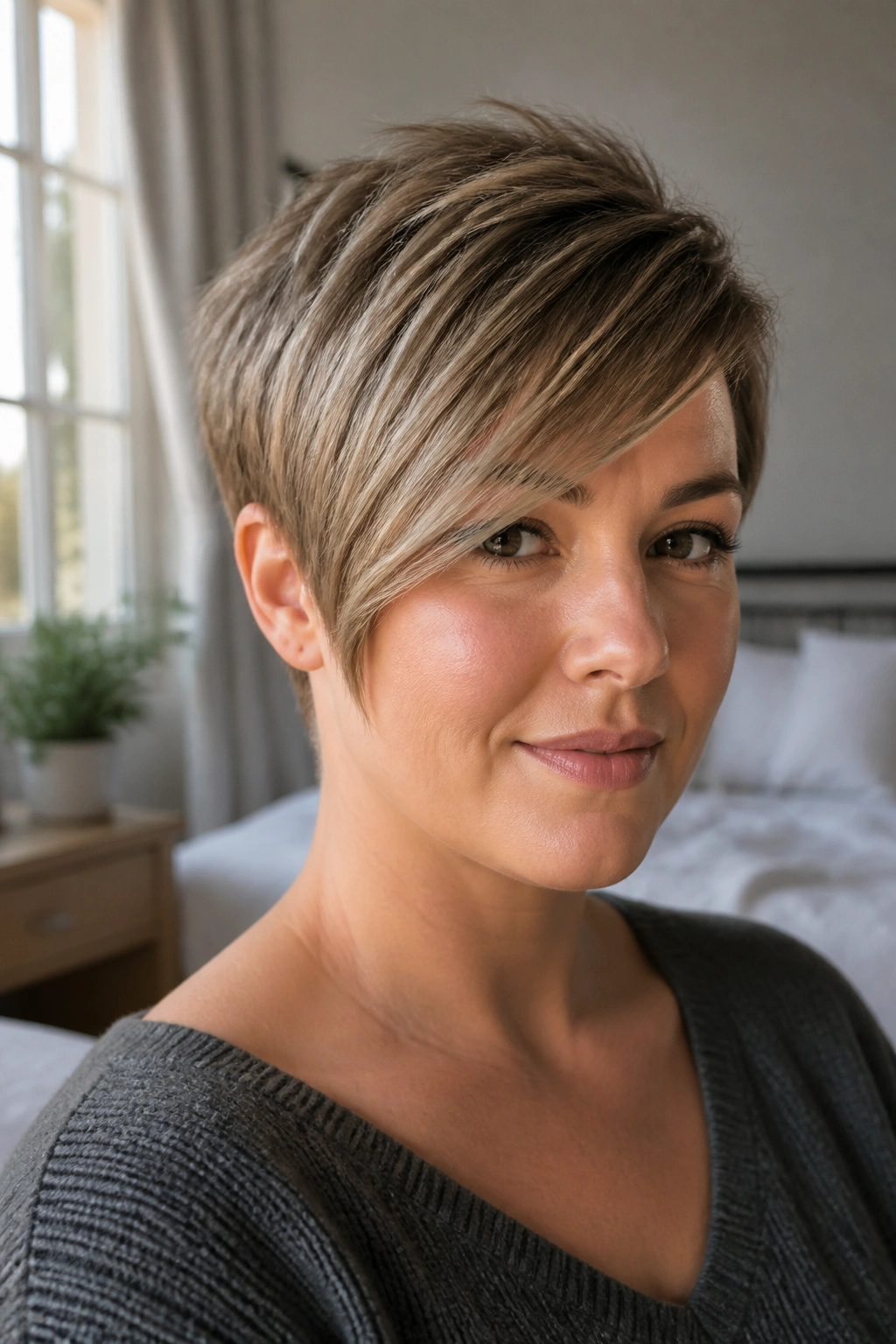
A long side-bang pixie does a lot of quiet work. The fringe sweeps across the forehead and cheekbone, while the sides stay close enough to keep the shape neat. That diagonal line is the whole trick.
Why It Works
The longest piece should sit somewhere between the eyebrow and the top of the cheekbone. Shorter than that, and you lose the soft angle; longer than that, and it starts to droop into the face. The back can be cropped tight, but leave a little lift at the crown so the cut does not flatten out.
A tiny bit of height changes everything.
- Ask for the fringe to start near the crown, not from the hairline.
- Keep the side closest to the ear shorter and cleaner.
- Use a matte paste or light wax, then pinch the ends for separation.
- Blow-dry the fringe in the direction you want it to fall, not straight down.
This one is especially good if you wear glasses. The bang can move around the frames instead of fighting them, which is a small thing that makes the haircut feel easier every single day.
2. Deep Side-Parted Chin Bob for Round Faces
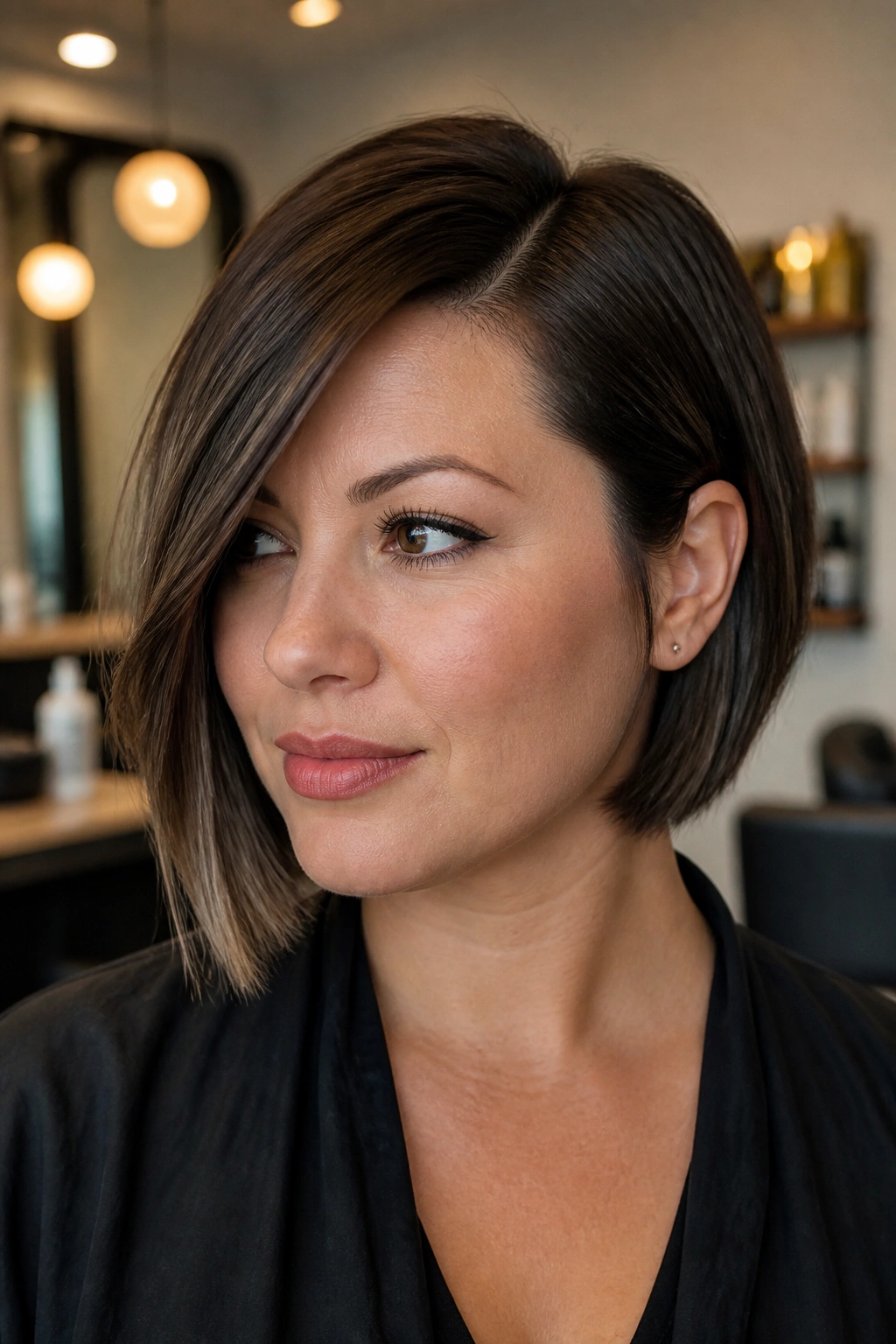
Why does an off-center part matter so much? Because it cuts across the widest part of the face instead of sitting on top of it like a lid. A chin-length bob with a deep side part gives you that line right away.
Keep one side just below the jaw and let the other skim the chin or tuck behind the ear. That tiny difference adds shape without looking fussy. If your hair is straight, a quick bend at the ends keeps the line from getting too stiff. If it’s wavy, leave the lower edge a little loose so it does not turn boxy.
It sounds small. It isn’t.
The biggest mistake here is keeping both sides the same length and hoping the part will do all the work. It won’t. Ask your stylist for a visible difference in the front lengths, even if it is only an inch or so, because that’s what keeps the cut from reading round instead of angled.
3. Stacked Back-Angled Bob
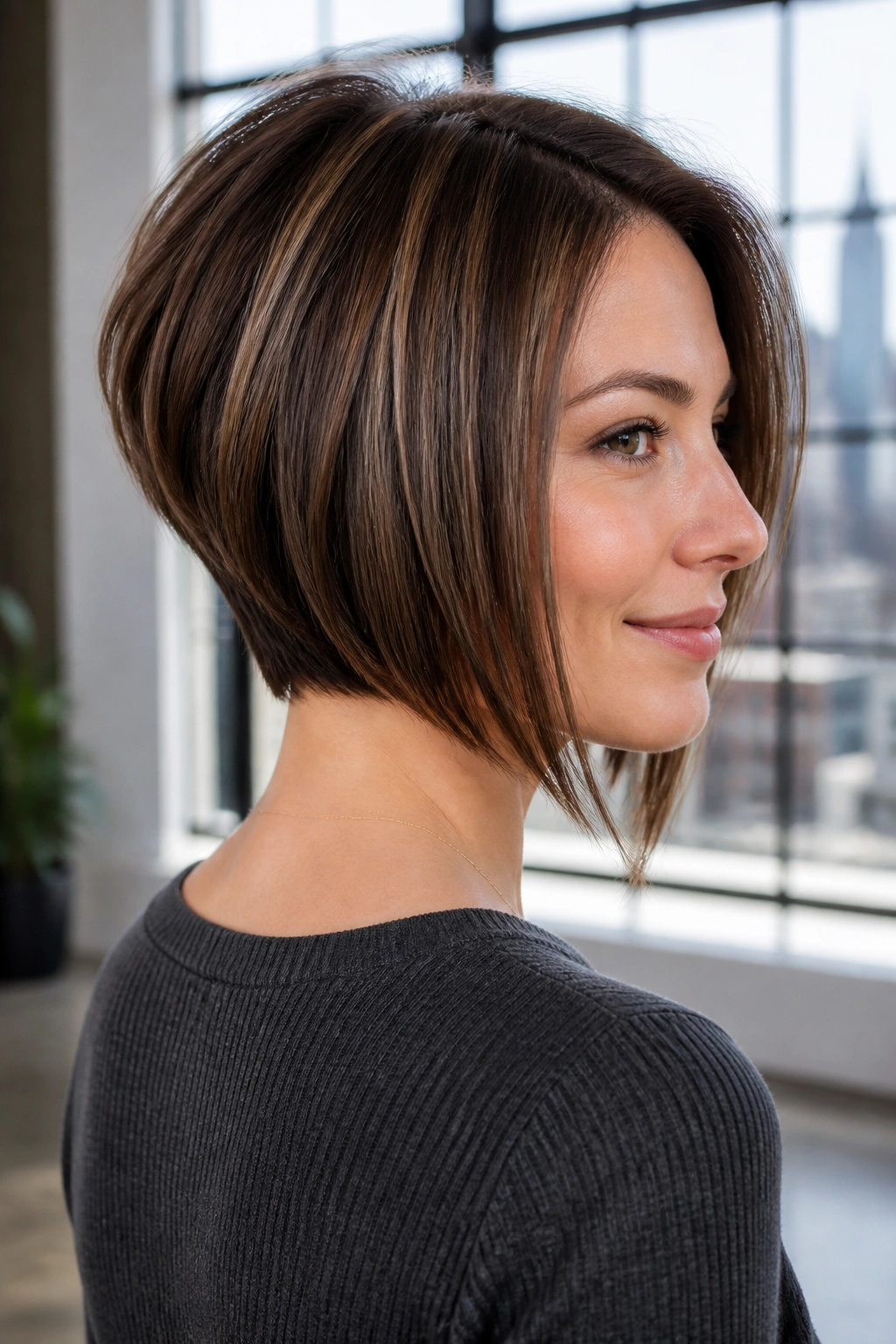
A stacked back gives round faces the vertical lift they keep asking for. The hair sits shorter at the nape, then builds softly toward the crown before dropping longer toward the front. That shape makes the head look a little taller and the cheeks a little narrower.
What to Ask For
- Shorter layers stacked at the back of the head
- Front pieces that are 2 to 3 inches longer than the back
- Soft graduation, not a hard shelf
- A little weight left at the perimeter so the bob does not puff out
This cut is especially good for thick hair, because the stacking removes bulk where you do not want it. If the back is too blunt, the whole style can spread outward at the jaw, and that is the exact thing you are trying to avoid.
I prefer this version with a blowout brush and a slight under-bend at the ends. It keeps the shape polished without looking stiff. Clean. Simple. Done.
4. Tucked-Behind-One-Ear French Bob
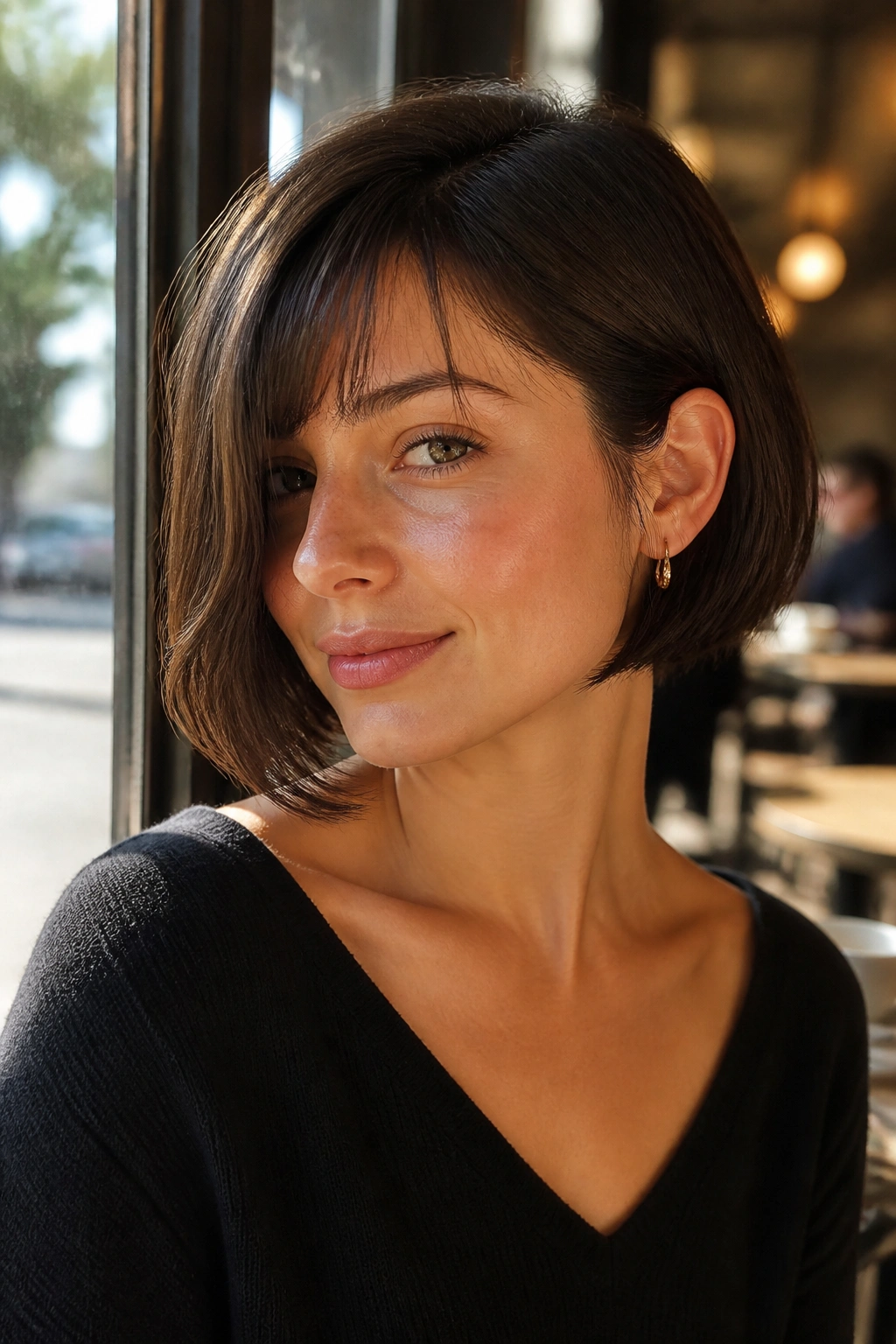
Picture a chin-skimming bob with one side tucked and the other falling in a soft curtain across the cheek. That is the charm of this cut. It feels neat, but never too neat.
The loose side should brush the jaw, not sit on top of the cheeks. On round faces, that little bit of drape makes the face read longer. Keep the fringe light and broken, not heavy and blunt, because a dense bang can close the face in fast.
A French bob like this works well when you want structure without the helmet effect. You can wear it sleek with a center-left part, or add a bit of bend for a softer finish. Either way, one ear gets a tuck and the other side gets to stay loose. That small imbalance is the point.
It is also one of the easiest cuts to dress up. Red lip, hoop earrings, done.
5. Undercut Pixie with Sweeping Fringe
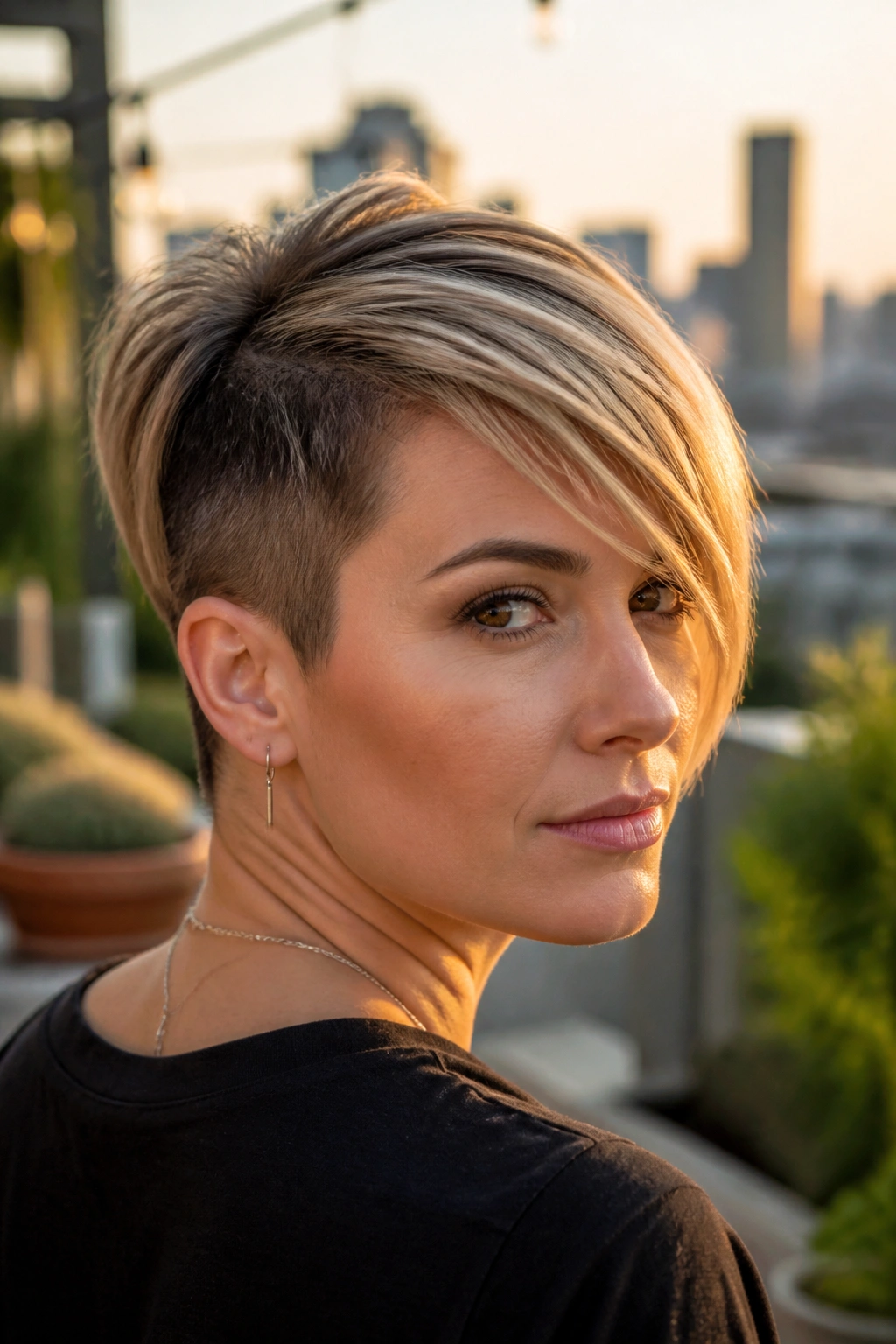
What if your hair is thick enough to fight every short cut? Then an undercut pixie starts to make a lot of sense. The hidden shorter section removes bulk underneath, while the longer top piece sweeps diagonally across the face.
Where the Shape Matters
The undercut should sit low enough to stay concealed when the hair is down, usually around the nape and the heavier side near the temple. The fringe can run from crown to cheekbone, which gives you that long line across the forehead that flatter round faces so well. If the top is too short, the shape turns boxy. If it is too long, the style loses its energy.
This is a strong choice if you like low-maintenance mornings. You can rough-dry it, add a little paste, and push the fringe to the heavier side. That is often enough.
A quick warning: if your hair is fine, a big undercut can leave the top looking sparse. Keep the removal subtle.
6. Asymmetrical Wavy Bob
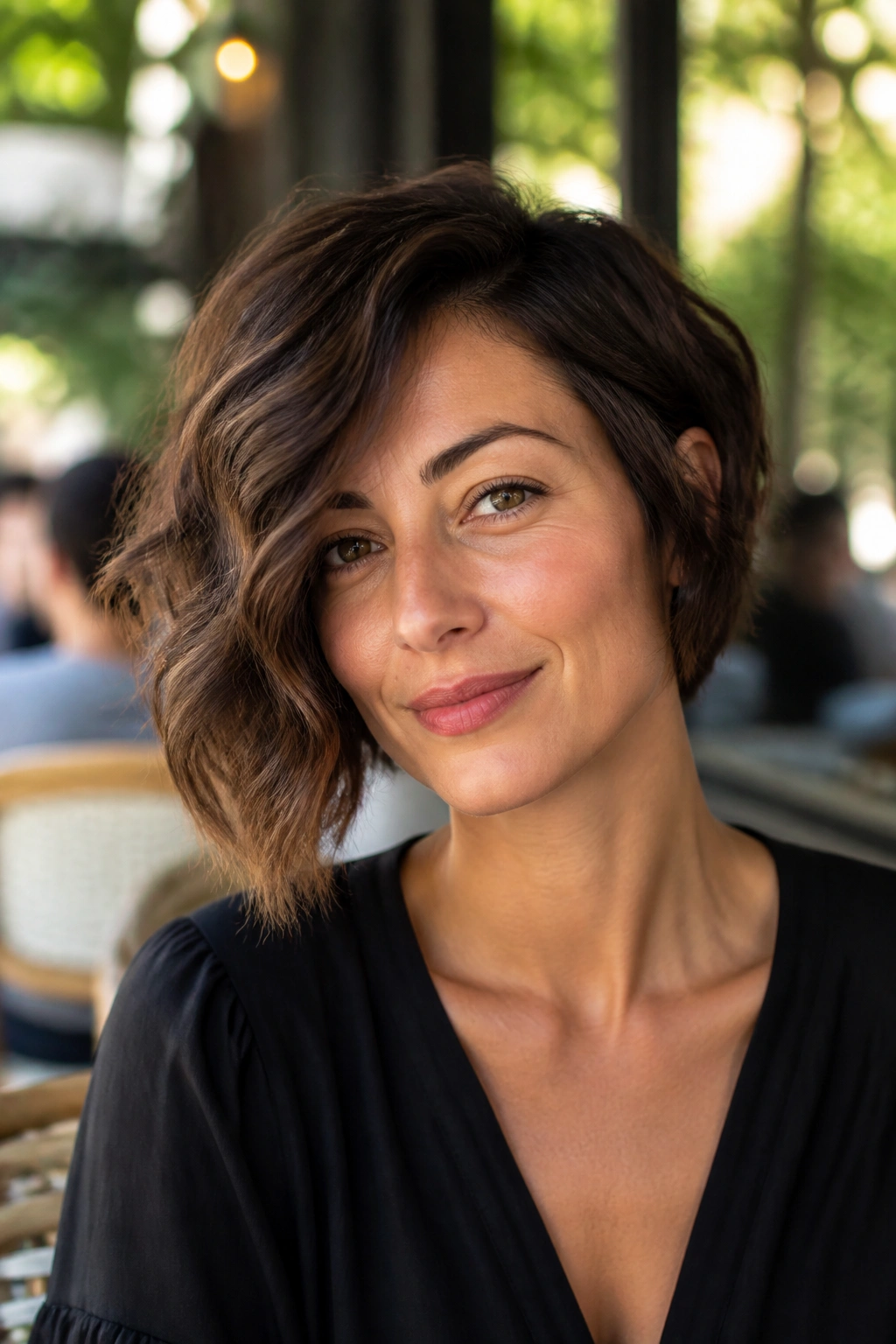
Waves blur the hard line in the best way. An asymmetrical wavy bob keeps the face-framing effect of a slanted cut, but the movement makes the shape feel softer and less engineered.
The length difference does not need to be dramatic. One side can drop an inch or two longer than the other, then curve around the jaw. That little imbalance does enough. If both sides are curled with the same tightness, you lose the asymmetry, so I like to leave the longer side looser and give the shorter side a touch more bend.
- Part the hair just off center.
- Curl only the front pieces away from the face.
- Scrunch in mousse while the hair is damp.
- Finish with a light spray, not a heavy lacquer.
The result should look touchable, not shellacked. If the waves start at the cheeks, that is usually too low. Move the curl pattern up toward the temples and crown instead.
7. Razor-Cut Side-Swept Crop
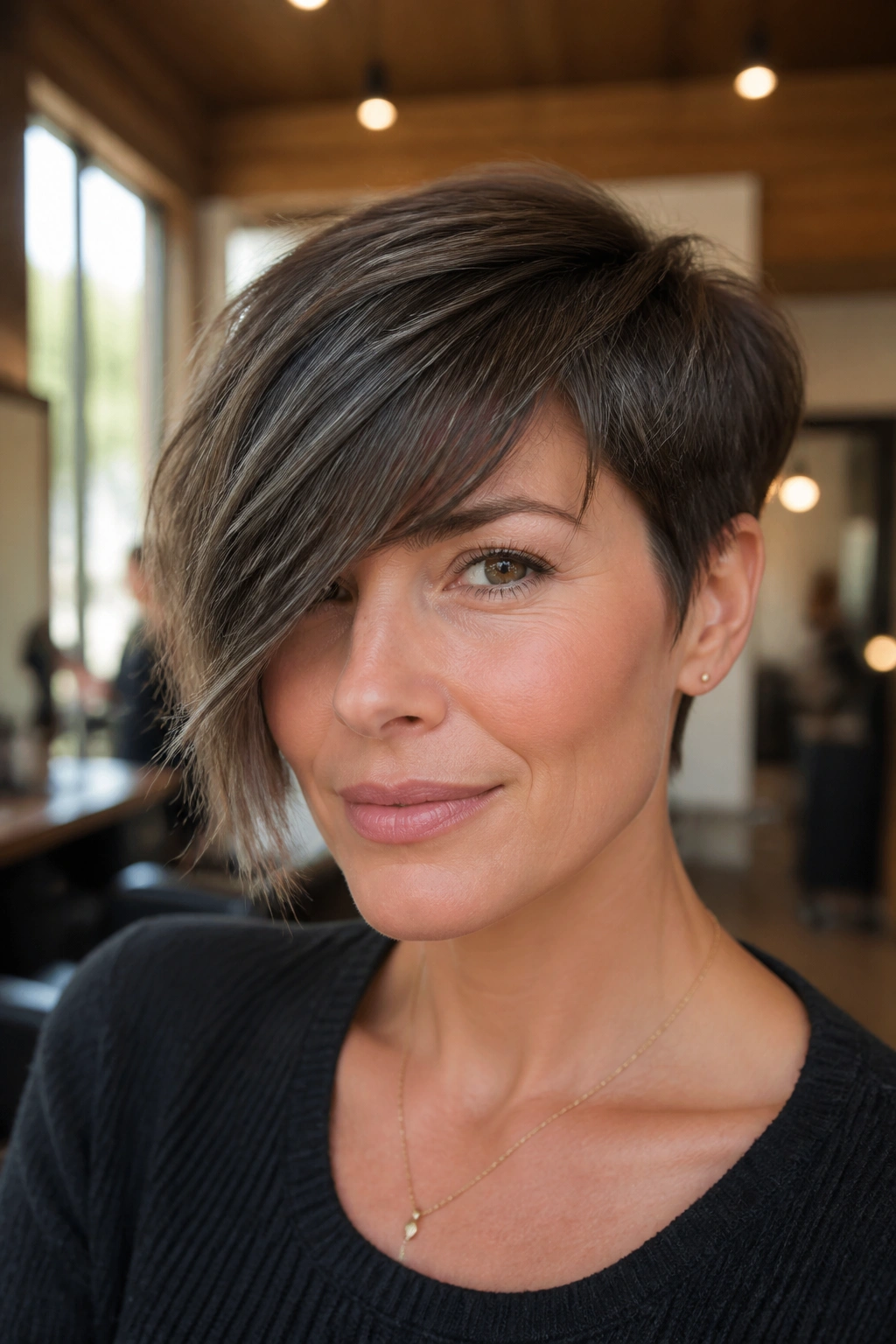
Unlike a blunt crop, a razor-cut version makes the edge look soft and broken. That matters on a round face, because harsh horizontal lines can make the cheeks look wider than they are. A razor crop takes the edge off the outline without making the haircut disappear.
The side-swept front should be the longest part. Let it skim one eye or hover at the outer cheekbone, then keep the opposite side tighter and cleaner. The finish should feel airy, almost a little undone. Not messy. Airy.
This cut works especially well on straight or slightly wavy hair. On curls, a razor can make the ends too frizzy if it is used too aggressively, so a softer point-cut shape may be better. That is one of those details people skip over, and then they wonder why the haircut looks fuzzy instead of fresh.
A tiny bit of styling cream at the front is enough. Too much, and you lose the separation that gives the cut its shape.
8. Cropped Shag with Uneven Fringe
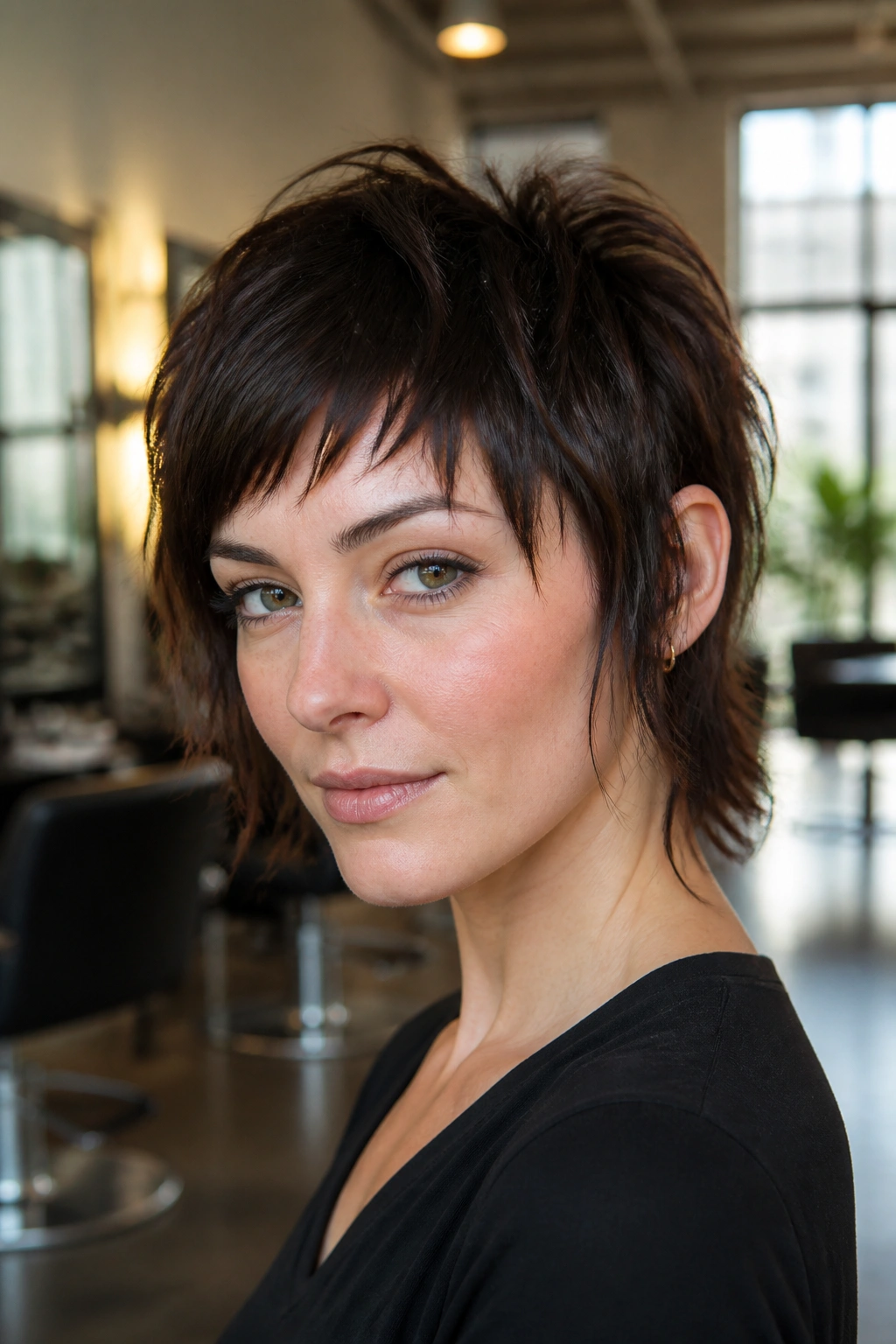
This is the haircut for someone who wants short hair but refuses to look too polished. A cropped shag gives you broken layers at the crown, a slightly uneven fringe, and just enough length around the temples to soften the face.
The best version has a fringe that does not sit in one solid line. Let one side fall a bit longer, and keep the other side lighter so the forehead stays open. Around the ears, the layers should feather out instead of sitting like a hard shelf. That keeps the roundness from building up at the cheeks.
A Few Details Worth Asking For
- Light layers through the top and crown
- A fringe that hits between the brow and the lash line
- Sideburn pieces left a touch longer
- Texture concentrated at the ends, not the middle
This cut likes movement. If the hair sits flat, it can start to look like a mushroom cap, and nobody wants that. A little mousse at the roots and a quick finger-dry make a bigger difference than a fancy blowout.
9. Jaw-Length A-Line Bob
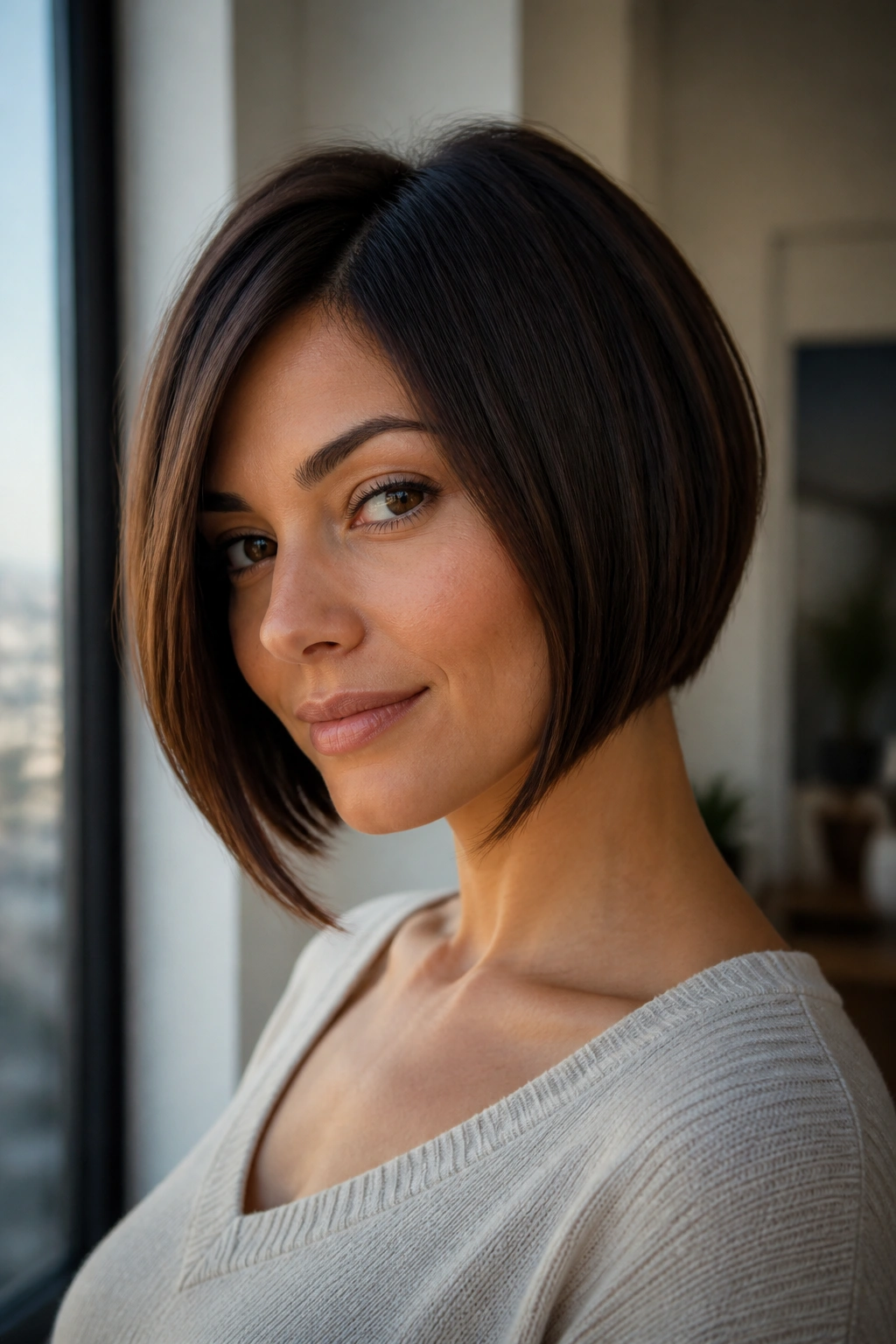
If you like clean lines, start here. A jaw-length A-line bob is shorter in the back and a little longer in the front, which gives the face a gentle diagonal instead of a flat line. On a round face, that diagonal is doing more work than most people realize.
The front should graze the jaw or land just below it. Too short and it opens up the cheeks; too long and it slips into lob territory. I like a slight bend under the ends so the line looks crisp, not hard. That small curve keeps the haircut from feeling severe.
This style is especially good for straight hair because the angle shows up clearly. You can see the shape from across the room. On wavy hair, the bob gets a softer finish, which can be lovely, but the angle still needs to stay visible.
One short sentence. The cut needs room to breathe.
10. Curly Side-Part Bob for Round Faces
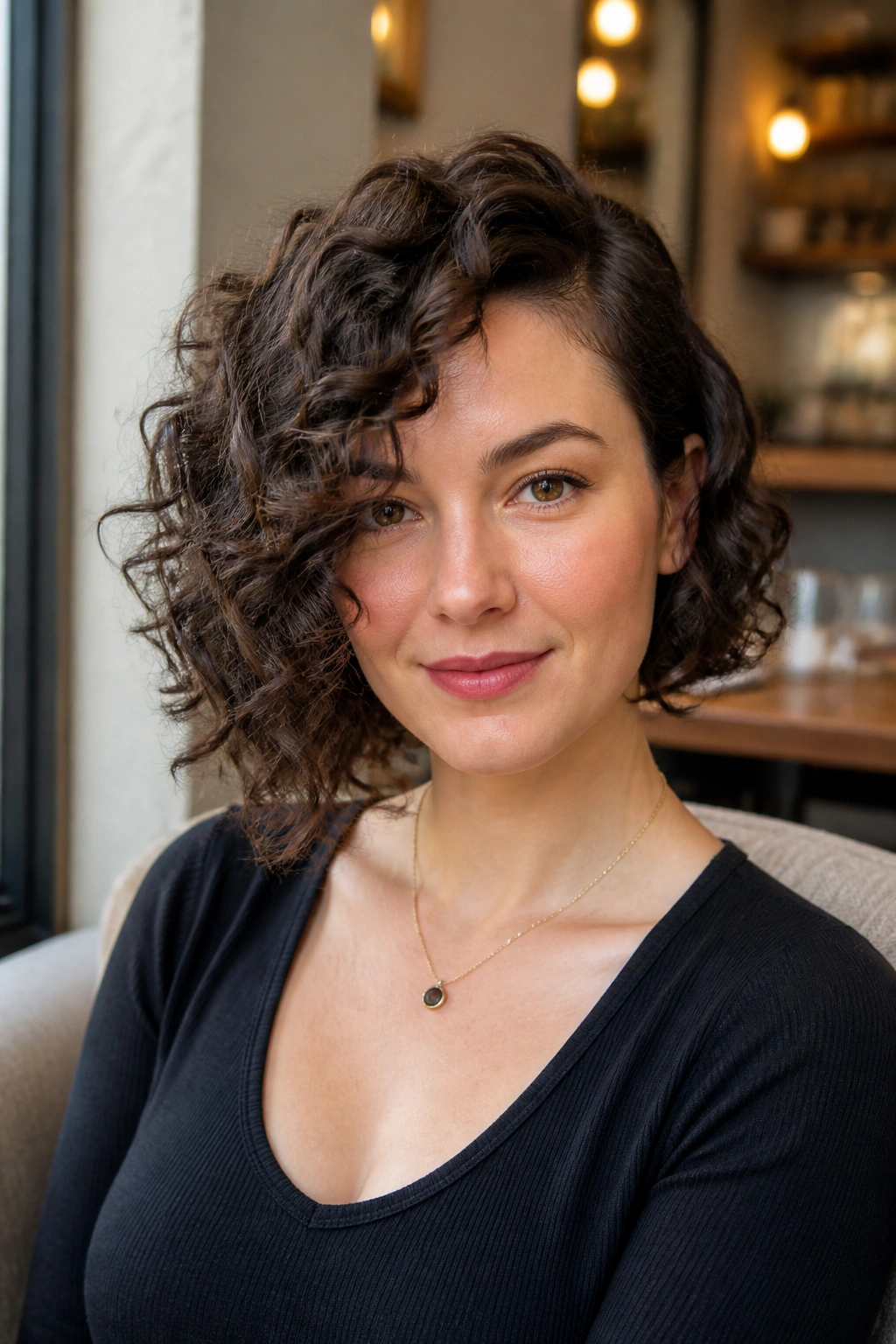
Can curls still look asymmetrical when they spring on their own? Absolutely, if you let the shape work with the curl pattern instead of against it. A side-part curly bob gives one side a little more length and lets the curls stack in a way that feels intentional.
How to Keep the Shape Visible
- Cut it dry, or at least partially dry, so shrinkage is not a surprise
- Keep the longest side near the lower jaw, not at the cheek
- Use a side part that sits a finger-width or two off center
- Diffuse on low heat so the curls keep their outline
The biggest mistake with curly asymmetry is making both sides too short. Once the curls spring up, the cut can turn wide fast. Leaving a bit more length at the heavier side gives the face a vertical line and keeps the width under control.
I also like this with a little root lift at the front. Not crunchy. Just enough lift to open the face and keep the curls from collapsing inward.
11. Piecey Pixie Bob
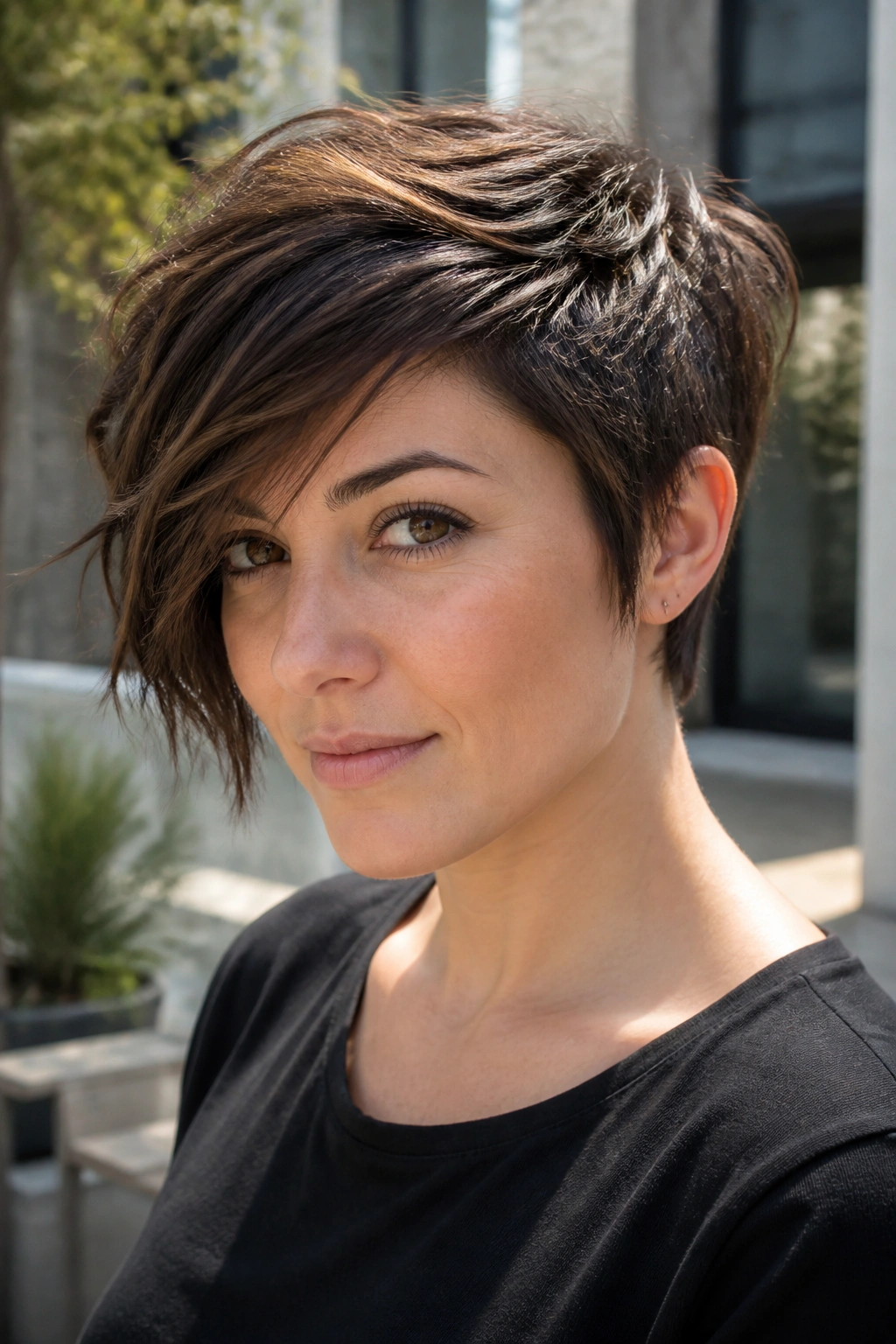
This sits between a pixie and a bob, and that in-between length is the point. A piecey pixie bob gives you short hair at the nape and sides, but keeps enough length on top and at one front corner to create that asymmetrical pull across the face.
It is a good cut if you want something light but not too severe. The shape should have visible pieces, not one smooth helmet-like mass. A few separated sections around the temple are enough to break up the roundness and make the whole style feel sharper.
It also grows out well, which I like. As the hair softens over a few weeks, the silhouette stays interesting instead of collapsing into an awkward half-stage. That makes this a smart choice if you do not want to be in the salon every month.
A little dry wax at the ends helps. Use your fingers, not a brush, or you’ll smooth away the texture that gives the cut its edge.
12. Micro-Bob With Longer Front
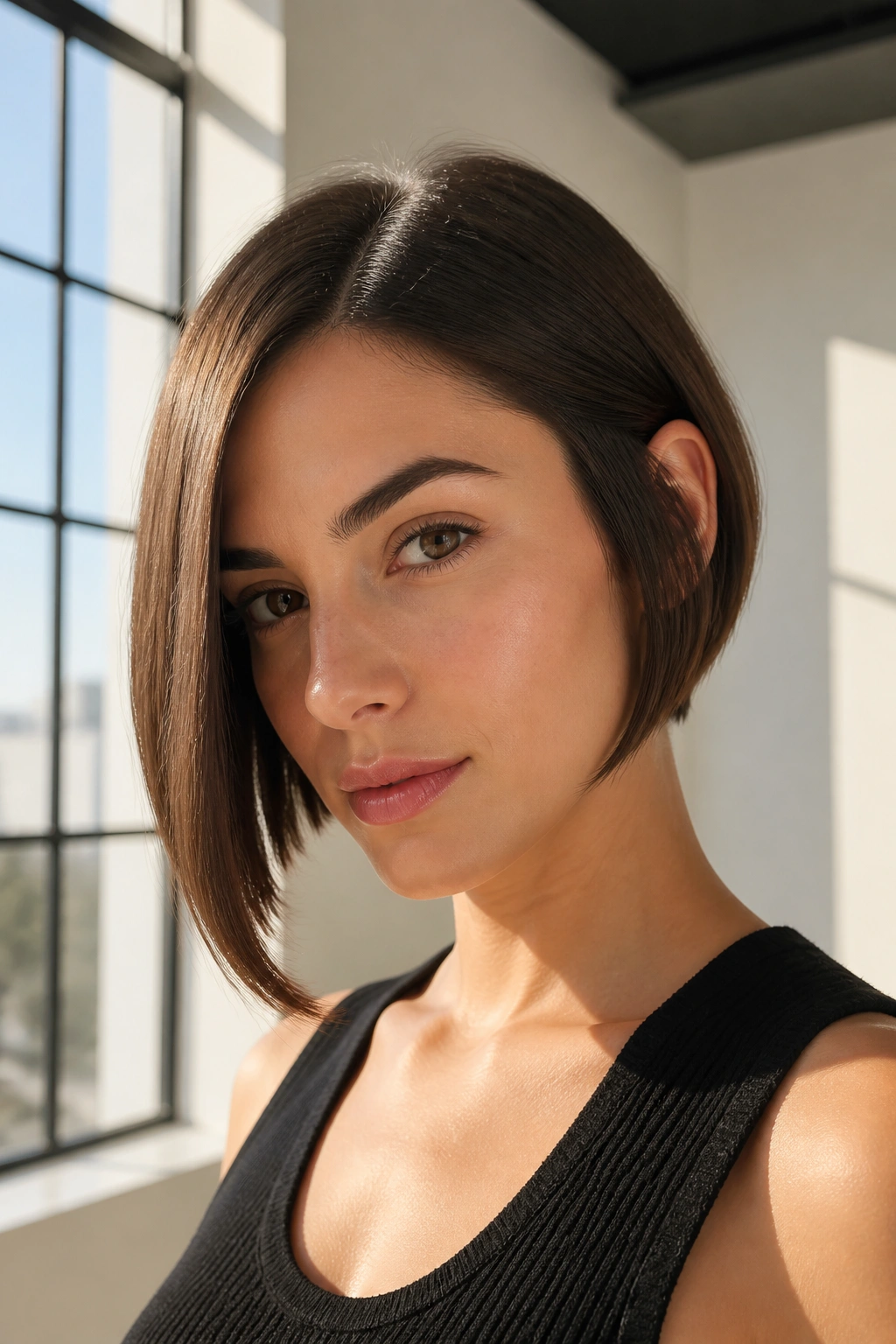
Short can still look sharp. A micro-bob with a longer front keeps the back tucked close to the neck while the front pieces land at the jawline or just below it. That front length is what keeps a round face from feeling boxed in.
Who It Flatters
- Fine hair that needs a crisp line
- Straight hair that shows off clean angles
- Anyone who likes a polished look with minimal volume at the sides
- Faces that need a little length through the front
The back should be neat, almost cropped, but not clipped so tight that the shape looks severe. The front needs to be a real presence. If it barely reaches the jaw, the cut can look accidental; if it drops too low, it stops being a micro-bob at all.
I like this with a shine serum on the ends and a flat brush blow-dry. It gives the style a glassy finish that makes the angle obvious. Clean edges. Little effort. Good payoff.
13. Asymmetrical Bowl Crop
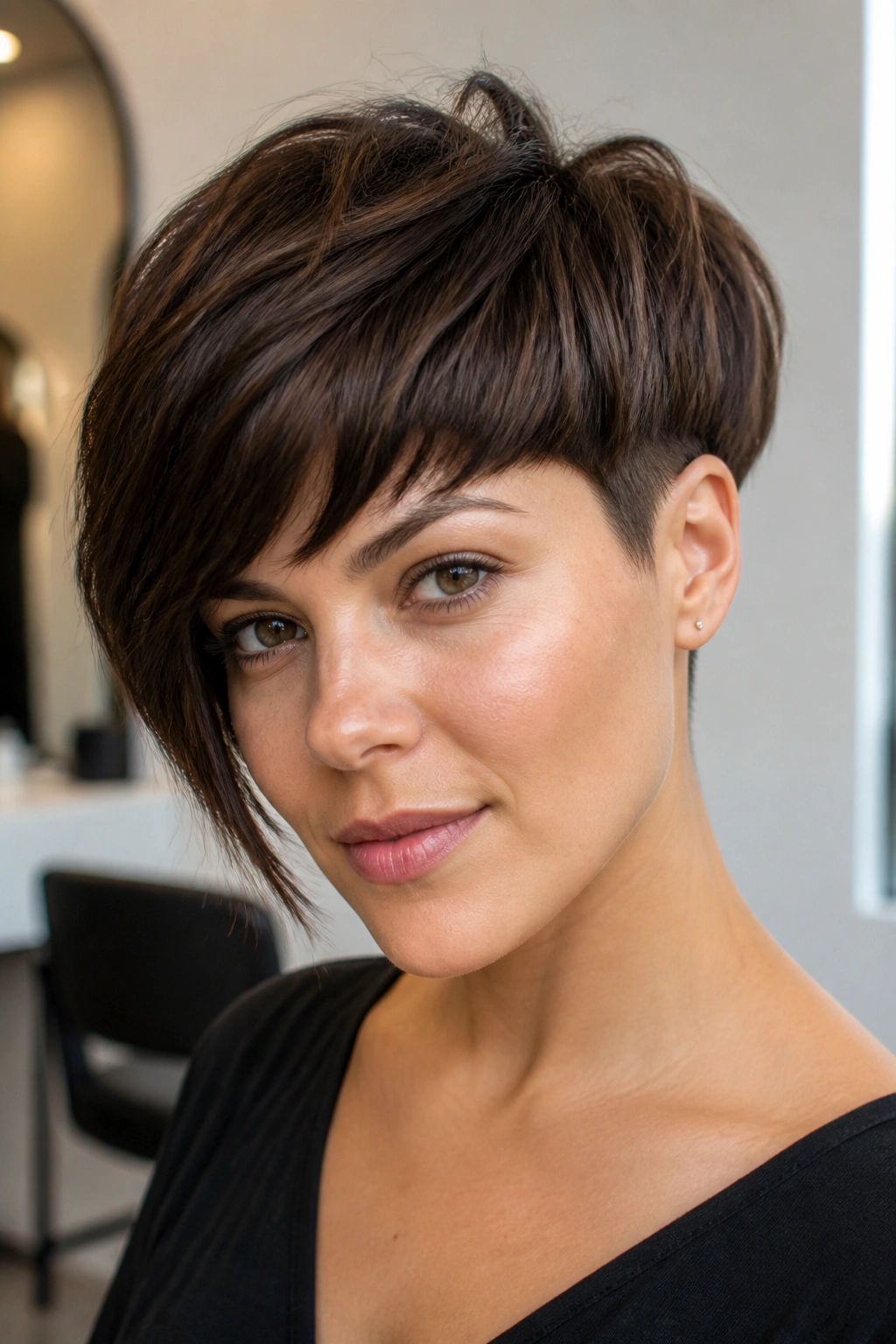
A bowl cut can work on a round face if it is not cut like a helmet. That is the difference. A modern asymmetrical bowl crop breaks the perimeter, keeps the crown a little lifted, and leaves one side longer so the face gets a diagonal instead of a circle.
The trick is to keep the edges soft. You want some movement around the temples and a bit of separation at the ends. If the line is too perfect, the cut can look heavy. If it is too shattered, it loses the graphic shape that makes it interesting in the first place.
This style is more fashion-forward than the others here. It is not trying to hide the face. It is trying to frame it in a cleaner way. On round faces, that can be a great thing, especially if you like bold glasses or simple clothes and want the haircut to carry some visual weight.
One small detail: keep a little space around the ears. That helps the shape read lighter.
14. Feathered Crop With Side Volume
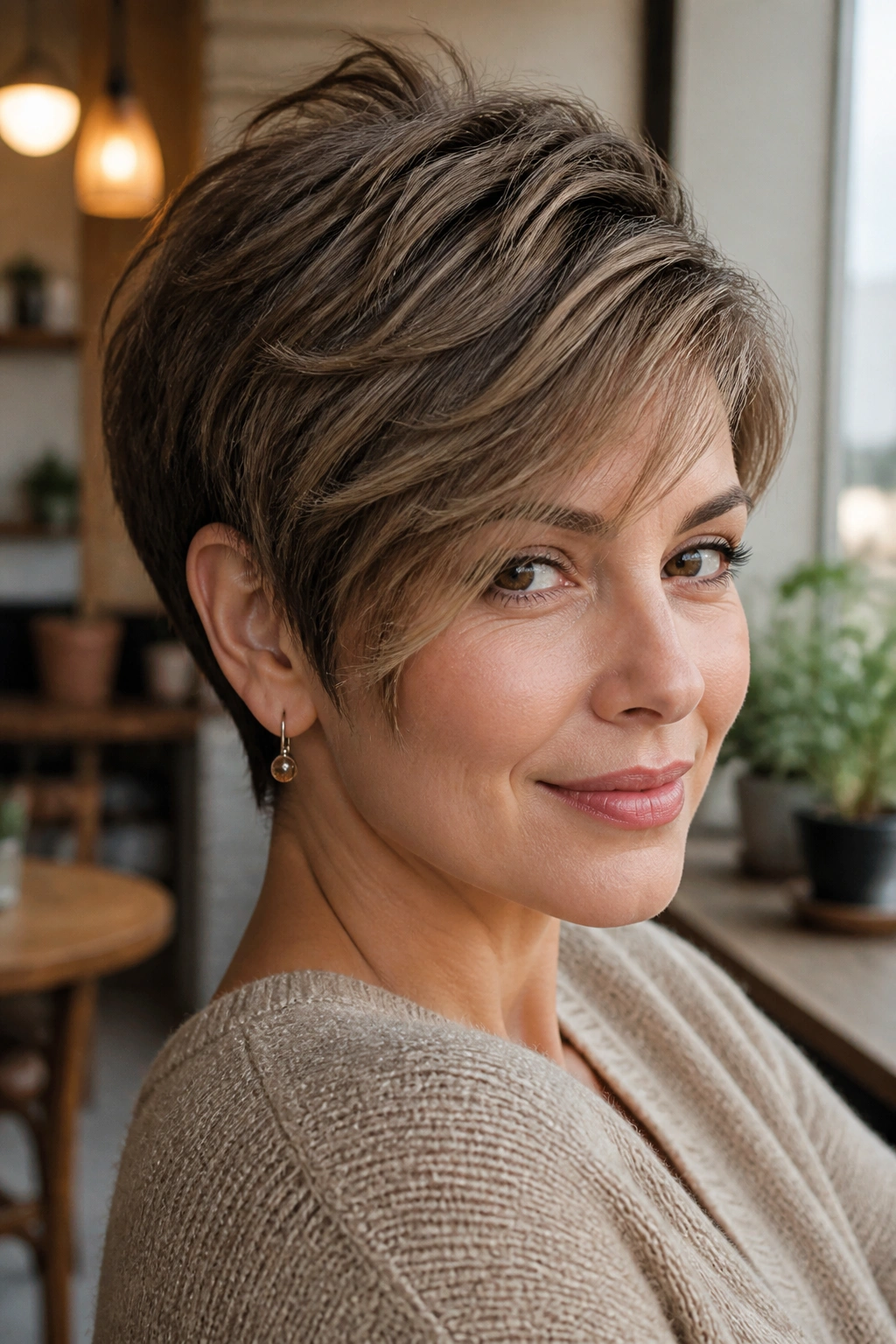
Feathering changes the texture fast. A feathered crop uses light layers that bend away from the cheeks instead of settling on top of them, which is exactly why it can work so well on round faces. The side volume should live higher up, near the crown and upper temple, not at the widest part of the face.
Heavy sides make round faces look wider. Feathered ones do the opposite.
This is a good cut for hair that falls flat or sticks close to the head. A round brush and a bit of mousse can give the top enough lift to make the whole shape feel more open. I also like the way the ends move when you turn your head; they do not sit in one fixed line.
The finish should be soft, not frilly. Think broken texture and light movement, not layers that look overworked. A touch of separation at the fringe keeps it modern.
15. Sculpted Pixie With Long Crown
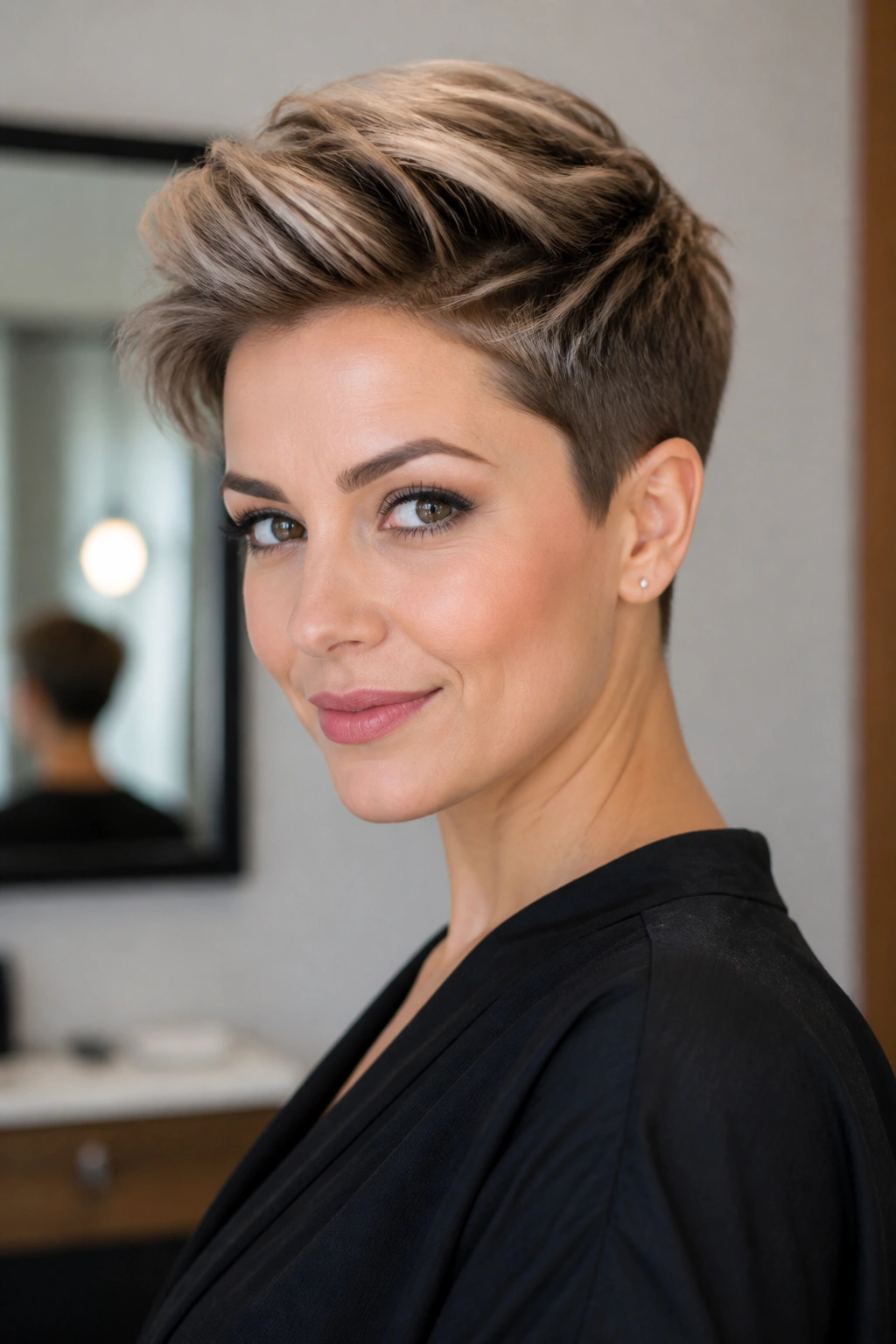
If height is the goal, this is the cleanest pixie on the list. A sculpted pixie keeps the sides close and the crown longer, which draws the eye upward and helps a round face look a little longer through the top.
Styling Moves That Matter
- Blow-dry the crown upward and slightly back
- Keep the side lengths tight around the ear
- Leave the longest top pieces about 1 to 2 inches longer than the sides
- Finish with a small amount of paste, worked from back to front
I like this cut because it has discipline. Nothing drifts. The silhouette stays crisp, which is useful if your hair tends to puff out at the sides or if you want something that looks neat fast.
A sculpted pixie can be surprisingly soft if the crown is directed diagonally instead of standing straight up. That slight tilt makes all the difference. It keeps the cut from feeling too severe and gives the face a cleaner frame.
16. Side-Flip Crop With Tapered Nape
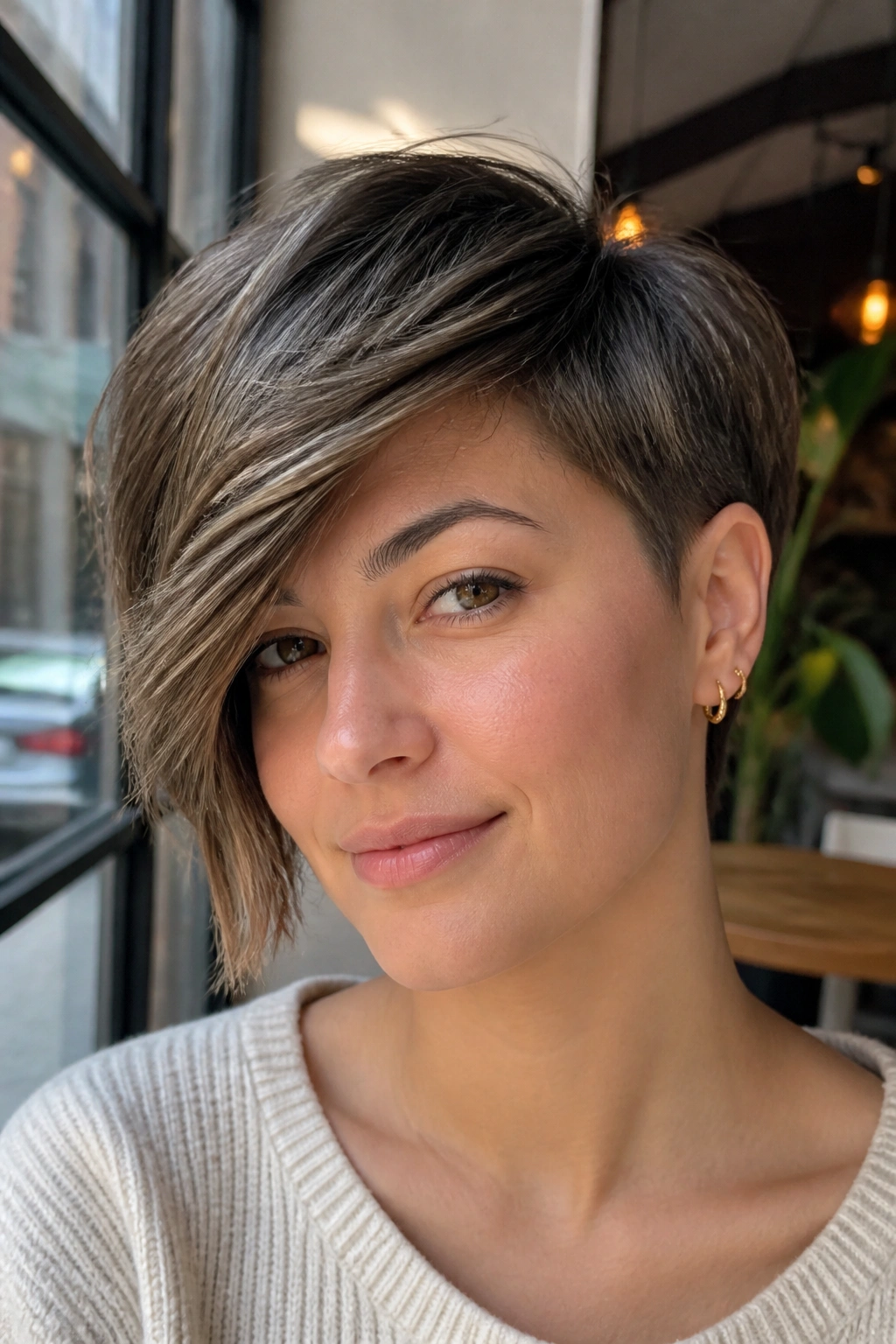
You want something quick to dry and easy to move with your fingers. A side-flip crop with a tapered nape fits that brief nicely. The back stays close and tidy, while the front flips across the forehead in one clear direction.
The taper at the nape keeps the shape clean from behind, which matters more than people think. If the back is heavy, the whole style can feel square. Up front, the longer pieces should angle across the face rather than hang straight down. That diagonal line is what keeps the roundness from taking over.
This is a good haircut for mornings when you do not want to negotiate with your hair. A little wax or styling cream, a quick finger rake, and you are done. If you like movement without a lot of fuss, this one makes sense.
It also works well with a few natural cowlicks. The flip can hide them instead of fighting them.
17. Textured Bob With One-Sided Tuck
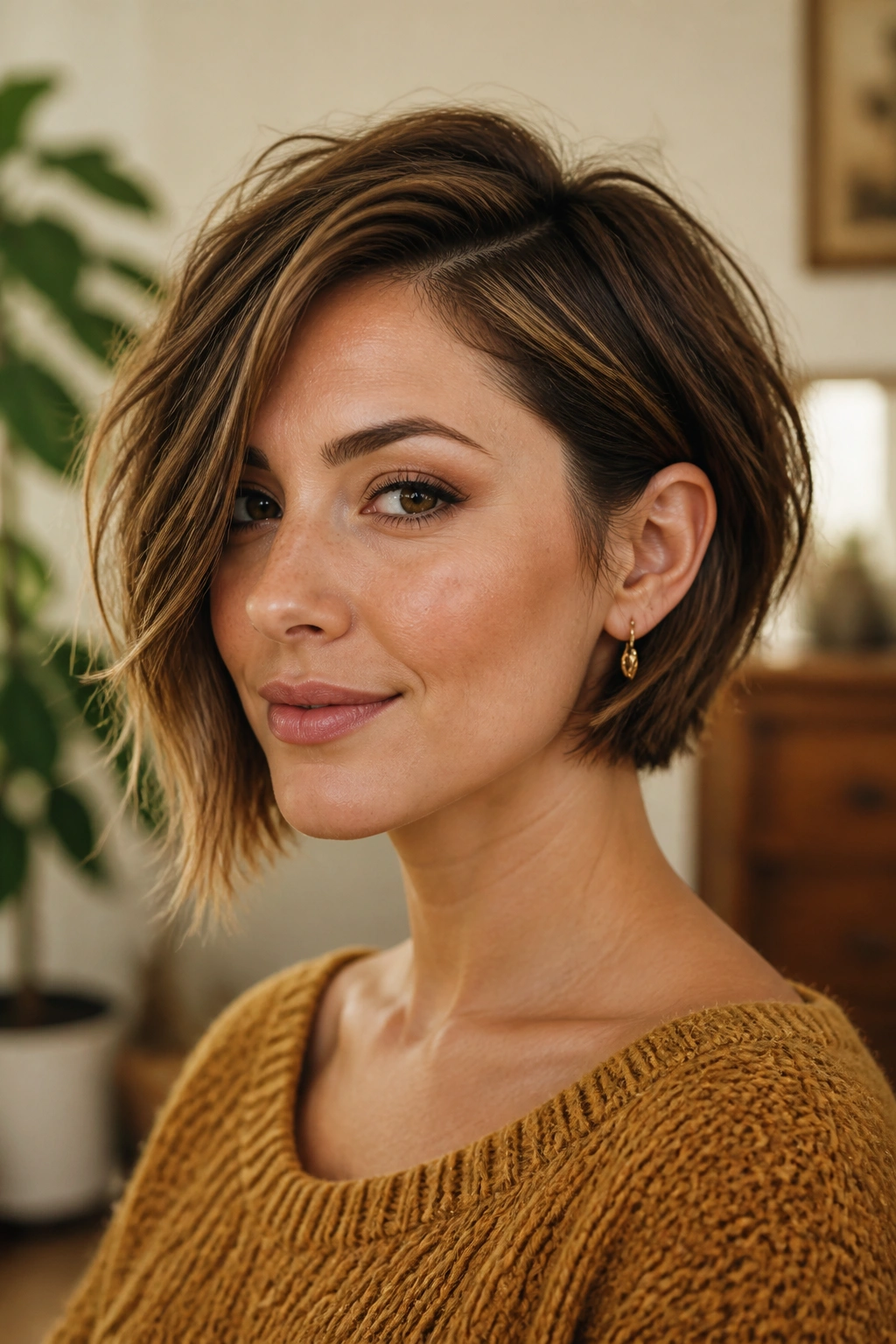
A symmetrical bob can feel stiff on a round face. A textured bob with one side tucked behind the ear solves that fast. You keep the shape balanced enough to look polished, but the tucked side creates the little break that keeps the face from reading too broad.
Small Moves, Big Difference
- Keep the ends lightly broken, not all one length
- Tuck one side loosely, not pinned flat
- Let the other side fall around the jaw
- Use a finger-shaped wave or bend near the front
This cut is especially handy if you change your part a lot. It does not need to be perfect. Some days the tuck will sit higher, some days lower, and the style still works because the asymmetry is built into the cut itself.
I like it for anyone who wants something low-drama. It is not loud. It is not fussy. It just gives the face a cleaner shape and lets the hair move a little.
18. Choppy Asymmetrical Crop for Thick Hair
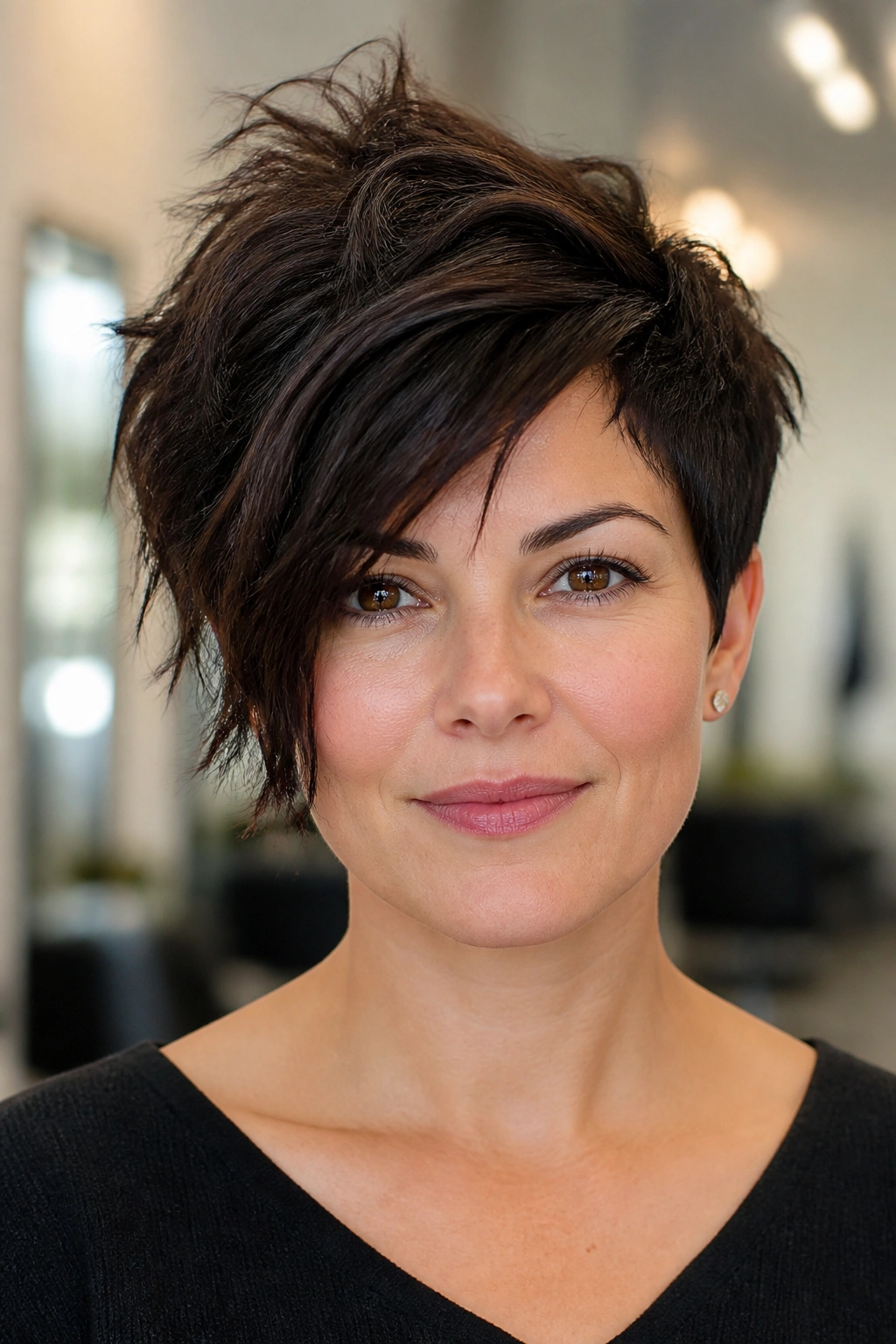
Thick hair can carry a lot of shape, and this cut uses that weight instead of fighting it. A choppy asymmetrical crop removes bulk inside the shape, then leaves the outline uneven enough to keep the face from looking wide at the sides.
The key is restraint. Too much thinning near the ends can make thick hair frizz out and sit like a cloud, which is the opposite of what you want. Ask for internal weight removal, especially near the crown and underlayers, so the surface still looks full but not puffy.
This cut loves piecey texture. A little texture spray and a quick scrunch with your hands can wake it up fast. If the hair is naturally coarse, a smoothing cream on the mid-lengths can stop the shape from expanding through the cheeks.
It is a strong choice if your hair has a mind of its own and you want a cut that works with that, not against it.
19. Sleek Angled Bob for Straight Hair
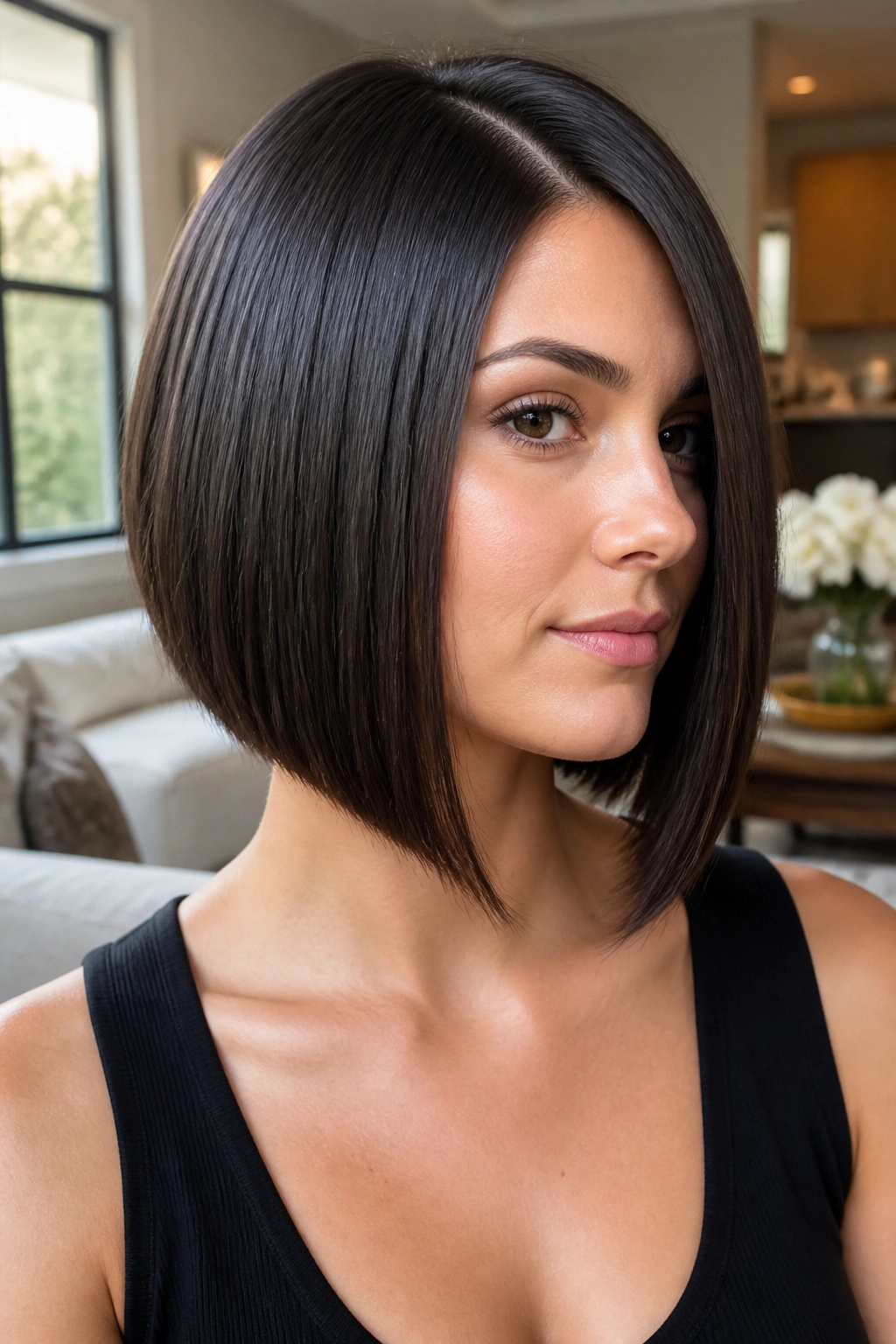
A glossy angled bob looks precise because every line shows. Straight hair makes that angle obvious, so if you want a haircut that reads clean and tailored, this one does the job.
The front should be noticeably longer than the back, often by 1.5 to 3 inches depending on how short you want to go. That slant pulls the eye down and forward, which helps balance round features. Keep the ends blunt enough to look intentional, but give the very tips a soft bend so they do not look harsh.
A Few Styling Notes
- Use heat protectant before any flat ironing
- Work in 1-inch sections for a smooth finish
- Bend the ends slightly inward, not straight under
- Keep a side part if you want more face length
This is a haircut that rewards neat styling. If you like a polished edge, it feels expensive without trying too hard. If you prefer messy texture, this is not the one; the shape is the whole point.
20. Tousled Pixie With Long Temple Pieces
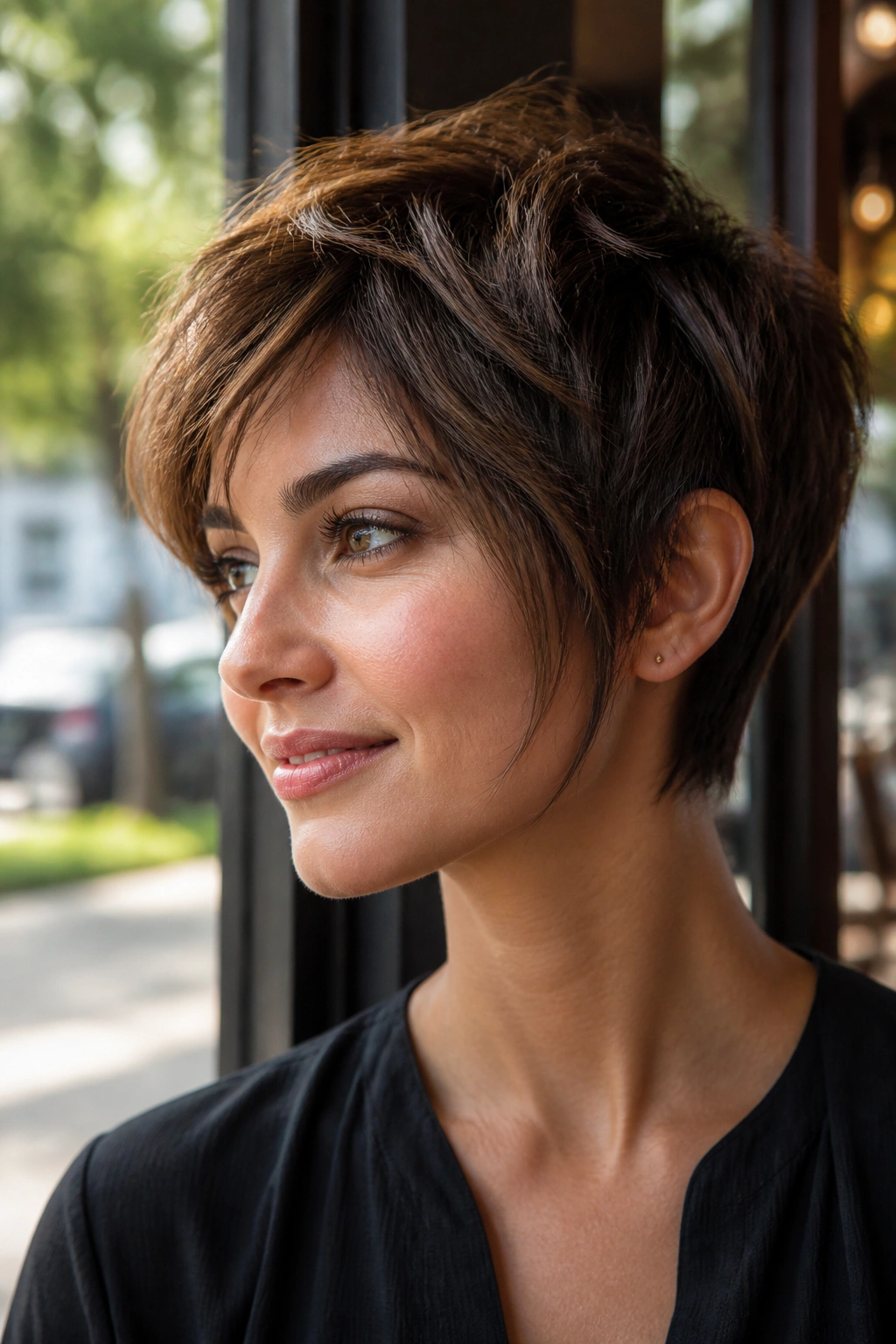
Need softness around the cheeks without giving up short hair? Leave the temple pieces longer and let the top stay messy. A tousled pixie with long temple pieces gives the face a little curtain on the sides, but not enough to add width.
The temple length matters. Keep those pieces long enough to graze the cheekbone or outer jaw, then rough up the top with a light paste or texture spray. The goal is to create a broken outline, not a perfect one. That broken outline keeps the haircut from sitting like a cap on the head.
I like this cut for people who do not want to look overly styled. It reads relaxed, not lazy, which is a useful distinction. You can wear it with a side-swept front, or push it back when you want more lift at the forehead.
The shape is small. The effect is not.
21. Soft Asymmetrical Crop With Curtain Fringe
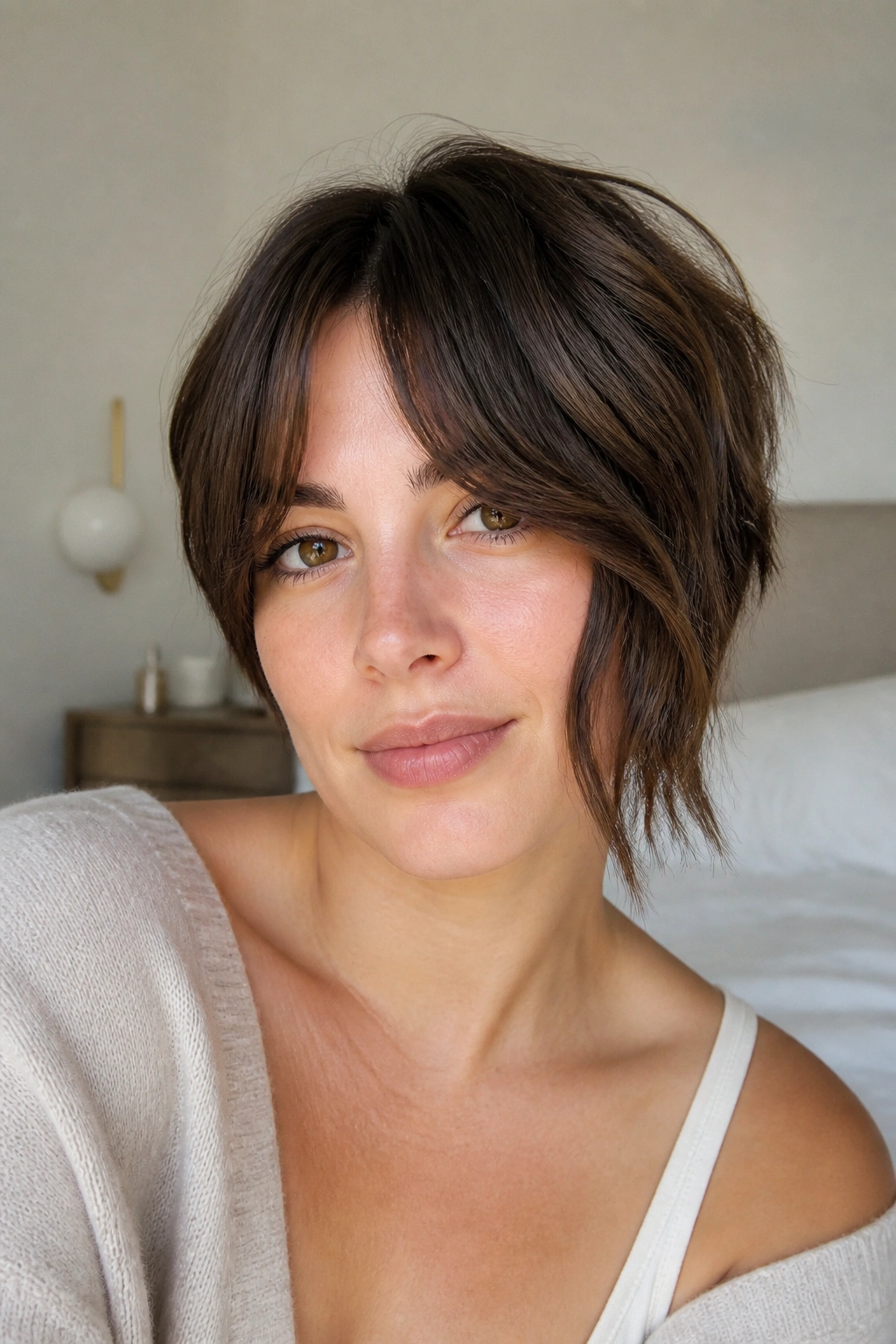
This is the gentlest way to wear asymmetry. A soft asymmetrical crop uses a curtain fringe that splits slightly off center, with one side longer so the face gets a little movement without a hard edge. If you are nervous about short hair on a round face, start here.
What Keeps It Soft
- Ask for face-framing layers around the temples
- Keep one fringe side a touch longer than the other
- Avoid a blunt line across the forehead
- Use point cutting so the ends stay airy
The fringe should open the face, not close it. That means the center needs enough lift to show some forehead, while the longer side drapes toward the cheek in a loose line. It is a small difference, but it keeps the haircut from looking too symmetrical.
This cut also grows out well. As the fringe softens, the shape stays useful for longer than a severe crop would. That makes it a smart option if you want something manageable that still feels finished.
22. Shaggy Pixie Bob With Length on One Side
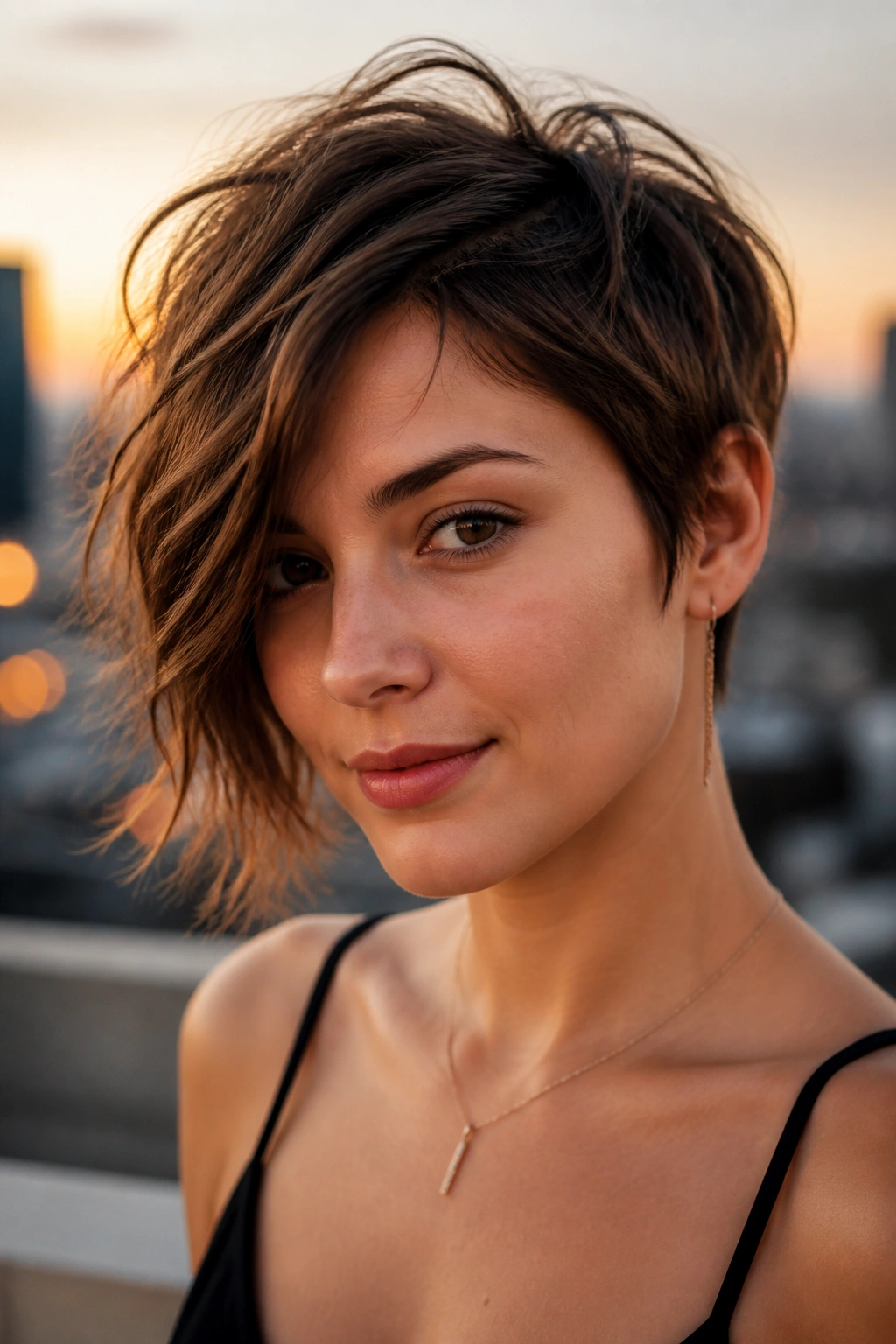
If you want one cut that stays interesting even after a few weeks, this is the one. A shaggy pixie bob blends the lightness of a pixie with the extra front length of a bob, then tilts the whole shape so one side lands lower than the other.
That extra length on one side does the visual work. It stretches the face a little, while the shag layers keep the cut from looking heavy or too neat. I like this style for people who want movement first and polish second. It is easy to finger-style, easy to rough up with texture spray, and forgiving when the hair does not behave.
The best version keeps the top a bit airy, the sides soft, and the longer front piece near the jaw or slightly below. If you want one cut that can go from casual to sharp with almost no effort, this is a solid place to land.
It does not shout. It just works.
