



Round faces are easy to spot in the mirror: the widest point usually sits around the cheeks, the jaw stays soft, and the whole shape reads a little shorter than it is. That does not mean you need to hide anything. It means your hair has a job to do, and the best cool hairstyles for round faces know how to use line, height, and movement without making the sides puff out.
Some styles sharpen the outline. Others add length where the eye needs it. A few do both, which is why the same cut can look flat on one person and sharp on another. The difference is usually small — where the part sits, where the layers start, how much lift sits at the crown, and whether the hair lands at the cheekbone or below it.
I’ve always thought the worst advice for a round face is the lazy kind: “avoid this, avoid that.” Skip the panic. A chin-length bob can be brilliant if the edges are angled. Long hair can look wider if it balloons at the sides, or lean and sleek if the layers are placed right. Even bangs can work, and some of the best ones are the soft, split kind that open the face instead of boxing it in.
What matters is shape, not rules. The styles below do different things on purpose — some pull the eye up, some carve out a cleaner line, some let texture do the heavy lifting — and that is where the fun starts.
1. Long Layers with a Center Part
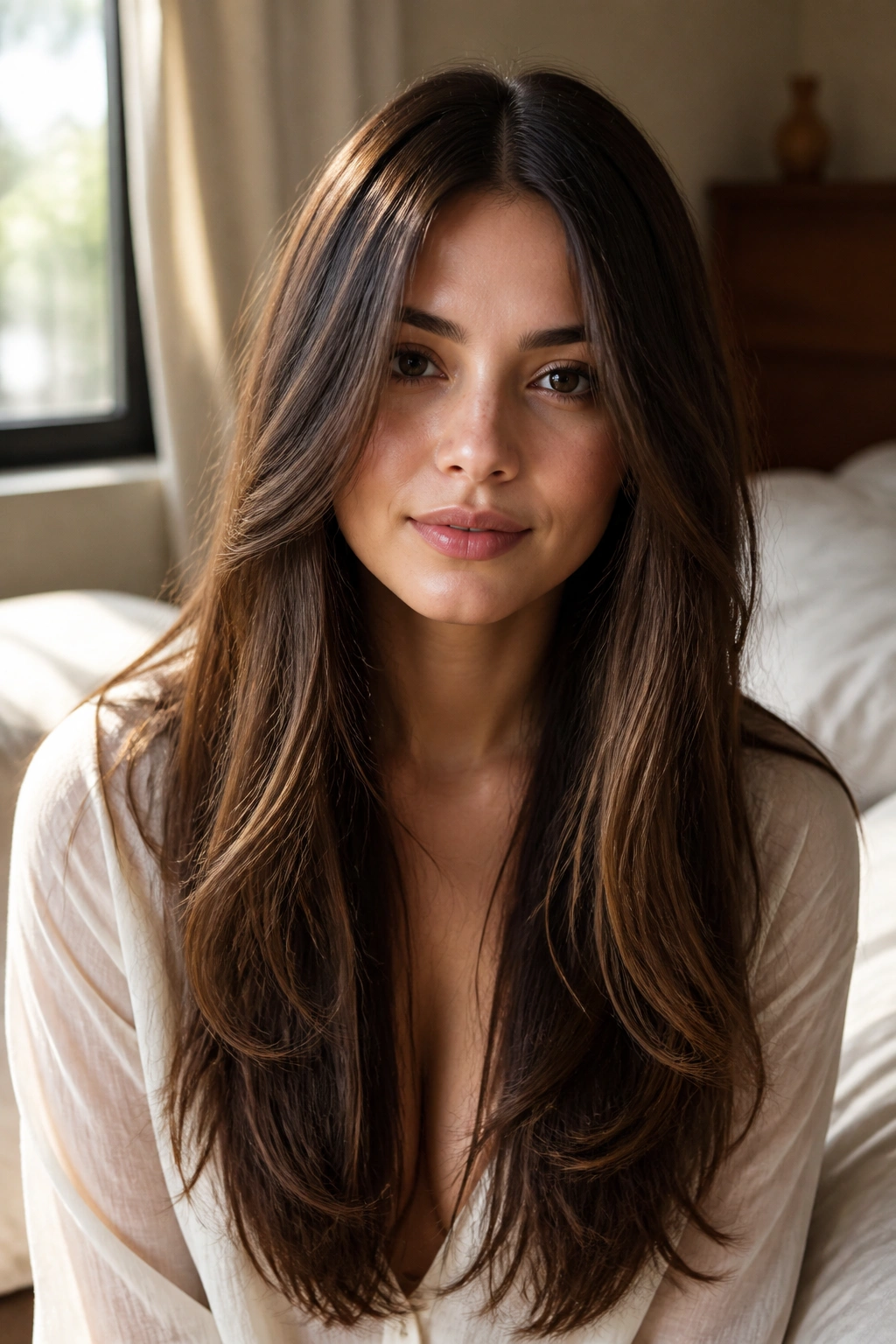
Long layers are one of the easiest wins for a round face because they create a vertical line without feeling fussy. When the layers start below the chin and fall through the chest, the eye moves down instead of stopping at the cheeks. That little shift matters more than people think.
Why It Works
A center part gives the face a clean, even frame, and the length keeps the overall shape from spreading outward. If your hair is thick, ask for the layers to be softened with point cutting so the ends don’t look blunt or heavy. If your hair is fine, keep the layers longer and lighter so you don’t lose too much density.
- Keep the shortest face-framing piece at the corner of the mouth or lower.
- Ask for movement through the ends, not short layers near the cheeks.
- Style with a round brush or a loose bend from a flat iron, not a tight curl.
- Use a lightweight serum on the mid-lengths so the layers fall instead of frizzing out.
Best tip: if your hair wants to puff at the sides, tuck the top half behind your ears for 10 minutes after drying. It trains the shape in a surprisingly useful way.
2. Shoulder-Length Lob with Soft Ends
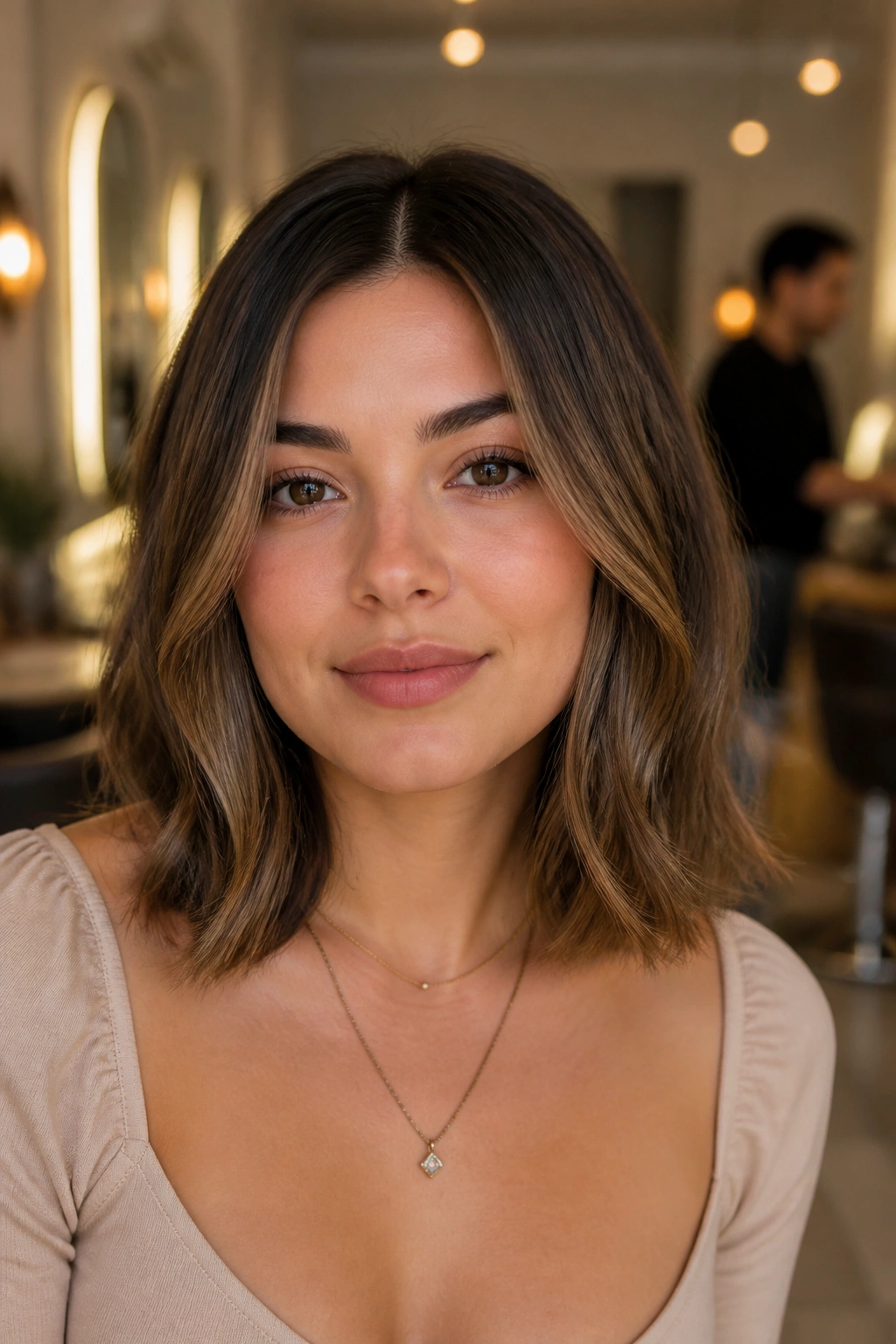
A collarbone-grazing lob is one of those cuts that looks expensive without trying too hard. The length lands low enough to stretch the face, and the soft ends keep it from turning boxy. Round faces love that little bit of drop.
The trick is to keep the perimeter loose. A lob that sits exactly at the widest part of the cheeks can feel stubborn; a lob that skims the collarbone or sits a touch below it gives the face a longer outline. If you wear it straight, bend the ends inward only slightly. If you wear it wavy, keep the wave mid-shaft and let the tips stay soft.
This one works especially well if you want something that feels polished for work but still moves when you shake it out. It also plays nicely with a middle part or a soft off-center part, depending on whether you want symmetry or a little more lift on one side.
And honestly, that’s why it gets worn so much: it behaves.
3. Curtain Bangs with Long Hair
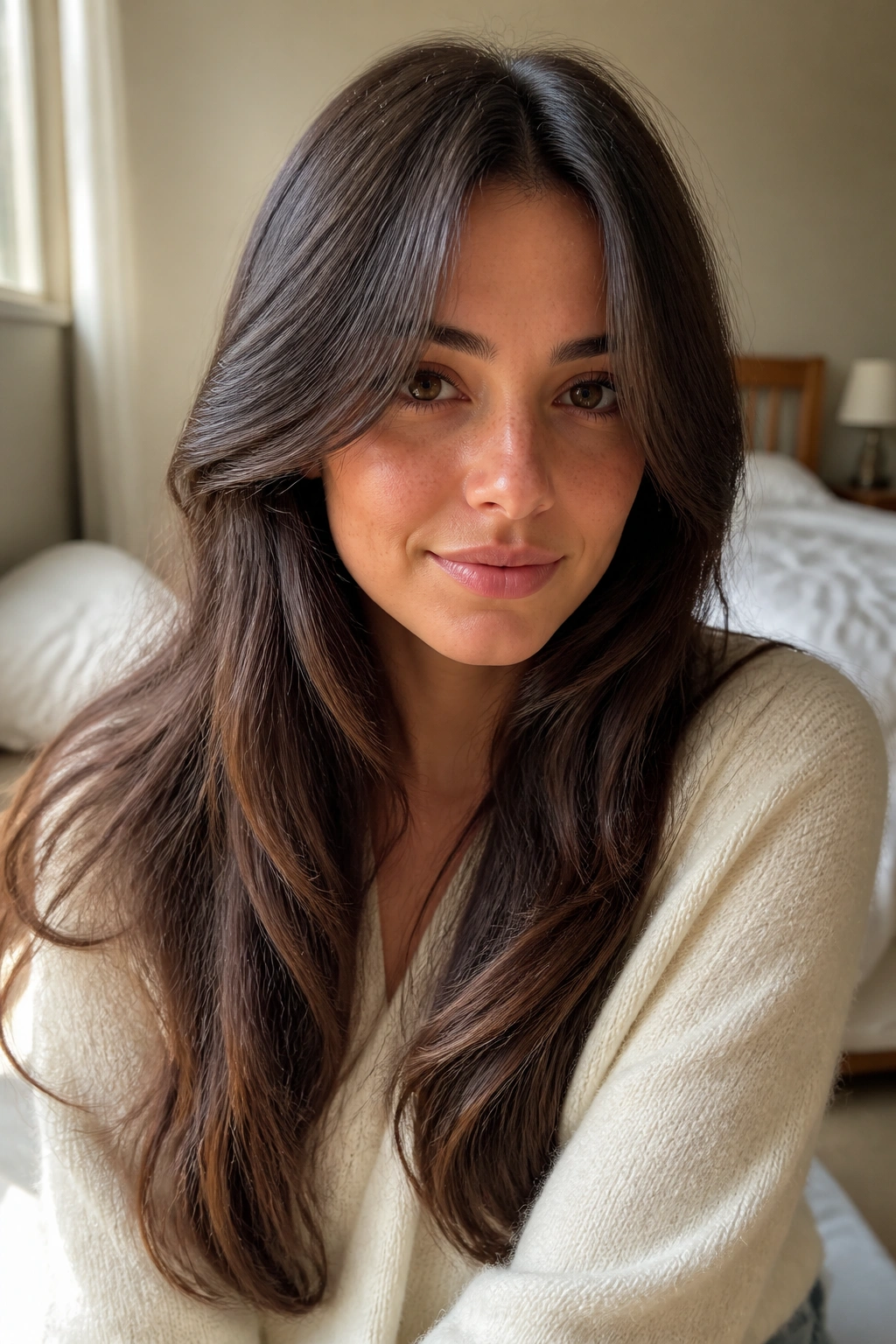
Can bangs work on a round face? Yes — if they open in the middle and sweep toward the cheekbones instead of landing in a hard line across the forehead. Curtain bangs do exactly that. They break up width without chopping the face in half.
The nicest versions start around brow level in the center and feather down toward the jaw. That gives you softness near the eyes and a gentle diagonal along the face. If the bangs are too short, they can make the face read rounder. If they’re too thick, they can feel heavy. The sweet spot is airy and movable.
How to Style Them
Blow-dry the bangs forward first, then split them with your fingers and direct each side away from the face using a round brush. A quick pass with a flat iron can help if your hair bends in odd directions. Keep the rest of the hair long and loose so the fringe feels like part of the cut, not a separate piece.
Curtain bangs are especially good if you want to change your face shape without losing length. They’re a small change. Big result.
4. Angled Bob with a Deep Side Part
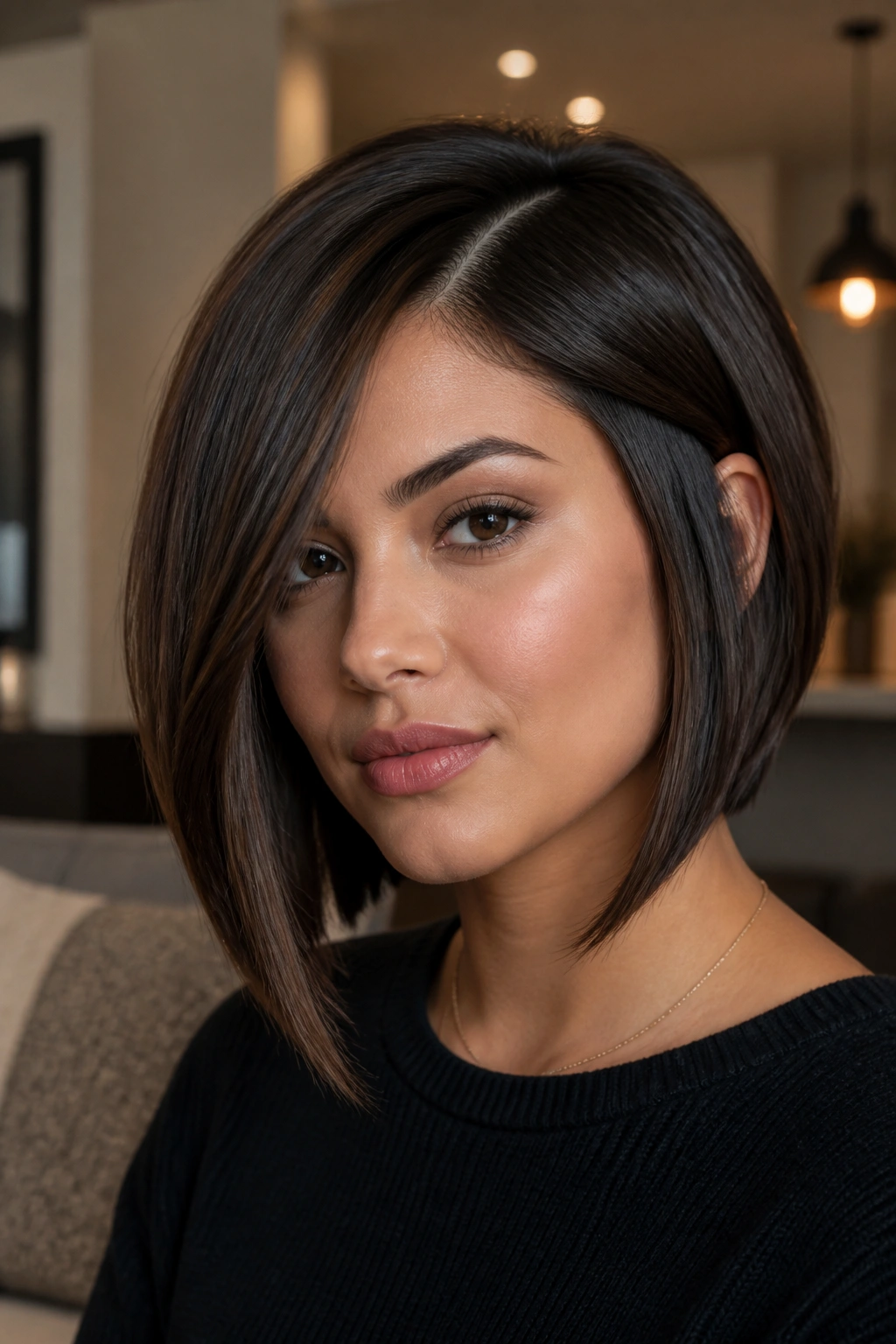
Picture a bob that’s a little shorter in back and slightly longer toward the front. That angle changes everything. It pulls the eye diagonally across the face, which is exactly what a round shape needs when you want more definition.
A deep side part makes the cut feel sharper without making it severe. The longer front pieces skim past the cheeks, and the shorter back keeps the whole thing from looking heavy. Fine hair usually loves this cut because the angle creates the sense of lift. Thick hair can wear it too, but it needs smart weight removal inside the shape so the ends don’t flare out.
- Ask for the front to hit somewhere between the jawline and collarbone.
- Keep the back clean and slightly stacked, not puffed.
- Tuck one side behind the ear to show the angle.
- Finish with a flat brush blowout if you want it sleek.
The one thing I’d avoid? A bob that ends exactly at the cheekbone with no movement. That’s where the shape can turn stiff.
5. Shag Cut with Choppy Layers

A shag is basically the anti-stiff haircut, and that’s why it works so well on round faces. The layers break up the curve, the texture adds lift, and the whole cut moves in a way that keeps the eye busy. Nothing sits too neatly in one place.
This is a good cut if your hair has a little wave already, because the natural bend gives the layers something to do. Straight hair can wear it too, but it needs a bit of styling spray or mousse so the ends don’t hang there like a curtain. The best shag for a round face keeps the shortest layers high enough to build shape, but not so short that they widen the cheeks.
I like this cut when it’s slightly messy. Too neat, and you lose the point. A shag should feel lived in, a little rough around the edges, with the fringe softened and the ends broken up. That’s the charm.
If you want a haircut that looks better after sleeping on it than right after a salon blowout, this is the one.
6. Asymmetrical Pixie Cut
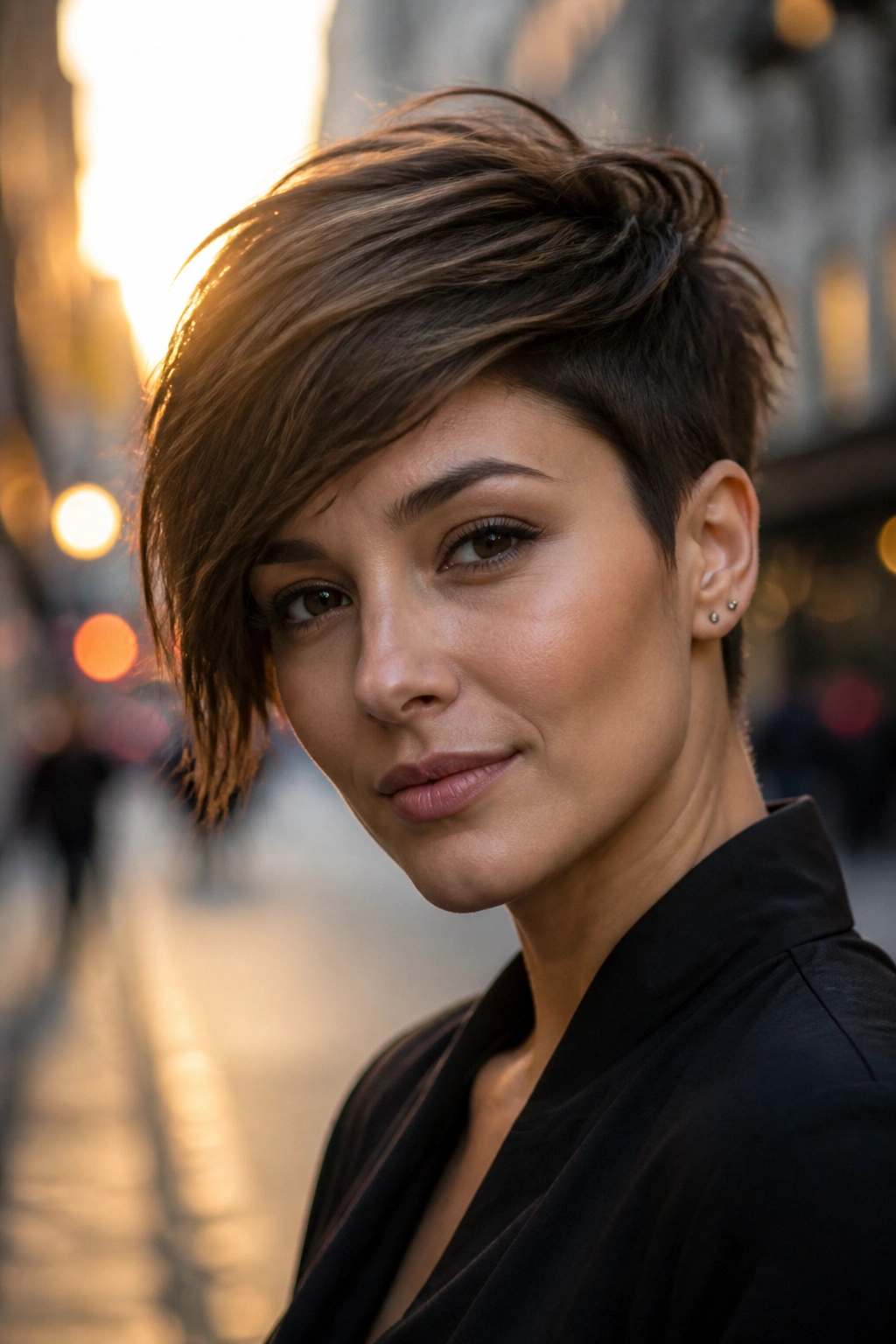
A pixie cut can be an excellent choice for a round face when it isn’t symmetrical. One side a little longer, one side a little tighter, and suddenly the eye has somewhere to go besides the width of the cheeks. Diagonal lines are your friend here.
Unlike a classic rounded pixie, the asymmetrical version gives the face a sharper edge. The longer fringe can sweep across the forehead or skim one eyebrow, which helps break up the circle of the face. The sides should stay tapered close enough to keep the shape neat, but not shaved so high that the top looks like a cap.
This cut is for the person who likes clean lines and low morning drama. You’ll spend less time styling, but you do need to keep the shape trimmed so the longer side doesn’t flop into your eyes. A tiny bit of wax or paste goes a long way.
It’s a bold look, yes. But bold can be flattering. Especially when the shape is doing real work.
7. High Ponytail with Face-Framing Pieces
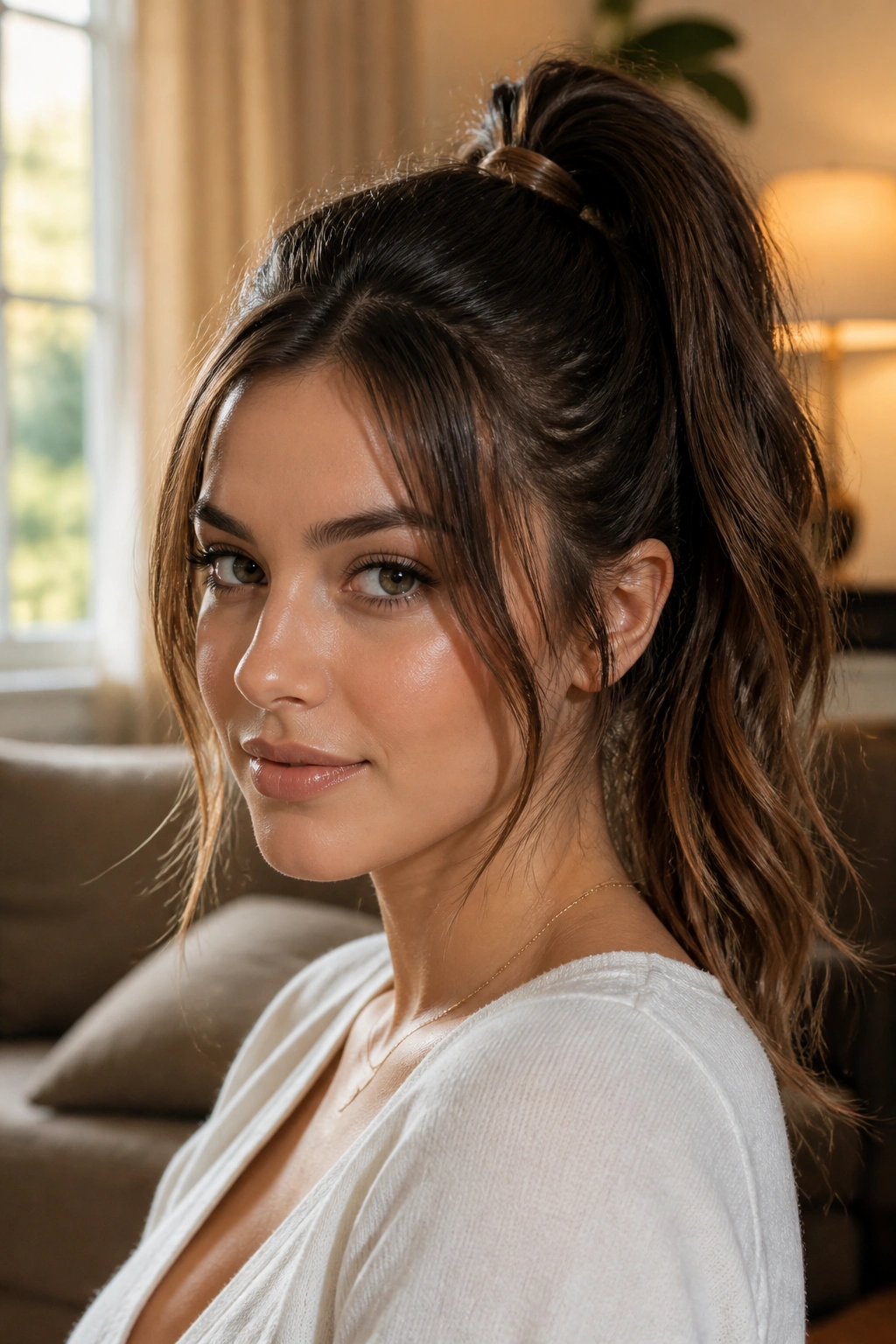
A high ponytail is sneaky good on round faces because it lifts the whole silhouette. The hair goes up, the crown gets height, and the face gets a little extra stretch. Add a few loose pieces around the cheeks and it stops feeling severe.
Why It Helps
The ponytail should sit at or above the crown, not low at the nape. That placement pulls the eye upward and makes the face look longer. The front pieces matter too. Keep them soft, lightly curled, and no shorter than cheek level if you want a gentle frame.
- Tie the ponytail at the highest comfortable point on your head.
- Tease the crown a little before securing it if your hair falls flat.
- Wrap a small section of hair around the elastic for a cleaner finish.
- Leave two thin face-framing strands out, not a thick curtain.
A tight, slick pony can work, but it tends to show every curve in the face. Softness is better here. A little texture around the temples keeps the style from feeling hard.
8. Loose Top Knot with Volume at the Crown
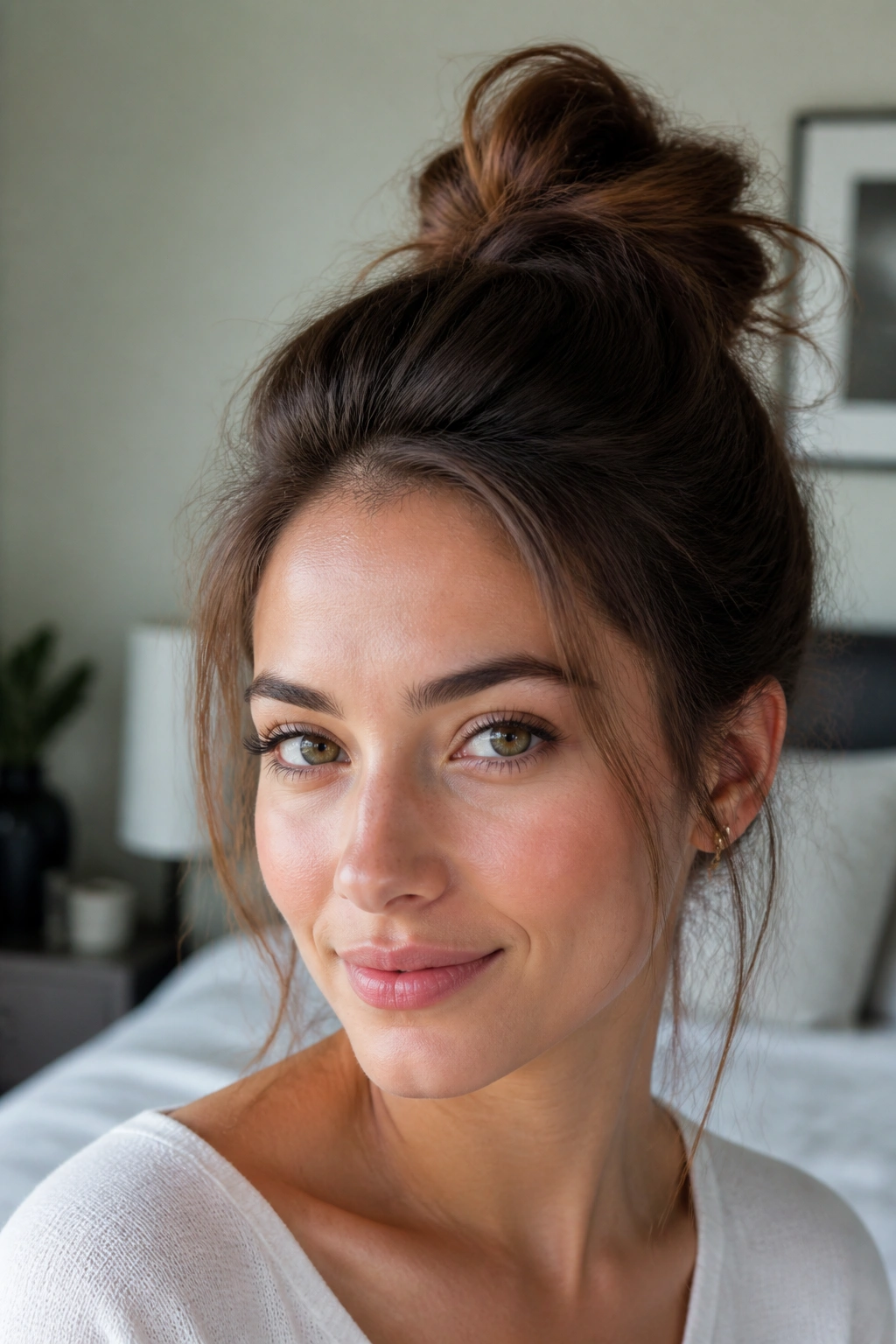
A top knot can be flattering on a round face when it sits high enough to build length and loose enough to keep the outline from getting boxy. People sometimes make this style too tight. That’s the mistake.
The best version has a lifted crown, a knot that isn’t oversized, and a few soft pieces around the hairline. That combination adds vertical space above the face and keeps the cheeks from feeling overemphasized. If you have thick hair, don’t pile all the weight into one giant bun. If you have finer hair, a little backcombing at the crown gives the knot shape without making it look thin.
I also like this style because it feels casual in a way that still looks deliberate. You can wear it with a sweatshirt or with a dress, and the face framing does the same job either way.
One small detail makes a big difference: angle the knot slightly higher than the midpoint of the back of your head. That’s the sweet spot.
9. Deep Side-Parted Waves
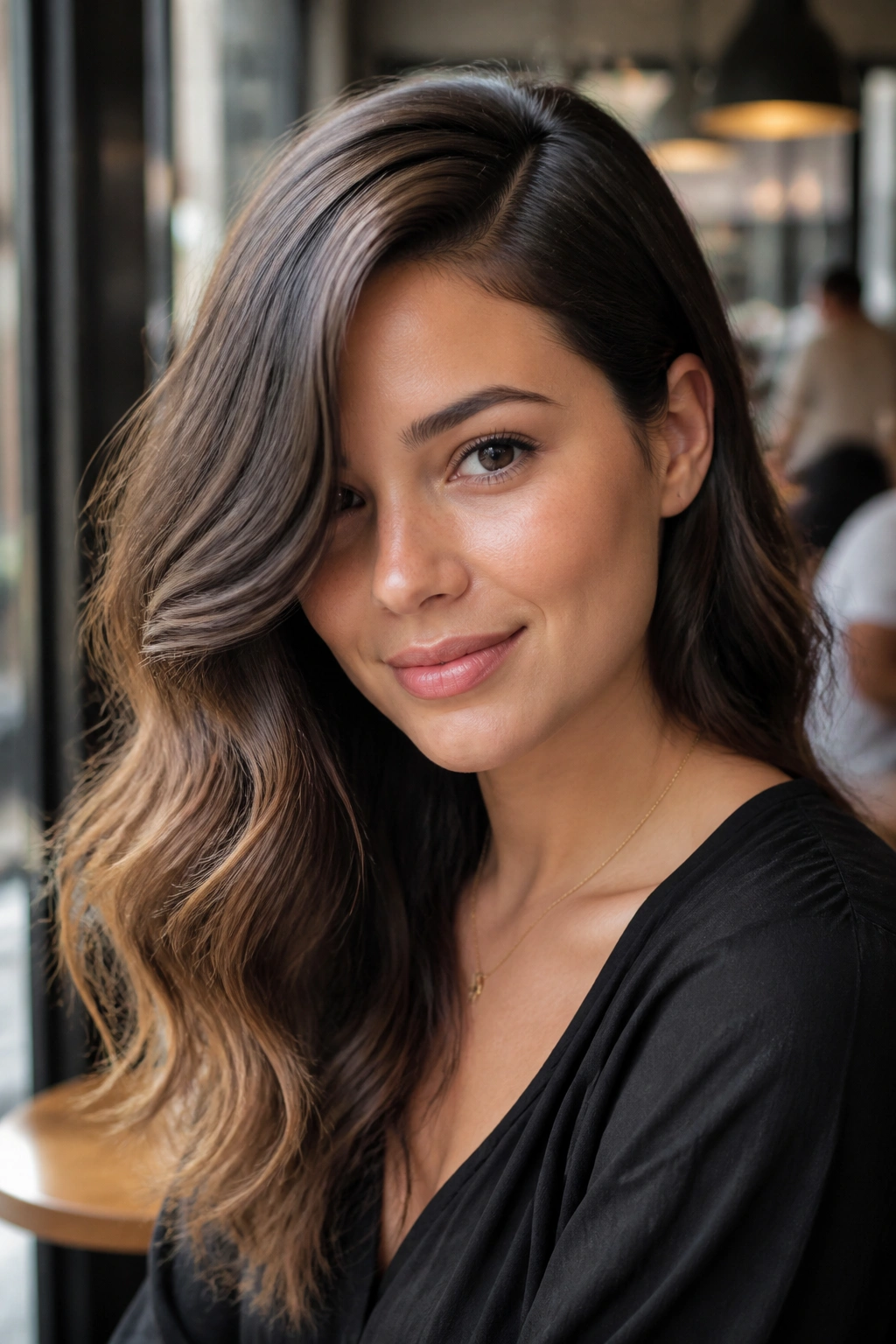
Why does a side part matter so much? Because a round face benefits from asymmetry, and a deep side part gives you that instantly. It interrupts the circle and makes the face feel a little longer, a little slimmer, and a lot less centered.
The waves should start below the cheekbone, not right beside it. That keeps the width from building in the wrong place. Loose S-waves or brushed-out curls work better than tight spirals, which can add bulk if they sit near the cheeks. If your hair is naturally wavy, you’re already halfway there.
How to Get the Shape Right
Flip the heavier side across your forehead and let it fall diagonally toward the opposite cheek. That one move does more than people expect. Use a 1 to 1.25-inch iron if you need to add bend, then brush the waves out with a wide-tooth comb once they cool.
This style is a good choice when you want softness but still want a little drama. It feels dressed up without being stiff. And that matters.
10. Wolf Cut with Airy Layers
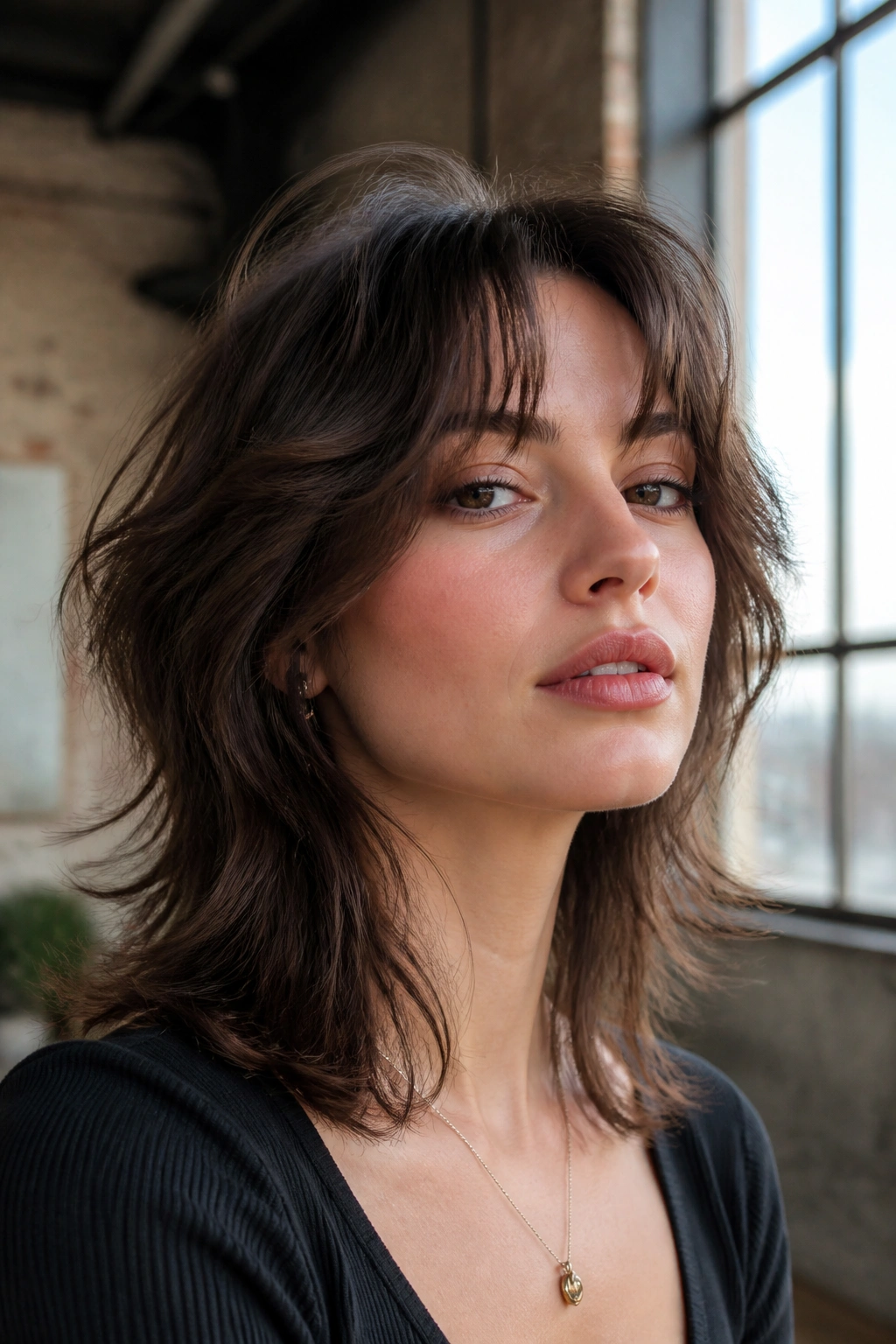
A wolf cut can be brilliant on a round face when the layers stay airy and the top has enough lift to keep the shape from spreading outward. The cut is all about contrast: shorter layers on top, longer pieces below, and a lot of movement in between. Done well, it gives the face a leaner line.
What to Ask For
- Keep the shortest layers around the brow to temple area, not at the widest part of the cheeks.
- Ask for soft, broken ends instead of blunt slicing.
- Leave enough length in the back to keep the silhouette from puffing out.
- Use a light styling cream if your hair is frizzy; use mousse if it goes flat.
The wolf cut is not a neat haircut. That’s the point. It needs texture, and it needs a little attitude. On straight hair, it can look edgy and clean. On wavy hair, it looks almost effortless, though I hate that word because the styling still takes a minute.
If you like movement and don’t want your hair to sit there obediently all day, this one has a lot going for it.
11. Blunt Bob with a Slight Under-Curve
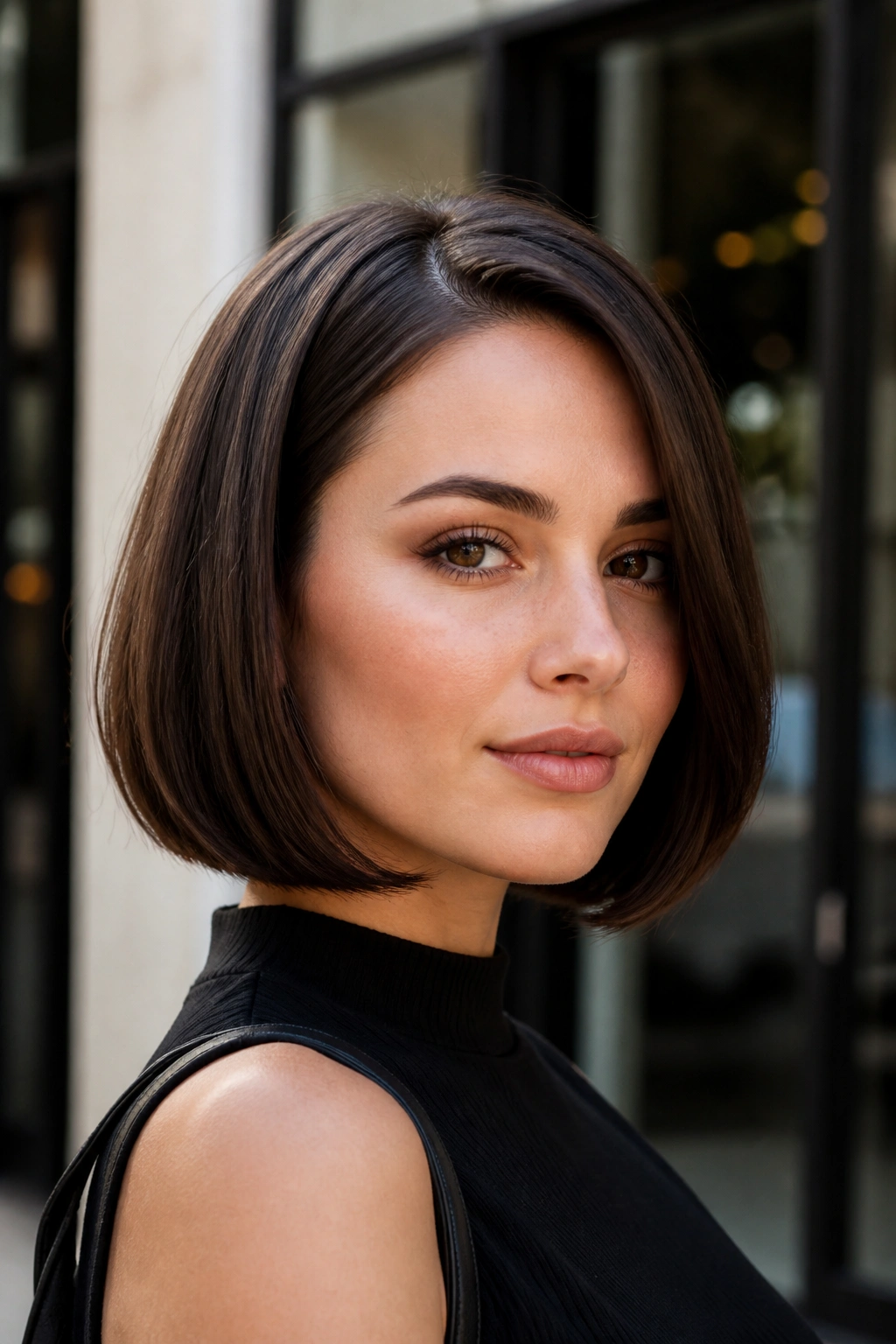
A blunt bob sounds risky for a round face, and if it sits at the wrong length, it can be. But a blunt bob that lands below the chin with a slight under-curve can look sharp and modern without widening the cheeks.
The key is balance. The line should be clean, but not boxy. A tiny inward bend at the ends helps the bob hug the jaw instead of flaring outward, and that makes the face feel longer. If your hair is very thick, a blunt bob can get heavy fast, so the inside of the cut needs enough softening to keep it from looking like a shelf. Fine hair, on the other hand, can wear the fullness beautifully.
I like this style when the part is a little off center. A dead-center part can make the whole thing too symmetrical, and symmetry is often the enemy of a round face. Move the part just enough to break the line.
It’s clean. It’s crisp. And when it’s cut well, it feels smarter than it sounds.
12. Soft Mullet or Bixie
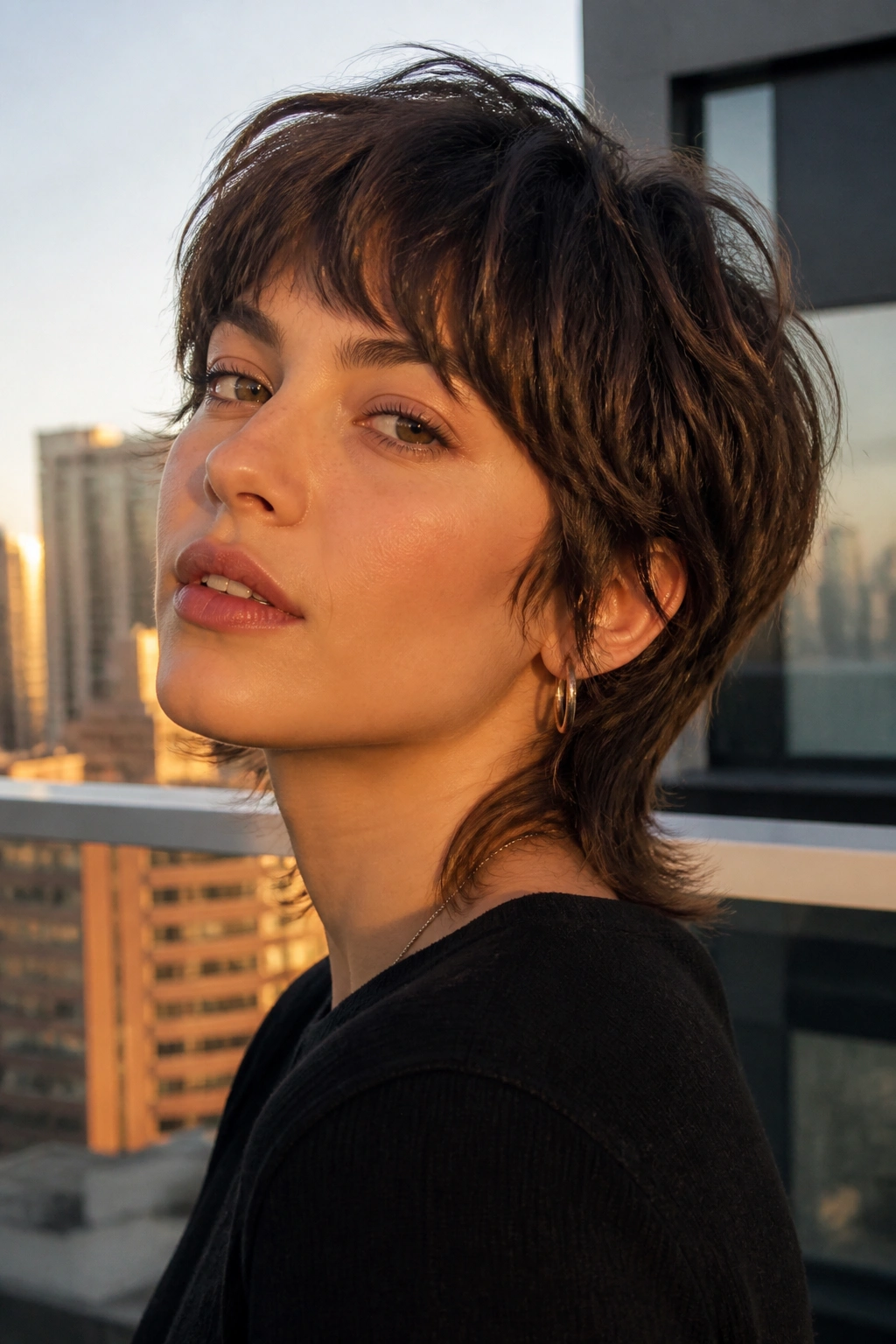
A bixie sits between a bob and a pixie, while a soft mullet leaves a little more length in the back. Both can work on a round face because they build shape without making the sides too wide. The real trick is keeping the crown textured and the edges light.
Unlike a neat crop, this cut likes a bit of rebellion. The top should have movement, the fringe should stay wispy, and the nape can be a touch longer so the whole style feels stretched. That stretch matters. It draws the eye down instead of across.
This is a good pick if you want something cool without going full extreme. You still need regular trims, because the shape can collapse if the sides grow out too much. But styling is fast: a little paste, a little finger-tousling, done.
Who is it best for? Someone who likes short hair with personality and doesn’t mind a cut that looks better with a bit of mess in it. If you want perfect and polished, skip it. If you want character, this one earns its keep.
13. Half-Up Style with Crown Lift
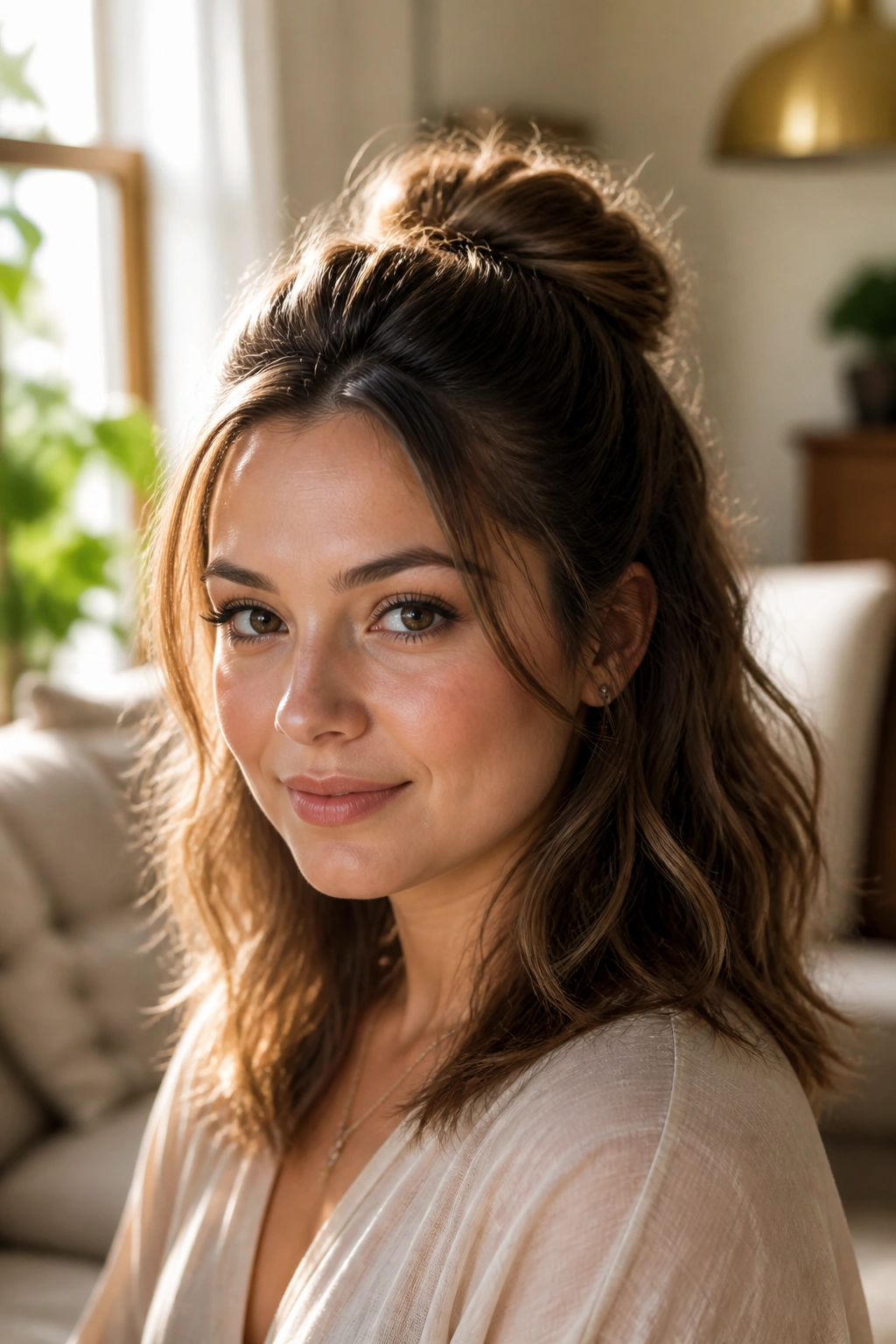
Half-up styles are sneaky good on round faces because they keep hair off the sides while leaving length down the back. That split shape gives you lift on top and softness below, which is a very useful combination.
What Makes It Flattering
The top section should be gathered a little above the crown, not flat against the head. That adds height. Leave the lower half loose and slightly textured so it doesn’t feel too heavy around the cheeks. If your hair is straight, a small bend through the ends helps the bottom half move instead of hanging there like a curtain.
- Tease the crown lightly before pinning or tying.
- Keep the half-up section loose enough to avoid pulling the face tight.
- Let a few shorter pieces fall around the temples.
- A claw clip works well if you want a softer, less polished finish.
This style is easy to wear for work, dinner, or a casual day when you want hair off your neck but still want shape. It’s one of those styles that looks more thought-out than it is.
14. Long Straight Hair with Invisible Layers
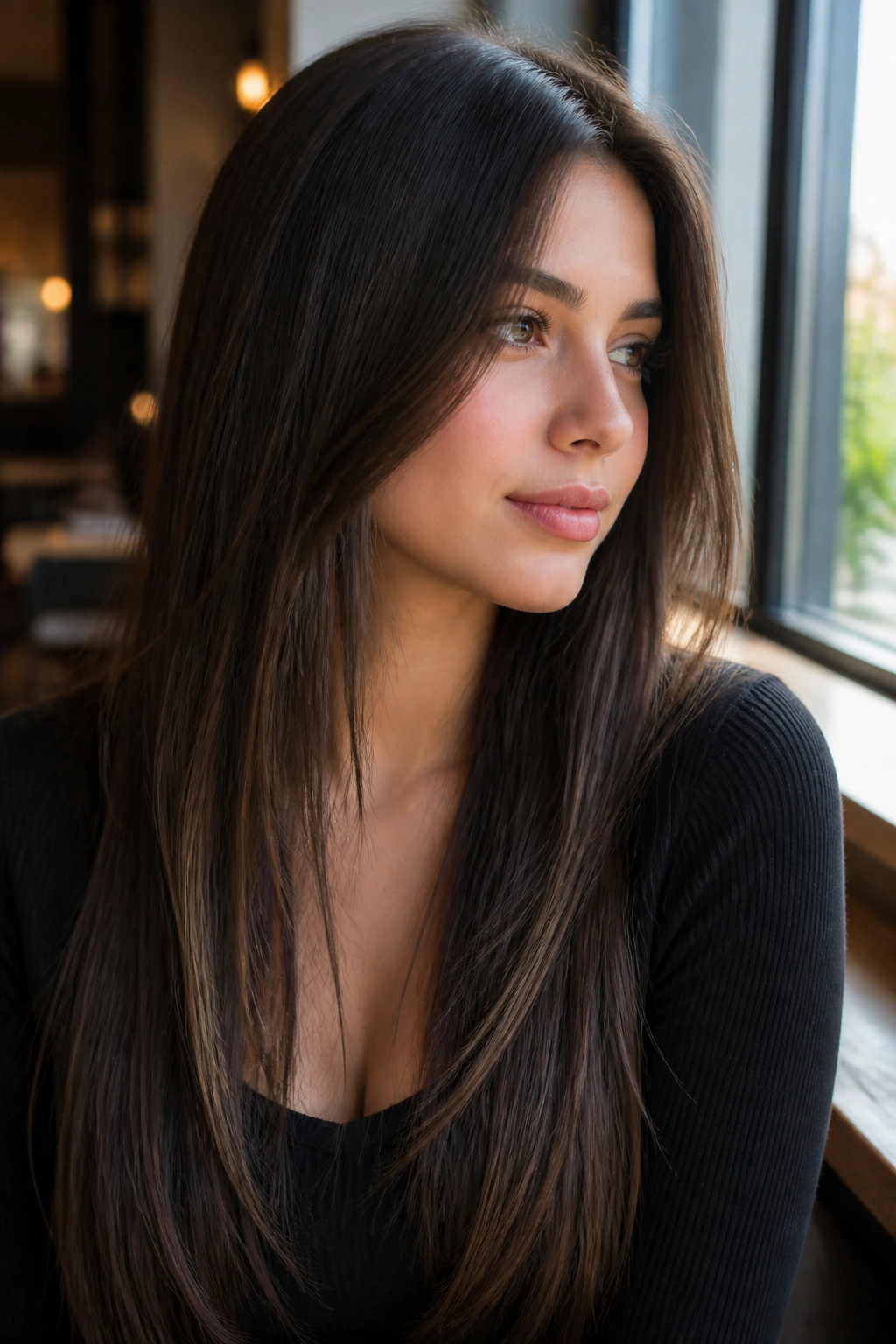
Straight hair does not need waves to flatter a round face. It just needs shape. Invisible layers — the kind that remove bulk without shouting about it — keep long straight hair from turning into a blunt curtain around the cheeks.
The best version of this cut falls well past the shoulders, often to mid-chest or lower. That length stretches the face in a way a shorter straight cut can’t always do. The layers should be subtle enough that the ends still look full, but light enough that the hair can move when you turn your head.
A middle part can work here, but a slight off-center part often gives more lift at the roots. If your hair is pin-straight, a tiny bend at the ends with a flat iron helps stop the shape from feeling flat and heavy. I’d also keep face-framing pieces longer than people expect — around the chin is usually safer than cheek level.
This is a calm, clean style. Not loud. Not flashy. But it’s effective.
15. Braided Crown with Height at the Top
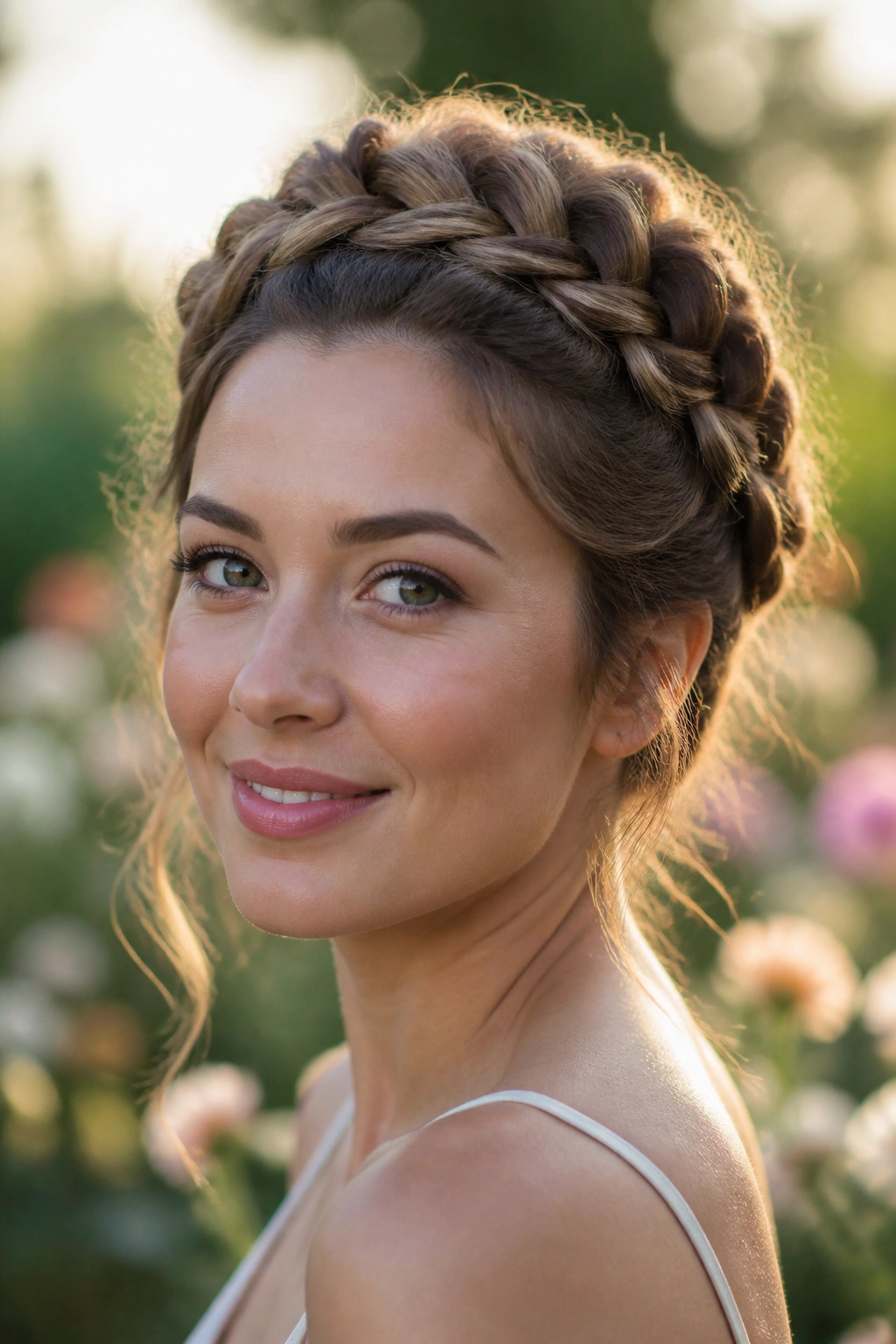
Can a braid flatter a round face? Absolutely, if you place it with a little thought. A braided crown pulls hair away from the sides, and that opens the face in a way that feels soft rather than severe.
The braid should sit slightly higher than the widest part of the cheeks. That keeps the line from wrapping too low around the face. Leave a bit of lift at the top, too, because a flat crown can make the head look broader. If you want the braid to feel looser and more modern, tug gently at the edges after it’s secured so the plait looks fuller.
A few face-framing wisps help. They soften the forehead and keep the style from reading too tight or formal. If you’re going to a wedding or a dinner, this is a strong choice because it holds up well and photographs cleanly from the front and side.
It’s also one of those styles that looks more complicated than it is. Which is convenient.
16. Side-Swept Curls for Formal Days
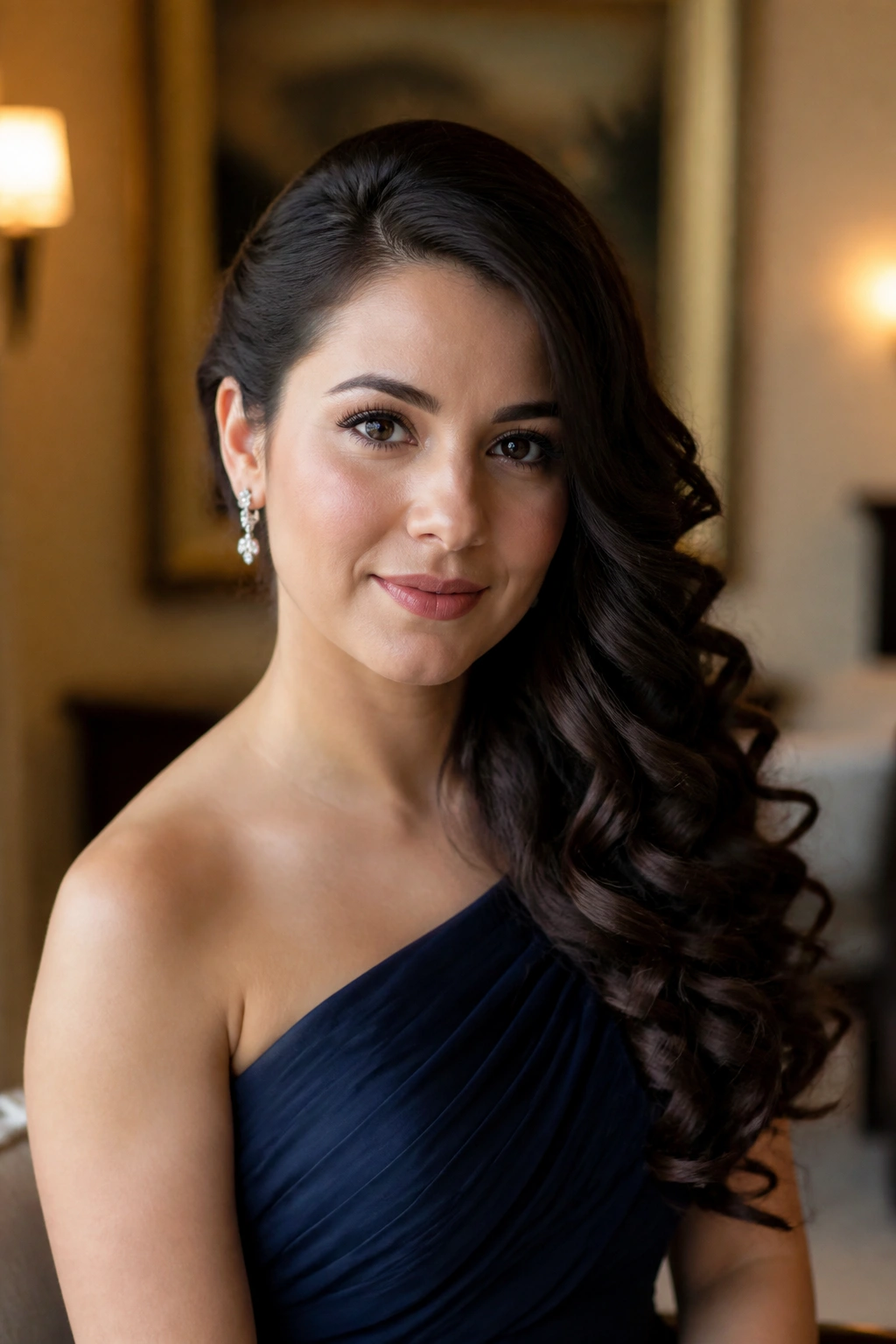
A side-swept curl pattern can be a lifesaver when you want something dressy and face-friendly at the same time. The curls create a diagonal line across the face, and that angle does a lot of quiet work. Round faces need that diagonal.
The style works best when one side is pinned back or tucked behind the ear while the rest of the curls fall over one shoulder. That asymmetry narrows the face visually and makes the whole look feel more sculpted. Keep the curls loose rather than springy. A polished wave is usually better than a tight ringlet here.
Small Details That Matter
- Use a 1 to 1.25-inch curling iron for medium lengths.
- Curl away from the face on the heavier side.
- Pin the opposite side just above the ear for lift.
- Finish with a light-hold spray, not a stiff shell.
This is the kind of style that looks fancy without being fussy. Good hairpins help. So does patience.
17. Textured Crop with a Soft Fringe
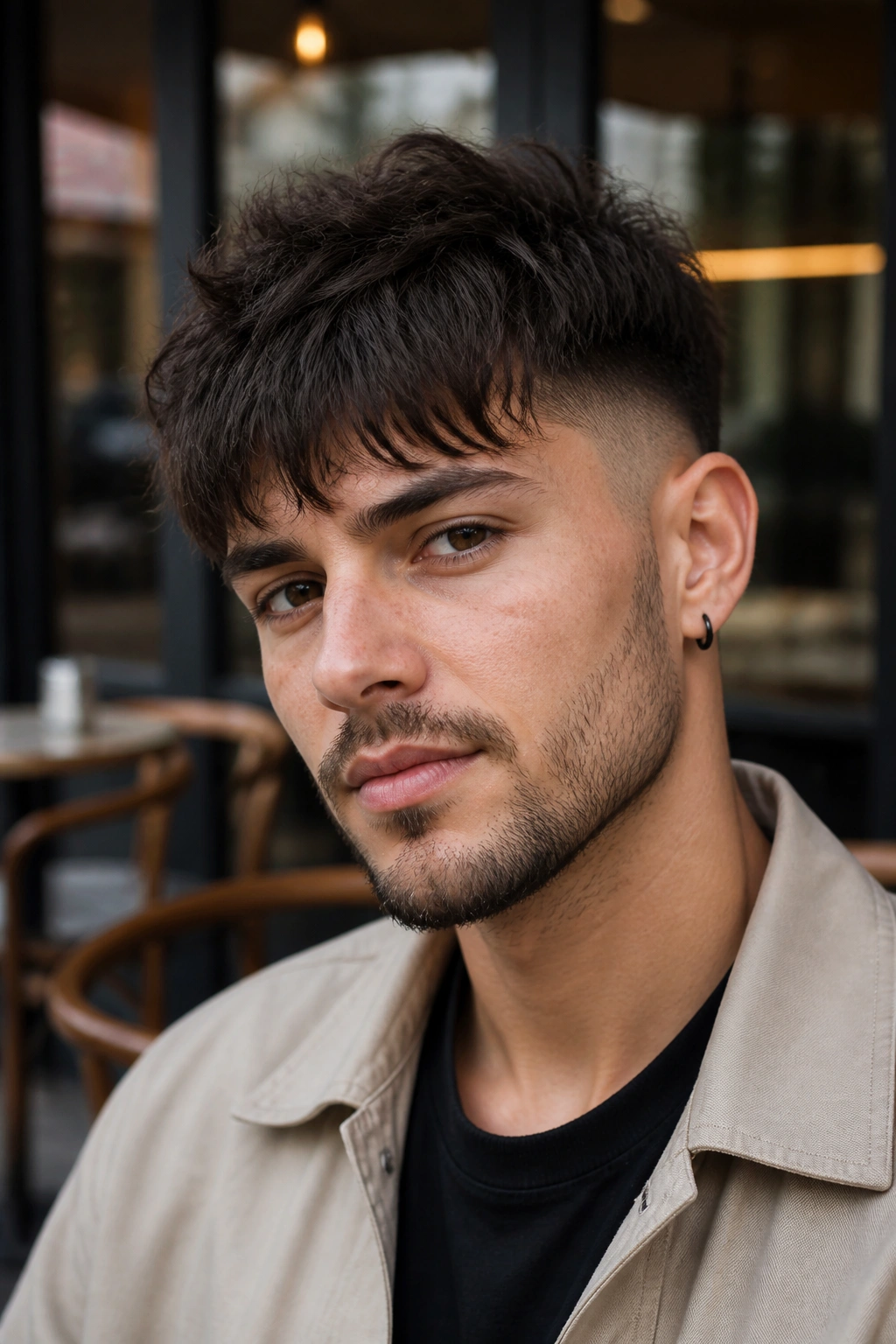
A textured crop can look fantastic on a round face when it keeps some height on top and doesn’t puff out at the sides. The goal is to build upward movement, not width. A soft fringe helps break up the forehead while keeping the style light.
This cut is especially useful if you like short hair but don’t want it to feel severe. The fringe should be wispy, not blunt, and the top should be piecey enough to create shape with a little paste or cream. If the sides are too full, the face can look broader. If the crown is too flat, the whole thing loses its edge.
I think this style is often underestimated because people assume short hair needs to be either super sleek or super spiky. It doesn’t. A crop can be soft and still sharp. That’s the sweet spot.
It also dries fast, which is the kind of practical detail people forget to mention until they’re rushing out the door.
18. Low Bun with a Center Part and Loose Pieces
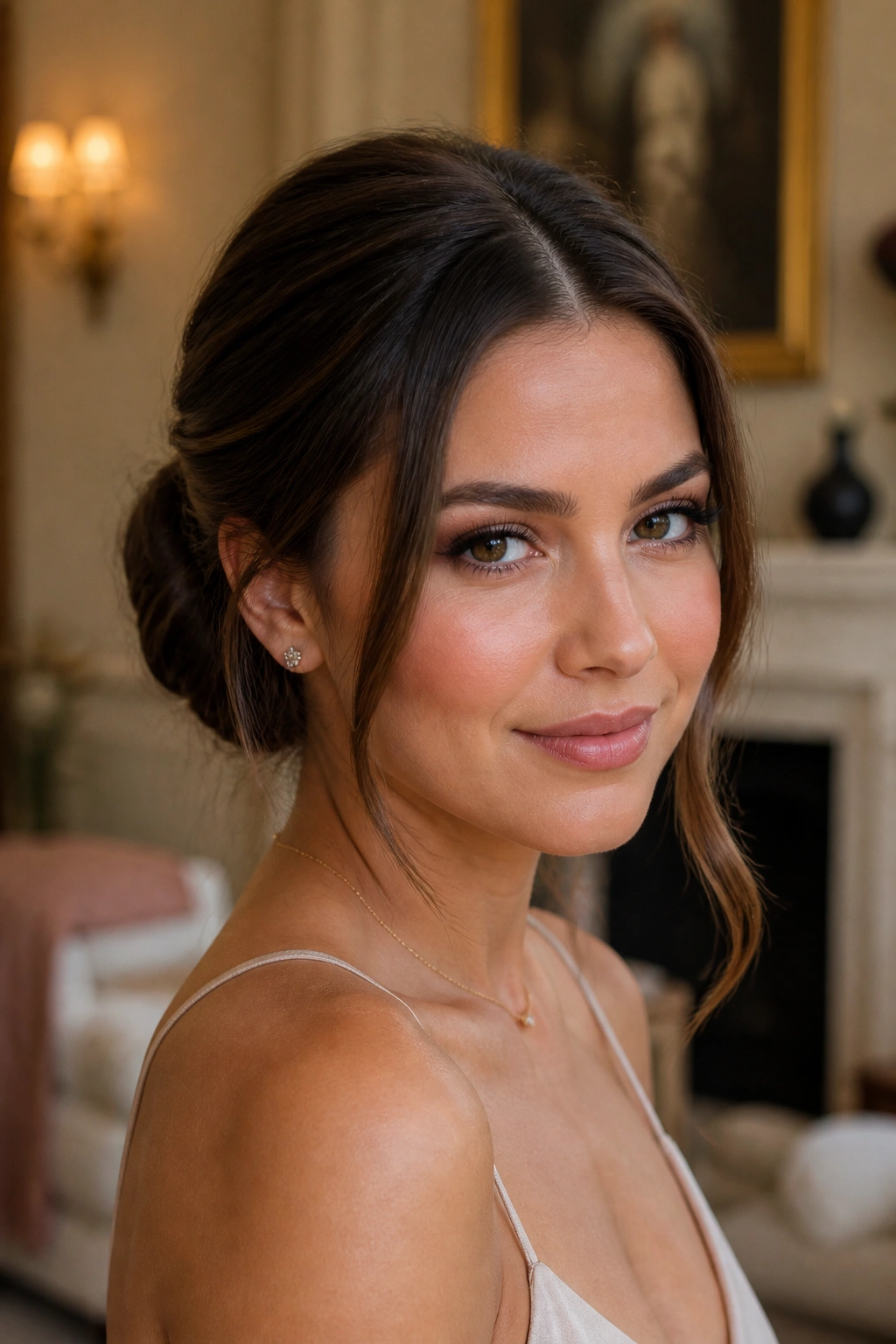
A low bun can work on a round face if it is kept soft and placed low enough to avoid adding width at the cheeks. The right version feels elegant, not severe. The wrong version pulls everything back too tightly and makes the face read broader. That’s the line.
Unlike a tight ballet bun, this version leaves a center part or a slight part and a few loose pieces around the temples and jaw. Those pieces soften the face and keep the bun from feeling too bare. If your hair is thick, keep the bun neat but not bulky. If it is fine, twist the hair loosely before pinning so the shape has some body.
This is a good style for days when you want your features, not your hair, to be the main event. It suits formal settings, work events, and even a plain T-shirt if you pin it loosely enough.
A tiny detail makes it better: keep the bun below the occipital bone, not right in the center of the head. Lower feels longer. Higher can turn childish fast.
19. Shoulder-Length Cut with Flipped Ends
A shoulder-length cut with flipped ends has a little retro energy, and that flipped movement is useful on a round face. The ends point outward just enough to keep the hair from sitting flat against the jaw, which adds shape without making the style bulky.
What to Ask Your Stylist
- Keep the length grazing the shoulders or a touch below.
- Ask for soft internal texture so the flip doesn’t feel stiff.
- Let the front pieces sit a little longer than the back.
- Style the ends with a round brush or a quick outward bend from a flat iron.
The reason this style works is simple: it keeps the line moving. A round face can look more balanced when the hair does not collapse into one smooth circle around the jaw. The flip gives you lift, movement, and a touch of attitude.
It also looks good with a deep side part or a gentle middle part, which gives you room to change the mood without changing the cut. That’s useful. No one wants a hairstyle that only behaves one way.
20. Tousled Lob with Air-Dry Texture
A tousled lob is one of the easiest styles to wear on a round face because it gives you length, movement, and a soft edge all at once. The lob already stretches the outline; the texture keeps it from feeling heavy. Add a little air-dry help, and you get hair that looks relaxed instead of overworked.
The best version sits around the collarbone and bends in different directions, not in one perfect pattern. That irregular movement keeps the eye moving down the face. If your hair is wavy, you can let it dry with a bit of cream or mousse and scrunch it lightly. If it’s straighter, twist a few sections while damp, then break them up with your fingers once dry.
I like this style because it doesn’t fight the hair. It works with what you already have. That matters more than people admit, especially when they’re tired of spending 30 minutes with hot tools before breakfast.
And if you want one final bit of advice: the most flattering style is the one that gives your face a little space to breathe. That is usually what all these cuts have in common, whether they’re polished, messy, short, or long.
