



Short 4C hair has a way of telling the truth. If the shape is awkward, you see it right away; if the cut is right, the whole look snaps into place with almost no fuss. The best short hairstyles for type 4C hair work with shrinkage, density, and tight coils instead of trying to flatten them into something else.
That is the first shift worth making. A good short style on 4C hair is usually about silhouette — a clean taper, a rounded shape, a puff that sits high enough to show the crown, or twists that hold their line for days. Length matters less than proportion.
People get tripped up here because they expect short hair to be limited. It is not. It is just more honest. A tiny bit of gel at the front, a moisturizer that does not leave the hair greasy, and a part that lands in the right place can change the whole mood of the style.
Some of these looks are fast enough to do before work. Others need a patient set of fingers and a decent mirror. Either way, the point stays the same: short 4C hair can look deliberate, tidy, and full of personality when the style matches the texture instead of fighting it.
1. Tapered TWA
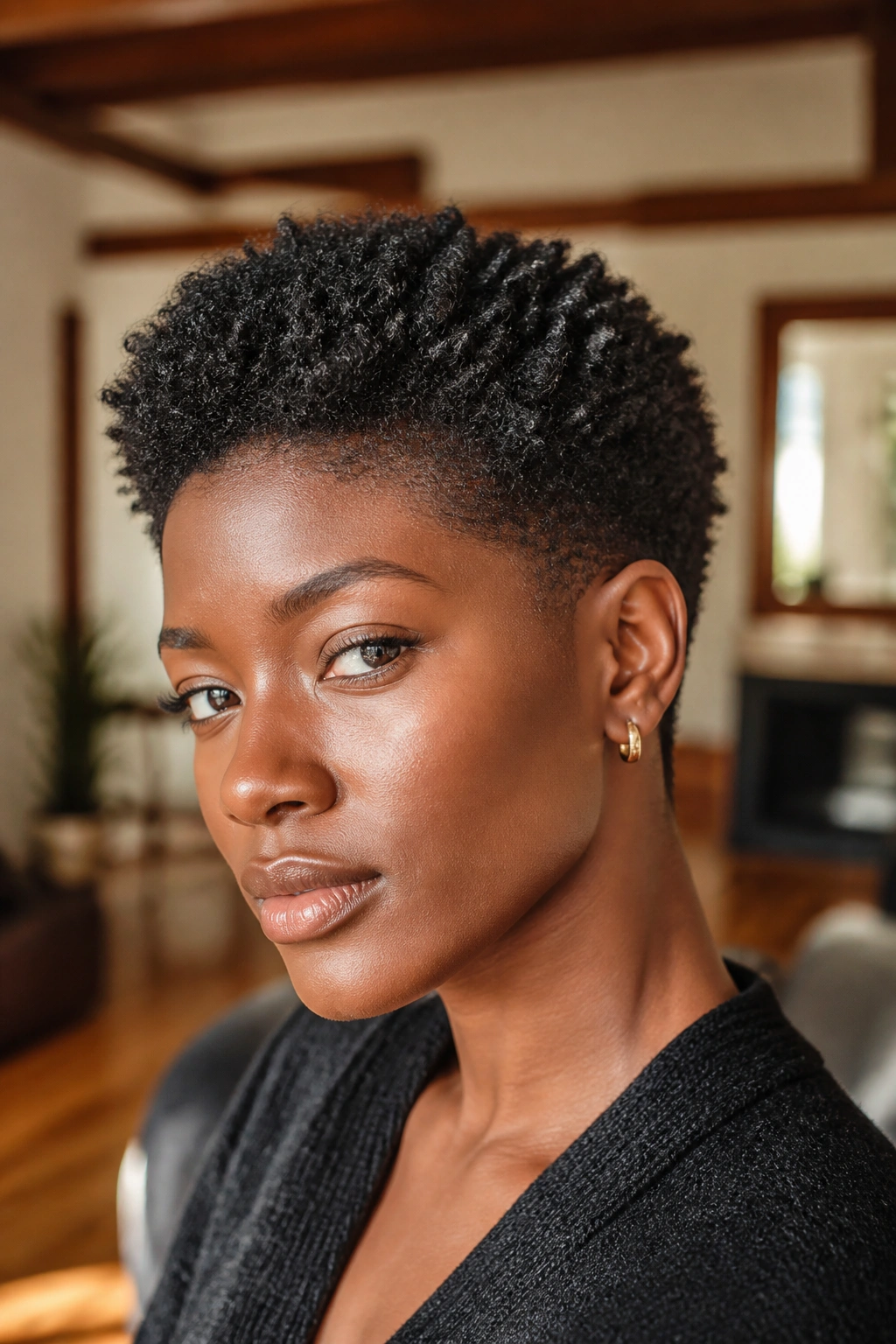
A tapered teeny weeny afro gives short 4C hair a shape that feels clean without looking severe. The sides and nape sit closer to the head, while the top keeps enough length to show off the coil pattern and a little height. That contrast does most of the work for you.
It is one of those styles that looks expensive even when it is not complicated at all. A light leave-in, a soft curl cream, and a quick pick at the roots can be enough. The trick is keeping the perimeter neat and letting the top stay a bit fluffy.
It does not need much.
If you like structure, this is a strong choice. If you hate spending twenty minutes trying to “make” your hair do something, even better. A tapered TWA grows out gracefully too, which matters more than people think. The cut still reads well when the fade softens a little, and that saves you from the awkward halfway stage.
2. Rounded Afro
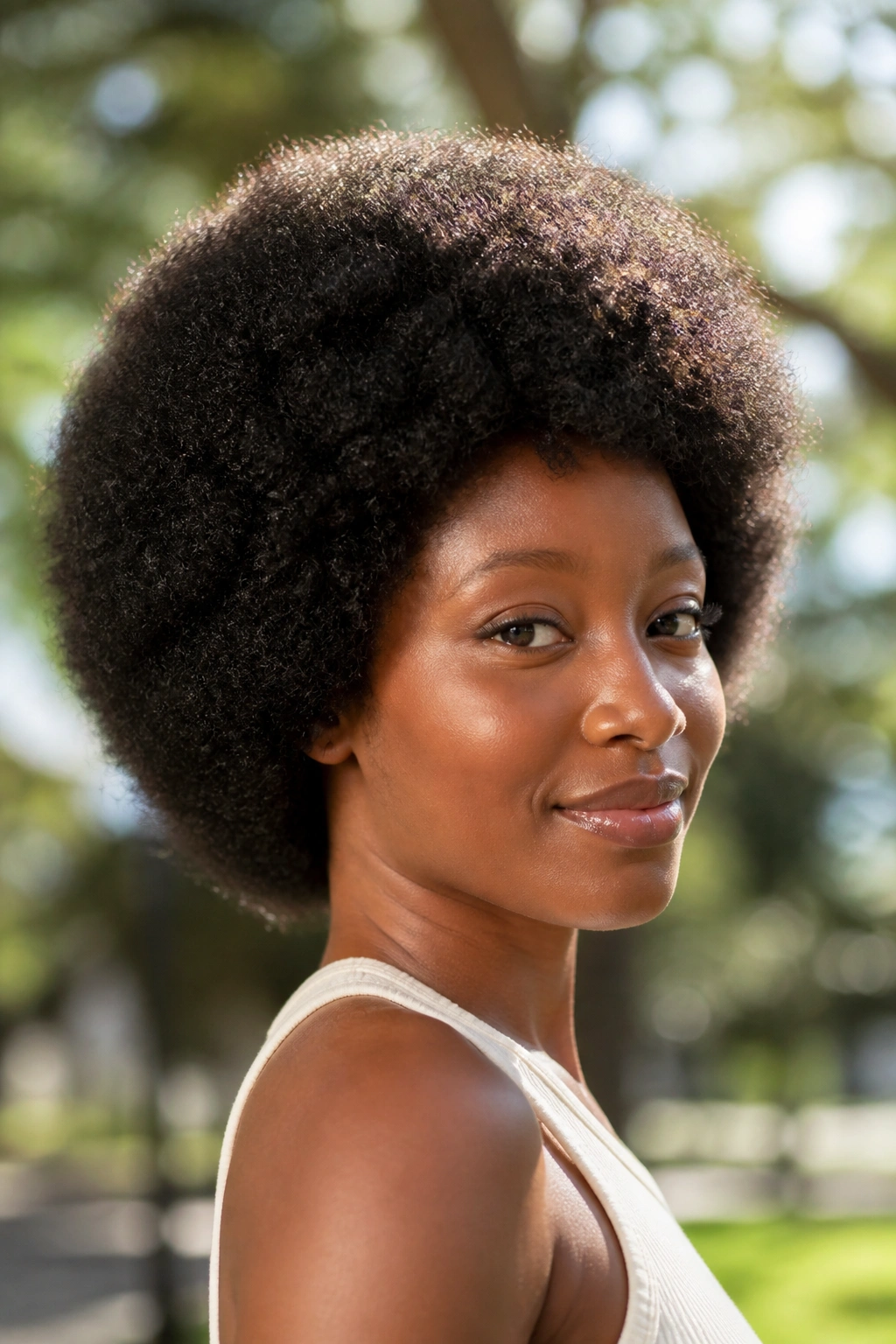
Want the softest shape on the list? A rounded afro gives short 4C hair a full silhouette without asking for a lot of product or a complicated set. It works especially well when your hair is dense and you want the whole head to read as one cloud of texture instead of a stacked cut.
Why the round shape matters
The round outline helps balance the face and keeps the style from looking boxy. That matters if your curls shrink hard and sit close to the scalp, because a little shaping at the sides changes the whole impression. A wide-tooth pick at the roots is enough to build that halo.
How to keep it from collapsing
- Lift at the roots only, so the ends stay defined and do not frizz out fast.
- Start on hair that is stretched or at least fully dry, because damp hair clumps into odd spots.
- Use a small amount of cream, then stop. Heavy butter can weigh the shape down by lunchtime.
- Sleep with a satin bonnet or scarf so the crown does not flatten overnight.
A rounded afro is for the days when you want volume to do the talking. It feels easy, but it is not lazy. There is a difference.
3. Finger Coils
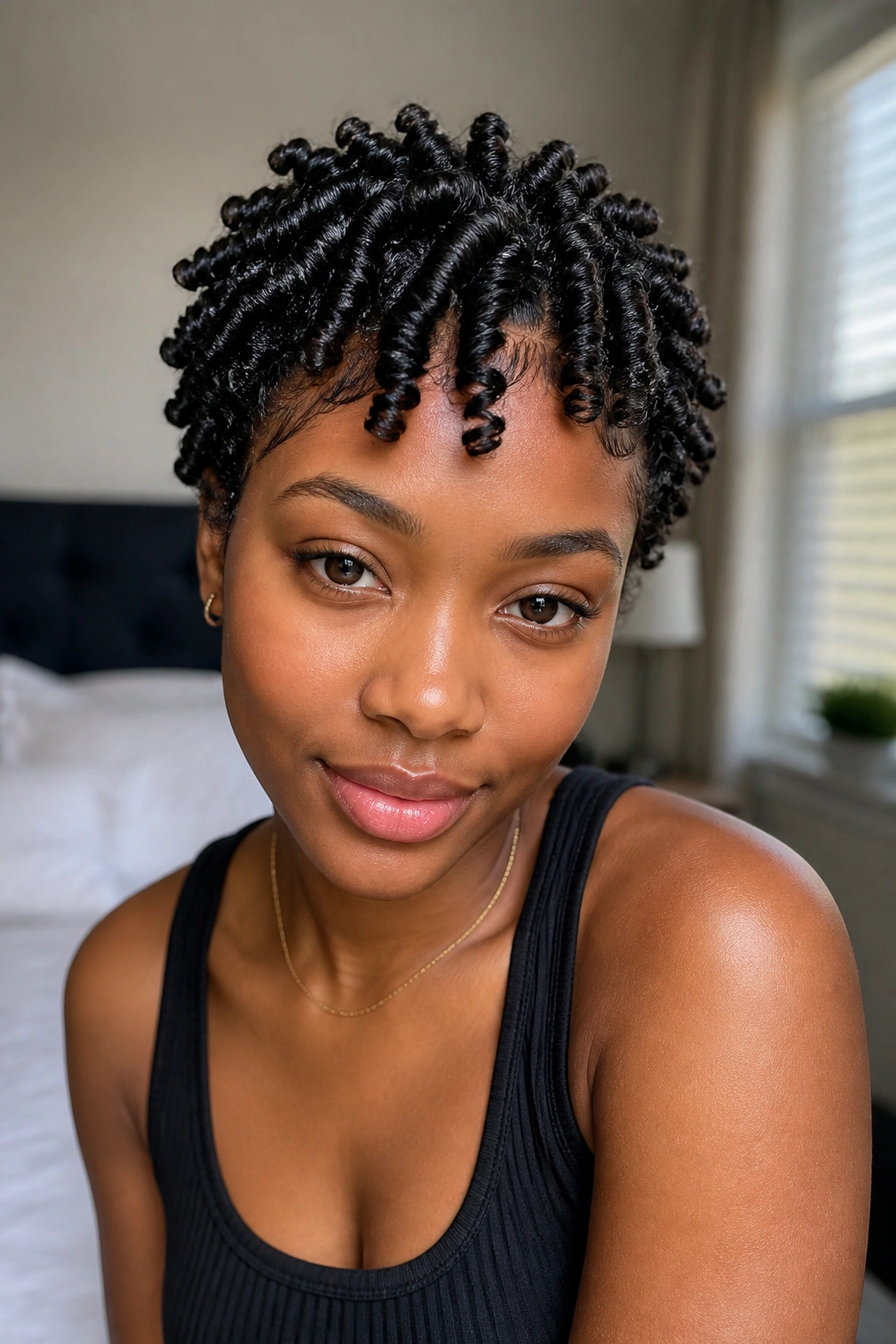
Finger coils make short 4C hair look more defined than it has any right to. That sounds dramatic, but it is true. If your hair is cut short and you want to show off the coil pattern instead of hiding it, this style gives every section a clean, deliberate finish.
The main thing is section size. Go too big and the coils turn fuzzy fast. Go too tiny and you will be there all afternoon, staring at your hands like you made a bad decision. I like pencil-sized parts for most short cuts, with a little gel or styling cream on each section before you twirl.
The curls need time to set. Let them dry fully, or they will lose shape the second you touch them. That is the part people skip, then complain about later. Don’t.
Finger coils suit short 4C hair that already has a bit of length on top, even if the sides are closely cropped. They also work well when you want something neat for a few days without moving into braids or twists. Quiet style. Good payoff.
4. Mini Twists
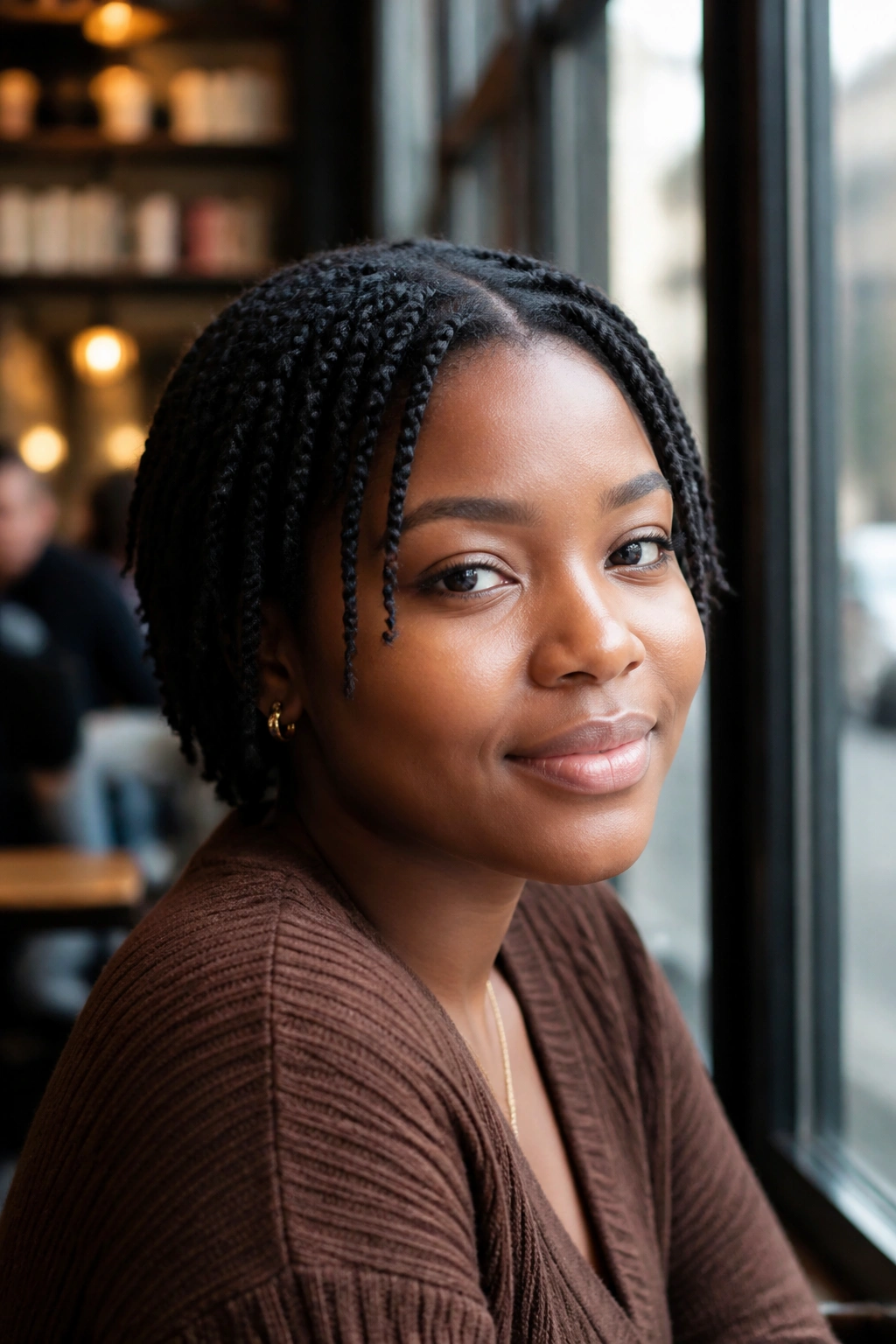
Mini twists are the style I suggest when someone wants short hair that can last longer than a single day but still look soft. They sit close to the head, they frame the face well, and they do not require the crispness that braids often demand. On 4C hair, that matters.
The first few sections are the slowest. After that, the rhythm kicks in. Part, smooth, twist, move on. Part, smooth, twist, move on. By the time you reach the last quadrant, the whole process stops feeling like a chore and starts feeling like a system.
What makes them worth the time
- Use small, even parts so the twists do not look lopsided once they settle.
- Start on damp hair with a light cream and a little oil on the ends.
- Twist firmly enough that they hold, but not so tight that your scalp starts talking back.
- Leave the edges alone if they want to frizz a little; that softness makes the style look less stiff.
Mini twists are good for weekends, travel, or any stretch when you do not want to rethink your hair every morning. Pin them back, tuck them behind the ears, or wear them loose. They hold their own.
5. Flat Twists to the Back
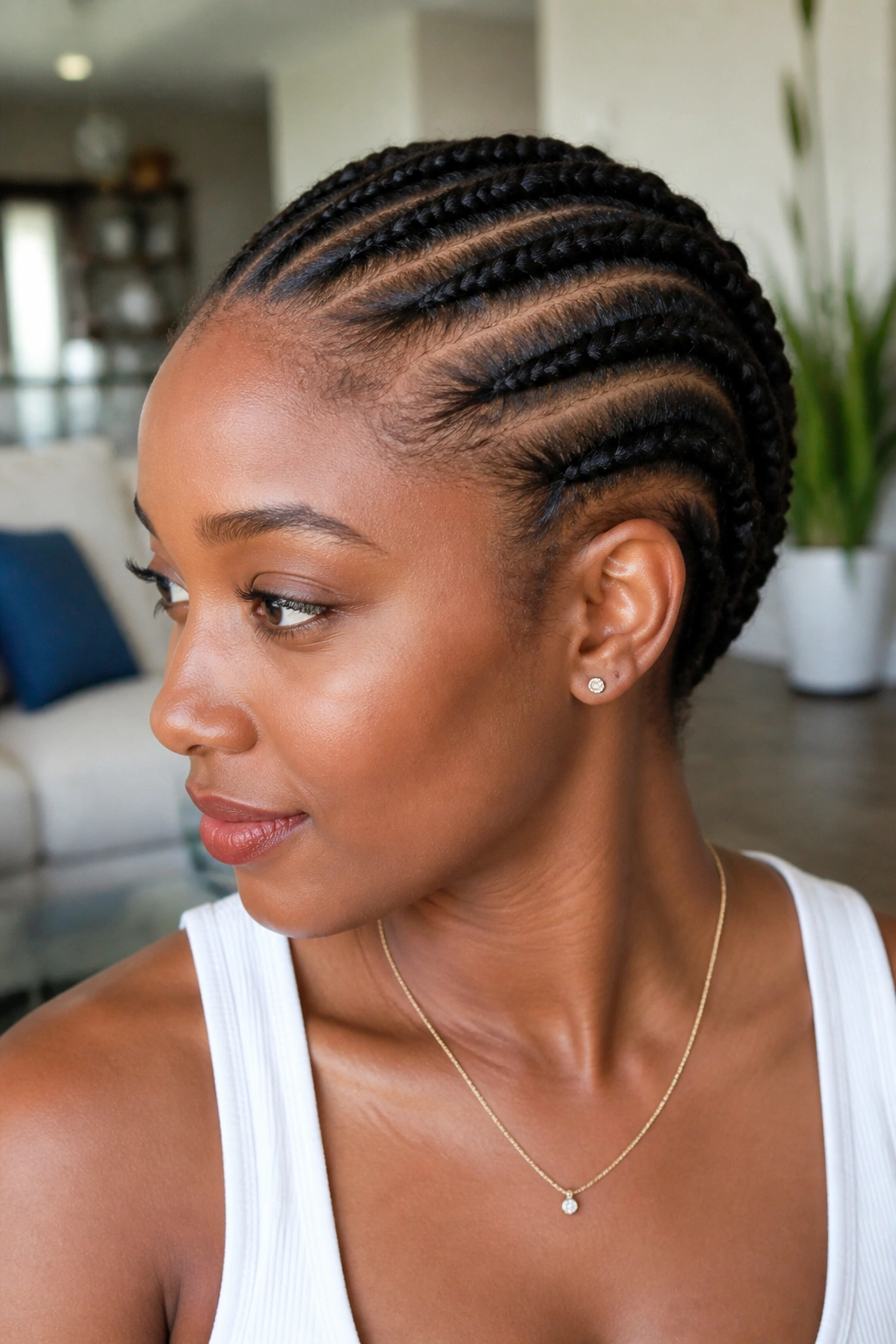
Flat twists to the back are one of the smartest short styles for 4C hair because they pull the hair away from the face without dragging on the scalp the way tighter cornrows sometimes do. They also forgive uneven length better than most close styles. That alone makes them worth knowing.
Unlike cornrows, flat twists have a little more give in the hand. If your parting is not surgically straight, the style still reads well. If one side has more length than the other, the twist pattern can hide it. That is useful on short hair, where every inch seems louder than it should.
Your arms will thank you.
A few people like to finish the ends in small coils. Others pin the tail under for a cleaner look. Both work. What matters more is how smooth the roots are before you start twisting; a little gel along the part line keeps the style crisp for longer and cuts down on flyaways that pop up around day two.
6. Two-Strand Twist-Out
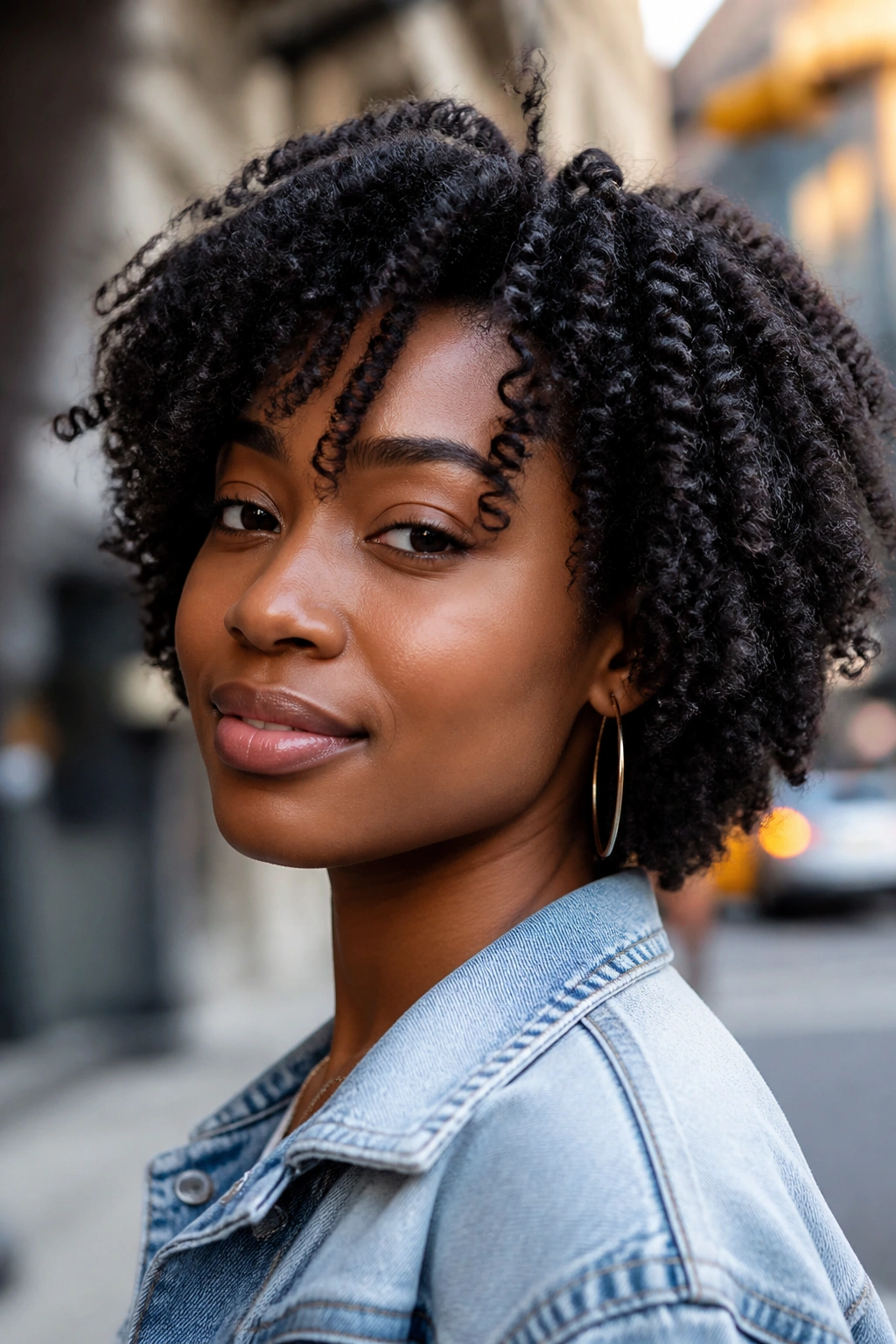
A two-strand twist-out gives short 4C hair that soft, separated curl pattern that sits between fluffy and defined. It is not the same as wearing the twists themselves. You set the hair, let it dry, then take the twists down and separate them carefully. That second part is where the shape appears.
Getting the curl pattern right
The size of the twist decides the final look. Small twists give tighter, more compact curls. Bigger twists create chunkier waves and a little more bounce. If you want a fuller crown, keep the roots flat and let the mid-lengths do the curling.
What to watch for
- Set the twists on damp hair, not soaking wet hair, so drying time stays reasonable.
- Use a light cream first, then a gel with slip if your strands need more hold.
- Do not untwist until the hair is fully dry from root to tip.
- Separate with oiled fingertips, not rough hands, or the style will puff up too fast.
A twist-out works when you want softness without giving up shape. It can look neat on day one and still have a little life on day three. That is a useful range.
7. Defined Wash-and-Go
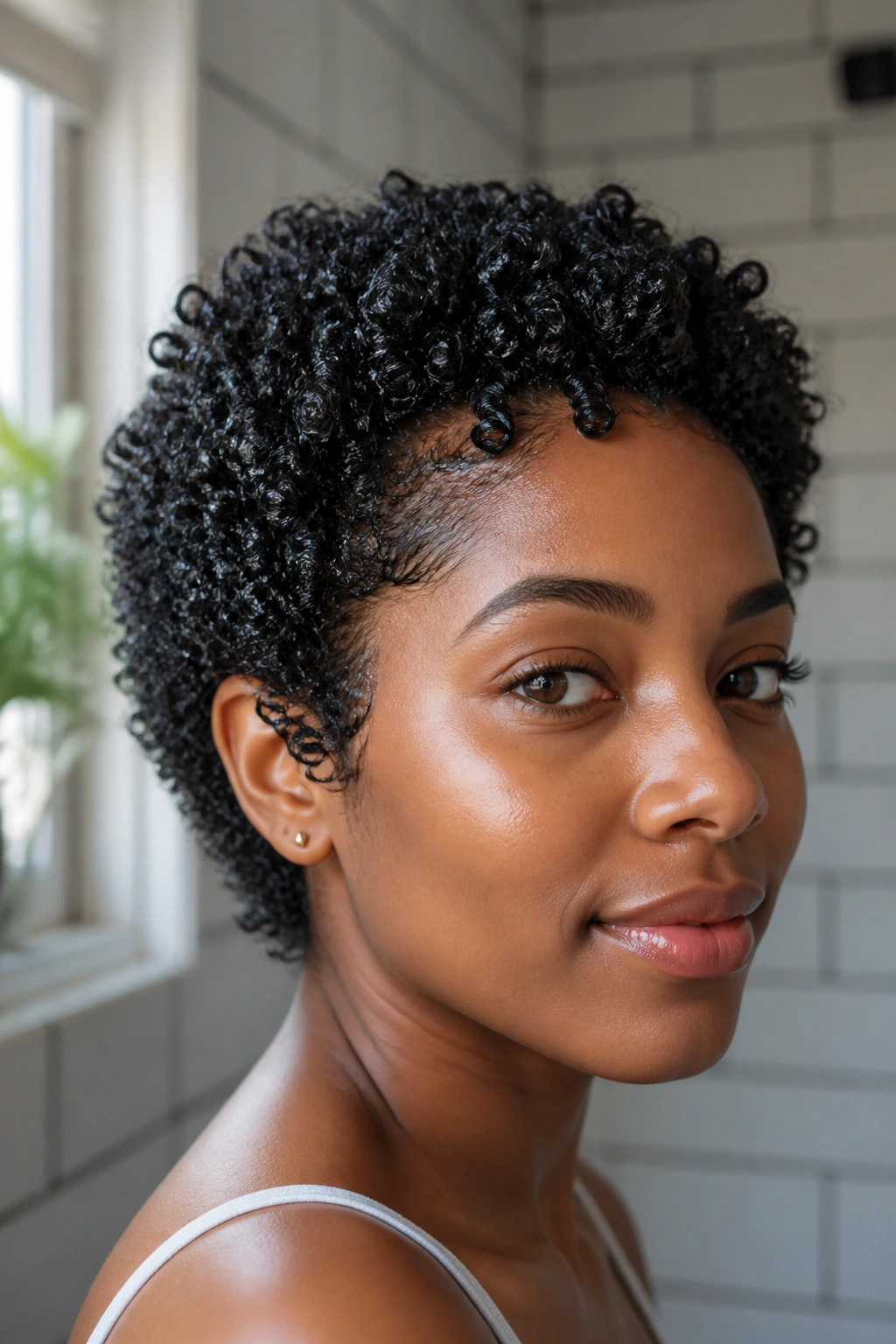
A defined wash-and-go on 4C hair is less about speed and more about control. People hear the name and imagine a ten-minute miracle. Not quite. The routine works when the hair is wet enough to clump, the product layers are thin, and the drying step gets enough patience.
Start with clean, very damp hair. Work in leave-in conditioner first, then a gel that gives hold without turning brittle. Raking too hard breaks the curl clumps apart, so use your fingers with a light hand or smooth the product in sections. The hair should look coated, not flooded.
That matters.
If the top turns fuzzy after drying, do not pile on more product. A small mist of water, then a touch of mousse over the canopy, can settle it without making the whole head heavy. Air drying works fine if you have time. A diffuser helps when the room is cold or the style needs faster set time.
8. High Puff
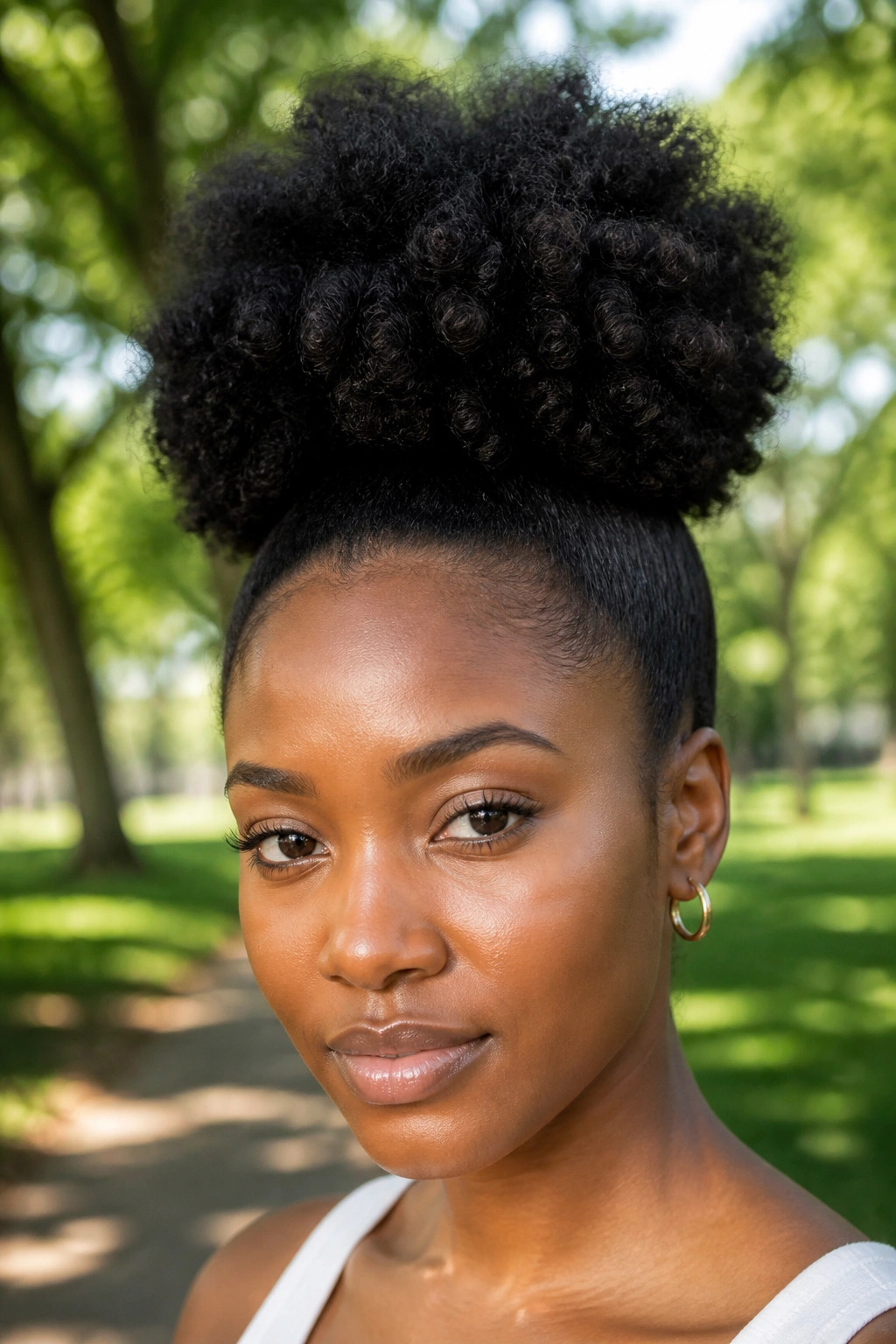
Want a style that gives short 4C hair instant lift? The high puff does that with almost no drama. Pulling the hair up toward the crown creates height and puts the texture front and center, which is why this style looks good even when the ends are not perfectly defined.
How to get the lift without breaking the band
- Use a stretchy, snag-free band so the puff sits secure without pulling at the roots.
- Brush only the base smooth, not the whole head, or you will lose texture and waste time.
- Place the puff at the crown if you want more drama; place it slightly forward if you want the face to open up.
- If the hair is short, split the puff into two small bands instead of one tight loop.
A high puff is easy to dress up or down. Add a headband, leave it plain, or pair it with a sharp part. It works best when you stop overthinking it and let the hair be full.
9. Low Puff

Low puffs get dismissed because they are quieter than high puffs. That is a mistake. A low puff sits closer to the nape, softens the profile, and keeps the style from competing with your outfit or your face. On short 4C hair, that can be the whole point.
It also tends to feel gentler on the crown. If your scalp gets sore from higher pony placement, or if you just want less tension, this is a better bet. A side part makes it feel more polished. A middle part makes it calmer and more balanced.
The smooth front is the part worth spending time on. Brush the hair back with a light gel, then stop. You do not need the whole head flattened. In fact, the puff looks better when the texture in the back still has some lift.
It is a good office style, a good errand style, and a good “I have ten minutes” style. Not flashy. Very useful.
10. Bantu Knots
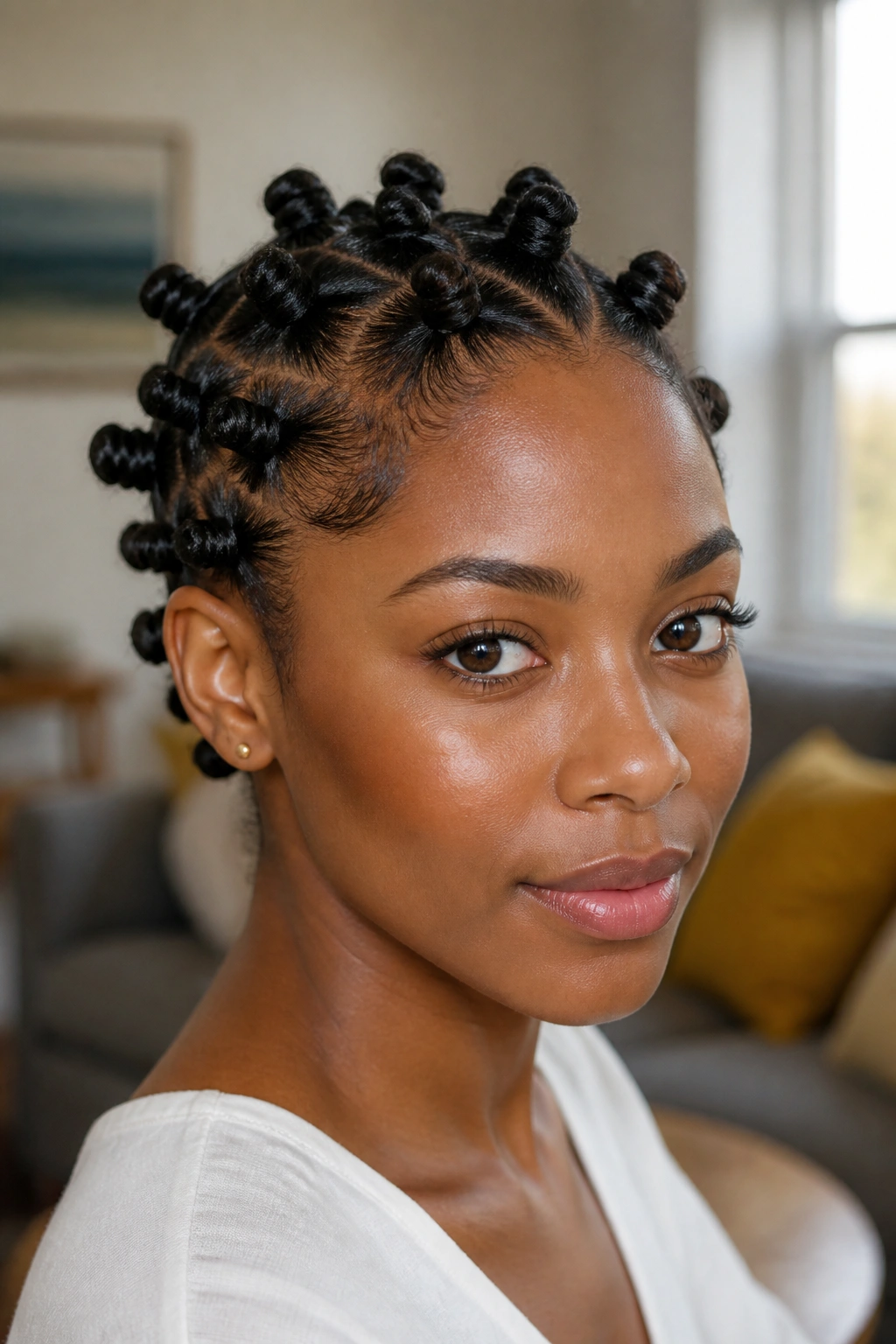
Bantu knots turn short 4C hair into a style with shape, texture, and a little edge. A neat set of small knots can look sharp on its own, and the same set can be unraveled later for tight, springy curls. That gives you two looks from one prep session.
Making the knots even
- Part the hair into clean, square or diamond sections so the knots sit at similar sizes.
- Smooth each section with a cream that has enough slip to keep the strands together.
- Twist the section until it coils around itself, then tuck the end under the base.
- Keep the knots snug, not painful; a knot that feels tight at the scalp usually looks too tight once it dries.
The style reads best when the parts are tidy. Slight unevenness shows more here than it does in a puff. That is why a rat-tail comb matters.
Bantu knots work for short hair that still has enough length to coil around itself. They are a little more hands-on than some styles, but they give you texture and shape with very little guesswork after the set is done.
11. Short Cornrows
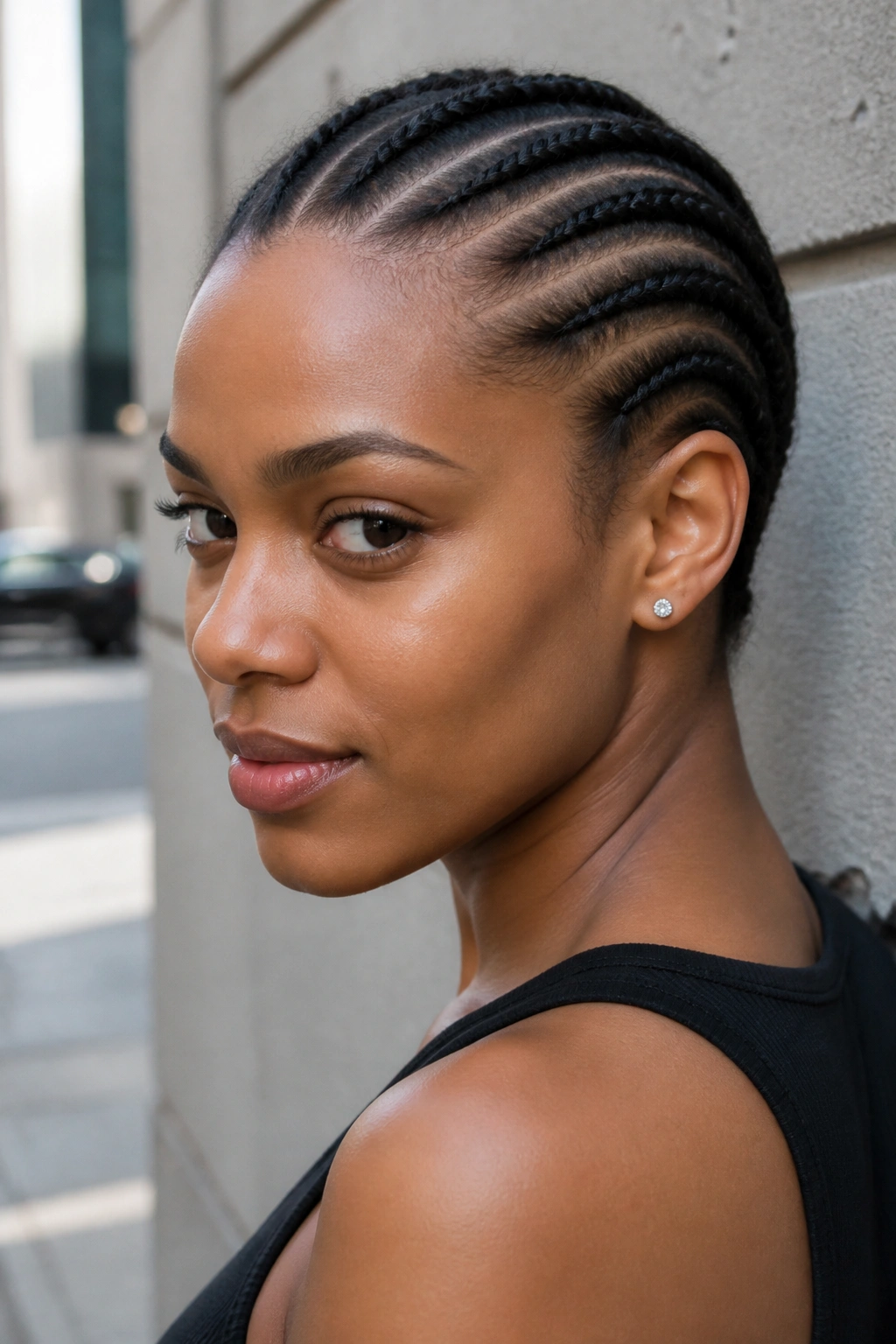
If you want the hair off your neck, short cornrows are the blunt instrument that works. They keep 4C hair close to the scalp, cut down on daily handling, and hold up well when you need a style that stays neat without constant touch-ups. Straight-back rows are the classic move, but side patterns can look sharper on shorter cuts.
The real win is time. Once the braids are in, you do not have to think about much beyond your scalp and your edges. That is useful for workouts, long days, and stretches when you want your hands out of your hair. A light styling gel at the roots is enough for most people.
Just keep the tension reasonable. A tight braid looks neat for about five minutes and then starts causing trouble. The scalp should feel secure, not stretched. If the braider has to yank the hair to get the line, the style is too tight.
Short cornrows are practical. Plain and simple. And sometimes that is the right answer.
12. Mini Frohawk
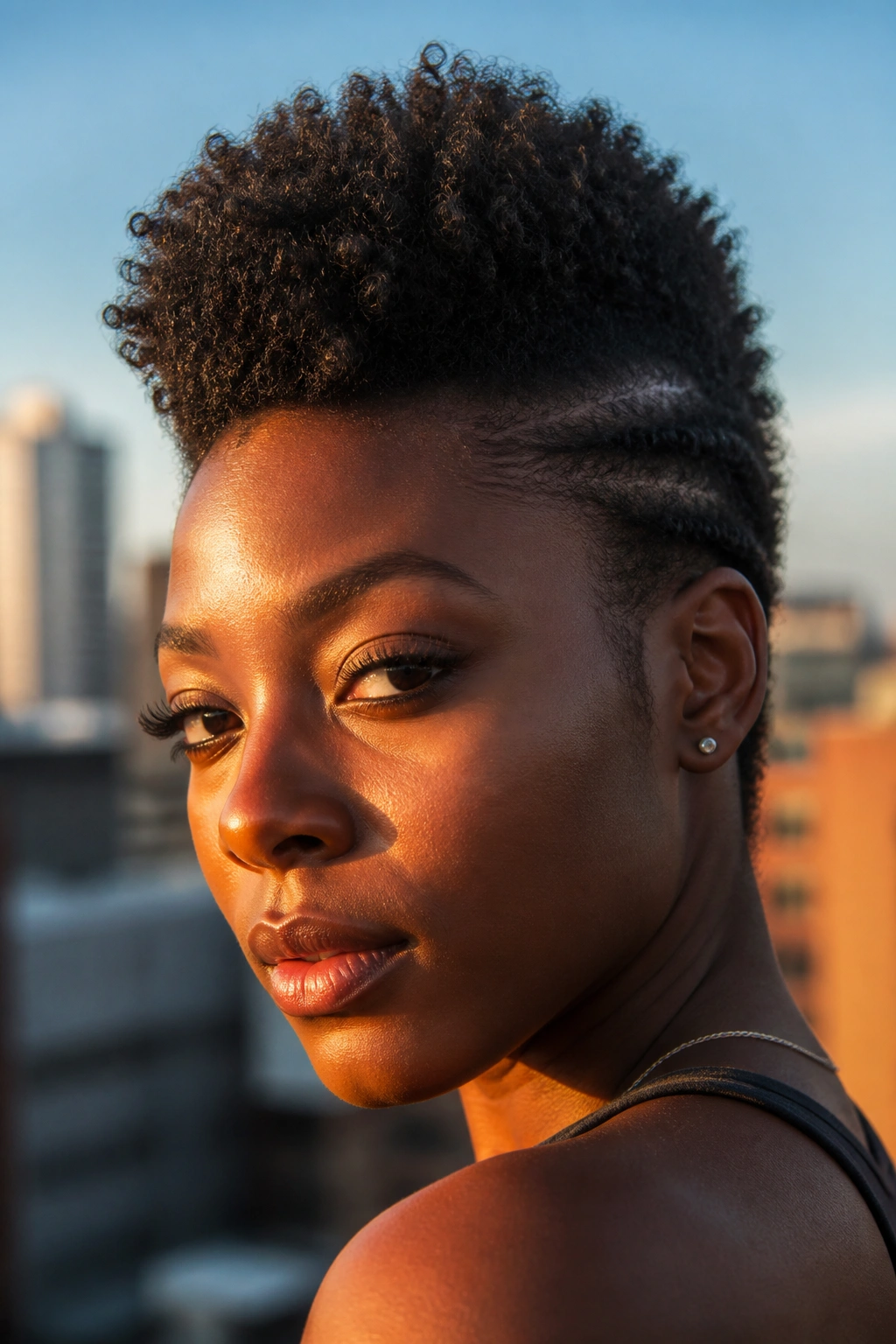
A mini frohawk gives short 4C hair a little attitude without asking for a full overhaul. The sides are pinned, braided, or slicked down close to the scalp, while the center strip stays lifted and visible. That middle section is where the personality lives.
How to build the center strip
- Leave the center section loose enough to puff up, but not so loose that it loses its shape by noon.
- Use bobby pins or small clips along the sides, placing them in the direction the hair is being pushed.
- Add a light cream to the center strip before fluffing, so the texture looks intentional instead of random.
- If the sides puff back up, smooth them with a small brush and a little gel, then stop.
This style is especially good when you want a short look that feels a little louder than a regular puff. It has height, it has shape, and it usually photographs well from the side — not that photos should run the decision.
A mini frohawk works best on hair with enough density to hold volume in the middle. Fine 4C hair can still do it, but the lift may need a bit more help from clips or a light twist at the base.
13. Side-Part Afro
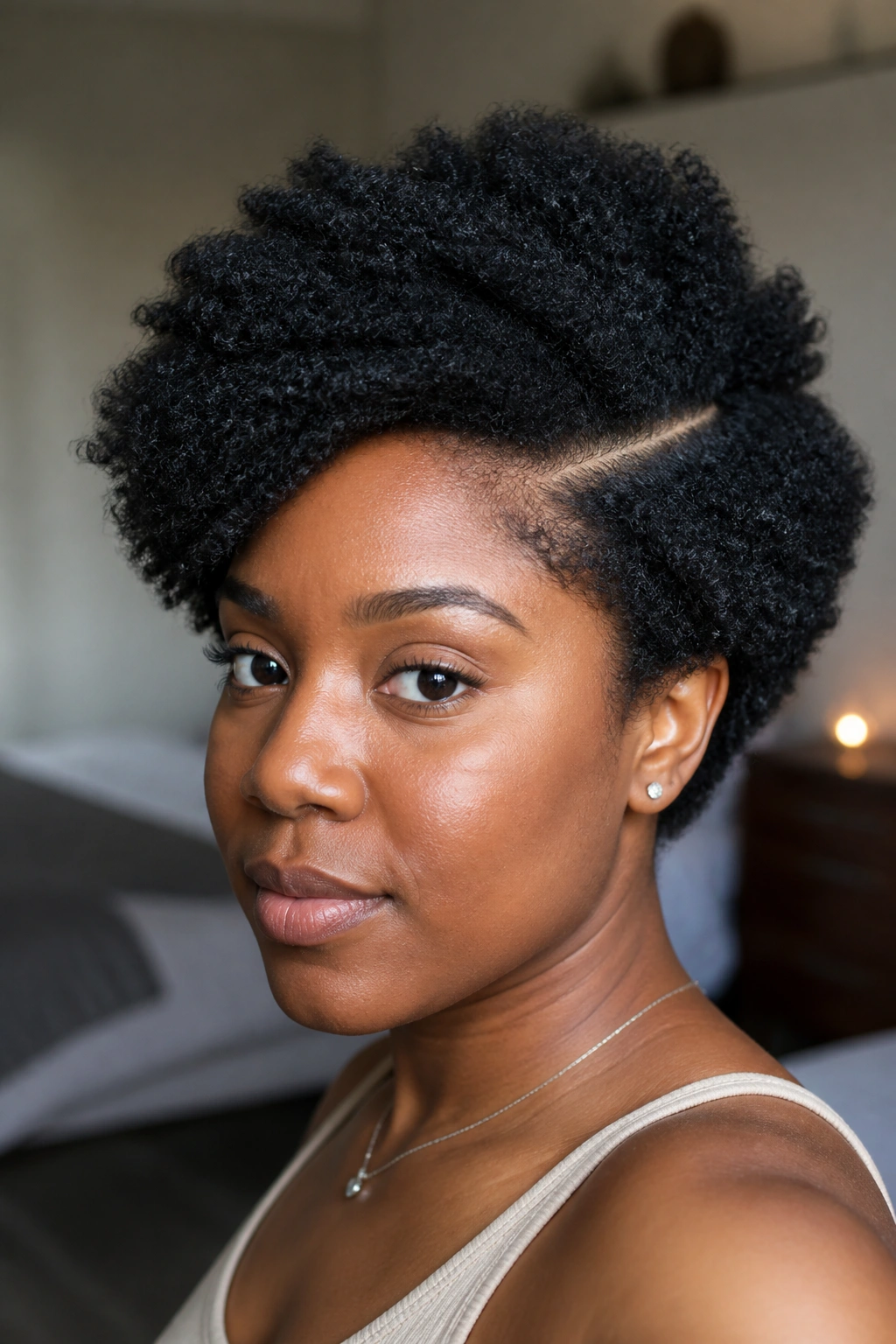
A deep side part changes the whole face shape. That is why the side-part afro earns a spot here. On short 4C hair, a strong part gives the texture direction, makes the style feel less symmetrical, and adds movement without relying on heat or extra length.
Put the part where the hair naturally wants to split, then push one side fuller than the other. The larger side creates volume; the smaller side frames the forehead and cheek. That contrast does a lot of work, especially if your face is round, oval, or you just want the style to feel less centered.
A dab of gel on the part line keeps the scalp visible and tidy. After that, pick the roots gently on the fuller side so the shape grows out instead of puffing straight up. The goal is a style that looks shaped, not forced.
I like this one for days when you want a little edge without braids or twists. It is plain in the best way.
14. Chunky Braids
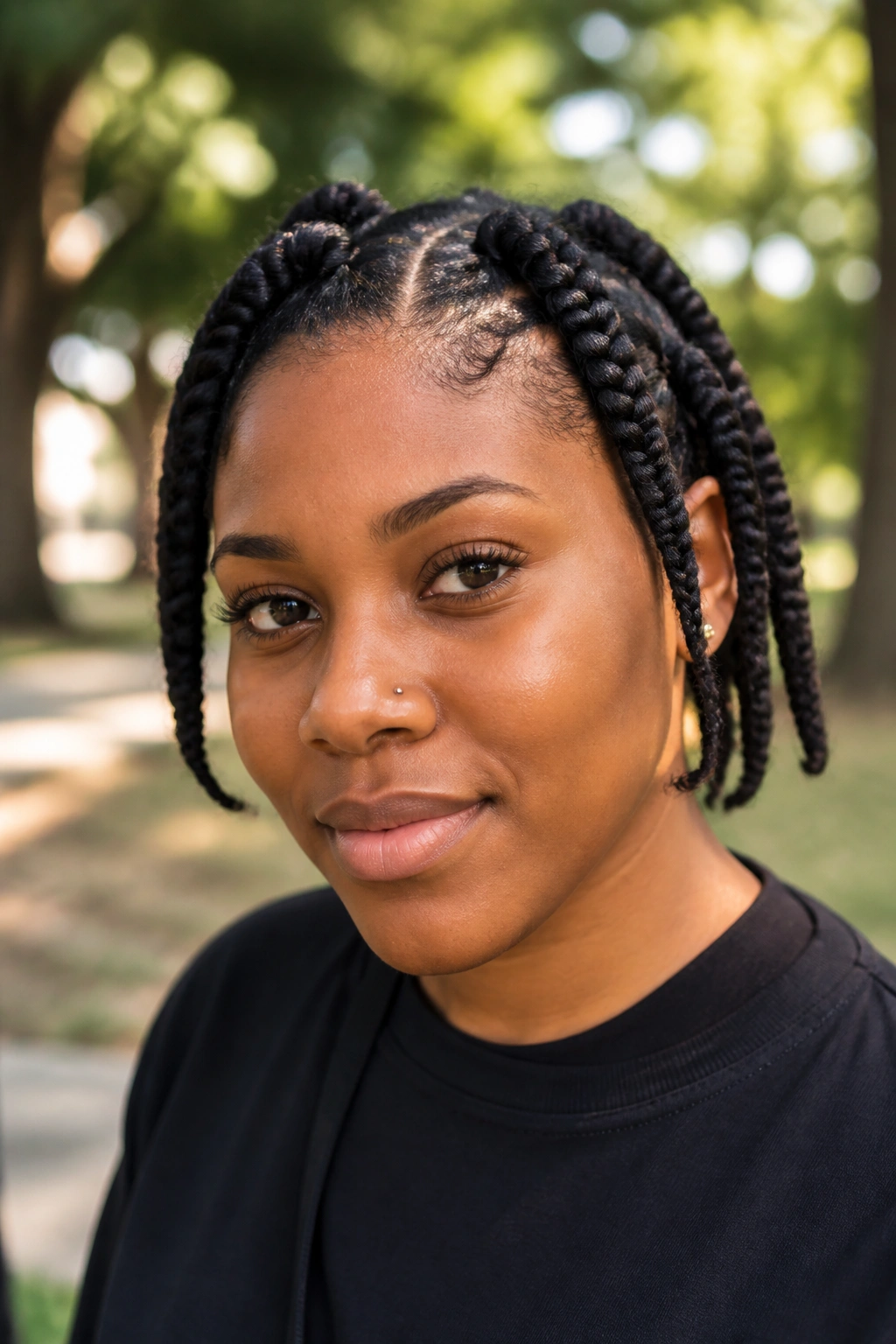
Chunky braids make sense on short 4C hair because they keep the style bold without demanding a tiny, time-consuming parting pattern. Three or four larger braids often look better than a row of small ones on a short cut. The size gives the style weight, which short hair needs.
Why bigger braids make sense on short hair
Bigger sections are easier to control when the hair is still compact. They also finish faster, and that matters if your arms get tired halfway through styling. The braid line stays visible, even after a few days, which helps the style keep its shape.
Small details that matter
- Start with stretched hair if you want the braids to lay flatter.
- Keep the roots smooth so the first inch does not puff out early.
- Add a little oil to the ends before braiding to keep them from fraying.
- Use cuffs, thread, or nothing at all; the braid itself should do enough work.
Chunky braids are good when you want a protective look that still feels casual. They are not precious. That is part of the appeal.
15. Rod Set Curls
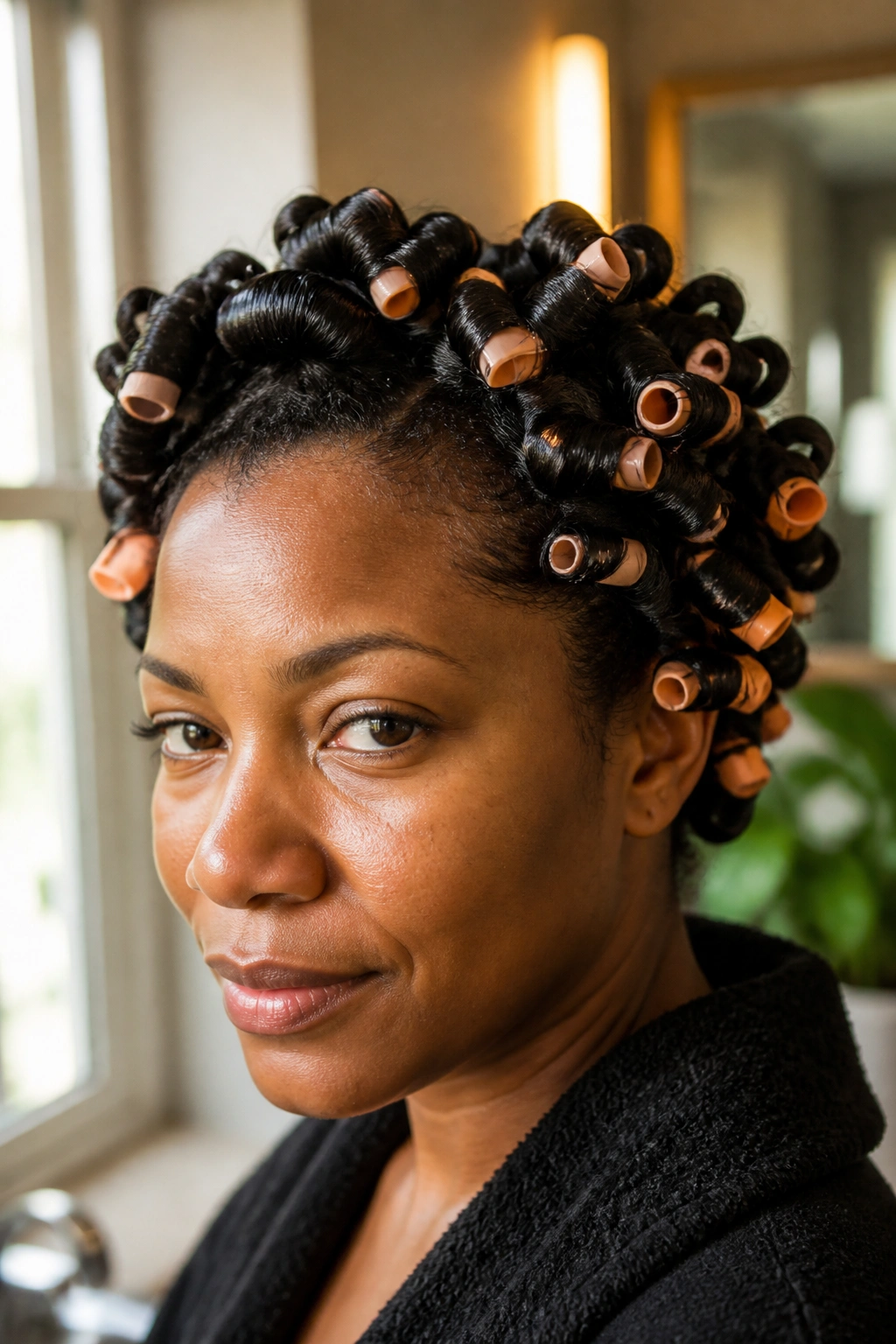
Rod set curls give short 4C hair a smooth, springy shape that can look softer than twists and neater than a free-form afro. The rod decides the curl, which means the final look is more controlled than it would be on its own. Flexi rods and perm rods both work; the size changes the mood.
Rod size decides the mood
Smaller rods create tighter curls with more bounce. Medium rods create a rounder, looser finish. If the hair is short, smaller rods can keep the ends from looking frayed, but they also take longer to dry. That tradeoff is real.
What to do before the set
- Start with damp, stretched hair so the coils wrap around the rod instead of bunching up.
- Apply a light setting foam or cream before rolling each section.
- Roll to the root with even tension, then secure the rod so the section does not slip.
- Dry fully before removal, because half-dry rod sets collapse fast and look messy by the second hour.
Rod sets are one of the nicest short looks when you want shine and shape. They take patience, but they repay it.
16. Halo Twist Crown
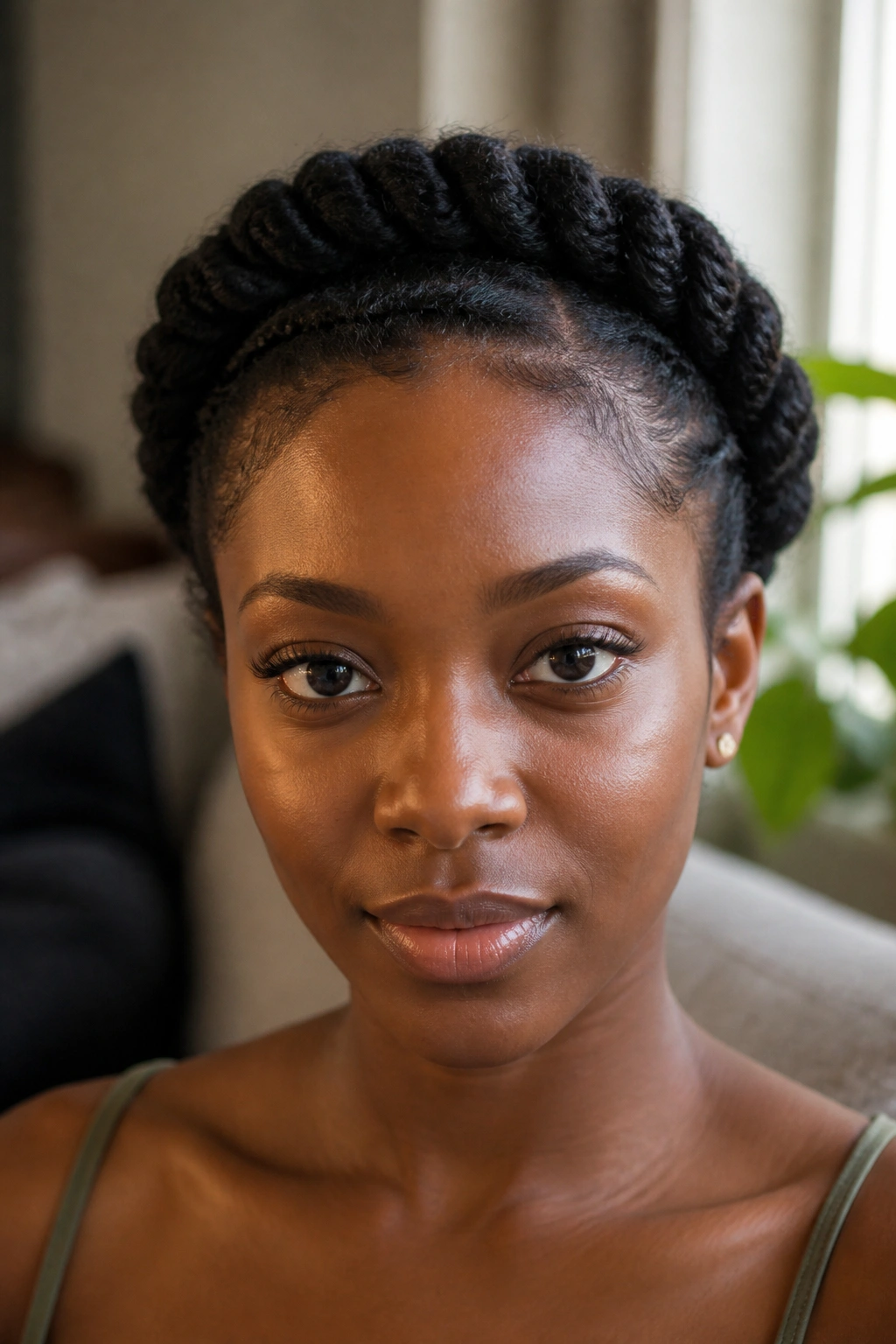
A halo twist crown is the style I reach for when short 4C hair needs to look dressed up with minimal fuss. The hair is twisted around the perimeter of the head, then pinned so the ends disappear into the shape. The center can stay soft, flat, or lightly textured.
It looks more complicated than it is. That is half the charm. Once the twists are in place, the outline does most of the talking. A few bobby pins, a little edge smoothing at the temples, and you are done. Keep the product light, though. Too much cream can make the crown sag before the night is over.
The style works best when the hair has enough length to wrap around the head once or twice. Even short hair can manage it if the twists are small. You may need to pin more than you expected. Fine. Pins are part of the recipe here.
The halo crown has a tidy, old-school feel without looking stiff. I like that balance.
17. Slicked-Back Puff
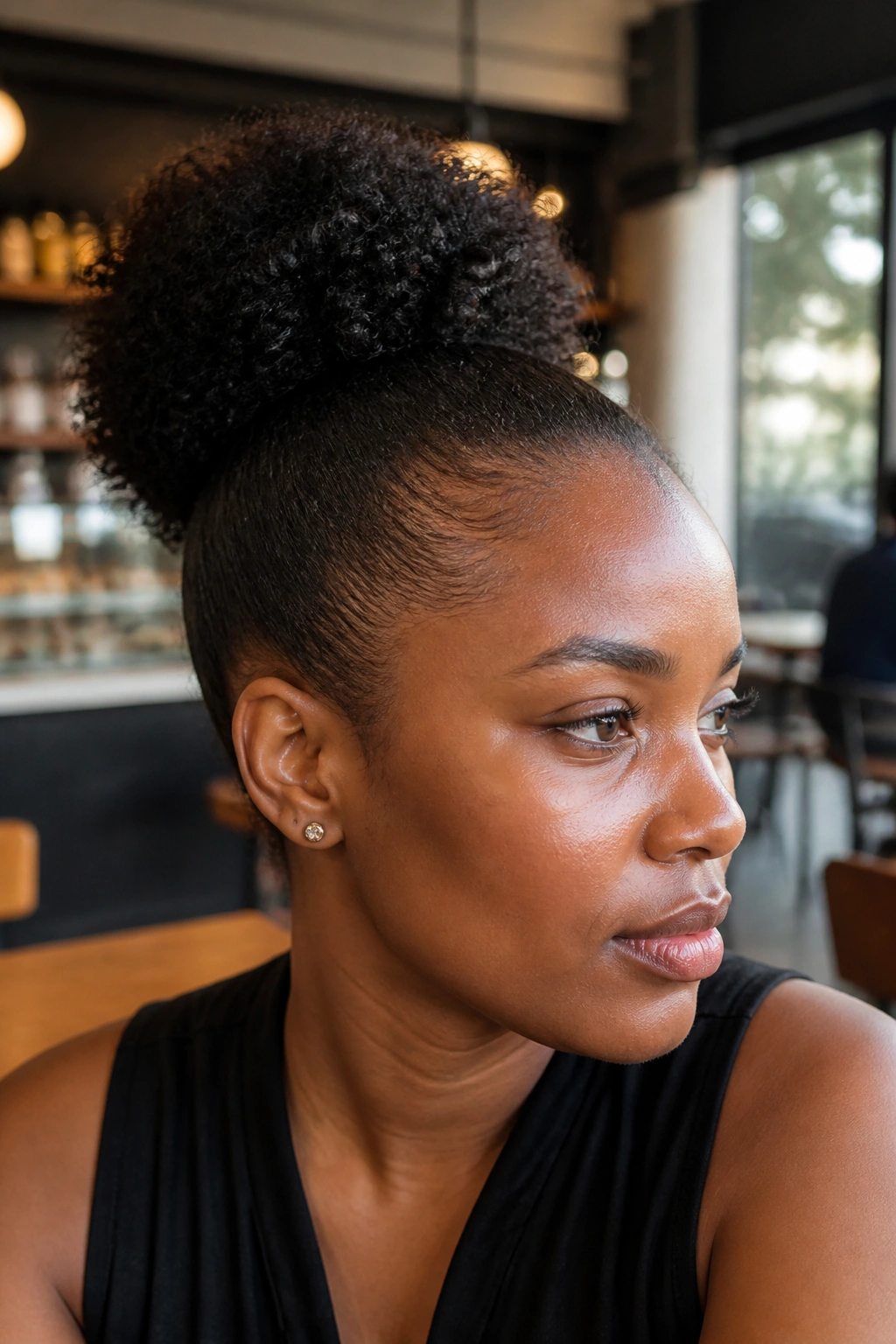
A slicked-back puff is the cleanest style in this bunch, and it saves time too. The front and sides get smoothed back, while the puff sits at the crown or slightly behind it. The result feels neat, but not flat. That is the sweet spot.
Start with damp hair and a small amount of gel at the hairline and temples. Brush once or twice, then stop. If you keep brushing, the style gets stretched and the puff loses its shape. That is where a lot of people go wrong. The style should look smooth at the front and soft at the back, not helmet-like.
This one is a good move for day-old twist-outs or a wash-and-go that needs a cleaner outline. It also works when your roots are puffy but the ends still have life. A satin scarf for twenty minutes after styling can help the front settle before you head out.
The slicked-back puff feels sharp without trying too hard. And that is usually the point.
18. Curly Fade Cut
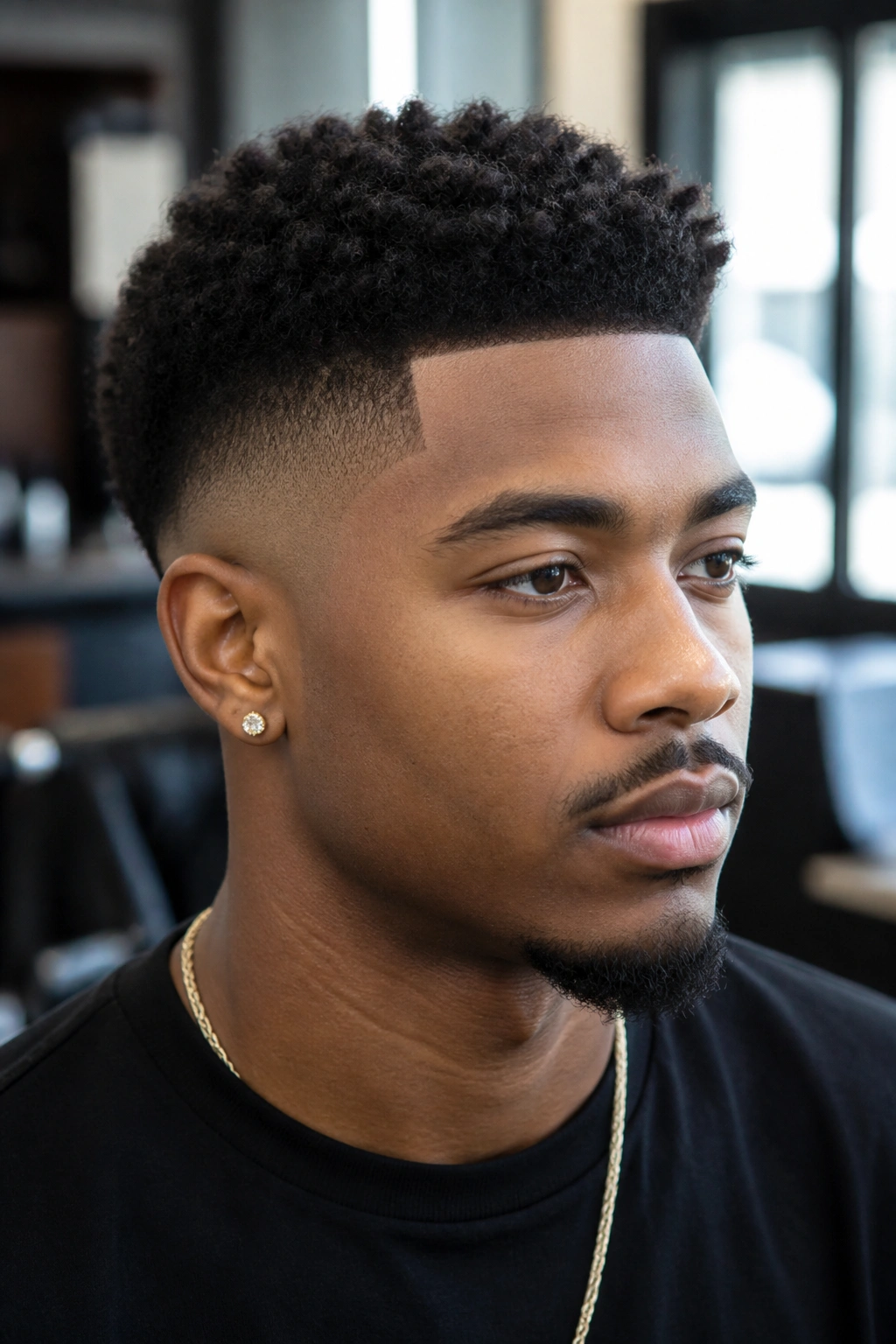
If you want short and low-maintenance, a curly fade cut is the move. The sides and back are faded close, while the top keeps enough length for 4C coils to show texture and shape. It is one of the most straightforward ways to make short hair look intentional every day.
The fade does the heavy lifting. The top only needs a small amount of cream or foam, plus a sponge or finger coils if you want more definition. A clean line-up around the edges can sharpen the whole look in seconds. That is useful when you do not want to spend ten minutes coaxing the hair into place every morning.
It also grows out in a way that still looks tidy. That matters more than people admit. A good fade gives you a built-in shape, so the style does not collapse the moment the barber visit starts to age. If you like crisp lines and a cut that feels decisive, this one belongs near the top of your list.
Final Thoughts
Short 4C hair looks best when the shape feels chosen, not accidental. That can mean a sharp taper, a soft puff, a twist set, or a cut with a fade that does most of the visual work for you. The style itself matters, but the outline matters just as much.
Pick the look that matches your patience, your morning routine, and how much time you want to spend touching your hair. Some days call for a clean cornrow run or a slicked-back puff. Other days want a rounded afro or a set of coils that show off every bend in the strand.
A good short style should make the hair easier to live with. That is the real test. If it gives your coils room to do what they already do well, you will notice the difference every time you pass a mirror.
