



Thick hair is a gift until it starts behaving like a small weather system.
The best hairstyles for thick hair do not fight the density; they shape it. That usually means clean lines, thoughtful layers, or styles that gather the weight in a way that feels controlled instead of bulky. If you have ever left the house with a great blow-dry and watched it collapse into a puff by lunch, you already know the problem.
No one wants a ponytail that feels like a bungee cord.
Thick hair needs a little strategy. A blunt edge can look rich and full, while internal layers can take the bulk out of a cut without making the ends look stringy. Braids, buns, ponytails, waves, and short crops all behave differently on dense hair, and that is the fun part — the same head of hair can look polished, soft, sharp, or playful depending on the shape you choose.
1. Long Layers for Thick Hair
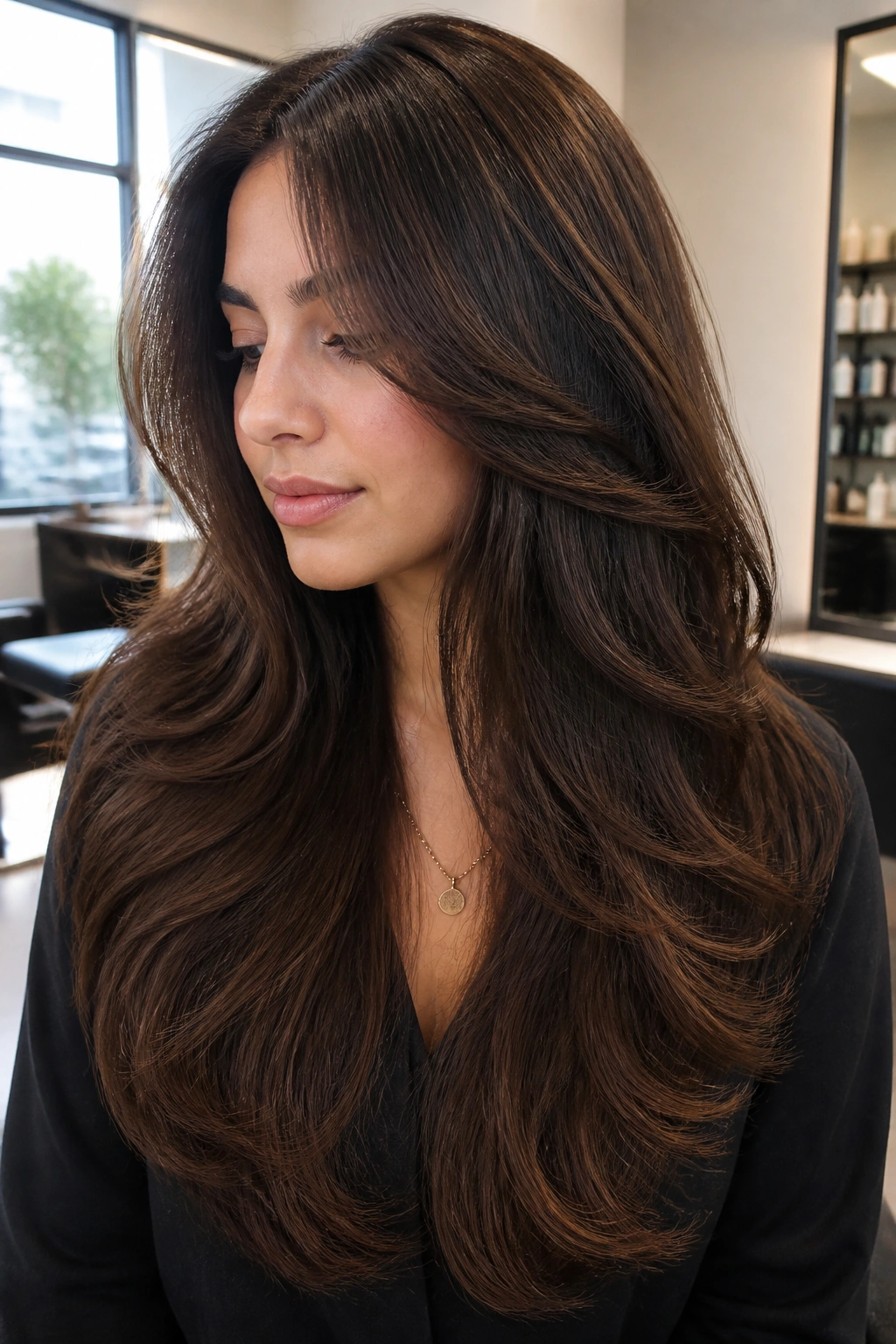
Long layers are the easiest way to make thick hair move without taking away the fullness people actually like.
Why They Work
The trick is to keep the longest layer strong and let the inner layers do the heavy lifting. Ask for layers that start below the chin, not chopped all the way up near the face, unless you want a much lighter feel around the front. That keeps the ends from turning into a triangular block.
- Best for hair that reaches past the shoulders
- Works well with air-drying or a soft blowout
- Lets curls separate instead of stacking into one solid shape
- Looks better when the ends are blunt, not wispy
A good stylist will often remove weight from the inside, not just hack at the surface. That small difference matters a lot. If your hair is thick but fine in strand size, keep the layers gentle. If your hair is thick and coarse, you can usually handle a bit more shape around the face.
Tip: Ask for internal layers and a blunt perimeter. That combination keeps the hair from feeling puffy at the bottom.
2. Blunt Lob for Thick Hair
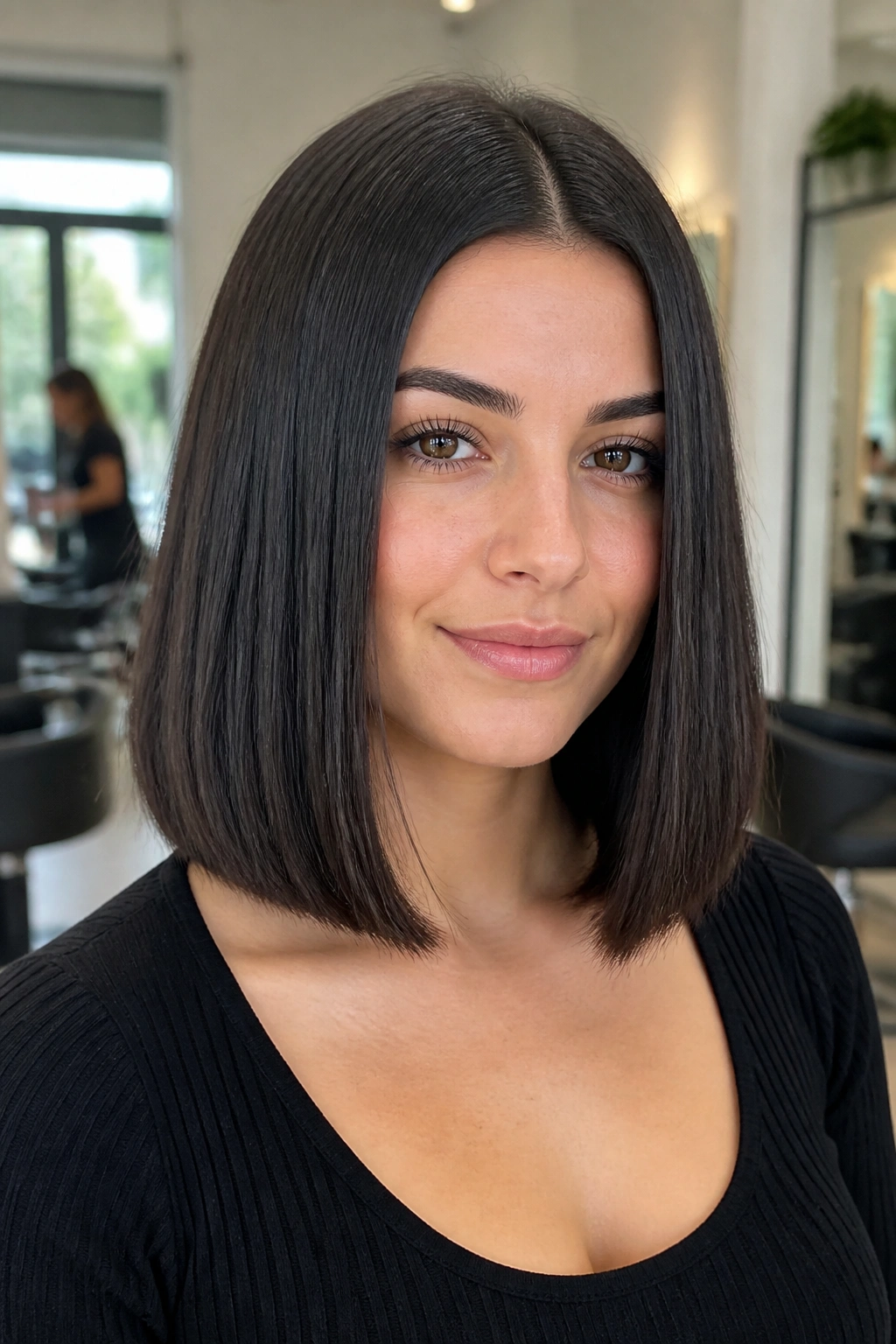
A blunt lob earns its keep. It gives thick hair a strong line, so the cut looks deliberate instead of overgrown.
The sweet spot sits somewhere around the collarbone or just below it. That length is long enough to pull back on bad days and short enough to lose some of the weight that drags thick hair down. I like this cut best when the ends are kept crisp, because soft, wispy edges can look thin fast once the hair air-dries.
The real magic is in the shape, not the drama. A blunt lob holds a little movement at the ends, but it still looks clean when you wear it straight. If you want easy mornings, this one is hard to beat. It can look sleek with a flat brush and a smoothing cream, or a little undone with a bend from a large curling iron.
Trim it regularly, too. A blunt lob loses its punch when the line starts to fray. Every 6 to 8 weeks keeps the ends heavy and tidy.
3. Curtain Bangs With Soft Waves
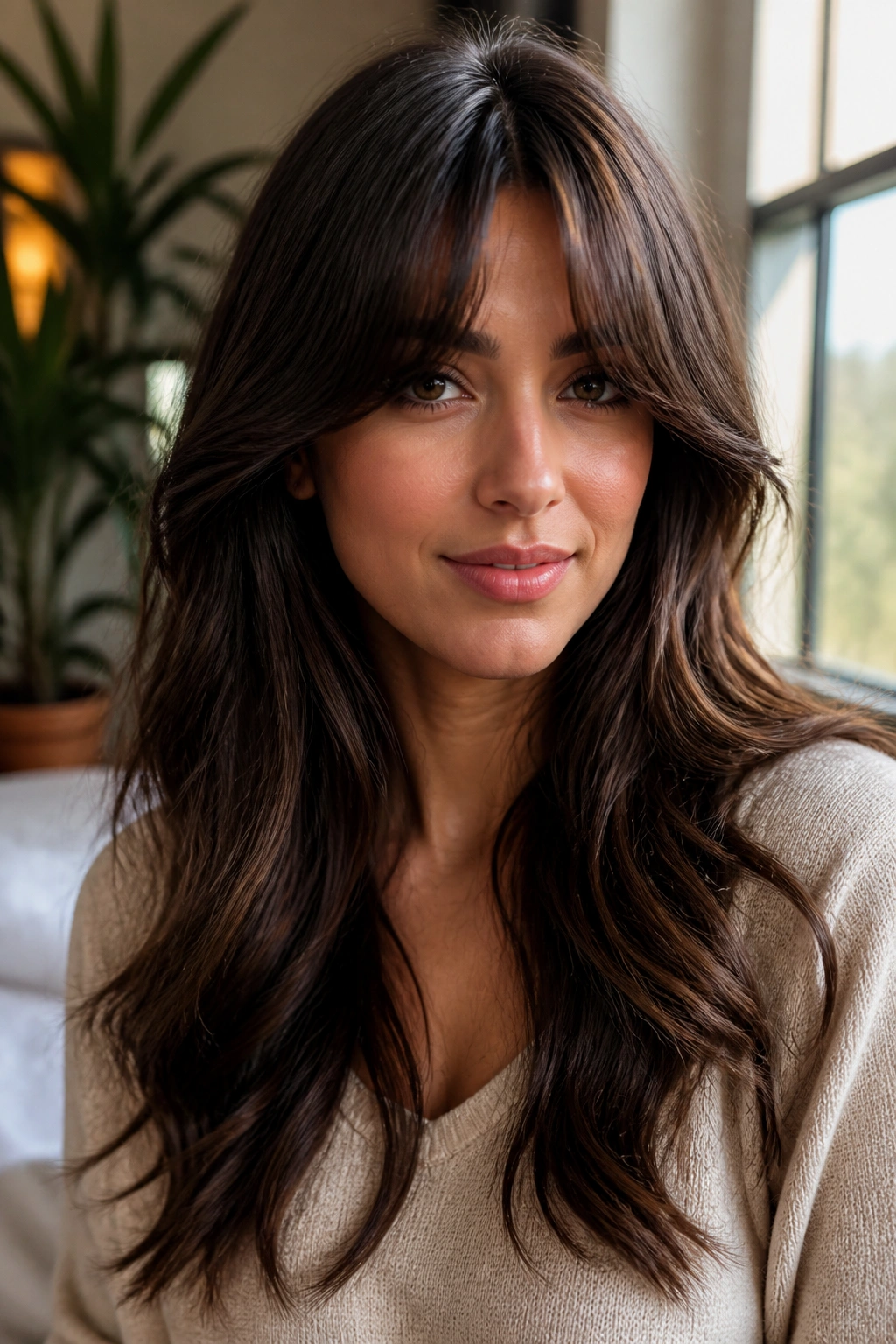
Want movement without surrendering length?
Curtain bangs are a smart answer for thick hair because they break up the heaviness around the face. They also buy you some softness without forcing the rest of the cut to get too short. When the bangs sweep away from the center, the whole style feels lighter and more open.
How to Style Them
The easiest version uses a round brush and a medium-barrel iron, around 1 inch to 1¼ inches wide. Dry the bangs forward first, then bend them away from the face at the last second so they do not sit in a hard curve. A tiny bit of flexible spray keeps them from falling into your eyes.
- Blow-dry the bangs before the rest of the hair
- Use a light mousse only at the roots if your hair goes flat fast
- Bend the face-framing pieces away from the cheekbones
- Let the waves start around mid-length, not right at the roots
Do not overcurl the front. Thick hair already has enough presence, and a huge bang curl can look dated fast.
4. High Ponytail With a Wrapped Base
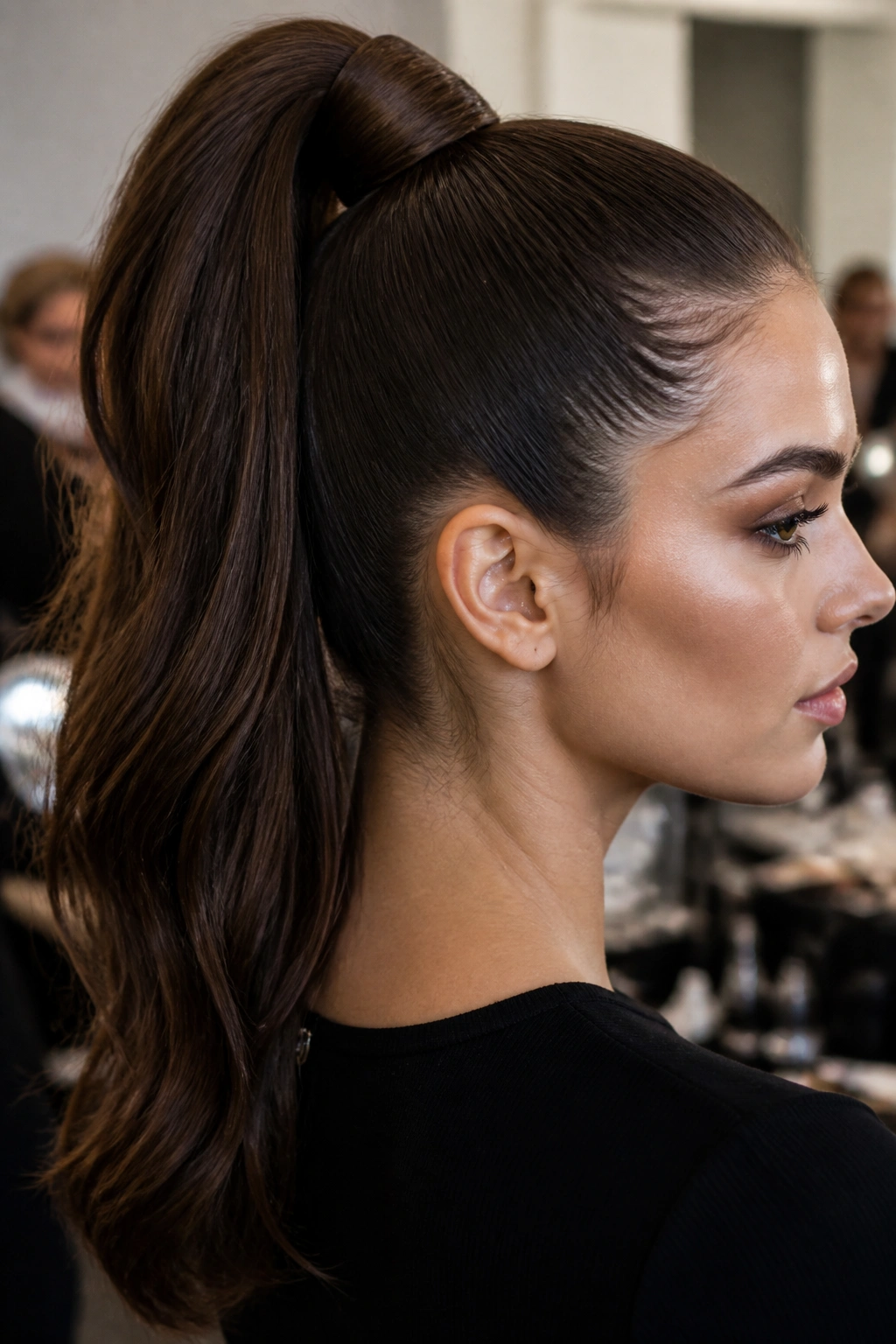
When the hair is too much to deal with, a high ponytail is the fastest way to make it look intentional.
Thick hair loves this style because the ponytail has real body. It does not look sad or skinny, which is half the battle. The higher you place it, the more lift you get at the crown, and that little bit of height can make the face look more awake.
A wrapped base makes the whole thing feel finished. Take a 1-inch section from underneath the ponytail, wrap it around the elastic, and pin it with a bobby pin or tuck it into a second elastic underneath. If the ponytail feels heavy, use two elastics stacked one over the other. That stops it from sliding down by noon.
- Smooth the crown first with a brush and a touch of gel
- Anchor the ponytail with a tight first elastic
- Wrap the base with a narrow strand of hair
- Curl the ends slightly if you want extra swing
A high ponytail should feel secure, not painful. If your scalp hurts, the tie is too tight.
5. Sleek Low Bun
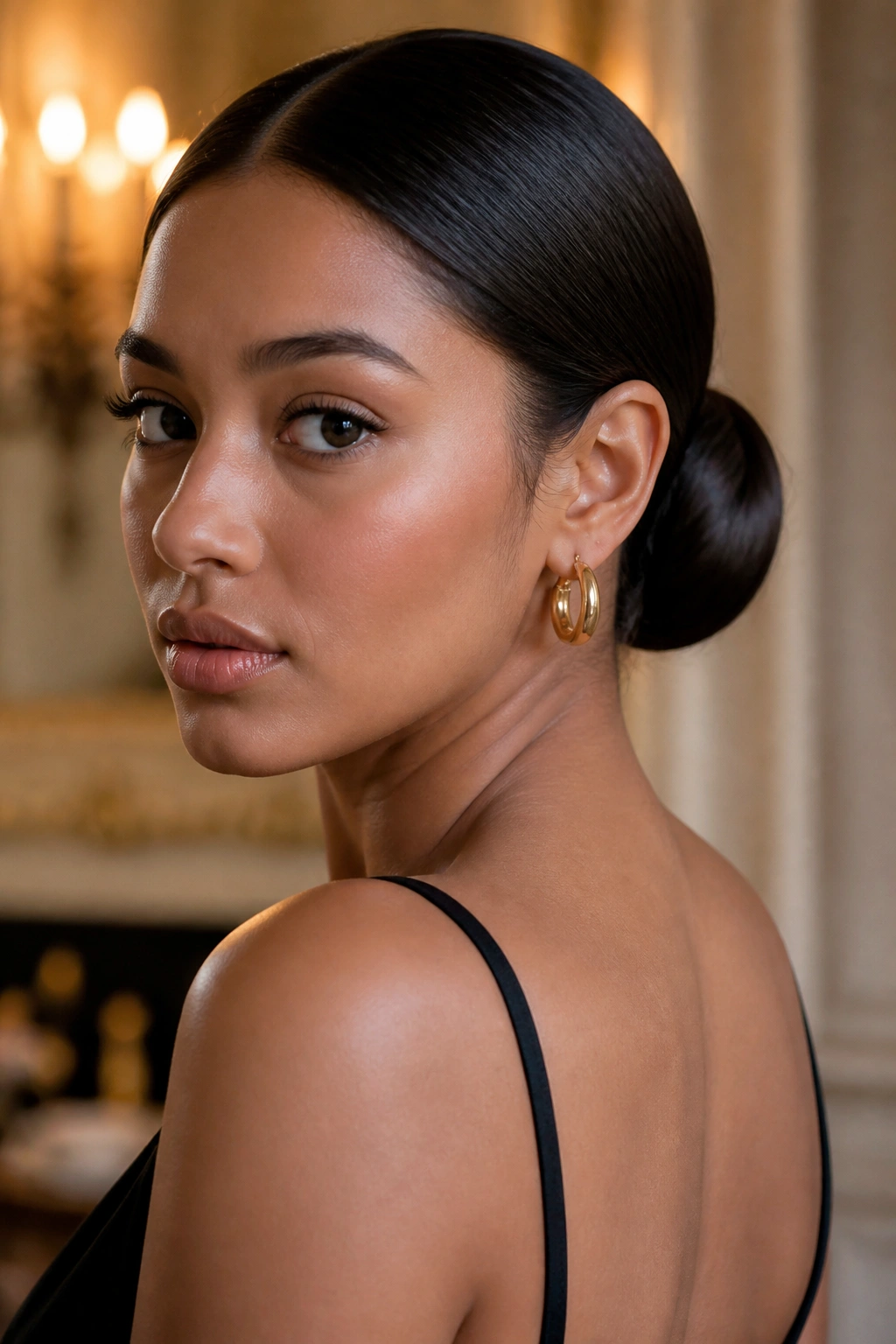
A sleek low bun is the style I reach for when thick hair needs to stop talking for a minute.
It works because all that density gets collected low at the nape, where the shape feels neat instead of bulky. A center part keeps it modern, but a side part can soften the look if your hairline is strong. The key is prep: a little smoothing cream, a clean brush, and a few minutes spent flattening the crown before you twist anything.
The bun itself does not need to be tiny. In fact, a bun that is too small often looks like it is fighting the hair inside it. Let the thickness fill the shape, then pin the loose ends underneath so the outline stays smooth. If you want it polished, use a boar-bristle brush over the top and mist lightly with shine spray.
This is one of those styles that looks more expensive than it is. That is probably why it survives every passing trend.
6. Half-Up Twist With Extra Crown Lift
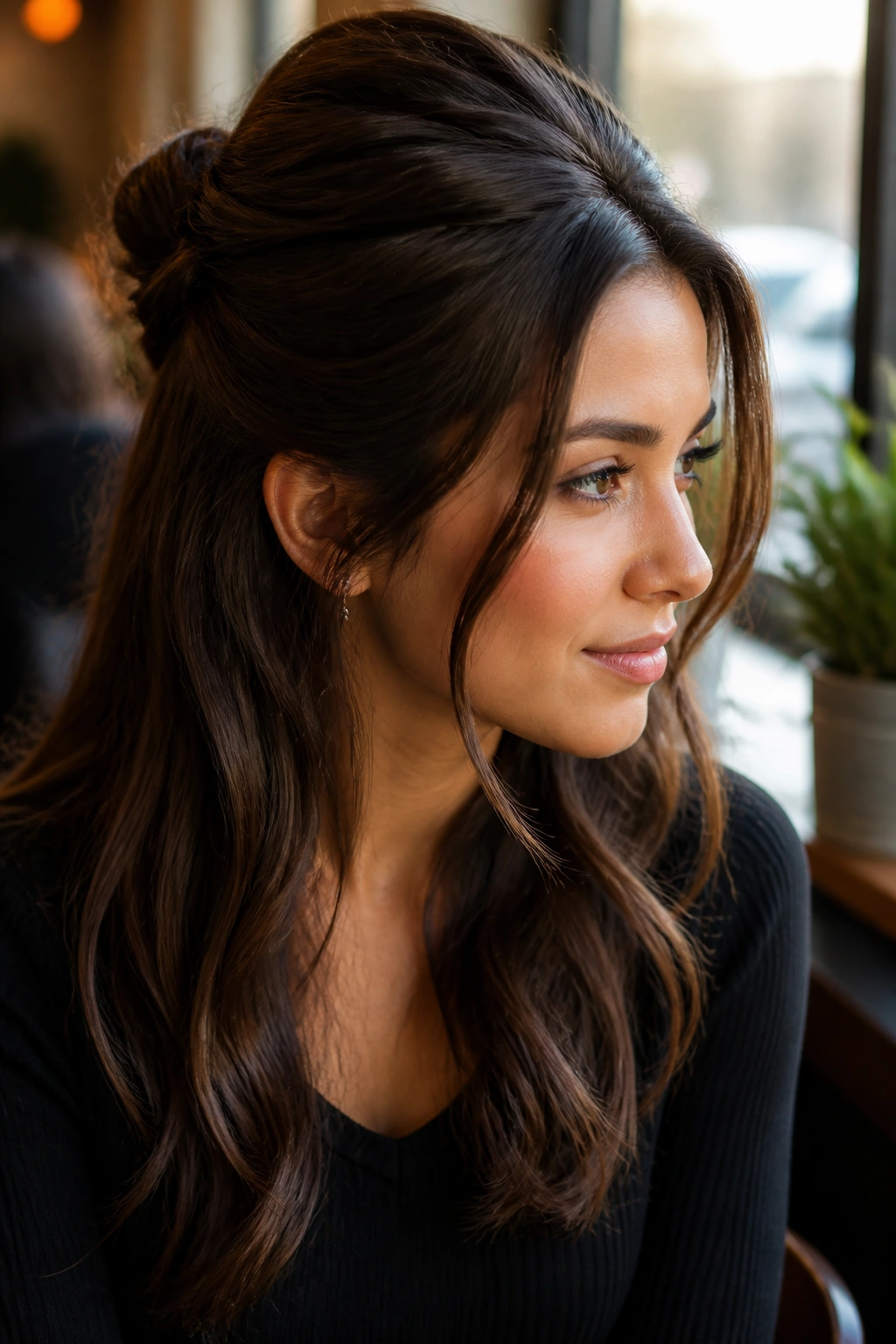
Compared with a full updo, a half-up twist keeps some length visible and makes thick hair feel less boxed in.
That matters more than people think. Dense hair can look heavy when everything is pulled away from the face, but a half-up twist gives you lift where you need it and leaves the rest of the hair free to move. The easiest version starts with two sections from the temples. Twist them back, meet them at the crown, and secure with a clear elastic or two hidden pins.
If you have long hair, curl the loose lengths in soft bends before you pin the top. The contrast between the lifted crown and the loose lower half gives the style shape. It also keeps the back from looking flat, which happens fast when thick hair is only partially secured.
This one works especially well for dinners, showers, and long days when you want your hair off your face but not fully tied away.
7. Braided Crown That Keeps the Bulk Controlled
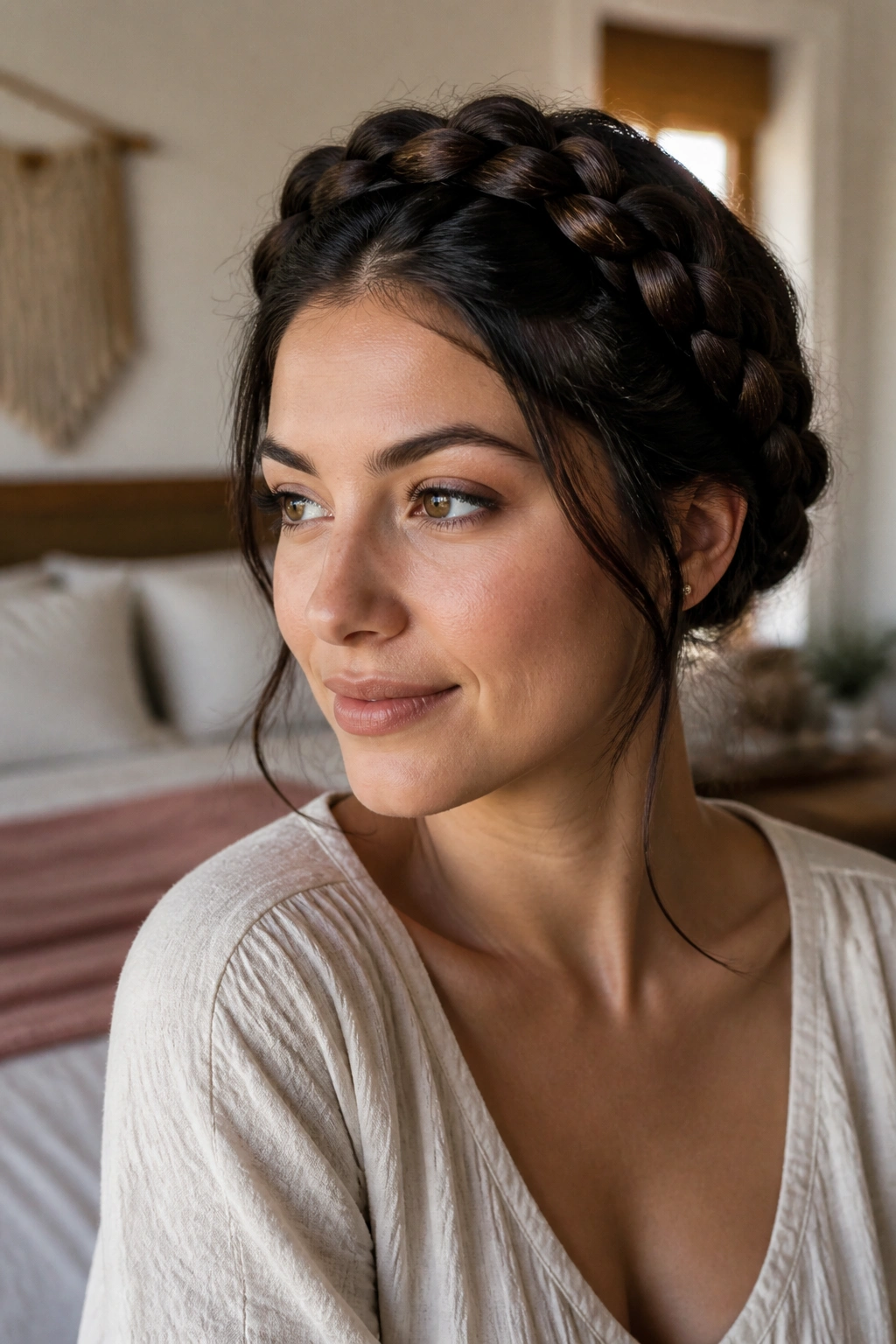
A braided crown is one of the few styles that can make thick hair look ornate without turning it into a wrestling match.
What Makes It Work
The braid itself has enough substance to show up. Thin hair can lose the effect, but dense hair gives the braid real dimension. Start the braid behind one ear, work along the hairline, then pin the end under the opposite side. If your hair is slippery, a bit of dry shampoo or texturizing spray gives the braid grip.
- Best on second-day hair
- Use 1-inch sections for a neater braid
- Pin every 2 inches if the hair is heavy
- Gently tug the braid wider after it is secured
What to Watch For
If you braid too tightly, the crown can start to hurt after a few hours. Keep the tension firm but not aggressive. That balance matters more than perfect symmetry.
A slightly imperfect crown braid often looks better anyway. It feels softer around the edges and less costume-like.
8. Shoulder-Length Shag With Soft Texture

A shag can be a lifesaver for thick hair, provided it is cut with shape and not just chopped into pieces.
The best version sits around the shoulders and uses crown layers to let the hair fall instead of balloon. That keeps the ends from building into a big triangle, which is what happens when thick hair is left one length and given no movement. A soft fringe or cheekbone-length pieces help the cut feel lighter around the face.
I like this cut on people who do not want to spend half the morning styling. A little mousse at the roots, a rough blow-dry, and a touch of texture spray is often enough. The cut does the heavy lifting. That is the point.
If your hair is wavy, a shag can look lived-in in the best way. If your hair is straighter, the layers still stop it from falling flat and heavy at the sides.
9. Choppy Pixie With a Piecey Top
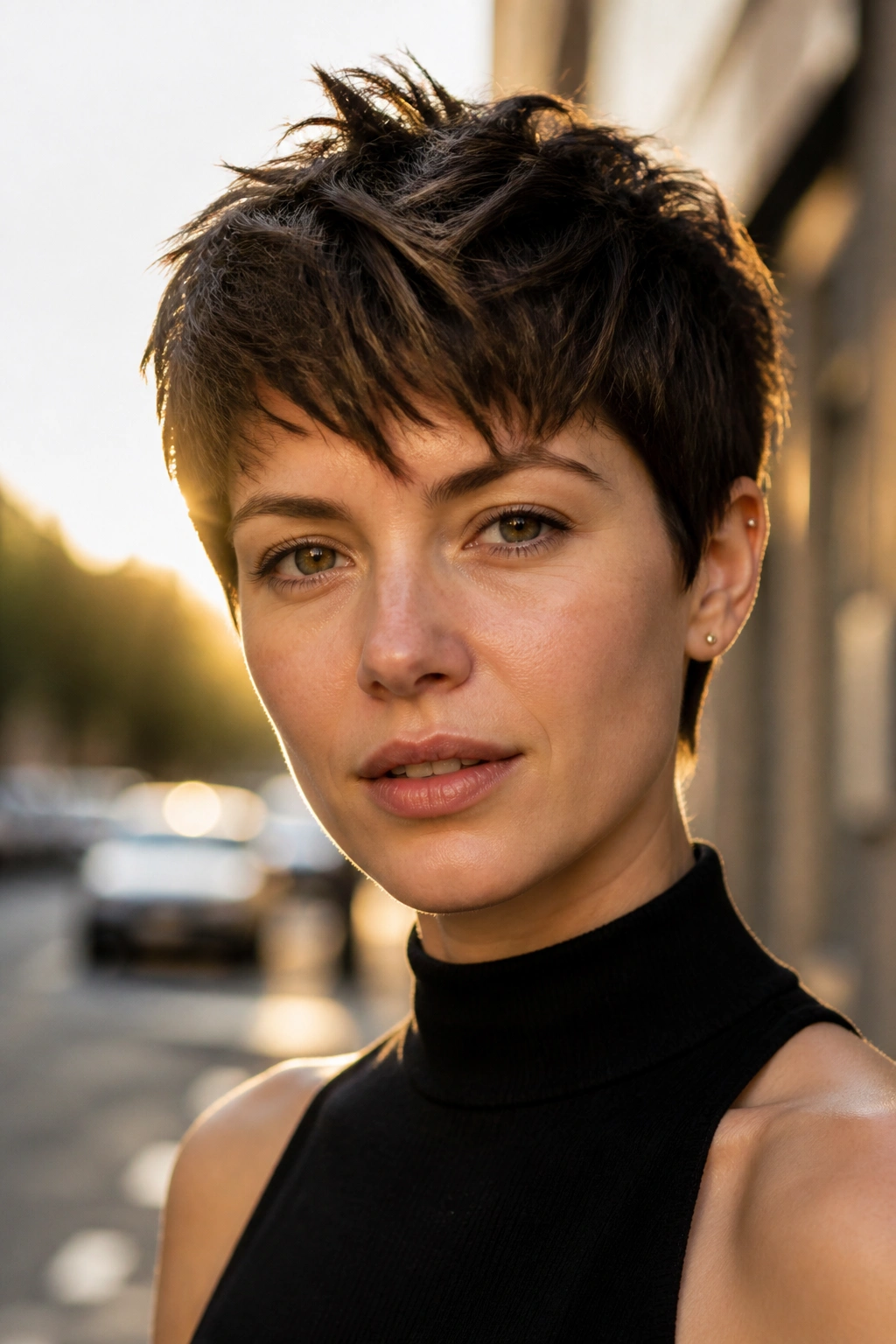
Pixies are brave cuts.
On thick hair, they can be fantastic because the hair has enough density to hold shape instead of collapsing. A choppy pixie with a piecey top keeps the sides shorter and leaves more length on top, which gives you control over the silhouette. Ask for texture through the top, not a rough hack at the ends.
Styling Notes
A pea-sized amount of matte paste is usually enough. Warm it between your fingers, pinch sections at the top, and push a few pieces forward or to the side. That keeps the style from looking helmet-like.
- Shorter sides reduce bulk around the ears
- A longer top gives you lift and movement
- Matte products show separation better than heavy creams
- Works well when hair is cut every 4 to 6 weeks
The cut has to be balanced. Too much length on top and not enough underneath, and the whole thing starts to puff.
10. Voluminous Blowout With Large Sections
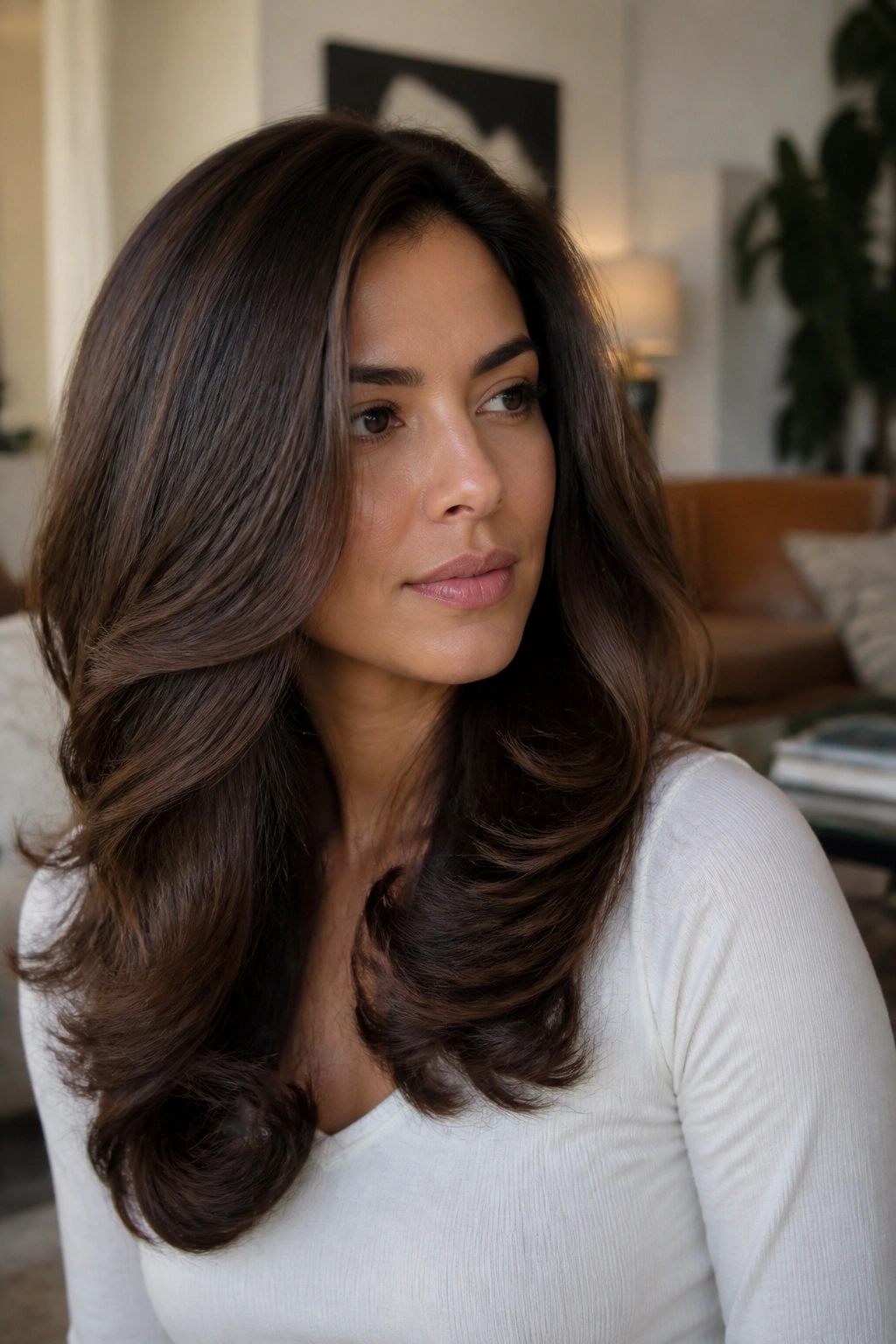
A thick head of hair and a good blowout can be a dangerous combination in the best way.
The volume is already there, so the job is not to create it from scratch. The job is to control it. Rough-dry the hair until it is about 80 percent dry, then work in 2-inch sections with a round brush. That size matters. Smaller sections take forever and can make the style look too curled; larger sections smooth the hair while keeping the ends lively.
Use a heat protectant with a light hold before you start. Then direct the nozzle downward so the cuticle lies flatter and the finish looks shinier. A cool shot at the end helps the shape last longer, especially around the face and crown.
- Rough-dry first to save time
- Use a 2-inch round brush for the mid-lengths
- Roll the ends under slightly for bounce
- Let each section cool in your hand before moving on
If the roots are still damp, stop and finish them. Thick hair hides moisture, and damp roots ruin the whole blowout.
11. Bubble Ponytail
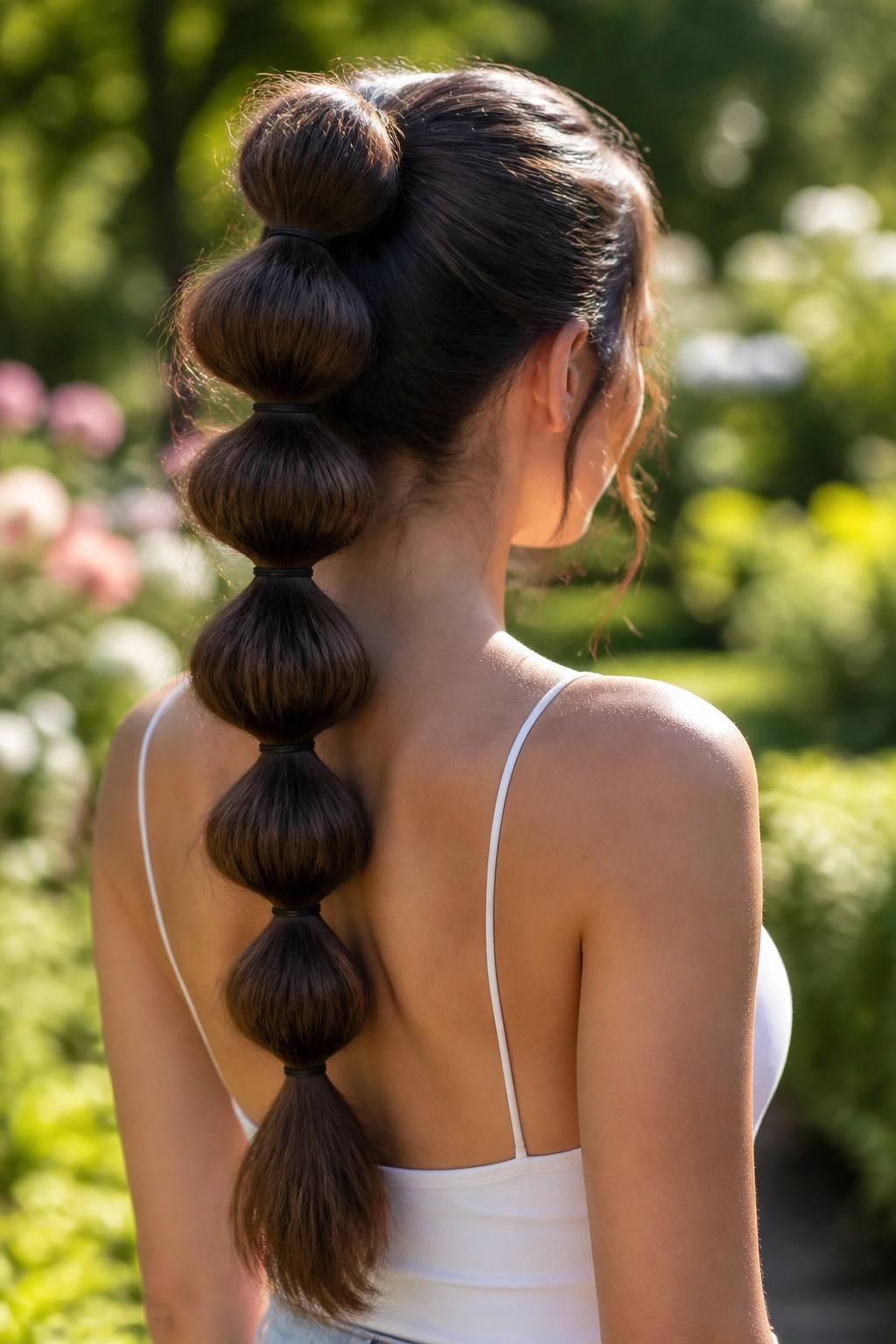
Bubble ponytails are made for thick hair. Thin hair can make them look underfed, but dense hair fills each section with enough body to create those rounded little bubbles down the length.
The trick is spacing. Secure the first ponytail, then add elastics every 2 to 3 inches down the tail. After each tie, gently pull the section between elastics outward with your fingertips so it looks full and even. If the bubbles are lopsided, pinching them into shape usually fixes the problem faster than adding more product.
This style can feel playful, but it works on long hair in a way that still looks polished. Use a little smoothing cream on the crown, then keep the tail itself touchable rather than stiff. A bubble ponytail with overdone spray starts to look crunchy. Nobody wants that.
If your hair is extra long, the bubbles get more dramatic as they move down the back, which is part of the appeal. It shows off the length without leaving it hanging loose.
12. Dutch Braids That Hold Thick Hair Tight
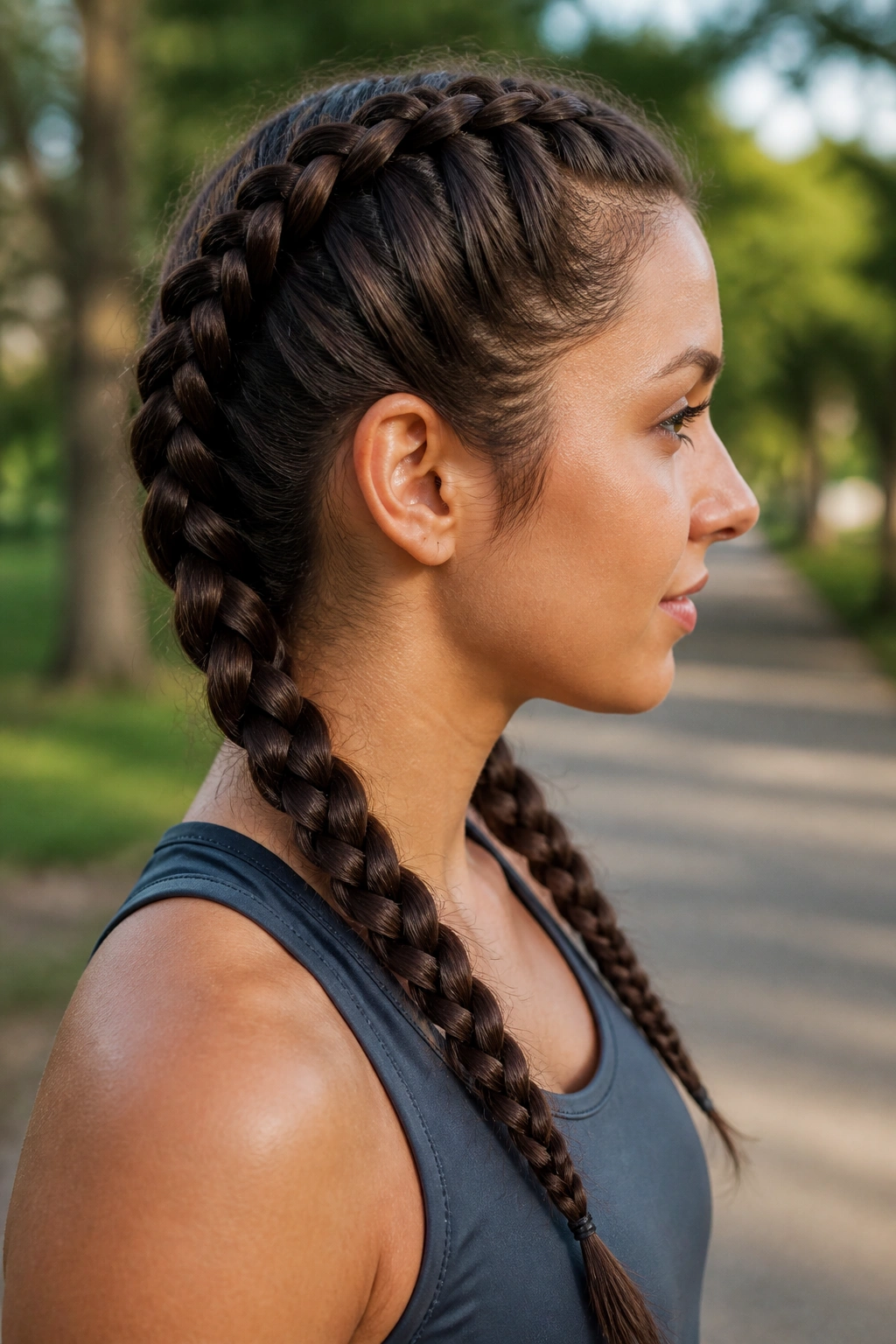
Dutch braids are one of the most practical hairstyles for thick hair because they keep every strand pinned in place.
Unlike a French braid, the sections cross under the middle instead of over it, so the braid sits on top of the hair and looks raised. That visible texture makes the whole style read clearly, even when your hair is very dense. It also means the braid stays neat during workouts, travel days, and humid weather when loose hair would frizz out.
A clean part helps, but the braid does not need to be perfect. What matters is even tension all the way down. Start near the front hairline, gather the hair in small sections, and keep your hands close to the scalp. That keeps the braid tidy and stops it from bulking out at the crown.
If you are learning the style, do not rush the first few crossings. Once the rhythm clicks, it becomes much easier.
13. Claw-Clip French Twist
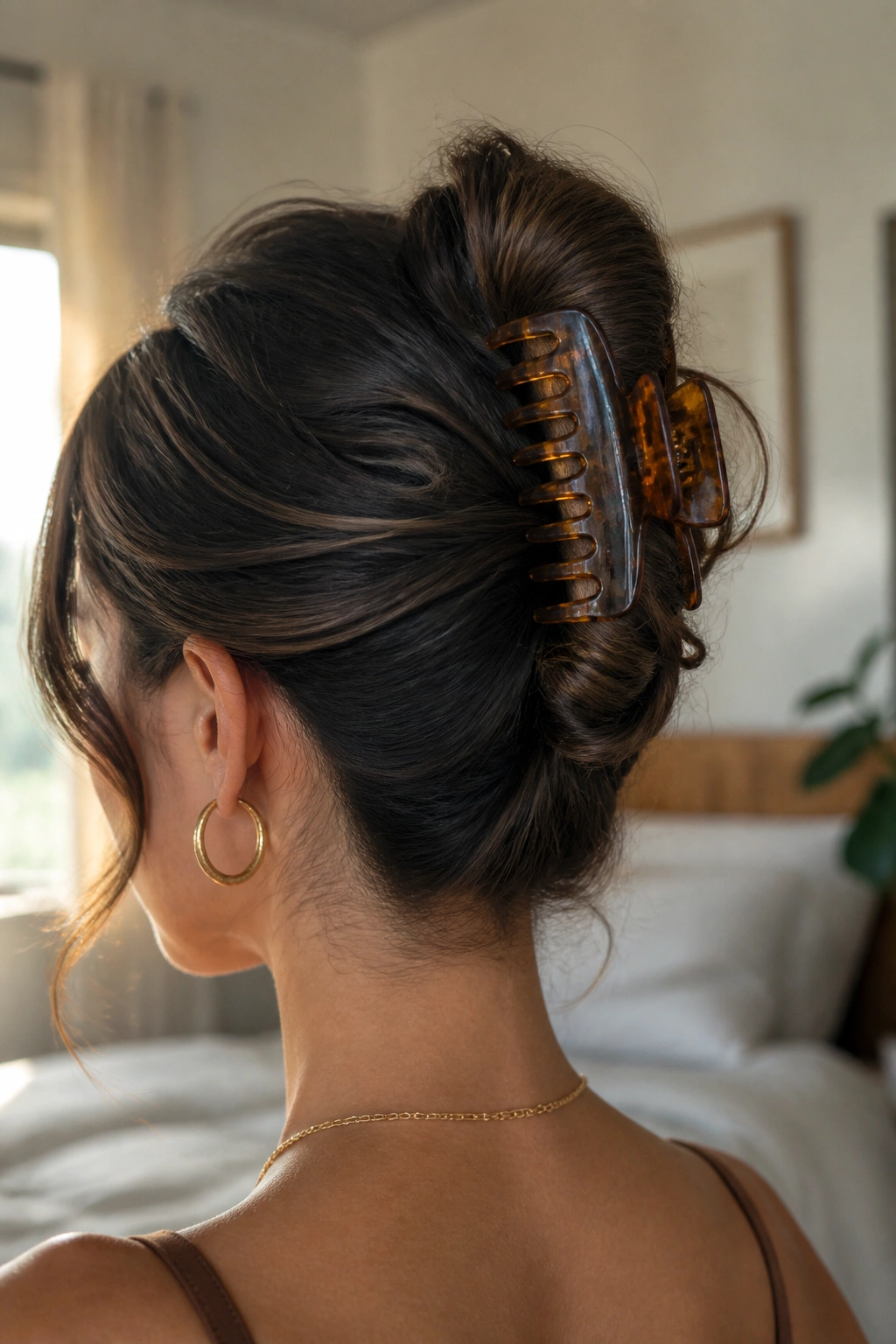
A claw-clip twist is the fastest way to make thick hair look collected without a fight.
Why the Clip Matters
Not every clip can handle dense hair. You want one with a wide mouth, strong spring, and teeth that actually grip. A flimsy clip slips, especially if your hair is silky at the roots. Aim for something around 3½ to 4 inches across if your hair is past the shoulders.
How to Do It
Twist the hair upward from the nape, fold the length back on itself, and tuck the ends into the twist before clipping. If the ends poke out, leave them tucked under the clip so the style looks relaxed rather than overly neat.
- Use a strong oversized claw clip
- Twist the hair once before folding
- Tuck the ends before clamping
- Leave a few face pieces loose if you want softness
A good clip should feel like it is holding onto the hair, not just sitting on top of it. That difference shows up fast.
14. Waterfall Braid on Long Lengths
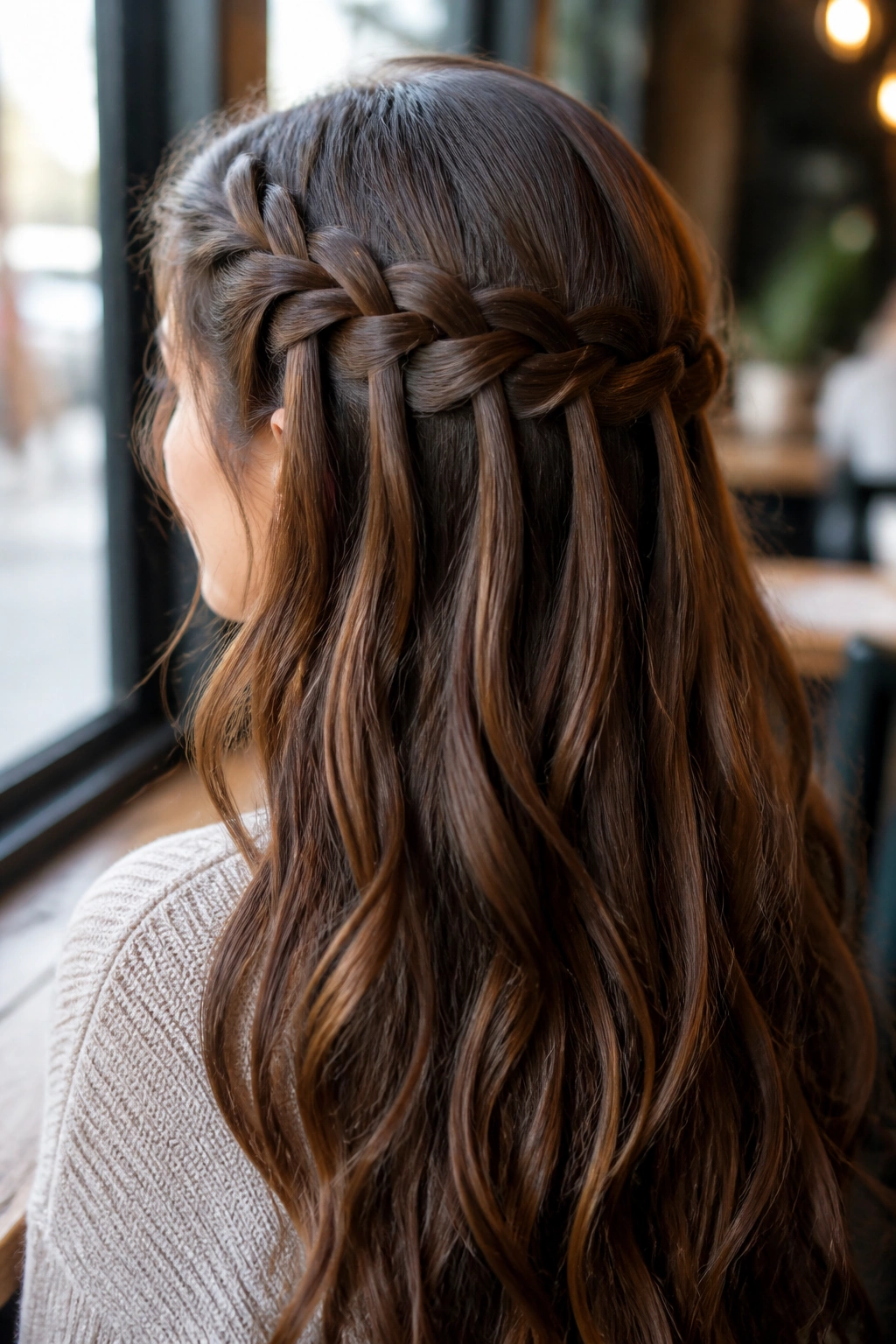
Waterfall braids can look fussy on fine hair, but thick hair gives them enough body to feel full and graceful.
The dropped strands become part of the design, not a gap in it. That is why this braid works so well on long dense hair, especially if the lengths have a bit of wave. Start near the temple, braid across the back of the head, and let one strand fall through every crossing. Secure it behind the ear or just under the opposite side, where the braid can disappear into the rest of the hair.
This style rewards patience. The sections should be neat enough to read clearly, but not so tight that the braid shrinks. A touch of styling cream on your fingers helps control flyaways while keeping the hair soft.
It is one of those looks that can feel old-school in the best way. Pretty, but not precious.
15. Messy Top Knot With Loose Face Pieces
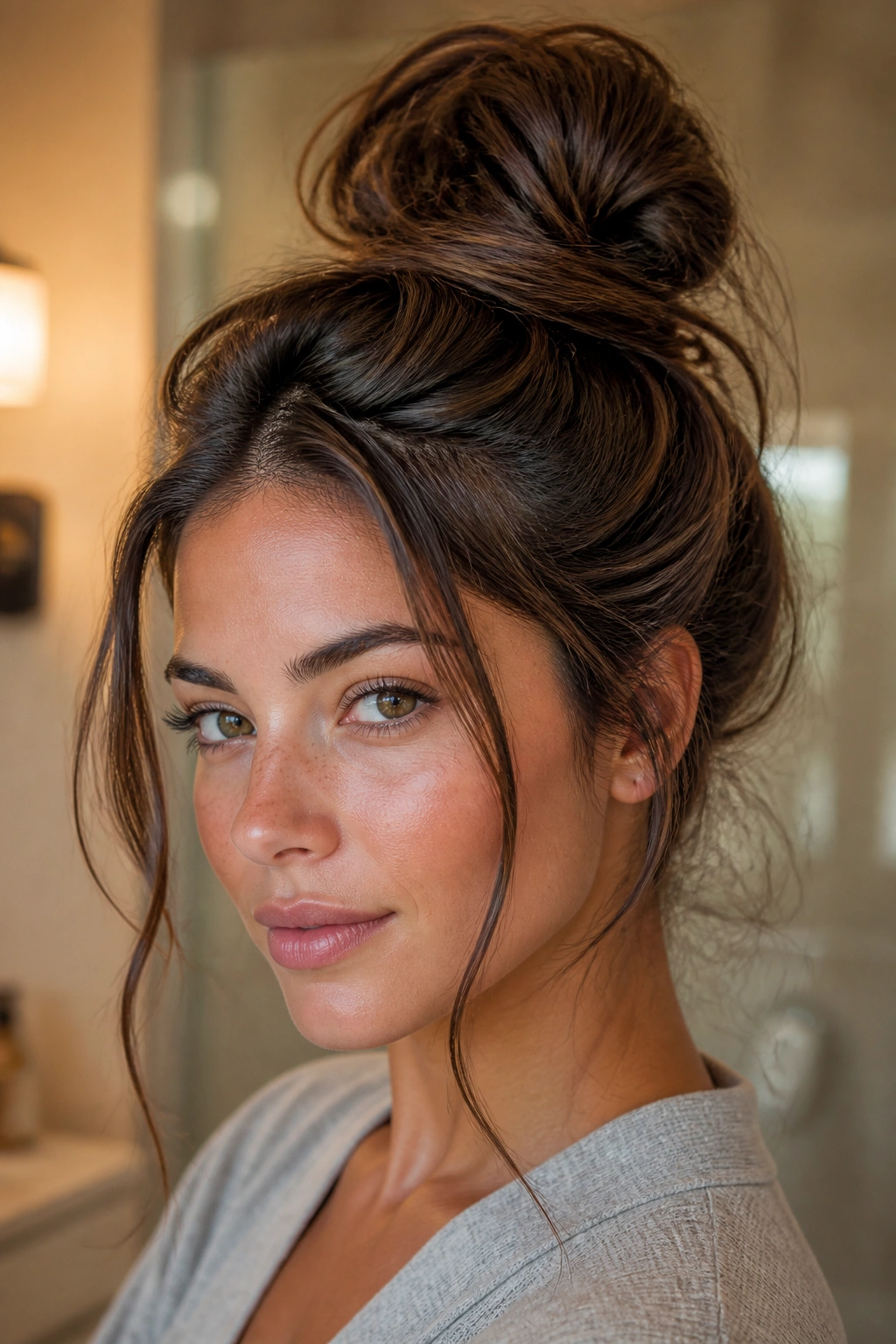
Some days, hair just has to leave your neck.
A messy top knot makes sense for thick hair because the fullness gives the knot shape. A thin bun can look like a coin purse on top of the head. Thick hair gives you a real knot with volume, and that is far more flattering. Pull the hair into a high ponytail first, twist it around itself, then pin the wrap instead of trying to force every strand into place at once.
How to Stop It From Collapsing
Start with a slightly rough texture. Clean, freshly washed hair can slip too much. A little dry shampoo or texture spray gives the bun something to hold onto, and that helps the knot stay lifted through the day.
- Leave 1 to 2 face-framing pieces out
- Keep the bun high for lift, lower for a softer look
- Use pins in crossed pairs
- Do not wrap the bun so tightly that it turns flat
A top knot should look full, not stuffed. If the shape feels too tight, loosen the outer loops with your fingers.
16. Deep Side Part With a Glossy Finish
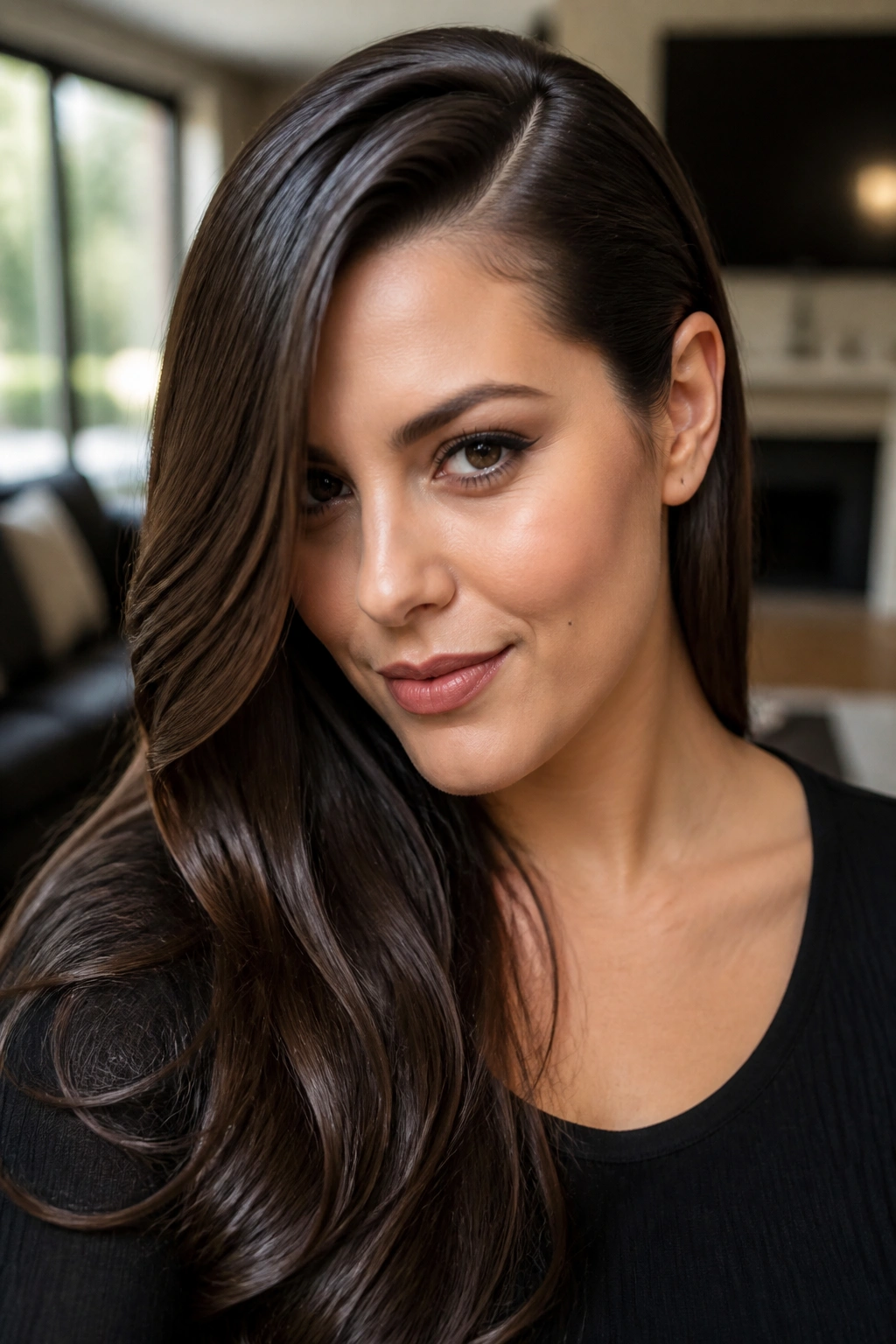
A deep side part can change thick hair faster than people expect.
Move the part 2 to 3 inches off center and the volume shifts instantly. The hair falls differently, the crown lifts, and the face gets a little asymmetry that often looks more polished than a straight center part. It is a simple move, but on dense hair it can make a blowout or straight style feel new again.
I like this look with a glossy finish because shine helps thick hair look deliberate instead of puffy. Use a light serum on the mid-lengths and ends, not the roots. Then brush the top smooth and direct the front away from the face. If you want a little drama, tuck one side behind the ear and leave the other side loose.
This style works when you want movement without needing a complicated updo. It is quiet in a good way. Clean, sharp, and easy to wear.
17. Layered Curls for Thick Hair
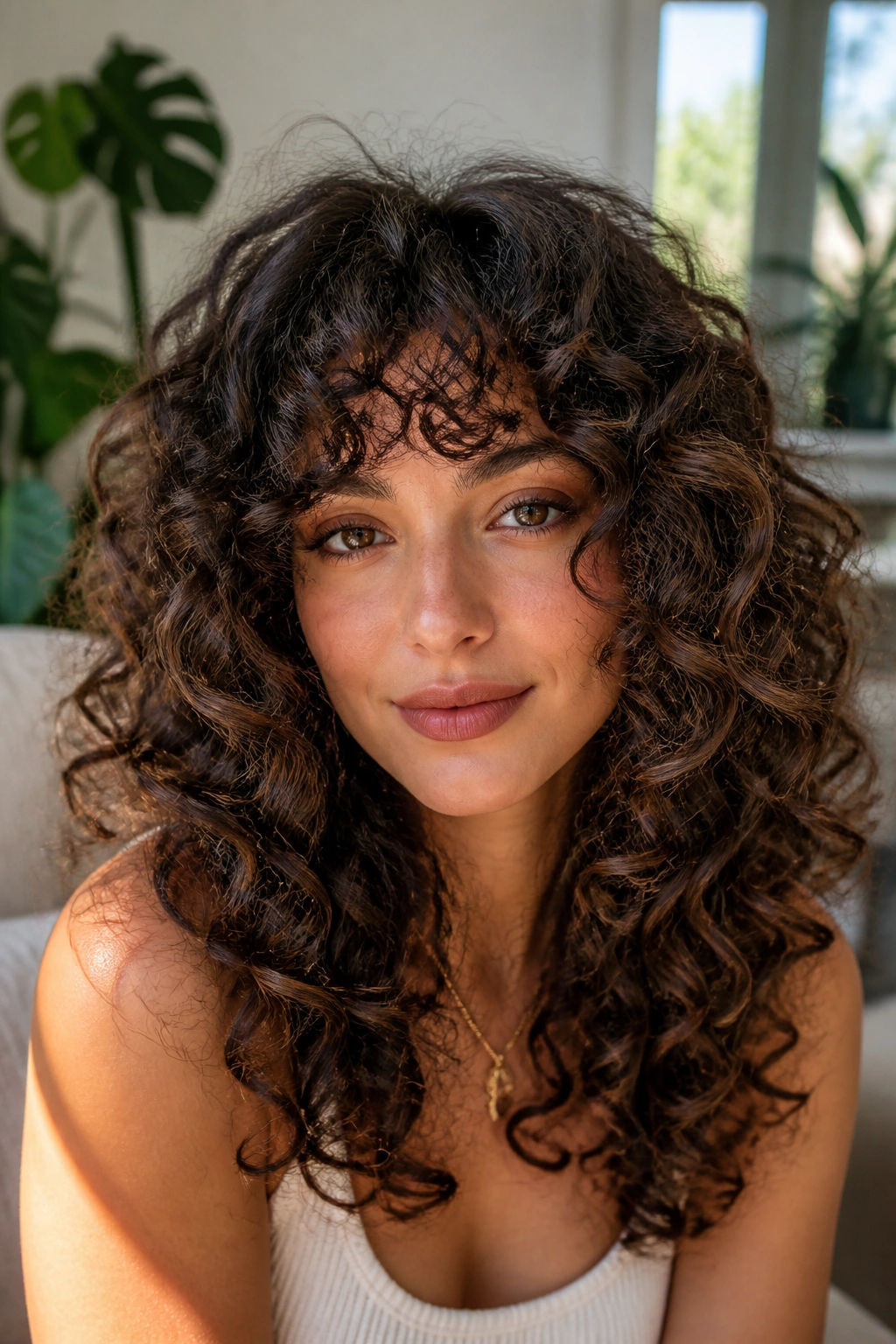
Layered curls are one of the smartest cuts for thick hair because they let the curl pattern stack instead of mushrooming outward.
If your curls are dense, a blunt cut can build too much width at the bottom. Layers solve that by giving each curl room to spring. The shape looks lighter, and the hair often feels easier to manage because the weight is distributed better. That does not mean stripping the hair thin. It means placing the layers where the curls need space.
How to Style Them
A curl cream on soaking-wet hair gives definition, and a gel over the top helps the curl set with less frizz. Diffuse on low heat, cupping the curls rather than blasting them around. When the hair is dry, scrunch out the cast with a small drop of oil.
- Ask for layers that follow the curl pattern
- Keep the bottom line from getting too wide
- Diffuse in sections for even drying
- Avoid heavy brushes once the curls are set
Thick curls need shape more than they need taming. That is the real difference.
18. Low Chignon for Formal Days
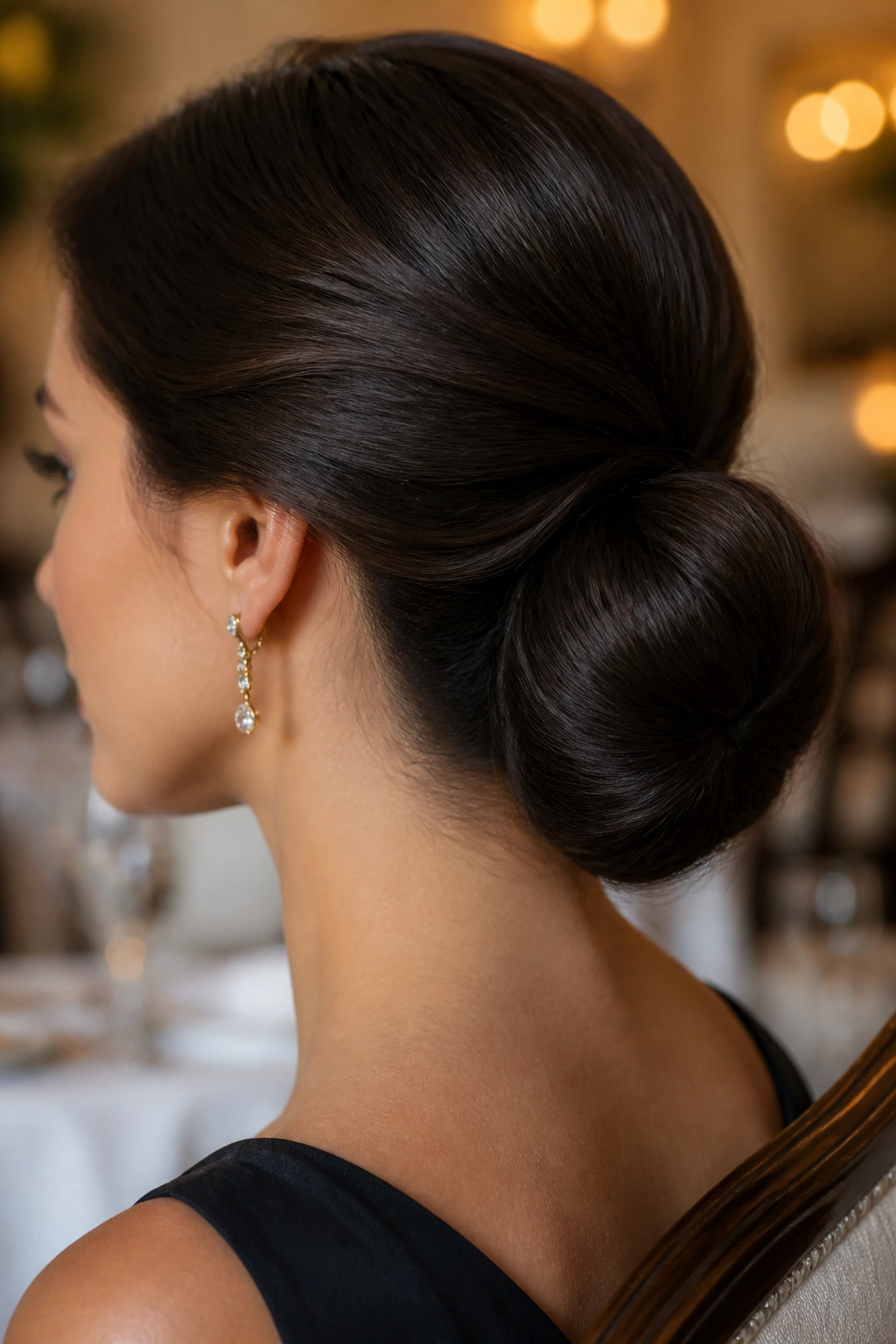
A low chignon is the polished cousin of the messy bun.
It sits at the nape, where thick hair can be tucked into a smooth knot or roll without fighting the shape. That makes it a strong choice for dinners, weddings, or any day when you want the hair off your neck and still want it to look finished. The style works best when the crown is smoothed first and the bun itself is pinned tightly at the base.
I usually tell people to keep the chignon small but not tiny. Dense hair wants a little room. If you force everything into a tight pebble, the bun can start to bulge at the sides. Better to fold the length into a clean loop and pin it in place with 4 to 6 bobby pins, depending on how much hair you have.
A soft side part can make the whole thing feel less severe. A center part makes it look cleaner. Both work.
19. French Twist With a Soft Finish
The French twist looks formal, but thick hair gives it a nice, sturdy shape that does not disappear by the second hour.
Pin Placement Matters
A twist only stays clean when the pins do the real work. Slide them in along the seam of the roll, not across the top. That hides the pins and anchors the hair better. If you have a lot of density, use several small pins instead of one big one.
What It Looks Best With
A smoother top and a slightly loose roll at the back keeps the style from feeling stiff. I like a soft twist more than a shellacked one. It feels modern enough for a dinner, but still neat enough for a more dressed-up event.
- Build a low ponytail first if the hair is slippery
- Twist upward from the nape
- Tuck the ends inside the roll
- Pin the seam every inch or so
This is not a style to rush. Once the shape is set, though, it holds better on thick hair than many people expect.
20. Milkmaid Braids That Sit Flat
Milkmaid braids are underrated on thick hair because the braids have enough volume to make the wrap around the head look intentional.
The style starts with two braids, usually one on each side, that are brought up and over the head like a crown. Thick hair helps fill the braid, so the finished look does not vanish into the scalp. That gives the braid a soft, cushiony feel that works well for summer events, casual weekends, or any day when you want hair off the neck but not shoved into a bun.
If your hair is very long, tuck the braid ends under the opposite side and pin them carefully. A few hidden bobby pins keep the weight from sliding. I also like to leave the braid edges slightly loosened so they do not sit too tightly against the head.
Add a ribbon if you want a softer finish. Keep it thin, though. A thick ribbon can overwhelm the braid fast.
21. Hidden-Layer Straight Style for Thick Hair
Can thick hair be worn straight without turning into a triangle? Yes, but the cut has to help.
Hidden layers are the answer. They keep the top surface smooth while removing enough weight underneath to let the hair fall instead of flaring out at the bottom. A straight cut with no internal shaping often looks boxy on dense hair, especially once it dries and settles. That is why the best straight styles usually start in the chair, not with a flat iron.
How to Get the Smoothest Finish
Use a heat protectant first, then dry the hair with a paddle brush or round brush in sections about 1½ inches wide. Flat iron only after the hair is completely dry. Finish with a tiny amount of oil on the ends.
- Ask for hidden layers, not choppy surface layers
- Keep the perimeter blunt
- Use a comb chase if your hair is coarse
- Finish with light shine, not heavy serum
The goal is movement, not weightlessness. Thick hair looks best when it still feels like hair.
22. Space Buns With Loose Texture
Space buns sound playful because they are, but thick hair makes them look fuller and more styled than you might expect.
Split the hair straight down the middle, gather each side high on the head, and twist each ponytail into a bun. If the hair is long enough, you can wrap the ends around the base; if not, let a little tail stick out for a softer finish. The density gives each bun substance, which stops them from looking tiny or flat.
This style is a good choice when you want something fun that still keeps the hair out of the way. It works on workout days, weekend plans, and casual nights out. A little texture spray at the roots helps the buns stay in place, especially if your hair is clean and slippery.
Leave a few pieces around the ears or at the hairline if you want the look to feel less strict. It is a small detail, but it helps.
23. Fishtail Braid With Full Texture
A fishtail braid looks more detailed than a regular three-strand braid, and thick hair gives it the body it needs to show off.
The braid is built from small sections pulled from the outer edges, which creates that woven look people notice from across the room. Dense hair makes the pattern read clearly, so even a slightly loose fishtail looks intentional. That is part of why this braid works so well on long hair that tends to get heavy when left down.
Start low if you want it to feel relaxed, or start at the crown if you want more drama. Once the braid is secured, tug the edges outward just a little. Not too much. Enough to widen the braid and let the texture breathe. If the hair has layers, the shorter pieces may slip. A little styling cream on the fingertips solves that fast.
This one takes practice, but thick hair makes the result worth it.
24. Rounded Curly Bob
A rounded curly bob is a better move for thick curls than a cut that just chops the length off and hopes for the best.
The rounded shape keeps the silhouette tidy, especially around the sides and back. If curls are left too square, the hair can stick out at the temples and bottom. A bob that curves inward a bit avoids that problem and keeps the volume where it belongs. It is short enough to feel fresh, but not so short that the curls lose their shape.
Ask for a cut that respects the curl pattern and removes weight underneath, not on the surface where the curl lives. That keeps the top layer from going flat while the lower layers puff. A diffuser and a curl cream finish the job without much drama.
This style is good when you want your hair to look full and controlled at the same time. That balance is harder than it sounds.
25. Side-Swept Hollywood Waves
A side-swept wave is one of the few glamorous styles that thick hair can wear without falling flat halfway through the evening.
The deep side part gives the style shape, and the large, brushed-out waves let the hair look soft instead of stiff. Use a 1¼-inch or 1½-inch iron, wrap the sections away from the face, then clip the curls while they cool. That cooling time matters. Warm curls collapse; cooled curls hold their curve longer and brush out more evenly.
- Set the part first, before you curl
- Use 1-inch sections for even waves
- Brush the curls out only after they cool
- Pin one side behind the ear if you want more asymmetry
What I like most here is the contrast. The style feels dressed up, but it still lets thick hair be thick. There is no need to flatten it into something it is not. That is the real trick with this whole list, honestly: work with the density, keep the shape clean, and let the hair do some of the heavy lifting on its own.
