



Type 4C hair shines when the style respects its shrinkage. That sounds simple, but a lot of hair advice still acts like tight coils need to be fought, stretched, flattened, or hidden. They don’t. They need shapes that hold moisture well, protect the ends, and make room for the coil pattern to do its thing.
Some mornings call for a five-minute puff. Other days want neat parts, a little edge work, and a style that stays put through a long stretch of the week. The good news is that 4C hair can do both, and then some. It can look soft and full, sculptural and sharp, casual and polished, all without asking for heat every time.
What matters most is prep. A style that looks ordinary on loose curls can look rich and dimensional on 4C hair when the sections are clean, the hair is hydrated, and the ends are not left to fray. That’s the real difference between a style that lasts and one that looks tired by lunchtime.
Start with the look that matches your mood and your schedule. Some of these are fast. Some need patience. A few need extension hair, a rat-tail comb, or half an hour you cannot rush. All of them can work beautifully on 4C coils when you choose the right one for the day.
1. High Puff with a Deep Side Part
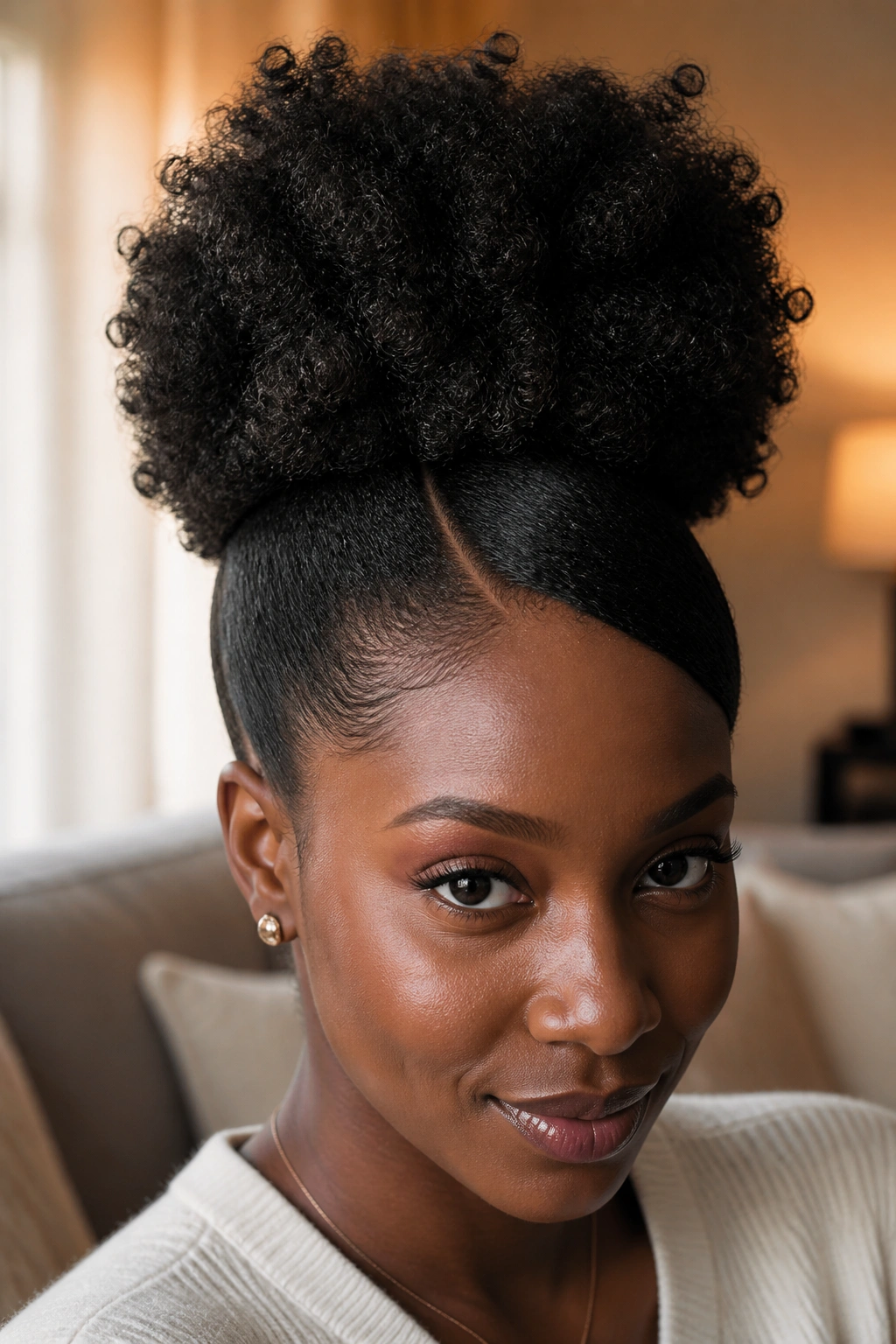
The high puff is one of those styles that looks easy because it is easy — but there’s a difference between a puff and a puff that looks finished. A deep side part gives the whole shape a little attitude, keeps it from looking flat, and helps the front sit closer to the head instead of puffing out in every direction.
This works especially well on hair that has been stretched overnight in twists, braids, or banding. Gather the hair high on the crown with a satin scrunchie, smooth the perimeter with a light gel, and leave the puff loose enough to keep its round shape. If your hair is very dense, use two scrunchies instead of one. Less tugging. Better hold.
- Best on stretched or lightly blown-out roots
- Takes about 10 minutes
- Good for work, errands, or a clean casual look
- Looks especially nice with a small pair of hoops or studs
Tip: lift the puff at the roots with your fingers after it’s secured. Don’t overpick. You want height, not frizz explosion.
2. Defined Twist-Out
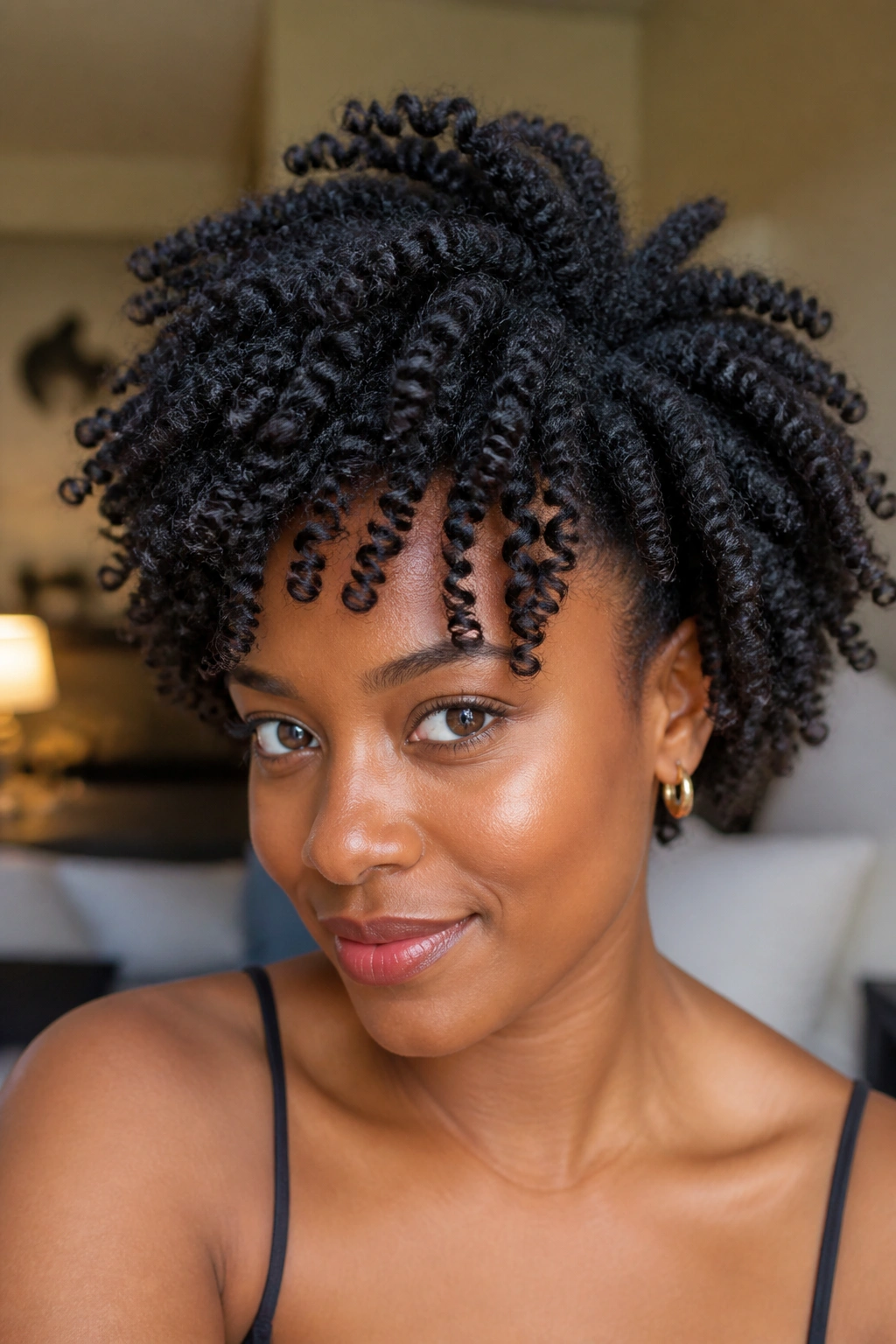
A good twist-out on Type 4C hair has presence. It gives you that soft, rope-like pattern near the roots, then opens up into volume that feels full rather than fluffy in a bad way. The catch is that it only looks polished when the twists are allowed to dry all the way through. Half-dry twists are where the trouble starts.
Use two-strand twists on damp, well-moisturized hair, not soaking wet hair. Apply your leave-in, then a cream or gel-cream combo, and twist in small to medium sections. The smaller the twist, the more definition you’ll get. The larger the twist, the more body you’ll get. Both are valid. Just choose on purpose.
When you unravel, use a tiny amount of oil on your fingertips and separate each twist once or twice. Pulling too much destroys the pattern fast. And yes, a twist-out can shrink. That’s not failure. That’s 4C hair doing 4C hair things.
3. Braid-Out with Soft, Crinkled Texture
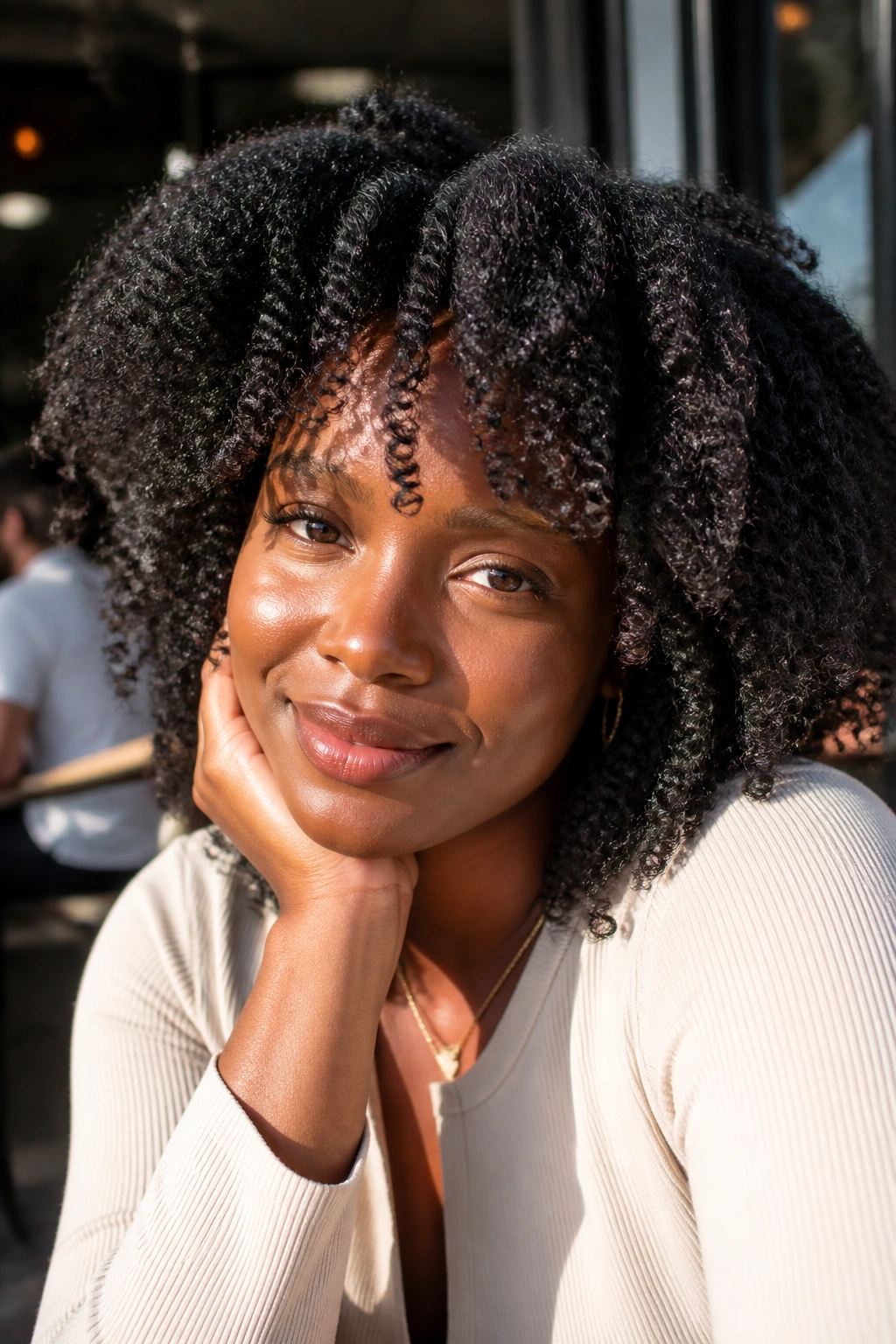
If a twist-out gives you ropey definition, a braid-out gives you a softer, zigzag texture that can last a little longer on some heads. It’s a good choice when you want shape without the crisp look of a coil set. The pattern is looser, the movement is bigger, and the finish has a slightly plush feel that works well on fuller faces and longer lengths.
Braid the hair in medium sections, not huge ones. Large braids can dry unevenly and leave the middle damp, which makes the style fall apart early. A braid-out also benefits from a little stretch at the roots, so if your hair is very shrunken, use banding or a gentle blow-dry on low heat before styling.
The end result is one of those styles that feels relaxed but still intentional. It’s not fussy. It’s not stiff. And if you like styles that look even better on day two, this one is hard to beat.
4. Mini Twists That Sit Close and Last
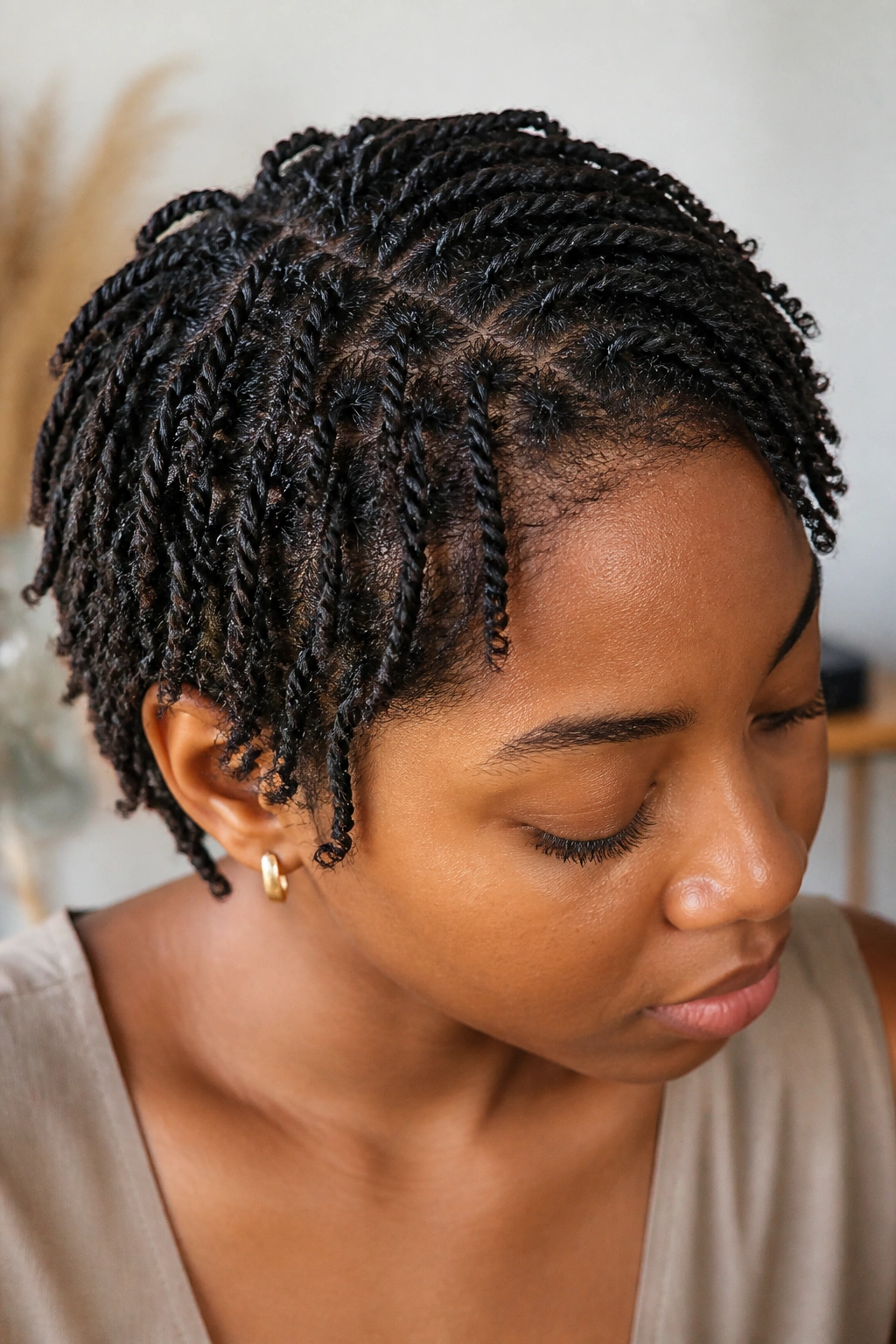
Mini twists are the quiet workhorse of 4C styling. They do not shout. They just sit there, neat and low-maintenance, while your hair gets a break from daily combing and constant manipulation. If you’ve ever wanted a style that looks tidy without asking for much, this is one of the most dependable choices.
The trick is section size. Keep the parts small and even — about a quarter inch if you want a neat look — and don’t overload each section with product. Too much cream makes the twists look heavy and can lead to buildup at the scalp. A little leave-in, a little sealing butter on the ends, and patience. That’s the formula.
Mini twists also give you flexibility. Wear them down. Pin them back. Pull them into a low bun. They work as a style on their own, but they also behave like a base for other looks when you want to change things up midweek.
5. Flat Twists into a Low Bun
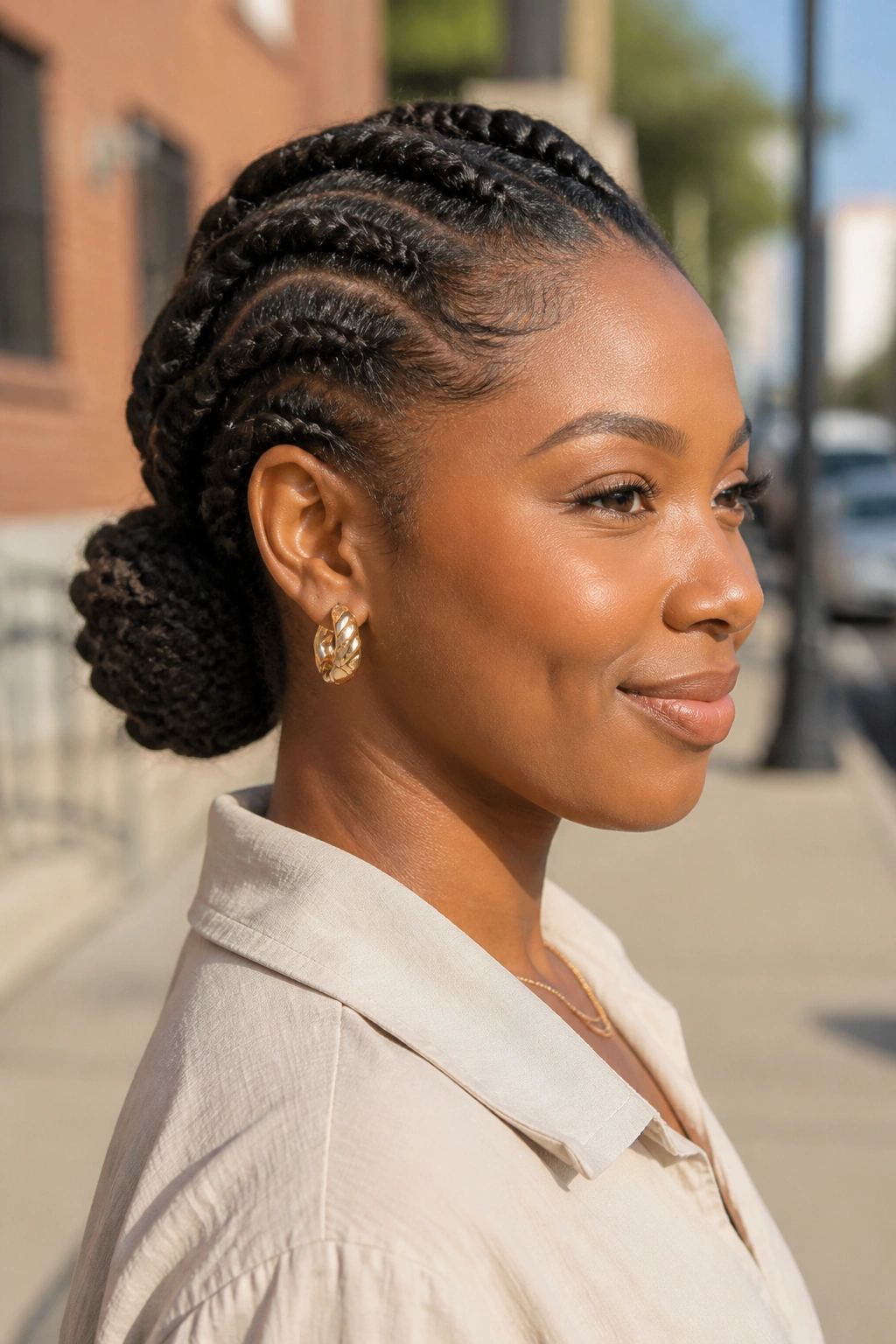
There’s something clean about flat twists feeding into a low bun. It sits close to the head, keeps the edges protected, and gives 4C hair a neat shape that reads polished without trying too hard. I like this one for office days, family events, or any time you want your hair off your neck without losing structure.
Why it flatters 4C hair
Flat twists follow the natural direction of the hair and make use of the density instead of fighting it. That matters. A style like this holds best when the hair is moisturized but not slippery, so use a leave-in with light hold and tuck the ends into the bun rather than leaving them exposed.
The bun itself can sit at the nape or slightly above it. If your hair is thick, secure it with a strong hairpin or two bobby pins crossed in an X. That keeps the bun from sagging halfway through the day.
A soft side part or a few baby twists at the front can make the whole style look more finished, but you do not need a lot. The shape already does the heavy lifting.
6. Bantu Knots as a Sculptural Style
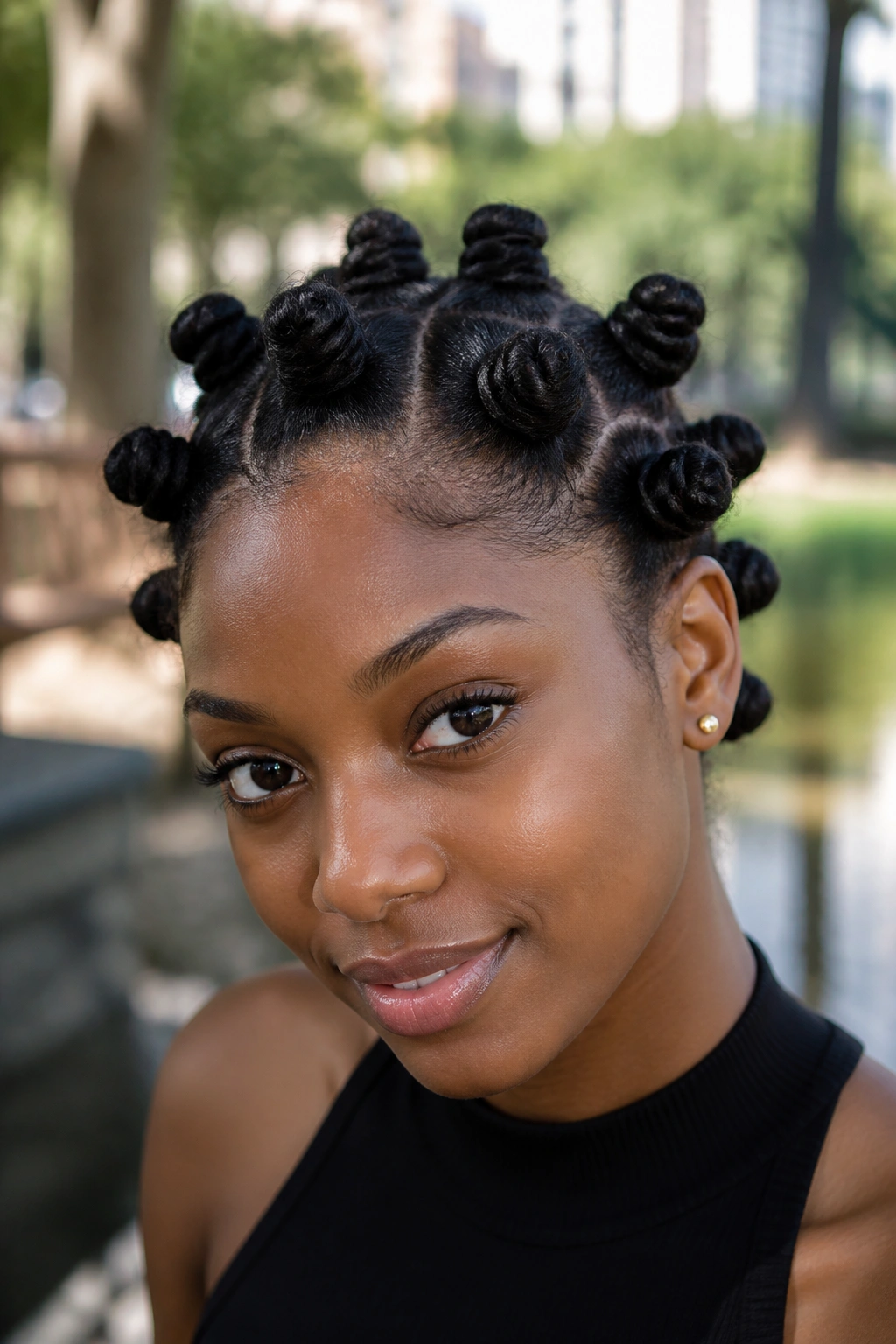
Bantu knots are one of the rare styles that look bold and practical at the same time. They hold the ends away from your clothes, keep manipulation low, and give 4C hair a shape that feels almost architectural. If you like styles with a little edge, this one brings it.
The size of each knot changes the whole mood. Small knots look crisp and tight. Medium knots feel fuller and are easier to sleep in. When you part the hair cleanly and twist each section until it coils on itself, the finished look has a tidy, stacked feel that stands out from the usual bun or puff.
Don’t rush the wrapping. A knot that is too loose falls flat; one that is too tight can pull at the scalp. Aim for firm, not painful. That distinction matters more than people admit.
7. Bantu Knot-Out With Soft Volume
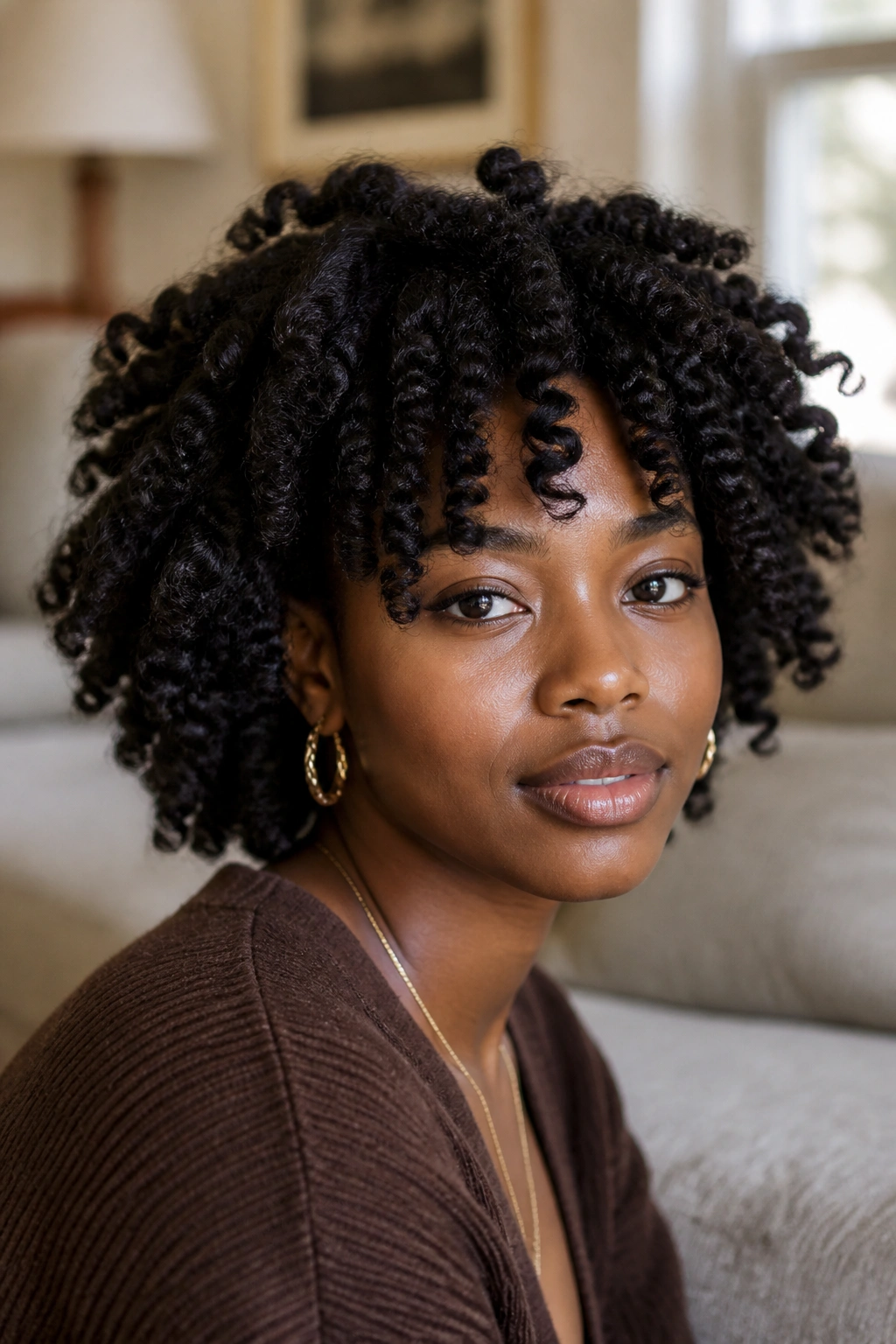
A bantu knot-out gives you one of the most interesting textures on 4C hair because the result is neither a twist-out nor a braid-out. It has this soft, puffed curl pattern with a little bend and stretch between the pieces. The shape can look big without looking messy.
The real secret is drying time. Leave the knots in until every section feels fully dry, especially near the roots. If you undo them too early, the curls at the base stay damp and the style loses shape fast. That’s where people get frustrated. They separate too soon, then blame the style.
A few knots around the face can be left a little larger to frame the cheekbones. Nice touch. Not required, but it helps if you want the style to open up around your face instead of sitting in one solid block of texture.
8. Two-Strand Twist Updo
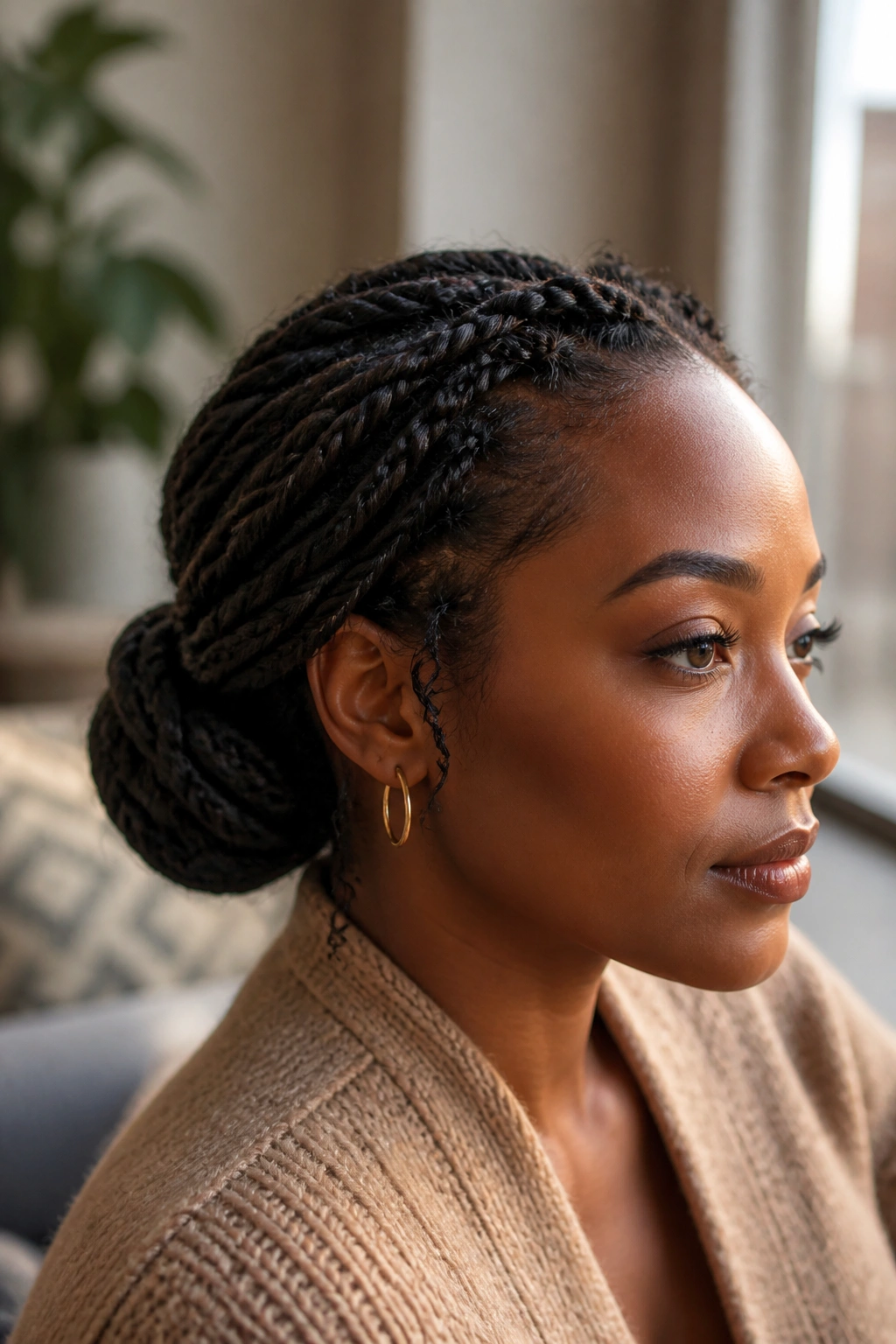
A twist updo is one of those styles that can look soft, formal, or romantic depending on how you pin it. Start with two-strand twists, then gather them into a low rolled bun, a crown shape, or a tucked chignon. The hair stays protected, but the finished look still has movement.
This is especially useful when you want a style that lasts but does not feel heavy. The twists do most of the visual work, while the pins only hold the shape in place. If your hair is shorter, keep the twists tighter and place them closer together. If it’s longer, you can fan them out a little for more volume.
I like this style because it doesn’t depend on perfect symmetry. A slightly uneven roll at the back can look better than a stiff, overmanaged bun. Human hair rarely behaves like a diagram anyway.
9. Cornrow Crown Braid
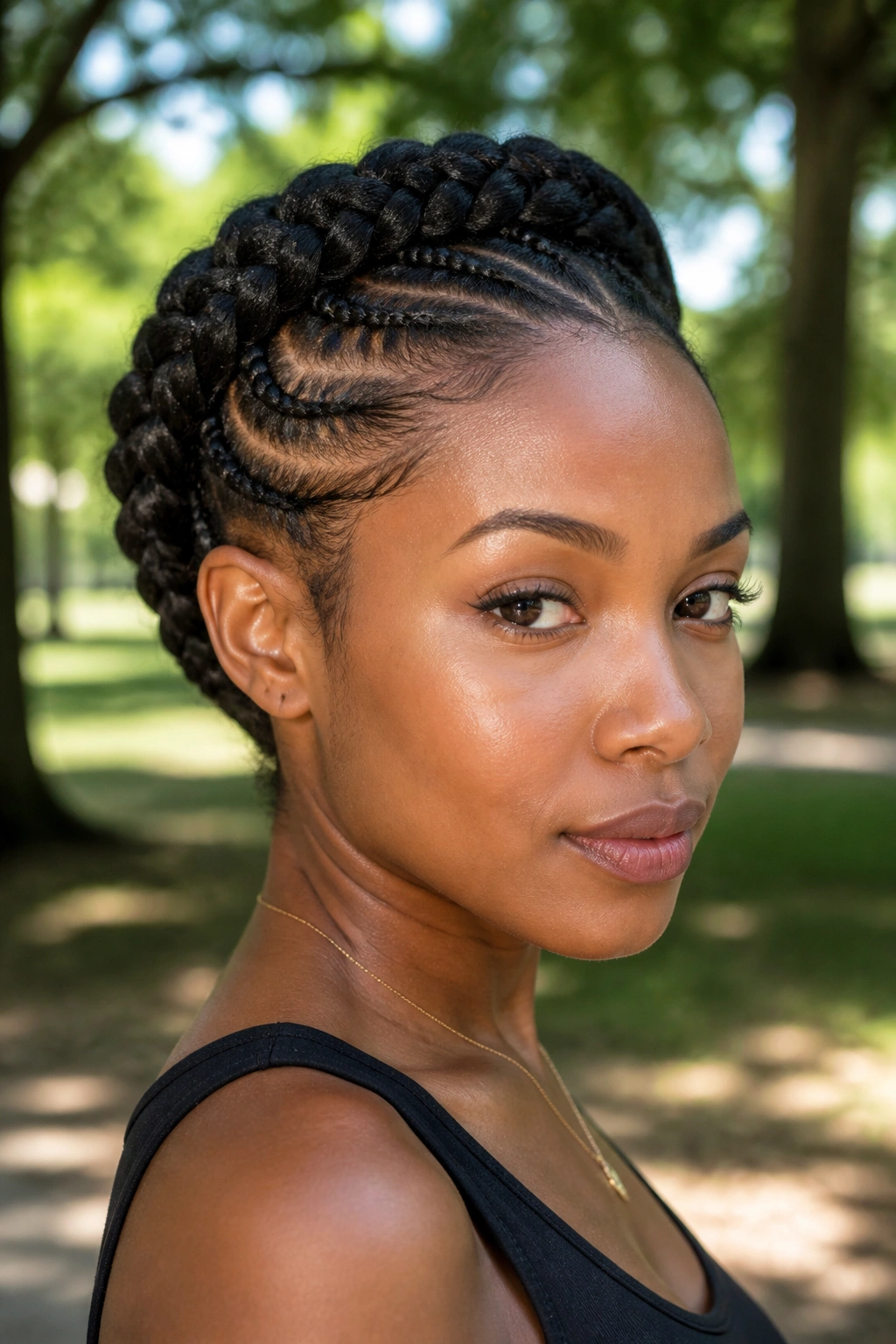
A crown braid sits right at the line between practical and ceremonial. It keeps the hair secure, clears the face, and gives Type 4C hair a strong shape around the head. On dense coils, it can look surprisingly full even when the braid itself is close to the scalp.
The parting matters more here than the braid size. Clean sections make the braid look smooth, while rough sections make the whole style wobble. A little edge control near the hairline is enough; don’t drown the front of the hair in gel. That leaves flakes and a sticky finish nobody wants.
If your hair is short or very tightly coiled, you may need to tuck the ends under with pins rather than wrapping them loosely. That’s fine. The style is about the frame around the face, not showing off every inch of length.
10. Frohawk With Flat-Twisted Sides
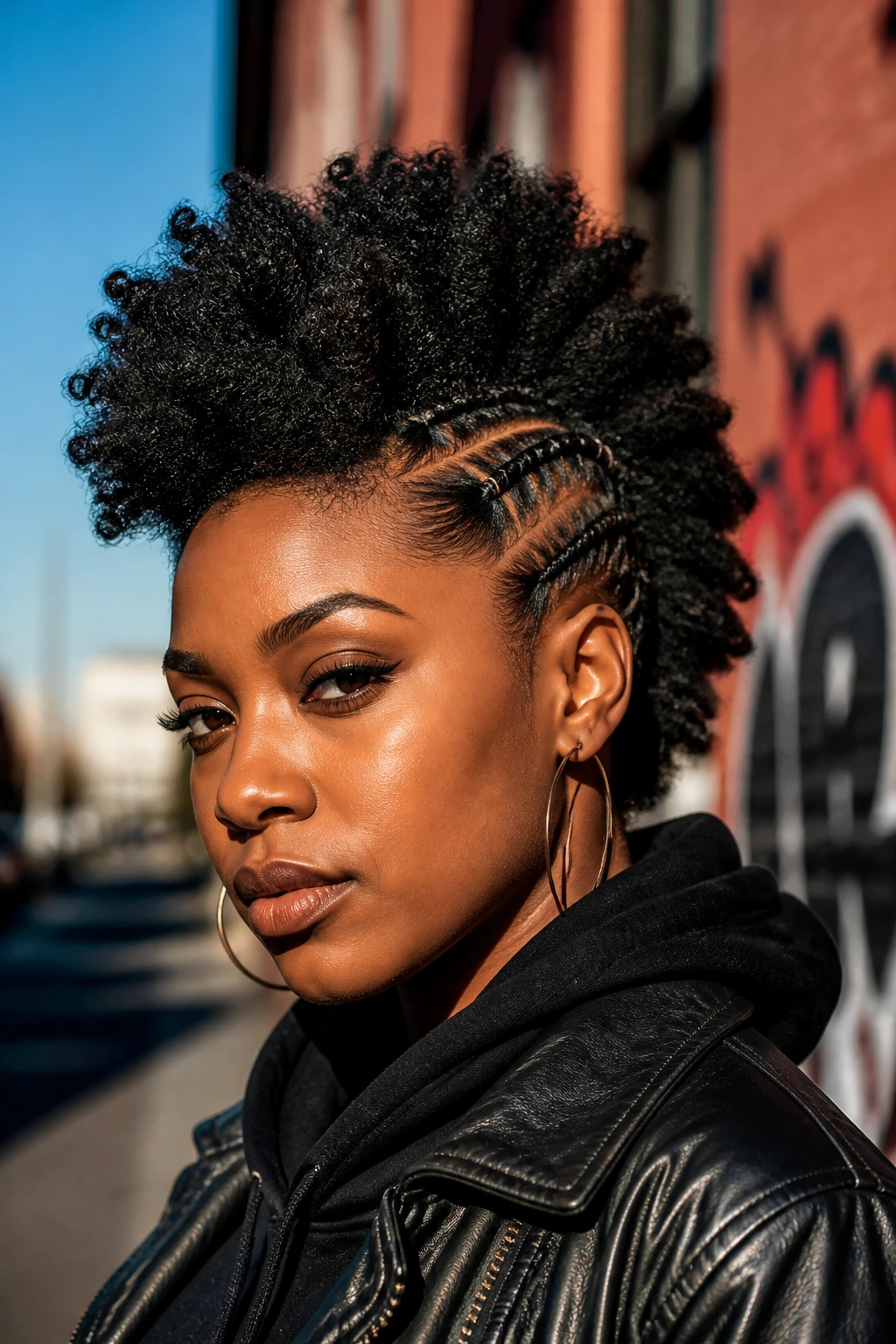
A frohawk is one of my favorite ways to show off texture without giving up structure. The sides are braided, twisted, or pinned flat, while the center is left full and lifted. The result is sharp. A little bold, yes, but still wearable enough for everyday life.
What makes it different
Unlike a full puff, the frohawk splits the visual weight down the middle. That gives Type 4C hair a strong silhouette, especially when the center section is stretched or shaped with a pick. The sides can be done with four flat twists, small cornrows, or even slicked-back bands if you want a sleeker finish.
This works well when you want volume on top but need the sides out of the way. It is also one of the better styles if your crown area is thick and your nape shrinks fast. Let the texture rise where it wants to, then pin the sides down with intention.
11. Wash-and-Go With Strong Hold Gel
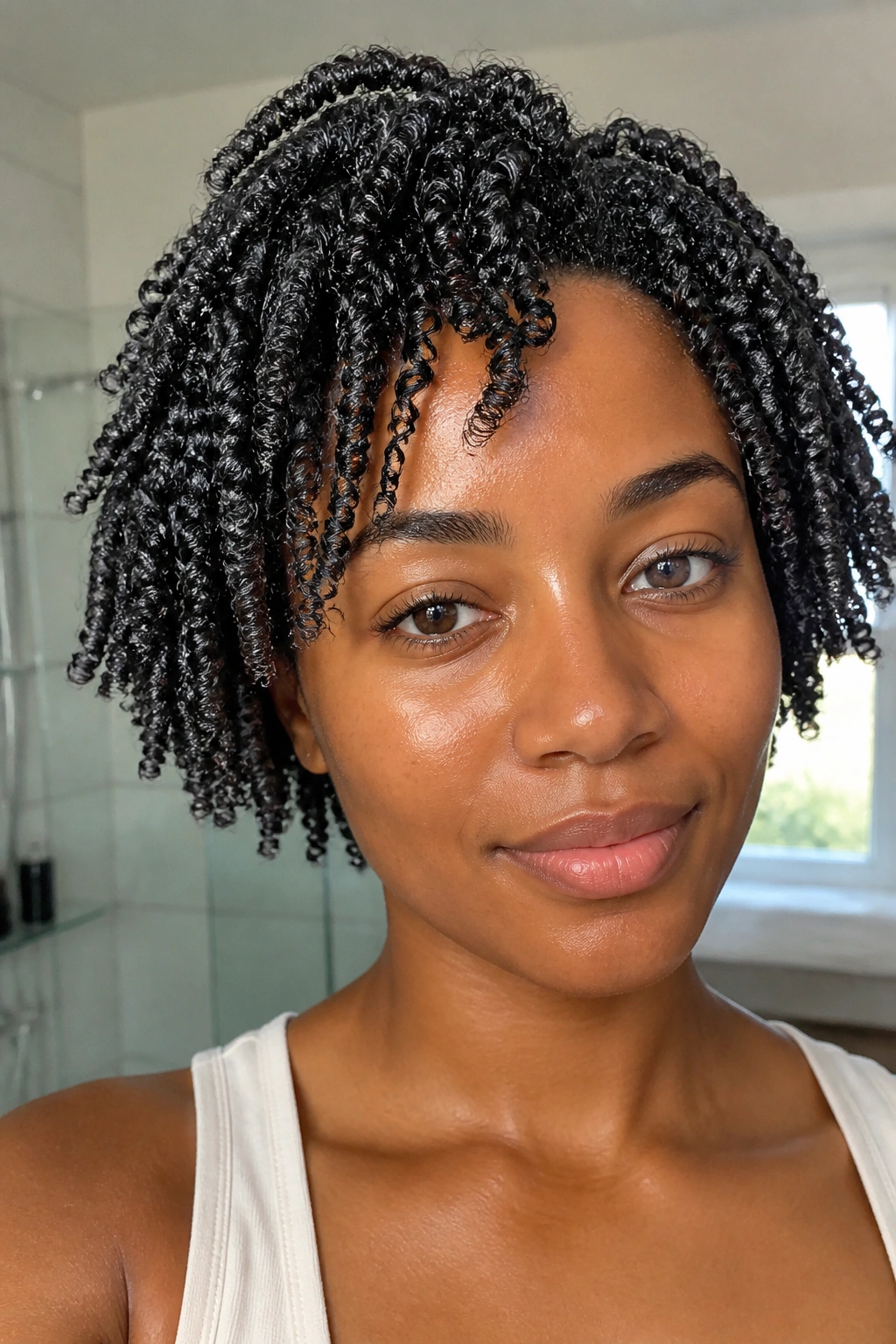
A wash-and-go on 4C hair is not a fantasy, and it is not a myth either. It just needs the right prep. Hair that is clean, wet, and well-coated with a good gel can clump into defined coils that dry with shape instead of puffing into a halo of frizz.
The key is sectioning. Apply your leave-in first, then work the gel through small sections while the hair is still soaking wet. Smooth with your fingers, then gently scrunch or rake depending on how much definition you want. A diffuser on low heat can speed things up, but air-drying works if you have time and patience.
Do not touch the hair while it dries. That’s the part most people ruin. Let the cast form, let it set, then break it once the hair is fully dry. On Type 4C textures, the finished look may still be fuller than a curl pattern on looser hair. That’s normal. The shine and shape are the point.
12. Finger Coils
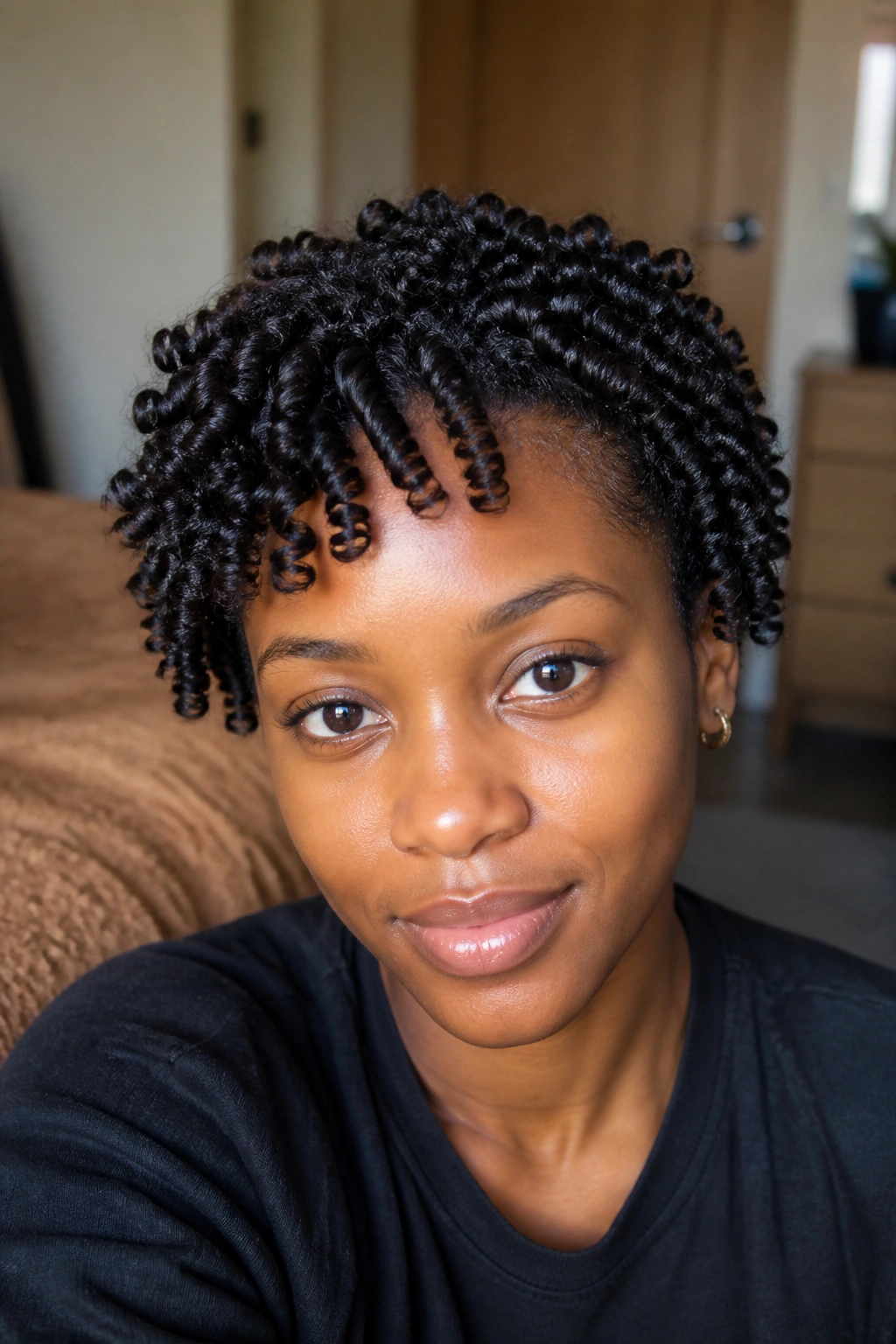
Finger coils are slow. No way around it. But they give one of the neatest, most controlled finishes on 4C hair, especially if you want a style that shows off moisture and definition in a very direct way. Each coil becomes its own small sculpture.
Use tiny sections, maybe half an inch or less if you want a tighter result. Coat the section with cream or gel, then wrap it around your finger from root to end until the coil springs back. The finished look depends on tension, so keep the wrap firm but not painful. If the hair is too dry, the coil will fray. If it’s too wet, it may not hold.
This style is not the fastest choice, and I’d never pretend it is. But it is excellent for short to medium 4C hair when you want something neat, springy, and clearly defined.
13. Perm Rod Set for Springy Curls
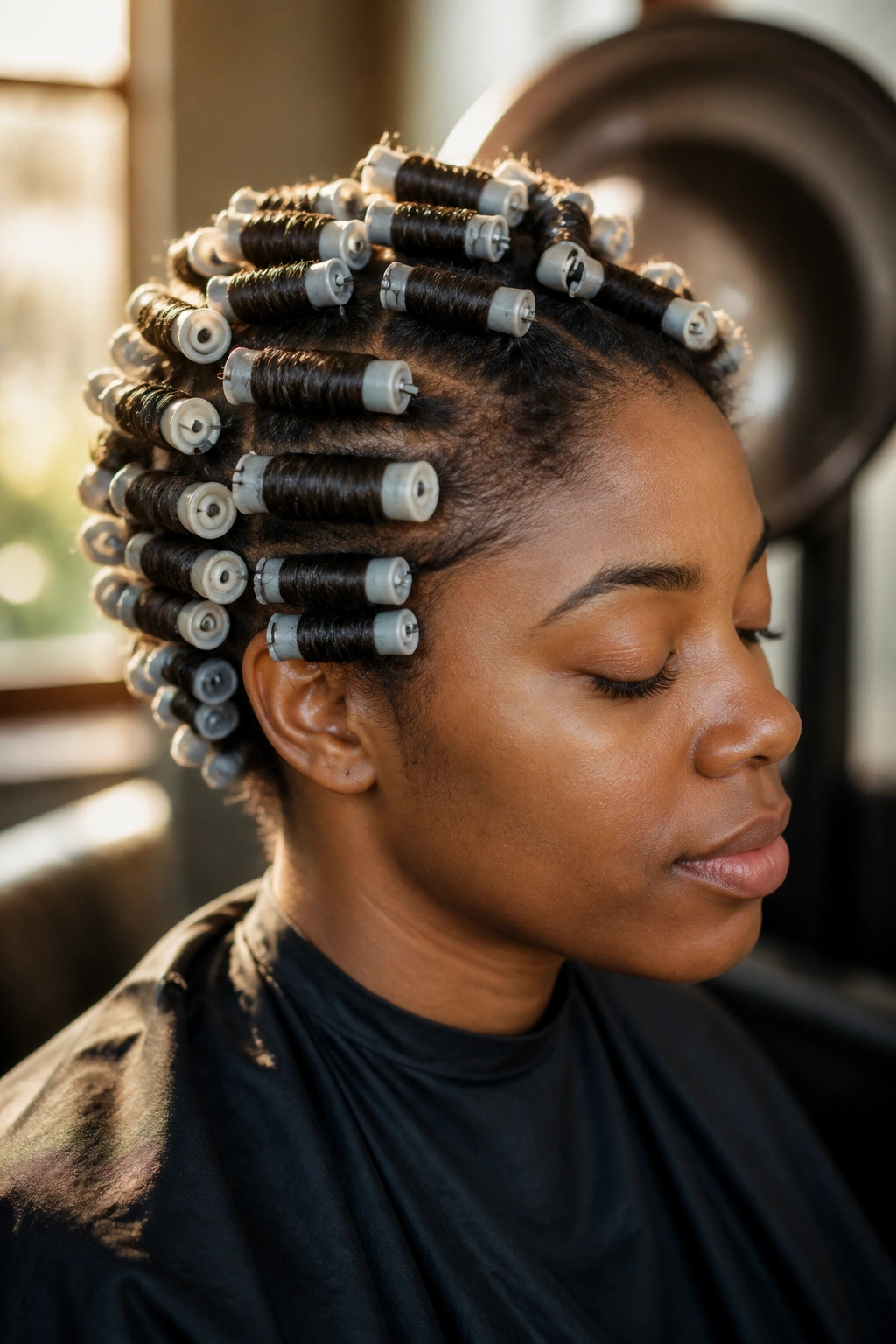
A perm rod set changes a lot based on rod size, and that’s the part people skip over too fast. Smaller rods give a tighter curl. Larger rods give a looser bend. On Type 4C hair, medium rods usually hit the sweet spot because they create shape without turning the hair into a stiff spiral helmet.
Rod size matters
Choose sections that are narrow enough to wrap smoothly around the rod. If the section is too thick, the inside stays damp and the curl collapses early. Roll the hair upward with even tension, then secure the rod so the ends are tucked in neatly. Jagged ends are what make the set look rough.
Drying time is the other big issue. If the hair is not dry all the way to the core, the curls drop. People often blame the rod size when the problem is really moisture trapped in the center. A hooded dryer helps, but overnight drying can work if your sections are small enough.
14. Flexi Rod Set With Soft Bends
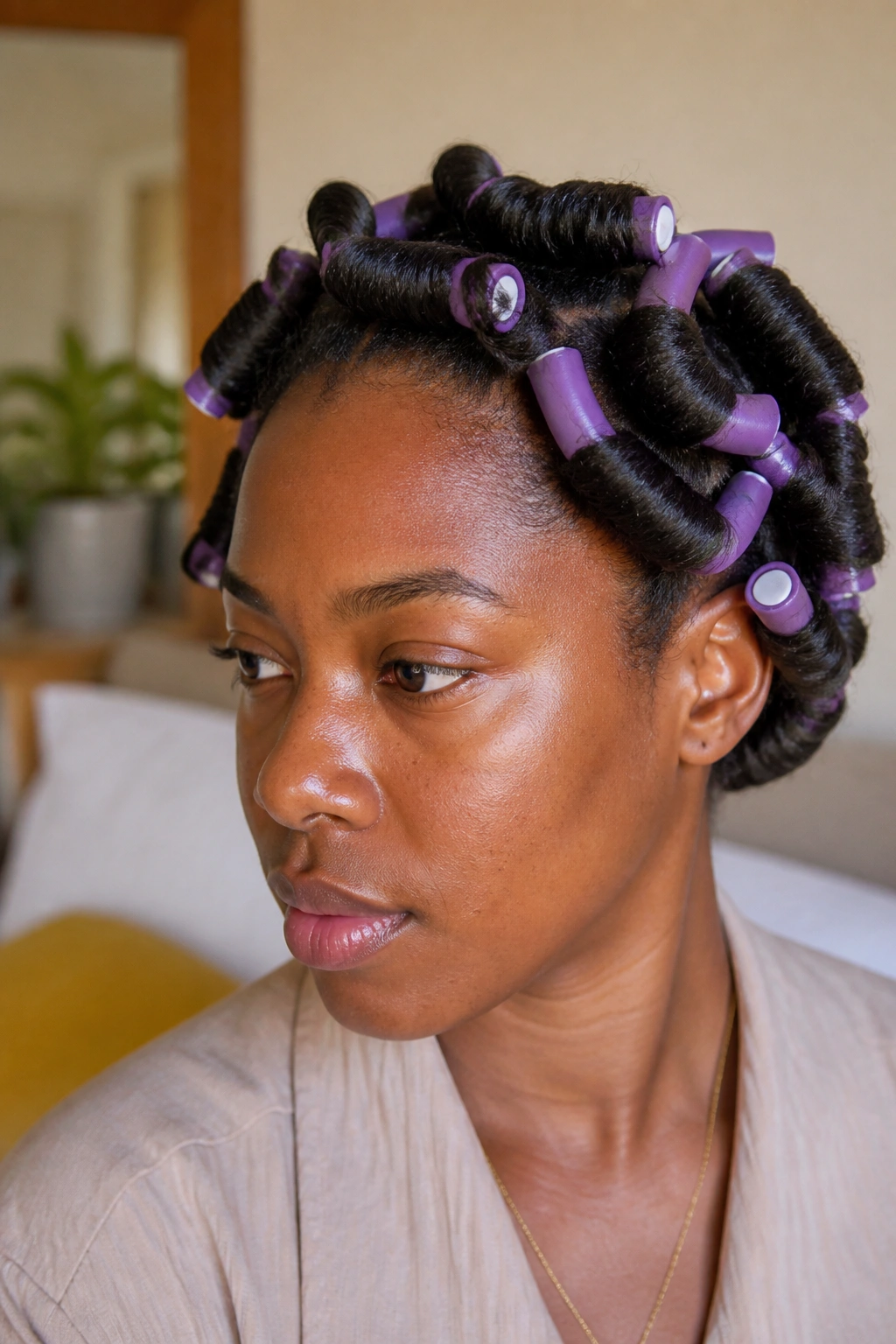
Flexi rods give a softer result than perm rods because the bendable shape wraps around the head more naturally. That makes them a good choice for medium-length 4C hair, especially if you want the curls to fall in loose spirals rather than tight ringlets.
The style looks best on hair that has been stretched a bit first. Too much shrinkage can make the rod set bulky at the root and flat at the end. Use a light cream, smooth each section, and roll from the ends upward. Flexi rods need secure tension, but not so much that the scalp feels sore by the second hour.
Compared with a twist-out, this style usually gives a more polished curl pattern. Compared with a braid-out, it has more bounce. If you want a set that looks finished without needing much fluffing, this is a strong pick.
15. Pineapple Puff for Easy Length
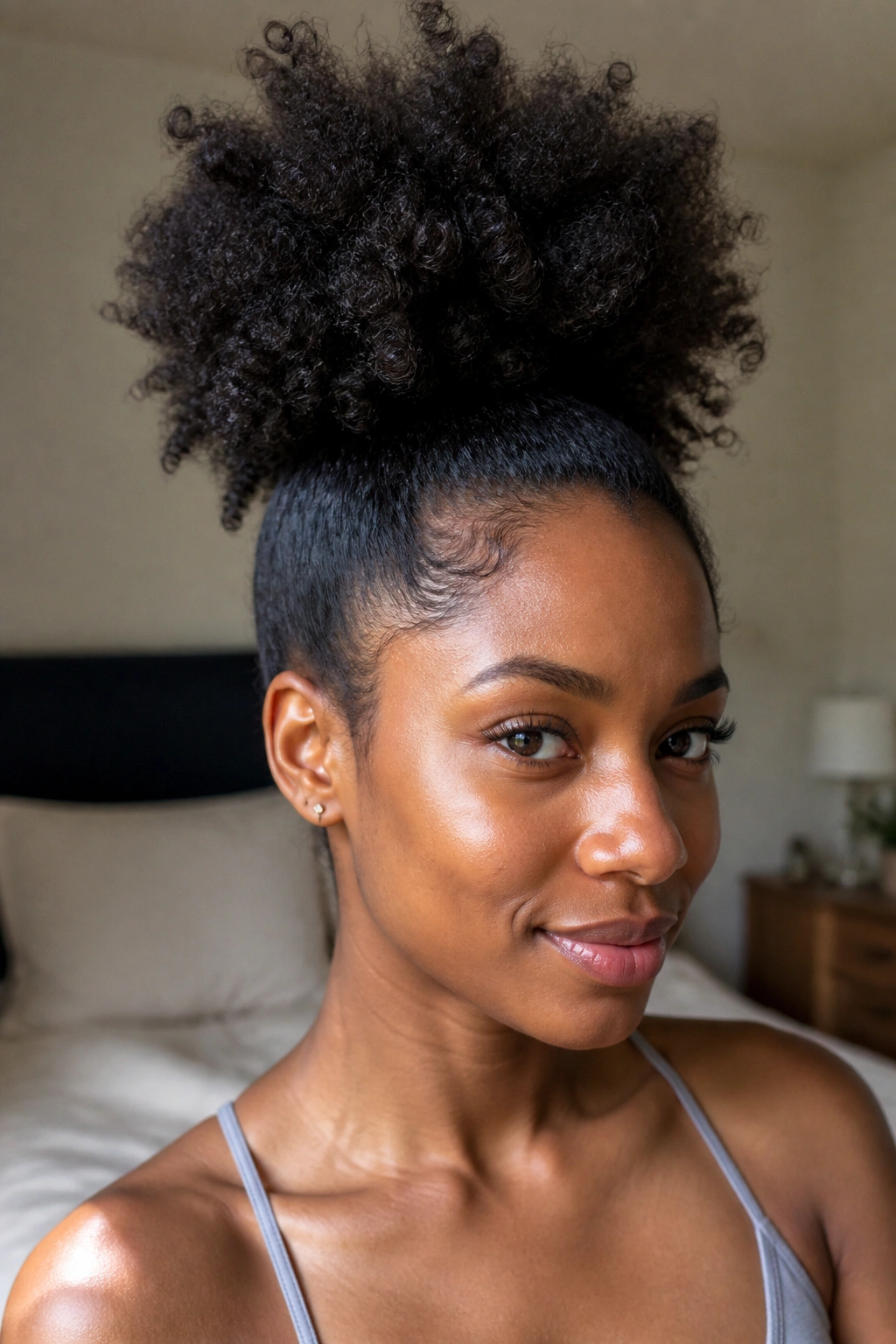
A pineapple puff is one of the simplest styles on the list, and it earns its place because simplicity has value. Gather the hair loosely at the top of the head, let the ends fan upward, and secure it with a soft band. Done. Well, mostly done. The front still needs shaping.
This look works especially well on stretched twist-outs, braid-outs, or old wash-and-go hair that still has some life left. It keeps the hair up and away from the neck, and it lets you preserve shape without fully restyling. I like it for travel days and lazy mornings, though “lazy” is unfair — it’s more like efficient.
A silk scarf at night helps keep the puff from getting rough by morning. If your edges are delicate, keep the band loose and place it higher or lower until the tension feels right. No style is worth a sore scalp.
16. Low Puff With a Side Part
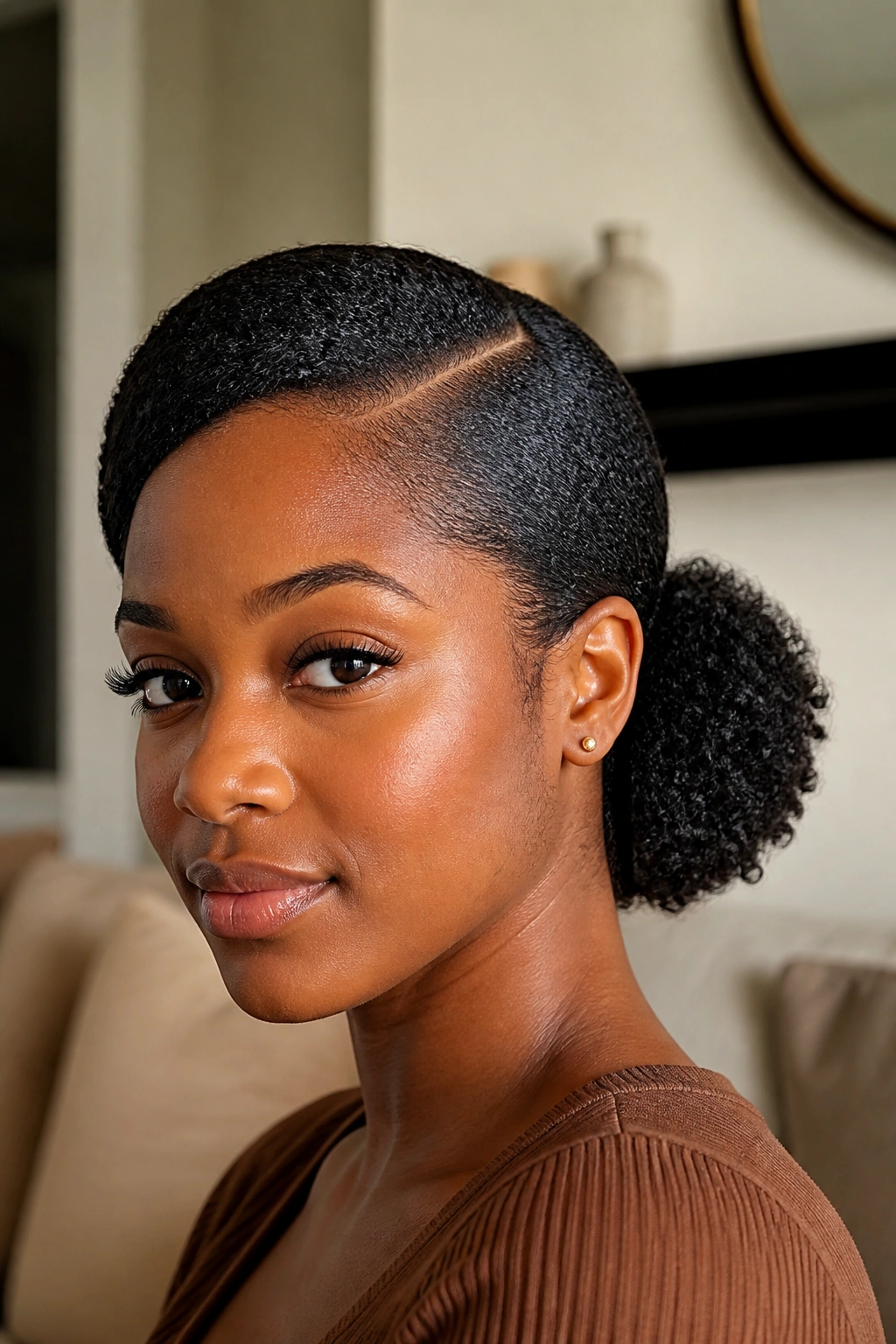
A low puff has a different energy than a high puff. It sits closer to the nape, feels more relaxed, and gives 4C hair a softer outline. Add a side part and it gets even better, because the front stops looking too uniform and starts to frame the face with a little shape.
This is a good style when your roots are stretched but not flat-ironed. Smooth the sides with gel, gather the hair low, and keep the puff full enough to show off texture. You want enough lift to keep it from looking compressed, but not so much that the puff starts to split at the base.
It’s also one of the easiest styles to pair with earrings, a blazer, or a bold lip. The hair stays out of the way, but it still feels like a hairstyle rather than a backup plan.
17. Space Buns on Stretched Hair
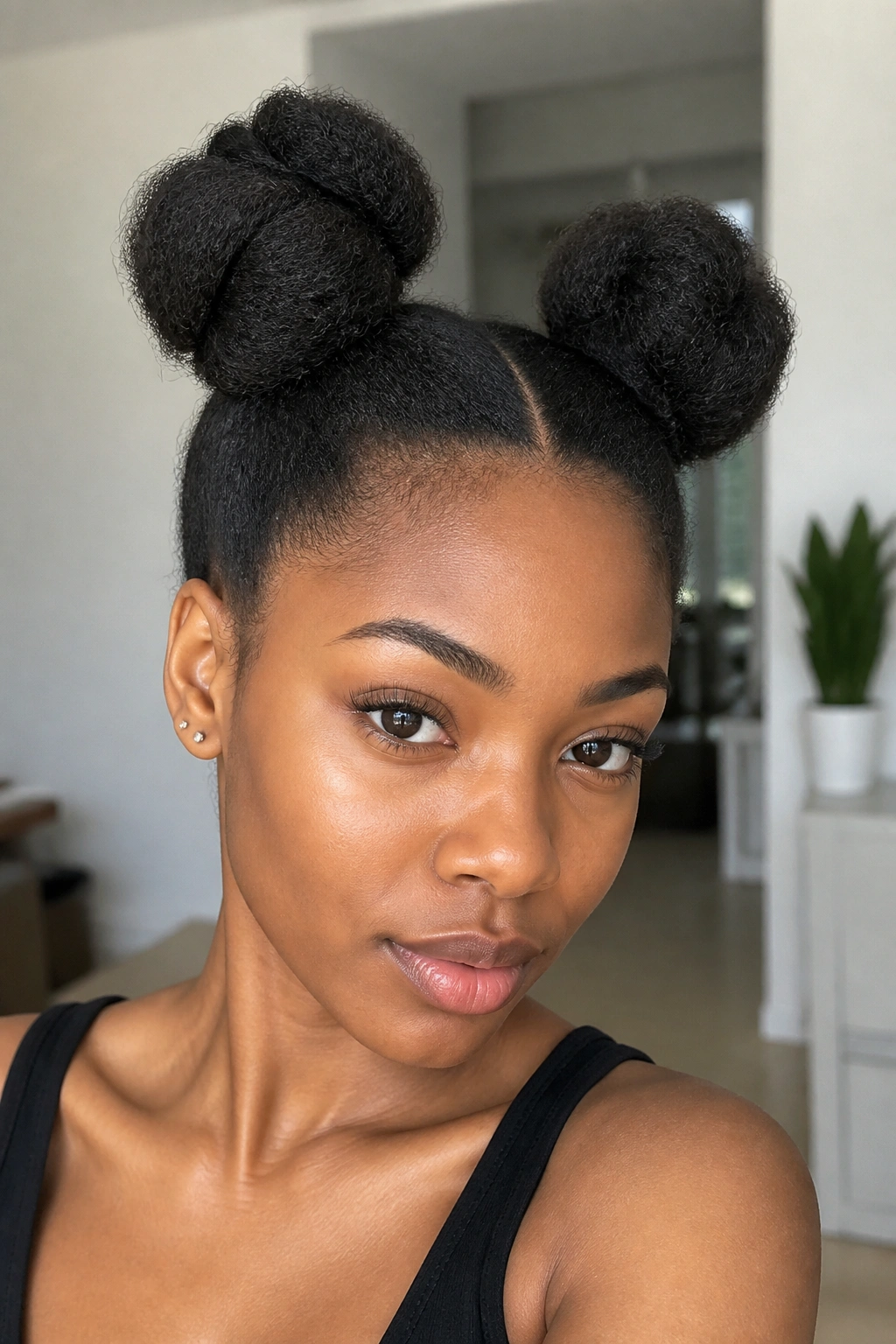
Why do space buns work so well on 4C hair? Because the texture gives the buns body without needing much help. The hair doesn’t have to be pin-straight or silky to create shape. It only needs enough stretch to keep the parts clean and the buns balanced.
How to keep the buns even
Part the hair straight down the middle, then gather each side into a high section. If one side is thicker — and that happens all the time — borrow a little hair from the heavier side before you twist it into a bun. That keeps the shape from sagging. Use soft bands and a few pins if the buns feel loose.
This style works best when the roots are smooth but the ends still have some texture. A little roughness at the base is fine. Too much slip makes the buns slide, and too much gel can make them hard and flaky by the next day.
18. Halo Braid With Tucked Ends
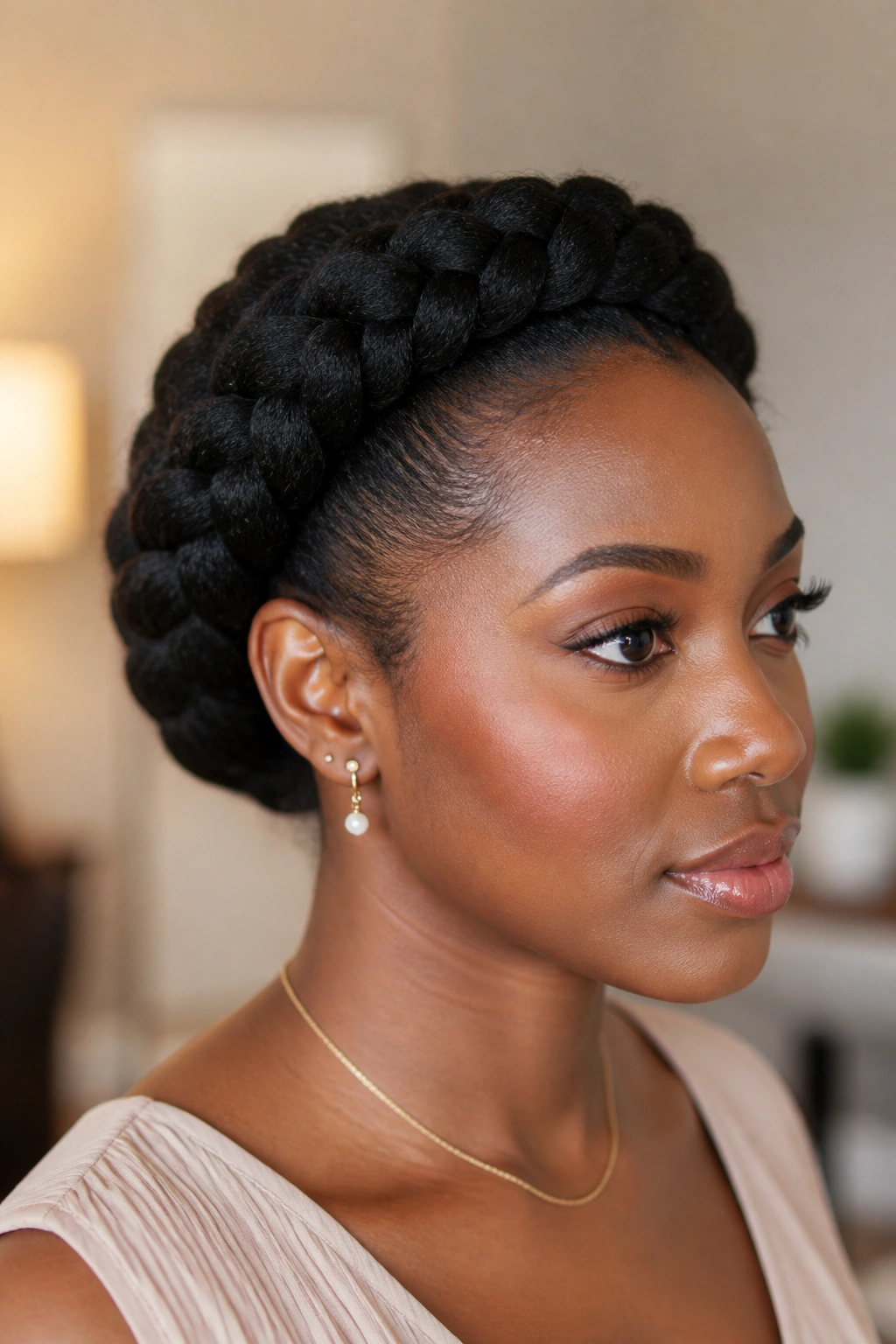
A halo braid sits around the head like a frame, and it has a way of making 4C hair look extra intentional. The braid can be done with your natural hair if it’s long enough, or with added hair if you want more length and fullness. Either way, the shape is what matters.
People often assume this style is complicated. It isn’t simple, but it’s more about patience than mystery. Keep the braid close to the scalp, follow the hairline carefully, and tuck the ends under with pins once the circle is complete. If the braid starts drifting too high, the halo loses its shape fast.
A halo braid is a nice choice for weddings, formal dinners, church, or any time you want the hair fully off the shoulders. It has presence. Quiet, maybe, but not weak.
19. Feed-In Braids for a Neater Start
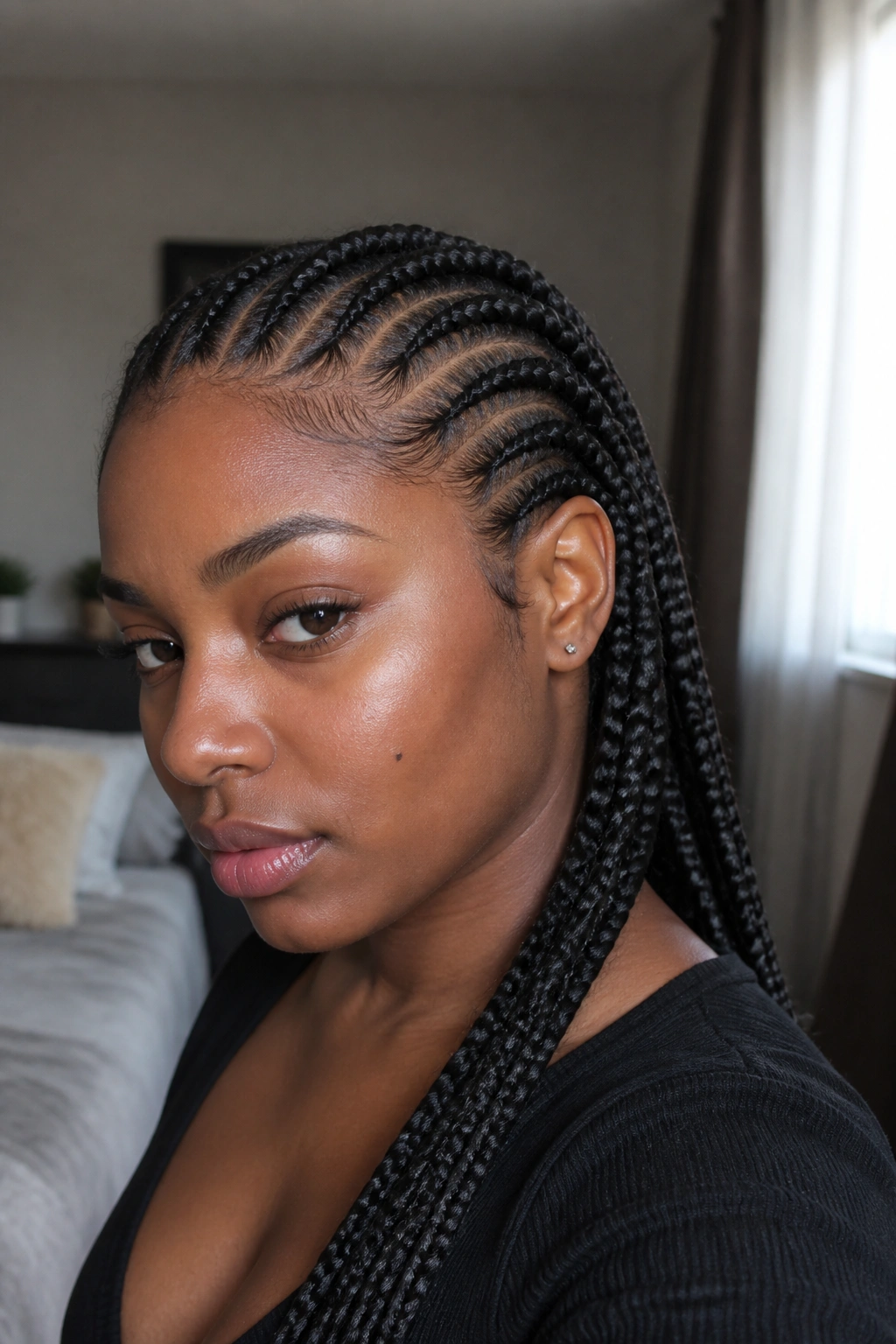
Feed-in braids are one of the cleanest ways to wear 4C hair in a long-lasting style because the braid starts small and builds gradually. That softer start at the scalp makes the style look less bulky and can reduce that heavy “helmet” feel that some braided styles create.
The parts should be neat, but the tension should not be harsh. If the braid feels tight at the roots within the first hour, it is too tight. That matters more than length or part size. You want the scalp to feel snug, not pulled. Stretching the hair beforehand can also help the braid lie flatter and move more naturally.
These braids work for school, travel, busy weeks, and anyone who wants their hair out of the way for a while without giving up style. They’re practical. And on 4C hair, practical can still look sharp.
20. Knotless Box Braids With Natural Movement
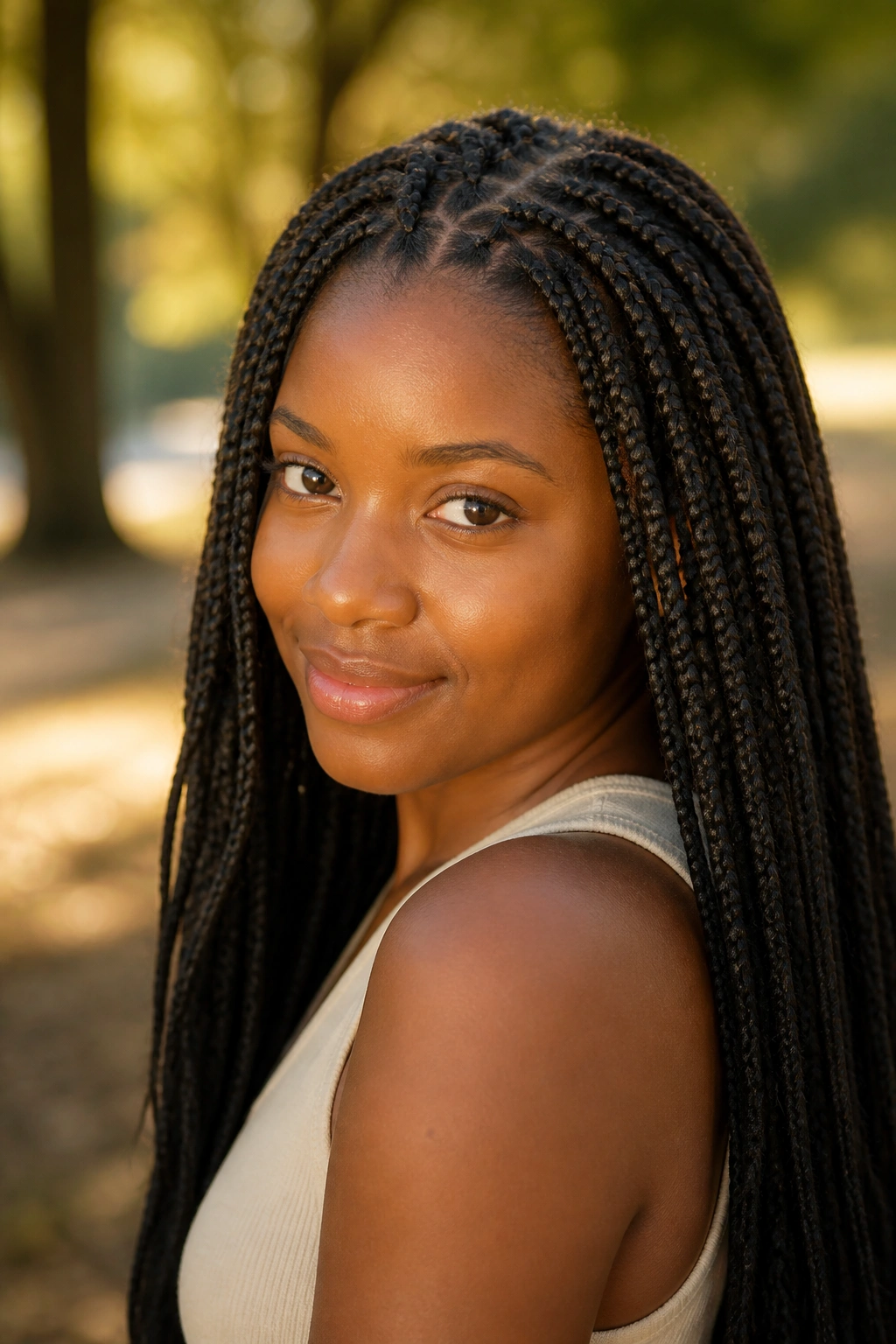
Knotless box braids take the weight off the scalp because the extension hair is fed in gradually instead of starting with a hard knot. That difference changes the whole feel of the style. It moves better, sits flatter near the roots, and usually feels lighter during the first few days.
For Type 4C hair, that lighter feel can matter a lot. Dense hair already has its own volume, so a braid style that doesn’t pile on too much bulk tends to sit better. Stretch the natural hair first, then make the parting clean and consistent. A sloppy base is hard to hide later, even if the braids themselves are neat.
This style lasts well when cared for properly, but the scalp still needs attention. A little oil at the roots, a satin bonnet at night, and careful washing go a long way. Braids are not maintenance-free. They just need less daily fuss.
21. Faux Locs With Wrapped Texture
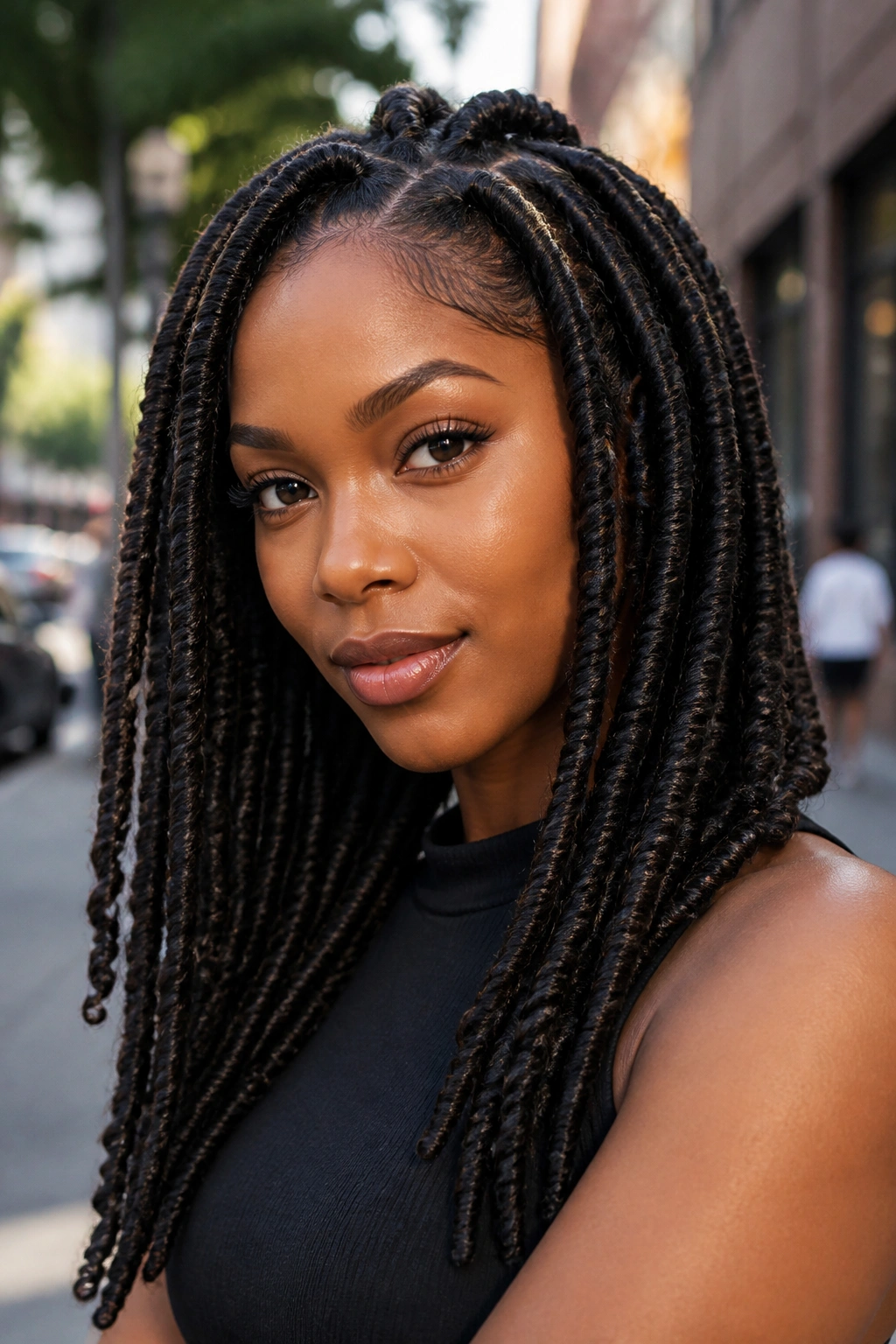
Faux locs are for the days when you want texture with attitude. They give the impression of locs without the commitment, and the wrapped finish works nicely on 4C hair because the texture at the base helps anchor the style. The result can look soft, thick, and a little dramatic in the best way.
There are a few ways to do them, but the big thing is weight. Medium-size faux locs are easier on the scalp than very thick ones, especially if your hair is fine at the edges or you plan to wear them for a while. Wrap them neatly, keep the roots clean, and do not overload the front sections.
This style has a lot of personality. It can look earthy, polished, or edgy depending on the length and the parting. And because the hair is tucked away, it gives your strands a break from daily combing.
22. Tuck-and-Roll Updo
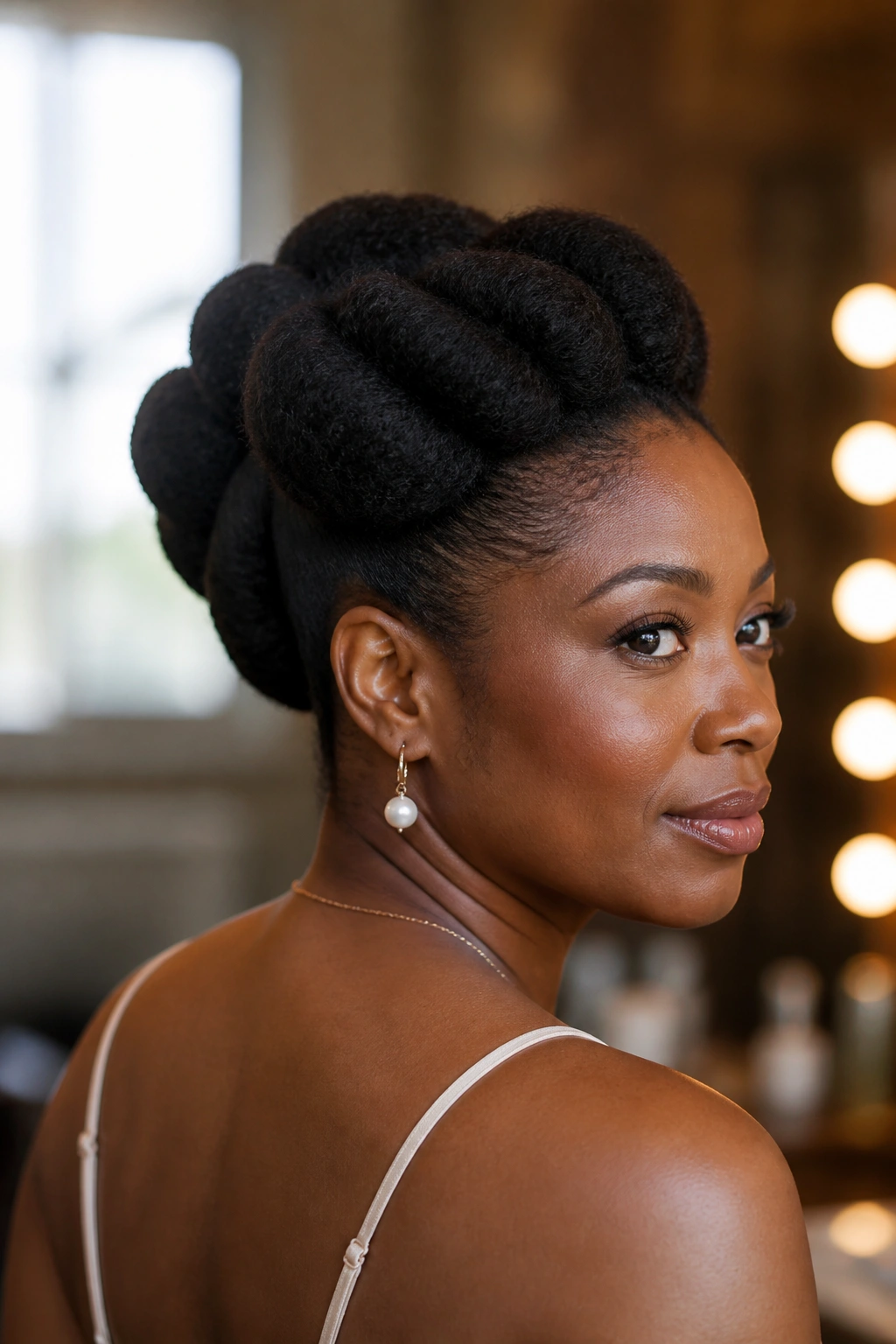
A tuck-and-roll updo is one of those styles that looks more complicated than it is. Hair is rolled inward in sections, pinned, and tucked so the ends disappear into the shape. On 4C hair, the texture helps the rolls hold. That’s the nice part.
This style is useful when you want something formal without heavy braiding or extensions. It works on medium to stretched lengths, and it can be adjusted depending on how much volume you want at the back or sides. A few well-placed bobby pins do more than a dozen bad ones, so use sturdy pins and slide them in at an angle.
The finished look can be smooth or slightly textured. I prefer the second version. It feels less stiff, and 4C hair usually looks better when it is allowed a little room to breathe.
23. Scarf-Wrapped Puff
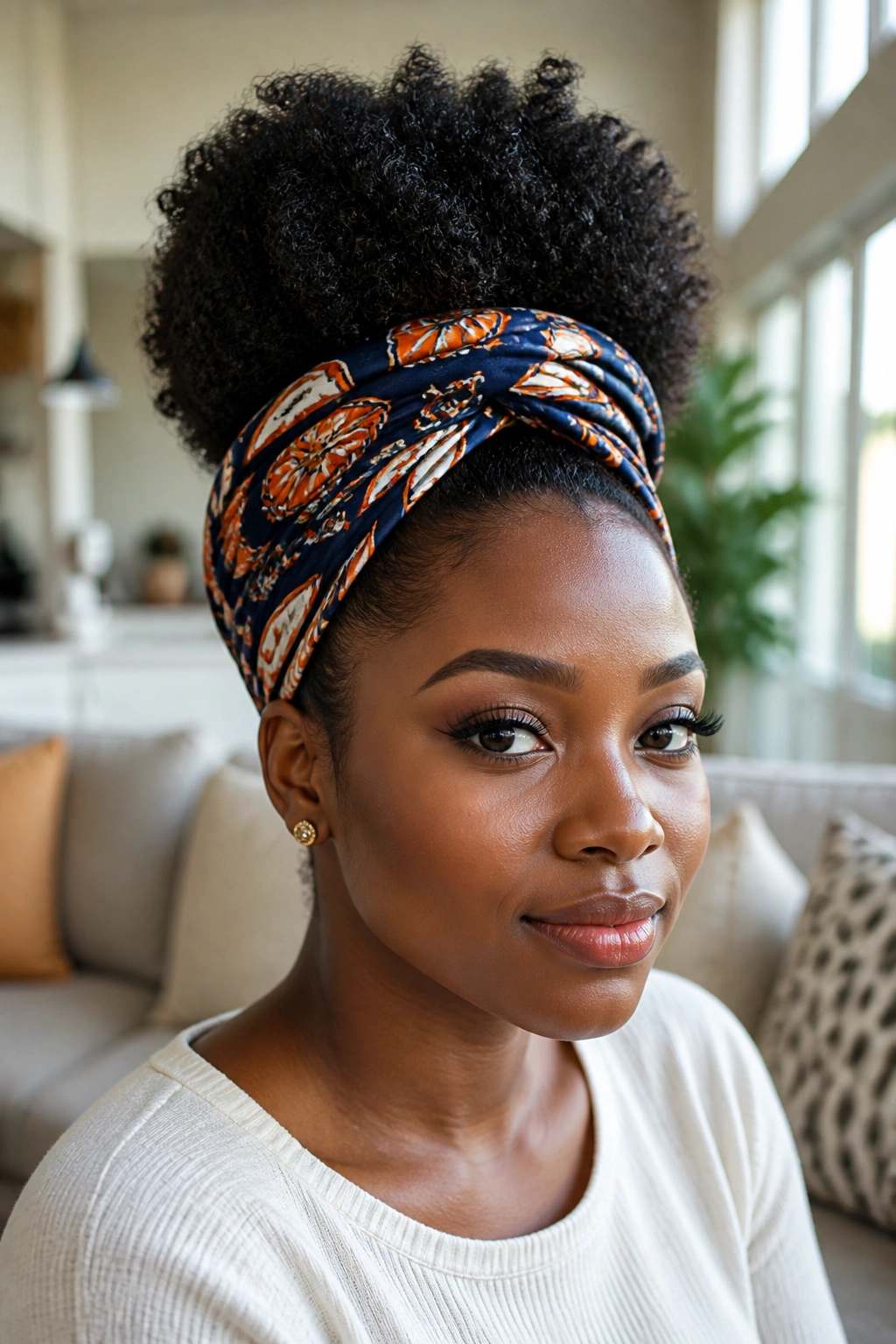
Can a scarf be part of the hairstyle? Absolutely. On 4C hair, a scarf-wrapped puff can rescue a style that is on day three or day four without making you start over from scratch. The scarf gives shape, covers a rough hairline if needed, and adds a clean finish in seconds.
What to do with the scarf
Tie the puff first, then wrap the scarf around the base or fold it into a wide band across the front. If the fabric is slippery, knot it once and tuck the ends under rather than letting them hang. A satin or cotton scarf works better than stiff fabric, which can poke and shift.
This look is good when your roots still have body but the perimeter needs help. It is also useful for hot weather, workouts, and the sort of day when you want style without much handling. Simple. Fast. Not boring.
24. Side-Swept Flat Twists
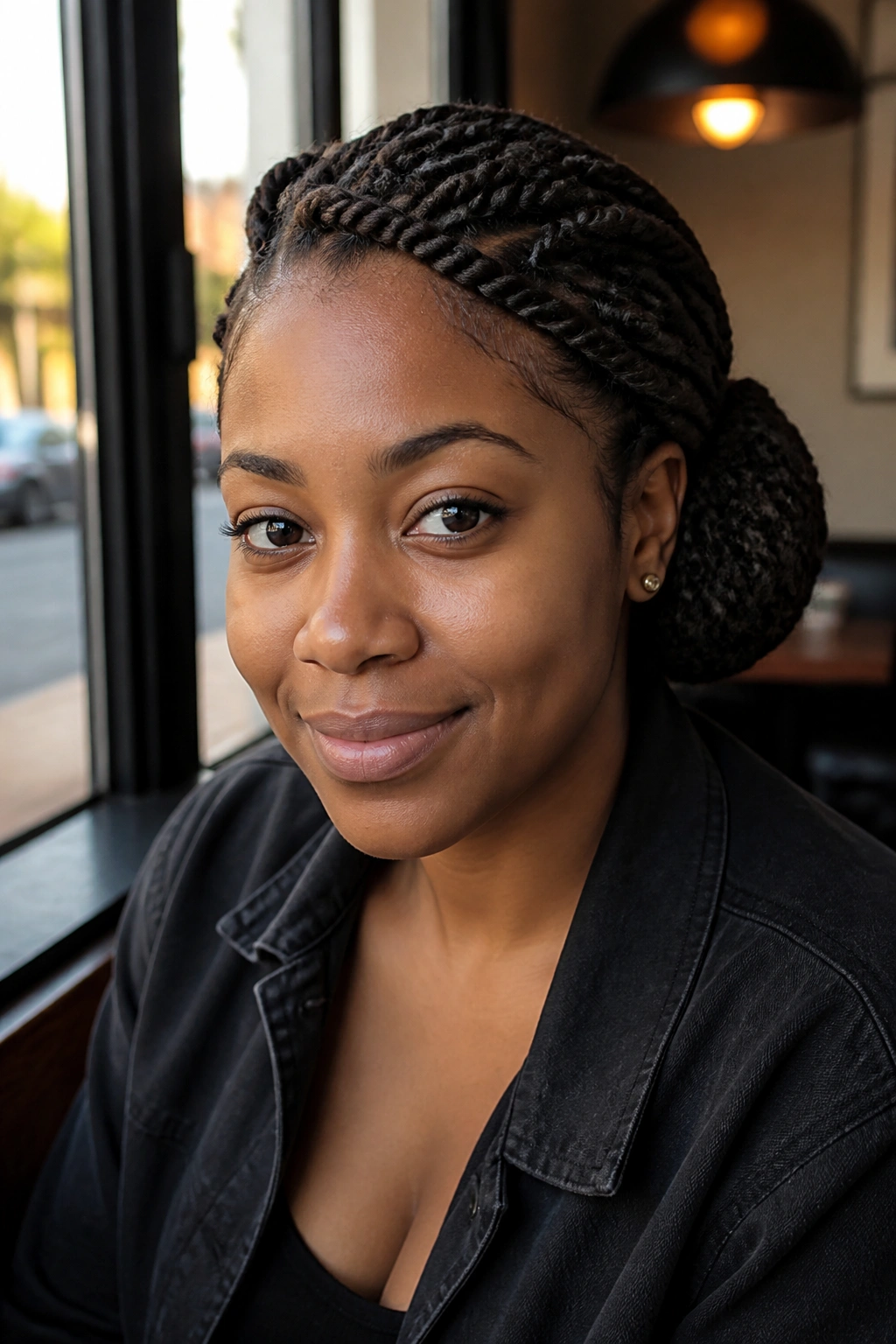
A side-swept flat twist style brings an asymmetrical shape that feels fresh without being loud. The twists start at one side of the hairline and sweep across the head into a side bun, side puff, or tucked finish. On 4C hair, the texture helps the twists hold their shape and gives the whole look extra depth.
This style is a smart pick when you want to show off the front of your face and keep the rest controlled. The twist direction matters because it guides the eye. If the parts are clean and the twists are snug, the style reads neat right away. If they’re loose, it can look unfinished fast.
A little shine cream on the surface can help, but don’t drown the hair. The goal is smooth lines with a soft finish, not slick plastic.
25. Half-Up, Half-Down on Stretched Hair
Half-up, half-down styles are popular for a reason: they let 4C hair keep its fullness while still showing some length. When the bottom section is stretched — from twists, banding, or a gentle blow-dry on low heat — the shape feels bigger and more balanced. The top can be a puff, a bun, a small ponytail, or even a twisted knot.
This is one of the most flexible looks on the list. It works for casual wear, date nights, and days when you want your hair to look done without pinning every inch of it back. The trick is keeping the top section clean and the bottom section soft, not crushed. If the crown is too tight, the style loses its ease. If the bottom is too frizzy, the whole thing gets messy fast.
A half-up style is also one of the best reminders that Type 4C hair does not need to be forced into one shape to look good. It can show length. It can show volume. It can do both at once, which is why I keep coming back to it.
