



A toddler hairstyle has to survive snack time, car seats, nap time, and a pair of hands that seem magnetized to hair accessories. If you’ve ever finished a cute little style only to watch it unravel before lunch, you already know the real job: make it soft, quick, and hard to pull apart.
That’s why 22 hairstyles for toddlers are less about chasing a perfect look and more about choosing the right kind of simple. Some styles work because they keep hair off the face. Others hold curls without flattening them. A few are there for the days when your child will sit still for exactly ninety seconds and no more.
I keep coming back to the same small details: snag-free elastics, a mist bottle, a rat-tail comb, and styles that move with the child’s head instead of fighting it. The best toddler hair is the kind you can fix before breakfast and forget about until the next snack break.
1. Tiny Top Knot for Toddlers
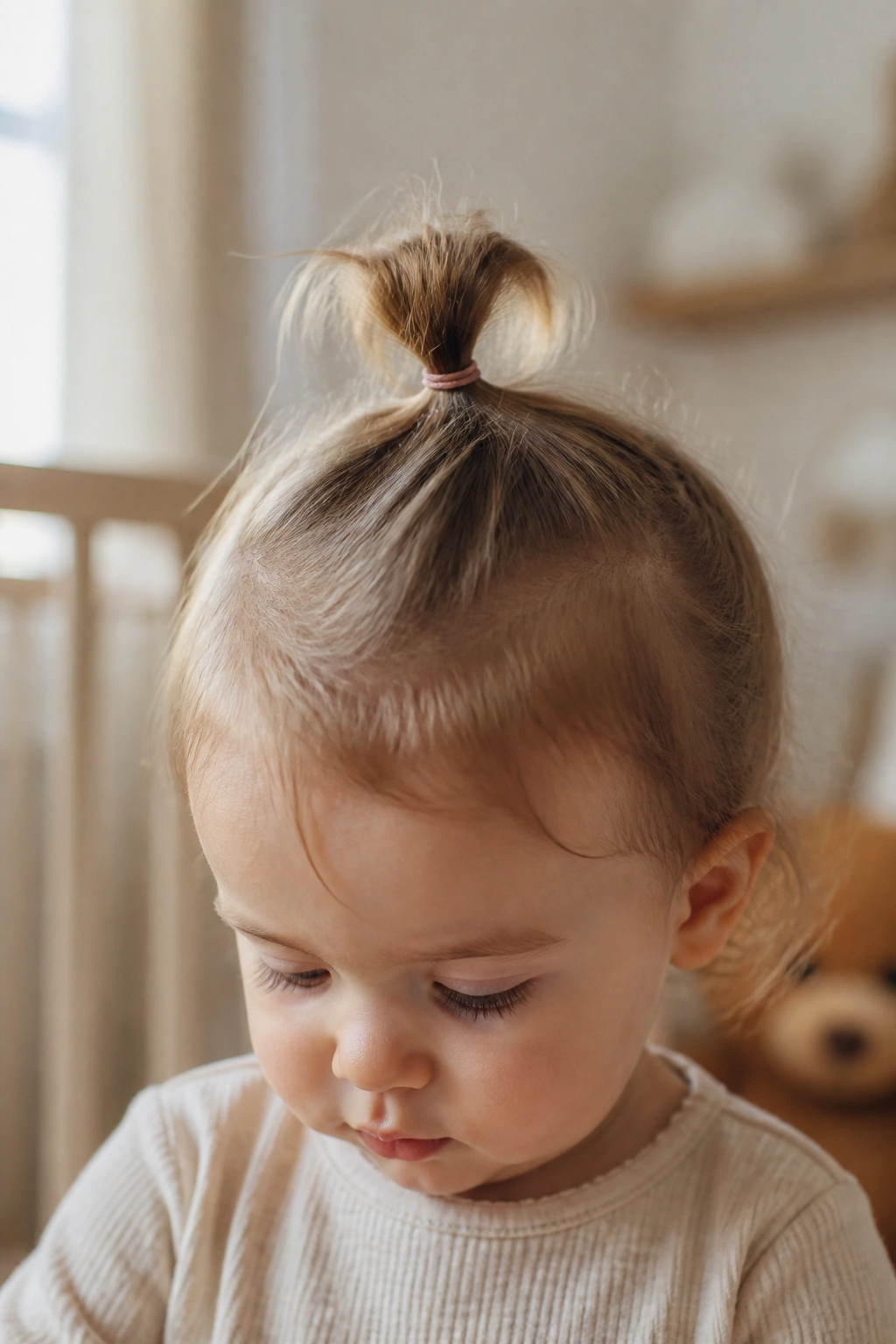
A tiny top knot is one of those styles that looks neat in a hurry and still feels light on a small head. It works especially well when the hair is fine, short, or just a little bit uneven around the sides. You gather a small section at the crown, twist it once or twice, and secure it with a soft elastic or a mini claw clip.
The trick is height without tension. If the knot is too tight, you’ll get the classic toddler complaint: instant fussing and a hand going straight to the scalp. Keep the base loose enough that you can slide a finger under it.
If the hair is too short for a full knot, make a tiny ponytail and fold the ends under. That still gives the same tidy shape. Small and secure.
A little water on the fingers helps smooth the top before you start, and a dab of leave-in conditioner can tame those flyaways that always seem to stand up right at the front.
2. Two Mini Puffs with a Clean Center Part
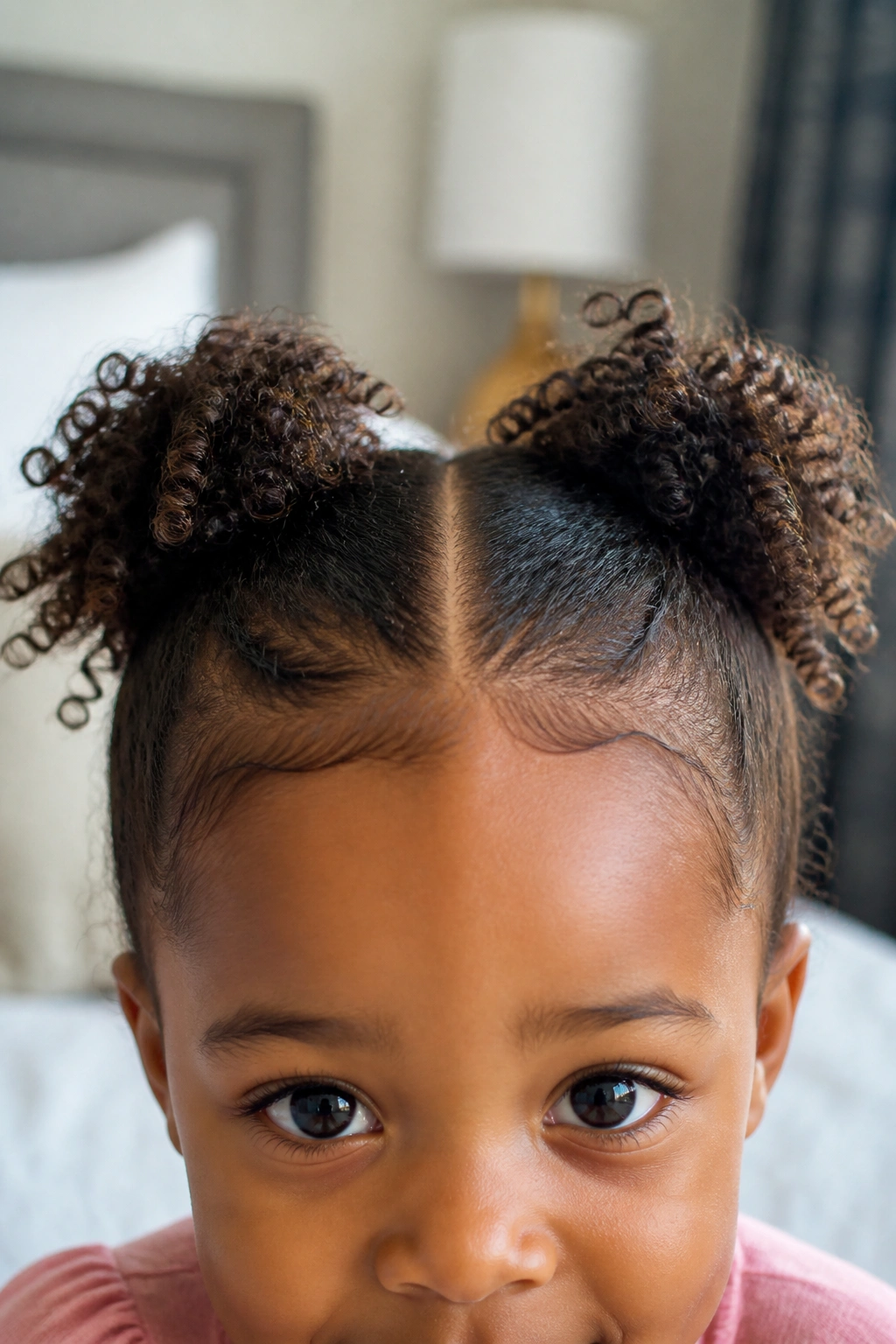
Two mini puffs are a favorite for curly and coily hair because they let the shape stay big and soft instead of flattening it. The style starts with a clean center part, then two small sections gathered near the sides or slightly higher on the head. Use soft elastics or gentle bands that don’t dig in.
Why It Works on Curly and Coily Hair
The puffs keep the hair away from the face while leaving the texture alone, which is the whole point. If you try to slick this hair type too hard, the style can look stiff fast. A puff keeps some bounce, and toddlers usually wear that bounce well.
- Part the hair with the tip of a rat-tail comb, not your fingers.
- Mist each side lightly with water before gathering it.
- Use a curl cream or leave-in on the lengths if the hair feels dry.
- Fluff the puff with your fingertips after tying it so it doesn’t sit flat.
Pro tip: place the elastics a little higher than you think you should. Low puffs can slip into the ears, and that’s where the whole thing starts to unravel.
3. High Ponytail with a Soft Ribbon
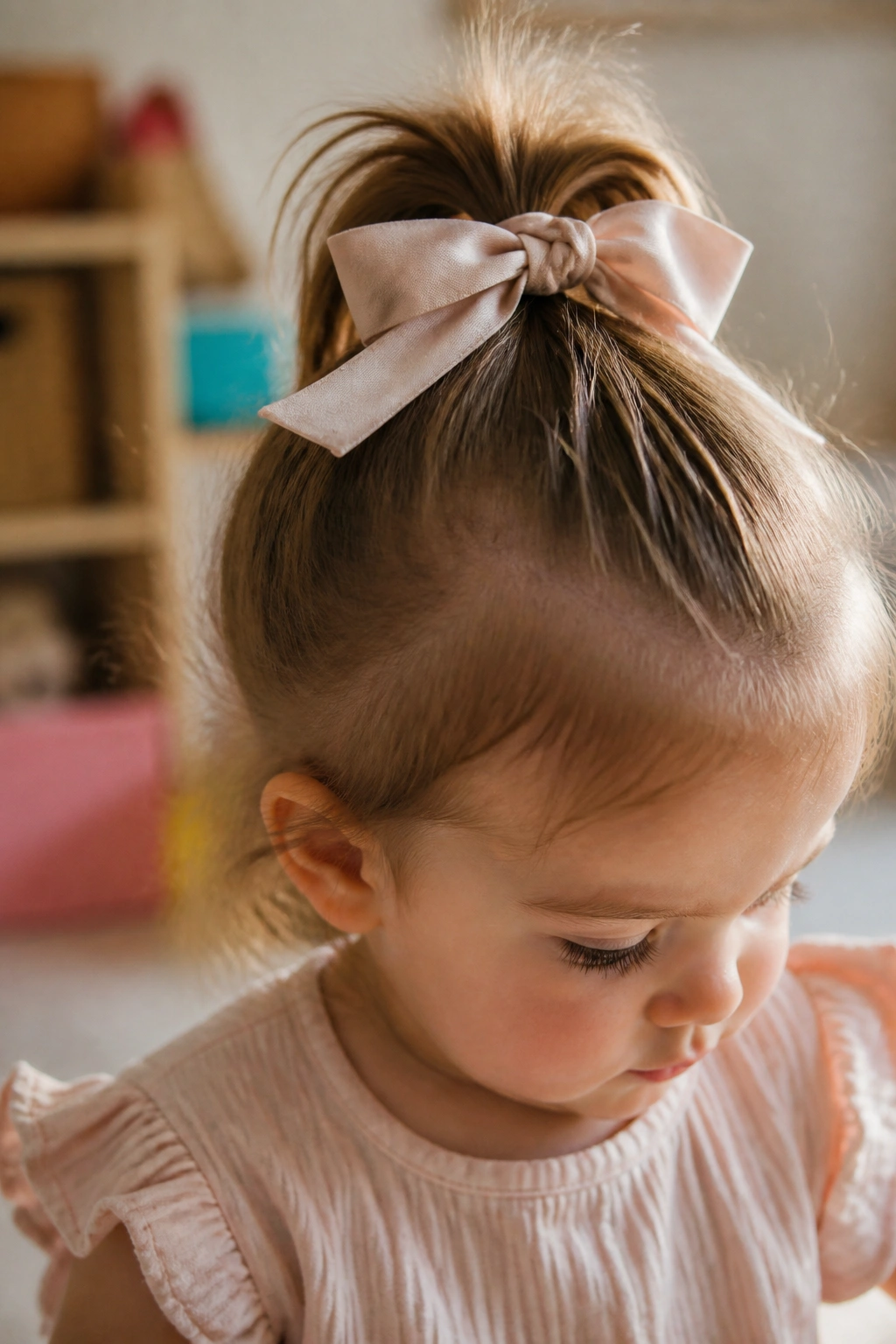
The high ponytail sounds plain until you put it on a toddler. Then it becomes one of the easiest styles to clean up, especially on hair that gets sweaty or drifts into the eyes. A soft ribbon tied around the elastic makes it feel less bare and gives you a little room to hide the hair tie underneath.
This style works best when the pony sits at the crown, not at the very front hairline. Too far forward and the pull becomes obvious. Too low and you lose the playful bounce that makes it cute.
I like this one for busy mornings. It takes minutes, and if you smooth the top with damp hands first, it stays tidy longer. A toothbrush with a tiny bit of leave-in or gel can help with flyaways, but don’t chase every little hair. Tiny flyaways on a toddler are not a flaw. They’re part of the look.
4. Side-Swept Twist with Snap Clips
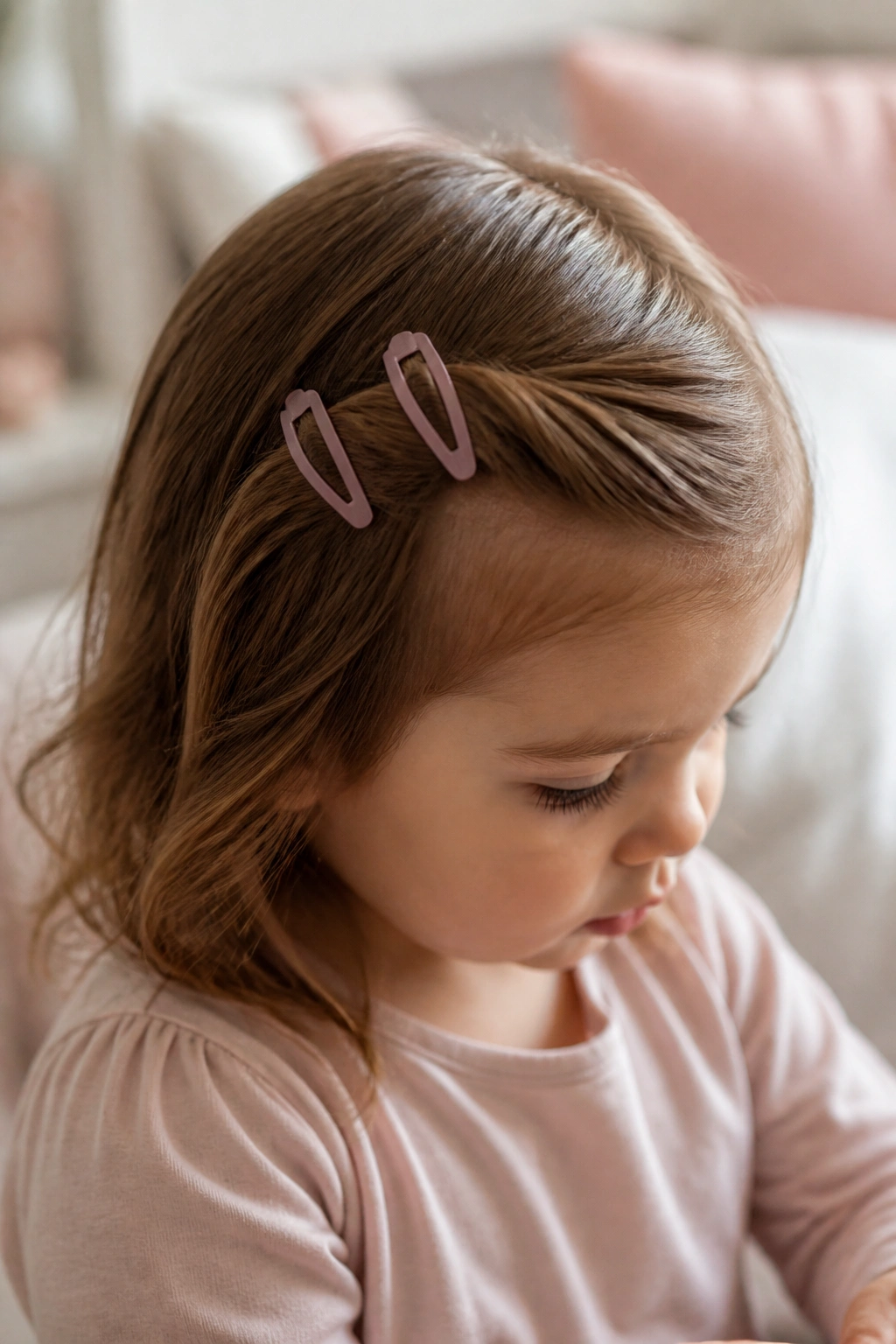
Some toddlers hate having hair pulled straight back, but they don’t mind when it’s gently swept to one side. A side twist fixes that problem fast. Take a front section from the heavier side, twist it back toward the ear, and pin it with two flat snap clips. Then leave the rest loose or tuck it into a low side ponytail.
The style feels soft, not strict. That matters. A toddler who tolerates a side sweep today may refuse a full ponytail tomorrow, and that’s fine. Use the easier thing.
What Makes It Hold Better
The key is to twist more hair than you think you need. A skinny twist slides out. A slightly wider one grips better and gives the clips something solid to hold.
- Start with slightly damp hair for less frizz.
- Place the clips one above the other so they lock the twist in place.
- Choose flat clips, not chunky ones that poke behind the ear.
- If the front keeps slipping, add a second tiny twist under the first.
One more thing: check the area behind the ear. If the clip touches skin there, move it. Toddlers notice everything.
5. Braided Headband Across the Hairline
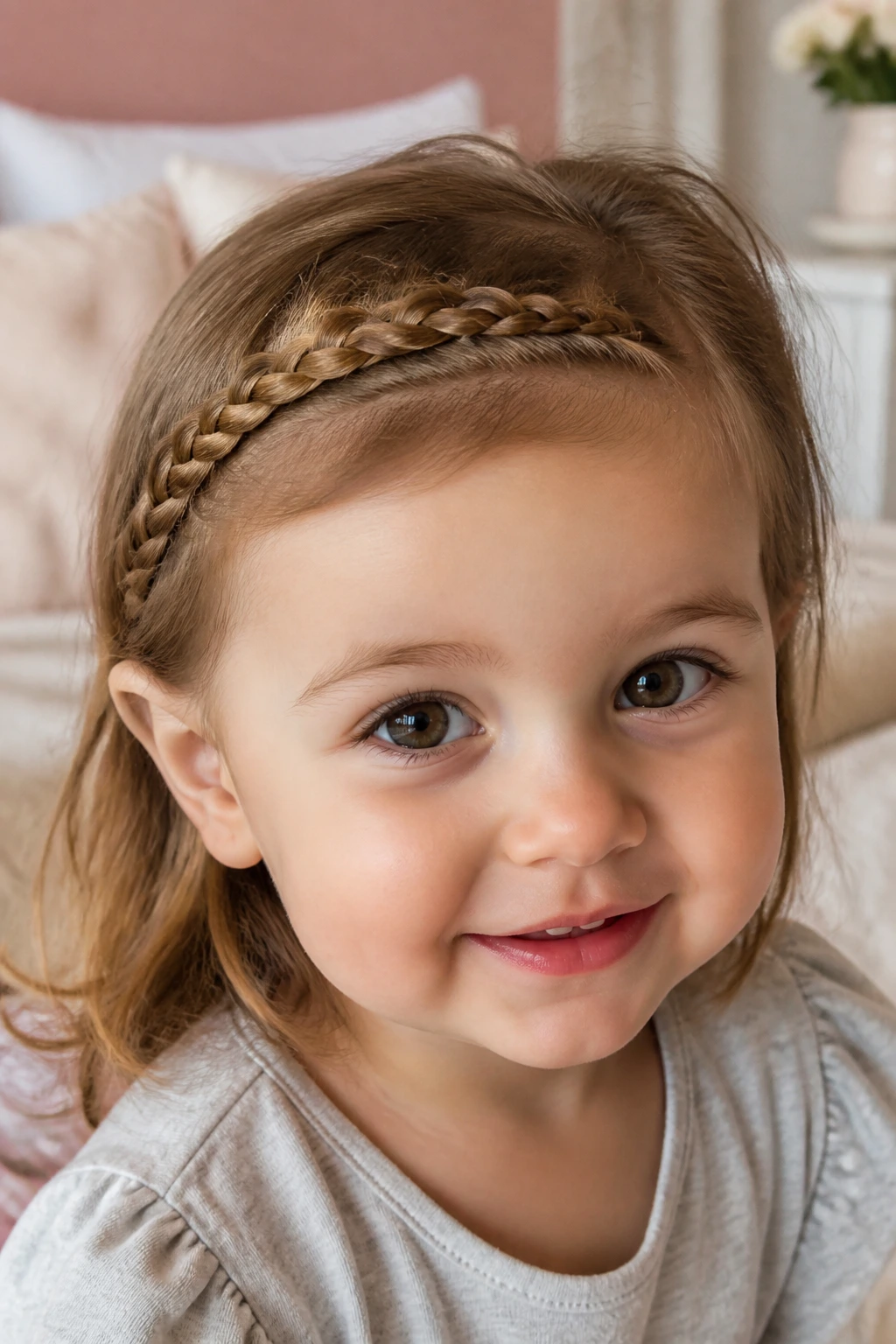
Need hair off the face without a full updo? A braided headband does the job and still leaves the back of the hair loose. It’s a nice middle ground for children who like to feel their hair down but don’t love strands on their cheeks.
You braid a section along the hairline from one side to the other, then pin the end behind the opposite ear. It works with straight, wavy, and curly hair, although the braid shape changes a little with texture. That’s normal. In fact, that slight messiness often looks better than a braid that’s pressed flat.
How to Keep It Soft
Don’t braid too tightly at the scalp. A little give makes the whole style more comfortable for a small head. If the braid is snug but not stiff, it usually lasts through a meal, a car ride, and a nap.
If the hair is very short, make the headband section narrower and use two or three tiny pins instead of one large one. If the child has finer hair, mist the section before braiding so it doesn’t split apart halfway through.
6. Double French Braids for Busy Days
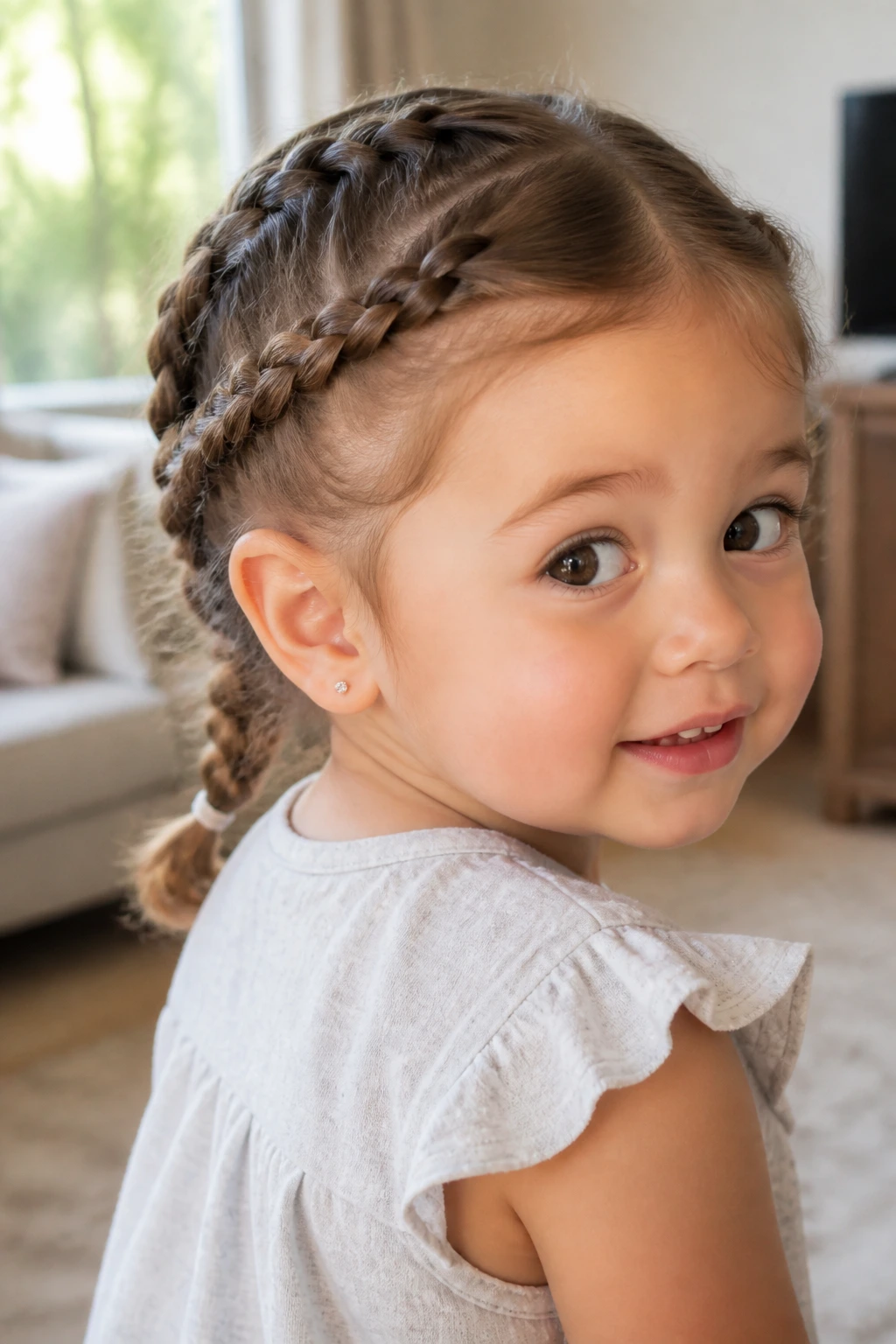
Unlike loose pigtails, double French braids keep the top layers from flying everywhere. That’s the appeal. The hair stays in place, the scalp feels less tugged, and you don’t have to keep tucking pieces back behind the ears.
They’re a smart pick for thick hair, because the braid spreads the weight along the head instead of dumping it all into one elastic. On a toddler with lots of hair, that difference matters. A single ponytail can feel heavy. Two braids usually feel easier.
The real payoff shows up later in the day. Once the braids come down, the hair has that soft crimped wave that kids somehow wear better than adults ever do. If you want a style that lasts and still gives you something cute at the end, this is a solid one.
7. Bubble Ponytail with Small Elastics
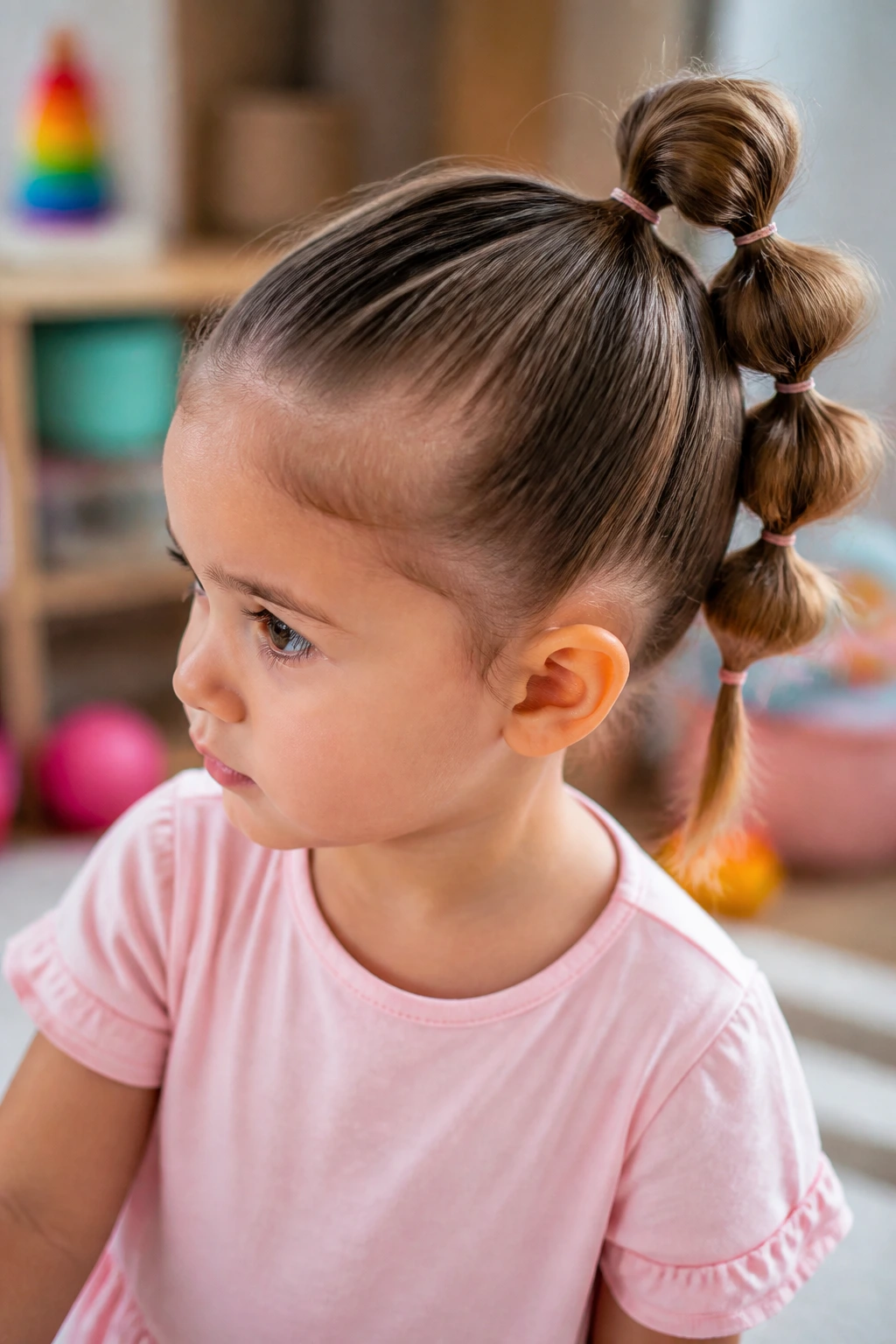
Bubble ponytails are a little silly in the best way. They look playful, and they hold surprisingly well if you use several small elastics down one ponytail. The sections puff out between the ties, which creates that bubble shape without any special skill.
I like this on medium-length hair that needs structure but not a full braid. Start with a high or mid ponytail, then add elastics about 1½ inches apart. Gently tug each section outward after every tie so the bubbles look full. Not huge. Just rounded.
A few things make it work better:
- Use clear elastics or very thin colored bands.
- Keep the spacing even, or the bubbles look lopsided.
- Smooth the base with a bit of water before you start.
- Stop before the very ends if the hair is too short; a half-bubble tail still looks cute.
The best part is that it’s not fussy. If one section gets messy, it still reads as part of the style.
8. Crown Braid Halo for Dress-Up Days
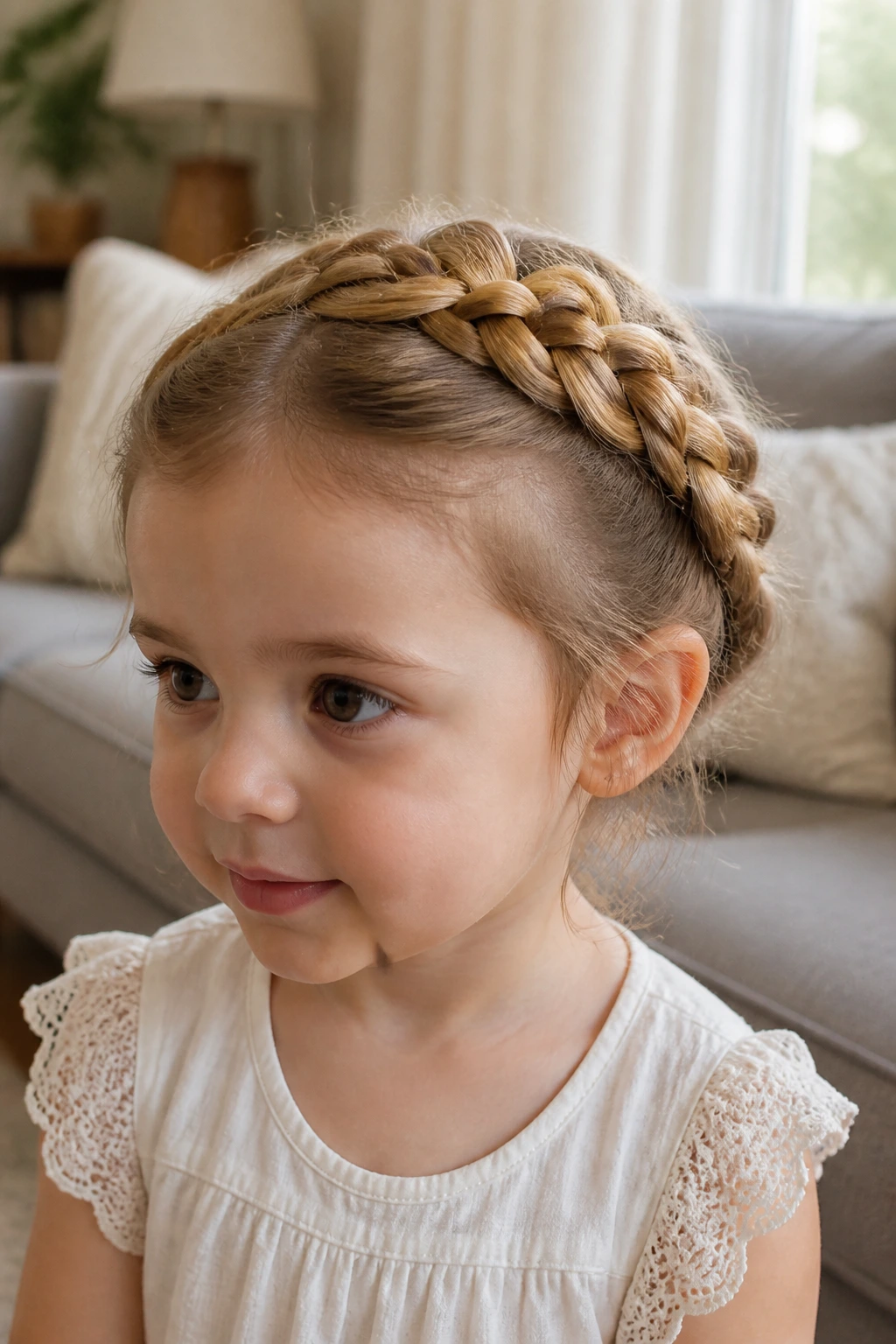
A crown braid halo is the style you pull out when you want hair to stay away from the face and still look a little special. It wraps around the head like a soft band, which makes it lovely for family photos, gatherings, or any day when you want something more polished without turning it into a production.
Where It Saves the Day
This style works best on hair that’s long enough to braid from each side and meet at the back. If the hair is shorter, you can fake the look with two side braids pinned across the crown. Same idea. Less fuss.
- Keep the braid loose so the scalp does not feel pulled.
- Use small pins that sit flat under the braid.
- Tuck the ends under the braid itself if they’re short.
- Add a tiny ribbon near one ear if you want a softer finish.
The halo shape is pretty, sure, but the real value is comfort. It keeps the front clean and the back controlled without making the child feel pinned down.
9. Simple Pigtail Braids
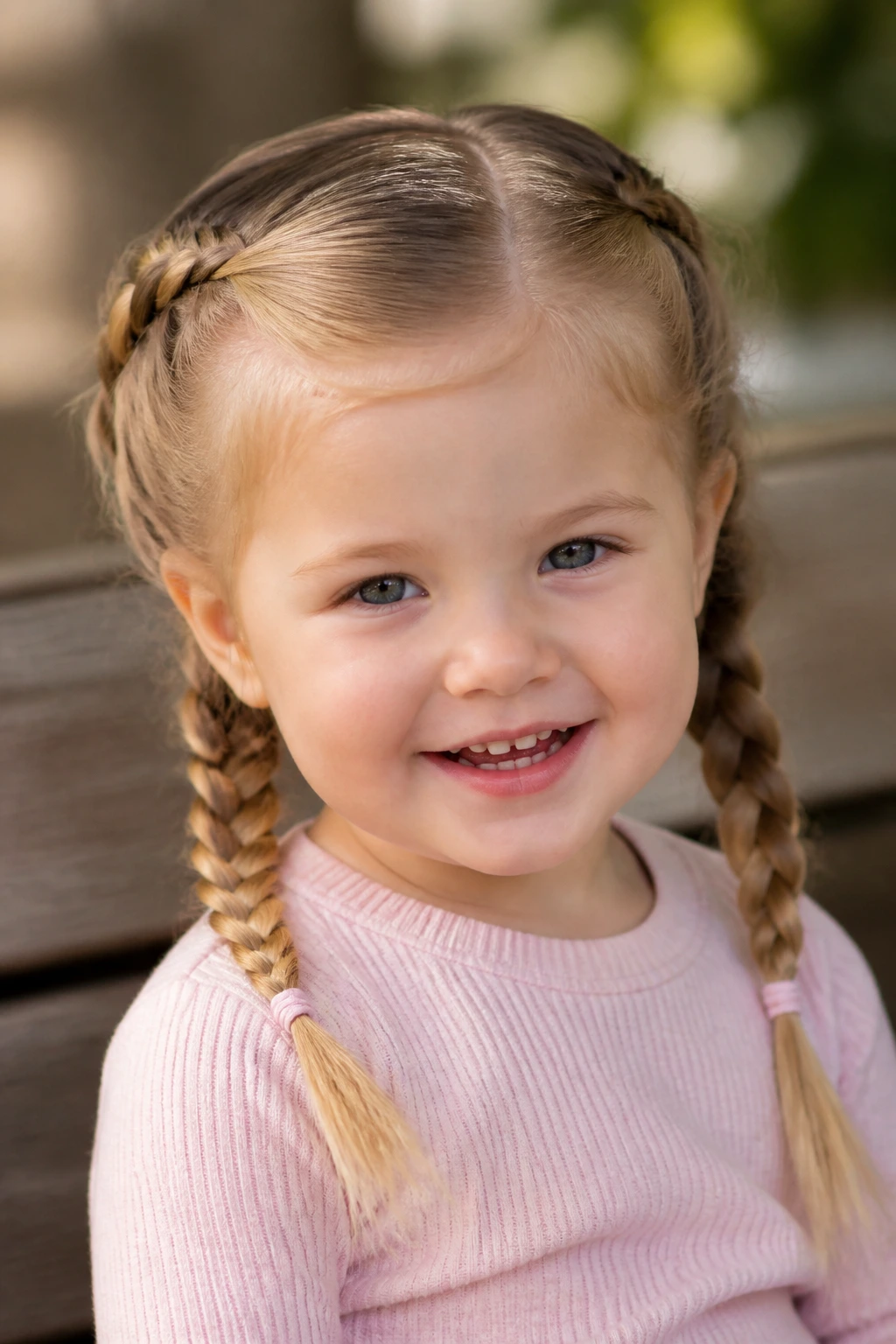
Sometimes the old standby wins. Simple pigtail braids are easy to do, easy to redo, and easy for a toddler to leave alone because there’s not much to grab. Part the hair straight down the middle, split it into two sections, and braid each side all the way down.
If the child has shorter layers, don’t worry about a few ends escaping. That happens. A lot. Use tiny clear elastics at the bottom and, if needed, clip the loose bits in place near the nape.
The style feels especially useful on days with wind, active play, or preschool drop-off, where you want hair contained but not stiff. It’s one of those hairdos that looks better after it loosens a little. The braids soften, the face stays clear, and the whole thing starts to look lived-in in a good way.
10. Curly Pineapple on Top of the Head
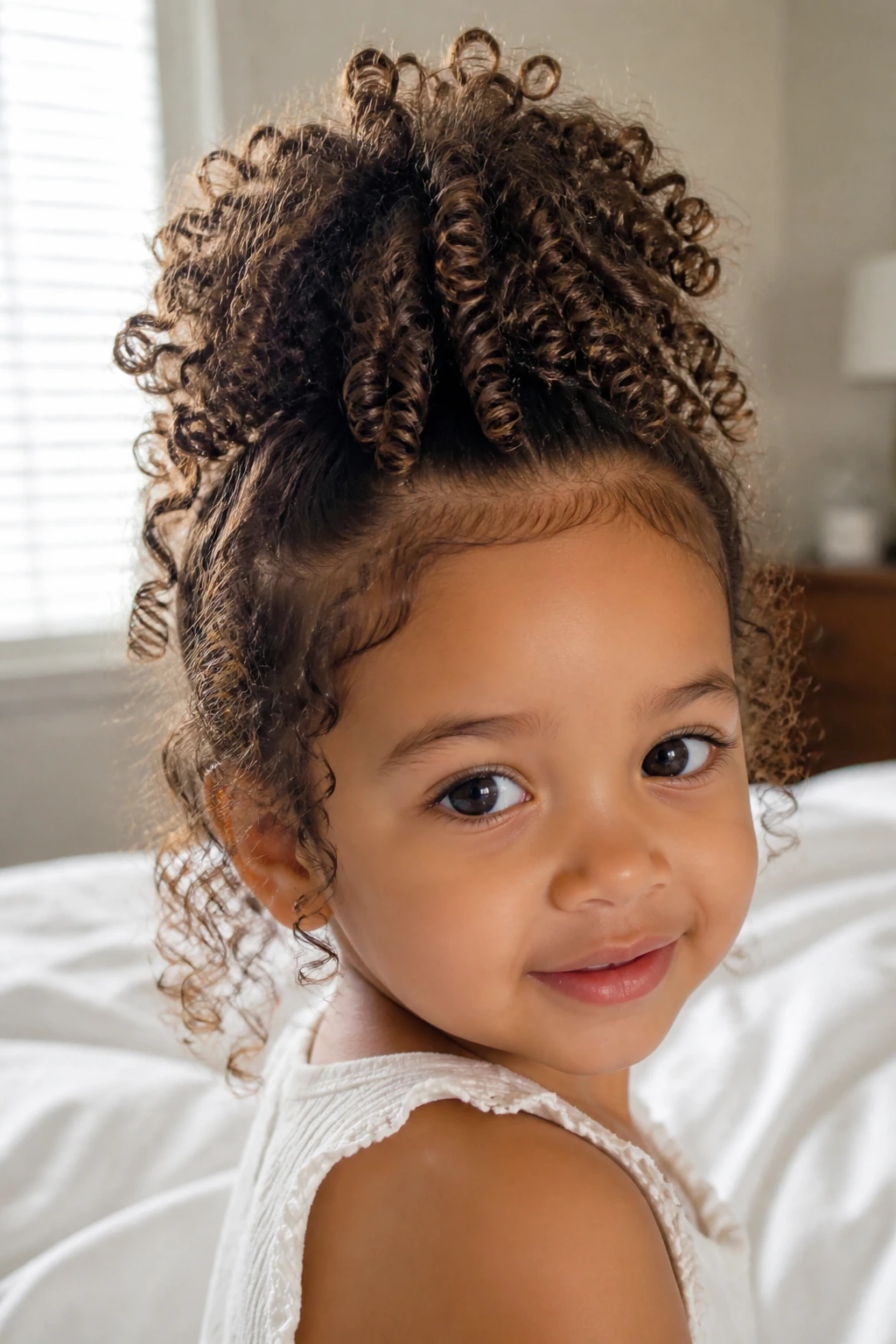
If your toddler has curls, the pineapple is one of the easiest styles to respect the shape instead of flattening it. You gather the hair loosely on top of the head, secure it with a satin scrunchie or a soft band, and let the curls fall forward and around. The result is high, bouncy, and very low stress.
This is the style I’d choose for a child who hates having curls brushed out. You don’t need a polished finish. You need a shape that keeps the hair from tangling while still letting the curls do their thing.
A few small choices help a lot. Use your hands instead of a brush when possible. Keep the base loose enough that the scalp doesn’t indent. And if the curls are dry, work in a tiny bit of leave-in before gathering them. That keeps the ends from frizzing out by midday.
11. Space Buns That Stay Light
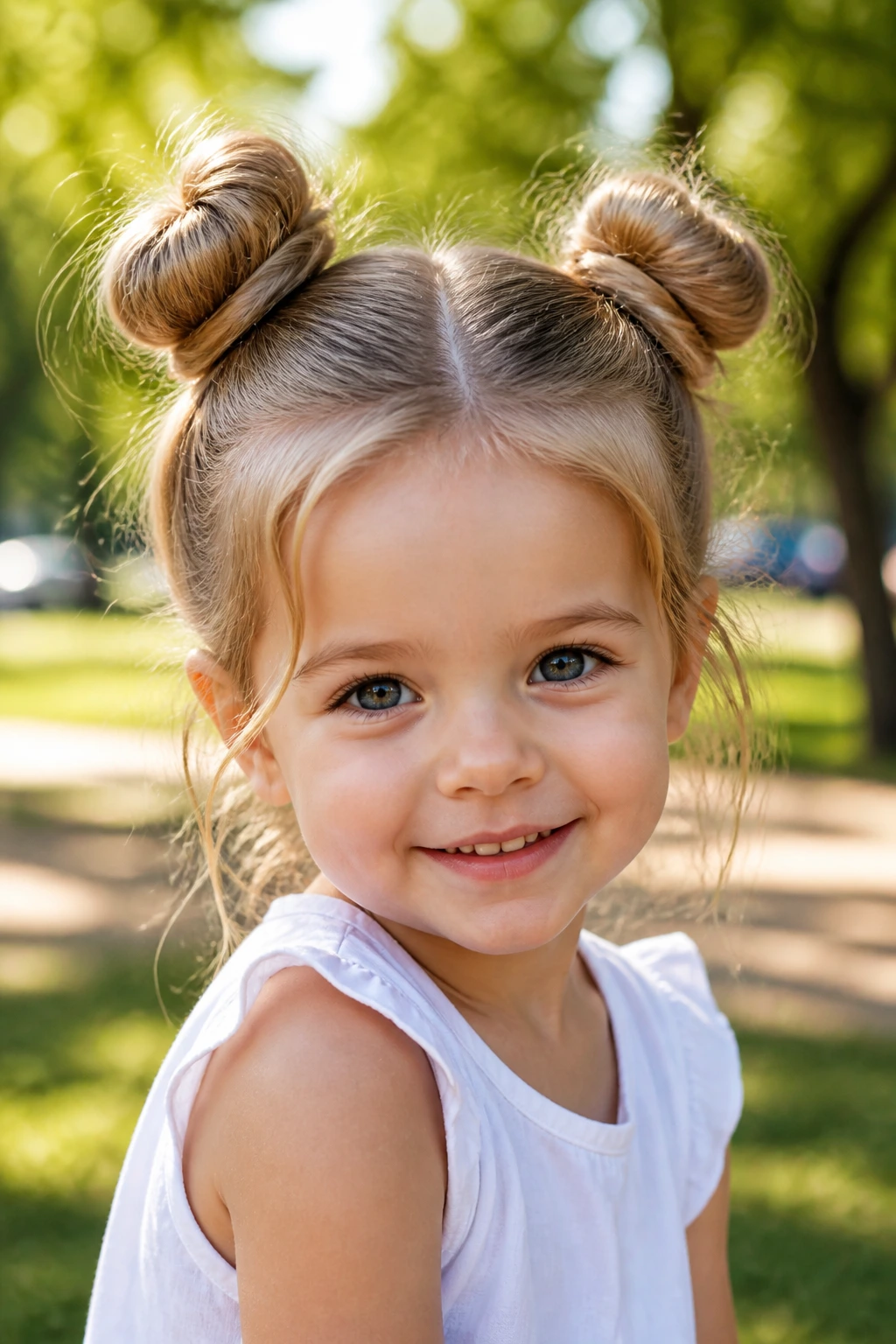
Need a style that looks playful and survives a park visit? Space buns do both. They’re two tiny buns placed high and wide on the head, usually with a center part. The shape is fun, but the parts can be adjusted to fit the child’s face and hair length.
How to Keep Them Even
The easiest way to avoid lopsided buns is to make the part first and check both sides before twisting anything. That tiny pause saves you from fixing one bun five times while the other one sits there mocking you.
- Use a comb to mark the center part cleanly.
- Gather each side at the same height before twisting.
- Secure with small elastics first, then wrap the ends into buns.
- Leave a few soft pieces at the front if the hairline is tender.
They don’t need to be perfect. Honestly, they usually look better when they’re a little soft around the edges.
12. Low Twisted Bun at the Nape
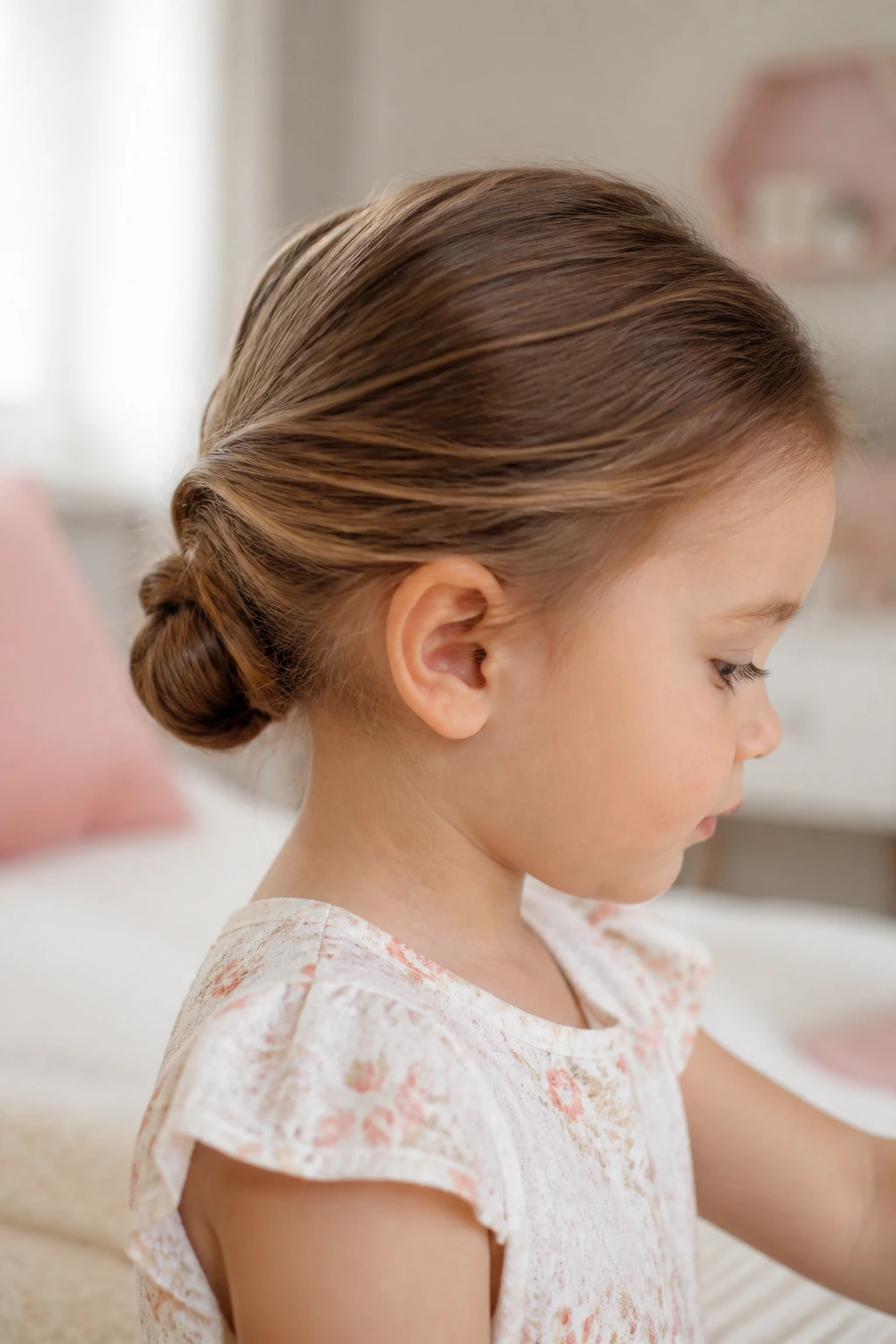
A low twisted bun is calmer than a top knot and kinder to a child who hates hair sitting on the crown. Gather the hair low at the nape, twist it into a bun, and pin or band it in place with a soft tie. It’s tidy, plain, and useful. That’s not a downside.
This style is a good fit for nap time, car rides, or any day when you want the hair out of the way without adding height on top of the head. It also works for medium-length hair that starts to slip out of ponytails by noon.
If the hair is slippery, make a low ponytail first and then twist it into the bun. If the hair is thick, split it into two mini twists before wrapping. You’ll get a flatter shape and less bulk at the back of the neck.
13. Cornrow Rows for Coily Hair
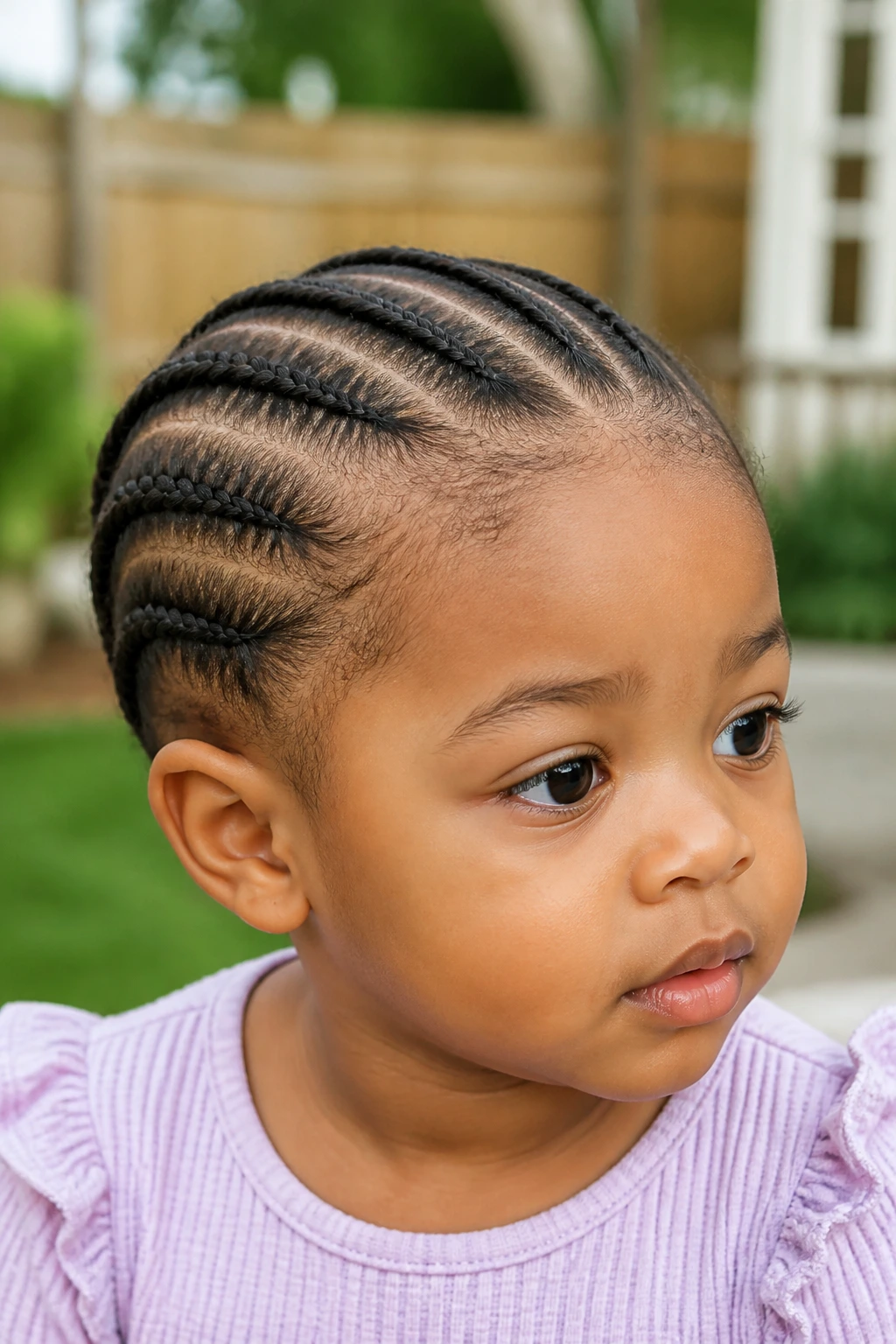
Cornrow rows can be a beautiful, practical choice for toddlers with coily hair, but they should always be done with a light hand. A good set of rows should feel snug, not sharp. If the child’s forehead looks pulled or the scalp shows stress lines, the braid is too tight.
This is one of those styles where parting matters almost as much as braiding. Clean parts help the rows sit straight, and small sections help the style last longer. If you’re braiding at home, start simple. Straight-back rows are easier to manage than complicated designs, and a toddler does not need a fancy pattern to look well cared for.
Be careful with heavy beads. They can pull on delicate hair and make sleep uncomfortable. If you want decoration, use very light ends or leave the style plain. The scalp will thank you, and so will bedtime.
14. Zigzag Part Pigtails
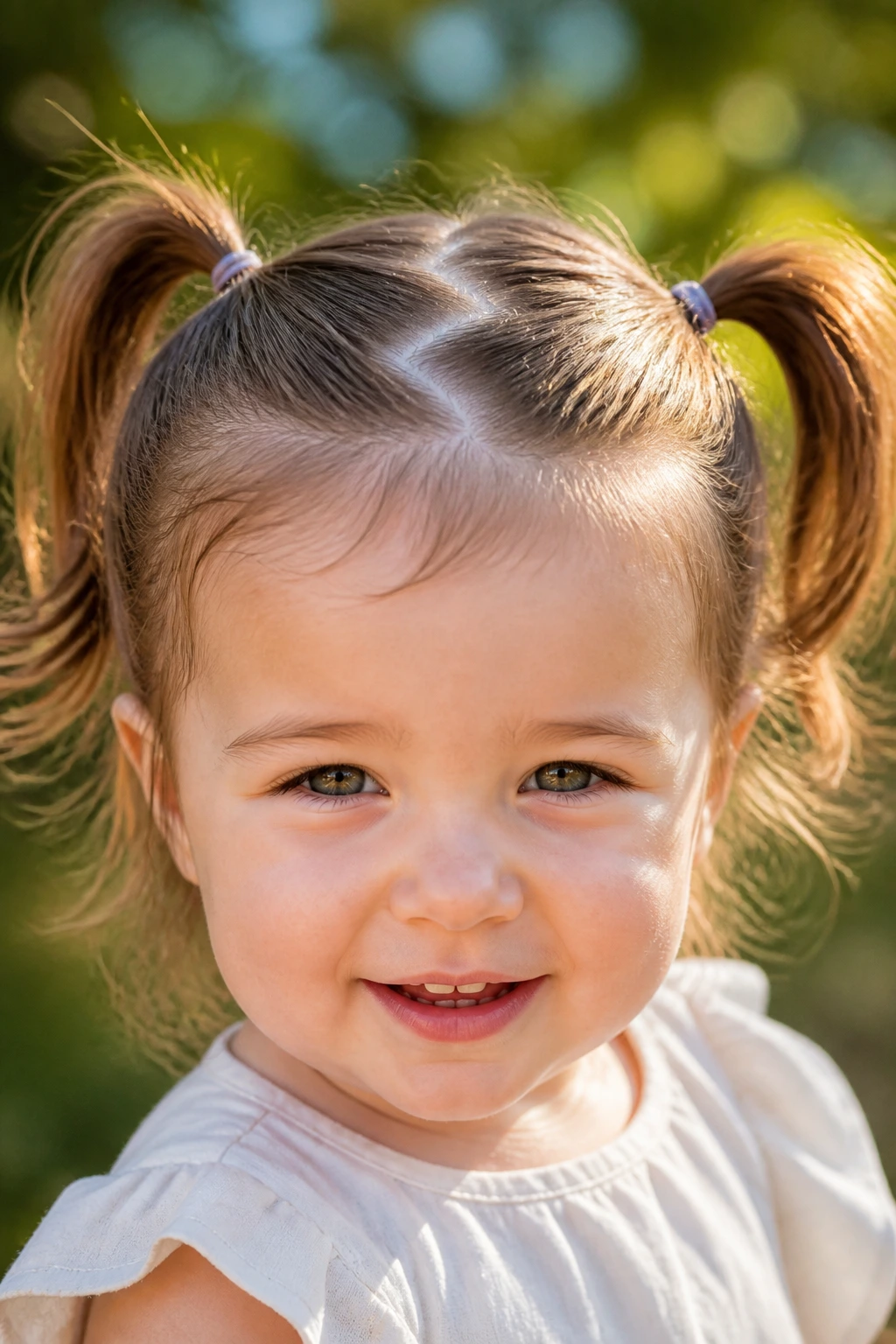
A zigzag part turns ordinary pigtails into something a little more fun without adding much time. The part does most of the work. Once the zigzag is drawn with a tail comb, the rest is just two clean ponytails or braids sitting on either side.
The Part Is the Point
Toddlers often notice the part before they notice the rest of the style. That’s why this one gets smiles. It looks intentional, but it doesn’t require extra accessories or a long sit.
- Wet the comb lightly so it glides through.
- Draw the zigzag from front to crown in small, steady moves.
- Tie each side with a soft elastic at the same height.
- Add ribbons only if the child likes feeling them.
The pattern stays clearer on straight or slightly wavy hair, but it still shows up on curlier textures if the sections are clean. And if the zigzag gets crooked halfway through? Keep going. The whole point is movement, not perfection.
15. Half-Up Bow Ponytail
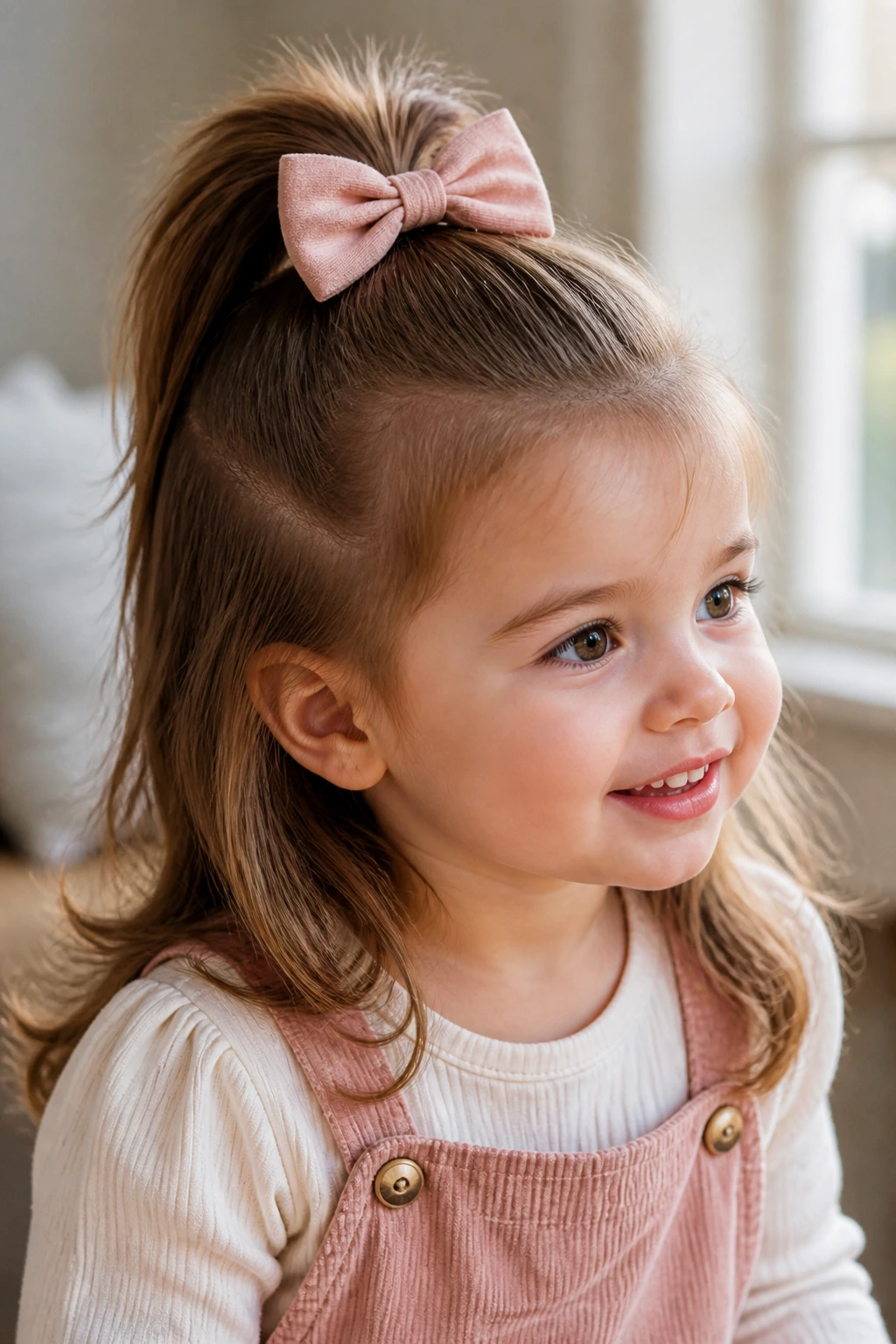
A half-up bow ponytail is one of those styles that looks more complicated than it is. You take the top section of the hair, gather it into a ponytail, and finish it with a ribbon or bow that sits right over the elastic. The bow does two jobs at once: it decorates the style and hides the hair tie.
This works especially well when the hair is fine and clips keep sliding. The half-up section gives structure, while the loose bottom hair keeps the style soft. It’s a nice compromise for toddlers who want to feel a little dressed up but still want to swing their head around like they own the place.
Use a ribbon that’s wide enough to stay visible, about ¼ to ½ inch, and tie it snugly without pressing into the head. If the child keeps touching the bow, switch to a softer fabric. Stiff bows can be scratchy, and toddlers will absolutely tell you that in their own way.
16. Mini Mohawk with Clips
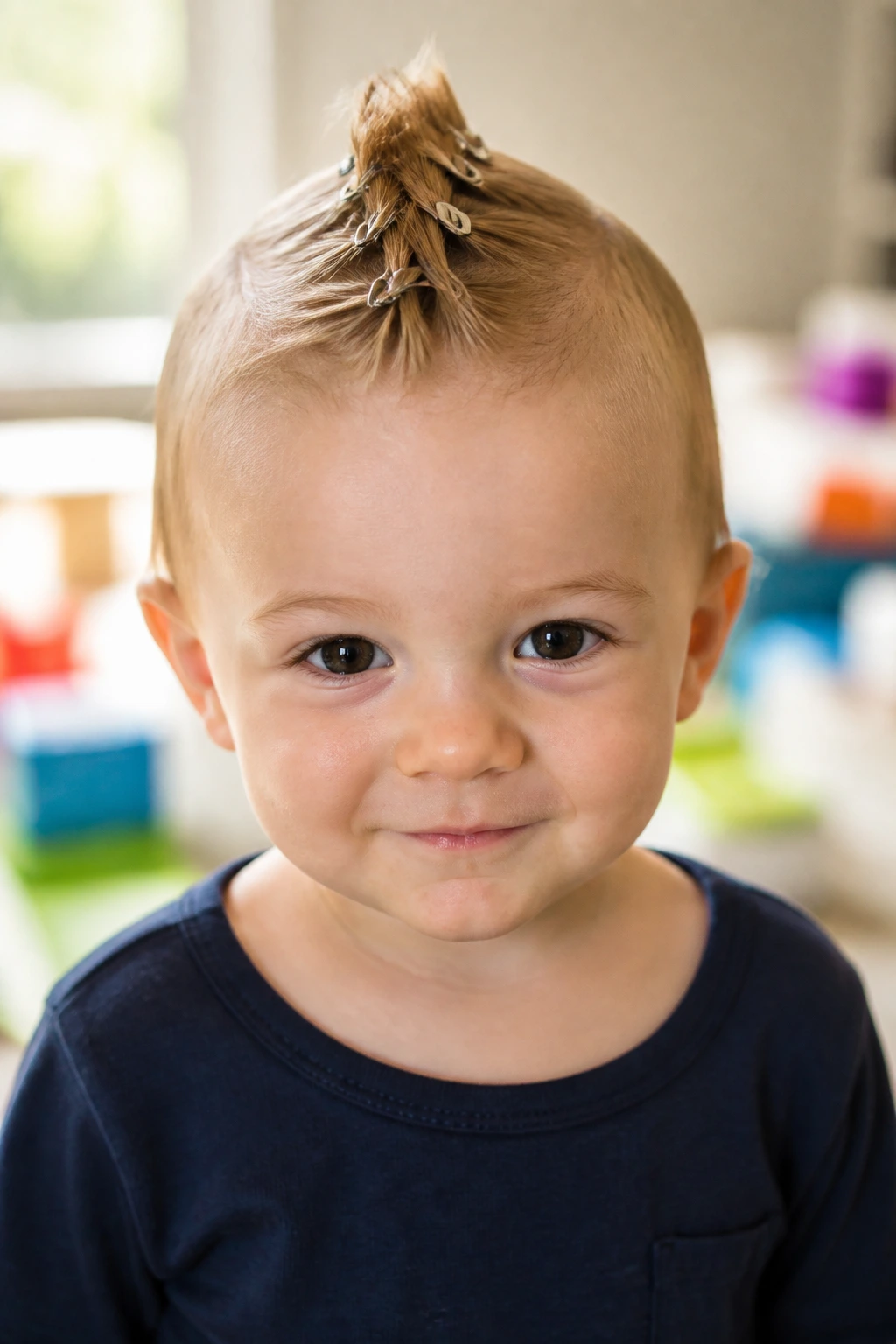
A mini mohawk with clips is playful, fast, and weirdly practical. You section a line from forehead to crown, then clip small gathered sections along the center so they stand up just enough to make a ridge. It’s a good one for short hair, wavy hair, or textured hair that needs a bit of direction without being fully pinned down.
The style works because it gives shape without requiring length. You’re not building a giant bun or tight braid. You’re just stacking small sections and securing them one by one.
- Use lightweight clips so the front doesn’t sag.
- Space the sections evenly, about 1 to 2 inches apart.
- Smooth each section with damp fingers before clipping.
- Leave the sides soft, not slicked flat.
It’s a little cheeky. That’s why kids like it. And because the clips sit on the top instead of around the ears, they often stay out of the way better than side accessories do.
17. Side Bun with a Soft Scrunchie
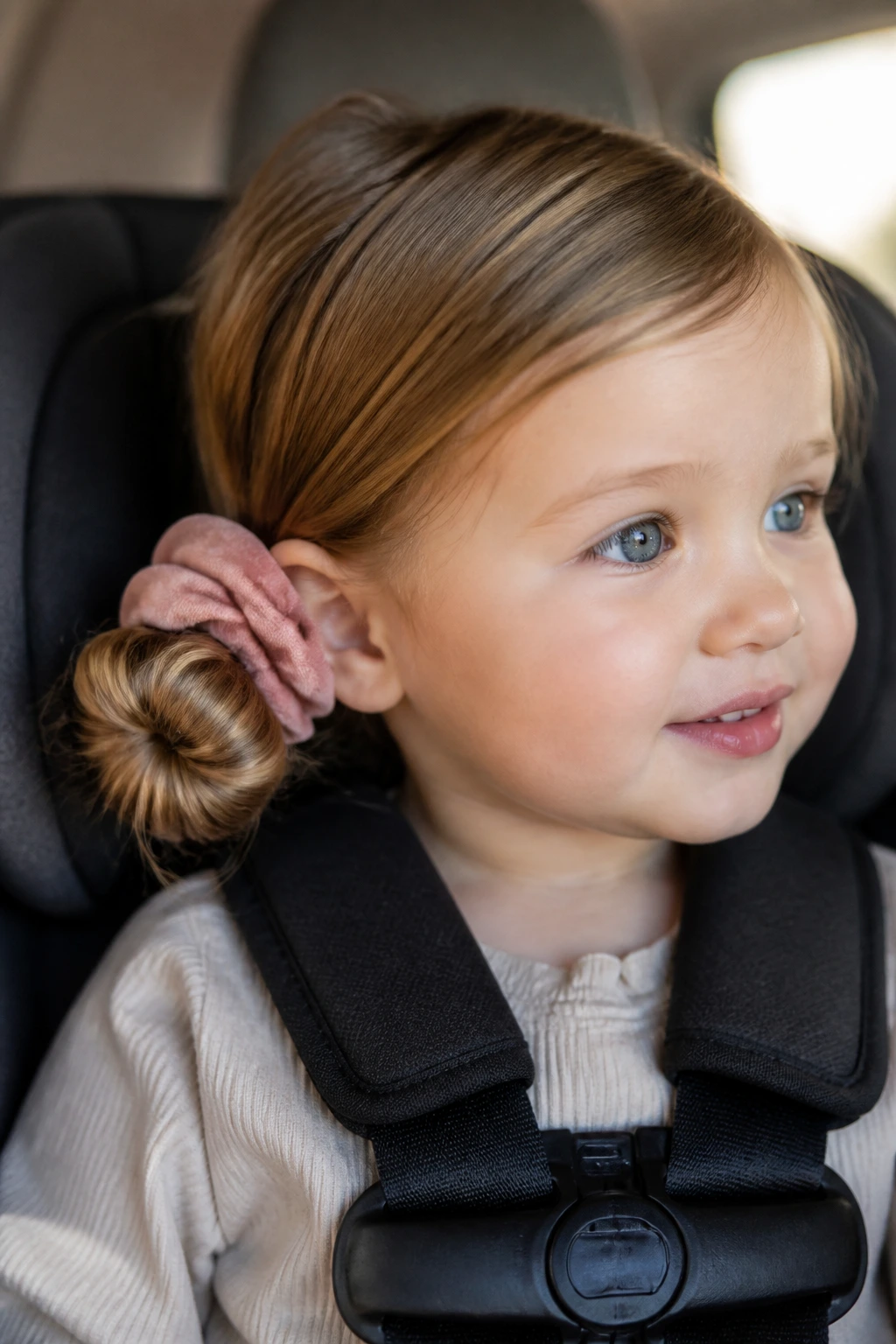
Can a bun feel gentle and still stay put? Yes, if it sits to one side and uses a soft scrunchie instead of a hard tie. A side bun gives you a tidy shape without the pressure of a high ponytail, and it can work well on hair that’s in that awkward in-between stage.
Where It Works Best
This is the style I’d pick for a child who rubs the back of the head a lot in a car seat. The bun sits off-center, so it doesn’t press into the same spot all day. It also softens the look of very straight hair that tends to fall flat.
Start by gathering the hair near one ear, twist it loosely, and wrap it into a bun at the side of the head. If the hair is slipping, make a small ponytail first. Then add the bun. A scrunchie in cotton or satin keeps the whole thing from feeling harsh.
18. Waterfall Half-Up on Longer Hair
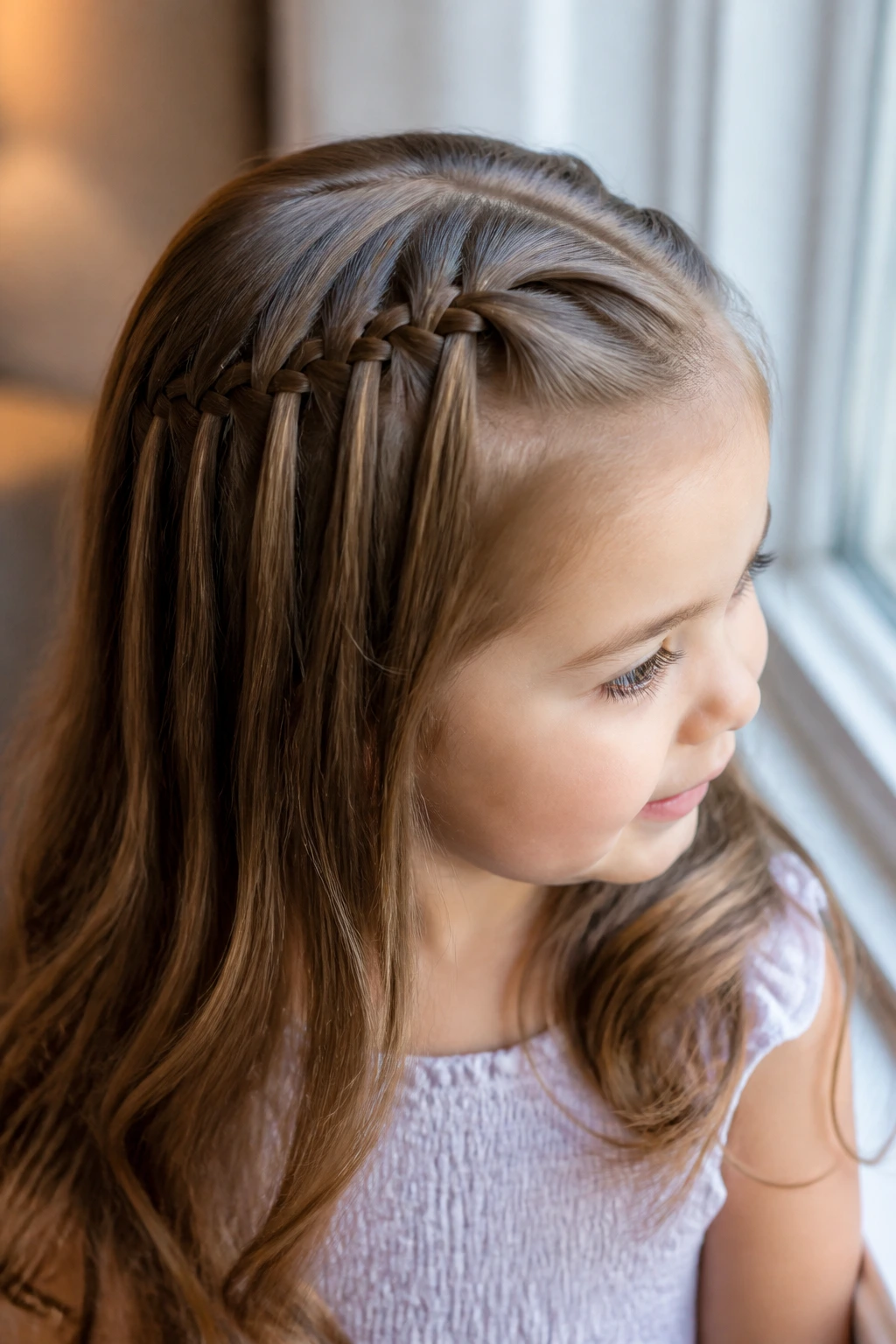
A waterfall half-up braid is a sweet choice when the hair is long enough to fall over the shoulders but you still want the front controlled. The braid drops a section through each weave, which leaves strands hanging down like soft ribbons. That’s the part kids tend to like. It looks fancy without feeling stiff.
This style is a little slower than a ponytail, but it pays off if your toddler likes wearing the hair down. You get the prettiness of loose hair with some structure at the top. The front stays back, the sides stay soft, and the whole thing moves nicely when the child turns her head.
If the braid starts slipping, stop one link sooner and pin the end where it feels secure. A waterfall braid does not need to be perfectly long to look finished. In fact, a shorter braid with loose ends often looks more natural than one that’s been stretched too far.
19. Four Small Ponytails for Even Tension
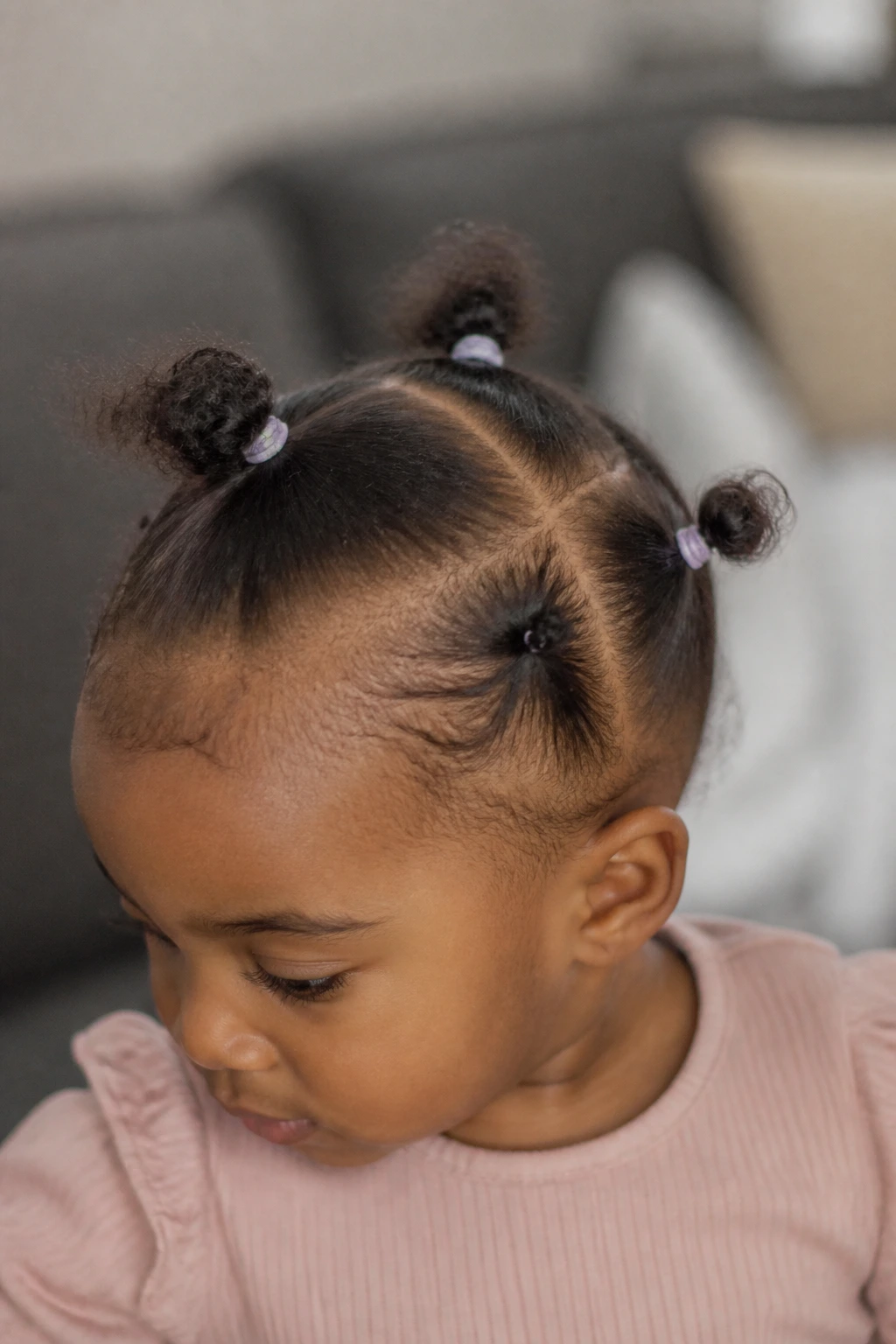
A single ponytail can tug at the center of the scalp. Four small ponytails spread that pull out, which is why this style is useful for toddlers with tender heads or very thick hair. You divide the hair into four sections — usually two in front and two in back — and secure each one with a small elastic.
Unlike one big ponytail, this setup lets you control each section separately. One tie can sit a little higher, another a little lower, and the whole head still feels balanced. It’s a smart choice when the hair is dense enough to feel heavy but not long enough to braid neatly.
You can leave the ponytails plain, twist them, or add tiny ribbons. Just keep the accessories light. Four small elastics should feel like four small anchors, not four little weights.
20. Rolled Under Bob Tuck
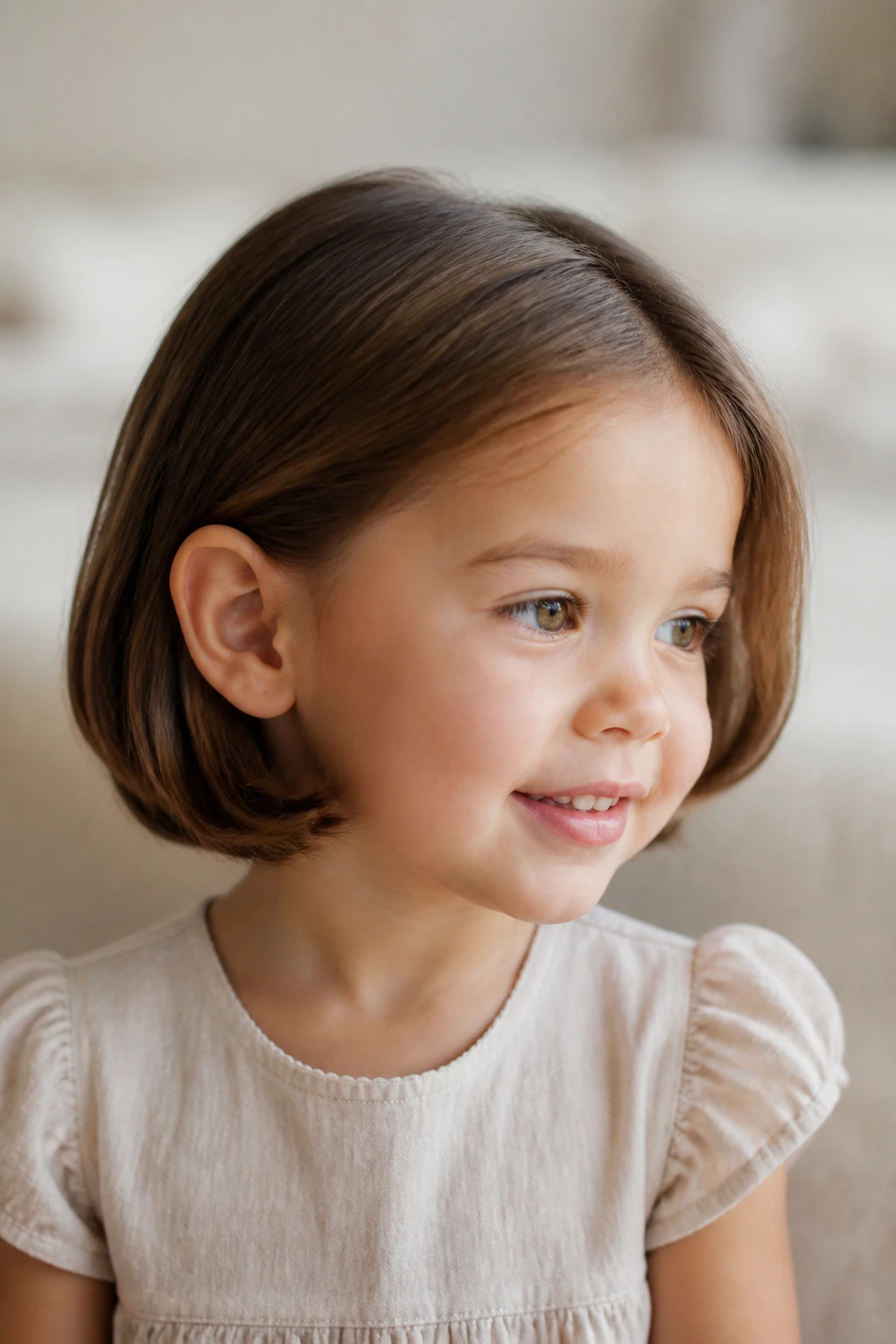
A rolled under bob tuck is a lifesaver for short hair that refuses to stay behind the ears. You smooth the hair down, roll the ends inward toward the neck, and pin the tucked ends flat. The finished shape looks polished in a quiet way, and it keeps the ends from flipping out everywhere.
This is especially handy for straight or fine hair that gets fuzzy with brushing. A little water on the hands helps the hair lie down before you roll it. If the bob is chin-length, use a couple of small bobby pins on each side. If it’s longer, one pin per side might be enough.
- Brush the hair straight back or with a side part.
- Tuck the ends under in a shallow roll.
- Secure with flat pins that sit close to the head.
- Check the nape for loose ends before sending the child off.
It’s not a flashy style. It’s a useful one. And useful often wins.
21. Natural Curls with a Soft Headband
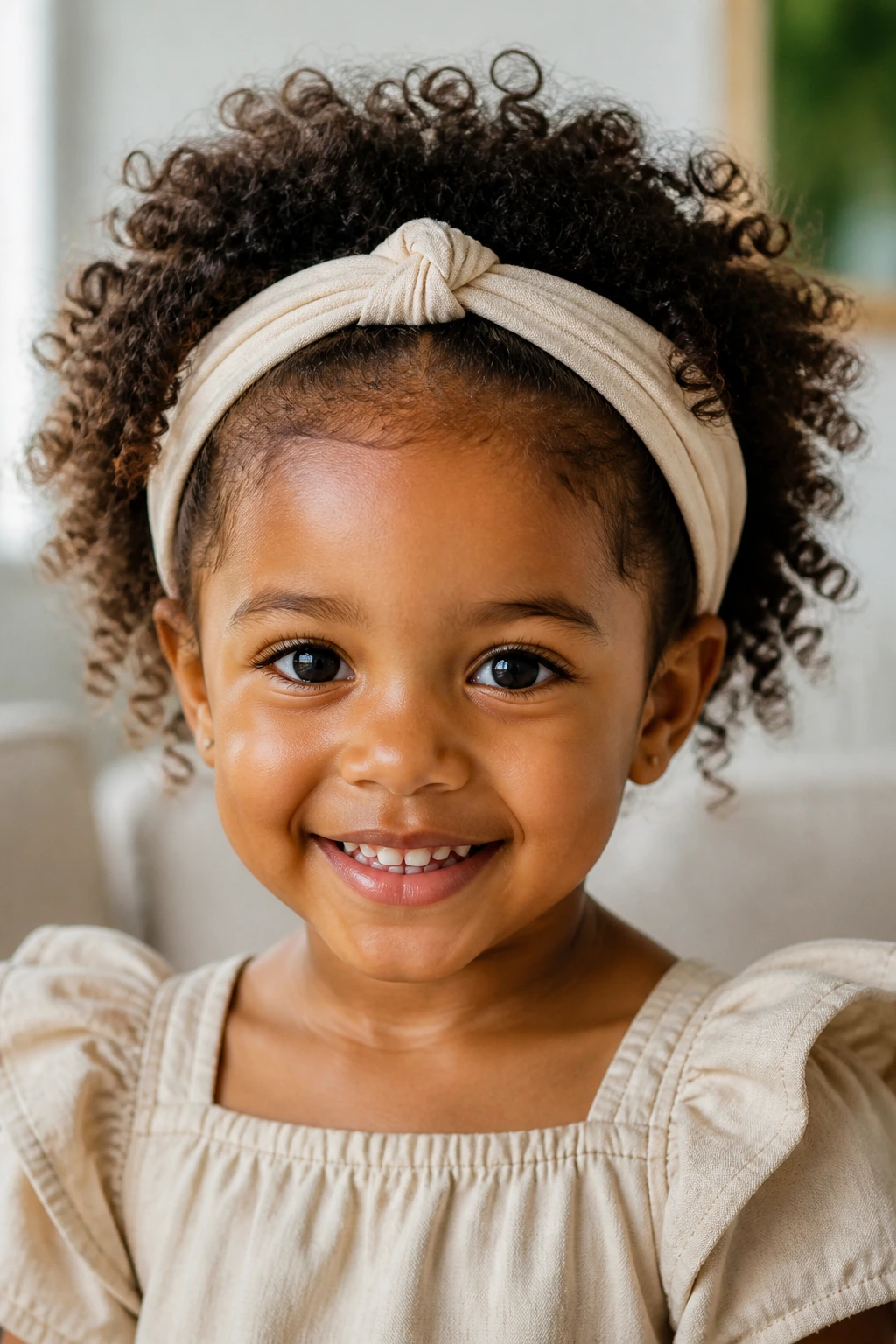
Letting curls stay loose sounds easy, but it works best when the front is controlled with something soft and the curls have enough moisture to hold their shape. A wide headband can keep hair off the face while the curls stay free around the rest of the head. That combination looks relaxed and feels comfortable.
I like this option when a child hates clips but doesn’t want hair in the eyes. The headband does the job without flattening the curl pattern. Use one that stretches gently and doesn’t leave a hard dent behind the ears. If it slides, choose a fabric with a little grip rather than a stiff plastic band.
The curl cream matters here. A small amount spread through damp hair keeps the ends from puffing out and makes the whole shape read as intentional, not messy. Let the curls dry fully before fussing with them. Touching them too much while they’re wet tends to make the frizz worse.
22. Sleek Low Ponytail with a Silk Scarf
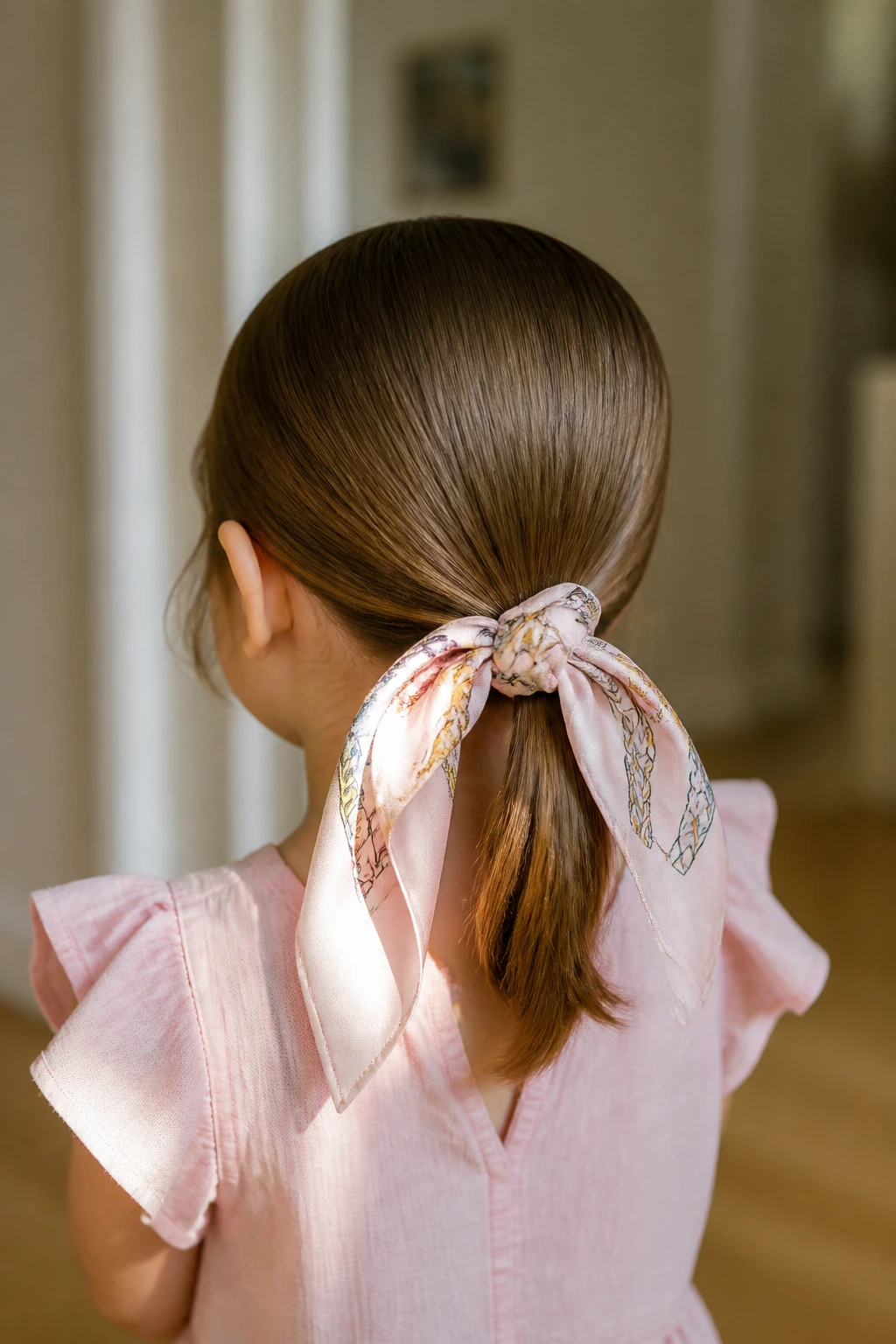
What if you need one style that works for school drop-off, a family photo, and an afternoon nap? A sleek low ponytail with a silk scarf handles that surprisingly well. It sits low, stays tidy, and gives you a simple way to make an everyday ponytail feel a little more dressed up.
Start with a low ponytail at the nape, secured with a small elastic. Then wrap a silk or satin scarf around the base, either tying it into a bow or knotting it off to one side. Keep the scarf narrow enough to stay neat — about 1 to 2 inches folded — and make sure the tail doesn’t drag on the child’s neck.
This is the style I come back to when I want calm, not fuss. It doesn’t shout. It just stays put, feels soft, and keeps the hair out of the way without making the child look overdone. That kind of usefulness is hard to beat.
