



Thick hair at medium length can be a blessing and a headache in the same afternoon. It holds shape, takes a bend, and gives you that full, glossy look people spend half their lives trying to fake. It also has a habit of bulking up at the wrong spots, swallowing layers, and turning a rushed blow-dry into a triangle.
The best medium hairstyles for thick hair do one thing well: they control weight without stealing movement. That sounds easy. It isn’t. Too many short layers and the shape puffs out. Too little shaping and the whole cut sits heavy around the jaw and shoulders, which is where a lot of people start feeling trapped by their own hair.
Collarbone lengths, lobs, shags, rounded mids, curtain bangs, and clean blunt cuts all have a place here. Some are polished. Some are messy on purpose. Some lean into volume, while others trim it back so your hair stops eating your face every morning.
The smartest cuts below rely on real salon logic: internal layering, face-framing angles, perimeter control, and the kind of texture work that makes thick hair move instead of mushroom. Pick the shape that fits your texture, your styling patience, and the way you actually wear your hair.
1. Blunt Collarbone Lob for Thick Hair
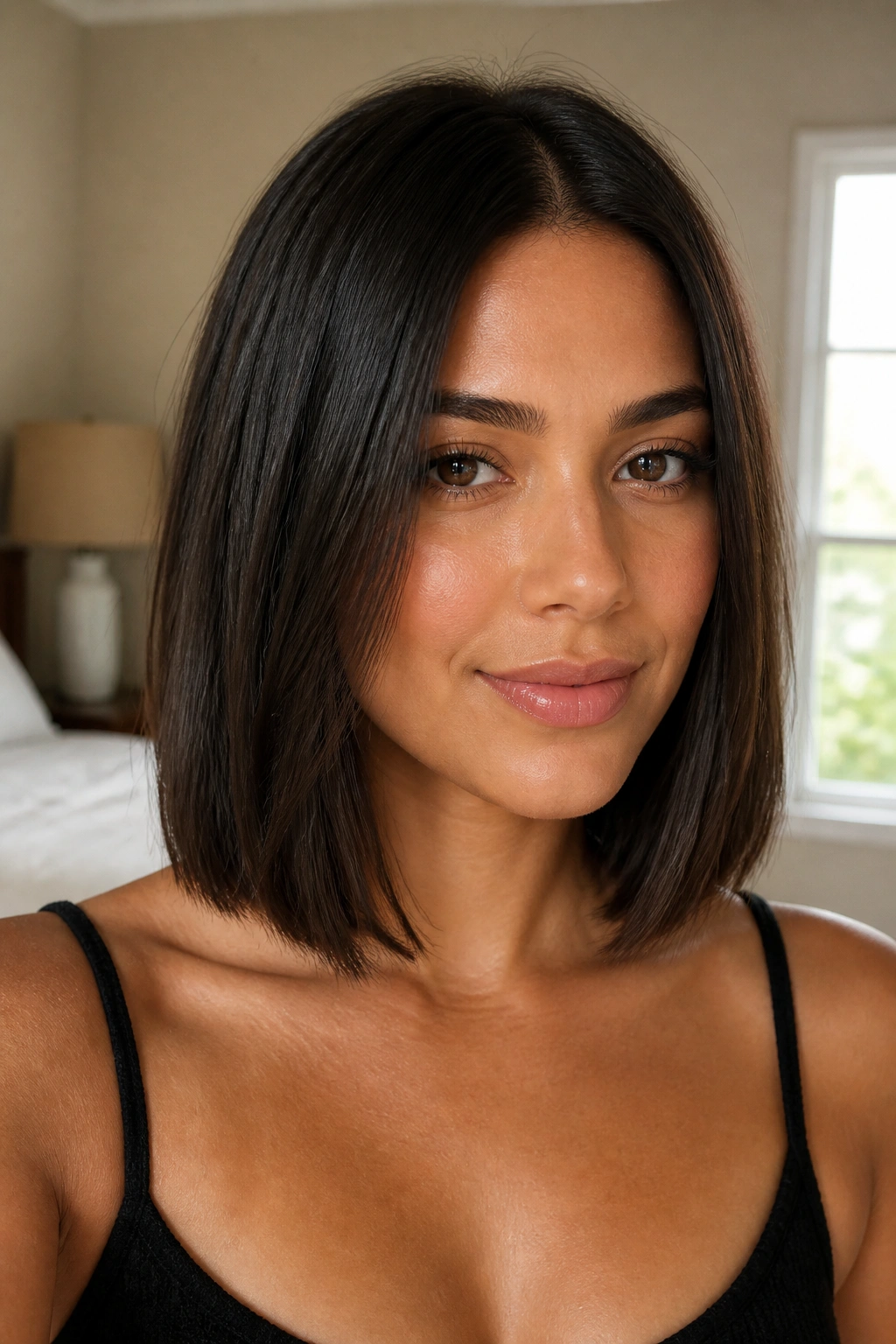
A blunt collarbone lob is one of those cuts that looks calm on the surface and does a lot of heavy lifting underneath. The clean line keeps thick hair from spreading out too wide, and the collarbone length gives you enough swing without drifting into “too much hair to manage” territory.
I like this cut for straight or slightly wavy thick hair because it lets the density work for you. The ends look full, not stringy. The shape feels deliberate. If your hair tends to frizz at the ends, a blunt perimeter usually behaves better than a highly layered cut, which can split the volume into too many pieces.
What to ask for at the salon
- A one-length lob that lands right at the collarbone
- Very light face-framing, if any
- Soft point cutting only at the ends
- No choppy crown layers
Best for: thick hair that grows wide instead of long.
Styling note: a flat brush and a touch of smoothing cream are enough. Don’t overwork it. The shape should do most of the work for you.
2. Layered Shag Lob with Airy Movement
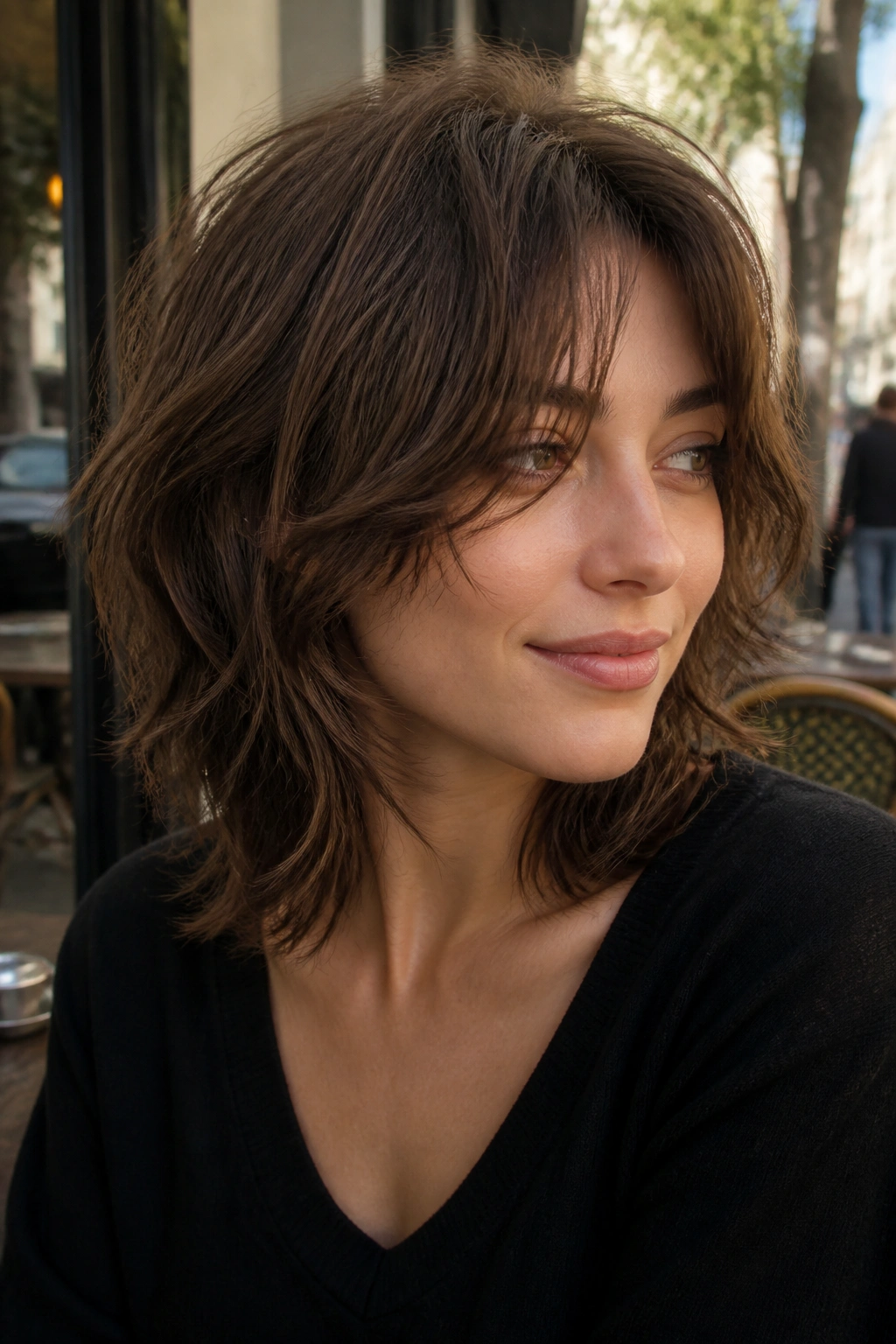
A shag lob can be magic on thick hair when the layers are handled with restraint. The bad version looks like your hair got attacked with scissors. The good version lifts weight out of the interior and leaves the outline soft, touchable, and easy to shake into place.
Why it works on thick hair
The trick is keeping the layers broken and irregular, not stacked in obvious steps. Thick hair can carry a shag better than fine hair because it has enough body to hold the shape. The cut opens up around the face, then loosens through the mid-lengths so the ends don’t sit there like a block.
A few things make this version worth asking for:
- Layers should start below the cheekbone if your hair is very dense
- The crown can be lightened, but not stripped bare
- A little fringe around the face helps the shape feel intentional
- Texturizing should happen inside the cut, not all over the perimeter
This one suits people who like some mess in their hair. Clean and perfect is not the point here.
3. Curtain Bangs and Long Layers
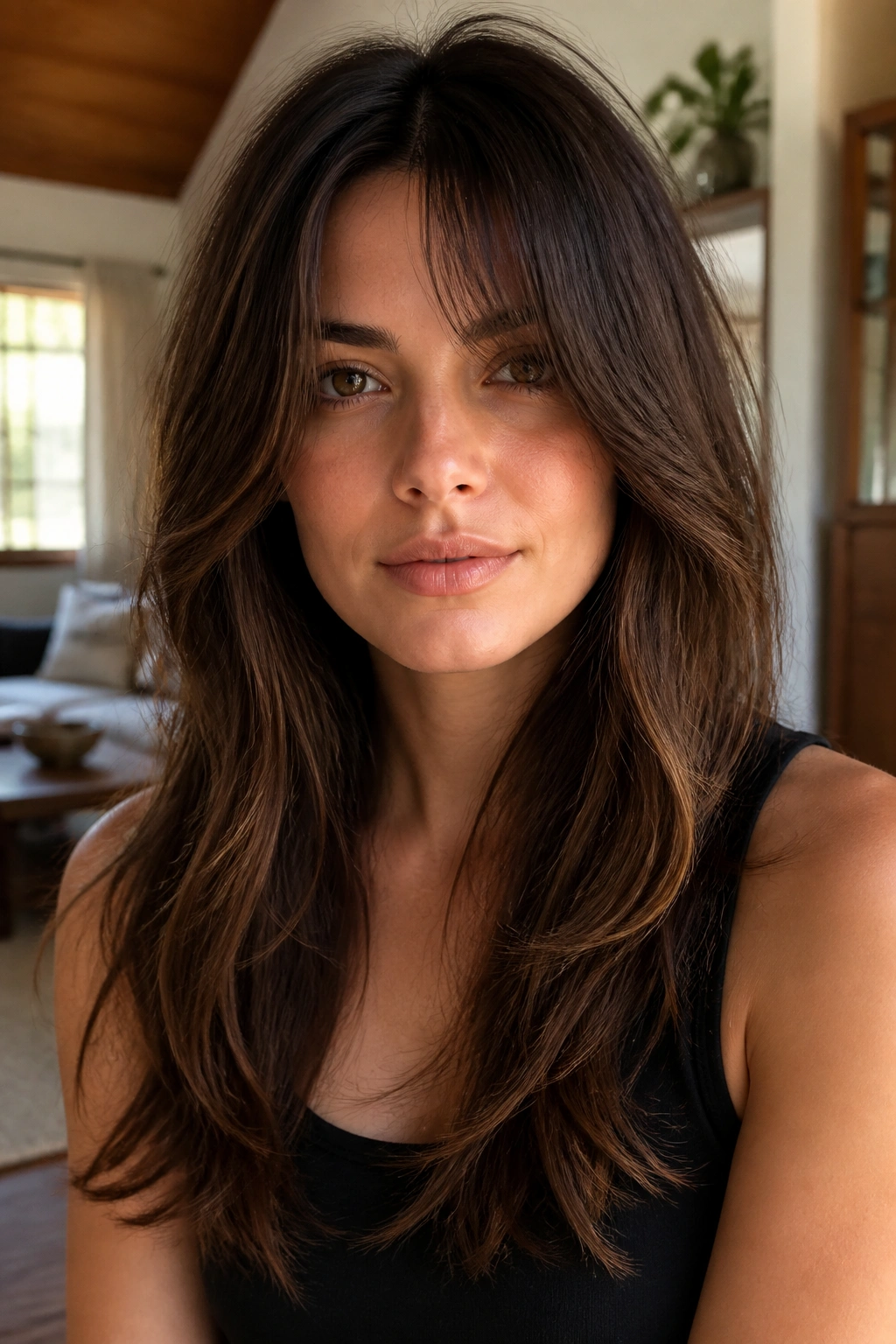
Can thick hair wear curtain bangs without turning puffy? Yes, if the bangs are cut to move instead of sit like a shelf. Curtain bangs open up the face and make a medium-length cut feel softer right away, which matters when thick hair can start to look blunt in a hurry.
The length of the bangs matters more than people think. If they’re too short, they spring up and refuse to blend. If they’re cut to graze the cheekbone and sweep into the sides, they make the whole haircut feel lighter. That little front section can change the whole mood of the cut.
How to keep them from puffing up
- Blow-dry the bangs forward first, then split them
- Use a round brush only at the ends
- Ask for a soft, not severed, connection into the layers
- Avoid heavy products near the fringe
This style is especially good if you wear your hair half-up a lot. The bangs keep the front from disappearing, which thick hair loves to do when it’s pulled back.
4. Textured Wolf Cut Lite
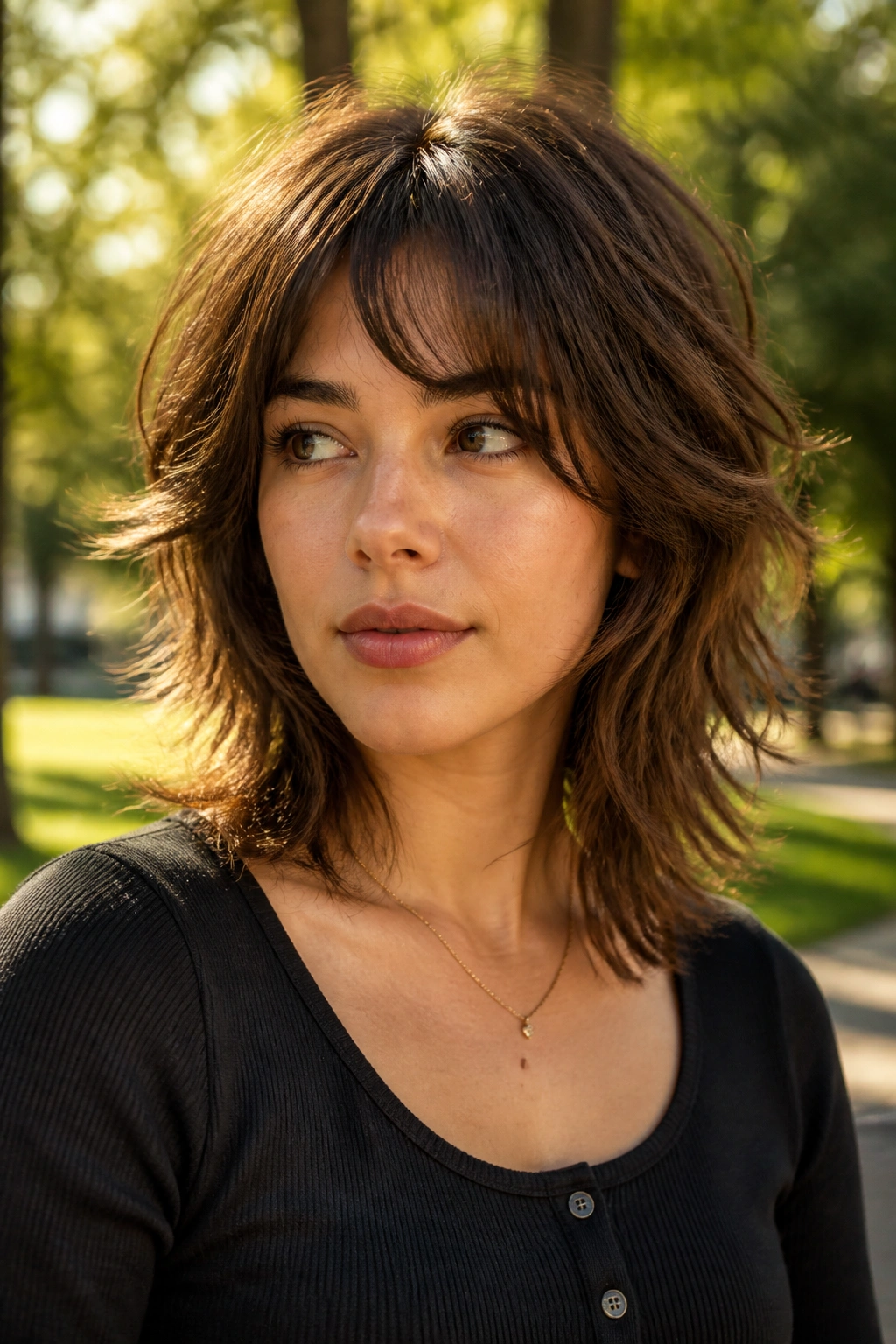
The full wolf cut can be too much for thick hair. The lighter version, though, has real charm. It keeps the cool, slightly undone feeling of the style, but the layers are calmer and the shape is more wearable at medium length.
Picture a client who wants movement at the crown and enough length through the bottom to still tie the hair back. That’s where the wolf cut lite lives. The top gets a little lift. The sides stay soft. The ends don’t go thin and ragged. It can be a great answer for thick hair that feels heavy at the nape but flat at the roots.
- Ask for graduated texture, not razor chaos
- Keep the longest layer around the shoulders
- Use a diffuser or rough-dry with fingers
- Let the fringe stay soft and split
This cut has personality. It’s not subtle. That’s the point.
5. Shoulder-Length Blunt Cut with Hidden Internal Layers
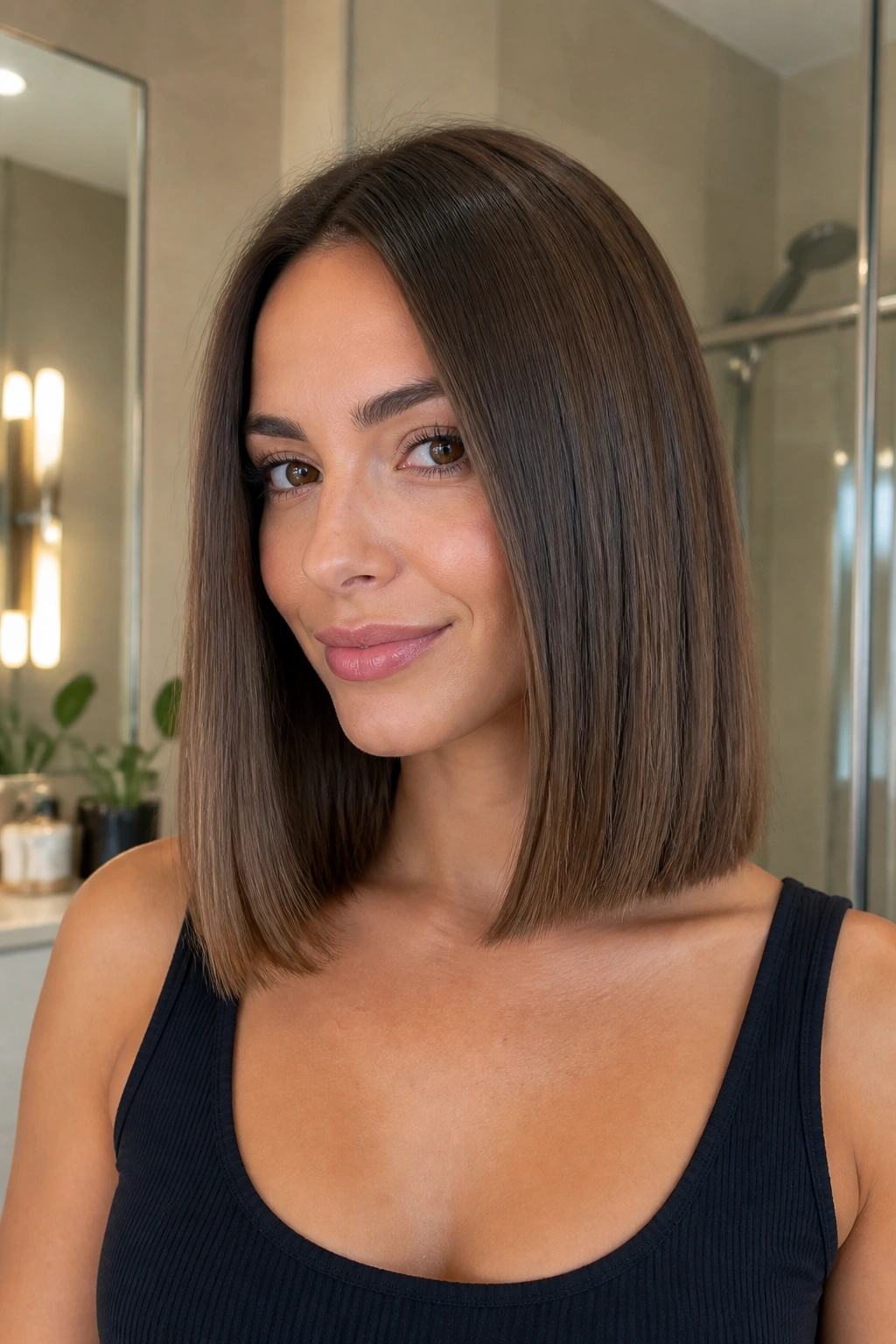
A blunt shoulder-length cut sounds simple, maybe even plain. It isn’t. On thick hair, a strong outline with hidden internal shaping can be one of the smartest choices in the room. You get the polish of a straight perimeter and the freedom of weight removal where nobody can see it.
That’s the part most people miss. The hair does not need obvious layers to move. Sometimes it needs the weight carved out underneath so the surface still looks full and clean. Thick hair often gets frizzier when every layer is exposed; hidden shaping keeps the top smooth.
This cut works well if you like to air-dry, straighten, or wear a soft bend. It also grows out gracefully. That matters. A lot.
The finished look should feel heavy enough to look rich, light enough to swing. That balance is harder to fake than it sounds.
6. Side-Part Lob with Tucked Ends
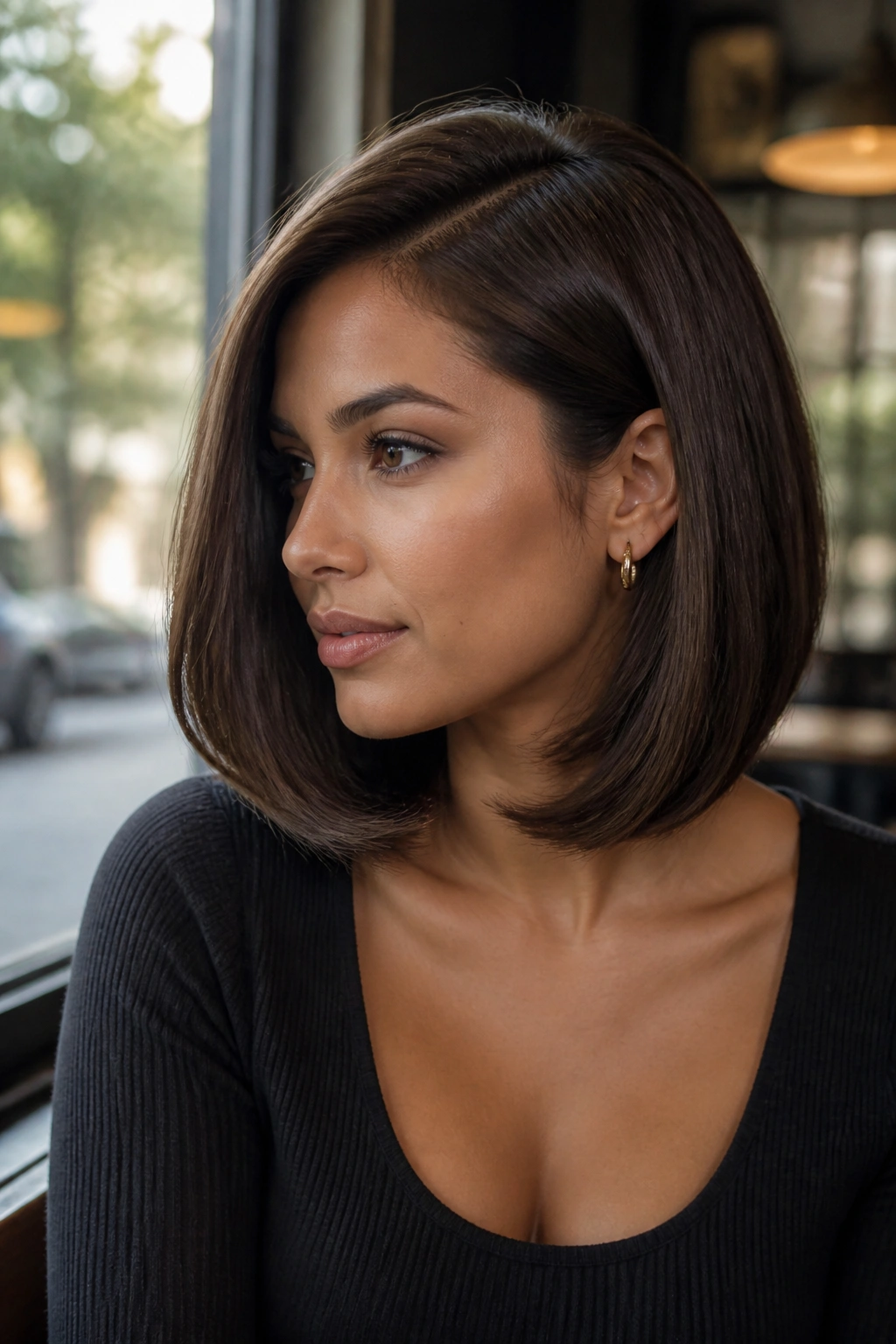
A side part changes the whole story. Thick hair often sits so evenly that the face can disappear behind it, and a deep side part gives the haircut direction. The tucked ends keep the width in check, which is a nice fix for hair that flares out at the shoulders.
I like this on people who want volume without puff. The part creates lift at the roots on one side, then the ends bend inward just enough to keep the silhouette neat. It’s a small move with a big payoff.
What makes it different
- The side part shifts weight off the center of the face
- Tucked-under ends prevent the cut from blooming outward
- Works well with a round brush or a flat iron bevel
- Looks especially clean with one ear tucked behind the hair
This is a good “I have places to be” haircut. It doesn’t need much arguing from you.
7. Rounded Midi Cut with Face-Framing Pieces
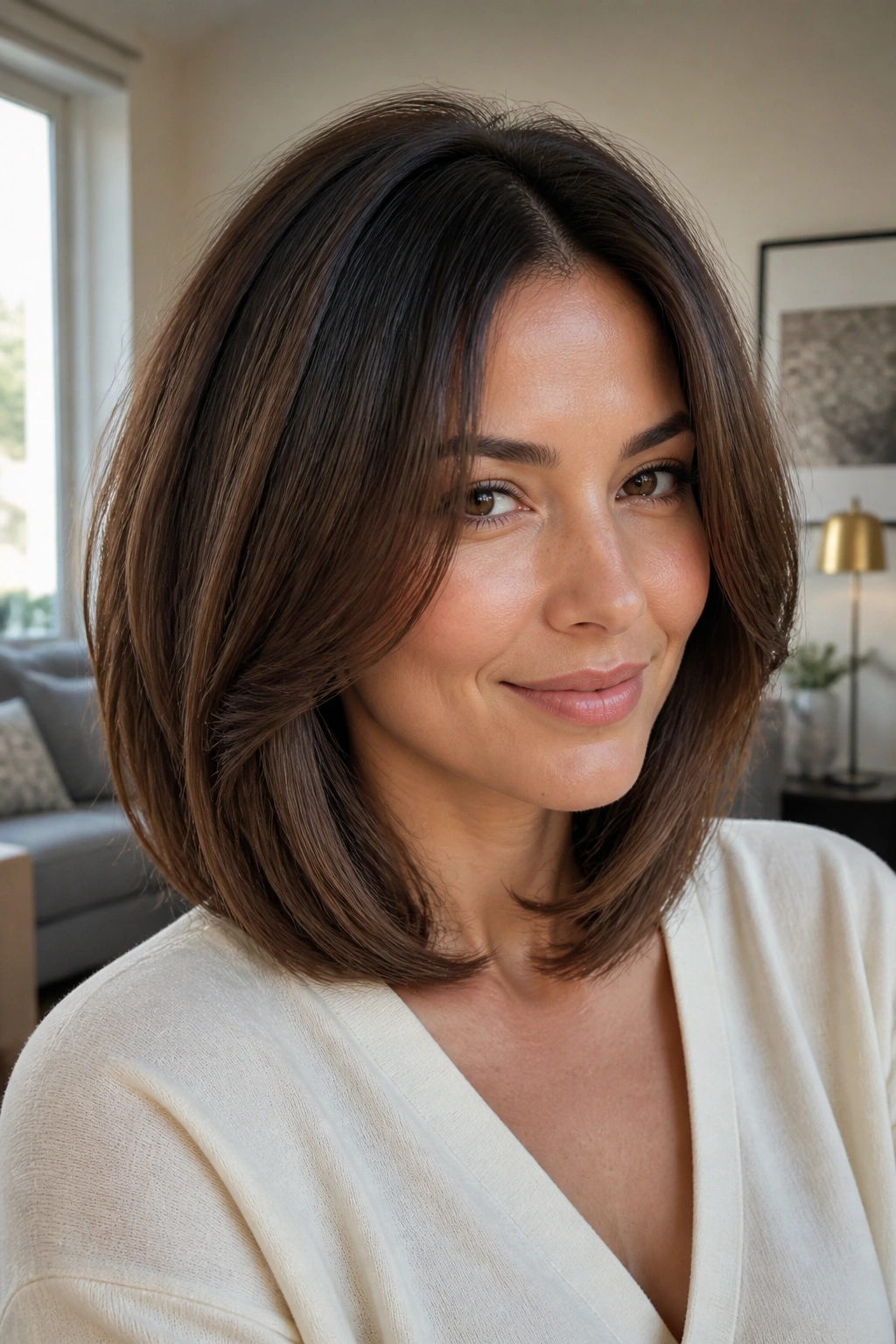
If thick hair keeps growing outward instead of down, a rounded midi cut can help. The shape hugs the head a little more closely, then releases around the jaw and collarbone so the whole cut feels smoother. It is a calmer shape than a shag, and often a better one if you want structure without edge.
The face-framing pieces matter here. They should begin around the cheekbone or slightly below, then angle softly into the rest of the cut. Too much layering around the front can turn thick hair into a puffball, and nobody wants that. The goal is a curve, not a shelf.
Ask for a rounded silhouette through the lower half and keep the top light but not sparse. That last part is where a lot of stylists get overly enthusiastic with thinning.
The result is tidy, flattering, and easy to wear with a blowout or a natural bend.
8. Wavy Lob with Invisible Layers
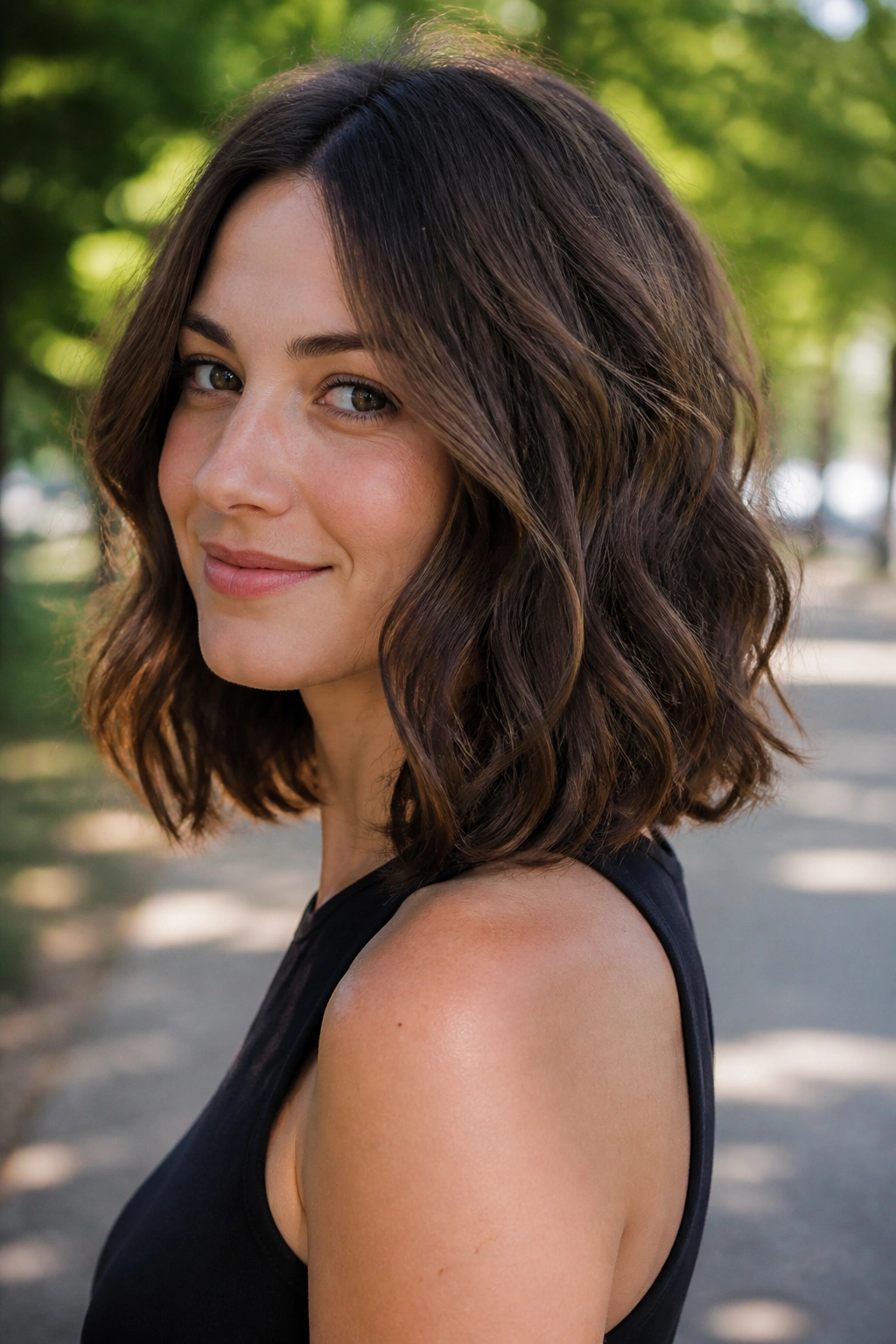
A wavy lob is where thick hair gets to behave like it was born to be photographed on a sidewalk in soft weather. But the real secret isn’t the wave. It’s the invisible layers hiding under the surface.
These layers let the bends sit on top of each other instead of competing for space. Thick wavy hair can swell up fast if the interior is too dense, so this cut lightens the middle while leaving the outside line smooth. That means the hair still looks full, but it stops ballooning at the sides.
A good way to style it:
- Use a leave-in cream on damp hair
- Scrunch in a small amount of mousse
- Air-dry halfway, then diffuse the roots
- Touch the ends with a curling iron only if needed
This one is for people who want movement without a lot of polish. Easy, but not sloppy.
9. The Rachel-Inspired Medium Cut
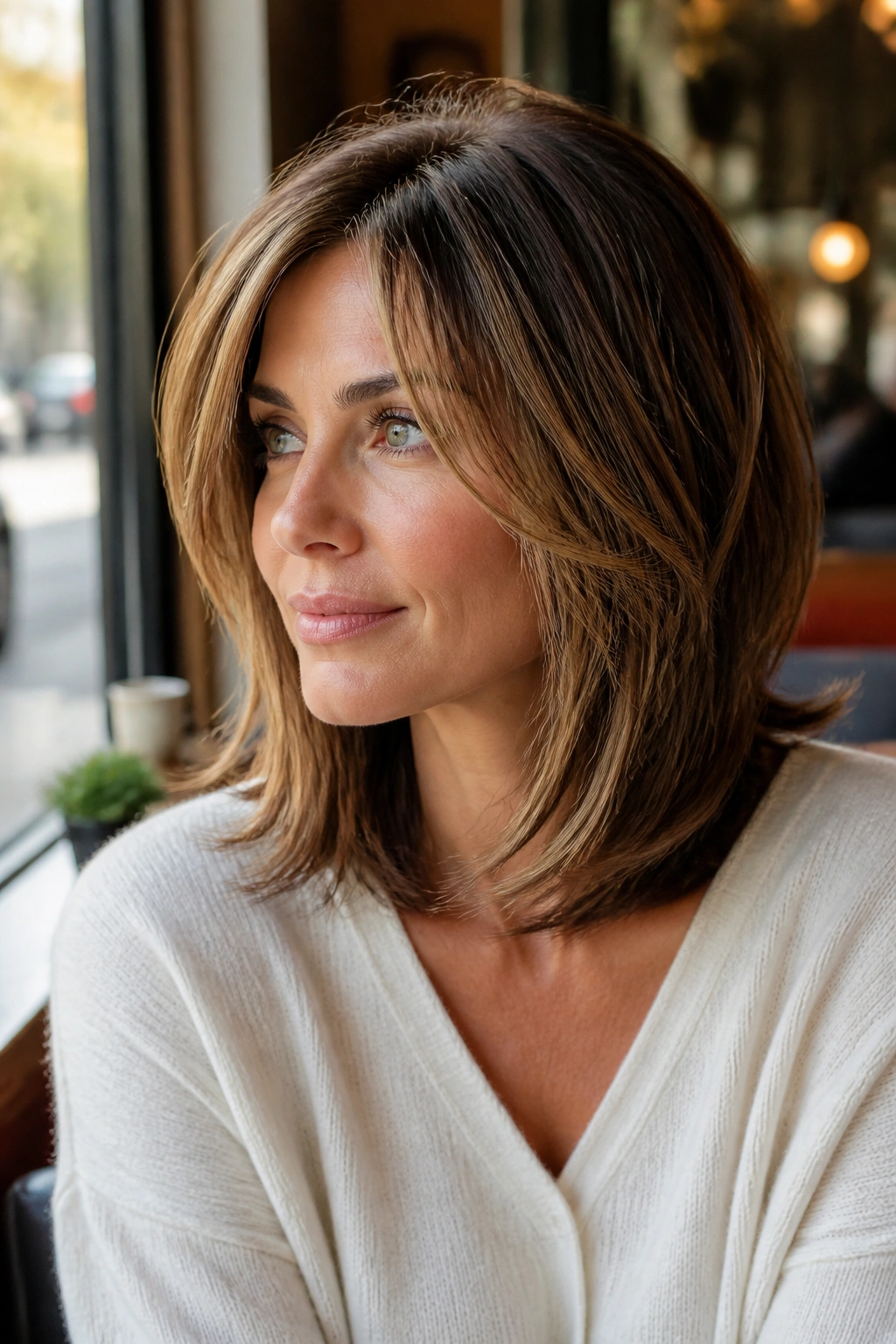
The Rachel cut gets mentioned a lot, and for good reason. On thick hair, the modern version can look lively instead of dated if the layers are softened and the framing is less extreme than the old TV-era version. It has lift near the face, movement through the crown, and enough shape to keep the length from sitting flat.
The old-school version could feel a bit too piecey and high-maintenance. The updated take is softer at the ends and less dramatic at the top. That matters with thick hair, because too much stacking near the crown can make the cut feel top-heavy.
I’d pick this for hair that already has some bend or bounce. Straight thick hair can wear it too, but it usually needs a little round-brush work to show the shape properly.
A good modern Rachel-inspired cut should feel airy, face-brightening, and still full at the bottom. That is a hard balance, which is why it keeps coming back.
10. Sleek Center-Part Lob
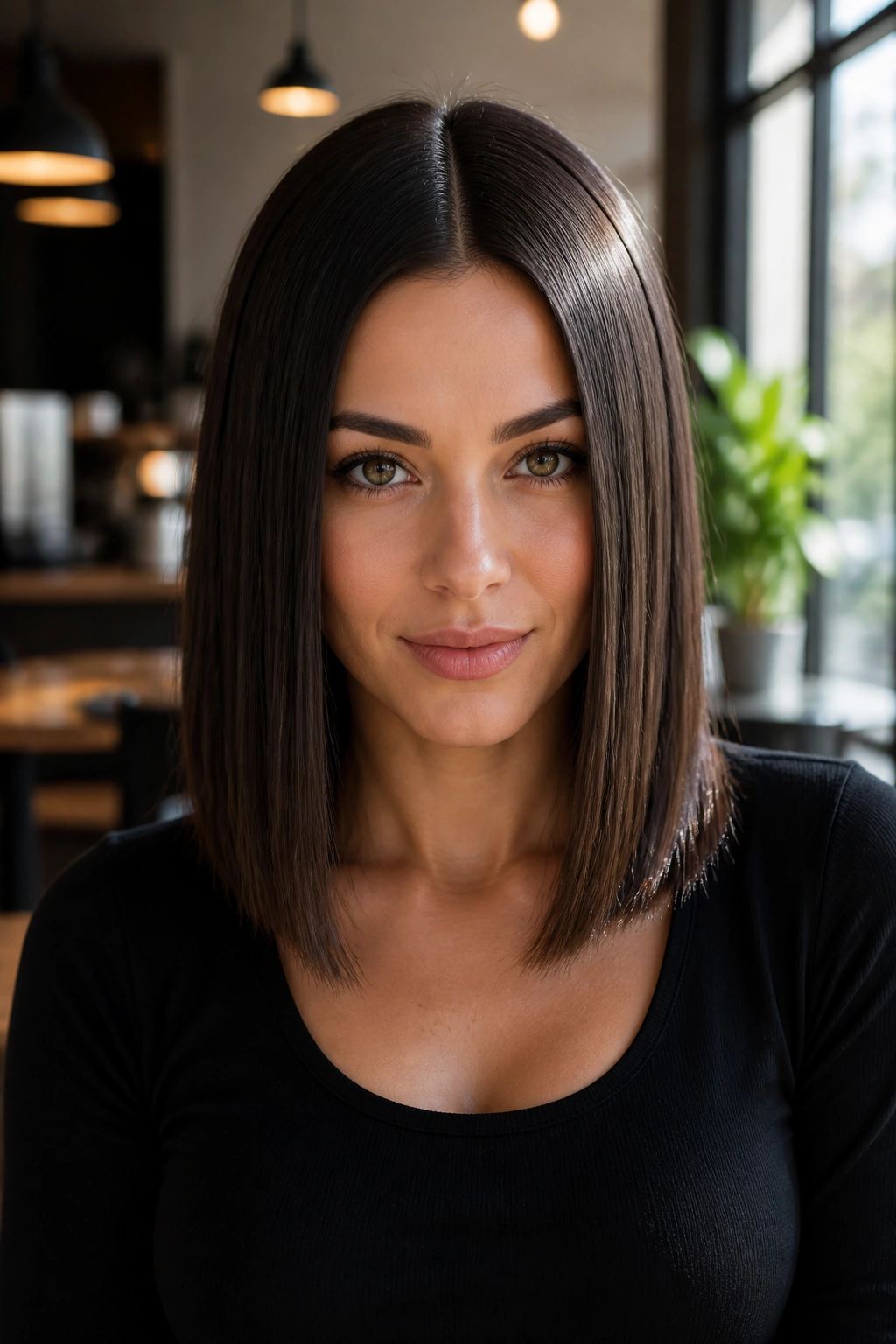
A sleek center-part lob is the opposite of what people expect from thick hair, which is exactly why it works. Thick hair can look expensive in a clean line. It can also look easier to control when the part is centered and the silhouette stays long and smooth.
This cut is not about layers doing a dramatic performance. It’s about discipline. The perimeter stays sharp. The part divides the bulk evenly. The sides fall in a way that flatters the face without needing a lot of extra movement.
If your hair is naturally straight or only slightly wavy, this is a strong choice. Use a heat protectant, blow-dry with a nozzle, and pass a flat iron through only the parts that want to twist. Don’t chase perfection on every strand. That road leads straight into frustration.
The whole look lands somewhere between sleek and relaxed. I’m a fan.
11. Clavicut with Piecey Fringe
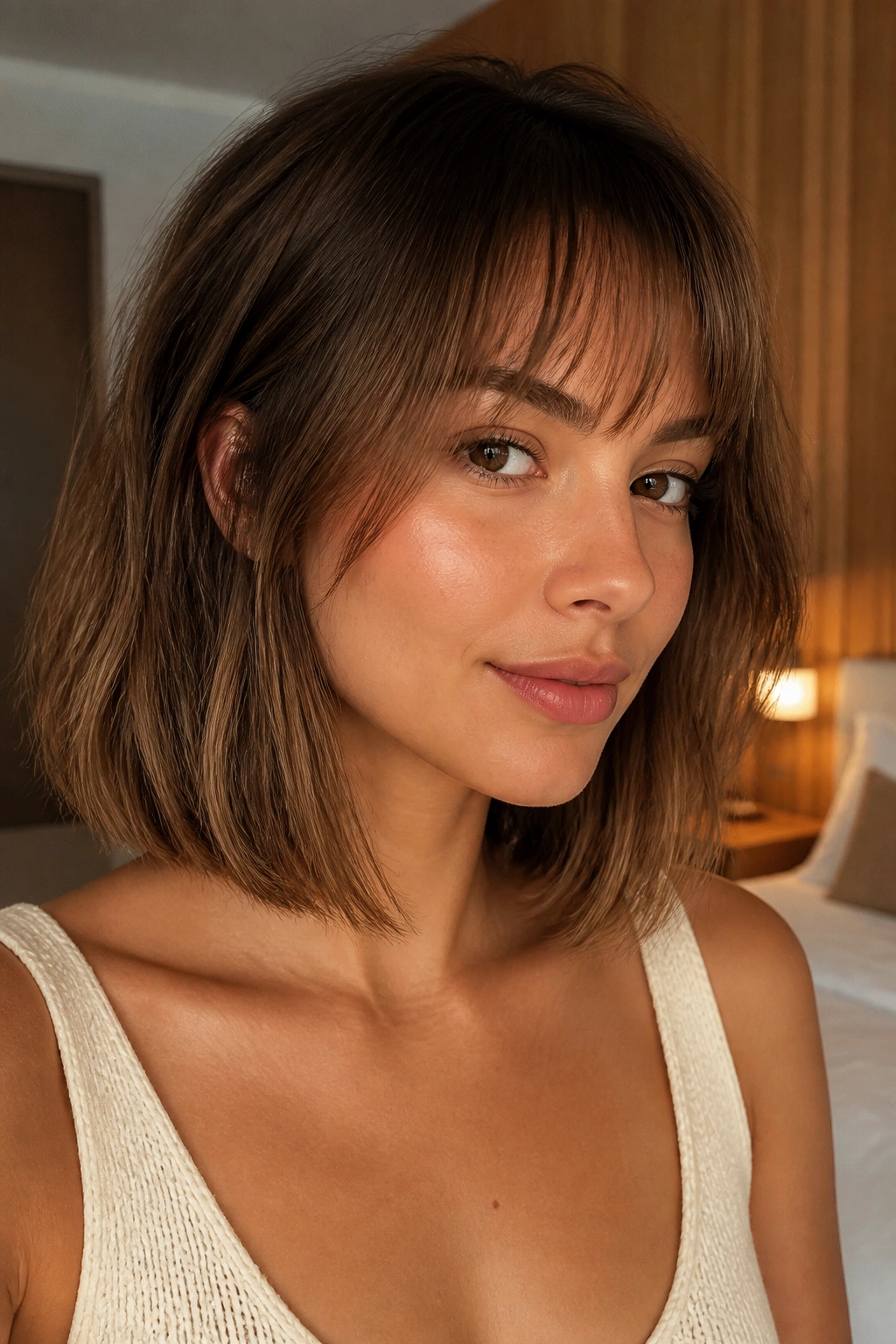
The clavicut sits right on the collarbone, and that placement matters more than people give it credit for. Thick hair at this length has enough mass to look healthy, but not so much that it turns into a blanket. Add a piecey fringe, and the front suddenly feels lighter.
Why the fringe matters
A fringe breaks up all that density around the face. It keeps thick hair from swallowing your features, especially if your cheekbones are one of the first things you want people to notice. The fringe should stay soft and separated, not full and solid like a helmet bang.
What to ask for:
- Collarbone length with a clean outline
- A fringe cut in small sections for softness
- Light texturizing only where the hair feels bulky
- A little bend through the front pieces
This style is a nice middle ground. Not too polished. Not too shaggy. Just enough personality to keep thick hair from feeling heavy.
12. Medium Cut with Strong Face-Framing Angles
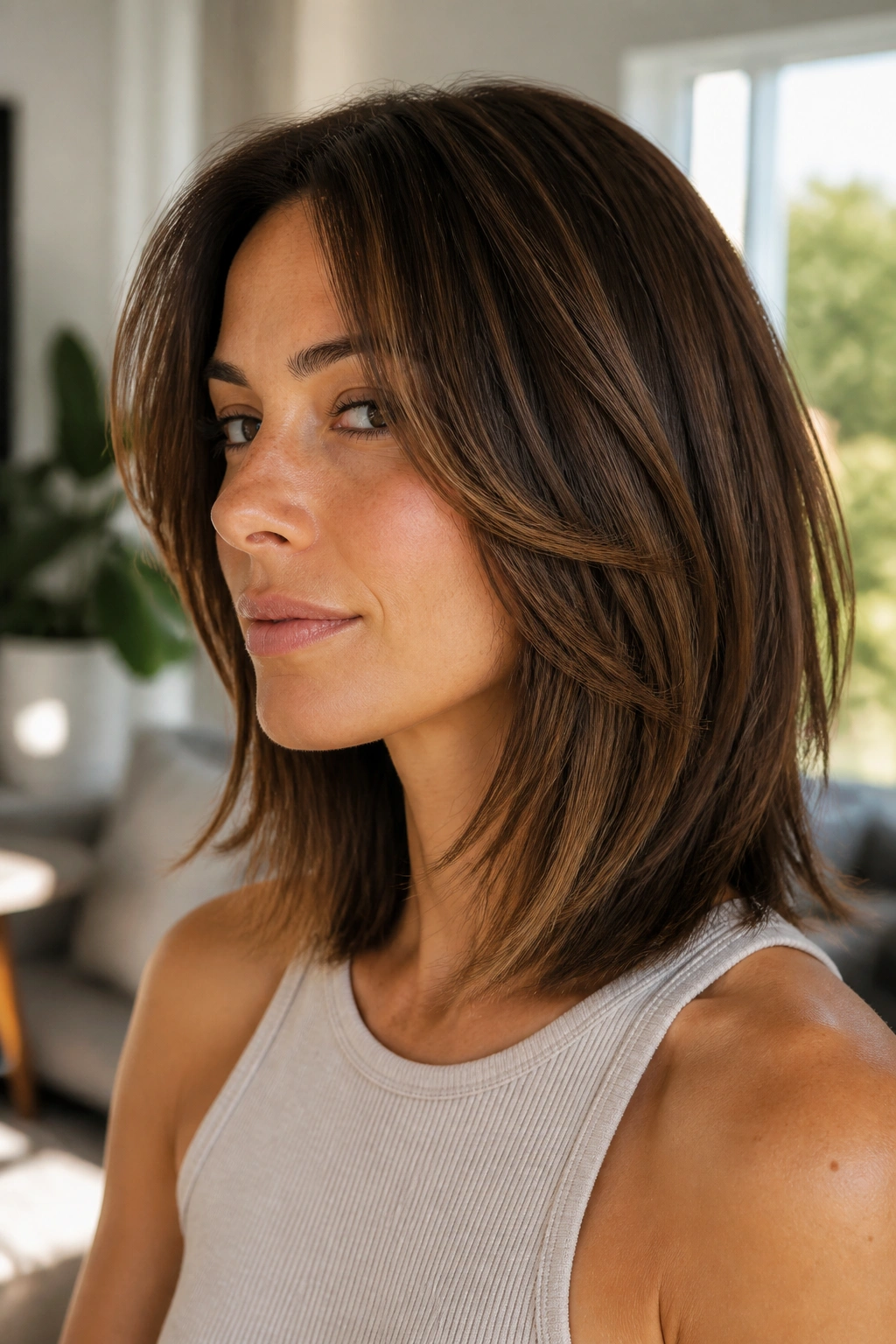
If thick hair feels bulky around the jaw, strong face-framing angles can fix the problem fast. The idea is simple: take the front pieces shorter than the rest so the hair opens up around the face instead of sitting in one solid curtain.
The key is placement. Start the shortest face-framing section at the cheekbone or upper lip area, then let the pieces fall into longer layers. If the front starts too low, the hair can still feel bottom-heavy. If it starts too high, the shape gets choppy and needy.
This cut works best on people who want visible structure. It’s great on round and square faces because the angles soften the widest points. It also gives thick hair a place to go, which sounds obvious until you’ve spent a morning wrestling a heavy front section into a clip.
A clean blowout or a soft wave shows it best. The angles do the talking.
13. Air-Dried Tousled Lob
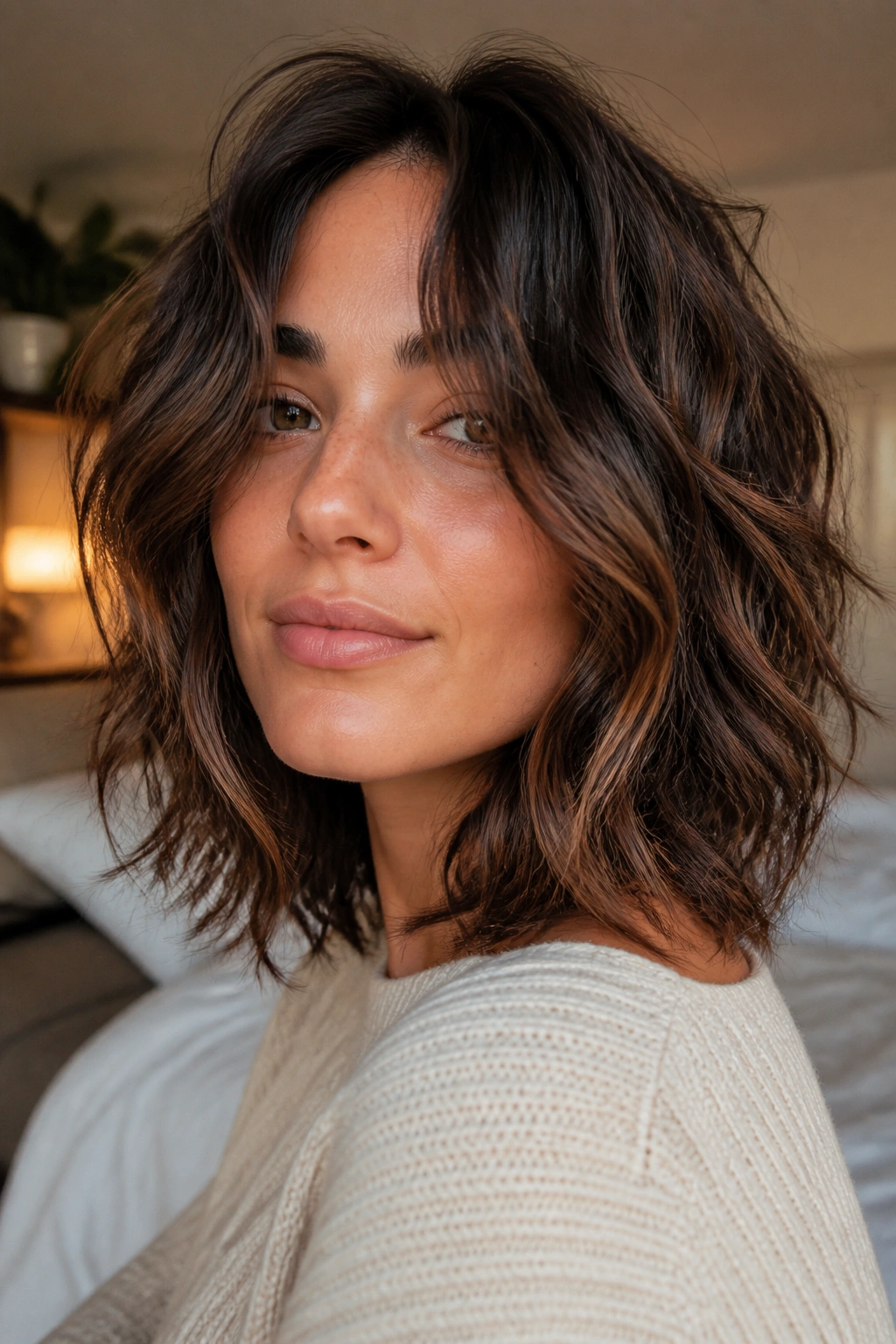
Some haircuts are built for the blow-dryer. This one is built for the life you actually live. An air-dried tousled lob keeps thick hair from needing a full styling session every time it’s washed, which is a small miracle on busy mornings.
The cut should have enough internal movement to let the hair bend naturally, but not so many layers that the shape frays. Think relaxed, not sloppy. A light cream, a little scrunching, and maybe a touch of gel at the ends are often enough. If your thick hair leans wavy, this can look polished without a single hot tool.
One sentence here matters more than five sales pitches: the cut has to do the work. If you need four products and a brush to make it look decent, it’s not really an air-dry cut.
A good version should dry into a soft wave with some weight left in the ends. That’s the whole trick.
14. Curly Shoulder-Length Shape with Dry Cutting
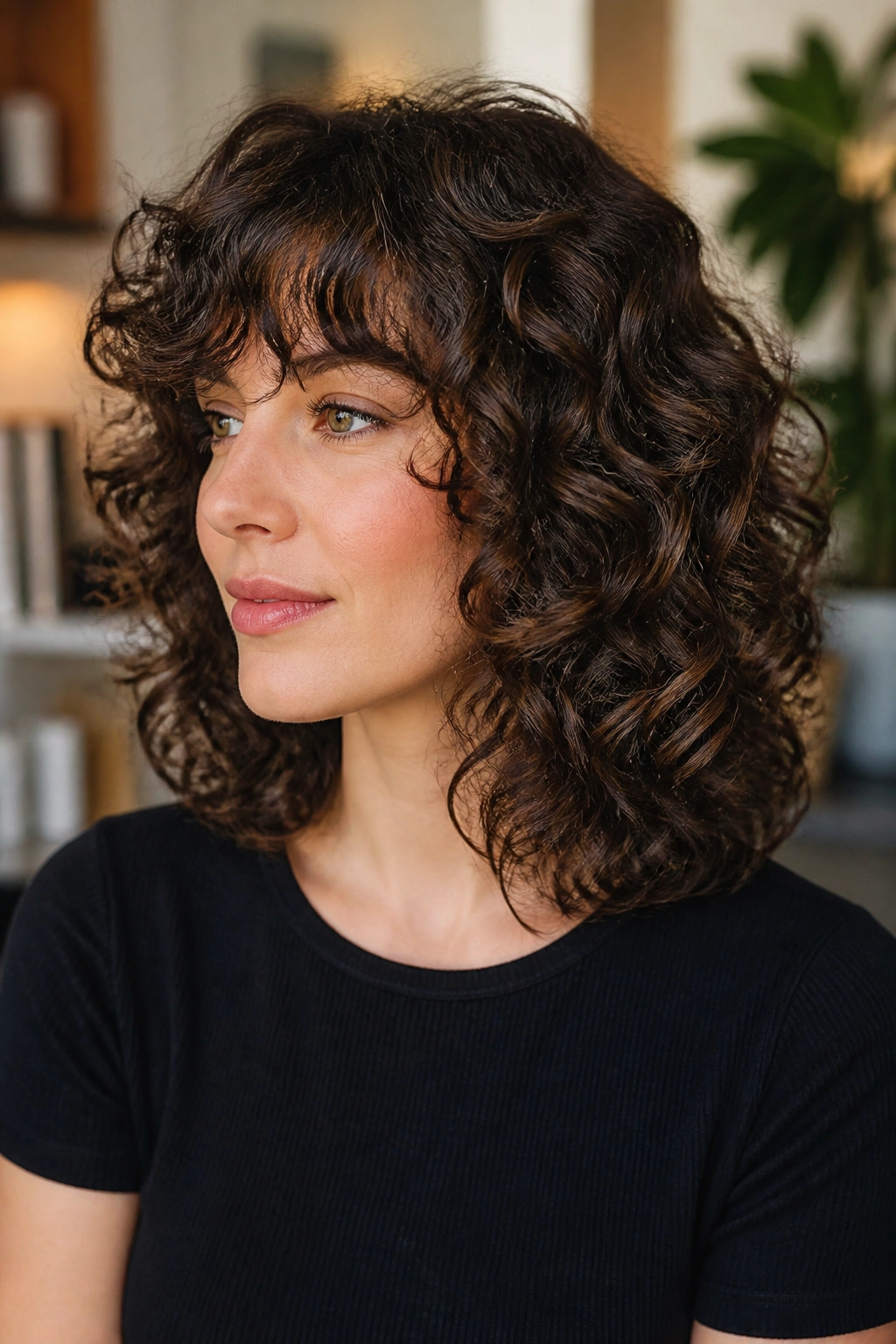
Curly thick hair should be shaped where it lives: in its natural form. Dry cutting helps the stylist see the real pattern, the real bulk, and the places where the hair pushes out sideways. That matters a lot at medium length, because curls can shrink and stack in a way that hides the true silhouette.
A shoulder-length curly shape works best when the bottom is rounded and the layers are placed to prevent the triangle effect. Too much bulk at the hem makes the hair spread. Too much thinning can leave curls frayed. Neither is fun.
What to ask for
- A dry cut or curl-by-curl shaping
- Rounded layers through the interior
- A perimeter that follows the curl pattern
- Minimal thinning at the ends
This cut is less about forcing curls into obedience and more about giving them a decent map. Thick curls need that.
15. Collarbone Cut with Curved Layers
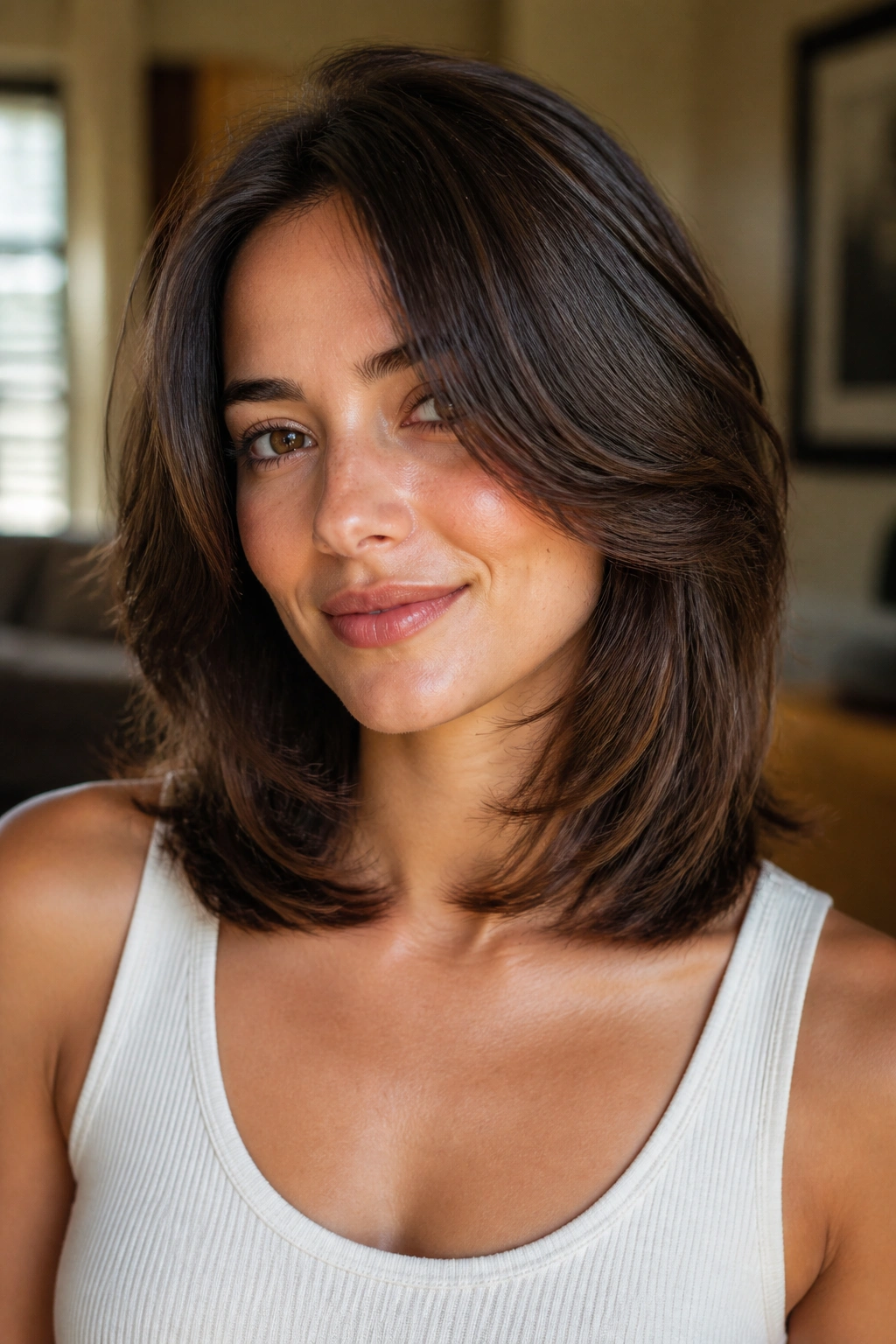
A collarbone cut with curved layers has a softer look than a blunt lob, but it does not lose the fullness that thick hair is known for. The layers are shaped to bend around the face and curl slightly under at the ends, which makes the haircut feel finished even when you don’t spend long styling it.
Unlike a straight blunt cut, this one has more motion through the sides. Unlike a shag, it doesn’t break into pieces. It sits right in the middle, which is often the sweet spot for thick hair that needs movement but not drama.
This style is especially good if your hair flips out at the shoulders. The curved layers help guide the ends back inward. A round brush, a medium-barrel curling iron, or even a quick pass with a blow-dryer brush can bring the shape out fast.
It’s a quietly useful haircut. Those are the ones people keep.
16. Half-Up Friendly Medium Cut
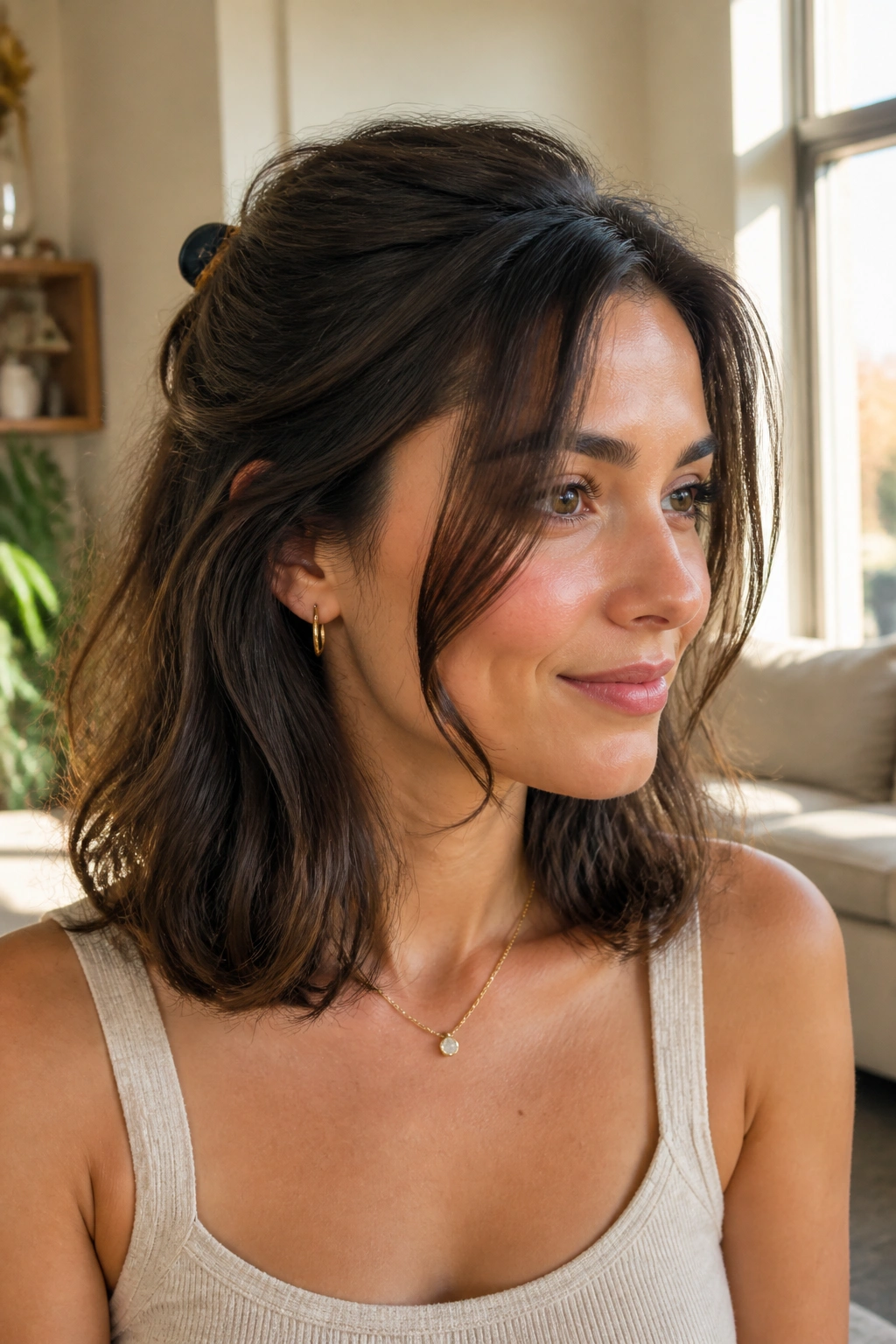
If you wear your hair half-up all the time, the cut should cooperate. Thick hair can make half-up styles feel bulky at the crown unless the medium haircut has some internal lift and a little softness around the face. You want enough structure to hold a clip, not so much mass that the top turns lumpy.
The best versions have long layers that start below the cheekbone, plus a shape that keeps the sides from ballooning out when you pull them back. A few shorter face pieces help, too. They stop the front from looking too severe once the rest is clipped away.
A claw clip loves this cut. So do half-up knots and small braids pinned at the back. The hair has enough body to stay put, which is half the battle.
If your daily style is “up, then down, then up again,” this cut makes sense. No drama.
17. Deep Side-Part Volume Lob
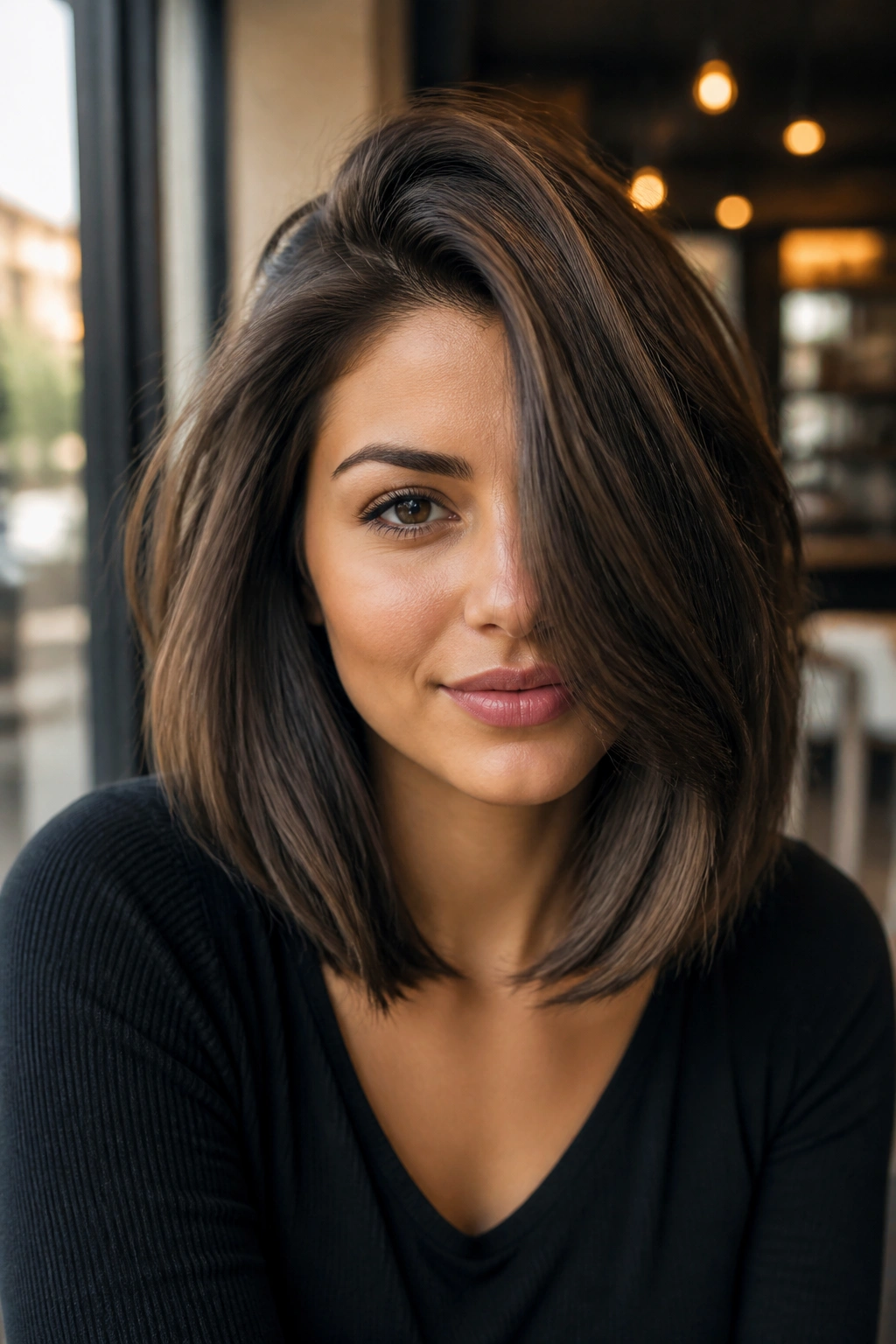
A deep side-part lob is a little dramatic in the best way. Thick hair carries a side part beautifully because there’s enough mass to hold the shape without the roots collapsing in ten minutes. The result is instant lift on one side and a softer sweep across the forehead.
How to style it
- Blow-dry the roots in the opposite direction first
- Switch the part while the hair is still warm
- Use a large round brush for bend, not curl
- Finish with a light spray at the roots, not a heavy product
This cut works well when your crown is flat and the sides are heavy. The deep part changes where the weight sits, which can make the whole face look more open. It also gives medium-thick hair some movement without demanding too much layering.
I’d call this a strong “special occasion that became a daily haircut” style. It has polish, but it doesn’t feel stiff.
18. Razor-Cut Medium Shag
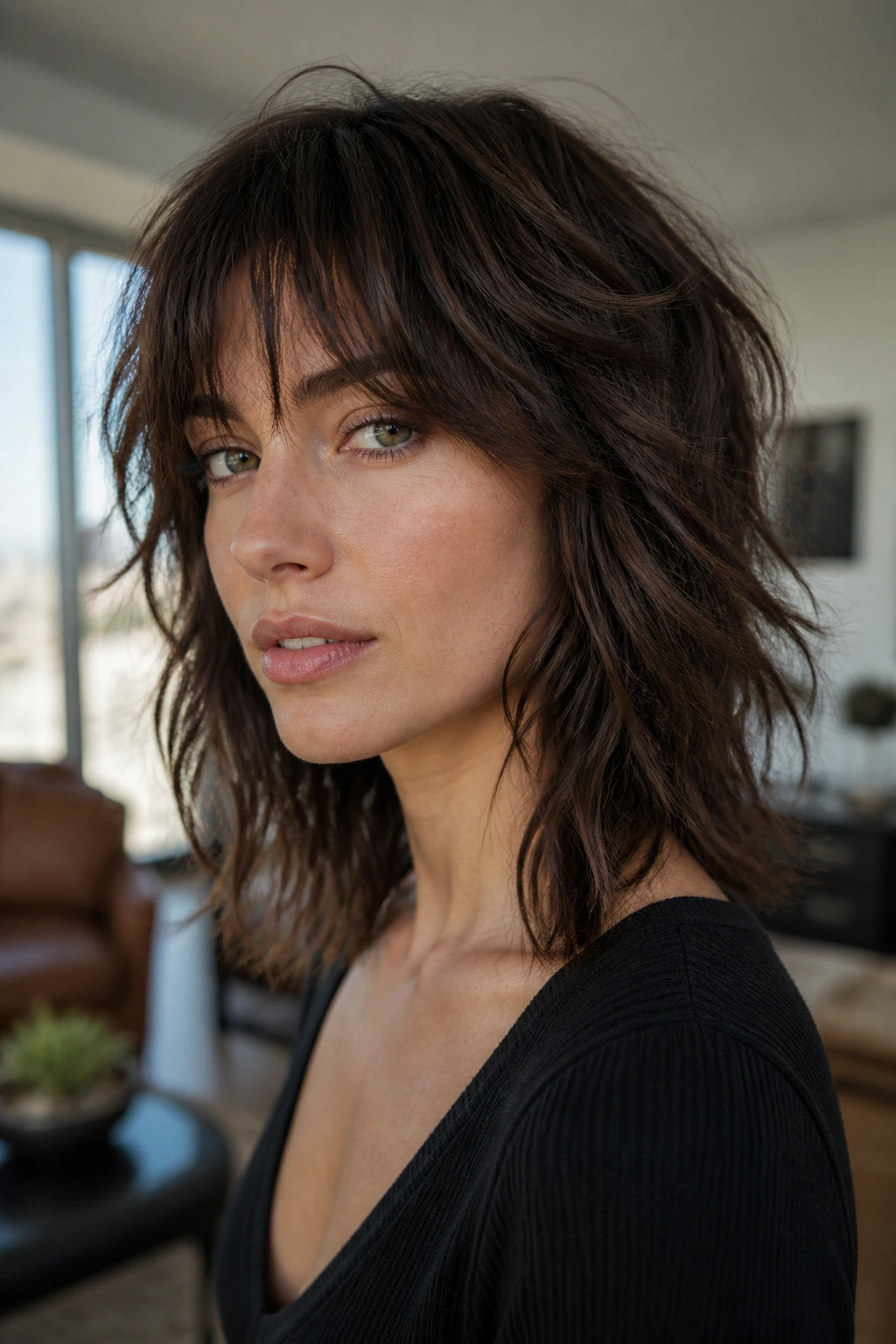
A razor-cut shag can be beautiful on thick hair, but I’m going to be blunt: it is not the right answer for every texture. On coarse, very dense hair, a razor softens the ends and gives the cut a feathered edge that scissors sometimes can’t create. On already-frizzy hair, though, too much razor work can make the ends look ragged.
That’s why this style needs a careful hand. The best version uses the razor where the hair is thickest and leaves the perimeter readable. The crown gets air. The sides move. The ends still have enough shape to hold together.
This one suits people who like texture that looks slightly broken up, not smooth and tidy. It works with a little mousse and a rough-dry. It can also look great second-day, which thick hair tends to do well anyway.
The cut has attitude. So does the maintenance.
19. Straight-Across Medium Cut with Internal Texturing
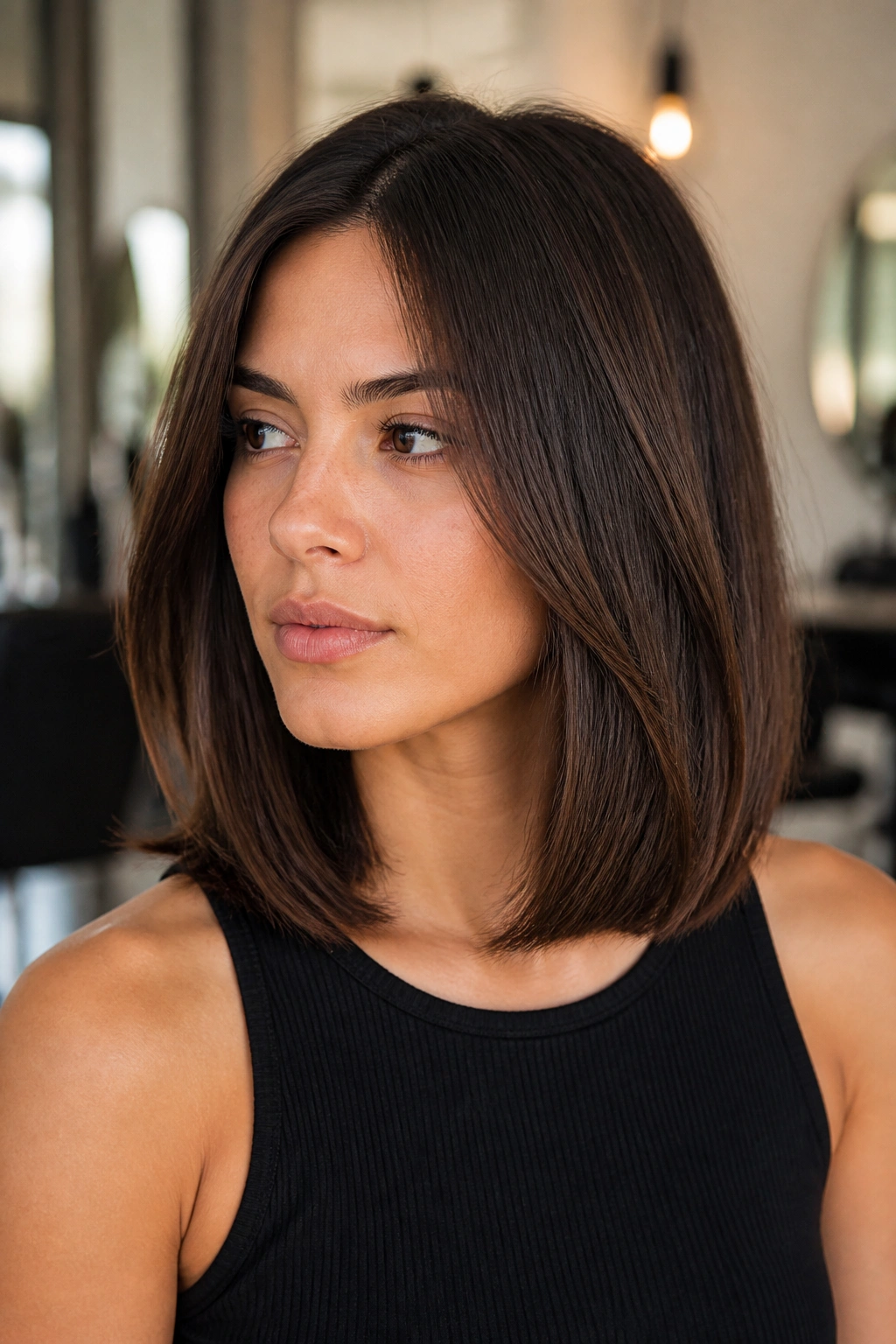
A straight-across medium cut sounds severe until you see what a little internal texturing can do. The outer line stays strong and even, which gives thick hair a clean frame. Inside that frame, the weight gets reduced so the cut doesn’t feel like a box.
That contrast is the whole appeal. You get polish on the outside and movement on the inside. Thick hair often benefits from that arrangement because the eye sees a crisp shape, while your hands feel hair that’s easier to move and dry.
This is one of my favorite options for people who wear their hair straight a lot. It looks sharp with a blowout, but it doesn’t turn flat or lifeless if you air-dry it with a little product. A tiny bevel at the ends can keep the line from feeling too hard.
It’s a serious haircut. Not boring. Serious.
20. Flip-Out Ends Lob

Flip-out ends bring a little fun back into medium hair. Thick hair holds that bend with less effort than finer hair, which makes this style more wearable than it sounds. The shape can feel retro, polished, or playful depending on how much lift you put into the ends.
What to ask for at the chair
- A collarbone or shoulder-grazing lob
- Layers that let the ends turn out instead of collapsing inward
- A clean interior so the style doesn’t feel bulky
- Enough length at the front to keep the flip soft
This is a smart choice if you like round-brush styling. The flip creates movement right where thick hair tends to sit heavy. It also works with a blunt outline, which keeps the style from drifting into fluffy territory.
Some people dismiss this as a small styling trick. I don’t. It changes the whole mood of the haircut.
21. Low-Maintenance Midi with Curtain Fringe

A low-maintenance midi is exactly what it sounds like: a medium haircut that looks intentional without asking for a lot every morning. On thick hair, that usually means long layers, a soft fringe, and a length that lands between the shoulders and collarbone so the shape grows out cleanly.
Curtain fringe helps here because it breaks up the front without requiring full-time styling. The ends can be worn smooth, wavy, or air-dried with a little texture. The cut doesn’t depend on one perfect finish. That’s a relief.
It suits people who want their hair to behave after a simple rough-dry and a quick pass with a brush. If your mornings are rushed, this is one of the more honest choices on the list. You’ll still have to trim it, but you won’t be negotiating with it every day.
A good low-maintenance midi should feel easy without looking accidental. That’s a rare combination.
22. Polished Blowout Lob for Thick Hair
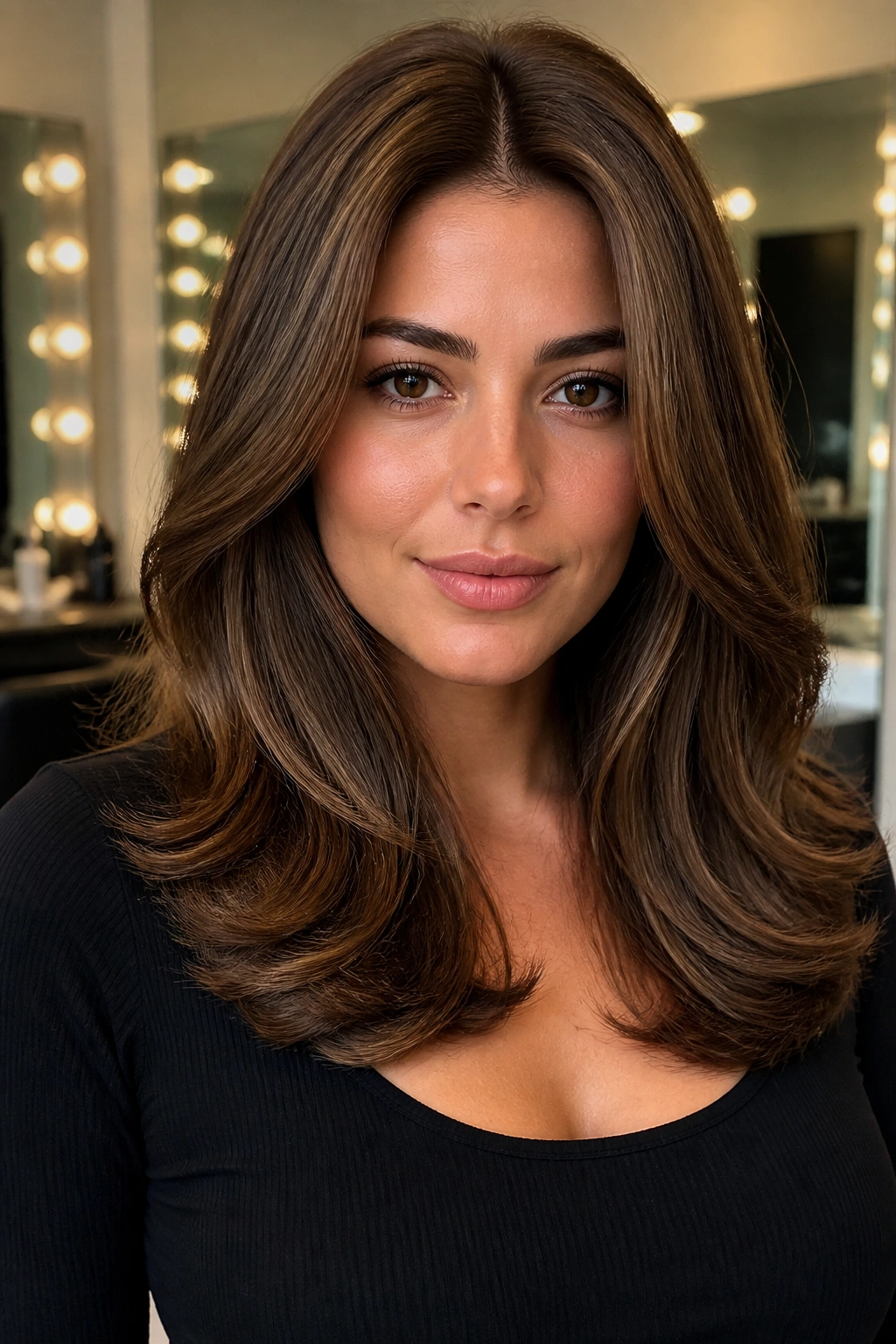
A polished blowout lob is the haircut that makes thick hair look like it has been sleeping well. The shape relies on long layers that support movement, not so many short pieces that the ends start to fray. At medium length, the blowout has enough room to bounce, and enough weight to keep the finish smooth.
This style is at its best when the cut is beveled slightly under the chin and around the collarbone. That gives the round brush somewhere to guide the hair. If your thick hair tends to puff at the ends, this shape brings it back into line. If it’s naturally straight, the blowout gives it the bend and swing that makes the cut feel expensive without trying too hard.
A decent dryer with a nozzle, a round brush, and heat protectant are enough. Anything beyond that is a bonus. The cut should reward a little effort, not demand a ceremony.
Final Thoughts
Thick hair at medium length does not need to be tamed into submission. It needs shape. That’s the difference between a haircut that looks heavy and one that looks rich, soft, and easy to wear.
The best medium hairstyles for thick hair usually share the same quiet strengths: smart weight removal, a perimeter that makes sense, and a style choice that fits how you actually live. If your hair is straight, wavy, or curly, the answer is not the same haircut with a different photo. It’s the right silhouette for your texture.
Bring one photo that shows the shape you want and another that shows the fringe or finish you like. That tiny bit of clarity saves a lot of disappointment in the chair.
