



Round faces can look soft, lively, and camera-friendly. They can also feel frustrating when a cut lands in the wrong place and makes the cheeks look wider than they are. The fix usually isn’t length for length’s sake. It’s shape.
Edgy short hairstyles for round faces work when they break the circle with a diagonal line, a sharp perimeter, a lifted crown, or a little rebellion at the temple. I care less about the label on the cut and more about where the hair ends up sitting around the jaw, cheekbone, and forehead. If the shortest pieces all stop right at the widest part of the face, the style starts doing the opposite of what you want.
The nice thing is that “edgy” doesn’t mean one look. It can mean a razor cut with piecey ends, a clipped side, a micro fringe, a shaggy bob, or a pixie that looks almost defiant when the wind hits it. Some of these are low-maintenance. Some need a round brush, a diffuser, or five minutes with paste and your fingers. All of them can work hard for a round face if the cut is built with intention.
1. Asymmetrical Pixie With Long Side Fringe
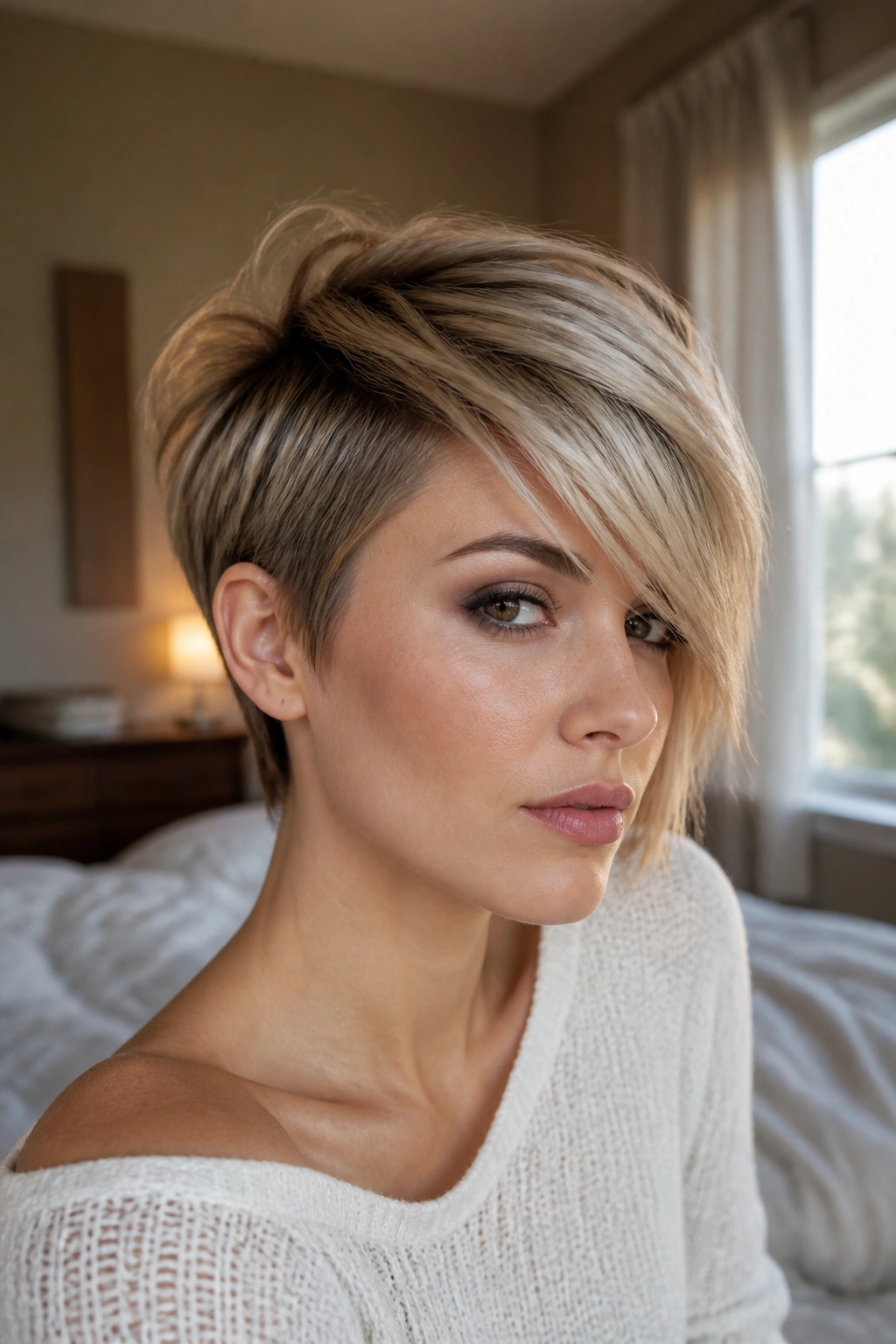
A pixie with one long side fringe is one of the easiest ways to add sharpness to a round face without making the whole cut feel severe. The long side gives you a diagonal line straight across the face, which breaks up all that soft symmetry in a good way. The shorter side keeps the shape neat and exposes enough cheekbone to keep things from feeling heavy.
Why It Works
- Keep the longer fringe at least long enough to graze the outer brow and slide toward the cheekbone.
- Ask for the shorter side to be tapered close at the temple so the contrast reads clearly.
- Leave a little height at the crown; even an extra inch changes the silhouette.
- Use a matte paste, not a shiny gel, if you want the ends to stay piecey.
Best move: blow-dry the fringe in the opposite direction first, then sweep it over. That tiny trick gives lift at the root and stops the front from lying flat against the widest part of the face.
2. Undercut Pixie With Lifted Crown
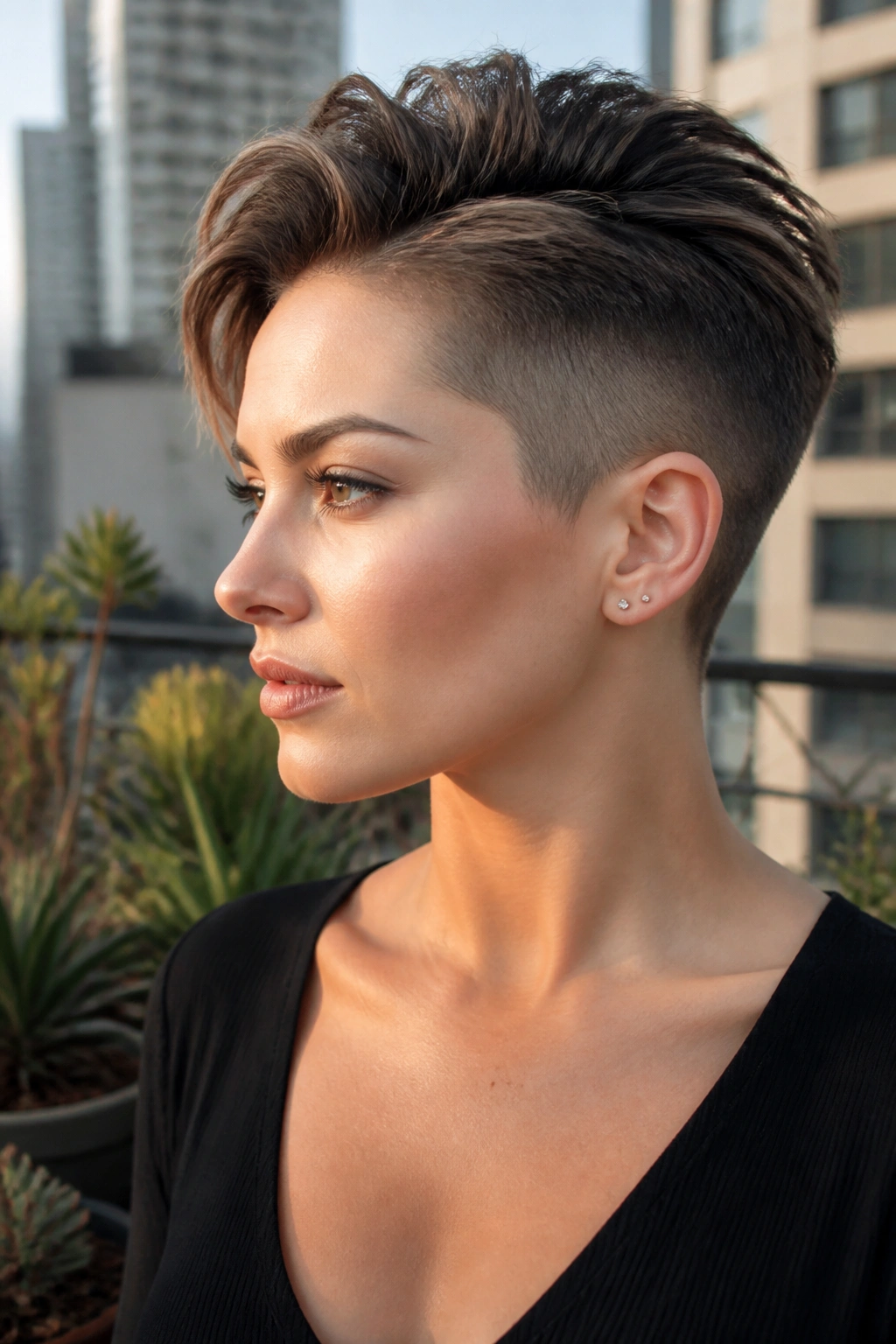
An undercut pixie is blunt, a little rebellious, and very good at cheating the eye upward. The sides are clipped close—usually with a #2 or #3 guard if you want enough softness to grow out cleanly—while the top stays long enough to stand up, lean back, or fall messily over the forehead. On a round face, that vertical lift matters more than people think.
It’s not a cut for someone who wants everything to look soft and blended. That’s the whole point. The hard contrast between short sides and a fuller top creates shape where a round face needs it most. If your hair is thick, the undercut also removes bulk that can puff out at the temples and widen the silhouette.
I like this one with a side part and a bit of height at the front. A fingertip of styling cream at the roots, then a quick blast with a dryer, is usually enough. If you want drama, push the top back. If you want it more wearable, sweep it diagonally across the forehead. Either way, it keeps the face from reading as all curve.
3. Micro-Bang Crop With Piecey Texture
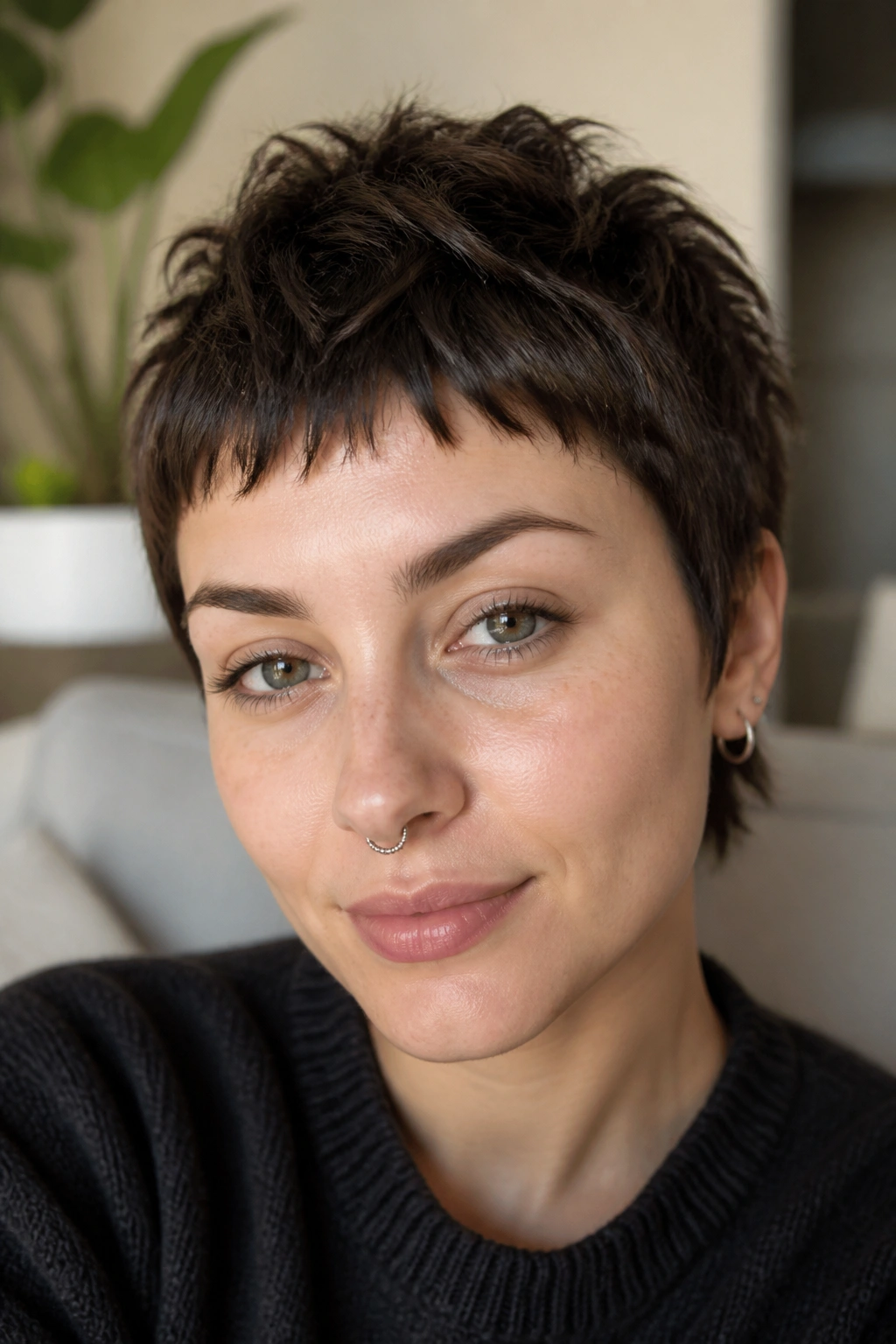
Can micro bangs work on a round face? Yes, if the rest of the cut has enough texture to keep the shape from feeling heavy. A short fringe opens up the face and makes the forehead part of the look, which can be a smart move when you want the eye to travel upward instead of circling the cheeks. The key is not to pair the fringe with a bulky, helmet-like perimeter.
How to Wear It
- Keep the fringe chipped and separated, not a thick straight line.
- Let the sides sit close to the head or taper into the temples.
- Ask for internal texture so the top doesn’t puff.
- Style with a tiny dab of wax on dry hair, then pinch out a few strands.
This cut feels sharp when the fringe is blunt enough to read as intentional but not so dense that it blocks the face. It looks especially good if your brows are a feature you like showing off. And if your hair grows fast, be ready for trims every 3 to 4 weeks. Micro bangs get fuzzy fast, and fuzzy bangs lose the whole point.
4. Choppy Bixie Cut With Cheekbone Length
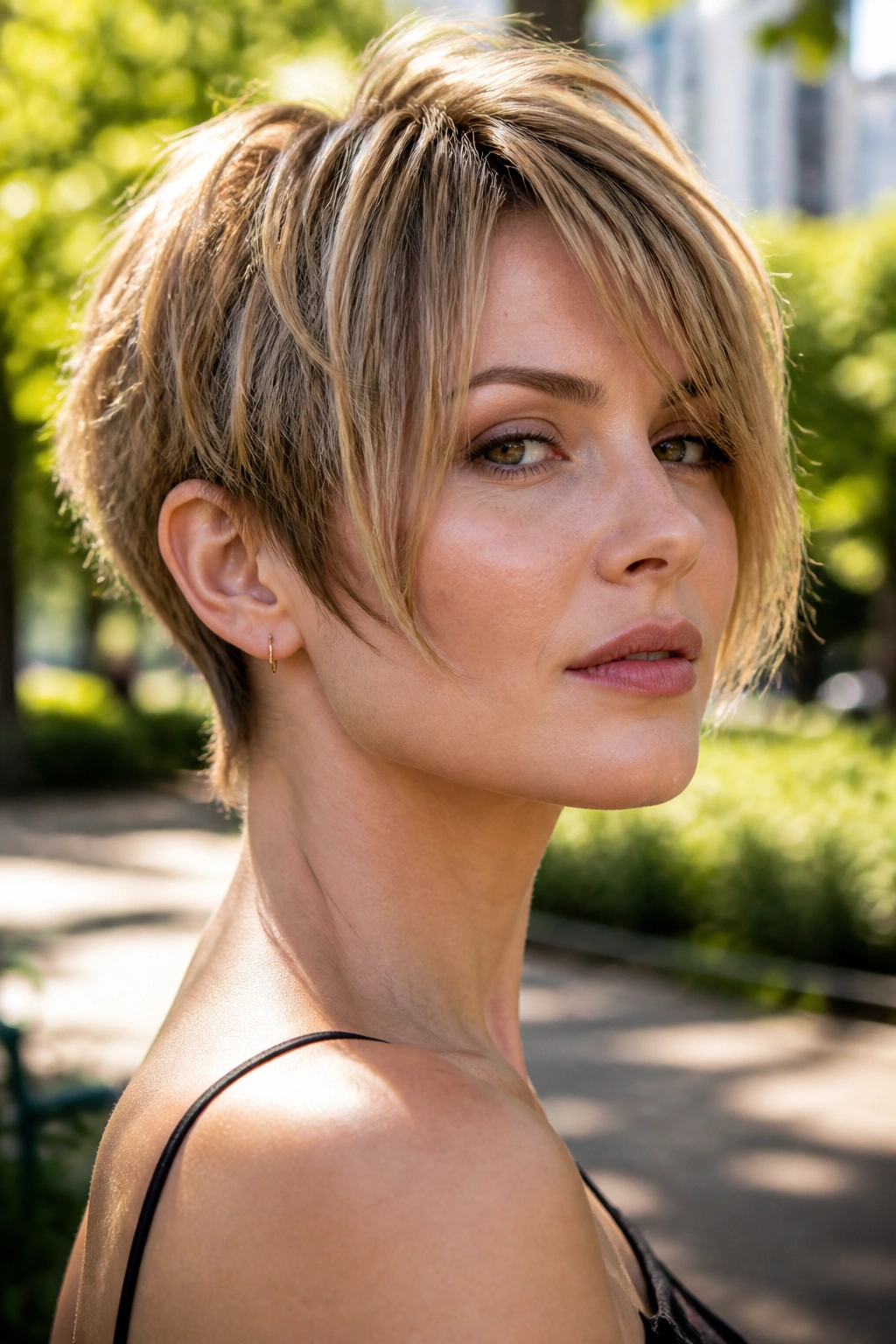
The bixie sits in that sweet spot between a bob and a pixie, which is exactly why it works so well on round faces. A good one keeps the nape short and tidy, then leaves the front pieces long enough to skim the cheekbone or graze the jaw at a diagonal. That little bit of length in front softens the face without adding width.
I like this cut on hair that has some bend to it. Straight hair can wear it too, but the texture helps the layers separate instead of sitting in one flat sheet. Ask for choppy ends and avoid a rounded outline through the sides. Rounded sides on a round face can feel too soft, too fast.
If you’ve ever wanted a short cut that doesn’t feel precious, this is a strong pick. It has the spirit of a pixie, but it gives you more movement around the face. A bit of mousse at the roots and a quick scrunch with your hands is usually enough. Leave the ends imperfect. That’s where the edge comes from.
5. Side-Swept French Bob
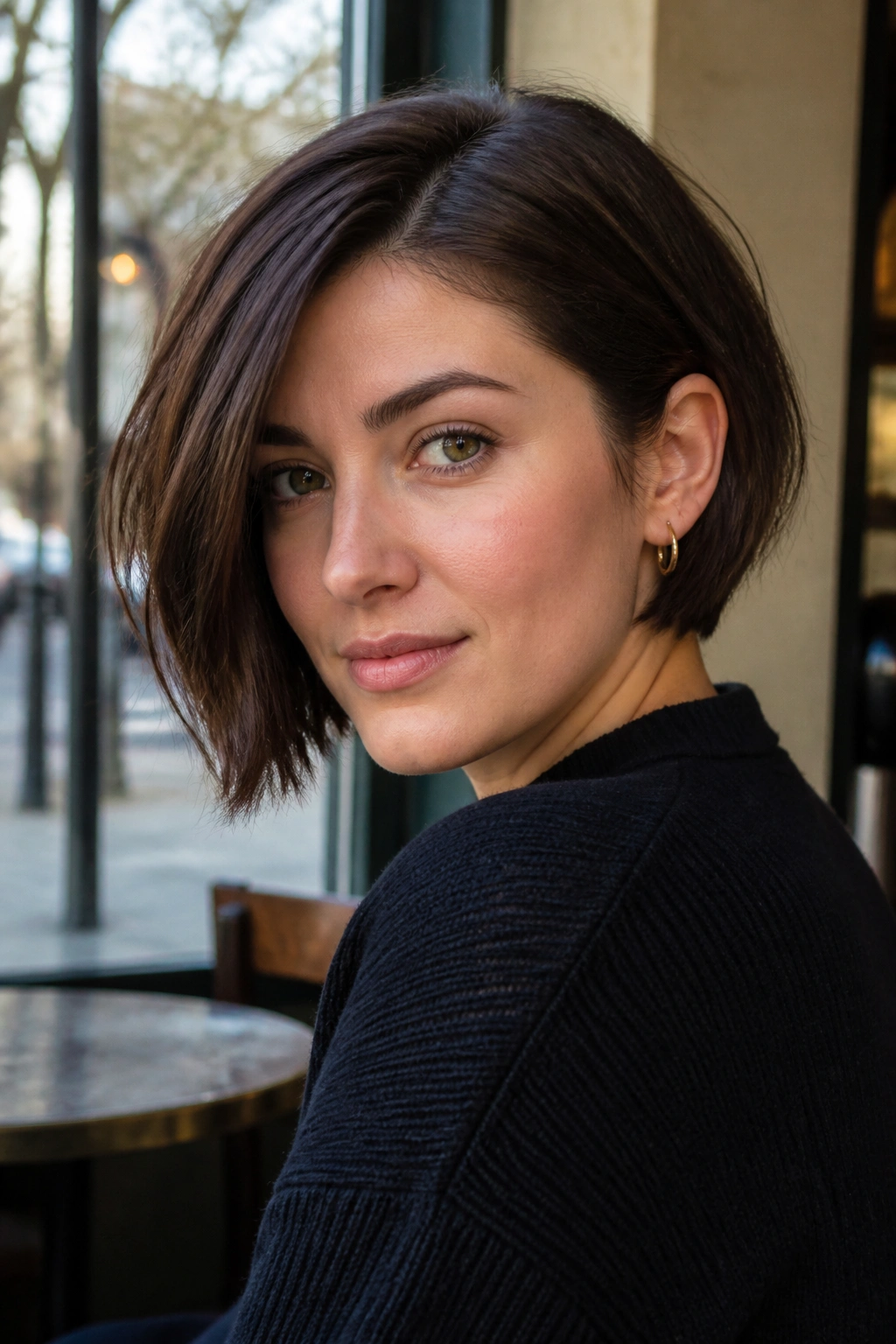
A French bob gets its attitude from restraint. Keep it jaw-skimming or just a hair below, then sweep the front to one side so the line doesn’t sit squarely across the face. On a round face, that side sweep is doing a lot of work. It pulls the eye diagonally and keeps the bob from reading as too compact.
The cut should feel a little undone, not bubble-round. I prefer a blunt perimeter with a soft bend through the ends, because it gives you structure without making the cheeks feel boxed in. If your hair is fine, ask for less layering so the edge stays crisp. If it’s thick, a bit of internal thinning near the nape can help the shape settle.
This one looks especially good tucked behind one ear. That tiny move exposes the jaw and adds asymmetry without making the cut look overstyled. It’s the kind of bob that can look polished in the morning and a little cool by lunchtime, which is exactly why it keeps showing up in real life instead of just in photos.
6. Jaw-Skimming Blunt Bob With Deep Side Part
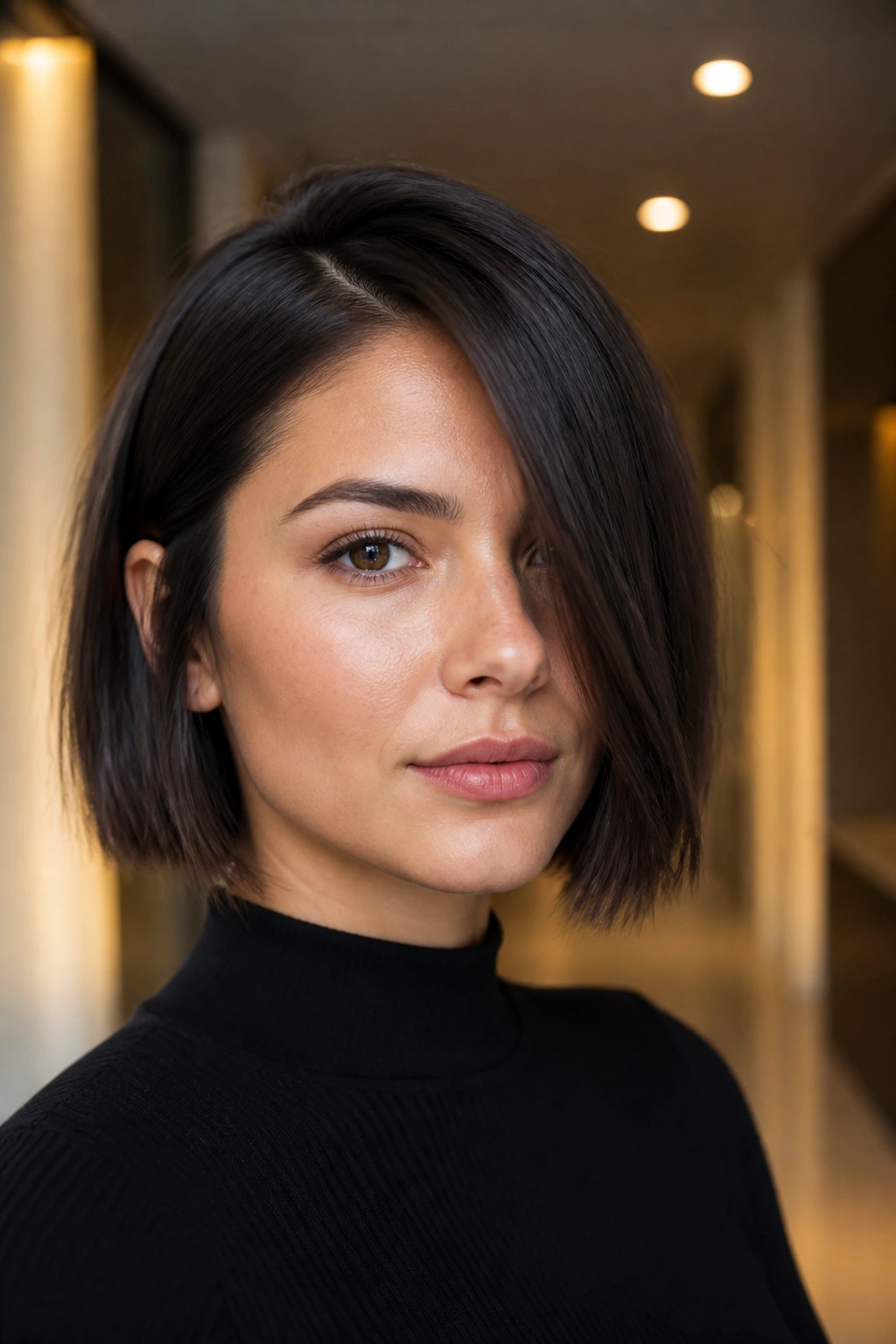
A blunt bob sounds strict, but on a round face it can be a small miracle when the length is placed correctly. The trick is to let the hemline sit just below the jaw, not right on the widest part of it, and then push the part deep to one side. That side part creates a sharp line across the forehead and prevents the style from feeling boxy.
Unlike a softly layered bob, this one is about weight and precision. The ends should hang clean, not feather out. If the hair flips under naturally, leave it. If it flips out, that can work too. The shape itself is what does the flattering. A neat, blunt edge makes the lower face look longer because the eye reads the cut as a strong vertical block rather than a wide circle.
This is a good choice if you want something bold but not fussy. It’s also one of the better options if you like earrings, because the open sides and clean line leave room for the face to do the talking. A little shine spray helps, but don’t go heavy. The cut should feel sharp, not greasy.
7. Shaggy Bob With Broken Layers

A shaggy bob is the haircut equivalent of a great leather jacket: it looks better when it’s not too polished. The broken layers are what matter here. They stop the hair from sitting in one rounded shape around the cheeks, which is exactly the trap you want to avoid on a round face.
What to Ask For
- Layers that begin around the cheekbone, not the chin.
- A choppy perimeter instead of a smooth, round outline.
- Soft, disconnected texture through the ends.
- A little extra lift at the crown so the silhouette doesn’t collapse.
This style works especially well if your hair has a natural wave. If it’s straight, a quick bend with a flat iron or a 1-inch curling iron gives the layers some grit. If it’s thick, I’d skip aggressive thinning. That can make the ends fray in a bad way. Ask for texture, not chipmunk fur. There’s a difference.
The shaggy bob has a casual edge that feels easy to wear, but it still shapes the face. That’s the part I like most. It gives round faces movement without making them look wider.
8. Tapered Curly Pixie
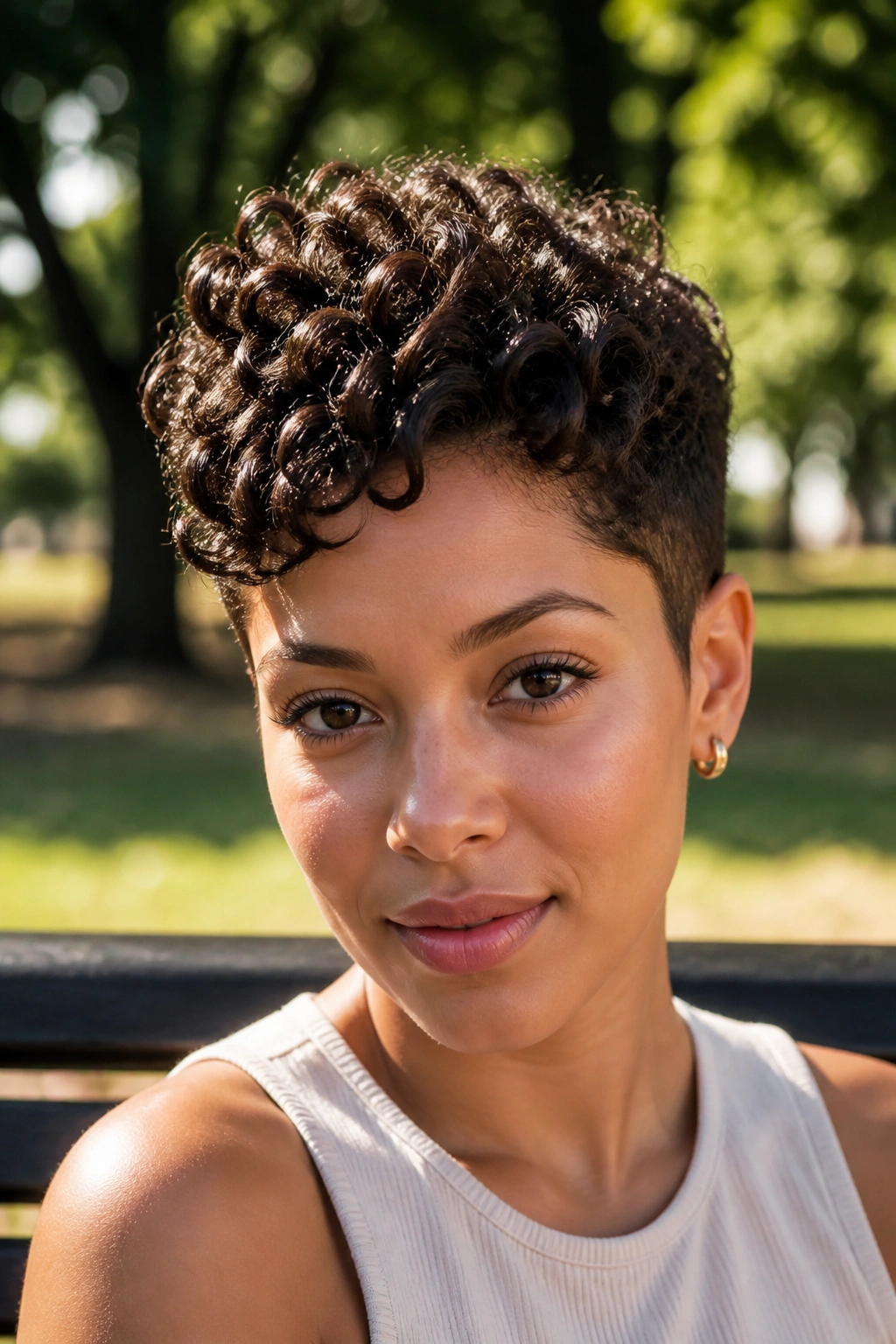
A tapered curly pixie is one of those cuts that proves short hair doesn’t have to be flat or tidy to work. The sides and nape are kept close, while the top stays curly and a little taller, which stretches the face upward. That height matters. Curls already bring life, so the goal is to direct that energy vertically instead of letting it bloom out to the sides.
This cut is best when the stylist respects your curl pattern. A dry cut usually helps because curls spring up differently once they’re dry. If the top is cut too short, the shape can pucker. If the sides are left too full, the roundness of the face and the roundness of the hair start echoing each other in the wrong way.
I’d style this with a curl cream and a light gel, then diffuse until the roots are set. Don’t rake through it too much after it dries. The outline should stay soft, but the crown needs enough lift to give the face some length. Tiny, defined curls at the top look sharp here. Puffy sides do not.
9. Razored Ear-Length Bob

There’s something almost sneaky about a razored ear-length bob. It sits short enough to feel modern and a little tough, yet the razor work keeps the ends airy so the whole cut doesn’t balloon around the jaw. For a round face, that lightness is the difference between crisp and bulky.
The visual trick is the perimeter. Instead of a heavy line that lands in one blunt block, the razor creates a broken edge that moves as you turn your head. That movement keeps the face from looking boxed in. A center part can work if the hair is naturally straight, but I usually prefer a slight off-center part because it gives the cut more attitude.
This one is good for someone who wants short hair with a little swing. It’s especially nice if your neck is a feature you like showing off. Add a bit of texture spray, tuck one side behind the ear, and let the other side fall loose. The asymmetry is subtle, but it changes everything.
10. Angled Bob With Stacked Nape
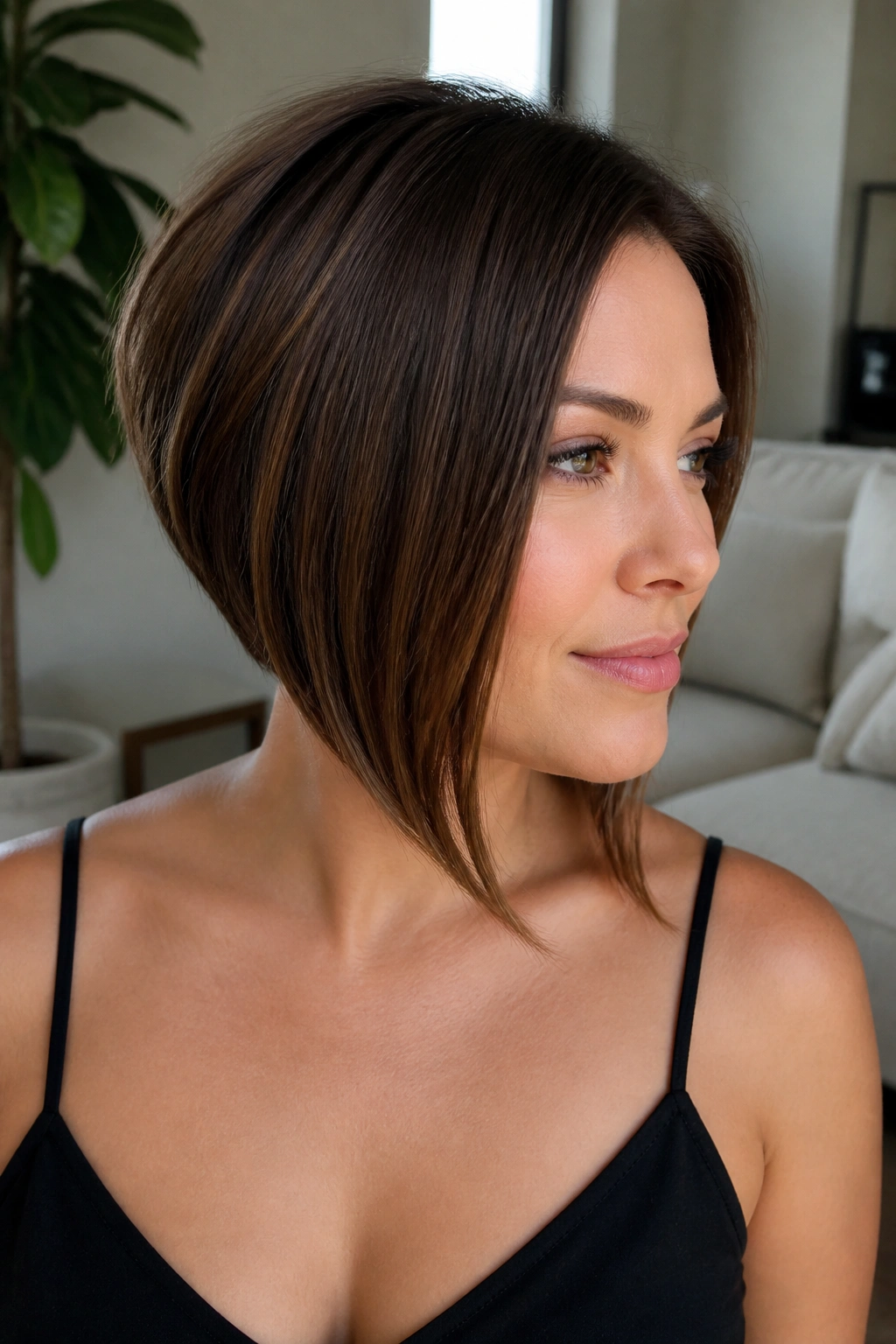
An angled bob does one job beautifully: it creates a line that moves downward from the back to the front. On a round face, that longer front edge gives the illusion of length without needing much styling drama. The stacked nape gives the back some shape, so the cut doesn’t collapse into a flat shelf.
The angle should be obvious enough to read from the side but not so steep that the front feels disconnected. I like the front pieces landing somewhere between the jaw and the collarbone, depending on how short you want to go. A one- to two-inch difference between back and front is often enough to make the cut feel intentional.
This is one of those styles that looks cleaner on the second day. A little dry shampoo at the roots, a quick bend through the front, and you’re done. If your hair is thick, the stacked back helps remove weight. If it’s fine, ask for less stacking and more sharpness through the outline. Too much stacking can make fine hair look see-through.
11. Mini Wolf Cut

A mini wolf cut is basically a short shag with a bit more bite. It keeps the crown full, the layers uneven, and the nape slightly longer, which gives the silhouette a jagged shape instead of a tidy oval. That jaggedness is exactly why it flatters round faces. The eye keeps moving, and the face doesn’t sit inside one perfect circle of hair.
Unlike a classic bob, this cut doesn’t care about symmetry. That’s part of the appeal. The layers are meant to feel broken, and the fringe—if you wear one—usually wants to be wispy or curtain-like rather than heavy. If you have a round face and also want a style that feels youthful without looking precious, this is a strong middle ground.
The only caution is bulk. A mini wolf cut should feel wild in a controlled way, not puffy. Ask for texture in the top layers and keep the sides from ballooning out. A diffuser, a salt spray, or even a little mousse can help the layers separate. Leave the ends rough. Clean edges would kill the whole mood.
12. Soft Mohawk Pixie
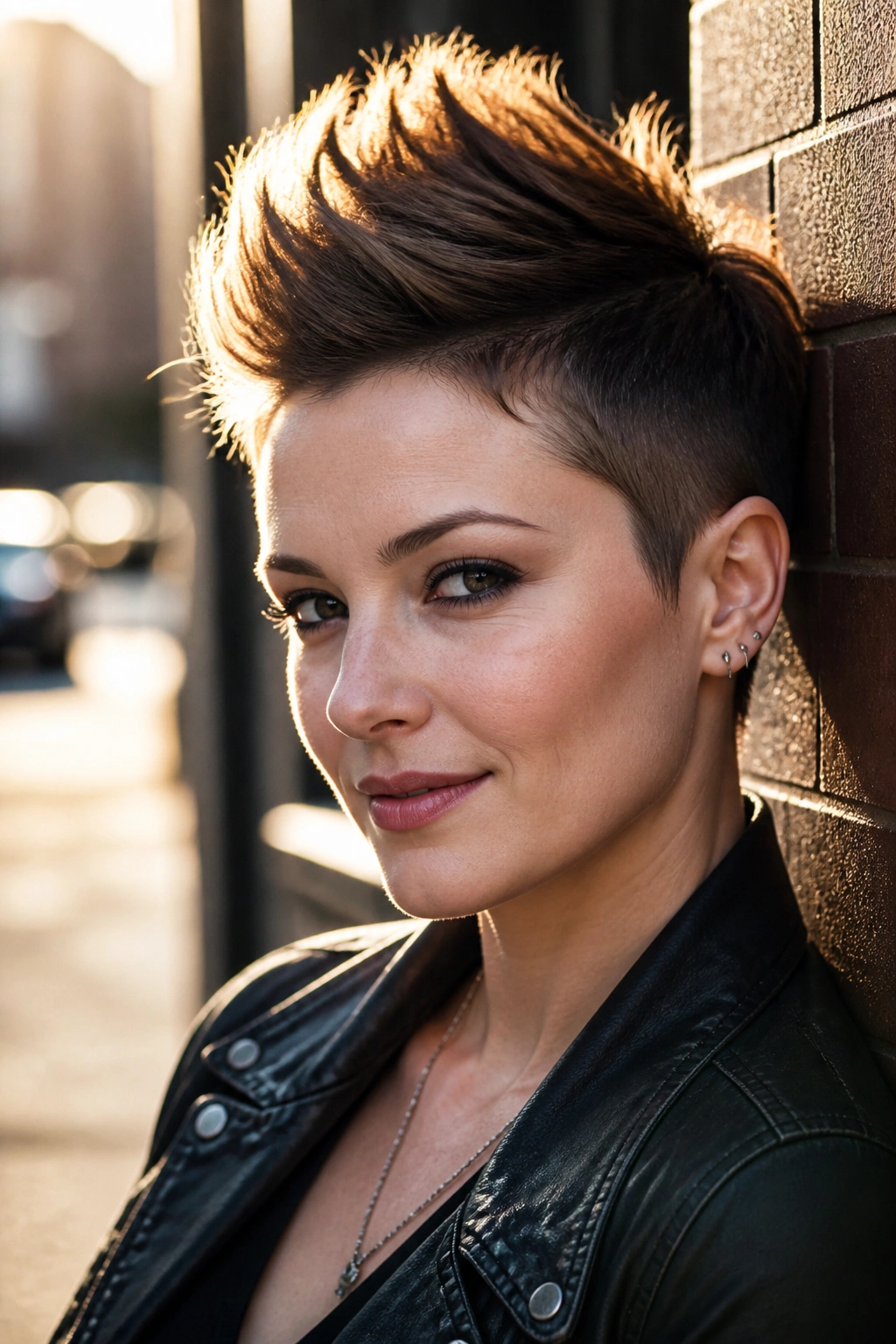
A soft mohawk pixie sounds louder than it usually is. The center strip is the star, with the sides tapered close enough to make the top look taller and slimmer. That center height is useful on a round face because it builds a long line through the middle instead of letting all the visual weight sit at the cheeks.
What Makes It Different
A regular pixie often spreads its attention evenly across the head. This one doesn’t. The top is lifted and directed forward or back, while the sides are kept almost quiet. That contrast is what gives it edge. It also leaves room for strong brows, bold earrings, or a darker root shadow if you like that slightly punk feel.
Who It Suits
It works best if you don’t mind a style that needs a bit of product. A light molding paste or matte clay can keep the center piecey without turning it crunchy. If your hair is very fine, ask for shorter side lengths so the top has more visual power. If it’s thick, the tapered sides help cut the bulk fast.
13. Feathered Crop With Wispy Bangs
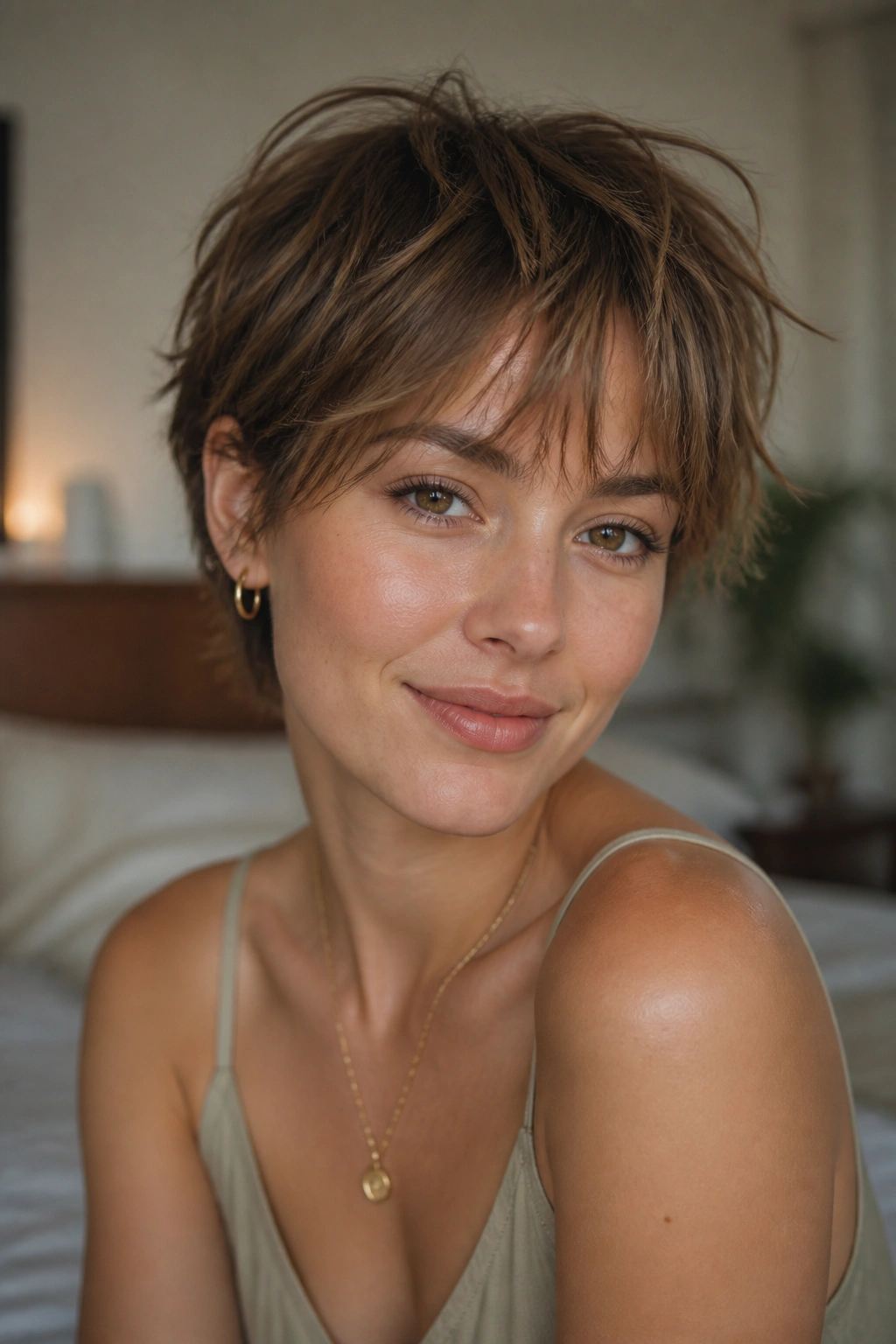
A feathered crop can look almost airy, but it still has enough bite to feel current. The feathering breaks the edge of the cut, which matters on a round face because a hard, dense line can make the lower half look wider. Wispy bangs keep the forehead soft without blocking it off completely.
What I like here is the balance between structure and looseness. The crop stays short, but the ends are never chunky. That keeps the style from sitting like a cap. Ask for the bangs to be thinned just enough that light can pass through them. You want movement, not see-through scruff.
The danger with feathered cuts is overdoing the layering. Too many tiny layers can make the hair look frayed. One clean pass of texture through the top and fringe is usually enough. Style with a blow-dryer and a small round brush if you want polish, or finger-dry it for a rougher feel. Either way, the softness at the front keeps the shape kind to round cheeks.
14. Graduated Bob With Hidden Undercut
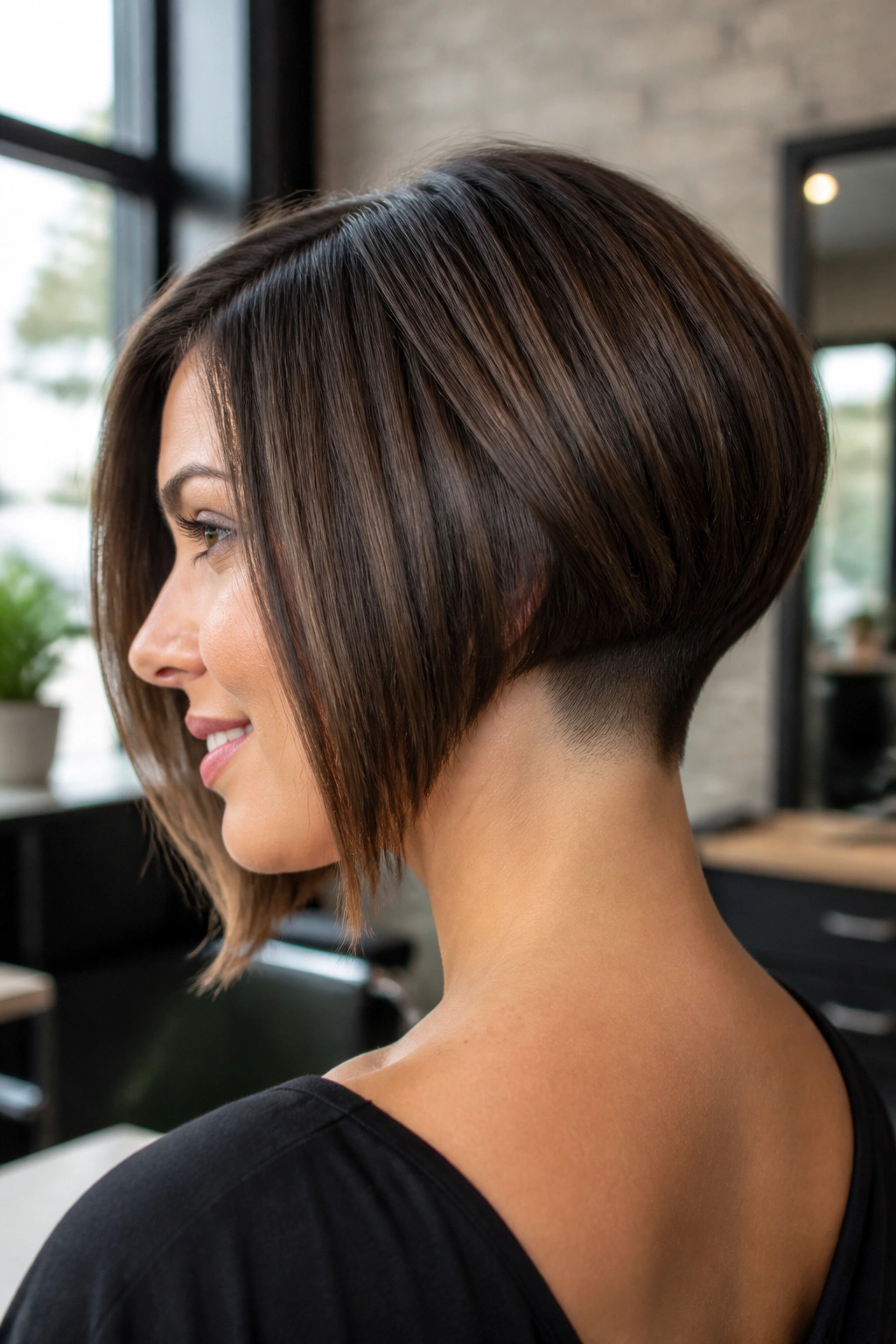
A graduated bob with a hidden undercut is one of my favorite fixes for thick hair on a round face. The visible shape is still a bob, but the secret undercut removes the bulky weight that tends to puff out at the nape and behind the ears. That means the outer shape can sit closer to the head and feel sharper.
The graduation gives the back a neat lift, while the front stays long enough to frame the face. If your hair grows like a triangle when it gets short, this cut is worth a serious look. The hidden undercut keeps the bottom from fanning out, but because it’s concealed, the style still reads as polished when you tuck it behind the ears.
What to Ask Your Stylist
- Keep the visible front pieces at or just below the jaw.
- Remove bulk under the top layer, not through the perimeter.
- Leave enough weight in the outer line so the bob still swings.
- Blend the nape carefully so it doesn’t look chopped from the side.
It’s practical, but it doesn’t feel boring. That’s a nice combination.
15. Slicked-Back Pixie For Sharp Evenings
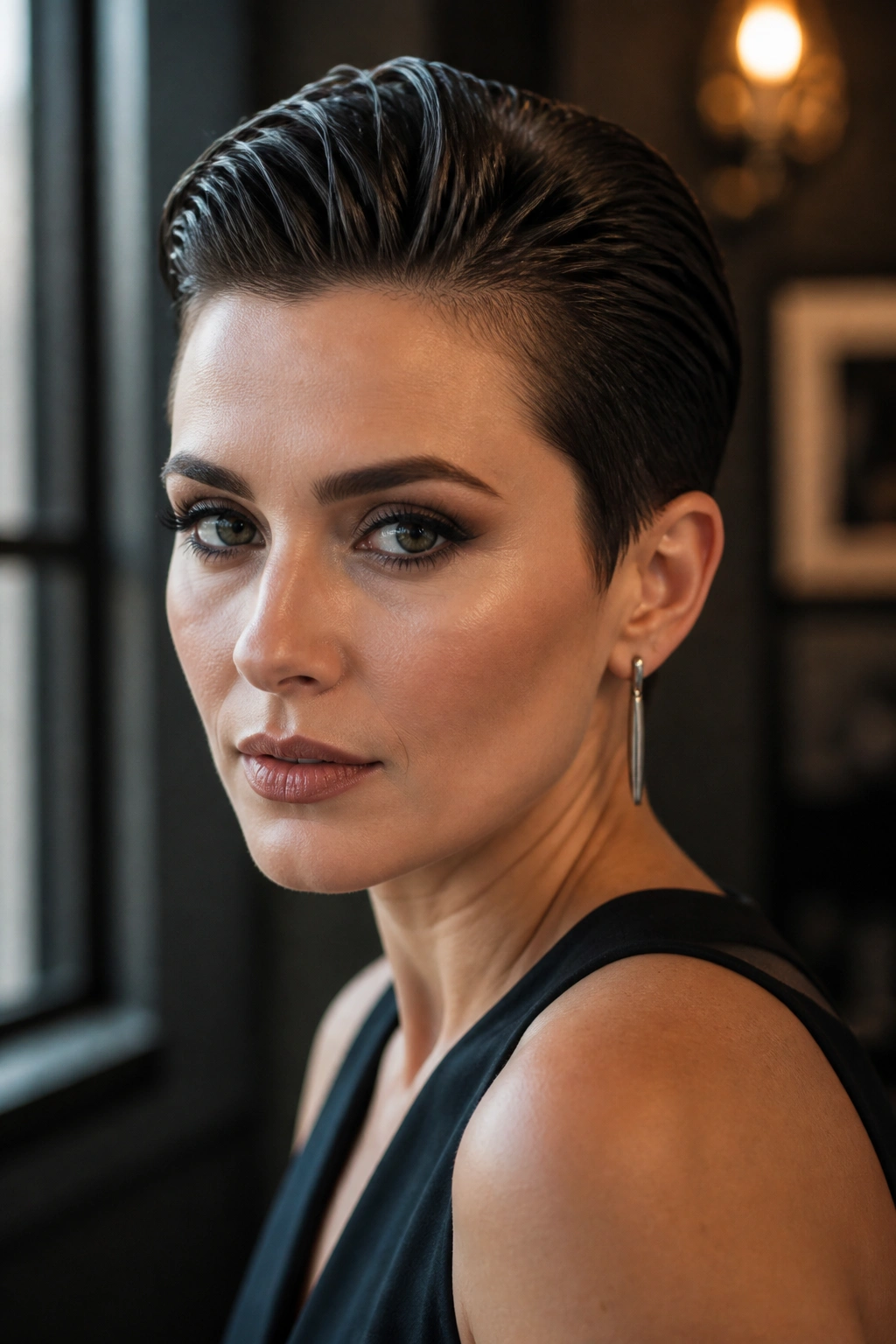
A slicked-back pixie can look almost severe, and I mean that in the best way. On a round face, exposing the forehead and both sides of the face changes the whole mood. The roundness is still there, of course, but now it reads as deliberate softness against a very clean shape.
This is one of those styles that works especially well when the rest of your look is simple: strong earrings, a clean neckline, maybe a jacket with a sharp collar. You don’t need much else. A pea-sized amount of gel or pomade, combed back from damp hair, is usually enough. If the hair is fine, use less product than you think. Too much turns it stringy.
The style is not meant for everyday comfort if you hate product or scalp exposure. But for a night out, it has real force. It also does a nice job of making a round face look a little longer because there’s no fringe or side volume interrupting the line. Clean. Direct. A little dangerous.
16. Textured Bowl Cut With Modern Edges
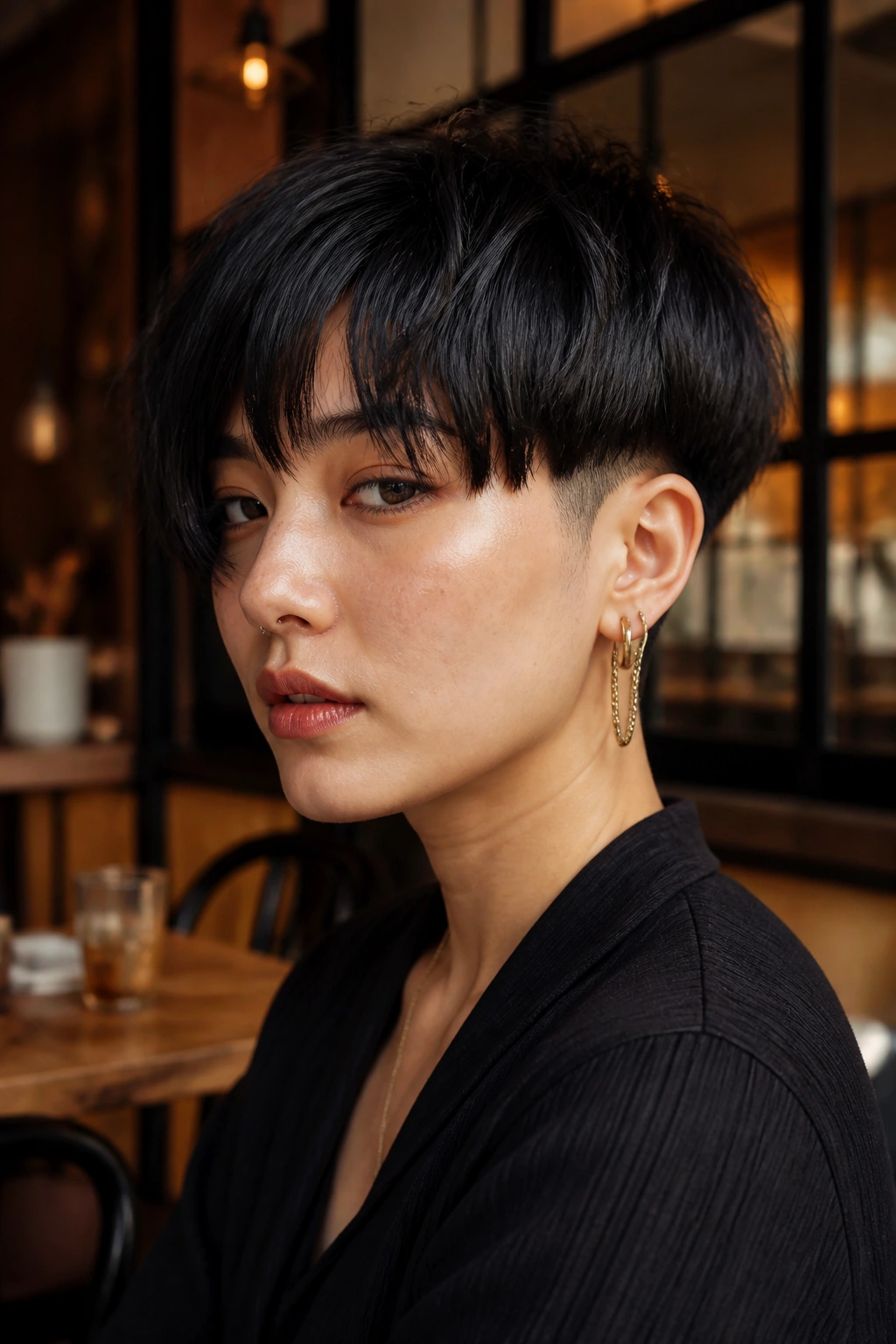
The modern bowl cut is not the mushroom cut people remember from childhood. It’s sharper, more broken, and usually less round at the perimeter. On a round face, that distinction matters a lot. You want the shape to feel graphic, not circular, so the cut needs choppy ends, a bit of asymmetry, or an undercut hidden underneath.
This version is best when the top is kept compact and the sides are softened just enough to avoid a hard helmet effect. A slight off-center part can help. So can a few longer pieces around the temple. If the line sits perfectly even all the way around, the face can end up feeling too enclosed.
I’m a fan when the texture is rough and the edges are intentionally imperfect. Use a wax or paste to pinch out sections once the hair is dry. The cut should feel like it has been broken open a little. That’s the difference between a fashion-forward bowl and a bad flashback. One is deliberate. The other is a mistake.
17. Tapered Afro With Sculpted Sides
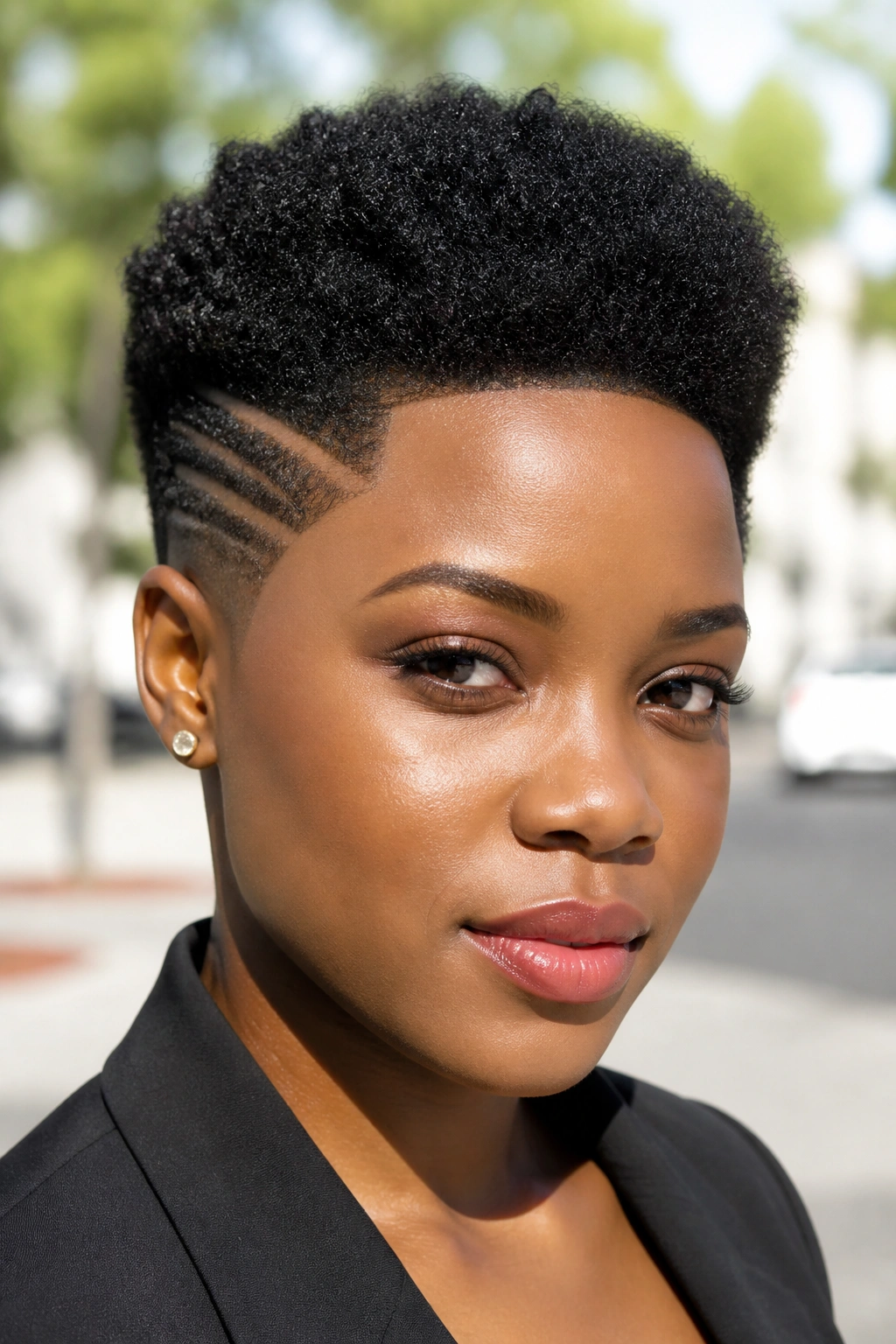
A tapered afro gives coily hair a clean shape without flattening its personality. The sides and nape are tapered tight, while the top is left fuller and taller, which is exactly what a round face needs. The height creates length. The taper keeps the sides from spreading wide.
The best versions of this cut are shaped by the curl pattern itself, not forced into a perfect sphere. A round face can wear a rounded afro too, but if you want more edge, the sculpted sides are where the magic happens. They show off the jawline and make the face feel a little narrower by comparison.
I’d ask for a shape-up around the hairline and a controlled top that doesn’t puff out at the temples. Moisture matters here. Dry coils can spread sideways and lose the sculpted effect fast, so a leave-in and a light cream help keep the outline neat. It’s a strong, proud shape. And it doesn’t ask permission.
18. Short Shag With Curtain Fringe
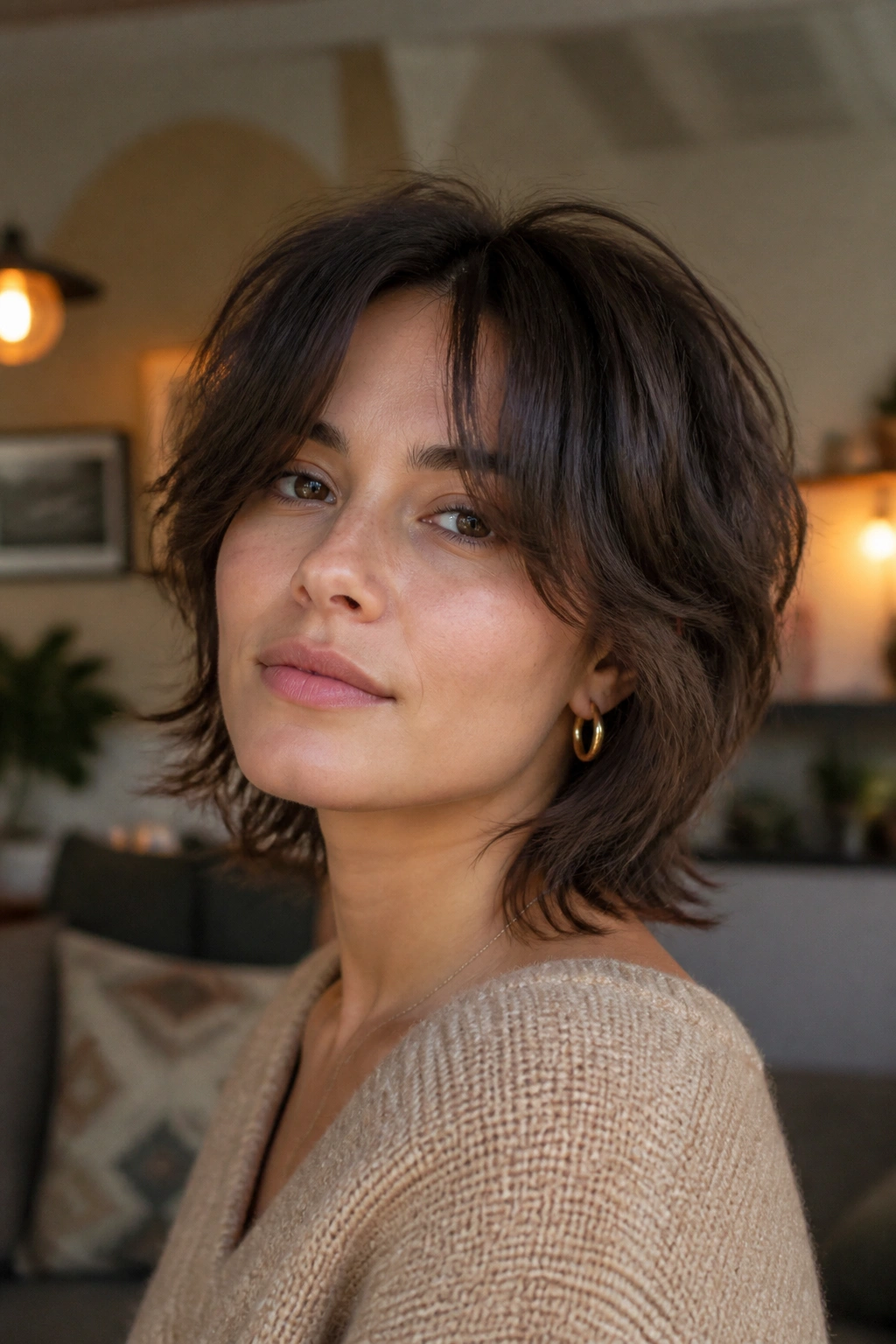
A short shag with curtain fringe is one of the easiest cuts to wear if you want movement and a little attitude without going full punk. The fringe splits in the middle and falls away from the face, which is perfect for round faces because it opens the cheeks while still giving the forehead some framing. The layers keep everything from looking too neat.
The real trick is where the shortest layers sit. If they land around the cheekbone, they create a flattering break in the face shape. If they sit too low, the cut can widen at the jaw. That’s why I prefer this shag with layers that start high and taper softly downward rather than a stacked shape at the bottom.
It works with a little bend, a little frizz, or a little mess. Actually, the mess is part of the charm. A mist of texturizing spray and a quick twist with your fingers is often enough. If you like hair that feels lived-in instead of overworked, this is a very easy yes.
19. Ear-Grazing Bob With Clipped-Back Side
An ear-grazing bob sounds simple until you tuck one side back and realize how sharp the whole thing becomes. That clipped-back side creates instant asymmetry, which is a gift for round faces. The shorter side opens the face, while the untucked side gives you line and movement.
This cut works best when the overall length sits just at the ear or a shade below. Too much length and it becomes a regular bob. Too little and it starts to lose the swing that makes it interesting. A subtle angle through the front can help. So can a deep side part, especially if you want the face to look a little longer.
Practical Detail
Keep a couple of bobby pins nearby, not as a crutch but as part of the style. Tucking one side behind the ear or pinning it flat can change the mood in seconds. That’s useful on days when you want the cut to feel tidy in the morning and a little more severe at night. Small move. Big effect.
20. Choppy Crop With Micro Layers
Can a cut this short still feel feminine, sharp, and easy to style? Absolutely, if the layers are cut with enough variation. A choppy crop with micro layers keeps the hair close to the head, but the tiny internal pieces stop it from looking dense or blocky around a round face.
The reason it works is pretty simple. Short hair on a round face needs direction, and micro layers create little shifts in the outline that keep the eye moving. A flat, one-length crop can look cute but static. This version has movement even when you barely touch it.
I like it best with a side part and a little piecey lift at the front. A small round brush or a quick finger-dry can separate the layers without making the style fluffy. If your hair is very thick, ask your stylist to remove weight inside the shape rather than shaving the perimeter too much. That keeps the cut controlled. It also grows out better, which matters more than people admit.
21. Angled Curly Bob
An angled curly bob gives curls a job to do. The front is kept longer than the back, so the eye follows the line forward and down instead of straight across the cheeks. On a round face, that angled shape is one of the most reliable ways to add length without flattening the curl pattern.
Why It Works
- Longer front pieces keep the face from feeling boxed in.
- A shorter back stops the curls from building a wide shelf.
- The angle lets the curls bounce without spreading too far outward.
- A side part can add even more diagonal movement.
The important thing here is not to over-cut the curls. Curly bobs can spring up more than expected, and a cut that looks chin-length wet may land much shorter dry. A good stylist will leave room for shrinkage and shape the curl cluster, not just the outline. If you style at home, use a diffuser and let the curls set before fluffing. Pulling at them too early ruins the angle. Patience helps.
22. Pixie Mullet
A pixie mullet is not for everyone, and that’s exactly why it has edge. The front stays short and sharp, while the back is left a little longer, giving the cut a rebellious slope that works especially well on round faces. The length in back draws the eye downward, which helps offset the width of the cheeks.
Compared with a standard pixie, this shape feels looser and more directional. Compared with a full mullet, it’s cleaner and easier to wear. That middle ground is where it gets interesting. You get some softness around the ears, some attitude at the nape, and enough texture on top to keep the style from sitting flat.
It looks best when the finish is rough rather than sleek. A little paste at the ends, some lift at the crown, maybe a side-swept fringe if you want more face framing. I’d avoid making the back too heavy. The cut should feel slightly unruly, not shaggy in a tired way. There’s a difference, and the wrong one shows fast.
23. Blunt Chin-Length Bob With Tucked Ends
A blunt bob at the chin can be tricky on a round face, but when the line is placed just below the chin and the ends are tucked in or behind one ear, it gains a lot of structure. The blunt edge creates a strong frame. The tucked styling stops the cut from spreading visually across the face.
The trick is keeping the perimeter crisp. You do not want frayed ends here. A clean line gives the haircut its strength, and the slight tuck breaks the symmetry so the face doesn’t look trapped inside the shape. If your jawline is a feature you want to bring forward, this cut can do that without a lot of fuss.
I’d pair it with a side part or a soft bend through the front so it doesn’t feel too square. The bob should look intentional, not like it was chopped off and forgotten. A flat iron pass on the ends can help if your hair flips too much. Keep it neat. The power is in the line.
24. Grown-Out Undercut With Long Top Sweep
A grown-out undercut is one of the easiest edgy cuts to live with because it keeps the sides short without looking freshly shaved every week. The top stays long enough to sweep over the forehead or across the part, which creates a strong diagonal line on a round face. That line is doing the flattering work. The grown-out texture is just the attitude.
What I like here is how forgiving it is. As the undercut softens, the shape becomes less severe, but the lift on top still gives you that length through the crown. If your hair has any wave at all, this style can look better a few weeks after the cut than on day one. The side sweep keeps the face open on one side and adds drama on the other.
Use a light cream or paste and work it through dry hair. Don’t flatten the top with too much product. You want movement, not helmet shine. If you like a style that can shift from polished to messy with one hand, this one earns its keep.
25. Disconnected Bob With Long Front Corner
A disconnected bob with one long front corner is a sharp way to finish the list because it refuses to sit politely around the face. One side stays shorter and cleaner, while the front corner on the other side drops lower, almost like the cut is leaning forward. That asymmetry is gold for a round face. It creates a line the eye follows instead of a circle the eye repeats.
This cut works best when the disconnect is obvious enough to read but not so extreme that it looks accidental. The shorter side can skim the jaw, while the longer front corner reaches toward the collarbone. That difference gives the face length and a little edge at the same time. It’s also one of the better choices if you like to tuck one side back and leave the other loose.
I’d keep the finish smooth rather than overly tousled. A clean surface lets the shape do the talking. If the hair is thick, a hidden underlayer can keep the shorter side from puffing. If it’s fine, a root lift spray at the part can stop the longer corner from falling limp. The contrast is the whole point. Lean into it.
Final Thoughts
Round faces don’t need haircuts that hide them. They need cuts that draw the eye where you want it to go. A little height, a little asymmetry, and a clean edge in the right spot can change the whole read of a short style.
If I had to narrow the choices, I’d start with the shapes that give you a diagonal line or a lifted crown. Those two moves do the most heavy lifting with the least fuss. From there, the real decision is attitude: polished, punk, soft, messy, or somewhere in between. Short hair has range. Use it.
