



A long face does not need more length. It needs balance — a little width at the cheeks, a little break in the vertical line, and often some kind of fringe that keeps the forehead from doing all the work.
The best hairstyles for long faces do not hide your features. They interrupt them in smart places. A cut that lands at the jaw, a wave that bends outward at the cheekbones, or bangs that skim the brows can change the whole feel of the face in a way that’s subtle but obvious once you see it.
Too much height at the crown can stretch things out even more. So can long, straight hair with no movement at the sides. That does not mean you have to chop everything off. It means paying attention to shape, where the eye lands, and how the hair sits around your face.
1. Chin-Length Blunt Bob
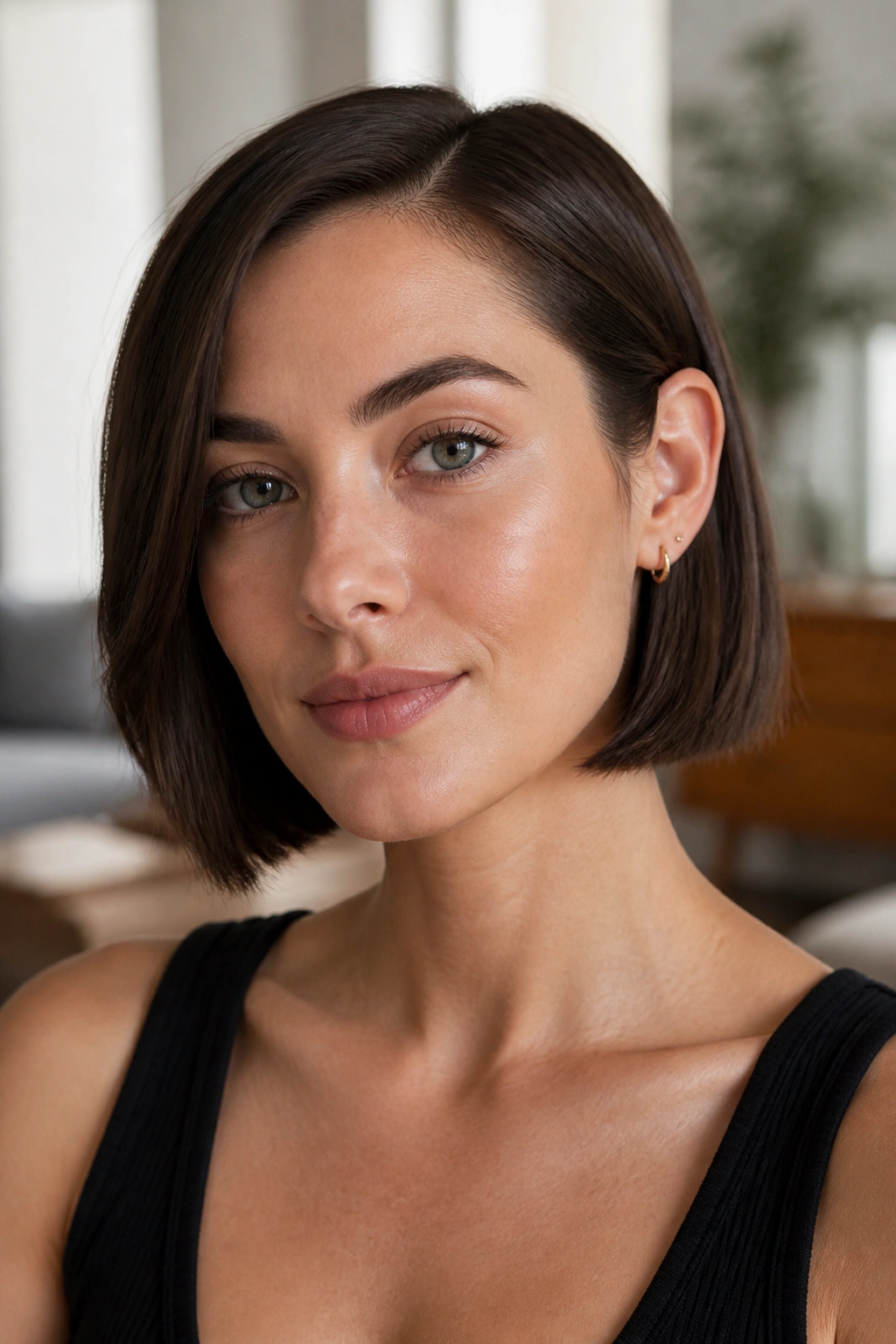
A chin-length blunt bob is one of the cleanest ways to interrupt a long face. The blunt edge lands right where the jaw starts to do its work, which gives the eye a clear stopping point instead of letting it slide downward.
Why It Helps a Long Face
The secret is the line. A bob that ends at the chin creates width exactly where a long face needs it most, and the blunt edge keeps the shape from feeling wispy or stretched out.
- Ask for one solid perimeter line with very little layering through the ends.
- Keep the length right at the chin or a touch below.
- Wear it with a slight side part if your forehead feels long.
- Tuck one side behind the ear for a small, sharp detail.
Best move: blow-dry the ends inward with a round brush so the shape hugs the jaw instead of flipping away from it.
2. Collarbone Lob with Soft Waves
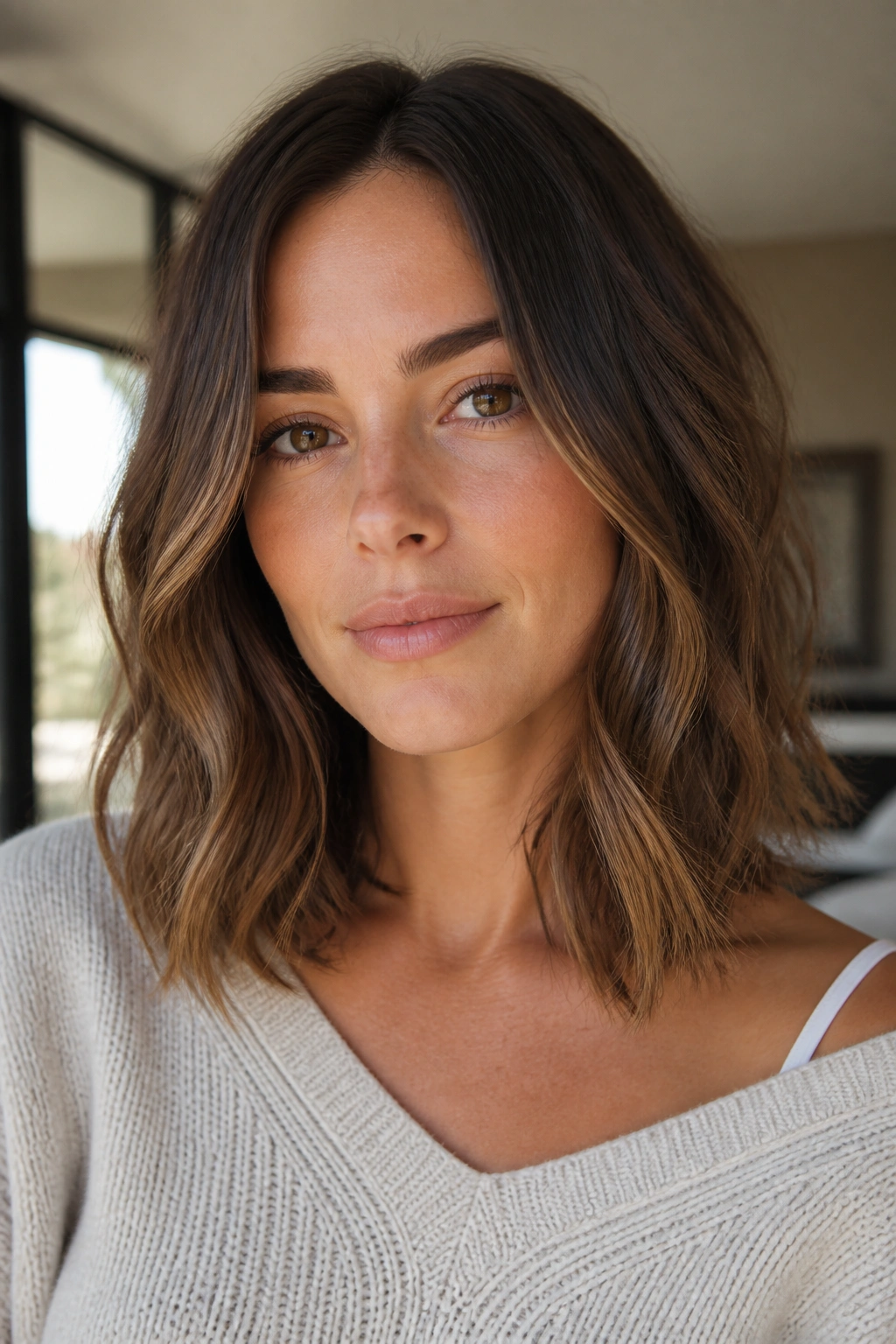
A collarbone lob with soft waves is easy, wearable, and quietly good at balancing a long face. The length gives you movement, and the waves widen the shape without making the style feel fussy.
Straight lob? Fine. But the wave makes the difference. Loose bends from mid-length down keep the hair from hanging in one vertical curtain, which is exactly what you don’t want if your face already reads long.
This is the cut I’d point to for someone who wants to keep some length but still look put together. A 1-inch curling iron, left in the hair for about 6 to 8 seconds per section, gives that soft bend without turning the ends into ringlets.
3. Curtain Bangs and Long Layers
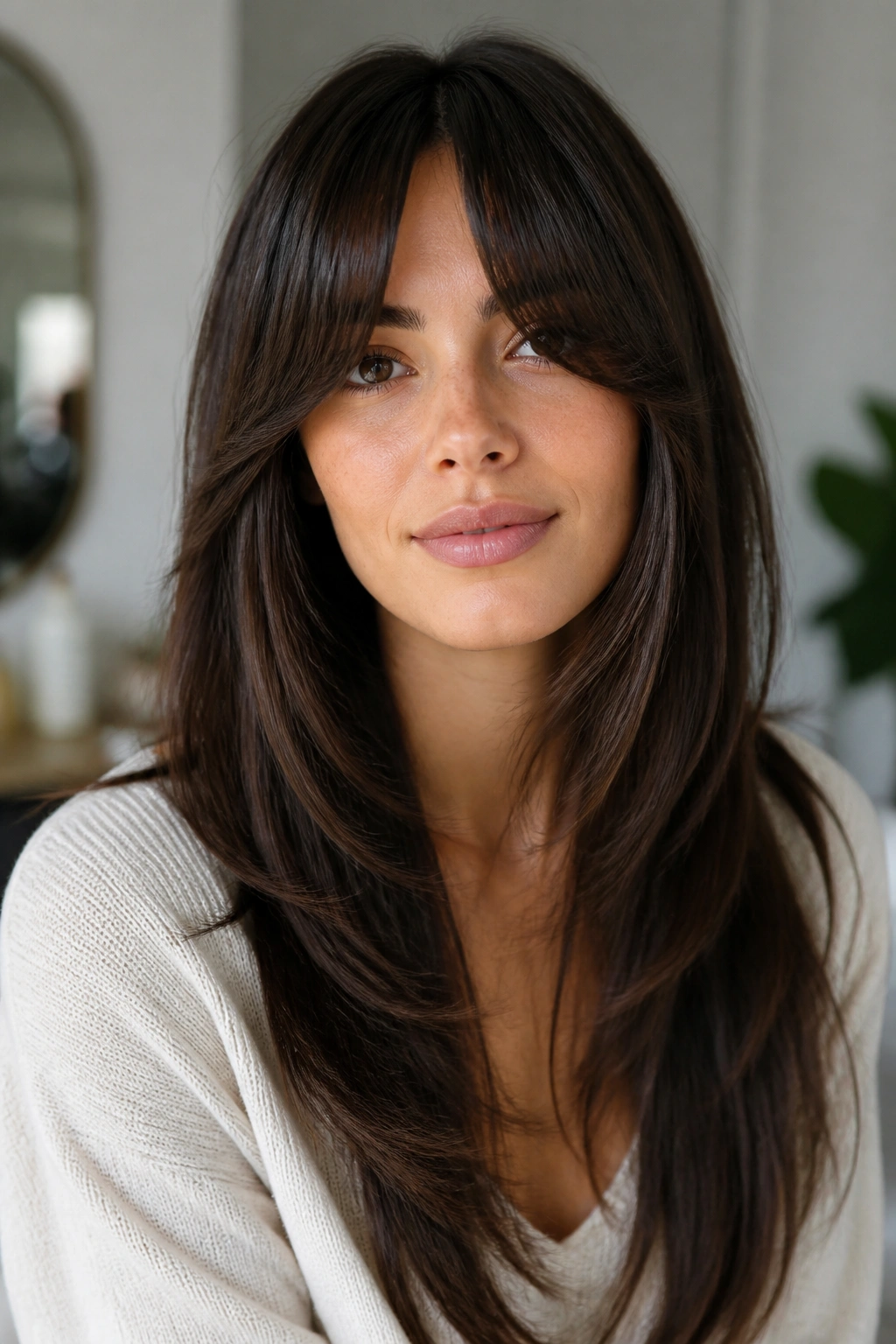
Why do curtain bangs keep showing up on long faces? Because they do two jobs at once. They shorten the forehead a little and create a soft frame that lands on both sides of the cheeks.
How to Wear It
Curtain bangs work best when they start around the brow or cheekbone, not halfway up the head. That gives the front of the haircut a gentle opening instead of a hard chop.
Long layers should begin below the chin so the face doesn’t get stretched by too much vertical movement near the temples. Blow them away from the face with a medium round brush, then let the ends fall naturally.
A small warning here. If the bangs are too short or too thin, they can look fussy and lose the balancing effect. Keep them plush enough to sit with some weight.
4. Deep Side-Parted Hollywood Waves
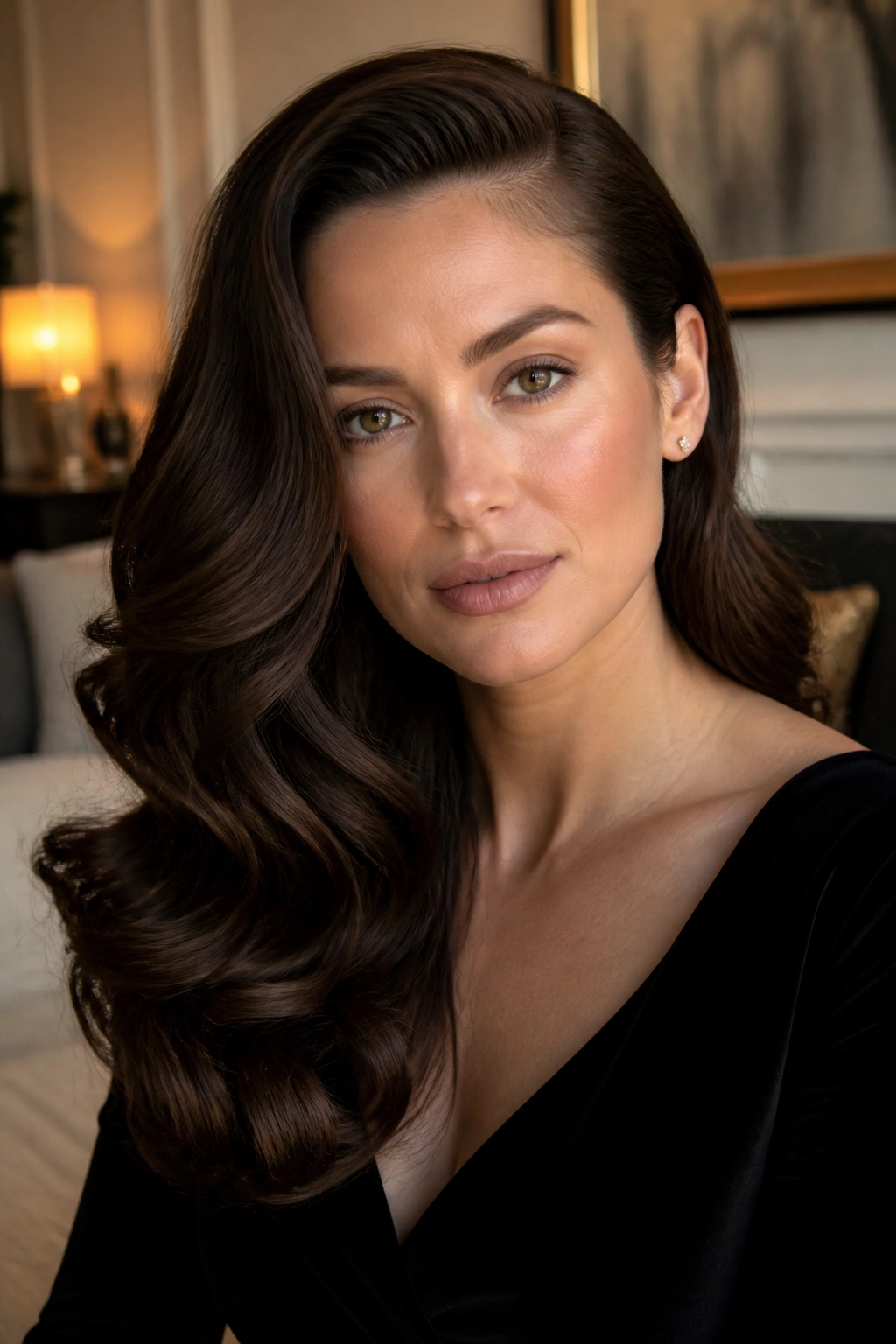
A deep side part can change the whole read of a face in about ten seconds. Add soft Hollywood waves, and the style suddenly feels wider, fuller, and a lot less vertical.
That side part shifts the hair mass across the forehead and breaks the long straight line from hairline to chin. The wave then does the rest of the work by folding the width outward near the cheekbones.
- Best on medium to long hair
- Use a 1.25-inch curling iron
- Set the part before drying, not after
- Pin the heavier side back for a little asymmetry
My take: this is one of the prettiest styles for long faces when you want polish without stiffness.
5. Textured Shag with Airy Ends
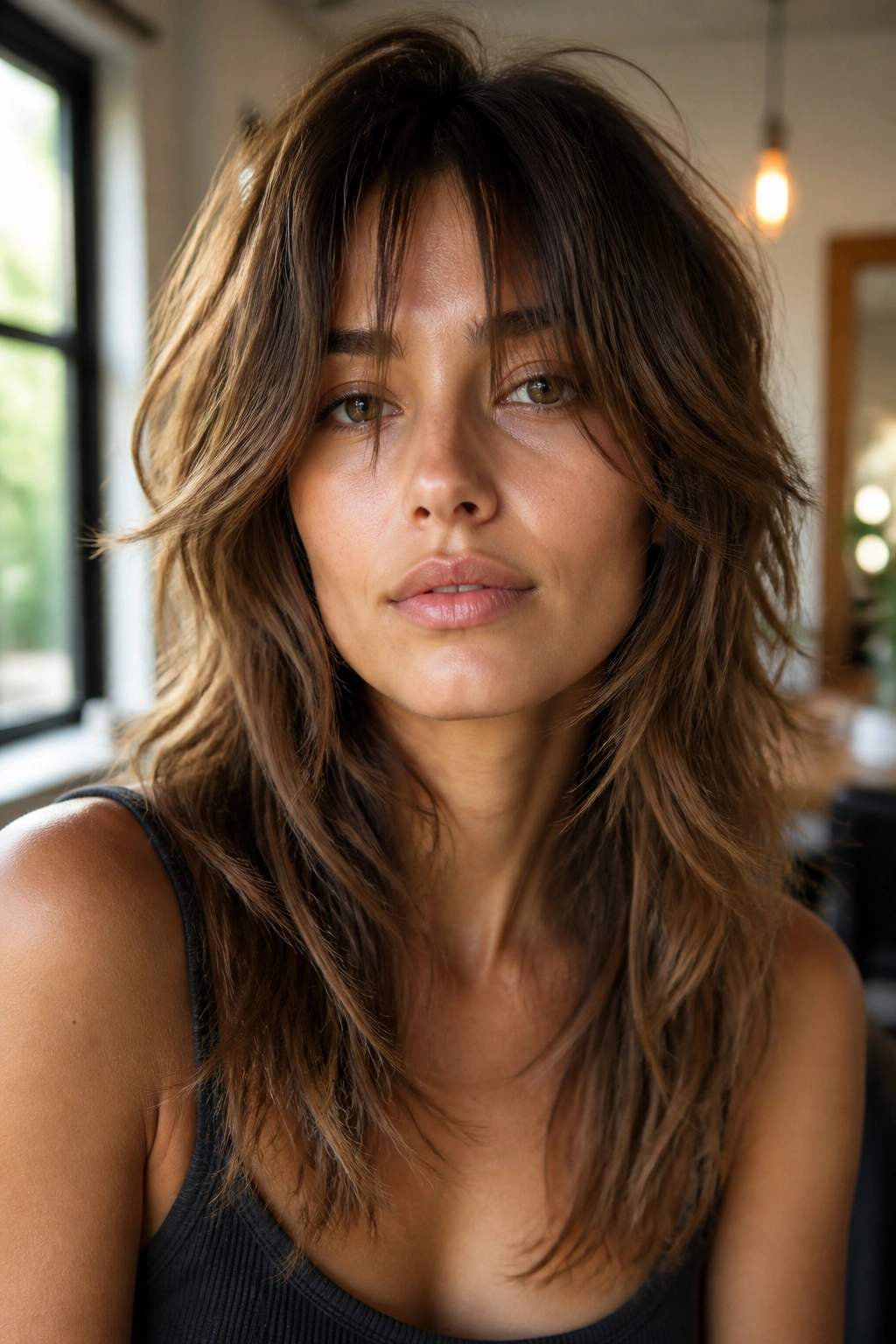
A shag is all about movement, and that matters. Long faces can look even longer when the hair is too smooth and uniform, but a shag breaks the shape into pieces that move at different levels.
The best version keeps the top soft, not tall. You want layers that start around the cheekbone and then feather out toward the collarbone, so the eye keeps landing on the sides instead of racing straight down.
Airy ends make the haircut feel lighter, but the real trick is avoiding too much lift on top. Let the texture live around the face and through the mid-lengths. If your hair is wavy, this one almost styles itself. If it’s straight, a salt spray and a rough-dry with your fingers can give it enough grit to hold shape.
6. Brow-Grazing French Bob
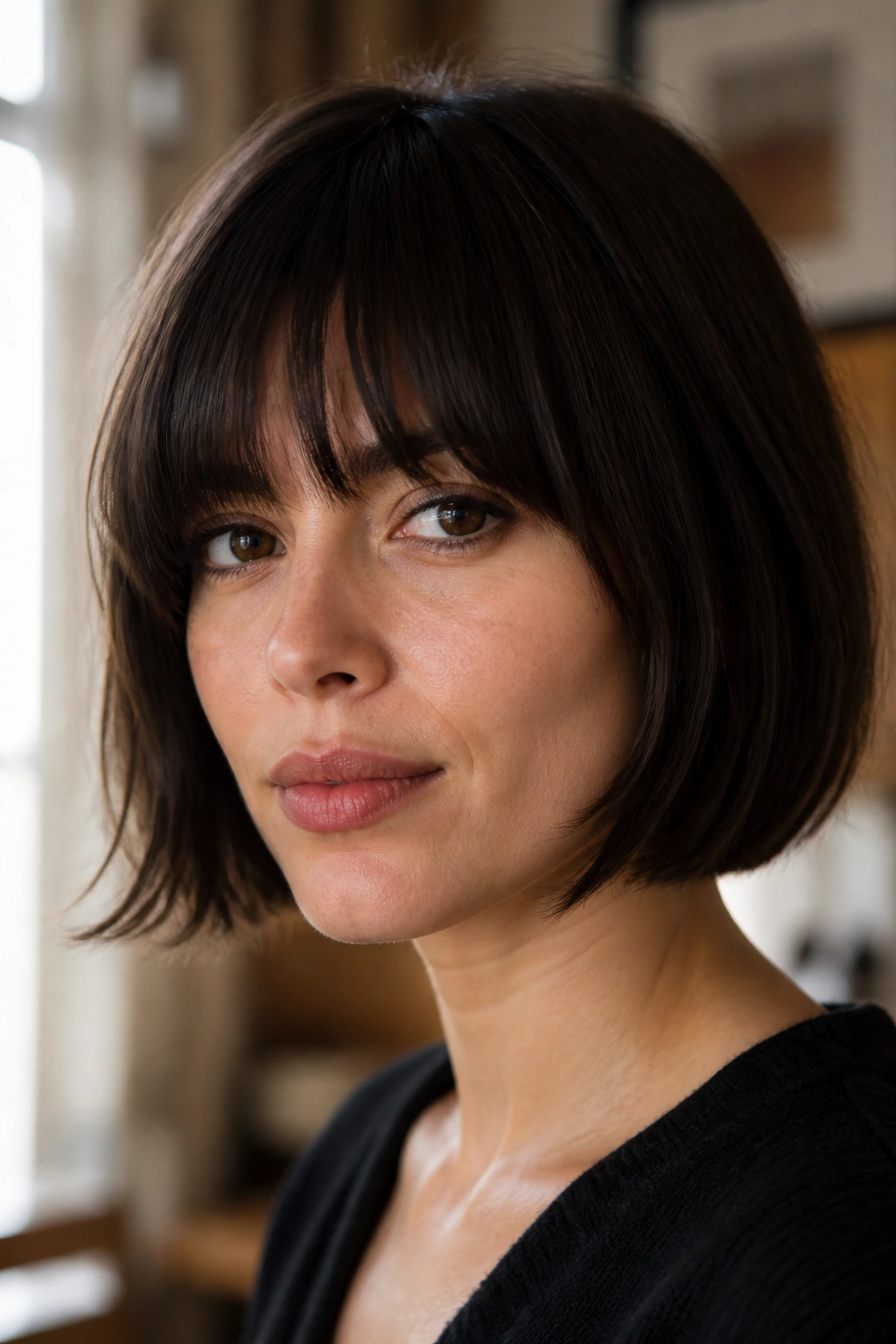
A French bob sits in a different lane from a longer lob. It’s shorter, sharper, and a little more cheeky, which is exactly why it can suit a long face so well.
Unlike a long, narrow shape, the French bob keeps the focus around the mouth, jaw, and cheek area. That visual weight stops the face from reading as all length and no width.
It works especially well with a soft fringe that skims the brows. Not a tiny micro bang. Not a heavy helmet. Just enough hair to shorten the forehead and keep the bob from feeling severe. If your hair has a little natural bend, even better. The slight bend gives the cut warmth.
7. Shoulder-Length Cut with Flipped-Out Ends
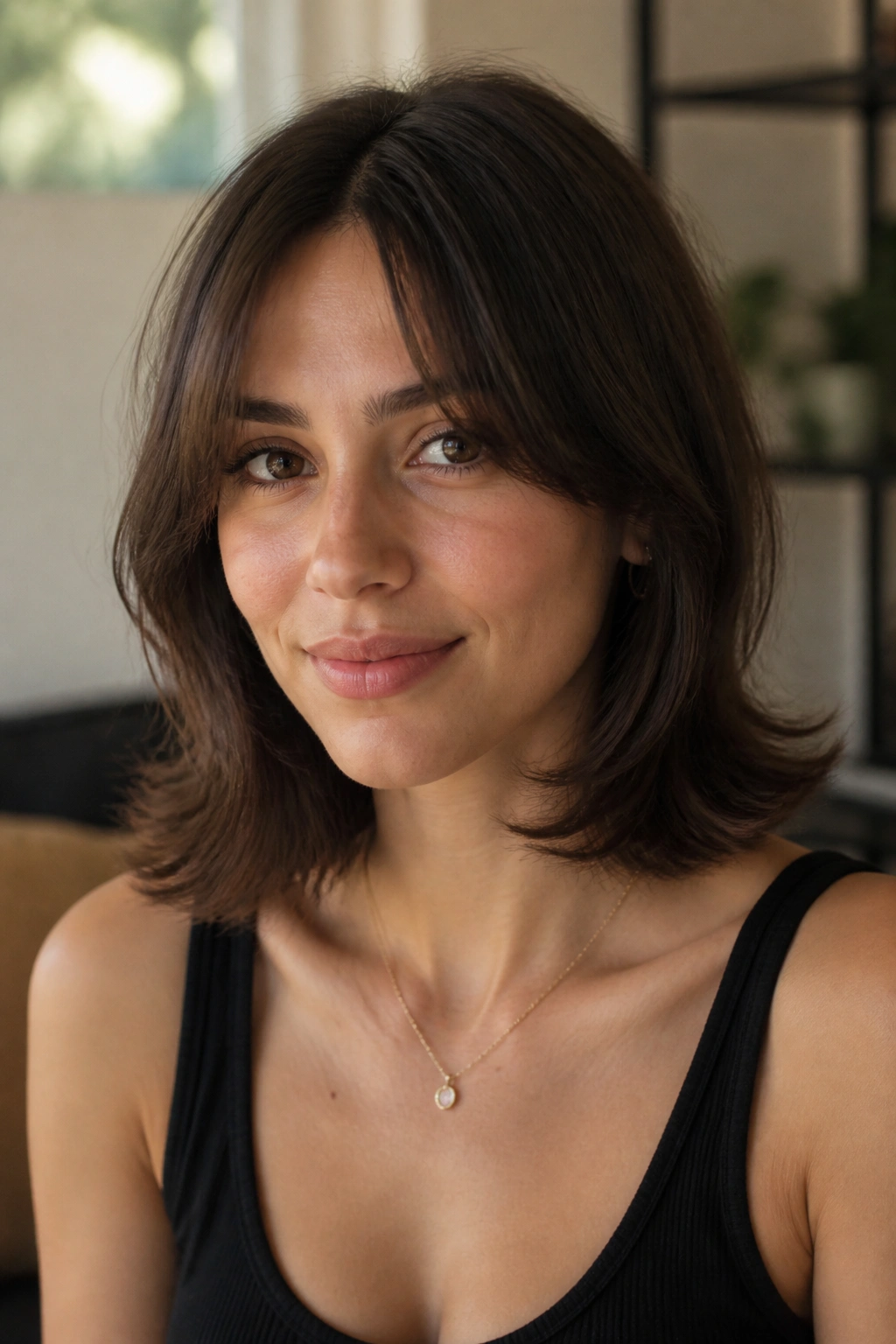
Shoulder-length hair can be a sweet spot for long faces, but only if the ends do something. Straight, flat ends can drag the eye downward. Flipped-out ends push the shape outward and make the haircut feel wider.
That outward turn at the shoulders gives the face a little more side presence. It’s old-school in the best way, and it looks especially nice when the flip starts around the jaw, not all the way at the hem.
A 2-inch round brush and a quick outward pass through the last 2 inches of hair is enough. You do not need a pageant blowout. A slight bend is better than a stiff curl.
8. Long Hair with Bottleneck Bangs
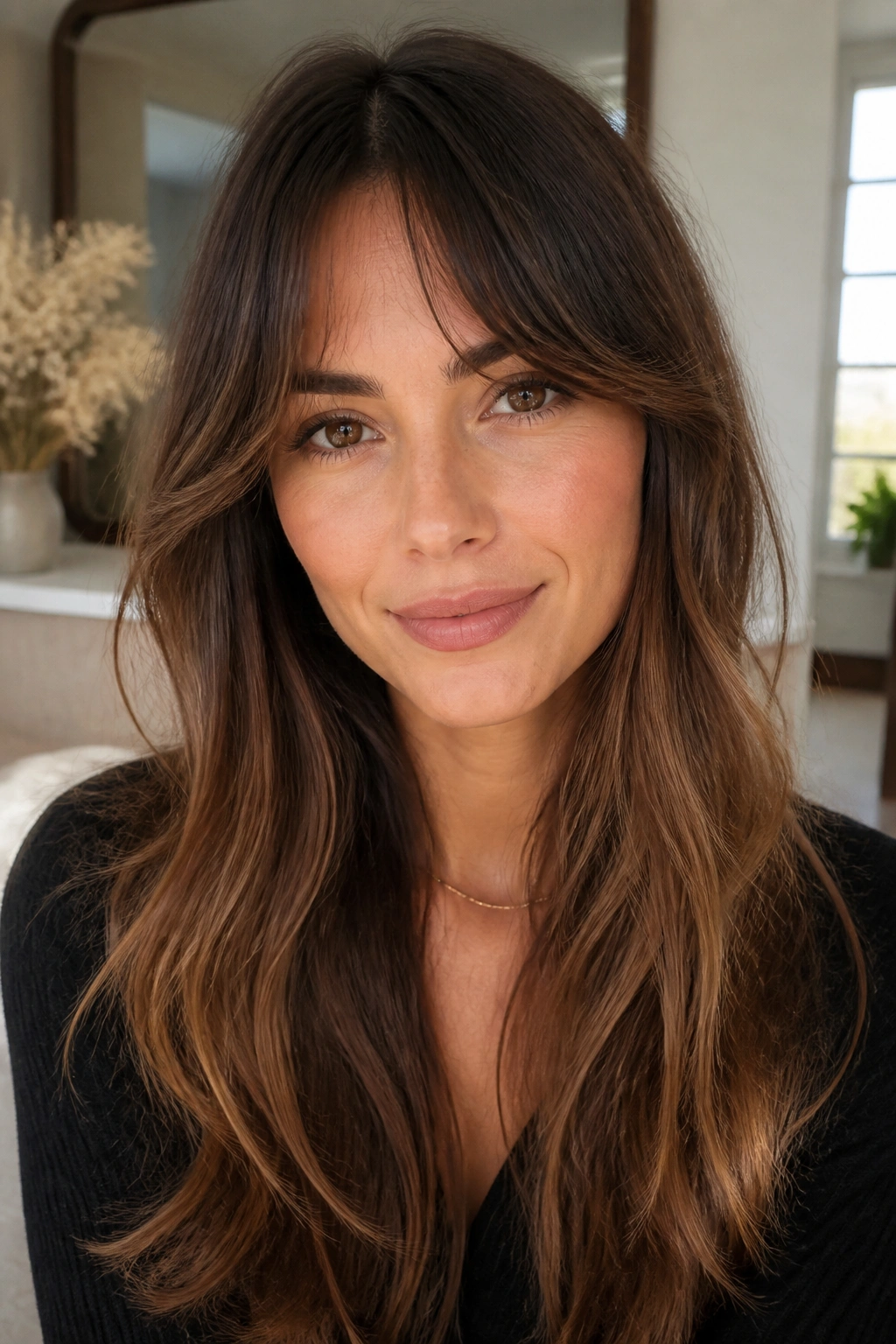
Bottleneck bangs are clever on a long face because they start narrow at the center and open out toward the temples. That gives the forehead a softer shape without cutting a hard, straight line across it.
The rest of the hair can stay long, which is useful if you like length. Just keep the layers controlled. If everything is too straight and too heavy, the bangs will look disconnected from the rest of the cut.
This style works best when the front pieces are blown out away from the face and the lengths have a little movement. A soft wave through the lower half of the hair keeps the whole shape from feeling flat.
9. Loose Curls That Start at the Cheekbones
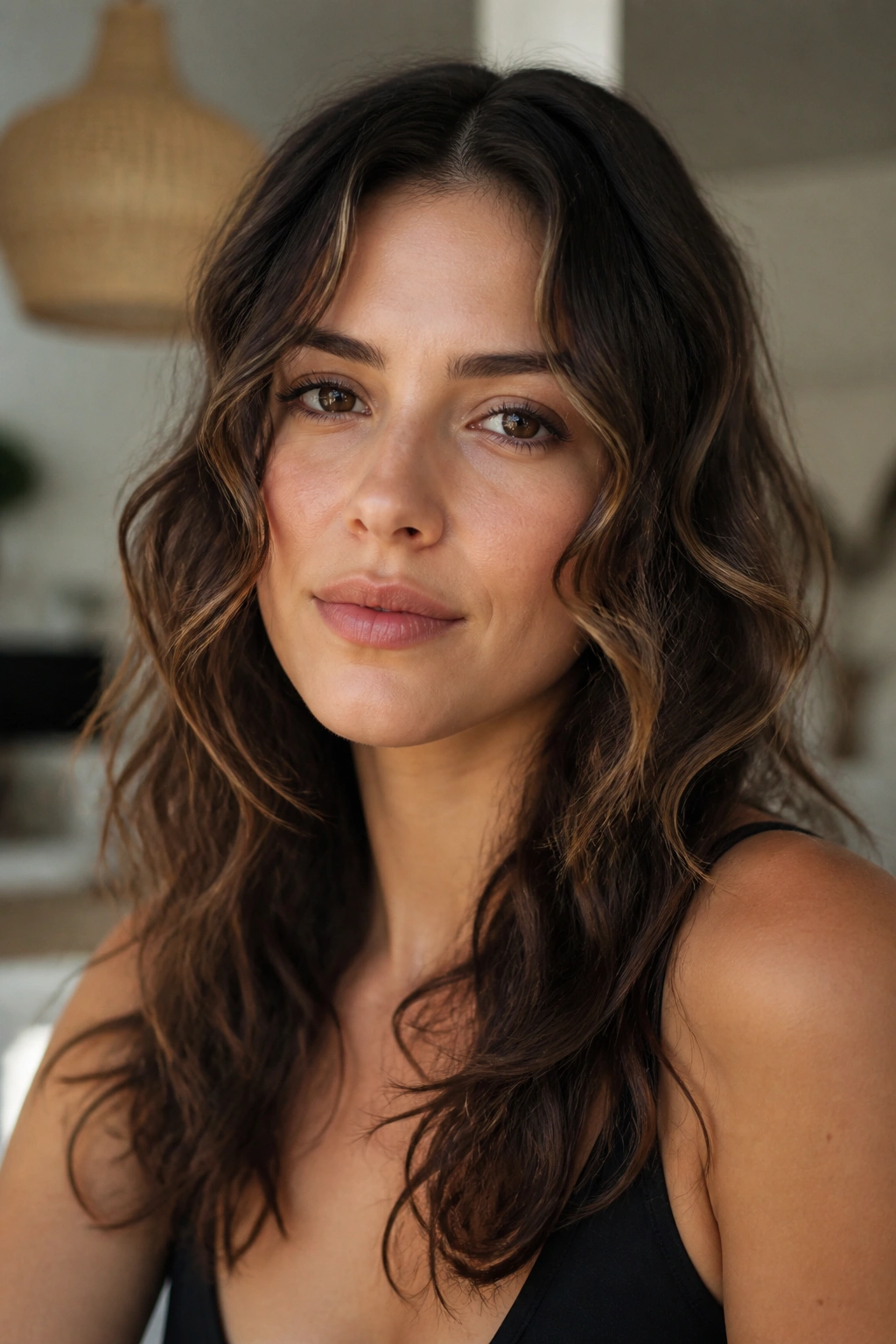
Why do cheekbone-level curls flatter a long face so well? Because they put width right where the face needs it most.
If you curl every strand from root to tip, the style can get too big at the top. Better to leave the roots smoother and start the bend at the cheeks or slightly below. That keeps the eye moving sideways instead of upward.
How to Use It
- Wrap 1-inch sections around a curling iron, starting halfway down the shaft
- Let the curls cool completely before brushing them out
- Finish with a light serum on the ends only
- Keep some face-framing pieces slightly looser than the rest
The result should look soft, not overworked. Think movement, not prom hair.
10. Rounded Afro with Side Width
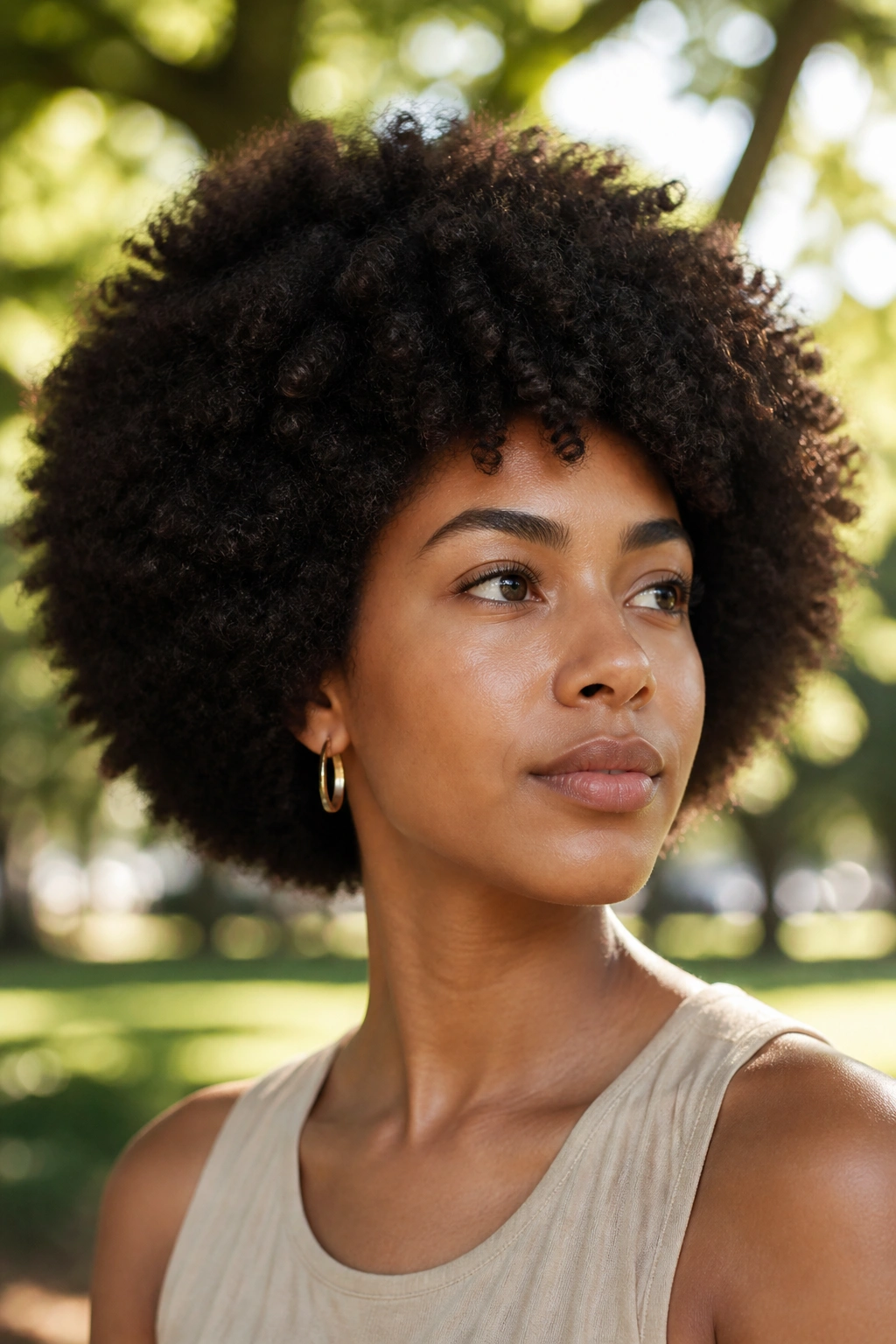
A rounded afro can be beautiful on a long face when the shape expands outward instead of upward. The goal is a soft halo around the temples and cheeks, not a tall column sitting on top of the head.
That side width matters. It changes the silhouette fast, and it gives the face a fuller frame that feels balanced and alive. The shape should look intentional, with the outline slightly rounded at the top and broader through the sides.
Moisture is non-negotiable here. Coils and tight curls need enough hydration to hold their shape without frizzing into a puff that’s all height and no structure. A pick at the roots can lift gently, but keep the focus on width, not lift. That’s the line to remember.
11. Asymmetrical Bob
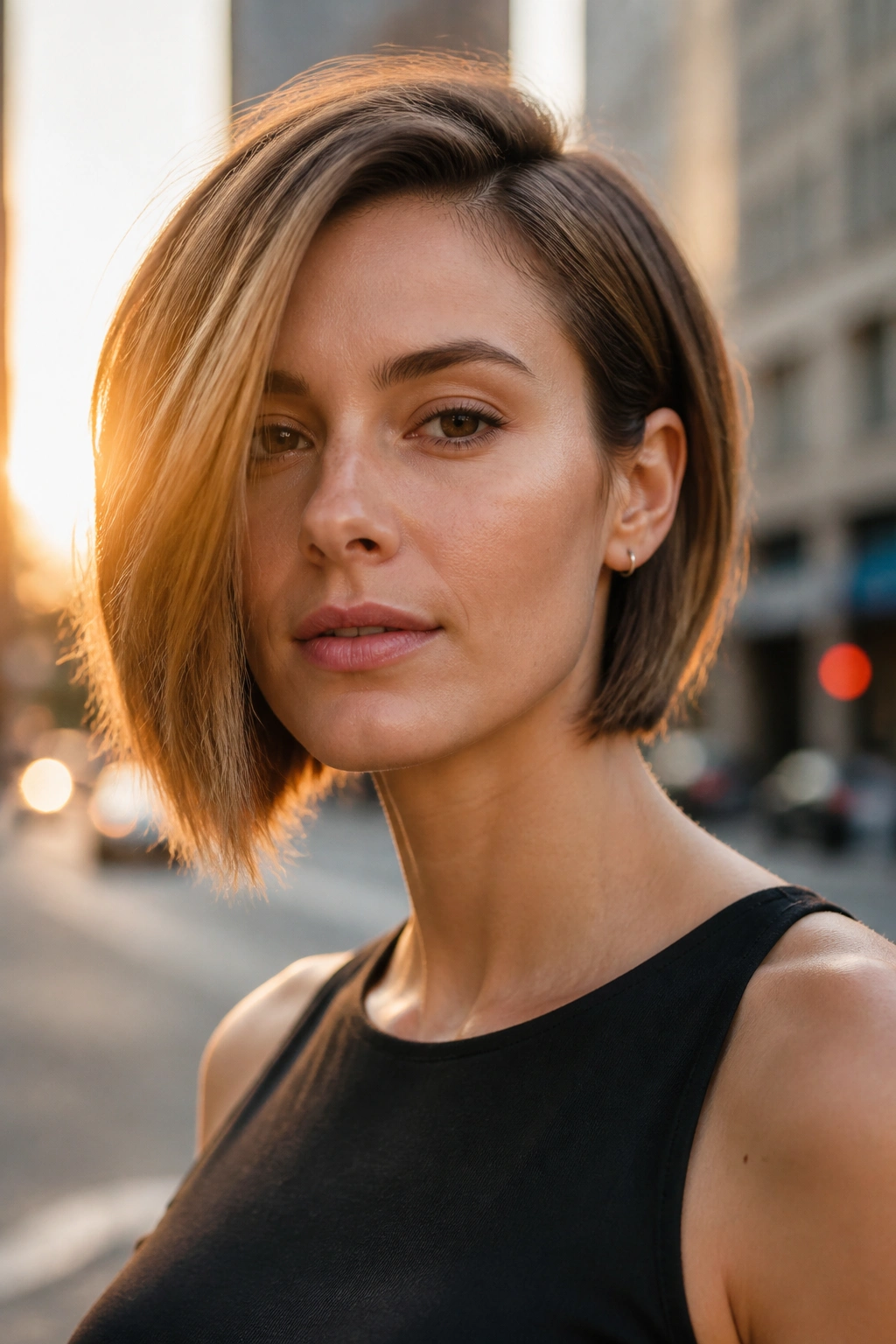
An asymmetrical bob uses a small mismatch in length to create movement across the face. One side falls a little longer than the other, which gives the eye something to follow sideways instead of straight down.
That tiny shift makes a bigger difference than people expect. It breaks symmetry in a way that feels modern, but it also helps a long face by adding a horizontal angle to the shape.
Keep the difference subtle. A dramatic one-sided cut can look cool, but it can also sharpen the face more than you want. A difference of 1 to 2 inches is usually enough. Pair it with a deep side part if you want the whole look to feel softer.
12. Butterfly Cut with Face-Framing Pieces
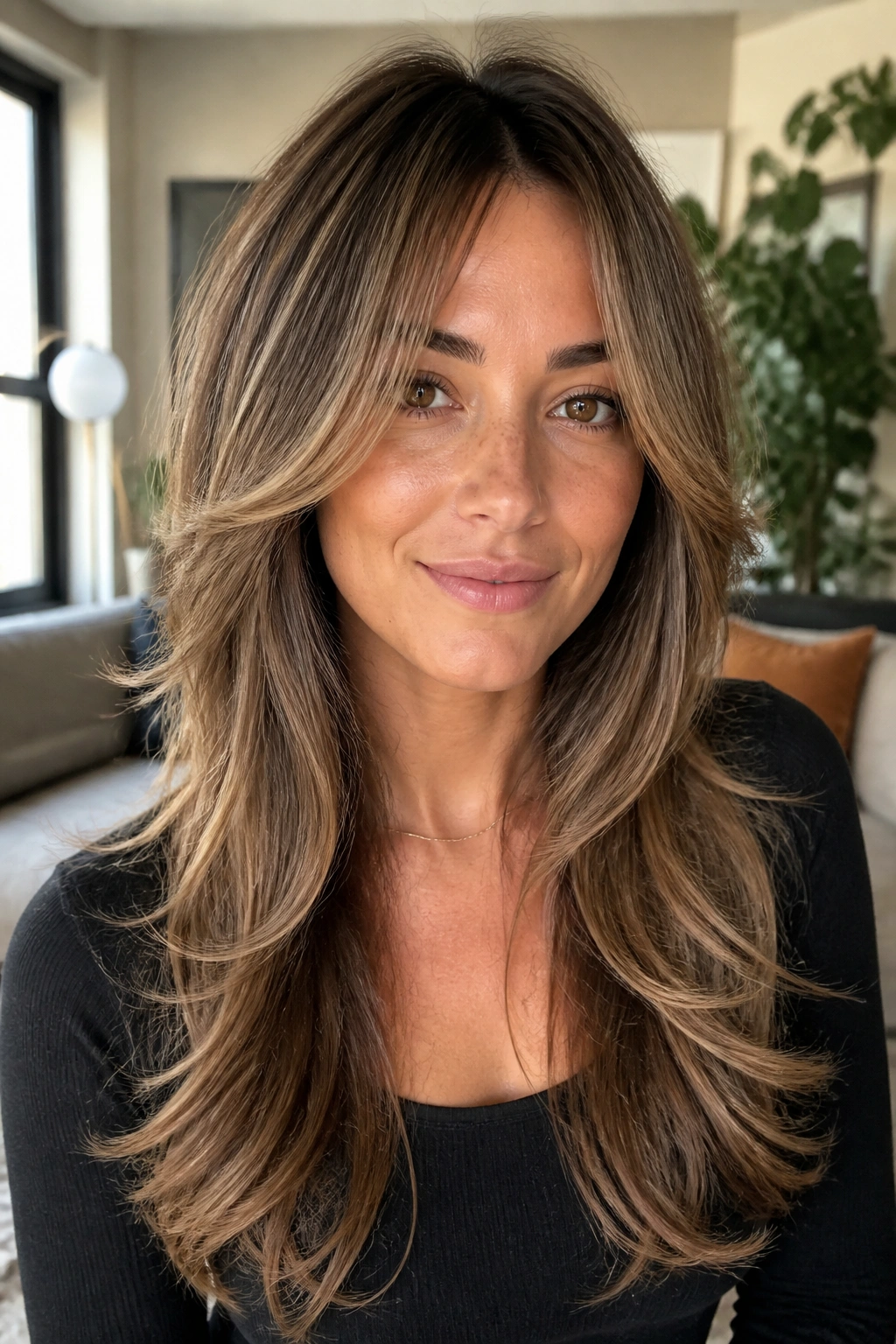
The butterfly cut earns its keep on long faces because it gives you two shapes at once: shorter pieces around the face and long lengths underneath. That front layering helps shorten the visual length without forcing you into a shorter haircut.
Unlike one-length hair, which can hang in a straight column, the butterfly cut creates lift in the right places. The pieces around the cheekbones and collarbone act like little brackets around the face.
This cut is especially useful if your hair is thick and needs movement. If it’s fine, the layers should stay light so the ends do not look stringy. The best version has enough body to move, but not so much choppiness that it starts feeling busy.
13. Low Ponytail with Volume at the Sides
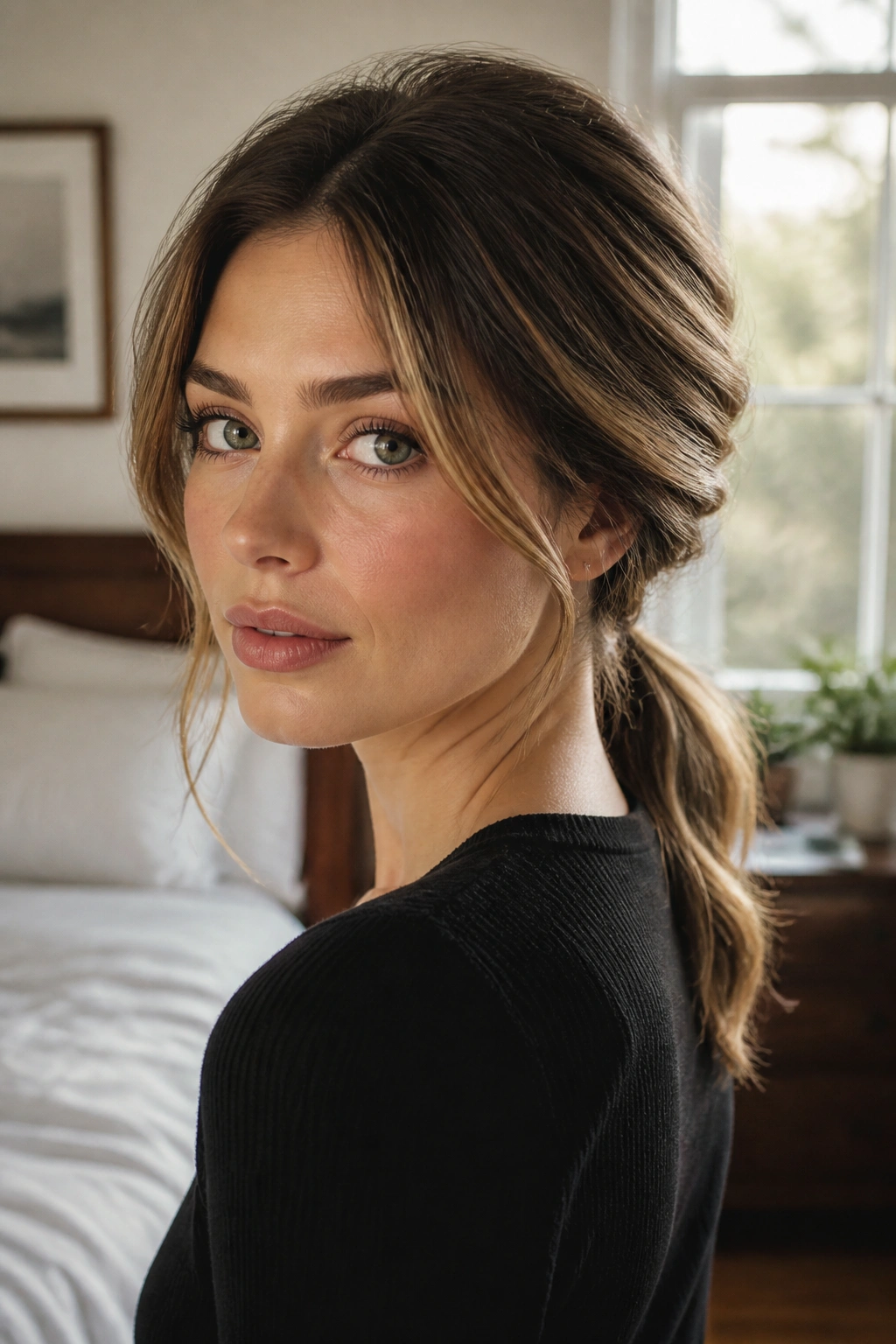
A low ponytail can work beautifully on a long face if you keep the volume where it matters. Pulling everything tight and high is the fastest way to stretch the face. A ponytail at the nape, with a little puff above the ears, does the opposite.
Why This Shape Works
The side volume widens the face a bit, while the low placement keeps the style grounded. Loose pieces near the temples make the effect even softer.
- Tie the ponytail at the nape of the neck
- Gently loosen hair above the ears
- Wrap a small section around the elastic for polish
- Curl the front pieces with a 1-inch iron
Important: keep the crown smooth, not puffy. The lift should live around the sides.
14. Half-Up Style with Loose Sides
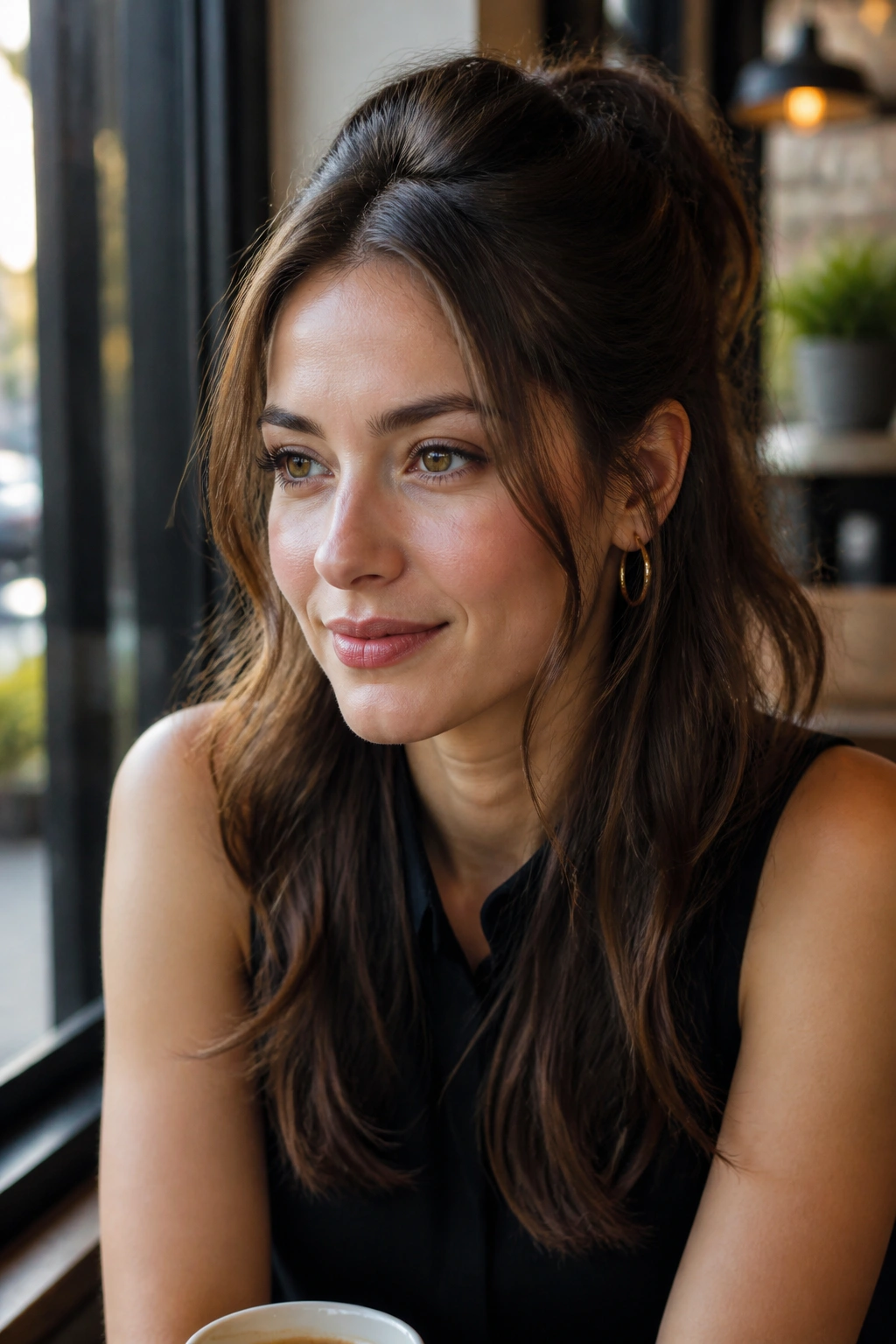
A half-up style is smart for long faces because it gives you some height control without pulling all the hair away from the cheeks. The loose lower half keeps width in the silhouette, which matters more than people think.
The style can be casual or dressed up. A loose twist or clip at the back works fine. You do not need a big top knot sitting on the crown; that can make the face look longer in a hurry.
What I like here is the flexibility. You can wear the front pieces tucked away for a cleaner look, or leave a few strands out around the temples for softness. If your hair is layered, the shorter pieces near the face will do some of the work for you.
15. Side Braid with Texture
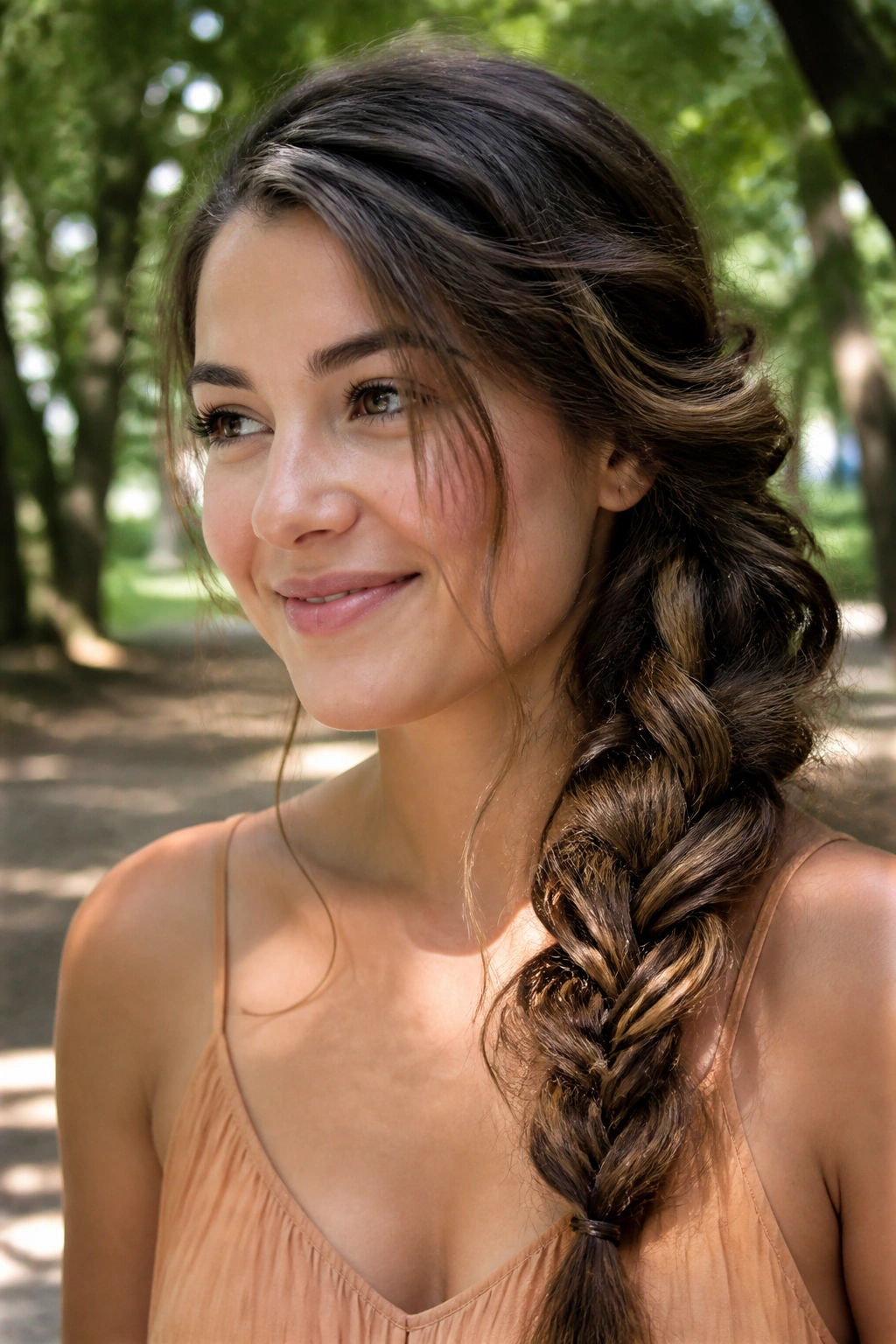
A side braid pulls the eye across the face instead of straight down the center, and that alone makes it a strong choice for a long face. The braid also sits low and broad, which gives the whole style some width.
How to Make It Feel Softer
Start by roughing up the hair a little. A braid that’s too tight can look neat, but it also feels narrow and severe. Loosen it after braiding by gently pulling at the outer edges.
A few face-framing pieces help a lot here. So does a little texture spray through the mid-lengths before you braid. The braid should look touchable, with a bit of thickness, not like a rope. If your hair is fine, pancake the braid a little more than you think you should. It helps.
16. Crown Braid with Soft Tendrils
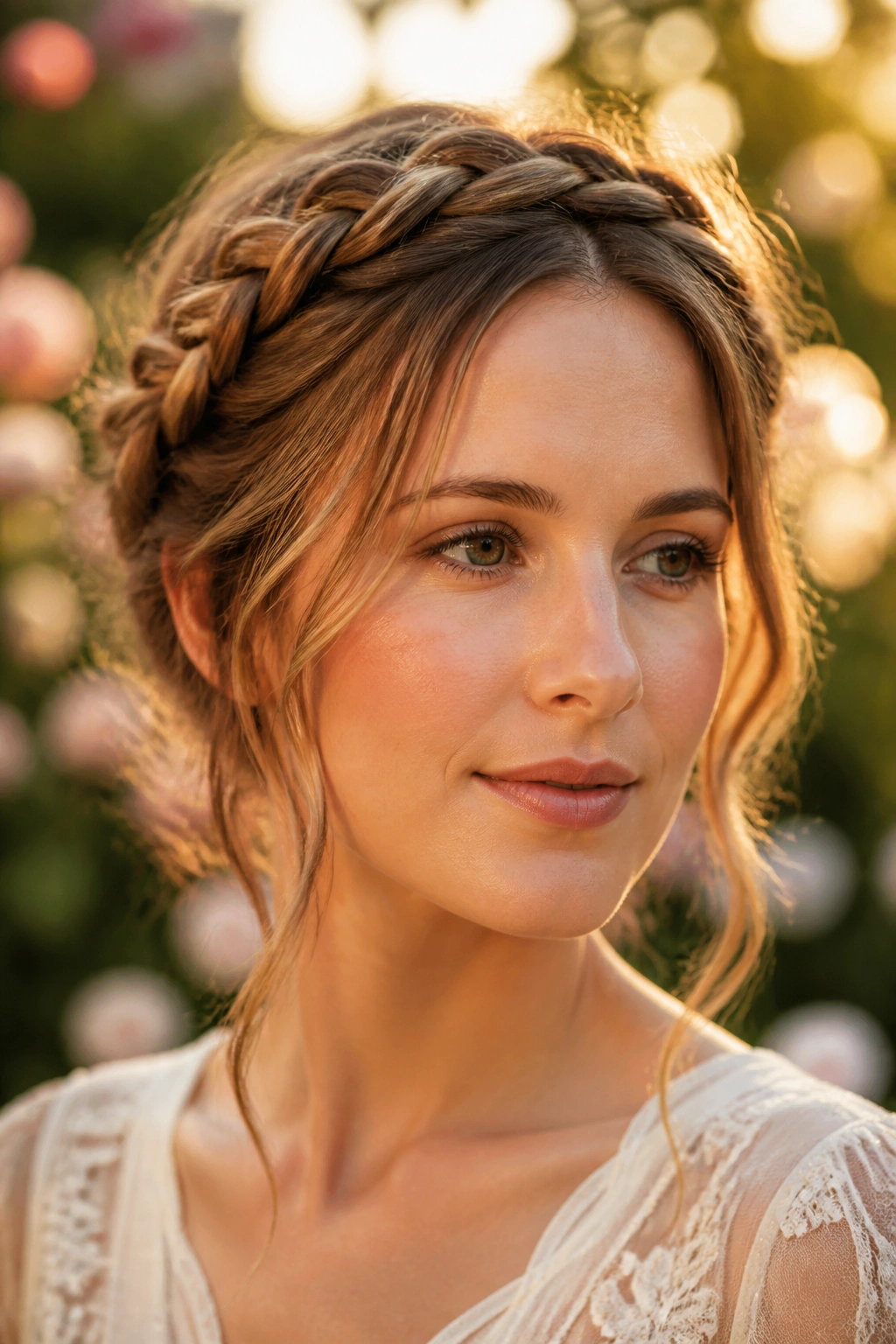
A crown braid can go too high if you’re not careful, but a low, soft version can suit a long face well. The braid wraps around the head and creates a horizontal line, which is the part that matters.
When the braid sits close to the hairline and the tendrils hang loose near the temples, the face looks more framed and less elongated. That’s the whole game here.
- Keep the braid flat against the head
- Leave 2 to 4 tendrils loose around the face
- Add a little texture spray before braiding
- Pin the braid low, not on the crown
It’s a pretty style, but it needs a little messiness. Too tidy, and it starts looking stern.
17. Sleek Lob with Tucked Ends
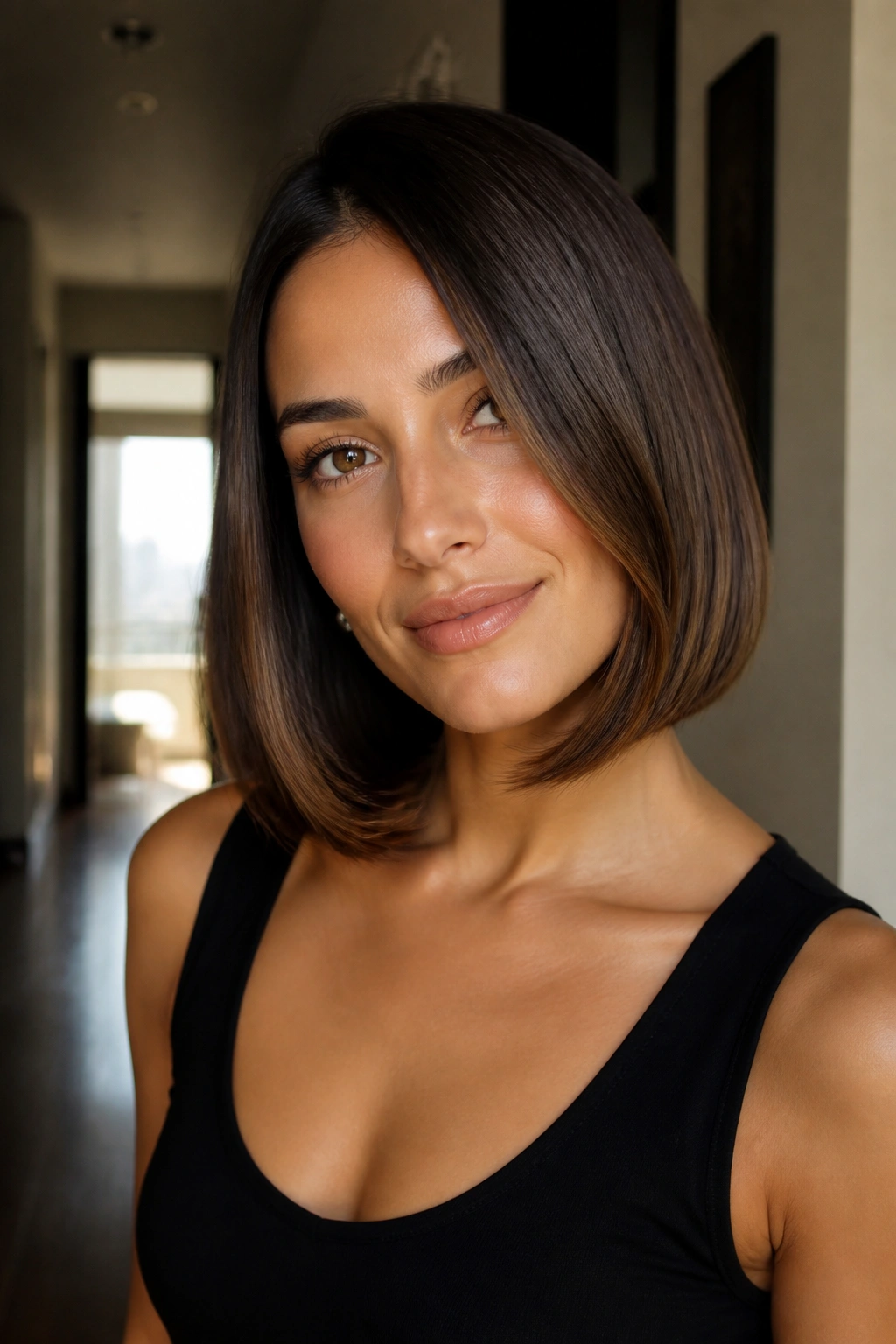
A sleek lob can flatter a long face if the ends tuck inward at the jaw instead of hanging straight down. That inward curve gives the haircut some width and keeps the shape from feeling too long.
The part matters here too. A slightly off-center part usually feels softer than a dead center part on very straight hair. If your hair is thick, a light internal layer can keep the lob from looking bulky near the bottom.
I like this style for work, dinner, or any day when you want something neat but not severe. It is polished, yes, but it still needs movement at the ends. Flat iron the last inch under, not bone-straight.
18. Layered Cut with Curtain Fringe
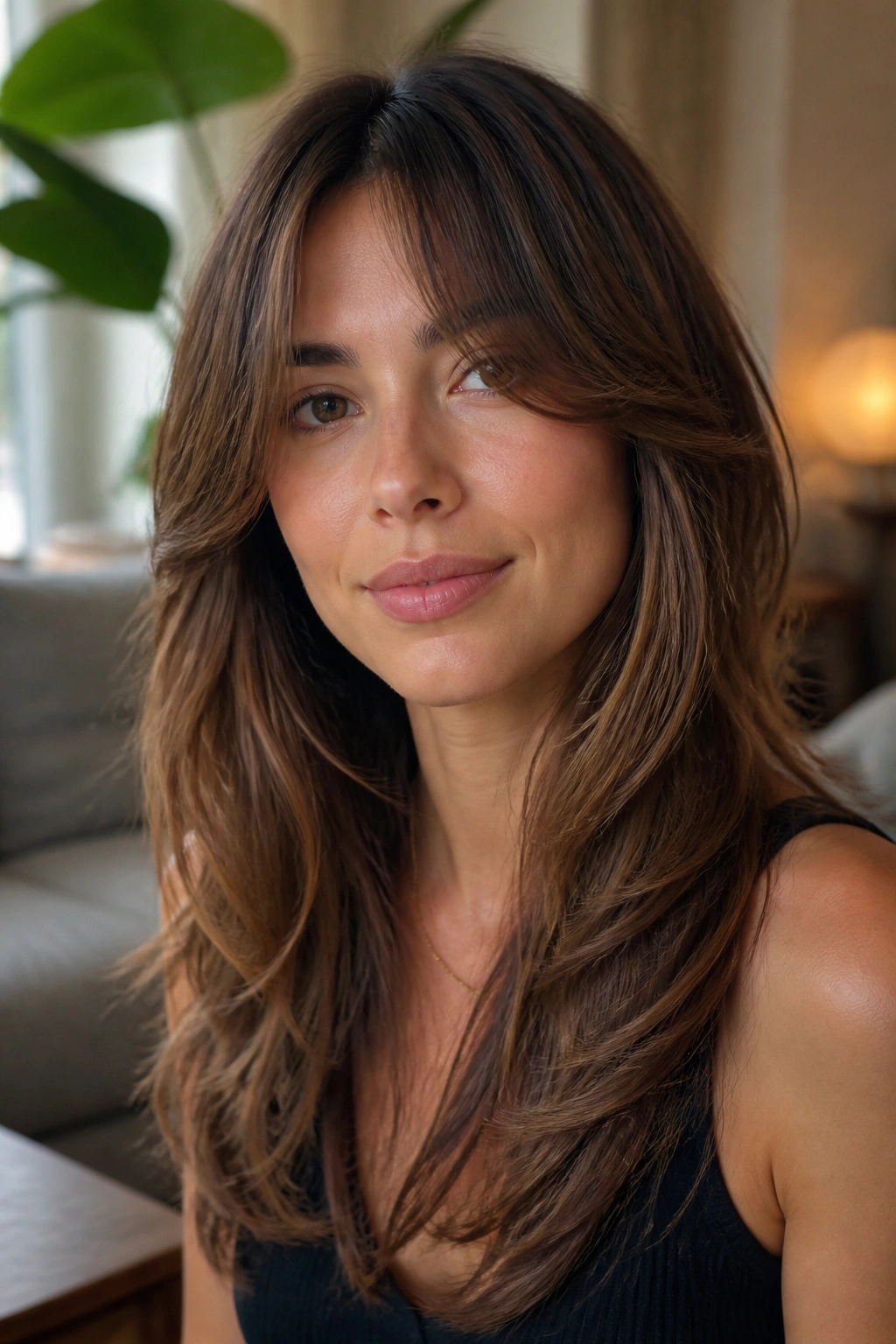
A layered cut with curtain fringe is a smart middle ground. It gives a long face some breakpoints without chopping everything into pieces.
Unlike blunt fringe, curtain fringe opens in the center and travels outward, which means it softens the forehead while still keeping the face visible. The layers then carry that softness down through the sides.
This cut is especially good if your hair is medium to thick and tends to bulk up near the bottom. Layers remove some weight, while the fringe keeps the face from looking overlong. If you’ve been afraid of bangs because they feel too dramatic, this is the calmer version.
19. Voluminous Blowout with a Side Part
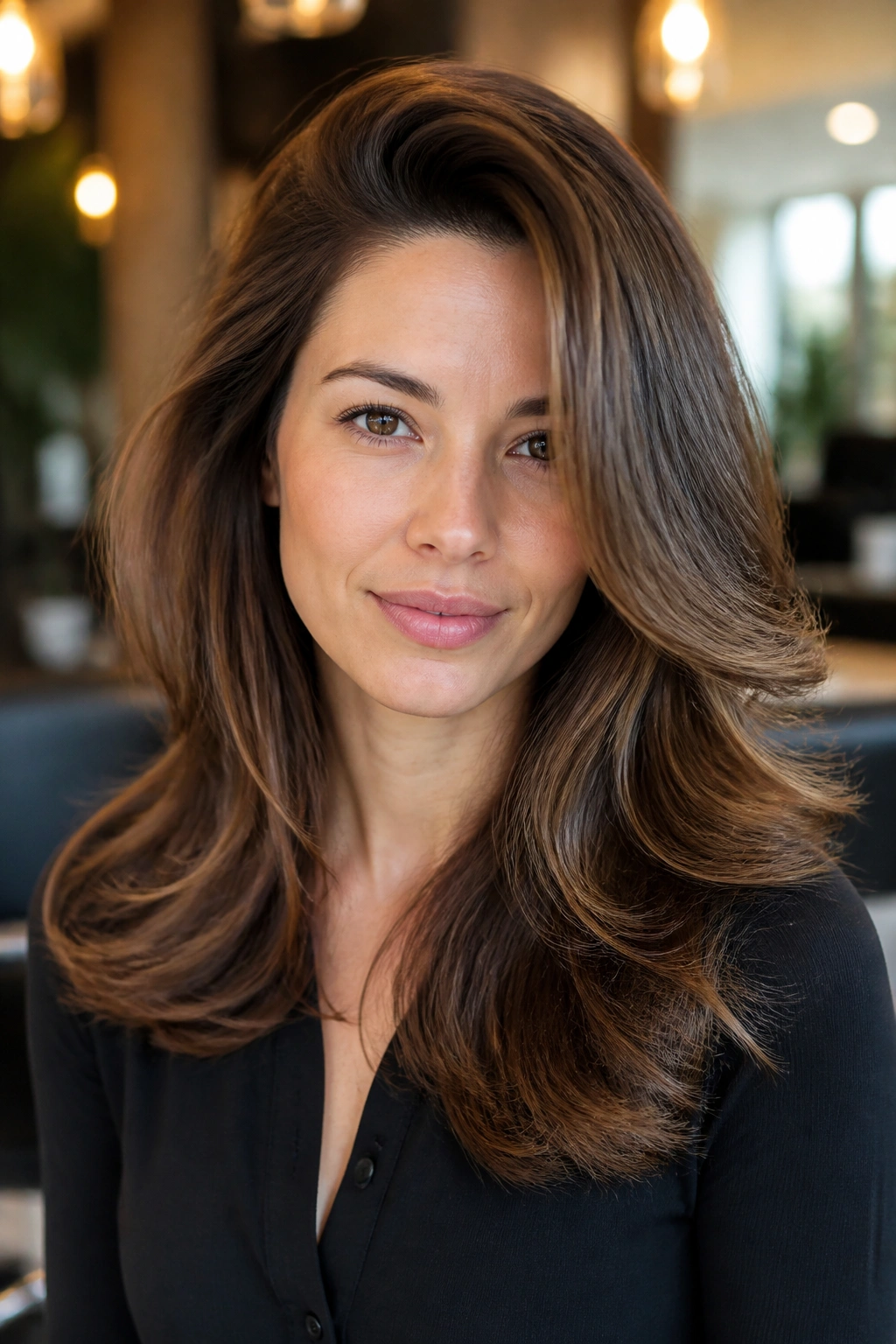
A side-part blowout can do a lot for a long face if the volume lives on the sides instead of straight on top. The round brush matters here, and so does the direction of the blow-dry.
The Shape to Ask For
Ask for lift at the roots near the temples and a soft bend through the mid-lengths. You want the hair to swing outward a little around the cheekbone line.
- Use a 2-inch round brush on medium-length hair
- Direct the hair away from the face
- Finish with the cool shot to set the bend
- Keep the top smooth, not tall
The result should feel full and airy, not helmet-like. That difference matters.
20. Wavy Lob with Center-Part Softening
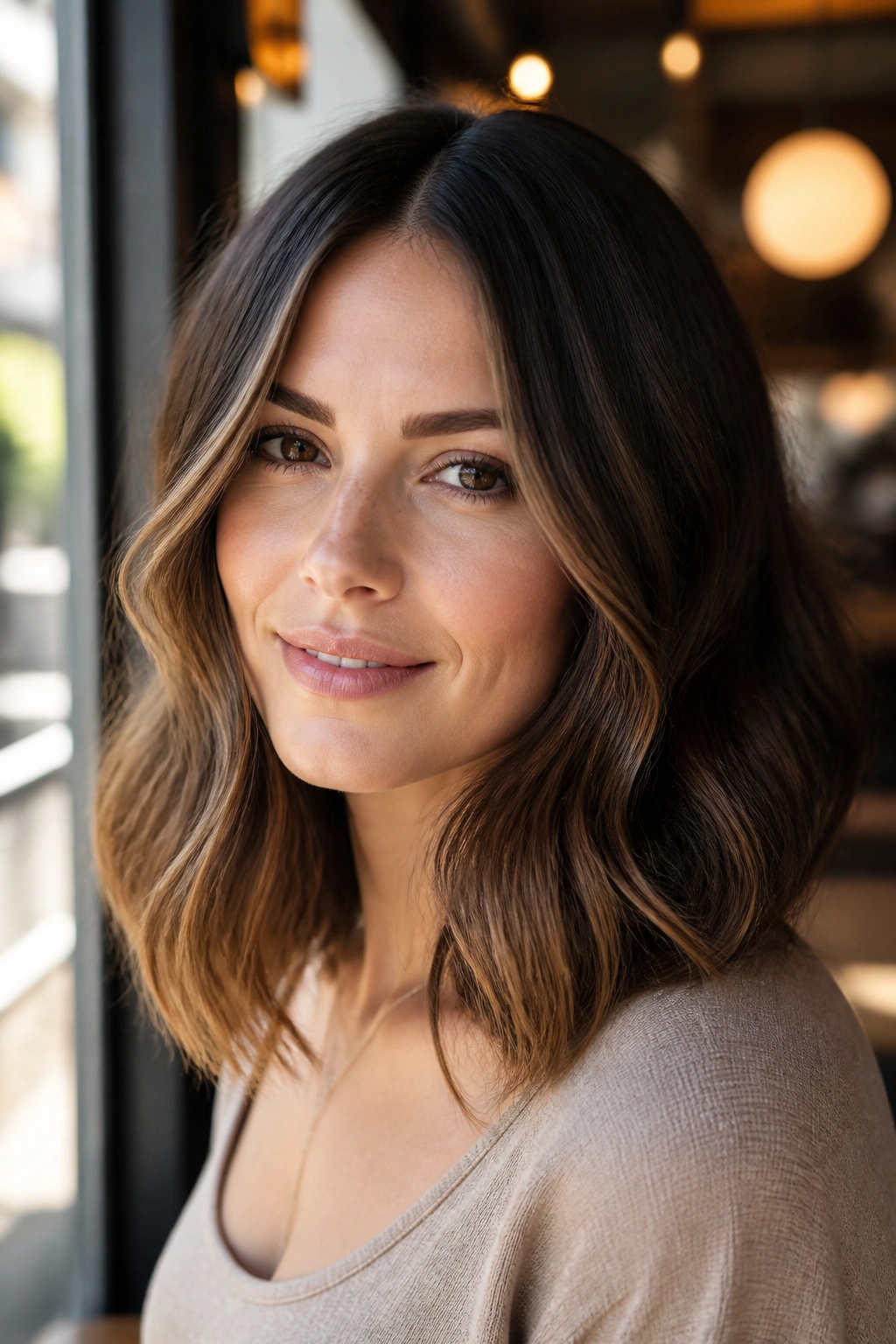
A center part is not the enemy here. A lot depends on what the hair does once it falls. If the lob has loose waves, soft ends, and a little texture near the cheeks, a center part can still look balanced on a long face.
The trick is to avoid straight, flat lengths. That’s where the face starts to look longer than it is. Waves that begin around the cheekbones interrupt that line and keep the style from feeling severe.
I would still keep the wave loose. Think bend, not curl. If the hair is too tight or too polished, the center part can sharpen the face. Softness is doing the real work.
21. Pixie with Long Side Fringe
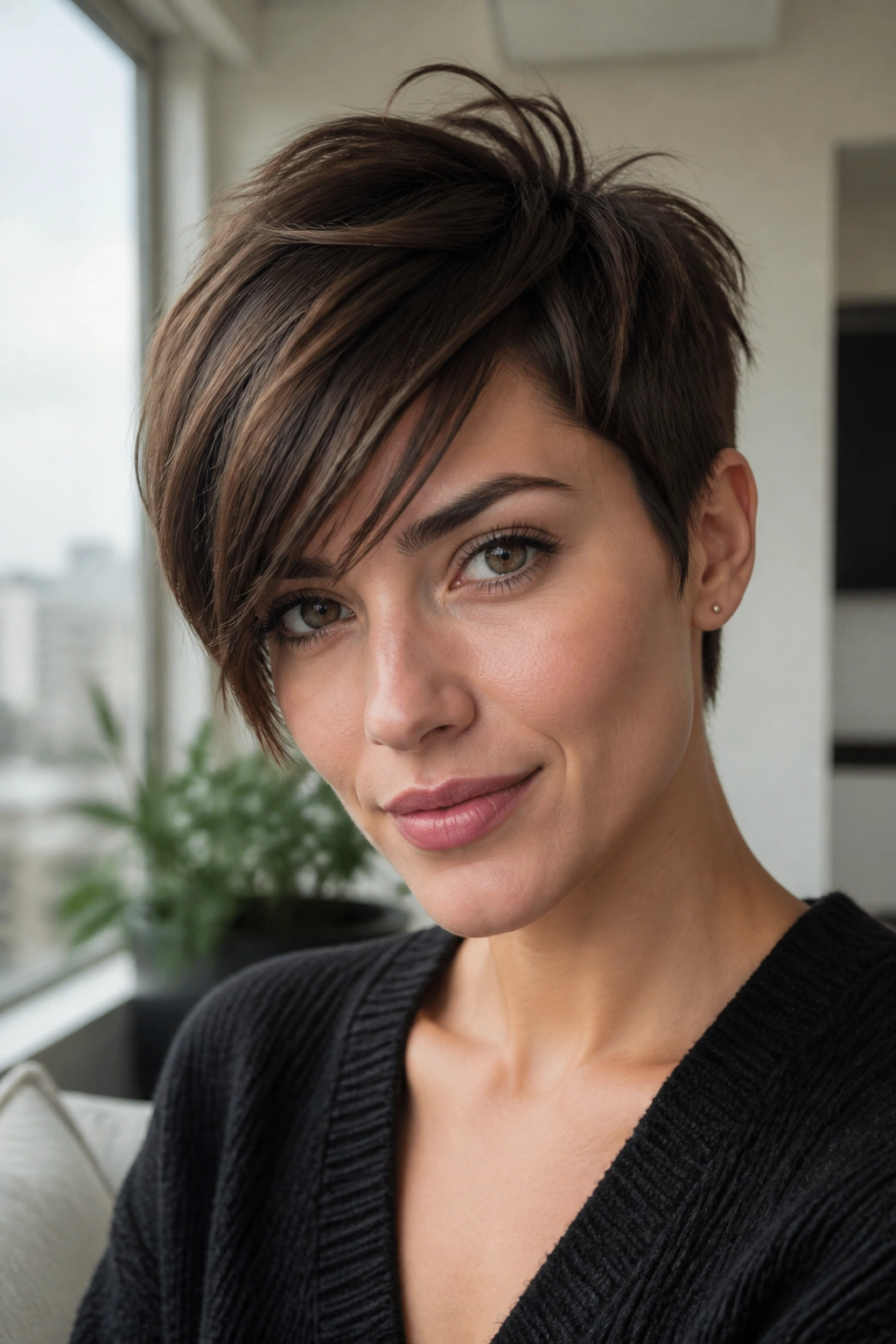
Can a pixie work on a long face? Absolutely, if it keeps some length in the front. A long side fringe makes the cut feel wider and gives the forehead a break.
How to Wear It
The top should stay controlled, not tall. A swept fringe that falls across the brow or temple helps redirect attention sideways, while the sides stay close enough to keep the shape neat.
This kind of pixie looks best when it has texture, not helmet shine. A pea-sized amount of styling cream or paste is usually enough. Work it through the fringe and around the crown with your fingers, then let a few pieces fall where they want. That little bit of mess keeps the cut from looking too severe.
22. Bouncy Ringlets at Jaw Level
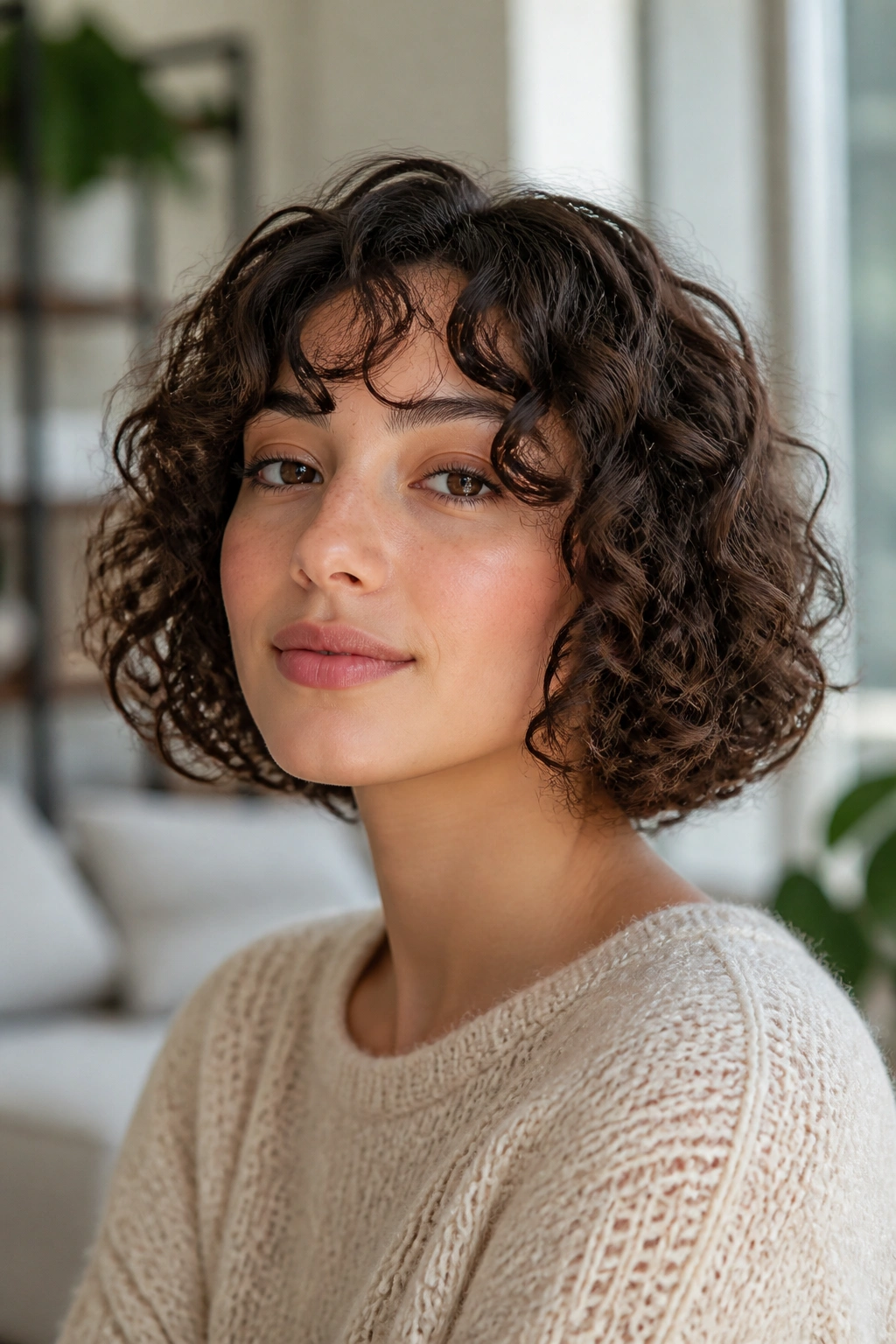
Bouncy ringlets at jaw level bring width straight to the lower half of the face, which is exactly where a long face can use some help. The curls should sit near the jaw and cheeks, not all the way on top.
If your hair is naturally curly, this is mostly about shape and moisture. If you’re curling straight hair, focus on smaller sections and keep the roots a little smoother. The ringlets should frame the face like a soft outline, not build a tower.
A diffuser helps if the curls are natural. A 3/4-inch or 1-inch curling iron works if you’re setting the shape by hand. Let the curls cool before separating them. Warm curls fall apart faster, and you lose the width that makes the style work.
23. Twisted Half-Up Bun with Loose Front Pieces
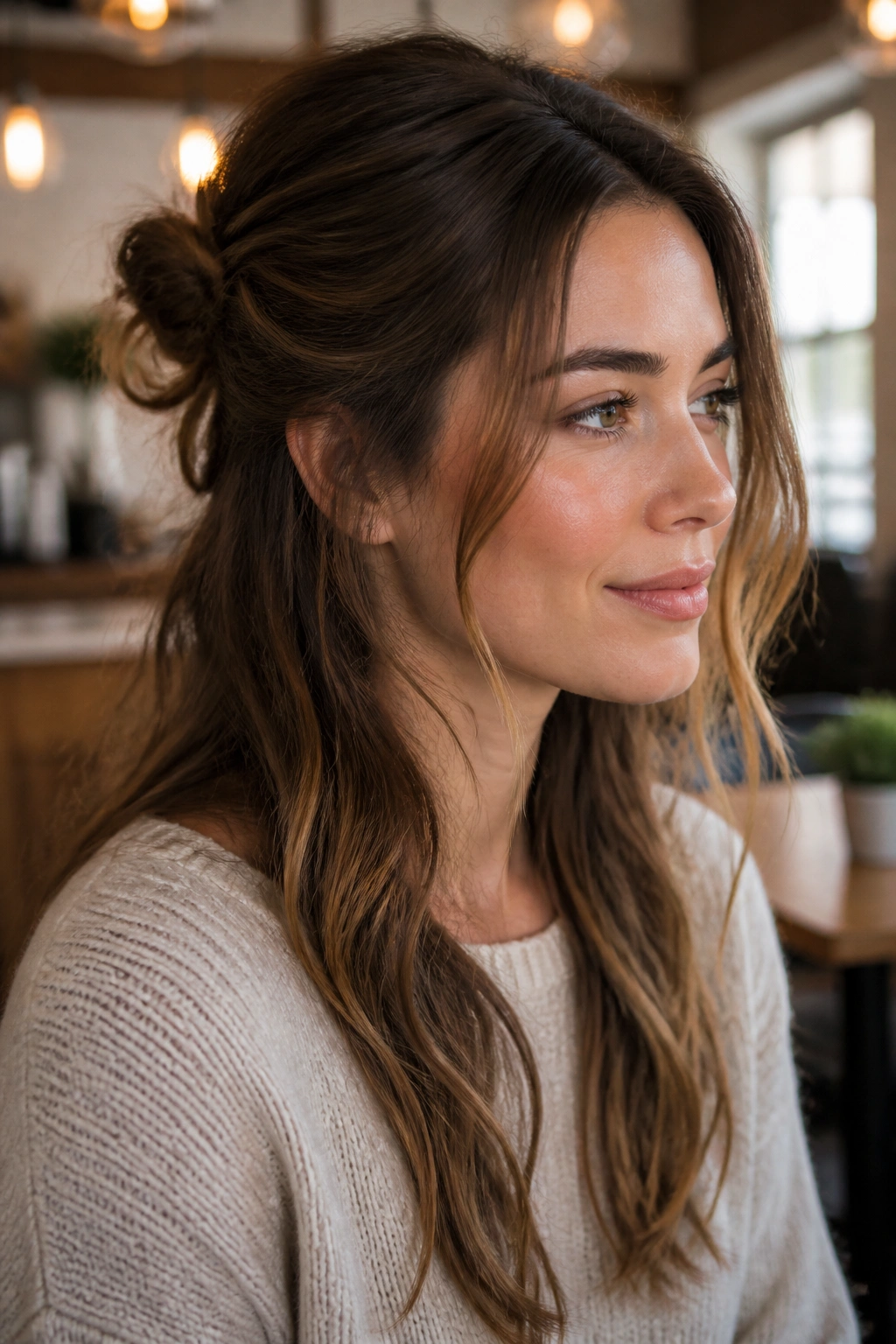
A twisted half-up bun is one of those styles that looks casual until you notice how well it balances the face. The bun sits back and up just enough to give shape, while the loose front pieces keep the forehead and cheeks from feeling exposed.
The key is placement. Keep the twist low to mid-head, not high on the crown. A high bun pushes the eye upward and can make a long face look longer. A lower knot feels softer and more grounded.
The loose pieces near the temples should be intentional. A quick wave with a curling wand makes them sit better than straight strands. You want a little curve, a little spill, not a perfect loop.
24. Feathered Mid-Length Cut
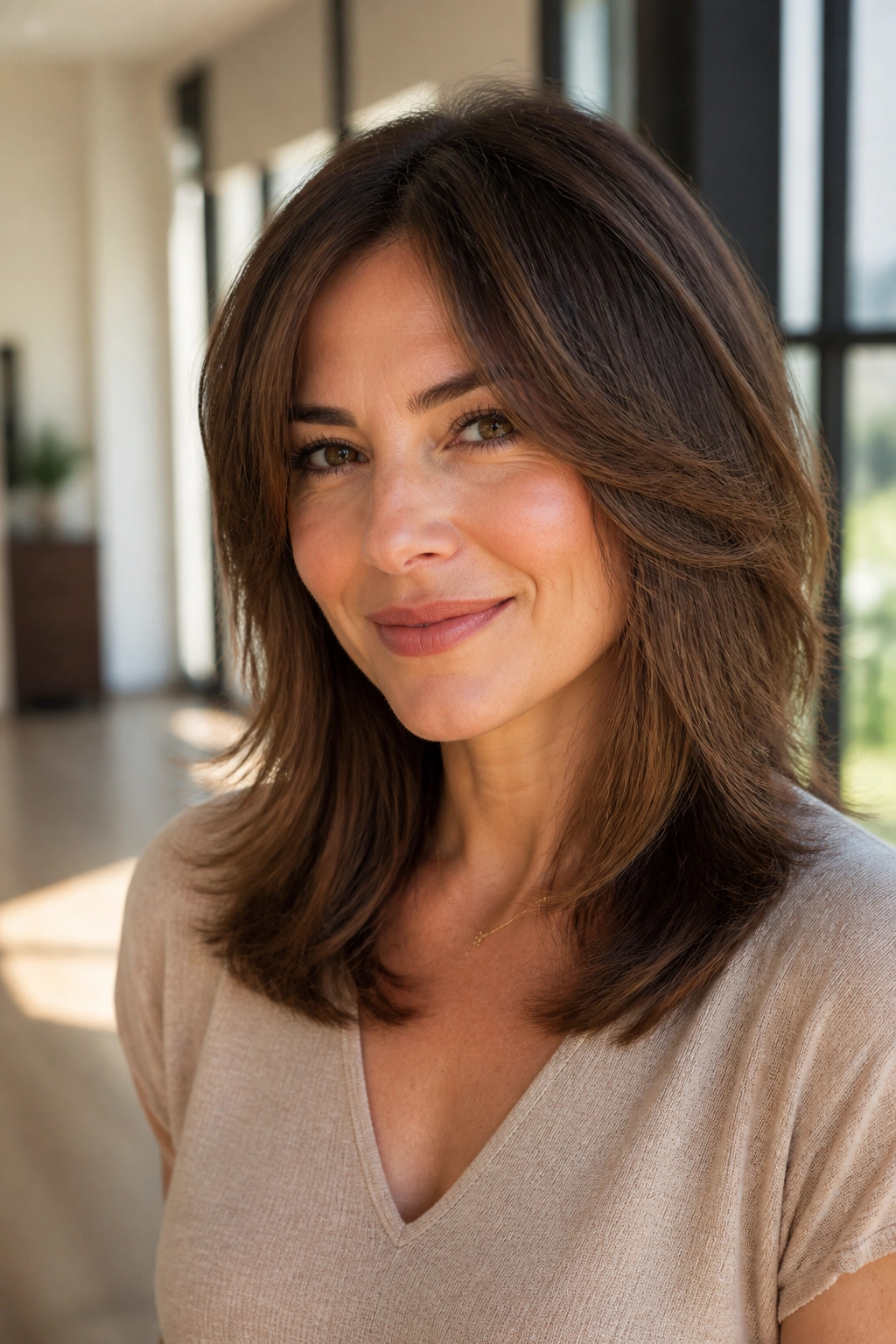
A feathered cut has a lighter, airier feel than a heavy blunt shape. On a long face, that feathering softens the outline and gives the eye more places to rest.
Unlike a choppy shag, feathering usually stays smoother and more blended. That’s useful if you want movement without a messy finish. The layers should lift away from the cheeks and neck in a soft arc, not shoot straight upward.
This cut is a solid pick for fine to medium hair because it keeps the ends from feeling too heavy. It also behaves nicely when you blow-dry with a paddle brush and then flick the ends out slightly with a round brush. It’s a quiet haircut, but it does its job well.
25. Waterfall Braid on Long Hair
A waterfall braid gives long hair some horizontal movement, which is why it suits a long face better than a flat, straight drape. The braid wraps across the head and sends pieces flowing through it, so the shape never feels locked into one vertical line.
What Makes It Work
The falling pieces break up the length and keep the style soft around the cheek area. It’s a nice option when you want your hair half-controlled but not pulled back too tightly.
- Start the braid slightly above the temple
- Keep the braid loose enough to see the pattern
- Add texture spray before you begin
- Curl the loose strands if you want more body
The style looks best when it feels a little imperfect. That’s part of the charm.
26. Soft Messy Bun at the Nape
A soft messy bun at the nape is far kinder to a long face than a high bun. The low placement keeps the head shape balanced, and the loose edges give the face some softness around the jaw.
What matters most is not the bun itself, but the silhouette around it. A few loose strands near the temples, a bit of width at the sides, and a bun that sits low enough to feel relaxed — that’s the shape you want.
Don’t scrape everything back. Leave a little volume above the ears and maybe a slight lift at the crown. Not much. Just enough to avoid the slick, stretched look that can make long faces feel even longer.
27. Collarbone Cut with Money Pieces
A collarbone cut with money pieces is a nice middle-ground style when you want a little brightness near the face without going full fringe. The lighter front pieces pull the eye outward and down in a gentler way.
How to Use It
The face-framing pieces should start around the cheekbone or lip line, not the chin. That keeps the emphasis near the center of the face instead of stretching everything lower.
A money piece that’s too stark can look stripey, so I prefer a soft contrast. Something that reads in daylight, not from across the room. The rest of the cut should stay clean and slightly layered so the front pieces can do their job without fighting the rest of the hair.
This one is especially good if you want color to do some of the shaping work.
28. Modern Mullet with Soft Layers
A modern mullet sounds bold, and it is, but the softer version can work on a long face because it creates width around the sides and cheek area. The shorter front and top pieces keep the shape from falling into one long line.
This is not a haircut for people who want invisible hair. It has attitude. Still, the newer, softer versions are less extreme than the old sharp-edged mullets, and the layering can be surprisingly flattering when the side pieces are kept full.
- Keep the top texture loose, not spiky
- Let the side layers sit at cheekbone level
- Avoid a high, blown-up crown
- Use a little wax on the ends for separation
That side width is the whole point.
29. Long One-Length Cut with Thick Fringe
A long one-length cut can work on a long face if the fringe is strong enough to break the vertical line. Without bangs, this cut can feel too stretched. With a thick fringe, it suddenly has shape.
The bangs should sit heavy enough to make a statement, but not so dense that they block the whole forehead. Think full, blunt, and slightly piecey at the ends. The rest of the hair can stay smooth and long, as long as you keep a little bend through the mid-lengths so it does not hang like a curtain.
This is a good option if you love long hair and refuse to give it up. Fair enough. The fringe earns its keep by doing the shortening work up front.
30. Face-Framing S-Curve Layers
Face-framing S-curve layers are one of my favorite ways to soften a long face without changing the whole haircut. The curve bends in and out around the cheekbones and jaw, which gives the face a wider, less linear read.
Unlike straight layers, which can drop in a more obvious line, S-curve layers move. That little bend matters. It keeps the eye from traveling straight down the hair and gives the whole style a more natural shape around the features.
This works especially well if your hair has some wave, but it can be built into straight hair with a round brush or curling wand. Ask for the shortest piece to land near the cheekbone, then let the rest sweep into the collarbone area. It’s soft, practical, and hard to mess up if the cut is done with a steady hand.
