



A flat haircut can look neat and still feel lifeless. That’s the difference between a trim and a cut with depth. Dimensional hairstyles for men build light, shadow, and movement into the shape, so the hair shifts when you turn your head instead of sitting there like a helmet.
The trick is not just “more volume.” That’s the lazy answer. Real dimension comes from layered ends, controlled contrast at the sides, and a finish that lets pieces separate a little instead of blending into one solid block. A barber might use point cutting, interior layering, or a tighter taper to make the top read thicker and the outline look cleaner. Small moves. Big payoff.
Some of these cuts work best with straight hair. Others wake up curls, coils, or waves that have been ignored for years. A few are short and sharp, a few are longer and softer, and a few sit right in that middle ground where you can dress them up or leave them messy. That range matters. Hair has personality when it keeps some shape and some movement.
1. Textured Crop with Shadow Fade
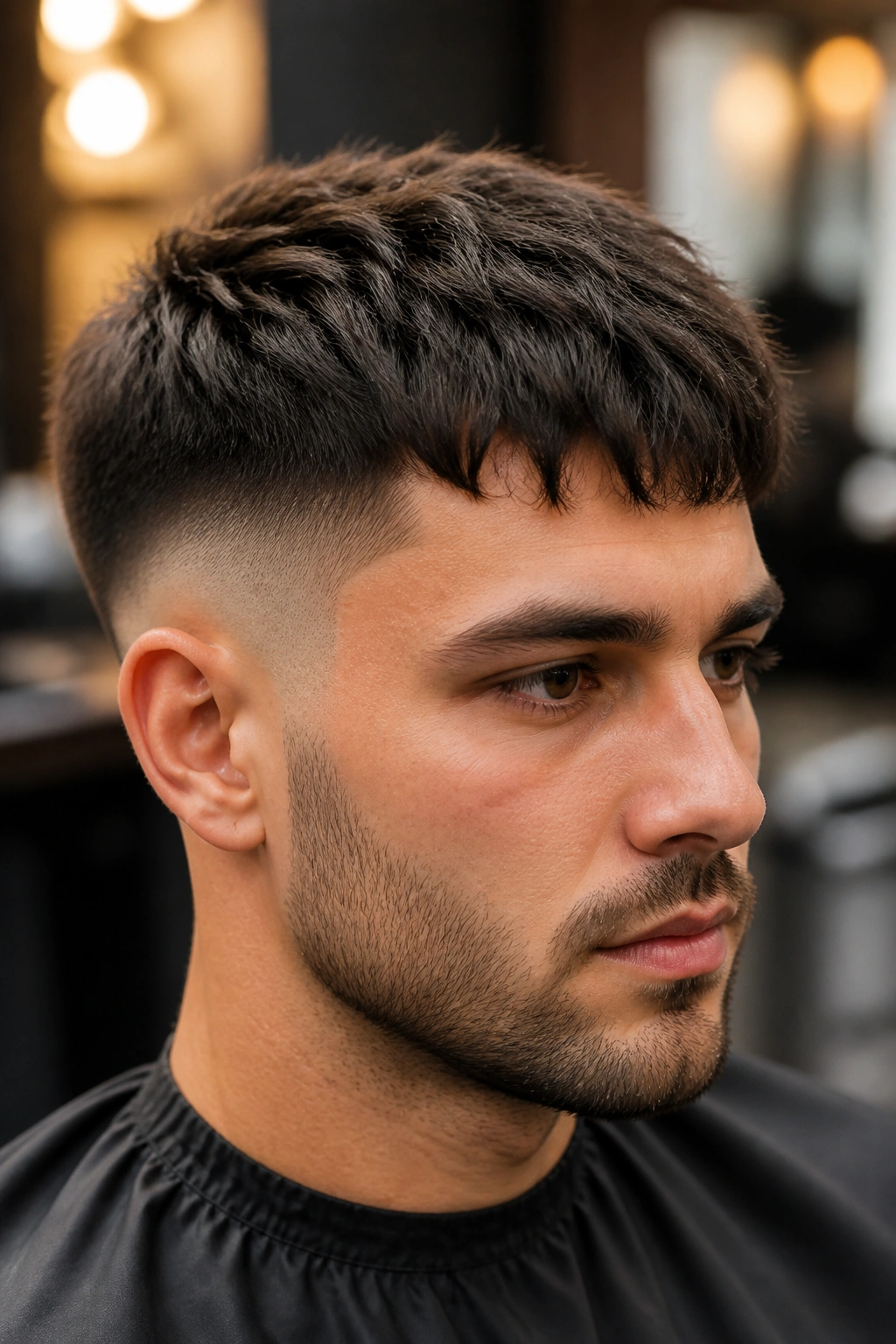
A textured crop is one of the easiest ways to make short hair look like it has depth. The top stays compact, usually around 2 to 3 inches, but the ends are cut choppy instead of blunt. That little bit of roughness keeps the style from looking like a helmet, which is the whole point.
Why It Looks Deeper Than a Plain Crop
The shadow fade on the sides does a lot of the work. It keeps the perimeter dark enough to frame the top, so the eye sees contrast right away. Ask for the fringe to sit slightly forward, not stiffly straight across. That tiny tilt gives the cut movement even when you barely style it.
Use a matte clay or texture paste, about a pea-sized amount rubbed through dry hair. Push the front forward, then pinch a few pieces between your fingertips. You want separation, not spikes. If the top looks too neat, rake your hands through it once more and stop.
- Best for straight, fine, or medium-thick hair
- Easy to style in under 5 minutes
- Works well with a low or mid fade
- Keeps the crown from looking flat
Pro tip: dry the front first with your fingers, then work the product in. That order keeps the fringe from collapsing.
2. Layered Quiff with Loose Volume
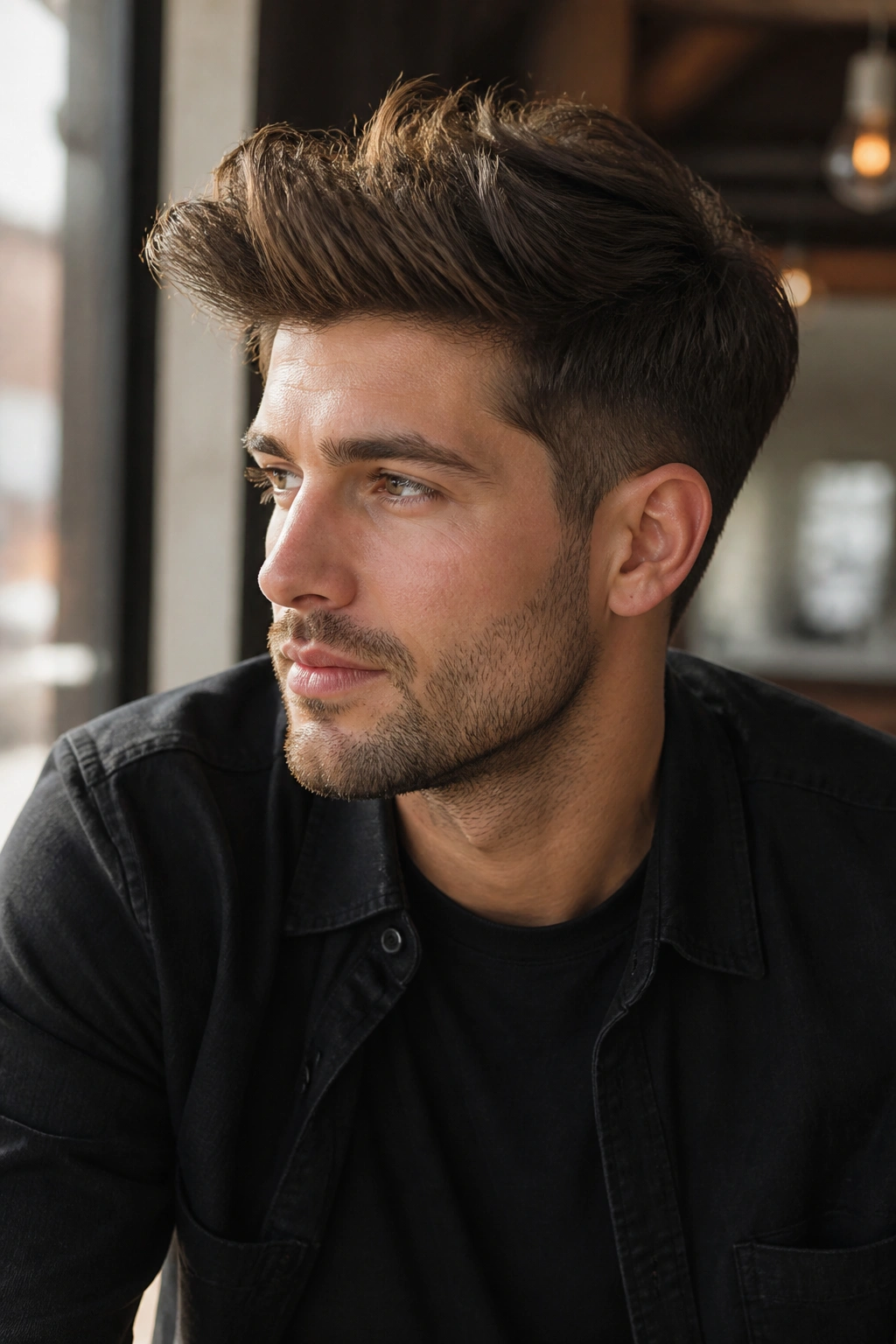
A quiff can look polished, but the best versions have some looseness in the top. That’s where the dimension shows up. Instead of one smooth wave pulled straight back, the hair rises in pieces, with shorter layers underneath and a longer front that bends up and back.
The shape usually works well with 3 to 4 inches on top and shorter sides blended into a taper. Blow-dry the front with a vent brush or your fingers, lifting the roots and directing the hair back just enough to build height. If you force every strand into the same direction, the cut flattens out fast.
A lightweight mousse or styling cream is the move here. Heavy pomade can make the top look shiny and sealed, which kills the layered feel. I’d keep the finish soft and touchable. Not messy. Just alive.
If your hair naturally leans straight, this cut gives it a bit of lift without fighting it. If it has a wave, even better. The bend shows up in the front and at the temples, and that’s where the style gets its character.
3. Curly Fringe with Tapered Sides
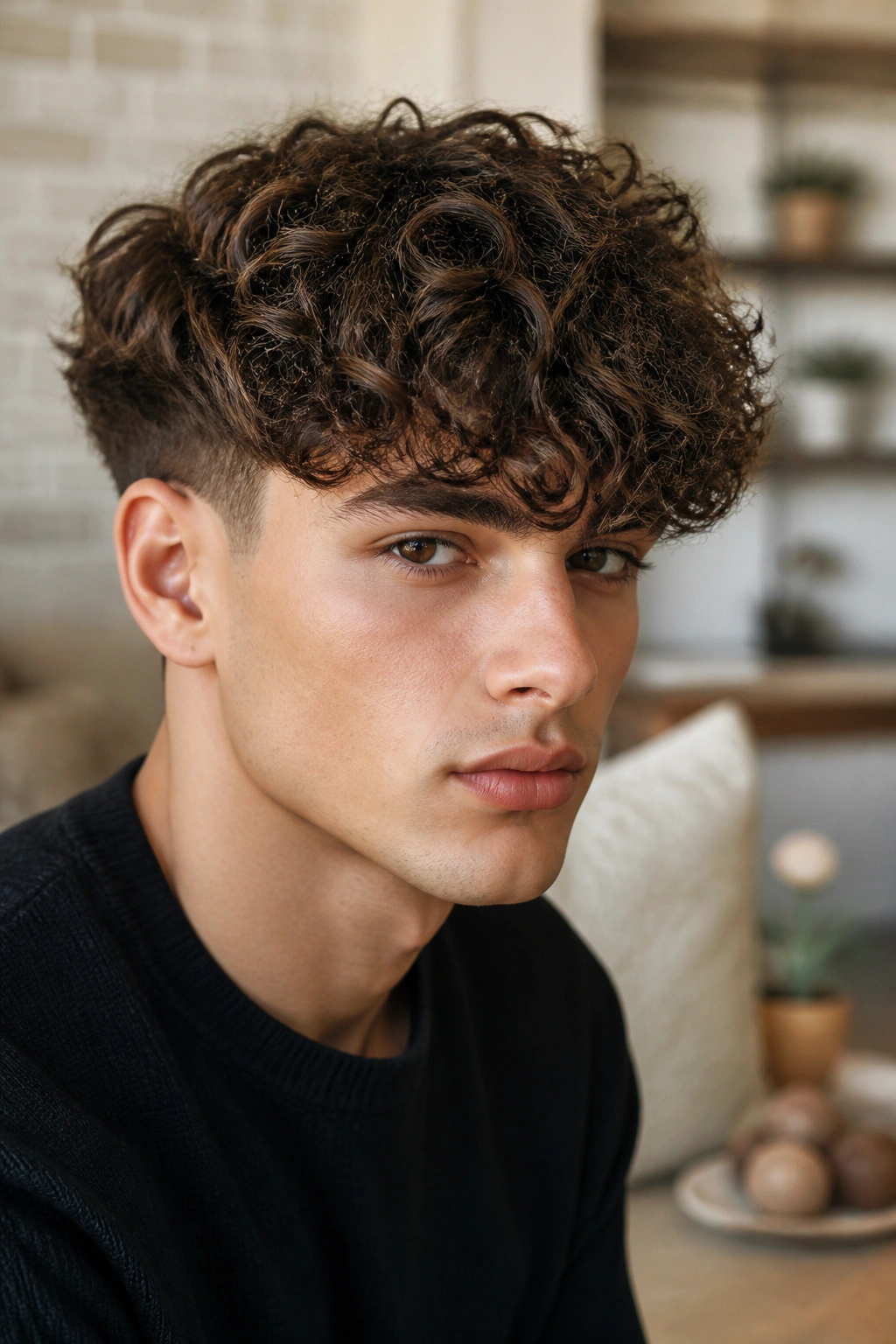
Curly hair does not need to be tamed into a square shape. That always seems like a shame to me. A curly fringe with tapered sides keeps the curls close enough to the face to show off texture, while the sides stay clean so the whole cut doesn’t puff out like a triangle.
How to Keep the Curls Separate
Ask for the fringe to land around brow level or slightly above, depending on your curl pattern. Tighter curls can sit shorter; looser curls usually need a little more length to bounce properly. The sides should taper down gradually, not disappear abruptly, because a hard skin fade can make the top feel disconnected.
A curl cream or leave-in conditioner helps the fringe stay soft. Work it through damp hair, then scrunch gently. Let it air-dry if you can. If you use a diffuser, keep the heat low and stop before the curls get crunchy.
- Good for wavy, curly, and coily textures
- Fringe length can be adjusted every 3 to 5 weeks
- Keeps volume controlled around the temples
- Looks best when curls are allowed to clump naturally
One warning: don’t brush curly fringe once it dries. You’ll turn neat curls into frizz in about ten seconds.
4. Curtain Haircut with Center Part
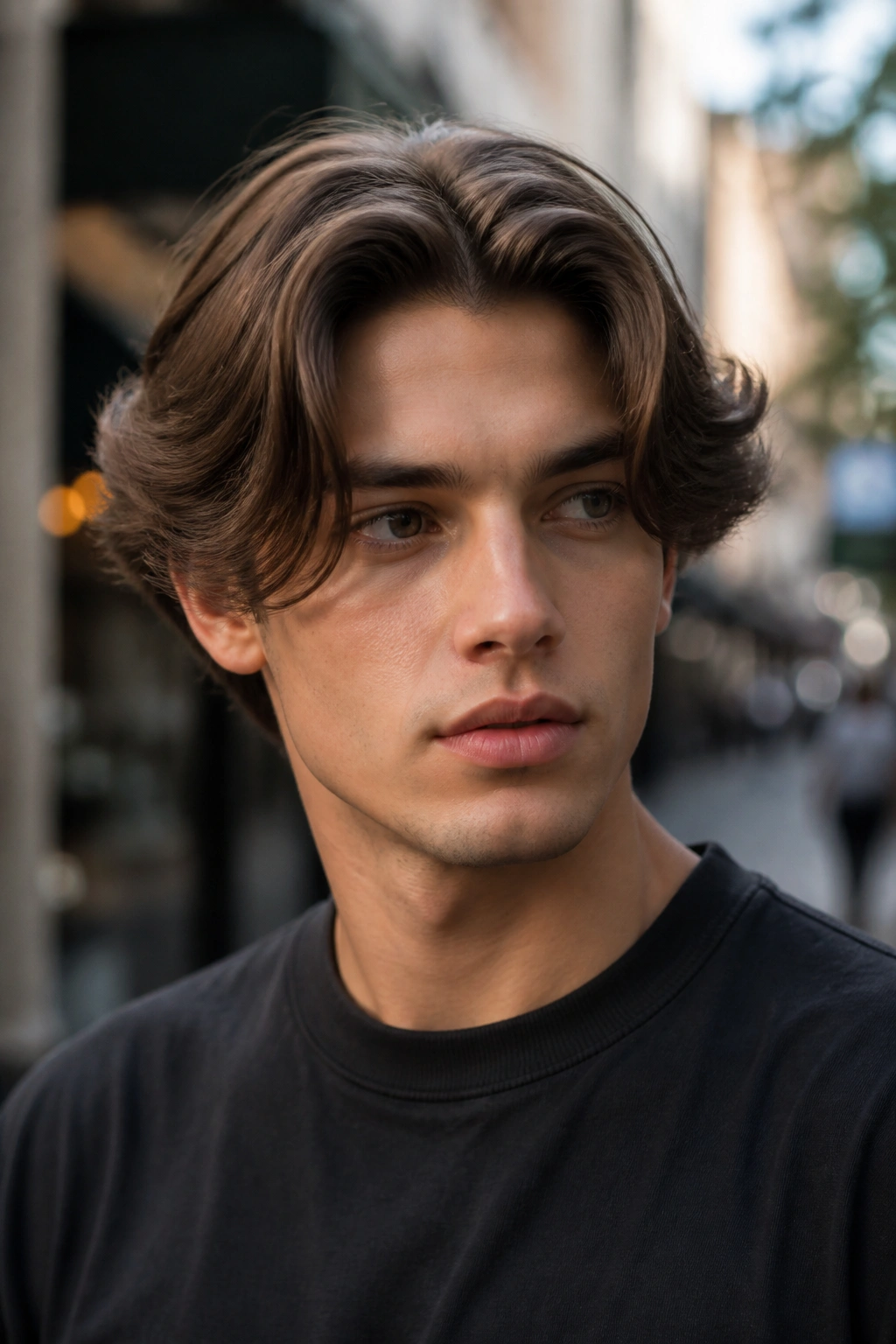
Curtains have made a comeback because they’re one of the few medium-length cuts that actually looks soft and masculine at the same time. The center part opens the face, and the layers on each side fall away in a way that creates depth without trying too hard.
What makes this style dimensional is the way the front falls in two directions. You’re not forcing one wall of hair back. You’re letting the strands split, bend, and frame the cheeks. That movement reads as volume, but it also reads as shape. Those are not the same thing.
The cut usually works best with 4 to 6 inches on top and enough length at the sides to tuck behind the ears if needed. Ask for light layering through the mids and ends so the curtain doesn’t hang like wet rope. A middle part can feel unforgiving if the hair is too blunt.
Air-dry cream or a light styling lotion does the trick. If you blow-dry, use your fingers and lift the roots slightly away from the scalp. The goal is a soft bend, not a perfect split. Perfect looks dated fast.
5. Bro Flow with Face-Framing Layers
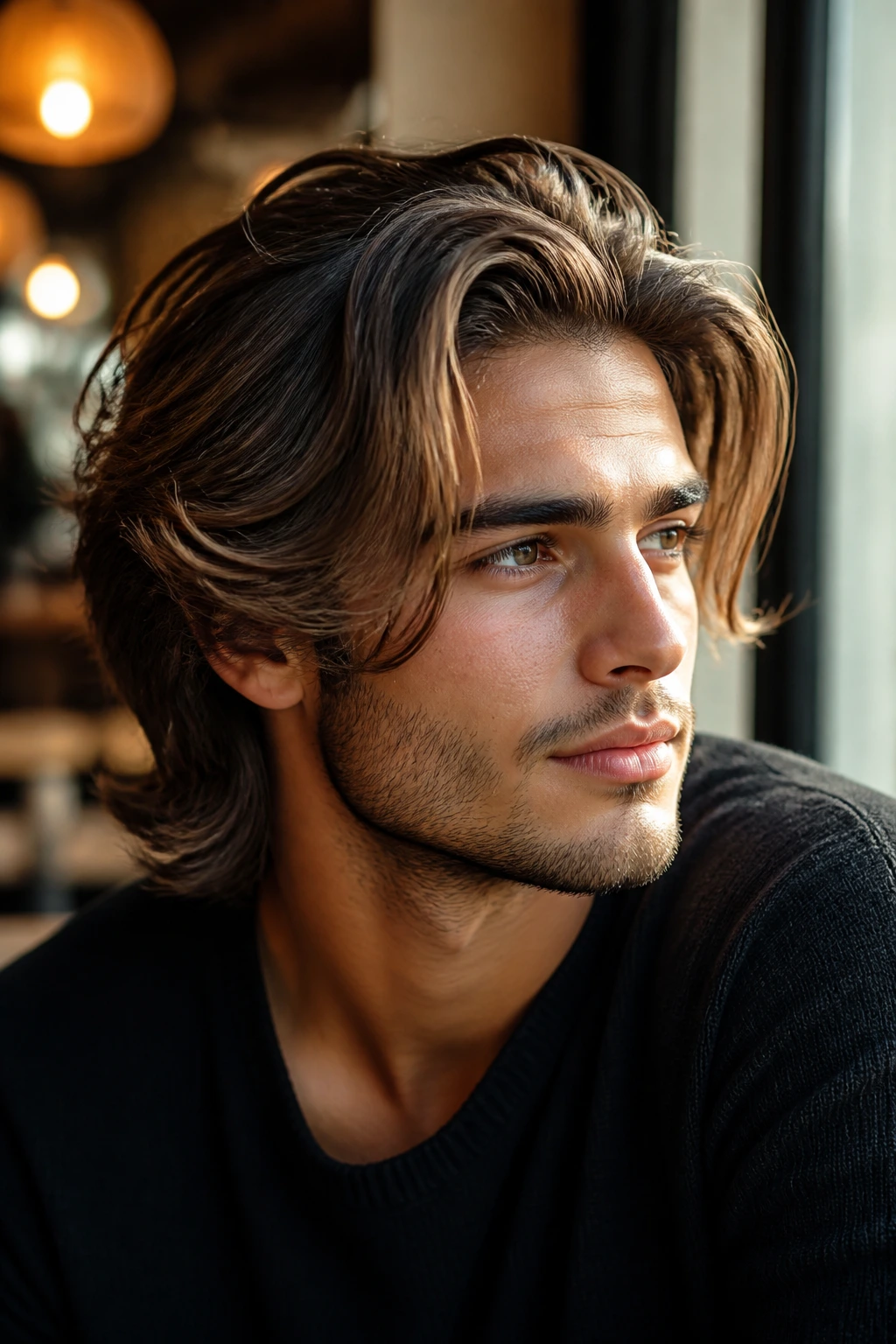
Bro flow gets a bad reputation when it’s cut like one giant sheet of hair. That’s the version that blows around and hides the face in a very 2010 way. The better version uses face-framing layers and a little interior shape, so the length moves instead of hanging dead.
This cut works especially well once the hair reaches the ears or grazes the jawline. The front can sweep back naturally, while the sides follow the head shape rather than puffing outward. That little bit of contour changes everything. You see the face. You see the hair. Neither one wins completely.
Ask your barber or stylist to keep the ends light and remove bulk near the temples. If the hair is thick, some internal texturizing helps a lot. If it’s fine, too much thinning can make it stringy, so the balance matters. That’s the part people miss.
A sea-salt spray on damp hair gives this cut a lived-in bend. Scrunch it once, maybe twice. Then leave it alone. It looks best when it has a little imperfection in it.
6. Slick Back with Soft Taper
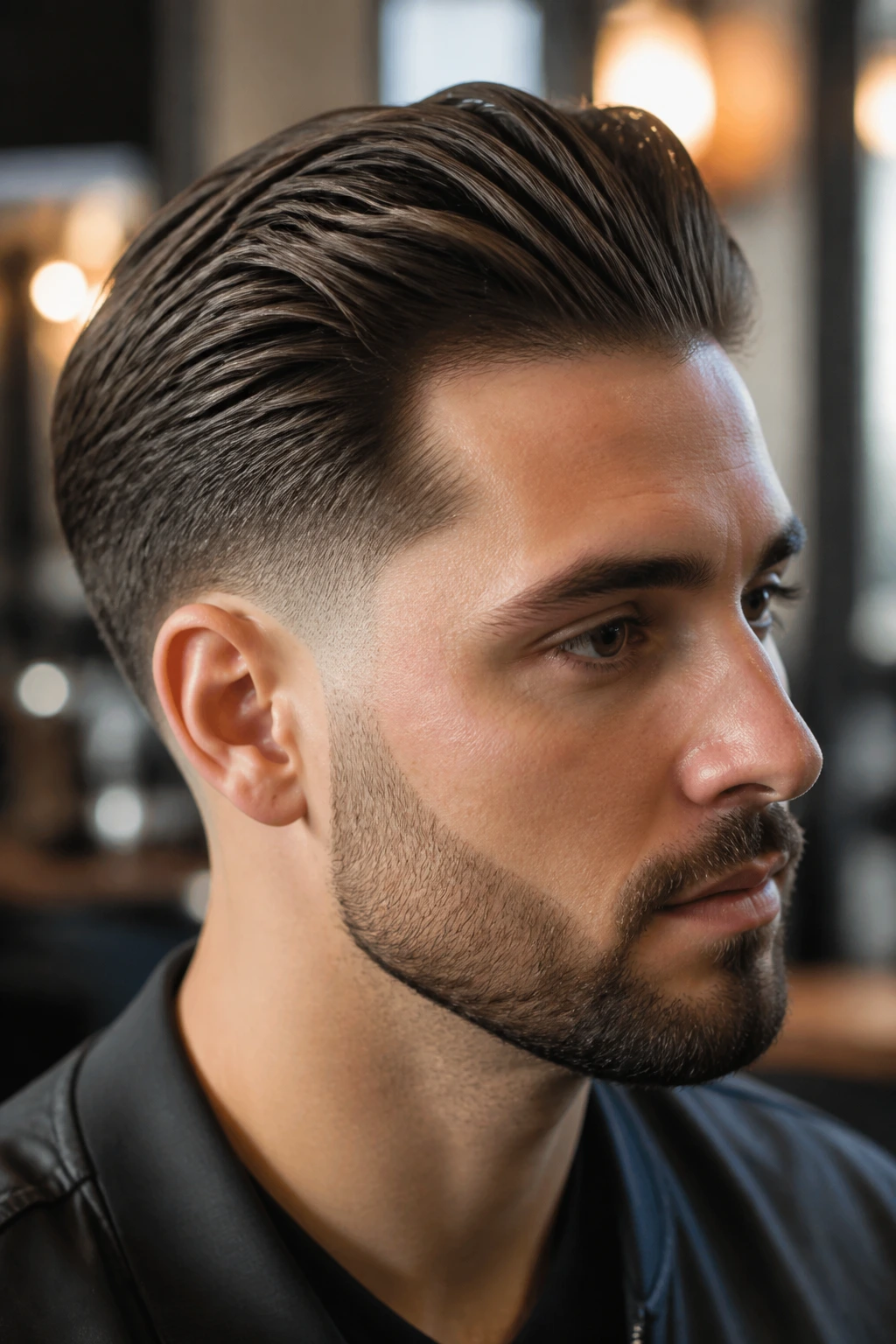
Can a slick back have dimension? Absolutely. It just can’t look lacquered. Once the product gets too heavy, the whole style turns into one flat sheet of shine, which is fine if that is what you want, but it kills the movement.
The fix is a soft taper on the sides and enough length on top to brush back without flattening the crown. Three inches is workable. Four is easier. The hair should still show a little separation at the top, especially near the front where the shape starts.
What to Ask Your Barber
Ask for the top to be left long enough to comb back, then keep some texture in the ends. A slight graduation through the crown helps the hair follow the head shape instead of sticking up in the wrong spot. You want control, not stiffness.
Use a matte cream or low-shine pomade. Warm it in your hands, comb it back with your fingers first, then use a comb only if you need a cleaner finish. The style should still show individual strands in the light. That’s the difference between a slick back and a painted-on cap.
7. Pompadour with Disconnected Undercut
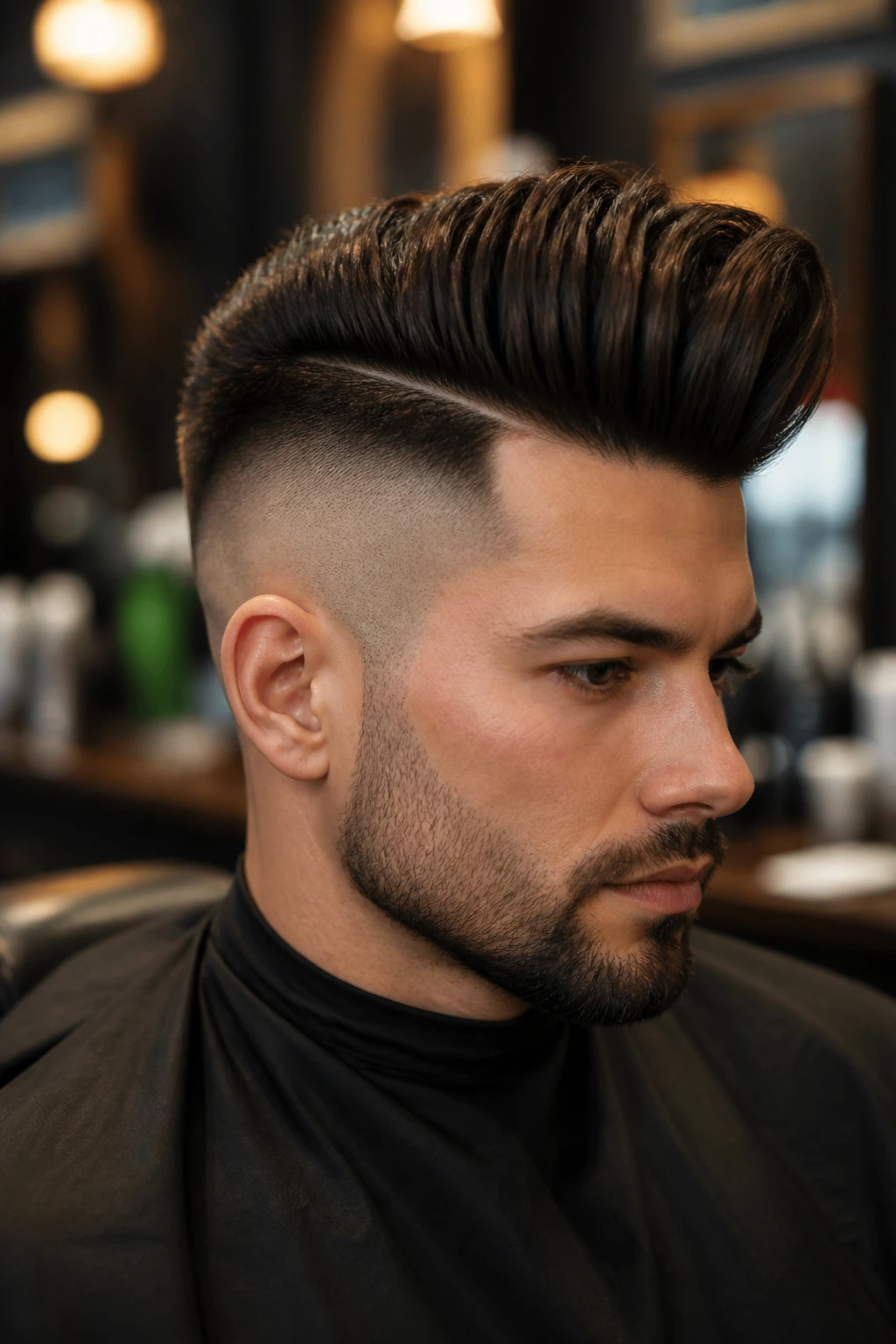
The disconnected pompadour is all about contrast. The top climbs high, the sides drop away fast, and the line between them stays obvious. That hard shift gives the haircut a lot of visual depth, because your eye moves from short to long without any mush in between.
This cut needs length on top — usually 4 to 5 inches — so the front can lift and roll back. The undercut keeps the sides tight and separate, which makes the volume feel even bigger. It’s a bold shape. No pretending otherwise. If you like a clean, sharp outline, this one delivers.
The styling part matters more than people think. Blow-dry the front upward with a round brush or your fingers, then set the shape with a firm product. If the roots are soft, the pompadour sags by lunchtime. If the ends are too stiff, the whole thing looks like a prop. Somewhere in the middle is the sweet spot.
This is a strong choice for men with thick hair or a hairline that can handle some height. It also looks good with a beard, especially one that tapers softly at the cheeks. The contrast works from top to bottom.
8. French Crop with Choppy Fringe
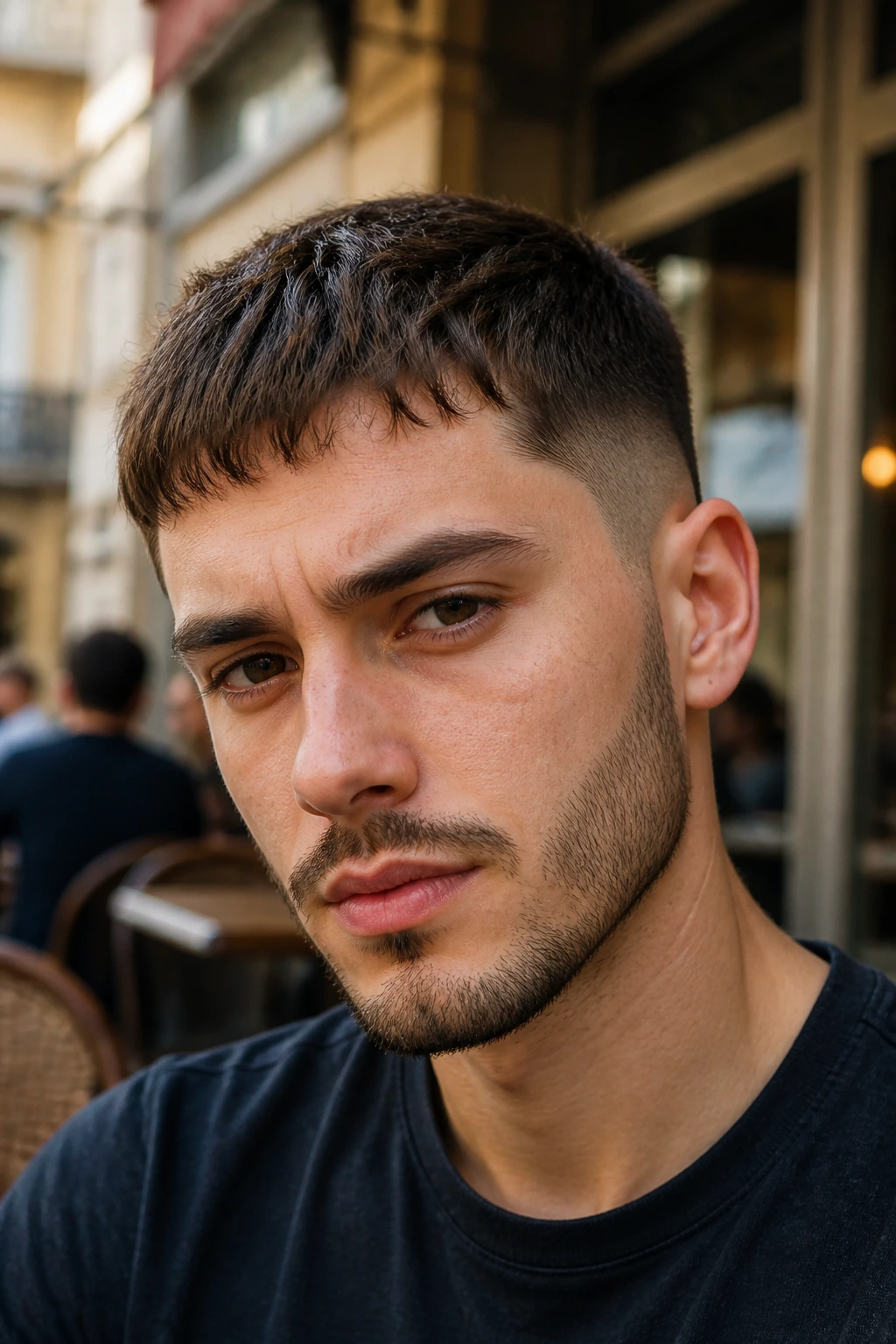
A French crop can look plain when it’s cut too evenly. Put a choppy fringe on it, though, and the whole thing wakes up. The front becomes the visual focus, while the short sides keep the shape tight and modern.
What gives this style dimension is the broken edge at the fringe. Instead of one hard line, you get pieces that fall at slightly different lengths. That tiny variation makes the cut look thicker and more textured, especially on finer hair. It also means the style still has shape when it gets a little tousled.
Best Products for This Cut
A light texture powder or matte paste is enough. You do not need a lot. Start with a small amount and work it through dry hair, then push the fringe forward and separate a few sections with your fingertips. If the hair clumps too hard, you’ve gone too far with the product.
- Fringe usually sits at 1 to 2 inches
- Sides are kept short but not shaved bare
- Works well for men with straight or slightly wavy hair
- Nice option if you want low maintenance without looking plain
It’s a clean cut, but not a stiff one. That’s the appeal.
9. Modern Mullet with Tapered Neck
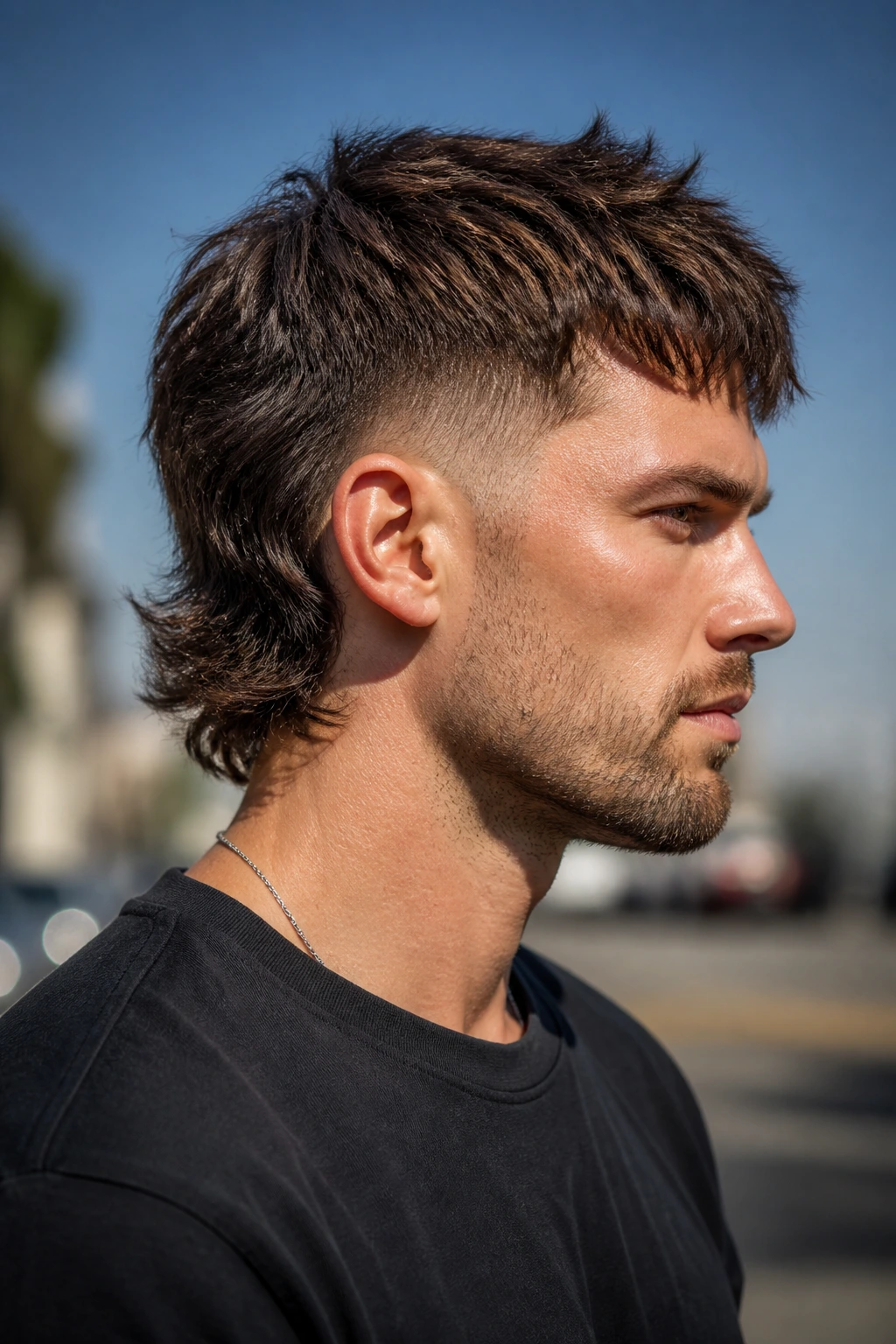
A modern mullet is not the old-school mess people joke about. The updated version has shape, control, and a real sense of proportion. Shorter at the front and sides, longer through the back, and tapered neatly at the neck — that combination gives the style its depth.
The dimensional part comes from the length shift. Hair at the crown can move upward, the sides stay tucked in, and the back keeps enough length to swing a little. If the transition is too abrupt, it looks like a mistake. If it’s blended with care, it looks intentional and surprisingly flattering.
Wavy hair suits this cut especially well because the texture helps bridge the lengths. Straight hair can wear it too, but you’ll want some internal layers so the back doesn’t hang flat. Ask for movement around the ears and a soft taper at the neckline. That keeps the cut from drifting into costume territory.
A touch of cream on damp hair is usually enough. Let the back dry naturally if you can. The shape tends to look better when it keeps a bit of its own rhythm.
10. Side Part with Blended Layers
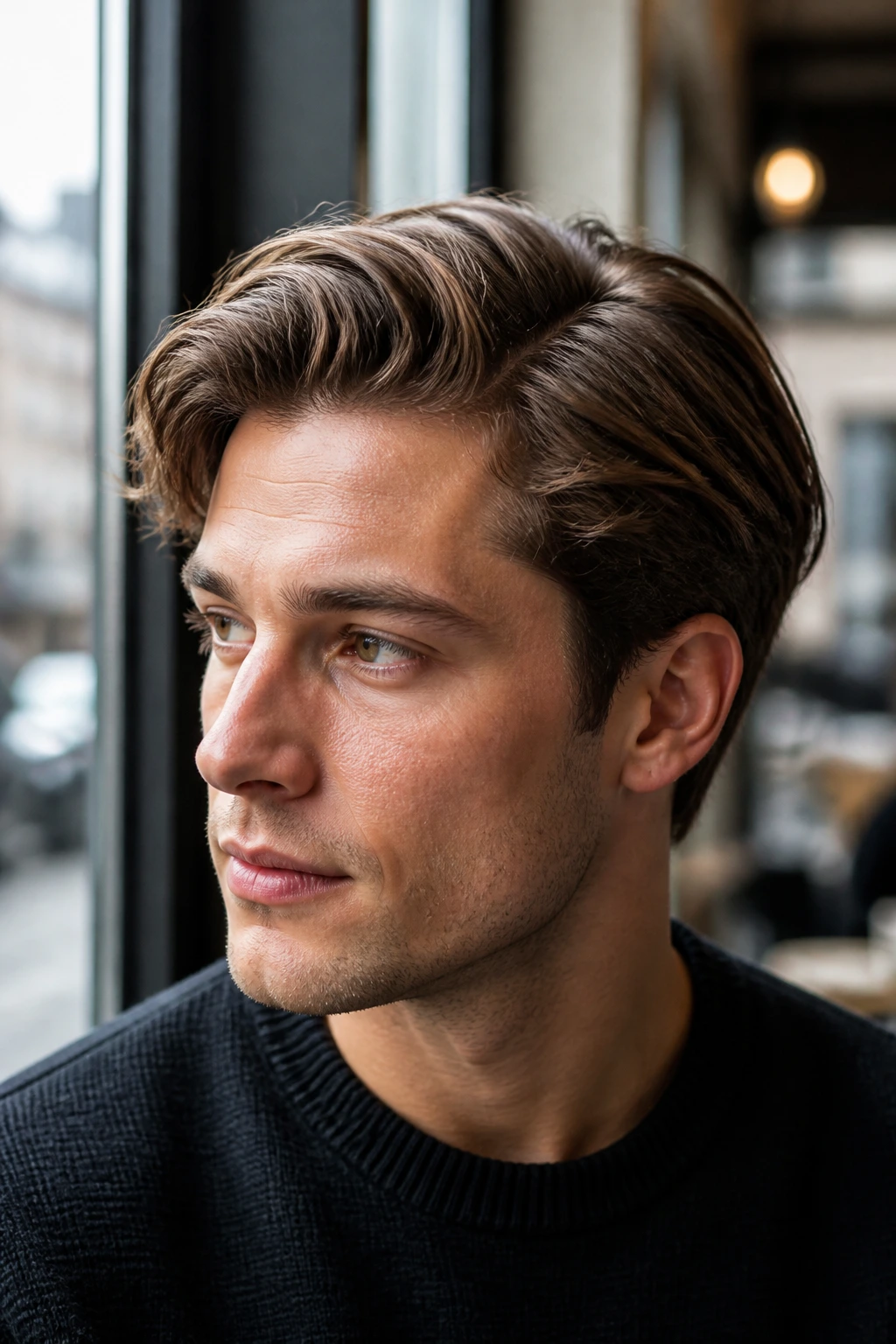
A classic side part can turn rigid fast. The trick is to loosen the top with blended layers so the hair doesn’t sit like a board. Once you remove that blocky feel, the part line stays clean while the top picks up depth and movement.
This version works because the top has different lengths stacked through it. The hair closest to the part can stay a little neater, while the opposite side has more swing. The result is subtle, but the difference shows up in daylight. The cut feels tailored instead of frozen.
What Makes It Better Than the Old Version
A hard side part with a flat top can make fine hair look thinner. A blended version adds body without screaming for attention. Ask for 2.5 to 4 inches on top with soft tapering at the temple and nape. The part should be guideable, not carved in like a road line.
Use a light cream or medium-hold pomade and comb it once, then break the front up a little with your fingers. If every strand is pinned in place, you lose the depth. That’s the thing with this style: control matters, but so does a little looseness.
11. Wavy Medium-Length Shag
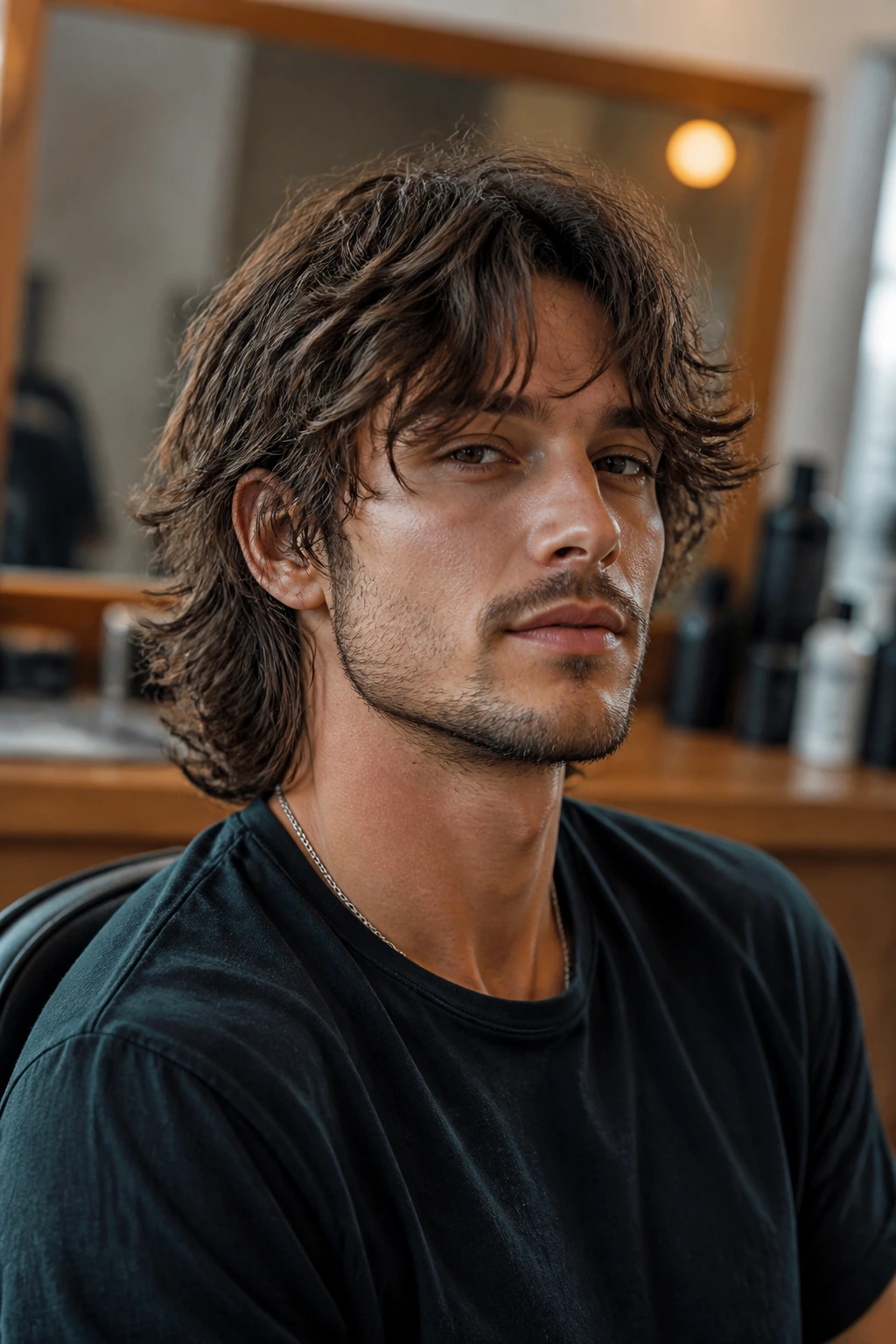
A shag is one of the easiest cuts for making wavy hair look intentional. The layers do the heavy lifting, and the waves fill in the shape. You end up with movement everywhere, but not the messy kind that looks like you forgot to brush your hair.
The cut usually sits somewhere between the ears and the collar, with pieces cut at slightly different lengths. That unevenness is the point. It keeps the top from forming a heavy block and lets the waves fall in a more natural way. The face gets framed, the crown gets lifted, and the ends stay light enough to swing.
A little curl cream or leave-in on damp hair goes a long way here. Work it from the mid-lengths down, then let the hair air-dry or diffuse it on low heat. If you rough-dry it, the top can puff in the wrong places. If you overcomb it, the shag loses its edge.
This is the cut I’d point to if someone wants hair that looks good without looking overworked. It has personality built in. That matters.
12. High-Contrast Buzz with Fade
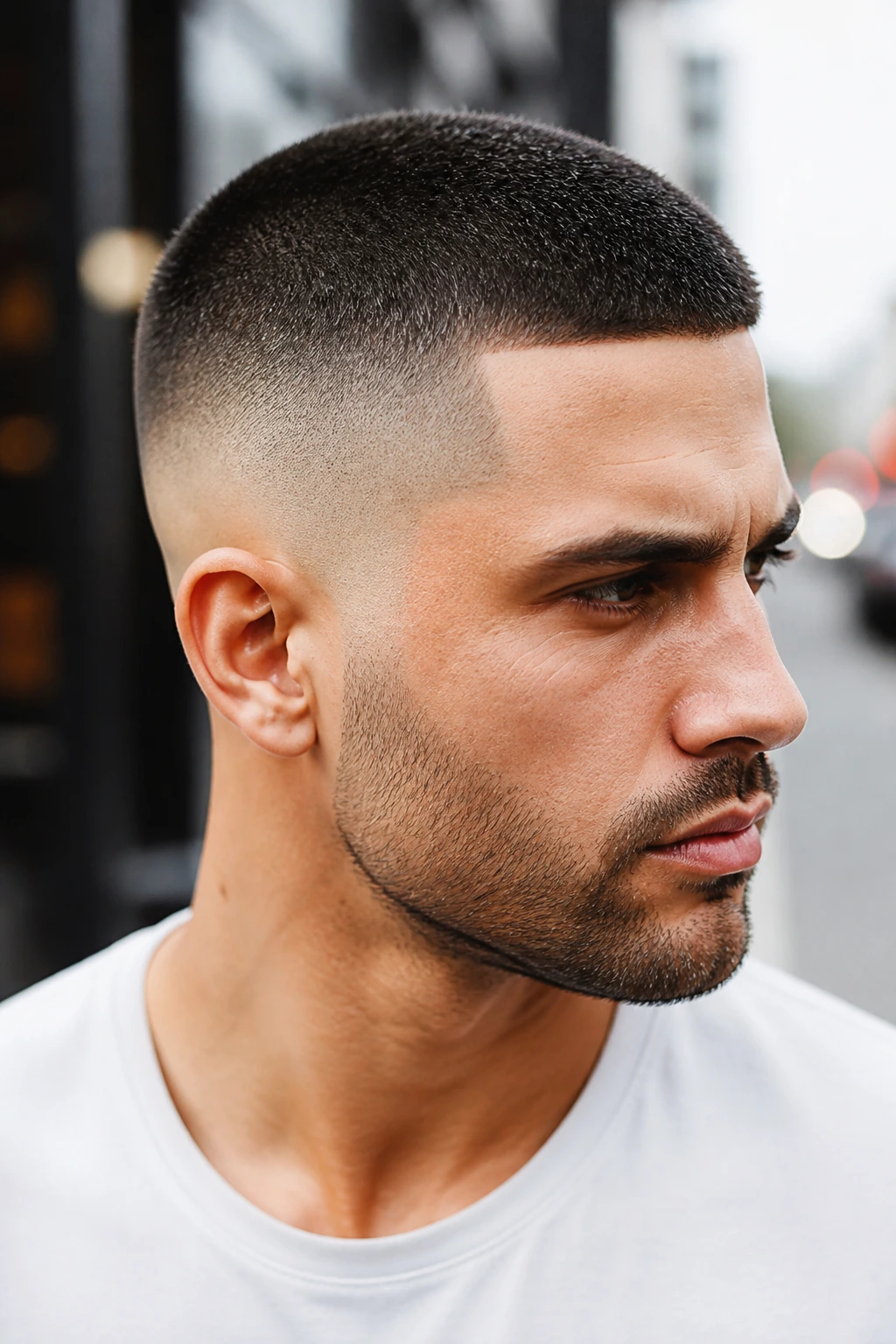
Can a buzz cut look dimensional? Yes, if you stop thinking of it as one flat length. A high-contrast buzz uses a slightly longer top, a tight fade at the sides, and a clean edge around the hairline to create shape instead of blankness.
The difference is subtle from a distance and obvious up close. A number 2 or 3 on top with a fade down the sides creates shadow where the hair changes length. That shadow is the dimension. Add a crisp line at the temple or a soft curve around the front, and the whole head looks more sculpted.
Where the Dimension Comes From
- The top stays a little longer than the sides
- The fade moves fast enough to show contrast
- A sharp edge around the hairline gives the cut structure
- The scalp shape matters, so the barber should follow the head, not fight it
This works best for men who want low maintenance but not zero shape. If the fade is too extreme and the top too short, the result can look severe. Keep a little length up top, and the cut has more presence.
13. Comb Over with Texture and Drop Fade
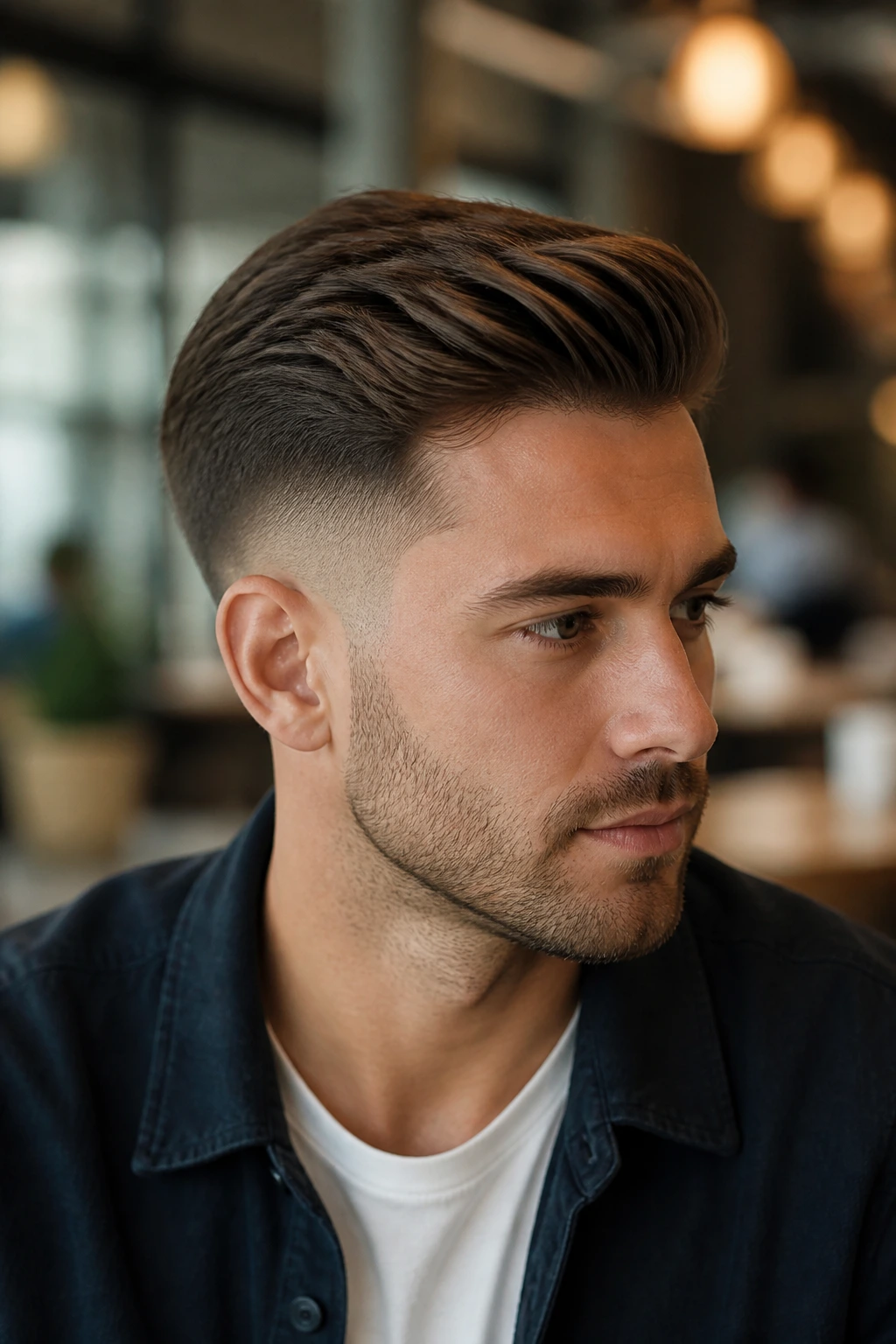
A comb over can look painfully generic if it’s too neat. Give it texture and a drop fade, though, and it starts to feel modern. The top keeps a little movement, the fade follows the curve around the ear, and the side part stops being the whole story.
The drop fade matters because it bends with the head shape. That small dip behind the temple creates contour, which makes the haircut feel deeper from the side. The top should be long enough to comb diagonally, not pasted flat. Think 3 to 4 inches on top, with enough texture that the part still breathes.
A matte product works better than shiny gel here. Comb the hair into place, then break the front up slightly with your fingers. You want a little separation near the crown and along the part line. Too much polish flattens everything.
This is a smart cut for men who want something neat for work but still want the hair to move a bit when they’re off duty. It’s a balanced look. Maybe a little underrated, honestly.
14. Long Layered Ivy League

The long Ivy League is one of those cuts that quietly solves a lot of problems. It keeps the structure of a short style but leaves enough length on top to create depth. The layers soften the shape, so the hair doesn’t feel boxy or too formal.
This works especially well when the top is left around 2.5 to 4 inches and the sides are tapered instead of clipped too high. The front can sweep up, back, or to the side depending on how you style it. That flexibility is part of the appeal. One cut, three moods.
How to Keep It Neat Without Killing the Shape
Ask for texture through the top rather than a blunt finish. The ends should move. Use a light cream or a small amount of paste, then run your hands through the hair instead of combing every strand into place. That little imperfection keeps the cut alive.
It’s a strong option for men who want a polished look that still has body. If you’ve got straight hair, it gives you a bit of lift. If you’ve got a slight wave, the top gets a nice bend without much work.
15. Spiky Crop with Piecey Texture
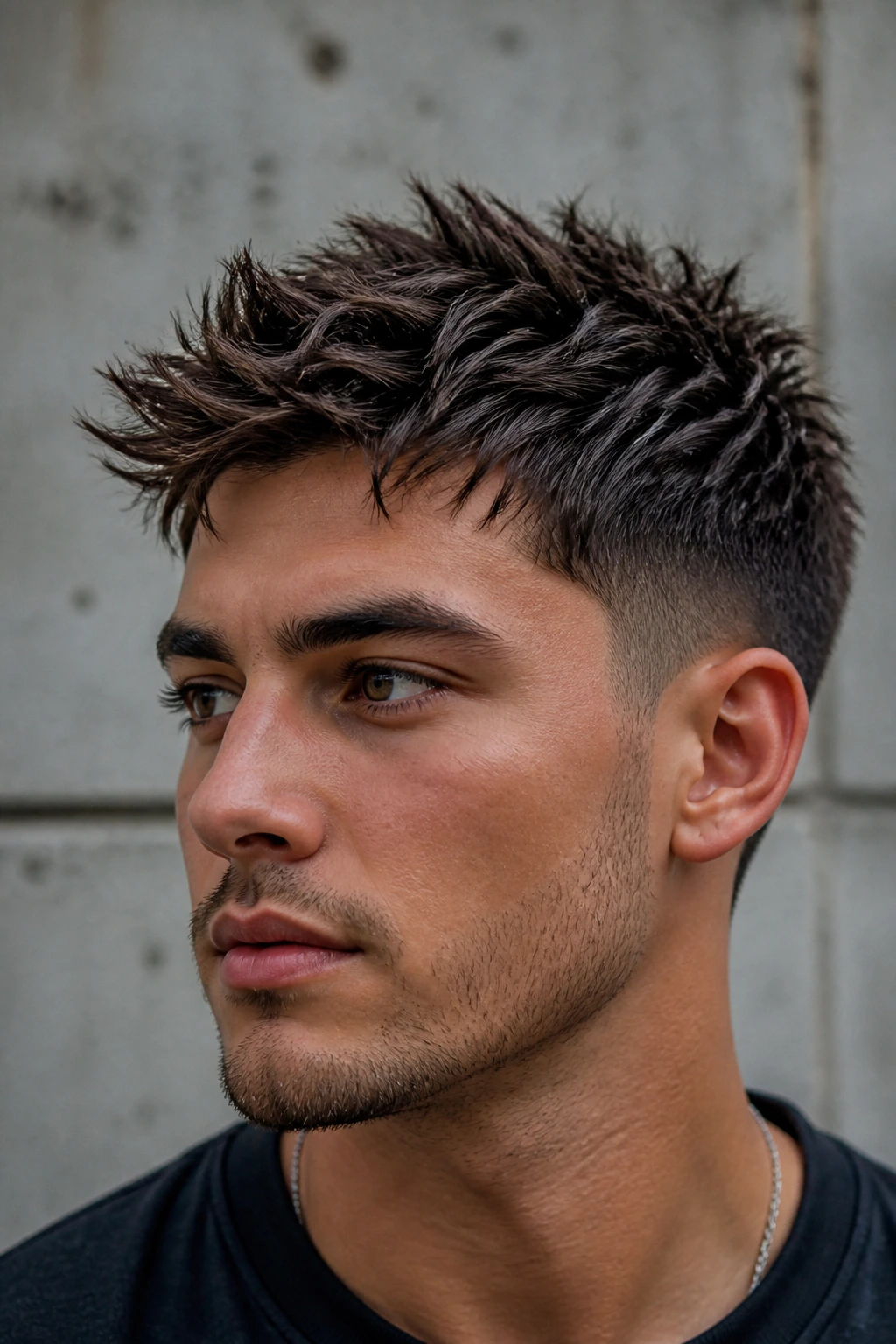
Spiky hair gets written off fast because people remember the stiff, gel-heavy versions. A piecey crop is different. The spikes are short, separated, and a little irregular, which means the hair looks textured instead of frozen.
The cut usually keeps the top around 1 to 2 inches and shortens the sides enough to frame the head. The spikiness comes from how you style it, not from making every piece identical. Pinch small sections with a wax or matte clay, then stop before the shape becomes too uniform. Uniform spikes look fake. Quick. Easy to spot.
This style works especially well with thick hair that naturally stands up a bit. It also helps when the hairline is strong and the top has enough density to hold shape. If the hair is fine, use less product and rely on the cut more than the styling.
A lot of men overdo this look. They really do. The trick is to let the spikes feel accidental, not engineered. The best versions look like the hair decided to go in different directions on purpose.
16. Afro with Shape-Up and Curved Layers
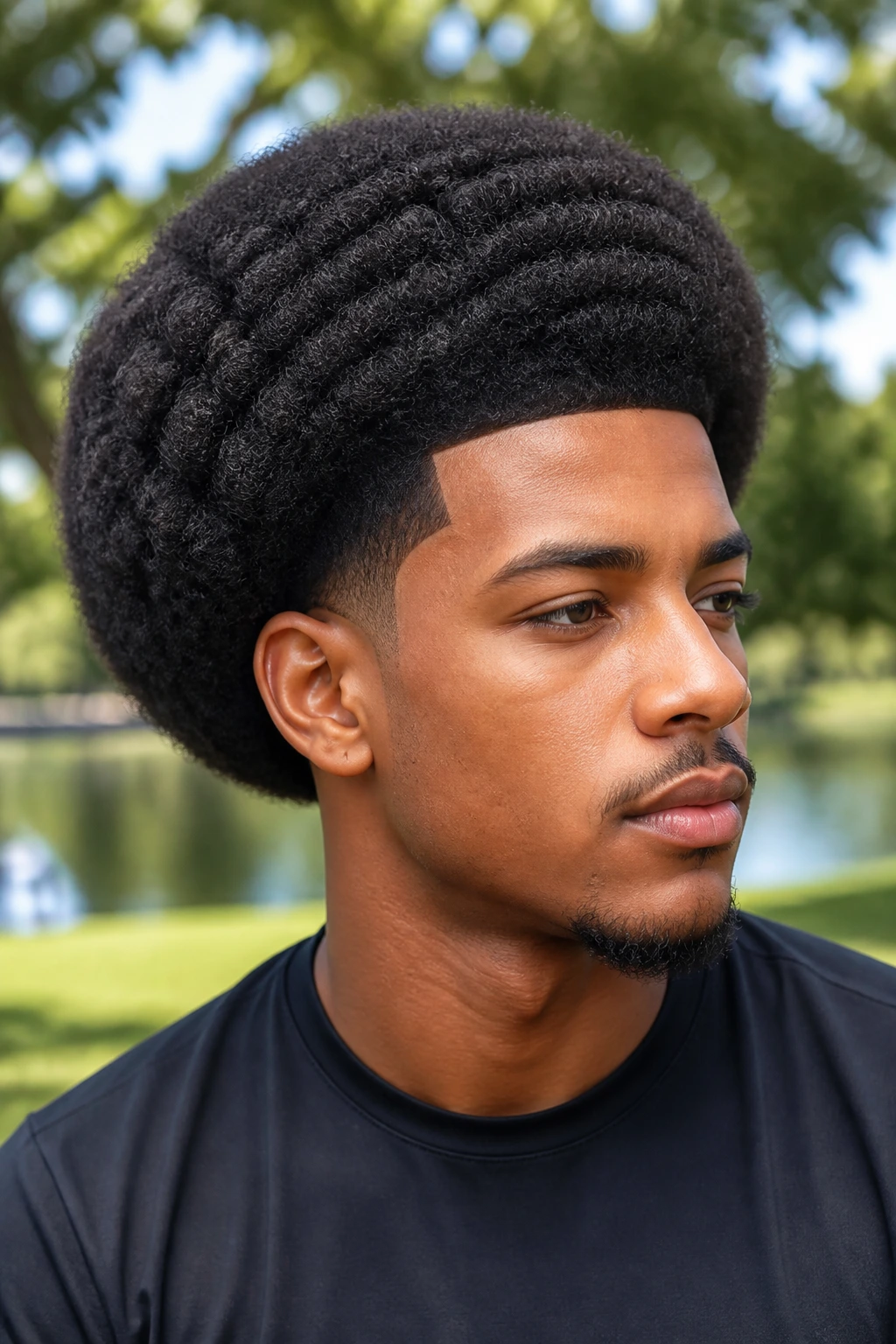
An afro gets dimension from shape, not from flattening. That seems obvious once you say it, but a lot of bad cuts still ignore it. The right version keeps the outline rounded, cleans up the edges with a shape-up, and lets the curls or coils build upward with intention.
Curved layering matters here. It helps the hair keep its dome-like form without bulking up too much at the sides. A good barber will follow the natural growth pattern and trim in a way that keeps the silhouette balanced. That’s where the depth comes from. Not from making the hair shorter everywhere.
- Keep the perimeter shaped every 2 to 4 weeks
- Let the top grow enough to show texture
- Use a pick or wide-tooth comb, never a fine one
- Moisture matters; dry coils lose shape fast
A leave-in conditioner and a light styling butter can keep the hair soft and defined. If the edges are clean but the top is dry, the contrast looks unfinished. The balance is what makes the cut feel complete.
17. Twists with Low Fade and Clean Edges
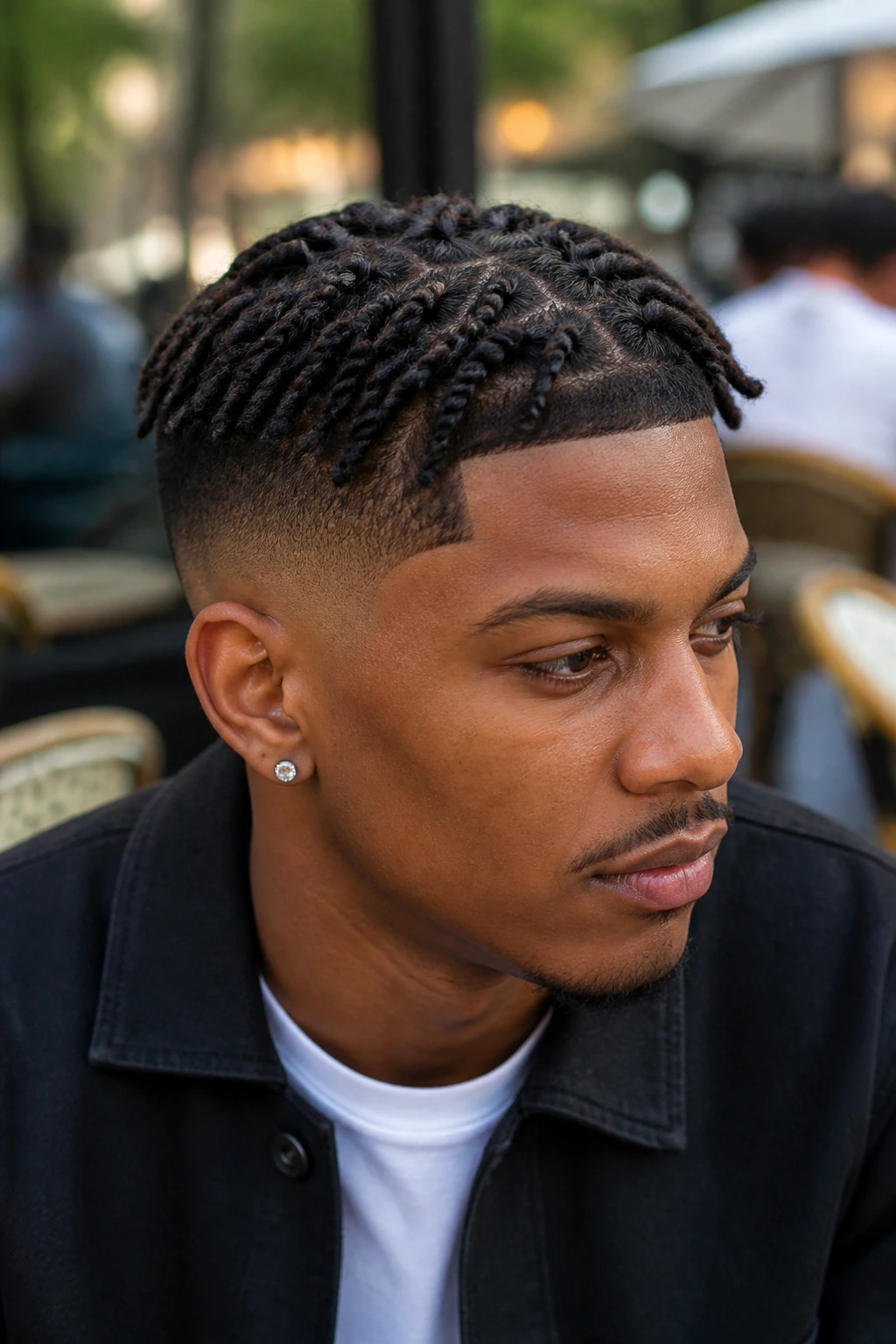
Twists create dimension almost on their own because each twist catches light a little differently. Add a low fade and crisp edges, and the cut gets even more definition. The top carries the texture, the fade clears the sides, and the whole style reads as layered without needing a complicated shape.
Small to medium twists usually work best when the sections are kept consistent, around 1/2 inch to 3/4 inch apart depending on hair density. If the sections are too big, the twists look bulky. Too small, and they can lose their visual impact. The cut underneath should stay neat so the top remains the focus.
A twist sponge can help with short natural hair, but two-strand twists give more structure if the hair is long enough. Keep the scalp moisturized and retwist only as needed; constant tension can wear the hair out faster than people expect.
This is one of those styles that gets better when the fade is fresh. Even a clean twist pattern looks sharper when the edges at the temples and nape are maintained.
18. Braided Top with Undercut Sides
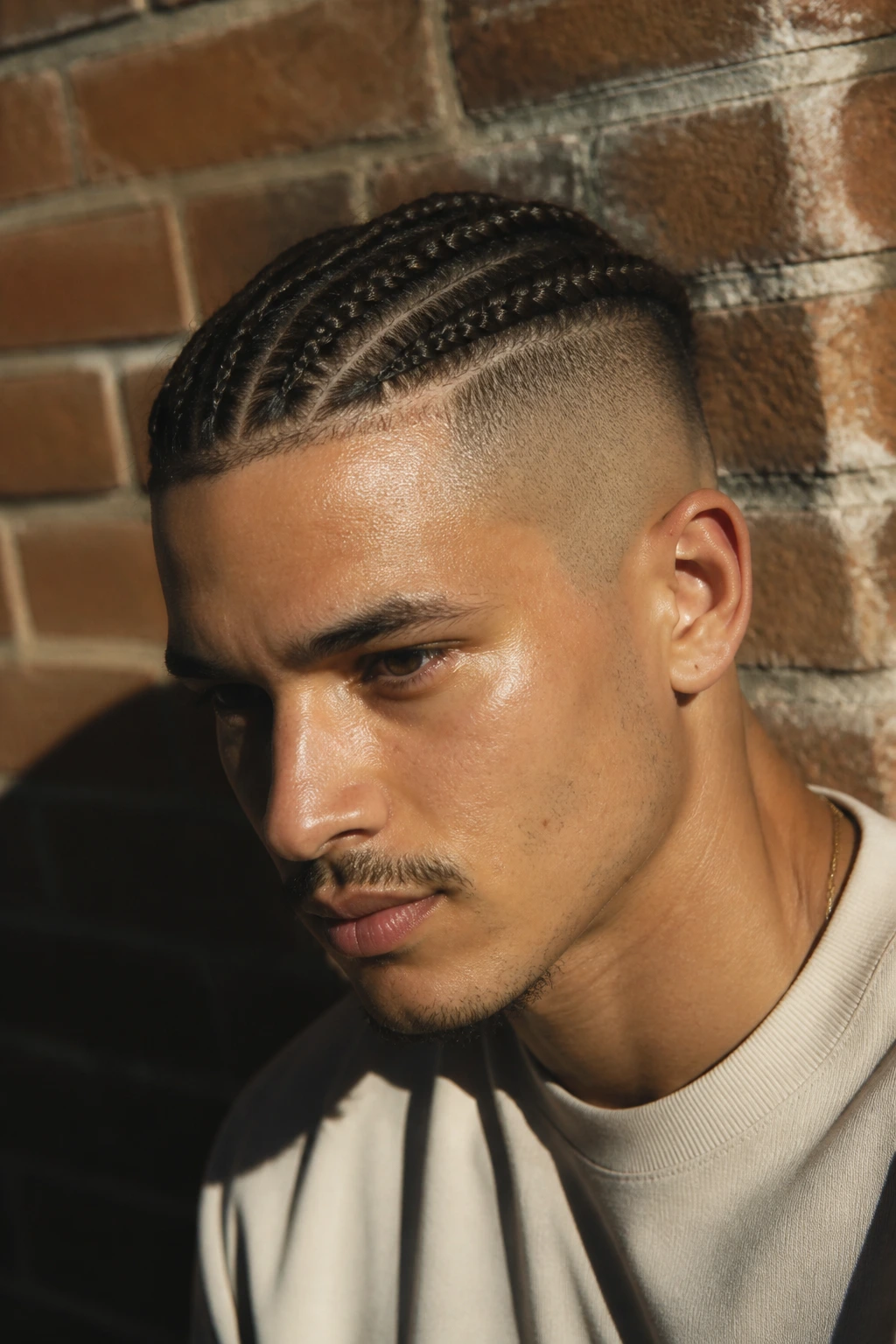
Braids and undercuts make sense together because they create a clean break between texture and bare skin. The undercut gives the eye a place to rest, and the braids on top supply the pattern. That contrast is what makes the style feel dimensional instead of crowded.
You can keep the braids tight and uniform, or go with thicker feed-in braids if you want a little more visual weight. Either way, the key is the separation from the sides. If the undercut is too high, the top can feel disconnected in a bad way. If it’s too soft, the braids lose some of their punch.
What to Watch For
Braided styles need maintenance. That part is not glamorous. The scalp should stay clean, and the braids should not be kept in so long that the roots get stressed. A moderate tension pattern is the safer choice, especially near the hairline.
This look suits men who like strong structure. It also gives you room to play with parting patterns, bun placement, or a simple hang-down style. The dimensional effect comes from line, texture, and contrast all working together.
19. Shoulder-Length Natural Curls with Taper
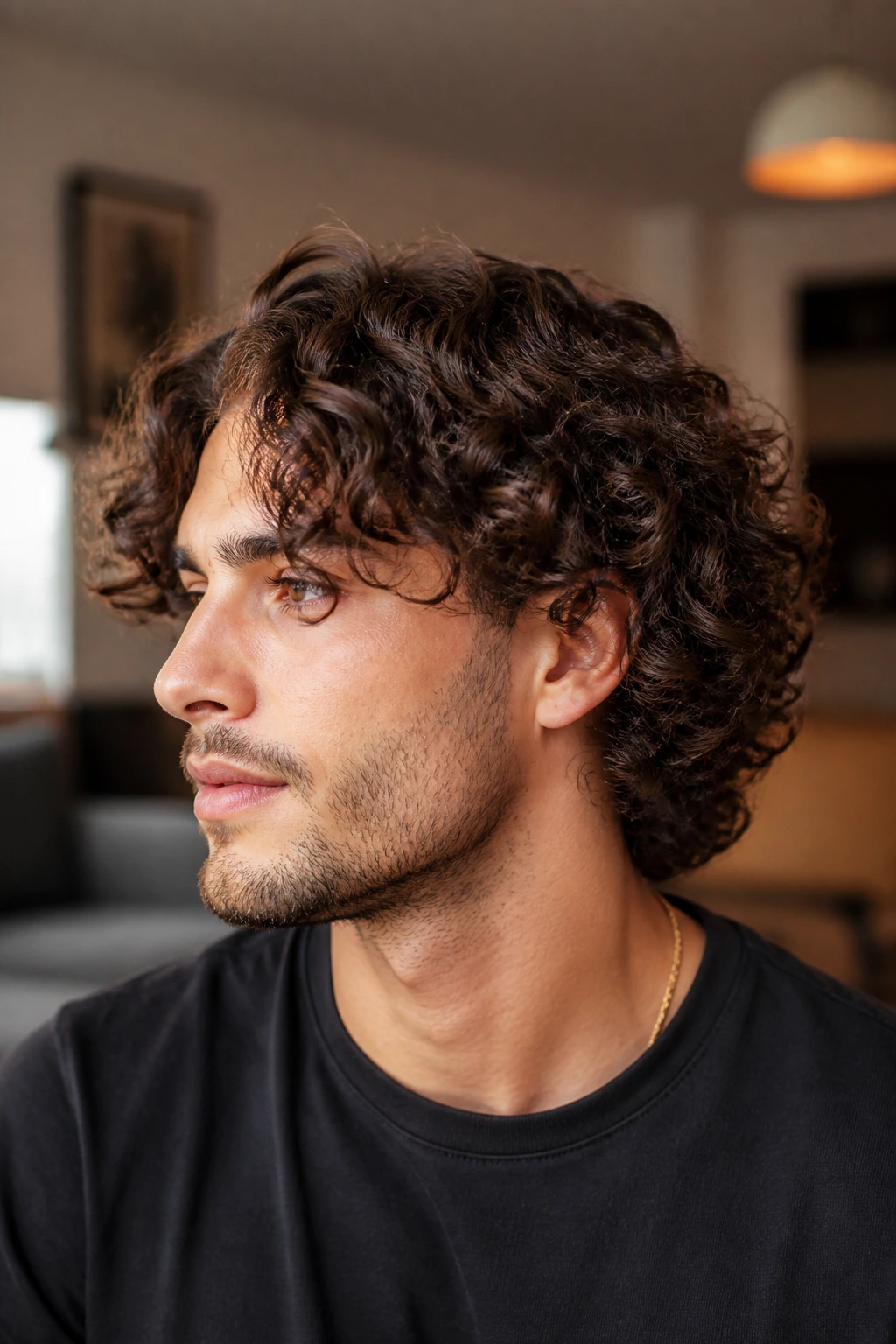
Shoulder-length curls are one of the most underrated dimensional looks a man can wear. When the cut is shaped well, the curls stack in layers from the crown to the ends, and the whole silhouette looks rich without trying to be flashy. It’s a lot of hair, yes. That’s the point.
A taper around the neckline and ears keeps the bulk under control, which stops the cut from turning into a giant triangle. Ask for the curls to be shaped dry if possible, or at least cut with the curl pattern in mind. Wet curls always lie. They shrink, and they shrink hard.
A curl cream or gel cream helps hold the shape, but don’t drown the hair in product. Curls need room to spring. If they’re coated too heavily, they clump in a greasy way and lose that airy texture.
This style shines when the hair has enough length to bend and separate on its own. The light catches the outside curls, the inner layers sit in shadow, and the effect is almost automatic. Easy? Not always. Worth it? Usually.
20. Soft Mop Top with Low Taper
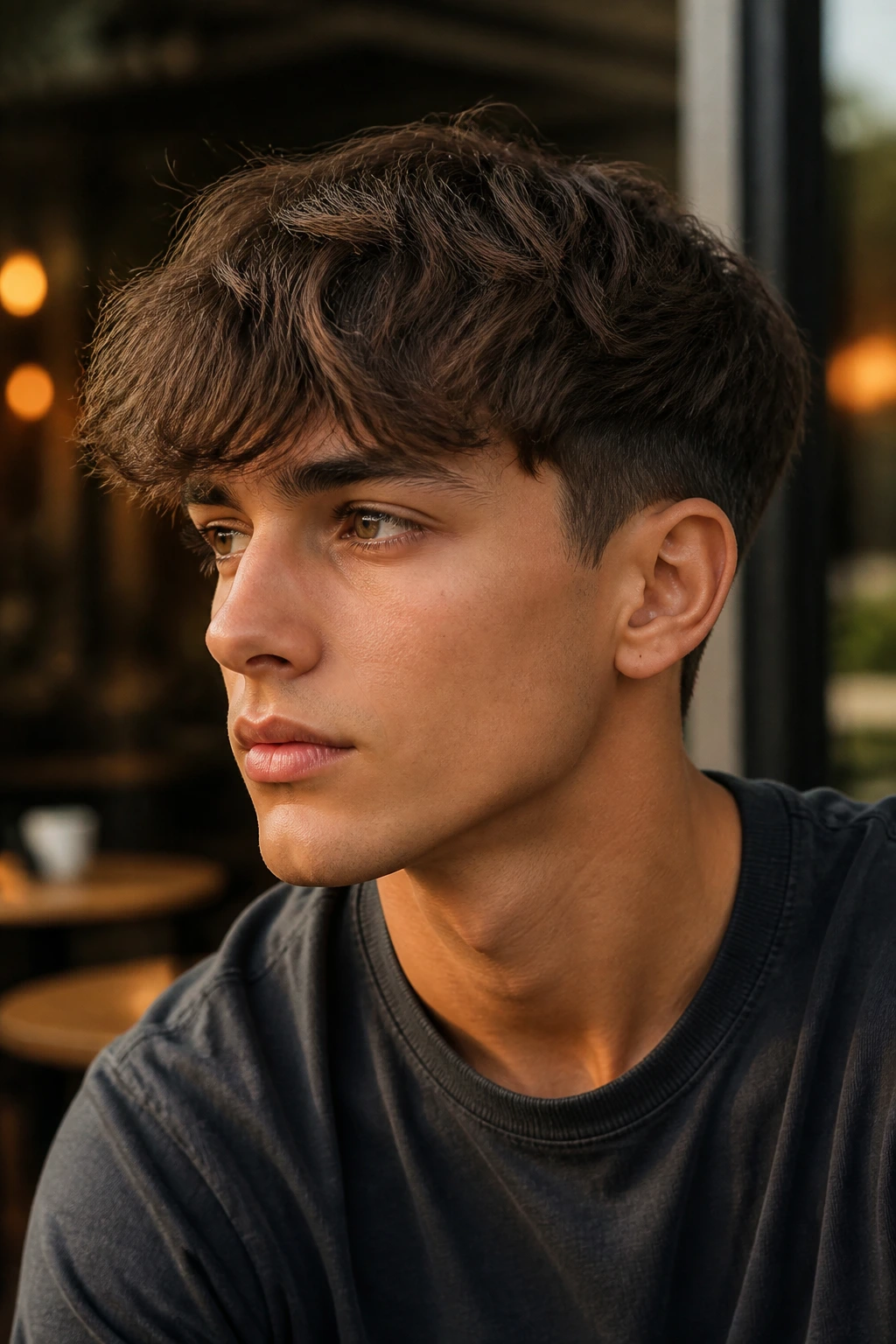
A soft mop top sounds casual because it is casual, but the right version has real shape. The length stays medium, the fringe falls forward with a little bend, and the low taper at the sides keeps the outline from going shaggy in the wrong way. It’s relaxed, not sloppy.
What makes this cut dimensional is the way the top layers break up the mass. A blunt mop can sit like a curtain. A softer one moves. The front can graze the eyebrows, the crown can keep a little lift, and the sides can fold in close enough to keep the shape balanced. That mix is what keeps it from looking childish.
Use a light cream or sea-salt spray if your hair is straight or wavy. If it’s thick, a small amount of matte paste can help control the front without locking it down. The finish should feel touchable. A little messy is fine here. More than fine, actually.
If you want one cut that works on a school run, a coffee run, and a dinner out without changing much, this is the one I’d hand to most guys. It doesn’t shout. It just looks like hair with some thought in it.
