



A round face can be a gift to work with, not a problem to hide. The trouble starts when a haircut stops at the widest part of the face, hugs the cheeks, and makes everything look a little shorter and fuller than it really is. A better cut changes the line of sight fast. It adds height at the crown, movement below the jaw, or a diagonal part that pulls the eye in a different direction.
That is the whole game with hairstyles for round faces. Not camouflage. Direction.
Hair texture matters more than people admit. A blunt bob on fine, straight hair behaves one way; the same cut on thick curls behaves like a different haircut entirely. The styles that work best usually give you some combination of length, asymmetry, lift, or soft framing that starts below the cheekbone. Tiny adjustment. Big payoff.
Some of the looks below are soft and polished, some are sharp, and a few are a little bolder than what people usually expect for a round face. That is part of the fun. A flattering style should still feel like you, not like a haircut trying too hard to prove a theory.
1. Long Layers for Round Faces
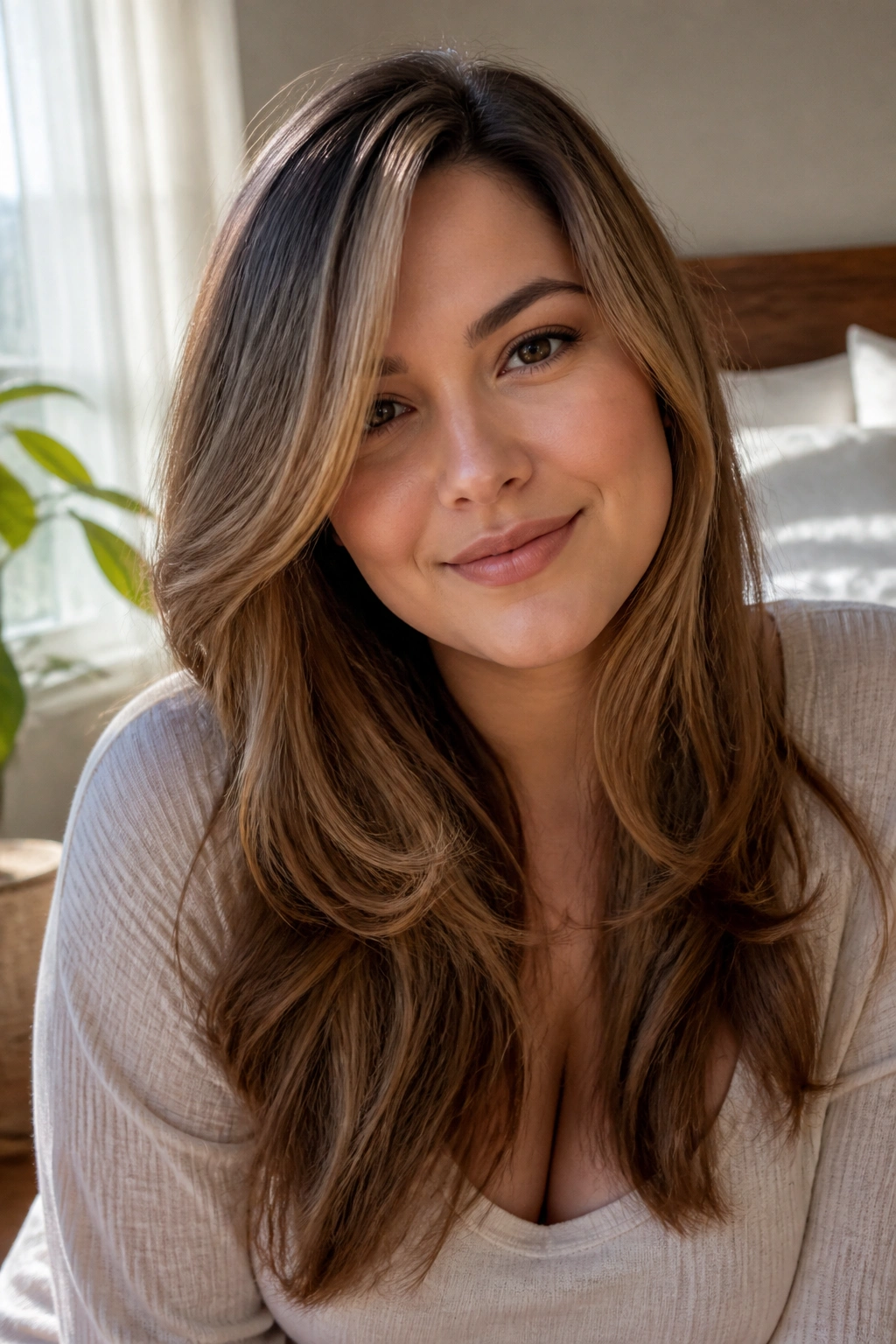
Long layers are the quiet overachiever of round-face styling. They don’t scream for attention, but they do a lot of the heavy lifting by keeping the eye moving up and down instead of straight across the widest part of the face. If your hair is medium to long, this is one of the easiest shapes to wear well.
Why It Works
Ask for the shortest face-framing piece to start below the cheekbone, not right at it. That keeps the cut from widening the middle of the face. A side part helps even more, especially if your hair tends to fall flat in the front.
- Keep the layers long and blended, not choppy at chin level.
- Blow-dry with a 1.5-inch round brush and lift the roots at the crown.
- Finish with a light bend through the ends, not tight curls that puff at the cheeks.
The best version of this cut moves when you turn your head. It has air in it. Not fluff. Air.
2. The Angled Lob
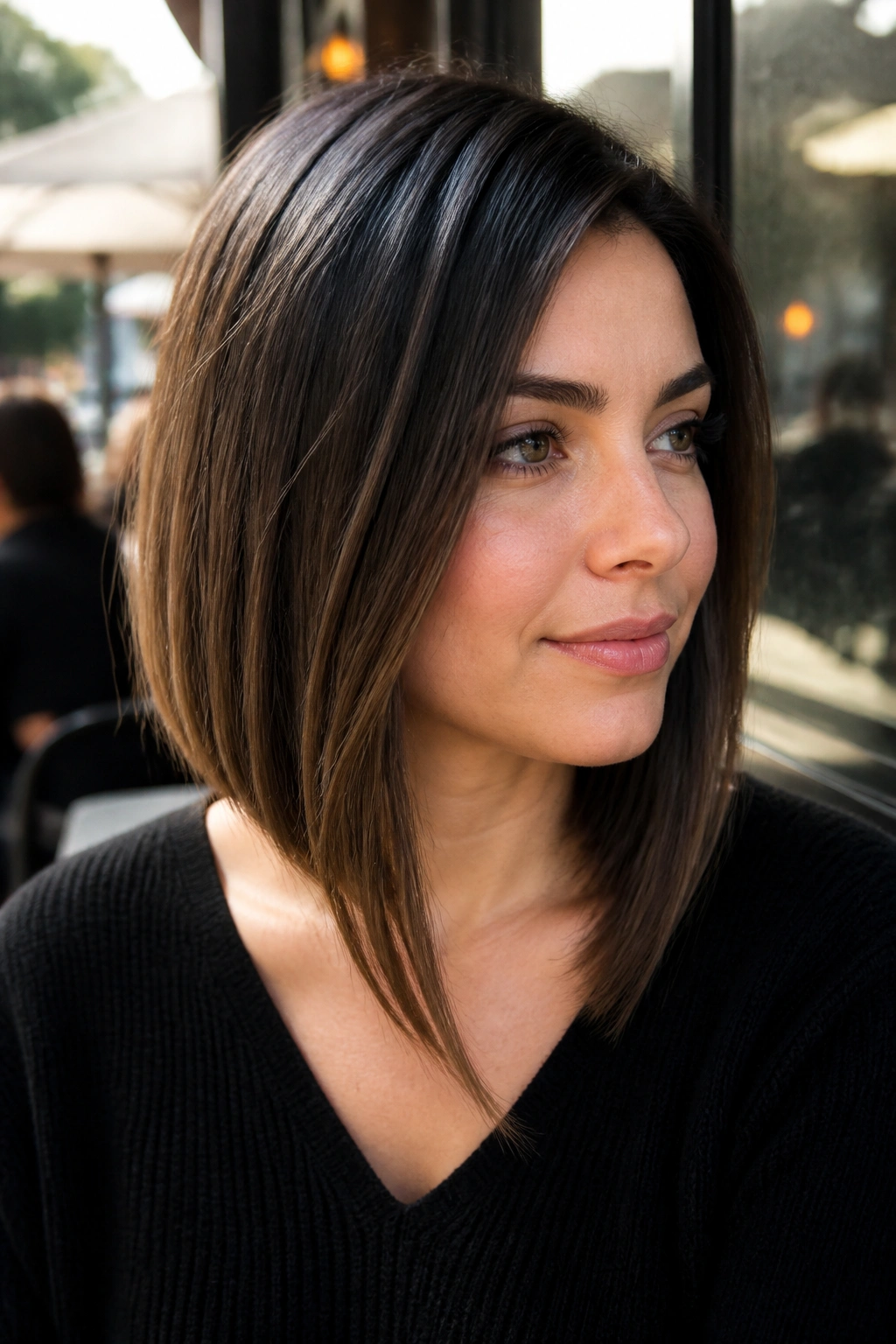
An angled lob gives a round face shape a sharper line without looking severe. The back sits a little shorter, while the front drifts longer toward the collarbone, which creates a clean diagonal and makes the face feel longer right away. It’s a smart choice if you want something modern but not fussy.
A good angled lob usually lands somewhere between the chin and the shoulders, with the front pieces 1 to 2 inches longer than the back. That length matters. If the cut ends right at the jaw, it can start fighting your face instead of working with it. Move it lower and the whole thing settles.
This style looks especially good with a slight bend through the ends. Too straight and it can feel boxy. Too curled and it can get wide. A soft pass with a flat iron or a medium-barrel curling iron gives it shape without stealing the clean line.
3. Curtain Bangs With Long Layers
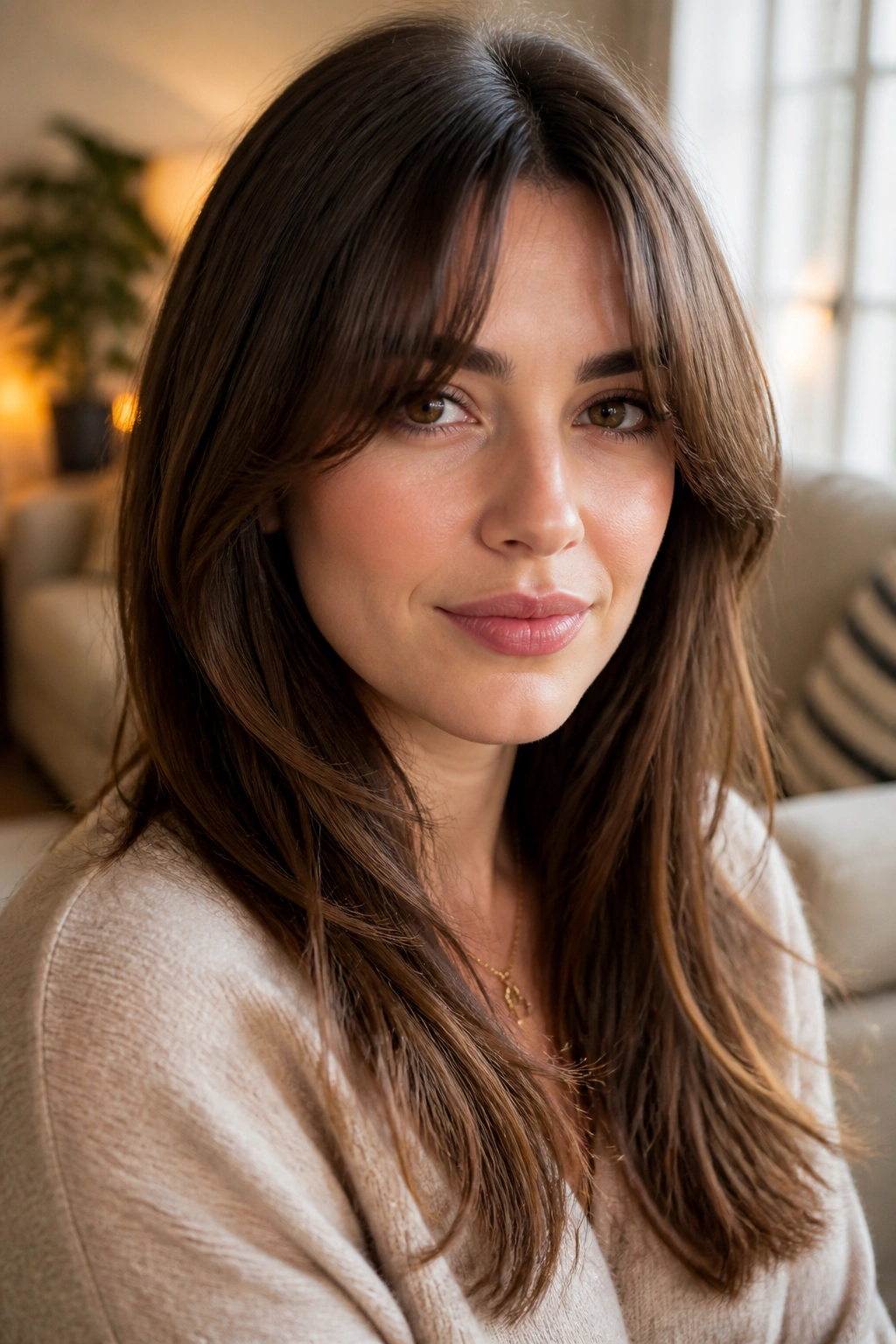
Curtain bangs can be a great match for round faces, but only when they’re cut with enough softness and length. The sweet spot is usually around the brow to cheekbone zone, with the pieces opening away from the center rather than sitting like a heavy fringe.
What Makes Them Work
The trick is movement. Curtain bangs that split naturally and blend into longer layers create vertical lines along the sides of the face. That helps break up fullness at the cheeks. If the bangs are too blunt or too short, they can shorten the face instead, and that’s the opposite of the point.
Styling Notes
- Use a small round brush or a large Velcro roller at the roots.
- Direct the bangs away from the face while drying.
- Keep the ends soft and feathered, not thick and square.
A lot of people give up on curtain bangs too fast because they try to wear them flat. They need lift.
4. Sleek High Ponytail
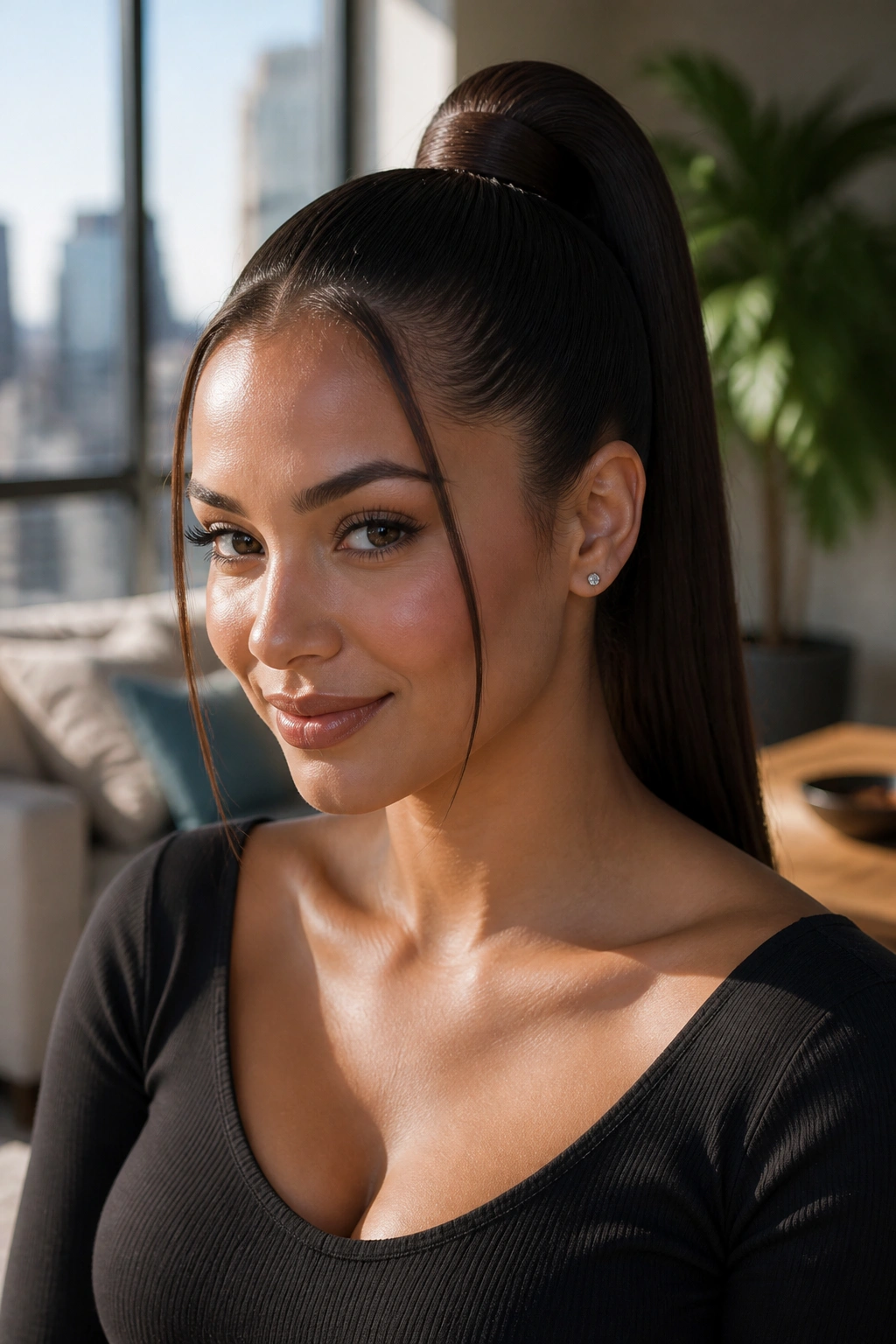
A high ponytail is one of those styles that looks simple until you notice what it does to the face. Lift the hair above the crown, and the eye follows it upward. That extra height can make a round face look longer in a very clean, elegant way.
The ponytail should sit at the upper back of the head, not halfway down. If it’s too low, it just pulls the face sideways. Keep the top smooth, but don’t flatten it like a helmet. A little crown lift makes the whole look feel lighter.
For polish, wrap a small strand around the elastic and pin it under the base. For softness, leave two thin pieces near the temples. Those pieces should be narrow, not chunky. Wide front pieces can widen the face again, which defeats the point.
Tiny detail. Big difference.
5. Pixie Cut With Height on Top
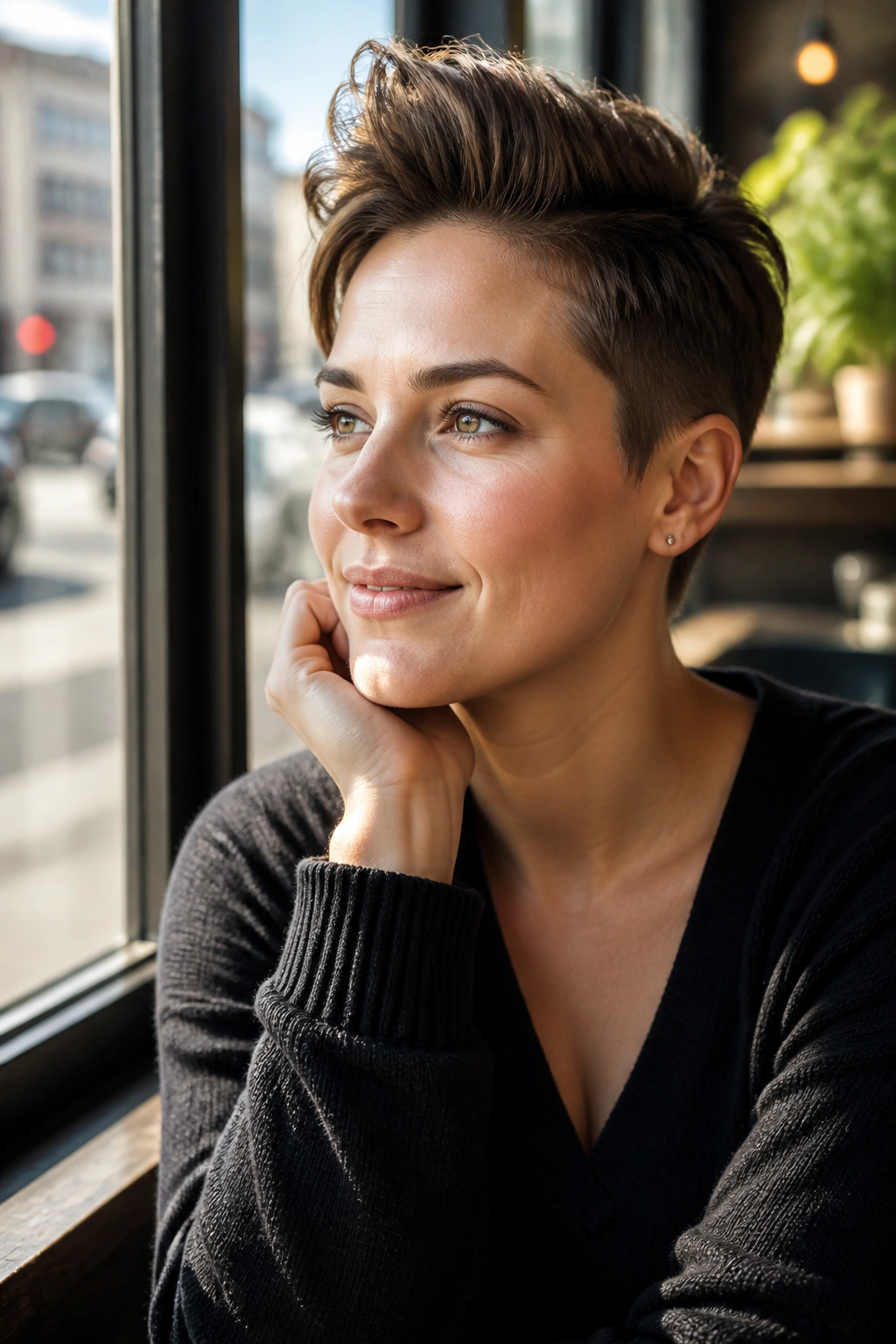
A pixie can flatter a round face beautifully when the top has lift and the sides stay neat. The short length opens up the face, and the extra height on top draws the eye upward instead of outward. Flat pixies can look too round; textured pixies usually look sharper and more alive.
The version I like most has 2.5 to 4 inches on top, with the sides tapered close to the head. That shape keeps the silhouette narrow around the ears and fuller above the forehead. It feels energetic, not severe.
Short hair needs a little styling to avoid puffing out in the wrong spots. A pea-sized amount of matte paste or styling cream is enough. Work it through with your fingers, then push the top slightly forward or diagonally. Straight up can get messy fast. Side-swept is easier to wear.
6. The Feathered Shag
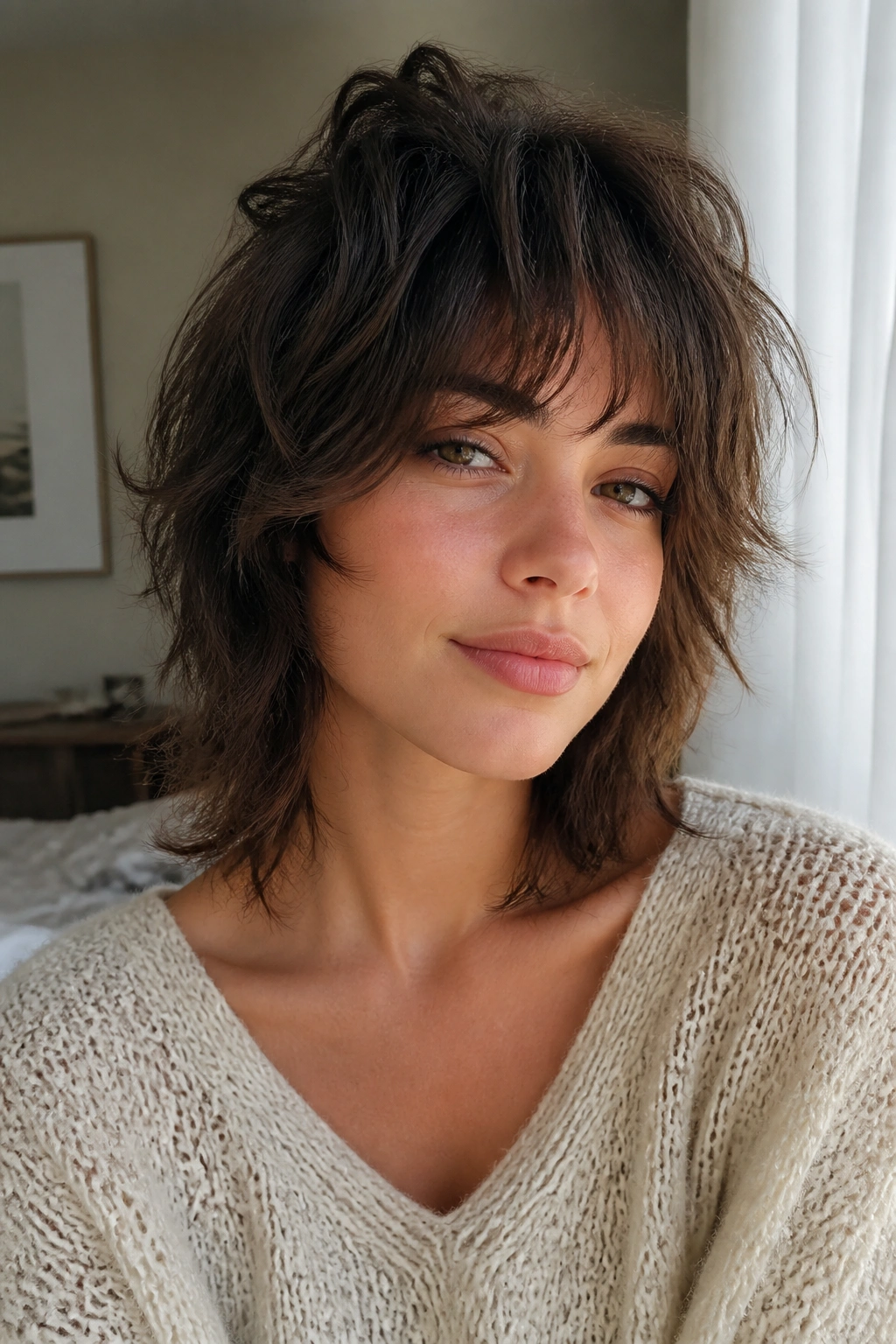
A feathered shag is one of the easier ways to add movement without adding width. The layers sit in different places, so the hair never hangs as one big block around the cheeks. That matters a lot on a round face, where a bulky shape can start to feel heavy.
What to Ask For
Ask your stylist for soft layers around the crown, cheekbones, and collarbone, with the ends texturized so they don’t sit bluntly. You want the hair to fall in pieces, not in a circle. If your hair is wavy, this cut can look great with a bit of natural air-drying and a diffuser.
- Keep the shortest face-framing layers below the cheekbone.
- Avoid a thick, helmet-like fringe.
- Use a curl cream or lightweight mousse for separation.
The shag works because it feels casual. Too much polish can flatten the texture and make the cut lose its point.
7. The Deep Side-Part Bob
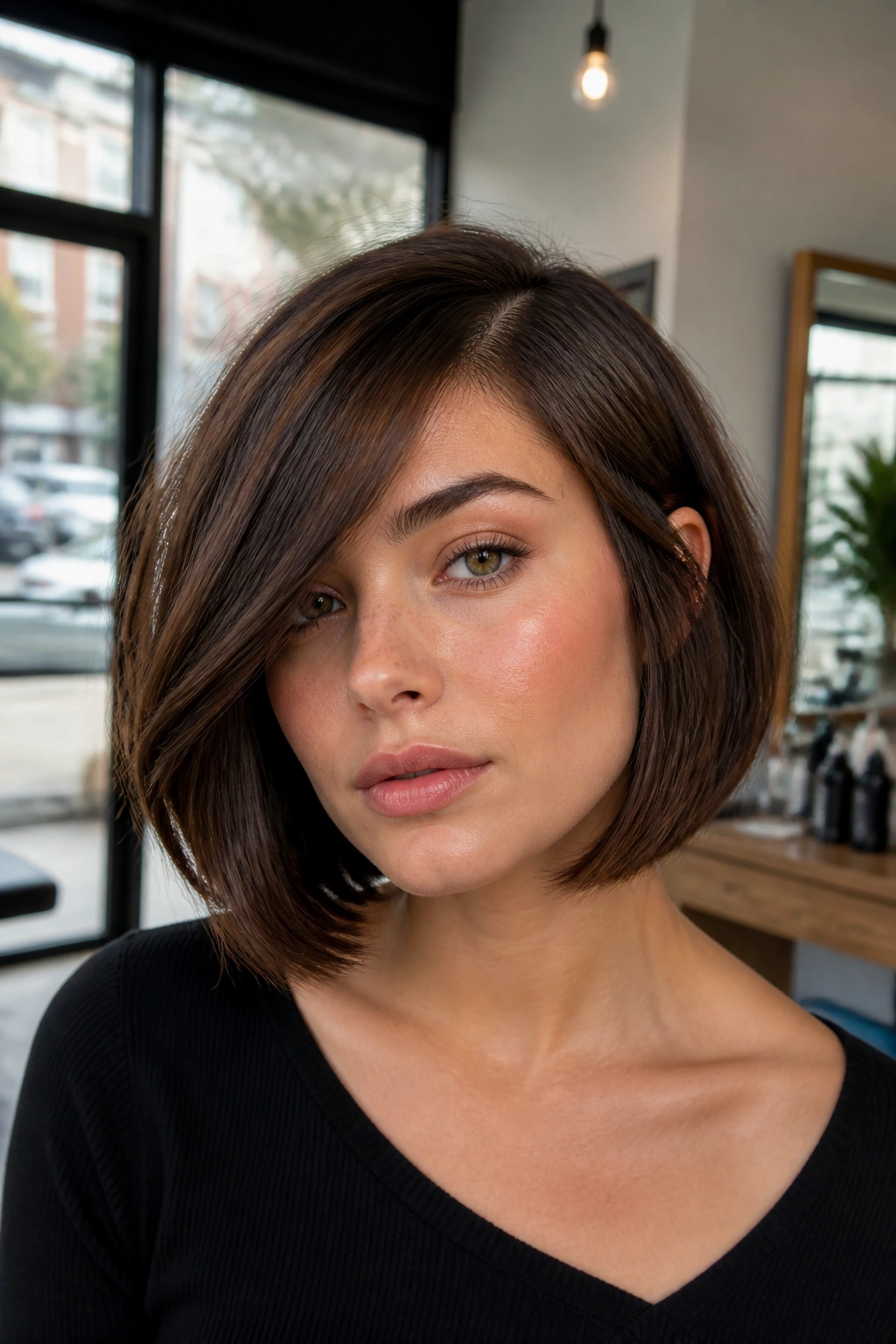
A deep side part changes everything. Really. Even the same bob can look far more flattering on a round face once you push most of the hair to one side and create that diagonal line across the forehead.
A bob that grazes the jaw to the top of the neck can be risky if it’s too blunt, but a side part shifts the balance enough to make it work. I prefer a version with a little texture or a slight undercut at the nape so the shape doesn’t balloon out at the sides.
Why It Beats a Centered Bob
The side part breaks symmetry, and symmetry is what often makes a round face look rounder. That diagonal line makes the face feel a touch longer and slimmer. Tuck the heavier side behind one ear if you want a cleaner profile. It sounds small. It isn’t.
8. Butterfly Cut
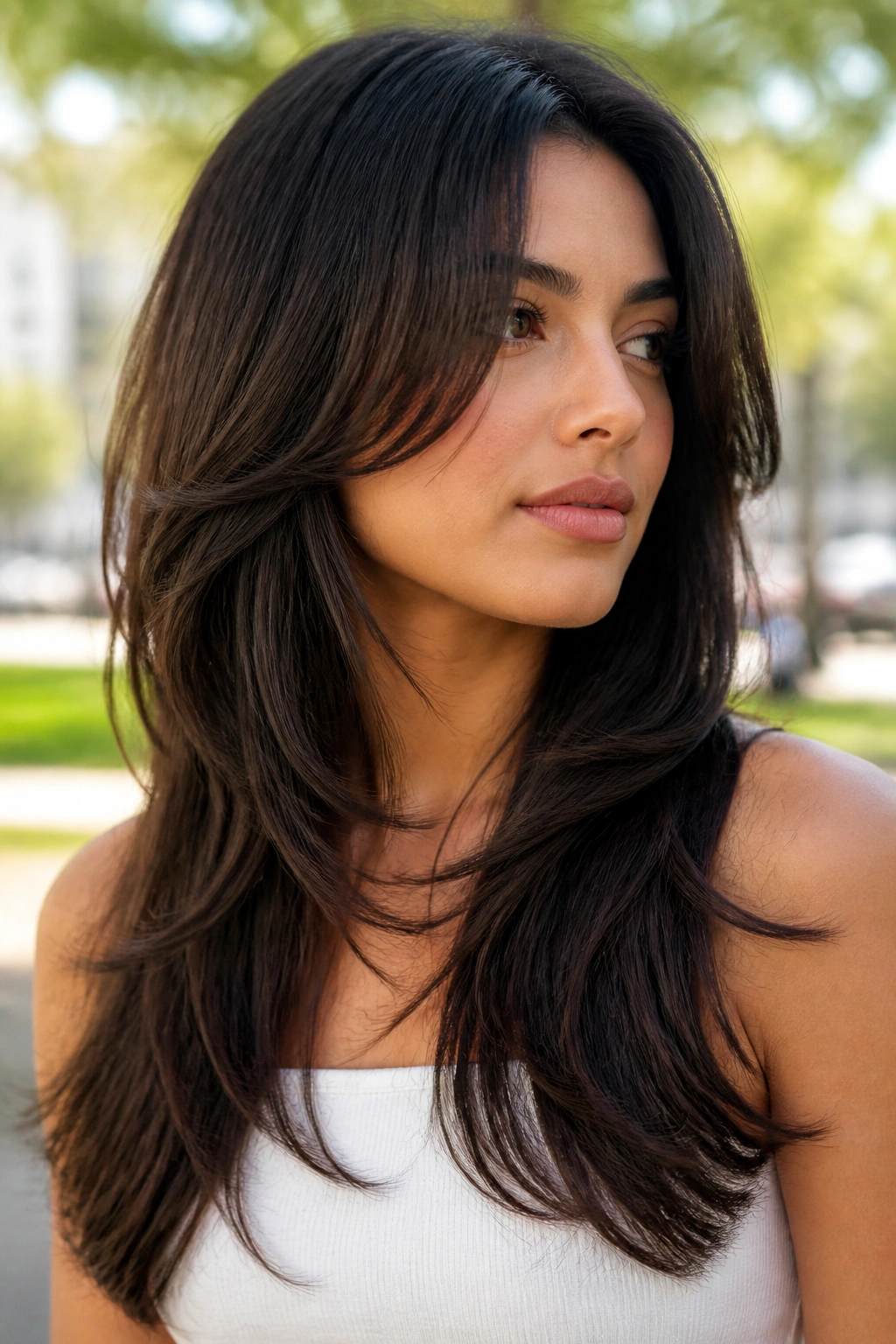
The butterfly cut has become popular for a reason: it gives the illusion of shorter layers around the face while keeping the length intact. For a round face, that can be a sweet spot, because you get shape without losing vertical length.
The shortest layers should graze around the cheekbone or just below, then fall into longer pieces that sweep down toward the chest. That creates a soft frame without bunching up around the jaw. If the face-framing layers are too short, the face can look broader. If they’re too long, you lose the shape.
How to Wear It
Use a round brush to lift the front pieces away from the cheeks. A slight bend at the ends helps the cut look airy. If you like blowouts, this is one of the best cuts to style that way, because the layers naturally separate and move.
It’s a very forgiving haircut. Not lazy, though. Forgiving.
9. Half-Up, Half-Down With Crown Volume
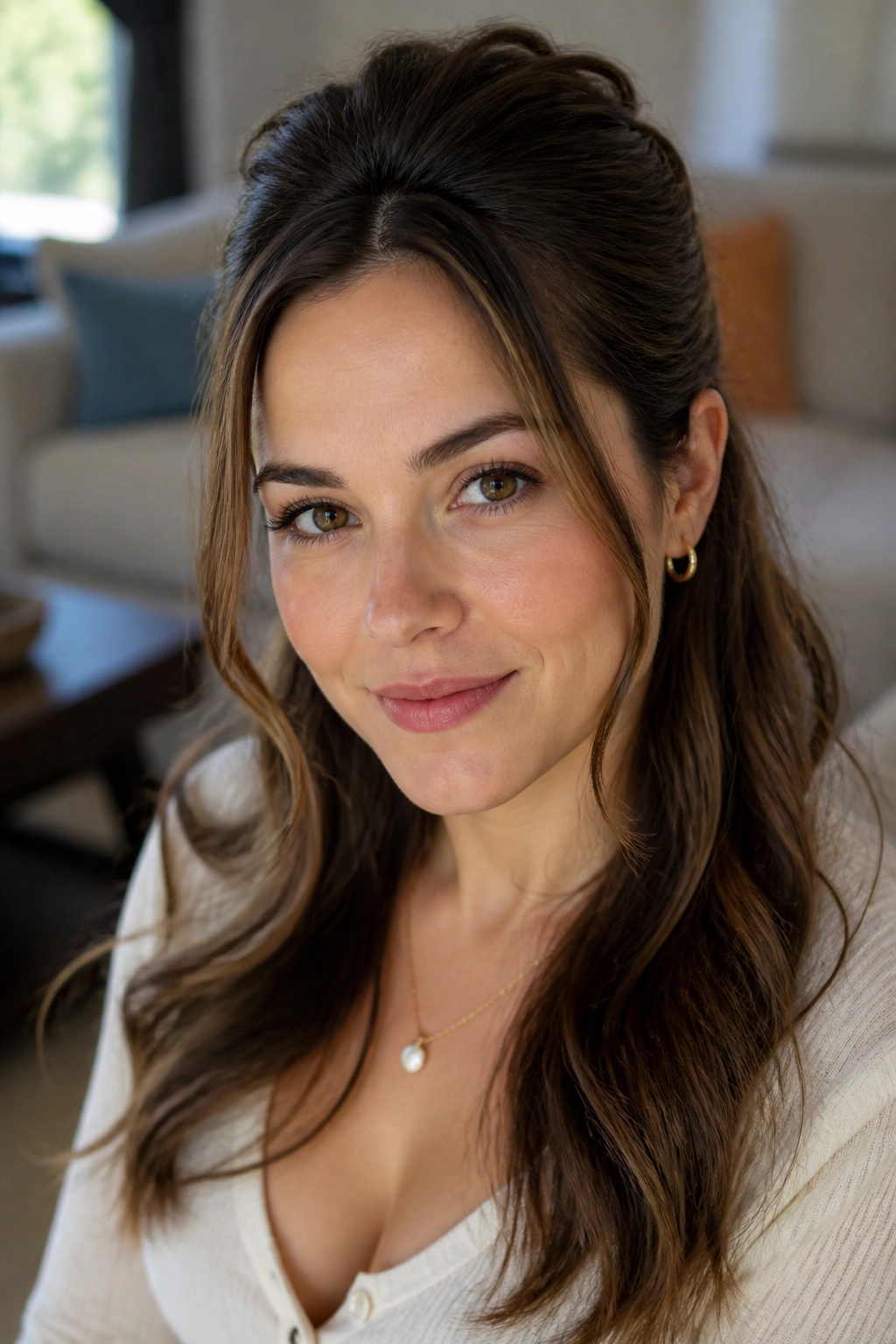
A half-up style can be one of the smartest round-face options when the top section is lifted a little at the crown. It gives you height where you want it and keeps the lower length in play, which helps the face look longer.
Don’t pull the top section back too tightly. That creates a flat surface and makes the face look wider by comparison. Instead, tease the roots lightly or use a clip that lifts the top by about half an inch to 1 inch. That tiny cushion changes the profile.
I also like leaving the front pieces soft around the temples rather than slicking everything back. A few loose strands make the style feel less severe and more balanced. If you’re going to wear a half-up look with a round face, the best version usually has a bit of softness at the sides and a little height above them. Easy win.
10. The High Bun With Loose Front Pieces
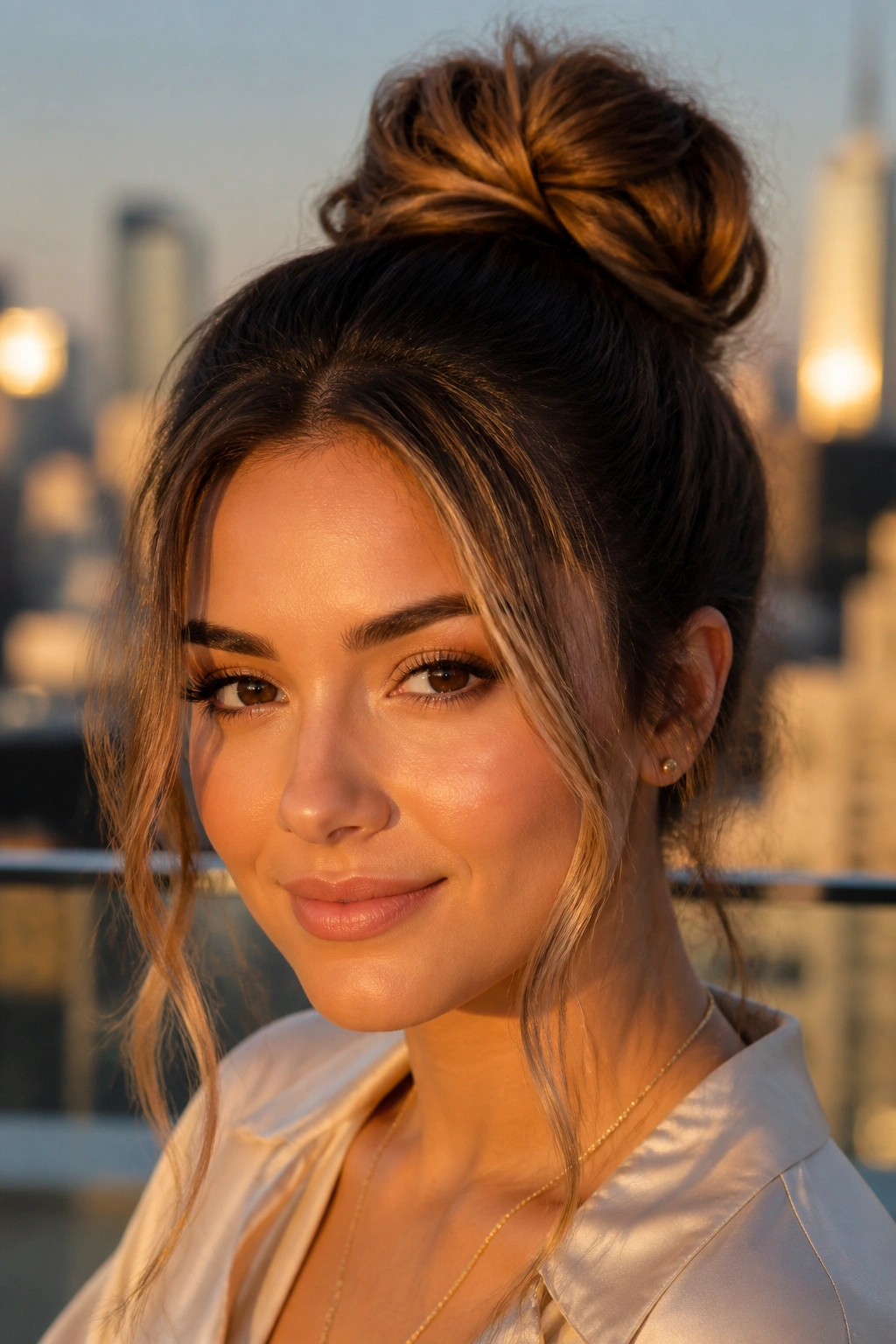
A high bun gives a round face a vertical line, and that alone makes it worth keeping in the rotation. Put the bun near the crown, and the eye moves upward instead of staying parked at the cheeks. That’s why this style works so well for dressy events and hot days alike.
The bun should be compact enough to stay neat, but not so tiny that it looks like an afterthought. A medium bun has better balance. Then leave two narrow front pieces that skim the temples or jawline. Those strands should look intentional, not like the style is falling apart.
A centered bun can feel too blunt if it sits low. High and slightly airy is the better move. If your hair is thick, secure the bun with two pins crossed at the base. If your hair is fine, a little texturizing spray before twisting will stop it from slipping.
11. Long Curly Layers
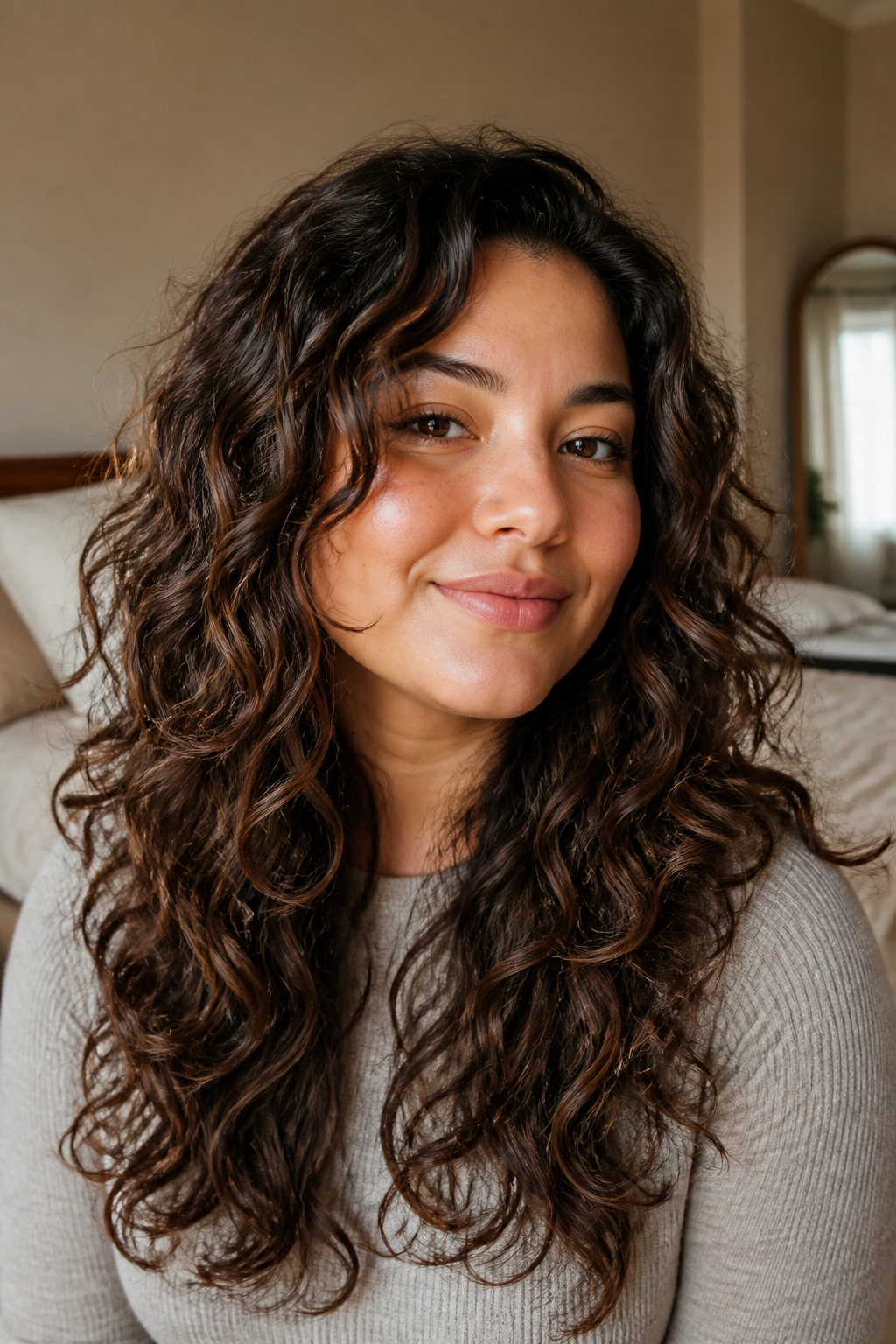
Curly hair on a round face can be stunning when the layers are placed with care. The goal is to stop the curls from forming a wide triangle around the cheeks and chin. Long layers help the curls stack in a more vertical shape, which is much kinder to roundness.
The Shape to Ask For
Ask for the layers to start where your curls naturally open up, usually below the cheekbone line. The stylist should shape the cut while your hair is dry or properly diffused, because curls shrink and behave differently when wet. That is one of those boring details that saves you from a bad haircut.
Use a diffuser on low or medium heat, and stop touching the curls once they start forming. Finger fluffing near the roots is fine. Raking through the sides too much can make them puff outward.
Curls already have personality. They do not need extra volume at the wrong spot.
12. The Asymmetrical Bob for Round Faces
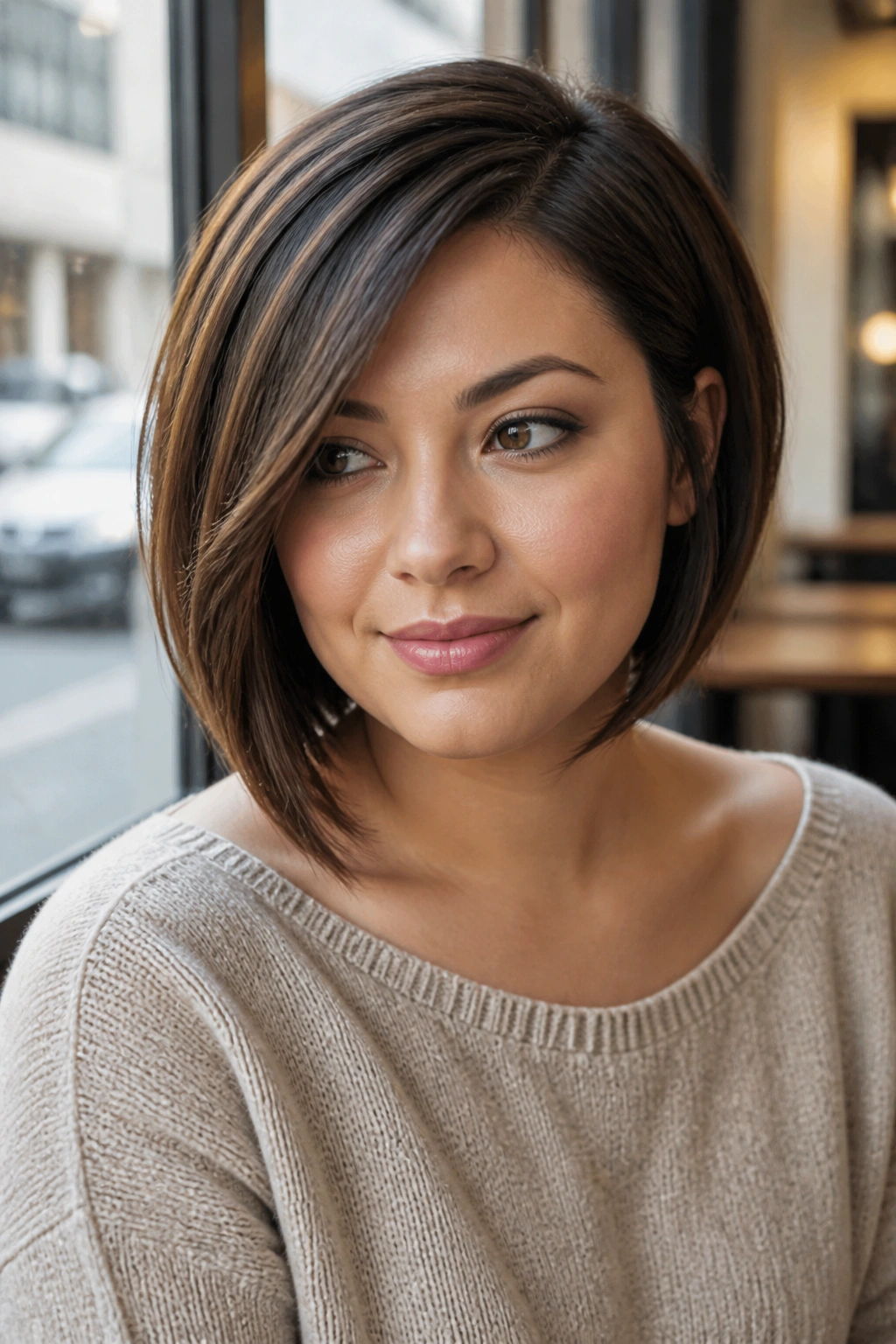
An asymmetrical bob is a strong choice when you want shape with edge. One side stays a little longer than the other, which breaks up the face in a way that feels deliberate and sharp. On a round face, that off-balance line is doing real work.
Keep the difference subtle, maybe half an inch to 1.5 inches between sides. That is enough to change the silhouette without making the haircut look theatrical. A deep side part can boost the effect, especially if the longer side falls past the jaw.
This is one of those cuts that can look sleek or messy and still behave well. Straight and tucked behind one ear? Clean. Tousled with a bit of wave? Softer, less severe. If you have fine hair, ask for internal texture so the shape doesn’t collapse. If you have thick hair, the asymmetry helps keep it from feeling heavy.
13. Side-Swept Bangs on Medium Length Hair
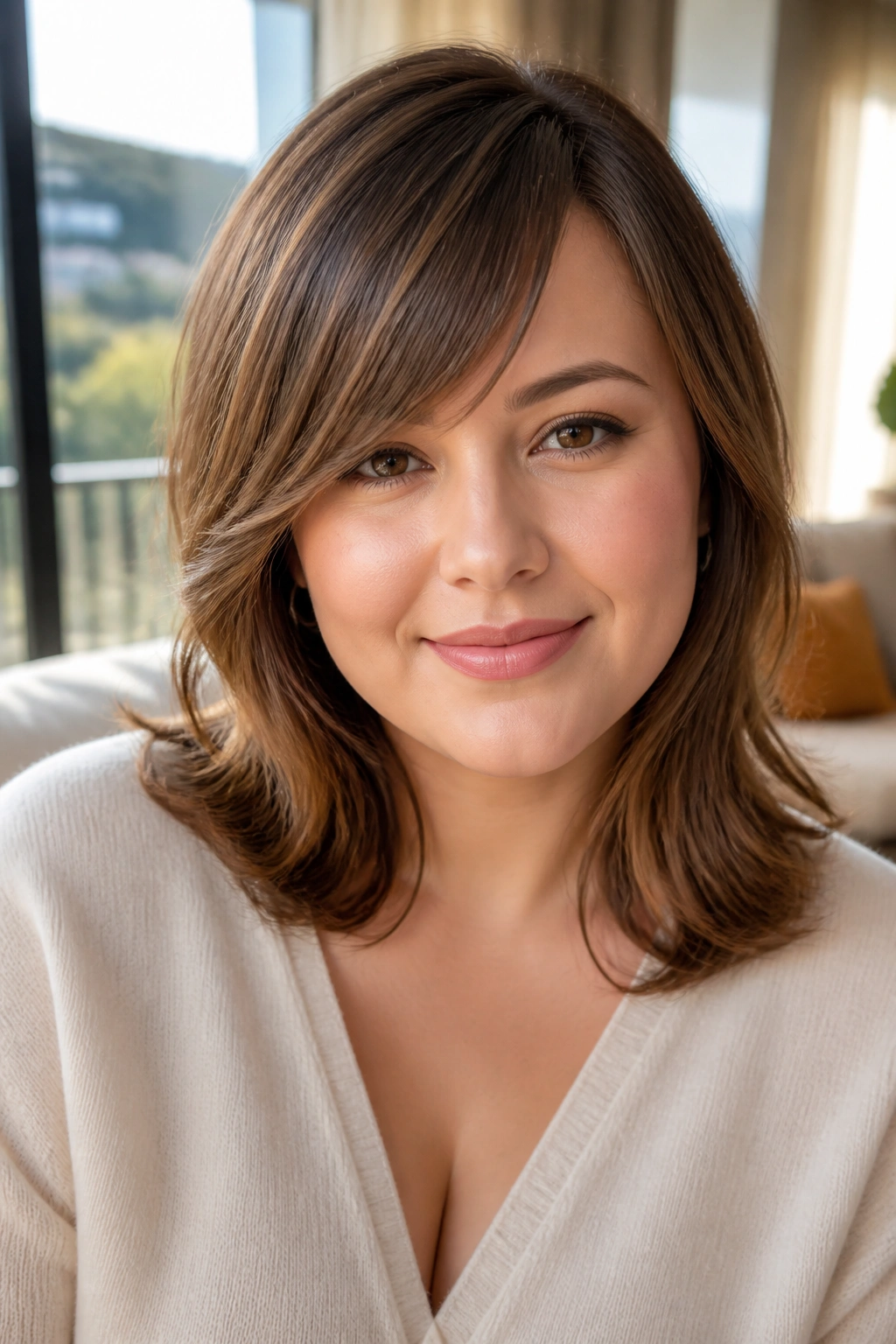
Side-swept bangs are a low-drama way to change the shape of a round face without committing to a full fringe. They make a diagonal line across the forehead, which pulls the eye upward and away from the widest part of the face. That’s why they keep showing up in flattering medium-length cuts.
The best version is longer at the outer edge, usually brushing the cheekbone or corner of the eye, with enough softness that it can blend into the rest of the haircut. Heavy side bangs can drag the whole style down. Wispy ones are easier to wear and easier to grow out.
If you wear your hair straight, dry the bangs with a round brush so they arc away from the face. If your hair is wavy, a quick pass with a flat iron on the ends can keep them from flaring outward. Keep the density light enough that the bang doesn’t become the main event.
14. The Waterfall Braid
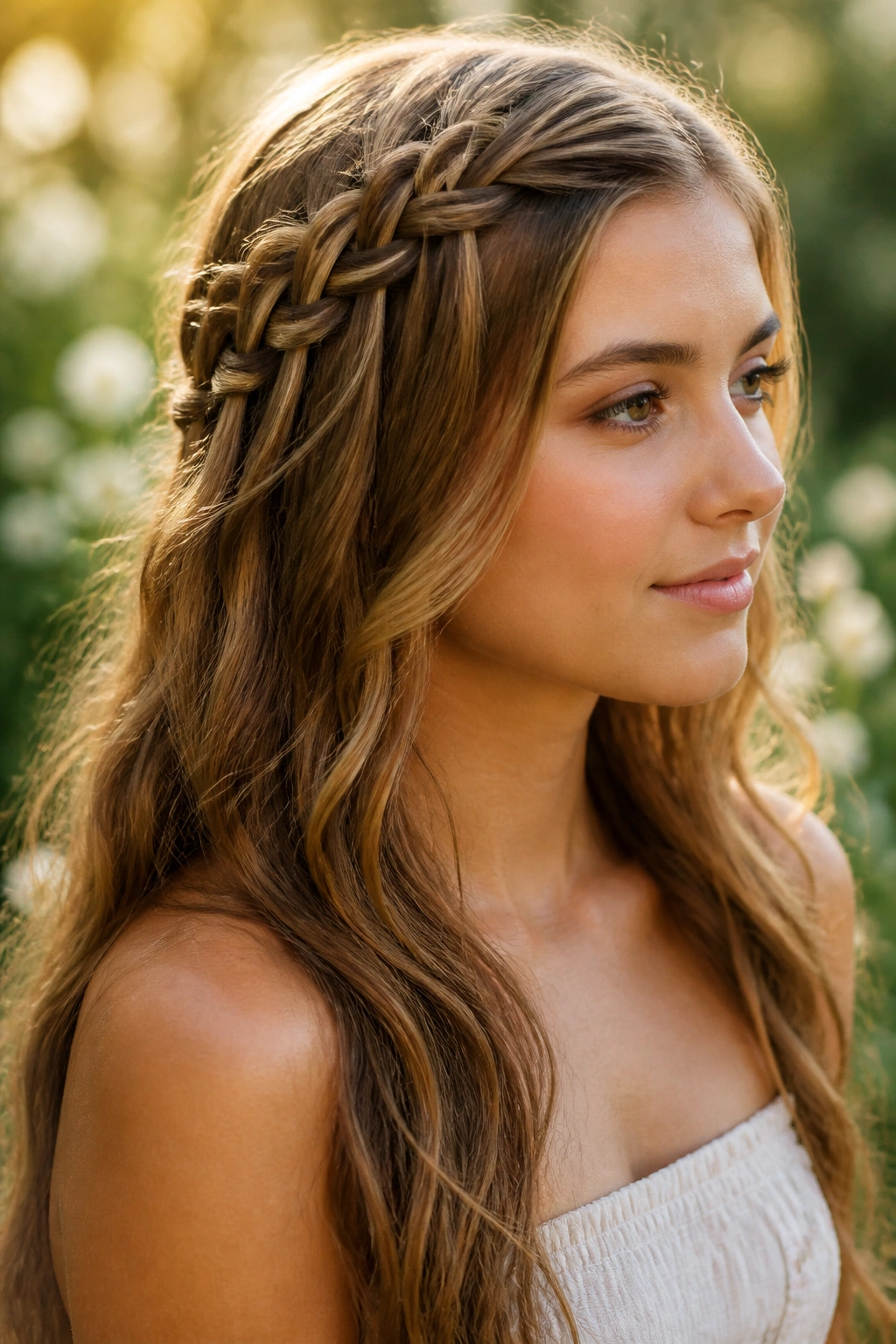
A waterfall braid works because it keeps hair off the face without creating a hard line around the cheeks. The braid runs along one side or across the back, while loose strands fall through it and keep the shape soft. On a round face, that combination matters.
It’s a lovely choice for weddings, dinners, or any day you want something prettier than a plain ponytail. The braid should sit a little higher than the cheekbone area, not low and wide. If it droops too close to the jaw, it can make the face feel broader.
Best Way to Wear It
- Start with loose waves or a soft blowout.
- Keep the braid narrow and close to the head.
- Leave a few tendrils around the temples.
The style works best when it looks airy, not stiff. A tight braid with no movement can feel too severe. A loose one has a much better line.
15. Voluminous Blowout Layers
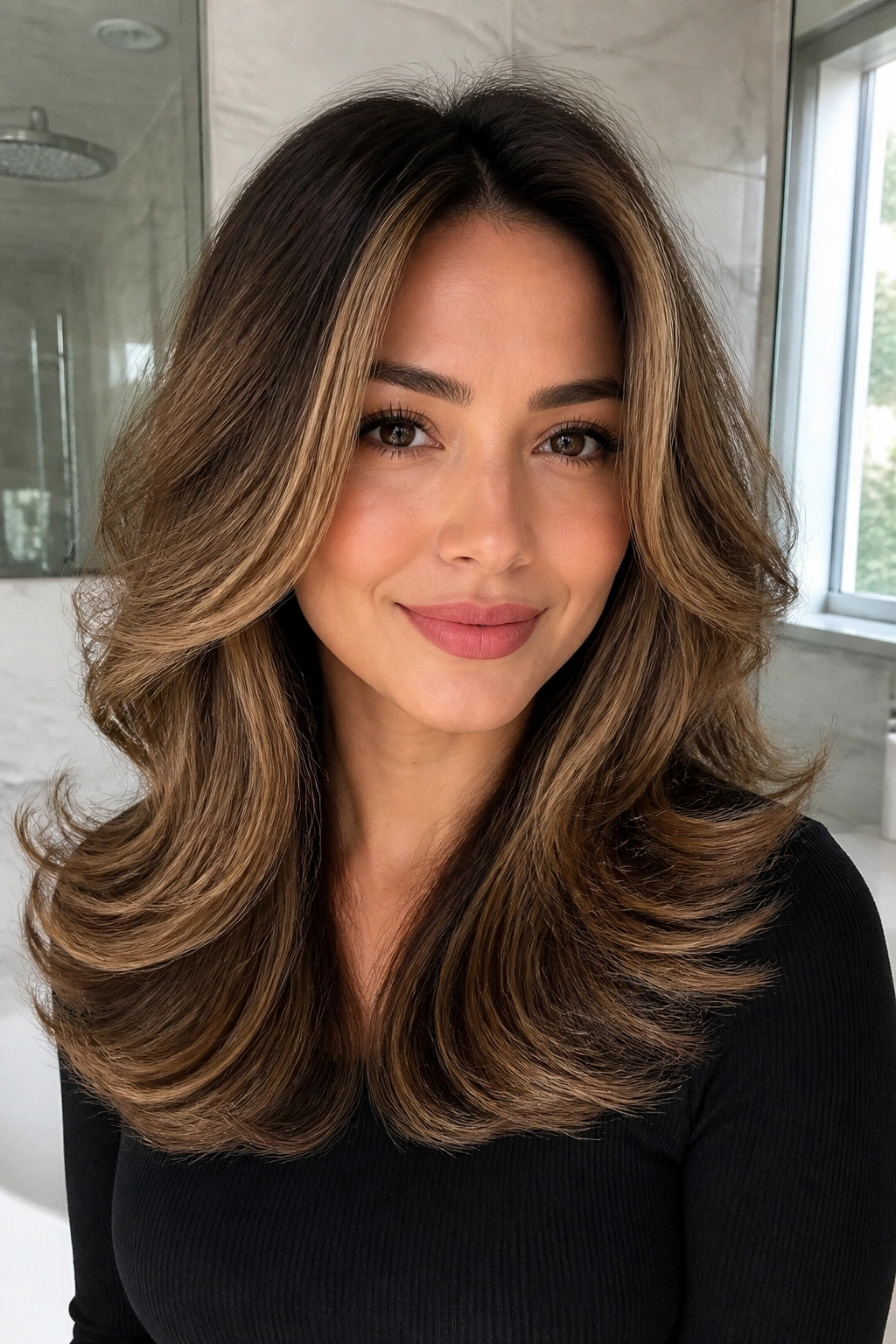
A full blowout can be one of the most flattering looks for a round face because it builds height at the roots and directs the ends outward in a controlled way. The key is not to add volume at the cheeks. You want lift at the crown and movement from the mid-lengths down.
The Technique That Helps
Use a round brush, a heat protectant, and medium heat. Dry the roots first by lifting sections away from the scalp, then smooth the mid-lengths and curl the ends under just a little. A 2-inch section at a time is manageable and keeps the finish cleaner.
Don’t over-roll the brush at the sides. That creates a bubble right where you do not want one. A softer bend through the bottom third of the hair looks better and lasts longer.
This style has a little drama, which I like. Not all the time. But when you want hair that looks expensive without being stiff, a rounded blowout with tall roots is a very good answer.
16. The Low Chignon With a Side Sweep
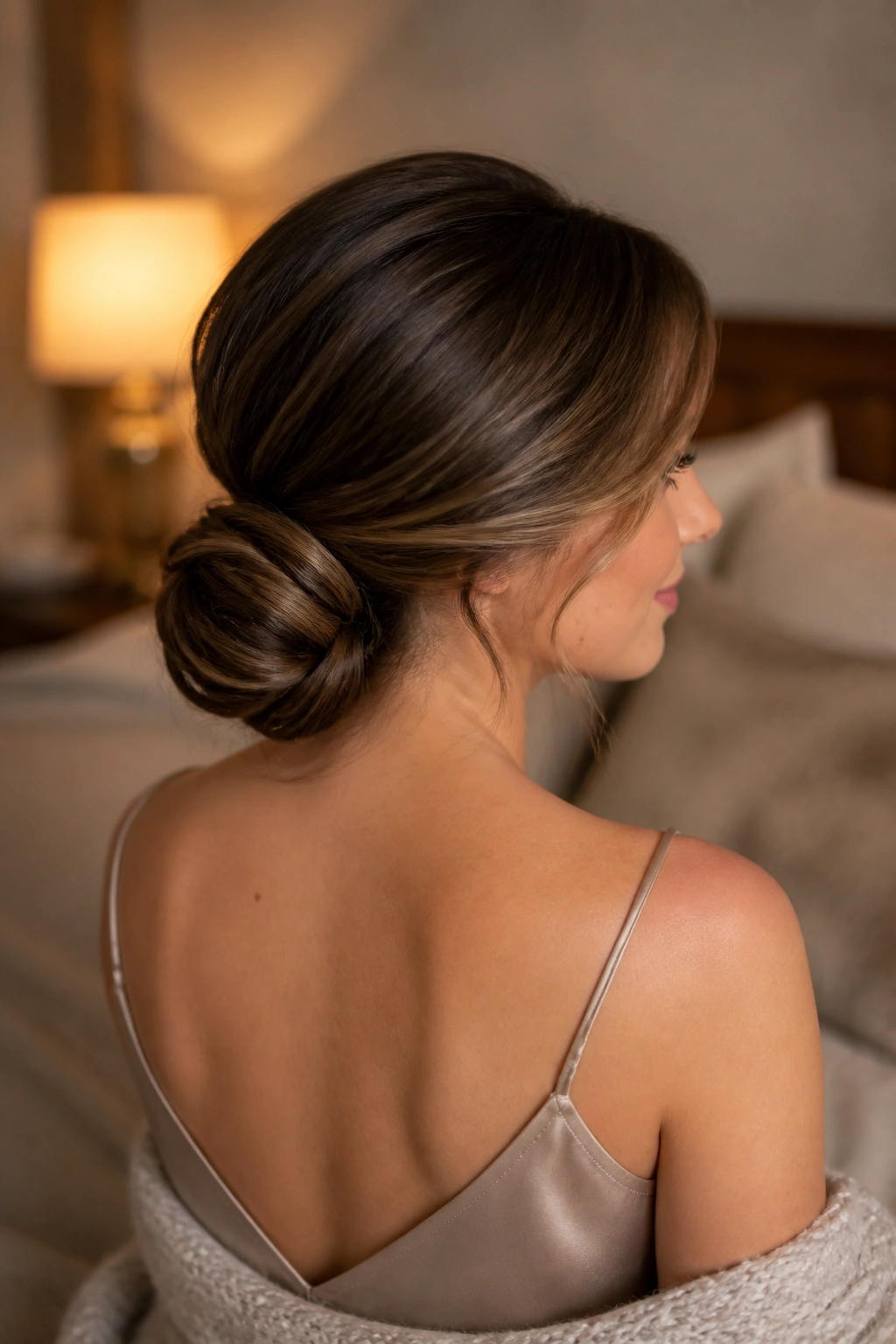
A low chignon is elegant, but on a round face it needs a slight offset to avoid looking too centered and wide. Place it low at the nape and just a bit off-center, then sweep the front hair across the forehead or temple line.
That diagonal front section does a lot of quiet work. It keeps the look soft and gives the face a longer outline. If the chignon sits dead center and is packed too tight, the style can feel boxy. A loose twist is better.
This is a style that rewards neatness without demanding perfection. A few smooth pieces at the top, a gentle side sweep, and a tucked bun are enough. Add a pin with a matte finish if you want it to look deliberate. Shiny pins can work too, but the shape matters more than the accessory.
17. Textured Crop With a Long Fringe
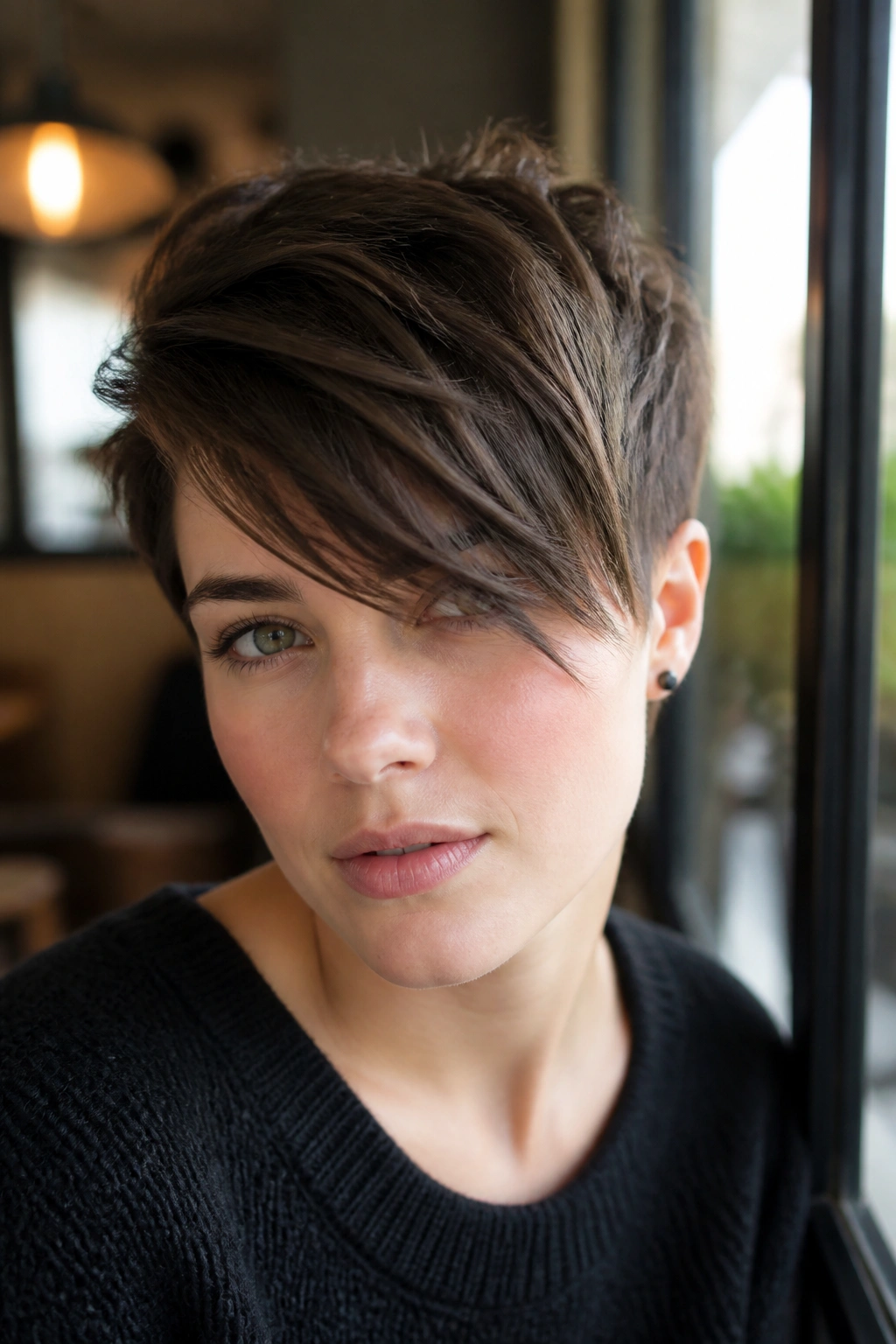
A textured crop is short, sure, but it can still flatter a round face if the fringe is long and directional. You want the cut to feel piecey and angled, not round and puffy. Short hair with too much width around the sides is where things go sideways fast.
What To Watch For
The fringe should sweep across the forehead at a diagonal, grazing one eyebrow or one eye. That gives the face a strong line instead of a circular one. The top can be a little messy, which helps keep the silhouette from looking hard.
- Ask for point-cut texture instead of blunt edges.
- Keep the sides narrower than the top.
- Style with a matte paste, not a heavy cream.
I like this cut on people who do not mind a little edge. It feels cool, practical, and more forgiving than a super-sleek crop. The right fringe makes the whole thing click.
18. The U-Shaped Cut for Round Faces
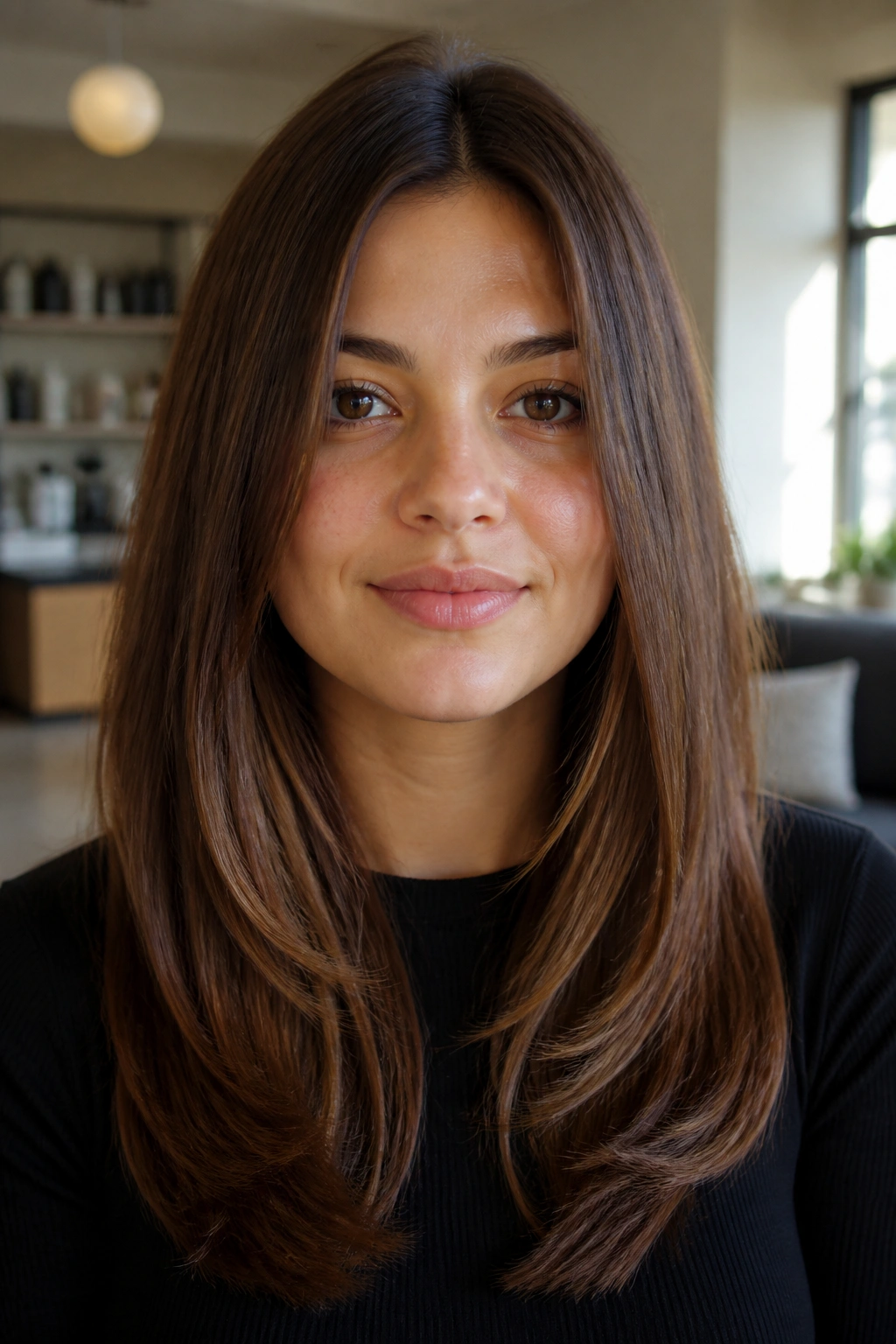
A U-shaped cut is one of the most underrated shapes for round faces, especially on longer hair. The center hangs a little shorter, while the sides gradually get longer, creating a soft curve that still points downward. That vertical taper helps the face feel longer without making the cut look severe.
The difference between this and a plain one-length cut is subtle but important. A blunt line that falls straight across the chest can make the face feel boxed in. A U-shape gives the eye a path to follow. That path matters.
If you wear your hair straight, the shape is easier to see. If you wear waves, the cut should still hold its line as the texture moves. Ask for the layers to stay low so the perimeter doesn’t blow apart. A little face-framing is fine. Too much at the cheeks, and the whole point gets muddy.
19. The Controlled Wolf Cut
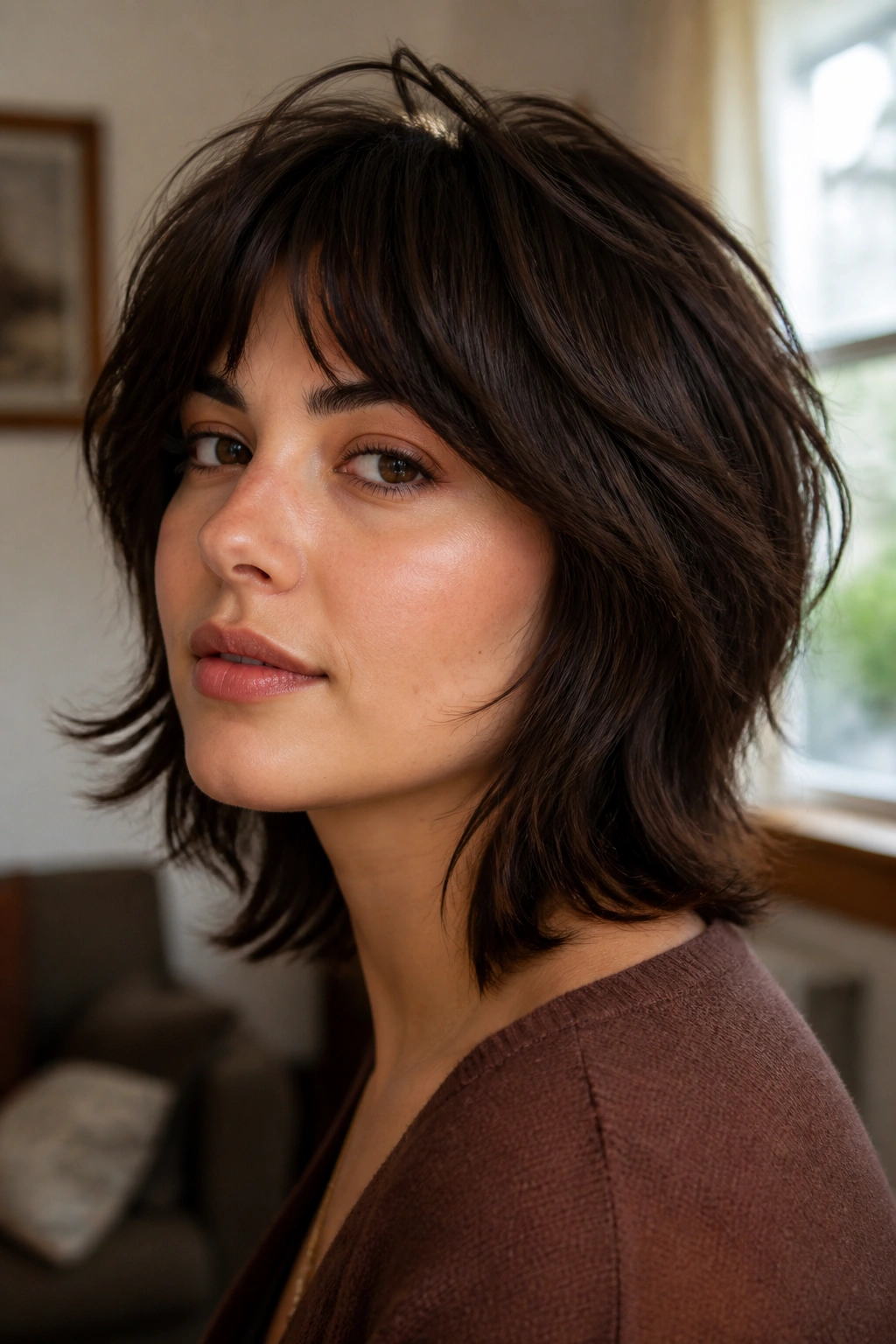
A wolf cut can work on a round face, but only if it’s controlled. Wild, over-layered versions can make the sides too big. The better version keeps the crown airy and the bottom length intact, which gives you shape without a balloon effect.
This cut suits people who like texture and don’t want their hair to sit still all day. The crown layers should create lift, while the lengths near the jaw stay soft and slightly longer. That contrast is what helps the face look less circular.
The styling part is where many wolf cuts go wrong. If you rough-dry everything straight out, it can expand sideways. A better move is to scrunch the top a little, smooth the sides with a bit of cream, and let the ends fall where they want. It should look lived-in, not chaotic.
20. The Braided Crown Style
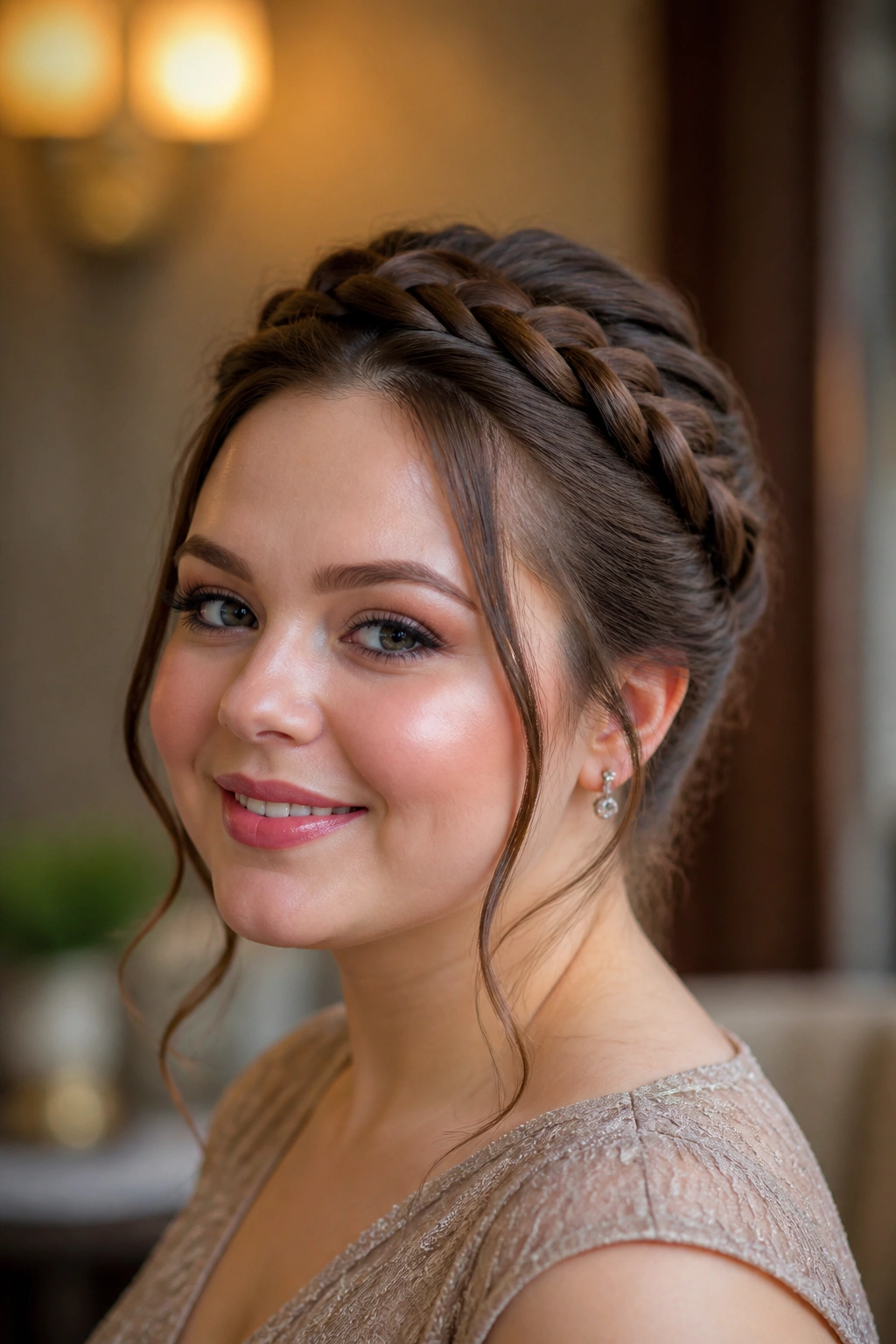
A braided crown pulls the hair up and around the head, which can be gorgeous on a round face if the braid stays narrow and the crown area has a bit of lift. The danger is making the braid too wide and too close to the cheeks. That can add the exact fullness you were trying to avoid.
A better version keeps the braid tight to the hairline, with a little height at the top of the head. Leave a few slender pieces loose near the temples or ears. Those tiny gaps soften the outline and keep the style from feeling heavy.
Best Uses
- Formal events
- Hot weather
- Days when you want hair fully off the face
This is a practical style with a pretty finish. I’d choose it over a bulky crown braid every time for a round face, because the shape stays cleaner and the face gets more breathing room.
21. Long Straight Hair With Invisible Layers
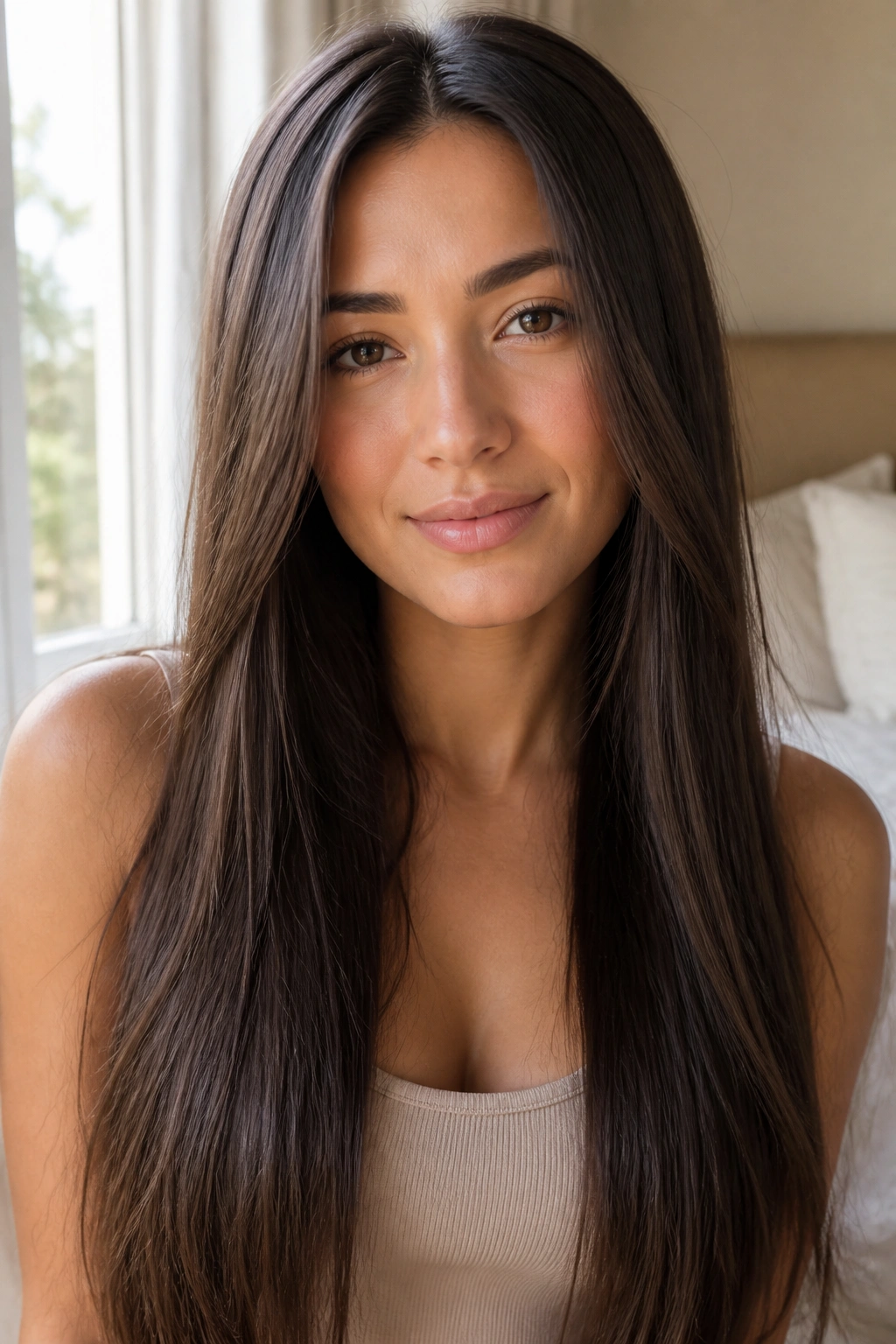
Straight hair can look especially good on a round face when the layers are so soft they barely show. The goal is to keep the long line intact while easing some weight out of the front and ends. That gives the hair movement without chopping it up.
A center part can work here if the hair is very long and the front pieces fall below the cheekbone. Still, an off-center part often feels easier and a little kinder to roundness. The key is keeping the hair from flaring outward at the cheeks or jaw. Smoothness matters more than volume.
I like this style when the ends are slightly beveled under, not stick-straight and not flipped out. It reads cleaner. If your hair is fine, a light glossing serum on the mid-lengths can keep the surface sleek without making it greasy. If your hair is thick, a flat iron pass on the top layer only can tame the outline fast.
22. Faux Hawk Braid
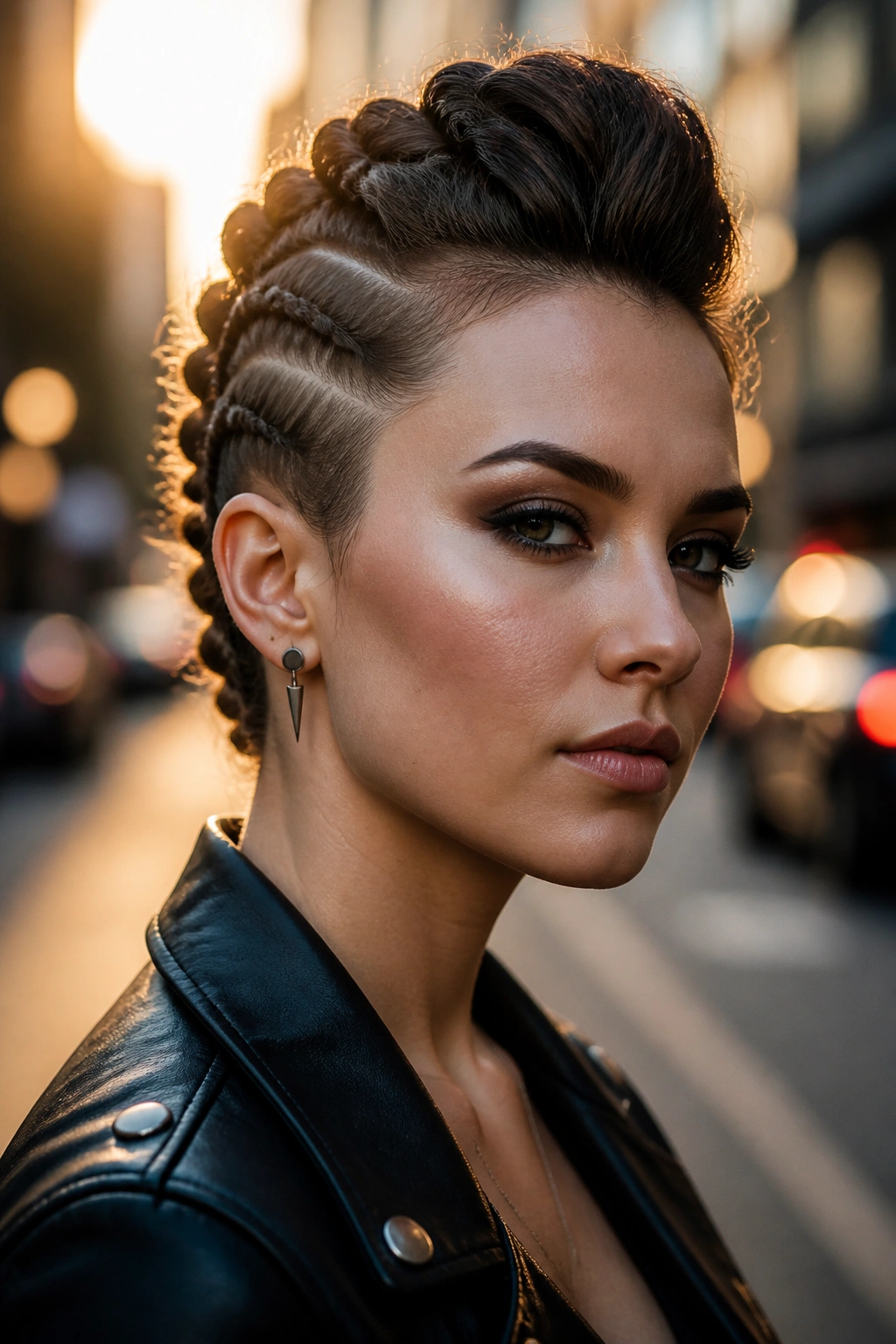
A faux hawk braid is bold, and bold can be useful on a round face because it creates a strong vertical center line. The sides are braided or pinned close to the head, while the middle section stays taller and more lifted. That contrast sharpens the whole silhouette.
This is not an everyday style for everyone, and that’s fine. It shines at parties, concerts, photo shoots, or any time you want the face to look longer and the styling to feel a little dramatic. The central ridge should be lifted, not puffed. Puff is the enemy here.
A good faux hawk usually works best when the braid is neat at the sides and the top has a controlled messiness. Too polished and it can feel stiff. Too loose and it loses the line. If you have layers, pinning them with a bit of texturizing spray helps everything stay in place.
23. Shoulder-Length Blunt Cut With Tucked Ends
A blunt cut on a round face sounds risky, and sometimes it is. But when the length lands below the chin and the ends are tucked in slightly, the result can be clean and sharp rather than wide. The shoulders become the stopping point, not the jaw.
Why It Can Work
The main idea is distance. If the line sits right at the cheeks, the cut can echo the roundness of the face. If it drops lower and stays sleek, the shape becomes more flattering. A slight side part or a subtle wave at the ends helps keep it from looking rigid.
This is a strong choice if you like a crisp finish and do not want layers everywhere. It needs maintenance, though. Regular trims keep the edge neat, and a round brush at the ends keeps the cut from flipping outward in an awkward way.
It’s the kind of haircut that looks plain until it’s done well. Then it looks expensive.
24. Box Braids or Twists With a Side Part
Protective styles can be beautiful on round faces when the parting and length are chosen with care. Box braids, twists, or similar styles work best when they fall past the chin, ideally to the shoulders or lower, so the eye moves downward instead of stopping at the cheeks.
A side part is often more flattering than a center part because it creates that diagonal line across the face. Keep the braids from bunching too much at the temples. Too much width there can make the face feel fuller. A little spacing near the hairline helps the style breathe.
If you wear thicker braids, ask for a clean part and not too much bulk at the roots. Smaller braids can feel lighter and give a finer, longer-looking frame. Twists tend to look softer than box braids, while still offering that same lengthening effect.
25. Soft Glam Waves With an Off-Center Part
Soft glam waves are one of the easiest finishing styles to love on a round face because they give shape without stiffness. The off-center part creates a small break in symmetry, and the waves fall in a gentle vertical path that keeps the face from feeling too wide.
The best version starts with waves that bend away from the cheekbone, not right into it. A 1.25-inch curling iron or a large wand works well if you wrap sections loosely and leave the last inch out. Once the curls cool, brush them out so the wave looks soft, not ringleted.
This is the style I’d hand to someone who wants polish without drama. It suits long layers, lobs, and even medium-length cuts. Add a little shine spray at the ends and a lift at the crown, and the whole look feels finished without becoming stiff.
A round face does not need to be hidden. It needs the right lines, the right length, and a little attitude about where the hair ends. Keep the eye moving, keep the cheeks from being boxed in, and the haircut does the rest.
