



Square faces are strong, and strong is not the same thing as harsh. A cut that lands right on the jaw can make the lower face look wider; a cut that bends, breaks, or drifts off-center tends to soften the whole frame.
That is why the best hairstyles for square faces usually create movement where the face is widest: around the temples, cheekbones, and just below the chin. Side parts help. So do layers that start lower than the jaw, waves that bend instead of sit stiff, and fringe that skims instead of chops.
Length alone does not solve much. A long blunt curtain can look heavier than a chin-length bob with air in it, and a pixie can look softer than both if the top has enough lift. Texture matters too. Straight hair, loose waves, curls, and coils all frame a square face differently.
Keep that in mind as you read. The point is not to hide your face shape. It is to work with it, so the jaw still looks sharp but the haircut has a little motion around it.
1. Side-Swept Long Layers
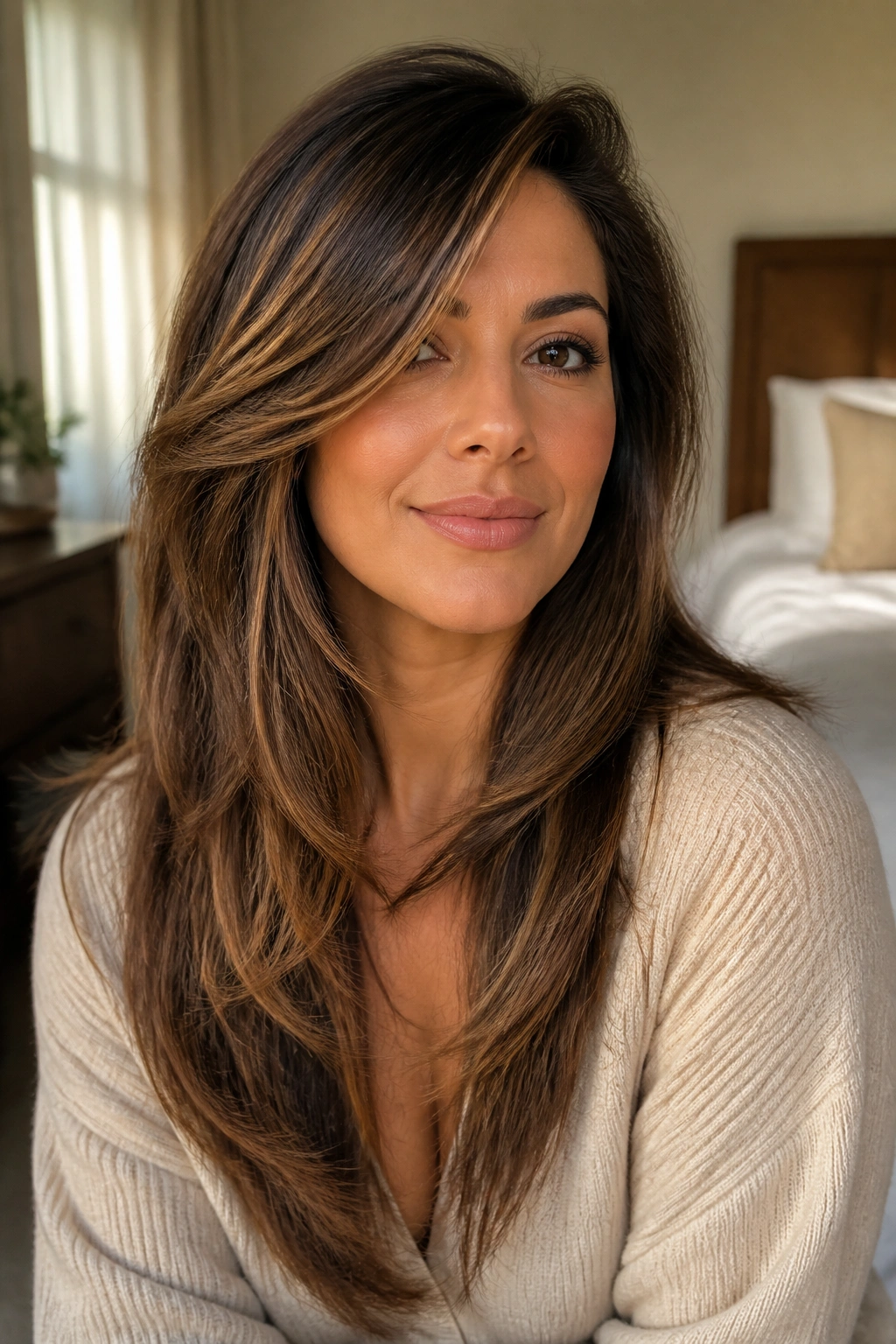
Side-swept long layers are one of the easiest wins for a square face because they pull the eye diagonally instead of letting it sit on the jawline. That diagonal line does a lot of quiet work. It softens the lower face and keeps long hair from hanging straight down like a curtain.
Why It Works
Ask for layers that begin around the collarbone or a little below the chin, not right at the jaw. That placement matters. If the shortest pieces hit exactly where your face is widest, the haircut can feel boxy. If they start lower, the hair bends around the face instead of boxing it in.
A deep side part makes the whole cut feel looser. It also gives a square face a little asymmetry, which is often the missing piece. The goal is movement, not more length for its own sake.
A small styling trick helps here: blow-dry the front sections away from the face, then turn the ends slightly outward with a round brush or large curling iron. That tiny bend keeps the look soft without turning it into full waves.
2. Deep Side-Part Bob
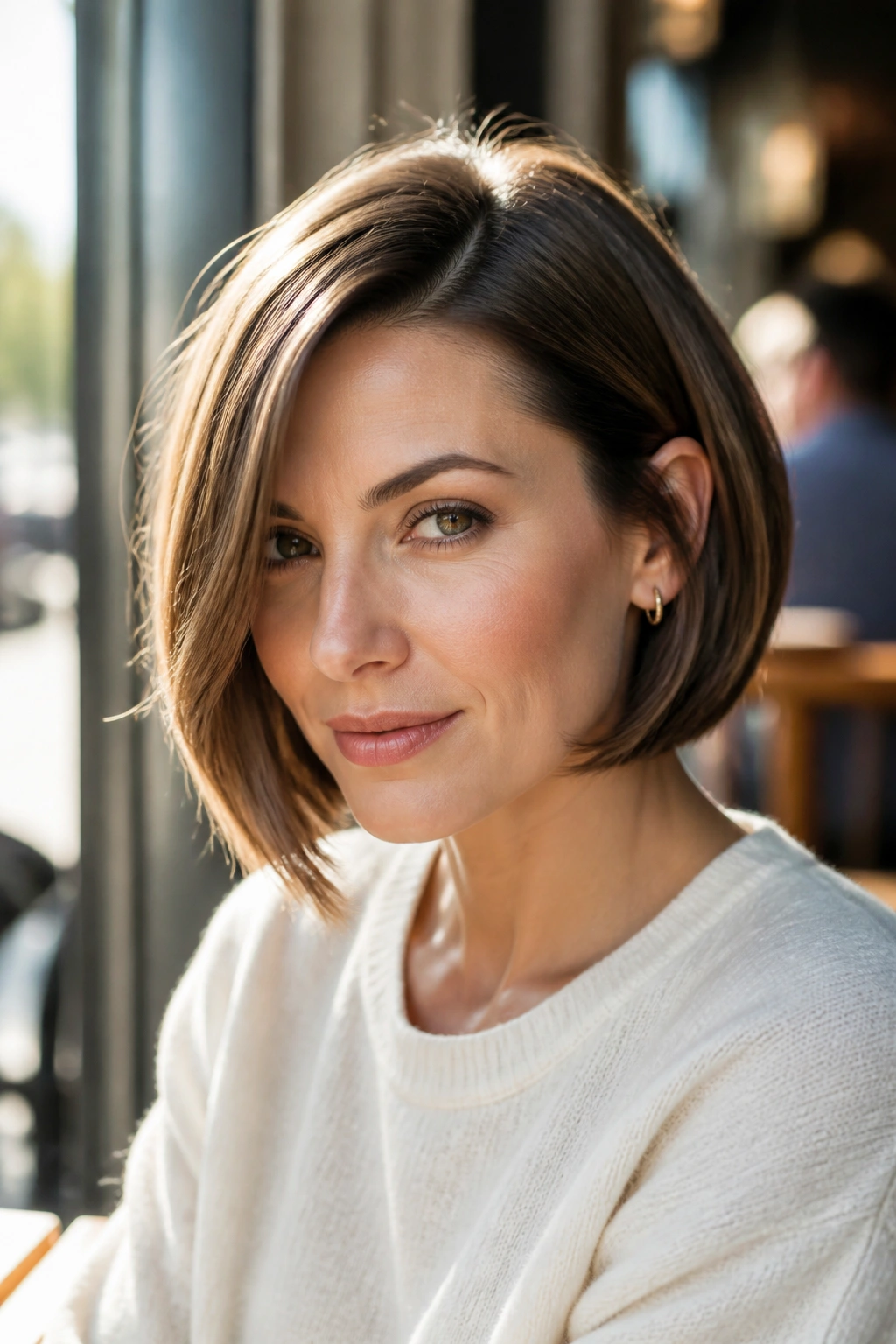
A deep side-part bob can be surprisingly flattering on a square face, especially if the ends are softly beveled instead of razor-straight. The side part breaks up the symmetry of the face, and that alone can make the jaw feel less dominant.
What to Ask For
- A bob that sits between the jaw and the top of the neck, not right at chin level.
- Soft internal texture so the hair moves when you turn your head.
- A side part with enough depth to create lift at the front.
- Ends that curve in or out a little, rather than stopping with a hard line.
This cut is sharper than a shag and cleaner than a long layer cut. That is the point. It gives structure without piling on width at the jaw. If your hair is fine, a little root lift at the part keeps the bob from lying flat and widening the face. If it is thick, ask for light removal through the ends so the shape does not puff out at the sides.
3. Curtain Bangs with Loose Waves
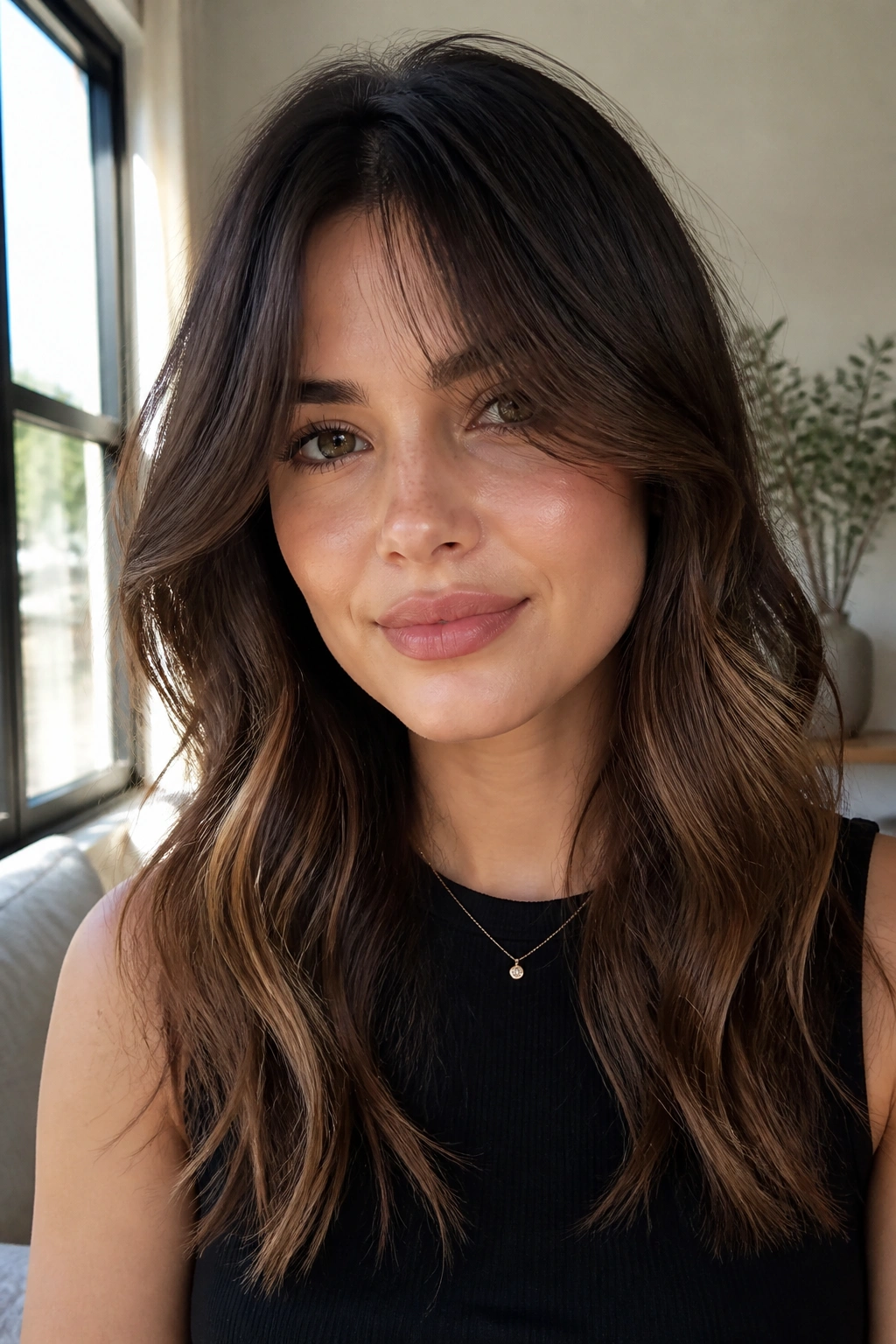
Can bangs work on a square face? Yes — if they split and soften instead of sitting as one heavy block. Curtain bangs are one of the safest fringe choices because they open around the center and sweep away from the cheeks.
How the Shape Helps
Loose waves keep the hair from building a hard edge next to the jaw. The waves should start below the cheekbones, not right at eye level, or they can add width where you do not want it. A square face usually looks best when the first bend sits a little lower and the front pieces skim past the jaw.
The bangs themselves should be slightly longer at the sides. That side length blends into the cheek area and avoids a helmet look. If you wear them with a middle part, keep the curtain pieces light. If you wear a side part, let the shorter side fall with the sweep.
A 1-inch curling iron or a large hot brush works well here. Keep the wave loose. Tight curls change the feel of the cut completely, and not always in a good way.
4. Shoulder-Length Layered Cut
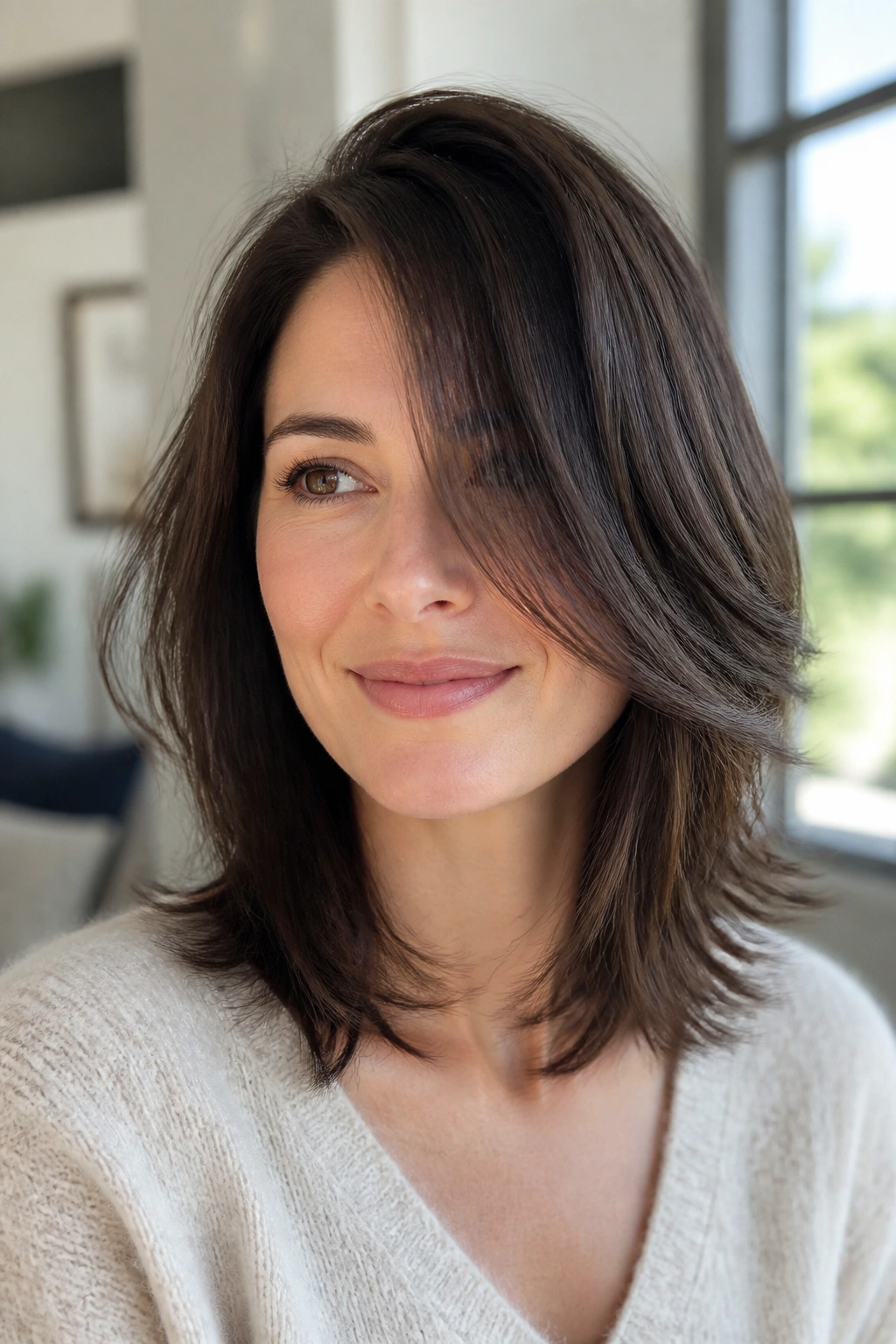
Shoulder-length hair is a sweet spot for a square face when the cut has enough layers to stop it from sitting like a block. The shoulders give the hair a place to land, and the layers keep that landing from looking heavy.
A Practical Length for Everyday Wear
This is the sort of cut that works if you want to tuck hair behind one ear, tie it back, or wear it down without thinking about it too much. It is also useful if you are growing out a shorter cut. The layers keep the shape alive while the length fills in.
The best version has soft face-framing pieces that begin below the chin. If they start too high, the cut can pull attention sideways across the face. If they start lower, the line falls in a more flattering place. That small detail changes the whole haircut.
Styling does not need to be fussy. A round brush, a little bend at the ends, and a side or off-center part are usually enough. Flat-ironed shoulder-length hair can still work, but it needs some movement at the front or it can look severe.
5. Textured Lob
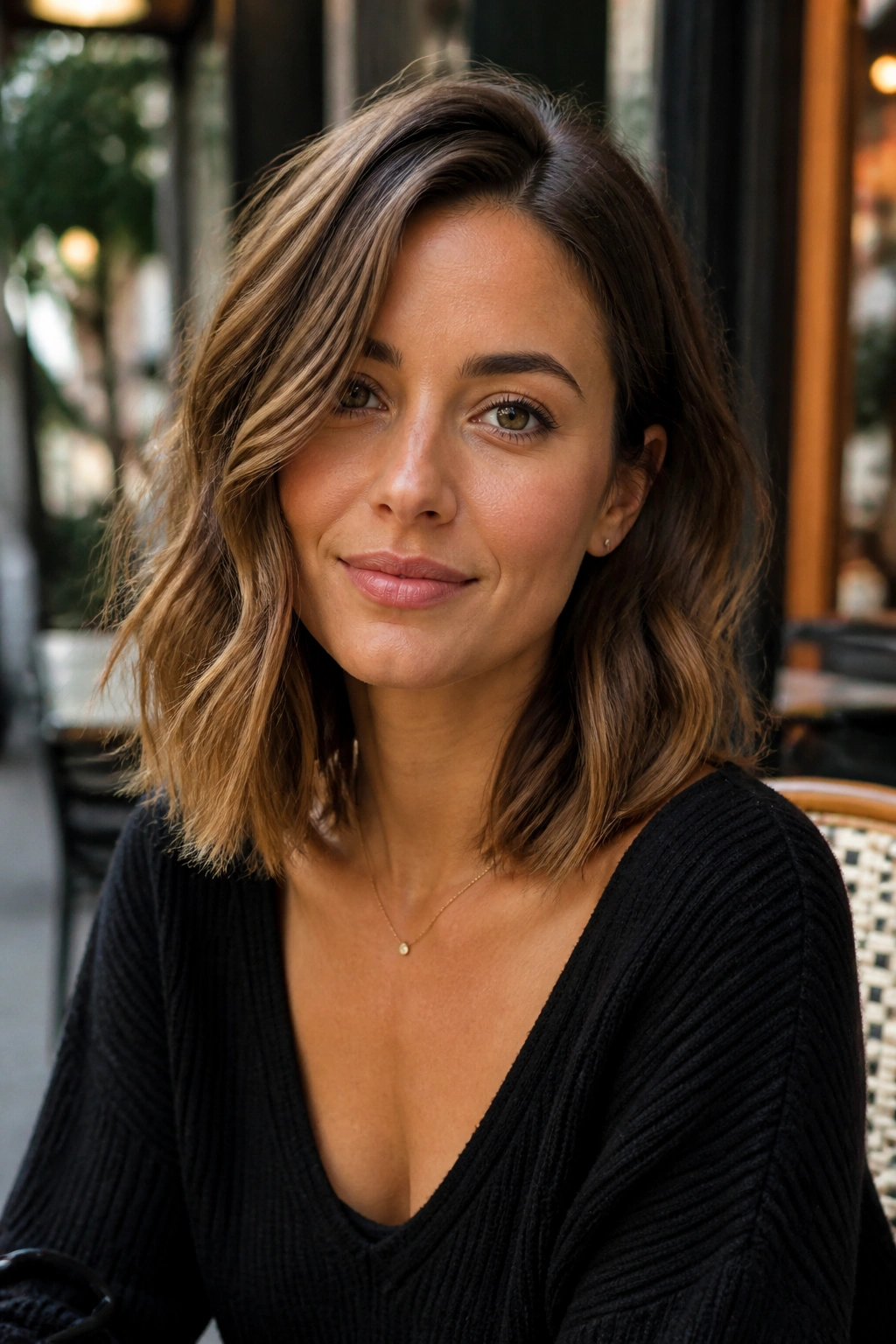
A textured lob sits right in the range where square faces tend to look balanced. It is long enough to soften the jaw, short enough to keep the shape clean, and choppy enough that the hair does not form one hard rectangle.
This cut is especially good if your hair has a slight wave or holds a bend easily. The texture gives the style air. You do not want the ends to hang heavy and blunt, because that can make the face look broader at the bottom. A little roughness at the ends is your friend here.
I like this cut with a soft off-center part. It makes the whole look feel less matched and less rigid. A few face-framing strands, especially if they land around the lip or chin, give the cut a more relaxed line. The effect is subtle. That is why it works.
6. Soft Shag
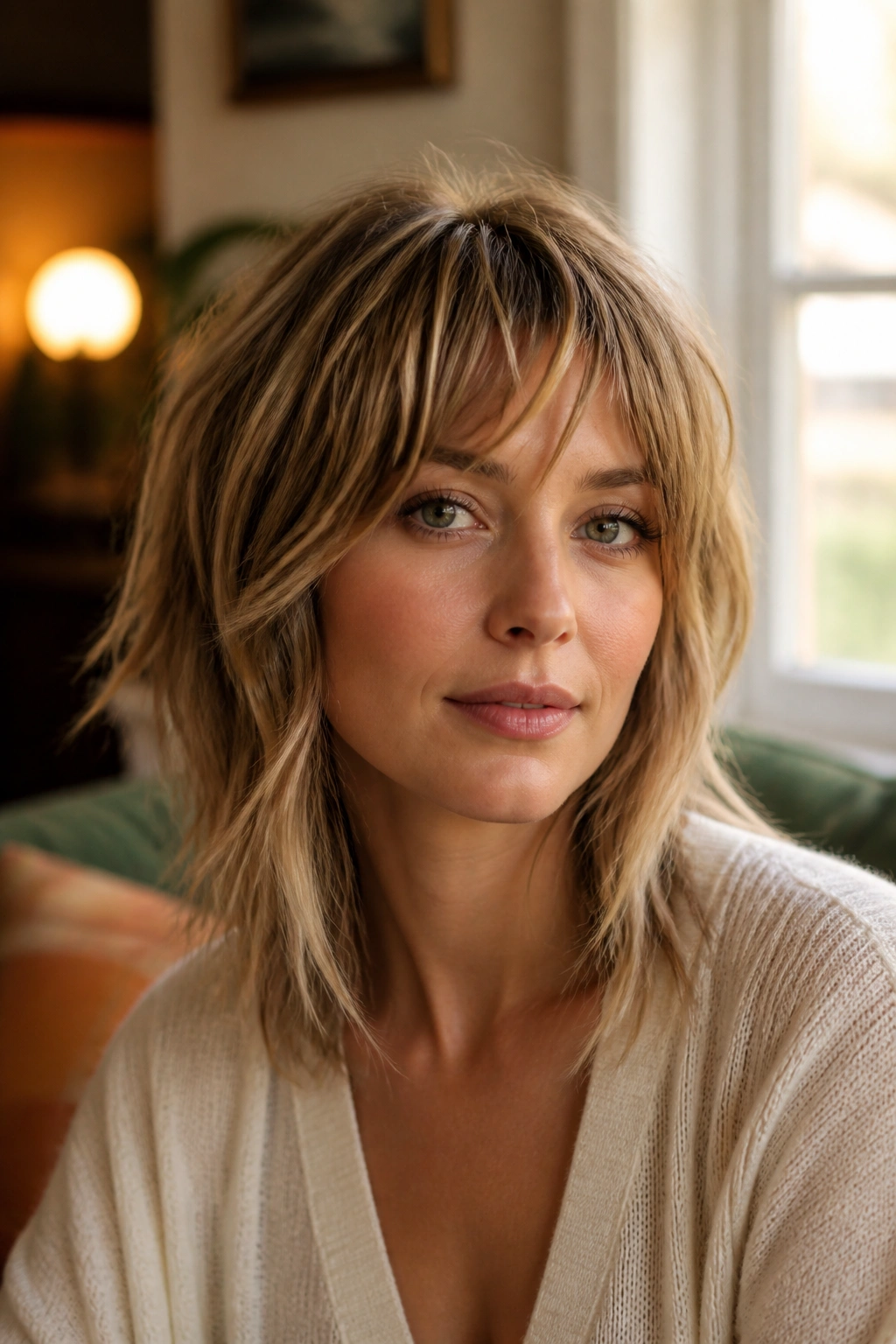
The soft shag is the opposite of boxy. Good shag layers break the hair into pieces, and pieces are kinder to a square face than one heavy sheet of hair. The crown gets a little lift, the sides get movement, and the jawline stops feeling so exposed.
Best Features of a Soft Shag
- Feathered layers through the top for height.
- A fringe that is airy, not blunt.
- Length that stays at or below the shoulders if you want extra softness.
- Texture spray or mousse to keep the pieces separate.
A shag can go wrong fast if the layers are too choppy around the jaw. Then the face starts looking wider, not softer. The safer version keeps the shortest layers higher up and lets the lower lengths stay light and broken up. Wavy hair usually does the most flattering version of this cut, but straight hair can wear it too if you add a bit of bend.
7. Long Straight Hair with Face-Framing Pieces
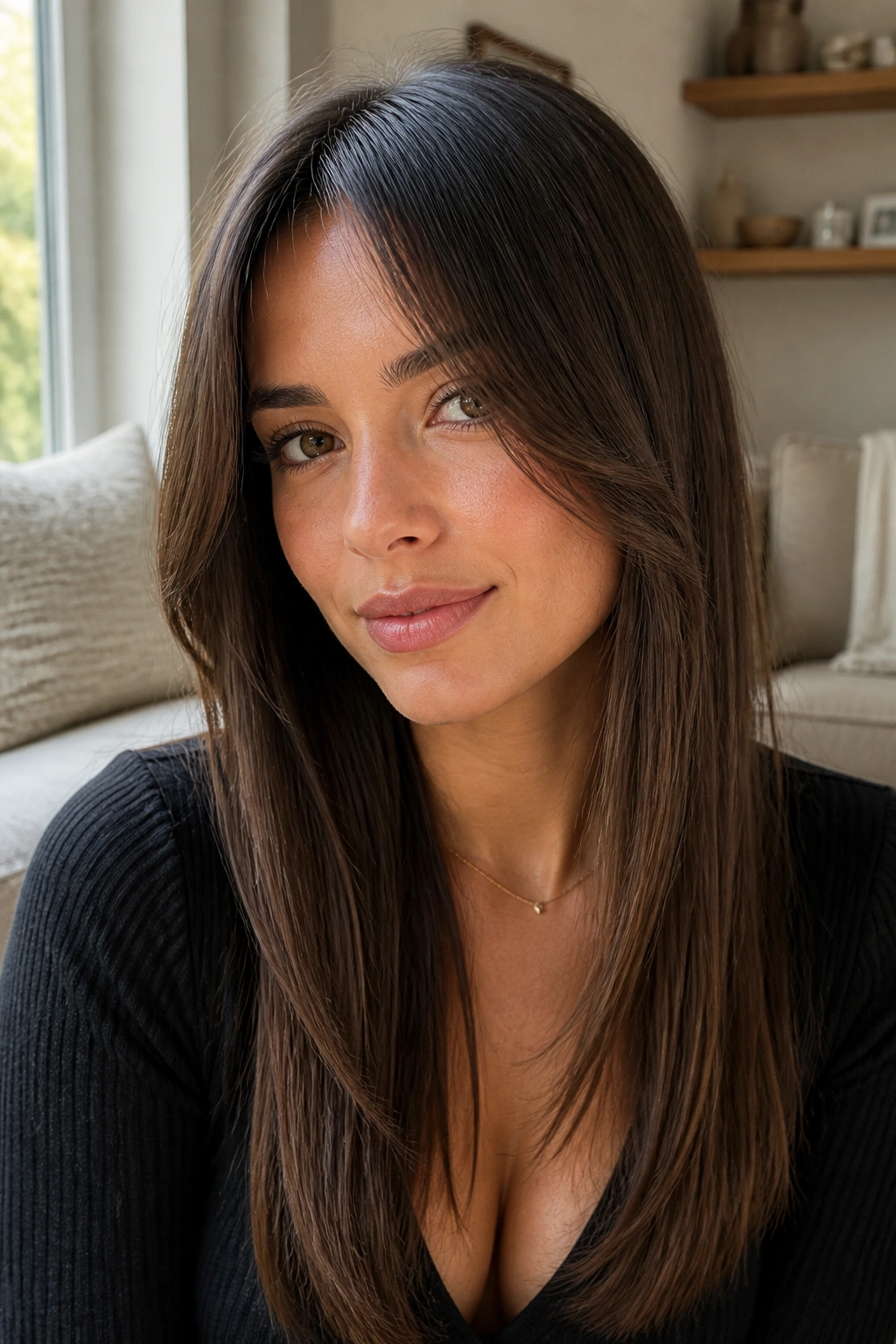
Long straight hair on a square face can look elegant, but only when it avoids that blunt, unbroken fall. A sheet of hair with no movement beside the face is where things start looking boxy. The fix is simple: face-framing pieces at cheekbone or lip length.
What Makes It Different
Those shorter front pieces interrupt the vertical line of long hair. They do not hide the jaw. They just pull some of the weight upward and inward so the face feels a little longer. If the front pieces are cut too short, they can stick out and widen the cheek area. Too long, and they disappear into the rest of the hair. Cheekbone to lip length is the useful middle ground.
A middle part can still work here, but an off-center part often looks softer. Straight hair especially benefits from one small bend at the ends. Even a half-inch curve inward at the front keeps the cut from feeling severe.
How to Style It
- Blow-dry the front pieces away from the cheeks.
- Add a slight bend below the collarbone.
- Keep the ends trimmed regularly so they stay clean, not stringy.
8. Side-Swept Pixie Cut
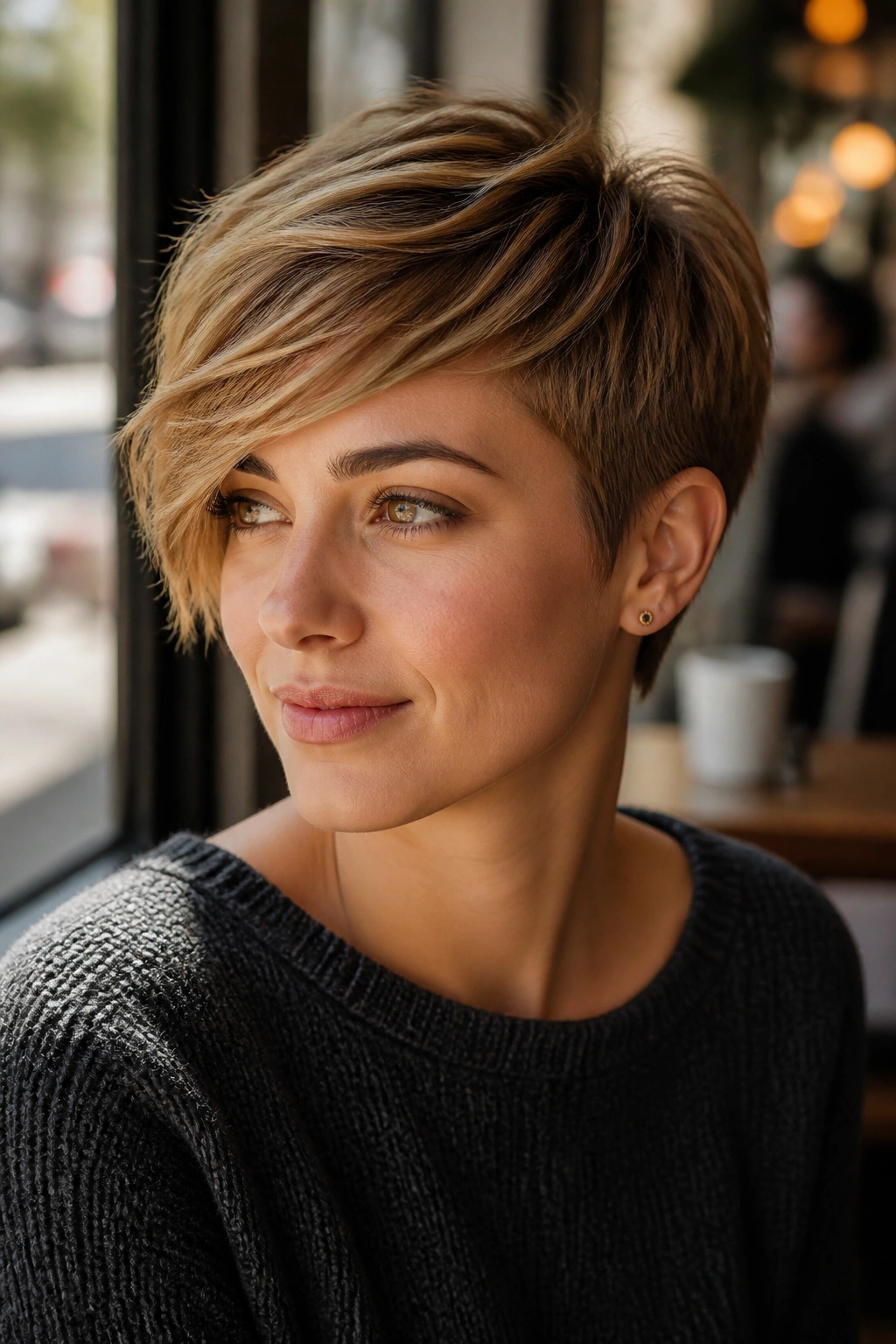
Short hair is not off-limits. A side-swept pixie can be one of the best square-face hairstyles because it breaks the outline of the jaw and puts the attention higher on the head.
The key is keeping the top longer than the sides. That little bit of height changes the face shape in a useful way. The side-swept fringe draws the eye across the forehead instead of down to the chin, and the taper around the ears keeps the shape neat. A pixie that is cut too bluntly all over can feel too hard. This one should have movement.
It also helps if the fringe is not dead-straight. A slight curve, a side bend, or a piecey fall looks better on most square faces than a flat horizontal line. If you want short hair and you still want softness, this is a smart place to start.
9. Asymmetrical Bob
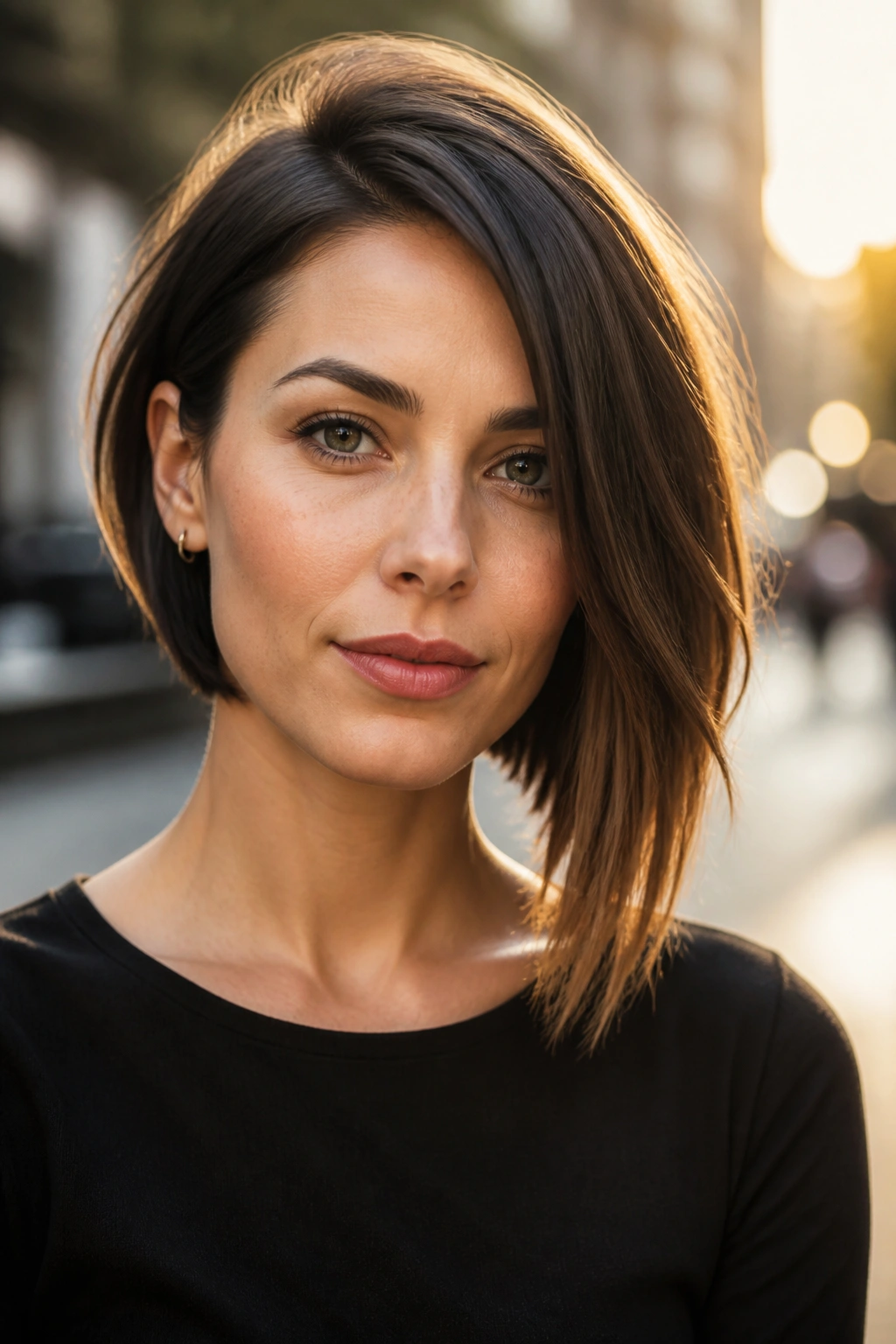
Why does an asymmetrical bob work when a chin-length blunt bob can feel too strong? Because the line is no longer sitting evenly against the jaw. One side pulls lower, the other lifts the eye, and the face gets a little visual break.
That uneven line helps square faces more than people expect. The shape naturally has strong symmetry, so a cut with one side longer gives the features something softer to rest against. It is a clean look, but not a rigid one.
This bob is especially nice if you like hair that feels modern without looking too polished. Wear it straight for a sharper line, or add a slight wave if you want the front to melt into the cheek area. The longer side should still skim, not drag. If it hangs too low, the style loses its snap.
10. Loose Curls Below the Shoulders
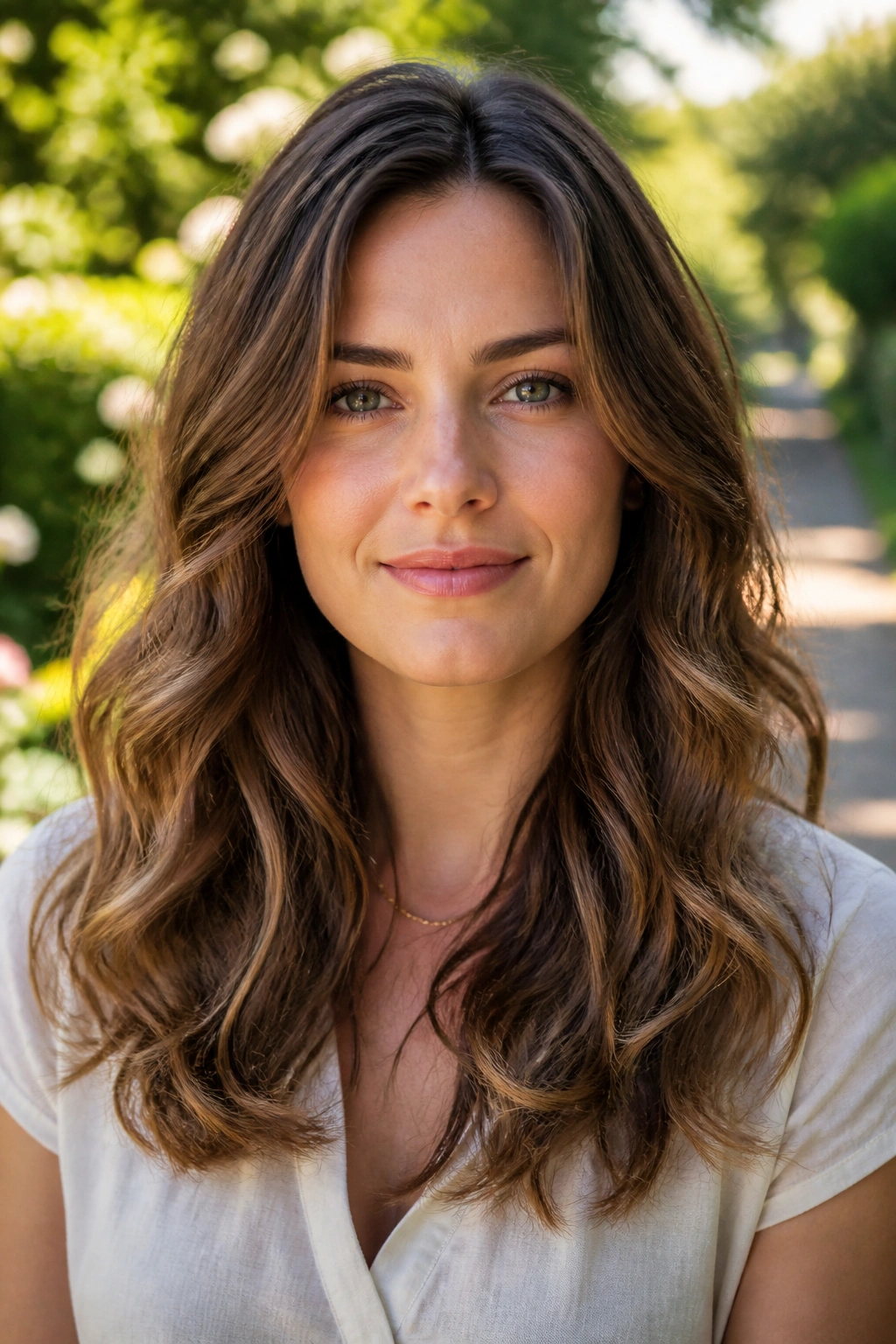
Loose curls below the shoulders are friendly to square faces because they widen the silhouette lower than the jaw, where the face can take it better. If the curls sit exactly at jaw level, the face can look broader. Below the shoulders is safer. Better, even.
The best version uses large, soft curls rather than tight ringlets. Tight curls can build volume right beside the cheeks, and that is not always what you want. Loose curls fall in a slower shape. They bend around the face instead of crowding it.
A curling iron around 1.25 inches usually gives this kind of result on medium-length hair. On longer hair, you can even use a 1.5-inch barrel. Let the curls cool fully before brushing them out. That part matters more than people think. If you brush too soon, they collapse into frizz or puff at the sides.
11. Long Layers with Bottleneck Bangs
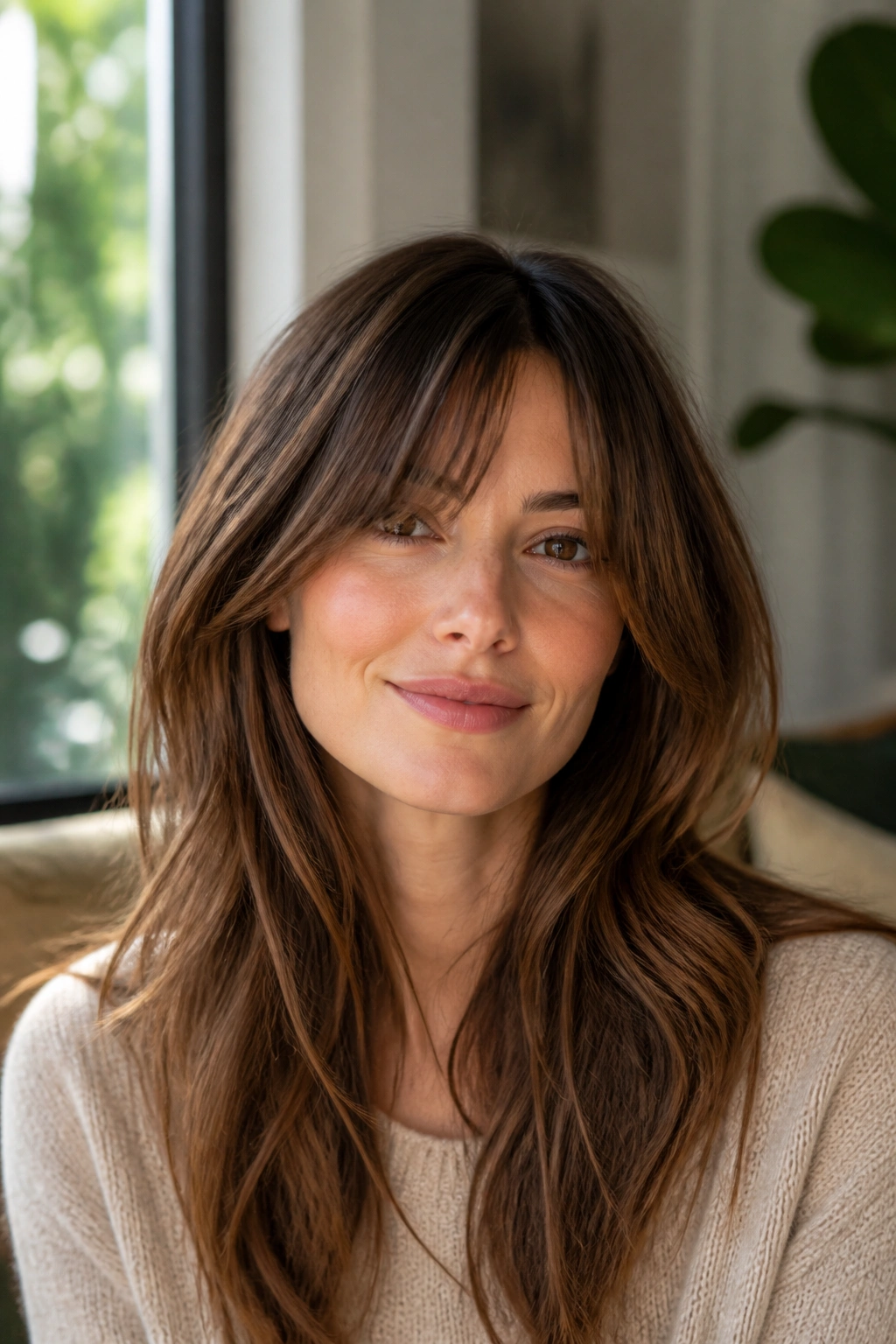
Bottleneck bangs are a softer cousin of blunt fringe, and they do a good job on square faces because they narrow in the center and widen at the sides. That shape gives the forehead some softness without closing off the face.
Why This Fringe Works
The bangs start light at the middle and get fuller as they reach the temples. That shape helps smooth the upper half of a square face while keeping the overall look open. It is a useful middle ground if curtain bangs feel too split and straight fringe feels too sharp.
Long layers underneath keep the rest of the cut from getting heavy. The trick is keeping the layers fluid, not choppy. When the bangs are strong and the layers are gentle, the whole cut feels balanced.
Ask Your Stylist For
- Center pieces that graze the brows.
- Longer side sections that taper into the cheek.
- Layers that start below the chin.
- A soft blow-dry finish, not a flat iron edge.
12. Wispy Fringe and Medium Cut

A wispy fringe can soften a square face fast, but only when it stays light. Heavy bangs make the forehead look shorter and the jaw look stronger. Wispy bangs do the opposite. They break up the top of the face without boxing it in.
The best partner for that fringe is a medium cut that sits somewhere between the collarbone and the shoulders. That length gives the ends room to move. If the cut is too short, the fringe can look disconnected. If it is too long and too straight, the bangs start feeling floaty in the wrong way.
I like this pairing on hair that has a little natural texture. It does not need perfect styling. A quick round-brush pass over the fringe and a small bend at the ends is enough. Simple. Clean. Not fussy.
13. Flipped-End Lob
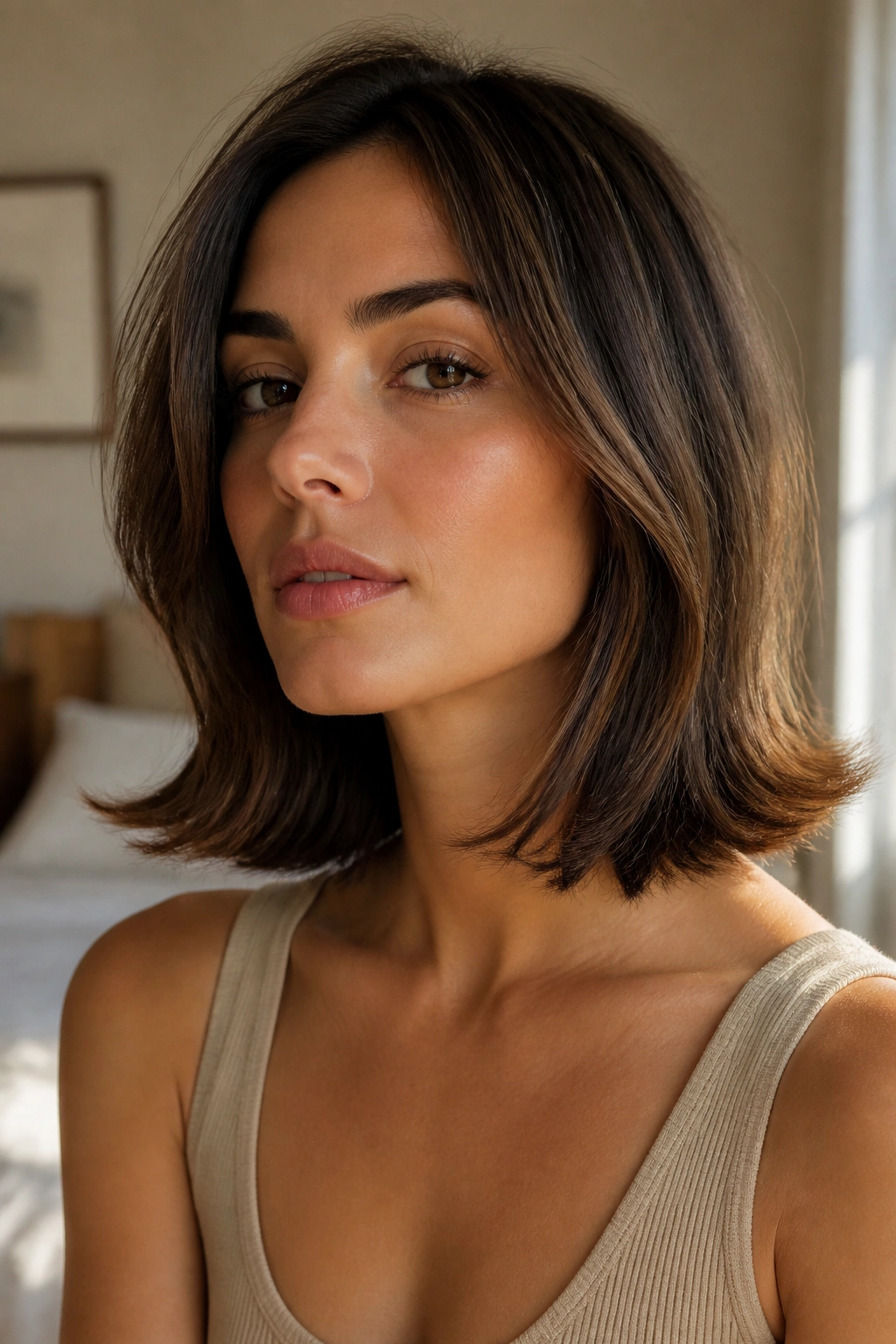
A flipped-end lob can change the way a square face reads with almost no effort. The outward bend at the ends keeps the hair from sitting straight against the jaw and makes the whole shape feel lighter.
That outward movement matters more than a lot of people realize. A lob cut right at the collarbone with blunt ends can feel heavy. Flip the ends slightly away from the neck, and the line opens up. The face feels less enclosed, which is exactly what square faces often need.
A flat iron works here if you twist the wrists just a little at the bottom. A round brush does the same thing with less heat. Keep the bend soft, not cartoonish. You want a hint of lift, not a hard flip that screams about itself.
14. Half-Up Style with Crown Volume
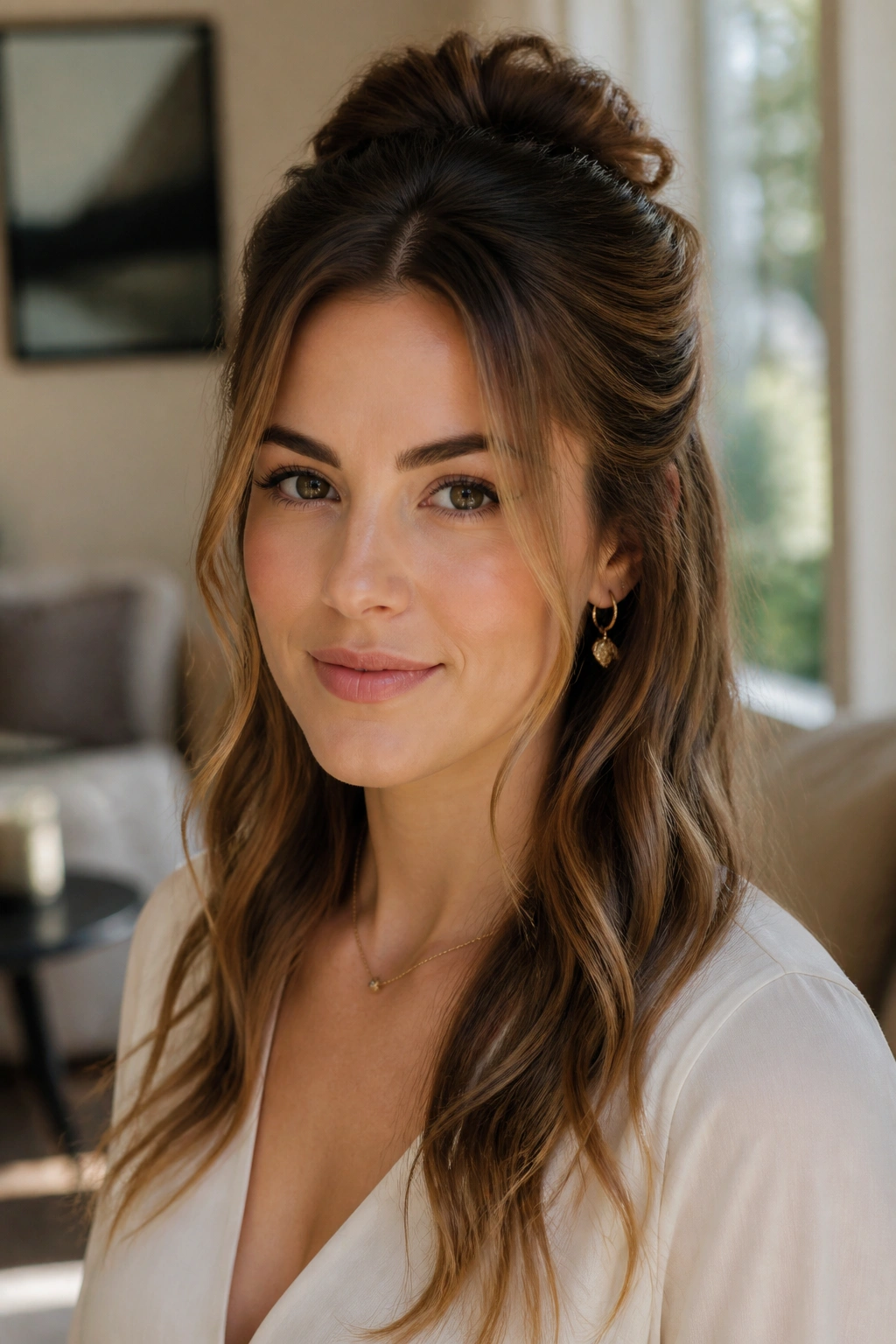
Can a half-up style work on a square face? Absolutely, if the crown has some height and the front stays loose. Pulling the top section back adds length to the face, which helps soften a strong jaw.
The trick is not tightening the style too much. Leave a little air at the crown and let a few strands fall around the temples. Those loose pieces keep the face from looking too exposed. A square face usually looks best when there is a little softness near the temples or cheeks, even in an updo.
This style is easy to dress up for dinner or an event, but it works on ordinary days too. Use a small claw clip, a few pins, or a thin elastic. Then gently lift the crown with your fingers. Don’t overdo it. A little volume is enough.
15. Low Messy Bun with Face Tendrils
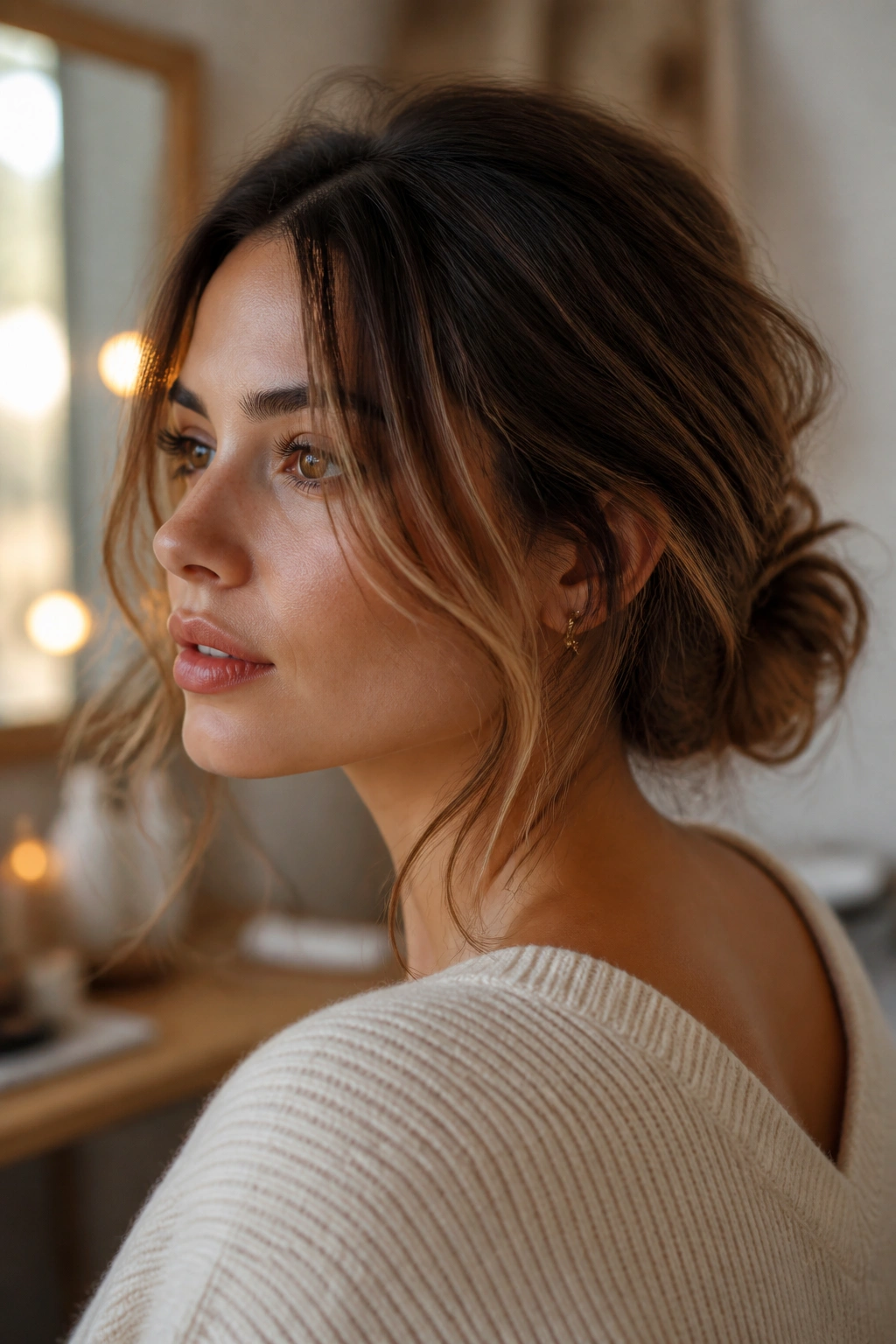
A low messy bun is one of those styles that can go plain or flattering depending on the details. On a square face, the detail that matters most is the loose face tendril. Without it, the bun can leave the jawline too exposed.
Keep the bun low and a little undone. The shape should sit near the nape, not high on the head. That keeps the style grounded and soft. Then pull out two slim pieces near the temples or cheekbones. Those pieces should be thin, not thick enough to become their own side curtains.
This style is good when you want your face to stay visible but not harshly framed. It also works well with second-day hair, which usually has enough grip to stay put. A few bobby pins and a light mist of hairspray are usually enough. A sleek bun can work too, but it needs crown lift or it can feel severe.
16. Angled Lob
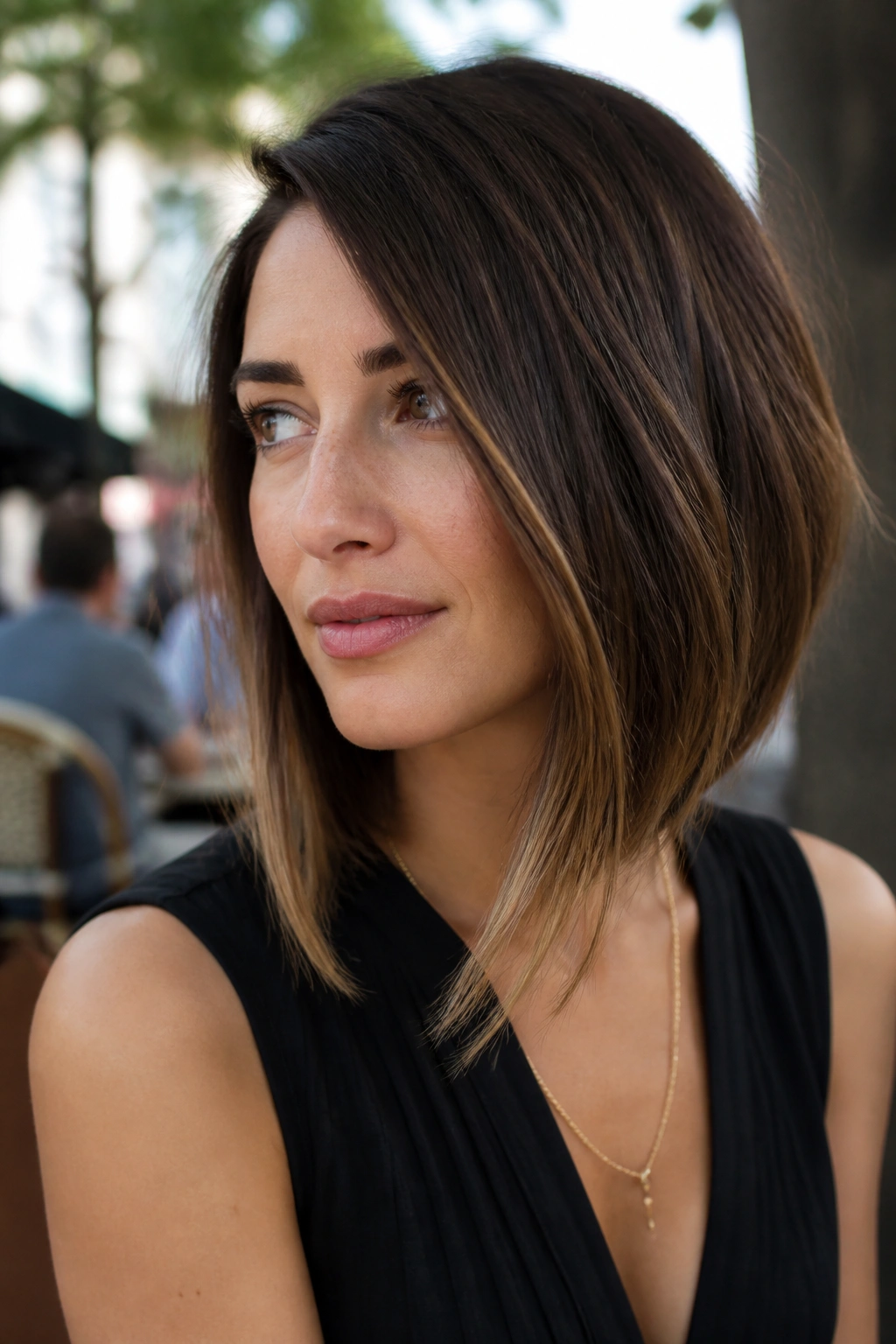
Unlike a blunt bob, an angled lob gets slightly shorter in back and longer in front. That forward tilt is why it suits square faces so well. It draws the eye downward and diagonally, which softens the jawline without hiding it.
The front length should skim the collarbone or sit just above it. If the front falls too short, the angle loses its effect. If it goes too long, the shape can start to feel heavy again. The sweet spot is a clean line with a little movement at the ends.
What to Watch For
- Ask for the angle to stay subtle, not extreme.
- Keep the front pieces textured, not blunt.
- Blow-dry with a slight curve toward the face.
- Trim it regularly so the angle stays visible.
This cut looks polished, but it is not precious. That is part of its appeal.
17. Mermaid Waves with Off-Center Part
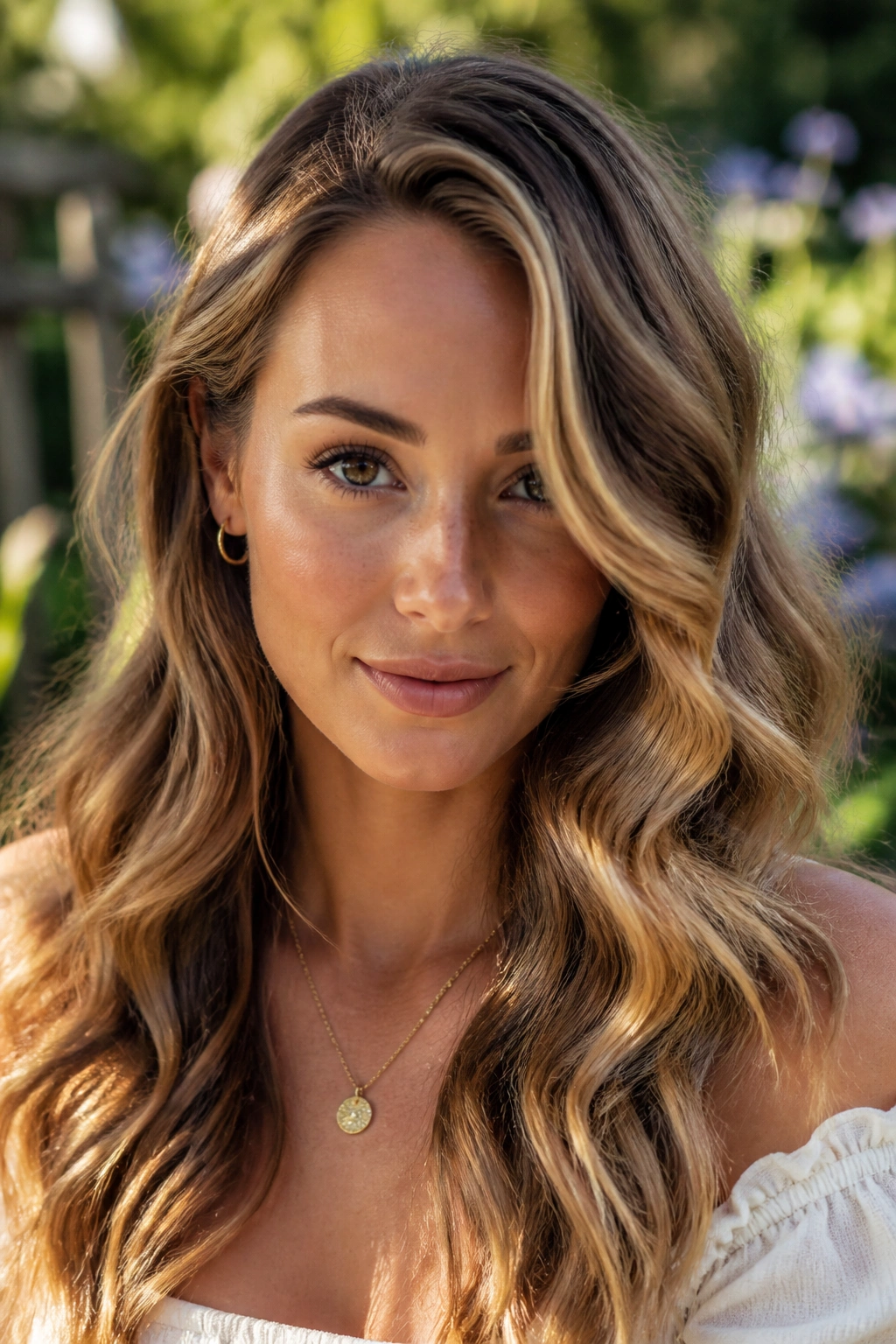
Mermaid waves can flatter square faces because the wave pattern softens the edges of the face and keeps the hair from sitting in one straight block. The off-center part helps even more. It shifts the weight of the hair and avoids emphasizing the face’s natural symmetry too hard.
The Shape Matters
The waves should start lower down, ideally below the cheekbones. If they begin too high, the width can sit right beside the jaw. That is the mistake people make when they copy a photo without adjusting the curl placement. The better version lets the curl relax from the mid-lengths down.
Long hair is where this style really shows its best side, but medium-length hair can wear it too. A large barrel iron or a three-barrel waver can create the look, though I prefer something a little looser and less stamped out. Brush it lightly after it cools. Not much. Just enough to merge the pieces.
18. Soft Wolf Cut
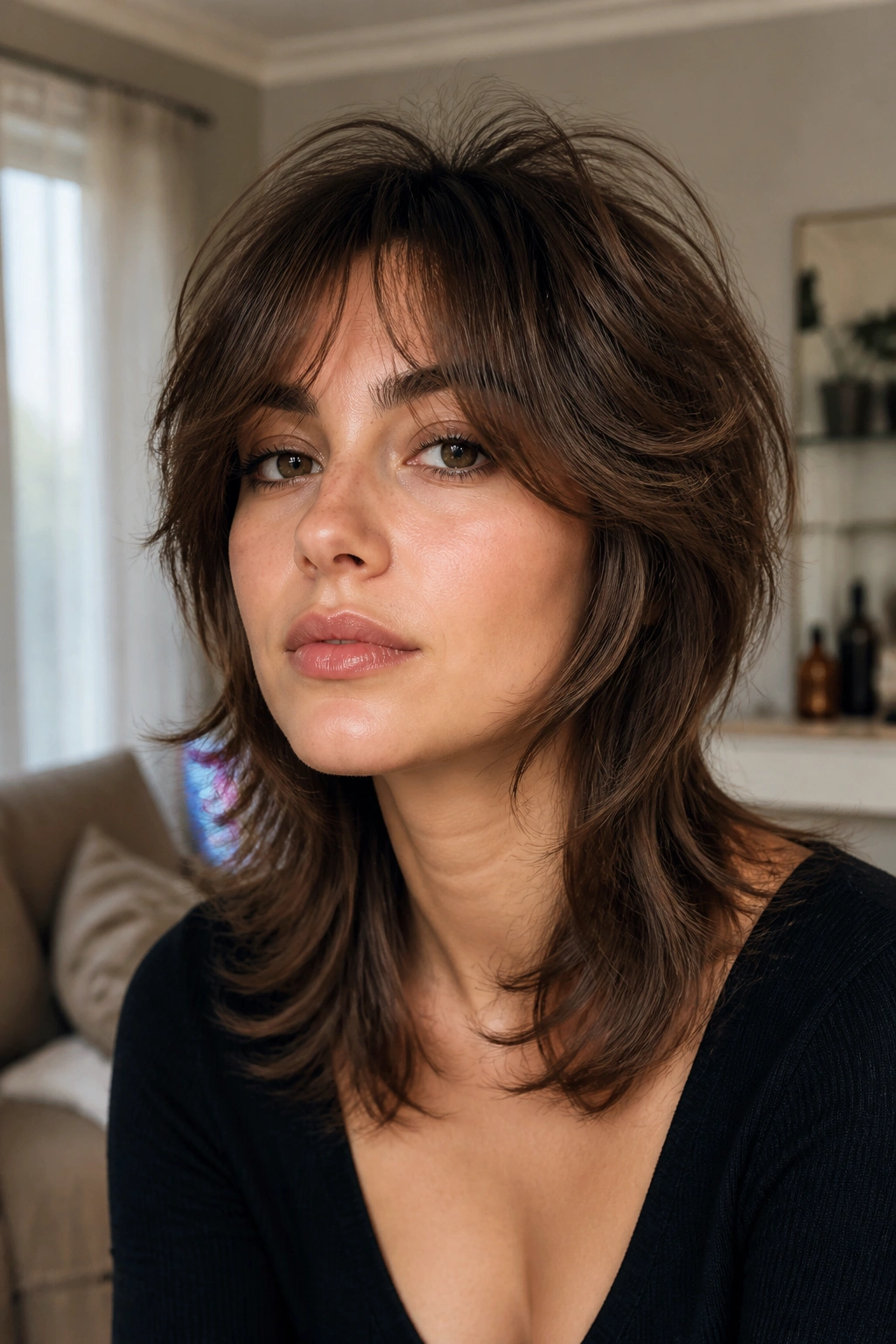
A wolf cut can be a minefield on a square face if it is too sharp. The version that works is the soft wolf cut — more feathered, less jagged, with enough length around the sides to keep the face from looking square on square.
The crown gets lift. The ends stay wispy. The shape feels broken up, which helps a strong jawline relax a little. But the layers need restraint. Too many short pieces near the cheeks and the whole look turns wide. The better cut keeps the energy up top and the softness below.
This one suits people who like hair with some attitude. It is not a quiet haircut. It is a little messy, a little edgy, and more forgiving than it looks. Pair it with air-dried waves or a rough blow-dry. The texture is part of the charm.
19. Curly Bob with Side Part
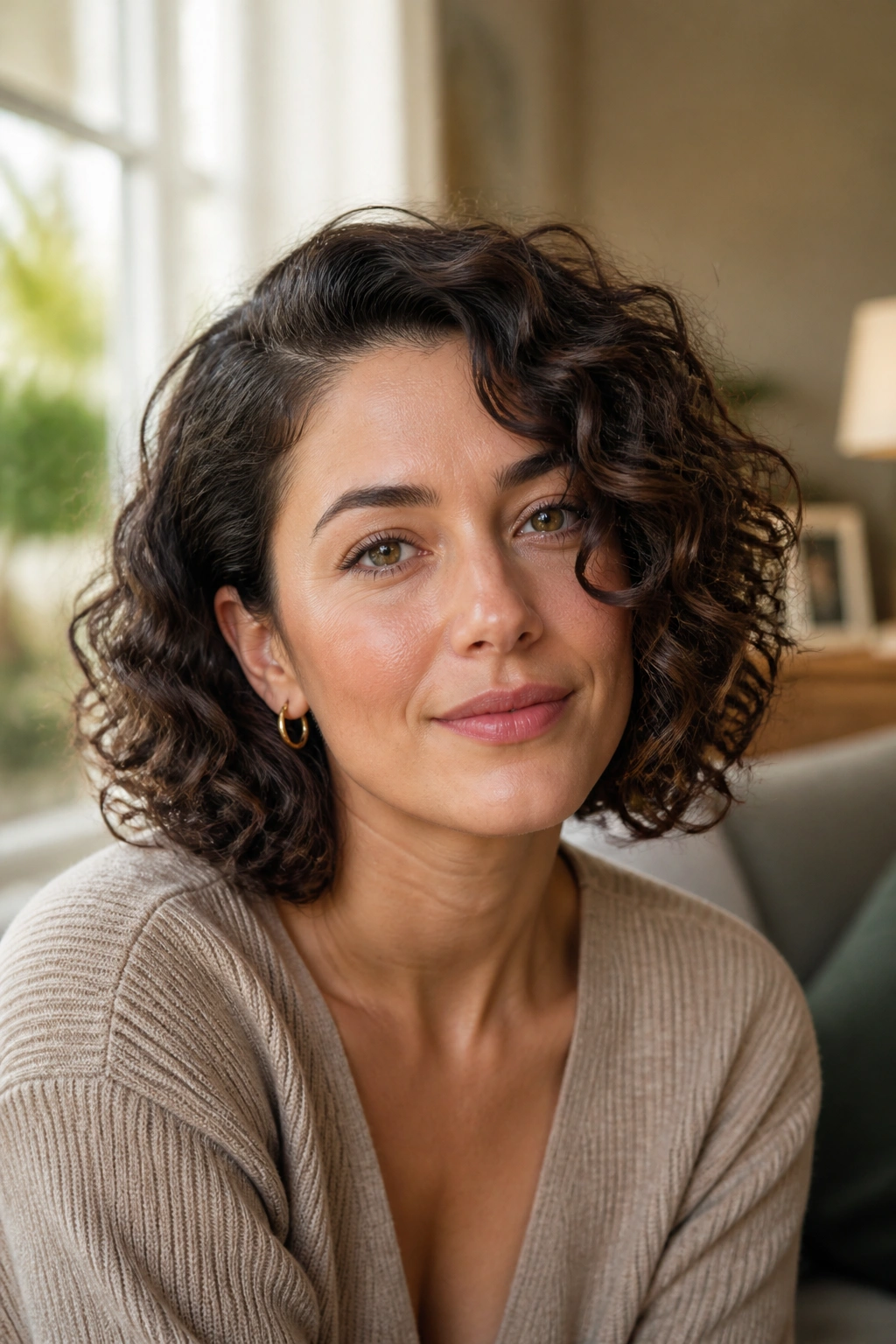
A curly bob with a side part works beautifully when the curls are shaped to fall below the jaw rather than sit right on it. With curls, placement matters even more than with straight hair, because every bend adds width.
If your curls shrink up, ask for a cut that looks longer when wet than you think you need. That leaves room for the curl to spring up without ending too high on the face. A side part also stops the shape from becoming too round and even. That small shift can make a big difference.
This style is at its best when the curl pattern is defined but not stiff. A cream or light gel can help. Scrunch, diffuse, and let some curls fall naturally around the cheeks while keeping the widest part of the shape lower down. The result feels lively instead of boxy.
20. Slicked-Back Low Ponytail with Crown Volume
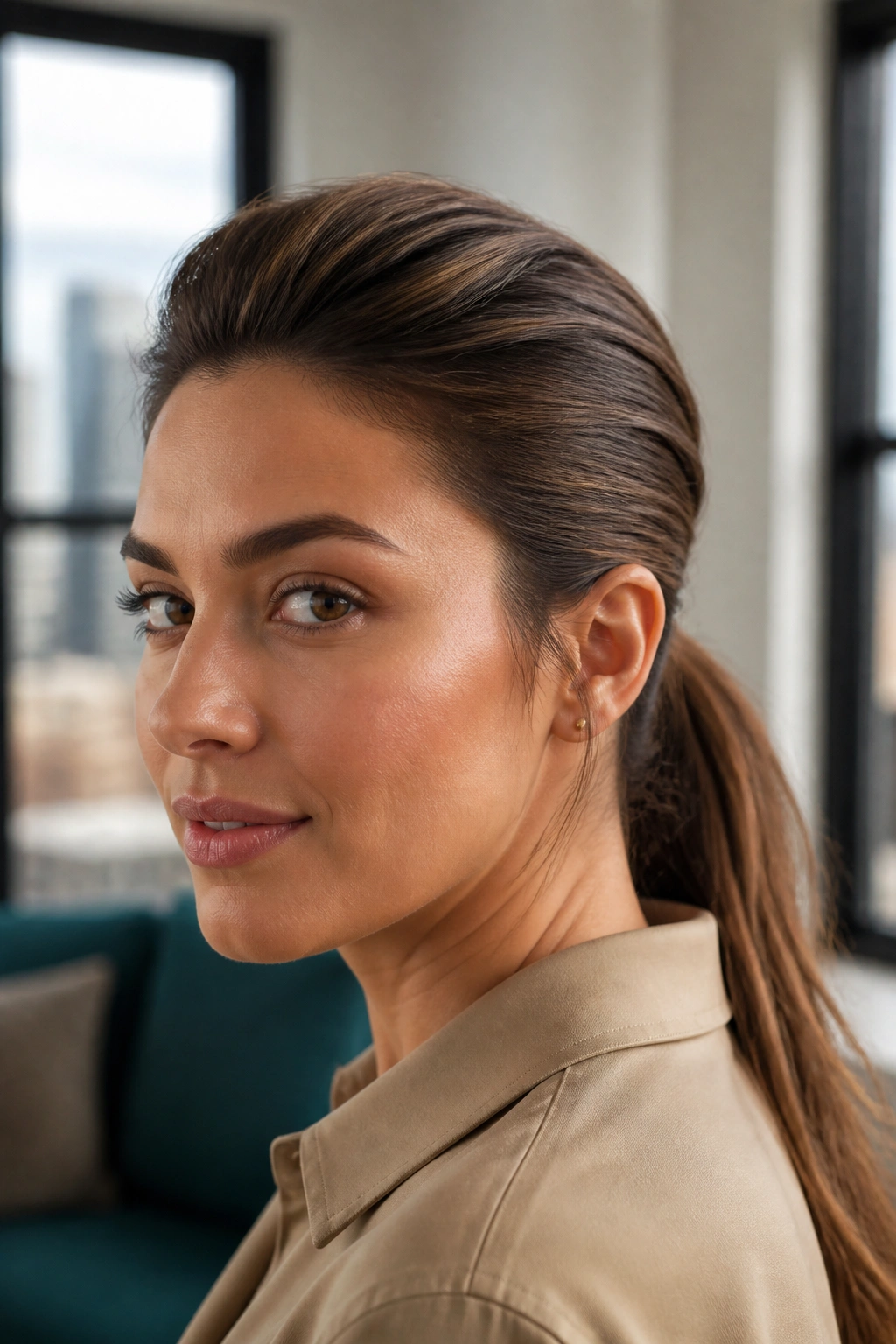
A slicked-back ponytail can work on a square face if the crown has lift and the sides are not scraped flat against the head. That crown height lengthens the face a little. The low ponytail keeps the shape calm.
A lot of people make the mistake of pulling everything tight. That can sharpen the jaw even more. Leave a touch of softness at the temples or comb the front back with a little bend instead of a hard line. The ponytail itself should sit at the nape, not mid-head.
This style looks especially good with a smooth finish and one wrapped strand around the elastic. It feels neat without becoming severe. If your hair is thick, a low ponytail with a little texture at the ends keeps it from looking too heavy. If your hair is fine, teasing the crown just a bit gives the face a more vertical line.
21. Braided Crown with Loose Front Pieces
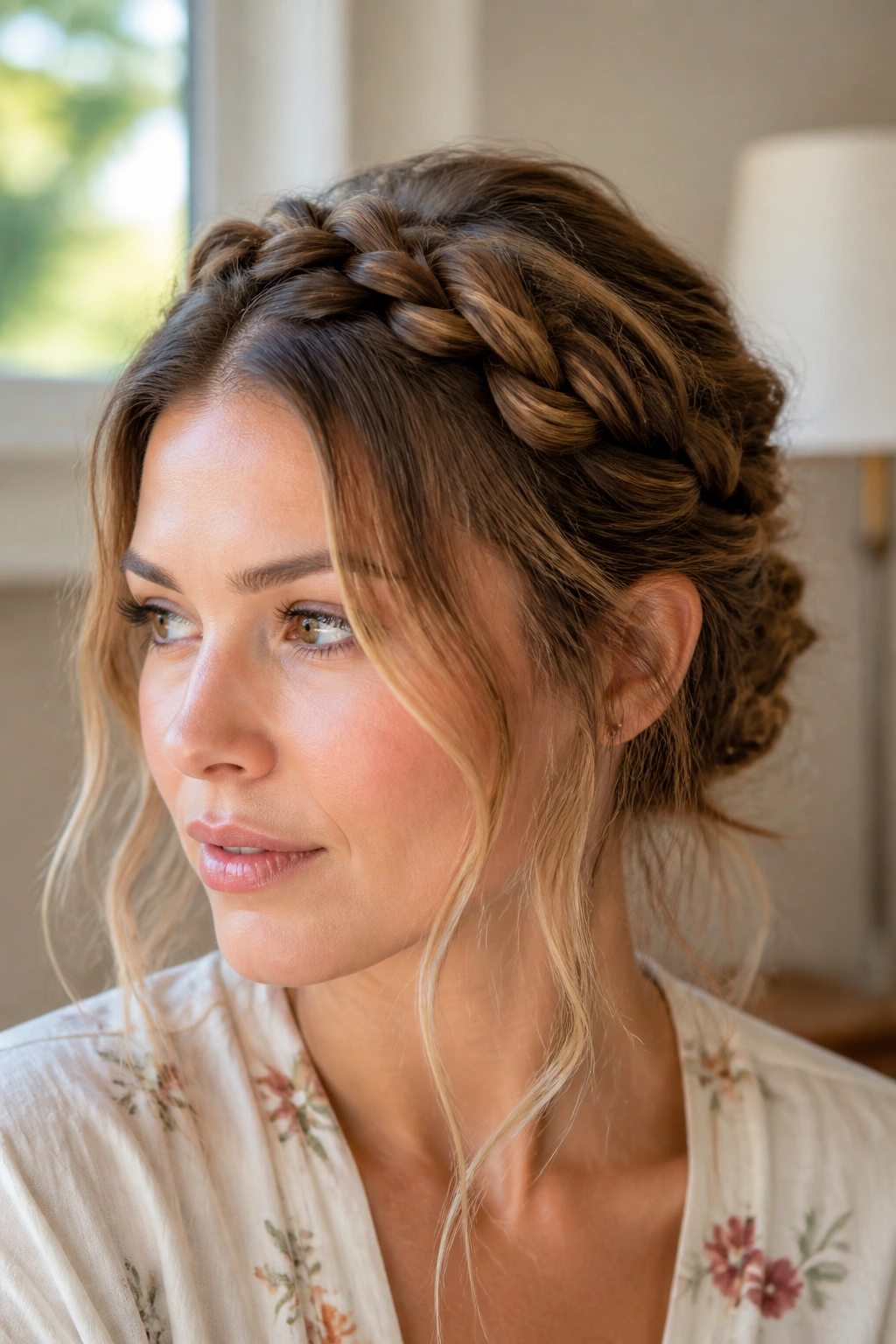
Why does a braided crown work on a square face when some upstyles feel too tight? Because the braid gives structure around the top of the head while the loose front pieces keep the jaw from standing out too much.
The braid does not have to be elaborate. A simple halo braid, a small crown braid from one side, or even two slim braids pinned back can do the job. The important part is leaving a few soft strands near the temples and around the ears. Those strands break up the edges of the face and keep the style from feeling severe.
Best Hair Types for This Look
- Medium to long hair that can hold a braid without slipping.
- Slightly textured hair, because it grips better.
- Wavy hair, if you want the loose pieces to fall softly.
- Straight hair, if you want the braid to look cleaner and neater.
A braid that is too tight can make the face look longer in the wrong way. Give it a little air.
22. French Bob with Curved Ends
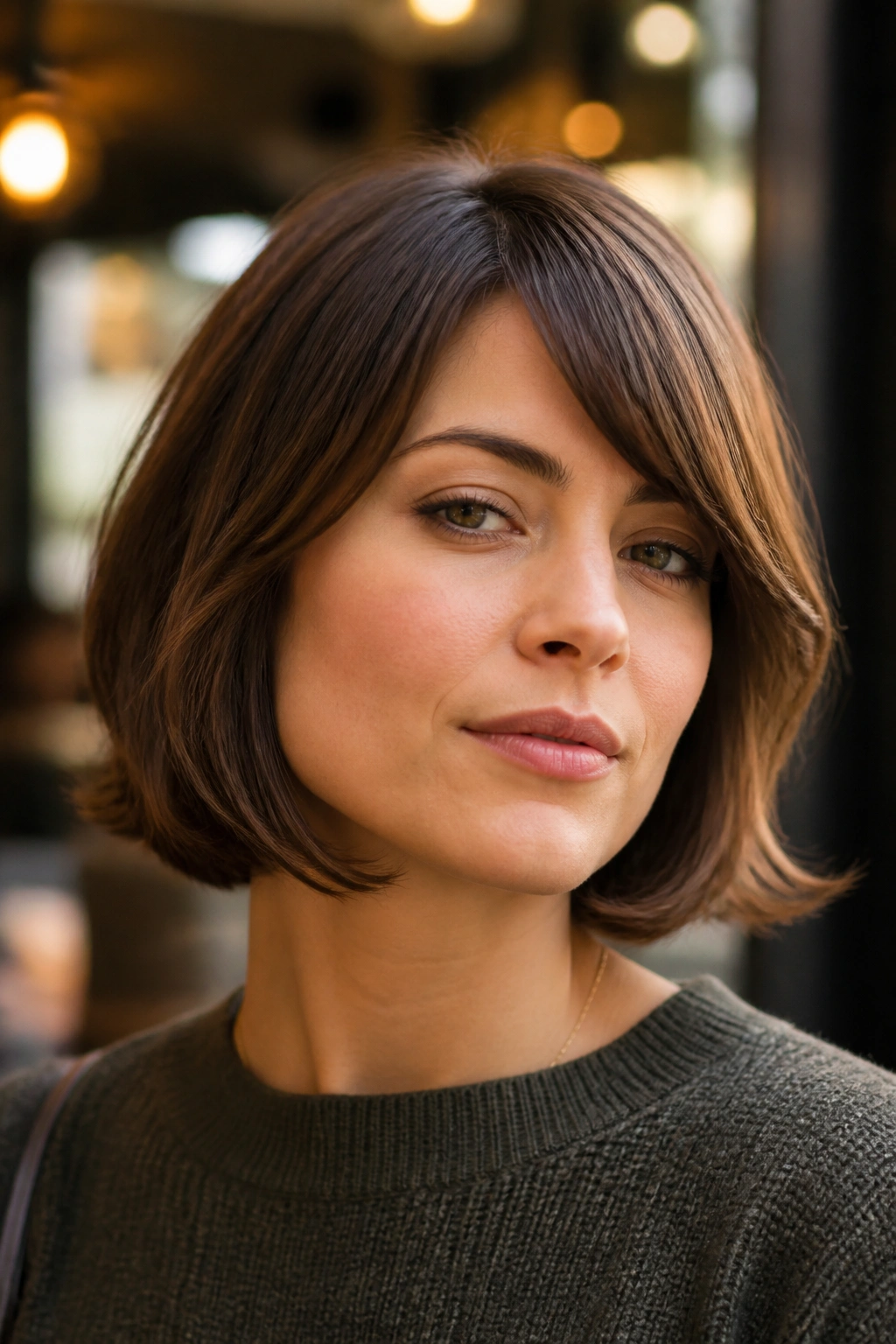
A French bob can flatter a square face when it is cut with softness at the ends and worn with a side sweep or light fringe. The classic straight-across version is a little risky. The curved version is the one that behaves.
The length usually sits around the mouth or just below the cheekbone. That can work, but the ends should not be blunt and stiff. A slight inward curve or a soft tuck under keeps the hair from echoing the jawline too much. You want shape, not a sharp frame.
I would pair this with a bit of texture and a side part. If the fringe is very short and straight, the cut can feel hard fast. If the fringe is airy or swept, the whole thing softens up. That is the difference between a bob that feels chic and one that feels strict.
23. Long Hair with Invisible Layers
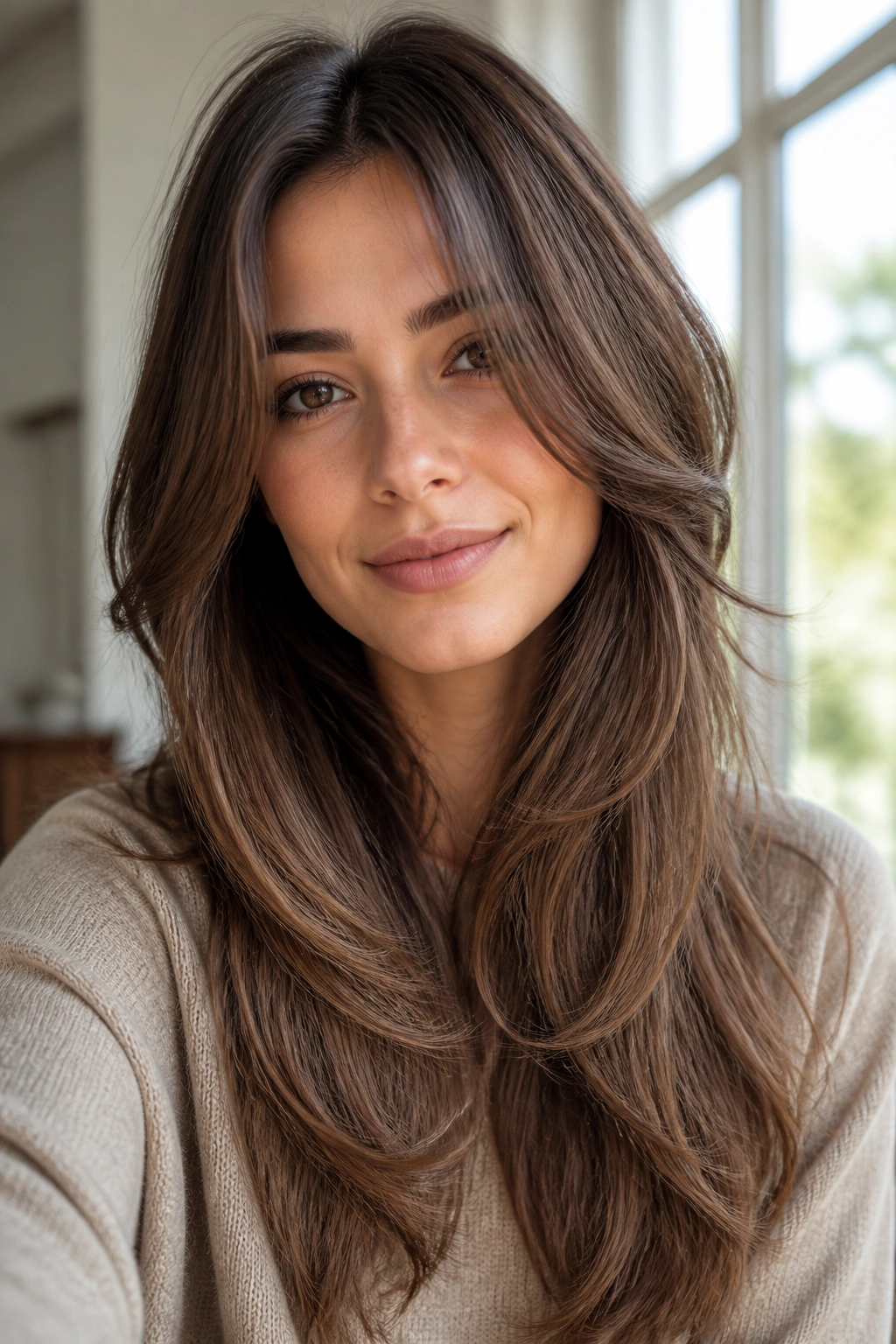
Invisible layers are a smart choice when you want long hair but you do not want the heaviness that sometimes comes with it. On a square face, they help by removing bulk without leaving obvious steps around the jaw.
That is the whole trick. The hair keeps its length, but the interior gets lighter. The silhouette falls more softly, and the face does not get boxed in by a dense wall of hair. If your hair is thick, this can be a relief. If your hair is fine, the layers need to stay very subtle so the ends do not thin out too much.
This cut works with straight hair, but it is even nicer with a little bend. The movement shows off the hidden layering. Ask for the shortest internal layers to begin well below the chin. That keeps the softness where it belongs.
24. Shoulder-Length Blowout Layers
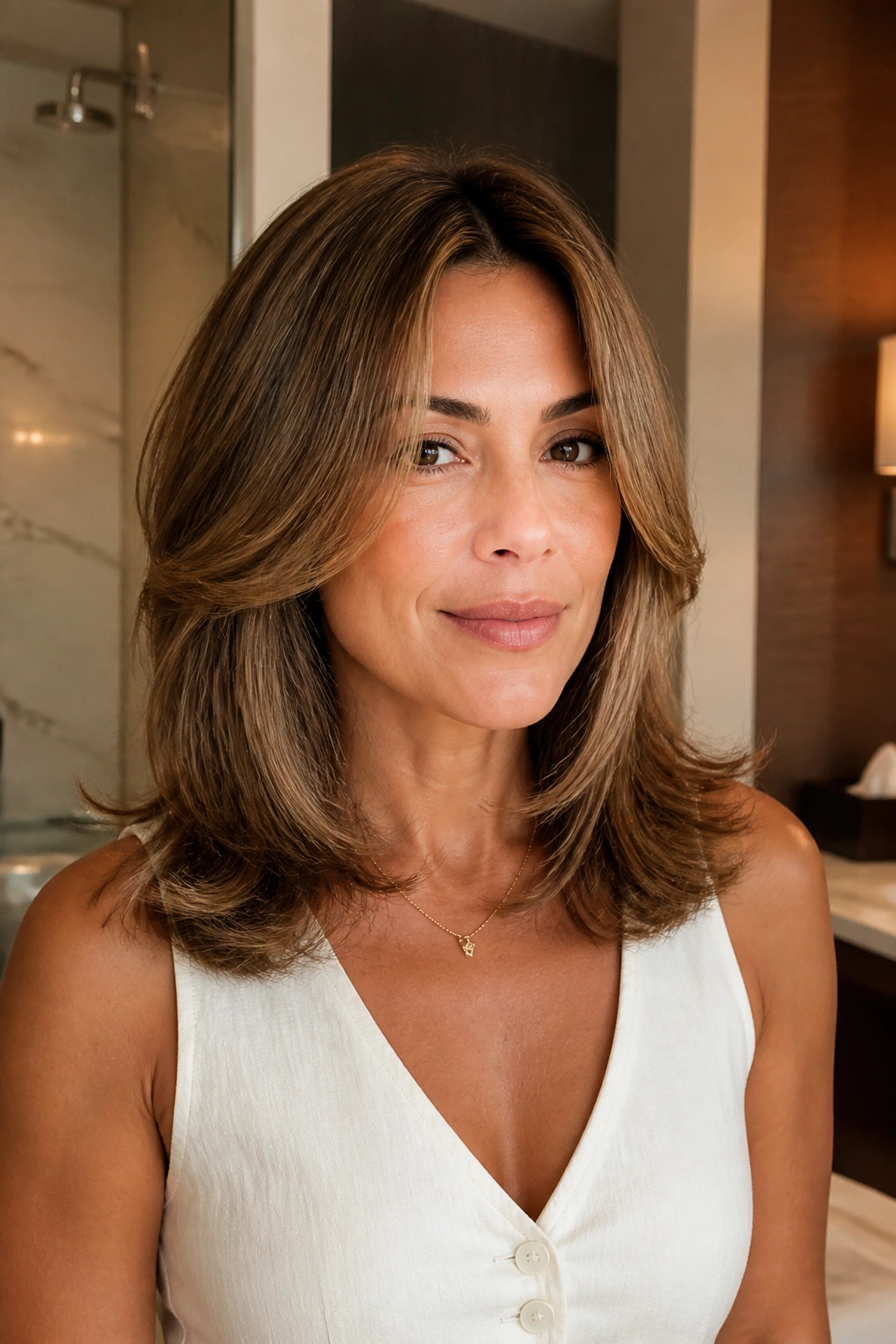
A shoulder-length blowout can do more for a square face than a lot of complicated cuts. The round brush lift at the roots, the curved ends, and the soft layers around the front all work together. It is a simple shape. Not plain. Just smart.
The Finish Makes the Difference
If the ends flick slightly away from the neck, the face feels less squared off. If the front pieces curve toward the cheek and then fall away, the jawline stays visible without becoming the star. That is what a good blowout does. It gives the hair body without turning it into a helmet.
This is one of those styles that looks expensive even when it is not. I do not mean glossy for the sake of glossy. I mean the hair has movement, and movement is flattering. A medium round brush and a blow-dry spray usually do the job.
Keep the Shape Soft
- Dry the roots first for lift.
- Wrap the front sections around the brush for one slow bend.
- Finish with a cool shot so the curve holds.
- Avoid over-spraying the ends, which can make them stiff.
25. Twisted Half-Up Style
A twisted half-up style is a quieter version of the half-up look, and it suits square faces because it keeps the hair away from the cheeks while leaving enough softness around the sides.
The twist starts just behind the temples or above the ears, which helps open the face without exposing it completely. A square face often looks best when there is a little softness near the top and a little movement near the lower half, and this style gives both. The loose bottom section keeps the jaw from feeling too bare.
It is a good choice for medium or long hair, and it takes pins well. You can wear it casual or dress it up. If you leave a few front pieces out, keep them thin. Thick tendrils can overdo the framing and make the face look wider. Thin ones just soften the edges. Better.
26. Choppy Pixie with Longer Top
A choppy pixie with a longer top is one of the best short cuts for a square face because the texture breaks up the hard lines while the extra height at the crown stretches the face slightly.
The sides should stay neat and narrow. The top should stay piecey. That contrast keeps the cut lively and prevents it from settling into a blocky shape. A square face can handle strong structure, but it usually needs some unevenness somewhere. This cut gives you that without looking messy.
What to Tell Your Stylist
- Keep the top long enough to sweep sideways.
- Soften the fringe into pieces rather than one line.
- Taper around the ears and neckline.
- Leave enough length to style with wax or cream.
This is a practical cut if you want something low-fuss. It air-dries well, and it can look polished with almost no effort. A dab of product, a quick finger toss, done.
27. Brushed-Out Retro Waves
Brushed-out retro waves can look excellent on a square face when they are soft and side-parted. The wave pattern adds movement, and the brush-out keeps the curls from staying tight beside the cheeks.
The old-school version of this style can be too uniform. The better version has a little looseness near the ends and a more open front. That makes the face feel longer and less angular. If the wave starts too high, the shape can widen the forehead and cheeks. Lower is better.
I like this style for events because it reads as intentional without looking severe. Set the waves, let them cool, then brush gently until the pattern softens. Finish with a light spray, not a shellacked one. The hair should still move when you turn your head.
28. Blunt Shoulder-Length Cut with Curtain Fringe
A blunt shoulder-length cut can work on a square face if two things happen: the ends land low enough, and the fringe breaks up the front. Without that, a blunt line can feel too square on square.
The curtain fringe is doing the heavy lifting here. It opens the forehead and softens the temples, which keeps the straight line of the cut from feeling too hard. Shoulder length helps too because the hair no longer stops exactly at the jaw. It falls below the widest part of the face, where the line is easier to wear.
Keep It From Looking Heavy
- Add a slight bend to the front pieces.
- Let the fringe sweep rather than hang flat.
- Keep the perimeter clean, not chunky.
- Use a smoothing cream only on the mid-lengths, not the roots.
This cut is neat, not fussy. If you like hair that looks polished on a normal Tuesday, it is worth a look.
29. Side-Parted Low Chignon
A side-parted low chignon can be one of the best updos for a square face because it keeps the hairstyle low and calm while the side part shifts the visual balance. The face still shows, but the jaw does not sit there alone.
The key is softness at the front. A little lift at the crown, a loose piece near the ear, and a side part all help the style avoid that tight, severe look that can make square features feel stronger than they are. The chignon itself should sit near the nape and stay slightly relaxed.
This is a good formal option, but it is not only for formal settings. A loose chignon with a few strands out can work for dinners, meetings, or any day you want your hair out of the way without making your face look bare. It is a clean shape. Just not an unforgiving one.
30. Long Cascading U-Shape Layers
Long cascading U-shape layers are a strong final pick because they keep length, soften the outline, and avoid the hard bottom edge that can make square faces look wider. The U-shape is gentler than a blunt line or a sharp V, and that gentleness matters.
The longest pieces stay in back, while the front layers curve around the face and blend downward. That curve gives the haircut a sense of motion without stealing volume from the sides. It is especially good if you like long hair but hate the feeling of it hanging in one heavy sheet.
This cut plays well with waves, a soft blowout, or even straight hair if the ends have a small bend. The best part is how flexible it is. It can look polished, loose, or a little undone, depending on how you wear it. And for a square face, that little bit of softness around the edges is often enough.
Square faces do not need to be disguised. They need a haircut that respects the structure and then eases the edges a little. That can be a blunt bob with movement, a pixie with lift, or long layers that fall in the right place. The shape is already there. The right style just makes it easier to wear.
