



Round faces are easy to flatter and easy to sabotage. A cut that ends at the widest part of the cheeks can make everything feel wider, while a little height, a clean side part, or a layer that falls below the jaw can change the whole read of the face.
That’s why the most useful hairstyles for round faces are not just “pretty.” They’re strategic. They give you length, angles, movement, or lift where you need it, and they avoid stacking too much bulk right at the cheeks. Small shift. Big payoff.
I’ve always thought round faces are underrated in hair conversations, probably because people keep giving the same tired advice: “Go longer.” Not always. A chin-length bob can be gorgeous on a round face if it has the right line, and a short crop can look sharp if the top has enough height. The trick is placement. Where the hair begins, where it ends, and where the eye lands matter more than the label on the haircut.
1. Long Layers with a Center Part
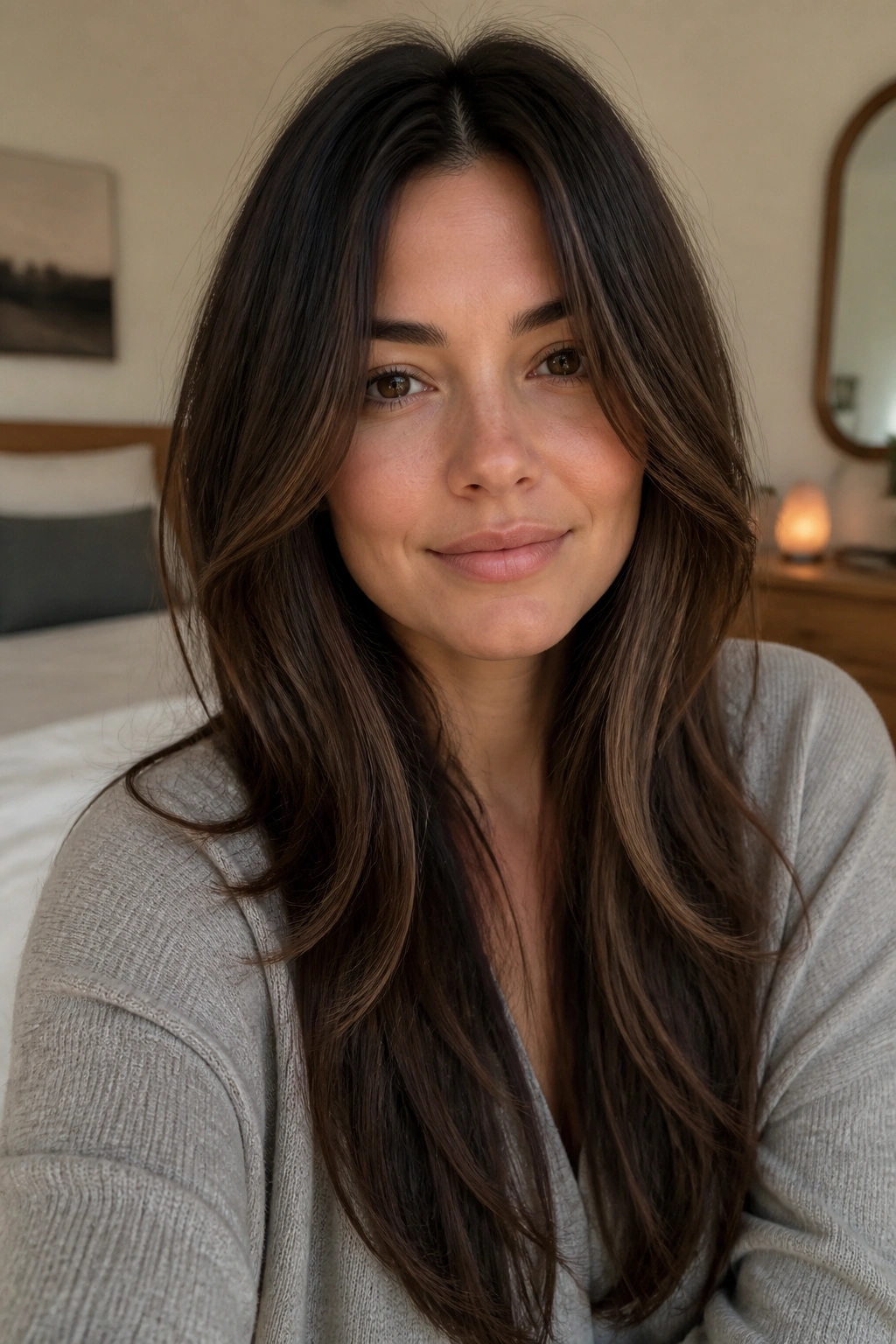
Long layers are a smart place to start because they give a round face vertical movement without chopping the silhouette into pieces. The best version keeps the front layers soft and begins them around the chin or collarbone, not the cheeks. That little difference changes everything.
Why It Works
A center part draws the eye down the middle, which naturally lengthens the face. Add layers that fall below the jaw, and the shape starts to feel more open and less wide. If your hair is thick, ask for internal layers so you lose bulk without losing length.
A good styling note: blow-dry the front away from the face with a round brush, then finish with a 1.25-inch curling iron just on the ends. You want motion, not tight curls.
- Best for medium to long hair
- Strong choice for straight, wavy, or slightly curly textures
- Ask for face-framing layers that start at the chin or lower
- Avoid heavy, blunt layering at cheek level
One small detail matters here: if the shortest layer lands at the cheekbone, move it lower.
2. Collarbone Lob with Soft Bends
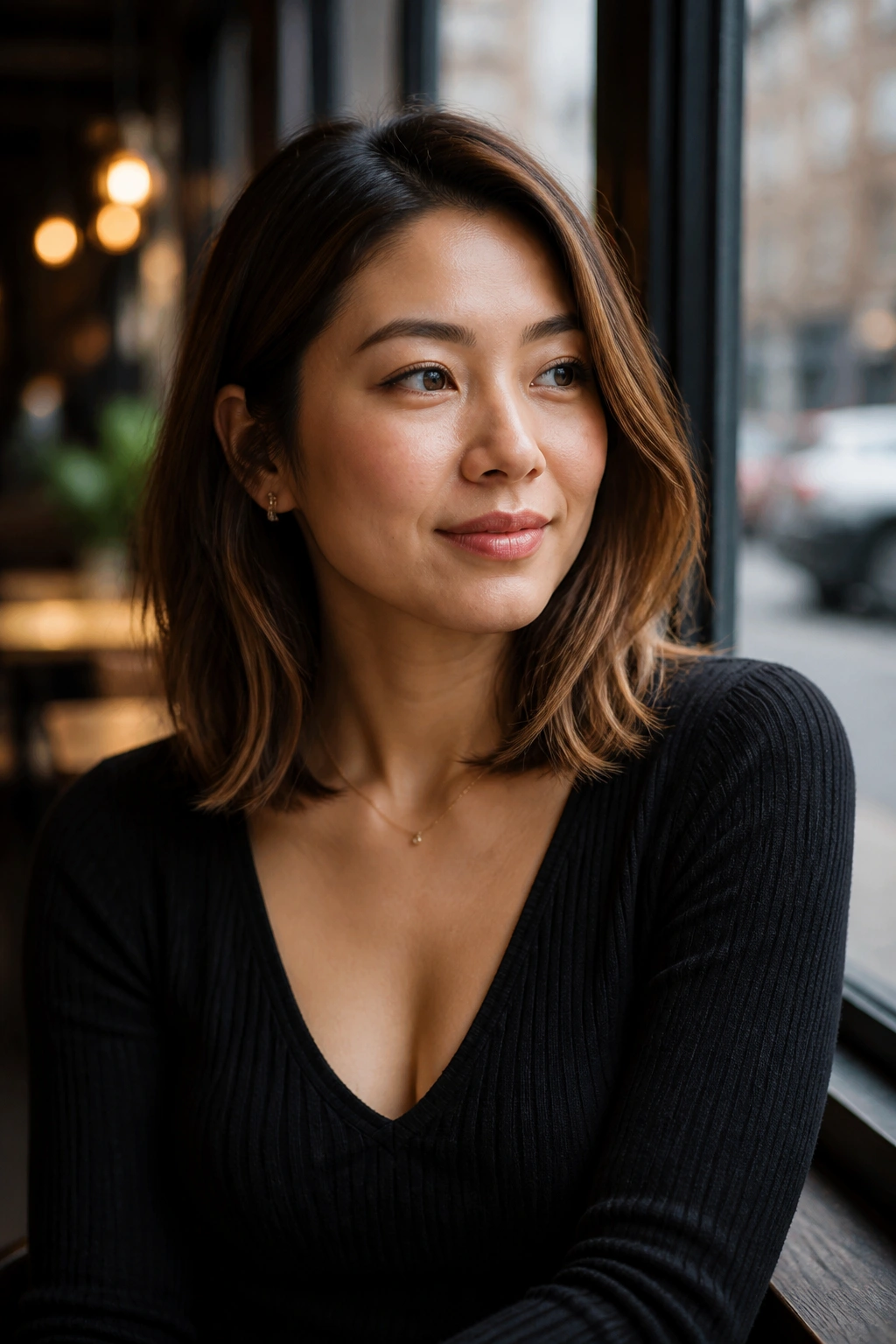
A collarbone lob is one of the safest short cuts for a round face. It gives you the fresh feeling of a shorter style without stopping so high that it widens the face. When the ends skim the collarbone, the line looks longer and cleaner.
The soft bend is the part people often miss. A poker-straight lob can look boxy if the cut is too blunt, but a gentle wave through the mid-lengths gives the hair some breath. I like this cut especially for fine hair because it can hold shape without looking too heavy.
Wear it with a slight off-center part and a bend away from the cheeks. That bit of direction keeps the style from sitting flat across the widest part of the face.
3. Asymmetrical Bob
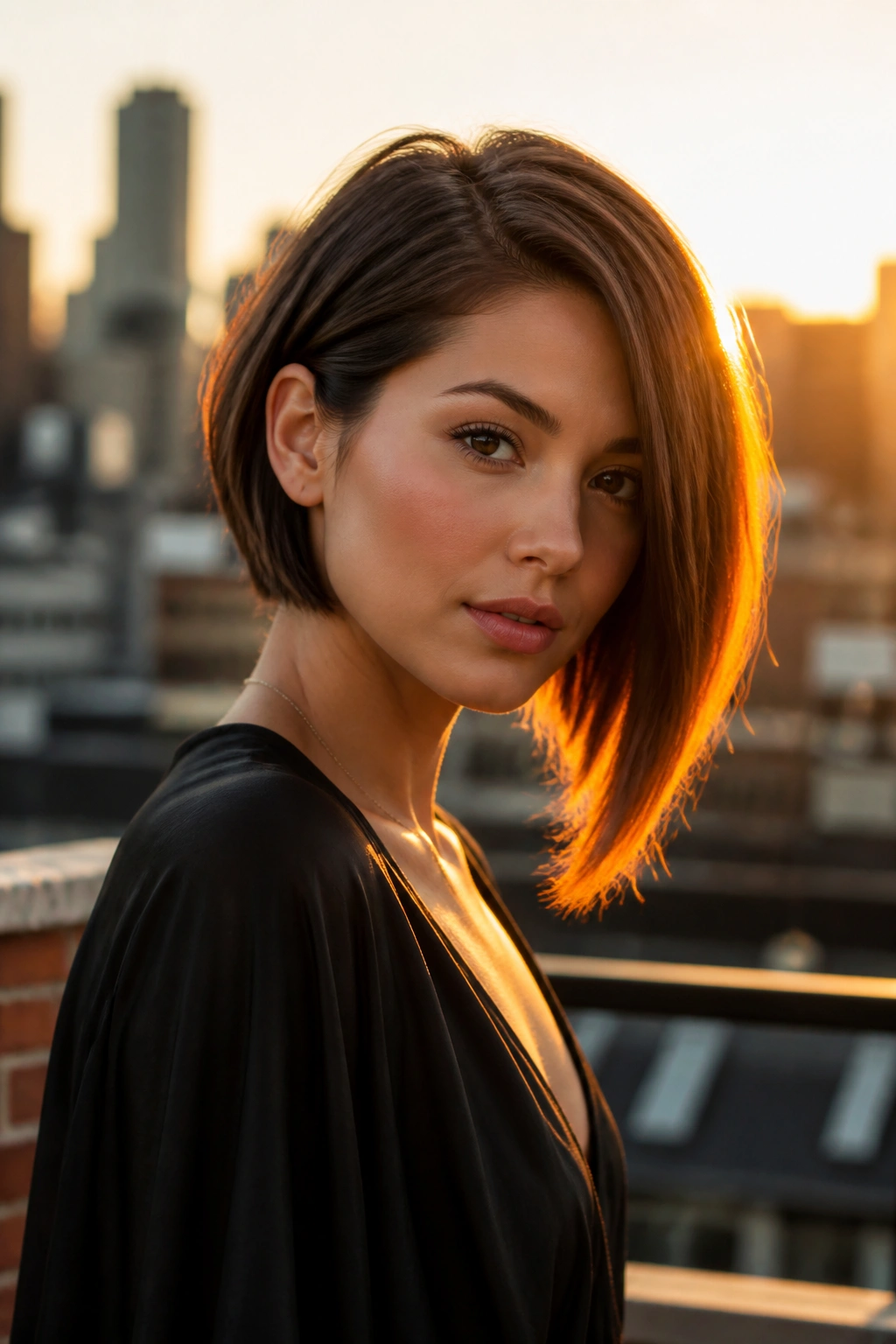
Why does an asymmetrical bob work so well? Because the eye can’t settle in one place. One side sits a little longer, and that tiny imbalance pulls the face into a narrower shape.
The difference does not need to be dramatic. An inch or two is enough. I prefer a version where the shorter side hits near the jaw and the longer side brushes the collarbone. That gives the cut enough edge to feel intentional without turning it into a costume.
How to Style It
Keep the ends smooth and slightly angled toward the face. A flat iron with a soft bend at the bottom works better than a stiff, pin-straight finish. If the hair is wavy, tuck the shorter side behind the ear and let the longer side fall forward. That simple move creates a clean diagonal line.
This cut is one of my favorites for round faces that want something sharper. It has attitude.
4. Curtain Bangs and Mid-Length Layers
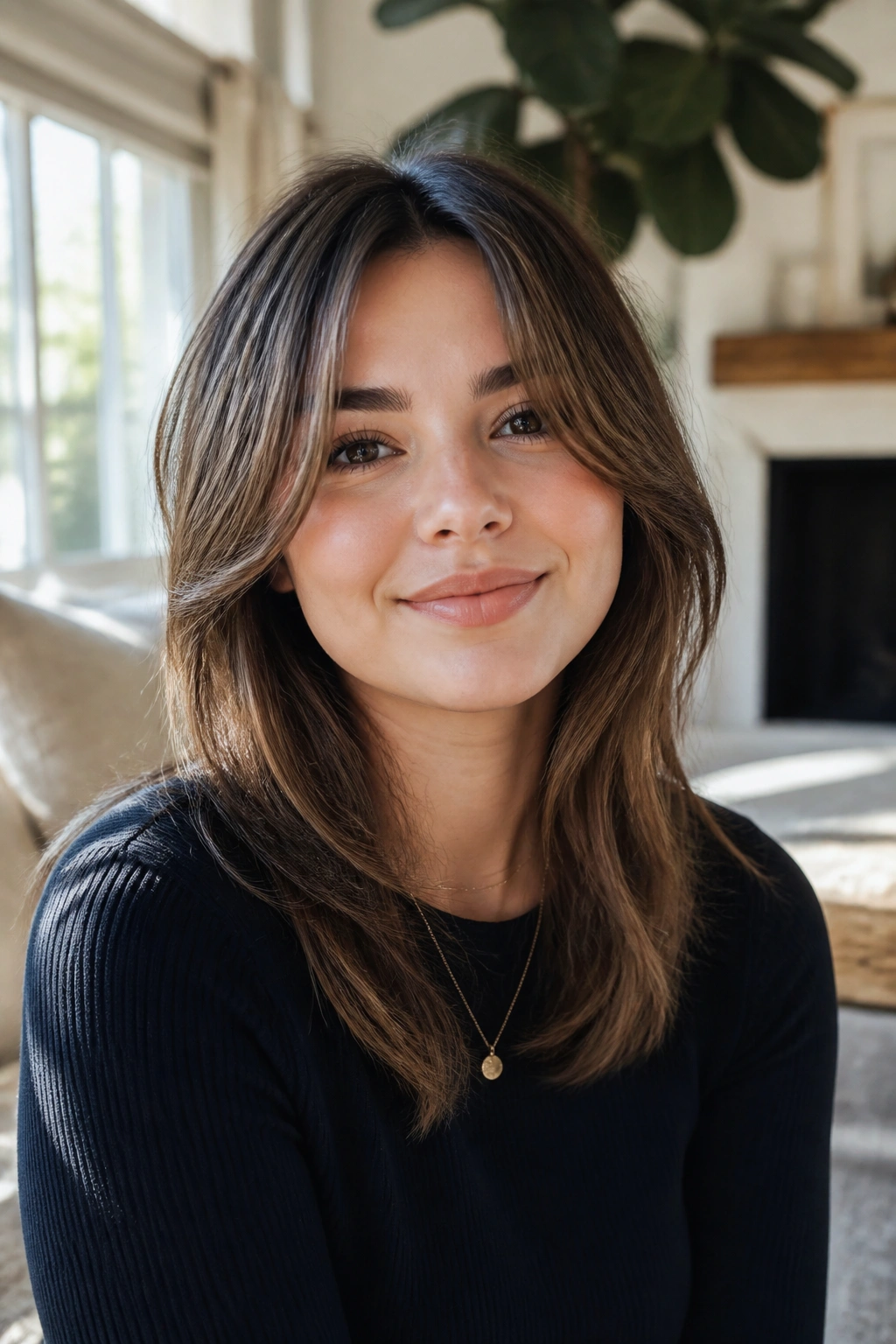
Curtain bangs can be a gift on round faces when they’re cut with enough length to part open at the center. Short, heavy bangs can crowd the forehead. Curtain bangs do the opposite. They frame the face and break up the circle without boxing it in.
The best curtain bangs usually start around the cheekbone or just below it and blend into the rest of the cut. That matters. If the bang line stops too high, it can make the face feel fuller. If it falls too low, it can swallow the features. The sweet spot is in the middle.
A mid-length cut with these bangs looks especially good when the front pieces are blown back and away from the cheeks. A round brush, a medium barrel, and a little patience are enough.
- Great for shoulder-length hair
- Ask for soft, movable ends instead of a blunt edge
- Works well with a blowout or loose wave
- Keep the center split loose, not rigid
5. Choppy Shag
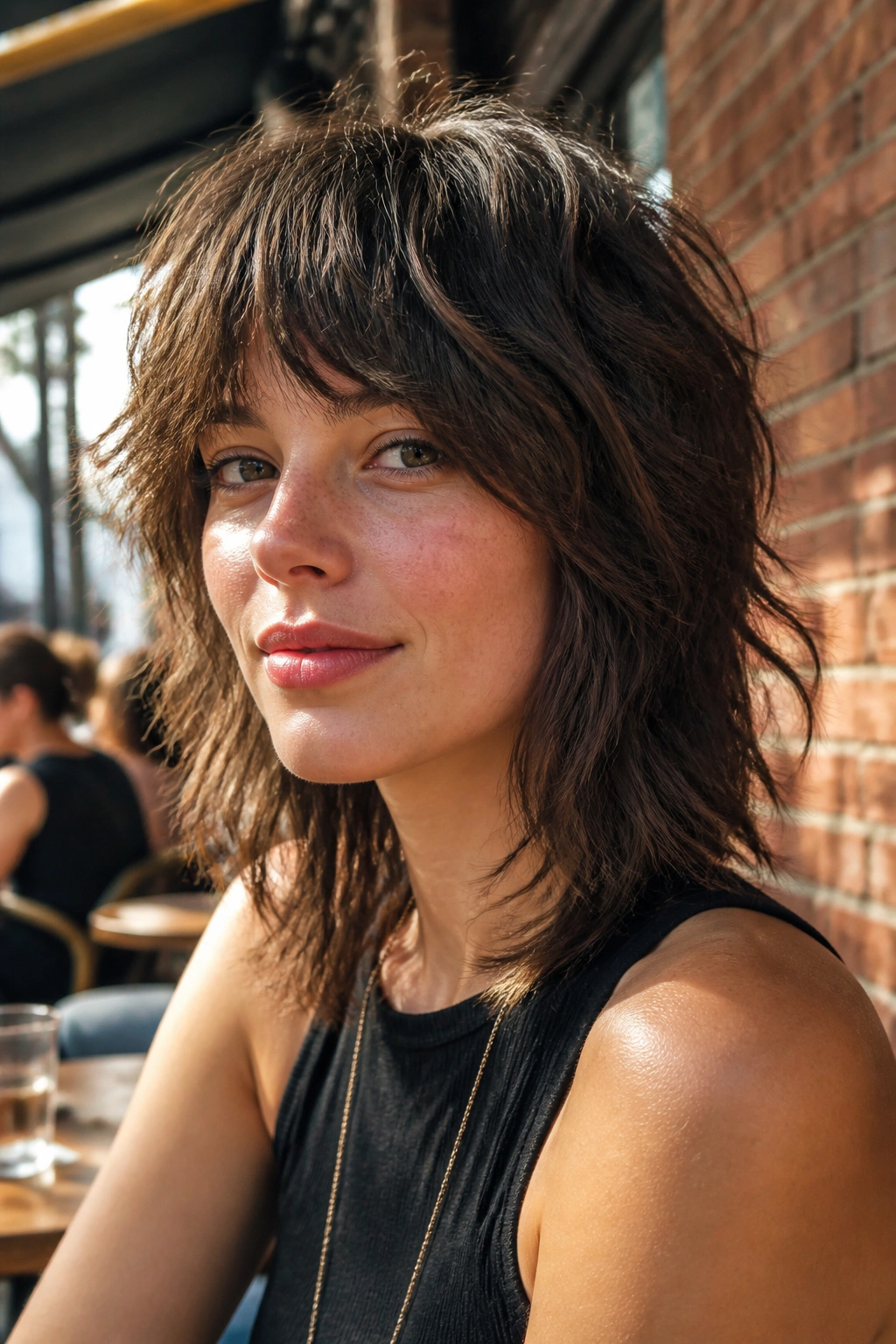
A shag is one of those cuts that can look effortlessly cool or annoyingly puffy, and the difference comes down to the layers. On a round face, the cut should build texture through the crown and mid-lengths while keeping the widest bulk away from the cheeks.
The right shag gives you air. It gives the hair movement around the face without making the whole shape too round. I like it most on wavy hair, where the layers can fall into that lived-in, a little messy, slightly rebellious shape that makes the cut feel alive.
If your hair is fine, ask for soft, broken-up layers instead of aggressive razor work. Too much thinning can leave the ends stringy. Too little, and the shag becomes a heavy triangle. Neither is the goal.
It’s one of the few cuts that can look better a bit undone.
6. Butterfly Cut
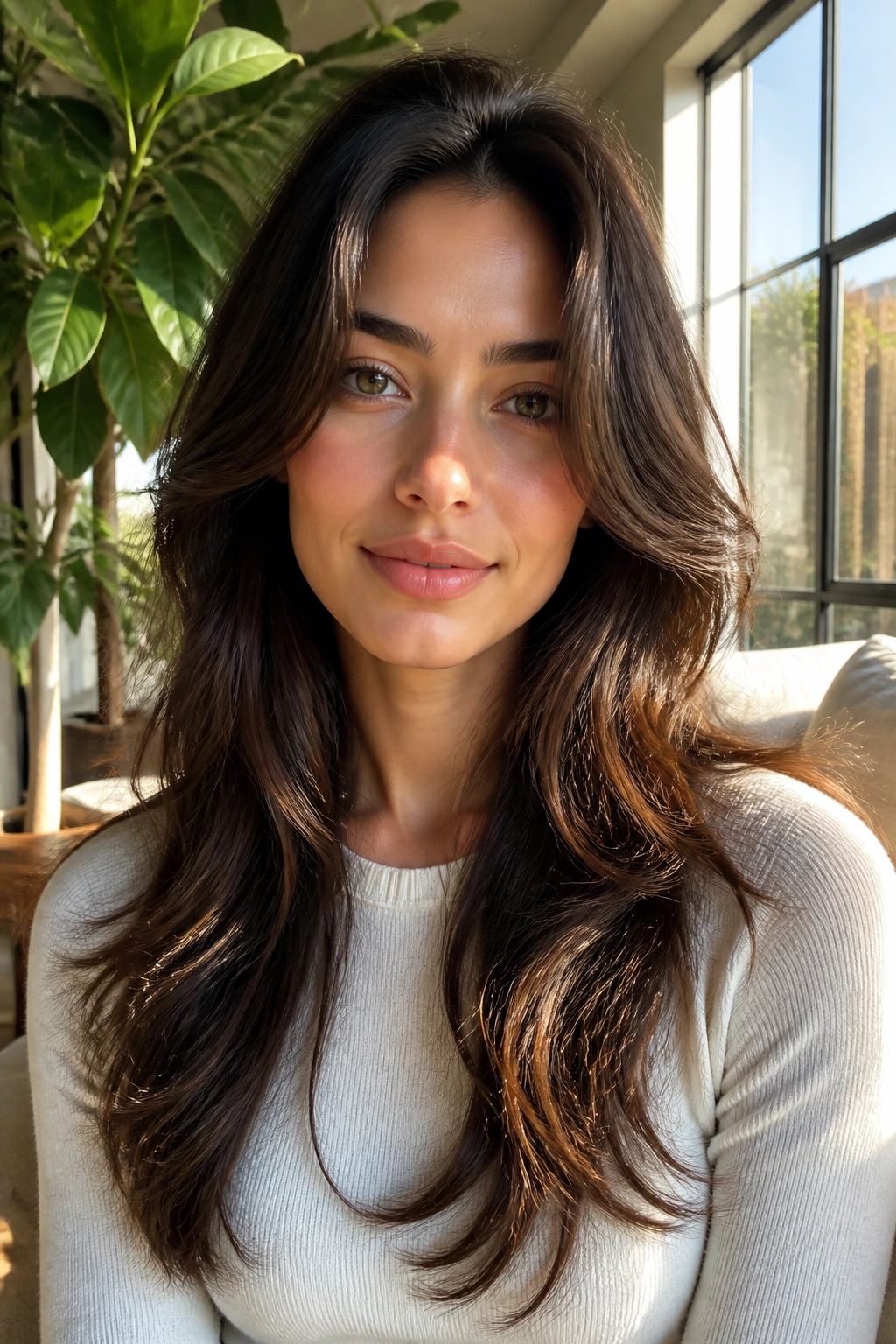
A butterfly cut is basically built for people who want movement without losing length. The shorter top layers create lift around the face, while the longer bottom layers keep the overall line long. On a round face, that long-and-short contrast does useful work.
Unlike a shag, the butterfly cut stays softer and more polished. The front pieces often begin around the cheekbone or chin, and the layers can be blown out so they flick away from the face. That gives you shape without turning the haircut into a stack of obvious steps.
The version I like most keeps the shortest layer just below the cheekbone and the longest layer past the shoulders. It’s especially flattering if you like to wear your hair blown out, curled at the ends, or clipped back on one side.
7. Beach Waves with Face-Framing Pieces
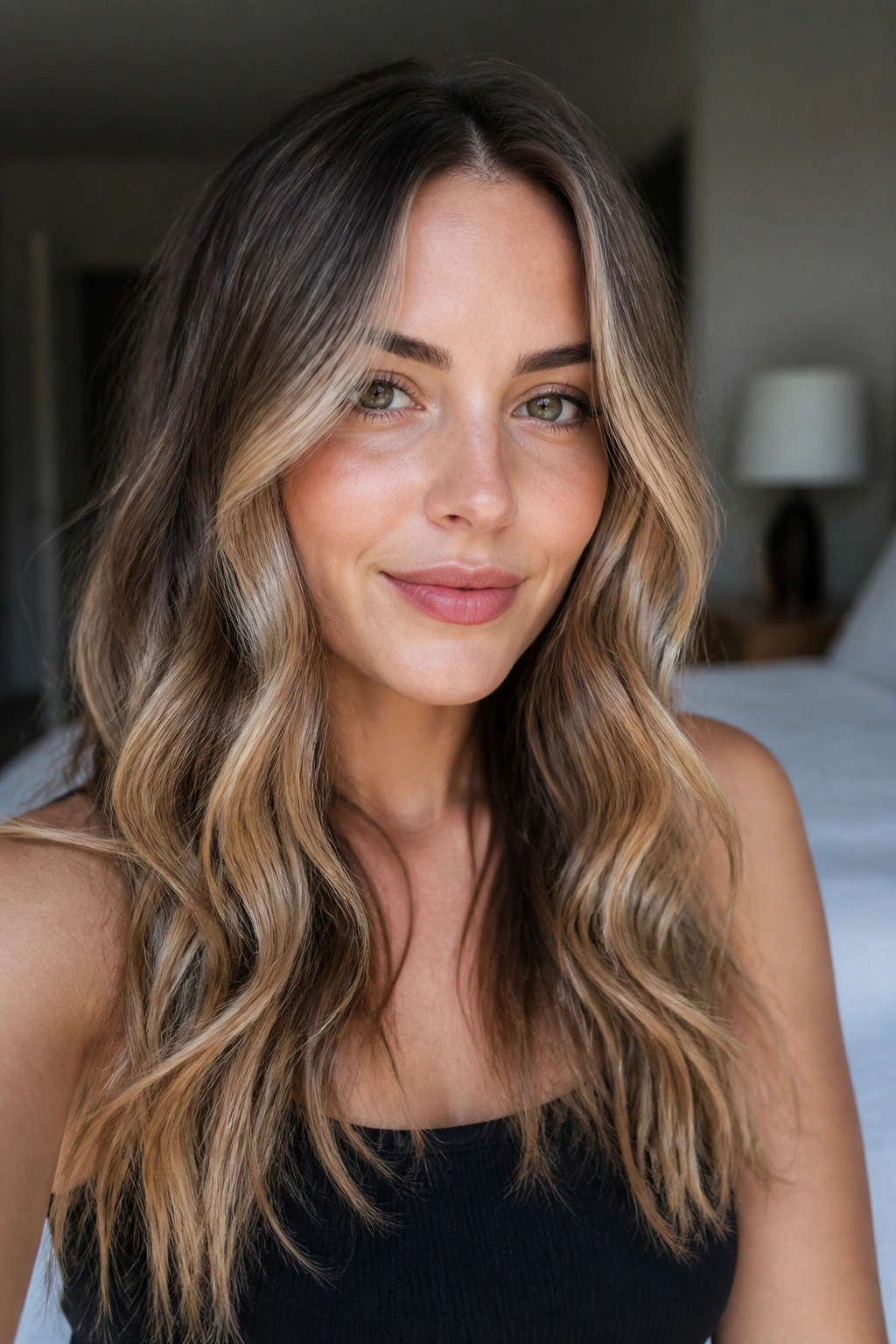
Loose waves can be tricky on round faces if they start too high. Put the bend at the cheeks and you’ve added width where you least want it. Put the bend lower, though, and the style becomes soft, easy, and balanced.
The face-framing pieces should be left a little straighter near the top and waved from the mid-length down. That keeps the front from ballooning out. A 1.25-inch wand is a good tool here because it makes a loose curve instead of a tight curl.
What Makes It Different
The wave should look relaxed, not crimped or polished into submission. Curl away from the face, then rake through the hair with your fingers once it cools. A light mist of texture spray at the roots gives the style some grip without turning it crunchy.
A lot of people overcurl the front. Don’t. Let the face-framing pieces hang in a long arc.
8. Deep Side Part with Sleek Lengths
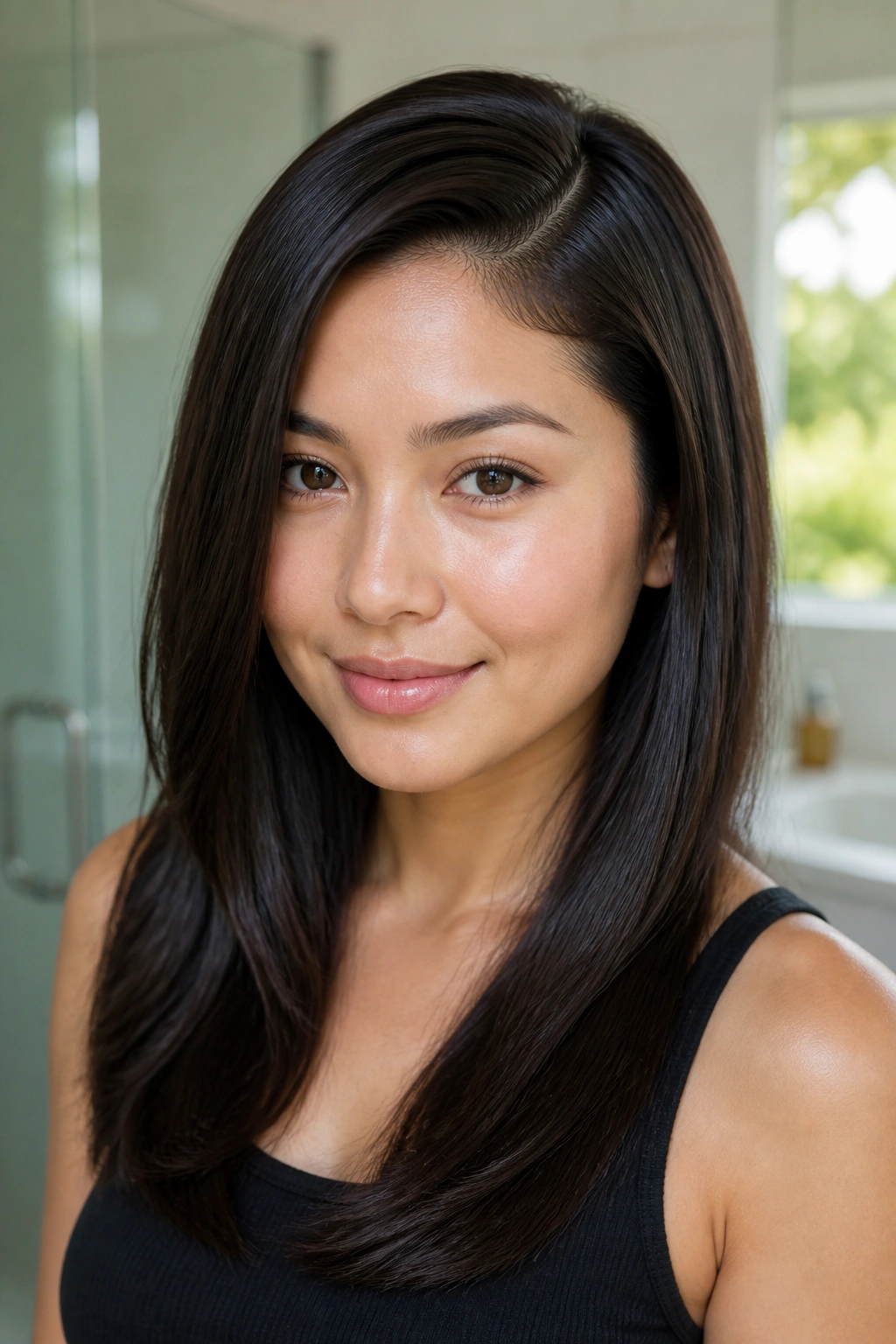
A deep side part can change a round face more than a haircut can. It breaks the symmetry, creates a diagonal line, and adds a little lift at the roots. That combination makes the face look longer and slightly leaner.
Keep the part about 2 to 3 inches off center. Any deeper and it can start to feel theatrical. Any shallower and the effect gets lost. Slick the top flat enough to show the part clearly, then keep the lengths smooth with a slight bend at the ends.
This style works especially well when the hair is glossy and controlled. Use a light serum on the lower half, not the roots, or the top can collapse. If you want more shape, tuck the smaller side behind the ear and leave the heavier side forward.
Clean. Sharp. Easy.
9. High Ponytail with Crown Lift
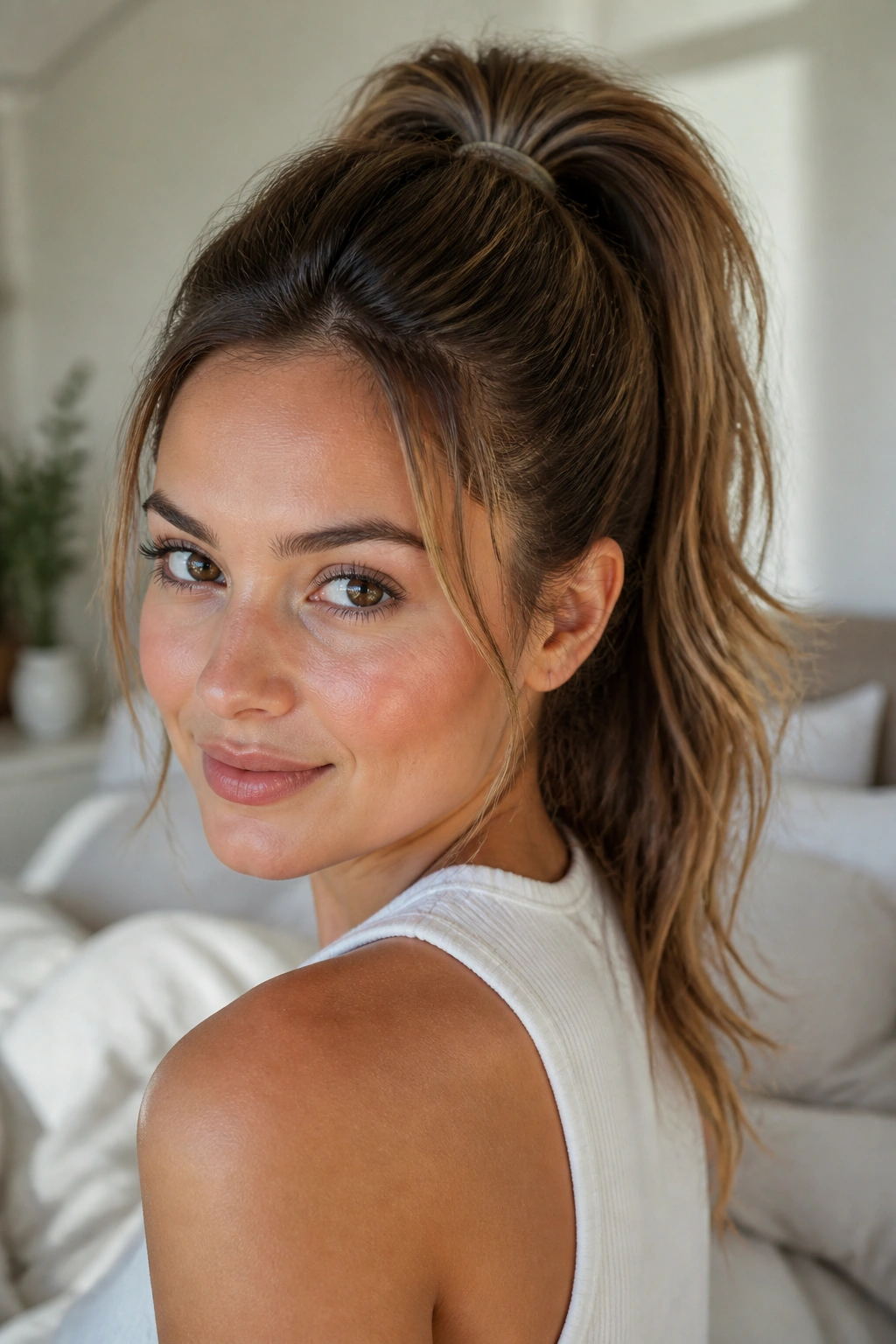
When does a ponytail flatter a round face? When it sits high enough to pull the eye upward. A low, tight pony can make the face feel wider if all the tension is horizontal. A high pony does the opposite.
Place it a little above the crown, not in the middle of the back of the head. Tease the crown lightly first, or smooth in a small amount of mousse before blow-drying if your hair is slippery. The lift matters almost as much as the pony itself.
How to Wear It
Leave the ends loose and a little curved. A ponytail that’s too stiff looks severe, and severe hair can be unforgiving on a round face. Wrap a thin strand around the elastic, pin it underneath, and let a few shorter pieces fall near the temples if you want softness.
This is one of those styles that looks simple but needs the placement to be right.
10. Low Ponytail with Loose Front Pieces
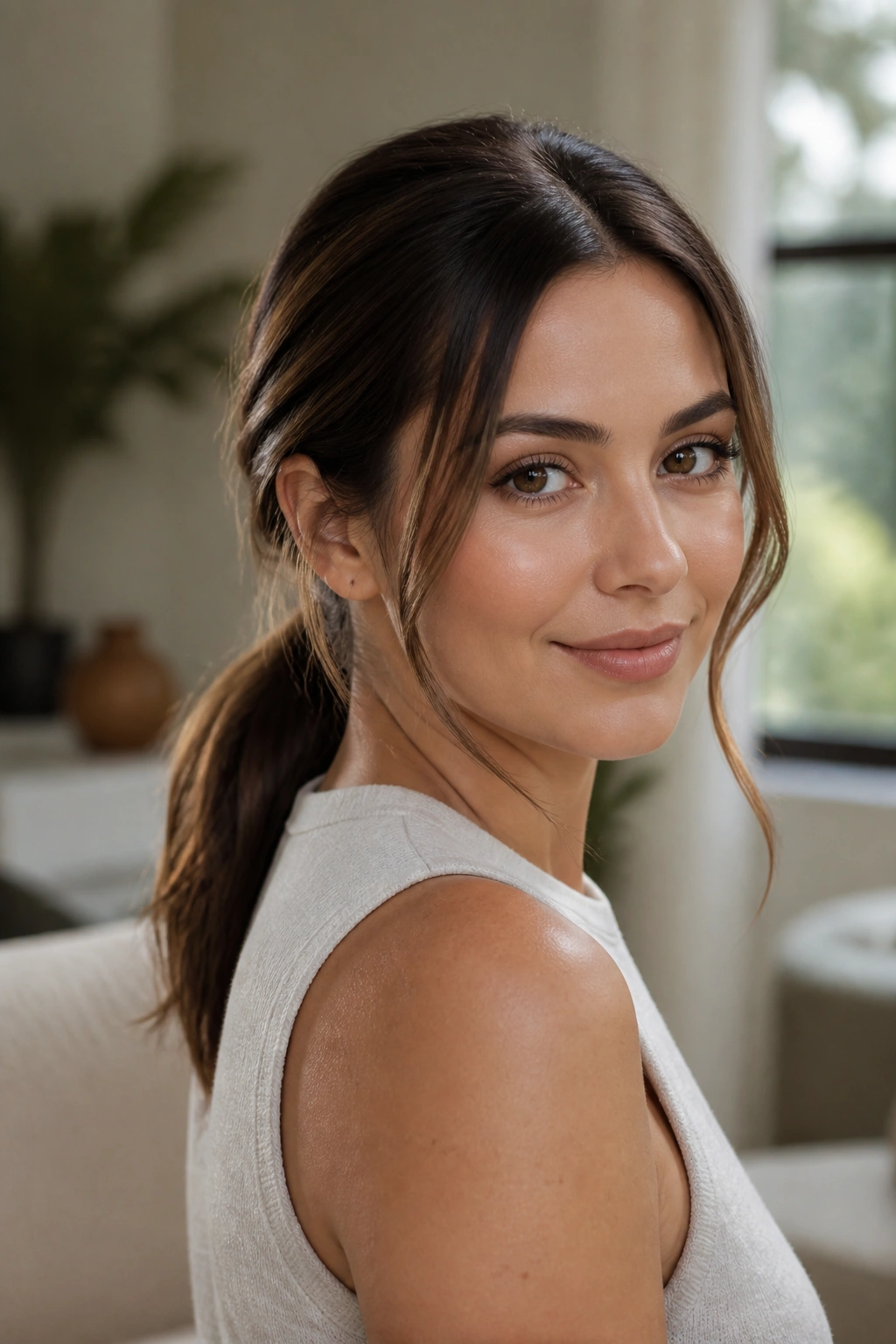
A low ponytail is the more relaxed cousin of the high one. It works on a round face when the top is smooth and the front pieces are left soft enough to frame the cheeks without sitting right on them.
Set the pony at the nape and keep the part clean, either center or slightly off to one side. Then leave slim face-framing pieces out near the temples and jawline. Not thick chunks. Slim pieces. That distinction matters because heavy front sections can widen the face fast.
I like this style for days when you want polish without a lot of effort. It looks good for work, dinners, even weddings, and it plays well with straight hair or a soft bend through the lengths.
11. Messy Top Knot
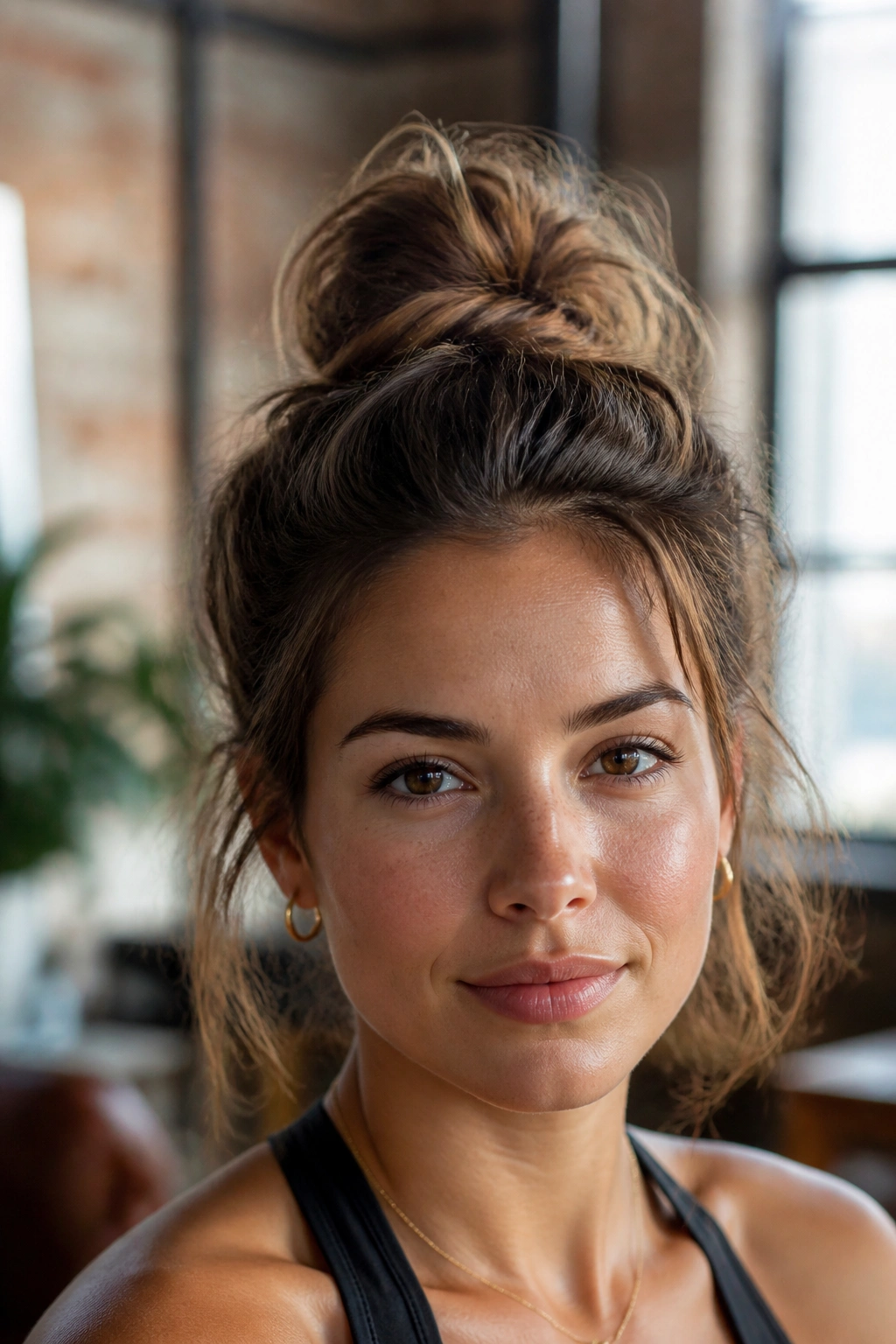
A top knot can be brilliant on a round face if it sits high and a little loose. The trick is not making the knot tiny. Tiny top knots look like a coin perched on the head, and that shape does no favors for width.
Build the knot near the crown, not low at the back. Leave a bit of lift at the roots and let a few strands fall around the ears. You want the overall shape to be vertical, not circular. That’s the real point.
The other thing people get wrong is smoothing every strand backward. A perfectly slick top knot can look severe. A little texture around the hairline softens it and makes the style feel less boxy. If your hair is thick, twist the pony before wrapping it so the knot holds better. If it’s fine, use two pins instead of one elastic loop.
12. Half-Up Half-Down with Height
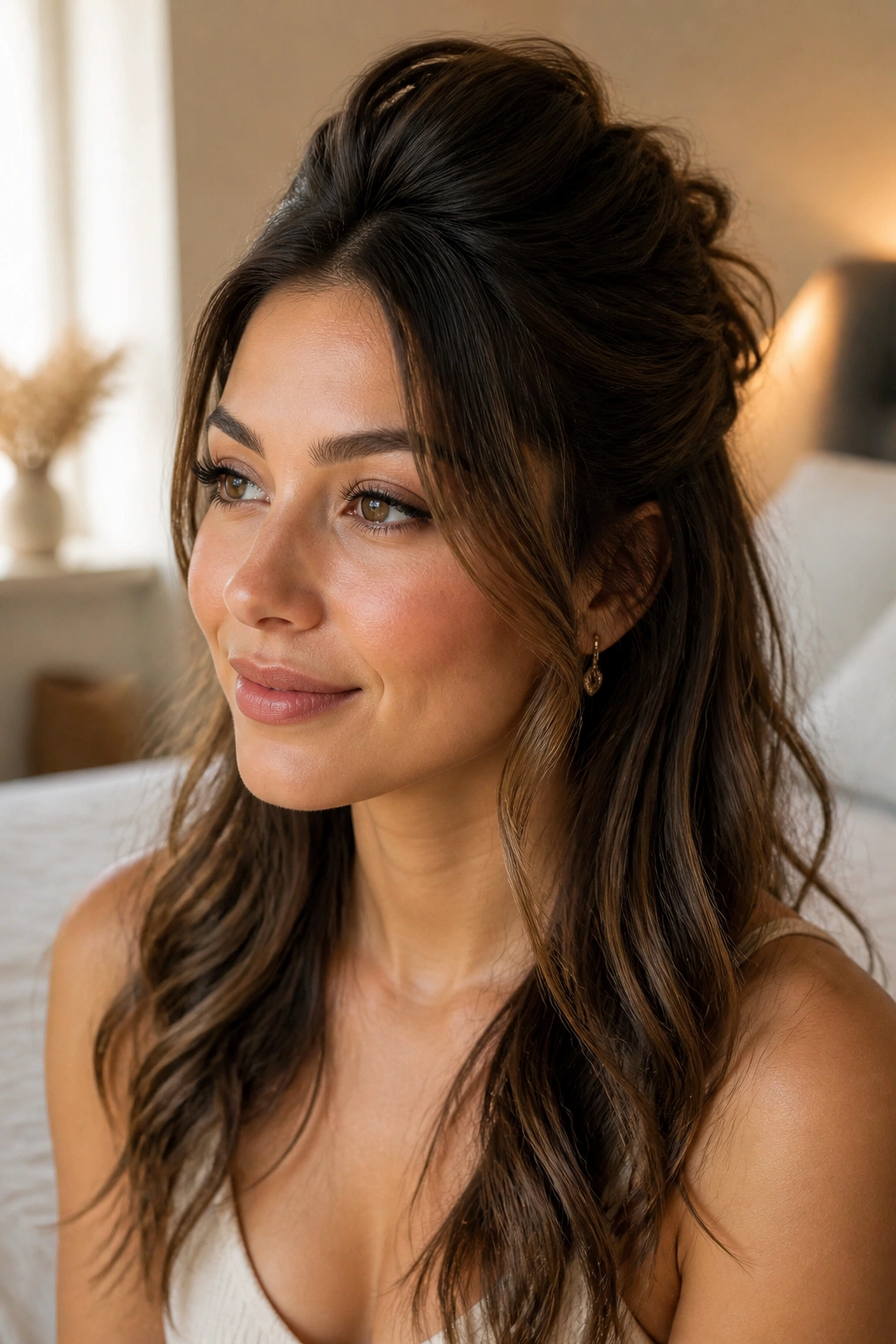
A half-up style gives you the best of both worlds: lift at the crown and softness through the lengths. On a round face, that lift is what keeps the style from feeling too wide. It adds a little vertical line before the hair falls back down.
Unlike a full updo, this one keeps motion near the shoulders, which is useful if you like your hair down but still want your face opened up. A small tease at the crown—nothing dramatic, maybe just a half-inch section—can make the shape look more balanced.
How to Get the Most From It
Secure the top section 2 to 3 inches above the ears so the lift happens high enough to matter. If you use a clip, keep it narrow rather than oversized. A large clip can spread the hair sideways, and that’s the exact opposite of what you want.
This style looks especially good when the bottom half has a loose wave. Straight ends are fine too, but they do need movement somewhere.
13. Pixie with Long Top Layers
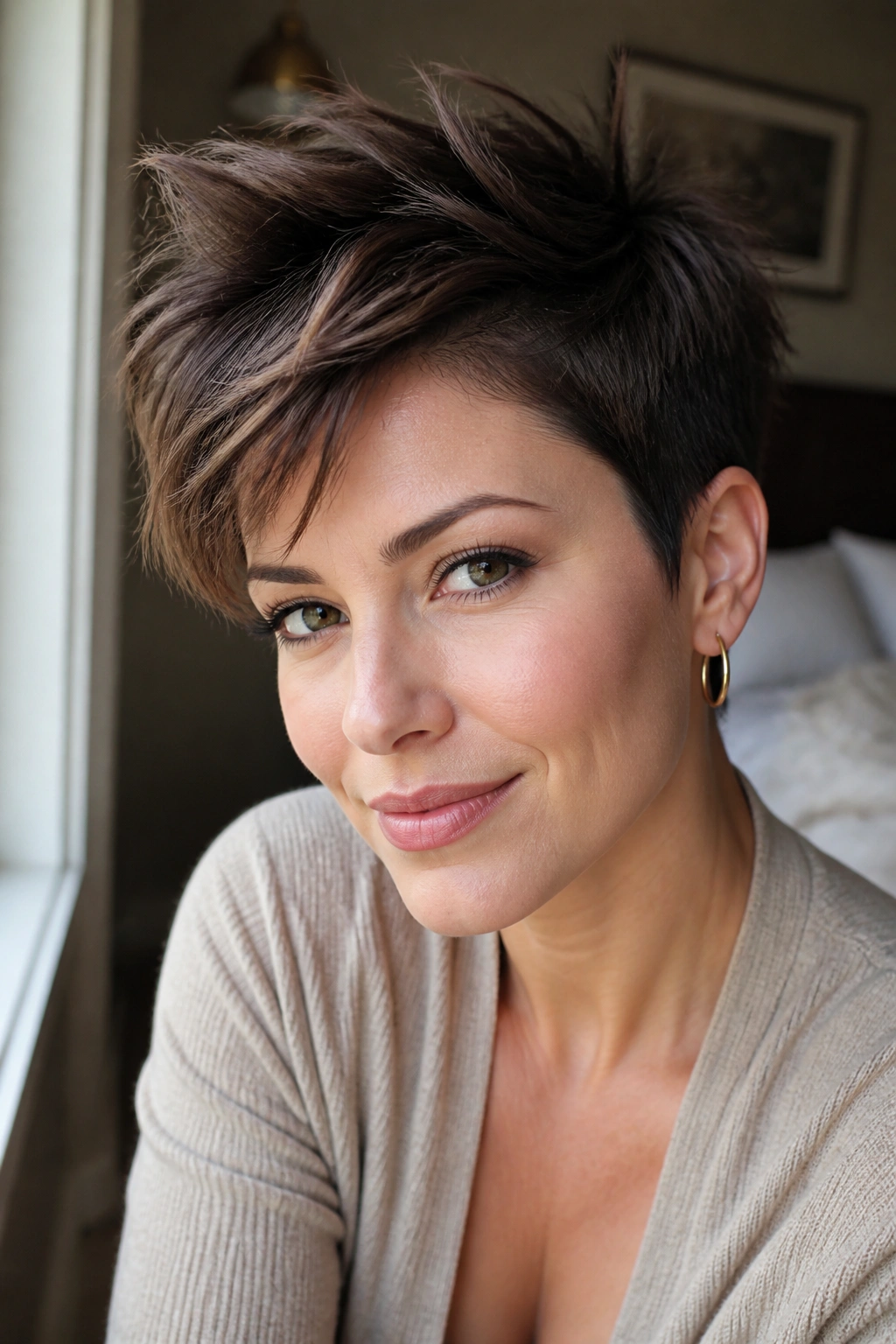
A pixie can absolutely work on a round face. The secret is keeping the top long enough to build height and leaving the sides closer to the head. That contrast lengthens the profile and keeps the cut from spreading outward.
Why It Flatters
The short sides remove bulk from the cheeks, and the longer top gives you room to sweep hair diagonally. I like a pixie with 2 to 3 inches on top and a feathered fringe that can be pushed up, over, or slightly forward. Straight-across bangs are the part to avoid unless you want the face to look shorter.
If you style it with a matte paste, rub a pea-sized amount between your palms first. Then push the hair upward at the roots before guiding the top in the direction you want. That root lift is what makes the cut read as intentional instead of flat.
14. Bixie Cut
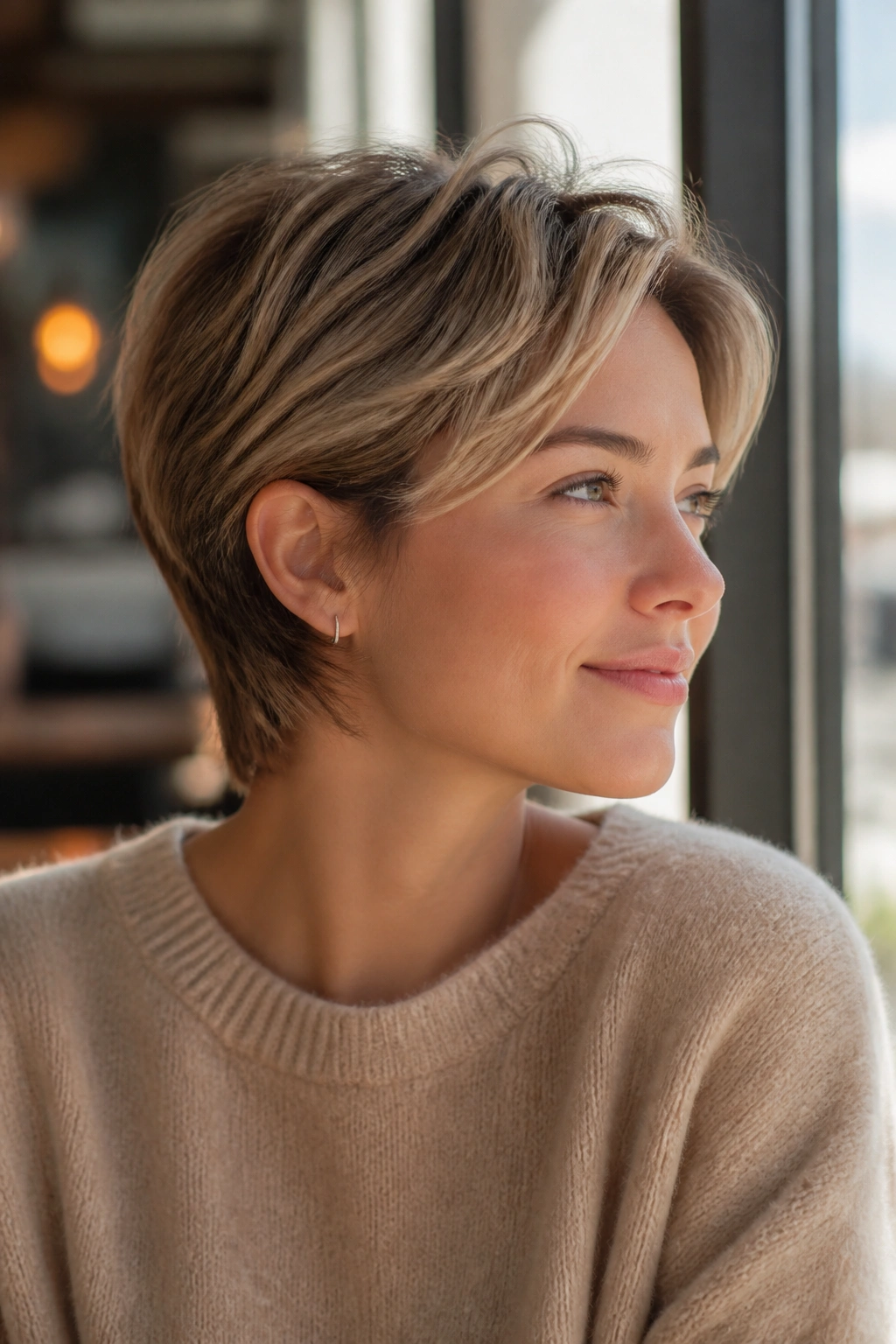
A bixie sits between a bob and a pixie, and that middle ground is why it works. It keeps enough length to soften the face while bringing in the lightness of a crop. On a round face, that means you get shape without a hard perimeter.
The best bixies have softness around the nape and a little lift through the crown. They’re not helmet cuts. They’re not shaggy messes either. The line is short enough to feel modern but long enough to tuck behind the ear when you want a cleaner frame.
This is a strong choice if you like low-maintenance hair with some attitude. A dab of styling cream, a side-swept front, and you’re done. If your hair is very thick, ask the stylist to remove weight inside the shape rather than thinning the ends too hard.
15. Angled Lob
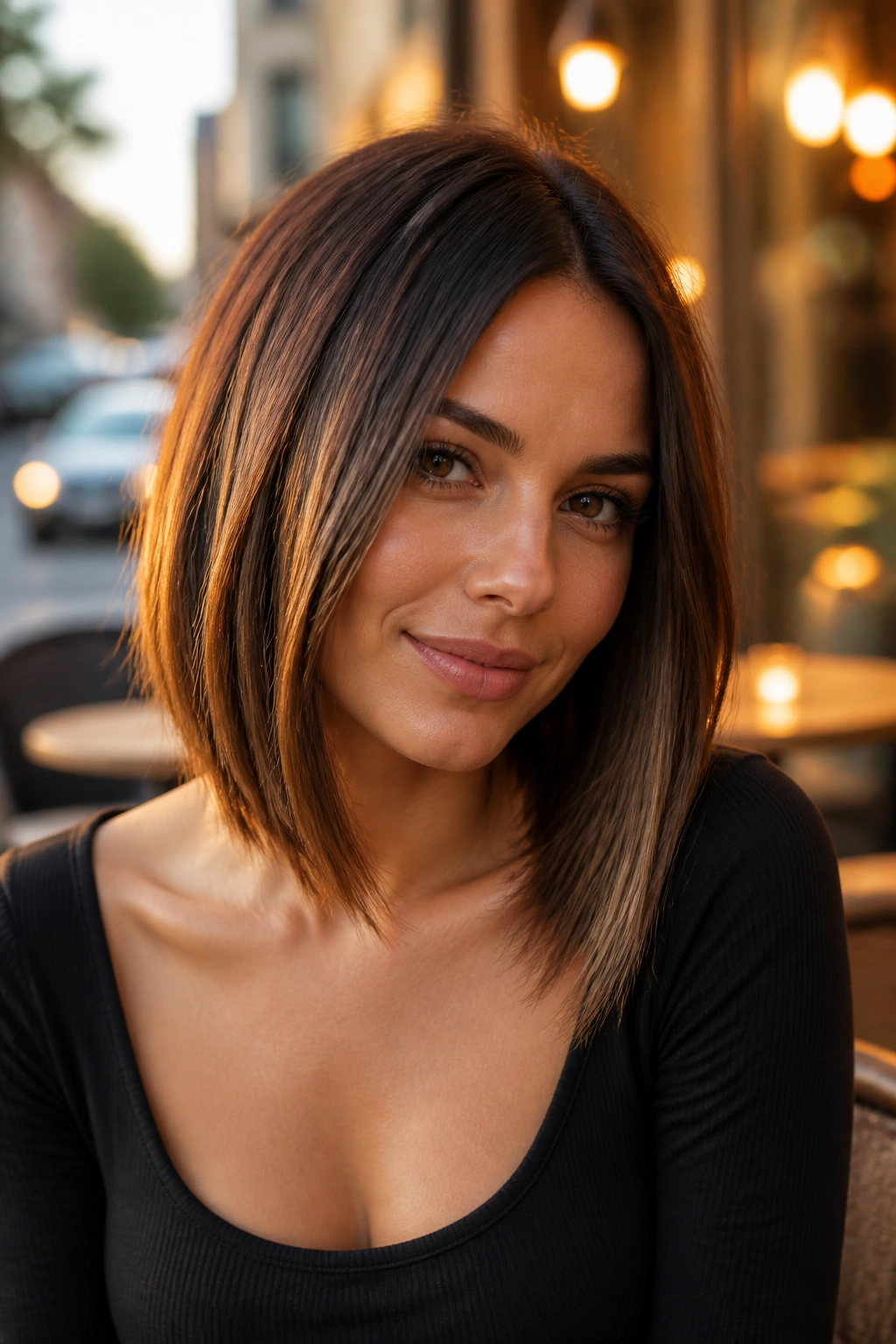
What makes an angled lob useful for round faces? The front is longer than the back, so the eye travels down and forward instead of bouncing sideways. That simple slope helps the face look more elongated.
The angle does not need to be severe. A gentle drop from the nape to the front often looks better than a dramatic slant. Keep the front pieces around the collarbone or just below it, and leave the back a little shorter so the shape still has motion.
How to Wear It
Style it straight for a sharp line, or add a soft bend at the ends if you want a calmer look. Either way, the front should stay sleek enough to show the shape. If the ends turn out too much, the cut can widen. A little inward bend solves that fast.
This is one of the few styles that looks good on a rainy day and on a polished one.
16. Curly Layered Cut
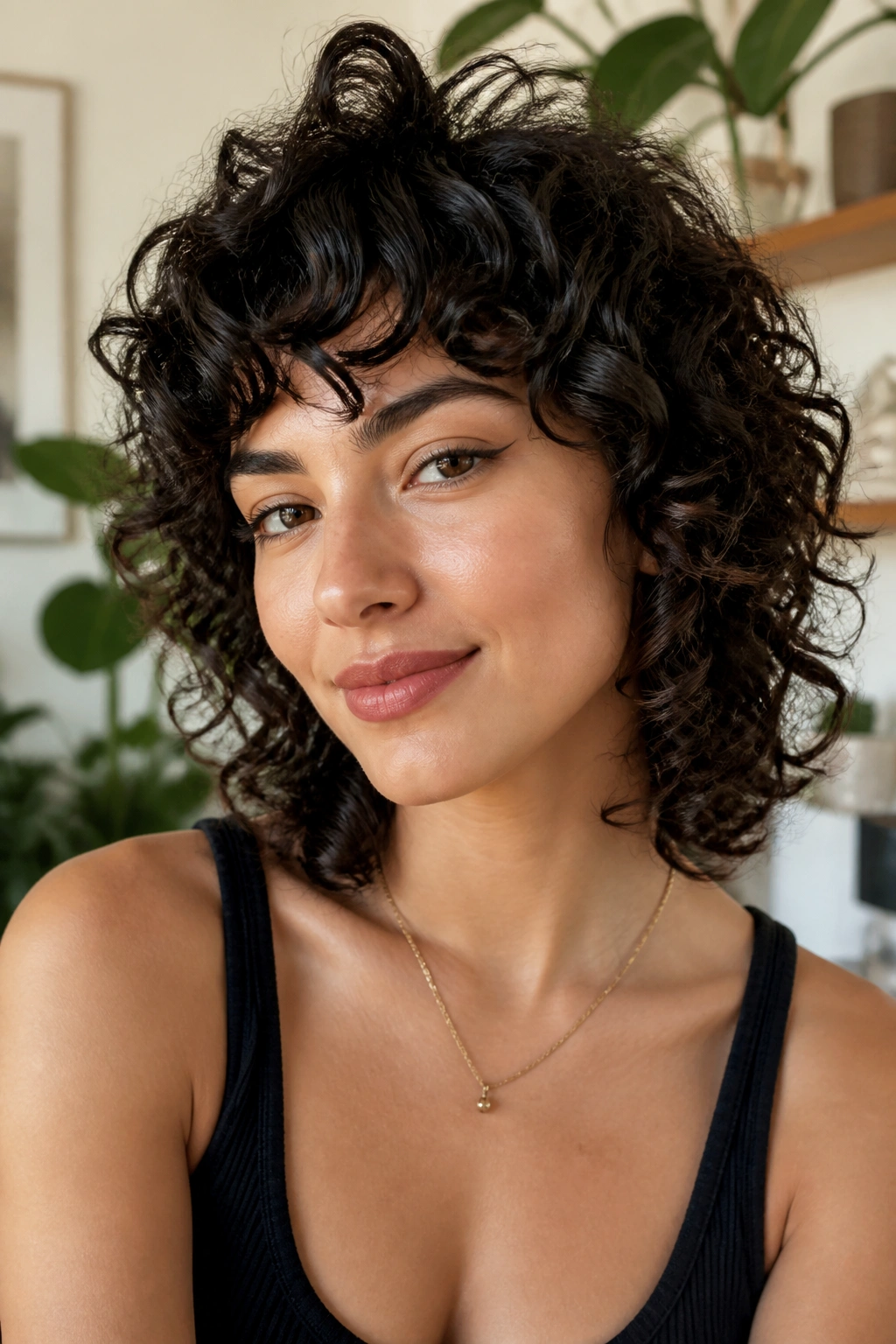
Curly hair on a round face needs shape, not just length. A good layered cut lets the curls stack in the right places instead of building a halo right at the cheeks. That’s the difference between round and balanced.
The best curly cut is often done dry or with the curl pattern in mind, because curls spring up in ways straight hair never will. Ask for layers that open up the crown and keep the widest volume slightly below the cheekbone. If the top is flat and the sides are huge, the face can look broader than it is.
- Use a leave-in conditioner that keeps curl clumps together
- Diffuse on low heat and low speed
- Scrunch out the cast with a small amount of oil
- Avoid over-layering the front if your curls already puff at the sides
A curly cut should shape the curl, not fight it.
17. Long Curls with a Side Part
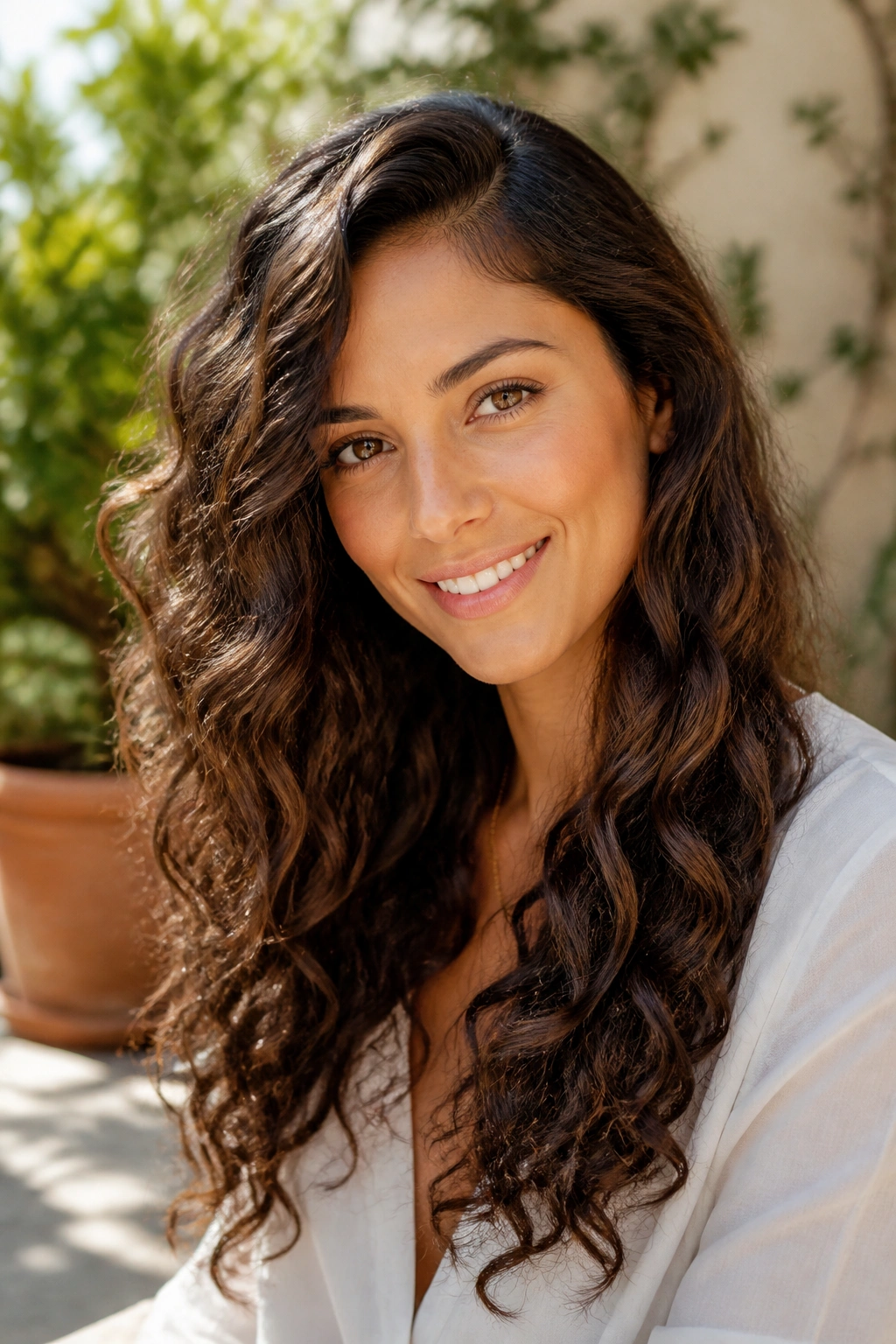
Long curls can be very flattering on a round face when the part shifts off center. That change pulls the eye diagonally and gives the face a little more length. A center part can work too, but a side part gives you more control over width.
The curl pattern matters here. Use a 1-inch wand or define your natural curl shape so the strands fall in soft ribbons rather than one big mound. If you curl every piece in the same direction, the hair can look too uniform. Alternate directions on the lower half and finger-comb the curls after they cool.
This style also benefits from a bit of weight removal underneath the top layer if the hair is thick. Otherwise the curls can stack too wide around the cheeks and jaw. Keep the volume lower and the line longer. That’s the whole game.
18. Voluminous Blowout with Flipped Ends
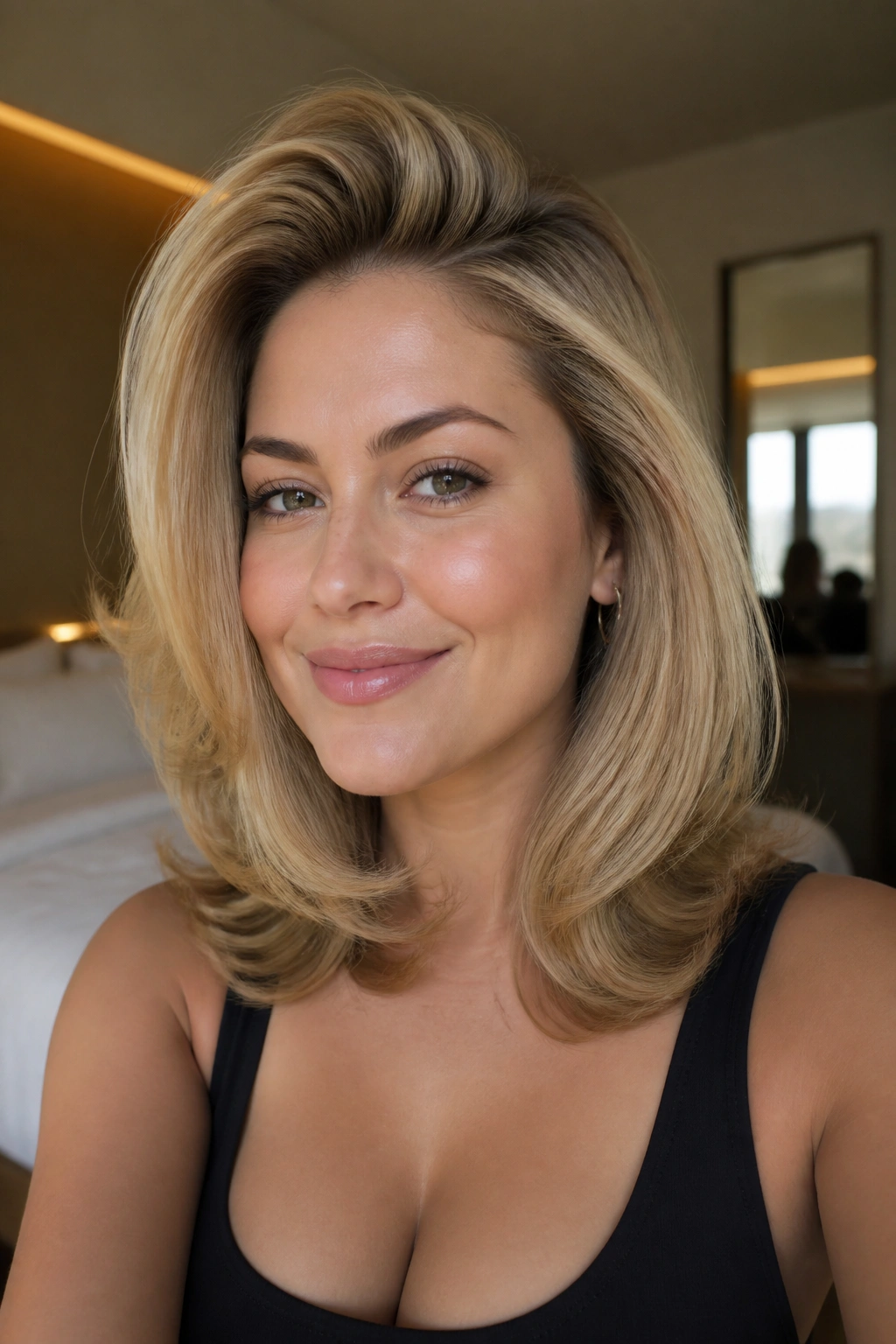
A proper blowout can be better for a round face than a flat, pin-straight finish. The reason is simple: lift at the crown plus movement at the ends pulls the eye vertically. Flat hair hugs the cheeks. A blowout doesn’t.
Use a round brush to lift the roots at the top, then bend the ends out slightly around the collarbone. I like that subtle flip because it keeps the hair from sitting like a curtain around the face. The front pieces should sweep away from the cheeks, not curl in toward them.
The Best Part
This style looks polished without trying too hard. It works on medium to long hair, and it can rescue second-day texture if you brush in a little dry shampoo at the roots. If the hair is thick, rough-dry it first until it’s about 80 percent dry, then go in with the brush. That saves time and keeps the shape softer.
19. French Bob with Texture
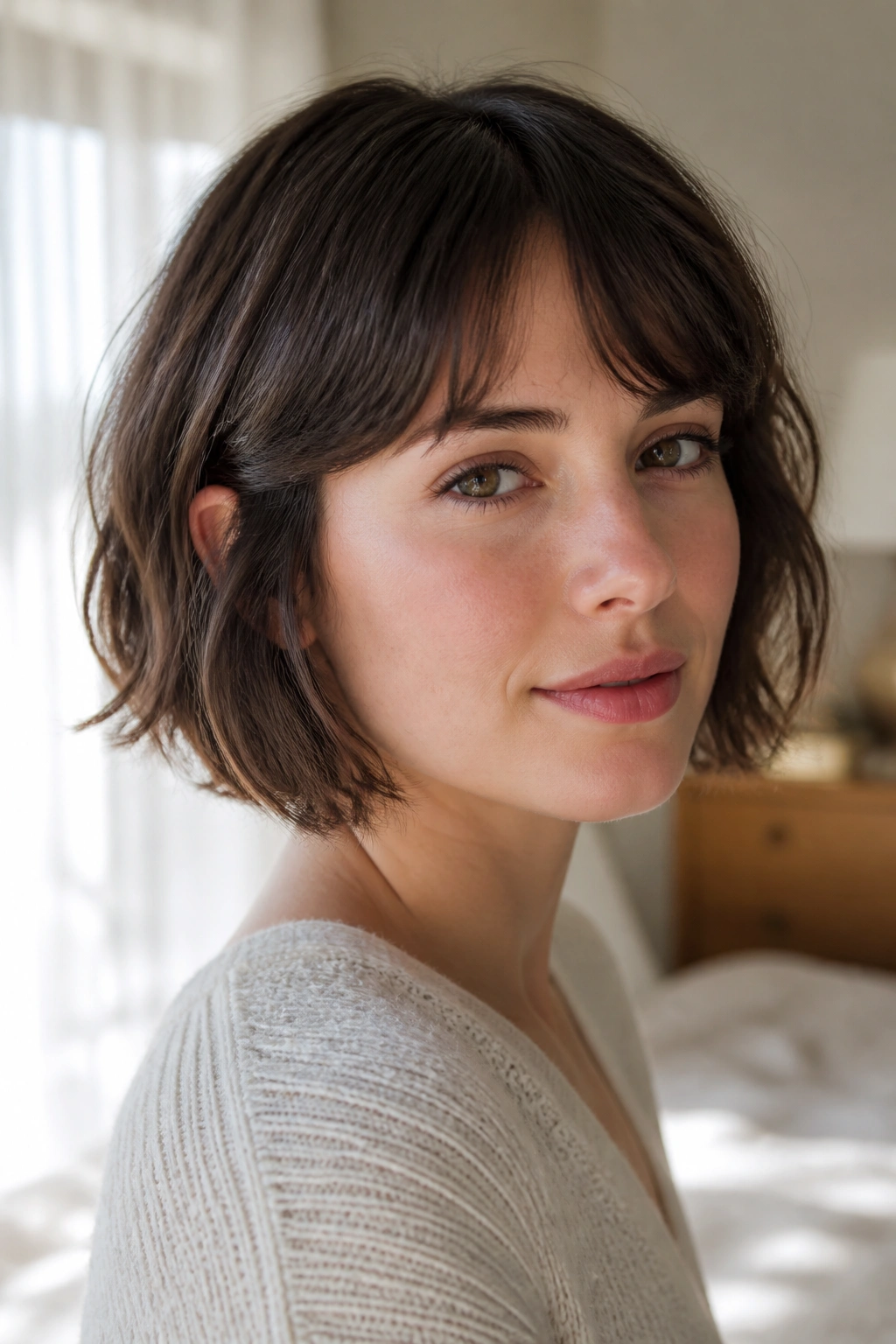
Not every bob is a bad idea for a round face. A French bob can look excellent if it lands below the jaw and has texture instead of a hard, blunt shelf. The line should feel airy, not severe.
The best version usually sits between the cheekbone and just under the jaw, with a little movement around the ends. If the cut stops exactly at the widest part of the face, it can work against you. If it drops a little lower, the effect is cleaner and more flattering.
Why It Works
Texture breaks up the roundness. A slight wave, a soft side part, or a bit of bend at the ends keeps the shape from feeling boxy. I’d skip this cut if your hair is extremely dense and refuses to move, unless you’re willing to add internal layers. Otherwise it can get heavy fast.
A French bob should feel light on the neck and easy around the face. That’s the point.
20. Wolf Cut
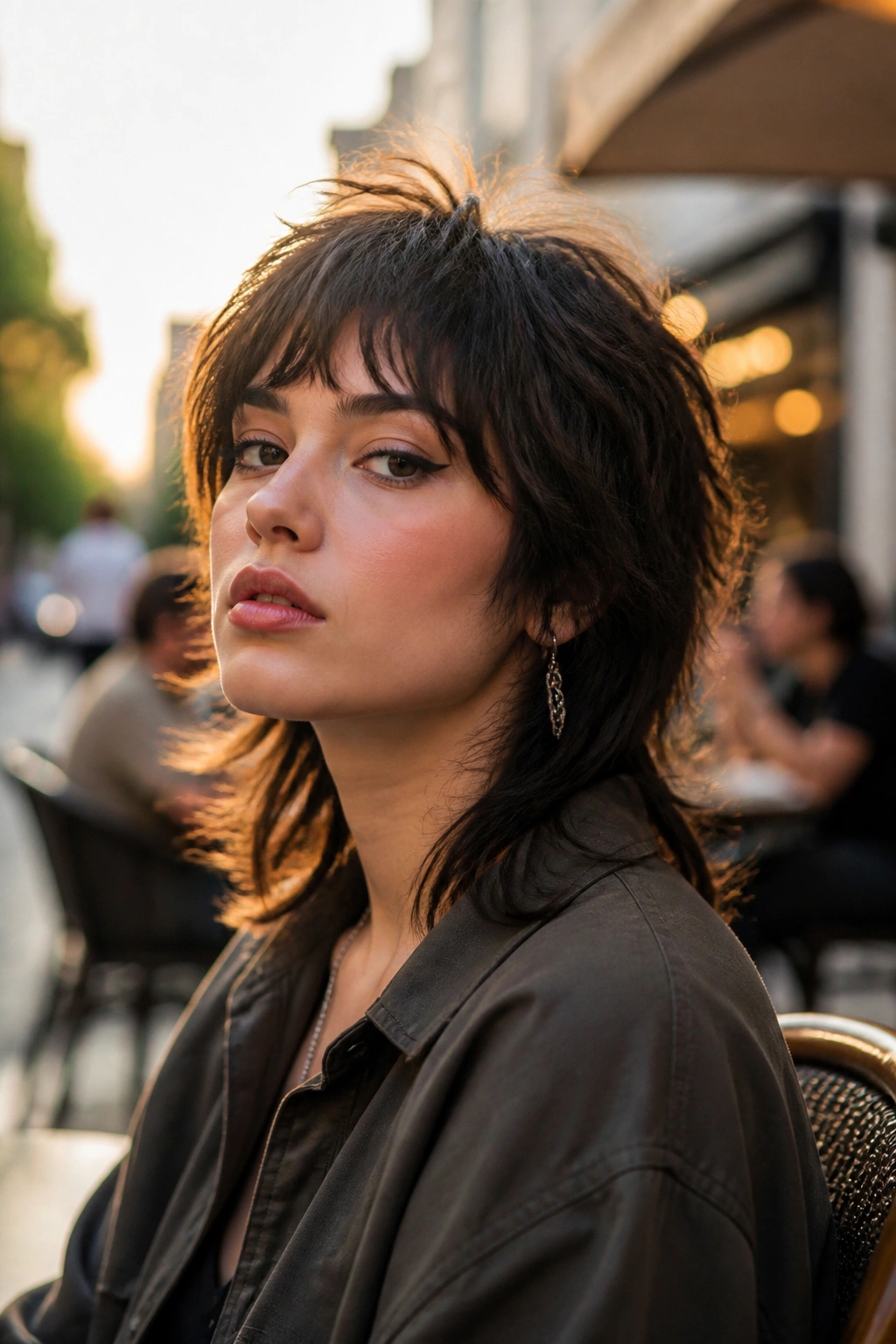
A wolf cut is the wild card in this group, and it can work on a round face if the shortest layers sit above the cheekbone. That keeps the volume up high, where it helps, instead of across the middle of the face.
The cut mixes shaggy texture with longer back pieces, so the overall shape looks a little untamed. That’s part of its charm. On round faces, the trick is controlling the width. You want lift at the crown, not a puff around the jaw.
If your hair is medium or thick, this cut can be a lot of fun. Use a texture spray, rough-dry the roots, and let the layers move. If your hair is fine, ask for a softer version with less razor work, or the ends can get wispy in a bad way. A wolf cut needs edge, but it still needs structure.
21. Sleek Low Bun
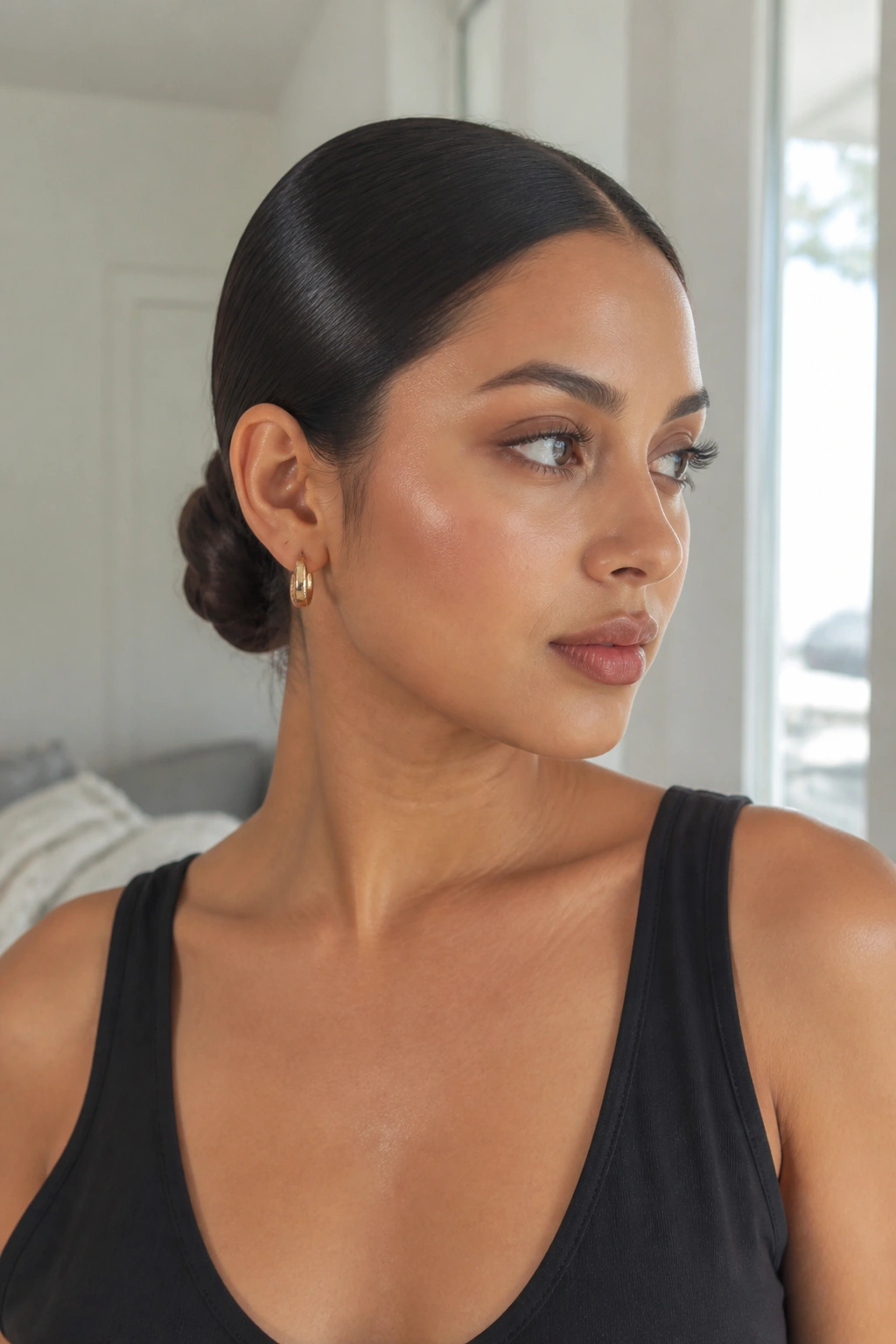
Can a bun flatter a round face? Absolutely, if the bun sits low and the top stays clean. High buns can work too, but the low bun has a quieter shape and doesn’t push the eyes outward.
Keep the bun close to the nape and smooth the top with a brush or a bit of gel. A middle part gives symmetry, while a deep side part adds a longer line. Either can work. What matters more is that the bun itself stays compact and low enough to lengthen the neck.
How to Keep It Polished
Leave a couple of slim pieces near the temples if you want softness. Not thick face curtains. Thin pieces. The bun should do the heavy lifting, and the front should just soften the edge.
This style looks especially good with earrings, a clean neckline, and a simple outfit. It’s spare in the best way.
22. Braided Crown with a Loose Front Fringe
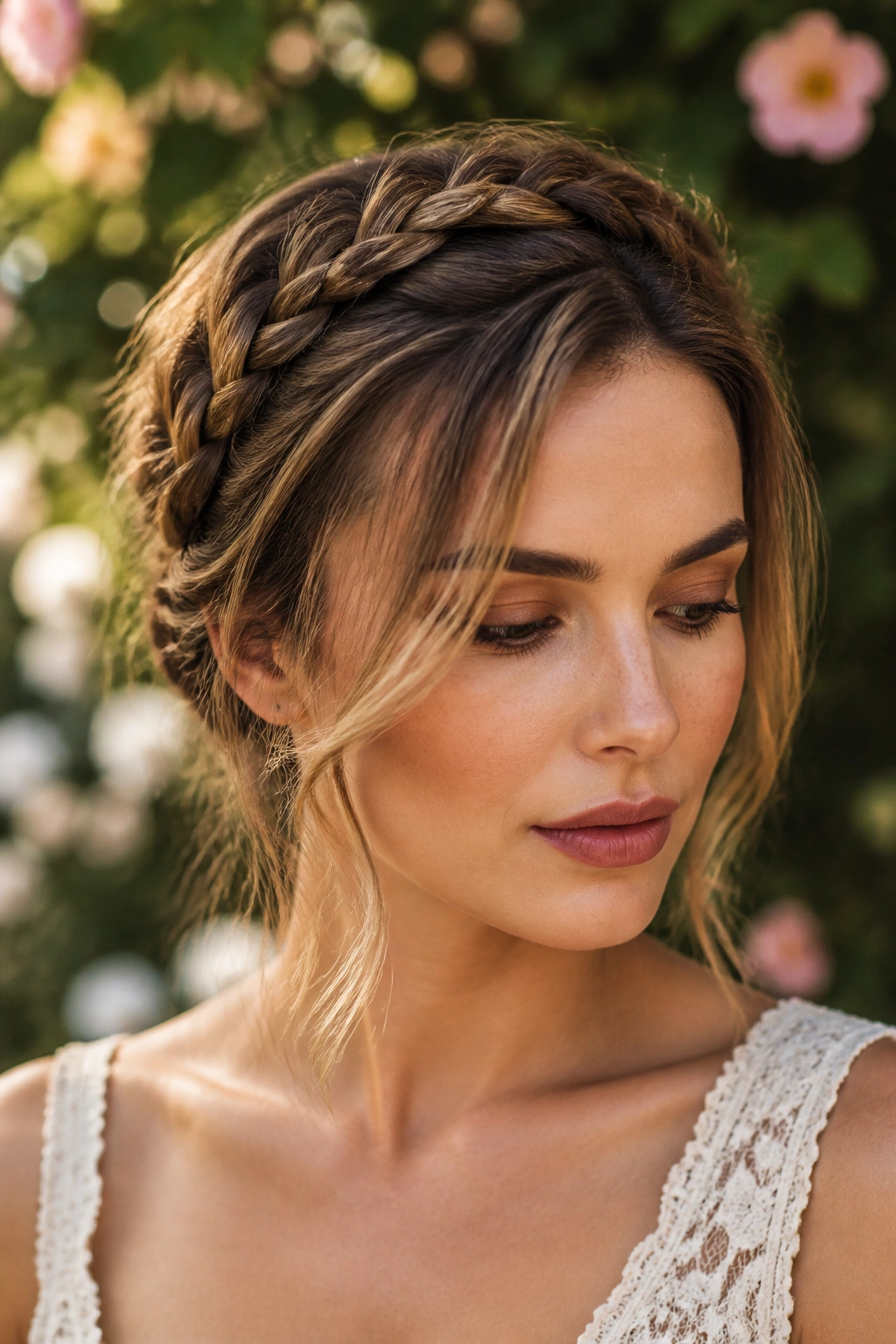
Braids around the head can get wide fast, which is bad news for a round face if the braid is too puffy. The fix is to keep the braid narrow and let a little softness stay in front.
A Dutch braid along the hairline works well because it frames the face without building too much bulk at the sides. You can also split the hair into two braids and pin them back like a crown, as long as the braid thickness stays moderate. Tiny braids can look delicate, but giant braids can spread the face shape outward.
- Leave a few front pieces out near the temples
- Keep the braid close to the scalp
- Add texture to second-day hair before braiding
- Pin the ends low and hide them under the braid line
This one is especially nice when you want a romantic feel without losing the structure around the face.
23. Box Braids with Tapered Ends
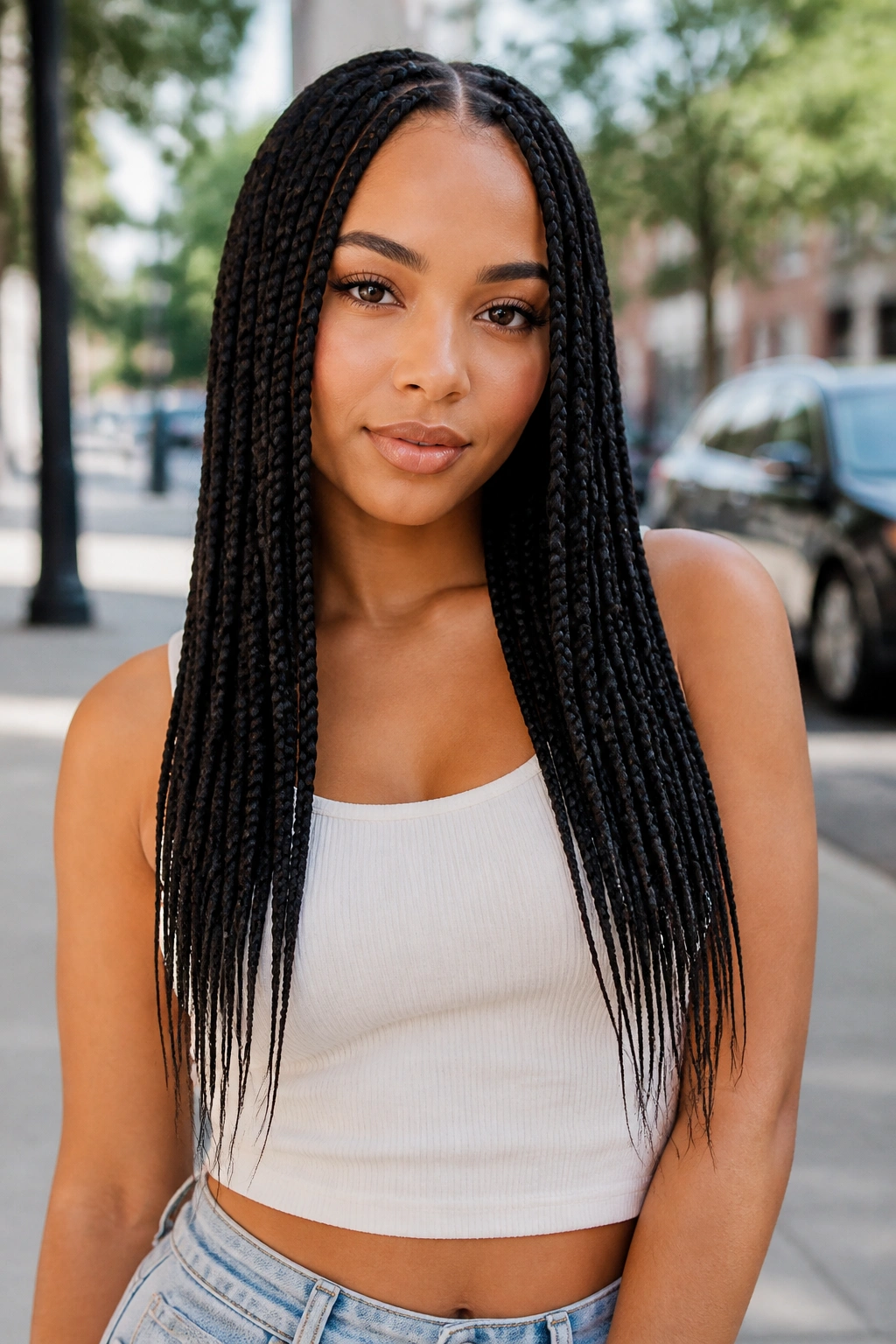
Box braids can look fantastic on round faces when the length is right and the parting is clean. The biggest mistake is making them too full at the temples. That creates width right where the face already carries it.
A middle part or a very soft off-center part works well. So do braids that fall well past the jaw, because the length adds vertical line. Tapered ends help too. They keep the overall shape from feeling like a blunt curtain around the chin.
The style can be dressed up with cuffs or beads, but I’d keep the accessories lighter near the sides. Too much weight there can crowd the face. If you want drama, put it lower through the lengths instead. That keeps the top neat and the silhouette long.
24. Twist-Out with Lifted Roots
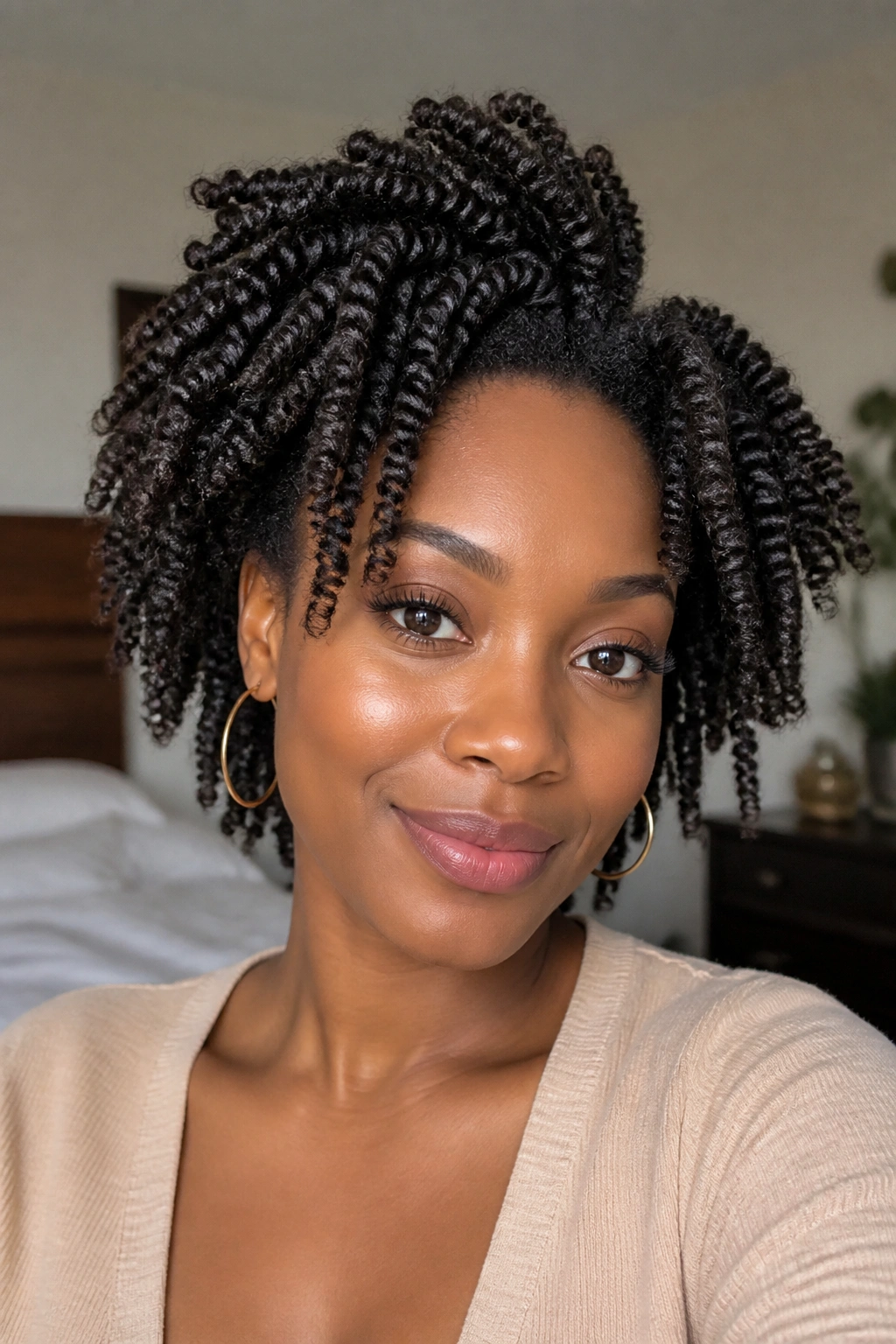
A twist-out needs root lift on a round face. Without it, the hair can spread outward in a soft oval that makes the face look fuller. With it, the shape rises up first and opens the cheek area.
The idea is simple: set the twists with enough tension at the roots, let them dry fully, and separate them only when they’re completely dry. Then lift the crown gently with your fingers or a pick. Don’t go wild. A little lift is enough. Too much teasing can turn the style fluffy in the wrong places.
What Makes It Different
Unlike a flat twist-out, this version makes the top of the head feel taller and the sides feel cleaner. That gives the face more vertical room. It’s a strong option if you like defined texture but don’t want your hair to sit wide at cheek level.
Ask for a shape that keeps the volume higher if you’re getting a cut to support the style. That detail matters more than people think.
25. Faux Hawk Updo
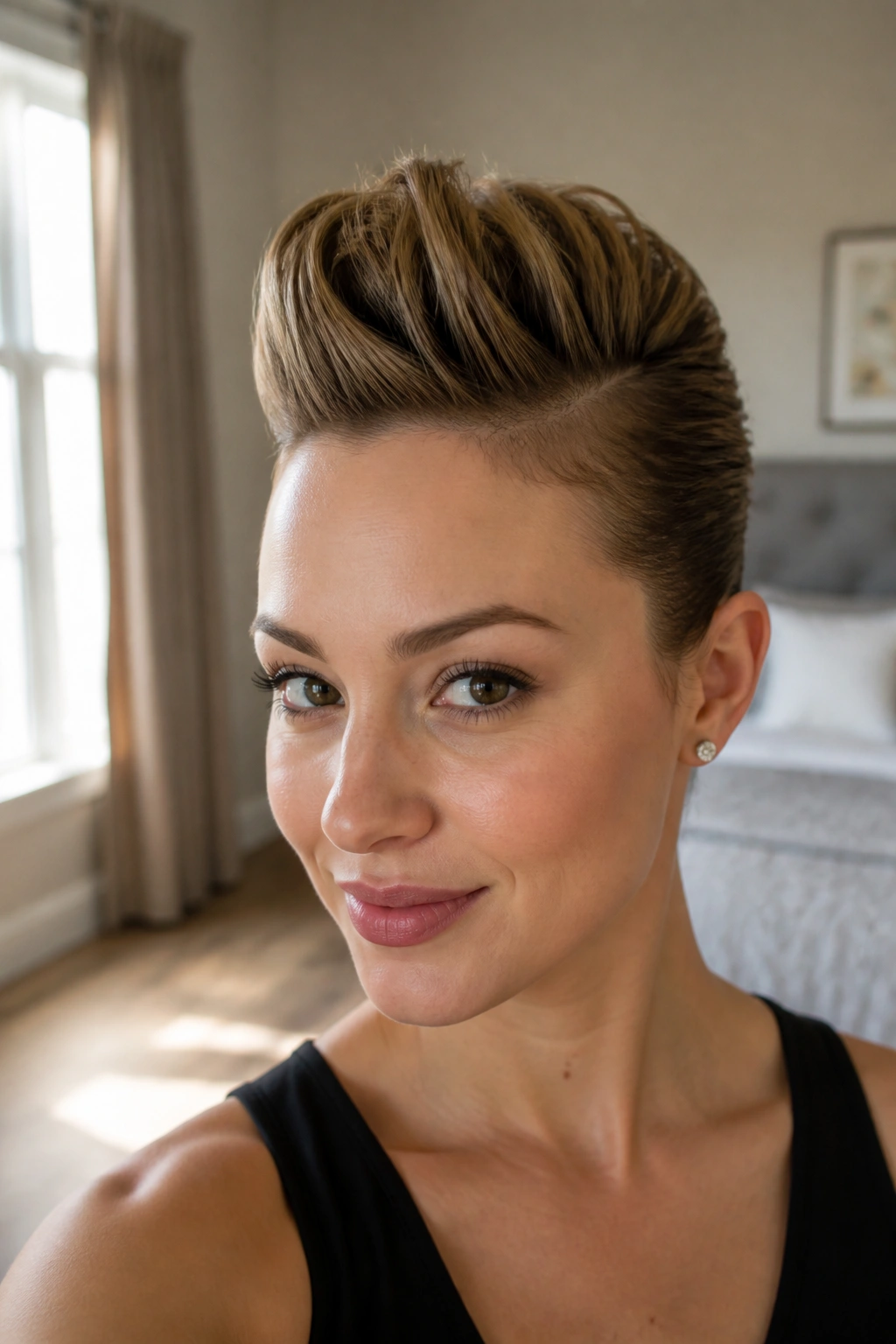
A faux hawk updo is one of the coolest ways to wear hair on a round face because it sends the eye straight up the center. The sides are pinned tight, the middle is lifted, and the whole shape becomes long instead of wide.
The style can be sleek or soft. For a sharper finish, smooth the sides back with gel and pin them flat with 6 to 10 bobby pins. For a looser look, tease the center section lightly before pinning it into raised loops or twists. Either way, the emphasis stays vertical.
Why It Flatters
It shows off the cheekbones and gives the face a longer frame. That’s the big win. A few loose wisps near the temples can soften the edges, but the main shape should stay narrow at the sides and higher through the middle.
This is a great choice for events, nights out, or any day when you want a little edge without a haircut commitment.
Final Thoughts
Round faces do not need to be hidden. They need smart lines. Height, diagonals, length, and the right kind of softness can do more than people expect, and the wrong cut can undo a good face in a hurry.
The styles that work best here usually share one trait: they move the eye away from the widest part of the cheeks. Sometimes that means longer layers. Sometimes it means a deep side part or a high ponytail. Sometimes it means embracing a short cut, but giving it lift on top and shape through the front.
If you’re choosing between two options, pay attention to where the hair sits at the cheek line. That’s the real test. Move the shape a little higher, a little lower, or a little more diagonal, and the whole style starts behaving better.
