



A round face does not need to be “fixed.” It needs a line to follow. Asymmetrical hairstyles for round faces do that better than almost anything else: they break the circle, pull the eye upward or downward, and keep the widest part of the face from sitting dead center in the frame.
A clean middle part and a blunt cut can make a face feel wider than it is. A side-swept shape does the opposite. The trick is not chaos; it’s direction. One longer side, a little lift at the crown, and movement that starts below the cheekbone can change the whole read of a haircut.
That is why some cuts look sharp on a square jaw and flat on a round one, while others make a round face look longer, leaner, and more deliberate. The good versions do not hide your face. They give it structure.
1. Deep Side-Parted Angled Bob
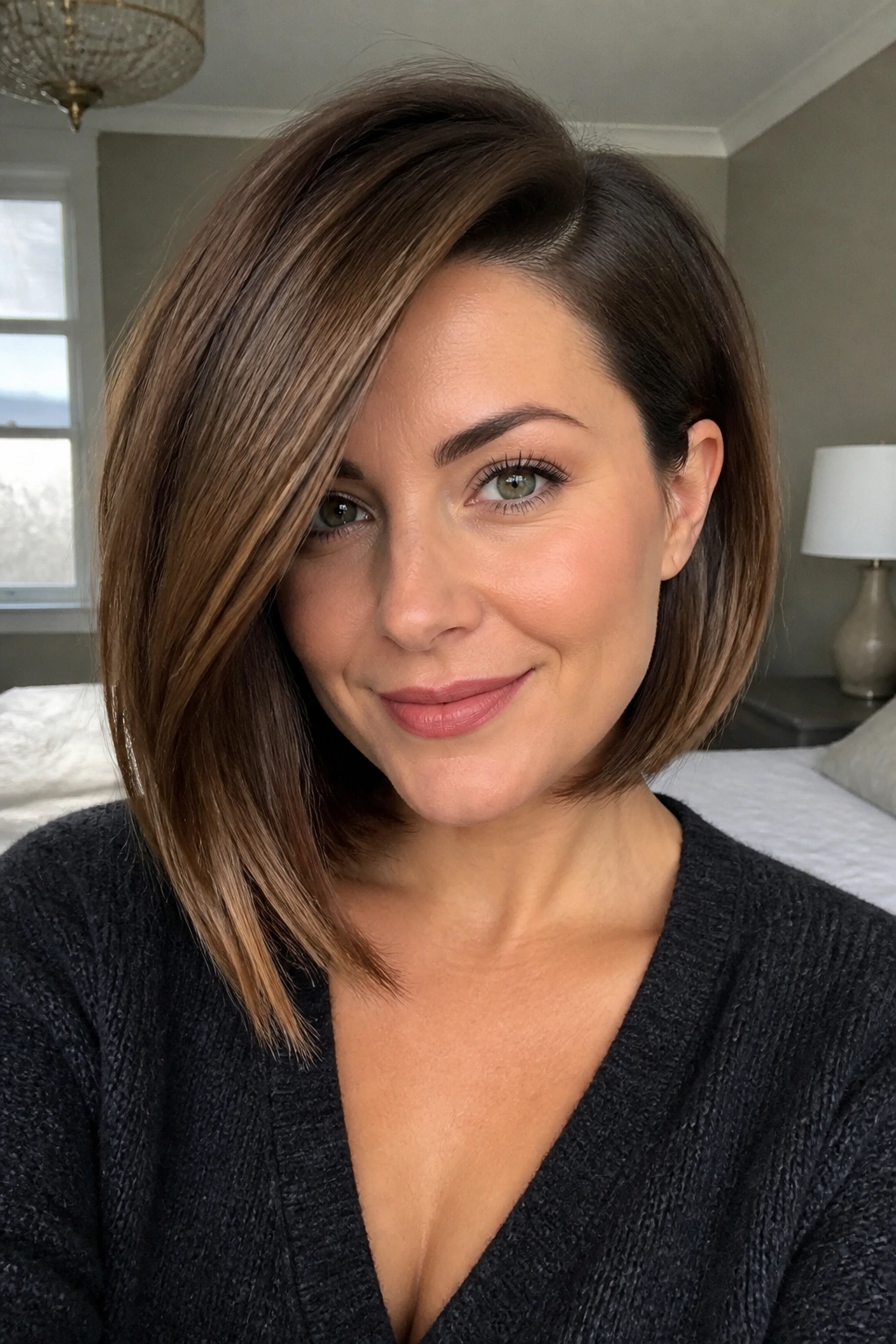
This is one of the easiest wins if you want an asymmetrical bob that still feels polished. The deep side part creates an immediate diagonal line, and that line matters more than people think. Round faces look best when hair doesn’t sit evenly across the cheeks.
Why the angle does the heavy lifting
Ask for one side to fall a little past the chin while the other side stays closer to the jaw. That small shift gives the cut motion without turning it into a dramatic statement piece. It’s neat. It’s flattering. And it grows out cleanly.
- Short side: ends around the jaw or just above it
- Long side: sits 1 to 2 inches below the chin
- Part: 2 to 3 inches off center
- Finish: a light bend, not a hard curl
Best move: blow-dry with a 1-inch round brush and turn the longer side slightly inward at the ends. That little curve keeps the face from looking boxy.
2. Asymmetrical Pixie with a Long Fringe
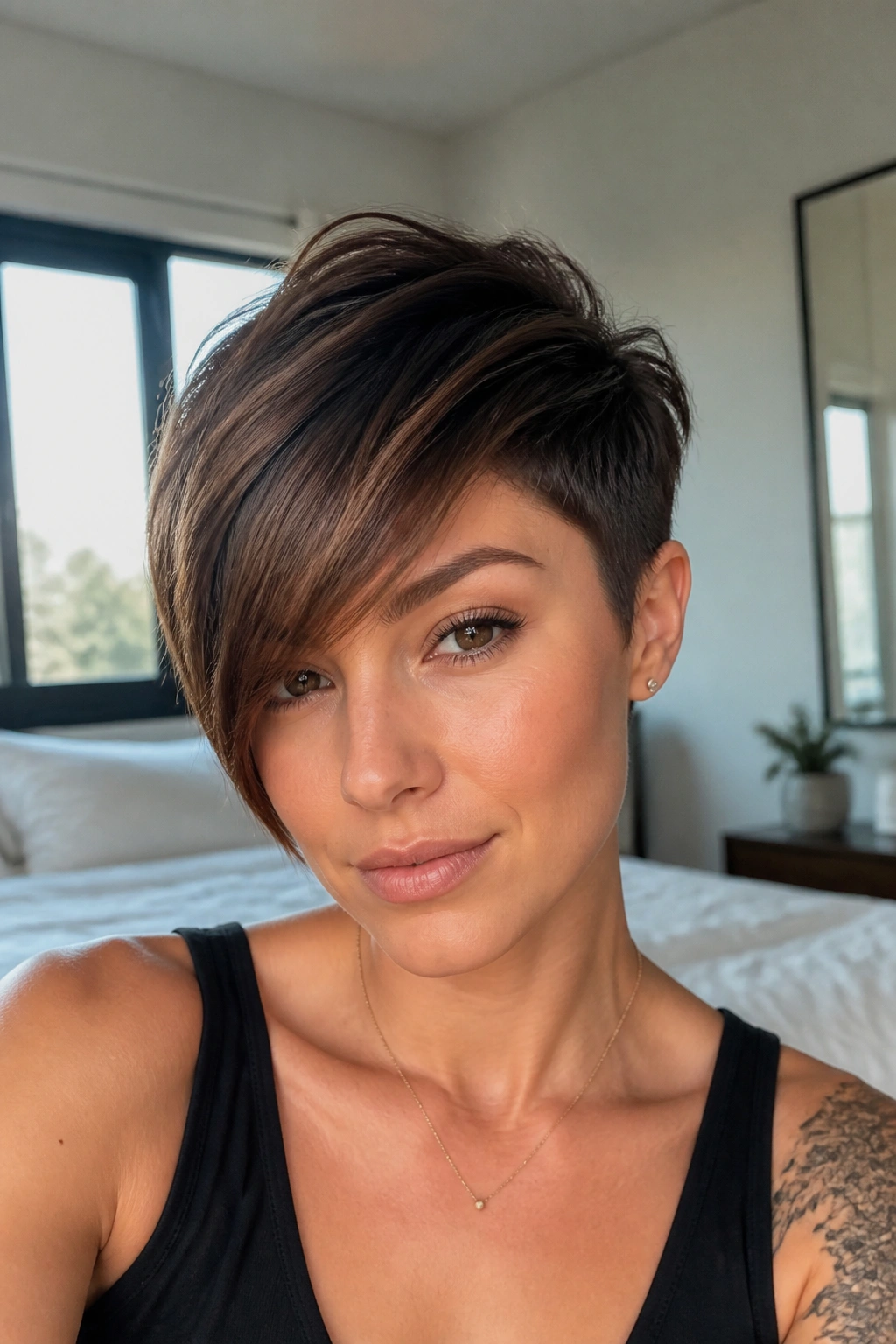
Can short hair work on a round face? Absolutely, if the top has some height and the fringe sweeps across instead of stopping straight across the forehead. A flat pixie can make the face look wider. A pixie with a long fringe changes the whole shape.
The longer side should skim one eyebrow or drop just below it. The shorter side can stay close to the ear, which keeps the cut crisp. That contrast is the point. You get sharpness on one side and softness on the other.
A touch of mousse at the roots helps, but don’t build too much volume at the sides. You want lift at the crown, not a puff over the cheeks. That is where people go wrong.
3. Collarbone Lob with One Longer Front Piece
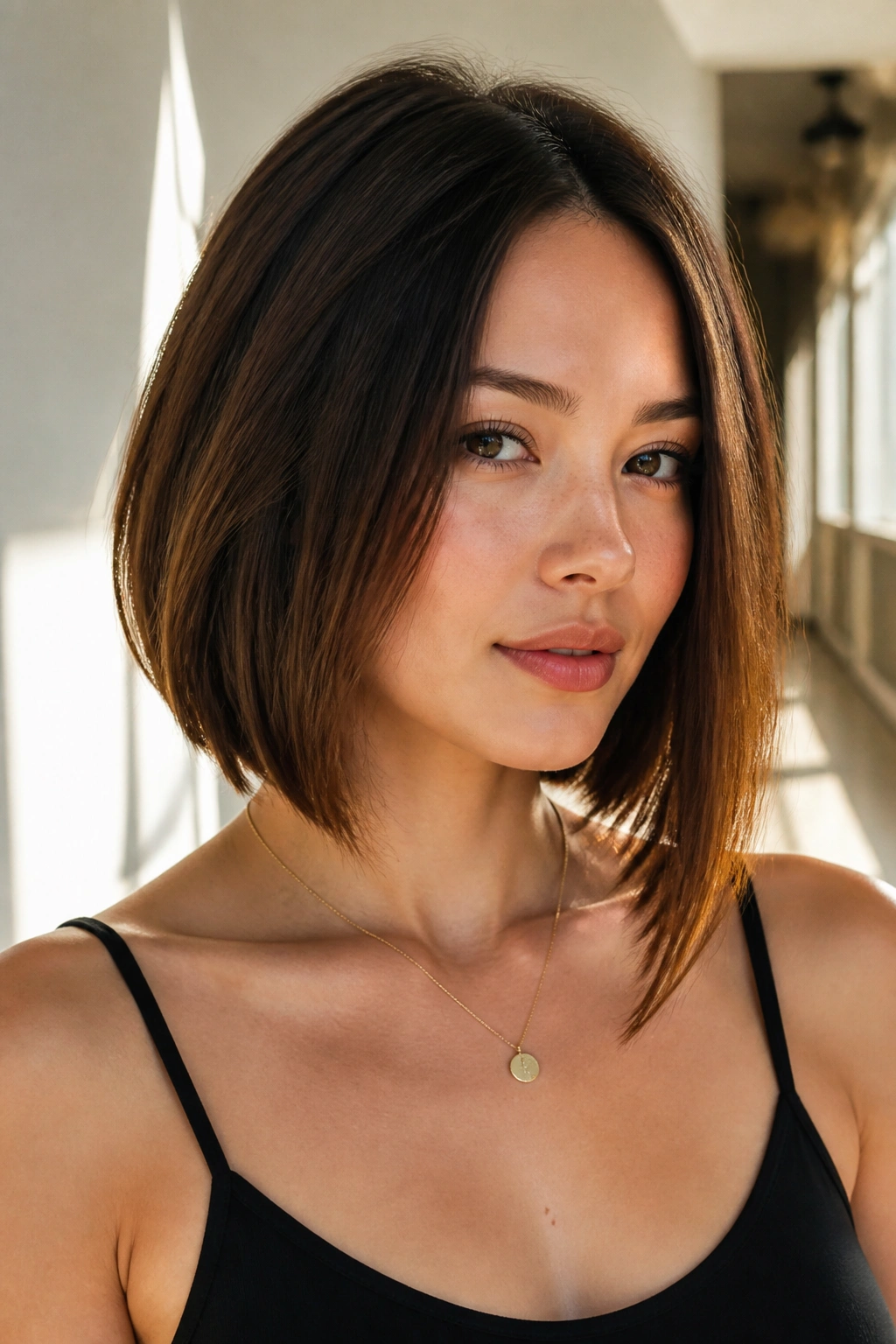
A collarbone lob is a safe length for a lot of round faces, but the asymmetry is what makes it interesting. One front piece should sit a little longer than the other, almost like the haircut is leaning forward. That slant draws the eye down instead of out.
How to ask for it
Tell your stylist you want the front to hit around the collarbone, with one side extended by about an inch or two. That’s enough to read as intentional without feeling extreme. The back should stay soft and slightly shorter so the shape keeps moving.
This cut works especially well on straight or slightly wavy hair. The line stays visible, which is the whole charm of it. If your hair has a lot of bend, a smoothing cream before blow-drying keeps the longer side from flipping in a messy way.
4. Choppy Shag with Uneven Ends

A shag can be a gift for a round face, but only when the layers are cut with purpose. The trick is unevenness. Not randomness. The ends should look broken up, and the top should sit a little lighter than the sides.
The shag’s job is to make the haircut feel vertical. The layers should start below the cheekbone if your face is very full around the center. That keeps the fluff away from the widest point. Good shag cuts have attitude, but they also have discipline.
Use a lightweight texturizing spray and scrunch the ends. That slight roughness makes the asymmetry feel lived-in instead of overworked. A perfect shag is usually the wrong shag anyway.
5. Curly Asymmetrical Bob
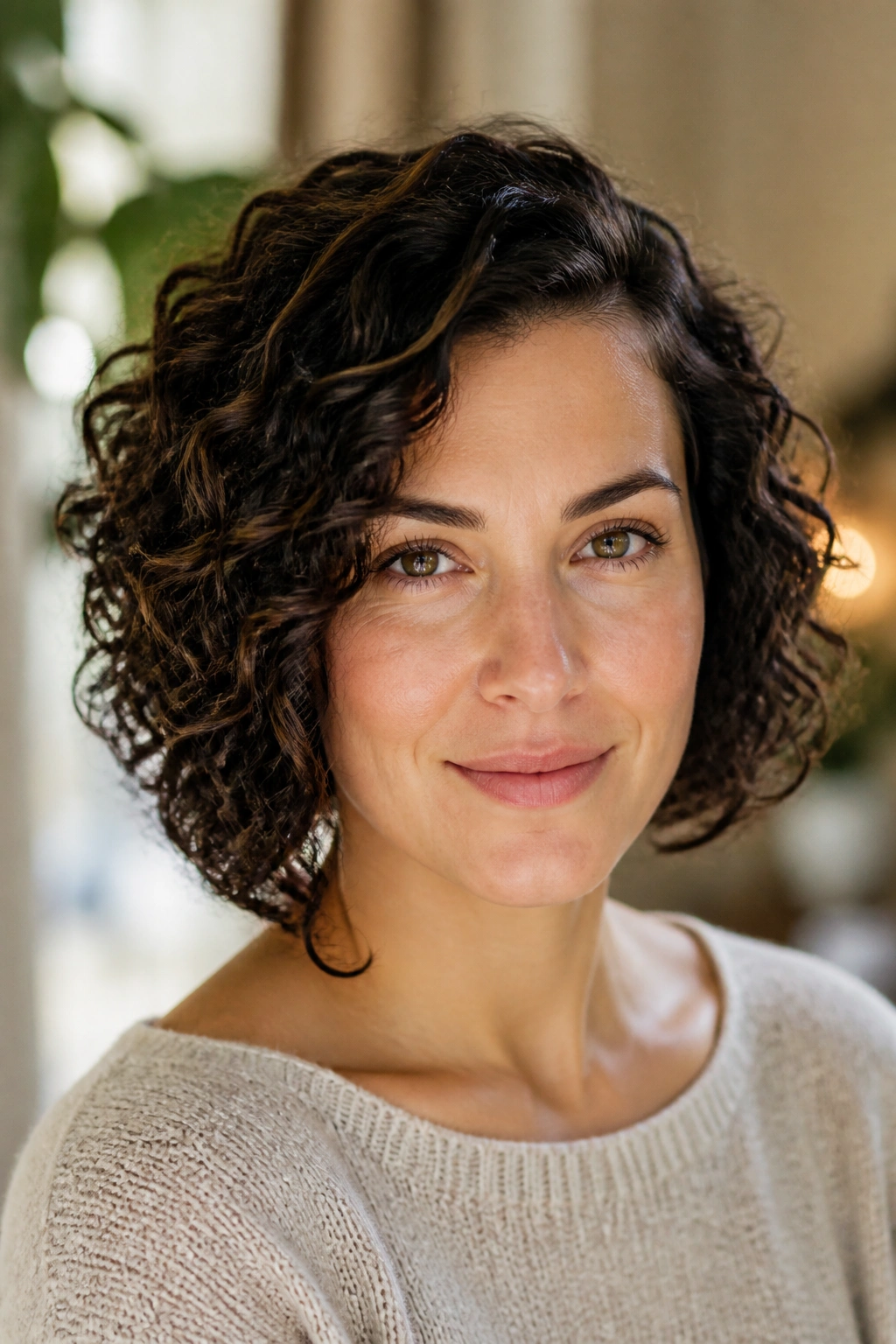
Curly hair and asymmetry get along better than people expect. Curls already bring their own shape, so a bob with one side a little longer can look soft, modern, and not at all stiff. On a round face, that extra length on one side stops the shape from feeling too circular.
You want the cut done dry, or at least checked dry, because curls shrink in strange ways. A side that looks longer when wet can rise an inch higher once it dries. That is not a small detail. It changes everything.
Keep one side grazing the chin and the other drifting toward the collarbone. The difference does not need to be huge. If the curl pattern is loose, a diffuser on low heat preserves the shape without blasting it into a frizz cloud.
6. Sleek Jaw-Skimming Bob with a Tucked Side
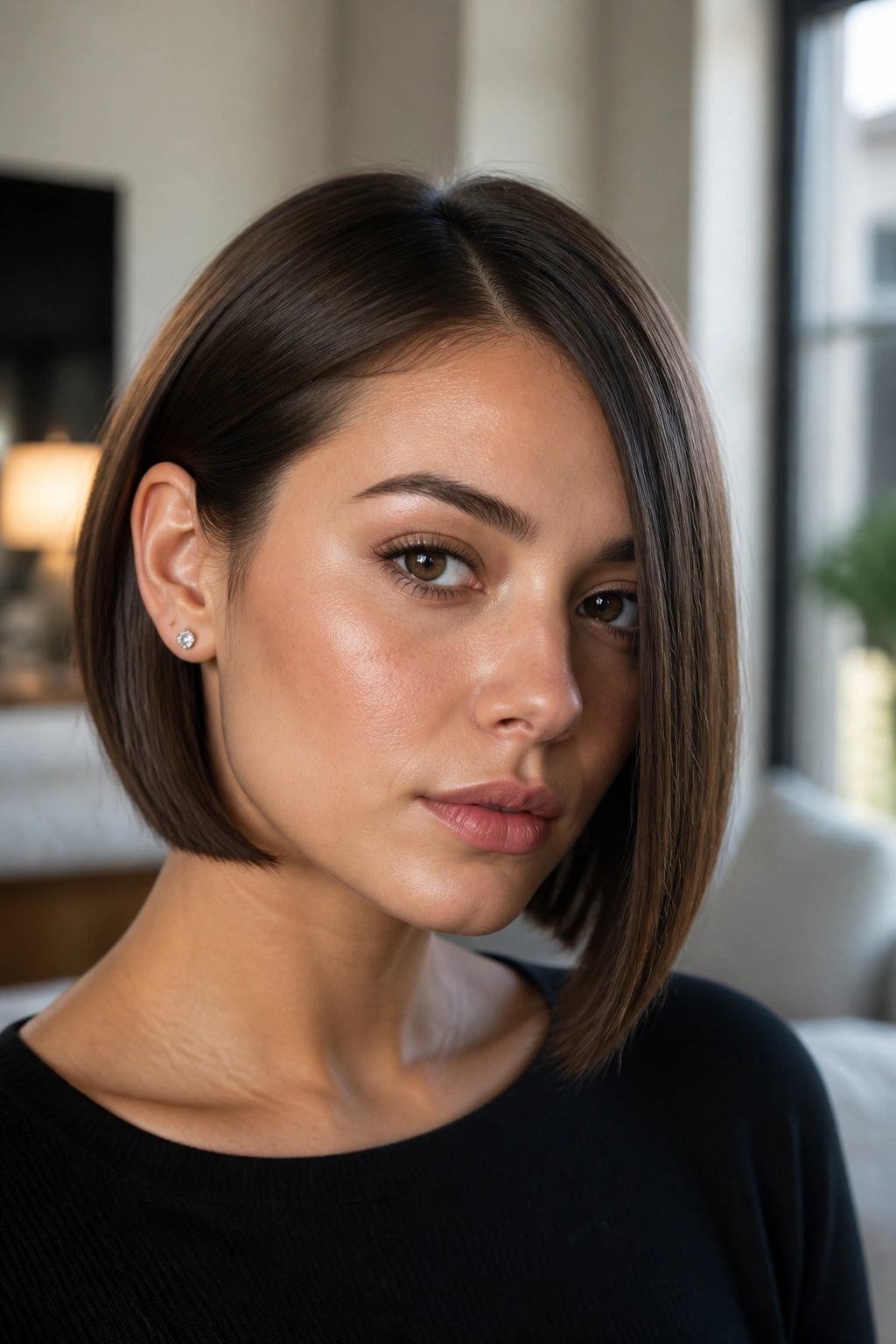
A sleek asymmetrical bob is the opposite of fluffy. That is why it works. A round face already has soft curves, so a smooth, angled line gives it contrast. One side tucked behind the ear and the other left forward creates a clean visual break.
Unlike a blunt bob that ends evenly at the jaw, this version leaves one side a little longer and more deliberate. The tucked side opens the face. The untucked side frames it. That little asymmetry is enough to make the whole cut feel sharper.
This is a good pick if your hair is fine and you hate bulky styling. A flat brush, a blow-dryer, and a small touch of shine serum are usually enough. Don’t over-curl the ends. Keep them almost straight, with just a soft bend.
7. Undercut Pixie with Swept-Over Top
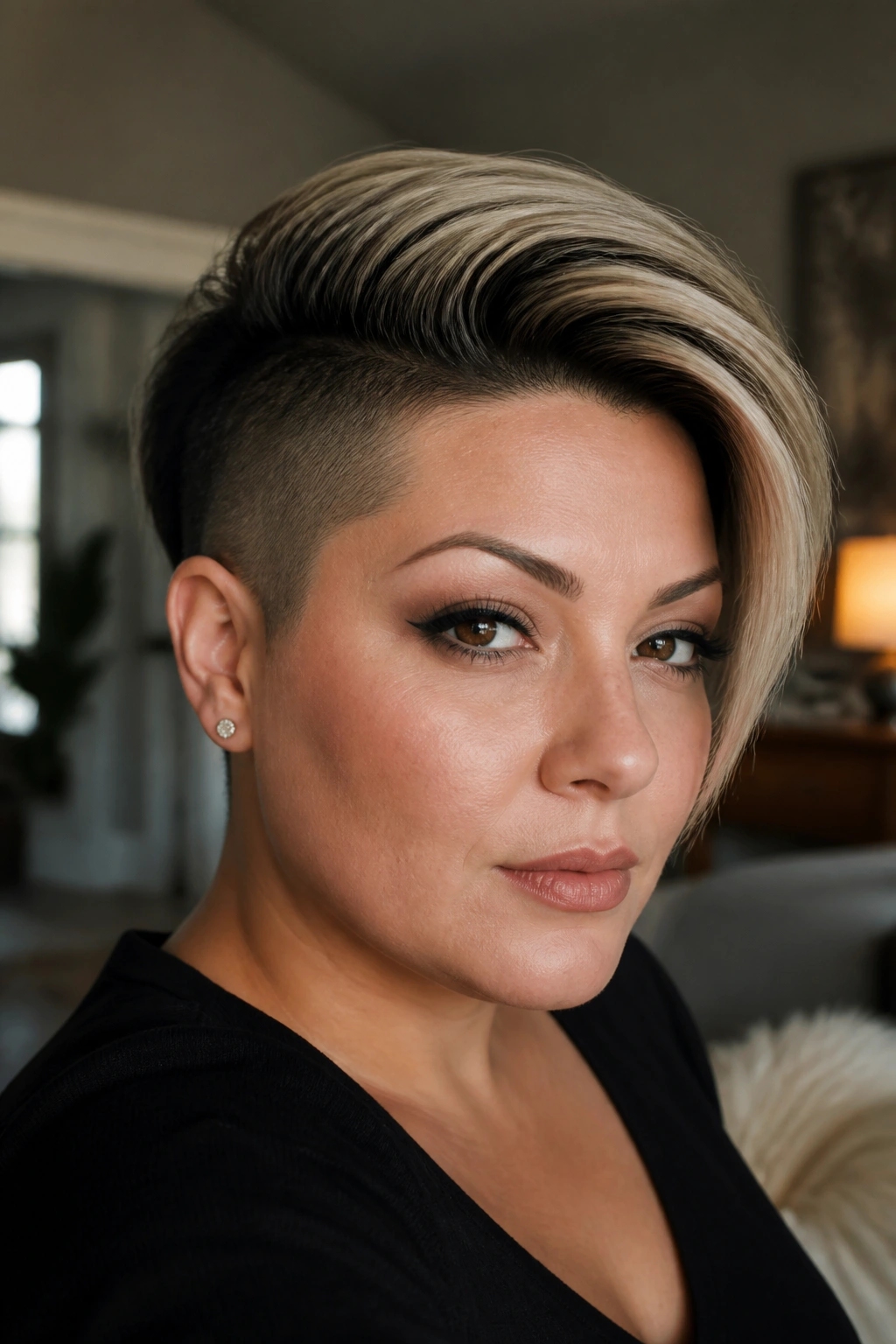
If you want something bold, this is it. The undercut removes bulk from the sides and nape, which matters on a round face because too much width near the jaw can make the face read wider. The long top stays in charge, and it should sweep across the head in one direction.
Where this cut earns its keep
The contrast is the whole show. Short underneath. Long on top. Slightly longer on one side. That shape gives the face a vertical pull and makes the cheek area feel less dominant.
- Nape: clipped close or faded
- Sides: tapered tight around the ears
- Top: left 3 to 5 inches long
- Finish: matte paste or a soft wax
Tip: direct the top forward first, then sweep it over. That creates more movement than brushing it sideways from the start.
8. Layered Shoulder Cut with an Off-Center Part
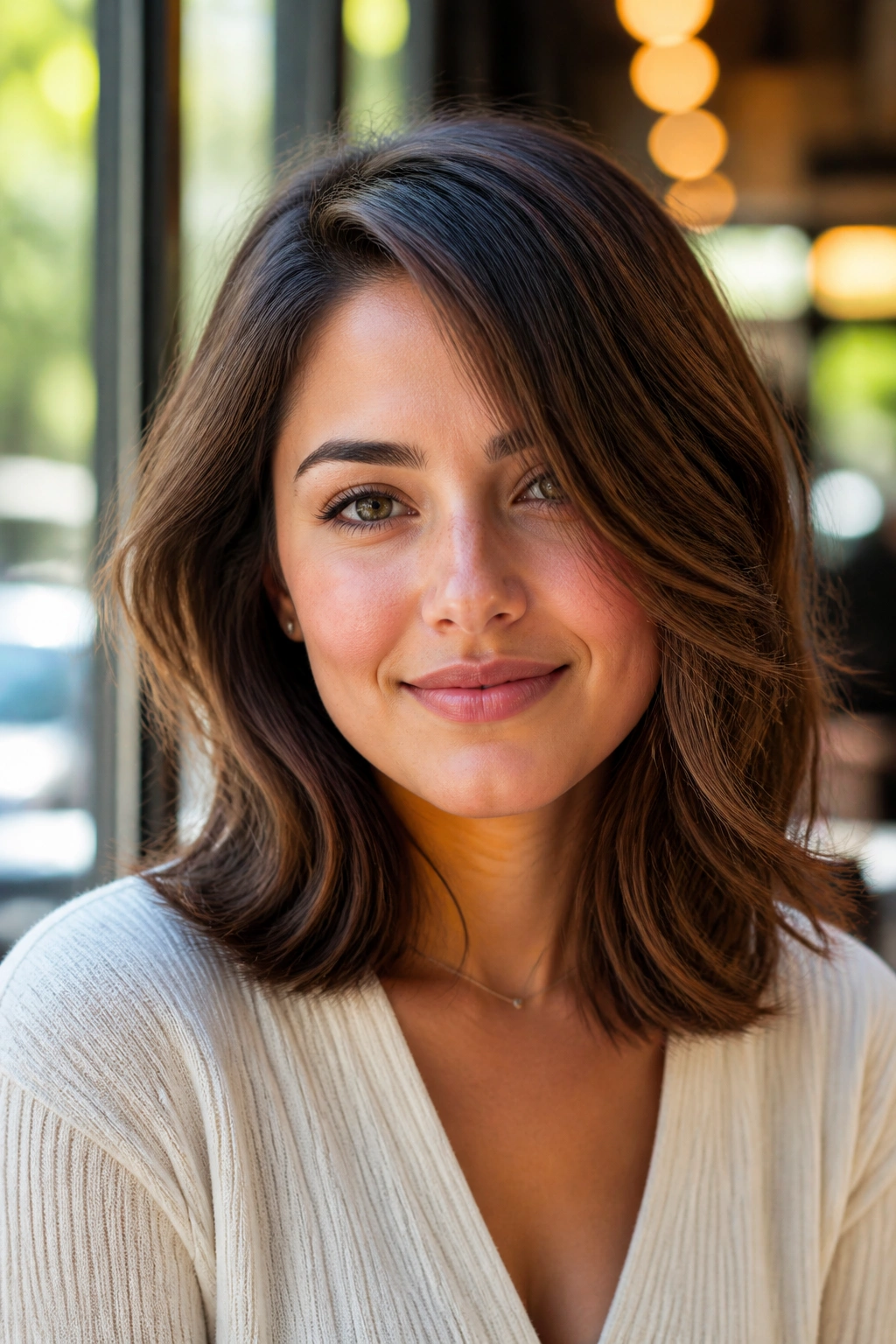
Shoulder-length hair can be tricky on round faces because it often falls right where the face is widest. The fix is not to go shorter. It’s to build in layers and shift the part. A cut that lands at or just below the shoulders gives enough length to narrow the face, while the off-center part keeps it from looking symmetrical.
The best version has layers that start around the collarbone, not at the cheeks. If the shortest pieces hit exactly at the widest point of the face, the cut can feel heavy. Shift them lower and the whole style loosens up.
This shape is easy to wear with a blowout, loose waves, or a simple air-dry. It is one of those cuts that looks normal from the front and better from the side. That side view matters more than people admit.
9. Razor-Cut Lob with a Soft Bevel
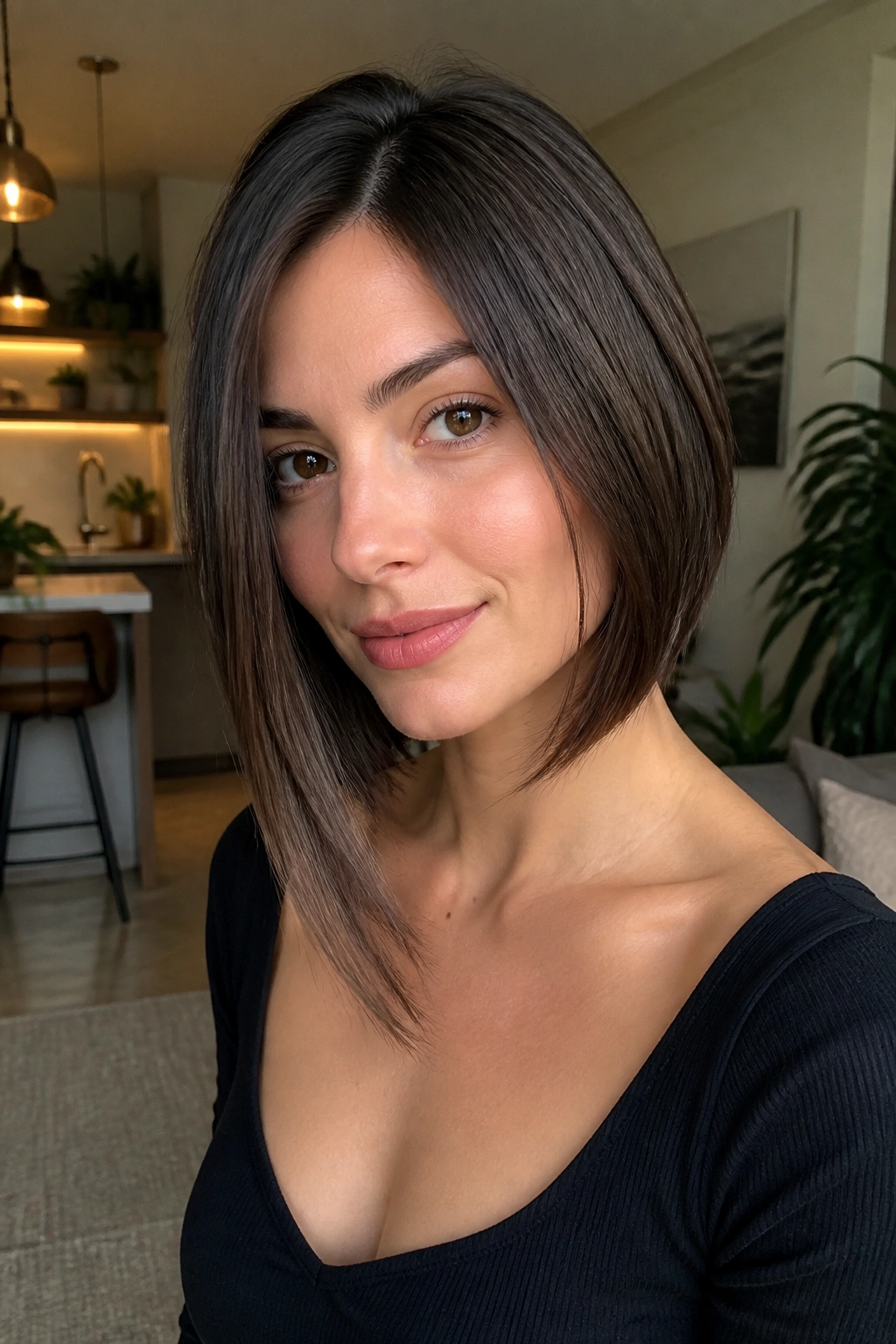
Razor-cut hair can look airy and expensive-looking when it is done well. On a round face, the soft bevel at the ends helps the cut skim the jaw instead of landing on it like a shelf. That difference is small in the mirror and huge in real life.
What makes it different from a blunt lob
A blunt lob can add visual width if it stops right at the cheeks. A razor-cut lob, by contrast, breaks the edge and lets the hair move. The asymmetry comes from the front pieces being a touch longer on one side, so the line never feels static.
This cut likes smooth styling. Use a heat protectant, then a medium round brush or a flat iron with a slight bend at the ends. If the hair is thick, remove bulk around the mid-lengths so the shape doesn’t balloon outward.
10. Side-Swept Crop with Volume at the Crown
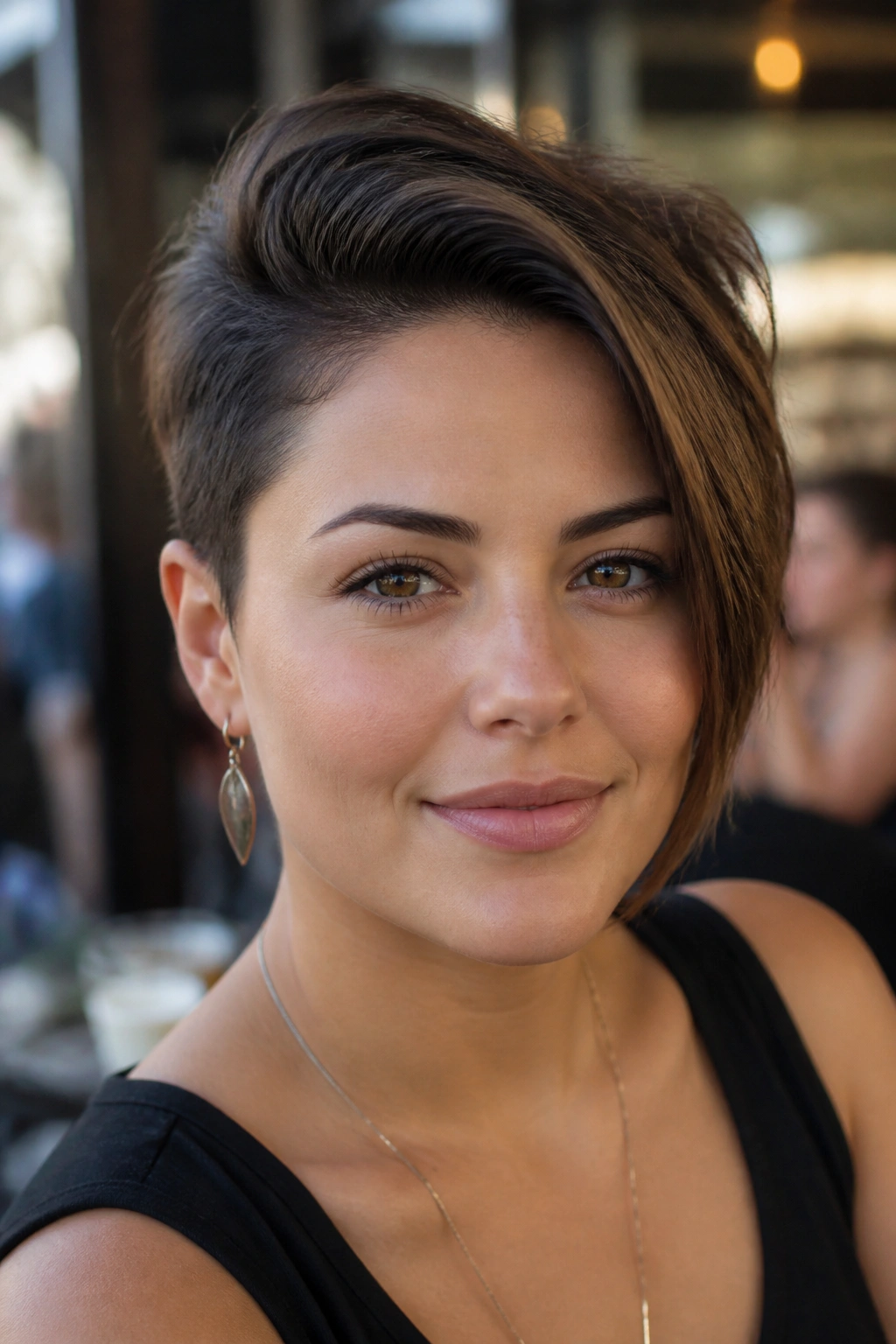
This cut is a small drama in the best way. Short sides, a lifted crown, and a sweep that starts well off center give the face a longer profile without making the hair feel severe. If your face is round and your hair is fine, this shape can be a real relief.
The crown lift matters more than the length. A little height at the top adds vertical space, which changes how the face reads. Keep the sides close enough to the head that they do not puff out around the temples.
A styling cream at the roots and a little blow-dry tension with a brush usually do the job. Once the hair is dry, break up the top with your fingers. Do not flatten it down. The style loses its shape fast that way.
11. Wavy Asymmetrical Bob
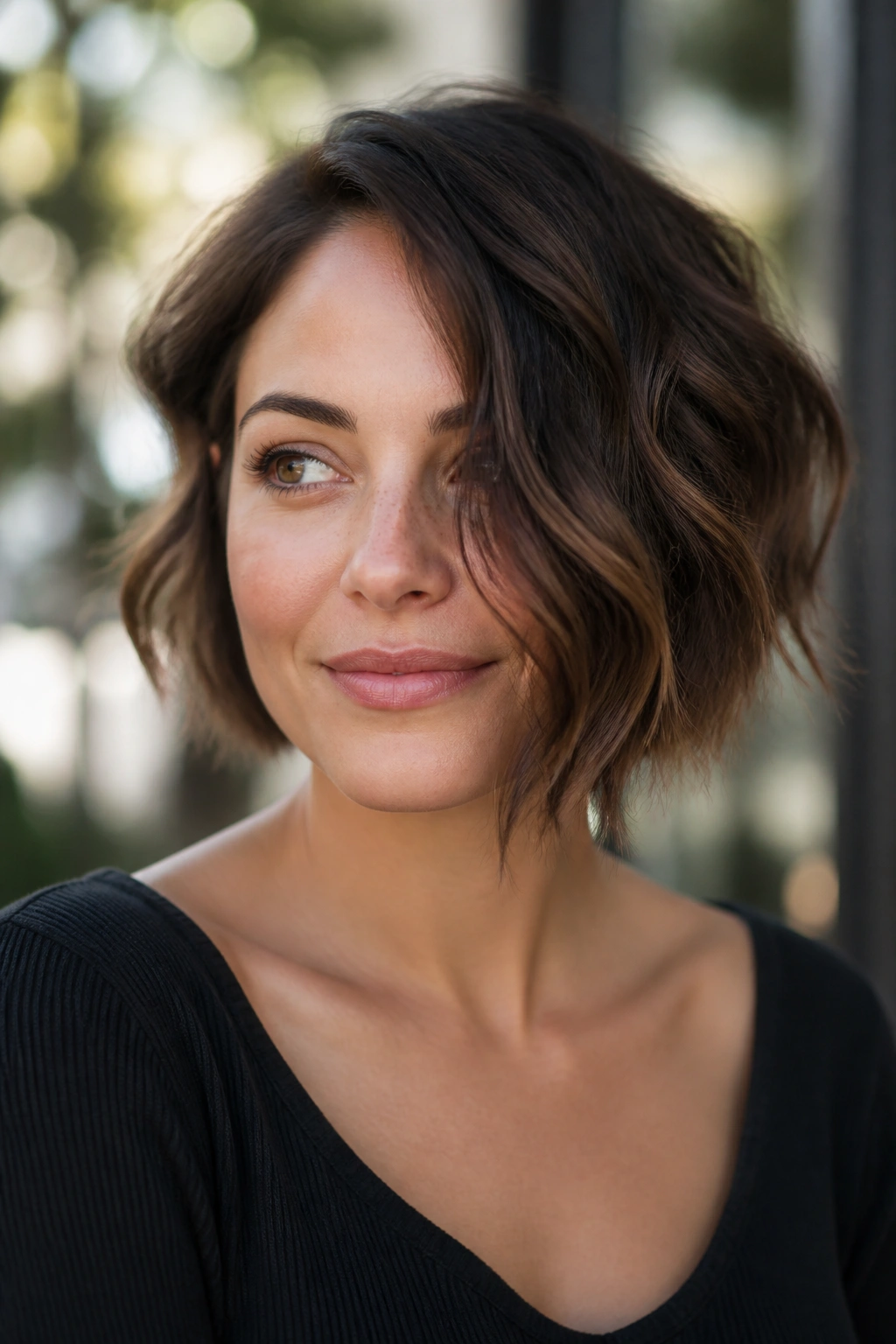
A wavy asymmetrical bob has a looser mood than the sleek versions, and that looseness is part of its charm. The waves soften the line, while the unequal length stops the haircut from turning into a perfect circle around the face. That combination works well on round faces because it adds movement without making the cheeks the center of attention.
One side can graze the chin while the other falls closer to the collarbone. Keep the wave pattern softer on the shorter side so the shape does not widen out at the jaw. A sea-salt spray or light mousse helps, but too much product can make the cut feel sticky and heavy.
Air-drying is fine here. So is a diffuser. What you do not want is a rigid curl pattern from root to end. That can make the style too round, and that is the one thing this haircut should avoid.
12. Bixie with a Longer Front
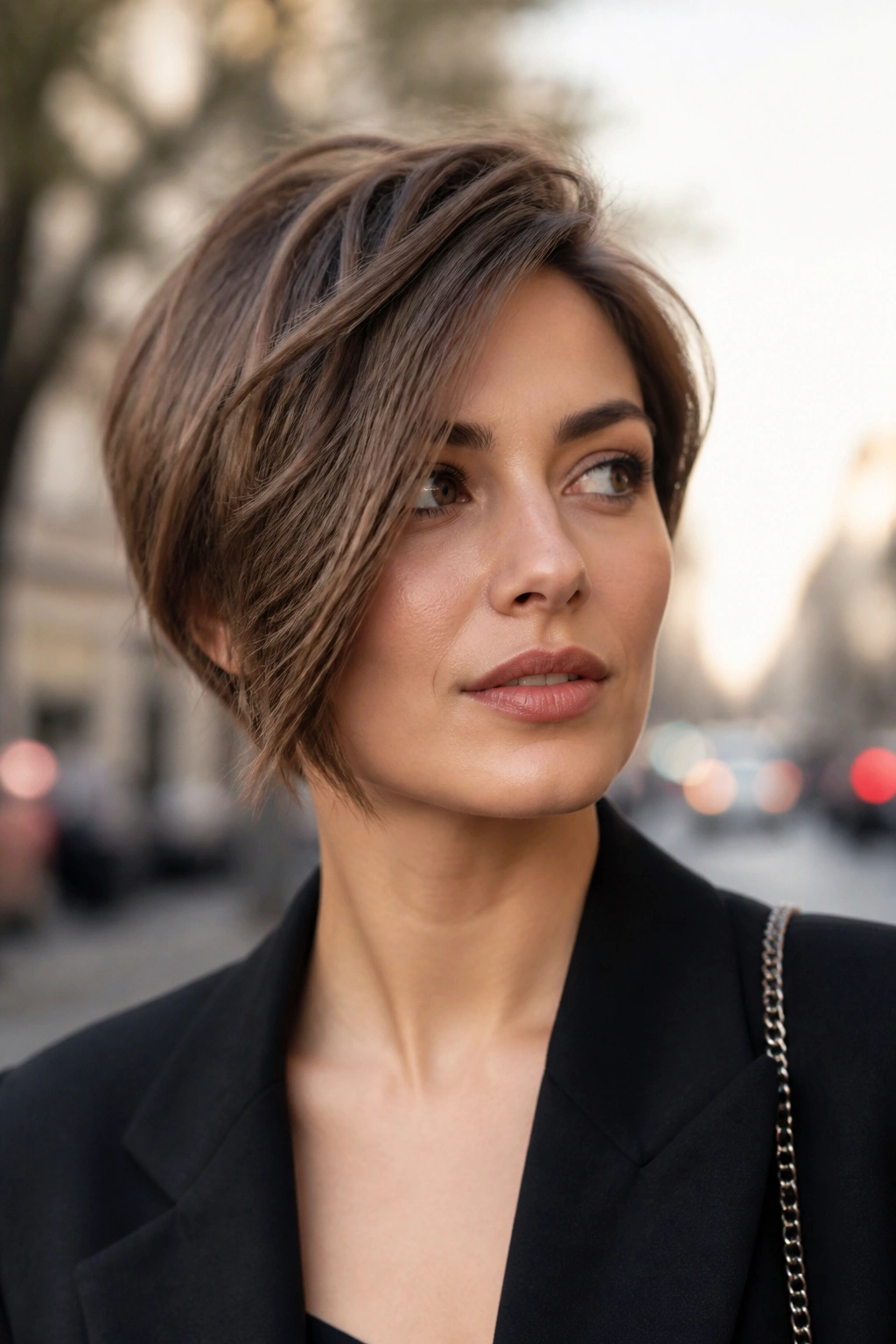
The bixie sits between a bob and a pixie, and that in-between quality is exactly why it flatters round faces. It keeps the neck open, but it still gives you enough front length to create angles. A longer front piece on one side gives the cut that asymmetrical finish.
This is a good choice if you want something lighter than a bob but not as cropped as a pixie. The top can stay layered and airy, while the sides taper gently. The front should sweep toward the cheekbone without stopping on it.
Best for: hair that can hold a little texture, whether straight or wavy. If your hair is very fine, ask for soft internal layering rather than too much razoring. You want lift, not see-through ends.
13. Long Layers with Face-Framing Asymmetry
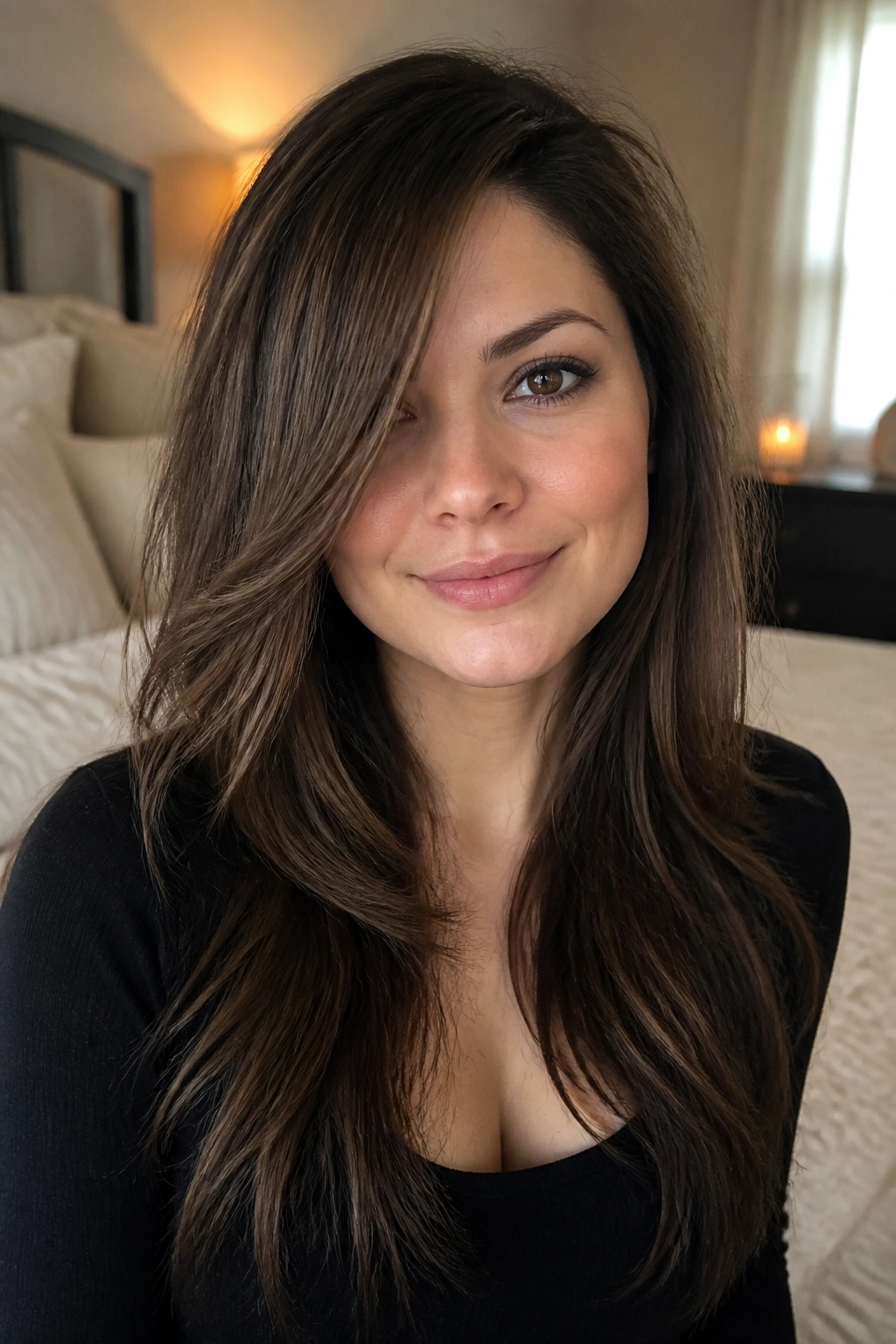
Can long hair flatter a round face? Yes, if the layers are placed with care. The first face-framing layer should start below the cheekbone, not right at it. That keeps the widest point of the face from getting boxed in by hair that sits too close.
The asymmetry can be subtle. One front section can be a little shorter, or the side part can be pushed more deeply to one side. You are not trying to create a dramatic haircut. You are trying to create a diagonal line where there was none.
A curling wand with a 1.25-inch barrel works well here. Wrap the front pieces away from the face, then let the rest fall loose. The result should feel soft, not pageant-perfect.
14. Wolf Cut with Stretched Front Sections

A wolf cut sounds wild, and often it is. On a round face, though, the trick is to keep the front sections stretched longer so the shape does not balloon out around the cheeks. The top stays choppy. The bottom stays a little heavier. That contrast is what keeps it wearable.
The crown gets texture. The sides get movement. The front needs enough length to pull the eye down, almost like a curtain that splits unevenly. If the shortest pieces are too high up, the haircut can turn into a cloud.
This style likes messy styling on purpose. A rough blow-dry, a dab of styling cream, and a few twists with your fingers are usually enough. It should look a little unbothered. That is the point.
15. A-Line Bob with a Hidden Undercut
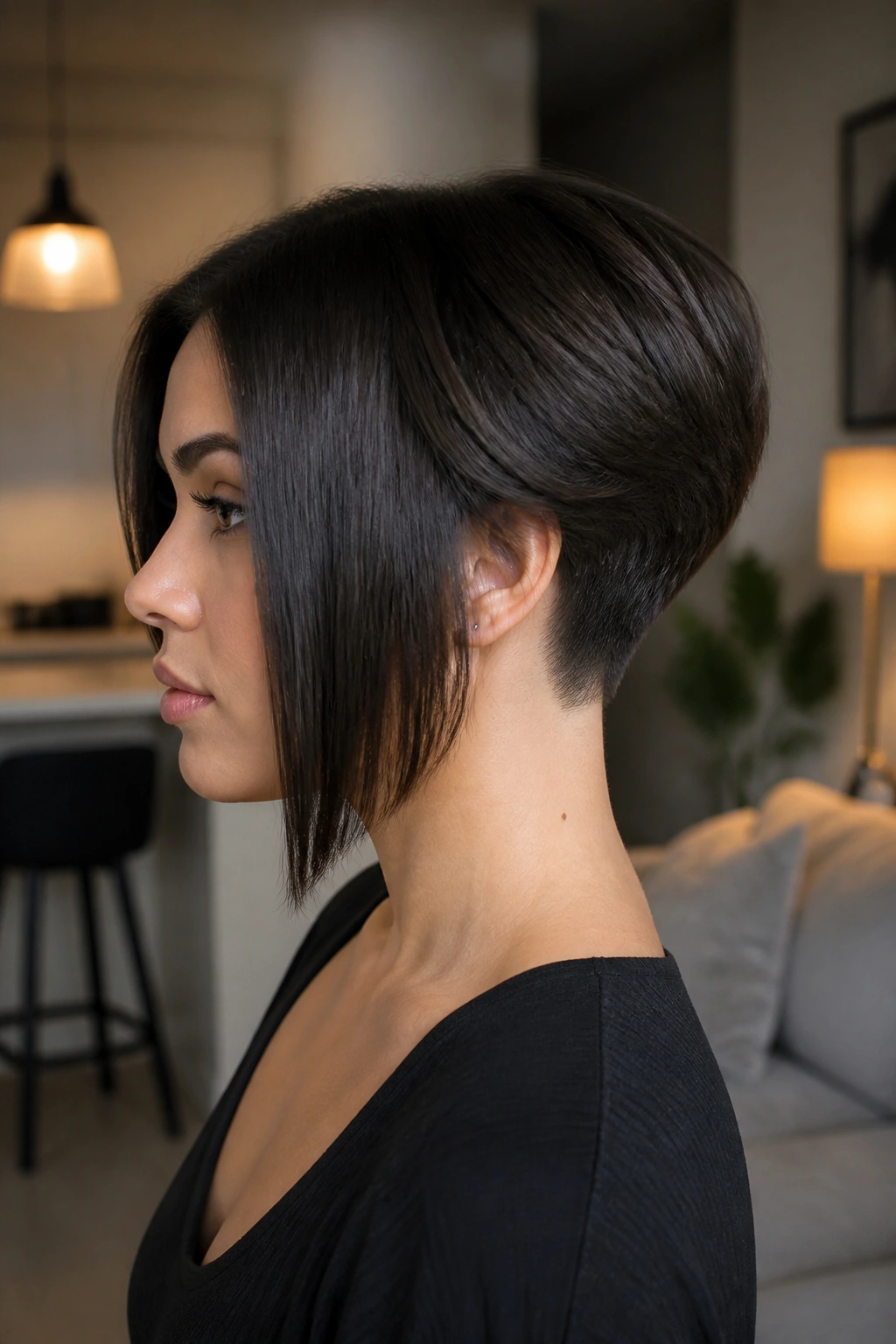
An A-line bob gives you a built-in angle, which already helps a round face. Add a hidden undercut and you remove bulk from underneath, so the front pieces can swing forward without puffing out. It’s a smart cut, not a loud one.
Why the hidden undercut matters
The undercut is doing quiet work. It keeps the back from stacking up too much, which helps the front angle stay visible all day. Without that, thick hair can push outward and blur the shape.
- Front length: chin to collarbone range
- Back length: shorter by 1 to 3 inches
- Underlayer: removed at the nape only
- Styling: smooth, then tuck one side back
Try this if: you like structure, you have dense hair, and you want a cut that still feels easy on busy mornings.
16. Pin-Straight Asymmetrical Lob
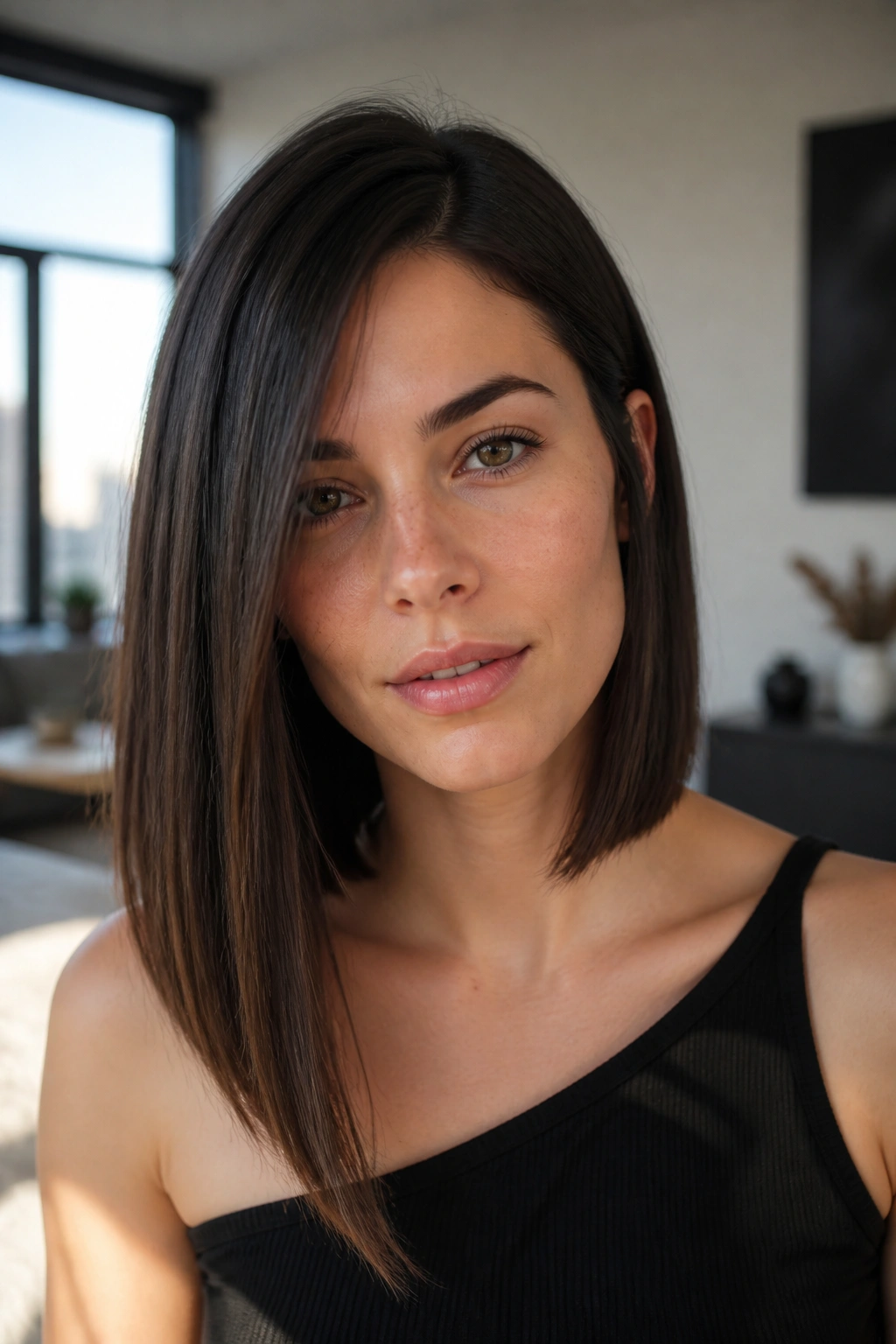
There is something clean about a pin-straight asymmetrical lob. No fluff. No extra volume. Just a long line that shifts from one side to the other. On a round face, that line can be a nice reset because it gives the face a longer frame.
The key is in the ends. Keep one side a little longer and angle the cut so the front falls past the jaw. If the lob stops right at the cheek, it can widen the face instead of lengthening it. That’s the part people miss.
A flat iron with 1-inch sections works well, but don’t press the hair into a dead line. Leave a tiny bevel at the ends so the cut has some movement. A tiny bit. Not a helmet.
17. Tousled Mid-Length Cut with One Heavier Side

A tousled mid-length cut feels relaxed, which is nice, but it still needs shape. One heavier side gives the style something to lean on. The fuller side should sit lower and a touch forward, while the lighter side opens up the cheek area.
Unlike a perfectly even shoulder cut, this version has a clear bias. That bias helps a round face by breaking symmetry in a way that feels natural. It is especially good for medium-density hair that can hold bend without going flat by noon.
A salt spray at the roots and a cream through the mids can make the movement last longer. If your hair tends to puff, keep the product light and focus on the ends. Heavy roots kill the shape fast.
18. Deep Side-Swept Curls
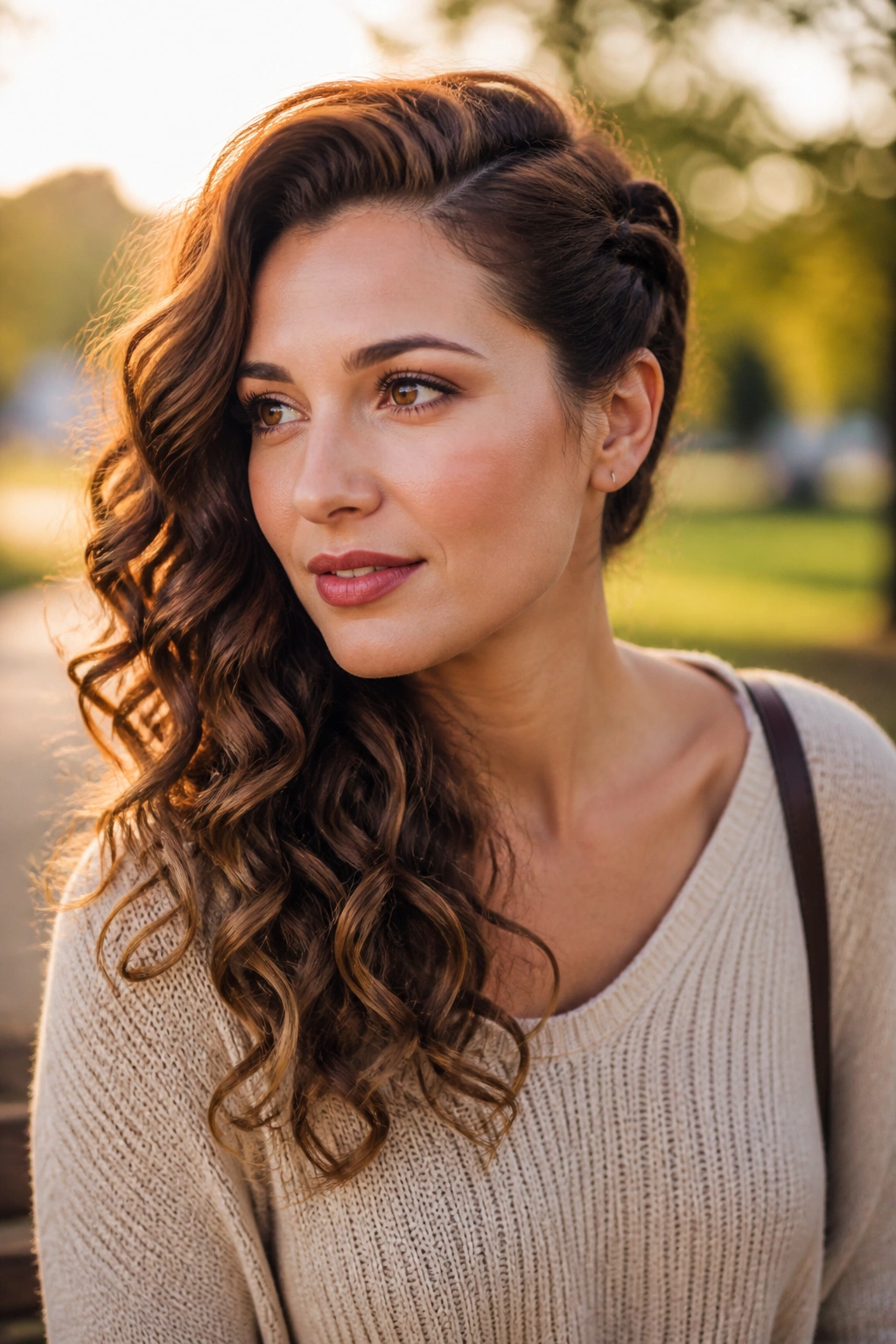
A deep side-swept curl style is one of the easiest ways to get asymmetry without cutting anything dramatic. The curls do the framing, and the deep side part gives the face a slanted line. That diagonal is what softens a round shape.
How to keep the curls from spreading wide
Pin the heavier side back loosely at the temple, then let the rest fall over one shoulder. That keeps the width from sitting equally on both sides of the face. It also makes the hairstyle feel deliberate instead of accidental.
A curl cream that defines without crunch works best. If the curls are brushed out too much, they can balloon. If they are too stiff, the style loses its softness. You want controlled movement, not a shell.
19. Clavicle-Length Cut with Flipped Ends
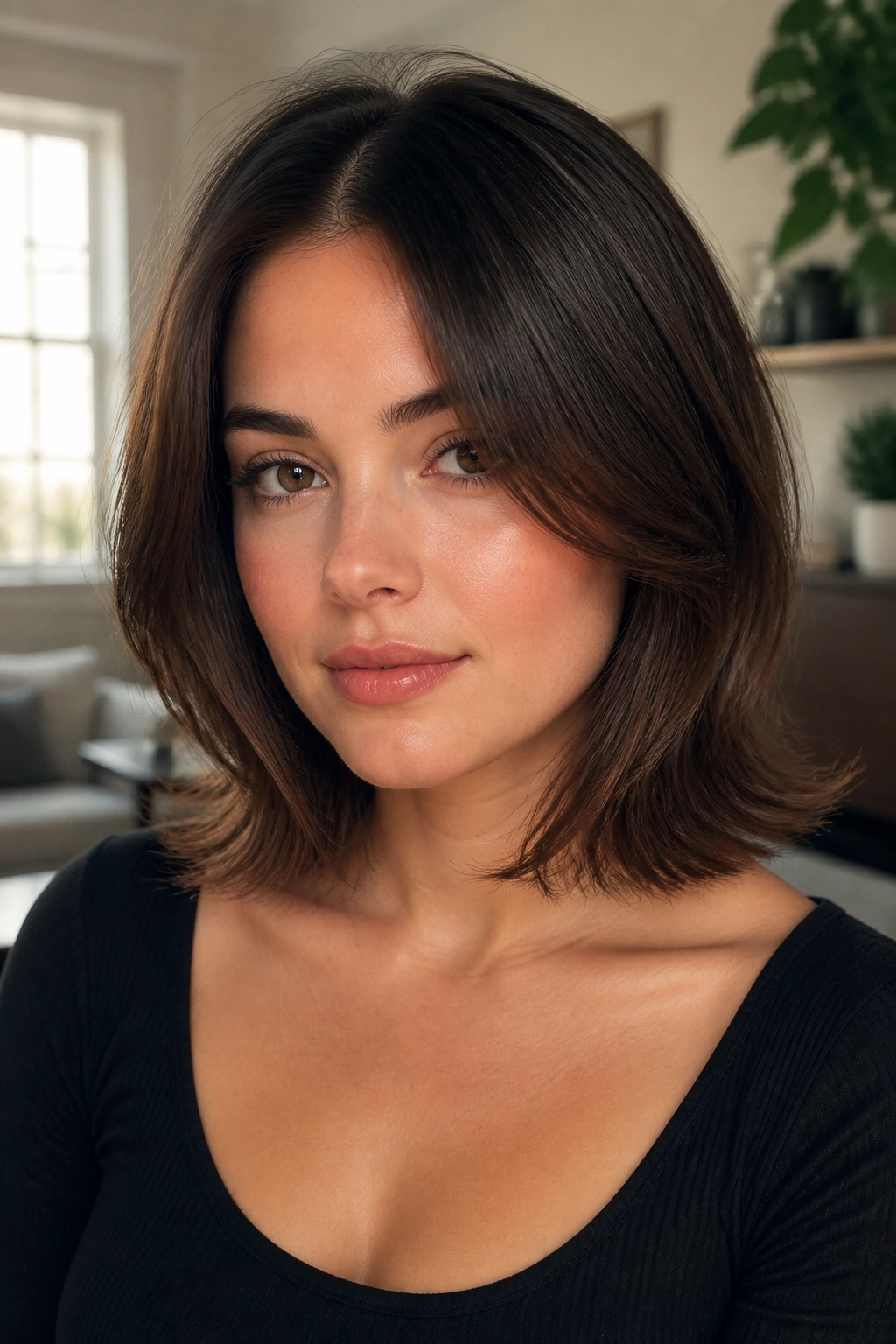
Clavicle-length hair gives a round face room to breathe, and flipped ends add another layer of shape. The flip should move away from the face, not inward toward it. That outward motion keeps the jawline from feeling boxed in.
This style is nice because it looks dressed up without being fussy. You can wear it straight with a slight bend, or add loose flips on the longer side for extra asymmetry. One side may sit a bit closer to the shoulder while the other falls forward.
A round brush or a medium-barrel iron can create the bend in just a few minutes. If your ends are dry, use a drop of serum only on the last inch. Too much product makes the flip sag.
20. Micro-Fringe Crop with Long Side Shape
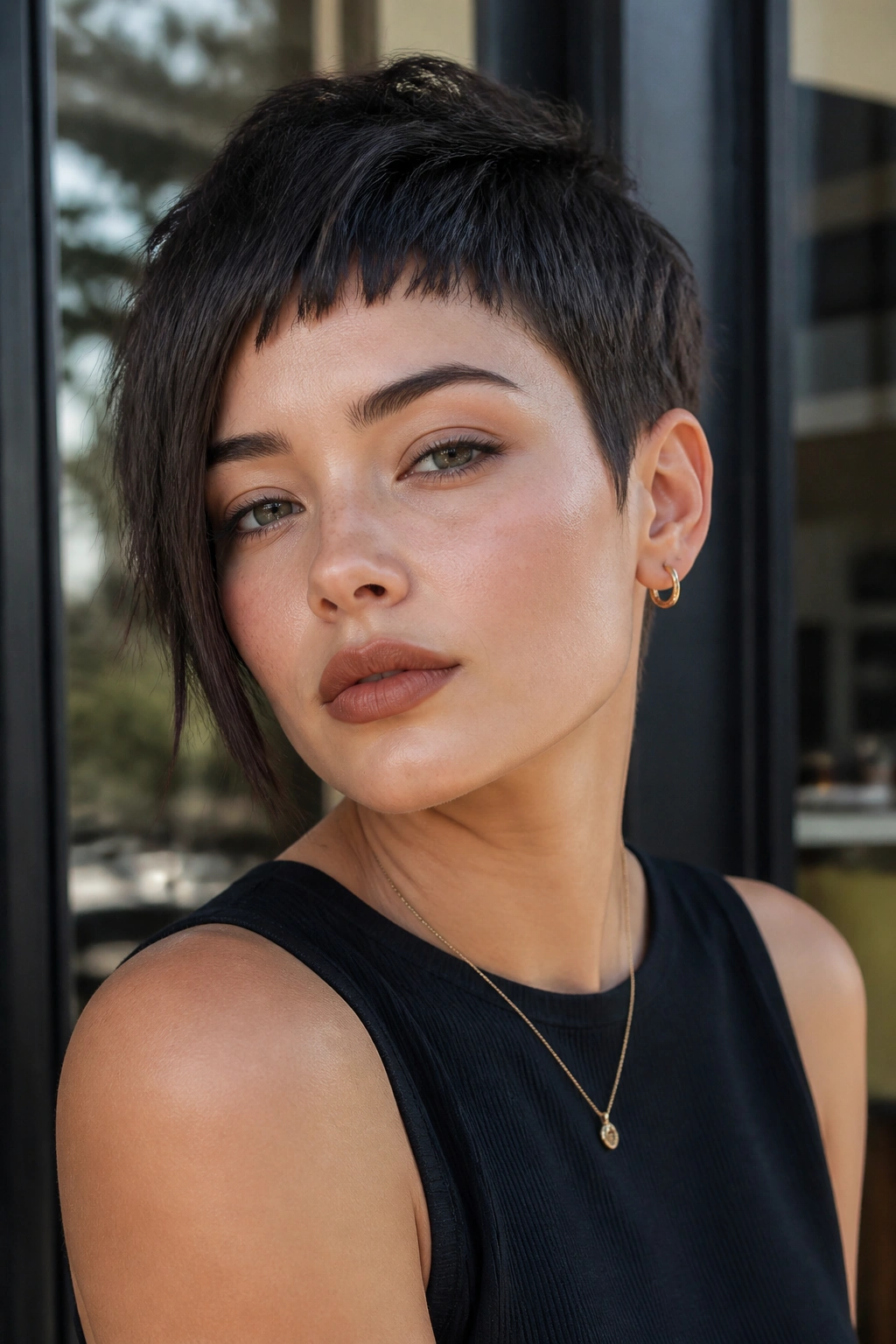
A micro-fringe sounds like a risk, and to be fair, it is. But when the side shape stays long and uneven, it can work on a round face in a sharp, editorial way. The short fringe pulls attention up, while the longer sides stop the cut from feeling too circular.
The crop should be close at the sides and fuller through the top. If everything is short and even, the face can look broader. If the top has height and one side is left longer, the whole style gains direction.
This is not the haircut I would hand to someone who wants to disappear into the crowd. It is for someone who likes a clear shape and is willing to style it. A little paste goes a long way. So does confidence, though hair never needs to hear that part.
21. Modern Shaggy Mullet

The modern shaggy mullet is not for everyone. Good. It does not need to be. On a round face, the longer back and longer front sections create a stretched outline, while the shorter top keeps the haircut from sitting heavy at the sides.
Unlike a classic pixie, this cut keeps some length in play. Unlike a uniform shag, it leaves the shape intentionally uneven. That unevenness can be flattering because it breaks up the roundness of the face and lets the hair fall in different directions.
Best for: wavy hair, textured hair, and anyone who likes a bit of edge without turning the whole style into a costume. Ask for the front to remain long enough to skim the jaw. That part matters.
22. Half-Up Asymmetrical Style for Long Hair
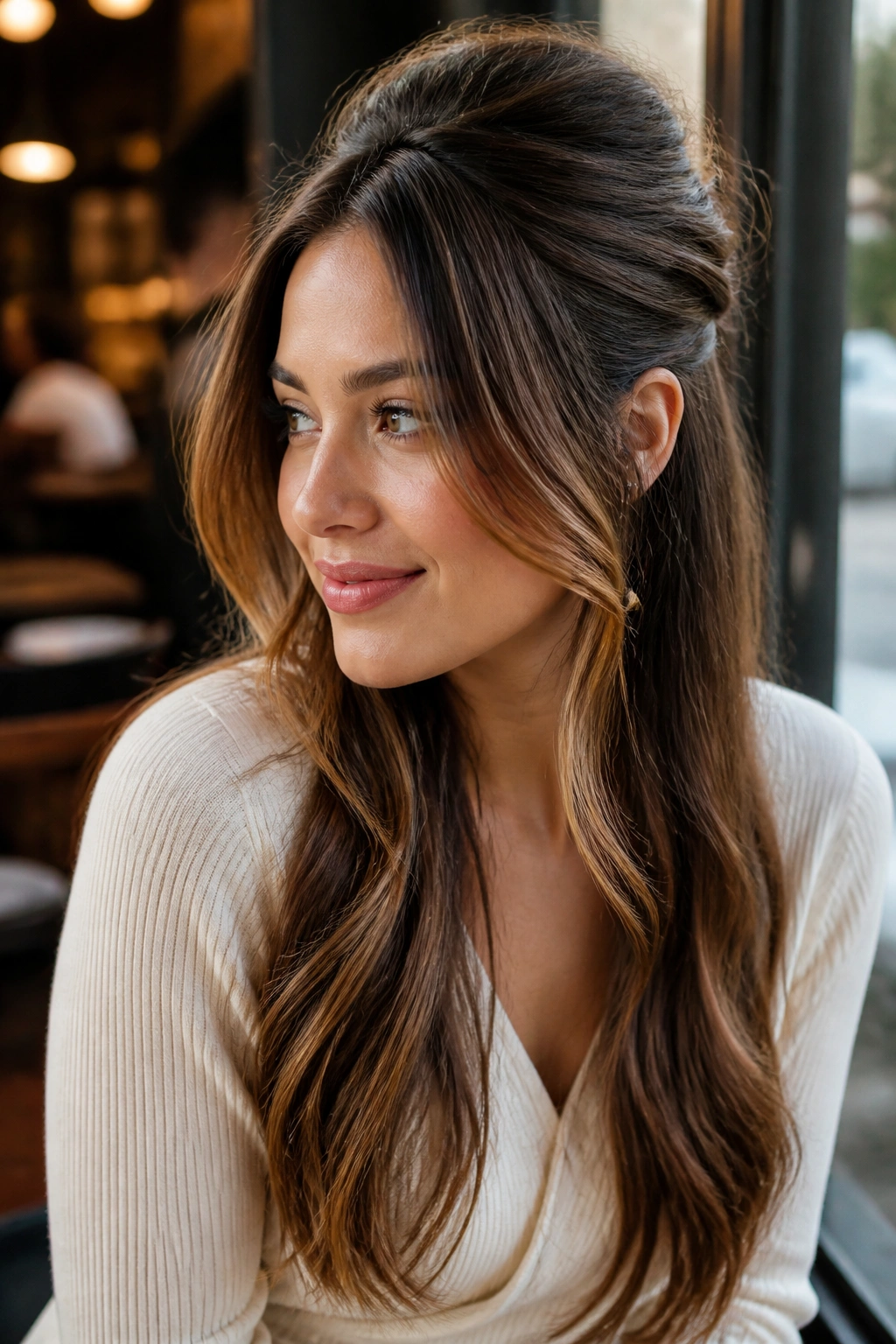
Long hair on a round face can look beautiful when the styling has some direction. A half-up asymmetrical style does that by shifting the gathered section to one side and leaving the rest loose. The result feels softer than a full updo and less static than hair worn straight down.
The top section should be lifted just enough to show the crown. Not a giant bump. Just a little rise so the face gets a longer frame. Let one front piece fall free near the cheekbone and tuck the opposite side behind the ear if the hair is thick.
This works well for dinners, events, or days when you want the length but not the weight. It is also a nice way to fake asymmetry on days when you do not want to cut your hair at all.
23. Asymmetrical Ponytail with a Face-Framing Piece
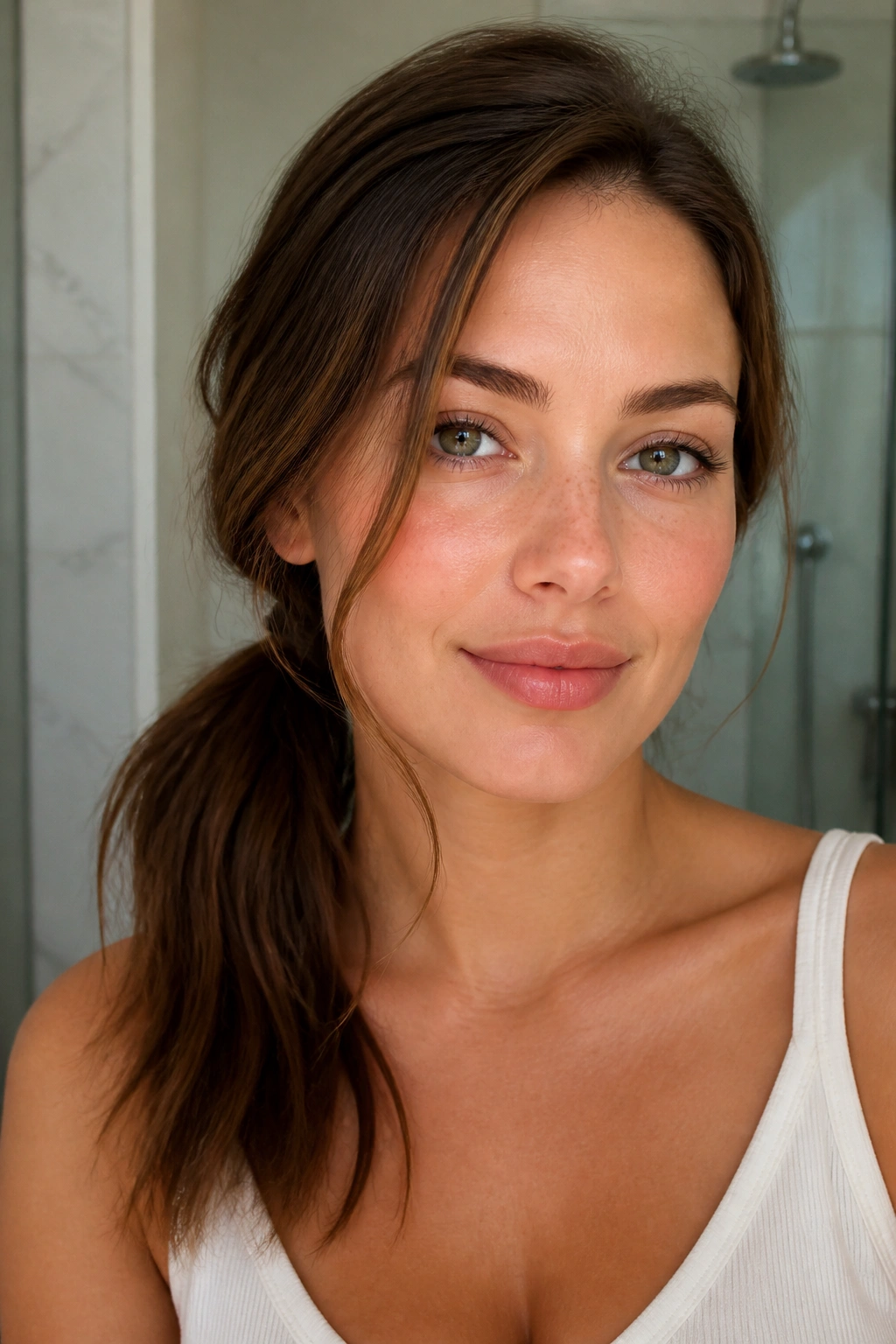
A side ponytail sounds simple, and it is, but the placement changes everything. A low ponytail pulled to one side creates an angle across the jaw, which helps a round face feel a little longer. Leave one face-framing piece out, and the whole style softens up fast.
The elastic should sit low, near the nape but shifted off center. Wrap a small strand around the base to hide the band. That little detail makes the ponytail feel finished instead of rushed.
This is a strong everyday option if your hair is thick or medium. It keeps the neck open and lets you control volume where you want it. If the ponytail sits too high, it can bring the eye back to the cheeks. Low is better here.
24. Side Braid with an Uneven Finish
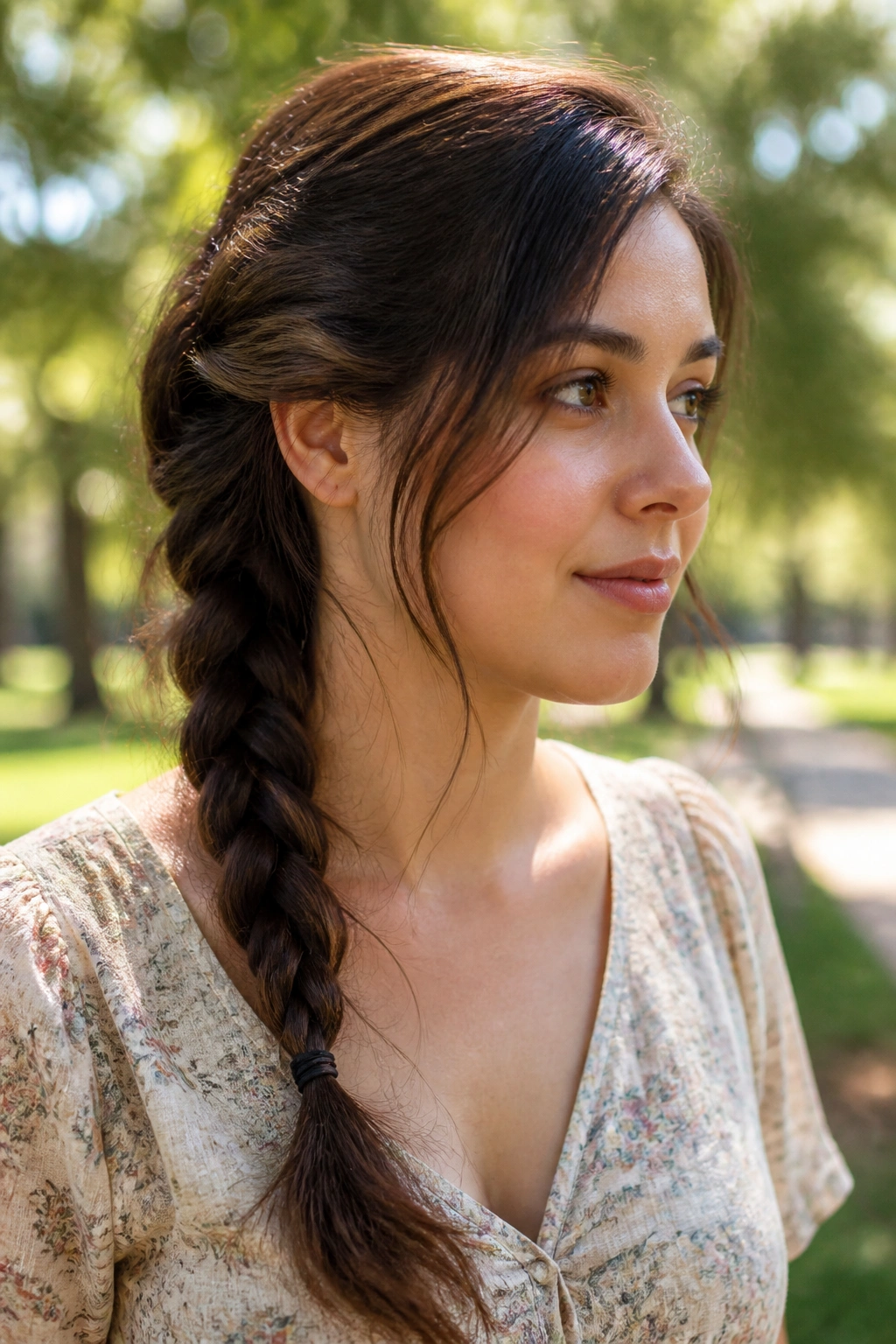
A side braid can flatter a round face when it is not too tight and not too centered. Pulling the braid over one shoulder breaks the shape, and leaving a few pieces loose around the front keeps the face from looking sealed in. That uneven finish is the whole point.
Small details that matter
A braid that starts just behind one ear usually works better than one that begins at the crown. The crown can add lift, but too much top volume can make the style feel wide. Keep the top controlled, then loosen the braid gently with your fingers once it is secured.
- Start low and slightly off center
- Keep the braid a little loose
- Leave 2 to 4 face-framing pieces out
- Finish with a light-hold spray
Good for: busy mornings, humid days, and second-day hair that needs a shape fast.
25. Long Layered Sweep with a Dramatic Side Part
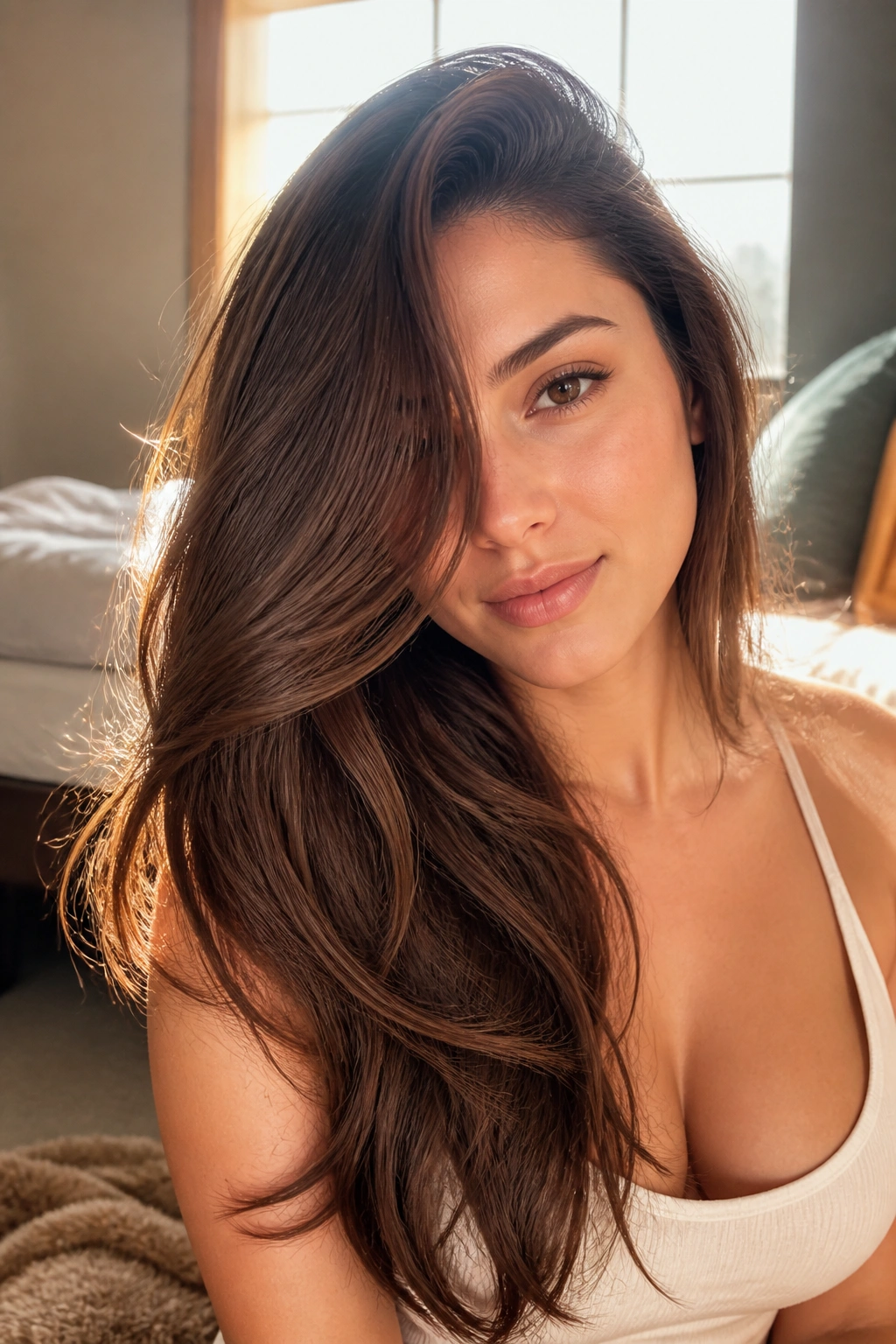
If I had to point to one safe starting place, this would be it. A long layered sweep with a deep side part gives a round face height, length, and movement without asking for a bold chop. The front section can fall across the cheekbone while the rest stays long enough to narrow the face.
The beauty of this shape is that it works with almost anything. Blow it out smooth, bend the ends, or wear it with loose waves. The deep side part does most of the work. The layers keep the hair from hanging like one heavy curtain.
It is also the easiest style to live with if you are not ready for a dramatic asymmetrical cut. The line is there. The imbalance is there. And the face gets a cleaner frame without losing length. That balance makes it the one I’d hand to someone who wants to start quietly and still end up with something better than expected.
