



French hairstyles for round faces work best when they create movement where the face is widest and a bit of lift where the eye wants to settle. That sounds simple. It isn’t always.
A round face usually has soft cheeks, a gentle jawline, and about the same width through the cheekbones as through the forehead. A cut that ends right at the fullest part of the cheek can make the face look broader than it really is. A better cut tends to skim below that point, break up the width with texture or a side part, or add height at the crown so the whole shape feels longer.
French hair has a reputation for looking easy, but the good versions are never random. The bob is placed on purpose. The fringe is soft on purpose. The bun sits low or loose on purpose. Even the pieces that look slightly undone usually have a very clear job: soften the face, sharpen the line, or keep the hair from sitting too heavy around the cheeks.
That’s the real trick here. Not hiding your face. Framing it so the shape feels lighter, cleaner, and a little more elegant without turning into a stiff, overstyled look.
1. Chin-Grazing French Bob With Soft, Broken Ends
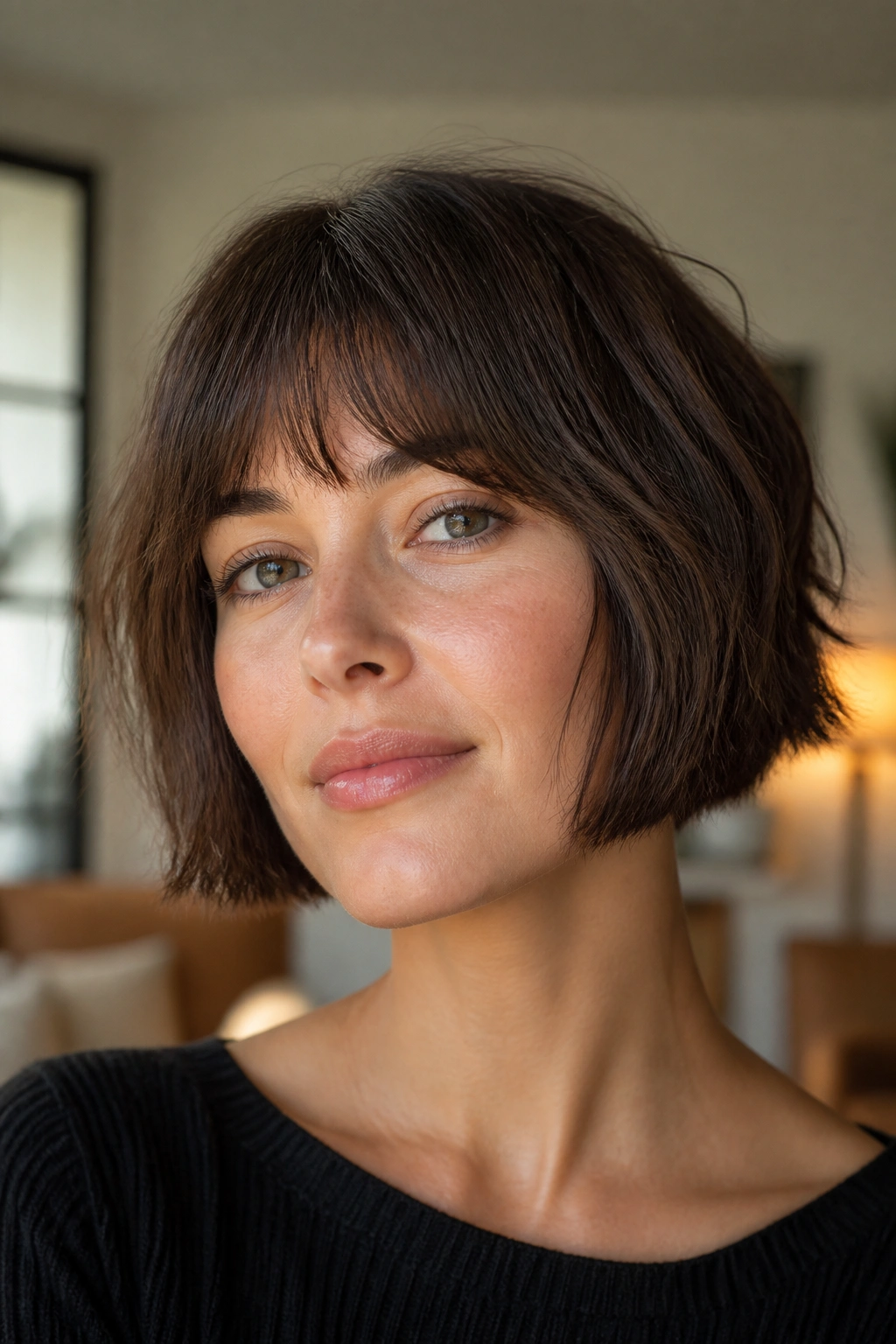
The chin-grazing French bob is the cut people fear most on a round face, and then it ends up being one of the sharpest choices in the whole group. The key is the ends. They should not sit in one blunt line like a ruler. They need a bit of softness, a bit of bend, and a tiny bit of irregularity so the bob moves instead of boxing the face in.
Why It Works on a Round Face
- The hemline lands right at the jaw, which gives the face a cleaner edge.
- Broken ends keep the shape from feeling too solid.
- A slight forward angle in front helps the eye travel downward.
If your hair is fine, ask for a light undercut at the nape or just a touch of graduation. That keeps the bob from puffing out at the sides, which is the fast way to make this style look wider than it should.
Style it with a 1-inch brush or a flat iron bent just at the ends. One side tucked behind the ear does a lot more than people think. It opens the cheek and makes the whole cut feel less symmetrical, which is exactly what a round face usually likes.
2. French Bob With Curtain Bangs That Split at the Cheekbones
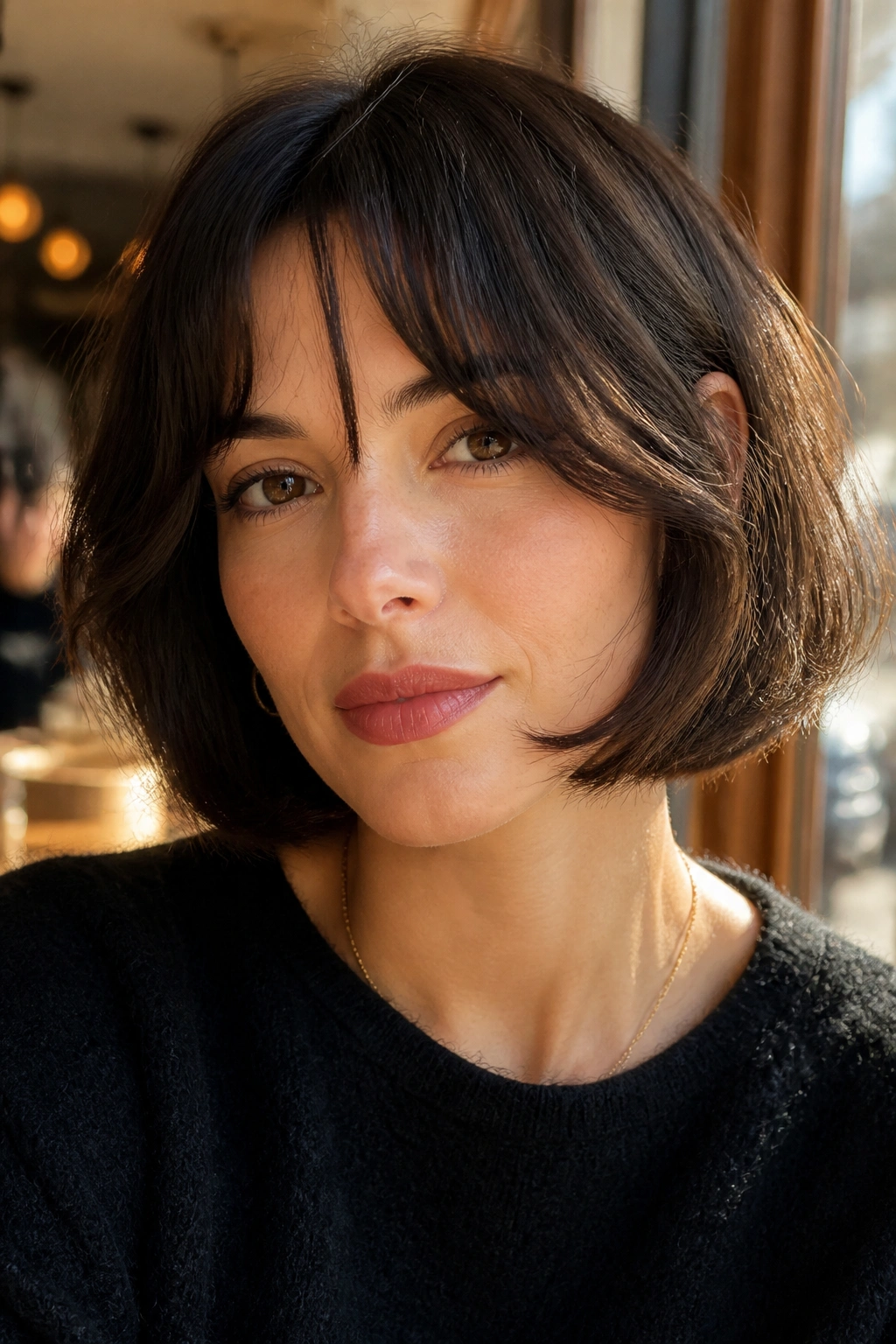
Why do curtain bangs keep showing up on round faces? Because they pull the eye away from the center of the face and send it outward in two soft lines. When they open at the cheekbones instead of hanging straight down, they act like little side panels that make the face look longer.
The best version stays light. Heavy curtain bangs can swallow the forehead and make the whole style feel dense, which is the last thing a round face needs. Ask for bangs that start a little higher in the middle and curve out toward the temples. That shape keeps the fringe airy and keeps the cheeks from feeling boxed in.
How to Wear It
- Blow the bangs away from the face with a small round brush.
- Set the ends with a quick pass of cool air so they keep their sweep.
- Keep the rest of the bob a touch tousled, not sleek and stiff.
This cut has a nice French quality because it looks lived-in without looking lazy. The fringe should look like it fell into place after a little help, not like it was sculpted into a helmet. That difference matters.
3. Jaw-Length Bob With a Deep Side Part
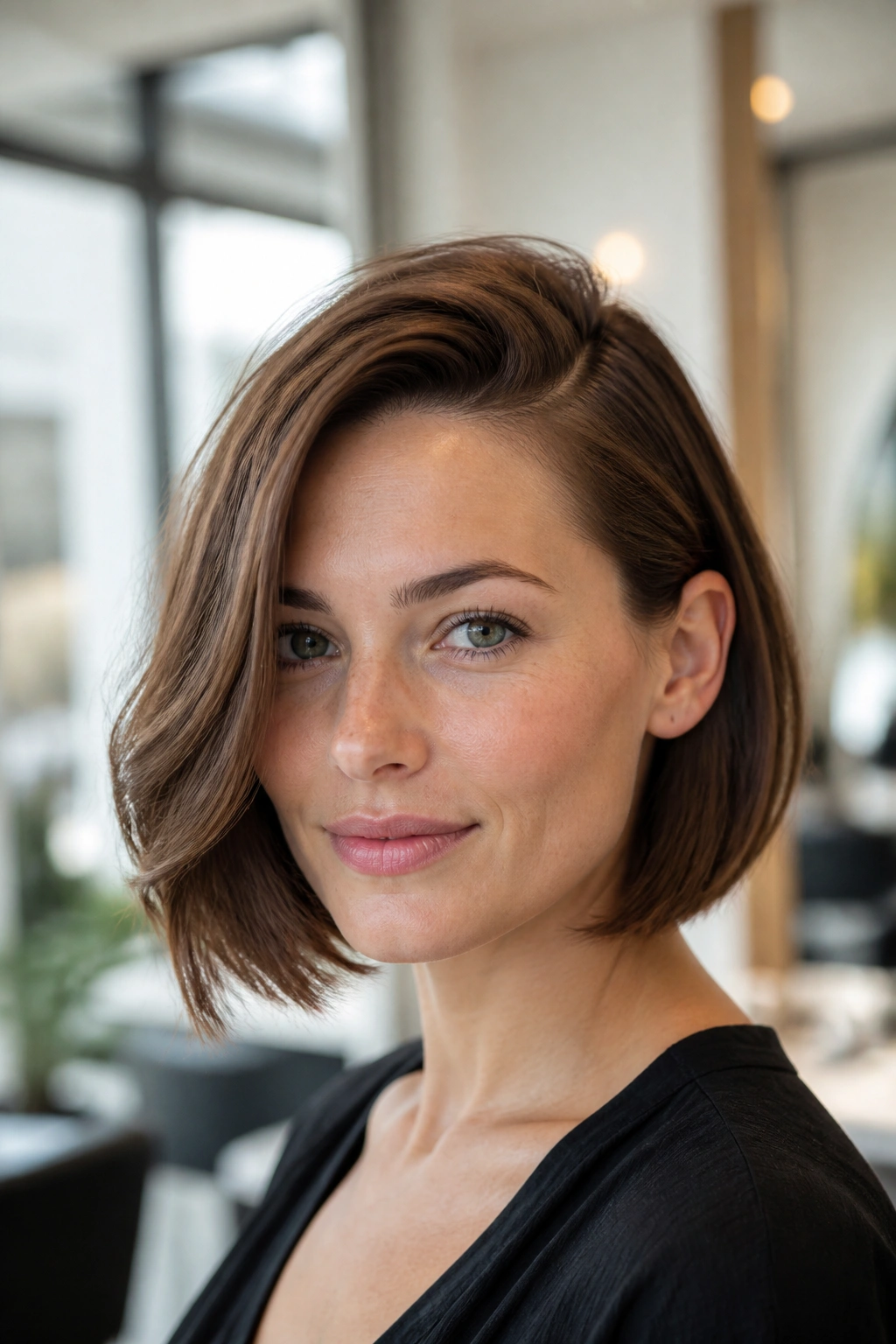
A jaw-length bob sounds risky for a round face until you move the part. Then it starts doing the job properly. The deep side part breaks up the width of the face, gives the crown a little lift, and makes the bob read as diagonal instead of boxy. Diagonal lines are your friend here.
Keep the shape soft through the ends. If the bob is cut too bluntly and styled too flat, it can sit like a circle around the face. A bend at the ends or a light brush-through wave fixes that fast. The goal is not volume everywhere. The goal is controlled movement, especially around the front.
One side can sit slightly behind the ear while the heavier side drapes over the cheek. That small asymmetry changes the whole mood. It feels French in the best way — polished, but not overworked.
4. Collarbone Lob With Invisible Layers
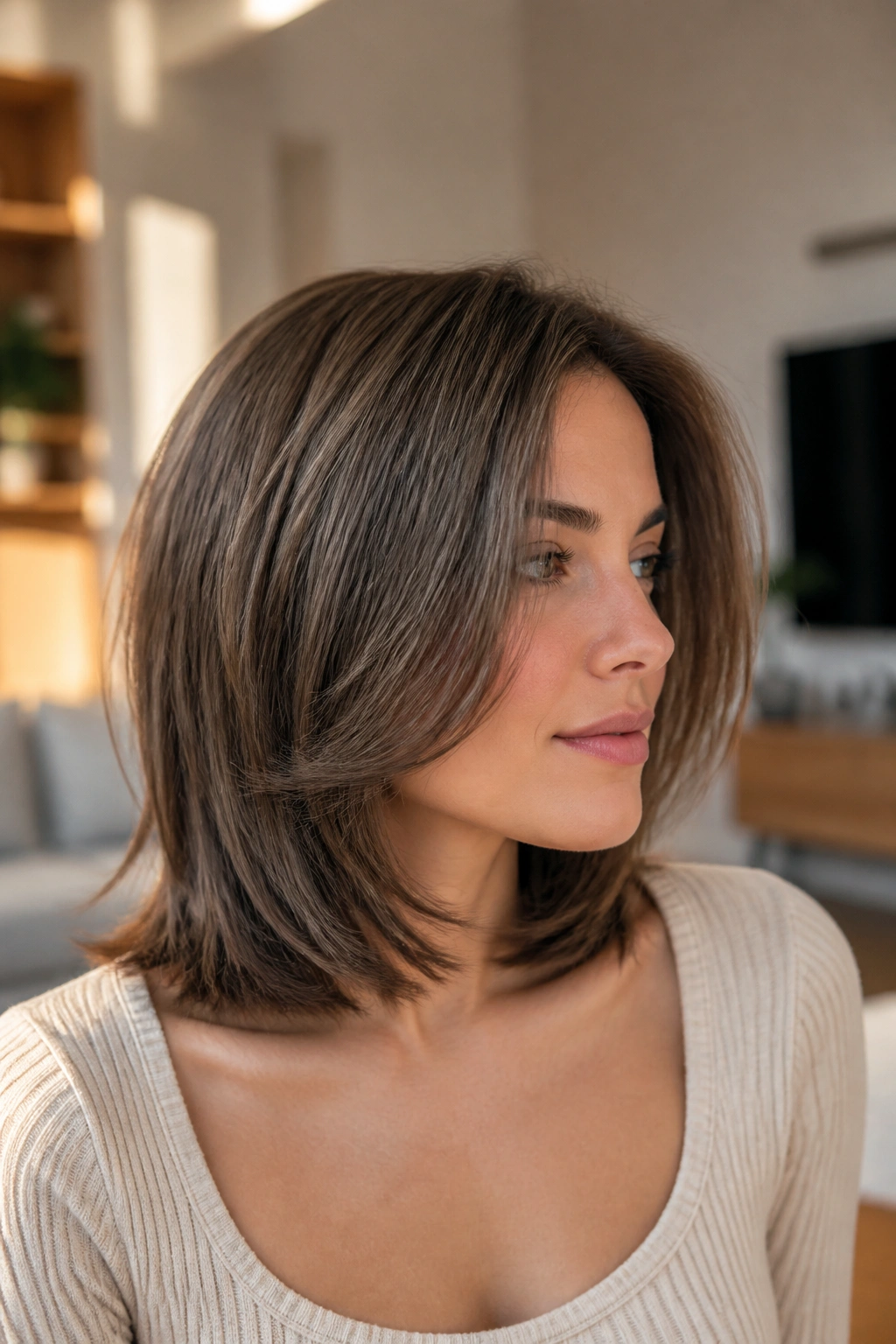
The collarbone lob is one of the safest bets for French hairstyles for round faces, and honestly, it deserves the praise. The length hits below the cheeks, so the widest part of the face is not competing with the cut. Hidden layers inside the shape keep the hair from feeling like one heavy sheet.
That “invisible” part is the useful bit. You don’t want obvious choppy layers everywhere. You want internal removal, usually around the mid-lengths and ends, so the lob can swing instead of sitting flat. It helps thick hair, sure, but it also helps medium-density hair that tends to puff at the sides.
A soft bend through the bottom third of the hair works better than tight curls. Too much curl at the cheek can widen the face. A loose wave past the collarbone gives the style that easy Parisian feel without adding bulk where you do not want it.
5. Shoulder-Length Cut With Airy Fringe
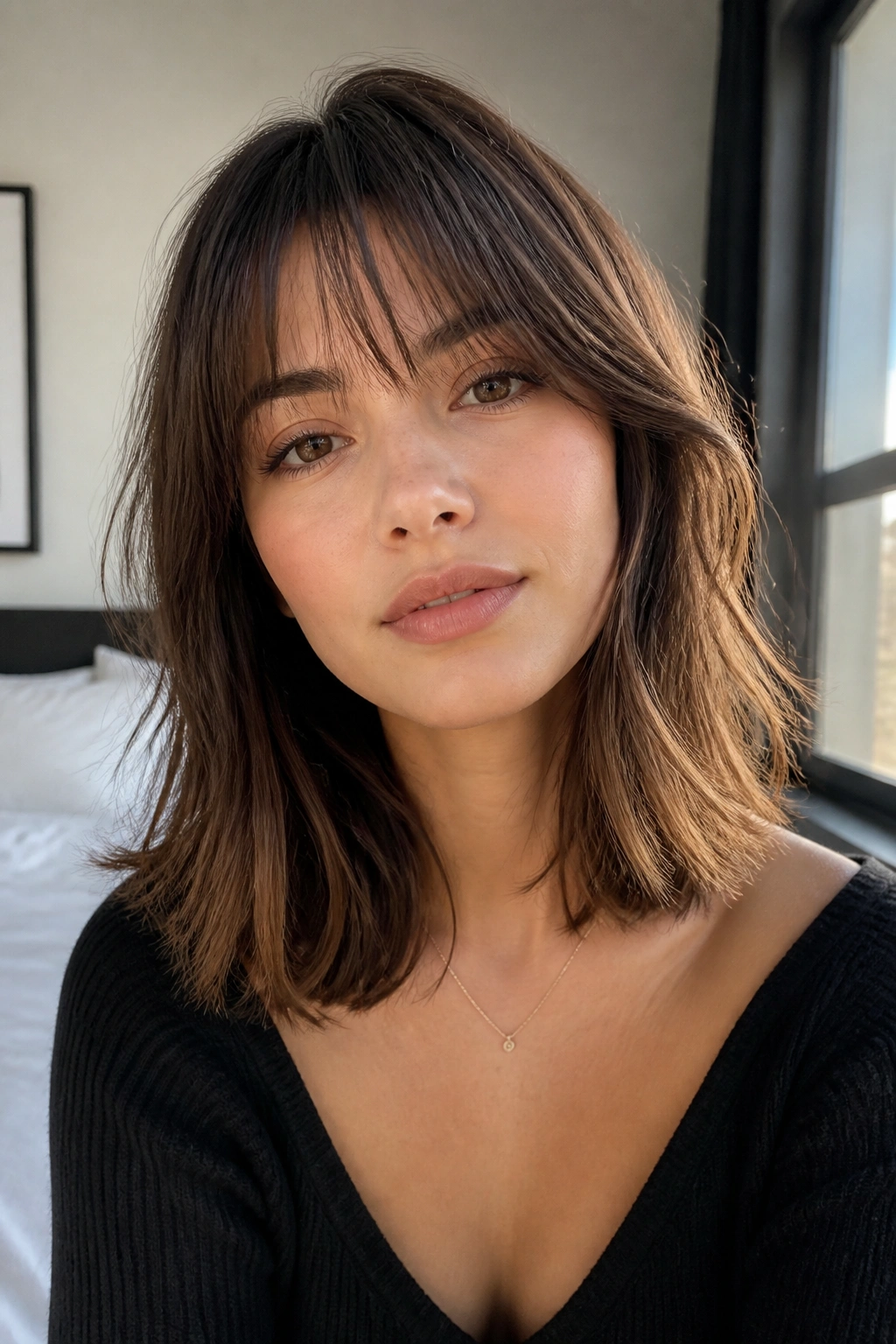
Shoulder length can be tricky on a round face because it can either lengthen the face or sit right on the shoulder like an old-school triangle. The difference is the fringe and the finish. Keep the bangs light, and keep the ends moving.
Airy fringe is not full, heavy bangs. It’s more like a soft whisper across the forehead, maybe broken at the center and slightly longer at the temples. That little bit of forehead showing makes the face feel taller. It also keeps the style from getting too dense at the top.
A cut like this loves a quick rough-dry with your fingers, then a final pass with a brush only on the front section. You want the fringe to fall with a little separation. Too much polish kills the charm. Too much volume at the sides does the same thing.
One sentence can change the whole shape: keep the roots lifted, but the ends light.
6. Long Layers With Face-Framing Ribbons
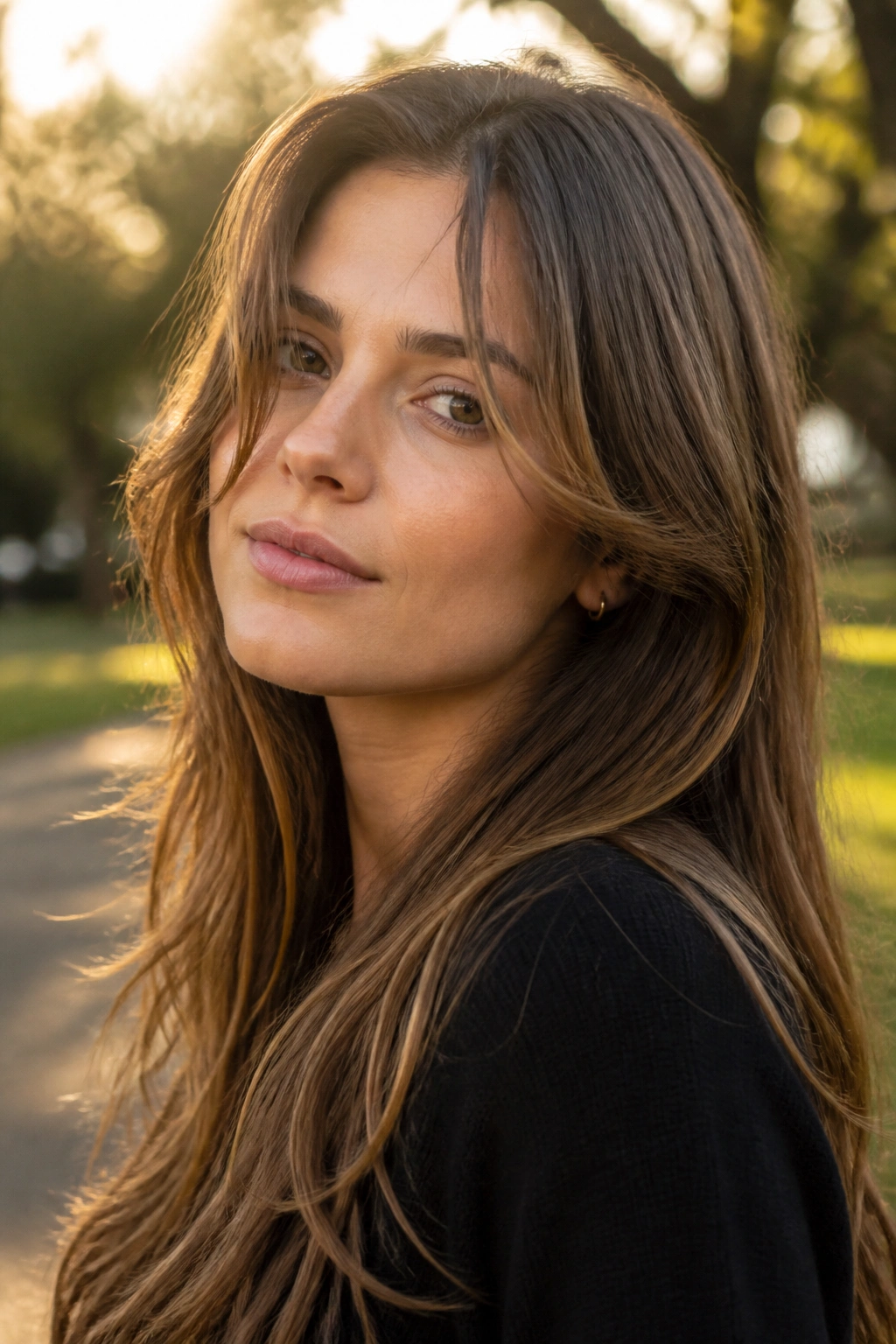
Long hair can work beautifully on a round face, but it needs movement or it starts behaving like a curtain. Face-framing ribbons fix that. They break the heavy line around the cheeks and guide the eye down through the jaw and collarbone instead of stopping at the middle of the face.
The shortest layer should usually start somewhere between the cheekbone and the chin, depending on how much fullness you want to keep around the face. Too short, and it can flare out. Too long, and it disappears into the rest of the hair. The sweet spot is a layer that feels like it belongs there, not one that announces itself.
If your hair is thick, ask for fewer layers through the back and more shaping at the front. If your hair is fine, keep the layers soft and sparse so the ends do not turn wispy. The point is movement, not thinning everything out.
A little bend with a large iron or a loose blowout makes these layers come alive. Straight, flat long hair can be pretty. It can also be unforgiving.
7. Wavy Midi Cut With an Off-Center Part
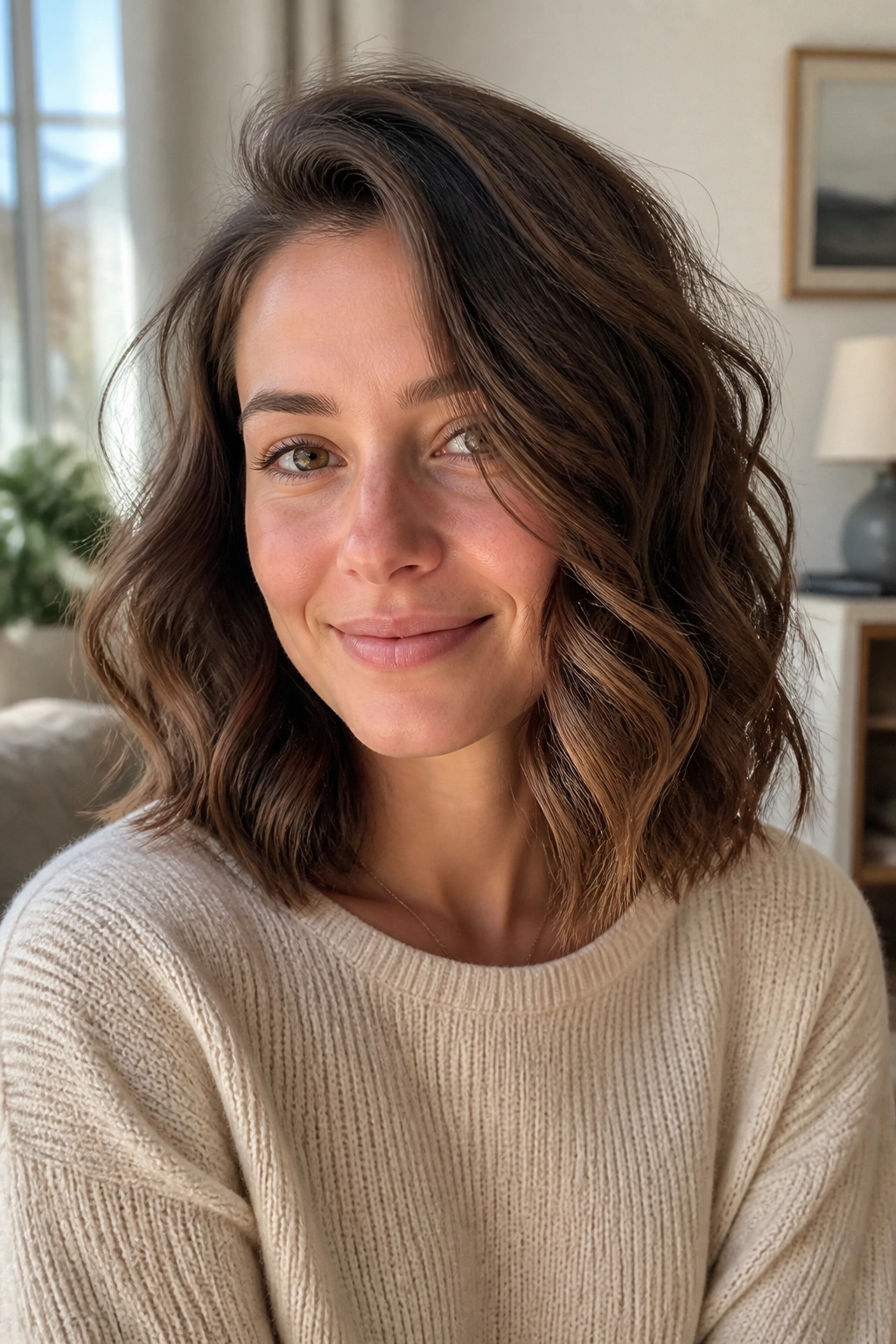
The off-center part is one of those small fixes that gets ignored all the time. On a round face, it matters a lot. Even a slight shift away from the middle makes the face feel less symmetrical in a good way, which is enough to break up width.
The midi length — somewhere between chin and collarbone — gives the face room to breathe. The waves should be loose and a bit irregular. Not mermaid curls. Not pin-straight. Just a soft bend that moves as you walk, because motion is what keeps this shape from feeling heavy.
You can style it quickly with a 1.25-inch curling iron, leaving the ends out on a few sections so it doesn’t look too tidy. Then brush it out with your fingers. A tiny bit of texture spray through the mids and ends adds that French feel without making the hair stiff.
This is a good one for people who want something relaxed but still polished enough to wear anywhere.
8. Parisian Shag With Piecey Texture
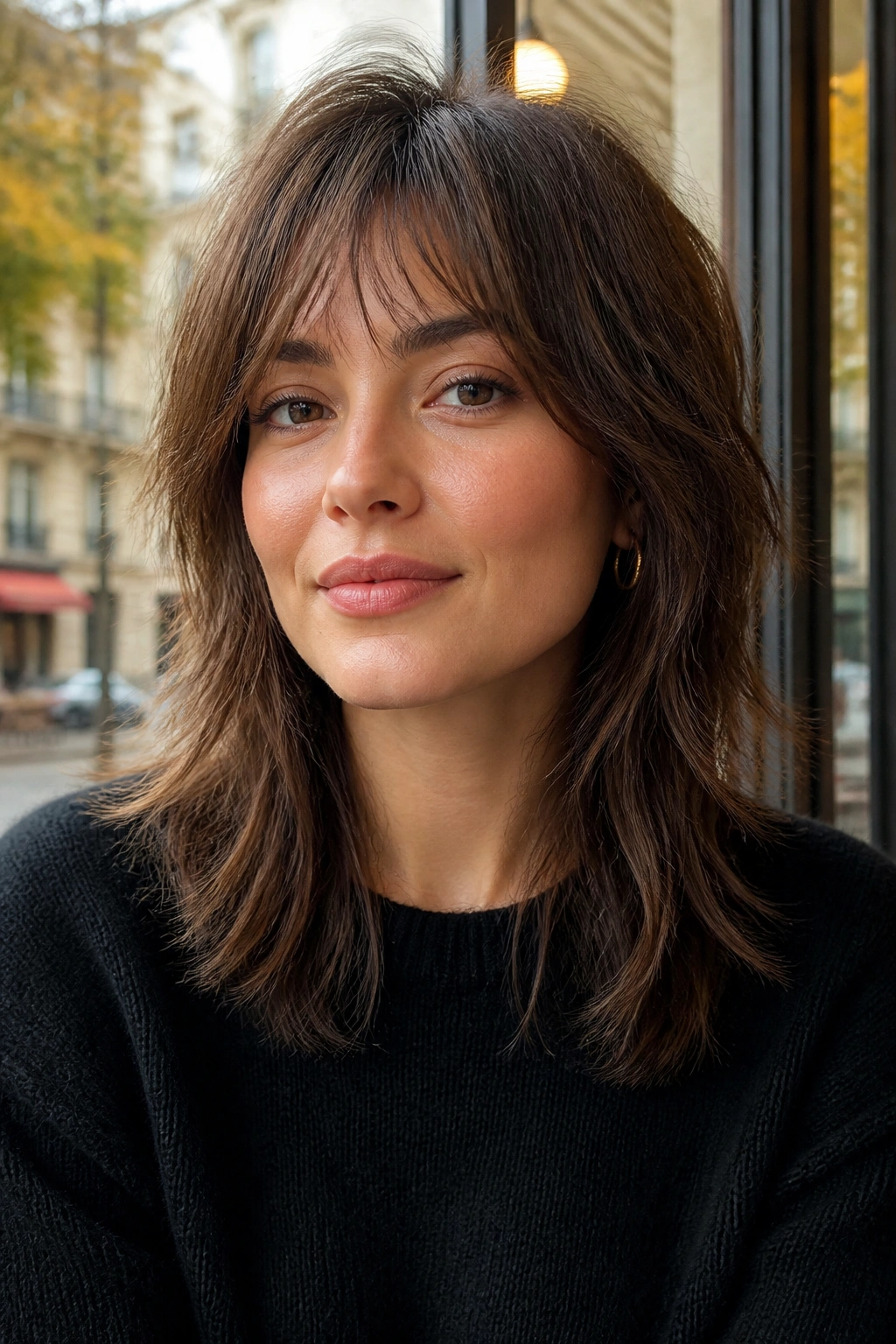
The shag can be a dream on a round face, but only if it is controlled. Too many layers at cheek level and the head starts looking wider. Done well, though, the shag adds vertical lift at the crown and keeps the sides from sitting heavy.
What to Ask Your Stylist For
- Shorter layers near the crown for height.
- Softer, longer layers around the cheekbones.
- Piecey ends rather than thick, choppy chunks.
- A fringe that can be worn parted or swept aside.
That mix gives the cut some attitude without making it messy in a bad way. It should feel a little broken-up, not hacked at. There’s a difference, and you can usually see it in how the layers fall when the hair moves.
If your hair is naturally wavy, this cut gets easier. If it’s straighter, use a salt spray or a light mousse and scrunch the front pieces while drying. The goal is air and separation, not crisp curl formation.
9. Soft Wolf Cut With Tapered Ends
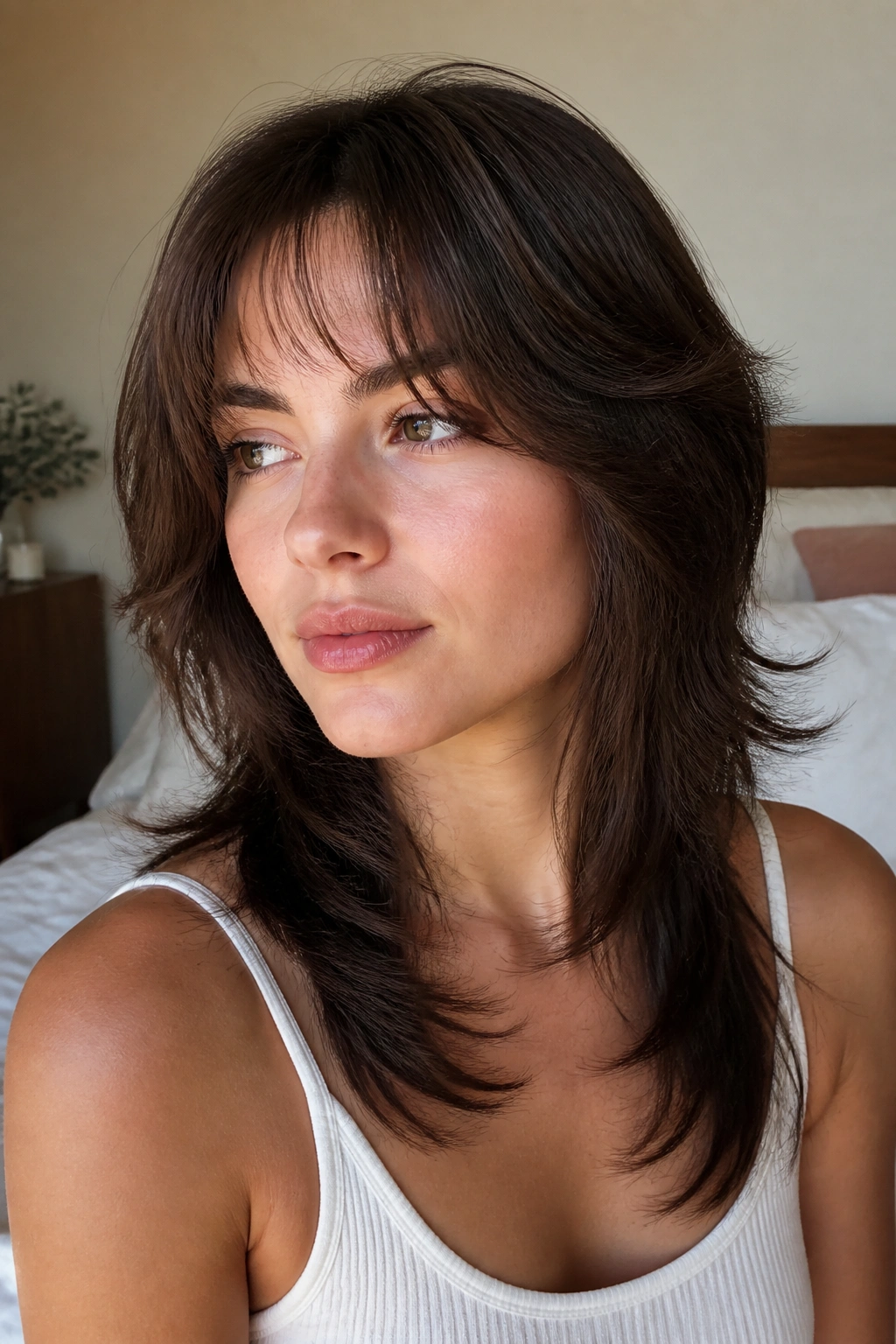
A wolf cut can be too much on a round face if it’s loaded with width. The softer version fixes that by tapering the ends and keeping the bulk controlled through the sides. Think of it as a shag that decided to behave.
The reason it works is simple: the crown gets lift, the face gets movement, and the bottom doesn’t sit in one thick ring around the cheeks. That makes the face appear longer without making the cut look severe. It’s a nice middle ground if you want edge but not drama.
Best case? Thick or wavy hair that can hold a bit of mess. Fine hair can do it too, but the layering has to stay light or the ends can look stringy fast. A diffuse dry and a small amount of cream through the front is usually enough.
This one has a bit of bite. Not loud. Just enough.
10. Bixie With Feathered Crown
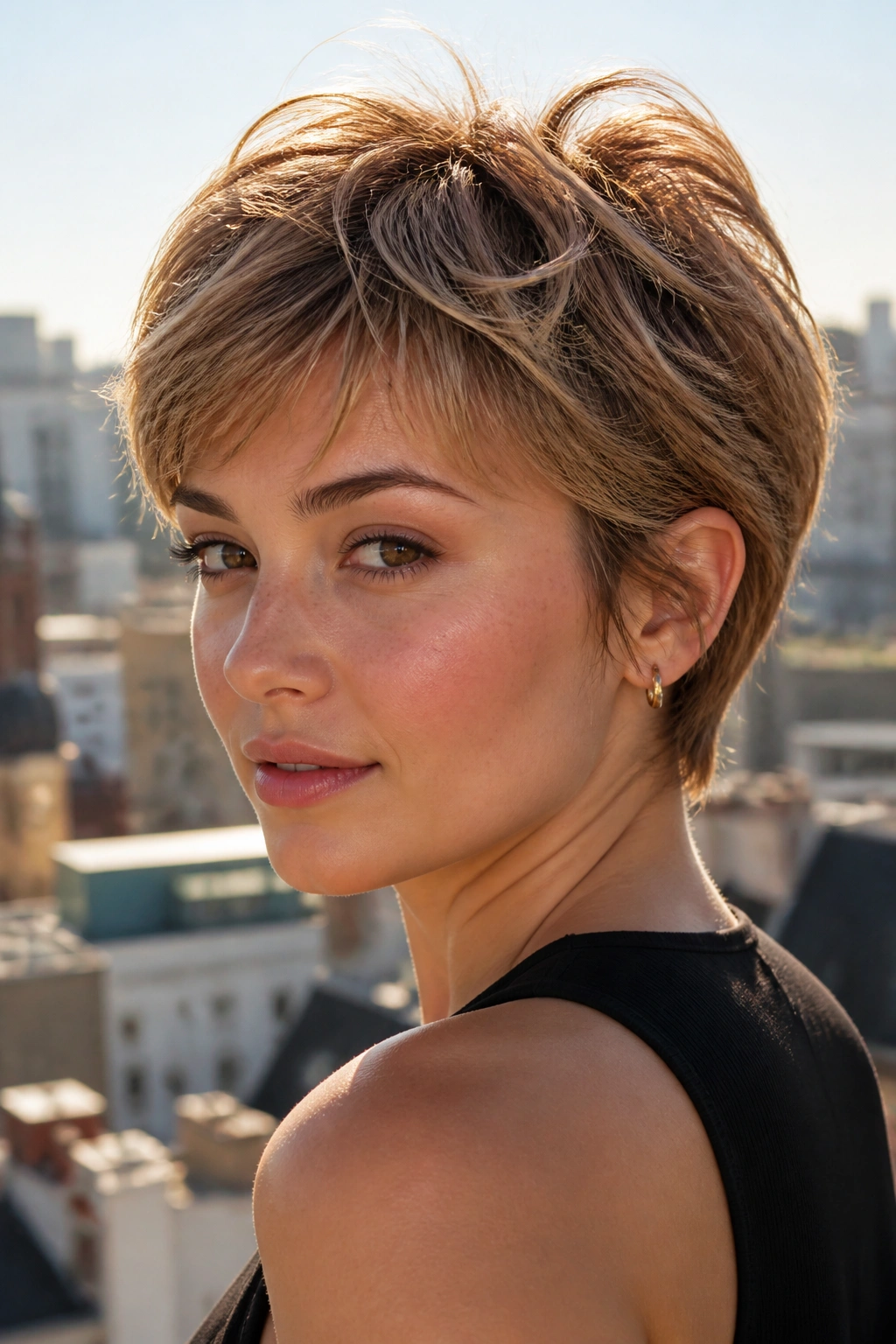
The bixie sits between a bob and a pixie, which makes it a smart choice for round faces that want short hair without losing shape. The feathered crown is the part that saves it. It adds vertical lift right where the eye needs it and keeps the top from lying flat against the head.
A good bixie should stay close around the ears and nape while keeping softness on top. If the sides puff out too much, the face can look broader. If the top gets too long and heavy, the cut loses its lightness. The balance is in the proportions.
The Pieces That Matter Most
- Crown layers that can be pushed upward with your fingers.
- Side pieces that skim the cheek, not sit on it.
- A nape that is neat but not severe.
- A little movement around the fringe, even if it’s tiny.
This cut works especially well if you like a low-maintenance routine. A pea-sized bit of styling cream, a quick blow-dry, and maybe a touch of wax on the top is often enough.
11. Cropped Pixie With a Longer Top
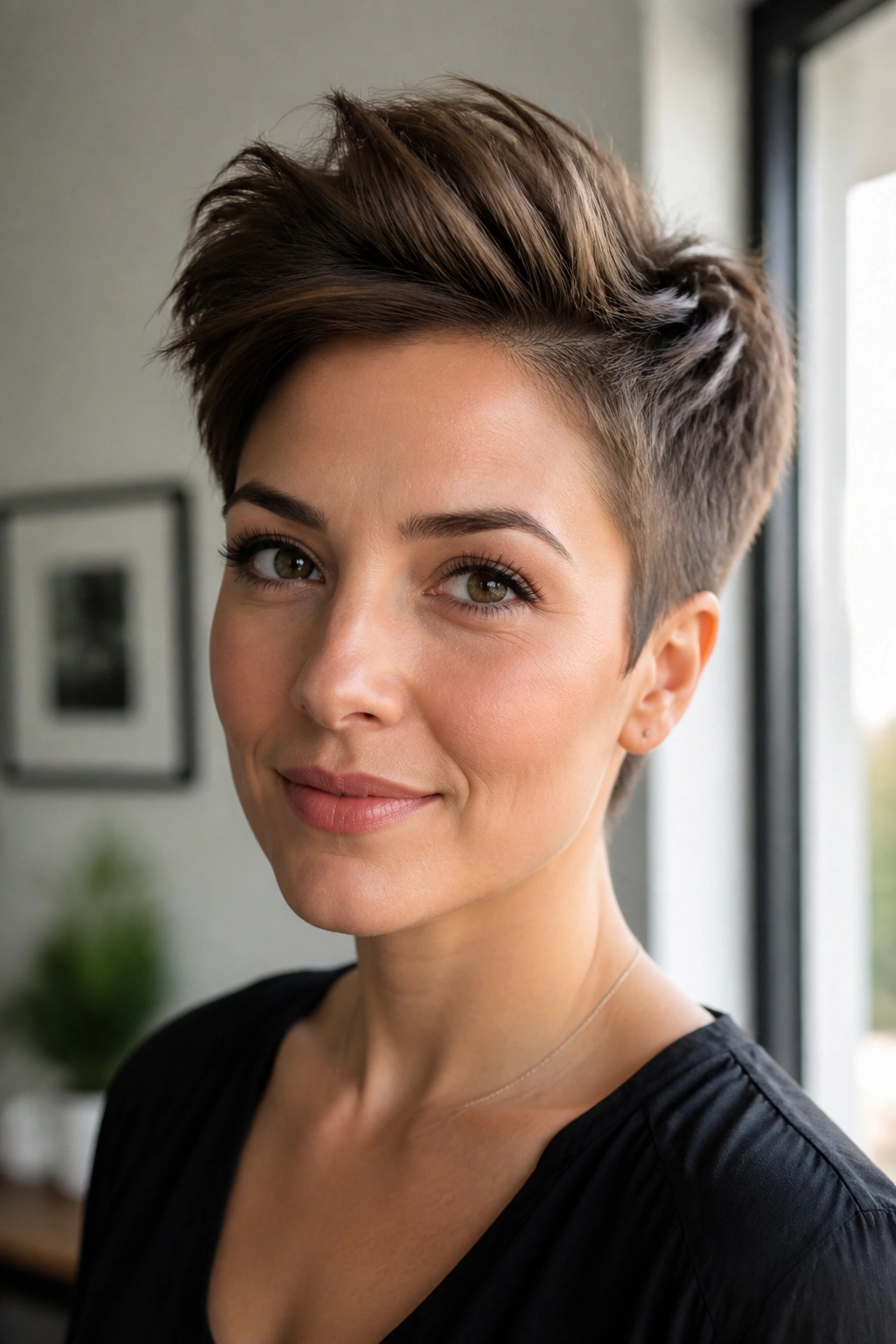
Short hair can flatter a round face better than people expect. The reason is the line. A cropped pixie with a longer top creates visible height, which lengthens the face in a way that long hair sometimes fails to do. You get open cheeks, a strong jawline, and a shape that feels clean.
The sides should stay close enough to the head that they do not widen the cheek area. The top can be swept up, forward, or slightly to one side, depending on your hair texture. What you do not want is a flat, uniform top. That just makes the haircut sit there.
This style is a good fit if you like structure and do not mind using a little product. Matte paste gives separation. A lightweight gel can give shine, but too much of it makes the look stiff. Keep the front pieces soft and move the top around until the silhouette feels balanced.
Short does not mean plain. Not if the shape is right.
12. Side-Swept Pixie With Tucked Sides
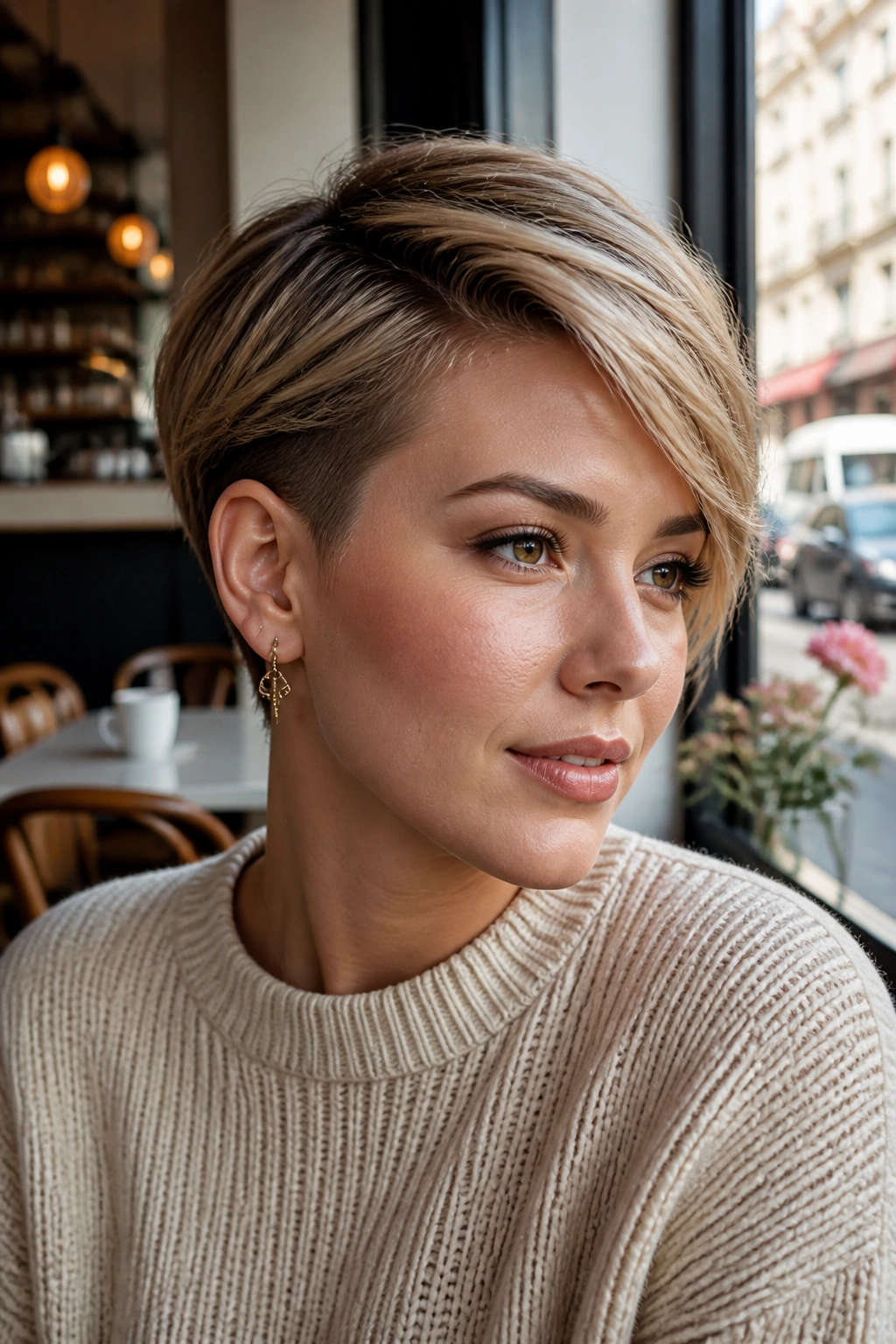
Want short hair without making the face look wider? Go asymmetrical. A side-swept pixie with tucked sides gives one side more length while the other side hugs the head a bit closer, and that difference adds shape immediately.
The sweep across the forehead is doing a lot of work. It draws the eye diagonally, which is exactly the kind of line that helps soften a round face. If the fringe is too heavy, though, it can cover the forehead and kill the effect. Keep it light enough to move.
A tucked side can be slicked back or just clipped behind the ear. Either way, it creates a cleaner edge on one side. That little contrast is what keeps the cut from feeling too round or too cute.
This is one of those styles that looks best when it is slightly imperfect. A tiny bit of pieceiness beats a polished shell every time.
13. Low French Twist With Crown Lift
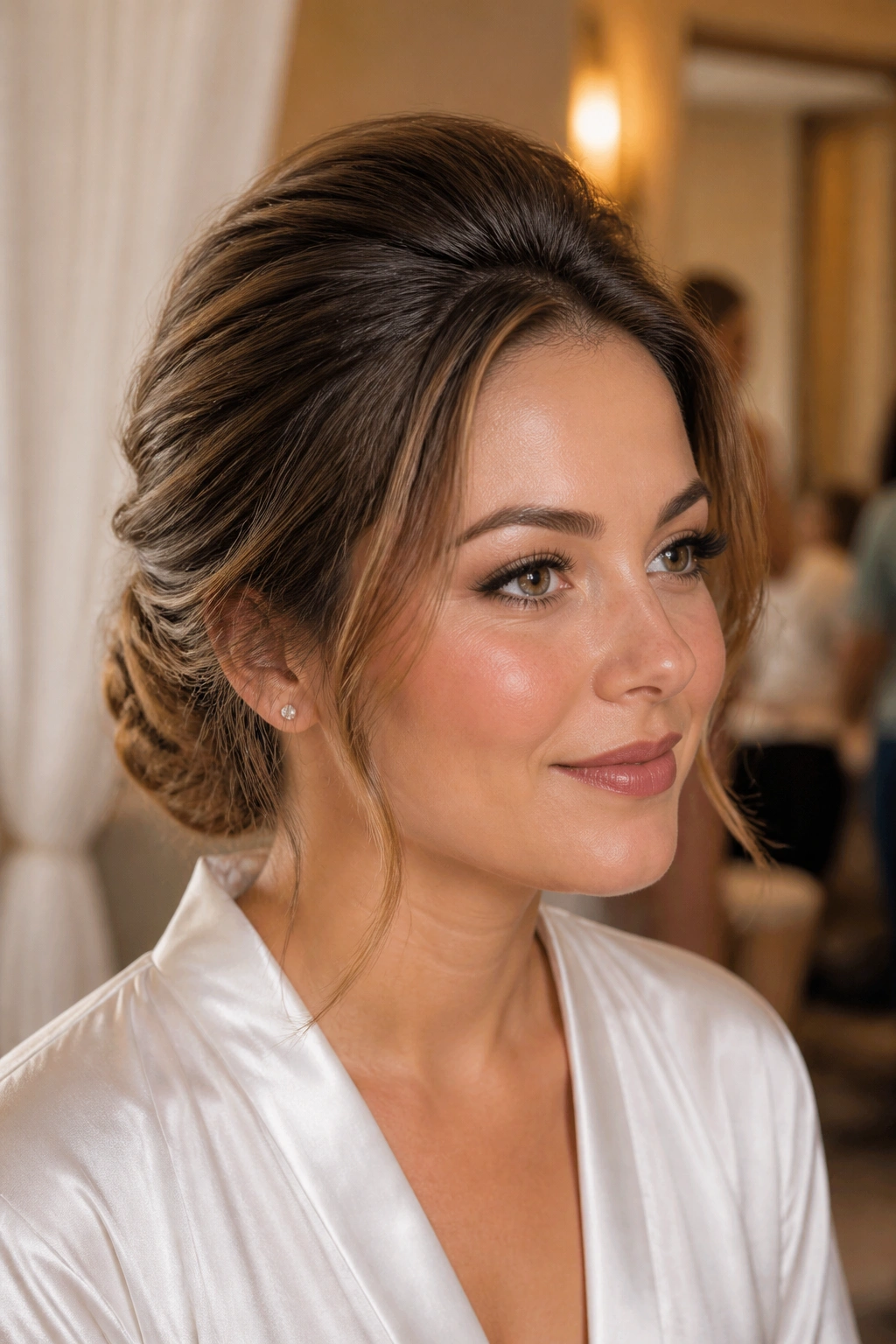
A low French twist can be surprisingly flattering on a round face when the crown has a bit of lift. That lift matters. It gives the head more length and keeps the style from sitting low and wide. The twist itself should stay neat, but not tight enough to pull every hair flat.
The front is where the softness lives. Leave a few slim pieces around the temples or let the front section sweep back instead of being slicked straight away from the face. That keeps the look elegant without turning severe. A round face usually looks better with a little movement near the hairline.
This style works for weddings, dinners, or any occasion where you want something tidy that still feels human. The French twist has that old-school polish, but it gets a lighter, more modern feel when the crown isn’t crushed flat.
One detail people miss: the twist should sit a touch higher than the nape, not directly on it. That tiny lift changes everything.
14. Messy French Chignon With Loose Pieces
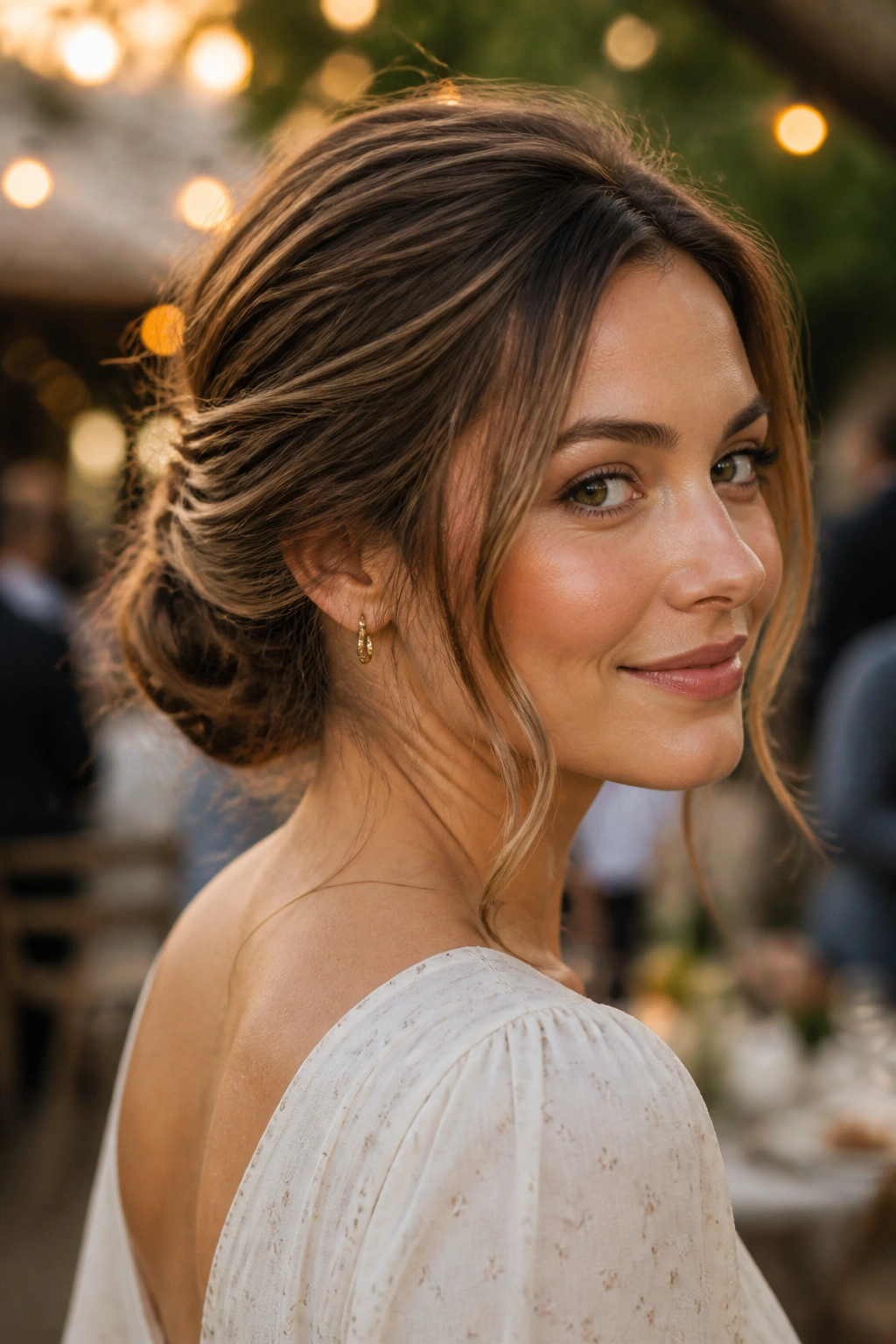
The messy French chignon is one of the easiest updos to wear on a round face because it keeps most of the hair low and out of the cheeks. The looseness around the face stops it from feeling formal in a stiff way. It looks relaxed, but there’s structure underneath.
What Makes It Work
- The bun sits at the nape, not the middle of the head.
- A little volume stays at the crown.
- Slim pieces are left at the temples or jawline.
- Pins stay hidden so the shape looks soft.
You do not want a giant bun here. A smaller, slightly twisted knot is better. Big buns can make the head look wider from the back, which throws off the proportions. The chignon should feel tucked in and smooth, with just enough movement to keep it from looking severe.
A few loose pieces around the face are not decoration. They are part of the shape. They break the circle of the face and make the whole style breathe a little.
15. Sleek Low Bun With a Center Part
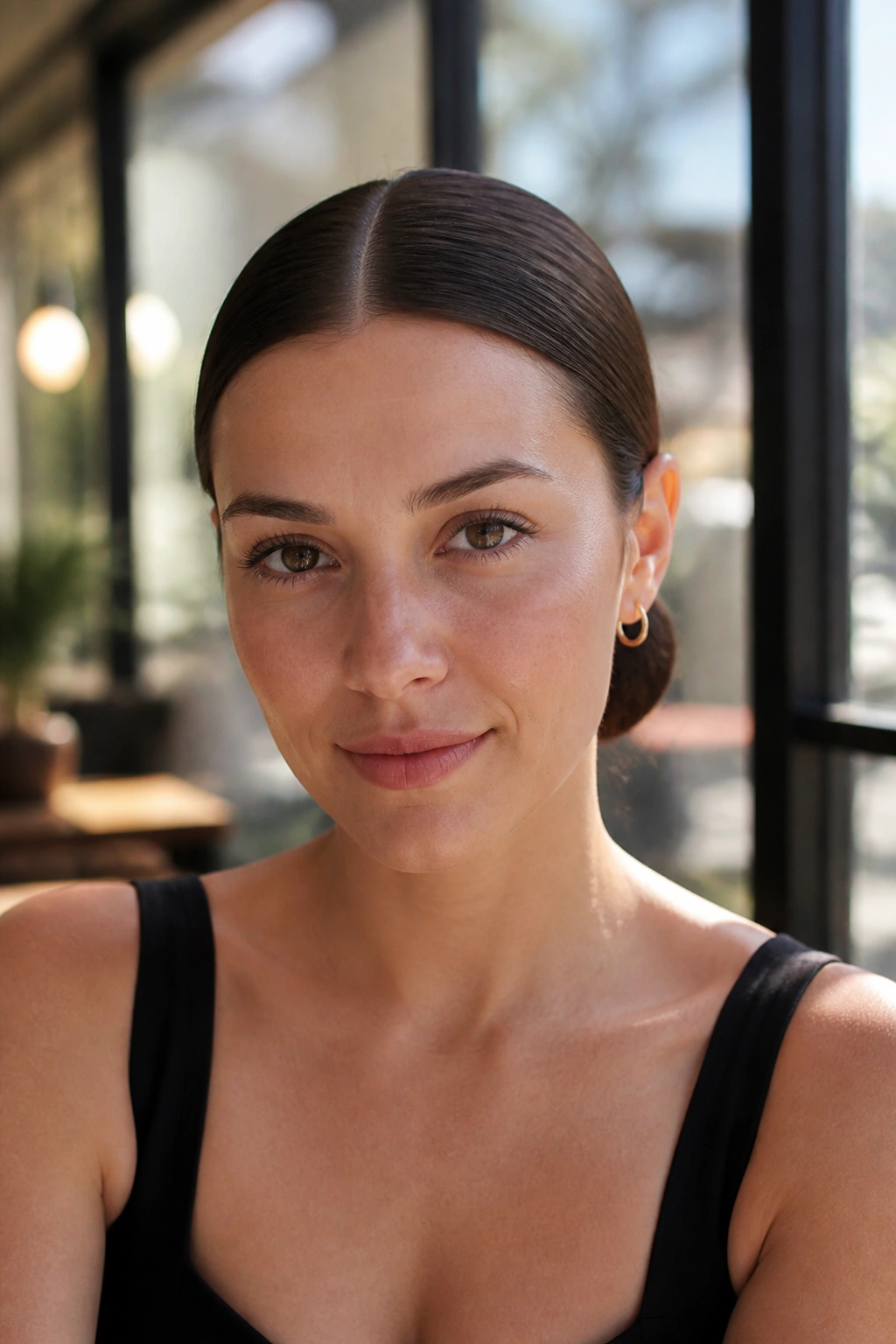
A sleek low bun can be a very good choice for a round face, even though people often assume only messy styles work. The center part helps lengthen the face, and the low placement keeps the shape from adding width up top. It’s clean, plain, and strong.
The bun itself should sit close to the nape. If it climbs too high, the face can start reading wider. A smooth crown helps, but you still want a bit of softness near the hairline so the style doesn’t look pulled to the point of strain. A touch of serum or light cream usually keeps flyaways in line without making the hair look greasy.
This works especially well if you like a minimal look or need something that survives a long day. It also makes earrings and necklines stand out, which is useful when you want the hair to do less and the outfit to do more.
Not every French hairstyle needs movement. Some just need clean placement.
16. High Ponytail With Soft Curtain Pieces
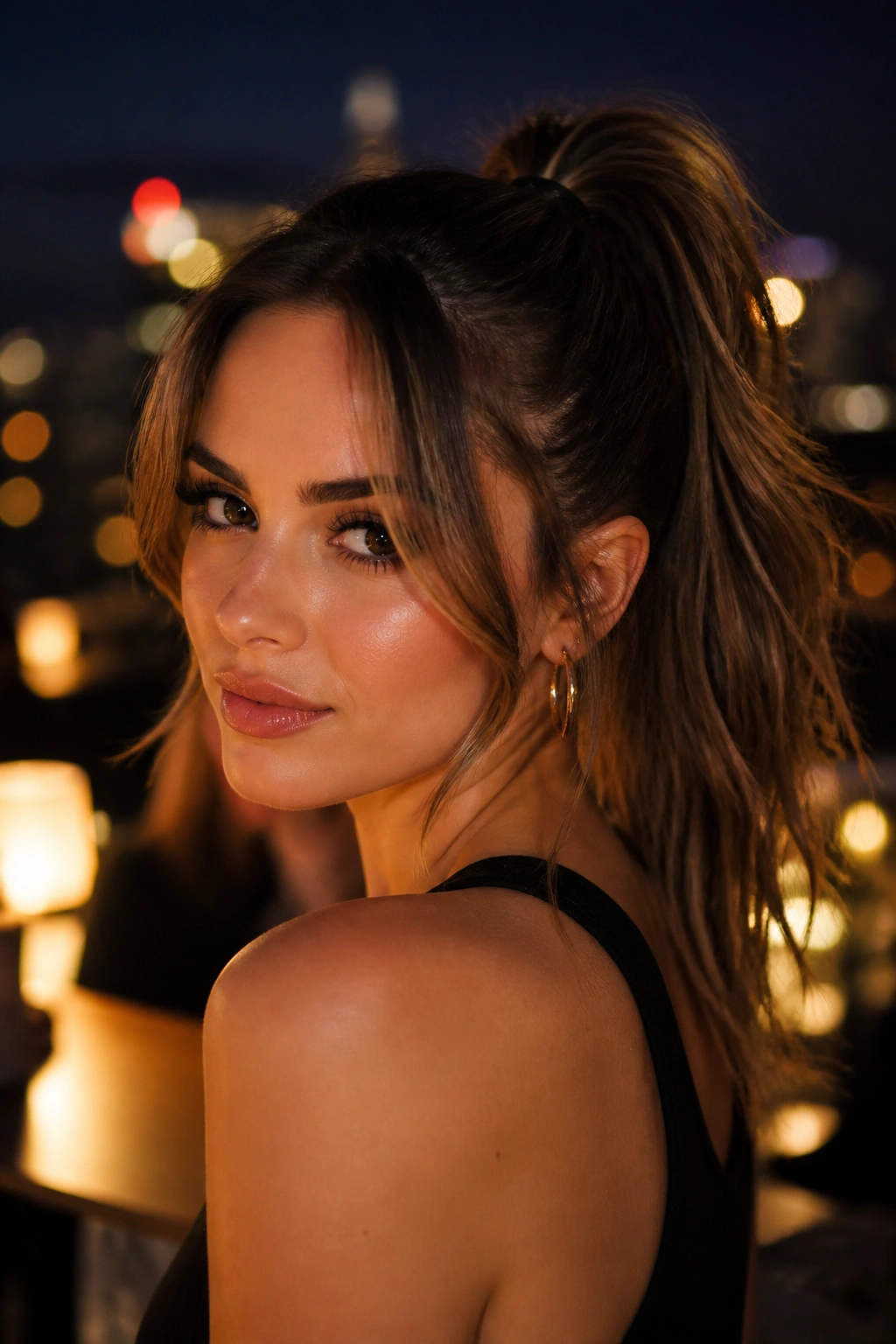
A high ponytail can flatter a round face if it creates lift at the crown and softness around the front. That’s the whole game. The height adds length, and the curtain pieces stop the style from feeling too tight or too sporty.
The Detail That Saves It
- Tease the crown lightly before securing the ponytail.
- Leave two front sections out before pulling hair back.
- Wrap a small strand around the base for a cleaner finish.
- Keep the front pieces loose enough to move when you walk.
If you slick everything back with no softness at the face, the ponytail can feel harsh. A round face usually looks better when the forehead and temples have a little break in the line. The curtain pieces do exactly that.
This is a strong choice for a night out or any situation where you want energy and a bit of lift. It has more edge than a low ponytail, but it still feels feminine and polished when the front stays relaxed.
17. Low Ponytail With a Wrapped Base
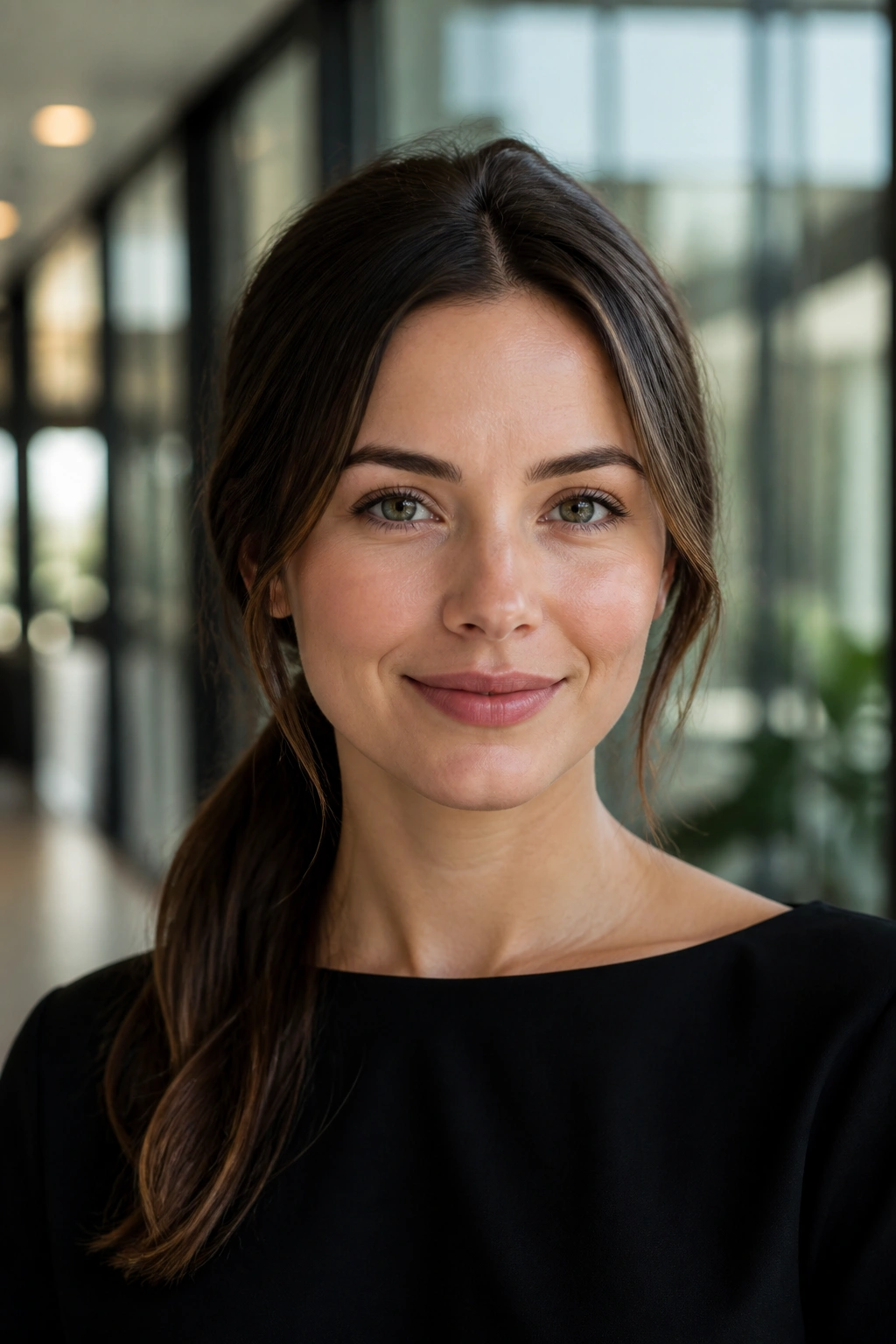
Why does a low ponytail work so well on some round faces? Because it keeps the emphasis low and long instead of broad and high. The eye follows the ponytail down the neck, which gives the face a more stretched look. A wrapped base makes the whole thing look finished.
The shape should not be bone-tight. A little crown softness is useful here, and a few gentle bends through the ponytail keep it from looking too severe. Think smooth, not flat. There’s a difference, and it shows.
If your hair is fine, a low pony can look thin unless you add a little texture first. A quick wave or a bit of dry shampoo at the roots helps. Thick hair benefits from a low pony because it controls volume without crushing the shape.
This is the kind of style that reads as simple but never boring. The placement does the work.
18. Half-Up Knot With Loose Waves
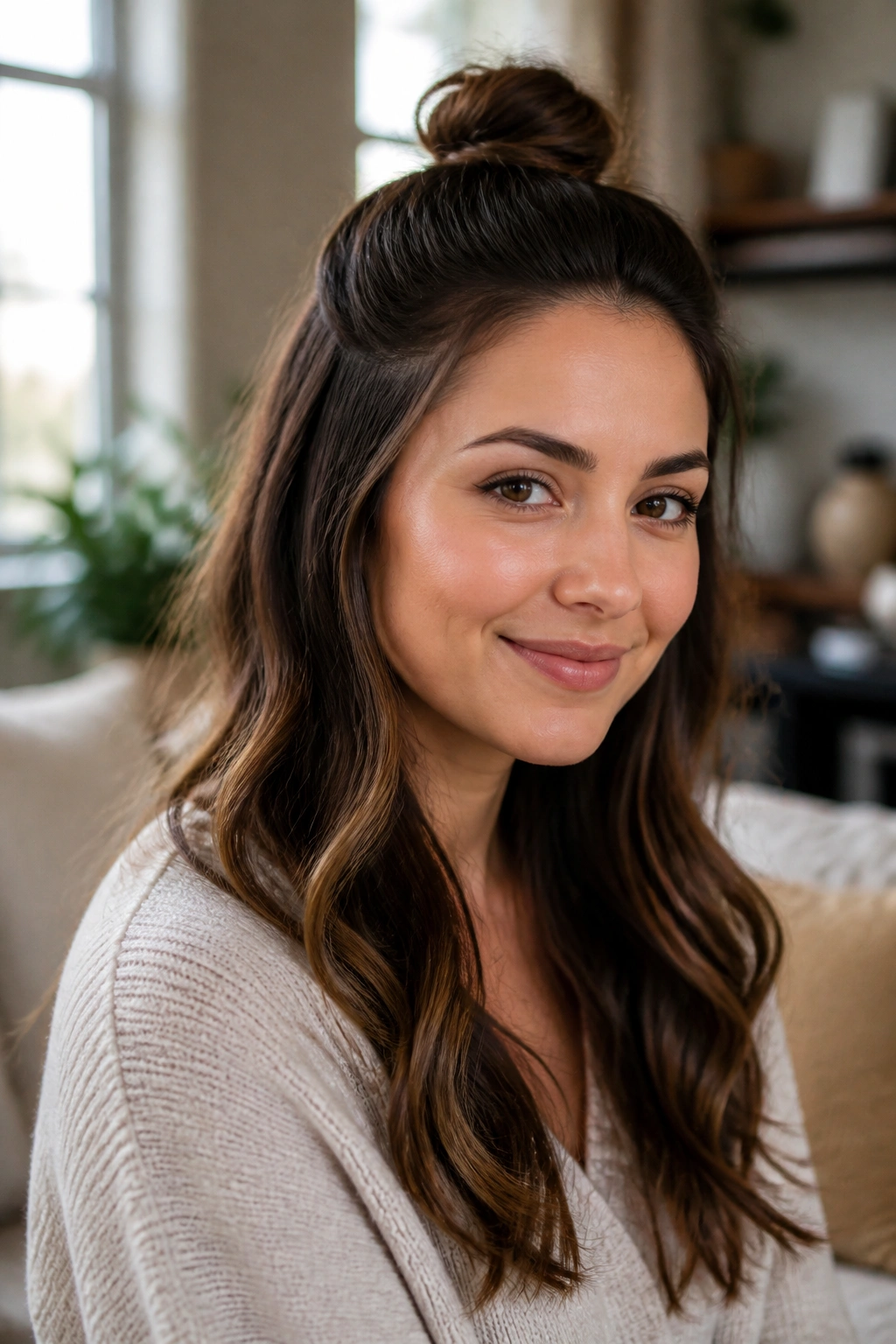
A half-up knot is a good middle ground when you want hair off your cheeks but still want the length to show. On a round face, that matters. The top section gives you a bit of lift, while the loose waves keep the lower half from feeling heavy.
Keep the knot small. A giant top knot can throw off the proportions and push everything upward in a way that makes the face seem rounder. A compact knot sits better and feels easier to wear. The rest of the hair should stay loose, with a little bend rather than stiff curls.
This style is especially useful when your hair is in that in-between stage — not quite short, not quite long, and slightly annoying to manage. The half-up section keeps it off the face. The waves keep it from looking like you just gave up.
A little undone looks right here. A lot undone can look unfinished.
19. Half-Up Twist With Volume at the Crown
This is the version that feels a bit dressier than the knot. Twist two front sections back, pin them together, and leave enough lift at the crown that the whole head gains height. That height is what makes it flattering on a round face.
How to Keep It Balanced
- Lift the crown before pinning, not after.
- Twist the sections loosely so they do not pull the sides flat.
- Leave the lower hair soft and brushed out.
- Keep the pin hidden under the twist so the finish stays clean.
The nice thing about this style is that it works on straight hair, wavy hair, and even second-day hair. It doesn’t need perfect texture. It just needs a bit of air and some room around the face.
If your cheeks are full, keep the twist above the cheekbone line. Too low, and it can sit right where the face is widest. Too high, and it loses its easy feel. The middle zone is where this style gets good.
20. Loose French Braid Over One Shoulder
A loose French braid over one shoulder pulls the eye diagonally, and that diagonal line is flattering on a round face in a way a center braid often isn’t. The side placement matters as much as the braid itself. It adds shape without making the style too busy.
The braid should start high enough to create interest, but not so high that it bunches the hair at the crown. Keep the braid relaxed. A tight braid can look severe and small. A slightly loosened braid with a few bits pulled free looks softer and more modern.
This is a smart choice for thicker hair because it controls volume without flattening it. It also works on hair that’s a bit rough or second-day textured, which is often when braid styles look best anyway. If you want, leave a few face-framing pieces out before you start braiding.
There’s something nice about a braid that looks like it was done without a mirror. Not sloppy. Just human.
21. Crown Braid With Wispy Front Pieces
A crown braid can be tricky on a round face because the braid itself forms a circle. The fix is simple and worth doing: keep the braid soft, and leave wispy front pieces around the forehead and temples. Those loose pieces break up the halo effect and keep the face from feeling enclosed.
The braid should not be built too thick. A chunky braid around the head can add more width than you want. A narrower braid, pinned with a little space above the hairline, sits better. You still get the romantic look, just without the heavy frame.
What to Keep Soft
- The front hairline.
- The temple pieces.
- The area just above the ears.
- Any small sections near the nape.
This style is lovely for events, but it can also work for a normal day if you keep it loose. A crown braid does not have to look precious. The best ones feel slightly worn-in, as if they loosened up naturally while you were moving around.
22. Braided Low Ponytail With Texture
A braided low ponytail gives you the polish of a ponytail and the structure of a braid, which is a very practical mix for round faces. The low placement keeps the shape long, while the braid adds texture so the style doesn’t fall flat against the head.
If your hair is fine, this is a strong option because the braid creates the illusion of more body. If your hair is thick, it keeps everything neat without making the style too bulky. The key is to start with hair that has a little grip. Clean, silky hair can slide apart. Dry shampoo or a light texture spray helps.
You can keep the top smooth and the braid slightly pulled apart at the ends. That balance makes the style feel softer and more French, less strict. A tied ribbon or a wrapped base can finish it off without making it look overdone.
It’s a good “I need my hair out of the way, but not in a boring way” style.
23. Rounded Blowout With a Side Part
A rounded blowout can be one of the most flattering French hairstyles for round faces because it creates movement that starts near the cheekbones and curves downward. The side part adds asymmetry, and the soft bend through the ends keeps the style from feeling too blunt.
The trick is not to curl the hair under too hard at the cheek. That can puff the widest part of the face. Instead, let the brush lift the roots, then bend the ends gently away from the cheeks or just under the jaw. The shape should look smooth and airy, not stiff and round in the wrong place.
The Tools That Help
- A large round brush.
- A blow-dryer with a nozzle.
- A light mousse or root lift spray.
- A medium-hold finishing spray.
This style has an easy French feel because it looks cared for without looking frozen. It’s clean around the top, soft around the face, and loose enough at the ends to move when you turn your head.
24. Flipped-Out Lob With Soft Bend
The flipped-out lob has a little retro charm, but the French version stays softer than the big, obvious flip. The ends turn out just enough to create motion, and that motion helps draw the eye along the length of the cut instead of across the widest part of the face.
A side part makes this even better, though a slightly off-center part works too. If the lob hits right around the collarbone, the flip at the ends keeps it from feeling heavy. That matters more than people think. A heavy straight lob can sit like a block. A flipped-out one moves.
This cut is especially good if you like a polished finish but don’t want curls. A quick pass with a 1-inch iron on the ends, followed by a brush-through, usually does the job. Keep the front pieces a little longer than the rest so they skim the cheek instead of landing on it.
It’s a simple shape. That’s why it works.
25. Straight Lob With a Center Part and Face-Framing Pieces
A straight lob does not have to be flat, and it does not have to be severe. On a round face, the center part helps create a clean vertical line, while face-framing pieces keep the shape from feeling too blunt. The ends can stay fairly straight, but they should not be thick and dense all the way across.
If the hair is one solid sheet, the face can look wider. So the front pieces matter. They should start a little below the cheekbone or graze the jaw, depending on how much softness you want. That small break in the line keeps the cut from feeling heavy.
This look is best when the hair has a glossy, healthy finish. A little smoothing cream goes a long way. Too much heat styling can make it look stiff, and stiff is not what this cut wants. The whole point is clarity with movement at the edges.
For a round face, straight hair works when it has shape. Not when it lies there.
26. Long Hair With Butterfly Layers
Butterfly layers are a smart way to keep long hair from dragging a round face downward in the wrong way. The shorter layers around the front give lift near the cheekbone and chin, while the longer layers keep the length intact. It’s a useful mix if you want to keep your hair long but still make your face look a bit more sculpted.
Where the Layers Should Sit
- The shortest front pieces can land around the cheekbone or chin.
- The longest visible layers should blend into the body of the hair.
- The back length should stay substantial so the style doesn’t thin out too much.
- The crown should keep enough weight to avoid a spiky finish.
This cut looks best with a soft blowout or large waves that show the separation between the layers. If the hair is worn pin-straight, the shape can disappear. If it’s curled too much, the face can pick up extra width. The middle ground is where it works.
Butterfly layers are one of those things that sound dramatic and, in practice, just make hair easier to live with.
27. Midi Cut With Tucked Ends and a Side Fringe
The midi cut is the quiet one here. It doesn’t shout. It just works. Tucked ends keep the bottom of the hair neat around the neck, while a side fringe sends the eye diagonally across the face, which helps soften roundness without forcing anything.
This is a good choice if you want a cut that looks neat behind the ears, in a scarf, or under a coat collar. The side fringe should stay light enough to move and long enough to blend into the rest of the cut. Heavy fringe would fight the shape. A side sweep keeps it relaxed.
The ends can be bent inward a little, but not too much. If they all curl under at the same point, the shape gets heavy. A soft tuck, maybe with one side slightly flipped and the other side straighter, gives the cut a more lived-in feel.
It’s understated. That’s the appeal.
28. Tousled Updo With Nape Volume
A tousled updo can be one of the most flattering formal styles for a round face because it keeps the neck open and lets the eye see upward movement without making the whole head look tall in a stiff way. The nape volume matters here. It gives the back of the style some body, which keeps the updo from looking pinned too tightly to the scalp.
Loose tendrils around the face help, but they should be placed on purpose. A few slim pieces near the temples or jawline soften the outline without hiding the face. If the pieces are too thick, the style starts to look fussy. If there are none, the face can feel bare. The middle ground is usually best.
This is the kind of style that works for weddings, dinners, or any event where you want polish but still want to look like yourself. Not lacquered. Not stiff. Just finished.
A round face does not need to be hidden behind hair. It needs shape around it.
Final Thoughts
French hairstyles for round faces work best when they keep the face open and the lines moving. A little height at the crown helps. So does a side part, soft fringe, or ends that don’t stop right on the cheeks.
The funniest thing about these cuts is how small the winning details are. A half-inch change in length. A shift in the part. A softer bend at the ends. That’s often enough to change the whole shape.
If you’re choosing between two versions of the same cut, pick the one that gives you either more length below the cheek or more lift above it. That single decision does more for a round face than most people expect.
