



Round faces do not need to be hidden. They need shape.
The best tousled hairstyles for round faces work by changing the way the eye moves: up, across, or diagonally instead of straight out to the sides. A little crown lift helps. So does a side part. So do pieces that fall below the cheekbones instead of stopping right at them.
Texture matters, too. Tousled does not mean messy in a lazy way. It means the hair has bends, lifted roots, broken-up ends, and enough movement to keep the outline from feeling too soft or too wide.
The cuts and styles below do that in different ways—some with short, piecey layers, some with longer lengths, and some with fringe that quietly changes the whole balance of the face.
1. Tousled Pixie for Round Faces
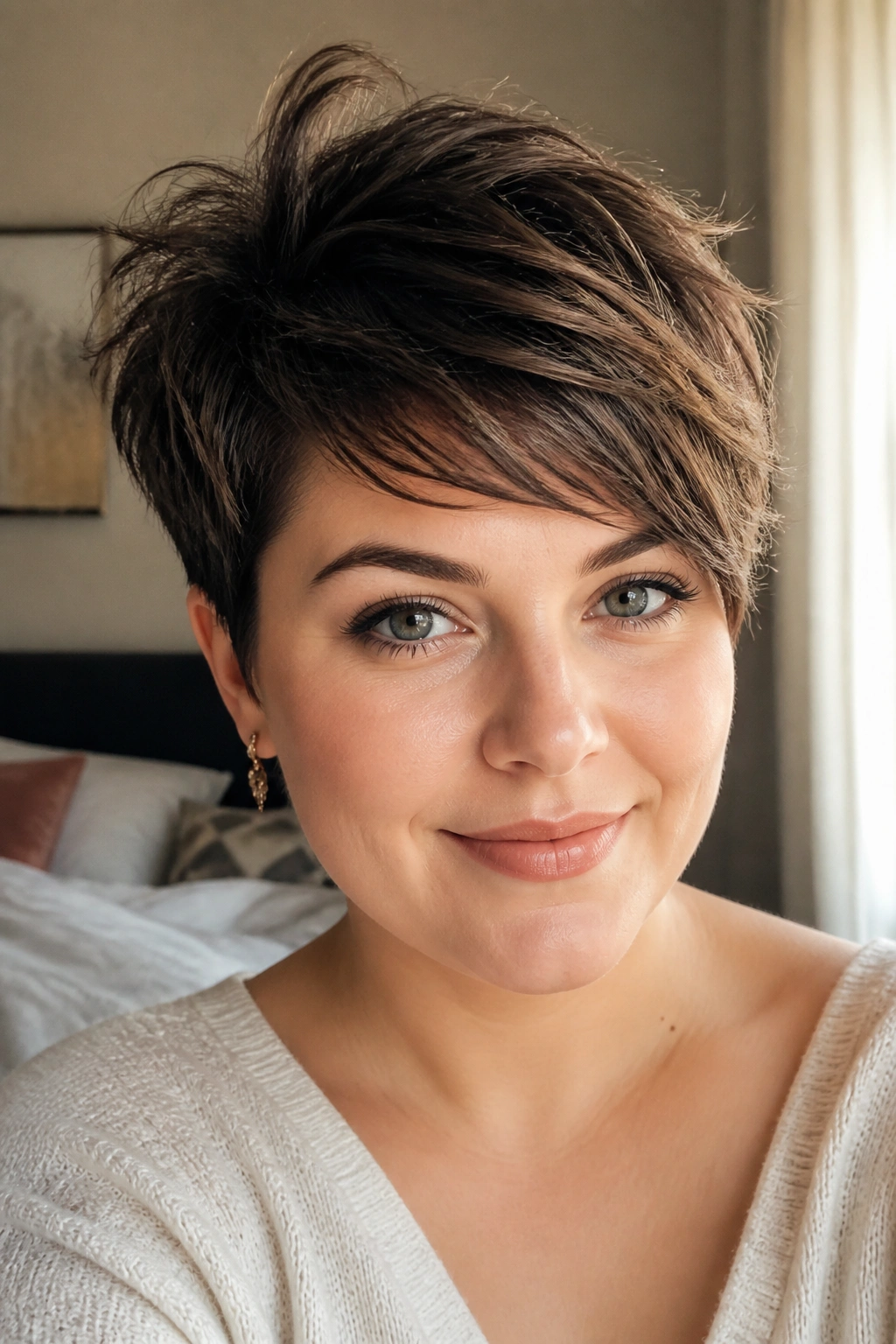
A pixie can flatter a round face fast when the top has enough length to build height. The mistake is making it too even. Flat top, wide sides, done. That shape can make the face feel fuller than it is.
Why It Works
Height at the crown pulls the eye upward, which is the whole trick here. A little lift changes the proportion right away, and the face reads longer without looking forced.
What To Ask For
- 2 to 3 inches through the top and crown
- tapered sides around the temples and ears
- point-cut ends so the finish looks soft, not blocky
- a side-swept fringe instead of a blunt line across the forehead
How To Style It
Use a dab of matte paste on dry hair, then push the top slightly forward and up with your fingers. Blow-drying with a small round brush gives more lift, but finger-drying works if you want it looser.
Best tip: keep the sides close and the top airy. That contrast is what makes this cut work on a round face.
2. Side-Parted Wavy Bob
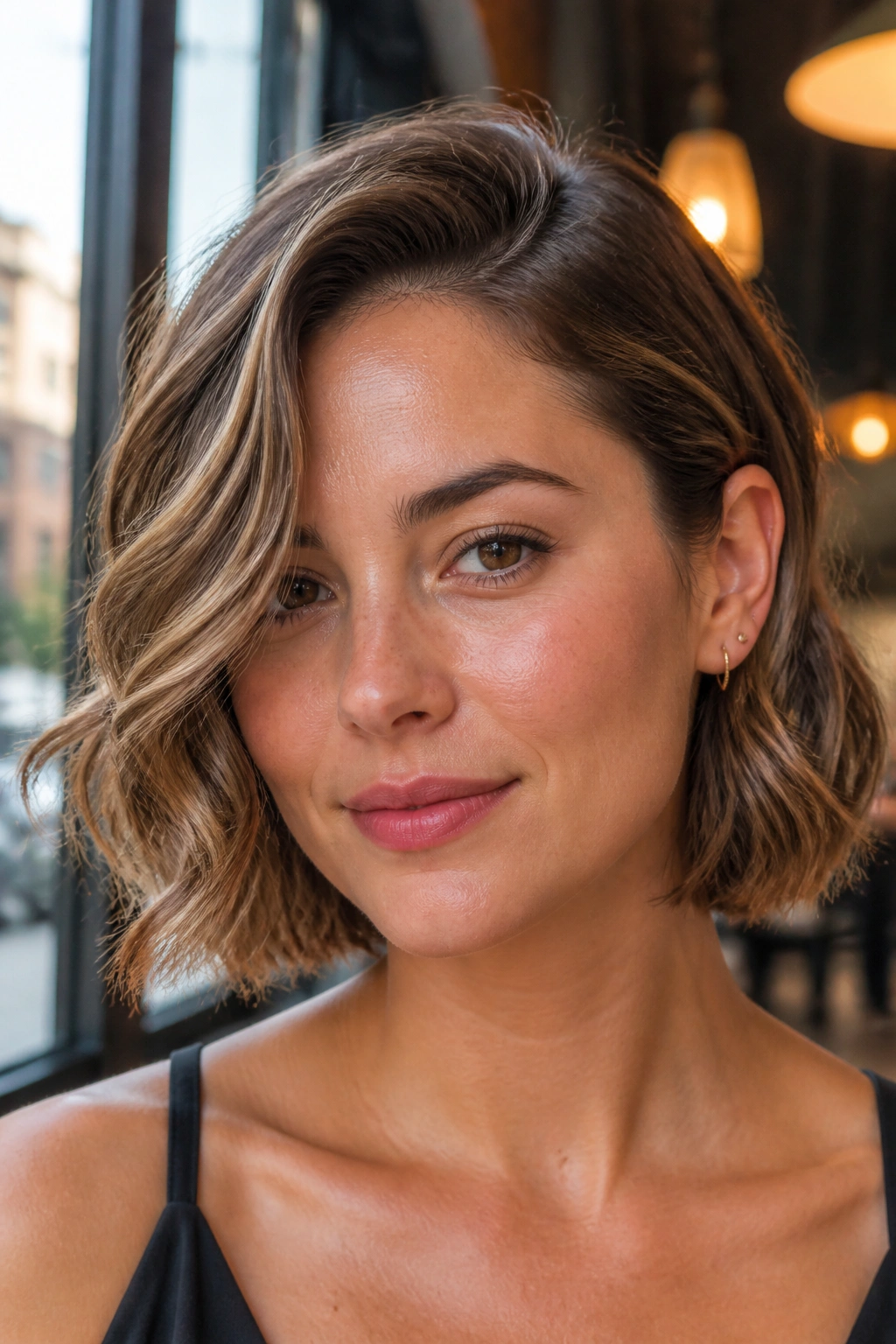
Why does a side part change the whole shape? Because it breaks the face right away.
A bob that hits somewhere between the jaw and the chin can be tricky on a round face if it’s cut too evenly. But a deep or even slightly off-center part shifts the weight, and the waves keep the line from feeling hard. The result is softer around the cheeks and stronger at the top.
I like this version when the wave starts below the eyes rather than right at the roots. That keeps the upper half from puffing out too much. A 1-inch curling iron or a flat iron bend does the job. Curl away from the face on the front pieces, then rake the hair apart with your fingers once it cools.
Tiny shift. Big payoff.
If you want the cleanest shape, tuck one side behind the ear and let the other side fall forward. That little asymmetry does more than people expect.
3. Choppy Shoulder-Length Lob
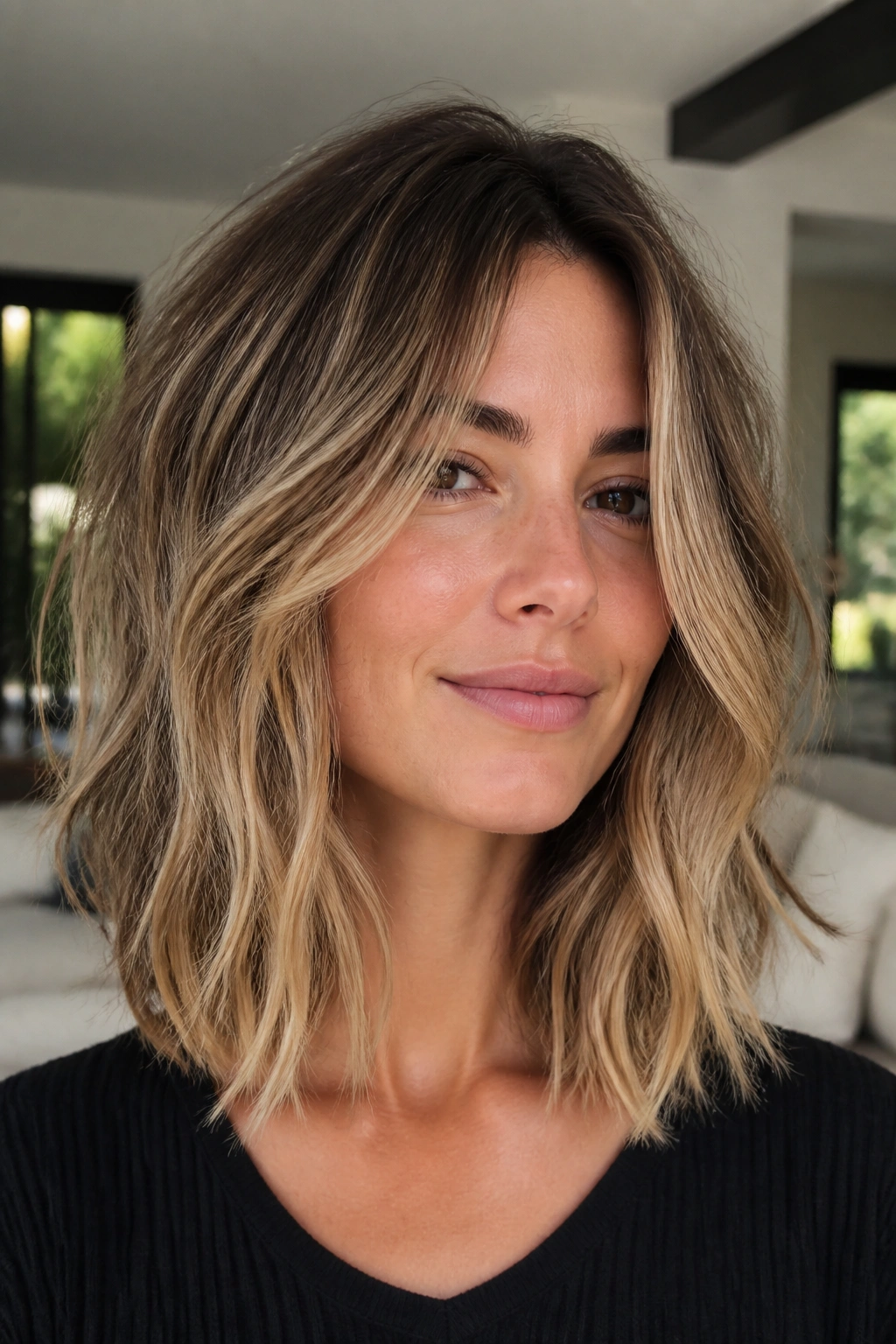
The shoulder-length lob is the haircut I keep coming back to for round faces because it gives you room to work. Too short, and the shape can sit on the cheeks. Too long and one-length hair can feel heavy. This middle zone gives you movement without dragging the face down.
The Cut Details That Matter
Ask for internal layers, not just surface layers. The difference matters. Internal layers remove bulk from inside the shape, so the ends move instead of hanging like a curtain. I’d also keep the front pieces a touch longer than the back—just enough to create a gentle slope.
Styling That Helps
A 1.25-inch iron makes a soft bend that looks better than a tight curl here. Wrap the mid-lengths once, leave the last inch out, and break it up with a light texturizing spray. If you want more lift, flip your part to the opposite side after the hair cools.
The cut should feel touchable, not puffy. If the ends look too round, you’ve lost the point.
4. Curly Shag With Fringe
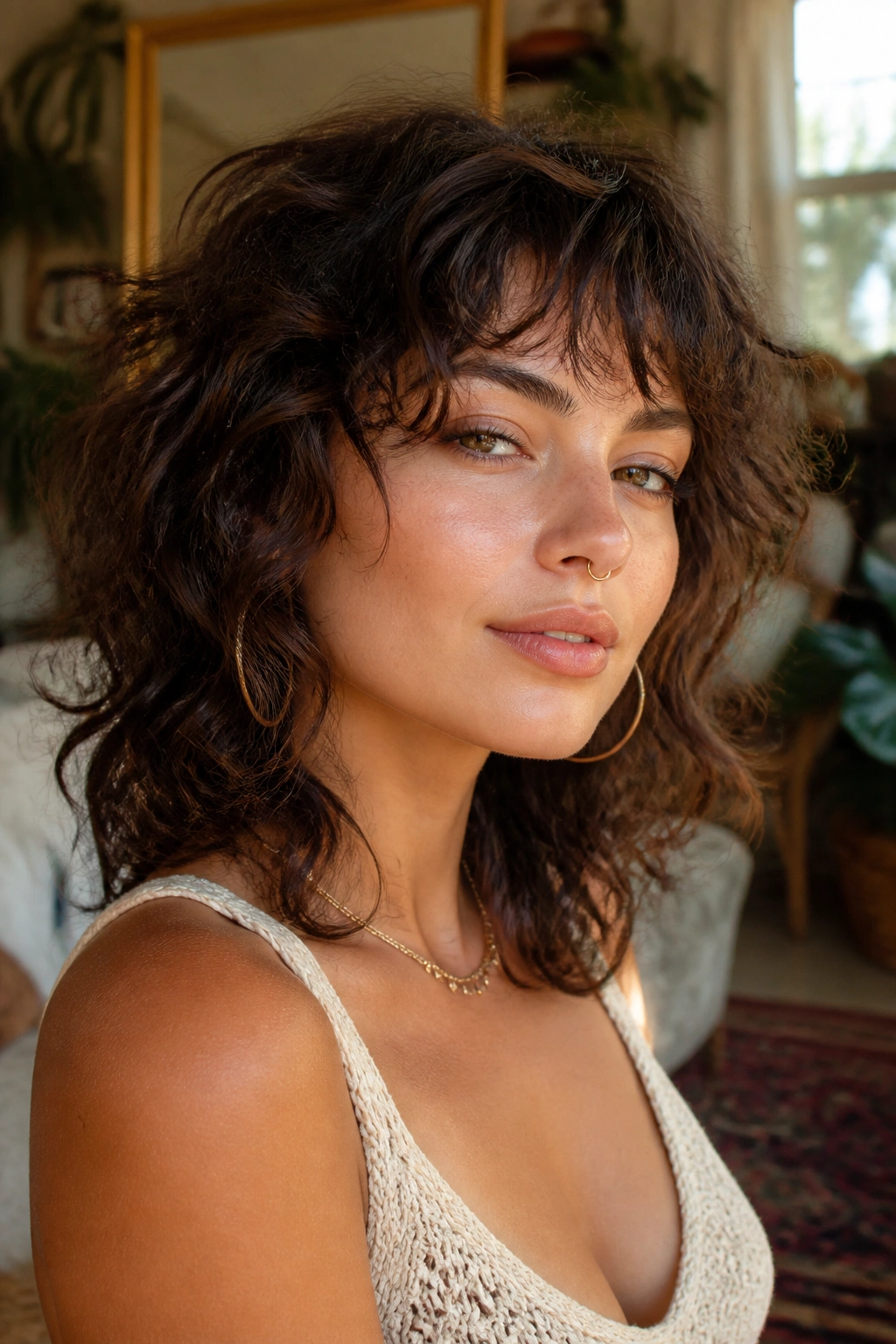
A shag is one of the easiest ways to make roundness feel intentional.
That sounds simple, but it matters. A curly shag works because the layers steal width from the sides and give it back on top. The fringe helps, too, as long as it’s soft and airy. Heavy bangs that sit across the forehead can crowd a round face. A broken-up fringe that falls in pieces is far better.
What To Watch For
- keep the shortest layers away from the widest part of the cheeks
- let the crown keep a little extra length for lift
- cut the fringe in a light arc, not a straight line
- diffuse on low heat so the curls hold shape without getting puffy
This cut is strongest when it looks slightly imperfect. Not frizzy. Just alive. If your curls have a tighter pattern, ask for a dry cut or at least a stylist who knows how your hair behaves once it shrinks.
5. Face-Framing Layers for Round Faces
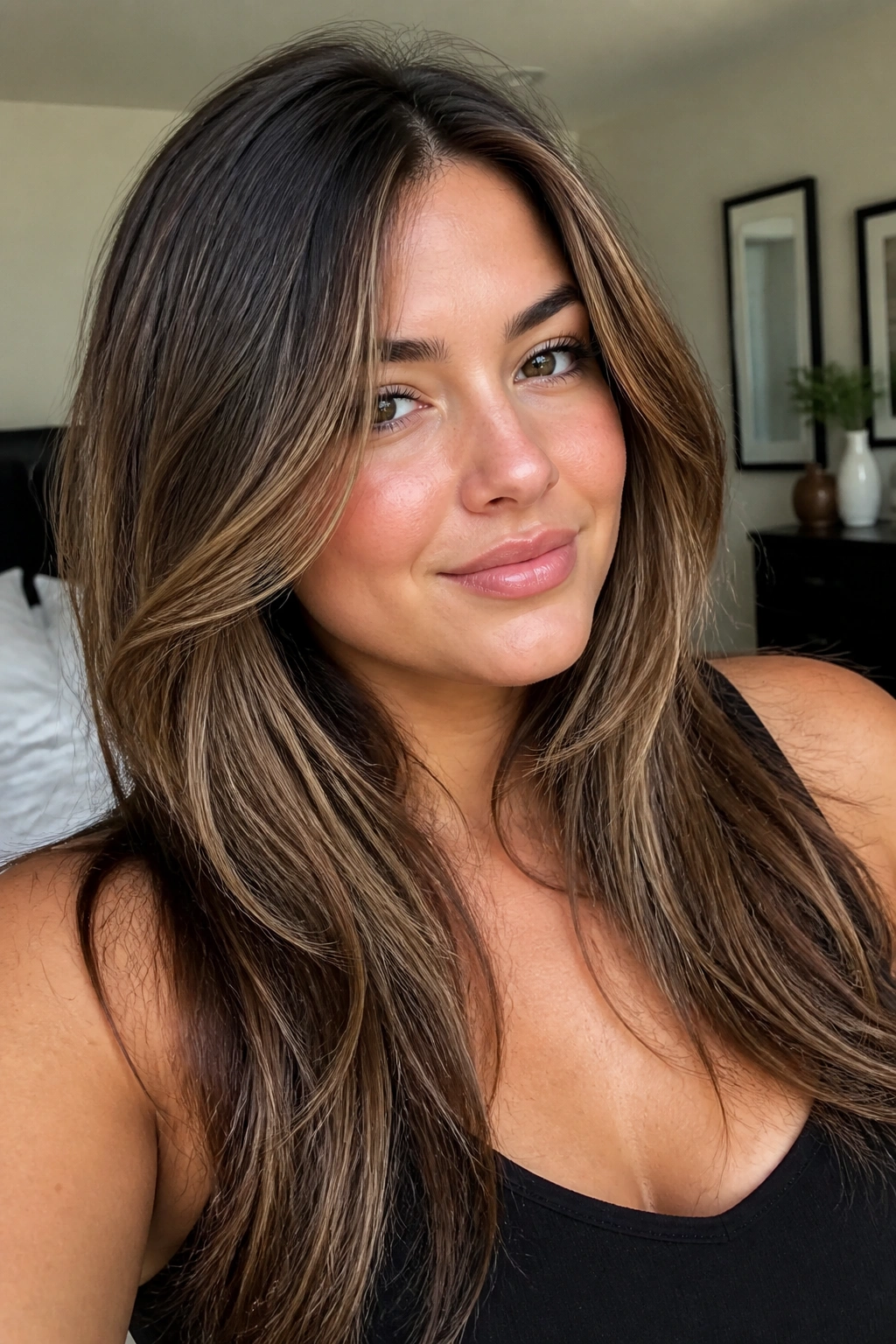
Long hair can work on a round face. It just can’t be lazy.
When all the length hangs straight from the part to the ends, the face can feel wider. Face-framing layers fix that by creating movement where it matters most. The shortest pieces should start somewhere below the chin and sweep toward the collarbone, not the cheekbones. That detail keeps the face open instead of boxed in.
A soft middle part is fine, but I prefer a slight off-center part here because it keeps the front from feeling too symmetrical. A blowout with a medium round brush gives the best shape, though a large-barrel iron works if you want a more relaxed wave. Either way, the front pieces should curve away from the face.
A Good Rule of Thumb
- first layers start below the chin
- longest front pieces hit the collarbone or just under it
- ends stay light, never blunt and heavy
- waves bend away from the cheeks
Long hair like this has a quiet kind of confidence. It doesn’t shout. It just keeps the face looking longer and softer at the same time.
6. Messy French Bob
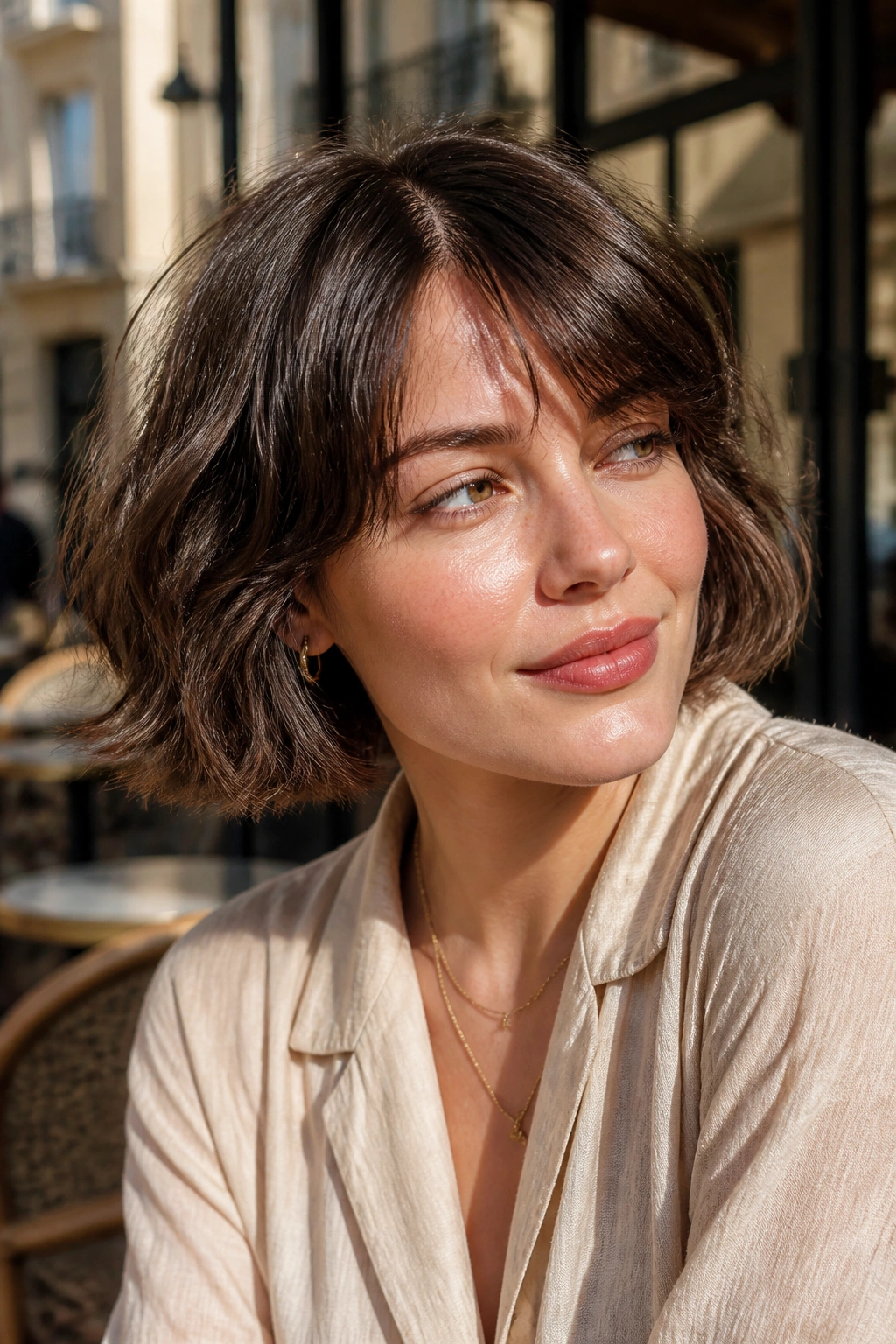
A chin-length bob can work on a round face. The mistake is making it too neat.
The French bob gets its charm from texture, not perfection. On a round face, I’d keep it just a touch longer than the jaw and add a slightly off-center part so the shape doesn’t sit like a circle. The ends should be broken up, and the overall finish should look airy, not round-brushed into a dome.
This cut is especially good if your hair has a bit of natural wave. You can air-dry it with a little mousse and pinch the ends once they’re dry. If your hair is straighter, bend just the front sections with a flat iron and leave the back rougher. That contrast keeps the style from going too tidy.
One more thing: avoid tucking every strand behind the ears. That can make the face feel wider, fast.
7. Textured Bixie Cut
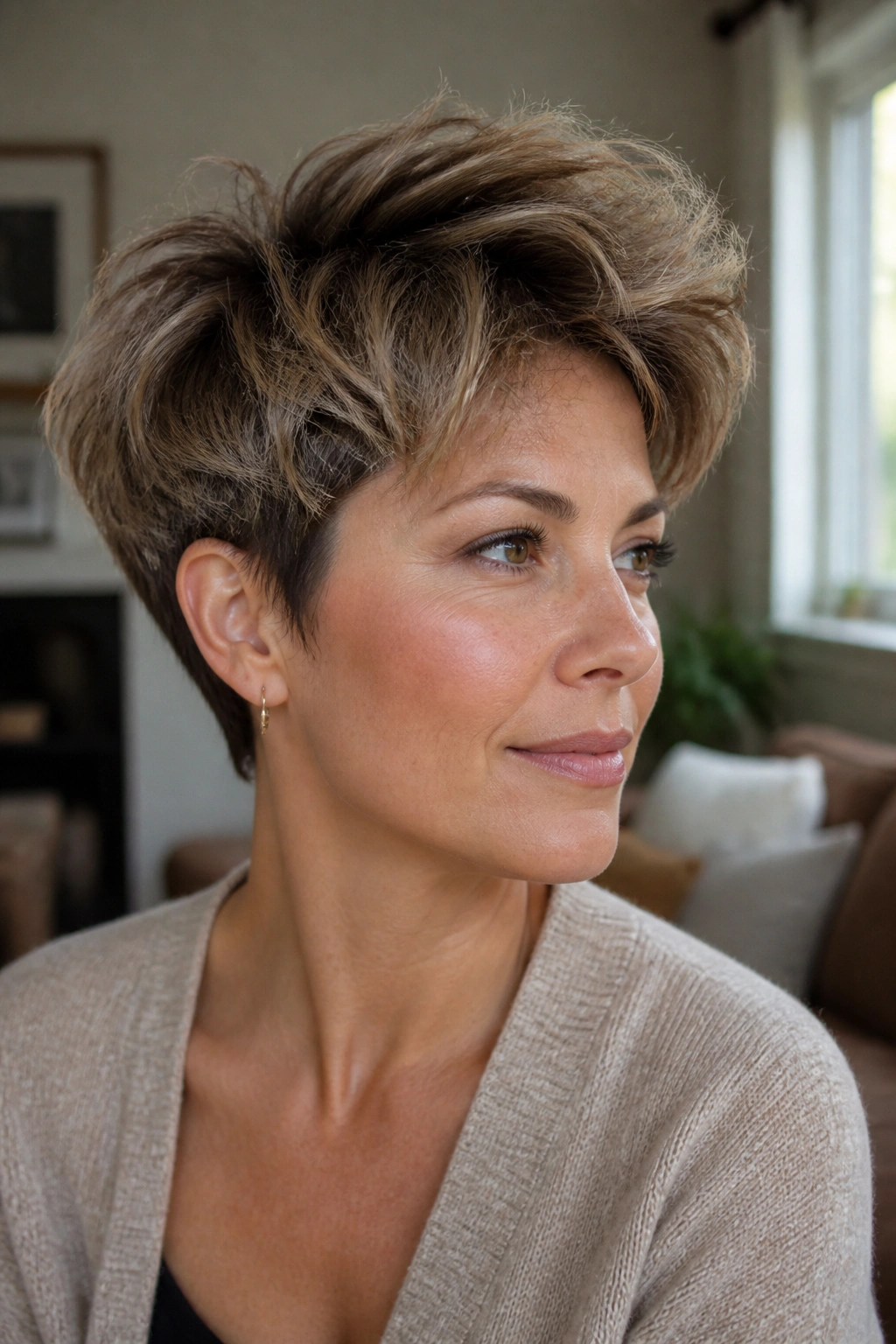
The bixie sits between a bob and a pixie, and that in-between length is exactly why it flatters round faces.
It shows the neck, keeps softness around the ears, and lets the crown carry a little height. A pure pixie can feel too short for some people. A bob can sit too low. The bixie lands in the sweet spot where the shape still looks light but has enough length to move.
How To Wear It
Ask for feathered top layers and a tapered nape. The front can stay a bit longer and sweep across the forehead or cheekbone. I’d keep the texture piecey, not fluffy. A tiny bit of styling cream through the ends is enough if your hair is fine. If it’s thick, use a matte clay and pinch out a few pieces so the shape stays visible.
The best bixie has edge without looking stiff. That’s rare. And worth it.
8. Half-Up Knot With Loose Ends

This is the style I’d reach for on second-day hair, especially if your face shape feels fuller and you want a quick lift.
A half-up knot adds height at the crown, which helps a round face look a little longer. The loose hair left down keeps the style soft. The trick is placement. Put the knot too low and it widens the face. Put it high enough to lift the top, and it starts working.
Pull back the top section from temple to temple, twist it once, and pin it loosely. Then leave a few thin pieces around the face—especially near the temples and just in front of the ears. Those pieces should be soft, not over-curled. You want shape, not ringlets from the ’90s unless that’s the point.
If the knot looks too tight, tug the crown up by a half inch. That tiny bit of looseness changes everything.
9. Off-Center Wave Lob
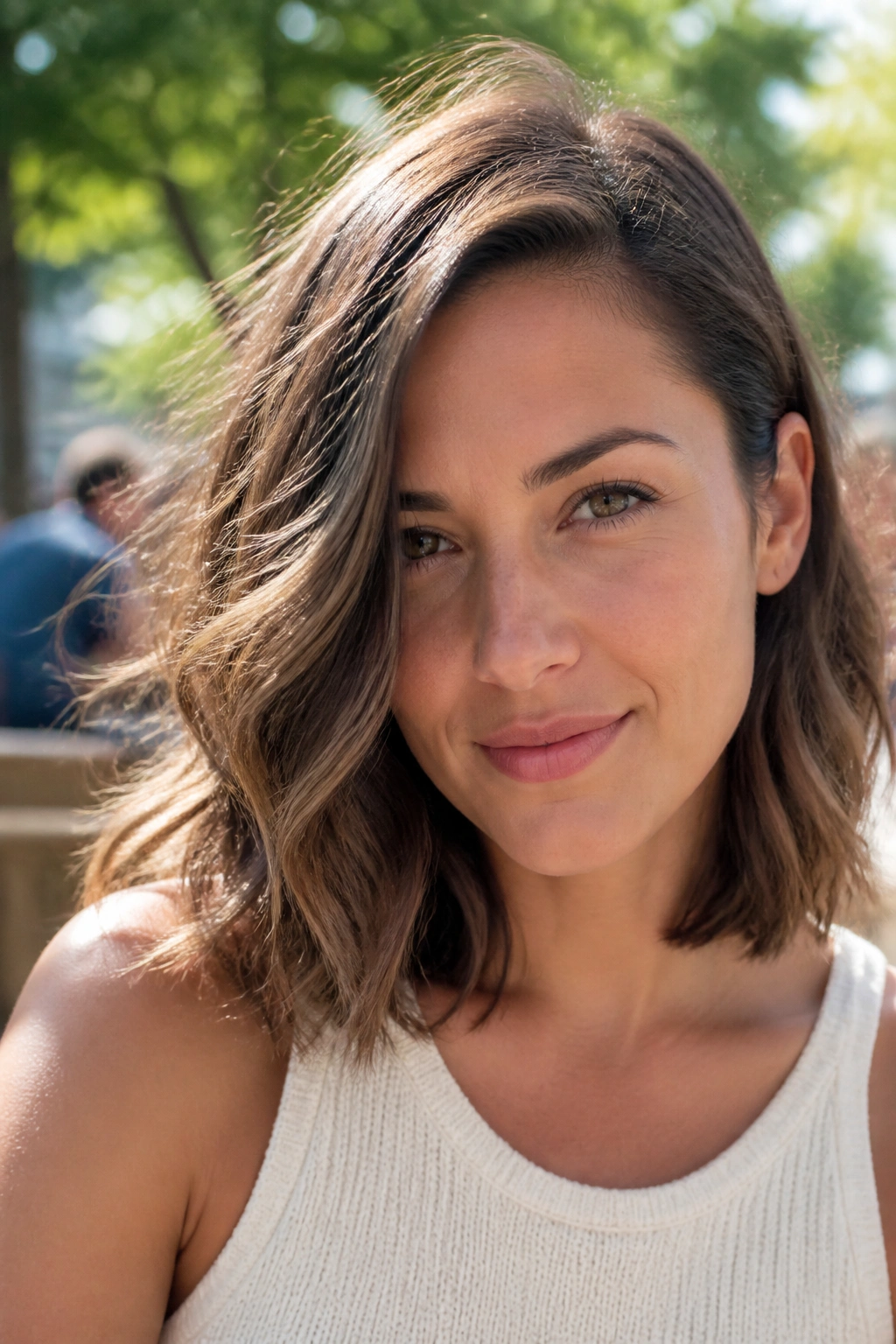
Unlike a blunt lob, this version doesn’t stop the eye.
The off-center wave lob is longer than the classic bob and usually lands somewhere around the collarbone. That extra length helps elongate the face, while the off-center part keeps the shape from feeling too symmetrical. It’s a smart cut for people who want something polished during the day but a little undone by evening.
I like this style with waves that begin around the cheekbone and drop looser toward the ends. Tight curls all the way through can make the shape too round. A 1.5-inch iron or a large curling wand gives a softer finish. Brush it out lightly once it cools, then tuck the smaller side behind one ear.
What makes it different: the length gives you more vertical line, and the uneven part keeps the style from looking boxy.
It’s a quiet kind of flattering. Nothing flashy. Just effective.
10. Curtain Bangs With Undone Ends
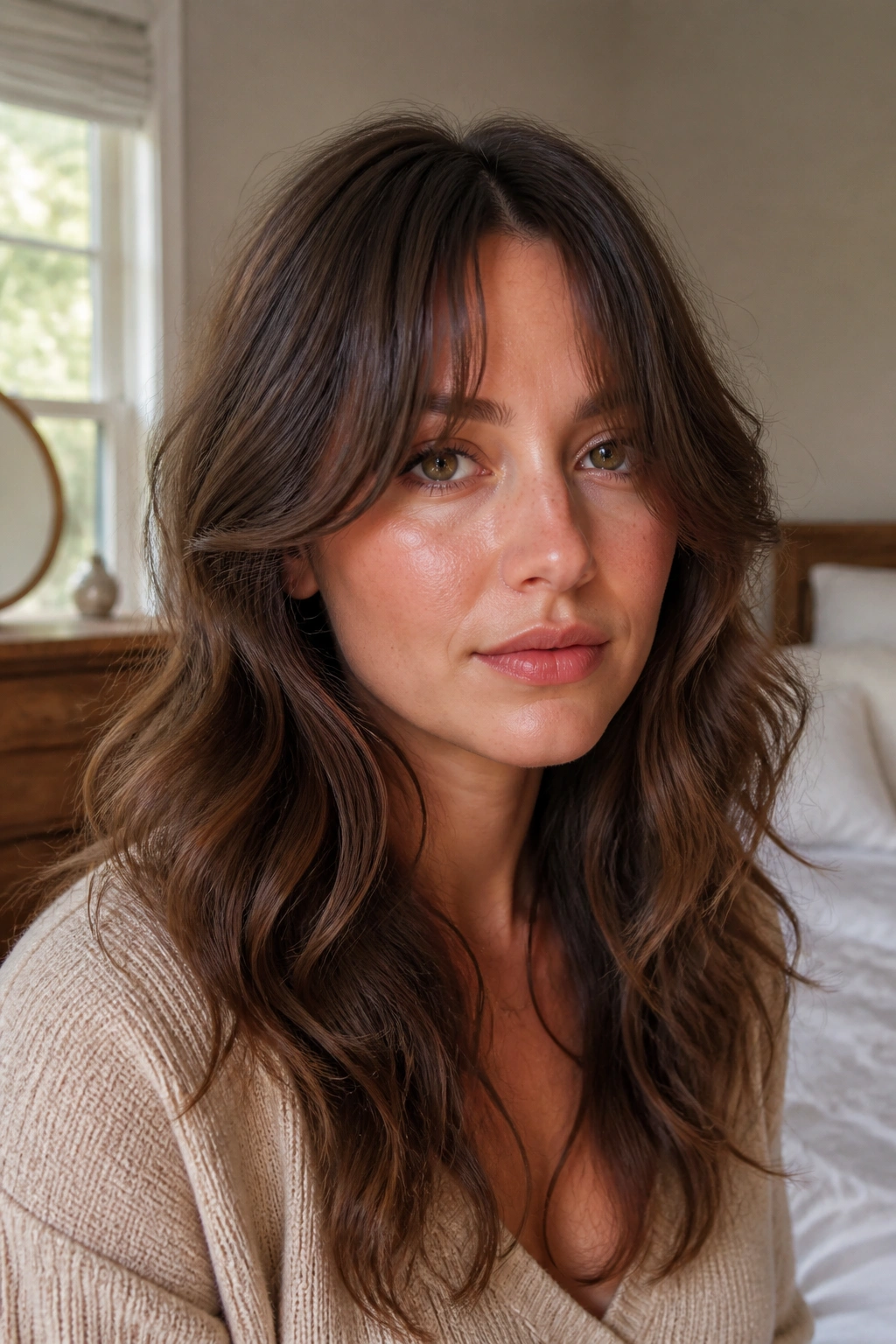
When curtain bangs are cut right, they fall like a soft frame around the face.
That frame matters on a round face because it creates vertical space in the middle and skims the widest part instead of sitting right on it. The bangs should start somewhere around the cheekbone and taper longer at the sides. Short, dense fringe can make the face feel shorter. Curtain bangs usually do the opposite.
The rest of the hair works best with a bit of bend rather than a perfect curl. If the lengths are straight and the bangs are fluffy, the style can tip into old-fashioned territory fast. Blow the bangs away from the face with a round brush, then let them cool before touching them. That cooling step is annoying, yes. It also matters.
Avoid this: cutting the center too short. That can make the forehead feel crowded and the cheeks look broader by comparison.
11. Tousled Top Knot With Tendrils
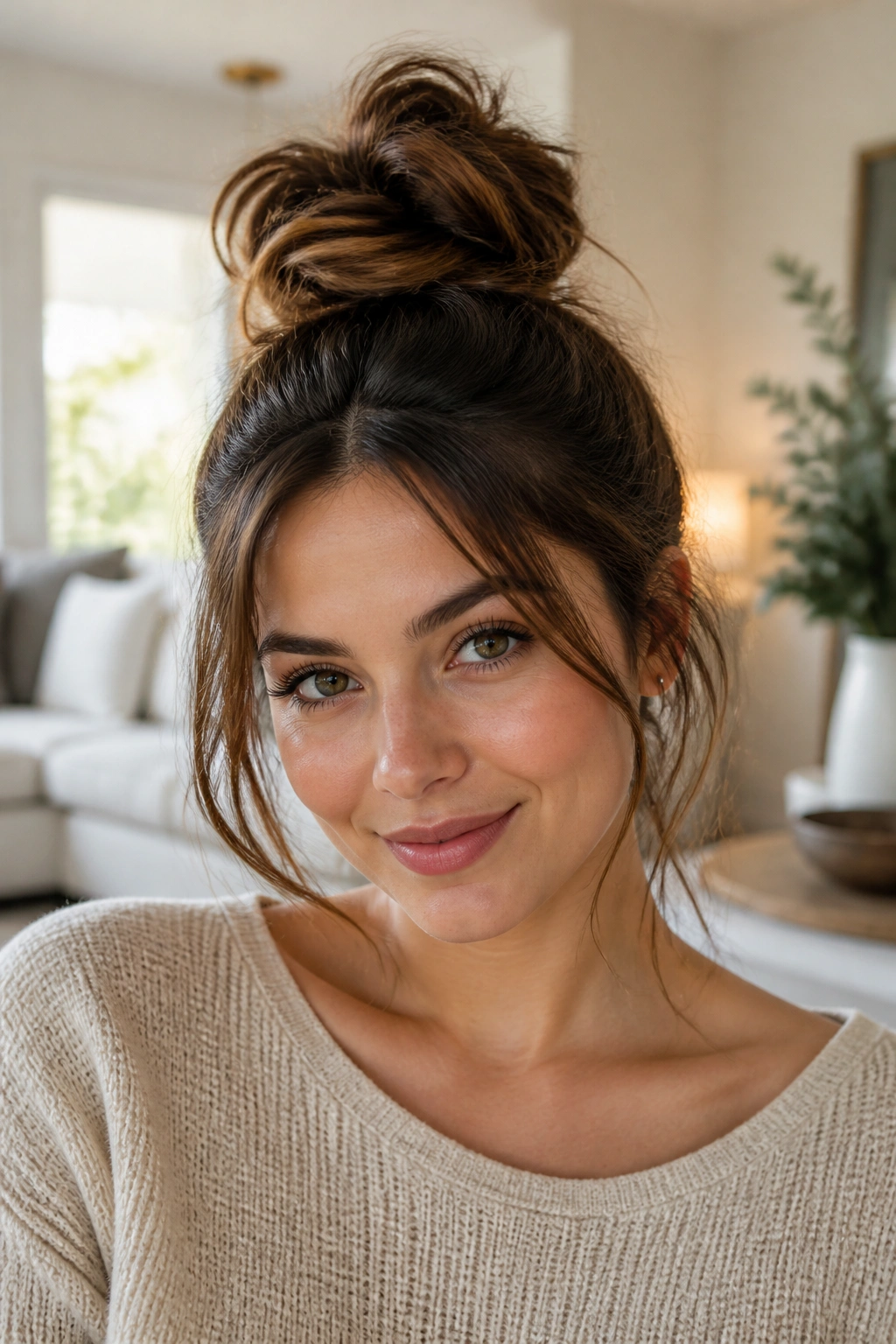
A top knot earns its keep when the knot sits high enough to lift the face.
This is not the same as a sloppy bun thrown anywhere on the head. For a round face, the knot needs height. It should sit near the crown, not at the back of the skull, and the sides should stay a little loose so the outline doesn’t go flat. That lift changes the whole balance.
Leave two or three tendrils out around the temples and jaw. Not giant chunks. Just enough to break up the line. If your hair is fine, backcomb the crown lightly before twisting the bun. If it’s thick, use a little dry shampoo at the roots so the style holds without slipping.
Flat sides are the enemy.
A top knot like this works when it looks casual but still has intent. That’s the part most people miss.
12. Layered Midi Cut With Flipped Ends
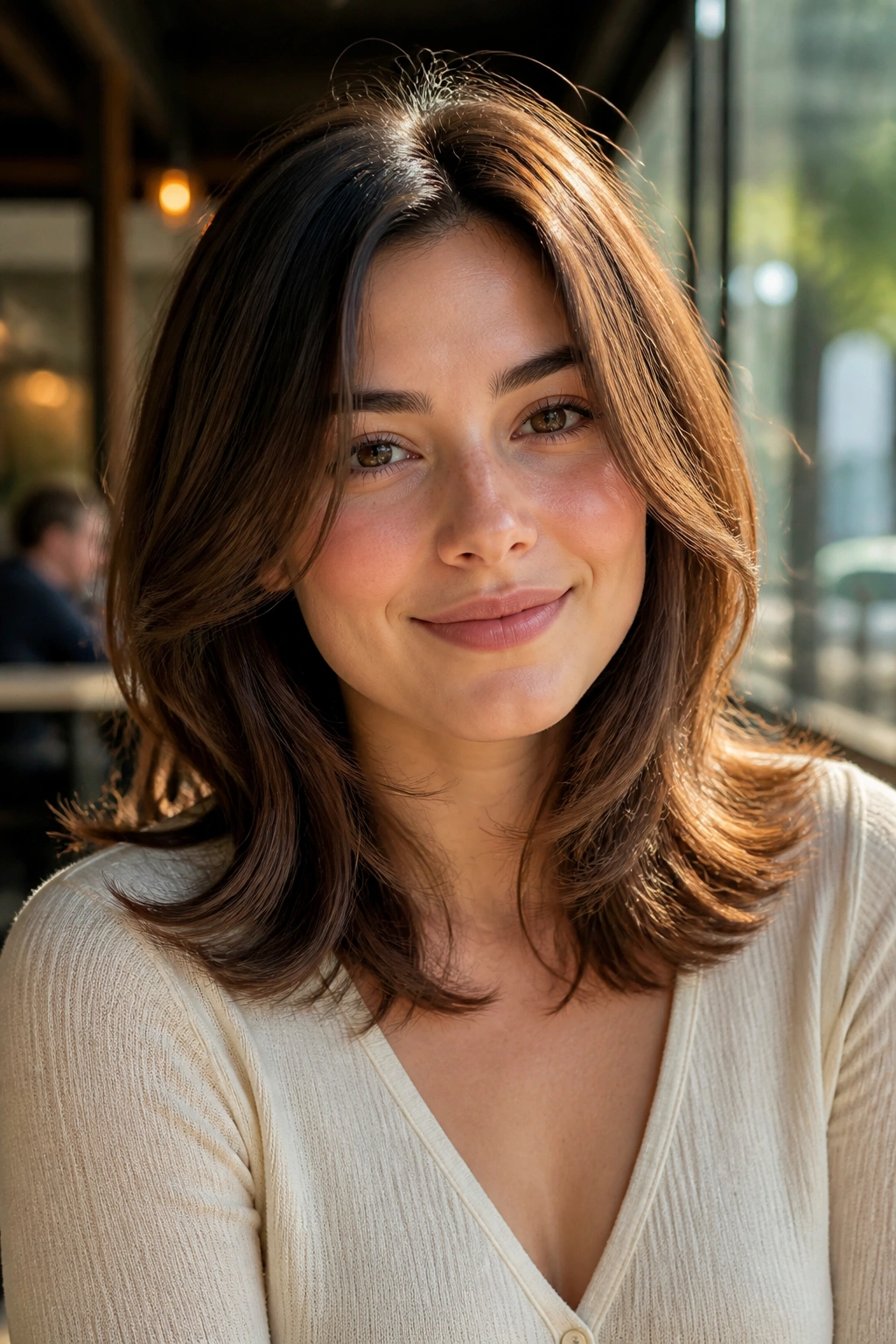
The midi cut sits in that shoulder-grazing zone where the hair moves easily and still has enough weight to fall well. For round faces, it becomes much better when the ends are flipped out just a little.
What To Ask For at the Salon
- layered lengths that begin around the collarbone
- ends that are light enough to turn outward
- a soft face frame instead of a heavy front panel
- no blunt shelf at the shoulders
The flipped ends add direction. They pull the eye down and away from the center of the face, which is useful when you want a longer line. A round brush or flat iron can do the turn. Keep it subtle. A full-out flip can look dated fast.
This style is also forgiving on busy mornings. A few bends around the face and a dry texturizing spray are often enough. It looks styled without looking overworked.
13. Soft Wolf Cut

A wolf cut can look wild in photos and still make sense in real life—if it’s softened.
That softness is what matters on a round face. A heavy wolf cut with too much width at the sides can get loud fast. But a softer version, with longer layers and a less dramatic disconnect, gives you the crown lift and movement without turning the head into a triangle. The longer back helps stretch the silhouette. The face-framing layers keep things light.
The Part That Matters
Ask for a blend, not a hard line between the top and bottom sections. The shortest layers should stay high enough to build texture, but not so short that they flare out around the cheeks. If you wear bangs, keep them wispy or curtain-like.
Dry texture spray works well here. So does a diffuser on low heat if your hair bends naturally. The goal is movement that looks casual, not chaotic.
This is the cut for someone who likes a little edge but doesn’t want the face to read wider.
14. Braided Crown With Loose Waves
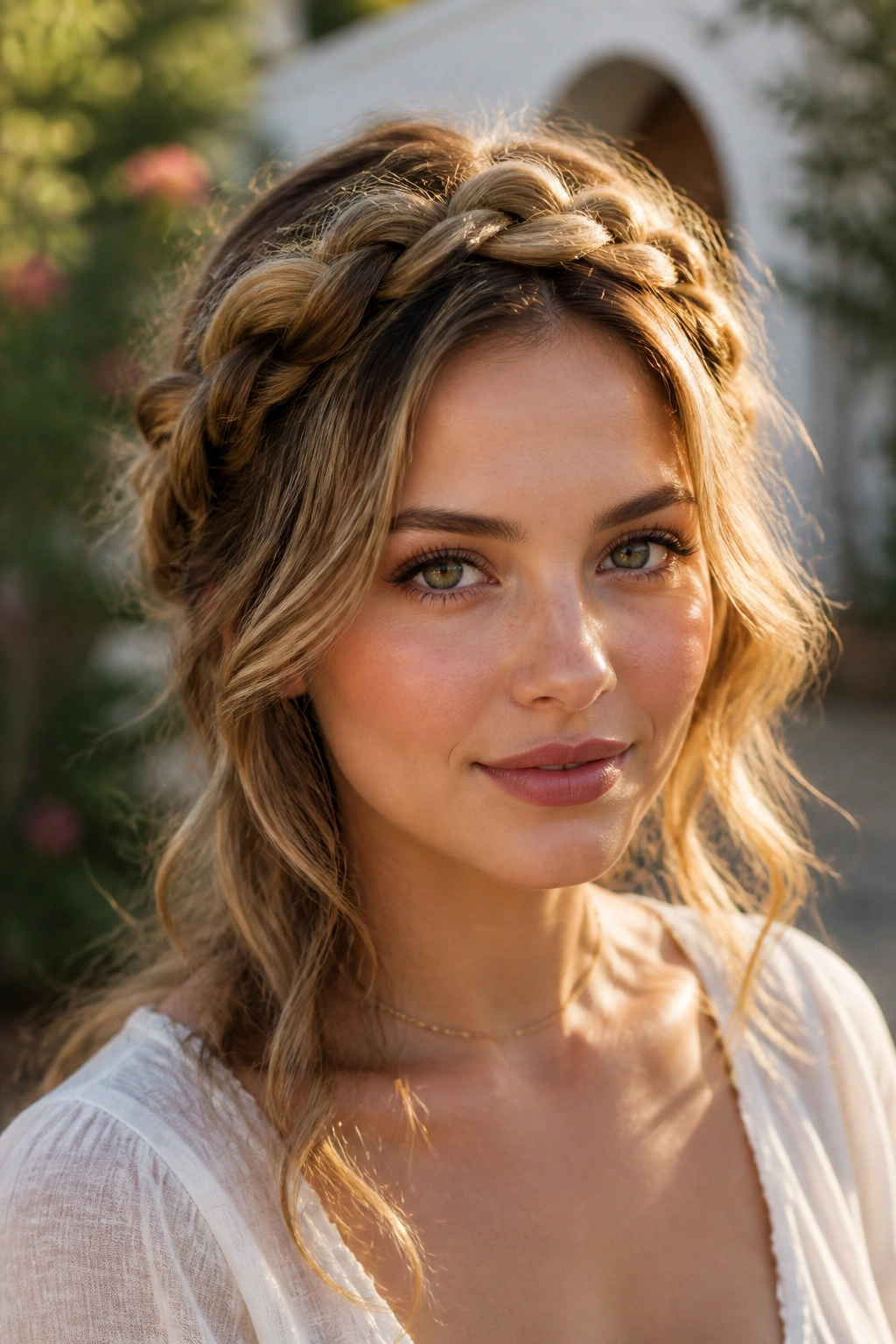
You know the style that survives a long day and still feels relaxed at the end? A loose braided crown does that.
It also works on round faces because the braid draws the eye up and around the head instead of letting all the visual weight sit at the cheeks. The key is to keep the braid wide and soft, not tight and tiny. A skinny, severe braid can feel harsh. A fuller braid, pulled apart a bit with your fingers, has more ease.
Leave the rest of the hair in soft waves. Not spirals. Waves. That difference matters because waves keep the style from looking too formal. If you’re doing this for an event, pin the braid low behind the ear and let the ends blend into the loose hair.
Quick Details
- braid from temple to crown, not straight across the forehead
- loosen the braid after it’s secured
- keep a few front pieces out
- spray lightly so the texture stays touchable
It’s pretty, but not precious. That’s the appeal.
15. Sleek-Rooted, Tousled Ends
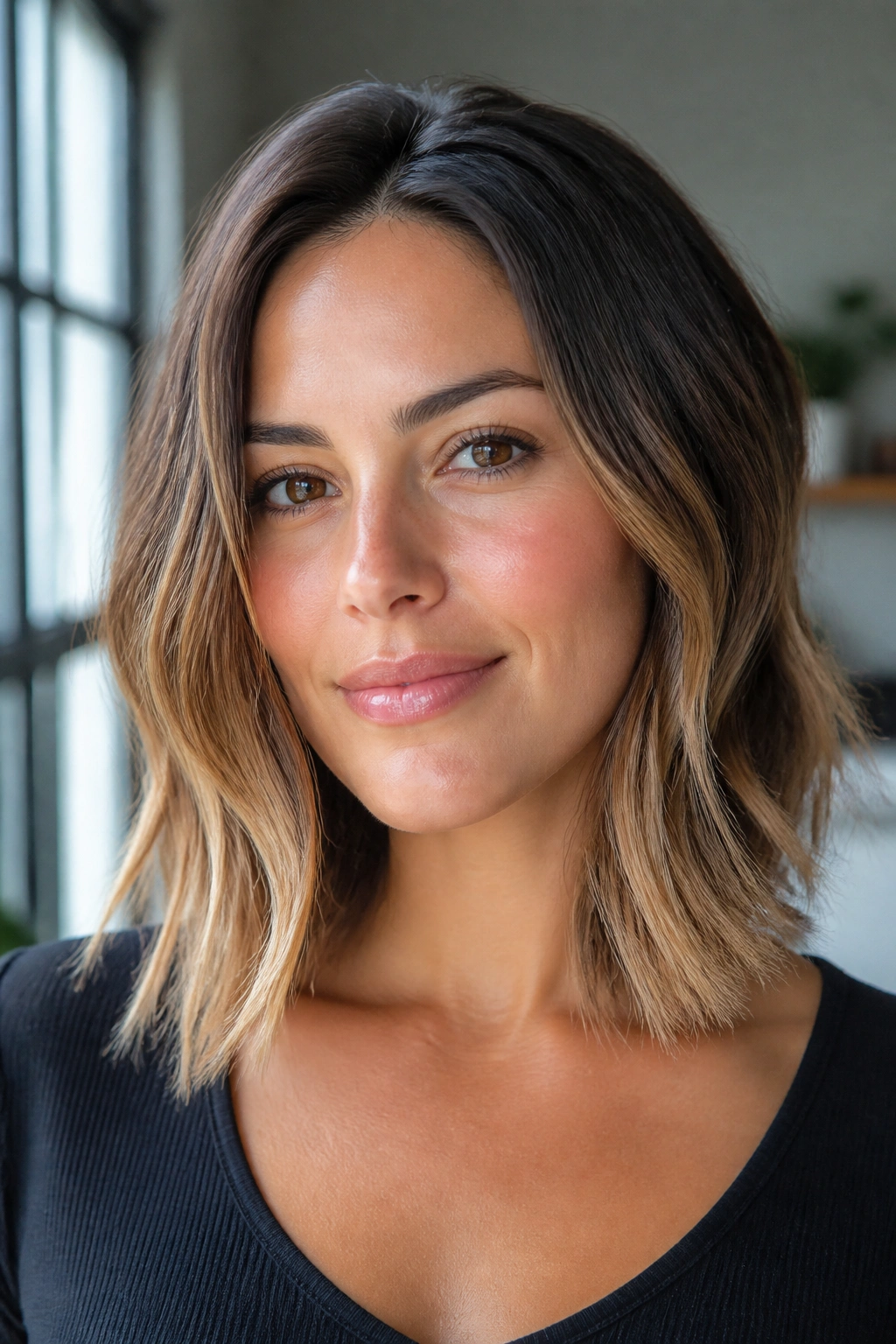
A little polish at the root can make tousled hair look sharper on a round face.
That contrast matters. If every section of the hair is equally messy, the shape can blur. But when the roots are smooth and the movement starts lower down, the face gets a cleaner frame. Think of it as controlled looseness: roots tidy, mid-lengths bent, ends broken up.
This works especially well on lob or mid-length hair. Blow-dry the top smooth with a paddle brush, then add bends from the ears down using a flat iron or iron set to a medium heat. Don’t curl every piece the same direction. Alternate the wraps so the hair falls in a less predictable way. Finish with a light mist of texturizing spray from the mid-lengths to the ends.
The result should feel modern without feeling fussy. Not stiff. Not beachy in a tired, overdone way. Just a clean root and some movement where it counts.
16. Voluminous Ponytail With Texture
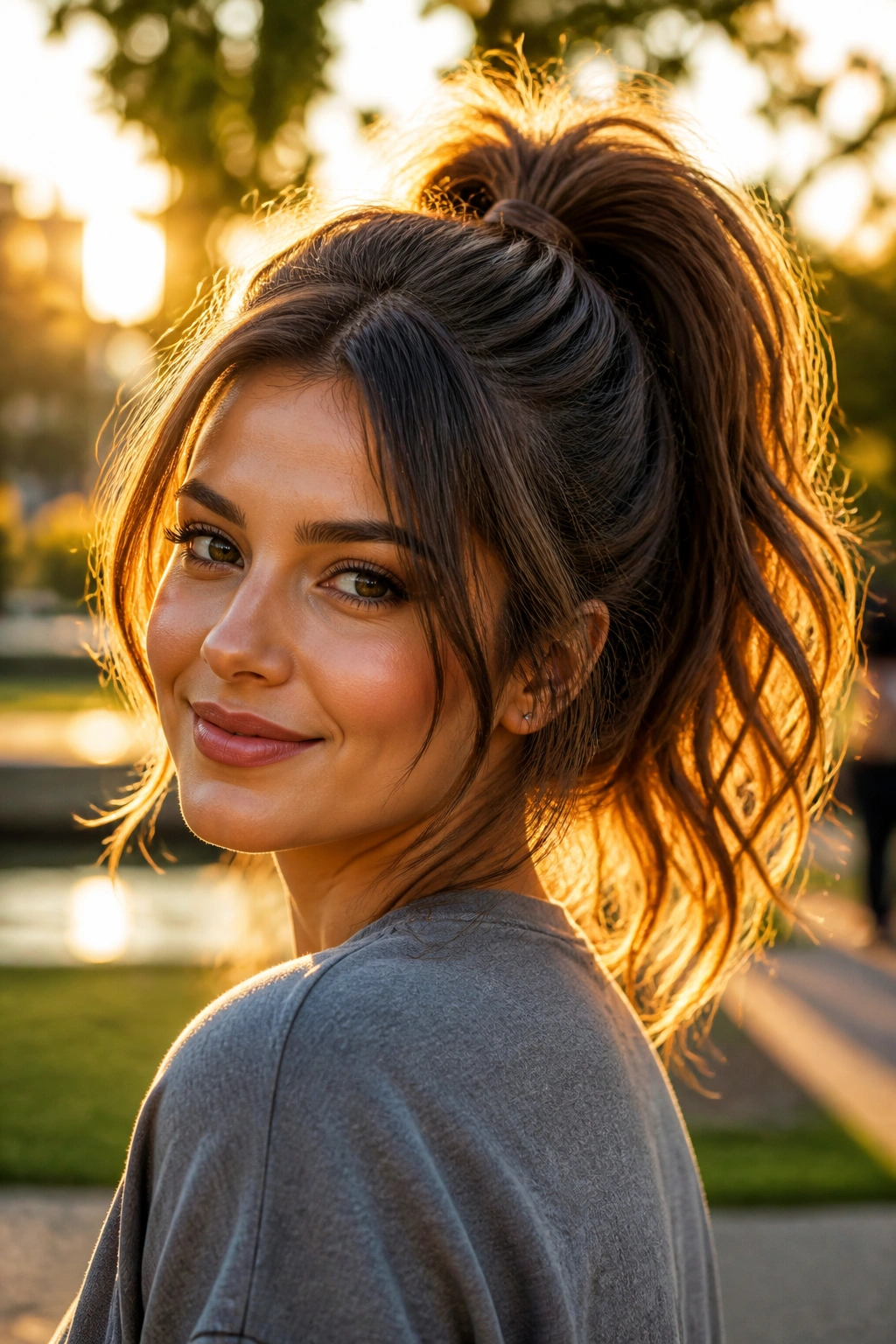
A low ponytail can drag a round face downward. A high textured ponytail does the opposite.
The height at the crown gives you lift, and the texture in the tail keeps the style from looking severe. I’d place the ponytail just above the crown, then tease the section slightly before securing it. Wrap a small strand of hair around the elastic if you want it to look finished. It takes 30 seconds and changes the whole thing.
How To Place It
- lift the top section before you tie it
- keep the sides a little loose near the temples
- leave a soft bend through the tail
- pull out one face-framing piece on each side
A touch of wave in the tail is enough. You do not need ringlets. You also do not need the ponytail to be mirror-smooth from root to tip. The sweet spot is lift at the top and movement through the length.
It’s one of the easiest ways to make a simple style work harder for a round face.
17. Airy Layers With Side Sweep
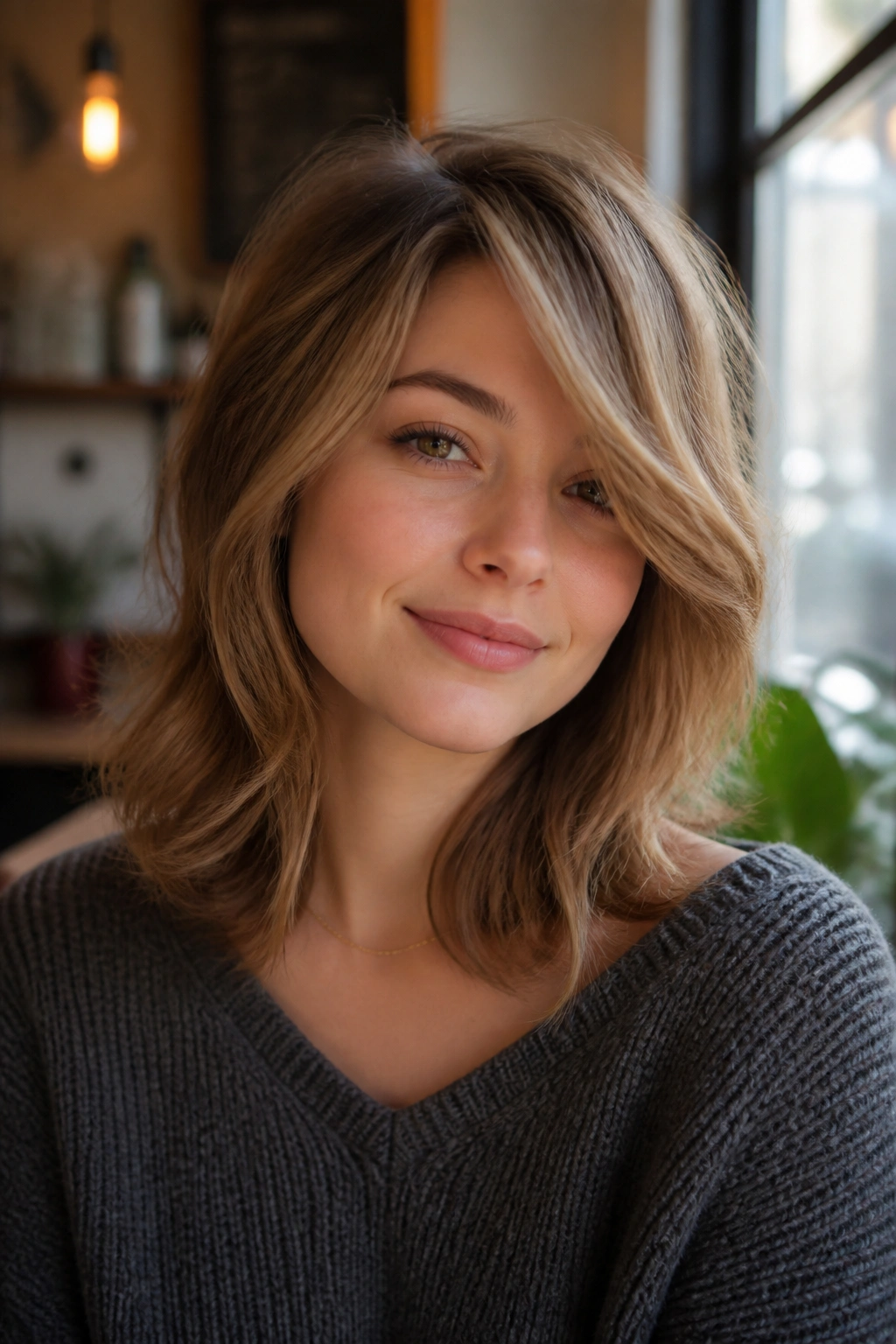
How do you keep layers from puffing out at the cheeks? Move the longest front piece diagonally across the face.
That side sweep changes the line immediately. Instead of the hair framing the face in a circle, it breaks the shape and gives you an angle. Airy layers help because they keep the mid-lengths from feeling heavy. This is a good cut for hair that wants to lie flat at the roots but still needs a little motion around the face.
I’d keep the shortest pieces around the cheekbone only if they’re very light. Heavier pieces should start lower, around the jaw or collarbone, so they don’t sit on the widest part of the face. A blow-dry with a nozzle and a medium round brush usually gives the best result. Pull the front section up and across instead of straight down.
If your hair has fine density, this cut can add shape without asking for too much styling. Nice thing, that.
18. Razor-Cut Bob
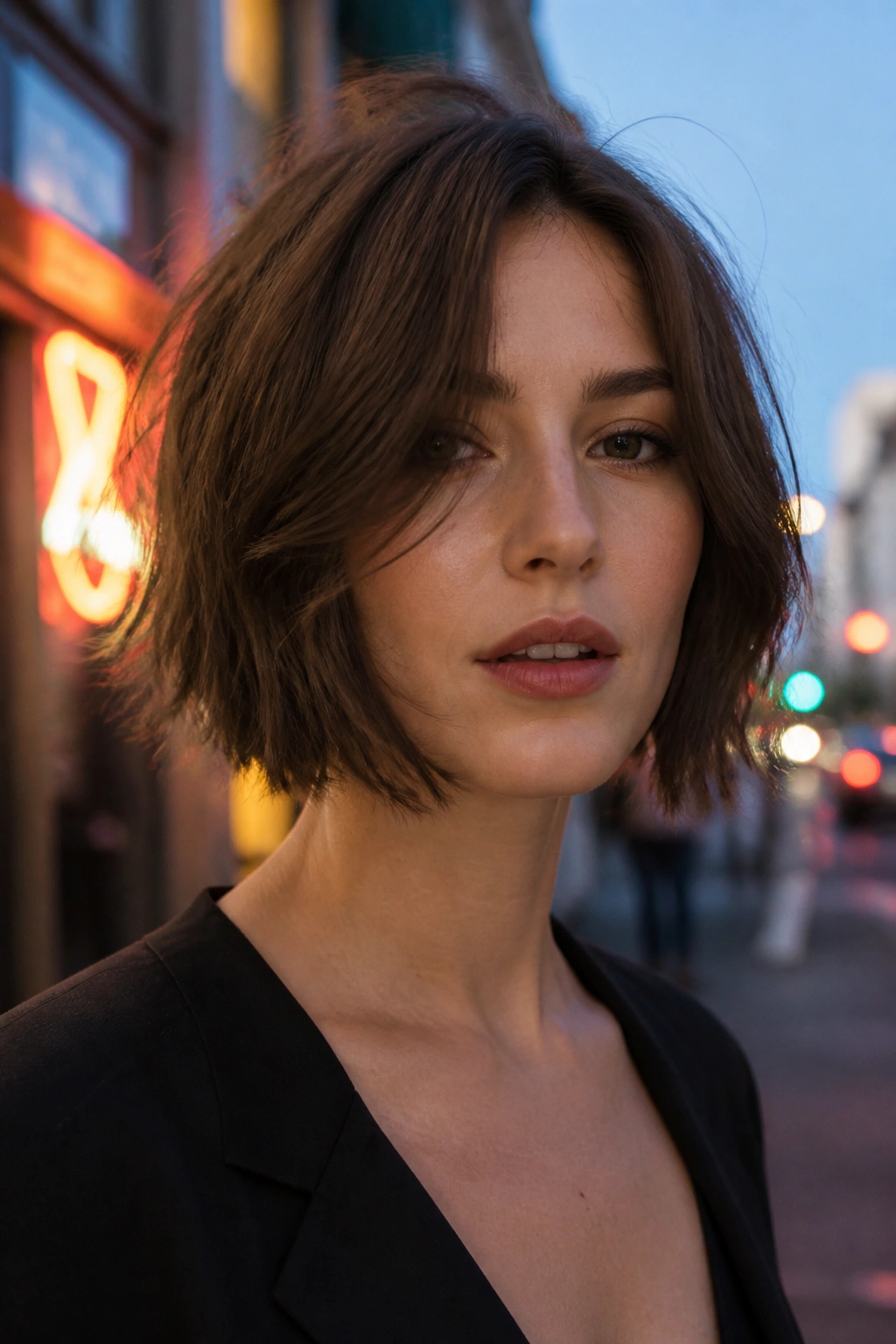
A razor-cut bob is not the same thing as a choppy bob.
The razor gives the ends a softer, thinner finish, which can be useful on round faces because it keeps the outline from feeling heavy. It’s best when the bob lands just below the jaw or at the chin with some piecey texture through the bottom. The danger is overdoing it. Too much razoring can make the ends wispy in a bad way, especially on coarse hair.
Who It Suits Best
- straight to slightly wavy hair
- medium-density hair that needs movement
- people who like a lived-in finish
- anyone who wants a bob without a blunt line
I’d skip this if your hair already frizzes easily or has a rough texture at the ends. A scissor-cut bob with point-cut edges may behave better. But when the razor is used with restraint, the result is light, modern, and easy to move around the face.
It’s a sharper choice. Not harsher. There’s a difference.
19. Loose Pinned-Back Waves
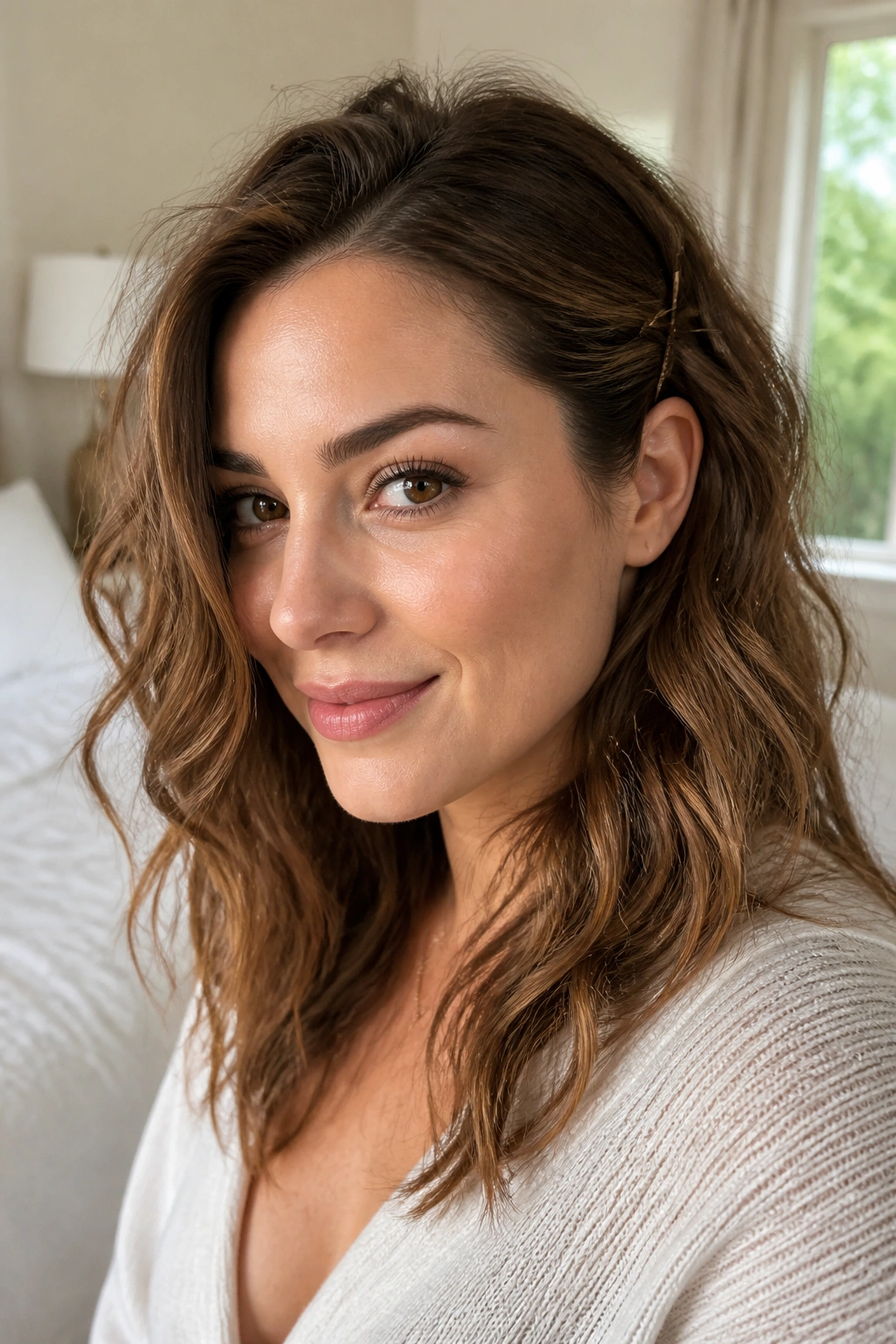
Pinning one side back sounds small, but the shape shift is real.
It creates asymmetry, and asymmetry is often the easiest way to flatter a round face. The open side shows more cheek and jawline, while the pinned side lifts the hair away from the widest part of the face. Keep the wave soft and the pin placement low enough to feel relaxed.
How To Place the Pins
Use two bobby pins in an X shape so the hair stays put. Slide them under a wave instead of on top of it. If you’re using clips, choose something small and flat rather than a heavy barrette. The point is to keep the finish airy.
This works on shoulder-length hair, long hair, even a grown-out bob. It’s especially good when you want the hair out of your face without tying it back tightly. The style looks casual, but it still does the same shape work as a more involved cut.
20. Shoulder-Grazing Cut With Bottleneck Bangs for Round Faces
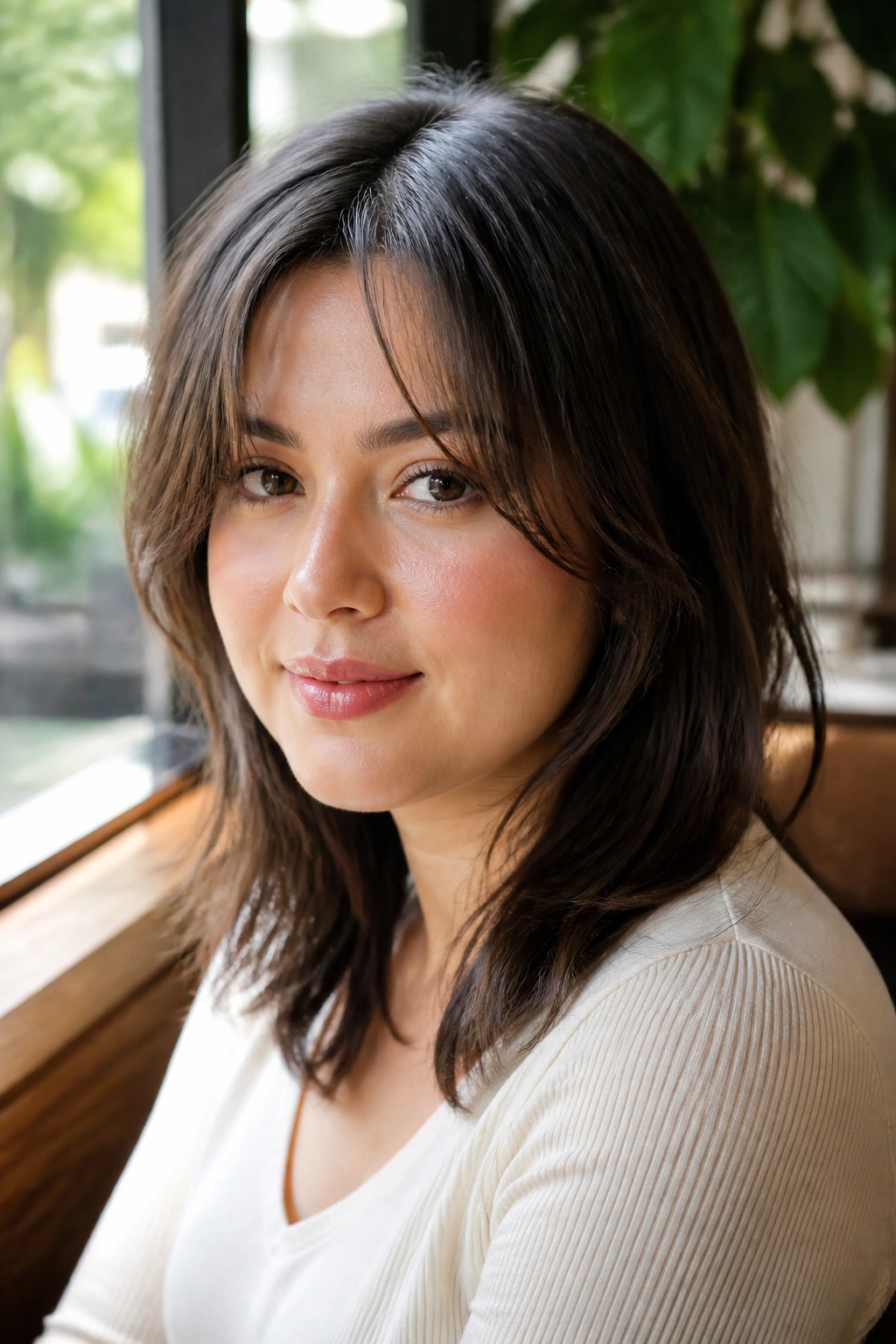
Bottleneck bangs are like curtain bangs with a little more structure at the center.
The middle is shorter, then the sides fall longer and softer. That shape is useful on round faces because it opens the forehead area without leaving the front flat. Pair it with a shoulder-grazing cut and you get movement around the jaw without the full width of a bob that stops too abruptly.
What I like here is the balance. The bangs frame the face, but they don’t crowd it. The shoulder length adds vertical line, and the ends can be waved just enough to keep the cut from feeling heavy. If your forehead is shorter, keep the center of the bangs a touch longer. If your features are softer, keep the sides feathered so the fringe doesn’t overpower the face.
It’s a quiet style, but it’s doing a lot behind the scenes.
21. Deep Side-Part Glam Waves
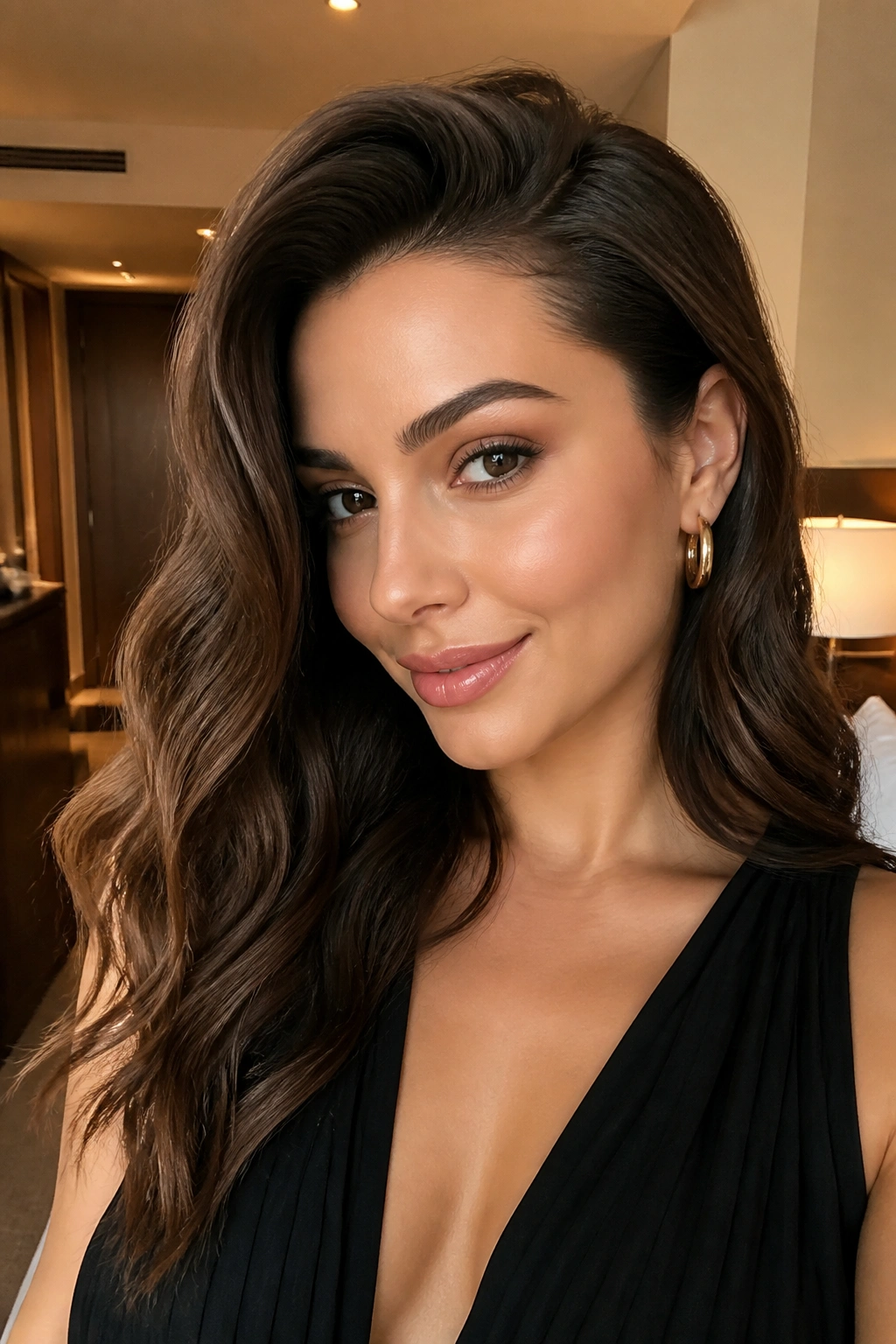
The deep side part is old-school for a reason: it cuts a round face with a diagonal line before the waves even start.
That diagonal matters. It breaks symmetry, adds height at one side of the crown, and keeps the face from feeling too evenly framed. The waves should be brushed out a bit so they don’t sit in tight, identical curves. Loose glam waves look better here than small curls. They fall softer and give the face more length.
If you want the best result, clip the wave pattern while it cools, then brush gently from mid-lengths down. That softens the shape without killing it. One side can tuck behind the ear, while the heavier side stays down. That difference is the whole point.
This is the style for days when you want the hair to look done without losing movement. Clean at the root. Loose at the ends. Strong shape all the way through.
22. Soft Shag With Face-Framing Fringe
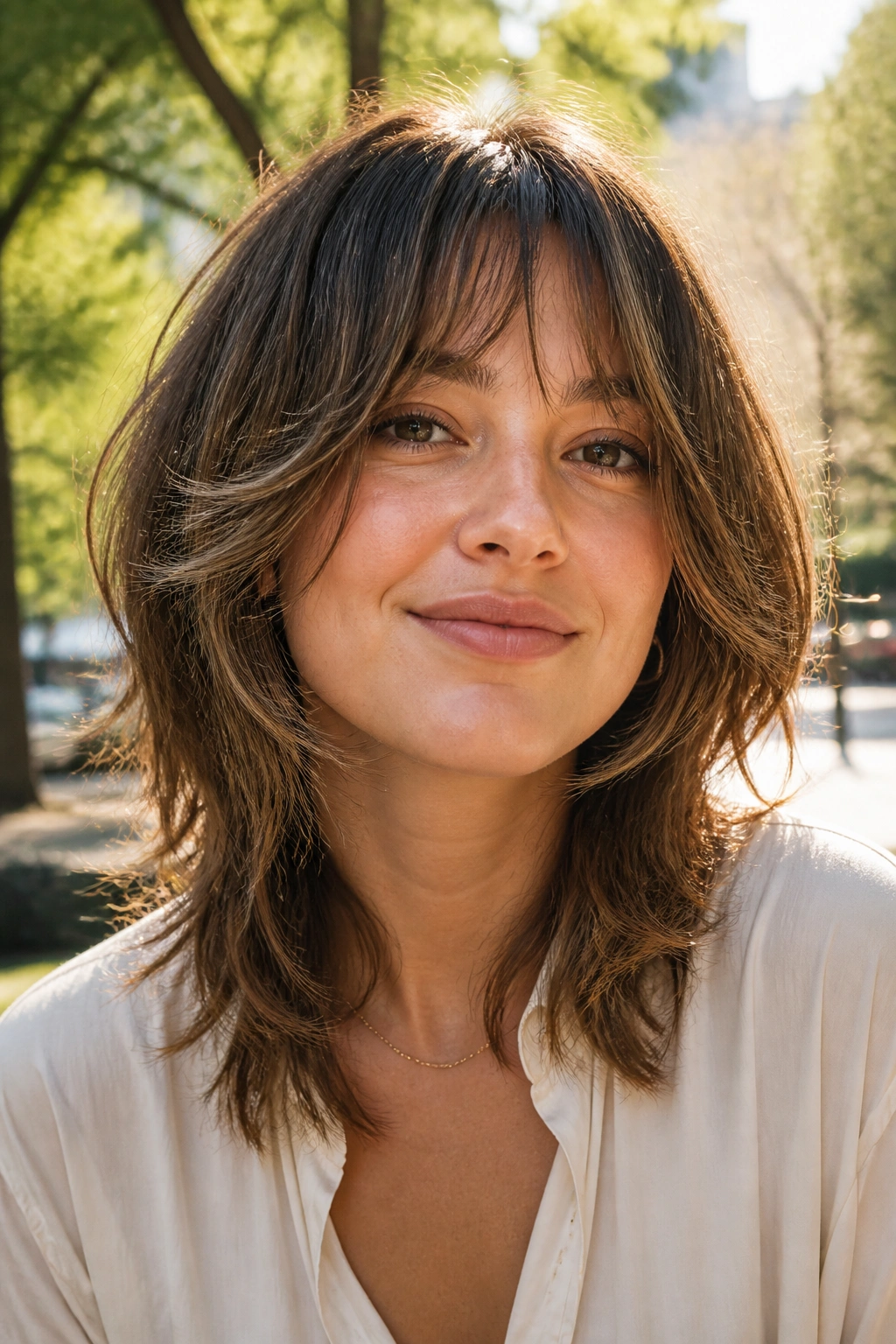
If you want one cut that can bend toward polished, rocker, or lazy-day soft, this is the one.
The soft shag gives round faces a lot to work with because it builds height without making the sides balloon. The fringe should feather into the face, not sit in one solid strip across the forehead. The front layers should start around the cheekbone and taper longer toward the jaw, which keeps the widest part of the face from getting boxed in.
How To Wear It
Air-dry with mousse if your wave pattern holds on its own. Diffuse on low heat if it needs help. A little volume at the crown goes a long way here, and you can rough up the ends with your fingers once the hair is dry. If you’re styling it straight, keep the fringe piecey and the ends slightly bent so the cut doesn’t go limp.
This is one of those styles that gets better when you stop trying to control every strand. A bit of lift, a bit of mess, and enough shape around the cheeks to keep the face open. Pick the version that matches how much time you actually spend with a brush, not the one you hope to have time for someday.
