



Thick hair can look expensive in a heartbeat, and then one wrong cut makes it feel like a helmet. That is the whole puzzle with straight hairstyles for thick hair: you want the weight to work for you, not against you. Clean lines help. So do smart parting choices, careful layering, and finishes that keep the shape close to the head instead of letting it puff outward.
The styles that work best usually do one of two things. They either carve a crisp outline — blunt ends, sharp bobs, polished ponytails — or they keep the bulk tucked, pinned, braided, or smoothed into a controlled shape. A thick head of hair can hold a line better than fine hair ever could, which is why these looks can feel so satisfying when they’re done right. The trick is not fighting density at every turn. It’s steering it.
I keep coming back to the same point because it matters: thick hair is rarely short on volume; it’s short on direction. A round brush, a flat iron, a tail comb, and the right cut can change the whole mood of the hair. Not magic. Just shape.
Direction changes everything.
1. Sleek Center Part for Thick Hair
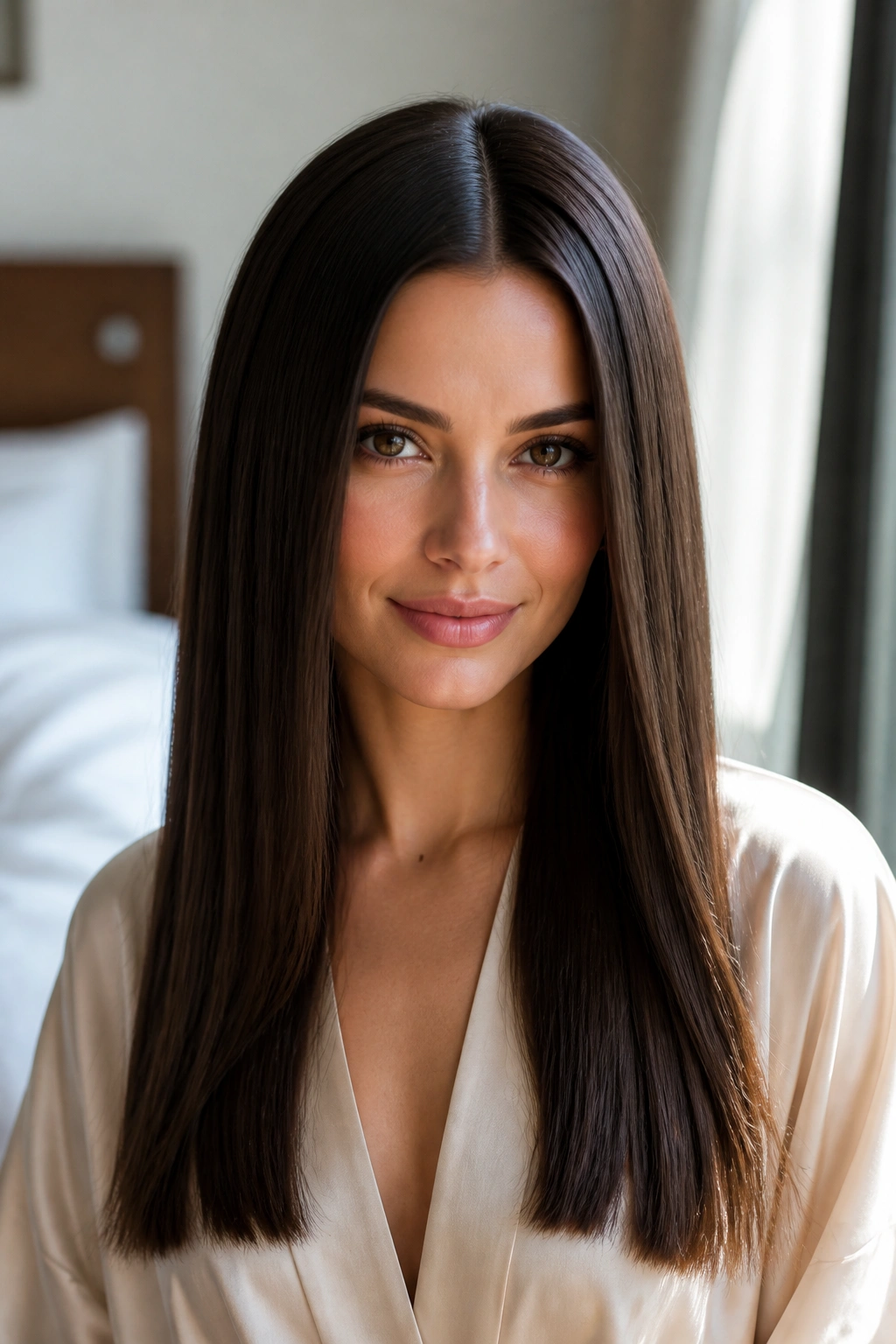
A center part is the easiest way to make thick straight hair look controlled without looking stiff. The line down the middle creates instant symmetry, and that symmetry helps dense hair fall in a cleaner curtain on both sides. If the ends are blunt, even better. The whole style reads crisp instead of bulky.
Why It Works
The center part pulls the eye vertically, which makes the face look a little longer and the hair look a little calmer. Thick hair already has presence; this style channels it into something sharp and polished. If your hair has a little wave, a single pass with a flat iron and a fine-tooth comb will usually get it close enough.
- Best with hair that falls past the chin
- Looks cleanest when the ends are trimmed straight
- Use a lightweight smoothing cream near the mid-lengths, not the roots
- A middle part plus tucked ends is a solid office-day move
Ask for a blunt line, not a razor-heavy finish. Thick hair can handle the weight.
2. Blunt Collarbone Lob
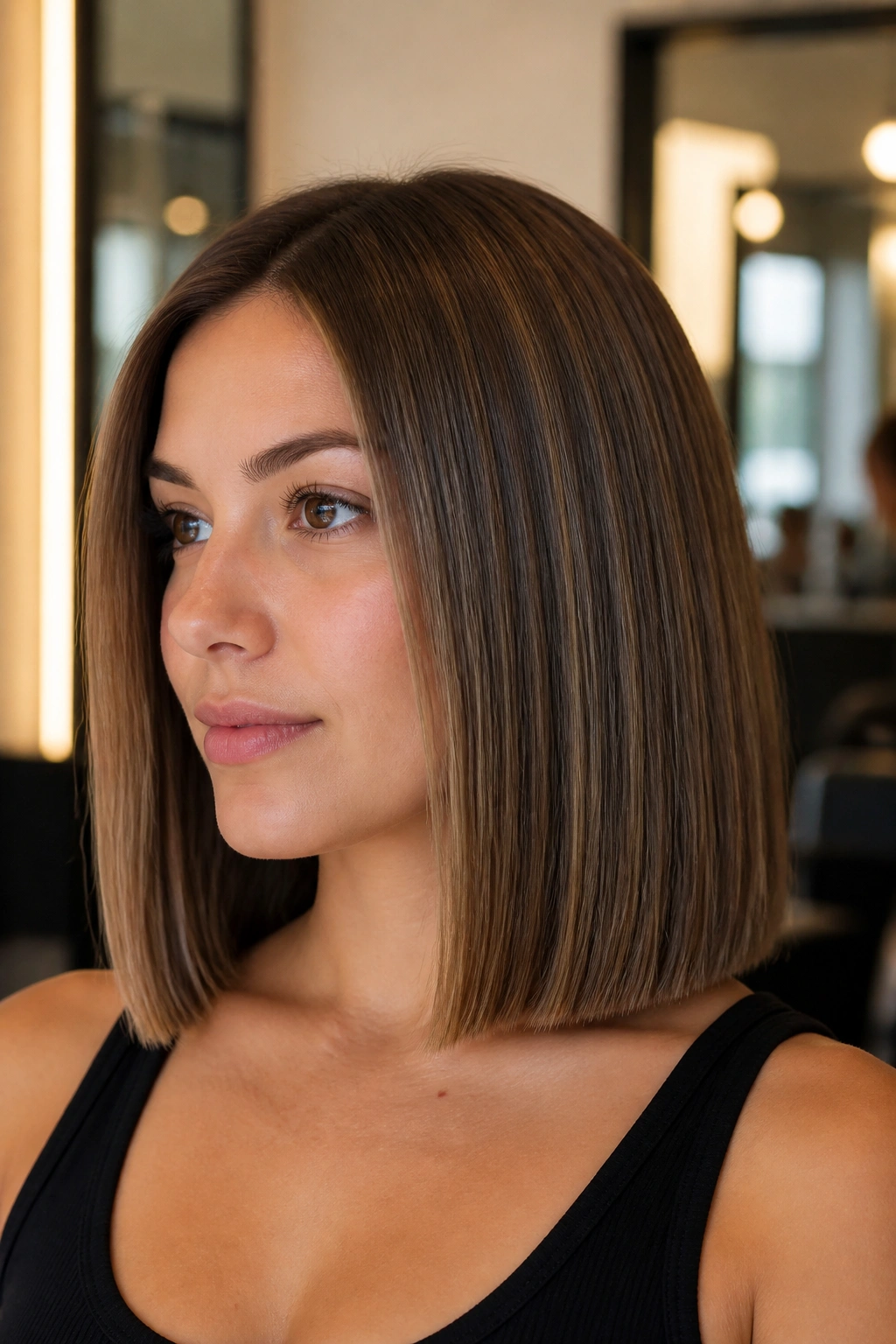
A collarbone lob is one of those cuts that makes thick hair feel expensive without trying too hard. It sits in that sweet spot where the hair is long enough to swing, but short enough that it does not drag itself into a heavy triangle. The blunt edge matters here. That line gives the whole cut a clean, solid shape.
I like this one for people who are tired of wrestling with long hair that takes forever to dry. A lob still gives you length, but it feels lighter the second it hits the shoulders. And on straight hair, the ends have a nice little bounce when you walk. Not curled. Just moved.
If you want a version that stays sleek all day, ask your stylist to keep the perimeter one length and only soften the inside if needed. Too many layers kill the point of the cut. This one is all about the edge.
3. Long Layers With Feathered Ends
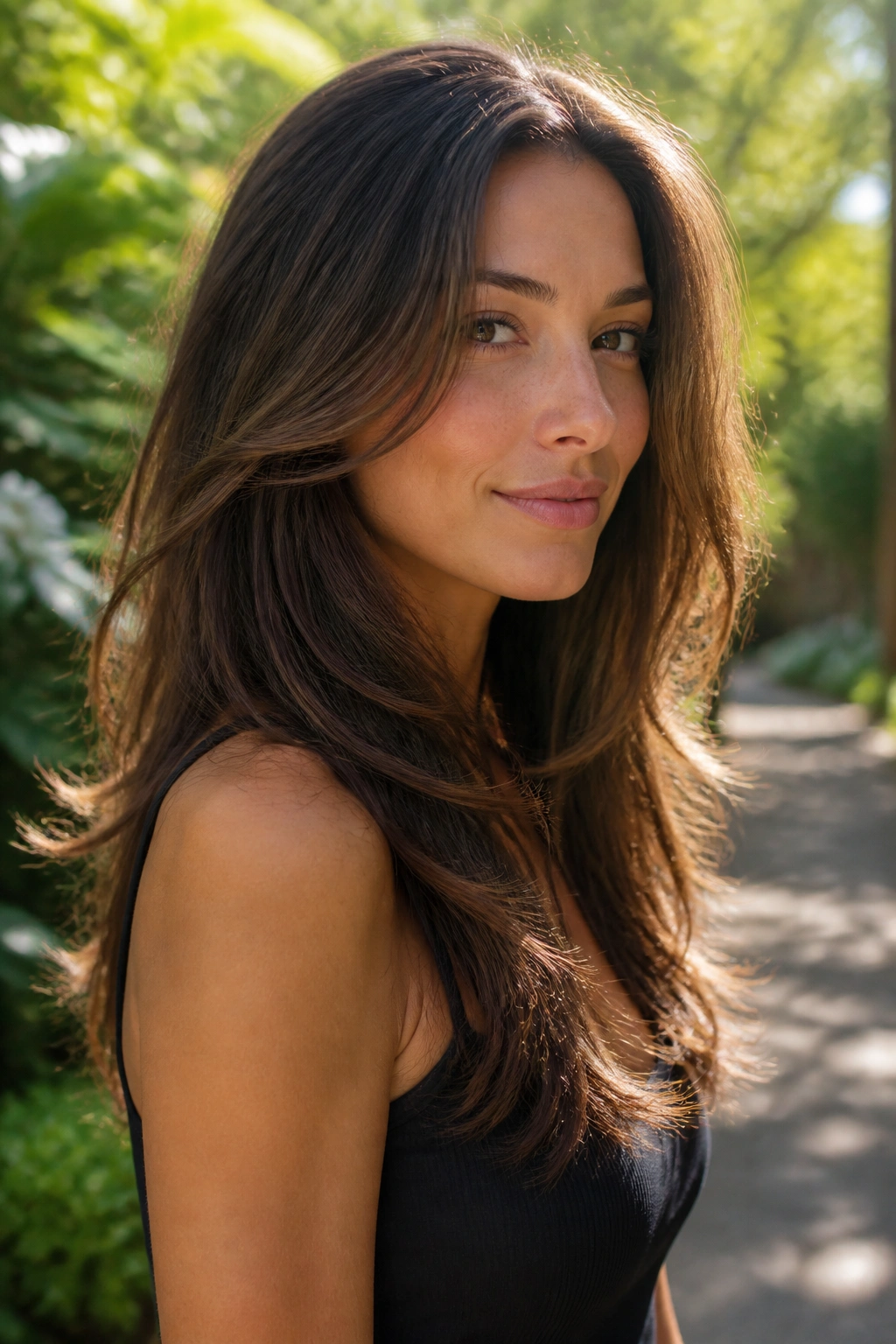
Why do long layers work so well on thick straight hair? Because they take some of the weight out of the lower half without making the whole head look thin. You still get length. You still get fullness. What changes is the shape. Instead of a blocky fall, the hair opens up and moves.
What to Ask For
- Long, blended layers that start below the cheekbone
- Feathered ends, not choppy ends
- Minimal removal through the crown if your hair already lies flat there
- A soft blowout with the ends turned under slightly
The feathering matters more than people realize. It keeps the outline soft while stopping the hair from hanging like a curtain. This is the cut I reach for when someone wants movement without losing thickness. It also grows out nicely, which is a rare kindness from a haircut.
4. Deep Side Part With a One-Ear Tuck
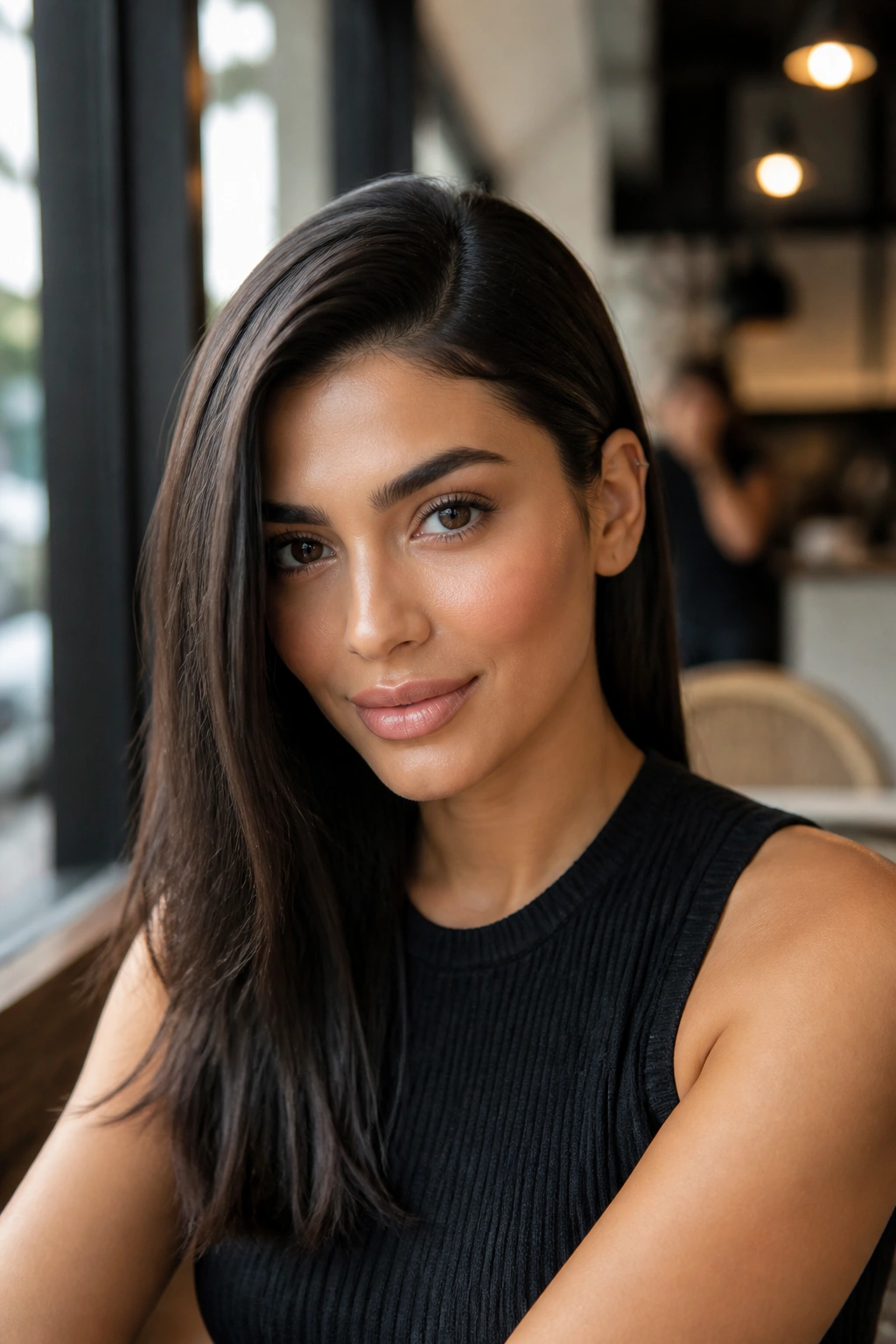
A deep side part can rescue thick straight hair that feels a little too heavy around the face. The part shifts the bulk off-center, which gives the whole style a sharper slope. Then the ear tuck finishes the job. One side stays neat and controlled; the other side keeps its length and drama.
It sounds simple. It is simple. That is why it works.
This is a good choice when your hair is freshly blown out and you do not want to hide the shape under a clip or a braid. The tuck also shows off cheekbones and earrings in a way a middle part never quite does. Use a flat iron on the front section if needed, then smooth just the top layer behind the ear and pin it discreetly underneath. The result should look intentional, not fussy.
5. Glass-Hair Blowout
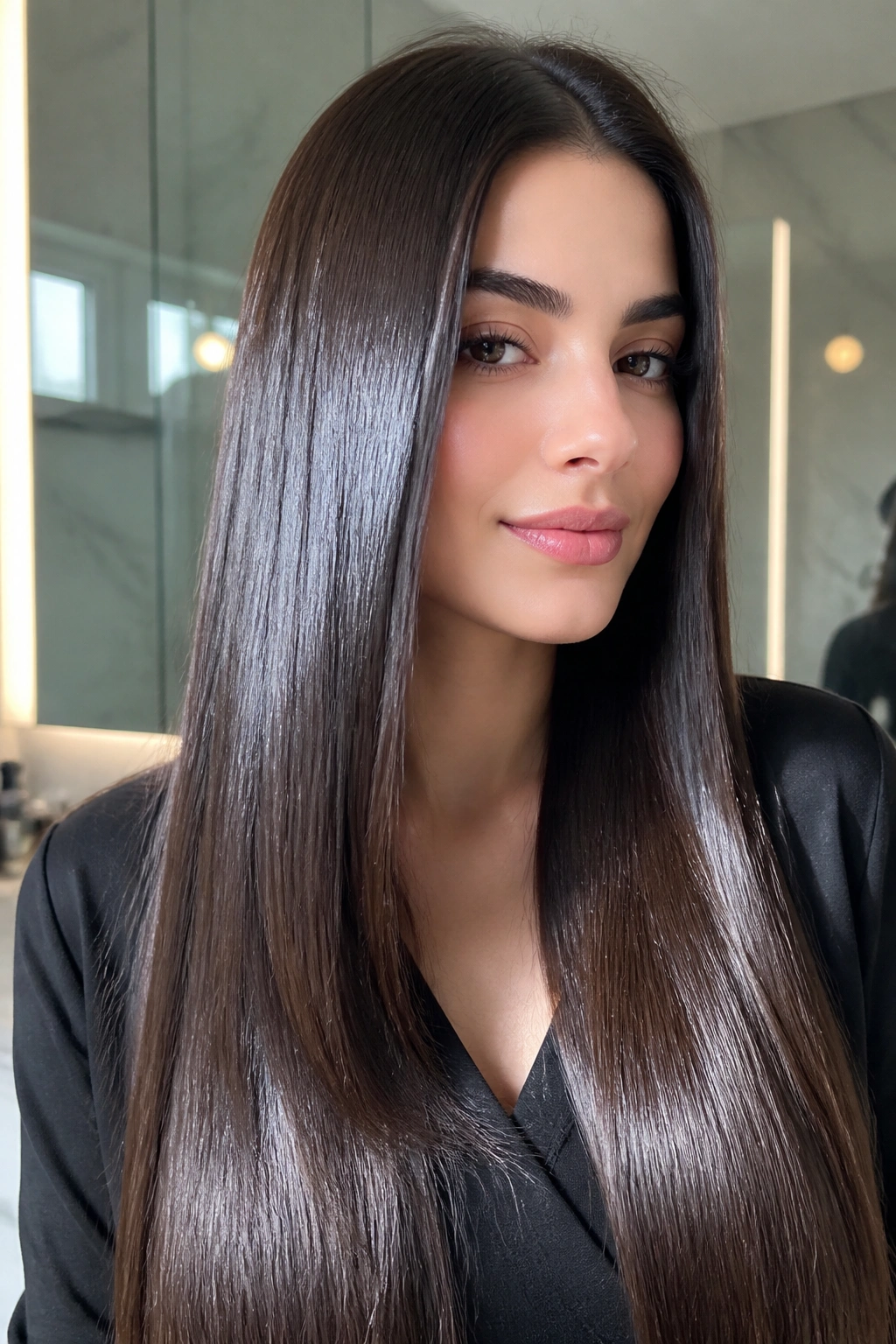
Glass hair is less about a cut and more about a finish, but thick straight hair is one of the best canvases for it. The appeal is obvious: the surface looks smooth, the lengths lie flat, and the shine reads from across the room. Thick hair holds that sleek look better than fine hair does because there’s enough density to keep the line full.
The process matters. A concentrator nozzle on the dryer, a round brush that matches your hair length, and 1-inch sections make a big difference. Dry the roots first, then chase each section with the brush so the cuticle lies flat. A tiny amount of serum on the ends is enough. Too much and the style turns limp.
Scent, touch, movement — all of it changes. The hair should feel cool when it’s finished drying, not warm and fluffy. That’s the sign you’ve closed the cuticle enough for the shine to stay.
6. Low Straight Ponytail With a Wrapped Base
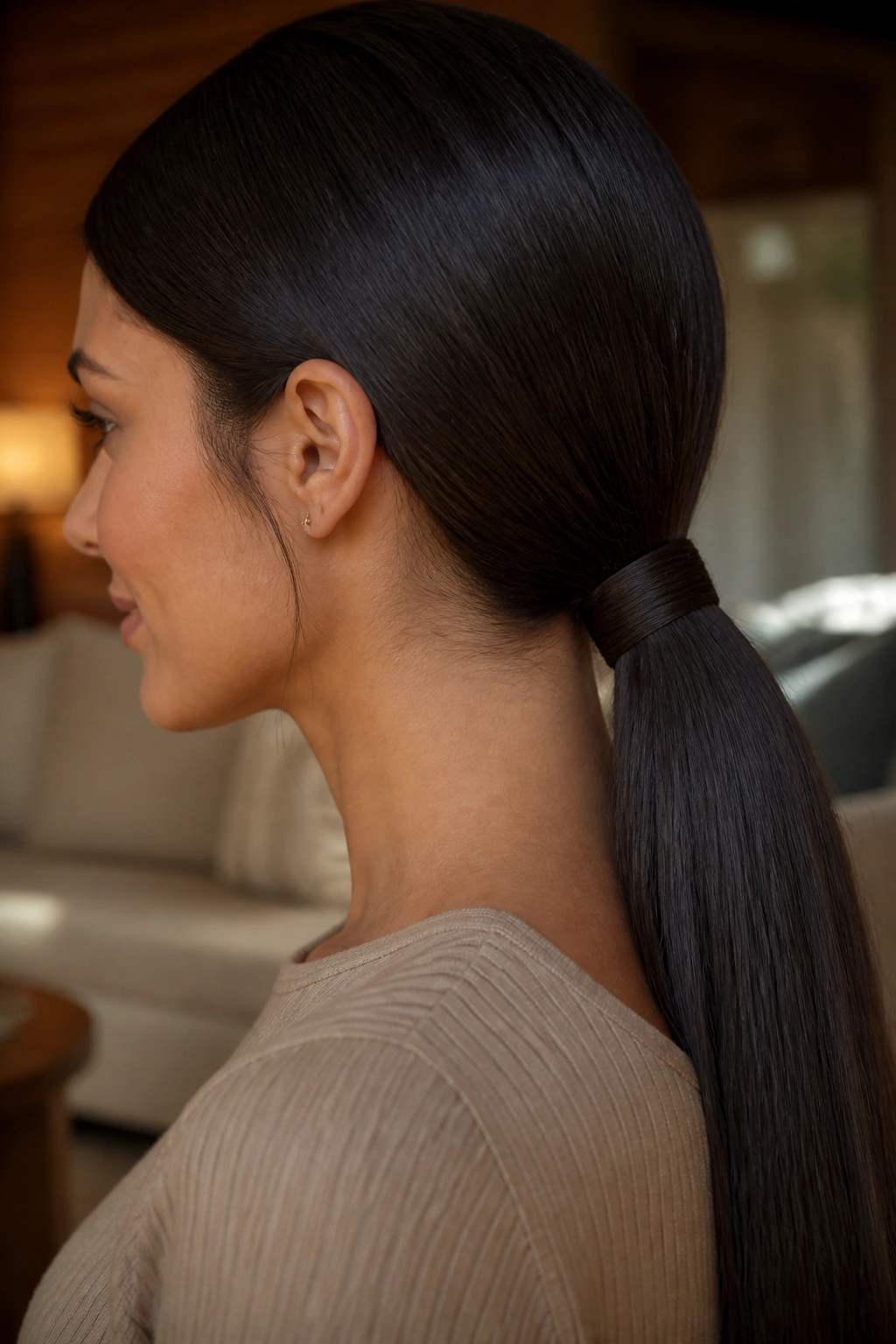
A low ponytail is one of the best straight hairstyles for thick hair because it turns bulk into structure. Instead of fighting the density, you gather it into one smooth line at the nape. Then the wrapped base hides the elastic and makes the whole thing look much cleaner than a plain tie.
It is also one of the few styles that feels polished even when the day gets long. Thick hair gives a low ponytail enough body that it does not look stringy. That matters. A wispy ponytail can feel unfinished. This one feels deliberate.
Use two elastics if the hair is heavy, especially if the ponytail starts to slip after an hour. Wrap a small section of hair around the base and pin it under the pony, not above it. That tiny detail changes the whole finish.
7. Half-Up Crown Clip
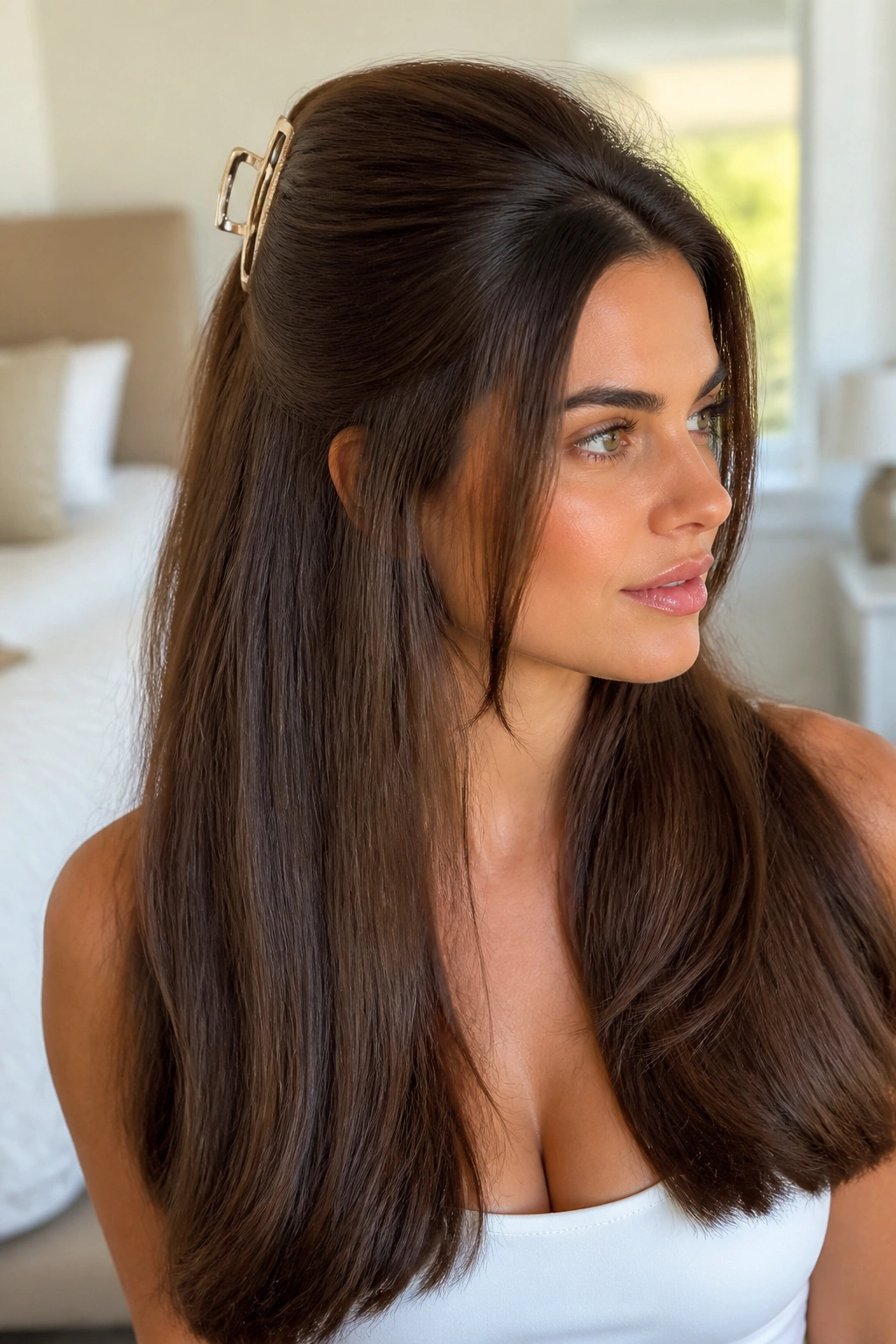
Half-up styles are underrated on thick hair. They lift the top section just enough to show shape at the crown, while the lower half keeps the length and fullness people usually want to show off. A strong clip does the work fast, which is part of the appeal. No complicated pinning. No twelve-step styling routine.
What Makes It Different
The half-up crown clip keeps the hair off the face without flattening the whole head. Thick hair can look heavy when everything is worn down. This gives the top a little air and keeps the profile cleaner.
A large metal or acetate clip usually holds better than a tiny one. If the hair is especially dense, twist the top section once before clipping it so the grip is tighter. A loose twist falls out. A firm one stays put.
This style works best when the front pieces stay sleek. If they puff up, the whole look feels accidental.
8. Chin-Length Bob With a Soft Undercut
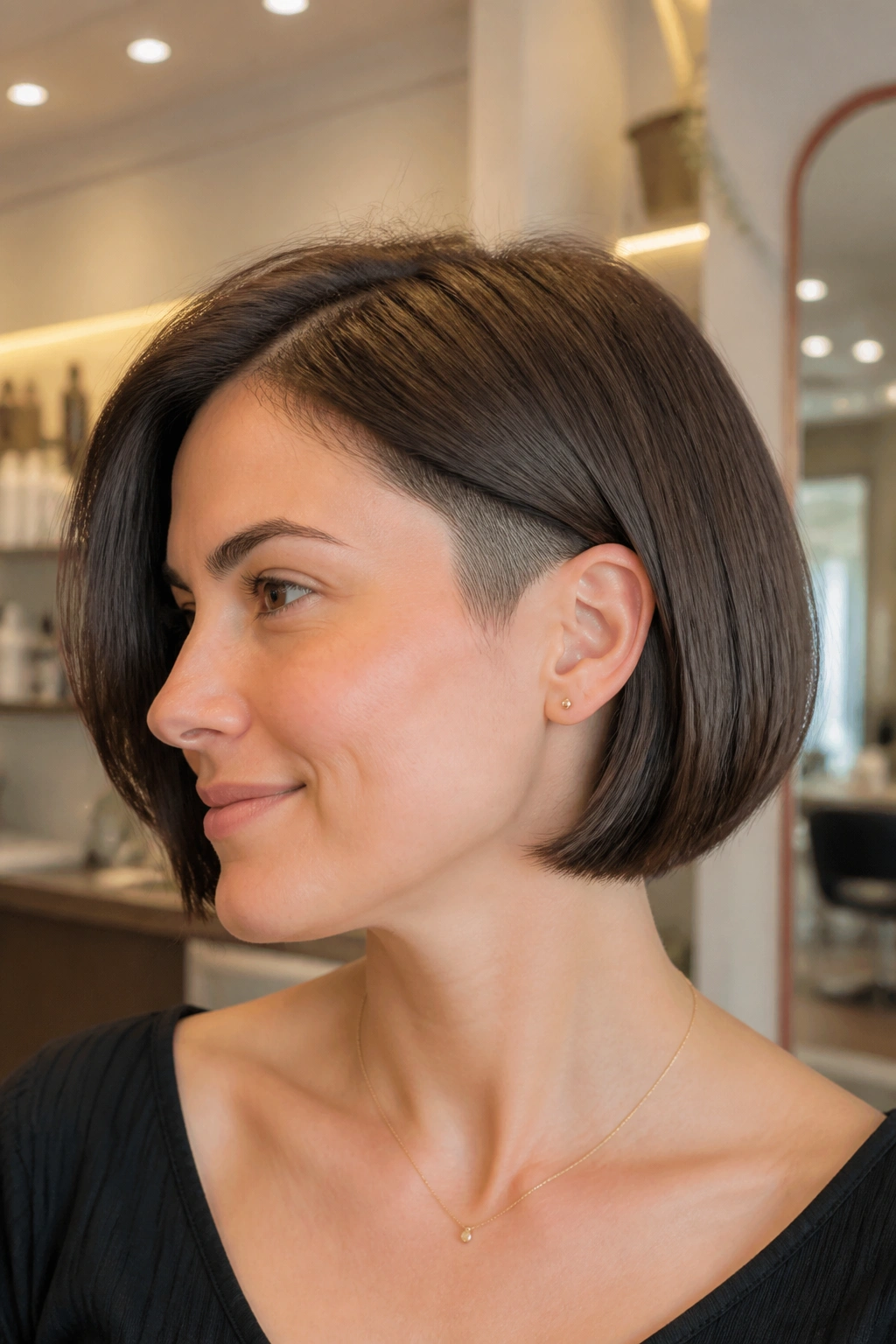
Can a chin-length bob work for thick hair? Absolutely. It can look sharp, modern, and strangely easy to style once the bulk is removed in the right places. The soft undercut is what changes everything. It removes hidden weight underneath, so the top layers sit closer to the head and swing instead of ballooning.
That undercut does not need to be dramatic. Even a subtle reduction in density at the nape can stop the bob from flipping outward in a chunky way. The surface still looks full. The shape just gets cleaner.
I prefer this cut on people who want the drama of short hair without the puffiness that thick hair can create around the jaw. It frames the face fast. And yes, it dries faster too, which is one of those plain little benefits that ends up mattering a lot.
9. Curtain Bangs With Straight Mid-Lengths

Curtain bangs are a nice way to break up thick straight hair without chopping off the length. They split softly at the center and move away from the face, which keeps the front from feeling too heavy. On thick hair, that front softness can make the whole style breathe.
Why I’d Choose It
Curtain bangs give you shape around the cheekbones without committing to a short fringe. They also grow out with less drama than blunt bangs, which is useful if you hate frequent trims.
A good version starts a little shorter in the center and blends longer toward the cheekbone. Not too short. Not too wispy. Thick hair needs enough weight in the bangs to keep them from splitting apart on their own. A round brush and a quick bend away from the face are usually enough.
- Keep the bang section narrow at first
- Blow-dry the roots forward, then sweep them back
- Use a small round brush, not a giant one
- Trim every 4 to 6 weeks if you want the shape to stay crisp
10. Face-Framing Layers and Middle Part
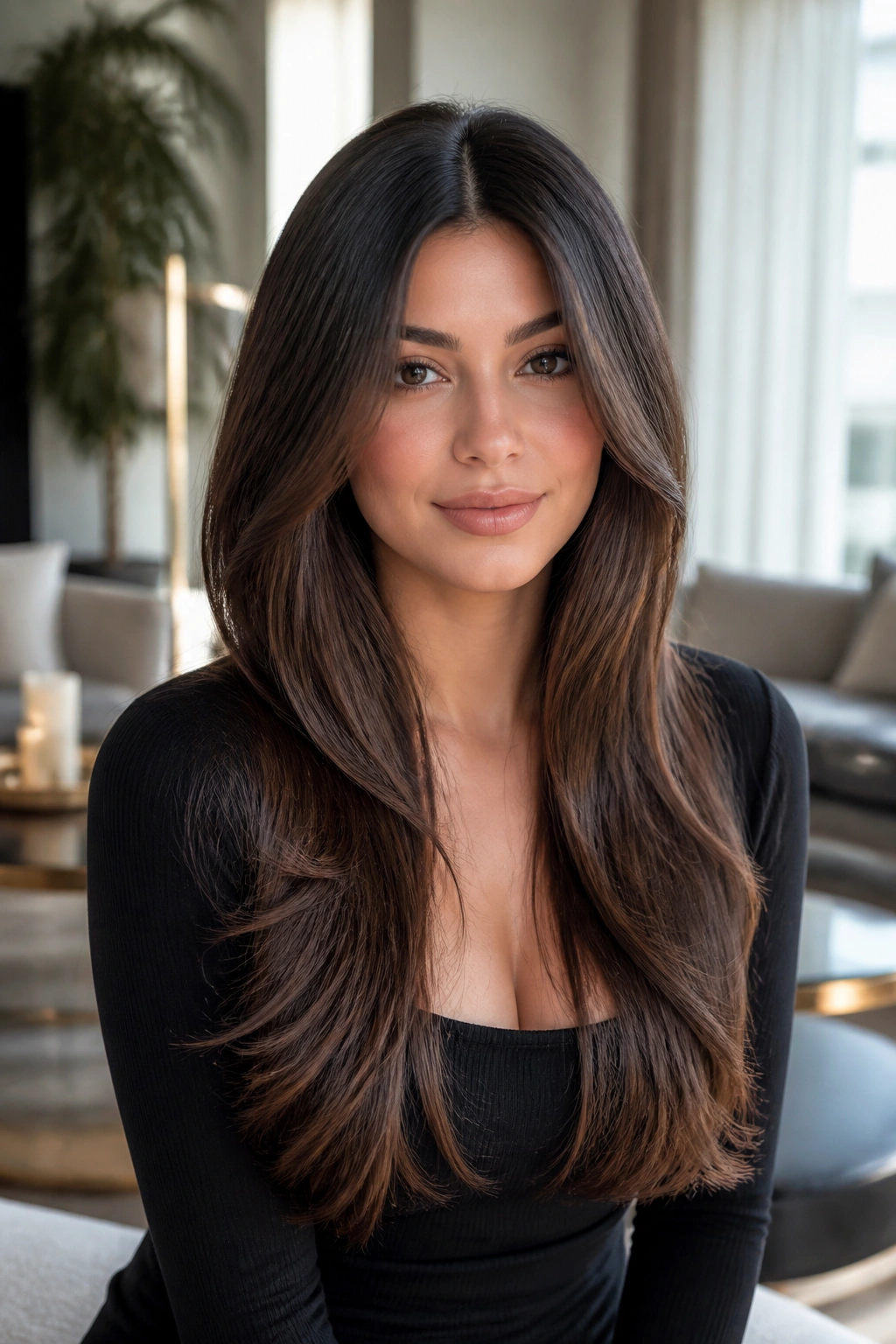
Face-framing layers are the quiet hero of many straight hairstyles for thick hair. They take some of the density away from the front without sacrificing the length that thick hair is so good at holding. The middle part keeps the look balanced, and the layers stop the front from feeling heavy.
This is the haircut I’d recommend to someone who likes to wear their hair down most of the time but still wants a bit of movement near the face. The layers should start around the cheekbone or jaw, depending on face shape and how much softness you want. Start too high and the look gets choppy fast. Too low and you barely notice the difference.
The best version does not announce itself. It just makes the hair fall better. That’s the point. You catch it in motion more than in a mirror.
11. Sleek High Ponytail for Thick Hair
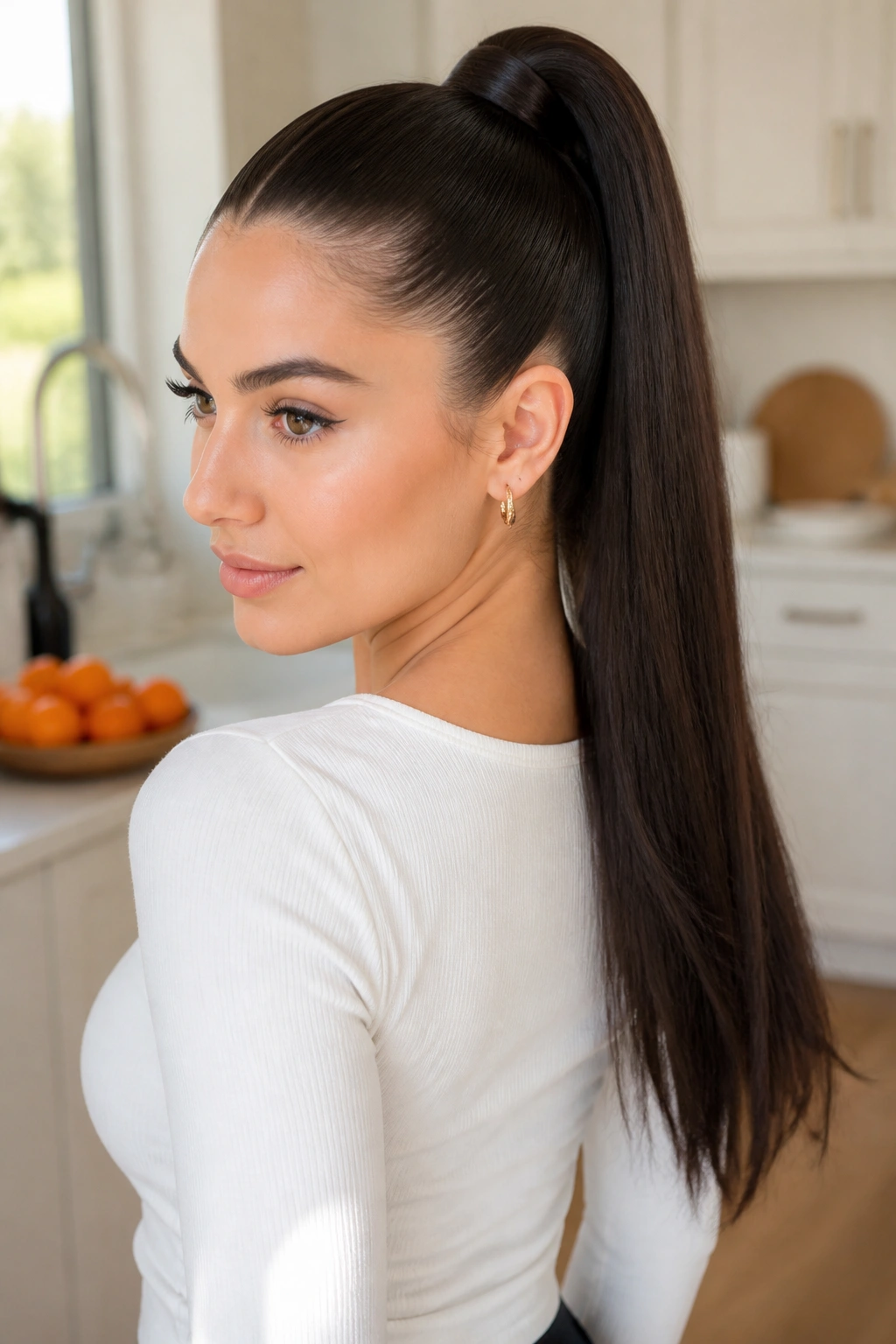
A high ponytail on thick straight hair has a lot of attitude. It lifts the weight up and off the neck, shows the shine along the lengths, and makes the whole face look more open. If the ponytail is wrapped neatly at the base, it stops looking like gym hair and starts looking intentional.
How to Make It Hold
- Brush the hair upward while the roots are still slightly damp or freshly smoothed
- Secure it with a strong elastic, then add a second one underneath if the hair feels heavy
- Smooth the top with a light gel or cream, using a soft brush or comb
- Wrap a narrow section of hair around the base and pin it underneath
A high ponytail is also one of the fastest ways to manage thick hair on a rushed morning. No heat tools required if the hair is already straight. And if you want a cleaner finish, a touch of edge control around the hairline can keep flyaways in place without making the scalp look greasy.
12. Straight Hair With Flipped-Out Ends
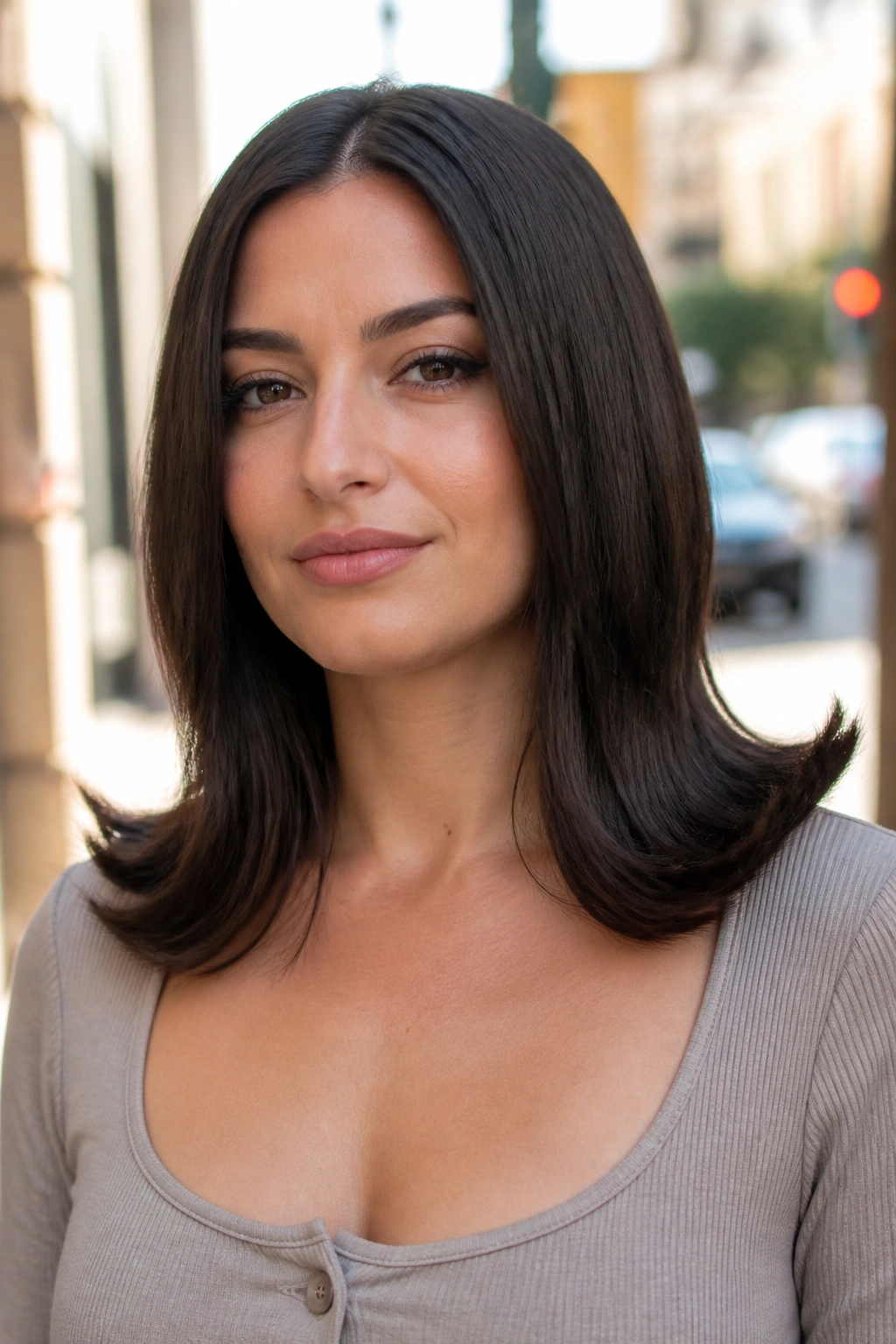
Flipped-out ends have a little retro energy, and thick straight hair wears them well because the shape stays visible. The flip gives the ends some lift, which keeps the hair from hanging too heavily. It also breaks up the line in a way that feels lighter than a blunt tuck-under.
The trick is to keep the flip soft. You want the ends to turn out, not kick out like a cartoon. A flat iron or blow-dry brush can do it in one pass. Hold the tool slightly under the last inch of hair and turn the wrist away from the face just enough to create a bend.
This style works especially well on shoulder-length cuts and long bobs. On very long hair, the flip can disappear under the weight unless the ends are trimmed often. Small detail. Big difference.
13. Braided Crown Accent on Straight Hair
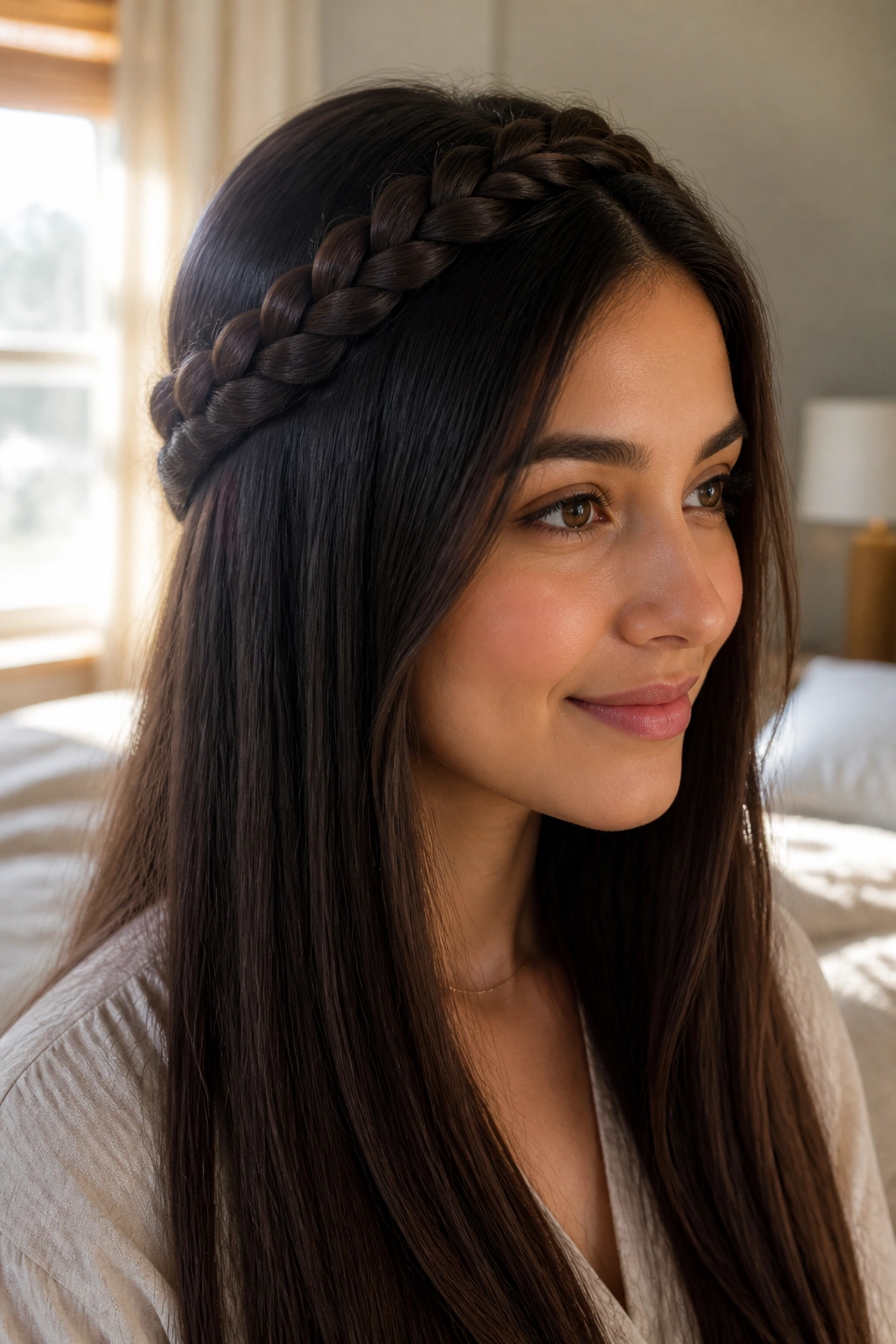
Need a style that stays neat when thick hair starts getting in the way? A braided crown accent does that job nicely. It pulls just enough hair from the front or side to control the volume, while the rest stays straight and loose. The braid gives the style a little texture without taking over the whole look.
How to Keep It Neat
- Start the braid with a clean part so the section stays even
- Braid close to the head for the first 2 to 3 inches
- Pin the end under the loose hair so the braid does not pop out
- Mist the braided section lightly with flexible hold spray
This is the kind of style that looks more complicated than it is. That’s a nice bonus. On thick hair, the braid also has enough body to look full, not skinny or lost inside the rest of the length.
14. Low Wrapped Bun
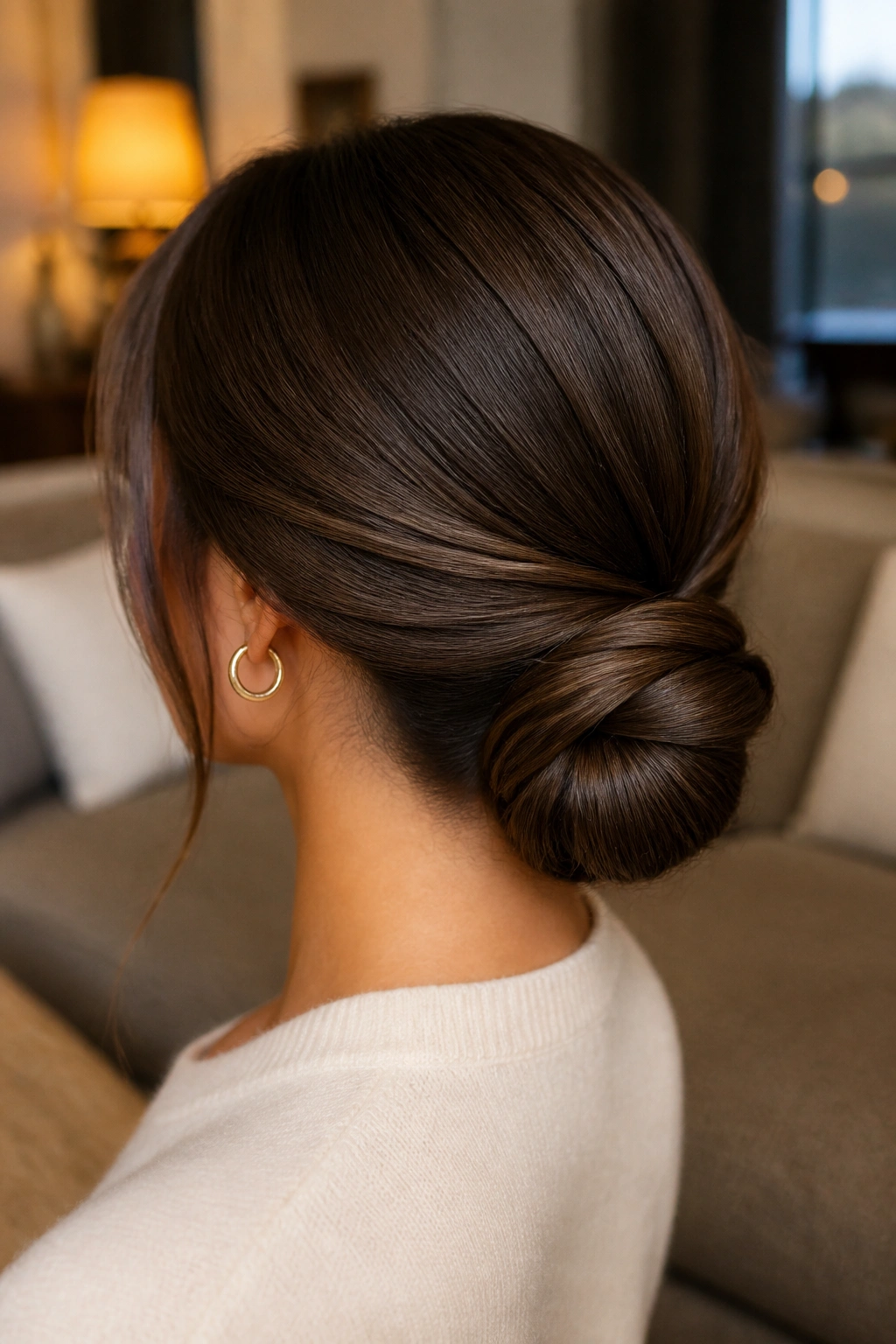
A low bun is a strong option when thick straight hair needs to look polished without being fussed over. The bun sits near the nape, which keeps the silhouette clean, and the wrapped base hides the elastic so the finish looks more dressed up than it really is. Thick hair gives the bun substance. It does not have to be padded or teased to look full.
I like this look for dinners, work events, and days when the weather is against you. The shape is neat, but it still has a little softness around the edges if you leave one front piece loose. Not a giant piece. Just enough to keep it from looking severe.
Pin the bun from several angles so the weight is spread out. Thick hair can tug at one pin and loosen the whole thing if you rely on only one or two.
15. Side-Swept Front With Pin-Straight Ends
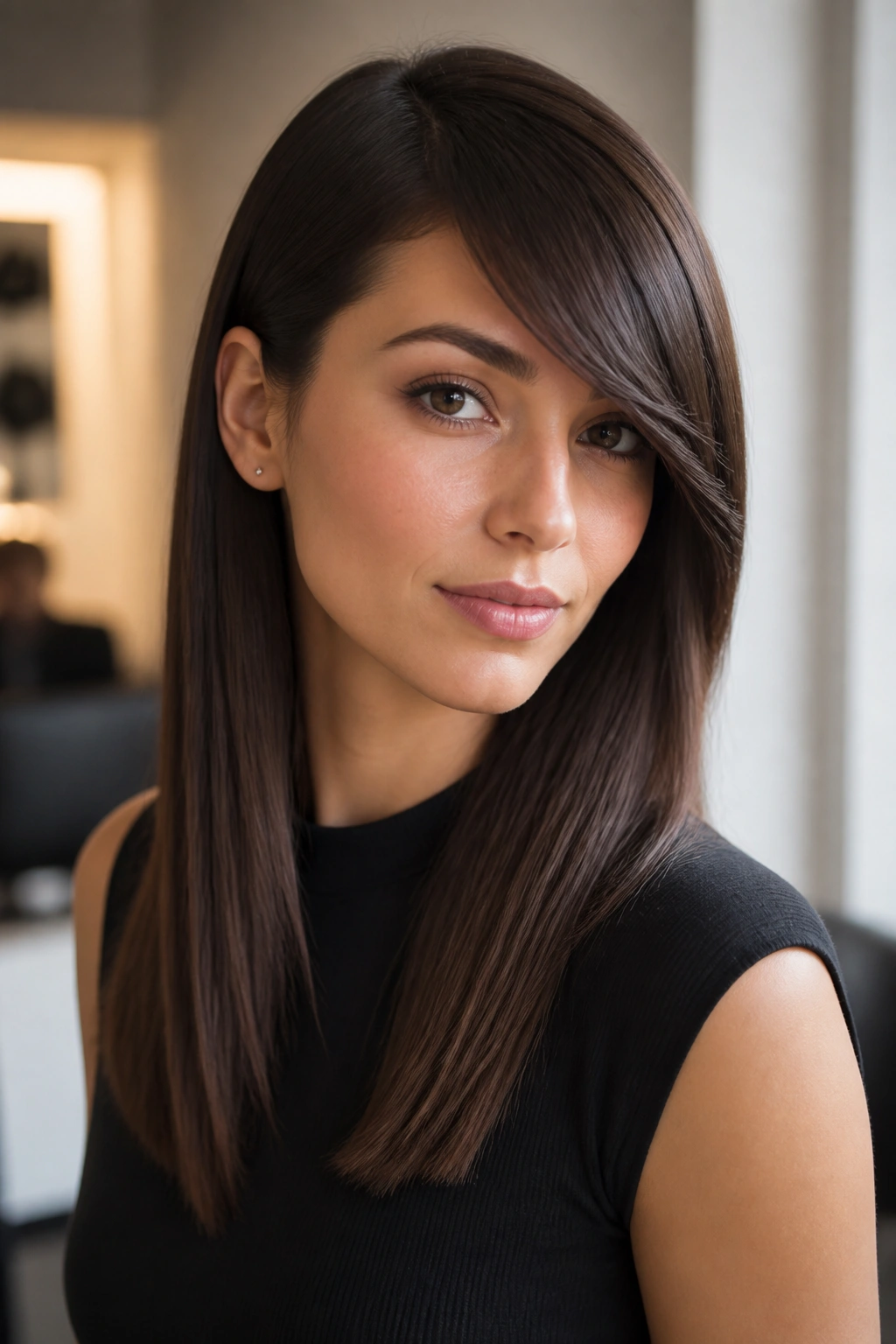
A side-swept front changes the mood of straight thick hair fast. It breaks up the symmetry, adds movement near the face, and makes the rest of the hair feel less blocky. Pair that with pin-straight lengths, and you get a style that looks neat but not flat.
This is one of my favorite options for people who want a little softness without bangs. The front section can be curved lightly across the forehead or swept down and tucked behind one ear. The rest of the hair stays straight so the length still reads clean.
The style works because it creates contrast. One section moves. The rest stays disciplined. That small shift makes a thick head of hair feel easier to wear, especially if the cut is long and the perimeter is blunt.
16. Micro Fringe and Long Straight Lengths for Thick Hair
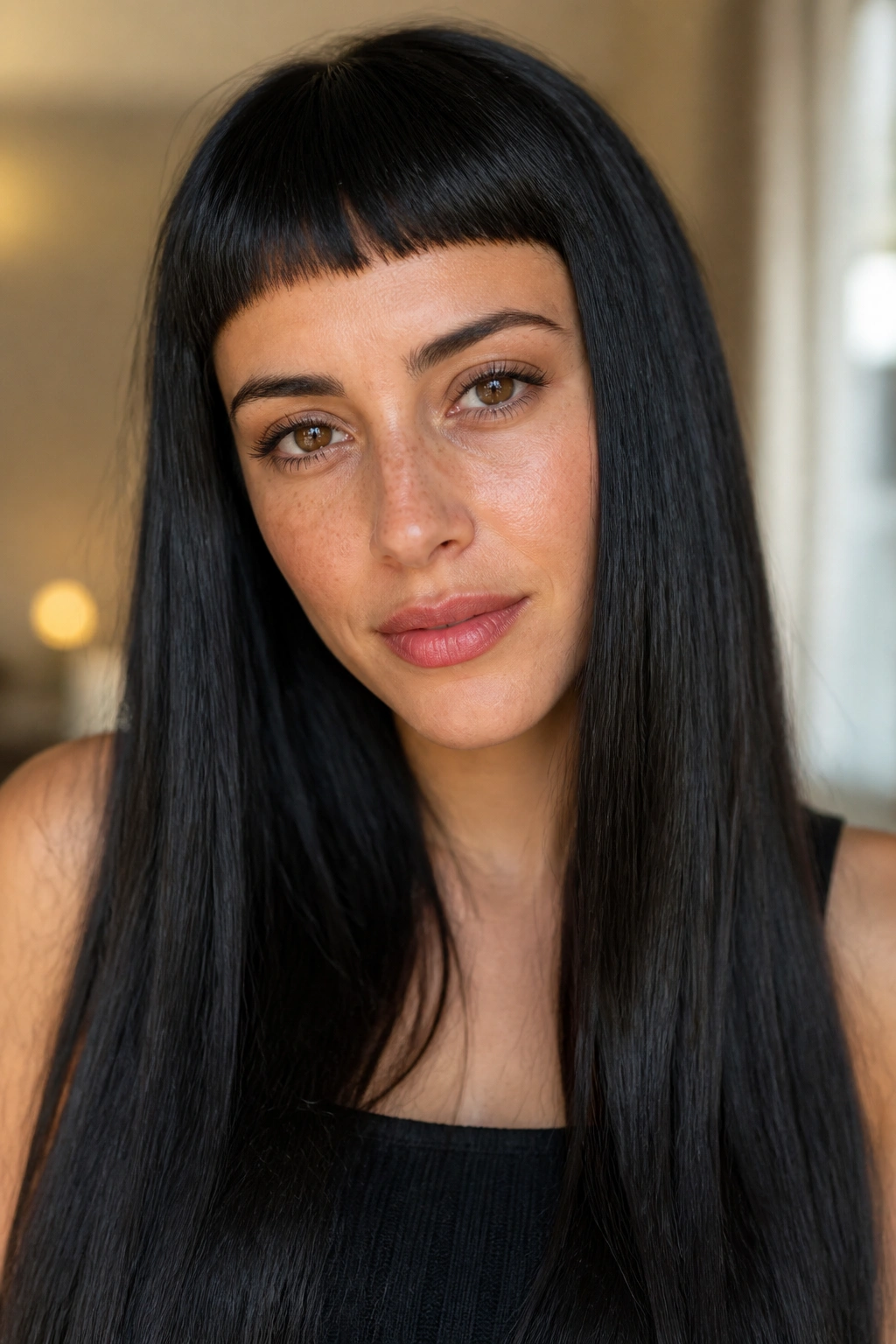
Micro fringe is not timid. It is the sort of fringe that makes a statement before you say a word, and thick straight hair gives it enough support to sit properly instead of floating around like a weak little curtain. The contrast between the tiny bang and the long lengths is what makes it interesting.
What to Watch For
Micro fringe needs commitment. It opens up the face fast, which is great if you like a sharp look, less great if you want something soft and forgiving. Thick hair can carry it because the fringe has enough density to stay visible and deliberate.
- Keep the fringe blunt, not wispy
- Trim it often so it does not drop into the eyes
- Balance it with straight lengths, not heavy layering through the top
- Use a flat brush or mini round brush to direct the fringe straight down
I’d call this a fashion-forward choice, but that sounds too polished. It’s more of a bold one. And when it works, it really works.
17. Airy Shag for Straight Thick Hair
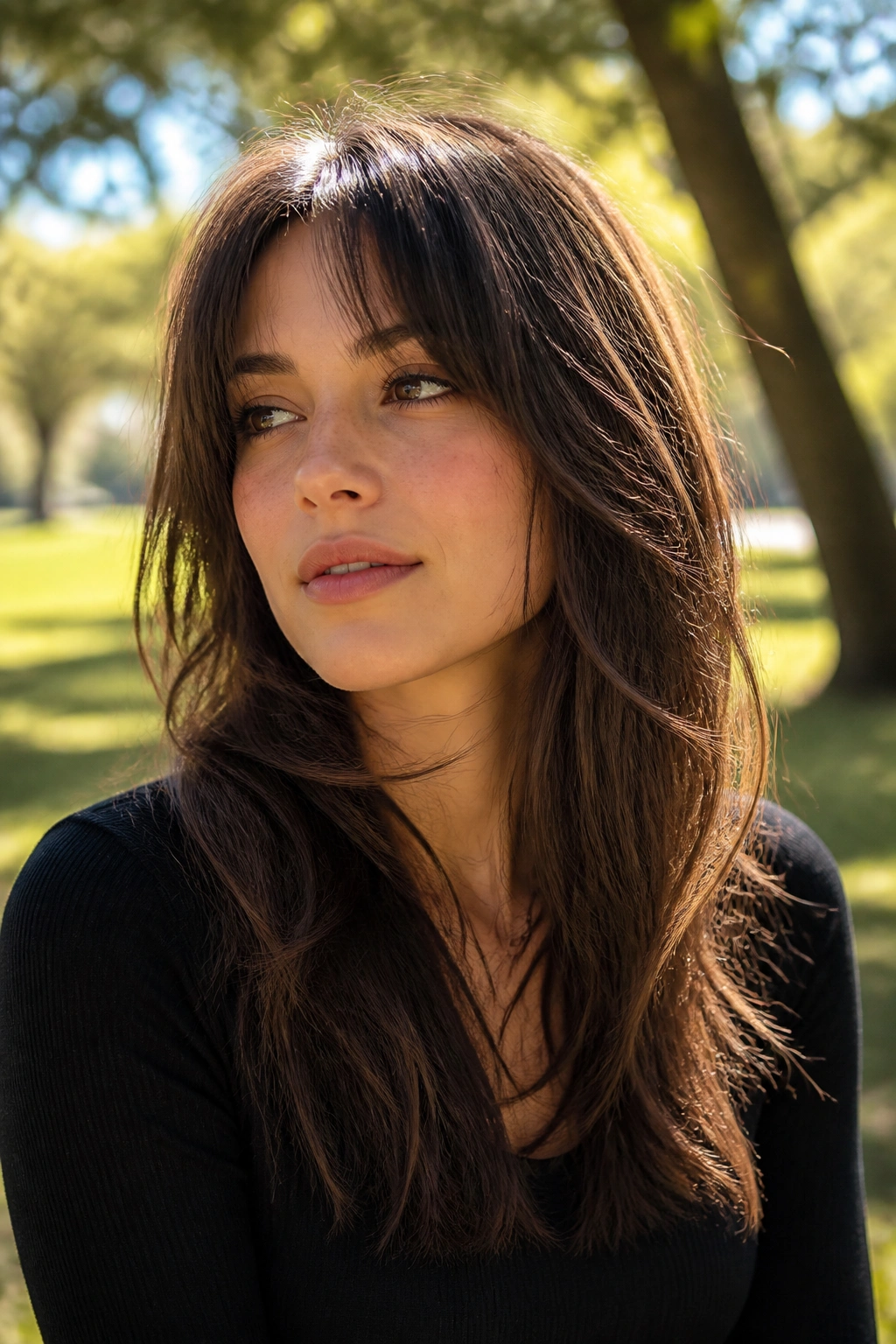
Can a shag work on straight thick hair? Yes, if it’s cut with enough care. The word shag makes people picture shaggy chaos, but a good straight version is more about controlled movement. You want the layers to break up the density, not shred it.
A straight shag usually benefits from soft, disconnected layers that lighten the crown and sides. That lets the hair move without turning into a solid block. The fringe can be curtain-like or piecey. Either way, the goal is to stop the hair from sitting all in one heavy shape.
What I like here is the lived-in feel. It doesn’t need perfect styling every day. A quick blow-dry with a little root lift is enough. If you want a haircut that looks better after a few bends and slips, this is the one.
18. Bubble Ponytail
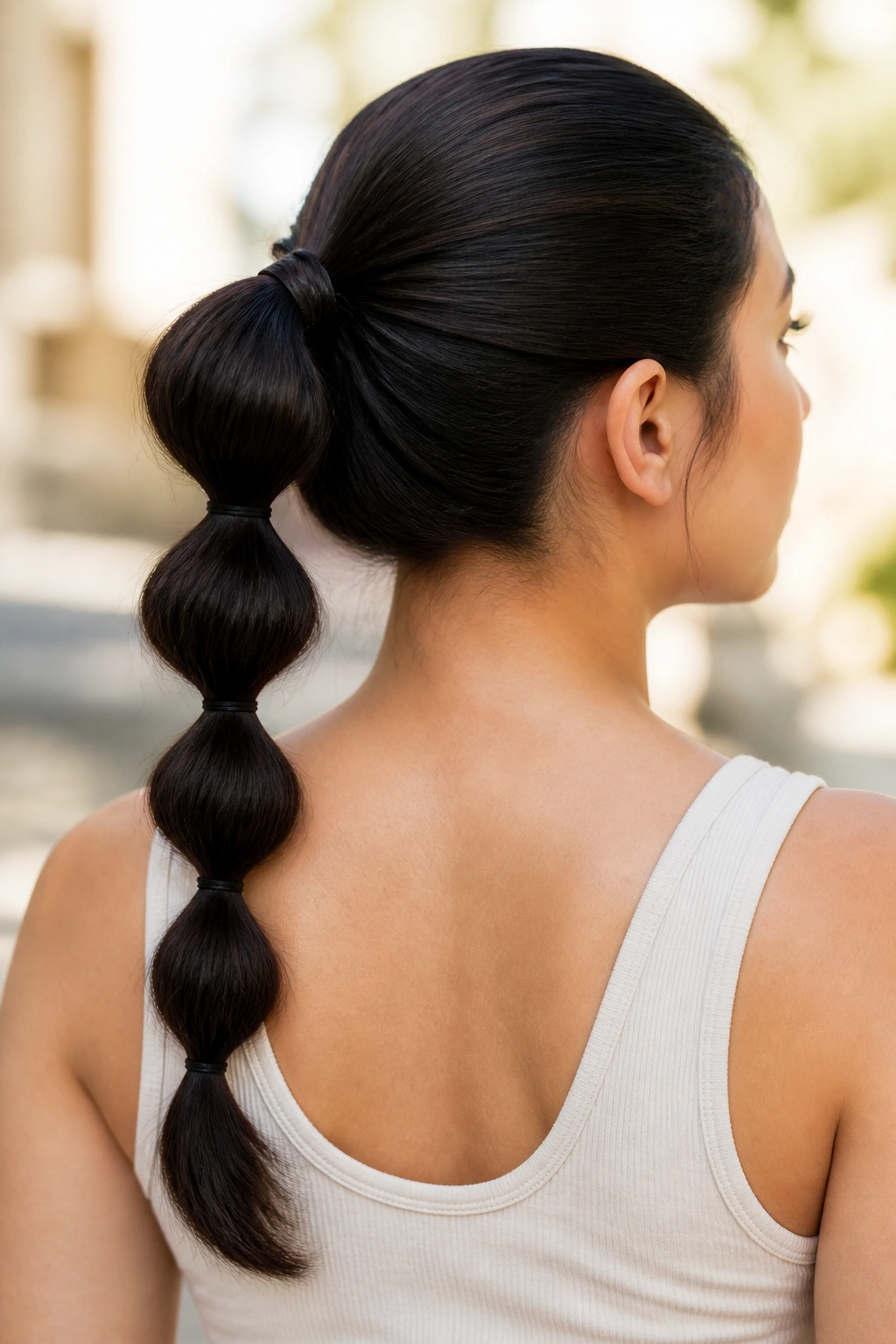
A bubble ponytail turns thick straight hair into something playful without losing control of the length. The ponytail is secured at several intervals, creating rounded sections that hold their shape because there’s so much hair inside each one. Thin hair can struggle to make the bubbles look full. Thick hair does the opposite.
The style needs a few small elastics and a little patience. Tie the hair into a low or mid-height ponytail, then add elastics every 2 to 3 inches down the length. Gently pull each section outward so it puffs into a smooth bubble. Not too much. You want round sections, not gaps.
This works well for weekends, events, or any day when a plain ponytail feels boring. It is also a smart way to keep long thick hair contained while still showing off the length.
19. Tucked-Behind-Ears Lob
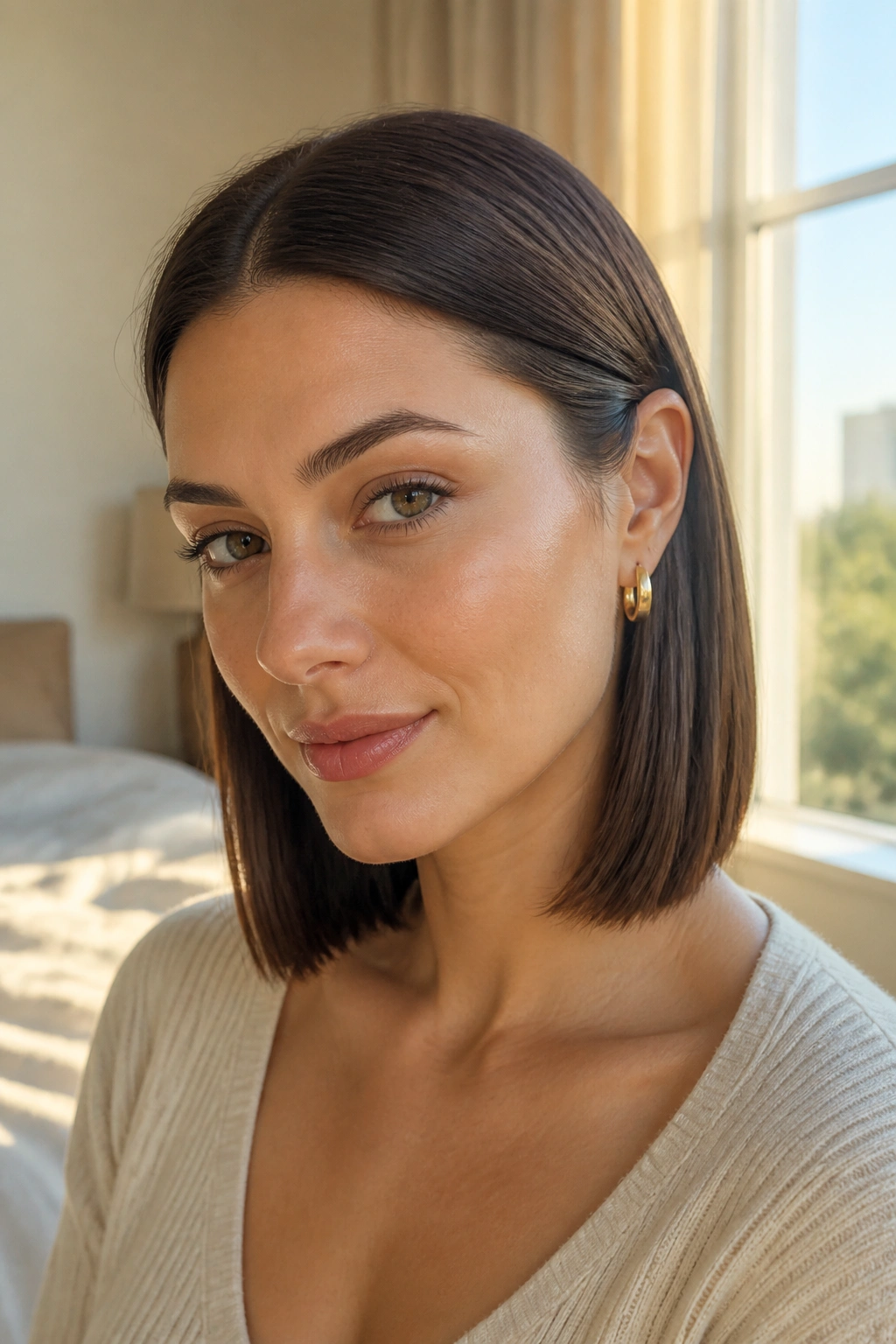
A tucked-behind-ears lob is one of the cleanest straight hairstyles for thick hair because it uses the shape of the cut instead of piling on styling tricks. The lob keeps the weight manageable, and the tuck opens the face. That combination feels tidy without being severe.
This style is good when you want the hair down but not in the way. The ear tuck creates a small visual break, so the sides do not feel as heavy. A center part or a gentle off-center part both work here. If the front pieces are a little shorter, even better. They frame the face and keep the tuck from looking too flat.
The nice part is that it survives a windy day better than you might expect. Thick hair has enough substance to stay put once the tuck is pinned lightly behind the ear.
20. Sleek Two Braids
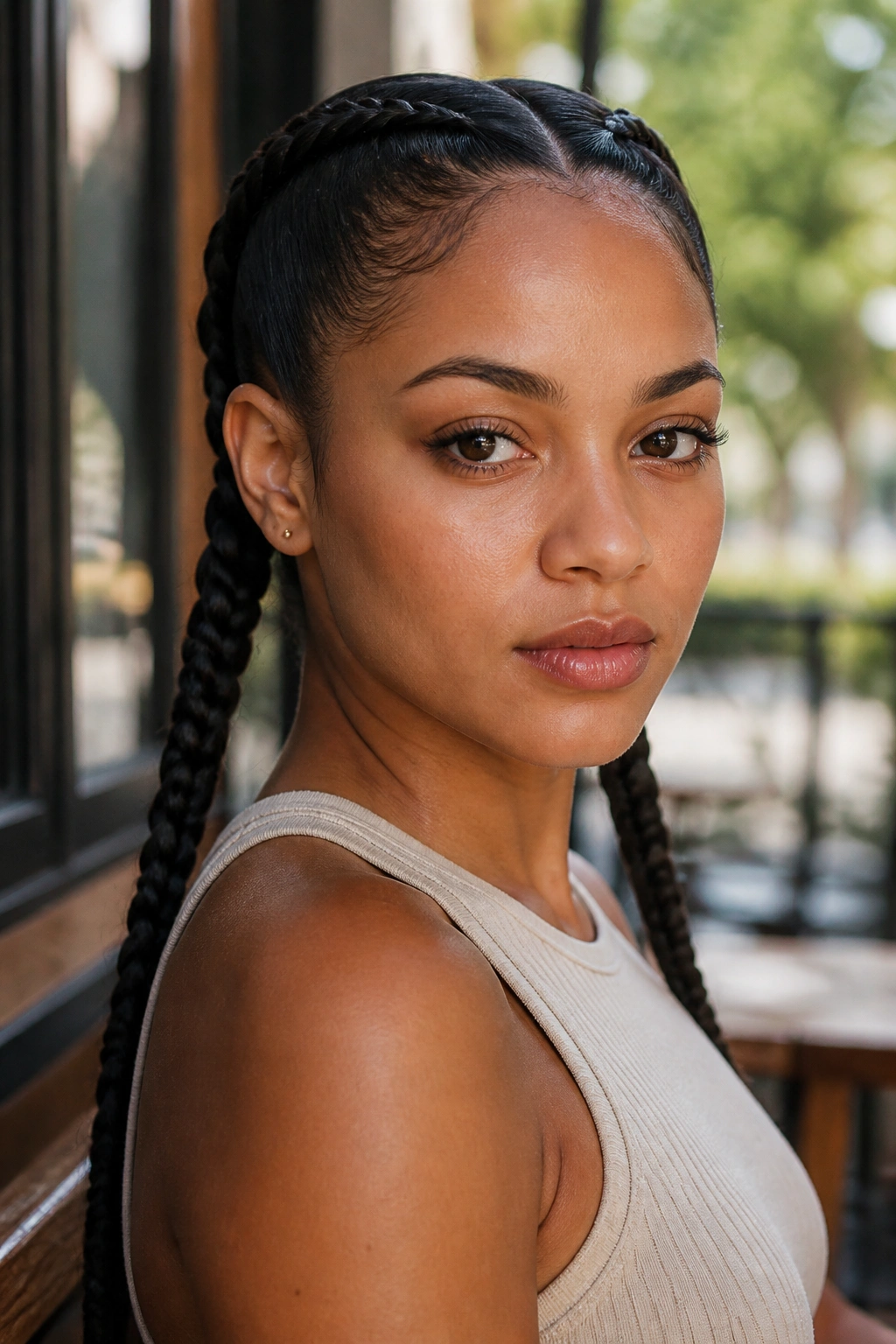
Two braids can look unexpectedly grown-up on thick straight hair when they’re done close, neat, and low. The density gives each braid a full shape, so they don’t look skimpy or childlike. Keep the part clean and the braids even, and the whole style turns into a strong, practical look.
A middle part makes this especially sharp. A side part changes the feel and softens it a bit. Either way, the braids should start close to the scalp and be secured low at the ends so the shape stays tidy. If your hair is long, the braids can hang straight down the back, which looks clean and a little severe in a good way.
This is one of the best styles for keeping thick hair off the neck while still using the length instead of hiding it. Simple. Solid. Reliable.
21. Claw-Clip Twist
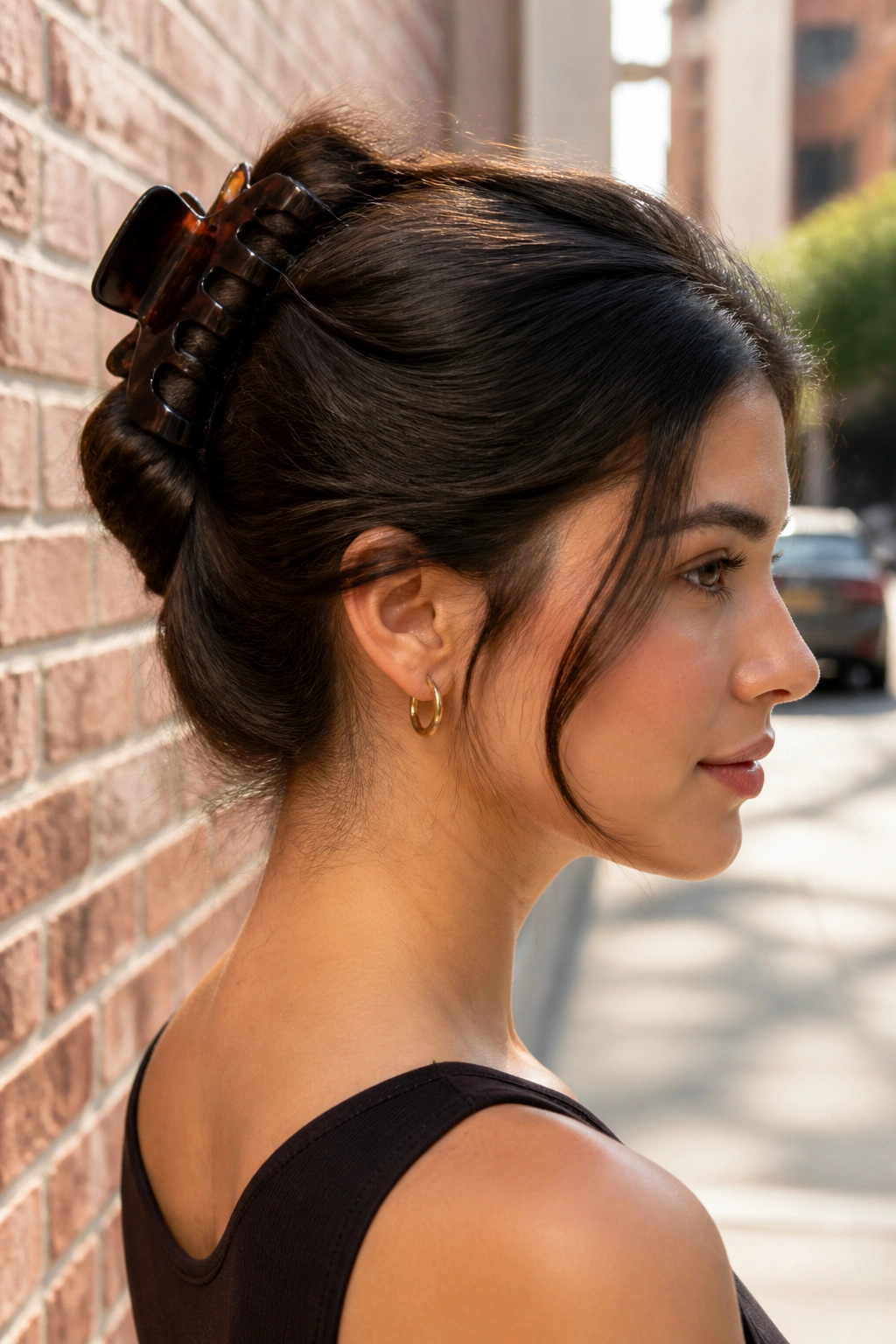
A claw-clip twist is the style you reach for when thick hair has too much life to leave down but not enough time to turn into a full updo. Twist the hair upward, fold the length under itself, and catch it with a large clip that can actually hold the weight. Small clips slide out. They always do.
The trick is balance. Leave a little volume at the crown so the twist does not look smashed, and let the ends stay tucked but not jammed in too tightly. If the hair is very dense, twist it once, secure it halfway, then fold the rest. That extra step keeps the twist from unraveling by lunch.
I prefer a claw clip with strong teeth and a wide opening. Cheap clips crack under thick hair faster than people expect.
22. Polished Center Part With Satin Finish for Thick Hair
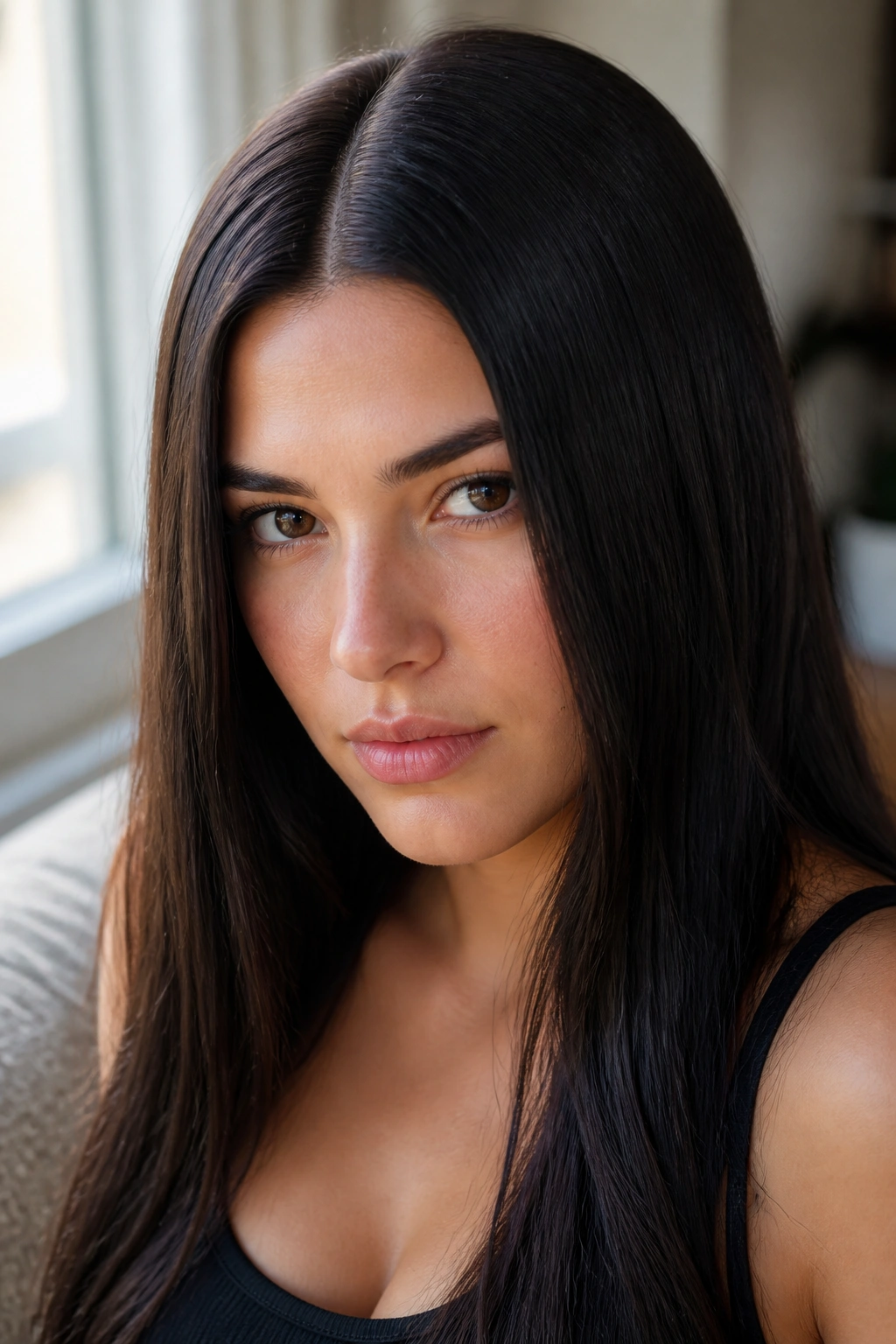
If you want one look that feels clean, sharp, and easy to wear with thick straight hair, this is the one I’d keep on the short list. A polished center part with a satin finish sits between glossy and natural. It reflects light, but not in a hard, frozen way. The hair still moves. It just moves in a very controlled line.
This style works because it respects the density instead of trying to hide it. The center part makes the shape calm, and the satin finish keeps the lengths from looking dry or overworked. A little serum through the mid-lengths and ends is enough. You do not want the roots slicked flat unless that is the whole point of the look.
I like this as a default answer when nothing else feels right. It suits long hair, medium-length hair, blunt cuts, and layered cuts too. There’s a reason it keeps showing up. It’s neat without being fussy, and thick hair wears that kind of honesty well.
