



Round faces are not a problem to fix. They’re a shape to work with.
Wispy hairstyles for round faces work because they keep the eye moving. Soft ends, broken-up fringe, and a little lift at the crown make the face feel longer without turning the whole look stiff or overbuilt. A blunt line that stops at the cheek can make the face read wider than it is. Light layers do the opposite.
The best styles usually do two things at once. They create a little vertical line near the face, and they avoid piling too much width right at the cheeks. That can mean curtain bangs, a side part, feathered ends, or a shag that breaks up the outline instead of drawing one hard shape around it.
Some of the cuts below need a blow-dryer and a round brush. Others work with a bit of mousse and a scrunch of your fingers. That’s the good part: you do not need the same routine for every hair type, and you do not need to pretend your face shape should wear the same haircut as everyone else.
1. Long Layers With Wispy Side Bangs for Round Faces
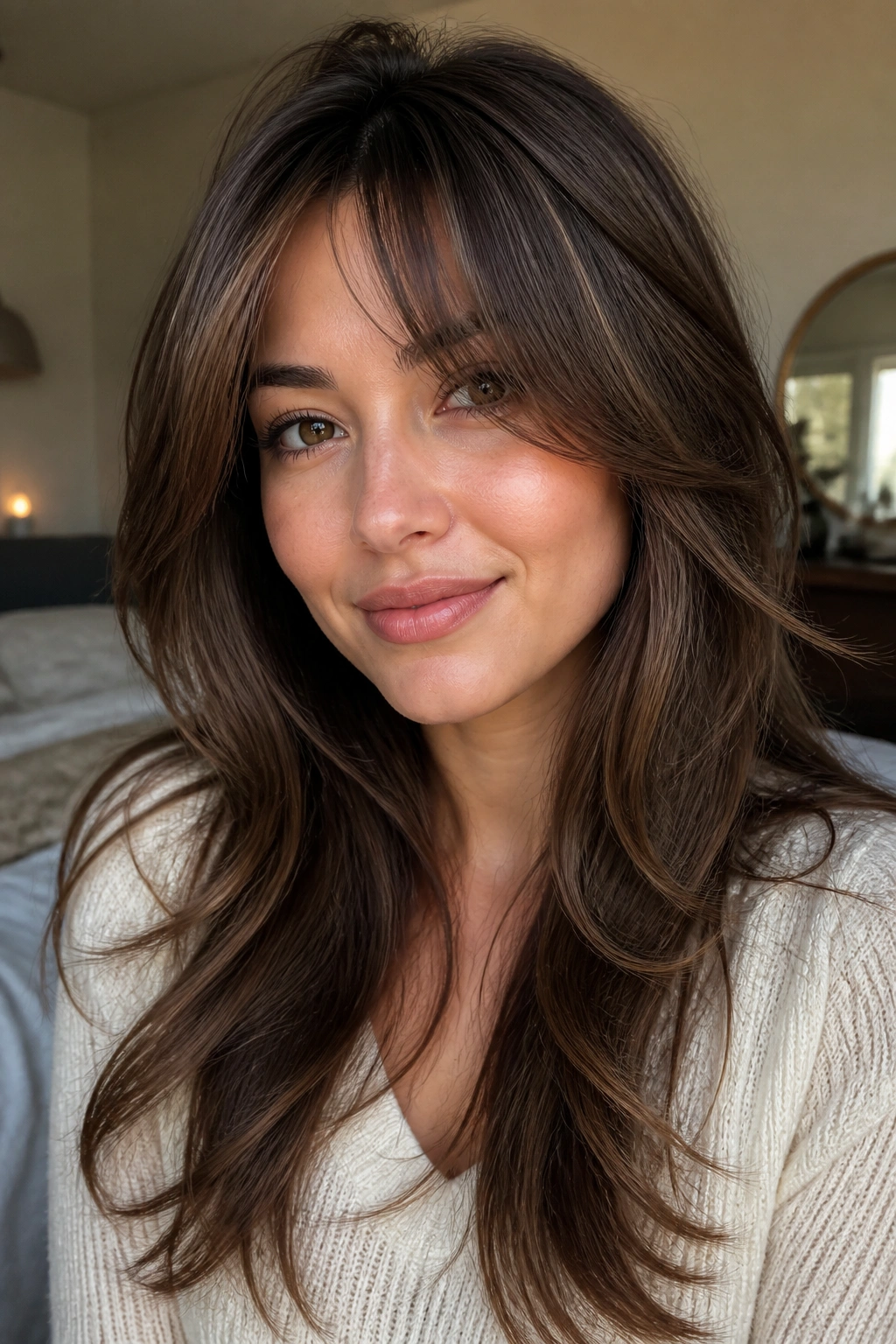
Long layers are the cleanest answer when you want movement without extra width. The length pulls the eye downward, while the side bangs break up the forehead and keep the style from feeling flat at the top.
Why It Works
Ask for the shortest face-framing pieces to start around the cheekbone, then taper them longer as they blend into the rest of the cut. That little shift matters. If the shortest layer lands right at the fullest part of the cheek, the face can look rounder than it is.
- Keep the overall length below the collarbone.
- Ask for point-cut ends so the layers look soft instead of chopped.
- Style the bangs with a round brush, brushing them away from the face.
Best move: part the hair a little off-center. A deep side part can feel dramatic; a slight side part looks easier and usually wears better day to day.
2. Collarbone Lob With Feathered Ends
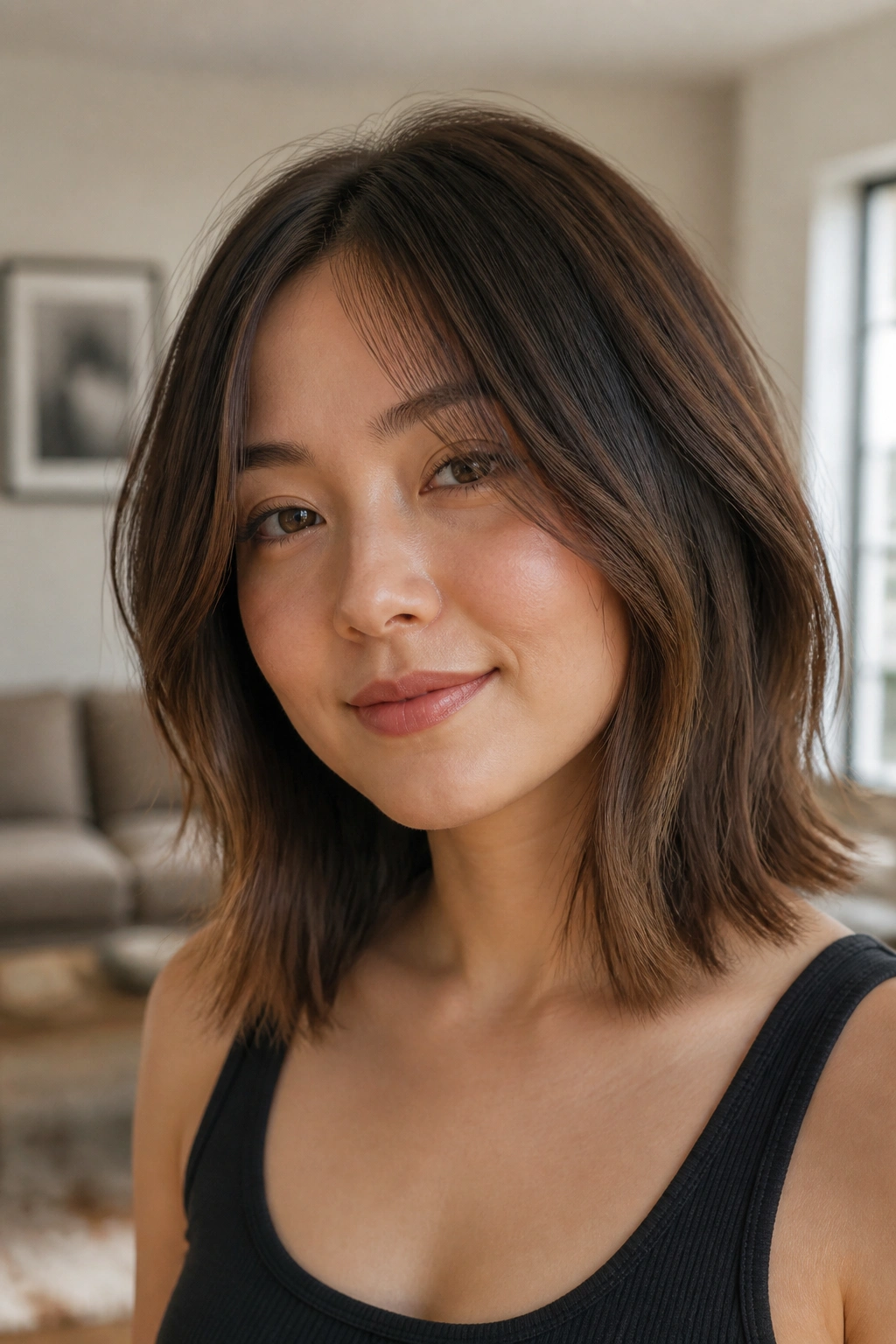
A collarbone lob is one of those cuts that looks polished without trying too hard. On a round face, the key is the edge treatment. If the ends are too blunt, the cut can sit like a shelf. If they’re feathered, the whole shape feels lighter and longer.
The sweet spot is right at the collarbone or a touch below it. That length skims the shoulder line without stopping at the jaw, which is where round faces often need the least bulk. Add a soft bend with a flat iron or a one-inch curling wand, and the line stops looking square.
Keep the front a little longer than the back. That tiny angle gives the illusion of length near the face, which is exactly what you want here. It also grows out better than a strict blunt bob, and that matters if you don’t want frequent trims.
3. Shoulder-Length Shag With Curtain Fringe
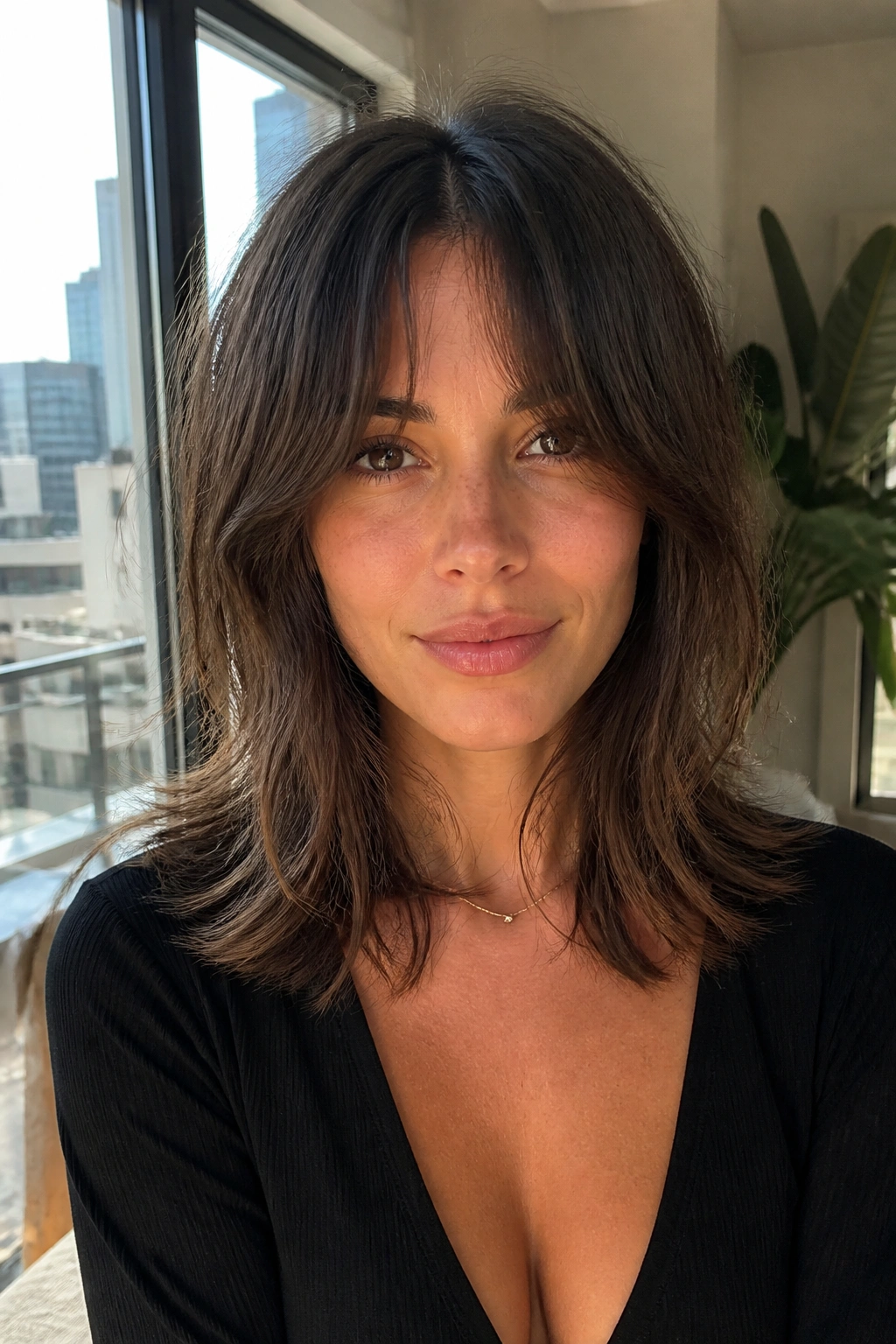
Can a shag work on a round face? Absolutely, if the layers are kept airy and the fringe doesn’t get too heavy.
What Makes It Different
A shag is built on broken texture, not one solid outline. That helps a round face because the hair does not form a neat circle around the cheeks. Instead, the eye keeps moving through the layers, which makes the face feel a little narrower and a little longer.
How to Wear It
- Blow-dry the curtain fringe forward, then split it down the middle with your fingers.
- Use a light mousse on damp hair if your texture tends to fall flat.
- If your hair is thick, ask for internal layers so the shape stays soft instead of mushrooming out.
This cut loves a bit of mess. A tiny bend at the ends looks better than glossy perfection here. And if your hair has natural wave, good — the shape does some of the work for you.
4. Soft Butterfly Cut With Face-Framing Pieces
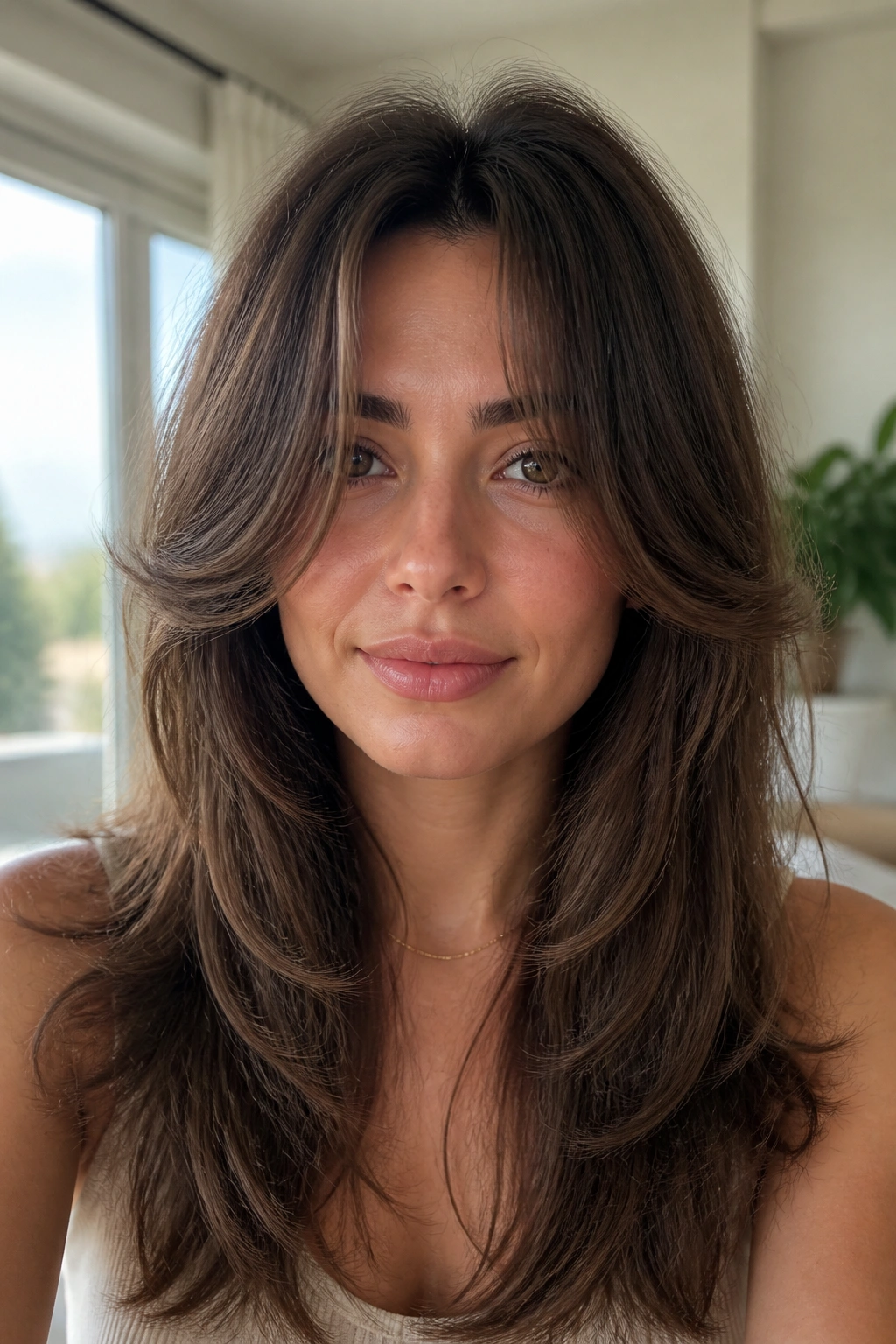
If you have ever clipped the top half of your hair back and liked that look more than the rest, the butterfly cut is probably worth a serious look. It keeps the length, but the shorter face-framing layers create the lift and movement that round faces often need.
The top layers should fall somewhere around the chin to collarbone, depending on your length. That gives the illusion of a shorter, bouncier style around the face while the bottom still hangs long and sleek. It’s a smart cheat, honestly.
- Ask for layers that start below the cheekbone.
- Keep the front pieces soft, not chunky.
- Use a large round brush or Velcro rollers at the crown.
One thing to skip: very short top layers. They can puff out too much on thicker hair and make the face look wider instead of longer.
5. Chin-Length Bob With Airy Side Part
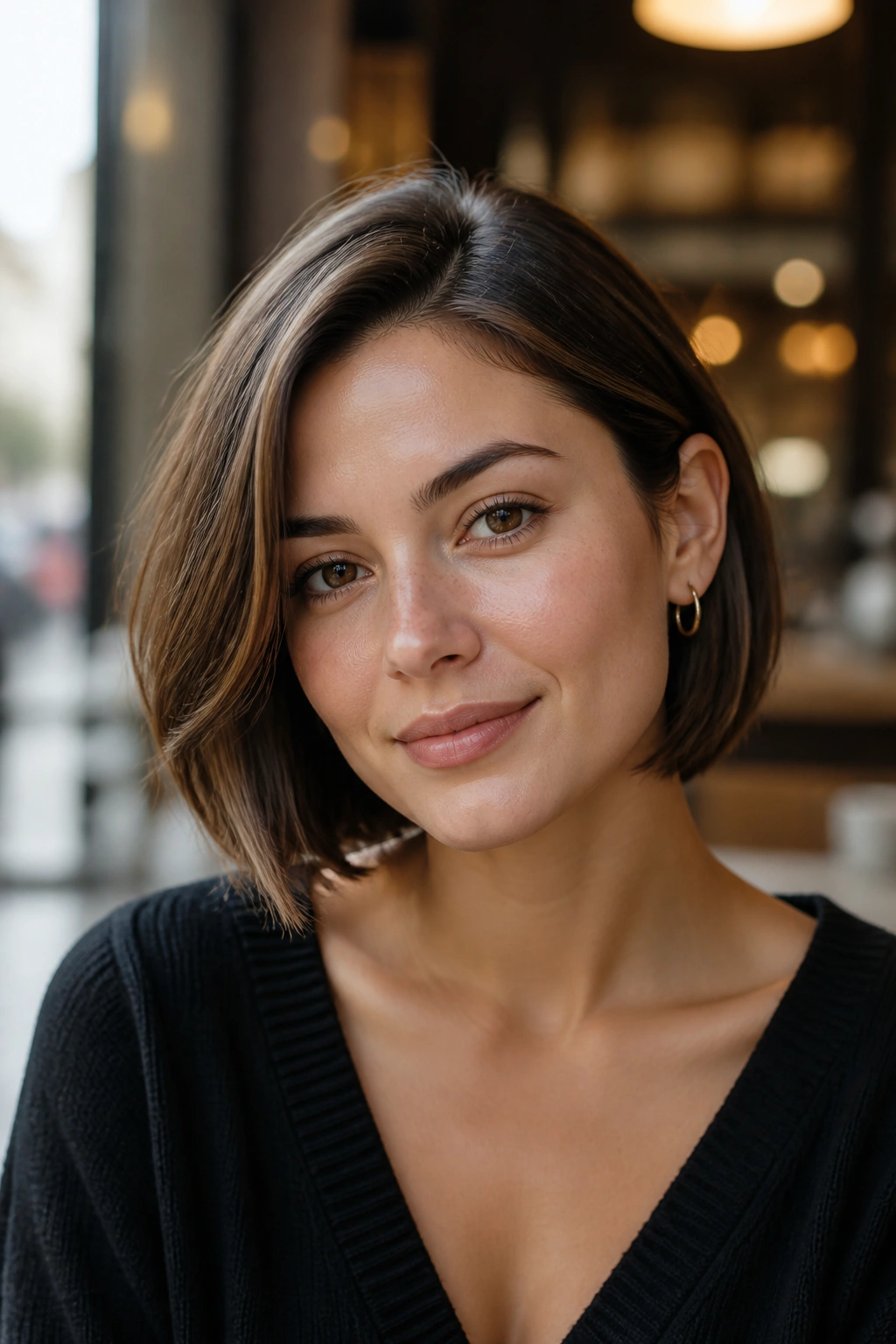
People act like chin-length bobs are off-limits for round faces. They’re not. The problem is usually the finish, not the length.
A chin-length bob works when the line is broken up. A deep side part, a slight underbend at the ends, and a few soft pieces tucked behind one ear keep the shape from looking too boxy. The whole cut should feel light around the jaw, not heavy or helmet-like.
This is a good choice if you like structure but do not want long hair in your face all day. It also frames the neck nicely, which can help balance fuller cheeks. The trick is to avoid a blunt center-parted version with no texture. That one is too clean for this face shape.
A touch of texture spray at the ends changes everything.
6. Long U-Shape Cut With Curtain Bangs
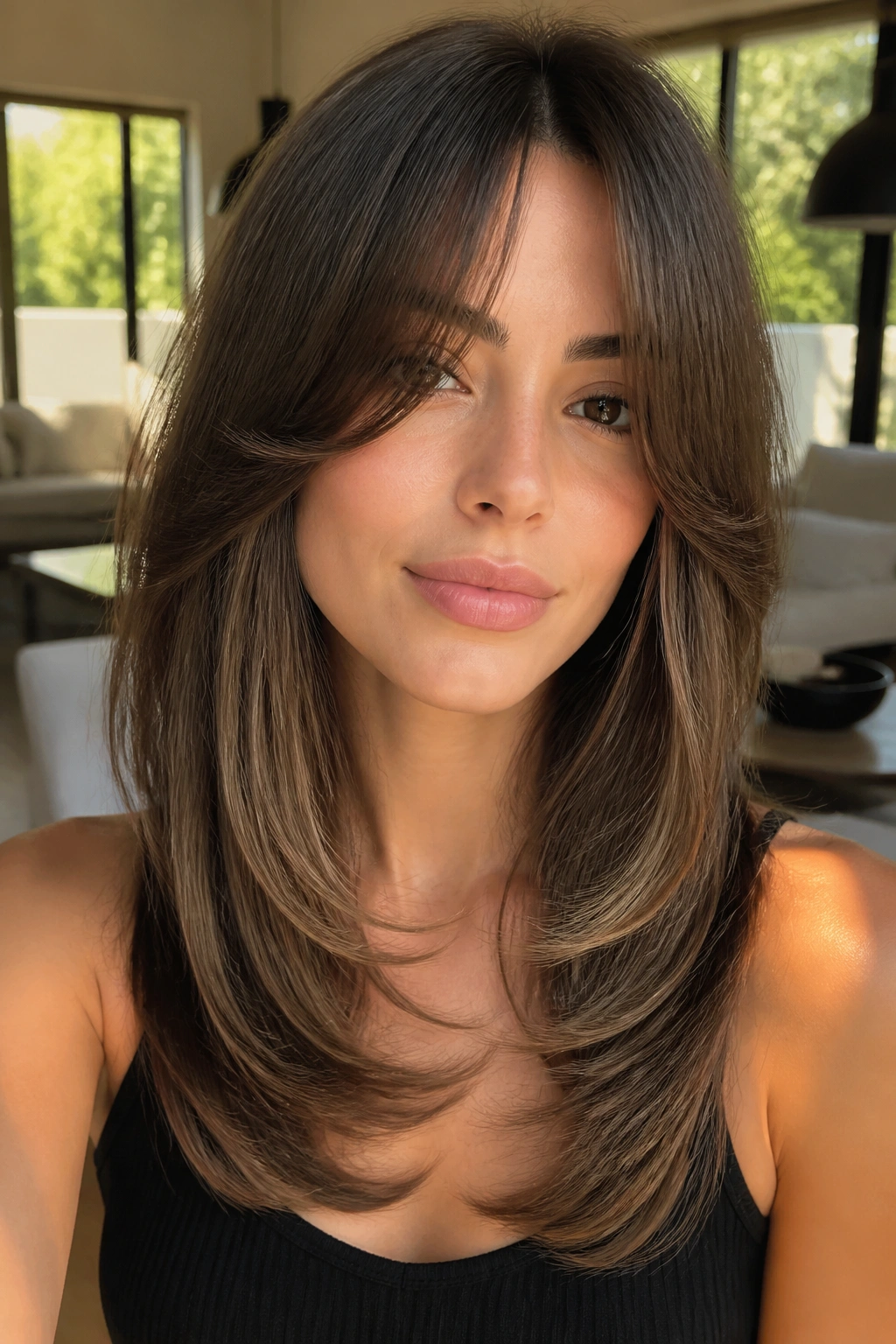
Unlike a straight-across cut, a U-shape keeps the ends rounded and softer at the sides. That shape helps round faces because the hair falls in a gentle curve rather than creating a wide block at one level.
What to Ask For
Tell your stylist you want the back to stay the longest, with the sides curved slightly inward. The front pieces should open around the cheekbones and flow into the bangs, not stop there like two separate sections.
- Curtain bangs should start at eyebrow level and sweep longer into the jaw.
- Keep the perimeter soft with slide-cutting or point cutting.
- Style with a medium round brush so the front bends away from the face.
This is one of my favorite cuts for people who want movement but not a shag. It looks clean enough for work and loose enough for weekends. That’s a rare combo.
7. Textured Pixie With Wispy Fringe
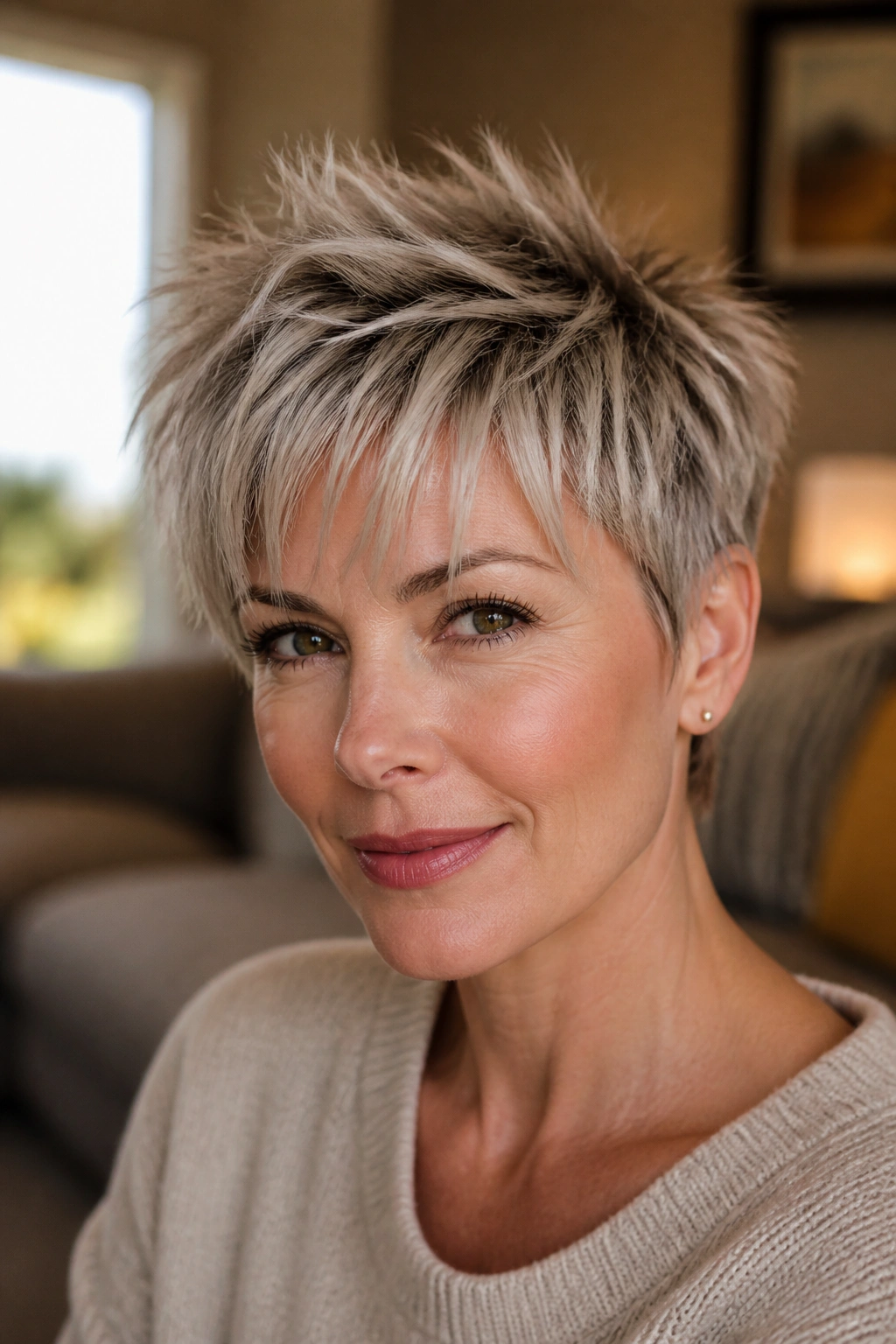
A pixie can flatter a round face when the top is longer than the sides. That’s the part that gets missed most often. If everything is cropped evenly, the face can look wider. If the crown has height and the fringe stays piecey, the result feels sharper and more lifted.
The fringe should not be one heavy sheet. Keep it broken and light, almost like the hair fell there on its own. A little separation around the forehead helps a lot, especially if your hairline is low or your forehead is shorter.
- Use a matte paste or light wax, not a heavy cream.
- Push the top up and slightly forward with your fingertips.
- Keep the sides close to the head for cleaner shape.
This cut is bold, but it is not fussy. And that’s the appeal.
8. Wavy Mid-Length Cut With Cheekbone Layers
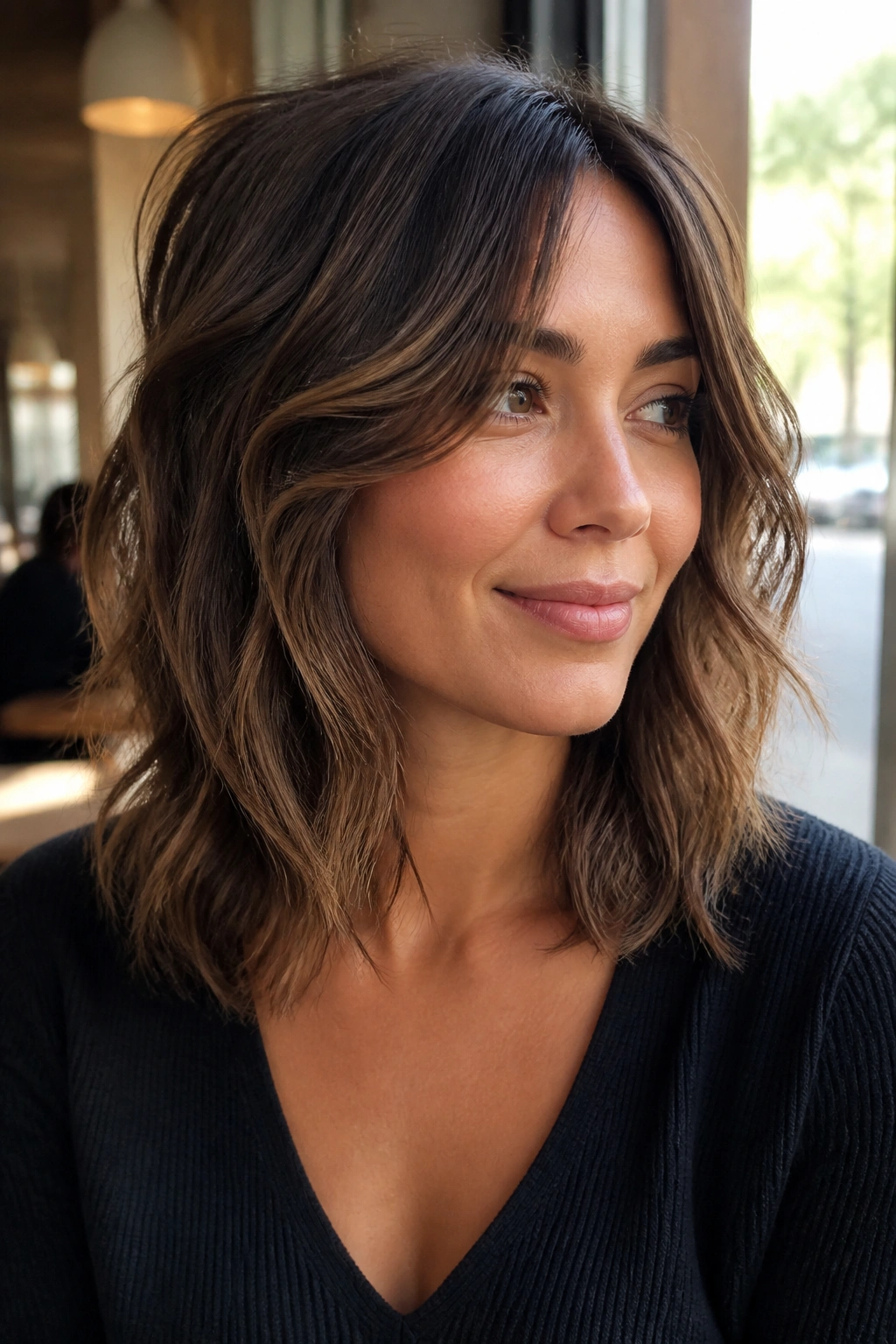
What makes this cut work is the placement of the shortest pieces. If they hit right at the cheekbone, they frame the face instead of boxing it in.
Mid-length waves already bring softness, so you do not need much else. A few layers that begin around the mouth or jaw, then fall longer into the rest of the hair, give the shape a natural flow. Think loose, not overly styled. Think movement, not curl-sculpted perfection.
A one-inch curling wand can help, but so can braiding damp hair and letting it dry. That flexibility makes this a good option if you don’t want to heat-style every day. The look is especially nice on hair that has a little body already, because the layers can sit on top of that texture instead of fighting it.
9. Soft Wolf Cut With Broken-Up Ends

A wolf cut sounds wild on paper. In practice, it can be surprisingly flattering on a round face when the layers are handled with restraint.
The Shape
The top stays fuller, the middle loses weight, and the ends stay wispy. That keeps the style from widening at the cheeks, which is the main thing to watch. If the layers are cut too high at the sides, the face can feel even rounder. Keep the side layers longer and let the crown carry the height.
How It Wears
- Works best with natural wave or a rough blow-dry.
- Pair it with a light curtain fringe or a narrow side fringe.
- Add texture spray only at the mid-lengths and ends.
The best wolf cuts look a little worn in the good sense. Not sloppy. Just not precious.
10. Half-Up Style With Loose Face Tendrils
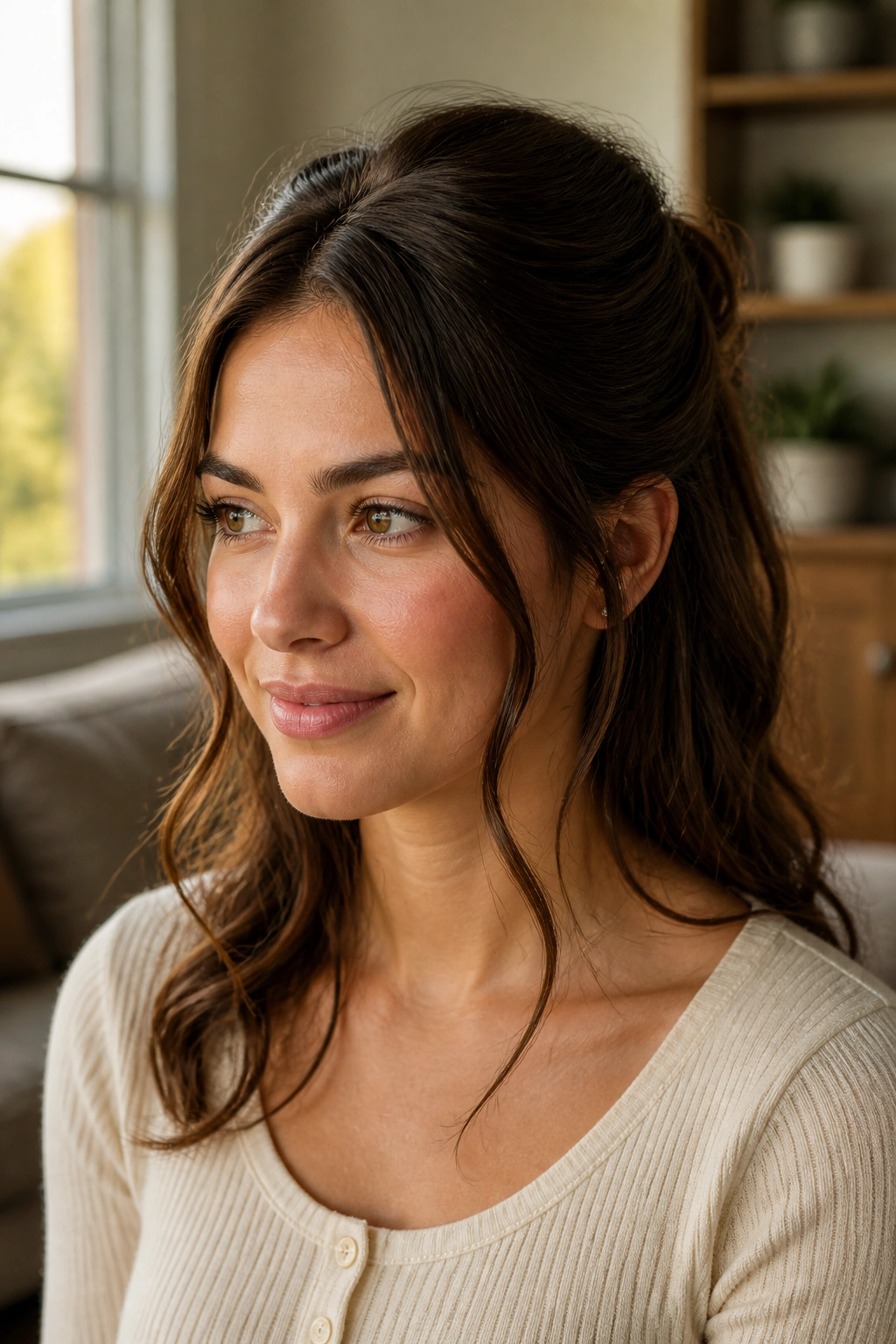
Sometimes the smartest move is not a haircut at all. It’s a style that changes the shape of the face for a few hours.
A half-up look lifts hair off the sides, which is where round faces can use the most breathing room. Leave a pair of slim tendrils in front of the ears, and the eye gets a soft vertical line instead of a full circle of hair. The effect is subtle, but it works.
This style is useful if you want your hair off your neck without pulling everything back into a tight ponytail. It also helps when your hair is in that in-between stage — too short for a full updo, too long to ignore. Curl the front pieces once with a wand, or leave them straight if you want a cleaner finish.
A tiny bit of volume at the crown keeps the whole thing from sitting flat.
11. Layered Curly Cut With Airy Crown
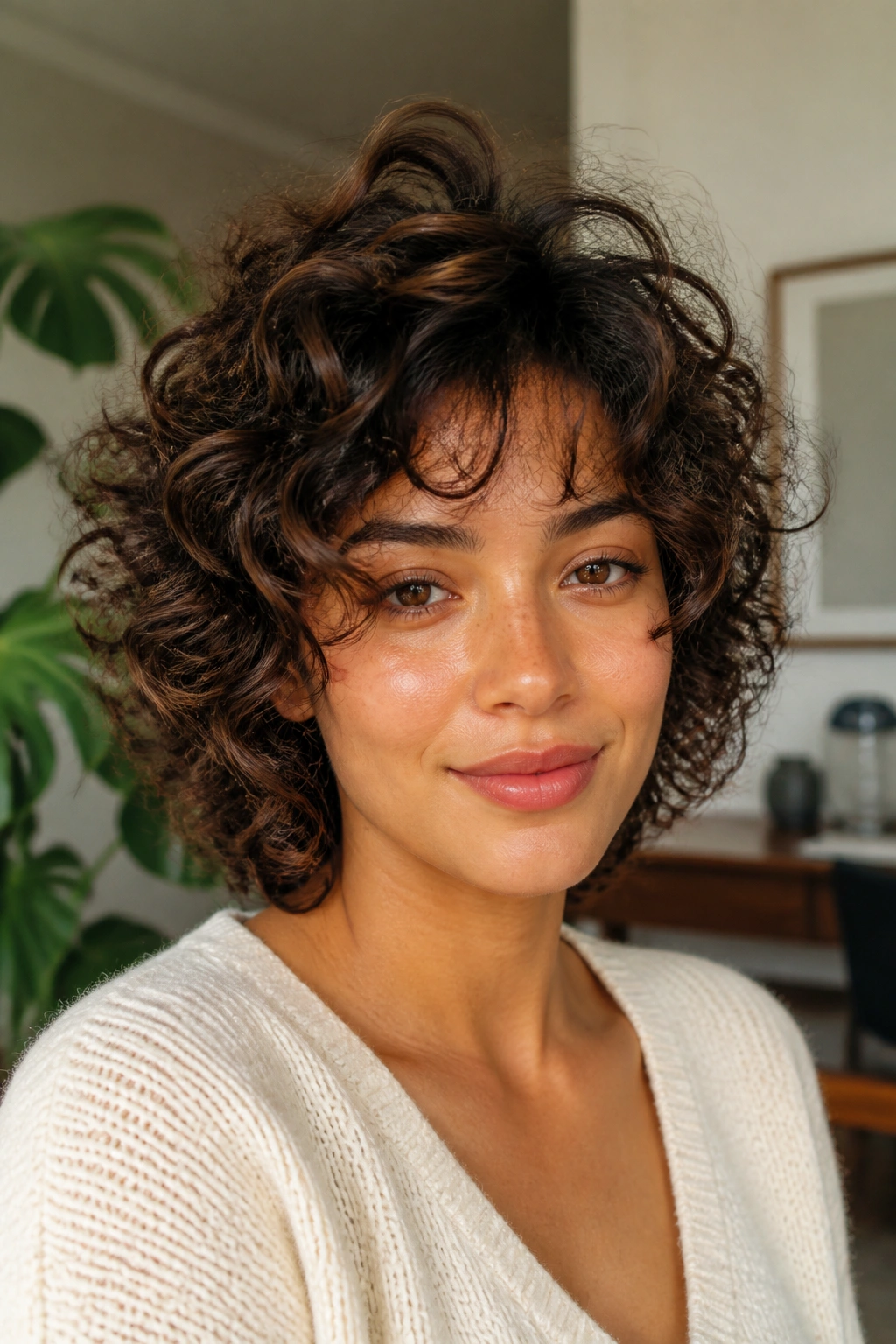
Curly hair on a round face needs shape, not flattening. A layered curly cut with a light crown can do that beautifully, because it lifts the curls up instead of letting them spread sideways.
The key is to keep some height near the top and let the curl pattern stack in a controlled way. If the layers are cut so every curl lands at the same level, the silhouette can widen fast. A better cut lets some curls sit higher, some lower, and a few hang forward near the cheeks for balance.
Small Details That Matter
- Ask for dry cutting if your curls shrink a lot.
- Keep the shortest face-framing curls below the cheekbone.
- Diffuse on low heat to preserve the lift.
Skip heavy creams if your curls already have weight. They can drag the whole shape down and erase the airy effect.
12. Blunt Lob With Textured Tips
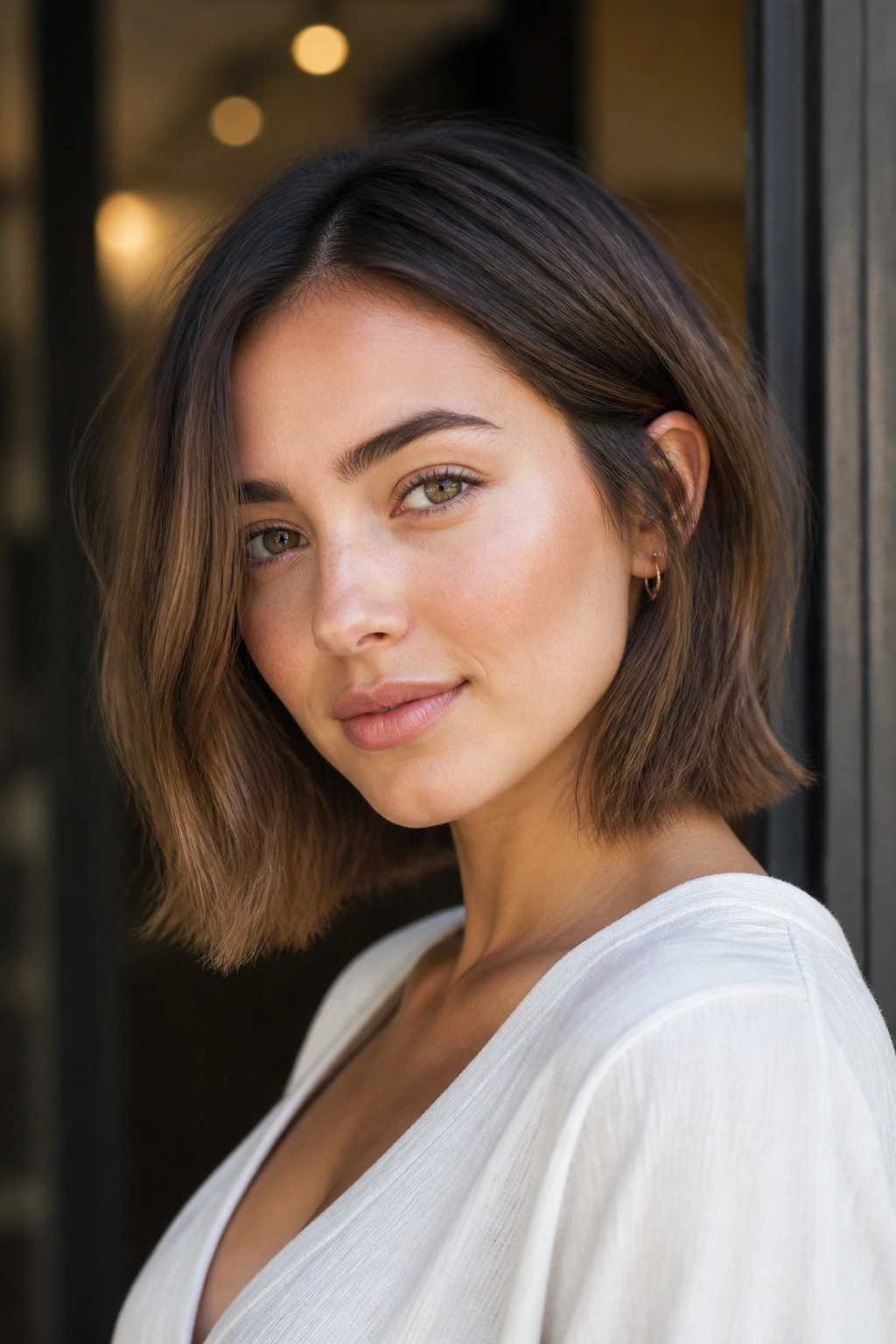
Here’s the contrarian take: a blunt lob can work on a round face if the ends are softened and the finish is not too exact.
The shape should stop around the collarbone, not the jaw. That extra length changes everything. Then ask for subtle texturing at the tips so the line does not look rigid. A pure blunt edge can feel heavy on this face shape, but a little broken movement keeps it from reading boxy.
What to Watch For
A center part is not forbidden, but it needs some softness around the face. If the hair is pin-straight and glossy with no bend, the cut can feel flat and wide. Add a slight tuck behind one ear or a loose wave through the lower half.
This is a strong choice if you like clean lines and low fuss. It has a nice grown-up feel without looking severe.
13. A-Line Bob With Feathered Front
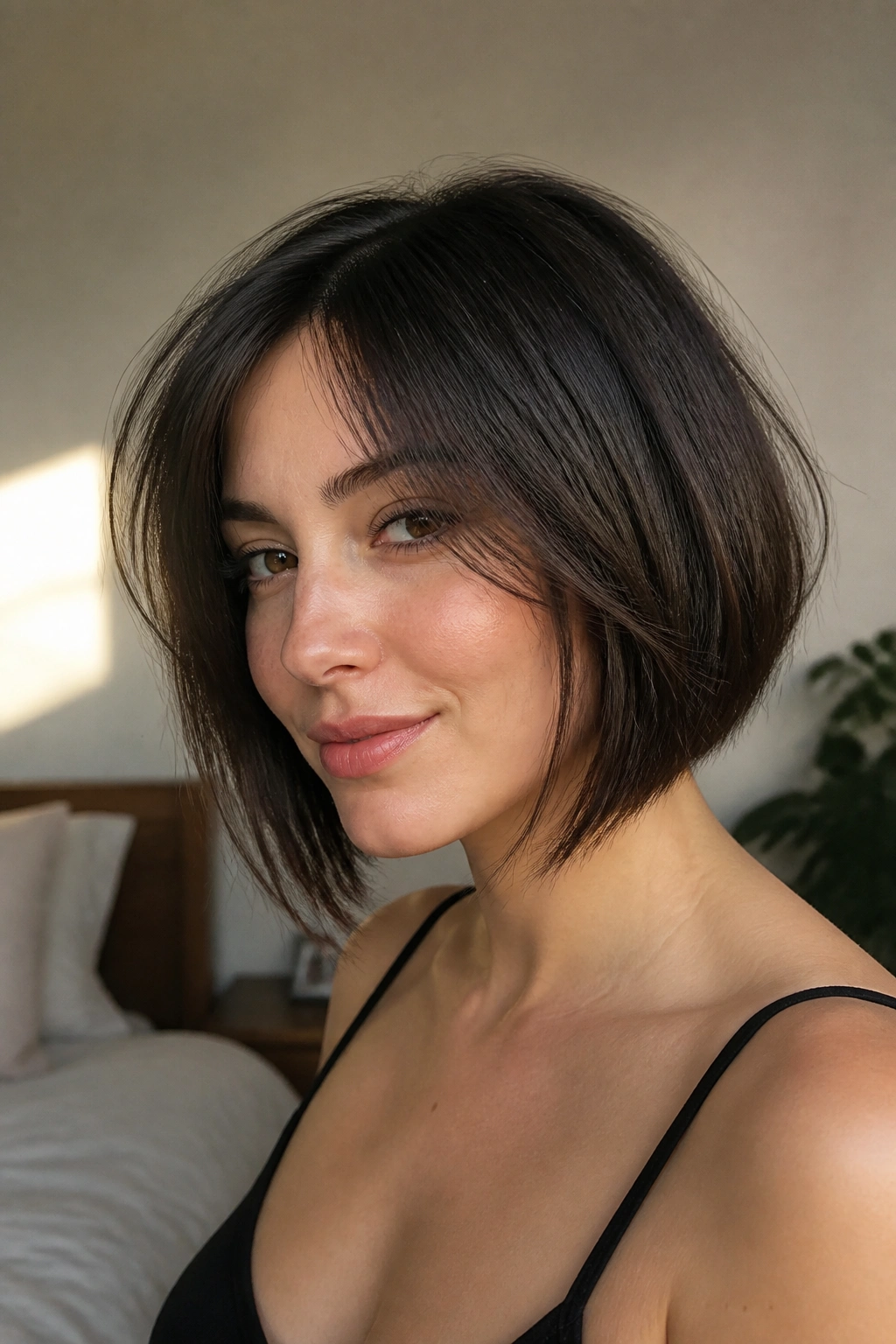
An A-line bob is narrower at the back and longer in front, which is one reason it flatters round faces so well. The front pieces create a diagonal line that pulls the eye down instead of straight across.
The front should graze the jaw or sit just below it, depending on your neck length. Too short, and the whole cut can get stuck at the widest point of the face. Too long, and you lose the shape that makes it interesting.
A little feathering at the front keeps it from feeling stiff. That feathering can come from a razor, point cutting, or even soft blow-drying with a round brush. If your hair is fine, this cut gives you shape without needing tons of product. If your hair is thick, it removes just enough weight to keep the sides from ballooning.
Very neat. Very workable. Not boring.
14. Deep Side-Part Glam Waves With Wispy Outline
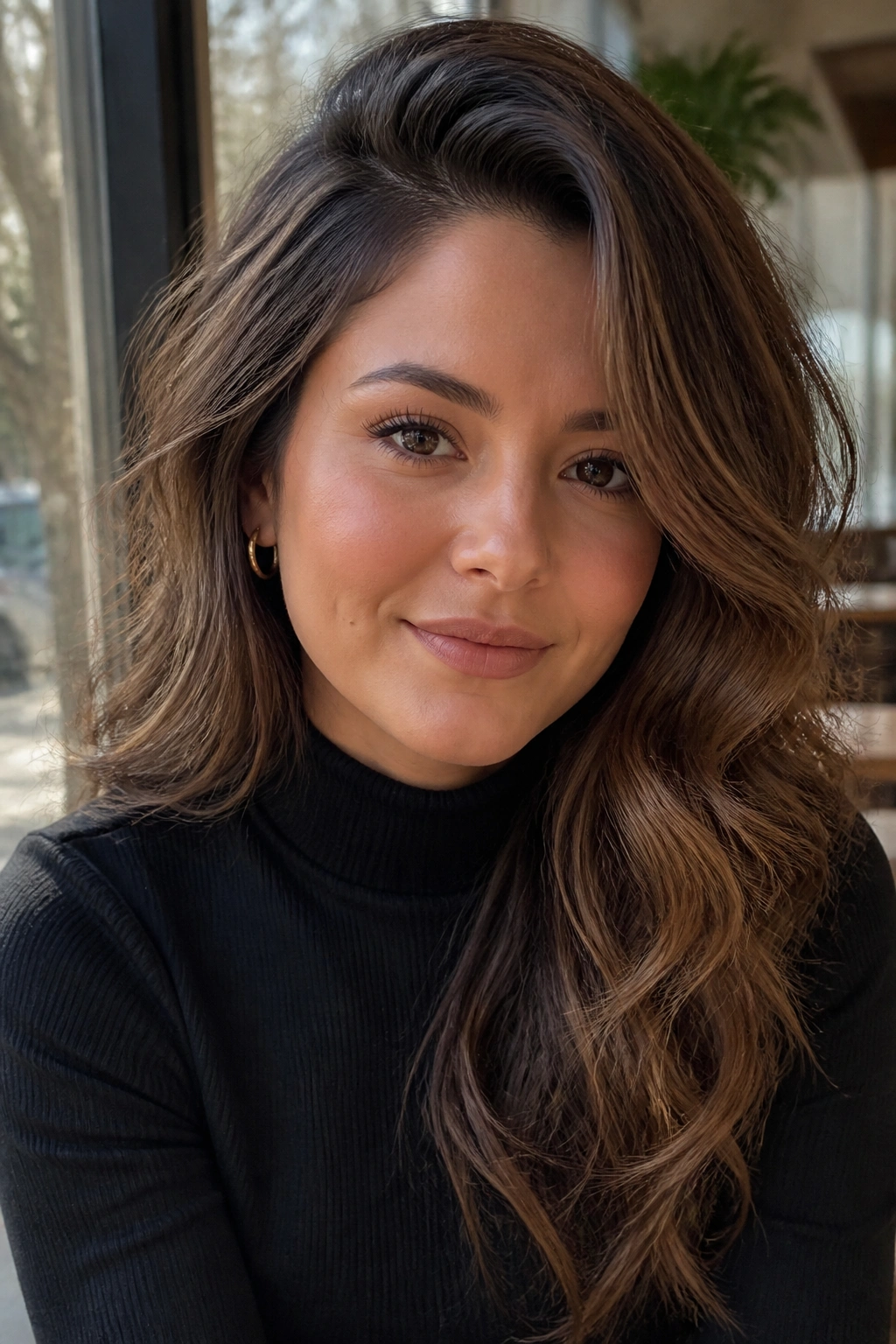
Sometimes the answer is not a new cut. It’s a better part and a cleaner wave pattern.
A deep side part changes the whole face frame by shifting the volume away from the widest point. Add soft waves that start below the cheekbone, and the hair creates a long, fluid line instead of a rounded halo. That’s the whole trick here.
- Use a 1.25-inch curling iron for broad bends.
- Curl away from the face on the front section.
- Brush the waves out once they cool so they look loose, not set.
The Result
The outline should feel airy around the temples and a little fuller from mid-length to the ends. That contrast makes the face appear longer without looking overworked. It also photographs well in real life, which matters more than people admit.
15. Bixie With Soft Top Layers
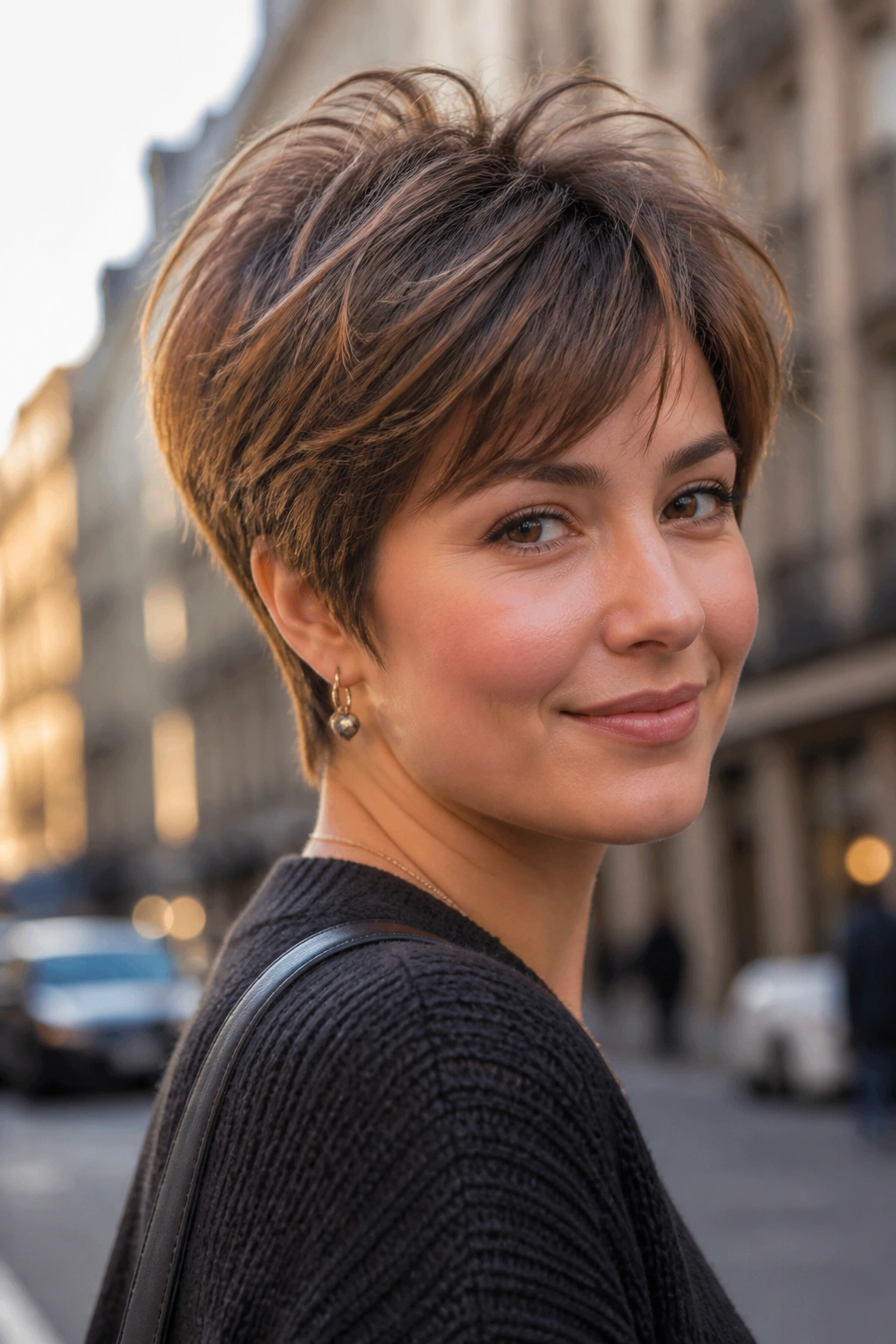
A bixie sits between a bob and a pixie, and the soft top layers are what make it useful for round faces. The extra height at the crown keeps the cut from spreading out too much at the sides.
Why It’s a Good Middle Ground
If a pixie feels too short and a bob feels too heavy, this cut lands in the middle. The top can be tousled, swept to one side, or styled forward in a piecey fringe. The sides stay neat, which stops the face from reading wider.
The cut works best when the neckline is clean and the top has some movement. That contrast is what gives it shape. On fine hair, it can look airy and full at once. On dense hair, it removes bulk without making the hair look too sparse.
A small amount of paste is enough. More than that and you lose the softness.
16. Braided Style With Face-Framing Wisps
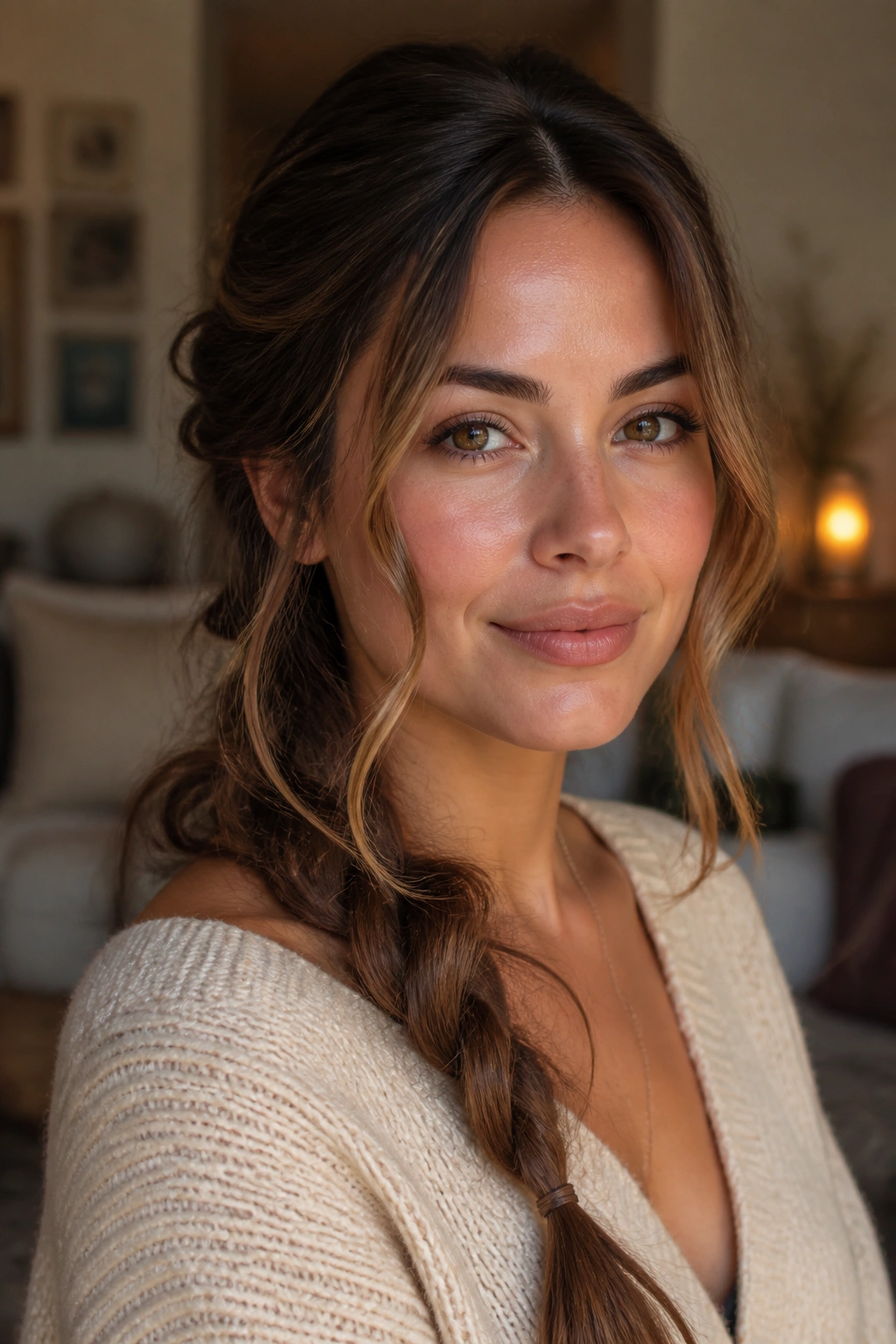
Braids can be tricky on round faces if they’re pulled too tight. The face ends up fully exposed, and every soft curve gets emphasized. Leave out a few wisps, and the whole look changes.
A loose braid, a side braid, or even two low braids with pieces out front creates softer lines around the cheeks. Those front pieces matter. They interrupt the roundness and bring a bit of vertical shape near the eyes and jaw.
This style is useful when you want your hair controlled but not severe. It also works well on second-day hair, especially if the lengths have a little grit from dry shampoo. Keep the braid slightly relaxed, not polished to the scalp, and tug it out a touch after tying it off. The result should look soft, not undone for the sake of it.
17. Sleek Ponytail With Veil Bangs
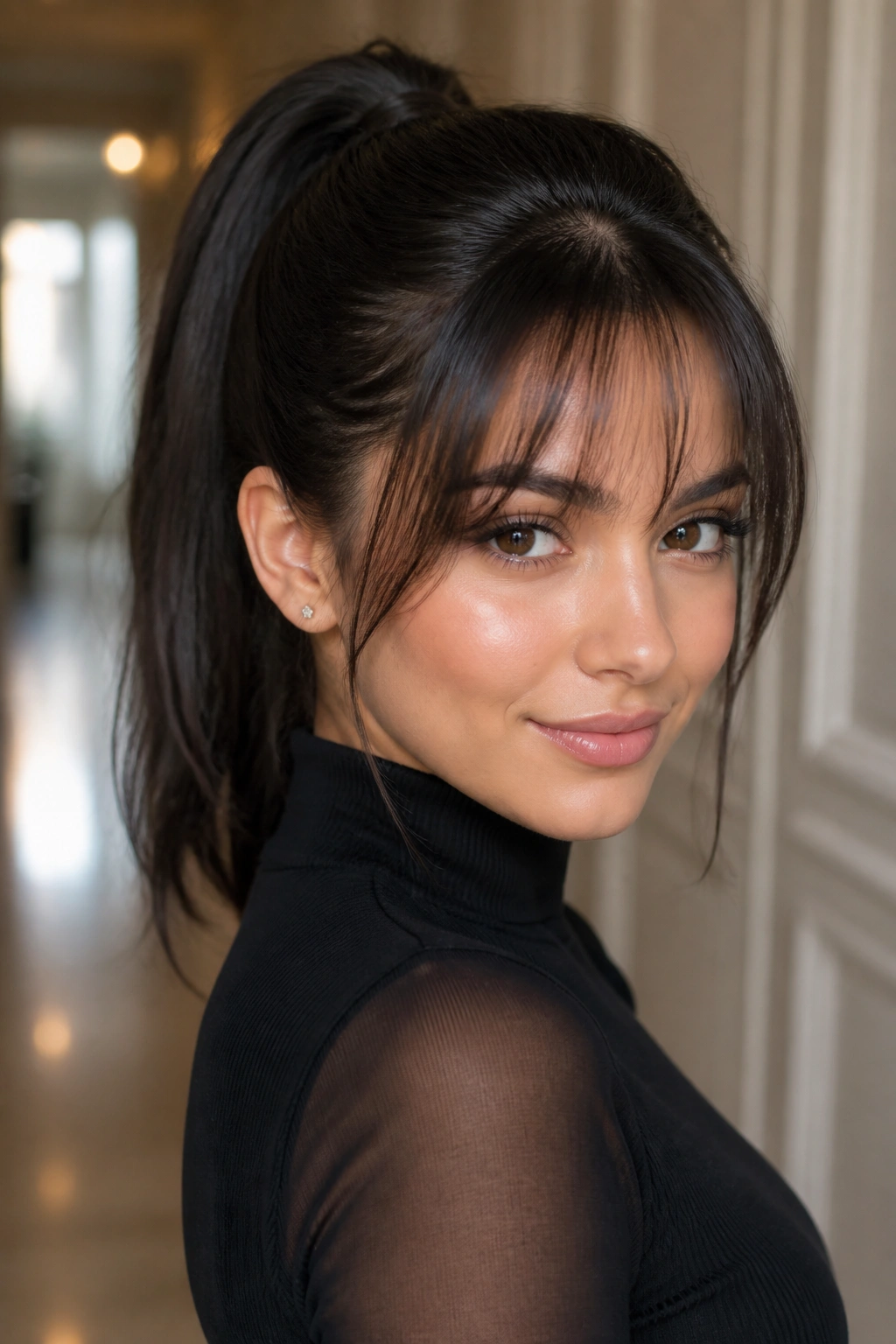
A ponytail can flatter a round face if the front is handled carefully. The problem with a tight pulled-back style is that it can put all the attention right on the cheeks. A veil bang or thin fringe softens that.
The ponytail itself should sit high enough to add lift, or low enough to feel intentional — mid-height is often the hardest spot, because it can widen the face line. Wrap a small section of hair around the elastic if you want a cleaner finish. Leave a few narrow strands around the temples and jaw if your hairline feels harsh when everything is slicked back.
Best Details
- Use a boar-bristle brush for a smooth top.
- Keep the fringe light and see-through.
- Add a drop of serum only to the tail, not the roots.
This is one of those styles that looks simple but rewards small decisions.
18. Tousled Mid-Back Layers With Long Curtain Fringe
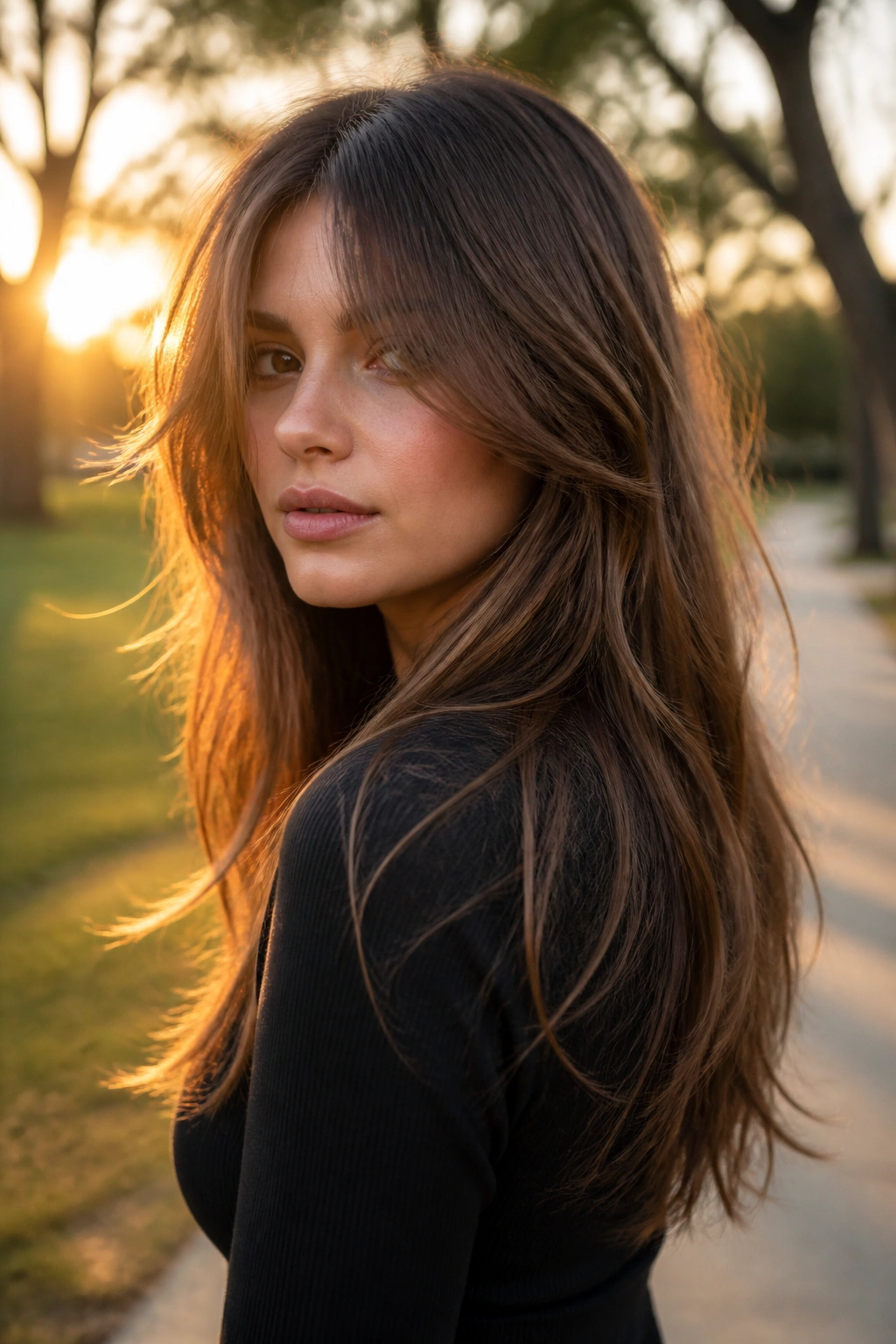
Long hair can work on a round face when it has enough shape near the top. If it falls in one straight sheet, the cut can feel heavy. If the layers are placed well, the length becomes the whole point.
The front should open around the face with a long curtain fringe that starts near the cheekbone and drifts down toward the jaw. That keeps the center of the face from looking too wide, while the mid-back length gives a long line through the body of the hair. It’s a classic balance, and it holds up because it’s based on shape, not trend.
This cut suits hair that can hold a wave or a bend. Straight hair can wear it too, but a little texture helps the layers show up. A soft bend from a large curling iron, then a brush-out with your fingers, is enough. The result should feel light at the front and full through the ends — not flat, not overdone, not stiff.
If you want one long style that still has movement on a round face, this is the one I’d point to first.
