



A round face does not need to be hidden. It needs balance, a little length, and a shape that keeps the eye moving instead of stopping at the cheeks. That’s why wavy hairstyles for round faces work so well when they add vertical lines, soft angles, or a bit of lift at the crown.
The mistake people make is easy to spot. They add width right where the face is already fullest, usually at the cheekbone, then wonder why the style feels puffy or short. Waves can do the opposite when they’re cut and styled with intent. A side part, a collarbone-grazing length, or a few face-framing layers can change the whole mood of a cut.
My bias is pretty simple: if you have a round face and wavy hair, the cut matters more than the curling iron. A plain haircut with waves on top is often flatter than a smart shape with soft movement and a little asymmetry. That’s especially true around the jawline, where the wrong bob can widen the face and the right lob can make everything feel longer.
Some styles below lean polished. Some are messy. Some take five minutes, and some take patience. The point is to give your waves room to work for your face, not against it.
1. Long Wavy Layers for Round Faces with a Deep Side Part
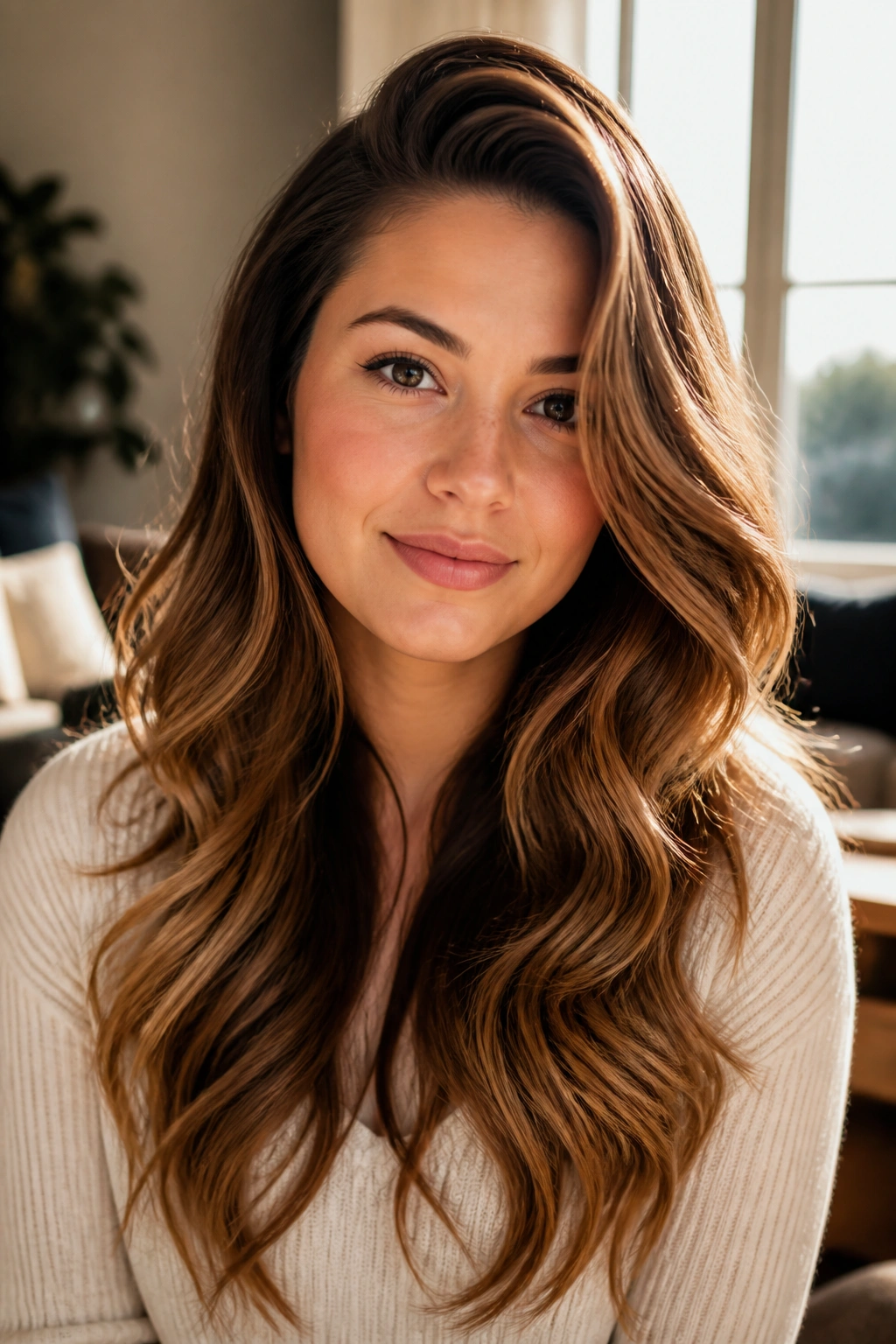
Side parts do a lot of quiet work. They pull the eye across the forehead, break up the roundness of the face, and keep the style from sitting in one flat, even line.
Why It Works
The long length gives your waves space to fall below the widest part of the cheeks. That matters. When the bend starts lower, the face looks longer without looking dragged down.
A deep side part also makes the style feel less symmetrical, which is exactly what round faces often need. Symmetry can be pretty, but too much of it can make the face look wider than it really is.
- Best length: chest to mid-back
- Best curl shape: loose S-waves, not tight ringlets
- Best part: about 2 to 3 inches off center
- Best styling tool: 1.25-inch curling iron or wand
Pro tip: keep the first wave on the heavy side of the part a little looser than the rest. That soft bend near the forehead helps the face look longer without calling too much attention to the cheeks.
2. Shoulder-Length Curtain Bangs and Soft Waves
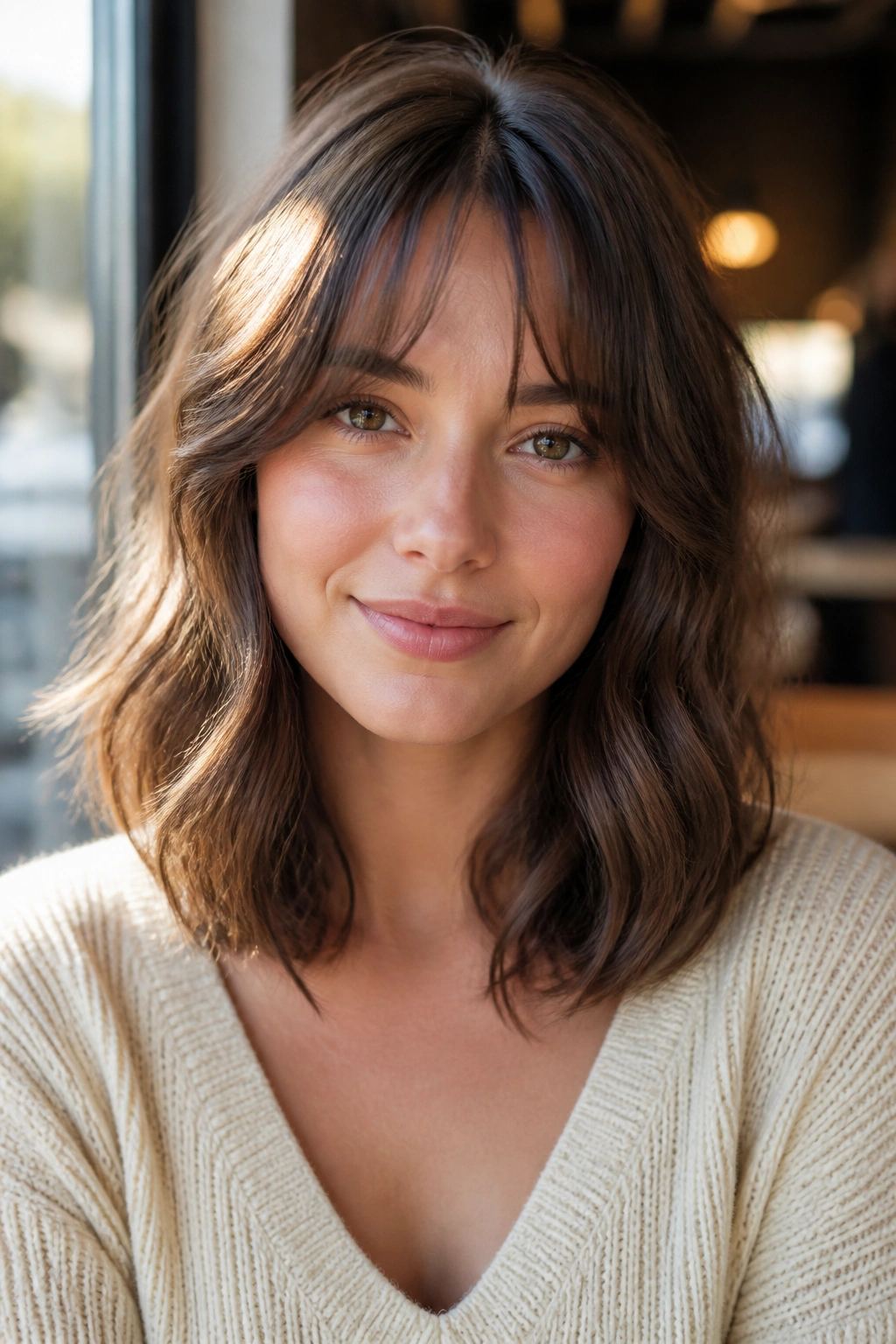
A shoulder-length cut with curtain bangs can be a smart move if your face is round and your hair already has some natural bend. The bangs open in the middle and sweep outward, which creates a vertical line right where you want it.
The trick is keeping the curtain fringe light, not thick. Heavy bangs can close off the face and make the forehead feel smaller than it is, which is not the effect you want here. Soft curtain bangs that land around the cheekbones are easier to wear and easier to grow out.
This style is also one of the friendlier options if you want movement without a full commitment to long hair. It sits in that sweet spot between low effort and face-flattering, which is why so many people keep coming back to it.
The waves should stay relaxed. If they get too springy, the whole cut can puff outward. A quick pass with a large-barrel iron and a finger comb usually does the job.
3. The Textured Lob That Skims the Jaw
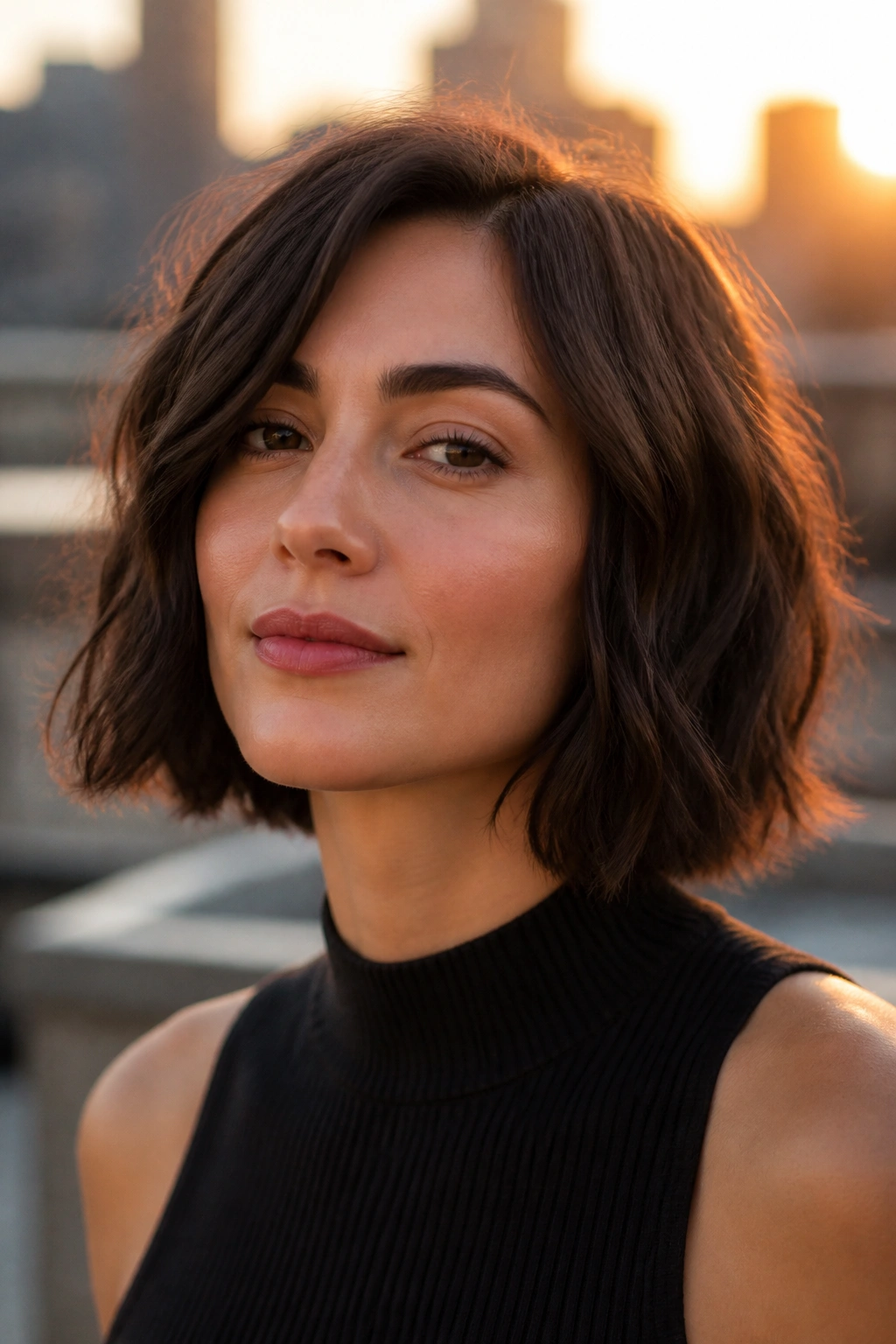
Why does the textured lob keep showing up in flattering haircuts for round faces? Because it does something blunt cuts often miss: it gives shape without boxing the face in.
A lob that lands just below the jawline avoids the shortest point of the face, which is usually where roundness gets emphasized. The texture keeps it from looking too stiff, and the soft bends stop it from feeling helmet-like. That combination is the whole point.
How to Style It
Use a 1-inch wand and wrap hair away from your face on one side, then alternate directions on the other side. Leave the ends out for a more lived-in finish. Once the hair cools, rake through it with your fingers and add a small amount of lightweight cream only on the mid-lengths.
If your hair is fine, skip heavy oils. They collapse the wave fast and make the lob sit flatter against the jaw. If your hair is thick, ask for internal debulking rather than a blunt chop. The shape matters more than the surface.
4. Side-Swept Bangs with Cascading Waves
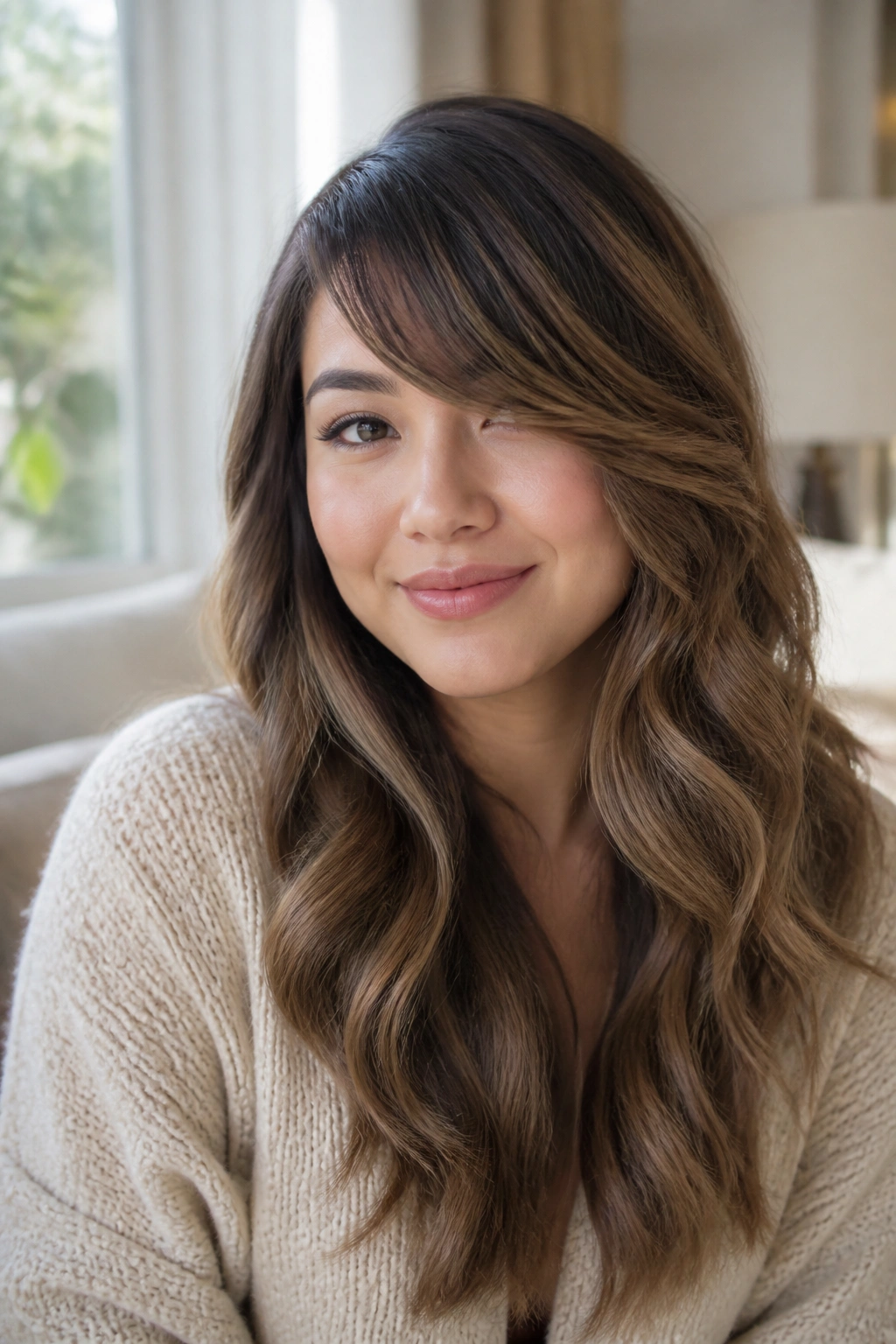
Picture hair that falls in one smooth sweep across the forehead, then drops into soft waves that move past the jaw. It looks easy. It isn’t accidental.
Side-swept bangs work because they create a diagonal line, and diagonals are a round face’s friend. They interrupt the circle and pull the eye downward. That simple shift can make the face look narrower without turning the cut severe.
The rest of the hair should stay airy. If the waves start too high and too full, the style balloons at the sides. Keep the crown smooth, then let the waves begin around the cheekbone or slightly lower.
- Ask for long, blended bangs, not a sharp fringe
- Keep the wave loose near the face
- Use a side part that follows the bang direction
- Finish with a soft-hold spray, not crunchy hairspray
What I like here is the flexibility. You can tuck the bangs behind one ear, pin them back, or let them fall across the brow when you want a softer look. That kind of range is useful.
5. The Soft Shag with Airy Fringe
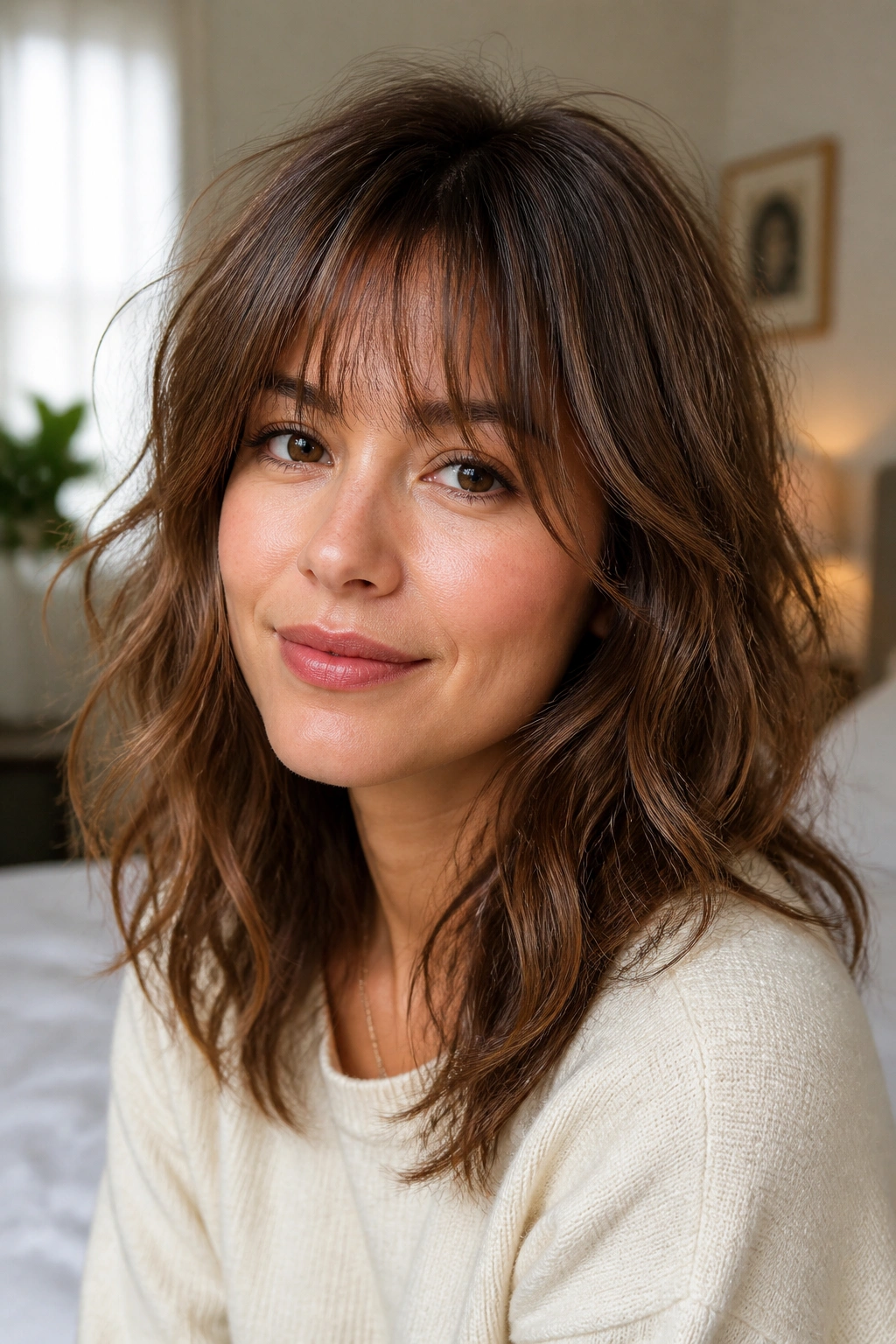
A soft shag is a good choice when you want movement first and polish second. It has piecey layers, a little lift around the crown, and enough messiness to keep a round face from looking too boxed in.
The airy fringe is the detail that makes it work. A dense bang can chop the face in half. An airy one lets skin show through, which keeps the style light around the forehead and eyes. That matters more than people think.
The best part is how forgiving it is on wavy hair. You do not need a perfect blowout. You need a shape that lets the wave fall in different directions without collapsing into a heavy curtain.
This cut does have an edge to it. If you want sleek and refined every day, the shag may annoy you. If you like a little grit, it’s excellent. It also grows out better than most people expect, which is a nice bonus when you don’t want to live at the salon.
6. Face-Framing Layers for Round Faces That Start at the Cheekbone
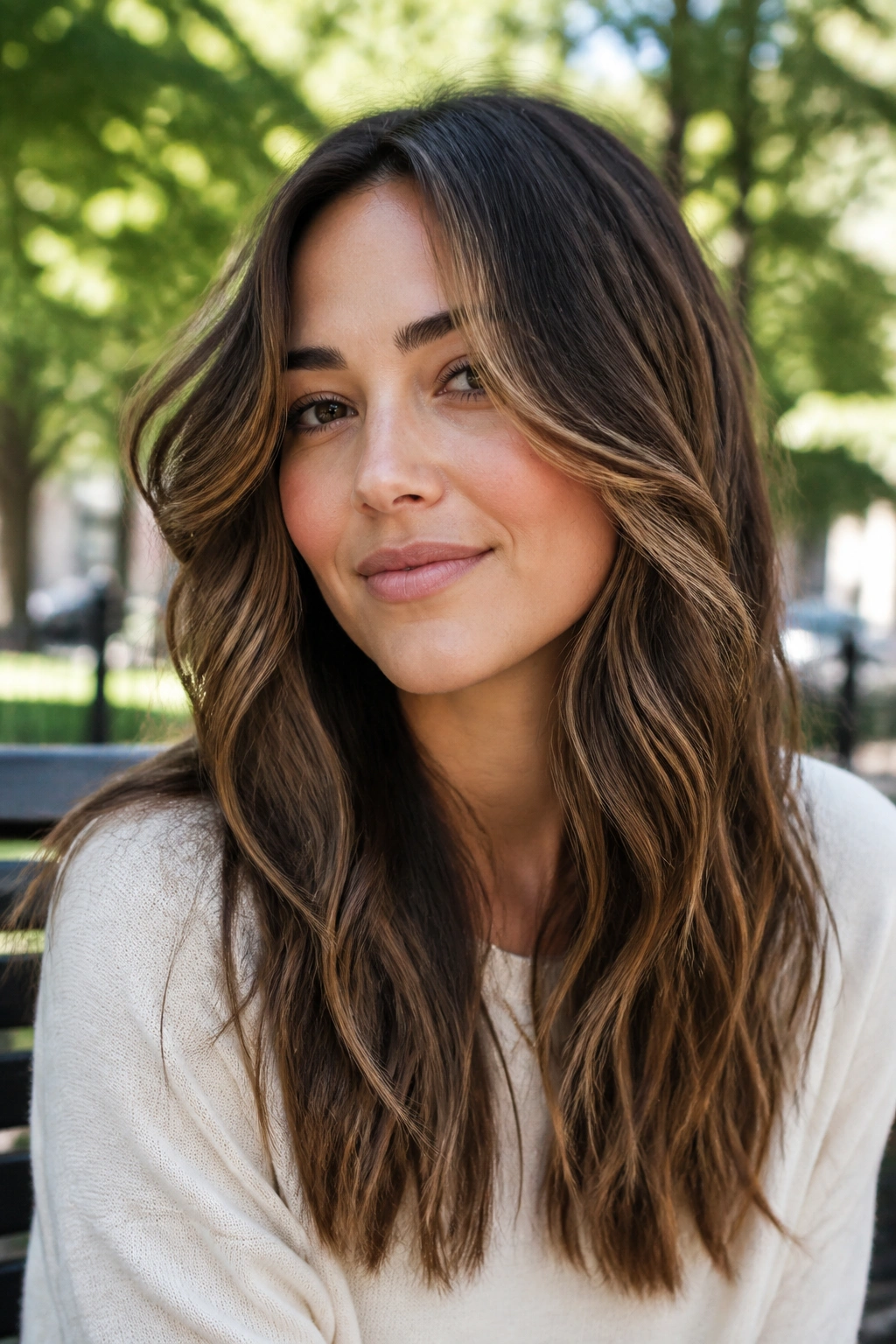
Unlike a blunt cut that stops right at the jaw, cheekbone-starting layers pull the eye downward and outward at the same time. That is why they work so well on round faces. They create shape where the face needs it most, and they keep the width from settling in one spot.
The layers should not all begin at the same height. That’s the trap. If every front piece hits at the cheek, the face can look broader, not slimmer. Staggering the lengths gives the haircut movement and avoids that shelf effect.
A style like this is a good match for medium to thick hair because the layers can show up without disappearing. Fine hair can wear it too, but the cut has to stay soft. Too many short pieces will leave the ends wispy and the overall shape too narrow.
My recommendation is simple: ask for the first front layer to start at the cheekbone, then let the next layer drift toward the jaw. That small shift does more than a lot of dramatic cuts that sound exciting in the chair and look busy at home.
7. Half-Up Waves with Crown Volume
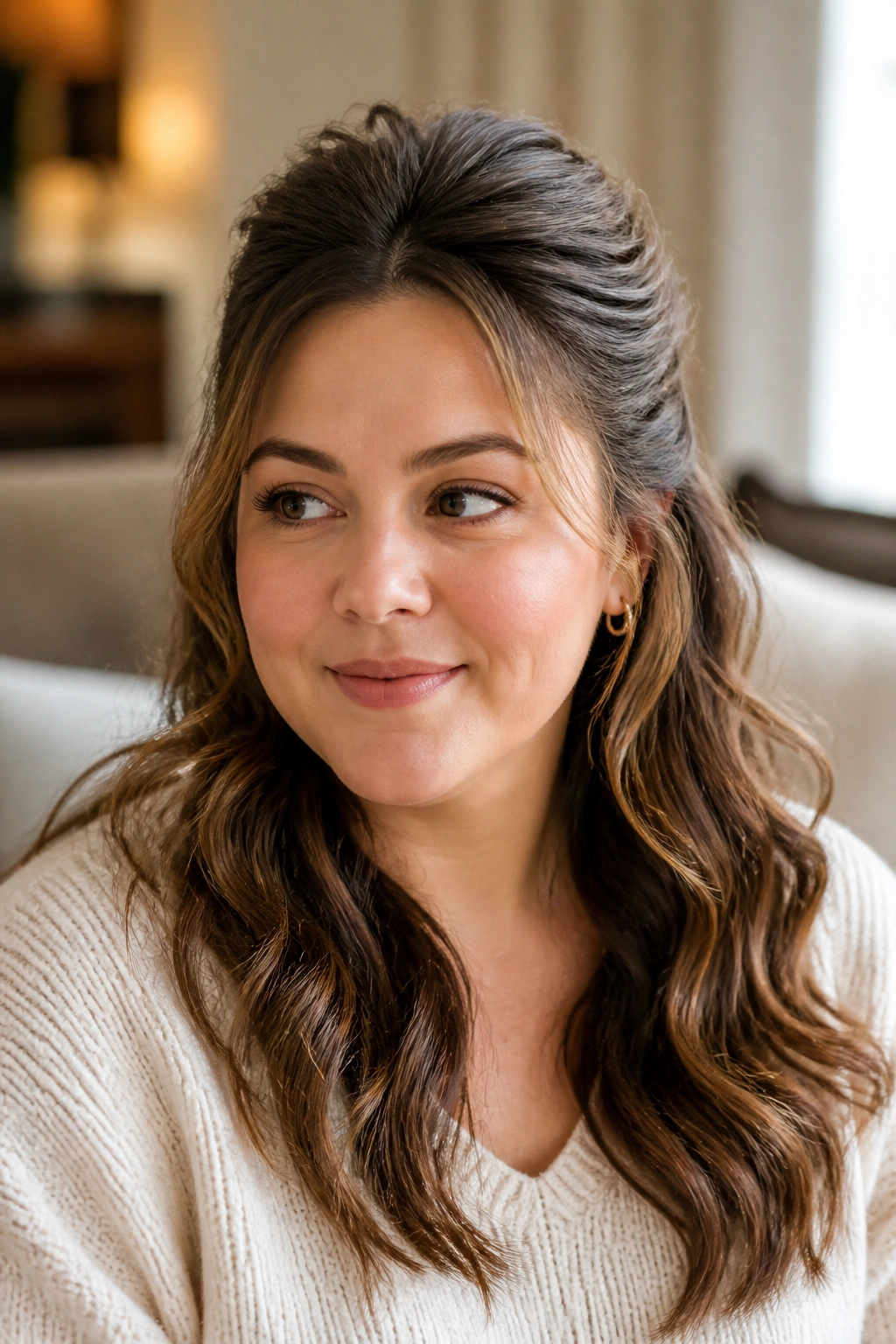
Half-up styles are one of the easiest ways to work with a round face instead of fighting it. The pulled-back top section opens the face, and the loose waves below keep the style soft instead of severe.
Where to Place the Lift
The crown should be lifted, not teased into a lump. A little height near the top of the head adds length through the silhouette, which helps a round face look more oval. That’s the shape trick here.
Take the top section from temple to temple, secure it loosely, then gently tug the top edge to create a softer rise. Leave a few slim pieces around the hairline. They keep the style from looking too finished, which is a mistake I see all the time with half-up looks.
- Works well on second-day hair
- Best with medium-long waves
- Use a clear elastic or small claw clip
- Add texture spray before pinning
Small warning: if you gather too much hair from the sides, the face can look wider. Keep the side sections a bit loose and let the shape breathe.
8. Hollywood Waves with a Clean Side Part
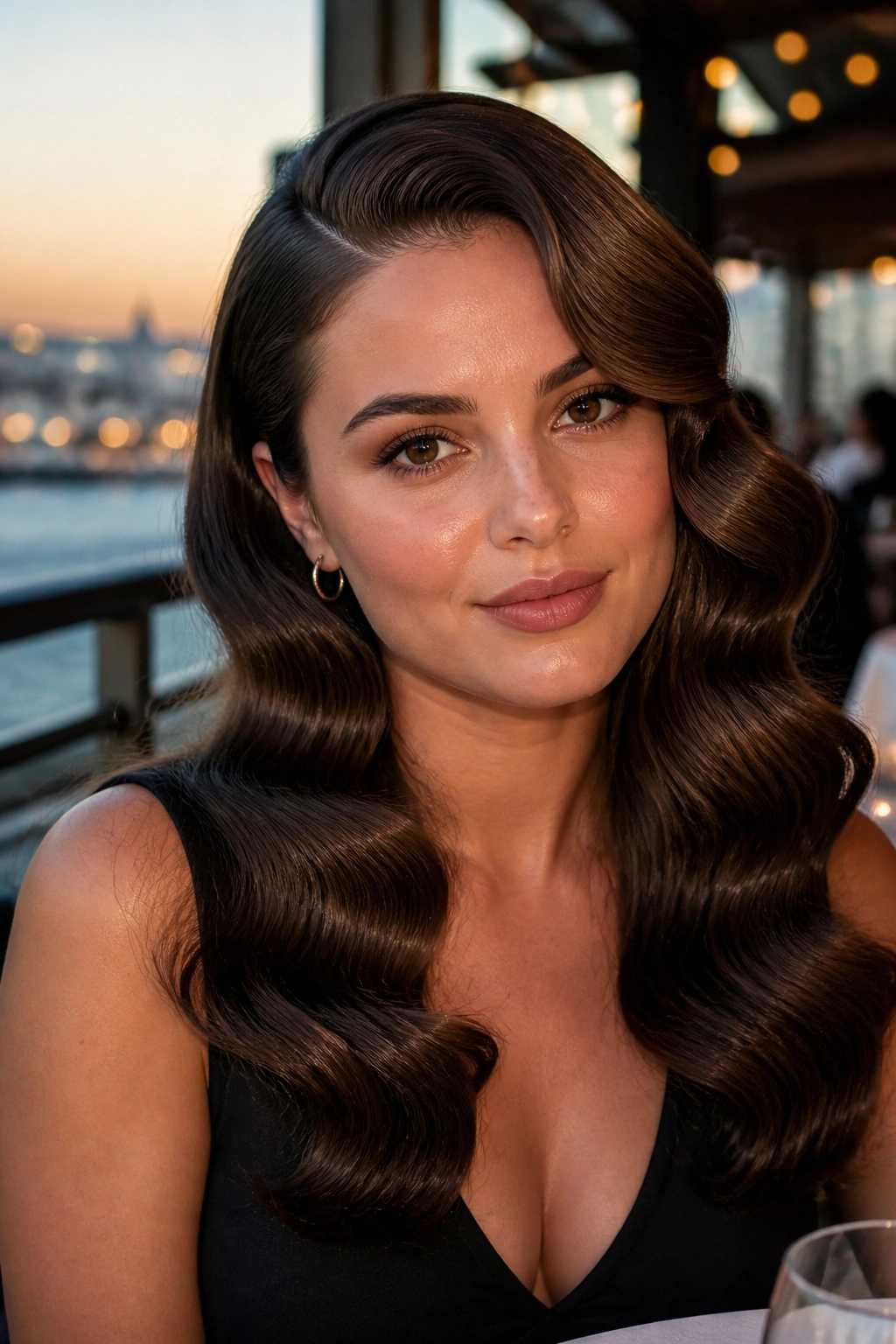
A polished wave has more power than people give it credit for. The sleek side part and smooth, uniform bends create a long line that is hard for a round face to resist.
Hollywood waves are not about volume everywhere. They are about controlled shape. The wave pattern stays consistent, the roots stay smooth, and the bend falls in one direction with a little curve at the ends. That gives the face a cleaner frame.
This style works best when the hair is long enough to hold the pattern without springing up too short. Collarbone length can work, but longer is easier. The finish should look glossy, not stiff, so a light serum on the mid-lengths is enough.
When I see this style done well, the part usually sits lower than people expect. A deep side part sets the tone before the first wave even starts. Without that, the look can feel decorative instead of flattering.
9. The Collarbone Cut with Flipped Ends
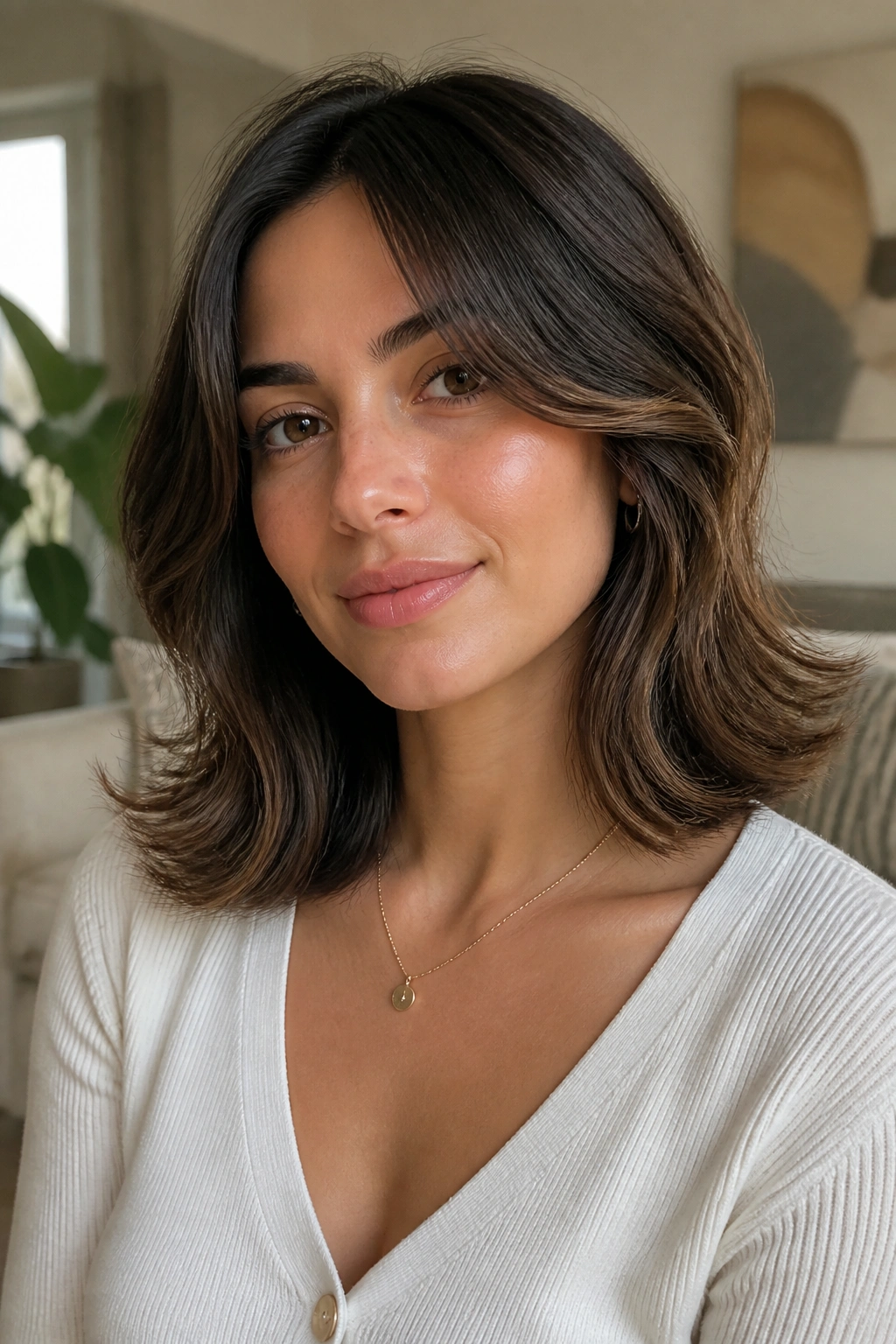
Why does a collarbone cut flatter so many round faces? Because it sits in a useful place. It is long enough to avoid the cheeks, but short enough to keep the shape clean and modern.
Flipped ends add a little visual lift. That small turn outward keeps the cut from hanging straight down like a curtain. The motion at the ends gives the haircut some energy, and on a round face, energy usually helps more than bulk.
How to Wear It
Keep the waves loose through the mid-lengths and give only the very ends a soft bend. A flat iron or round brush can create that slight flip in under a minute per section. You do not need a big curl.
This style is especially nice if your hair is medium density. Very thick hair can sit heavy at this length unless the interior is layered. Very fine hair may need mousse at the roots to keep the shape from collapsing by midday.
The collarbone cut is one of those dependable shapes that never looks fussy. That’s its charm. It gives round faces a longer outline without making the hair feel overworked.
10. Beach Waves with Invisible Long Layers
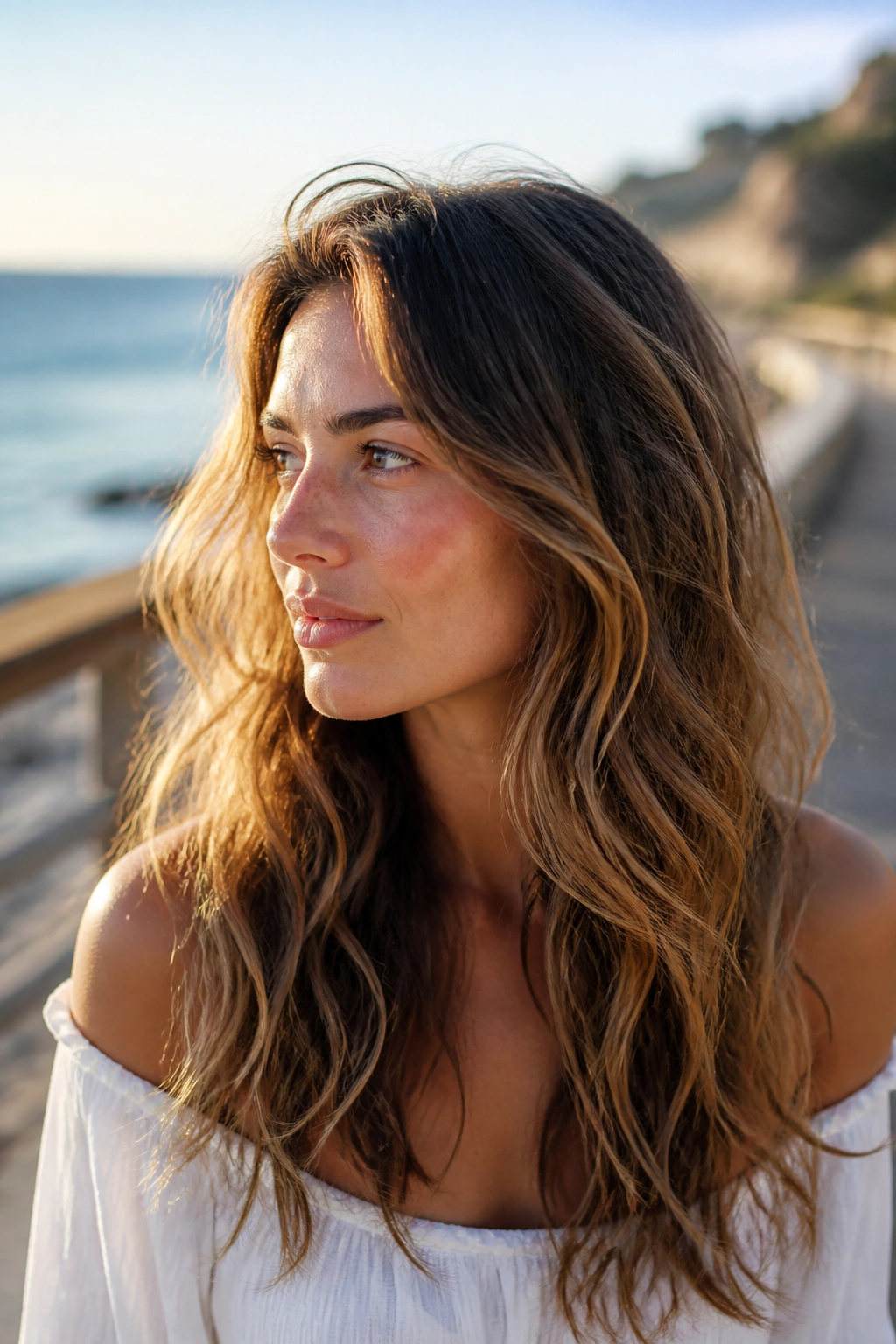
The best beach waves on a round face are not puffy. They’re loose, broken up, and a little uneven in the best way.
Invisible layers do the heavy lifting here. You don’t see them directly, but you feel them in the way the hair falls. They remove weight from the lower half of the style so the wave can move instead of sitting like one thick sheet.
Think of a style that looks like it dried naturally after a salty day by the water, but with a better shape at the jaw. That shape is the whole point. If the waves are too even, the face can look wider. If they’re staggered and soft, they frame the face without crowding it.
- Sea salt spray on damp hair
- A diffuser on low heat
- Random bend direction, not a perfect pattern
- A tiny bit of dry oil on the ends only
My take: beach waves look best when they’re a little imperfect. If every wave matches, the style loses the easy movement that makes it work.
11. The Angled Wavy Bob
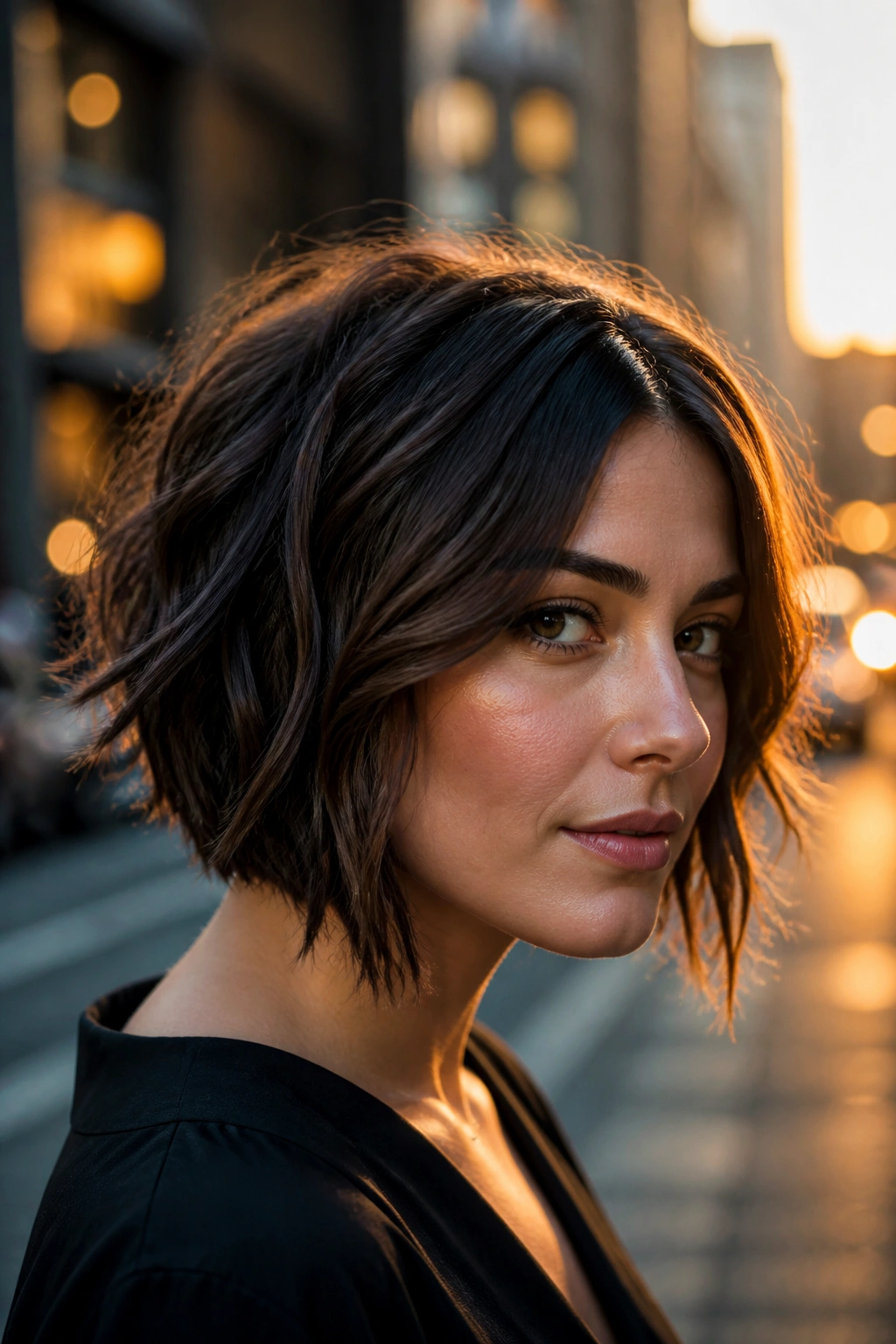
A sharply angled bob can be a gift to a round face when it’s done with enough softness. The front pieces sit longer than the back, so the face gets length where it needs it.
The wave is what keeps this from feeling severe. Straight angled bobs can look crisp, but a wavy finish softens the line and keeps the haircut from sitting too hard against the cheeks. That balance matters.
You want the angle to be visible even when the hair moves. Too subtle, and the bob becomes just a short cut. Too steep, and it can feel dated fast. The sweet spot is a longer front that grazes the jaw and a back that lifts slightly off the neck.
This cut is a good option if you like shorter hair but still want some drama from the shape itself. It does need regular trimming, though. A clean angle loses its edge quickly once the ends start to flip in different directions.
12. Mermaid Waves with Long Front Pieces
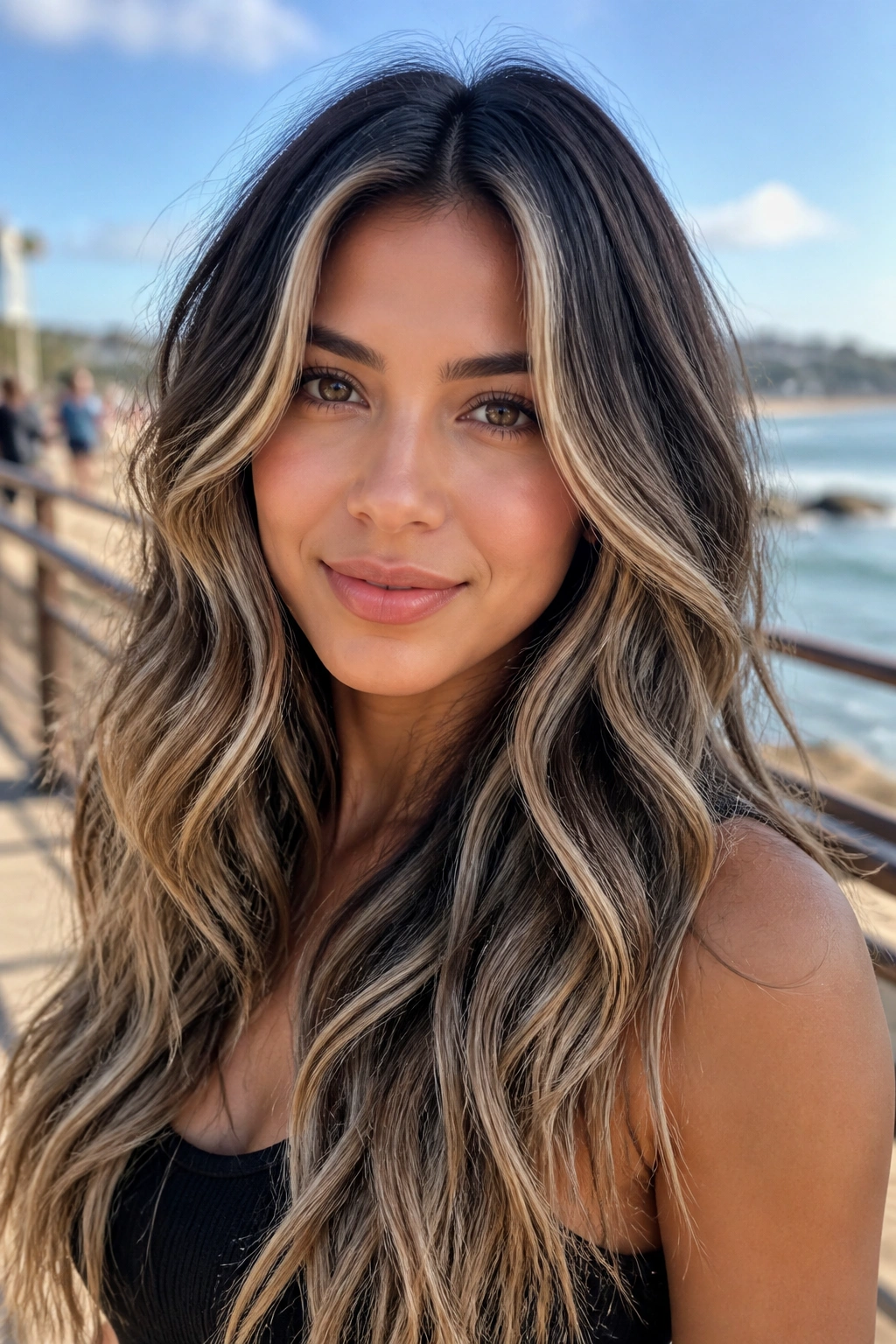
Mermaid waves carry a lot of length and softness, which sounds flattering on paper and usually is. The important detail is the front pieces. They need to start high enough to shape the face, but not so high that they crowd the cheekbones.
Unlike tighter curls, mermaid waves stretch vertically. That makes the silhouette feel long and fluid. On a round face, that vertical movement helps the eye travel downward rather than out to the sides.
The style is best on medium to long hair, especially if you like a romantic look. A wide-barrel iron or overnight braiding can create the wave pattern, but the front should always stay slightly looser than the back. That keeps the face open.
If your hair is one length and heavy, ask for a few long layers. Without them, the wave can look like one thick curtain. With them, the hair moves in sections, which is what keeps the shape from feeling bulky.
13. The Wavy Pixie with Extra Height on Top
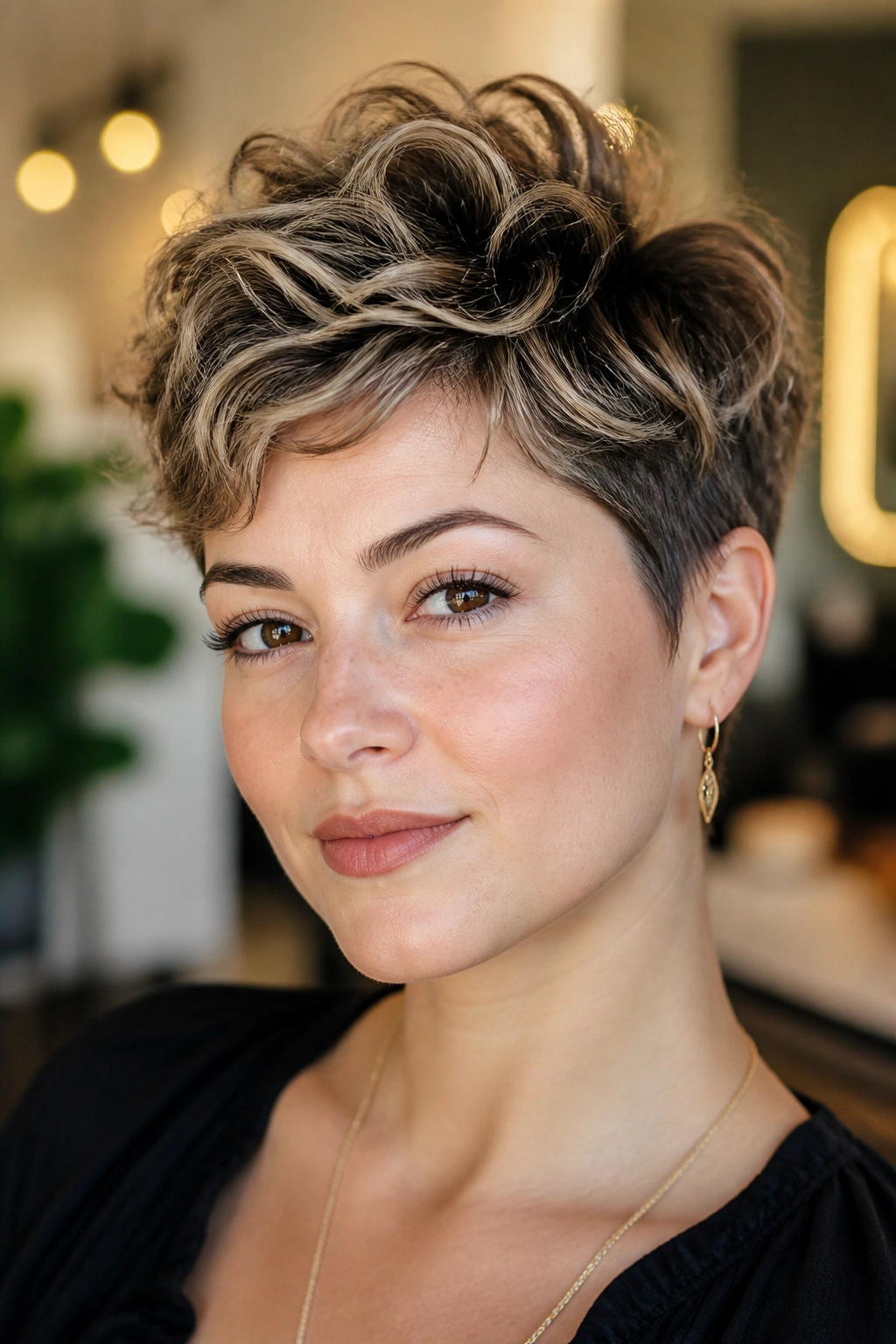
Short hair can flatter a round face. It just has to work smarter.
A wavy pixie with height at the top adds length through the silhouette and keeps the sides tight enough not to widen the face. The texture matters a lot here. Smooth pixies can look lovely, but the extra movement on top gives the cut more lift and less width.
How to Keep It From Going Triangle
The sides should stay neat. Not flat to the head, but controlled. If the sides puff out while the top stays short, the whole shape can tip into a triangle, and that is a rough look for a round face.
Use a pea-sized amount of matte paste or light cream on damp hair, then scrunch the top while blow-drying with your fingers. A diffuser helps, but only if you keep the airflow directed upward. The goal is lift, not frizz.
- Best for naturally wavy or slightly curly hair
- Great if you want low styling time
- Needs a clean neck and side trim every few weeks
- Works well with a side-swept front piece
Good short cut, bad shortcut: if the top is too flat, the face looks wider. A little lift changes that fast.
14. Braided Crown with Loose Waves
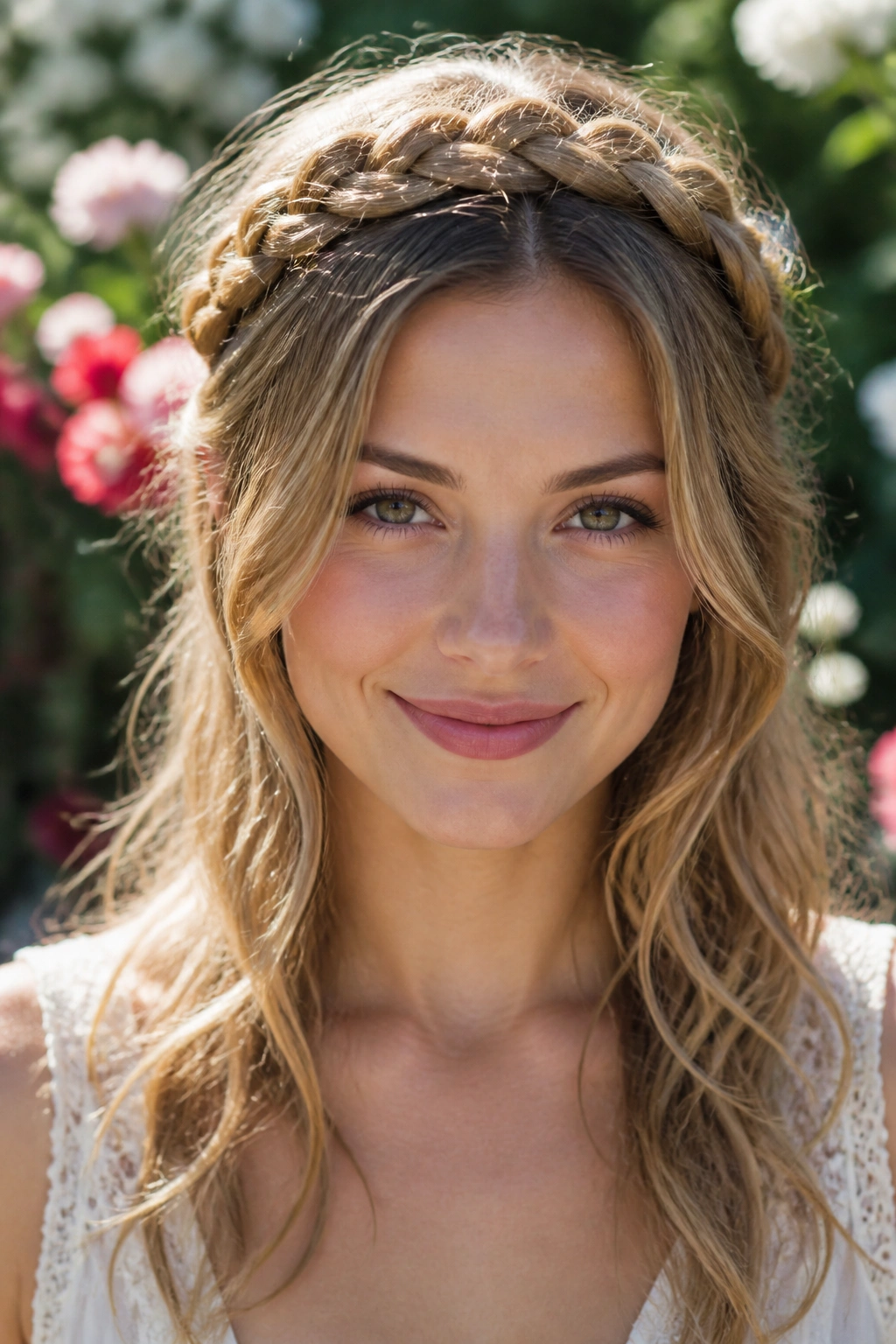
A braided crown can be a useful trick on a round face because it removes bulk from the sides and puts interest higher up. That shifts the eye upward before it drops into the loose waves underneath.
The braid itself should be soft. Tight braids can look severe and expose too much of the face. A looser braid, pinned with a few hidden bobby pins, keeps the look relaxed and adds structure without pulling everything back harshly.
This style is especially handy for weddings, dinners, or any day when you want your hair off your face without losing softness. The waves below should stay loose and brushed apart. If they’re too curled, the whole style can read as crowded.
A little texture spray helps the braid grip. Start there. Clean, silky hair is a pain to pin and usually slips before the night is over.
15. The Voluminous Wavy Ponytail
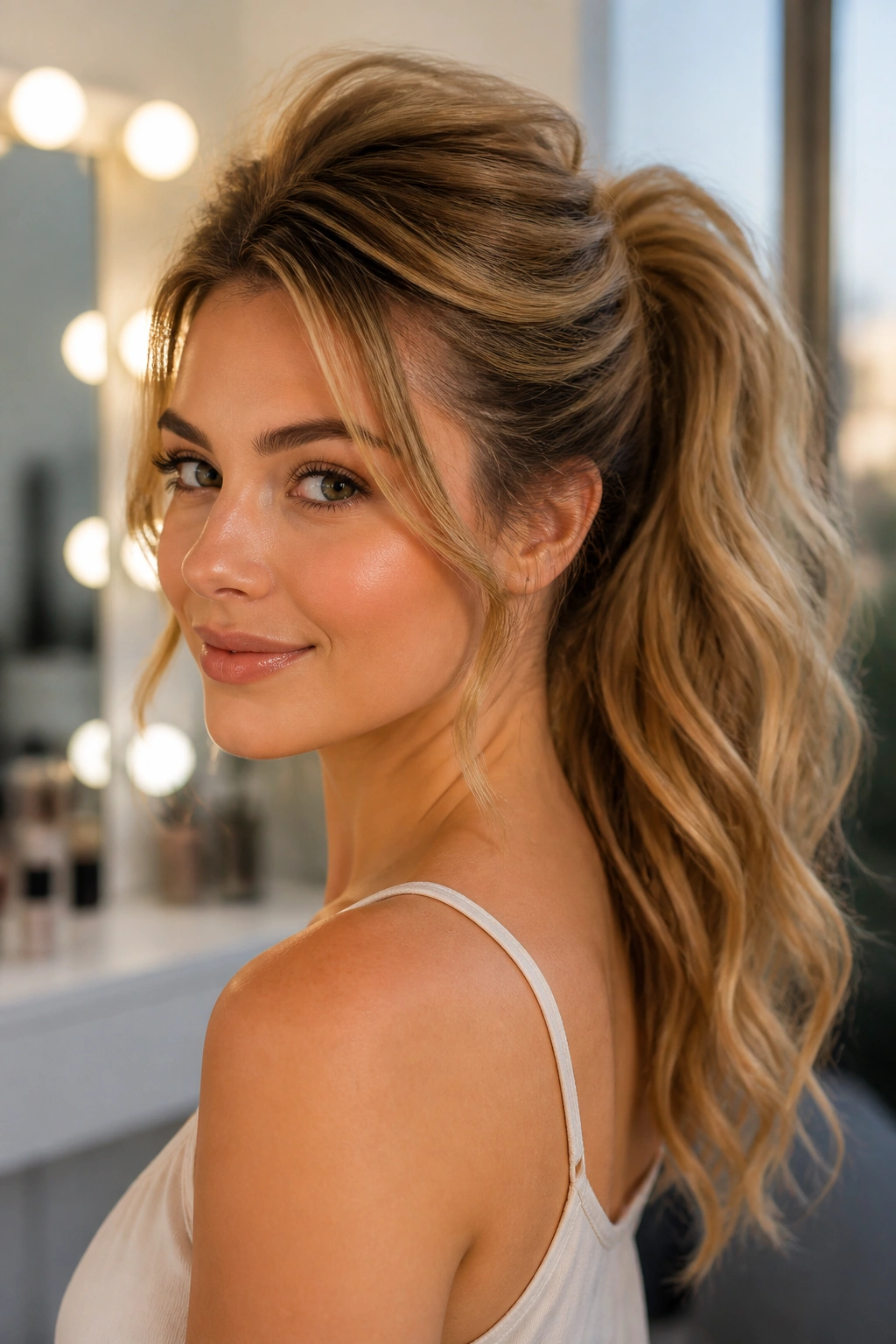
Can a ponytail flatter a round face? Absolutely, if the height sits in the right place.
A low, flat ponytail can shorten the face. A ponytail with lift at the crown and a few soft waves through the tail does the opposite. It lengthens the shape and keeps the style from looking too tight against the cheeks.
How to Get the Lift
Tease a small section at the crown or use a root spray before blow-drying. Then gather the ponytail a little higher than you normally would, but not so high that it turns sporty. Wrap a thin piece of hair around the elastic if you want it to look cleaner.
The tail itself should stay wavy, not curled into perfect spirals. A few bends are enough. If the tail is too bulky, it can drag the eye sideways and undo the clean line created at the top.
This is one of those styles that looks casual until you pay attention to the details. Then you realize the placement is doing nearly all the work.
16. The Low Messy Bun with Soft Tendrils
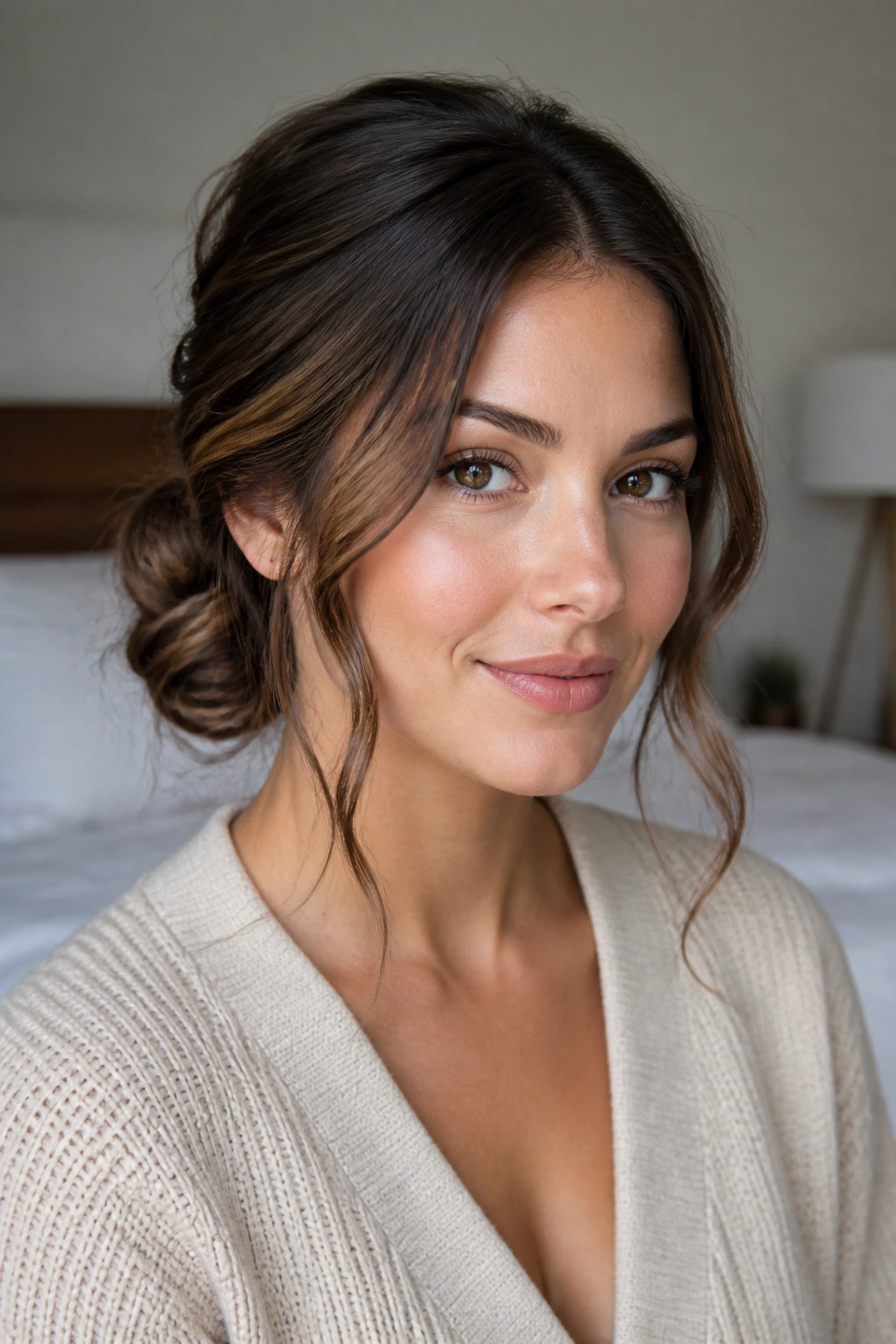
A low messy bun sounds simple, but on a round face it needs careful placement. Too much fullness at the sides and it swells the face. A softer bun at the nape with a few loose tendrils keeps everything gentle.
The tendrils matter. Without them, the style can look severe, especially if your hair is pulled back tightly. With them, the face gets little vertical lines near the temples and jaw, which makes the whole shape more flattering.
- Leave out two slim front pieces before pinning
- Keep the bun low and slightly off center
- Use a texturizing spray for grip
- Pull a few waves loose at the crown after pinning
This is one of the easiest styles for second-day hair. In fact, slightly lived-in hair is better here than freshly washed hair, because it holds pins more easily and stays put longer.
17. The Wolf Cut with Soft Waves
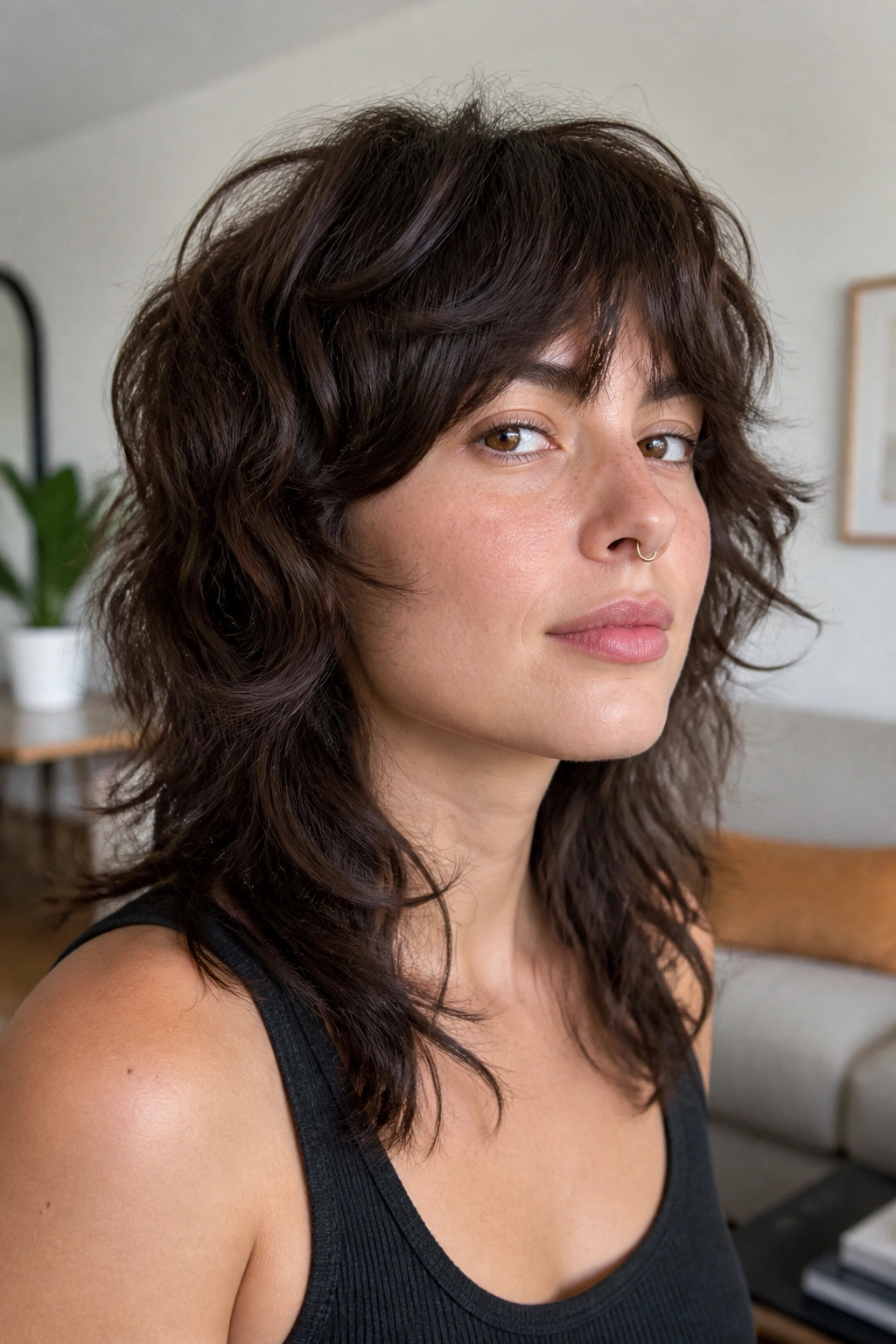
The wolf cut is not quiet. That’s part of its appeal. It mixes short layers up top with longer pieces underneath, and on a wavy texture, that creates movement that can work surprisingly well for round faces.
What keeps it from going too wide is the shape of the layers. The crown gets lift, the sides stay broken up, and the longer front pieces pull the eye downward. It feels more vertical than horizontal, which is exactly why it earns a place here.
This cut is not for someone who wants a tidy, polished look every day. It has attitude. A little chaos is built in. But if you like texture and you don’t mind styling with a diffuser or a quick scrunch of curl cream, it can be one of the most interesting options on the list.
The best versions keep the front pieces long enough to frame the face instead of stopping at the widest point. That small detail changes everything.
18. The Asymmetrical Wavy Lob for Round Faces
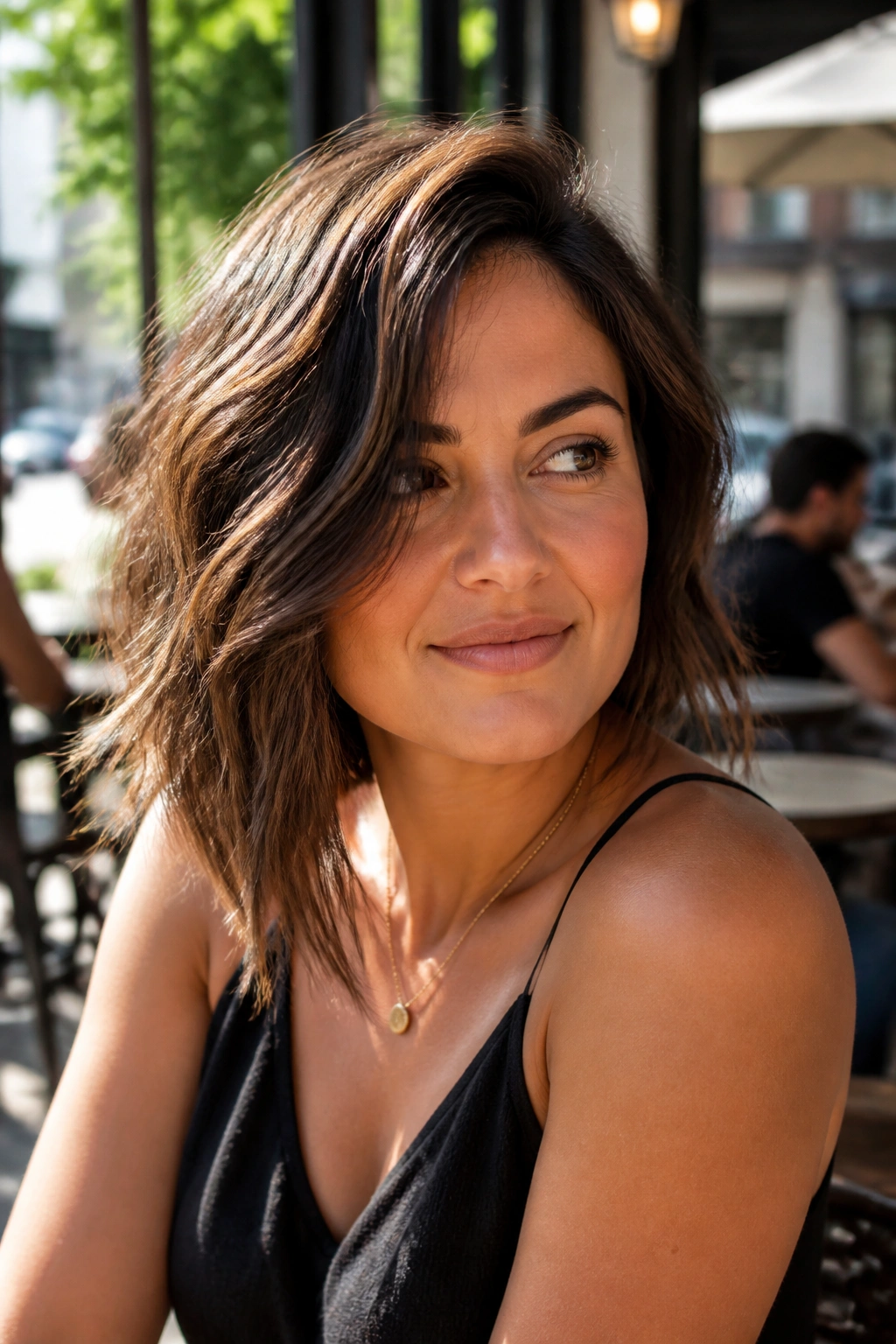
A straight, even lob can be fine. An asymmetrical one usually does more for a round face.
The longer side creates a clear diagonal line, and diagonals are useful when you want the face to look a little slimmer and a little longer. Add soft waves, and the shape feels modern without becoming fussy. It’s one of the few cuts that can look both relaxed and intentional at the same time.
What Makes It Different
The asymmetry should be visible but not theatrical. One side might fall about an inch or two longer than the other. That’s enough. Anything more can start to look costume-like unless the rest of the cut is extremely clean.
The styling should stay soft, not dense. Brush the waves apart, keep the root lift subtle, and tuck the shorter side behind one ear if you want the angle to read more clearly. That little move sharpens the outline of the face without forcing the issue.
Who It Suits Best
This is a good pick if you like shoulder-length hair and want something with shape, but you do not want to commit to bangs or a full shag. It also works well if one side of your hair naturally falls flatter than the other. The cut can use that to its advantage.
If I had to pick one style here for a round face that wants movement without too much softness, this would be near the top. It has enough edge to change the face shape, and enough wave to keep it wearable.
