



A round face does not need to be hidden; it needs shape.
The smartest trendy hairstyles for round faces do one thing well: they pull the eye up, down, or diagonally instead of letting everything stop at the widest part of the cheeks. That can mean curtain bangs that split open the center, a side part that breaks symmetry, or layers that fall past the jaw instead of sitting right on it. Small shifts. Big difference.
Short hair can work. Very well.
What tends to fail is not the haircut itself, but the placement. A blunt cut that ends exactly at the cheek line can make a face look wider. Same with puffed-out sides and bangs that stop too high. Get the volume in the right place, and a round face starts looking more sculpted without looking forced. Start with the cuts that give you movement, then narrow in on the ones that fit your hair texture and how much styling you actually want to do.
1. Long Layers with Curtain Bangs
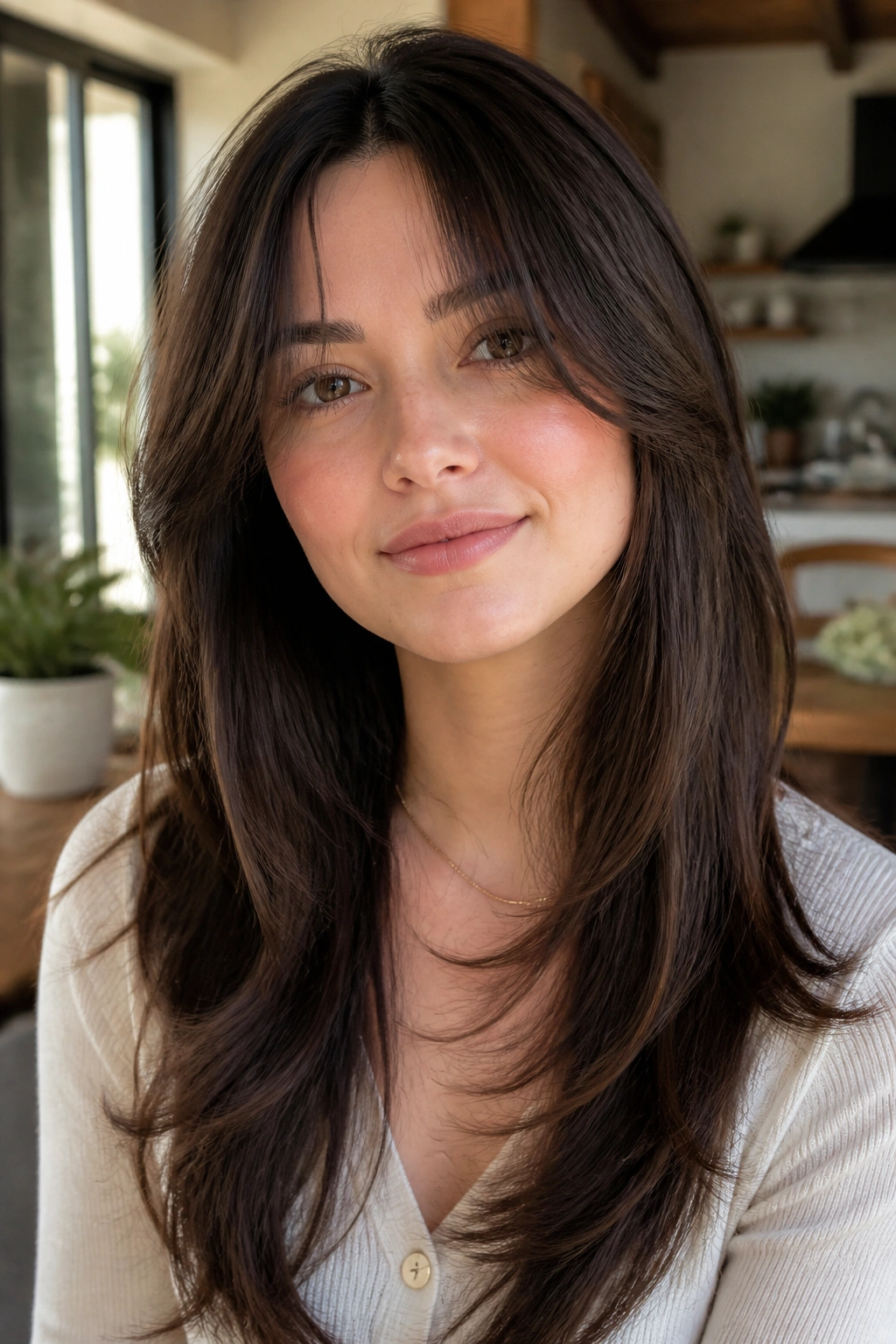
If you want the most forgiving option on the list, start here. Long layers with curtain bangs give round faces that little bit of vertical stretch they like, while the bangs open the center of the face instead of boxing it in.
Why It Works
The magic is in the way the bangs split and fall away from the cheeks. Curtain bangs usually start around the nose or cheekbone area, then angle down toward the jaw, which keeps the face from feeling pinned into a circle. The long layers keep the ends from looking heavy and flat.
Ask for layers that begin below the cheekbone, not right on top of it. That one detail matters more than people think. If the shortest face-framing pieces land at the widest part of the face, the cut can lose its slimming effect fast.
- Best on medium to thick hair
- Looks good air-dried or blown out
- Needs a round brush or large-barrel dryer brush if you want the bangs to sweep properly
- Works with straight, wavy, and softly curly textures
Pro tip: keep the bangs a little longer than you think you need. Too-short curtain bangs can bounce upward and make the face feel wider.
2. Side-Swept Lob
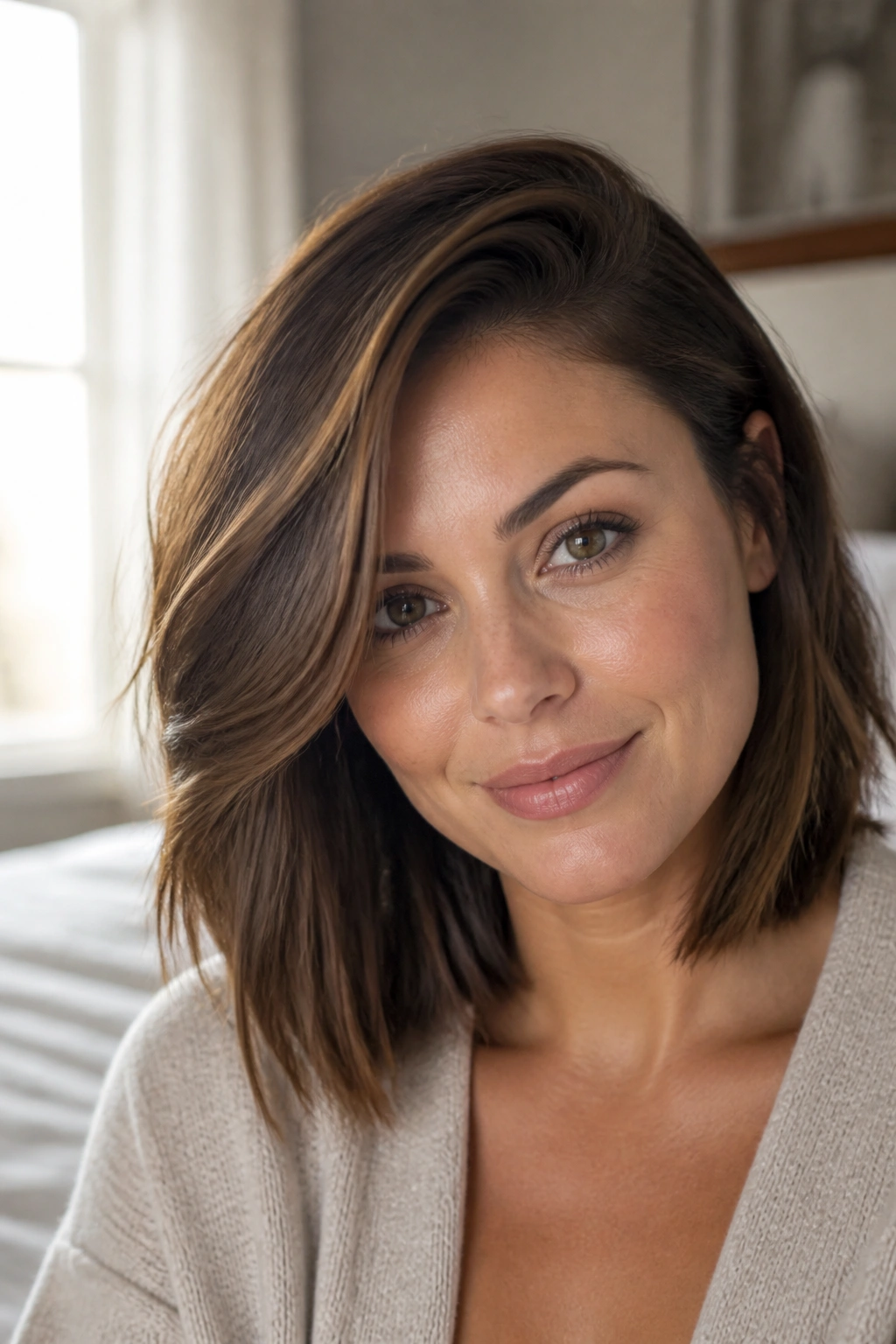
A side-swept lob is one of those cuts that makes people look more polished without looking stiff. It lands around the collarbone, which is a sweet spot for round faces because it avoids stopping right at the jaw.
The side sweep is doing quiet heavy lifting here. Instead of one even curtain across the forehead, the part creates a diagonal line, and diagonals are your friend when you want a face to look a little longer. I like this cut on women who want to keep some softness but still want a shape that feels intentional.
Styling is simple. Blow-dry the roots in the opposite direction of your part for lift, then smooth the ends with a 1.25-inch curling iron or flat iron bend. You do not need perfect curls. A little bend through the mid-lengths is enough. If your hair is fine, a light mousse at the roots stops the style from falling flat by lunch. If your hair is thick, ask for the ends to be slightly beveled so the shape does not turn blunt and boxy.
3. Deep Side-Part Waves
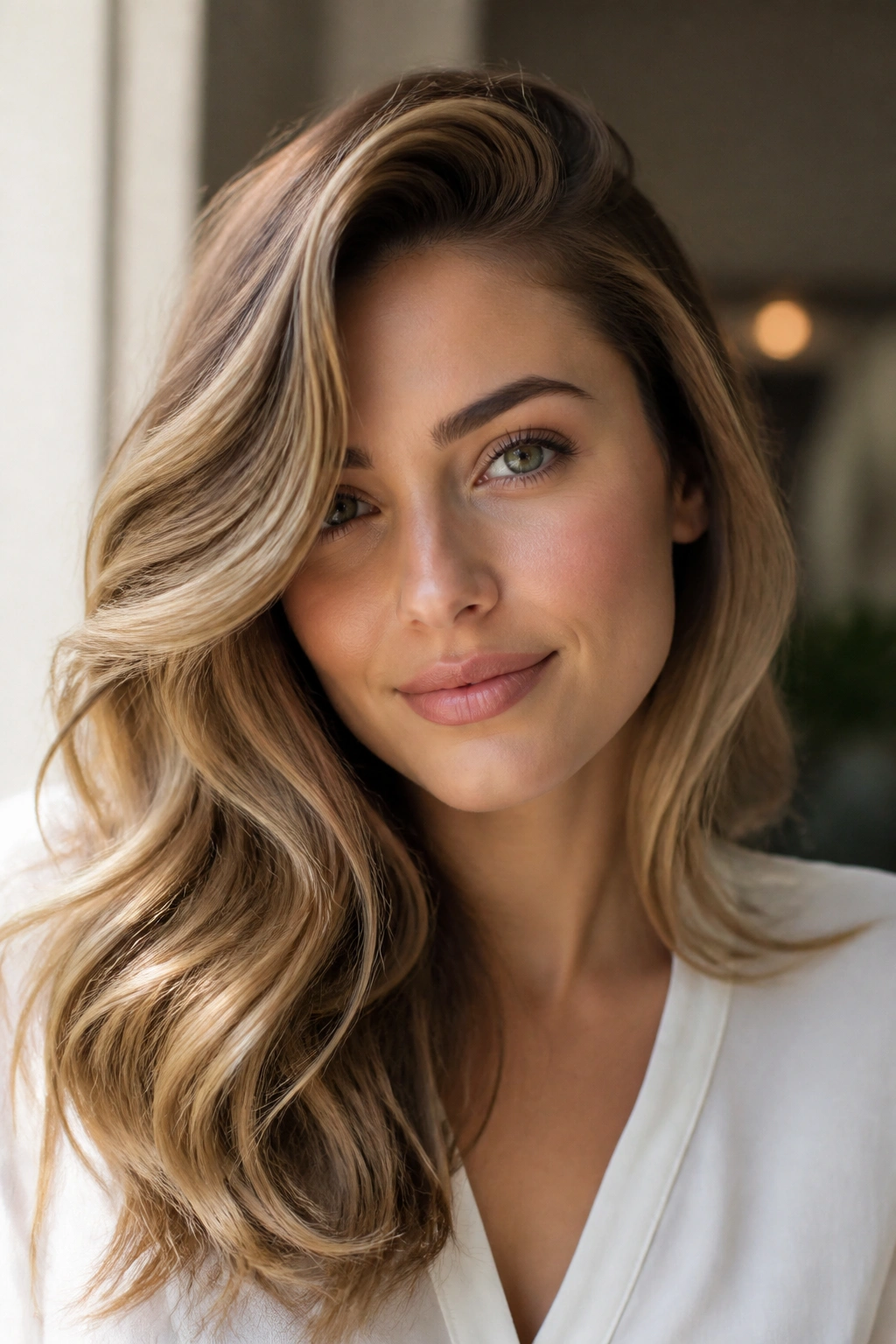
Why does a deep side part change the whole shape? Because it breaks the face into unequal sections, and that unevenness is flattering on round faces in a way a center part often is not.
A deep side-part wave gives the forehead room on one side and builds height on the other. That little lift at the crown lengthens the face visually, while the wave keeps everything soft. The style works best when the waves start below eye level. If the curl starts too high, the sides can puff out where you do not want them.
How to Style It
- Create the part 2 to 3 inches off center
- Blow-dry the crown up and back for lift
- Curl the hair away from the face with a 1.25-inch iron
- Brush the curls out once they cool, then mist with flexible-hold spray
The key is not the wave pattern itself. It is the balance between root lift and side softness. Keep the front flatter than the crown, and the face will look longer without screaming for attention.
4. Shoulder-Length Shag
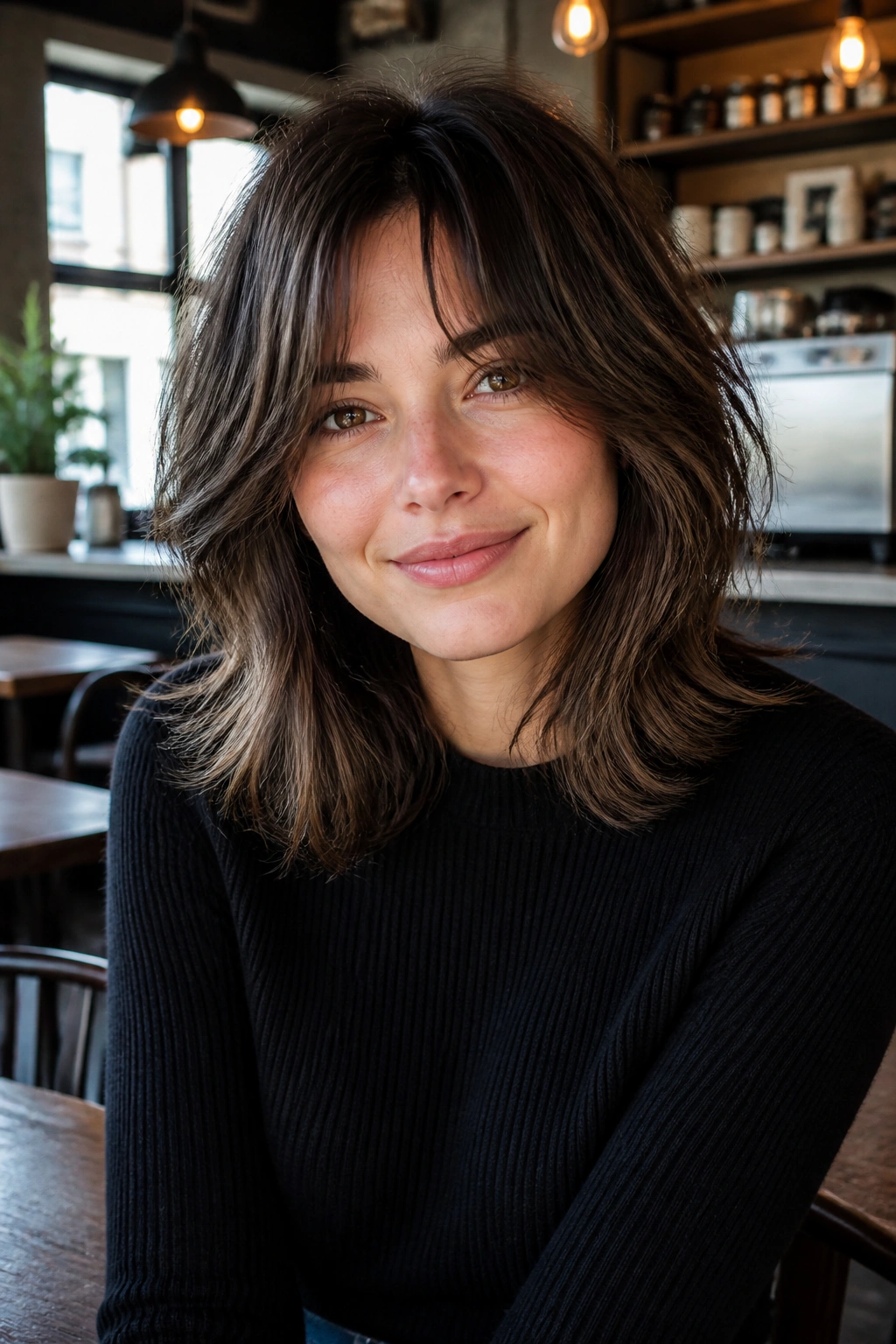
A shoulder-length shag is a good choice when you want edge without losing softness. It brings movement to the sides, but the layers are broken up enough that the hair does not sit like one solid shape around the face.
This cut is especially kind to round faces when the shortest pieces start around the mouth or just below the cheekbone. That keeps the texture away from the widest point. The shag also gives a little lift at the crown, which helps with balance. And yes, that crown lift matters. A lot.
The best version is not overly choppy. I think a lot of people ruin shag cuts by asking for too much texture near the cheeks. That can make the face look wider, not slimmer. Instead, keep the top airy, leave the ends soft, and let the front pieces taper toward the collarbone.
- Great for wavy hair that wants movement
- Good for thick hair that needs weight removed
- Needs a light texturizing spray, not a ton of paste
- Works best when the layers are cut dry or almost dry
5. Long Straight Hair with Face-Framing Pieces
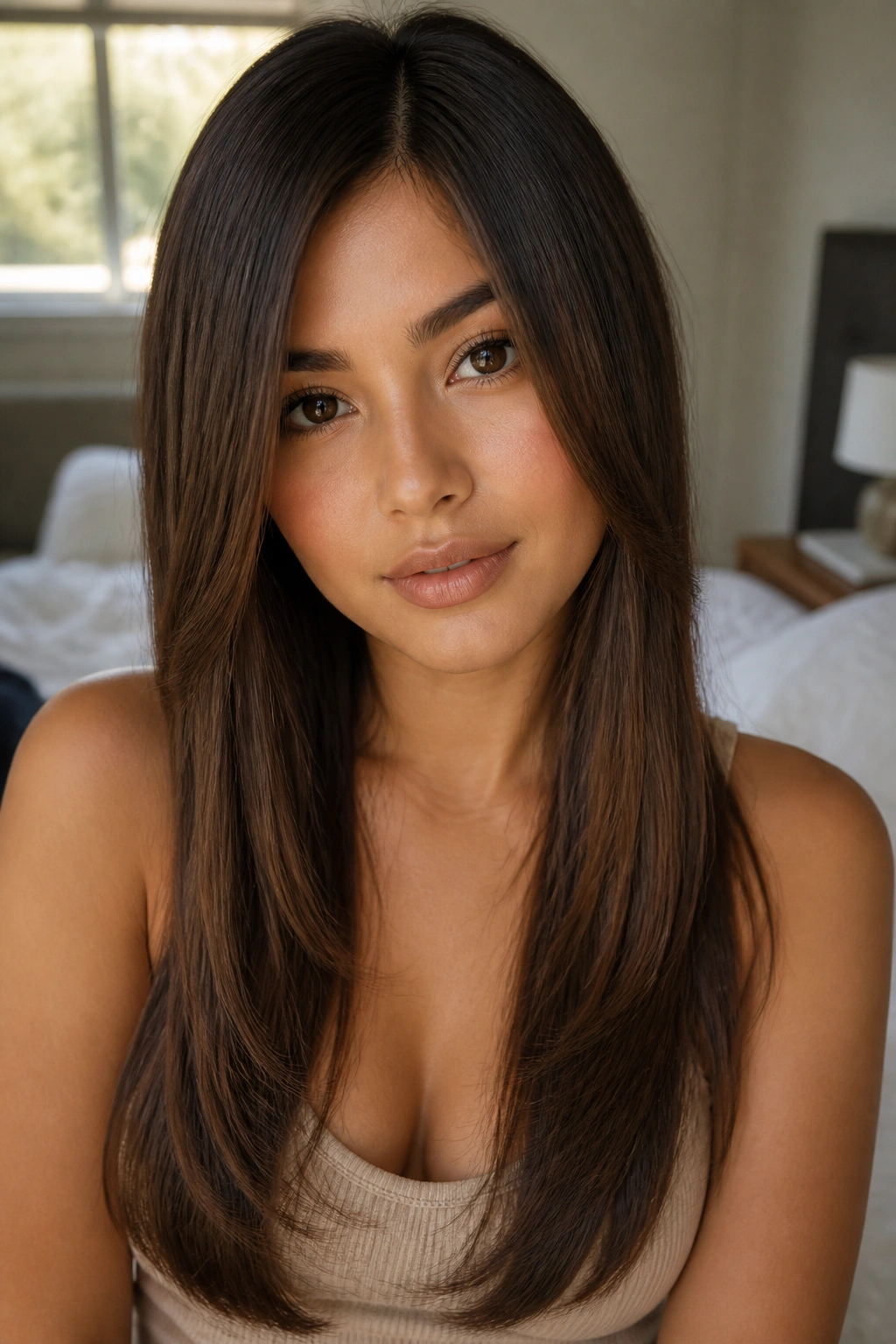
Long straight hair gets dismissed all the time as “too simple,” which is nonsense. On round faces, straight hair with the right framing can look elegant and clean in a way that noisy layering sometimes cannot.
The important part is where the face-framing pieces start. If they hit right at the cheeks, they can widen the face. If they begin lower, closer to the mouth or chin, they draw a long line down the side of the face and make the whole shape feel leaner. That’s the part most people miss.
Dead-straight ends can be too harsh.
So soften the bottom inch or two with a slight bevel.
I usually like this look with a side part or a very soft off-center part. Center parts can work, but they need a little more length and a little more movement to keep the face from looking overly symmetrical. If your hair frizzes, use a smoothing cream from mid-length to ends, then run a flat iron through large sections instead of tiny ones. Tiny sections make the style look overworked. Large sections keep it fresh.
The best thing about this cut is that it grows out well. It stays flattering even when the layers lose some sharpness.
6. Chin-Skimming Inverted Bob
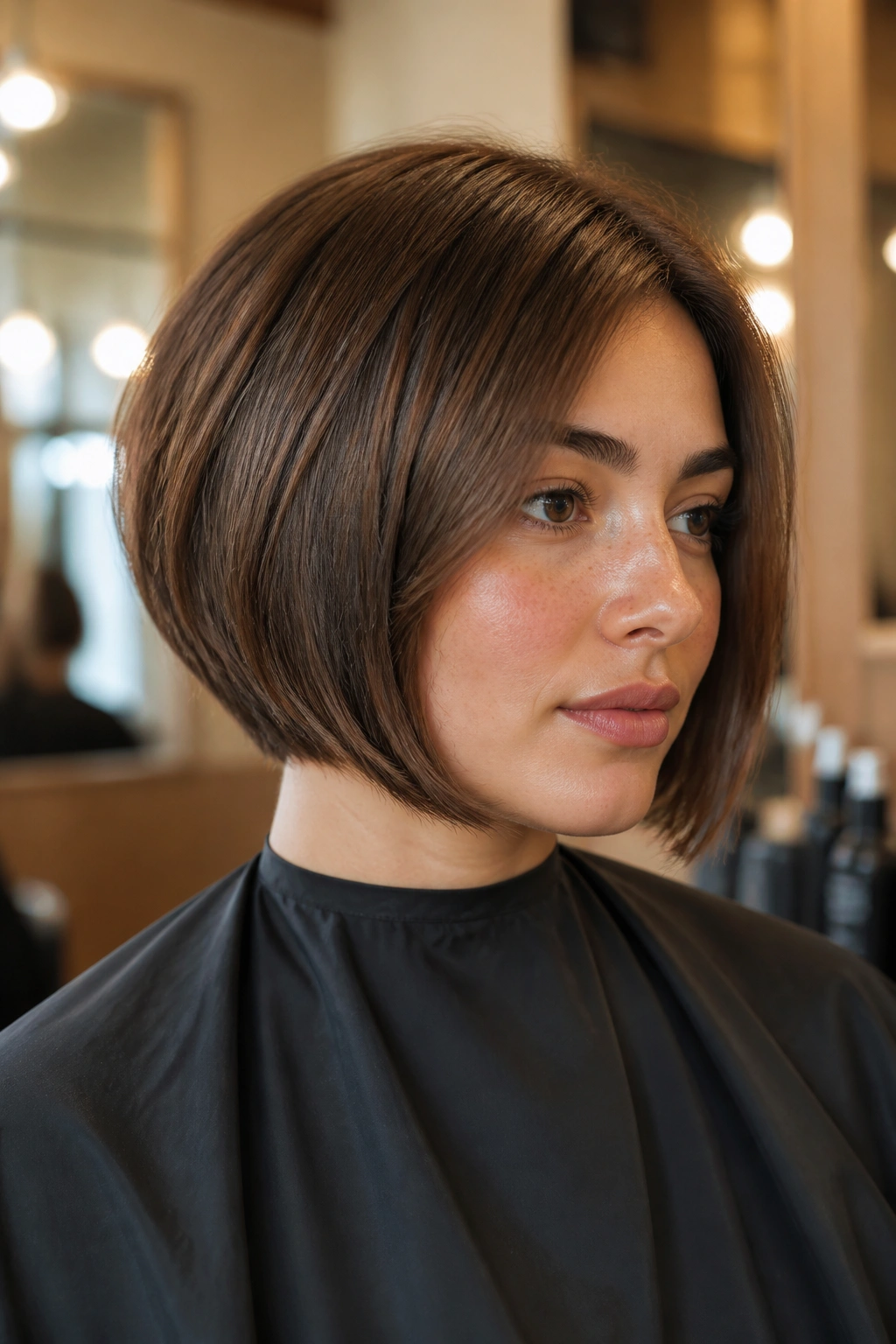
Unlike a boxy chin-length bob, the inverted bob is shorter in the back and longer in the front, which gives a round face a much better line to work with. The front pieces create a subtle angle that narrows the face visually.
This cut works because the longest point sits just below the jaw, not directly on it. That keeps the eye moving downward. If the back is stacked too aggressively, the style can get too puffy, so ask for a soft stack rather than a helmet shape. I’m not a fan of overbuilt bobs on round faces. They can look dated fast.
A chin-skimming inverted bob is a good fit if you like a clean outline but still want movement. It flatters straight and slightly wavy hair most easily, though thick hair can wear it beautifully if the layers are carved in carefully. Ask your stylist to keep the front length at or just below the chin, and to angle the front pieces forward by about an inch or two from the back. That detail keeps the style sleek rather than blunt.
It is a sharp look. Sharp in a good way.
7. Asymmetrical Bob
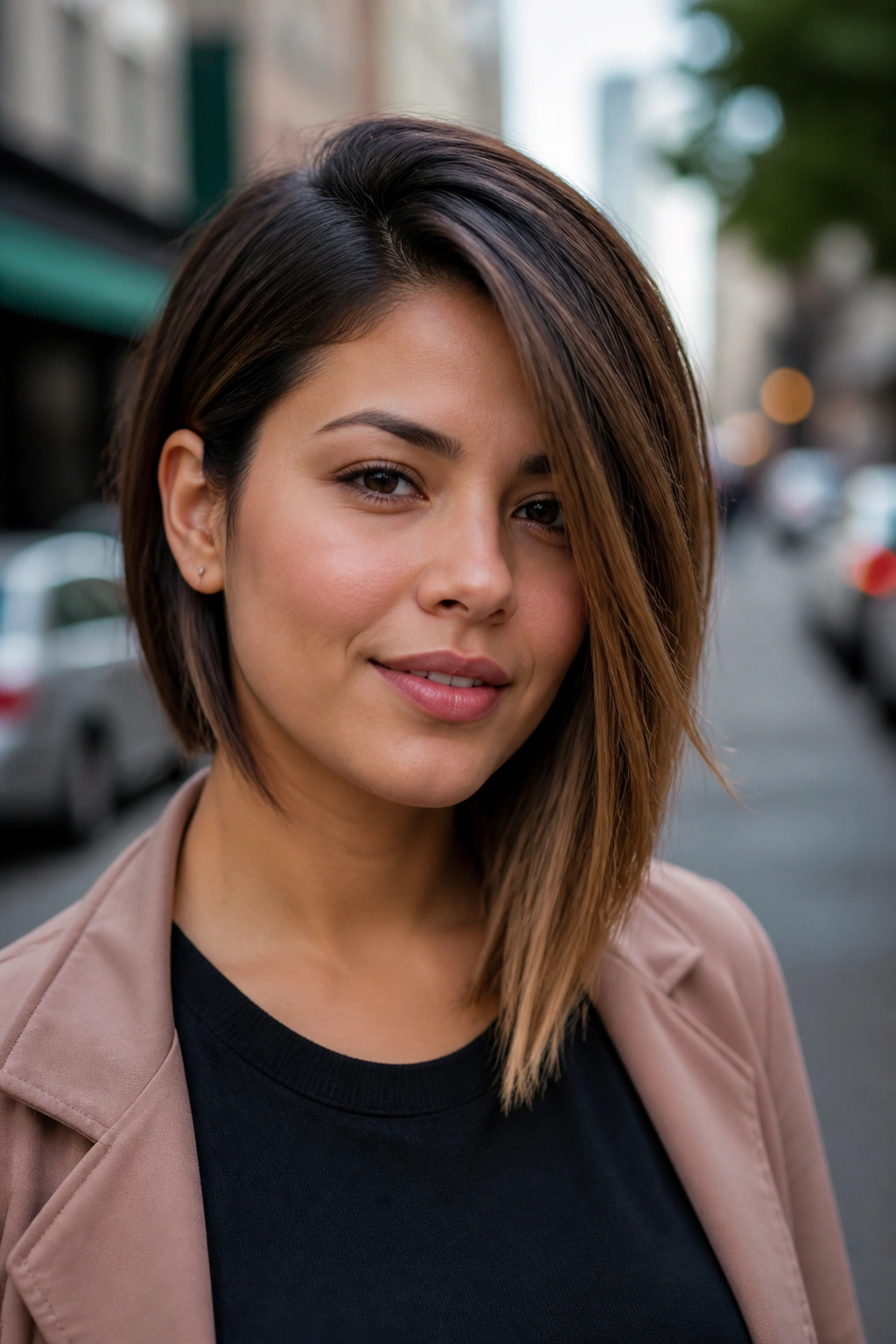
Asymmetry does half the contouring for you.
That’s the appeal of this cut. One side is left a little longer than the other, and that uneven line stops the face from looking overly circular. The haircut feels modern without needing a lot of extra styling, which is one reason I keep recommending it to people who want something clean but not severe.
What to Ask For
- One side cut 1 to 2 inches longer
- A side part that supports the longer side
- Ends that are beveled, not blunt
- A length that stays somewhere between the chin and collarbone
The trick is moderation. If the asymmetry is too dramatic, the haircut starts wearing you instead of the other way around. A small length difference is enough to create that diagonal pull through the face. And if you have fine hair, this bob can feel fuller with a light root spray and a quick blow-dry using a paddle brush. Thick hair may need internal thinning so the longer side does not collapse.
It is a good cut for people who like structure and do not mind a little maintenance around the edges.
8. Pixie Cut with Lifted Crown
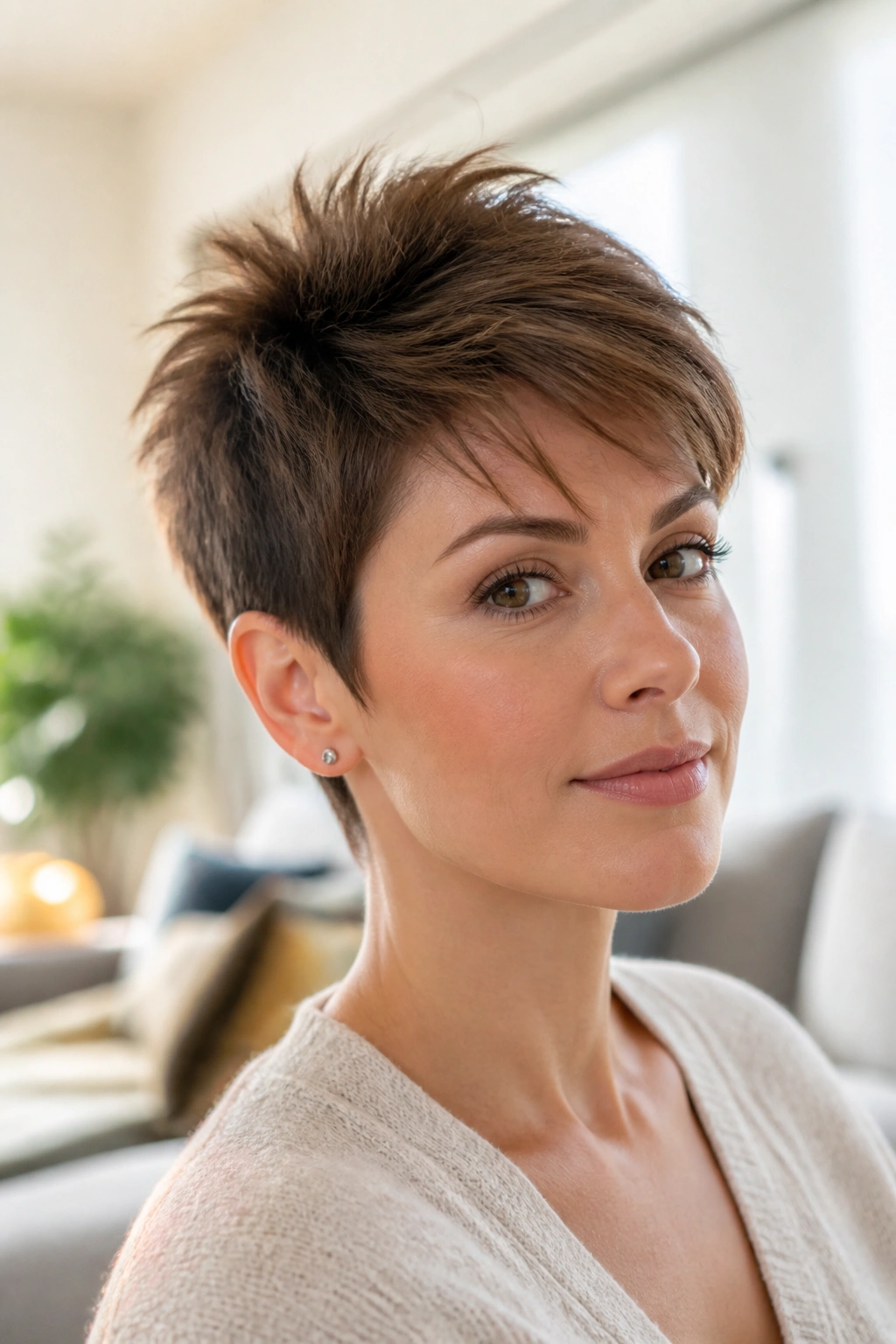
Can a pixie work on a round face? Absolutely, if the top has height and the sides stay close.
That distinction matters because a fluffy, all-over pixie can make the face look wider. A pixie with a lifted crown, though, pulls the eye upward and keeps the silhouette lean. The effect is subtle, not dramatic. That is usually better anyway.
How to Style It
- Blow-dry the top upward with a small round brush or your fingers.
- Work a pea-size amount of matte paste through the crown while the hair is still slightly warm.
- Keep the sides flatter and closer to the head.
- Leave the fringe a little longer if you want softness around the forehead.
This cut suits people who like short hair but do not want the whole face exposed. A tiny side fringe can soften the forehead and make the shape feel less severe. And here’s the part that gets overlooked: the neckline matters. A clean nape keeps the style looking crisp, which helps the lifted top read as intentional instead of messy.
It is not the easiest cut to fake. It works best when the shape is actually cut for it.
9. Textured Crop with a Long Fringe
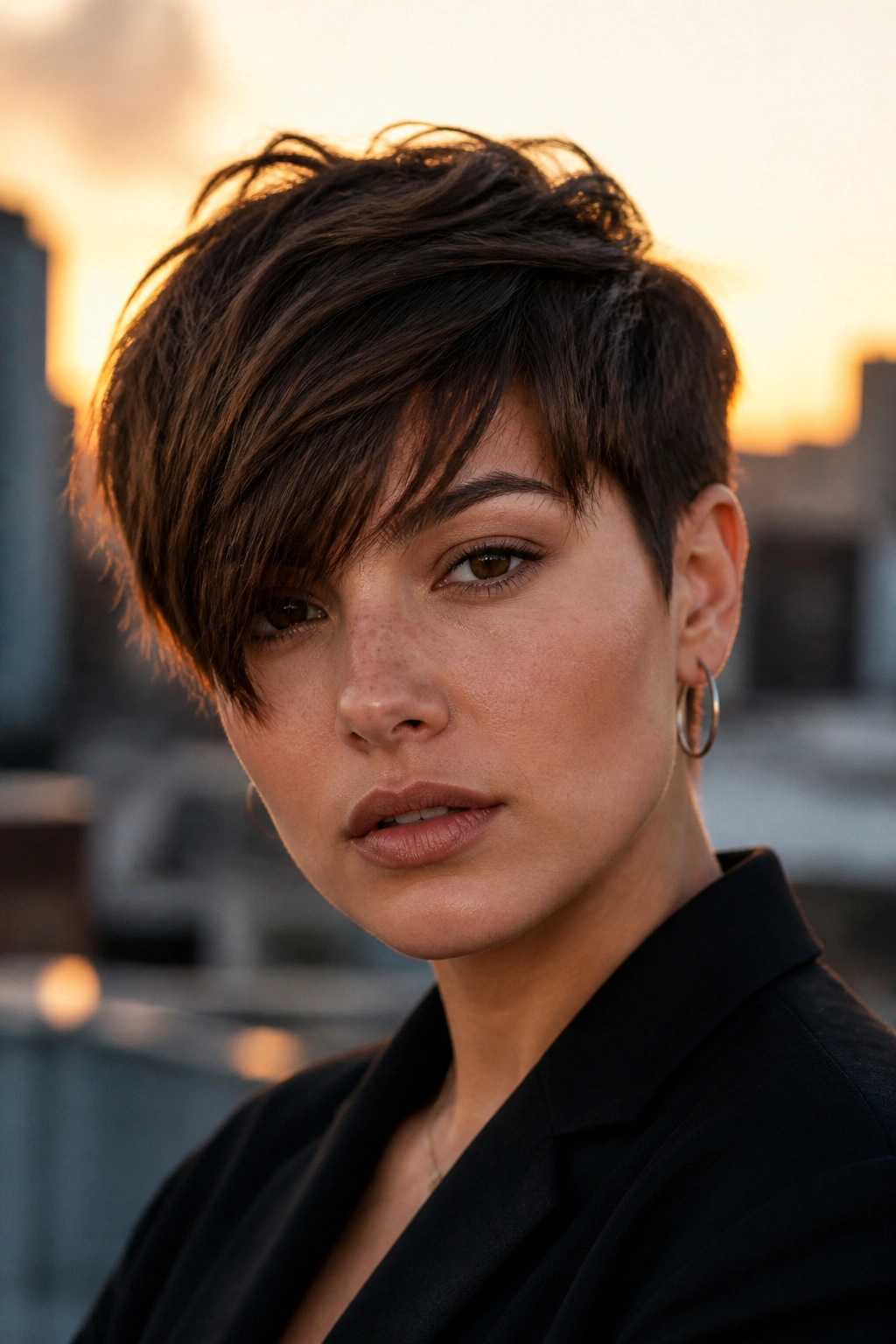
Picture short hair that looks piecey, not helmet-like. That is the goal here.
A textured crop with a long fringe brings the focus up and diagonally across the face, which is exactly where a round face likes the attention to go. The fringe helps because it breaks up the forehead without closing off the face. Keep it long enough to sweep to one side or fall softly across the brow.
What Makes It Work
- Fringe starts higher on the forehead, not deep at the temples
- Sides stay tight enough to keep the shape neat
- The top has choppy texture, but not so much that it sticks straight up
- Matte clay or paste gives the best finish
This cut is a good match for thick hair, because the layers remove bulk and create movement. It can work on fine hair too, but the texture has to be handled lightly. Too much product will make it look stringy. Too little and the shape disappears.
The crop gives a round face a bit of attitude without adding width. That is why it feels modern. Not because it is loud.
10. Sleek High Ponytail
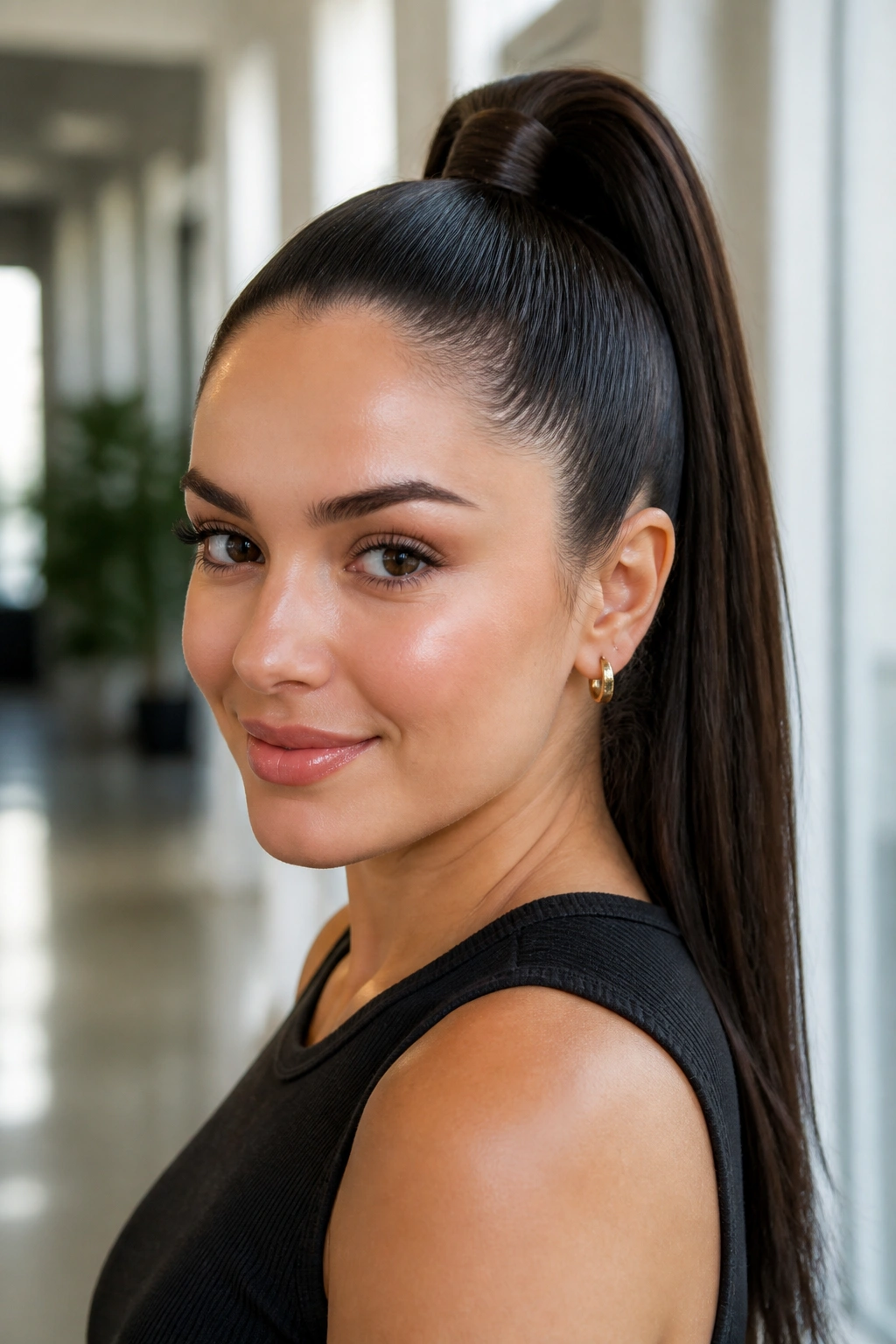
The whole trick is where the pony sits.
A high ponytail can be one of the most flattering styles for round faces because it lifts the eye above the cheeks and pulls the silhouette upward. But the sleek part matters. If the base is too bulky at the sides, the style can widen the face instead of lengthening it.
I like this look when the crown is smooth and a little raised, not plastered flat. Brush the hair upward with a boar bristle brush, secure the pony 2 to 3 inches above the crown line, then wrap a small section of hair around the elastic to hide it. That small finishing step makes the style look cleaner right away.
A fine mist of shine spray on the top can help, but don’t soak the roots. The ponytail should move. If it’s too tight, the face looks pulled in an awkward way. If it’s too loose, the shape falls apart. There’s a narrow middle ground here, and that middle ground is where the style starts looking expensive without trying to be.
A few soft baby hairs around the temples can help too, especially if you want to soften the hairline.
11. Low Messy Bun with Loose Tendrils
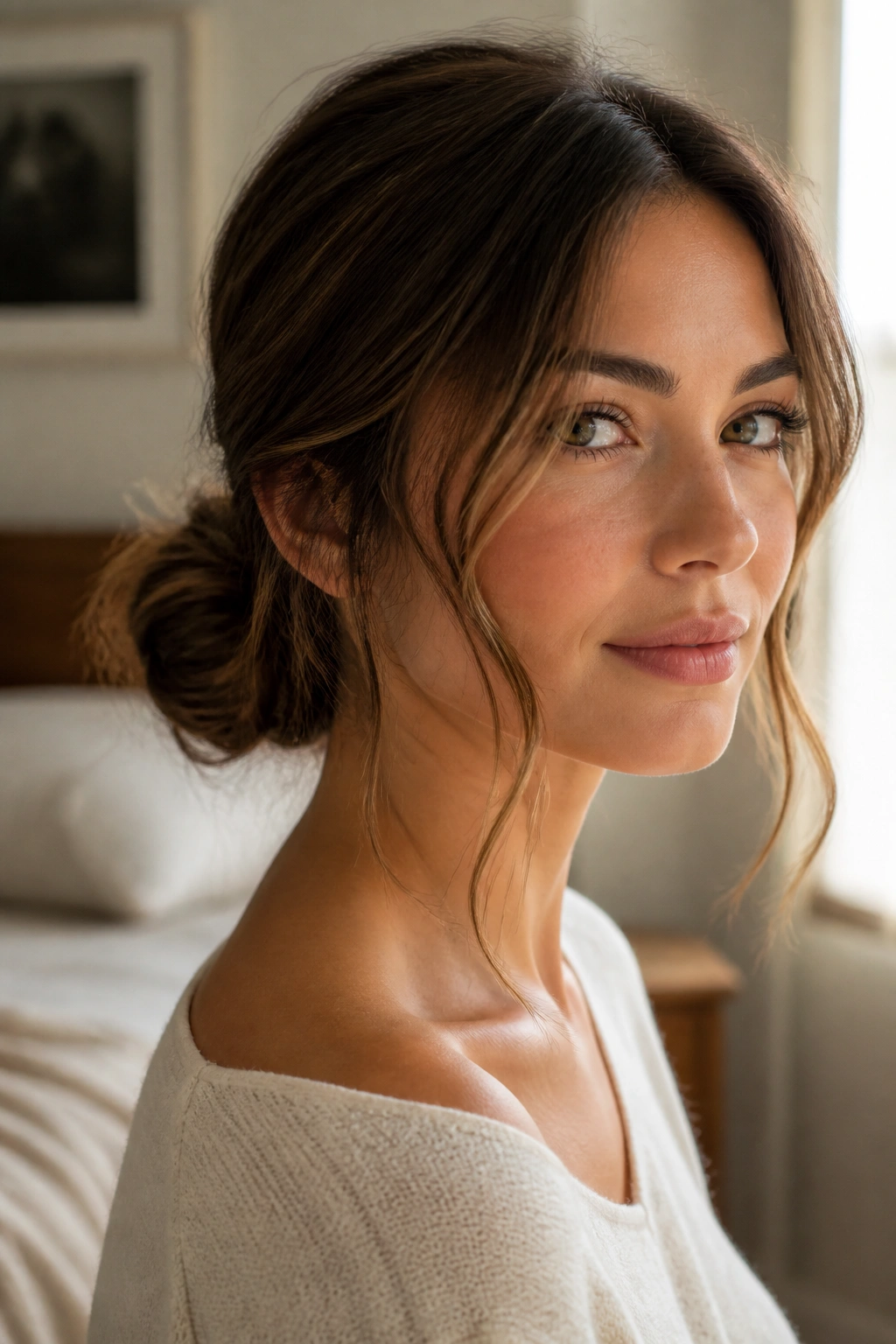
A tight ballerina bun can be harsh on a round face. A low messy bun with loose tendrils does the opposite.
The bun sits at the nape, which keeps the profile soft, while the tendrils pull vertical lines down the sides of the face. That little bit of looseness around the temples and cheeks keeps the style from feeling severe. It’s a better choice than a slicked-back bun when you want shape but not a strict look.
What to Watch For
- Keep the bun low, not centered on the back of the head
- Pull out two face-framing pieces, each about half an inch to 1 inch wide
- Curl the tendrils slightly so they bend inward, not out
- Don’t make the bun too wide, or it starts adding side volume
This is the kind of style that works on second-day hair, which I love. A little natural texture makes the bun look fuller without needing a ton of teasing. If your hair is slippery, a small clear elastic under the main tie helps the bun stay in place. And if you have a short bob that won’t quite reach, a tucked low chignon can give a similar effect.
The face stays soft. That’s the win.
12. Half-Up Style with Crown Volume
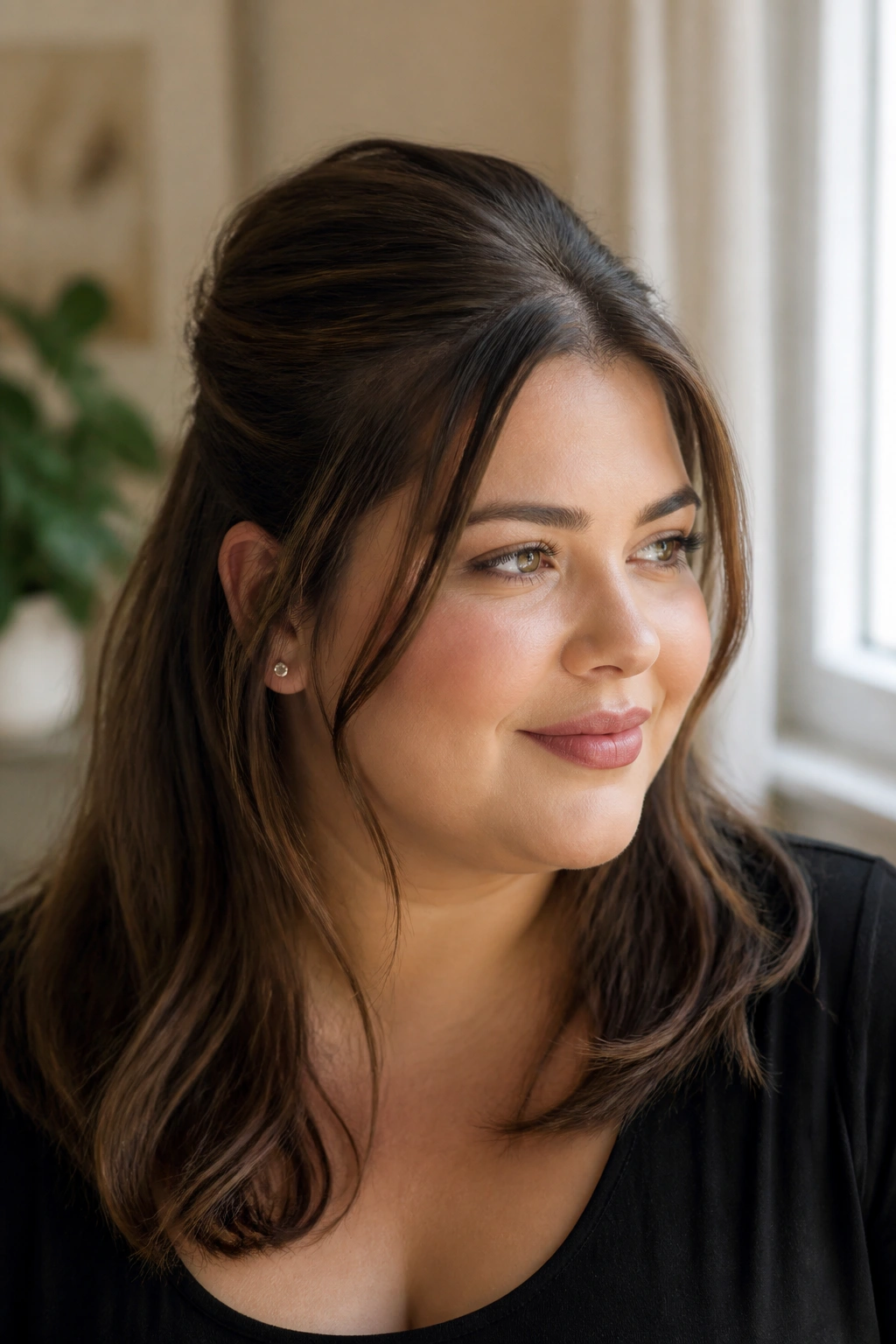
Half-up hair is one of the easiest ways to give a round face more height without giving up length. The lifted crown creates a vertical line, while the loose bottom half keeps the style from feeling too tight or too severe.
It works best when the top section is taken from about temple to temple and raised slightly before it’s pinned or tied. If you smooth it too close to the head, you lose the flattering lift. If you over-tease it, the style gets puffy. Neither is the goal. A small amount of crown height is enough.
I like this style for medium-length waves because the loose lower half still gives movement around the jaw. Straight hair can wear it too, though a little bend in the ends helps. You can twist the top section into a half knot, a small clip hold, or a tiny pony, depending on how casual you want it to feel. The shape matters more than the method.
A few shorter pieces left around the face can soften the look. Just keep them light. Heavy front chunks can crowd the cheeks.
13. Braided Crown with Loose Lengths
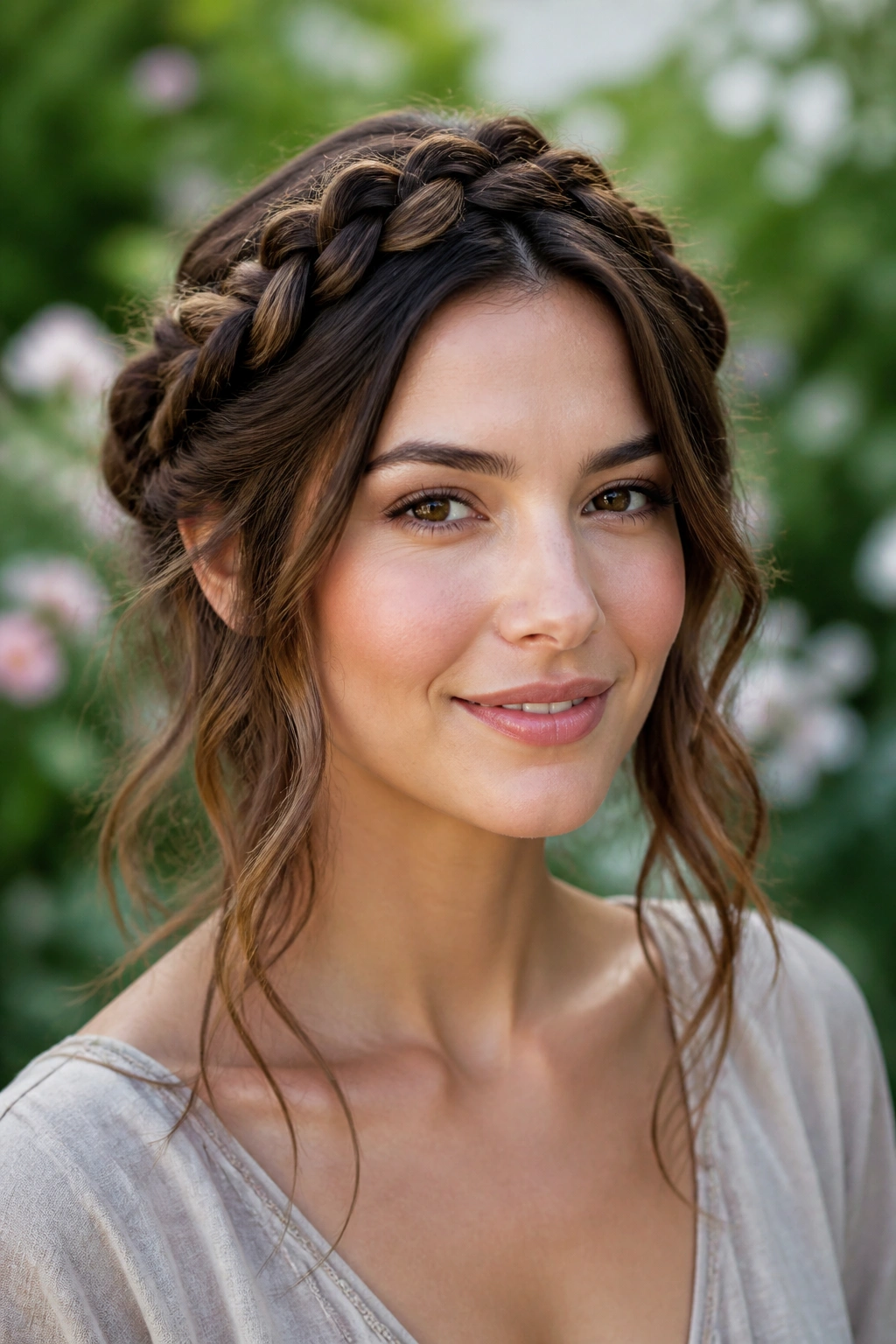
Why do braids sometimes flatter round faces so much? Because they create a curved line that sits above the widest part of the face and keep the visual weight moving upward.
A braided crown works best when the braid is loose enough to feel soft, not tight enough to look severe. If the braid sits too low and too thick around the temples, it can wrap the face in a way that adds width. Raise it a little higher, and the whole style opens up.
How to Keep It Flattering
- Start the braid above the temple line
- Keep the braid slightly loose so it does not puff outward
- Leave the remaining hair down in waves or soft bends
- Pull a few fine strands near the ears to soften the edges
This style is lovely for events, but it also works on regular days when you want your hair out of the way without losing softness. I prefer it with a side part, though an off-center part can be just as good. The key is to avoid making the braid a perfect, thick halo. That can feel heavy.
Loose lengths underneath stop the look from going too structured. It needs that contrast.
14. Soft Wolf Cut
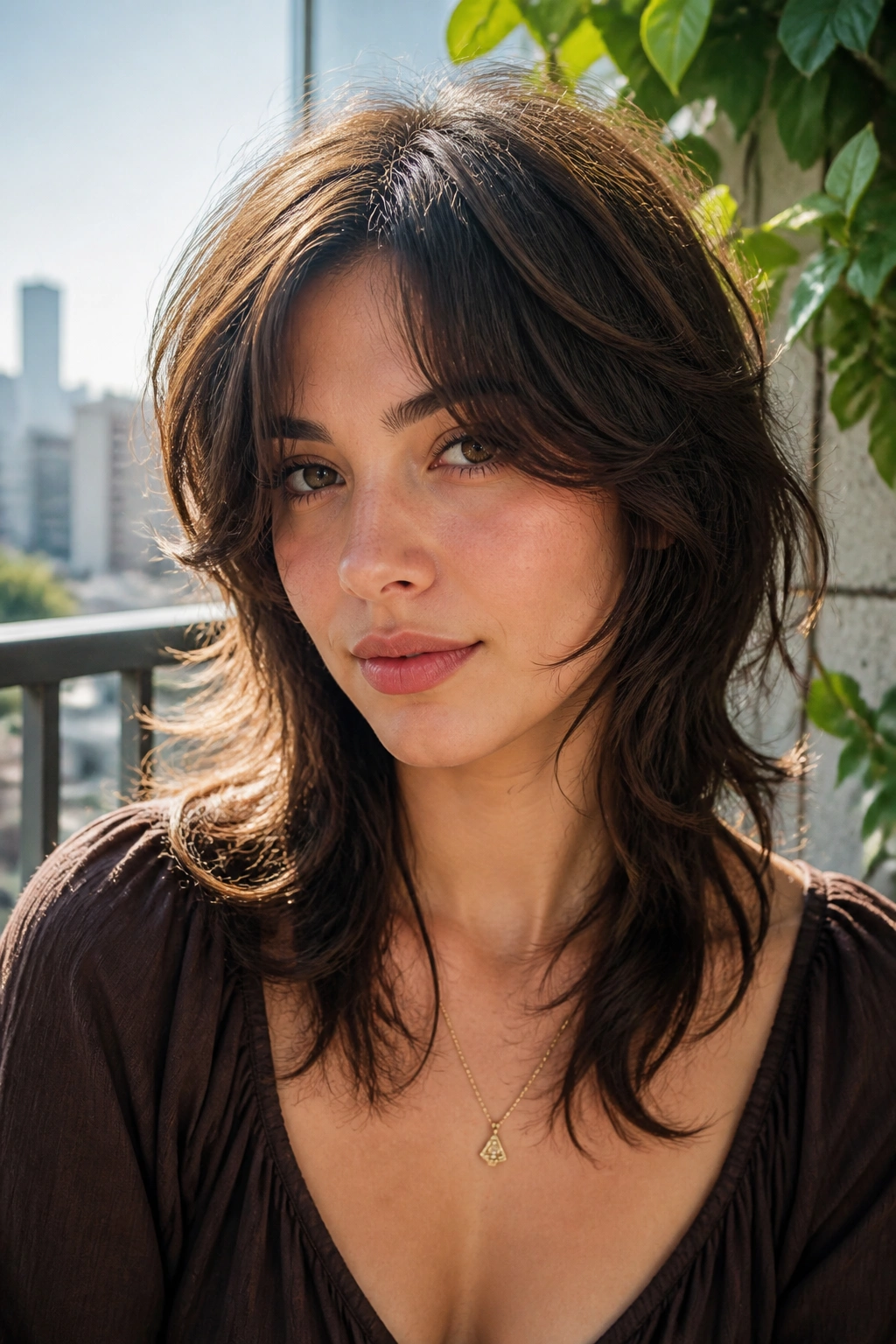
A soft wolf cut is basically the shag’s wilder cousin, but it works on round faces when the top stays airy and the sides stay broken up.
The shape is all about layers, yet not every layer should be dramatic. The best wolf cut for a round face has volume near the crown, face-framing pieces that start below the cheekbone, and ends that are textured enough to keep the outline from looking blocky. If the shortest pieces stop too high, the face can widen. That’s the part to avoid.
- Best on wavy or naturally tousled hair
- Works well on thick hair that needs shape
- Needs dry cutting or careful point cutting to keep the ends soft
- Looks best with some mess, not perfect polish
This is one of the few cuts that can feel cool and still be face-friendly. It gives round faces height, movement, and just enough attitude. Fine hair can wear it too, but the layers need to stay modest. Too many layers and the whole shape falls apart by midday. That’s the downside no one likes to talk about.
Still, when it’s cut well, the wolf cut has a nice looseness that softens the face without smothering it.
15. Wavy Lob with an Off-Center Part
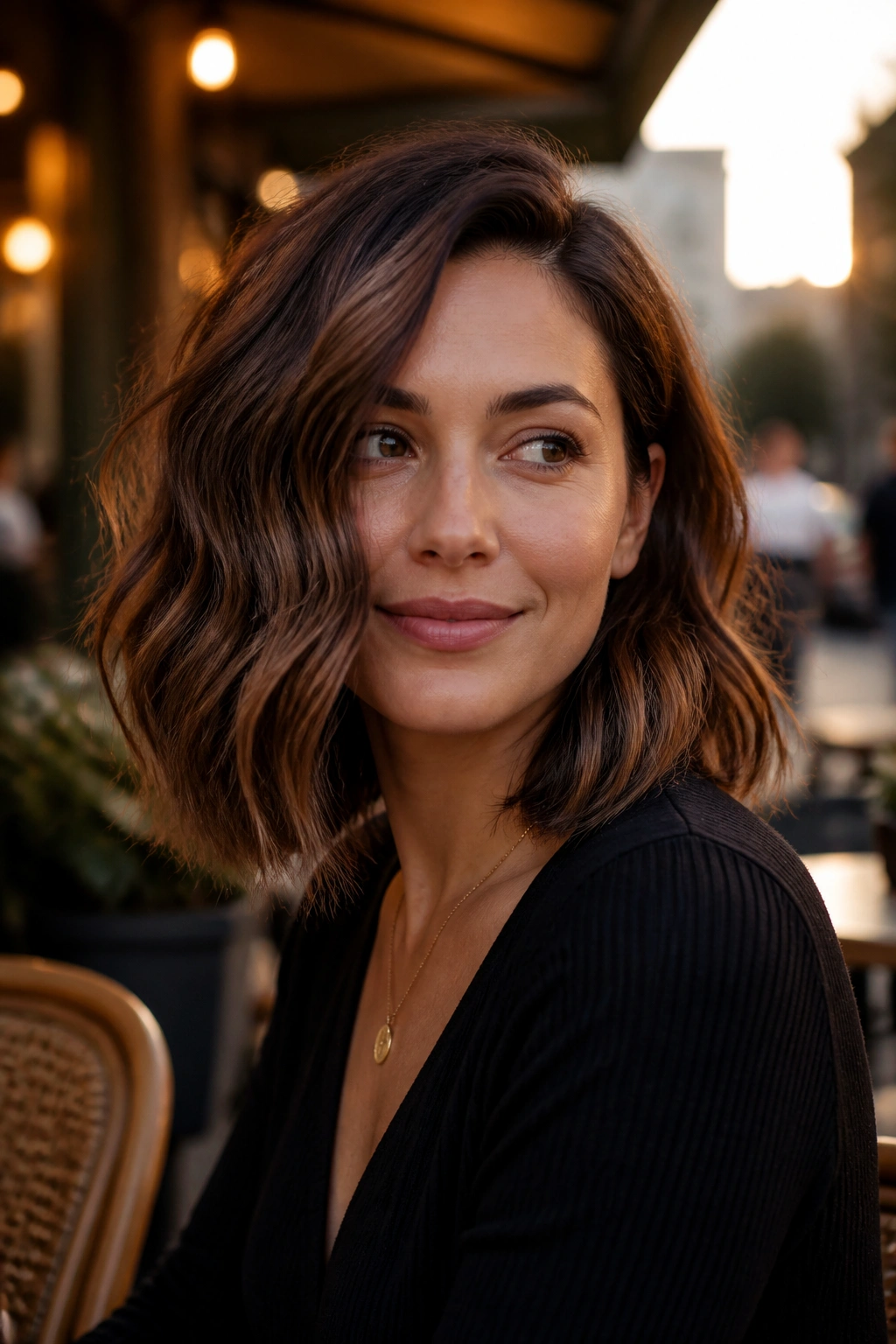
Dead-center parts can be brutal on round faces.
An off-center part keeps the style relaxed, and that tiny shift changes how the waves fall. The lob length, usually somewhere between the chin and collarbone, gives the face room to breathe while the wave pattern keeps the sides from looking too straight. I reach for this one a lot because it feels easy in real life, not just in photos.
The waves should look more like bends than curls. Use a 1.25-inch iron or a flat iron to create loose movement, then shake it out with your fingers. If the waves start too close to the roots, they can create side fullness in the wrong place. Start lower, around the cheek to jaw area, and let the top stay a little smoother.
A little texture spray at the ends helps the cut keep its shape. Not much. Just enough so the ends don’t look slippery. The off-center part is the quiet detail that keeps the whole style from feeling too symmetrical, and symmetry is usually the enemy here.
This one is easy to live with. That matters.
16. Blunt Collarbone Cut with Internal Layers
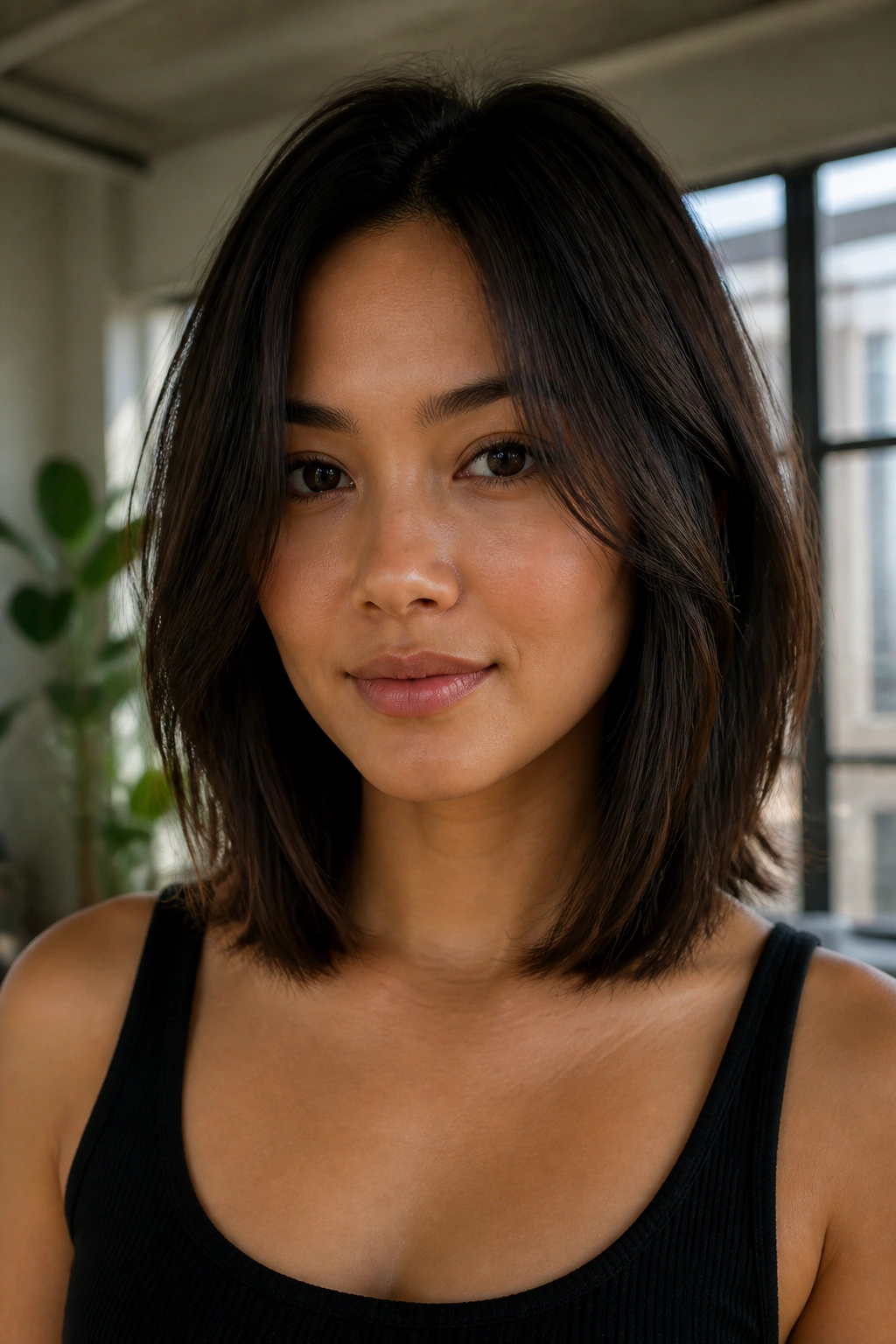
A fully blunt cut can be tricky on round faces, but a blunt collarbone cut with internal layers is a different animal.
The outside line stays clean, which gives the hair a strong shape and a bit of polish. Inside the cut, hidden layers remove weight so the ends move instead of sitting in one heavy block. That combination keeps the face from looking boxed in. It also makes the cut easier to wear if your hair is thick or naturally puffy.
This is a good choice when you want your hair to feel modern but not overstyled. Ask for the perimeter to hit right at the collarbone, then request soft internal layers that are not visible from the front. That keeps the outline strong while still letting the hair swing. If the layers are too short, the cut can become fuzzy. If they are too long, you lose the movement.
It is a disciplined cut. Not flashy. That’s part of its charm.
17. Bubble Ponytail
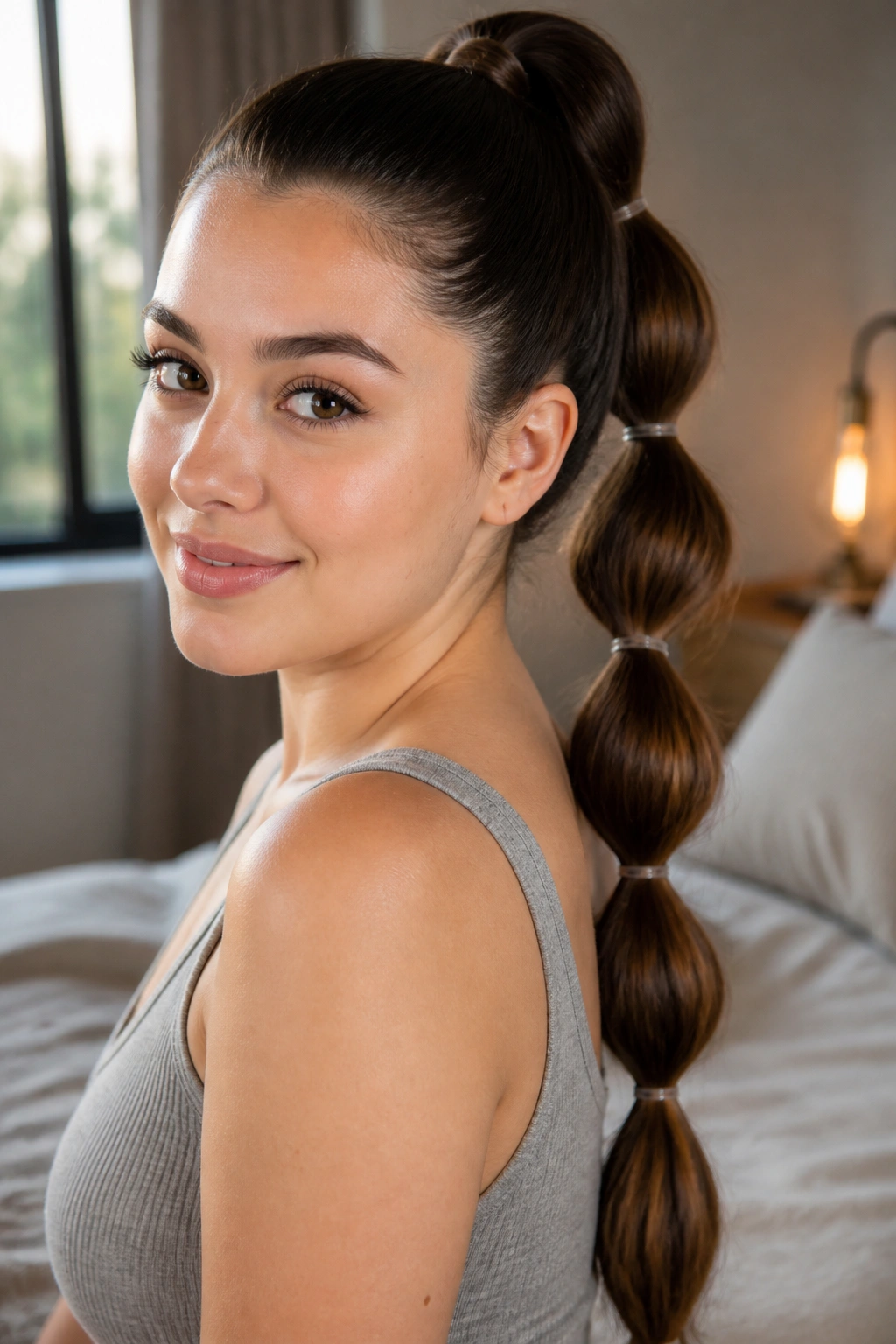
A bubble ponytail sounds playful, and it is, but it also works surprisingly well on round faces because the bubbles create vertical sections instead of one wide block.
That vertical rhythm matters. Each elastic breaks the length into segments, which pulls the eye downward. The style looks best when the base pony is fairly high or mid-high and each bubble is spaced evenly, about 2 to 3 inches apart. Pull the sides of each section gently so the bubbles look full without becoming giant.
A Few Details That Help
- Keep the crown slightly lifted before securing the first pony
- Use clear elastics or small black bands, depending on your hair color
- Tug each bubble only a little; over-pulling makes the style lumpy
- Smooth the top with a soft brush, not a hard gel shell
I like this one because it feels more interesting than a plain ponytail without requiring a lot of skill. If you have long hair, it shows off length in a clean way. If your hair is medium-long, it can still work, though the bubbles will be smaller. That’s fine. Small bubbles can look better than giant ones when the face shape is round and the hair is fine.
It is a cheerful style, but not childish. That balance is rare.
18. Bixie Cut with Feathered Fringe
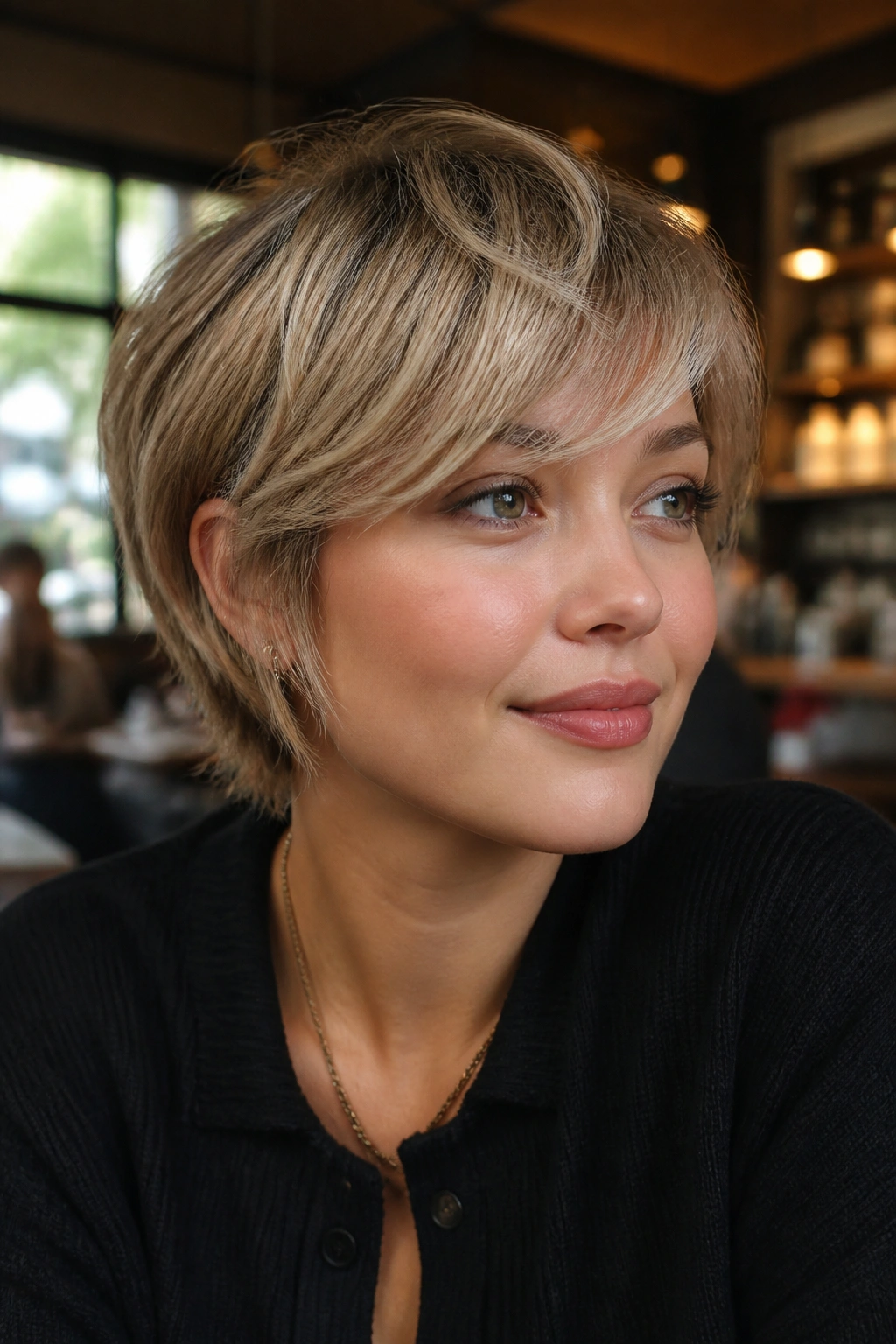
A bixie cut sits between a bob and a pixie, and that in-between length is exactly why it can flatter round faces so well. You get short-hair energy without losing enough length to soften the cheeks.
The feathered fringe is the part that really sells it. Instead of a blunt front edge, the bangs are light, piecey, and easy to sweep to one side. That keeps the forehead open and stops the cut from feeling heavy. The top can stay a little longer for lift, while the nape and sides stay neat. That combination creates shape without adding width.
What to Ask For
- Keep the top about 2 to 3 inches longer than the sides
- Ask for a feathered fringe that can move off the forehead
- Leave a bit of softness around the ears
- Avoid a thick, square outline through the cheek line
This is one of my favorite options for people who want short hair but still want some softness. It has personality. It also grows out well, which is a nice bonus because many short cuts lose their charm fast once the shape goes flat. A bixie keeps enough movement that it still looks deliberate a few weeks later.
If you want a short cut that feels light, modern, and a little bit cheeky, this is the one I’d point to first.
