



Wedding hair has a bad habit of looking polished in the mirror and tired by the time the dance floor opens.
The best hairstyles for weddings do more than sit pretty for photos; they handle hugs, wind, veil combs, and a few too many pins without falling apart. That balance matters. A sleek chignon, soft Hollywood waves, or a braided half-up style can all look right on the same day, but only if they match the dress, the weather, and the way you actually move.
That is where people get tripped up. A style that looks elegant under salon lights can feel too stiff with a relaxed dress. A loose wave that feels effortless at home can go flat before the ceremony ends if the hair is too clean or too fine. The smartest trial runs happen with the earrings, the hairpiece, and the neckline photo in hand. The back of the dress changes everything.
Comfort matters.
And so does staying power. Some brides want a clean shape that barely moves. Others want hair that still looks like hair, just better behaved. Both approaches work. The right answer is usually hiding in the details: how high the bun sits, how tightly the braid is pulled, whether the front pieces are pinned or left to fall softly, and how much shine you want in the final finish.
1. Sleek Low Chignon
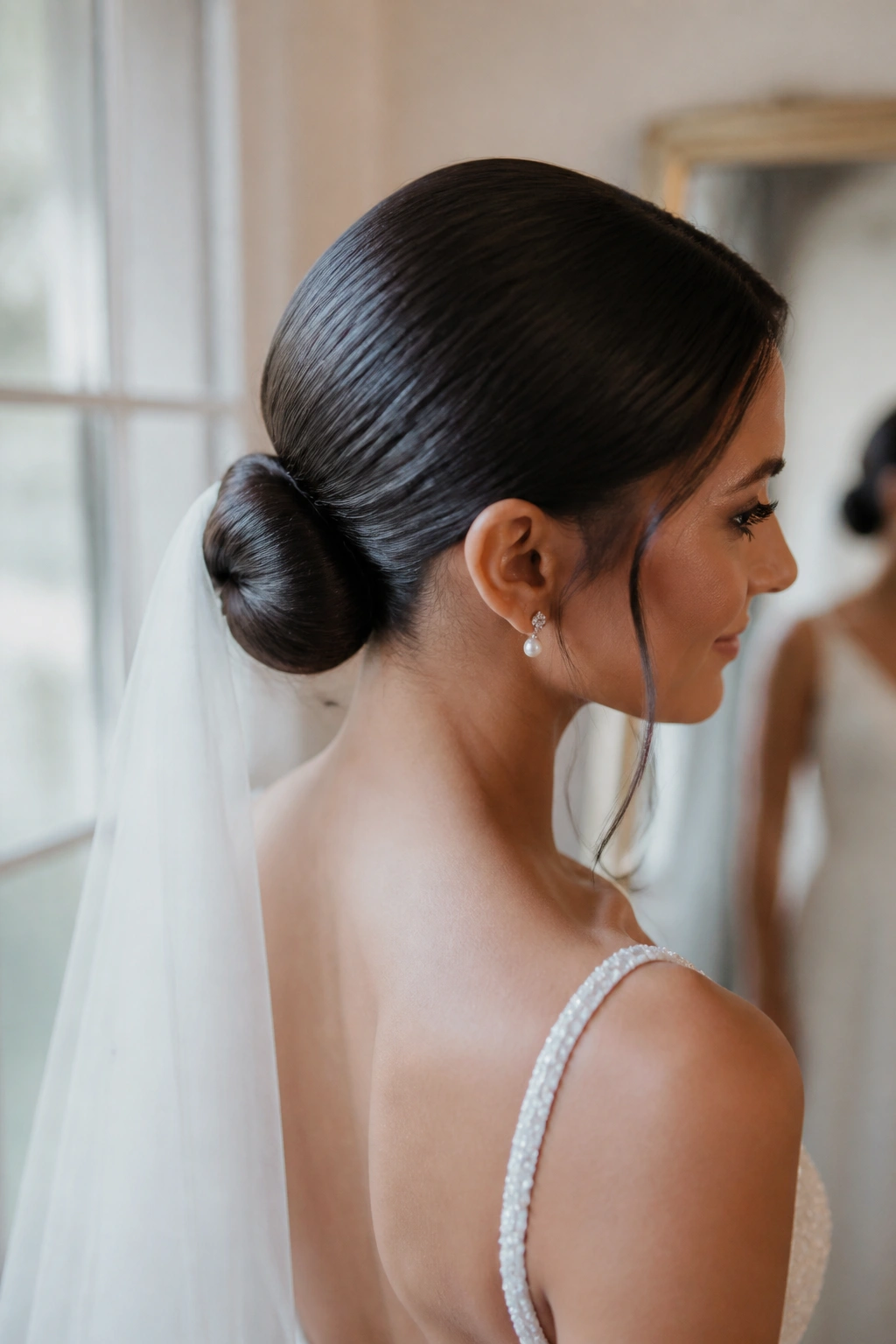
A sleek low chignon is one of those wedding hairstyles that quietly solves a lot of problems at once. It keeps the neck clear, it sits neatly under a veil, and it looks intentional with a dress that already has strong lines. There is nothing fussy about it, and that is exactly the point.
Why it holds so well
A good low chignon starts with smooth roots and a bun placed at the hollow of the nape, not buried too low on the neck. That placement keeps the shape clean in photos and makes it easier to anchor a comb, veil, or hairpin without everything sliding around.
- Best for medium to long hair with some natural grip.
- A center part gives a sharper feel; a soft side part reads gentler.
- Two crossed bobby pins at the base help lock the bun.
- A light smoothing cream keeps flyaways down without making the hair look wet.
Pro tip: do not tuck the bun too tight against the neck if your dress has a high collar; a tiny bit of space between the bun and the neckline looks cleaner.
2. Soft Hollywood Waves
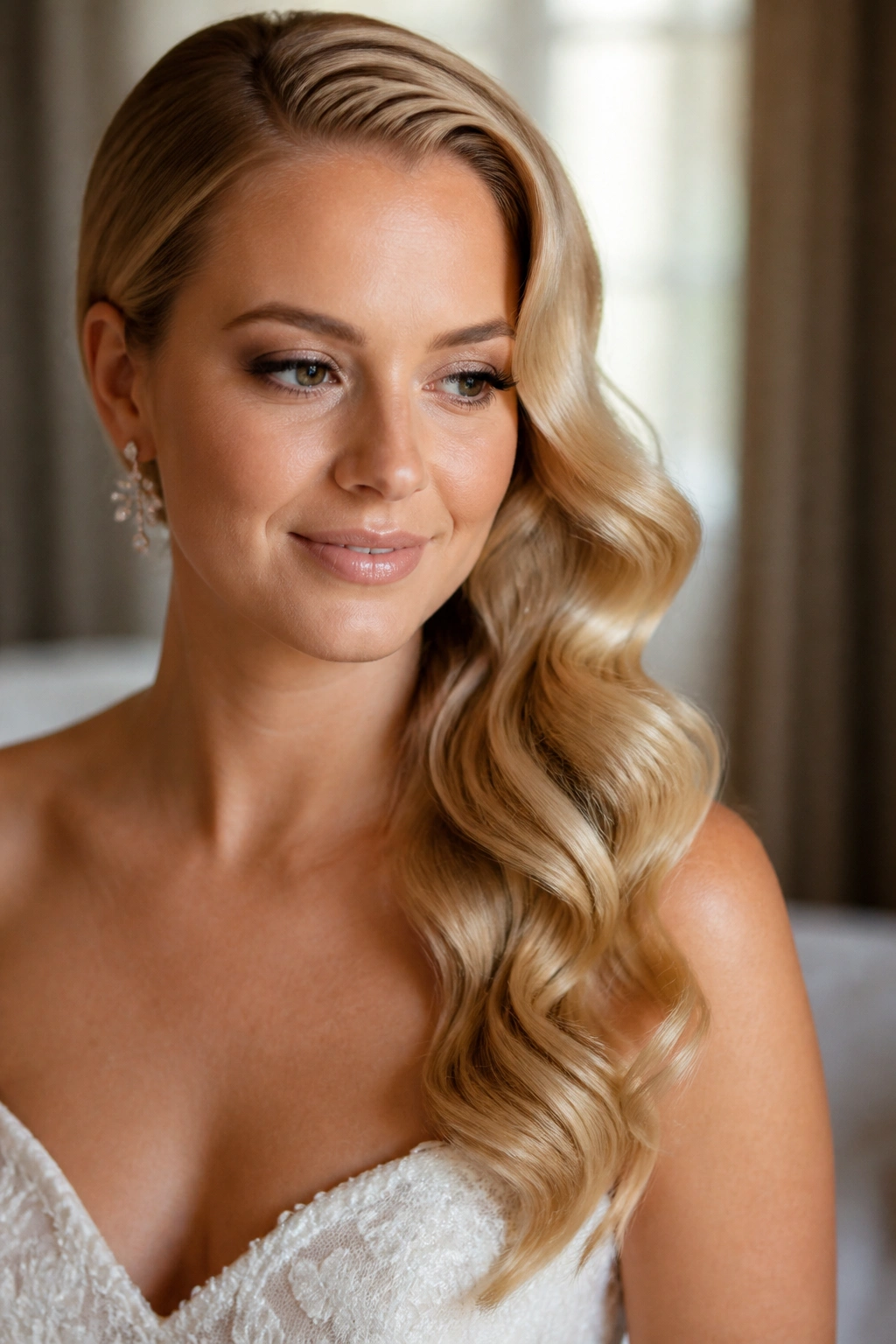
Soft Hollywood waves are the easiest way to make long hair look dressed up without turning it into a shell. They move. That matters more than people think. When the room gets warm and the dancing starts, a wave that still bends at the ends looks better than a stiff curl that has gone rigid.
The trick is a deep side part and a large-barrel iron, usually around 1.25 inches or 1.5 inches, depending on hair length. Set each curl, pin it while it cools, then brush it out until the lines blend. That brushing step is where the shape becomes glamorous instead of pageant-y. A little shine spray on the mid-lengths helps the waves read clean in photos.
This style loves satin gowns, one-shoulder necklines, and long earrings. It also works nicely when the dress is simple and the hair needs to carry more of the look. If your hair is fine, prep with a volumizing mousse at the roots first or the wave will collapse faster than you want.
3. Textured Low Bun
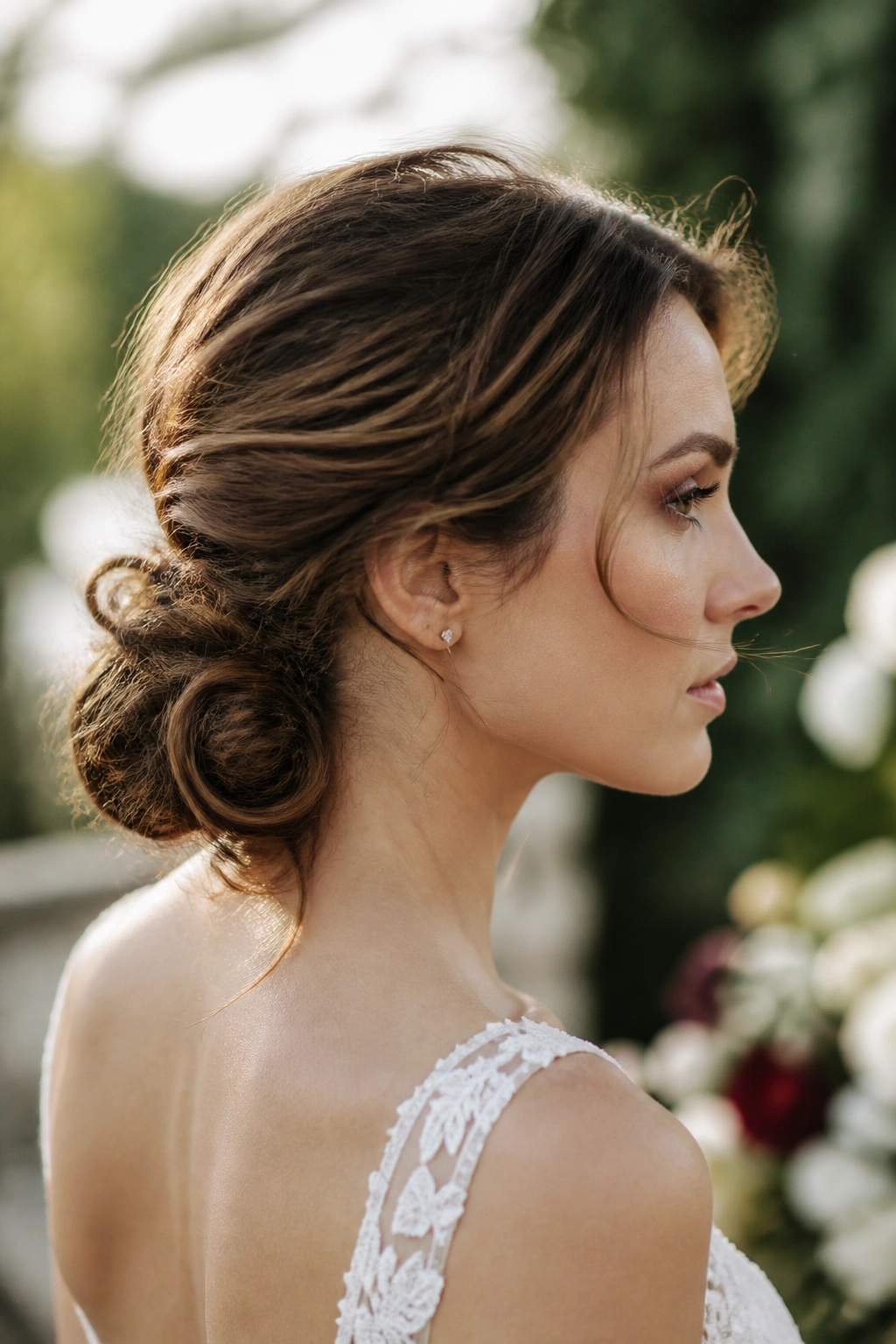
Imagine outdoor cocktails, a little breeze, and a low bun that still looks like it belongs in the moment. That is the appeal of a textured low bun. It has structure, but it does not feel sealed into place.
The texture hides pins, which is one of its best tricks. Small sections can be curled, twisted, and pinned in a loose knot at the back, giving the bun depth instead of a flat round shape. If the hair is freshly washed, add a dry texture spray or work with second-day hair so the bun has something to grab.
- Curl 1-inch sections in alternating directions.
- Leave a few wisps at the temples if you want softness.
- Pin each loop separately instead of making one big twist.
- Finish with flexible hairspray, then press down any stray ends with your fingertips.
Too smooth and it starts looking formal in the wrong way. A little unevenness gives this style its life.
4. Half-Up Twist With Loose Curls
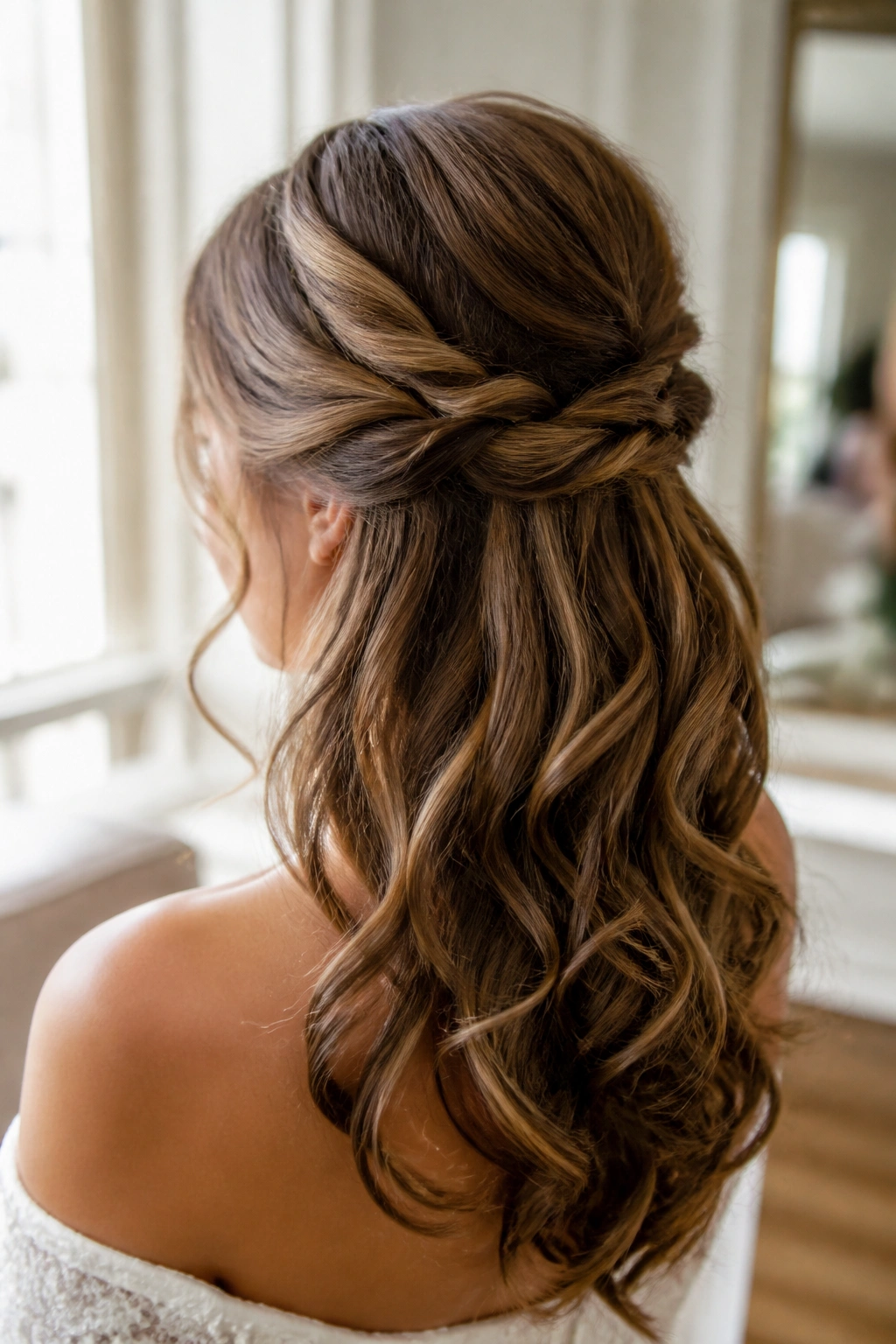
Want hair down but hate the feeling of it falling into your face during vows? This is the sweet spot. A half-up twist gives you the shape of an updo at the crown and the movement of loose hair through the ends.
The upper sections are gathered, twisted back from the temples, and pinned into the center or slightly off-center at the back. The lower half stays curled and brushed into soft waves. That split makes the style useful for brides who want to show length without letting the whole front of the hair collapse by mid-reception.
How to keep it from slipping
Use a little root lift at the crown first, even if you do not want a lot of volume. A half-inch tease under the top layer gives the pins something to hold. Secure the twist with crossed pins, then hide the anchor point with a small comb, pearl pin, or a wrapped strand of hair.
This works well with straps, off-shoulder sleeves, and veils that attach low. It is also one of the kinder styles for long layers, which tend to escape from fully pinned updos.
5. Braided Crown Updo
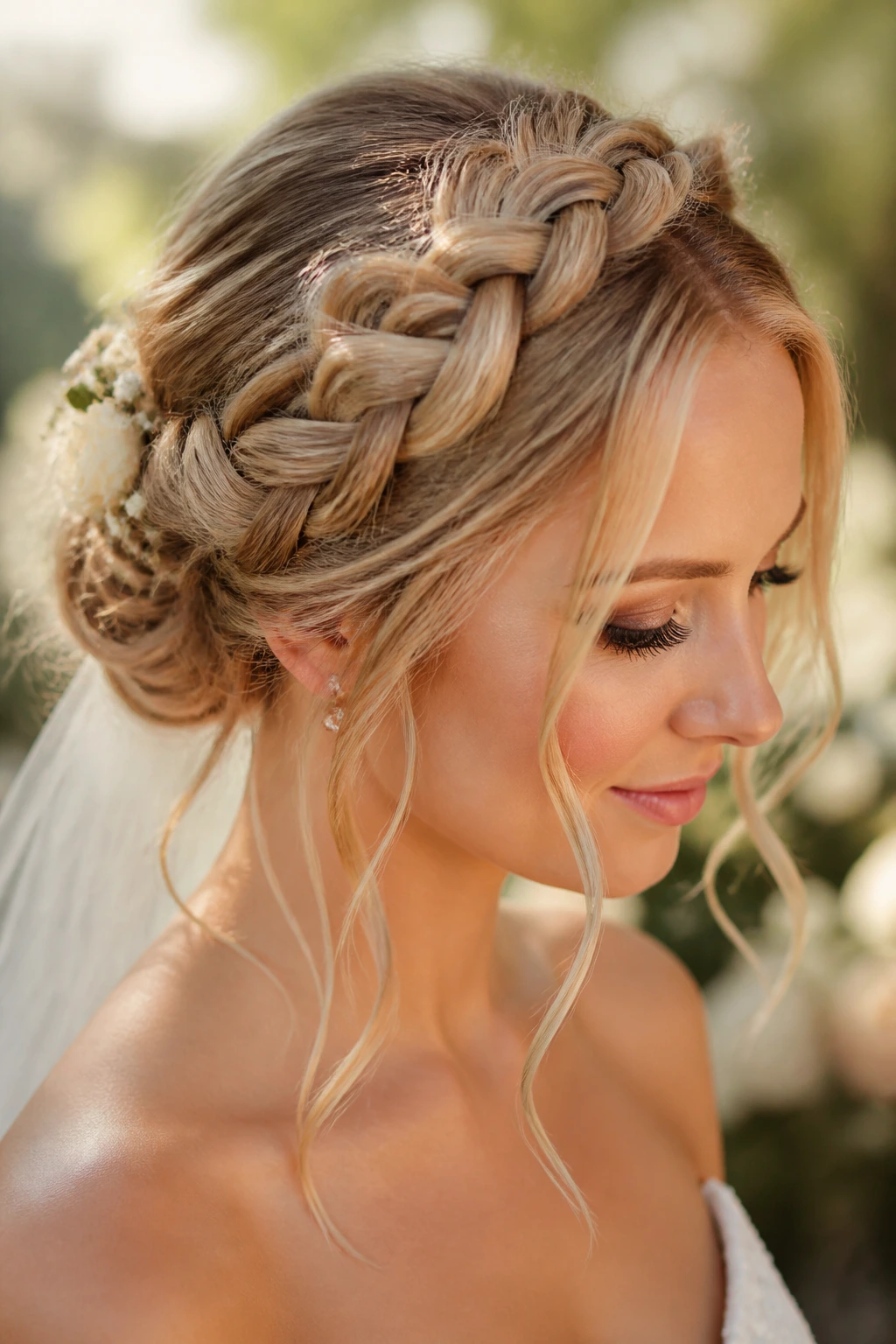
Braided crown styles have a built-in sense of occasion. They wrap the head in a way that feels romantic without becoming too delicate for a long day. That is the draw. They also keep the hair off the neck, which is a gift if the ceremony or reception runs warm.
What makes the braid work is tension. Not too tight, not floppy. You want the braid to sit with enough shape that it does not unravel, but enough softness that it does not look like it was pulled by a machine. Small sections around the face can be left looser, then tucked back once the braid is pinned around the crown and nape.
A few fresh flowers can look lovely here, but they are not required. Pearl pins, tiny gold clips, or even nothing at all can be enough if the braid itself has a clean finish. This style suits garden settings, rustic spaces, and brides who like a touch of boho without sacrificing polish.
It is also more forgiving than it seems. If one side sits a touch higher than the other, the whole style still reads beautifully from a distance.
6. Polished High Bun
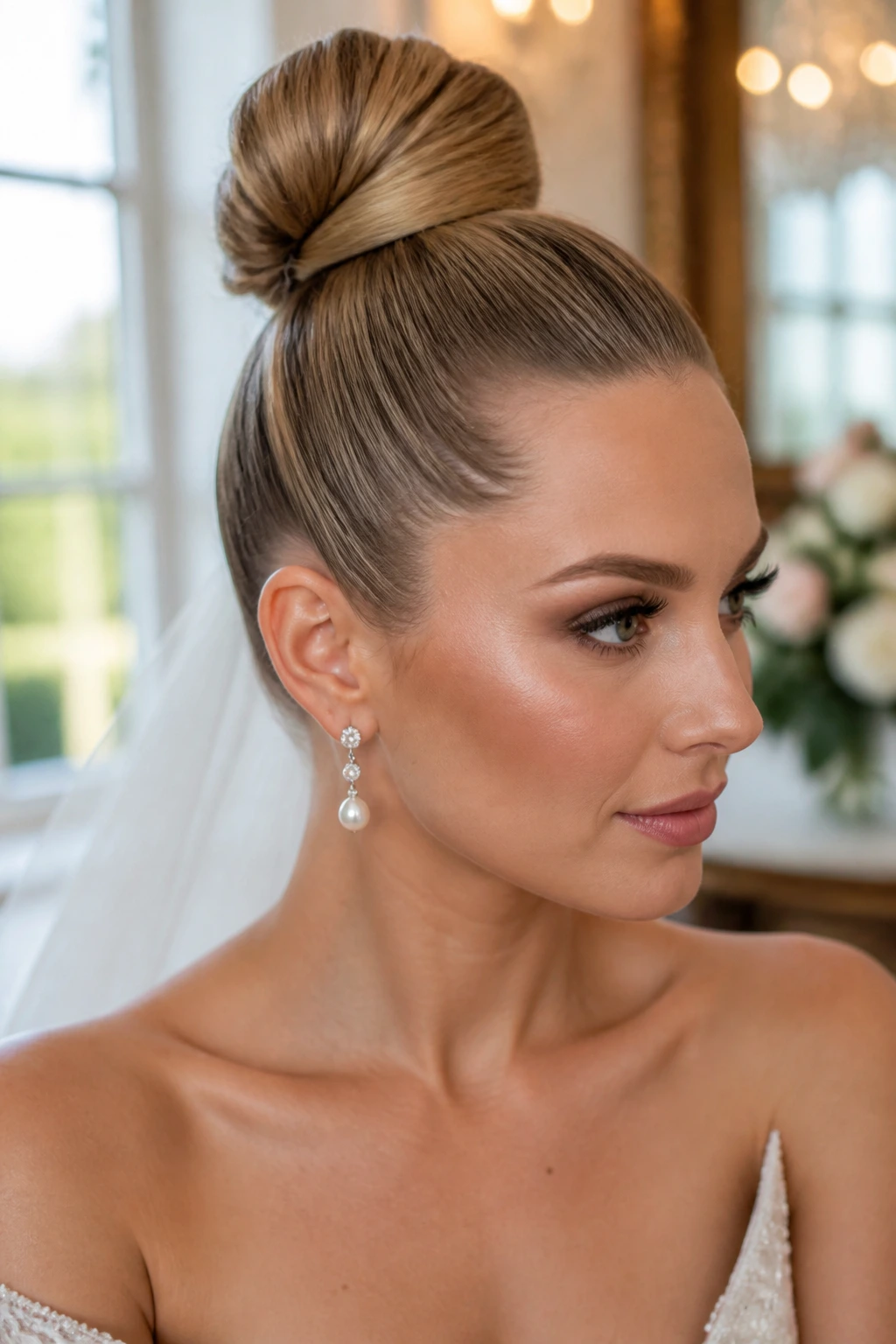
A polished high bun is the sharper cousin of the low chignon. It lifts the eye, shows off the jawline, and gives the whole outfit a little more height. If the dress has a dramatic neckline or a high slit in the back, this style tends to work hard without drawing attention to itself.
The best version sits at the crown or just above it, with the hair smoothed back close to the head. A boar-bristle brush, a touch of gel at the hairline, and a fine mist of hairspray keep the surface neat before the bun is formed. The bun itself can be wrapped in a clean coil or tucked into a round shape, depending on how formal you want it to feel.
It suits brides who like a tidy finish and do not mind a little structure. If you are the type who keeps touching your hair, a high bun gives you fewer loose pieces to fuss with. If you prefer softness around the face, leave a couple of slim sections at the temples and curl them away from the cheeks.
7. Side-Swept Old Hollywood Hair
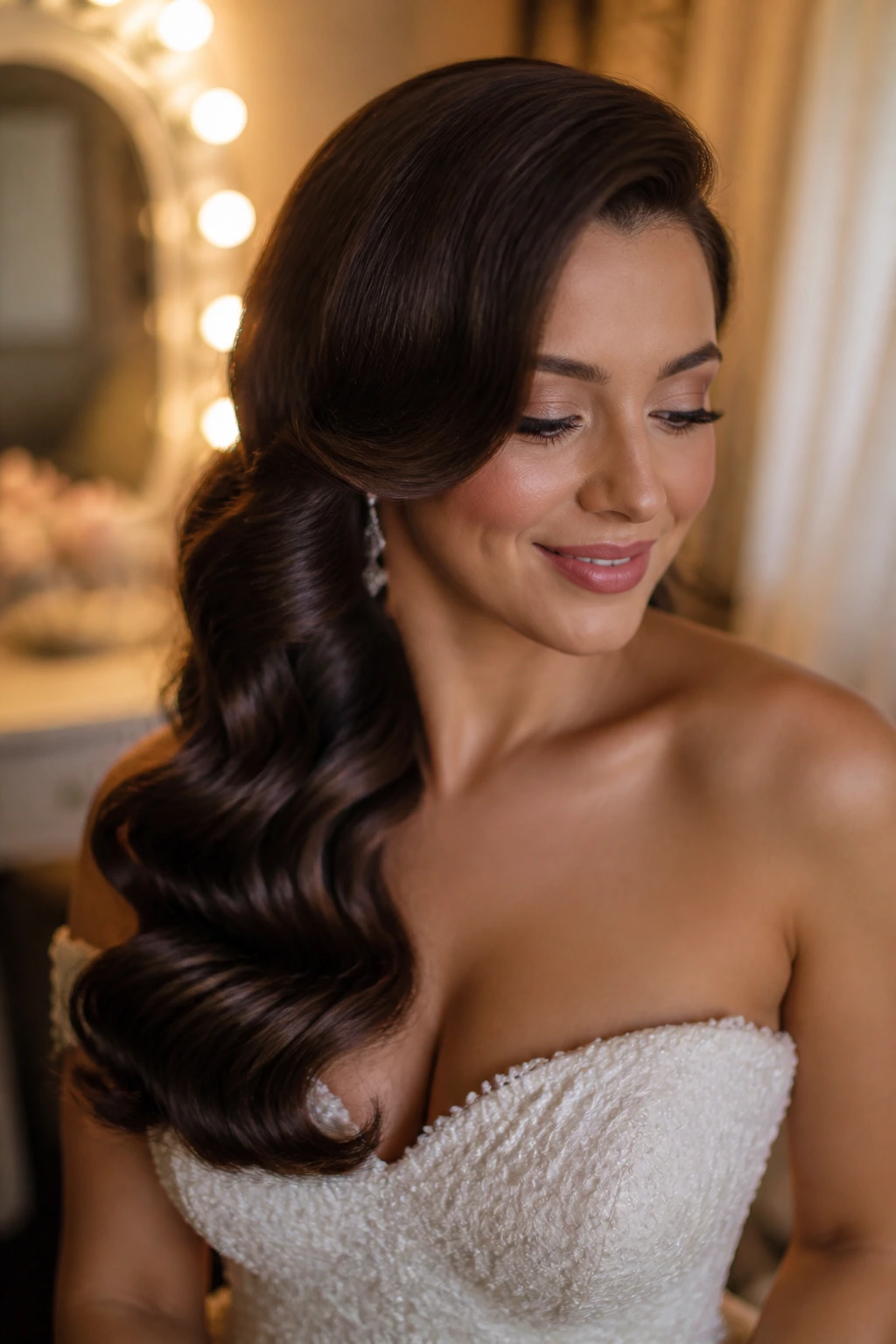
Side-swept waves can carry a whole bridal look on their own. The deep side part, the sweep over one shoulder, the glossy bend through the lengths — it has a kind of built-in drama that does not need much help. That makes it a strong choice when the dress is simple and the hair needs to do more of the visual work.
Where it works best
- Strapless gowns that leave the shoulders open.
- Dresses with one-sleeve or asymmetrical necklines.
- Statement earrings that deserve a little room.
- Brides who want a classic finish without an updo.
The key is control at the roots and movement through the ends. Set the front sections with clips while they cool, then brush the wave into one direction so the curve stays clean. A tucked-back side with a hidden pin helps the style stay open on one side while keeping the front from falling into the eyes.
This is a good style for fine hair that needs shape, because the wave pattern adds the feeling of fullness without piling on volume. It is also kind to long layers, which often look better swept than pinned.
8. Loose Fishtail Braid
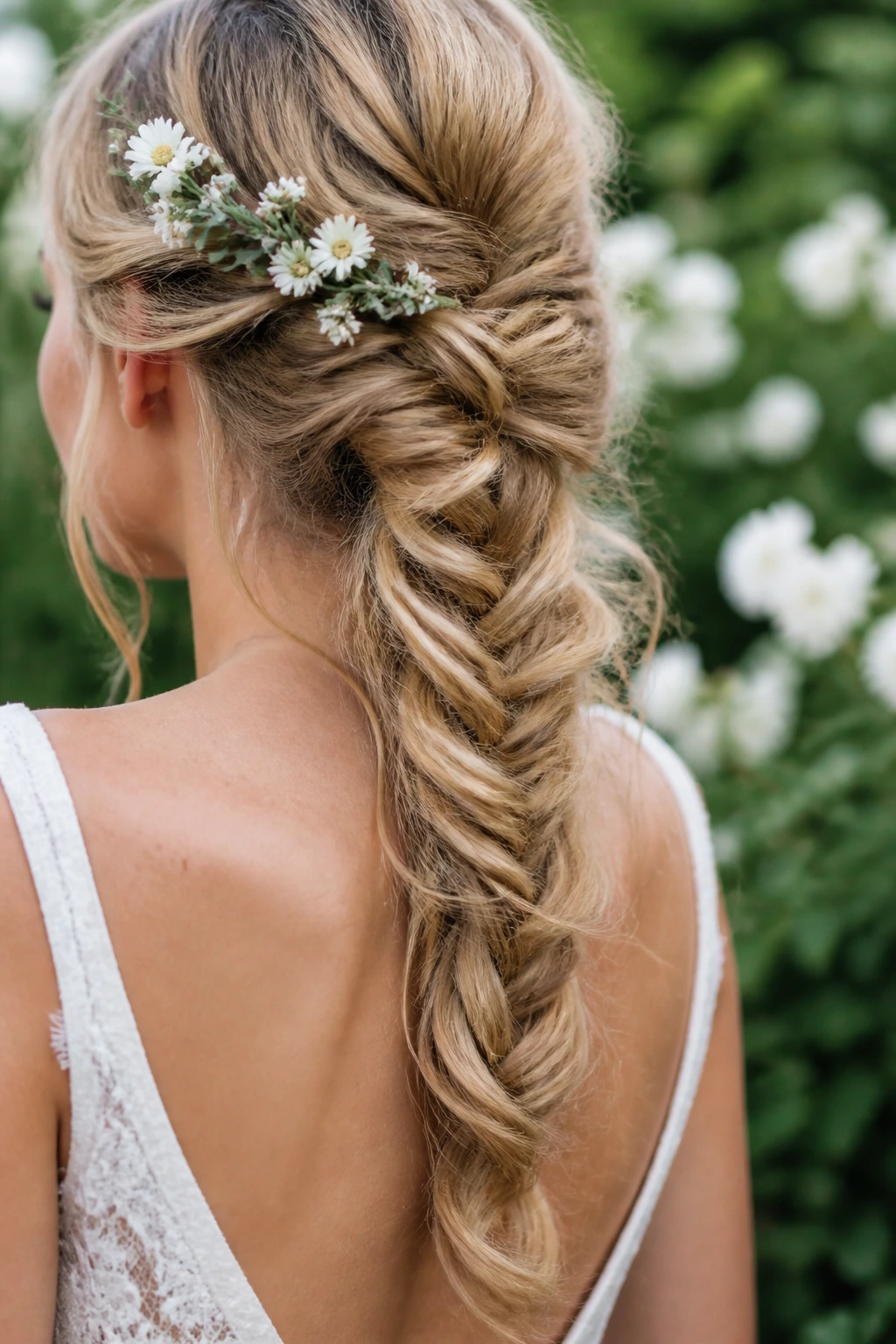
Why does a fishtail braid look more detailed than a standard braid? Because the woven texture reads like work. Even when it is loose and a little undone, the pattern catches the eye in a way a three-strand braid does not.
That makes it a smart pick for weddings that lean relaxed, outdoor, or a little bohemian. The braid can sit down the back, over one shoulder, or start at the side and travel into a low finish. If the hair is curled first, the braid looks fuller and less sharp at the edges.
How to soften it without losing shape
Pull the outer edges of the braid apart gently once it is secured. This is the part people often skip, and it matters. A fishtail that stays tight can look thin in person, especially on fine hair. A looser edge gives it a softer, more bridal feel.
Tiny flowers, satin ribbon, or a few pearl pins can slide into the braid without crowding it. If your dress is busy with lace or beadwork, keep the braid clean and let the texture do the work.
9. French Twist With Soft Ends
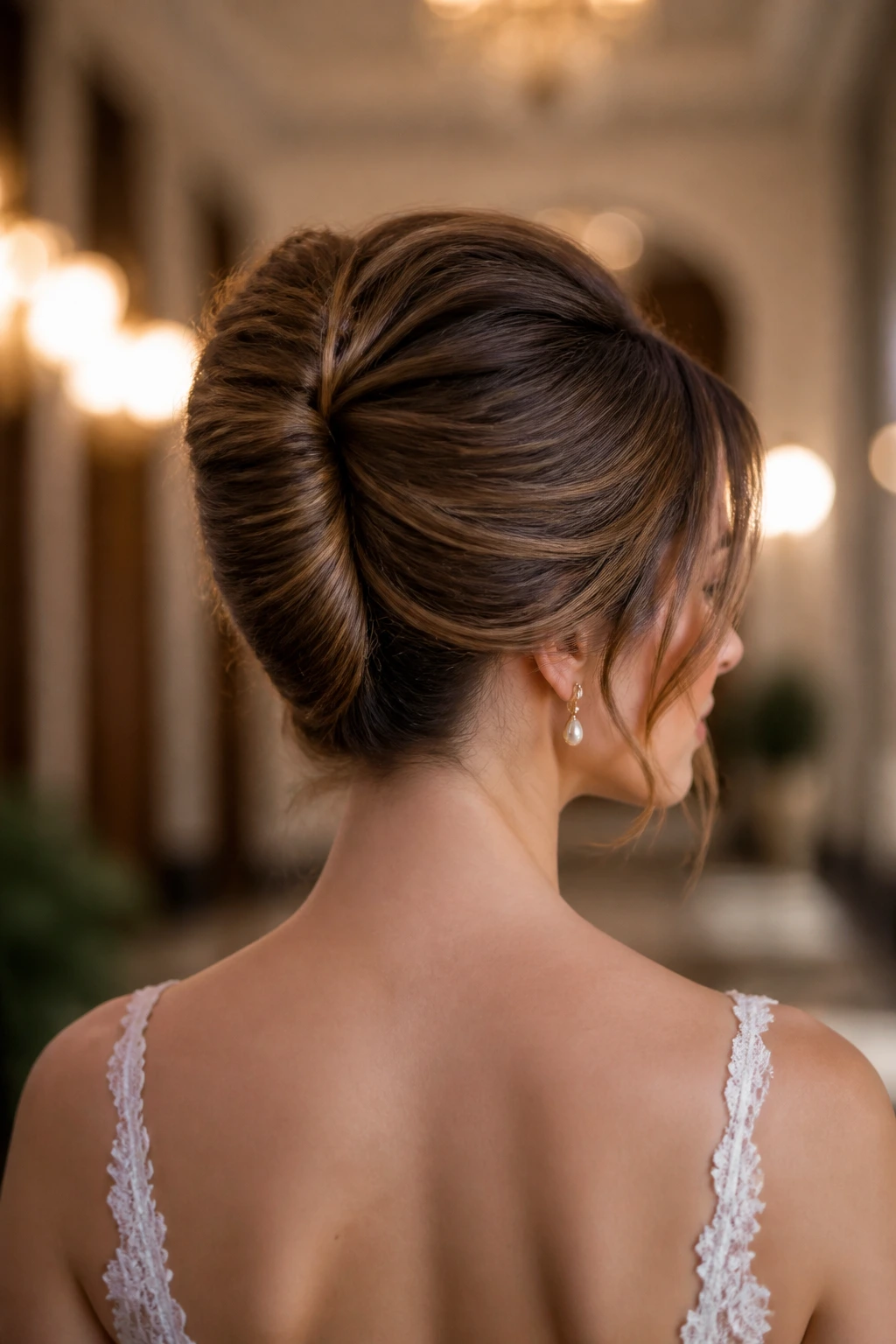
At a formal venue, this is the hairstyle that behaves. A French twist has a quiet, tailored feel, but when a few softer ends or face pieces are left around it, the whole thing feels warmer and less severe. That mix is what makes it useful for weddings.
The twist sits vertically at the back of the head, gathering the length upward and inward. A comb or long pins anchor the shape, and the ends can be tucked fully in for a polished look or left slightly loose at the top for a softer finish. It suits medium to long hair best, though shorter lengths can work with the right pinning.
- Best with straight or lightly waved hair.
- Looks clean under veils that attach low.
- Works well with structured dresses and jackets.
- Needs strong pins, not tiny decorative ones that slide.
A French twist can feel a touch older-school than other updos, and that is part of its charm. It has posture. If you like a style that looks deliberate from every angle, this is one to keep on the shortlist.
10. Bubble Ponytail
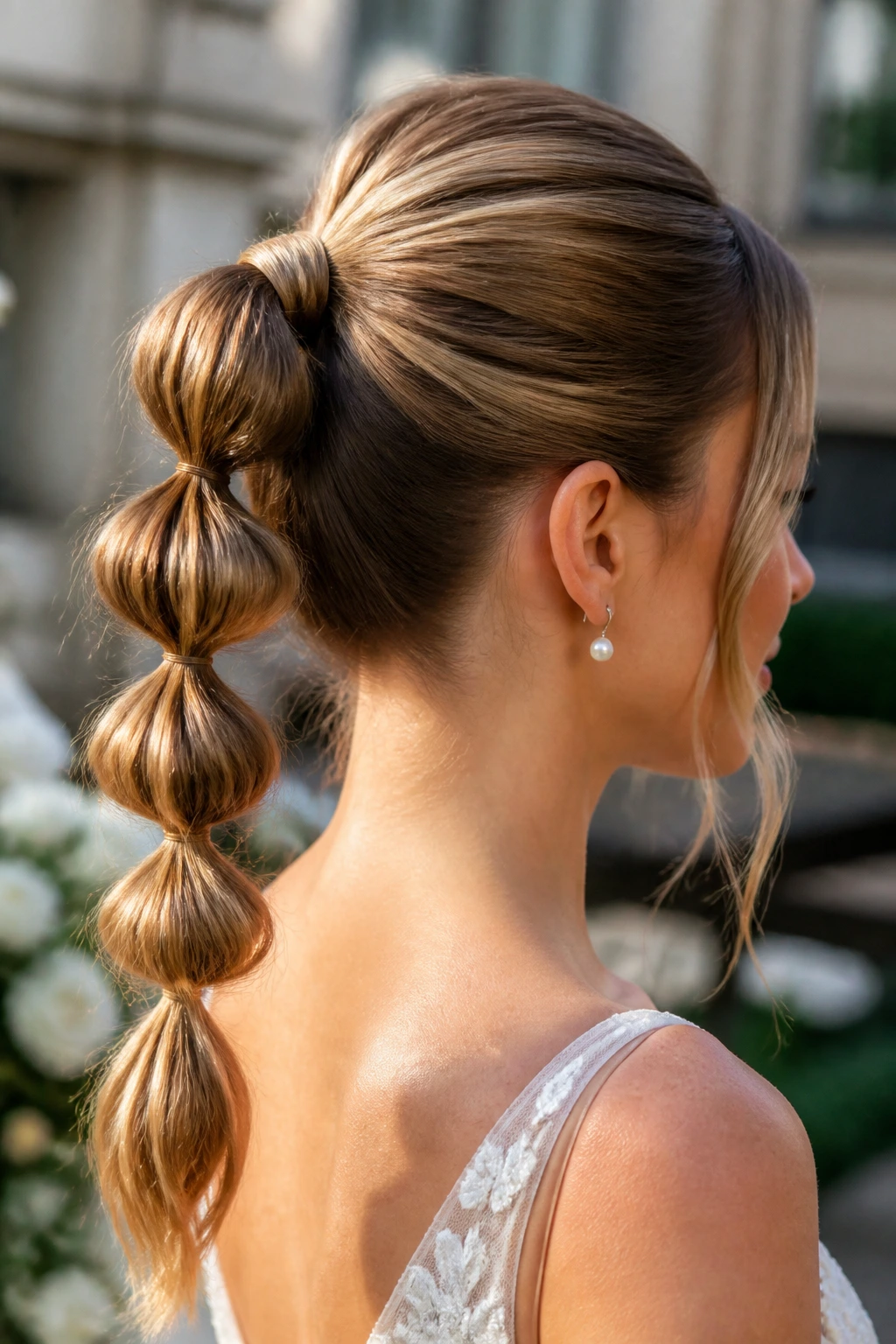
A bubble ponytail sounds playful, and it is, but it can still look polished enough for a wedding if the base is smooth and the spacing is even. The style works by tying off sections of the ponytail with clear elastics every 2 to 3 inches, then gently puffing each section so it forms a rounded “bubble.”
The top matters most. If the crown is sleek and the elastic is hidden with a wrapped strand of hair, the style looks more intentional and less casual. Add a bit of curl to the tail first and the bubbles feel fuller, which helps on medium or thick hair.
It is a good match for modern gowns, reception dresses, or brides who want something a little different from the usual bun. A ribbon woven into the base can soften it. So can a few pearl pins placed between the bubbles.
This one is also practical. It stays off the neck, gives the face a clean frame, and lets you move around without worrying about a loose curl slipping into the lipstick.
11. Waterfall Braid
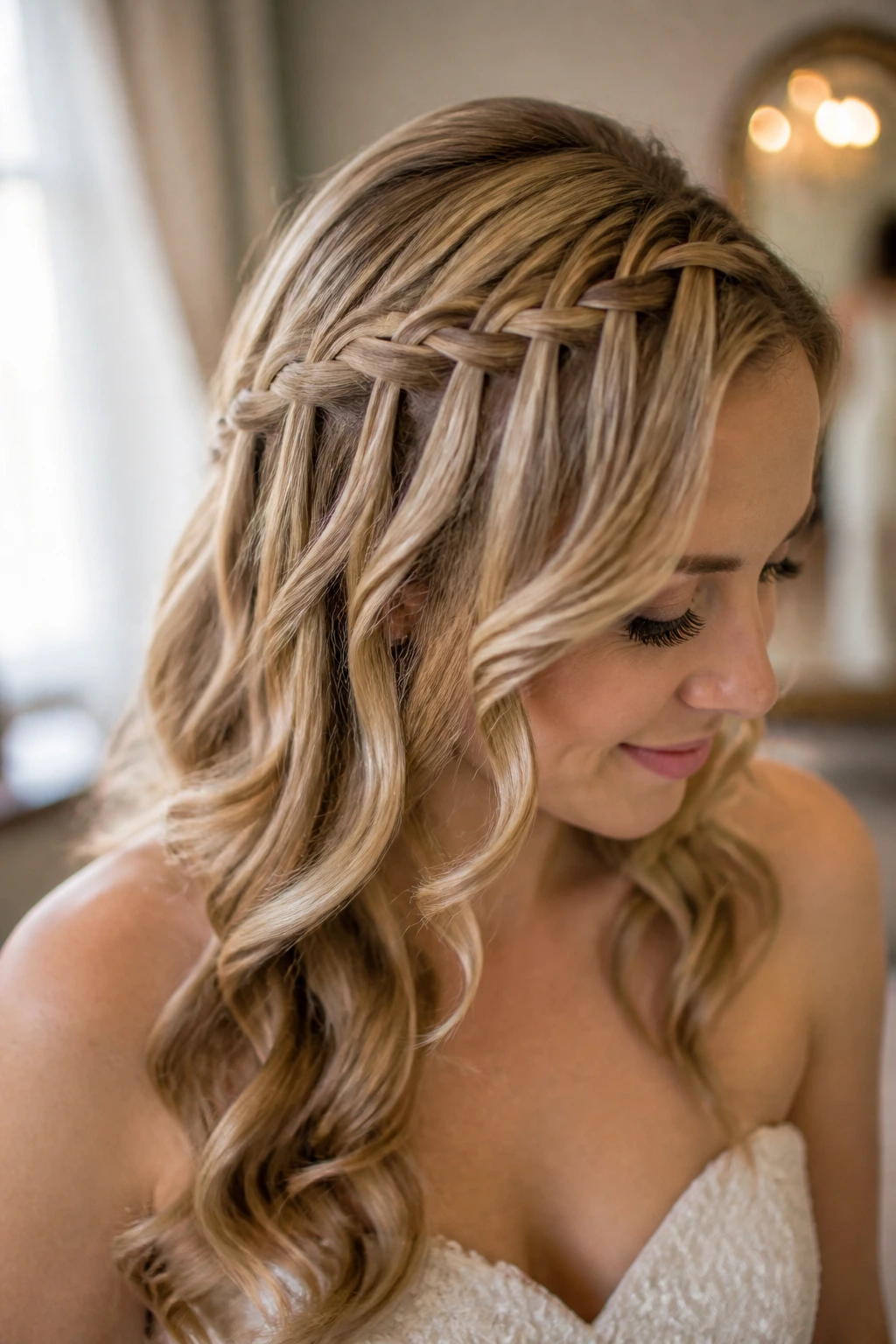
A waterfall braid is a softer cousin of the crown braid. Instead of pulling every strand into the plait, one section drops through each turn, which leaves a ribbon of hair flowing underneath. That hanging line is what gives the style movement.
It works best when the hair is curled first, because the loose pieces look fuller and the braid itself stands out more clearly. Straight hair can handle it, but the result is flatter and less dimensional. If you want the braid to show in photos, ask for a braid that begins slightly above the temple and travels around the head rather than sitting too low.
What to keep in mind
- Fine hair often needs texturizing spray before braiding.
- Very layered cuts may need extra pins to keep the braid from splitting.
- A small clip or flower sits better than a heavy barrette.
- The braid can lead into a half-up style or finish at the back.
It is a pretty choice for brides who want something soft but not plain. The braid itself is the detail.
12. Natural Curls With Defined Shape
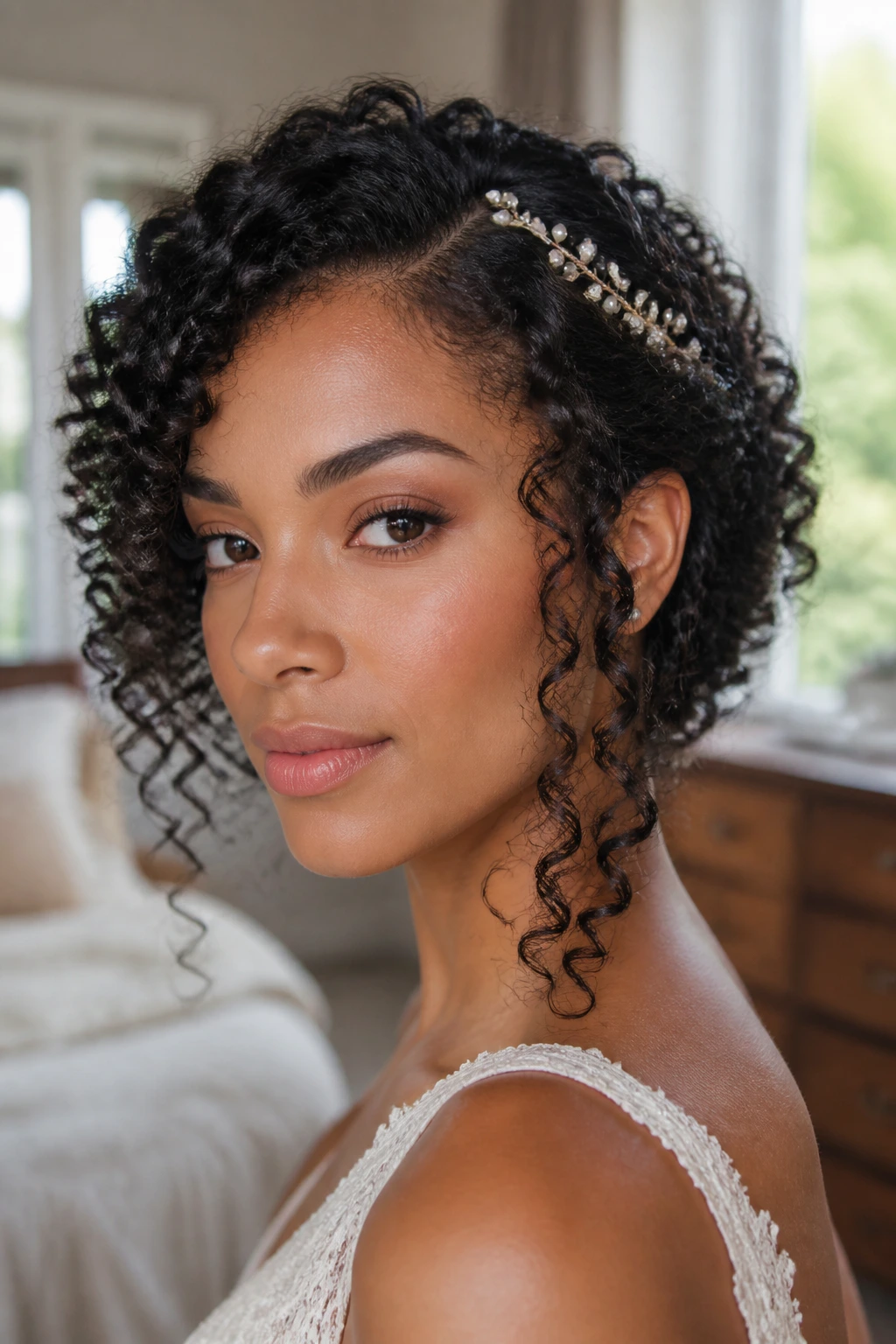
Sometimes the smartest wedding hairstyle is mostly your own hair, just handled with care. Natural curls, coils, and waves do not need to be flattened to count as bridal hair. They need shape, moisture, and a little planning around the front pieces and crown.
The prep usually starts with leave-in conditioner, followed by a curl cream or gel that matches the curl pattern. Diffuse on low heat or let the hair air-dry in sections if the texture holds well. Once dry, break the cast lightly with clean hands if the product forms one, but do not brush the curls out unless you want a much bigger shape.
A side part or a pinned side can help the style feel more formal. So can a headband, comb, or a few pearl pins set where the hair naturally lifts. The beauty of this look is that it does not fight the hair’s own pattern. It respects it.
That said, the shape needs to be deliberate. Loose, undefined curls can read unfinished. Defined curls with soft edges read like a choice.
13. Sleek Mid-Length Ponytail
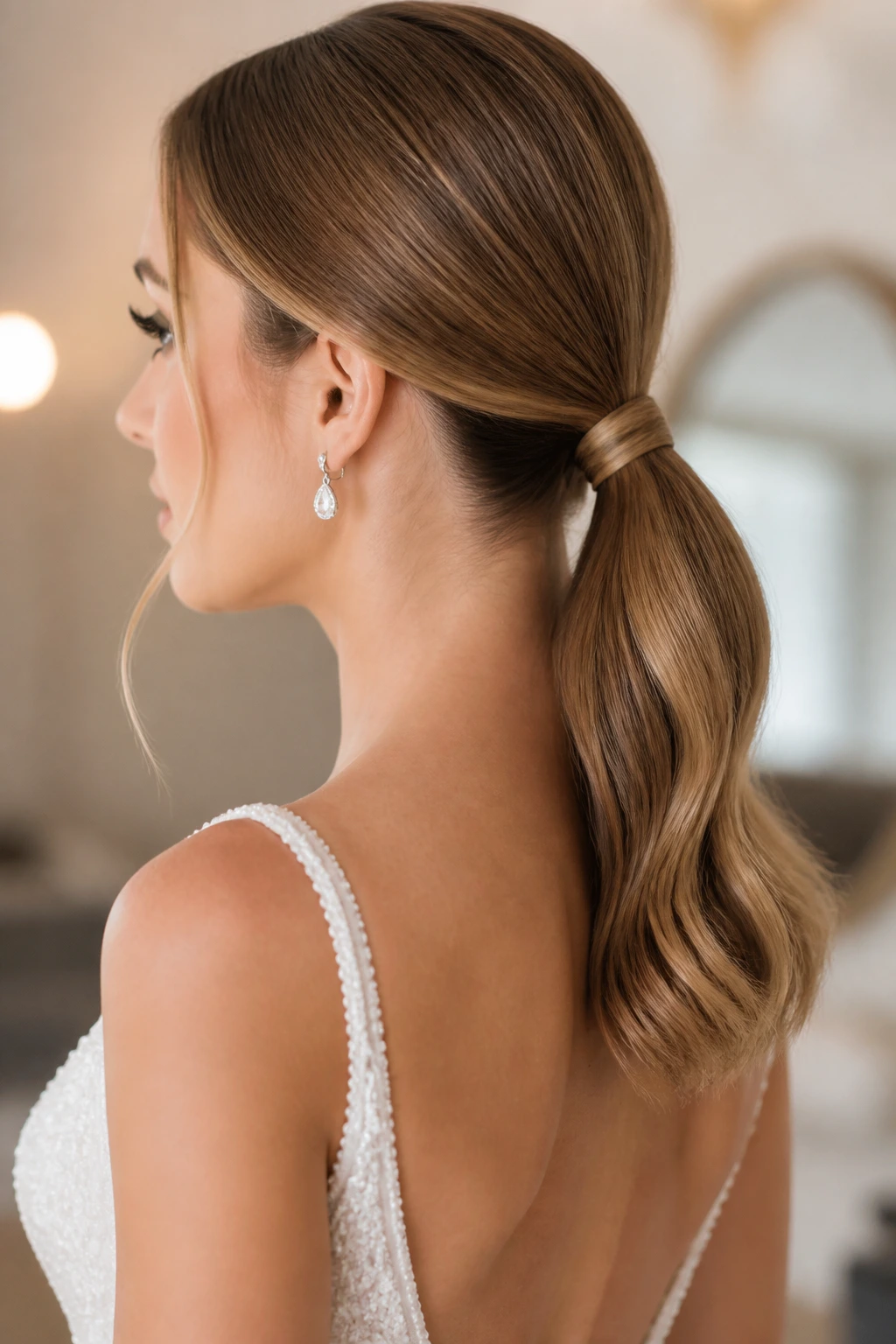
A ponytail can absolutely be wedding hair. The trick is the base. A sleek mid-length ponytail sits at or just above the nape, with smooth roots and a tail that swings cleanly down the back. When it is done well, it looks modern, sharp, and surprisingly formal.
This style works best when the ponytail is wrapped with a strand of hair so the elastic disappears. The tail can stay straight for a clean line, or it can be curled at the ends for a softer finish. If the hair is fine, a little backcombing inside the crown gives the ponytail more lift without making the top look puffy.
It suits minimalist dresses, tailored suits, and brides who want the face open. It also plays nicely with bold earrings, since there is no bun or braid crowding the sides of the head. If you want the style to feel less office-like, add a small wave through the tail instead of leaving it poker straight.
The whole point is precision. A loose ponytail is casual. A smooth one with a wrapped base is bridal.
14. Messy Bun With Face-Framing Pieces
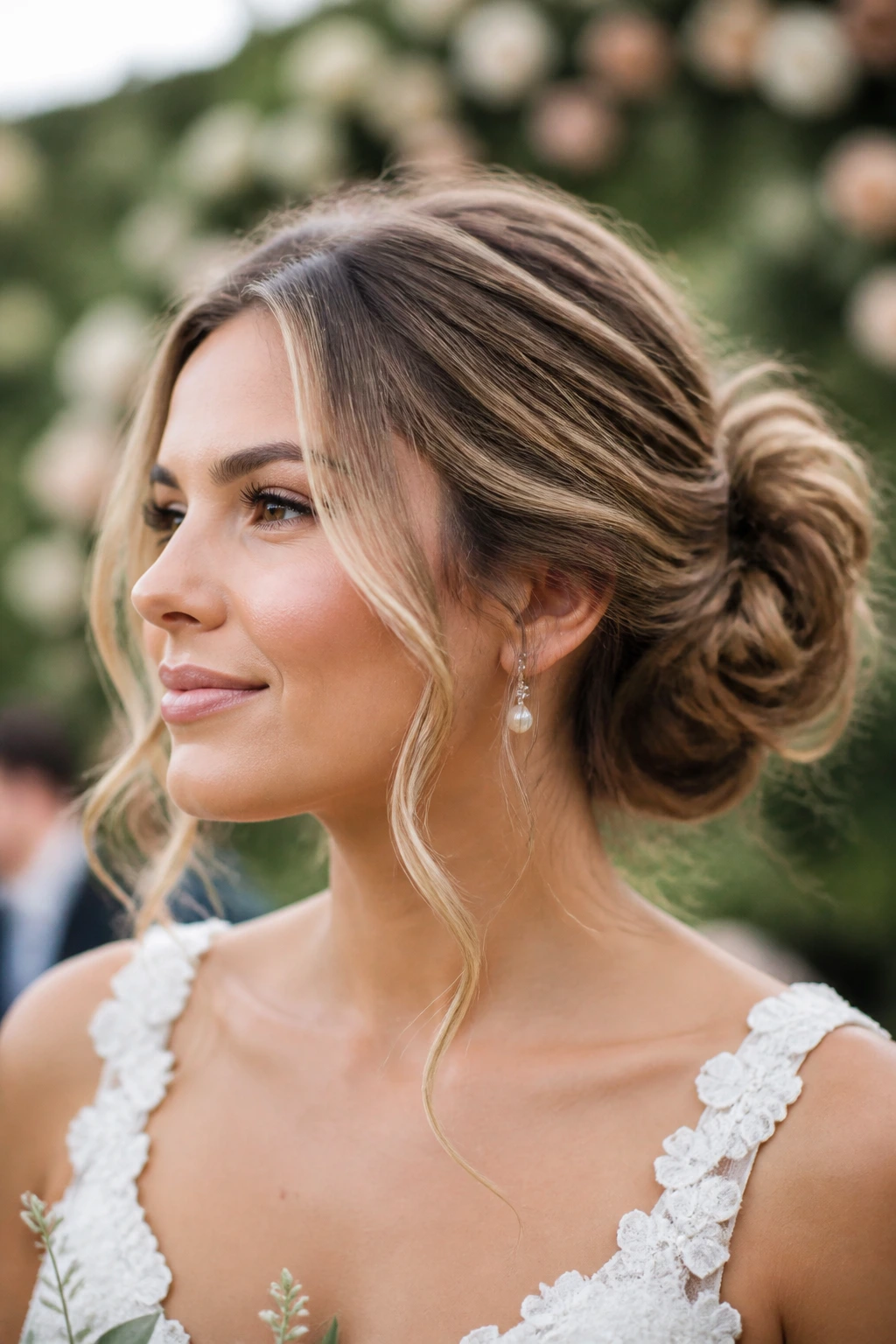
If your day starts early and ends late, a messy bun can save your sanity. But it has to be the right kind of messy. There should still be a shape at the back, a clear point where the bun sits, and a few face-framing pieces that look placed rather than accidental.
The best versions use curled sections gathered loosely at the nape or a touch higher. Then the bun is pinned in soft loops, not smashed into one knot. The front pieces are curled away from the face and left to fall just in front of the cheekbones or jaw. If they are too long, they end up looking forgotten. If they are too short, they stick out in odd places.
- Works well with second-day hair.
- A little dry shampoo at the roots helps grip.
- Keep the bun slightly off-center if you want it softer.
- Use flexible spray so the front pieces move, not freeze.
This is a good choice for brides who want romance without stiffness. It also suits outdoor ceremonies where a fully sleek style may feel too formal.
15. Gibson Tuck
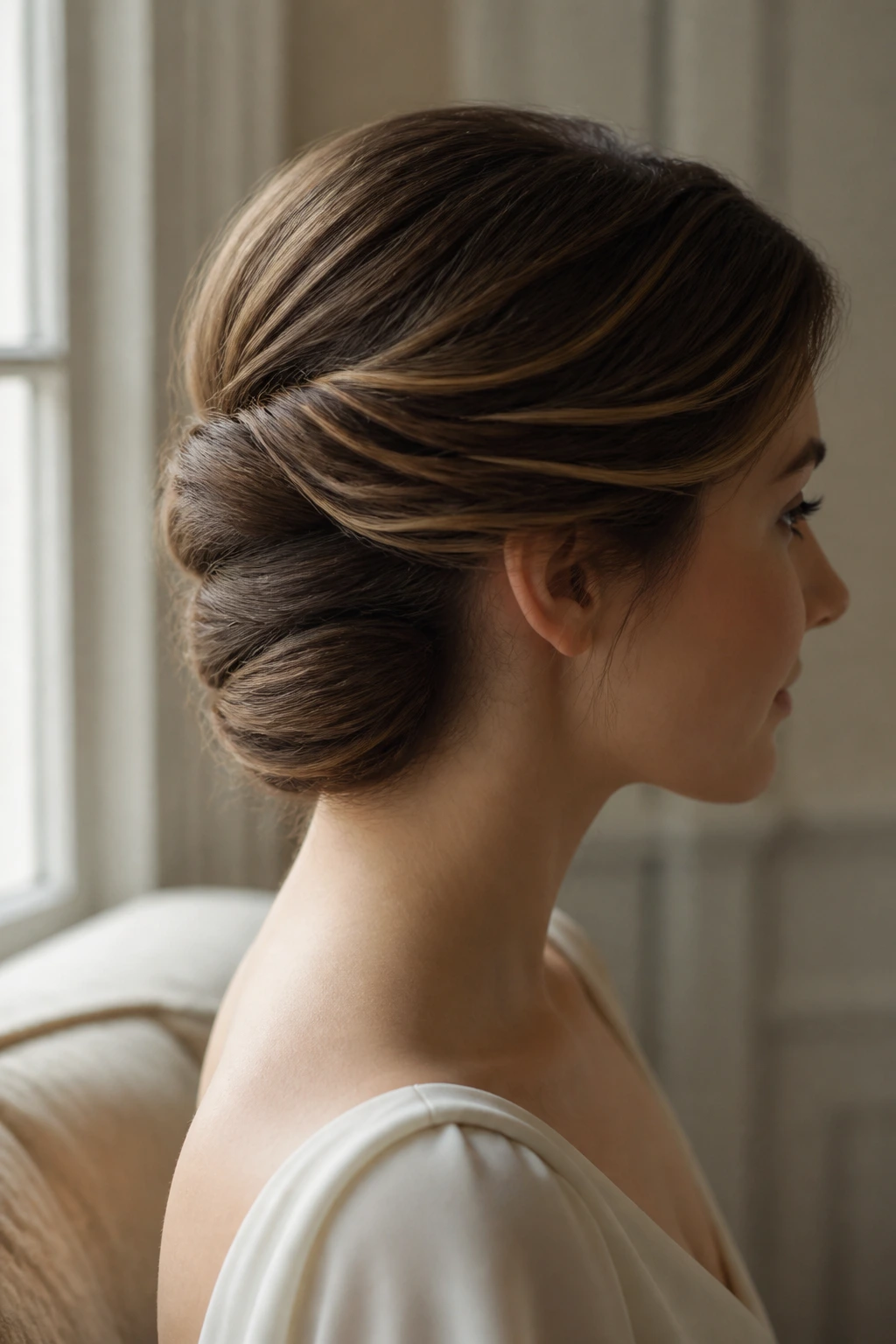
The Gibson tuck is one of those older styles that keeps showing up because it makes sense. It tucks the hair upward into a rolled shape at the nape, which creates a neat profile without demanding long hair or a huge amount of volume. Shoulder-length hair often handles it beautifully.
What I like about it is the shape. It looks finished from the side and back, but it does not have the hard edge of a stiff French twist. A little softness near the crown keeps it from feeling severe. If your dress has lace, a vintage cut, or a high neckline, the tuck sits into that look naturally.
It also travels well. Once pinned correctly, it tends to stay put better than many looser buns because the rolled shape grips itself. That makes it a sensible option for brides who want something refined but not fussy. A small comb, pearl barrette, or plain pin can finish it off.
No drama. Just a clean, graceful shape that behaves.
16. Milkmaid Braid
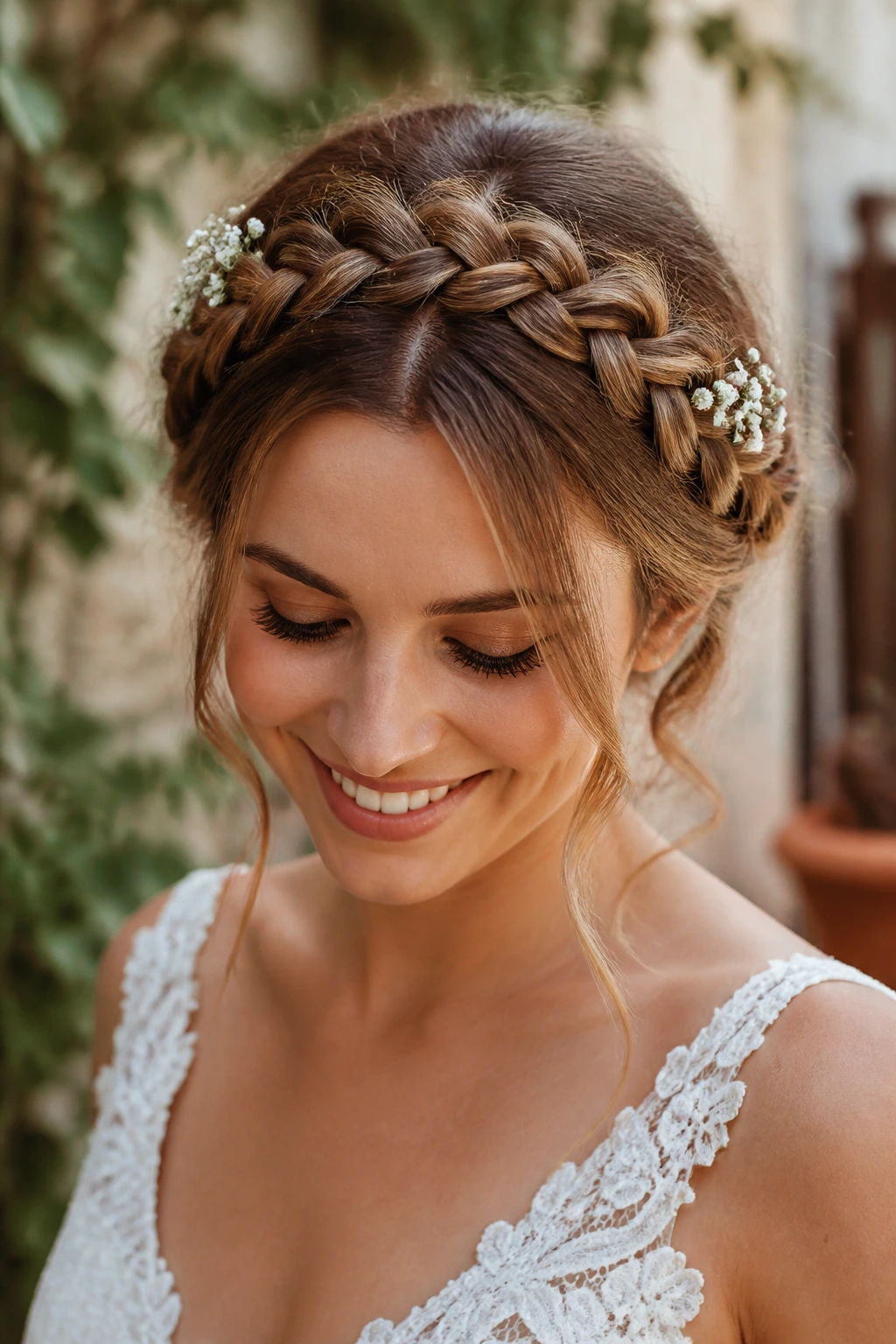
A milkmaid braid gives you a wrapped crown of hair that feels sweet, structured, and a little bit folkloric. It is not the style for someone who wants a sharp, sleek finish. It is for the bride who wants softness around the face and a braid that reads clearly from across the room.
The braid usually starts as two plaits, one on each side, then crosses over the top of the head and pins in place. That crossing creates the crown effect. The best versions keep the braids a little full and gently pulled apart after they are secured, so they do not sit flat against the scalp.
What to watch for
- Very layered hair may need extra pins at the temples.
- Fine hair benefits from texture spray before braiding.
- A center part keeps the look balanced.
- Small flowers work better than big clips.
This style suits outdoor ceremonies, rustic spaces, and brides who want a braid that feels more romantic than sporty. It is also a decent option if you want your hair off your neck but do not want a bun.
17. Glamorous Blowout
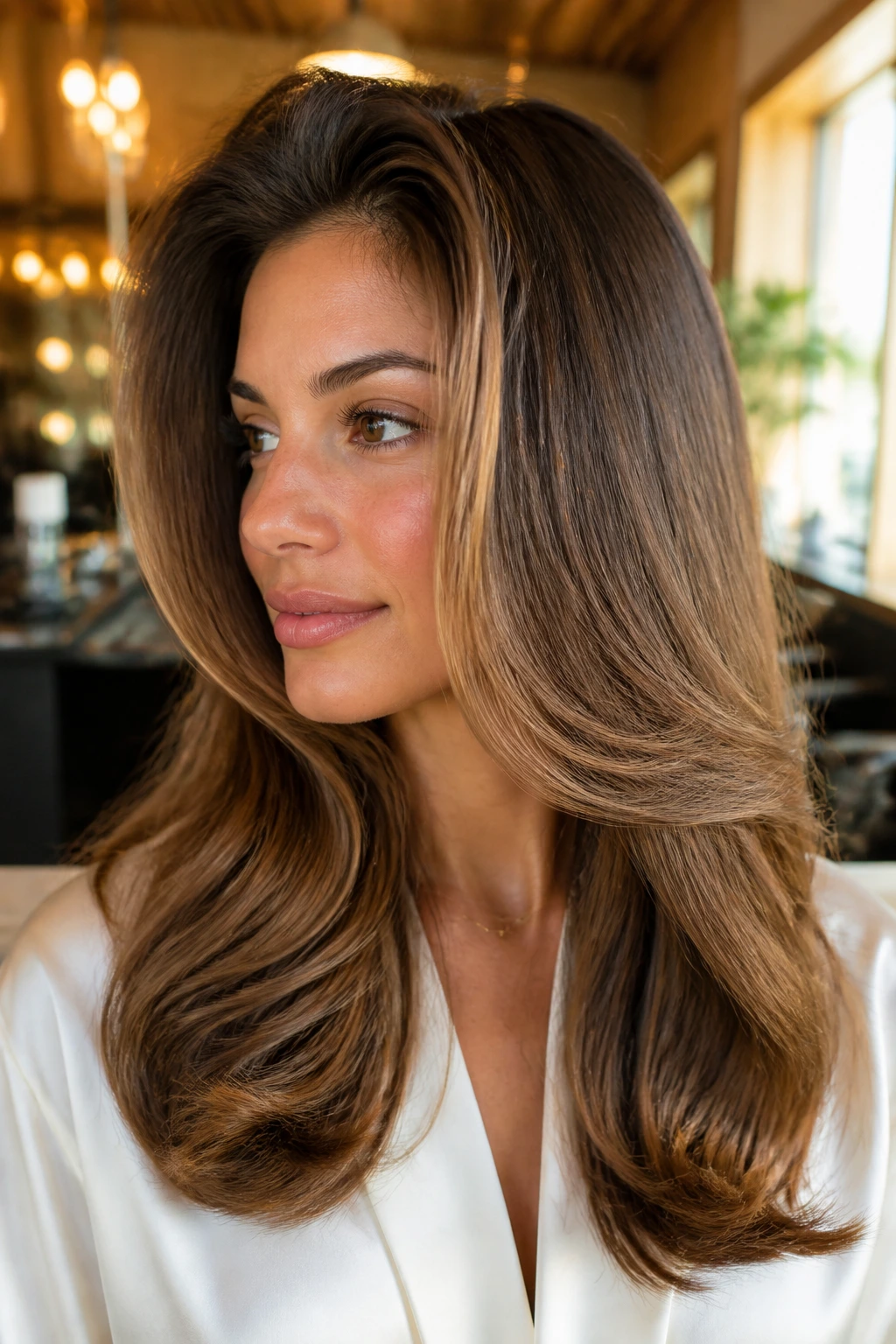
A glamorous blowout can be wedding hair, full stop. It is the style that says the hair was cared for, shaped, and left to move. The key is lift at the roots and a smooth bend through the ends, not a frizzy cloud or a flat sheet.
A large round brush, a blow dryer with a nozzle, and a little setting spray at the roots make a bigger difference than people expect. The front sections can be rolled away from the face and clipped while they cool, which helps the shape hold. After that, a light serum on the ends keeps the finish glossy without weighing it down.
- Best on shoulder-length to long hair.
- Great with strapless or simple dresses.
- Use mousse or root spray if hair collapses fast.
- A side part adds drama; a middle part feels calmer.
This is a good choice for brides who like their hair down but want more structure than loose waves. It also photographs cleanly from the front and side, which is half the battle.
18. Short Hair Finger Waves
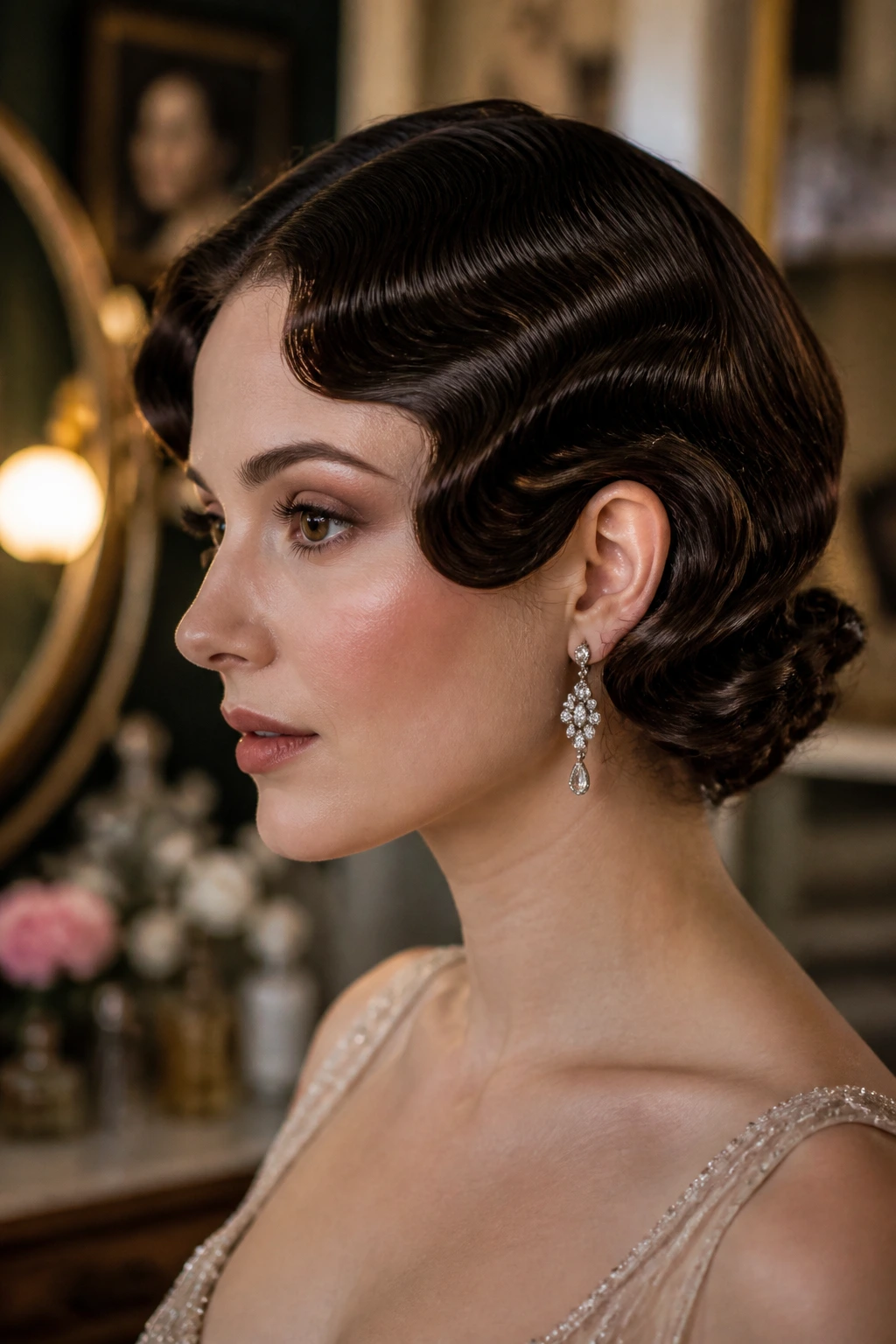
Short hair has some of the strongest wedding options because the shape reads so clearly in photos. Finger waves, sculpted waves, and polished side sweeps can make a bob or pixie feel dressed up without asking the hair to do more than it can.
Finger waves are especially good if you want vintage style. The hair is molded close to the head in S-shaped curves, usually with gel or setting lotion, then clipped until it dries. Sculpted waves on a bob can be softer, with the front tucked behind one ear and the rest shaped into a smooth bend. Shine spray or a glossing mist finishes the job.
How to keep the shape
Use the right amount of product. Too little and the waves collapse. Too much and the hair looks sticky. A pea-sized amount of gel for each front section is a decent starting point, then adjust from there.
This style loves beaded dresses, sharp lapels, and bold earrings. It also suits brides who want their short cut to look like a choice, not a limitation.
19. Braided Low Bun
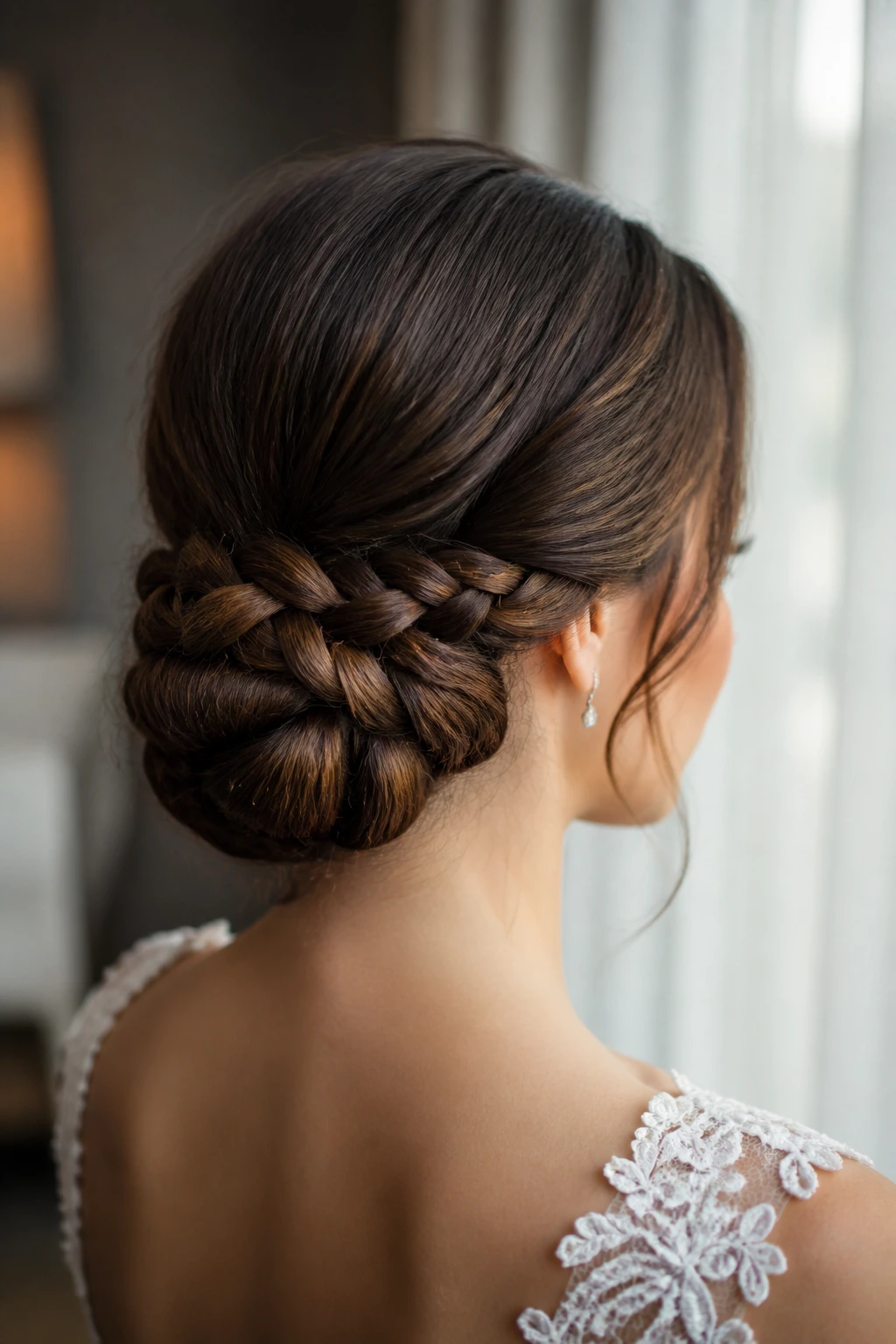
If a standard low chignon feels too plain, braid the base first. A braided low bun adds texture without changing the overall shape too much, which is useful when you want a more detailed finish but still need the hair to sit neatly at the nape.
The braid can be built from one side and wrapped around into the bun, or it can start as a Dutch braid at the crown and disappear into the back. Either way, the braid gives the bun more grip and more visual interest. It is a strong pick for medium to thick hair, especially if you want the style to hold through a long day.
What makes it different from a plain bun is the texture at the back. You notice the woven lines before you notice the bun itself. That works well with dresses that are simple in front but detailed in back, since the hairstyle can echo the dress without copying it.
If you want one bridal hairstyle that feels a little more worked than a plain bun but still stays classic, this is a very good place to start.
20. Romantic Half-Up Bouffant With Veil-Friendly Back
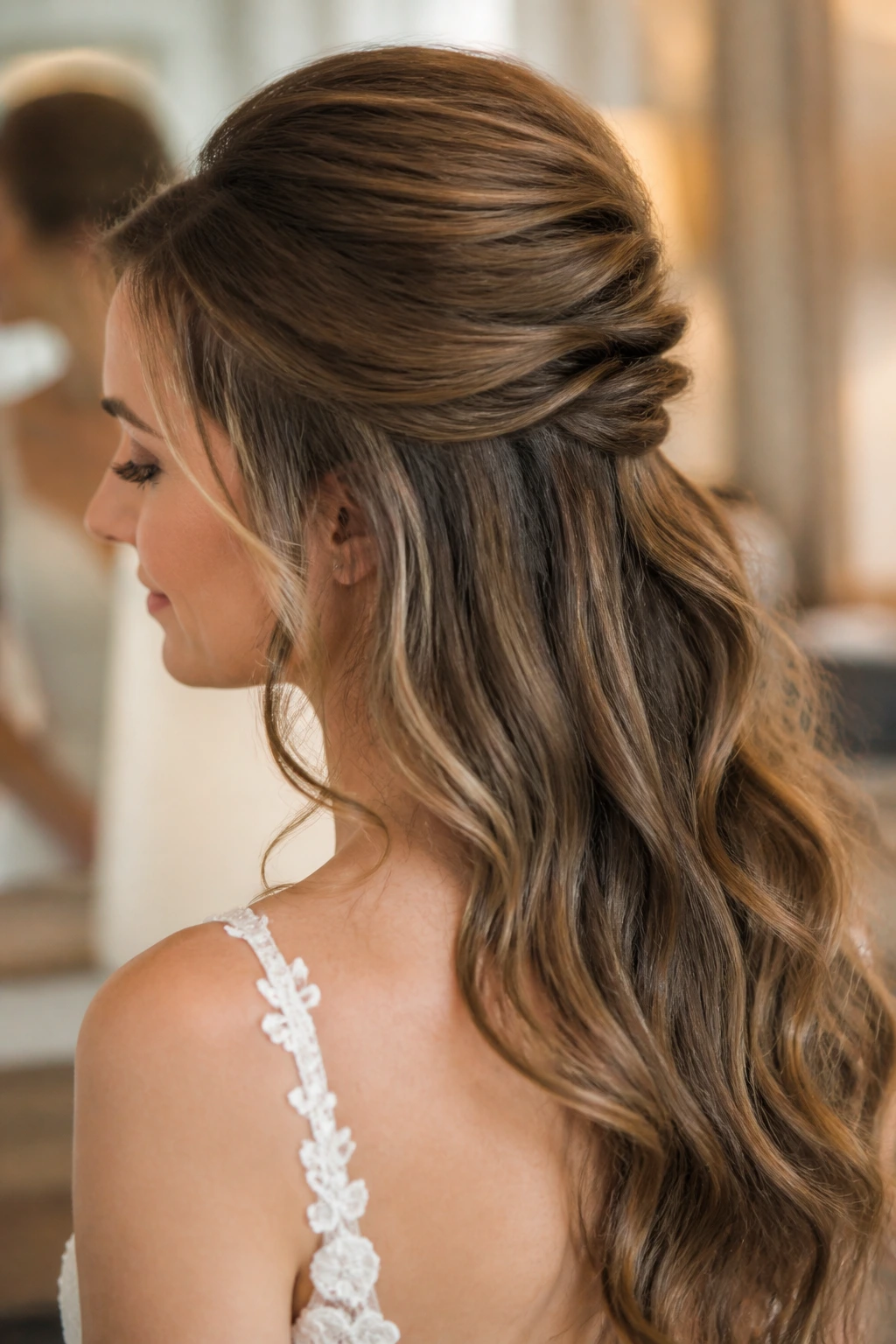
Some brides want height at the crown without losing length down the back. This style does that job neatly. The top gets a little lift, the sides are pulled back softly, and the lower half stays loose enough to show off curls, waves, or length.
The bouffant portion should not be huge. A small, controlled lift at the crown gives the head shape and keeps the hair from looking flat in profile. The back can be pinned low enough to leave room for a veil comb, which is where this style earns its keep. If the veil sits too high, the half-up section starts fighting with it. Keep the anchor point low and the finish tidy.
A little curl through the loose ends helps the style look finished. So does a face-framing piece that begins near the cheekbone instead of the chin. That small detail keeps the front from feeling heavy. If the dress has lace, tulle, or a soft neckline, this hairstyle sits in the same mood without swallowing it.
Bring the veil, the earrings, and the neckline photo to the trial. The back of the head is where half the surprises live.
