



Round faces can carry softness beautifully, but a haircut that stops at the wrong place can make the cheeks look wider than they are. That is why inverted hairstyles for round faces work so well when they’re cut with some thought: they create length, angle, and movement exactly where the eye needs it.
The basic shape is simple—shorter in back, longer in front—but the details matter more than most people realize. A blunt front edge can box the face in. A soft side part or a cheekbone-skimming layer can change the whole look.
I’m picky about this topic because I’ve seen too many round faces buried under bobs that were cut like a helmet. The good versions do the opposite. They lift the crown, open space near the cheeks, and leave enough length in front to feel modern rather than severe.
1. Classic Angled Bob With a Deep Side Part
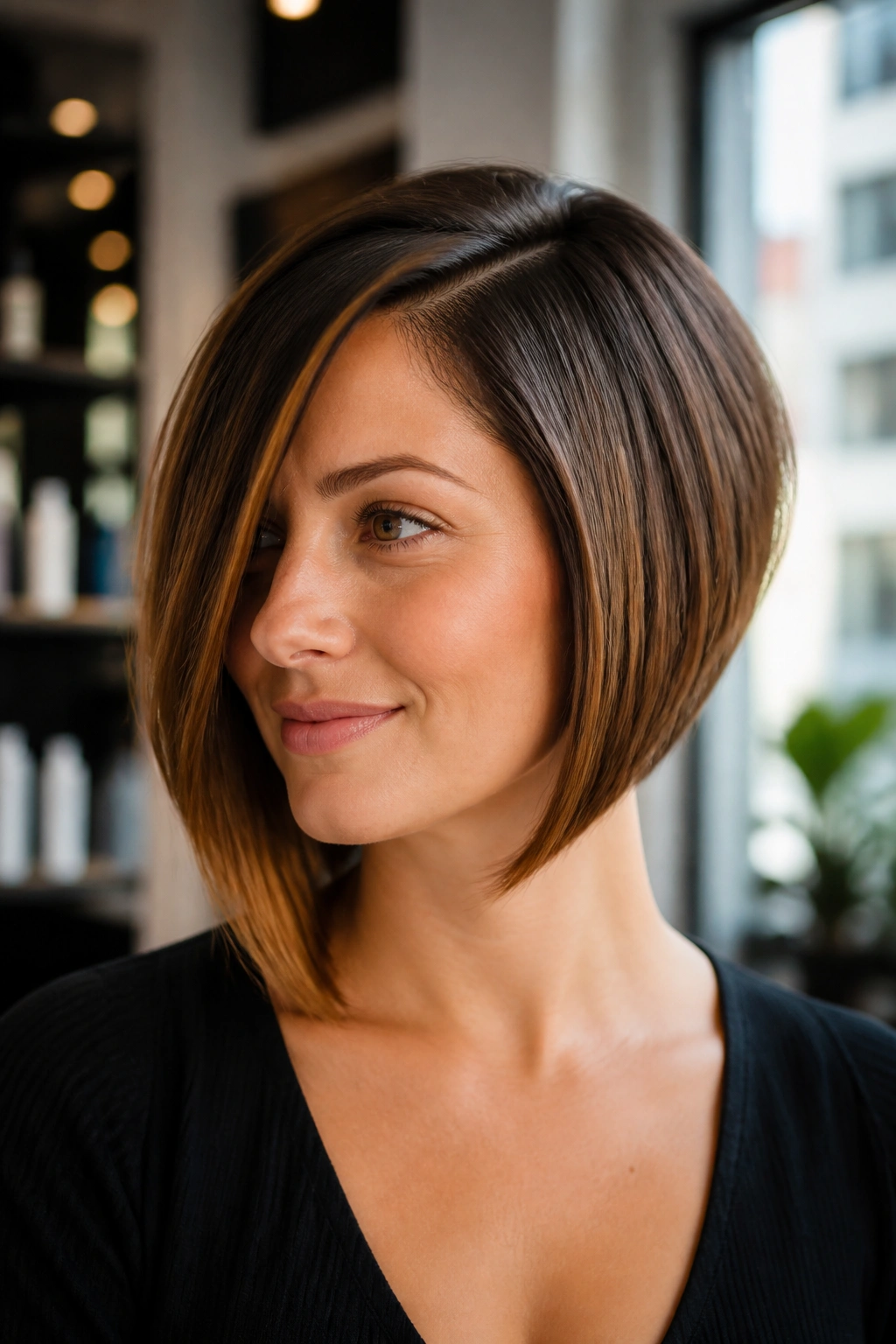
This is the cut I reach for when someone wants something simple, not fussy, and still visibly face-slimming. The deep side part breaks up the roundness at the forehead, while the longer front pieces draw the eye downward instead of outward.
Why It Works
The angle matters more than the length here. Keep the back neat and shorter—usually a touch above the nape—and let the front fall around the jaw or just below it. That diagonal line gives a round face more shape without making the haircut feel sharp or harsh.
A side part also keeps the top from looking flat. Flat roots on a round face can make the whole head shape look wider. A little lift at the root, even if it’s only from a round brush and a quick blast of heat, helps more than people expect.
- Ask for 1 to 2 inches of difference between the back and front.
- Keep the front pieces below the widest part of the cheek.
- Blow-dry the front away from the face for a softer sweep.
- Tuck one side behind the ear if you want a cleaner line.
My favorite part: it works on straight hair, wavy hair, and fine hair without needing a dramatic styling routine.
2. Chin-Length Inverted Bob With Soft Ends
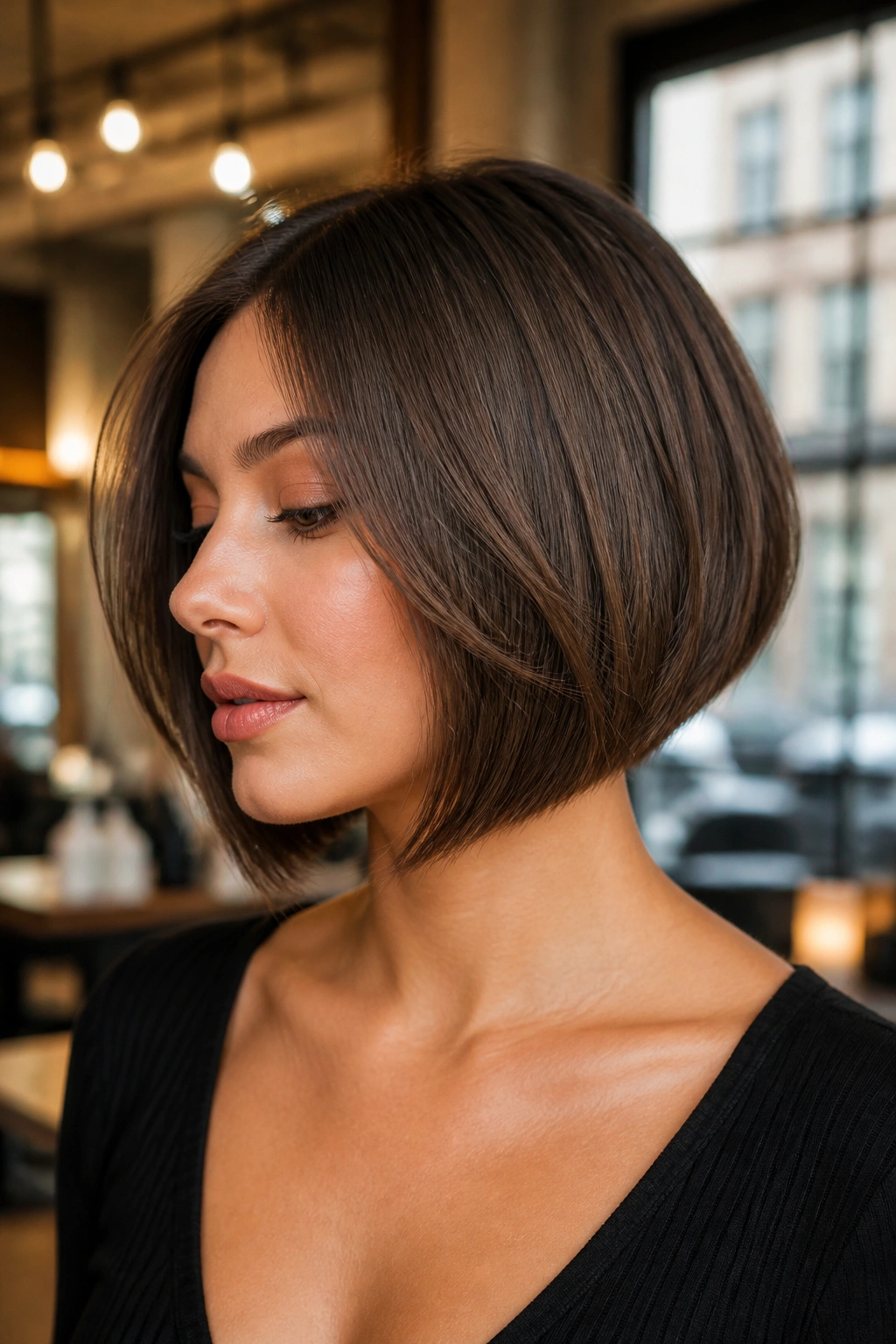
A chin-length cut sounds risky for round faces, and bluntly, it can be. But with a soft inverted shape, it lands in the right place and gives the face structure instead of extra width.
The trick is to avoid a hard, boxy edge at the jaw. You want the front to skim the chin, not sit like a shelf. A little bevel at the ends helps, too. That tiny bend keeps the line moving, which matters because stillness around the jaw can make a round face look heavier.
I like this version for people who want a shorter look but don’t want something severe. It has energy. It also feels a bit cheeky in a good way, especially if the back is lightly stacked and the front is softened with point-cut ends.
If your hair is thick, ask for internal removal of bulk so the cut doesn’t puff out at the sides. If your hair is fine, keep the layers minimal and rely on the angle. Too many short layers can turn the shape fluffy fast, and nobody needs that.
3. Textured Inverted Lob With Beachy Waves
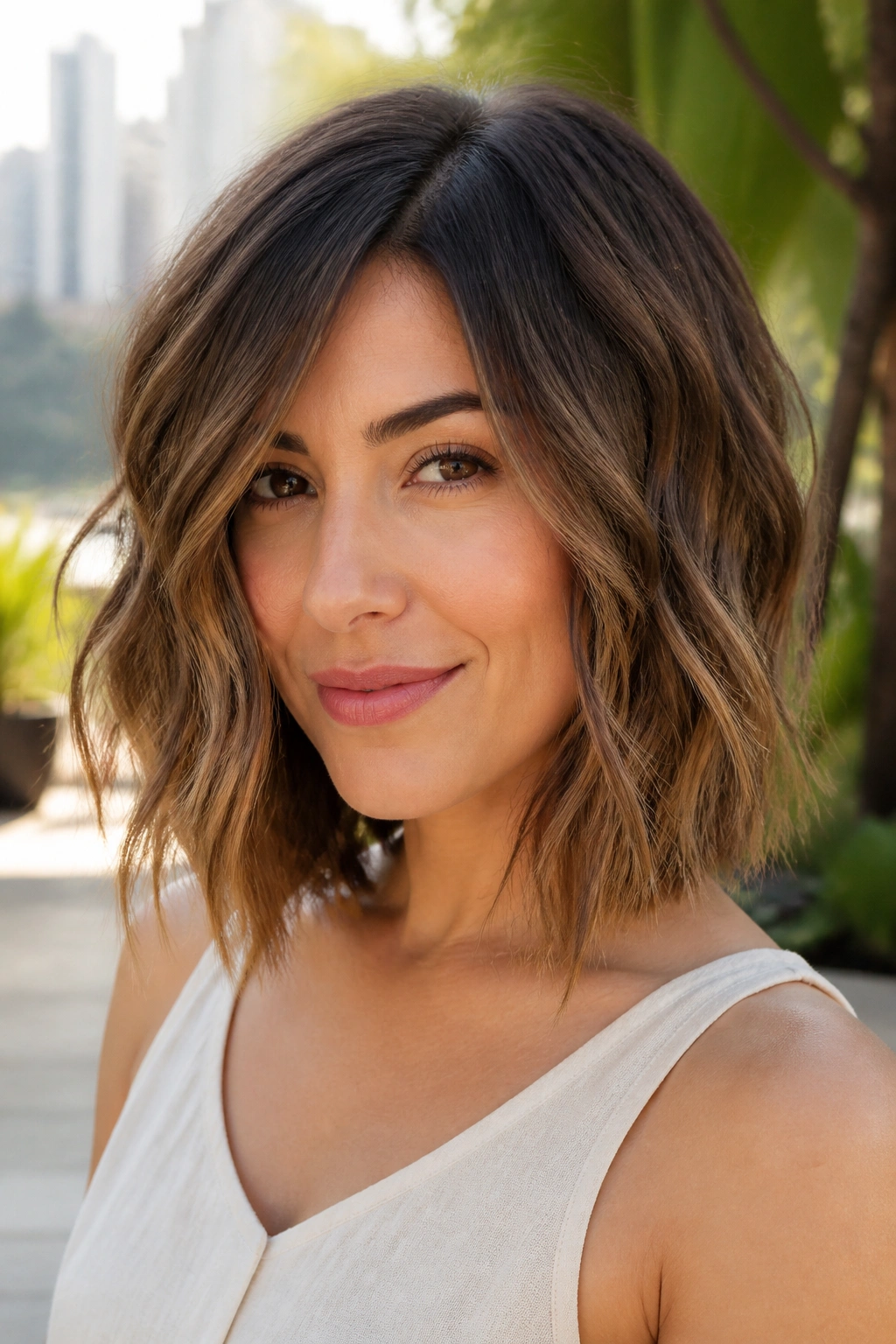
If you want movement without sacrificing length, this one earns its keep. A textured inverted lob keeps the front longer, usually grazing the collarbone or sitting just above it, while the back stays a few inches shorter.
What Makes It Work
The waves matter, but not in the “curl everything into a ringlet” way. Loose, broken-up waves create vertical rhythm. That keeps the style from spreading wide across the cheeks, which is what you want to avoid on a round face.
The cut should still have an angle, even if it’s subtle. I’d rather see a gentle slope than a fake-symmetry lob that hangs evenly all around. That even shape can widen the face faster than people expect.
How to Style It
- Use a 1-inch curling iron or wand.
- Leave the last inch of the ends out for a more relaxed bend.
- Brush the curls out with fingers, not a heavy brush.
- Finish with a light mist of texturizing spray at the mid-lengths, not the roots.
This is one of those cuts that looks expensive even when the styling is low-key. A little messy. A little polished. That balance matters.
4. Sleek Inverted Bob With a Blunt Perimeter
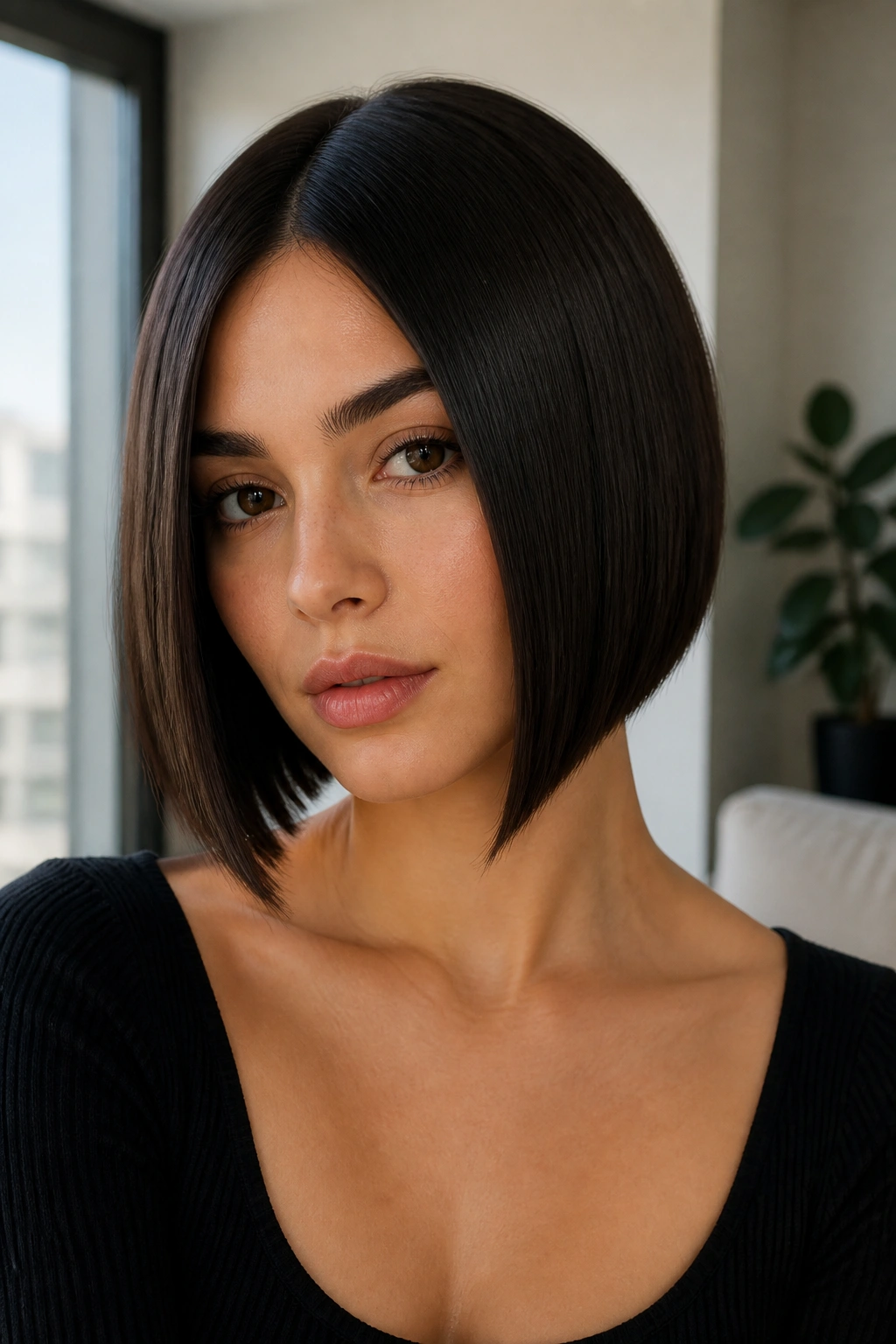
Sometimes the cleanest answer is the sharpest one. A sleek inverted bob can look fantastic on a round face because the smooth, angled line creates a long visual path from the nape to the front.
The blunt perimeter is what gives this haircut its weight. Not bulk—weight. There’s a difference. Bulk sits out too far from the head and adds width. Weight keeps the shape tidy and grounded, especially when the front lands just below the jaw.
This cut works best when the hair is naturally straight or easily straightened. If the texture fights you, you’ll spend too much time chasing flyaways and rounding out the line. And that’s the point to watch here: the style is simple, but it wants discipline.
A middle part can work if the face has enough length through the forehead, but I usually prefer a slight off-center part. It softens the overall shape and keeps the look from feeling too strict. One small bend under at the ends helps, too. Too much curl under and you lose the modern edge.
5. Stacked Inverted Bob With Plenty of Lift
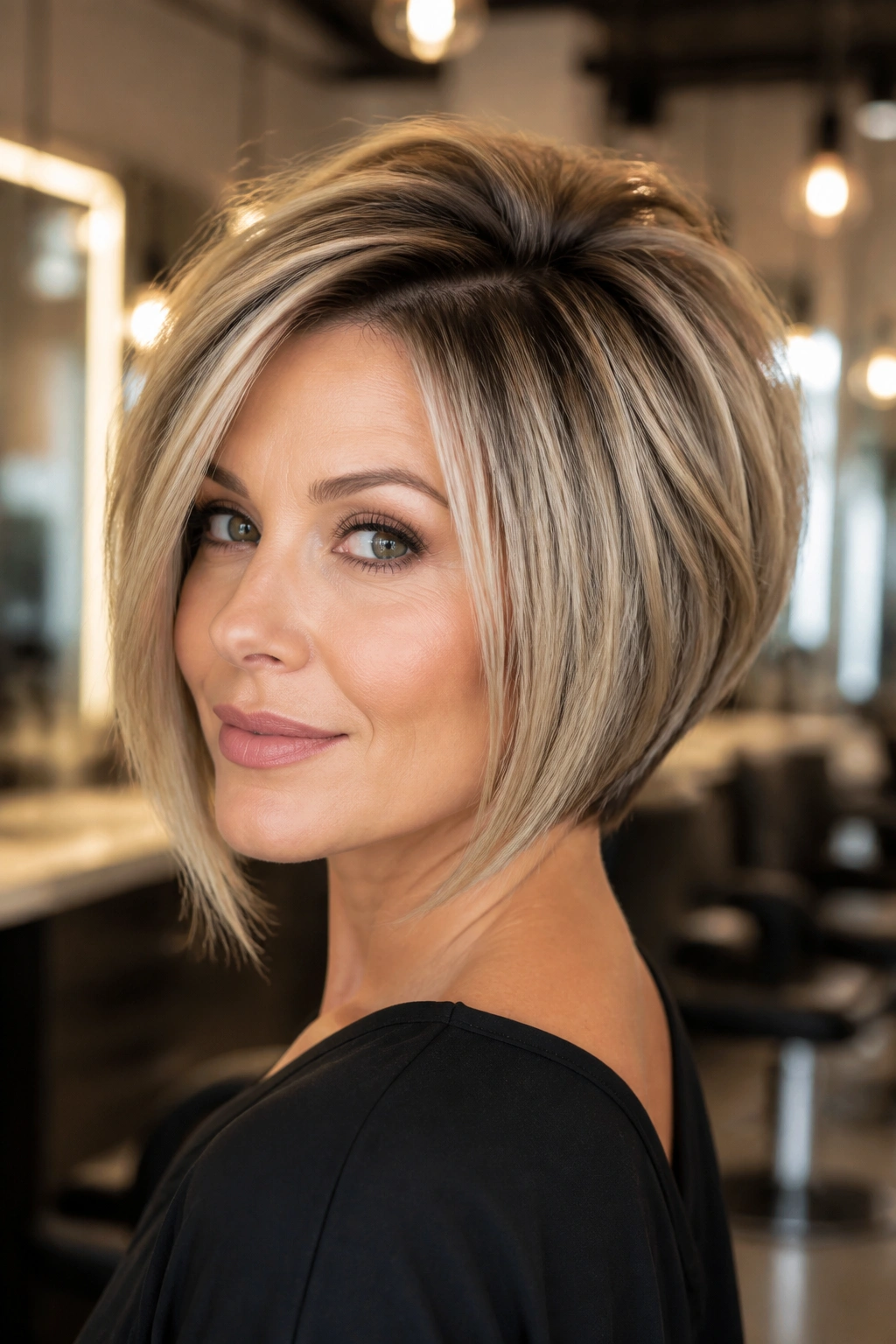
This cut is for hair that needs a little backbone. The stacked back builds height at the crown, and that extra lift helps round faces by adding vertical emphasis where it counts.
A stacked bob can go wrong fast if the layers are too choppy or the back is cut too high. Then the head shape can start to look puffy in the wrong spot. The good version keeps the stack controlled, almost architectural. Shorter pieces at the nape, a smooth transition upward, and a front that stays longer than the side profile.
This is a strong choice for thick hair because it removes weight without flattening the shape. Fine hair can wear it too, but the stack has to stay soft or the ends can look wispy.
What to Ask For
- A graduated back with visible but not choppy lift
- Front pieces that fall at or below the chin
- Light thinning only if your hair is dense
- A rounded blowout at the crown, not the sides
One more thing: this style looks best when the top isn’t compressed. If you tuck it down with too much product, you lose the whole point.
6. Inverted Bob With Curtain Bangs
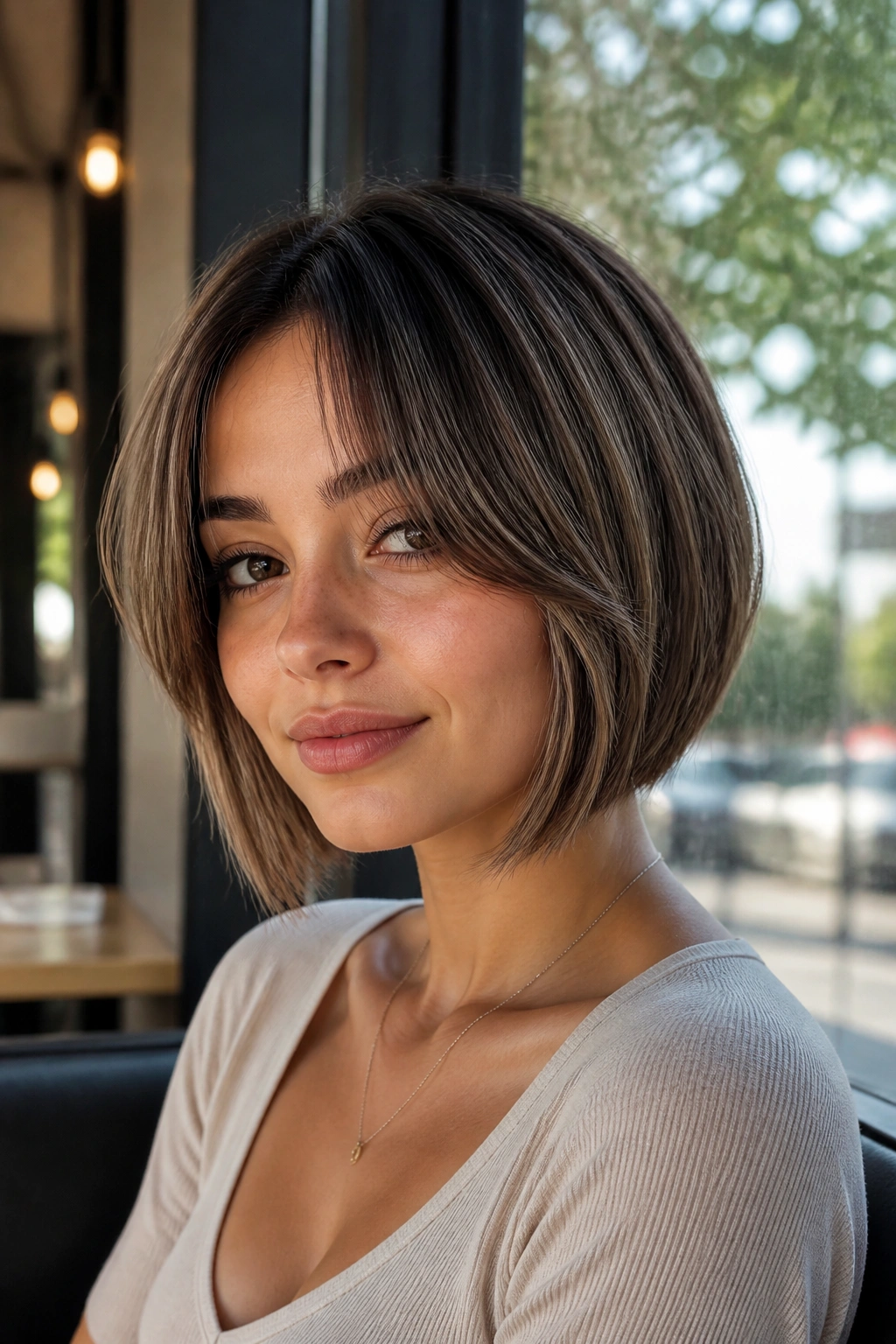
Curtain bangs can be a gift for round faces when they’re cut with enough length to split softly at the center. They pull the eye inward and downward, which helps the face read as longer and a little narrower.
The bangs should not sit like a blunt wall across the forehead. That’s the fast track to extra width. You want them to open at the nose bridge or cheekbone area and blend into the front sections of the bob. That soft taper keeps the cut airy.
I like this version because it gives the face some framing without crowding it. It also lets you wear the hair up on lazy days and still have shape around the face. That’s practical, and honestly, practicality counts for a lot.
A round face with strong cheeks can handle this especially well if the shortest bang pieces start around the eyebrow and then sweep out. If your hair is very wavy, keep the bang density lighter so they don’t collapse into the eyes.
7. Asymmetrical Inverted Cut With One Longer Side
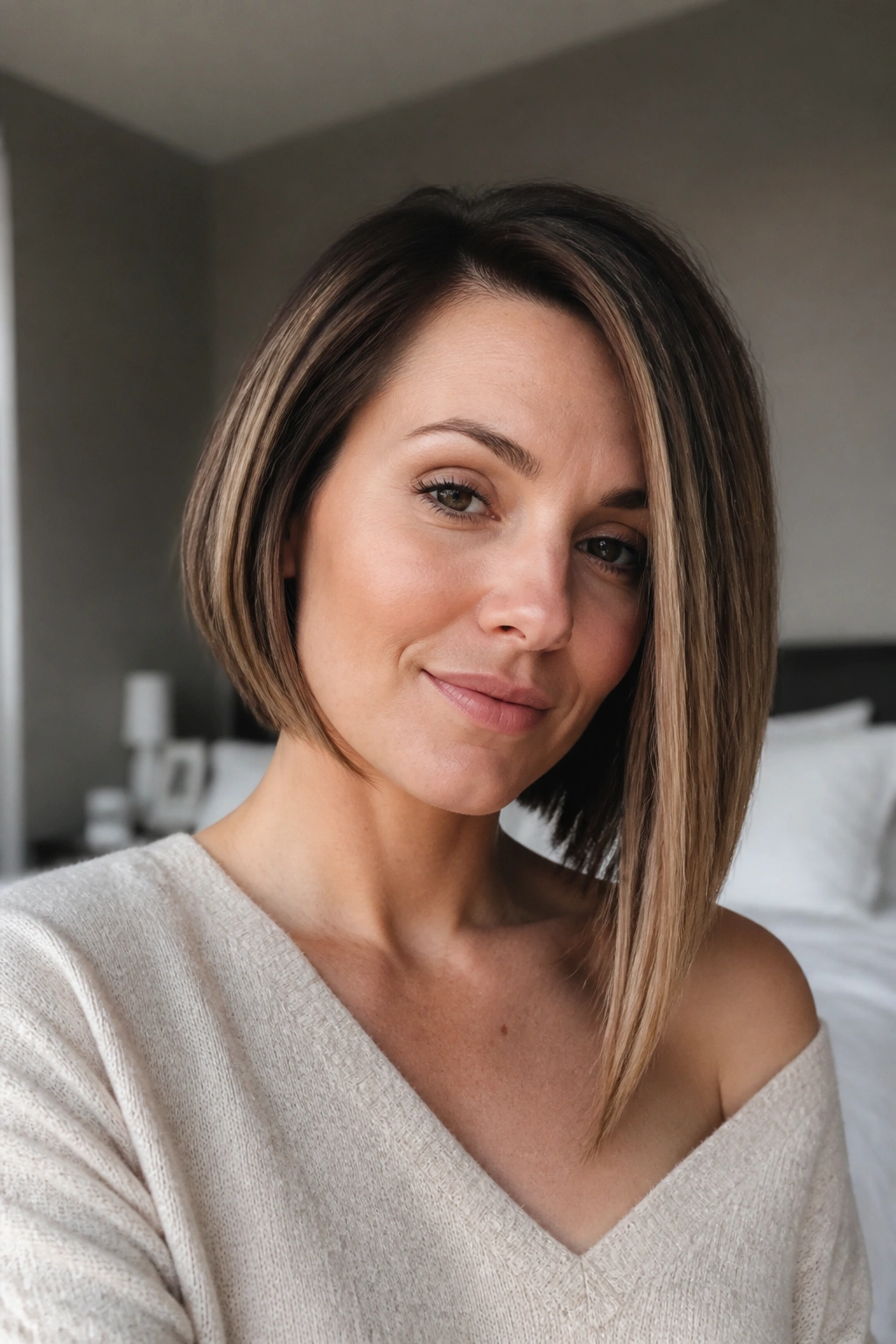
A little imbalance can be a good thing. An asymmetrical inverted cut gives a round face a directional line to follow, which is useful when you want the shape to feel less symmetrical and more intentional.
One side is kept noticeably longer, often grazing the collarbone while the shorter side stays closer to the jaw or chin. That difference creates visual movement. It also keeps the face from looking boxed in, which can happen with a centered cut that stops at the same level on both sides.
This style is not subtle, and that’s the charm of it. It has edge without needing bright color or heavy layering. The only real caution is proportion: the longer side needs enough length to read as a line, not a mistake.
If you wear glasses, this shape can be especially nice because the longer side doesn’t fight the frame. If you like to tuck hair behind one ear, even better. That simple move shows off the angle and gives the style a little attitude.
8. Inverted Shag With Soft, Broken Layers
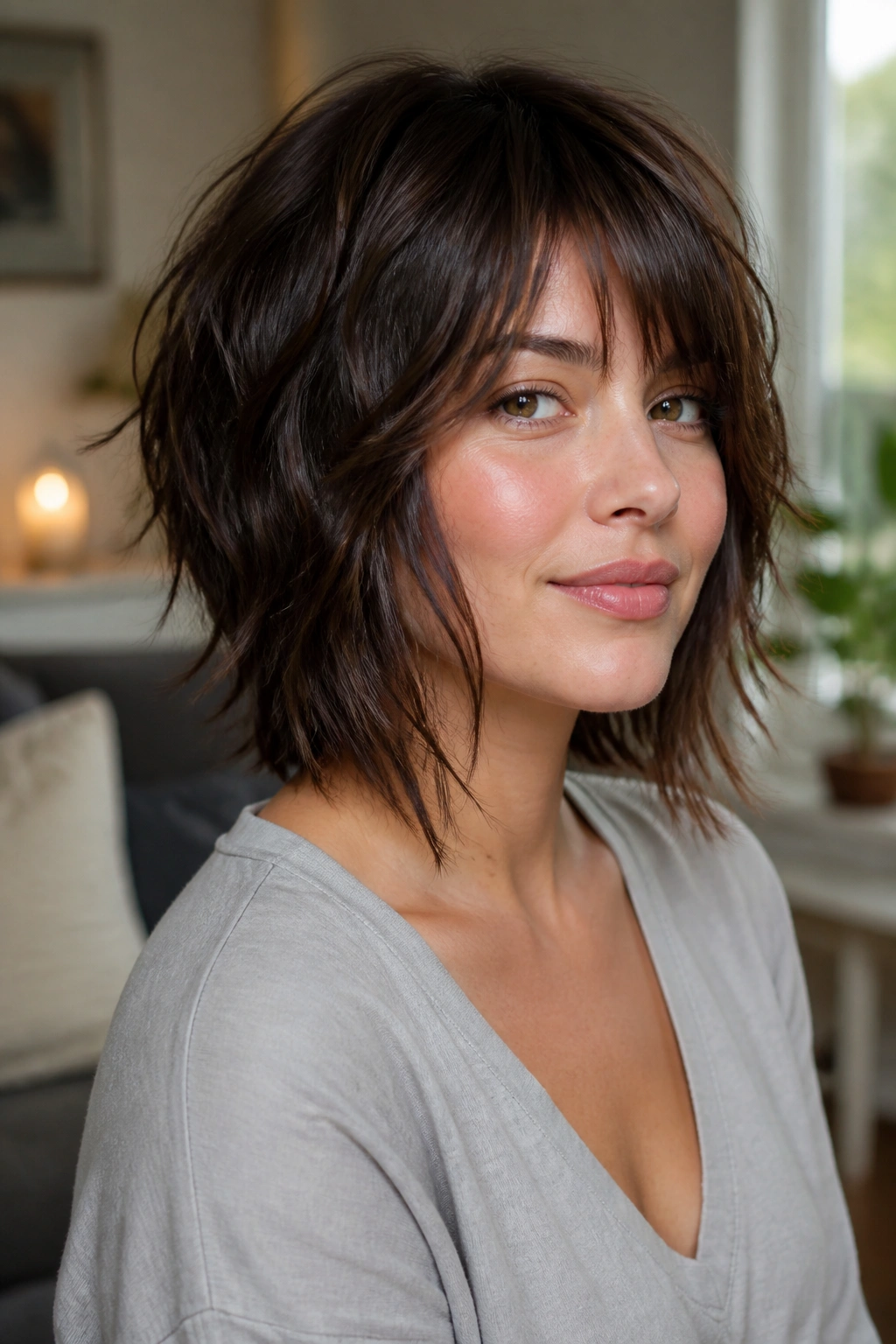
A shag sounds messy to some people, but on the right round face it can be a smart way to add lift and movement without turning the haircut into a triangle. The inverted version keeps the back shorter and the front longer, while the shaggy layers take some weight out of the middle.
Why It Flatters
The broken layers keep the eye moving. That matters. A solid line across the cheeks can emphasize roundness, while choppy internal layers create little breaks that make the face look longer and slimmer.
The key is placement. Layers that start too high can puff out around the temples. Better to begin them below the cheekbone or just under the jaw. That gives the cut some softness while protecting the face shape.
Styling Notes
- Use a volumizing mousse at the roots.
- Rough-dry with your fingers first, then finish with a diffuser if your hair is wavy.
- Leave a few ends piecey rather than smoothing everything down.
- If the layers kick out too much, bend them under with a round brush for the last minute of drying.
This is one of the few cuts that can look better slightly undone. Clean, but not precious.
9. Collarbone Inverted Lob With Face-Framing Layers
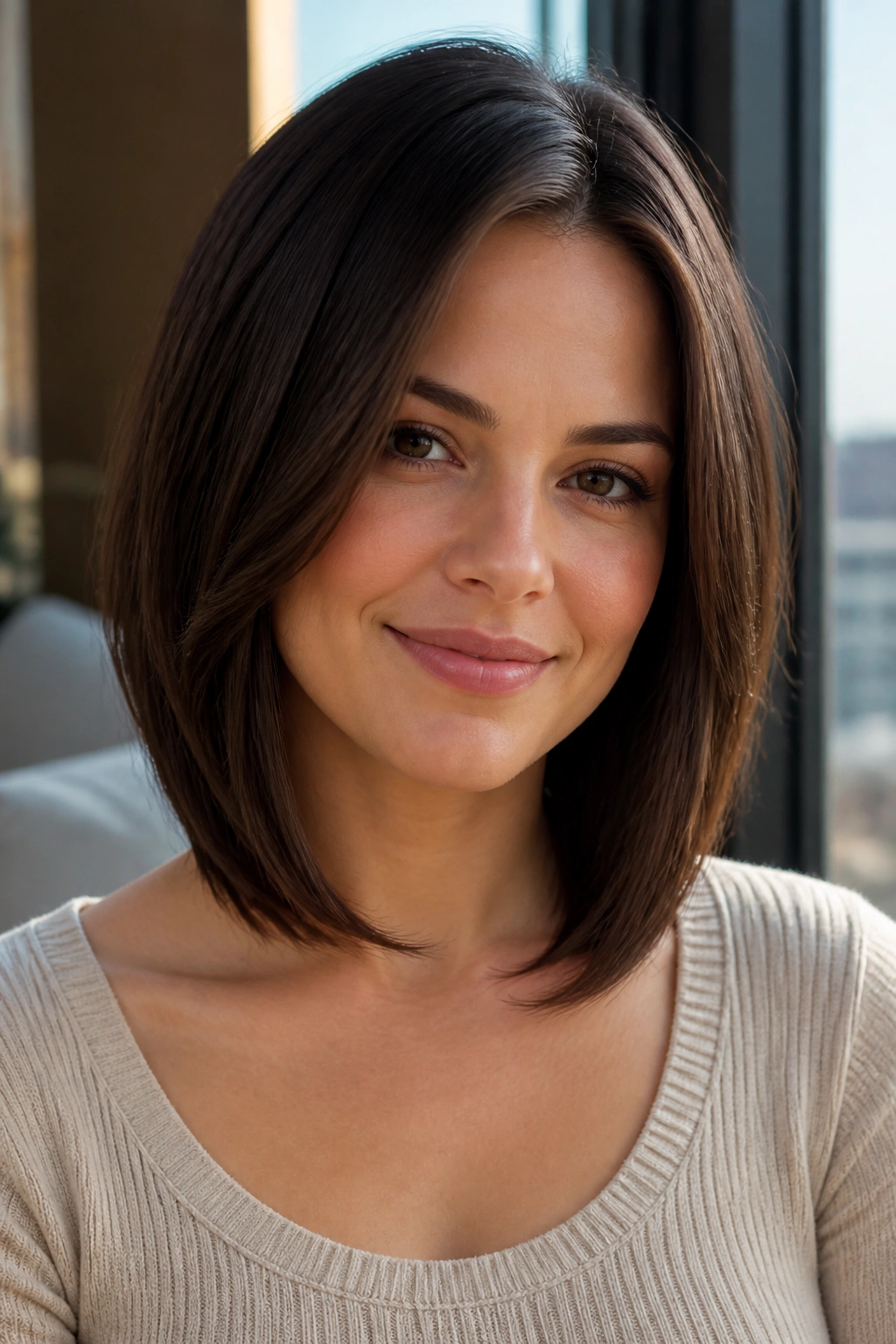
A collarbone length is a sweet spot for many round faces because it sits below the jaw without getting too long or heavy. Add an inverted shape and a couple of face-framing layers, and the result feels easy to wear but still shaped.
The front pieces should graze the collarbone or a little above it. That length stretches the neck visually. The back can stay a few inches shorter, but not so short that the difference feels severe. You want a gentle slope, not a cliff.
I like this cut for people who are growing out a bob or cutting off long hair but not ready for a short look. It gives you enough hair to tuck, wave, braid, or pin up. That flexibility is worth something.
A center part can work here if the front layers are soft, but a soft side part usually gives the most flattering line. If you wear waves, keep them loose and brushed through. The goal is movement, not volume that sits out from the sides.
10. Curly Inverted Bob
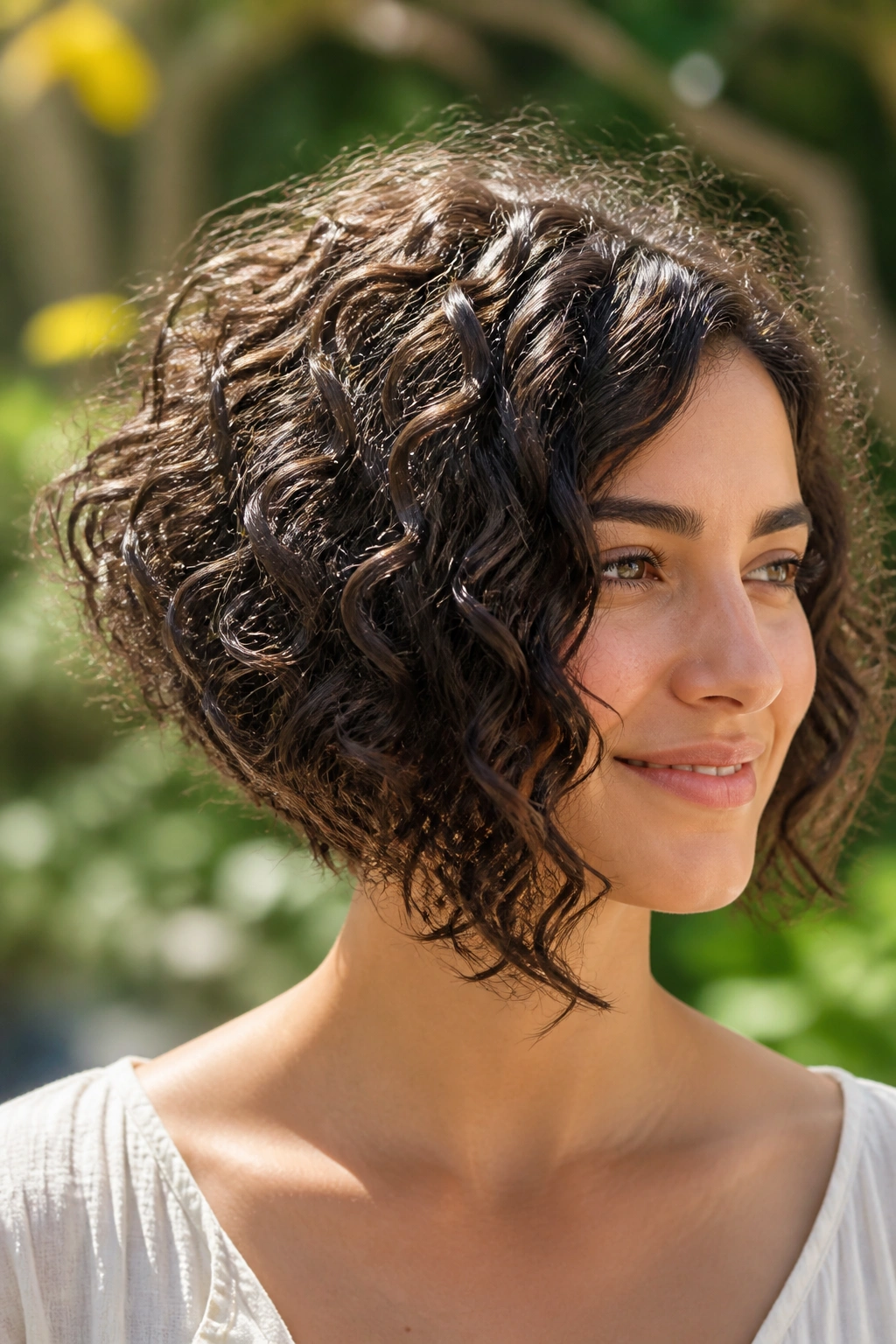
Curls and round faces can get along beautifully when the cut is shaped with real intention. A curly inverted bob keeps the back lighter and the front longer, which stops the curls from flaring out all around the head.
The biggest mistake with curly bobs is cutting them too evenly. Then you get width at the cheeks and a mushroom shape at the sides. No one needs that. A good inverted curly bob keeps the curls layered enough to spring, but not so much that they explode outward.
Ask for curl-by-curl shaping if your stylist works that way, or at least dry cutting so the length can be judged in real texture. Wet curls lie. They always do.
A side part or deep side sweep gives this shape extra lift at the crown. And that matters because curly hair can flatten at the top while bulking out at the sides. A little control up top, a little freedom at the ends—that’s the sweet spot.
11. Tucked-Under Inverted Bob
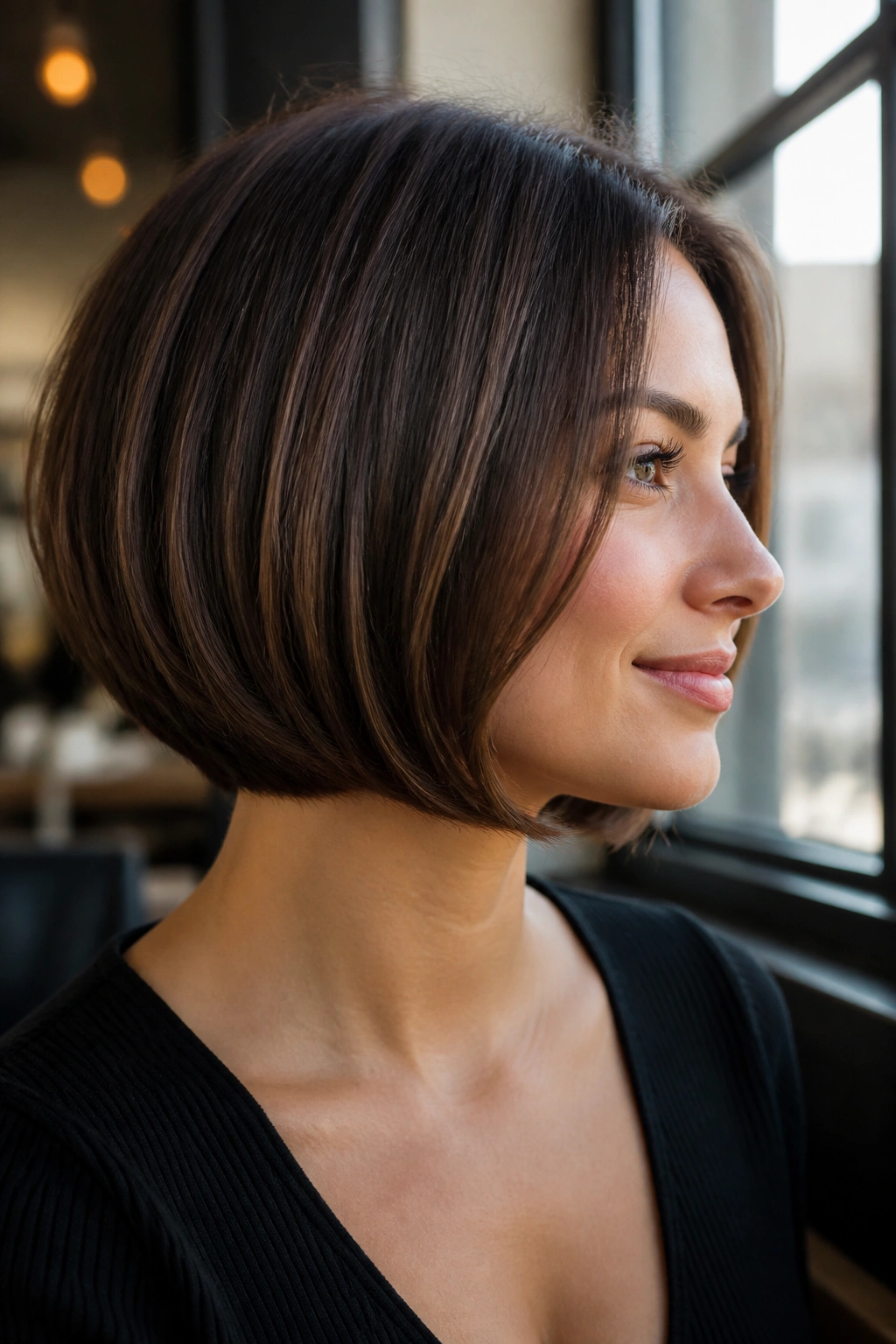
There’s something tidy about a tucked-under bob that feels almost old-school, but the inverted cut keeps it from looking dated. The ends curve inward toward the neck, which creates a clean finish and helps the face read a little longer.
This style is especially nice if you like your hair to look neat without looking stiff. The front can hit right at the jawline or just below it, while the back stays shorter and hugs the nape. That shape keeps the neckline clean and gives round faces a vertical frame.
It also behaves well in everyday life. When the ends are tucked under, the haircut tends to stay in place with less fuss. Fine hair looks fuller. Medium hair looks polished. Thick hair needs a bit of debulking so the bottom doesn’t swell.
Use a paddle brush while blow-drying, then direct the ends under with the brush for the last few passes. A tiny bit of smoothing cream is enough. Too much product can make the style droop, and that ruins the crisp line.
12. Graduated Bob With an Undercut Nape
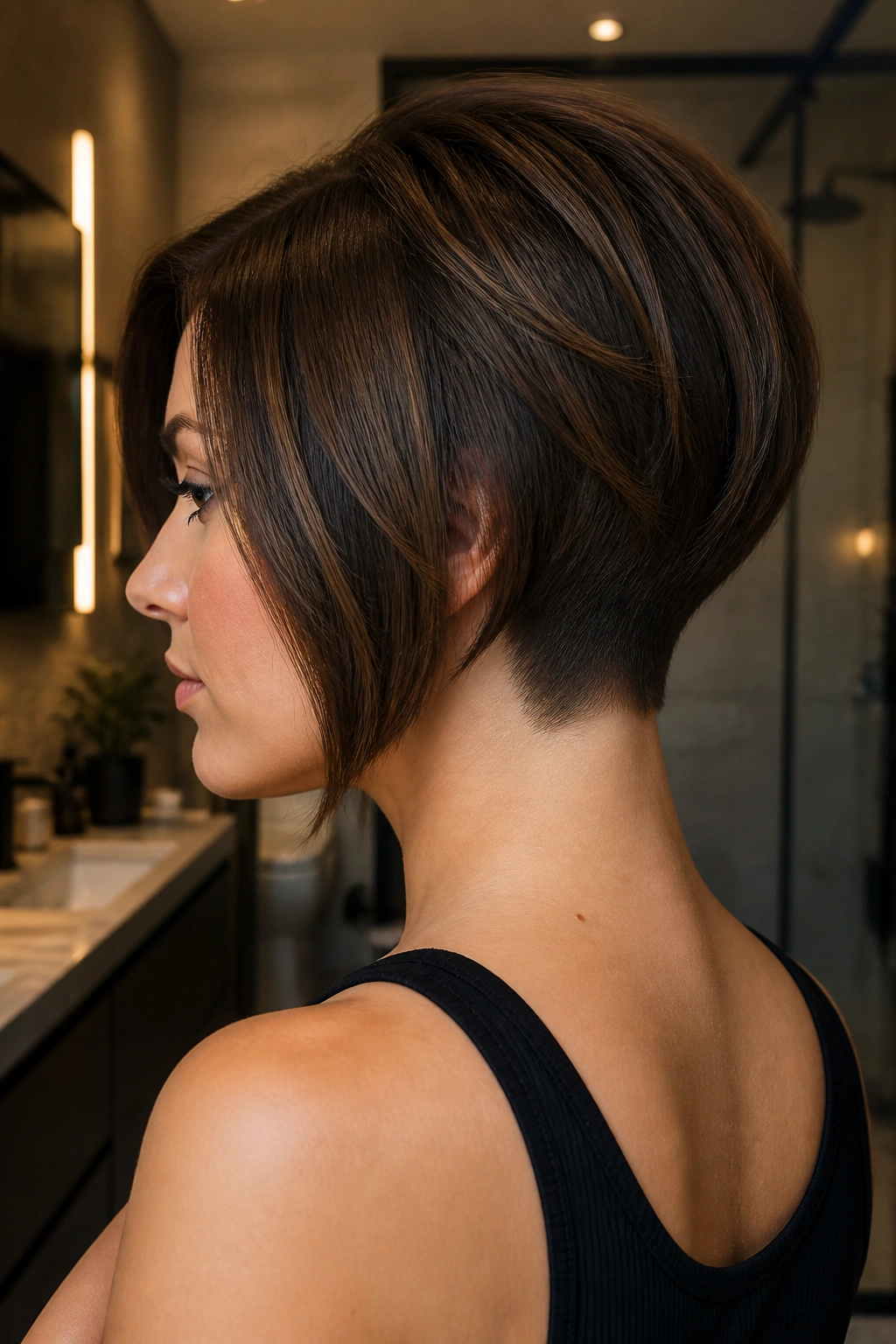
Thick hair can be stubborn. Sometimes it wants to sit out like a shelf, and a round face can’t afford that extra width right at the jaw. A graduated bob with an undercut nape solves a lot of that by removing bulk underneath.
The undercut is hidden, which is useful. You keep the top shape full enough to look like hair, not a shaved experiment, but the weight disappears where it causes the most trouble. The result is a cleaner fall through the back and less puff at the bottom.
This is a smart cut if you spend too long drying your hair. Less bulk means less time. It also helps the front pieces lie flatter and longer, which gives the face more length.
I’d only use this on people who actually have enough density to justify it. On fine hair, an undercut can hollow the cut out and make the whole thing look sparse. On thick hair, though, it can be a relief. A good one.
13. Inverted Pixie Bob
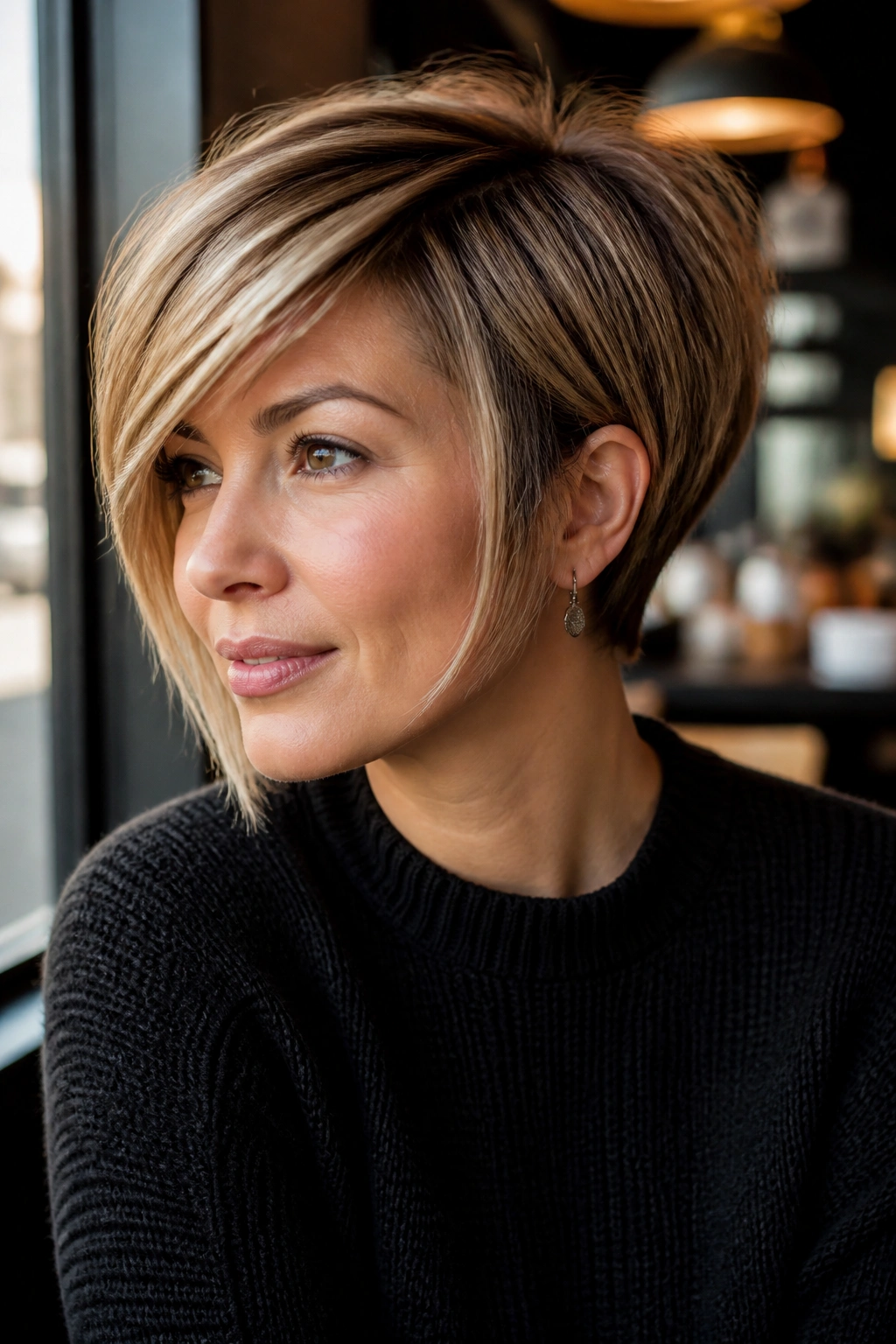
Short hair can flatter a round face when it has angle and a little softness near the cheekbones. That’s why the inverted pixie bob is worth a look. It sits between a pixie and a bob, with enough length in front to avoid looking too cropped.
The back and sides stay shorter, often close to the head, while the top and front keep more length. That contrast adds height and pulls the eye upward. Round faces tend to benefit from that vertical lift because it gives the face more length in the overall silhouette.
What to Watch
- Keep the top long enough to sweep, not spike
- Leave some length around the temples
- Avoid a hard, blunt fringe
- Use a tiny amount of paste, not a heavy wax
This cut looks sharp on straight hair and beautifully soft on wavy hair. It does ask for regular shaping, though. Short styles lose their line fast when they grow out, and this one is no different. Still, when it’s fresh, the effect is clean and strong.
14. Soft Inverted French Bob
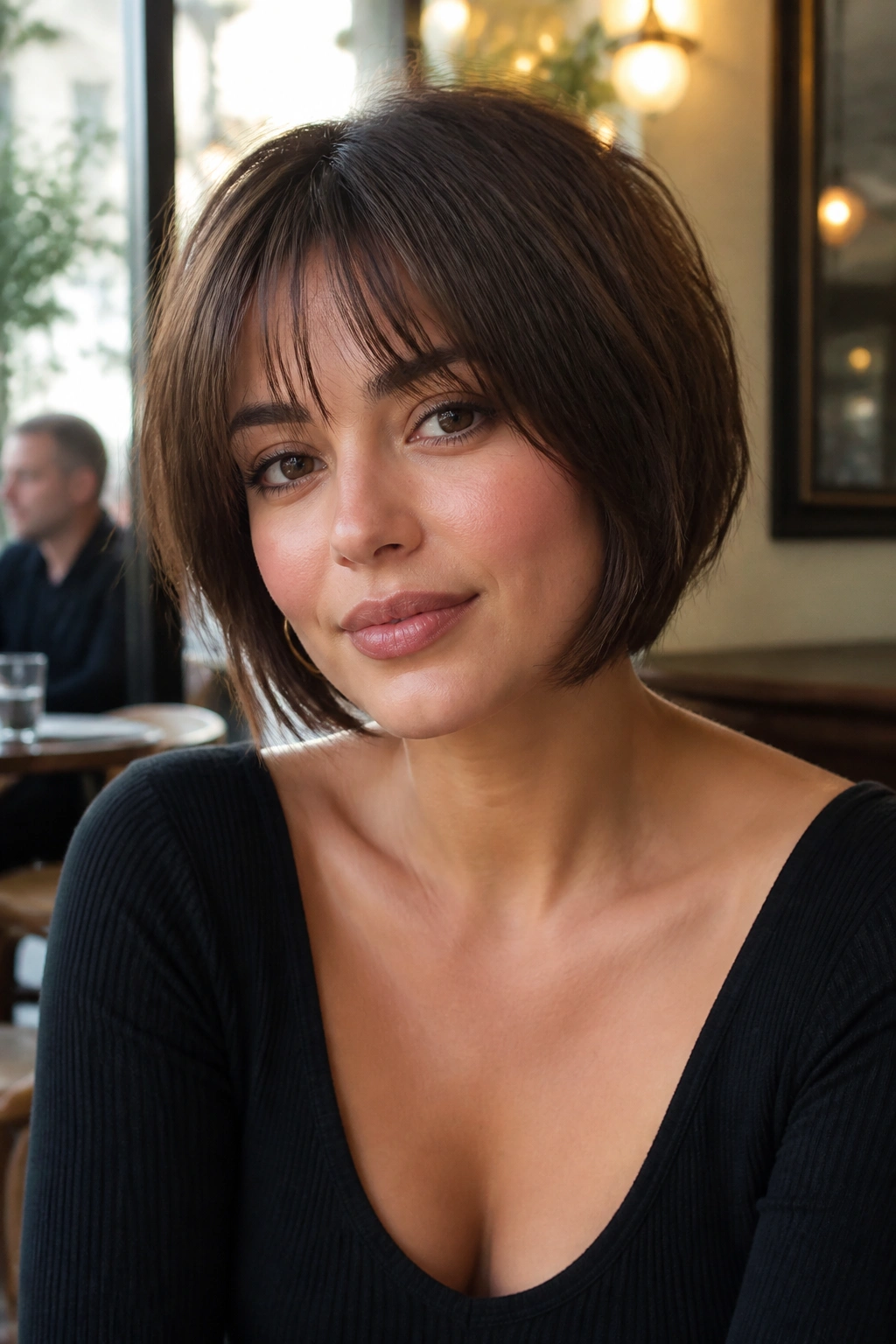
A French bob is usually blunt and chin-skimming, which can be tricky for a round face. So the softened inverted version makes a lot more sense. Keep the outline shorter in back, let the front dip just a little lower, and add texture instead of a hard edge.
The fringe matters here. A wispy fringe or a soft side sweep feels much lighter than a thick block of bangs. That lightness keeps the face open. If the fringe is too dense, the whole haircut can feel boxed in.
I like this cut for people who want style with a bit of character. It has a little Paris energy, sure, but the real appeal is the shape. It frames the face without swallowing it. Not every short bob can say that.
A round face with a shorter forehead can wear this especially well if the fringe is broken up. If your forehead is broad, leave a little more space between the brow and the shortest bang pieces. That tiny adjustment changes the balance fast.
15. Long Inverted Cut With Sweeping Layers
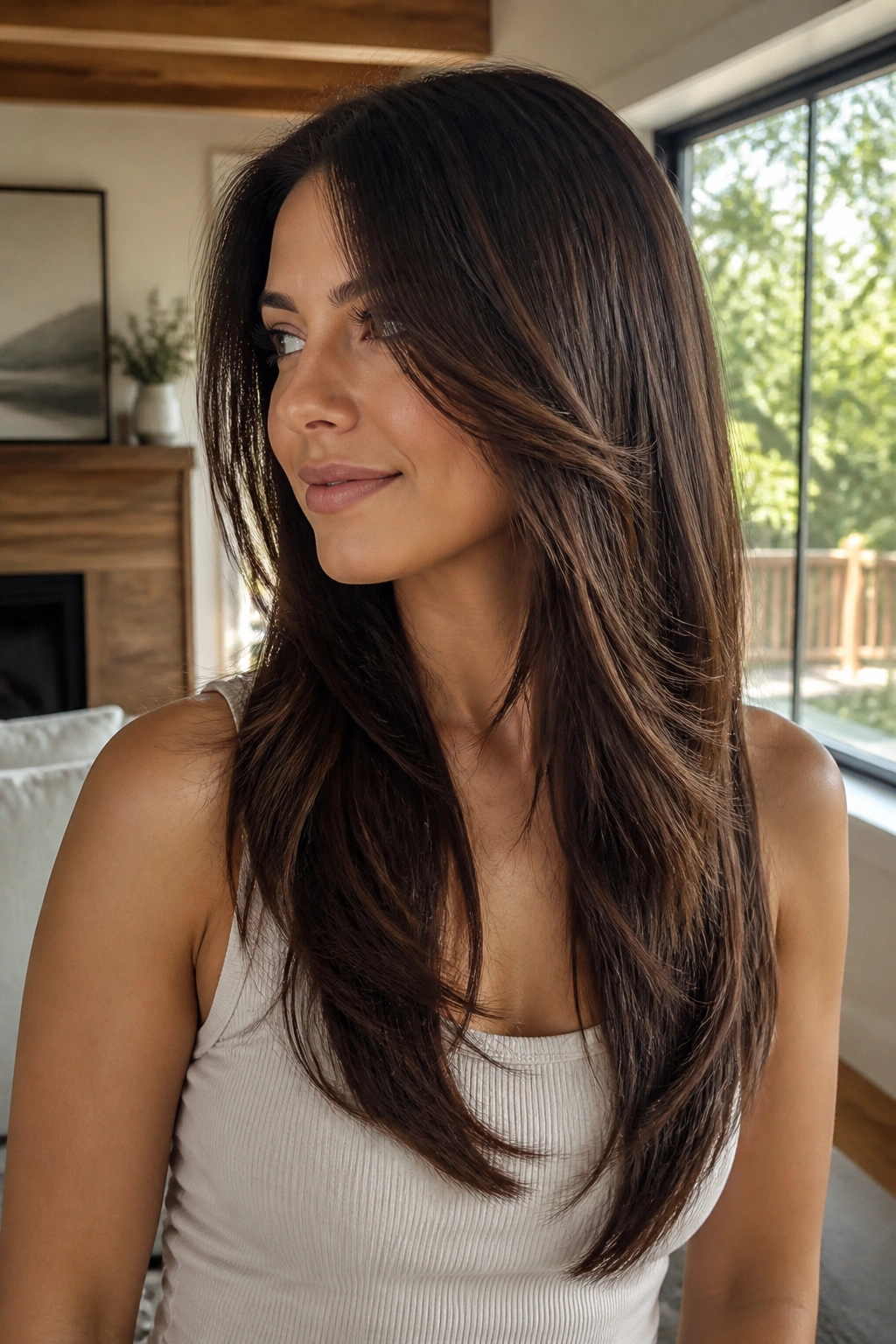
Not everyone wants a cut that sits at the chin. A long inverted style keeps the drama of the angle but stretches it out, usually starting around the shoulders and falling longer in front.
This is a nice compromise for round faces that want softness, not a big chop. The back can still be noticeably shorter, but the front should be long enough to graze the chest or collarbone. That extra length gives the face a vertical frame and avoids the wide shape that can happen with a shorter bob.
Sweeping layers are the point here. They move from back to front in a smooth line, which keeps the haircut from feeling heavy. I would not overload this with short layers at the sides. The face doesn’t need more width there.
This style works especially well if you wear hair half-up a lot. The longer front pieces fall out naturally and keep the face framed even when the rest is pinned back. That’s a useful trick, and a simple one.
16. Side-Swept Fringe Inverted Bob
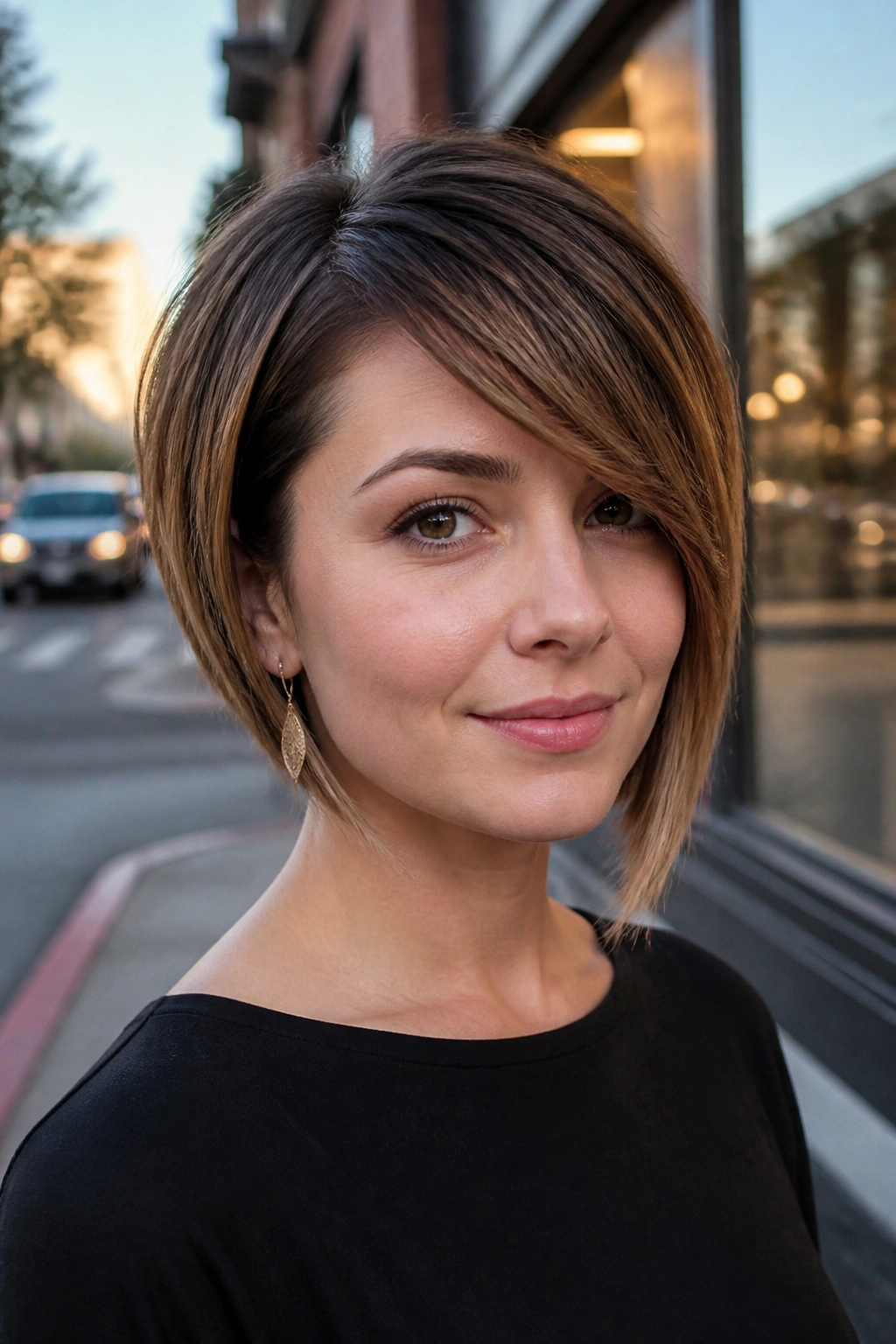
A side-swept fringe can do quiet work on a round face. It creates a diagonal line across the forehead, and diagonal lines are your friend when you want to interrupt circular shapes.
The fringe should blend into the front pieces, not sit like a separate piece of hair. That blend keeps the haircut soft and stops the face from getting chopped into blocks. The rest of the bob can stay clean and angled, with the back slightly shorter than the front.
I reach for this option when someone wants bangs but doesn’t want the maintenance of a full fringe. You can grow it out more easily. You can pin it back. You can switch the part if the mood changes. Flexibility matters.
A good side-swept fringe also works well with glasses because it doesn’t crowd the frame. If your hair is dense, keep the fringe light enough that it moves when you turn your head. If it sits too heavy, the whole look loses air.
17. Flipped-End Inverted Lob
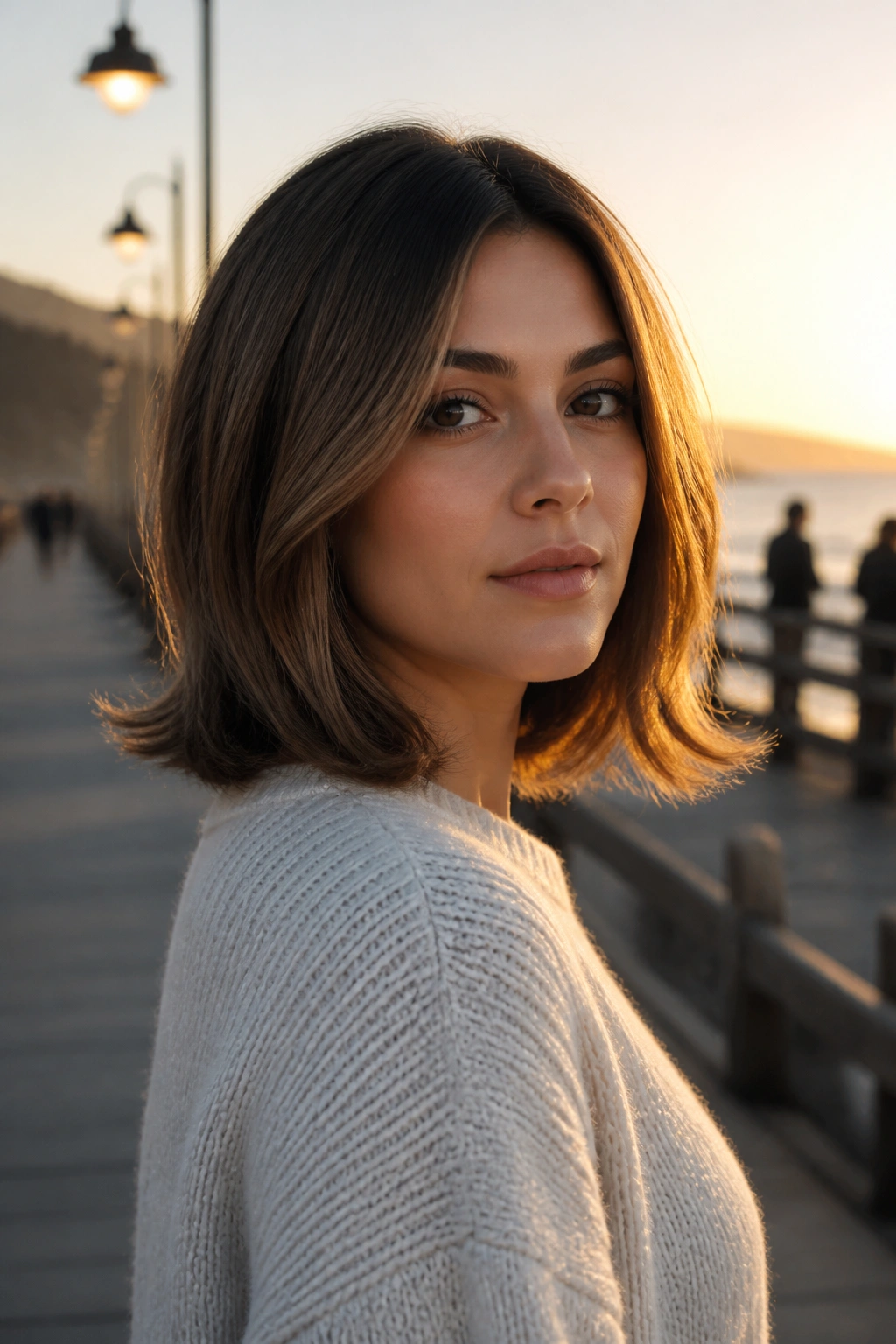
Flipped ends can sound playful because they are playful. On an inverted lob, they keep the line from feeling too severe and add a little bounce at the bottom.
The cut still needs shape underneath. The back should be shorter, the front longer, and the whole silhouette should slope gently. Then the flipped ends give it life. They also keep the hair from hugging the face too closely, which can be useful on fuller cheeks.
This style works especially well with a round face when the flip happens below the chin, not right at it. If the ends kick out at chin level, you can accidentally widen the face. Push the flip a little lower and the effect is better.
Use a round brush or a flat brush with the dryer angled upward at the ends. Then pinch the tips out with a little texture spray. The goal is a soft bend, not a cartoon flip. Big difference.
18. Feathered Inverted Bob
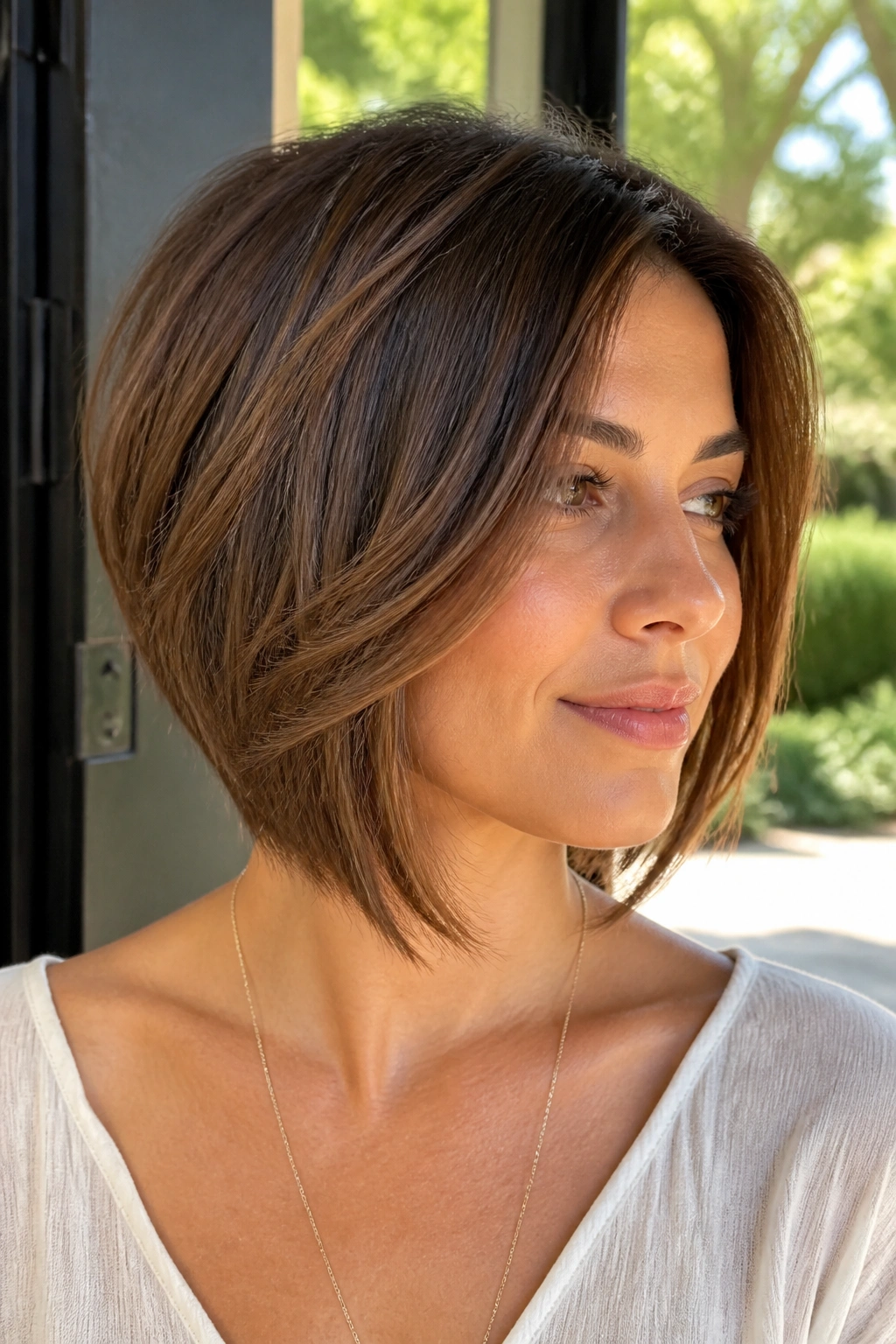
Feathering softens the edge of an inverted bob and keeps the style from feeling heavy. That matters on round faces because a hard perimeter can make the lower face look broader than it is.
Why It’s Worth Considering
Feathered ends move. They don’t sit like a solid curtain. That movement makes the face feel longer and less boxed in. It also helps if your hair tends to puff at the sides, because feathering removes just enough weight to let the shape lie closer to the head.
This cut is a nice middle ground for medium-density hair. Not too blunt. Not too wispy. The front can still be longer than the back, but the soft edges keep it friendly instead of sharp.
Styling It Well
- Use a light cream or spray before blow-drying.
- Point the dryer downward for smoother ends.
- Finish with your fingers to separate the layers.
- Avoid heavy oils near the mid-lengths, or the feathering can collapse.
If you like hair that looks touched by movement rather than set in place, this is a strong option. It has lift without stiffness.
19. Razored Inverted Bob
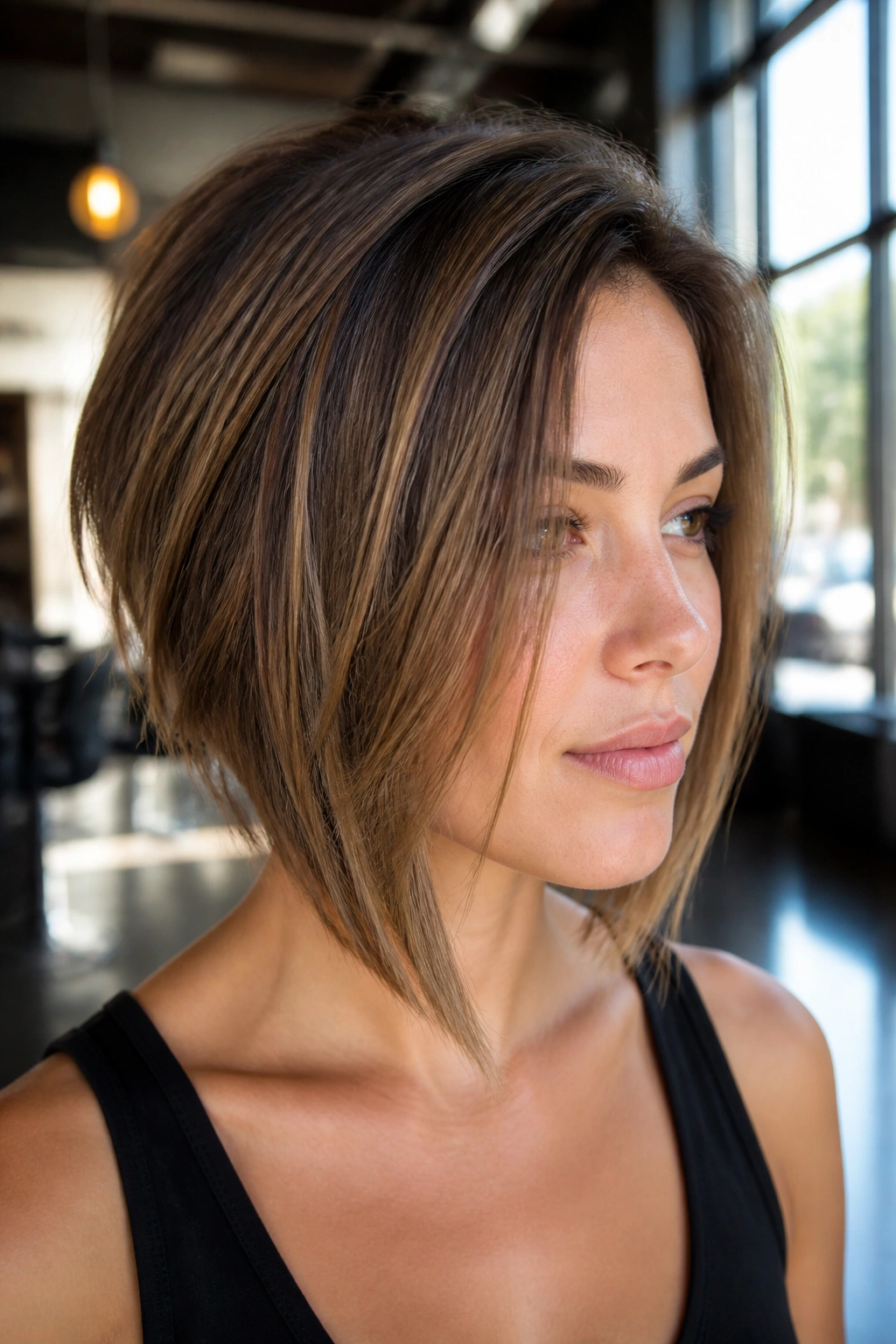
A razored bob has personality. The blade-softened ends create a lighter edge, which can help round faces by reducing the visual weight around the jaw.
That said, this cut is not for everyone. Razor cutting on very fine hair can make the ends look stringy. On thick, straight, or slightly wavy hair, though, it can give the haircut a smart, lived-in finish that moves well. The inverted shape keeps the front longer, while the razored ends stop the style from feeling blocky.
I like this one for people who wear their hair a little messy on purpose. It looks better with a bit of texture than with a full, glassy blowout. If you want a very polished, crisp line, a razor may not be the right tool.
Ask for the razoring to stay mostly at the perimeter and not too high into the interior. That keeps the shape controlled. Too much razoring through the body can make the bob lose its backbone fast.
20. Shoulder-Skimming Inverted Lob With Airy Bangs
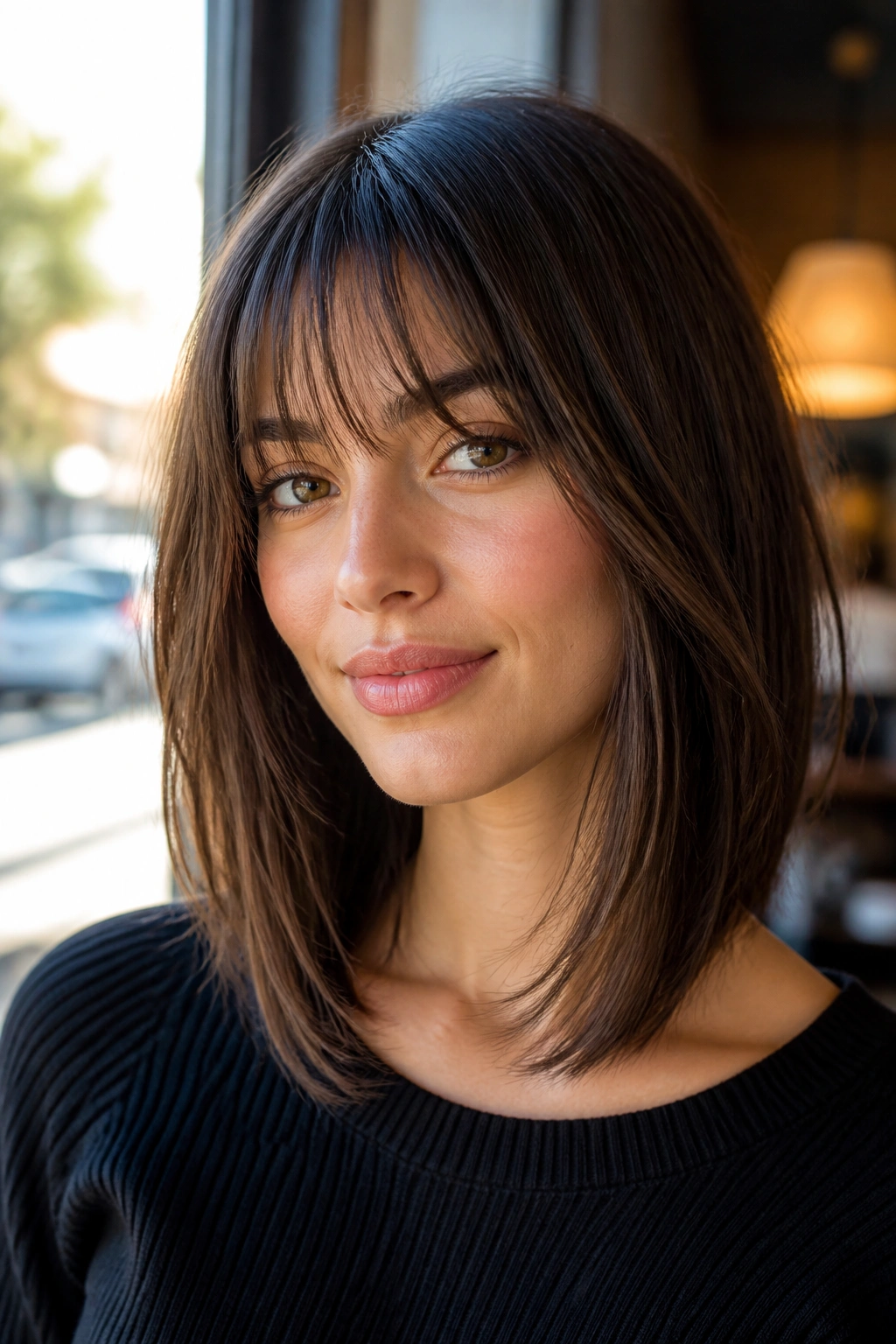
If you want one cut that feels easy to wear and still does the face-flattering work, this is the one I’d point to first. A shoulder-skimming inverted lob gives a round face length, angle, and enough softness to avoid looking overdone.
The shoulders are a smart stopping point because the hair doesn’t sit right at the jaw, where width tends to stand out most. The back can stay shorter, but the front pieces should skim the shoulders or just above them. That extra drop in front makes the face read longer straight away.
Airy bangs keep the whole thing from feeling heavy. They shouldn’t form a solid block across the forehead. Think soft pieces, slight separation, and a little movement when you turn your head. That openness matters more than people think.
This cut is also easy to live with. It can be worn straight, waved, tucked, pinned, or half-up without losing the line. For round faces, that kind of flexibility is worth a lot because you’re not locked into one styling mood.
A good final rule: if the front feels too blunt, soften it. If the crown feels flat, add lift. If the sides feel wide, take out a little weight. Small adjustments change everything.
Final Thoughts
Round faces don’t need to be hidden. They need a haircut that gives them direction. Inverted shapes do that better than most because they build a line from the back of the head toward the front, and that line changes how the face reads from the first glance.
The safest picks are the ones that keep the front below the jaw and use angles, not bulk, to create shape. The bolder versions work too, but only when the balance is right. Too short at the cheeks, too blunt at the ends, and the whole thing can lose the effect fast.
If you’re taking one idea to the stylist, take this one: the best inverted haircut for a round face is the one that creates length before it creates width. That simple rule keeps the cut flattering even when trends shift and styling gets lazy.
