



A hairstyle can change how you move through a room. For Black women, that shift is often bigger than a mirror moment; the right style can protect your ends, cut down on morning stress, or let your texture do exactly what it wants to do. Black hairstyles for women are never only about looks. They carry time, routine, comfort, and a little bit of mood.
Some styles are there for low-effort weekdays. Others are for days when you want edges sharp, braids neat, or curls big enough to make a statement before you say a word. And then there are the styles that quietly do the most work of all: they help your hair stay healthy while still looking finished.
I’m keeping this rooted in real life, not fantasy. That means thinking about scalp tension, shrinkage, humidity, nighttime wrapping, and whether a style still looks decent after three days and one bad pillowcase situation. Pretty matters. So does staying power.
1. Wash-and-Go Curls for Black Women
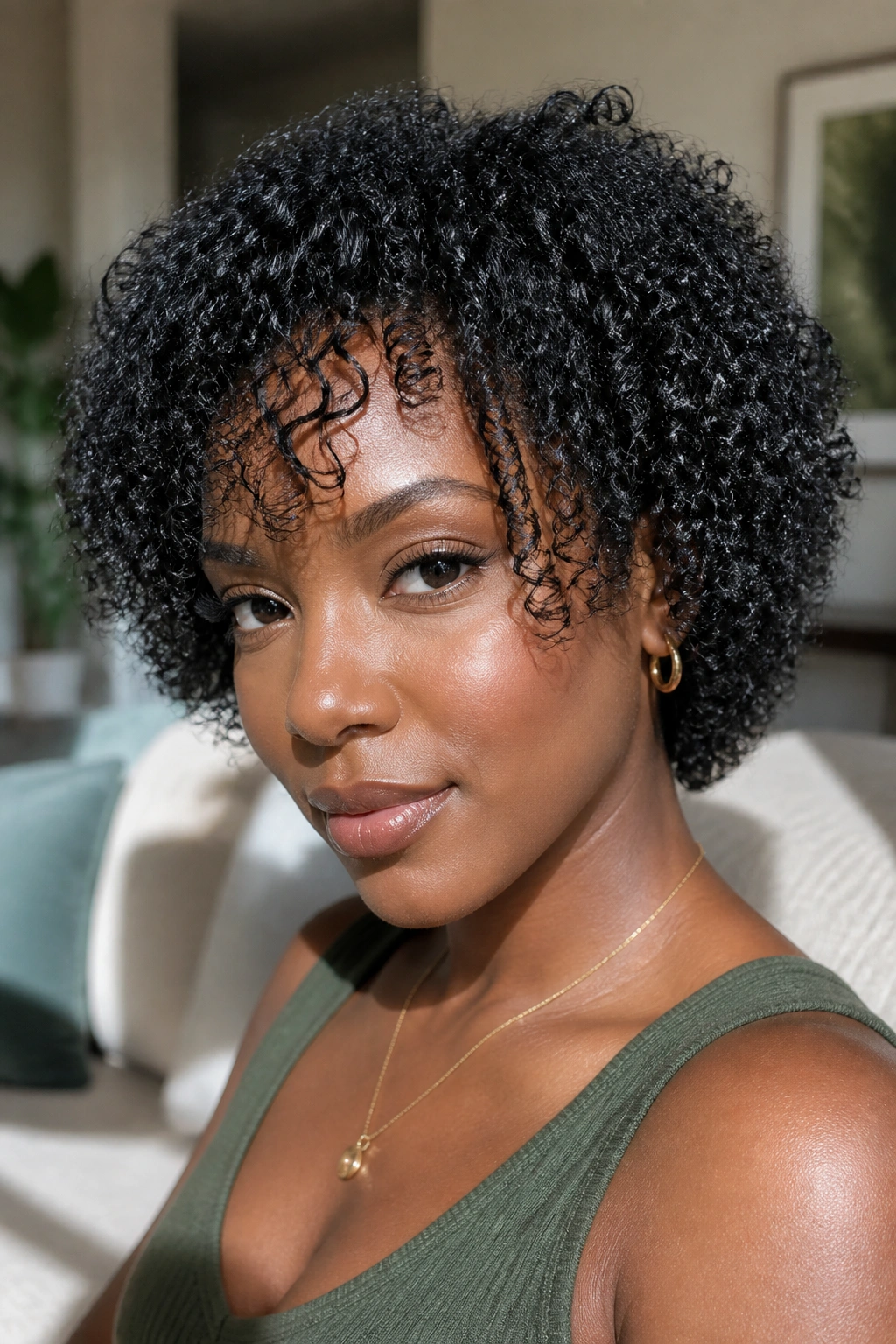
Some styles look polished only on day one. A good wash-and-go is not one of them.
The whole point is to let your curl pattern show up with structure, shine, and enough definition that the hair still looks intentional when it moves. On tightly coiled and curly textures, that usually means working on soaking-wet hair, using a leave-in that gives slip, and then layering a gel or custard that forms a cast as the curls dry. That cast is the part many people hate at first. It feels a little crunchy. Fine. Once you scrunch it out, the curls usually look soft and springy instead of fluffy and scattered.
What Makes It Work
The shape starts in the shower. If the hair is only damp, the product tends to sit on top instead of coating each curl, and the result is patchy. Sectioning helps too. Small, neat sections give better clump formation, which matters more than people think.
- Clean, well-conditioned hair holds the style longer.
- A leave-in with slip helps detangle without tearing at the curl.
- Gel gives hold; cream gives softness; using both in the wrong order can cause white flakes.
- A diffuser can speed things up, but air-drying gives the softest finish if you have the time.
My blunt advice: don’t touch it until it’s dry. Hands cause frizz before the cast even finishes forming.
2. Knotless Box Braids
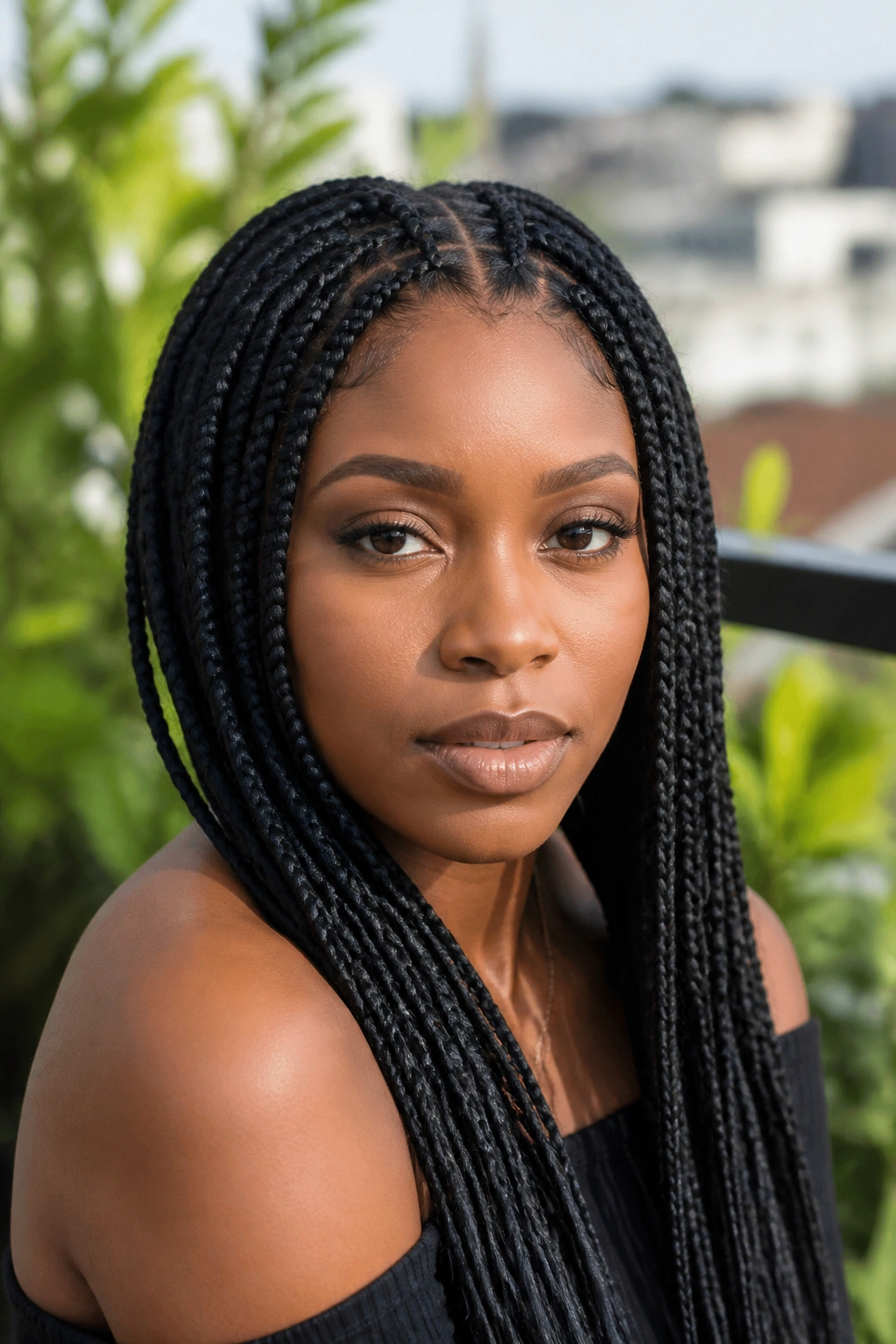
If comfort matters, knotless braids usually win. The start of each braid lies flatter on the scalp, so the style feels lighter and looks a little smoother at the root.
That’s the big reason people keep coming back to them. Traditional box braids can be beautiful, but the knot at the base sometimes pulls hard in the first few days. Knotless braids remove a lot of that tension. The braid grows out from your own hair more gradually, which tends to sit better at the hairline and move more naturally when you wear them down, toss them in a ponytail, or sweep them over one shoulder.
Pain is not part of the plan.
The real trick is sizing. Tiny knotless braids can take forever, but they also give a very clean, sleek result. Medium braids are the sweet spot for a lot of people because they don’t feel too heavy and they still last well with basic upkeep. If you like a fuller look, ask for a few extra rows around the perimeter rather than cramming too much tension into the front.
A satin scarf at night helps a lot here. So does light scalp oil, used sparingly. Too much product builds up fast between parts, and that can make the roots look dull before the style is even halfway through its life.
3. Twist-Outs on Natural Hair
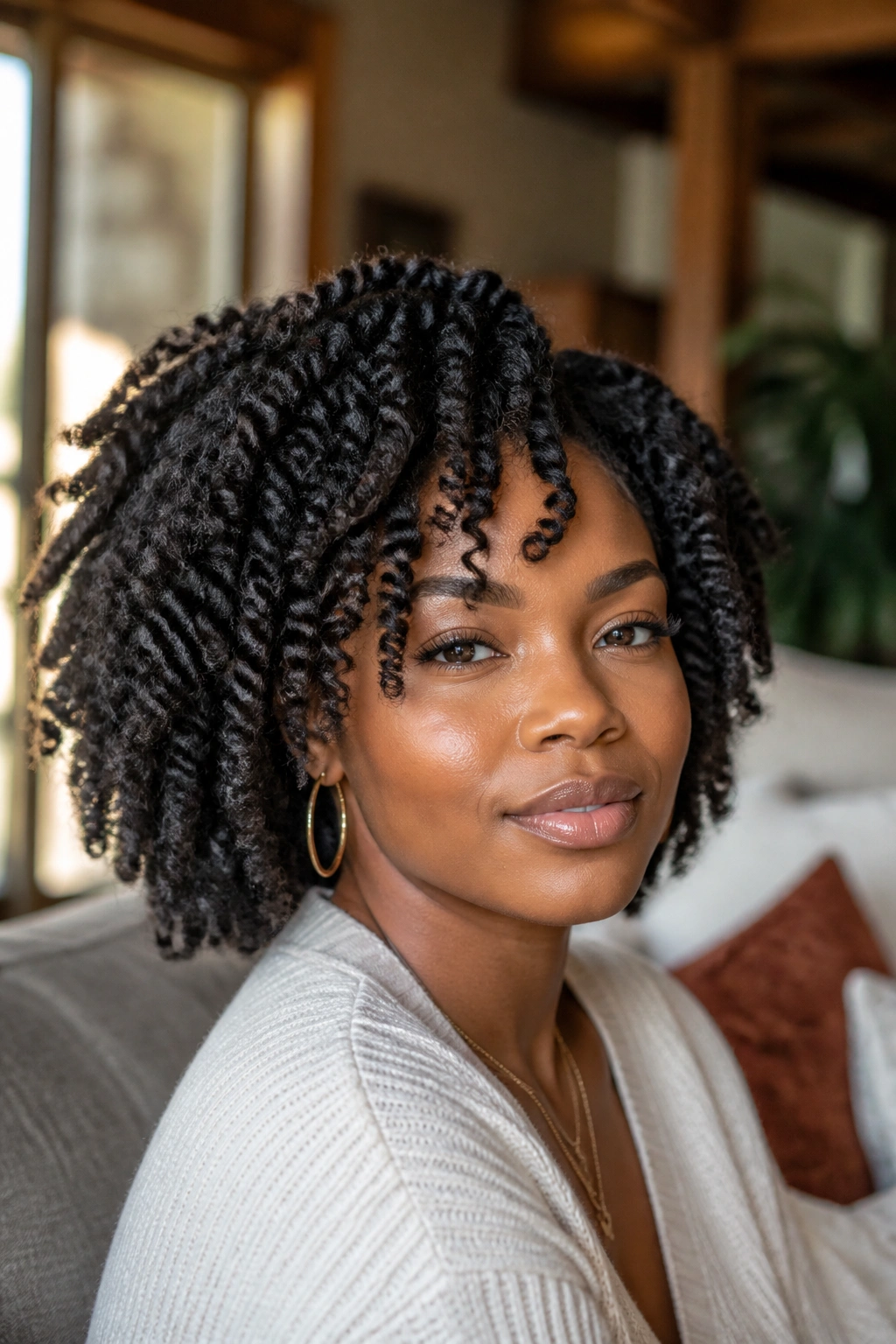
Why do some twist-outs look soft while others come out stiff and separated in a bad way? Usually, it comes down to moisture, section size, and patience.
A twist-out works because the hair sets in a stretched pattern and then releases into a defined wave or curl shape when unraveled. The twist pattern itself matters less than people think. What matters more is how well each section is coated, how evenly the hair dries, and whether you separate the twists gently after the hair has cooled and fully dried. Unraveling too early is a fast way to ruin the shape. So is using too much heavy cream on fine strands.
How to Get the Shape Right
Start with small to medium twists if you want definition. Bigger twists create a looser, fluffier result, which can be lovely, but the curl pattern won’t hold as sharply. A little oil on the fingers helps when separating, but don’t drown the hair in it.
A twist-out also rewards smart nighttime care. Pineapple it if the length allows. Or, if the hair is shorter, pin the twists up loosely and cover them with a satin bonnet. The second day usually looks better than the first once the shape settles.
Best use: when you want your natural texture to read as soft, stretched, and full without being straightened.
4. High Puff
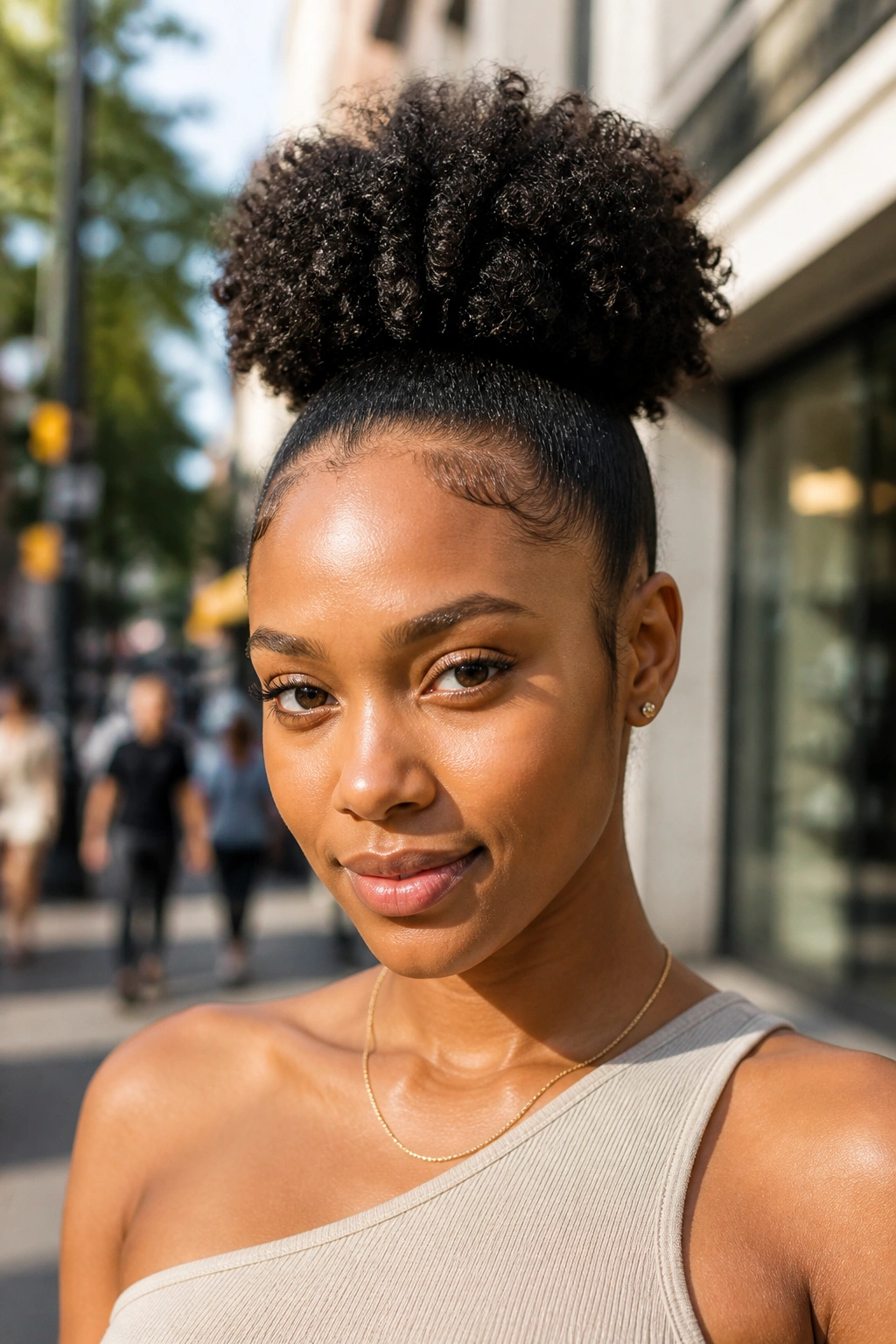
Late morning, no time, curls doing their own thing. The high puff shows up like a rescue plan.
It’s one of those Black hairstyles for women that looks casual until you realize how much skill is hiding inside it. The puff depends on balance: enough stretch at the roots to gather the hair upward, but not so much brushing that you flatten the curl pattern into a sad halo. A wide headband, a stretchy band, or even a shoelace-style tie can hold the puff in place. The real work happens at the front, where the hair is smoothed just enough to frame the face without turning stiff.
The shape can sit high and round, or lower and fuller depending on how much shrinkage your hair has that day. That’s part of the charm. It doesn’t need perfect symmetry to look good. In fact, a little unevenness often makes it look more alive.
- Use a soft brush, not a hard one.
- Apply edge control only where you want polish.
- Don’t make the band too tight; headaches are a terrible trade.
- A little moisture at the crown helps the puff stay soft instead of dry and fuzzy.
It’s fast, sure. But it’s not sloppy when it’s done well.
5. Sleek Low Bun
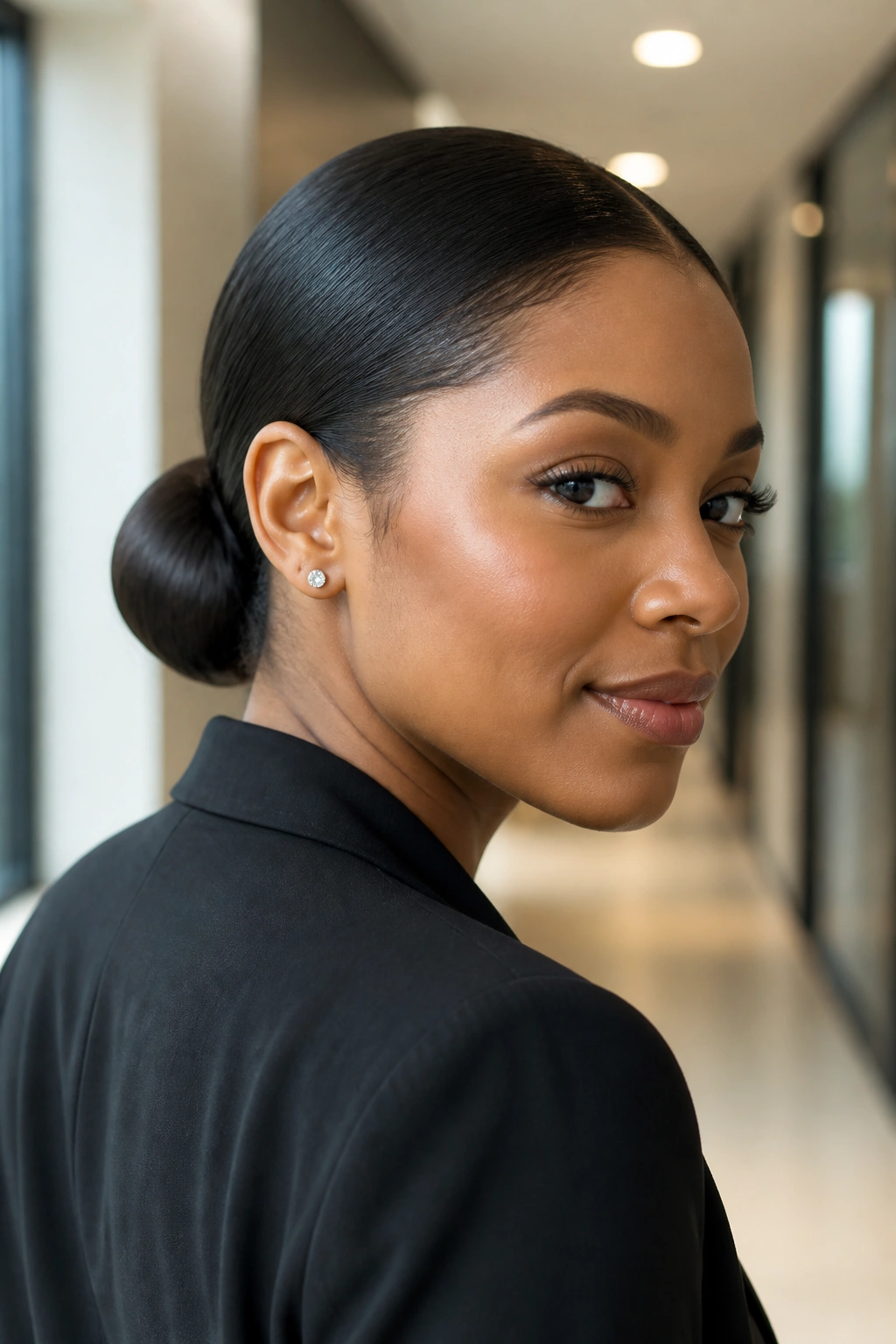
A sleek low bun is one of those styles that looks like you tried harder than you actually did.
It sits close to the nape, usually with the hair brushed back or parted cleanly in the middle or to one side, then gathered into a smooth bun or folded chignon. The appeal is obvious: it works for the office, a wedding, a dinner out, or one of those days when your ends need a break from manipulation. The style is also kind to the hair if you keep the tension low and don’t yank the front too tight.
Skip the stiff helmet look.
The best low buns have movement near the hairline. If every strand is glued down and lacquered into place, the style can start to feel hard instead of elegant. A good gel, a denser brush, and a bit of patience are usually enough. If your hair is thick or coarse, work in sections. Smoothing the whole head at once tends to leave bumps in the back, and those show up in photos fast.
This style is especially useful when the ends are dry. Tuck them away, wrap the hair at night, and you can stretch the life of the style while giving your strands a break.
6. Bantu Knots
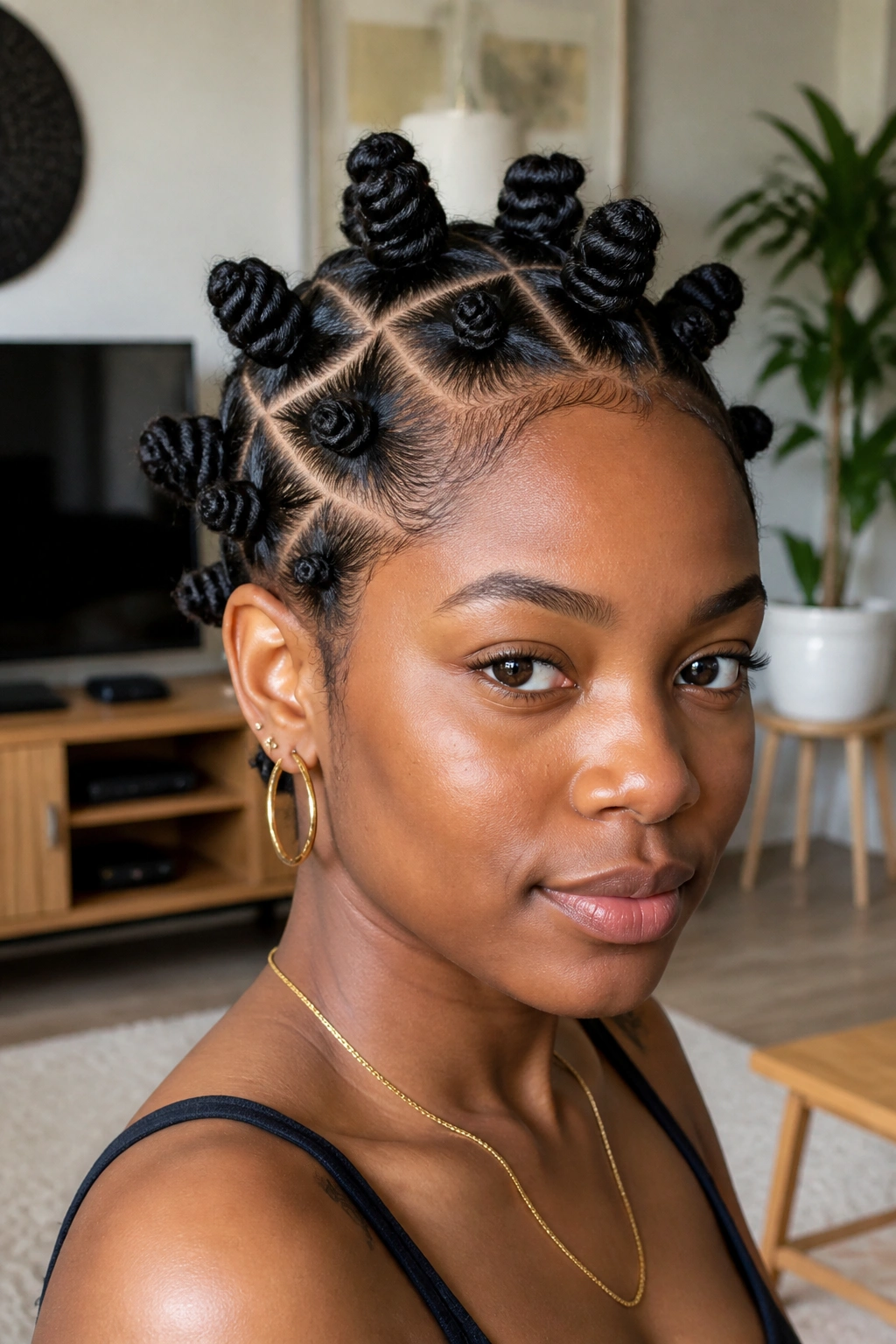
Bantu knots are tidy, but they never look timid.
That’s the first thing people notice. The second is how versatile they are. You can wear them as a full style, use them to stretch and set curls, or combine them with a shaved side, braids, or a clean parting pattern. The look changes a lot depending on the size of the sections. Small knots read neat and sculpted. Larger knots give more of a statement shape.
Why the Parting Matters
A crisp part makes the knots look deliberate instead of random. Triangles, squares, or curved parts each create a different finish, and the scalp lines become part of the style. If the parts are uneven, the knots can still work, but the whole look loses some sharpness.
The wrapping motion matters too. Each section should be twisted tightly enough to coil, then wrapped around itself into a little nub. Secure the ends without dragging on the scalp. Pulling too hard at the base can make the whole style uncomfortable by hour three, which is a shame because the finish can be so good.
Bantu knots also give you a second style if you set them overnight and take them down carefully. The curls underneath can be soft and springy, though the result depends heavily on how much product you used and whether the hair dried completely.
7. Fulani Braids
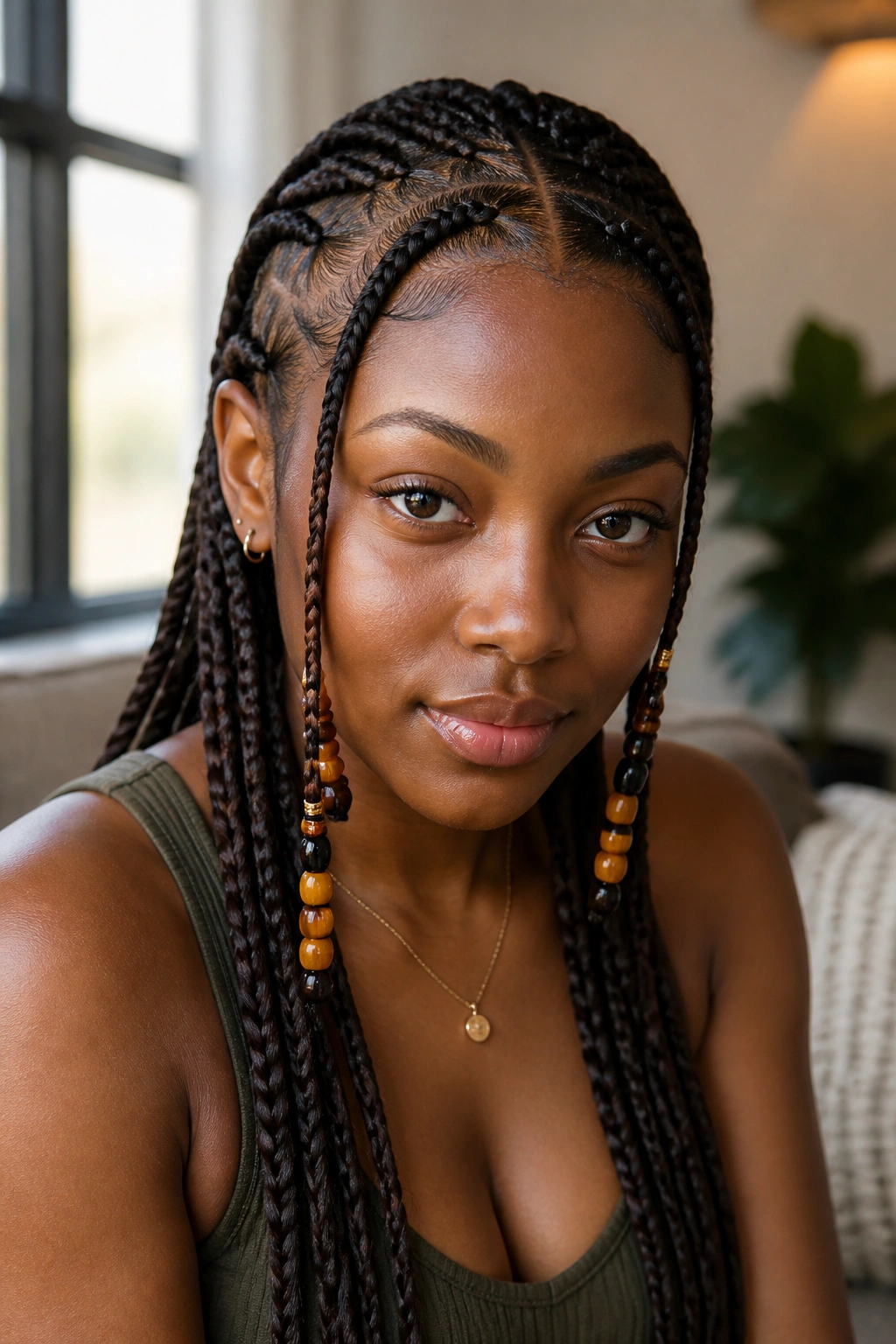
Fulani braids have a way of looking both styled and relaxed at the same time.
The classic version usually features a center braid or cornrow running front to back, with side braids, face-framing pieces, and sometimes beads or cuffs. There’s a lot of room here for personal taste. Some people keep the finish simple and sleek. Others build in curved parts, more texture, or decorative ends that move a little when they walk. The style has strong roots and a distinctive shape, which is part of why it stands out so fast.
The face-framing details matter more than people expect. A single braid falling near the cheekbone can soften the whole look. Without it, the style can feel more severe. With it, the braids land in that sweet spot between polished and lived-in.
What to Ask For
- Medium or small braids if you want the style to last longer.
- Beads only on the ends if you want less weight.
- Clear parting instructions if you want symmetry.
- A low-tension install at the front, especially near the temples.
This is one of those styles where clean sections pay off. Messy parting changes the whole mood, and not in a charming way.
8. Goddess Locs
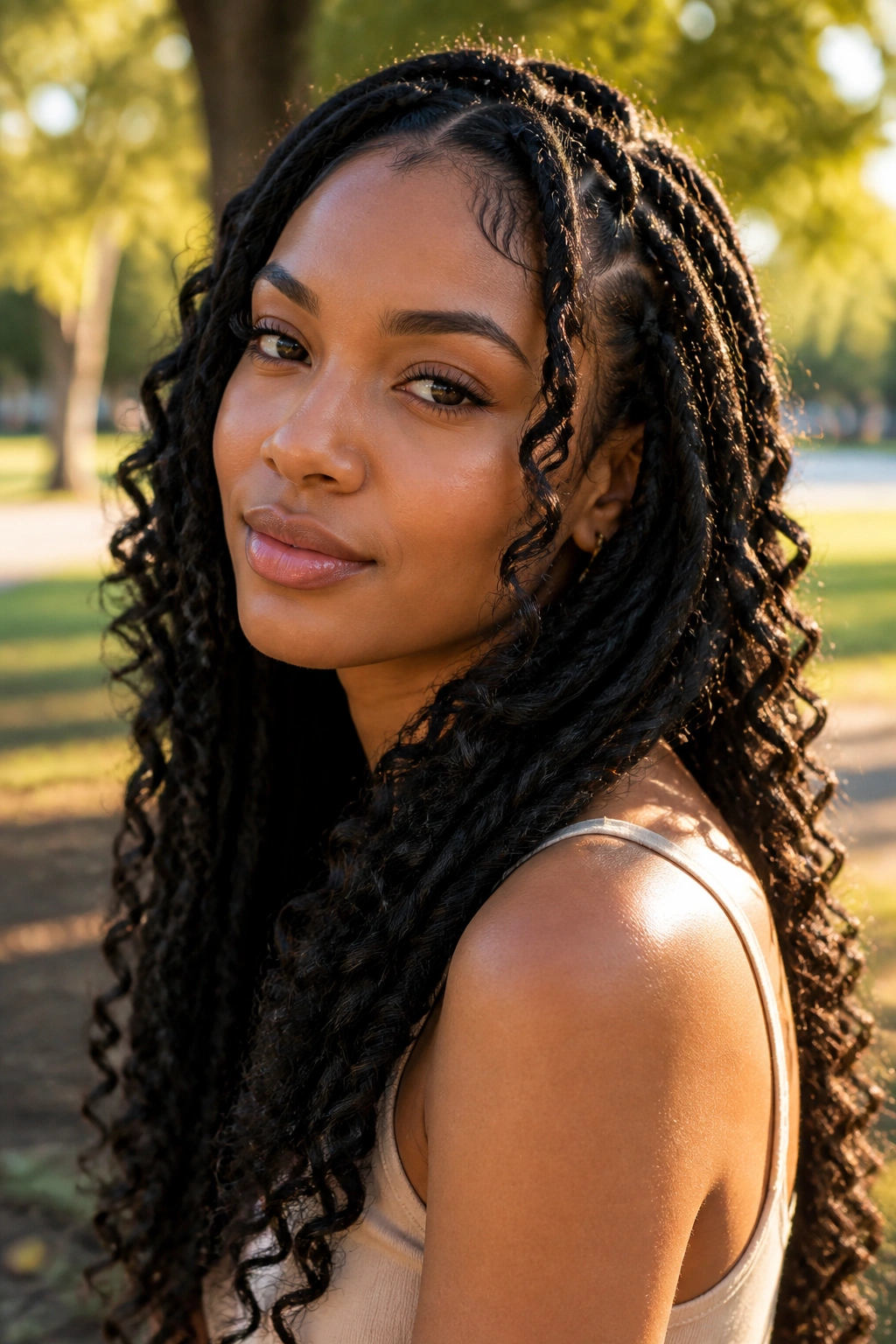
Picture a loc style with loose curls spilling between the strands. That’s the appeal of goddess locs.
They have the structure of locs, but the finish is softer because of the added curly pieces left out through the length or at the ends. The result can feel romantic without tipping into fussy. That balance is hard to pull off, which is why the style has such staying power. It looks styled, but not stiff.
The best versions usually come down to weight and placement. If the locs are too thick or too long, the style can start dragging on the scalp. If they’re too thin, they can look sparse. Medium thickness tends to be the safest middle ground, especially if you want the curls to show without getting tangled immediately.
There’s a catch, though. The loose curls need care. They can frizz, mat, or cling to clothing if you rough them up too much. A light mousse or curl refresher helps, and so does sleeping with the hair in a loose wrap or bonnet. It’s not high-maintenance, but it isn’t zero-maintenance either.
If you like a style that feels soft around the edges and still gives you length, this one is hard to beat.
9. Cornrows
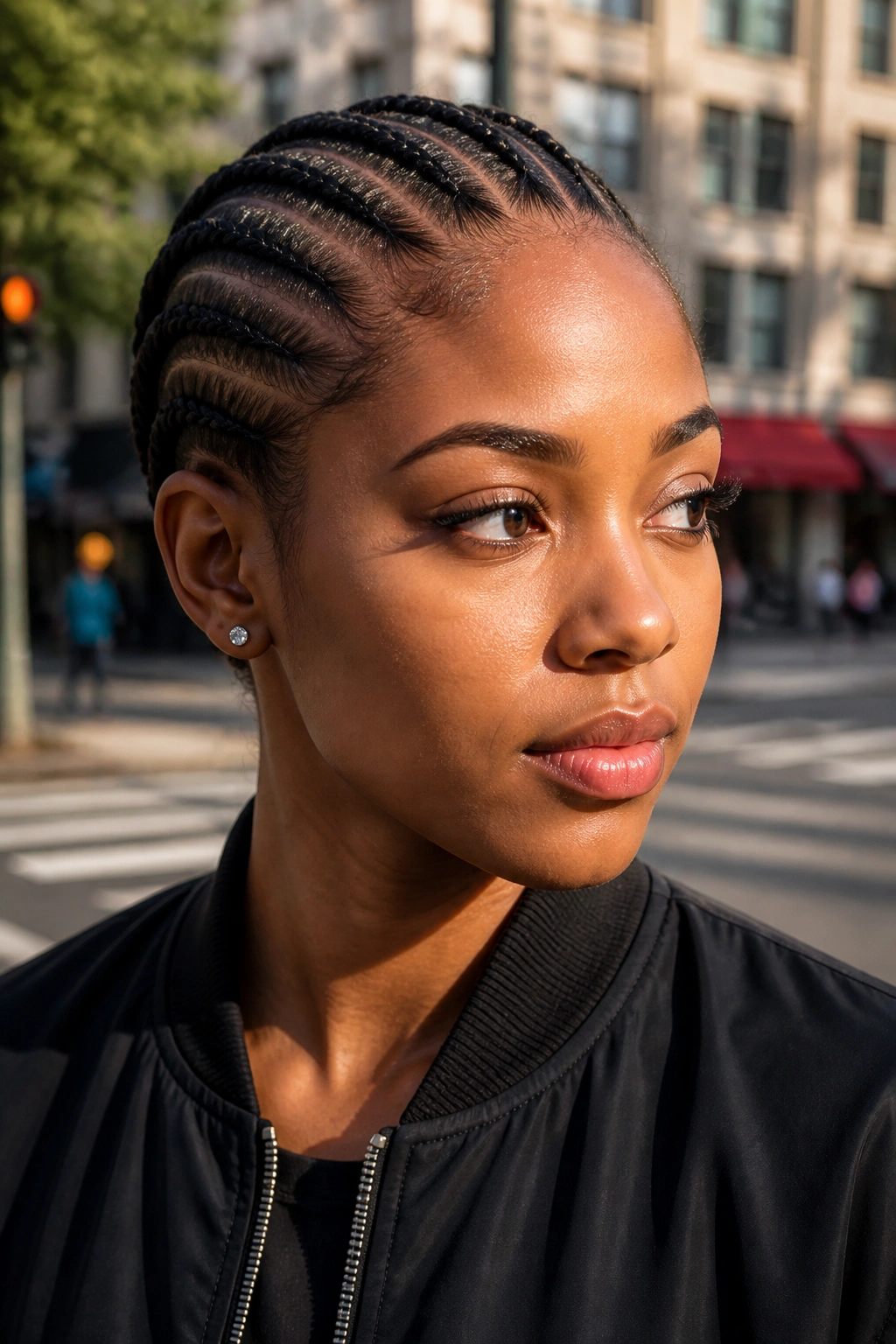
Cornrows are the backbone of a lot of Black hairstyles, and they deserve more credit than they get.
They’re not just a base for wigs or a way to keep hair off the neck. Cornrows can be the whole style, and a good set can look clean, sharp, and deeply intentional. The beauty of cornrows is in the lines. Straight-back rows feel classic. Curved rows change the energy fast. Side parts, diagonal tracks, and geometric sections can turn the scalp itself into the design.
That design only works when the tension is right. Too loose, and the rows puff up quickly. Too tight, and the style starts hurting the scalp, especially around the front. There’s no prize for having the most painful braids in the room.
Cornrows also give the hair a break from daily handling. That’s one reason they’re so useful for low-manipulation styling. But they should still be cared for. Dry scalp, product buildup, and edge stress can creep in if the style is left alone for too long.
A bit of oil along the part lines and a satin scarf at night goes a long way. So does giving the hair a break before reinstalling them again.
10. Afro
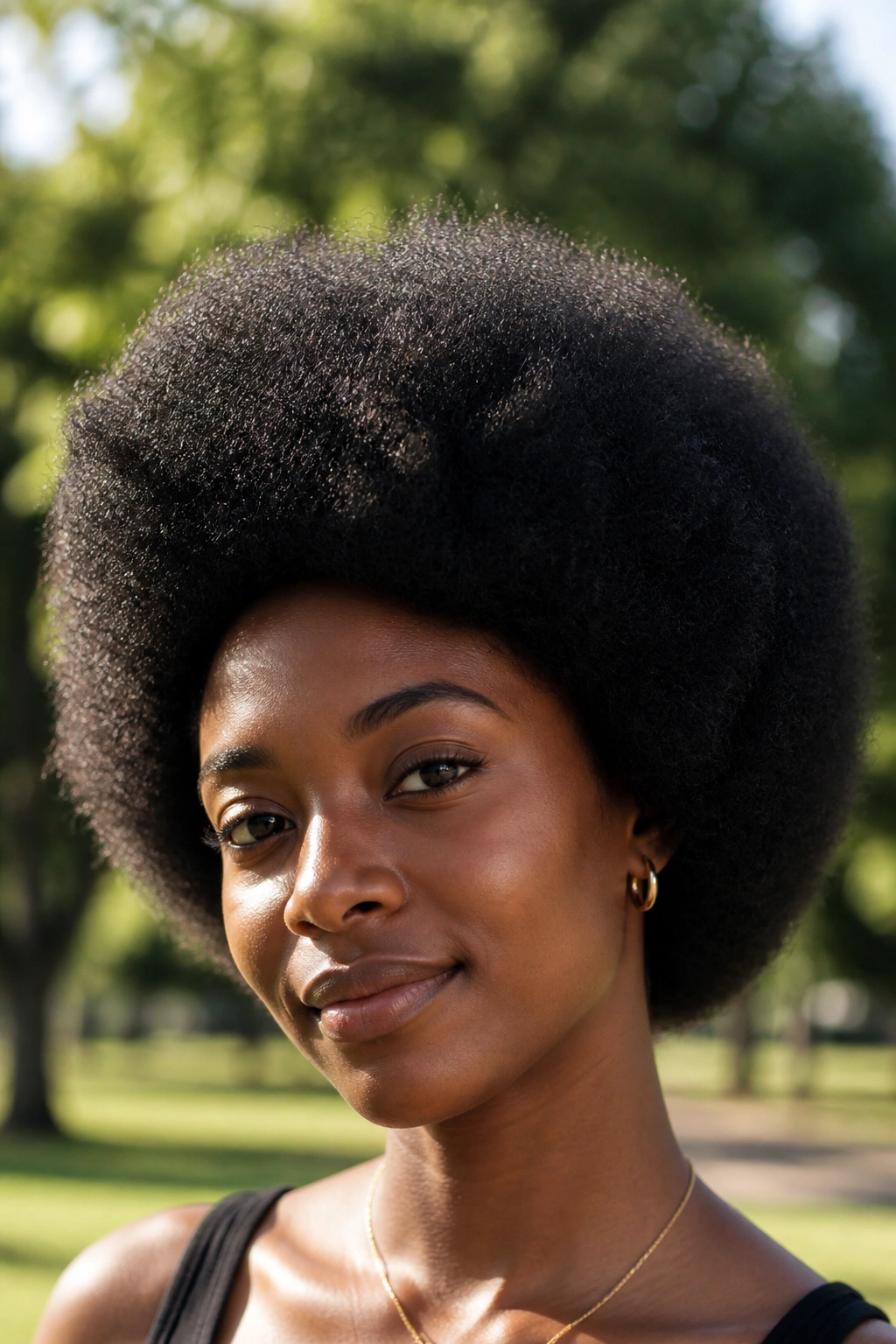
An afro should feel like air and cotton and a little bit of attitude.
The shape is what makes it memorable, but the texture is what makes it feel alive. A good afro doesn’t need to be perfectly round. Some are shaped wide at the sides, some sit taller, and some taper a bit near the neck and temples. That variation is part of the fun. The goal is not to force the hair into a single mold. The goal is to let it expand in a way that looks deliberate.
Pick carefully. That’s the unglamorous part. The wrong pick can rough up the cuticle and leave the hair fuzzy without structure. The right one lifts the roots, opens up the shape, and keeps the style from collapsing into a flat puff by midafternoon. A little oil on the fingertips can help with shine, but too much weighs the hair down fast.
Shape Options Worth Trying
- Rounded for a soft, full silhouette.
- Tapered at the sides for more height.
- Side-parted for a little asymmetry.
- Fluffed out at the crown for a bigger profile.
A trim matters here too. Split ends make an afro look wider in a messy way, not in a stylish way. That’s a small difference, but a real one.
11. Mini Twists
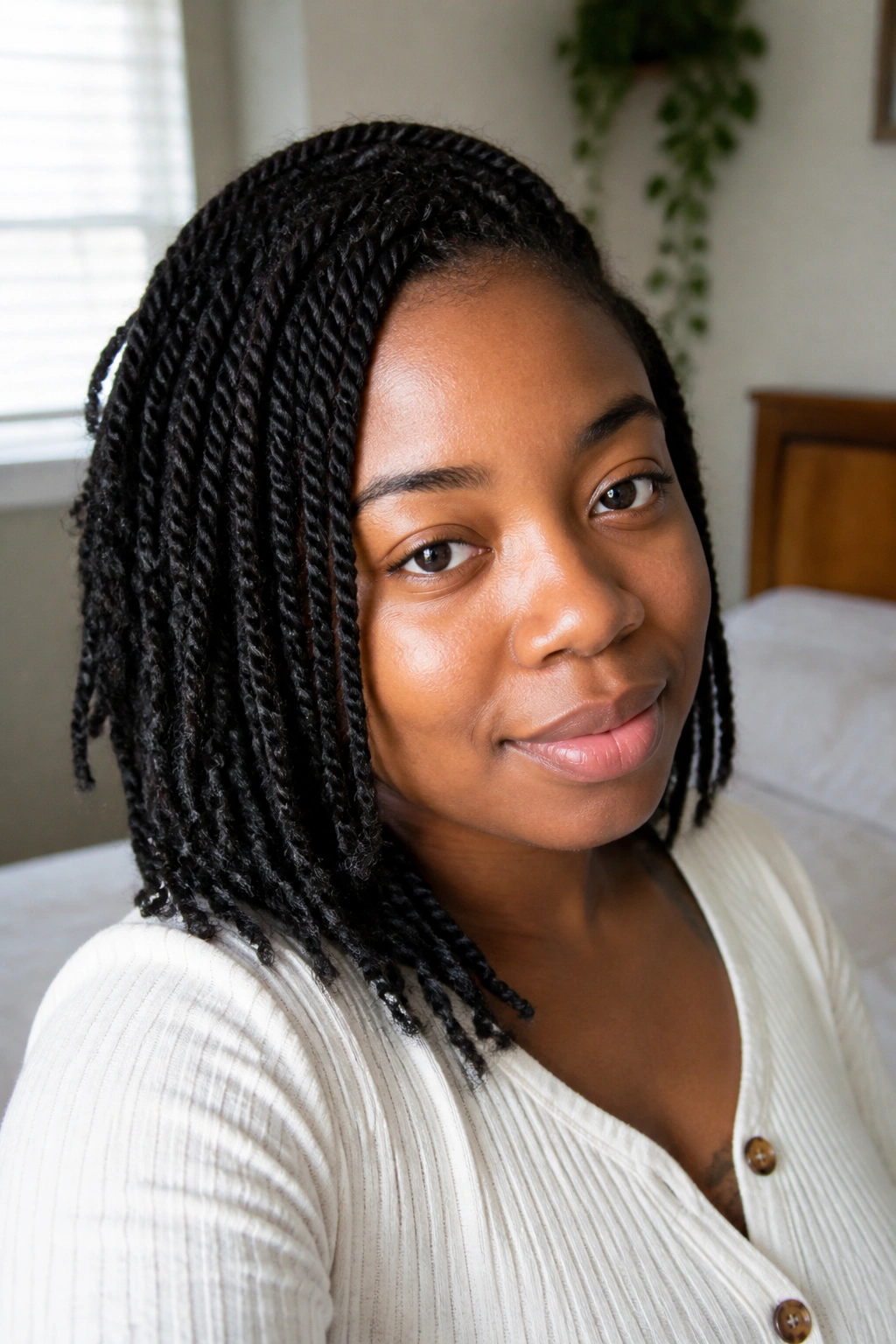
Need something that lasts longer than a twist-out but still lets your texture show? Mini twists are the answer a lot of people land on eventually.
They’re small, neat, and light enough to move naturally. Unlike bigger twists, mini twists hold the hair in place without hiding the texture completely. They also give you more styling options than people expect. You can wear them down, pin them into a bun, half them up, or tuck them under a scarf when you want a faster morning.
The size is what gives them staying power. Because the sections are small, the style usually stays tidy longer and frizzes more slowly than larger twist styles. The tradeoff is time. Installing mini twists can take a while, especially if your hair is dense, and rushing through them is a bad idea. Uneven tension shows up later as lumps and sore spots.
A light cream or twisting butter works well, but don’t overload each section. Product buildup makes the twists sticky and can shorten the life of the style. Nighttime care matters too. Loose twists plus a satin bonnet is a solid combination, and it’s easier than trying to retwist every night.
12. Tapered Cut
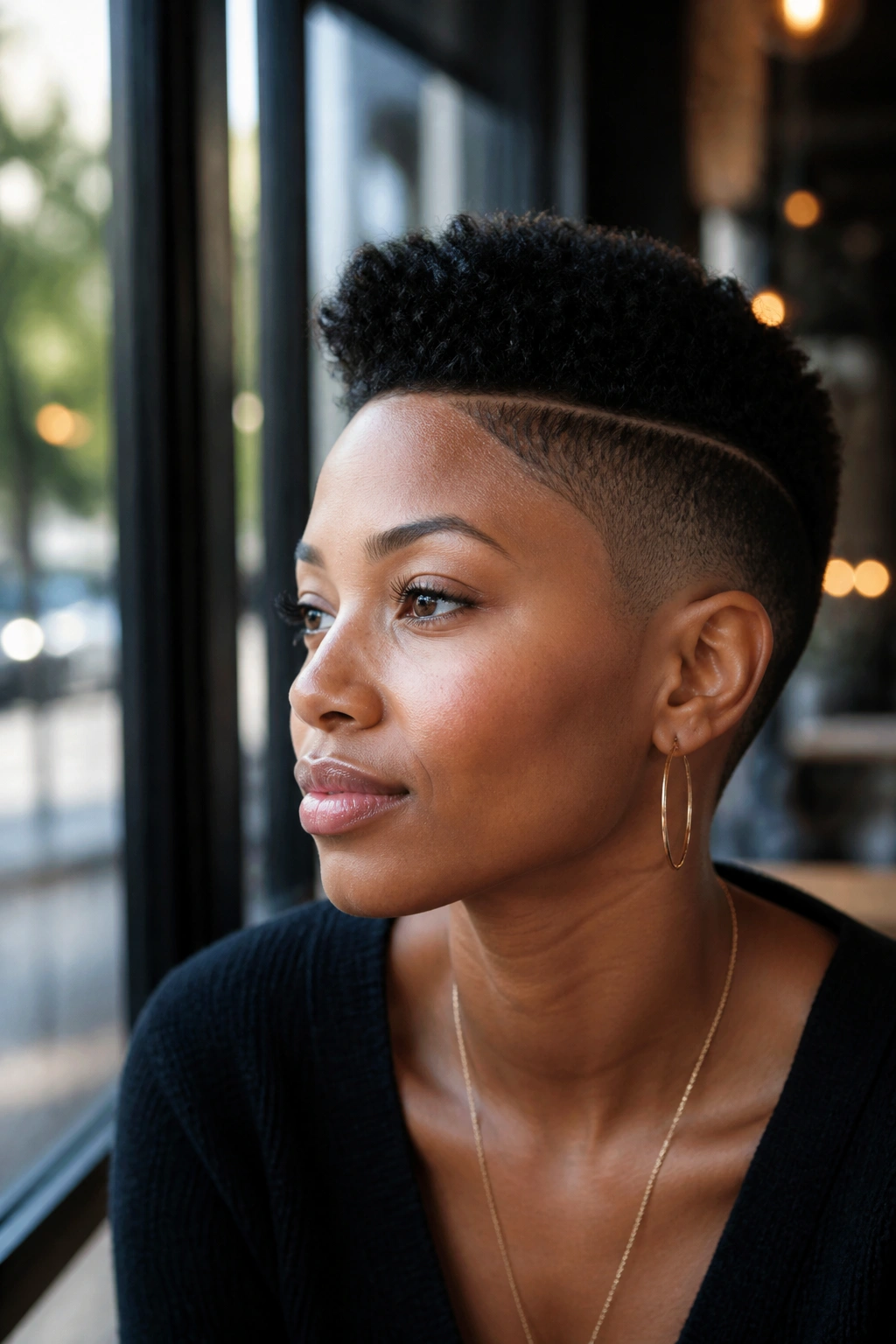
A tapered cut can be one of the sharpest moves a Black woman can make with textured hair.
It keeps the sides and back shorter while leaving more length on top, which means the shape has built-in contrast. That contrast is the whole point. It gives the hair room to puff, curl, spike, or lay flat depending on what you do with the top section. If you like definition around the face and less bulk at the neck, this cut makes a lot of sense.
The best part? It can cut styling time way down. A short spray of water, a little curl cream, and maybe a bit of gel at the front can be enough on most days. Some people use a sponge for a more defined coil pattern on the top, while others keep it soft and brushed up. Either way, the haircut does a lot of the heavy lifting.
A taper does need maintenance, though. The shape can lose its edge if the sides grow out too much. A quick line-up or trim every few weeks keeps the balance intact. And because the hair is short, scalp care matters more. Dryness shows fast, especially near the crown and nape.
Clean, simple, and a little bold. That’s the appeal.
13. Faux Locs
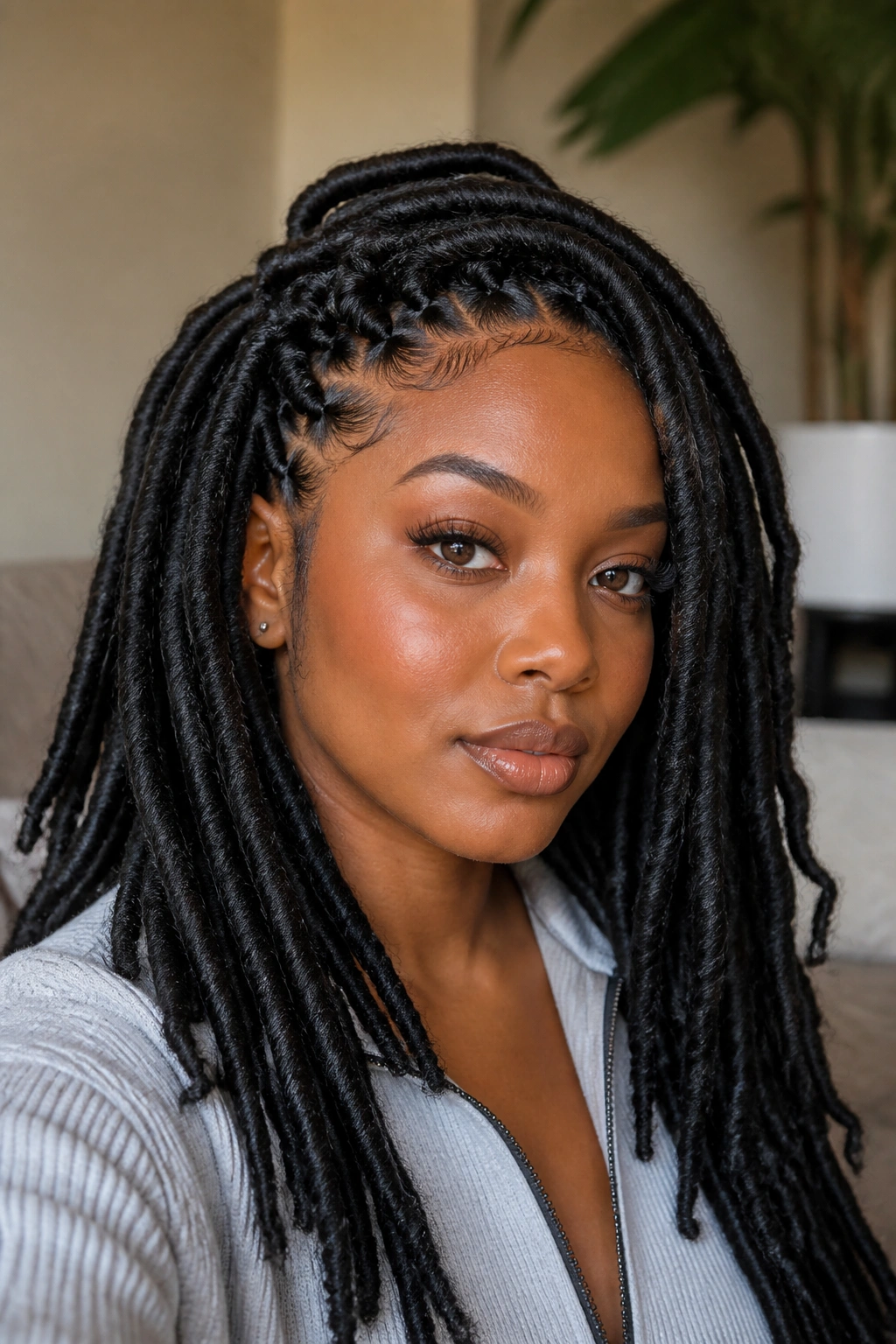
If you like the look of locs but not the long commitment, faux locs sit in the middle.
They can be wrapped around braided hair, crocheted in, or built with other methods depending on the finish you want. Some versions look neat and polished from root to tip. Others keep a rougher, more bohemian feel with loose ends and textured strands peeking out. Both can work. The real question is weight. Too much hair added to each section makes the style heavy, and heavy faux locs get uncomfortable fast.
That’s one reason size matters so much. Small locs give more movement and a lighter feel, while larger locs create a fuller look with fewer pieces overall. If you want a style that hangs long and soft, go a little smaller and ask for flexible ends. If you want something that reads strong and structured, thicker locs can do that.
The roots deserve care too. Tension at the base is the main thing to watch, especially during installation. A style that pulls from the front or temples will start showing stress before the rest of the head does.
Wear a satin scarf at night, and don’t let buildup collect around the roots. It makes the style look older than it is.
14. Half-Up Half-Down Sew-In
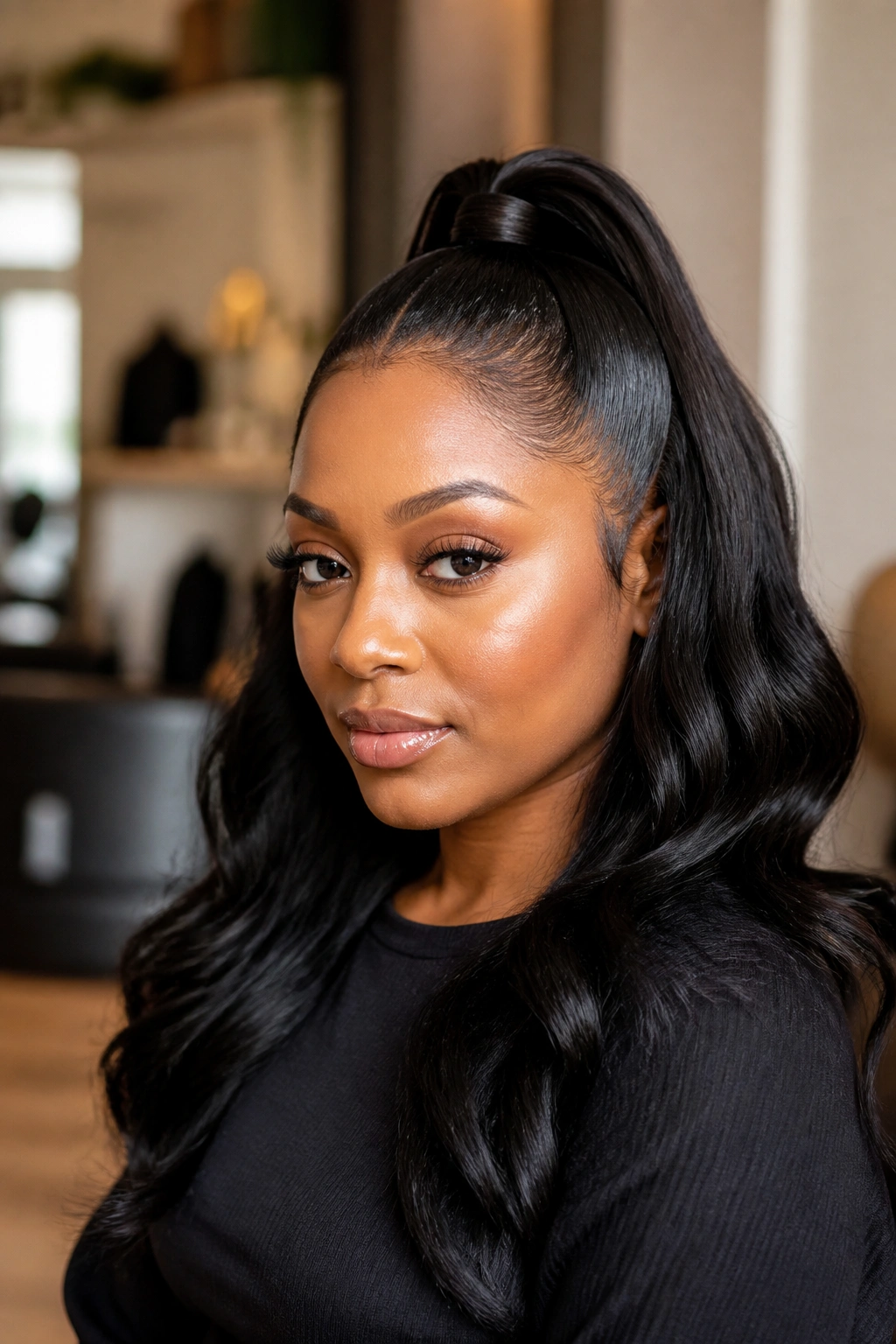
A half-up half-down sew-in gives you shape, volume, and a little freedom around the face.
It works because the top section is pulled up into a ponytail, bun, or knot, while the rest of the hair hangs loose. That balance gives you movement without losing control of the style. It’s one of the easiest ways to make a weave look full without wearing it all the same way every day. A straight texture reads sleek and clean. Curls make the lower half feel softer. Wavy hair sits somewhere between the two.
The install matters a lot here. If the braid foundation underneath is too bulky, the top section can look lumpy once it’s pulled up. If the leave-out is too thin, blending becomes a problem later. And if the front is pressed too flat, the whole style loses body. That’s why the best versions feel planned, not improvised.
It also helps if the hairline is protected. A little tension in the top is fine. A lot is not. The style should be cute when it’s finished, not sore by lunchtime.
This is a strong choice for events, date nights, and anyone who likes the idea of wearing hair down without dealing with full-length maintenance every day.
15. Silk Press Lob
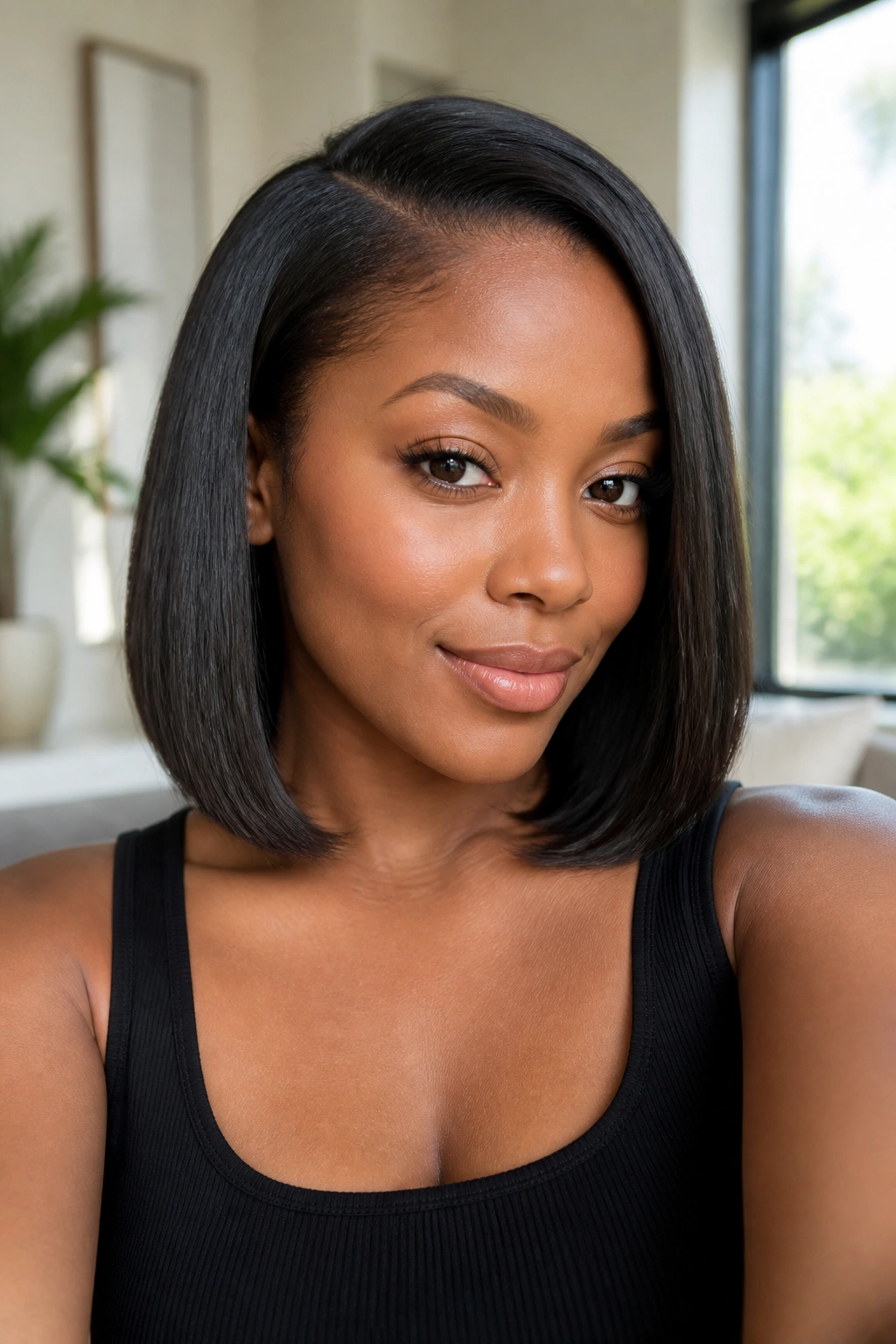
A silk press is not a surrender to straight hair when it’s done well.
It’s a styling choice, and the lob length makes it practical. A shoulder-skimming silk press has enough movement to feel soft, but not so much length that it becomes hard to manage in humidity. The finish usually depends on heat prep, clean sectioning, and careful use of a flat iron. If the hair is pressed in big, careless chunks, you get puff and frizz fast. Small sections, controlled passes, and the right heat setting matter more than fancy tools.
The best part of a lob is the shape. It frames the face cleanly and swings when you move. That swing is part of the appeal. It feels lighter than a long press, and it tends to hold its style a little longer because there’s less weight pulling it down.
Humidity is the obvious challenge. A silk press can look excellent and then lose its crispness the second the air gets damp. That doesn’t make the style useless. It just means you should treat it like a special style, not an every-week habit.
A wrap at night, a silk scarf, and a good anti-humidity spray help. So does knowing when to call it a week and go back to curls.
16. Finger Waves
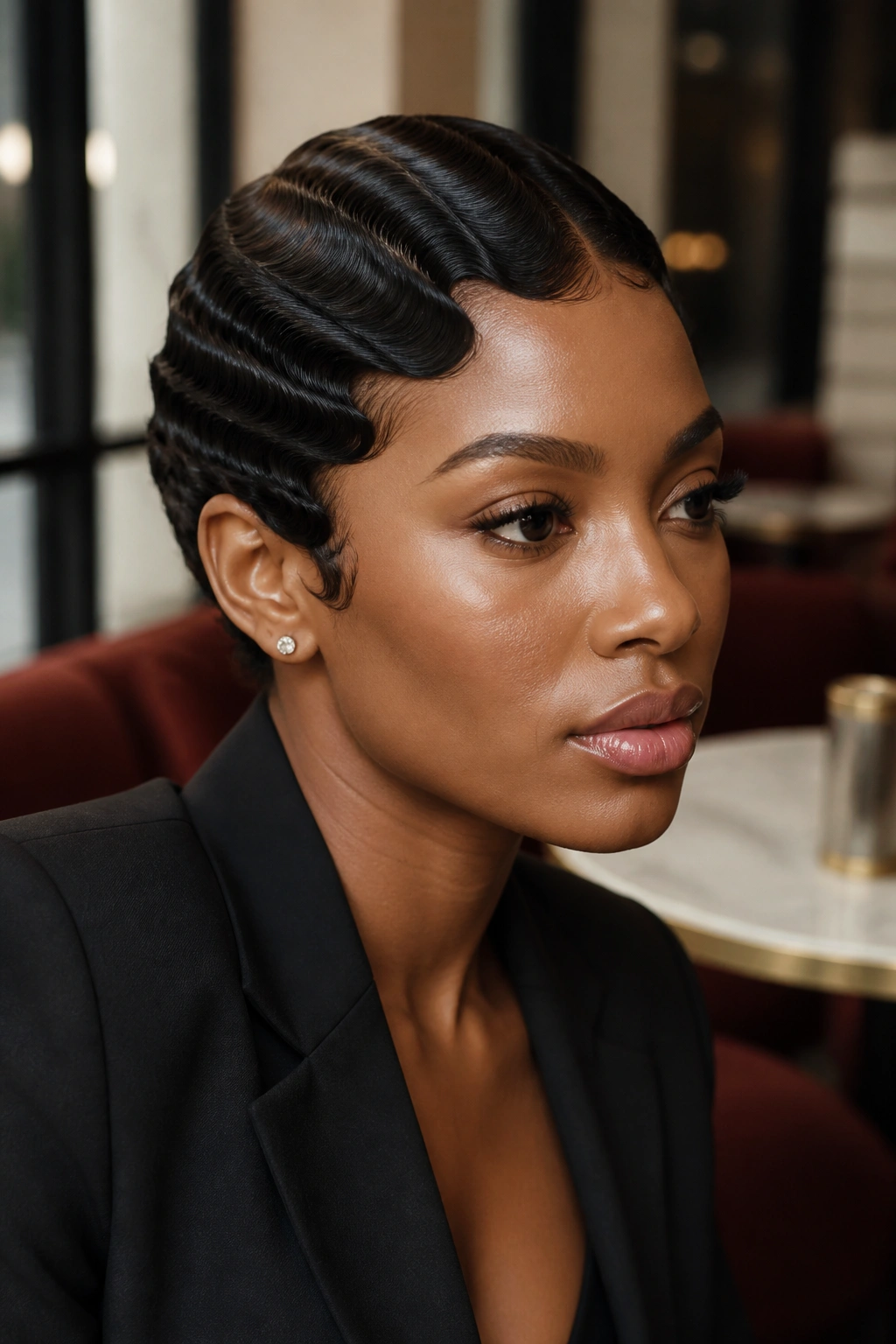
Finger waves look like vintage glamour, but the process is practical enough to wear with a blazer or a cocktail dress.
The style is built by molding damp hair into curved ridges with a comb and setting lotion or gel. On short hair, especially a pixie or cropped cut, the waves sit close to the head and create a smooth, sculpted effect. On longer short styles, the waves can be pushed to one side for more drama. Either way, the shape is the point.
What makes finger waves look good is clean parting and patience. The comb has to move in a deliberate S-shape, and the hair needs enough product to hold the ridge without turning flaky. Too much product makes the hair hard. Too little and the wave collapses before it dries.
Tools That Help
- A fine-tooth comb for shaping the ridges.
- Setting lotion or strong gel.
- Duckbill clips to hold the waves while they dry.
- A hooded dryer if you need the set to finish faster.
This is not a casual throw-on style. It asks for precision. But when it’s done right, it has a crispness that still feels fresh.
17. Feed-In Ponytail
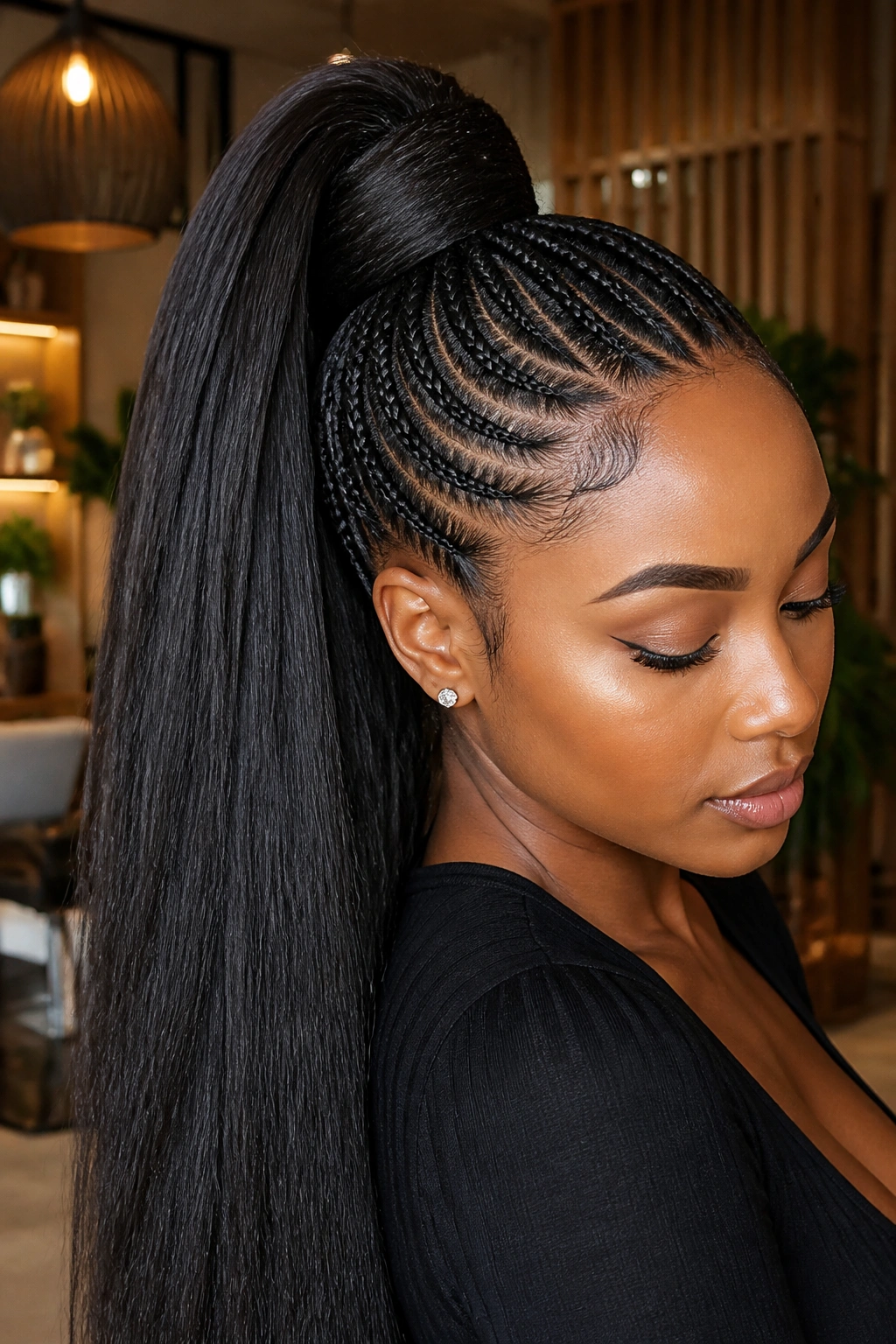
Want length without hanging braids around your face all day? A feed-in ponytail gives you that.
The braid pattern starts close to the scalp and gradually adds extension hair, which makes the ponytail look fuller and smoother at the base. That gradual build is what separates it from a simple pulled-back ponytail with extensions attached at the end. The braid itself becomes part of the design, and the ponytail can sit high, mid-height, or low depending on the mood you want.
It’s a strong choice when you want drama without committing to a full head of braids. The ponytail can be curly, straight, or braided all the way down. Some versions finish with wrapped hair around the base to hide the attachment point, which gives the style a cleaner line.
What to Ask Your Stylist
- How much extension hair will be added.
- Whether the base will be a single braid or multiple feed-ins.
- How the weight will be spread so the front doesn’t pull too hard.
- Whether you want baby hairs laid down or a cleaner finish.
Weight matters here more than people expect. A heavy ponytail can tug at the scalp after a few hours, especially if it sits high. So lighter isn’t laziness. It’s comfort.
18. Asymmetrical Pixie Cut
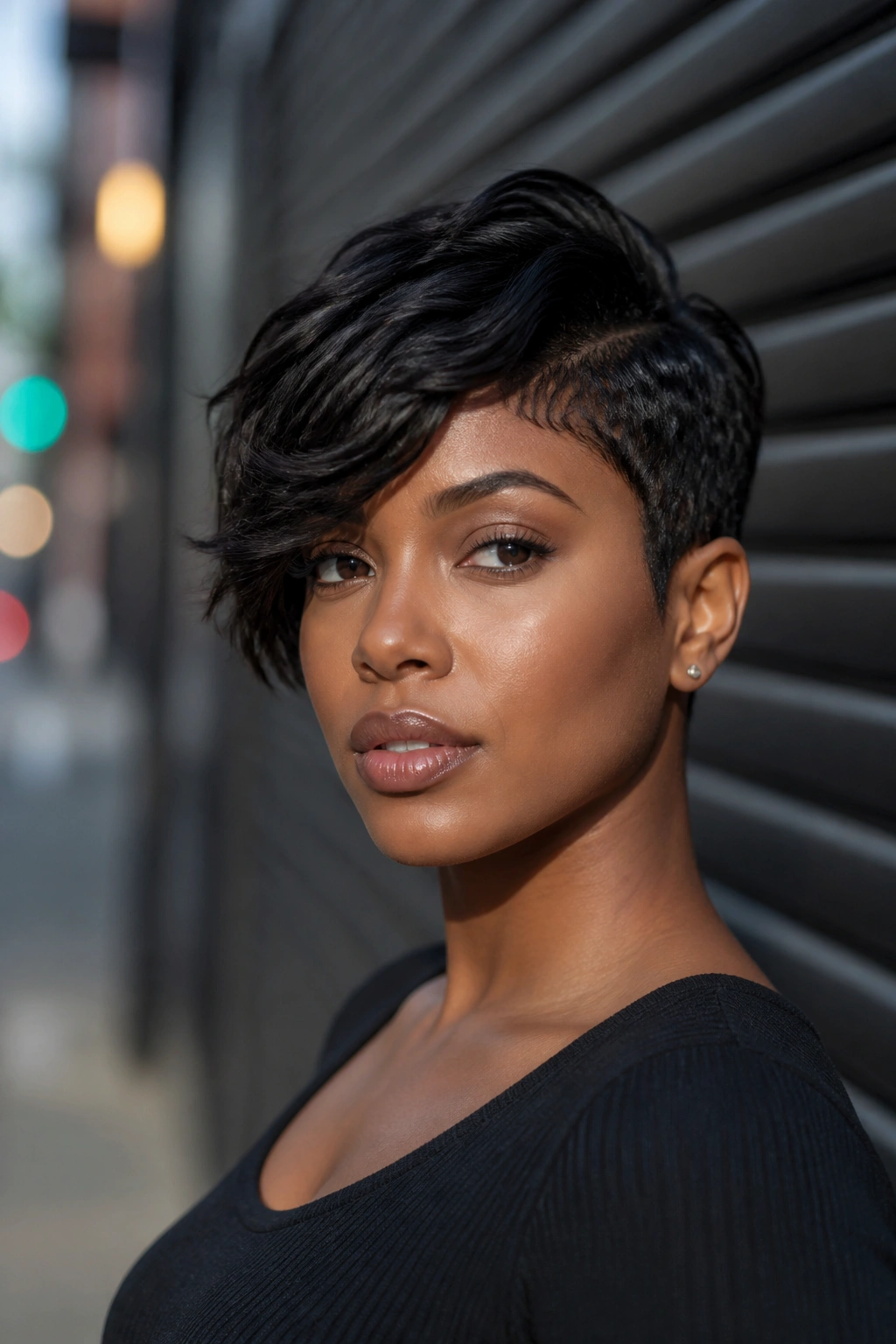
Short hair does not mean safe hair.
An asymmetrical pixie cut proves that fast. One side might stay a little longer, the top may sweep forward, and the back can be clipped close enough to keep the shape sharp. The result is sleek, edgy, and easy to style once the cut is in place. It works especially well on textured hair because the natural curl or wave on top gives the style life instead of making it look flat.
The best part is how little time it takes in the morning. A small amount of cream or pomade, a brush, and a bit of finger shaping can be enough. If the top is long enough, you can push it to one side or give it a soft curl with a roller set. If it’s shorter, the cut itself does the talking.
Maintenance is the tradeoff. The edges and shape need regular clean-up, or the whole style starts losing its line. That’s not a flaw. It’s just part of wearing short hair with intention.
And if you’re going to go short, go short on purpose. A strong pixie has presence. It doesn’t ask for permission.
A great hairstyle should fit your schedule, your texture, and your tolerance for maintenance. That part gets ignored too often. The best looks in this list all do at least one useful thing besides looking good: they protect, stretch, frame, lift, or simplify your day.
And honestly, that’s the standard worth keeping.
