



Medium textured hairstyles for round faces work best when they bend the eye downward instead of pushing it sideways. That sounds picky, but hair that sits at cheek level can make a face read wider in photos, while a little length past the jaw does the opposite.
The sweet spot is usually somewhere between the collarbone and the shoulders, with texture that breaks up the shape without turning the sides fluffy. I like that range because it gives you room to play: soft waves, airy layers, curtain bangs, a side part, or a little bend through the ends. None of it has to feel stiff.
A good cut for a round face is not about hiding your features. It’s about placing the weight in the right spot. If your hair is fine, you want movement without collapse. If it’s thick, you want shape without that wide, boxy triangle look. If it’s curly, you want to let the curl pattern breathe while keeping the silhouette a little longer than it is wide.
And yes, the difference can be subtle. A half-inch in the front, a lower start point for face-framing layers, or a side part that opens one side of the face can change the whole feel. The styles below use those small details in different ways, so you can pick the one that fits your hair, your styling patience, and the shape you actually want to show off.
1. Collarbone Shag with Curtain Bangs
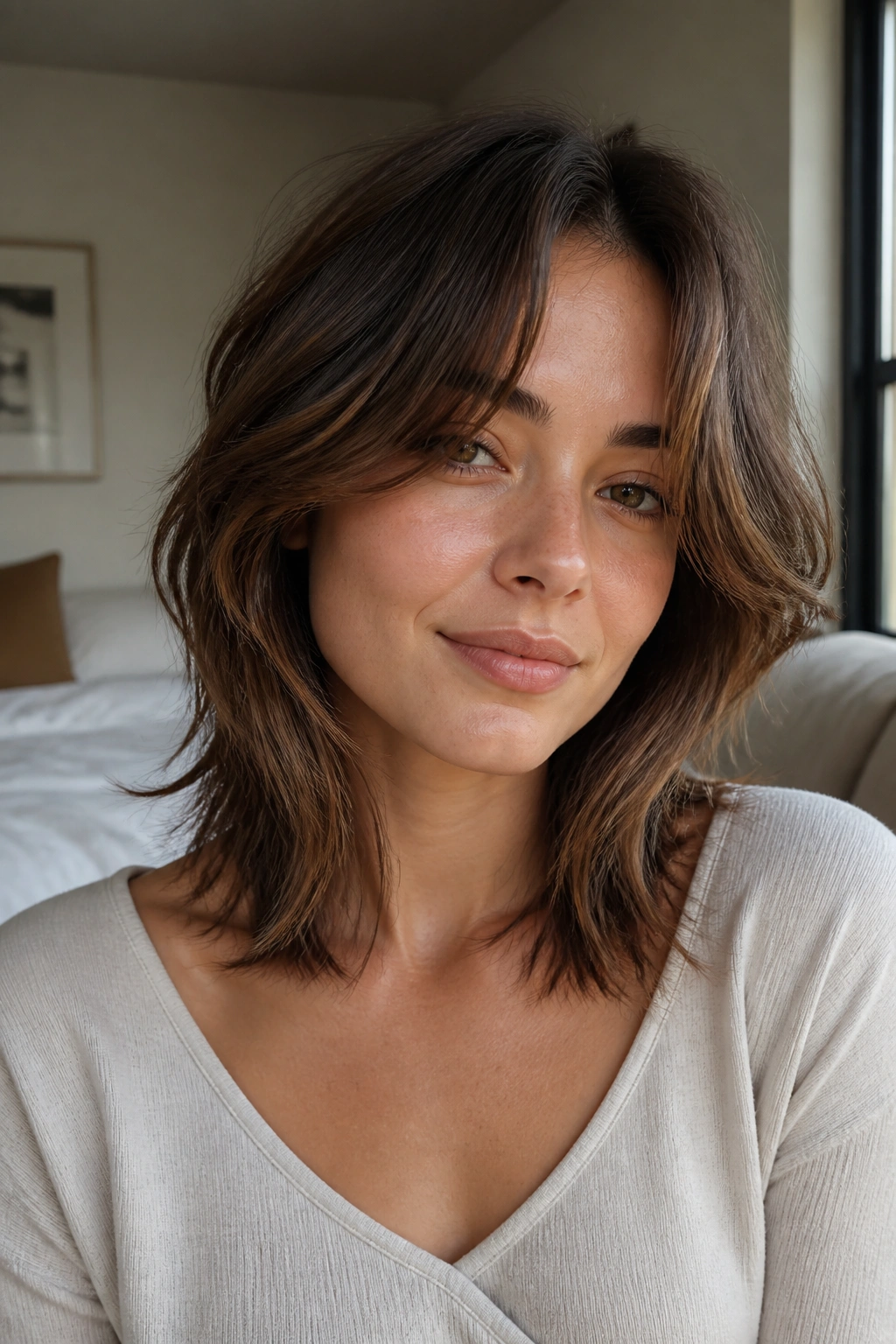
This is the haircut I reach for when someone wants movement without losing length. A collarbone shag gives you that broken-up texture through the mid-lengths, and curtain bangs split the face in a way that keeps the center open. On a round face, that matters. You get softness around the cheeks, but not a heavy sweep that makes the face look wider.
Why It Works
The shag’s layers should start low enough to avoid puffing out at the temples. Ask for the shortest layers to live around the cheekbone or just below it, then let the ends skim the collarbone. That creates a long, relaxed line.
Curtain bangs are doing a lot of quiet work here. They draw the eye vertically, especially when they’re blended into the sides instead of cut as a hard fringe. Keep the bangs soft, not blunt. Blunt bangs on a round face can feel boxy fast.
- Best for medium-density hair with a natural bend
- Styles well with a round brush or a 1¼-inch curling iron
- Looks good a little messy, which is half the charm
- Ask for internal texture, not choppy layers all over
Tip: Blow-dry the bangs away from the face first, then tuck the sides in loose waves. That little bit of lift at the front keeps the shape from falling flat.
2. Side-Parted Textured Lob
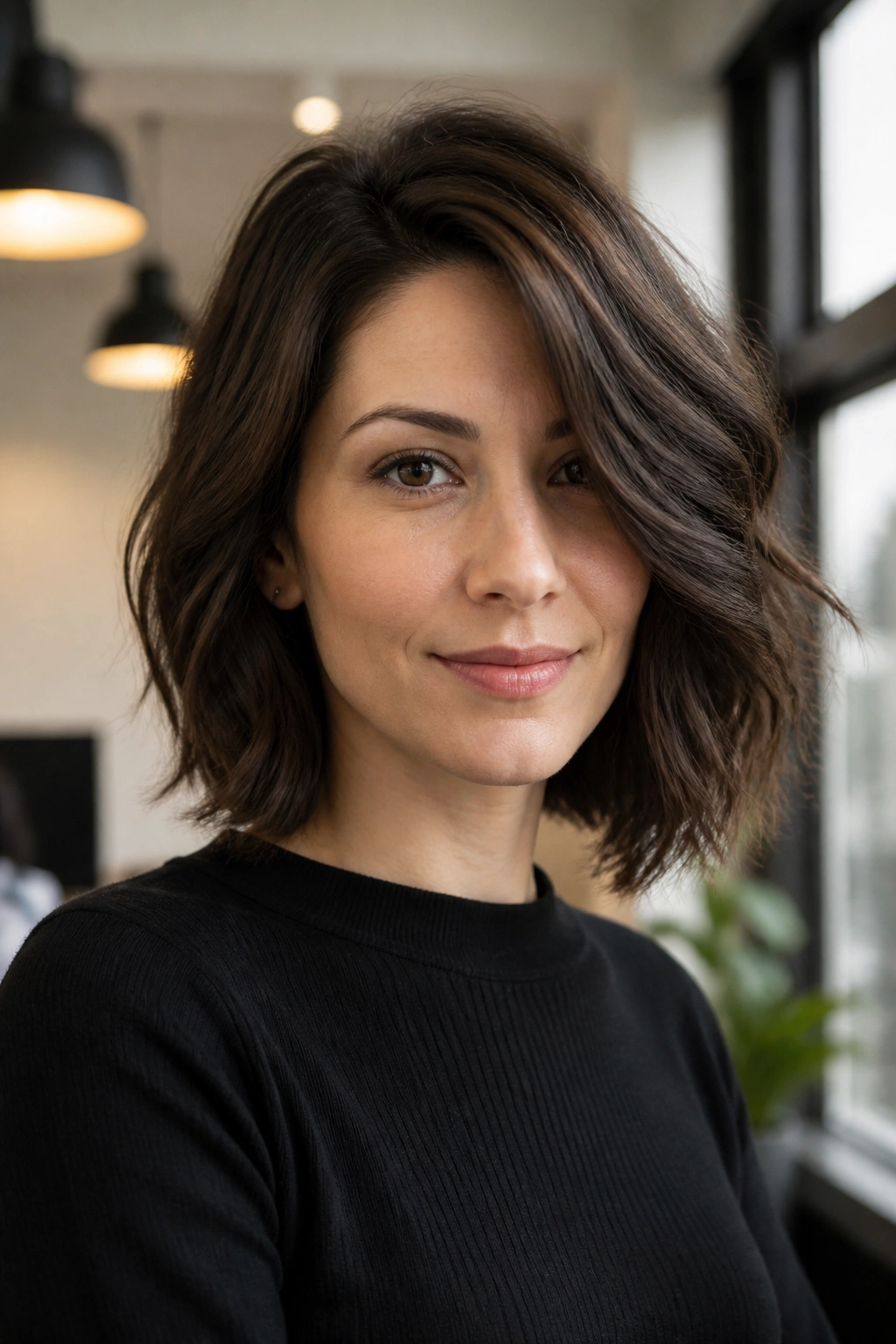
A side-parted textured lob does one thing very well: it breaks the face into uneven sections, and that unevenness is flattering. Round faces often look fuller when everything is centered and symmetrical. A deep or even medium side part changes the line of sight immediately.
The cut itself should hit between the jaw and the collarbone, with texture concentrated through the ends. I like this version because it feels clean, not fussy. You can wear it straight, wave it with a flat iron, or let your natural texture do the heavy lifting.
The real trick is the side part. Move it two to three inches off center and let one side fall a little closer to the cheek while the other side opens up. That asymmetry gives the face more shape. It also keeps the style from reading too round.
This one works especially well if you want something office-friendly that still looks soft on weekends. If your hair is fine, use a light mousse at the roots. If it’s thick, ask for weight removal under the top layer so the lob doesn’t balloon out at the sides.
3. Soft Butterfly Cut at Shoulder Length
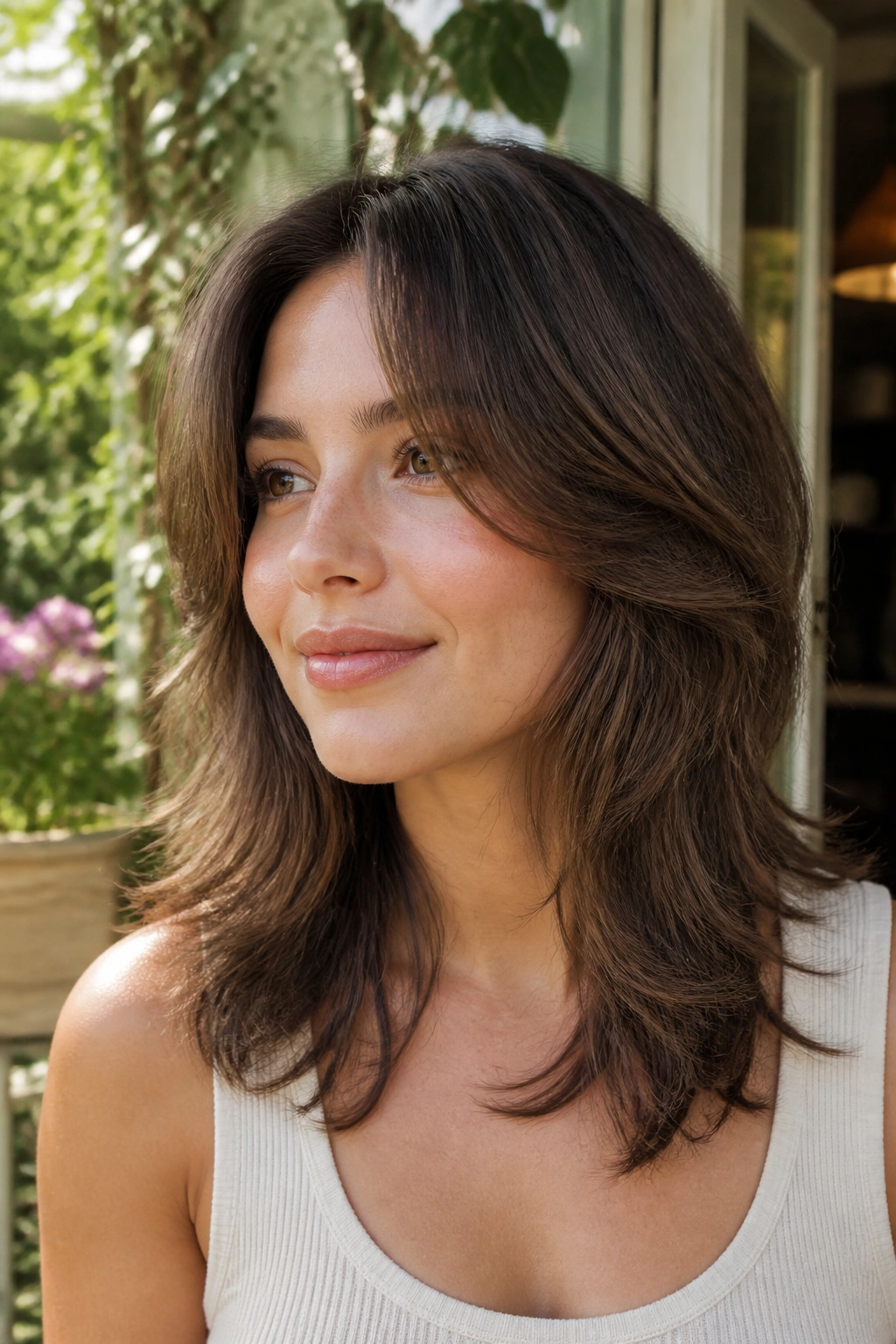
Why does the butterfly cut keep showing up in flattering medium hairstyles for round faces? Because it gives you two things at once: face-framing movement and length through the back. That combination helps the eye travel downward instead of stopping at the widest part of the face.
The cut uses shorter layers around the front and longer, flowing layers through the back. On shoulder-length hair, that means you get lift around the cheekbones without losing the clean line below. It’s a nice option if you like volume but hate a blunt, heavy outline.
How to Wear It
Style the front pieces away from the face with a large round brush or a medium curling iron. The goal is not tight curl. The goal is a bend that starts around the jaw and turns out gently.
The back can stay looser and airier, which gives the whole cut a little swing. That swing is what keeps the style from feeling heavy. If your hair is thick, ask for the interior layers to be removed carefully so the shape doesn’t puff up at the ends.
- Works well on straight, wavy, and softly curly hair
- Needs a blow-dry or hot-tool pass to show the layers
- Good choice if you want a fuller shape without bulk at the cheeks
- Curtain bangs are optional, not required
4. Wavy Midi Cut with Invisible Layers
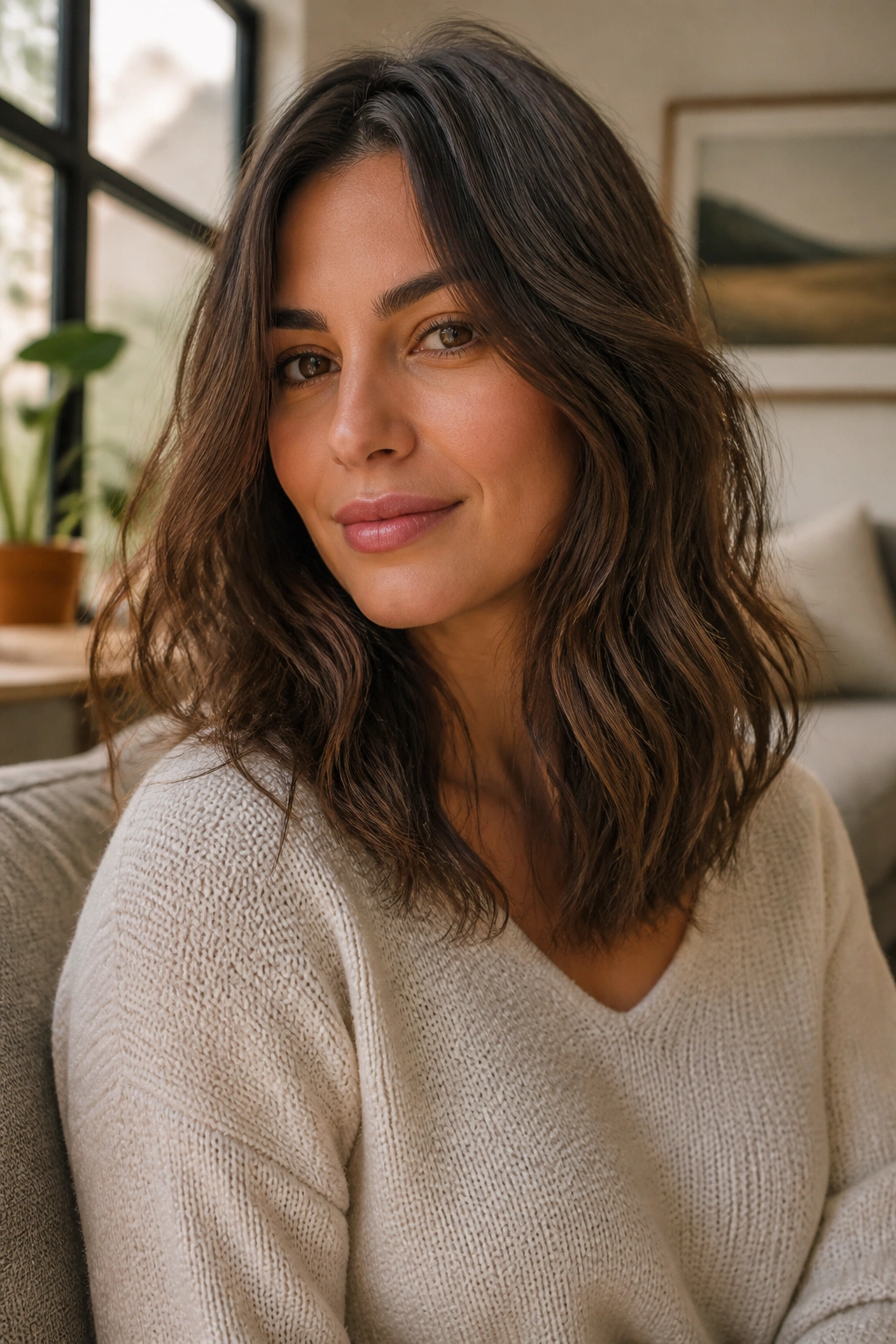
Picture hair that hits somewhere between the collarbone and the top of the chest, bends in loose waves, and never looks overworked. That’s the appeal here. A wavy midi cut with invisible layers gives round faces movement without obvious stair-step layering.
Invisible layers live inside the haircut, not on the surface. You feel them in the way the hair falls, but you don’t see a bunch of short pieces scattering around the face. That’s useful if you want texture but still like a neat outline.
The cut works because the outer shape stays long and smooth while the inside has enough structure to keep wave patterns from collapsing. It’s a low-drama cut with a lot of shape. Great if you air-dry most days.
- Ask for long internal layers instead of choppy surface layers
- Best on hair that already holds a wave or soft bend
- Use a curl cream or light mousse, not a heavy balm
- Scrunch, diffuse, or let it dry naturally for a softer finish
One smart move: leave the front pieces a touch longer than you think you need. On a round face, that extra half-inch makes the whole silhouette feel leaner.
5. Angled Lob with Choppy Ends
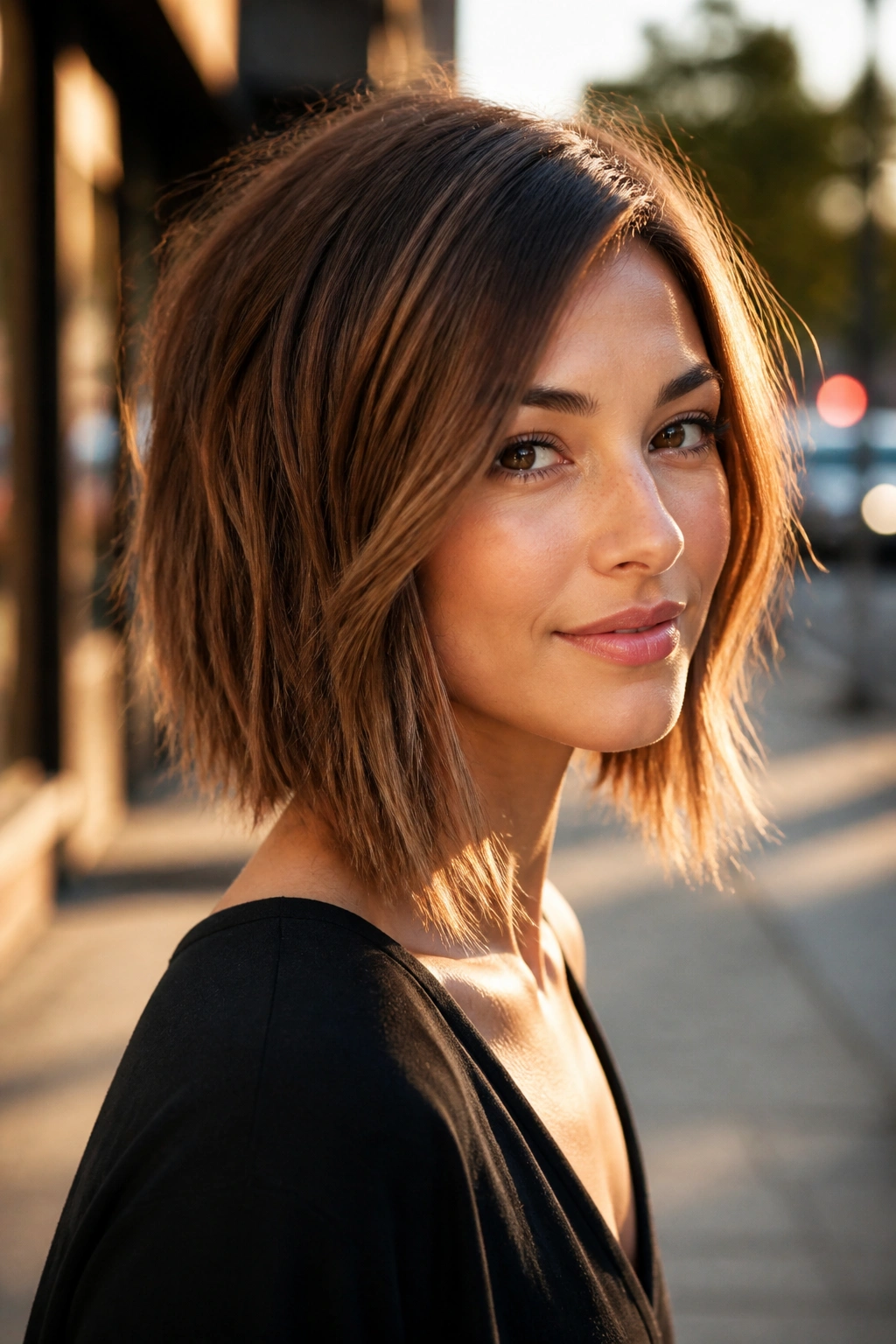
I like an angled lob on a round face because it gives the eye a job to do. The front sits a little longer than the back, and that small slope creates a clean diagonal line across the face. Diagonals help. Straight horizontal lines do not.
The choppy ends keep the cut from feeling severe. Too much bluntness at this length can widen the lower face, especially if the cut stops right at the jaw. By letting the ends break up a bit, you keep the shape light and modern without losing the polished edge.
This is one of those styles that looks expensive even when it’s not fussy at all. Dry it smooth, add a few bends with a flat iron, and let the ends stay a little piecey. The angle does the work. You don’t need elaborate styling.
If your hair is thick, ask for some weight removed under the top layer so the front doesn’t kick out. If it’s fine, ask for soft perimeter texturing rather than heavy thinning. Thinning shears can make fine hair look ragged. Not my favorite.
6. Shoulder-Length Cut with Face-Framing Layers
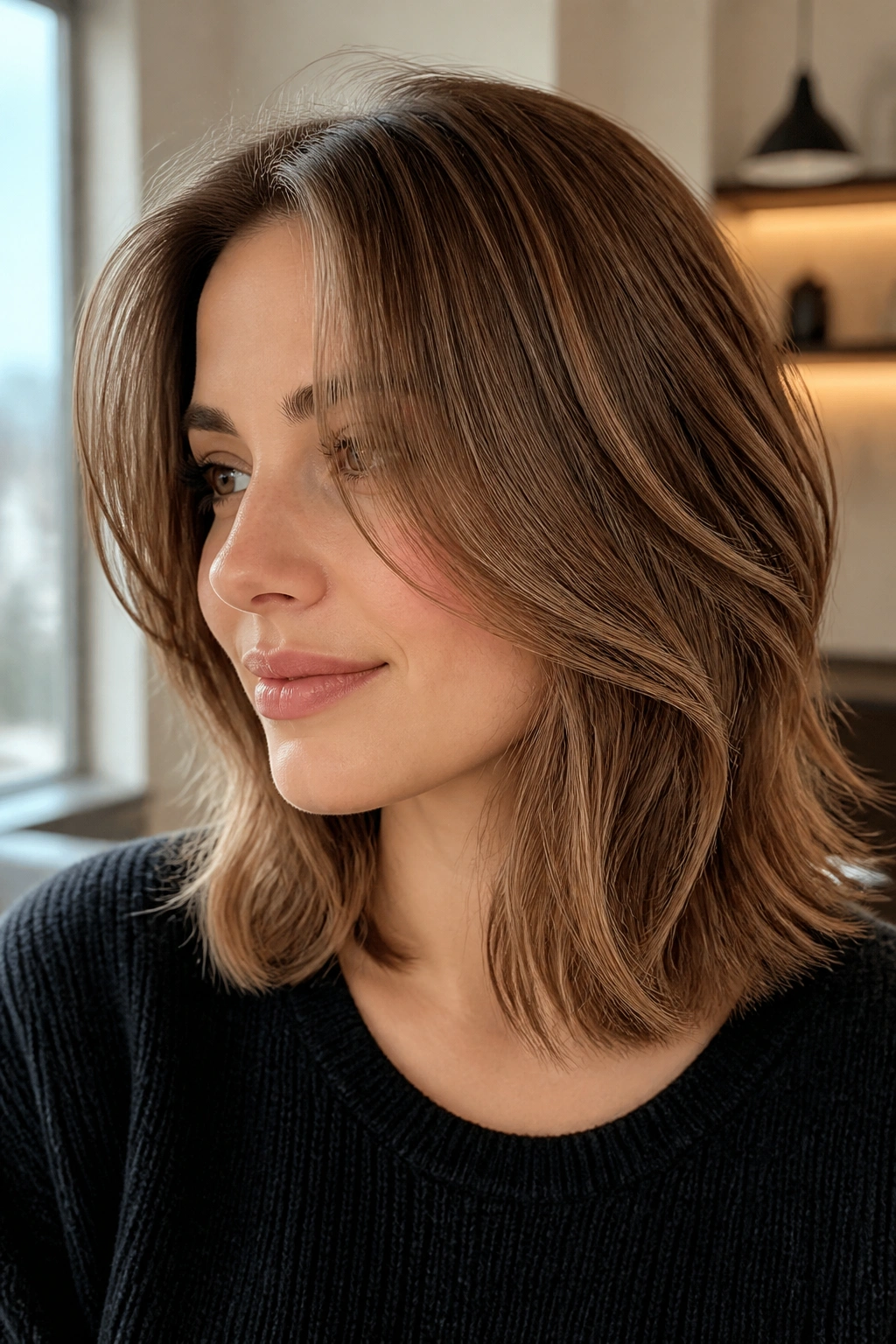
A shoulder-length cut with face-framing layers is the quiet workhorse of medium textured hairstyles for round faces. It does not scream for attention, and that’s the point. The layers sit around the face in a way that softens the cheeks while the overall length keeps everything from spreading out.
Unlike a one-length shoulder cut, which can feel a little heavy on a round face, this version gives shape where you need it. The front pieces should start lower than the cheekbone if you want the face to look longer. Higher than that, and you can accidentally create width right where you don’t want it.
The appeal here is flexibility. You can wear it straight with a slight bend under the ends, or add loose waves for more movement. It looks put together even on low-effort days.
This cut is a good match if you wear glasses, because the layers can be tailored to sit around the frames instead of fighting them. It also works nicely if you part your hair slightly off center. That tiny shift helps the layers fall in a more flattering line.
7. Deep Side-Parted Tousled Bob
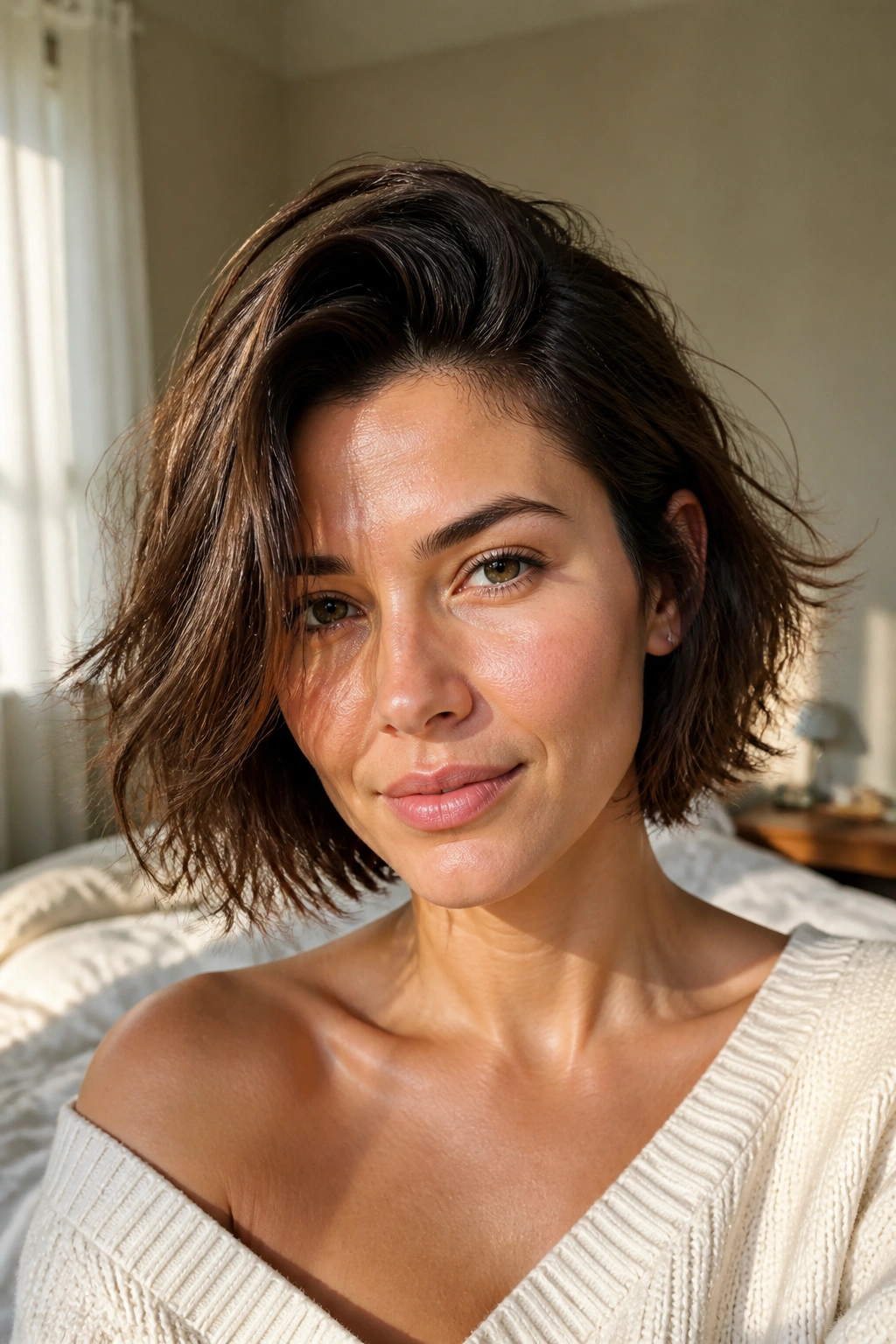
A deep side-parted tousled bob can be one of the most face-slimming medium looks if the length stays just below the jaw. The deep part creates height at the crown, and the tousled texture keeps the cut from feeling stiff or helmet-like. That’s a bad look on anyone. On a round face, it’s worse.
The bob should not sit right at the widest point of the cheeks. Give it a little breathing room. Even one inch lower can make the shape feel longer and cleaner. The messy bend in the ends softens the jawline, but the part keeps the eye moving up and over instead of straight across.
How I’d Style It
Use a root-lifting spray at the crown, then rough-dry the hair before adding texture. A 1-inch iron gives the right amount of bend, but don’t curl every strand. A few scattered waves are enough.
- Keep the part dramatic, not tiny
- Add texture mainly from mid-length to ends
- Let one side fall a little fuller than the other
- Finish with a light matte spray, not a crunchy one
The best version looks slightly undone. That’s the charm. Too polished and it loses the lift that makes it work.
8. Feathered Medium Cut with Flipped Ends
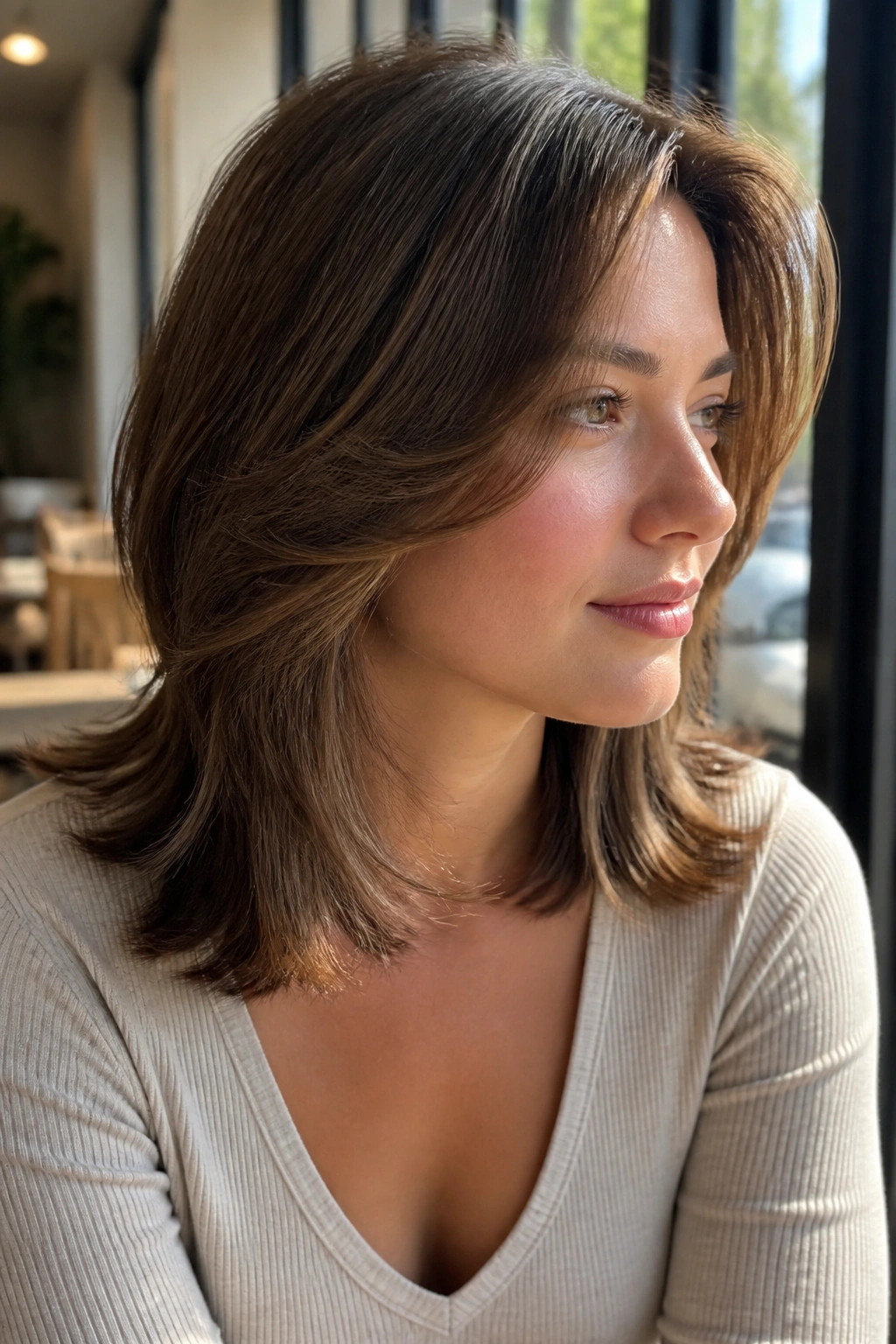
Feathered layers have a different feel from choppy ones. They’re softer, lighter, and a little more old-school in the best way. On a round face, feathering can make the silhouette look slimmer because the movement flows outward and down instead of building bulk at the sides.
Flipped ends give the cut a bit of bounce. Not a hard curl. Just a gentle turn away from the neck and cheeks. That turn matters because it stops the hair from hanging in one flat curtain. Flat hair at medium length can make a round face feel shorter.
This is a cut I’d recommend for anyone who likes volume but not mess. You can still wear it casually, but there’s enough shape that it doesn’t need a lot of extra styling. A big round brush, a blow dryer, and a touch of light hold spray will usually do it.
Ask for feathering around the front and through the top. If the stylist only feathers the very ends, you won’t get the same lifted feel. The layers need to live high enough to make a difference.
9. Razor Shag with Airy Volume
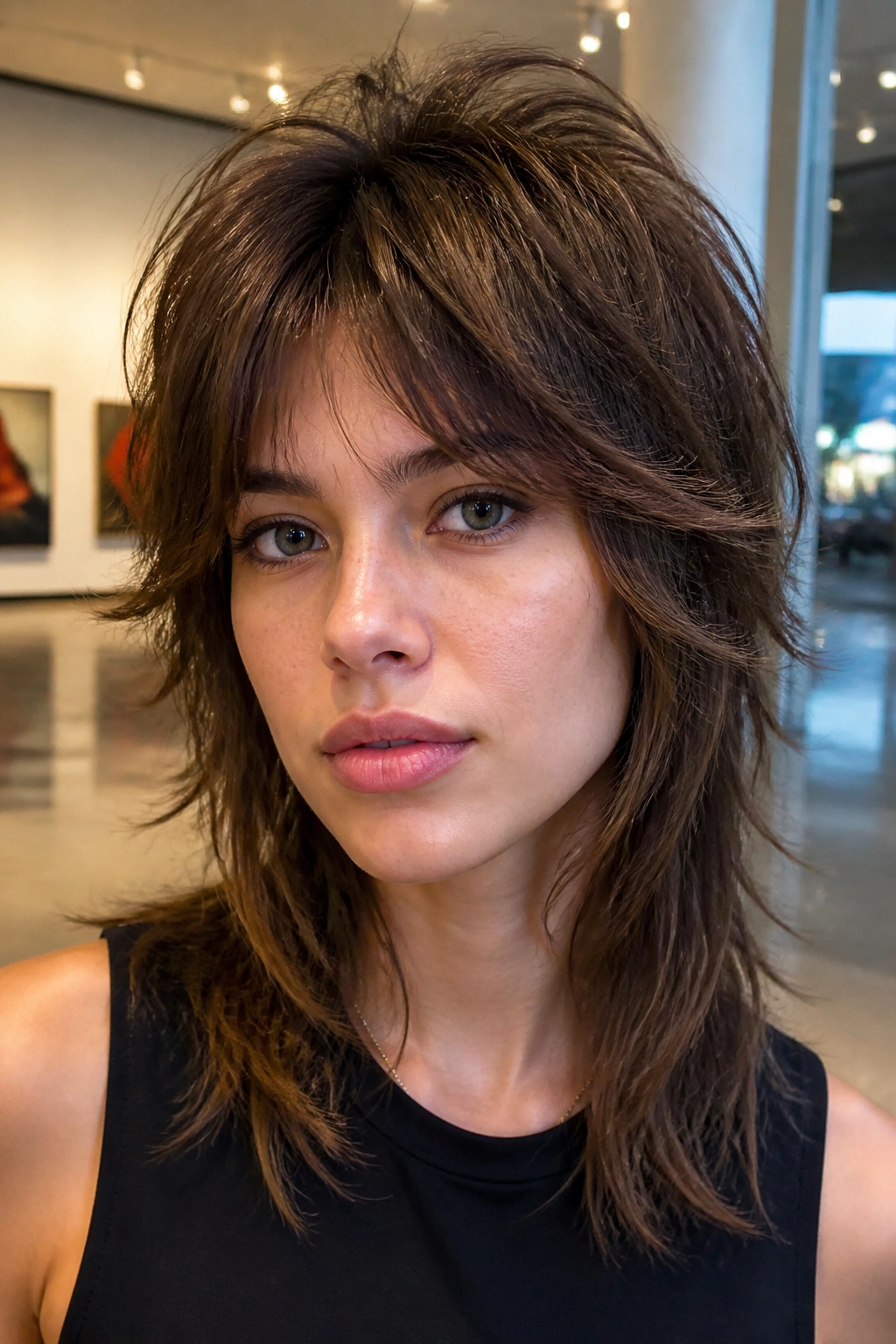
Why does a razor shag flatter round faces so often? Because razor cutting removes weight in a way that feels loose instead of bulky. The ends come out wispy, the layers move, and the whole cut has a broken texture that keeps the face from looking boxy.
This style should never feel overbuilt. The volume belongs at the crown and in the top layers, not at the sides of the cheeks. That’s the part people miss when they ask for a shag and end up with a triangle. A good razor shag stays narrow near the face and fuller through the top.
What Makes It Different
A razor-cut finish gives the ends a softer edge than scissors alone can. It works well with medium hair that has some natural wave, but straight hair can wear it too if you’re willing to add a little styling.
A few useful details:
- Start the shortest layers around the cheekbone or just under it
- Keep the bottom length near the collarbone
- Use mousse at the roots and a diffuser or rough-dry method
- Avoid heavy creams that kill lift
The shag has personality. Plenty of it. If you like sleek and controlled, skip it. If you like movement that doesn’t look too precious, this one earns its place.
10. Blunt Lob with Soft, Broken Texture
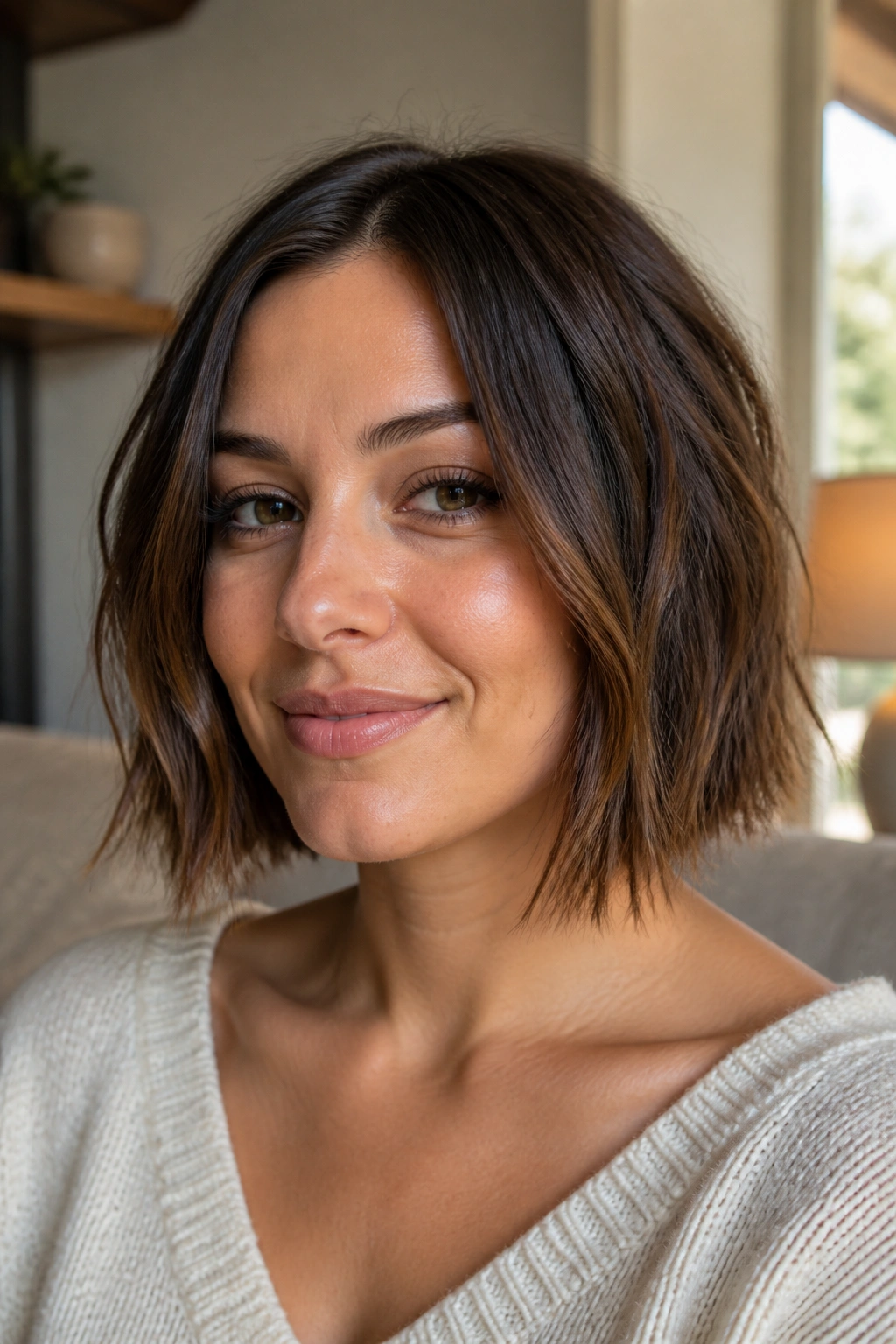
A blunt lob can work on a round face, but only if the texture is broken up at the ends. That’s the part people get wrong. A sharp, one-length line that lands exactly at the jaw can widen the lower face. Softening the edges fixes that without losing the clean feel of the cut.
The best version sits a little below the jaw and has subtle texture through the bottom inch or two. Think of it as a blunt shape with some air in it. Not chopped. Not shaggy. Just enough movement to stop the line from feeling too solid.
This style is good if you like a neater finish and do not want a lot of layers around the face. It can look especially sharp with a middle or off-center part, depending on how your features fall. The length matters more than people think. Too short and it can feel round. A touch longer and it starts to stretch the face.
If you heat-style it, keep the bend gentle. A slight undercurve at the ends is enough. You want shape, not a curled-under helmet.
11. Medium Cut with Bottleneck Bangs
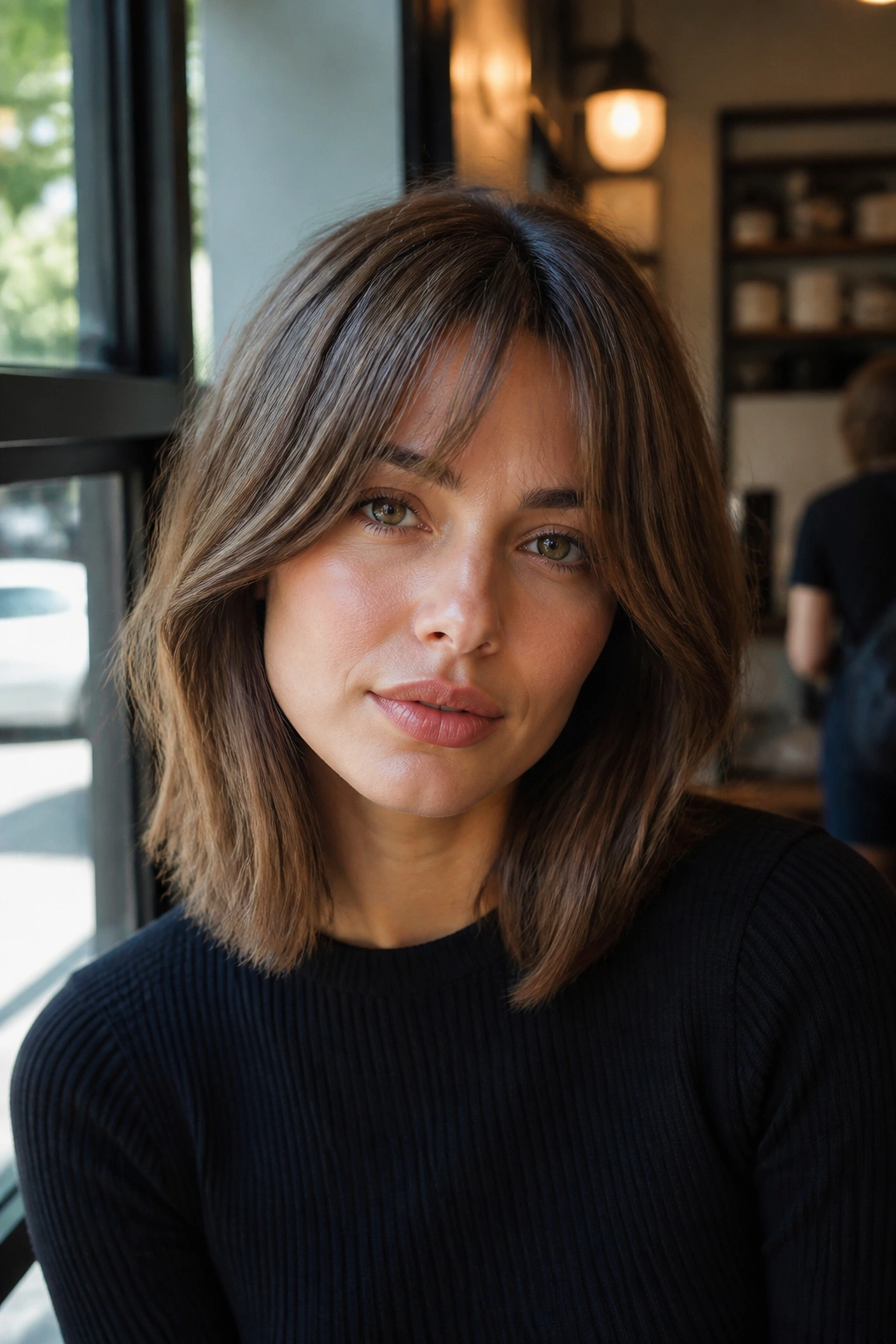
Bottleneck bangs are a smart choice for round faces because they start narrow at the center and widen as they blend into the sides. That shape echoes the face without copying it too closely. You get framing at the brow and cheek area, but the middle stays open enough to keep the face from feeling crowded.
The rest of the cut should stay medium and textured, with soft layers that keep the bangs from looking disconnected. A shoulder-grazing length works well here. If the hair is too short, the bangs take over. If it’s too long and heavy, the fringe can disappear.
What to Watch For
The biggest mistake is cutting the bangs too short at the center. That can make the face feel top-heavy. Let the shortest point sit just below the brows, then have the sides taper longer toward the cheekbones.
- Good for people who like a little drama at the front
- Works with straight hair, waves, or a soft curl pattern
- Needs regular trim attention, usually every 4 to 6 weeks
- Looks best when the fringe is worn with a bit of bend, not stick-straight
I love this style on someone who wants movement near the face but does not want full curtain bangs everywhere.
12. Layered Cut for Natural Curls
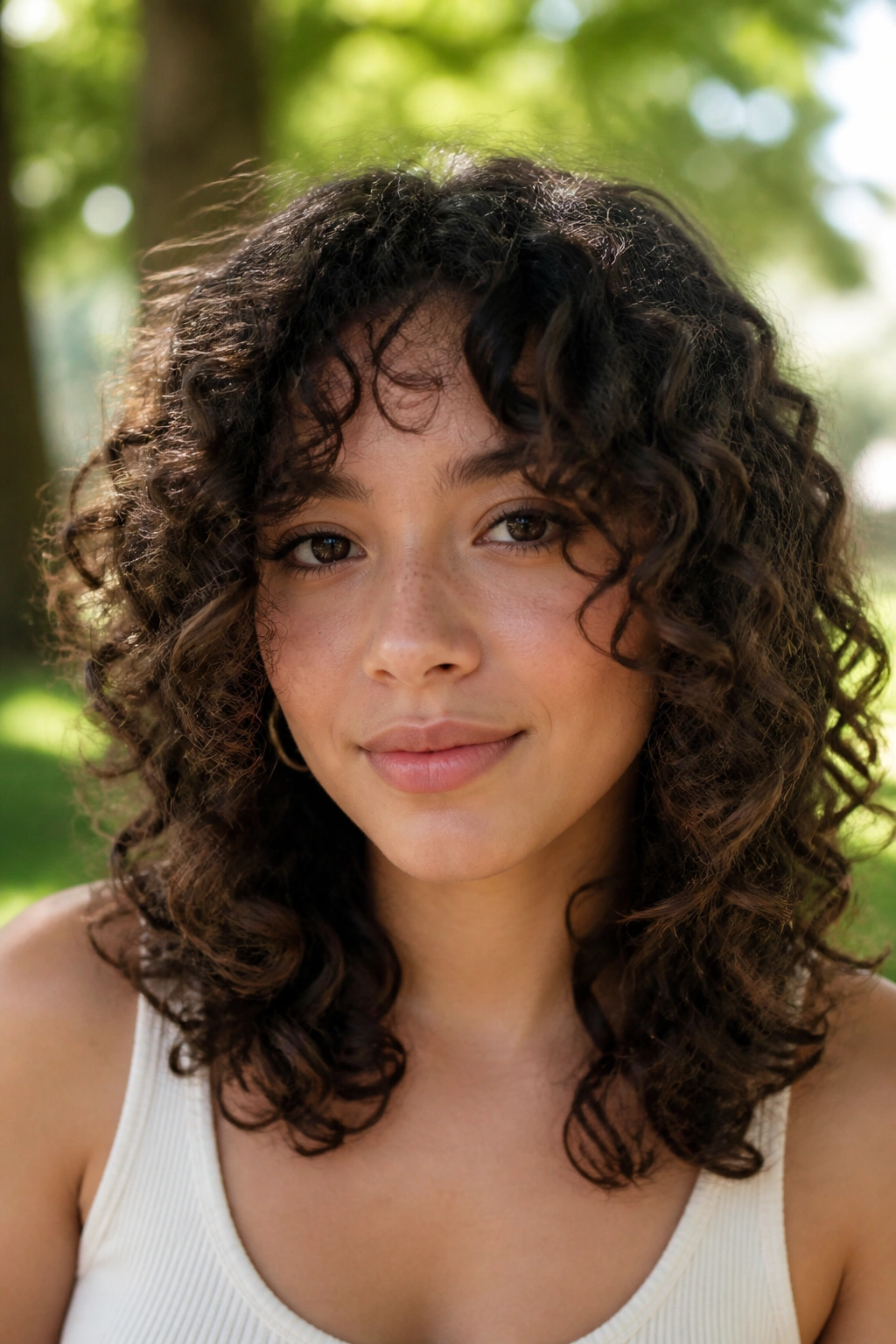
Curly hair on a round face needs shape, not punishment. A layered medium cut for natural curls gives the curls room to spring while keeping the outline long enough to avoid widening out at the sides. That balance is the whole game.
The layers should be placed with curl shrinkage in mind. What looks like a long layer when wet can sit much shorter when dry, and that can change the whole shape. A good curl specialist knows to cut according to how the hair falls when it’s dry or nearly dry. That part is non-negotiable if you want a flattering result.
This cut works especially well when the longest curls graze the shoulders and the shorter layers stay around the upper cheek or temple area, not right at the widest point of the face. That keeps the curl pattern lively without making the head look broader.
No need to fight the volume. Just place it well.
Use a leave-in conditioner, a curl cream with light hold, and a diffuser on low heat. If the roots puff too much, clip them at the crown while drying. Simple, effective, and far better than flattening the curls with a heavy product.
13. Tapered Shoulder-Length Waves
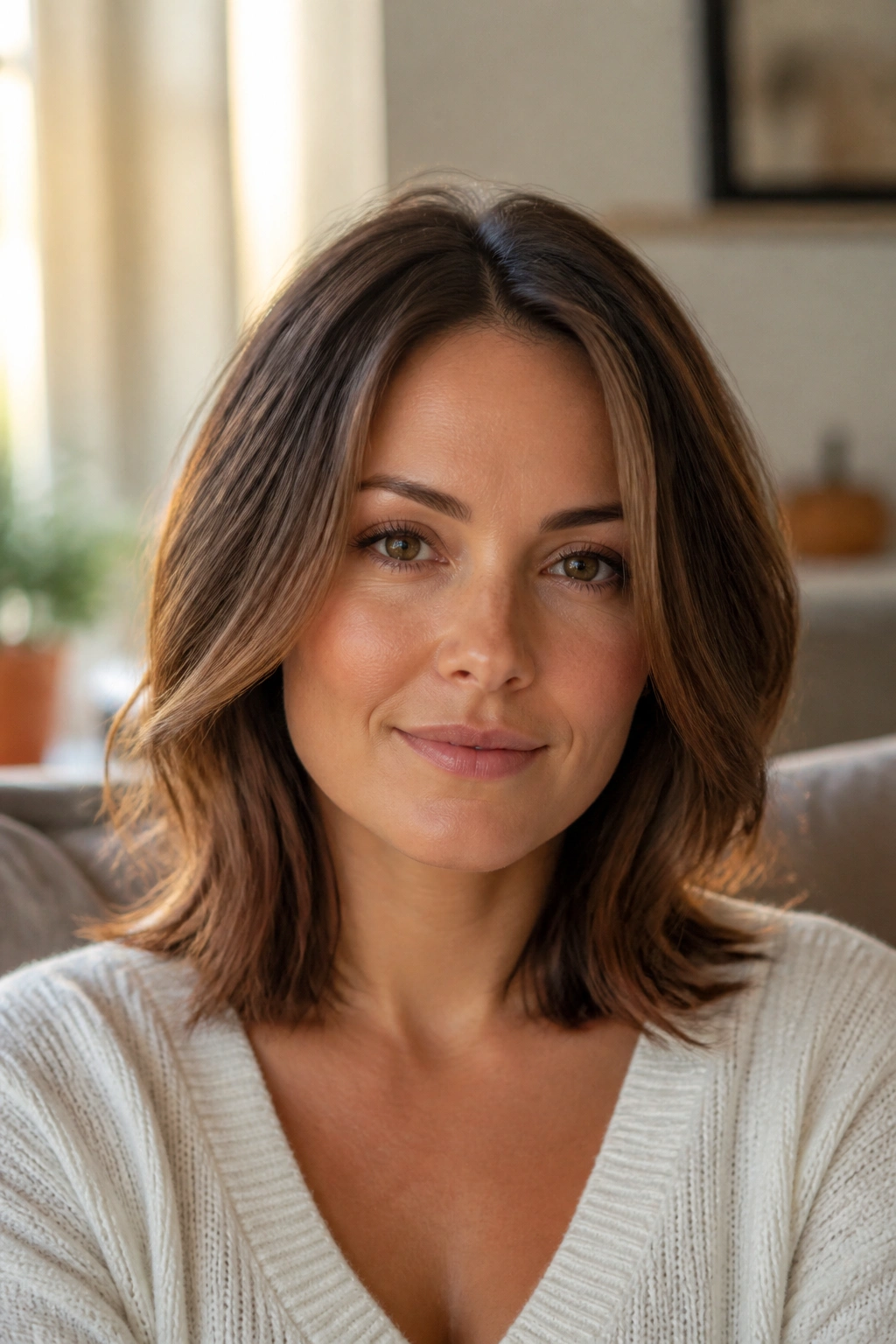
A tapered shoulder-length cut gives round faces a longer outline because the shape narrows slightly toward the bottom. The front stays a little fuller, the ends sit closer to the neck, and the whole style feels balanced instead of wide. It’s a tidy trick, and it works.
The wave pattern matters here. Loose waves with a soft taper look more natural than tight curls that flare out at the sides. The safest bet is a medium-barrel iron or a large wand that creates a bend rather than a ringlet.
Why the Shape Helps
The taper keeps the eye from stopping at one horizontal line. Instead, it follows the length down the face. That’s what makes this cut feel elongating without looking severe.
If your hair is thick, ask the stylist to remove bulk underneath the top layer only. You want the surface to move, not collapse. If your hair is fine, keep the taper subtle so the ends don’t look stringy.
I also like this cut with a soft side part because it breaks up the symmetry a little. Round faces rarely need more symmetry. They need a line, a shift, something to interrupt the circle.
14. Mid-Length Cut with Swooping Fringe
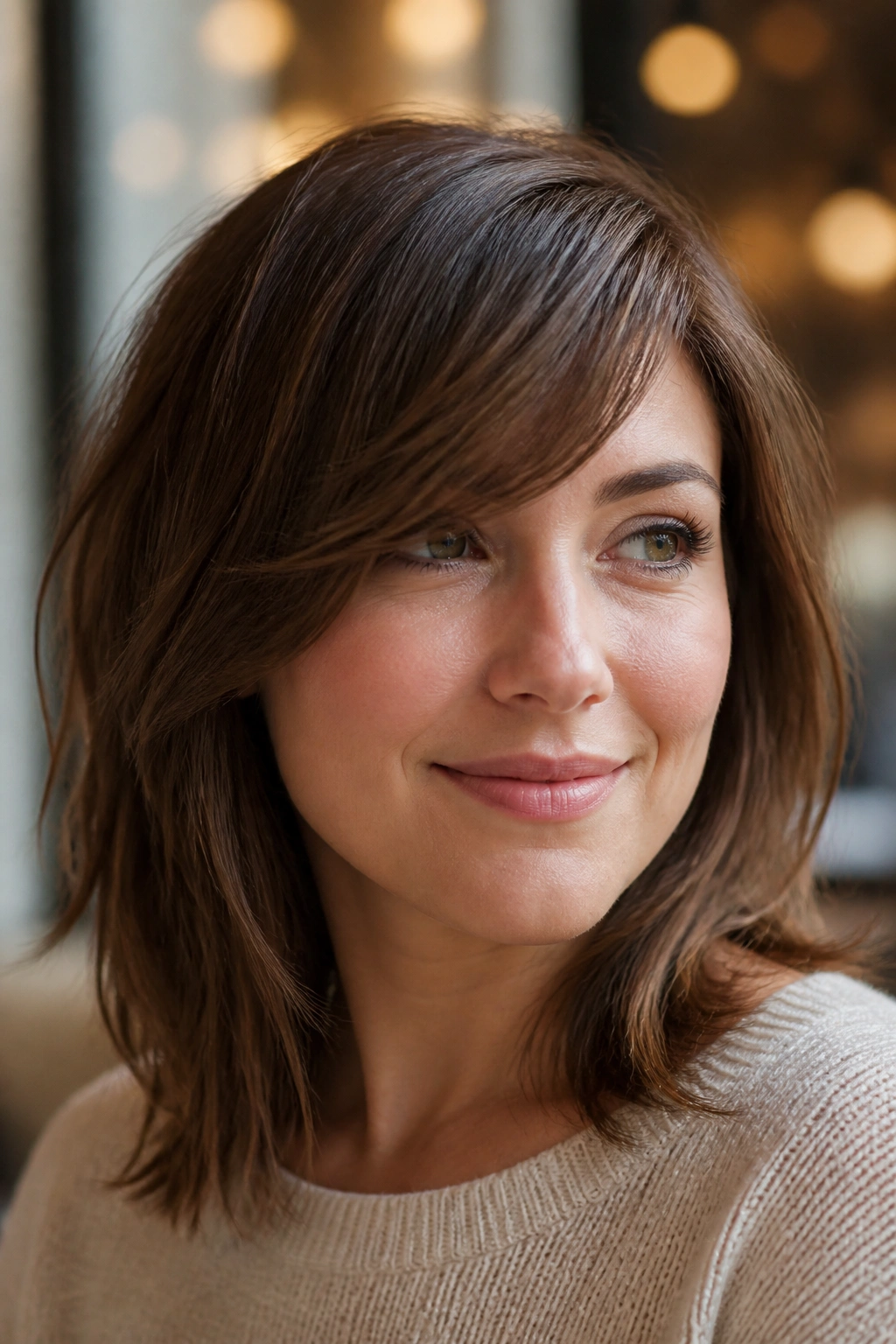
A swooping fringe is one of those things that looks small on paper and makes a huge difference in person. On a round face, it creates a diagonal line across the forehead and cheek area, which softens the width without hiding the face. Done right, it feels graceful rather than heavy.
The rest of the cut should stay mid-length, with texture through the ends so the fringe doesn’t look like it belongs to another haircut. That’s the mistake to avoid. A fringe and a mid-length cut have to talk to each other. If they don’t, the whole style feels split.
This is a good option if you want something softer than curtain bangs but less obvious than a full side fringe. It’s especially nice on straight or slightly wavy hair. The fringe can be brushed across the forehead or tucked back on days when you want a cleaner face line.
I’d keep the shortest part of the fringe at or just below the brow, then let it travel down toward the cheekbone. That slow drop is what gives the style its shape.
15. Textured Cut with Internal Layers
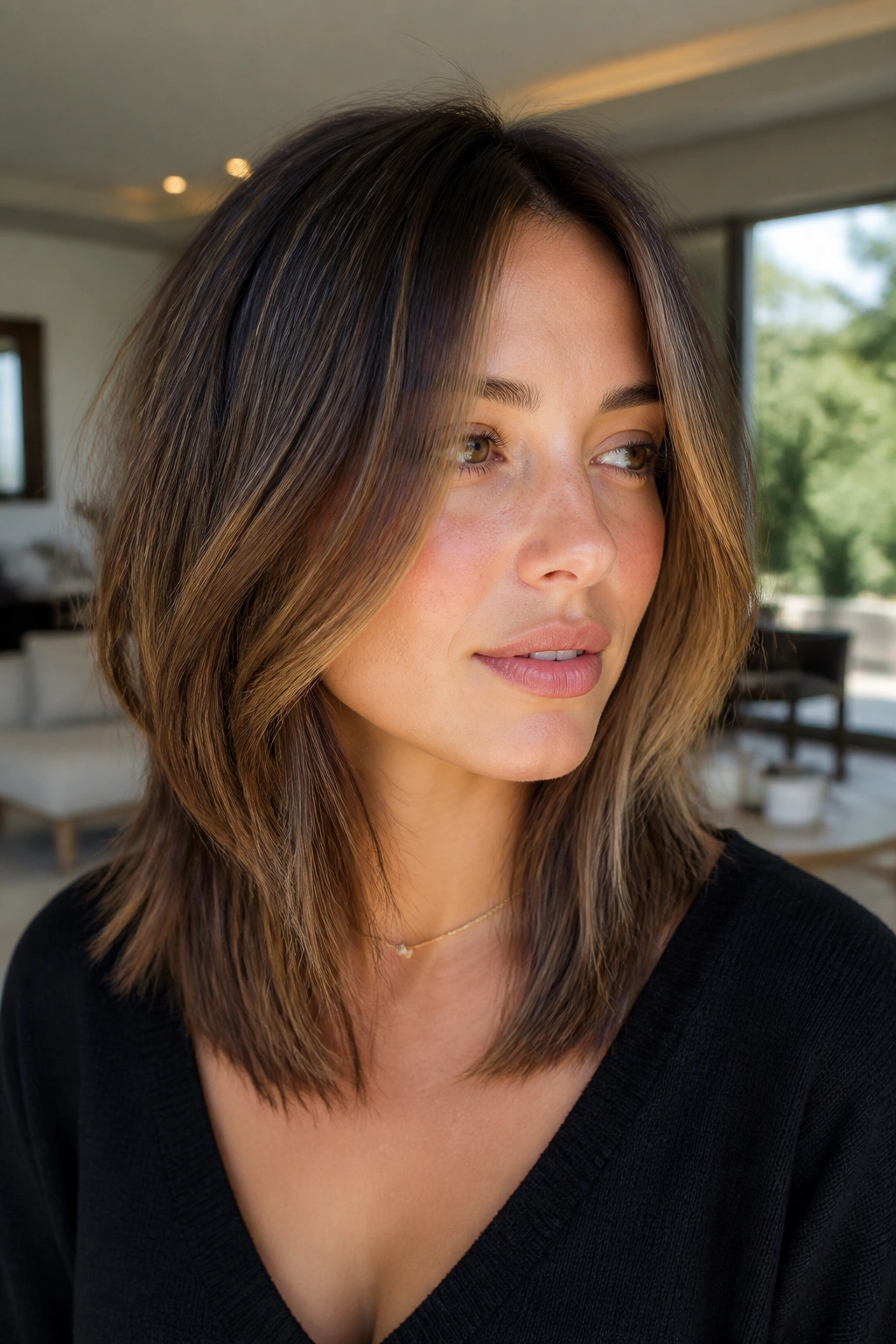
Why does a textured cut with internal layers work so well for round faces? Because the structure lives inside the haircut instead of shouting from the surface. You still get movement, but the outside line stays smooth enough to keep the face from widening.
This is a strong choice for medium hair that needs body but not a lot of visible layering. The top layer can sit neatly over the internal work, which means the cut has shape when it moves and polish when it sits still. That’s handy if you hate hair that only looks good on day one.
How to Ask for It
Tell your stylist you want movement without a bulky outline. Ask for layers inside the shape, not short pieces that stick out around the sides. That single phrase can save you from a lot of triangular hair.
- Keep the front pieces long enough to graze the jaw or below
- Ask for soft texture through the mids, not the ends only
- Wear it with a middle or slightly off-center part
- Use a lightweight texturizing spray for lift without crunch
This cut is a sleeper. It looks plain at first glance, then starts to make sense once it moves.
16. Long Bob with Piecey Ends and Tuck-Behind Styling
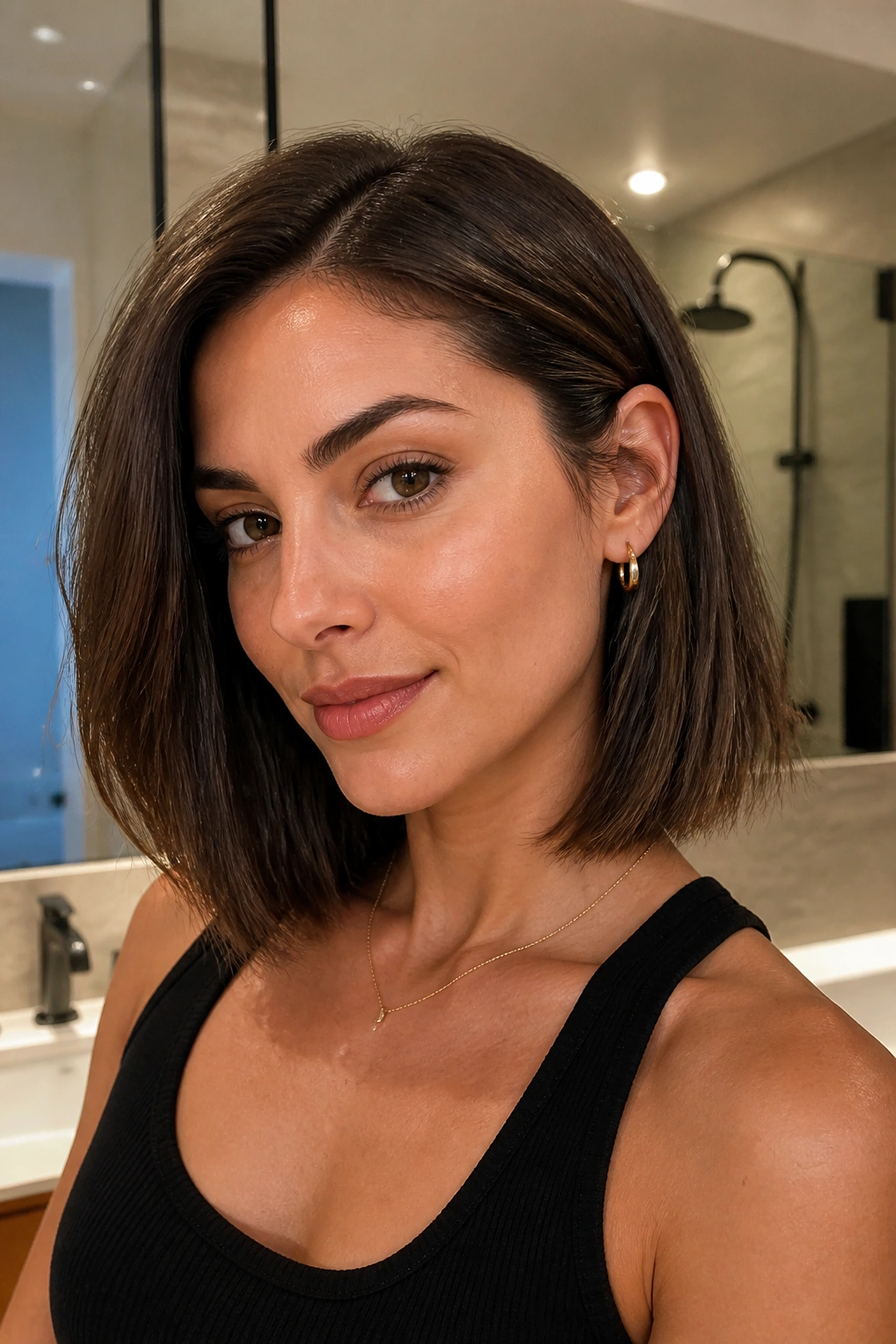
A long bob with piecey ends gives round faces a cleaner edge, especially when you tuck one side behind the ear. That tiny gesture opens the face, shows some jawline, and keeps the style from feeling too full at the cheeks. Small move. Big payoff.
The piecey ends should be subtle. You’re not building a shag. You’re softening the bottom line so the lob doesn’t feel too solid. A little dry texture paste or a spritz of texturizing spray can separate the ends without making them frizzy.
Tuck-behind styling is the underrated part here. One side tucked, one side free, and the whole haircut suddenly gets more length and shape. It works because it breaks the symmetry. Round faces usually benefit from that.
If you wear glasses, this cut is especially useful. The tucked side sits neatly around the frame, and the loose side keeps the look relaxed. Ask for the front to stay long enough that it can tuck without flipping outward awkwardly. That part is easy to miss.
17. Shoulder-Grazing Cut with Center Part
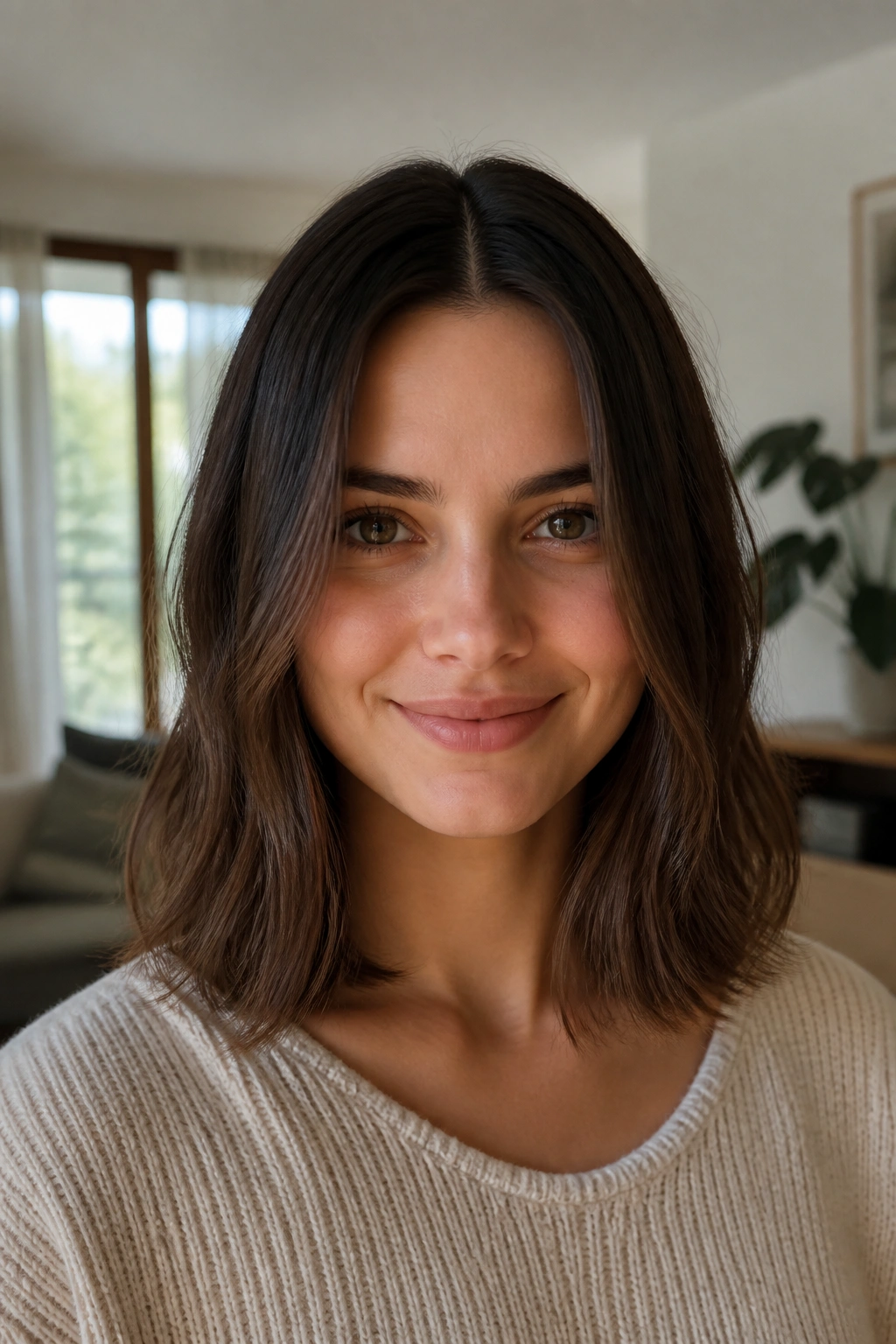
A center part can be tricky on a round face, but it works when the length and texture are doing enough of the shape work. A shoulder-grazing cut with soft texture through the ends creates two vertical lines that frame the face without crowding it. That’s the key.
The hair should fall past the widest part of the cheeks and land close to the shoulders. If it stops too high, a center part can feel blunt. If it’s a little longer and the ends are broken up, the whole style feels cleaner and more stretched.
This is a good choice if you like balanced symmetry and don’t want bangs. Not everyone does. Some people want the face open, and that’s fine. The cut has to do more work when there’s no fringe, so the texture matters.
Keep the surface smooth near the roots and add gentle bends lower down. You want movement, not puffy sides. A center part plus fluffy ends can go sideways fast. A center part plus controlled texture looks sleek without being flat.
18. Soft Wolf Cut for Medium Hair
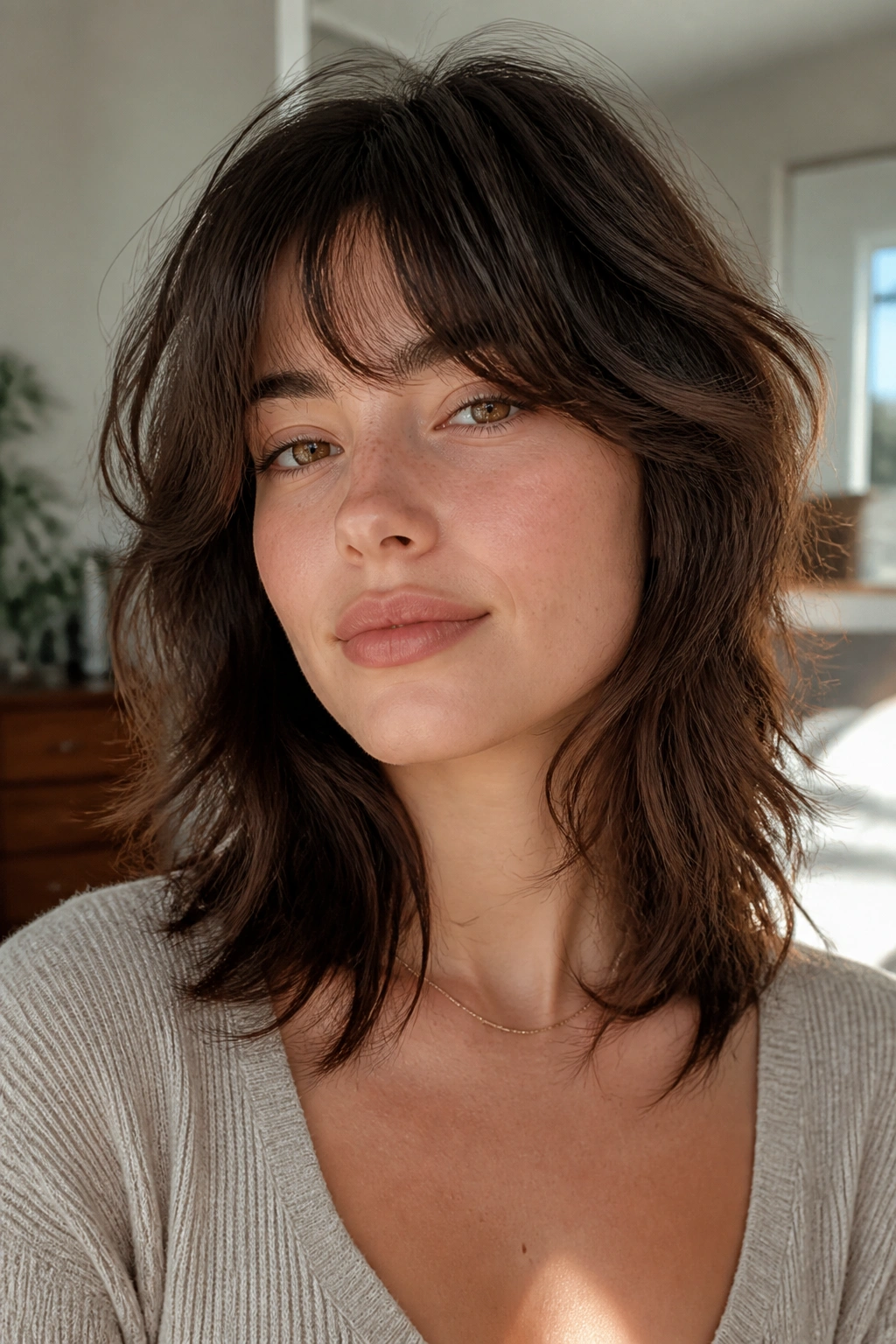
A soft wolf cut can be a smart move for round faces if the layers stay controlled. The hard, wild version of this cut can add too much width. The softer version keeps the crown lifted, the cheeks lightly framed, and the ends broken up enough to stay modern.
This cut sits somewhere between a shag and a mullet, but the medium-length version is much easier to wear. The front should not be too short. That’s the trap. Keep the shortest layers around the cheekbone and blend them into longer pieces that hit the collarbone or below.
What Makes It Different
The shape is less about polish and more about controlled messiness. You get a little height at the top, a little air around the face, and a longer perimeter that keeps the silhouette from puffing out.
Good for:
- Hair with natural wave or bend
- People who like a lived-in finish
- Medium density that can hold shape without looking sparse
- Styling with a diffuser, salt spray, or a light cream
I’d skip the super-short version on a round face. It can make the cheeks look fuller than you want. The softer, longer version is much easier to wear and much kinder to the shape.
19. Bouncy Layers with Rounded Blowout
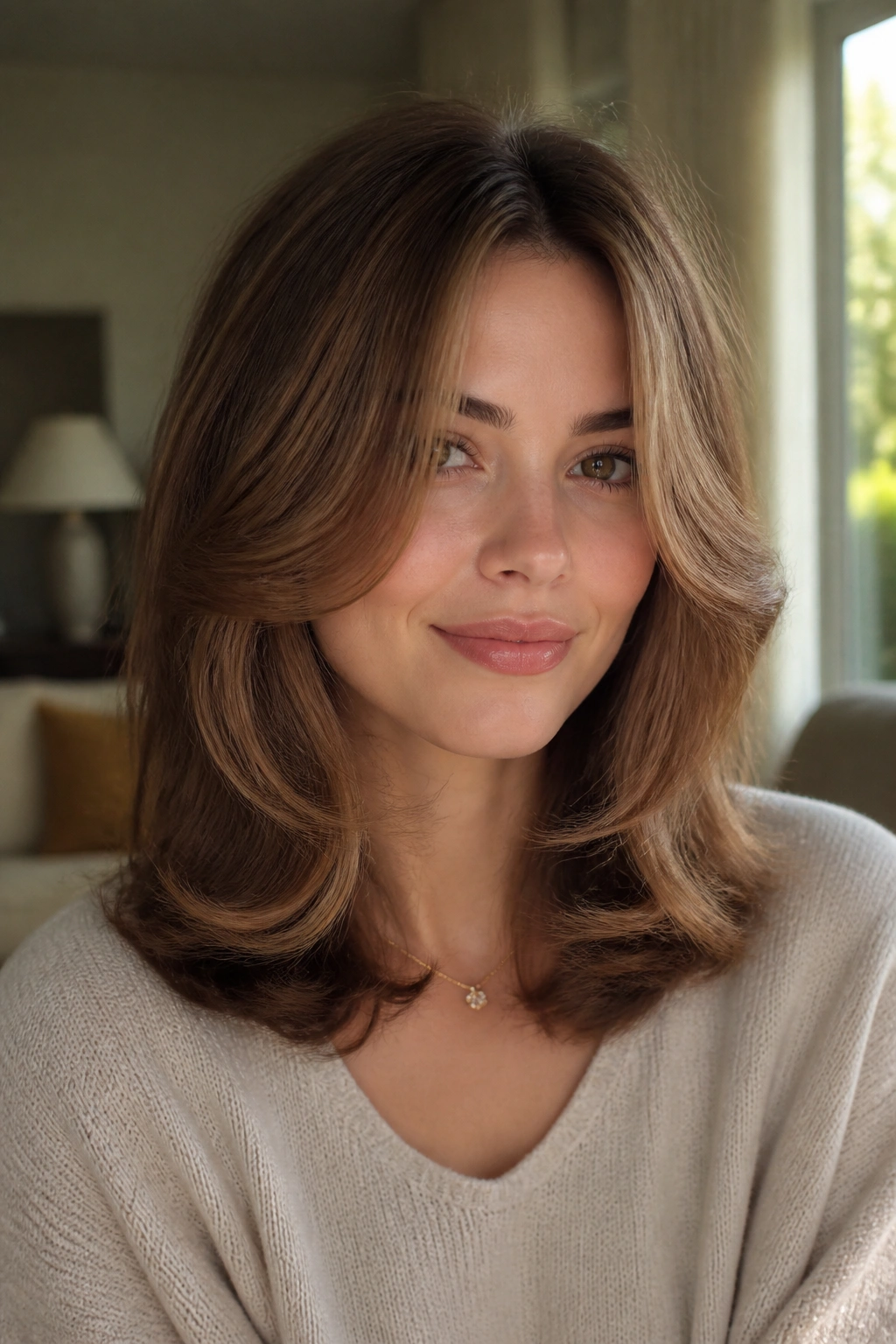
A bouncy blowout on medium hair can be magic on a round face if the bounce sits below the cheekbones. The rounded brush lifts the roots, the layers move away from the face, and the ends curve softly. Done well, it looks full without looking wide.
This is one of the more polished choices in the bunch. You need a blow dryer, a round brush, and a little patience. But the payoff is clean shape and swing. A collarbone or shoulder length works well because there’s enough hair to hold that rounded movement.
The Styling Rhythm
Start with a heat protectant and a volumizing mousse at the roots. Blow-dry section by section, directing the hair upward at the crown and then smoothing the mid-lengths. Roll the ends slightly under or outward, depending on your taste.
- Keep the largest lift at the crown
- Let the side sections curve gently, not puff out
- Use medium heat so the hair keeps shape without frizz
- Finish with a soft-hold spray, not a sticky one
This style is a favorite for events, dinners, or any day you want hair that looks intentionally done. It does take effort. That’s the trade.
20. Slick Textured Lob with Loose Ends
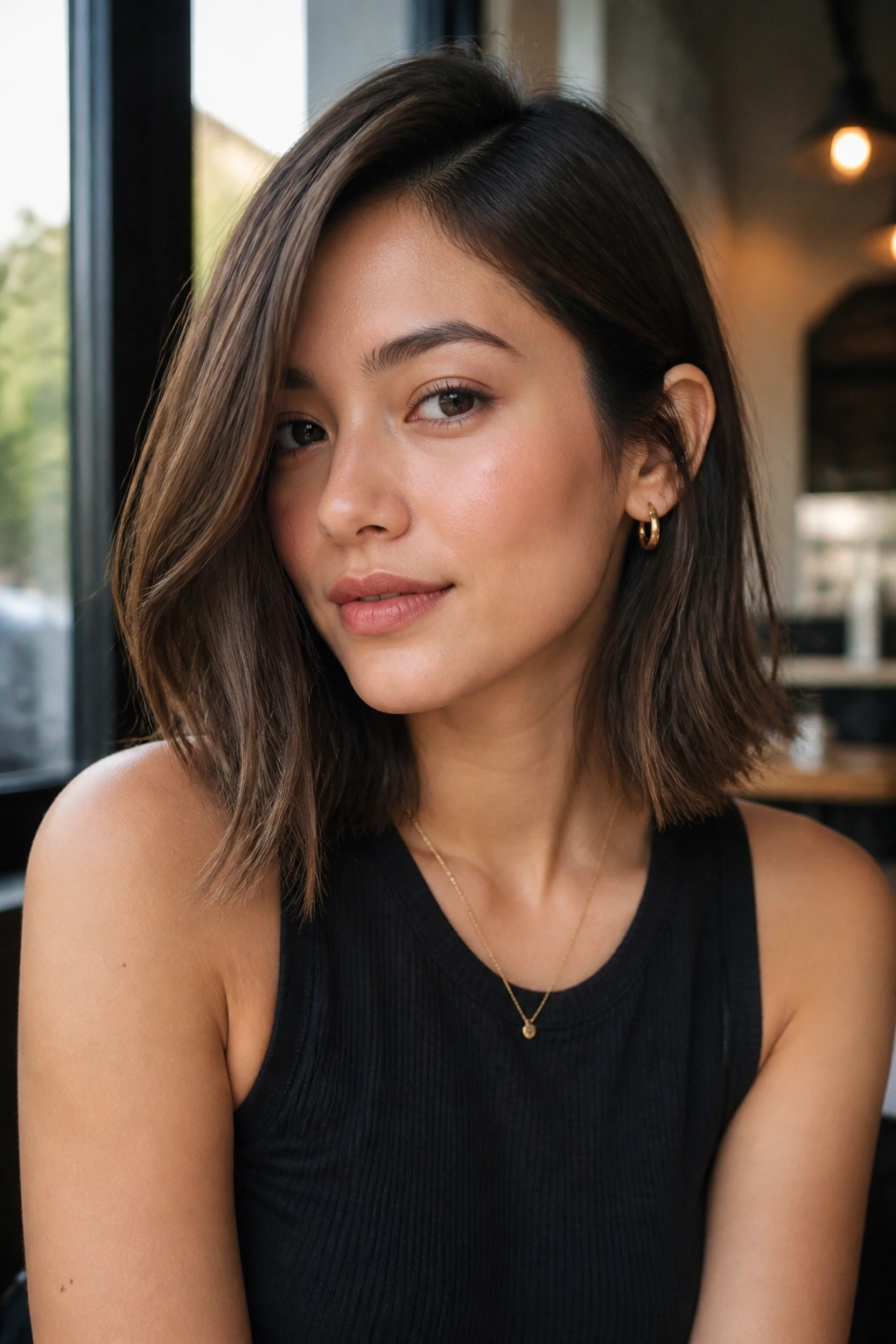
A slick textured lob is the answer for anyone who wants something sharp but not severe. The crown stays smooth, the texture lives mostly at the ends, and the overall line stays long enough to flatter a round face. It’s clean. Slightly cool. Not precious.
The reason it works is simple: when the top is sleek, the face doesn’t get extra width from root volume. When the ends stay loose, the cut still has movement. That balance keeps the style from reading too flat or too puffy.
You can wear this straight with a light bend at the bottom, or tuck one side behind the ear to sharpen the line. The loose ends keep it from feeling helmet-like. That’s the real danger with sleek medium cuts. Too much smoothness and the shape goes dead.
I like this for thicker hair that wants discipline, or fine hair that needs a smoother outline. Ask your stylist to keep the perimeter soft and the front a touch longer than the back. That tiny slope helps the cut sit nicely around the face without clinging to the cheeks.
Final Thoughts
The best medium textured hairstyles for round faces are the ones that know where to keep the weight and where to let the hair move. Some cuts lean on a side part. Some use curtain bangs. Others depend on collarbone length, soft layers, or a little lift at the crown. Same face shape, different tools.
If you’re choosing between two options, look at where the shortest layers land. That detail tells you a lot. A cut that starts too high around the cheeks can widen the face fast, while one that opens lower and falls with a bit of length usually feels easier to wear.
Bring photos, sure, but talk about the mechanics too. Say whether you want more height, more softness, less bulk, or a cleaner line. That part saves a lot of bad haircuts.
