



Fine hair gets blamed for things it did not do. It is usually not the problem; the cut is.
Short hairstyles for fine hair work because they remove drag from the ends and let the roots sit up with a little more attitude. But if the shape is wrong, a short cut can look even thinner than long hair, which is the part nobody enjoys hearing.
The difference between fine and thin matters here. Fine means the strand itself is small. Thin means there may be less hair overall. You can have a full head of fine hair and still need a cut that keeps the perimeter solid instead of wispy.
Some people want movement. Some want polish. Some want a cut that air-dries into something decent while they make coffee and answer a text. All of that is possible, but the details matter—where the line falls, how much weight gets removed, and whether the ends stay blunt or start looking see-through.
1. The Blunt Chin-Length Bob
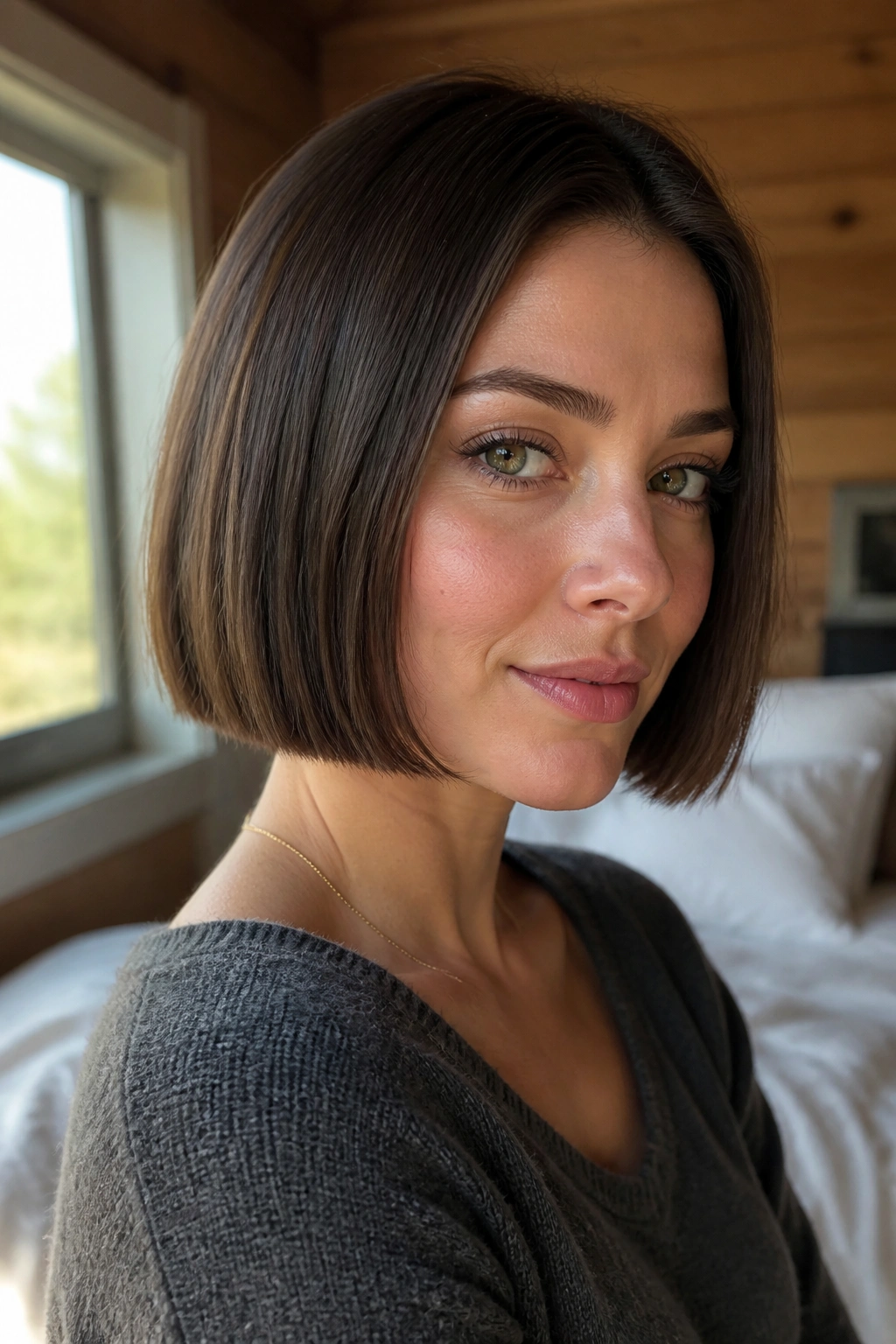
If you want fine hair to look fuller fast, a blunt chin-length bob is the cleanest place to start. The solid edge at the bottom gives the eye a clear line to follow, and that alone makes the hair look denser than it really is.
Why This Shape Works
A bob that lands right at the chin sits in a sweet spot. It frames the face without dragging the hair past the point where fine strands start to collapse under their own weight.
The trick is the perimeter. Keep it blunt, keep it tidy, and do not let the ends get over-thinned. A tiny bit of internal shaping is fine, but the bottom line should still look full when you turn your head.
- Best for straight to slightly wavy hair
- Works well with a center part or a soft side part
- Ask for minimal layering at the very bottom
- Good if you want a style that still looks neat on day two
Pro tip: blow-dry the roots first, then bend the ends under with a round brush just enough to keep the line clean. A hard flick at the bottom can make the cut look fussy.
2. The Soft Layered Pixie
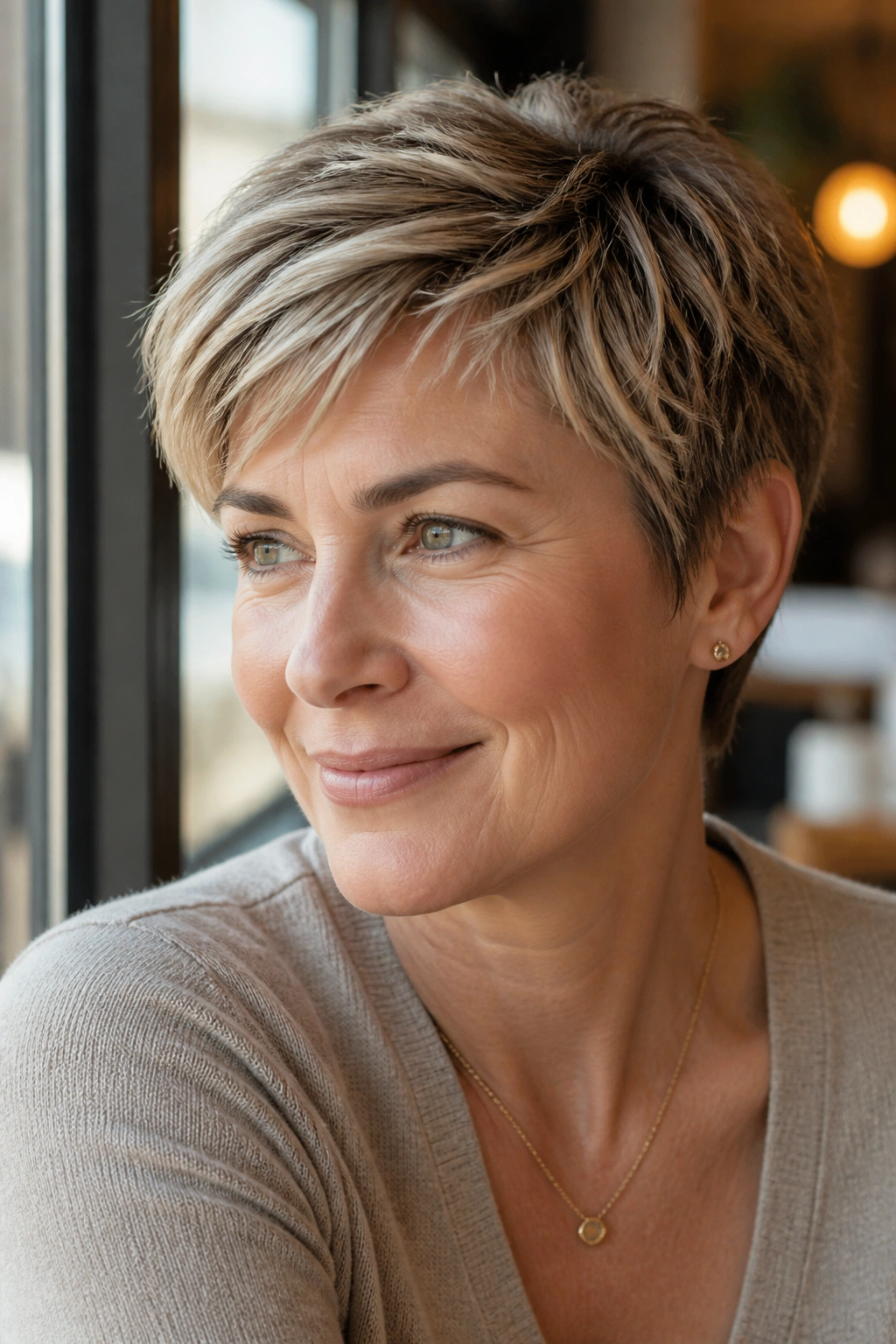
Short hair is merciless. That is why a soft layered pixie works so well on fine strands.
The cut removes weight everywhere except where you want lift, so the hair can stand up a little instead of hanging in a flat sheet. The important part is softness. You want movement, not shredded ends that look fluffy and dry.
A good pixie on fine hair keeps some length on top—usually around 2 to 4 inches—so you can push it forward, sweep it to the side, or finger-style it into place. The sides and back stay tighter. That contrast is what gives the cut shape.
Nope, it does not have to look edgy or spiky. In fact, the best version usually looks controlled, a little airy, and much more expensive than the amount of effort it takes.
3. The French Bob With a Light Fringe
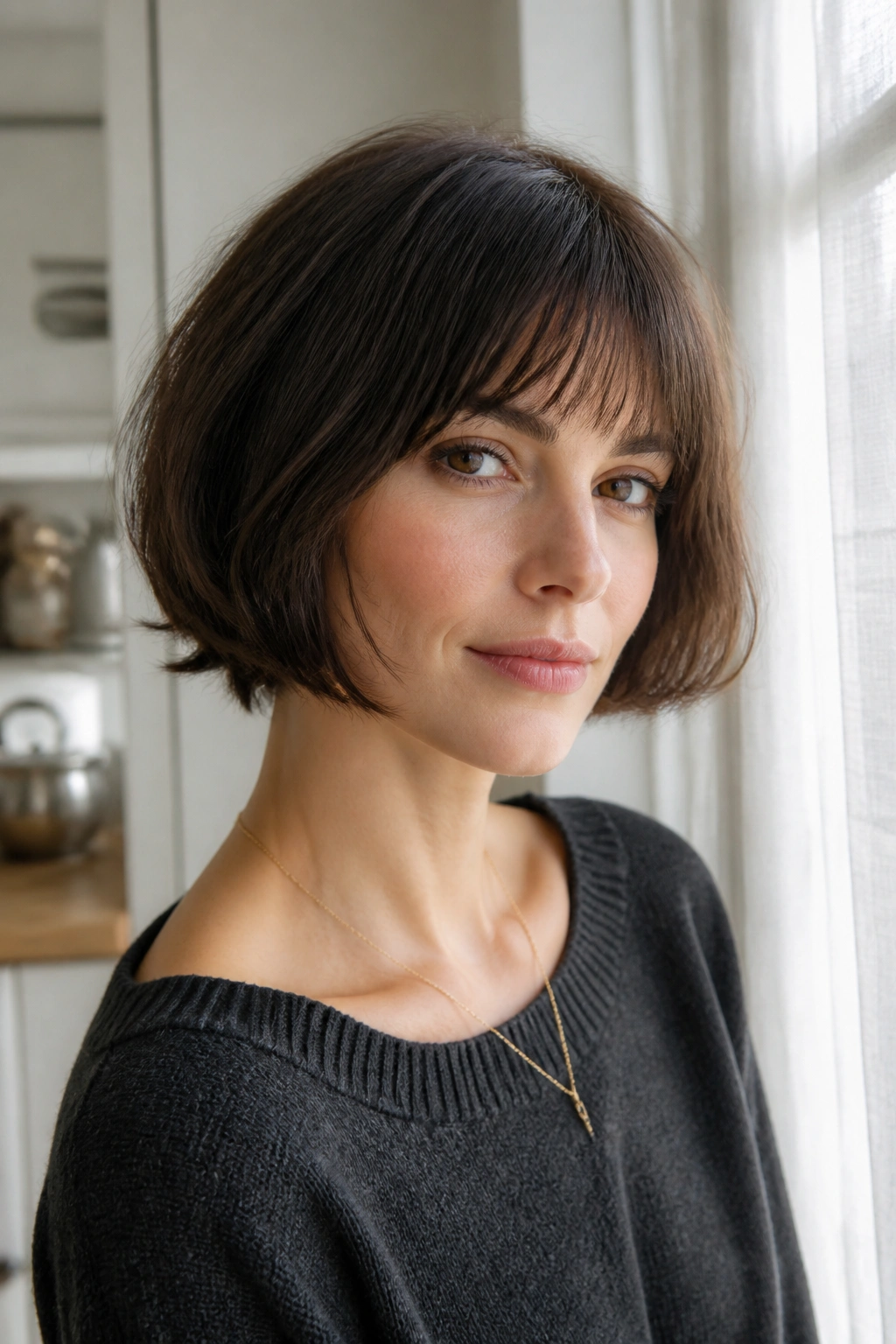
Picture second-day hair that usually falls a little limp around the temples. A French bob fixes that by stopping the line right at the cheekbone or just below the jaw, where the face already gives the hair some structure.
The fringe matters here. Keep it light, wispy, and a little piecey—never dense enough to swallow your forehead. On fine hair, a heavy fringe can hog too much density from the rest of the cut.
What Makes It Stand Out
The charm of this style is that it looks a little undone on purpose. That does not mean messy. It means the shape has enough life that you do not need to spend twenty minutes making it behave.
A French bob also works nicely if your hair is naturally straight with only a slight bend. Air-dry it with a touch of cream, tuck one side behind the ear, and let the fringe fall where it wants. That little bit of imperfection is the whole point.
- Ideal length: mouth to jaw
- Fringe should be soft, not blunt and thick
- Good for oval, heart, and longer face shapes
- Best when the ends are left full, not razor-thin
One thing to watch: if your forehead is shorter, keep the fringe longer and more open so the cut does not feel crowded.
4. The Feathered Crop
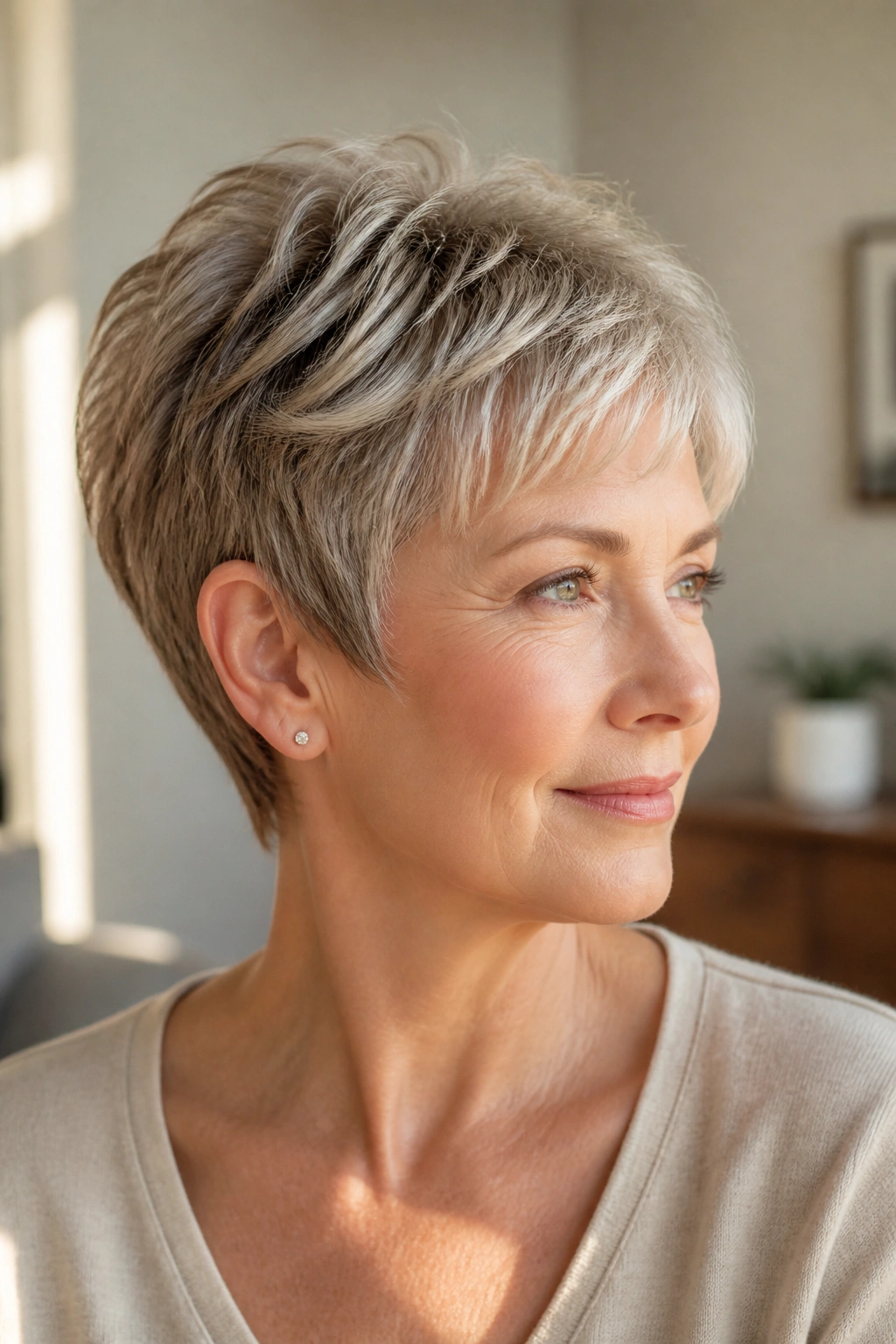
Feathering is a risky word when the hair is fine. Too much of it, and the ends start looking like they have been combed to death. Done right, though, a feathered crop can give the hair lift without stripping away the shape.
The cut usually sits between a pixie and a very short bob. The layers are softened around the crown and sides so the hair has room to move, but the bottom still holds together. That balance matters. A fine-haired crop should feel light, not flimsy.
I like this cut for people who want something quick in the morning. A little mousse at the roots, a rough dry with your fingers, maybe a round brush on the front pieces if they need direction. That is about it.
How to Ask for It
Ask for feathering around the crown and cheek area, not all the way through the ends. The perimeter should still have enough weight to look intentional when the hair falls flat.
A blade-heavy or over-razored finish can be a problem. It sounds airy, but in real life it often turns into fuzz. If your stylist wants to take out bulk, make sure they do it in controlled sections, not with a vague “let’s make it softer” gesture.
It should feel light. Not see-through.
5. The Side-Swept Pixie Bob
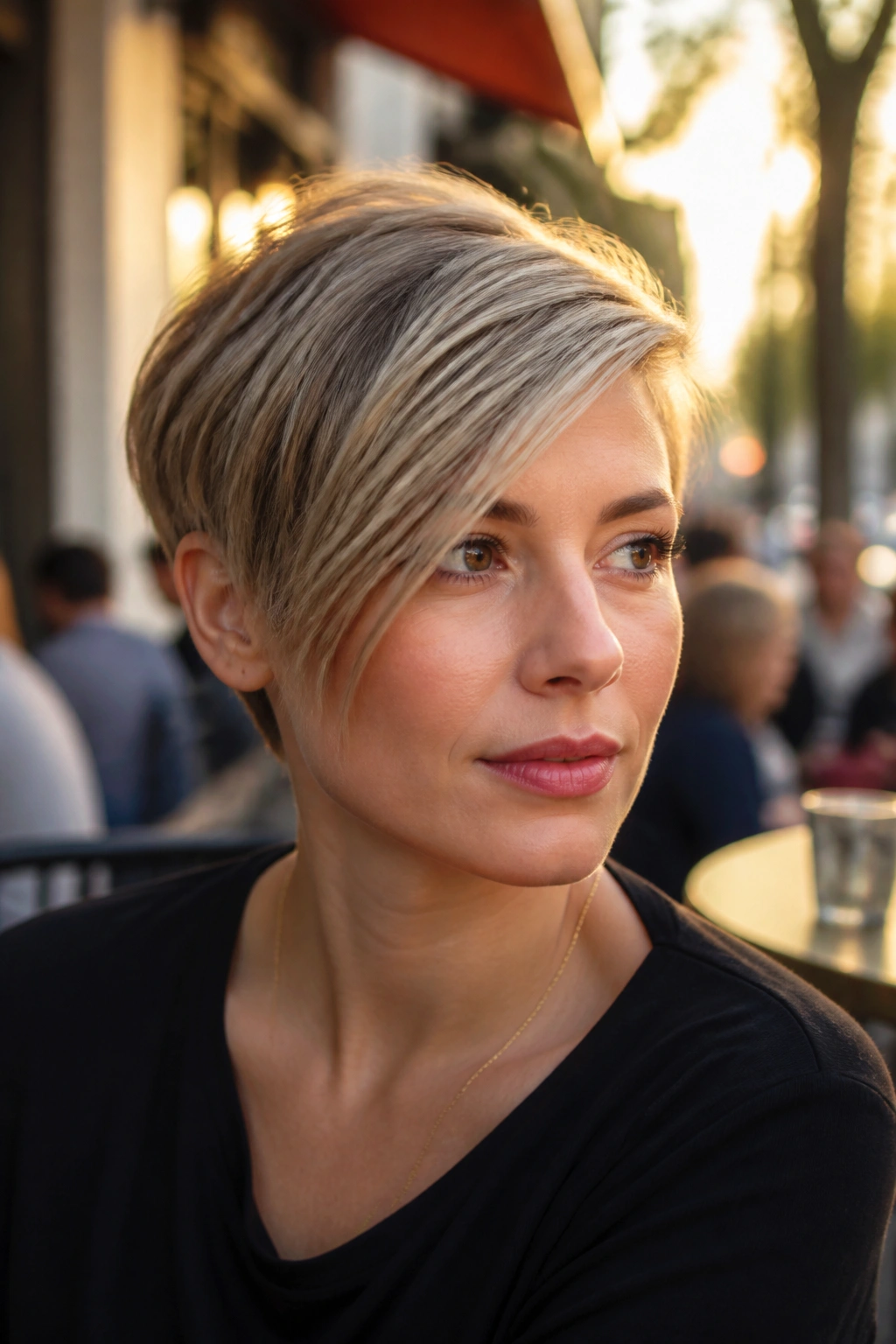
Why does a side-swept pixie bob flatter fine hair so often? Because the diagonal line does half the styling for you.
The longer front section draws the eye across the face, while the shorter back keeps the whole cut from getting heavy. That gives the hair more movement without asking it to carry too much length. It also helps if your crown likes to lie flat. The deep side part creates a lift point right where you need one.
How to Style It
- Blow-dry the front in the opposite direction of the part for 20 to 30 seconds
- Clip the roots while they cool
- Smooth the sides with a light cream or a tiny bit of pomade
- Leave the ends soft instead of curling them tightly under
This cut works well on round and square faces because the side sweep adds length without dragging the style into full bob territory. If your hair grows out fast, that is the only catch. The shape depends on that front line staying tidy.
6. The Asymmetrical Bob
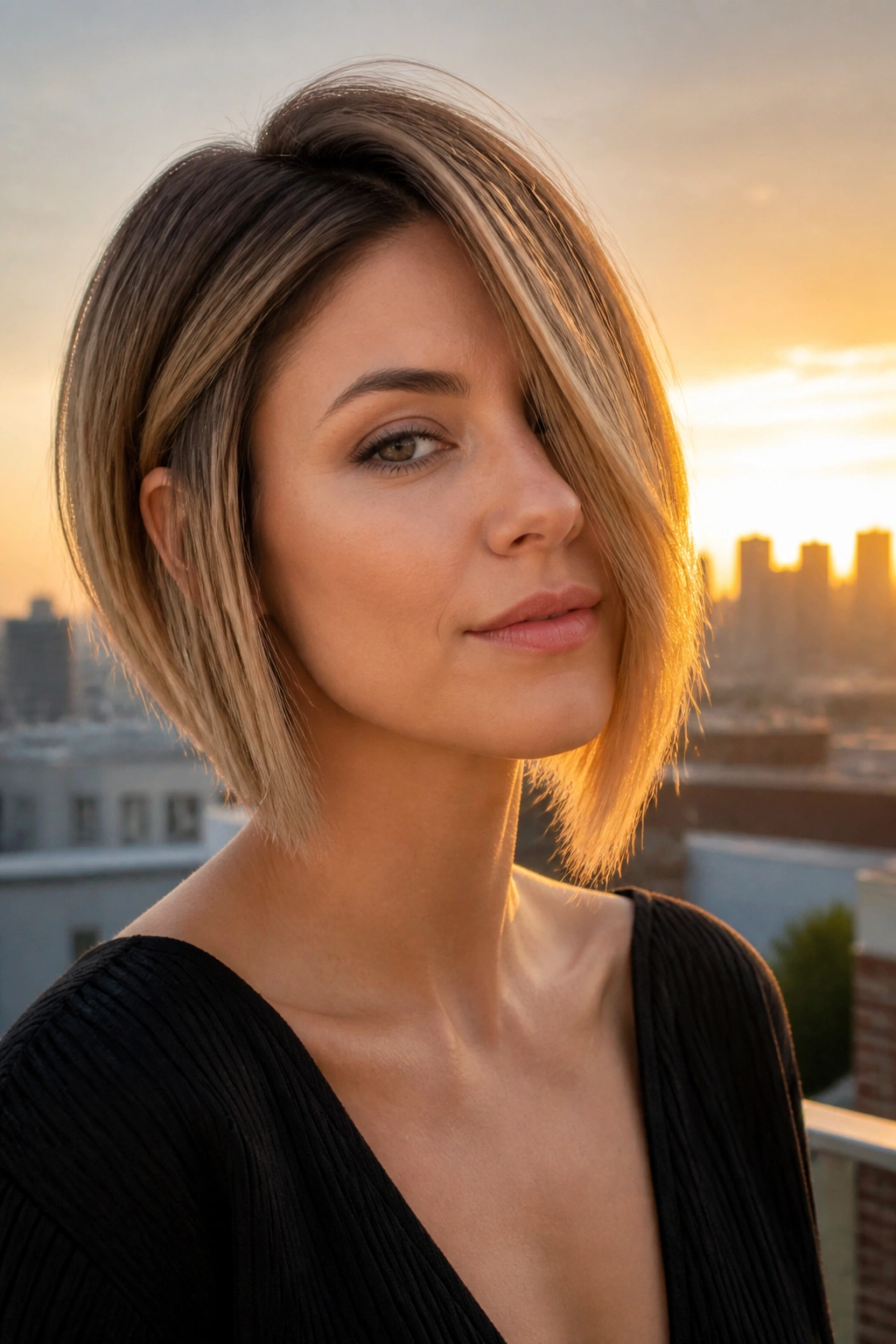
Unlike a classic bob, this cut keeps the eye moving. One side sits a little longer—usually by 1 to 2 inches—so the shape feels deliberate instead of static.
That difference helps fine hair because it creates the impression of density and direction. A perfectly even bob can be beautiful, sure, but on very fine hair it sometimes reads as too neat in a way that makes the ends look sparse. The asymmetry gives the hair a bit of tension, and tension is useful here.
Keep the length difference moderate. If one side is dramatically longer, the cut starts to look fashion-first and hair-first second. That can be fun if you love the look, but it is not the friendliest choice for everyday styling.
Best For
This cut tends to work best on straight or lightly wavy hair that can hold a clean line. It also suits people who like a side part already, since the shape grows out of that habit.
If you want something that feels polished but not plain, this is one of the stronger options. It has edge without needing a lot of product. And that matters. Fine hair gets cranky when you layer on too much cream, too much oil, and too much hope.
7. The Piecey Cropped Shag
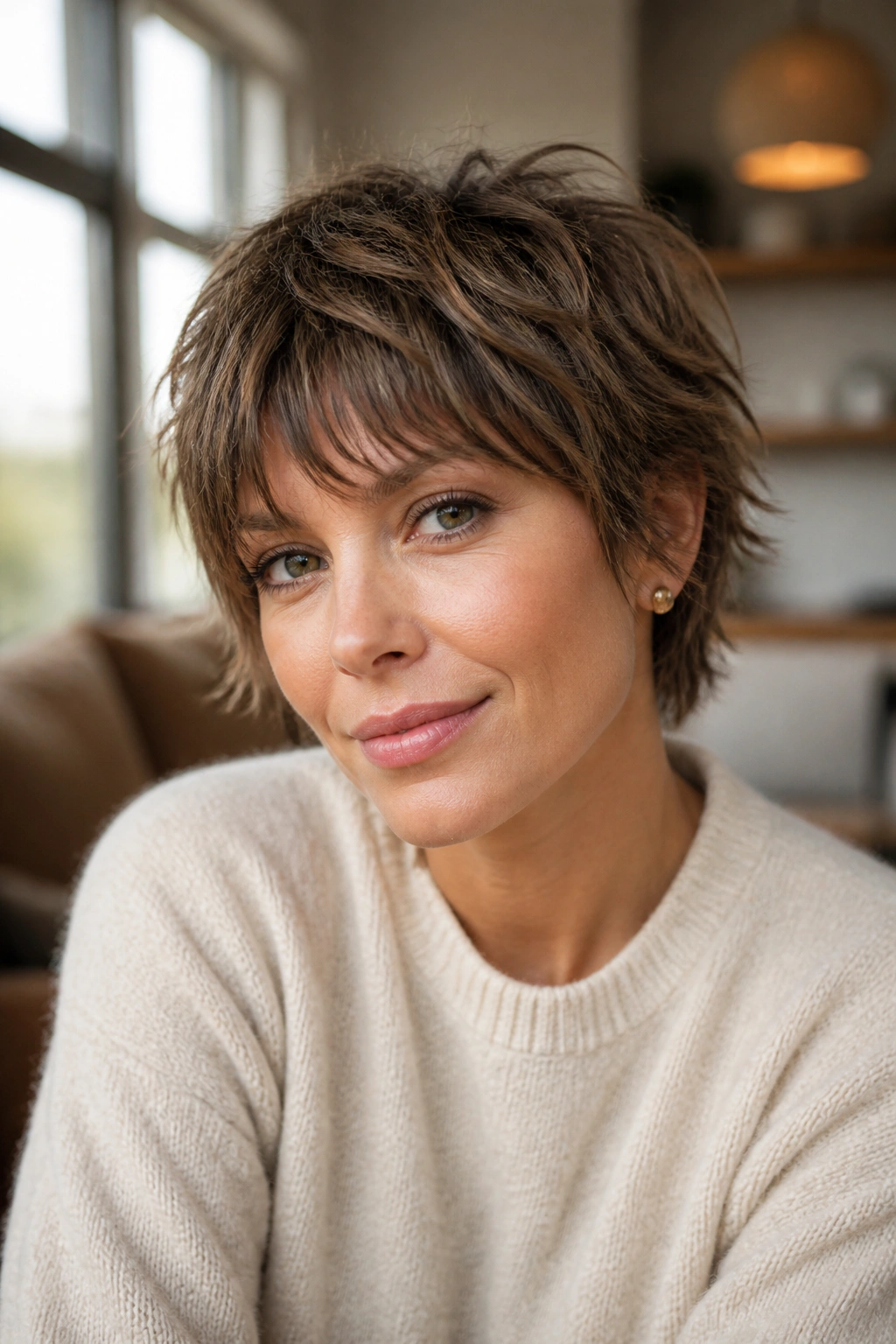
A piecey crop is one of the few short hairstyles that can make fine hair look like it has actual movement even when you barely style it.
The reason is separation. Instead of trying to force the hair into one smooth block, the cut creates little broken pieces that catch light differently and keep the surface from looking flat. On the right head, it can look lively in a way a blunt cut never will.
But there is a line you do not want to cross. Too many short layers, especially through the bottom, can leave the ends looking ragged. Keep the fullness near the perimeter and let the internal texture do the rest.
Use a small amount of product. A pea-sized dab of matte paste or a light styling cream is enough for most people. More than that and the piecey look turns into sticky clumps, which is not the same thing at all.
8. The Tapered Nape Cut
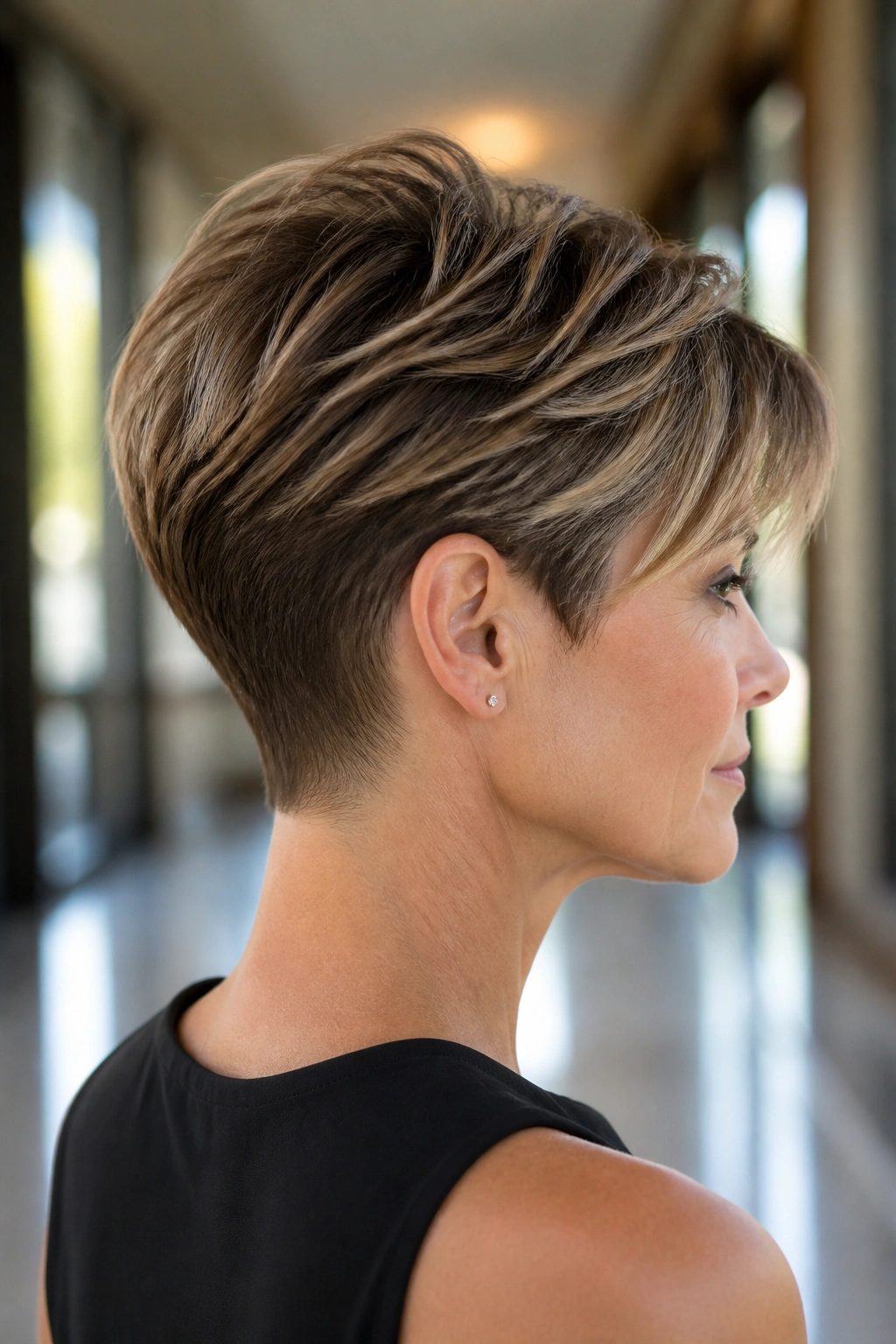
There is something satisfying about a cut that clears the neck and still leaves enough shape on top to look finished. The tapered nape does exactly that.
It works by keeping the back short and neat while letting the crown stay a little longer. That creates a lift in the silhouette, which fine hair loves. Less weight at the neck means less pulling at the roots, and the whole cut sits with more confidence.
What to Ask For
- A soft taper at the nape, not a skin-close buzz
- Slightly longer length at the crown for lift
- Clean sideburns if you want a sharper outline
- A trim every 4 to 6 weeks to keep the shape tidy
This cut is a good choice if you dislike hair brushing your collar or getting sticky in warm weather. It also suits straight fine hair that tends to lie close to the scalp. The back stays neat, the top gets room, and the result feels practical without being boring.
9. The Curly Mini Bob
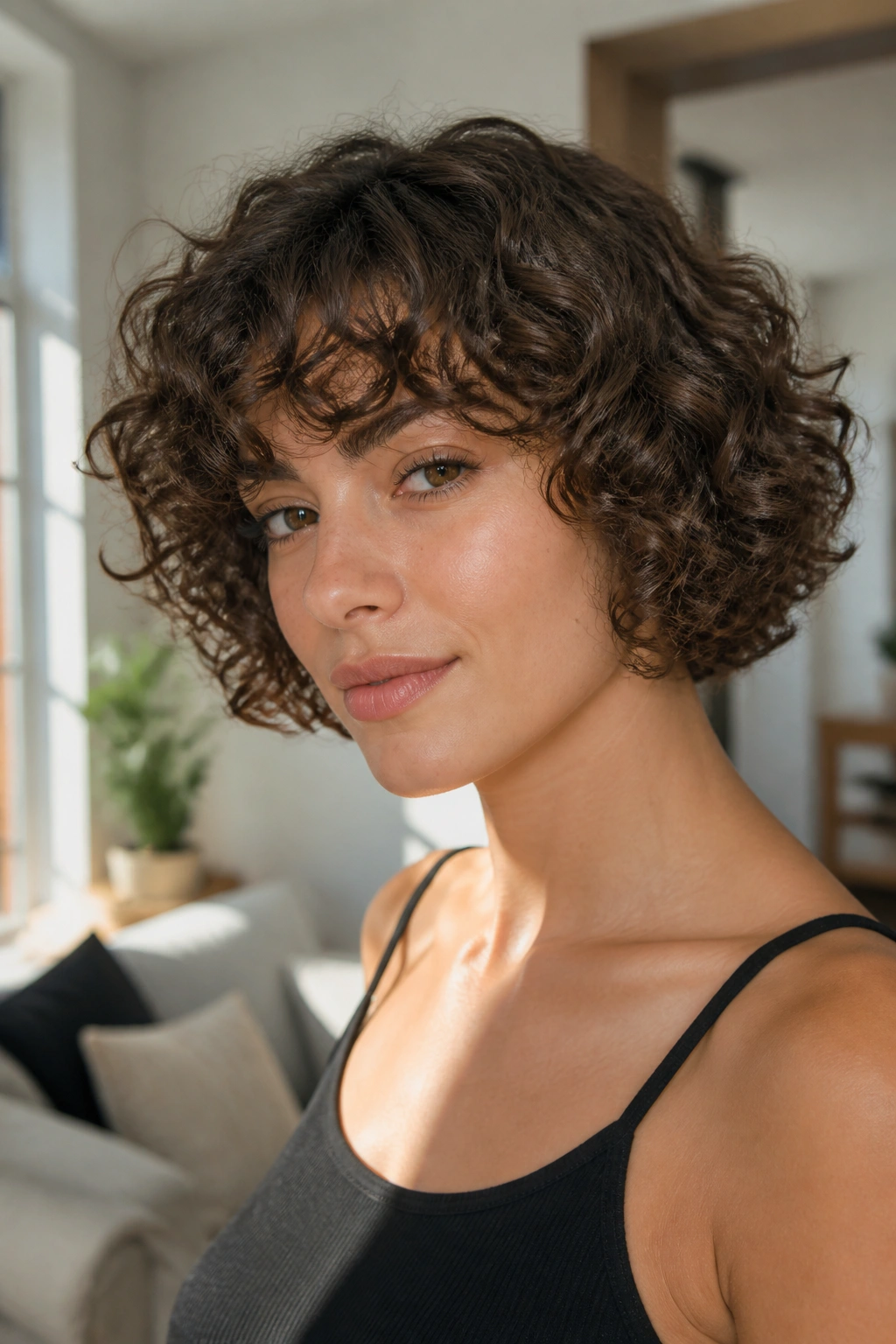
Fine hair with a natural wave or curl can look much fuller when the cut stays short enough for the curl pattern to spring up. A mini bob makes that happen by giving the texture a compact shape to live inside.
The danger with fine curls is overcutting the ends. If you stack too many layers or trim too aggressively, the curl pattern can separate into little see-through gaps. A better approach is to keep the silhouette rounded and let the curls pile on top of one another.
A good mini bob should feel springy when you shake it out. Not fluffy. Springy. There is a difference.
If your hair is more wavy than curly, ask for a dry cut or a cut done in its natural state so the stylist can see where the bends actually fall. Wet hair lies. It always does.
10. The Long Pixie With a Swept Fringe
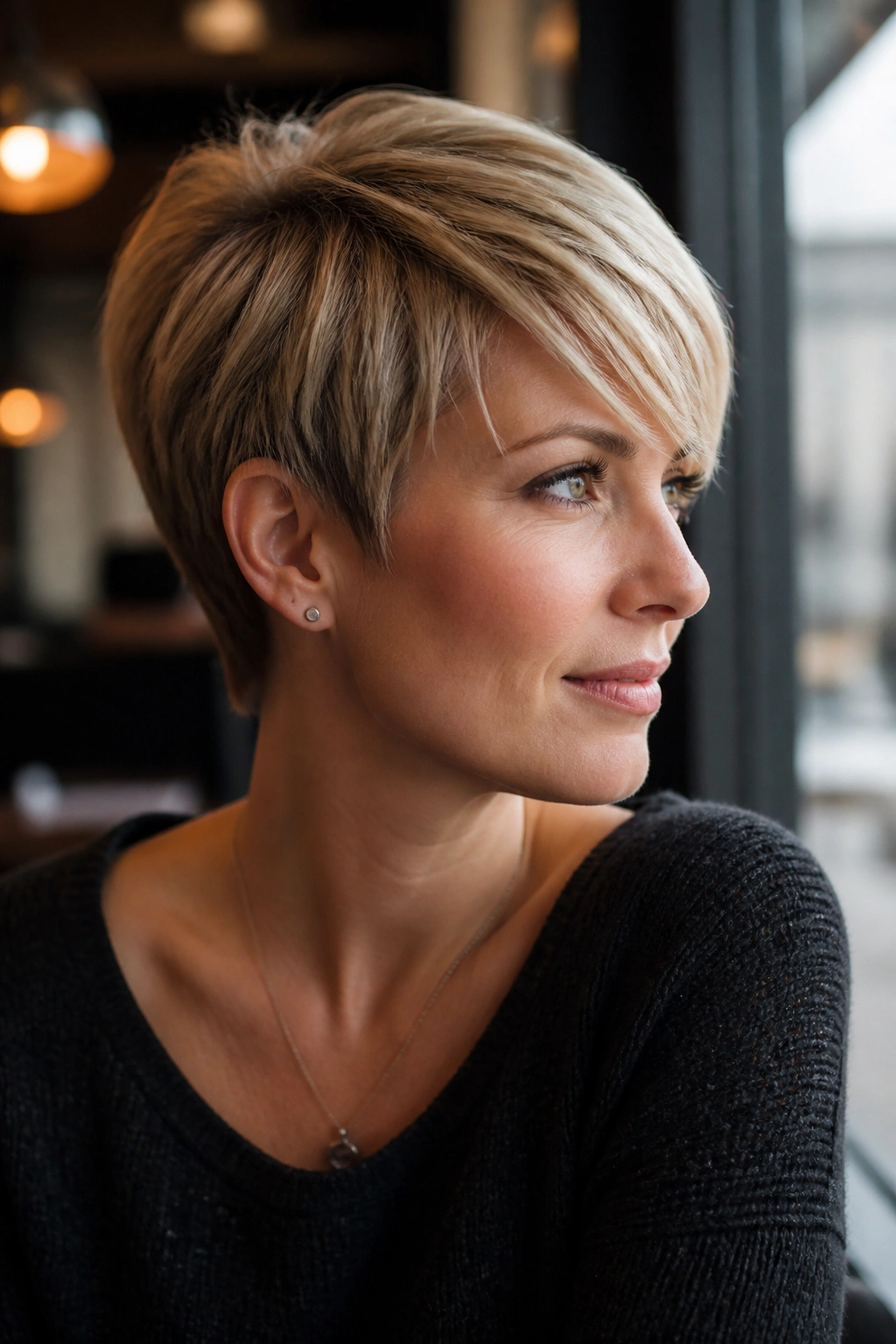
Is a pixie too much if you are nervous about cutting your hair short? A long pixie is the safest bridge.
The fringe keeps the front soft, while the back and sides stay short enough to lift the whole shape. For fine hair, that front length is useful because it gives you options. You can wear it swept over one eye, tucked behind the ear, or pushed forward when you want a more casual feel.
Who This Cut Helps Most
This style is especially nice if your face is longer or if your forehead feels a little bare with a super-short crop. The swept fringe brings balance without hiding everything under one heavy curtain.
It also works for people who want a short cut but still need some styling flexibility. You can make it sleek with a flat brush, or rough it up with a bit of wax at the crown. The line changes with your mood, which is part of the appeal.
A long pixie is not lazy hair, though. It still needs a trim now and then so the fringe does not drop into awkward territory. Leave it too long and the shape loses the whole point.
11. The Sleek Ear-Length Bob
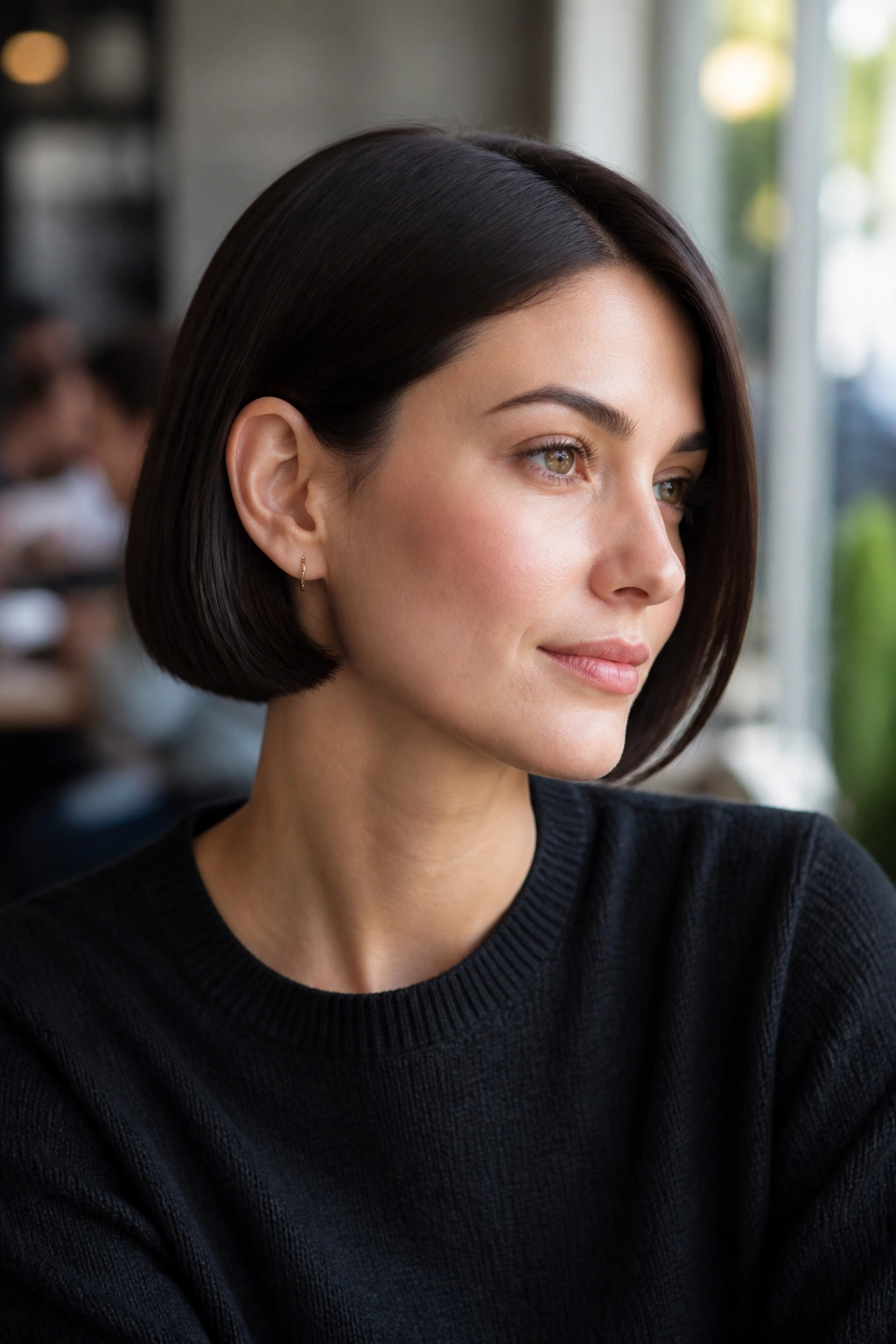
A sleek ear-length bob is one of the strongest options if your fine hair is straight and you like a clean finish. It does not pretend to be airy. It looks controlled.
The reason it works is simple: the ends all land in the same place, so the hair reads as fuller. A lot of people think fine hair needs heavy layering to avoid looking flat, but a neat perimeter often does more for thickness than any amount of slicing and dicing.
This is the cut to choose if you like a sharper outfit, a smoother neckline, and a style that looks deliberate with very little drama. It can be tucked behind one ear, clipped on one side, or worn dead straight if your hair naturally cooperates.
The trade-off: sleek cuts show every bend and cowlick. If your hair has a stubborn flip on one side, you will need a quick pass with a round brush or flat iron to keep the line clean.
12. The Textured Bixie
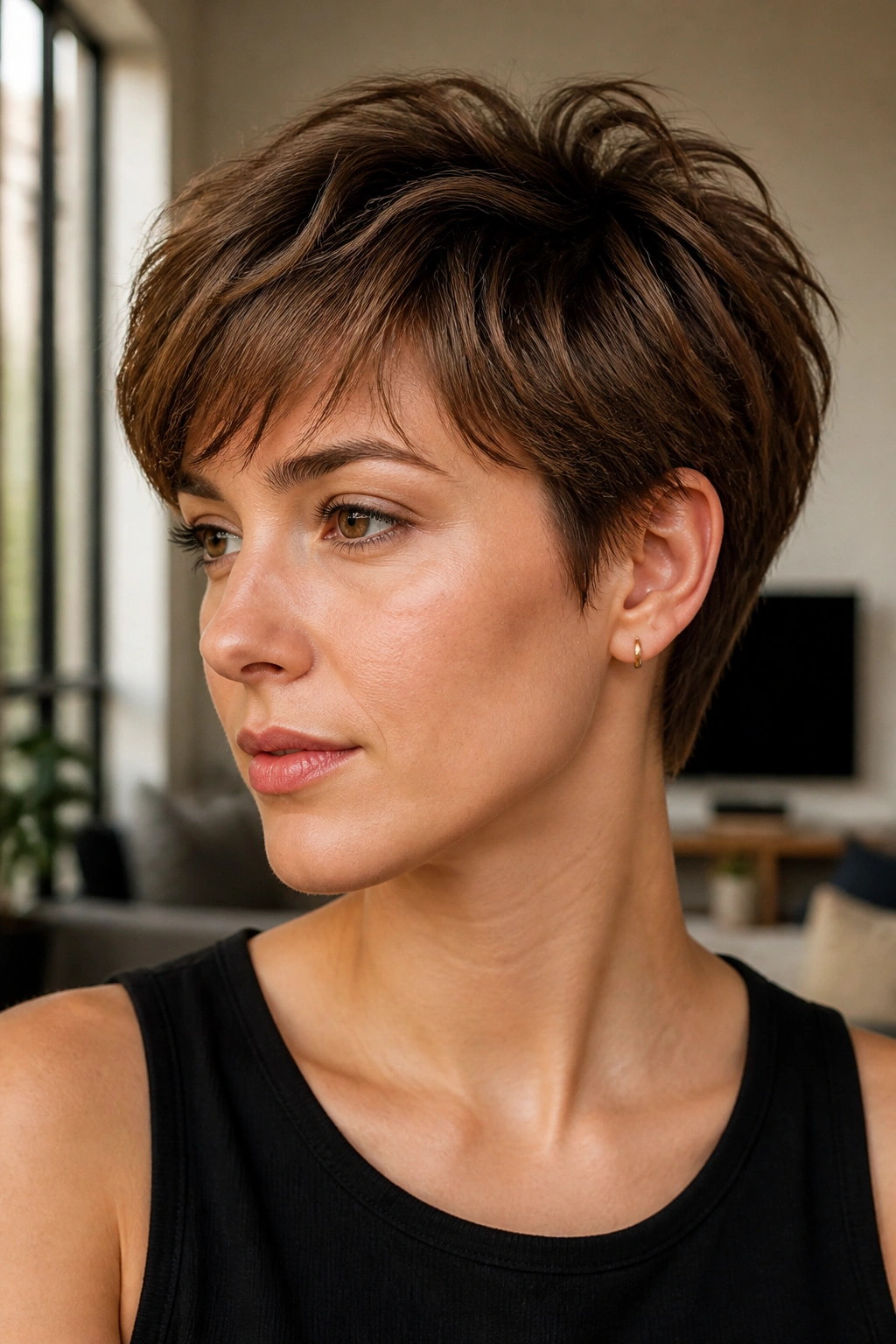
The bixie sits in that nice middle ground between a bob and a pixie, which makes it one of the most forgiving short hairstyles for fine hair.
The top has enough length to build a little height, while the sides stay soft enough not to expose the scalp too much. That balance is the whole reason the cut keeps coming back. It gives shape without demanding a full commitment to a very short crop.
A strong bixie should keep the crown a bit longer than the temples, with gentle layering rather than choppy shredding. Ask for pieces that move when you turn your head, not tiny fragments that vanish when the hair dries.
What to Watch For
- The top should not be overloaded with short layers
- The nape should stay neat so the cut does not mushroom
- The fringe can be side-swept or left open
- Matte styling paste tends to work better than glossy cream
If you want something that feels playful but still grown-up, this is a smart pick. It has enough shape to look styled and enough looseness to avoid feeling stiff.
13. The Short Shag With Curtain Fringe
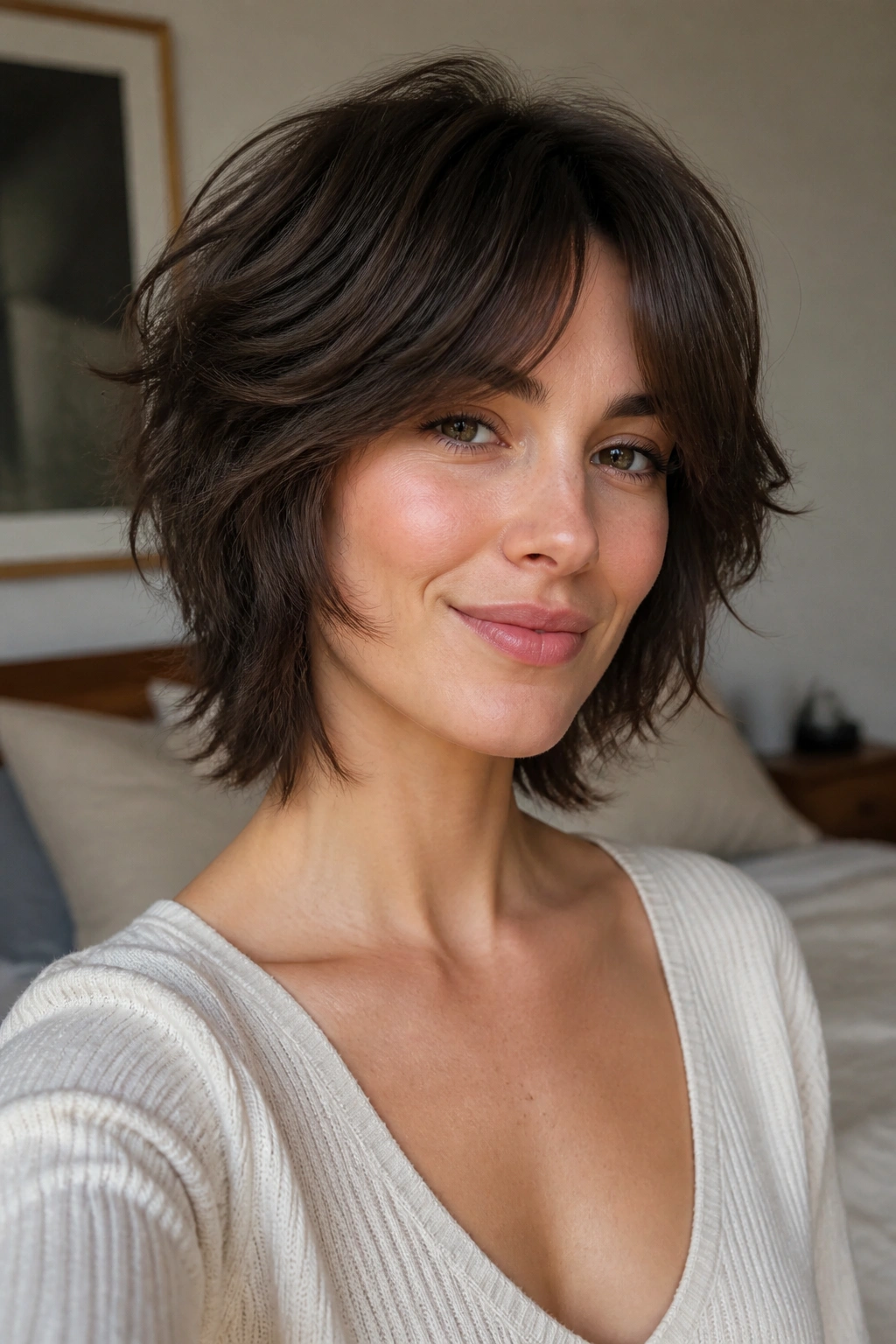
Does a shag work on fine hair? Yes, but only when the layers are kept honest.
A short shag can look fantastic because the curtain fringe breaks up the front and the layers give the hair a bit of lift around the crown. The hair never has to sit in one flat plane, which is good news if your strands collapse by lunch.
The catch is the same one that follows every shag. If the cut gets too heavily thinned, the ends lose their grip and the whole thing turns airy in a bad way. Keep the layers soft and concentrated toward the upper half of the head.
How to Make It Work
Air-dry the fringe with a little bend in the center and a slight outward sweep at the cheekbones. A diffuser can help if your hair has any wave, but do not blast it until the top goes frizzy. That is the fastest way to ruin the shape.
This is a good cut for people who do not want a polished look every day. It likes movement, a bit of bend, and a casual finish. If you prefer sleek hair with zero mess, skip it.
14. The Rounded Crop With Airy Ends
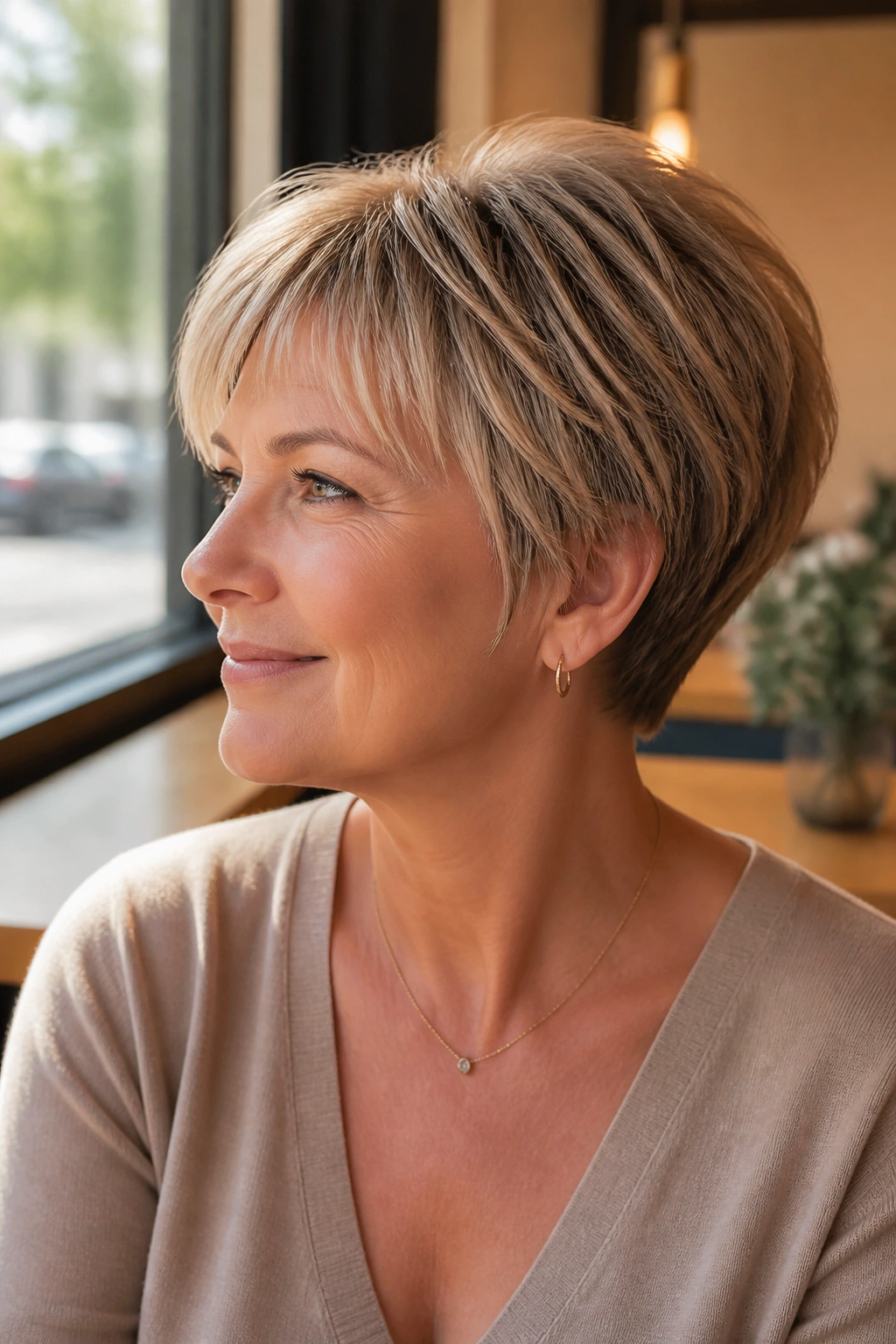
A rounded crop is one of those haircuts that looks simple until you notice how much work the shape is doing. The curve gives fine hair the sense of fullness, while airy ends keep it from turning into a little helmet.
The silhouette matters more here than the texture. If the crown is too flat, the style falls apart. If the ends are too thin, the round shape loses its body. A good rounded crop sits somewhere between neat and soft, with the volume gathered in one clear place.
This cut flatters faces that need a bit of width around the cheekbones or jaw. It also works well if you dislike asymmetry and just want a shape that feels balanced from every angle.
One-sentence truth: this cut is all about proportion.
Ask your stylist to keep the top cushioned and the bottom line full enough to hold the curve. That little request makes a huge difference on fine hair.
15. The Undercut Pixie
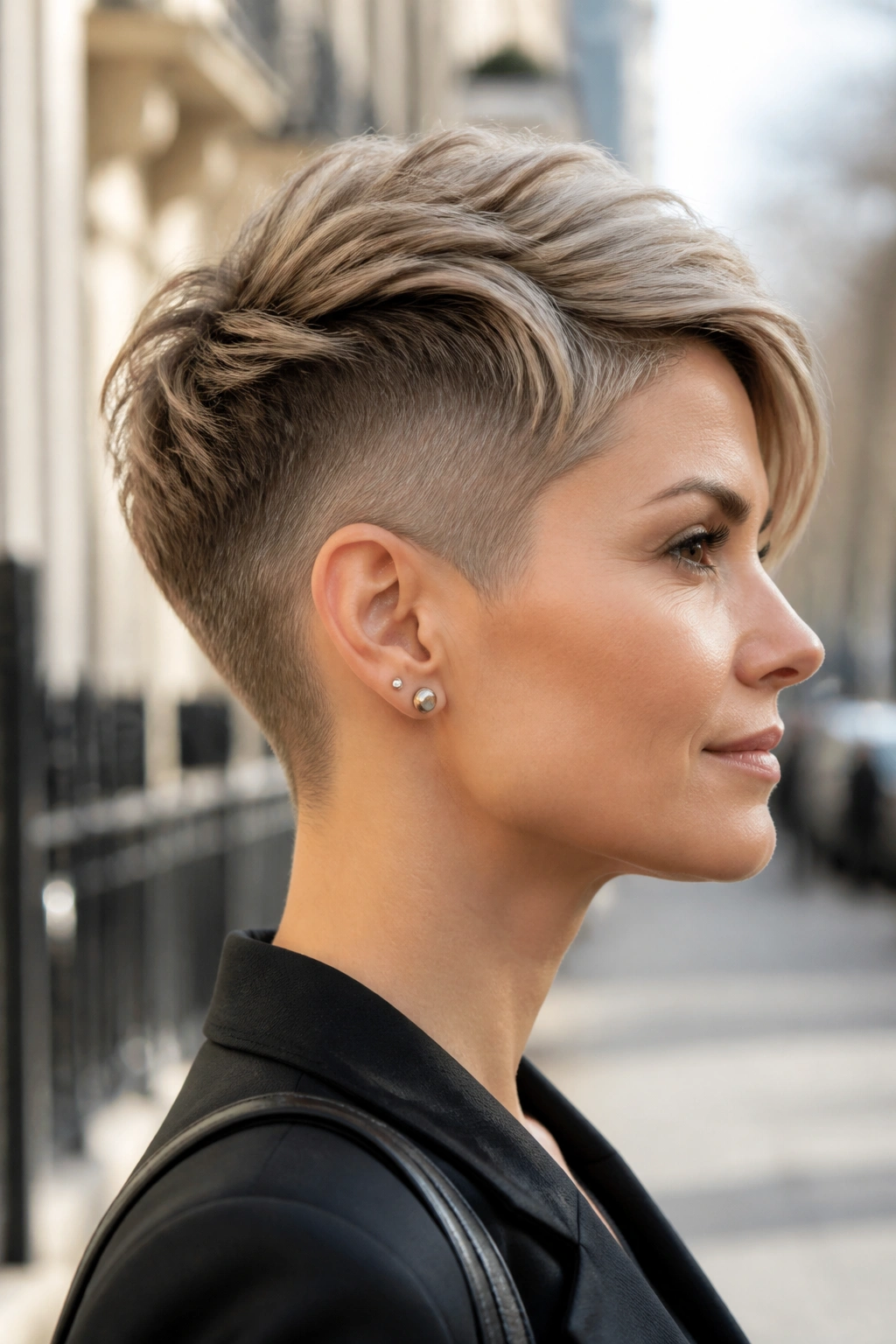
If your fine hair has enough density but too much bulk in the wrong places, an undercut pixie can be a relief. It takes weight out from underneath, which helps the top look fuller by comparison.
The undercut does not have to be dramatic. Sometimes it is hidden at the nape, sometimes tucked just around the sides. The point is to clear out the bottom layers so the top can sit up instead of folding down.
Best Practices
- Keep the top around 2 to 4 inches so it can move
- Ask for the undercut to stay hidden unless you want it visible
- Plan for a faster grow-out if you hate maintenance
- Use a small amount of root spray or mousse at the crown
This style is not for everyone. If you want to tuck your hair behind your ears all the time or pull it back into a tiny ponytail, you may get annoyed fast. But if you like a crisp shape and do not mind trims, it can make fine hair feel much easier to live with.
16. The Soft Bowl Bob
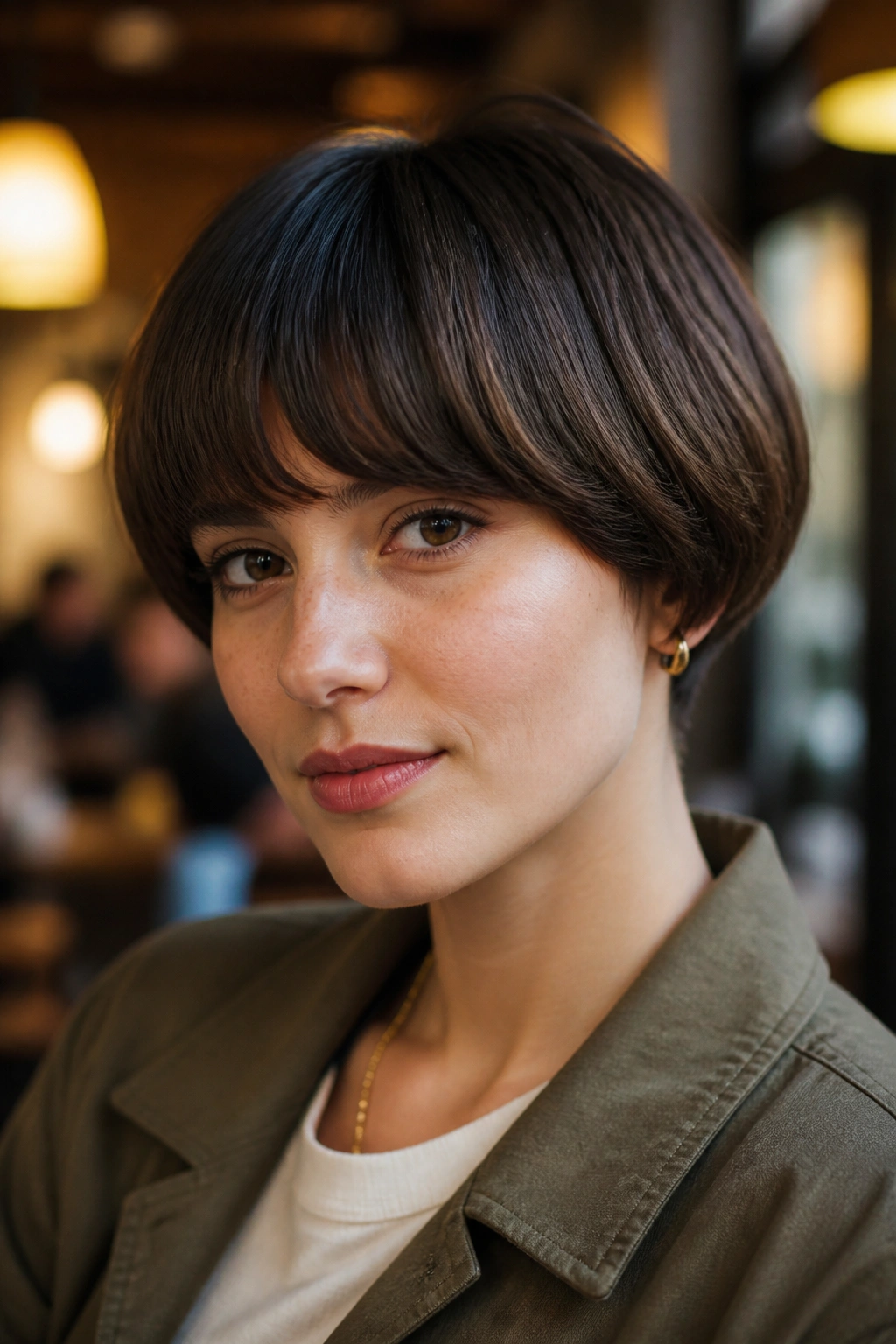
A bad bowl cut looks like a cap. A soft bowl bob does not.
The difference is in the edges. Instead of a hard, straight line all the way around, this version uses softened corners, broken ends, and a little texture near the cheekbones. That keeps the shape from feeling severe while still giving fine hair a fuller outline.
I like this style on people who want a strong shape and do not mind a little fashion in the haircut. It is not timid. It gives you a visible line, which fine hair often needs, but the soft finish keeps it wearable.
A soft bowl bob also works nicely if your hair is very straight and tends to split at the bottom. The rounded shape helps collect the hair into one intentional form. When the ends are clean and the interior is lightly textured, the result looks far more modern than the old-school version people picture.
17. The Jaw-Length Bob With Hidden Layers
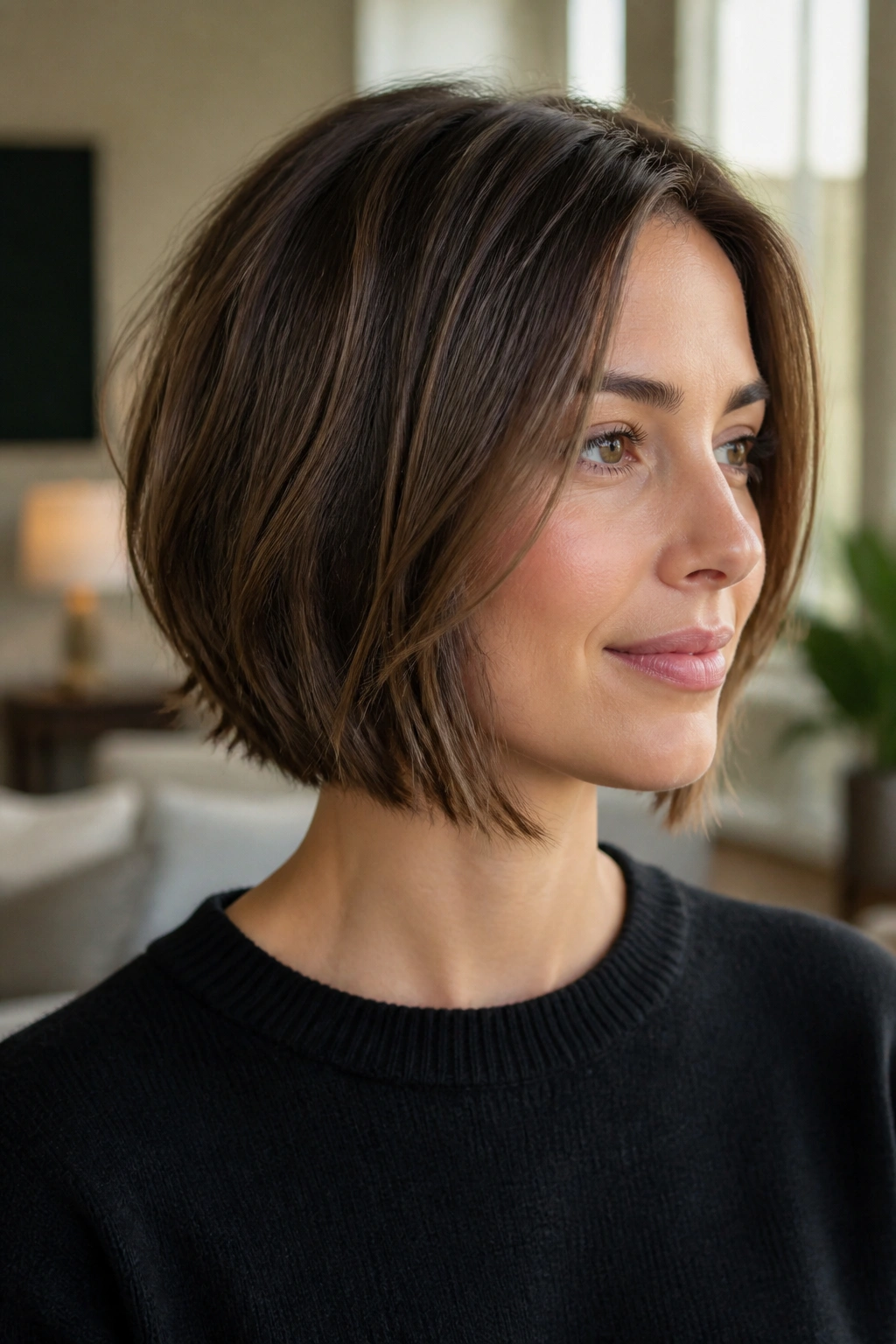
Hidden layers are the quiet solution a lot of fine-haired people need. They remove some weight from the inside without messing up the outside line, which is exactly what you want when the ends need to stay full.
This bob lands around the jaw, where the face can support a strong shape. The interior layers sit about 1 to 2 inches above the perimeter, so the top gets movement while the bottom still looks thick. It is a smart compromise for anyone who wants a little swing but refuses to lose density at the ends.
The styling is straightforward. A vent brush or small round brush at the roots, a quick bend at the front, and a light spray to hold the crown in place. You do not need much. Fine hair usually looks better when it is not buried under product.
If your hair breaks easily, this is one of the gentler-looking options because the line stays intact. That matters more than people think. A solid edge makes everything else look healthier.
18. The Graduated Pixie Bob
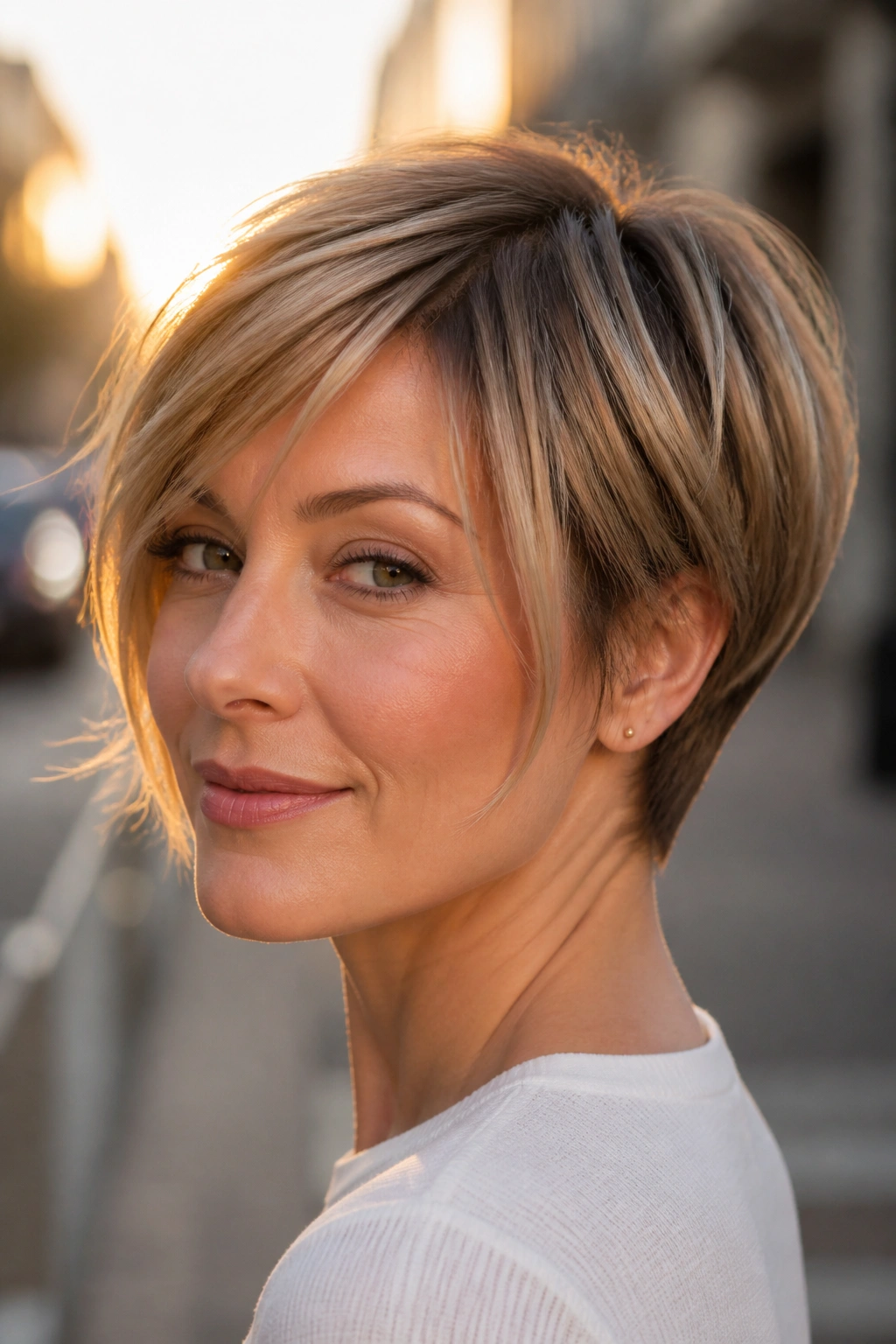
If you want one short cut that can look neat at work and airy on a weekend, the graduated pixie bob belongs near the top of the list.
The back sits shorter and slightly stacked, the crown gets a little lift, and the front keeps enough length to soften the whole shape. That graduation gives fine hair a built-in push upward, which is the part most people are chasing in the first place. It also keeps the cut from sinking into the neck.
This style tends to flatter people who want a haircut that feels polished without being stiff. It works on straight hair, on lightly wavy hair, and on hair that refuses to hold a big curl for more than ten minutes. The shape itself carries the style, which is a relief when you are tired of coaxing volume out of a brush.
A good graduated pixie bob should never look puffy at the back or stringy at the front. The line needs to stay smooth, and the crown needs just enough height to make the hair look intentional. Bring photos that show the silhouette from the side and back. That is where this cut either earns its keep or falls apart.
