



Fine hair has one annoying habit: it looks polished for about ten minutes, then the crown goes flat and the ends start to look see-through. Medium hairstyles for fine hair solve that problem better than long, heavy layers or very short cuts that leave you with too little to work with. The length gives you enough movement. The shape gives you structure.
The sweet spot sits around the collarbone and shoulders.
That length is long enough to tuck, twist, wave, and pin, but not so long that gravity wins every single time. A blunt edge can make the outline look denser right away. A clean side part can give the roots a lift without a lot of teasing. And when the styling is done well, the hair reads fuller before anyone has time to overthink it.
The styles that work best on fine hair do not chase giant volume for the sake of it. They use smart lines, careful layering, and just enough texture to stop the hair from going limp. That is the whole trick, really. Keep the shape strong, keep the ends tidy, and stop fighting the hair you have.
1. The Blunt Collarbone Lob That Makes Ends Look Thicker
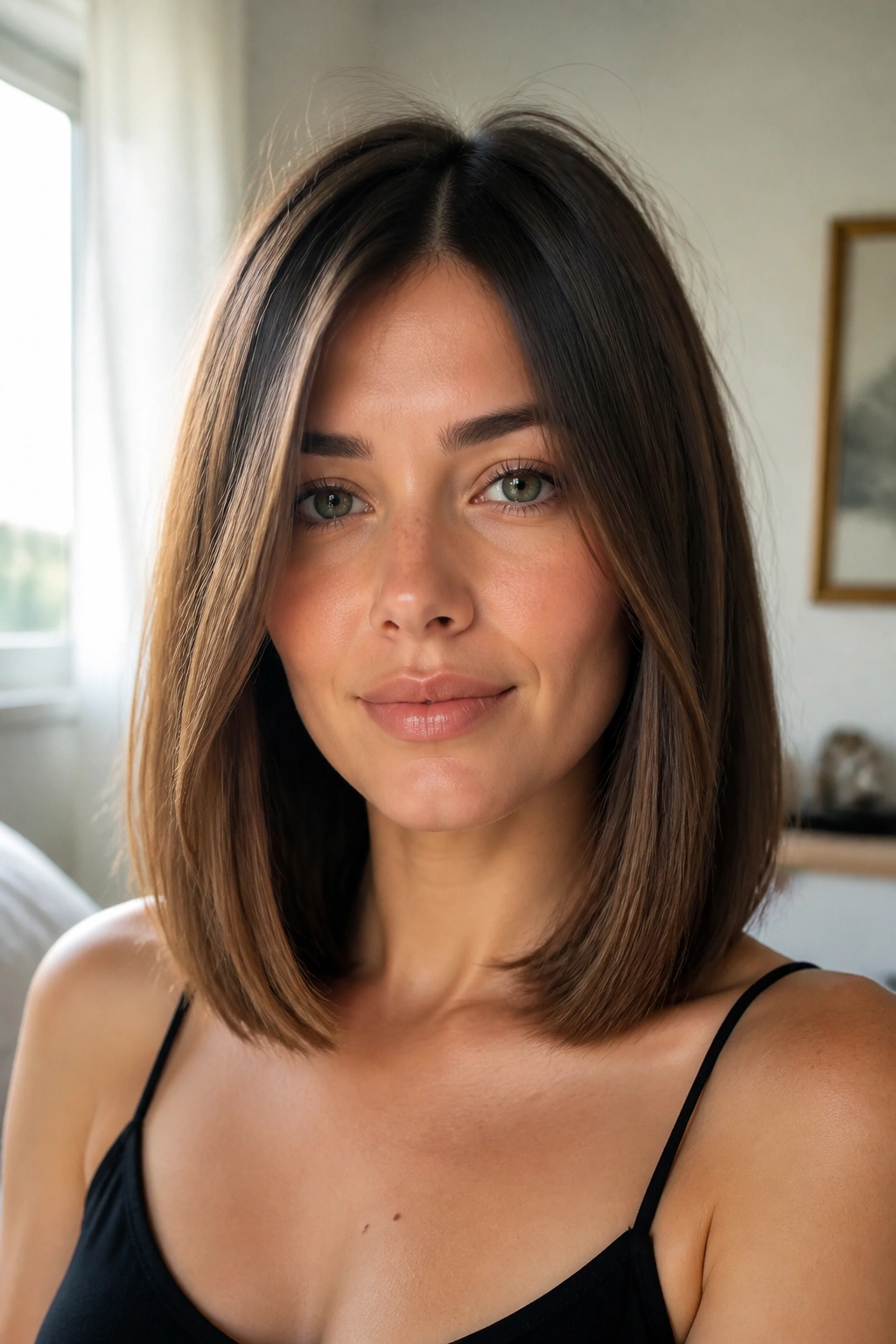
A blunt lob at the collarbone is the first style I’d point to if someone says their hair feels flimsy no matter what they do. The straight edge gives the eye a solid line, and fine strands look denser when the perimeter is clean instead of broken up into wisps.
Why It Works
Fine hair tends to lose visual weight fast when the cut is too feathered. A blunt line keeps the ends grouped together, which makes the whole shape read fuller. If you want movement, ask for a tiny bit of softening around the face, not through the back of the cut.
Keep the part simple and the styling even simpler. A medium round brush, a heat protectant, and a quick bend under at the ends are usually enough. You do not need a big curl here. You need a shape that holds.
- Ask for the length to sit right at, or just below, the collarbone.
- Blow-dry with the nozzle pointed down the shaft so the cuticle lies smooth.
- Finish with a pea-size amount of lightweight cream on the last 2 inches.
- Avoid heavy oils at the roots; they flatten the top fast.
Best move: keep the base blunt and let the cut do the heavy lifting.
2. Soft Layered Lob with Face-Framing Pieces
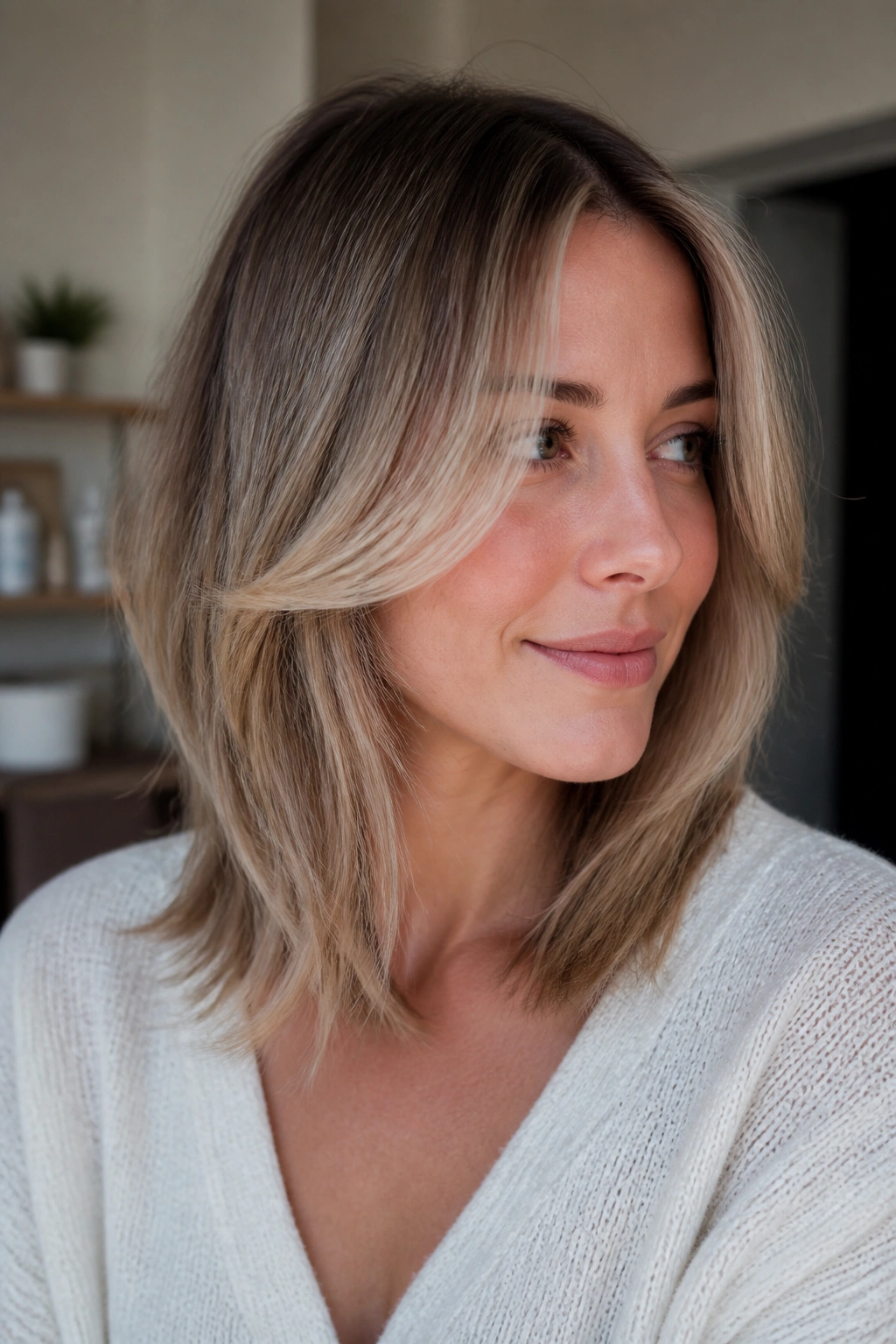
Soft layers can work on fine hair, but only when they stay long and quiet. The goal is not to shred the shape. It’s to make the front move a little more and keep the face from looking boxed in.
A few well-placed face-framing pieces starting below the cheekbone can change the whole mood of a medium cut. They give the front a bend and a little swing, while the back keeps enough weight to look dense. That balance matters. Too many short layers and the whole style starts to look airy in the wrong way.
This is one of those cuts that looks best when the styling is calm. A blowout with a round brush, then a soft curve away from the face, usually does enough. If you want more lift, clip the crown while the hair cools so the top doesn’t collapse the second you step outside.
The real win here is that the style looks finished even on a quiet day. No fuss. No helmet hair. Just a clean lob with a little movement at the front.
3. One-Length Midi Shag with Airy Texture
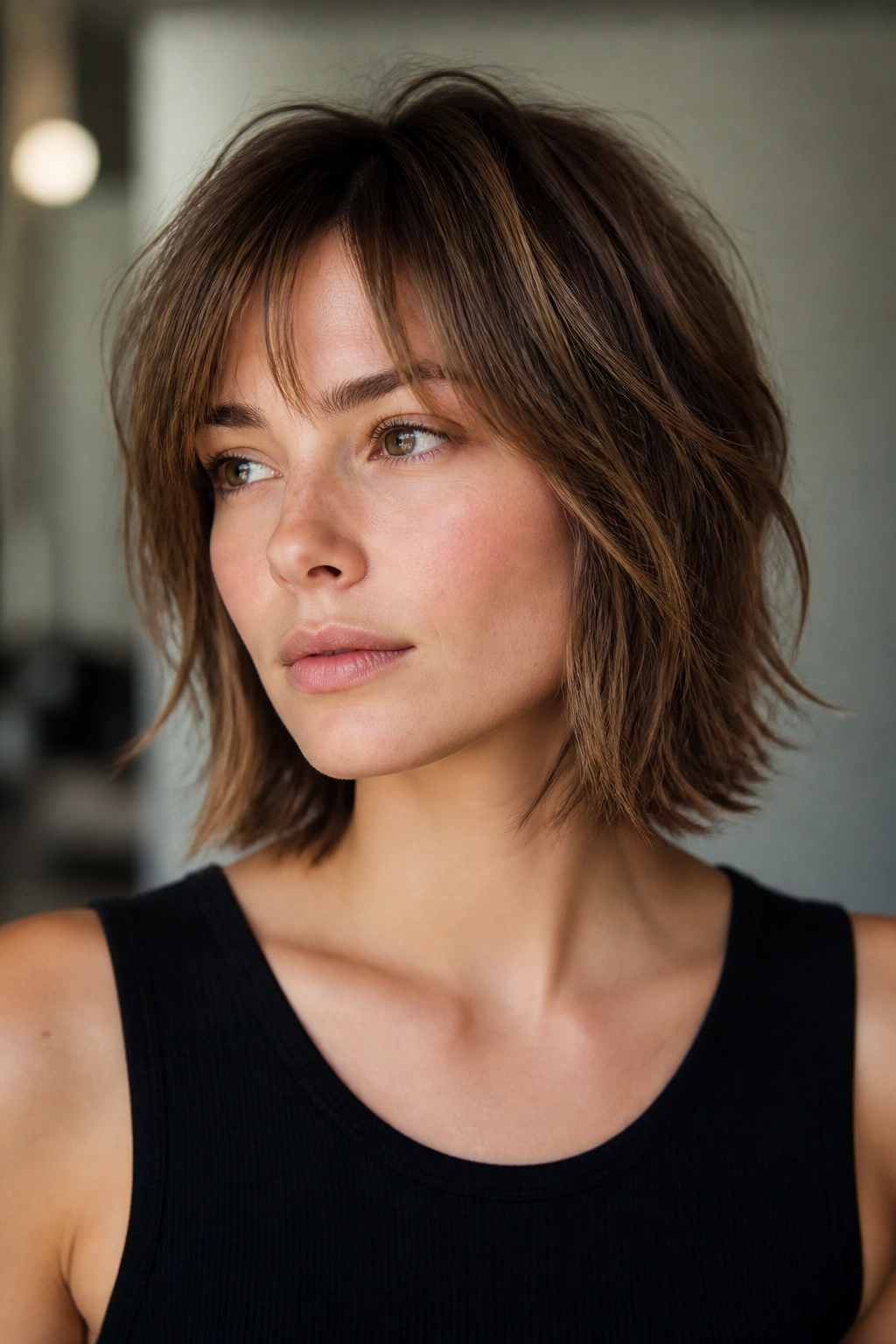
Can a shag work on fine hair? Yes, if the layers stay controlled.
A medium shag is not about hacking the hair to pieces. On fine hair, that usually backfires. The better version keeps the top layers soft, the bottom length intact, and the texture light enough to add motion without chewing through density.
How to Wear It
Use mousse at the roots and a touch through the mids, then rough-dry until the hair is about 80 percent dry. After that, twist 2-inch sections around your fingers and let them fall in uneven pieces. The point is to create a bit of lift and separation, not a perfect curl pattern.
If your hair is very fine, skip heavy salt sprays. They can make the strands feel sandy and dull. A light texture mist or airy foam works better because it gives shape without making the hair feel dry and brittle.
A good shag on fine hair should still look like hair, not fuzz. That is the line to protect.
4. Deep Side Part with Tucked Ends

Picture this: your hair has gone flat at the crown, the middle part is refusing to cooperate, and the ends are hanging straight like they gave up halfway through the day. A deep side part fixes the top line before you even reach for a curling iron.
The shift in parting creates instant lift on the heavier side, and tucking one side behind the ear gives the face a little structure. That tucked side also keeps the style from swallowing your cheekbones. On medium fine hair, that small change can make the whole cut look more deliberate.
Try blowing the roots in the opposite direction of the part first, then flip them back once they cool. That little trick helps the root stay up instead of sliding flat again. A one-and-a-quarter-inch iron on just the mid-lengths and ends can add enough bend to keep the style from looking plain.
- Set the part 1 to 2 inches off center.
- Blow-dry the root area in the opposite direction first.
- Tuck one side behind the ear and mist the ends lightly.
- Let a few front pieces fall forward. Too neat looks stiff.
The result is simple, but it works. A side part can do more for fine hair than a whole can of volumizing spray.
5. Soft Waves with Invisible Layers
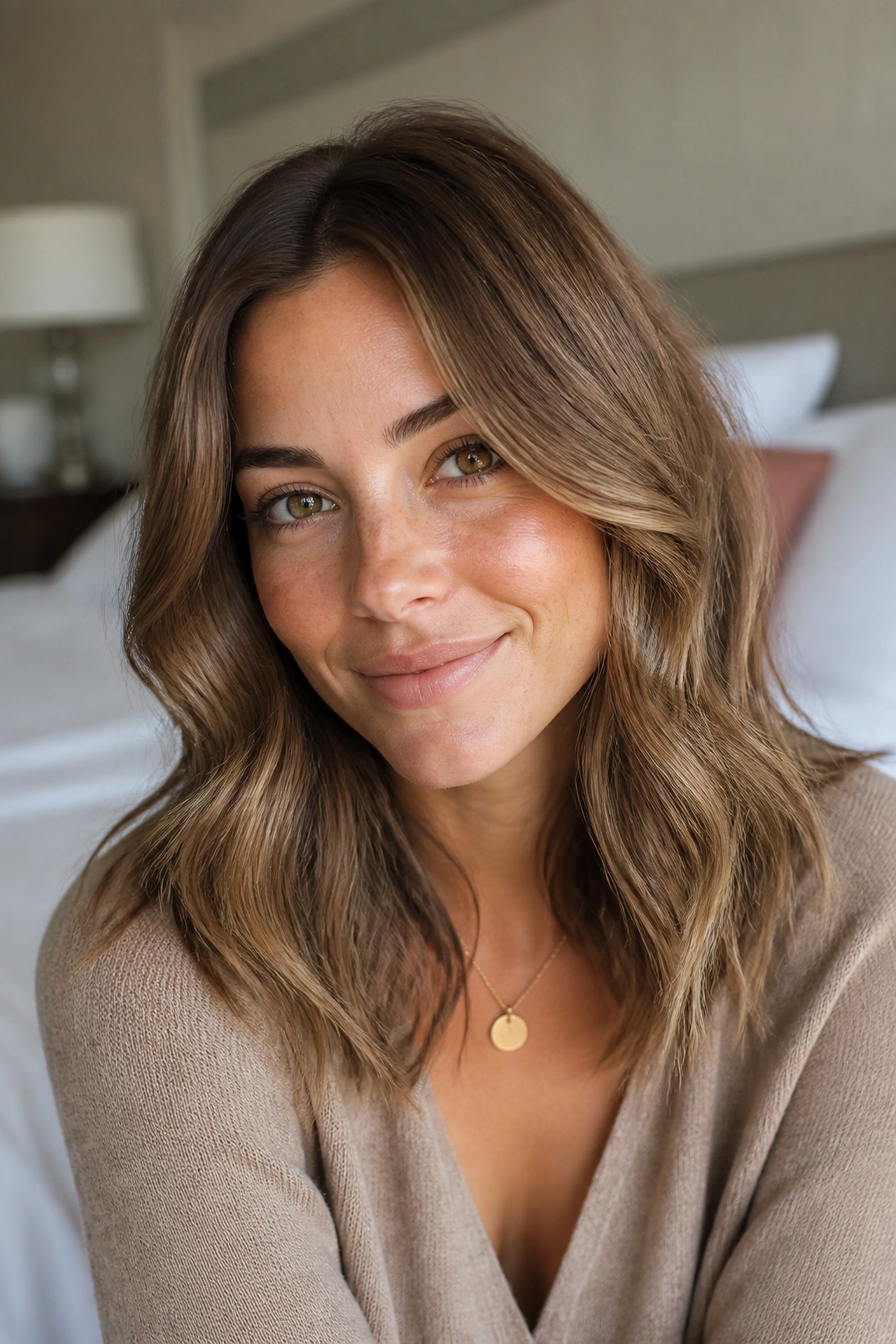
Soft waves are one of those styles that look easy and are not, at least not if you want them to last. Fine hair needs a little hidden structure so the bend has something to hold onto. That’s where invisible layers earn their keep.
The cut stays subtle, but the shape underneath gives the wave pattern room to move. The wave sits better, the hair doesn’t look stringy, and the whole style reads fuller from a few feet away. If you curl everything the same direction, though, it can go soft and flat too fast. Alternate directions and leave the last inch out so the ends do not turn into little corkscrews.
A light mousse or a heat-activated styling cream makes a big difference here. So does letting the curls cool before you touch them. Touching them too soon is a classic mistake. The wave is still setting, and your fingers break it apart before it has a chance.
Soft waves are not about volume everywhere. They are about controlled looseness. That distinction matters a lot on fine hair.
6. Sleek Center-Part Lob
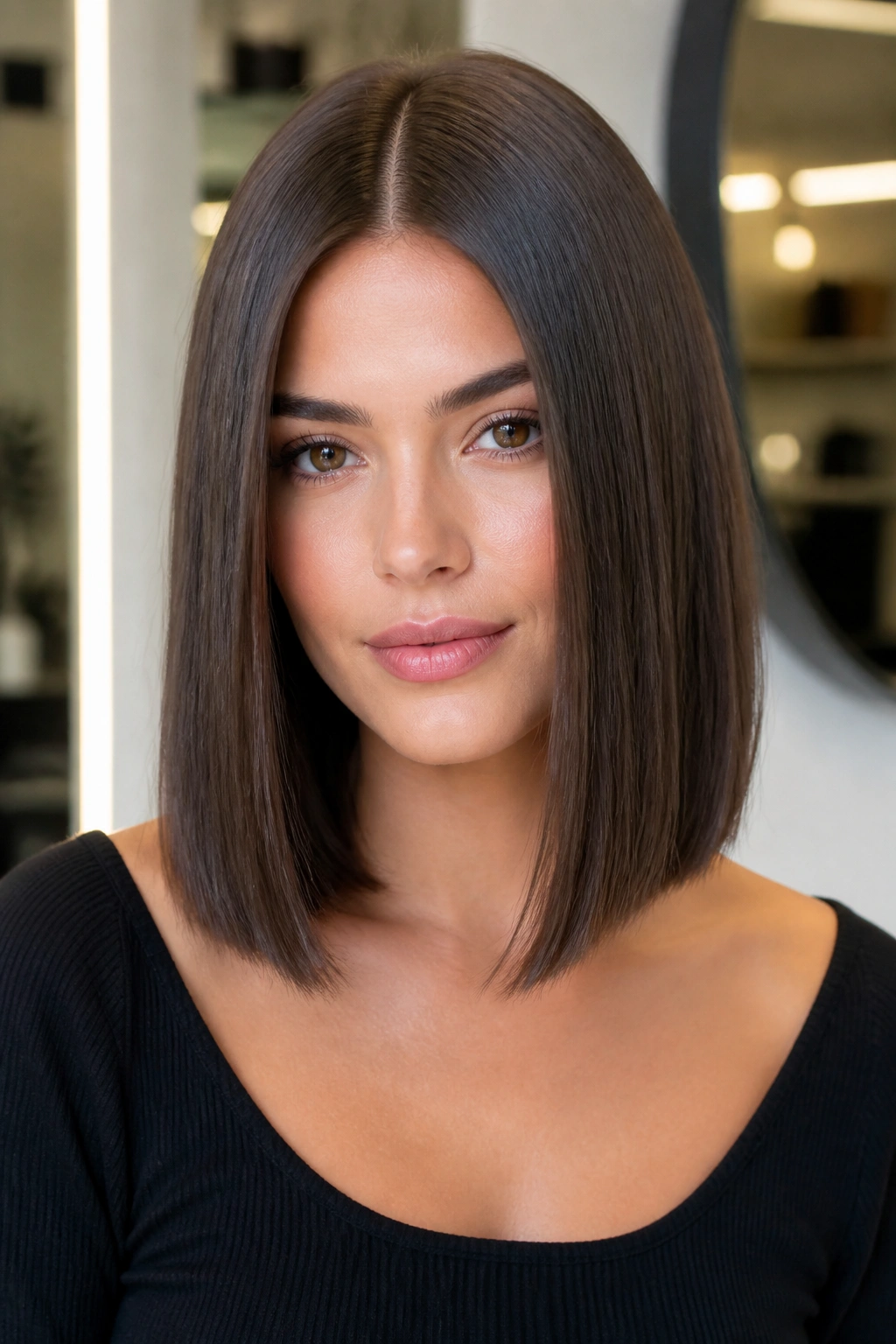
A sleek center-part lob works because it turns fine hair into an asset instead of a problem. The smooth finish shows off shine, and the straight lines make the cut look crisp.
This style is best when your hair already behaves pretty well on its own. If you fight a lot of frizz or cowlicks, a center part can be stubborn. But if the hair lies reasonably flat and you want a clean, modern shape, it’s hard to beat. The trick is to keep the roots from going limp while still polishing the lengths.
Use a blow-dry brush or a flat brush to lift the roots slightly at the crown, then smooth the mids and ends with a flat iron only if needed. Don’t press the hair so hard that it looks pasted down. That is where sleek turns thin in a bad way.
This style also gives you a nice line for tucking behind the ears or wearing with narrow clips. Simple. Sharp. No extra decoration needed.
7. Shoulder-Length Cut with Curtain Bangs

Curtain bangs do one useful thing on fine hair: they build shape around the face so the rest of the hair does not have to carry all the visual interest. That matters more than people think.
A shoulder-length cut with curtain bangs keeps the length light enough to move, while the fringe opens the forehead and gives the hair a softer frame. The bangs should be long enough to part in the middle and sweep into the cheekbones. If they are too short, they can look sparse. If they are too thick, they can overwhelm the rest of the cut.
What Makes It Work
Curtain bangs need a little blow-drying to sit well. A round brush or even a medium roller clip while they cool can help them bend away from the face. Keep the rest of the hair smooth and the ends slightly curved under. That keeps the style from feeling too fluffy up top.
This is a good choice if you want a style that looks styled without looking overdone. The fringe carries some of the load, and that makes fine hair feel more complete.
8. Half-Up Twist That Lifts the Crown
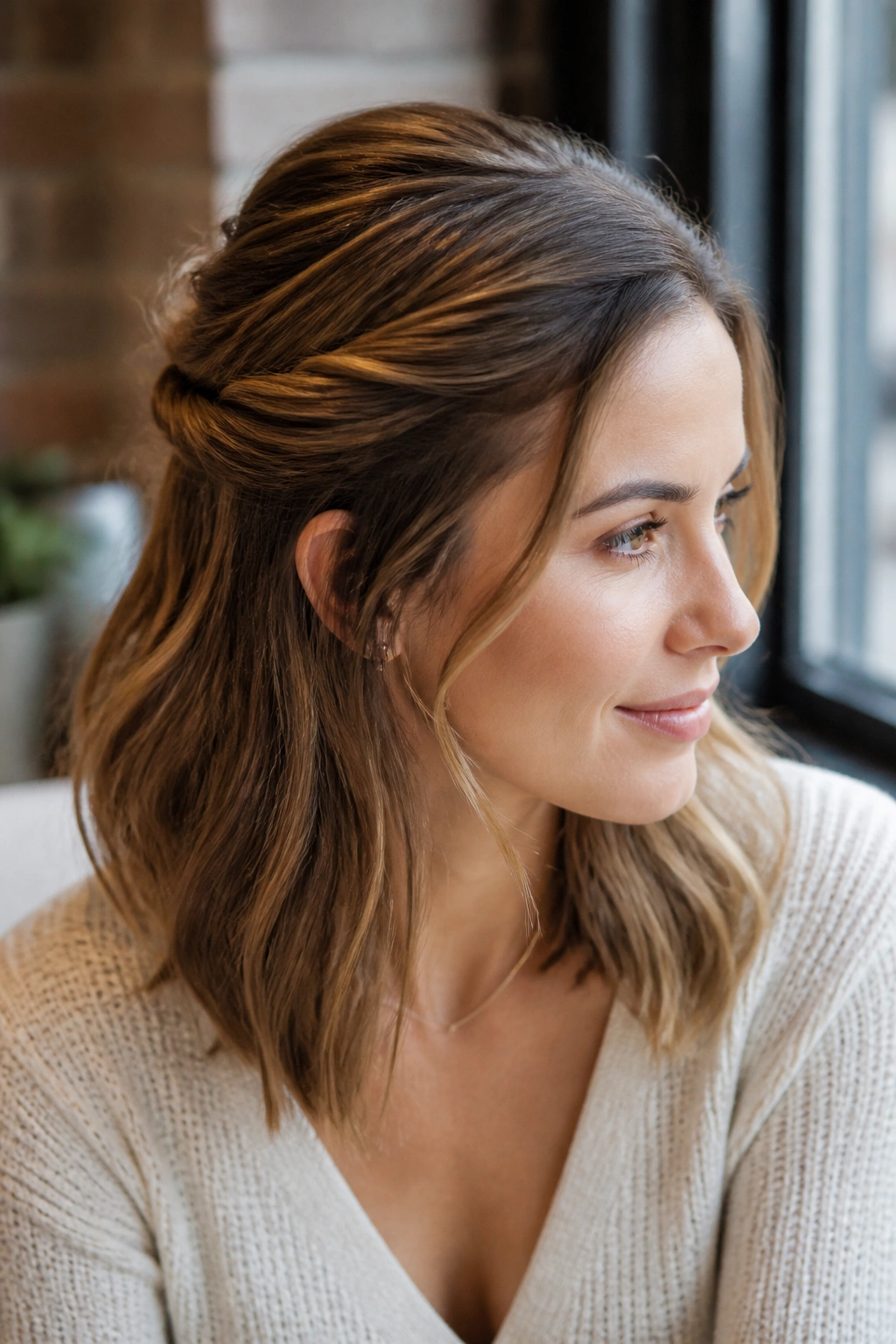
A half-up twist can save a flat crown in under five minutes. That’s not marketing. That’s just how the shape behaves.
When you gather only the top section and twist it back, you pull the eye upward and create a little lift right where fine hair needs it most. The rest of the hair stays down, so you still keep the softness and movement of a medium length. The whole point is to keep the style light.
Start with a small section from each temple, twist them back loosely, and pin them where the back of the head starts to round. If you pinch the twist a little before pinning, it looks fuller without needing much teasing. A tiny spritz of texture spray at the roots helps the pins hold, which is useful if your hair is slippery.
This style looks best when it is not too neat. A tiny bit of looseness around the face makes the whole thing feel more natural and less like a school recital.
9. Low Chignon with Loose Face-Framing Pieces
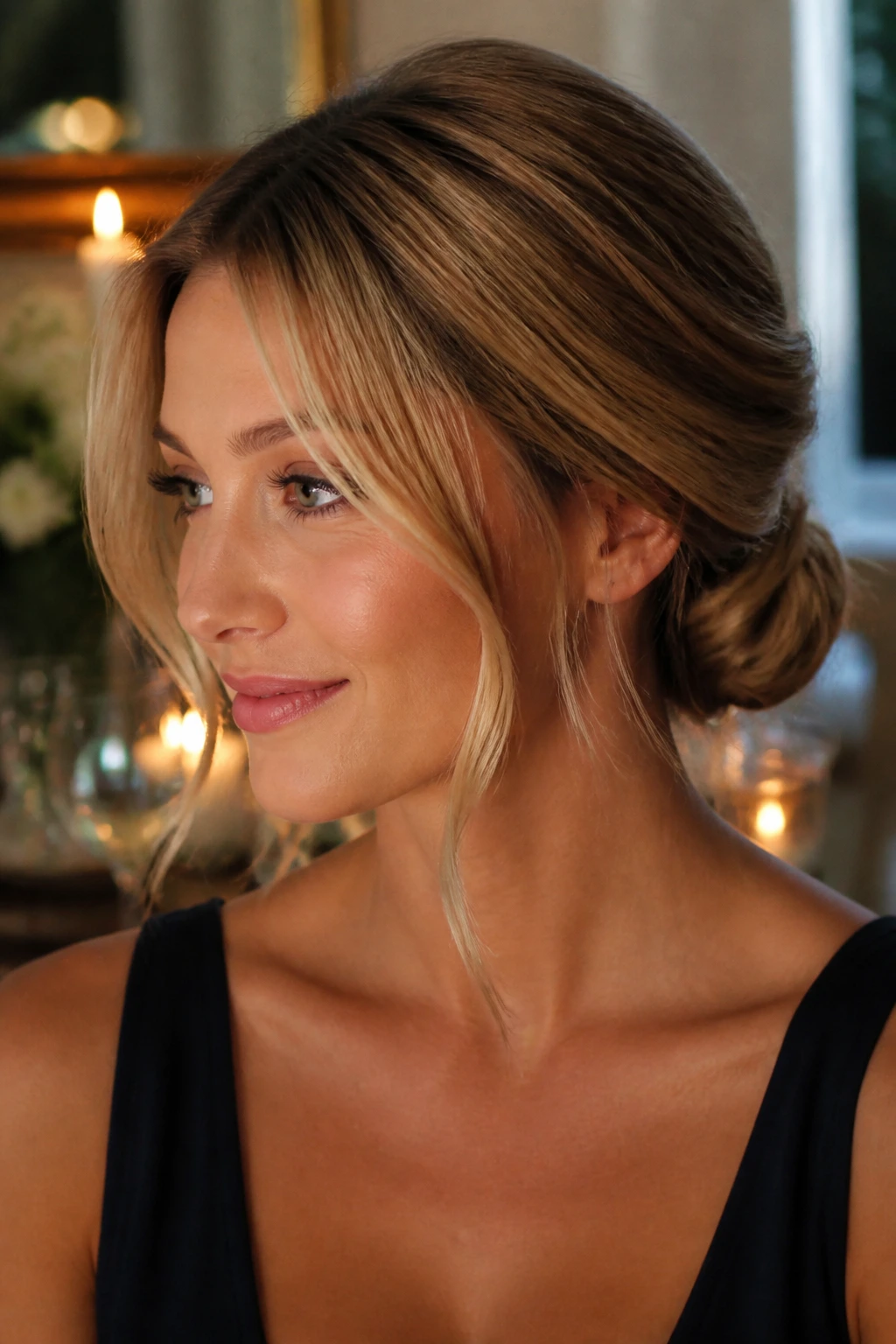
Can fine hair pull off a low bun? Absolutely — if you stop trying to make it huge.
A low chignon sits close to the nape, where fine hair can actually look fuller because the style is compact. Leave a few face-framing pieces out, and the bun suddenly feels softer and more flattering. The front pieces matter here. They keep the look from turning severe.
Twist the hair into a loose knot rather than a tight coil. Use U-pins if you can; they let the bun sit flatter and less bulky. A little texture spray through the mids before you gather everything helps the hair grip itself instead of sliding apart. If the bun looks too small, gently pull the outer loops wider with your fingertips. That creates more width without making the bun messy.
This is a strong choice for dinners, events, or any day when you want your neck to feel open and the rest of the style to behave. Fine hair often does better in controlled shapes than in giant updos.
10. Collarbone Cut with Razored Ends
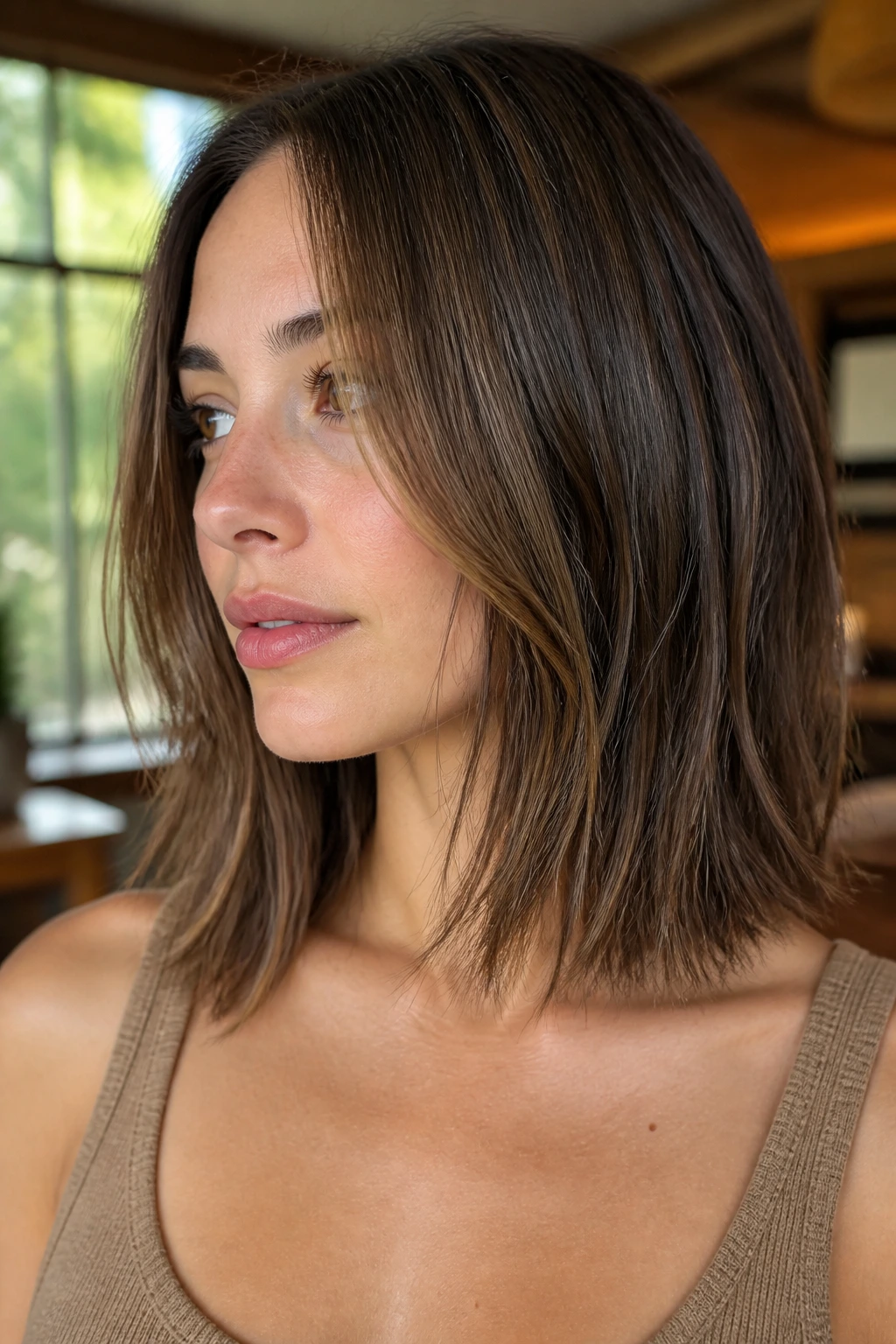
A little razor work can help fine hair, but only in the right hands. Too much, and the ends start to look frayed. That is the part people miss.
A collarbone cut with lightly razored ends creates a softer outline than a blunt lob. It can be a nice choice if your hair is very straight and tends to fall into one heavy sheet. The softer edge keeps the cut from looking stiff. Still, the razor should be used sparingly, mostly on the surface or around the perimeter, not hacked through the whole head.
What to Watch For
- Ask for light razoring, not heavy thinning.
- Keep the length around collarbone level so the shape still feels full.
- Style with a round brush to smooth the ends back together.
- Use a leave-in mist, not a thick cream, so the cut doesn’t separate too much.
If your hair already feels wispy on the ends, skip this one. Seriously. Fine hair does not need every strand thinned out. It needs support, and this cut only works when the perimeter stays strong enough to hold its own.
11. Air-Dried Bend with Texture Spray
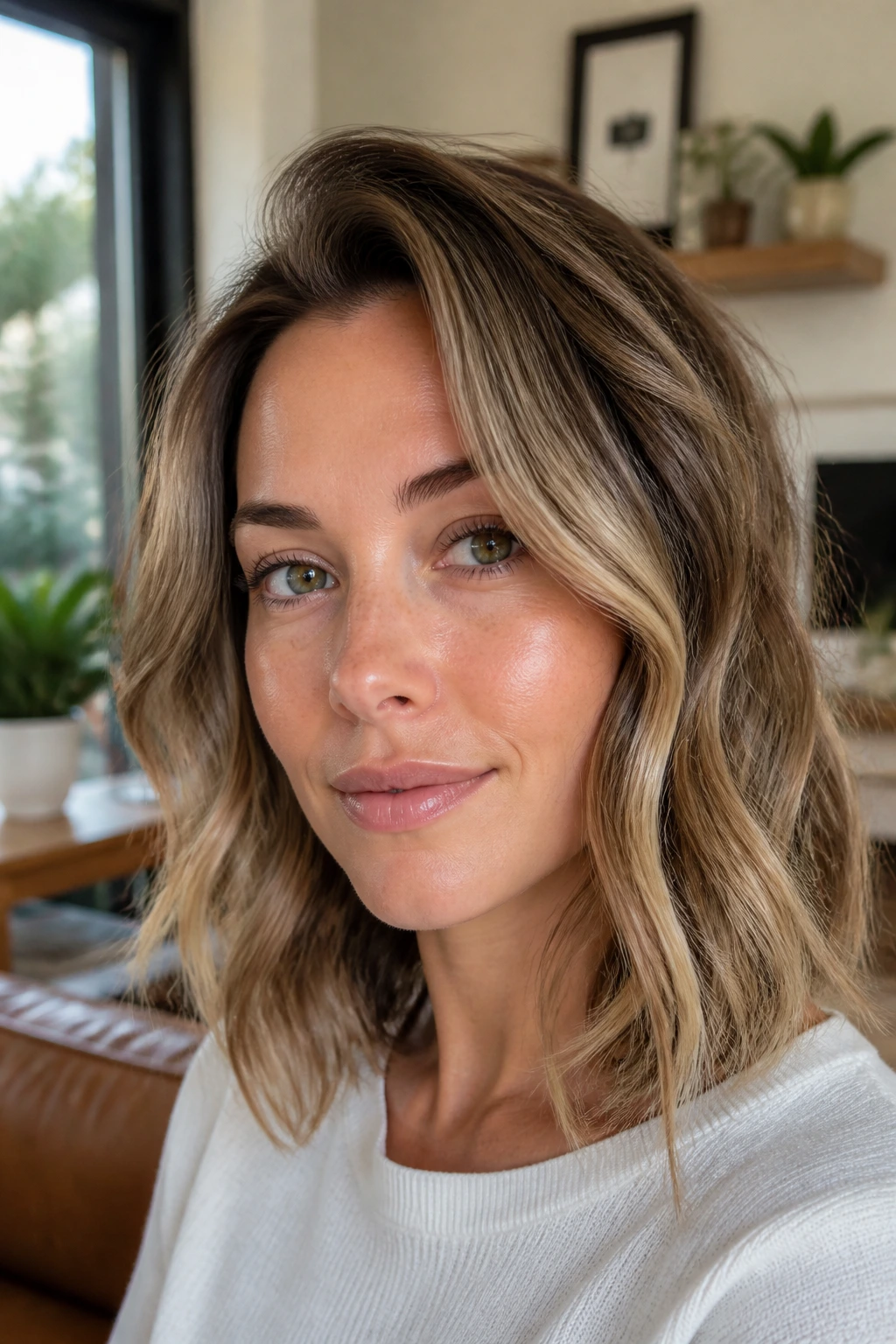
Air-drying can be a gift or a trap. On fine hair, it needs a little help, or it collapses into awkward bends and flat roots.
The best air-dried look starts with product at the roots and a small amount through the mids. A light mousse or setting foam gives the strands enough memory to keep a bend as they dry. Then you twist a few small sections away from the face and clip the crown for lift. Once everything dries, shake it out with your fingers and stop there. Brushing after the fact often destroys the shape.
This style is good when you want something softer than a blowout but less raw than a fully natural dry. It has a lived-in feel without looking limp. The hair should still move when you turn your head. If it feels crunchy or stiff, the product was too heavy.
The little detail that helps most? Don’t touch it while it dries. Fine hair gets weird when it is fussed with too much.
12. Polished Flip-Out Ends
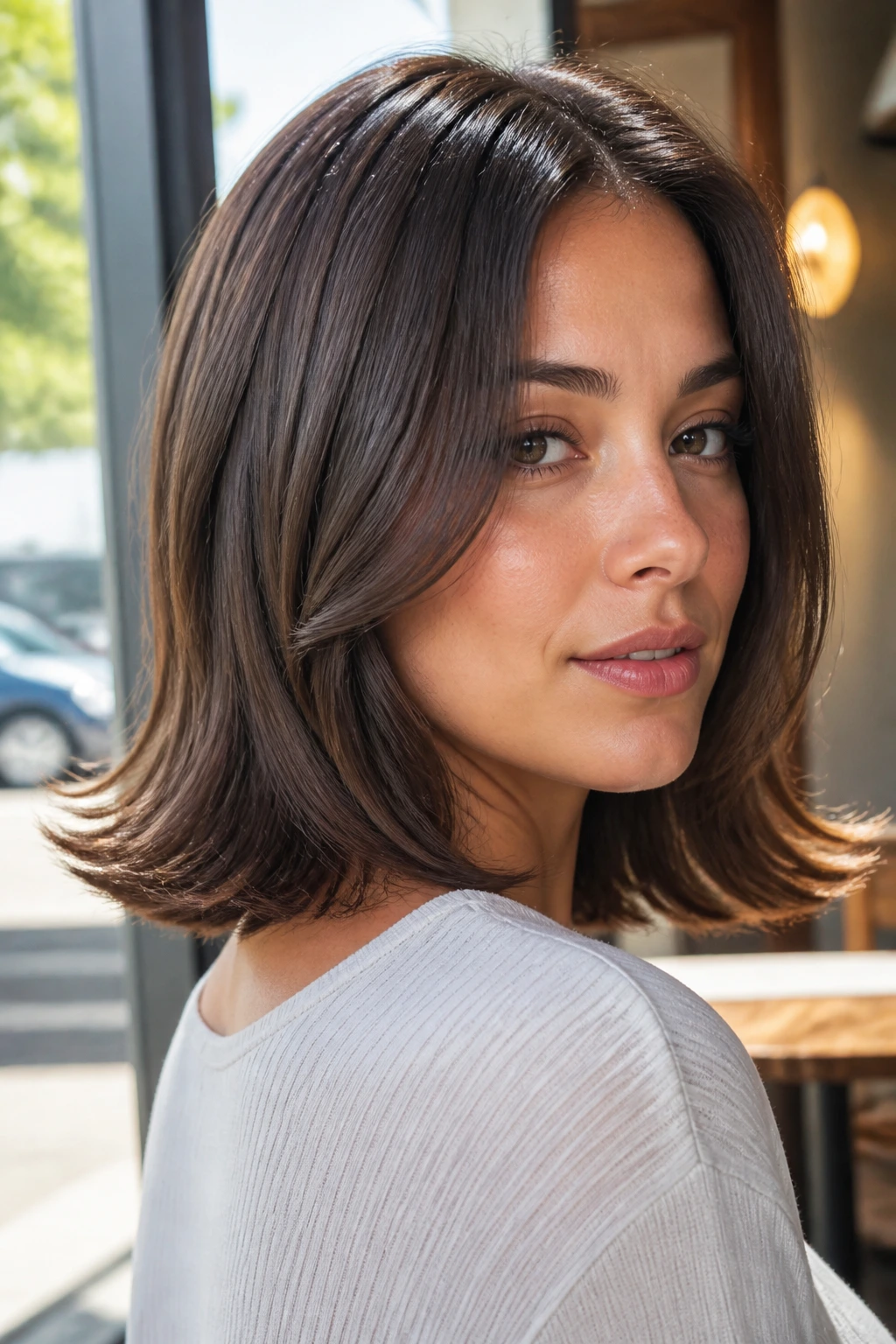
Flip-out ends give medium hair a bit of attitude, and fine hair often needs exactly that. The outward bend makes the perimeter look wider, which is useful when the ends feel a little thin.
Unlike inward-curved styles, this one opens the shape. It gives a clean shoulder-length cut more presence without asking for a lot of volume at the roots. A round brush can do it, but a flat iron flick at the last inch or two works if you’re quick and careful. Keep the bend soft. If the flip is too sharp, it starts to look costume-y.
This style suits hair that already dries fairly straight or only slightly wavy. If your texture is rough or very curly, the flip can take more work and may not hold the same way. Add a light shine spray at the end, not enough to make the hair greasy — just enough to keep the bend glossy and clean.
It’s a small shape change. That’s the whole point. Small changes often matter most with fine hair.
13. Half-Up Claw Clip Style
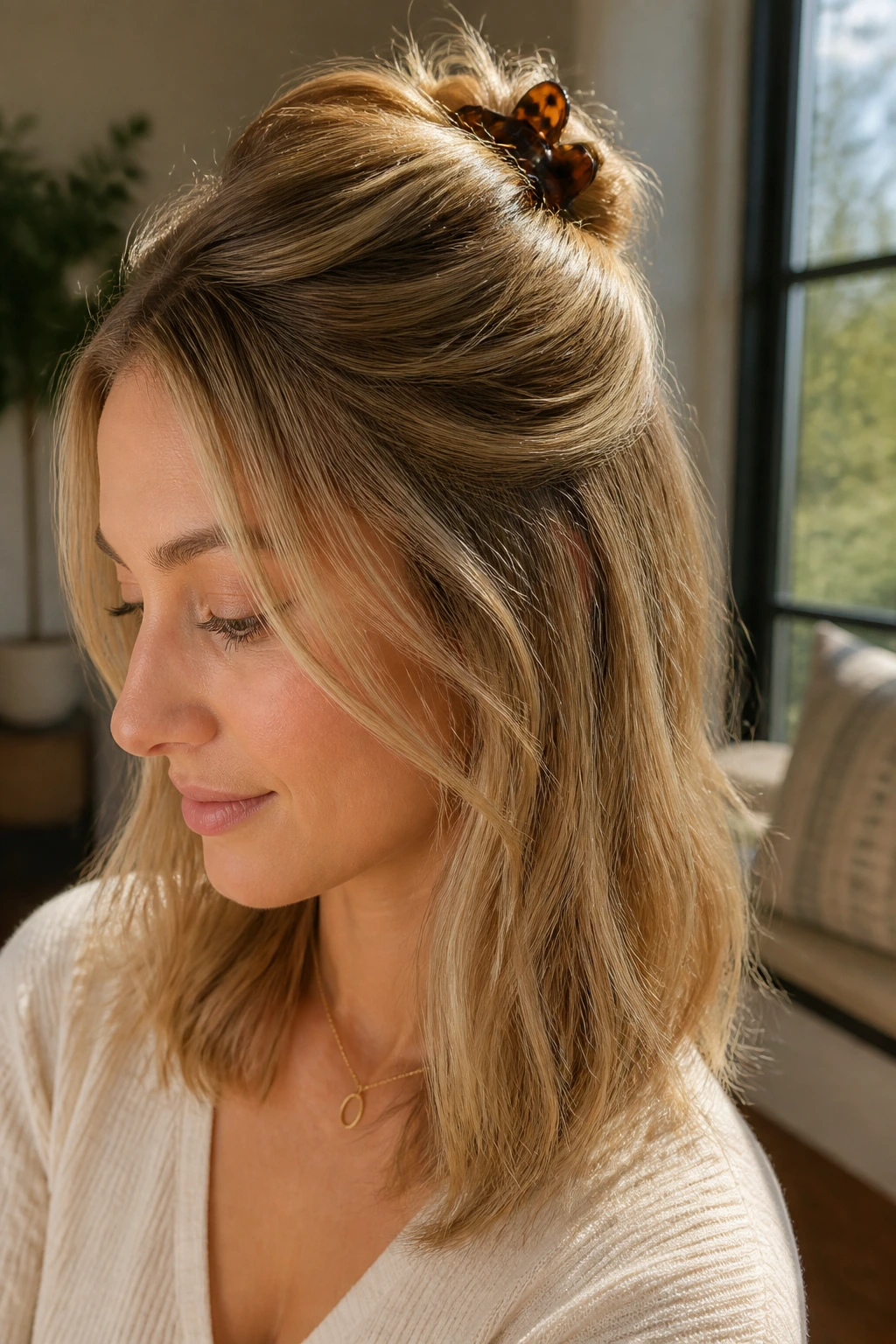
The claw clip gets used badly a lot. The trick is to place it high enough to give lift and low enough to keep the style secure.
On medium fine hair, a half-up claw clip works best when you gather only the top third of the hair, then twist it once before clipping. That twist creates a little cushion, which makes the hair look fuller inside the clip. If you grab too much hair, the clip gets weighed down and slips. If you grab too little, it looks sparse.
Leave the ends free and let them fall around the shoulders. That keeps the style soft and prevents the top from looking overdone. A small mist of dry shampoo at the crown can give the clip something to hold onto, especially if the hair is very silky.
A matte clip usually grips better than a glossy one. Tiny detail. Big difference.
This is one of those everyday looks that can save a limp hair day without asking for heat tools or a long mirror session.
14. Modern Wolf Cut at Medium Length

A modern wolf cut can work on fine hair, but only when it stays restrained. The heavy, ultra-choppy version tends to eat up density fast. The medium-length version is a different story.
The best wolf cut for fine hair keeps the length around the shoulders and uses soft internal layers to give the top more lift. The silhouette should still feel wearable, not wild. You want movement, a bit of edge, and some shape around the face. You do not want the back to disappear into strings.
This cut likes texture cream or a light mousse, then a rough dry with your hands. If you over-style it, the whole thing loses the rough charm that makes it work in the first place. Leave some unevenness. That is part of the appeal.
Not every fine-haired person will love this one. If you prefer clean, polished lines, skip it. But if you like a cut that has some attitude and a little lift built in, the medium wolf shape can be a good fit.
15. Side-Swept Fringe with Shoulder-Length Layers

A side-swept fringe does something useful that blunt bangs often do not: it breaks up the forehead without taking too much hair away from the rest of the cut.
For fine hair, that matters because the fringe can add motion near the face while the shoulders stay full enough to look balanced. The layers should stay long and soft so the ends don’t get wispy. A side-swept fringe is also easy to grow out, which is nice if you don’t want a high-maintenance cut every six weeks.
How to Style It
Blow the fringe across your forehead with a round brush, then pin it for a minute while it cools. That helps the sweep stay in place. Keep the rest of the hair loose and slightly bent under. If the fringe drops too flat, mist a little root spray at the base and lift it with your fingertips.
This style flatters a lot of face shapes because the diagonal line softens the front. It’s one of the easier ways to make medium hair look fuller without changing the whole haircut.
16. Tousled Midi with Micro-Layers
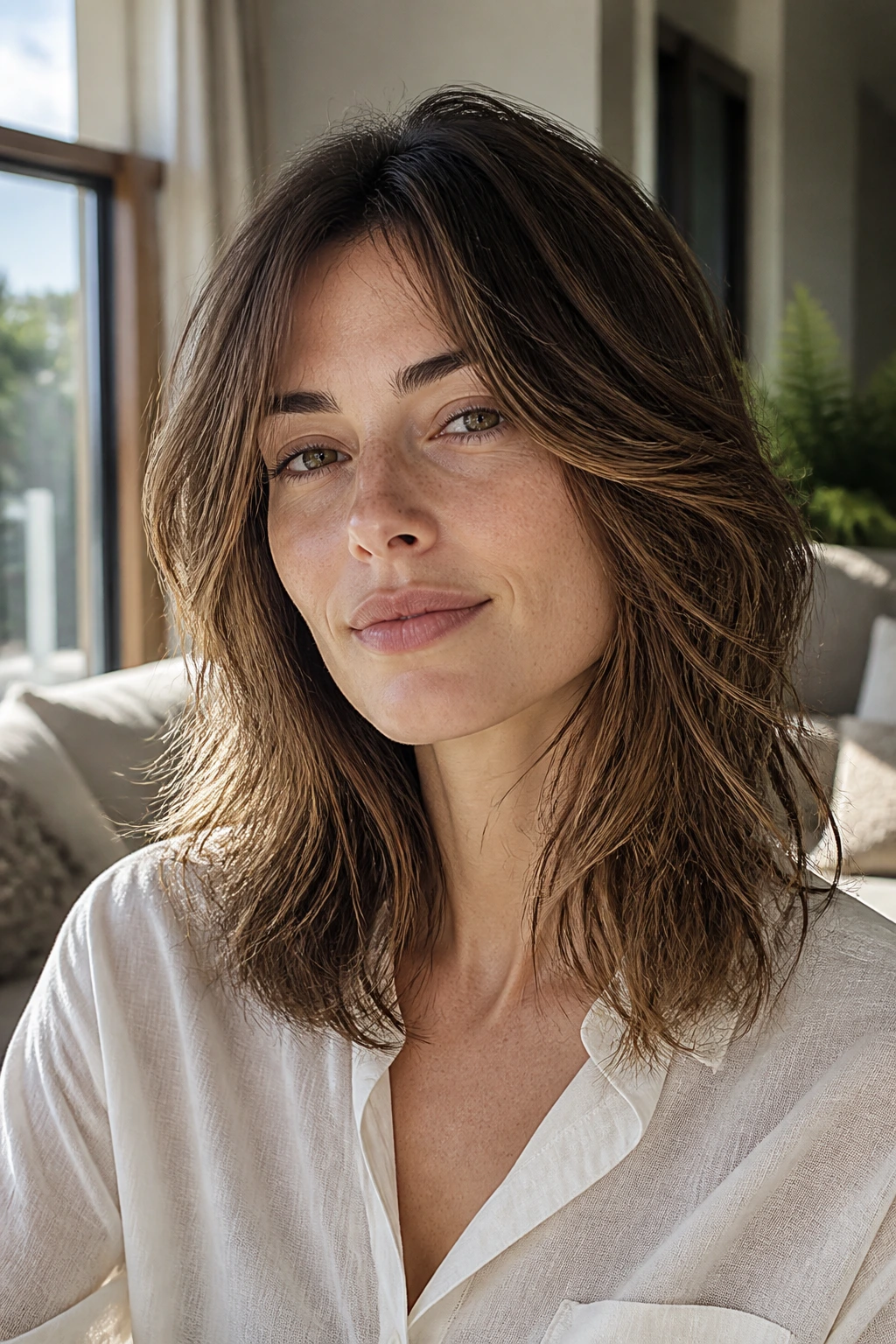
Micro-layers are the quiet little helpers of fine hair. They give movement without leaving gaps.
A tousled midi with micro-layers keeps the length around the neck or shoulders and uses tiny internal layers to stop the hair from lying like a sheet. The difference is subtle. You will notice it when the hair moves, not when it’s sitting still. That’s actually the point. A good fine-hair cut should not shout from across the room.
Start with a light volume foam at the roots, then dry the hair upside down for a few minutes before smoothing it back into place. Add a soft wave here and there with a 1-inch iron, but do not curl every section the same way. That can make the style feel too perfect. A little mess works better.
- Keep the top layers longer than you think.
- Use tiny sections when curling so the bend lasts.
- Leave the last inch straighter for a cleaner finish.
- Finger-comb, don’t brush, after the hair cools.
The micro-layer trick is small, but it changes how the whole cut sits.
17. Low Ponytail with Crown Lift
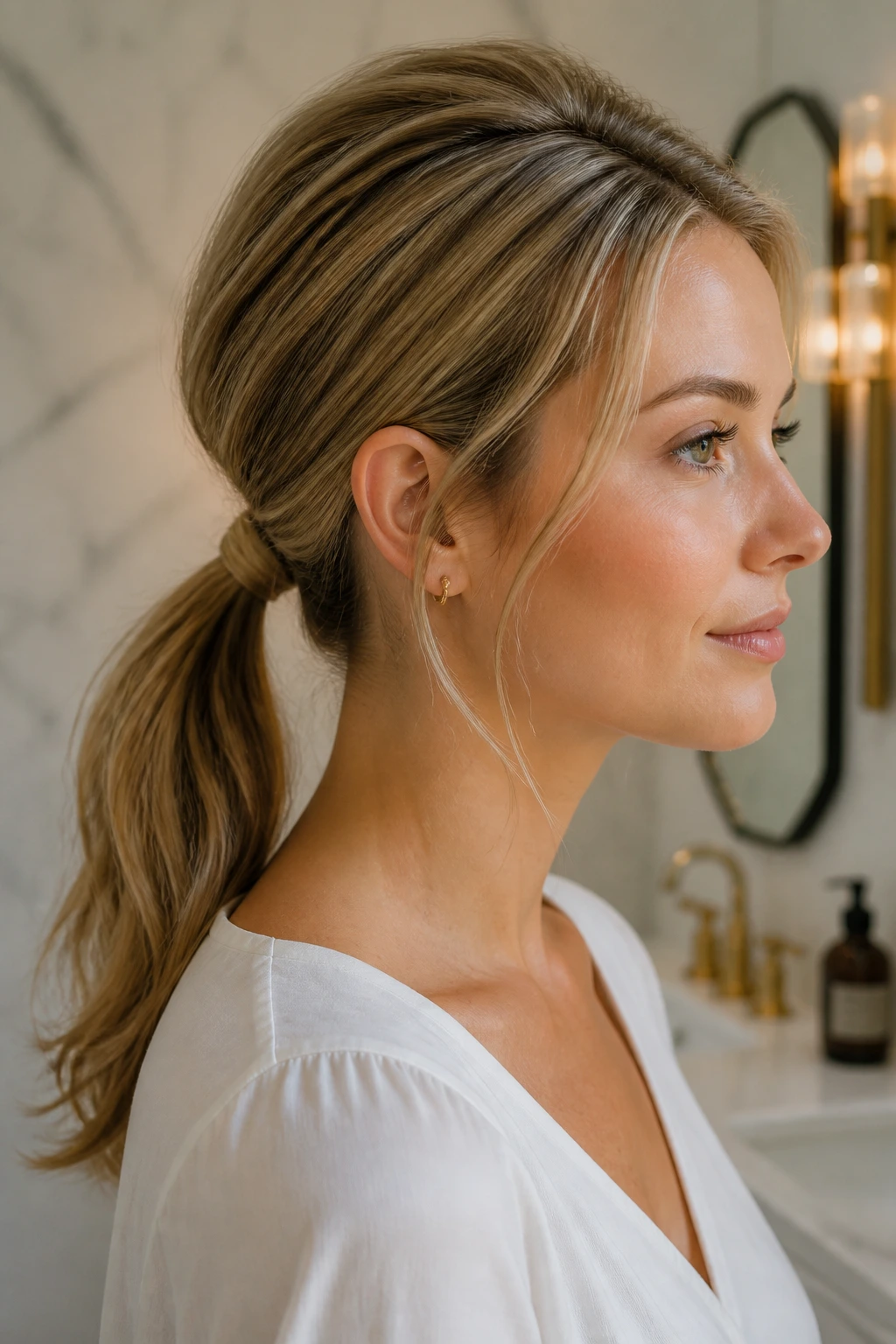
A low ponytail on fine hair can look expensive or sleepy. The difference is all in the crown.
Pull the top section up first and give it a little lift at the roots before gathering the rest at the nape. That keeps the crown from flattening against the head. A small elastic works better than a thick one because it doesn’t create a heavy lump. Wrap a thin strand of hair around the base if you want the finish to look cleaner.
This style is a good answer for medium-length hair that won’t hold a big wave. It keeps the hair controlled while still letting the ends move. If the ponytail feels too small, gently tug the sides apart after it’s tied. Just a little. Too much tugging makes it sloppy fast.
A fine-haired ponytail should not look like it’s trying to hide. It should look intentional, clean, and slightly soft around the edges. That’s the part that makes it work.
18. Subtle Asymmetrical Lob

An asymmetrical lob gives fine hair shape without needing a lot of layers. One side sits a little longer than the other, and that tiny difference creates movement the eye can catch right away.
The beauty of this cut is that it feels modern without being loud. If your hair tends to fall flat in a straight line, the uneven hem can make it look more interesting and a touch fuller. Keep the difference subtle — about half an inch to an inch at most. Anything more starts to look deliberate in a way that can be hard to wear every day.
This cut works well with a center part or a very slight off-center part. It also plays nicely with a smooth blowout, because the shape itself brings enough interest. You don’t need much extra styling. A quick bend at the ends and a little root lift near the part are often enough.
Some cuts need a lot of help. This one doesn’t.
19. Glossy Straight Midi with Invisible Volume
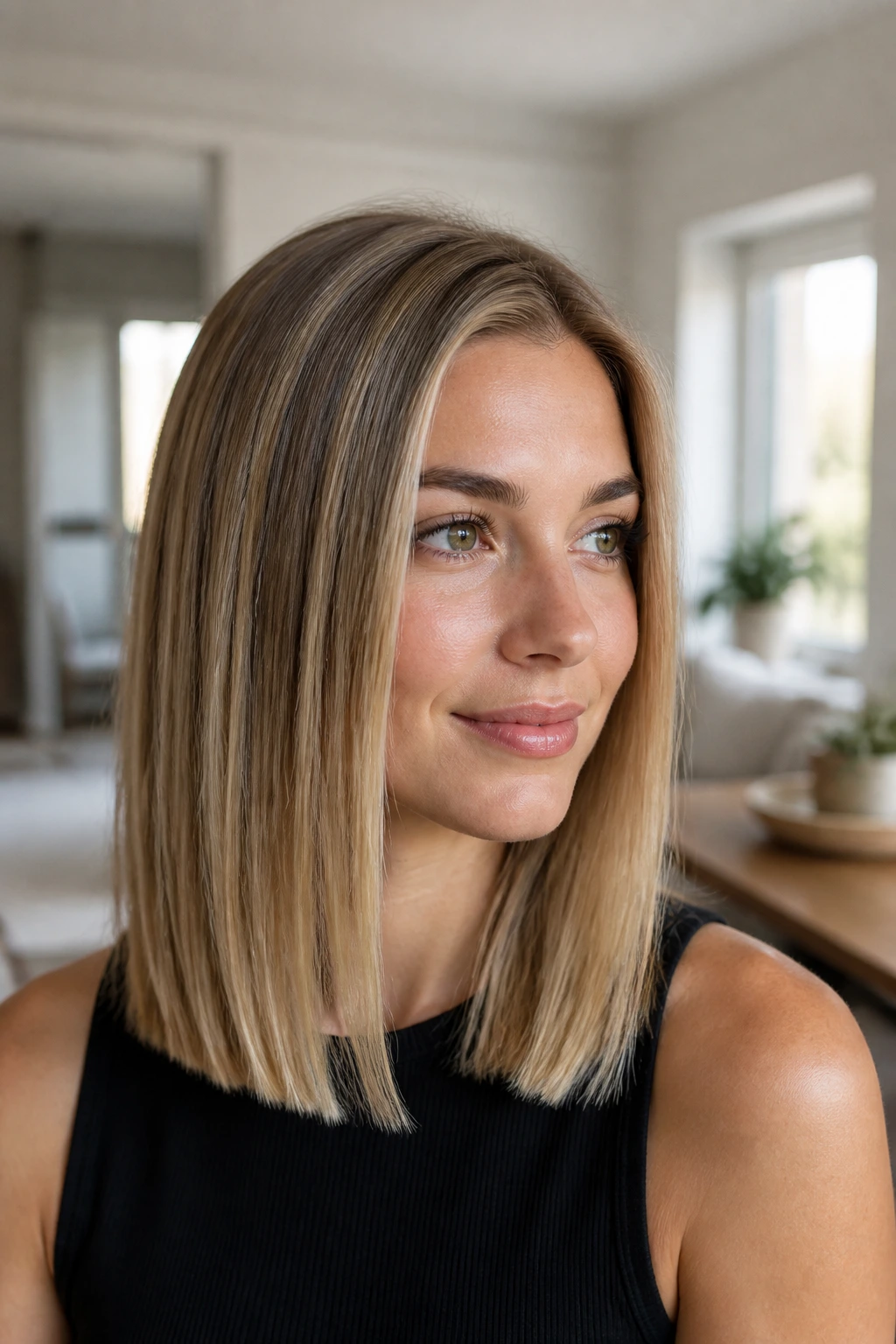
Straight styles get a bad reputation on fine hair, and I think that’s unfair. A glossy straight midi can look crisp, clean, and full enough if the roots are handled correctly.
The trick is invisible volume. Lift the roots while blow-drying, smooth the mids, and keep the ends blunt or only lightly beveled. You want the hair to look sleek, not pressed into the scalp. If the top lies too flat, the style goes limp fast. A small round brush at the crown can fix that before it happens.
A straight midi also makes shine stand out, which is one of the nicest things about fine hair when it is in good shape. A little sheen goes a long way. Use heat protectant, keep the flat iron moving, and finish with a tiny amount of smoothing serum only on the bottom inch or two.
Flat does not have to mean lifeless. That’s the part worth remembering here.
20. Rope-Braid Half-Up on Medium Hair
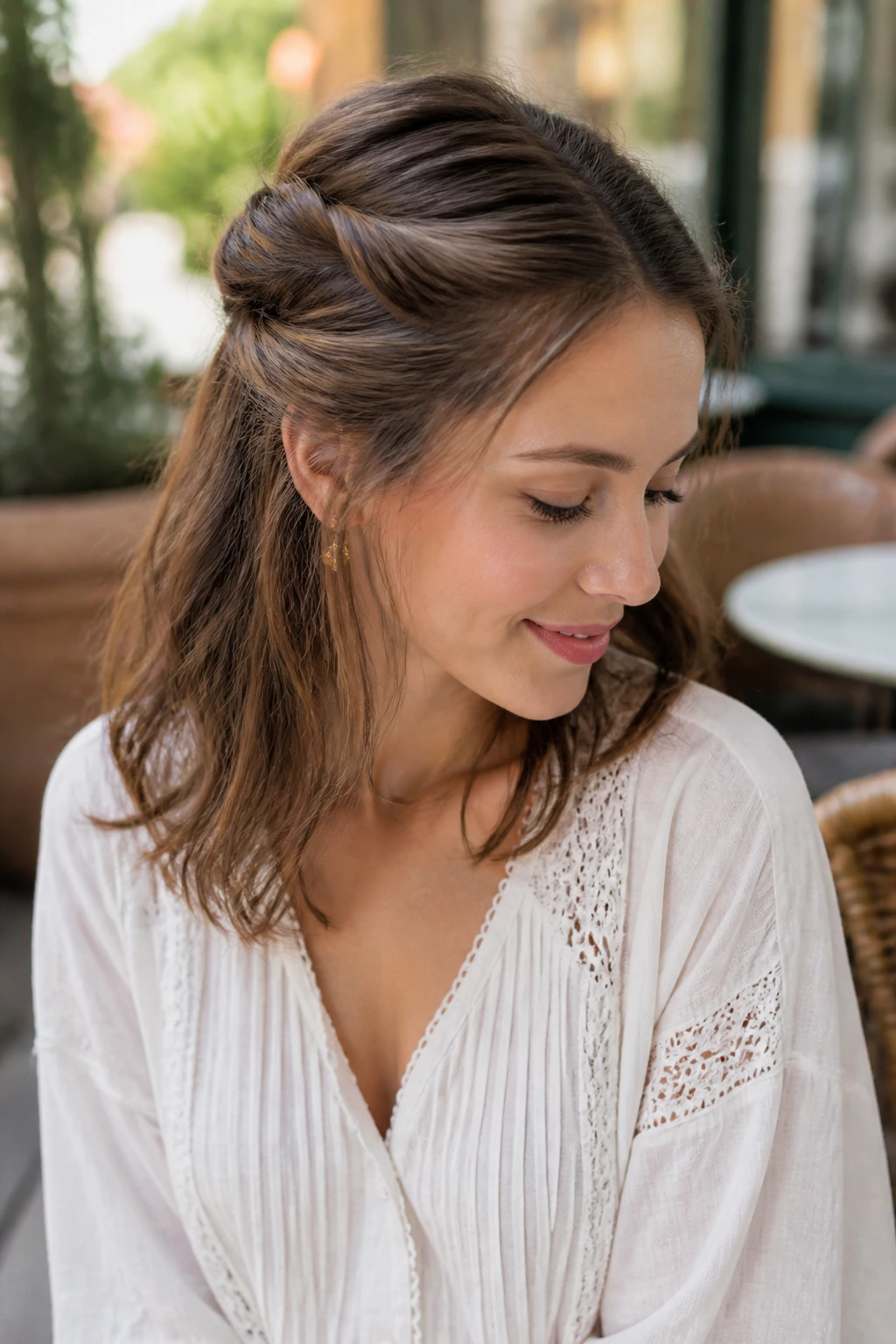
A rope-braid half-up is one of the easiest ways to make fine hair look like you spent more time on it than you did. It has texture, a bit of height, and enough detail to distract from any flat spots underneath.
Instead of braiding three sections, you twist two sections around each other. That creates a tighter, cleaner rope shape that holds well on medium hair. Start by taking two small front sections, twisting them back, and pinning them at the crown. If you want more width, tug gently at the outer edges after pinning. Don’t pull too hard or the braid turns fuzzy.
This style works especially well on second-day hair because the slight grit helps the twist stay in place. A tiny bit of dry shampoo at the roots gives the braid a better grip. The rest of the hair can stay down, soft, and loose around the shoulders.
It’s simple. It’s neat. And on fine hair, that combination goes a long way.
Last Word
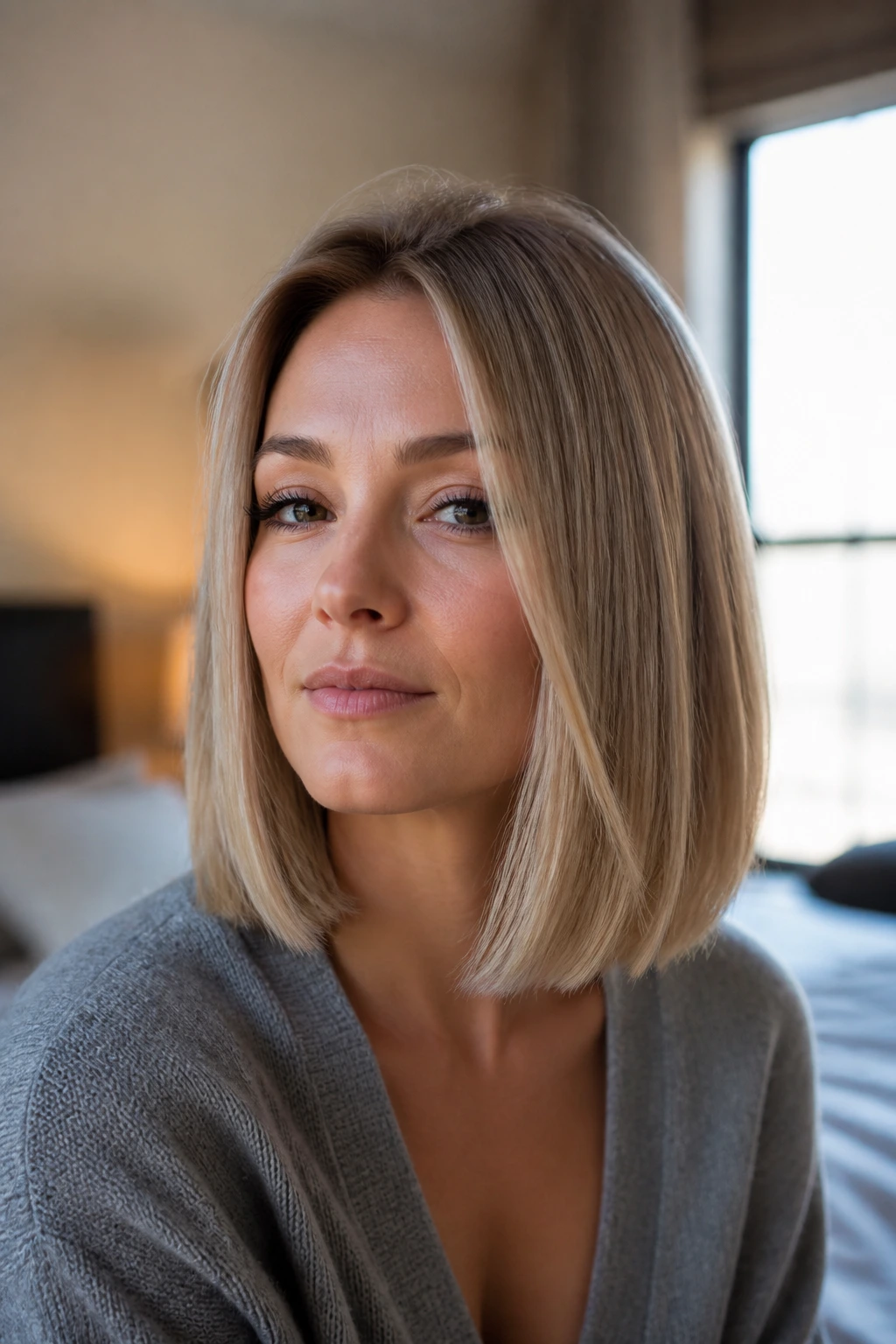
Fine hair usually looks best when the cut gives it a strong outline and the styling respects its limits. Blunt edges, careful layers, and small lifts at the crown tend to do more than heavy products or overworked curls.
The medium length keeps showing up for a reason. It gives you enough hair to shape, pin, wave, and tuck, but not so much that the style collapses under its own weight. That balance is the whole game.
If your hair tends to fall flat fast, stop blaming the hair and start looking at the shape. A better cut changes what the styling has to do, and that is where the real difference shows up.
