



Medium hairstyles for thick hair can look polished one minute and puff out the next. That’s the trick with dense strands: they have enough body to hold shape, but they also have enough weight to fight you if the cut sits wrong. Too blunt, and the ends can feel boxy. Too layered, and the whole thing can turn airy in the wrong places.
Weight changes everything.
If you’ve ever left the house with smooth hair and watched it swell at the sides before lunch, you already know why this matters. A good medium cut or style doesn’t just sit there; it moves the bulk to the right places, keeps the outline clean, and gives your hair a shape that still makes sense when it’s been touched, tied back, or bent with a curling iron.
The styles below lean on that reality. Some are cuts, some are quick styles, and some are the kind of in-between looks that save you on busy mornings. Thick hair can pull off a lot, but it looks best when there’s a clear plan behind the shape — not just “let it do whatever.”
1. Collarbone Layers with Face-Framing Pieces
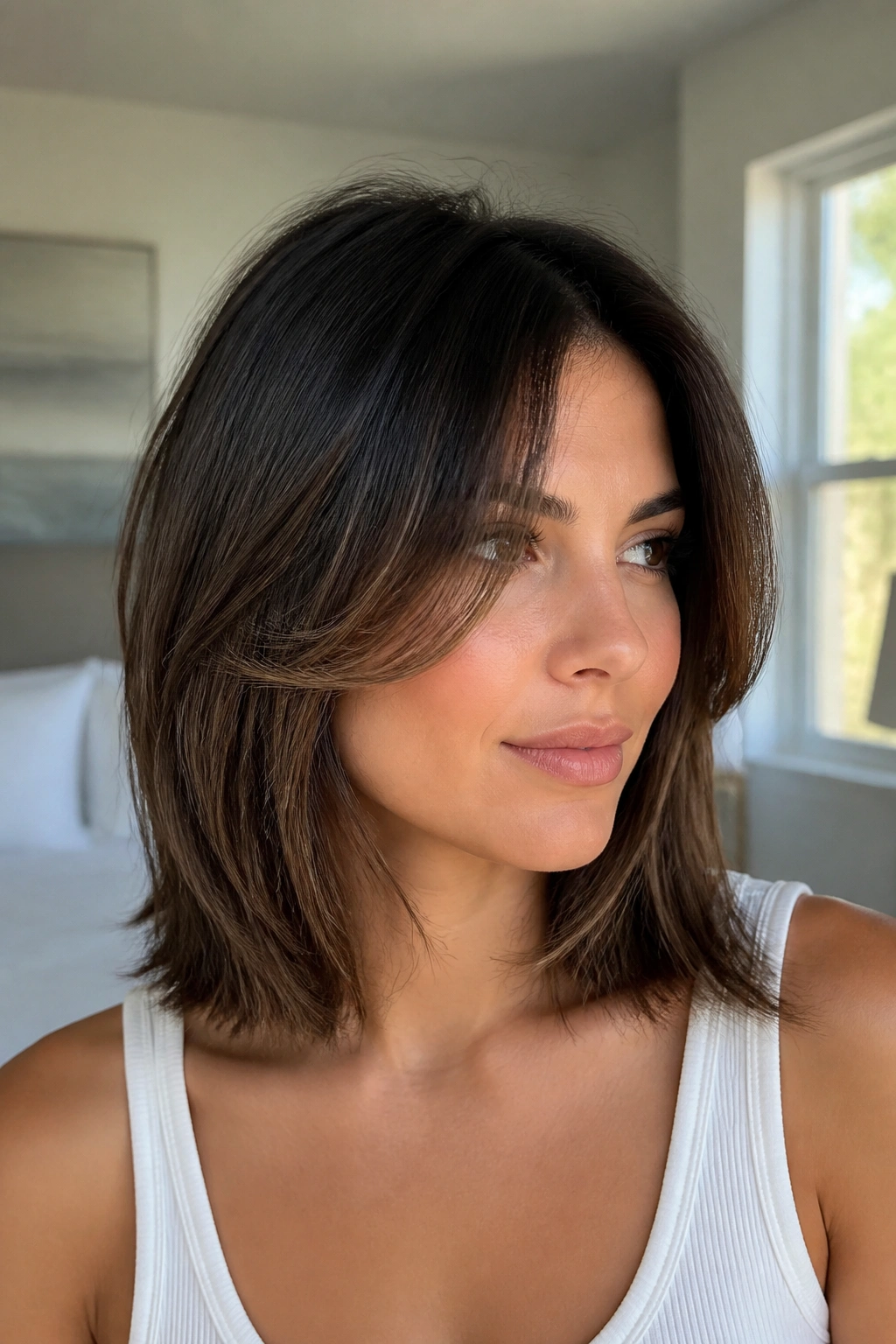
This is the easiest starting point if you want medium hair that feels lighter without losing fullness. Collarbone layers keep the ends from sitting in one heavy shelf, while the face-framing pieces soften the front and give the whole cut some movement. On thick hair, that matters. The density stays, but the shape stops feeling like a block.
Why It Works
Ask for layers that begin below the chin and taper toward the collarbone, not a bunch of short pieces around the crown. Thick hair needs weight removed with a light hand, or you end up with a puffball effect at the sides. A clean face frame around the cheekbone or jaw keeps the cut flattering when you tuck hair behind one ear.
- Best on straight, wavy, or loose-curly texture.
- Ask for long layers with no harsh disconnect between the top and bottom sections.
- Blow-dry with a 2-inch round brush if you want the front pieces to curve in a little.
- A pea-size amount of smoothing cream is usually enough; thick hair can handle it, but it does not need a greasy finish.
Tip: keep the perimeter blunt enough that the ends still feel full. The whole point is movement, not thinning the life out of your hair.
2. Blunt Lob with a Deep Side Part
A blunt lob is the haircut people reach for when they want thick hair to look expensive without looking fussy. It sits around the shoulders, keeps the outline sharp, and makes dense strands look deliberate instead of unruly. Add a deep side part, and the whole thing gets instant lift at the roots.
The blunt edge matters here. Thick hair can support a straight, solid line in a way finer hair often can’t, which is why this cut tends to look tidy even on a day when the ends are doing their own thing. A side part gives it a little drama and keeps the top from falling flat. If your face feels long, this shape can balance it. If your hair is coarse, it can also make everything look neater with less effort.
Wear it smooth with a paddle brush and a little heat, or rough-dry it and tuck one side behind the ear. Either way, the cut does the heavy lifting.
3. Textured Lob with Choppy Ends
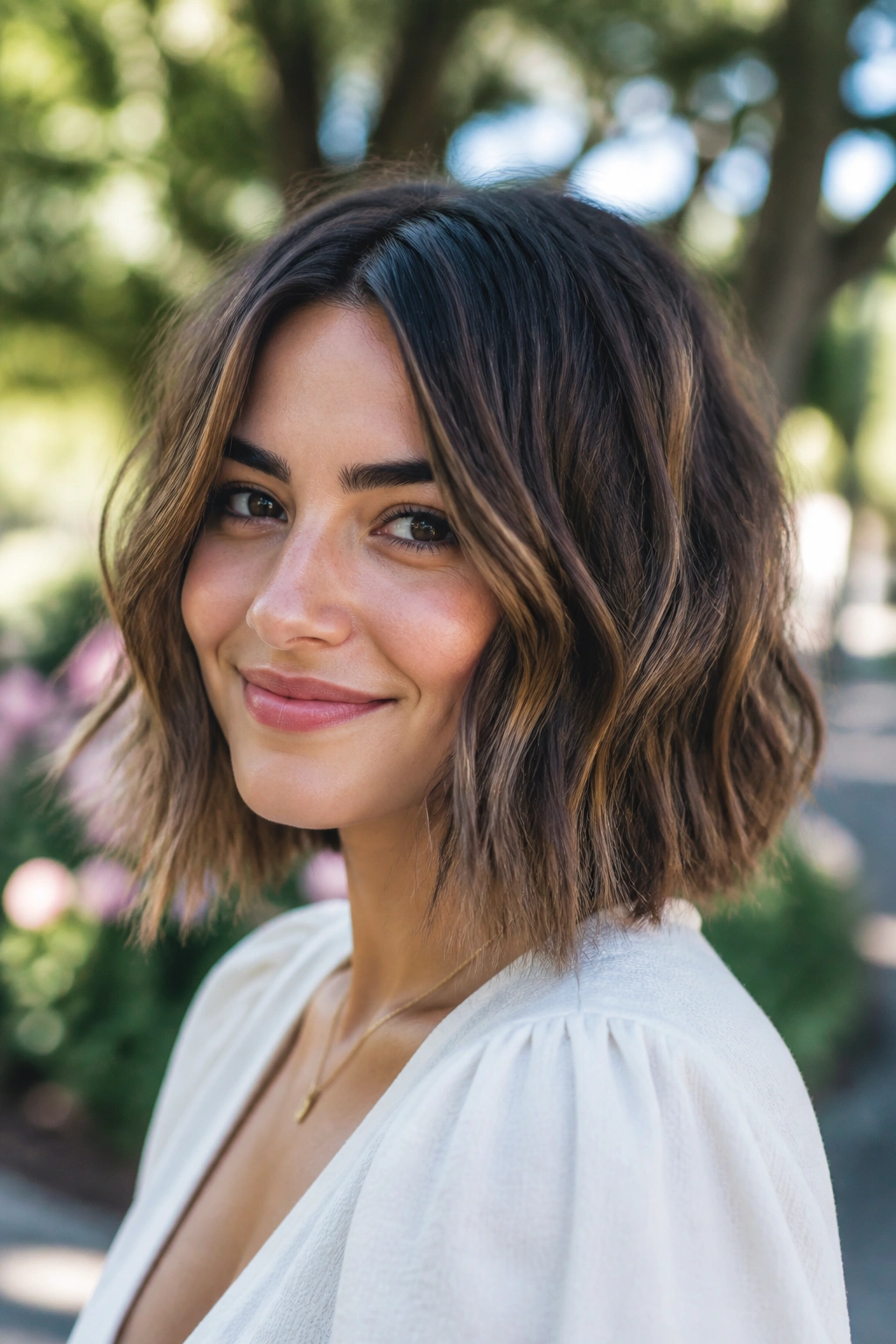
Why does a textured lob work so well on dense hair? Because it breaks up the weight before the ends start to spread out into that wide triangle shape thick hair can get when it’s all one length. Choppy ends keep the perimeter soft, and the slightly uneven finish makes the cut feel easier to wear on ordinary days.
How to Wear It
A textured lob looks best when it’s not too “done.” Air-dry it with a curl cream if your hair bends naturally, or use a 1-inch curling iron to create loose bends and then shake them out with your fingers. The goal is separation, not ringlets.
- Ask for point-cut ends instead of a blunt finish.
- Keep the length between the collarbone and the top of the shoulders.
- Use a light texturizing spray at the mid-lengths, not the roots.
- Skip heavy oils unless your hair is coarse enough to drink them up.
If you like hair that looks a little undone but still neat enough for work, this one’s a strong bet. It has enough texture to stop thick hair from feeling heavy, but not so much that it turns into a frizz cloud.
4. Butterfly Layers with a Soft Blowout
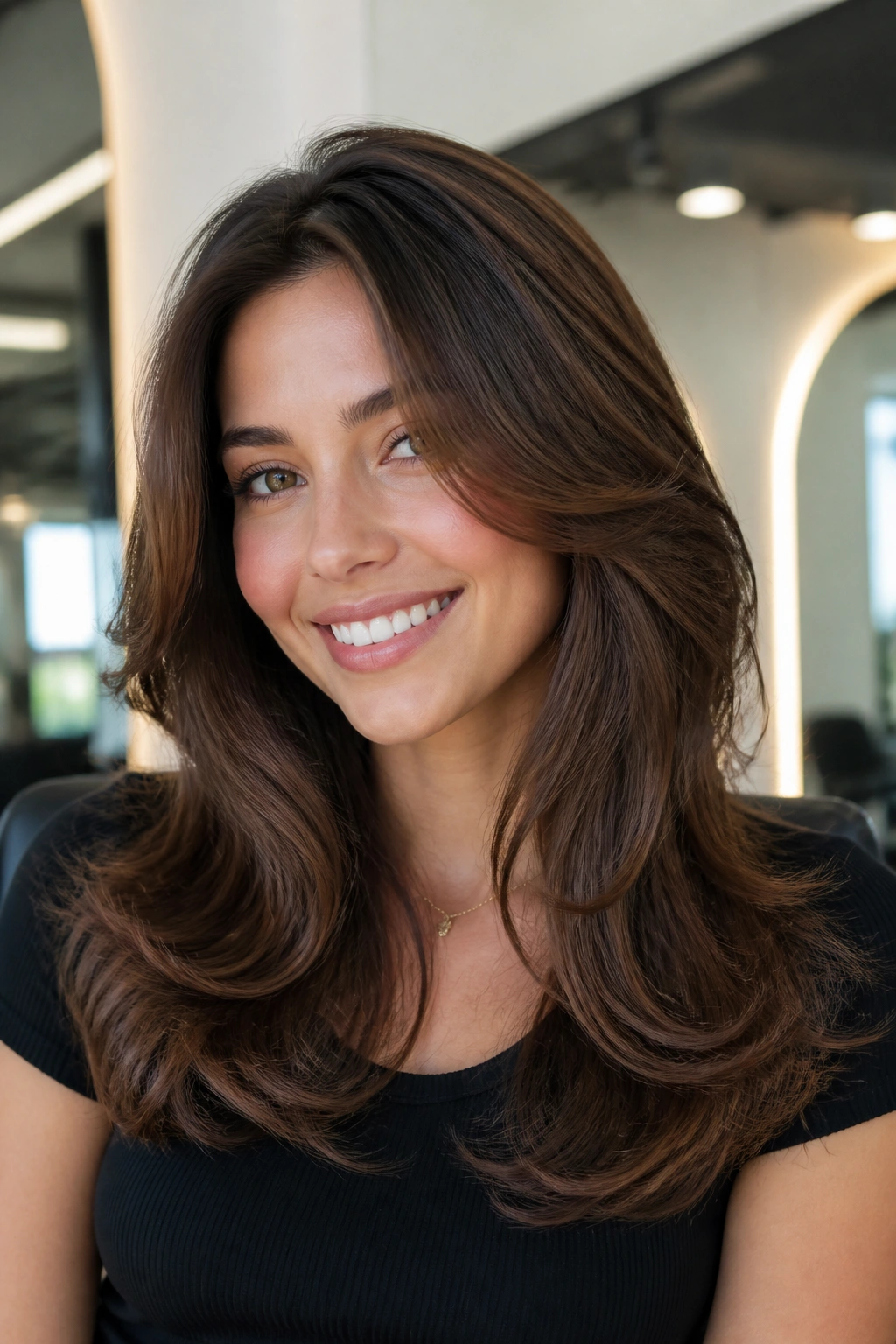
Picture thick hair that falls nicely for ten minutes, then starts pulling itself downward at the shoulders. Butterfly layers fix that fast. The shorter top layers create lift around the face and crown, while the longer bottom layers keep the overall length. You get the feel of a shorter cut without giving up the weight and swing that medium hair can hold onto.
The best version of this style has a soft blowout finish. Round-brush the top sections away from the face, then let the lower layers stay smoother and a little straighter. That contrast is the whole point. It keeps the cut from looking over-layered, which is the mistake I see most often with thick hair.
- Ask for two visible layer zones: a shorter face frame and longer layers through the bottom half.
- A 1.5-inch round brush works well if your hair is already dense.
- Set the front pieces with clips while they cool; they’ll hold the bend better.
- Finish with a flexible hairspray, not a stiff helmet.
The result is soft, lifted, and full without being puffy. That balance is harder to get than it looks.
5. Soft Shag with Feathered Ends
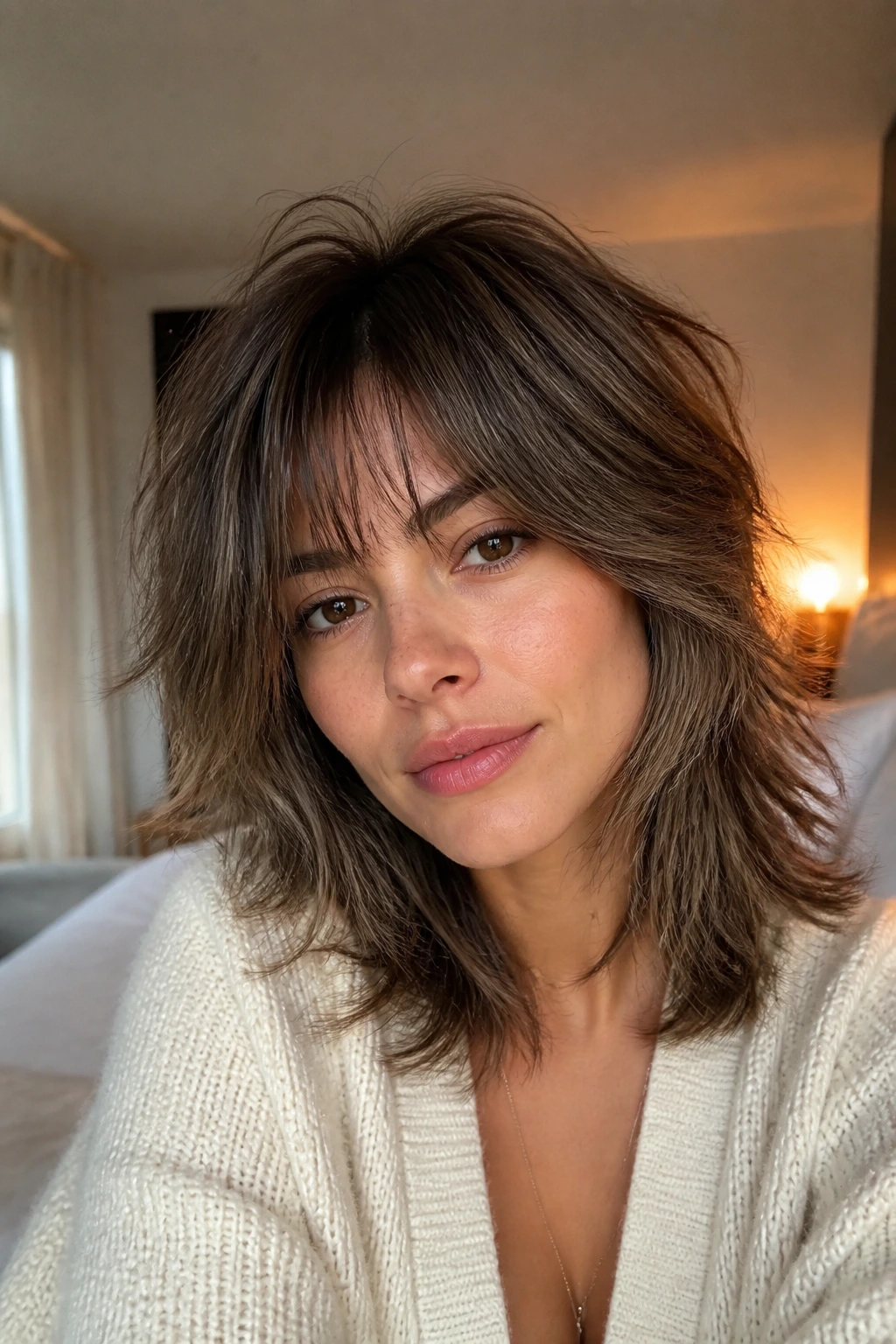
A soft shag is one of those cuts that looks easy only when the layers are placed with a lot of care. On thick medium hair, it can take the weight off the sides, wake up natural texture, and give the whole head a little swing. The key word is soft. Go too choppy and it starts reading like a different haircut entirely.
This version keeps the crown light, the fringe relaxed, and the ends feathered enough to move when you do. It’s a good fit if your hair has a wave pattern or if you like an air-dried finish with a little bend. Thick hair tends to hold shag layers well, which is why this style can look lived-in instead of messy.
I’d ask for a shag that still keeps some length in the perimeter. That way the shape doesn’t get too wild when you tie it back or tuck it behind your ears. A little mousse at the roots and a dab of cream through the ends is usually enough.
6. Angled Lob That Skims the Jaw
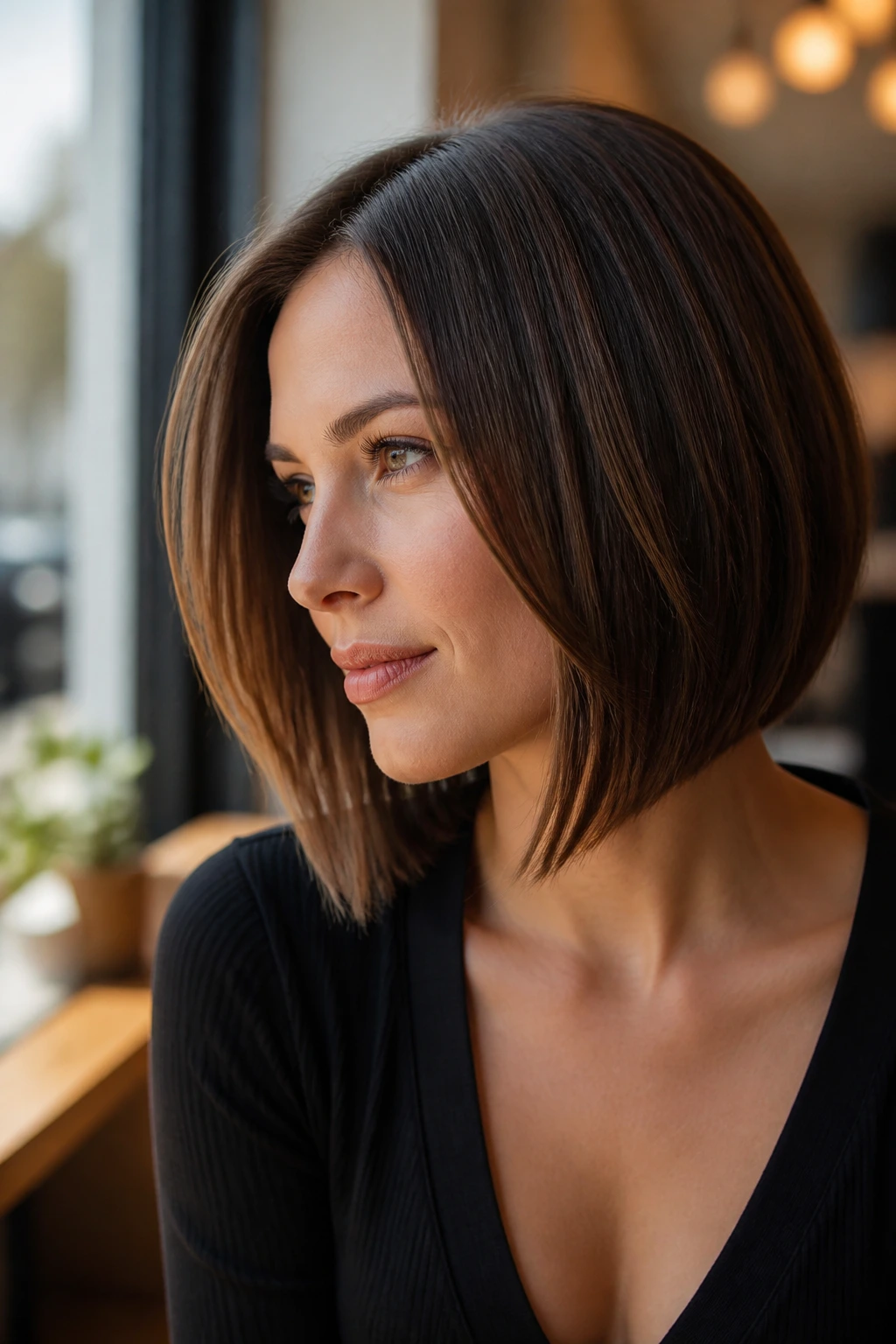
Unlike a blunt lob, an angled lob gives you a little more shape around the face without making the whole cut feel round. The front sits slightly longer than the back, so the hair drapes forward instead of puffing outward at the sides. On thick hair, that matters more than most people think.
This cut is especially useful if your jaw feels a little wide or if you like a side profile with movement. The angle creates a clean line from the back of the neck toward the collarbone, which keeps the style from feeling heavy. If your hair grows fast, this one still looks decent as it softens out. It doesn’t depend on razor-sharp edges to work.
Wear it straight for a neat finish, or add loose bends from the mid-lengths down. The shape does best when the back stays close to the neck and the front gets a little room to fall forward. I like it because it looks intentional even on low-maintenance days.
7. U-Shaped Cut with Loose Waves
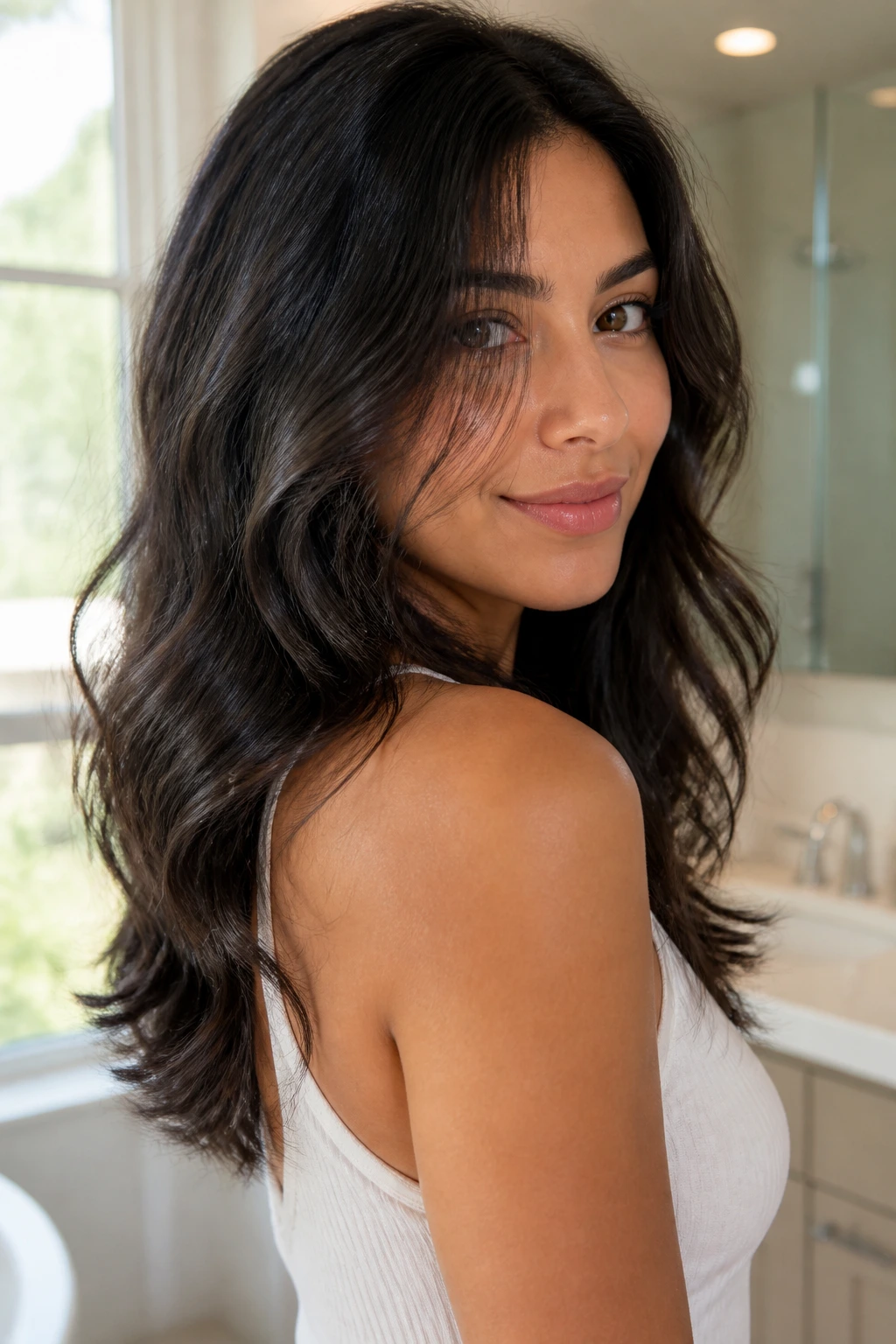
What makes a U-shaped cut such a smart option for thick medium hair? The outline keeps a soft curve at the back, which helps the ends feel full without getting boxy. Add loose waves, and the whole thing takes on a smoother, more balanced shape than a straight-across cut usually gives.
Quick Styling Notes
The U-shape gives your hair a little room to breathe. The front pieces still frame the face, but the back drops in a gentle curve, so the style doesn’t suddenly stop at one hard line. That helps especially if your hair is dense from root to tip.
- Use a 1.25-inch curling iron or wand for loose, brushed-out bends.
- Wrap sections away from the face on the top layer, then alternate directions on the lower layer.
- Keep the waves soft near the ends so the curve stays visible.
- If your hair is coarse, a light smoothing serum on the ends keeps the finish from looking dry.
It’s a good middle ground for people who want length visible but don’t want a blunt edge shouting at them from every angle.
8. V-Shaped Medium Cut for Long Volume
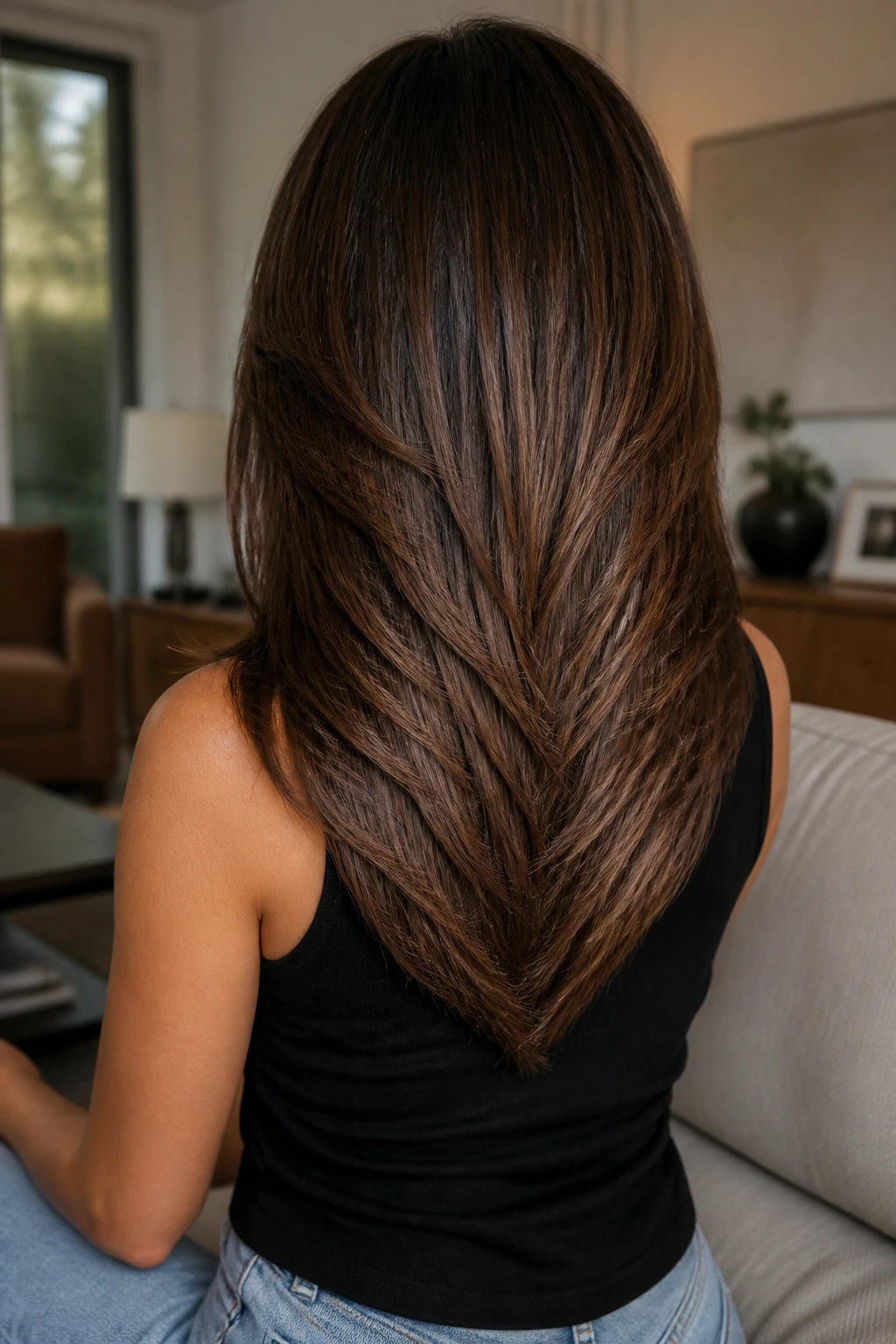
A V-shape can look dramatic in the wrong hands, but on thick medium hair it gives the bottom a cleaner taper and keeps the whole style from feeling like one giant mass. The back point draws the eye down, which helps the hair look long without needing extra length. That is useful when your strands carry a lot of weight.
The reason this shape works is simple: it redistributes the bulk. Instead of ending in a straight shelf, the hair falls into a gentle point that feels lighter when you move. If you like wearing hair down and you don’t mind a little definition in the back, this cut can make thick hair feel more deliberate. It can also help curls sit with a better silhouette.
The catch is that the point has to be subtle. Too sharp, and it can look dated fast. Ask for a soft V, not a hard one. That little distinction saves the whole cut.
9. Side-Swept Bangs and Long Layers
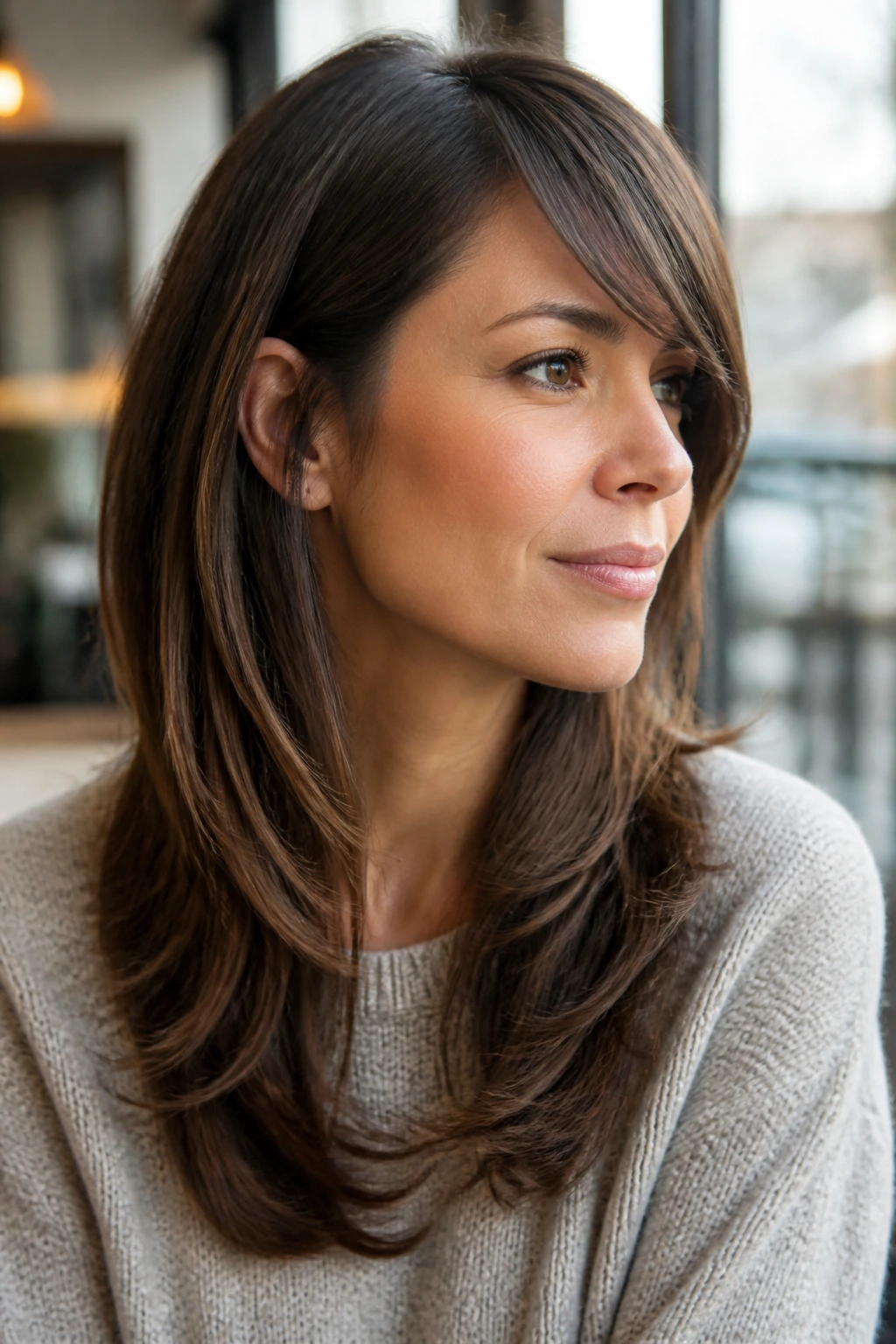
Can bangs work on thick medium hair without turning into a daily fight? Yes, but side-swept bangs usually make the easiest entry point. They break up the front without covering the forehead completely, and they blend into longer layers instead of sitting there like a separate piece.
How to Wear It
The best side-swept version keeps the bang section long enough to tuck or pin if you get tired of it. Thick hair has enough body to support a good side sweep, which means the fringe won’t collapse flat the way finer hair sometimes does. The layers around it should stay soft, or the front starts looking too heavy.
- Blow-dry the bangs first with a small round brush.
- Direct them across the forehead while they’re still warm.
- Ask for a longer bang that starts around the brow and blends into the cheekbone.
- Use a tiny bit of styling cream only on the ends, not the roots.
This style gives you shape near the eyes without locking you into a full fringe. That flexibility is half the appeal.
10. Middle-Part Layers with a Blowout Finish
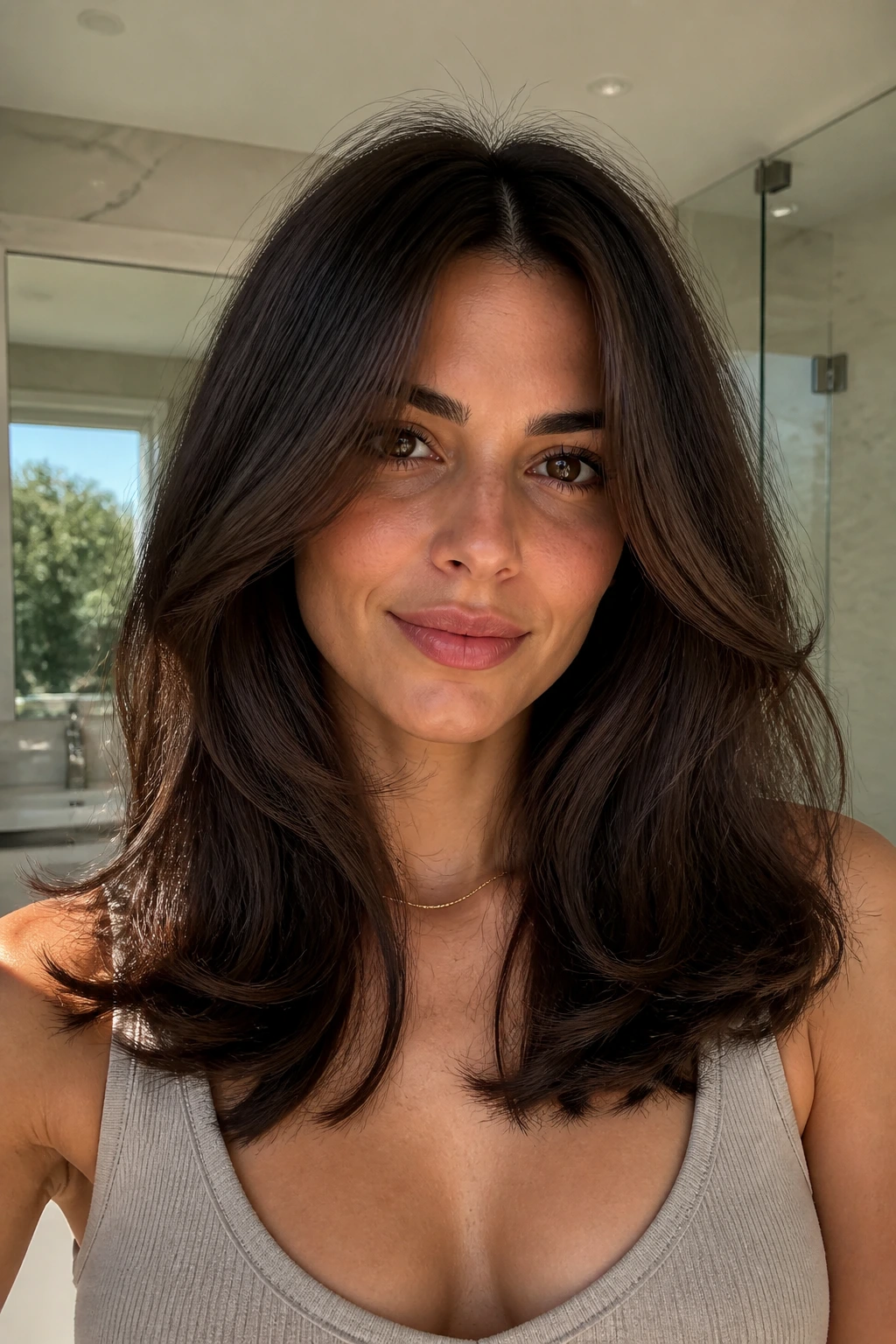
A middle part can be unforgiving if the cut underneath is wrong. On thick hair, though, it can look very clean when the layers are built to fall evenly on both sides. The trick is to keep the top smooth and the ends softly turned under or out, depending on the mood.
The blowout finish matters because it gives the cut that polished, controlled look people usually want from a middle part. Thick hair responds well to a round brush, especially when you work in 2-inch sections and clip the top layers while they cool. That little bit of setting time helps the hair sit where you want it instead of drifting away from the face.
This style is a good fit if your hair naturally wants symmetry. If one side tends to swell more than the other, you’ll notice it right away — and you can adjust the part a half-inch off center if needed. That tiny move can make the whole thing work better.
11. Internal Layers for a Sleeker Profile
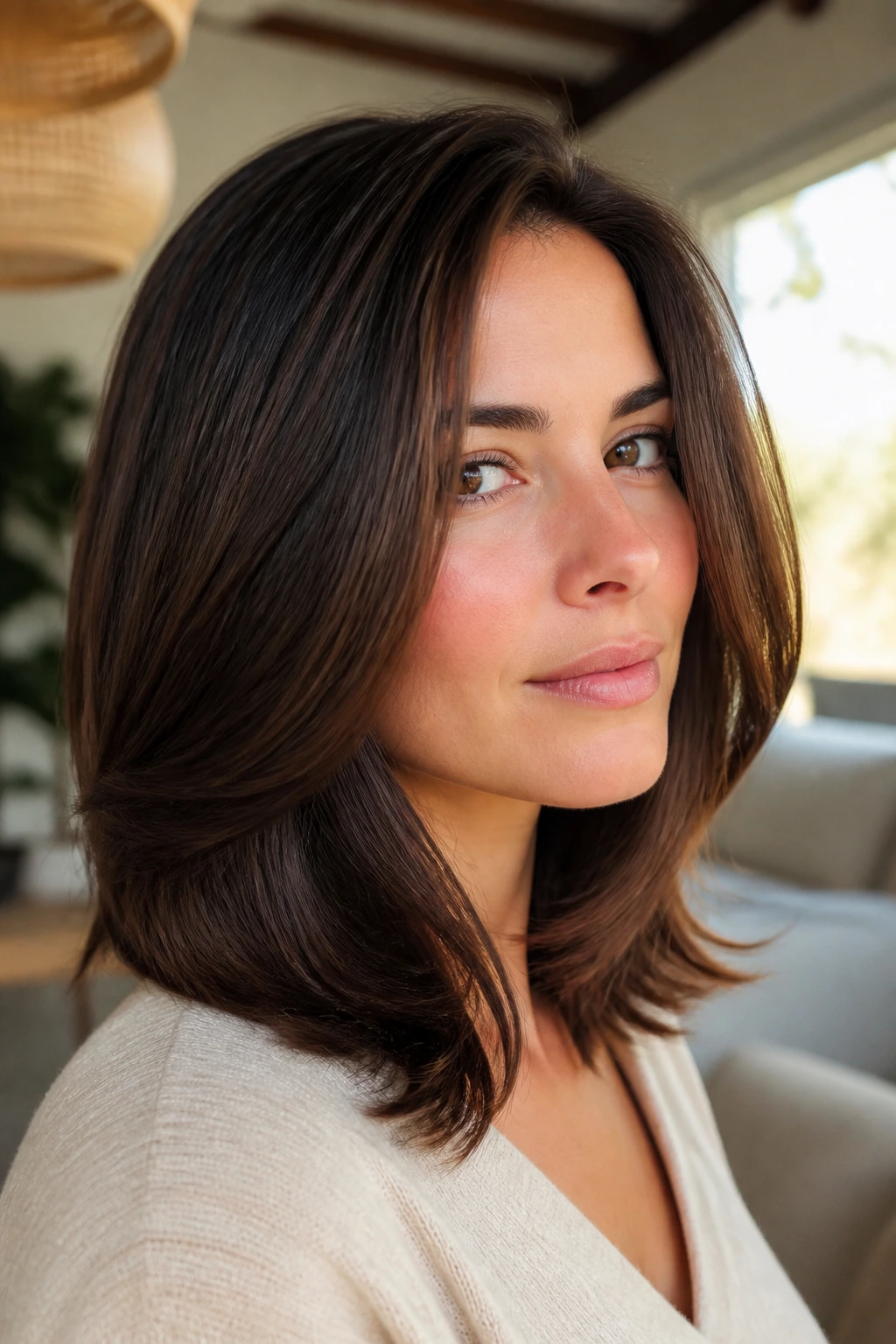
Internal layering is the haircut version of taking weight out without making the outside of the hair look choppy. The outer line stays fairly smooth, while the inside gets carefully carved away so thick medium hair sits closer to the head. If your hair feels bulky but you don’t want to advertise every layer, this is worth asking about.
The best part is how it changes the feel of the hair without shouting about it. You still get fullness, but the shape stops ballooning at the sides and back. That can be a relief if your hair is coarse or prone to poofing in humidity. It also makes blow-drying faster, which is not a small thing when you have a lot of hair to dry.
A stylist has to be measured here. Too much internal layering can create weak spots and make the hair look thin from certain angles. Good internal layering should be almost invisible until the hair moves. Then you notice the difference.
12. Shoulder-Grazing Curls with Defined Ends
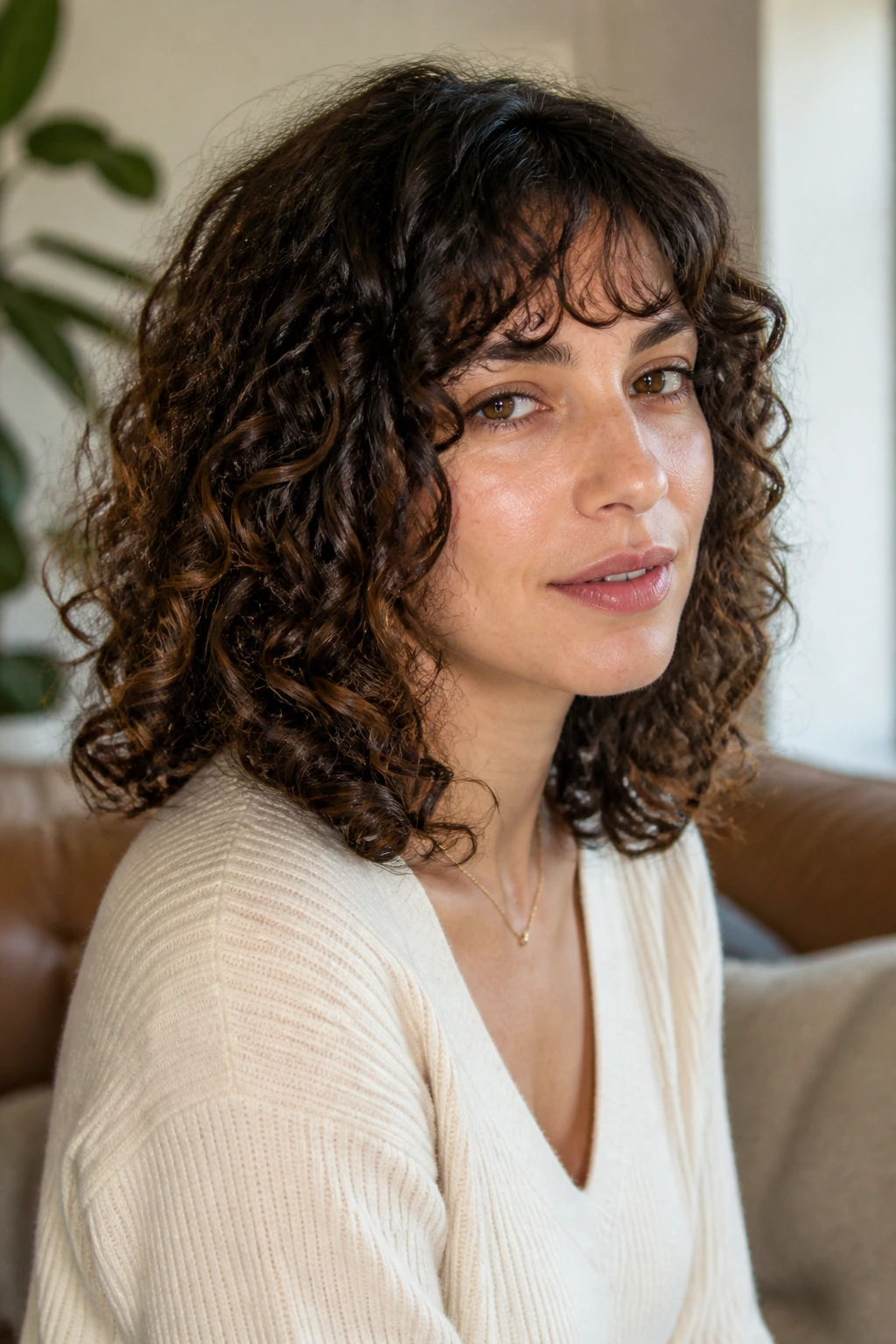
Shoulder-grazing curls give thick hair a clean shape that doesn’t sprawl. Unlike loose beach waves, these curls hold a more obvious pattern, which helps the haircut look finished even when you haven’t spent a full hour styling it. That’s the part I like most: it looks intentional with less fuss.
The length matters because curls spring up. On thick hair, shoulder-grazing length usually lands right in that sweet spot where the curl pattern is visible but not overly compressed. If your curls are naturally dense, a little layering through the bottom half can stop the ends from looking heavy. If you set them with a diffuser, keep the airflow low and let the curl cast form before you touch it.
This works well for people who like definition around the face and a little bounce at the shoulders. It also grows out in a forgiving way, which is useful when you don’t want every trim to be urgent.
13. Beach Waves with a Flat-Iron Bend
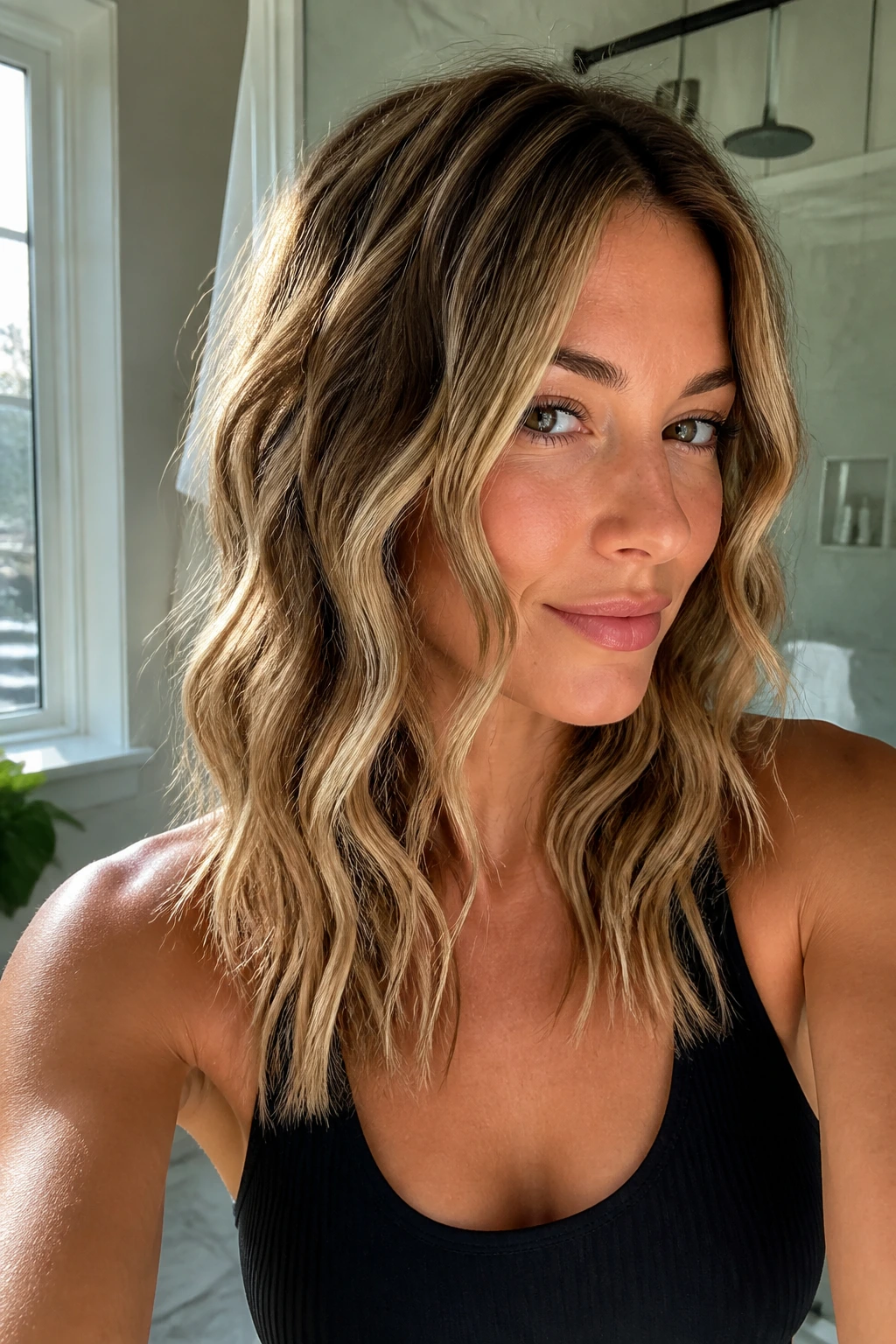
Beach waves can be lazy or they can be smart. On thick medium hair, the smart version uses a flat iron to bend the hair instead of curling it into tight loops. That gives you loose motion, a bit of separation, and enough roughness to keep the style from looking too formal.
The Small Details Matter
Work with sections no wider than 1 to 1.5 inches. Clamp the flat iron near the mid-lengths, twist the wrist slightly, and pull through in a slow S-shape. Leave the ends straighter if you want the wave to look modern instead of over-styled. Then break everything up with your fingers once the hair is cool.
- Use heat protectant before you start. Don’t skip this.
- Alternate the direction of the bend for a less uniform finish.
- Keep the top flatter if your hair already has a lot of volume.
- Finish with a dry texturizing spray, not a wet product.
This style is easy to wear with a middle part, side part, or half-up clip. It’s flexible enough to live with.
14. Polished Straight Style with Beveled Ends
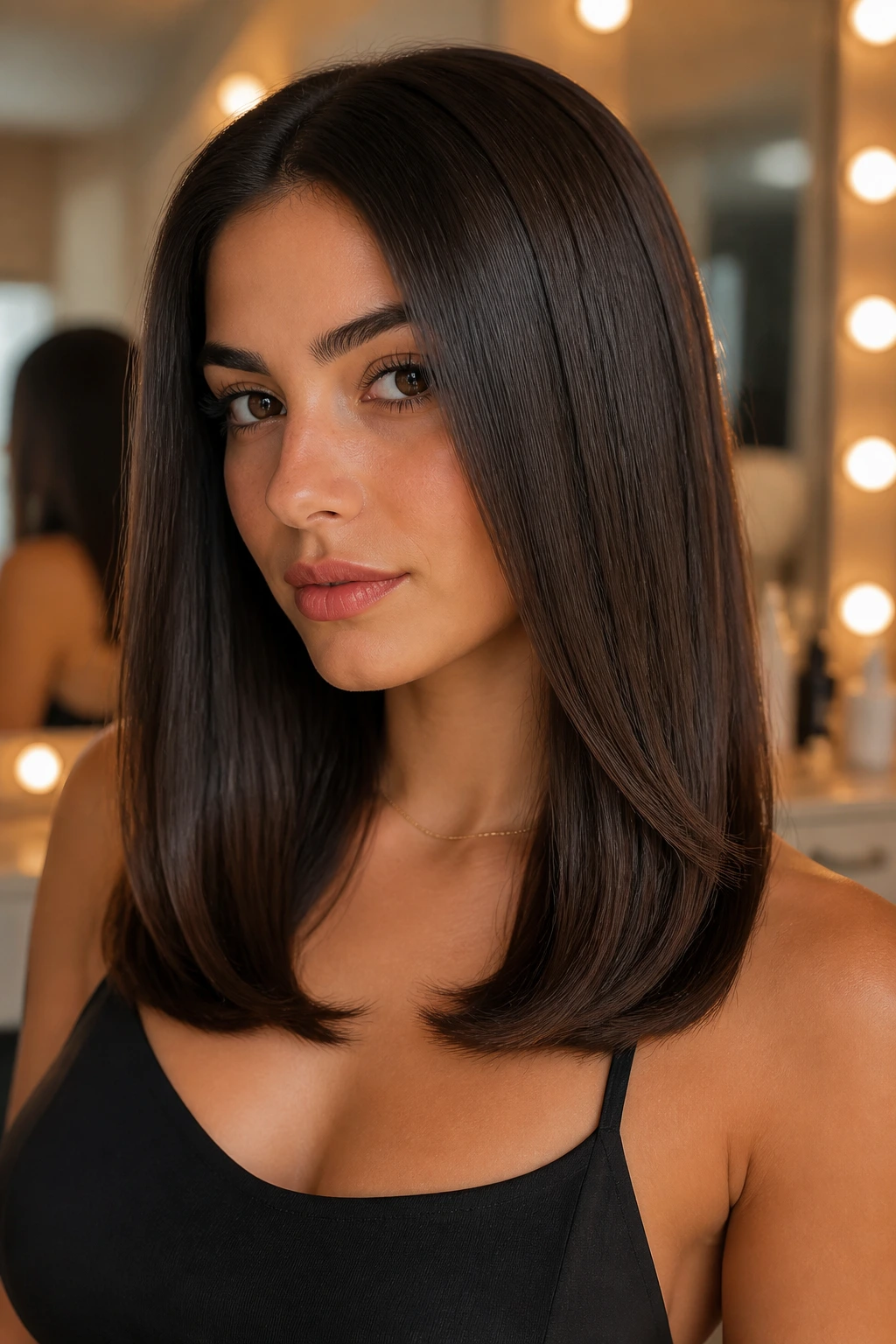
Straight hair on thick medium strands does not have to look flat. In fact, when the ends are beveled just a little, the whole style can look cleaner than a big curl or wave pattern. The shape matters more than the texture here. A smooth surface and a softly turned-under edge give thick hair a neat outline.
The best version starts with a good blow-dry and a flat iron pass only where needed. Thick hair can handle heat, but it doesn’t need to be dragged through over and over. Once the hair is dry, smooth the last 2 inches with the iron and turn the ends inward by a few degrees. That tiny curve keeps the cut from looking hard.
This is the style I’d choose for a job interview, a dinner, or any day when you want your hair to look calm and controlled. It’s not flashy. It just works.
15. Voluminous Blowout with Round Brush Lift
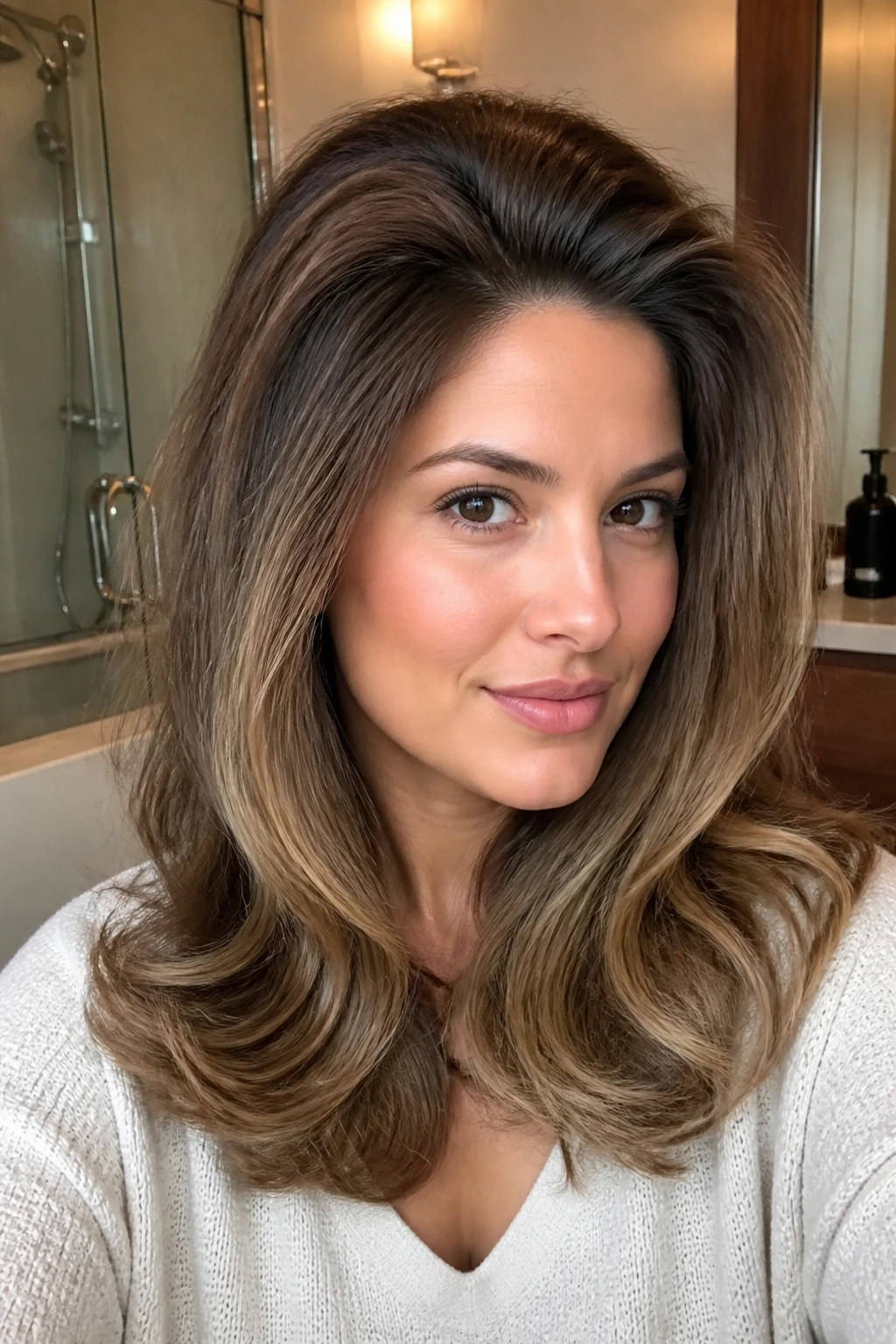
What’s the point of thick hair if you can’t lean into the volume once in a while? A round-brush blowout is one of the best medium styles for showing off density without letting it take over. The lift at the roots and the soft bend through the ends give you shape from top to bottom.
How to Get the Most From It
A blowout on thick hair works best in sections. Start with the nape, then move up in 2-inch panels. Keep the nozzle pointed down the hair shaft, and use the brush to pull each piece taut as it cools. That helps the cuticle lie flatter, which is what gives you that smooth finish. Clips at the crown help too, especially while you’re working through the lower layers.
- Use a volumizing mousse at the roots on damp hair.
- Rough-dry to about 80 percent before bringing in the brush.
- Roll the front pieces away from the face for a soft frame.
- Finish with a light mist of flexible hairspray.
The result should feel soft and airy, not stiff. If it feels crunchy, you used too much product.
16. Half-Up Twisted Crown
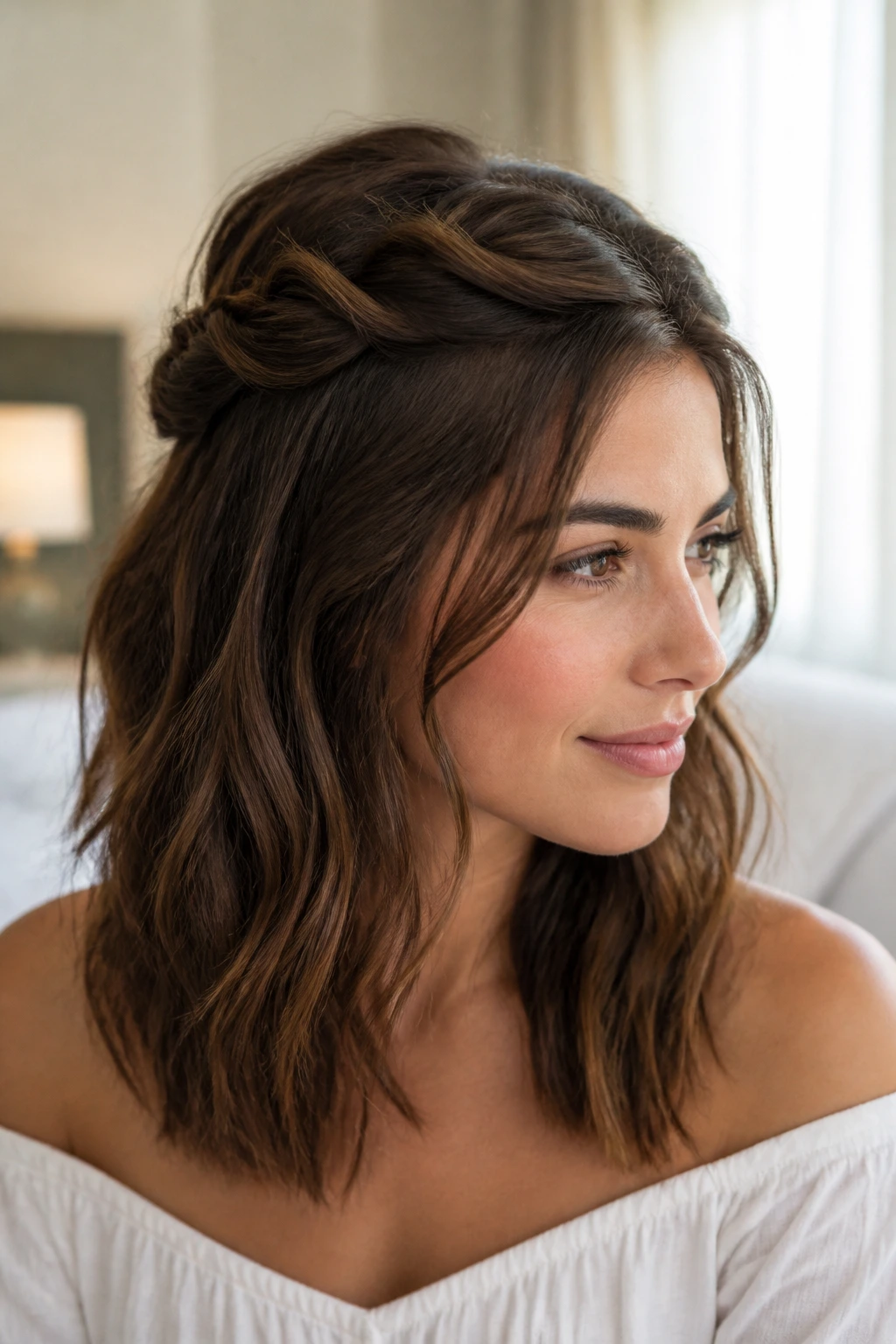
A half-up twisted crown solves a problem thick medium hair creates all the time: too much hair in your face, not enough time to do a full style. Pulling back the top half keeps the weight off your cheeks and lets the lower layer stay full. It also works on second-day hair when the roots need a little help.
The twist part is what makes it feel finished. You don’t need tight rope twists; loose ones are better because thick hair has enough body to fill them out. Secure each side just above the ear and pin them toward the back of the head. Leave the lower lengths loose so the style still feels like hair, not a helmet.
- Mist the top section with dry shampoo if the roots need lift.
- Twist each side back loosely, then cross them before pinning.
- Keep the pins hidden under the overlap.
- Pull out a few thin pieces around the temples if you want it softer.
It’s one of those styles that looks like you tried harder than you did. That part is useful.
17. Half-Up Claw Clip Twist
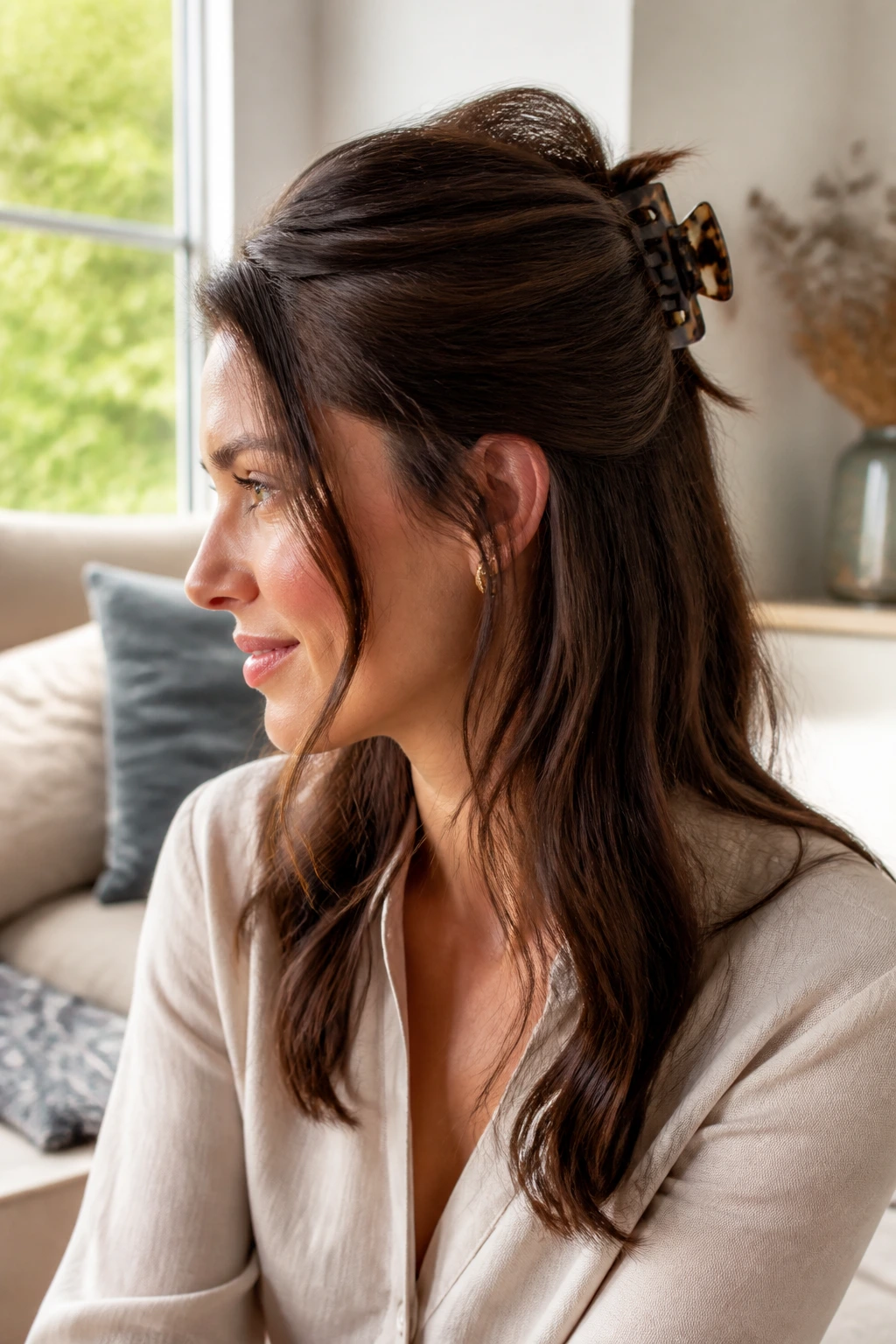
The half-up claw clip twist is the kind of style thick-haired people end up relying on because it solves more than one issue at once. It gets the top section off your neck, keeps the style loose, and still lets the length show. If your hair is medium and full, you need a large clip — not one of those tiny decorative ones that slips out by lunch.
This works best when the twist isn’t too tight. Gather the top third of your hair, twist it upward once, then fold it into the clip so some ends spill out on purpose. That slight looseness gives the style room and keeps the shape from looking overworked. It’s especially handy when your hair is freshly washed and too soft for a braid.
I like this one for errands, work-from-home days, and any moment when a ponytail feels too plain. It’s practical without looking plain, which is a better deal than people admit.
18. Low Ponytail with a Wrapped Base
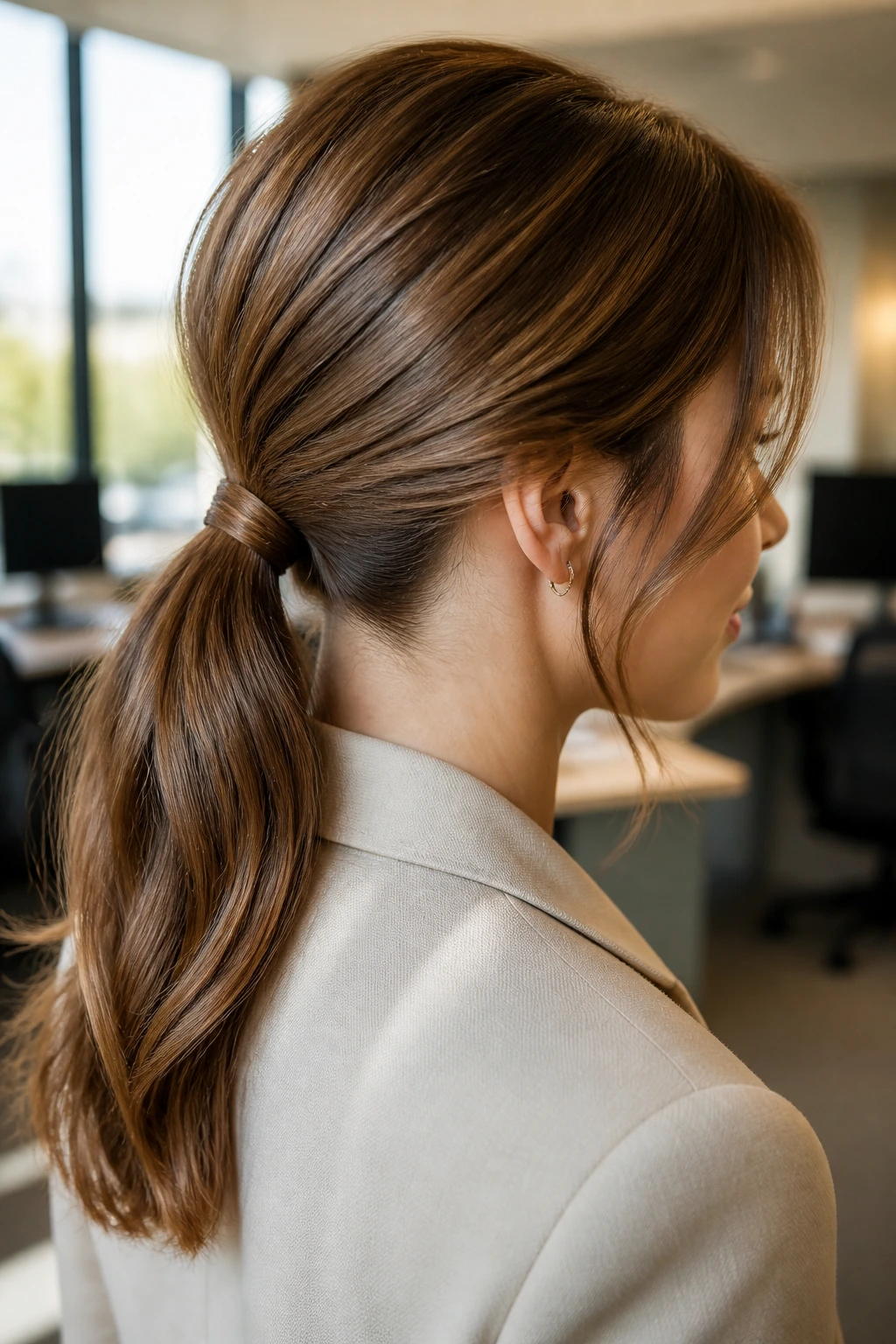
A low ponytail sounds basic until you see what thick medium hair does with it. The fullness makes the pony look rich instead of thin, and the wrapped base hides the elastic so the whole style feels cleaner. Compared with a high pony, this one puts less strain on the scalp and keeps the top smooth.
The shape matters. Brush the hair back gently, not aggressively, or you’ll flatten the crown too much and lose the soft lift that makes the style look balanced. Secure the pony at the nape, then take a small strand from underneath and wrap it around the elastic before pinning it in place. That one step changes the finish more than people expect.
This is a good office style, but it works for dinner too. Add a small bend through the tail with a curling iron if you want more movement. Leave it straight if you want sleek and simple.
19. Bubble Ponytail for Thick Length
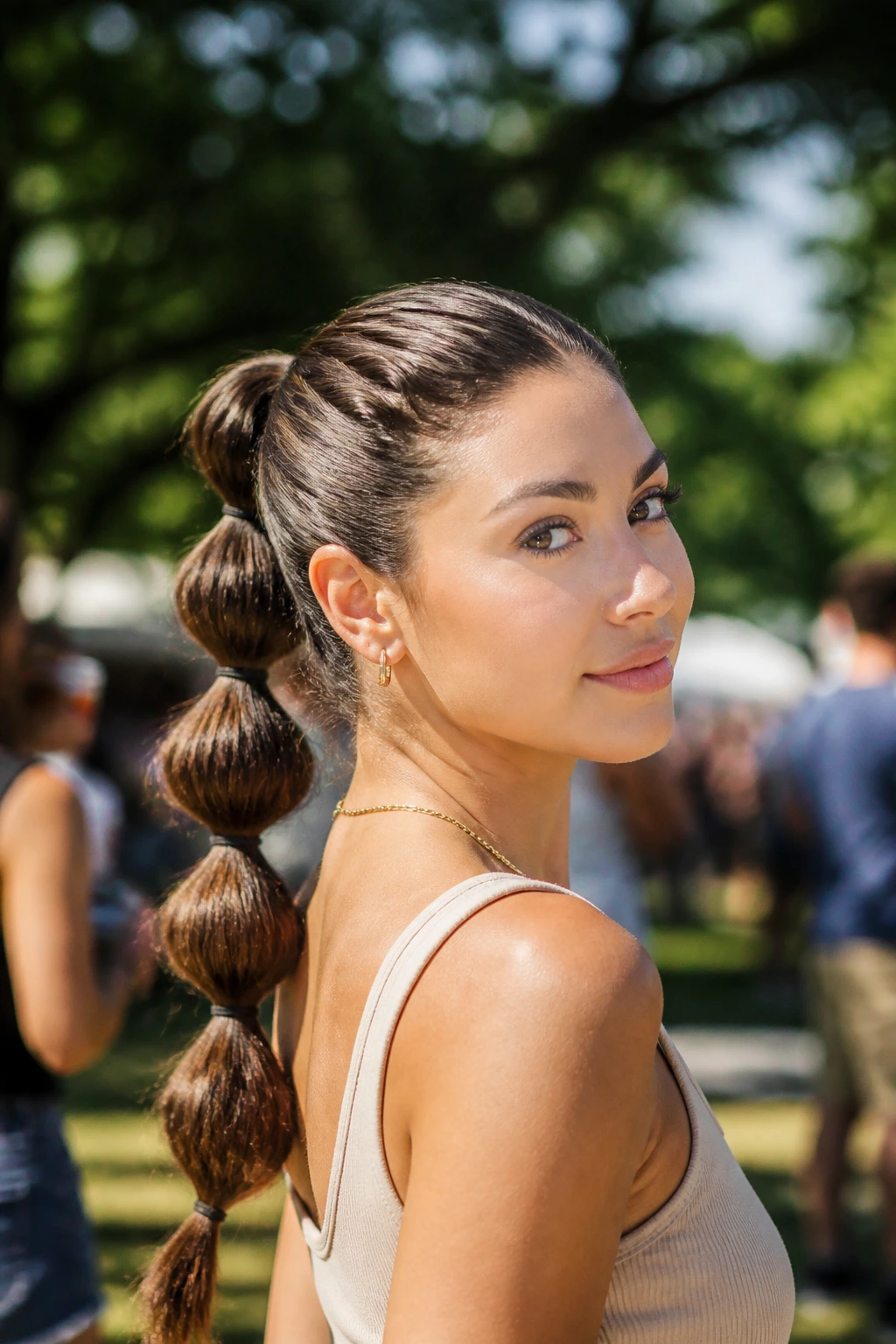
Bubble ponytails can look playful or polished depending on how clean you make the sections. On thick medium hair, they work well because the volume fills out each “bubble” without much coaxing. You get shape, but you do not need a ton of length to make it read clearly.
Why It Stands Out
The style is built from evenly spaced elastics, usually 2 to 3 inches apart, with each section gently pulled wider between ties. Thick hair makes those bubbles round and full instead of flimsy. That’s what gives the style its payoff.
- Start with a low or mid-height ponytail.
- Add clear elastics every few inches down the tail.
- Tug each section outward with your fingers until it looks rounded.
- Wrap a tiny strand of hair around the first elastic if you want the top to look cleaner.
It’s a strong pick for casual events, festivals, or any day when you want something a little different without fighting your texture.
20. Braided Crown with Loose Waves
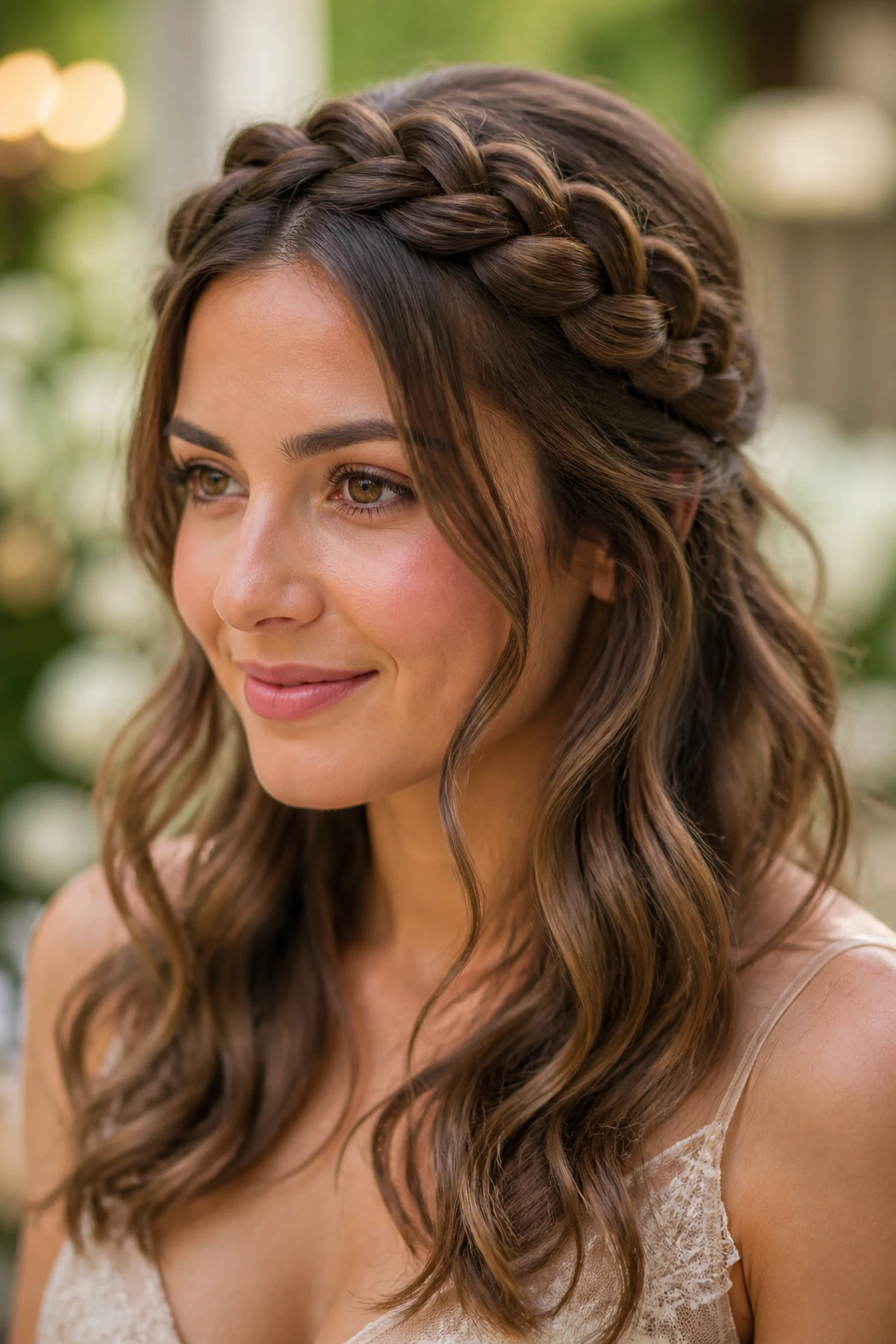
A braided crown works on thick hair because the braid has enough material to look full even when you don’t pull it tight. Add loose waves underneath, and the whole style gets this balanced mix of structure and softness. It feels dressed up without being stiff.
The braid doesn’t need to go all the way around your head in a hard line. Start from one temple, follow the hairline across the top, and pin the end near the opposite ear or the nape. Leave the lower half wavy so the style doesn’t feel sealed in. Thick hair gives you enough body that the braid can sit on top instead of disappearing into the rest of the hair.
This is a good choice for weddings, outdoor events, or windy days when loose hair would fight you. It keeps the front controlled and still lets the rest move.
21. Loose Dutch Braid into a Medium Tail
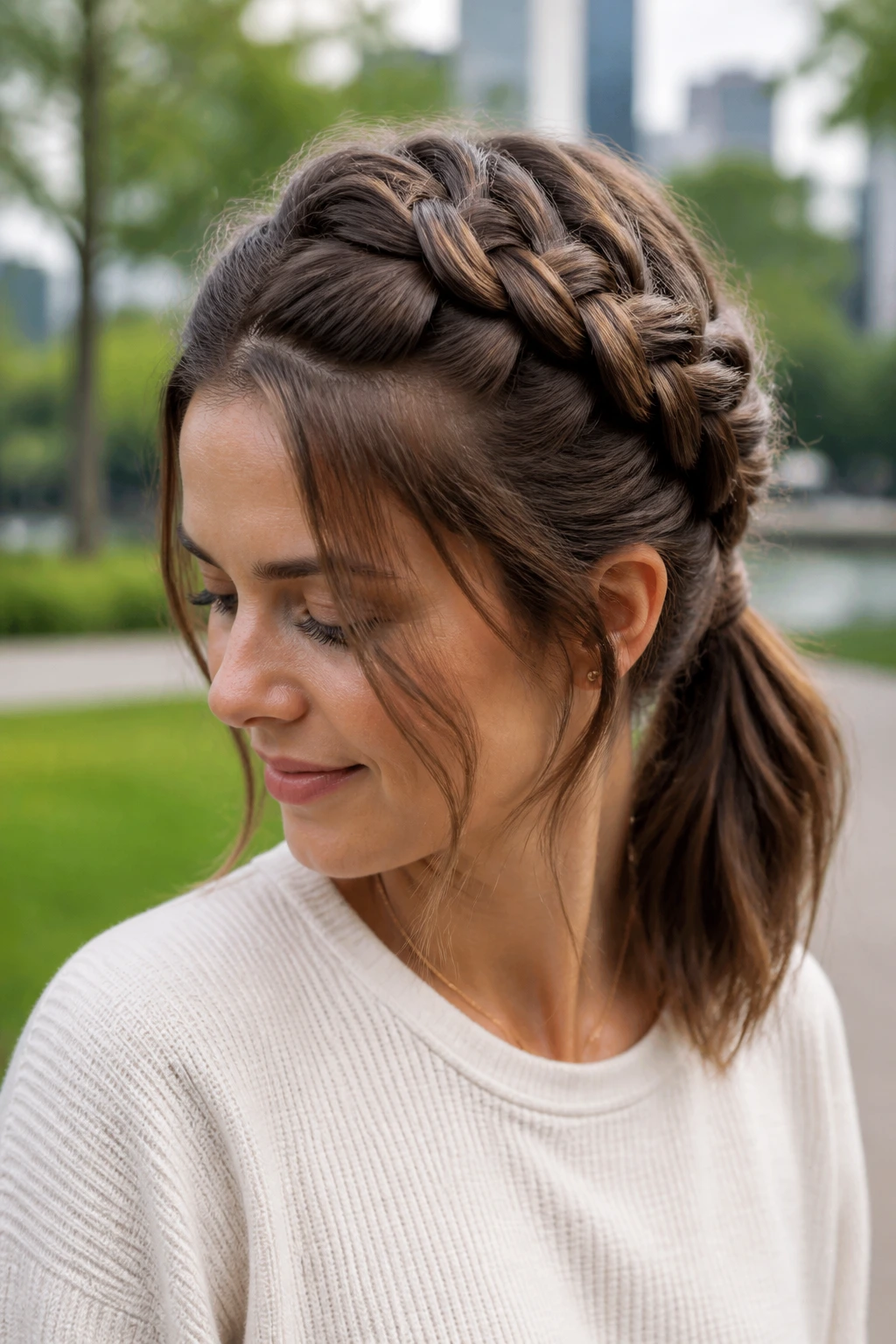
Why does a Dutch braid work so well on dense medium hair? Because the braid sits raised on top of the head, which shows off the texture instead of hiding it. Thick strands make each section look strong, so even a single braid can carry the whole style.
How to Wear It
Start at the hairline and braid toward the crown, then continue into a loose three-strand braid or a low tail. Keep the braid slightly wide by tugging the outer edges once it’s secured. That makes the style feel fuller and less tight against the scalp. If your hair is layered, a little texture spray helps the shorter pieces stay in place.
- Use a small clear elastic at the end.
- Keep the braid centered or slightly off to one side.
- Loosen it after you secure it, not before.
- Let a few face pieces fall out if you want the style to feel less formal.
It’s one of the easiest ways to keep thick hair under control without making it look pinned down.
22. Messy Top Knot with Face Pieces
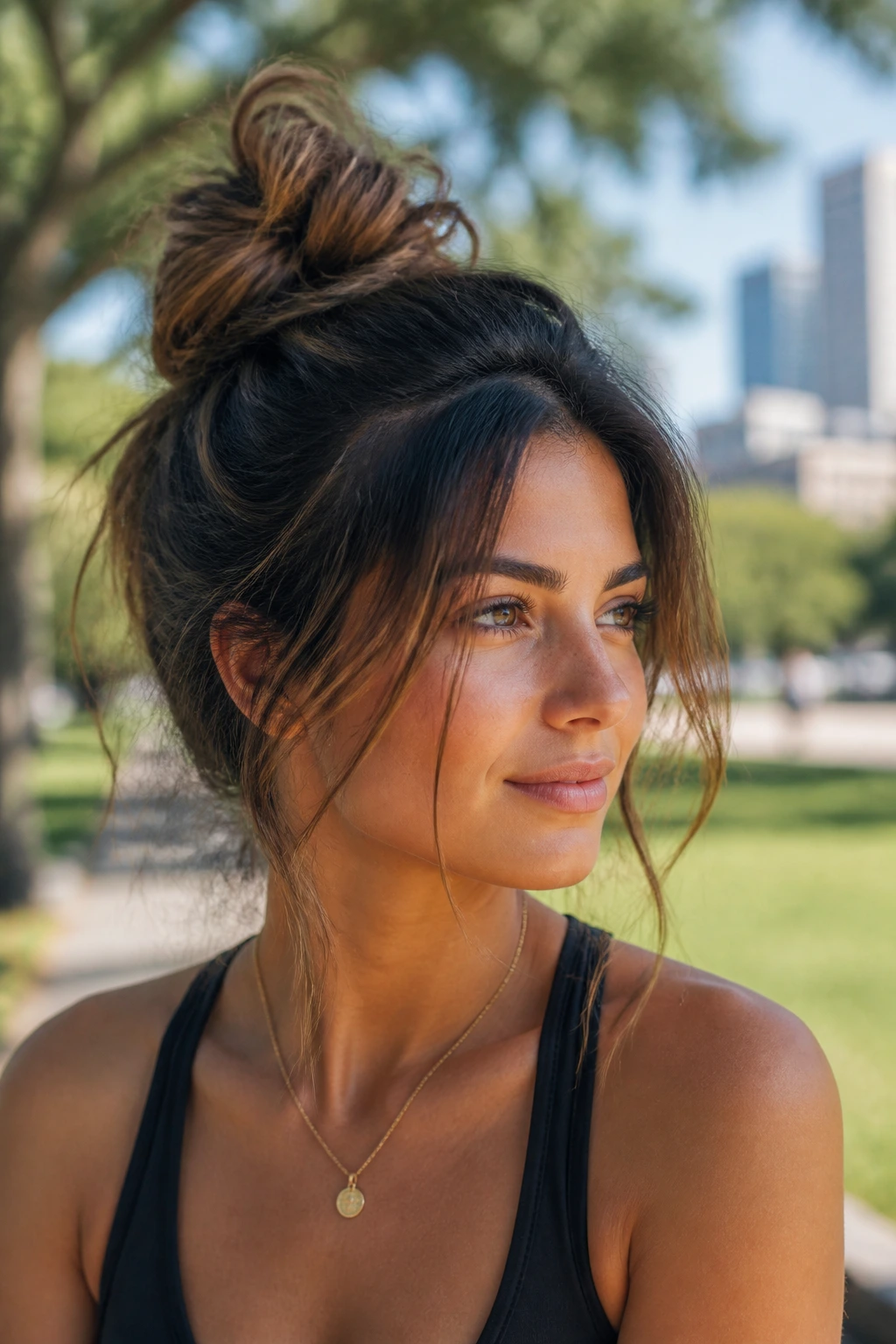
Picture thick hair on a humid day, all that volume threatening to take over. A messy top knot handles that fast, as long as you don’t build it too high or too tight. The face pieces keep it from looking severe, and the knot itself can be as loose as you like.
The trick is placing the bun slightly higher than the crown, not straight on top of it. That keeps it from feeling top-heavy. Twist the ponytail once, wrap it loosely, and pin the base with enough bobby pins to hold but not enough to flatten the shape. Thick hair gives you a built-in cushion, which is nice, but it can also collapse the pins if the bun is overloaded.
- Leave 1-inch face pieces out before you start.
- Use a large elastic that won’t snap under the weight.
- Pull the bun apart a little after pinning for a softer finish.
- Mist the front with a touch of hairspray if the pieces want to fall.
It’s messy on purpose, and that’s the appeal.
23. French Twist with Soft Ends
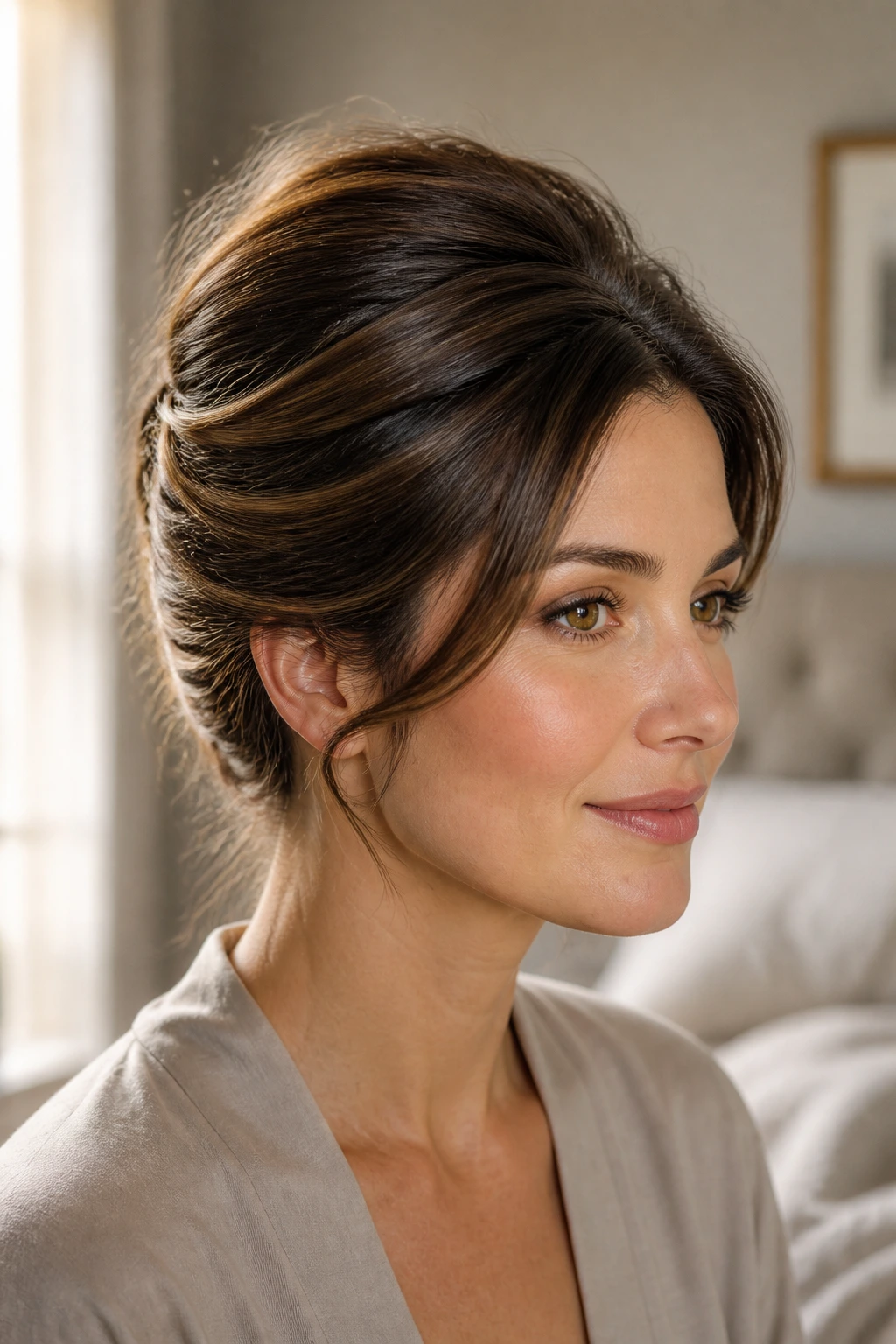
A French twist on medium thick hair sounds more formal than it has to be. The soft-ends version keeps the shape elegant but not rigid, and thick strands actually help because they fill the twist nicely. You don’t need every hair pinned flat to the head; some body makes the style look fuller and more modern.
The main thing is prep. A little texture spray or second-day grip helps the hair stay put. Sweep it back, twist upward, and tuck the ends into the roll. If your hair is layered, leave a few shorter pieces loose near the ears or the nape so it doesn’t look too severe. That small softness makes the difference between polished and stiff.
This style is especially good when you want your neck exposed and your hair off your face, but a plain bun feels too casual. It pairs well with earrings, a structured collar, or nothing fancy at all. The twist itself does the work.
24. Slicked-Back Half Pony
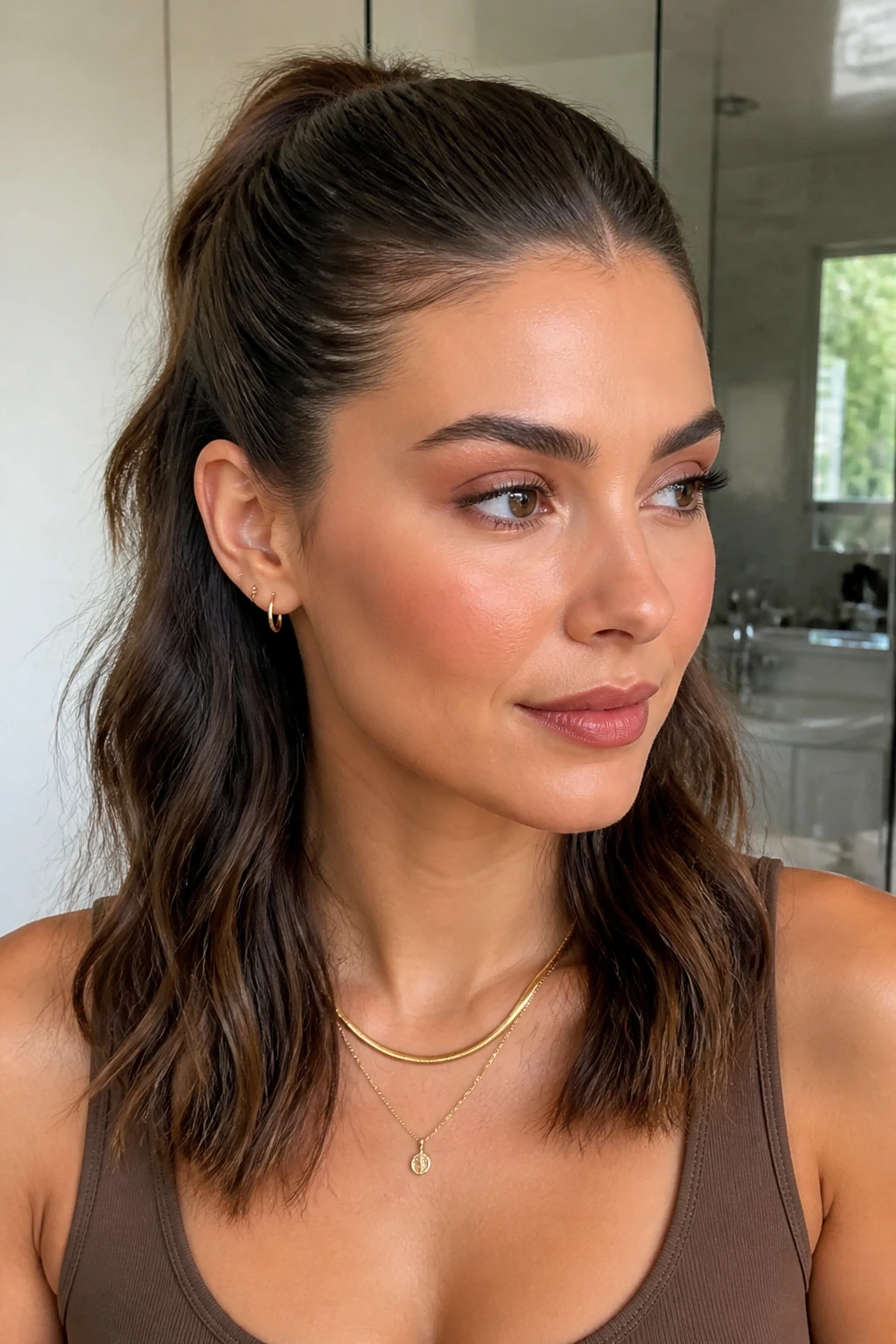
A slicked-back half pony gives thick medium hair a clean front and a full tail. Unlike a full ponytail, it keeps some length down, which helps the style feel softer and more flattering around the face. It’s also one of the quickest ways to make thick hair look intentional when you’re short on time.
The style works because the top section is controlled with gel or cream while the lower half stays loose. Brush the crown back with a boar-bristle brush, secure the top half at the back of the head, and smooth any flyaways with a tiny amount of product on your fingertips. Don’t drown the roots. Thick hair needs hold, not grease.
This is a strong choice if you like a clean front but still want the movement of loose lengths. It works with waves, curls, or straight hair, and it can lean sporty or sharp depending on the finish.
25. Deep Side-Part Hollywood Waves
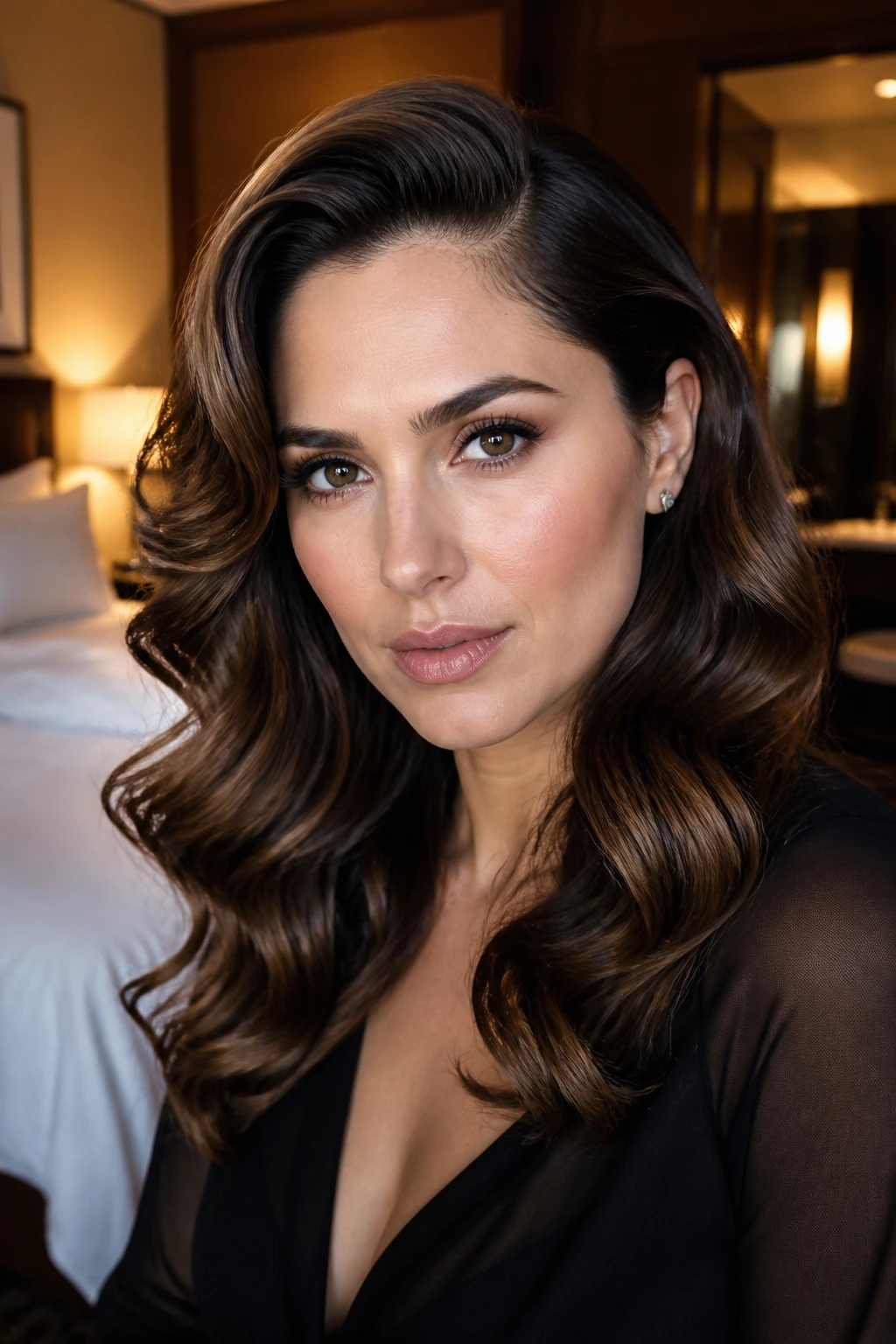
Hollywood waves love thick hair because there’s enough weight to hold the curve and enough body to keep the finish full after brushing. A deep side part gives the whole style that sweeping shape, and the waves stack neatly without collapsing into each other. It’s one of the most reliable dressy looks for medium length.
Quick Set-Up
Use a 1.25-inch curling iron and curl all the sections in the same direction on each side of the part. Pin the curls while they cool if you want the shape to hold longer. After that, brush them out with a paddle brush or wide brush so the waves merge into one smooth pattern. A shine spray works better than a heavy serum here.
- Make the part deep enough to show the wave line.
- Curl away from the face on the top layer.
- Keep the ends slightly tucked under.
- Finish with a light mist of flexible spray.
The look is smooth, old-school, and still wearable without feeling costume-like.
26. Vintage Pin-Curl Waves
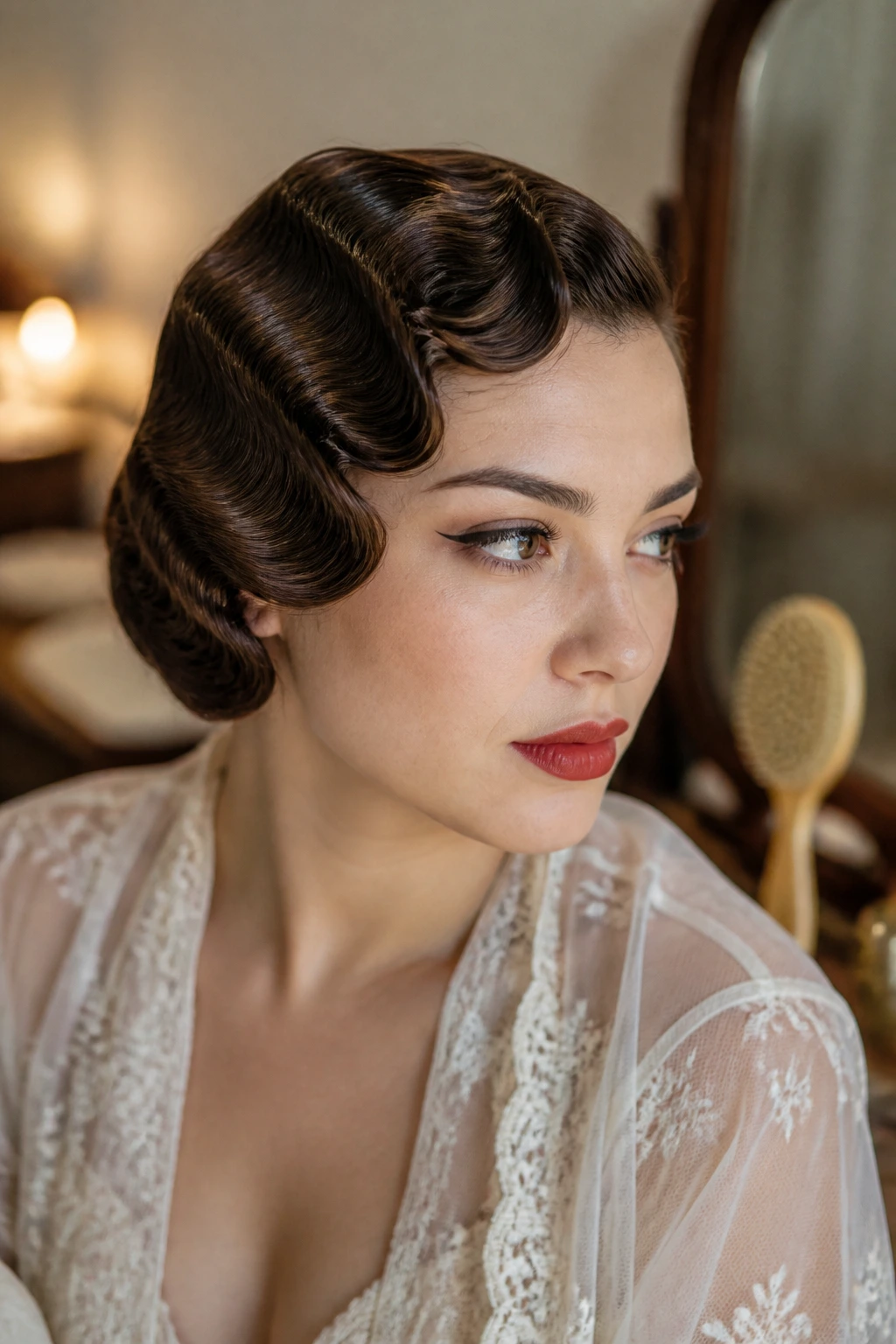
Vintage pin-curl waves are a smart match for thick medium hair because thick strands can hold a set better than many people expect. Once the curls cool in pinned loops, they keep their shape long enough to brush into soft, sculpted waves. That staying power is the whole reason this style still shows up for formal events.
The process takes a little patience, but not much skill. Curl each section, clip it flat against the head, let it cool completely, then brush the curls into a wave pattern. Thick hair gives you enough substance that the waves don’t disappear once they’re brushed out. The finish can be glossy and smooth or a little softer, depending on how much you brush.
I’d choose this style for evenings when you want the hair to feel dressed up without needing an updo. It has a neat, classic line that plays well with medium length. And yes, it holds better than many looser wave styles.
27. Clipped-Back One-Side Tuck
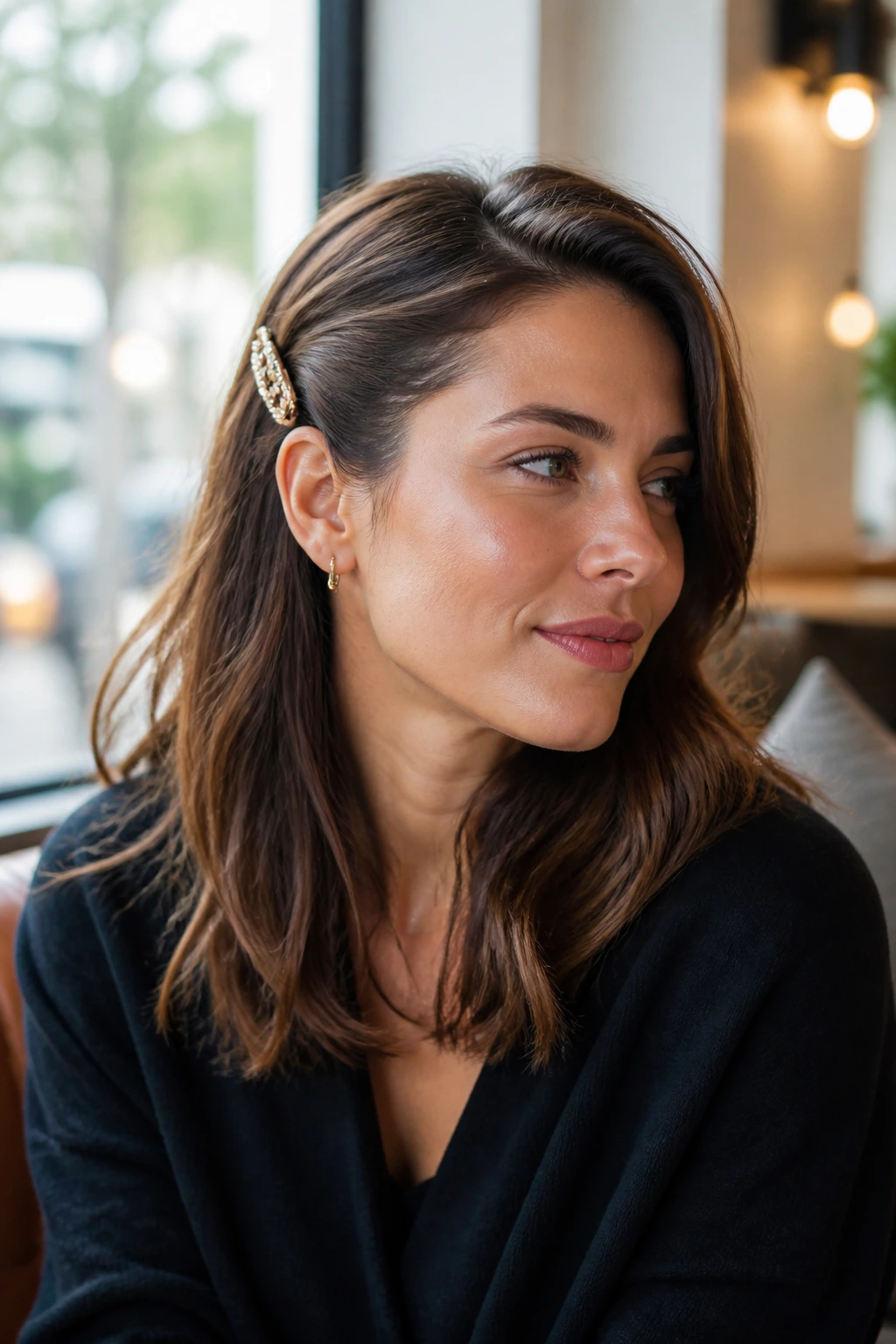
What’s nicer than a simple tuck when you want hair off your face but don’t want a full updo? The one-side tuck keeps the look easy and gives thick medium hair a bit of asymmetry, which stops it from feeling too square. A decorative clip or flat barrette can make it look finished fast.
How to Wear It
Take the heavier side of your part and tuck it behind the ear, then pin or clip it low so it stays there. Leave the rest loose and smooth the tucked side just enough that it lies flat. Thick hair needs a clip with decent grip; flimsy ones pop open, and that’s annoying.
- Choose a flat clip if you want the side to lie close to the head.
- Curl the loose side away from the face for a softer line.
- Keep the tucked side slightly slicked back, not tightly glued.
- Add earrings if you want the asymmetry to stand out more.
This style is fast, low-stress, and useful when you want to look put together without committing to a full style.
28. Twisted Low Bun with a Center Part
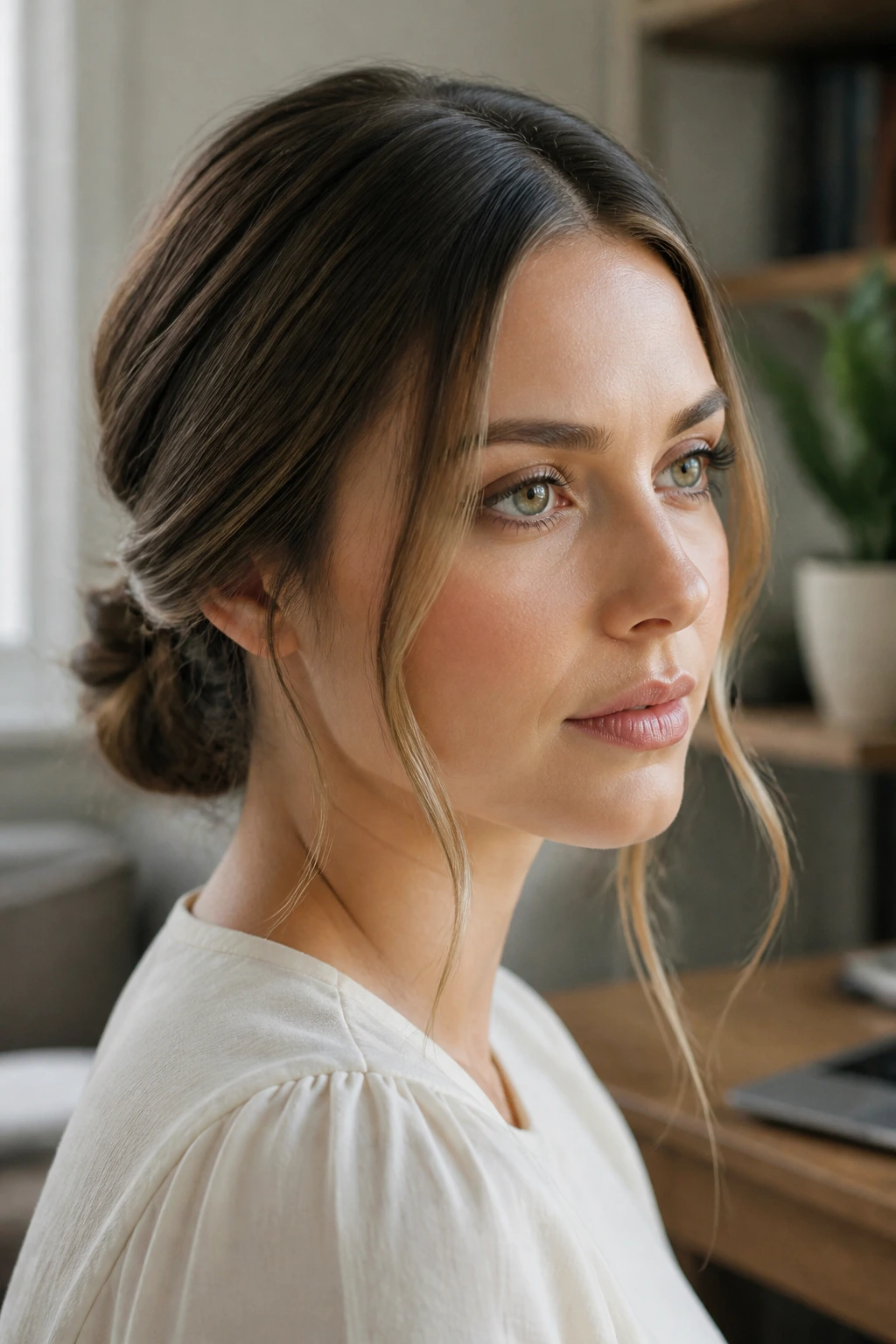
A center part and a low bun can look sharp on thick medium hair when the bun is twisted instead of rolled into a tight knot. The middle part gives you symmetry, while the bun keeps the weight at the nape, which is usually the most comfortable place for dense hair. The whole thing feels calm and neat.
The twist matters because thick hair can make a basic bun feel bulky in the wrong way. Split the tail into two sections, twist them around each other, and coil them low. Pin around the base so the bun feels secure but still soft around the edges. If you leave a little fullness at the crown, the style looks richer and less severe.
It works for office days, dinners, or any time you want your hair off your shoulders but still want a clean line at the front. A few loose strands around the face can soften it if you like.
29. Defined Natural Curls with a Diffuser
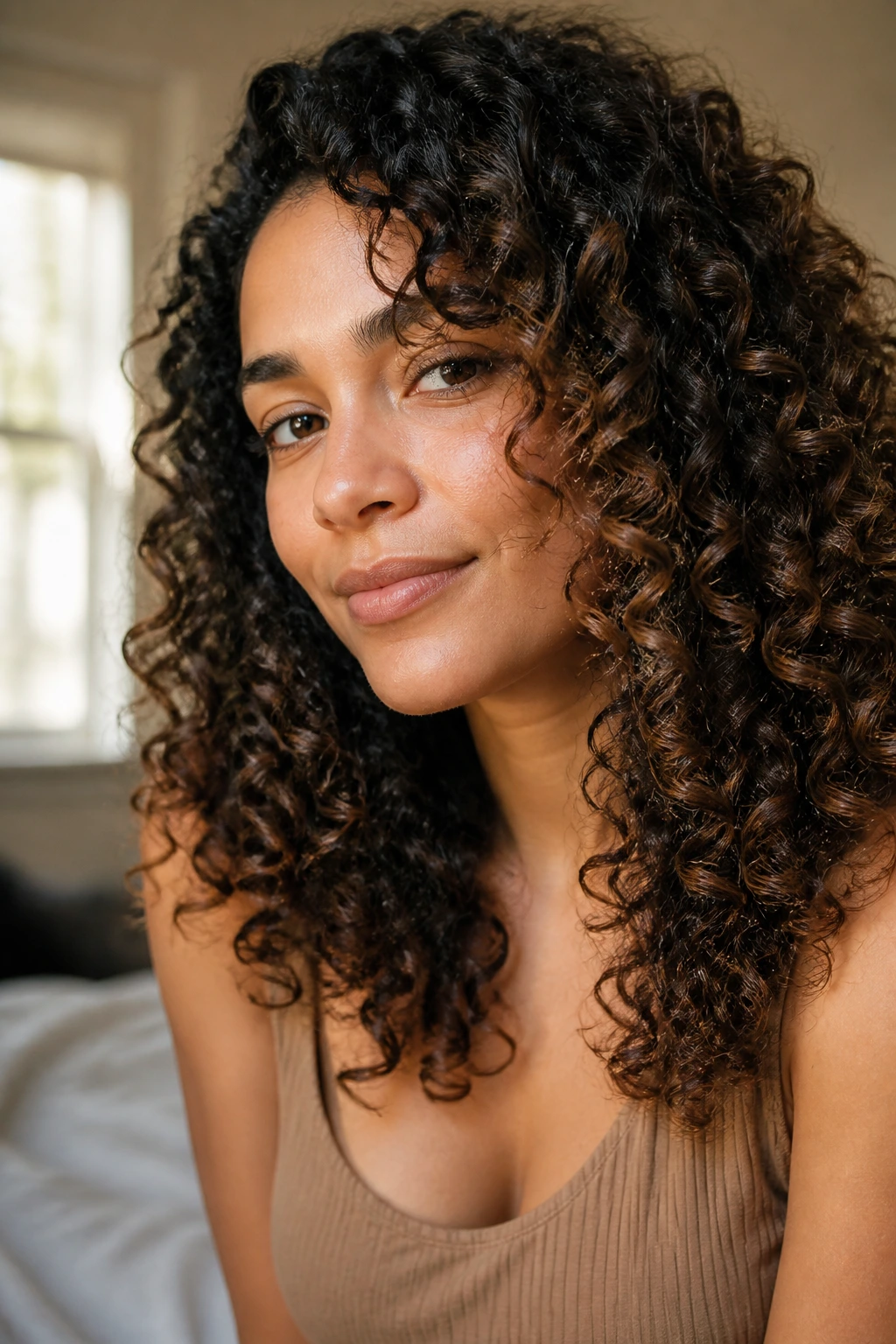
Defined natural curls are one of the best answers for medium hairstyles for thick hair when the texture is already doing the talking. Thick curls often have enough spring to build a strong silhouette on their own, which means the job is mostly about definition, moisture, and keeping the shape from going puffy at the surface.
Start with a curl cream or light gel on soaking-wet hair, then diffuse on low heat in short bursts. Cup the curls from below instead of shaking them apart. That helps the curl pattern set before frizz gets a chance to settle in. Once the hair is dry, scrunch out the cast with clean hands so the curls feel soft instead of crunchy.
The good part here is that medium length keeps curls lively without dragging them down. If the cut has a little layering, the shape can open up around the face instead of forming one giant mass. That makes a huge difference in how wearable the style feels.
30. Flip-Out Ends with a Clean Middle Part
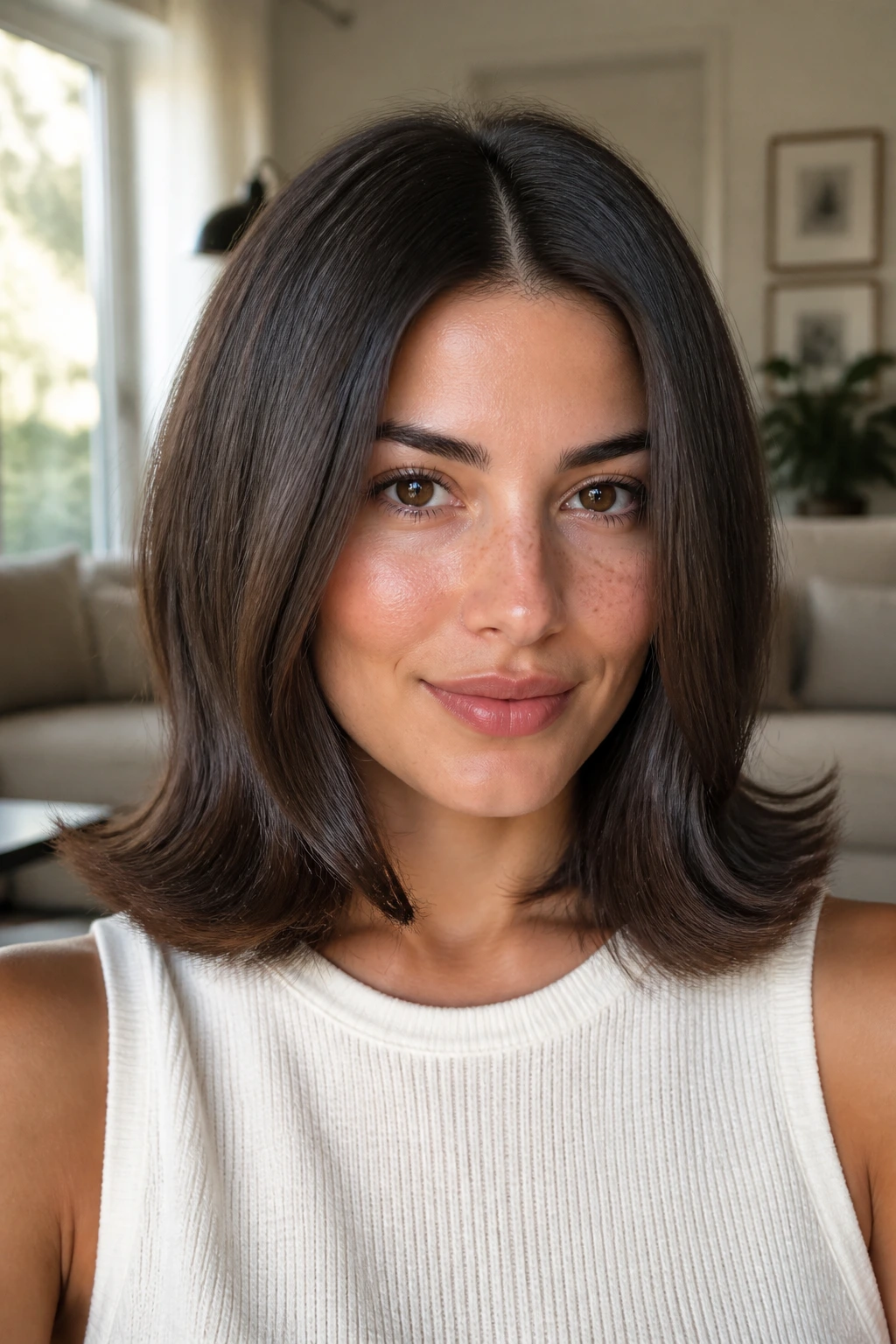
A flip-out style is a nice change when thick medium hair starts feeling too smooth, too curled, or too heavy in the ends. The slight outward turn makes the perimeter look lively, and a clean middle part keeps the shape balanced. It has a little retro feel, but it still reads modern when the finish stays neat.
The easiest way to get it is with a round brush or a flat iron. Bend the ends outward just an inch or two, not all the way up the shaft. That small move keeps the style from turning into a full feathered blowout. Thick hair responds well because the ends hold the flip instead of dropping flat an hour later.
This one works best when the cut is even and the ends are healthy. If the hair is dry or overly layered, the flip can look uneven. Keep the front pieces slightly longer so they frame the face and let the back do the simple work. It’s an easy style, but it still feels done.
Final Thoughts
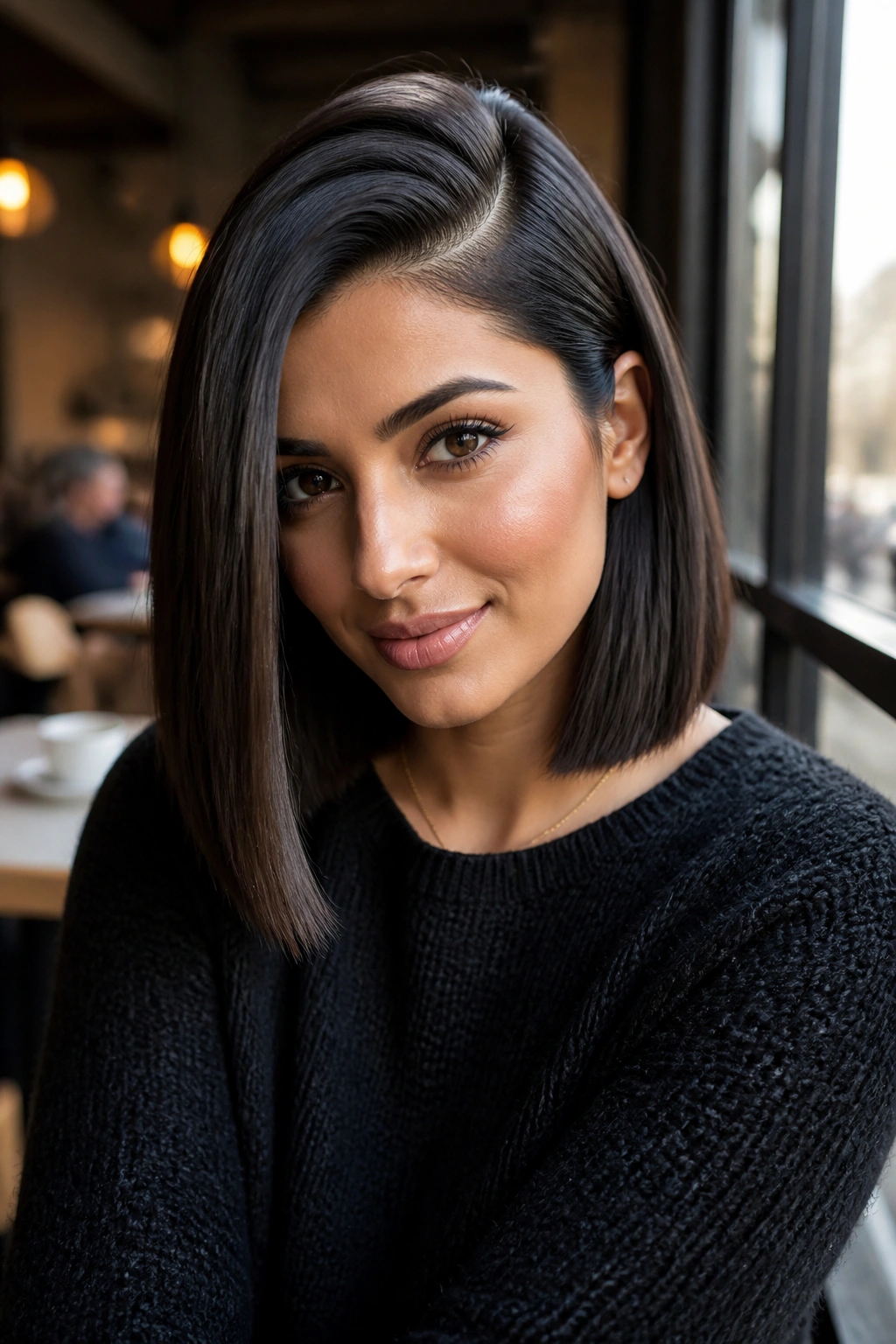
Thick hair at medium length has a lot of built-in drama. The trick is deciding whether you want that drama to come from the cut, the part, the wave pattern, or the way you pin it up.
The best medium hairstyles for thick hair do not fight the density. They steer it. Some make the hair sleeker, some make it bigger in the right places, and some just get it off your neck without flattening everything you like about it.
If you’re choosing between two looks, pick the one that matches how much time you’ll actually spend on your hair in the morning. That rule saves more bad hair days than any trend ever will.
