



Round faces can wear low hairstyles better than people think. The catch is placement. If the style sits too wide at the cheeks or too flat at the crown, it can make the face look shorter and fuller than it really is.
That’s why the best low hairstyles for round faces usually do three things at once: they add a little height up top, keep the sides cleaner, and draw the eye downward with a line, braid, twist, or bit of length. A deep side part helps. So does a small lift at the crown. Even a one-inch shift in where a bun sits can change the whole effect.
If you’ve ever pinned your hair into a low style and felt like your features disappeared, you already know the problem. Too much width is the enemy. Not all round faces need the same trick, though — fine hair wants different support than thick hair, and a soft layered cut behaves differently from blunt ends.
So the goal is not to avoid low styles. It’s to choose the ones that work with the shape of your face instead of sitting across it.
1. Sleek Center-Part Low Bun for Round Faces
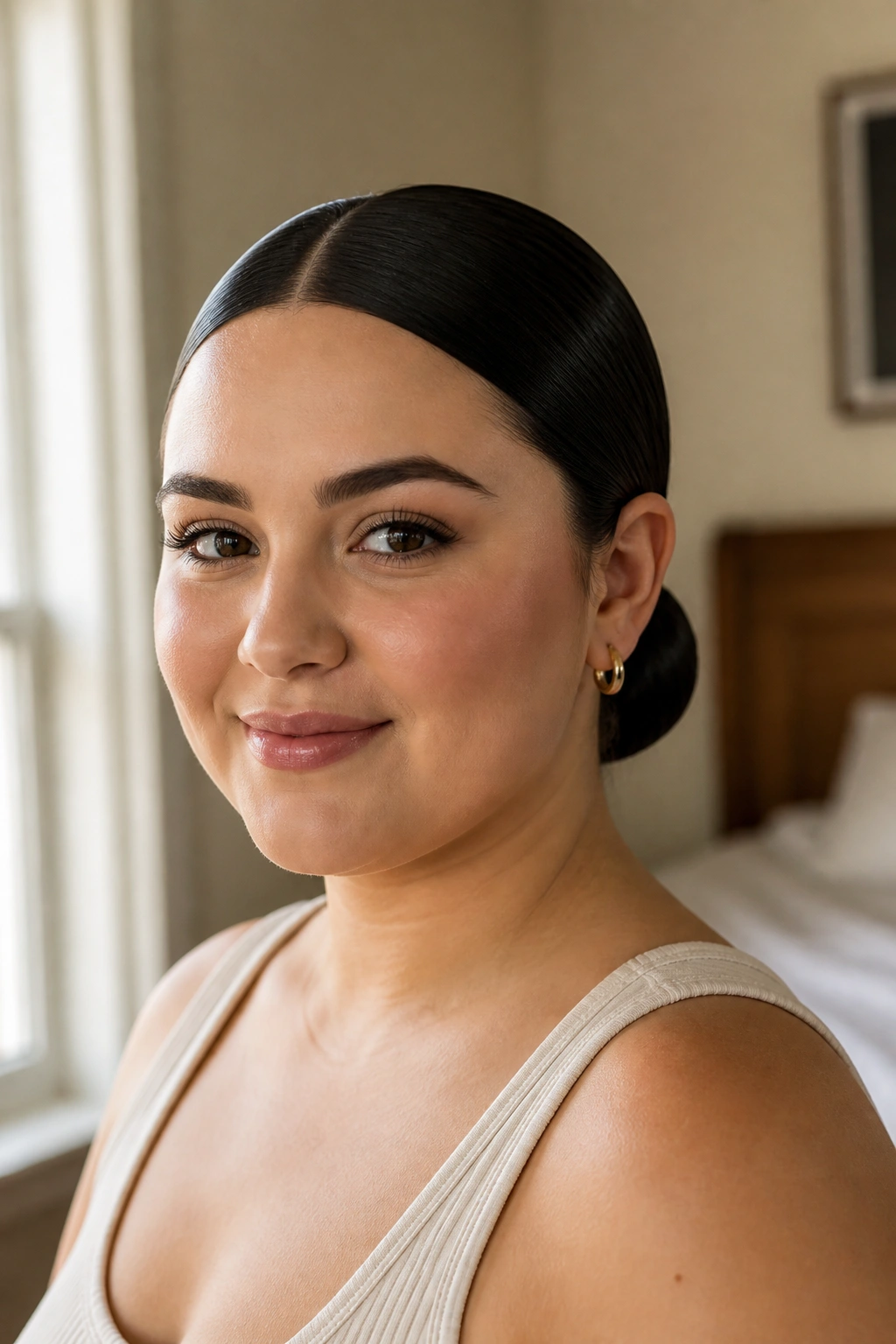
A sleek low bun with a center part is one of the cleanest choices when you want your face to look a little longer. The middle part creates a straight vertical line, and the tight sides keep the cheeks from getting extra width.
Why It Works
The bun should sit at the nape, not halfway up the back of the head. That lower placement keeps the style elegant instead of bulky. I’d also leave the bun itself compact — about the size of a small orange is enough for most hair lengths.
Use a fine-tooth comb, a smoothing cream, and two or three bobby pins to tuck away flyaways. If your hair is thick, flatten the crown first, then secure the bun. If it’s fine, tease only the very back section at the crown so the style does not collapse by lunchtime.
Best detail: keep the center part crisp and the sides smooth, but do not drag the hair so tight that it pulls the eyes straight to the cheeks.
2. Deep Side-Part Low Ponytail
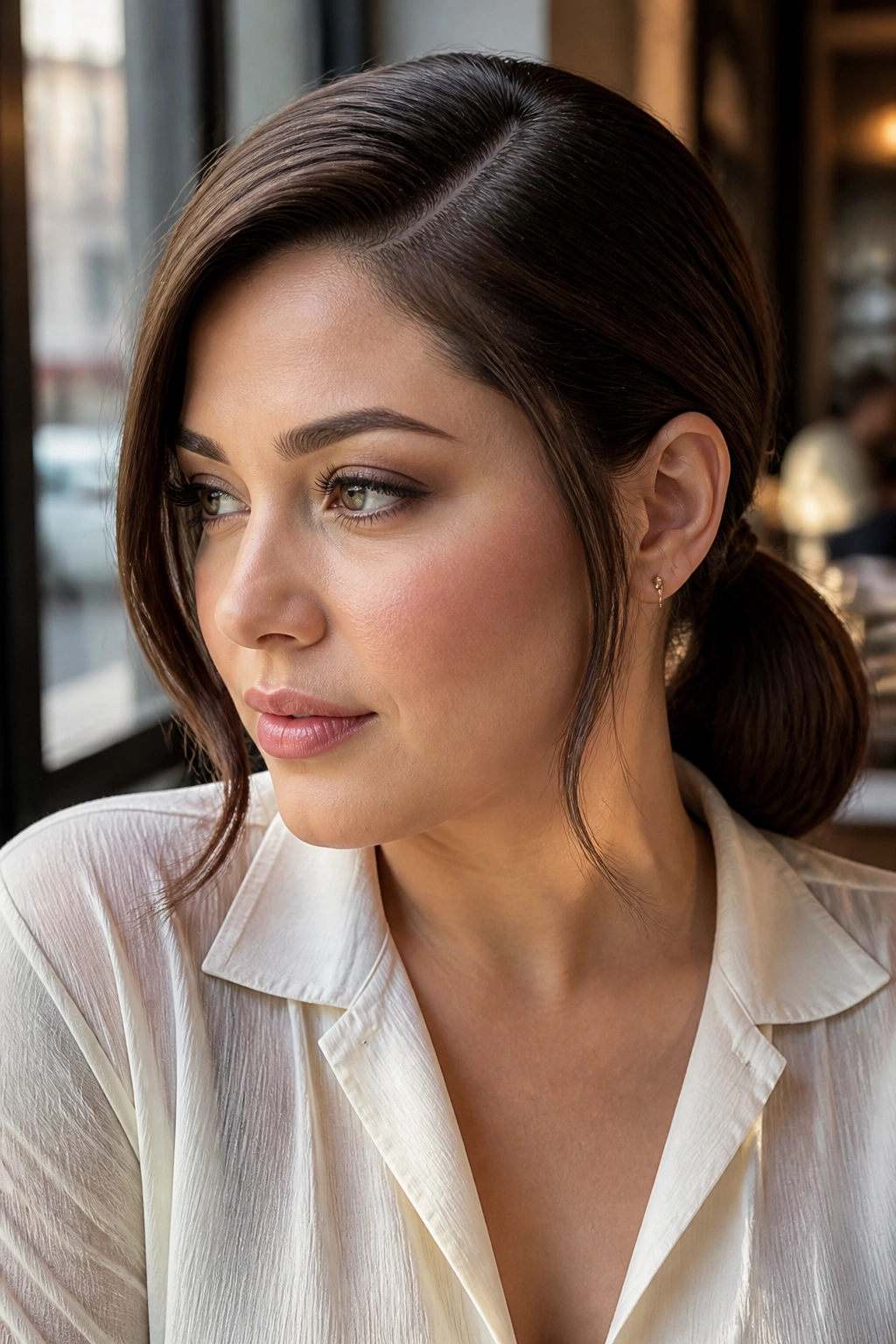
A deep side-part low ponytail is an easy win because the side part breaks up symmetry fast. Round faces usually benefit from that diagonal line. It makes the shape feel a little narrower without turning the style into something fussy.
What Makes It Flatter
The ponytail should sit low, just above the collar line, and the part should start near the arch of one eyebrow rather than in the middle. That one shift changes how the eye travels across the face. Instead of reading as a wide circle, the face gets a longer line.
How to Style It
- Blow-dry the front hair in the direction of the part.
- Smooth the crown with a soft brush, not a hard one.
- Leave one or two slim strands loose near the cheekbones if you want softness.
- Wrap a small section of hair around the elastic for a cleaner finish.
Keep the tail itself sleek or softly waved. Both work. What matters is that the top stays controlled.
3. Wrapped Low Ponytail
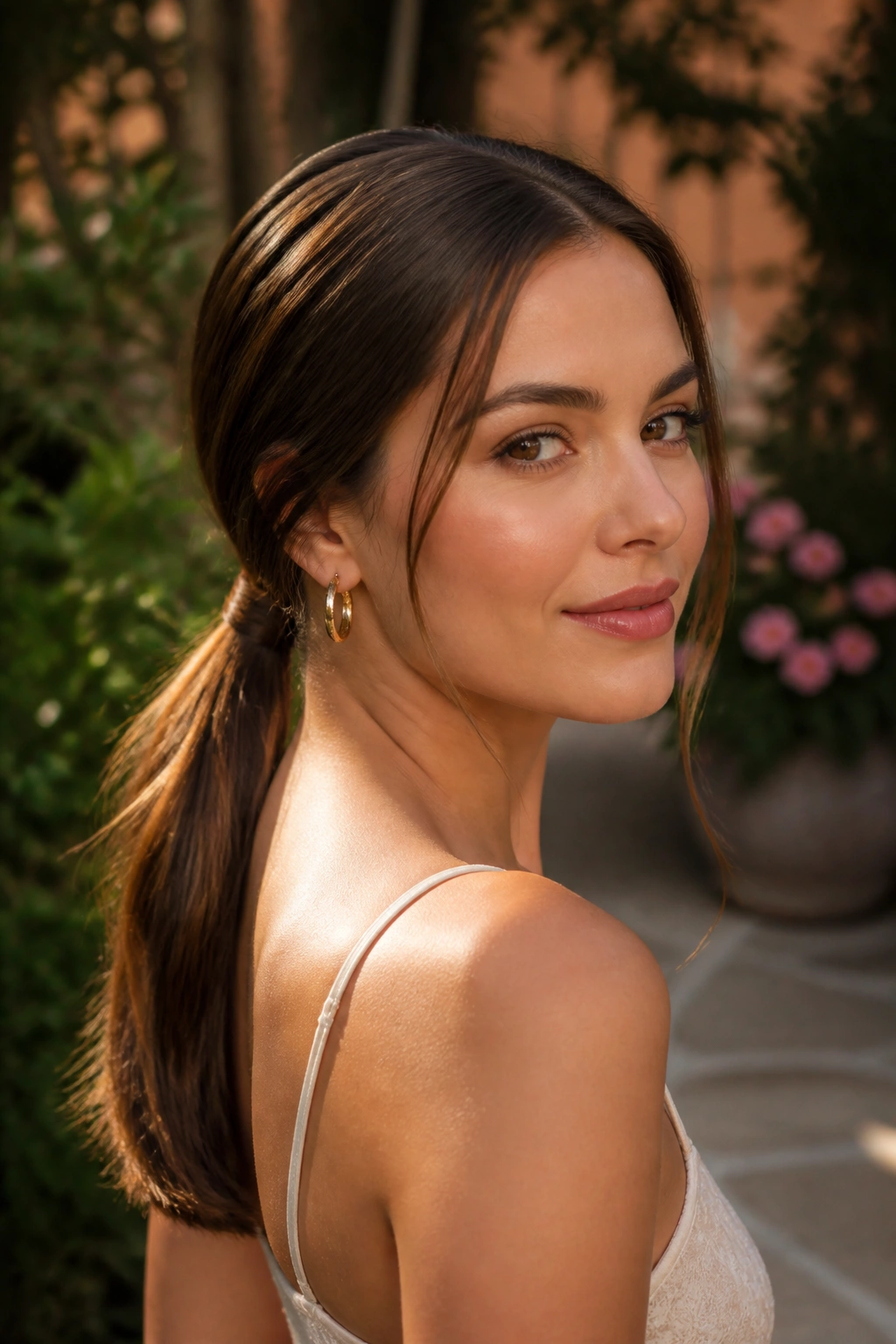
A wrapped low ponytail looks polished without trying too hard, and that matters with a round face. Too much volume at the sides can fight your features, but this style keeps everything moving downward in a single clean line.
The wrap is the part I like most. It hides the elastic and gives the ponytail a finished look, which means you can keep the rest of the style simple. If your hair is layered, use a little styling wax on the shortest pieces before you wrap them; otherwise, the ends poke out and the style loses its shape.
For a round face, don’t puff up the crown too much. A half-inch of lift is enough. More than that and the style starts to read as wide rather than long. The ponytail itself can hang straight, or you can bend the ends with a curling iron for a soft finish.
4. Soft Low Chignon
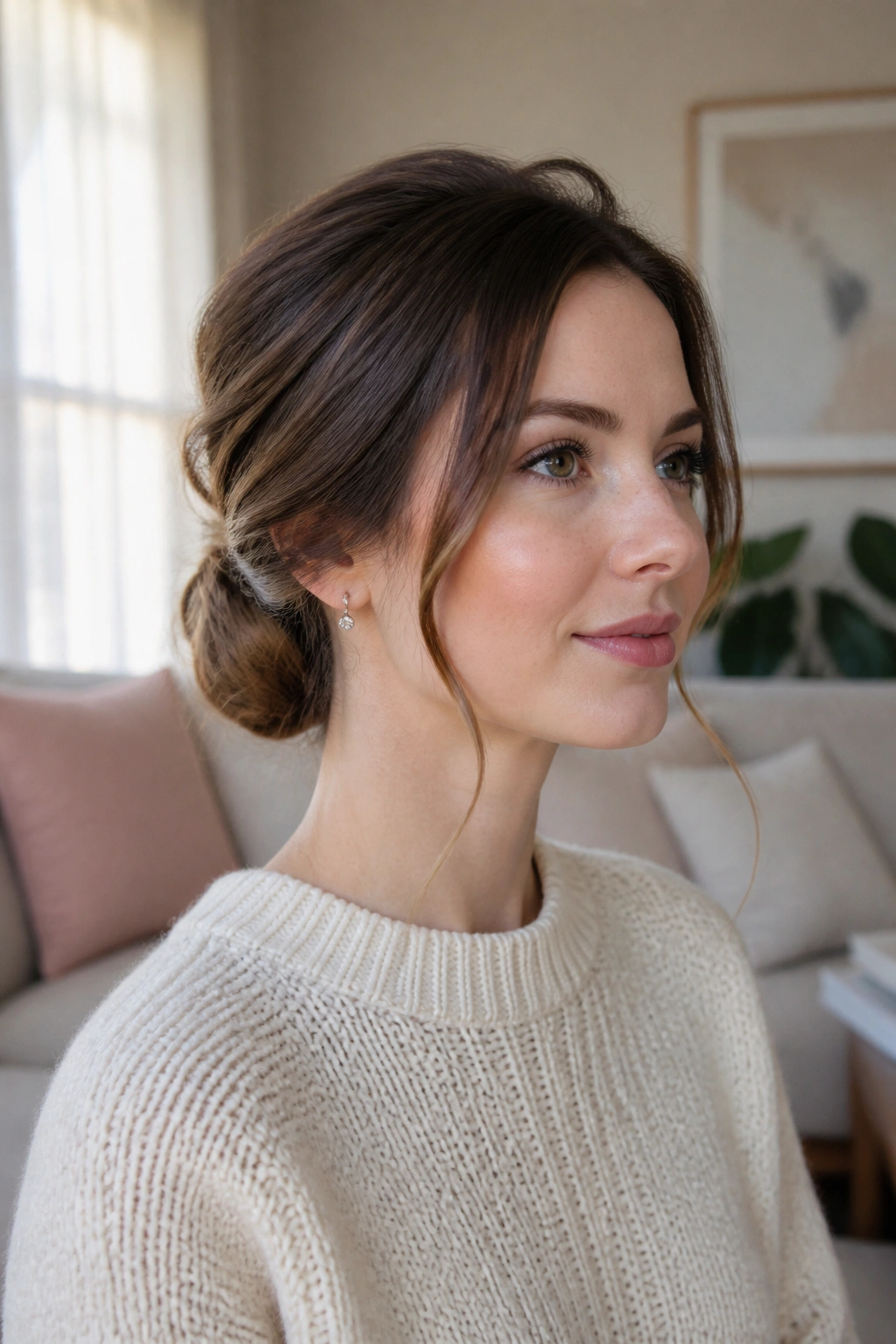
Soft low chignons are quietly good at flattering round faces because they sit low, stay narrow, and leave room for the face to breathe. They also look better with a little looseness than with perfection. That’s a relief, honestly.
A chignon that’s rolled gently at the nape keeps the shape compact. I’d avoid spreading the bun out wide across the back of the head. That wider shape is exactly what can make the face look fuller. Instead, keep the twist tucked inward and let one or two fine pieces loosen around the temples.
This style works well with earrings, too. A small hoop or a simple drop earring adds another vertical line. Not flashy. Just enough.
5. Twisted Low Knot
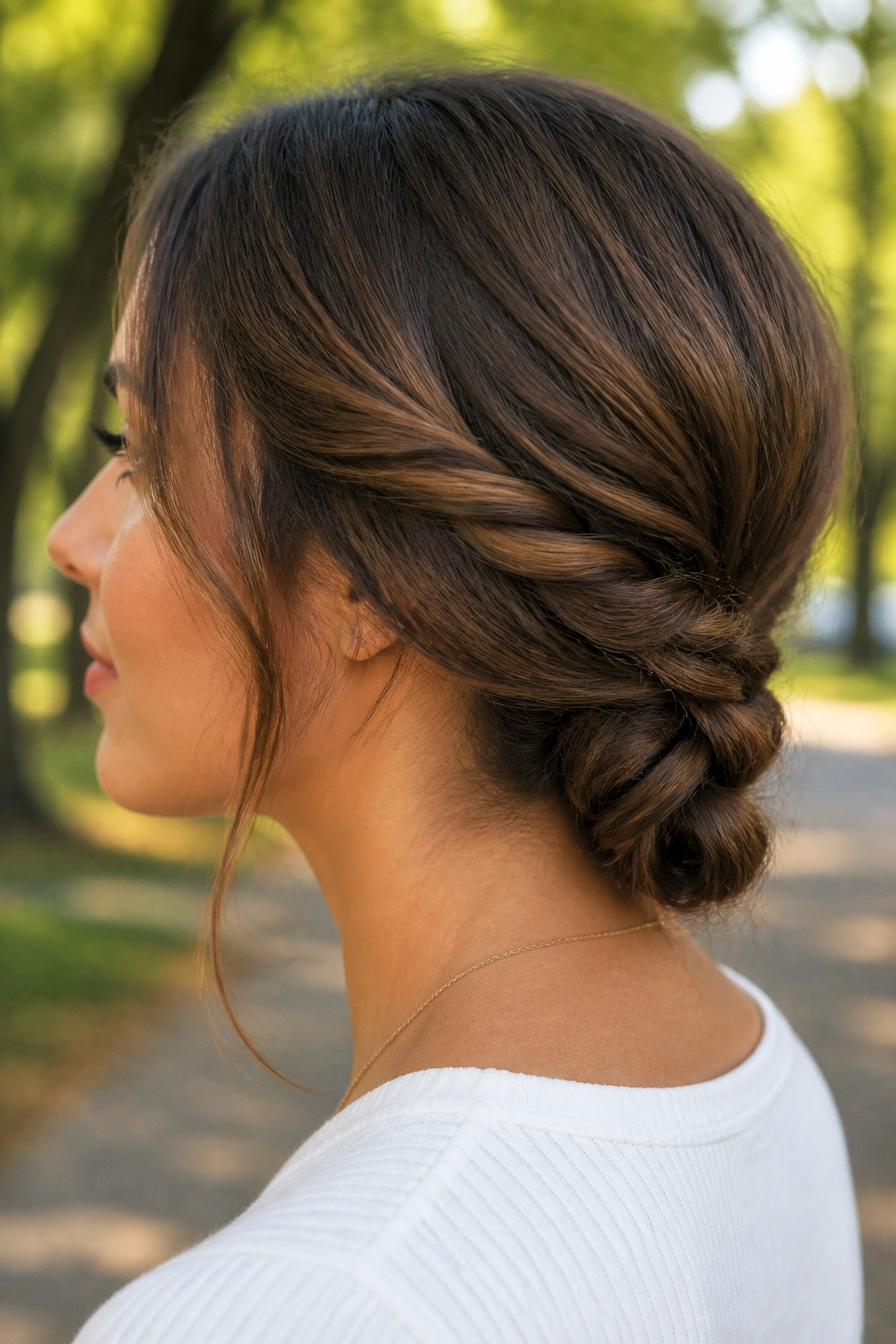
A twisted low knot is one of those styles that looks more complicated than it is. Two side sections twist back toward the nape, then meet in a knot that stays close to the neck. On a round face, that diagonal movement helps a lot.
The Shape Detail
The trick is to twist from the temples back, not from the middle of the sides out. That keeps the widest point of the style from sitting right over the cheeks. If your hair is slippery, rough it up with a bit of mousse before you start. Smooth hair looks sleek; slippery hair just slides apart.
The knot can be tight and neat or slightly soft. I prefer the second version because a little softness near the jaw keeps the look from feeling severe.
Tip: pin the knot slightly below the center point of the back of your head. That tiny drop makes the neck look longer.
6. Bubble Low Ponytail
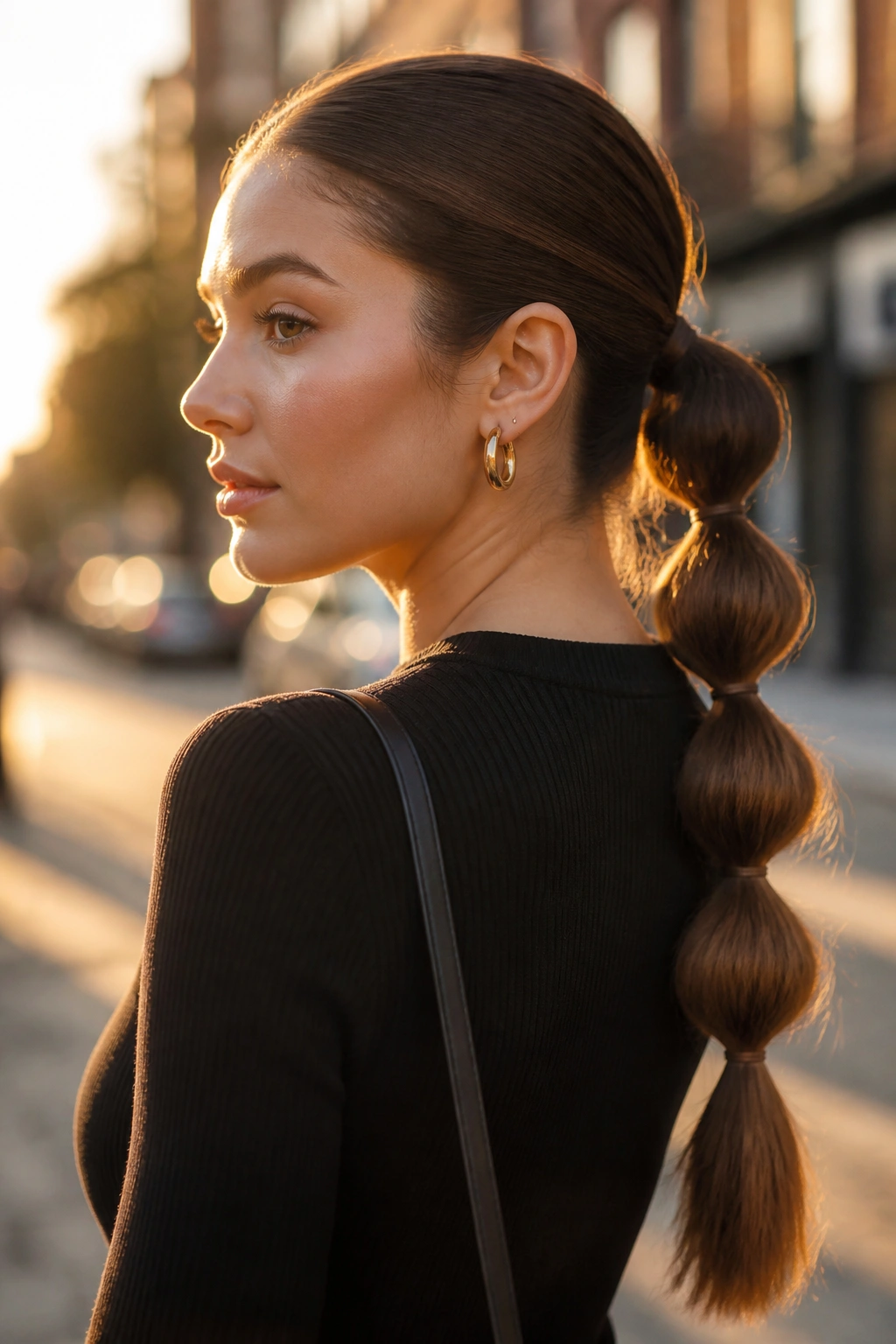
A bubble low ponytail can work on a round face when the bubbles are spaced down the length instead of puffed out at the top. The shape creates a vertical line, and that line does the flattering work.
If you’re worried about width, keep the first bubble close to the base and make the later sections smaller. That way the style reads as long and narrow, not round and playful in a way that fights the face shape. This is one of those styles where the elastic placement matters more than people think. Space them evenly, then gently tug each section until it rounds out.
It looks best on medium to long hair. Fine hair can still do it, but the bubbles need a little texture spray for grip. Thick hair gives you more body, but it also needs stronger elastics.
7. Braided Low Bun
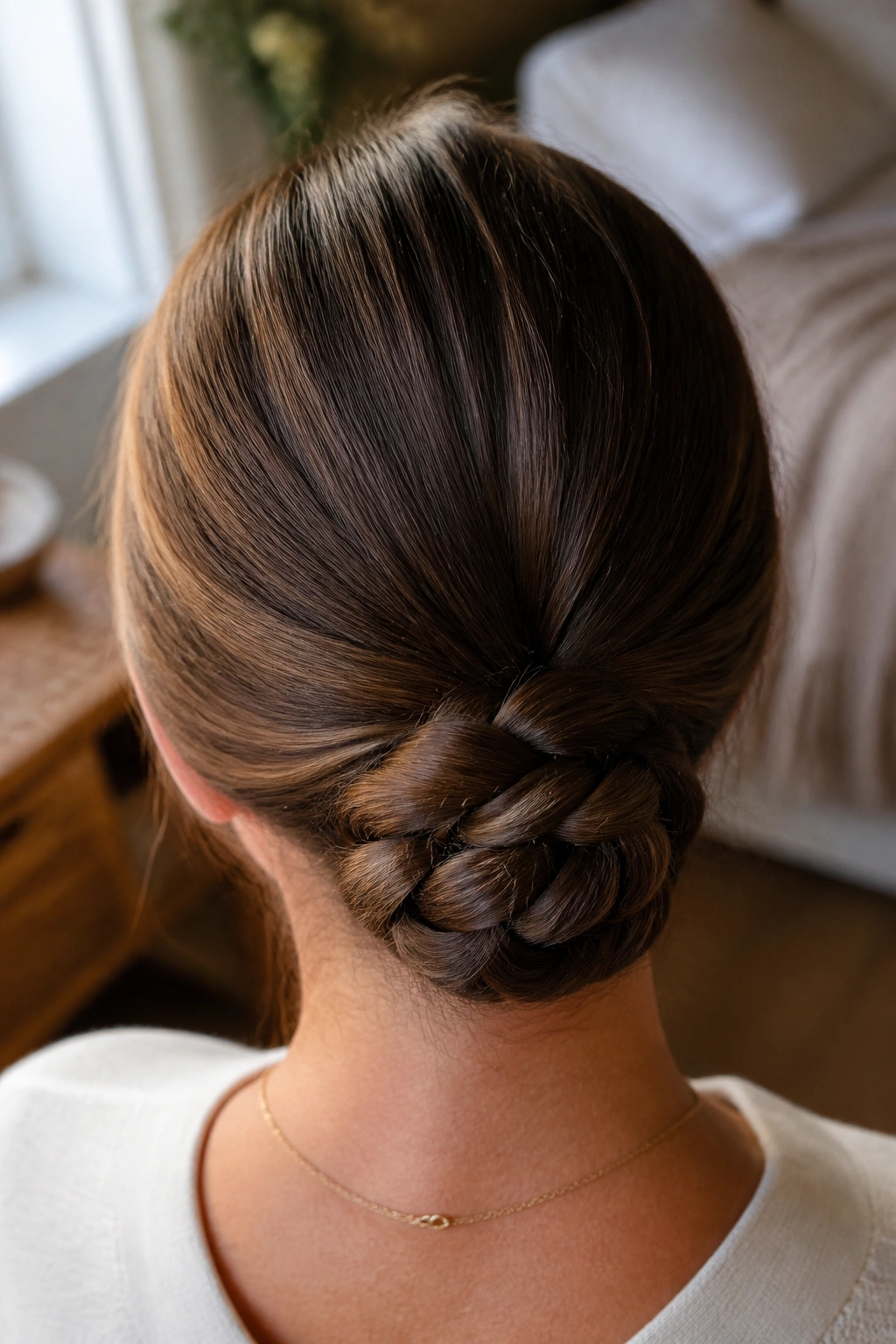
A braided low bun brings texture to the nape without adding width to the face. That’s the real reason it works. The braid gives visual detail, and the bun keeps that detail low and contained.
Start with a single braid or a loose three-strand plait, then coil it into a bun at the base of the neck. If your hair is layered, braid a little tighter than you think you need to. Layers love to escape. They always do.
Best for thicker hair
This style is especially good if your hair has some weight to it, because the braid helps anchor everything. A little shine serum on the ends keeps the bun looking neat. Too much, though, and the braid gets slick and hard to hold. That balance matters more than people admit.
8. Low Braided Ponytail
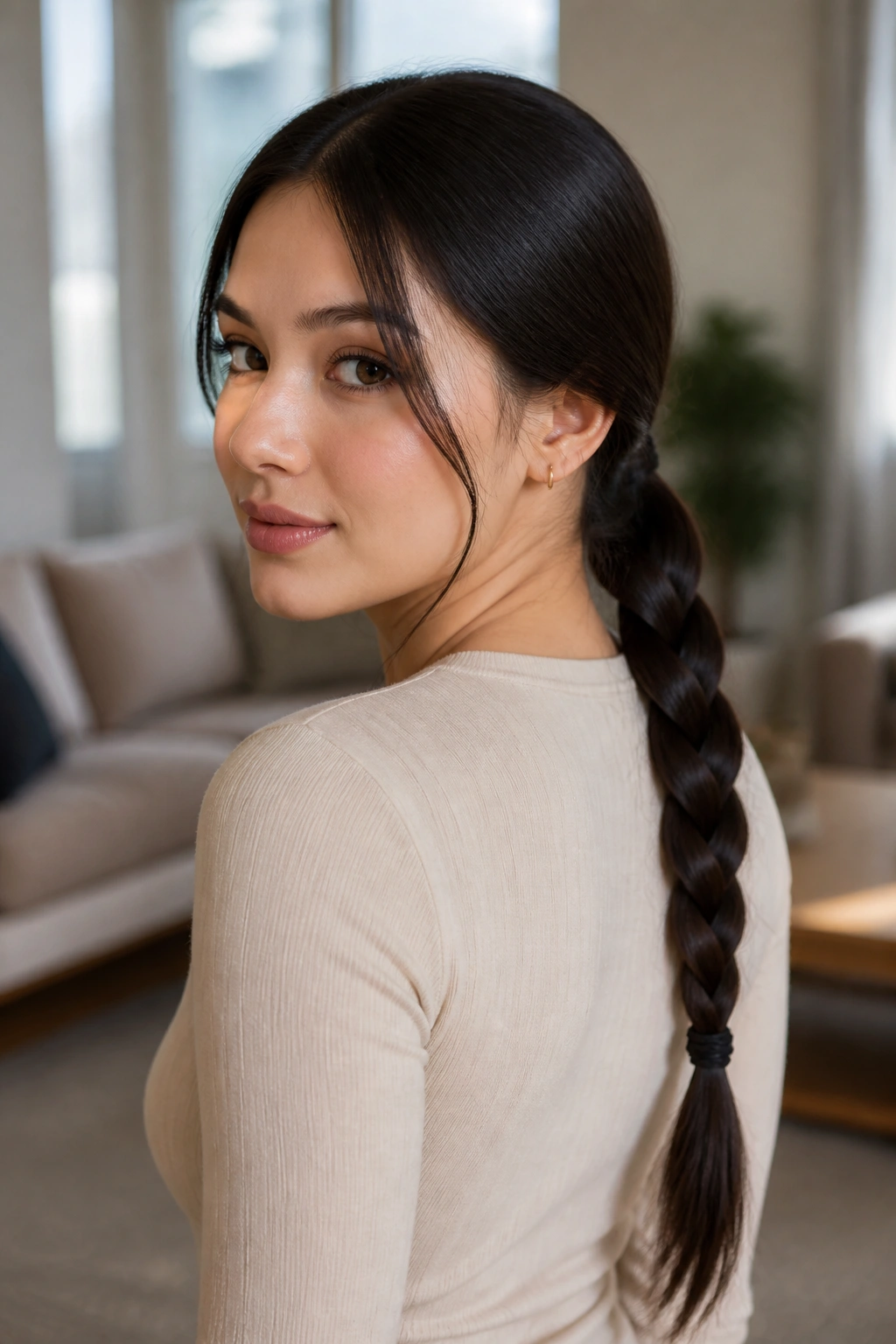
A low braided ponytail gives a round face a long line right down the middle of the body, which is a nice trick. The braid also narrows the tail itself, so the whole style feels slimmer.
The best version starts with smooth roots and a ponytail secured low at the nape. From there, braid the length all the way down. You can go classic three-strand, fishtail, or rope braid. I’d choose classic if you want softness and fishtail if you want more detail.
A round face usually does better when the top is controlled and the braid hangs straight. If you add too much puff around the crown, the style can start to feel wider than it needs to be.
9. Low French Twist
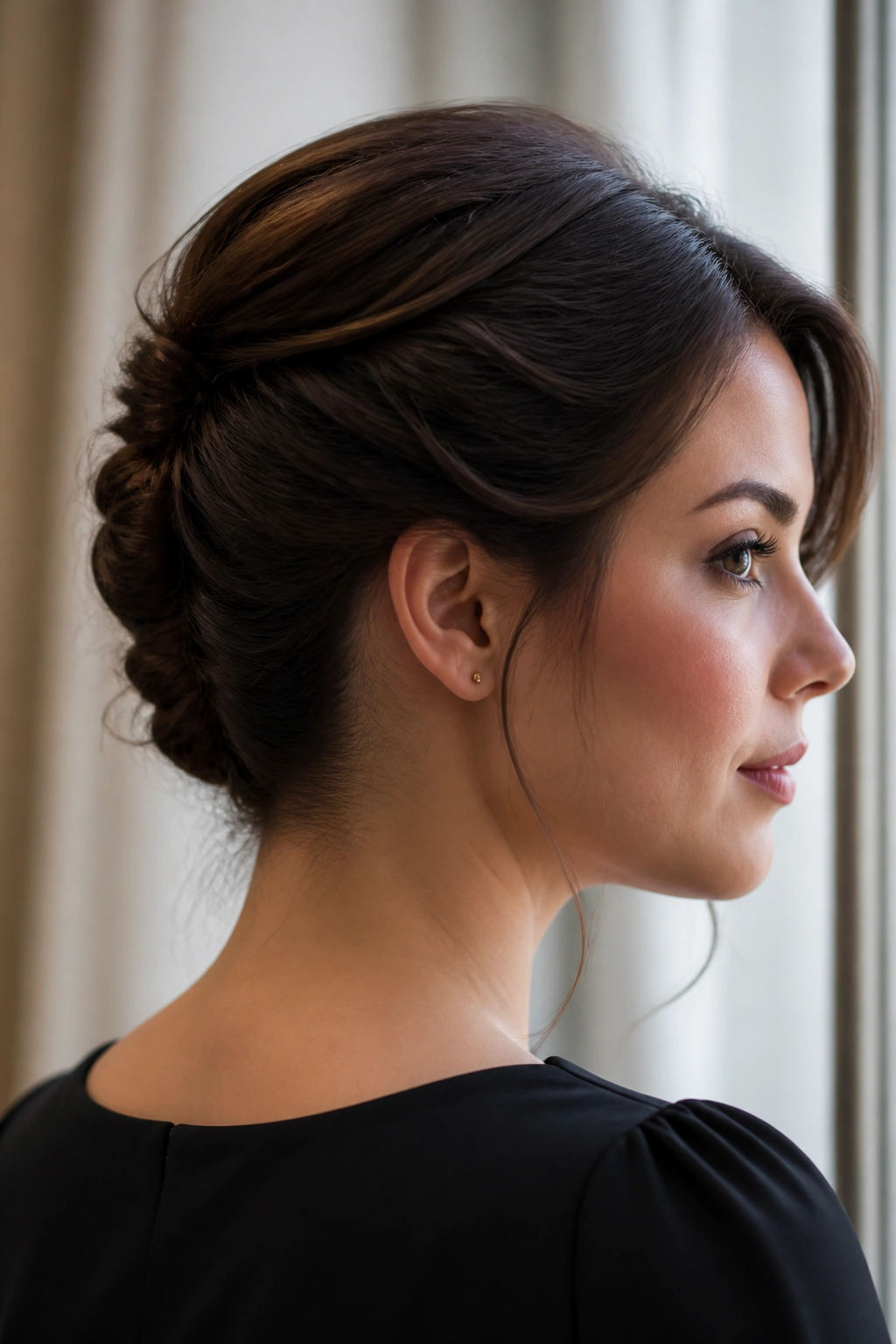
The low French twist is crisp, elegant, and surprisingly kind to round faces when it stays close to the head. A high twist can pull the eye upward and add bulk. A low one keeps the shape long and neat.
The best version begins at the nape and folds upward in a narrow column. That vertical line is the reason it works. Use a few strong pins and anchor them into the twist from the side, not just from the back. It holds better that way.
What to watch for
- Do not fan the twist too wide.
- Keep the top smooth, not puffy.
- Leave the finish slim rather than rounded.
- Add a side part if the center line feels too severe.
This style looks best on medium to long hair with a little grit in it. Freshly washed hair can be too slippery.
10. Side Low Bun for Round Faces
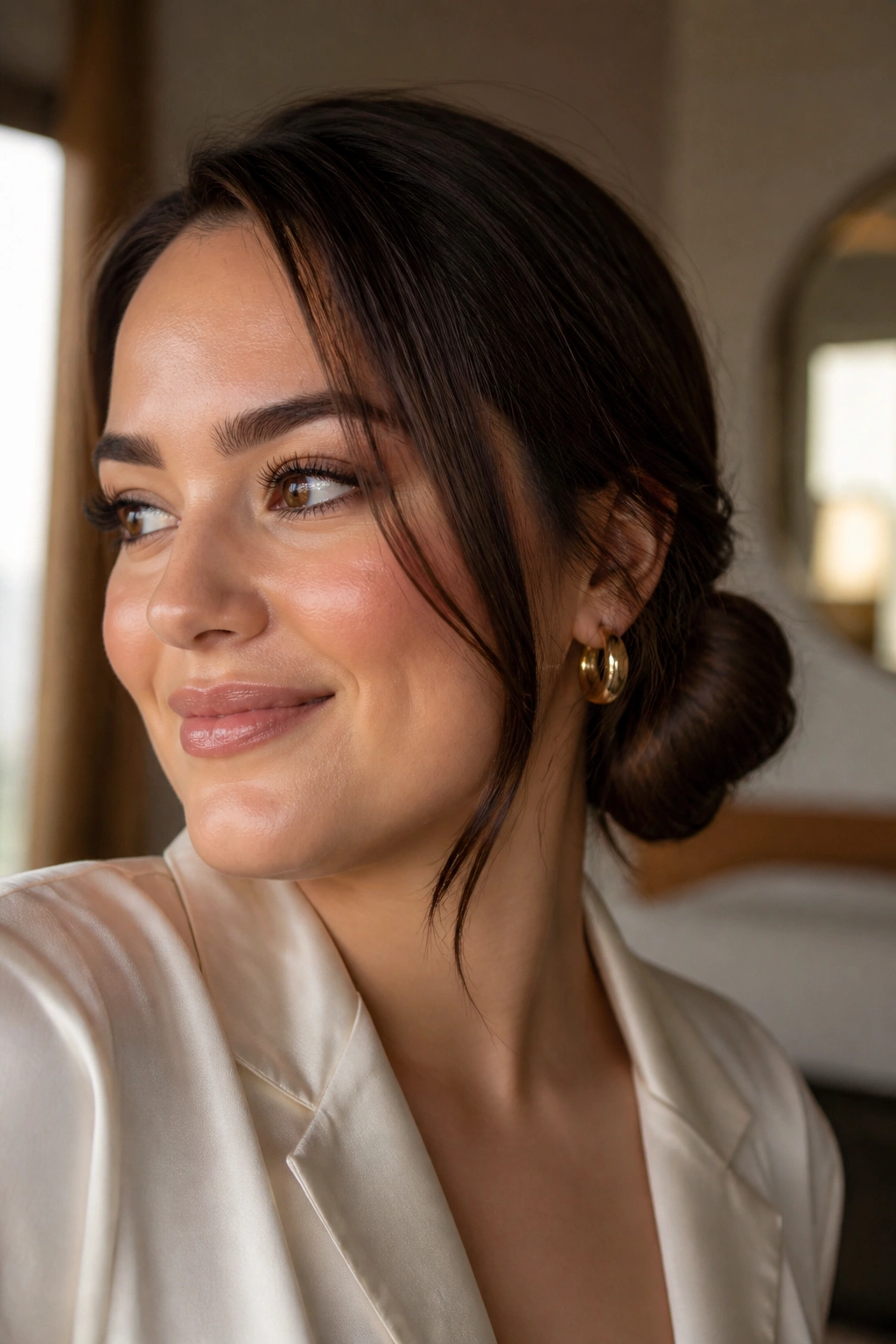
A side low bun is a smart choice when you want asymmetry to do some quiet face-shaping work. The bun sits off to one side, usually just below the ear, which breaks the face shape in a way that feels soft instead of harsh.
The angle matters. Put the bun too far forward and it can crowd the jaw. Too far back and you lose the effect. Somewhere between the ear and the nape is usually right. I like this style on days when a center part feels too neat, because the side placement brings a little movement without making the look messy.
Let the front section sweep across the forehead or temple. That line helps elongate the face. A single tucked wave near the cheek can be enough.
11. Gibson Tuck
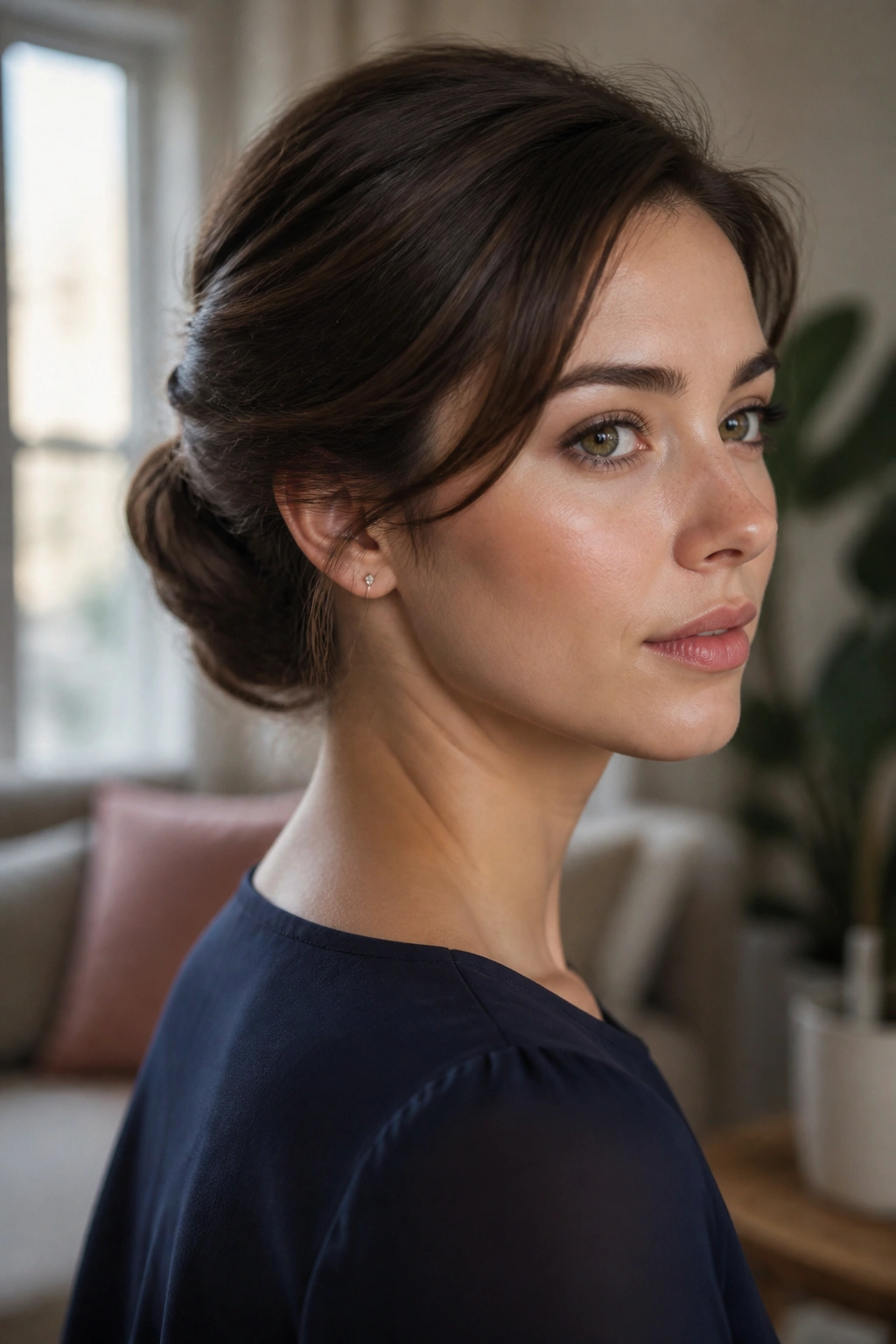
The Gibson tuck is one of those old-school styles that still makes sense for round faces. It folds the hair inward at the nape, which keeps the silhouette narrow and soft.
The tucked shape sits low and close to the neck, so it doesn’t add bulk to the sides. That’s the win. If your hair is shoulder length or longer, it works especially well because you have enough length to create a smooth roll. Shorter layers can still do it, but they need more pins and a little patience.
I’d keep the top lightly lifted rather than flat. Not teased, not poofy. Just a small rise at the crown so the face gets a bit of length.
12. Rope-Braid Bun
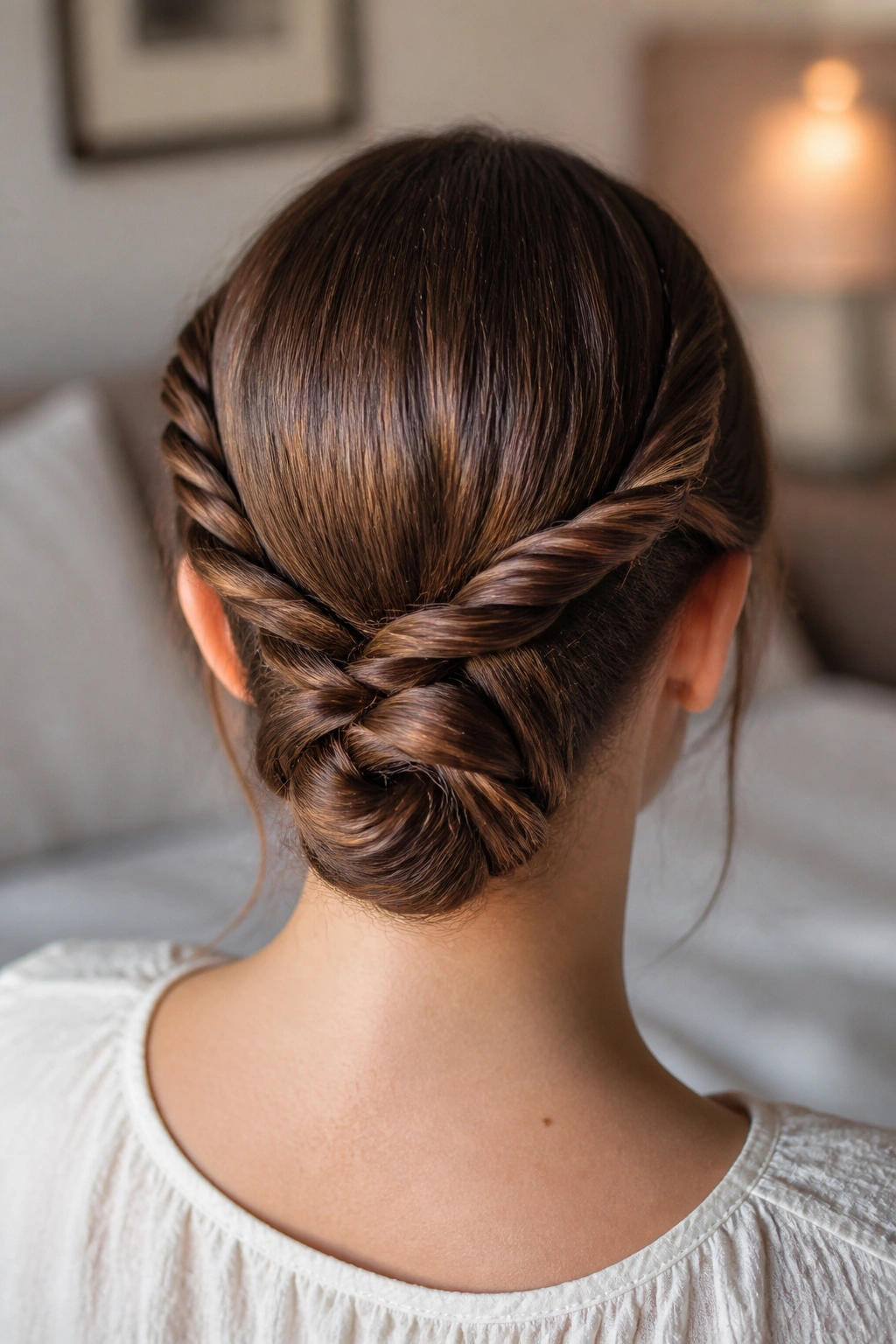
A rope-braid bun is sleek, secure, and a little more interesting than a plain bun. Two twisted sections spiral into one another, and that tight texture draws the eye downward.
How to make it feel face-friendly
Start with a low ponytail. Split it into two sections, twist each one in the same direction, then twist them together in the opposite direction. That sounds fussy, but it takes less time than a braid once you’ve done it once or twice. Wrap the rope around the base and pin it into a bun.
For round faces, keep the bun compact and low. A wider rope-braid bun can spread sideways and work against the shape you’re trying to create. If you want a little softness, pull out one slim piece near the temple after the bun is pinned.
13. Face-Framing Low Knot
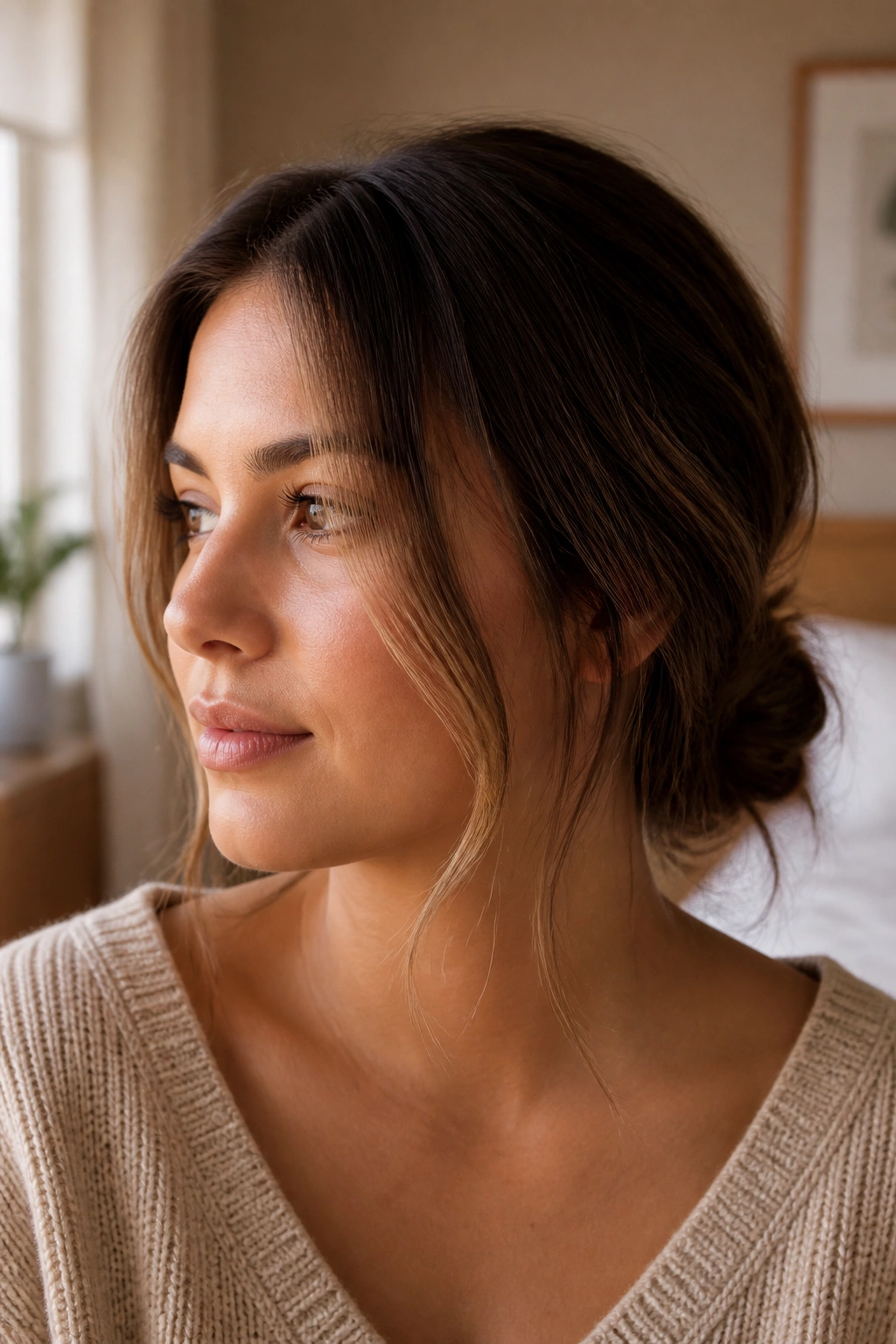
A face-framing low knot is one of the easiest ways to soften a round face without losing structure. The knot stays low, but the front pieces stay loose enough to break up the outline around the cheeks.
That balance matters. You want the front strands to skim the face, not cling to it. Pieces that end around the cheekbone or just below it tend to work well. Anything much shorter can widen the upper face again, which defeats the whole point.
This style looks especially good with a little texture through the ends. Straight pieces can work, but a soft bend keeps them from looking sharp against the jaw. Use a small curling iron or flat iron bend if the hair is naturally pin-straight.
14. Wet-Look Low Bun
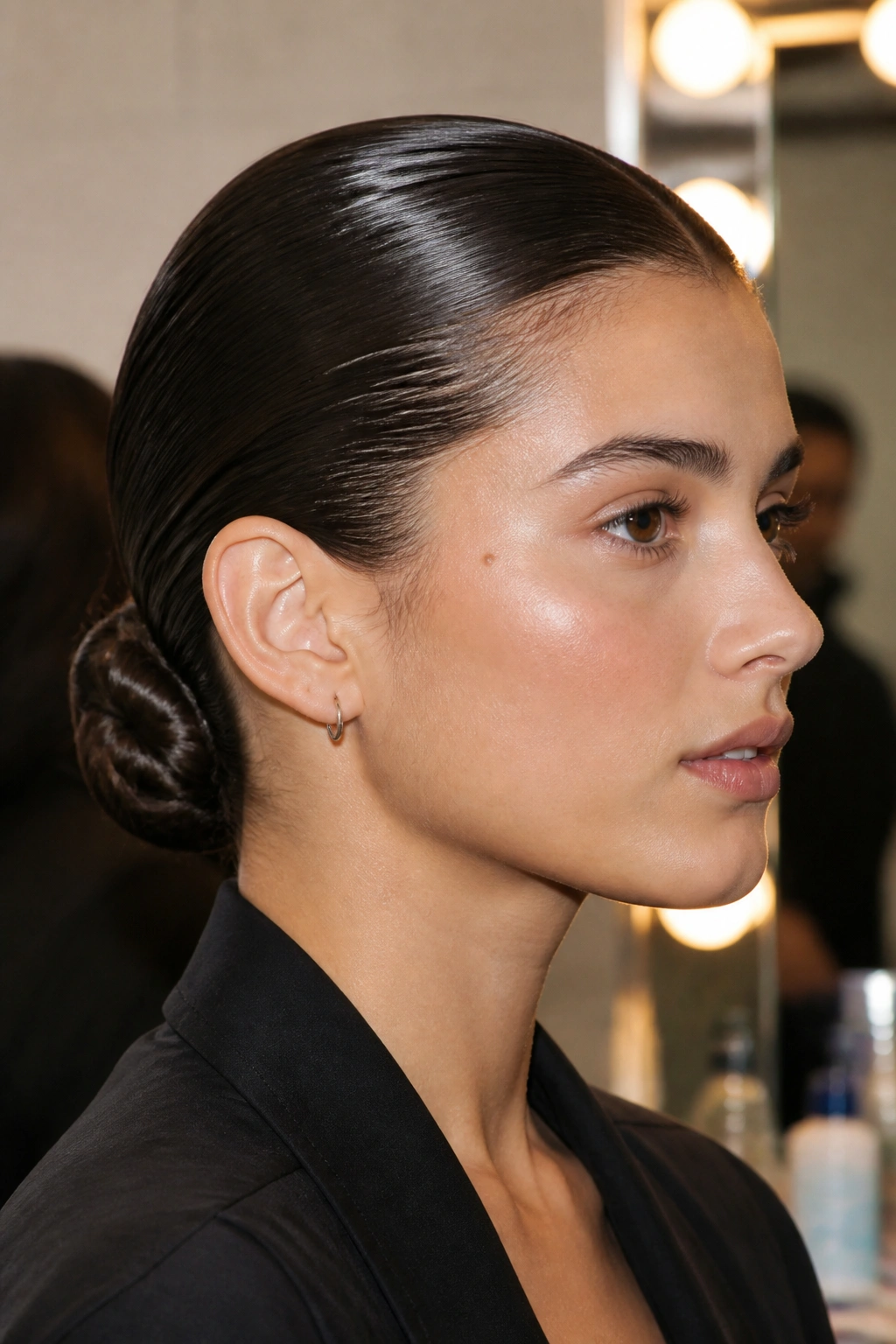
A wet-look low bun is bold, neat, and mercifully good for round faces because it keeps every line controlled. There’s no side bulk, no puff at the crown, and no stray volume sitting where you do not want it.
The key is to keep the gel close to the scalp and brush everything back with purpose. A boar-bristle brush helps smooth the roots, and a light mist of shine spray on the bun itself gives the style that glassy finish. Don’t drown the hair. Too much product turns sleek into greasy fast.
This one works best when you want a strong shape. Evening events, formal photos, humid days — that sort of thing. It does not need fluff. It needs precision.
15. Silk-Scarf Low Ponytail
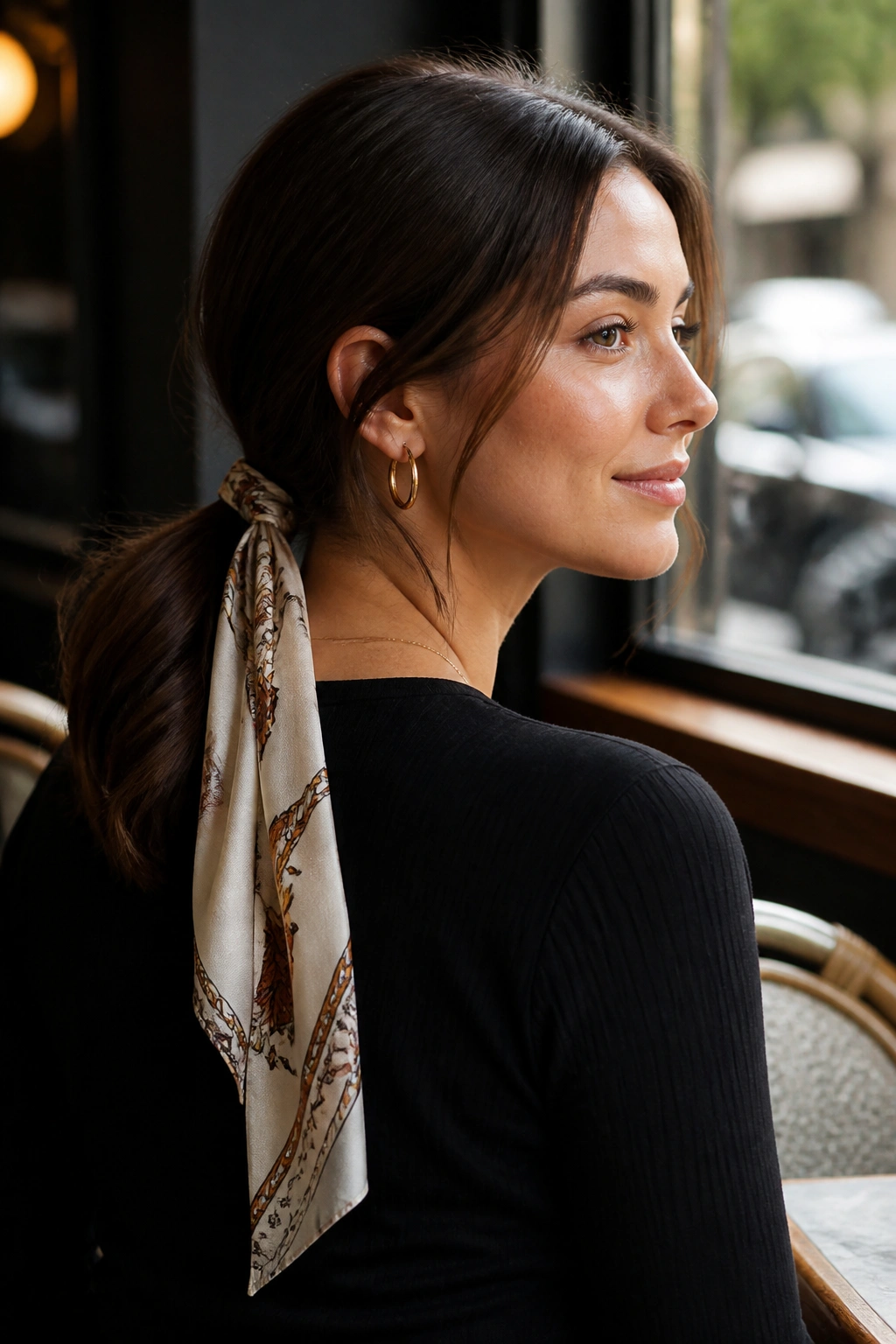
A silk-scarf low ponytail adds length and color without making the face look wider. The scarf hangs down in a vertical line, and that’s exactly why it flatters a round face.
The ponytail should stay low and controlled. Tie the scarf around the elastic, then let the ends fall along the neck or over one shoulder. A narrow scarf gives a cleaner line, while a wider one reads more dramatic. I’d keep the scarf thin if your face is very full through the cheeks, because bulky fabric near the jaw can fight the shape.
Quick style note
If your hair is short to medium length, the scarf can make the ponytail look longer than it is. That little illusion matters. It’s one of the easiest ways to get visual length without changing the cut.
16. Curled Low Ponytail
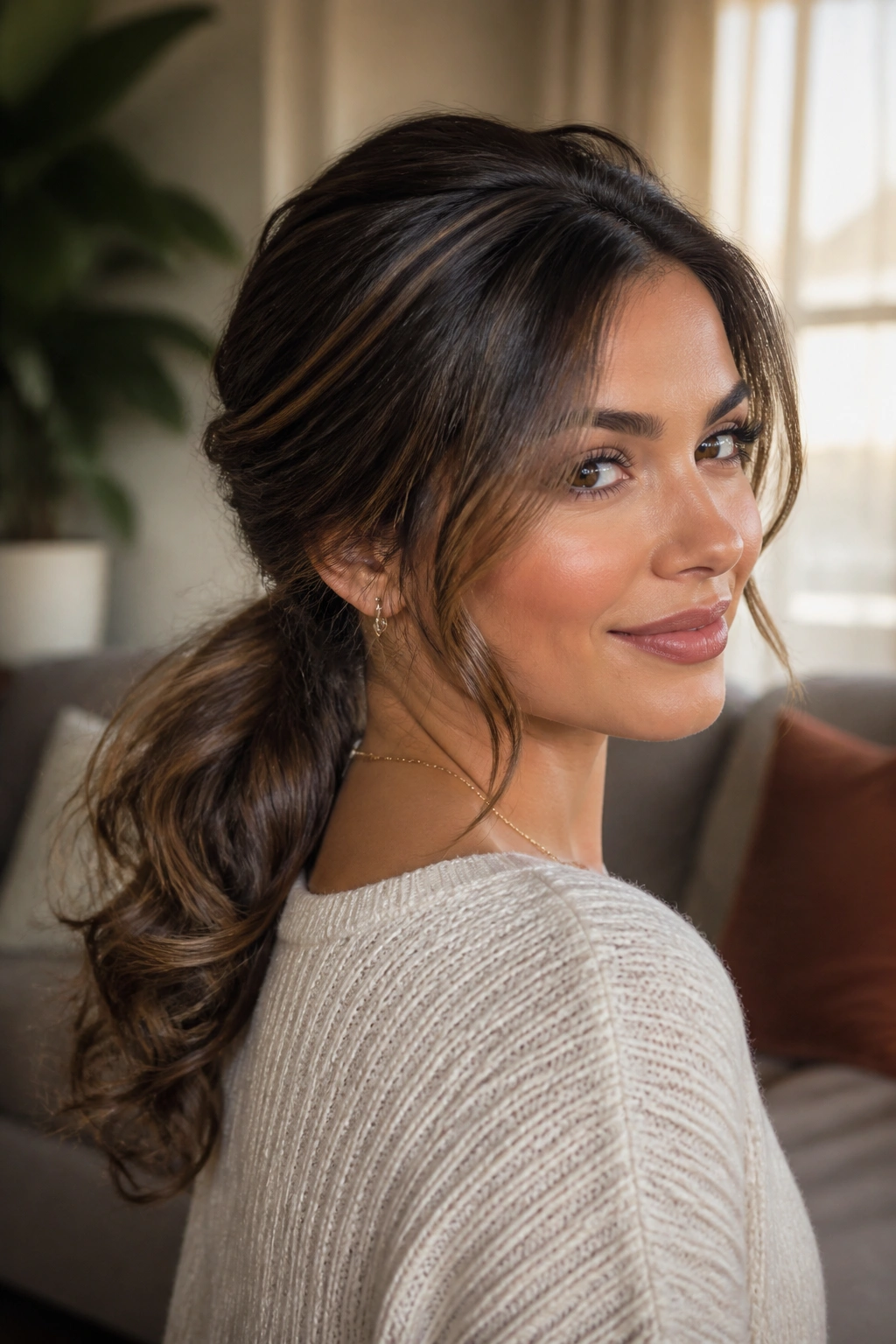
A curled low ponytail keeps the crown smooth while the length has soft movement. That combination is flattering on round faces because it avoids width near the cheeks and puts the texture lower down, where it helps lengthen the outline.
Loose curls in the tail are better than tight ringlets here. Tight curls can add volume right where you do not need it. A 1-inch or 1.25-inch iron usually gives a better result, especially if you brush the curls out once they cool. That softens the shape and keeps the ponytail from feeling too formal.
A little lift at the crown is fine. Just keep it subtle. You want a line, not a bump.
17. Fishtail Low Ponytail
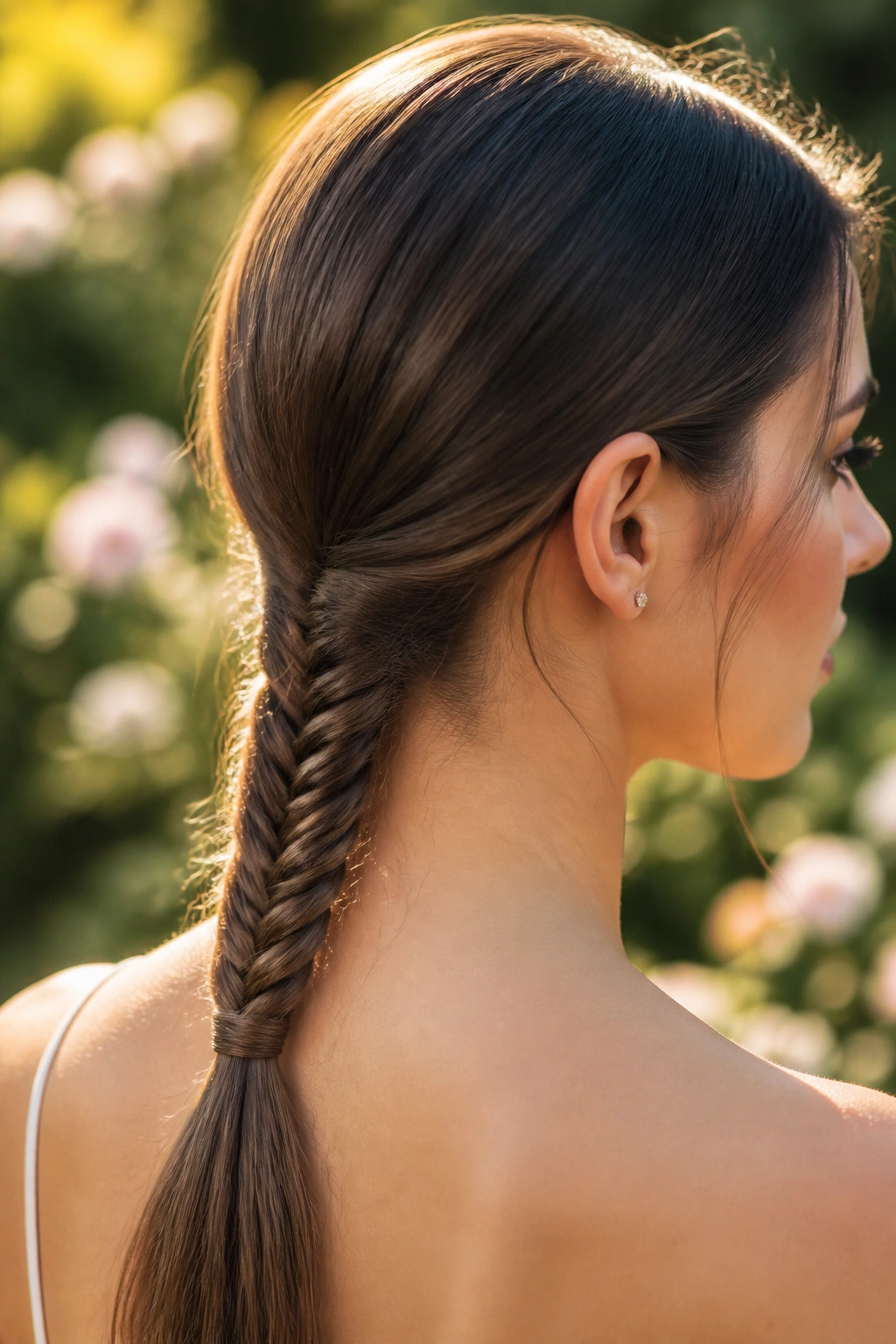
A fishtail low ponytail gives the hair a fine, woven look that works well on round faces because it stays narrow. It’s detailed without being bulky.
The braid starts at the nape and runs straight down, which helps the eye travel vertically. If the braid starts to puff out at the top, smooth it down first with a light styling cream. That small step matters more than the braid pattern itself.
This style is especially nice on longer hair because the fishtail texture gets more visible as it goes down. On shorter lengths, it can look a little stubby unless the ends are long enough to hang past the shoulder. That’s the one catch.
18. Halo Braid into Low Tuck
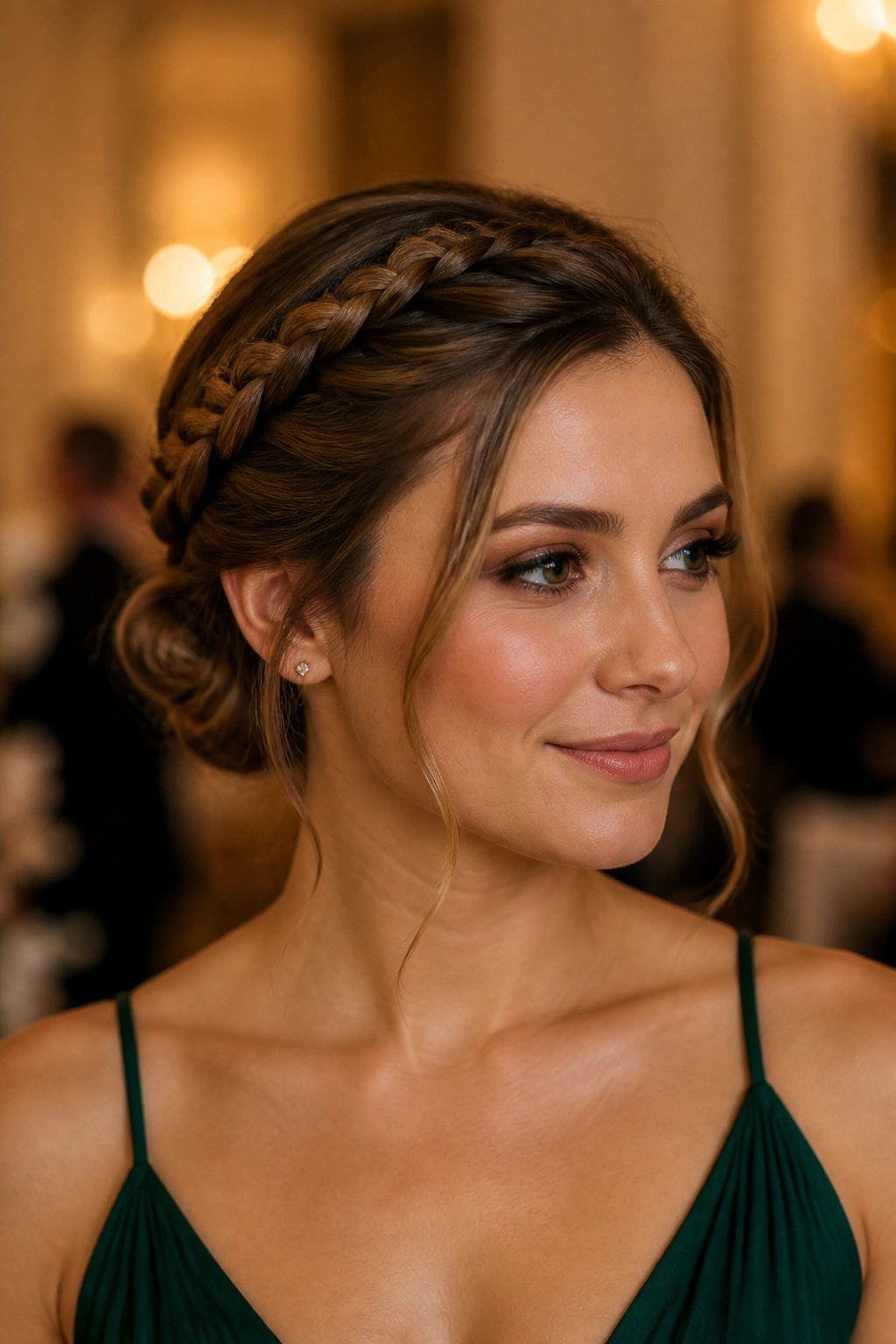
A halo braid that ends in a low tuck is a neat way to use braid detail without letting the style sit wide at the sides. The braid wraps around the head, but the finish stays close to the nape.
Why It Flatters
The braid should be soft, not tight and thick all the way around. A heavy halo can widen the face, while a lighter braid acts more like a frame. Once the braid reaches the back, tuck the ends into a low roll or small bun.
This works well for events because it looks polished from every angle. It also keeps the front hair away from the cheeks, which many round faces benefit from. If you want a softer result, pull a few tiny loops from the braid after pinning it.
19. Stacked Low Bun
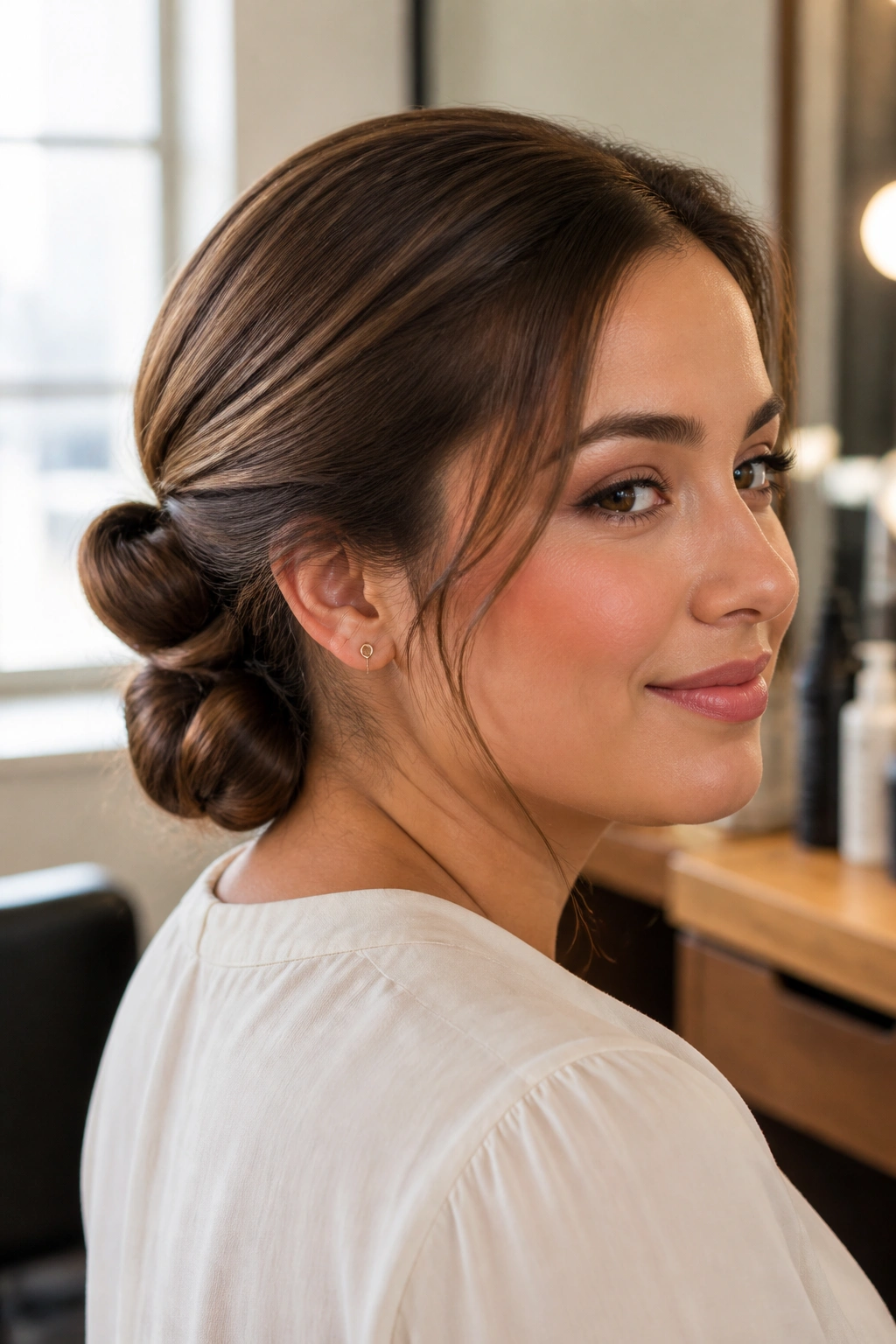
A stacked low bun sounds fussy, but it’s really just two smaller buns or rolls arranged vertically at the nape. That vertical stacking is what makes it interesting for round faces.
The shape creates height without pushing volume out to the sides. That’s the difference between flattering and flat-out bulky. I’d keep each section slim and secure, then pin the second roll just above the first so the style reads as one long column rather than a wide knot.
This is a strong choice for thicker hair because the extra density helps the stacked shape hold. Fine hair can do it too, but you may need a texture spray and a few hidden pins.
20. Asymmetrical Low Bun for Round Faces
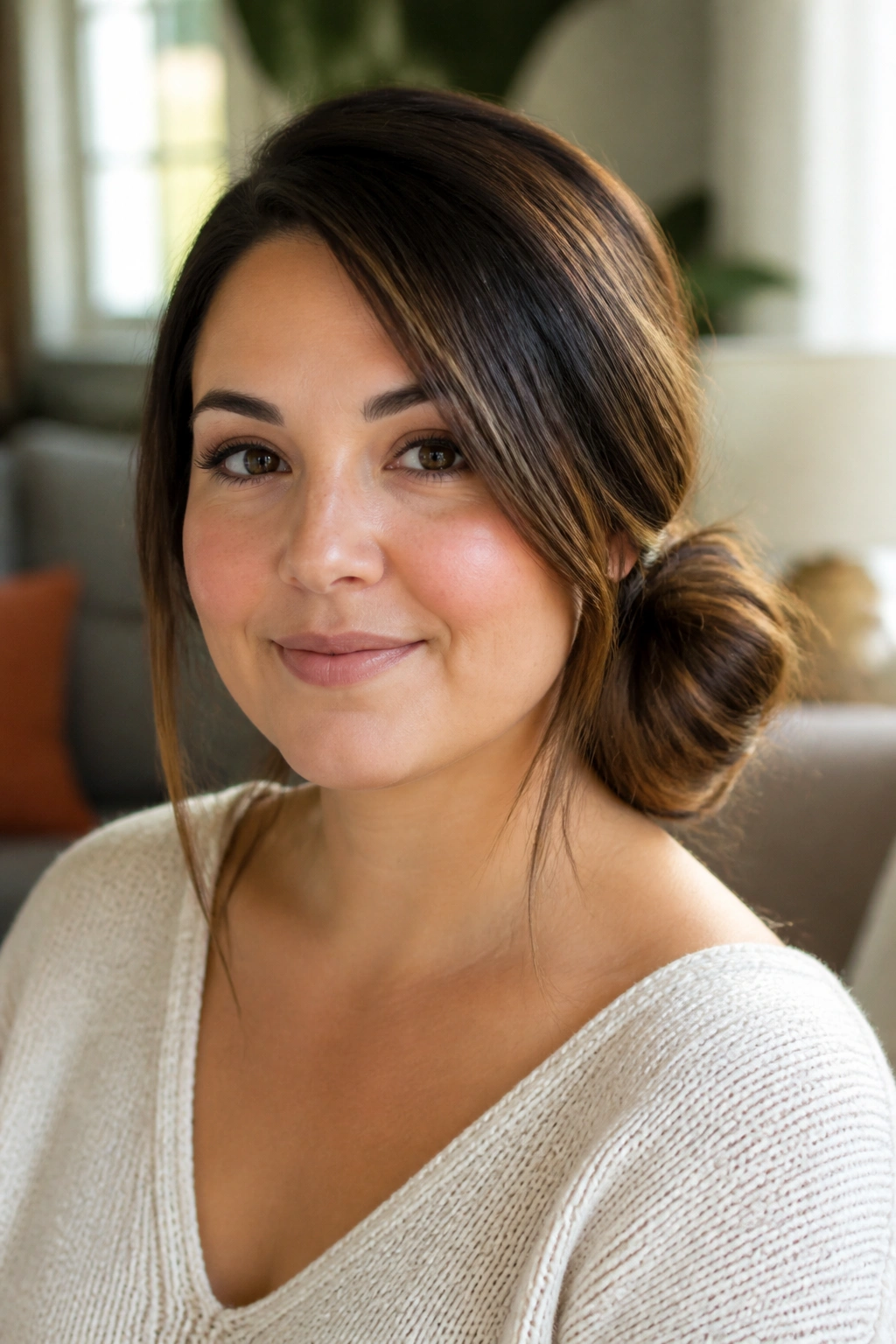
An asymmetrical low bun is one of my favorite options for round faces because it quietly breaks the circle. Nothing about it has to be dramatic. The shape simply leans a little to one side, and that lean changes everything.
The bun can sit low near one side of the nape, with the parting pulled off-center and the front swept across the forehead. That diagonal line trims visual width. If the bun is too round and centered, the effect disappears. So keep the shape slightly oblong, not perfectly circular.
What to ask for if you’re styling it
- A deep or medium side part.
- A bun placed below one ear.
- Smooth roots with a soft side sweep.
- One narrow face-framing piece if you want softness.
This style is elegant without being stiff. That’s rare.
21. Double-Twist Low Bun
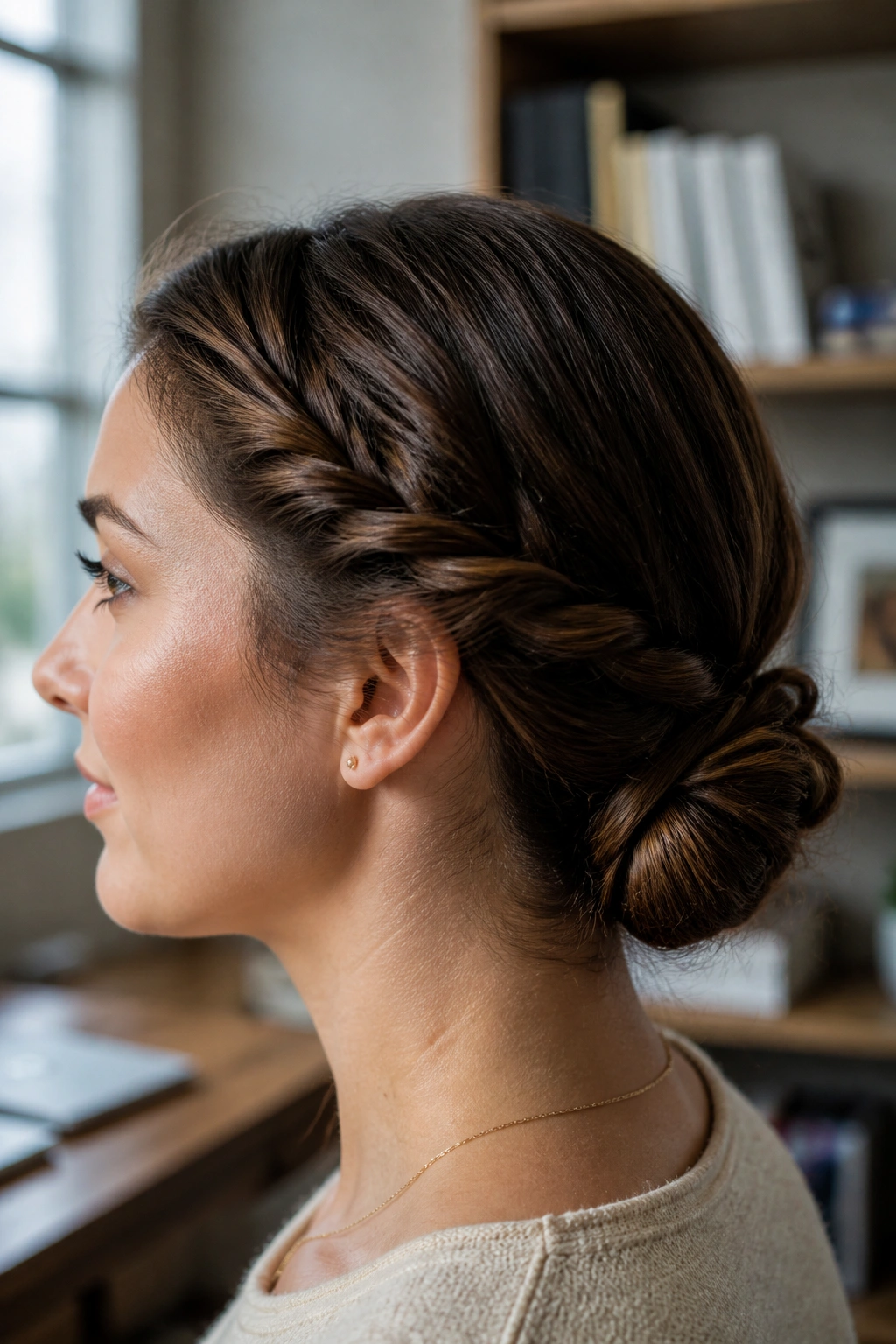
A double-twist low bun uses two twisted sections instead of one braid or one plain roll. It gives the style more texture, but still keeps everything anchored low.
The two twists usually start from each side of the head and meet at the nape, where they wrap into a bun. That meeting point helps pull the eye inward and downward. Round faces often look better when the hair does not fan outward at the sides, and this style keeps the shape tight.
It’s a good middle ground if you want something more interesting than a basic bun but less formal than a full braid. I’d use pins rather than a large clip, because clips can add unwanted width.
22. Claw-Clip Low Twist
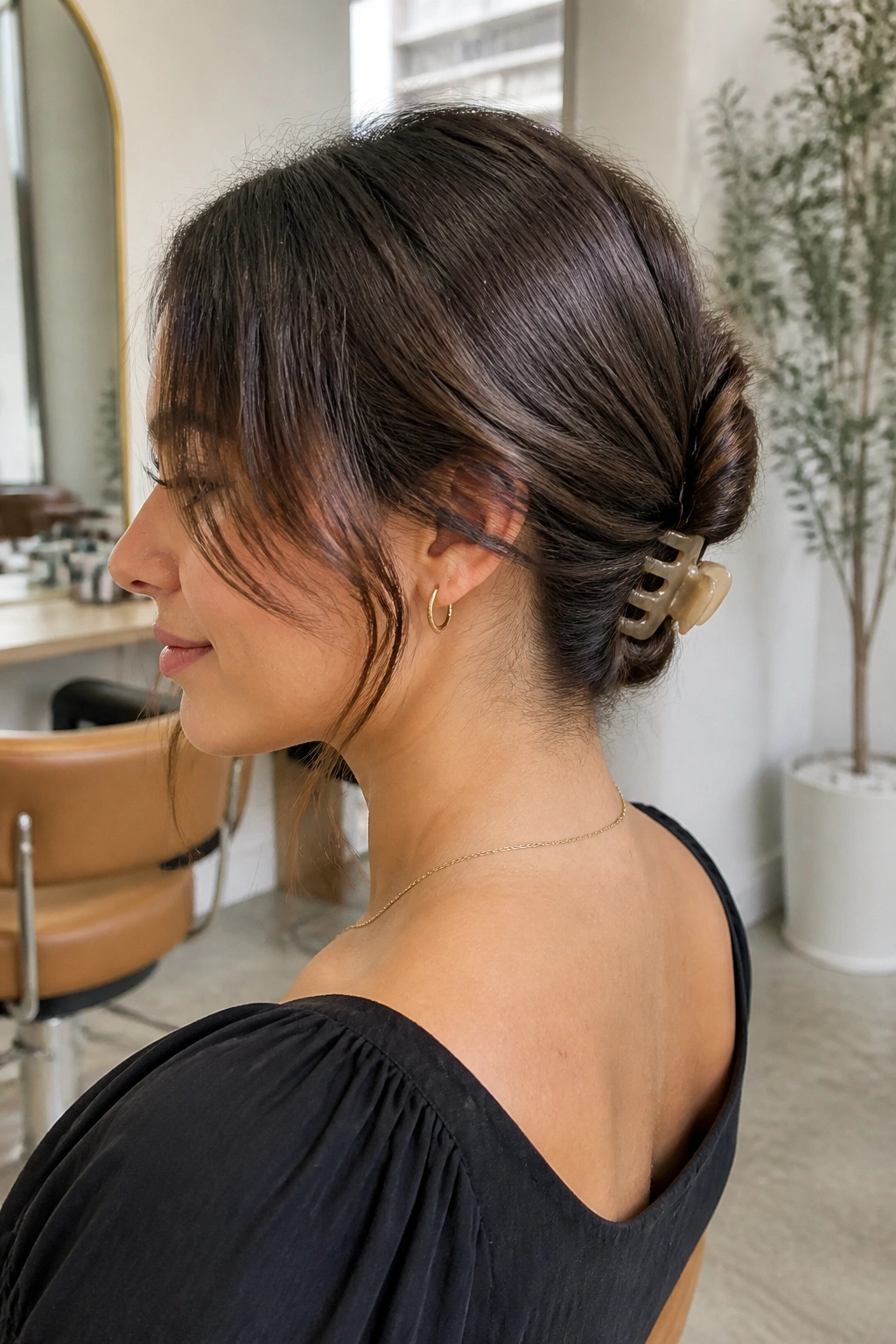
A claw-clip low twist is practical, fast, and more flattering than people give it credit for. The whole point is to keep the twist low and narrow so the face shape stays open.
The twist should fold under itself at the nape, then get clipped close to the head with a medium clip. Oversized claw clips often stick out too much on the sides. That extra width can be a problem on round faces, so size matters here. A smaller or medium clip usually looks neater.
This style is best when you want something low-effort that still looks planned. A few loose face pieces can soften it, but don’t let the style sprawl across the sides. The neatness is what makes it work.
23. Crown-Lift Bubble Braid
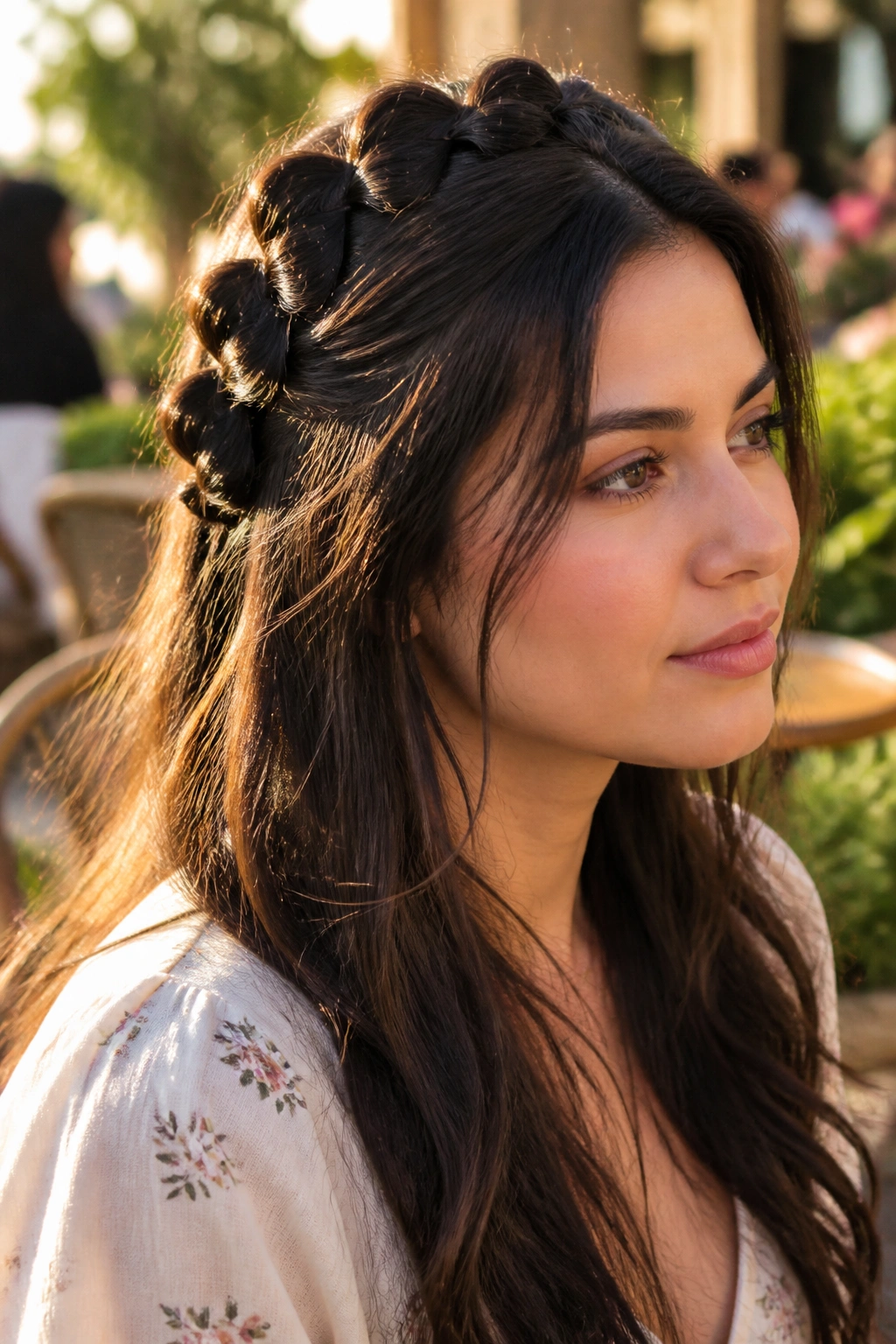
A crown-lift bubble braid is a clever way to keep the hair low without making the face look flat. The lift at the crown gives you the vertical line, and the bubbles carry that line downward.
The trick is to smooth the sides first, then add just enough lift at the top to avoid a helmet shape. If the lift is too tall, the braid can look stiff. If it’s too low, the face loses length. Somewhere in the middle works best.
Best for long hair
This style does especially well with longer lengths because each bubble has room to show. Use clear elastics if you want the shape to stay the focus. Or wrap each elastic with a small strand of hair if you prefer a cleaner finish.
24. Braided Crown into Low Bun
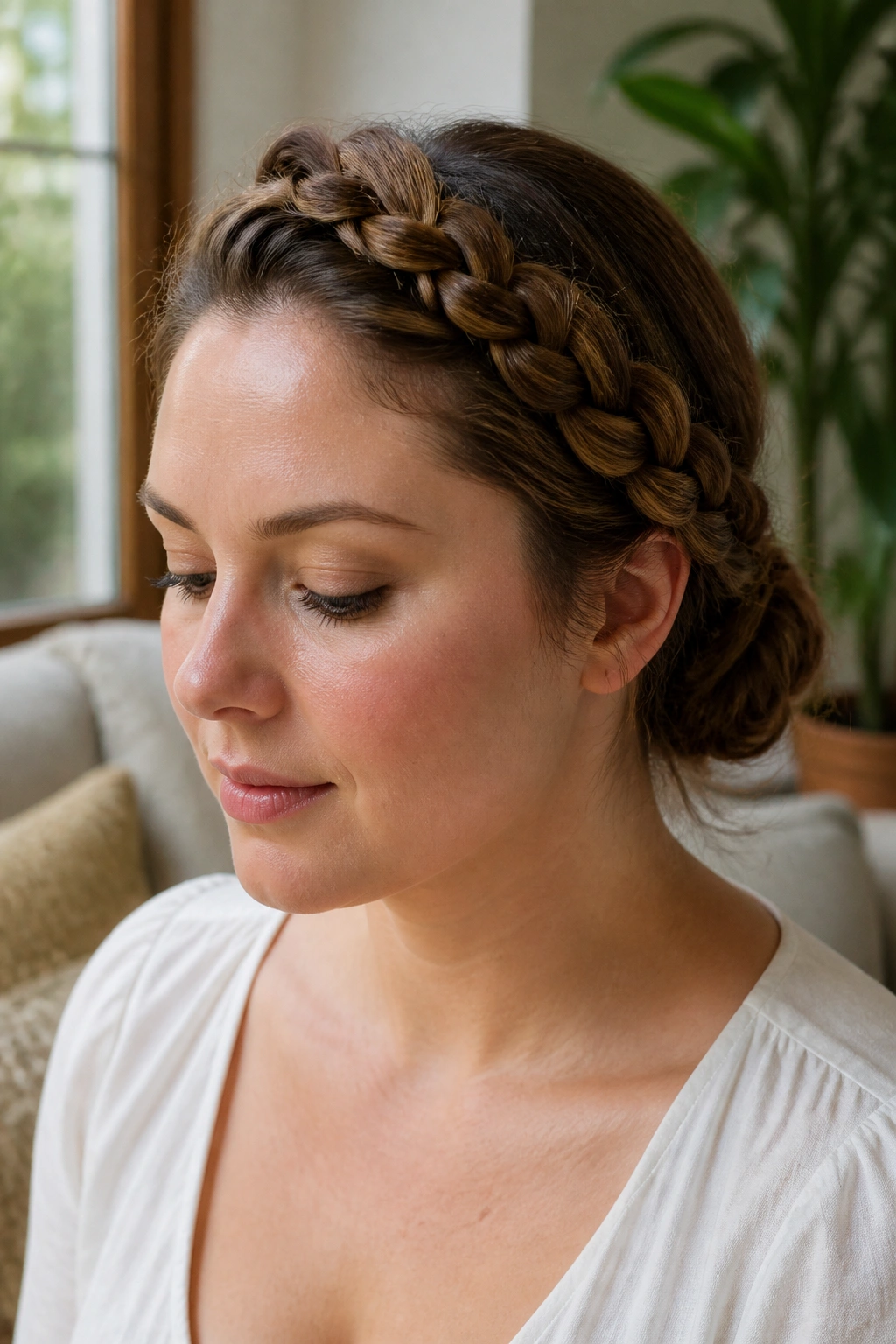
A braided crown that ends in a low bun gives the face a nice frame without turning the sides wide. The braid does the decorative work, then the bun keeps the finish contained at the nape.
The braid should follow the hairline lightly rather than sit thick and heavy across the top of the head. That lighter approach is better for round faces because it doesn’t add extra bulk near the temples. When the braid reaches the back, tuck the remaining hair into a small bun and pin it close.
This style is one of the few that can feel romantic and controlled at the same time. The crown detail gives interest, but the low bun keeps the silhouette clean. A good combo.
25. Rolled Chignon
A rolled chignon is a neat, tucked shape that looks polished and helps keep the face line long. It rolls the ends under instead of letting them fan out, which keeps the back narrow.
I like this style for medium-length hair because the roll tends to sit snugly and hold well. If your hair is very layered, pin the shorter bits under the roll before you hide the last section. Otherwise, the ends poke out and the shape loses its smooth line.
The style reads softer than a tight bun. That matters on a round face. A hard, tight shape can feel severe; a rolled chignon stays gentle while still giving enough structure.
26. Curtain-Bang Low Ponytail
A low ponytail paired with curtain bangs is one of the easiest face-shaping combinations on this whole list. The bangs split the forehead softly, and the low ponytail keeps the rest of the style long and tidy.
The bangs should hit around the cheekbone or jaw, depending on the cut. That length helps break up the width of the face without closing it in. If the bangs are too short, they can widen the middle of the face instead. That’s a real problem with round faces, so length matters here.
Keep the ponytail smooth and low. If the bangs already carry the softness, the tail does not need extra volume. A slight bend at the ends is enough.
27. Side-Swept Low Braid
A side-swept low braid is a strong choice when you want the hair to fall across one shoulder and create a longer diagonal line. That diagonal is flattering because it keeps the eye moving.
The braid can start low at the nape and travel over one shoulder, or it can begin behind the ear and hang forward. Either way, the face gets a slimmer outline than it would from a centered style. If your hair is thick, braid it loosely so it doesn’t turn into a hard rope. If it’s fine, braid it more tightly for grip.
This is one of those styles that looks casual in a good way. Not sloppy. Just easy.
28. Accessorized Low Knot
A low knot with the right accessory can look finished fast, and the accessory can also help direct the eye. A slim barrette, a pearl pin, or a small comb placed to one side keeps the focus off the widest part of the face.
What to choose
- Small pins if you want the knot to stay the star.
- A narrow barrette if you want a little shine.
- One accessory off to the side instead of two on both sides.
- Matte finishes if your hair is already very glossy.
That last part matters more than people think. Too much shine plus too much symmetry can make the face feel rounder. A single accent is enough. The knot stays low and neat, and the accessory gives it personality without widening the shape.
29. Tucked-Under Low Ponytail
A tucked-under low ponytail is sleek, simple, and oddly flattering because it keeps the tail from hanging straight out and adding width. The ends fold back under the elastic, which makes the whole shape more compact.
This style works especially well if you want something office-friendly or clean for a formal event. The ponytail still reads as low, but it has a controlled curve instead of a puff. That curve helps the style sit closer to the neck and away from the cheeks.
If your hair is very long, this can also keep the ends from looking heavy. A little smoothing cream at the back of the head helps the tuck stay neat. Nothing fancy. Just neat.
30. Polished Layered Low Ponytail
A polished layered low ponytail is the kind of style that looks plain at first and then quietly does the most work. The smooth crown gives the face length, the low placement keeps the outline narrow, and the layered tail adds movement without bulk.
The trick with layers is to let them fall softly rather than forcing them into one stiff shape. If the ends are curled under just a little, the ponytail looks fuller in a controlled way. If the layers are very short around the face, leave them out on purpose and smooth them back with a bit of cream. That keeps the style soft without making the front look heavy.
This is the style I’d reach for when I want low maintenance and a clean face line. It does not try too hard. It just works.
A well-placed low style can change the whole balance of a round face, and the best part is that none of these needs to feel severe. The sweet spot is usually somewhere between smooth and soft, with enough shape to lengthen the face and enough ease to keep it from looking overdone.
