



Short hairstyles for thick hair can look sharp, airy, and expensive-looking—if the cut respects the hair’s density instead of fighting it. Thick hair does not need to be “managed” into submission. It needs shape, weight control, and a little honesty about how much volume it naturally carries.
Chop thick hair badly and you get the mushroom effect: wide at the sides, heavy at the bottom, and somehow bigger after drying. Cut it well and the same hair becomes the best kind of easy—full where you want it, lighter where you don’t. The trick is rarely about taking off more hair. It’s about taking off the right hair.
It helps to think in terms of architecture. A good short cut for dense hair usually has a strong perimeter, smart interior removal, and a finish that lets the hair fall instead of puffing up into a helmet. That’s where the real difference lives. Not in the photo. In the grow-out.
1. Classic Layered Bob for Thick Hair
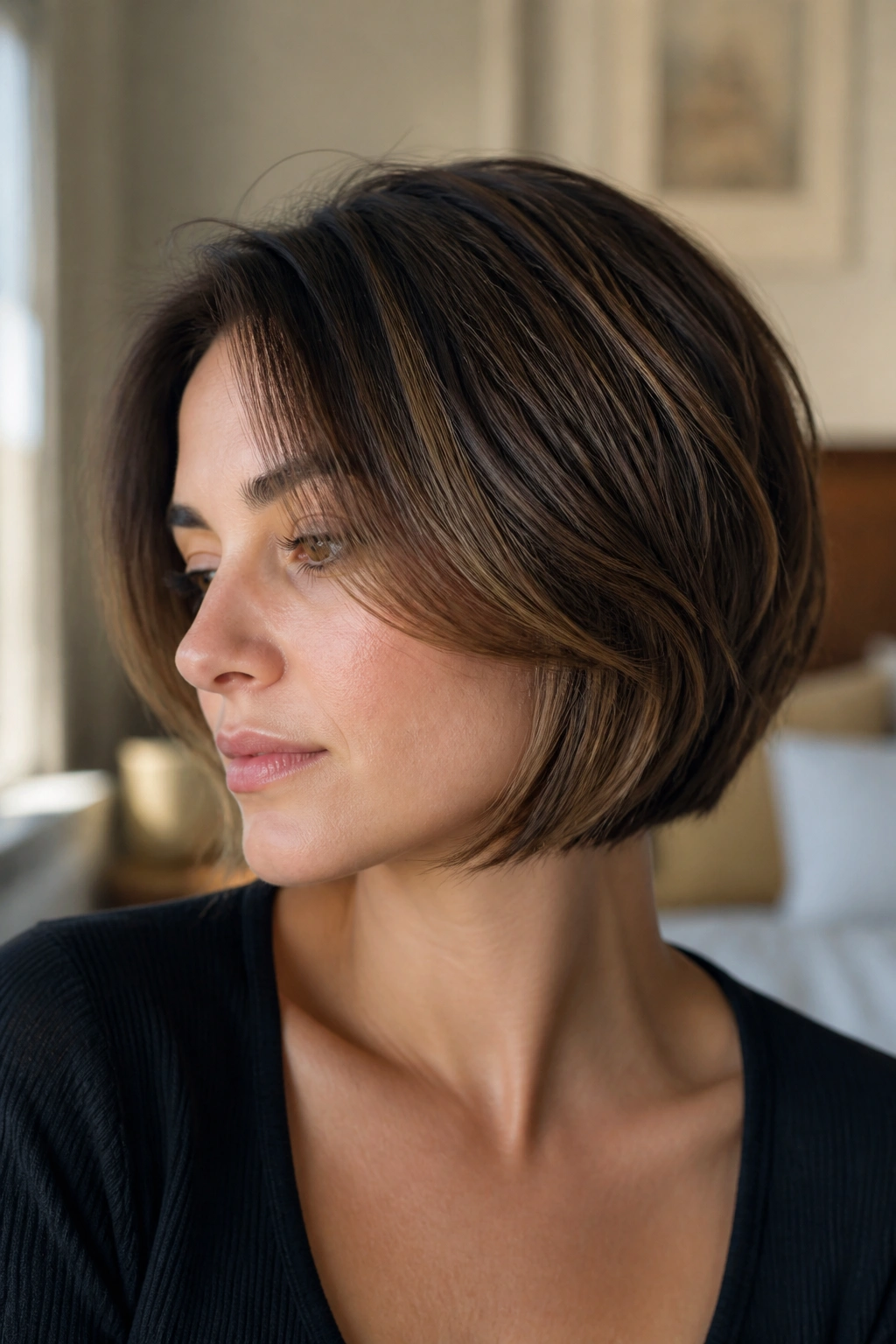
The classic layered bob is the safest place to start when thick hair needs movement without losing polish. It gives you shape, not chaos. The cut usually sits between the jaw and the top of the neck, with longer internal layers that remove weight from the center instead of hacking away at the ends.
Why It Works
Thick hair can support a bob in a way finer hair often can’t. The density holds the silhouette, so the shape still looks full even after a few layers come out. The danger is over-layering. Too many short pieces and the bob starts to flick out in odd directions, which is how you end up fighting your own haircut every morning.
A good layered bob should still read as a bob first. The line needs to feel clean. The layers need to soften the bulk, not expose it.
- Ask for long layers that begin around the chin or just below it.
- Keep the bottom edge blunt enough to hold the shape.
- Use point cutting on the ends if your hair is coarse and puffy.
- Skip aggressive thinning shears unless your stylist knows exactly where to use them.
Best for: thick straight hair, soft waves, and anyone who wants volume without the triangle shape.
2. Textured Pixie Cut for Thick Hair
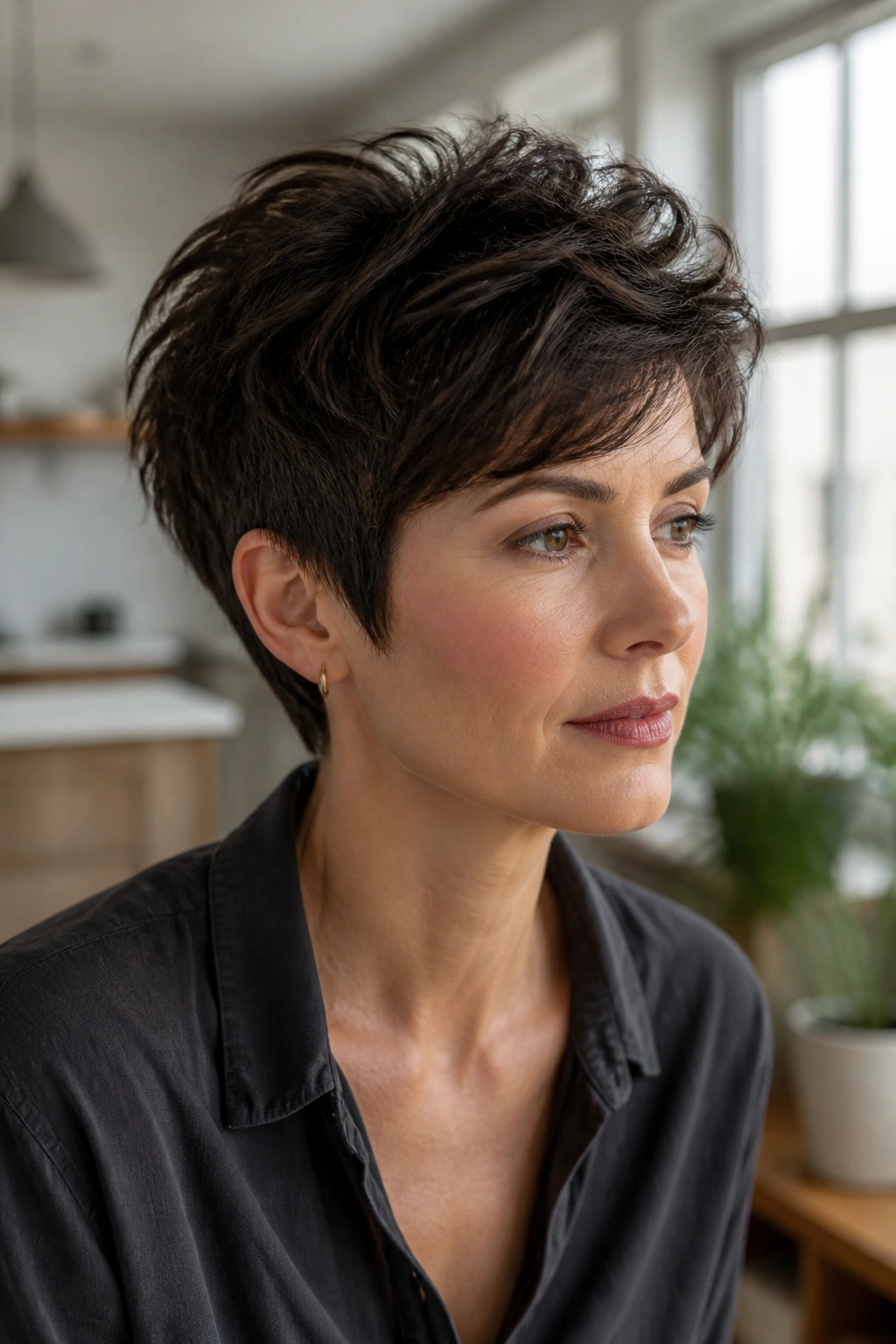
A textured pixie can be brilliant on thick hair. Really brilliant. The reason is simple: dense hair gives the pixie structure, so it doesn’t collapse into the scalp the way finer hair sometimes does. You get lift at the crown, piecey movement around the top, and enough softness around the ears to keep it from looking severe.
The key is length on top. If the top is too short, the cut turns boxy fast. If it’s left around 2 to 4 inches, the hair can be pushed forward, swept up, or worn slightly messy with a dab of matte paste. That little bit of length keeps the style from feeling like a helmet.
This is the cut for someone who likes hair that looks intentional in under five minutes. Towel-dry, work in a pea-sized amount of styling cream, and rough it up with your fingers. Done.
3. Chin-Length French Bob
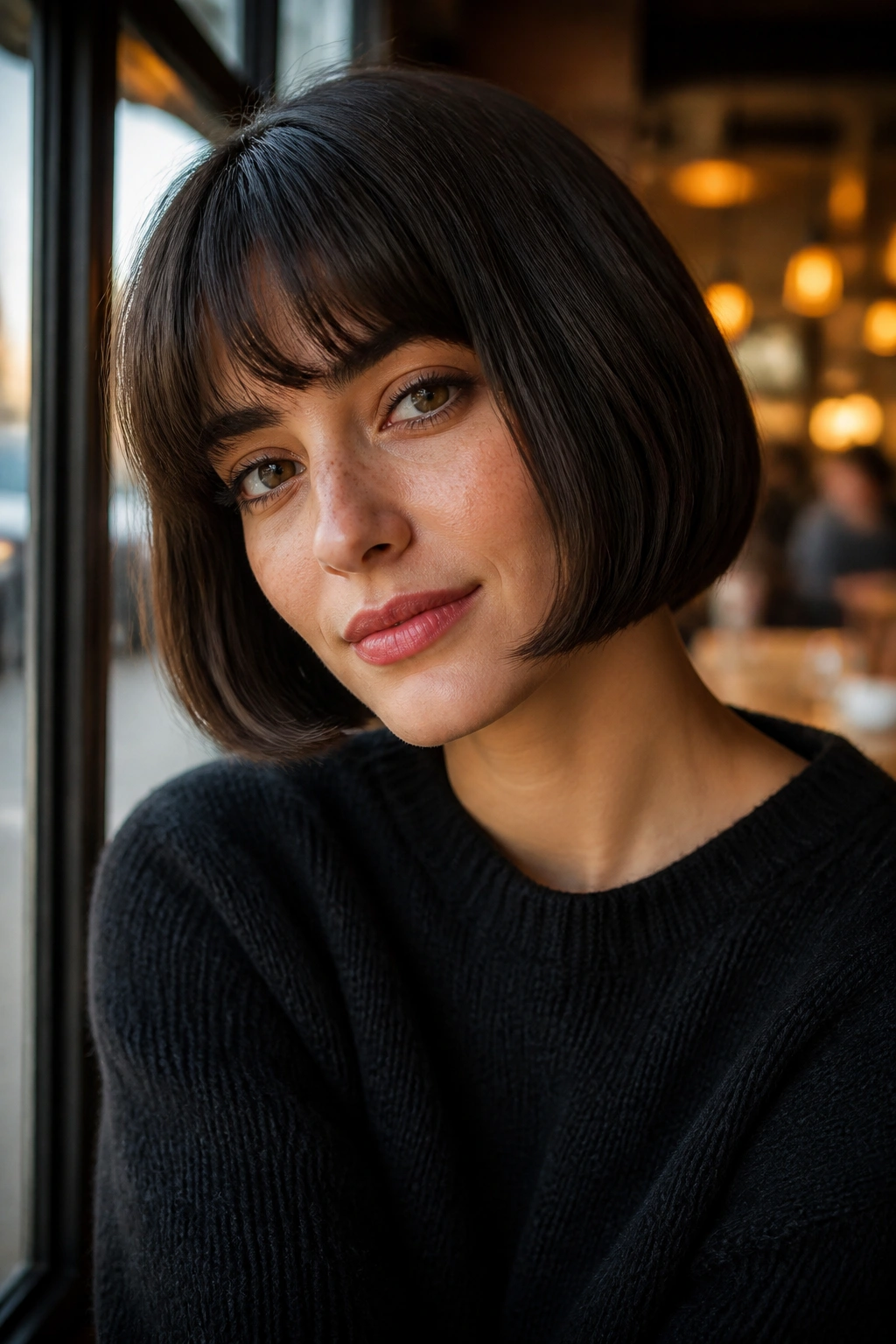
Why does the French bob look so good on thick hair? Because thick hair gives it the exact thing the cut needs: a heavy, plush line. The shape usually lands right at the chin, sometimes with a soft fringe or eyebrow-grazing bang, and that blunt edge makes the whole cut feel crisp.
The trick is balance. Too much bulk at the sides and it can widen the face more than you want. Too much texturing and it loses the charm that makes this cut work in the first place. The sweet spot is a tidy perimeter with just enough interior removal to let the hair tuck behind the jaw instead of sticking straight out.
What to Ask For
- A chin-length line that follows the jaw, not the neck.
- Soft internal debulking rather than lots of choppy layers.
- A slight bend at the ends if your hair has a wave.
- Optional fringe that sits just above or right at the brows.
It’s a good choice if you like structure and do not want a haircut that looks undone on purpose.
4. The Bixie Cut
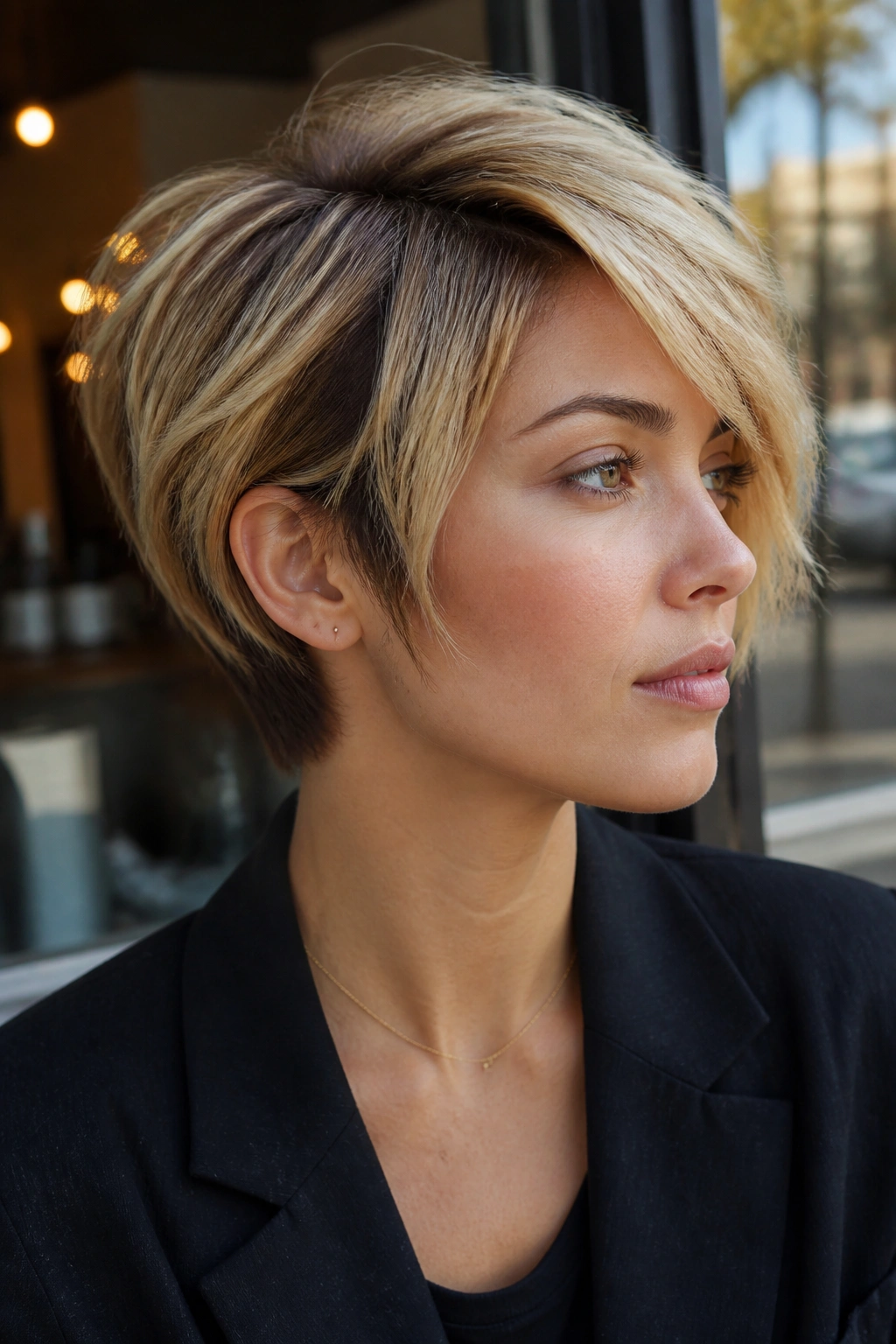
The bixie sits between a bob and a pixie, and that in-between space is exactly why thick hair likes it. You keep enough length to move the hair around, but the cut is short enough to lift some of the weight off your neck and jaw. It’s a useful compromise, and not a boring one.
A bixie works best when the crown stays a little longer than the sides. That creates softness at the top and prevents the cut from turning into a flat cap. Thick hair benefits from this because the natural density adds shape without extra effort. You do not need a ton of styling. You need a clean outline and a bit of texture paste.
Ask for a shorter nape, side pieces that skim the cheekbones, and a top layer that can be swept forward or to one side. If your hair is coarse, tell your stylist not to over-thin it. A bixie should feel light, not wispy.
5. Stacked Bob with Soft Graduation
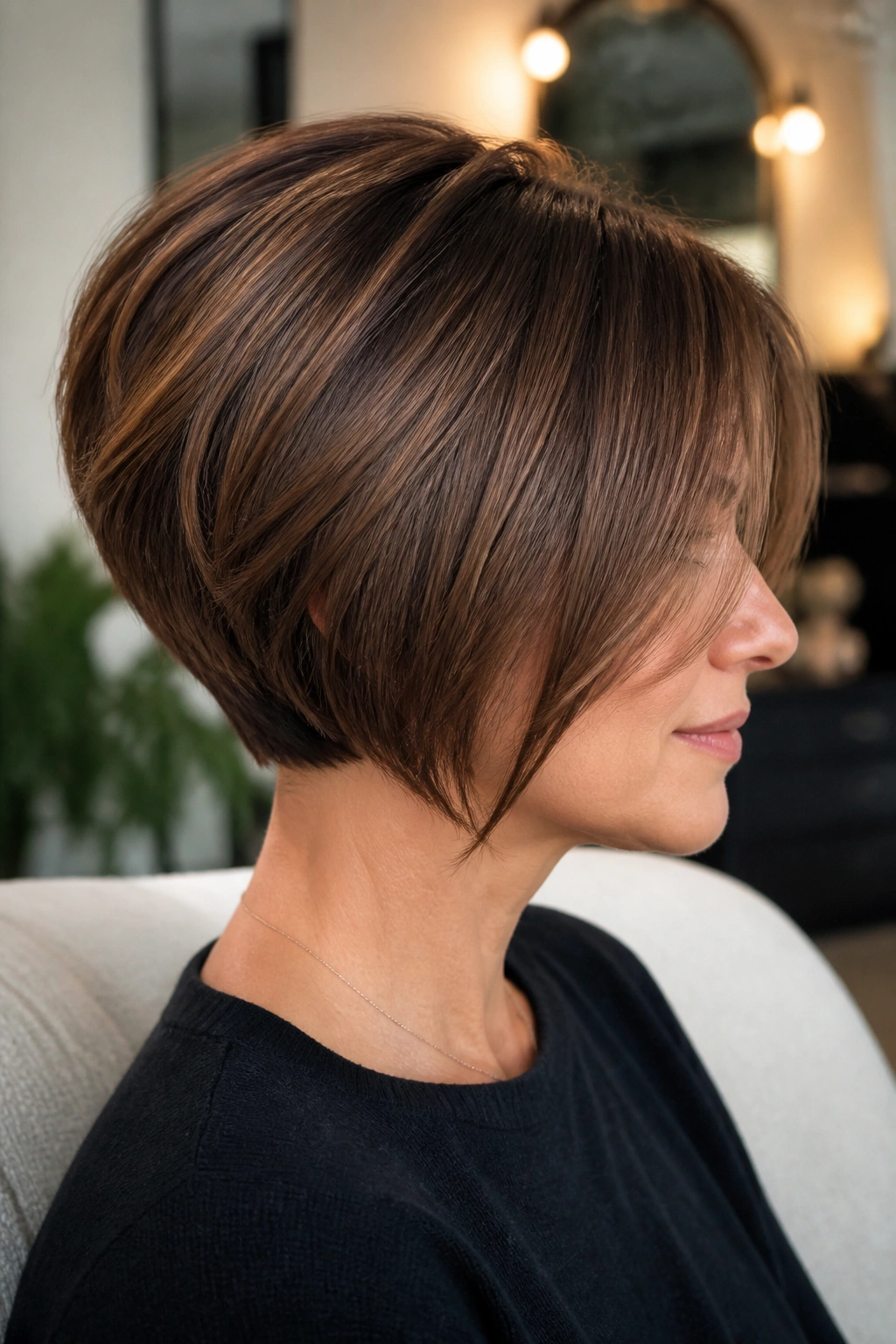
A stacked bob is a smart answer when thick hair keeps ballooning at the back. The graduation at the nape lifts the shape off the neck, while the longer front pieces keep it from looking dated or too round. Done well, it gives you a neat profile from the side and plenty of fullness through the crown.
Done badly, it can look like a triangle. That’s the catch. The stacking has to be controlled, and the transition from back to front needs to feel smooth. If the layers are too abrupt, the style starts shouting at everyone in the room. You want lift, not drama.
This cut tends to work well on thick straight hair and on waves that hold a bend. It is especially nice if you like a blow-dried finish with a round brush. The shape almost does the styling for you once the back is set properly.
6. Shaggy Crop with Soft Ends
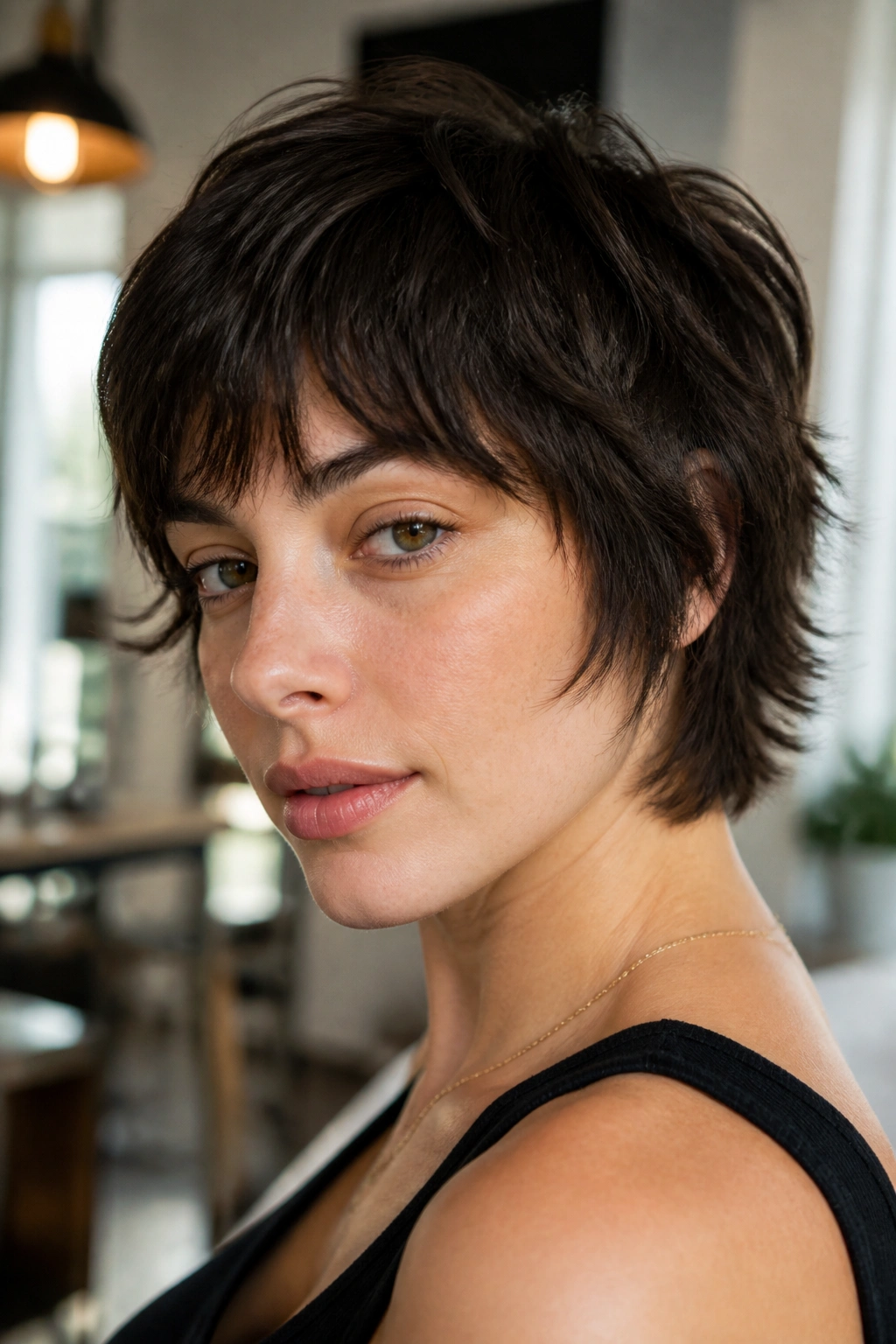
The shaggy crop is what I’d call a good friend to thick hair. It takes the density and turns it into texture instead of bulk. Shorter crown layers, feathered ends, and a little looseness around the face create a cut that feels casual without looking sloppy.
Styling It Fast
A shag works best when you lean into your natural movement. If your hair has wave, scrunch in a light mousse and let it dry with a diffuser for a few minutes. If it is straighter, use a sea-salt spray or lightweight cream, then twist a few sections around your fingers while it dries. The point is not perfection. The point is separation.
Thick hair can take a shag that would look flimsy on fine hair. That’s why this cut has so much staying power. The density keeps the shape alive even when the styling gets a little lazy.
- Best with piecey, soft layers around the crown.
- Works well when the front pieces touch the cheekbone or chin.
- Needs a light hand with product or it gets sticky and stiff.
- Grows out nicely if the perimeter stays slightly longer than the interior.
7. Undercut Pixie
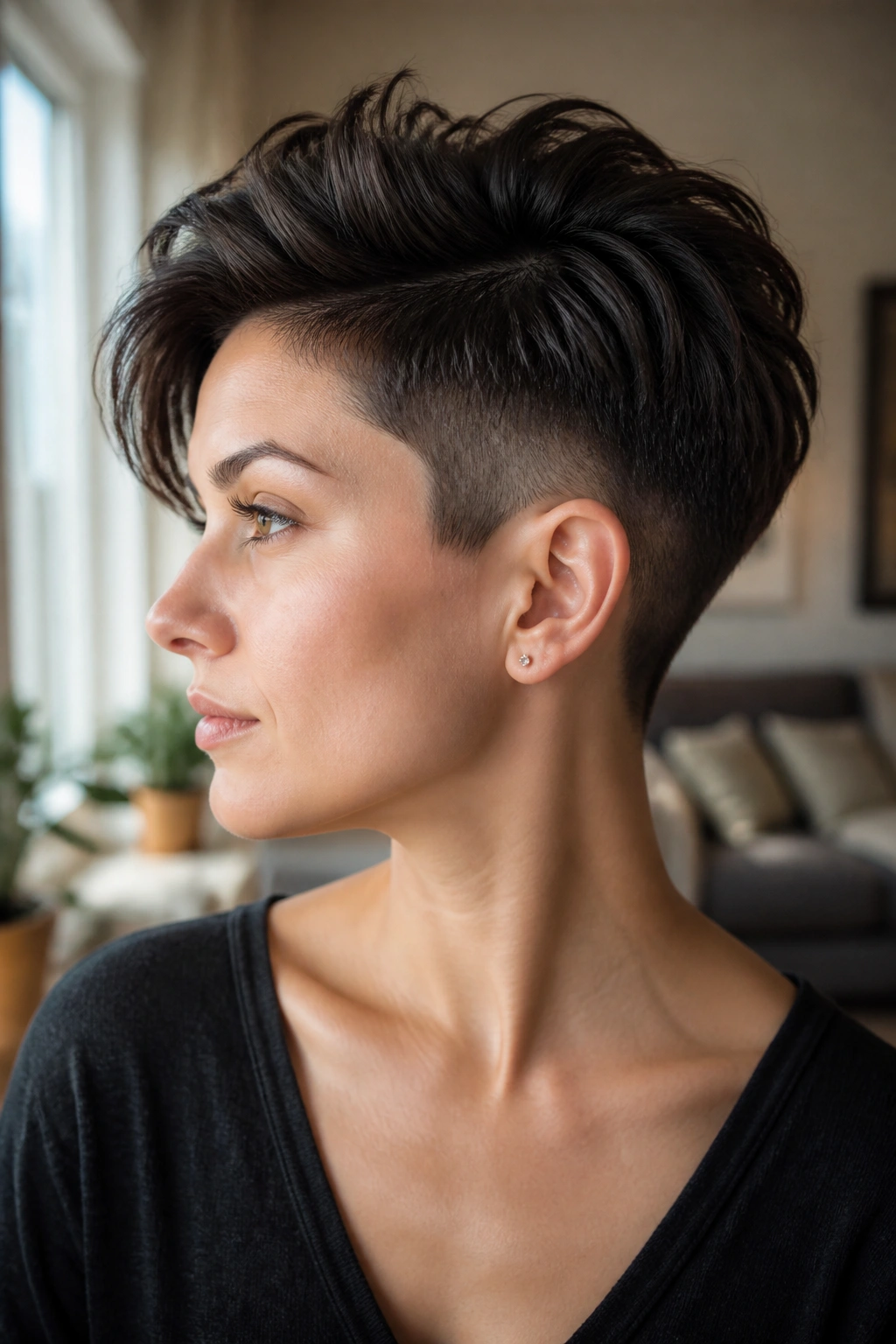
An undercut pixie is not just an edgy choice. For thick hair, it can be plain practical. Removing bulk from underneath—usually at the nape and around the lower sides—lets the top lay flatter and move better. That means less puffing, less sweating at the neck, and less time spent wrestling with a blow-dryer.
The top still needs some length, though. Leave enough for a side sweep, a forward fringe, or a little lift at the crown. If the top is chopped too short, thick hair can stick up in all the wrong places. A slightly longer top gives you control, and control matters more here than softness.
This one is especially good if you like low maintenance in the morning and do not mind a sharper silhouette. It grows out with attitude. That’s part of the appeal.
8. Blunt Bob for Thick Hair
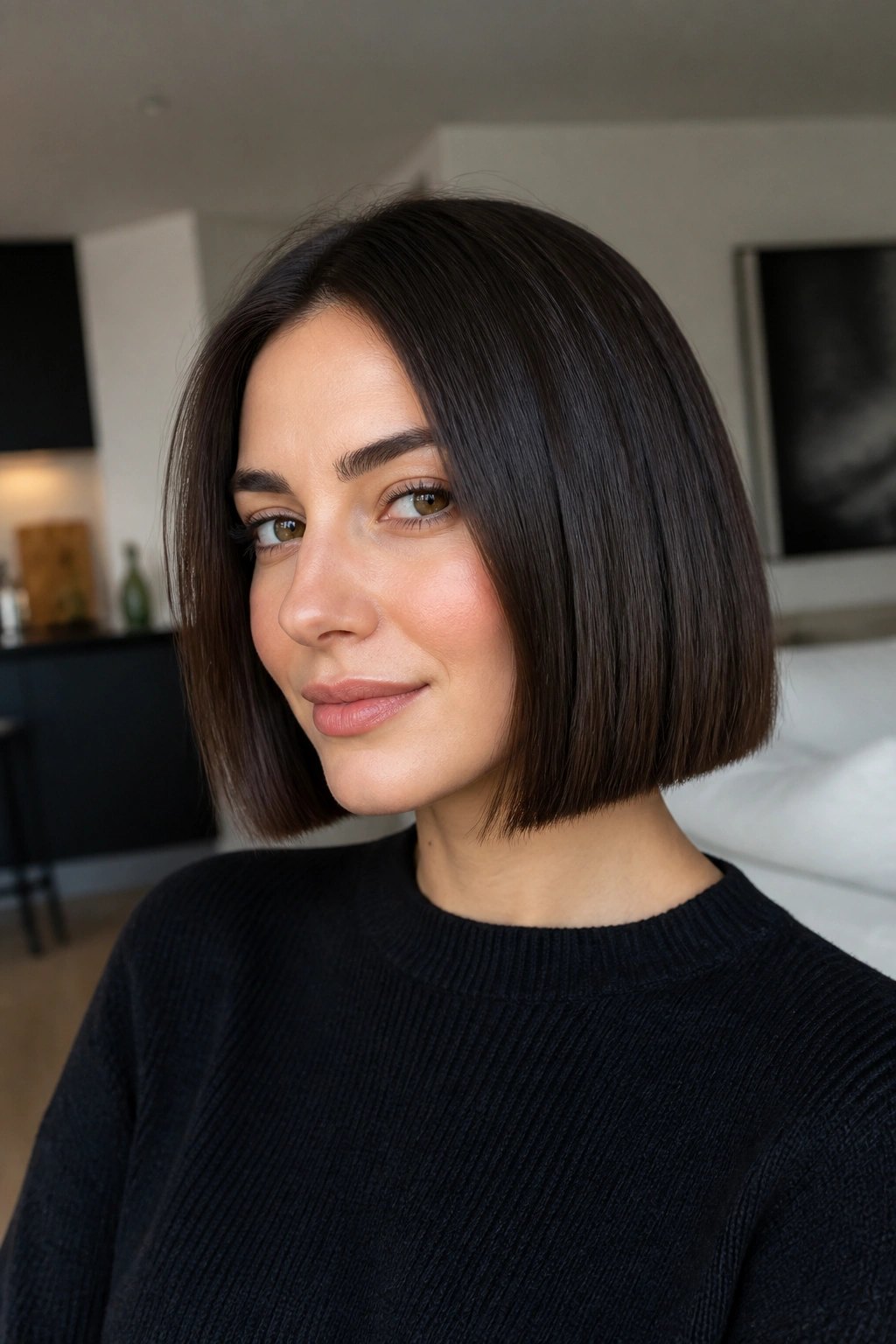
A blunt bob can be a better choice for thick hair than a heavily layered cut. That surprises people. They expect layers to solve everything, but sometimes the cleanest line is what makes dense hair look expensive and calm.
The reason it works is simple: a blunt perimeter uses the fullness of thick hair as part of the style. The line looks solid. The weight sits where it should. What you do not want is a heavy, compact block with no interior relief, because that turns the ends into a brick. A good stylist will remove bulk from inside the shape while keeping the outside edge clean.
This is a sharp look. It works well if your hair is straight or only slightly wavy, and it’s excellent if you like a bob that still feels modern after a rough dry. The blunt line does most of the visual work.
9. Asymmetrical Bob
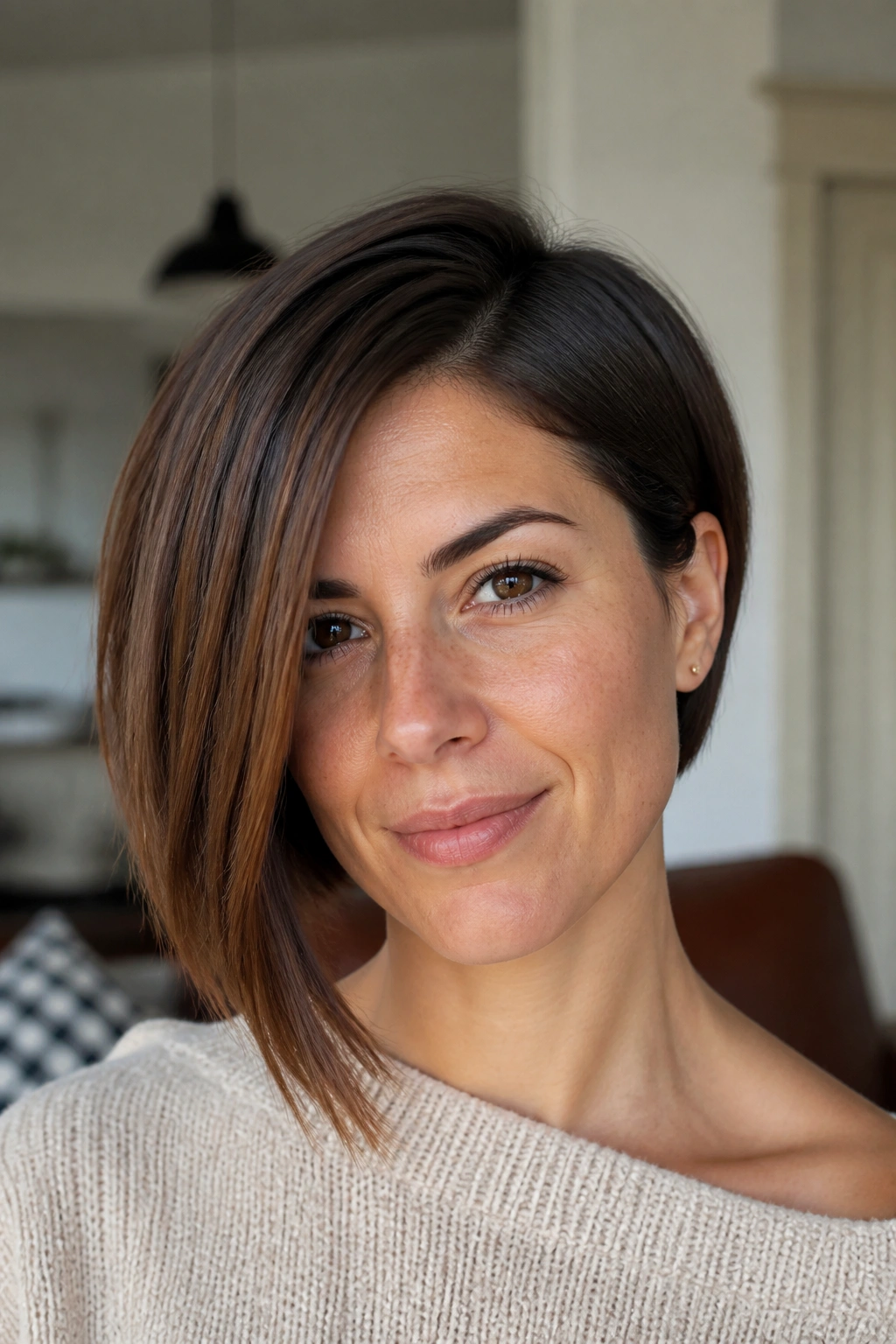
An asymmetrical bob gives thick hair movement without asking for a lot of styling. One side is usually a little longer than the other—sometimes by an inch, sometimes by two—and that small difference breaks up the width of the cut in a nice way. It keeps the shape from feeling boxy.
The cut is especially useful if your hair tends to sit heavy on one side or if you have a strong part that always wants to land the same way. The longer side gives the eye something to follow. The shorter side keeps the neck area cleaner. Together, they create motion even when your styling is minimal.
What Makes It Different
- A slight length difference is enough; it does not need to look extreme.
- A deep side part usually helps the shape fall better.
- Works well with straight blowouts or loose bends.
- Needs a stylist who can keep the line intentional on both sides.
If you like a bob that feels a little less predictable, this is a good one.
10. Curly Short Cut for Thick Wavy Hair
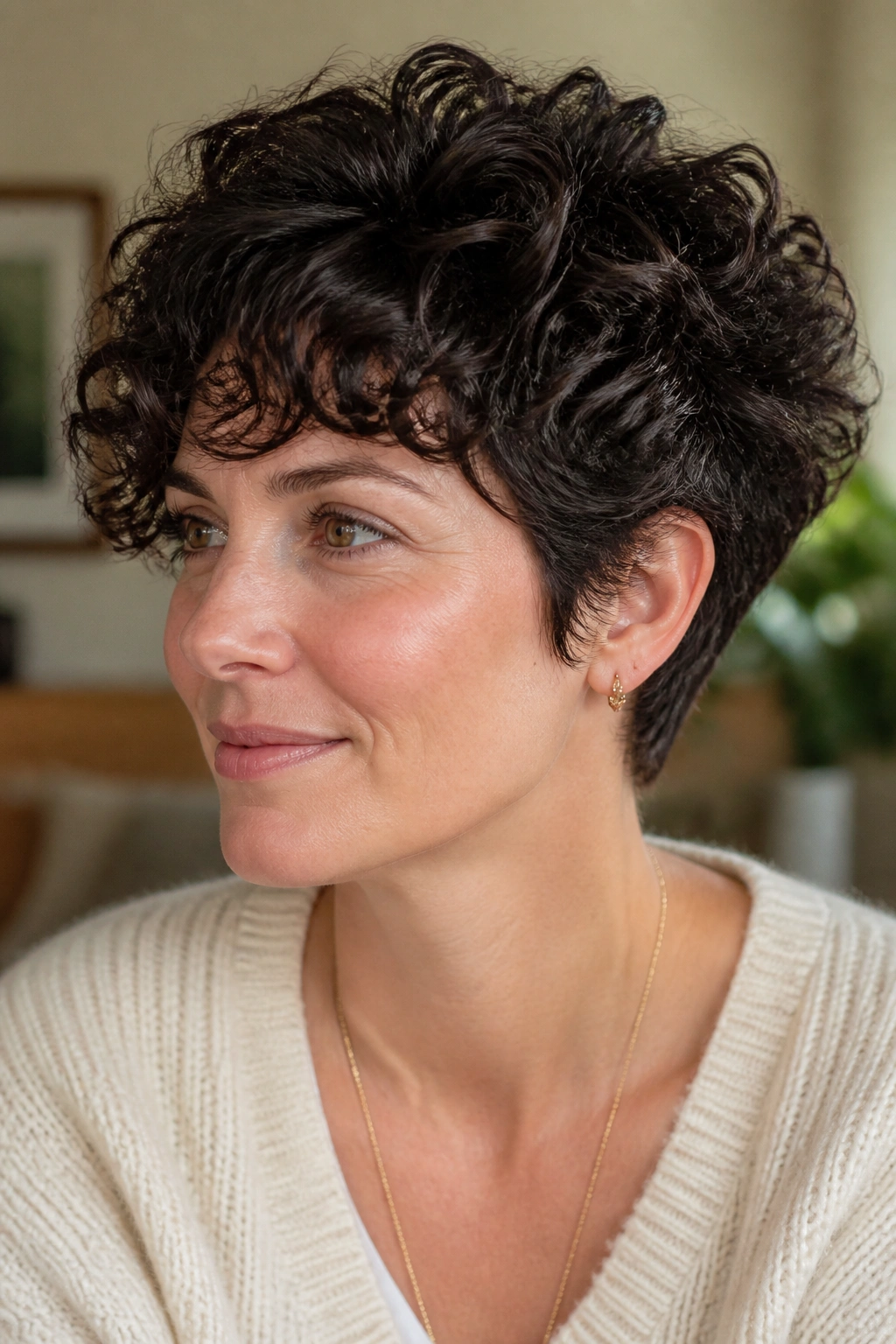
How do you keep thick curls short without building a triangle around your head? You cut the hair where it lives, not where it looks when it’s stretched wet. That means dry cutting or at least cutting with the curl pattern in mind, because curls spring up in their own stubborn way.
A short curly cut should keep the shape rounded but not wide. The goal is bounce, not bulk. A good stylist will remove weight from the interior, keep enough length on top for the curls to stack nicely, and leave the sides soft so they don’t flare out.
Why Dry Cutting Helps
Curls and waves lie when they’re wet. They look longer, flatter, and often more cooperative than they really are. Once they dry, the shape changes fast. A dry cut lets the stylist see the actual curl pattern, the shrinkage, and the spots where the hair wants to bulge.
If your hair is thick and curly, this is one of the rare times where technique matters more than the name of the haircut. The right shape can make your curls look springy and defined. The wrong one can leave you with a puffball.
11. Tapered Crop with Side-Swept Fringe
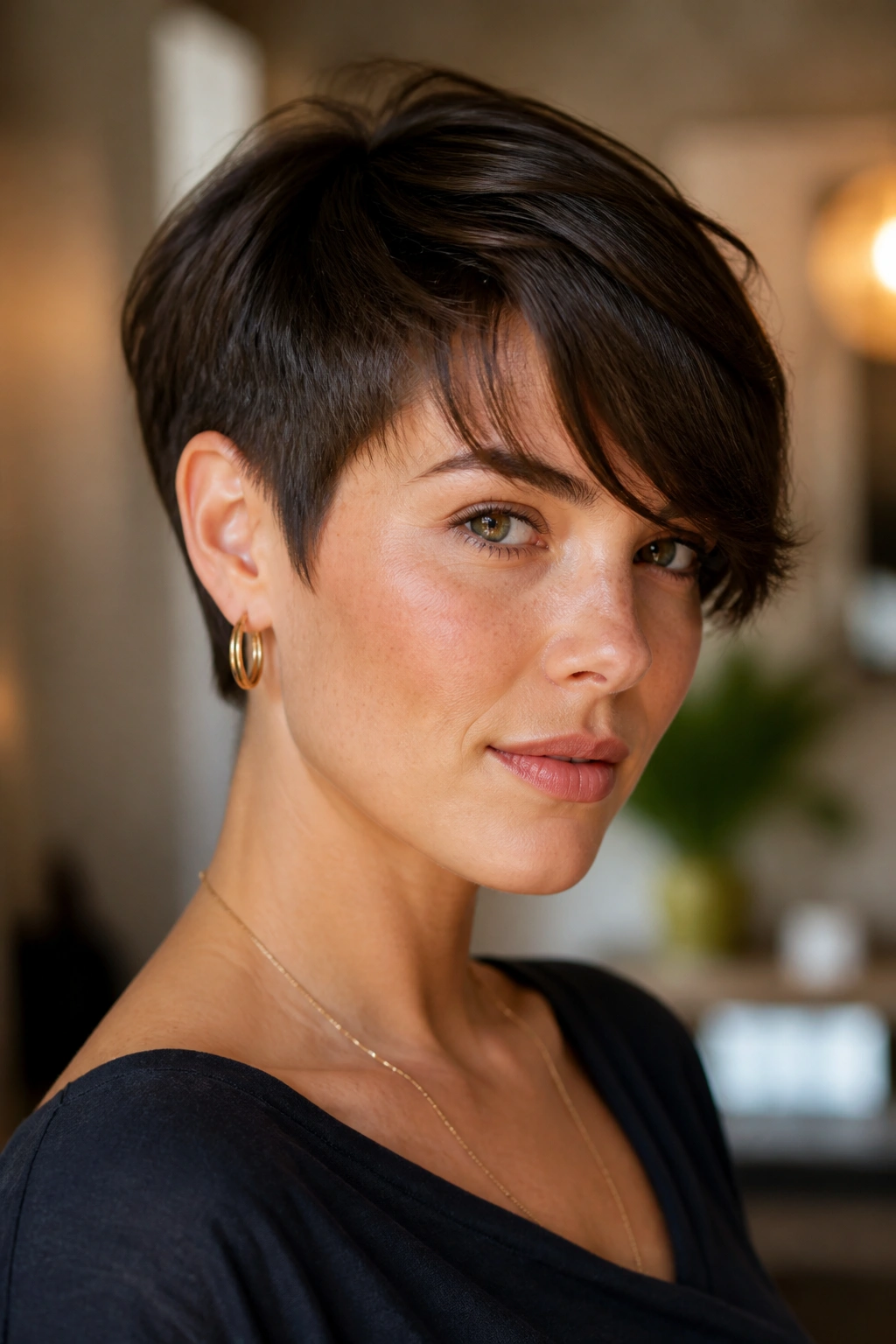
A tapered crop is tidy in the back, soft in the front, and quietly flattering on thick hair. The taper at the neckline removes the dense, boxy feeling that thick strands can create, while the longer top keeps the style from looking too severe. Add a side-swept fringe and you get a cut that feels thoughtful without looking overdone.
This one works particularly well on coarse hair because the texture naturally holds shape. You do not need to fight flyaways into submission. A bit of cream, a quick blow-dry with a small brush, and the fringe falls into place. The side sweep is useful too. It breaks up a wide forehead and softens the transition from hairline to cheek.
If you want short hair that still looks polished on day three, this is a strong pick.
12. Soft Wolf Crop
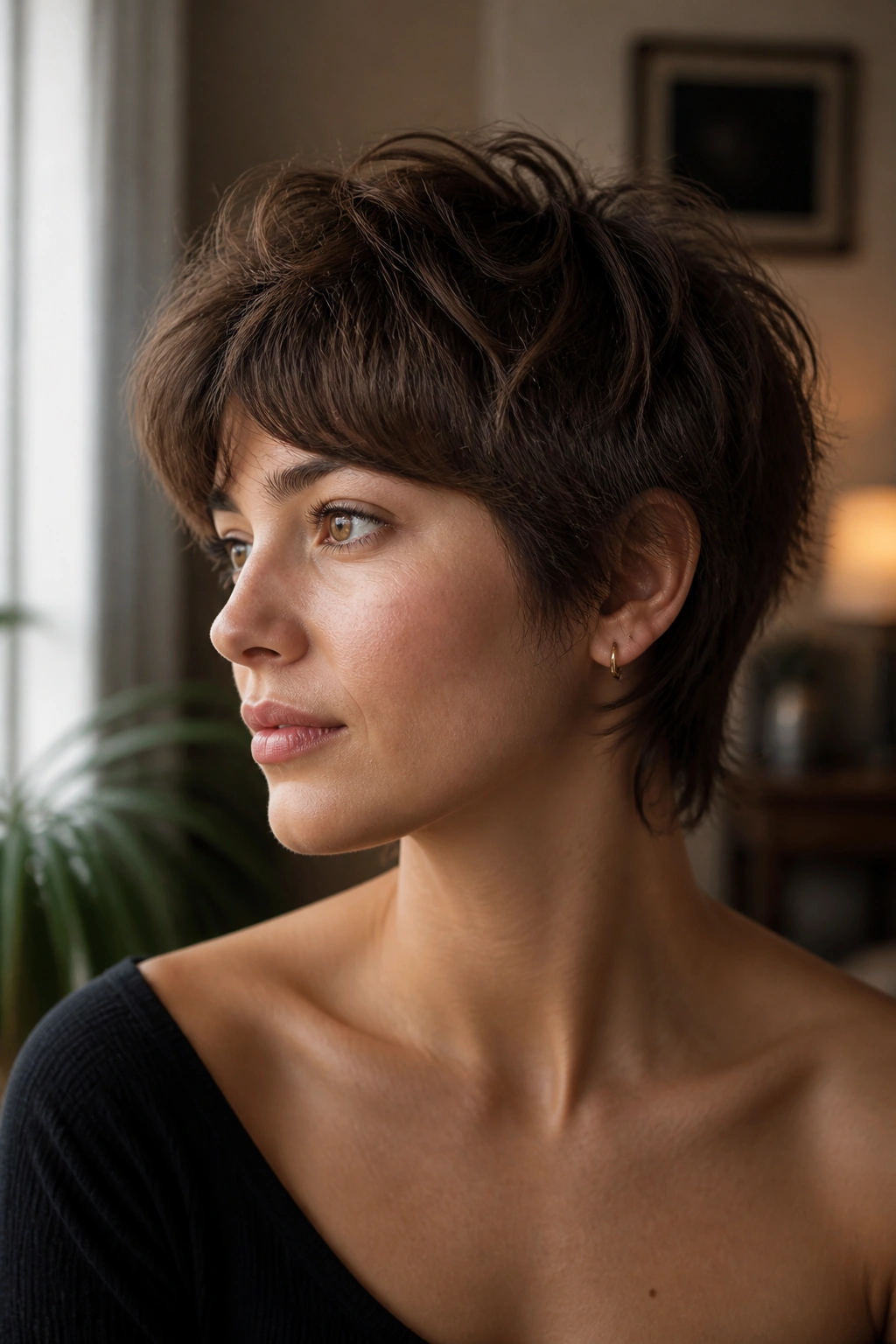
Not every wolf cut needs to look rebellious or messy. A soft wolf crop keeps the spirit of the style—layered, airy, a little wild—but trims it down into something that works on short hair. Thick hair can handle the shorter crown layers and the more tapered sides because the density keeps the shape from going limp.
The trick is restraint. You want the layers to create movement, not a shaggy cloud. If the crown is left too short, the hair can puff upward instead of moving back. If the back is too long, the style starts drifting away from “crop” and into mullet territory. Some people are fine with that. Most are not.
This cut suits people who like a little attitude in their hair and do not mind using a light texturizing spray. It looks best when the ends are separated and the top has a bit of lift.
13. Rounded Bob with Face-Framing Pieces
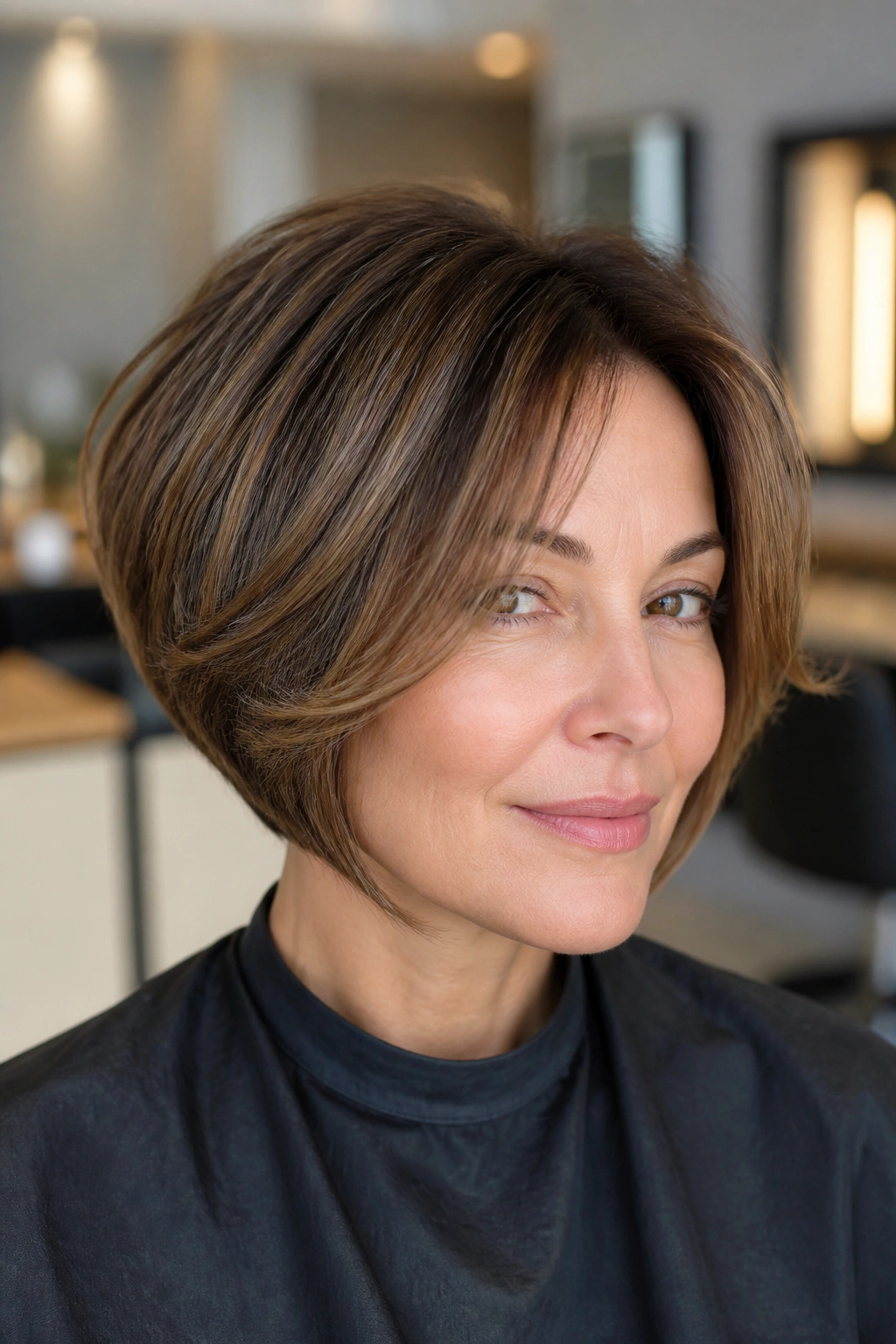
If a blunt bob feels too hard, the rounded bob is the softer answer. Thick hair loves this shape when it’s cut with a little curve through the sides and a gentle lift at the crown. The perimeter stays tidy, but the overall outline feels less boxy and more natural.
Face-framing pieces help a lot here. A few longer strands near the cheekbones or chin can break up the weight around the face and keep the style from swallowing your features. That matters more with thick hair than people realize. Dense hair can take over fast if every strand is cut to the same point.
This is a good cut if you want your hair to look full, smooth, and a little dressier than a crop. It doesn’t scream for attention. It just looks put together.
14. Side-Parted Pixie Bob
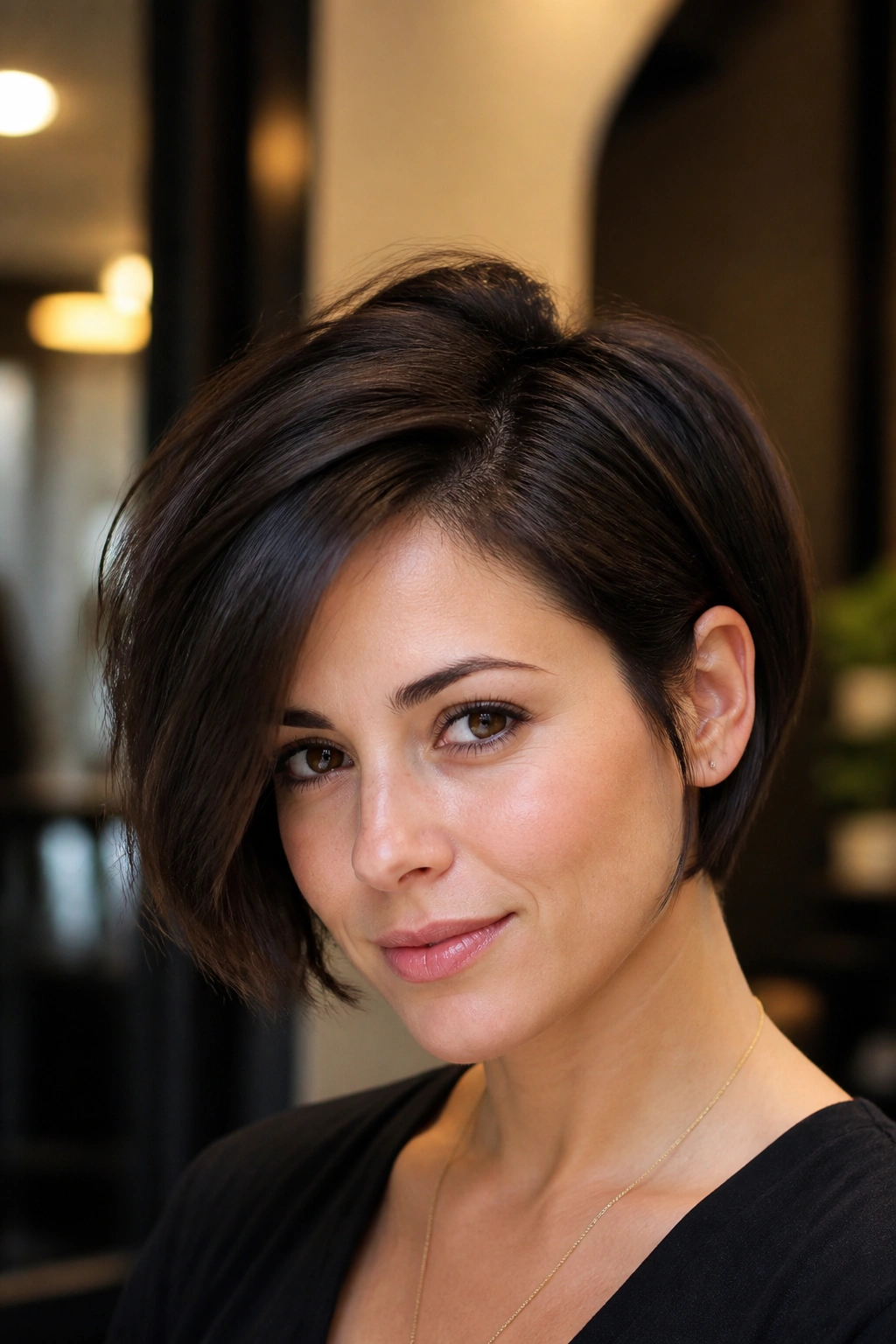
A side-parted pixie bob is one of those styles that looks more flattering in motion than in a static photo. The deep side part shifts the volume off the center line, which helps thick hair fall with a little more grace. It also keeps the shape from becoming too symmetrical, which can make dense hair feel heavy.
Why the Side Part Matters
A side part does more than change your face framing. It changes the way the whole cut sits. On thick hair, even a shift of 1 to 2 inches can stop the top from swelling into a dome. That small move also gives you a natural place to tuck one side behind the ear, which makes the cut feel lighter.
This style is useful if your hair has a stubborn cowlick or a growth pattern that fights a center part. Let the cut work with the direction your hair already prefers. That is usually where the real comfort lives.
15. Ear-Length Crop with Long Top
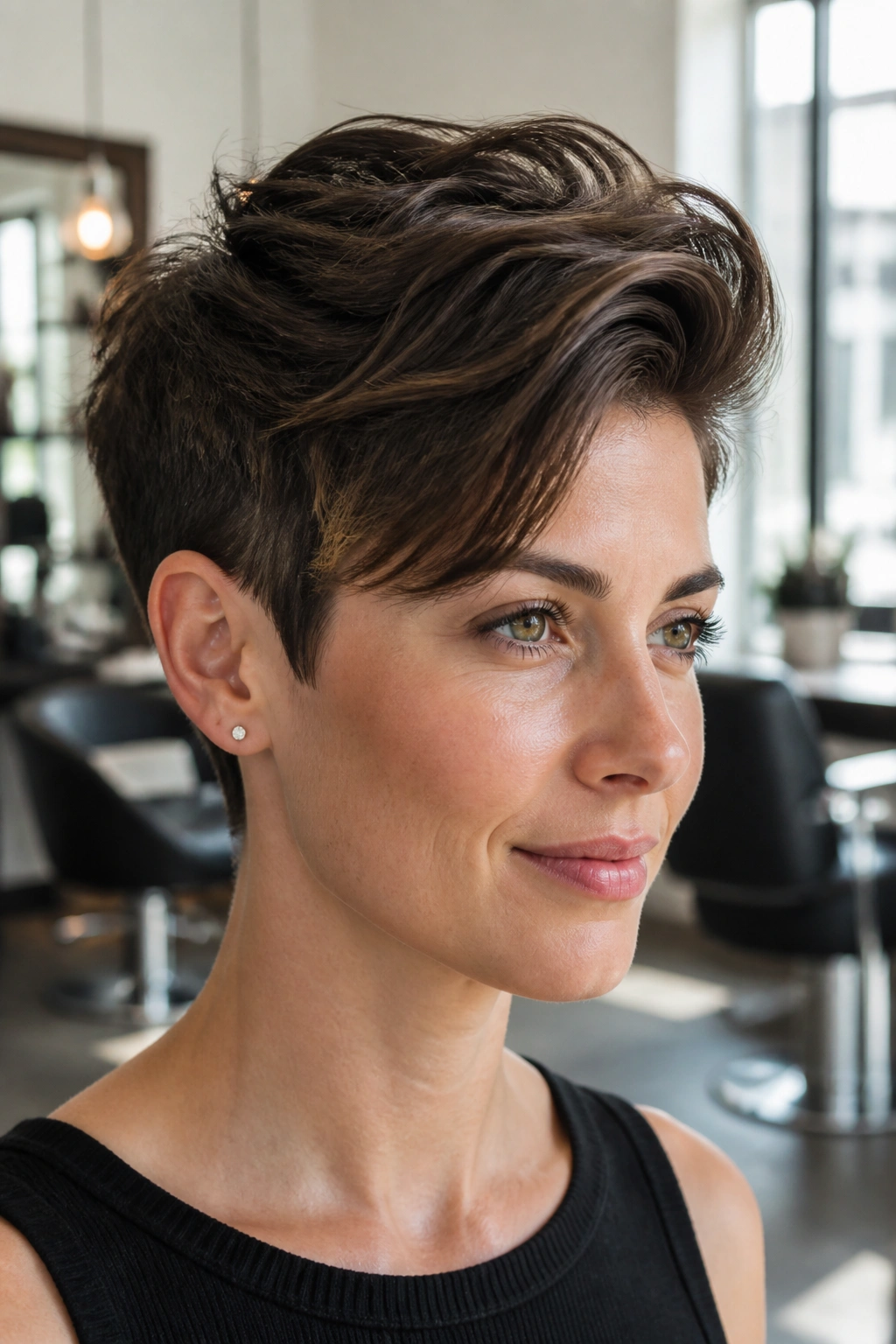
An ear-length crop with a longer top is a bold short cut that thick hair wears better than most people expect. The sides are kept close enough to show the ears and neckline, while the top carries the shape with 3 to 5 inches of length. That contrast makes the cut feel intentional, not shaved-down and accidental.
It is a good option if you want something light around the head and neck but still need enough hair up top to style. Thick hair gives the crown real body, so the top can be brushed forward, spiked softly, or swept to one side. The short sides keep the bulk under control.
This is not a cut you forget about for months. It usually wants a tidy-up every 4 to 6 weeks if you want the edges to stay clean. But the payoff is a haircut that feels cool, fast, and easy to dress up with very little effort.
16. Jaw-Length Box Bob
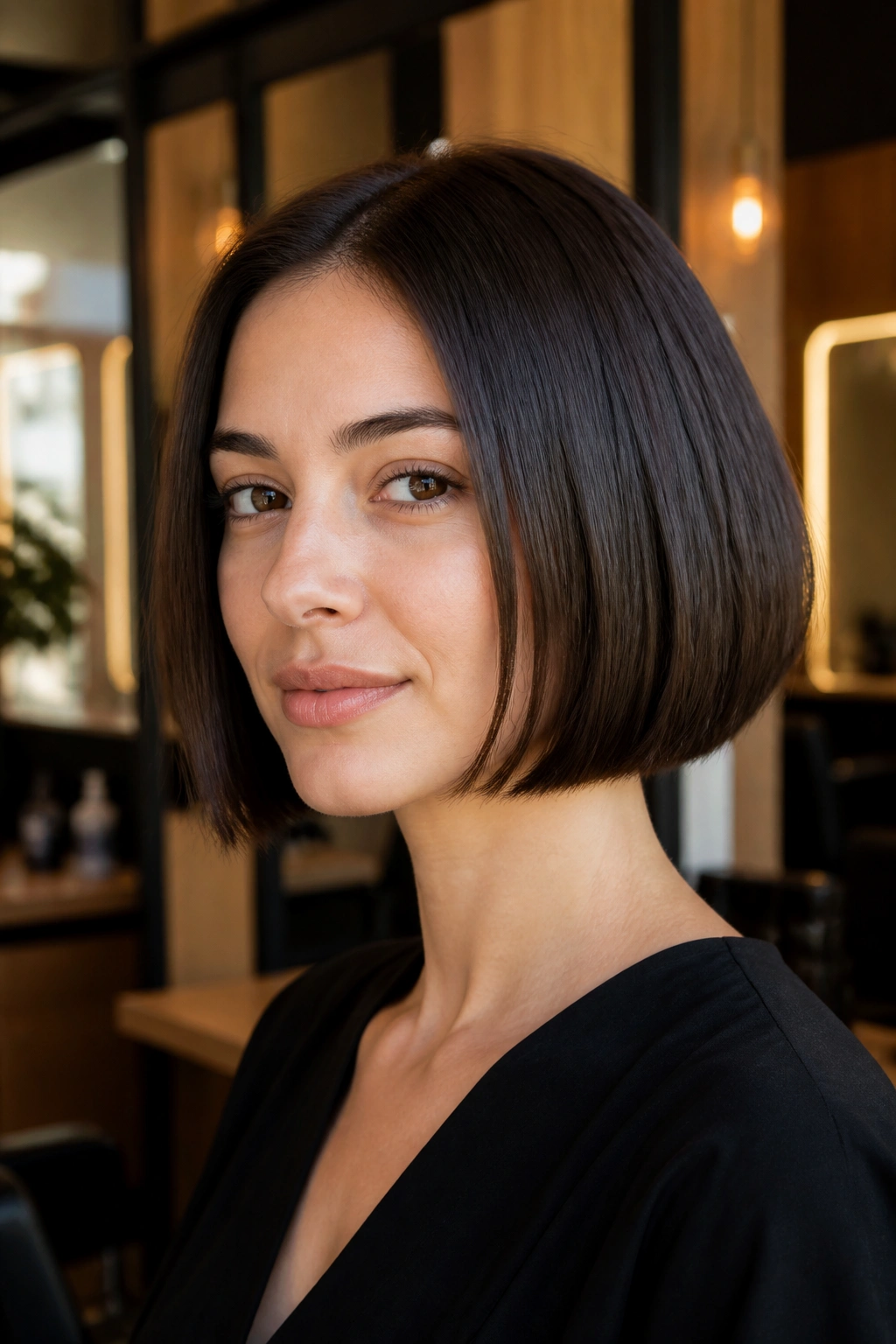
Can a boxy bob work on thick hair? Yes—if the shape is sharpened in the right places and softened in the wrong ones. The jaw-length box bob keeps a strong perimeter, which thick hair can carry beautifully, but the inside still needs some relief or the sides will flare out.
The appeal here is structure. This is a neat, graphic haircut. It suits thick straight hair especially well, though a mild wave can make it look even better when the ends move a bit. The jaw length is flattering because it lands near one of the strongest bones in the face, which gives the cut a clear frame.
If you want this style, ask for clean ends, a square silhouette, and light internal debulking. That combination keeps the bob from turning into a heavy shelf. A little bend at the ends can help, too, but the line should stay the main event.
17. Tousled Italian Bob
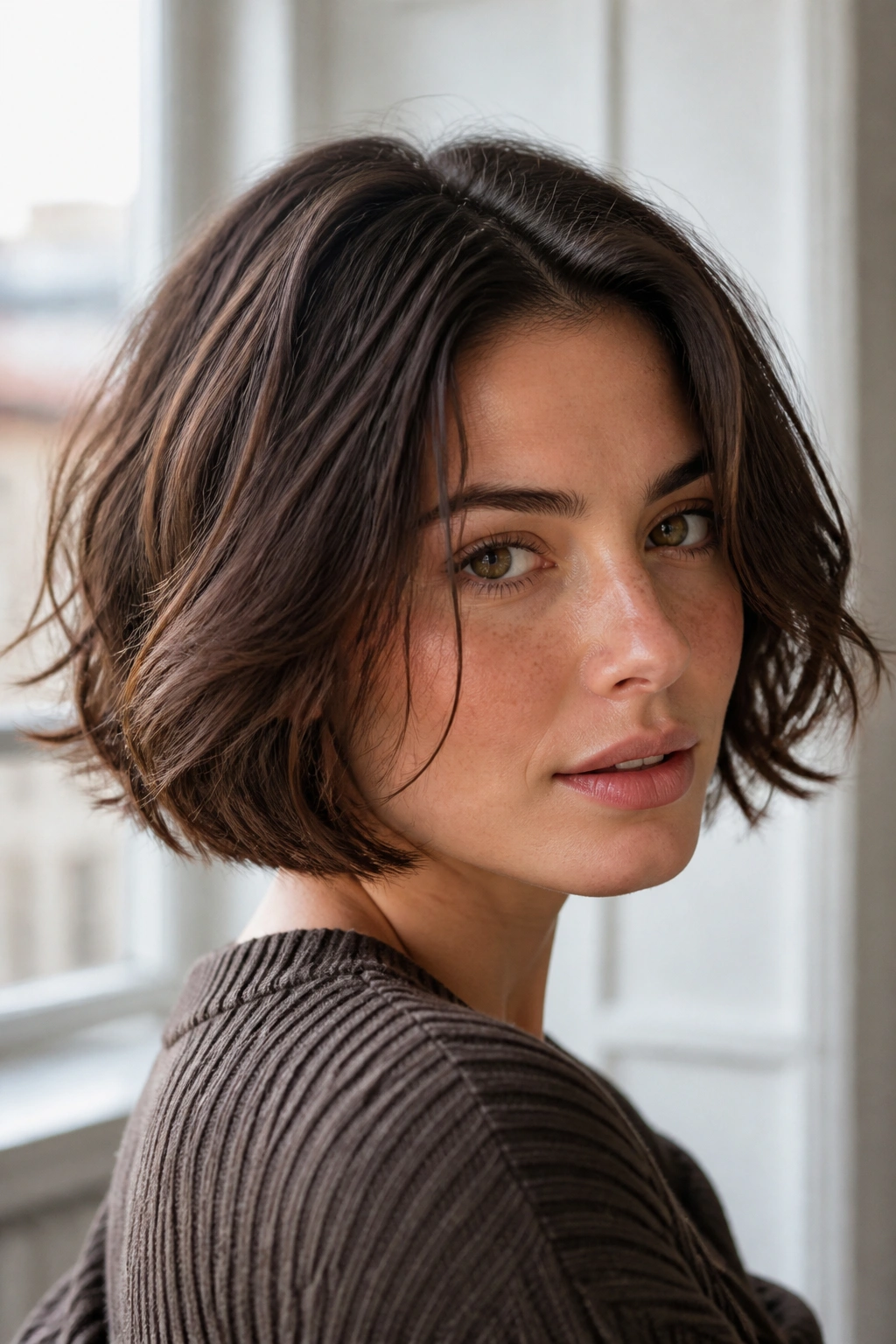
The Italian bob feels a little softer and airier than a French bob, and thick hair is one of the best hair types for it. It usually sits somewhere around the jaw or just below it, with a fuller body and a more relaxed finish. The shape is chic, but not stiff. That matters.
Unlike a sharp, chin-hugging bob, the Italian version leaves more room for movement. The ends can flip under, flick out, or rest with a natural bend. Thick hair keeps the silhouette rich, so the cut doesn’t need much help to look finished. A round brush and a quick blow-dry are usually enough.
What Makes It Different
The Italian bob is less about precision at all costs and more about soft control. It gives you a polished outline without looking too engineered. If your hair has some wave and you like a style that can go from smooth to slightly undone without a full restyle, this one is worth a serious look.
18. Feathered Crop
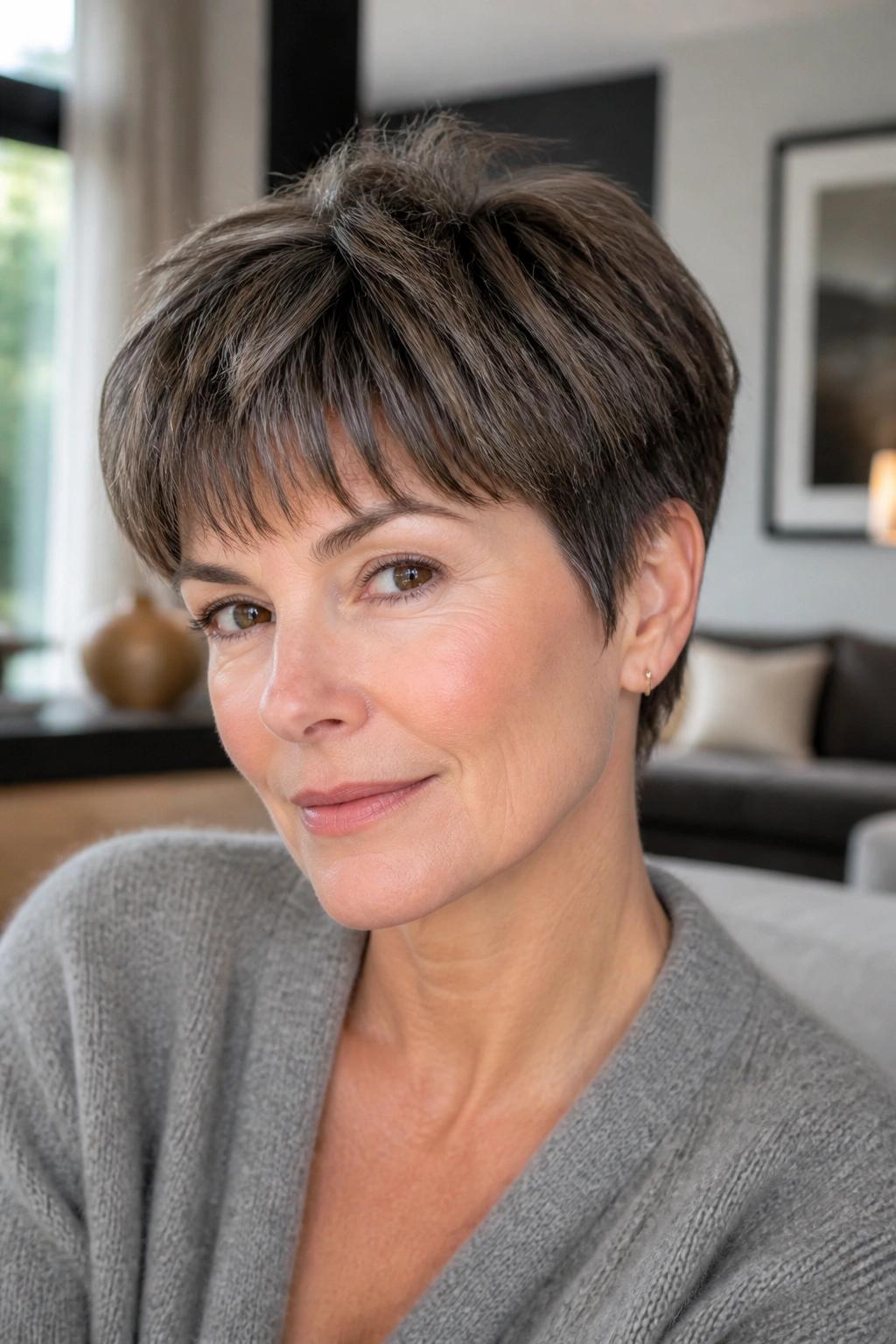
A feathered crop is a good choice when you want softness around the face and ears without giving up the short length. Thick hair can make a crop feel blunt in a hurry, so feathering the ends lightens the outline and keeps the whole cut from looking too heavy.
The best versions use point cutting or slide cutting to create soft edges. Around the temples, that can make a big difference. The hair falls away from the face instead of pressing straight against it. Around the neck, feathering keeps the style from feeling boxy from behind, which is where a lot of short thick-hair cuts go wrong.
What to Ask For
- Soft, feathered edges around the temples and cheekbones.
- A slightly longer crown for lift.
- A neckline that is clean but not shaved tight.
- Texture that looks broken up, not chopped up.
This is a solid option if you like short hair but want it to feel a little lighter and friendlier.
19. Mini Shag Bob
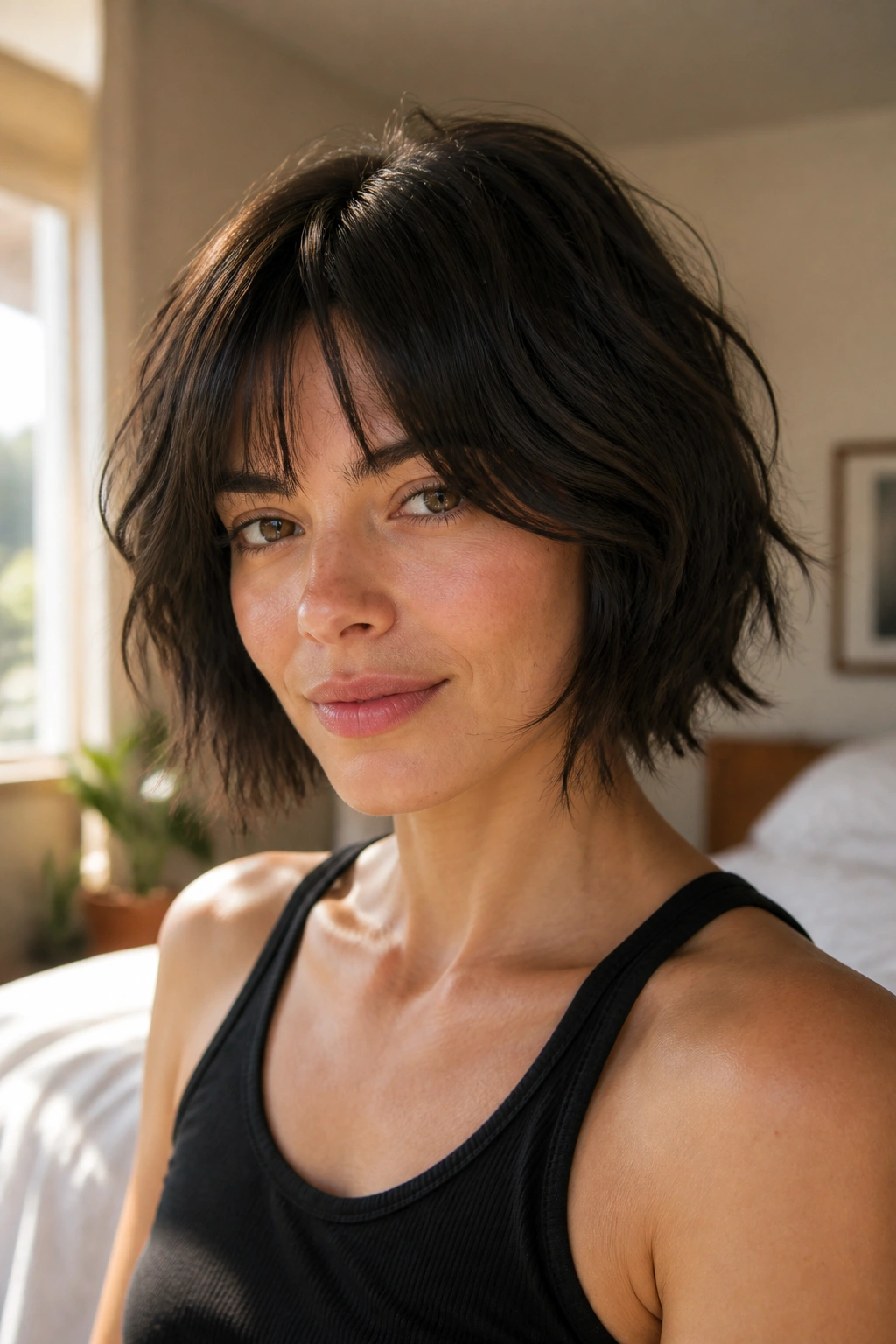
A mini shag bob is what happens when a bob and a shag have a sensible conversation. You keep the bob’s perimeter, but the inside gets shag-style layers that remove bulk and create movement. Thick hair likes this because the cut gives the density somewhere to go. It stops sitting like one giant block.
The best part is how forgiving it can be. If your blow-dry is rough, the style can still look deliberate. If you air-dry it, the layers break up the shape in a natural way. It is a smart cut for people who want texture but don’t want a full-on shag with a lot of length around the face.
The layers should not be random. They need to support the bob line, not erase it. That line is what keeps the style from looking frizzy or overgrown by the second week.
20. The Cropped Lob That Grows Out Cleanly
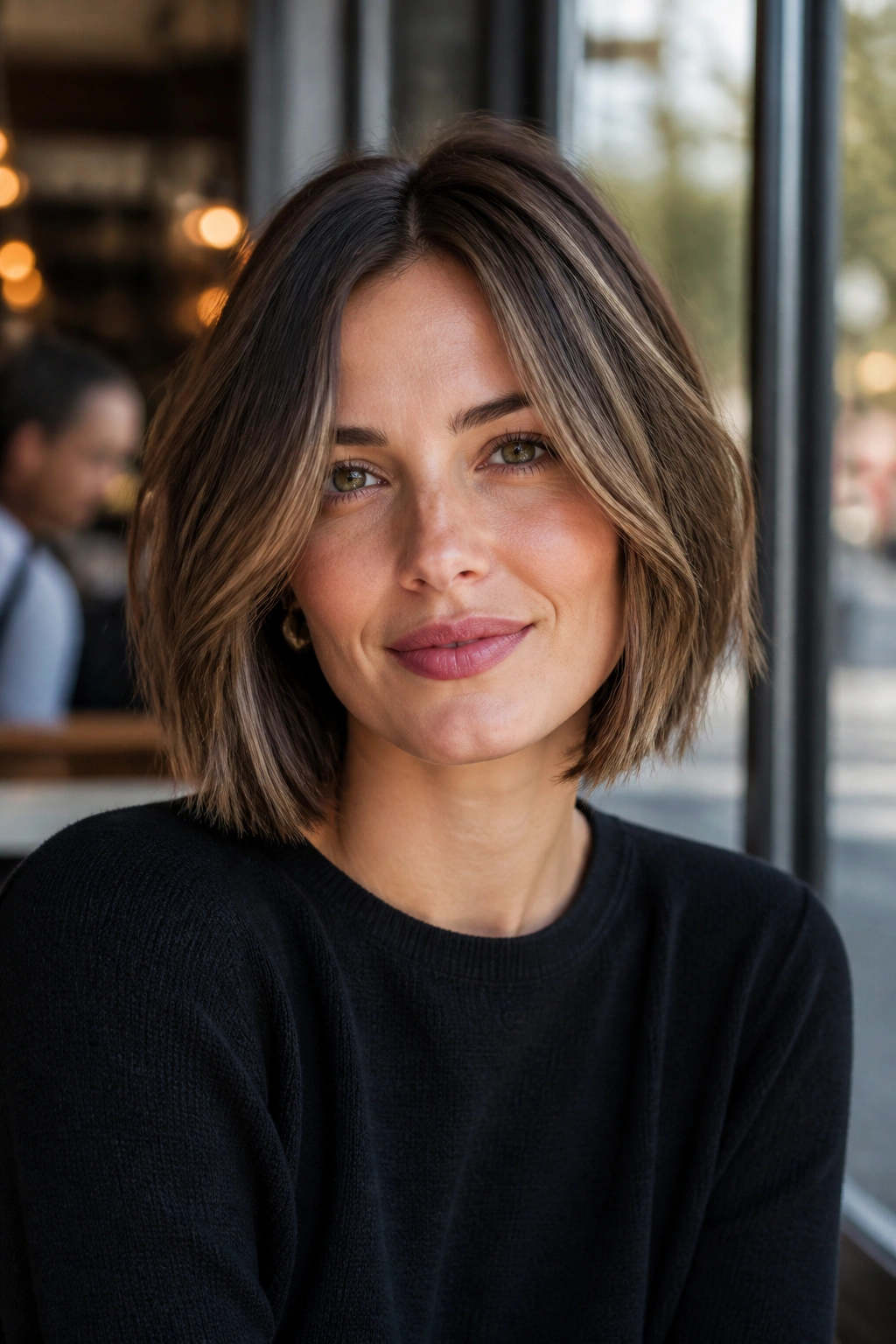
A cropped lob is the haircut I’d hand to someone who wants short hair, thick hair, and less salon drama. It sits just above the shoulders or around the collarbone, which is still short enough to feel light, but long enough to behave if you skip a blow-dry. For thick hair, that extra inch or two can make all the difference.
The cut works best with invisible internal layers and a clean perimeter. Too many short layers and it starts flipping out. Too few, and the weight drags the shape down. The sweet spot is a lob that feels dense at the ends but not bulky through the middle. If your hair takes a bend well, this shape can air-dry into something that looks finished without much effort.
It is also the easiest style on this list to grow out. That matters. Haircuts do not live only on the day you leave the salon. They live in the weeks after, when you are half-late, the weather is rude, and you need your hair to still look like it belongs to you. This is the one I’d trust first.
