



A good short haircut does more than keep hair off your collar. It sharpens the face, cuts down the morning routine, and can make even a plain T-shirt look pulled together. Short hairstyles for men work because they solve the same problem in different ways: some clean up bulk, some build shape, and some make the edges look almost architectural.
The mistake most guys make is asking for “short on the sides” and leaving it there. That phrase can mean a buzz cut, a crew cut, a taper, a fade, or something that looks fine in the chair and odd the next day once the hair settles. A barber can do a lot with half an inch and a pair of clippers, but only if the shape is clear.
Hair type matters more than hype. Thick hair behaves differently from fine hair. Straight hair shows lines fast, while curly hair needs room to breathe or it puffs up in weird places. Even a simple cut changes depending on the crown, the hairline, and whether your cowlick points forward like a stubborn thumb.
So the smart move is to pick a cut that fits how your hair actually grows. Not the haircut you saw on a movie poster. Not the one that looked great on a guy with a different face and a different texture. Start with the shape, then let the details do the work.
1. Short Hairstyles for Men: The Clean Buzz Cut
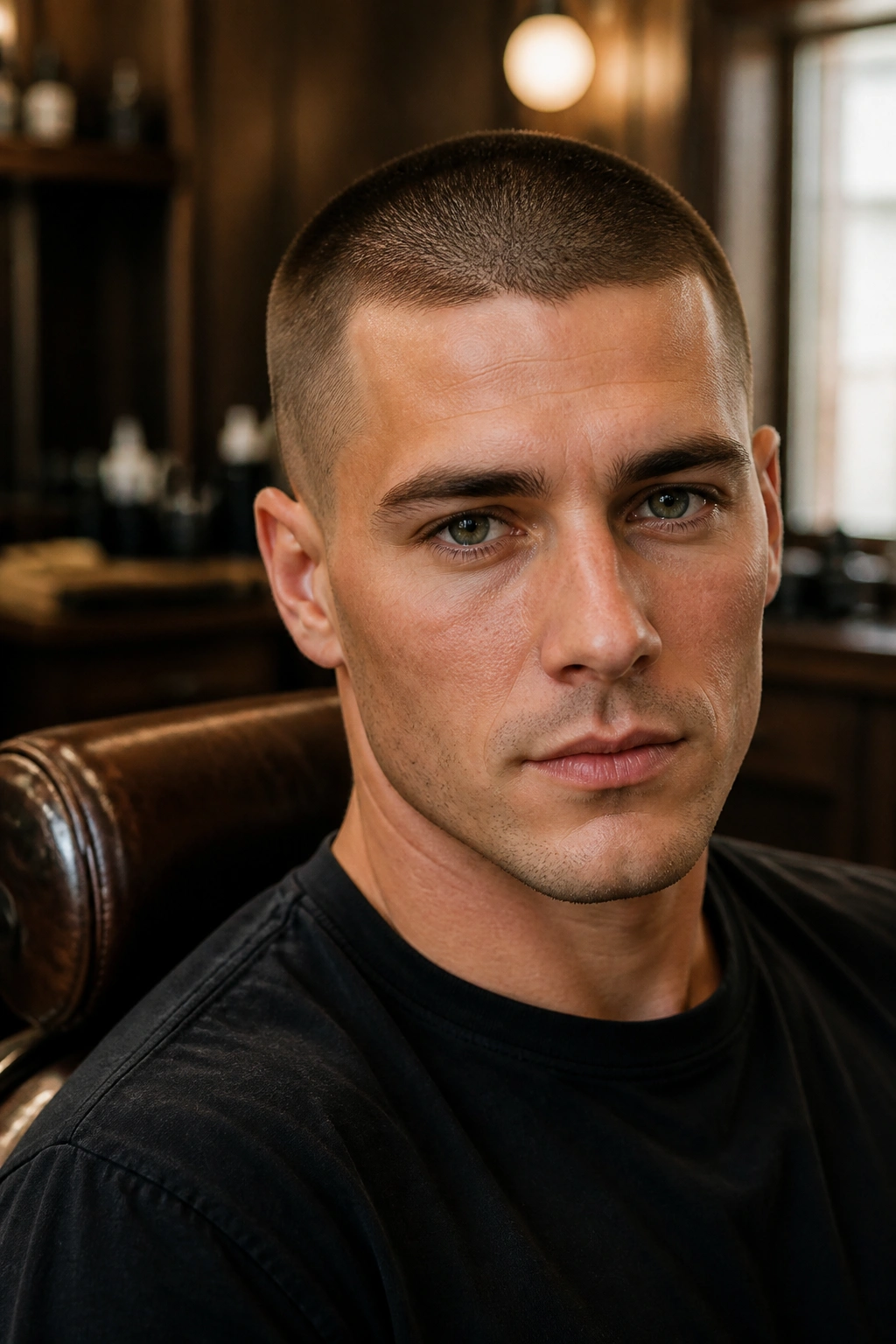
If you want the shortest cut that still looks deliberate, this is the bluntest tool in the box. A clean buzz cut keeps the hair uniform all over, usually with a #1, #2, or #3 guard, and that sameness is exactly why it works. There’s no part to fight with and no top section to collapse by noon.
Why It Works
A buzz cut is strongest when your hair grows in different directions or feels too dense to tame easily. It takes the guesswork out of styling and puts the focus on your face, beard, and jawline. If your scalp shape is even, it can look crisp with almost no effort.
- Best for: coarse hair, straight hair, hot climates, and men who hate styling products.
- Ask for: a uniform guard length on top, tidy sideburns, and a clean neckline.
- Watch out for: uneven scalp shape or a strong crown swirl that shows through at very short lengths.
Pro tip: If you’ve never had it this short, start with a #3 guard. You can always go shorter at the next cut, and that extra eighth of an inch often makes the difference between sharp and too bare.
2. The No-Fuss Crew Cut
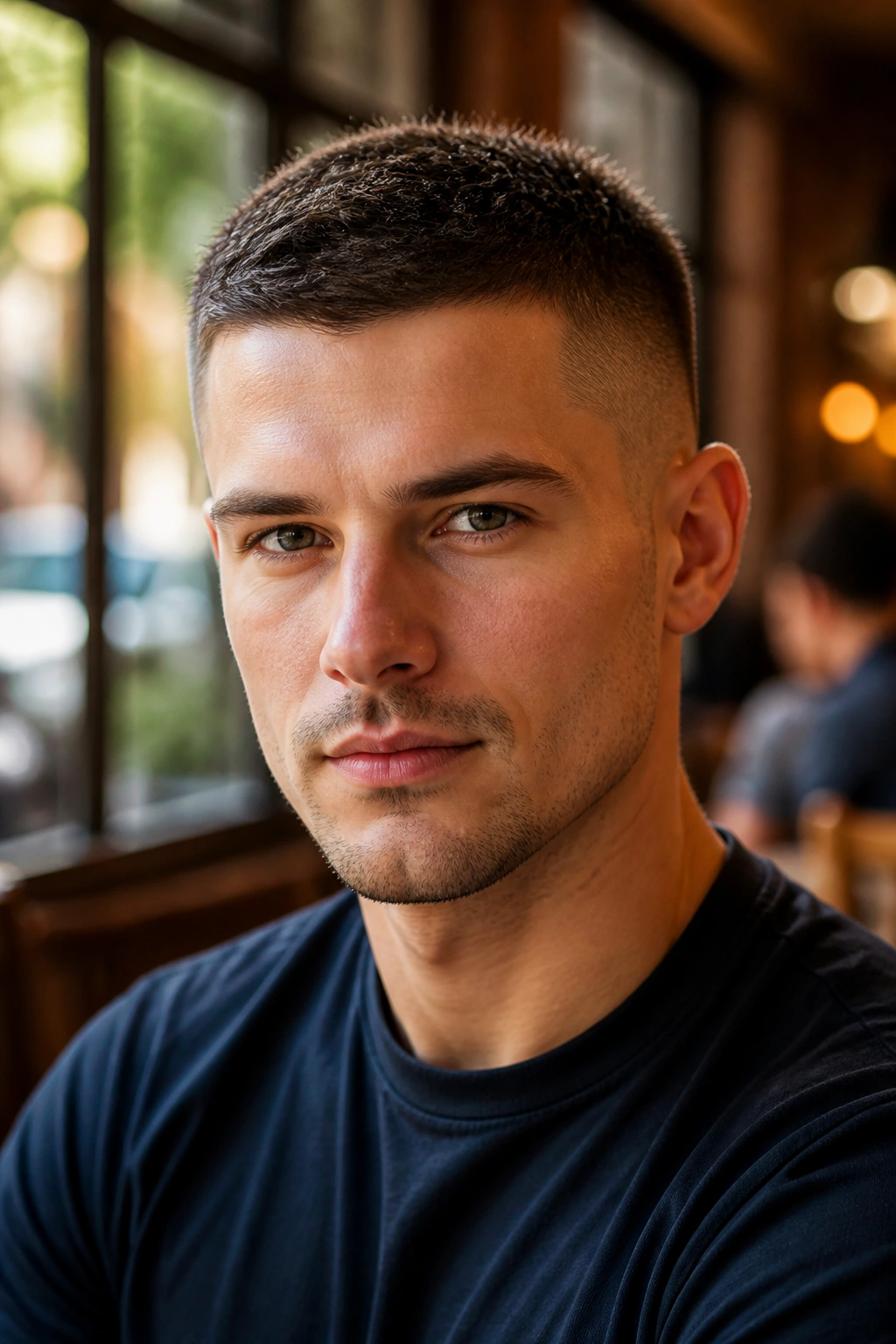
A crew cut is what happens when a buzz cut gets a little ambition. The top stays short, but not flat, and the sides are tapered down so the head keeps some shape. That extra length on top is small in inches, but big in how the haircut behaves once you leave the chair.
This cut is a workhorse. It looks at home in a classroom, on a job site, under a blazer, or paired with a hoodie. The front can be slightly longer than the crown, which gives you a clean line without the helmet effect that some short cuts can create. I like it for men who want order without looking like they tried too hard.
The best version keeps the texture natural. A tiny bit of matte cream or light paste is enough. Too much product turns the top stiff, and stiff short hair is a bad look. Keep the sides neat every two to three weeks, and the whole thing stays tidy without much drama.
3. The French Crop With a Short Fringe
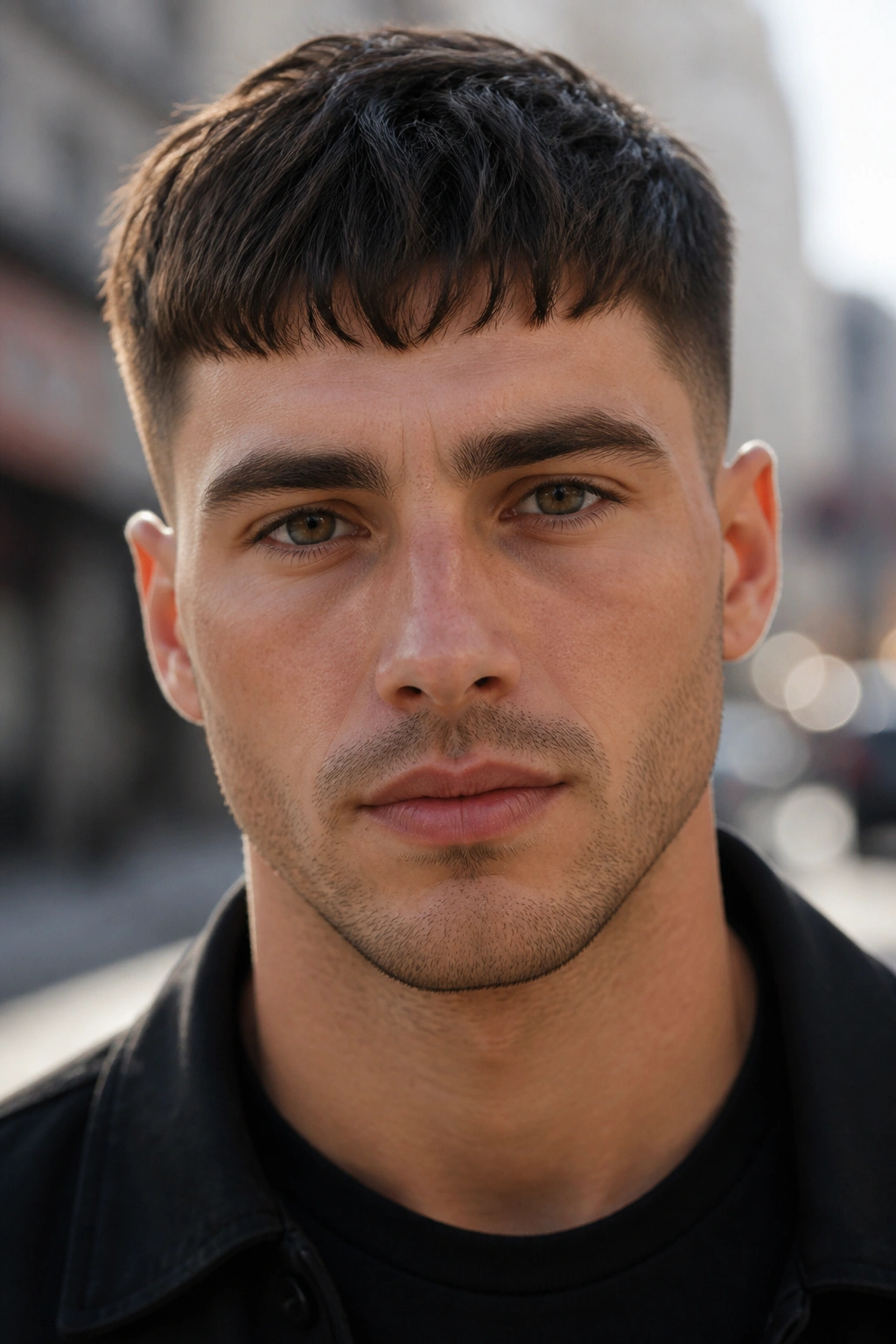
Why does a simple fringe make such a difference? Because the French crop puts the visual weight at the front, where the eye lands first. The sides stay short, the top stays textured, and the fringe sits forward instead of rising up or combing over to the side.
That front section is the whole point. It softens a high forehead, gives shape to straight hair, and hides a few hairline quirks without looking like you’re hiding anything. The bluntness at the front can be sharp or slightly broken up, depending on whether you want a cleaner or messier finish.
How to Wear It
Ask your barber for a short, choppy top with a textured fringe and tight sides. A low fade or taper keeps the cut modern-looking without turning it severe. Then use a pea-sized amount of matte clay and pinch the fringe forward with your fingers.
- Works well on straight to slightly wavy hair.
- Keeps maintenance low if your hair grows fast.
- Looks especially good with a faded neckline.
One more thing: keep the fringe short enough that it doesn’t flop into your eyes. That line should sit right on the edge of neat and relaxed.
4. The Textured Crop for Thick Hair
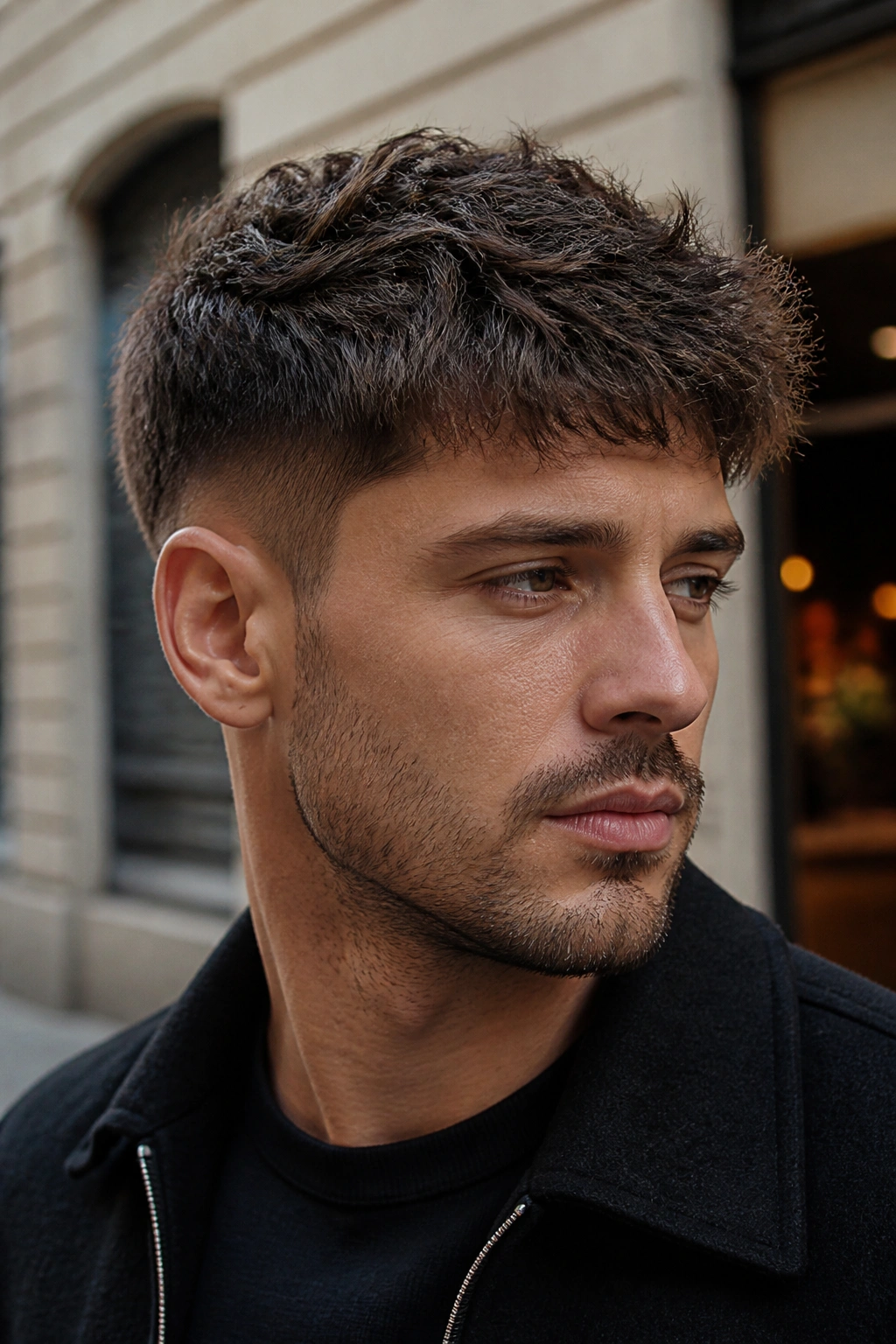
I’ve seen thick-haired guys fight their hair for years and then look relieved when they finally get a textured crop. The shape is short, but the top is broken up with choppy layers, so the hair lies with some movement instead of standing in one heavy block.
The magic is in the unevenness. A barber cuts into the bulk rather than just reducing the length, which means the top feels lighter and the outline looks softer. That matters if your hair sticks up after a shower or bulges at the crown. A good textured crop takes away that mushroom effect.
A little sea salt spray on damp hair helps. So does a matte paste worked through with your fingertips, not a comb. If you overwork it, the cut loses the rough, piecey look that makes it good in the first place. You want the top to look intentionally broken up, not teased into place.
- Best for: thick, coarse, or heavy hair.
- Ask for: short, uneven layers on top with a low or mid fade.
- Avoid: too much thinning at the crown, which can make the top frizzy.
The shape grows out fairly well, which is a nice bonus. Thick hair usually doesn’t behave that kindly.
5. The Ivy League Cut

The Ivy League sits in that sweet spot between polished and casual. It’s short, but not clipped down to nothing, with enough length on top to part to one side or brush slightly upward. The finish is neat without looking stiff, which is why this cut keeps showing up on men who need their hair to work in more than one setting.
I’ve always thought of it as the haircut version of a clean button-down shirt. You can wear it with sneakers or dress shoes, and it still makes sense. The sides are usually tapered rather than faded hard, which keeps the look softer around the ears and back of the neck. That softness is a big part of its charm.
The styling is straightforward. A light cream or low-shine pomade gives enough control without making the top look greasy. If your hair is fine, blow-dry it for ten seconds with your fingers lifting at the front. If it’s thicker, use a side part and let the natural bend do most of the work.
This is a smart choice if you want short hair that still leaves room for style.
6. The Caesar Cut
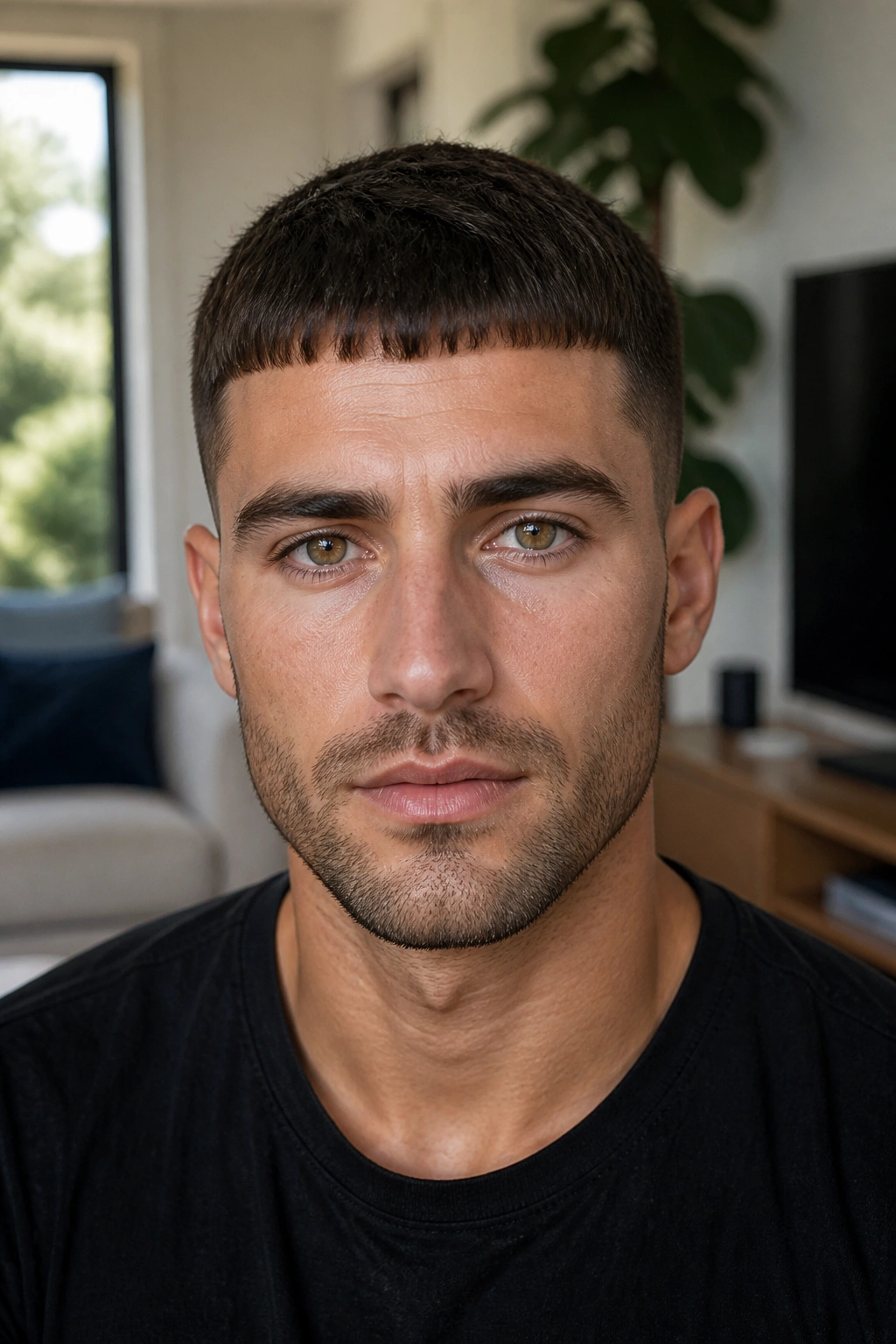
The Caesar cut is more direct than the French crop. The fringe is straight, short, and pushed forward, and the top stays close enough to the head that it feels almost graphic. It has a blunt, clean look that works especially well when you want something low-maintenance with a strong outline.
Unlike a side-swept crop, the Caesar doesn’t ask hair to do much traveling. That makes it a strong pick for men with straight hair, a receding front, or a cowlick that refuses to cooperate. The short fringe can help soften the forehead area without pretending the hairline doesn’t exist. I like that honesty.
The haircut can go too flat if the barber removes too much weight from the top. Ask for a little texture so the fringe doesn’t sit like a solid wall. You want structure, not a sheet. A tiny bit of matte product is enough to keep the front from splitting.
If you prefer a cut that looks neat even when you wake up late, this one earns its place.
7. The High and Tight
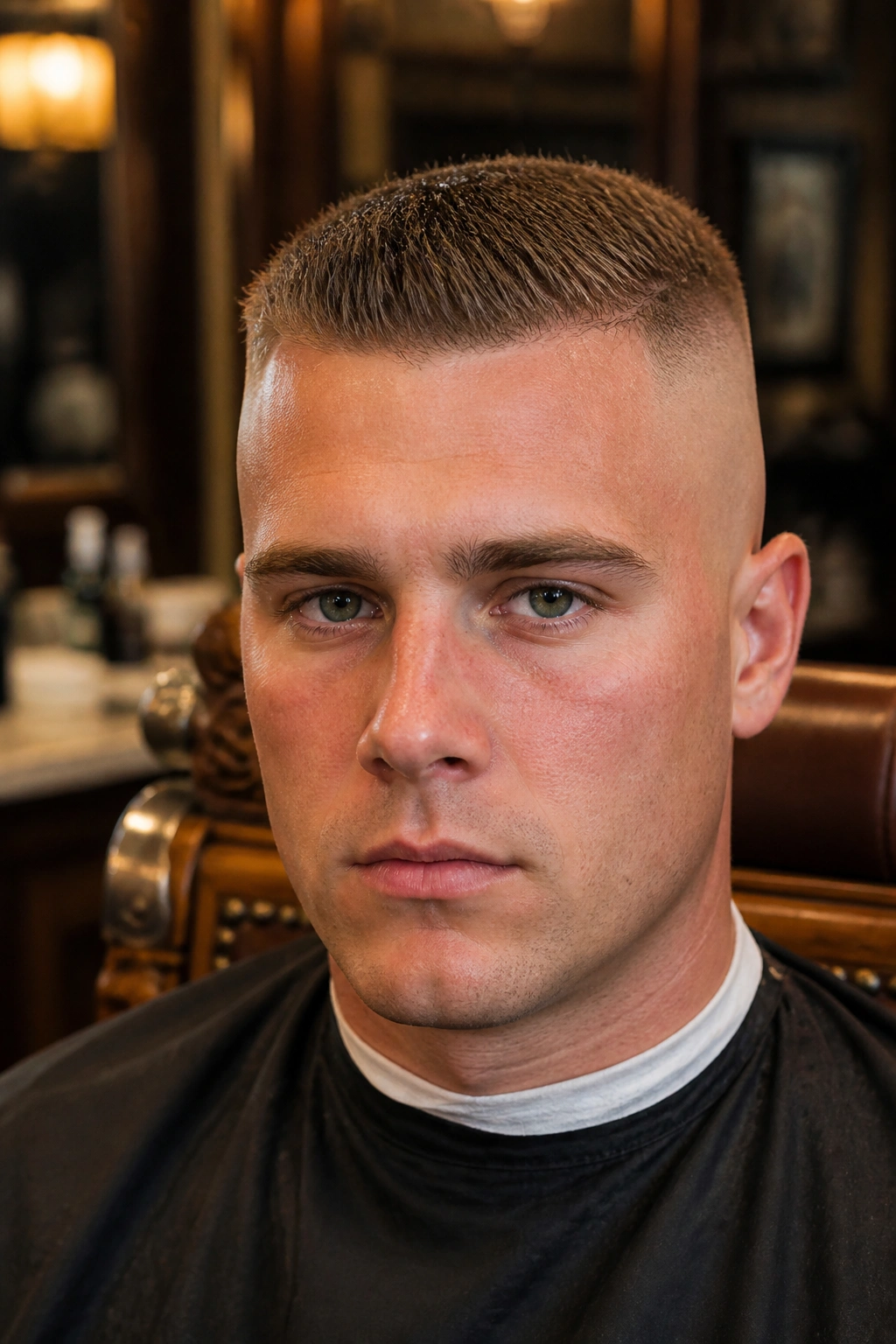
A high and tight is all about contrast. The sides and back are cut very short, often down to the skin or near it, while the top stays in a narrow strip of slightly longer hair. That shape gives the haircut a hard, disciplined feel without needing much styling at all.
The look draws attention upward. Good news if you have a strong brow, a firm jaw, or hair that grows thick in the center. Less good if your head shape is uneven, because the short sides leave nowhere to hide. That’s why this cut works best when the clipper work is clean and the top length is balanced, not just hacked off.
What to Ask For
- Skin or near-skin sides.
- A short top left long enough to stand up slightly.
- A tight neckline and crisp sideburns.
- No heavy blending if you want the classic military feel.
A high and tight can look severe in the wrong hands, so the barber’s symmetry matters a lot. The cut is sharp when the transition is tidy and the top is not too broad. If the top spreads too wide, the whole thing starts looking boxy.
8. The Short Side Part
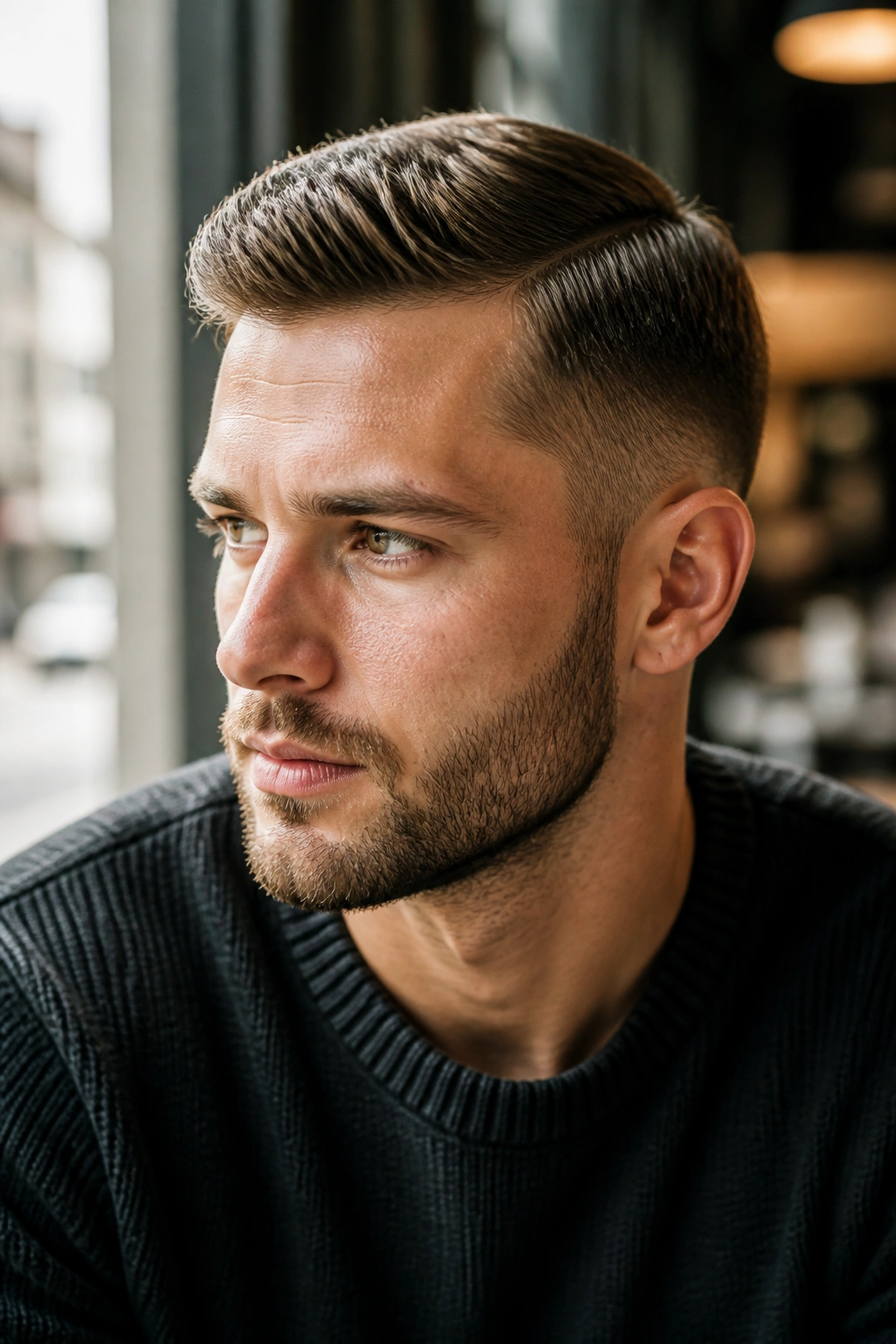
A short side part is one of those haircuts that quietly makes people look more put together. The top stays short enough to be practical, but there’s enough length to separate one side from the other and let the shape do the talking. It’s neat, tidy, and a little old-school in a way that works.
The part doesn’t have to be shaved in. In fact, I usually prefer a natural part if the hair already falls that way. A hard part can look too rigid unless the rest of the cut is balanced carefully. The sides should be tapered or faded low enough to keep the top from looking like a little cap.
This cut suits men with fine to medium hair because the part creates the illusion of more structure. A light cream or matte pomade helps keep the division in place without making the top shiny. If your hair is thick, ask the barber to take some weight out of the top so it lies flatter.
It’s a plain haircut in the best sense. Plain means reliable.
9. The Short Quiff
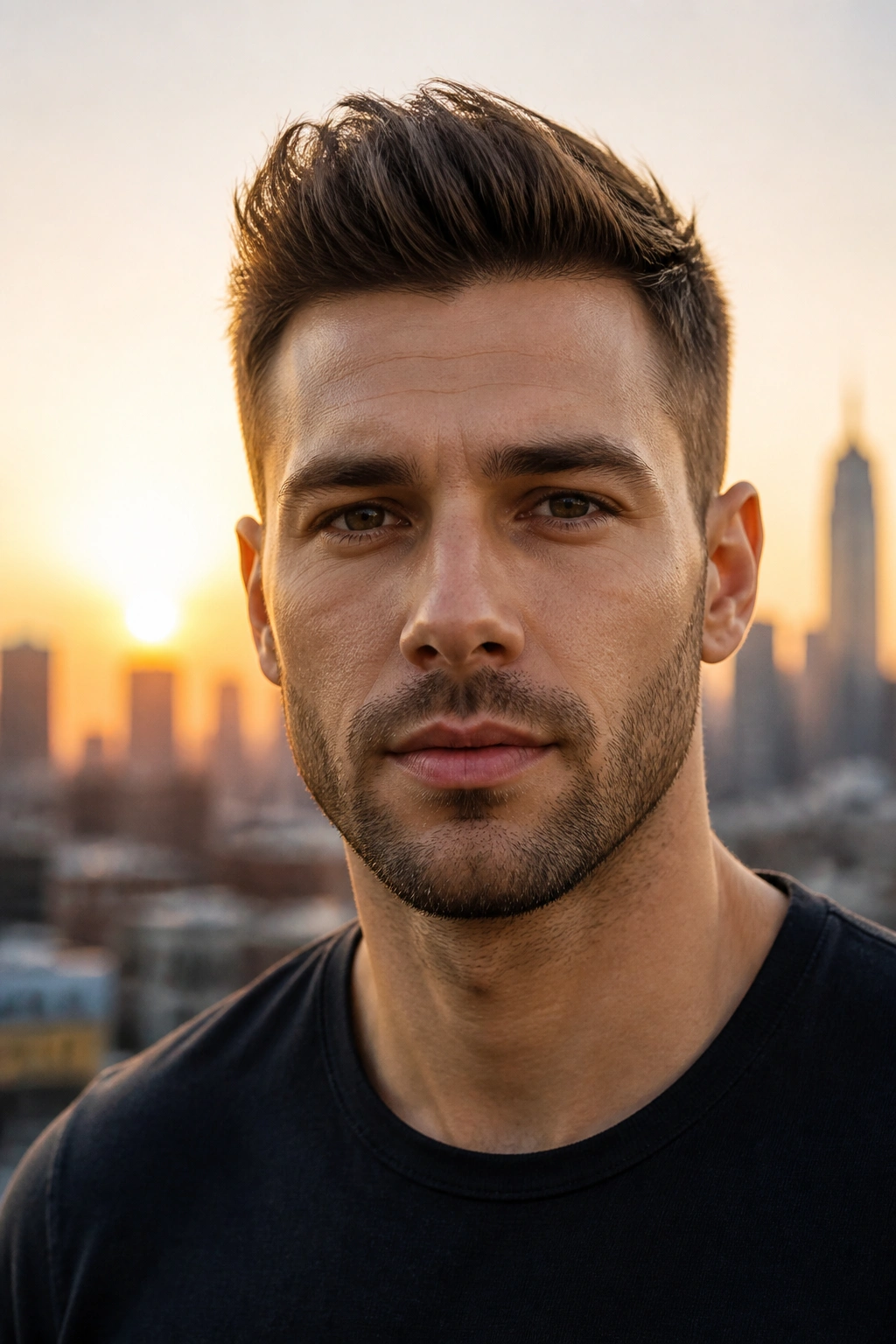
Can short hair still have height? Absolutely. The short quiff keeps the front lifted while the rest of the top stays short and controlled, which gives you shape without turning the hair into a full pompadour. The lift happens at the front, not all the way across the head.
The haircut works best when the top is long enough to push upward but short enough to stay light. If the front is too heavy, it collapses. If it’s too short, it won’t hold the shape at all. That middle ground is where the good versions live, and it often comes down to just half an inch more than people expect.
How to Style It
Blow-dry the front upward using your fingers or a vent brush. Then work in a matte clay or light paste from back to front so the lift doesn’t flatten. Keep the sides tight with a fade or taper; that contrast is what makes the quiff pop.
A short quiff is a nice pick if your hair has some natural body. It also gives straight hair a little movement without needing a lot of product. Just don’t go heavy on gel. Hard, wet-looking quiffs age the style fast.
10. The Skin Fade Crop
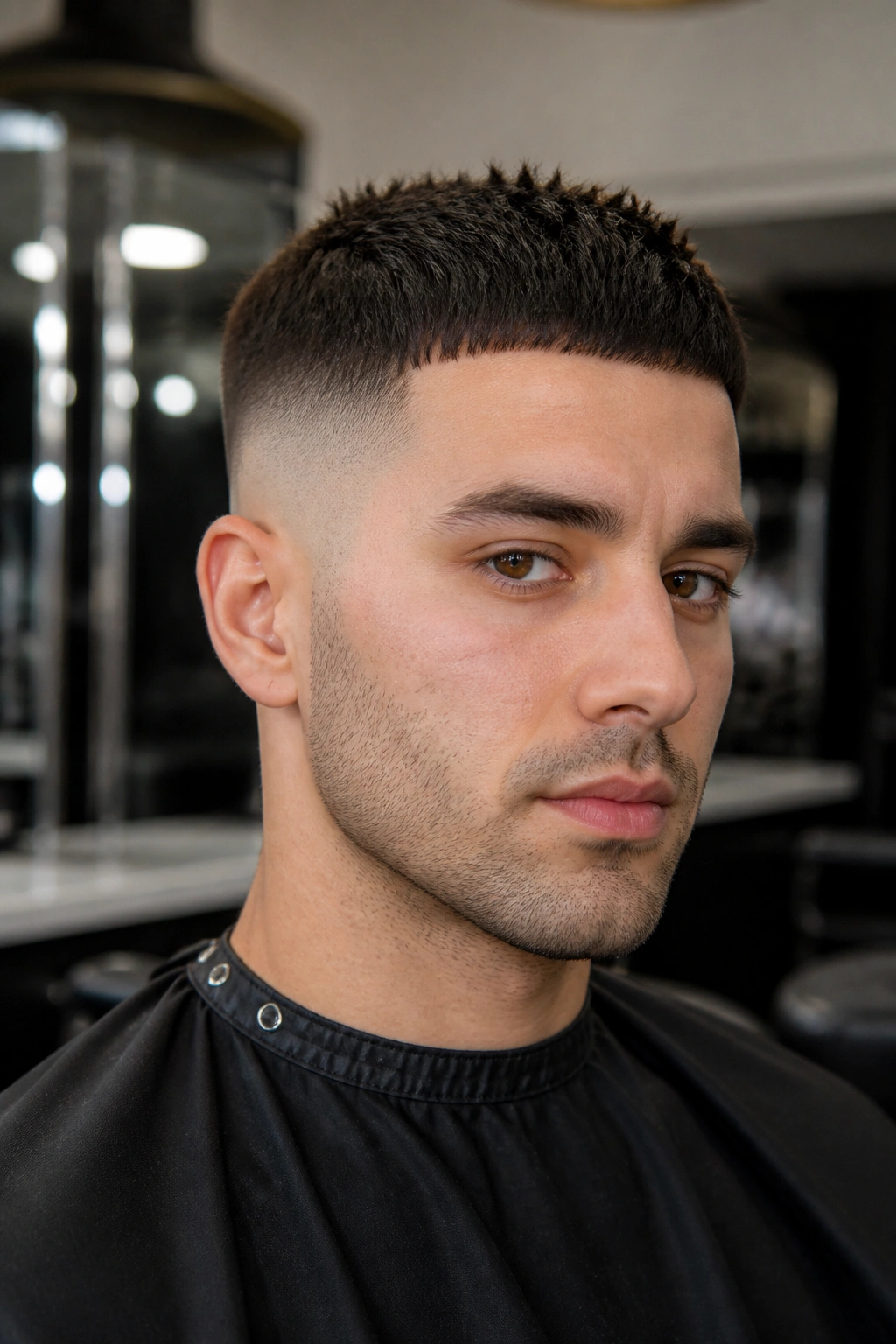
A skin fade crop is for men who want short hair to look sharp rather than merely short. The fade drops all the way to skin near the ears and neckline, and the crop on top stays textured and compact. That contrast makes the haircut feel crisp the second it’s finished.
The fade changes the mood of the crop completely. Without it, the style can look casual. With it, the whole cut gets more edge and cleaner lines. It’s a strong option if you like the French crop idea but want something a little bolder around the sides.
The barber needs to manage the transition well. A fade that rises too high can make the head look taller than it is. A fade that is too soft can lose the whole point. Ask for the fade height to match your face shape, and keep the top choppy rather than smooth.
This cut pairs well with a beard, especially one that has a strong cheek line. The fade can help connect the hair and facial hair without making the face look crowded. Clean, compact, and sharp. That’s the whole appeal.
11. The Spiky Top
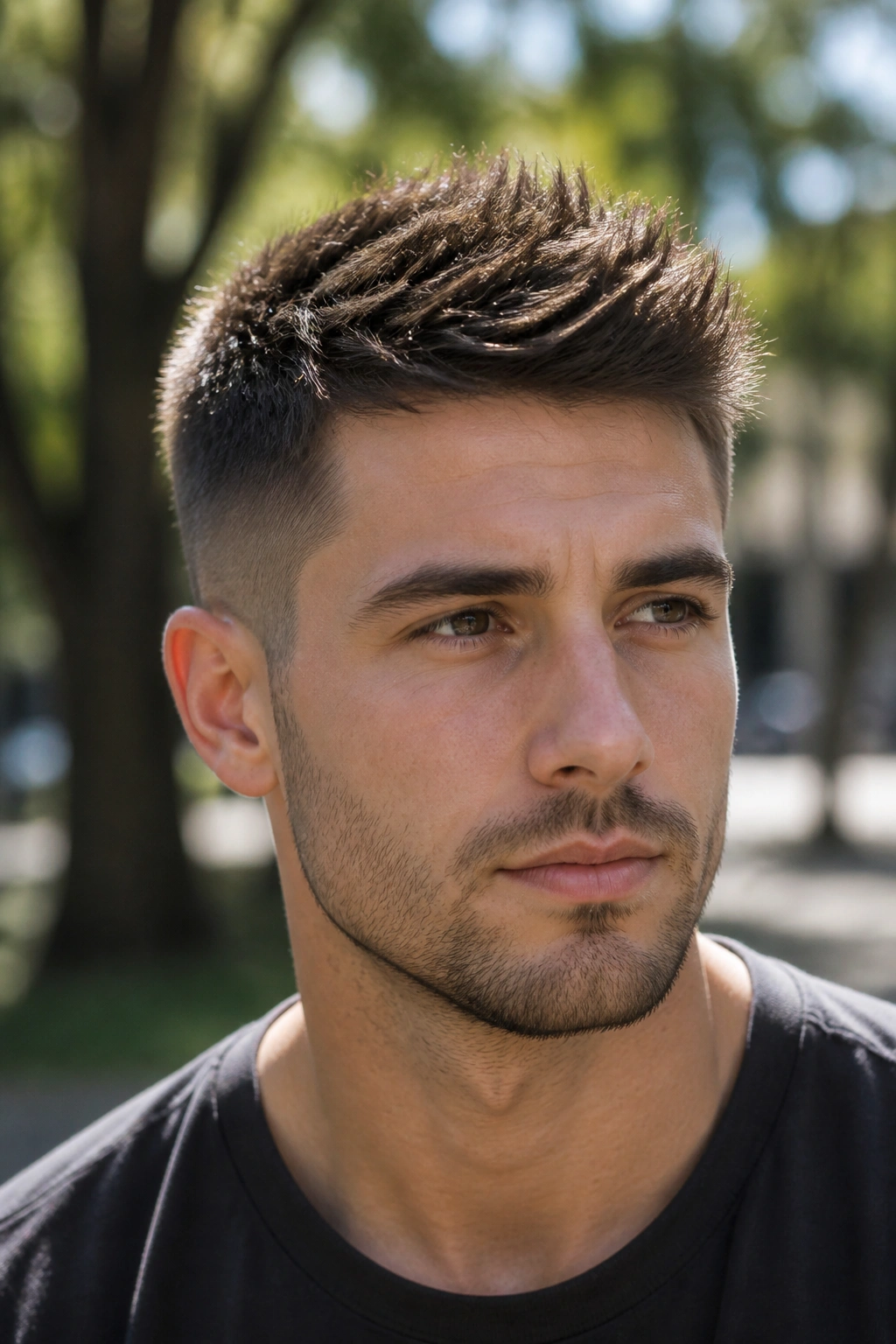
The short spiky top gets a bad reputation because people remember the stiff, over-gelled versions. Done right, it looks lively and sharp, with short pieces of hair pushed upward and forward just enough to show texture. The difference between good and bad is product choice, not the concept itself.
I prefer this cut on straight or slightly thick hair. It needs enough natural grip to hold those small spikes without drooping. A matte paste or light clay works better than shiny gel because the texture should look dry and touchable, not crunchy. If the hair is too long on top, the spikes start leaning over like grass after rain.
The shape is simple: short sides, slightly longer top, and a little more length toward the front. That lets the front carry the energy while the crown stays tidy. It’s a useful cut for guys who want movement without committing to a full fringe or quiff.
You do need to tame the crown. If the back of the top stands up too much, the cut can look messy in a hurry. Keep the top short enough that it responds to your hands without needing a full styling session.
12. The Short Pompadour
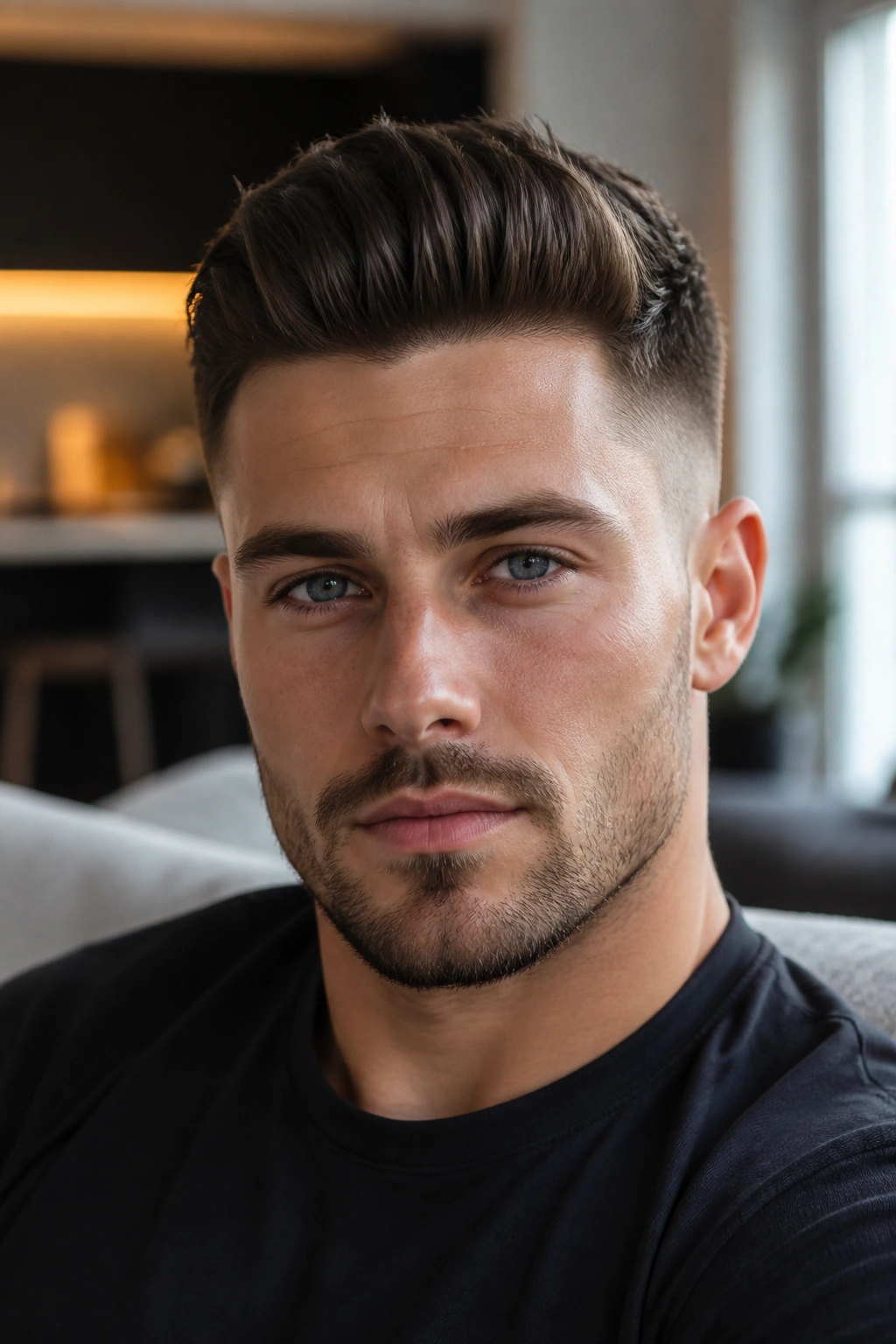
A short pompadour gives you height without the old-fashioned stiffness people sometimes fear. The front rises and rolls back a bit, while the sides stay tight enough to keep the shape controlled. It’s a little more polished than a quiff and usually smoother through the top.
The cleanest versions rely on a careful balance of length. Too short, and there’s no lift. Too long, and the top starts looking like it wants to be a full pompadour, which changes the whole feel. For short hair, the sweet spot is enough length to brush up and back, but not enough to droop.
How It Differs From a Quiff
A quiff pushes upward at the front and can feel loose. A short pompadour sweeps up and back with more shape through the front section. That’s the distinction, and it matters if you care about silhouette.
This cut is a strong fit for straight or slightly wavy hair. Use a blow-dryer first, then finish with a medium-hold pomade or cream. You want structure with a little shine, not the helmet effect that happens when people pile on product. If your hairline is good and your forehead is balanced, the shape can look excellent.
13. Short Hairstyles for Men: The Buzz Cut With a Sharp Line-Up
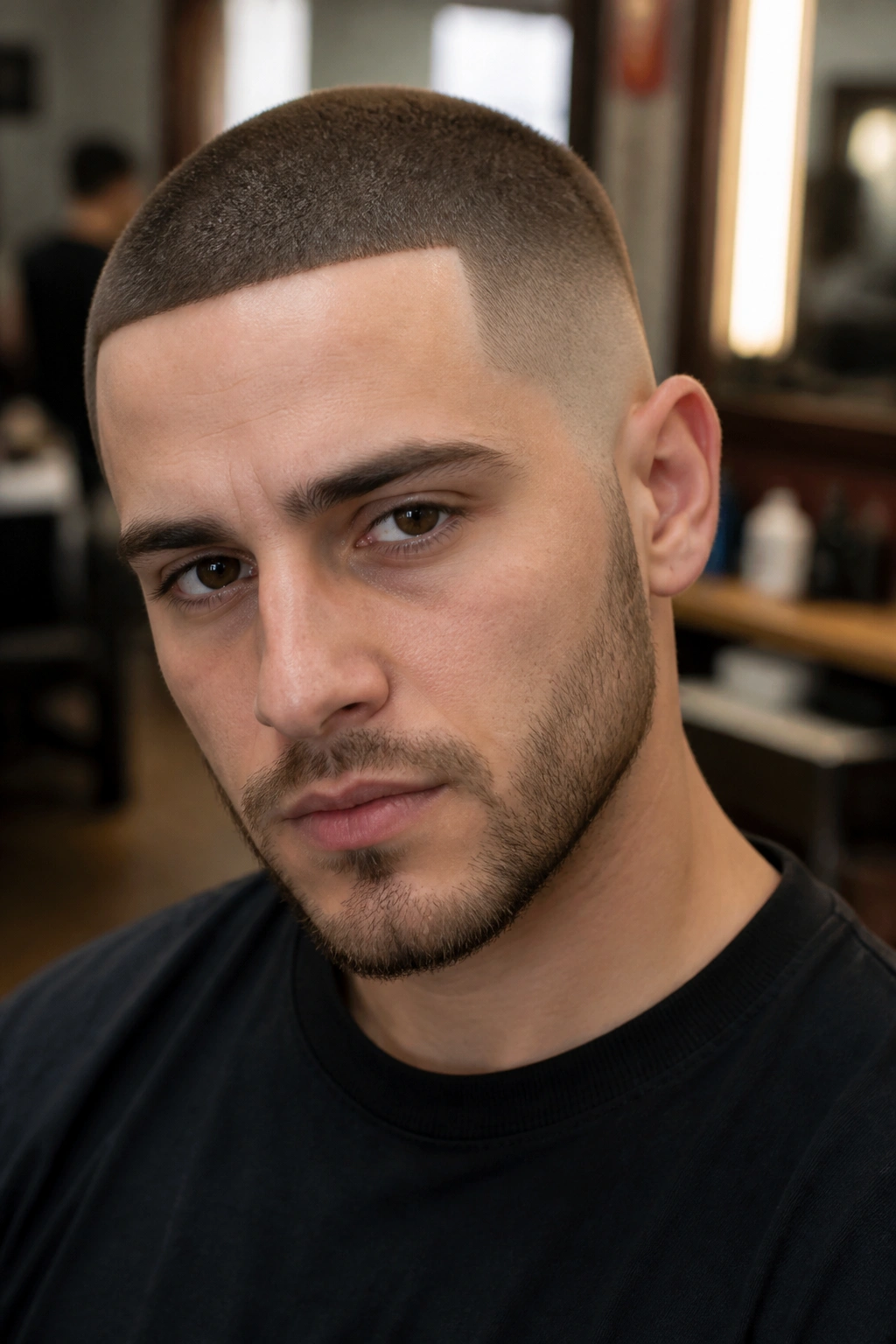
A buzz cut gets a lot better when the edges are lined up with care. That’s the whole difference here. The top stays short and uniform, but the forehead line, temples, and neckline are edged with a crisp shape that turns a plain cut into something noticeably cleaner.
The line-up makes the haircut feel deliberate. A square hairline can add strength to a softer face, while rounded corners can soften a very angular one. If your barber knows how to keep those lines neat without pushing them too far back, the whole cut looks more expensive than it really is.
What to Watch For
- Keep the top simple: one guard length or a very subtle fade.
- Ask for crisp temples: but not a fake, overdrawn line.
- Keep the neckline natural: too much carving can look harsh as it grows out.
- Match it with beard edges: if you wear facial hair, the transition matters.
This is a good choice if you like the ease of a buzz cut but want more shape around the face. It also grows out in a cleaner way than a lot of sharp-fade styles, which is worth a lot if you do not want to visit the barber every ten days.
14. The Curly Crop
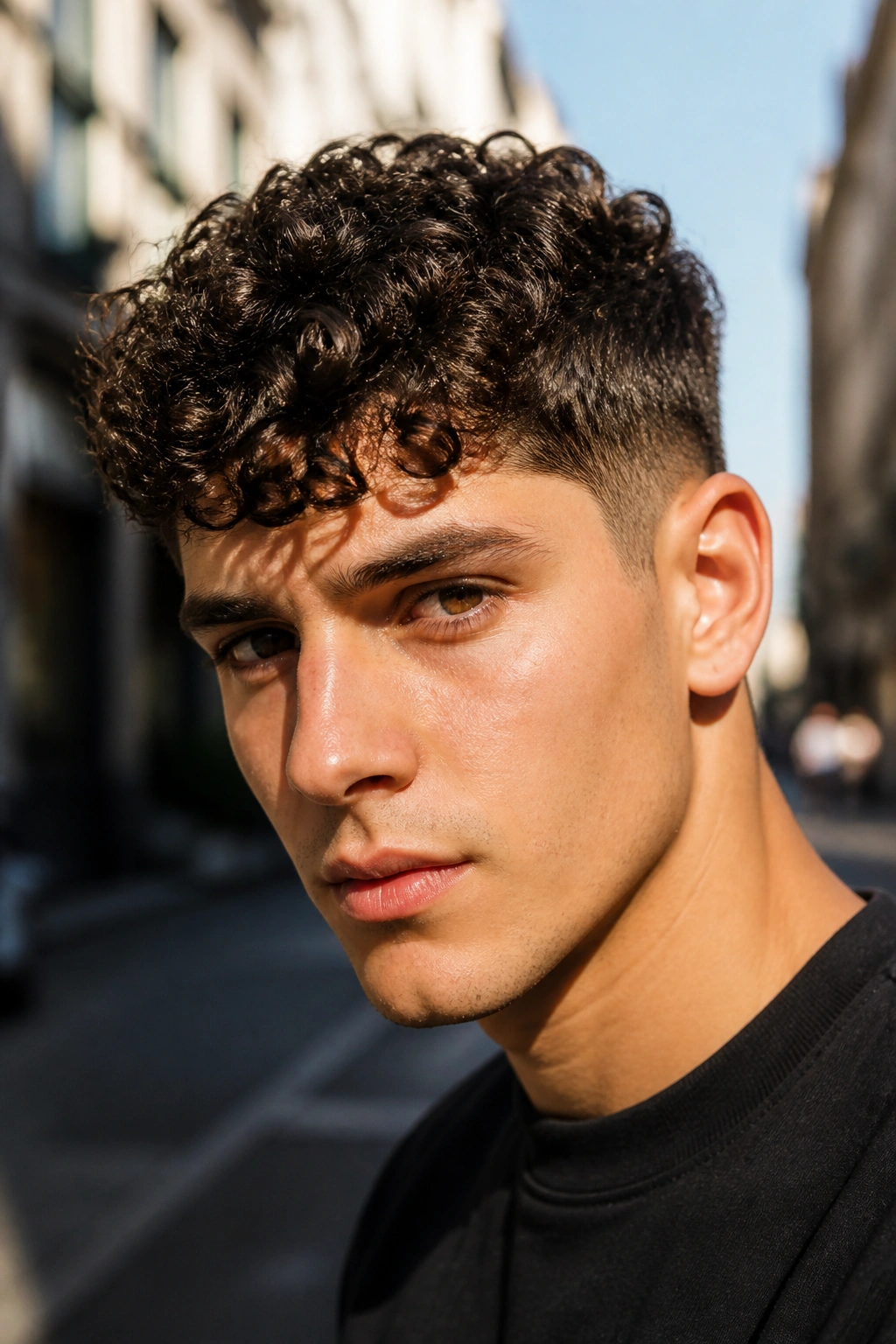
Curly hair changes the rules, and that’s a good thing. A curly crop keeps the curls short enough to control but long enough to show their pattern, so the hair feels textured instead of bulky. The best versions preserve the spring in the curl while trimming the sides tight enough to stop the shape from ballooning.
The biggest mistake with curls is over-thinning. People see volume and want to remove it, then the haircut turns frizzy and uneven. A better move is to keep the top compact and let the curls stack in a controlled way. That gives you definition without a pyramid.
Use a curl cream or light leave-in on damp hair, then scrunch it once or twice. Don’t rake through it too much. Curls like a bit of space, and when they’re cut short, they still need moisture to hold their shape. If the top is left about an inch or two, the pattern reads clearly without taking over your head.
This cut is especially good for men who want texture without constant fuss. It looks honest. That matters.
15. The Wavy Brush-Up
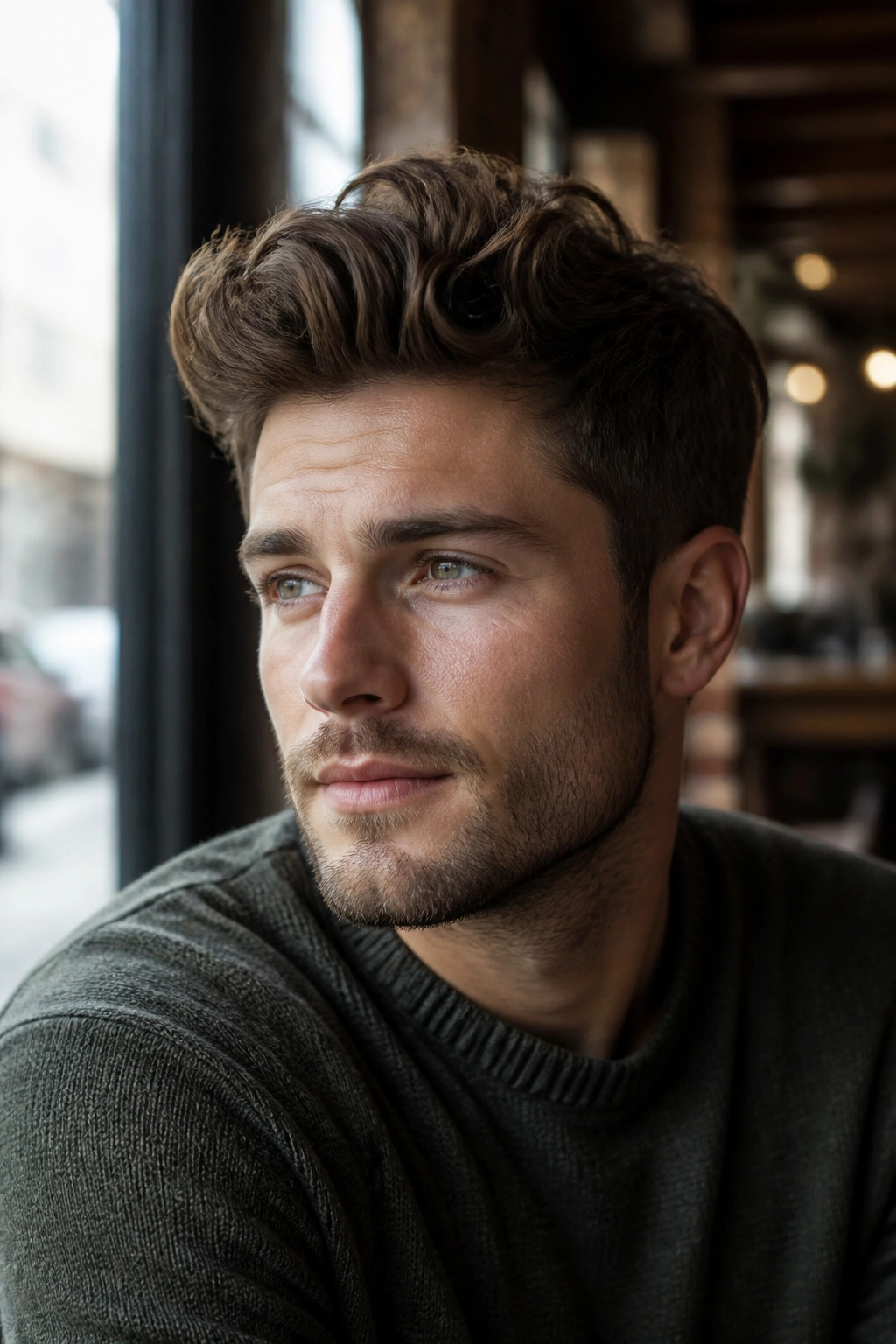
What do you do when your hair is wavy but too short for a full styled look? You brush it up and let the wave do the work. The short wavy brush-up takes that in-between texture and gives it height, so the top looks lifted without forcing it into a stiff shape.
The trick is not to fight the bend in the hair. If the waves naturally want to move back and slightly sideways, use that. Blow-dry with a nozzle attachment while lifting the roots, then use a small amount of paste to keep the front moving upward. The result should look airy and a little loose, not carved into place.
How to Get the Most From It
- Start with towel-dried hair, not dripping wet hair.
- Blow-dry at medium heat while lifting the front.
- Use a matte product with light hold.
- Leave the sides tighter so the top has room to stand out.
This cut works well for men who want motion on top without the commitment of a full quiff. It also handles grow-out better than styles that depend on exact symmetry. Waves are forgiving if you let them be.
16. The Low Taper Fade With Fringe
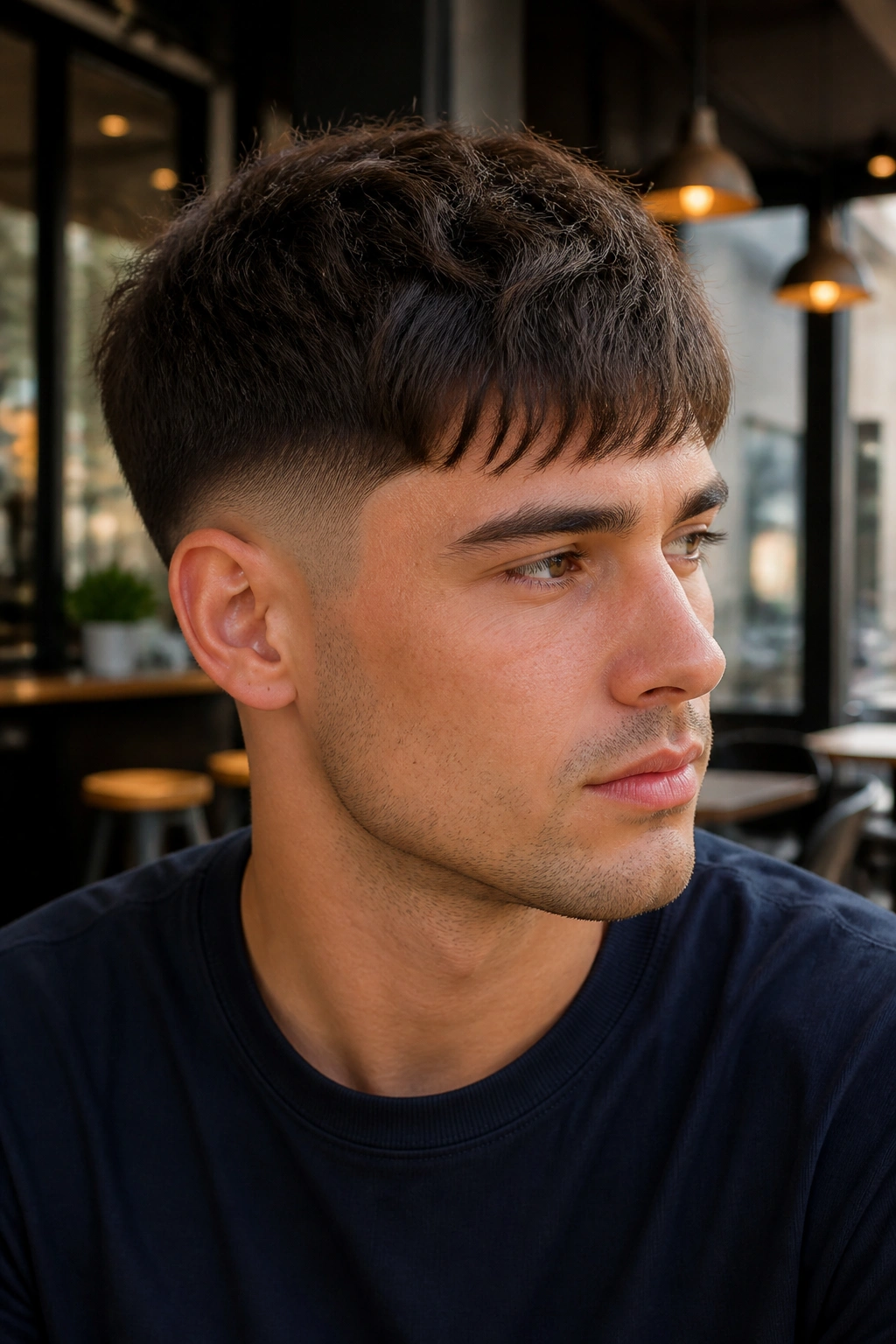
A low taper fade with fringe is one of the softer-looking short styles on this list. The fade stays low around the ears and neckline, which keeps the transition subtle, while the fringe brings the focus forward. The whole cut feels relaxed but still tidy.
That low placement matters. A high fade can make a short fringe look too severe, especially on thinner hair. A low taper gives the top more room to breathe and leaves some weight at the sides, which helps the cut sit more naturally as it grows out. It is a good compromise for men who want a little shape without a hard edge.
This style can be worn straight across the forehead or slightly broken up with texture. The second version is easier to live with if your hair has a cowlick or a bit of wave. A light cream keeps the fringe from separating into random pieces while still letting it move.
It’s a solid haircut for school, work, and everyday wear. Nothing flashy. Just clean and balanced.
17. The Short Afro
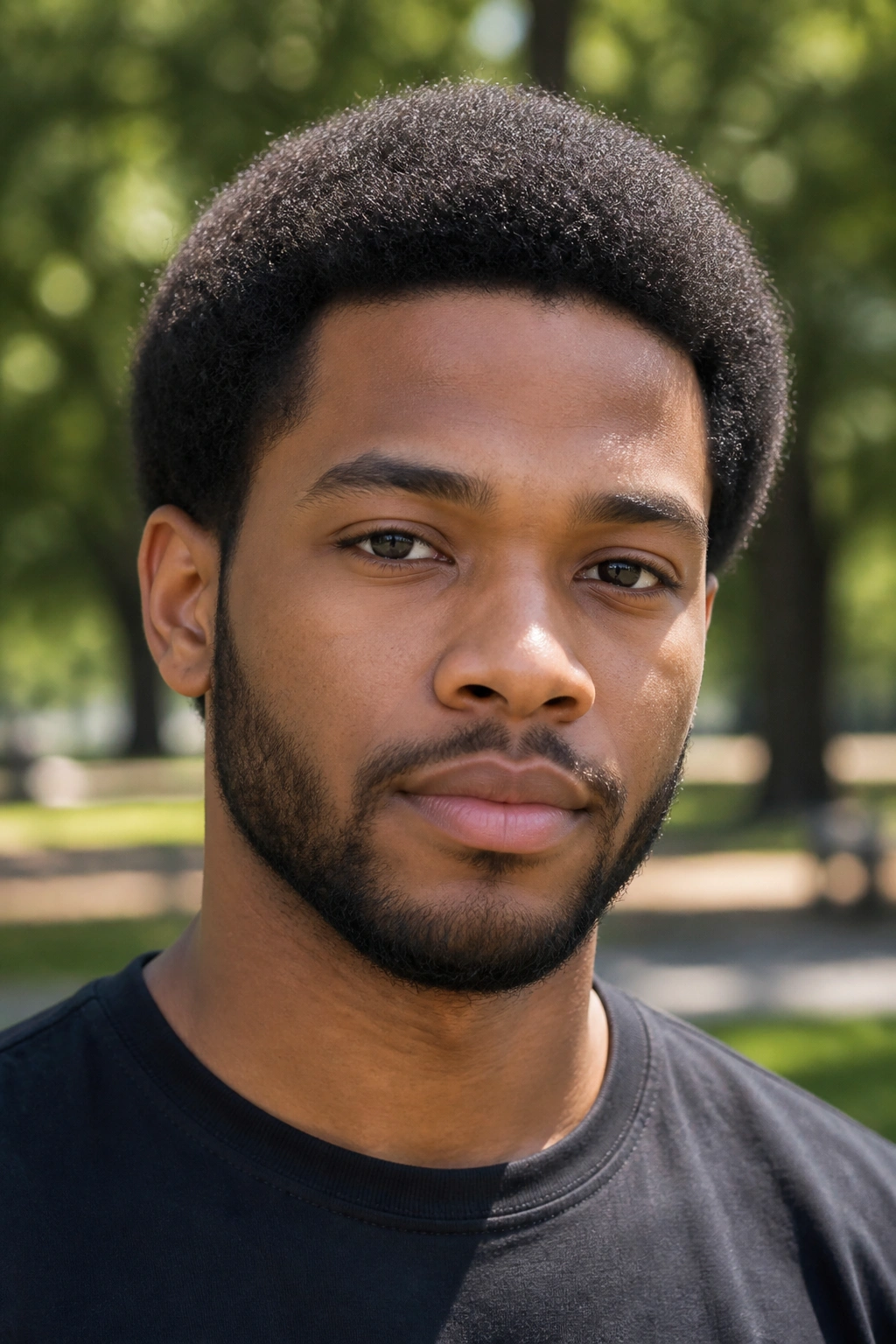
A short afro deserves more respect than people give it. When the shape is right, it’s one of the cleanest short hairstyles for men because it works with natural texture instead of trying to flatten it. The goal is a rounded, even silhouette that follows the head and keeps the curls or coils looking full.
The outline matters more than length. A good cut keeps the shape neat around the temples and neckline while letting the top hold its natural body. If you wear a line-up, it should be sharp but not pushed back too far. If you prefer a softer edge, that works too. The key is balance.
Moisture is non-negotiable. A leave-in conditioner or curl cream helps keep the hair from drying out and puffing in odd directions. A pick can lift the roots, but use it gently. Too much picking creates a halo effect that looks wider than intended.
This cut is honest about texture, and that’s what makes it strong. It does not need pretending or heavy styling.
18. The Classic Taper Cut
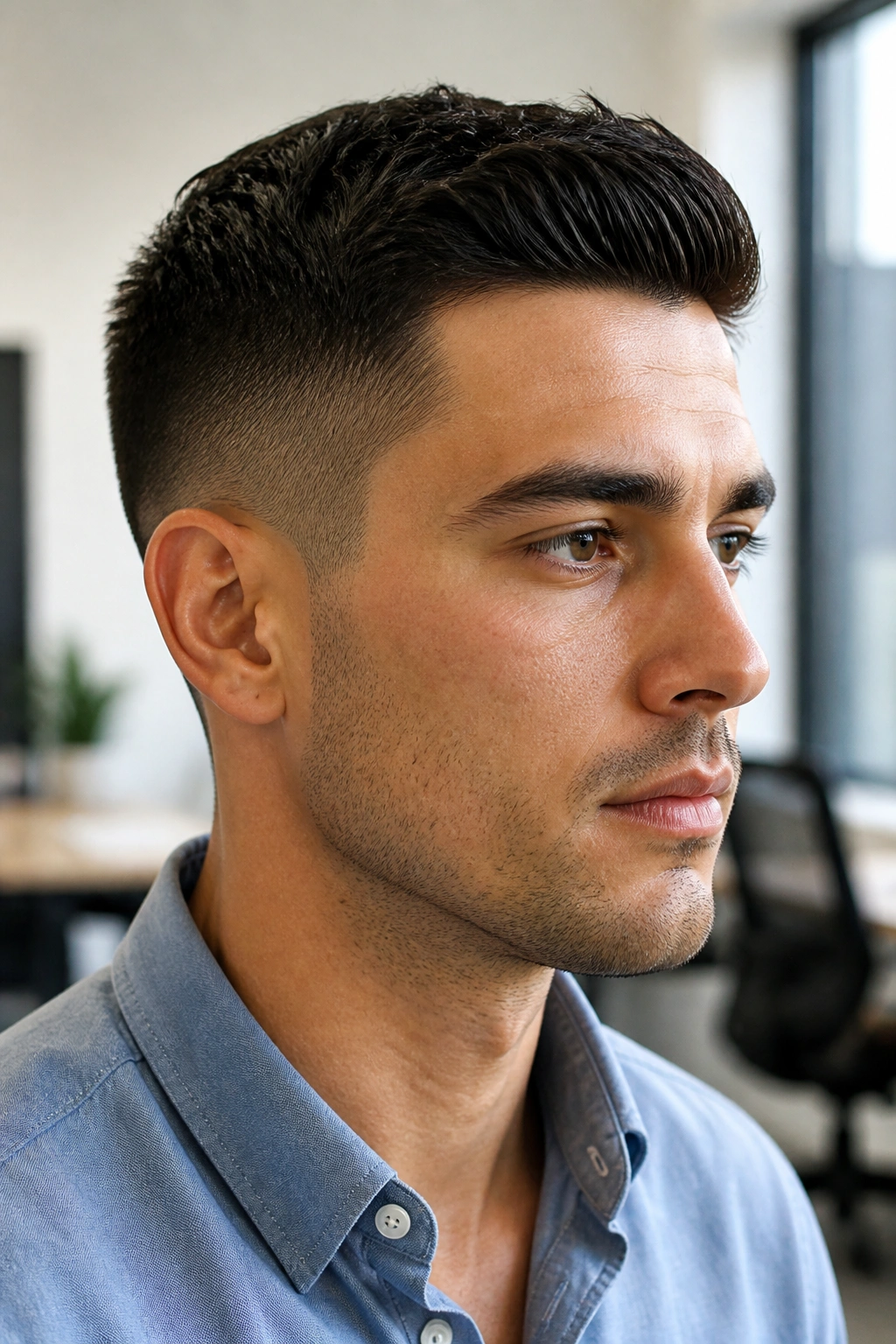
If fades feel too sharp for your taste, the classic taper cut is a quieter move. The hair stays fuller on top, while the sides and neckline gradually shorten without dropping all the way to skin. The result is tidy, soft, and easy to wear with almost any face shape.
The taper is one of those cuts that grows out gracefully. That matters more than people admit. A harsh fade can look great on day one and start looking ragged by the end of the week. A taper keeps its shape longer because the transition is gentler and less dramatic.
I like this cut for men who want a professional look without making a big statement. It works with side parts, short brush-ups, and natural texture. You can add a touch of cream if needed, but often the haircut does the job on its own.
Why It Beats a Hard Fade for Some Men
A taper leaves more softness around the ears and back of the neck. If your hairline is already strong, that softness can be more flattering than a harsh fade line. It’s also easier to maintain if you do not want a barber visit every few weeks.
19. The Short Faux Hawk
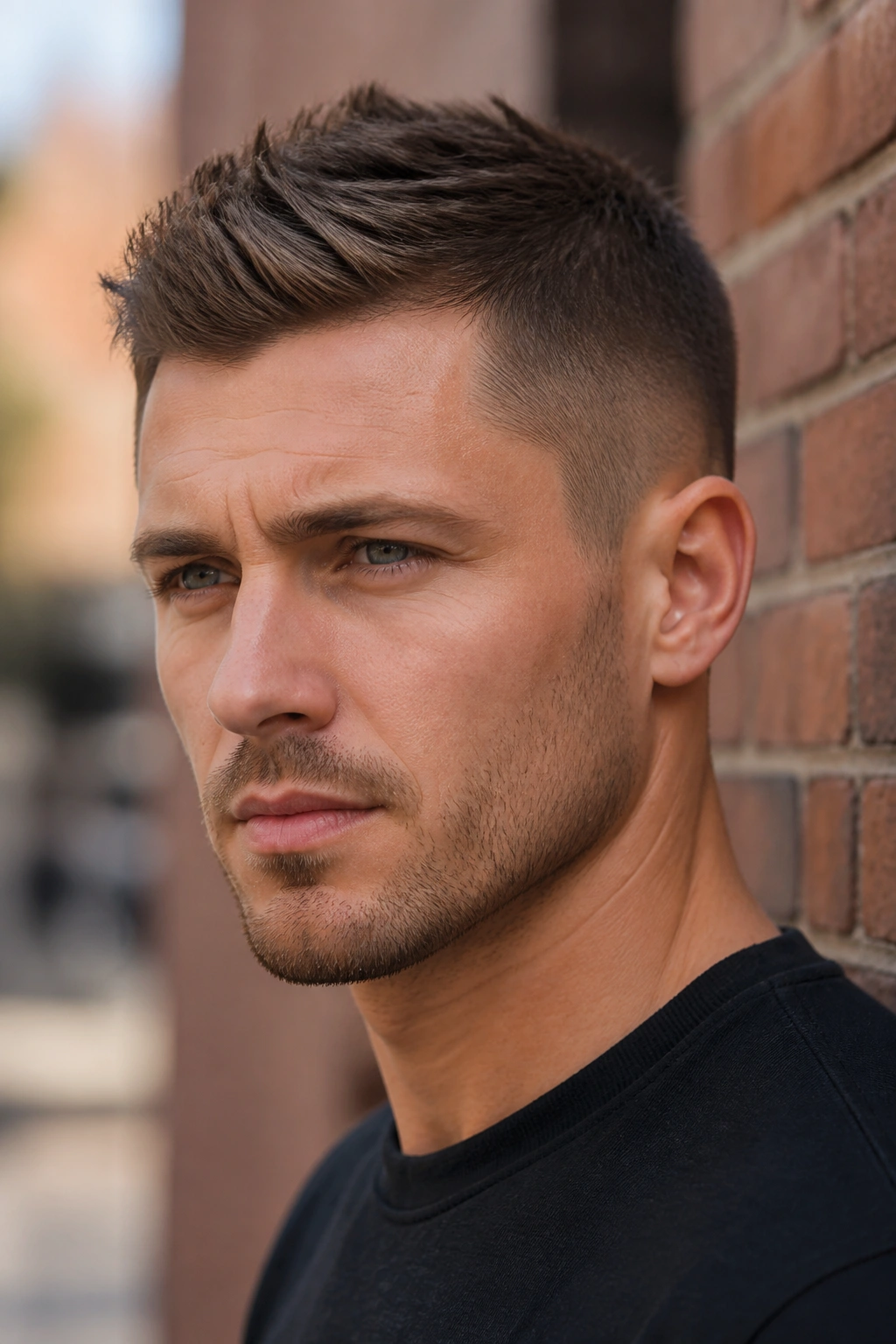
A short faux hawk gives you attitude without going full mohawk. The sides are clipped short, while the top forms a narrow ridge that runs from front to back. The center section gets the height, and the rest stays close enough to keep the shape controlled.
This cut works best when the top is textured rather than smooth. A little separation in the hair makes the ridge look modern and natural. If the top is too polished, the style feels dated fast. If the sides are too wide, the faux hawk loses its shape and turns into a generic short cut.
Why It Stands Out
- The center strip adds lift without needing long hair.
- Short sides keep the face open.
- Matte clay or paste helps the ridge stay piecey.
- A mid fade gives the cut extra edge.
This style suits guys who want something bolder but still practical. It can be worn a little messy on weekends and neater for work with the same basic shape. That flexibility is a big part of why it sticks around.
20. Short Hairstyles for Men: The Comb Over Fade
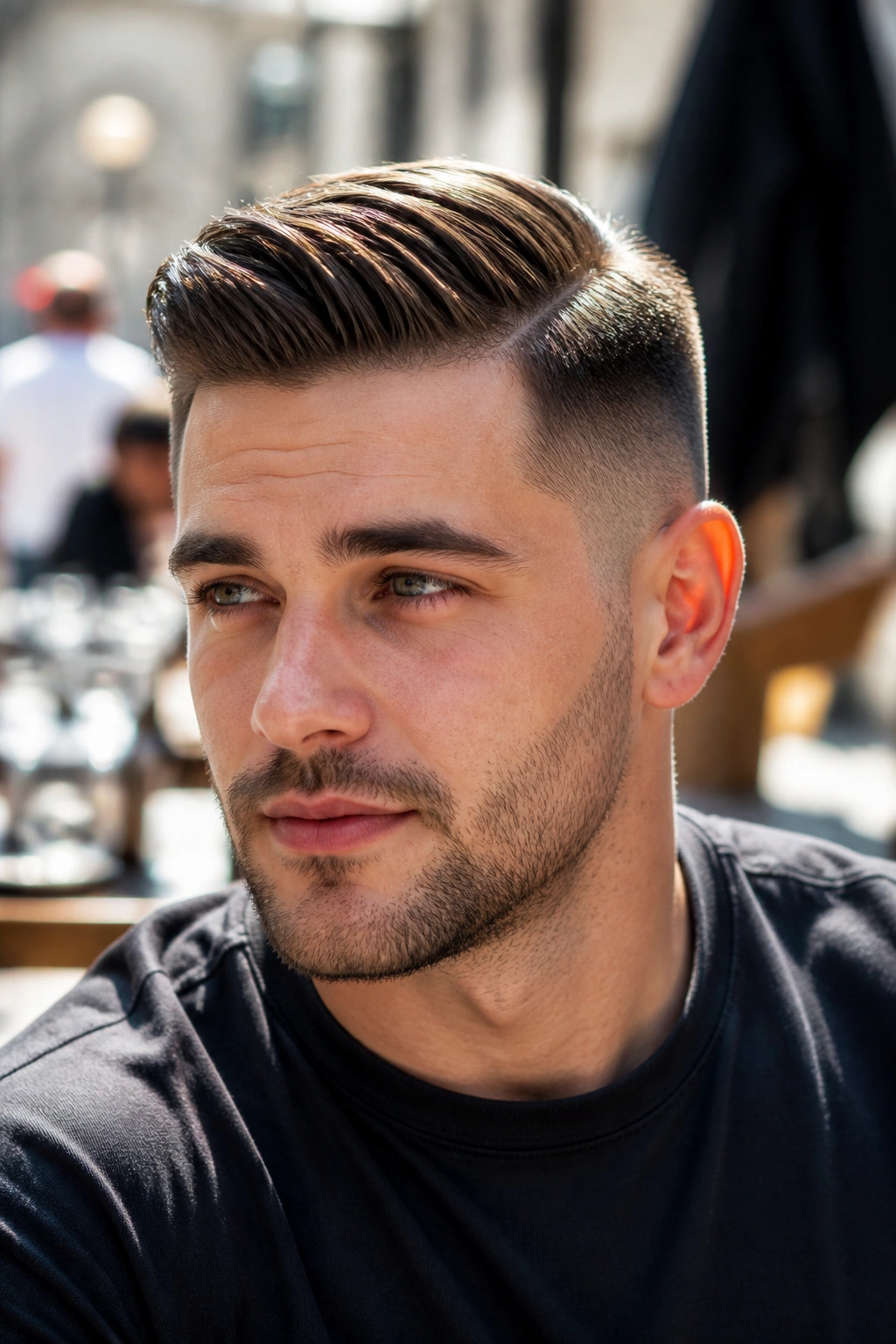
A comb over fade has a bad reputation when it’s too slick or too thin, but the short version can look excellent. The top stays short enough to keep the shape compact, while the fade on the sides cleans up the outline and gives the parting line some contrast. It’s one of the easiest ways to look dressed up without growing your hair out.
The modern version should be textured, not plastered flat. That matters. A stiff comb over looks like it’s trying too hard, and the whole point of short hair is to make life easier. Use a side part that follows your natural growth pattern, then sweep the top over with a light cream or low-shine pomade.
This cut is a strong pick for straight or slightly wavy hair. It works especially well if your hair is finer, because the part and fade make the top look more defined. If your hair is thick, the barber should remove some bulk so the sweep lies cleanly instead of bulging at the crown.
A comb over fade looks good in motion. That’s the honest test. If it still sits neatly after a little wind, you’ve got the shape right.
Final Thoughts
Short hair only looks simple when the cut matches the hair underneath it. A buzz cut, a crop, and a taper can all be short, but they do different jobs on the head and face.
The smartest move is to choose the style that fits your texture, your hairline, and the amount of styling you’re willing to do. Some cuts are built for five-second mornings. Others need a quick pass with a dryer or matte paste. Neither is better in the abstract.
Bring a photo, sure. Bring a little context too. Tell the barber how your hair behaves at the crown, where it sticks up, and whether you want it to grow out cleanly or stay sharp between cuts. That conversation is worth more than most trend names.
