



There is a stubborn, outdated rule in the beauty world that suggests round faces require length to look balanced. You have probably heard it: “Don’t go short, or you will emphasize the fullness of your cheeks.” It is time to retire that idea. When done with precision, short hair is arguably the most flattering option for a round face. It is not about hiding your features; it is about creating vertical lines, adding angles, and drawing the eye upward rather than outward.
The geometry of a round face—where the length and width are roughly equal and the jawline is soft—craves height and volume. When you cut your hair short, you can manipulate where that volume sits. By keeping the sides sleek or tapered and the top voluminous, you effectively elongate your silhouette. Natural hair is particularly suited for this because it already carries inherent volume and texture. You do not need to rely on heavy styling products to prop your hair up; your natural curl pattern is already doing the heavy lifting.
If you are thinking about making the chop, or if you are simply looking for a fresh way to style your shorter natural hair, the focus should be on structure. A good cut for a round face adds definition to your bone structure rather than mimicking the curve of your jaw. Whether you have tight coils, loose waves, or anything in between, the right short style can frame your face, highlight your cheekbones, and—most importantly—make you feel entirely like yourself.
1. Tapered Afro with Defined Curls
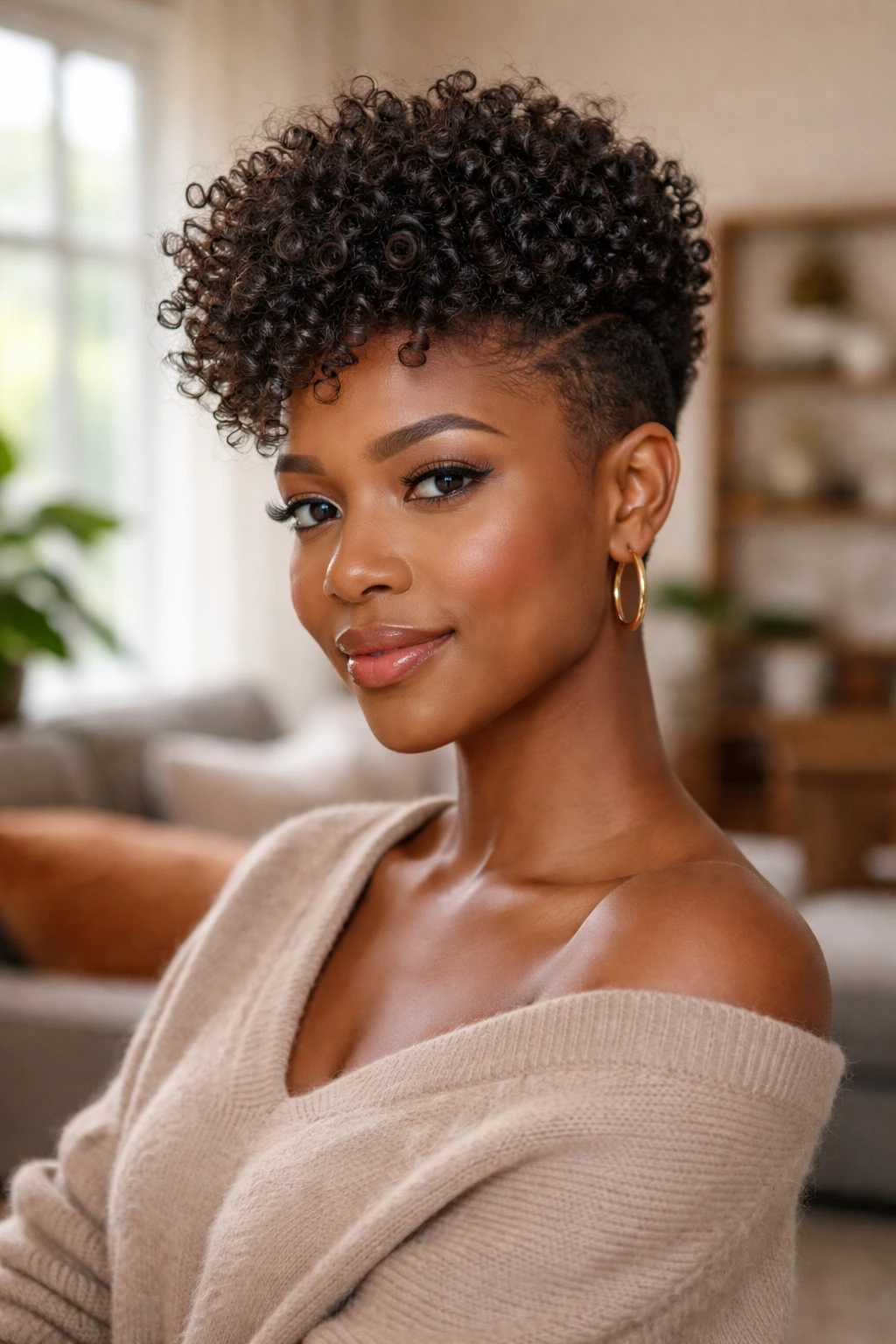
A tapered afro is a masterpiece of precision. It removes the bulk from the sides and back, drawing a clean, sharp line that contrasts with the softness of a round face. By keeping the hair longer on top and closely cropped toward the nape of the neck, you create an intentional, upright silhouette. This specific arrangement forces the eye to travel up, effectively lengthening the appearance of your face.
Why It Works for Round Faces
The gradient created by the taper creates an illusion of elongation. It is not just about the hair; it is about the negative space created by the shorter sides. When the sides are tighter, your face looks less wide, and the volume on the crown acts as an architectural feature.
How to Style It
- Focus on the curl pattern: Use a lightweight styling cream or a curl-defining custard while the hair is damp to ensure your curls clump together properly.
- Pick it out: Once dry, use a hair pick to gently lift the roots on top. Do not mess with the tapered sides; let them stay neat and close to the skin.
- Edge maintenance: This style relies heavily on sharp edges. Keep your hairline clean with a regular edge-up to maintain the geometric contrast.
Pro tip: Do not be afraid to use a tiny bit of pomade on the tapered sides to keep them looking velvety and uniform while the top stays fluffy and airy.
2. Pixie Cut with a Deep Side Part
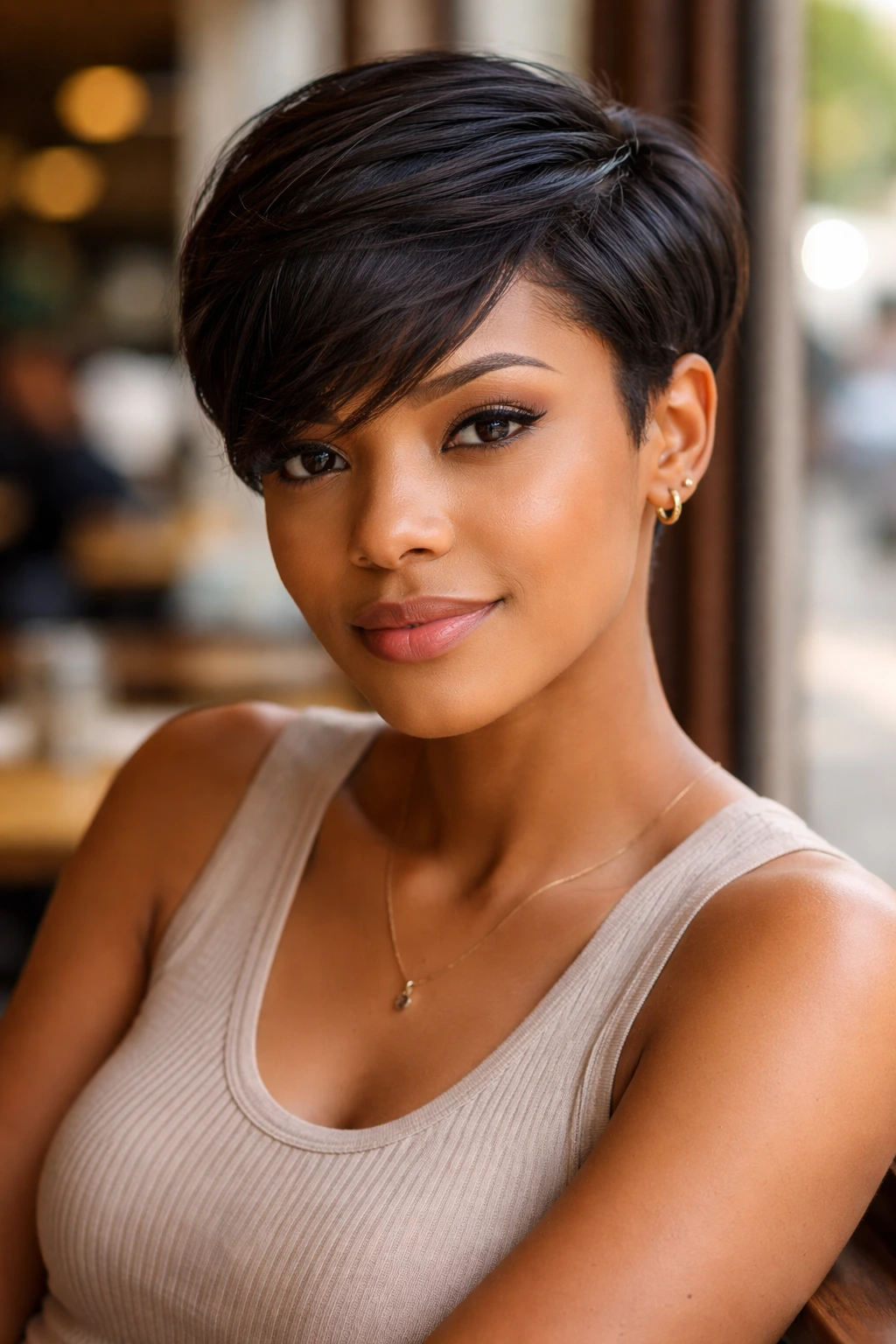
A pixie cut is often misunderstood as a one-note style, but adding a deep side part changes the entire geometry of your face. By sweeping your hair across your forehead, you break up the horizontal line of a round face. This asymmetry creates an immediate angle, acting as a visual arrow that points away from the center of the face.
The Mechanics of the Part
When you place a part deeply on one side, you are essentially “cutting” your face shape with a diagonal line. This is a classic trick used to add dimension. It draws focus to your eyes and cheekbones, effectively distracting from the roundness of the jawline. For natural textures, this means styling your hair while wet and using a strong-hold gel to set the direction before it dries.
Maintaining the Shape
- Visit your stylist every four to six weeks to keep the length consistent.
- Use a silk or satin scarf at night to keep the hair pressed in the direction of the part.
- If you have tighter coils, you may need a small amount of heat or a heavier holding product to get that sleek, swept-across look without the hair bouncing back into a rounded afro shape.
3. Cropped Coils with Shaved Sides
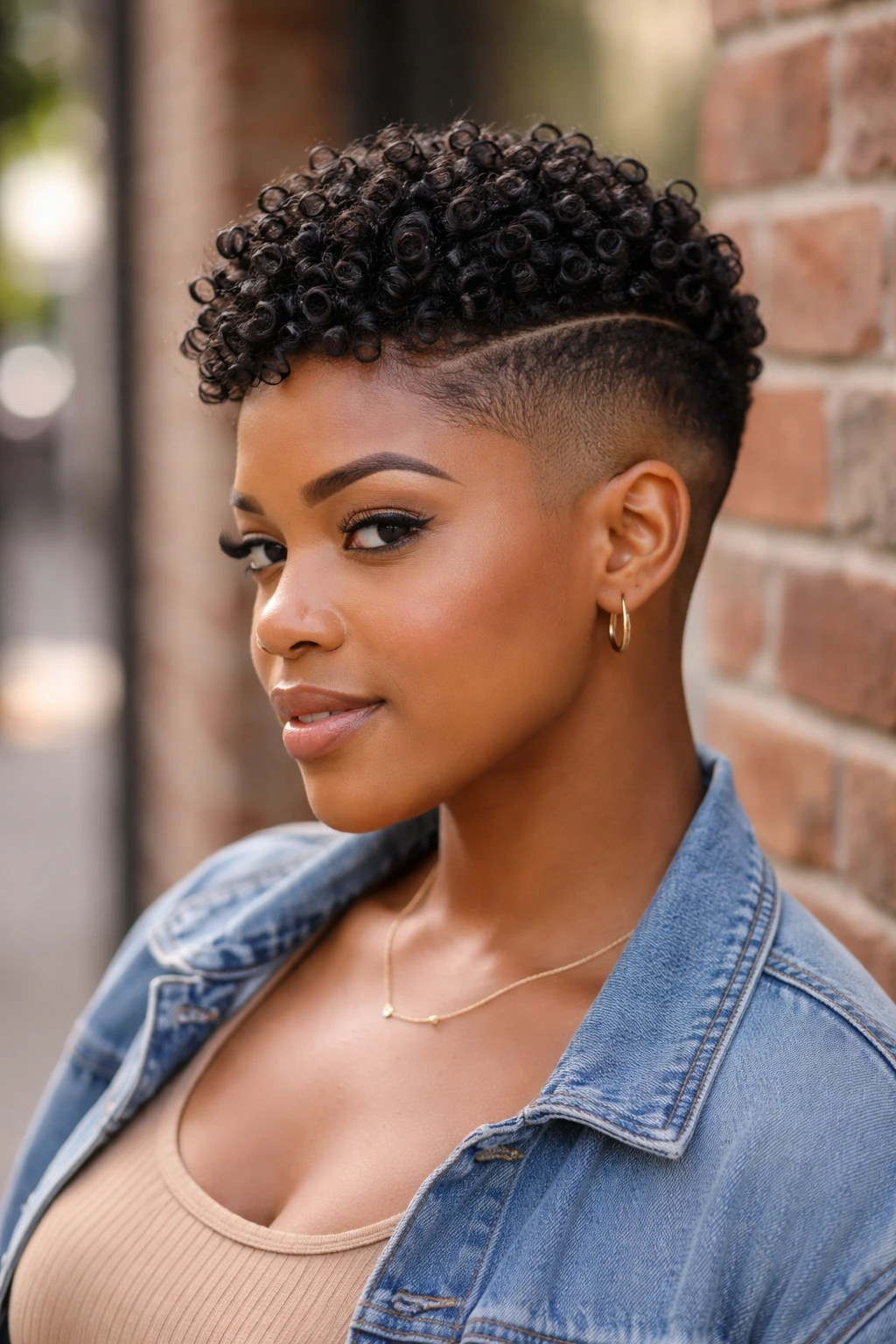
If you want to lean into the edgy side of short hair, a cropped coil style with faded or shaved sides is the way to go. This look is about maximum contrast. The shaved sides provide a literal frame for your face, emphasizing the structure of your jaw and cheekbones, while the cropped coils on top add the height necessary to balance the face’s width.
Why This Style Succeeds
There is nowhere for the eye to hide with this cut. It is bold, confident, and incredibly practical. The shaved sides create a clean vertical break, which is exactly what a round face needs to look more oval or angular. The hair on top does not need to be perfectly uniform; in fact, a bit of height and texture on top is preferred to keep the look balanced.
Styling the Top
- Wash and condition regularly, as the shorter hair means you will likely be cleaning your scalp more frequently.
- Apply a leave-in conditioner followed by a light oil to keep the coils hydrated.
- Use your fingers to pull the coils upward, adding volume at the crown.
- Avoid using heavy, greasy products on the top, as they will weigh down your natural curl pattern and make it look flat rather than lifted.
4. Layered Bob with Side-Swept Bangs
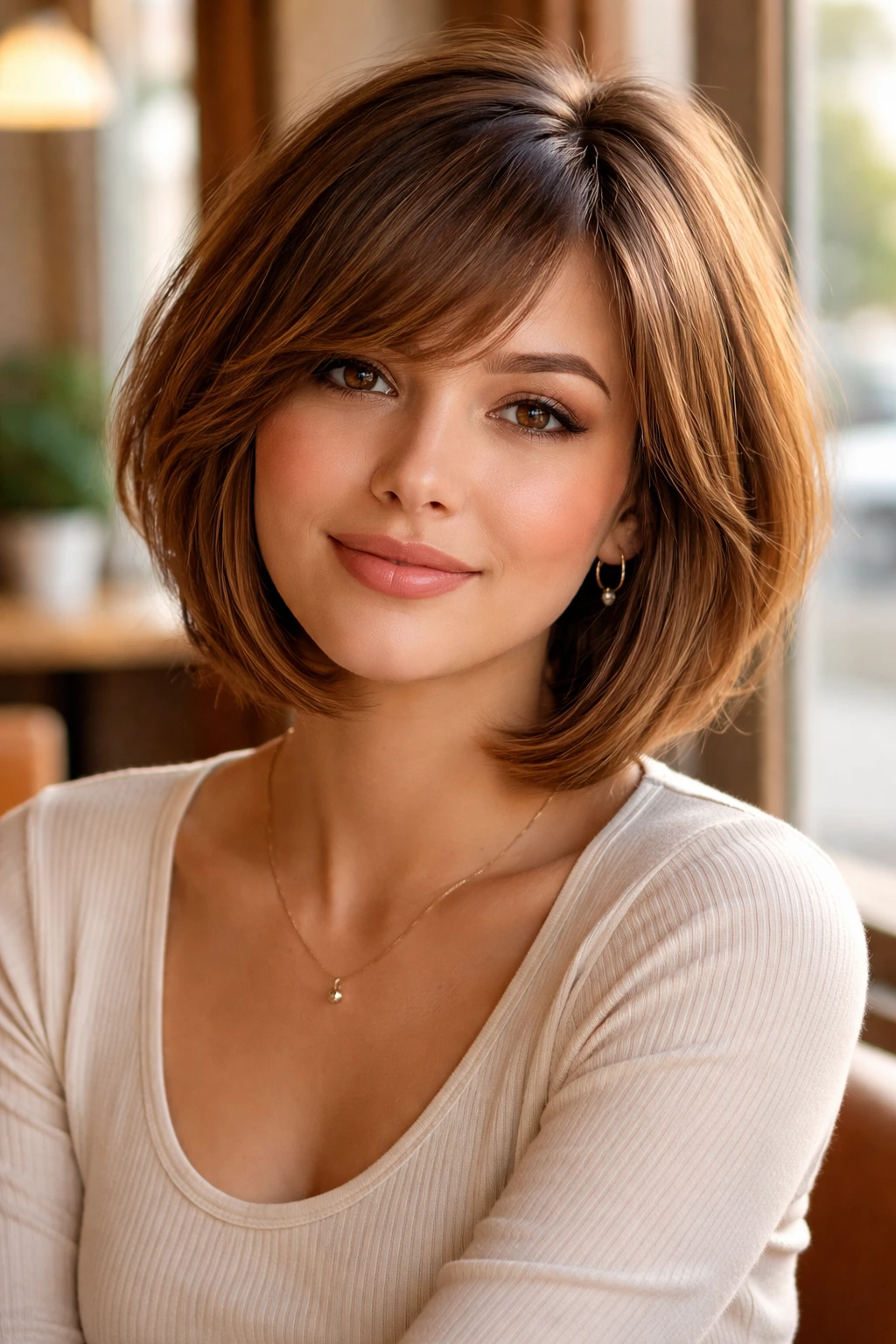
A bob on natural hair can sometimes become too rounded, which is a risk for a round face shape. The key is in the layering. By cutting subtle layers into the bob, you avoid the “helmet” effect. When you add side-swept bangs into the mix, you introduce the essential diagonal line that breaks up the fullness of the face.
The Geometry of the Cut
The layers should be focused around the face. Shorter pieces near the chin and longer pieces toward the back create an angular look. The bangs should not be blunt; they should be wispy or tapered to ensure they don’t draw a horizontal line across your forehead, which would just make the face look rounder.
Essential Care Tips
- This style requires more frequent maintenance than a shorter crop because you need to keep the ends trimmed to avoid the “triangle” shape that curly hair can take on when it grows out.
- Blow-drying with a diffuser is often necessary to get the hair to lay in the right direction.
- Focus your moisture products on the ends to prevent the hair from becoming frizzy, which adds unwanted width to the silhouette.
5. The Asymmetrical Undercut
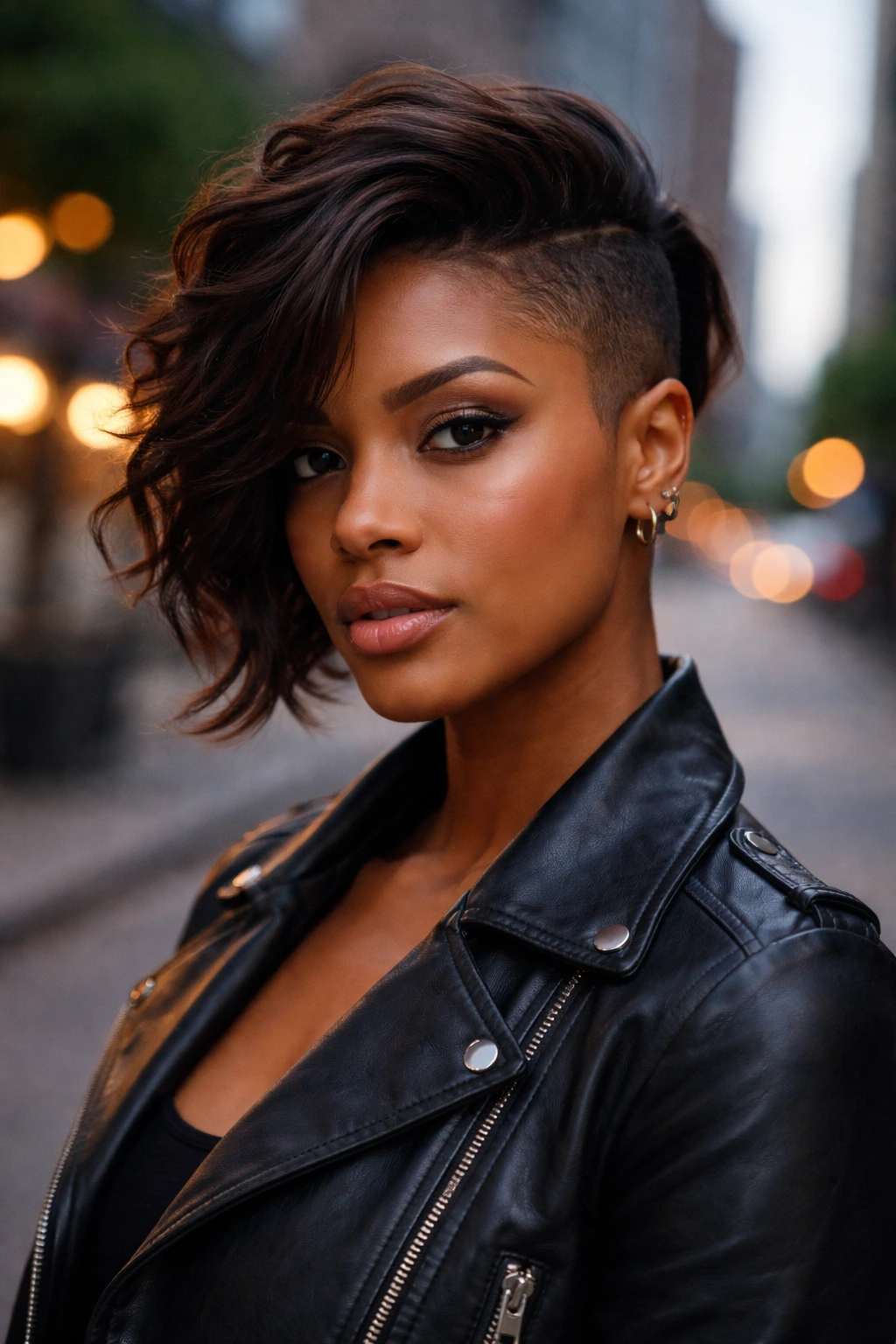
The asymmetrical undercut is arguably the most dynamic style on this list. By keeping one side significantly shorter—perhaps even shaved—and leaving the other side longer and fuller, you create an instant, dramatic angle. It is a bold look, but it is incredibly effective for round faces because it completely disrupts the symmetry that makes a face look rounder.
Creating the Illusion
Your eye naturally follows the longer side of the hair, leading it down or across the face, while the shaved side creates a clear, sharp border. This visual manipulation tricks the eye into seeing an oval rather than a circle. It is a fantastic choice if you want a look that feels modern and intentional.
When to Choose This Style
- If you have a thick curl pattern that tends to get puffy, an undercut will remove the bulk that makes your face look wider.
- It requires a level of commitment, as the shaved portion will need regular maintenance to keep it looking sharp and not overgrown.
- Consider adding a design into the shaved portion for extra personality—lines or geometric shapes can further reinforce the angular theme.
6. High Top Fade
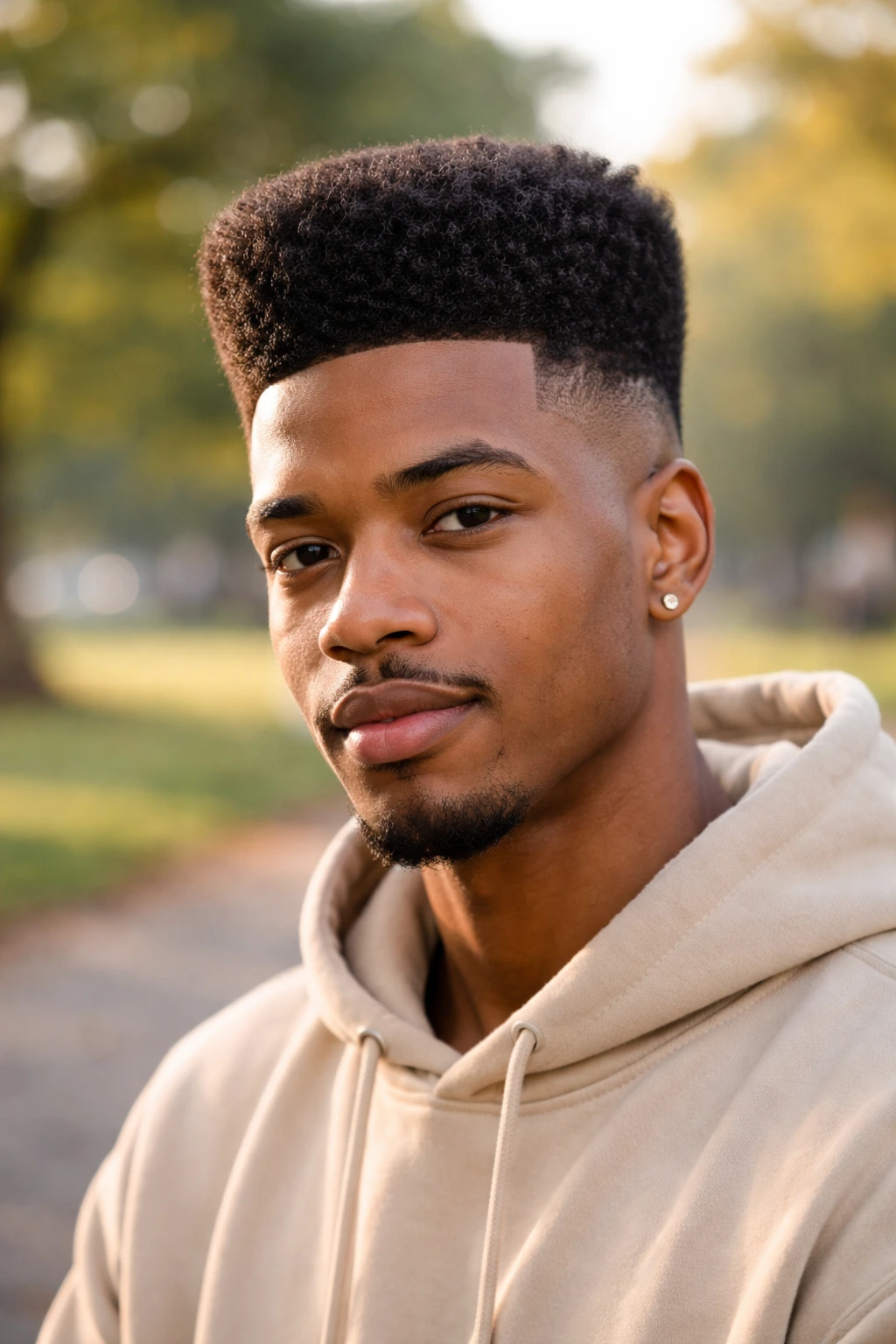
The high top fade is a classic that has seen a massive resurgence. It is the definition of adding height. By building the hair up on the crown of the head, you are essentially stretching the face vertically. For someone with a round face, this is the most literal way to add length to your silhouette.
Engineering the Height
The sides should be faded or tapered tightly. The top, however, is a playground for volume. Whether you choose to sculpt it into a flat-top or let your natural curls grow upward in a rounded but elevated fashion, the effect is the same: you have added several inches of vertical length to your appearance.
Maintenance Notes
- You will need to visit a barber or stylist who is skilled with clippers and fades.
- Use a sponge brush or a twist tool to give the top section structure and definition if you prefer a more uniform look.
- Keep the edges clean. A fuzzy hairline will ruin the geometric precision that makes this cut work for your face shape.
7. Finger Waves with a Tapered Back
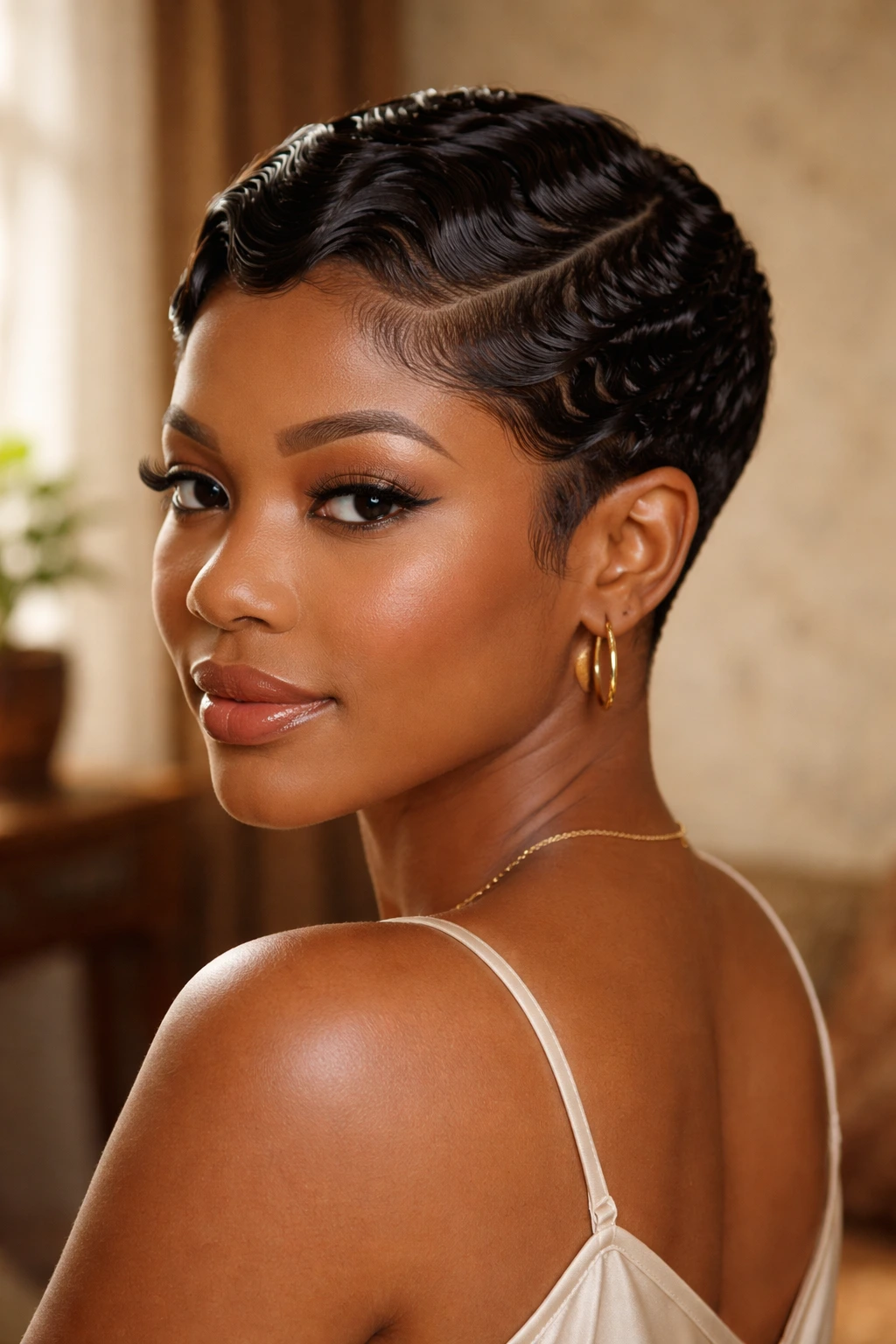
Finger waves offer a vintage, sophisticated aesthetic that is surprisingly flattering on round faces because they are all about texture and movement rather than volume. By creating S-curves across the top of the head, you introduce lines that interrupt the roundness of the face.
Why It Works
Unlike a standard afro, which creates a large, rounded shape, finger waves lay closer to the head. This might seem counterintuitive if you think you need “volume,” but the waves create directional lines. If you style the waves to sweep across the forehead and temple, you are creating an angle that defines your bone structure.
How to Achieve the Look
- This style requires patience and a strong-hold setting gel.
- Work in small sections while the hair is soaking wet.
- Use a fine-tooth comb and your fingers to create the ridges.
- Once you have the shape, wrap your head and let it dry completely. Do not touch it while it is drying, or the waves will lose their definition.
8. Teeny Weeny Afro (TWA) with Highlights
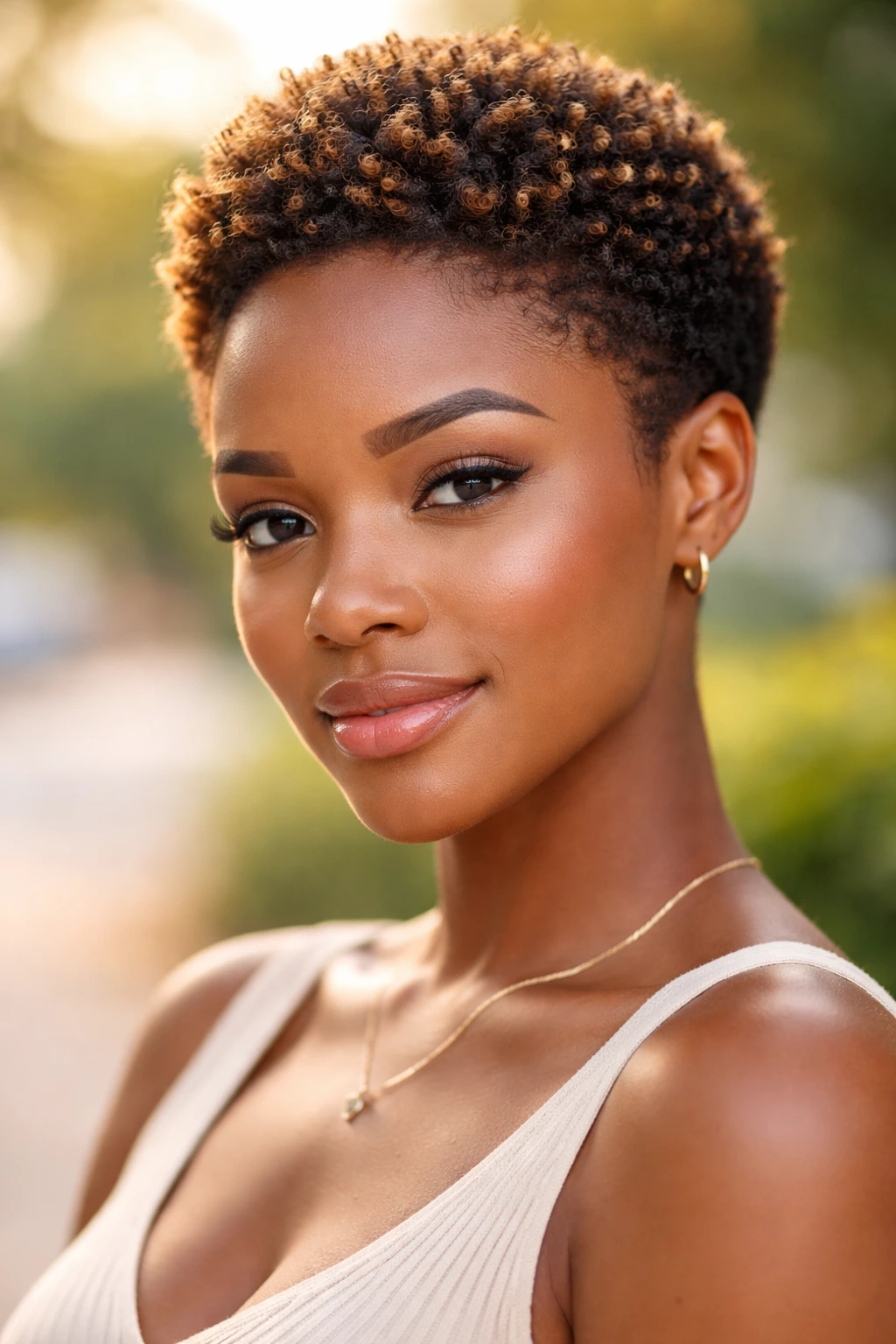
Sometimes, the best way to handle a round face is to embrace the proportions you have and add a pop of color to draw attention to your features rather than the face shape itself. A TWA (Teeny Weeny Afro) is short, low-maintenance, and incredibly chic. Adding highlights adds dimension to the hair, which creates depth and visual interest.
The Power of Contrast
When your hair is all one color, especially if it is dark, it can blend together into a single shape. Highlights break that up. They add light and shadow to your hair. When placed strategically—perhaps brighter around the face—they can highlight your eyes and lips, making the shape of your face secondary to your features.
Maintenance and Health
- Bleaching or coloring hair can dry it out. Ensure you are using deep conditioning treatments weekly.
- Keep the length very short. As it grows into a mid-length afro, it may start to round out, which might work against your goal.
- Focus on the health of your scalp, as short hair exposes it to the elements more than longer styles.
9. Curly Mohawk
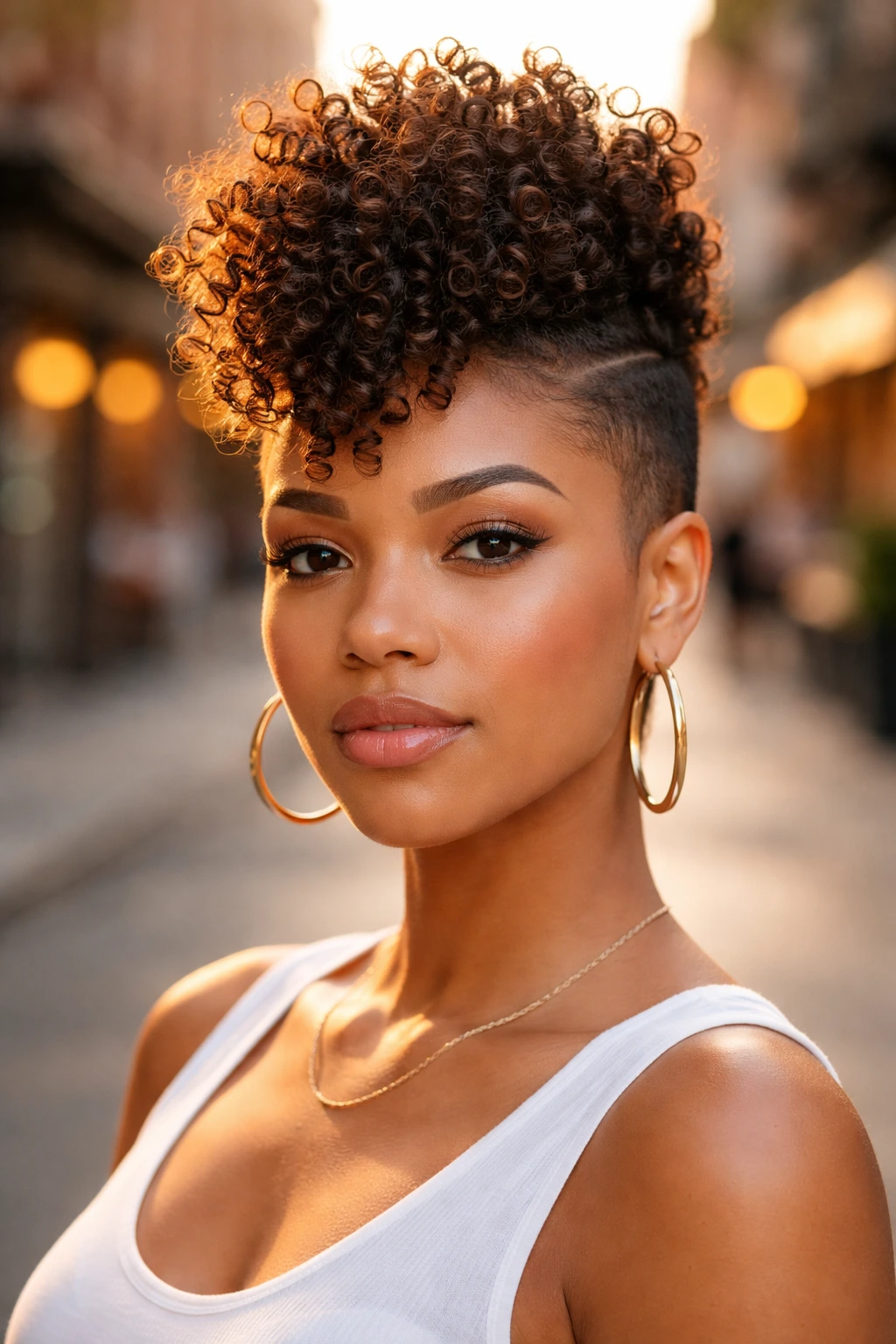
The curly mohawk is about creating a central spine of hair. By pulling the sides back or shaving them and concentrating the volume in the center of the head, you create the maximum amount of height. It is a fun, expressive style that works exceptionally well for round faces because it is entirely vertical.
Designing Your Mohawk
You can achieve this look with shaved sides, or if you prefer a less extreme option, you can use cornrows or flat twists on the sides to pull the hair toward the center. This creates a “faux-hawk” that gives you the same vertical benefit without the need to cut your sides down to the skin.
Styling Tips
- If using braids on the sides, make sure they are sleek and tight to maximize the contrast.
- On top, use a curl-defining product that allows for bounce and volume. You want the hair to reach for the ceiling.
- If your curls are not naturally voluminous, use a diffuser to dry the top section while pushing the hair upward.
10. Blunt Bob with Subtle Layers
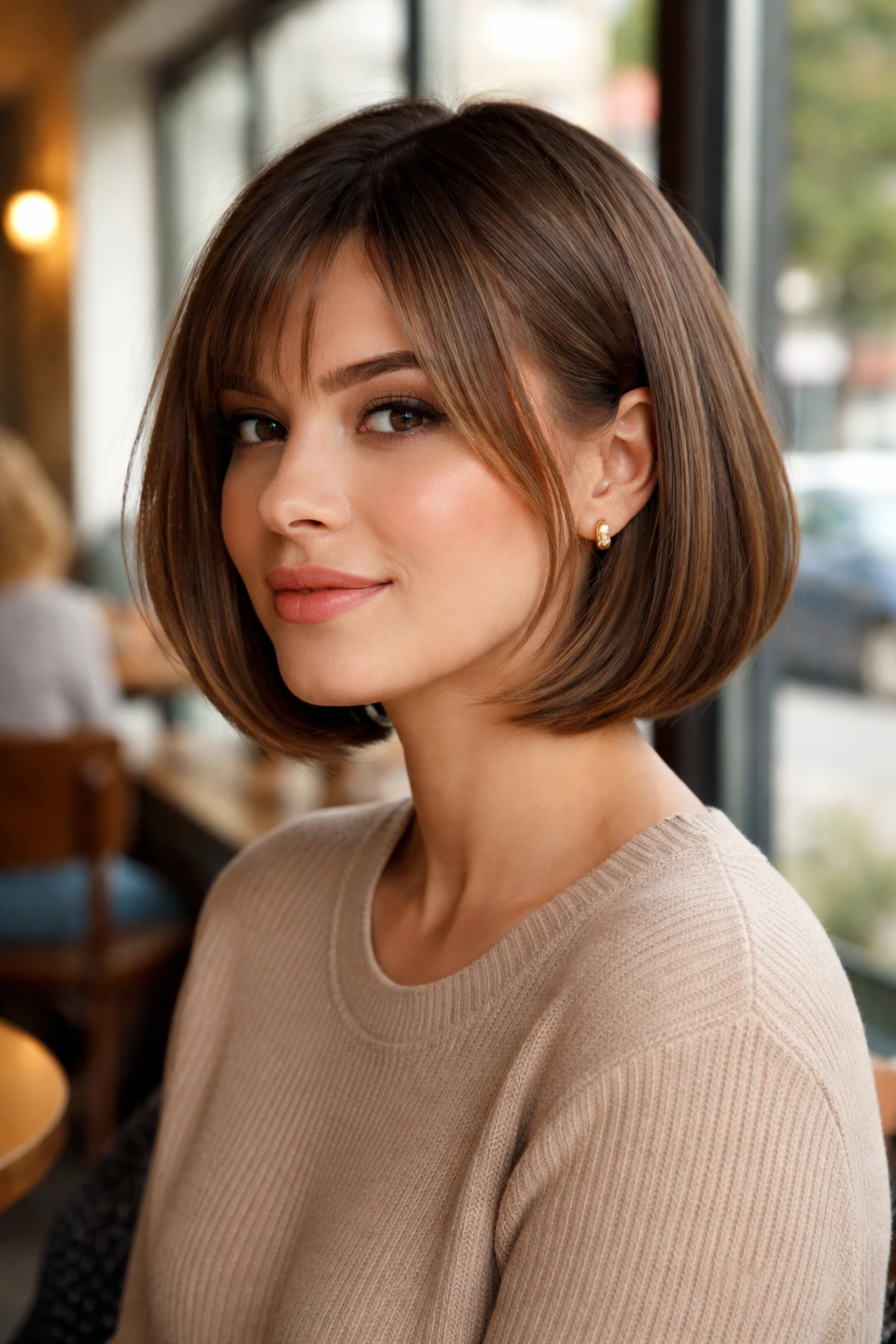
A blunt bob is often feared by those with round faces, but it works if you adjust the length. A chin-length bob is a trap; it emphasizes the roundness of the jaw. Instead, opt for a bob that hits just below the chin or at the collarbone. The added length creates a vertical line that helps elongate the neck and the face.
The Importance of “Subtle”
Avoid heavy, blunt bangs with this cut. You want the ends to be sharp, but you need soft, face-framing layers to prevent the hair from becoming a block. Think of it as a bob that has been “deconstructed” slightly. It should move, not sit still.
Daily Maintenance
- Moisture is paramount. Dry, brittle hair will poof out, creating a wider, rounder shape.
- Use a cream-based moisturizer to keep the hair heavy enough to lay down, but light enough to retain its natural curl pattern.
- If you choose to blow-dry, use a round brush to encourage the ends to turn slightly inward, which provides a bit more structure to the jawline.
11. Pompadour-Inspired Natural Style
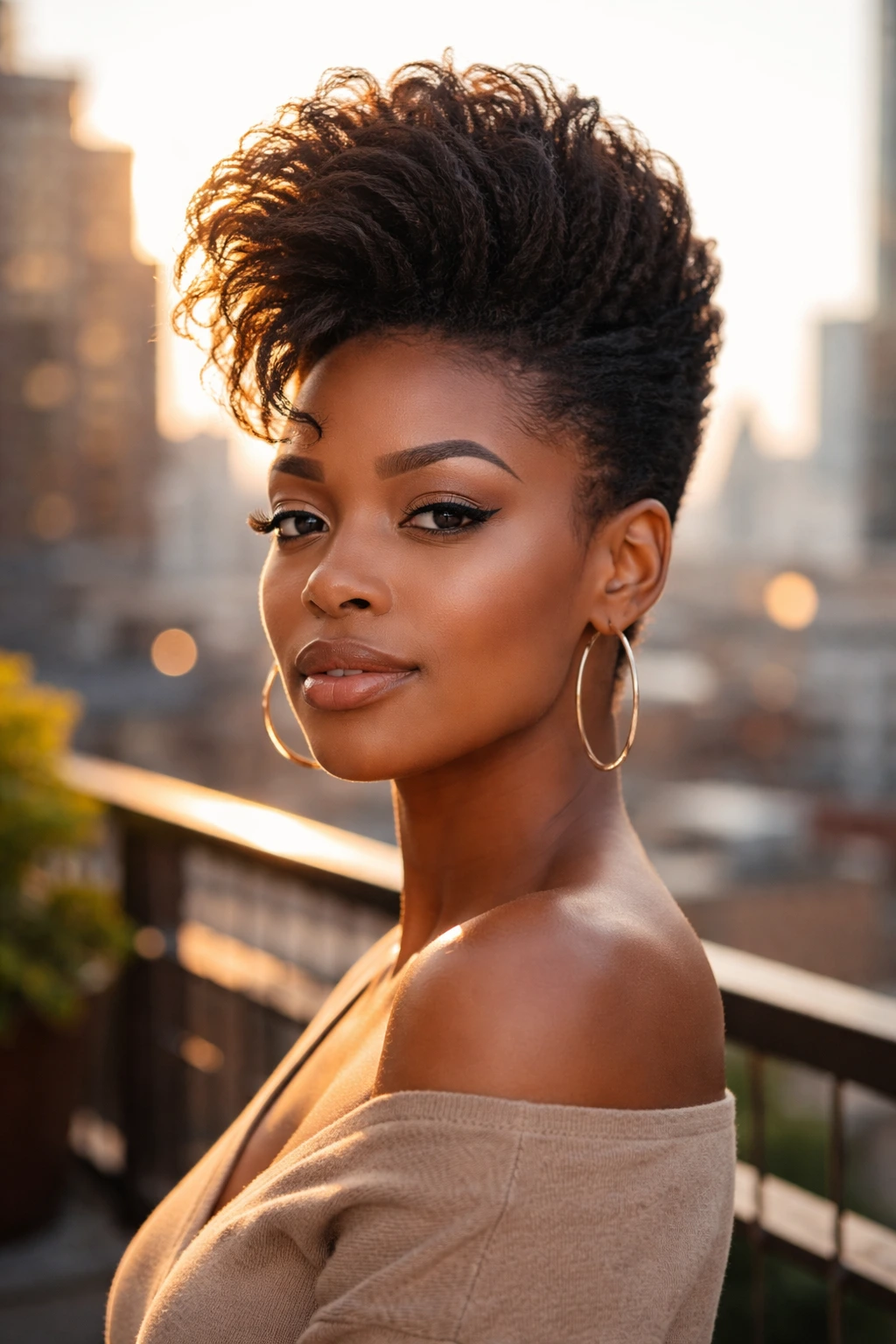
This is a high-volume look that is all about sweeping the hair upward and backward from the forehead. By lifting the hair off the face, you expose your forehead and create height on top. This is the ultimate “lengthening” style, as it effectively adds three to four inches of height to your overall silhouette.
Achieving the Pompadour Shape
You will need to have enough length on top to create the fold. The sides can be tapered or slicked back with edge control gel. The focus is entirely on the front section, which should be shaped into a rounded (but vertical) pump.
Why It’s Great for Round Faces
The height on top is the key. By removing the hair from the sides of your face and piling it on top, you change your facial silhouette from a circle to an oval. It is a dramatic, polished look that works as well for a formal event as it does for daily wear.
12. Shaggy Pixie with Crown Volume
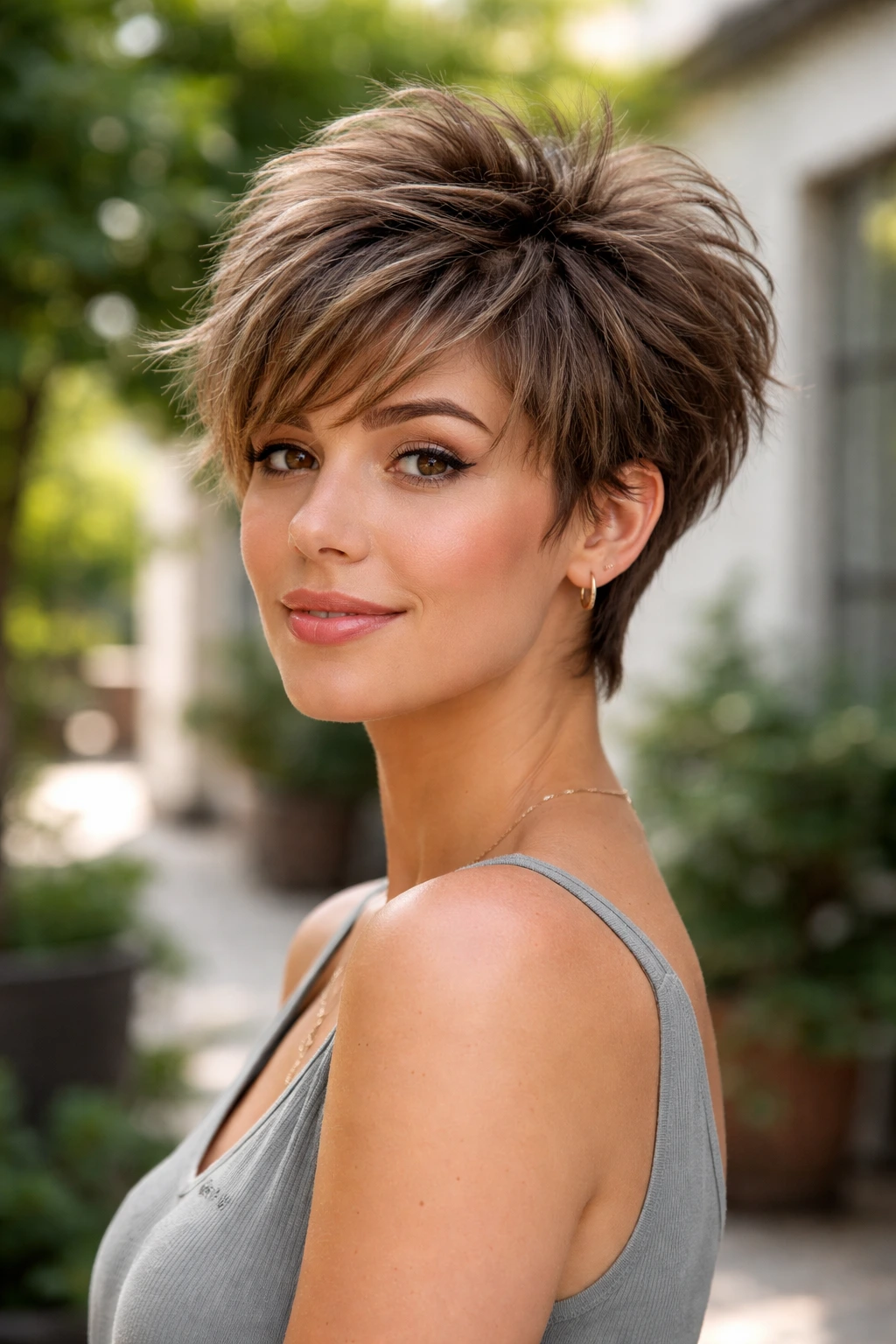
A shaggy pixie is a fantastic option if you want something that looks effortless and lived-in. The “shag” element involves cutting lots of layers throughout the hair, creating a piece-y, textured look. This texture is beneficial because it disrupts the roundness of the face, replacing smooth lines with jagged, interesting ones.
The Crown Factor
The volume must be concentrated on the crown. If the volume spreads out toward the ears, you will make your face look wider. Ensure your stylist knows that you want the “shaggy” texture on top but a tapered or clean look around the ears and nape.
Styling for Texture
- Use a sea salt spray or a light texturizing foam on damp hair.
- Scrunch the hair with your hands while it dries naturally.
- Avoid over-combing. This style is meant to look slightly chaotic and organic.
13. Box Braided Bob
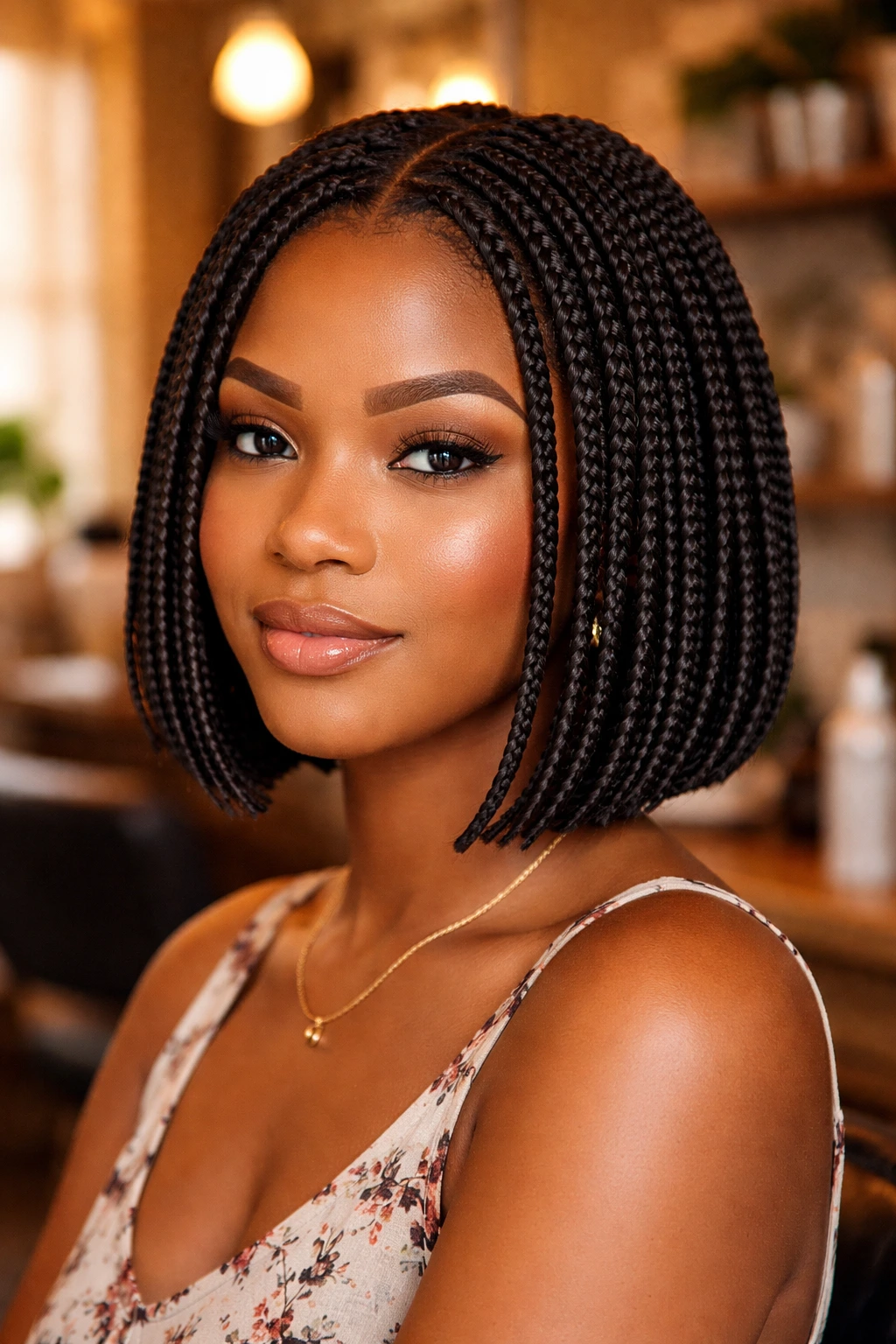
Sometimes, a protective style is the best way to handle your hair. A box braided bob—where the braids are cut to a shorter, blunt length—can be very flattering on a round face. The rigidity of the braids creates clear, vertical lines that hang down beside the face, drawing the eye down and elongating the neck.
Why This Style Succeeds
The braids frame the face in a structured, consistent way. Unlike free-flowing hair that can change shape depending on humidity, braids stay consistent. You can control exactly where they fall. For a round face, ensure the braids are not too bulky. Smaller, sleeker braids are often more flattering than jumbo ones, which can add too much width.
Maintenance and Tips
- Ensure the braids are parted in a way that creates a side part or a slight asymmetrical flow, rather than a harsh middle part that divides the face into two wide circles.
- Keep the edges laid with a gentle edge control gel to maintain the crisp, clean look.
14. Side-Parted Twist Out
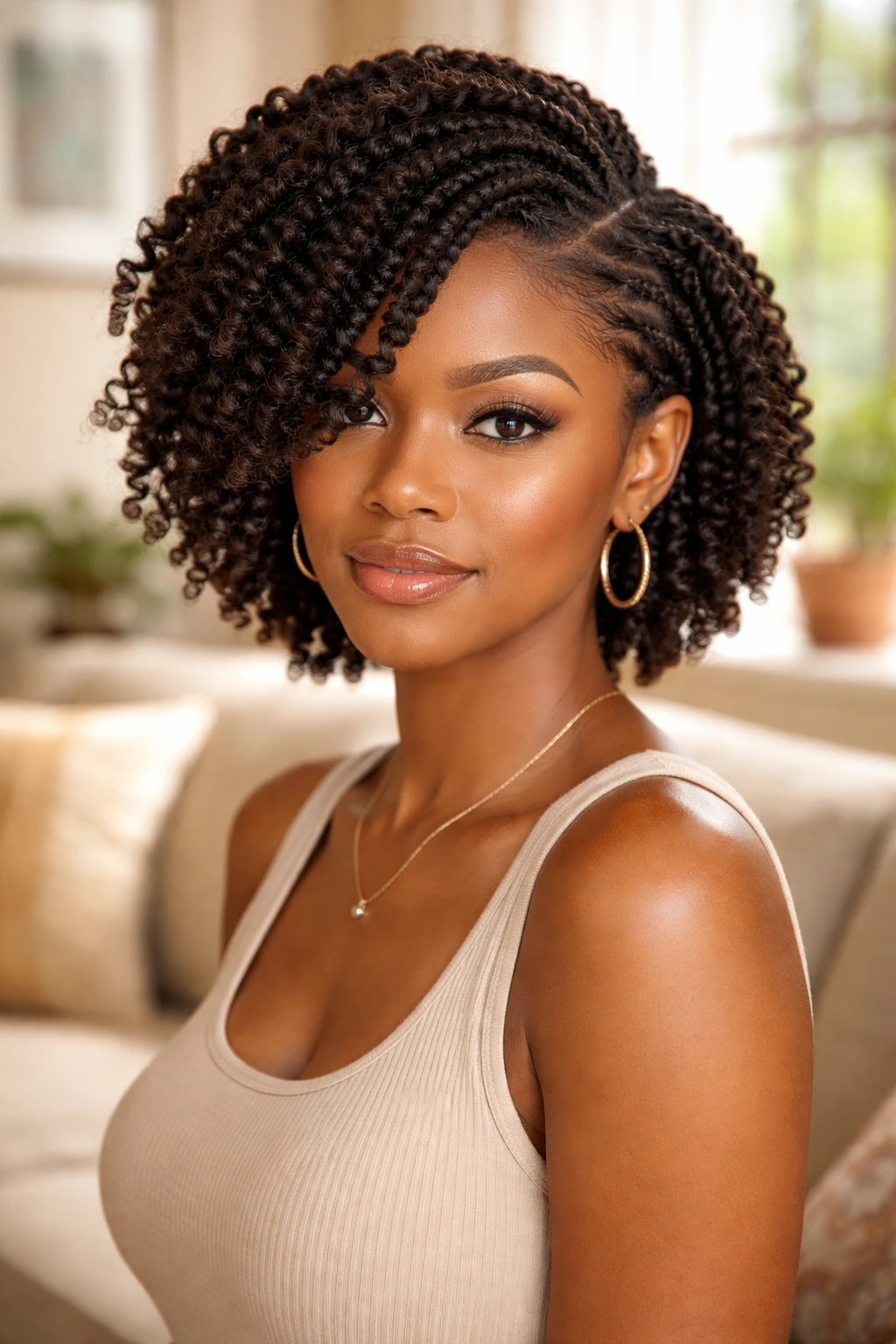
A twist-out is a staple for natural hair, but the way you style it makes all the difference. By creating a deep side part and sweeping the twists to one side, you are again utilizing the power of the diagonal line. It allows you to control the volume, ensuring that it is skewed to one side rather than balanced equally on both sides, which can create a wider appearance.
Creating the Shape
- Twist your hair in a way that builds volume at the root but keeps the length somewhat contained.
- Once dry, separate the twists gently. Do not go overboard, or you will create a giant, rounded cloud of hair.
- Use a pick to lift the roots on the side with more hair to add height, while keeping the other side flatter.
Why It Works
This style relies on the “asymmetrical balance” principle. By having more hair on one side, you disrupt the roundness. It is an intentional, styled messiness that feels very modern and is surprisingly forgiving for a round face.
15. Buzzed Cut with Designs
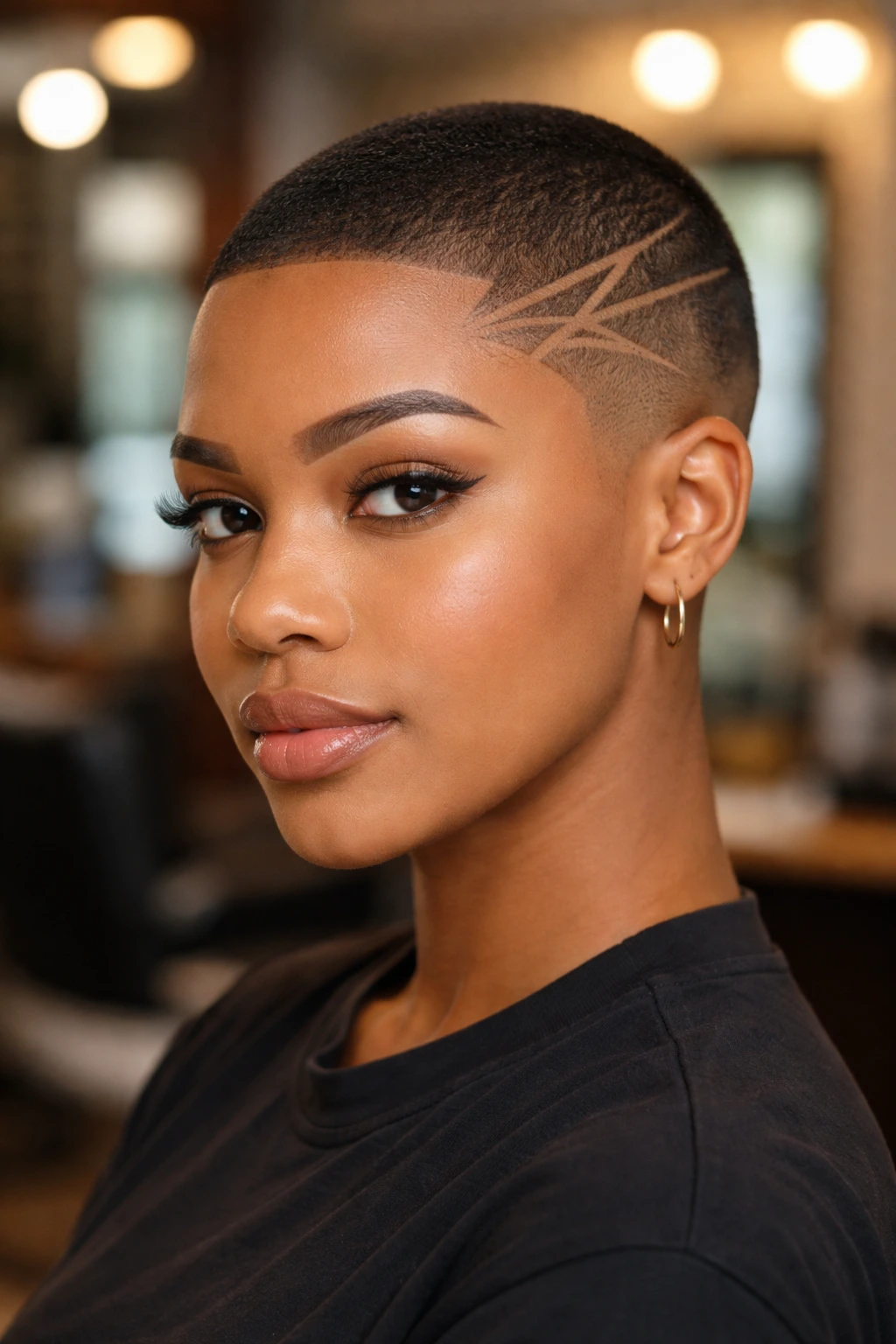
For those truly ready to commit, the buzz cut is the ultimate test of confidence. If you think it will emphasize a round face, think again. A buzz cut puts your facial features—your eyes, nose, and lips—in the spotlight. It eliminates the hair’s silhouette entirely, meaning your face shape is no longer being “framed” or altered by hair. It just is.
Adding Intentional Design
To make it work for you, consider adding geometric designs. A fade with a sharp line or a simple, clean arch above the eyebrow can introduce the angles your face might be missing. These lines act as visual “accents” that pull the focus toward your eyes and away from your cheeks.
Practicality
- This is the lowest-maintenance style possible.
- You will need to visit a barber regularly to keep the buzz short.
- Sunscreen becomes an essential part of your skincare routine, as your scalp is fully exposed.
16. Rounded Shag (to add angles)
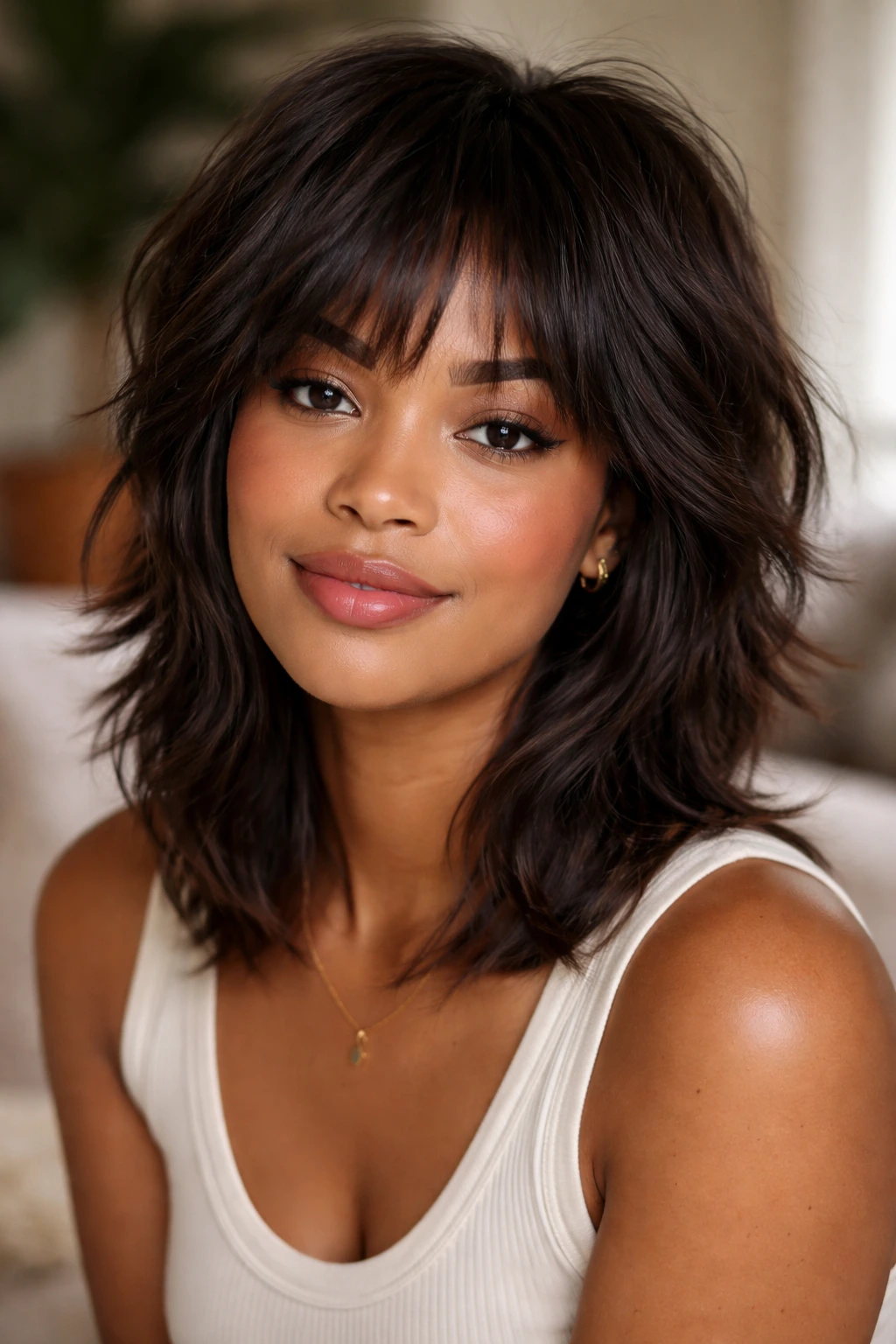
Wait, didn’t we say a “rounded” shape is bad for a round face? Yes, but a “shag” is different. A shag cut is layered, messy, and textured. It is the texture—the “broken” quality of the hair—that adds angles. If you have a curly shag, the multiple layers create a jagged perimeter around the face rather than a soft, continuous curve.
The Strategy
The layers should start around the cheekbones. This draws attention to your eyes and creates a visual break. If the shortest layer hits right at the widest part of your face, it will break up the roundness effectively.
How to Style
- Diffuse your hair to encourage the curls to spring up and separate.
- Use a volumizing spray to ensure the top layer has lift, which stops the hair from looking like a flat mop.
- This style is all about movement. If your hair is too heavy, the shag will look like a solid block, which you want to avoid.
17. Braided Crown with Short Back
A braided crown is elegant, but for a round face, a full, voluminous crown can be overwhelming. Try a variation where the hair is braided into a crown but kept close to the scalp, while the back is tapered or faded short. This hybrid style gives you the beauty of intricate braiding without the width that a full-head braided style might bring.
Why It Works
You get the vertical height from the crown position, but the faded or tapered back removes the excess hair volume that can make a round face appear wider. It is a clean, sophisticated look that is perfect for professional settings.
Styling Notes
- This requires professional braiding or significant practice.
- Use a shiny braiding hair or a glossy pomade on your natural hair to make the braids look crisp and defined.
- Ensure the braids are tightest near the temples and ears to maintain a sleek silhouette.
18. Voluminous Wash-and-Go with Height
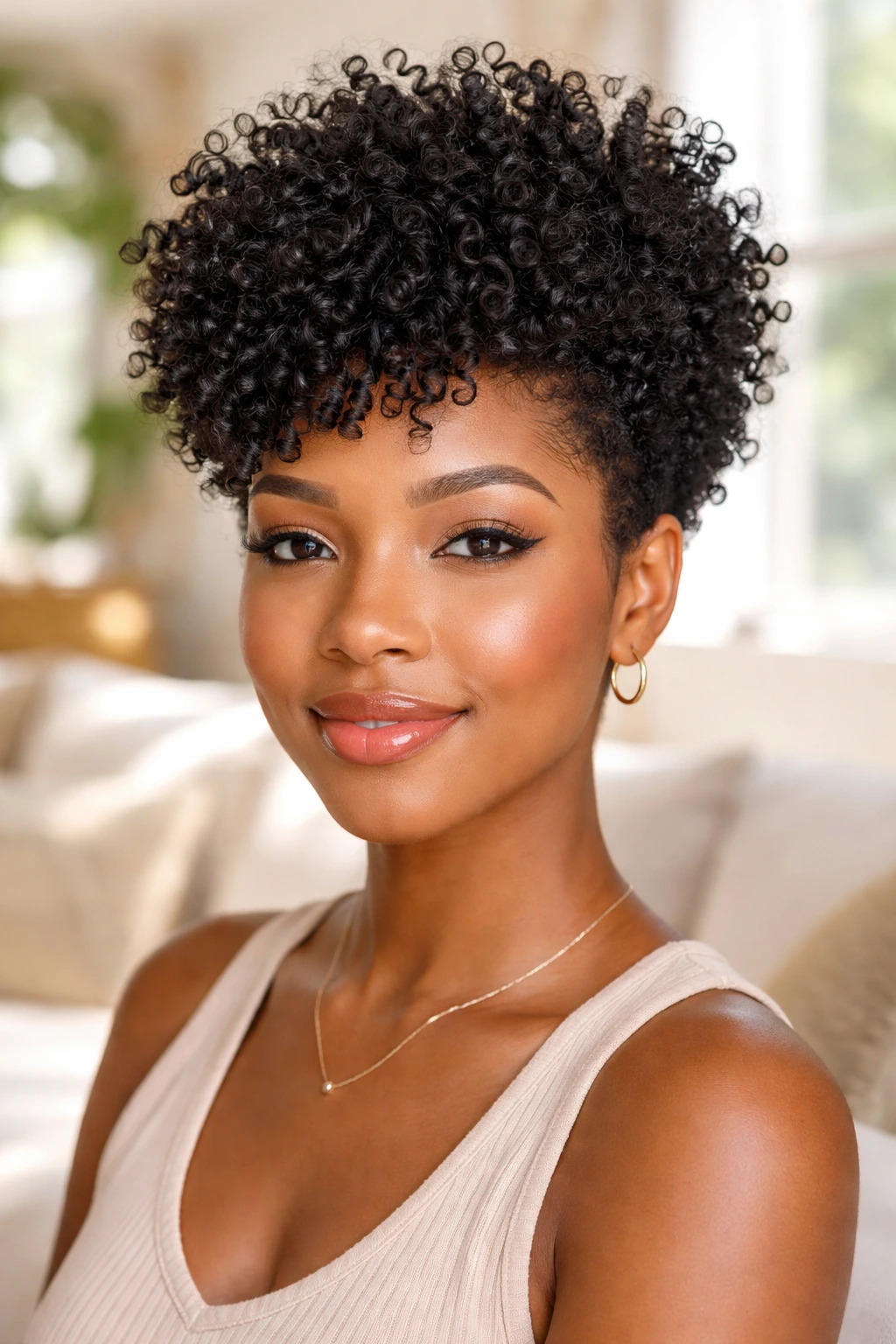
Sometimes, the best style is the most natural one, provided you know how to direct the volume. A wash-and-go on short hair can be styled to create height on top. The secret is the “rake and shake” method combined with clipping.
The Clipping Trick
As your hair dries, use metal hair clips to lift the roots at the crown of your head. By pinning the roots upward while they dry, you force the hair to dry in a standing position rather than falling flat. This creates permanent volume on top, which effectively elongates the face.
The Result
You get a beautiful, natural texture that doesn’t feel “styled” to perfection, but you have the intentional height that balances a round face shape. It is relaxed, bouncy, and highlights your natural curl pattern beautifully.
19. Graduated Bob with a Nape Undercut
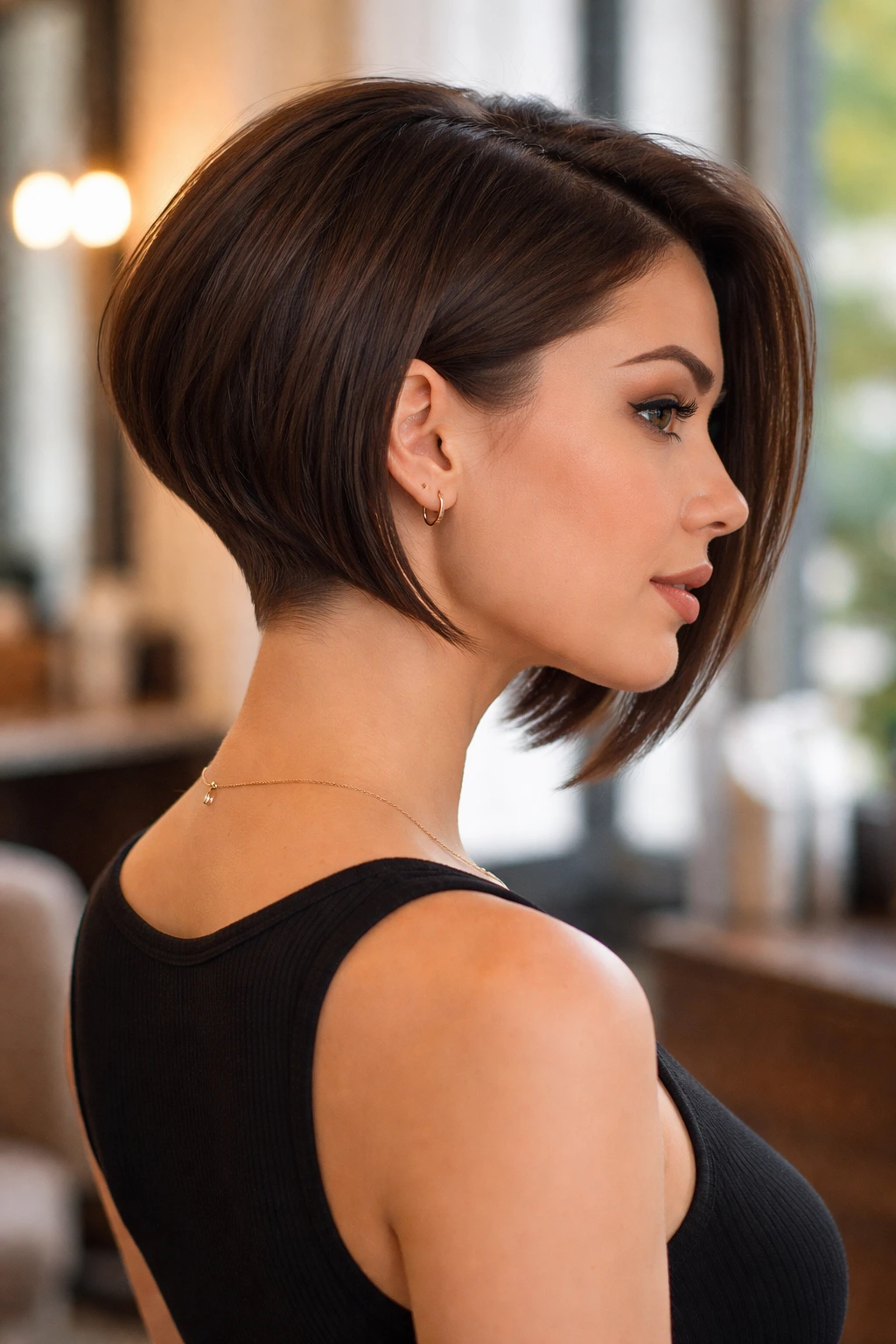
A graduated bob—often called an A-line—is shorter in the back and longer in the front. For a round face, this is ideal. The longer pieces in the front fall past the chin, creating a vertical line that lengthens the neck and face, while the shorter back provides structure and prevents the hair from looking heavy.
The Undercut Addition
Adding an undercut at the nape of the neck takes this style to another level. It removes the bulk of the hair at the bottom, which is often where curly hair creates the most width. By streamlining the back, you keep the focus on the sharp, angular front.
Styling the Front
- You want the front pieces to be straight or slightly wavy. If they curl up too much, they will bounce up and lose the length that is elongating your face.
- Use a light styling cream to keep the front pieces slightly weighed down so they maintain their straight-ish hang.
20. Messy, Textured Crop
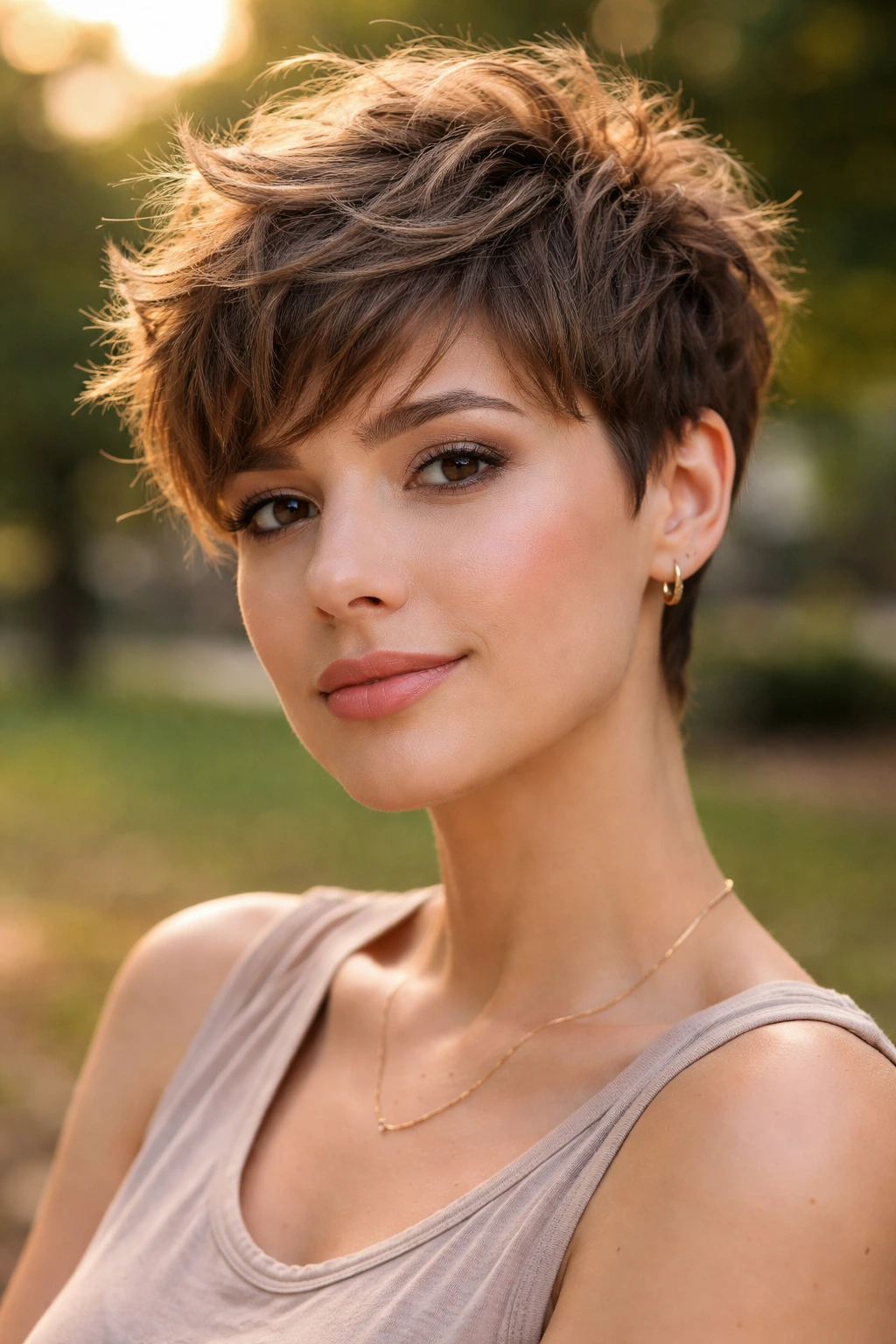
The textured crop is the king of versatility. It is short, it is messy, and it is entirely about “controlled chaos.” This style works for round faces because it is not perfect. It does not try to follow the contour of your face. It sits on top of your head, creating a jagged, uneven silhouette that is the opposite of “round.”
Why Texture Matters
Smooth hair reflects light and shows off the shape of your head. Textured hair—full of twists, curls, and coils—breaks up that reflection. It creates shadows and highlights, making the hair look lighter and more dynamic. This lack of uniformity is exactly what a round face needs to look more interesting and less like a singular geometric shape.
Finishing the Look
- Use a matte styling paste or cream. Avoid anything that makes the hair shiny or greasy, as that will clump the curls together and reduce the texture.
- Use your fingers to pull small sections of hair in different directions. You want the hair to look like it has “movement,” even when it is not moving.
Final Thoughts
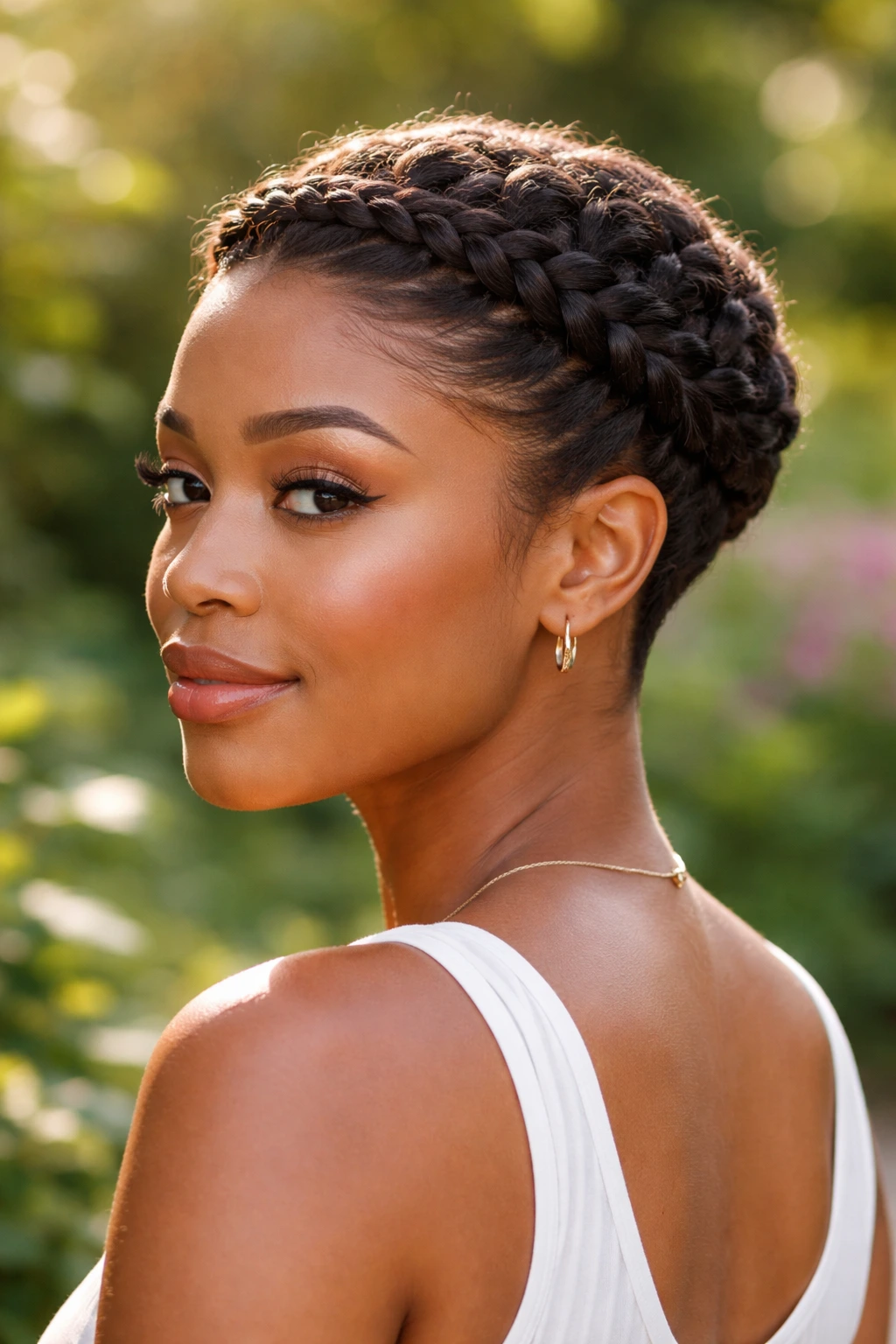
Choosing a hairstyle for a round face is really about understanding where you want the eye to land. Most people naturally look at the center of the face first, then outwards. By using height, angles, and asymmetry, you can guide that gaze. You are essentially painting a frame around a portrait; you want to highlight the features, not overwhelm them with a circular frame that matches the canvas.
Remember that hair is temporary. If you try a pixie cut and realize it is too short, it will grow back. If you try a tapered afro and decide it is not for you, you can grow it into a bob. The best style is always the one that makes you feel confident when you look in the mirror. Use these suggestions as a starting point, but trust your own instinct for what feels right on your head. Whether you go for the architectural precision of a high-top fade or the effortless texture of a messy crop, focus on keeping your natural hair healthy, hydrated, and styled with intention.
