



When you have a round face, the goal of a great haircut usually isn’t just about changing your look; it is about finding that elusive balance. People often think the only option is to hide behind a curtain of long hair, but that rarely helps. Actually, length can sometimes drag the features down and emphasize the very roundness you might be trying to offset. The secret weapon is texture. By introducing movement, choppiness, and layers, you break up the circular lines of the face, creating visual interest and adding the angles that nature didn’t provide.
Medium-length hair is arguably the sweet spot. It is long enough to pull back if you need to, but short enough to maintain volume, which is crucial. Flat, limp hair is the enemy of a round face. You need lift, especially at the crown, and soft pieces that frame the face rather than clinging to it. The key is to avoid blunt, heavy lines that act like a frame around a circle. Instead, you want shattered ends, invisible layers, and deliberate “messiness” that feels effortless.
1. The Shattered Lob
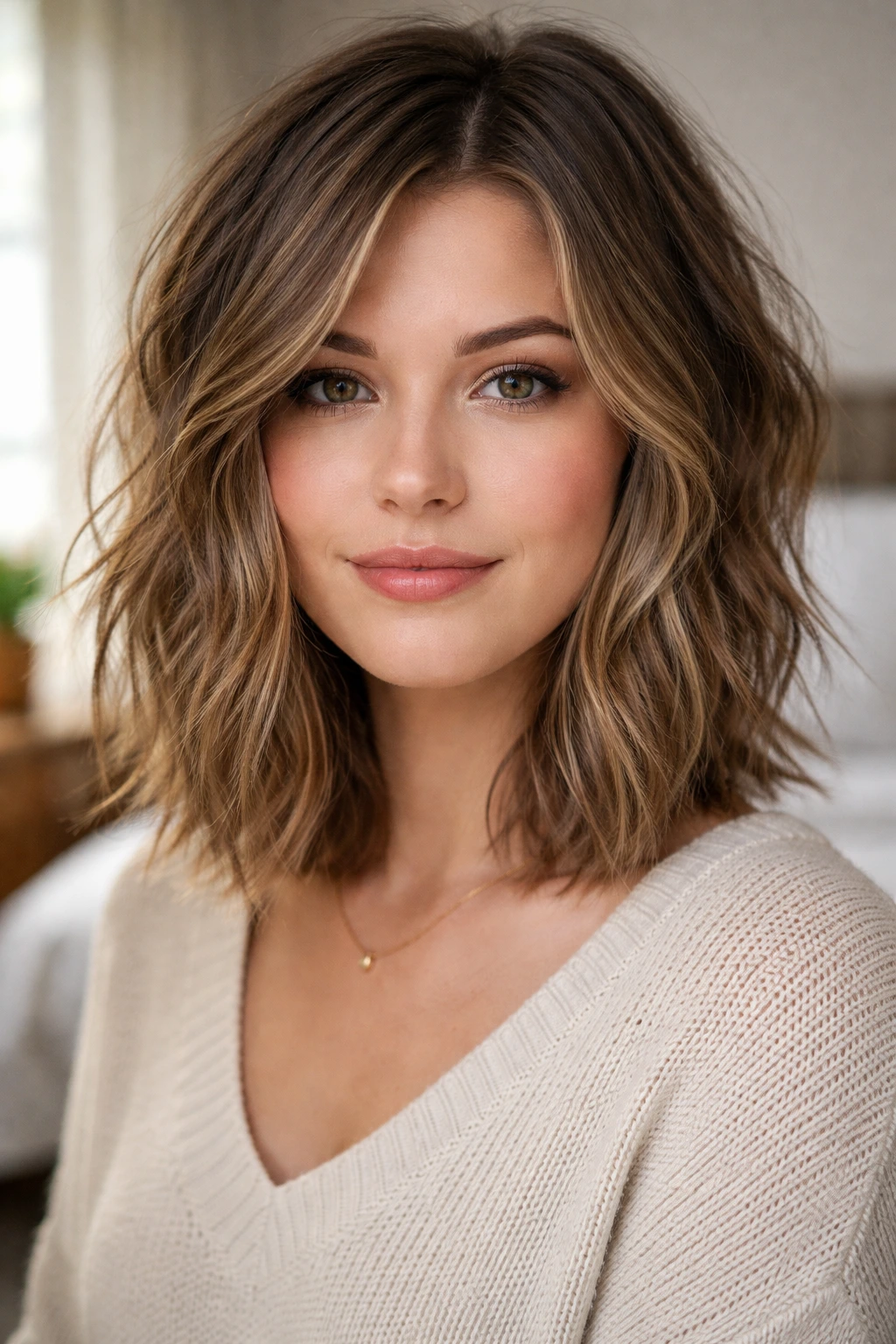
The shattered lob—or long bob—is a masterclass in corrective cutting. Unlike a standard blunt bob that hits right at the jawline (often accentuating the widest part of a round face), a shattered lob is cut with a razor or deep point-cutting techniques. The ends are purposefully uneven, which prevents that heavy, circular weight from building up at the bottom.
Why It Works for Round Faces
The lack of a heavy perimeter means your hair doesn’t create a “bowl” effect around your head. Instead, the hair has room to move. When the hair is textured and slightly piecey, it draws the eye toward the movement rather than the shape of your cheeks.
Pro tip: Use a lightweight texturizing spray on damp hair and scrunch it in with your hands rather than using a brush. Letting it air-dry creates a natural, undone finish that keeps the look soft and modern.
2. Beach Wave Mid-Length
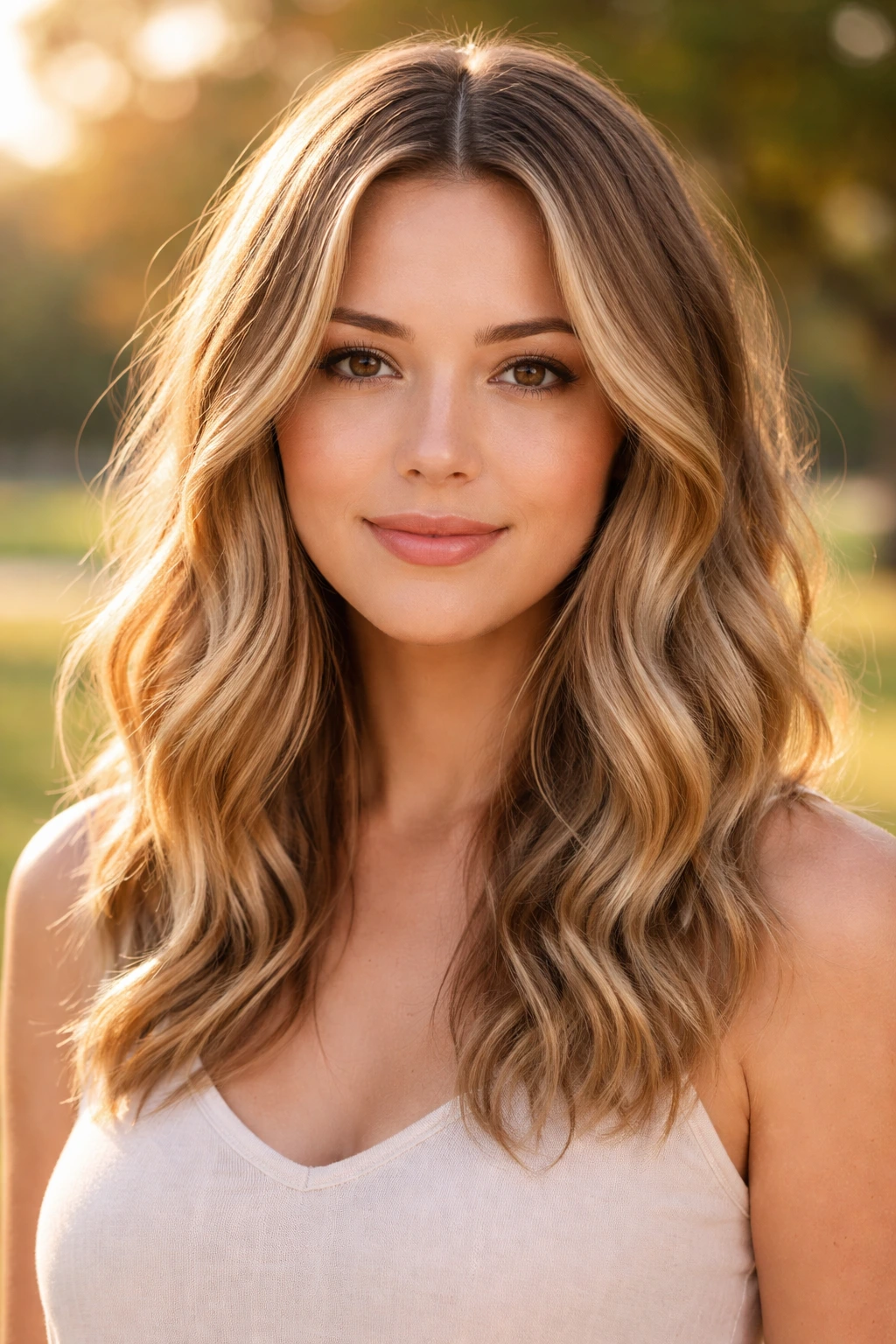
You have likely heard about beach waves, but for a round face, the execution matters more than the style itself. The waves should not be tight, spiral curls that expand outward. You want loose, elongated waves that have verticality. If the wave expands horizontally, it makes the face appear wider.
Creating Vertical Volume
Start your waves about two inches down from the roots. By keeping the hair relatively flat at the scalp and focusing the volume through the mid-lengths and ends, you stretch the face visually. This style is incredibly forgiving and pairs perfectly with a center part or a deep side part depending on your preference.
3. Messy Shag
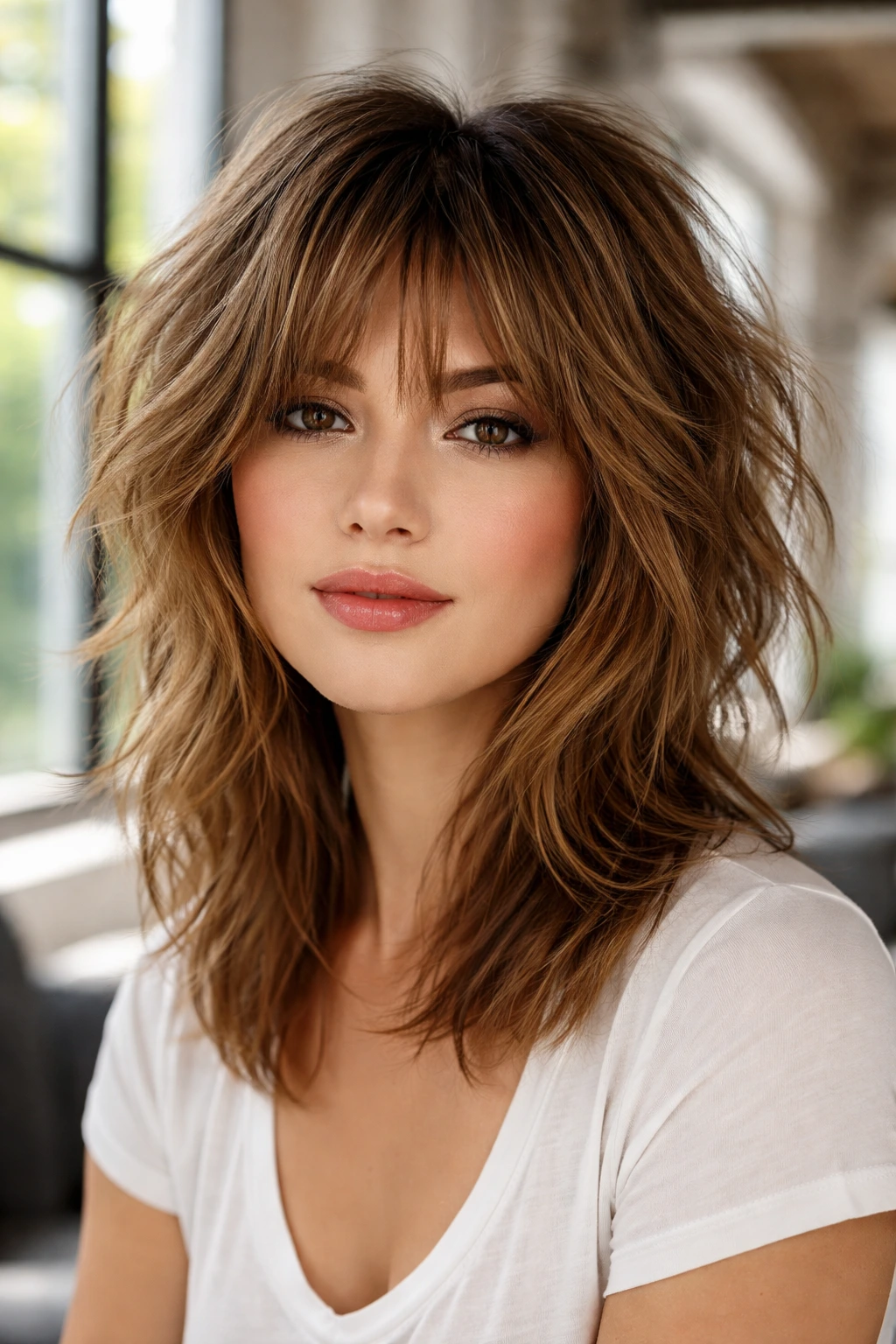
The shag is back, and it is a gift for round faces. The defining feature of a modern shag is the focus on top-heavy volume. By cutting shorter, choppy layers at the crown, you automatically create height. That lift at the top of your head is the single fastest way to elongate the appearance of a round face.
The Power of Layers
These layers aren’t just for show; they remove weight. When you take the bulk out of the sides, the hair falls closer to the face, which provides a slimming effect. The ends should be thinned out to avoid that bulky, triangular shape that happens when a shag grows out.
4. Curtain Bangs with Layers
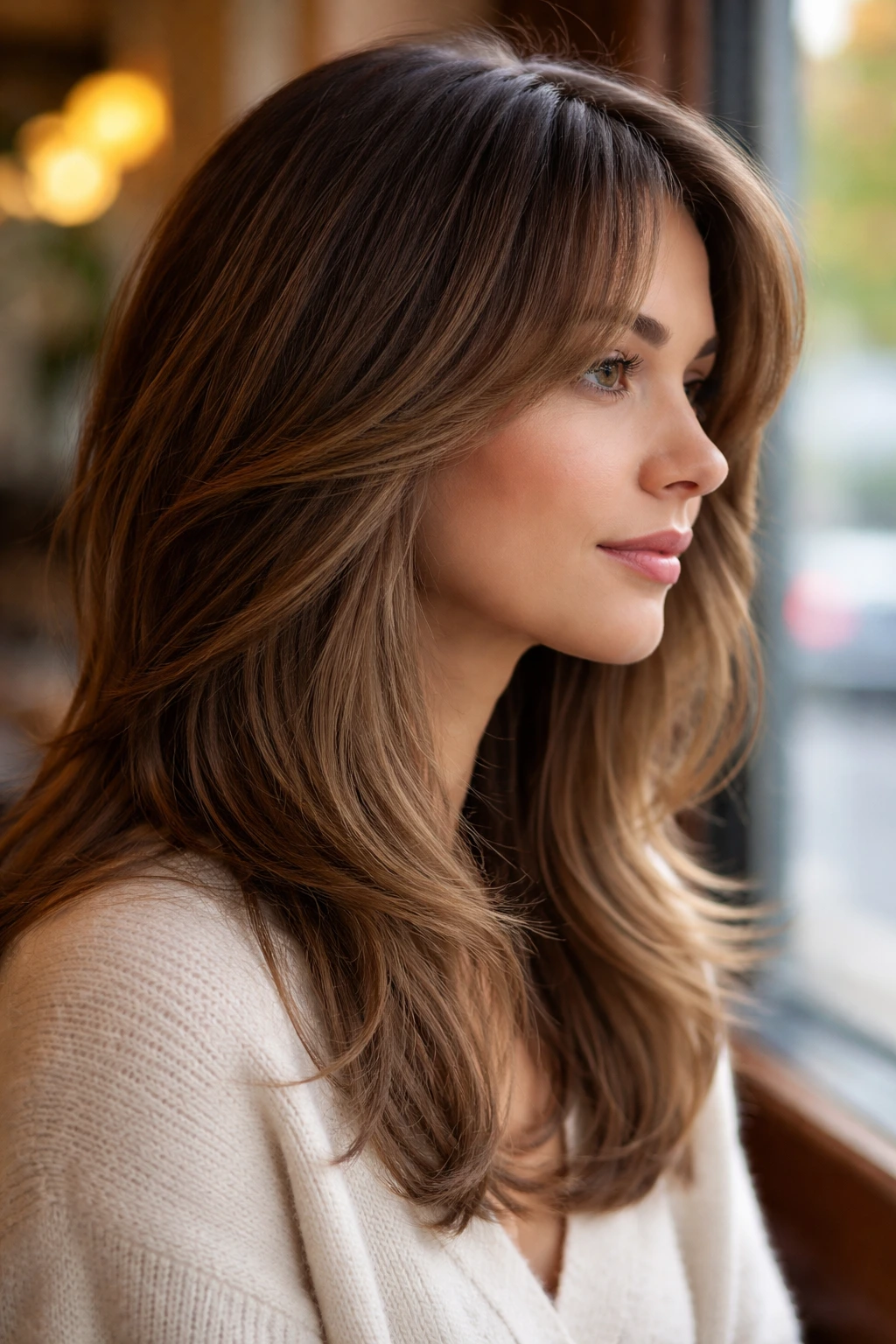
If you are hesitant to go full-on shag, curtain bangs are your entry point. These bangs are cut shorter in the center and longer toward the edges, tapering off into your hair. For a round face, you want these bangs to hit somewhere around the cheekbone or the jaw.
How to Style Them
The goal is to frame the face without closing it off. When you blow-dry these bangs, use a round brush to flick them outward and away from the face. This creates an “opening” effect that makes the face look more oval-shaped. It is a subtle trick, but it completely changes the geometry of your look.
5. Choppy Mid-Length Bob
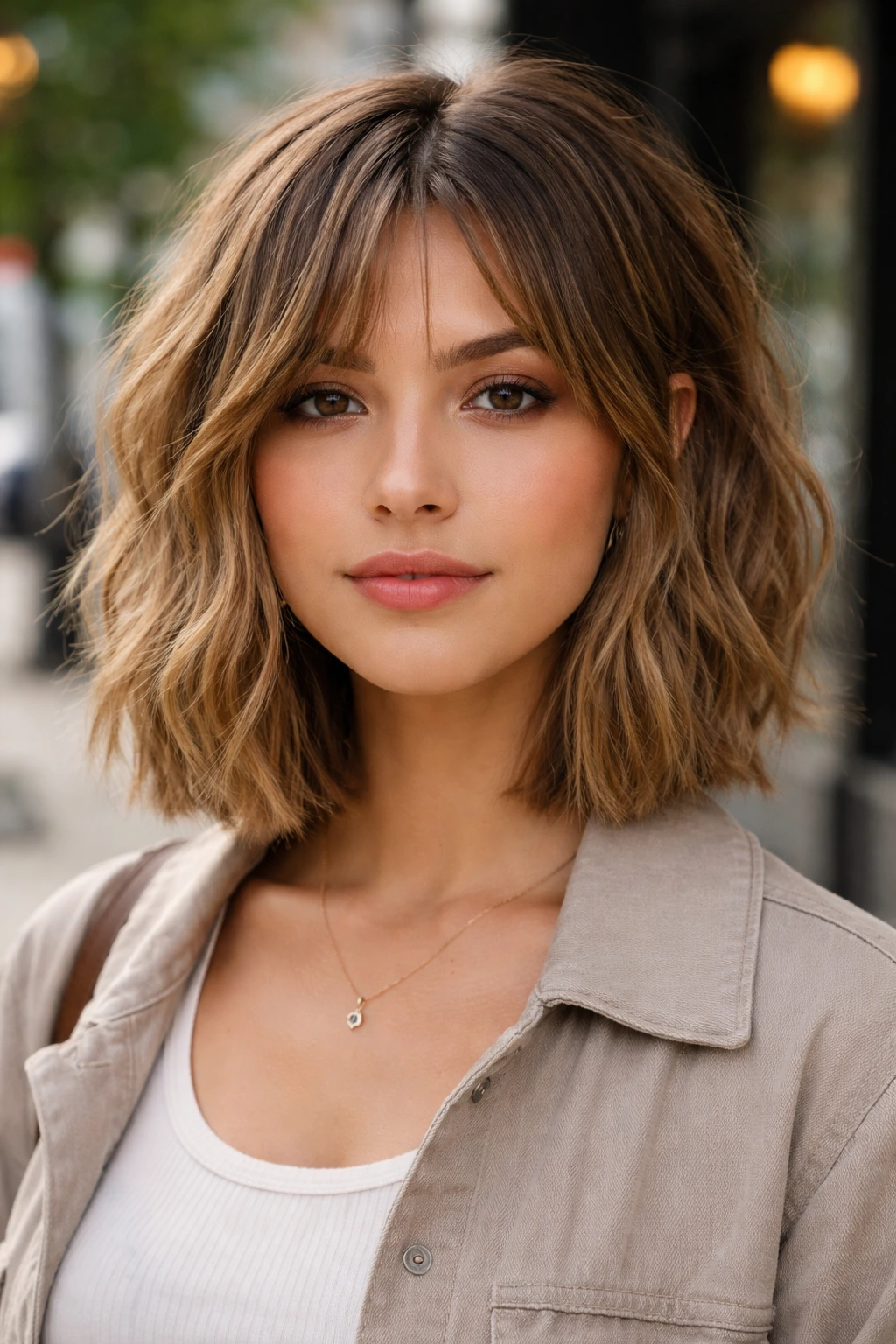
A choppy bob is all about the attitude. It is a low-maintenance, edgy cut that relies on texturizing shears to create internal layers. Unlike a traditional bob, which relies on a precise, solid line, a choppy bob is built to be a bit unruly.
Maintenance note: This cut looks better the less you do to it. If you have any natural wave, wash your hair, apply a pea-sized amount of styling paste to your hands, and work it through your ends while the hair is slightly damp. Let it dry naturally. The chaos of the texture is exactly what distracts from the roundness of the face.
6. The Textured Wolf Cut
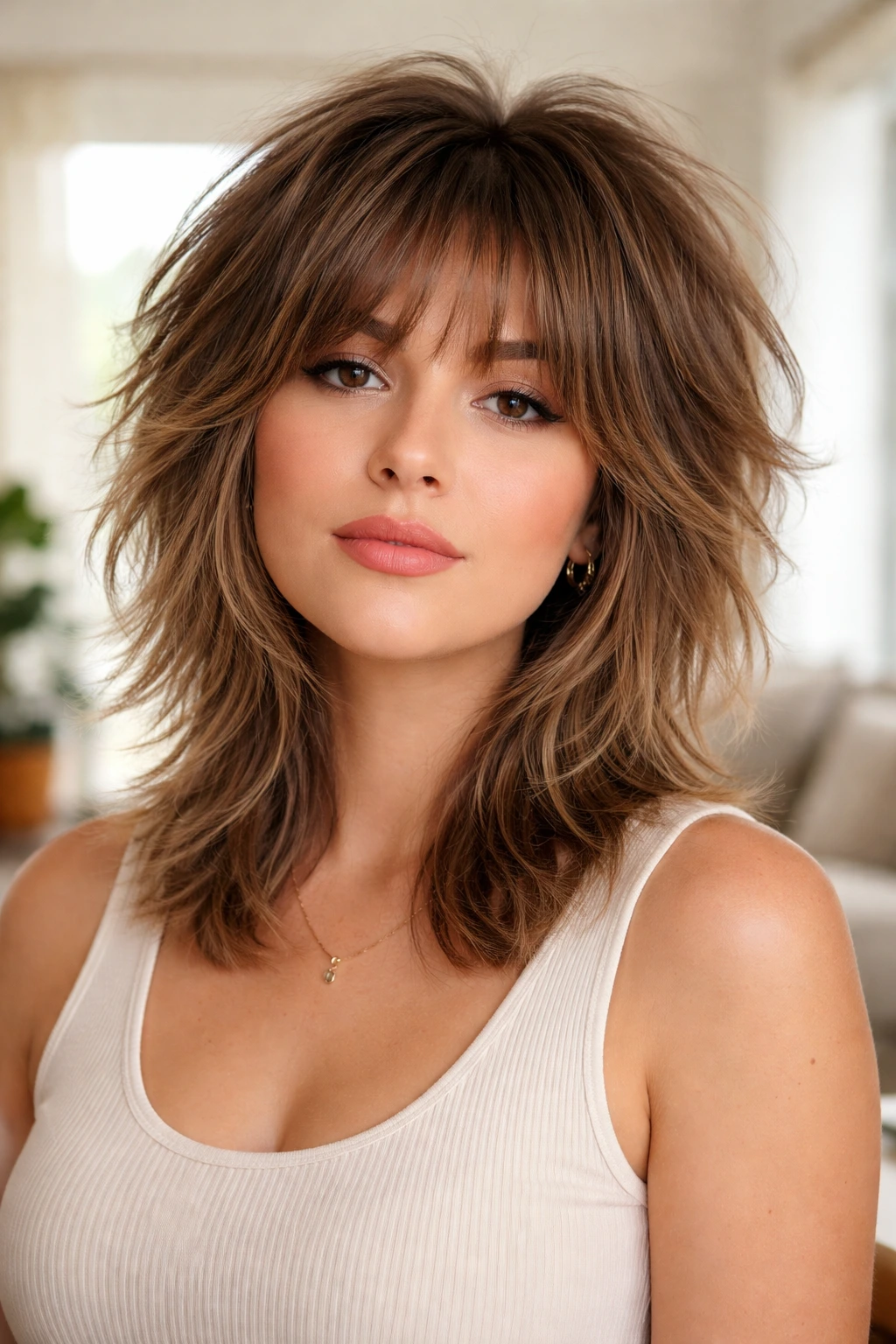
The wolf cut sits right at the intersection of a shag and a mullet, but modernized for everyday wear. It is heavily layered, very voluminous at the crown, and usually paired with wispy fringe. Because it is so dramatic, it naturally draws all the attention to the hair itself rather than the face shape.
Adapting to Your Hair Texture
If you have fine hair, you will need a root-lifting mousse to keep that top volume from falling flat. If you have thick hair, your stylist should use thinning shears liberally throughout the mid-lengths to ensure the hair doesn’t get too puffy. The goal is “controlled volume,” not “helmet hair.”
7. Razored Mid-Length Cut
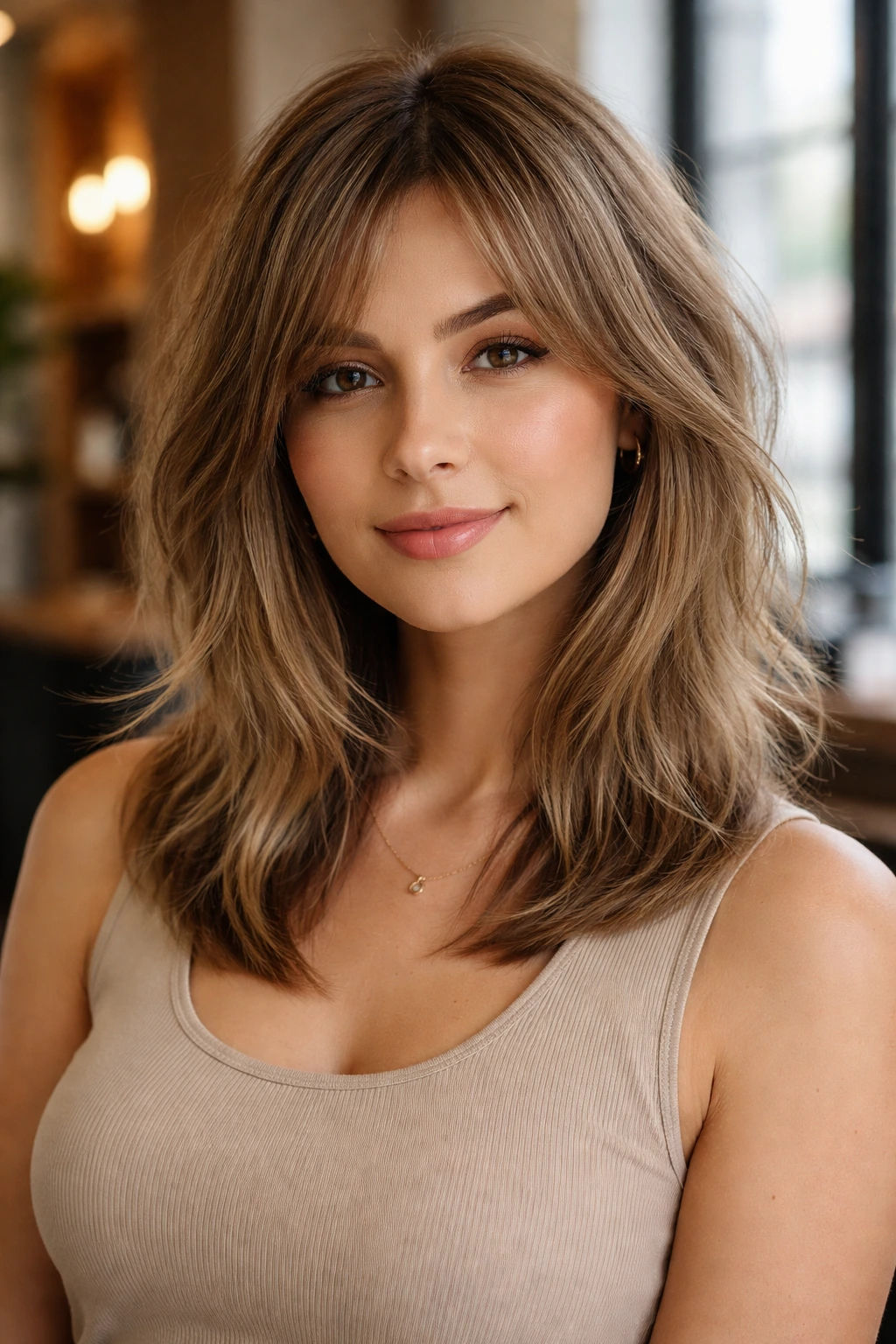
A razor cut is perhaps the best way to get that soft, feather-like texture that feels so light on the face. When a stylist uses a razor, they are slicing the hair rather than cutting it straight across. This leaves the ends wispy and tapered.
Why Wispy Is Better
Blunt lines are static; they just sit there. Wispy, razored ends are dynamic. They move when you move. For a round face, that movement is essential because it creates visual breaks in the silhouette of your hair. It keeps the look light, breezy, and completely devoid of any heaviness that might widen your face.
8. Soft Shaggy Curls
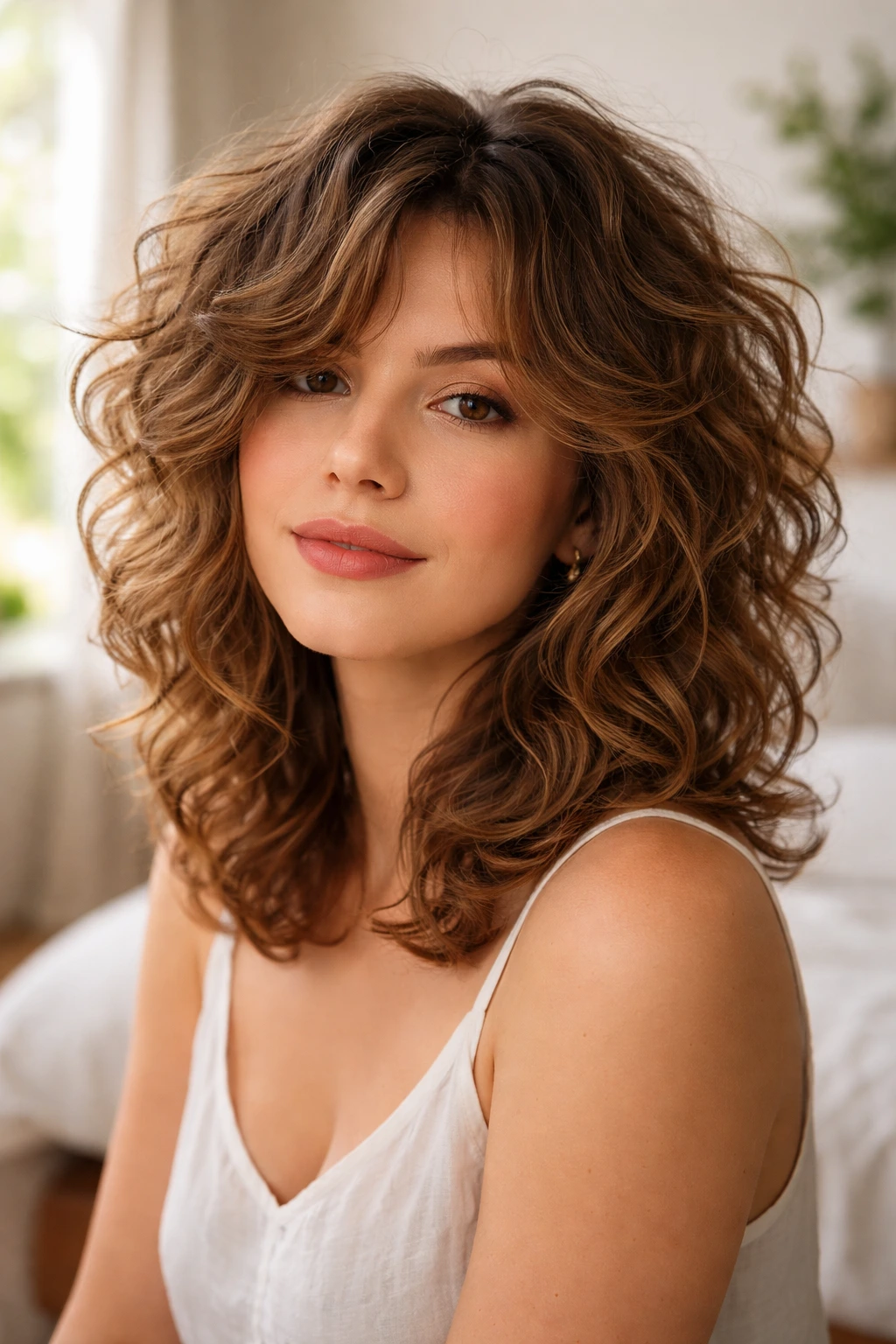
If you have naturally curly or wavy hair, you shouldn’t be fighting it. Instead, lean into a shaggy curl cut. The key here is to make sure the curls are not all one length. You want them stacked in layers so the volume is distributed throughout the head, rather than sitting exclusively at your shoulders.
Styling tip: Diffusing is non-negotiable here. Flip your head upside down while drying to get maximum volume at the roots. When you flip back, use your fingers to gently pull the curls at the top of your head upward, creating an elongated silhouette.
9. Tousled Lob with Side Part
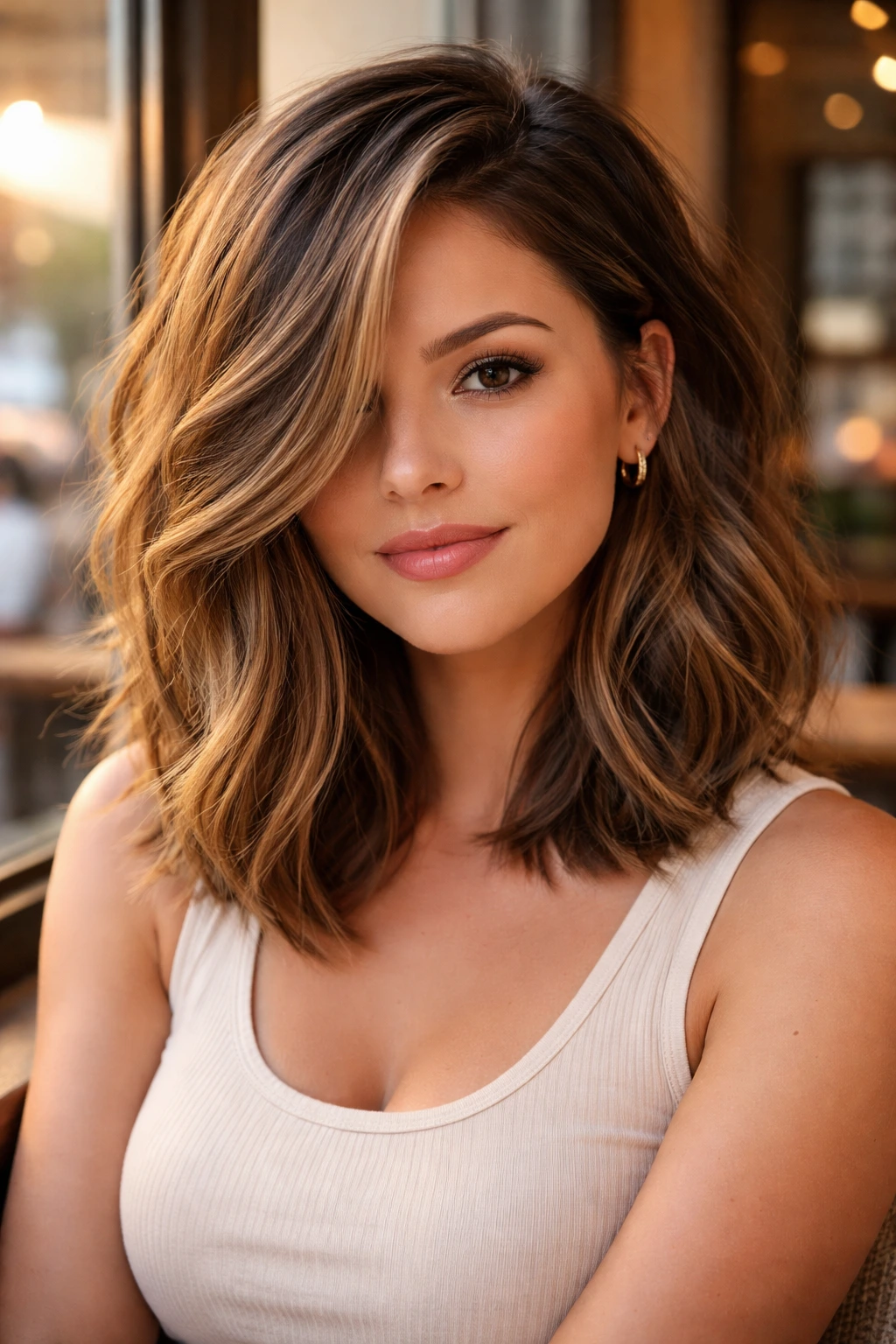
Sometimes the simplest solution is the best. A medium-length lob, parted deeply to one side, creates an instant diagonal line across the face. Diagonals are the enemy of circles; they break up the symmetry and create a focal point.
The Importance of the Part
Don’t just do a standard side part. Over-direct the hair across your forehead before it settles. This creates a bit of height, which acts like a veil across one side of your forehead. The asymmetric nature of this style makes the face look longer and narrower.
10. Piecey Mid-Length Layers
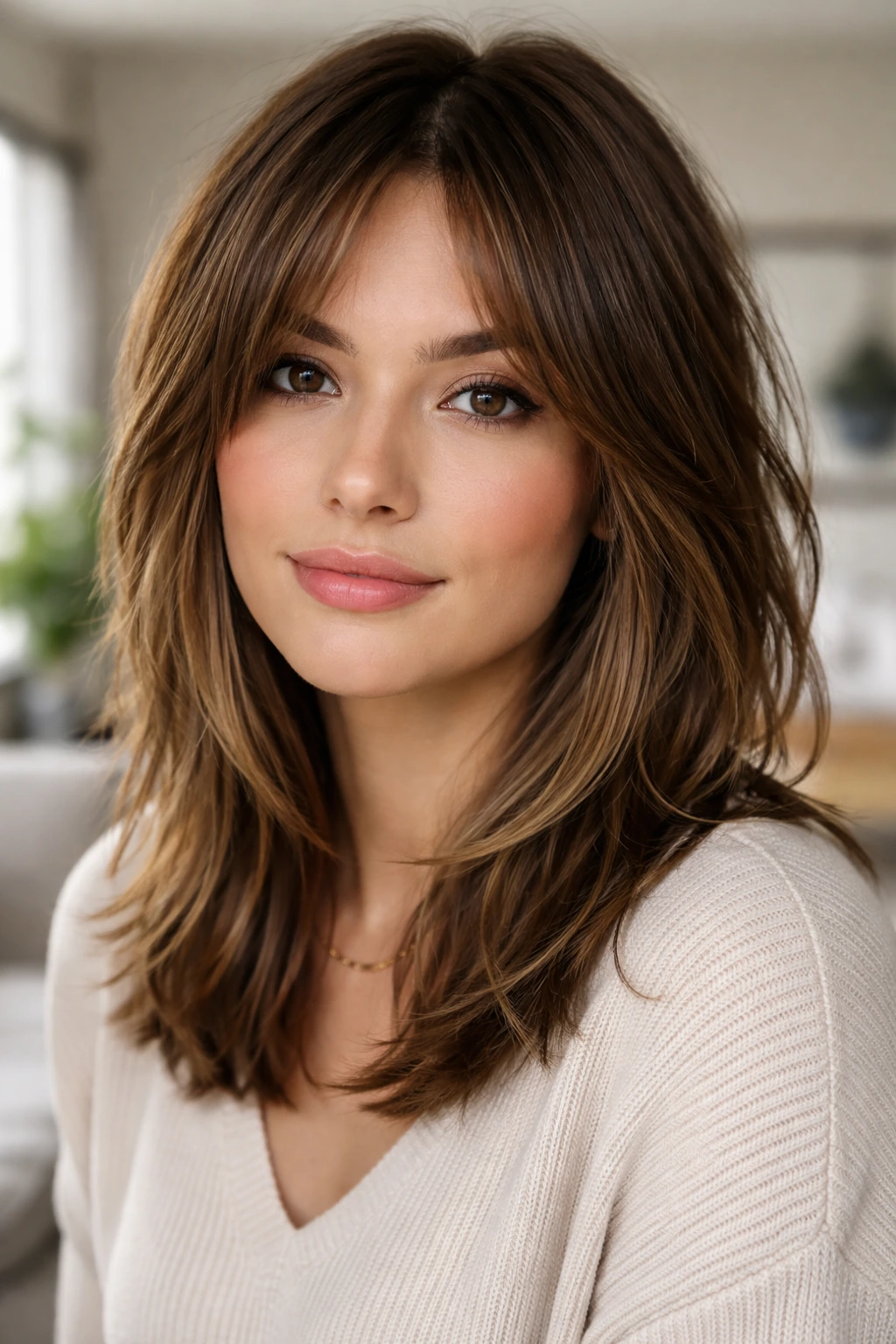
“Piecey” is a word you should get very comfortable with if you have a round face. It implies that the hair is separated into distinct clumps rather than one solid block of color and texture. You can achieve this with a lightweight pomade or a texture wax.
Application Technique
Rub the product between your palms until it is nearly invisible, then rake your fingers through your hair. Don’t worry about being precise. You want it to look like you just ran your hands through your hair. This separation creates shadows and highlights within the hair, which breaks up the visual weight.
11. The Modern Feathered Cut
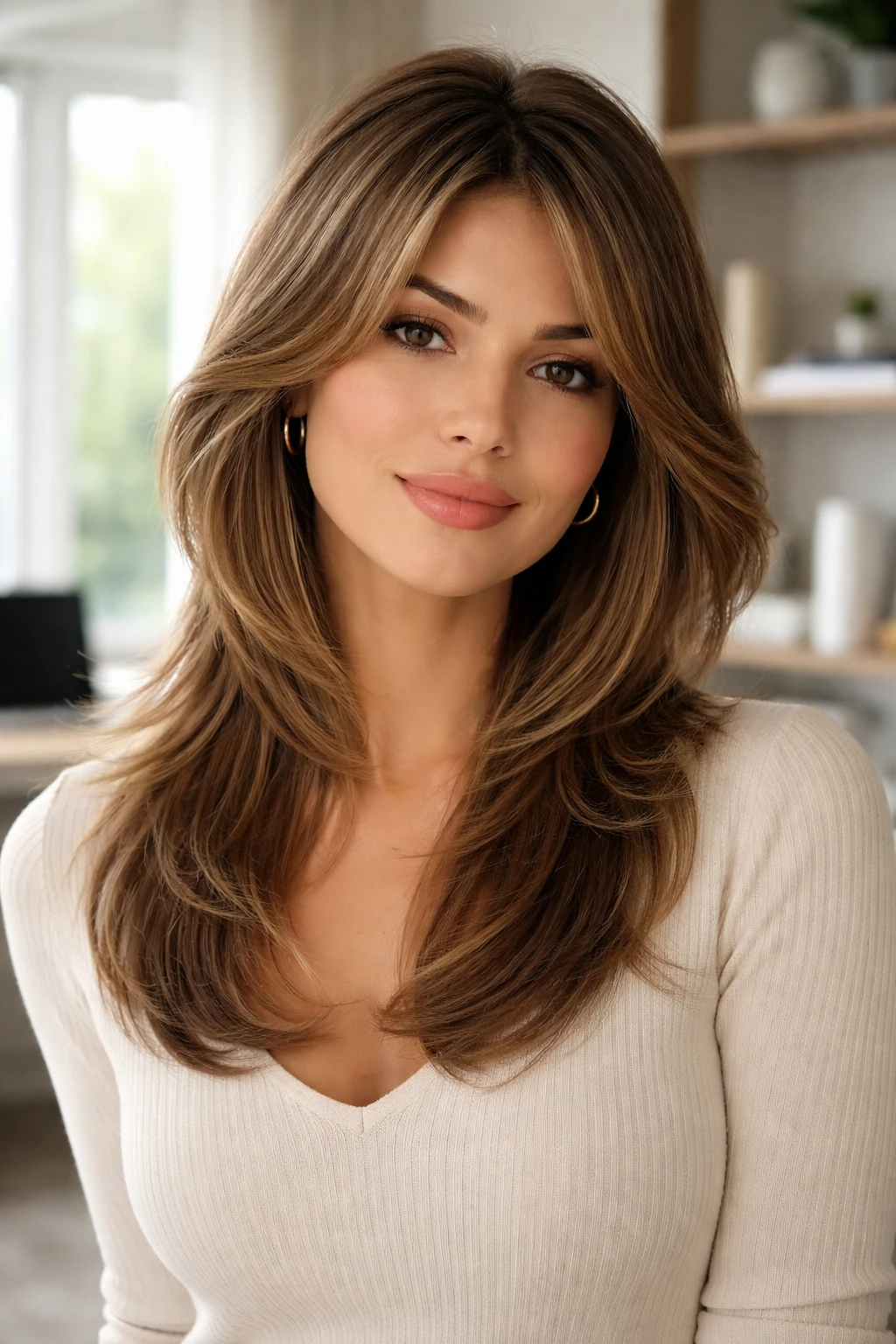
Think of the feathered looks of the past, but stripped of the hairspray and the stiffness. A modern feathered cut uses long, sweeping layers that start around the chin and continue down to the ends. It is all about encouraging the hair to flick away from the face.
Framing the Face
By having the hair kick out away from your cheeks, you expose the neck and jawline. This creates an illusion of elongation. It is a very polished, professional look that still manages to keep the texture and playfulness required to keep the face from looking too round.
12. Disconnected Lob
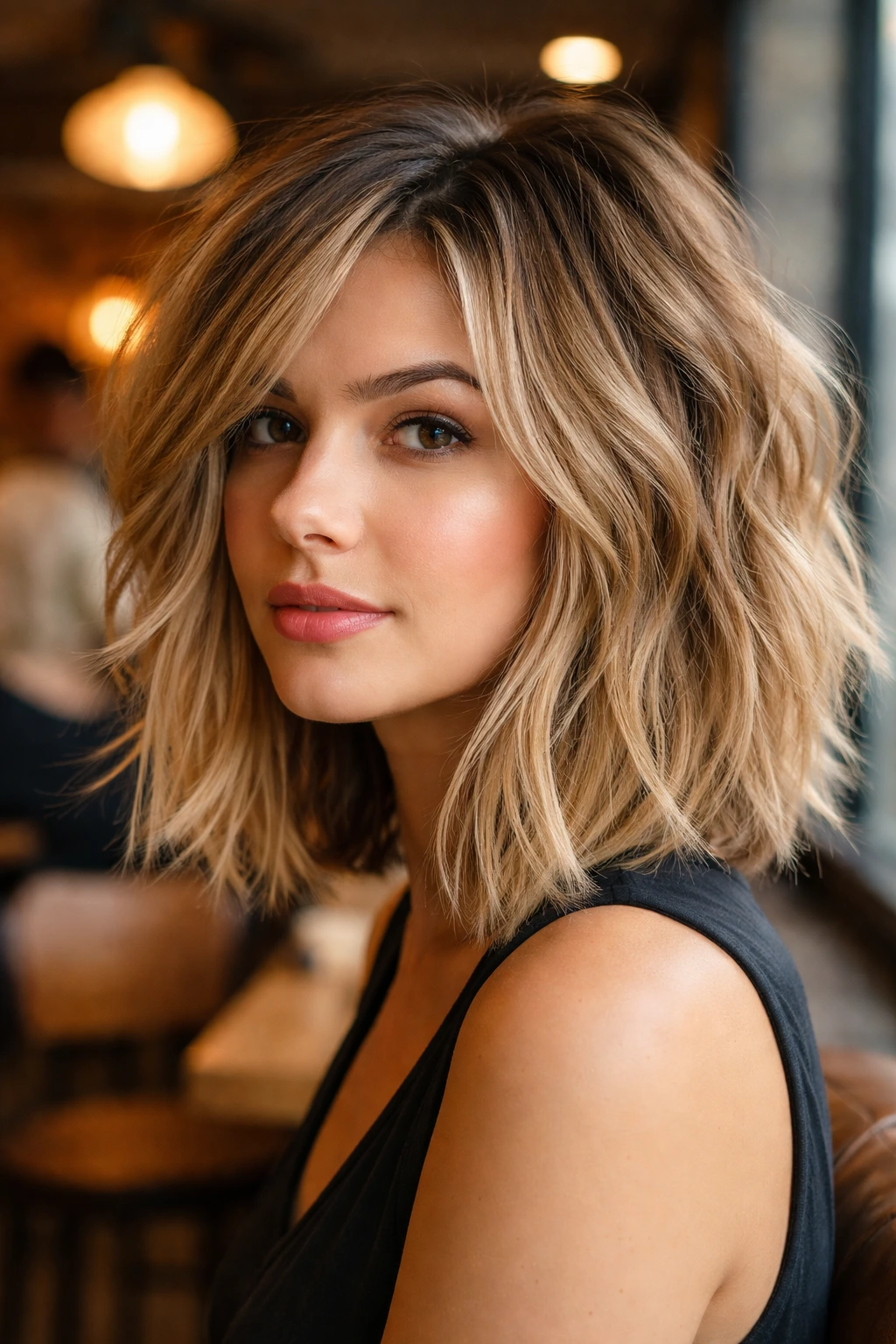
A disconnected lob is a cut where the layers don’t blend seamlessly. There might be a noticeable jump between the shorter layers near the face and the longer layers in the back. This might sound scary, but it is excellent for round faces.
Breaking the Silhouette
The lack of a seamless blend creates jagged lines. These jagged lines act as visual “chops” that interrupt the softness of your face shape. It gives you a more angular, modern appearance. This is a great choice if you are tired of the “safe” haircut look and want something with a bit more edge.
13. Soft Waves with Face-Framing Pieces
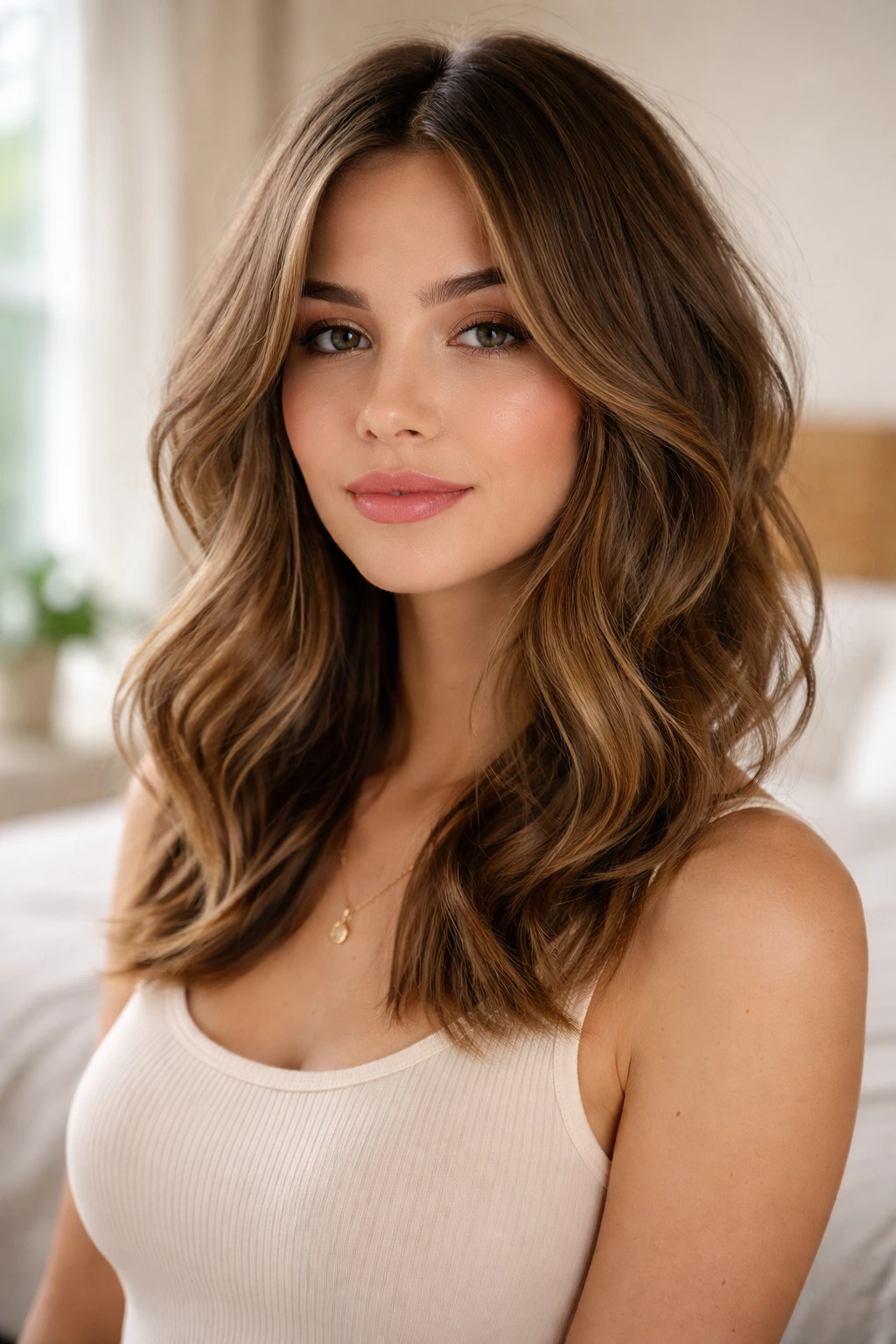
Even if you wear your hair relatively long, you can make it work for a round face by adding deliberate face-framing pieces. These pieces should be shorter than the rest of the hair, usually hitting between the nose and the chin.
The “No-Hair” Illusion
When you pull your hair back into a low ponytail, these face-framing pieces fall naturally around your face. They soften the jawline and create a vertical frame that effectively cuts the width of your face in half. Always leave these pieces out; they are the most important part of the cut.
14. Textured Blunt Cut
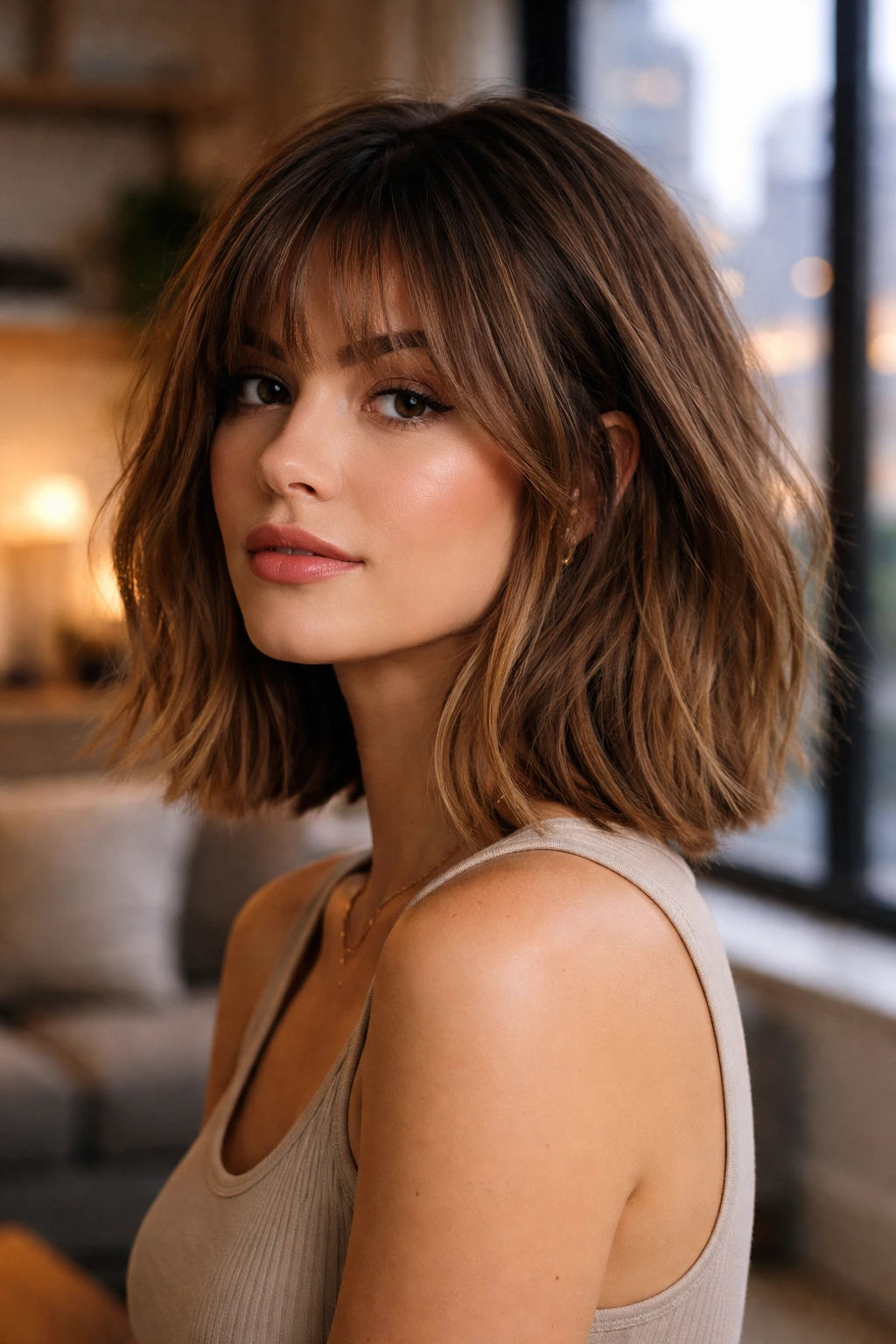
A blunt cut is usually discouraged for round faces, but if you add intense texture to the surface of the hair, it can actually work quite well. The trick is to keep the ends straight but texturize the mid-lengths heavily.
Why This Works
The bluntness at the bottom gives the hair weight and presence, while the textured surface prevents it from looking like a flat block. It is a sophisticated look that feels very tailored. It frames the face definitively, which can provide a sense of structure that a soft, wispy cut might lack.
15. The “Bedhead” Mid-Length
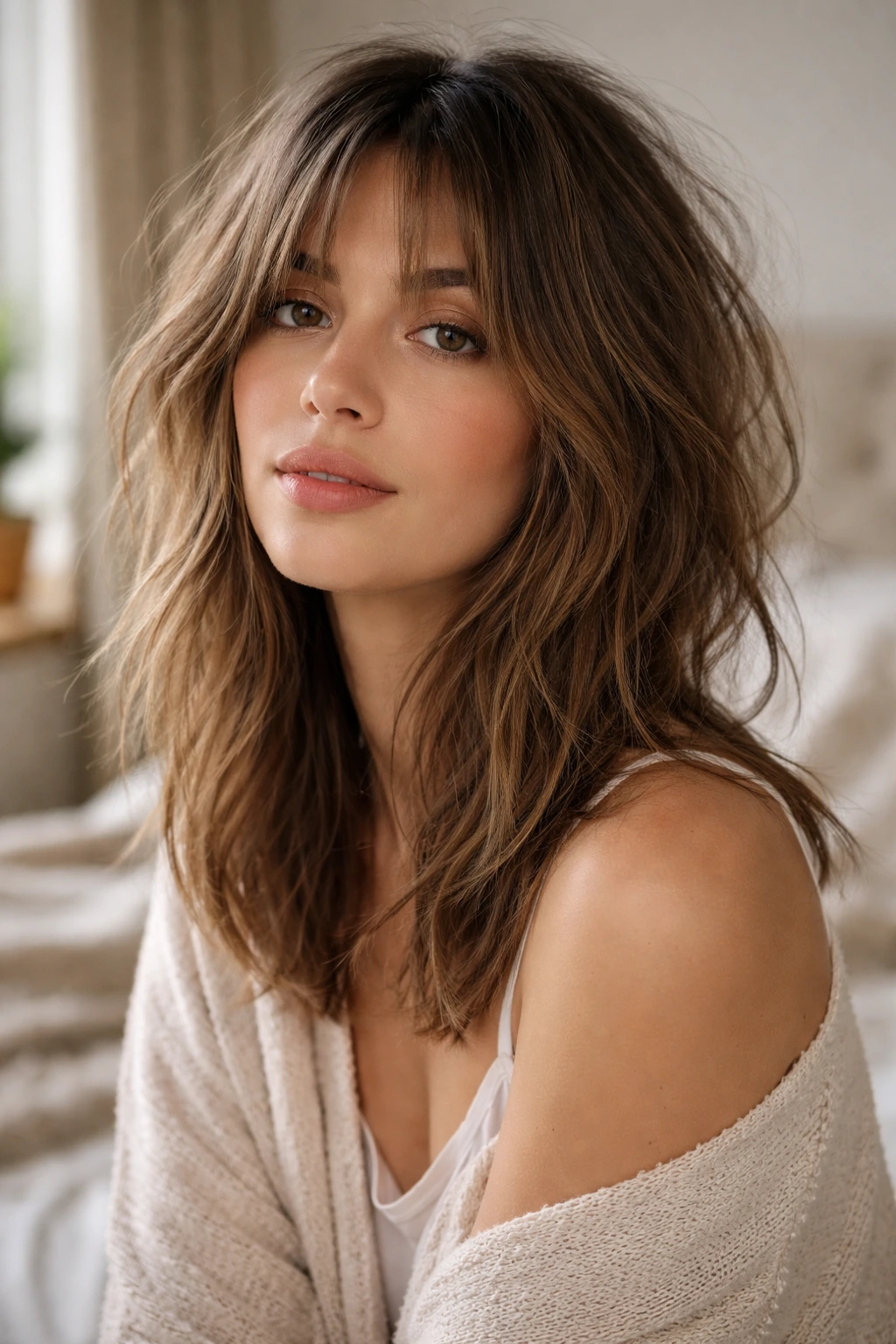
Effortless styling is the hallmark of the bedhead look. This cut is intentionally uneven. Some pieces are shorter, some are longer, and the overall shape is slightly rounded but never uniform. It is the kind of hair that looks better on day two.
Styling tip: Use a dry texturizing spray, not a hairspray. Hairdryers and straighteners are actually your enemies here. You want to embrace the natural bends and kinks in your hair. If you have straight hair, use a wide-barrel curling iron to add a few random bends, but don’t curl the ends—leave them straight to keep the look modern.
16. Long Choppy Layers
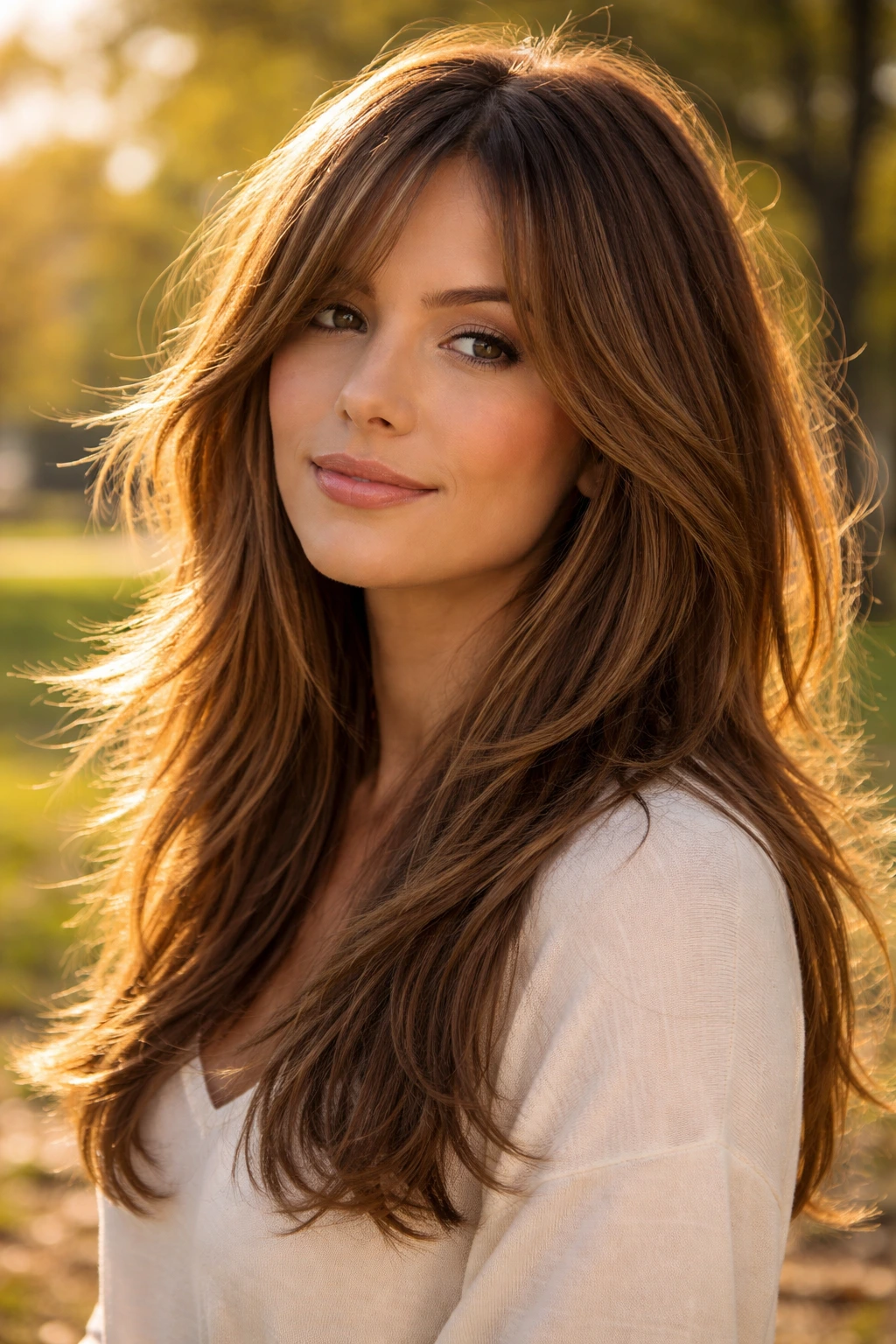
If you are reluctant to go short, long choppy layers are a safe middle ground. The layers need to start relatively high—near the cheekbones—to ensure they actually frame the face. If the layers start too low, they won’t do anything for your face shape.
Layers as a Weight Loss Tool
Think of layers as a way to “lose weight” in your hair. When hair is one length, it is heavy and tends to hang flat, which widens the face. Layers lift the hair up and allow it to sit closer to the head, reducing the volume at the sides where you don’t want it, and increasing it at the top where you do.
17. Deep Side-Parted Waves
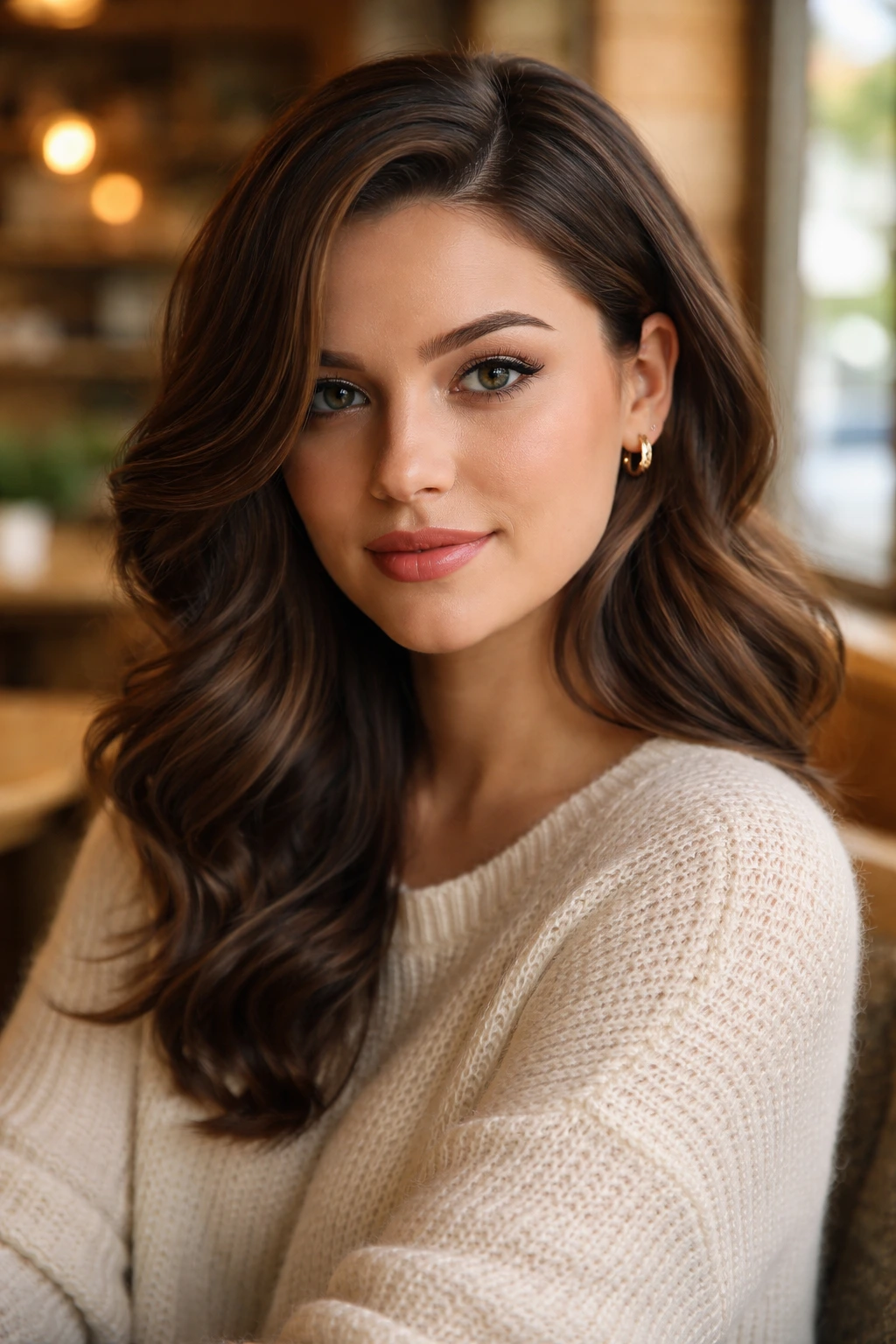
We touched on the side part, but when combined with soft, bouncy waves, it becomes even more effective. A deep side part forces the hair to cover part of the forehead, which immediately narrows the appearance of the face.
Balancing the Face
Because one side of your face will be more exposed than the other, the asymmetry is naturally slimming. It creates a focal point on one side of your face (usually the one with more eye visibility), which distracts from the overall circularity of the facial structure.
18. Shaggy Lob with Wispy Bangs
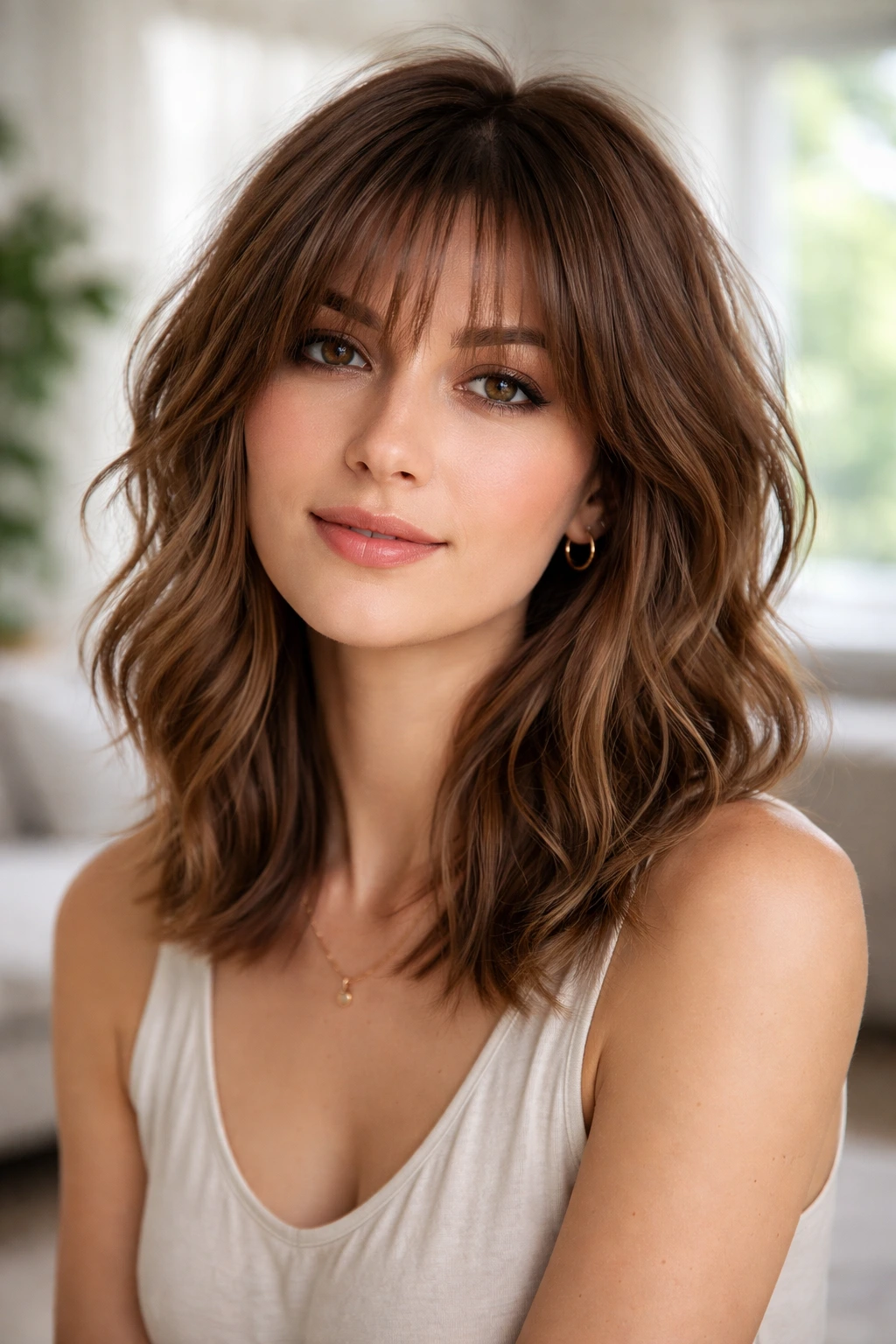
Wispy bangs are very different from heavy, blunt-cut bangs. They are translucent, meaning you can see a bit of the forehead through them. For a round face, this is essential. A heavy, straight-across bang will turn your face into a shorter circle.
The Benefit of Wispy Bangs
Wispy bangs break up the length of the face without creating a solid horizontal line. They soften the forehead and create a lovely, romantic frame. When paired with a shaggy, textured lob, the whole look feels very cohesive and intentional.
19. Textured Waves with Curtain Bangs
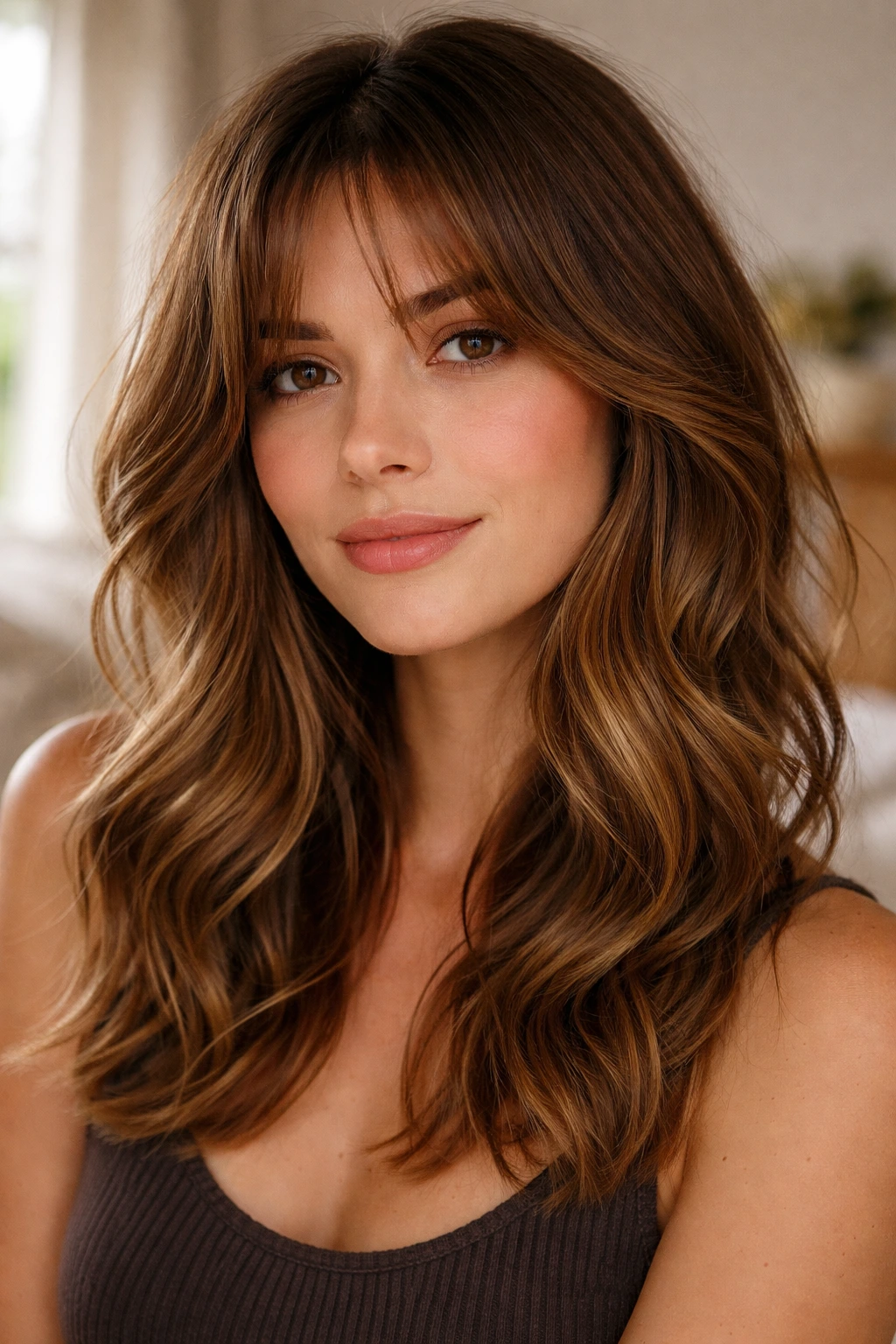
This is the ultimate “it girl” haircut. It combines the face-framing power of curtain bangs with the movement of loose waves. The key is to keep the waves loose—think more “bent” than “curled.”
Creating Visual Interest
The curtain bangs create a vertical frame, and the waves add volume at the sides that is messy rather than structured. This combination is incredibly flattering because it effectively creates a new, more oval-shaped outline for your head. It is also one of the easiest styles to maintain because it is meant to look lived-in.
20. The “Shattered” Bob
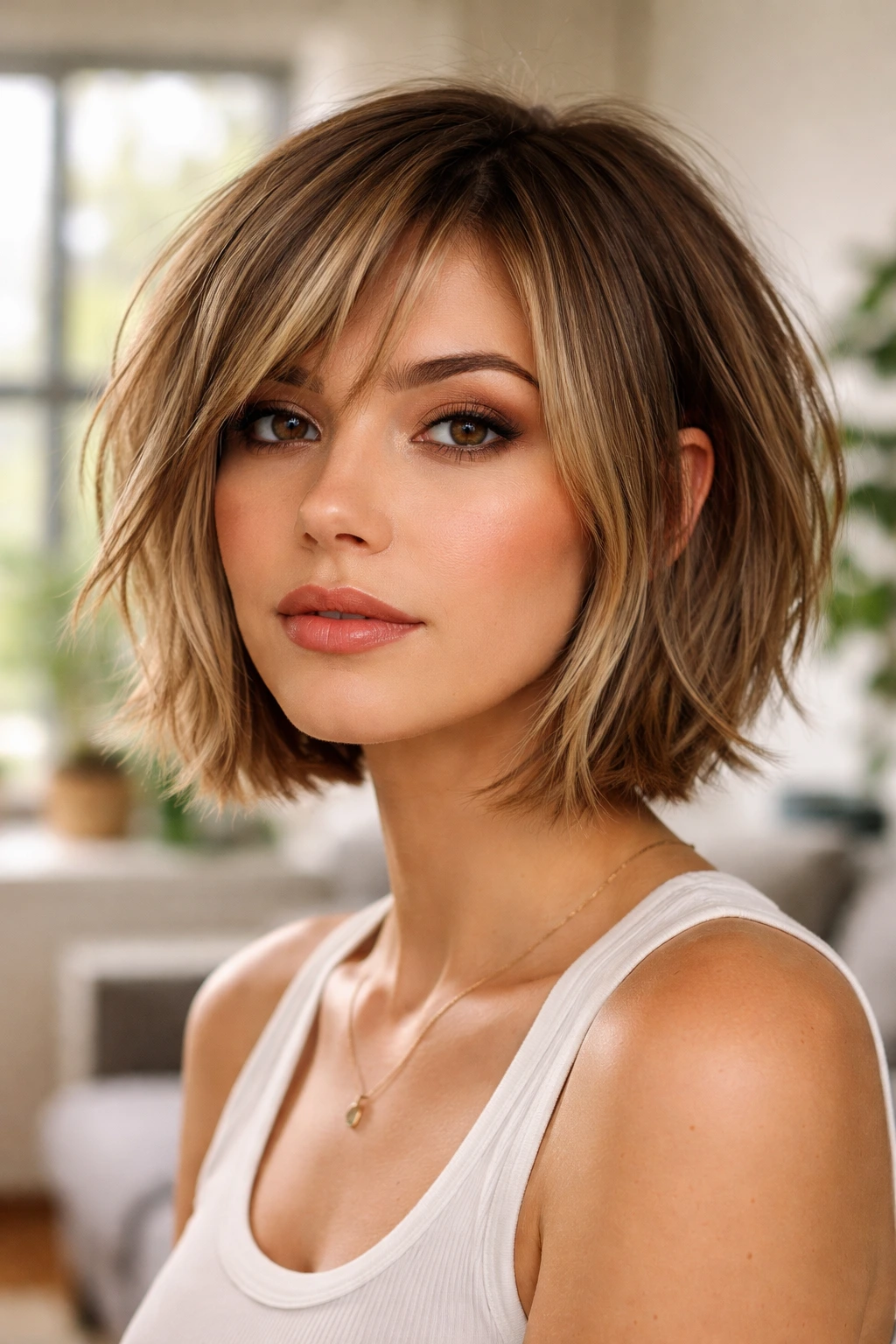
We mentioned the shattered lob earlier, but the shattered bob is shorter, hitting closer to the chin. This is a bolder choice. By taking the hair up to the chin, you draw attention to the jawline.
Jawline Definition
If you have a softer jawline, this cut can actually create the illusion of more definition. The shattered ends prevent the hair from hugging the cheeks too tightly. It creates a “pop” effect that brings the hair off the face, which is almost always a good thing for round face shapes.
21. Layered Cut with Volume at the Crown
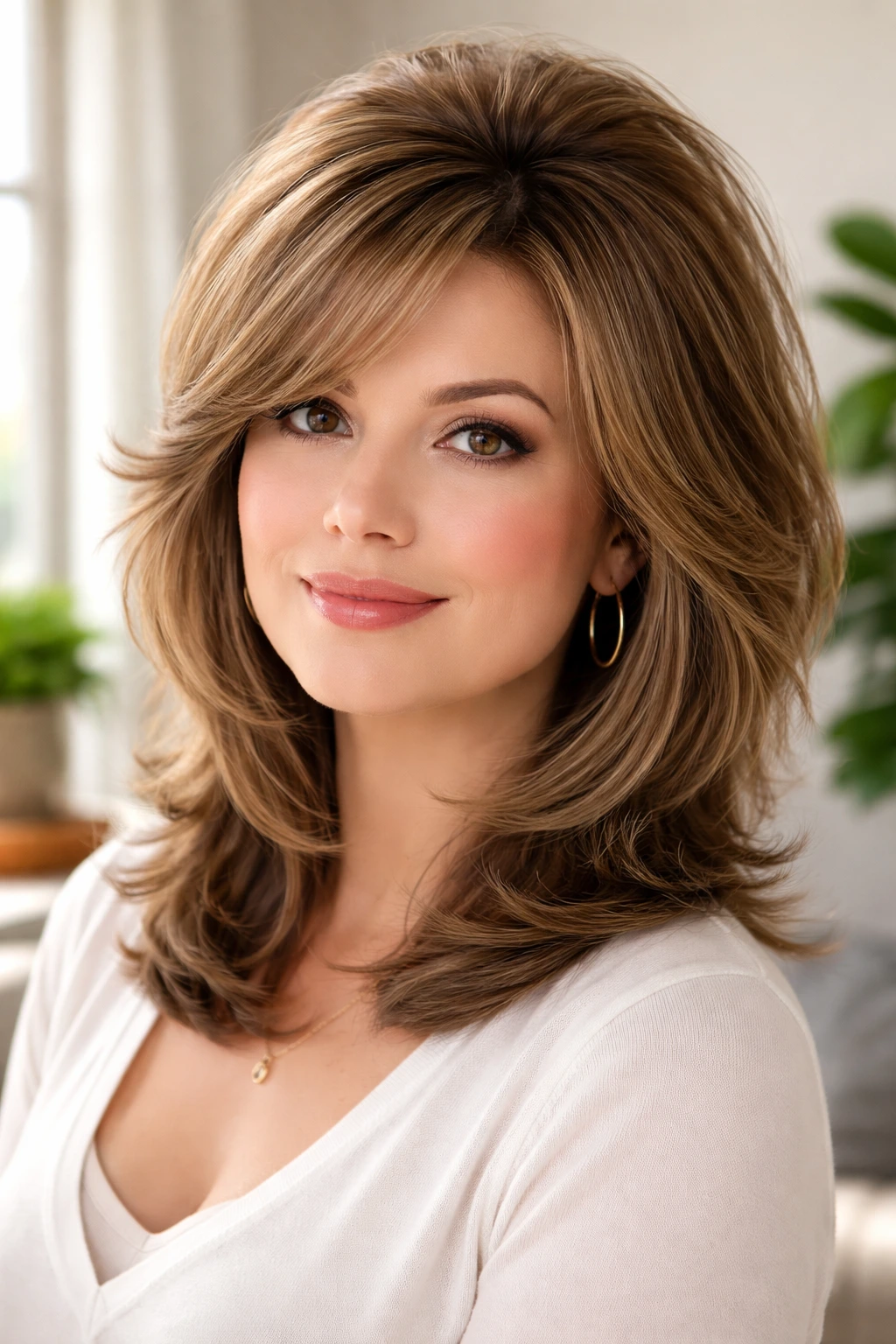
This is a classic technique: keep the sides relatively sleek and build the volume at the top. You can achieve this with a layered cut that emphasizes the crown. Ask your stylist for “invisible layers” at the root area to encourage lift.
Styling for Height
Use a volumizing powder at the roots. It is one of the most underrated products in the industry. It gives your hair a “gritty” texture that allows it to stand up on its own without needing a ton of hairspray. That extra inch of height at the crown does the work of an entire diet.
22. Piecey Mid-Length Shag
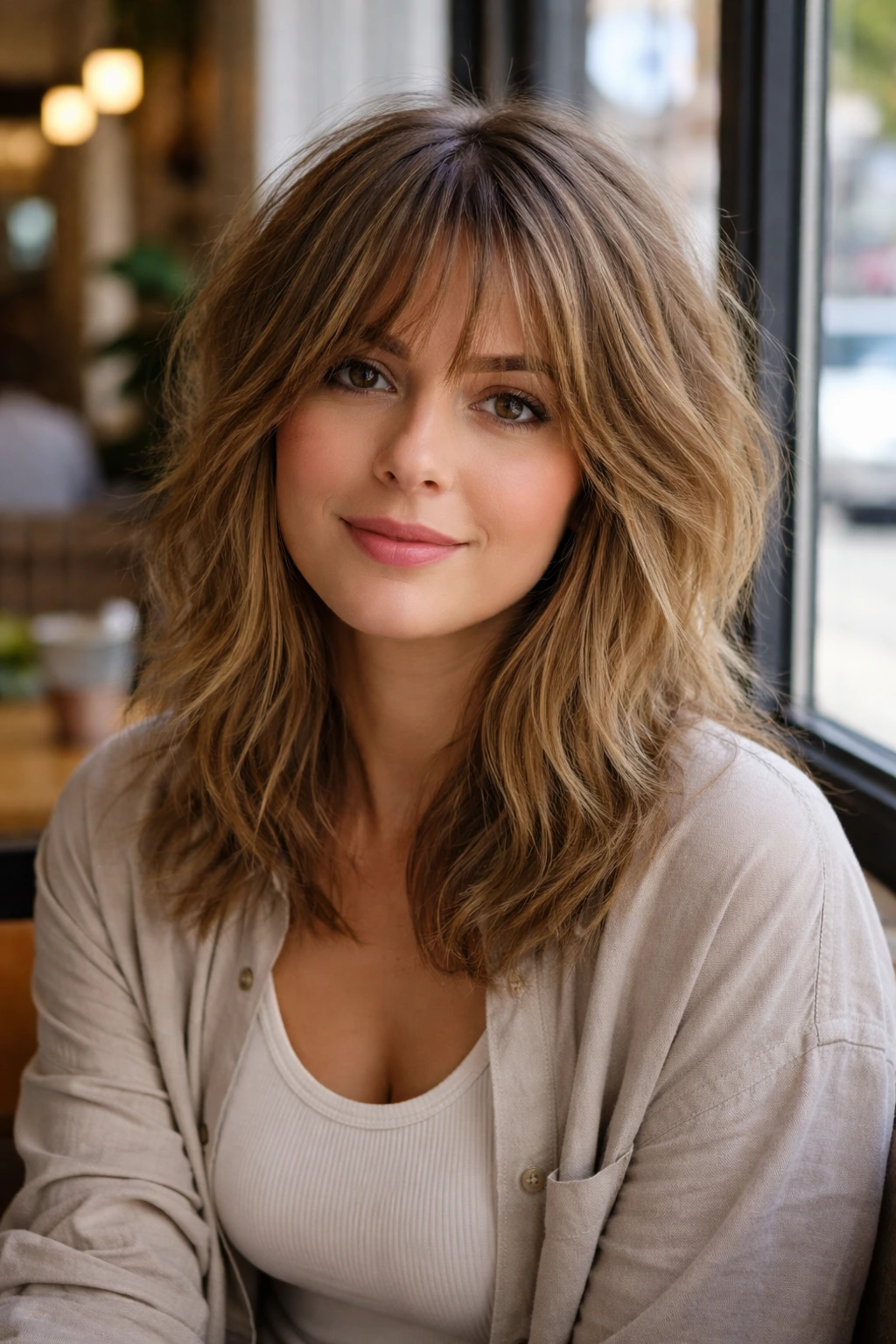
The piecey shag is all about texture, texture, and more texture. It should look like you put a lot of work into it, even though you didn’t. This style relies on the cut itself to create the shape.
Pro tip: When at the salon, ask for “point cutting” on the ends of every single layer. This creates a softer, more feathered look that avoids any blunt, straight lines. It is the difference between a haircut that looks like a hat and one that looks like hair.
23. Disconnected Shag
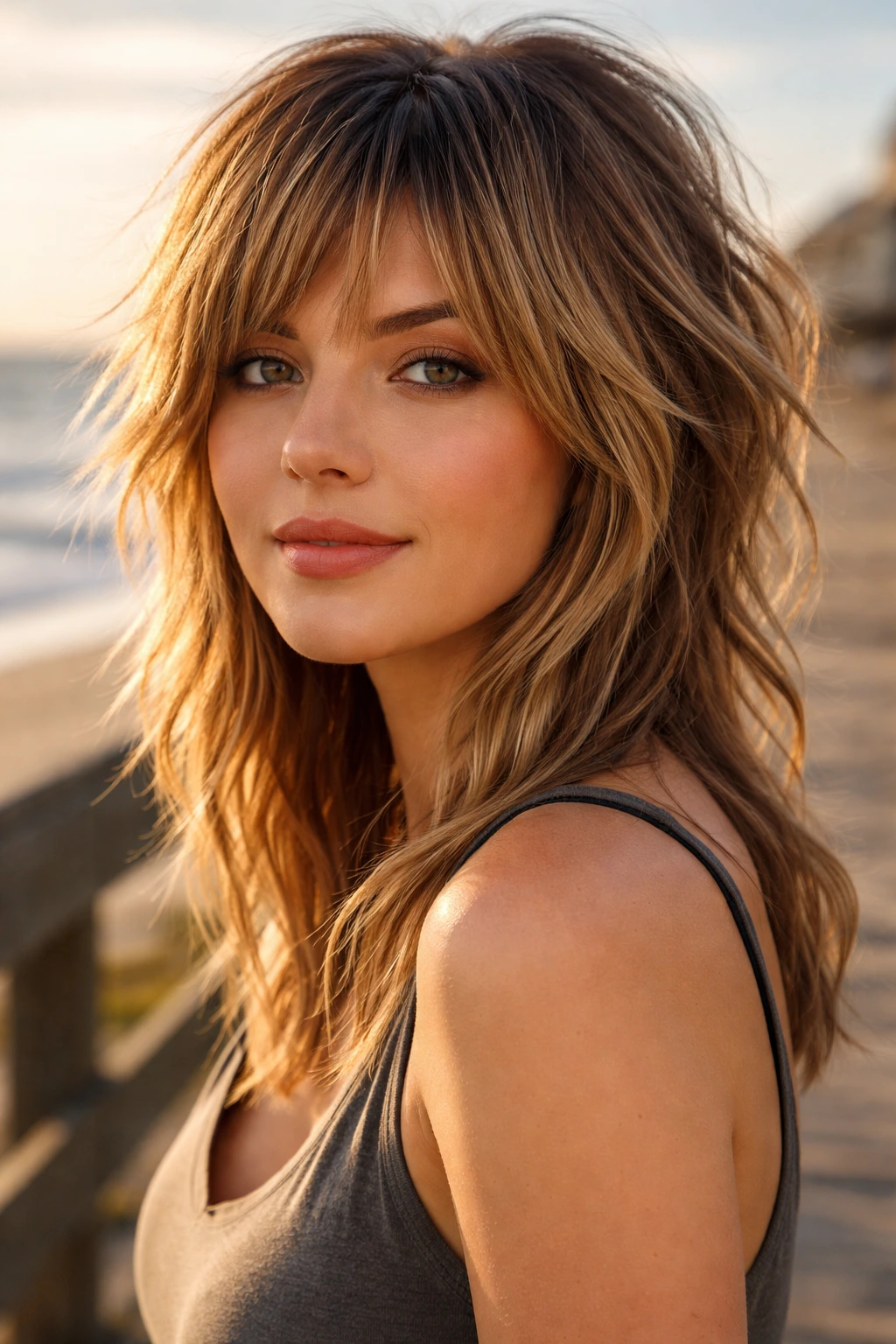
A disconnected shag is when the layers aren’t perfectly blended, creating a look that is somewhat “gappy.” It is edgy, modern, and surprisingly flattering for round faces. The lack of uniformity prevents the eye from tracing a circular shape.
Embracing Imperfection
The beauty of this cut is that it doesn’t require perfection. It is meant to be slightly chaotic. If your hair is naturally straight, this is a great cut to help you fake a bit of texture. A little bit of sea salt spray will make the disconnect even more apparent and stylish.
24. Soft Waves with a High Crown
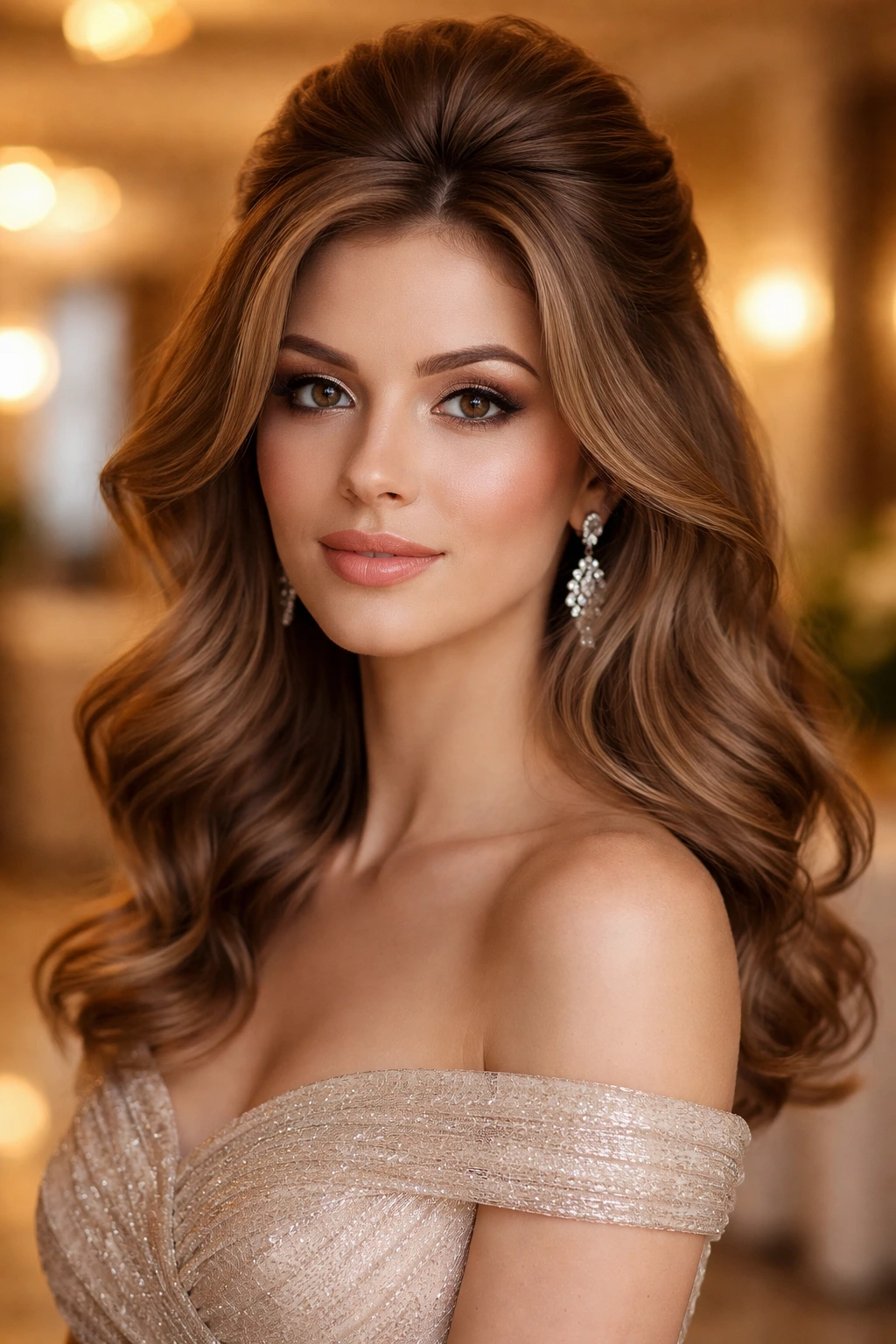
If you are comfortable using tools, a high crown achieved with soft waves is a powerful look. Use a large barrel curling iron to create loose, vertical waves. Again, avoid curls that are too wide.
The Verticality Factor
Focus on building the curls upward. If you curl away from the face, you open up your features. This is a great style for events, weddings, or any time you want to feel a bit more “done.” It is elegant without being overly restrictive.
25. Layered Shag with Heavy Bangs (Done Right)
Most people with round faces are told to avoid heavy bangs. But if you cut them correctly—meaning, you cut them into a slight “V” shape or keep the corners longer—you can pull it off.
Framing the Eyes
The key is to ensure the bangs don’t just sit straight across. They should be textured, almost piecey, and slightly longer at the edges so they blend into the rest of your hair. This creates a soft, arching shape that mimics the curve of the eyebrow, which is a much more natural and flattering line than a dead-straight horizontal blunt.
26. Messy Mid-Length Cut
Sometimes the best look is just “messy.” A mid-length cut with choppy, uneven layers that you let air dry. It is the definition of casual.
Why Messy Works
A neat, perfectly coiffed style can sometimes emphasize the softness of a round face. A messy style, however, is unpredictable. It changes throughout the day. That lack of predictability is excellent for breaking up the face shape.
27. Textured Razored Bob
This is the “cool girl” bob. It is short, texturized, and relies heavily on the razor cut. It is not for the faint of heart, but it is incredibly stylish and very slimming if you get the length right.
The Perfect Length
Make sure it hits either just above or just below the jawline—avoiding hitting exactly on the jawline, as that can make the face look broader. A razor-cut bob sits beautifully and has a weightlessness that is hard to achieve with scissors.
28. Loose Beach Waves (The “Done-Undone” Look)
The done-undone look is when you style your hair, but you brush it out so thoroughly that it looks natural. It is the perfect balance between polished and casual.
Brushing Technique
After curling or waving your hair, wait for it to cool completely. Then, use a wide-tooth comb or your fingers to rake through it. The goal is to break the curls up until they are just waves. This creates that soft, flowing texture that is so flattering.
29. Piecey Mid-Length with Subtle Highlights
Texture is not just about the cut; it is also about color. If you have a solid, dark color, your hair can look like one giant mass, which emphasizes the roundness of the face. Adding subtle, piecey highlights creates visual dimension.
Dimensions as Distraction
When you have lighter pieces mixed in, the eye travels along the different tones. It breaks up the silhouette and makes the hair appear more voluminous and textured. It is a fantastic way to enhance the effect of your layers without doing anything extra to the cut itself.
30. The Tousled Shag
We end where we began: with the shag. The tousled shag is the ultimate expression of texture for a round face. It is free-spirited, voluminous, and incredibly easy to style.
The Final Philosophy
If there is one thing to take away, it is this: round faces benefit from movement. Whether you choose a shaggy lob, a razored bob, or long, layered waves, the common thread is that the hair should not be static. It should be light, airy, and full of life. When your hair has life, your face looks less like a shape to be “fixed” and more like the beautiful, expressive canvas that it is.
Finding the Right Maintenance Routine
Even the best haircut in the world will fall flat if you are using the wrong products. For round faces, your worst enemy is heavy, oily styling products that weigh the hair down. You need to focus on products that build grit, lift, and volume at the roots.
Product Selection Basics
Switch to a lightweight volumizing shampoo that doesn’t contain heavy silicones or parabens. When conditioning, only apply the product to the ends—never the roots. The roots are where you need the most lift, and conditioner is a weight that will drag that lift down.
The Role of Dry Shampoo
Even if your hair is clean, dry shampoo is a fantastic texturizer. It absorbs excess oil (which makes hair limp) and adds a matte, “second-day” texture that makes layering and styling much easier. Use it at the crown of your head, then gently massage it into the scalp with your fingertips to create that essential height.
Final Thoughts
When you walk into the salon, do not get hung up on names like “wolf cut” or “lob.” Focus on the mechanics of the cut. Tell your stylist you want to create height at the crown, keep the sides relatively sleek, and maintain a “piecey” or “shattered” quality to the ends. Be specific about the visual effect you want. If they start talking about heavy, blunt perimeters, politely steer the conversation toward point-cutting and razoring.
Ultimately, the best hairstyle for a round face is the one that makes you feel like yourself. You do not have to hide your face shape, but you can certainly use your hair to play with your proportions and create the angles you want to see. Embrace the texture, play with the volume, and don’t be afraid to keep the look a little bit messy. Perfect, stiff hair is rarely the answer. Real, lived-in, textured hair is where the style actually happens.
