



Round faces are easy to style once you stop fighting them. The wrong cut can make cheeks look wider and shorten the face, but the right one changes the whole read of your features in a few snips of the scissors. That’s why short cool hairstyles for round faces are less about following a trend and more about shape, balance, and a little bit of trickery.
I’ve always liked cuts that do something useful and still look sharp from across the room. Give me a bit of height at the crown, a clean line around the jaw, or some off-center movement, and you’ve already done half the work. Give me width right at cheek level, and I start muttering at the mirror.
The good news: you do not need long hair to make a round face look slimmer, sharper, or more defined. Pixies, bobs, shags, cropped curls, and tiny undercuts all have a role here, as long as they’re shaped with intention. The details matter more than the label on the cut.
Some of these styles lean sleek. Some are messy on purpose. A few are blunt, which sounds risky until you see where the line lands. All of them can work beautifully on round faces when the length, fringe, and side profile are handled the right way.
1. Textured Pixie Cut
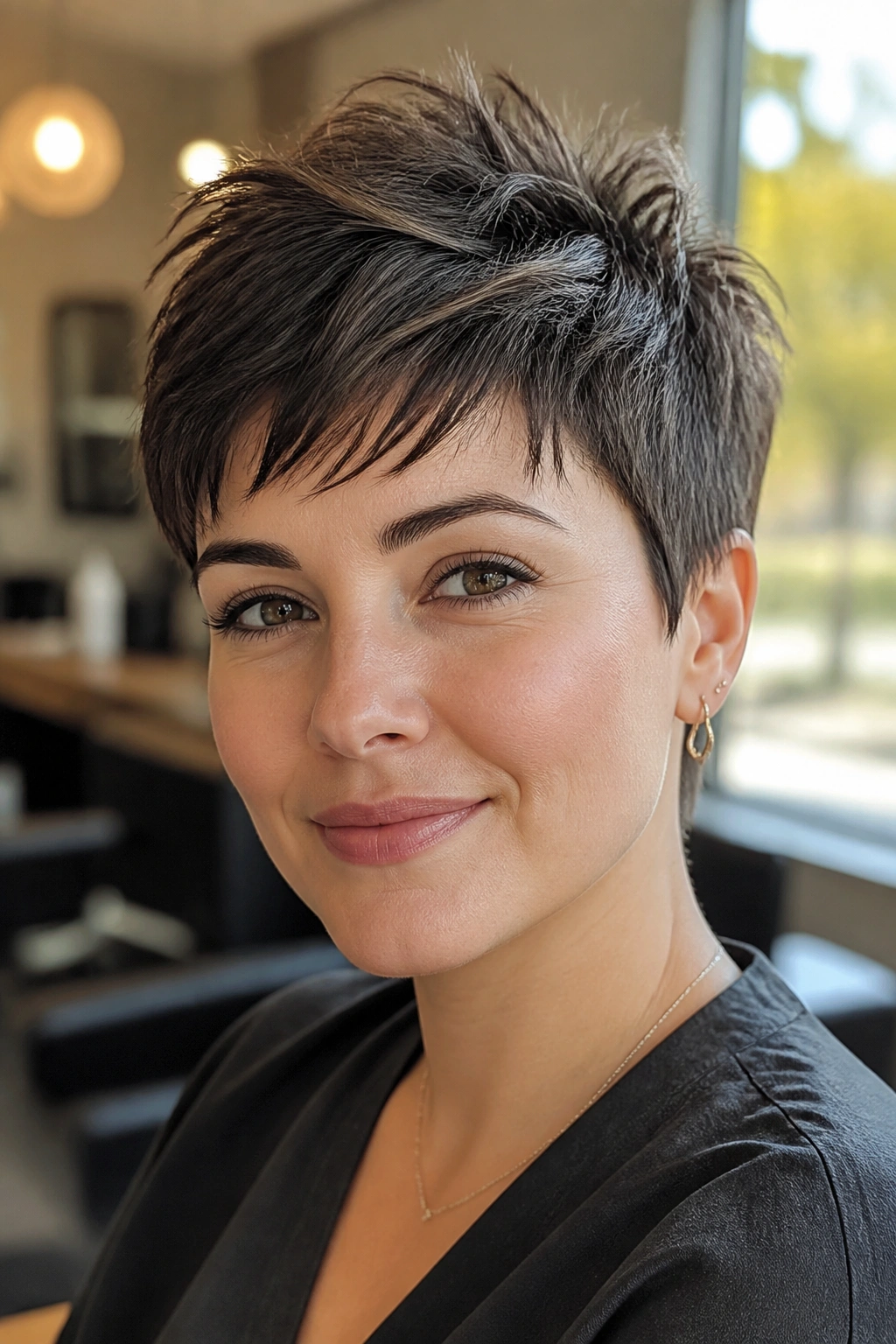
A textured pixie is one of the quickest ways to make a round face look longer without adding a lot of fuss. The trick is keeping the sides neat and letting the top stay airy, choppy, and a little piecey. That gives your eye a vertical line to follow instead of a wide one.
Why It Works on Round Faces
The top does the heavy lifting here. If the crown has 2 to 4 inches of lift and the sides stay close to the head, the face reads narrower almost at once. A matte paste or light wax keeps the texture separated, not helmet-like.
- Ask for shorter sides and nape, with extra length on top.
- Keep the fringe soft and irregular, not a heavy straight line.
- Style upward and slightly forward for movement.
- Best on fine to medium hair that needs shape fast.
My one hard rule: if the top is flat, the pixie loses its edge.
2. Asymmetrical Bob

A bob that is a little off-balance can be a gift for a round face. One side grazing the jaw and the other side falling just a touch longer creates a diagonal line, and diagonals are flattering because they break up width. Clean, sharp, and a little bit sly. I love that.
You do want the shorter side to stay above the widest part of the cheek, or the effect gets muddy. The longer side should skim the jaw or land just below it, never stopping right on the cheeks. That small difference in length makes the cut feel modern instead of severe.
If your hair is straight, this one is easy to wear sleek. If it has wave, even better. A bend through the mid-lengths keeps the asymmetry from looking too deliberate, which is the whole point.
3. French Bob With Wispy Fringe
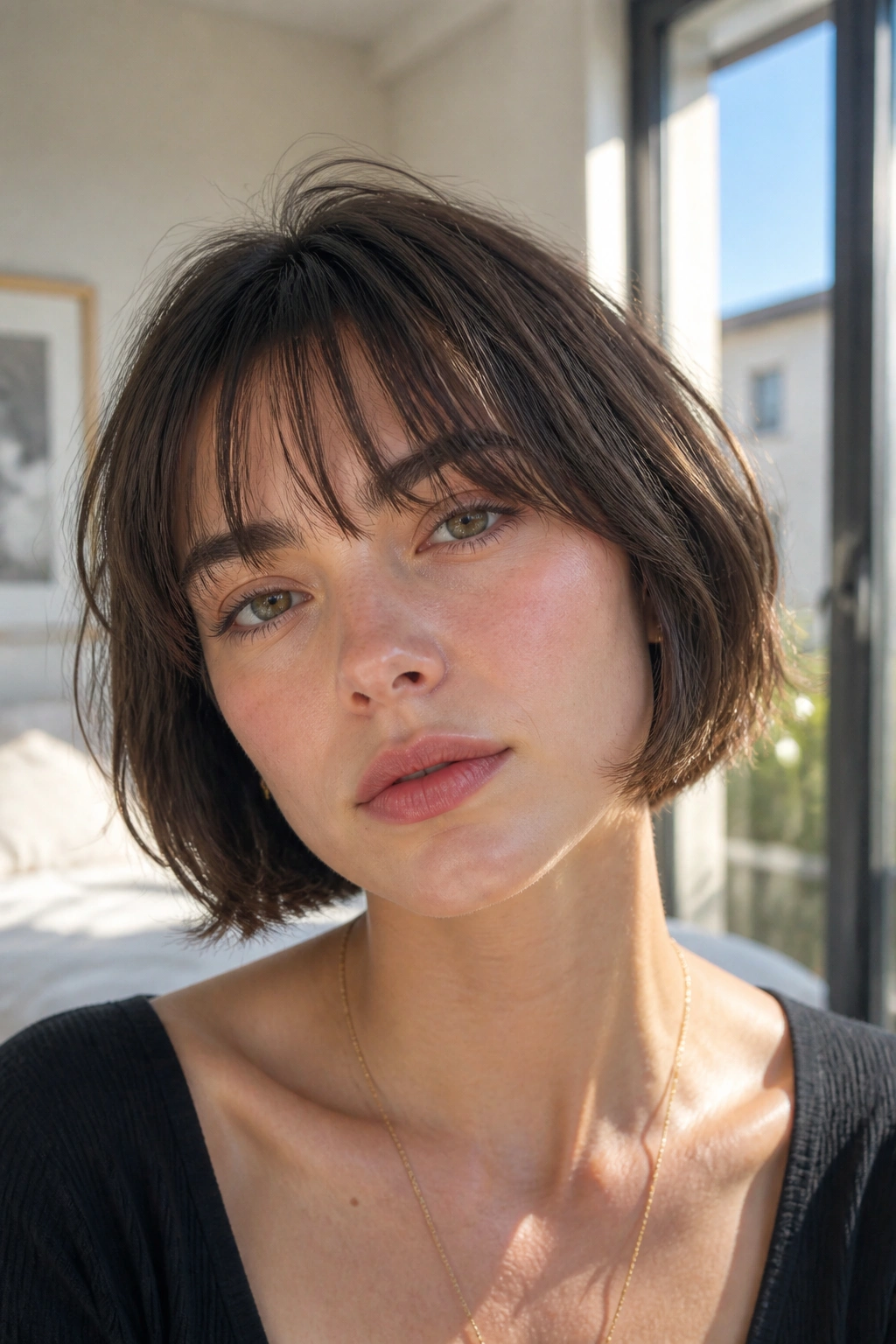
Why does this cut keep coming back? Because it’s small, chic, and useful. A French bob usually sits around the cheekbone or jaw, and the wispy fringe stops the face from reading as one big circle. It breaks up the shape without hiding it.
The Fringe Is the Whole Story
A blunt, heavy fringe can close down a round face. Wispy bangs do the opposite. They leave little openings in the front, which keeps the cut from feeling boxed in.
How to Wear It
- Blow-dry the fringe with a round brush and lift it slightly at the root.
- Keep the ends blunt but not stiff.
- Let the texture stay soft, even if the outline is clean.
It’s a little Paris, a little cool-girl, and never tries too hard.
4. Bixie Cut
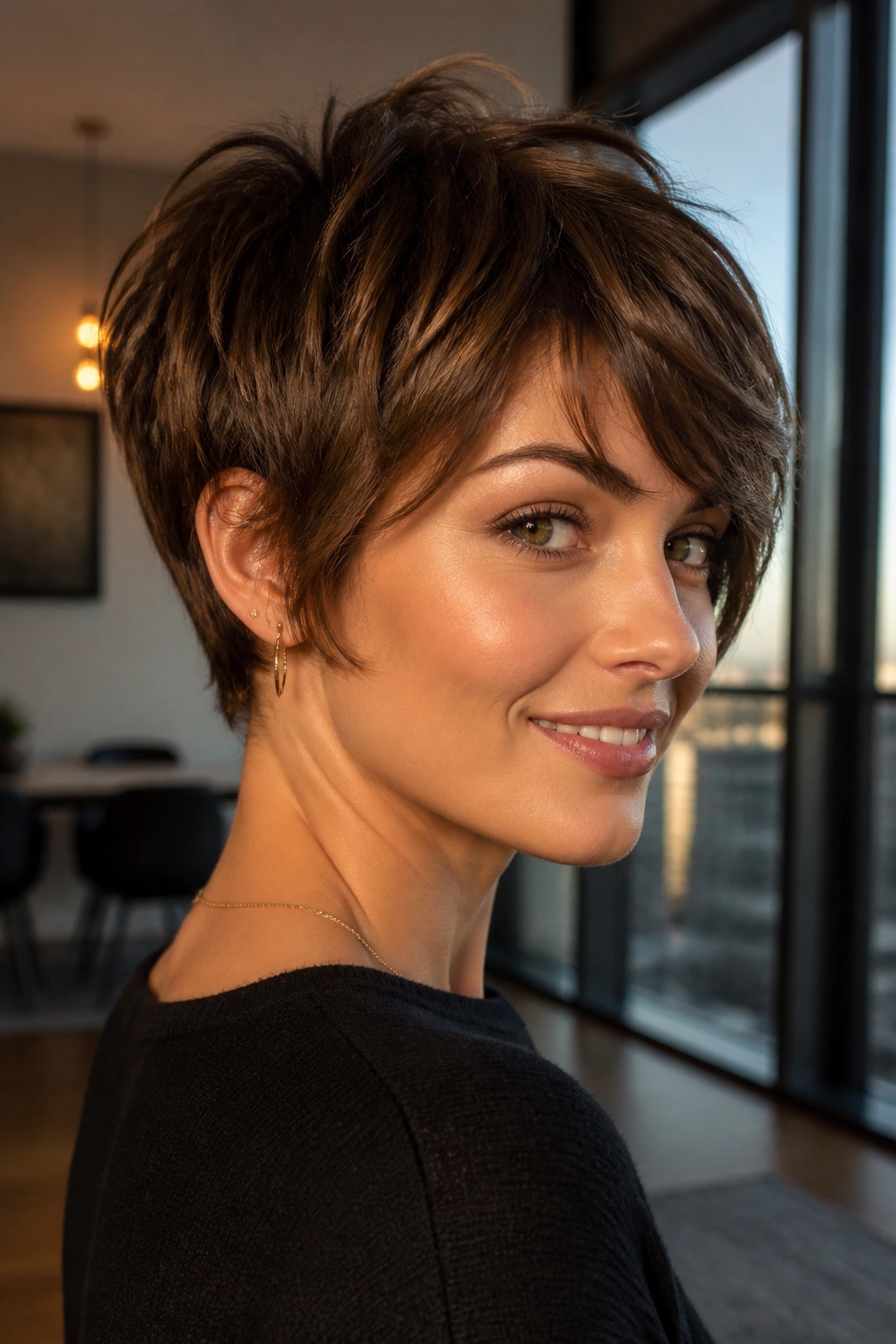
A bixie sits between a bob and a pixie, which is exactly why it works so well here. You get the softness of a bob around the ears and the lift of a pixie at the crown. On a round face, that mix is gold because it adds shape without adding bulk.
Picture someone who wants short hair but hates looking too exposed. This is the cut they end up loving. The layers around the ears keep it friendly, while the shorter top gives the face a cleaner vertical line.
Ask your stylist to keep the outline tapered at the nape and slightly shattered through the top. A bixie that’s too uniform turns puffy fast. A little unevenness in the layers keeps it modern and stops the head from reading wider than it is.
5. Choppy Crop

A choppy crop is blunt in attitude, not in shape. It works because the ends are broken up into little pieces, which keeps the cut from sitting like one solid block around the face. That matters a lot on round faces, where a heavy edge can make everything feel shorter.
This is one of those styles that looks better when it’s not overdone. You want separation. You want movement. You do not want a polished, perfectly rounded shape that mirrors the face itself.
A little styling cream, a quick scrunch, and maybe a blow-dry with your fingers are usually enough. If your hair grows wide at the sides, this cut can actually be more forgiving than a bob because it removes weight from the exact places that usually cause trouble.
6. Jaw-Grazing Angled Bob
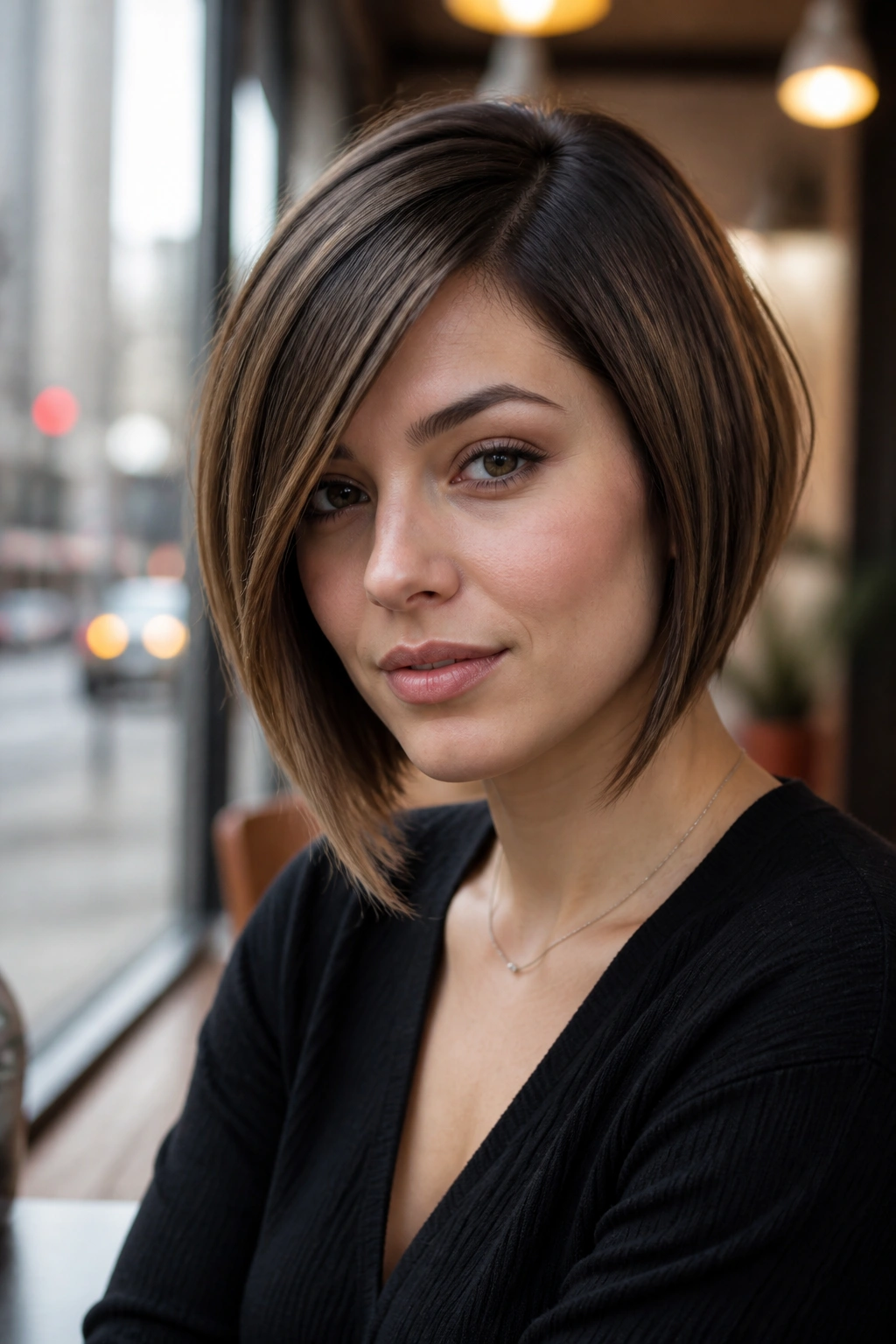
The jaw-grazing angled bob is one of the smartest cuts for a round face, and I say that without hesitation. Shorter in the back, longer in the front, it pulls the eye downward and forward at the same time. That little angle gives the face a more oval look.
The front pieces should fall just below the jaw or kiss the top of the neck. If they stop right at the widest part of the cheek, you lose the slimming effect. That’s the detail people miss when they ask for “just a bob.”
It also makes a nice case for clean styling. A flat iron bend at the ends is enough. If you want it to feel less stiff, tuck one side behind the ear and leave the other side loose. Simple. Sharp. No drama needed.
7. Long Pixie With Side-Swept Fringe
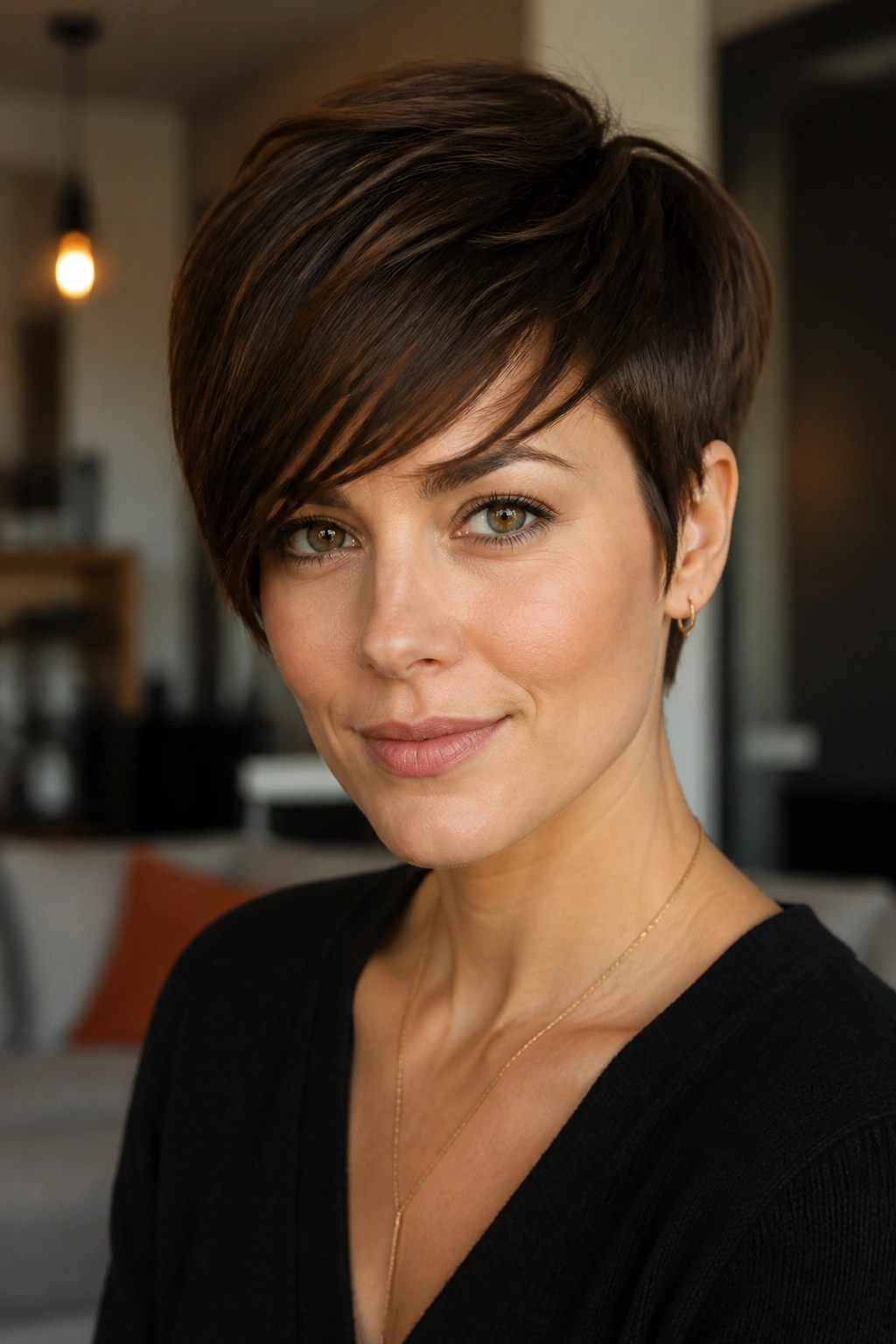
A long pixie gives you room to play, which is useful if you want short hair but not a hard crop. The side-swept fringe is doing a lot here. It creates a diagonal across the forehead and helps offset the roundness in the lower half of the face.
What Makes It Different
The top stays long enough to brush forward, back, or to the side. That flexibility matters. You can wear it sleek on weekdays and rough it up on weekends without changing the cut itself.
Styling Notes
- Blow-dry the fringe in the direction you want it to fall.
- Keep the sides tight, but not shaved to the skin unless that suits your style.
- Use a pea-sized amount of paste so the fringe stays movable.
This is a cut that looks polished even when it’s slightly messy. That’s a good thing.
8. Shaggy Bob
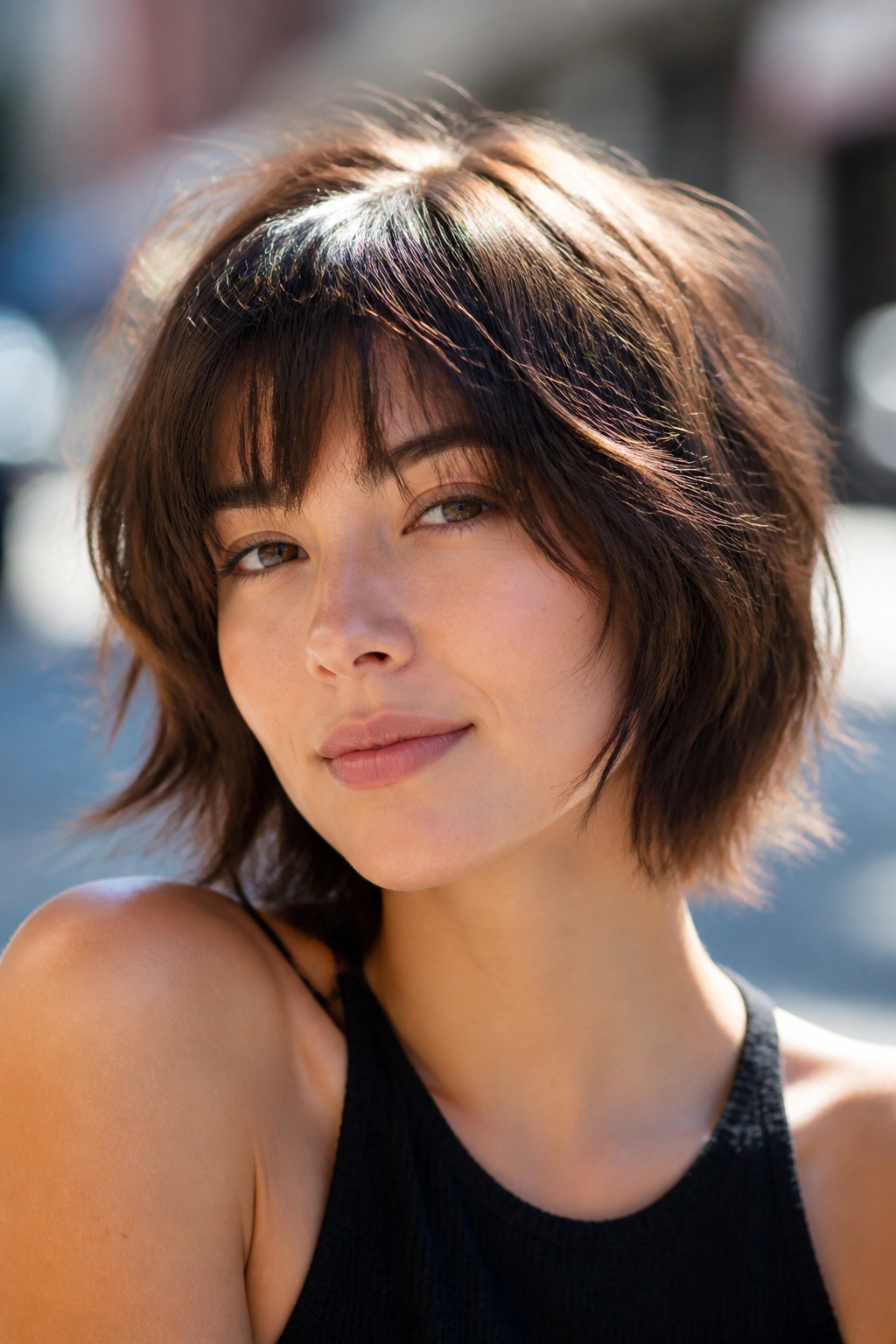
A shaggy bob gives round faces room to breathe. Instead of one hard outline, you get layers that bounce around the cheekbones and jaw, which keeps the face from looking boxed in. The key is making the ends feathery, not bulky.
The best shaggy bobs usually stop somewhere between the chin and the top of the neck. Too short, and the layers can puff outward. Too long, and the whole cut starts acting like a regular bob with a few loose pieces.
I like this style for people who hate high-maintenance hair. It can air-dry with a little salt spray and still look intentional. That’s the charm: imperfect in the right way, with enough movement to keep the face looking longer.
9. Curtain-Bang Bob
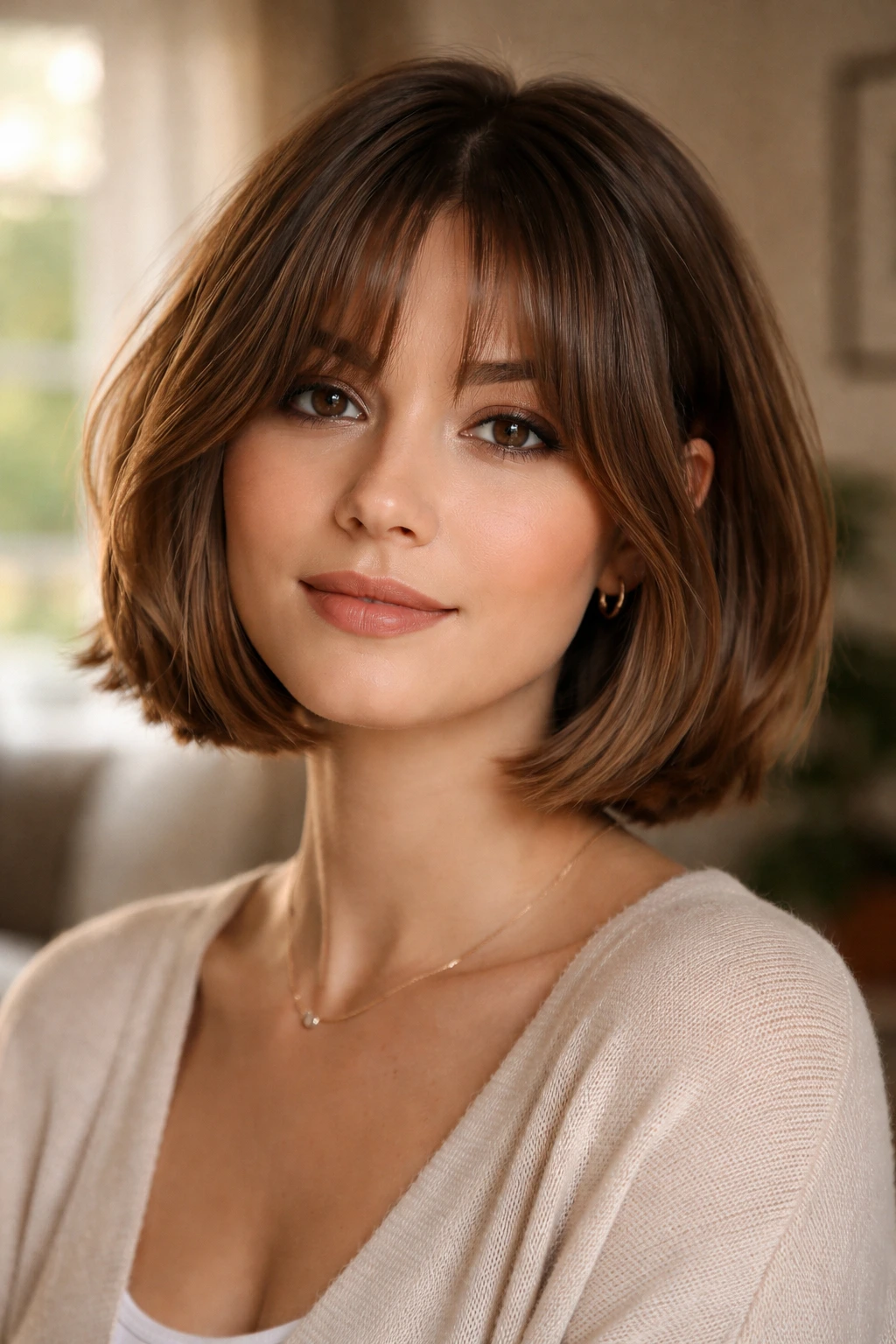
Curtain bangs are one of the easiest ways to soften a round face without flattening it. They open in the middle and sweep out toward the cheekbones, which makes the center of the face feel a little longer. Pair that with a bob, and you get something airy instead of boxy.
The bob itself should stay just below the chin or just above it, depending on your neck length. The bangs are the part that change the shape the most. If they’re too thick, they overwhelm the face. If they’re too short, they lose the softening effect.
You want the bangs to blend into the sides, not sit like a separate piece. That transition is what makes the style feel easy. A round brush, a little heat, and five minutes are often enough.
10. Sleek Tucked Bob
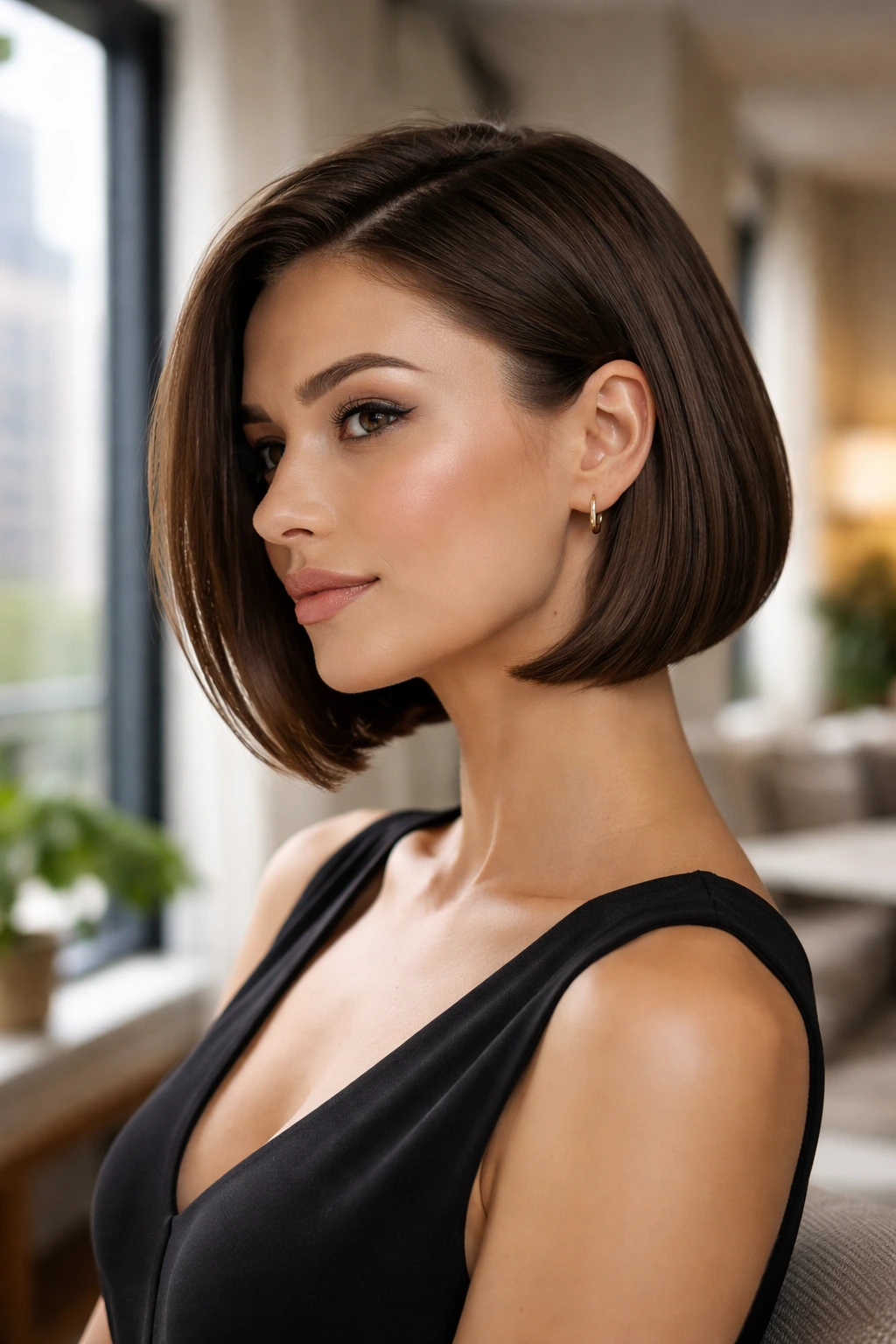
A sleek tucked bob is surprisingly flattering on round faces because it shows the structure of the jaw and cheekbones instead of hiding them. One side tucked behind the ear, the other left loose, creates a clean asymmetry that feels grown-up without looking severe.
This is not a cut for someone who wants lots of volume at the sides. The whole point is polish. Straight hair works best, but a flat iron can smooth out a wave in a few passes. Keep the ends blunt or slightly beveled so the line stays crisp.
There’s also a bonus: it looks expensive in the plainest, least annoying way. Not flashy. Just sharp. And if you have earrings you actually want people to notice, this cut gives them room to matter.
11. Undercut Pixie
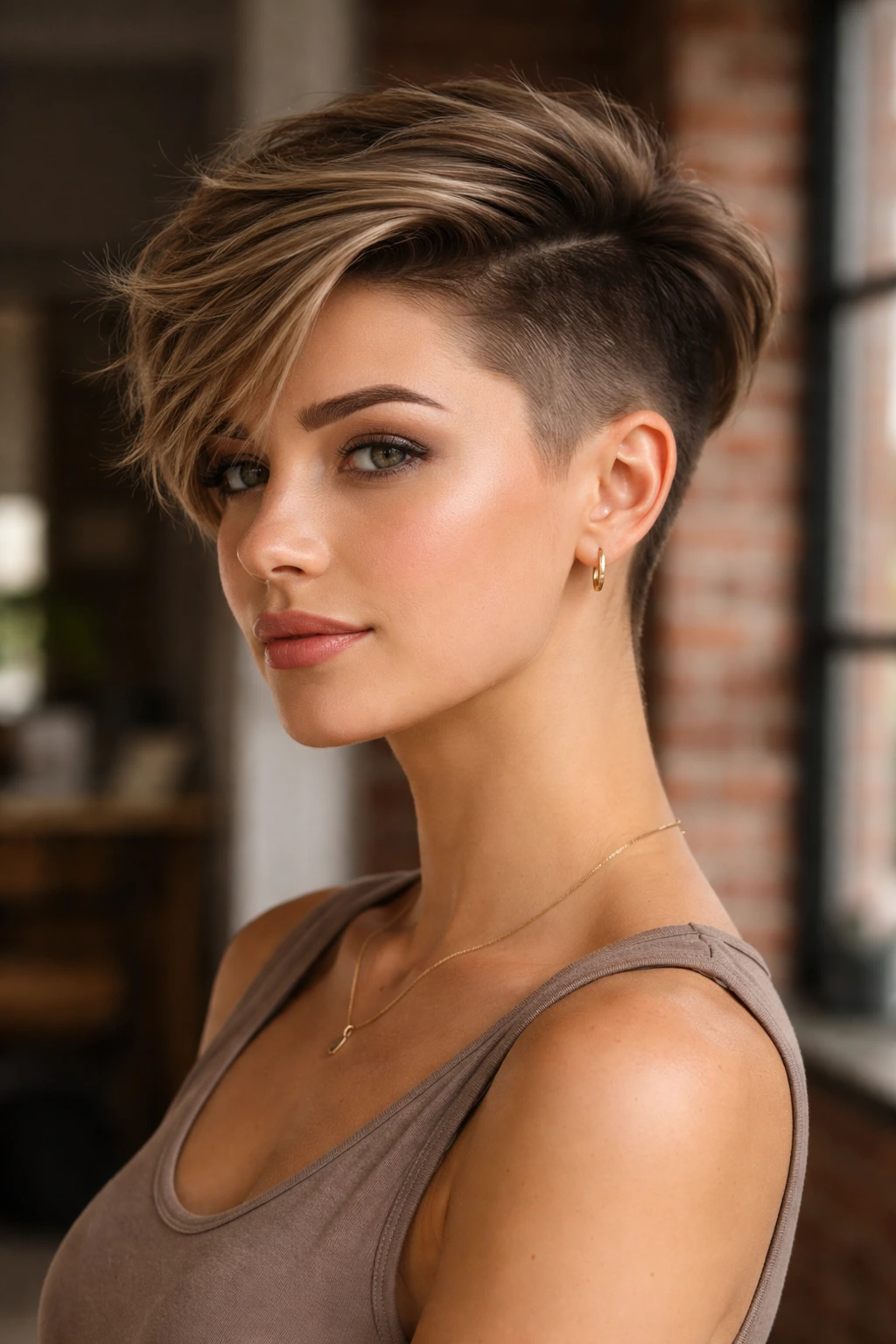
An undercut pixie strips away weight where round faces usually need less of it. That’s the appeal. The sides and back are cropped close, sometimes very close, while the top stays longer so you can sweep, spike, or tousle it.
It’s a strong look. Not subtle. But strong can be useful when your hair naturally balloons at the sides or when you want to wear a short cut without extra bulk near the cheeks. The undercut keeps the outline tight, which helps the face feel more defined.
Ask for enough length on top to create lift without collapsing. About 3 inches is a nice starting point for styling. Too little, and you lose flexibility; too much, and the shape gets floppy fast.
12. Wavy Chin-Length Cut
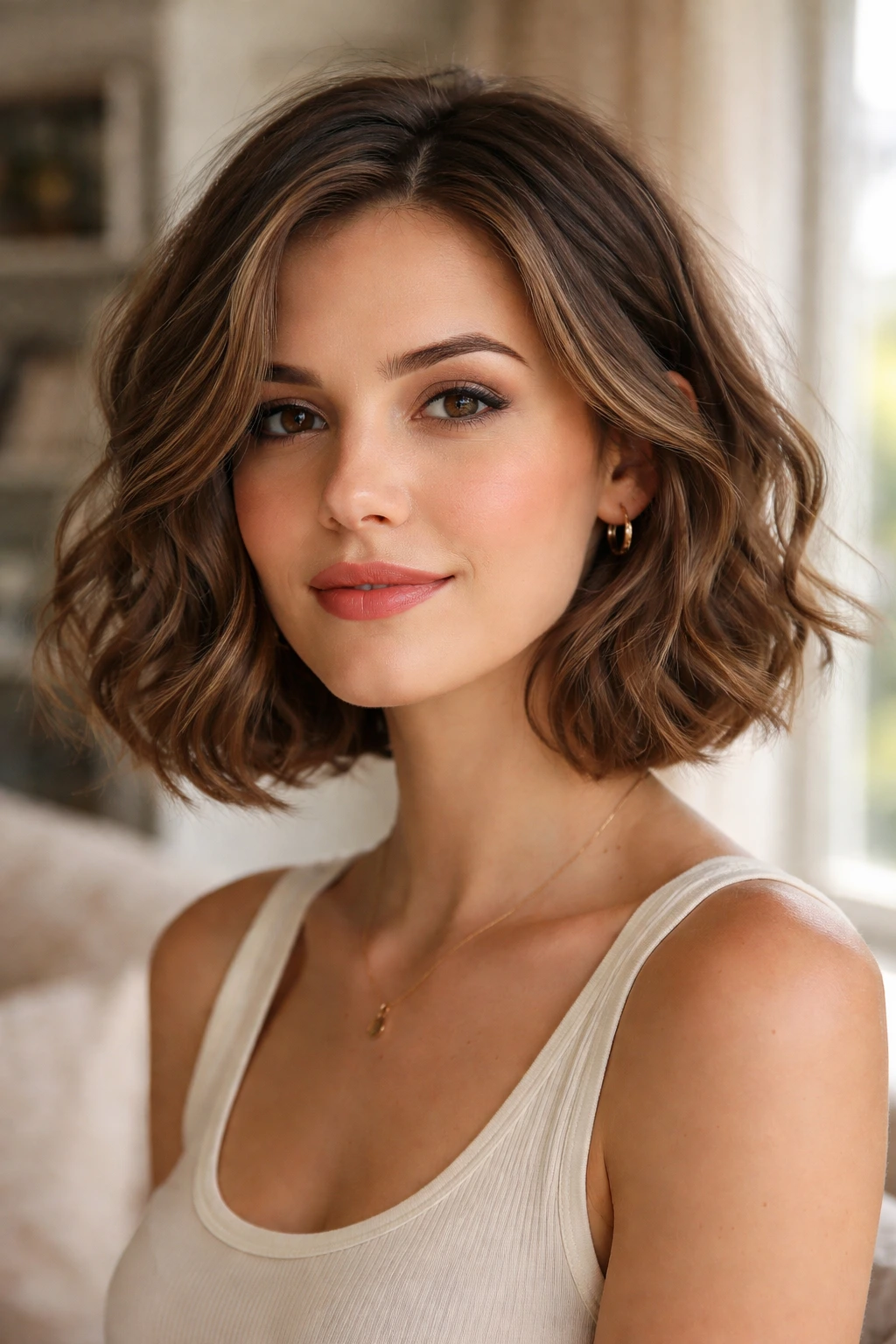
Waves at the chin can be tricky on round faces, but this version works because the texture breaks the circle. The goal is not a uniform curl around the head. It’s movement that drops a little below the jaw and then loosens out.
If your hair is naturally wavy, this cut can look effortless without trying to be. If your hair is straight, a 1-inch curling iron or a few bendy passes with a flat iron will create enough shape. Leave the ends a little undone. That keeps the line from getting too round.
The best part is how soft it feels. Not fluffy. Soft. There’s a difference, and it matters. Fluffy can add width. Soft waves skim the face and move on.
13. Micro-Fringe Crop
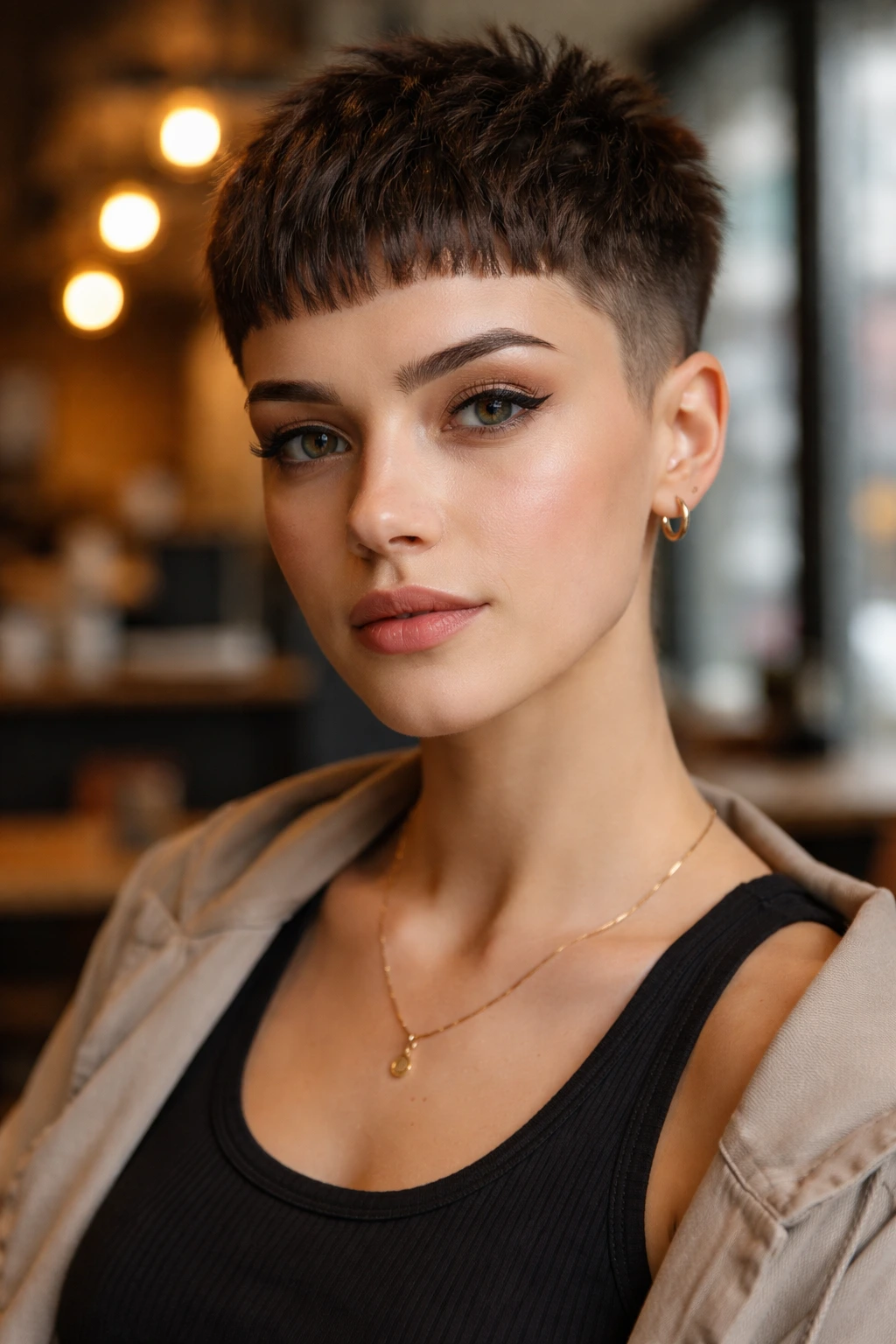
A micro-fringe crop is bold, a little odd, and exactly the kind of thing some round faces can wear better than they expect. The tiny fringe exposes the forehead, which instantly creates more visible length in the face. It’s a strong visual move.
The crop underneath should stay tight and neat. If the top gets too wide, the fringe starts looking like an afterthought. Keep the sides clean and the texture piecey. That contrast is what gives the cut its bite.
This one is not for people who want their hair to disappear politely into the background. It has personality. A lot of it. If that suits you, the style can look fresh with almost no effort beyond a quick finger-styling routine.
14. Blunt Bob With Rough Ends
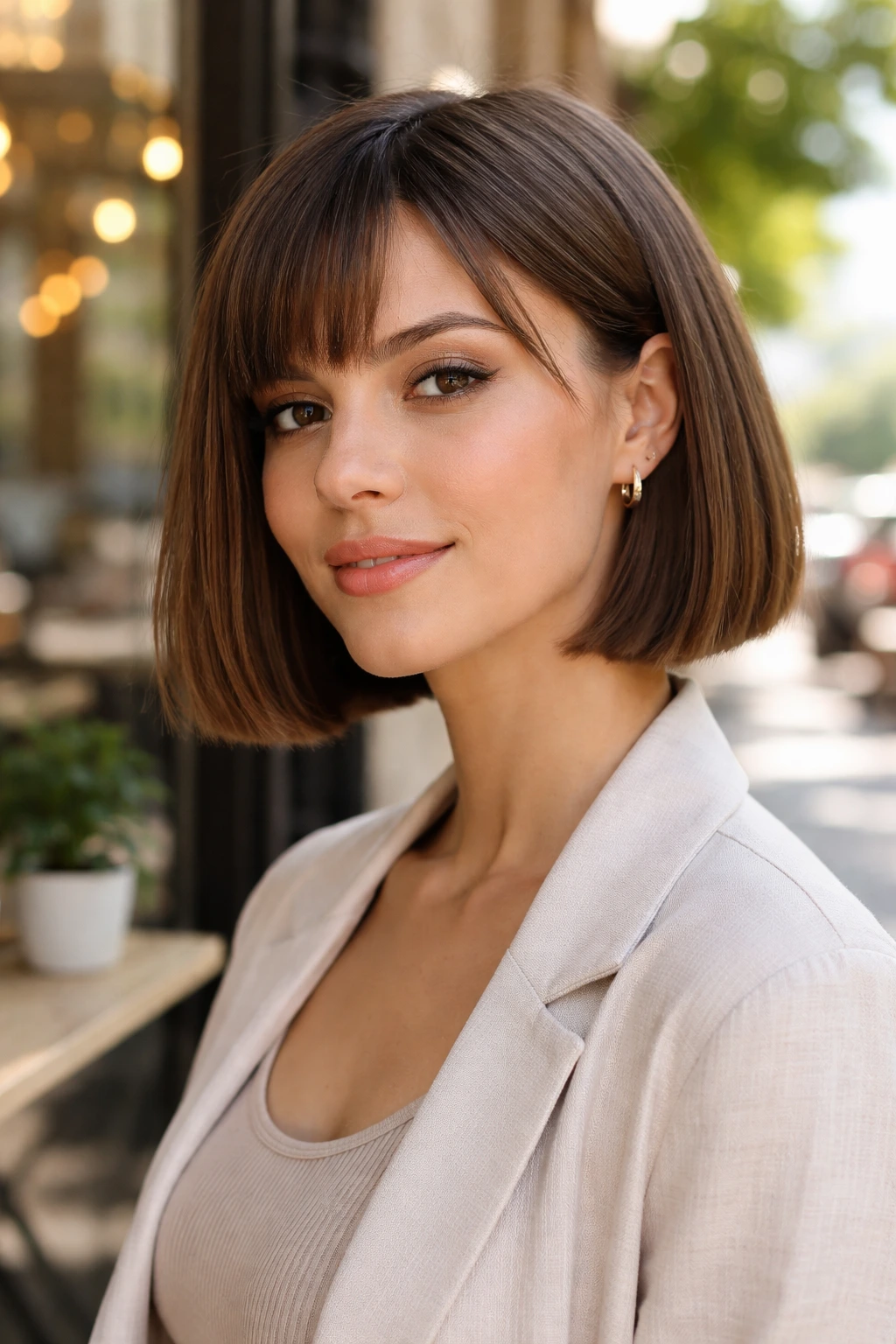
A blunt bob can work on a round face if the ends are slightly roughened and the length lands in the right place. That’s the part most people miss. A dead-straight bob that stops at the cheekbone can widen the face. A blunt line that falls closer to the jaw or just below it behaves much better.
The rough ends keep the cut from feeling heavy. They also stop the bob from reflecting too much light in one solid block, which can make the shape look thicker than it is. A razor or point-cut finish helps here, even if the outline stays clean.
I like this cut for straight hair that tends to look flat. It has the crispness of a classic bob but a little more grit. Less salon poster, more real life.
15. Swept-Back Quiff Pixie
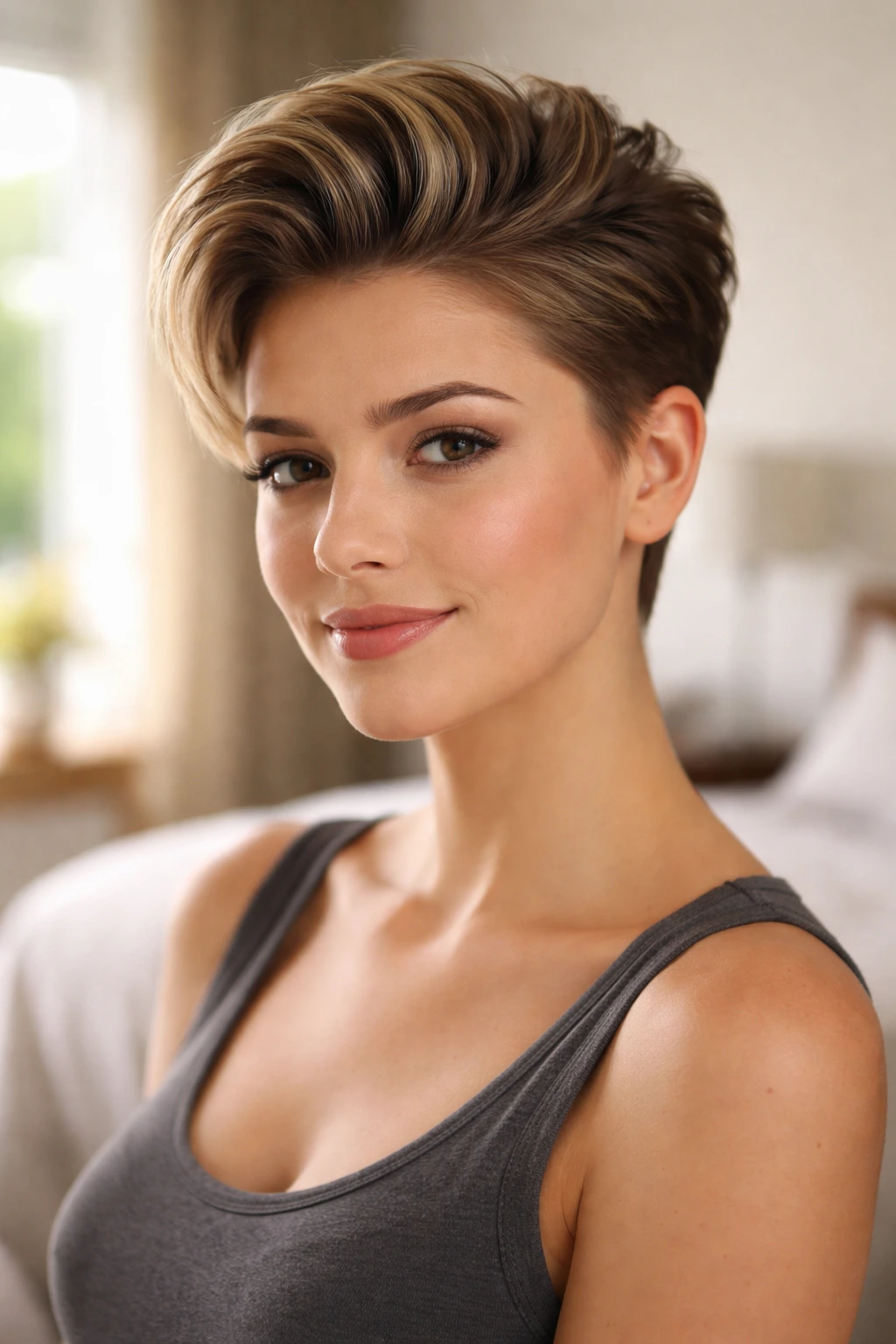
Need height fast? A swept-back quiff pixie gives it to you. The front is styled up and away from the forehead, which makes the face look longer and the whole cut feel a bit rebellious. It’s a smart move on round faces because all the volume goes where you want it: above the widest point.
The sides stay close and tidy, and that contrast matters. If the quiff is big but the sides are also fluffy, the cut loses its shape. Keep the base narrow, then build the top upward with a blow-dryer and a small round brush.
This style suits people who like a little attitude in their hair. It can feel polished or punk depending on how you finish it. Either way, it’s never boring.
16. Curly Layered Bob
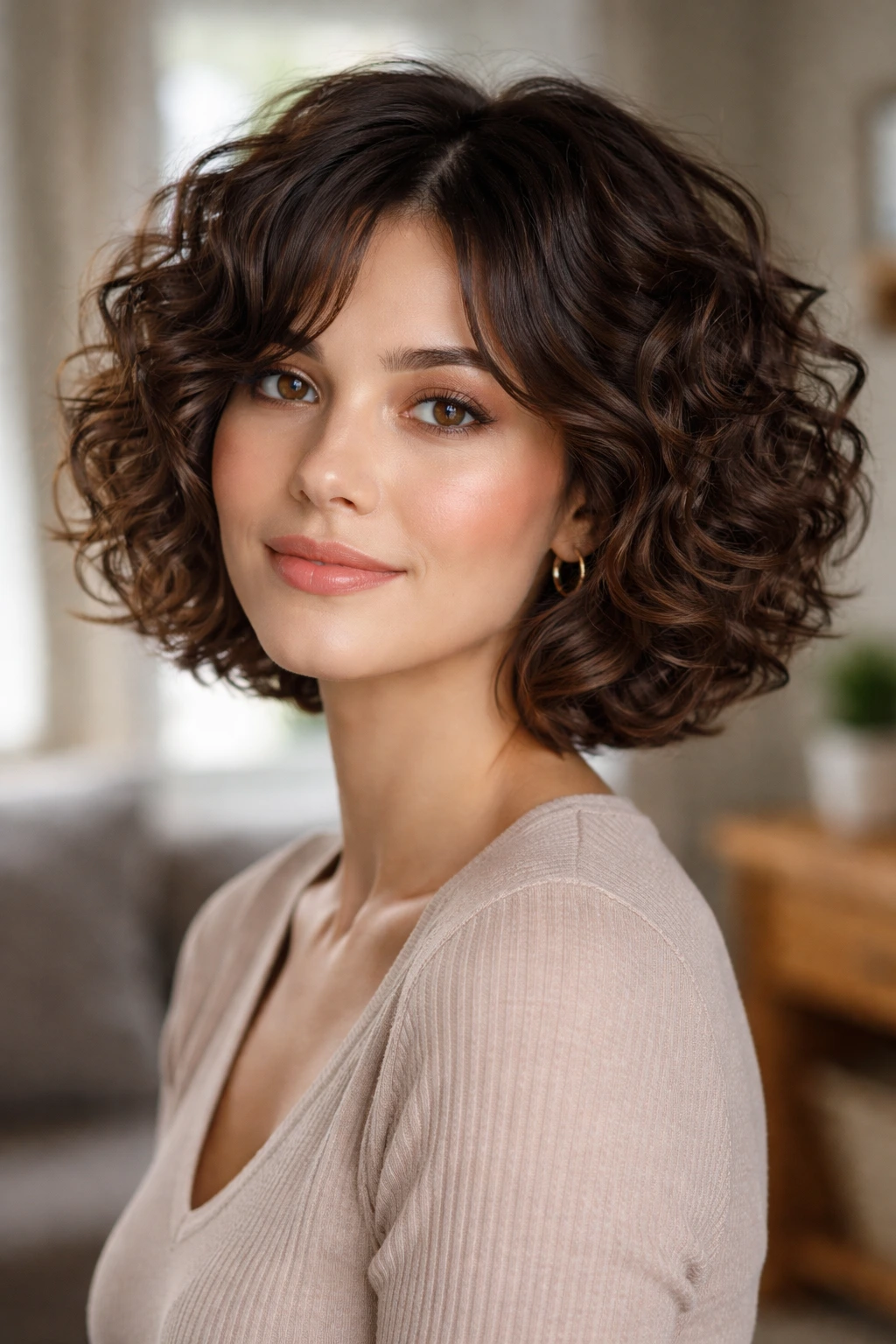
Curly hair on a round face needs room, but not too much room. That sounds contradictory, and maybe it is a little. A layered bob helps curls stack in a way that adds height instead of width, which is the whole game here.
The layers should remove weight from the bottom and keep the curl shape from ballooning at cheek level. If the curls are too dense around the sides, the face looks broader. If the bob is layered properly, the curl pattern floats upward and away from the jaw.
Best Way to Wear It
- Diffuse on low heat to keep the curl pattern intact.
- Ask for internal layers, not a jagged outer outline.
- Keep the length around the chin or just below it.
A good curly bob has bounce, not bulk. That difference matters more than most people think.
17. Mini Wolf Cut
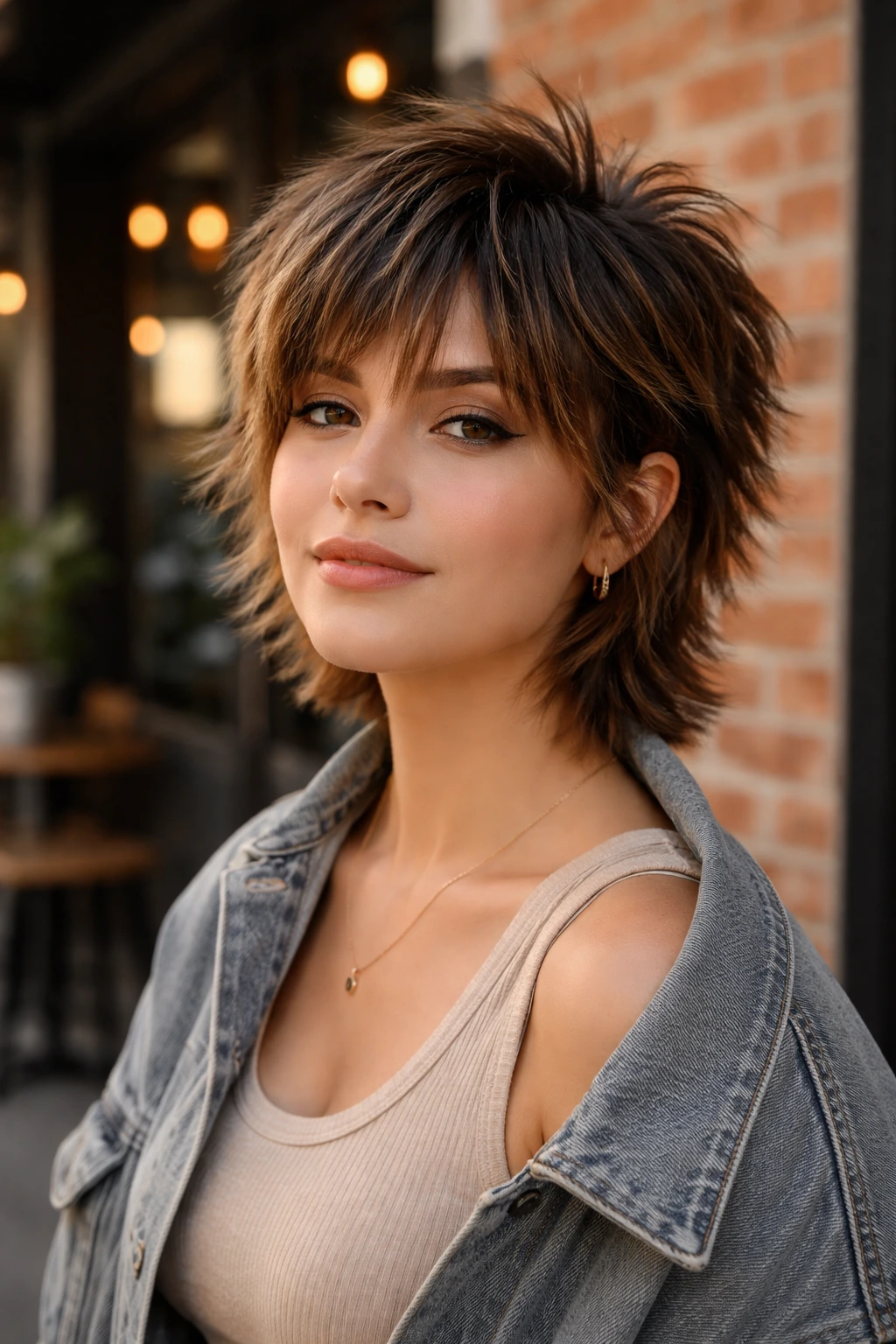
The mini wolf cut is a sharper, shorter cousin of the shag, and it can work well on round faces when the crown has lift and the ends stay broken up. It gives you that messy, lived-in feel without dragging the face wider.
What helps most is the contrast between the top layers and the shorter pieces around the cheekbones. The top creates height; the sides stay light. If the cut gets too dense at the temples, it turns puffy and loses the shape you want.
This one is best if you like hair that looks better with a bit of chaos. A little mousse, a little scrunching, and a quick blast from the dryer can be enough. The cut does not want perfection. It wants attitude.
18. Soft Mullet
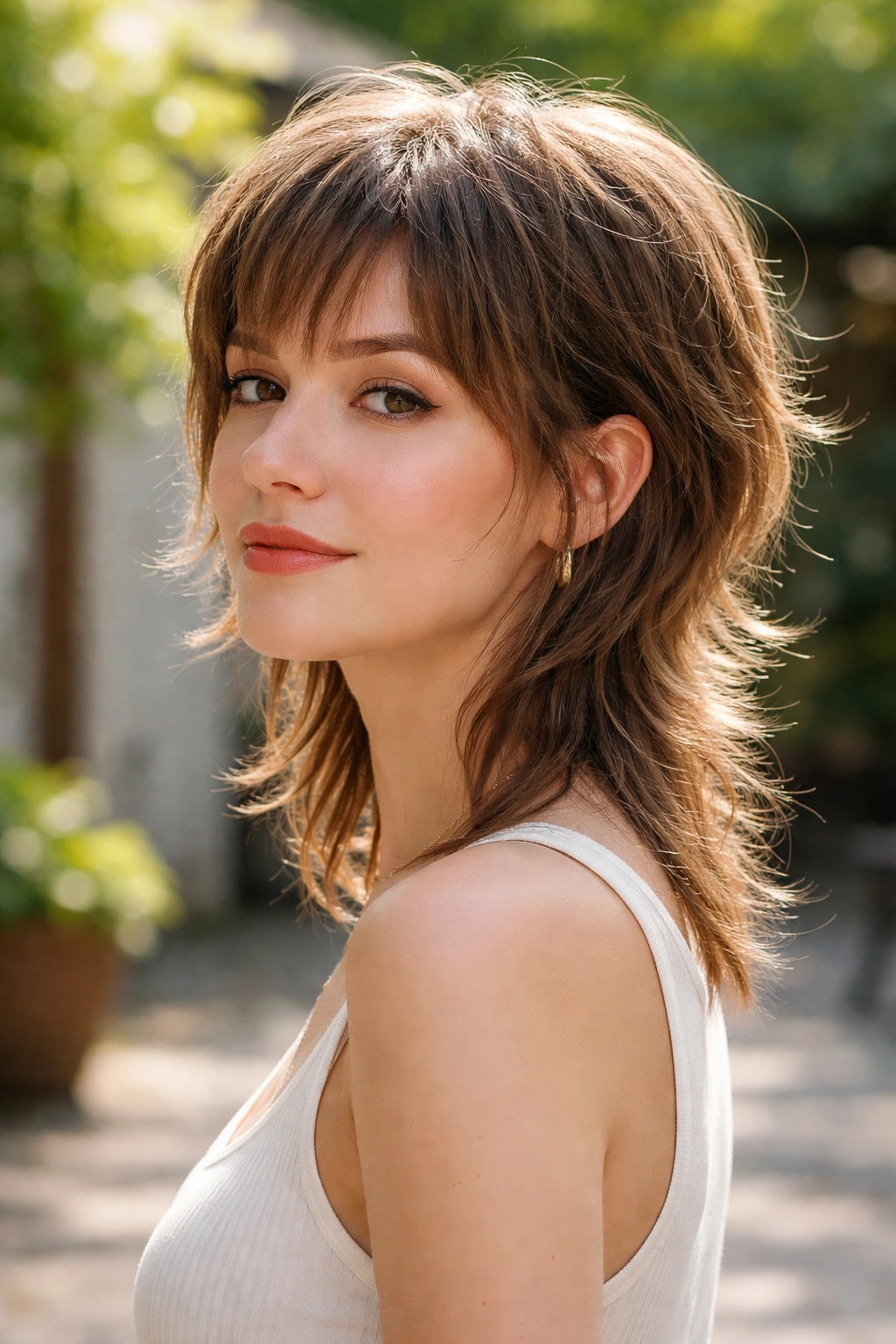
A soft mullet sounds scarier than it is. The modern version keeps the shape gentle, with short layers around the crown and longer pieces that taper around the neck. On a round face, that extra length in back helps stretch the silhouette vertically.
The front should stay light and face-framing, not blunt and heavy. That keeps the eye moving instead of stopping at the widest part of the face. If you want something a little edgy but still wearable, this is one of the better choices in the whole group.
It also has range. You can wear it rough and undone, or smooth it down for a cleaner outline. That flexibility is part of why it keeps showing up in salons.
19. Side-Parted Tapered Bob
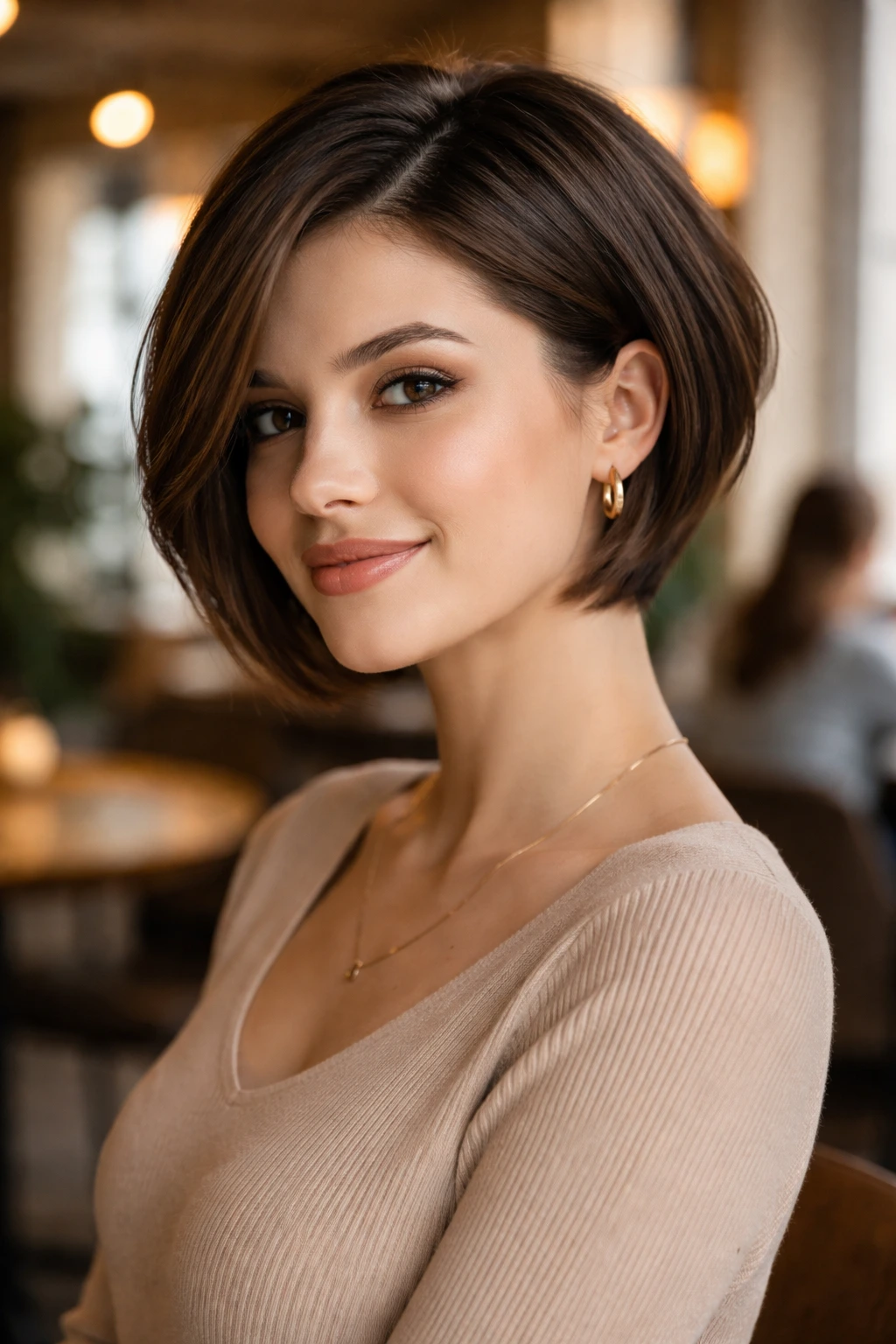
A side part can do a surprising amount of work on a round face. It shifts the bulk away from the center and creates a longer line across the forehead, which makes the face feel less symmetrical in a good way. Pair that with a tapered bob and the whole cut turns leaner.
The taper matters because it removes weight near the jaw. If the bob is blunt all the way around, the side part alone won’t save it. You want the shape to narrow as it drops, almost like it’s being gently pulled toward the neck.
This cut is quietly flattering. Not dramatic. Just dependable. And sometimes that’s what people want more than a big style moment.
20. Piecey Spiky Pixie
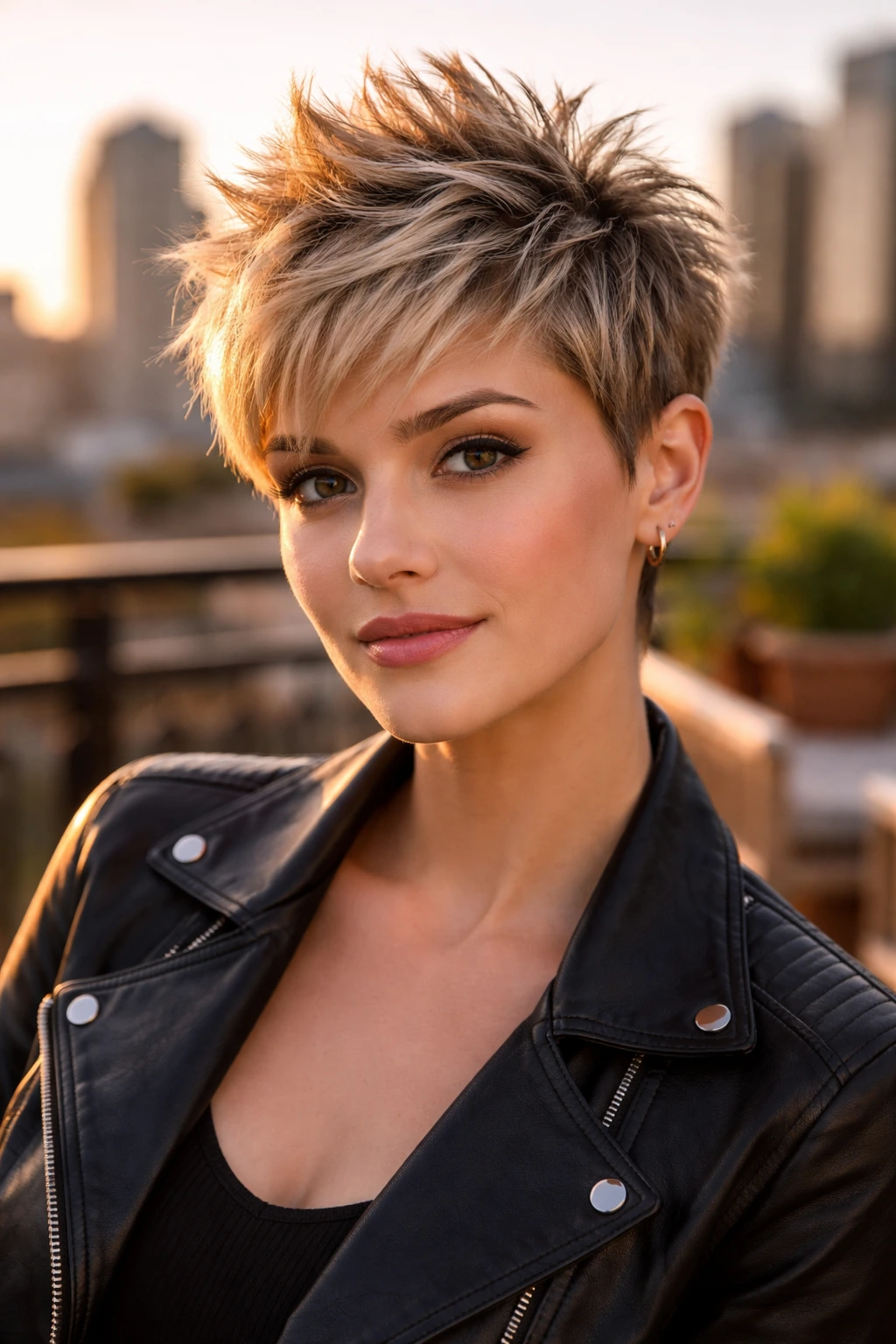
A piecey spiky pixie has one job: make the top of the head look alive. The spiky bits add texture and vertical energy, which helps round faces look longer and less full at the sides. It’s especially good if your hair is fine and tends to lie flat.
You only need a tiny amount of styling product. Too much paste and the spikes clump together into a heavy mess. A dab, worked between the fingertips, is enough. Lift the roots first, then separate the ends.
This cut has a bit of swagger to it. It’s quick to style, easy to wear, and good for people who like their hair to look deliberate but not precious.
21. Cropped Afro
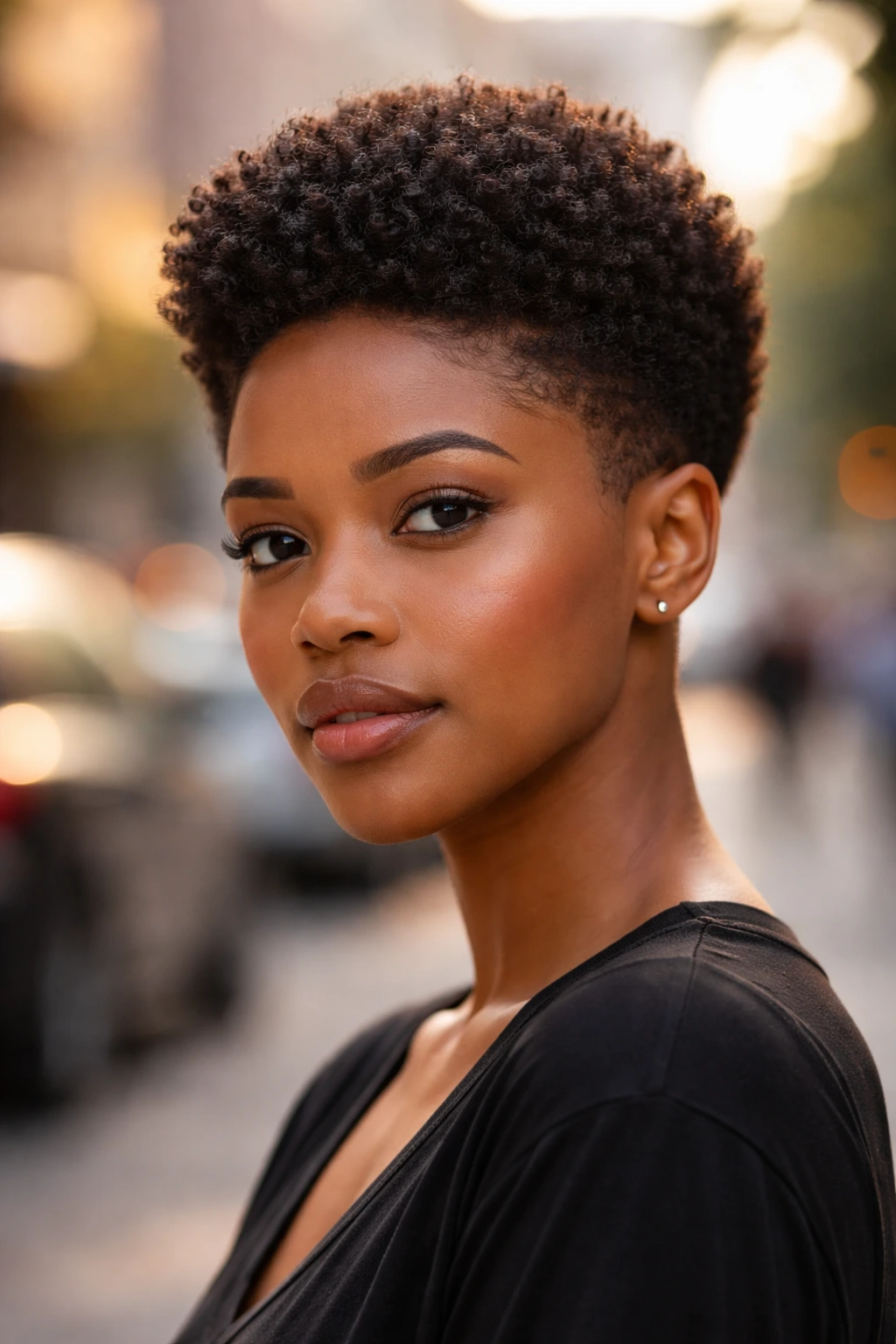
A cropped afro can be a fantastic shape for a round face when the silhouette is controlled through the sides and lifted at the crown. The goal is not to flatten the texture. It’s to shape it so the width sits a little higher and the edges stay tidy.
A tapered side and back keep the style from spreading outward too much. That taper is the quiet hero of the cut. It lets the natural texture breathe while keeping the overall outline balanced.
I like this style because it celebrates texture instead of sanding it down. If you’re working with coils, the right crop can feel clean, modern, and full of movement without fighting your natural pattern.
22. Tapered Twist-Out Cut
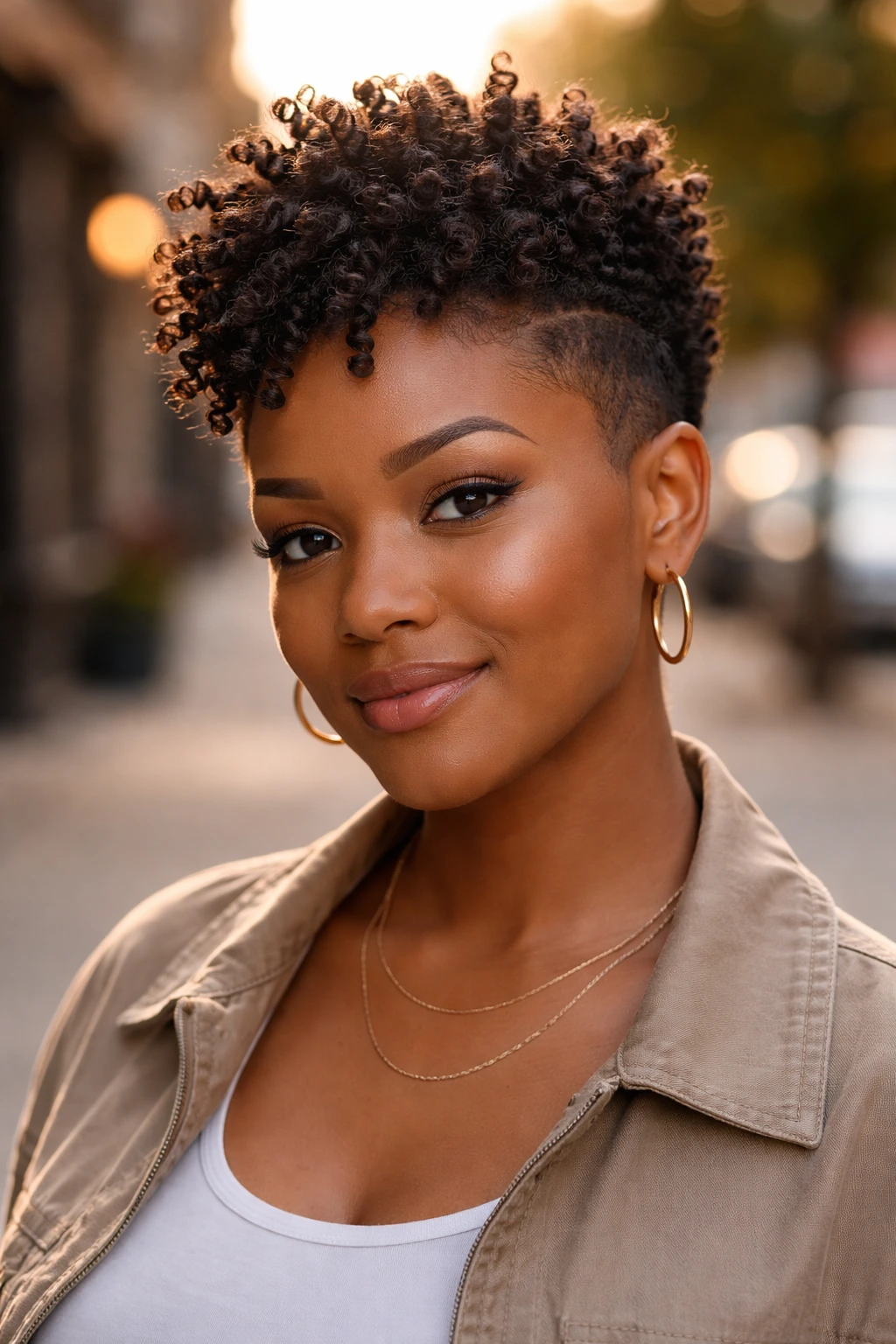
A twist-out on a tapered cut gives round faces a nice lift because the sides stay neat while the top gains height from the texture itself. The twist pattern creates separation, and separation is useful when you want to avoid a wide, heavy halo around the face.
What to Ask For
- Keep the sides and nape tapered close.
- Leave enough length on top for defined twists.
- Shape the front slightly longer if you want extra length in the face.
The nice thing here is that the style looks good even when it softens over a day or two. A twist-out that loosens a little doesn’t lose its shape; it just gets less rigid. That’s part of the appeal.
23. Pixie Bob
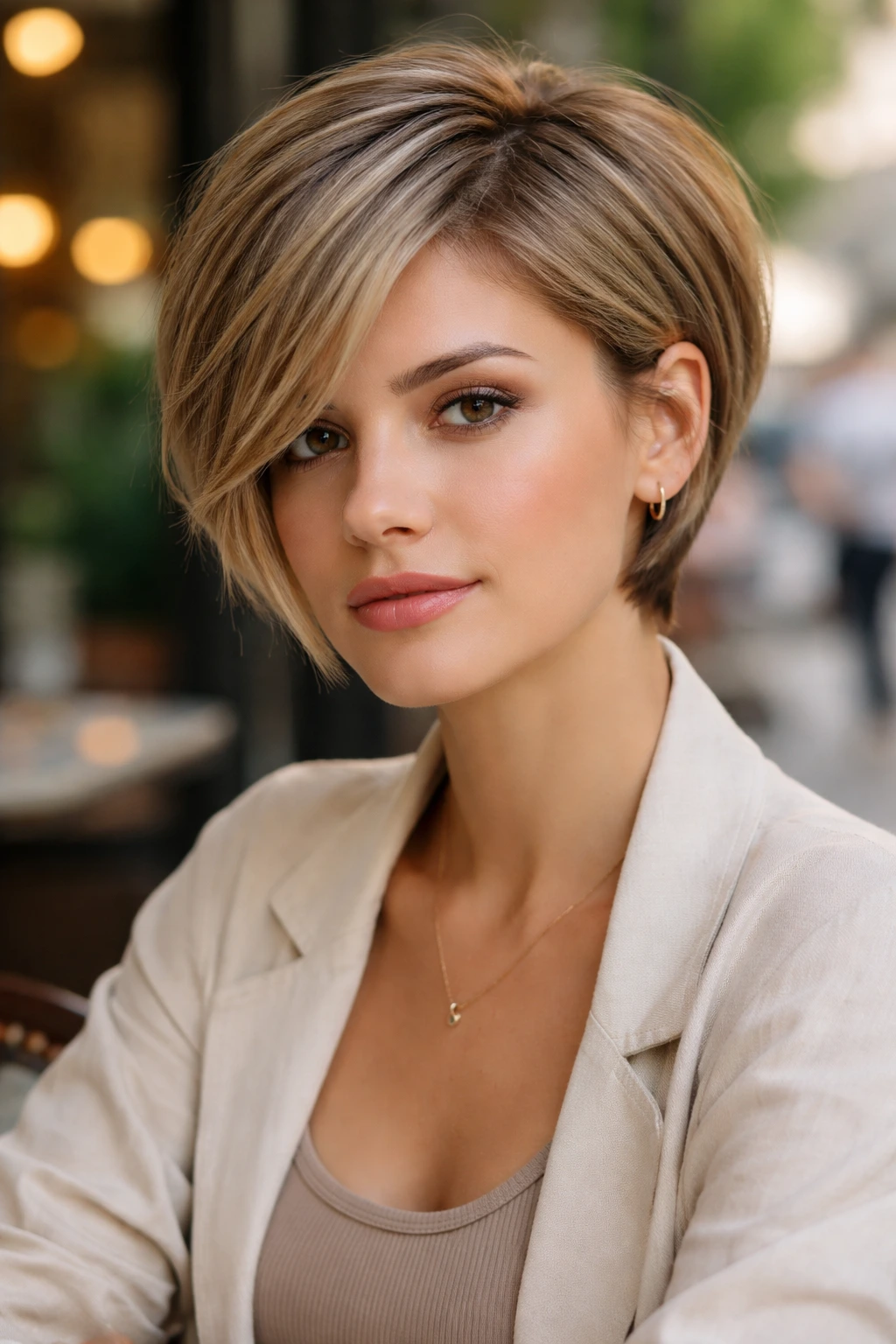
A pixie bob is one of those cuts that sneaks up on people. It has the closeness of a pixie around the back and a little more length through the front, which means you can use that front length to frame the face without widening it. On a round face, that front sweep is the whole point.
It’s also one of the easiest cuts to live with if you’re not ready for a very short pixie. You get shape, but you still have enough hair to tuck behind the ear or smooth into a side part. That makes it practical without feeling dull.
The best pixie bobs have a narrow nape and a soft edge around the cheek. If the line gets too round, the cut starts echoing the face shape instead of refining it.
24. Razor-Cut Mini Shag

Razor-cut ends bring a mini shag to life. They keep the outline light, which matters on a round face because heavy edges can make short hair sit like a cap. The razor finish gives the layers a softer fall and a little edge at the same time.
This cut works especially well if your hair has some natural movement. The layers separate instead of stacking into one block, and that makes the face feel less boxed in. A blow-dry with your fingers is often enough. You do not need to smooth every strand into place.
If you want a short style that feels a little cool without trying too hard, this is a solid place to land. It has enough shape for polish and enough mess for personality.
25. Face-Framing Crop
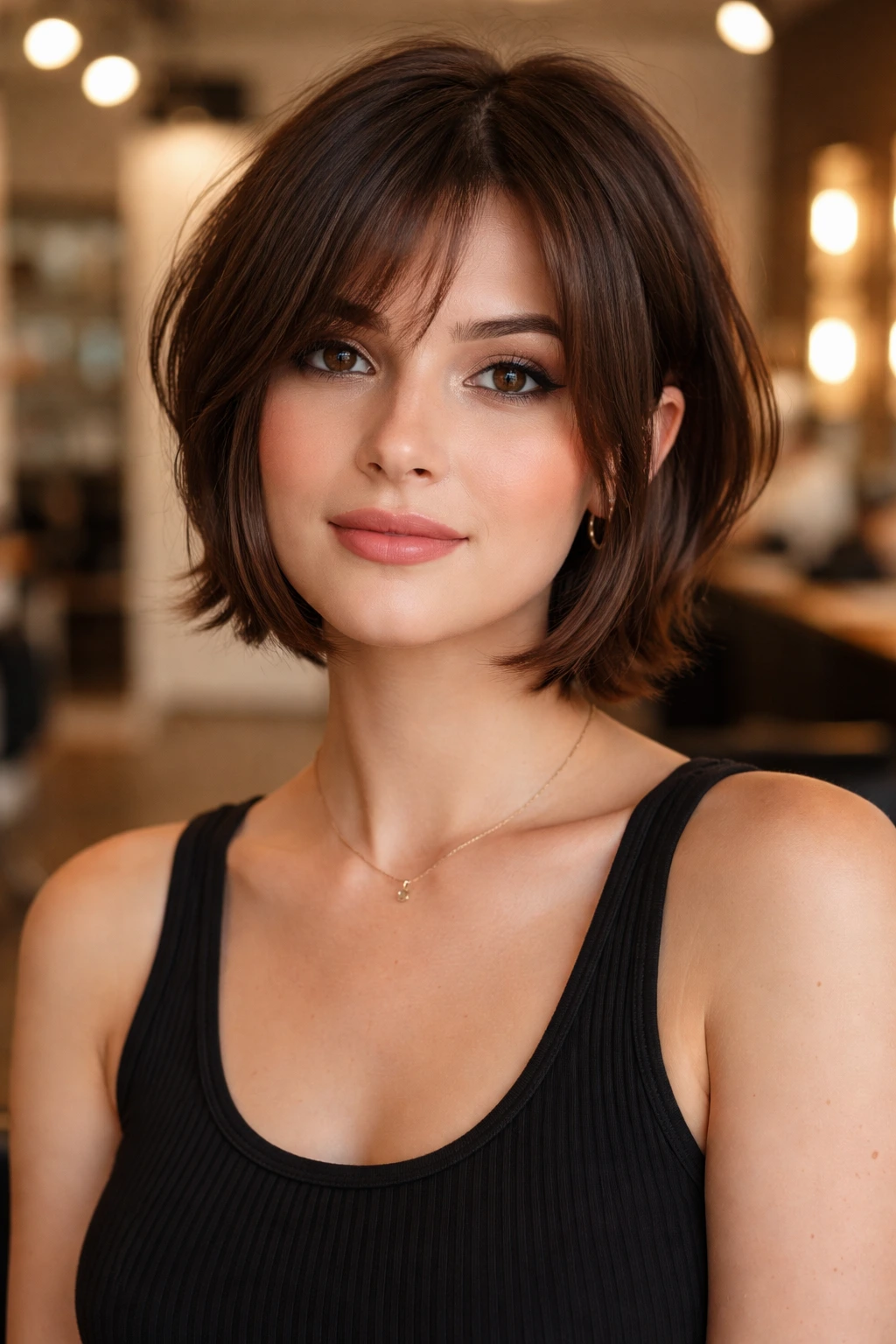
A face-framing crop is the cleanest way I know to make short hair work on a round face without overthinking it. The crop stays compact, but the front pieces are carved to fall around the cheekbones and jaw in a way that lengthens the face instead of widening it.
The secret is restraint. Keep the sides controlled, leave the front pieces just long enough to move, and avoid a soft, puffed-out outline. A bit of separation near the temples helps too. Small changes, big payoff.
For anyone sitting in a salon chair trying to explain what they want, this is the kind of cut to ask for when you want short hair that still feels sharp, wearable, and a little different from everybody else’s bob.
