



A round face doesn’t need hiding. It needs lines.
That’s why inverted hairstyles for round faces keep showing up in real salons, not just on mood boards. The longer front panels, the shorter back, and the angled shape all work together to pull the eye downward instead of letting it camp out at the cheeks. Done well, the cut feels sharper at the jaw, lighter at the crown, and a little more expensive-looking than a blunt shape ever does.
The catch is that not every angled cut flatters the same way. A bulky stack at the back can add width where you do not want it. Front pieces that stop right at the widest part of the face can do the same thing. The sweet spot is usually somewhere between the chin and the collarbone, with enough movement to soften the line but not so much volume that the whole style turns puffy.
Texture matters too. Fine hair often needs a little lift at the roots and a tighter graduation in the back. Thick hair usually needs weight removed from underneath so the silhouette stays clean. Curly and wavy hair can look especially good in this shape, but only if the length is placed with care. Get that wrong and the face looks rounder; get it right and the haircut does half the work for you.
1. Classic Chin-Length Inverted Bob for Round Faces
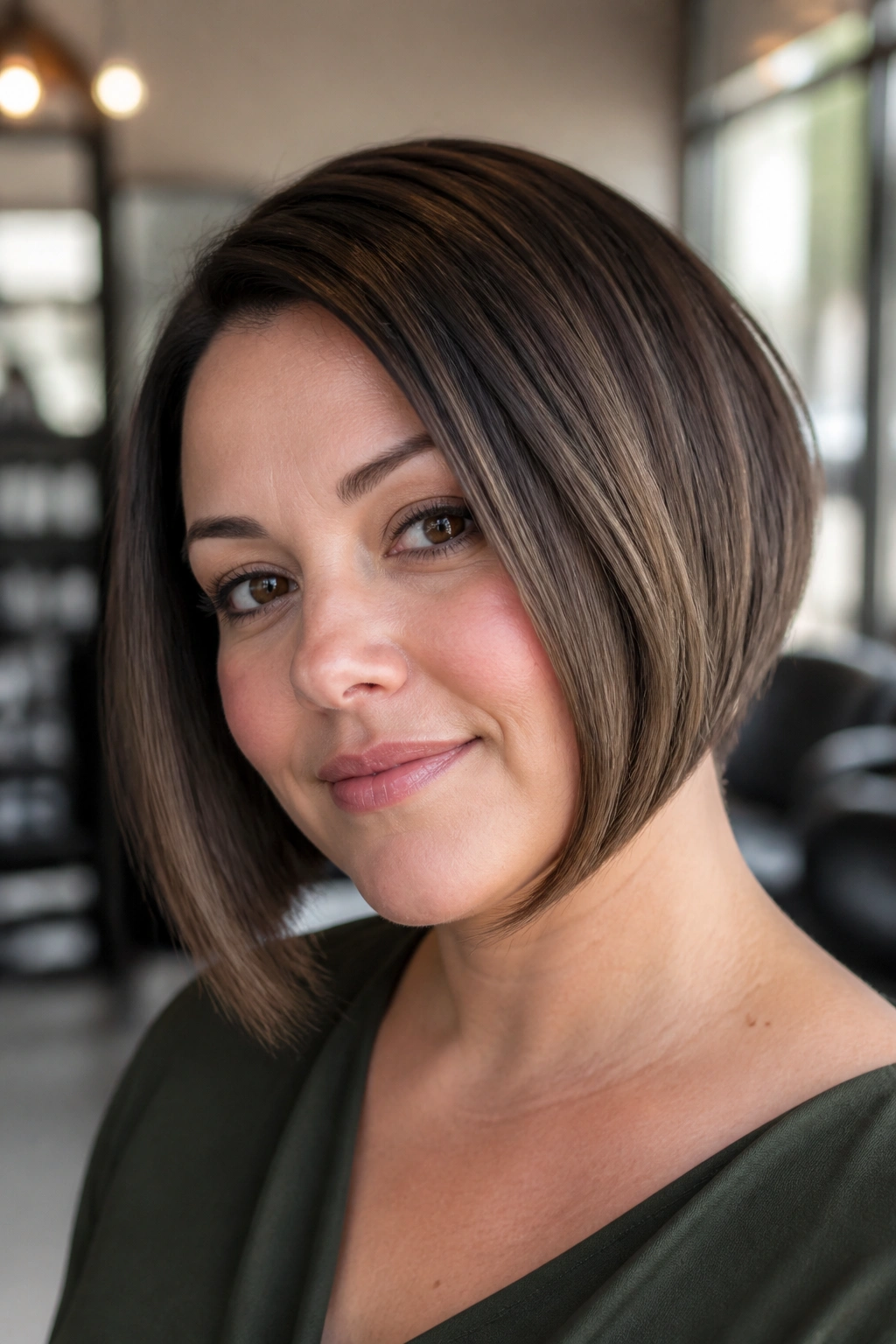
This is the safest place to start, and I mean that in the best way. The back sits snug at the nape while the front skims the chin or drops a touch lower, which gives the face a clean diagonal line instead of a hard horizontal one.
Why It Flatters the Face
A side part makes this cut even better, because it breaks up the symmetry that can make a round face look wider. Ask for the front to land just below the jaw, not smack on it. That small difference matters more than people think.
- Keep the back stacked softly, not puffed out.
- Let the front pieces fall 1 to 2 inches longer than the chin.
- Use a 1-inch round brush to bend the ends slightly inward.
- Finish with a light spray, not a crunchy one.
Tip: If your hair is fine, ask for the crown to be lifted a little higher than the cheek area. That one adjustment keeps the shape from sitting too low.
2. Sleek Stacked Inverted Bob
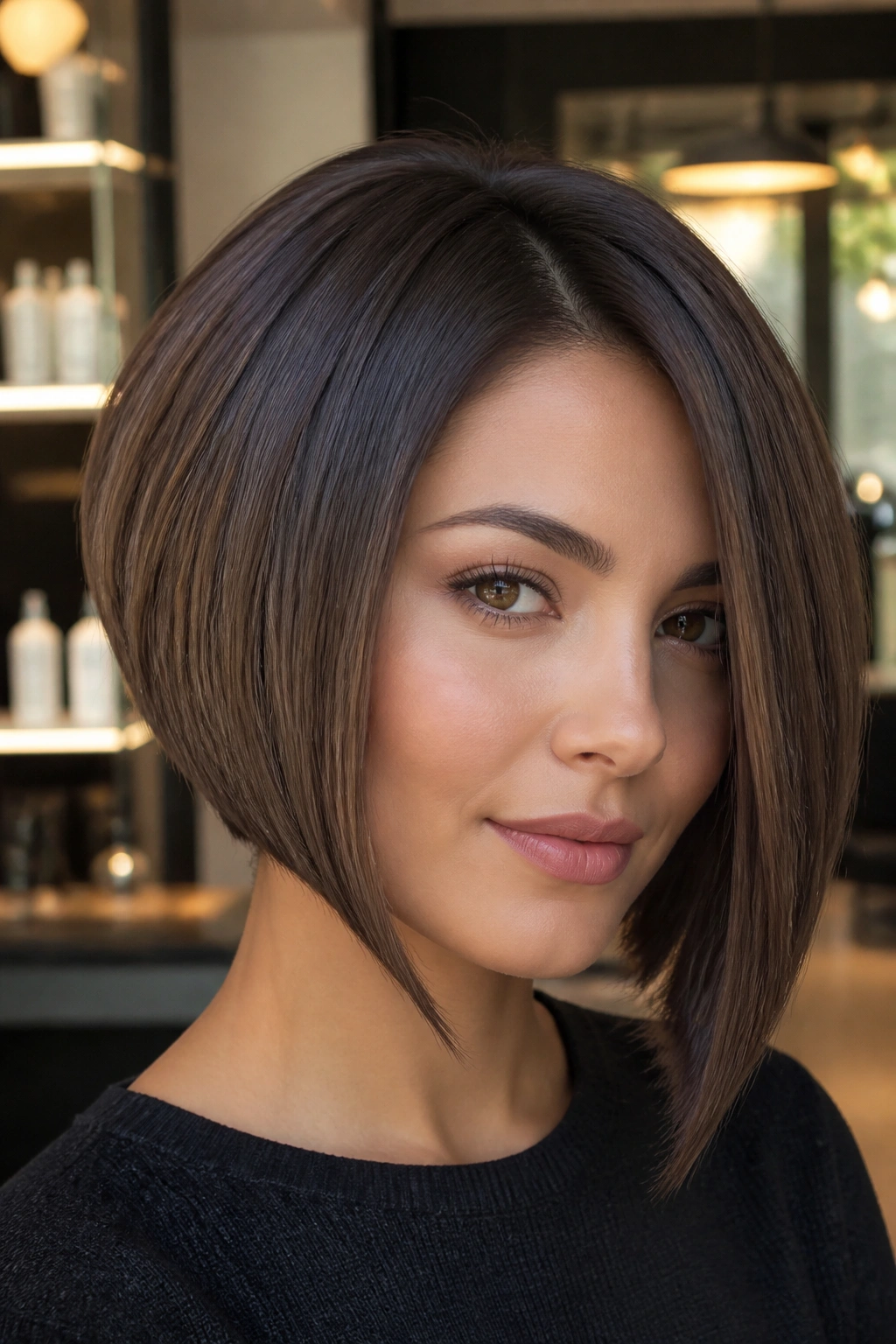
If you want the cleanest, sharpest version of an inverted bob, this is it. The back is graduated tightly, the front is smooth, and the whole cut builds a long line from the nape to the chin.
The reason it works on round faces is simple: it puts the visual weight where the face is narrowest. A smooth stack at the back creates height, while the polished front stretches the outline downward. That’s the whole game here.
Keep the styling controlled. Blow-dry with a paddle brush first, then go back with a round brush only at the ends if you want a little curve. A pea-size amount of smoothing cream is enough for most hair types; too much and the style loses its crisp edge. This cut looks best when the sides stay sleek and the crown stays lifted, not fluffy.
3. Collarbone Inverted Lob with Curtain Bangs
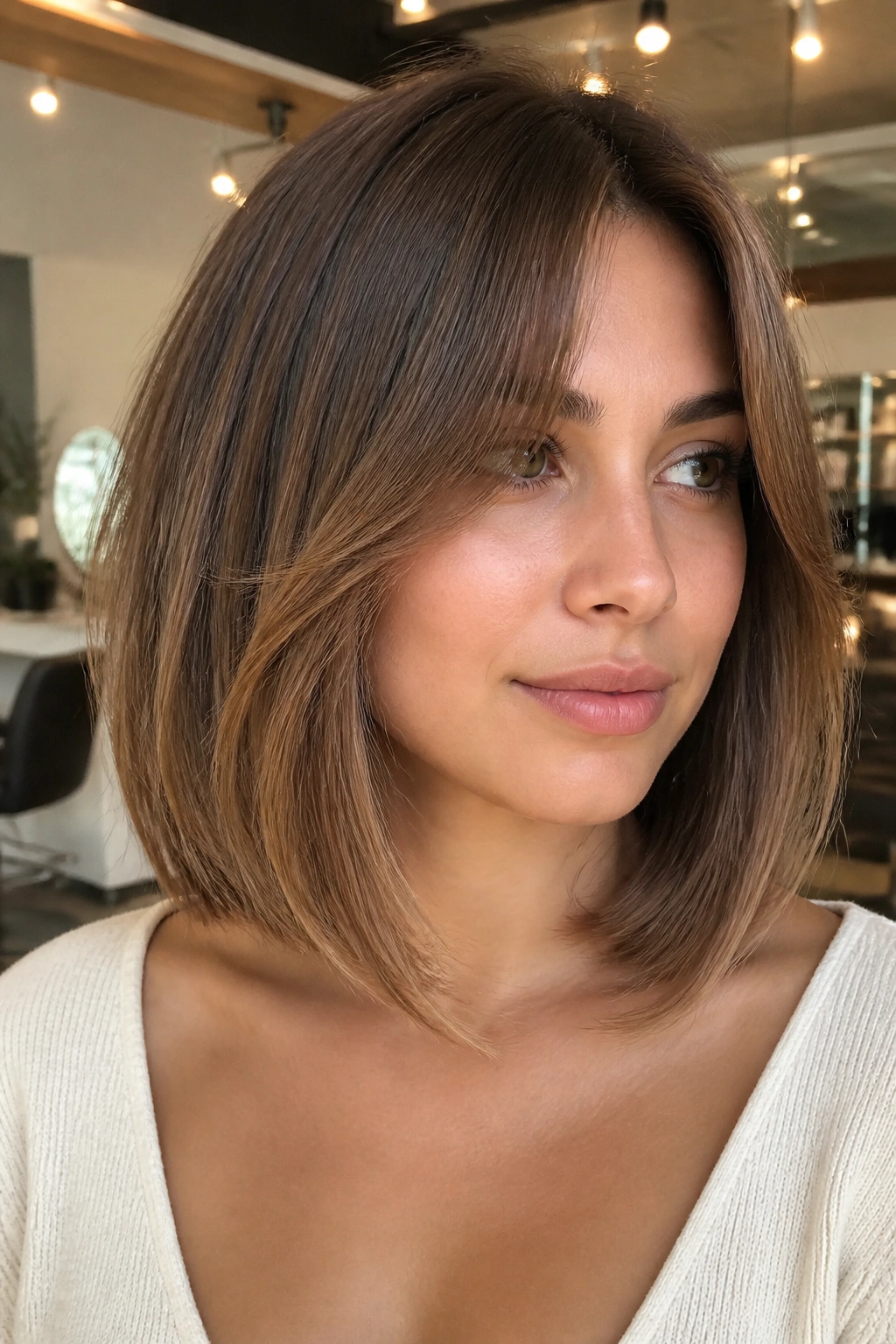
Why does collarbone length work so well on a round face? Because it gives the eye somewhere to go. The front pieces land below the cheekbones, and that alone changes the whole balance of the cut.
Curtain bangs make the shape feel softer without closing off the face. They part in the middle, drift away from the forehead, and usually hit around the cheekbone or upper lip when dry. That diagonal movement is doing real work. It draws attention inward, then down.
How to Wear It
Ask for the bangs to open from the center and blend into the front layers, not stop in a hard line. A round brush and a quick bend through the last 2 inches are enough. Keep the lob grazing the collarbone so the ends move when you walk; that little swing keeps the haircut from looking heavy.
4. Wavy Inverted Bob with Beach Texture
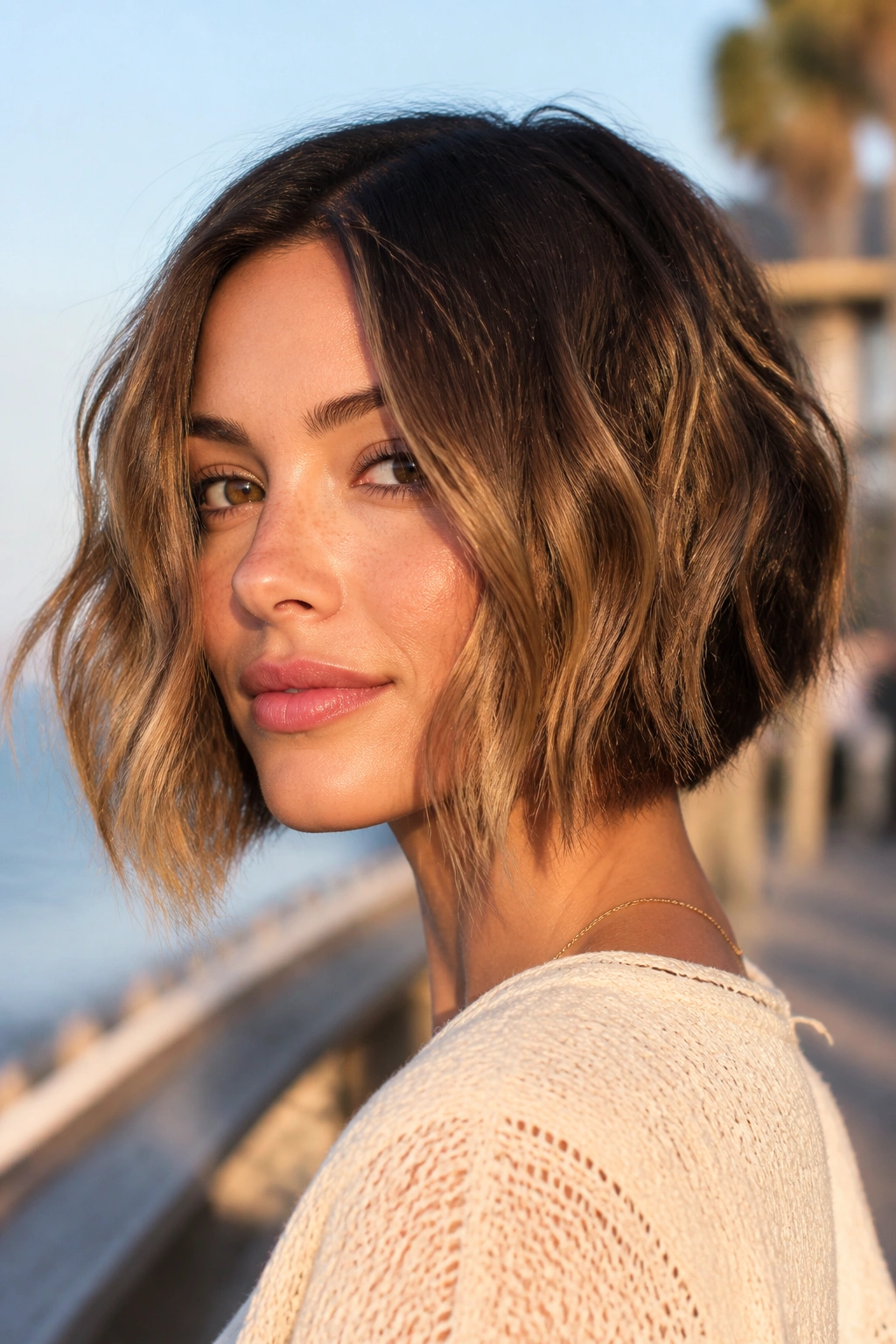
If your hair already bends on its own, this one feels like a relief. You don’t have to fight the wave pattern; you just shape it so it falls in the right places.
The texture breaks up the roundness of the face. Soft waves around the jaw can be a problem if they’re too full, but waves that start lower and trail forward from a shorter back can be very flattering. The trick is keeping the front long enough to create a vertical line.
- Work mousse through damp roots for lift.
- Rough-dry to about 80% before you touch the iron.
- Use a 1¼-inch curling iron and leave the last inch out for a softer end.
- Scrunch with a towel, not your hands, if the hair frizzes fast.
- Finish with a dry texture spray at the crown, not the cheeks.
One smart move: keep the wave loose. Tight, springy curls at cheek level can widen the face faster than you’d expect.
5. Asymmetrical Inverted Bob with Deep Side Part
The side that falls longer does the flattering here. It gives the eye a clean path to follow, and that makes the face read as longer than it is. Simple, but effective.
This is the cut I’d hand to someone who wants edge without going full dramatic. One side can brush the jaw while the other lands near the collarbone, and the imbalance is what makes it feel modern. A deep side part helps the longer side start with purpose instead of looking accidental.
Styling matters. Keep the roots smooth on the shorter side so the cut doesn’t puff outward, then bend the longer side slightly inward with a flat iron or round brush. I like this shape on hair that has some natural bend, because it keeps the line alive. Flat, straight hair can wear it too, but it needs a little polish at the ends or the asymmetry looks stiff.
6. Layered Inverted Pixie Bob
Unlike a classic bob, this one keeps the nape tighter and the crown lighter. That means the face gets height, not width, which is exactly what a round shape usually needs.
The pixie-bob length is short enough to feel lively, but not so short that it removes the softness around the jaw. Ask for layers through the top, then keep the sides close to the head. The front can stay a touch longer if you want a little sweep across the forehead.
What makes it different:
- The back hugs the head instead of flaring out.
- The crown gets lift from internal layers.
- The front stays narrow and slightly longer.
- It works well with glasses, because the shape doesn’t crowd the face.
Best for people who want low-maintenance styling with a sharp silhouette. A dab of paste and a quick finger-dry is often enough.
7. Textured Inverted Bob with Piece-y Ends
Piece-y ends do more than look relaxed. They break up the line of the haircut so the face doesn’t get boxed in by one heavy edge.
This cut is especially good if your hair tends to cling together when it’s bluntly cut. A little texture at the ends keeps the front moving and stops the shape from sitting like a helmet. The front can still be longer than the back; it just shouldn’t feel carved in stone.
What to Ask for at the Chair
- Point-cutting or razor work through the perimeter.
- A shorter nape with soft graduation, not a hard shelf.
- Front pieces that fall below the cheekbone.
- Light internal removal if the hair is thick.
Tip: Use a texturizing spray on dry hair and pinch the ends lightly with your fingers. Too much product makes the texture look dusty instead of clean.
8. Curly Inverted Bob with Diffused Volume
Curly hair and inverted shapes get along better than a lot of people expect. The reason is that curls already bring movement; the inverted cut just puts that movement in a smarter place.
The front stays long enough to stretch the face, while the back removes the extra bulk that can make curls balloon at the sides. That balance matters. If the shortest layers sit too high, the face can look wider. If the longest pieces fall below the jaw, the cut starts to do its job.
Use curl cream on soaking-wet hair, then diffuse on low heat with your head tilted slightly to one side and then the other. Don’t rake through the curls once they dry. That’s where frizz creeps in, and frizz at cheek level is not your friend here. A round face likes curls with direction, not a halo that spreads outward.
9. Shaggy Inverted Lob for Softer Round Faces
What happens when you mix a shag with an inverted lob? You get a cut that feels less precise, more airy, and a lot less boxy around the jaw.
That softness is the point. Razored layers keep the front from looking heavy, while the longer length still pulls the silhouette downward. If your face is round and your hair is medium to thick, this is one of the easiest ways to keep shape without looking too neat.
How to Style It
A little mousse at the roots helps, but don’t drown the hair in product. Scrunch while drying, then twist a few face-framing pieces around your fingers as the hair cools. That creates a broken line through the front, which is what keeps the style from feeling round itself.
The shag element works because it interrupts the circle. Not all the time. Just enough.
10. Inverted Bob with Blunt Ends
People often assume blunt ends are a bad idea on round faces. That’s only half true. The line matters more than the finish.
When the blunt edge sits below the jaw and the back is stacked tight, the haircut reads strong rather than wide. It looks deliberate. It also looks expensive when the hair is healthy, because the clean edge catches the light in a crisp, even way.
- Keep the blunt line at chin level or lower.
- Ask for a tighter nape so the back doesn’t balloon.
- Use a flat brush for drying if you want a straighter finish.
- Add a soft bend only at the front corners.
- Trim often enough to keep the edge clean.
A small warning: if your hair is very full at the sides, a blunt cut can feel heavy fast. In that case, ask for invisible internal thinning rather than visible layers.
11. Feathered Crown Inverted Bob
Volume belongs at the crown, not at the cheeks. That is why a feathered top works so well on a round face.
Feathered layers near the crown give lift without making the shape feel fluffy. The front still drops longer, which keeps the haircut moving downward, while the top gets enough air to avoid sitting flat against the scalp. On fine hair, that’s gold. On thick hair, it stops the top from looking bulky.
This version is a little more forgiving than a razor-sharp stack. You can rough-dry it and still get a decent shape. I like to smooth the ends with a round brush while leaving the crown slightly lifted. Too much smoothing up top kills the effect, and too much teasing turns the cut into a shell. Somewhere in the middle is where it really lives.
12. Side-Swept Fringe Inverted Lob
Why do side-swept bangs keep working? Because they make the forehead and cheek line read diagonally instead of head-on.
That diagonal is flattering on round faces almost every time. It gives movement without blocking the face, and it lets the inverted lob do its lengthening job. If the fringe is too heavy, you lose that openness. If it’s too wispy, it can look unfinished.
How to Use It
Ask for the fringe to start deep on one side and blend into the front pieces. The shortest point should sit near the brow, not above it, and the longest point can merge into the jaw-length front. Blow-dry the fringe in the direction you want it to fall, then switch the part once it cools if you need more lift.
This style works especially well when the rest of the lob stays smooth. A busy cut plus a busy fringe can get messy fast.
13. Long Inverted Bob with Face-Framing Panels
A longer inverted bob is a smart choice if you want the angle without going short. The front panels can fall near the collarbone, which gives the face a longer line and makes the jaw look slimmer.
The beauty of this cut is that it doesn’t scream “bob.” It has the shape, but it wears like a longer style. That matters if you like pulling your hair back sometimes or if you want something that still moves around your shoulders.
Why the Shape Works
The front panels should begin below the cheekbone so they don’t cut across the widest part of the face. The back can sit at the nape or just above it. Keep the layers gentle through the mid-lengths so the silhouette stays clean.
Tip: If you curl the front, wrap away from the face for the first few inches, then let the ends relax. That gives the cut a softer sweep instead of a full spiral.
14. Tapered Inverted Pixie Bob
Short hair, long payoff. A tapered pixie bob gives you a lifted crown, close sides, and enough front length to keep the face from looking wide.
What makes it flattering is the tapering at the nape and around the ears. The shape gets narrow where it should, then lengthens toward the front. That creates the same kind of visual line as a longer inverted bob, only with less hair to manage.
It’s a good cut for someone who likes fast styling. Work a small amount of paste through damp hair, then use your fingers to push the top up and the front slightly forward. You do not need perfect symmetry here. In fact, a little unevenness can make the cut look more alive. Keep the sideburn area soft, though. Too much bluntness there can make the face look boxed in.
15. Soft Inverted Bob with Curtain Fringe
Can a fringe make an inverted cut feel softer without losing the angle? Yes. Curtain fringe does that job better than most bangs.
The middle part opens the face, and the long sides of the fringe drift toward the cheekbones instead of sitting across the forehead like a wall. That keeps the haircut breathable. The front still gives length, but the fringe adds a little softness at the top.
How to Wear It
Ask for the fringe to be shortest around the bridge of the nose or upper cheek, then taper into the front layers. Style it with a medium round brush and a gentle bend away from the face. The rest of the bob should stay smooth enough that the fringe feels like part of the cut, not a separate piece glued on top.
This version is good when you want movement around the eyes but not a heavy bang. Heavy bangs and round faces can fight each other. Curtain fringe usually behaves better.
16. Angled Bob with Hidden Underlayers
You do not always need more visible layers. Sometimes the smartest move is to remove bulk underneath and keep the outside line clean.
That’s what hidden underlayers do here. The top still looks smooth and shaped, but the underneath is lighter, so the haircut can angle forward without puffing out at the sides. On thick hair, this is a lifesaver. On wavy hair, it keeps the shape from exploding outward on humid days.
- Ask for internal weight removal, not choppy surface layers.
- Keep the front longer and the back neat.
- Blow-dry with tension so the perimeter lies flat.
- Use a drop of serum only on the ends.
Worth saying: if a stylist starts carving into the surface too much, the cut can lose that clean inverted line. The inside should do the work quietly.
17. V-Shaped Nape Inverted Bob
A V-shaped nape gives this bob a little edge, and it also helps lengthen the neck. That’s useful on a round face, where a bit of vertical emphasis goes a long way.
The back isn’t square. It narrows gently at the center, which makes the cut look sharper and cleaner from behind. From the front, the longer panels still do the familiar flattering work. The result feels more detailed than a plain stacked bob.
This is one of those cuts that can look nearly invisible when styled straight and look completely different with a small bend. A polished blowout makes the V shape obvious. A rougher finish softens it. Either way, keep the nape neat. If the lower back flares, the whole idea gets muddy fast.
18. Straight Inverted Lob with Center Part
Unlike a side-parted bob, this one leans on precision. The center part can work on a round face when the front length is long enough and the ends are beveled slightly forward.
That is the key. If the hair stops at the cheek, the center part can feel too open. If the front reaches the collarbone or a little below, the straight line becomes slimming rather than blunt. The cut looks calm, clean, and a little modern.
Best for straight or lightly wavy hair, because the finish matters here. Smooth the hair with a blow-dryer and a flat brush, then curve the last inch inward just enough to keep the perimeter from looking stiff. If your hair is thick, ask for a touch of internal debulking so the center part doesn’t sit like a curtain on the sides.
19. Choppy Inverted Bob with Razor-Cut Ends
Movement first. That’s the whole point of this cut.
Razor-cut ends break up the edge so the front doesn’t sit in one flat line across the cheeks. The back still stays shorter and tighter, but the perimeter feels soft enough to avoid that blocky feeling some bobs get on fuller faces. It’s especially good when you want the haircut to look casual instead of polished.
Where the Movement Comes From
The choppiness should stay in the ends, not all through the crown. Too many layers on top can make the silhouette expand sideways. A few sharp pieces in the front and near the jaw are enough.
- Ask for razor texturing only at the perimeter.
- Keep the crown controlled.
- Use a matte paste for separation.
- Let a few ends stick out on purpose.
Tip: This cut looks best when it’s not overbrushed. A little bit of mess suits it.
20. Glossy Inverted Bob with Tucked-Behind-Ear Styling
A tucked ear can change the whole face shape. It opens one side, exposes the cheekbone, and gives the inverted line room to do its job.
The glossy finish makes the shape look deliberate rather than fussy. Smooth hair reflects light in a way that sharpens the silhouette, and that matters with a cut this geometric. A round face benefits from that clean edge, especially when one side is tucked and the other is left free.
Keep the styling simple. Blow-dry smooth, run a tiny amount of shine cream through the mid-lengths, and tuck one side behind the ear while leaving a front panel loose. That loose panel should fall below the jaw. If it stops too high, the styling trick loses impact. This is a good cut for anyone who likes a neat look without a lot of teasing or product.
21. Micro-Stacked Back Inverted Bob
Can a small stack make a real difference? Absolutely.
A micro-stack gives the back just enough lift to stop the haircut from lying flat against the head, but it doesn’t build the big curved shape that can widen a round face. That makes it a nice middle ground for people who want structure without too much volume.
How to Use It
Ask for short graduation only at the lower back, then keep the line fairly smooth through the sides. The crown can be lifted a touch with a root spray and a quick blow-dry using your fingers. You’re looking for shape, not height for height’s sake.
This version is a good choice if your hair is fine and tends to collapse by midday. The tiny stack gives the back some shape that lasts longer than a flat bob, and the front still holds the length needed to elongate the face.
22. Tousled Inverted Lob with Air-Dried Bend
If you hate styling tools, this one is worth a serious look. The shape does most of the work, and the tousle keeps it from feeling too neat.
An air-dried bend softens the front instead of making it too straight. That matters because a round face usually looks better with a little movement around the jaw, not a rigid line. The inverted length still stretches the face, while the loose texture makes the cut feel easy.
- Work leave-in cream through damp hair.
- Twist 3 or 4 front sections while the hair is wet.
- Let it dry with the part in place.
- Scrunch the ends once they’re dry, not before.
A small note: if your hair is very frizzy, this cut needs a smoothing cream under the leave-in. Otherwise the texture gets too fuzzy around the cheeks.
23. Inverted Bob with Wispy Bangs
Wispy bangs can soften a round face without swallowing it. That is the whole attraction here.
They’re lighter than a blunt fringe, so they don’t put a hard line across the forehead. Instead, they let some skin show through, which keeps the face open. Combined with the inverted angle in the back and front, the cut feels airy rather than heavy.
The bangs should stay soft, not stringy. There’s a difference. Wispy means the fringe has separation and movement. Stringy means the hair is too thin or over-texturized, which can look accidental. Keep the length around brow level, with a few longer pieces blending into the front. That way the fringe frames the face instead of cutting it in half.
24. Sleek One-Long-Front Inverted Cut
Clean lines, strong shape, very little fuss. This version keeps the front panel long and smooth while the back hugs the head, which gives the face a narrow, controlled frame.
Unlike a heavily layered bob, this one relies on the length difference more than on texture. That makes it a good match for straight hair or for anyone who likes a polished finish. The long front panel can reach the collarbone, which does a lot to stretch a round face vertically.
This cut suits minimalist styling. A straight blow-dry, a center or side part, and a touch of serum on the ends is often enough. If the hair is too layered, the effect gets diluted. The clean front is what makes this shape work, so keep the perimeter smooth and let the angle carry the drama.
25. Rounded-Under Inverted Bob
A rounded-under finish is not the same as a round face looking rounder. That distinction matters.
Here, the ends curve inward gently under the jaw rather than flaring out. The back remains shorter, so the silhouette still points downward overall. The result is soft, not boxy. If your hair has a natural bend, this cut can be one of the easiest to maintain.
The Shape in Practice
Use a round brush under the front sections as you dry, not over them. That inward bend helps the hair hug the line of the face without hanging on the cheeks. Keep the back tighter and the crown slightly lifted so the curve feels controlled.
- Best for medium-density hair.
- Works well when the ends are healthy and smooth.
- Needs a trim often enough to keep the undercurve neat.
Tip: If the hair flips outward at the jaw, re-dry only the last 2 inches. That usually fixes the shape faster than starting over.
26. Long Side Fringe Inverted Lob
A long side fringe can do what full bangs can’t: it sends attention diagonally across the face without closing it off.
That diagonal is powerful on a round face. It makes the forehead look a touch longer and gives the front of the haircut a more tailored feel. Paired with an inverted lob, the fringe adds interest without stealing the shape’s vertical line.
The fringe should begin somewhere near the temple and sweep down toward the cheekbone or jaw. Keep the rest of the lob clean and slightly longer in front. This is one of those styles that looks better when the fringe is a little soft around the edges, not razor-sharp. A round brush and a brief blast of heat are enough. Overworking it can make the fringe separate too much and lose that nice sweep.
27. Inverted Mullet Bob with Soft Edge
Can an inverted haircut have edge and still flatter a round face? Yes, if the shape stays controlled at the sides.
This version borrows a little from the mullet: shorter and more lifted in the back, longer and looser in the front. The difference is that the edges stay softer, so it never turns into a hard statement cut. The front pieces still create length, which keeps the face from looking broad.
How to Wear It
Ask for the crown to stay light, not puffy, and the front to taper toward the collarbone. The nape can be shorter and a bit choppier, but the side sections should remain clean enough to frame the face properly.
This cut is for someone who likes texture and doesn’t mind a shape with some personality. If you want something quiet, skip it. If you want movement with a little attitude, this one delivers.
28. Shoulder-Skimming Inverted Cut with Flipped Ends
Some people want the angle, but they do not want a haircut that announces itself from across the room. This is the compromise.
The shoulder-skimming length keeps the style approachable, while the slightly shorter back and flipped front ends keep it from becoming one flat line. The flip at the ends matters. It opens the shape and stops the haircut from hugging the cheeks too tightly.
- Blow-dry with a heat protectant and a medium round brush.
- Flip the ends out just at the last inch.
- Keep layers subtle so the cut doesn’t lose its shape.
- Add texture only if the hair falls too flat.
One honest note: if the shoulders are very broad, this cut can sit a little wide unless the front panels are kept longer than the collarbone. Small adjustment, big difference.
29. Deeply Layered Inverted Lob
Thick hair loves a cut that removes weight from underneath. A deeply layered inverted lob does exactly that.
The long front pieces still give the face the vertical line it needs, while the interior layers stop the back from feeling bulky or triangular. That’s important if your hair is dense, because dense hair can make even a good shape look heavy. This cut keeps the body, but takes out the bulk.
It also wears well with loose waves. The layers separate the hair enough that the style doesn’t collapse into one giant curve. I’d ask for the shortest internal layers to stay below the crown area, not too high up the head. If they’re placed too high, the top can puff out. If they’re too low, you lose the movement that makes the haircut worth having in the first place.
30. Modern Inverted Shag Bob
Messy, but on purpose. That’s the charm here.
This cut combines the upside of an inverted bob with the broken texture of a shag, so the face gets length and the style gets movement. The back stays shorter, the front stays longer, and the layers keep everything from feeling stiff. On a round face, that mix is useful because it avoids one of the biggest problems with short hair: too much evenness.
Unlike a classic stacked bob, this one does not rely on clean lines alone. It leans on texture, piecey layers, and a little bend in the ends. That makes it a strong fit for medium-density hair and for anyone who wants a haircut that looks better the less you fuss with it. Ask for the shortest layers to stay soft around the crown and the longest pieces to fall below the jaw. Keep the fringe airy if you wear one. The whole point is motion, not a perfect shape.
Final Thoughts
Round faces and inverted shapes get along for a reason. The angle gives the face a longer read, and the shorter back keeps the cut from spreading out at the sides. That combo can be sleek, shaggy, curly, sharp, or soft — which is why the same basic silhouette shows up in so many different versions.
The part people miss is placement. Where the front lands matters more than the label on the haircut. Chin, jaw, collarbone — those inches change everything. So does the weight at the crown, the amount of texture through the perimeter, and whether the sides flare or stay close.
If you’re taking this to a stylist, bring photos of the silhouette you want, not just one celebrity picture. Hair density, wave pattern, and styling habits all shape the final result, and a good inverted cut respects that instead of fighting it.
