



Choosing curly hairstyles for round faces gets easier once you know what the cut is trying to do. A round face usually has soft curves, fuller cheeks, and about the same width and length, so the trick is not to hide the face. It’s to give it shape.
That usually means a little height at the crown, a diagonal line somewhere in the style, or lengths that fall below the widest part of the cheeks. Straight across bangs that stop at the cheekbone? Risky. A blunt chin-length bob with no layers? Also risky. Curly hair can do both soft and structured at the same time, which is why it’s so useful here.
And honestly, that’s the fun part. Curls give you movement, lift, and texture that a flat style can’t fake. One shift in parting, one inch of layer placement, or one clever clip can change the whole balance of the face.
Some of the styles below are easy and casual. Some are polished. A few are the kind of looks you throw on when your hair has its own opinion and you need to work with it, not against it. Either way, they’re all built to flatter round faces without making the hair feel stiff or over-managed.
1. Curly Hairstyles for Round Faces: Deep Side Part and Side-Swept Curls
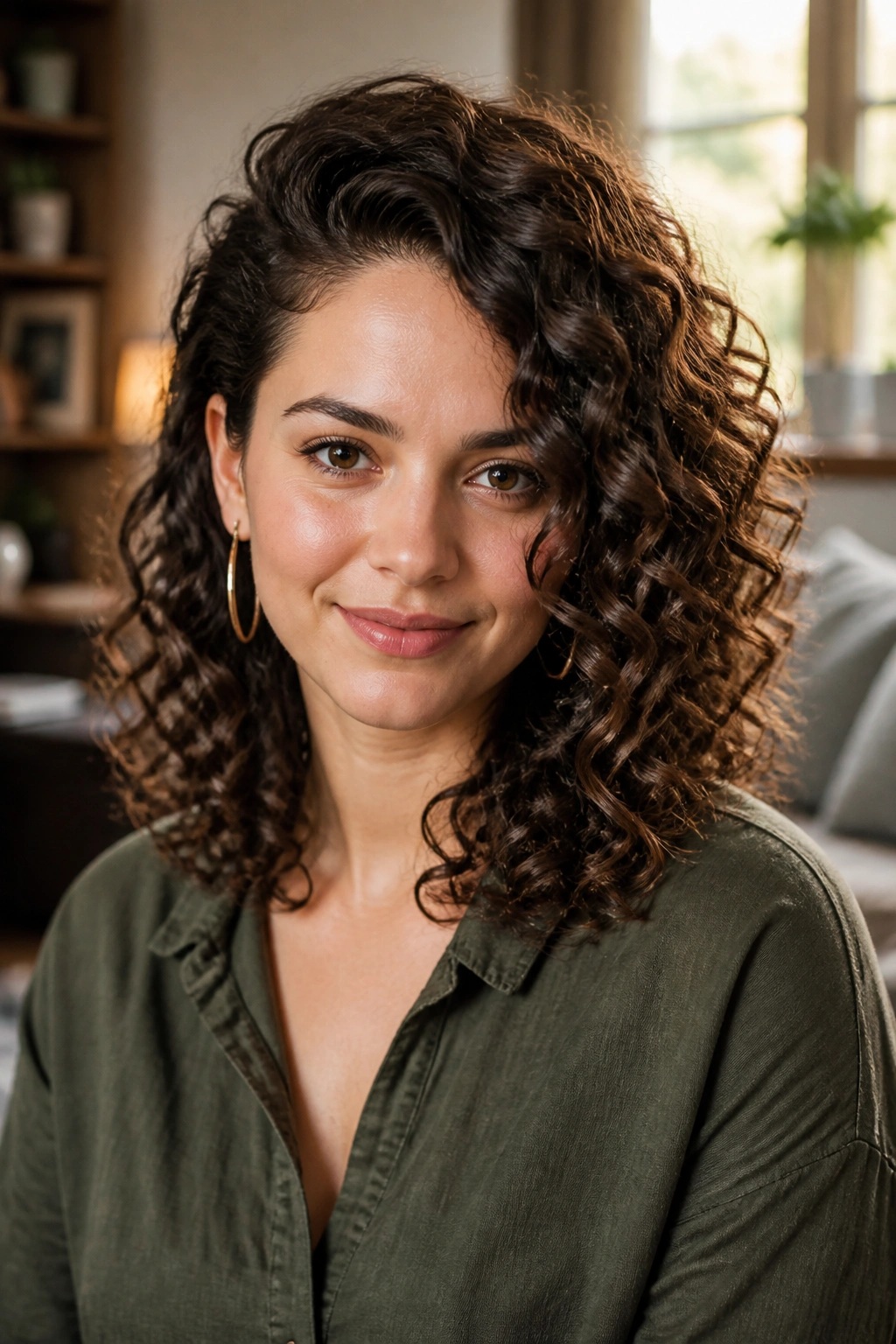
A deep side part is the fastest way to change the shape of a curly style. It lifts one side of the hair and lets the other side fall diagonally, which creates length where a round face usually needs it most.
Why It Works
The eye follows the part line before it notices anything else. That’s the whole trick. When curls sweep from one temple toward the opposite jaw, the face reads a little longer and a little leaner, even if the curls themselves are big.
Use this with shoulder-length or longer curls, because the extra length keeps the shape from puffing out at the cheeks. A side part that starts around the arch of one eyebrow is usually more flattering than a part that sits dead center.
- Keep the part clean and slightly off-center.
- Add root lift at the crown with a diffuser.
- Let a few curls fall near the cheekbone, but not a thick wall of hair.
- Pin the heavier side back for a softer, lifted finish.
Best tip: clip the fuller side at the root while it dries. That one small move gives you height without teasing.
2. Curly Hairstyles for Round Faces: Shoulder-Length Lob with Face-Framing Layers
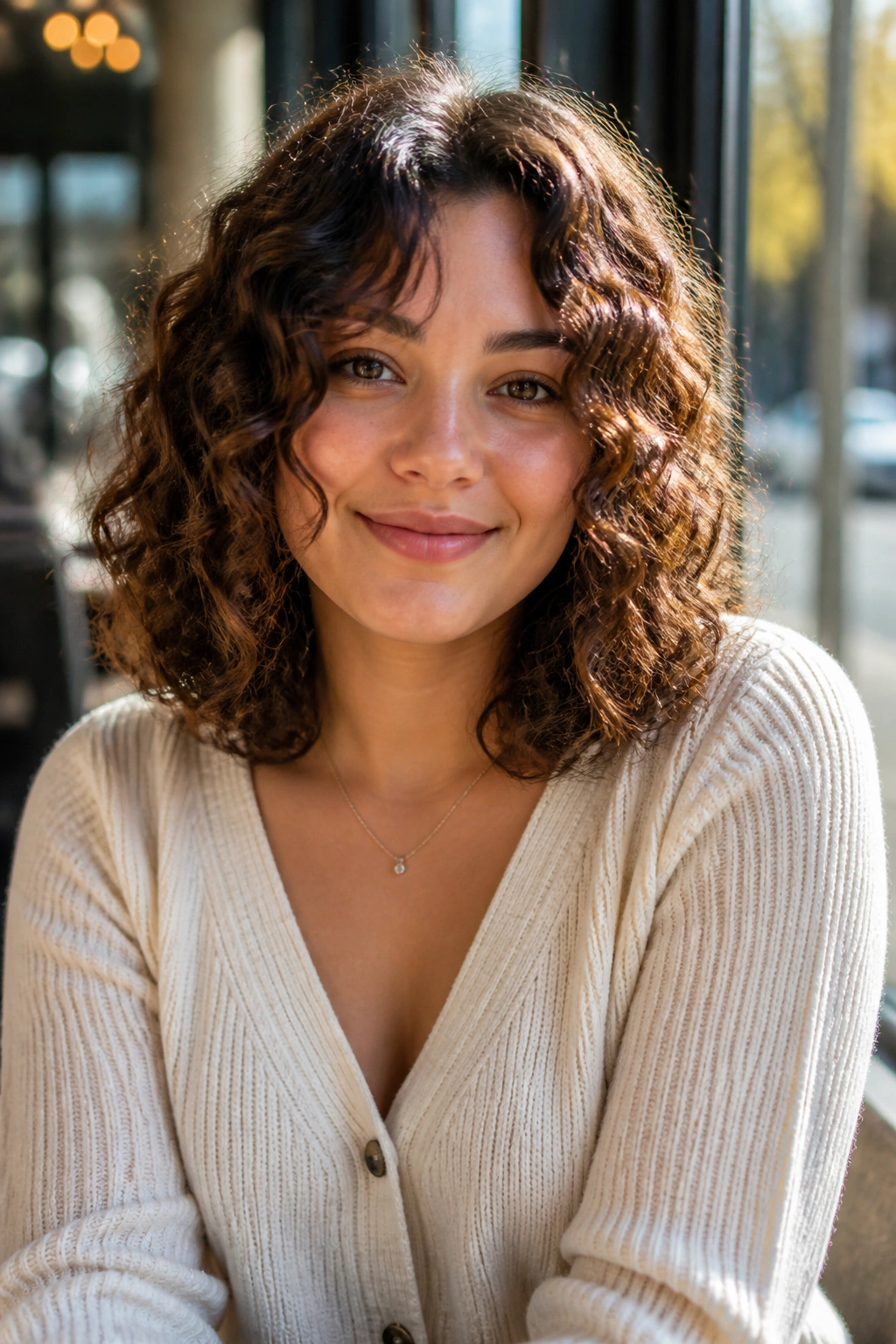
If you want one cut that feels low-stress and still flattering, this is the one I’d pick first. A curly lob that lands right around the collarbone gives the face room to breathe, while face-framing layers keep the shape from turning boxy.
The length matters. Too short, and the curls can balloon out at the cheeks. Too long with no layering, and the style can drag the face downward in a heavy curtain. The sweet spot sits between the chin and the top of the chest, depending on curl shrinkage.
Ask for layers that begin around the chin or just below it, not at the widest point of the face. That’s the part a lot of cuts get wrong. The curl should skim past the cheeks, not land squarely on them.
This is also one of the easiest shapes to style with a mousse-and-gel combo. Scrunch in a light mousse at the roots, then seal the curl with a medium-hold gel through the mids and ends. Air-dry if you can. Diffuse if you’re in a hurry.
3. Curly Shag with Crown Lift for Round Faces
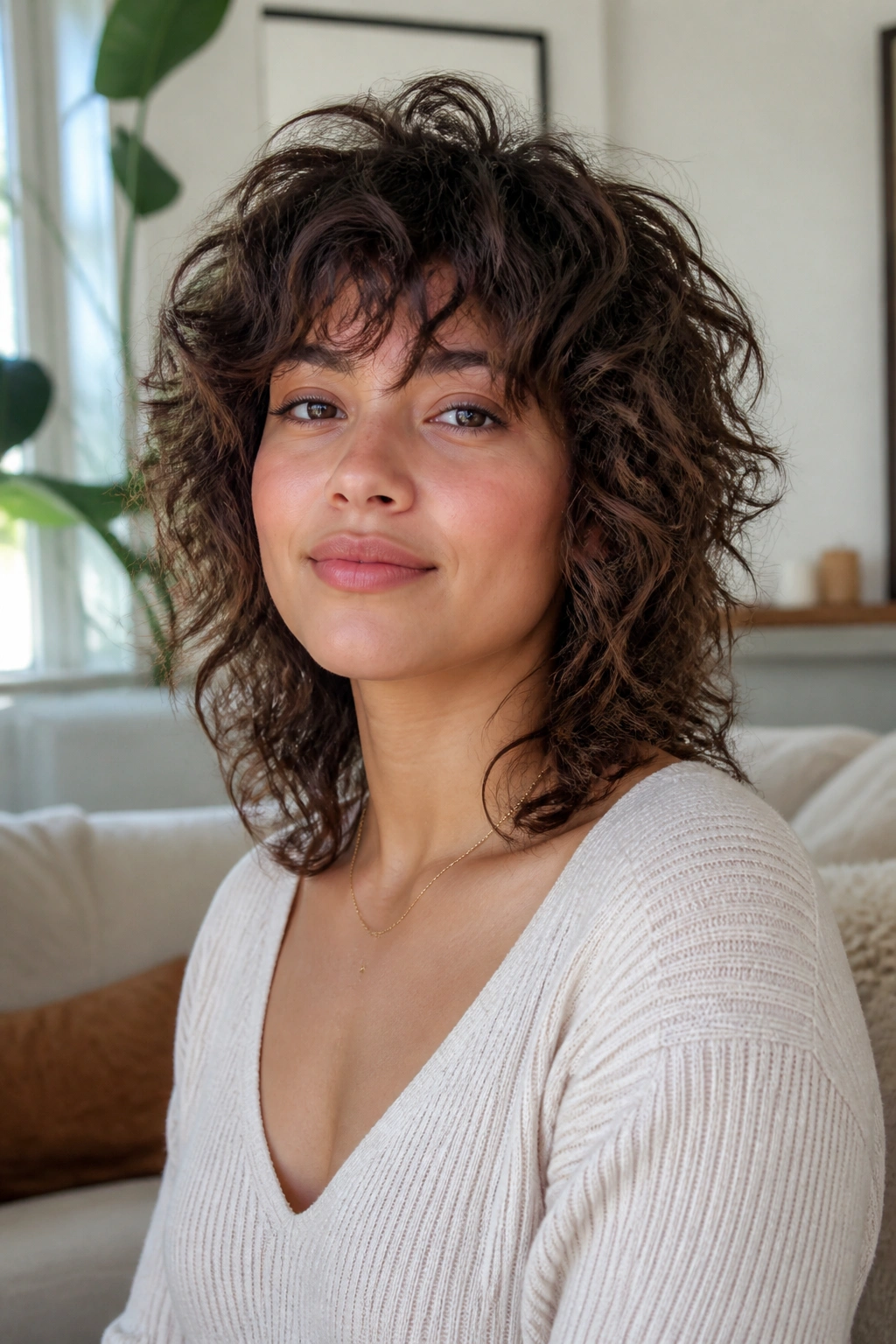
Why does a curly shag work so well on a round face? Because it breaks up the curve. The short layers at the crown add lift, the longer pieces around the sides keep the cut from puffing outward, and the whole style feels airy instead of heavy.
A shag is not one flat shape. It has movement built into it. That’s what makes it useful here. The shorter top layers pull the eye upward, while the longer perimeter softens the jaw without widening the cheeks.
How to Wear It
The best version of a shag for round faces usually has a little fringe, but not a thick curtain that sits straight across the forehead. Piecey bangs or a feathered fringe work better because they leave space around the face.
This cut looks especially good when the curls are a little imperfect. Perfect ringlets can make it feel too round. A bit of frizz, a bit of separation, a few wispy ends — all of that helps the cut feel lighter.
If your curls are tight, keep the crown layers slightly longer so the style doesn’t spring up too much. If they’re loose, you can go choppier. Either way, the point is movement. Not bulk.
4. High Curly Ponytail with Soft Face-Framing Pieces
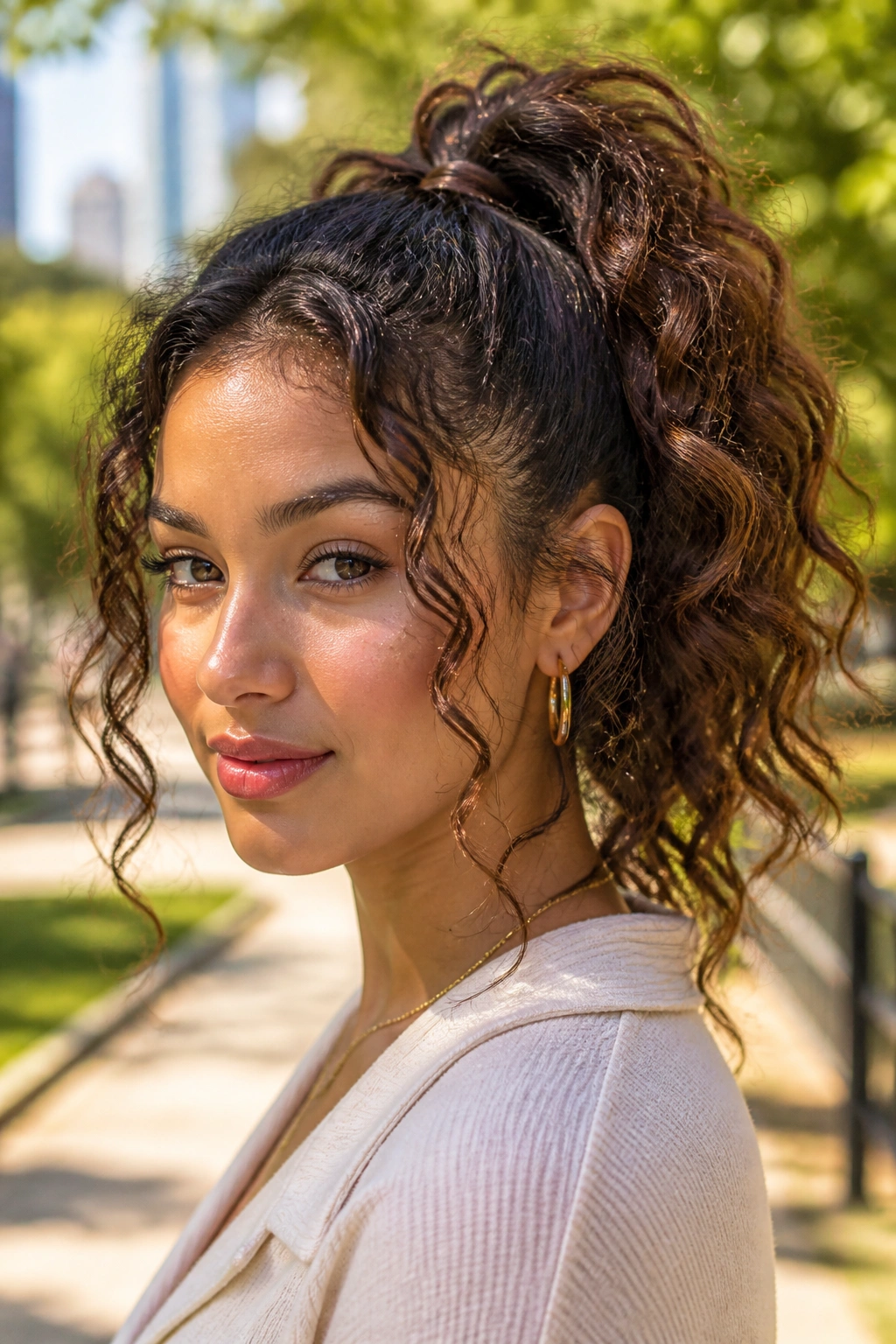
Picture a day when your hair is halfway cooperating and you need it off your neck fast. A high curly ponytail saves the day, and on a round face it can be surprisingly flattering if you keep it high enough.
The ponytail should sit at the crown or just above it. That placement pulls the eye upward and gives the face more vertical line. A low ponytail, especially one that sits right at the nape, can make the face feel wider by comparison. This one does the opposite.
A few loose pieces around the temples and jawline stop it from feeling severe. Those face-framing curls matter. They soften the edges and keep the style from looking like a gym ponytail that got dressed up.
- Secure the ponytail with a snag-free elastic.
- Wrap a small curl around the base to hide the band.
- Leave out two or three curls near the front.
- Fluff the crown lightly with your fingertips, not a comb.
Small detail, big payoff: pull the ponytail upward one final time after securing it. That tiny lift changes the whole balance.
5. Asymmetrical Curly Bob
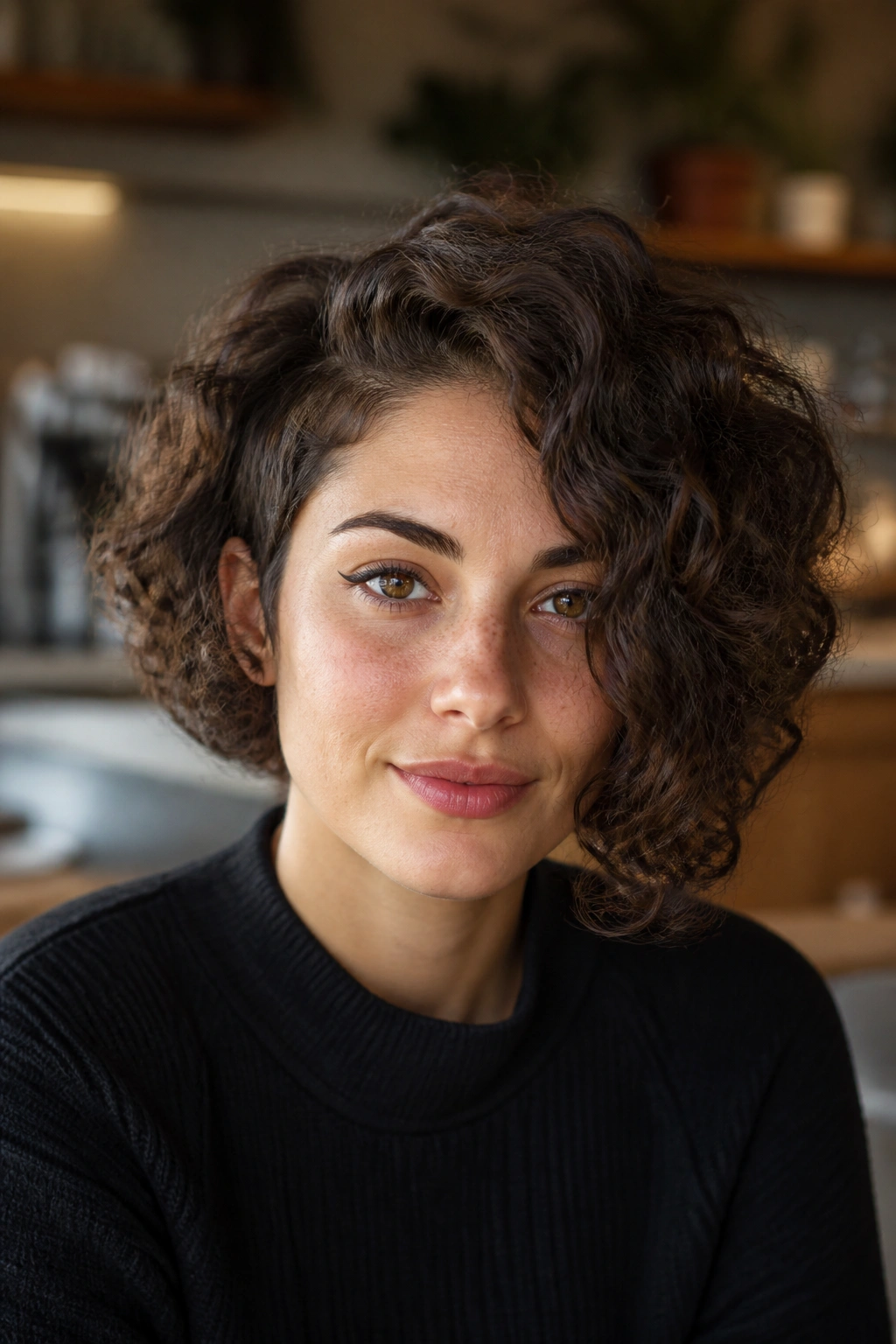
An asymmetrical bob is a sharp answer to a soft face shape. One side is a little longer than the other — usually by an inch or two — and that uneven line keeps the style from feeling too round or too sweet.
The cut works because the eye has somewhere to travel. Instead of sitting on a single even hemline, it follows the length shift across the face. That slight angle makes a bigger difference than most people expect.
A blunt curly bob can be gorgeous, but on a round face it needs careful shaping. If the ends stop right at the cheek line, the whole shape can widen the face. The asymmetrical version breaks that up and gives the curls some attitude.
I like this cut best when the shorter side lands just below the jaw and the longer side skims the collarbone. It feels modern without trying too hard. The styling is simple: define the curls, let them fall where they want, and resist the urge to make both sides match perfectly. That tiny bit of unevenness is the point.
6. Half-Up Top Knot with Loose Curls
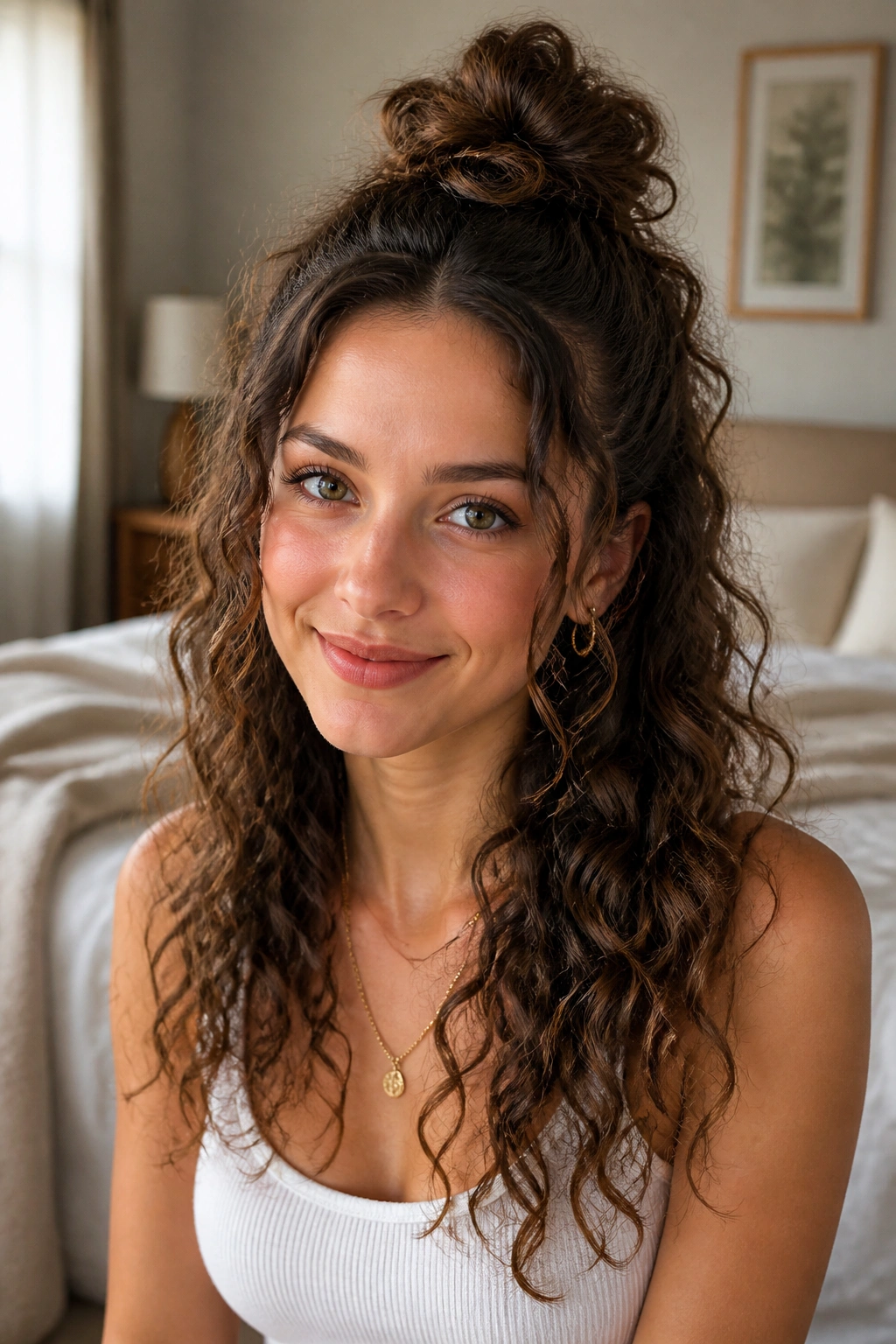
A half-up top knot is the compromise style you end up loving more than you expected. It keeps hair off the face, adds height at the crown, and leaves enough length down below to keep the face from looking cut off.
Unlike a full bun, which can compress the whole style into one shape, the half-up version leaves movement around the cheeks and neck. That matters for round faces. You get the lift without losing the vertical line from the loose curls underneath.
This look is especially good on second-day hair, when the curl pattern has a little more grip. Gather the top third of the hair, twist it into a soft knot, and leave the lower curls loose. If your hair is dense, use two pins instead of one elastic so the knot doesn’t feel bulky.
It’s one of those styles that looks casual in the best way. Not messy. Not fussy. Just easy, with enough structure to feel intentional.
7. Curly Pixie with Long Top and Side Bangs
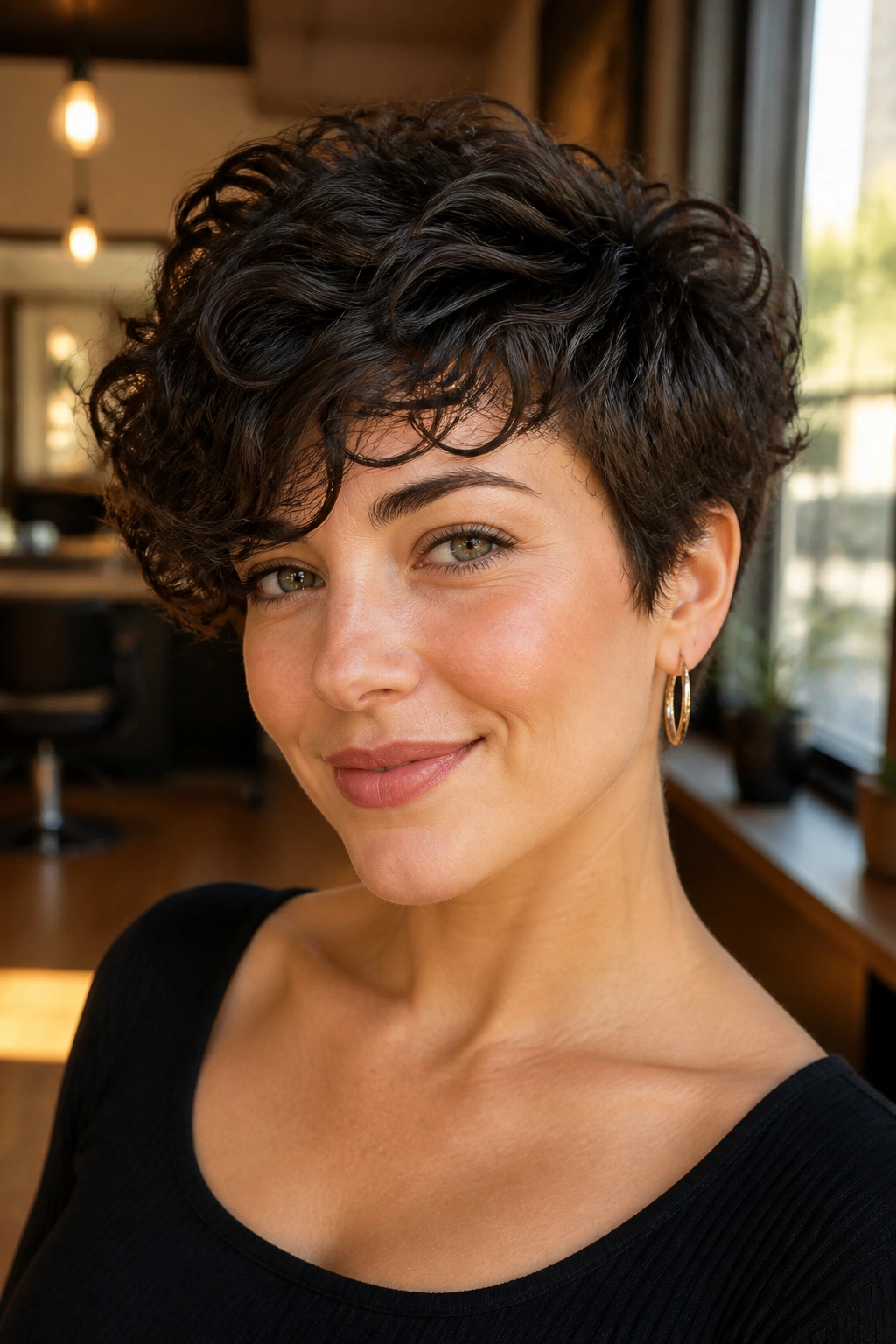
A curly pixie can flatter a round face when the top stays long enough to create height. The sides should be neat, even close to the ear, and the top needs enough length — usually 2 to 4 inches — to show off the curl pattern instead of flattening it.
What Makes It Work
The side bang is doing some of the heavy lifting here. It cuts across the forehead at an angle, which gives the face a bit of shape without closing it in. If the bangs are too short, the look gets top-heavy. Too blunt, and the whole thing feels boxy.
This cut suits people who like a little edge. It’s not soft in the same way a layered lob is soft. It’s sharper, cleaner, and a little bolder. That said, curls soften the line so it never feels severe.
- Keep the top textured, not helmet-like.
- Ask for the sideburn area to stay close to the head.
- Use a small amount of curl cream, then a light gel.
- Scrunch the fringe forward and to the side, not straight down.
Best move: let the front curls fall a little unevenly. Perfect symmetry is not helping here.
8. Old Hollywood Side Sweep
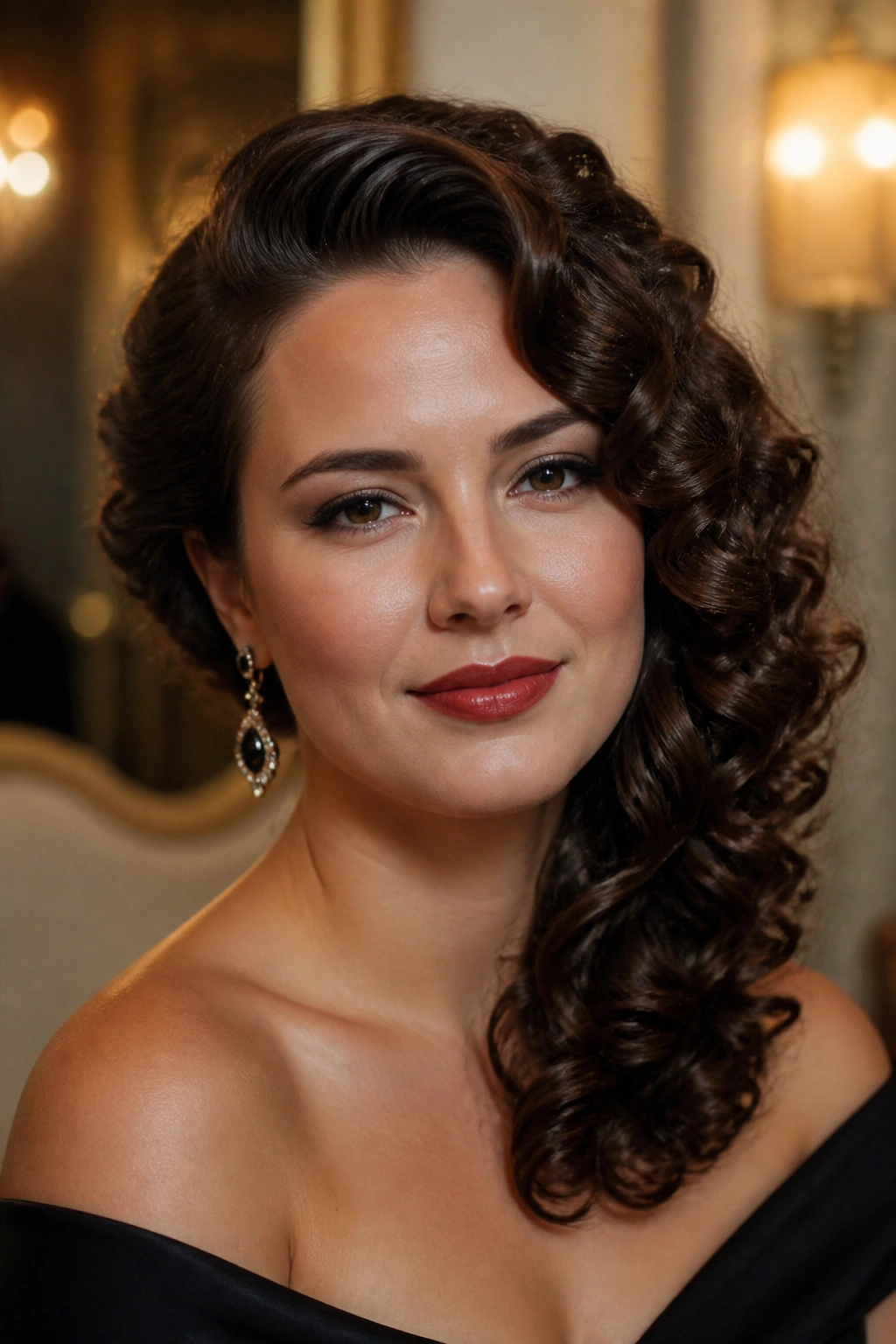
A polished side sweep gives round faces a clean diagonal line and a little drama, which is never a bad thing. The curl pattern is brushed or set toward one shoulder, so the eye moves across the face instead of stopping in the middle.
This is one of those styles that looks especially good when the curls are medium to long and have a smooth finish. You want definition, not crunch. Use a curling cream or a soft-setting lotion, then finger-coil the front pieces so they fall in one clear direction.
The crown should stay lifted. That’s the part people skip. If the top lies flat, the style loses the lengthening effect and starts to feel heavy. A side sweep needs height at the root and a clean fall through the ends.
It’s a strong choice for events, but I’d wear it on an ordinary day too. The shape is simple. The effect is polished. No extra tricks needed.
9. Curly Bangs with Long Layers
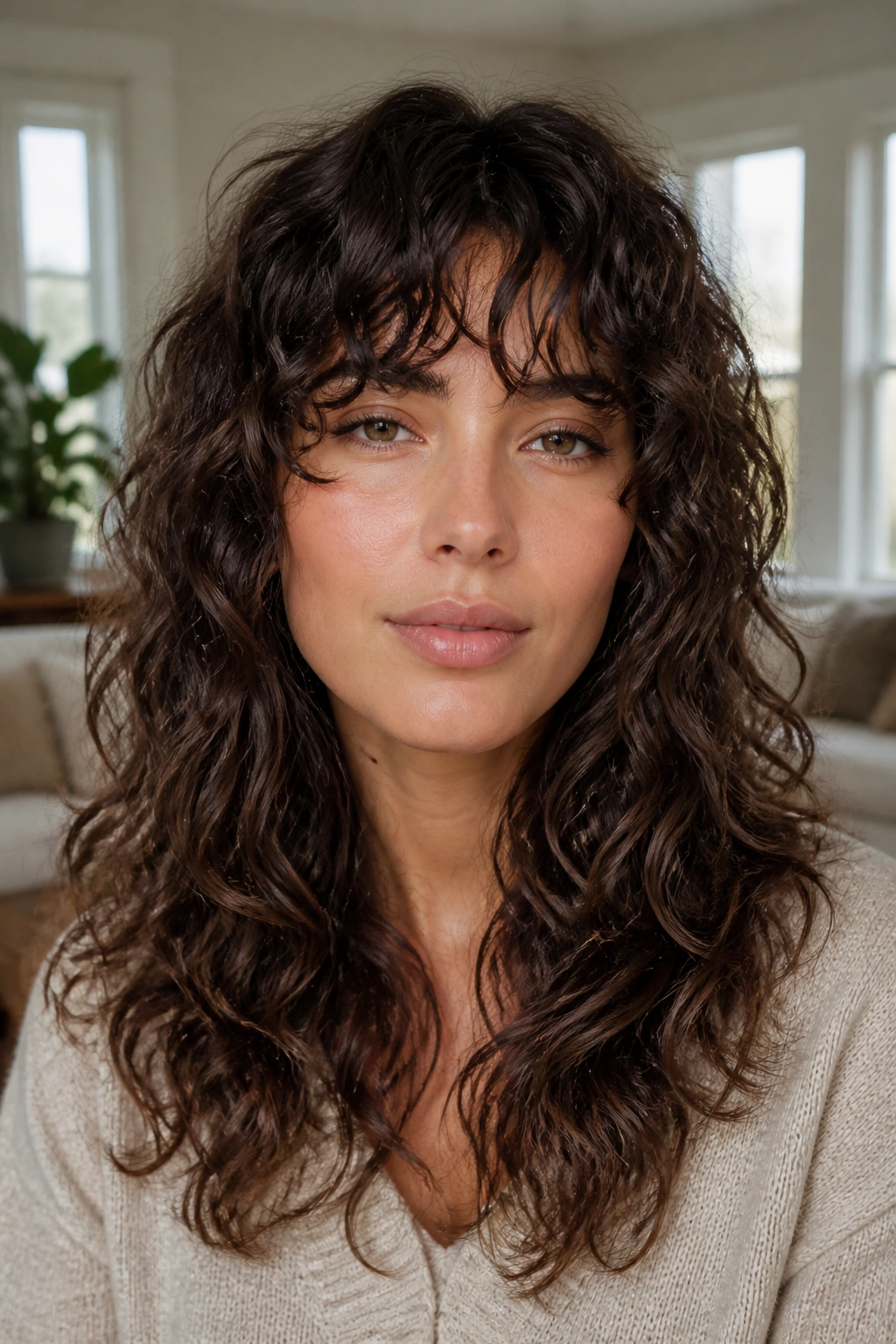
Can curly bangs work on a round face? Absolutely. The catch is that they need to be soft, piecey, and a little longer than most straight bangs. The goal is to open up the face, not box it in.
How to Ask for the Cut
Tell your stylist you want bangs that can sit around eyebrow length when stretched, then spring up naturally. That usually keeps them from ending too short once the curl shrinks. If the fringe starts too blunt, it can make the face look shorter.
Long layers around the sides help a lot here. They keep the bangs from becoming a hard line across the forehead, and they blend the fringe into the rest of the cut. The whole thing should feel airy.
Curly bangs need maintenance, though. Not a ton, but enough. They look best when refreshed with a little water and curl cream in the morning, then separated with fingers so they do not clump into one thick block.
If you’ve been avoiding bangs because your face is round, this is the version to try. Not a heavy fringe. A soft one.
10. Braided Front with Loose Curls
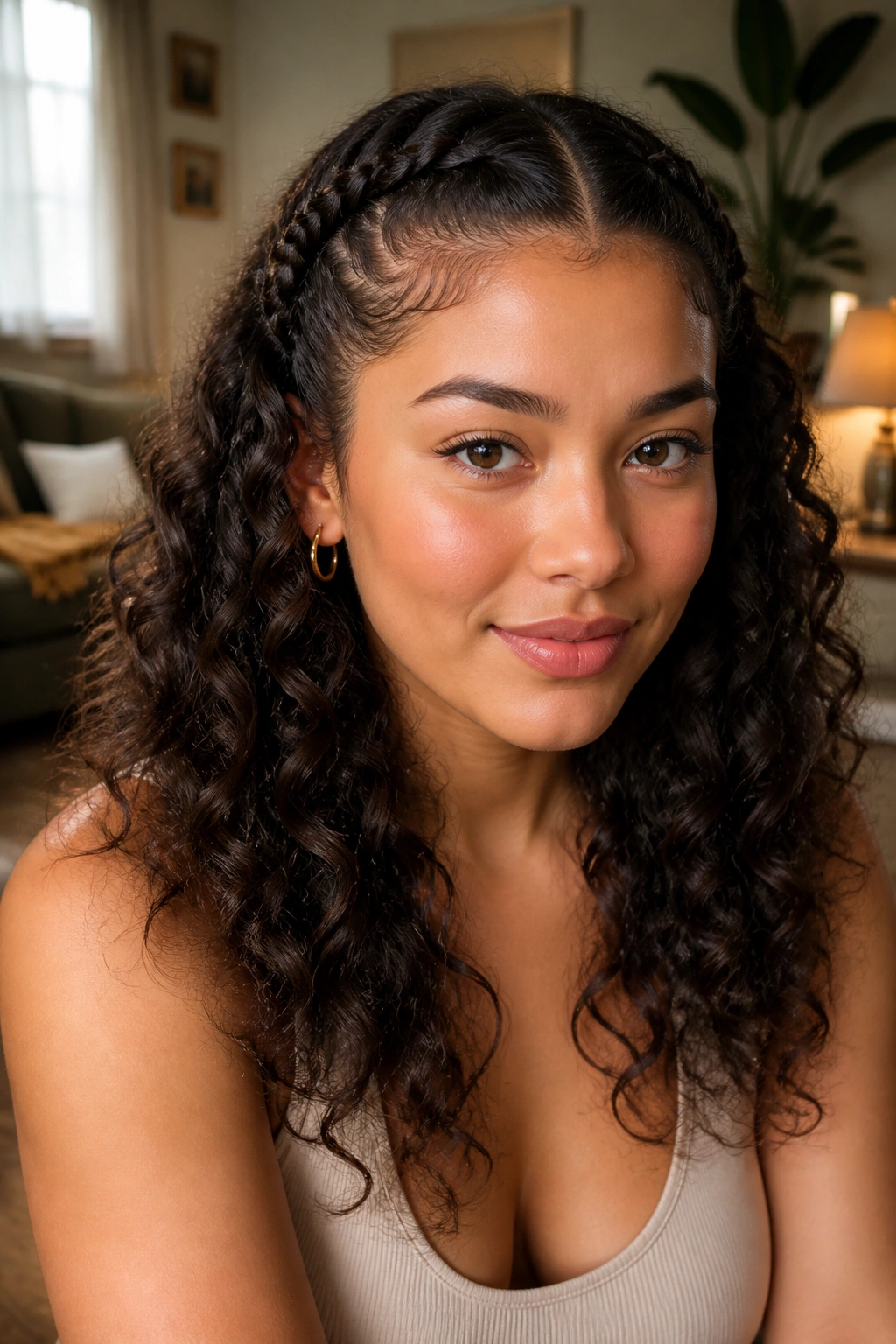
Sometimes the smartest move is to keep the curls down and only braid the front. Two slim braids from the temples can pull the hair away from the cheeks and create a nice narrow line through the front of the face.
This works especially well when you want the volume of loose curls but not the full width around the jaw. The braids act like rails. They guide the eye back and slightly upward, which gives the style a more tailored shape.
- Part the hair slightly off-center.
- Take 1-inch sections from each temple and braid them back.
- Pin the braids behind the ears or at the crown.
- Leave the rest of the curls loose and defined.
A good braid front also keeps baby curls and shorter face layers from sticking everywhere on humid days. That alone makes it worth knowing.
It’s casual, easy, and it photographs well in real life — which is different from looking flat and over-planned in person. You want the braids to feel like part of the hair, not a separate decoration.
11. Layered Mid-Length Cut with Curtain Bangs
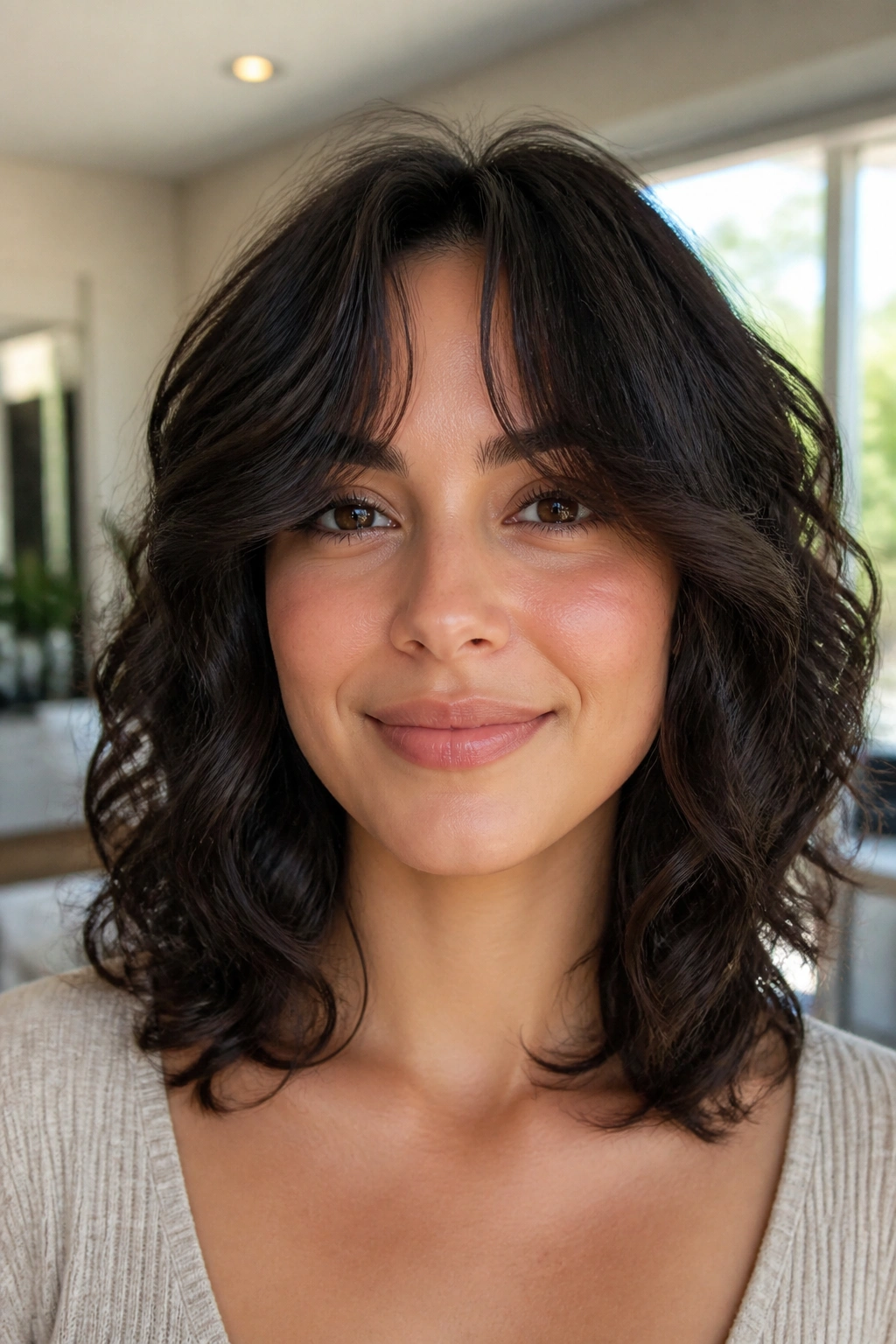
Curtain bangs are one of the easiest ways to soften a round face without hiding it. They part in the middle, sweep outward, and create two vertical paths that open the face instead of crowding it.
A mid-length cut that lands near the collarbone gives the bangs room to work. If the hair is too short, the curtain fringe can blend into one wide shape. If it’s too long and unlayered, the style starts to drag down. Mid-length keeps it light.
The best version of this cut has layers that begin around the chin and become longer as they move down the head. That gives the curls a nice bend away from the cheeks. The fringe should be soft enough to move when you turn your head. Stiff curtain bangs never do anyone any favors.
I like this look on loose curls and wavy curls especially. It feels relaxed, but not lazy. A quick diffuser pass or a small round brush at the bang area is usually enough to keep the front from splitting awkwardly.
12. Tapered Cut with Defined Curls
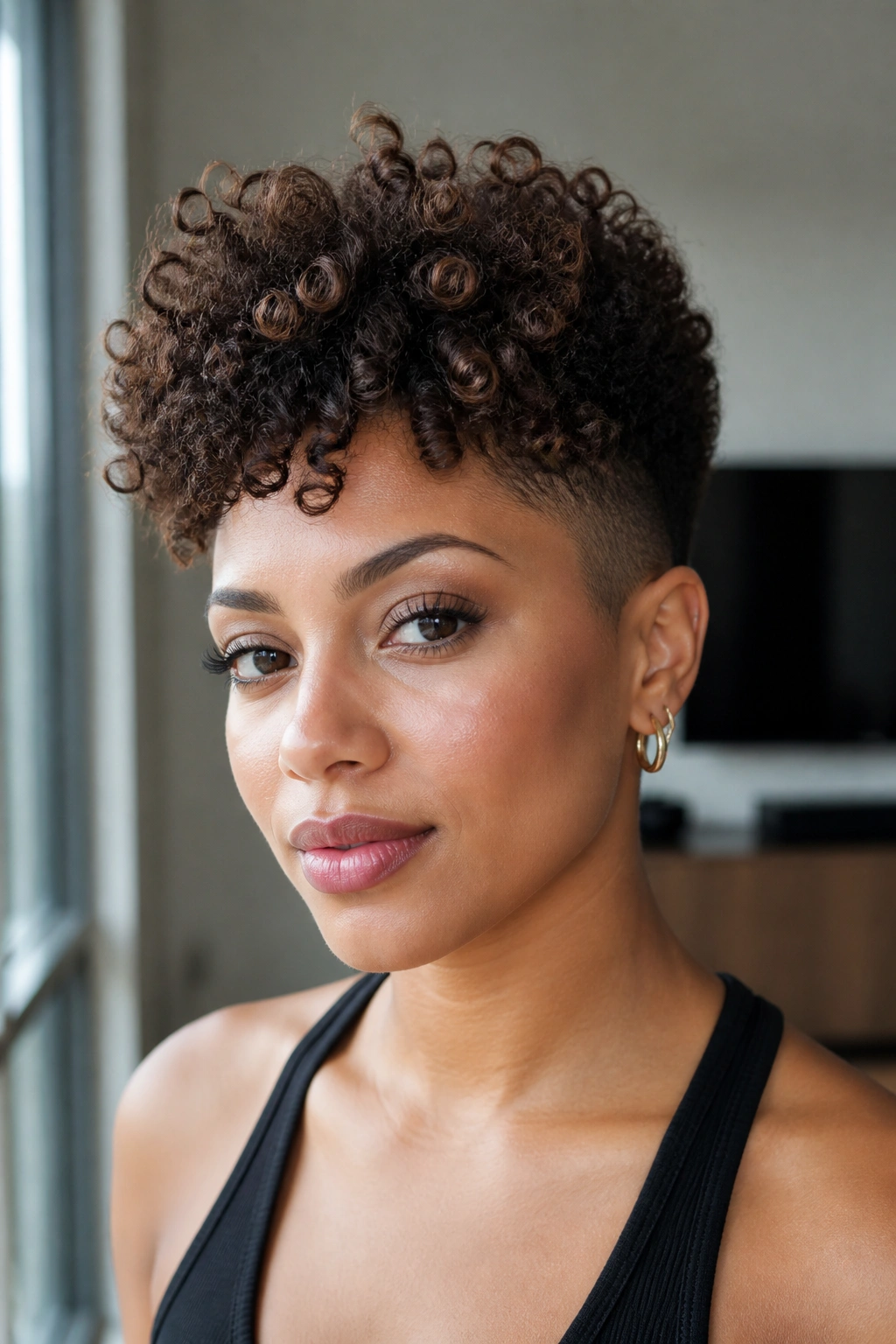
A tapered cut is a strong choice when your curls are tighter and you want shape instead of width. The sides and back sit closer to the head, while the top keeps more length and volume, so the whole style reads upward.
That top-heavy balance matters for round faces. It gives the face a little more vertical lift and keeps the silhouette from spreading out through the cheeks. If you’ve got coils or dense curls, this cut can feel cleaner than a rounded shape that grows out in every direction.
Why It Looks Sharper
The taper keeps the edge neat around the ears and neckline. That leaves the eye free to focus on the top section, where the texture has more room to move. It’s tidy without looking stiff.
You do need a stylist who knows how your curl pattern behaves when dry. A taper cut done on wet hair can shrink up more than expected. Ask for the final shape to be checked dry if possible, or at least for the top to be left a touch longer than you think you need.
This is a good one for people who want bold shape and low daily fuss. Once it’s cut well, the silhouette does a lot of the work.
13. Pineapple Updo with Face-Framing Tendrils
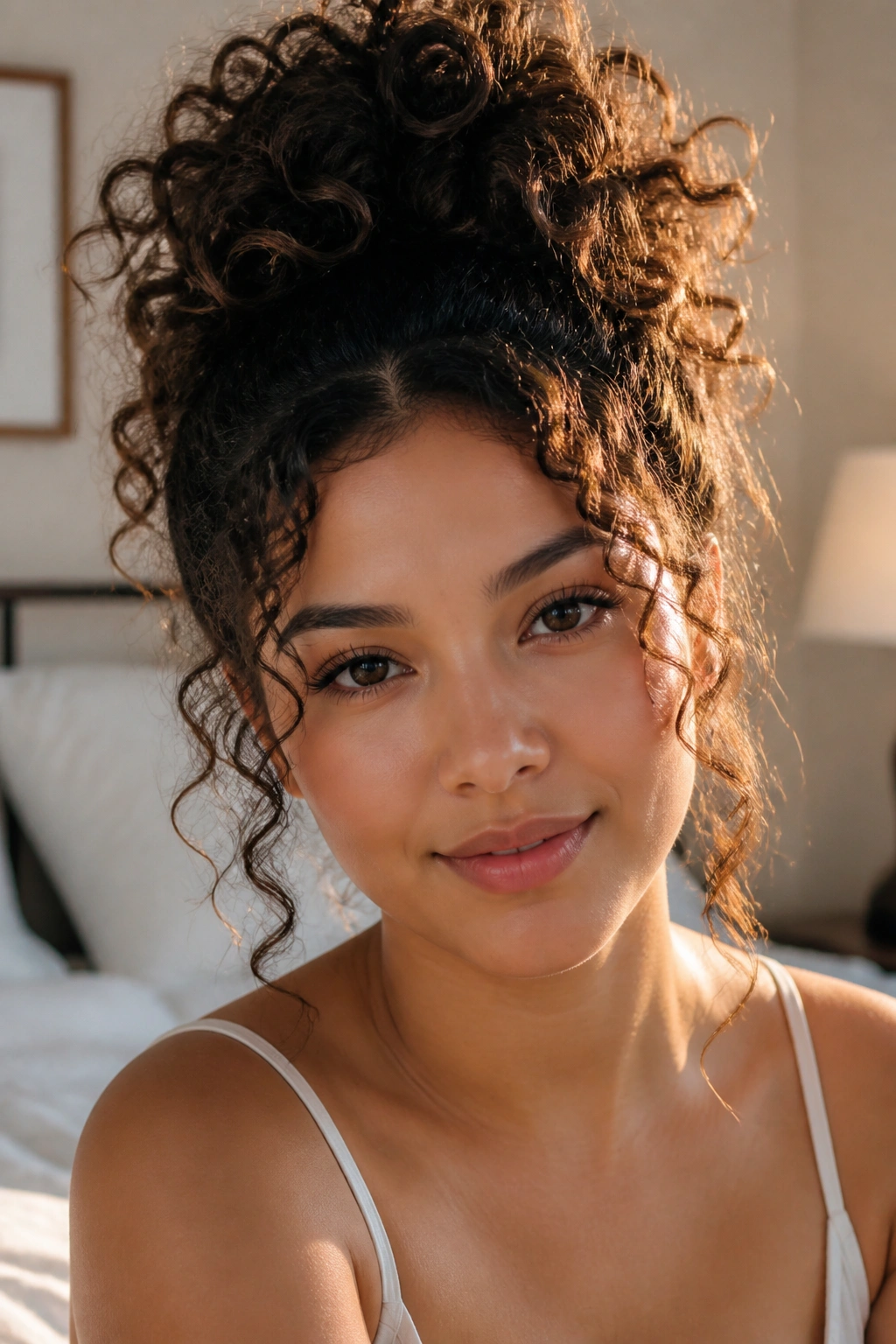
The pineapple updo is a curly classic for a reason. It piles the hair high on the head, which gives round faces a vertical line right away, and the loose ends keep the whole thing from feeling too tight.
Best on Second-Day Curls
This style is especially useful when the curls are already a little stretched out from day one. Pull the hair loosely toward the crown, secure it with a soft band, and let the ends fan upward. Then leave a few tendrils near the temples and around the ears.
Those tendrils matter more than people think. They soften the forehead and cheeks, and they keep the style from looking like a pure workout ponytail. You want the height, but you still want some movement around the face.
- Use a satin scrunchie or soft elastic.
- Keep the base loose enough to avoid flattening the curls.
- Let the front curls fall naturally instead of forcing them back.
- Add a pin or two if the top feels too spread out.
One warning: do not pull the pineapple too tight. It should look airy, not wound up.
14. Low Curly Bun with a Deep Side Part
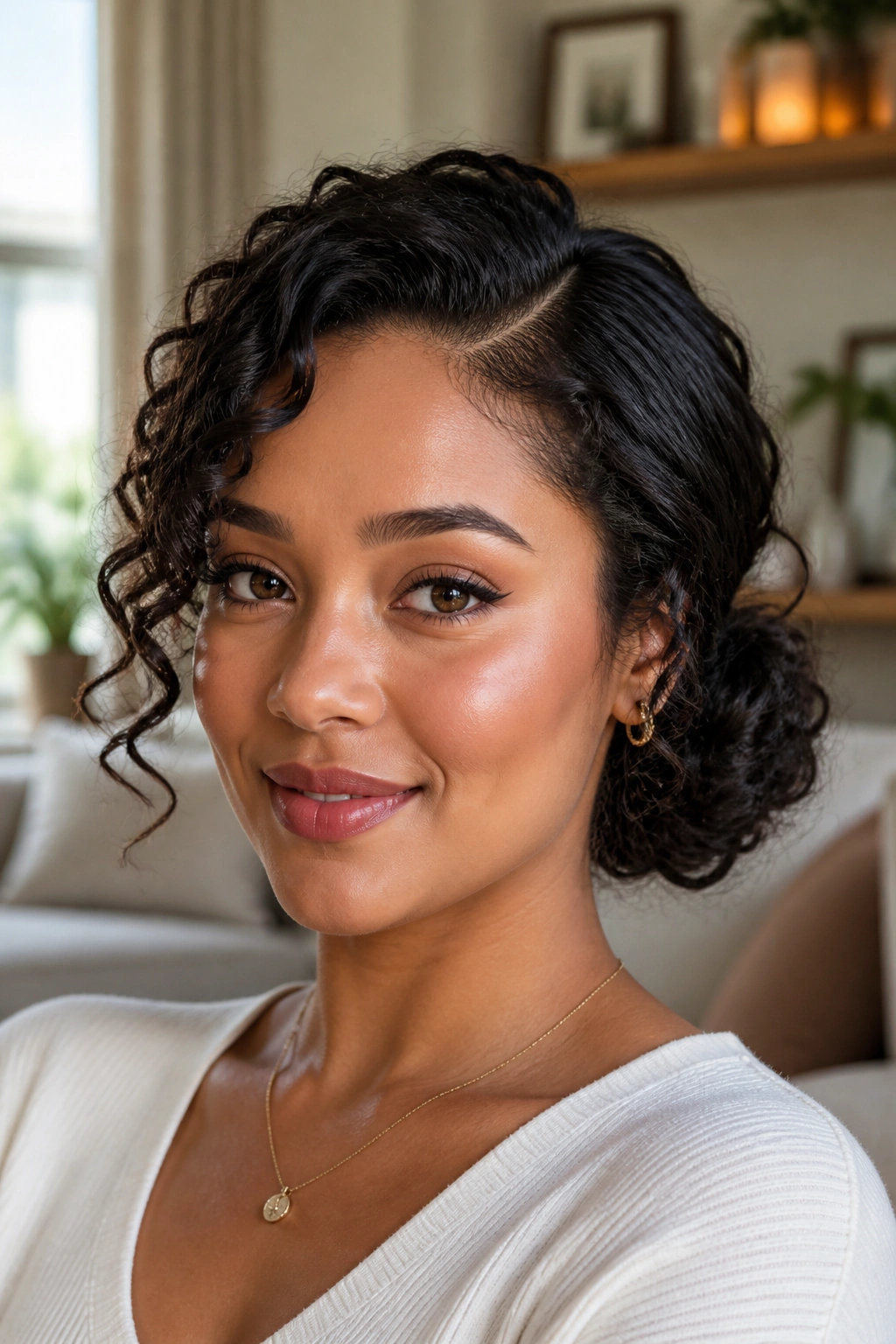
A low bun can work on a round face if you keep it off-center and let a little volume sit above the ears. The deep side part changes the shape before the bun even begins, so the style doesn’t read as one flat circle at the back of the head.
That’s the mistake people make with low buns. They smooth everything straight back, then wonder why the face looks wider. A side part and a few soft curls at the front fix that fast.
This version is better when it’s a little loose. Leave some texture through the crown. Let the bun stay soft and touchable rather than tight and polished to the scalp. A round face tends to look better when the hair has some lift instead of lying flat from forehead to nape.
Use pins, not just one elastic, if your curls are heavy. The bun will sit more securely and you can shape it into a slightly oval form instead of a perfect circle. That small difference is doing real work.
15. Wolf Cut with Soft Curly Texture
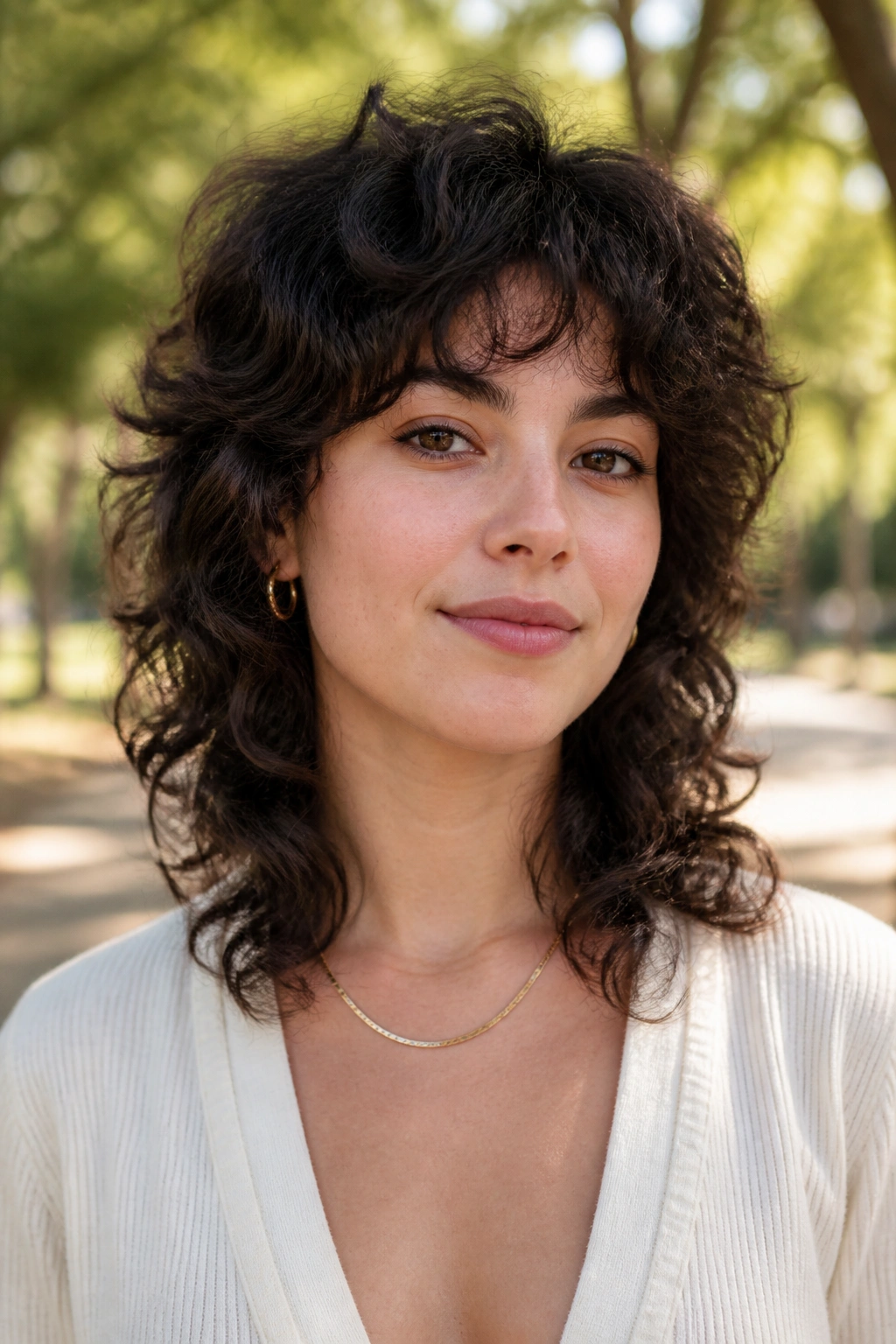
Is a wolf cut too much for a round face? Not if it’s softened in the right places. The cut only gets harsh when the layers pile out at the sides and the fringe is cut too short.
How to Keep It Wearable
The best curly wolf cut keeps the crown layers short enough to add lift, but not so short that they stand straight up. The longer pieces at the bottom should still skim the shoulders or collarbone. That creates a shape that feels longer, not wider.
For round faces, I’d avoid a heavy blunt fringe here. A wispy bang or a grown-out fringe gives you the same attitude with less bulk across the forehead. And the side layers should be feathered, not stacked into a thick shelf at the cheek.
This style has a little edge. That’s the appeal. It’s not for someone who wants tidy symmetry. It’s for someone who likes movement, a bit of mess, and a haircut that looks better when it has some air in it.
Used well, it’s one of the best curly hairstyles for round faces because the layers break up the circle without flattening the curls.
16. Clipped-Back Curls with a Side Part
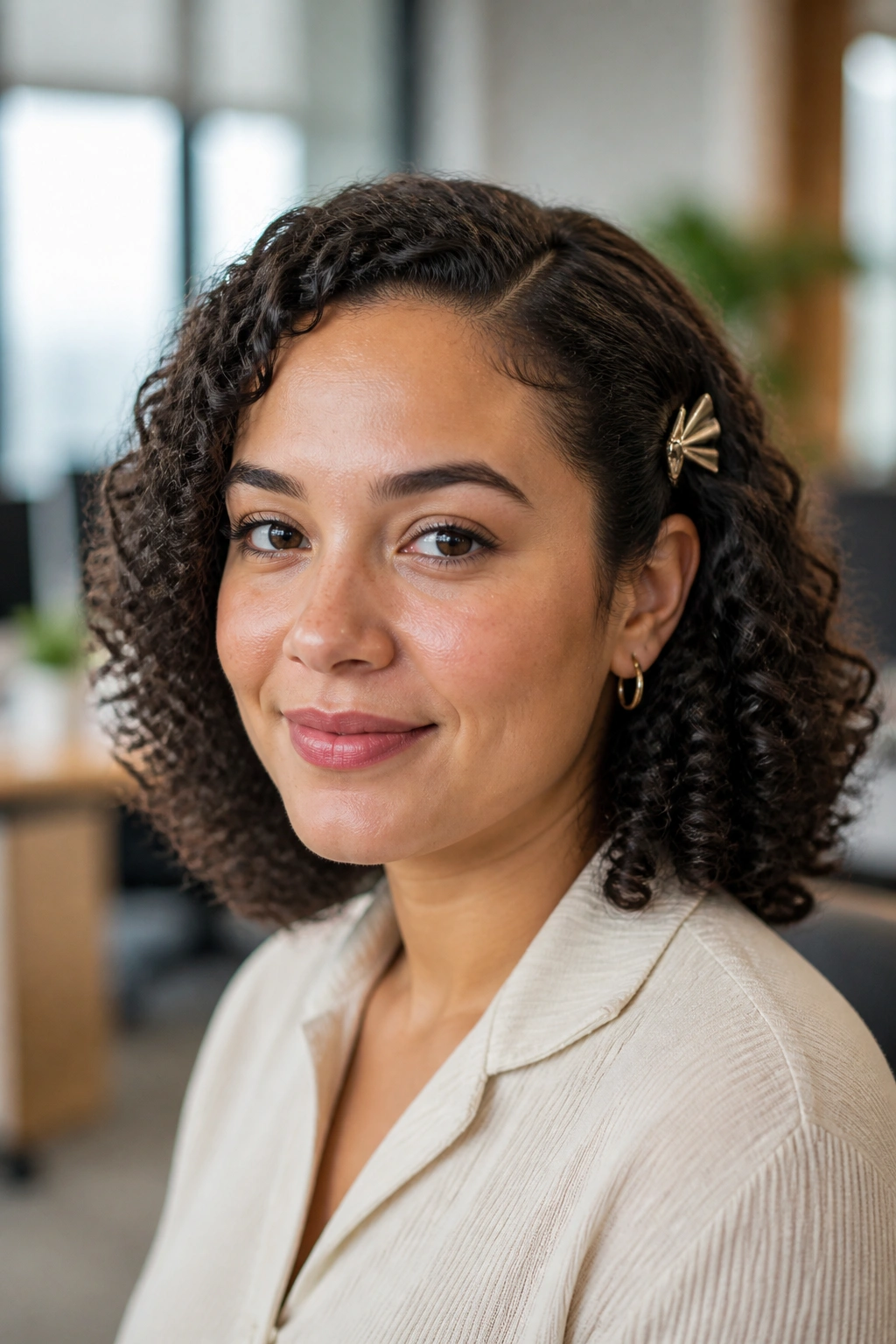
Some days you want your curls down, but not hanging in your eyes. Clipped-back curls solve that without pulling all the hair away from the face.
Start with a side part, then take one small section from each temple and secure it back with a clip just above the ear. That opens the front of the face and leaves the rest of the curls free. The style reads relaxed, but it still gives structure where a round face benefits most.
A small clip works better than a big decorative one. You want the front pulled back just enough to show the cheekbones and lengthen the profile. Too much pulling back and the style gets severe.
- Use two matching clips for balance, or one side clip for an uneven look.
- Keep the front section around 1 to 1.5 inches wide.
- Let the curls above the clip puff a little for lift.
- Smooth only the root area; leave the ends textured.
It’s an easy office style, a quick dinner style, and a solid answer on days when the weather turns the front pieces into a battle.
17. Side-Swept Twists or Braid-Out
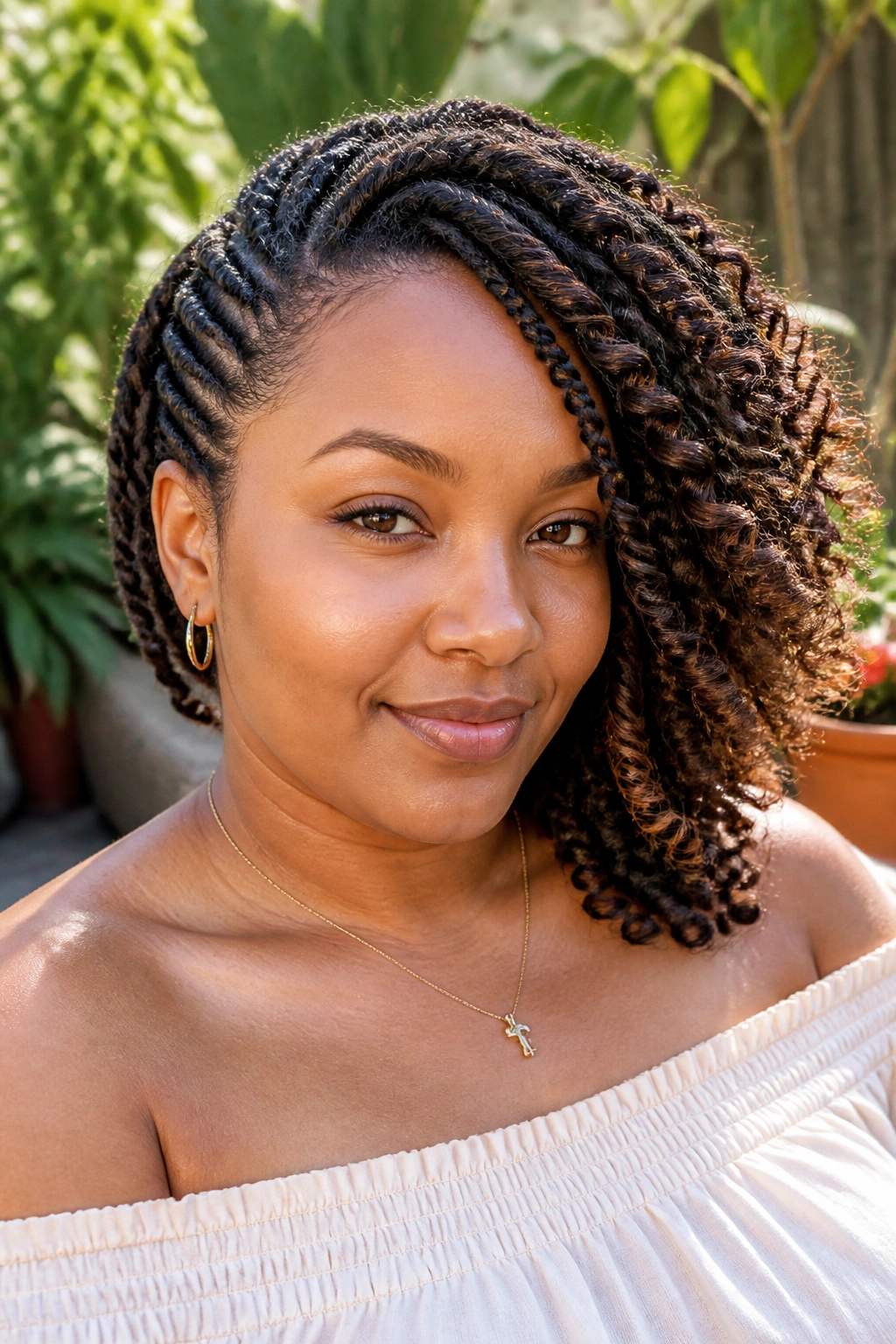
Side-swept twists create a diagonal shape that round faces usually wear well. The hair moves across the forehead and down toward one side, so the face gets length without needing a major haircut.
This is especially useful for coily hair or tighter curl patterns. A set of two-strand twists can be taken down into a soft braid-out, or the twists can stay in and be pinned to one side. Either way, the line is doing the flattering work.
The style feels gentler than a full updo because the hair still has softness around the face. At the same time, it looks more structured than loose hair. That balance is hard to beat.
You can make it more casual by leaving the ends loose and more polished by tucking them behind the ear. I prefer a little separation at the ends; too much smoothing makes the shape go flat, and flat is not the goal here.
18. Long Spiral Curls with U-Shaped Layers
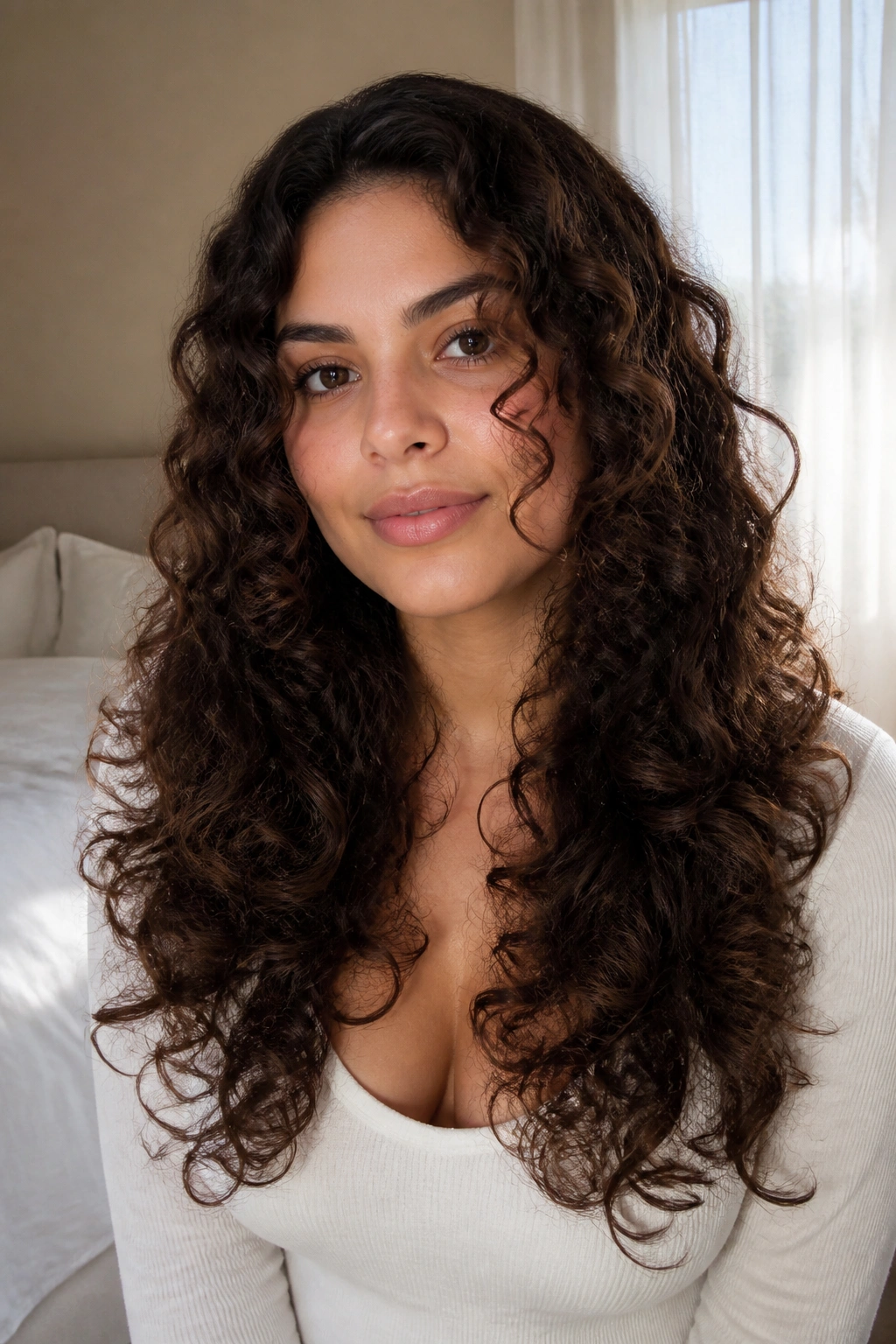
Long hair on a round face can be stunning when it has shape. A U-shaped cut keeps the back slightly longer and the sides a touch shorter, which prevents the whole look from turning into one heavy curtain.
That subtle curve at the hemline matters. It creates movement without drawing a hard line across the widest part of the face. If the layers are done well, the curls fall in a soft cascade instead of forming a block.
This is the pick for someone who wants to keep length. Not everyone wants a lob or a pixie. Fair enough. Long spirals can still flatter a round face, especially when the front pieces start below the cheekbone and the crown has a little lift.
A center part can work here if the layers are long enough, but a soft off-center part is often easier to wear. It gives the hair a natural fall and keeps the middle from becoming too symmetrical. If you like defined curls and long shape, this one holds up beautifully through the day.
Final Thoughts
The best curly hairstyles for round faces usually do one of three things: they add height, they create an angle, or they leave space around the cheeks. That sounds simple, but it’s the difference between hair that sits on the face and hair that shapes the face.
If you like big curls, keep the volume higher than the widest part of your face. If you like softness, ask for layers that begin below the cheekbone. If you like polish, reach for a deep side part or a side-swept finish. Tiny placement choices matter more than people think.
A good curly cut does not hide a round face. It gives it structure. And that’s a much better trick.
