



Thick hair can be a gift and a nuisance in the same afternoon. It looks full even when it’s doing nothing, which is nice, but it can also swell at the roots, flip at the ends, and eat a good 20 minutes off your morning if the cut isn’t working with it.
The trick is not to fight density. The trick is to give it shape.
A good hairstyle for thick hair does one of three things: it removes weight where the bulk gets bulky, keeps enough structure at the perimeter so the hair doesn’t puff into a triangle, or turns all that body into something you can wear on purpose. That’s why some cuts look airy and expensive on thick hair while others look like a helmet by noon. The difference is usually in the interior shaping, not the obvious outline.
Some of the most useful hairstyles for thick hair are deceptively simple. A blunt lob can look sharper than a heavily layered cut. A shag can be brilliant on one head of hair and a disaster on another. A low bun can be the smartest style in the room when you need your hair off your neck but still want it to look finished. The good versions have one thing in common: they respect the weight of the hair instead of pretending it isn’t there.
1. Long Layers That Keep the Length
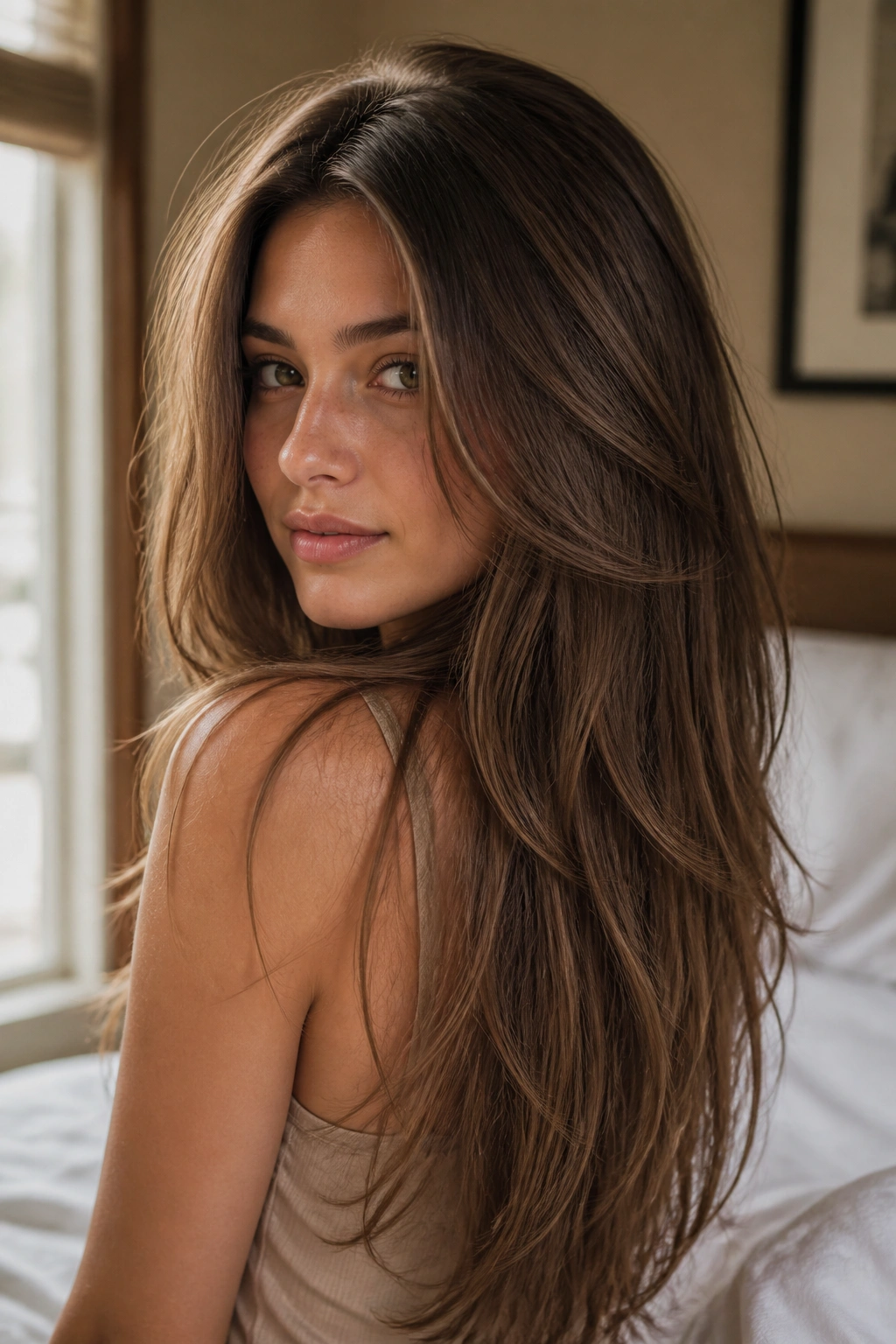
Long layers are the old reliable of thick-hair haircuts, but only when they’re cut with restraint. If the layers start too high, the whole shape can turn into a puffed-up ladder. If they’re placed lower and blended cleanly, the hair keeps its drama without swallowing your shoulders.
The best version of this cut takes weight out from the mid-lengths and leaves the ends strong. That matters. Thick hair can look stringy if the ends are over-thinned, and that’s one of those mistakes people notice without knowing why. You want movement, not see-through ends.
Why it works
The length gives thick hair a place to hang, and the layers stop it from sitting like a solid block. It’s a good choice if you like to wear your hair loose most days and don’t want to rebuild your style from scratch every morning.
A center part makes the shape look modern. A soft side part makes it feel a little more romantic and helps if one side grows flatter than the other.
Best for: straight, wavy, or loose-curly textures
Avoid if: you want a super blunt outline and hate any movement at all
Styling note: a 1.25-inch curling iron or a round brush at the ends is usually enough
2. The Shoulder-Grazing Lob With Blunt Ends
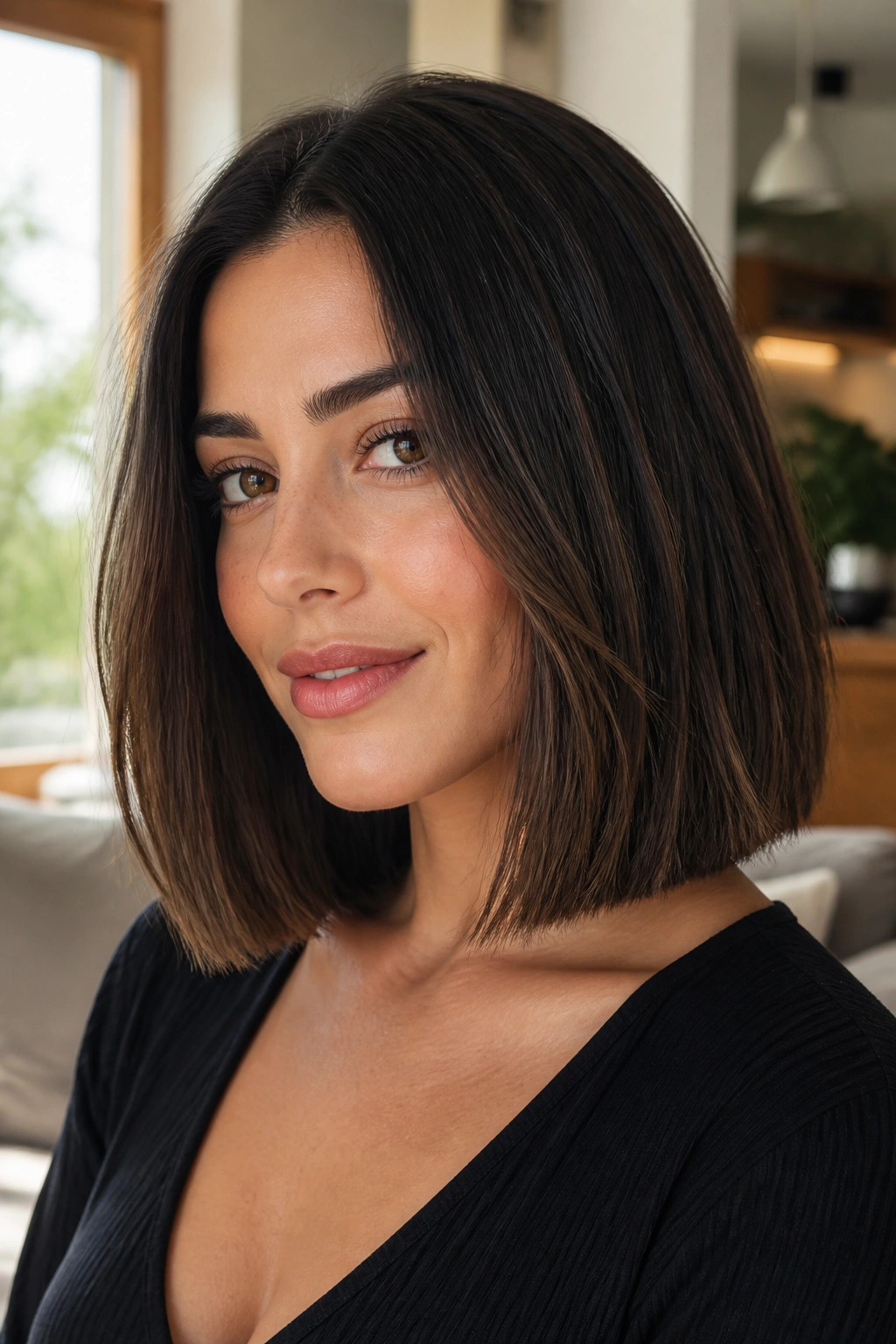
A lob hits that sweet spot where thick hair still feels full, but it doesn’t drag you down. It lands around the collarbone or just above the shoulders, which gives the cut bounce without making it look short-short.
The blunt ends are the part that people often get wrong. On thick hair, a blunt line can look polished and expensive because the density fills out the shape. The cut only starts to go sideways when the inside is ignored and the bulk builds up under the surface.
This style is especially good if your hair naturally expands in humidity. The stronger line keeps the shape from fraying at the edges, and you can wear it straight, waved, or tucked behind one ear without it falling apart.
What to ask for
Ask for a lob with light internal weight removal rather than heavy texturizing at the ends. That gives you a cleaner look and keeps the shape from getting wispy.
If your hair is very dense, a stylist may also point cut the ends just enough to soften the edge. Good. That small detail can stop the cut from looking too boxy.
3. Curtain Layers That Open Up the Face
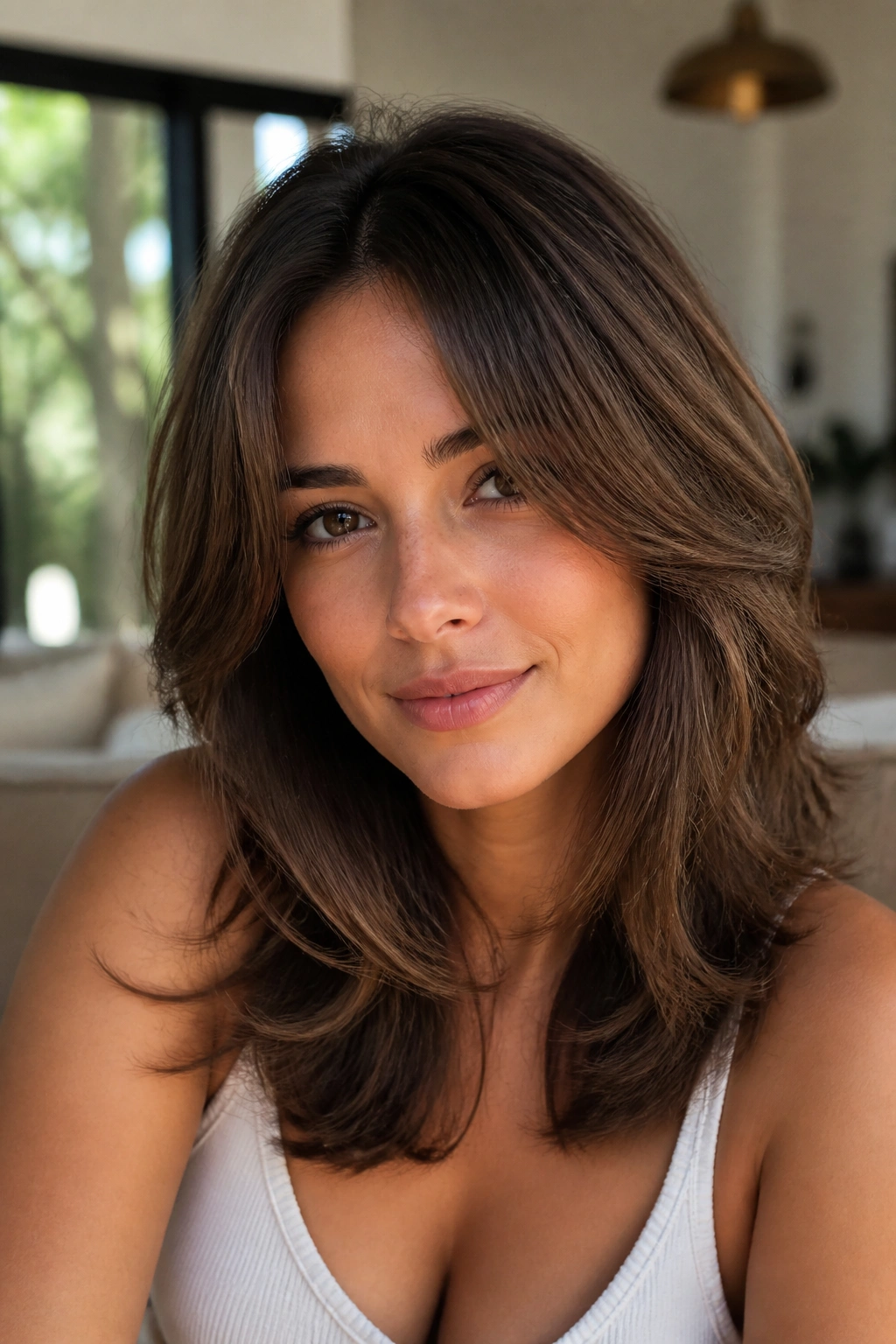
Curtain layers are one of the easiest ways to make thick hair feel softer around the face without sacrificing length. They start near the cheekbones or jaw and sweep away from the face, which gives you shape right where thick hair can sometimes overwhelm features.
They’re especially good if your hair sits heavy around the front. That’s common with dense hair, and it can make the whole style feel weighted even when the length itself looks fine. Curtain layers solve that by creating a built-in opening at the face.
The nice part is that they grow out gracefully. You are not trapped in a perfect salon finish for six weeks, which is a relief if you live in a ponytail half the time.
A little round-brush work at the front is usually all they need. Or not, if your hair already bends on its own. Thick hair often has enough body to set itself with minimal effort.
4. The Shag With Feathered Texture
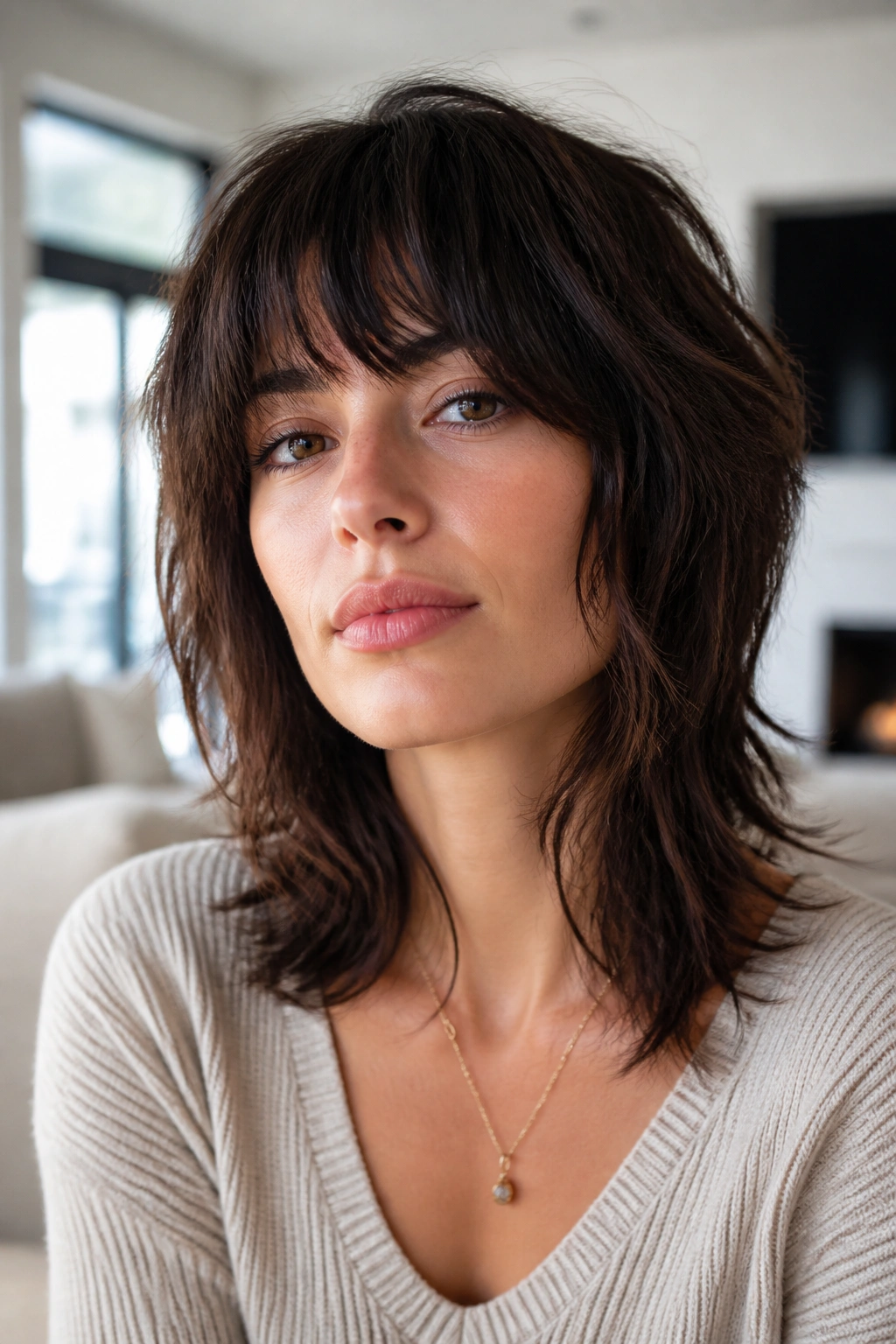
A shag and thick hair often get along because both like movement. The shag takes all that density and breaks it into pieces, which can make a heavy head of hair feel lighter without making it look thin. That’s the appeal.
But this cut needs a steady hand. Too much razoring or too many short layers, and thick hair can go frizzy at the wrong spots. The prettier version keeps the crown soft, the edges feathery, and the overall shape a little messy on purpose.
How to wear it well
- Air-dry until the hair is about 80 percent dry, then bend a few pieces around your fingers.
- Use a diffuser if your hair is wavy or curly and you want the pieces to separate instead of clump.
- Keep serum away from the roots. Thick hair doesn’t need help getting flatter there.
This is a good cut if you like a little edge and don’t mind a style that has personality. It won’t behave like a neat bob, and that’s the point.
5. The Butterfly Cut That Makes Blowouts Feel Bigger, Not Heavier
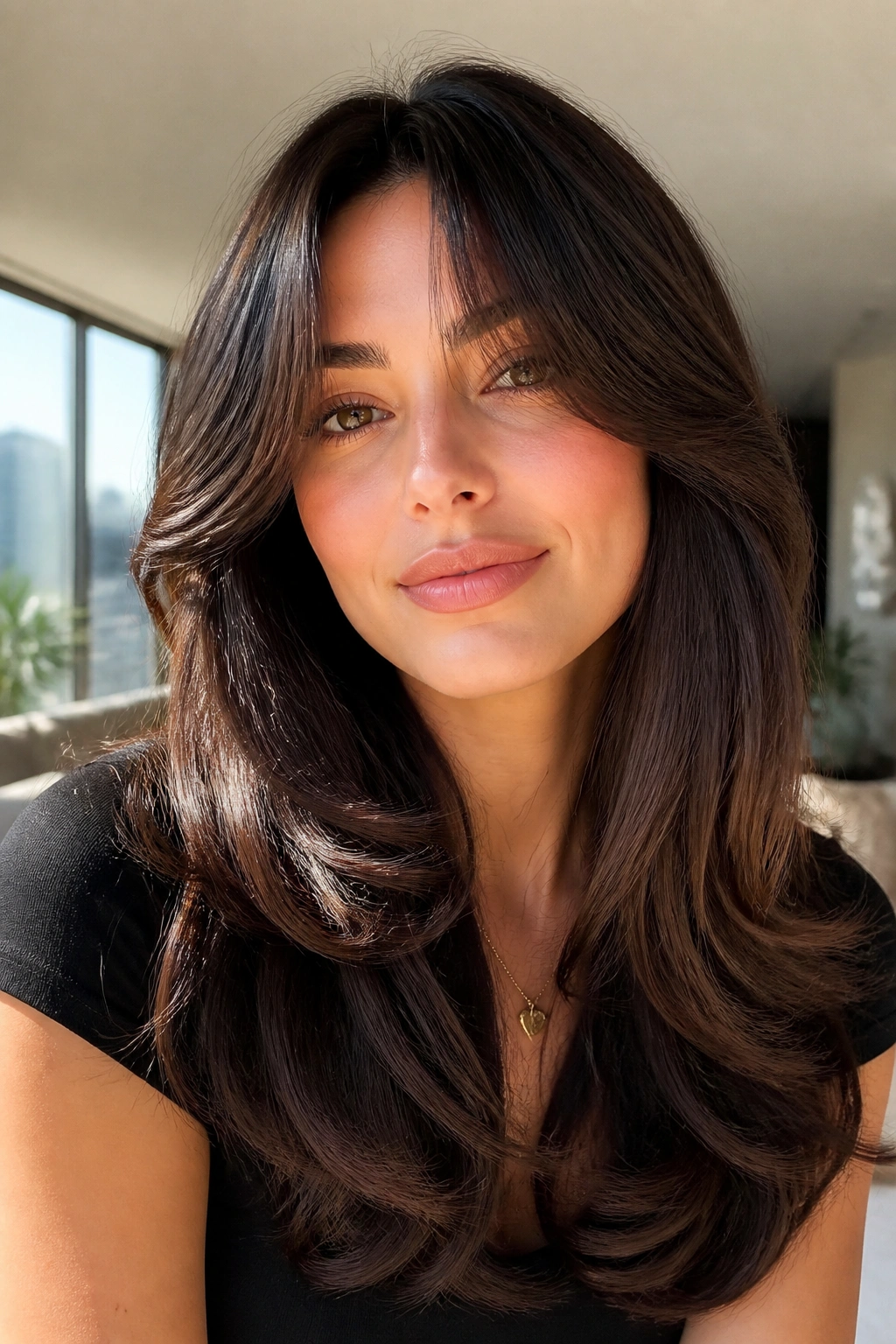
The butterfly cut is built for thick hair that wants movement without losing length. It uses shorter face-framing layers on top and longer layers underneath, so the hair looks airy around the front while the back still feels full.
That shape can be magic on a round brush blowout. The shorter pieces around the face flip away easily, and the longer sections underneath give you that soft, rolling shape people pay attention to. It’s not a tiny haircut. It just has some clever engineering in it.
The main reason this cut works so well is that it changes how the hair falls on the shoulders. Instead of landing in one heavy sheet, it breaks into visible layers with room to move.
If your hair is thick and straight, this can keep it from looking flat at the crown and puffy at the bottom at the same time. That awkward triangle shape? Gone, or at least much less stubborn.
6. The Chin-Length Bob With Hidden Weight Removal
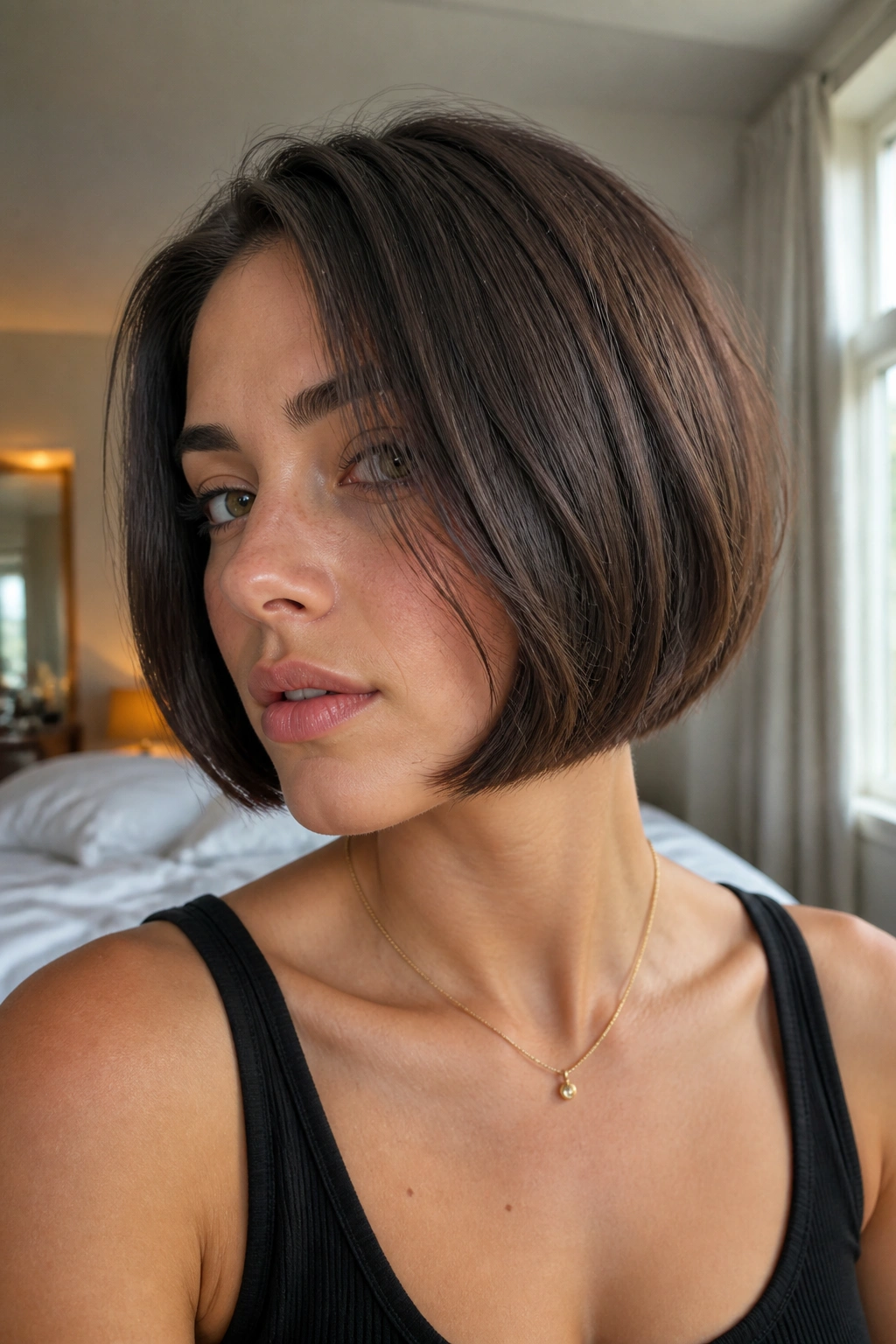
Short hair and thick hair can be a little intimidating together. Done badly, a chin-length bob turns into a mushroom. Done well, it looks crisp, dense, and sharp in a way that fine hair can never quite fake.
The secret is hidden weight removal inside the cut, not thinning out the ends until they fray. You want the outside line to stay clean and strong while the inside loses enough bulk to stop the bob from ballooning out.
This style shines when the hair is naturally straight or has a slight bend. On very curly hair, the shrinkage has to be planned carefully, or the bob can sit higher than expected.
A quick reality check
- It takes maintenance. The shape is noticeable, which means outgrowth shows faster.
- It loves a flat iron or a smoothing brush if you want a glassy finish.
- It can also be worn rough-dried for a stronger, modern look.
Strong, blunt, simple. That’s why it works.
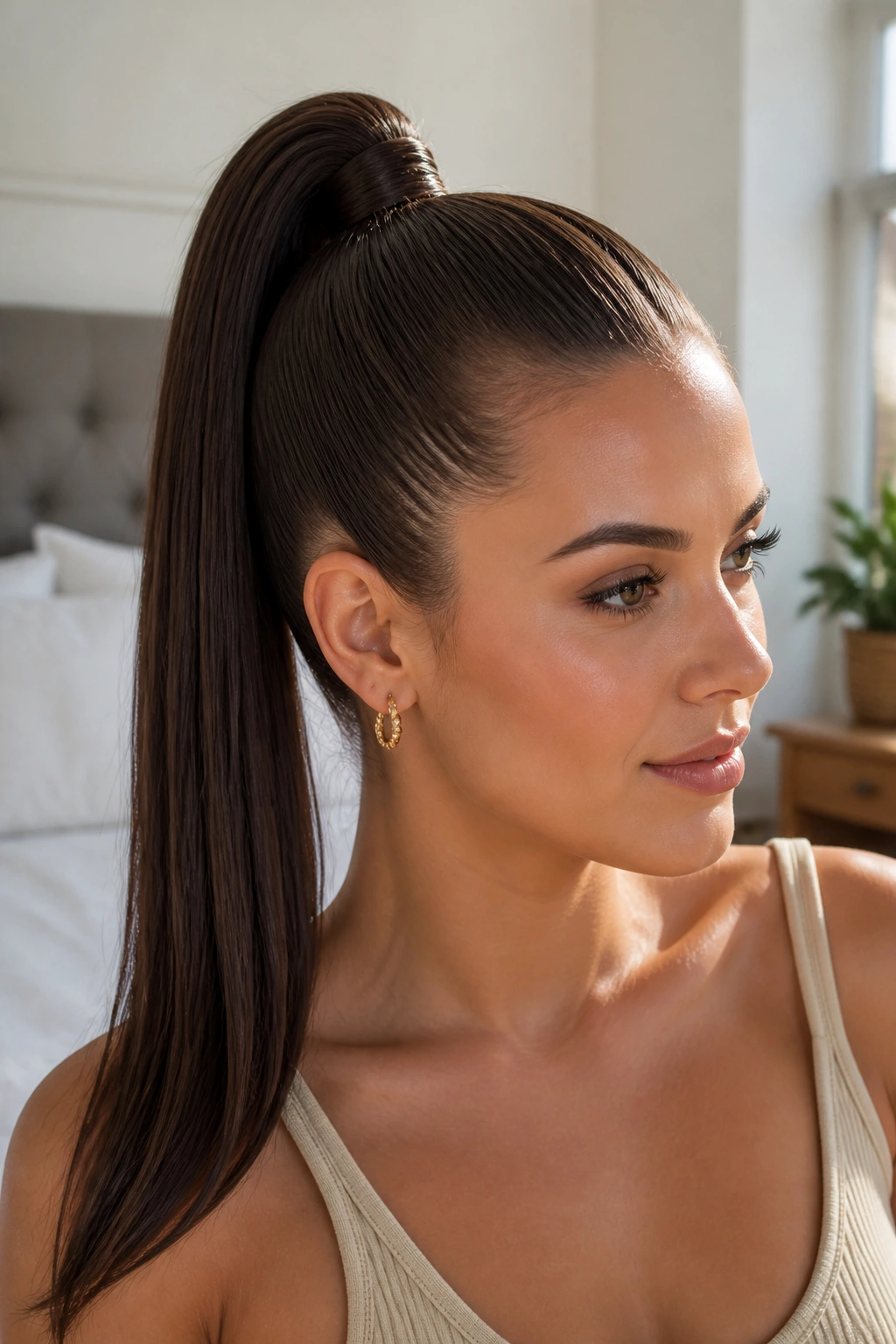
7. The Sleek High Ponytail That Turns Volume Into Height
Not every great hairstyle for thick hair has to be a haircut. Sometimes the smartest move is a style that uses the bulk instead of trying to tame it.
A high ponytail on thick hair has real presence. It sits up well, holds its shape, and doesn’t look sad by lunch the way finer hair sometimes can. The higher placement also takes pressure off the neck and makes the face look more lifted.
A wrapped base makes the whole thing look cleaner. Use a small section of hair to hide the elastic, pin it underneath, and keep the pony smooth at the crown. If your hair is heavy, use two elastics stacked together rather than one that stretches out in an hour.
This is one of those styles that sounds basic and ends up saving you constantly. Gym day. Hot day. Bad hair day. Emergency errands. It shows up.
8. The Braided Crown That Keeps Thick Hair Under Control
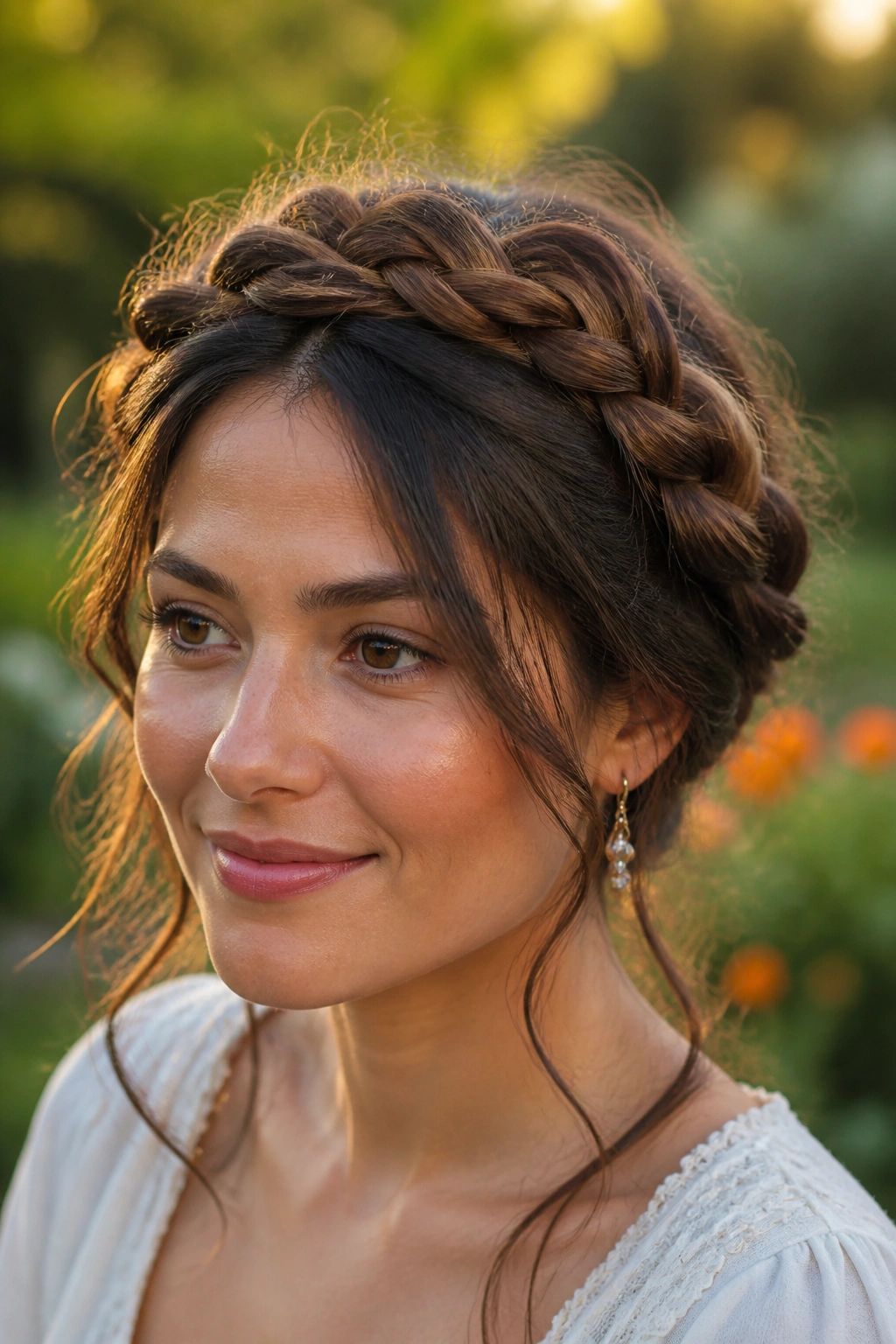
A braided crown is one of the rare updos that can make thick hair look intentional instead of merely contained. The braid wraps around the head, which helps distribute the weight, and the rest of the hair stays tucked away in a shape that feels polished without being stiff.
It works best when the braid is a little loose. If you pull every section tight, thick hair can start to feel bulky along the scalp, and that defeats the purpose. Leave a few soft pieces around the temples if you want it to feel less severe.
This style is a strong choice for weddings, dinners, or any day when you want your hair off your shoulders but still want it to look like you made an effort. You did. Just not in a way that takes forever.
A small spritz of texturizing spray before braiding helps the sections grip. Thick hair usually has enough texture on its own, but a little help makes the braid hold its shape longer.
9. The Half-Up Twist With Soft Waves
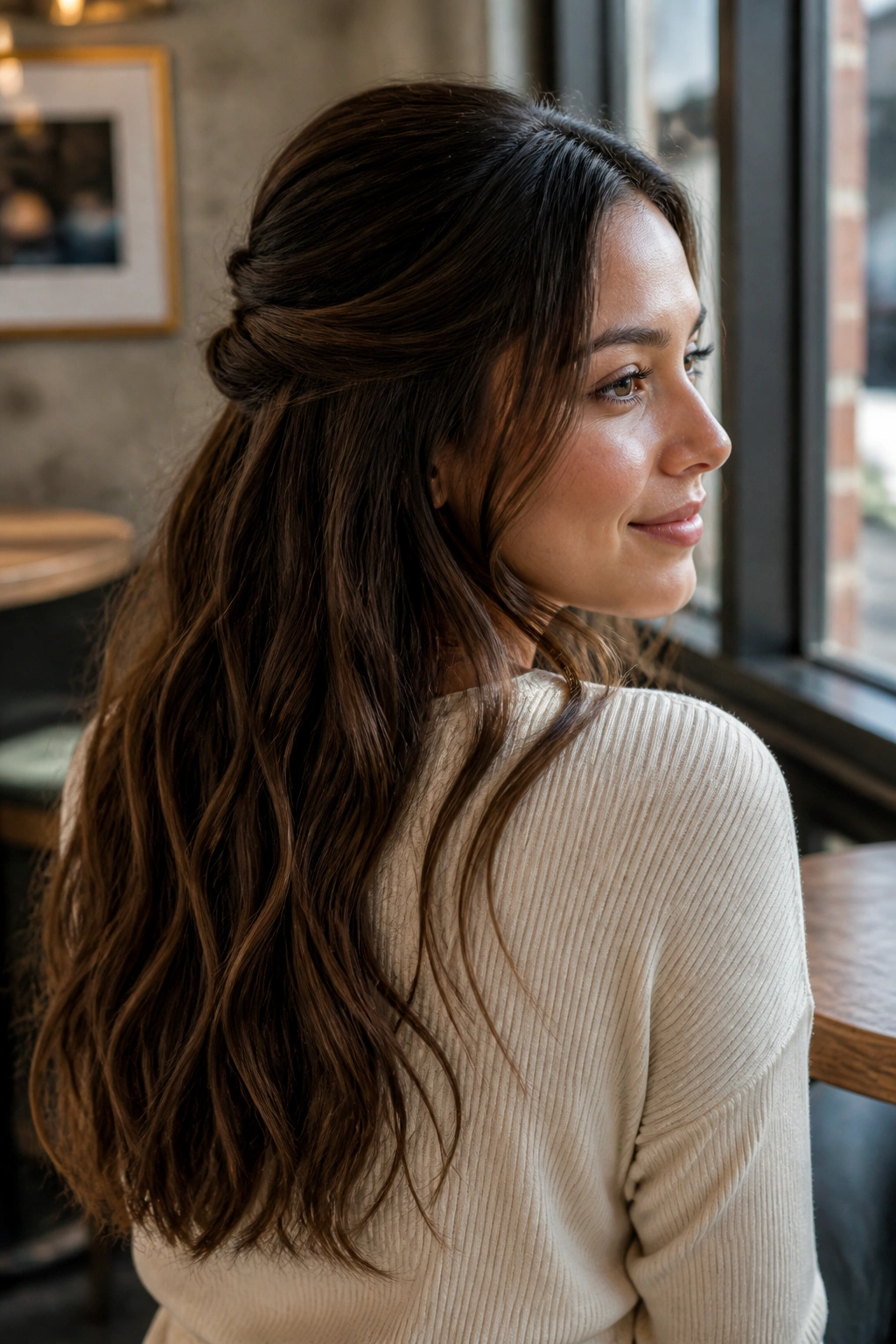
Half-up styles are great on thick hair because they remove some of the weight from the front while leaving the rest of the hair full and free. A twisted half-up version feels a little softer than a ponytail and a little more dressed up than leaving everything down.
The trick is keeping the twist low and wide rather than tiny and tight. Thick hair has enough body to make the twist look substantial, so you do not need to overwork it. A loose twist across the back of the head, pinned with two bobby pins on each side, usually gives the best hold.
Soft waves underneath help the whole style look balanced. Straight thick hair can make the top section feel too hard if the bottom is too sleek, while a gentle bend in the lengths keeps the look relaxed.
If you want something that works for work, brunch, or a dinner plan that shows up at the last second, this one earns its keep.
10. The Low Bun With Face-Framing Pieces
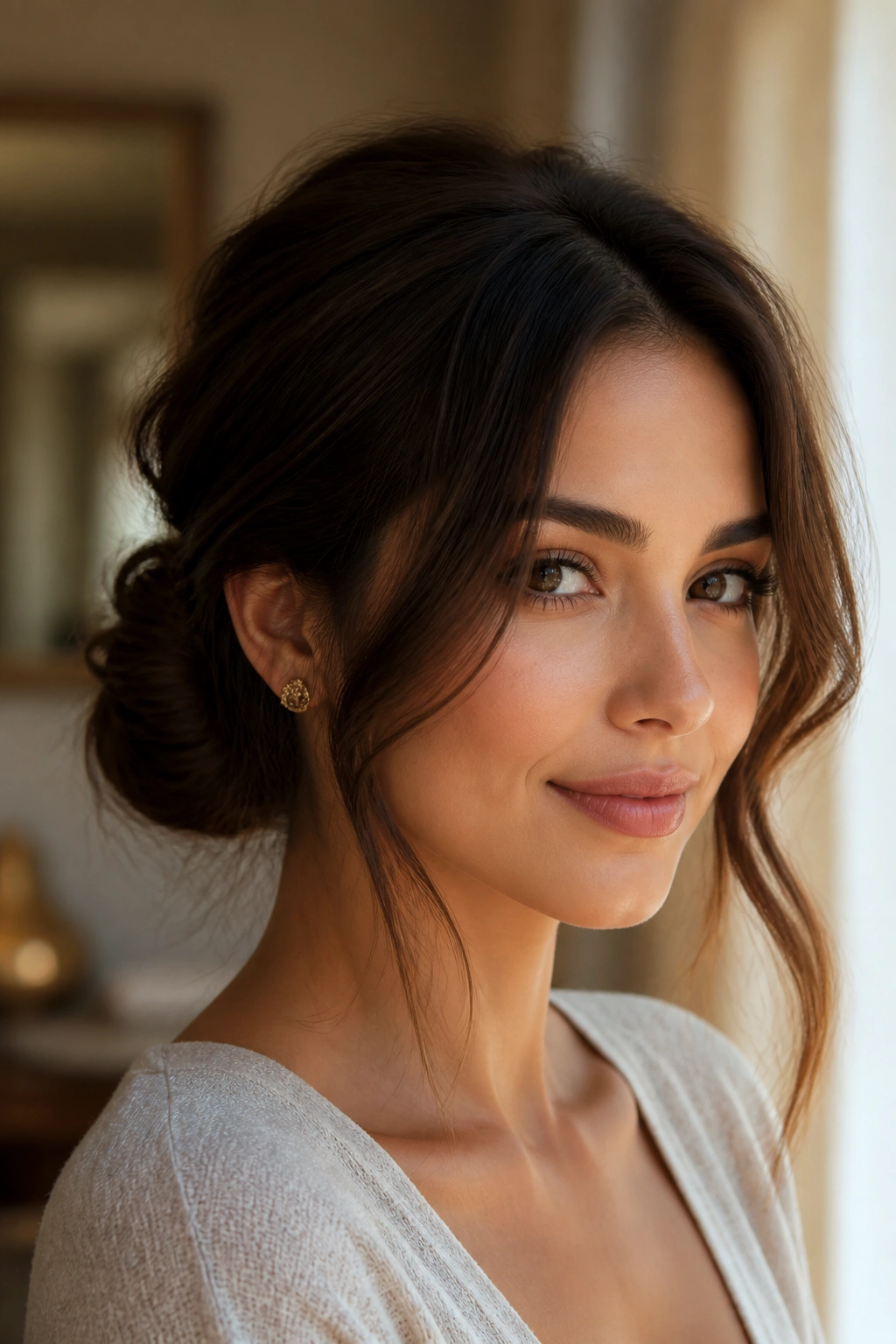
A low bun is one of the most flattering ways to deal with thick hair when you need control without looking plain. The low placement keeps the weight at the nape instead of the crown, which makes the style feel calmer and more balanced.
The face-framing pieces matter more than people think. Without them, thick hair can make a low bun look strict. With a few soft pieces left out, the whole thing loosens up around the face and looks more natural.
Make it feel finished
Start with hair that has a little grip. Day-two hair is often easier than freshly washed hair here, because thick hair can be too slippery when it’s very clean.
Twist the bun rather than wrapping it too tightly. A tighter coil can make the bun sit out like a knot, while a looser wrap lets the texture show. That texture is part of the appeal.
It’s a quiet style, not a boring one. There’s a difference.
11. The Textured Pixie With a Longer Crown
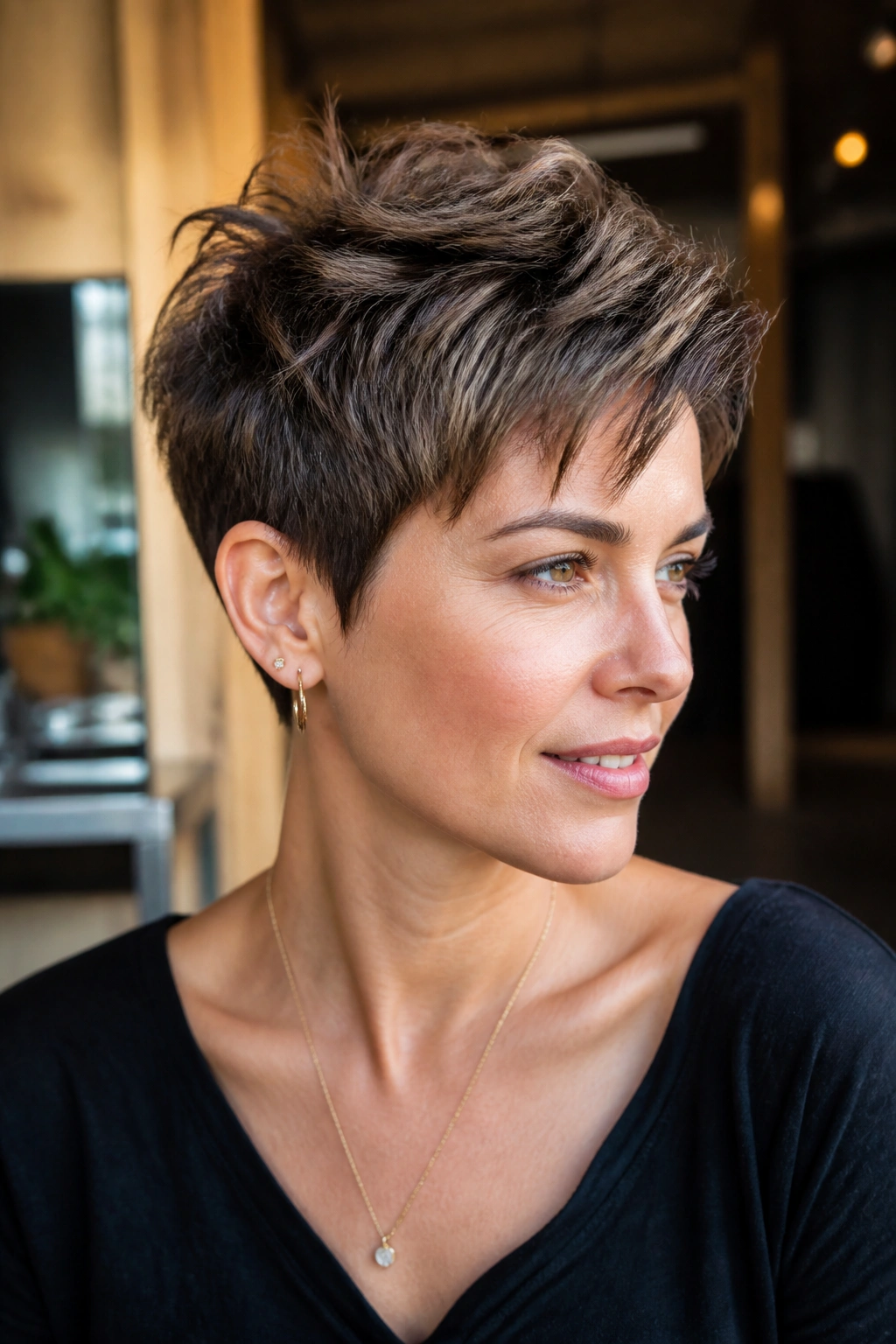
Yes, thick hair can go short. In fact, it can go short beautifully if the pixie is cut with enough length on top to keep the shape from turning into a helmet.
A textured pixie with a longer crown lets thick hair stand up a little and move a little. The sides and back stay close enough to keep the outline clean, while the top carries the softness and lift. That balance is the whole game.
This cut is especially good if you’re tired of spending half your life drying hair. The routine gets fast. A dab of matte cream or light paste, a quick rough-dry, and you’re done.
It does need regular trims, though. Short thick hair grows out with attitude. If the perimeter gets too round, the whole thing starts to lose its point.
12. The Side-Swept Midi Cut That Breaks Up the Bulk
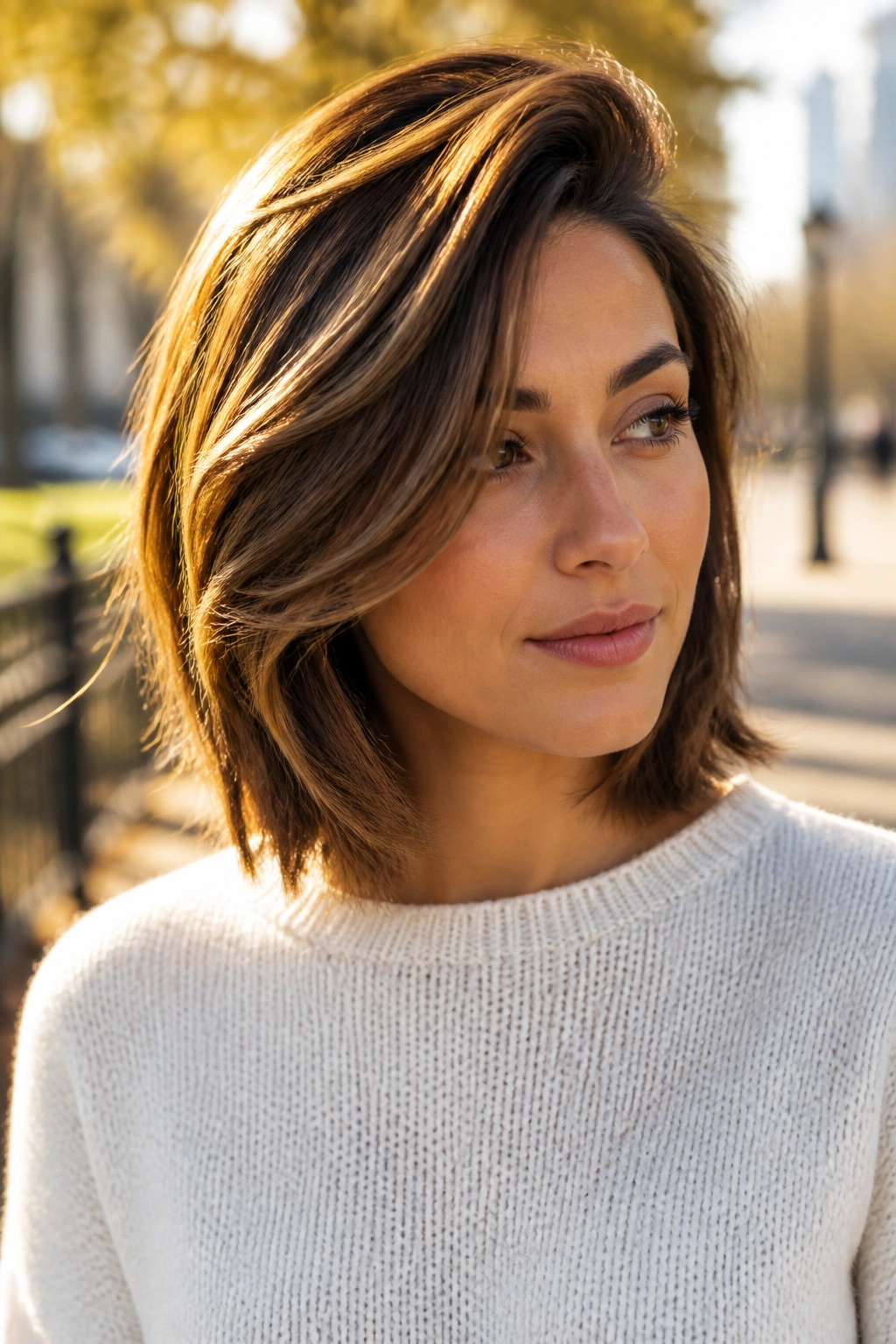
A side part changes thick hair more than people expect. It shifts weight off the center line and gives the style a softer fall, which can be useful if your hair naturally sits flat in one place and bloats in another.
A midi cut that lands between the collarbone and upper chest works well with a side sweep because there’s enough length to show movement but not so much that the style feels dragged down. It’s a nice middle ground if you want something polished without going short.
This shape is especially useful when you want your hair to look full but not enormous. Thick hair can read as “big” in a good way or “too much” in a less good one. The side sweep helps steer it toward the first option.
A little root lift at the side part — even just a quick blow-dry with a round brush — makes the cut sit better. Nothing dramatic. Just enough to keep the part from collapsing.
13. The Curl-Friendly Layers That Let Thick Ringlets Breathe
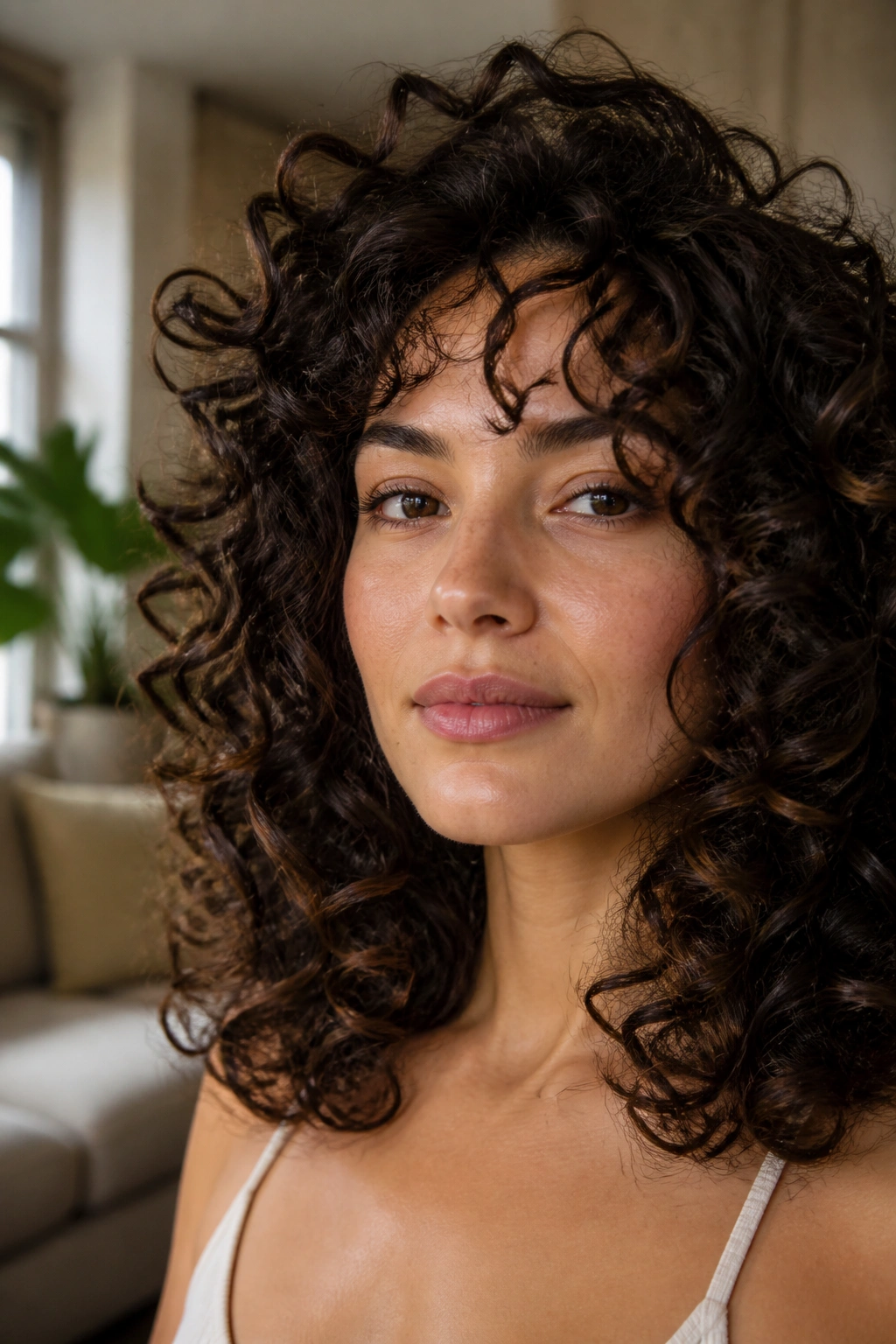
Curly thick hair needs a different kind of layer. Heavy shaping can make it lose its spring, while no shaping at all can leave it triangular and dense at the bottom. The sweet spot is usually curl-by-curl or dry cutting, where the natural curl pattern is visible while the cut is being made.
That’s not just a stylist preference. It matters because curls bounce up when they dry, and thick curls can shrink a lot more than people expect. Cutting them wet and assuming the length will behave later is how people end up with a shape they did not ask for.
What helps most
- Ask for layers that respect the curl pattern instead of fighting it.
- Keep the perimeter full so the ends look healthy.
- Use a diffuser on low heat and low speed.
Thick curls look gorgeous when they have room. Not when they’ve been sliced into too many short pieces. The best version feels roomy, springy, and a little wild in a controlled way.
14. The Center-Part Straight Cut With a Strong Perimeter
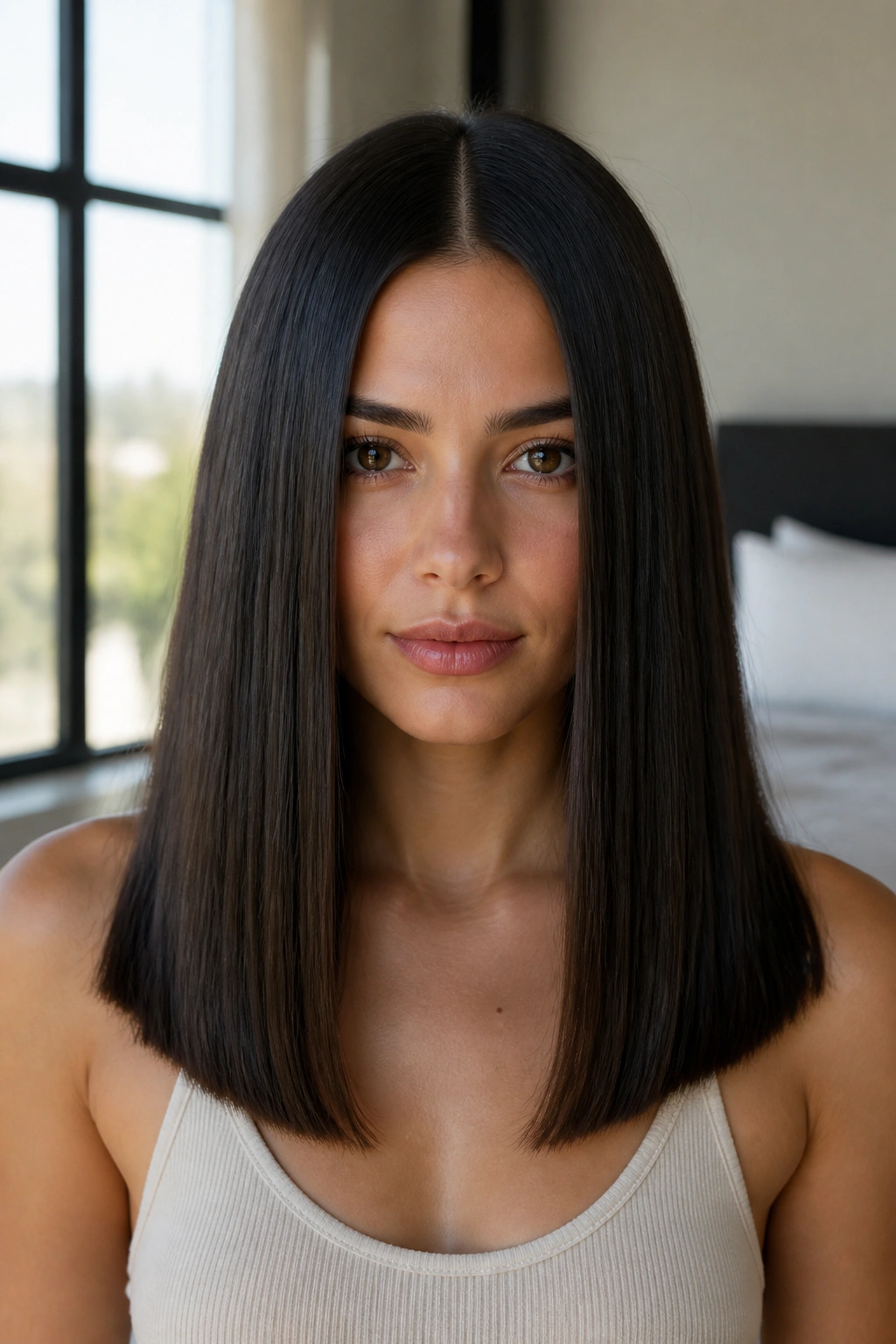
Sometimes thick hair looks best when it’s allowed to be thick. A center-part straight cut with a solid perimeter does exactly that. It’s clean, balanced, and hard to mess up once the shape is right.
The blunt outline keeps the density looking sleek instead of fluffy. A center part helps the hair fall symmetrically, which can be useful if your hair has enough body to stick out on one side when it’s parted off-center.
This style is not about removing every ounce of weight. It’s about keeping the line solid so the hair looks deliberate. If the ends are too thinned, the whole cut starts to look weak. On thick hair, a little bluntness goes a long way.
It’s a good match for people who like a polished look and do not want their hairstyle to look “done” in a fussy way. Simple. Sharp. Easy to dress up with earrings or a bold lip.
15. The Double Dutch Braids That Keep Everything in Place
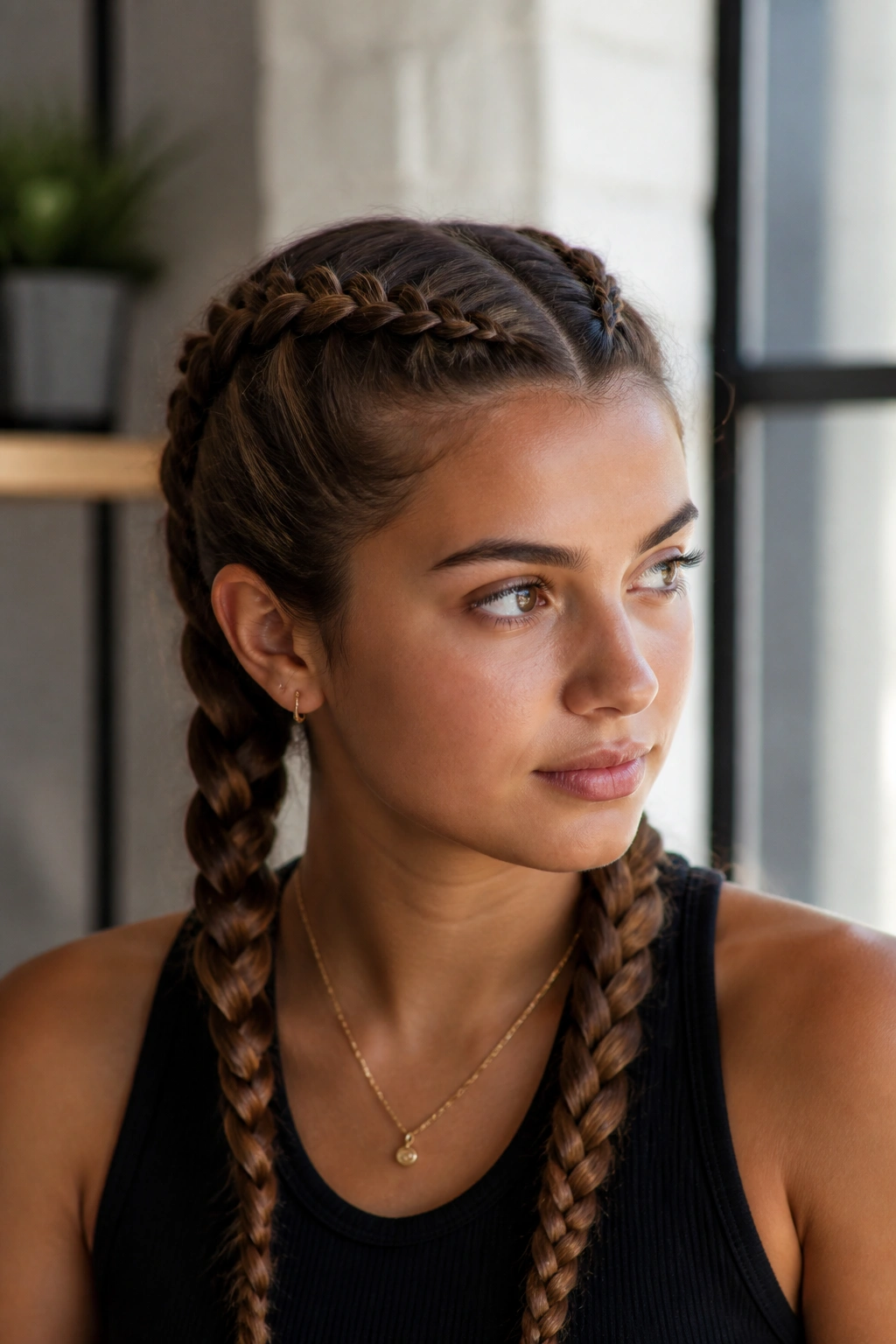
Double Dutch braids are one of the most practical thick-hair styles out there, and they’re not just for workouts. The braid pattern sits raised on the head, which helps the braid show clearly even when the hair is dense.
Thick hair holds braid structure well, so you can usually get away with less product than you think. A bit of smoothing cream or water at the roots helps if the hair is extra puffed out, but you do not want to drown it. Too much product makes braiding slippery and awkward.
The payoff is huge. These braids stay put, keep the hair off your face, and work for long travel days, busy mornings, or those afternoons when you can feel your hair getting in your way before it even happens.
They also age well over the day. A braid that starts neat can loosen into a softer, fuller shape later, and thick hair usually makes that look better rather than worse.
16. The Rounded Blowout With Big Brush Energy
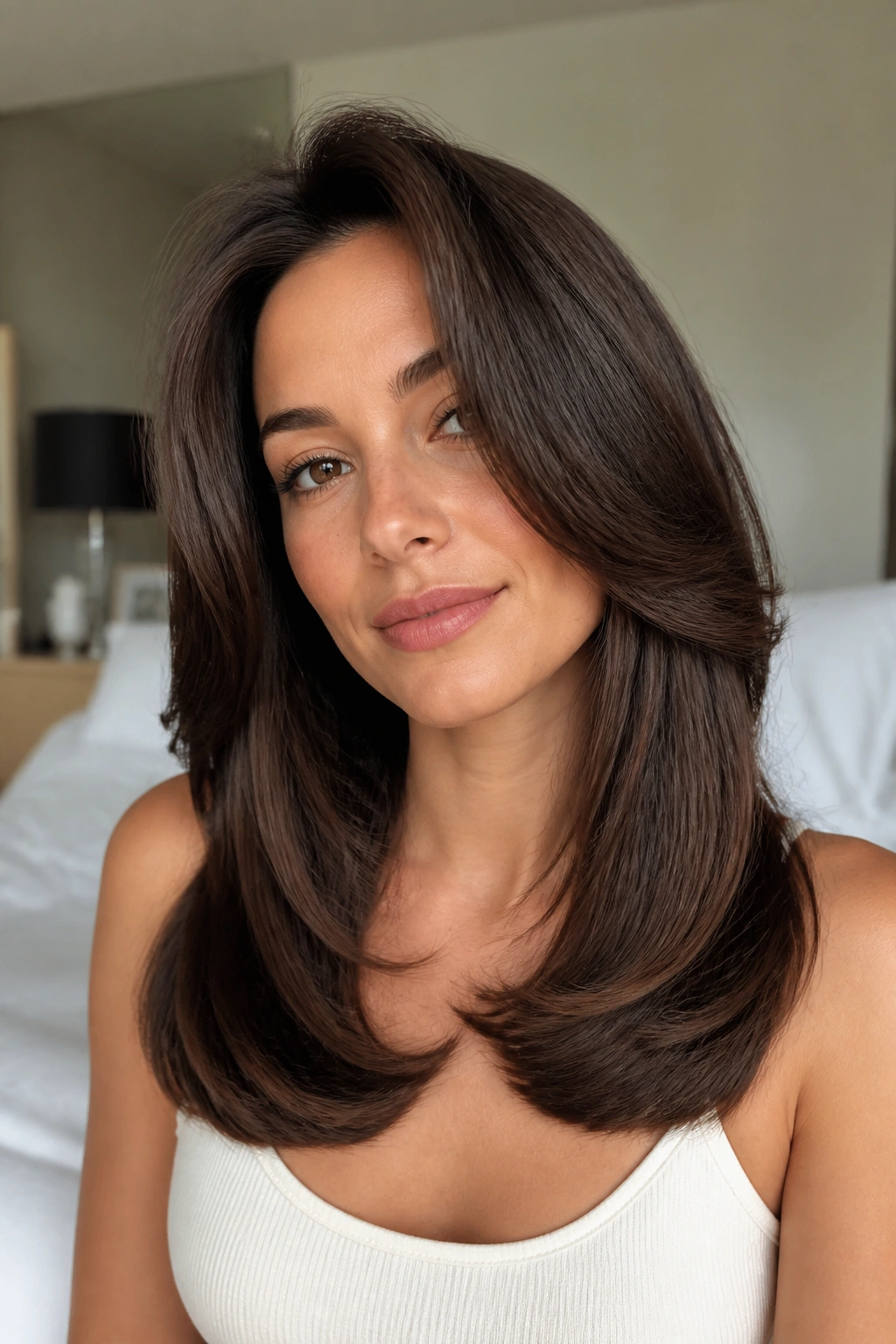
A rounded blowout is a classic thick-hair move because the hair already has the body to hold that polished curve. The style takes a little time, yes, but it gives you control over the outline while keeping the fullness people often want from thick hair.
A medium round brush or large Velcro rollers can do the job. The goal is not stiff curl. The goal is a smooth bend through the ends and a soft lift at the roots so the shape looks full, not puffy.
What makes it work
The blow-dry should follow the cut, not fight it. If the layers are placed well, the ends will tuck under or flip out on their own once dry. That’s where the style starts looking expensive in the simplest sense: the hair moves like it belongs there.
A cool shot at the end helps the shape set. Skip it, and thick hair can lose the bend before you even leave the house.
17. The Half Ponytail With Curled Ends
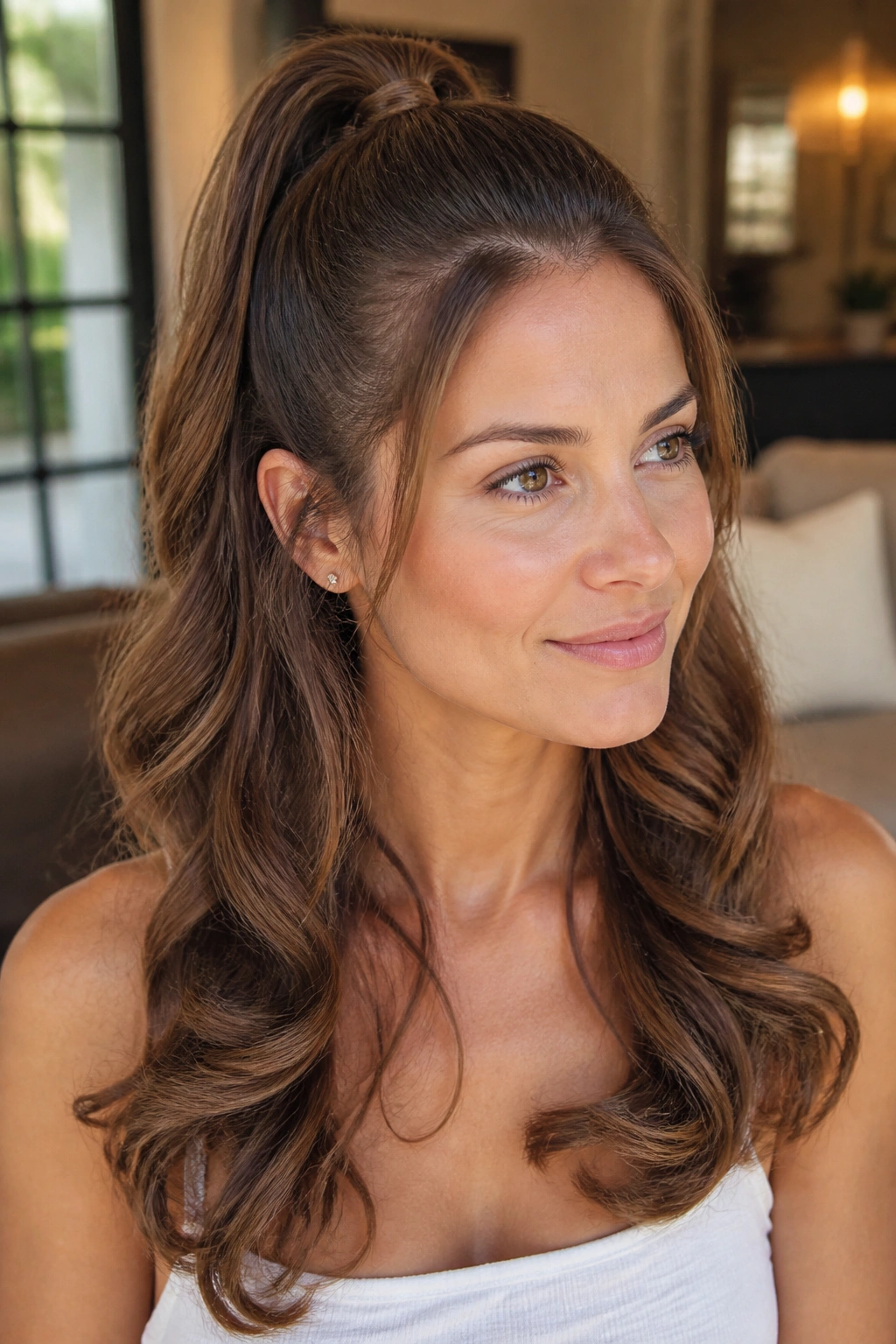
A half ponytail is one of those styles that people overlook because it sounds too easy. On thick hair, easy is not a downside. It’s the reason the style works.
By pulling only the top half back, you relieve some of the weight around the face and crown while leaving the lower half to keep its fullness. That balance keeps the hair from feeling like it’s sitting on your shoulders in one giant sheet.
Curling the ends adds a soft finish. A few large bends at the bottom prevent the style from looking too flat or too school-girl. You want the lower half to still feel present, not forgotten.
It’s a strong option when you want hair out of your face but still want length to show. That middle ground is a sweet spot for thick hair, and a half pony hits it cleanly.
18. The Collarbone Cut With Invisible Layers
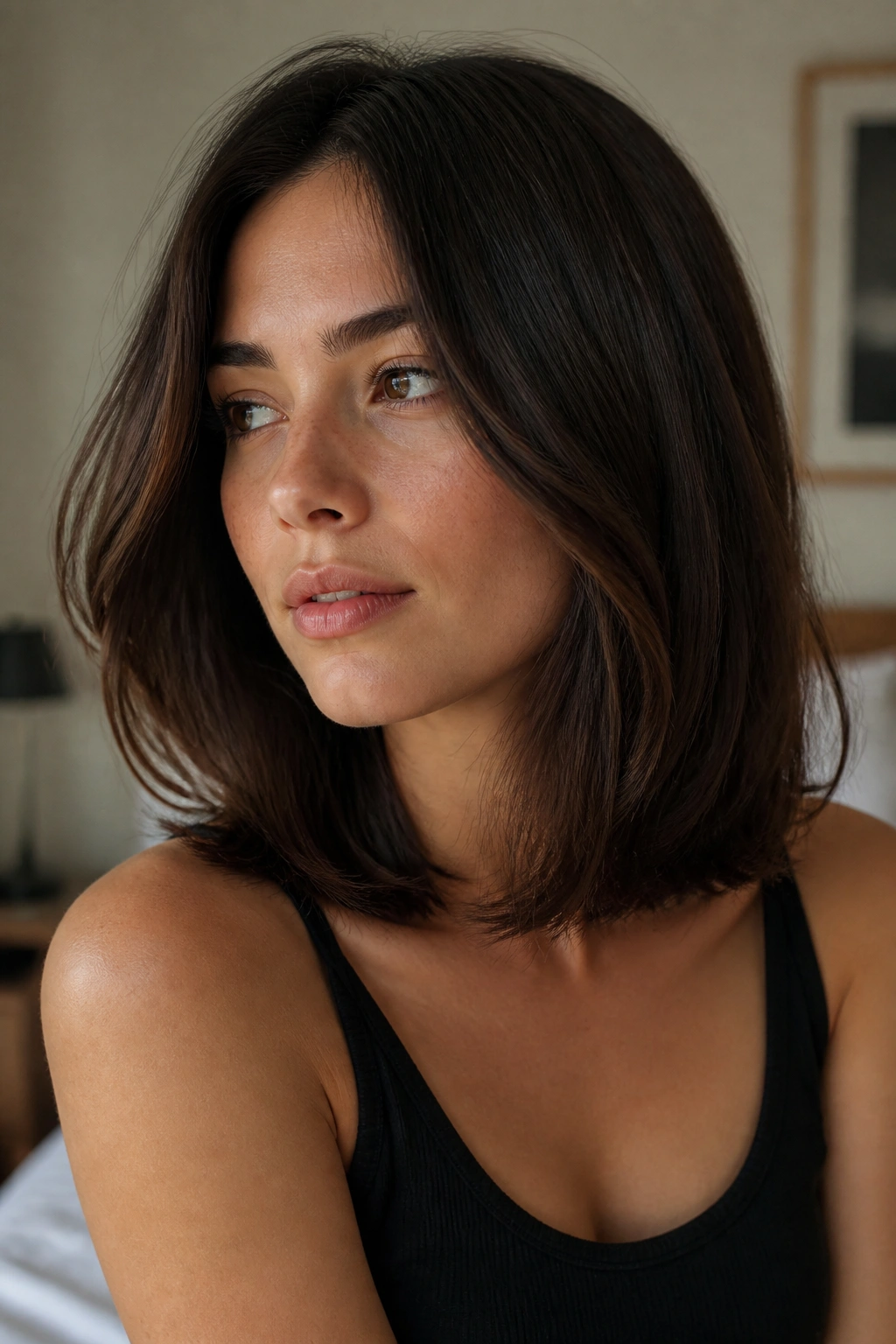
A collarbone cut is one of the most useful lengths for thick hair because it gives you enough hair to pull back, enough length to wave, and enough shape to keep the outline interesting. It sits in that zone where the hair still feels substantial, but not unmanageable.
Invisible layers are what make this length work. They’re placed inside the cut so the outside line stays smooth. That matters because thick hair can lose its shape fast if the layering is too obvious near the ends.
This is the kind of haircut that can move between polished and casual without asking much from you. Wear it straight, and it looks clean. Add a little bend, and it turns softer. Pull it back, and it still has enough length to look full.
If you want one style that can handle a messy morning, a sharper outfit, and a last-minute plan without needing a full redo, this is the one I’d point to first. It’s steady. It’s flexible. And thick hair usually looks best when a cut lets it stay itself, just a little better shaped than before.
