



Square faces are easy to spot in the chair, and they’re often easier to flatter than people think. The jawline does a lot of the talking. If the cut is too blunt or the part is too severe, the angles can feel louder than you want; if the shape is chosen well, the whole face looks softer, longer, and more balanced without losing character.
A square face usually has a forehead, cheekbones, and jaw that sit in a similar width range, with a stronger, more defined jawline. That shape can look striking in short hair, medium hair, or long hair, but the trick is rarely “hide the jaw.” Better advice: break up the straight lines. Curves, diagonals, soft texture, and movement around the temples and cheekbones do more work than most people expect.
That’s why the smartest hairstyles for square faces usually do one of three things: add length, create asymmetry, or keep the edges soft. Side parts help. Curtain bangs help. Layers help. Even an updo can help if a few loose pieces are left out on purpose instead of pulled back like a helmet.
The cut you choose should still fit your hair texture and how much styling you’ll actually do before breakfast. A perfect shape on paper can be annoying in real life. A good one works with your hands, your brush, and the kind of day you actually live.
1. Long Layers for Square Faces
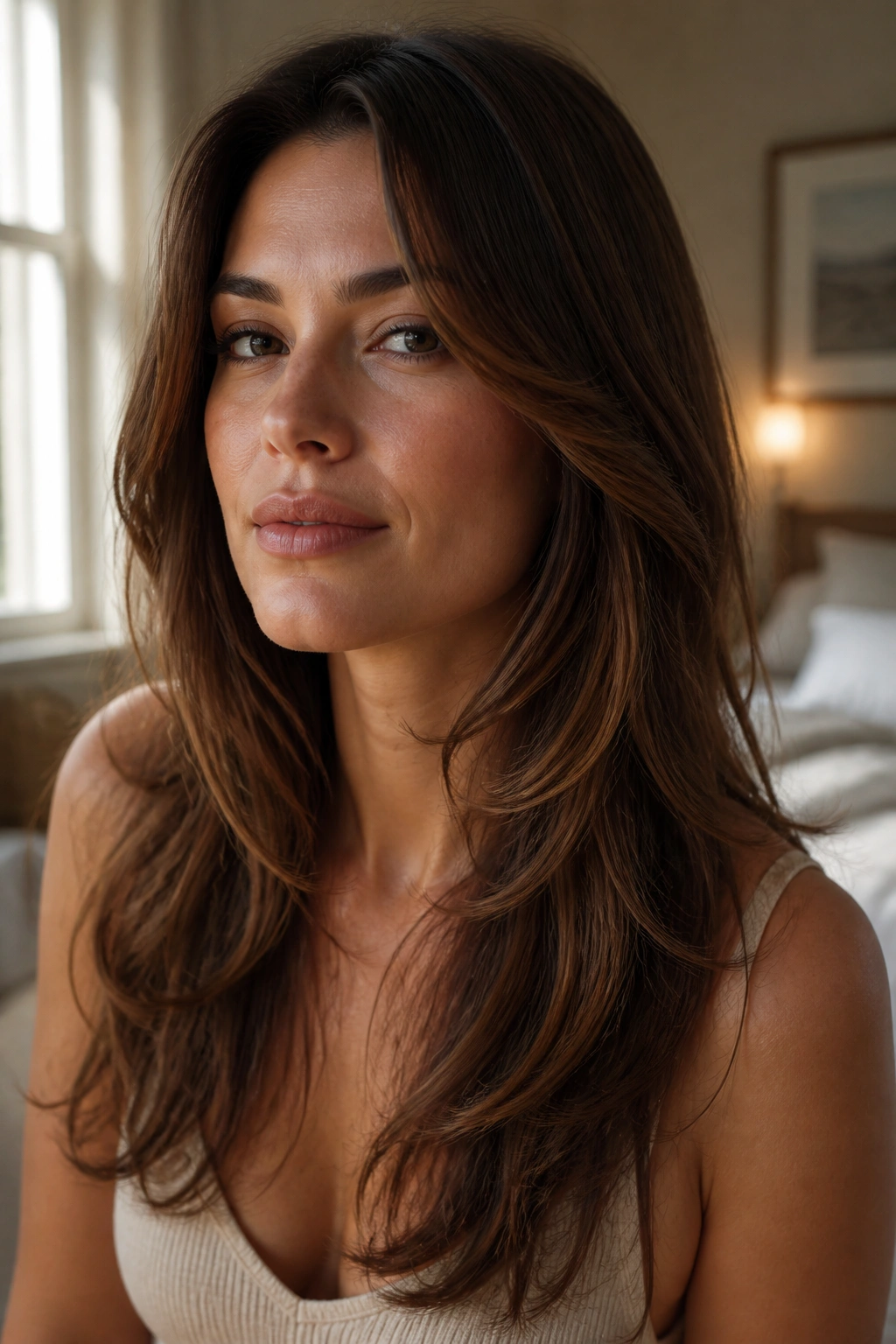
Long layers are the workhorse of square-face styling because they pull the eye downward instead of letting it sit squarely on the jaw. When the shortest pieces start below the cheekbone, the face gets a little breathing room. The effect is subtle, which is exactly why it works.
Why It Works
Long layers add movement without chopping the hair into obvious shelves. That matters on square faces, where a blunt line around the jaw can make the lower half look wider than it really is.
Ask for layers that begin around the collarbone or lower cheek, then taper softly toward the ends. If the layers start too high, the face can look choppy. Too low, and you lose the lift that makes the style useful in the first place.
- Best on medium to thick hair that can hold shape
- Works with straight, wavy, or lightly curled styling
- Keeps the jawline from being the visual stopping point
- Looks especially good with a center part or soft side part
Pro tip: tell your stylist you want movement, not volume at the sides. That one sentence saves a lot of regret.
2. Side-Swept Bangs for Square Faces
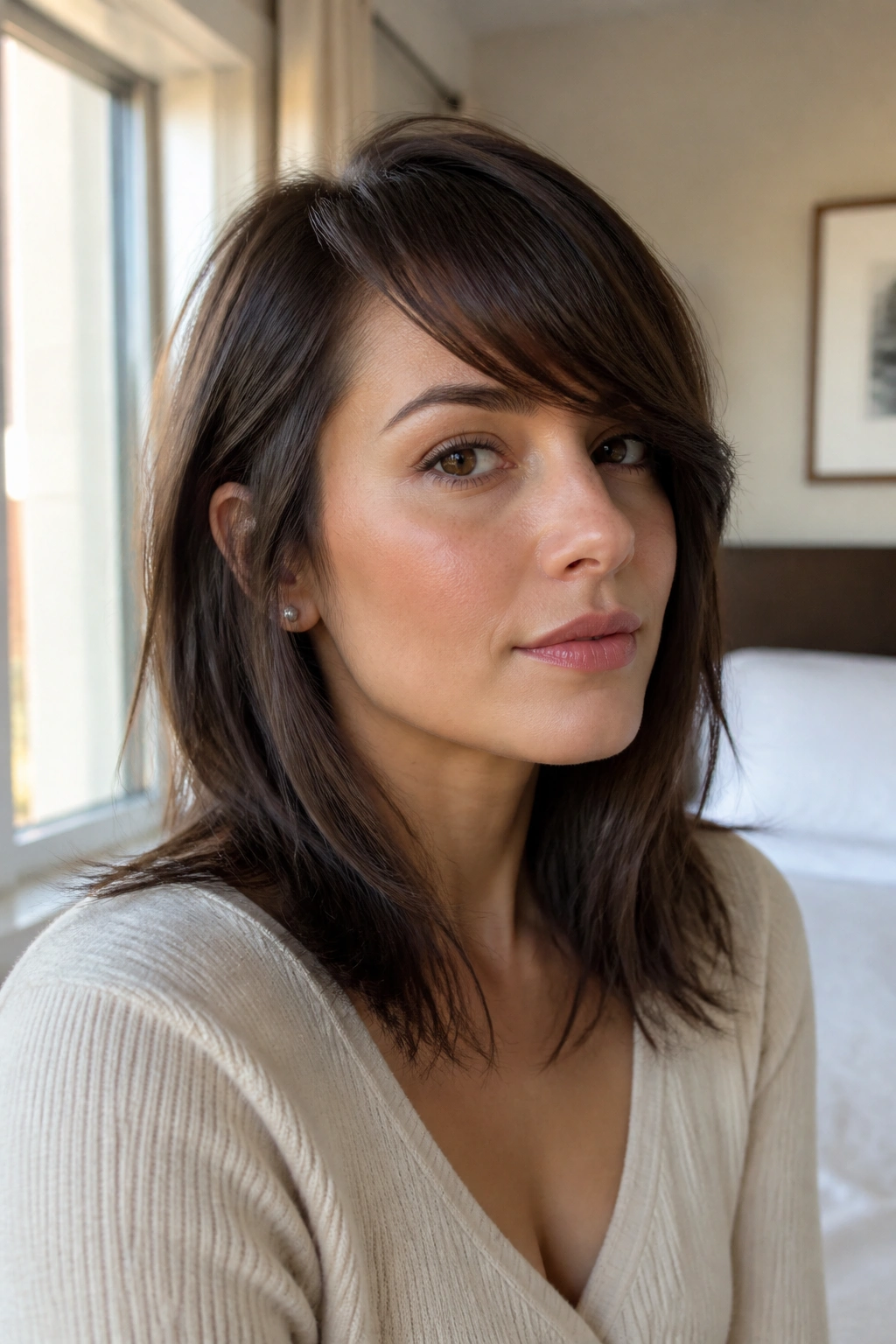
Side-swept bangs are one of the fastest ways to soften a square face. They break the forehead line, add a diagonal shape across the face, and keep the whole look from feeling too boxy. I like them because they do real work without looking like they are trying too hard.
The sweet spot is a bang that starts deep enough to sweep across the brow and falls toward one temple, not one that flops into the eyes all day. Heavy, blunt side bangs can feel dated fast. A lighter, feathered version stays fresher and gives the cheekbones some room to show.
Use a round brush or a medium roller while blow-drying, and direct the bangs away from the heavier side of the face. A little root lift helps. So does a small amount of styling cream, but only at the ends.
If your hair grows forward hard at the crown, this style takes a bit of patience. Worth it, though. The line it creates is flattering in a way that reads instantly, even when the rest of the hair is simple.
3. Curtain Bangs for Square Faces
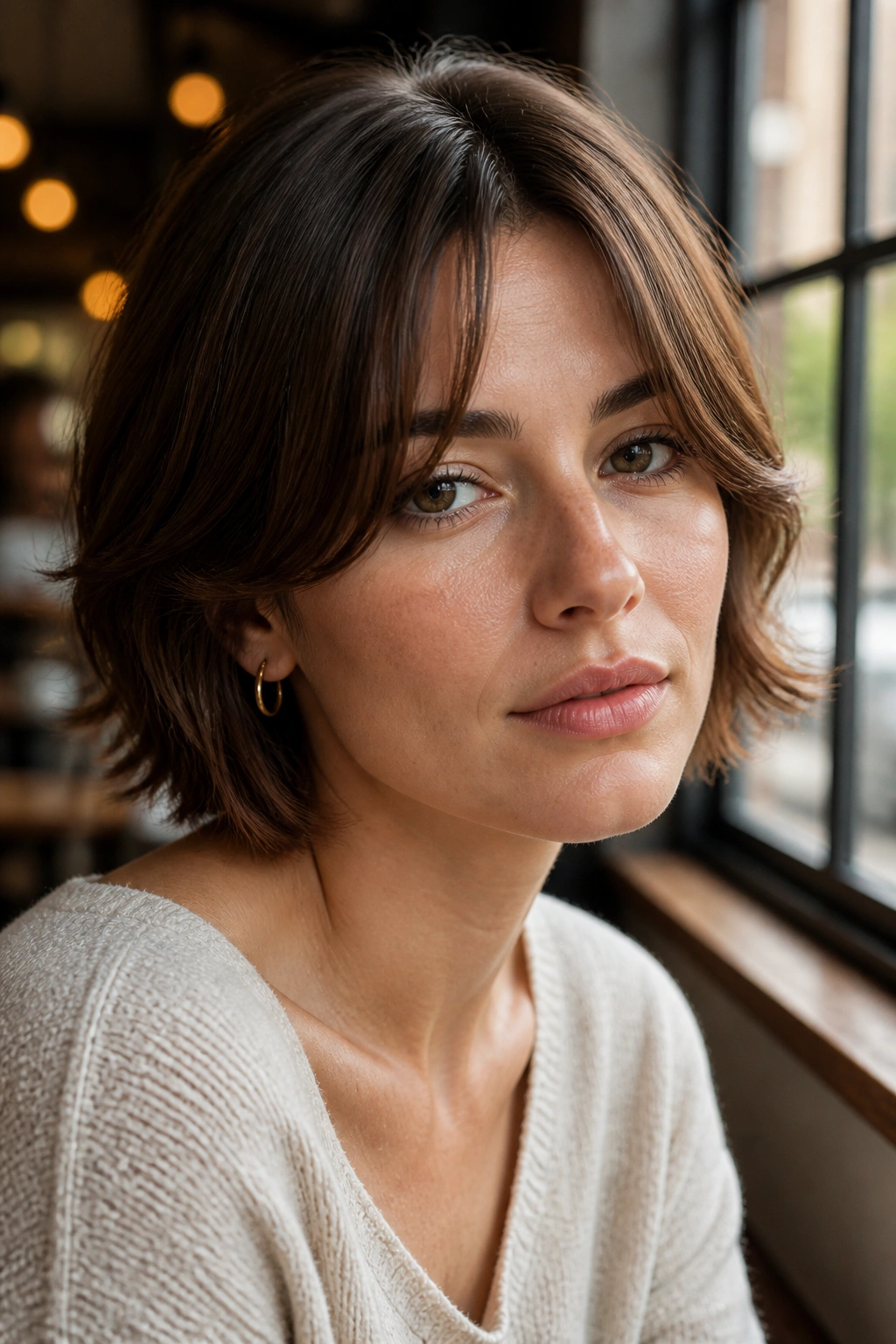
What makes curtain bangs such a smart match for square faces? They split the forehead in the middle, then fall away from the cheeks in a soft arc. That shape makes the face look a little longer and a lot less rigid.
The best curtain bangs are not micro bangs and not a heavy fringe. They usually sit somewhere between the cheekbone and lip line, depending on hair density and how much lift you want. Shorter curtain bangs can work, but the longer ones are easier to blend into the rest of the cut.
How to Wear Them
- Part them slightly off center if your face feels very symmetrical
- Ask for soft ends, not a hard, straight edge
- Blow-dry each side away from the face using a round brush
- Keep the shortest point near the center of the brows, not above them
- Use dry shampoo at the roots if they collapse too quickly
Curtain bangs are also forgiving. If you get tired of them, they grow into face-framing layers without making the haircut feel awkward. That’s a rare thing in fringe land, and I never ignore it.
4. Soft Lob With Texture for Square Faces

A lob that brushes the collarbone can be a sweet spot for square faces, especially when the ends are bent and the surface has a little grit. Straight, clean lines around the chin can emphasize angles. A textured lob does the opposite. It keeps the eye moving.
Picture this: a blunt shoulder-grazer on a square face, styled pin-straight with no bend at the ends. It can look sharp in the wrong way. Now add soft waves, a tiny off-center part, and a few broken pieces around the front. Suddenly the whole thing relaxes.
The cut should land just below the jaw, or right at the top of the collarbone if your jaw is especially strong. Anything that ends directly on the widest part of the jaw tends to fight the face instead of balancing it.
Use a 1.25-inch curling iron or wand, leave the ends out, and brush the waves apart with your fingers. A sea salt spray can help if your hair is fine. A smoothing serum is better if your hair is coarse and wants to puff.
This is the kind of cut that looks expensive without being fussy.
5. Deep Side Part for Square Faces
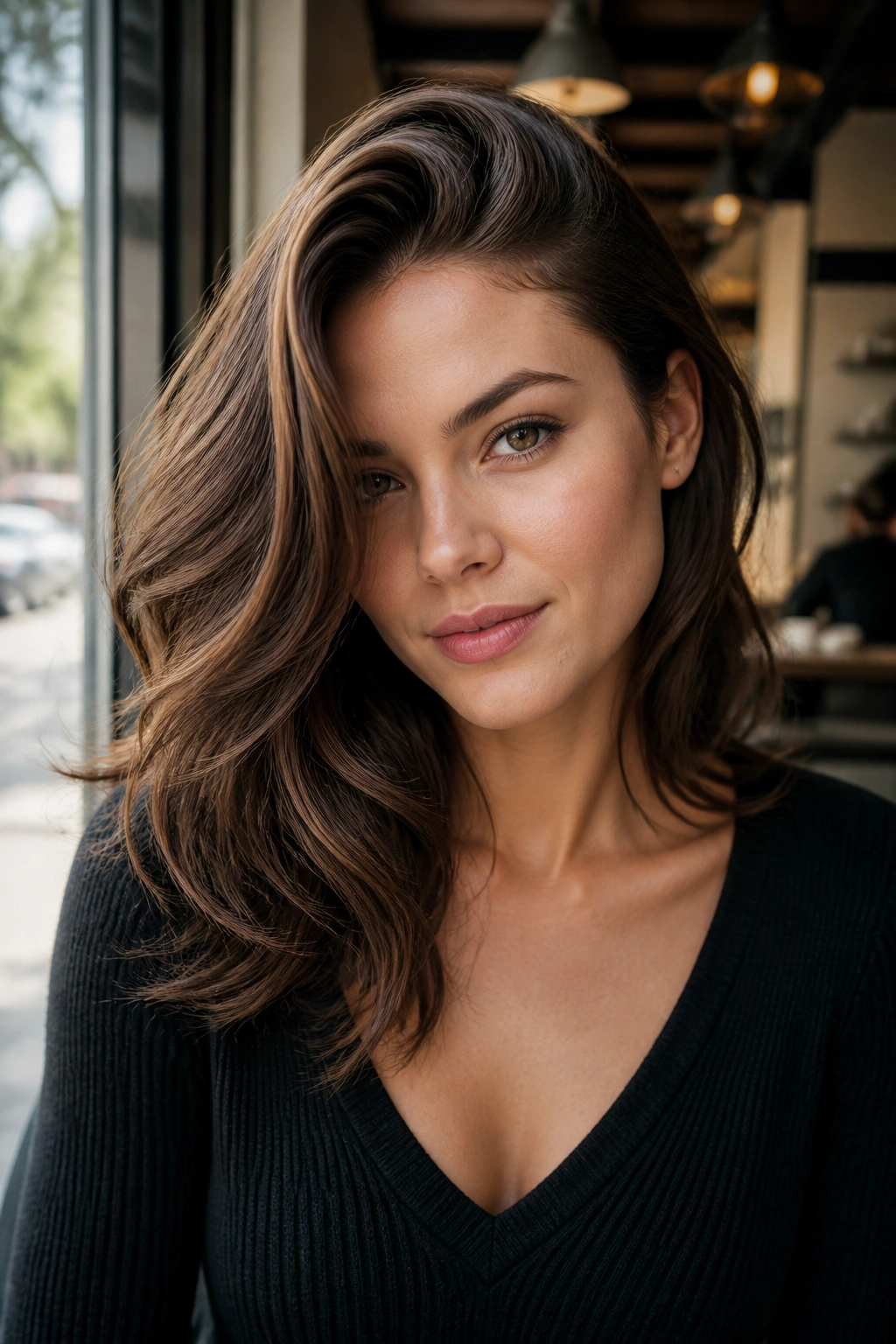
A deep side part changes the whole mood of a haircut without touching the length at all. That’s why I like it so much for square faces. The asymmetry makes the face look less centered and less rigid, and that alone can soften a strong jaw.
The part does not need to be dramatic to work. Even moving it 2 or 3 inches off center can make the face feel more oval. On straight hair, the shift is obvious. On curls or waves, it’s even better because the part line helps the texture fall in a less boxy way.
Use it with almost anything: long layers, a bob, loose curls, a ponytail. It’s especially helpful if your hair is thick around the temples, because the part takes some visual weight away from both sides at once.
Small change. Big payoff.
If your scalp fights you, set the part while hair is damp and clip it for 10 minutes before drying. That helps the roots remember where to live. Otherwise, it will slide back to the middle like a stubborn little cowlick.
6. Wavy Shoulder-Length Cut for Square Faces
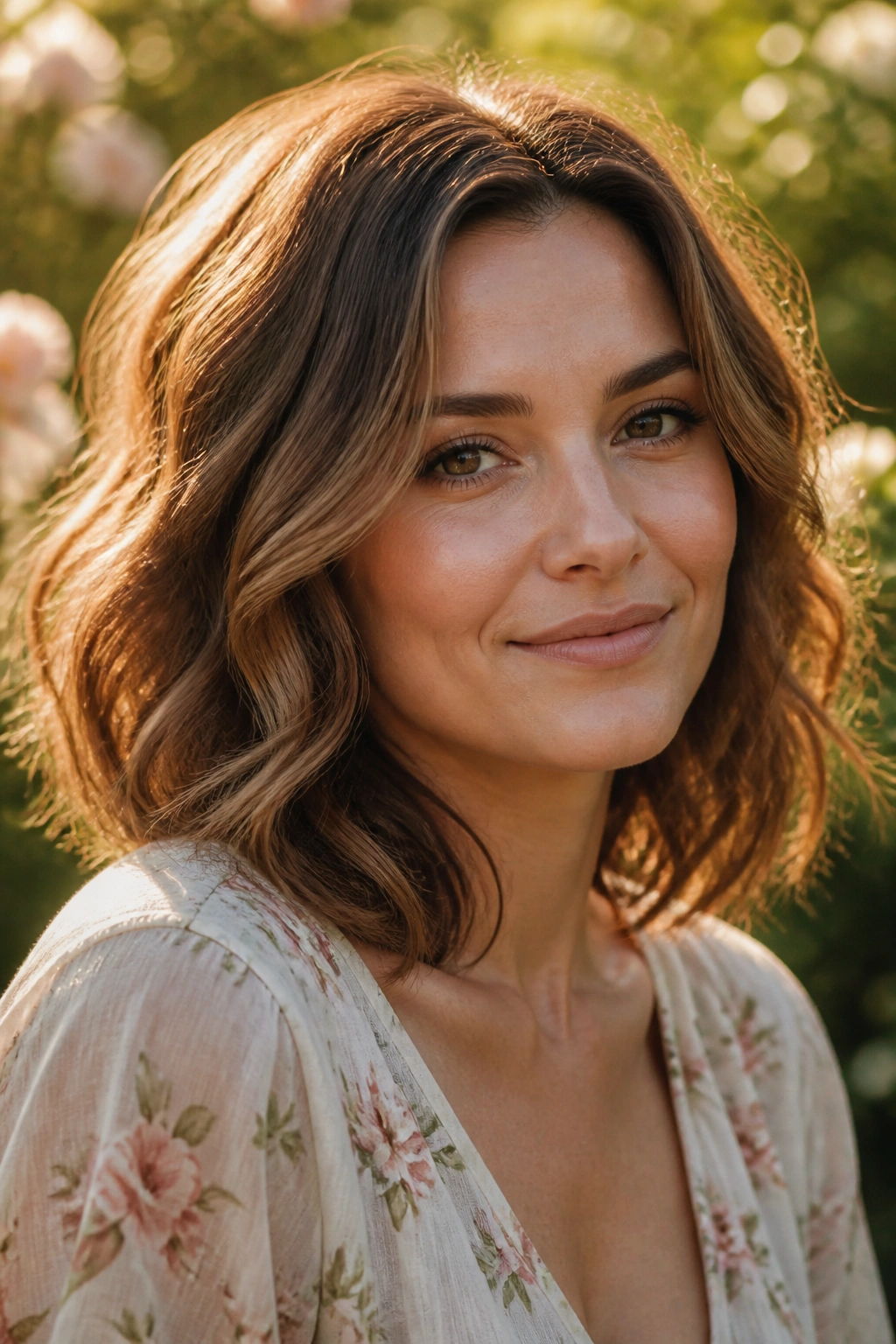
A shoulder-length cut with soft waves is one of those styles that looks casual in a good way, not accidental. It gives square faces movement around the cheeks and jaw, which is where the shape matters most. Straight shoulder-length hair can look a bit severe if the ends are too blunt. Waves fix that.
Unlike a pin-straight shoulder cut, a wavy version breaks up the face with bends and curves. That matters more than people realize. Square faces do well with lines that don’t stop cleanly at the jaw or sit like a ruler under the chin.
This cut works best when the waves are loose, not spiral-tight. Think bend, not curl. A 1-inch wand, brushed out lightly, gives you enough motion without turning the whole style into pageant hair.
It’s a solid choice for medium-density hair because it gives enough shape to feel styled but still air-dries decently if you’re not in the mood to fuss. Fine hair can wear it too, though a root spray helps keep the top from going flat.
If you want one dependable, low-drama option, this is a good place to land.
7. Chin-Grazing Bob With Soft Ends for Square Faces
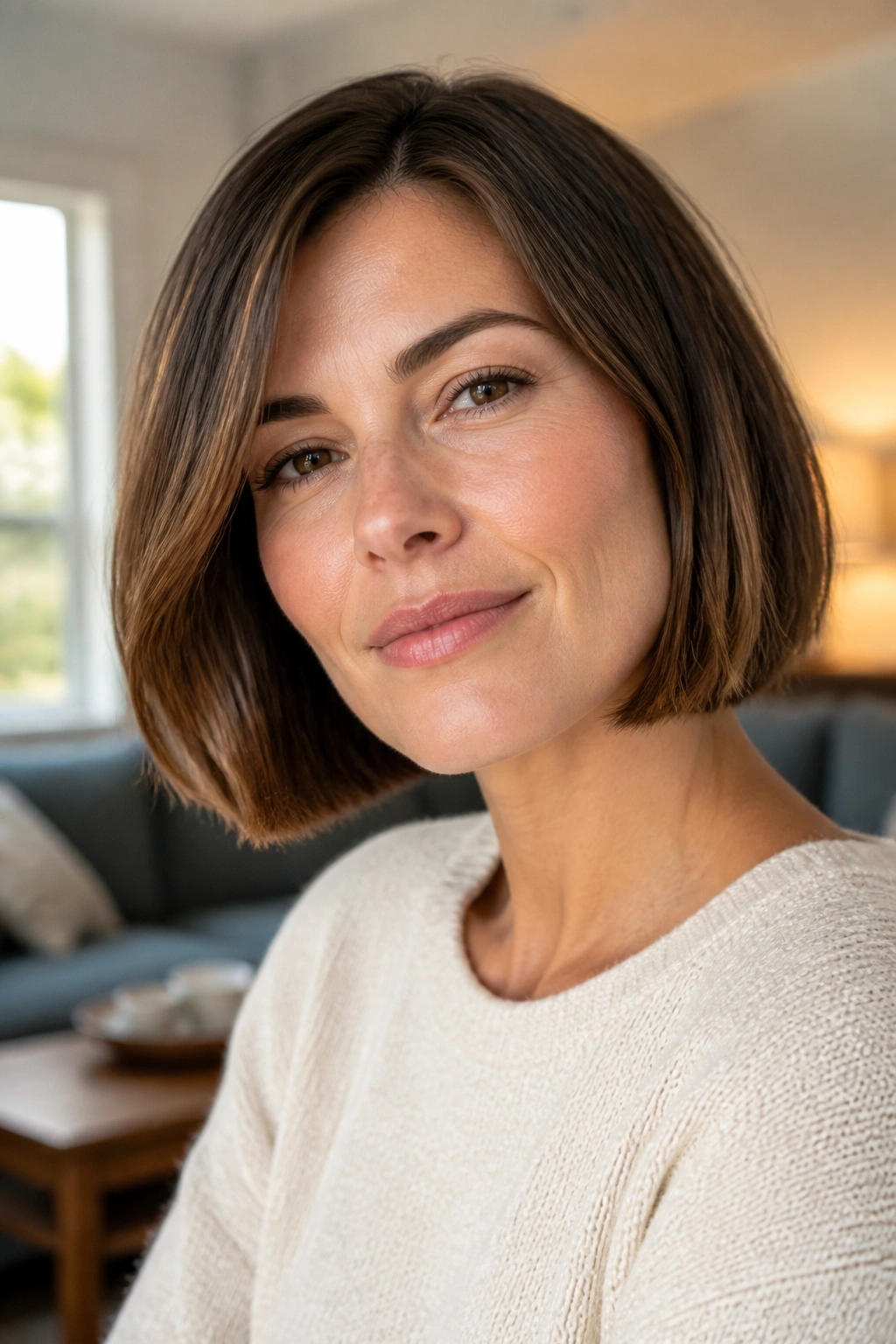
A chin-length bob can be tricky on a square face. Too blunt, and it sits right on the jaw like it’s pointing at the thing you were hoping to soften. Too wispy, and it loses the clean shape that makes the bob feel intentional. The answer is soft ends and a little bend.
What to Ask Your Stylist
- Keep the line just below the jaw, not exactly on it
- Add subtle texturing through the ends
- Round the corners instead of cutting them sharp
- Leave enough length in front to skim the cheeks
- Style with a slight side part for easier balance
This version works because it respects the face instead of competing with it. The bob stays crisp, but the edges are blurred enough to keep the jaw from taking over the whole look. A polished blowout helps, but so does a quick tuck behind one ear.
I’d skip a hard, poker-straight finish unless your hair is naturally soft and fine. Square faces already have structure. You do not need the haircut to shout too. A little softness makes the difference between chic and severe.
8. Angled Bob for Square Faces
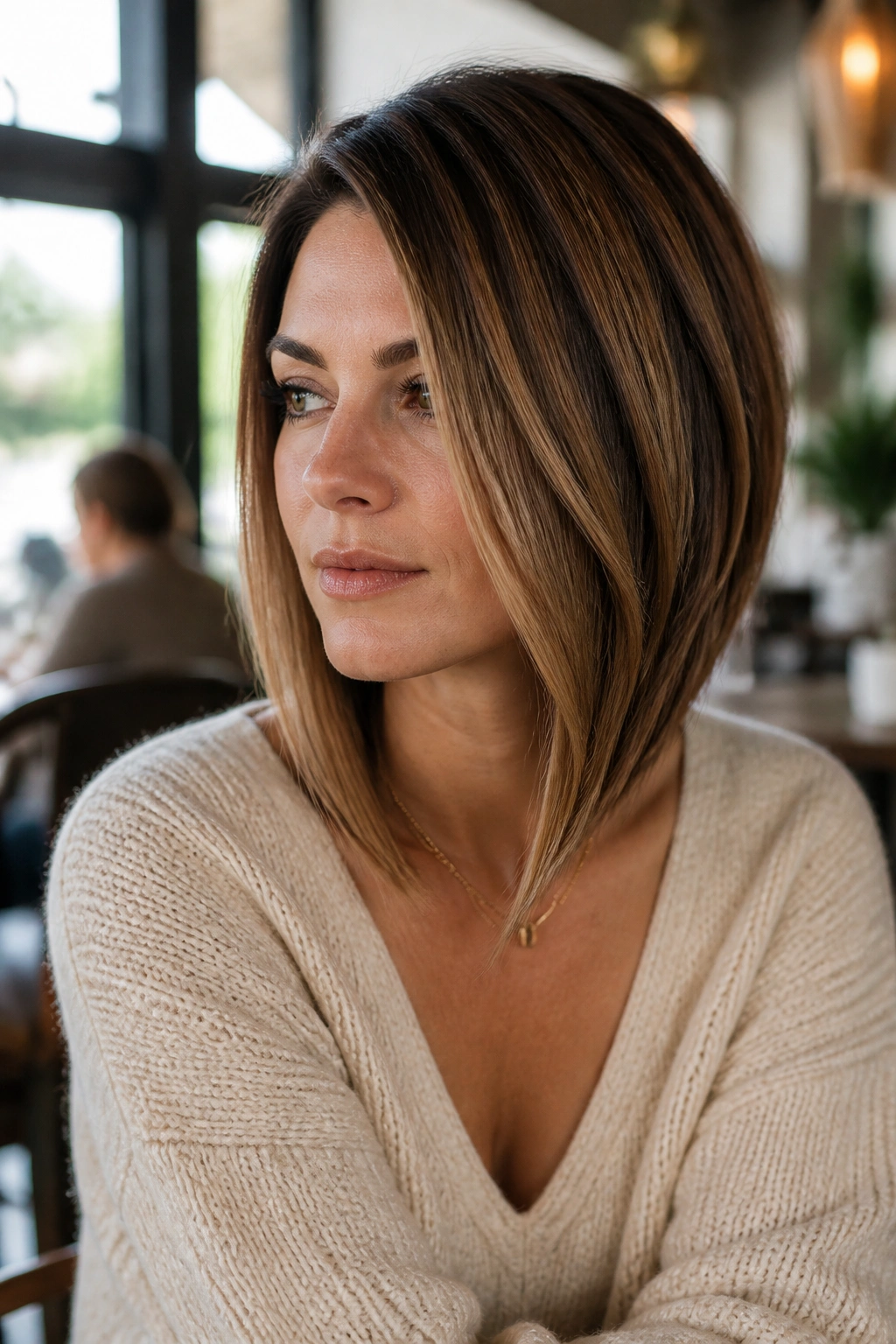
An angled bob is one of the cleanest ways to counter a square jaw. The longer front pieces create diagonal lines, and diagonal lines are your friend here. They pull attention forward and downward instead of leaving everything in one wide block.
The back stays shorter, which gives the shape lift at the nape. The front angles away from the jaw, which keeps the lower half of the face from feeling boxed in. That contrast is the whole point. It’s a neat cut, but not a rigid one.
This haircut looks especially good on straight or lightly wavy hair because the angle reads clearly. If the texture is very curly, the shape can still work, but the angle needs enough length to stay visible once the curl springs up.
The front corners should skim the jaw, not land right on it. That’s the line I watch most. If the longest pieces end exactly at the widest part of the face, the whole thing can feel accidental instead of flattering.
A side part usually helps. So does tucking the shorter side behind the ear. Tiny tricks. Real difference.
9. Pixie Cut With a Long Top for Square Faces
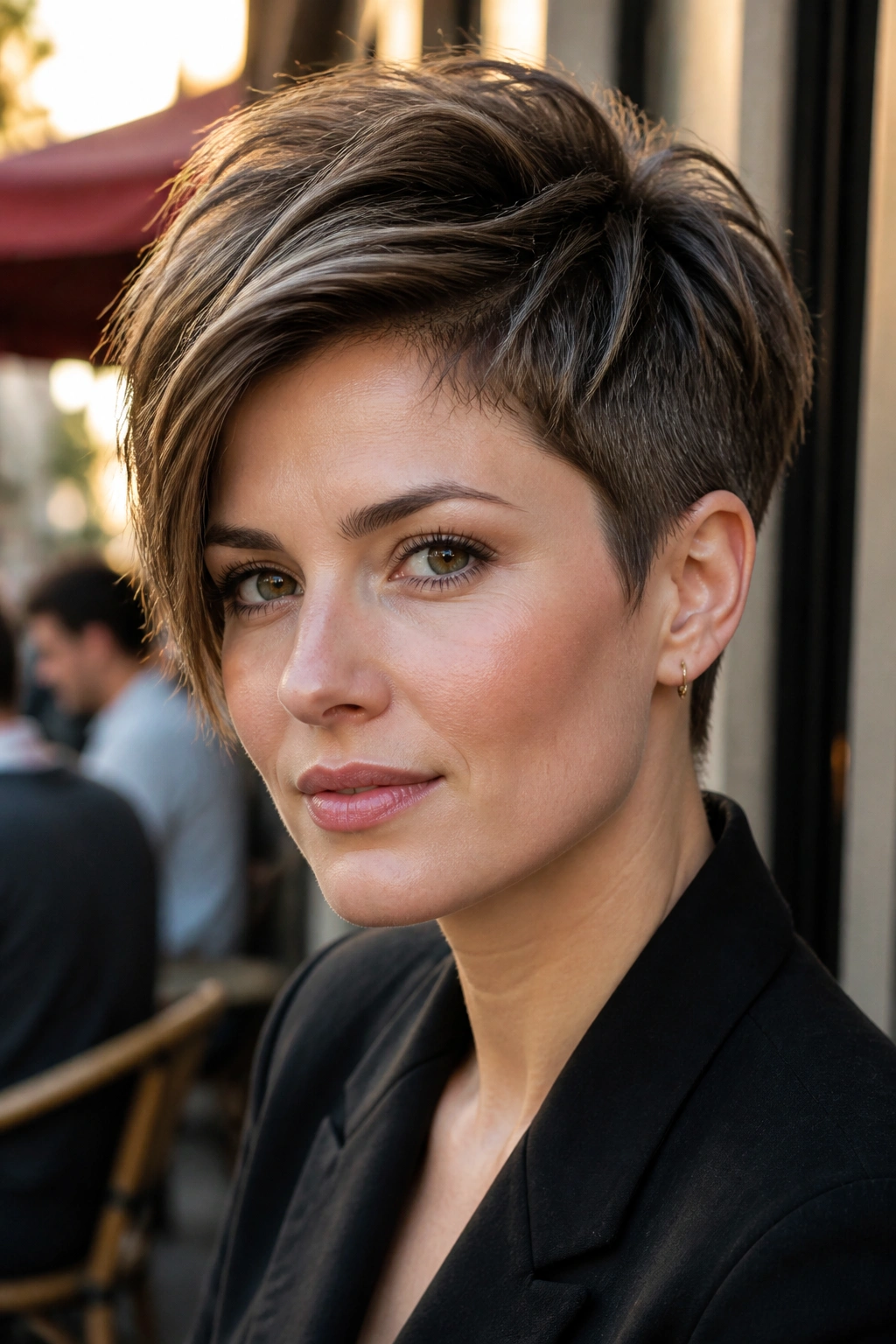
Can a square face wear a pixie? Absolutely. The catch is that the top needs some length and the sides need to stay tapered enough to avoid a boxy outline. Short hair can be gorgeous on square faces when it has movement and a little softness near the temples.
The long-top pixie works because it adds height and gives you room to sweep the hair sideways or forward. That breaks up the straight line of the forehead and keeps the jaw from feeling too dominant. A flat, all-over short cut can make the face feel wider. A textured pixie does the opposite.
How to Keep It Flattering
- Ask for longer pieces on top, especially near the fringe
- Keep the sideburns soft and tapered
- Sweep the top in one direction instead of standing it straight up
- Add texture paste only to the top layer
- Avoid a square outline around the ears
This is one of those cuts that looks sharp when it’s done well, but it can turn fussy if the edges are clipped too evenly. The best pixies on square faces feel airy, not armored. I’m picky about that. Too much symmetry and the cut loses its edge.
10. Shag Cut for Square Faces
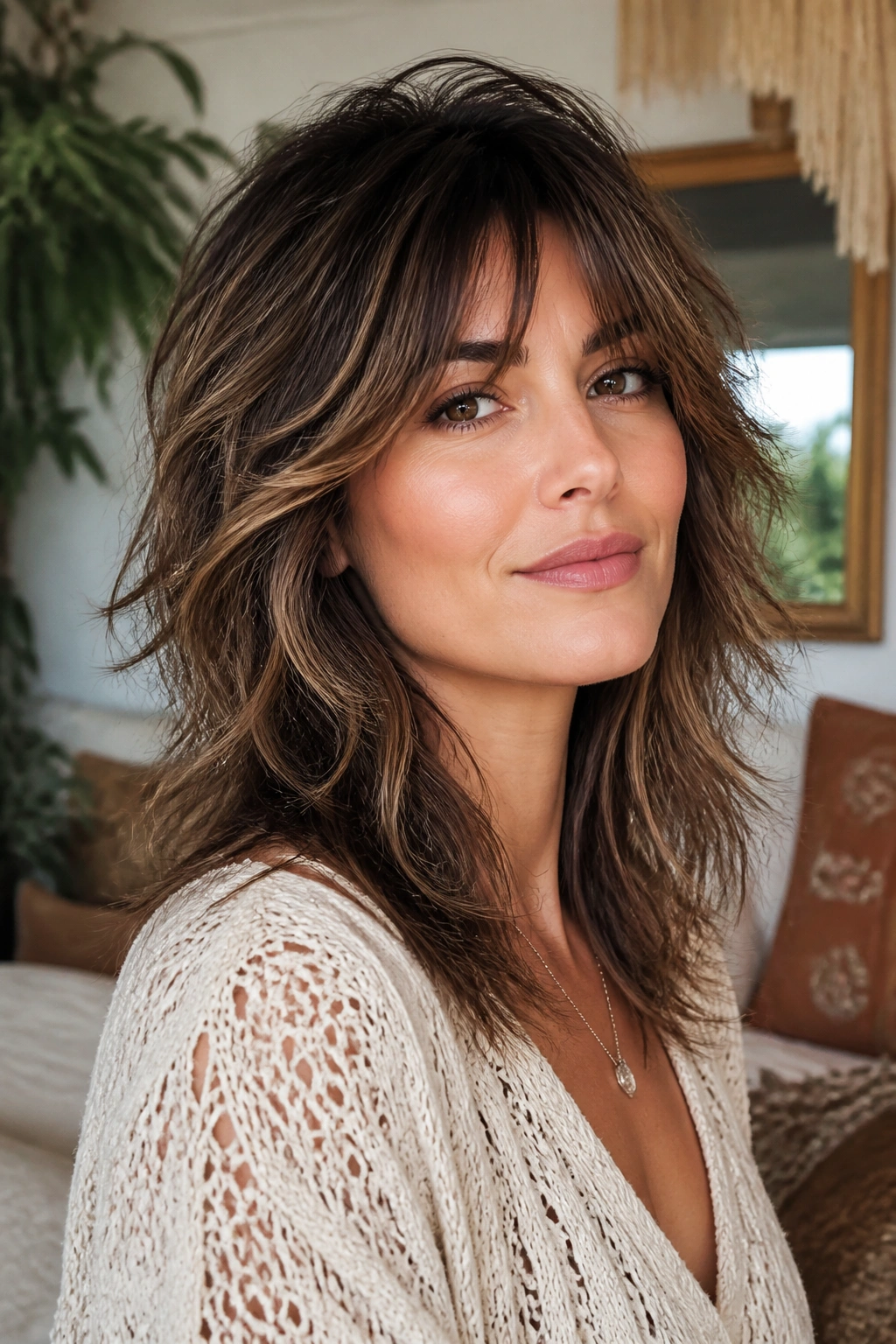
The shag is built on movement, and movement is exactly what square faces need. The layers scatter attention, the fringe softens the forehead, and the ends fall in a way that keeps the jaw from becoming the loudest feature in the room.
A good shag doesn’t have to be wild. In fact, the best versions for square faces are often a little restrained. Keep the layers soft, not hacked. Let the longest pieces live around the collarbone, then work upward with texture so the crown has lift without turning the sides into a puff.
A wispy fringe or curtain fringe helps a lot here. Straight, dense bangs can make the top half feel too boxed in. You want broken lines, not a hard frame.
If your hair is naturally wavy, this cut can almost style itself. If it’s straight, a little product and a rough-dry technique give you that piecey finish without too much effort. Sea salt spray, diffuser, fingers. Done.
It’s not for everyone. The shag has a point of view, and you have to like a little mess. But on a square face, that mess is part of the charm.
11. Face-Framing Layers for Square Faces
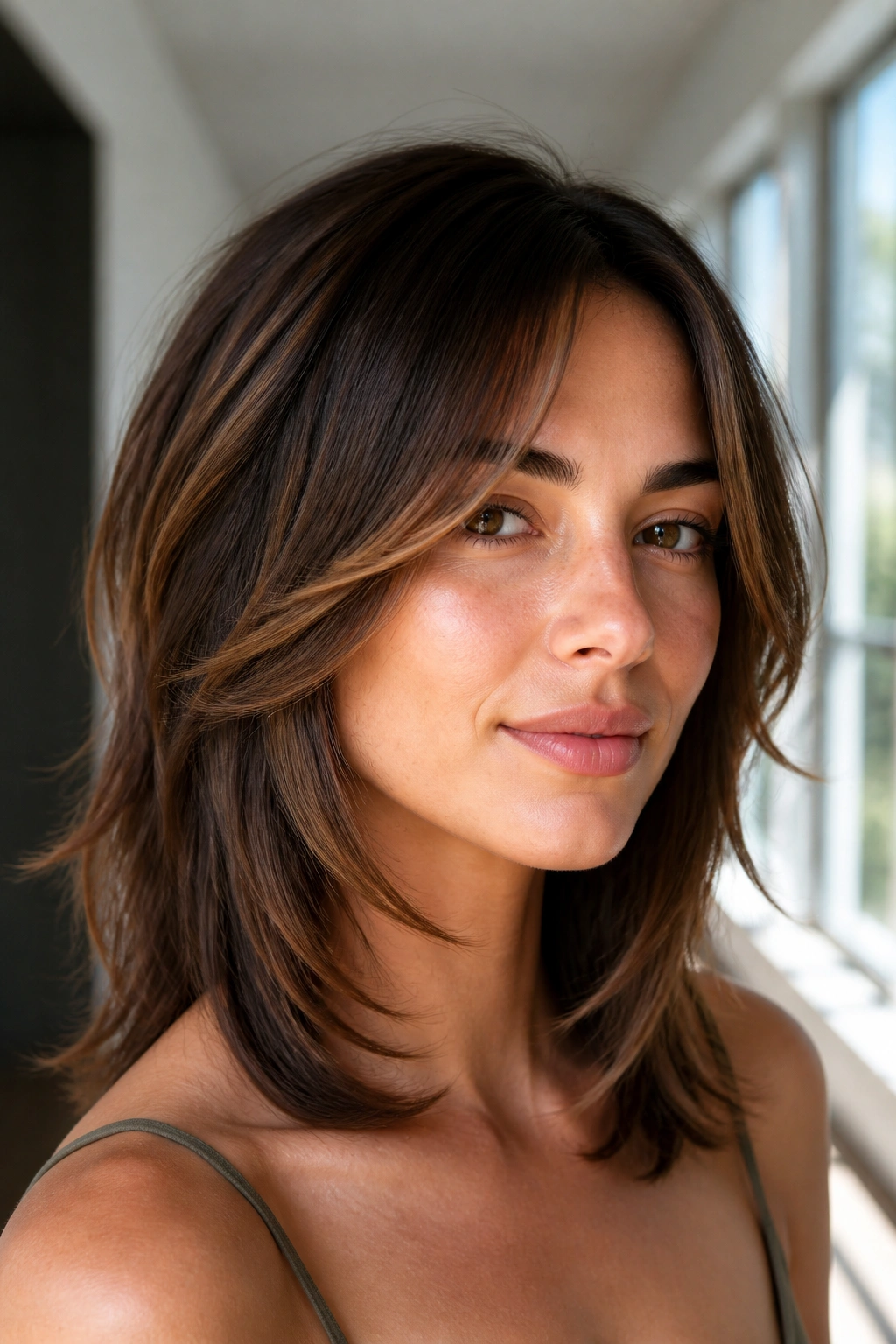
Face-framing layers are the quiet overachiever on this list. They don’t change the whole haircut, and that’s exactly why they’re useful. A few carefully placed front pieces can soften a square face more than a dramatic chop that misses the mark.
The first piece should start where your face needs the most release. For many square faces, that means around the cheekbone or just below it, then curving down past the jaw instead of ending right on it. That little bend matters. It keeps the eye moving and stops the face from looking flat.
These layers work with long hair, medium hair, and even shorter bobs if there’s enough length in front. They’re also easy to style. A blowout brush, a curling iron, or even a flat iron with a gentle bend at the ends can do the job.
If your hair is thick, ask for internal weight removal so the front pieces don’t sit like curtains. If it’s fine, keep the layers delicate so you don’t end up with straggly ends.
I like this option for people who want change without drama. It’s subtle. But subtle can be the smartest move.
12. Half-Up, Half-Down Waves for Square Faces
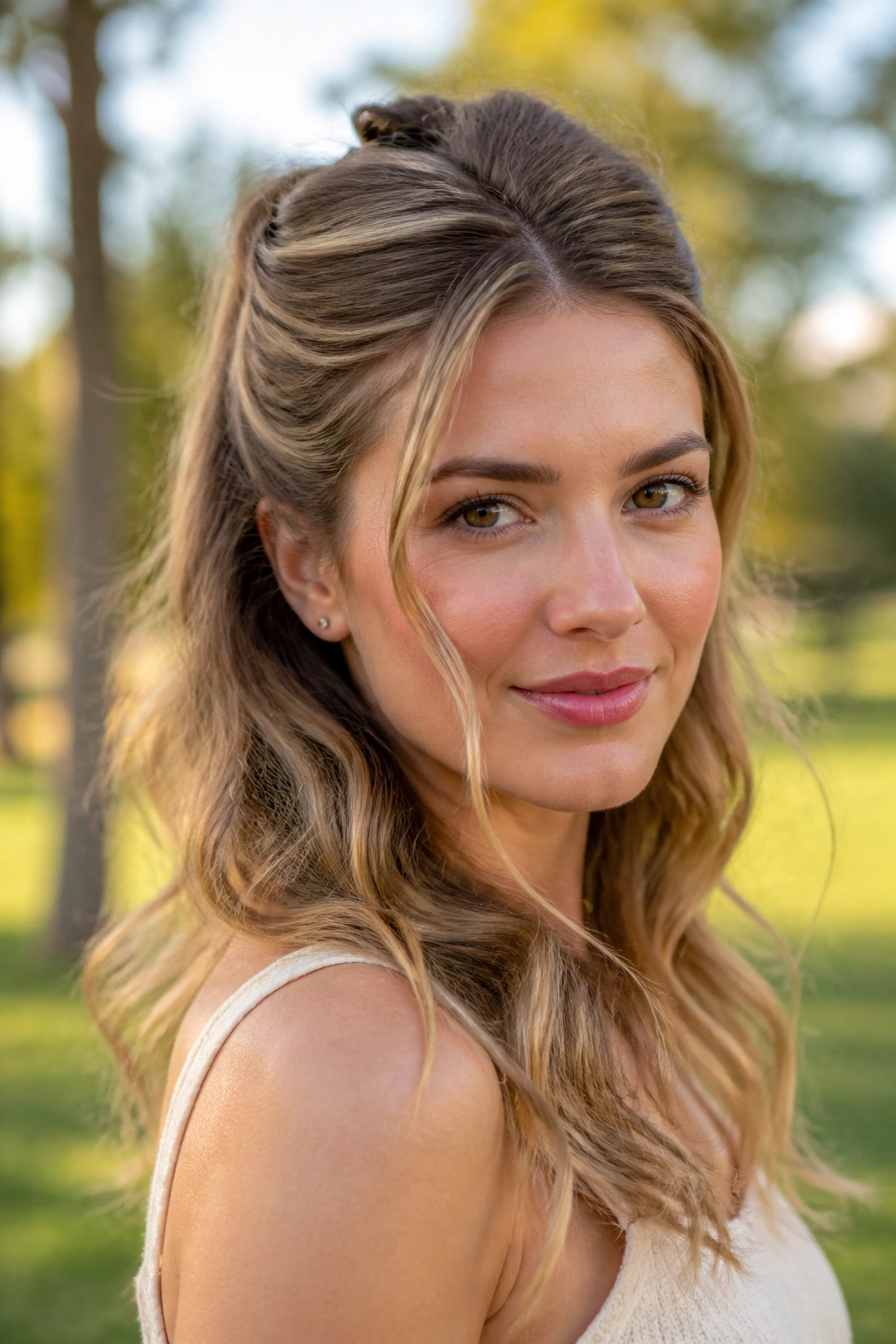
Half-up, half-down waves are a smart choice when you want the face to stay open but not exposed. The pulled-back top adds lift, the loose waves keep softness around the jaw, and the whole style avoids the severe look a tight updo can bring.
Unlike a full ponytail, the half-up version leaves enough hair around the sides to blur the jawline. That makes it a strong match for square faces, especially if the front pieces are left a little loose instead of pinned back hard at the temples.
This style works best with second-day waves or curls that already have some shape. Gather the top section from just above the ears or slightly higher, then secure it with a small elastic, clip, or barrette. Pull a few strands loose around the hairline. Not too many. You want softness, not a half-finished bun.
A tiny tease at the crown can help if the hair is flat. So can curling the loose pieces away from the face with a 1-inch iron.
It’s practical, too. Out of your face. Still soft. That balance is the whole reason people keep coming back to it.
13. Sleek High Ponytail for Square Faces
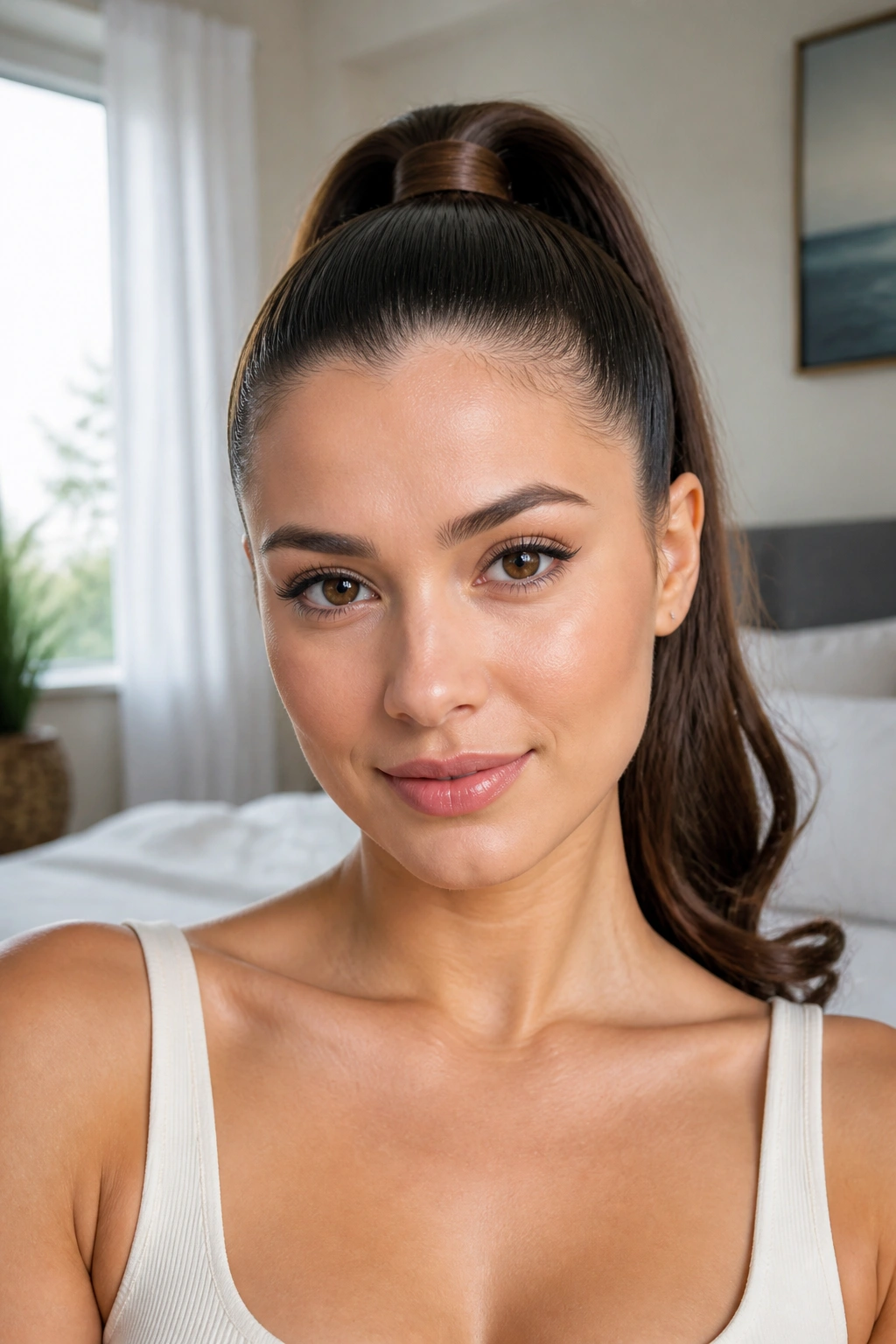
A high ponytail can be flattering on a square face when it’s done with height, not tightness. The lift pulls attention upward, which gives the jaw a break. What you want to avoid is a pulled-back, glassy-tight pony that shows every angle with no softness left.
The Shape That Works Best
- Place the ponytail at the crown or just above it
- Leave a little fullness at the temples
- Smooth flyaways without flattening the front too hard
- Wrap a small strand around the elastic for a cleaner finish
- Keep the ends polished, not bone-straight stiff
This style is good when you want a strong, clean look. It also works well with makeup or earrings because it clears the face in a way that feels deliberate. The trick is to keep a little motion near the front so the square shape doesn’t become the only thing people notice.
If your hair is very straight, a little wave through the tail makes the whole look less severe. If your hair is thick, a high pony can get heavy, so don’t be afraid to use a strong elastic and a few pins. Practical matters. Nobody loves a slipping ponytail at lunch.
14. Low Bun With Loose Pieces for Square Faces
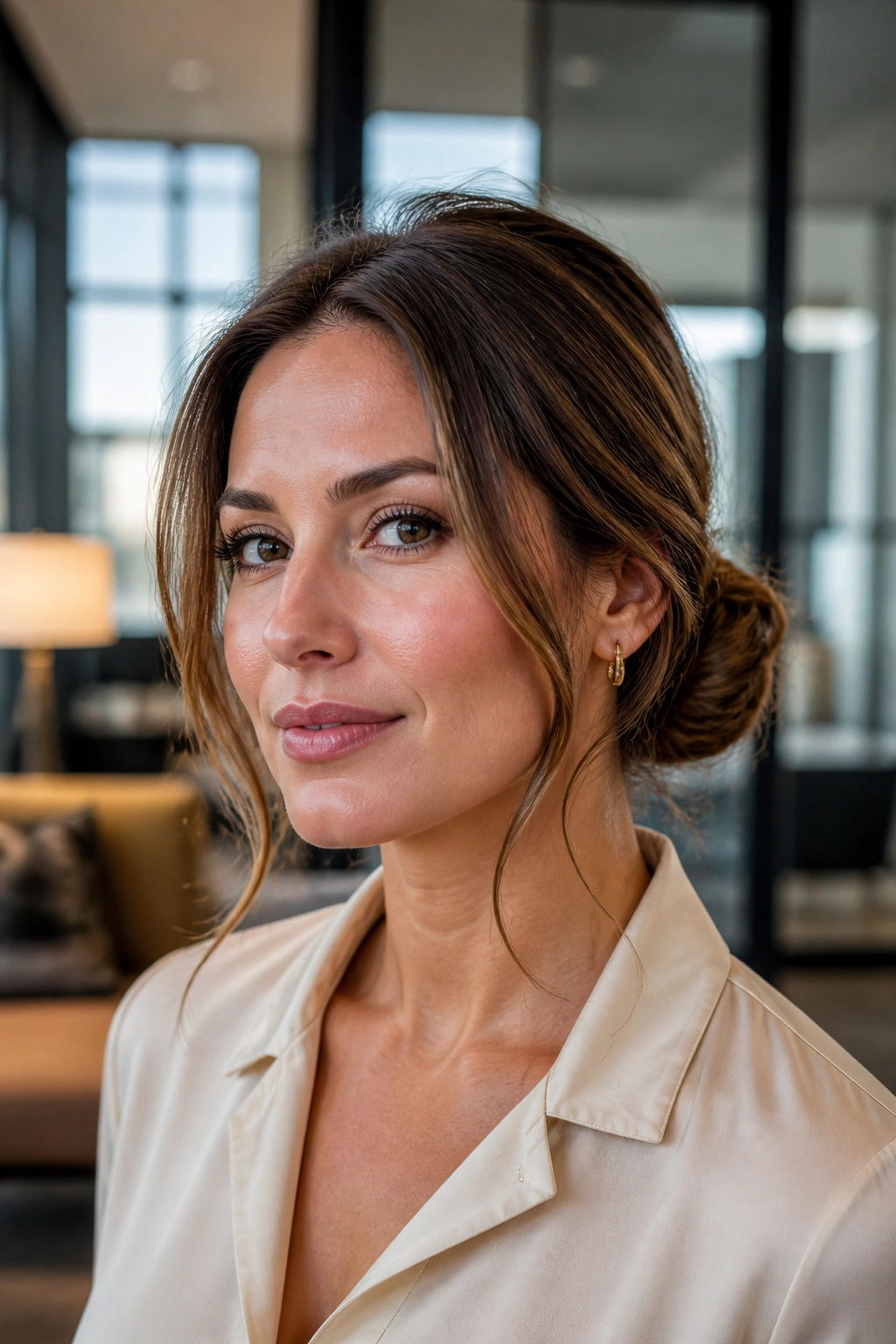
A low bun sounds severe on paper, and a scraped-back version usually is. But a low bun with loose pieces can be one of the prettiest styles for square faces because it keeps the neck clean while softening the edges around the temples and cheeks.
The bun itself should sit low and slightly off-center if your face feels very symmetrical. That tiny shift helps. A center-parted bun can look elegant too, but only if you leave a couple of loose strands near the front and keep the crown from going flat.
I like this look when the front pieces are bent, not curled into ringlets. Think soft wisps, a few face-framing pieces, and a clean bun base. Too much looseness starts to look accidental. Too little and the style gets harsh.
This is a good choice for events, work, or any day you want the face to feel more open. It’s also kind to second-day hair. A little dry shampoo, a brush, and a few pins can turn messy hair into a bun that looks intentional instead of rushed.
The difference is usually in the front. Always the front.
15. Voluminous Curls for Square Faces
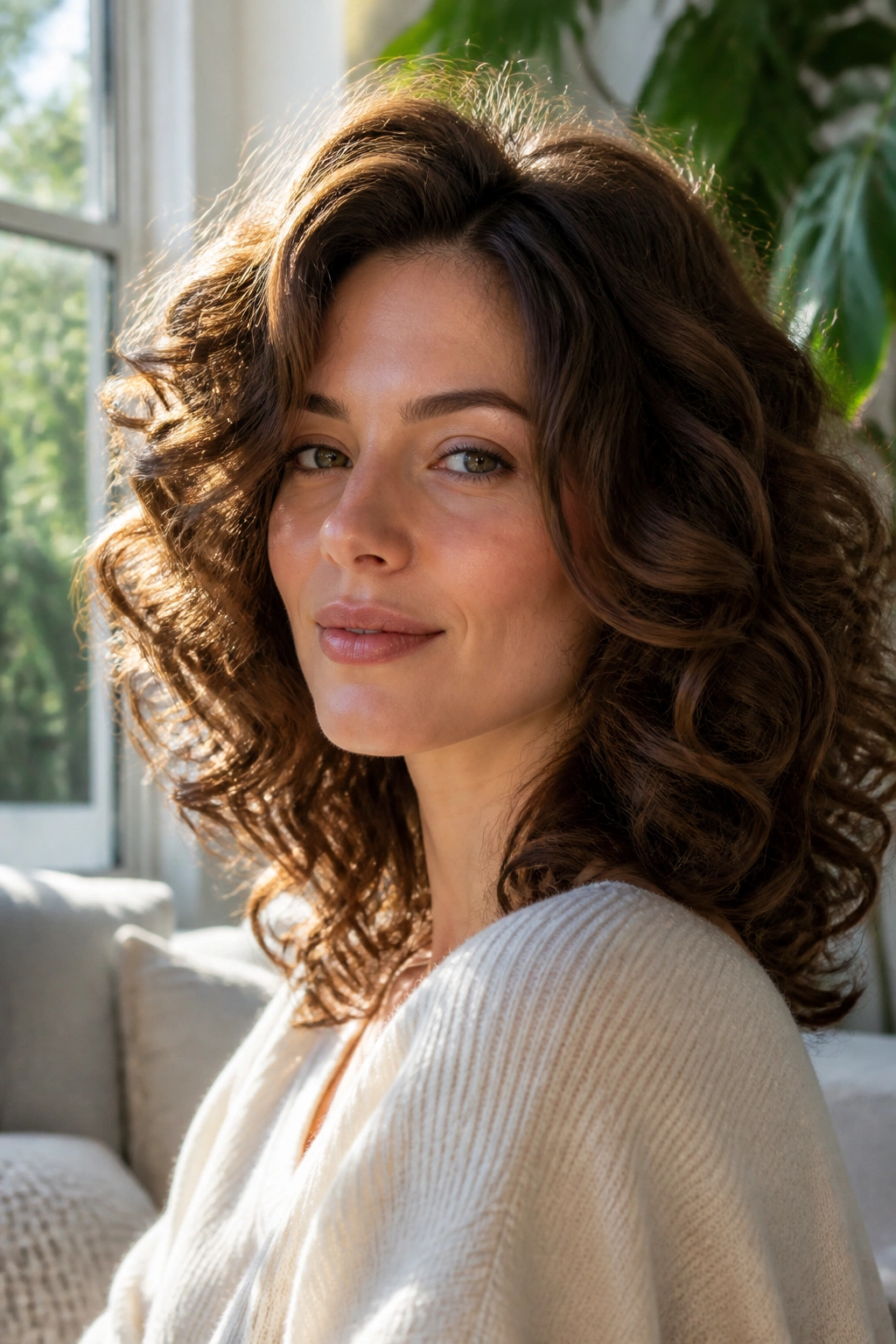
What if your hair already wants to curl? Lean into it. Square faces often look terrific with curls because the round shape softens the jaw and adds a bit of lift around the sides, where straight lines would otherwise feel sharp.
The catch is width. If the curls balloon out at cheek level, the face can look wider than you want. That’s why the best curly styles for square faces usually keep the volume a little higher on the head and the curl pattern a touch looser around the jaw.
A diffuser on low heat helps preserve shape without frizzing the whole thing into a halo. For straighter hair, a 1.25-inch iron can create curls that are soft enough to brush out into waves. Either way, the goal is not uniform ringlets. The goal is controlled roundness.
Good Signs to Look For
- Curls start below the cheekbones, not right at the widest part of the face
- The crown has lift without going flat on top
- The ends stay soft and touchable
- The part sits slightly off center for a gentler frame
Curly hair already brings personality. This style just points it in the right direction.
16. Braided Crown or Side Braid for Square Faces
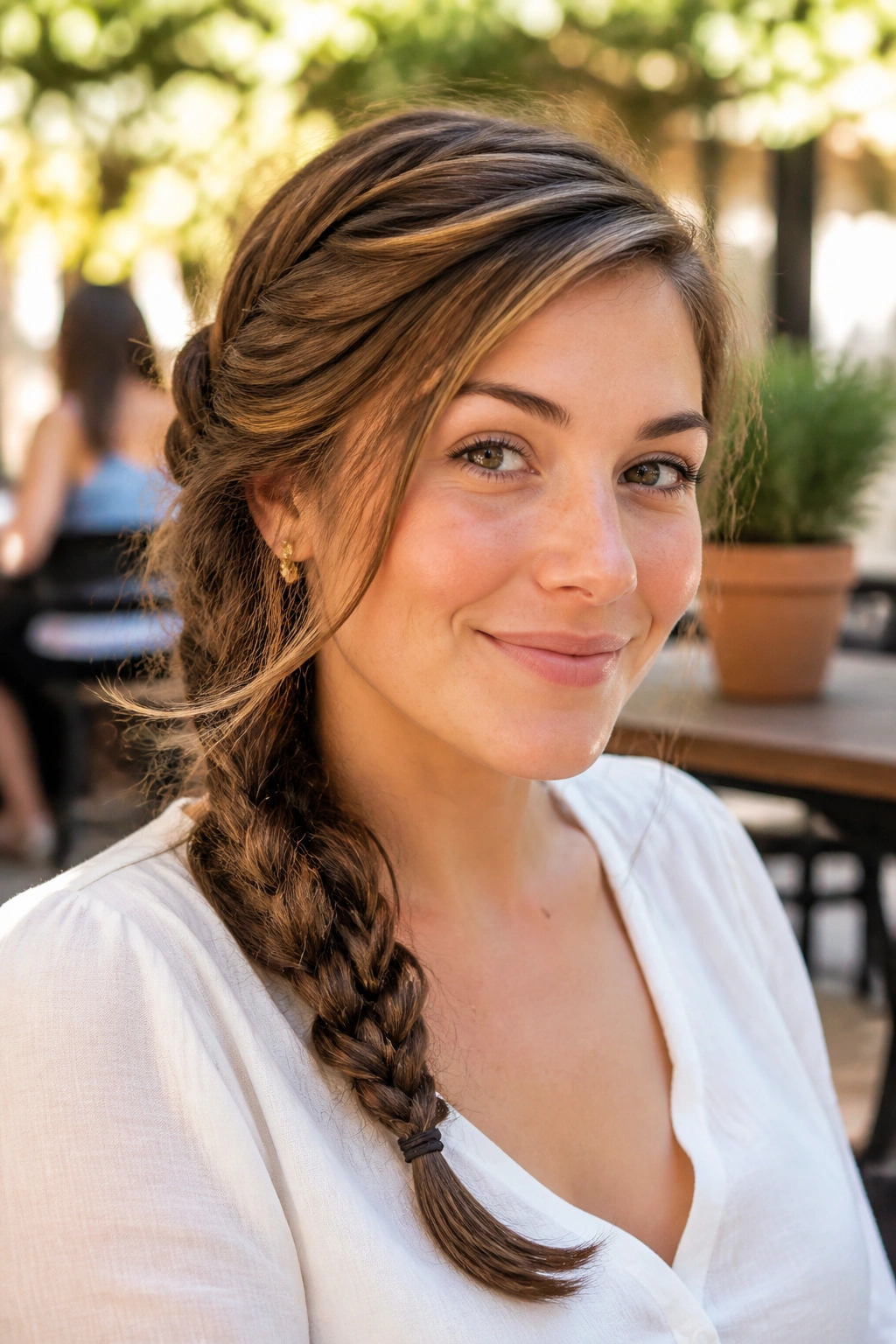
Braids can work beautifully on square faces because they introduce lines that move across the head instead of sitting in one hard block. A side braid feels especially good here. It draws the eye diagonally. A braided crown works too, as long as it isn’t pulled tight against the hairline.
The biggest mistake is tension. A braid that’s slicked flat can make the face look harsher, not softer. Leave a little looseness at the temples and around the crown. Pull the braid apart gently after it’s secured so it looks fuller and less severe.
A side braid is often the easiest place to start. Let it begin a couple of inches behind the hairline, not right at the front, then keep the tail soft. A crown braid feels more romantic, but it needs enough texture to avoid looking stiff.
- Loosen the braid loops slightly after finishing
- Leave a few front pieces out
- Start the braid low on one side for a longer face effect
- Use dry shampoo or texture spray for grip
- Keep the ends soft, not pinned into a hard knot
Braids are one of those styles people think of as decorative. On square faces, they’re also strategic.
17. Blunt Cut With Soft Styling for Square Faces
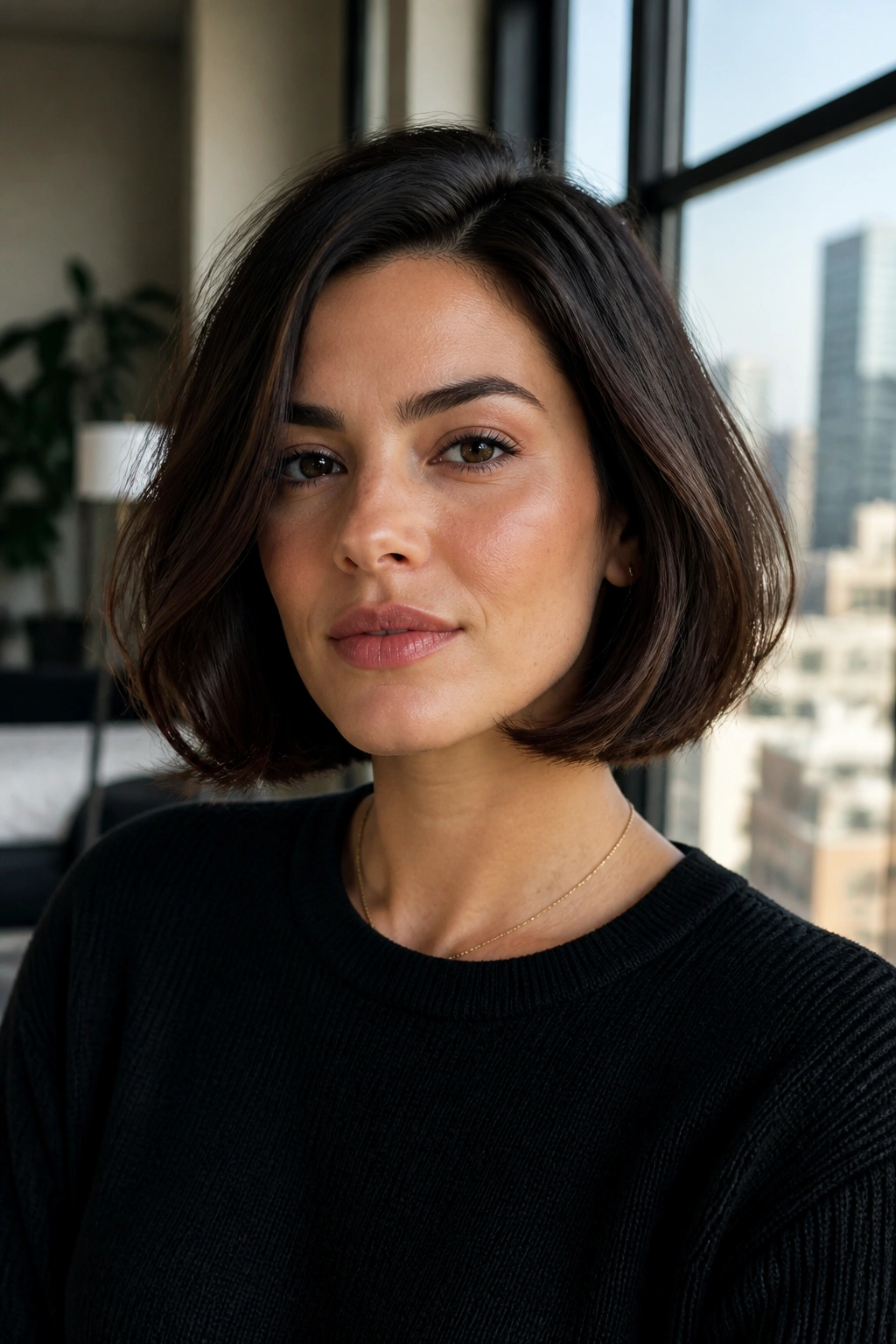
A blunt cut is not the obvious pick for square faces, and I’m not going to pretend otherwise. A perfectly straight, jaw-level line can make the face look boxier. Still, it can work if the styling adds softness and the length sits in the right place.
The trick is to keep the cut clean but not severe. If the hair is one length, ask for a rounded finish at the ends or enough internal texturing to prevent a hard shelf effect. Then style it with a side part, a bend, or a polished blowout that curves the front away from the jaw.
This works best on hair that is naturally smooth or fine enough to hold a sleek shape without puffing up. Thick, coarse hair can wear a blunt line too, but it usually needs more careful shaping so it doesn’t spread wide at the bottom.
I’m a little picky about blunt cuts on square faces. They can be elegant. They can also be unforgiving. So if you like this look, keep the styling soft and avoid making the whole shape too geometric.
That’s the difference between sharp and harsh. Not a small thing.
18. Shoulder-Length Blowout Layers for Square Faces
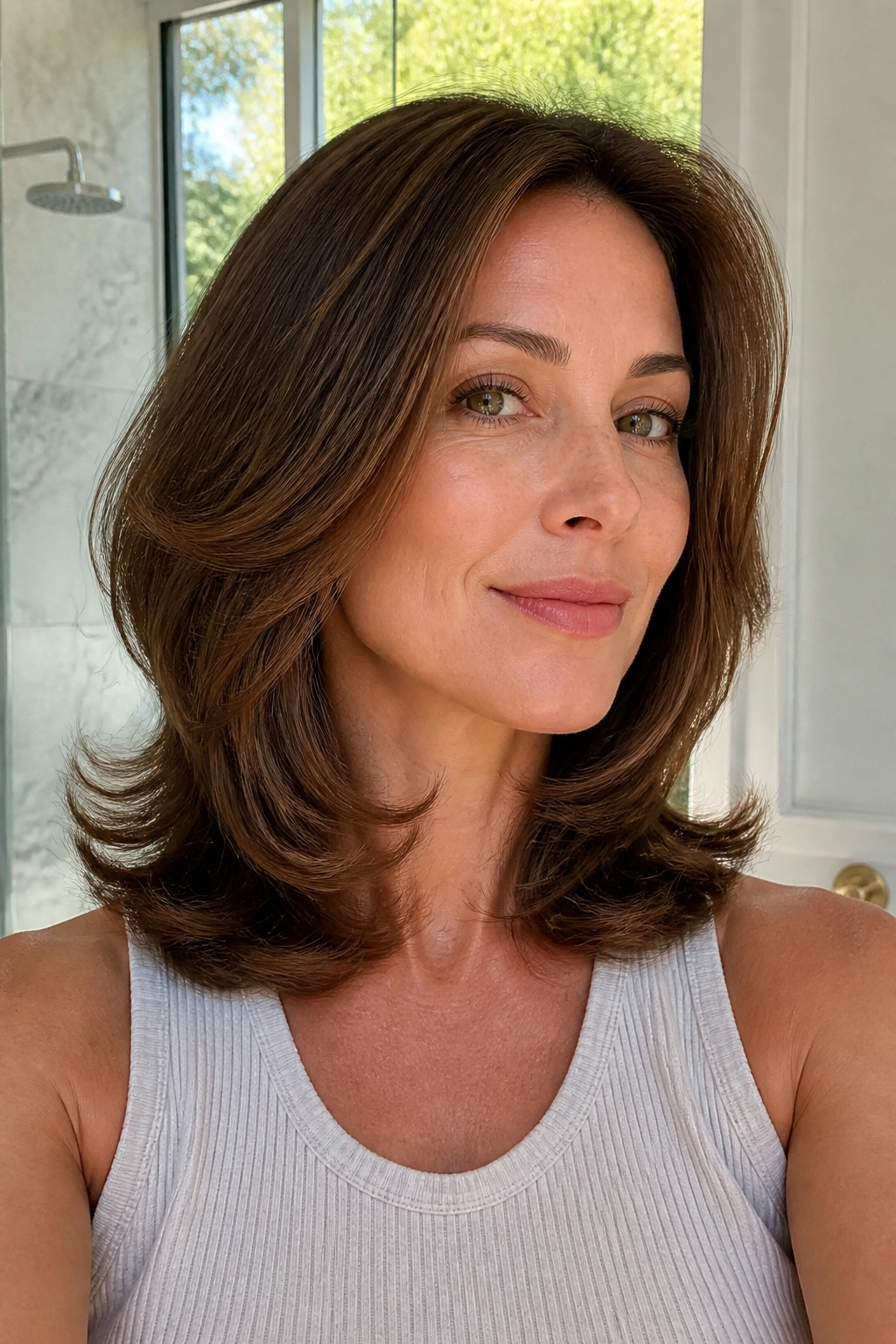
Shoulder-length blowout layers are the kind of style that makes a square face look polished without feeling pinned in. The length gives the jaw room, the layers add movement, and the blowout curve keeps the edges soft instead of angular.
This is a good option if you want hair that feels finished but not stiff. The layers should start below the cheekbone, then feather outward as they move down. A round brush, large velcro rollers, or a 1.5-inch brush can help create that smooth bend without turning the hair into curls.
The blowout matters here because straight shoulder-length hair can sit too flat and crisp on a square face. A rounded finish around the ends changes the whole read. It gives the cut body and makes the face look a little longer.
If your hair is fine, use a root-lifting spray at the crown. If it’s thick, focus on smoothing the ends so they don’t fan outward. Either way, keep the front pieces a touch softer than the back. That small detail helps more than people expect.
It’s classic. It’s wearable. And it does not need a lot of explaining.
Final Thoughts
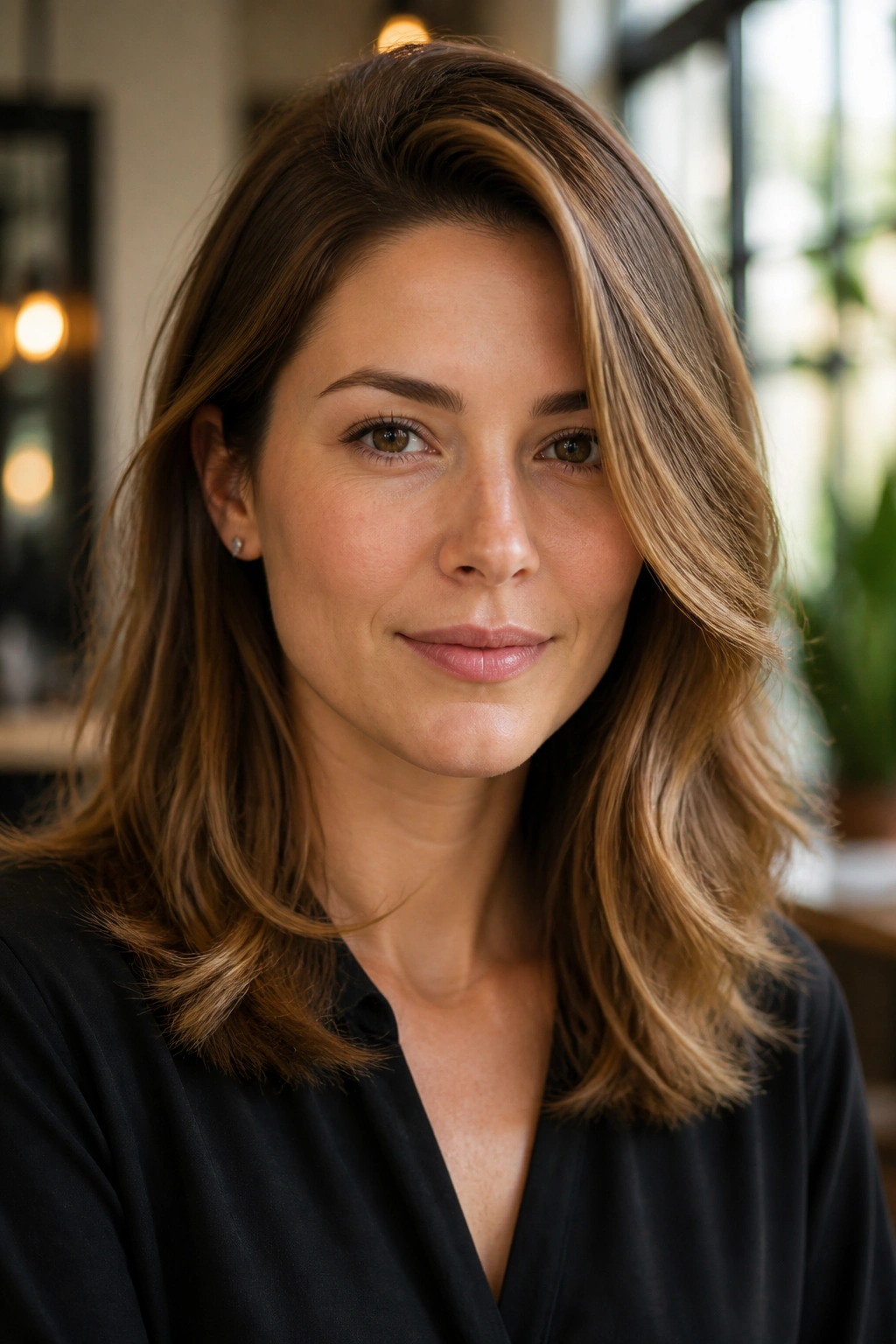
Square faces don’t need disguising. They need balance. That usually means softer edges, a little asymmetry, and enough movement to keep the jaw from becoming the only thing the eye sees.
If you want the simplest starting point, choose one change first: a side part, curtain bangs, or layers that begin below the cheekbone. One good adjustment can shift the whole shape without making you feel like a different person.
Hair should work with your face, not fight it. When the cut, texture, and styling all pull in the same direction, the result looks easy — and that’s usually what people are trying to get to in the first place.
