



Most people with fine hair spend their lives fighting a losing battle against gravity. You know the feeling: you wash and style your hair in the morning, feeling confident, but by noon, it’s clinging to your scalp like a damp blanket. Fine hair—meaning individual strands with a small diameter—often lacks the structural integrity to hold height. It’s not necessarily about the density or how many follicles you have, but about the weight. When fine hair has length, that weight pulls the root flat, creating that dreaded “sleek” look that nobody with fine hair actually wants.
Short hair is the single most effective tool for creating the illusion of density. By removing the length, you remove the weight. Suddenly, those same strands can lift, hold a curl, and maintain a shape that lasts longer than a few hours. It’s physics, really. Short hair has a higher “tensity”—it doesn’t have enough length to succumb to the constant downward pull of gravity.
Making the jump to a short cut requires a bit of strategy. You aren’t just looking for a chop; you are looking for a structural change that maximizes the surface area of your hair. You need cuts that encourage volume at the root and provide enough texture to keep strands from sliding past one another. Whether you prefer a wash-and-go pixie or a polished bob, there is a way to make it work. Here are thirty specific styles designed to build volume, maintain shape, and make fine hair look significantly fuller.
1. The Classic Blunt Bob
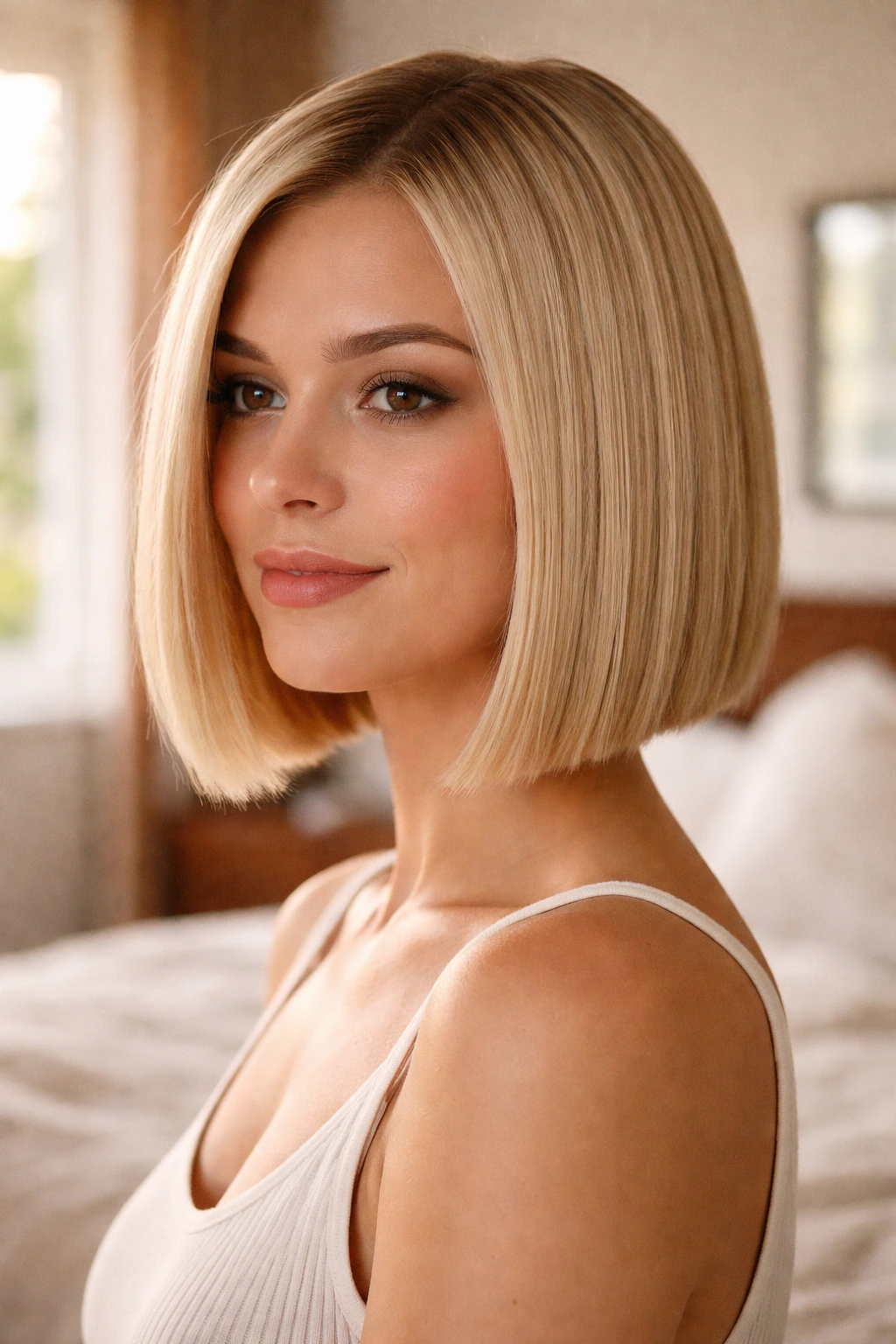
This is the gold standard for fine hair. When you cut fine hair bluntly, you create a solid perimeter at the bottom. This adds weight to the ends, making the overall haircut appear thicker and more substantial. It removes all the wispy, see-through ends that often plague fine-haired individuals.
Why This Cut Works
The visual trick is simple. When the ends are tapered or razor-cut, they look thin and stringy. A blunt line keeps the focus on the density of the bottom edge. It gives the hair a clean, intentional look that feels healthy.
How to Style It
- The Goal: Smoothness and polish.
- The Tool: Use a round brush with boar bristles while blow-drying to pull the hair taut from the root.
- The Product: Apply a lightweight smoothing cream before drying to prevent flyaways.
Pro Tip: If your hair is poker-straight, a blunt bob might look too severe if it’s too long. Aim for a chin-length cut to keep the volume high.
2. Textured Pixie Cut
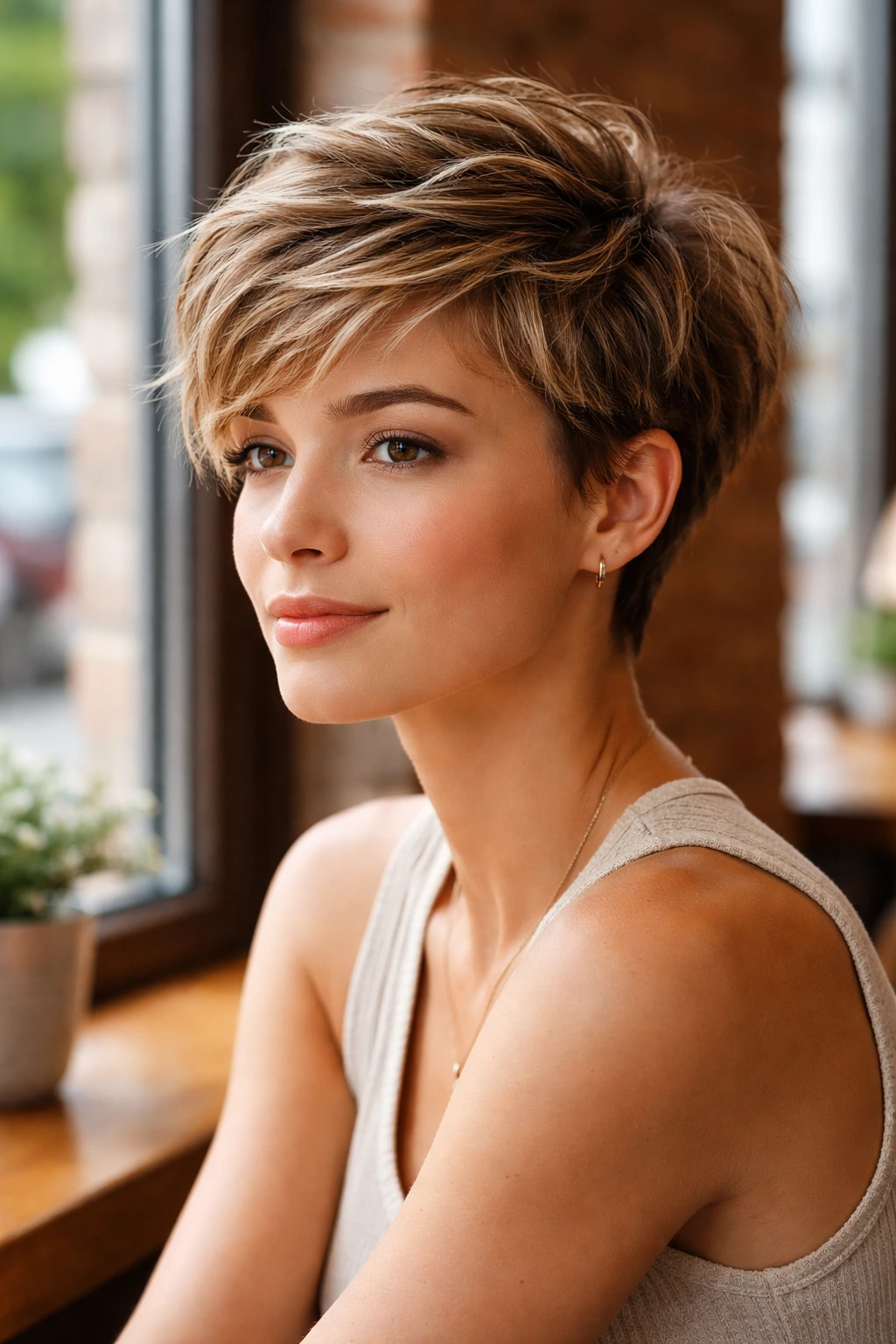
A pixie is the ultimate antidote to the “flat” problem. By cutting the hair very short, especially around the nape and sides, you remove all the weight that usually forces fine hair to lie flat against the skull. The top is left longer and layered to create movement.
The Mechanism of Volume
Because the hair is short, it has natural buoyancy. You don’t need backcombing or extreme teasing to get lift. A little bit of texture spray or dry shampoo is usually all you need to keep the style looking intentional rather than messy.
Maintaining the Shape
You will need to be diligent with trims. Fine hair shows growth patterns more quickly than thick hair. Expect to head back to the salon every four to six weeks to keep the silhouette sharp and the volume concentrated at the crown.
3. The A-Line Lob
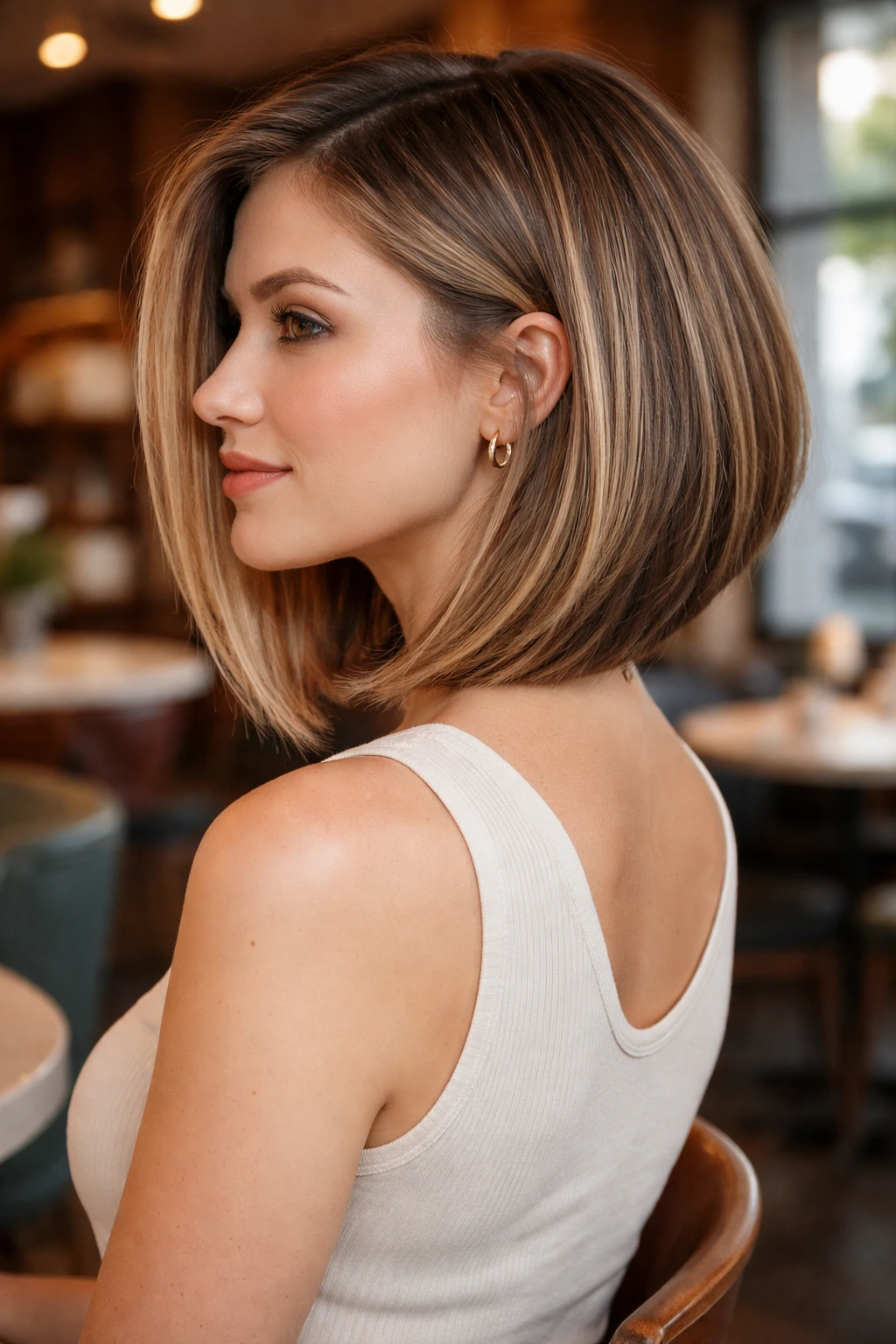
If you aren’t ready for a super-short chop, the A-line lob (long bob) is your best friend. It’s shorter in the back and gradually gets longer toward the front. This shape inherently creates a “stacked” effect in the back, which is exactly where fine hair tends to lose its puffiness.
Why It’s Effective
The angle of the A-line creates a visual line that directs the eye forward, making the hair look fuller. It also keeps the back section short enough to prevent it from dragging down the rest of your hair.
The “Wob” Factor
You can easily add a “wob” (wavy bob) style to this cut. Because the hair is fine, it will hold a wave much better at this shorter length than it would if your hair were down to your shoulders.
4. Choppy Layers
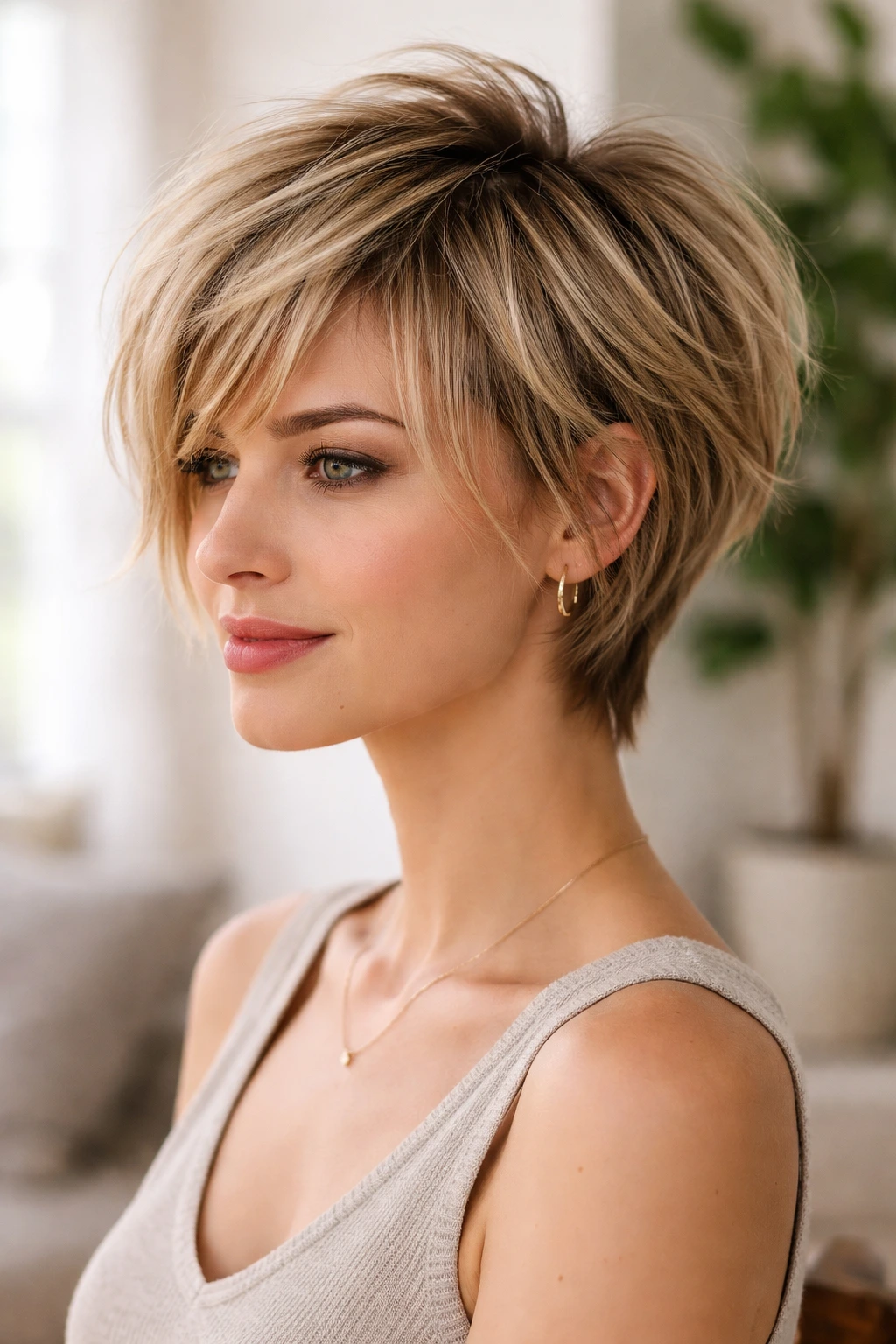
Layers are tricky with fine hair. Too many, and you end up with thin, wispy ends that look sparse. However, strategic choppy layers—concentrated around the crown—can provide a significant lift. The key is to avoid thinning shears, which will only make your hair look thinner.
The Technique
Ask your stylist for point-cutting. Instead of sliding the scissors down the hair shaft, they should snip into the ends at an angle. This creates soft, textured edges rather than harsh, straight lines, which helps the hair sit together in a clump rather than separating into thin strands.
Avoiding “The Mullet”
If you layer too heavily in the back, you’ll lose the weight you need. Keep the layers in the back minimal, and focus the choppy, structural layers toward the top and sides.
5. The Stacked Bob
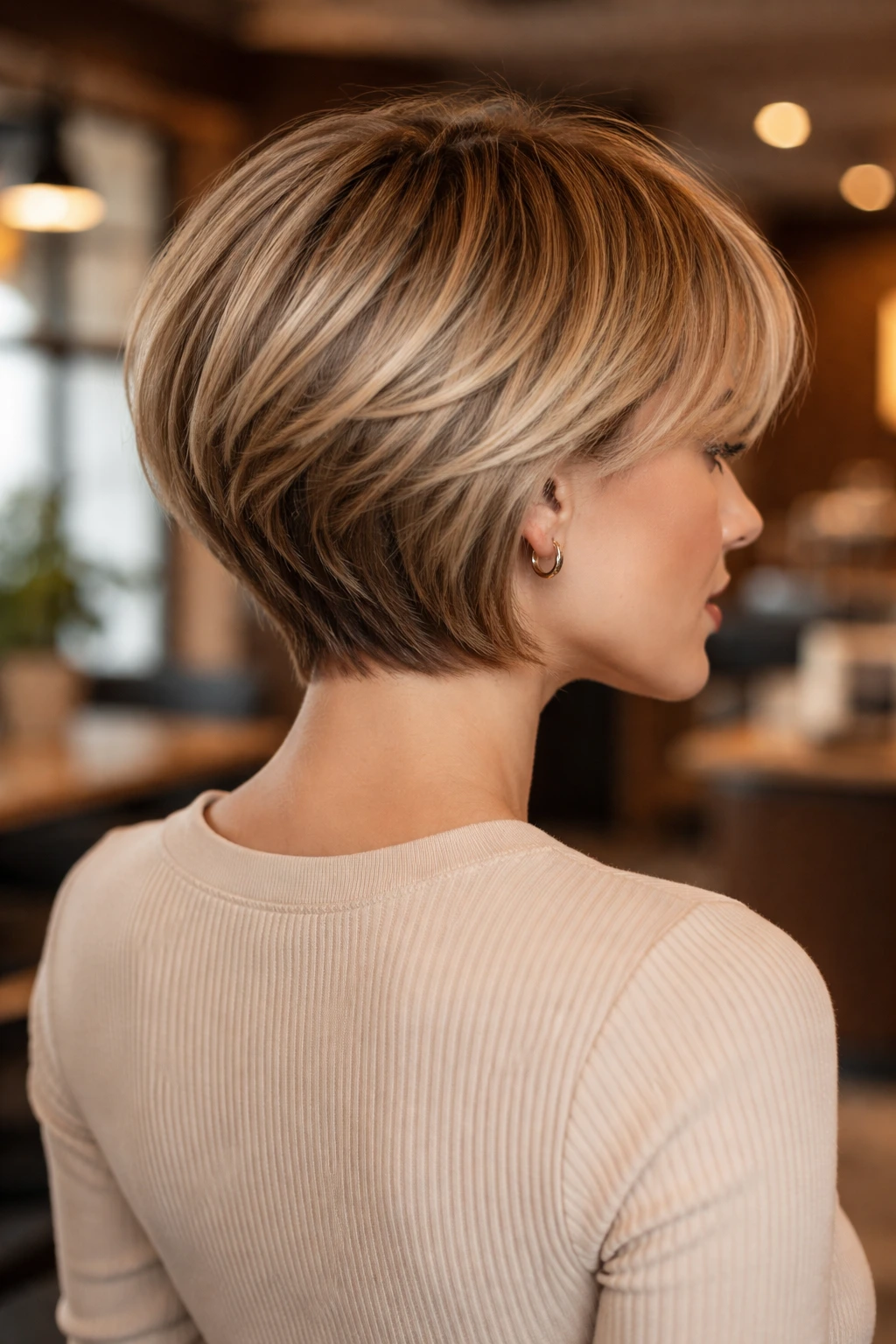
This is a more dramatic version of the A-line bob. It features short, graduated layers at the nape of the neck that “stack” up, creating a natural hump of volume at the crown. For someone with fine hair, this is an instant volume booster.
Why It’s Great for Fine Hair
The stacked layers physically support each other. The shorter hairs underneath act as a scaffold for the longer hairs on top. You get built-in volume without needing to use a curling iron or a massive amount of styling product every single morning.
A Word of Caution
Do not over-stack. If the layers are too short, they can start to look like an outdated, “poofy” style from the early 2000s. Aim for a modern, subtle graduation that follows the curve of your head.
6. Micro-Bangs Bob
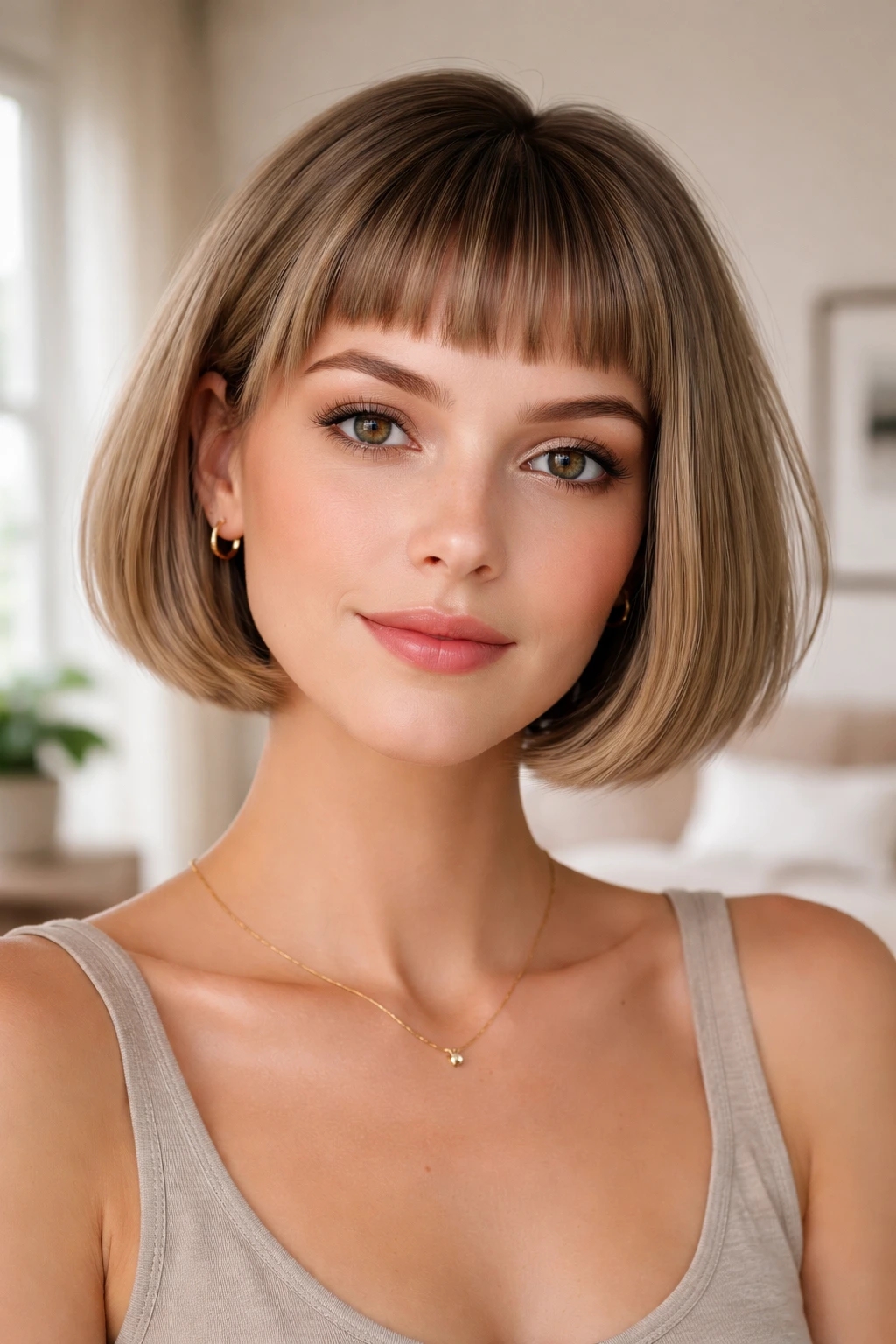
If you are struggling with the front of your hair falling flat, consider adding fringe. A short, blunt bob paired with micro-bangs—bangs that stop well above the eyebrow—frames the face and adds a point of interest that draws attention away from the lack of volume in the lengths.
The Illusion
When you have bangs, the eye is drawn to the face and the eyes rather than the hair density. It’s a classic distraction technique that looks high-fashion and intentional.
Styling Needs
- The Prep: You must blow dry your bangs immediately after washing. If you let them air dry, they will dry in whatever wonky shape the pillow gave them.
- The Tool: A small, round brush is non-negotiable for styling micro-bangs.
7. The French Girl Bob
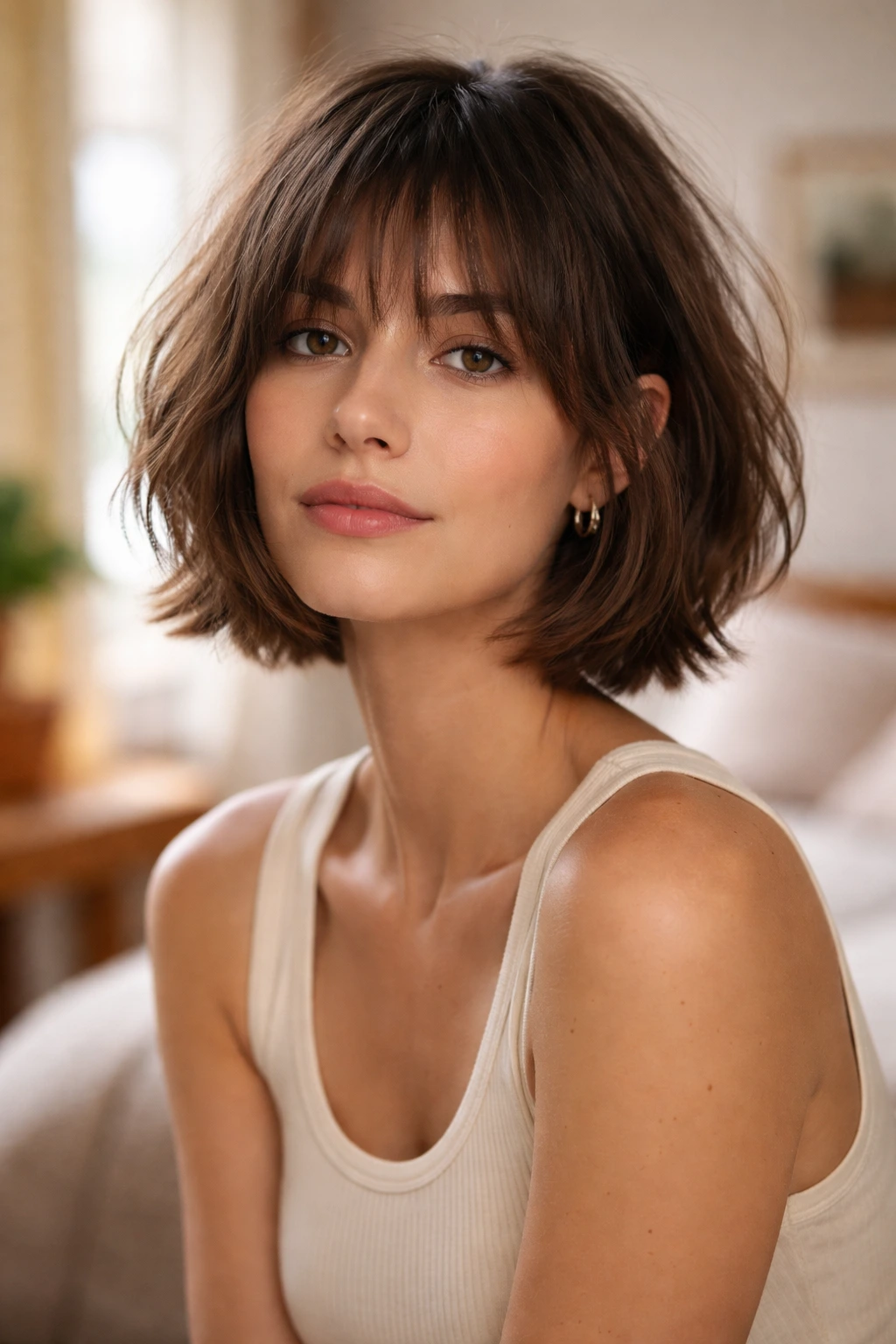
Think of this as the “cool” cousin of the blunt bob. It hits right at the jawline or even slightly higher, around the cheeks. It’s often paired with a wispy, natural fringe. It’s meant to look effortless, slightly messy, and very chic.
Why It Works for Texture
Fine hair usually has some natural wave or bend. This cut embraces that. It doesn’t require a sleek, straight finish. In fact, it looks better with a little bit of natural bedhead texture.
The Product Secret
Skip the smoothing creams and heavy pomades. Use a sea salt spray or a texture paste. You want the hair to feel slightly “dirty” or lived-in. That grit is what keeps the style in place.
8. Shaggy Pixie
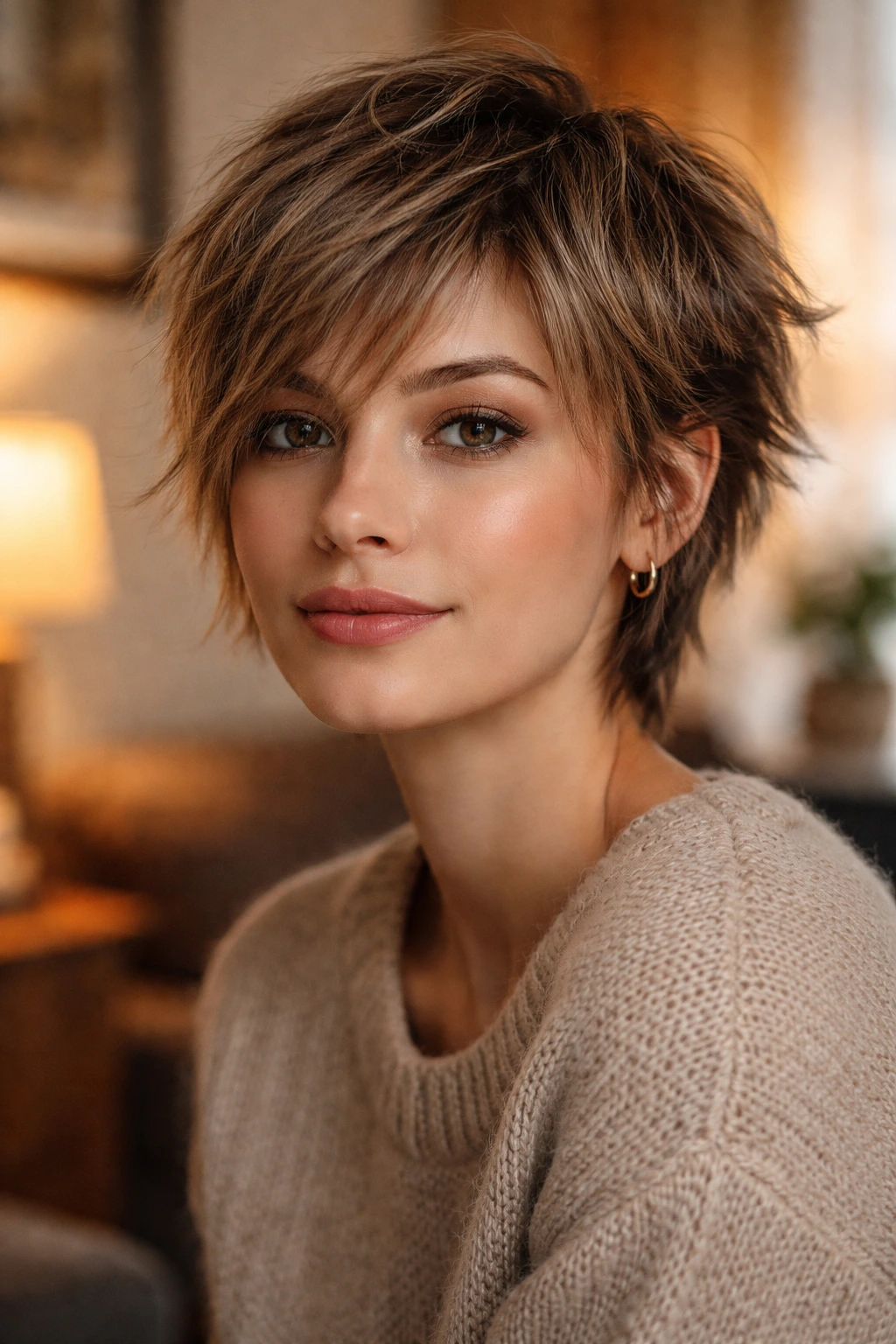
The shaggy pixie is less about “polite” and more about “rock and roll.” It incorporates longer, piece-y layers that sweep across the forehead and sit over the ears. It creates a soft, feathered look that softens the face.
The Volume Source
By leaving the hair longer in the front and the crown, you have more hair to work with for styling. You can push it forward, side-sweep it, or mess it up with wax.
Who Should Choose This
This cut is excellent if you have a square or oblong face shape. The softness of the layers helps break up angular features, and the added volume on top balances a longer face.
9. Side-Swept Pixie
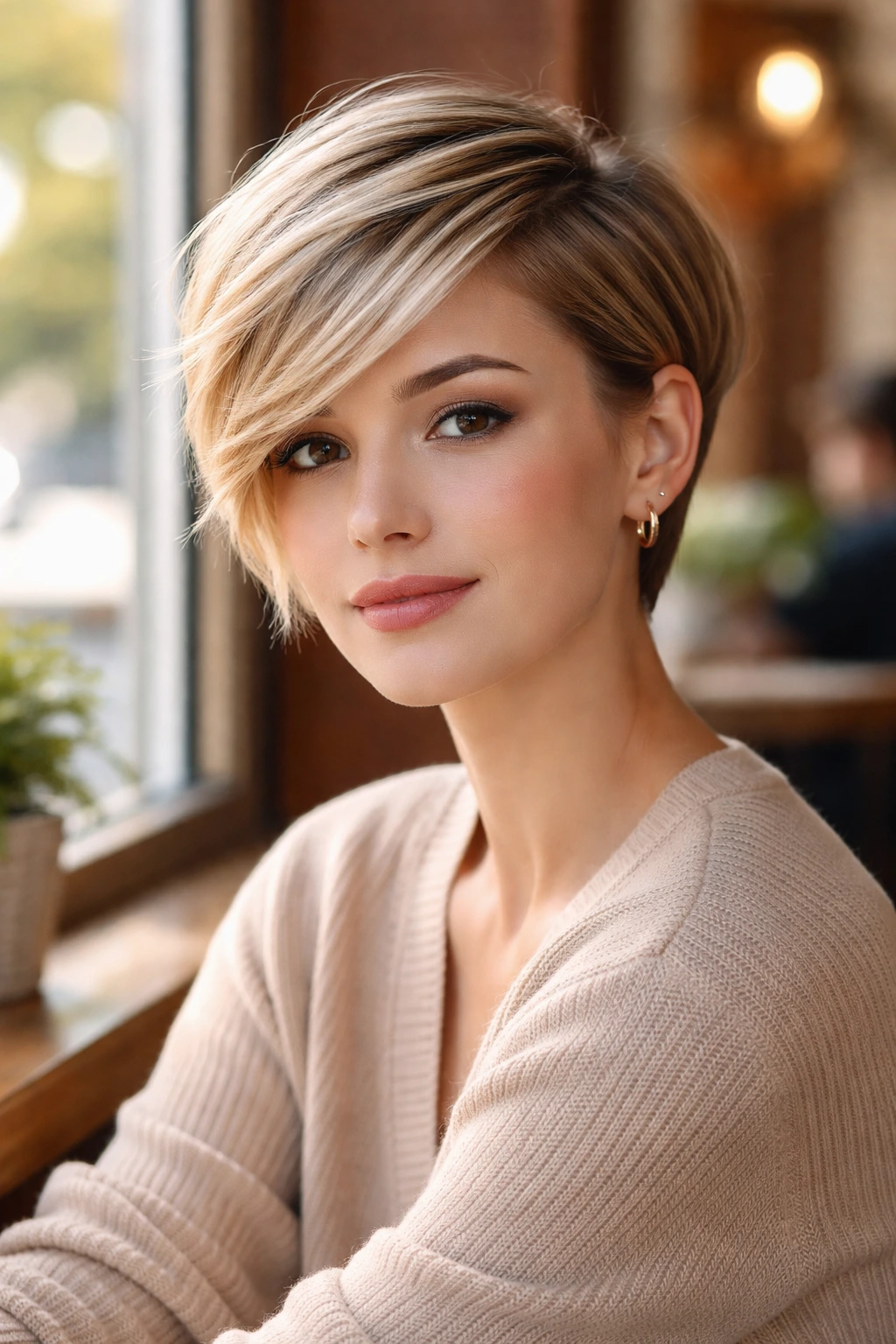
If you aren’t sure about committing to a full, choppy pixie, the side-swept version is a safer transition. It keeps a significant amount of length on one side, allowing for a deep side part.
Leveraging the Deep Part
A deep side part is the oldest trick in the book for volume. It forces the hair to sweep across the head, instantly lifting the roots on the side where the hair is pushed over. It creates a “bump” of volume that stays all day.
Maintenance
Because one side is longer, you need to ensure the shorter side is kept tight. If the short side grows out too much, the style loses its asymmetrical charm and just looks like a haircut that hasn’t been maintained.
10. Graduated Bob
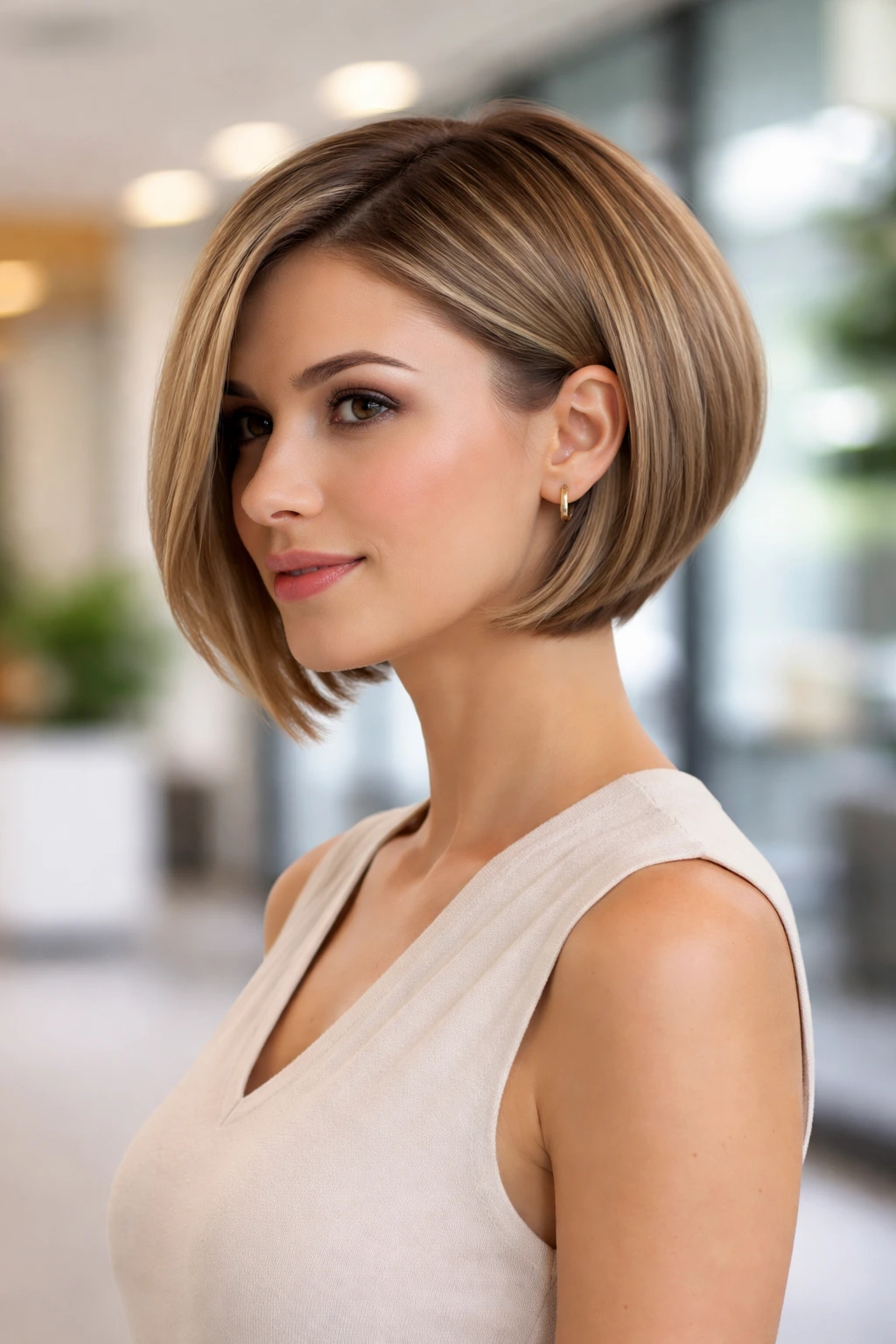
The graduated bob is a smoother version of the stacked bob. It’s all about the transition from short at the back to long at the front, but without the extreme, “choppy” layers. It’s a very soft, sophisticated silhouette.
The Sophistication Factor
This is often considered a “grown-up” cut. It’s elegant, professional, and very easy to maintain. Because the transition is so smooth, it doesn’t require a lot of product to look “finished.”
Daily Styling
A quick blow-dry with a paddle brush is usually enough. You don’t need to do extensive styling unless you want to add curls. The cut itself does most of the heavy lifting.
11. The Textured Lob
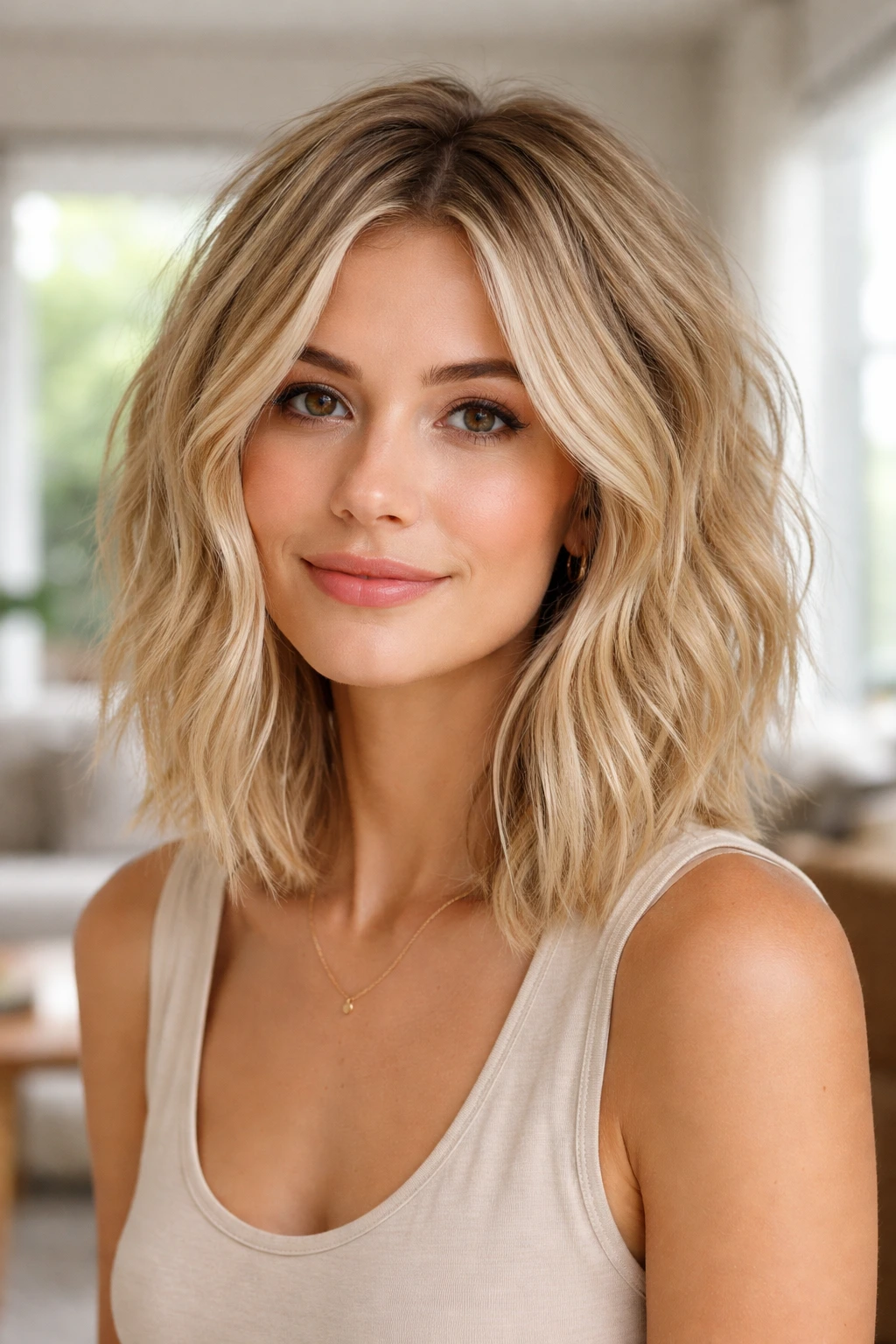
Similar to the A-line lob, the textured lob focuses on the surface of the hair. Your stylist will use a razor or thinning scissors (very carefully) to create soft, broken-up ends that have movement.
Dealing with “The Frizz”
Fine hair can get frizzy if you over-texture it. The key here is to keep the ends textured but the mid-lengths smooth. Use a lightweight serum on the bottom three inches of your hair to keep the texture looking defined and intentional, not dry.
Why It’s Versatile
You can put this length into a small ponytail, a bun, or a half-up style. It’s the longest style on this list, which gives you the most options for days when you don’t want to style your hair at all.
12. Tapered Pixie
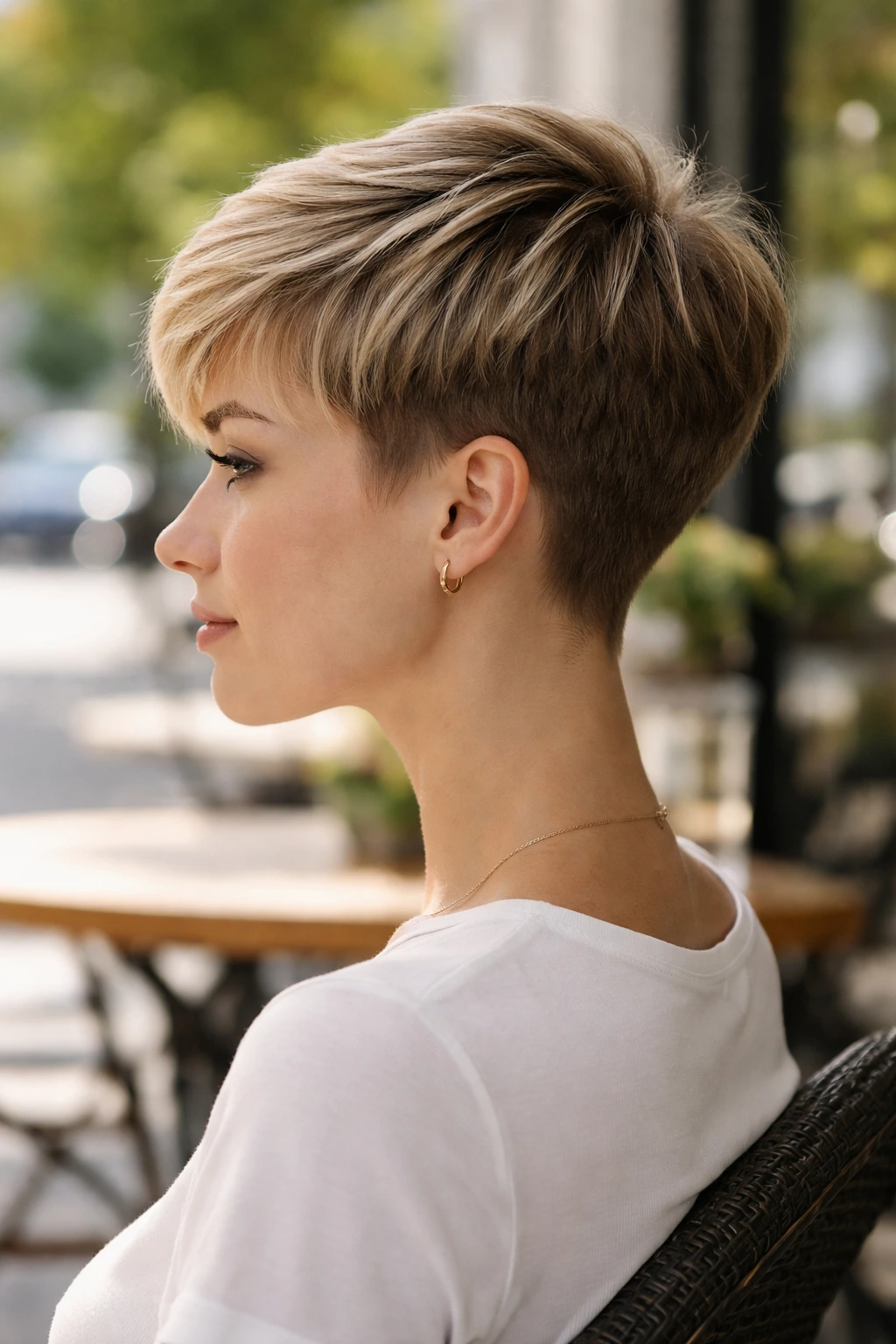
The tapered pixie involves cutting the hair very short at the nape of the neck and blending it up into longer hair at the crown. It’s a classic, clean-cut look.
The Nape Focus
The nape is where fine hair often gets fuzzy or starts to mat. A tapered cut keeps the neck area looking clean and tight. It creates a beautiful line that accentuates the neckline and shoulders.
Styling Tip
Use a tiny bit of pomade on your fingertips to define the hair at the nape. It prevents the hair from “fluffing out” and keeps the silhouette neat.
13. Curly Crop
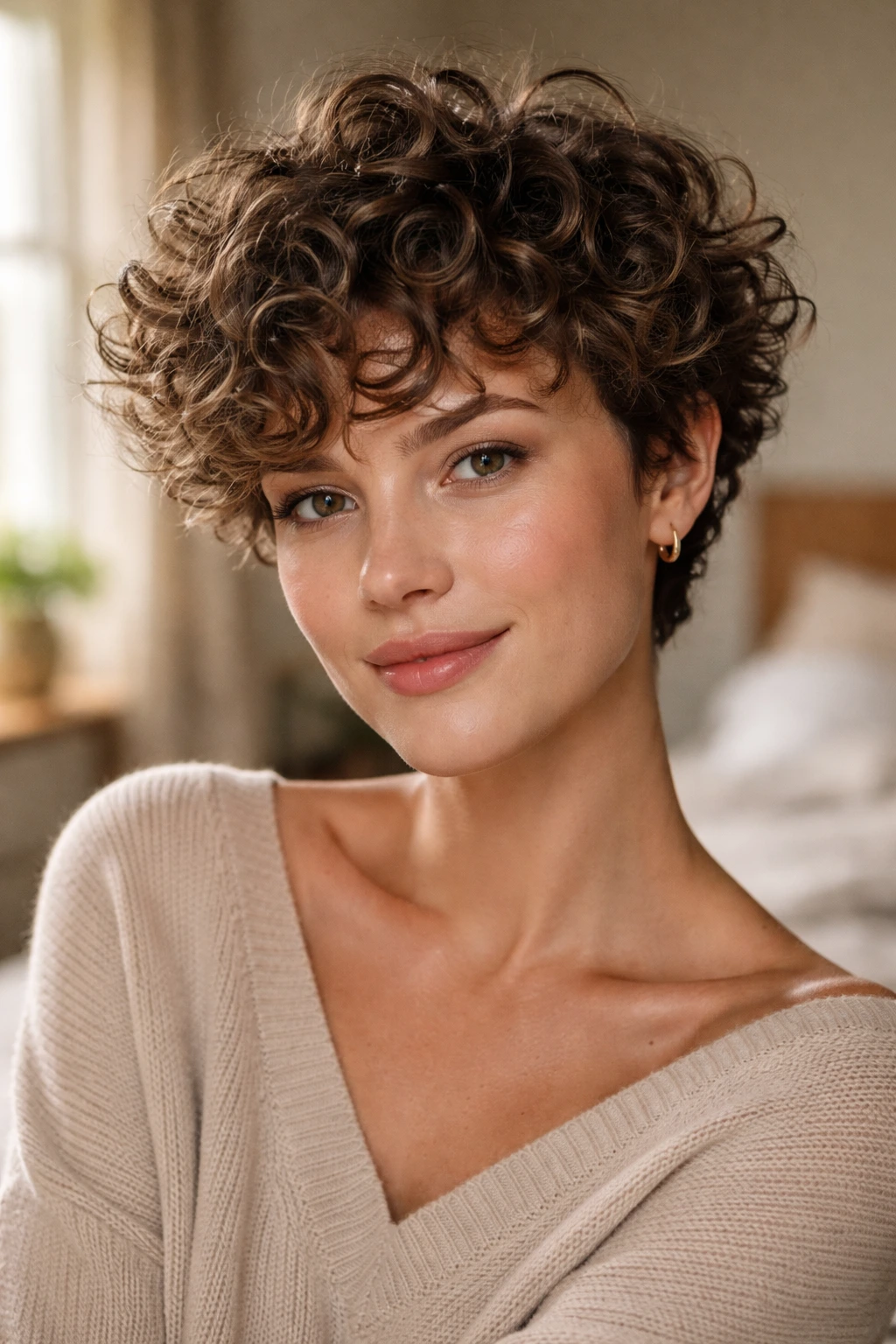
If your fine hair has a natural wave or curl, don’t try to straighten it into a bob. Embrace the curl with a short crop. The shorter you cut curly hair, the more it will want to spring up, which gives you a massive amount of volume without any effort.
Managing Fine Curls
Fine curls need moisture. Use a curl cream or a leave-in conditioner before drying. Avoid brushes entirely—use a wide-tooth comb or just your fingers to arrange the curls.
The “Shrinkage” Factor
Always remind your stylist that your hair will shrink. Start longer than you think you want, and take it shorter if necessary. It’s much easier to cut more off than to wait for it to grow back.
14. Asymmetrical Bob
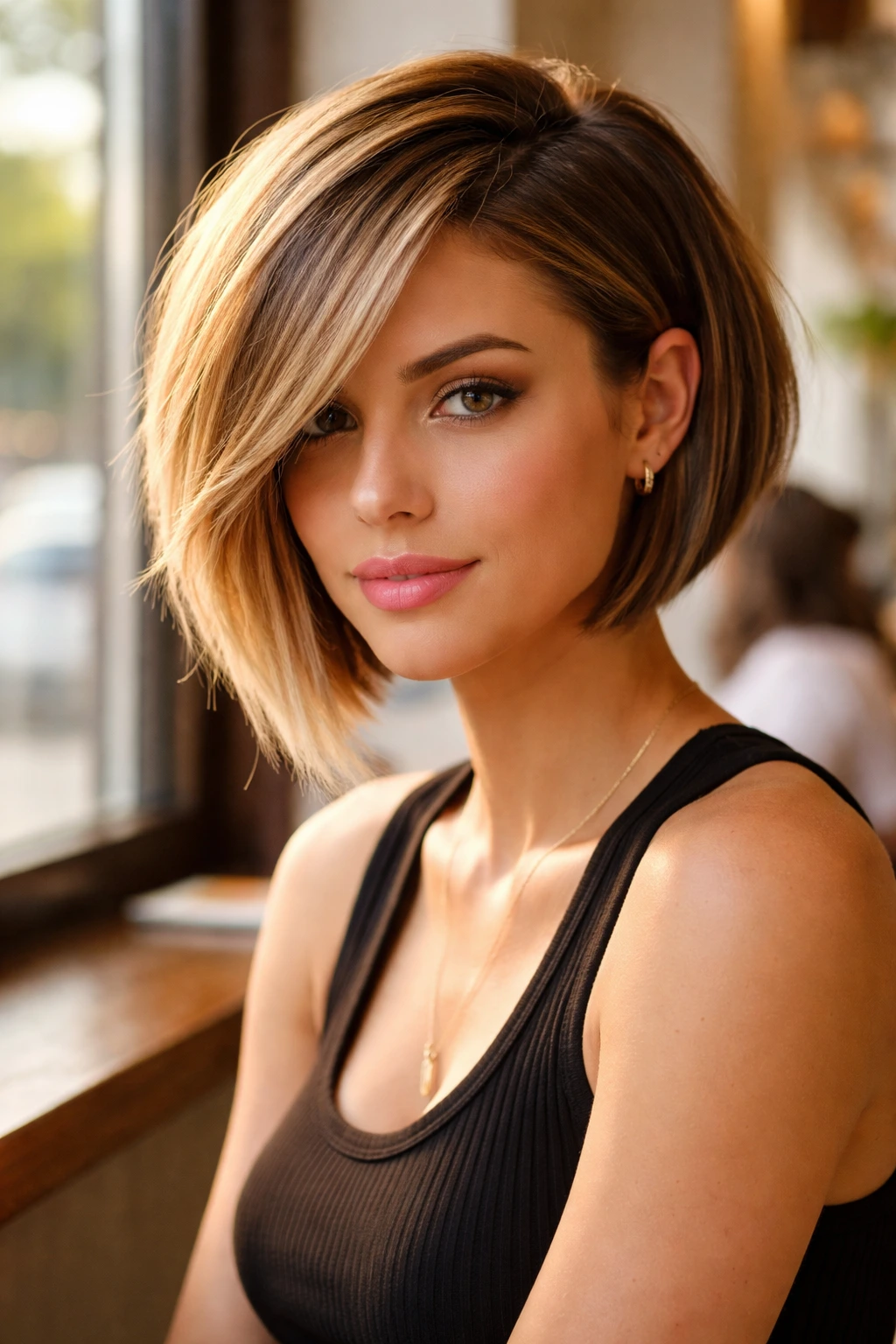
One side is shorter, and one side is longer. It’s an edgy, artistic cut that naturally makes the hair look thicker because it’s a deliberate, bold choice.
Why It Works
The contrast between the two sides distracts the eye. You aren’t looking at “thin hair”—you’re looking at a cool, edgy haircut. It’s a great way to handle fine hair if you want to make a style statement.
The Commitment
You need to be prepared for the maintenance. This cut grows out quickly, and the asymmetry will become less defined within a few weeks. You’ll be in the salon chair more often for this one.
15. Razored Pixie
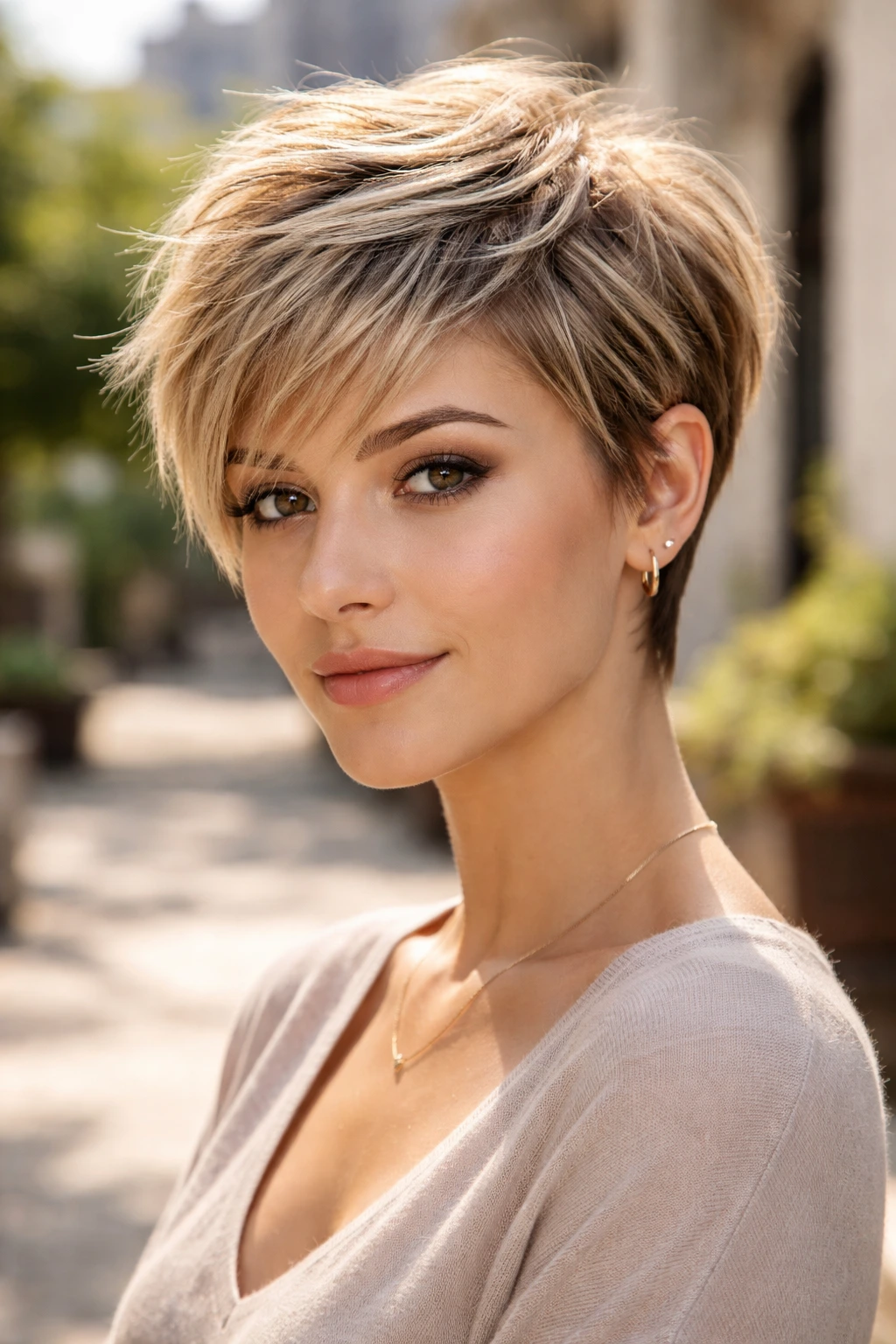
A razored pixie uses a straight razor to cut the hair. This leaves the ends soft and frayed, which is perfect for fine hair that needs texture. It makes the hair look piece-y and full of life.
The Texture Secret
The razor allows the hair to lay over itself in soft layers. This creates a “feathered” effect that is nearly impossible to achieve with standard shears. It’s very soft and feminine.
Warning
Ensure your stylist is experienced with a razor. If the blade is dull, it will tear the hair cuticle, leading to split ends within a week. Only get this done by a stylist who knows how to maintain their tools.
16. Soft Blunt Cut
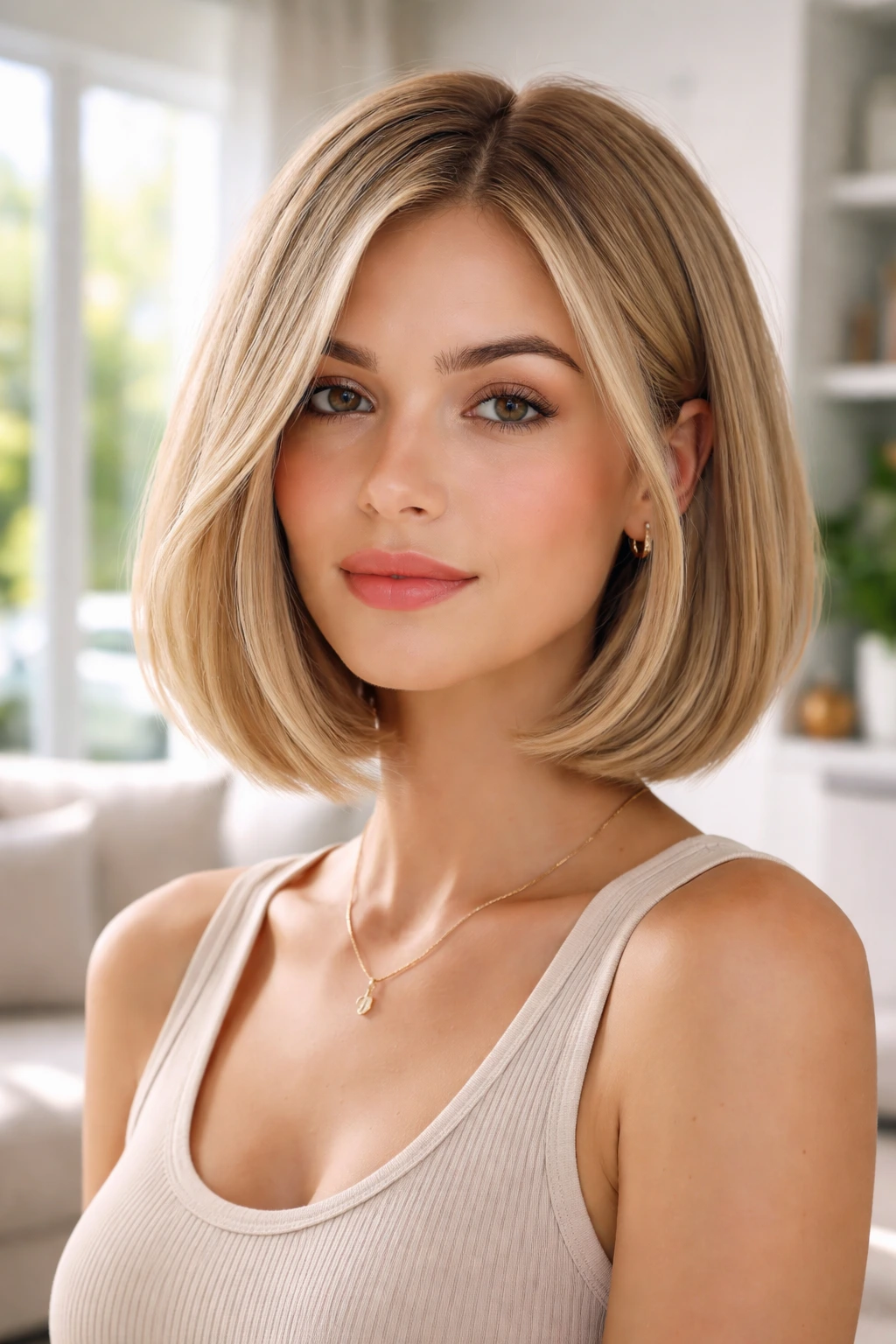
This is a blunt bob, but instead of cutting straight across with heavy scissors, the stylist cuts it slightly softer. It’s a blunt line that has been “point-cut” just enough to break up the harshness, but not enough to lose the weight.
The Best of Both Worlds
You get the thickness of the blunt cut, but you get the movement of a layered cut. It’s a very popular “modern” look that feels effortless.
Hair Health
This cut relies on healthy ends. Because it’s blunt, you can’t hide split ends. You need to use a heat protectant every single time you use an iron or dryer to keep the bottom line looking crisp.
17. Choppy Bob with Fringe
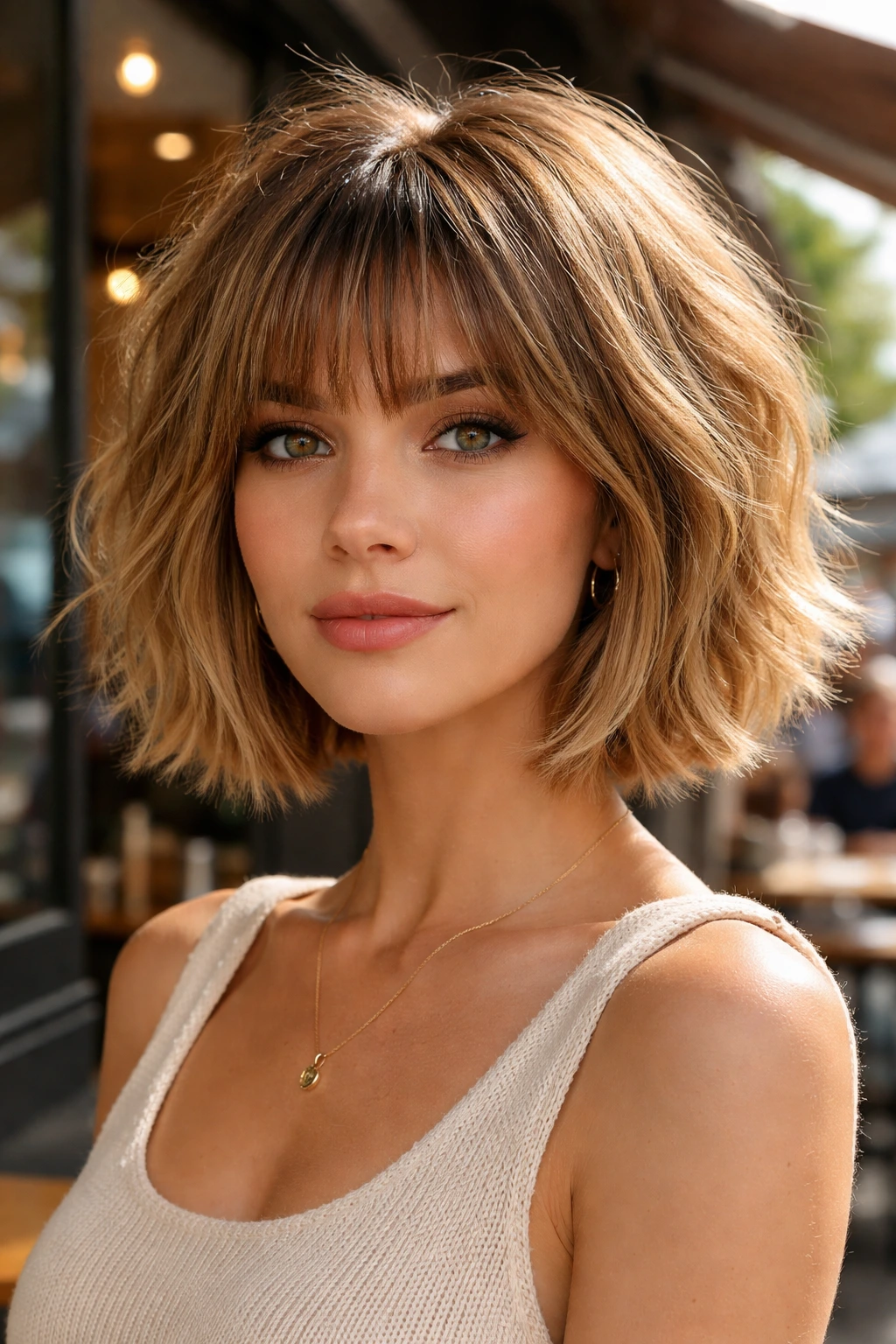
This cut combines the bob structure with choppy, texturized bangs. It’s a high-energy look that feels very youthful.
Why It Works
Fringe is a volume-saver. It forces the hair at the front of your head to stand up and curve over. If you have fine hair that likes to sit flat, having a dedicated section of fringe that must be styled (and thus lifted) helps the whole look.
Styling the Fringe
Don’t blow dry the fringe flat to your forehead. Use a round brush to lift it up and away from your roots before letting it fall forward. That little bit of root lift makes all the difference.
18. Undercut Pixie
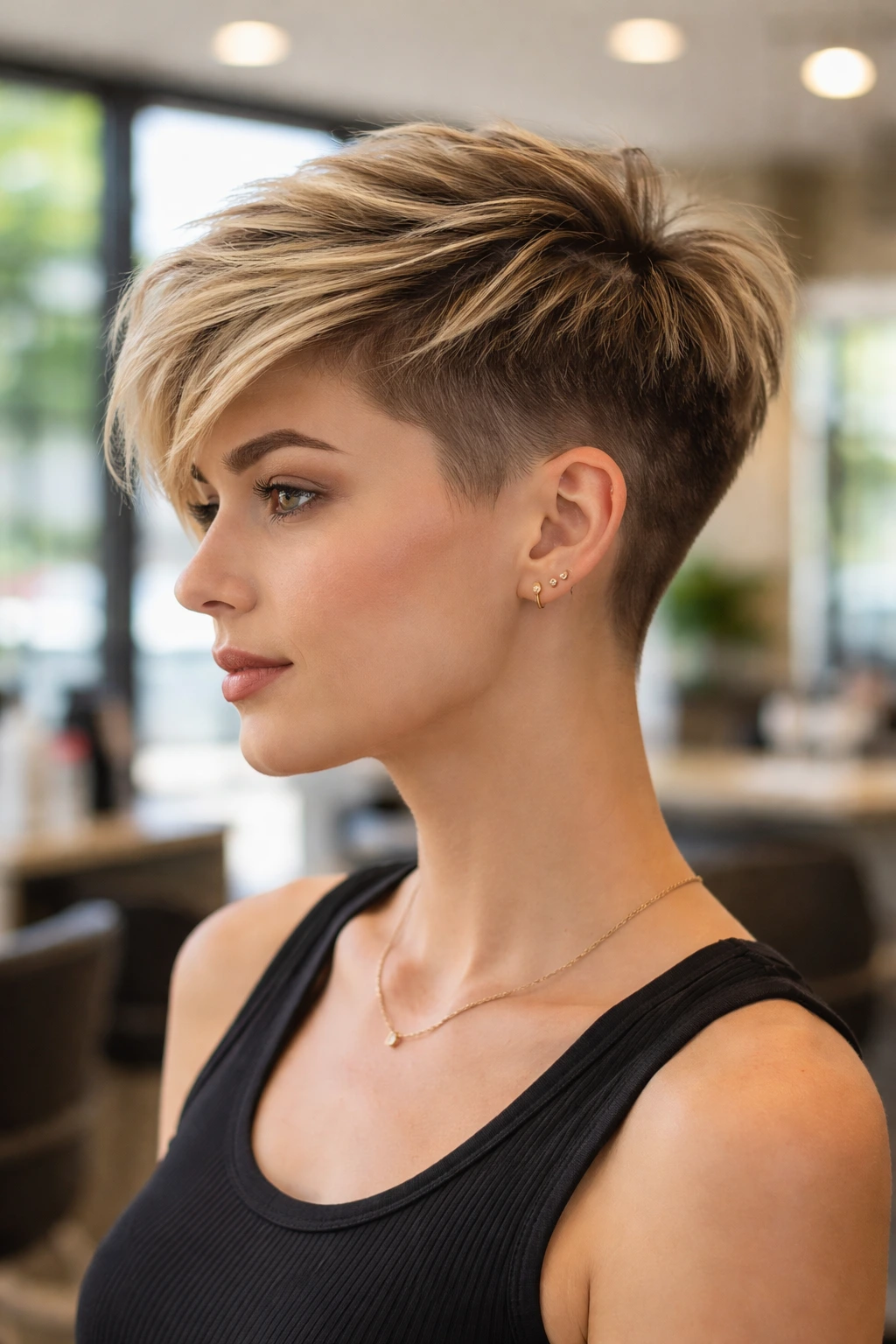
The undercut pixie involves shaving or buzzing the hair very short on the sides and back, leaving length on top. It’s a bold look that completely eliminates the weight from the bottom of your hair.
The Volume Reality
With the weight removed from the bottom and sides, the hair on top has nowhere to go but up. It creates a natural mohawk-style lift that is very easy to manage with a little product.
The Vibe
This is definitely for someone who wants to embrace a shorter, more daring look. It’s low maintenance in terms of styling, but high maintenance in terms of trips to the barber or salon to keep the undercut short.
19. Layered Pixie
The layered pixie is the “soft” version of a pixie. It involves many small, blended layers throughout the top and sides. It’s not an undercut, and it’s not an A-line. It’s just layers on layers.
Managing Layers
With fine hair, you must be careful not to make the layers too short. If they are too short, they will stick up in the air rather than laying down. Ask for “longer” layers that blend well.
The Result
You get a soft, rounded shape that frames the head beautifully. It looks like you have more hair than you actually do because the layers create depth and shadow.
20. Sleek Jaw-Length Bob
This is the “power bob.” It’s cut to exactly hit the jawline. It is meant to be worn straight and sleek.
Why Fine Hair Excels Here
Fine hair is often naturally straight, which makes this look easier for you than for someone with coarse or curly hair. A jaw-length bob makes the hair look thick and expensive.
The Secret Ingredient
Shine. Because this look is so sleek, your hair needs to look healthy. Use a light glossing spray or a shine serum. Avoid heavy oils, which will make fine hair look greasy rather than glossy.
21. The “Wob” (Wavy Bob)
If you have fine hair, you might be tempted to straighten it to make it look “sleeker.” Don’t. Waves add volume. The “Wob” is a chin-length or shoulder-length bob styled with beachy, messy waves.
The Strategy
Use a 1-inch curling iron or a flat iron to add random bends. You don’t want perfect, pageant-queen ringlets. You want “I just spent the day at the beach” texture.
Why It Works
The bends in the hair create air pockets. Those air pockets are literally volume. The hair is no longer lying flat; it’s being propped up by the waves.
22. Disconnected Bob
A disconnected bob features layers that don’t quite blend into the base length. It creates an edgy, piece-y look that is great for making hair look thicker.
The Illusion of Density
Because the layers are “disconnected,” they sit on top of each other rather than blending seamlessly. This creates a staggered, full look that gives the impression of multiple layers of hair.
Who Needs This
If your hair is particularly limp, this cut can create the “shag” look without going full 70s-style shag. It’s a modern approach that feels very current.
23. Wispy Pixie
This is a very soft, delicate version of a pixie. It’s perfect for someone with a smaller face who doesn’t want their hair to overpower their features.
The Softness
Everything is cut with scissors. The edges are soft, the layers are gentle, and the whole style is meant to look airy. It’s very feminine and light.
Product Selection
Do not use heavy waxes. They will clump the hair and make it look thin. Use a light texture mousse or a volumizing powder. The powder is excellent—it adds grip to the hair without weighing it down.
24. Inverted Bob
The inverted bob is similar to a stacked bob, but the angle is more pronounced. The back is very short, and the front has long, face-framing pieces.
The Visual Impact
The long pieces in the front frame the face, while the short back creates lift. This combination is highly effective for fine hair because it balances the need for volume (in the back) with the desire for a style (in the front).
Styling
You’ll want to blow dry the front pieces inward toward your face. This creates a “curl” that adds softness and masks any thinning around the temples.
25. Layered Shag
If you aren’t ready to go super short, a short shag is the answer. It’s a shoulder-length or slightly shorter cut with lots of layers and, usually, fringe.
The Volume Benefit
The shag is built on layers. Layers = volume. By keeping the length around the collarbone, you maintain enough “hair” to feel comfortable, but the layers keep it light and lifted.
Styling the Shag
This cut loves texture. Use a sea salt spray when the hair is damp. Let it air dry, or use a diffuser. A shag is not supposed to be “perfectly” styled, which is a huge relief for anyone with fine hair.
26. The Bowl Cut (Modern Version)
Yes, the bowl cut. Hear me out—this isn’t the one your mom gave you in the kitchen. The modern version features a disconnected undercut at the nape, with a smooth, rounded, blunt layer on top.
Why It Works
It’s incredibly chic. It creates a smooth, solid shape that makes fine hair look like a thick, luxurious helmet of hair. It’s daring, but for the right face shape, it’s stunning.
The Maintenance
This style requires the most precision. If it grows out even a little bit, it loses the “bowl” shape. You need to stay on top of your salon visits.
27. Fringed Bob
If you’re struggling with a receding hairline or thinness at the front, a bob with heavy fringe is a great camouflage. It covers the hairline and adds thickness where you need it most.
The Balance
Keep the fringe wide—from temple to temple. This creates a thick band of hair across the front, which tricks the eye into thinking the rest of your hair is just as thick.
The Daily Routine
Bangs are high maintenance. If you get bangs, you are committing to washing them daily. They pick up facial oils faster than the rest of your hair, and oily bangs will fall flat instantly.
28. Feathered Pixie
The feathered pixie uses a specific cutting technique where the stylist “feathers” the layers—a lighter, softer, layered touch. It’s reminiscent of the soft, voluminous styles of the past but updated for a modern aesthetic.
Why It’s Soft
The feathers create a halo of hair around the head. It’s very soft, very touchable, and doesn’t require a lot of product to keep in place.
The Best Hair Type for This
This works best on hair that has a slight natural bend. If your hair is poker straight, you’ll need to use a curling wand to get that “feathered” effect.
29. Blunt Shag
A blend of the blunt bob and the shag. It has the blunt perimeter you need for thickness, but the interior is heavily layered for that shaggy texture.
The Combination
It’s the best of both worlds. You get the heavy bottom line (thickness) and the layered top (volume). It’s an ideal cut for someone who wants to look edgy without sacrificing the illusion of density.
Styling
Use a texture paste on your hands, rub it together, and “scrunch” the hair. Don’t smooth it down. You want the ends to look choppy and separated.
30. Side-Part Pixie
This is the classic, old-school pixie, but styled with a deep side part. It’s sophisticated, elegant, and timeless.
The Power of the Part
By training your hair to part on the side, you create an automatic lift at the root. It’s the simplest way to gain height without adding a single product.
The Final Touch
Use a little bit of smoothing cream just to keep the sides tucked behind the ears. This keeps the look clean and prevents it from getting too messy.
Final Thoughts
The secret to mastering fine hair isn’t finding a magic product that makes every strand twice as thick—it’s learning how to work with the physics of the hair you have. Short cuts do the heavy lifting for you by removing the weight that pulls your hair into submission. Whether you choose a blunt, sleek bob or a piece-y, textured pixie, the objective remains the same: create the illusion of density and keep the lift where it matters most.
Don’t be afraid to experiment with length. If you’ve been living with long, flat hair, even a few inches of reduction can be a major change. Talk to your stylist about your texture and your daily routine. A great cut is only half the battle; the other half is knowing how to style it so that it works for you, not against you. Once you find that rhythm, you’ll stop fighting your hair and start enjoying the versatility that comes with a well-executed short style.
