



A round face and natural hair can be a gorgeous match, but the wrong shape can make the cheeks do all the talking.
Natural hairstyles for round faces work best when they add height, angles, or length below the jaw. A side part, a lifted crown, a tapered side, or even one small curve of hair falling longer on one side can change the whole read of the face.
I care more about shape than trend names here. A style can be simple and still flatter if the outline is doing something useful — pulling the eye up, breaking a circle, or keeping the widest part of the hair away from the widest part of the face.
Some of these looks are quick. Some take a little patience. All of them have one thing in common: they work with soft features instead of trying to hide them.
1. High Puff with Crown Lift
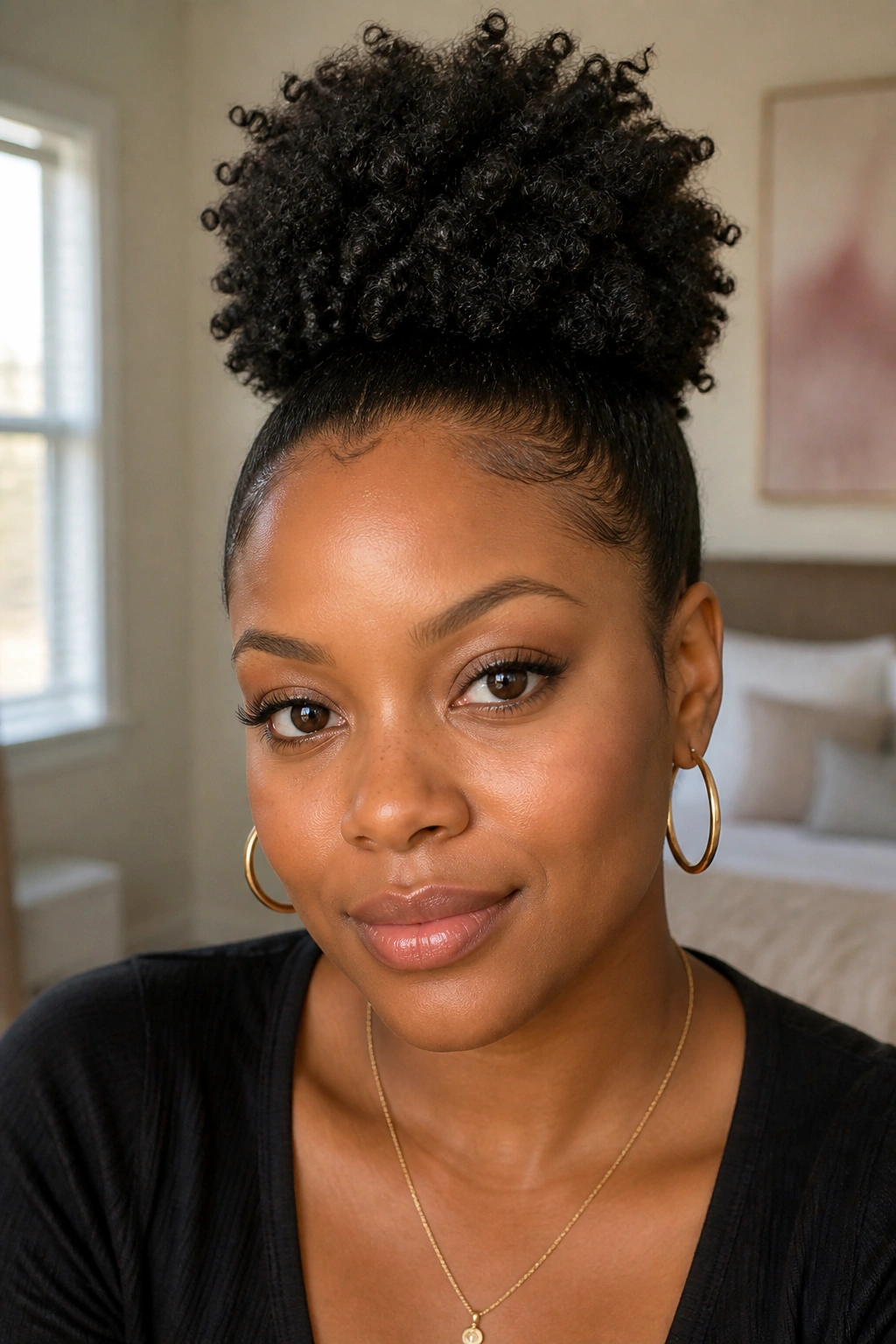
A high puff is the fastest shape shift in the bunch. It pulls the curls up, clears the cheek area, and gives the face more vertical room.
Why It Works on a Round Face
The trick is placement. Put the puff in the upper third of your head, not at the back of the crown where it can slump, and not so far forward that it starts to look cramped.
The sides should stay smooth, but not slicked flat to the point of tension. A soft brush, a little leave-in, and a satin scrunchie are usually enough. If your hair is dense, leave a little fullness above the tie so the puff reads tall instead of wide.
- Best on stretched curls or blown-out natural hair
- Works well with 1 to 2 inches of root lift
- Looks strongest when the puff sits above the ears
- Keeps the jawline open and clean
Small tip: don’t tuck the puff too low. That one inch can be the difference between “lifted” and “boxed in.”
2. Side-Part Afro for Round Faces
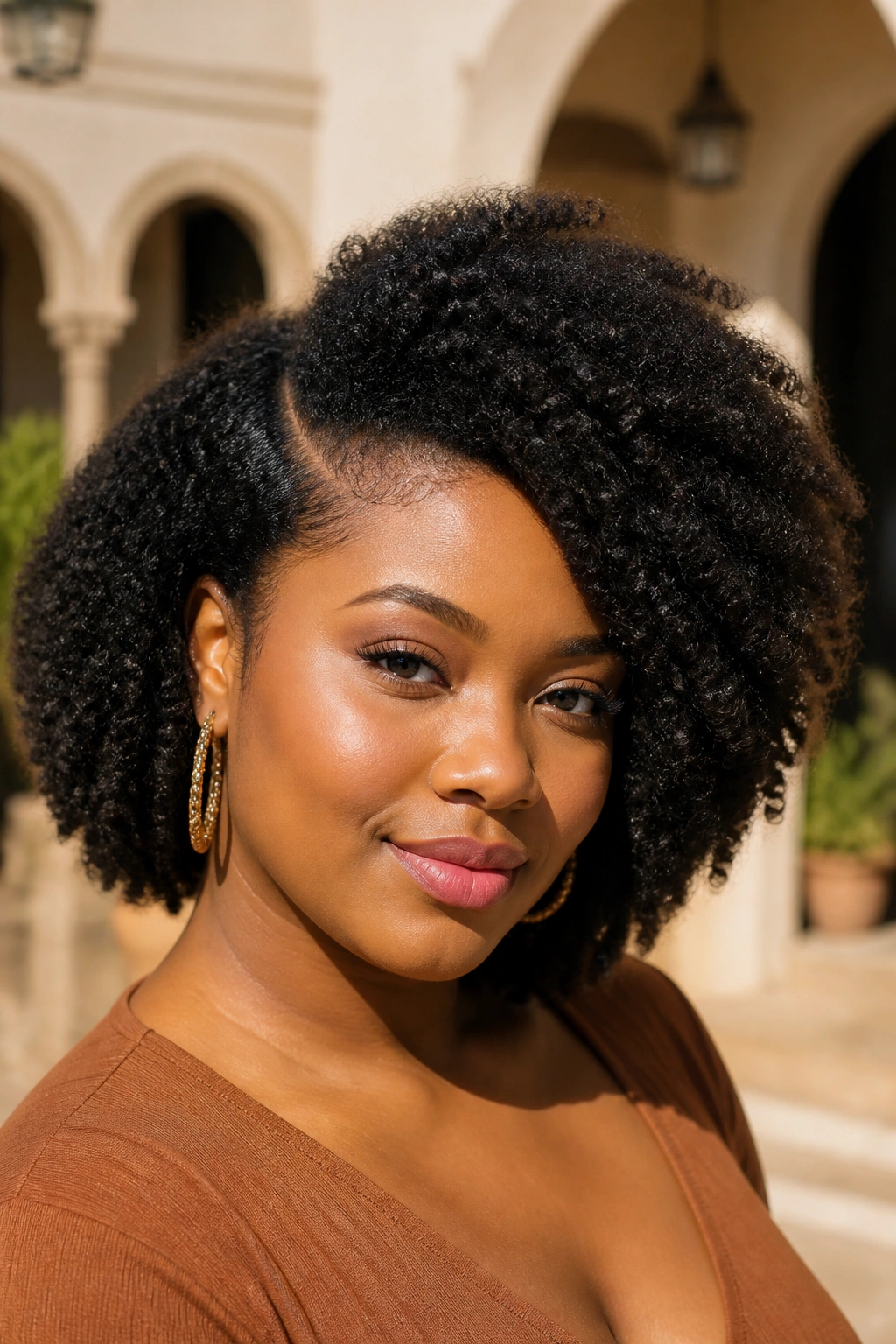
A side part does more than move hair around — it breaks the circle. That matters a lot when your face already has soft width through the cheeks.
With a side-part afro, the goal is not to flatten the texture. It’s to let the volume rise and fall in a way that feels directional. A deep side part gives the eye somewhere to travel, and the hair can stay big without reading as wide. I like this one more than a dead-center part when the afro is short to medium length, because the diagonal line does half the work for you.
Keep the shape a little taller at the top and a touch narrower at the temples. If the sides flare out at cheek level, the style starts fighting the face instead of framing it. A tapered edge around the nape and sideburn area helps keep everything clean.
3. Shoulder-Length Twist Out with Long Layers
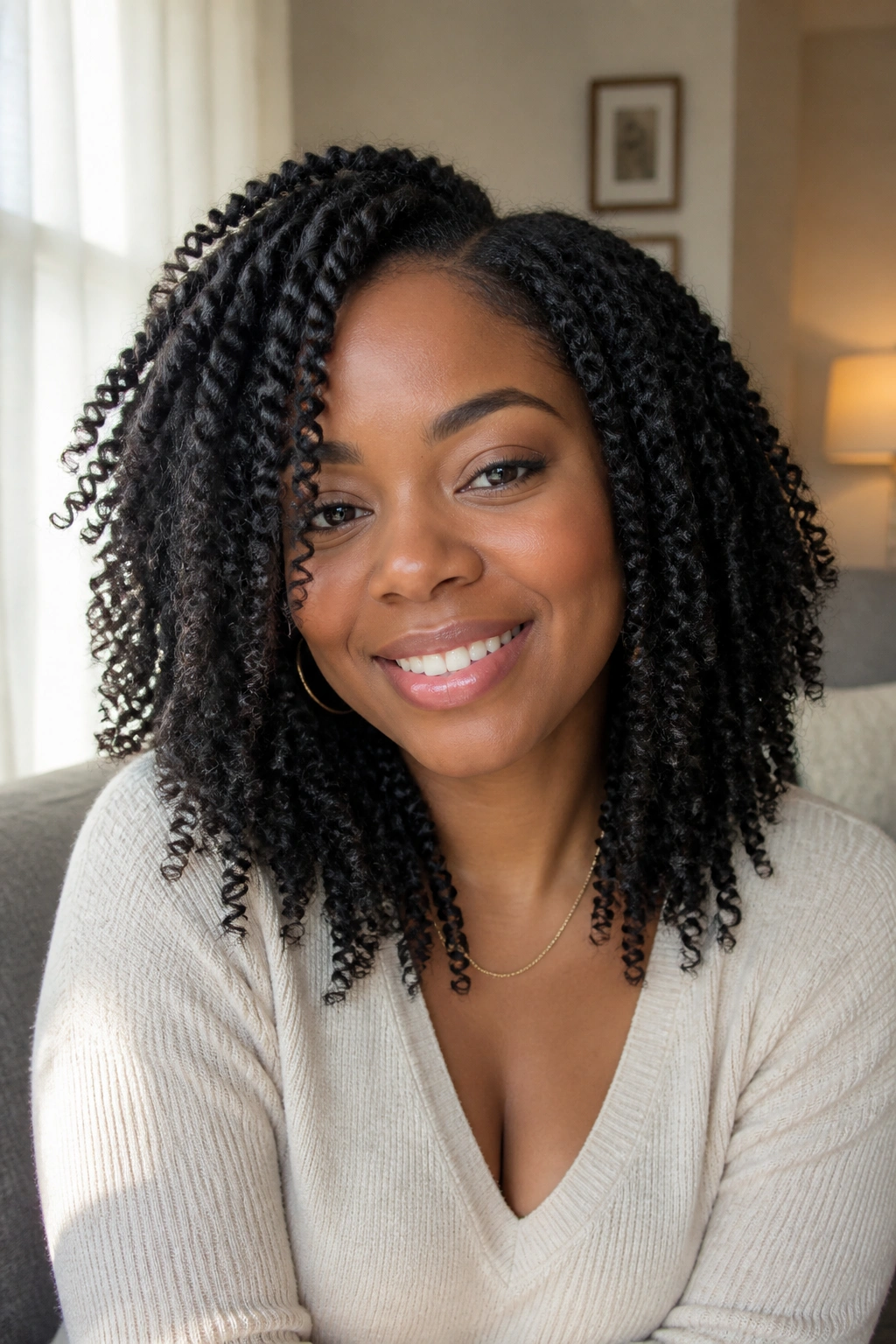
If your twist-out keeps ballooning at the cheeks, the problem is often shape, not definition. Shoulder length gives the curls room to hang, and long layers stop the bottom from turning into one heavy block.
What Makes It Look Right
This style works best when the twists are set on hair that’s slightly stretched. Not bone straight. Just stretched enough that the final result keeps some length instead of shrinking straight up and out.
Let the top sit a little fuller than the sides, and separate the twists with your fingers instead of a comb. The result should feel soft and airy, not fluffy in a way that swallows your face.
- Use 8 to 12 medium twists for a medium-density head
- Dry completely before separating
- Add a light cream or mousse, not a heavy butter
- Fluff the roots first, then separate the ends
One thing people miss: if the ends are too blunt, the whole style can look boxy. A little irregularity helps.
4. Angled Curly Bob
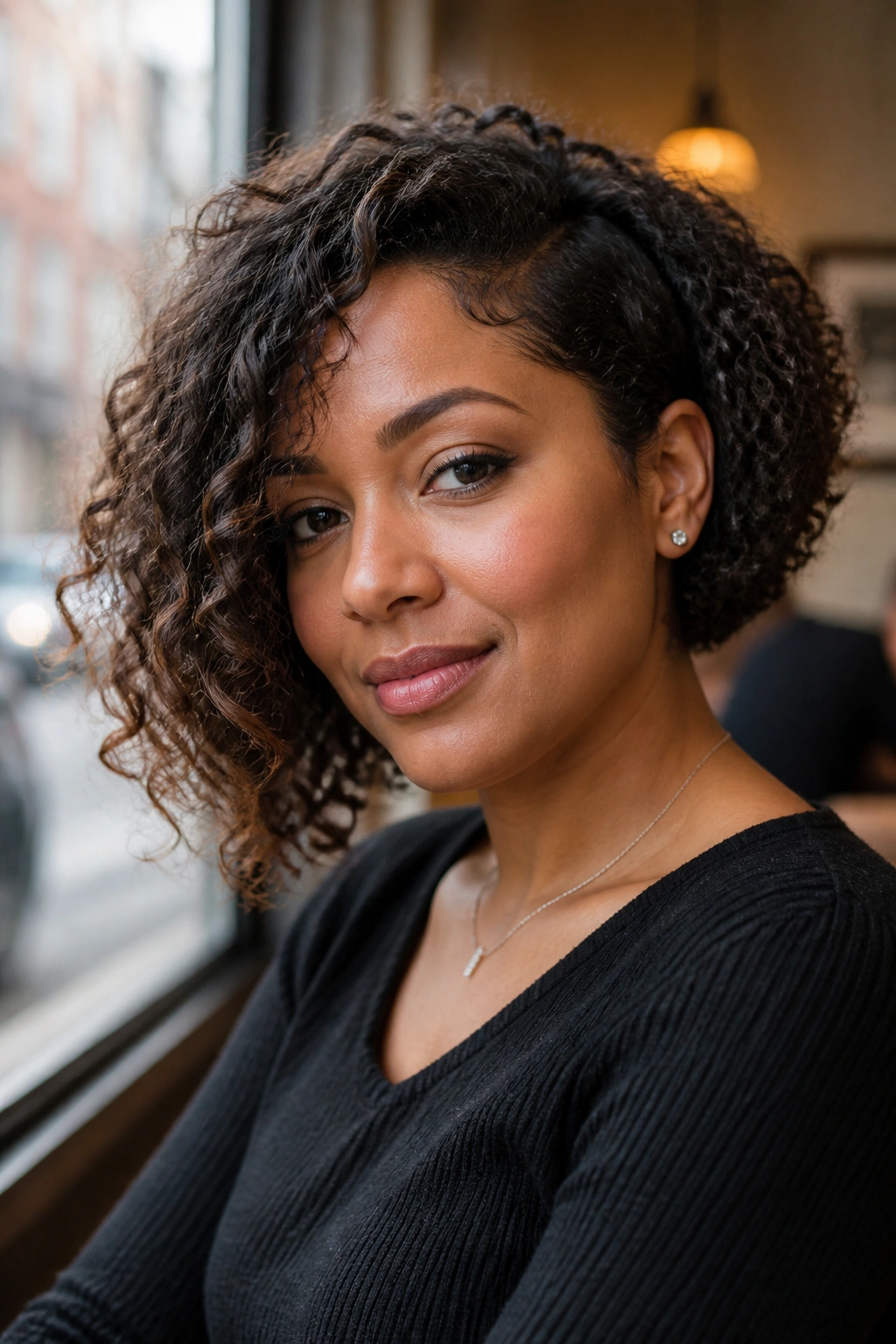
An angled bob is one of my favorite answers when someone wants shape without losing curl. The front sits a little longer than the back, and that subtle slope keeps the hair moving away from the widest part of the face.
The cut matters more than the curl pattern here. A blunt bob that stops right at the jaw can make a round face look even rounder, especially if the curls are dense. An angled bob changes that by sending the eye downward instead of outward.
I also like this style because it looks polished without feeling stiff. The curls can be loose and springy, or more defined with a little gel cast, and either way the shape still does the heavy lifting. If your stylist trims it dry, ask for the front to brush the collarbone while the back lands above it.
5. Faux Hawk with Defined Sides
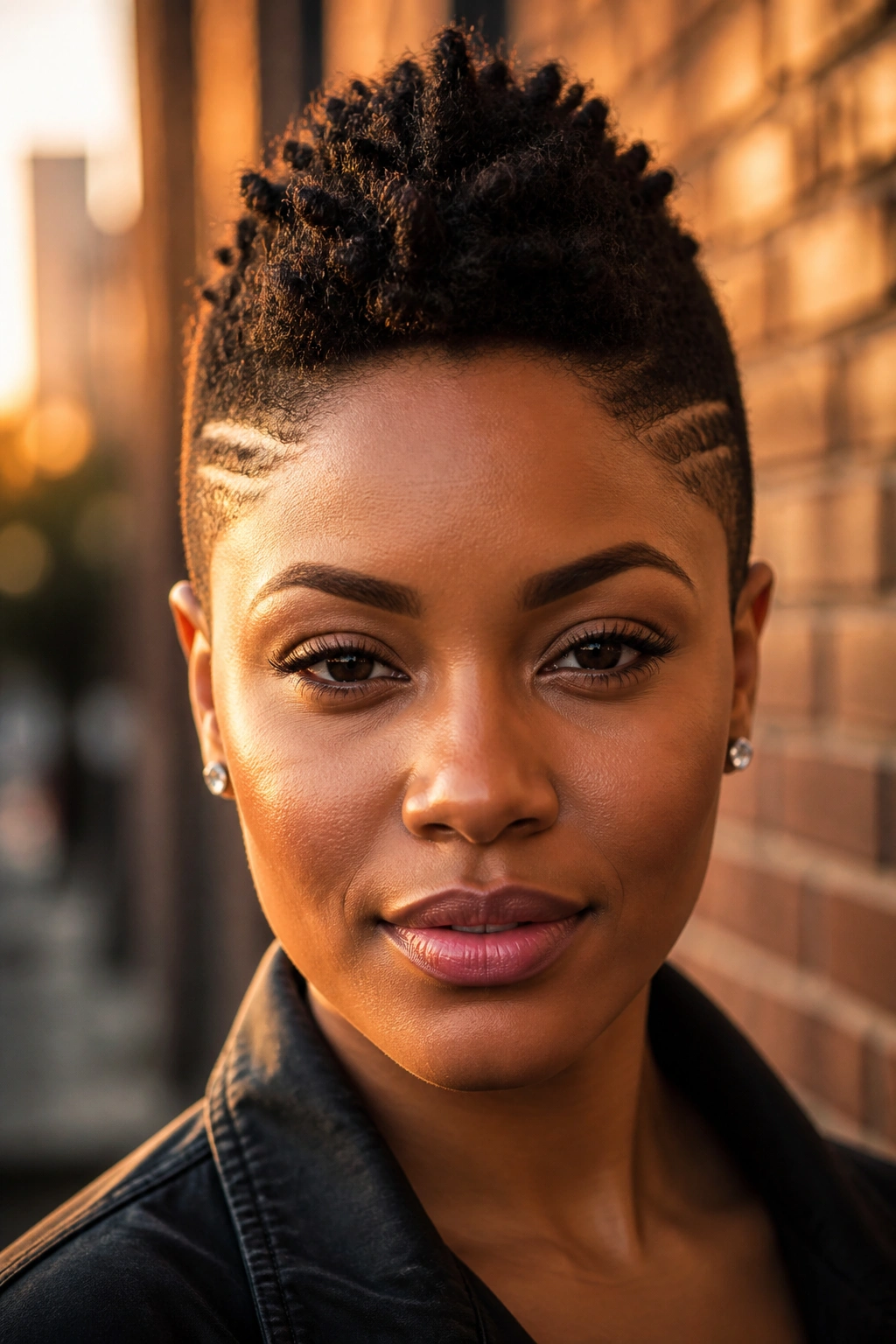
A faux hawk is built for people who want edge without losing softness. The center line rises, the sides stay close, and the face gets an instant vertical frame.
This is one of the best styles for a round face because it creates a strong middle lane. The eye goes straight up the center of the head instead of widening across the temples. You do not need shaved sides to get the effect, either. Pinning or braiding the sides flat can do the job if you want a gentler version.
If you try this, keep a small amount of softness near the temples. Super-tight sides can look harsh on some faces, and that hard line is not always the look you want. A little puff at the crown and a little control at the sides is the sweet spot.
6. Flat-Twist Crown Updo
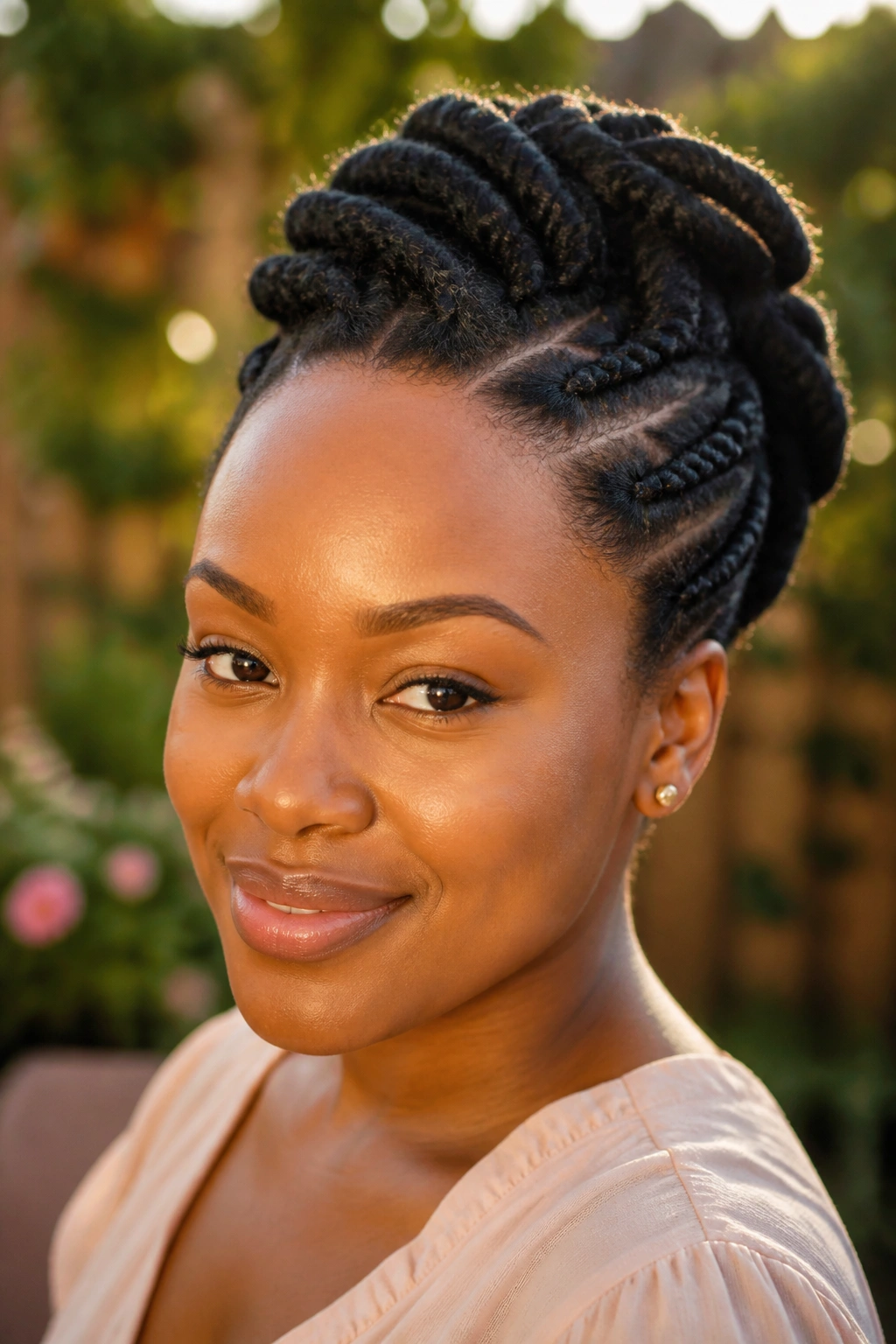
Want your hair off your neck without making your face look broader? A flat-twist crown updo is a smart answer.
The twists should travel upward and back, not straight outward. That direction changes everything. The lift at the crown gives the face more length, while the tucked sides keep the silhouette tidy. It’s one of those styles that looks more involved than it is, which I always appreciate.
Where the Twists Should Start
Start the flat twists just above the temples or slightly behind the front hairline. If you begin too far out on the sides, the style can widen the face instead of slimming it.
Leave a few soft curls or coils near the hairline if you like a less severe finish. That tiny bit of movement near the forehead makes the whole look feel easier to wear. The updo stays elegant, but not helmet-like.
7. Braided Top Knot with Face-Framing Pieces
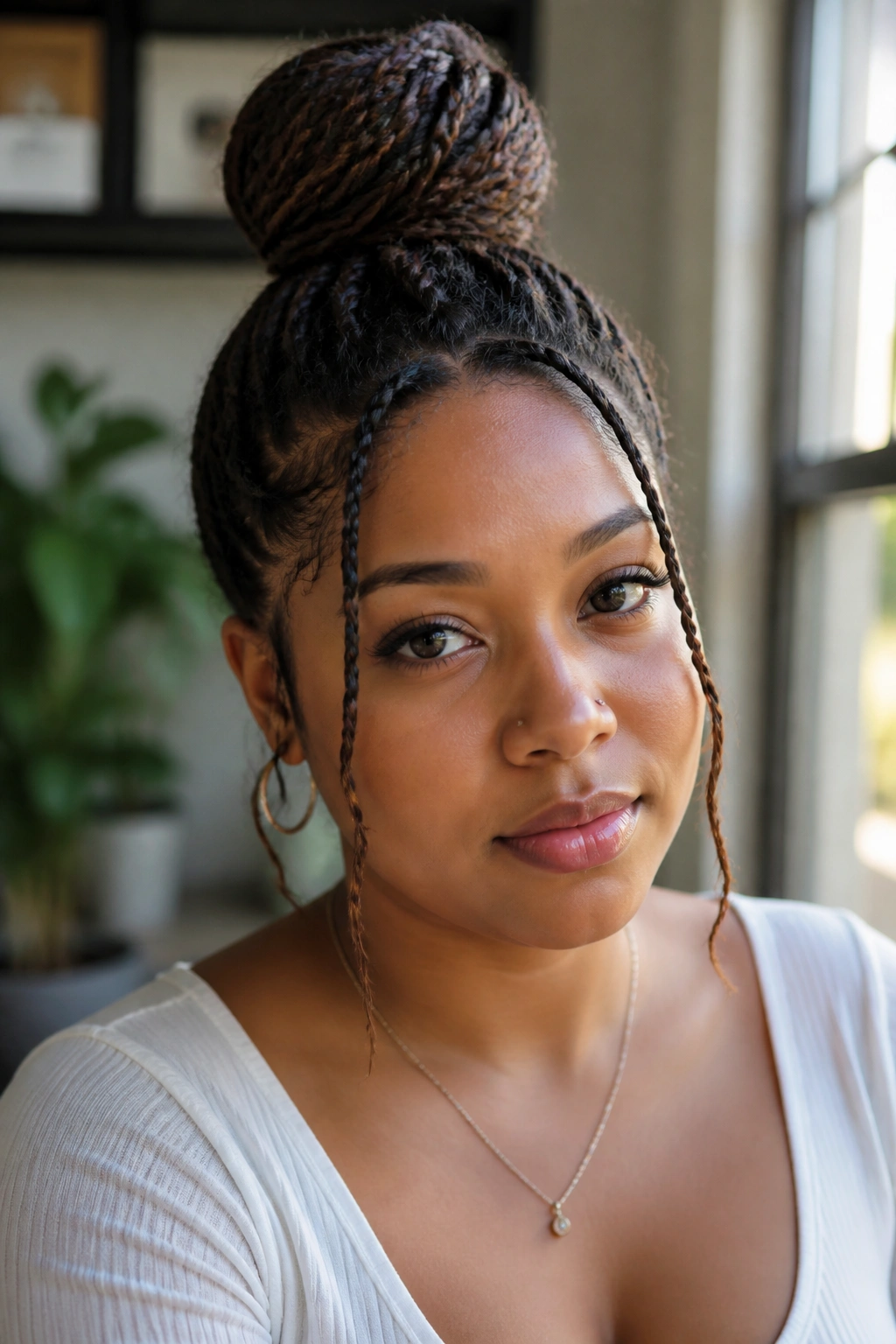
A braided top knot can work beautifully on a round face when the bun is high enough and the front isn’t pulled back too tightly. The height gives you that upward line again, and the braids keep the style crisp.
The face-framing pieces matter more than people think. Even two small curls near the temples can soften the shape and stop the style from feeling severe. I usually prefer a knot that sits high and a little back from the hairline, because a bun placed too far forward can crowd the forehead.
This style is good when you want structure without a lot of loose hair touching the cheeks. It also holds up well for long days, especially if the braids are medium size instead of chunky. Chunky braids can get heavy fast and pull the whole look sideways.
8. Long Box Braids with a Deep Side Part
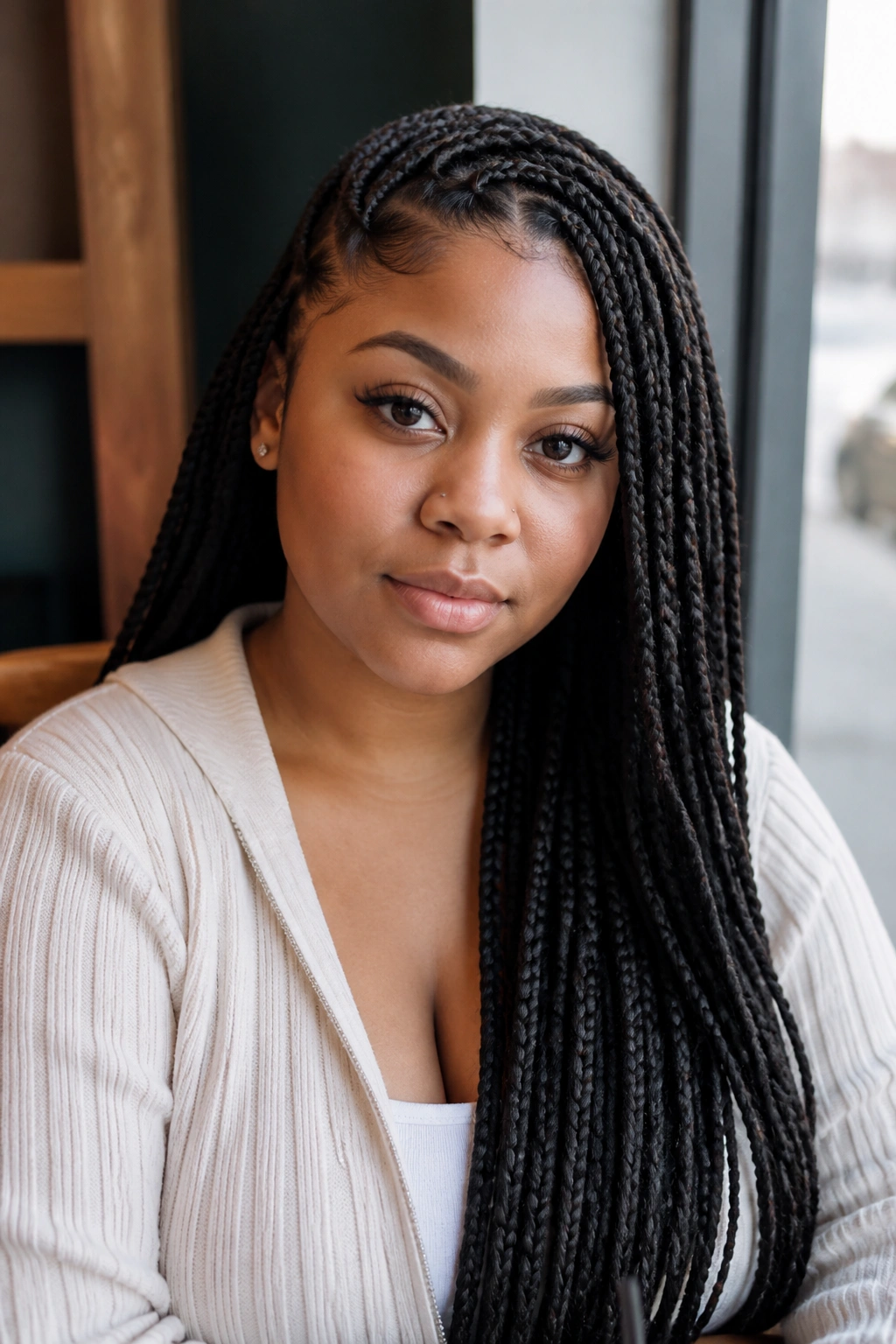
Long braids are one of the easiest ways to build length into a round face shape. Once the ends fall below the shoulders, the eye naturally follows the vertical line.
A deep side part keeps the style from feeling too symmetrical. That asymmetry helps a lot. Straight-down braids can still work, but a side part gives the face a little movement and keeps the top from looking flat.
- Choose medium braids rather than oversized ones
- Keep the part clean and slightly off-center
- Let the length fall past the collarbone if possible
- Add a few loose front pieces if you want a softer line
Watch the bulk at the cheeks. If the braids are too thick near the ends or stacked too close to the face, they can undo the length you worked for.
9. Bantu Knot-Out with Height
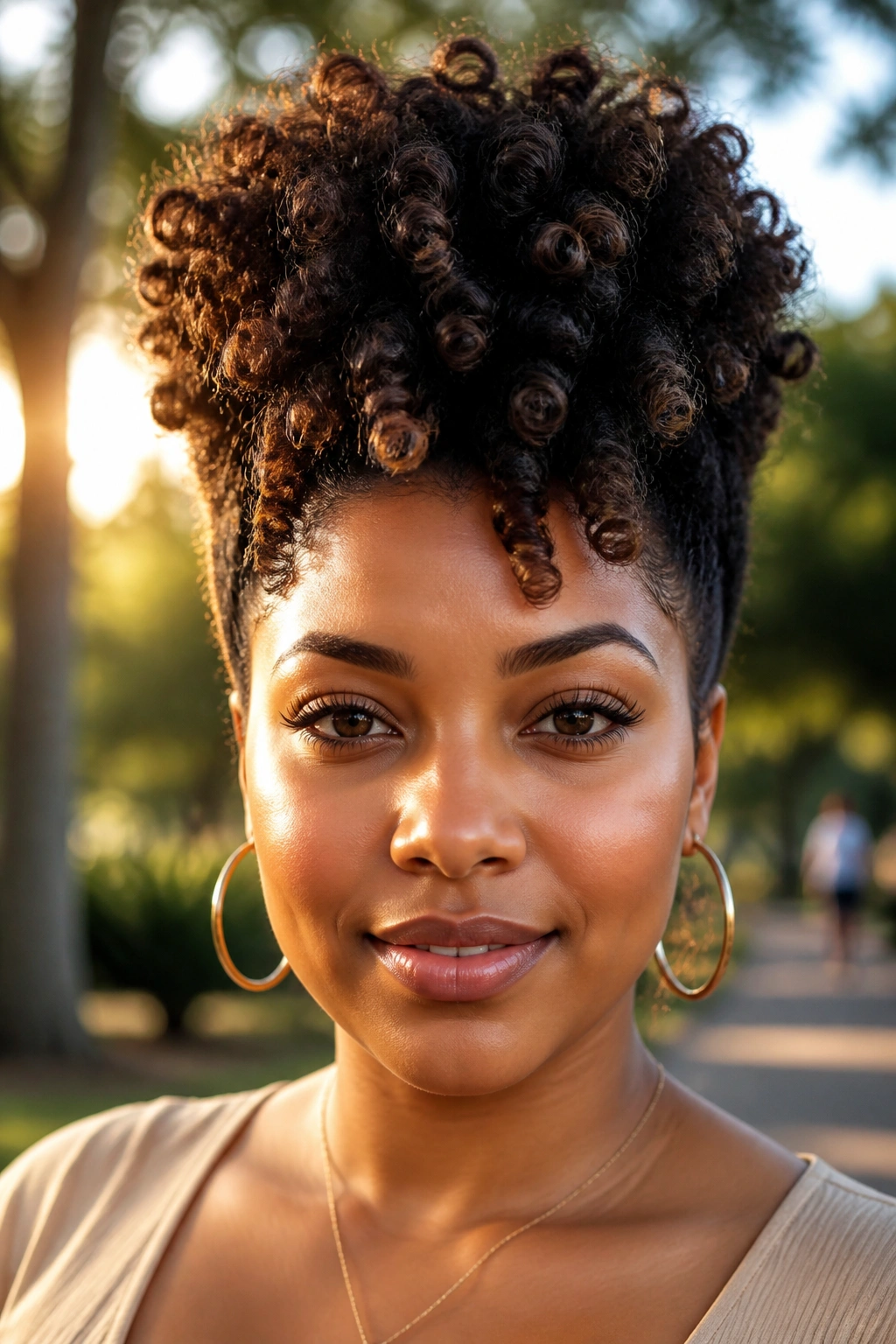
A good bantu knot-out has bounce, shape, and enough lift at the roots to change the face. On a round face, that height is the whole point.
Why the Set Matters
The knots should be placed with the final silhouette in mind. If you cluster them too low or too wide, the resulting curl pattern can balloon at the sides. Higher placement on the crown tends to give a better outline.
Drying time matters too. If you take the knots down while they’re even a little damp, the curls can clump in odd ways and lose the lifted shape. Let them dry fully, then separate with oiled fingertips so the curls stay defined without turning frizzy.
- Use 6 to 10 knots depending on density
- Keep the perimeter tighter than the crown
- Unravel only when the hair feels completely dry
- Separate each knot in 2 or 3 pieces, not more
My bias: this style looks especially good when the curls pile upward instead of outward.
10. Tapered TWA with Sculpted Sides
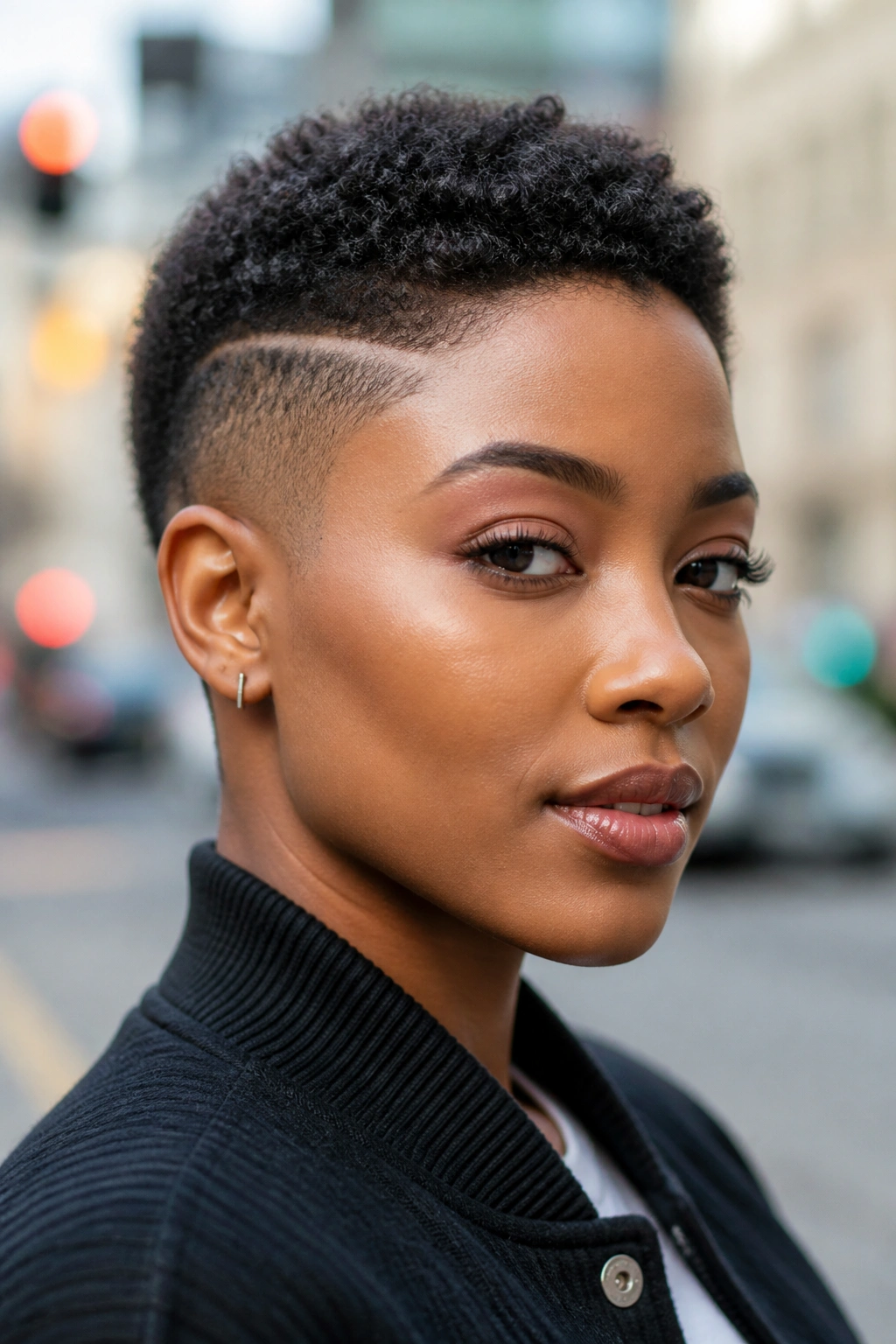
A TWA — a teeny weeny afro — can be one of the most flattering cuts for a round face when the sides are tapered with intention. It keeps the cheeks open and gives the top room to create shape.
The best version isn’t flat on top and isn’t rounded into one perfect ball. It should have movement. A little height at the crown, a soft taper around the ears, and defined curls or coils at the top can make the face look more oval without losing any texture.
This is a strong option if you like low-maintenance styling. A TWA does not ask for a lot of product layering or long drying time. It does ask for a good cut, though, because the shape lives or dies by the lines your barber or stylist builds into it.
11. Half-Up Half-Down Wash-and-Go for Round Faces
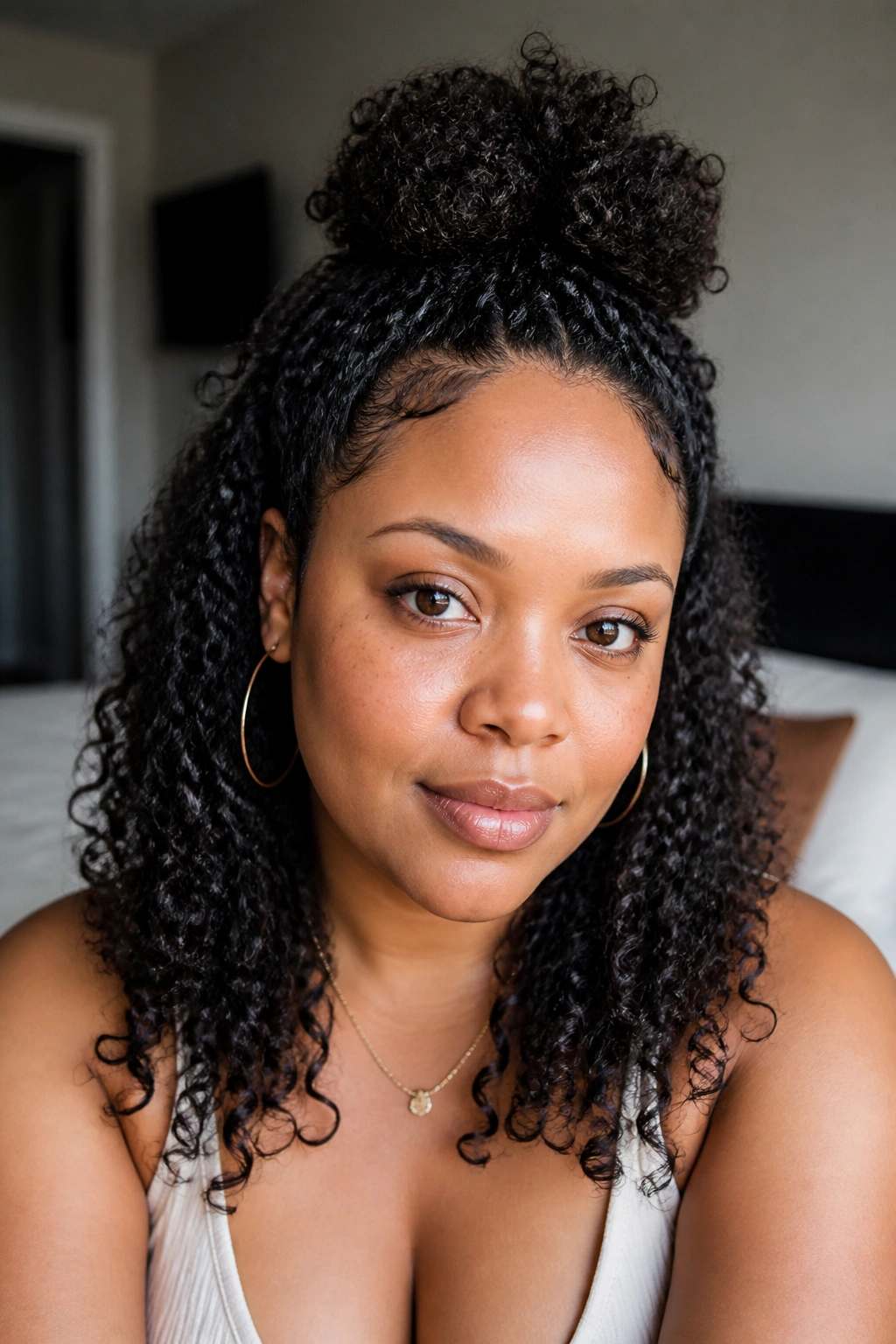
Can a wash-and-go work on a round face? Absolutely — if you take some of the volume up instead of letting all of it sit at cheek level.
The half-up half-down version changes the balance. The top section gets clipped, tied, or pinned into a small puff or bun, and the bottom curls stay loose. That little lift at the crown makes the style feel longer and lighter.
Best Way to Clip It
Use a satin scrunchie, a claw clip, or a soft tie that won’t flatten the roots too much. Pull the top section up only halfway, not all the way back. If the crown is too tight, the style loses the relaxed shape that makes it flattering.
A gel cast can help the curls stay neat, but don’t overdo it. Crunchy curls around the cheeks are not the goal. Soft definition with a little root lift is.
12. Loc Bob with Swept-Over Fringe
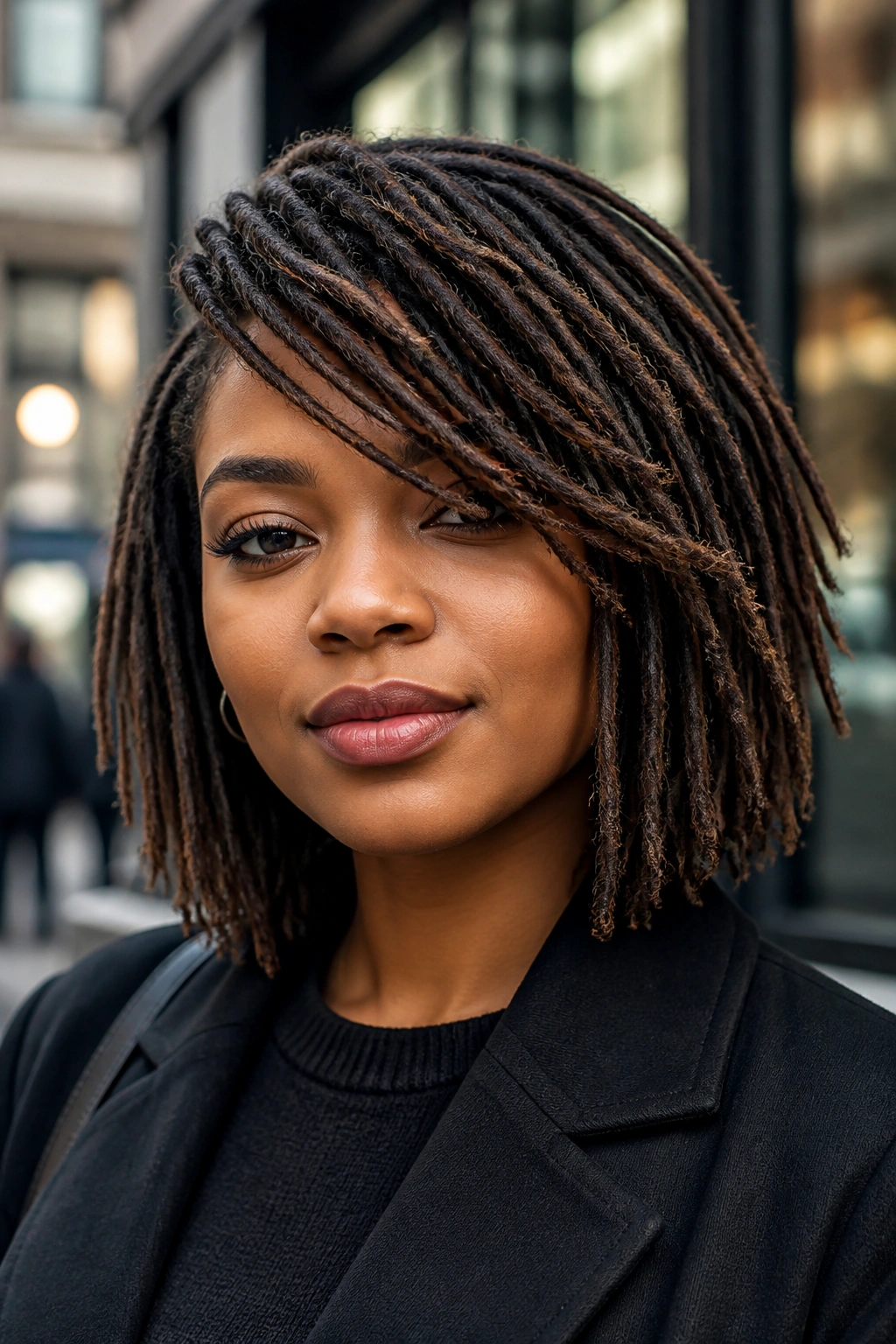
A loc bob is one of those styles that quietly does a lot of work. The length sits low enough to stretch the face, and the swept-over fringe keeps the front from reading like a straight wall.
This is a nice option if you wear locs and want something that feels neat but not severe. The bob shape can end at the collarbone or just above it, depending on your length and density. I usually prefer a slightly longer bob on a round face, because jaw-length locs can add width right where you do not want it.
The swept fringe is the part that changes the mood. A clean side sweep gives the face an angle, and angles are useful here. You can keep it polished or let a few locs bend softly across the forehead.
13. Rope-Twist Updo with Volume on Top
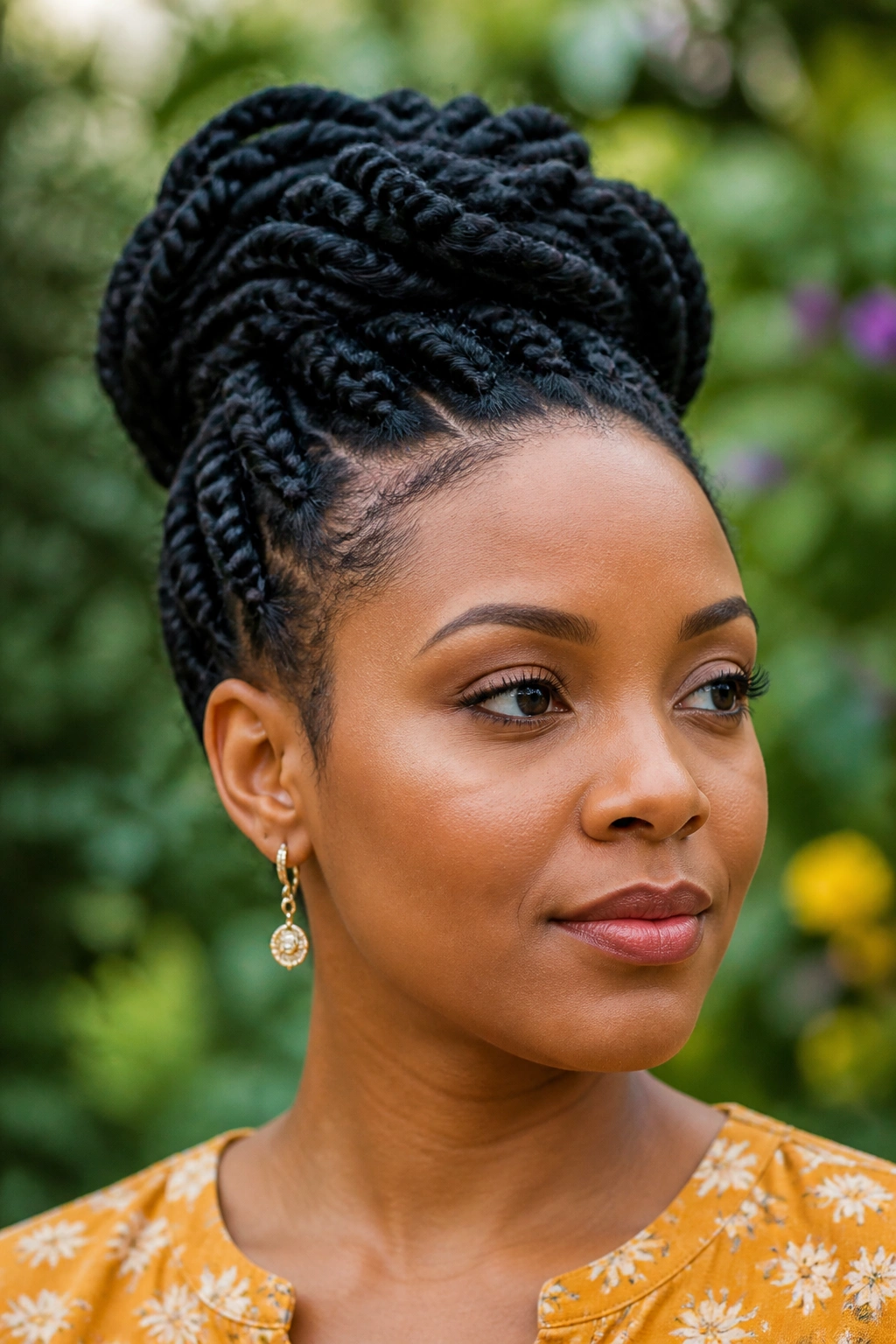
Rope twists gathered into an updo are a nice middle ground between sleek and full. The sides stay controlled, while the top has enough lift to keep the face from feeling boxed in.
This style works well for events, but I actually like it for everyday wear too. It’s neat, secure, and holds up better than a lot of loose styles when the weather is humid or windy. The shape matters most at the crown — if you build the updo too low, you lose the vertical line.
There’s a slight formality to it, which I don’t mind. A round face can handle polish. What it needs is a little asymmetry or height so the look doesn’t sit too evenly from cheek to cheek.
14. Curly Shag with Curtain Bangs
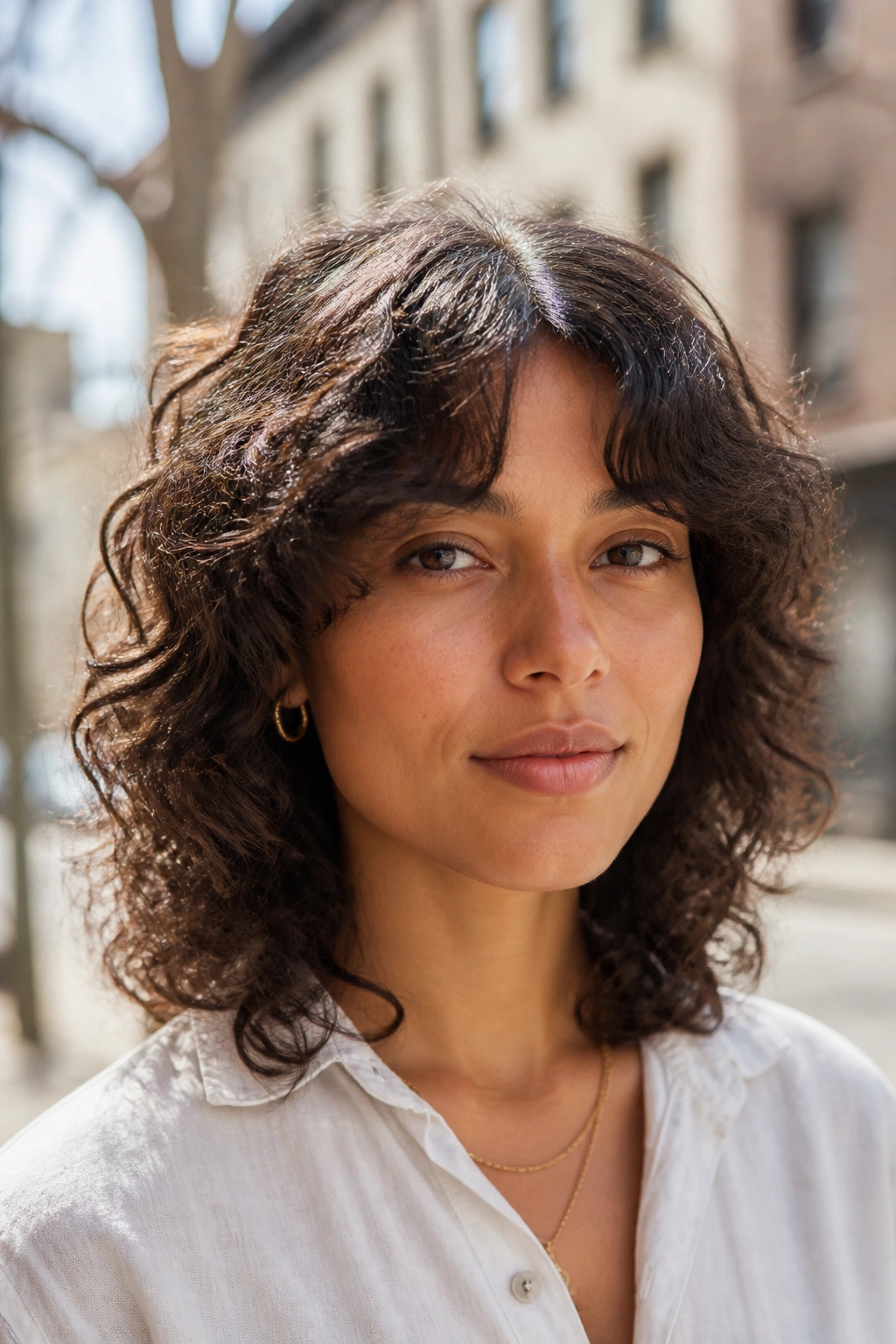
A curly shag is one of the easiest cuts for keeping a round face from looking too wide. The layers break up the bulk, and curtain bangs open the center of the face instead of closing it off.
The bangs should split near the middle and fall toward the cheekbones, not hang as one heavy block over the forehead. That’s the part people often get wrong. Curtain bangs that land too low can shorten the face; bangs that skim higher and blend into the layers tend to work better.
I like this cut because it feels lived-in. It does not ask for rigid styling every morning. A little mousse, a quick scrunch, and maybe a finger coil or two around the front is often enough.
15. Halo Braid with a Lifted Crown
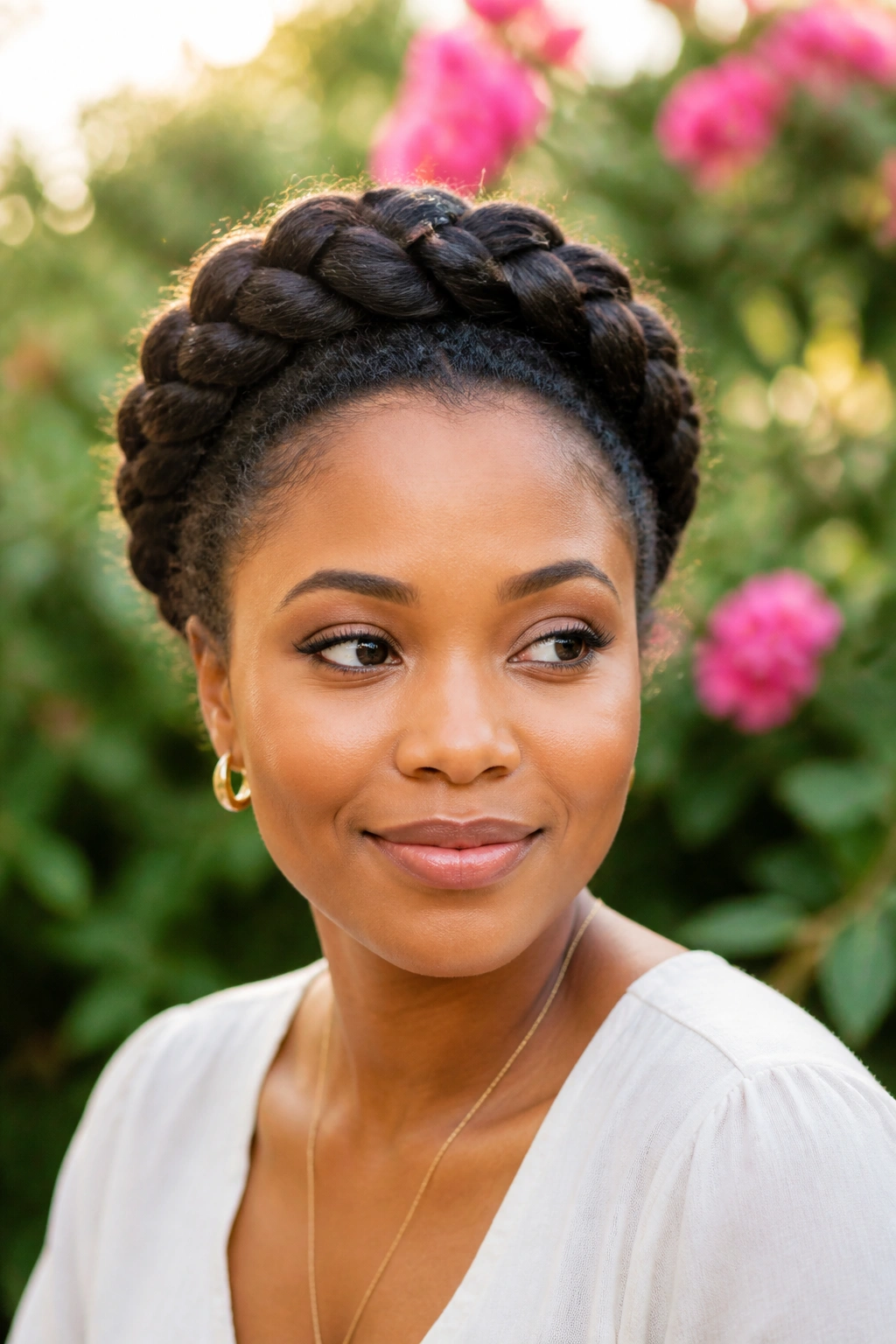
A halo braid can flatter a round face if the braid sits high enough and the crown stays a little loose. Too low, and it can frame the cheeks too tightly.
What to Ask For
Tell your stylist to keep the braid above the widest part of the face and avoid pulling the front too flat. That tiny shift changes the whole effect. If the braid arches higher over the forehead, the eye moves upward before it comes back down.
- Use stretched hair for a smoother braid path
- Keep the crown softly lifted
- Leave a small amount of texture near the temples
- Pin the ends low enough to stay hidden
The useful part: this style is secure, pretty, and less fussy than it looks once it’s in place.
16. Cornrow Ponytail with Curly Length
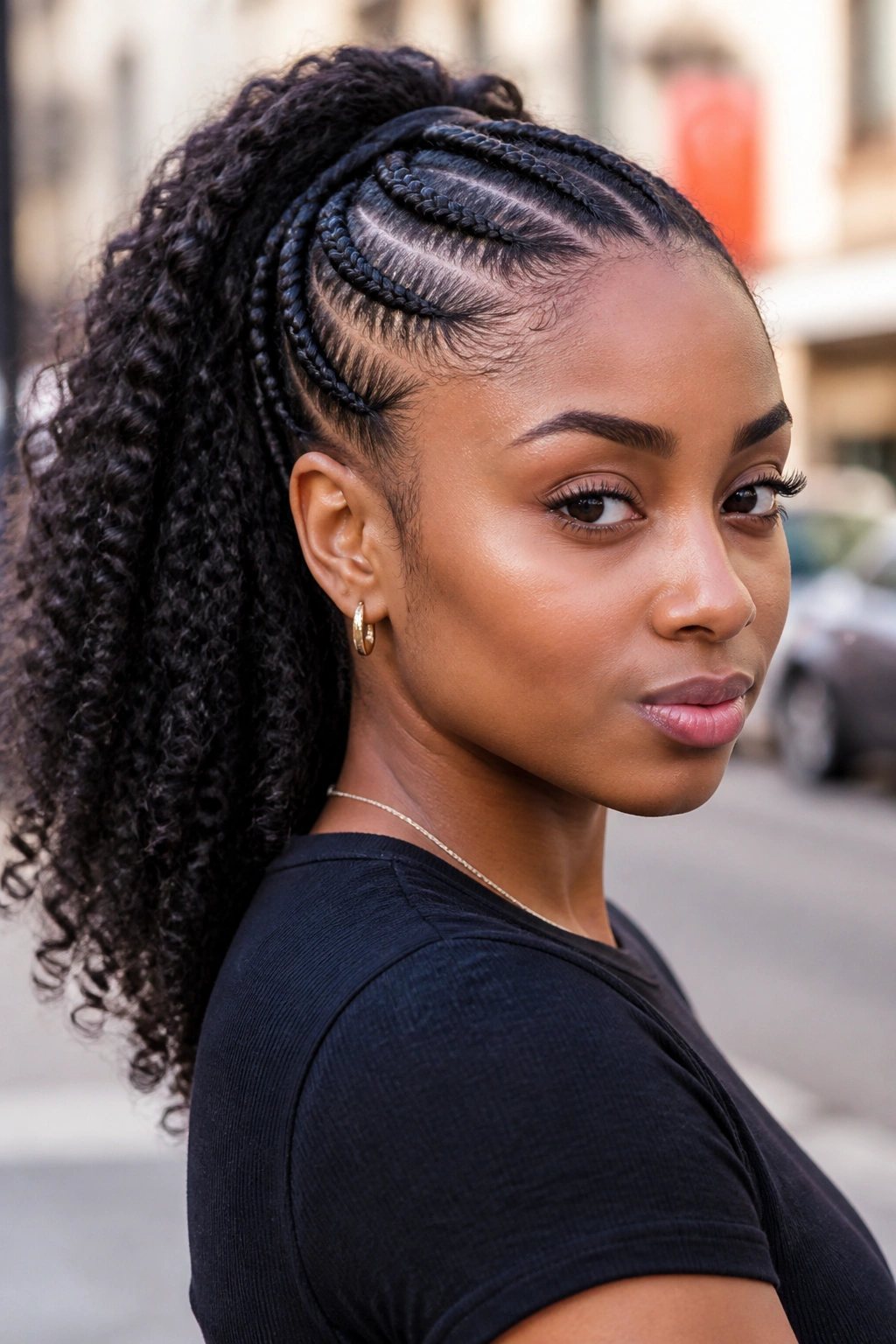
A cornrow ponytail is one of the cleanest ways to slim the sides of a round face. The braids pull the hair back, and the ponytail handles the volume at the rear instead of around the cheeks.
I like this style when someone wants the face fully visible. It shows off the forehead, eyes, and cheekbones without crowding them. The ponytail can sit mid-high or high, depending on how much lift you want. A higher ponytail gives more height, while a mid-high placement feels a little softer.
The braid pattern matters. Four to six cornrows usually give a clean look without making the scalp design too busy. If the ponytail includes curls or coils at the end, keep them long enough to fall below the jaw.
17. Sideswept Feed-In Braids
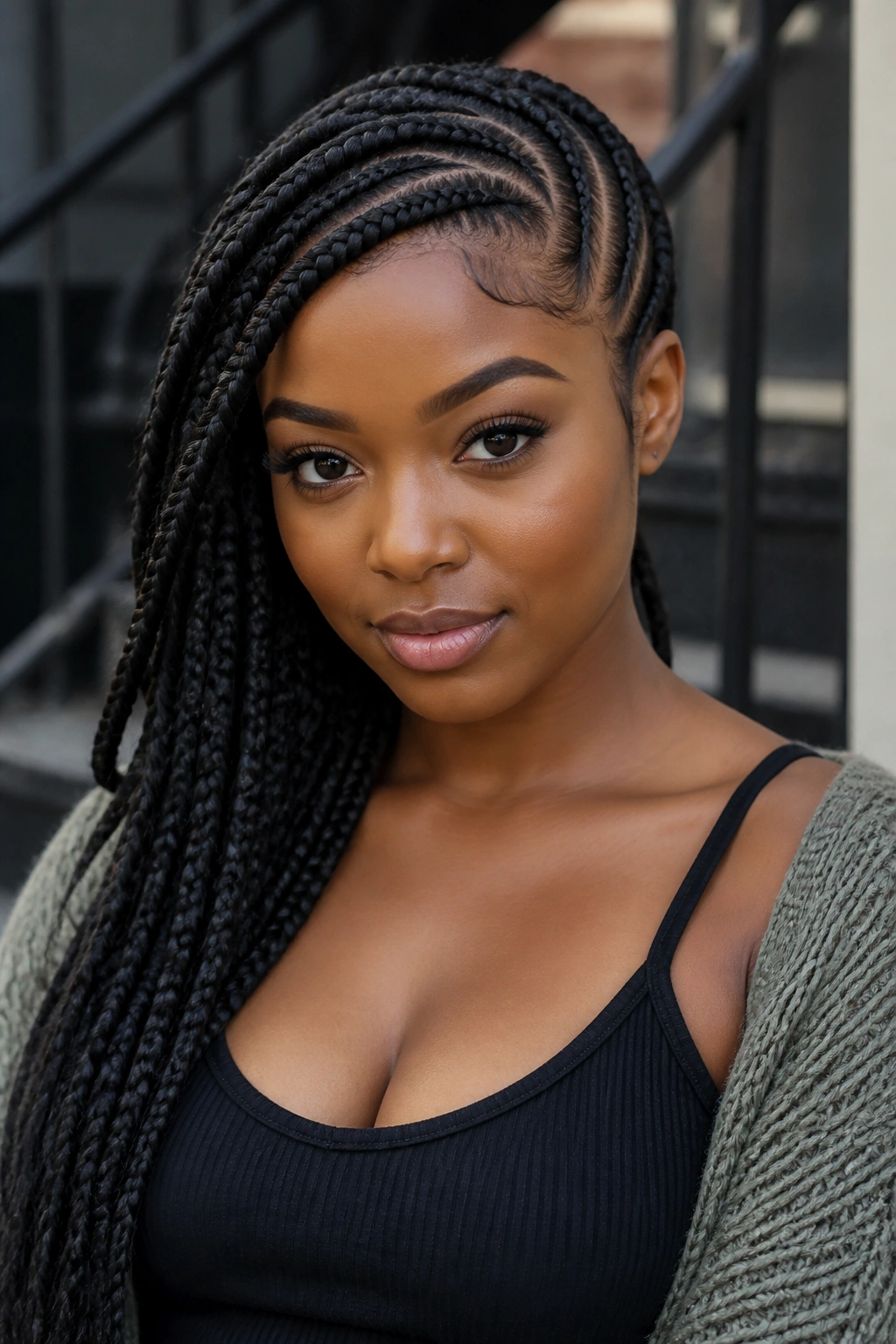
Why do sideswept braids work so well on round faces? Because they create a diagonal line, and diagonal lines are your friend here.
Feed-in braids sweep across the head in a way that makes the face look a touch longer and a touch slimmer. The key is not to make the sweep too tight or too chunky. A braid that arcs gracefully from one side to the other looks softer than one that sits in a heavy ridge across the top.
How to Keep the Sweep Soft
Leave a little space near the hairline so the style does not feel harsh. If you want more movement, let the braids fall over one shoulder rather than straight down the back. That keeps the line from turning into a blunt curtain.
This is a good choice if you want a style with some drama, but not a lot of fuss. It stays neat, and it gives the face a shape that feels intentional.
18. Voluminous Afro with Center Lift
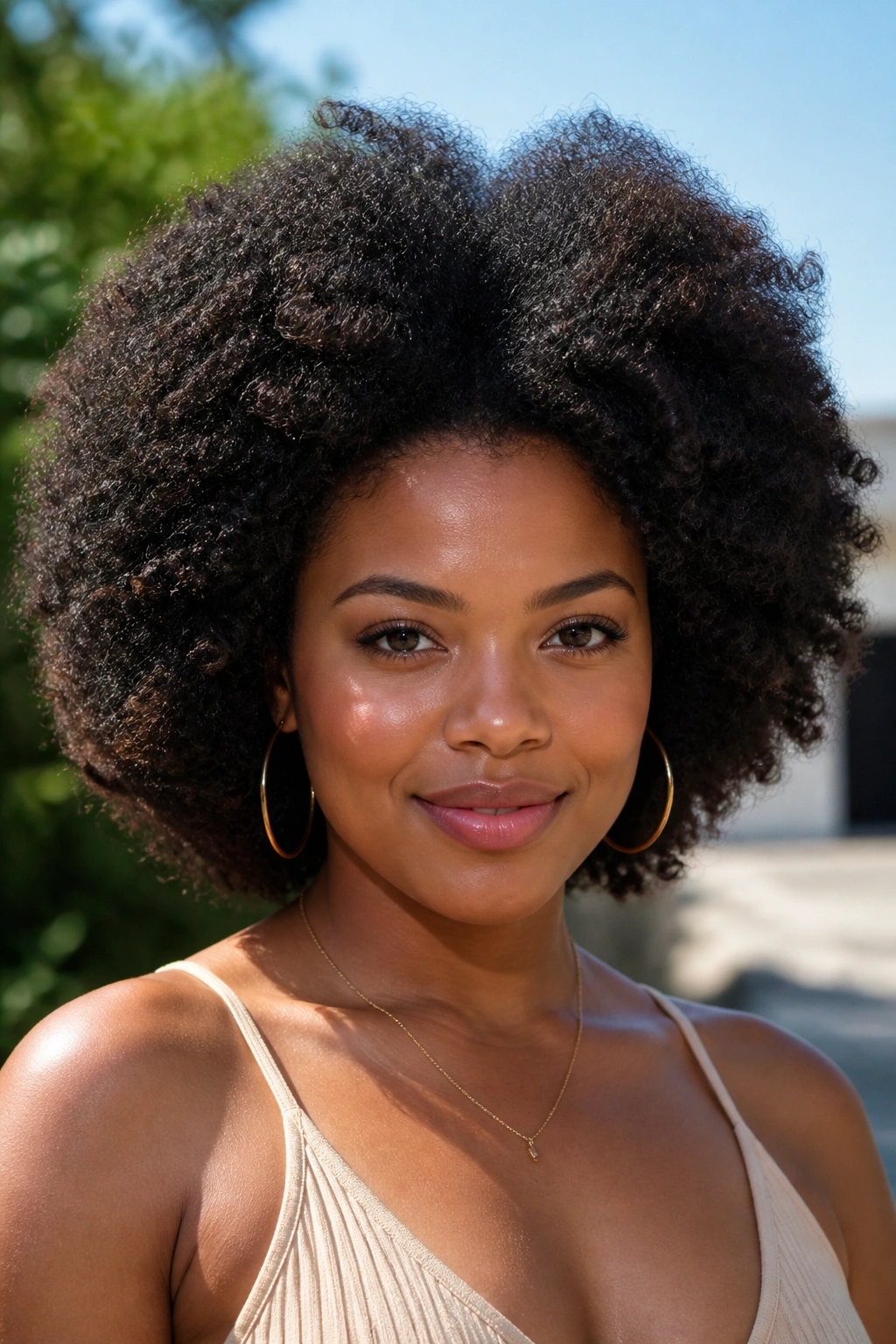
A big afro can work on a round face when the silhouette is taller than it is wide. That is the part people miss. A full afro is not the problem — a flat, sideways-spreading afro is.
The shape should read like an oval, not a perfect circle. That means some lift at the crown, controlled width at the cheeks, and a little extra air at the top. A pick at the roots helps, but only if you stop before the sides start to puff out beyond your face.
I also like a subtle center lift here, even when there is no strict middle part. Just letting the top rise a little higher can change the geometry of the whole style. It feels bold, but not heavy.
19. Chignon with Leave-Out Curls
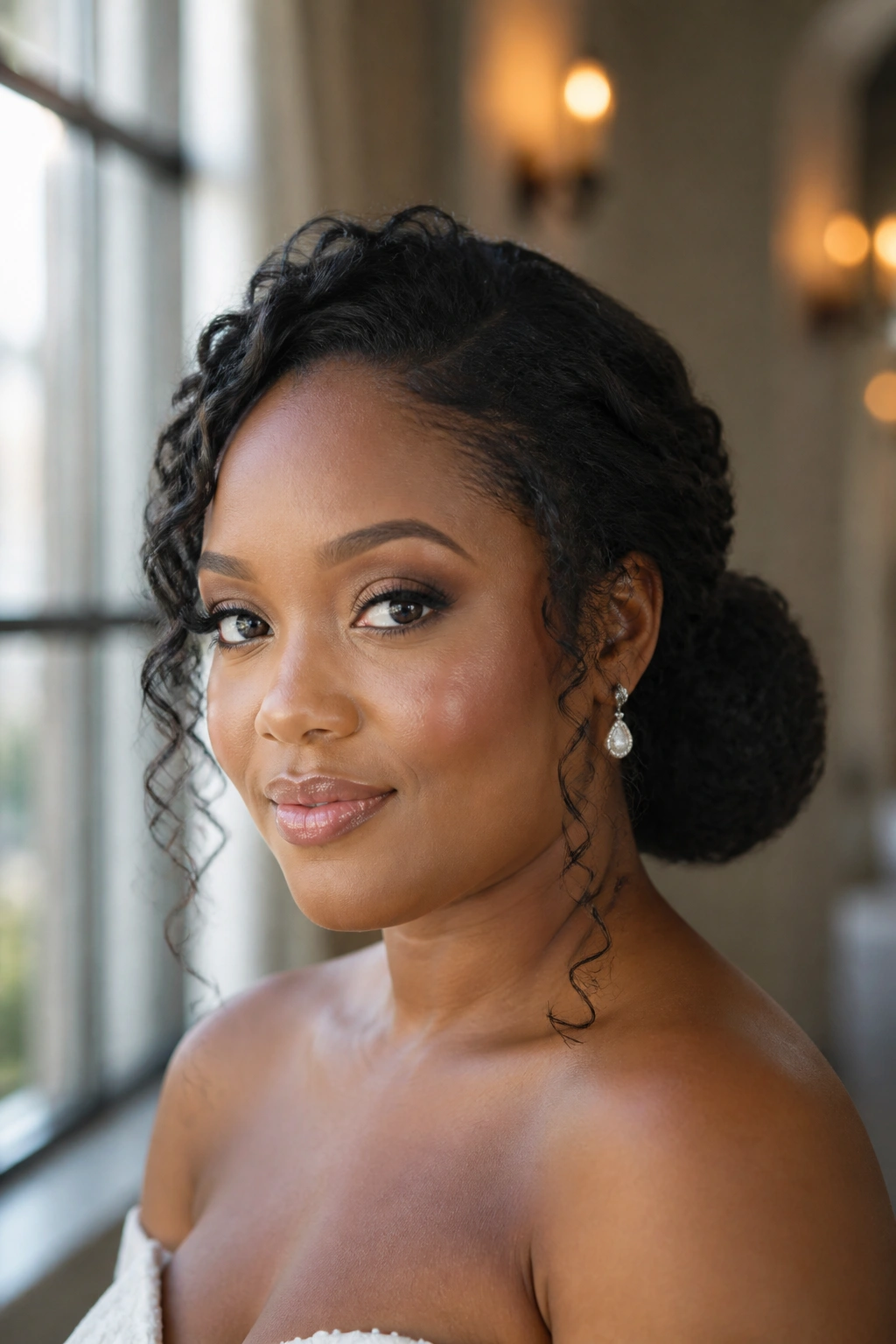
A low chignon can be lovely on a round face when you leave a few curls out around the temples and the neckline. The bun keeps the silhouette clean; the loose pieces keep it from feeling severe.
This is a style I’d use for weddings, interviews, or any day when you want neat hair and a softer face frame. Place the bun low, near the nape, but not so low that it disappears under the hairline. A little lift at the crown helps the face look longer, especially if the bun itself is smooth.
Small Details That Help
Keep the leave-out curls narrow rather than wide. Two or three slim pieces are usually enough. If the front pieces get too thick, they can add width back at the cheeks, which is the exact thing we’re trying to avoid.
A little shine cream on the bun is fine, but don’t make the whole style glossy in a way that looks stiff. Soft control works better.
20. Faux Loc Bob with Sharp Parting
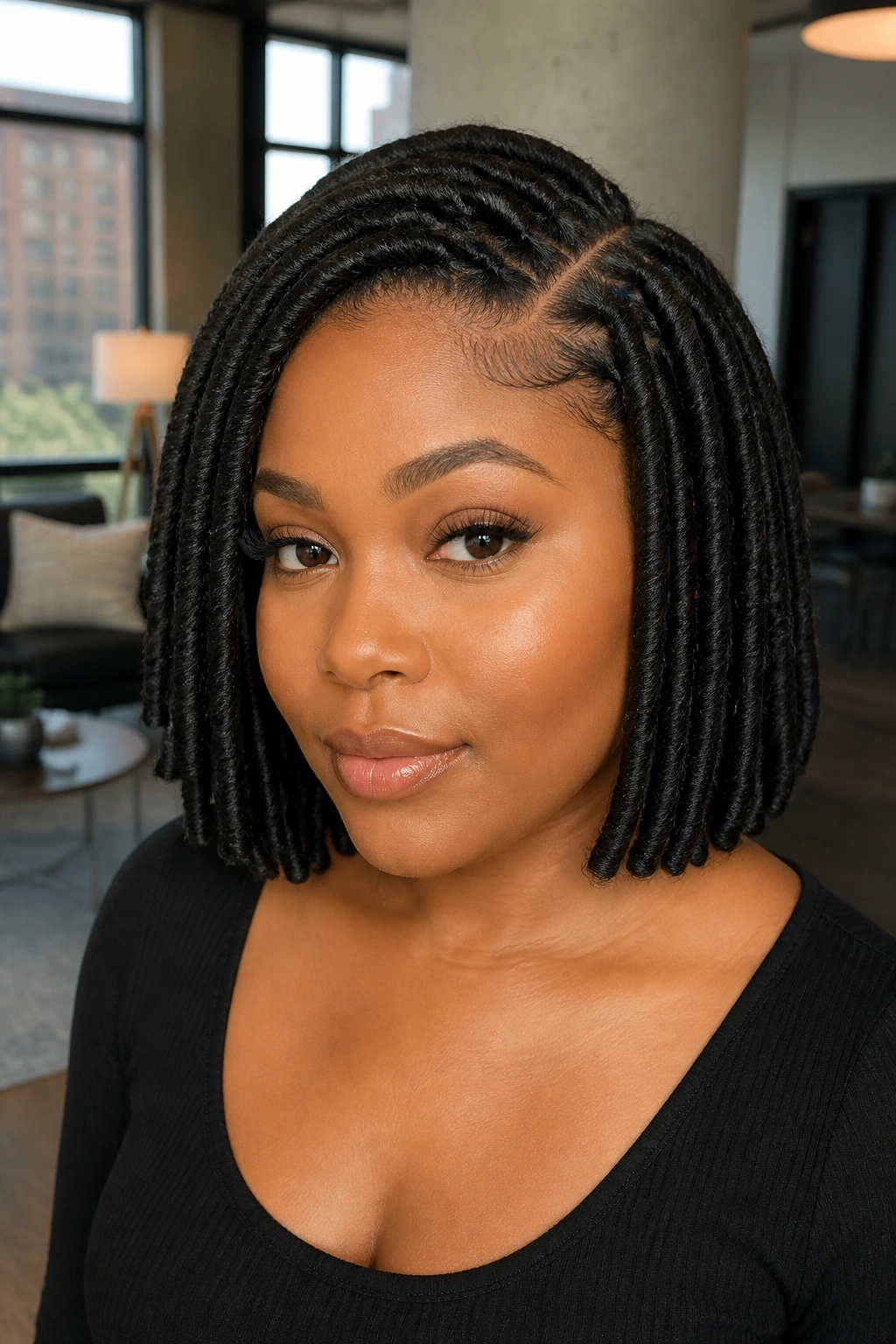
A faux loc bob can slim a round face fast, especially when the parting is clean and the ends stop below the jaw. The sharp parting gives the style structure, while the bob length keeps the weight from sitting too low.
This is one of those styles that looks neat even when the texture is a little messy. The locs themselves bring texture; the parting brings order. That combination is useful because round faces often look best with at least one hard line in the style.
I would avoid letting the bob end right at the widest part of the cheek. A collarbone graze is safer, and it feels more balanced when the locs start to swing as you move. Tiny accessories can be nice, but keep them light. Too many beads near the face can make the style feel busy.
21. Defined Twist-Out Bob with Soft Ends
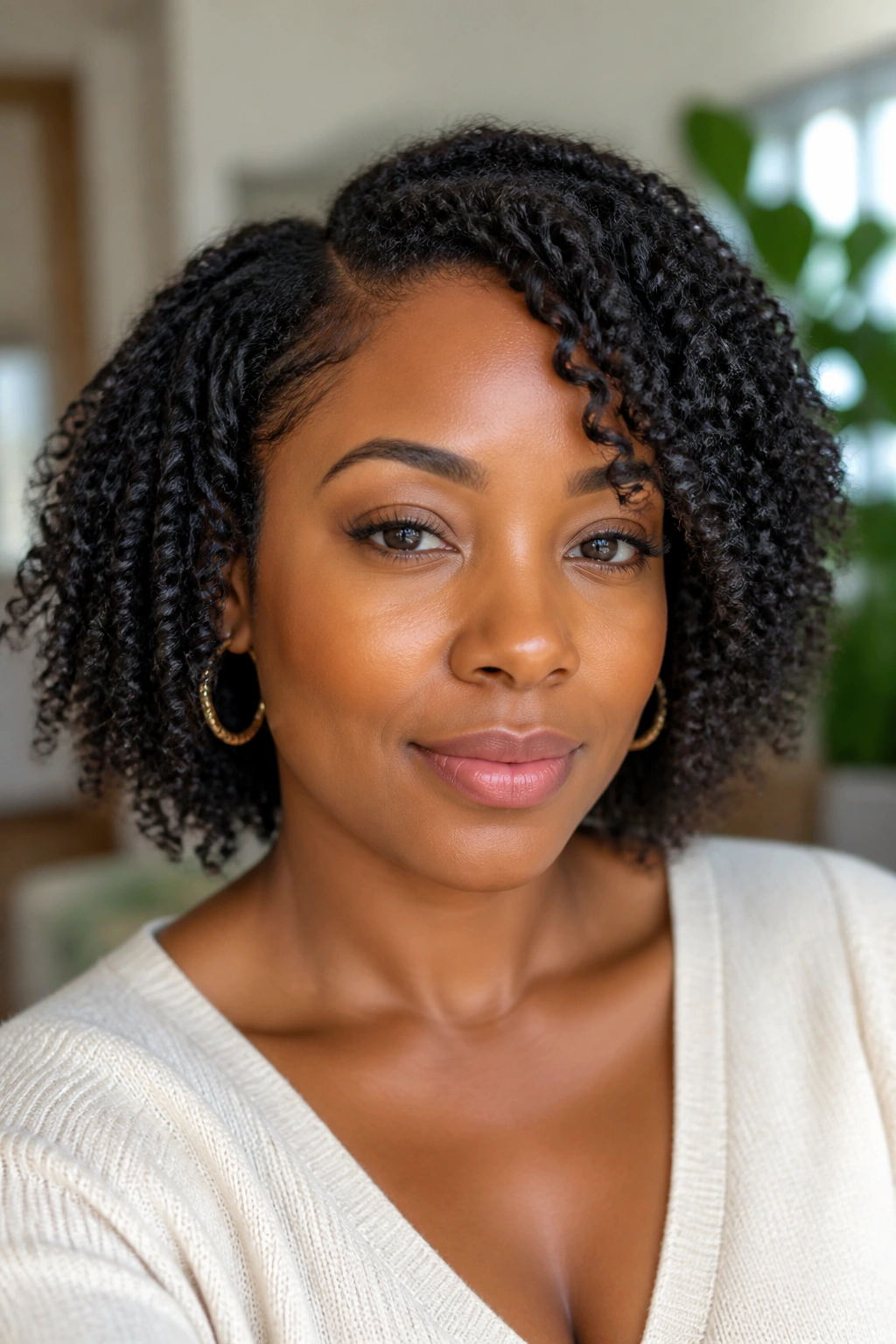
The secret is not the twist-out itself. It’s where the shape lands. A twist-out cut into a bob can be one of the most flattering natural styles for a round face because it gives texture, movement, and enough length to keep the cheeks from dominating the look.
The best version usually starts on stretched hair, then gets shaped so the ends hover below the chin. Soft ends matter here. A blunt finish can make the bob feel boxy, while a slightly uneven curl pattern keeps it alive. If you want extra polish, separate the twist-out gently and mist it with a light oil sheen, not a heavy cream.
This style is easy to wear and easy to dress up. It works for school, the office, dinner, or a weekend plan where you want to look put together without spending an hour on it. That kind of flexibility is worth a lot.
22. Passion Twists with a Side Flip for Round Faces
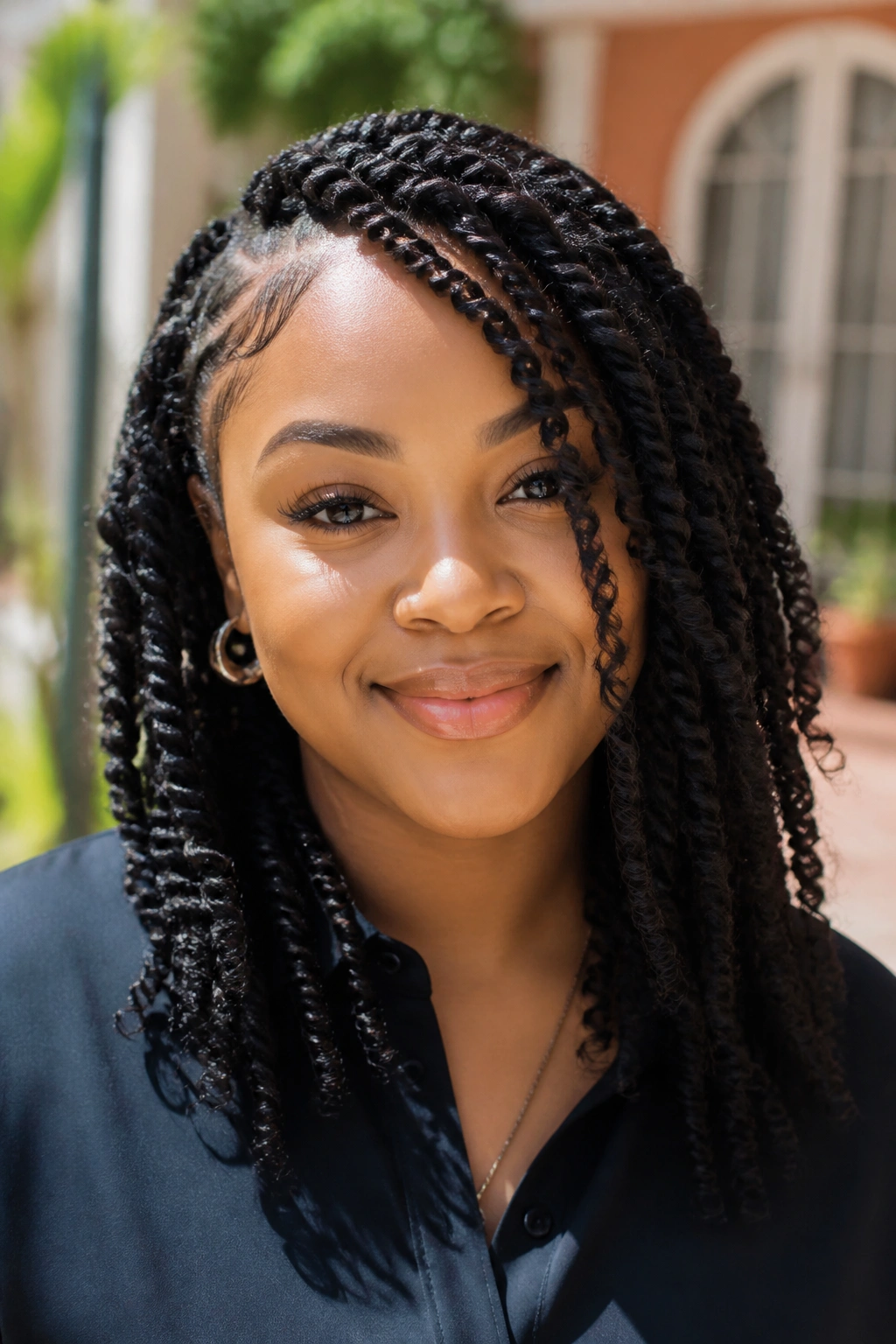
Passion twists bring movement, and the side flip gives the face a clean diagonal line. That combination is why they work so well on round faces.
The twists should be medium in size, not oversized. Oversized twists can create bulk where the face is already full. A side flip shifts the weight off the center line and keeps the top from feeling too symmetrical. If you like a little softness near the front, leave one or two twists slightly shorter so they bend around the cheekbone instead of resting directly on it.
This is a style I’d pick when someone wants length without the heaviness of a very thick install. It’s protective, yes, but it also has shape. And shape is the whole point.
If you are choosing just one look to try first, pick the one that fits your routine, not the one that takes the most dramatic photos. A style you can redo on day three is more useful than a style that only behaves on wash day. That rule saves time, money, and a lot of frustration.
A round face does not need to be hidden. It needs a frame that gives it a little stretch. Once you start looking at height, direction, and length below the jaw, the best options show themselves pretty quickly.
