



Side part hairstyles for round faces work because they change the direction of the eye. A straight center part often lands right on the widest part of the face, while a side part cuts across that area and creates a sharper line. That small shift can make cheeks look a little slimmer, jawlines look a little longer, and the whole shape feel less symmetrical in a good way.
The trick is not only the part itself. It’s the part plus the silhouette. A deep side part with flat roots can still read heavy. A shallow side part on a cut with no movement can disappear by lunchtime. The styles that actually pull their weight use lift at the crown, softness around the cheeks, or enough length to keep the eye moving downward instead of stopping at the face’s widest point.
That’s why some round faces look better in a side-parted pixie than in a long, one-length cut, and why other people need waves, bends, or face-framing layers to make the whole thing click. Texture matters. Hair density matters. Even the way your hair falls when it air-dries can change the whole result.
The good news: there are more than a few ways to make this work. Short, long, polished, messy, curly, braided, pinned back — the shape can shift a lot without losing its softness. The styles below all use the same basic idea, but each one uses it differently.
1. Deep Side-Parted Collarbone Lob
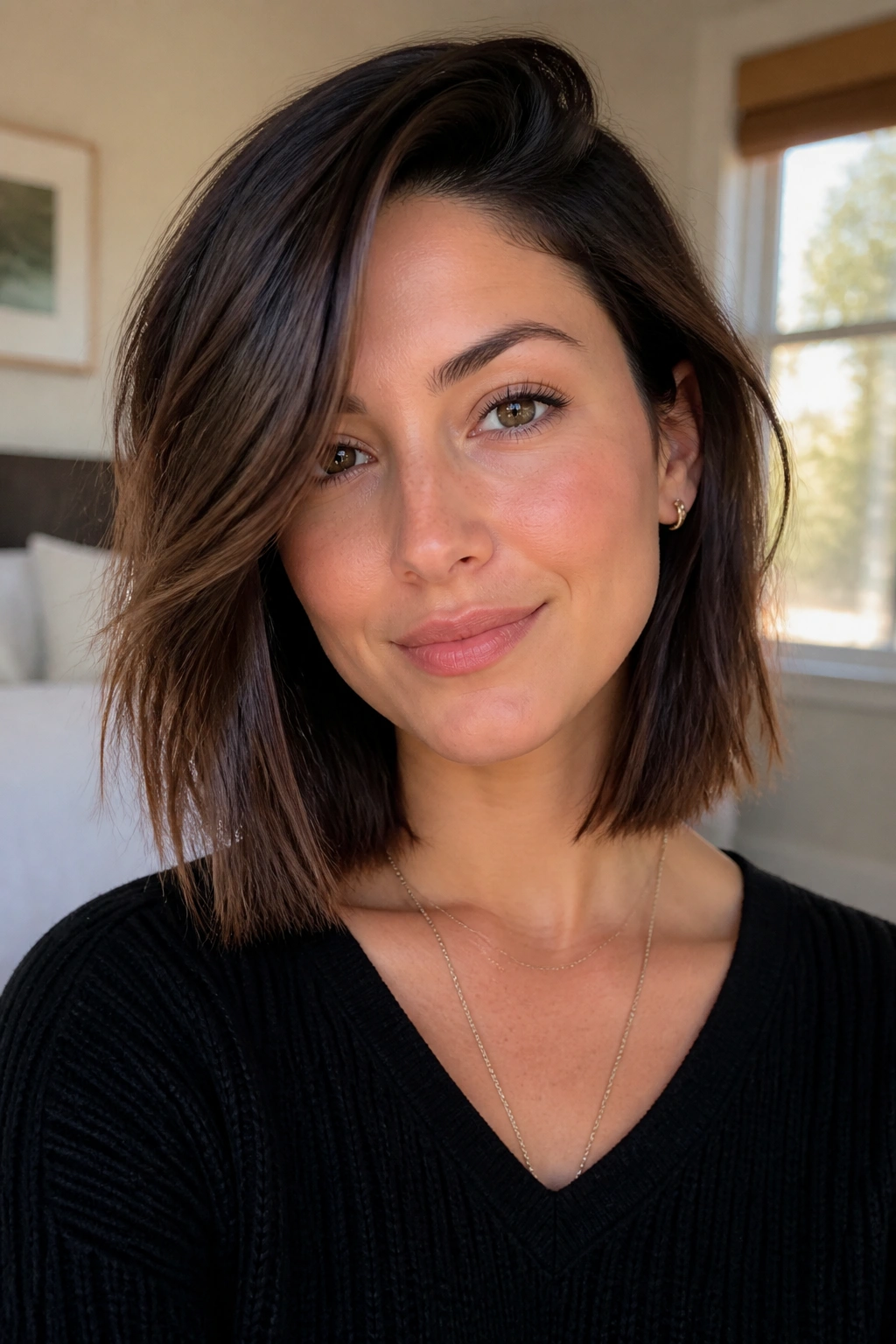
A collarbone-length lob is one of the cleanest fixes for a round face. It sits long enough to skim past the cheeks, which keeps the face from looking boxed in, and the deep side part throws in a strong diagonal line right away. That diagonal matters more than people think.
Why It Works
The length lands in that sweet spot between jaw and shoulder, so the outline does not stop at the widest part of the face. Add a deep side part, and the whole shape feels longer. If the ends are softly beveled instead of blunt and heavy, even better.
A lot of stylists ask for this cut with a tiny bit of front angle — nothing dramatic, just enough so the side nearest your face drops a touch lower. That little drop helps the eye travel downward. It is subtle. It works.
Quick Details to Ask For
- Length that hits at or just below the collarbone.
- Ends with a soft bevel, not a hard shelf.
- A deep side part placed about 2 to 3 inches off center.
- Light face-framing pieces that start below the cheekbone.
Best move: tuck the smaller side behind one ear. It opens the face fast and keeps the part from looking too heavy.
2. Long Layers With a Low Side Part
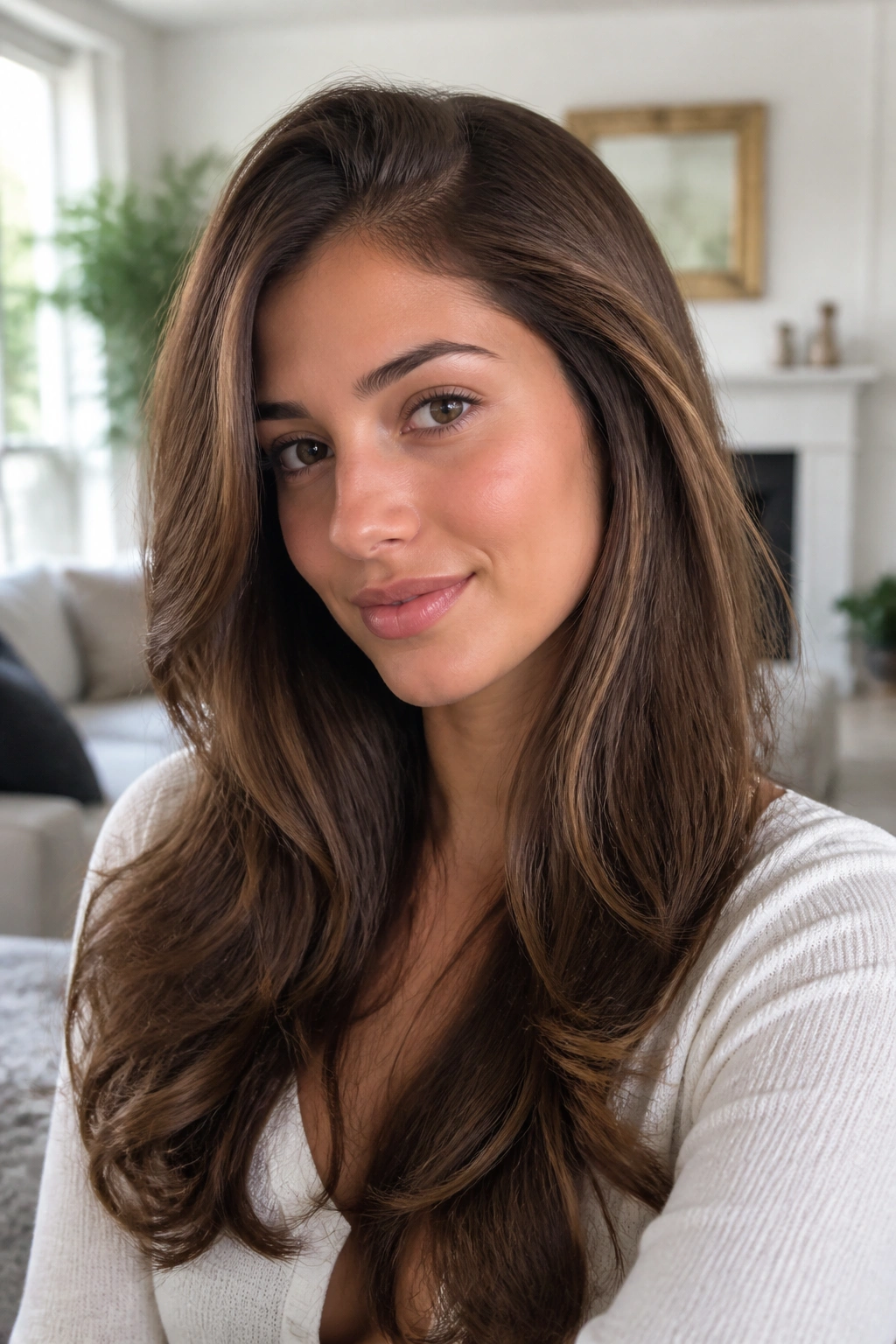
Why do long layers look so good on round faces? Because length alone is not the point. Shape is. A long cut with no movement can hang there like a curtain, but long layers with a low side part create a much narrower line through the middle of the face.
What Makes It Work
The low part sits closer to the temple than the crown, so it feels softer than a deep side sweep. That makes it a nice choice if you do not want obvious drama. The layers stop the hair from ballooning out at the cheeks, which is where round faces can start looking wider in photos.
Keep the shortest front layer below the cheekbone if you can. Shorter than that and the hair can swing outward in a way that adds width instead of taking it away.
How to Style It
Use a volumizing mousse at the roots, then blow-dry with a medium round brush while lifting the hair away from the part. Once the ends are dry, bend only the last 2 to 3 inches with a 1.25-inch iron. You want movement, not ringlets.
If your hair is fine, this one is especially useful. Fine hair can go flat fast, and a low side part gives it a little shape without making it look overworked.
3. Cropped Pixie With Crown Lift
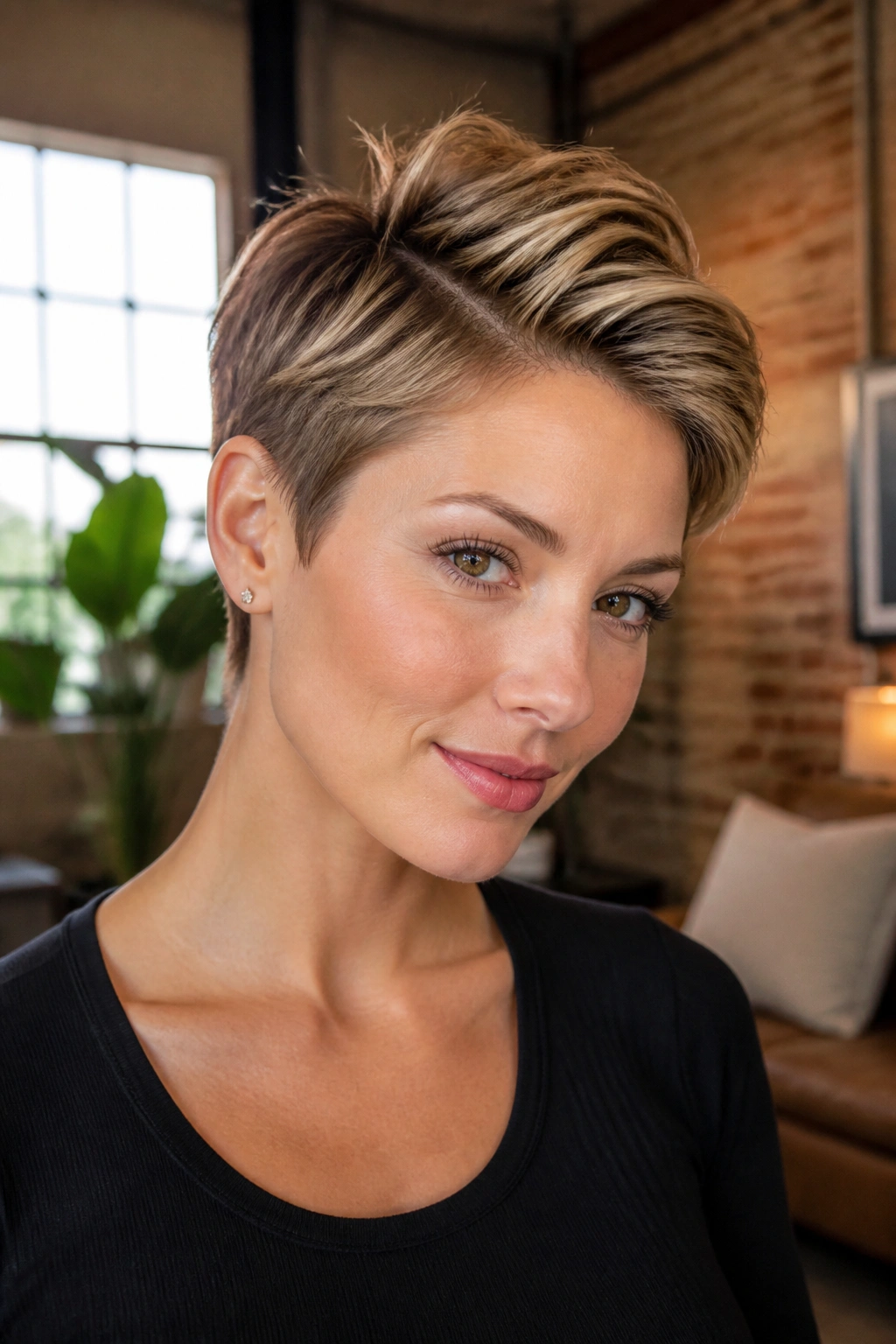
Short hair and round faces can be a great match, but only if the cut does not puff out at cheek level. That is the mistake. A cropped pixie with crown lift keeps the width up top and the sides tighter, which changes the whole balance of the face.
The shape should feel airy on top and neat around the ears. Ask for length through the crown — usually around 2.5 to 4 inches, depending on your hair — so you can sweep it to one side. The side part does not need to be deep here. It just needs enough separation to break the symmetry.
What to Ask Your Stylist For
- Tapered sides that sit close to the head.
- A textured top with enough length to sweep.
- A fringe that falls diagonally across the forehead.
- Soft texture at the crown, not a stiff helmet shape.
A pixie like this works because it puts height where a round face needs it most. And honestly, that height can be the difference between “cute short hair” and “why does this suddenly look sharper?”
Use a matte paste or cream, not a heavy wax. The goal is lift with a little separation, not a shiny lump that sits in one place all day.
4. Sleek Chin-Length Bob With a Side Sweep
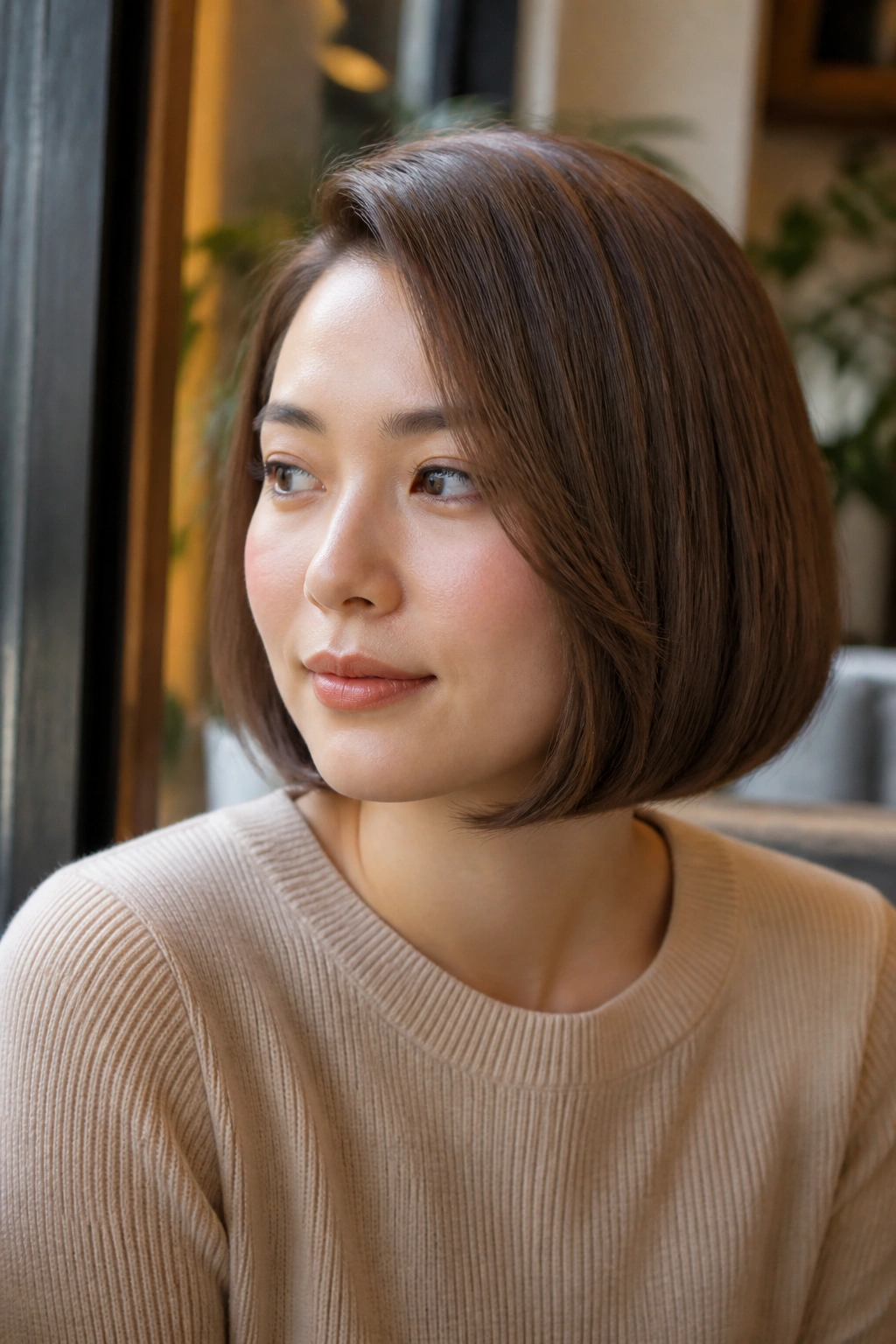
A chin-length bob can work on a round face, but it has to be cut with some nerve. If it lands too blunt and too even, it can follow the curve of the cheeks in a way that feels boxy. Give it a side sweep, though, and the whole thing changes.
The best version is sleek, but not pin-flat. You want clean lines with just enough bend at the ends so the hair does not flare outward. If the bob is dense, ask for a little internal weight removal. That keeps the shape from ballooning at the sides.
This is one of those styles that looks expensive when it is done well and slightly severe when it is not. There is no middle ground. The side part and the soft bend are what keep it from turning into a helmet.
A flat iron can help, but only if you curve the ends under by a few degrees. Straight down to a sharp edge is harsher than people expect. A small bend makes the line friendlier and keeps the face from looking wider.
5. Soft Shag With Side Fringe
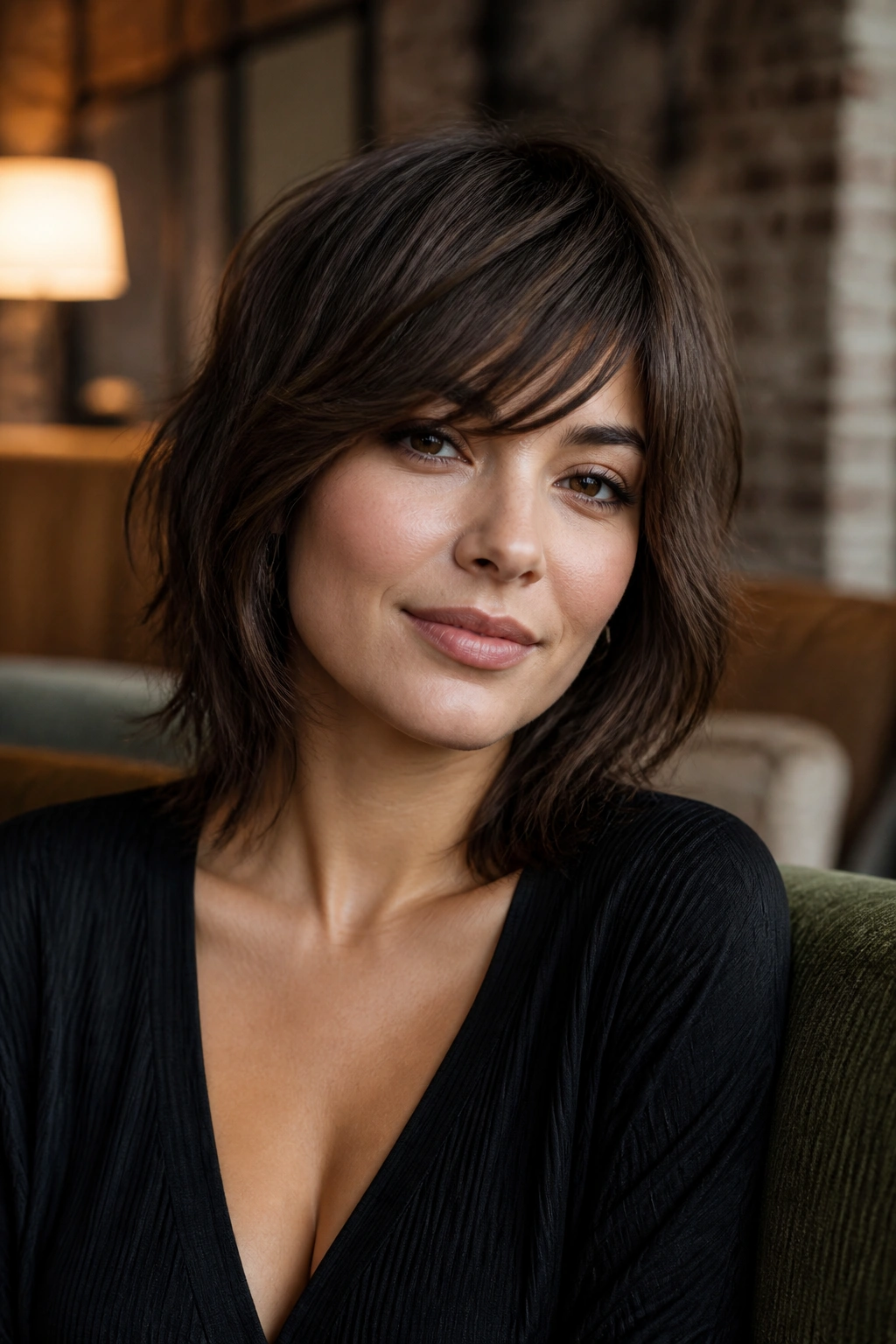
A shag is not the same thing as a mess. That matters here. On a round face, a soft shag with a side fringe breaks up the outline in a way that a blunt cut never will. The layers create little changes in direction, and those changes keep the eye moving.
Unlike a one-length cut, the shag lets the hair sit a little lighter around the cheeks. That is the real win. The side fringe also gives you a diagonal line across the forehead, which helps lengthen the face without needing extra length everywhere else.
This style is especially nice if your hair has a natural wave. If it is pin-straight, the shag can still work, but it needs a bit of bend from a diffuser, a round brush, or a quick pass with a curling wand on a few random pieces. Too uniform and it starts looking flat.
Who’s it best for? Someone who likes texture and does not want to fight their hair every morning. If you like polished perfection, skip it. If you like movement and a little bit of edge, it earns its keep fast.
6. Old-Hollywood Side Waves
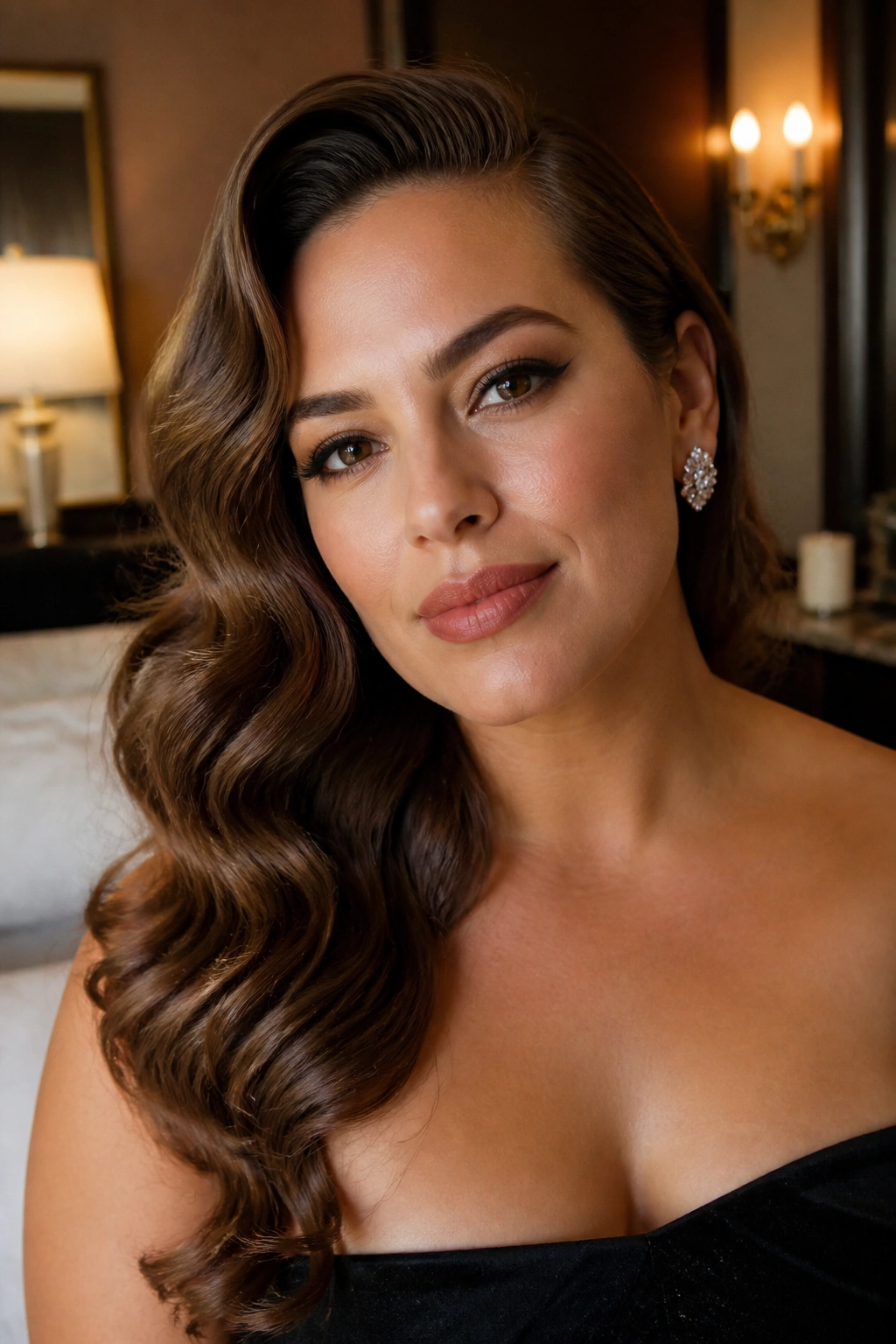
The first thing you notice is the shape. Big, polished waves sweep from a deep side part and fall in soft, controlled curves, which gives a round face more length than straight volume ever could. The second thing is the shine. Done right, this style looks smooth, heavy in a good way, and a little dramatic.
It works because the highest point sits at the crown and the softest bulk sits lower, below the cheekbone. That changes the line of the face without making the hair look teased or stiff. A 1.25-inch or 1.5-inch curling iron is usually the sweet spot. Smaller than that and the wave can feel too tight. Bigger than that and the shape can fall flat too fast.
Brush the curls out only after they cool completely. That part matters. Warm curls collapse easily, and then you lose the structure. A soft brush or a wide-tooth comb will turn them into that smooth S-shape instead of loose spirals.
This is a good pick for formal events, but I like it more than that. It makes a simple black sweater look considered. It makes a plain dress look finished. Sometimes hair only needs one clean sweep to do the whole job.
7. Long Hair With Curtain Bangs Swept Off Center
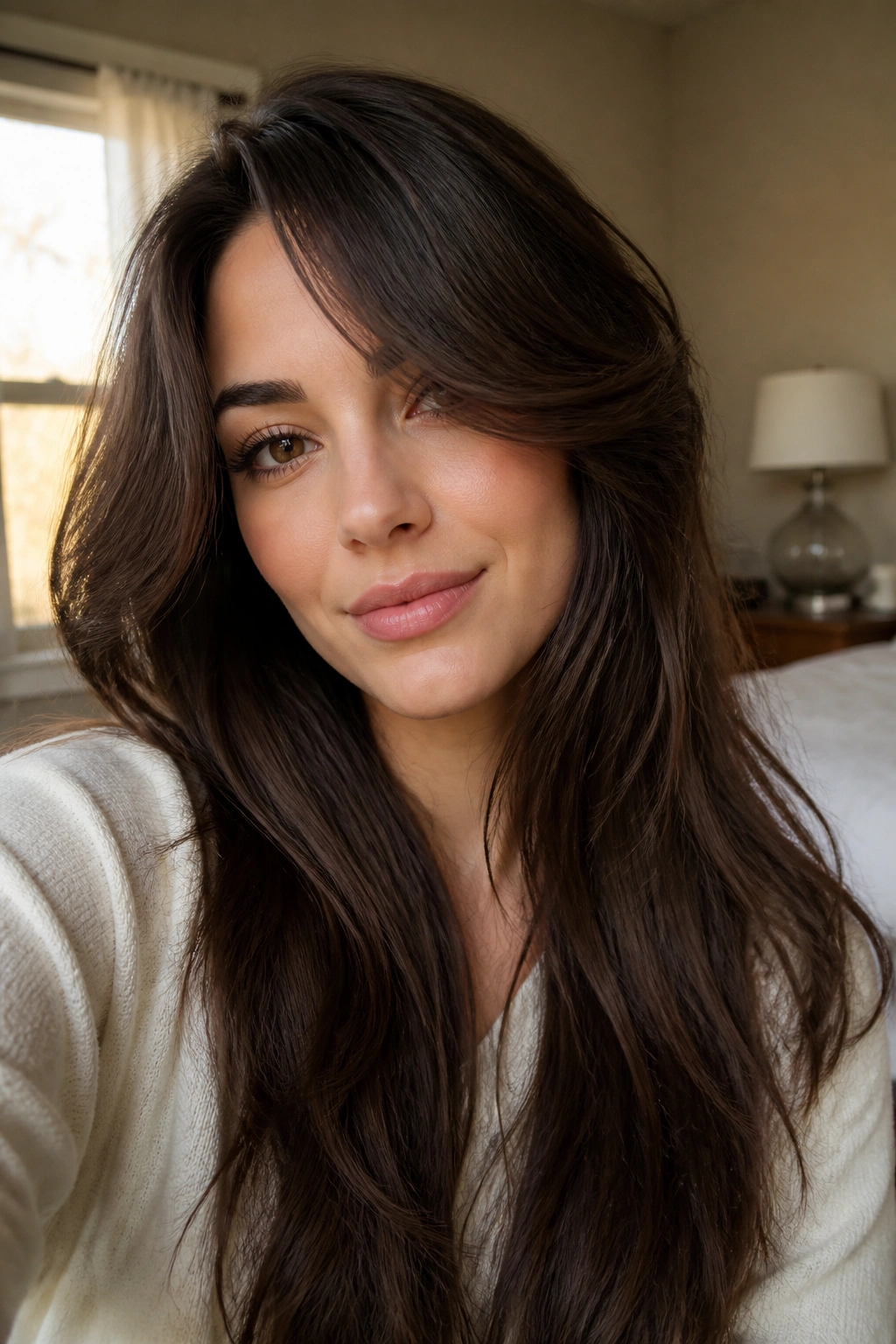
Can bangs work on a round face? Absolutely. They just need the right length and the right direction. Curtain bangs that are long enough to sweep off center can frame the face without cutting it in half, which is where short blunt bangs go wrong.
Choosing the Right Bang Length
Aim for fringe that starts around the cheekbone or even a touch lower. That gives you enough length to part them and let them fall softly to each side. Anything too short can make the face look shorter and wider. Anything too heavy can close in the forehead.
The rest of the cut should stay long and layered so the bangs do not become the only moving piece. If the hair underneath is flat and heavy, the fringe starts doing all the work, and that rarely looks relaxed.
What to Ask For
- Bangs that can split cleanly from a side part.
- Face-framing layers that begin below the cheekbone.
- Soft thinning at the ends, not a chunky block.
- Enough length to tuck the fringe behind one ear if needed.
This style is good for people who want change without losing length. It also grows out better than a short fringe, which is a nice bonus. No one enjoys being trapped by a bang decision for six months.
8. Asymmetrical Bob Tucked Behind One Ear
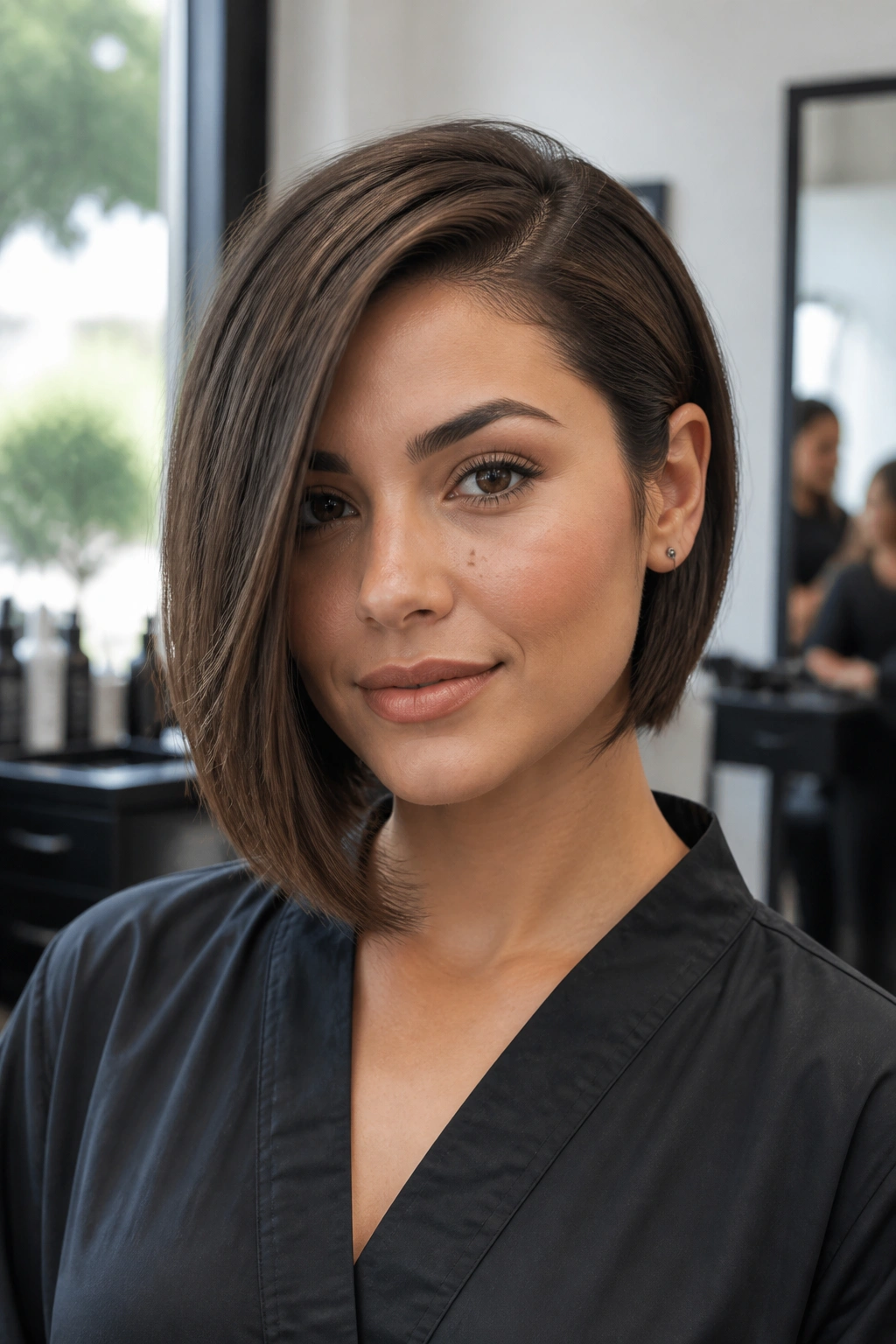
An asymmetrical bob is one of the easiest ways to cheat the eye. One side sits a little longer than the other, so the shape stops being a circle and starts becoming a line. For a round face, that line does a lot of work.
Picture this: the hair on one side grazes the jaw, while the other side lands a little higher and gets tucked behind the ear. That small difference keeps the face from looking too evenly framed. It also gives the cheekbones a bit more room to show up.
Key Things to Watch For
- One side should be about half an inch to an inch longer.
- The part should stay off center enough to show the length difference.
- The tucked side should be smooth near the ear.
- A slight bend at the ends helps the shape feel softer.
This cut is especially good if your hair is straight or only lightly wavy. The asymmetry can get lost in a lot of curl. On straight hair, though, it reads instantly.
One more thing: this style looks sharp when the longer side falls forward, not back. That forward movement is what keeps the face from feeling wide.
9. Defined Curls With a Side Sweep
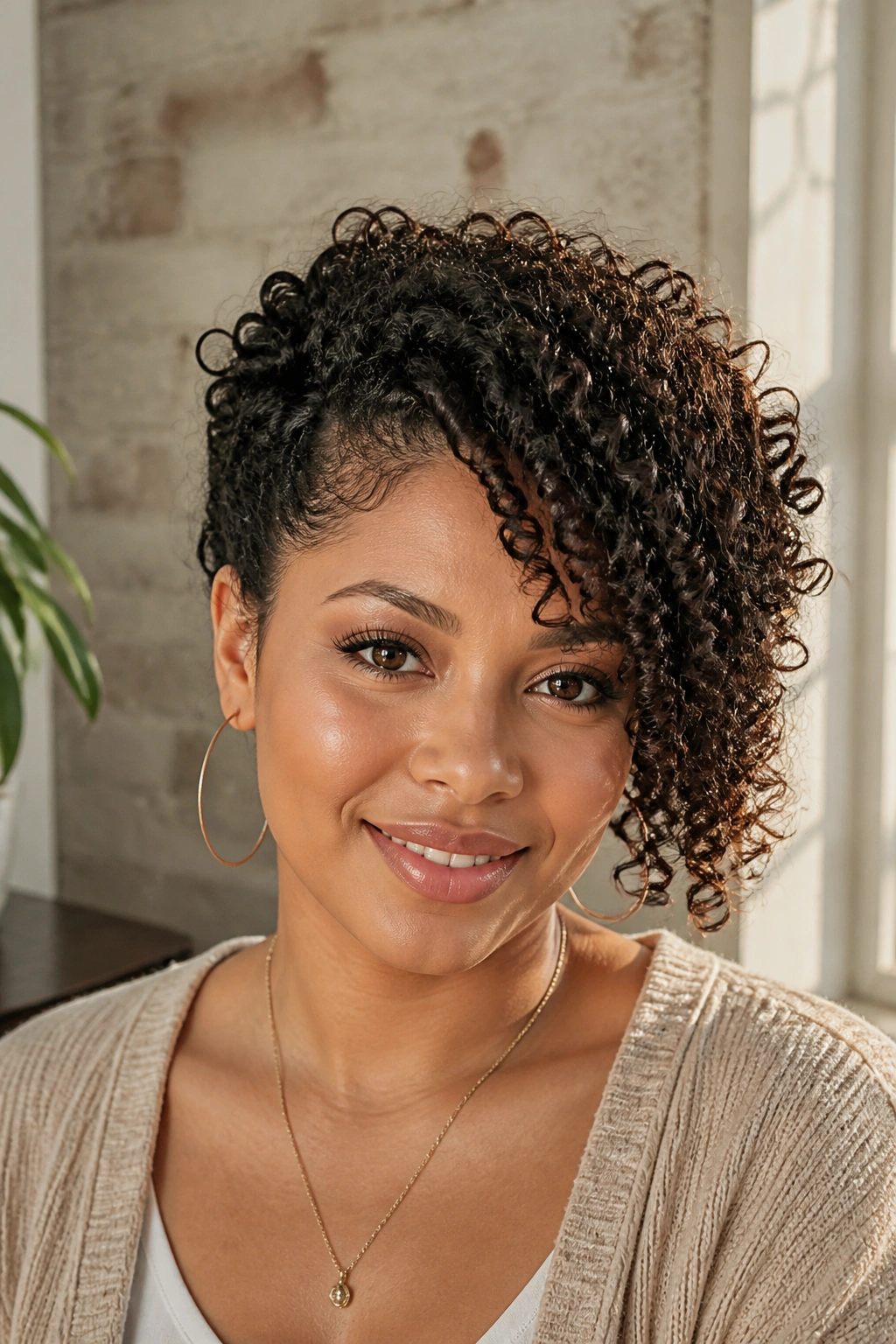
Curls can be a gift for round faces when they are placed well. A side sweep gives them a home that is not centered right over the cheeks, and that changes the shape in a hurry. The curls stack a little higher on one side and soften the other, which makes the whole look feel more sculpted.
The mistake is brushing curls apart too much at the sides. That spreads the width out. Keep the curl clumps defined and let the part do some of the shaping for you. If you’re styling from damp hair, place the part first, then set the top roots with clips while the hair dries.
What to Watch For
- Avoid a wide triangle shape at the cheeks.
- Keep the crown lifted with clips or root setting.
- Use a diffuser on low heat so the curl pattern stays intact.
- Separate only a few pieces at the end, not every single curl.
This look works on tighter curls and loose waves alike. The texture can be soft or strong; what matters is where the volume sits. Higher at the top, softer around the lower cheeks. That’s the whole game.
And no, you do not need to smooth everything into submission. A little frizz is fine. Too much polish can make curls lose the shape that helps them.
10. Lifted Blowout With Floating Ends
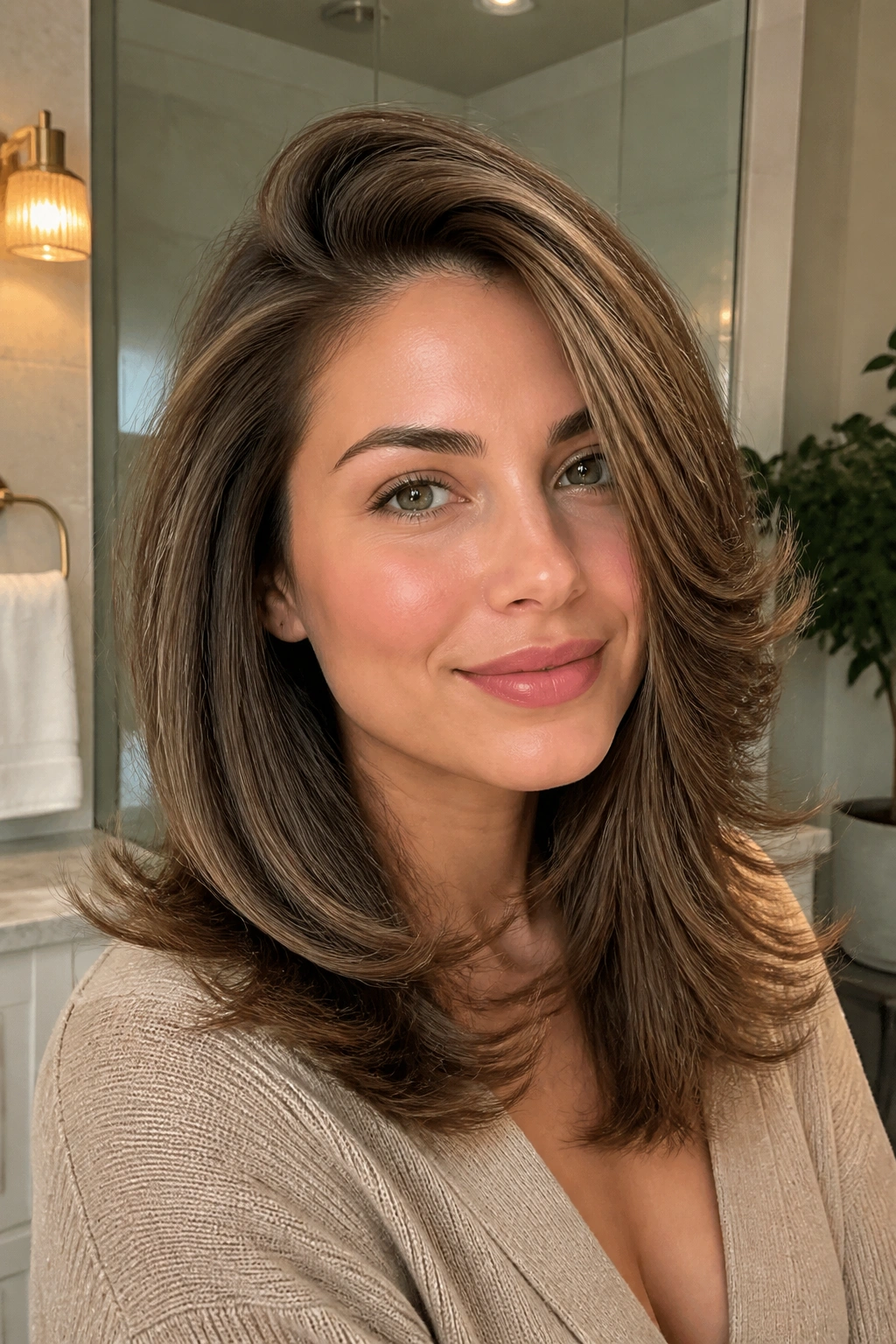
A good blowout can do more for a round face than a dozen clever cuts. The reason is simple: it gives you root lift, a side part, and ends that move away from the cheeks instead of sitting on them. That trio changes the silhouette fast.
Dry the hair in the opposite direction first. Just for a minute or two. That builds lift at the roots without teasing. Then switch to the side part and work with a medium round brush, pulling the hair up and away from the face as you dry. If the ends are curled under only slightly, they sit neatly instead of flipping out like a bell.
A cool shot at the end matters more than people think. It locks in the shape and keeps the crown from dropping the second you step outside. If your hair is heavy, pin the top sections up while they cool. Old-school trick. Still works.
This is the kind of style that makes even a simple T-shirt look finished. Not because it is flashy. Because it has shape.
11. Side Braid With Soft Face Pieces
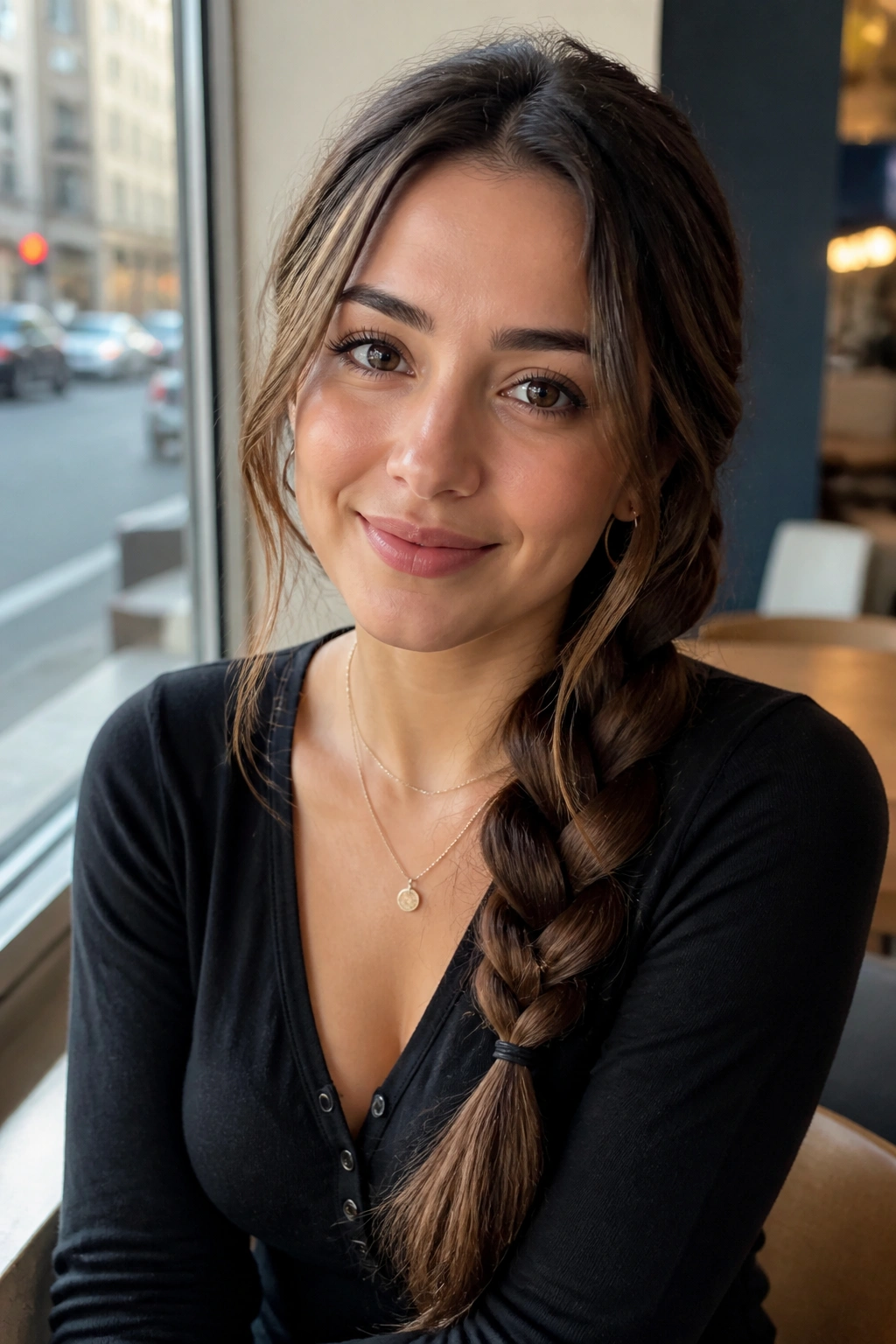
A tight braid down the middle can make a round face feel shorter. A side braid does the opposite. It moves the bulk off-center and leaves one side of the face open, which changes the line right away.
The braid itself does not need to be fancy. A loose three-strand braid, a Dutch braid, or even a fishtail all work. The part matters more than the braid type. Start with a side part, pull the braid over one shoulder, and leave a few fine pieces loose around the temples.
If you want it to look softer, gently pull apart the outer braid sections after securing the end. Just a little. Too much and it starts looking sloppy, which is a different thing entirely.
This style is useful on second-day hair, on days you need your hair out of the way, and on days you want a little structure without heat. It also pairs well with earrings, because one side of the face stays open instead of covered.
One small thing: keep the braid low and narrow near the cheek. A braid that starts too high can add width where you do not want it.
12. Shoulder-Length Cut With Angled Layers
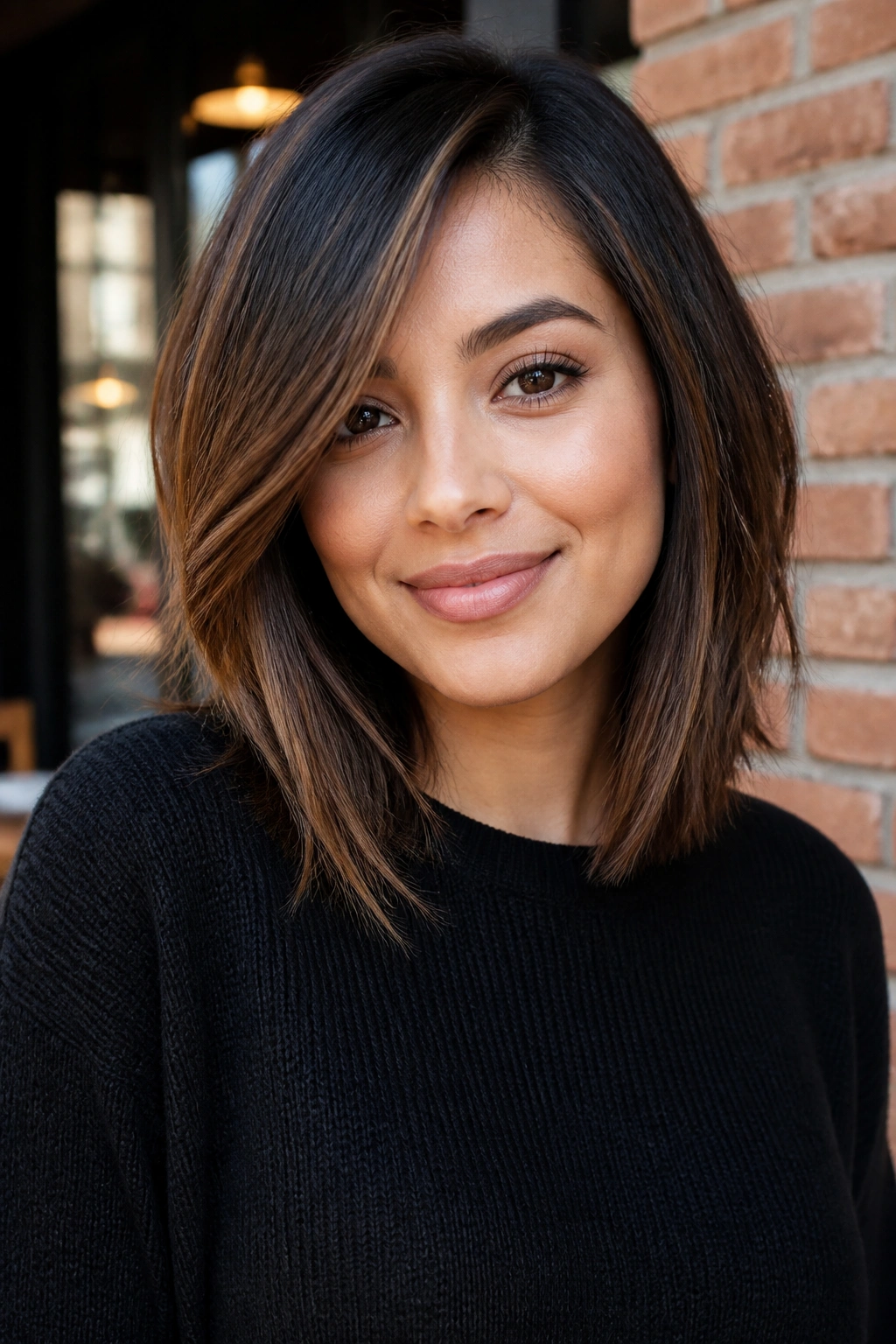
Why does shoulder length work so well here? Because it gives you enough room for movement without hanging into a triangle. Shoulder-length hair can get wide if it is all one length, but angled layers change that fast. They draw the eye downward and keep the sides from feeling heavy.
Which Layers Matter Most
The useful layers are the ones that begin below the cheekbone and travel toward the collarbone. Those pieces stop the cut from sitting like a block around the face. A soft side part then pushes some of that movement across the forehead, which gives the face a longer read.
If your hair is thick, ask for internal debulking so the ends do not puff out. If it is fine, keep the layers longer so you do not lose too much density. That part is easy to miss, and it matters.
This cut is one of the most forgiving shapes on the list. It air-dries well, blow-dries well, and can still be tucked behind one ear when you want a cleaner line. For a lot of people, that flexibility is the whole appeal.
13. Low Ponytail With Crown Height
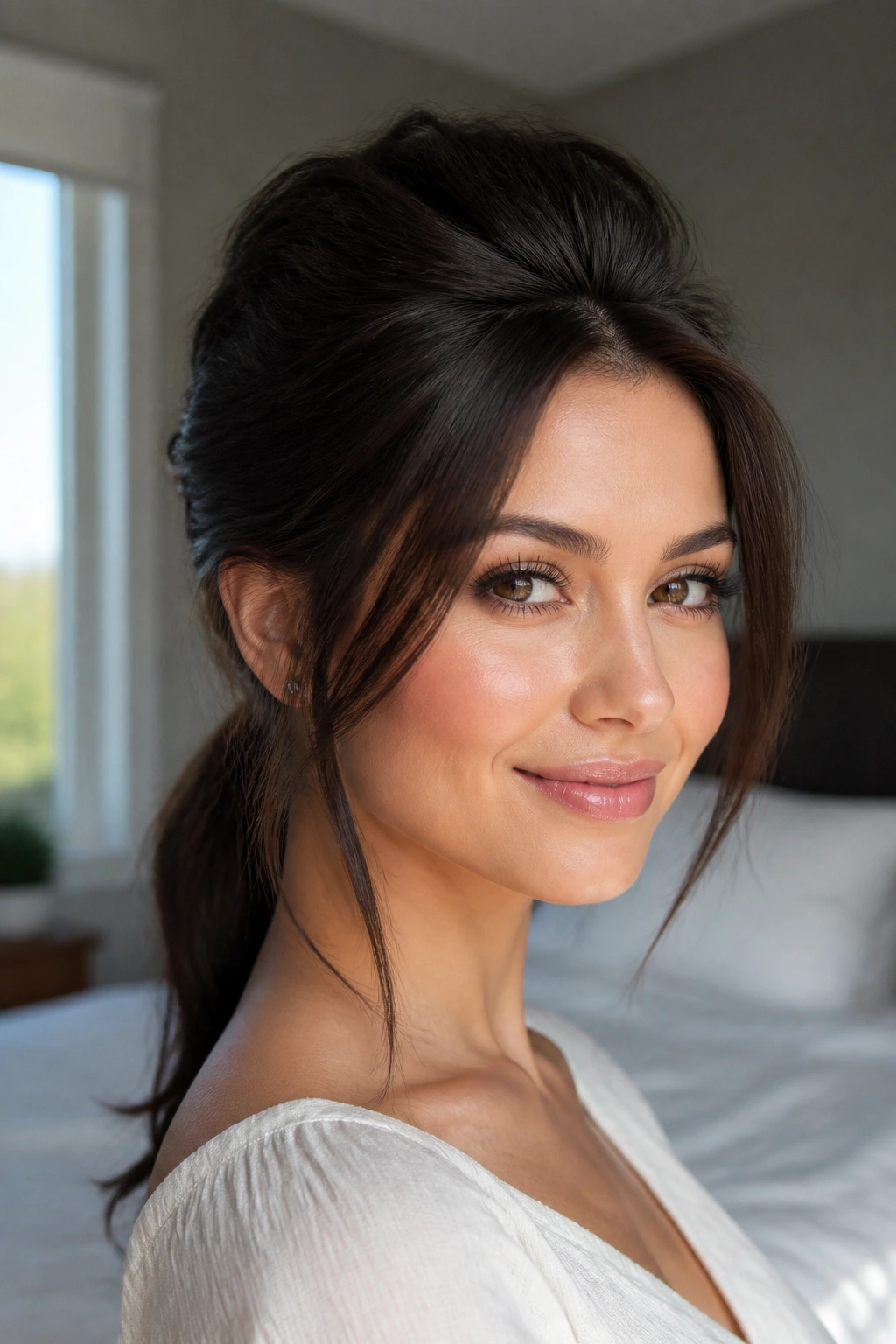
A low ponytail sounds plain until you add crown height. Then it starts working like a face-shaping style instead of a backup plan. The lift at the top stretches the face vertically, and the side part keeps the front from feeling too tight.
The biggest mistake is pulling everything flat before tying it back. That makes a round face look wider because all the shape disappears from the top. Instead, leave a little lift at the roots, especially around the part line. You do not need obvious teasing. A soft push at the crown with the tail of a comb is enough.
A Few Small Details That Help
- Place the part before you gather the hair.
- Keep the ponytail low, near the nape, not in the middle of the head.
- Leave one or two slim front pieces out if you want softness.
- Wrap a strand of hair around the elastic for a cleaner finish.
This style works for work, dinner, and lazy mornings when you want your face to look less wide without spending twenty minutes on it. Efficient. Quietly effective. That’s a good combination.
14. Half-Up Waves With a Side Part
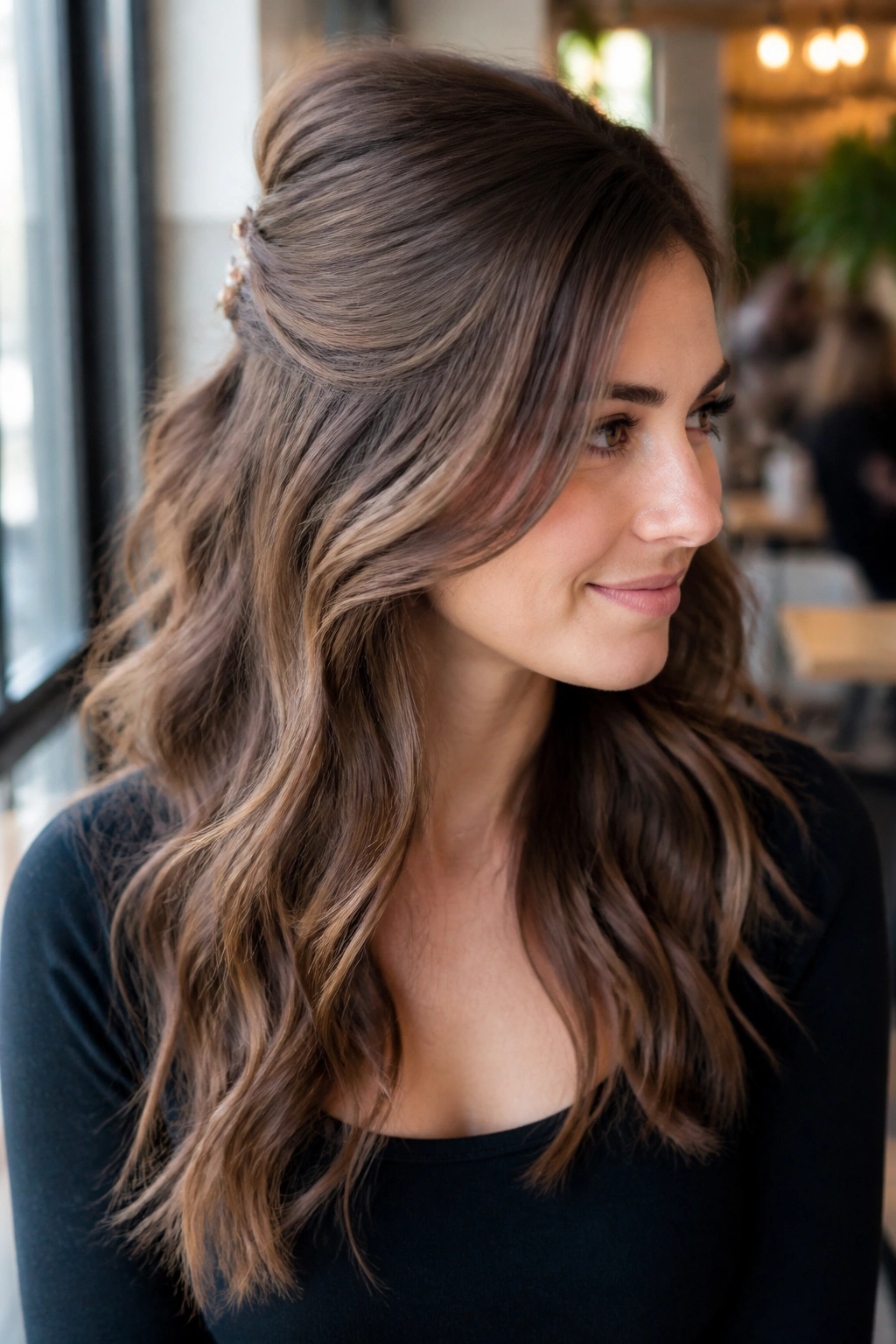
There is a reason half-up hair keeps showing up everywhere: it solves the flat-root problem without hiding length. For round faces, a side part makes the half-up section feel less centered and more lifted, which keeps the top of the face open.
The best version starts with loose waves, not tight curls. Loose waves give the half-up section some texture so it does not just sit there. Pull the top section back from the heavier side first, then secure it with a small clip or tie. That keeps the part visible and preserves the diagonal line that does the shaping.
This style is useful when your hair feels too soft around the cheeks and you want more structure without doing a full updo. It also works well with shoulder-length cuts that are growing out. A half-up twist can make growing-out hair look intentional instead of awkward. That is worth something.
Leave the front pieces a little uneven on purpose. One side can sit closer to the cheek, the other can sweep back more. That unevenness is part of the point.
15. French Bob With a Side Part

A French bob can be a little risky on a round face if it is cut too short and too square. A side part fixes a lot of that. It softens the front edge, adds a diagonal, and keeps the style from sitting like one straight line under the cheeks.
The best version usually sits around jaw level or just below it, with airy ends rather than a hard block. If the hair is thick, the ends should be softened so they do not puff outward. If the hair is fine, a small bend at the ends helps the cut keep its shape instead of collapsing.
Compared with a classic center-parted bob, this one feels less symmetrical and a little less severe. That is the whole advantage. The side part creates movement before you even touch a styling tool.
This cut is especially good for people who like a polished look but do not want to spend a long time styling every morning. It has attitude. It also has enough softness to flatter a fuller face without hiding it.
16. Side-Parted Twist-Out On Natural Hair
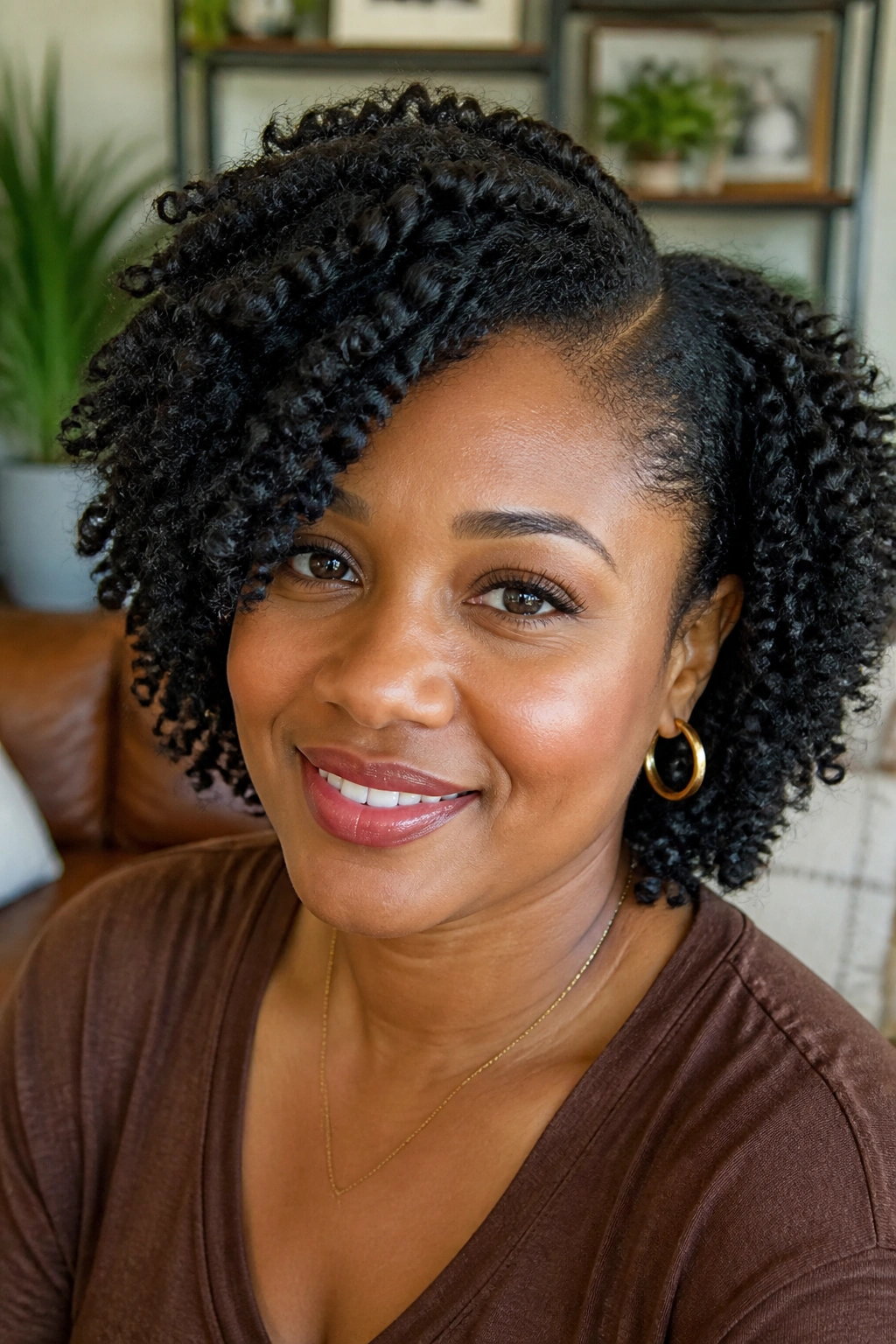
A side-parted twist-out can be one of the nicest shapes for round faces because it builds lift where you want it and keeps the width from spreading evenly on both sides. The part changes the whole outline before the twists even dry.
Shape Comes First
Set the part while the hair is damp and the coils are still easy to direct. Twist the hair in a pattern that supports the side sweep — usually smaller sections near the part line and slightly larger sections away from it. That helps the volume stack diagonally instead of blooming straight out at the cheeks.
Let the roots dry fully before separating anything. If you break the twists apart too soon, the shape can puff into a wider cloud, and that is not the effect you want here.
A Few Practical Notes
- Use enough hold to keep the roots from frizzing at the part.
- Stretch the roots at the crown if you want more height.
- Separate gently with oiled fingertips or a light cream.
- Leave a little fullness on the heavier side, not both sides equally.
This style works because it respects the hair’s texture instead of fighting it. That matters. A round face does not need hair flattened into submission. It needs a shape that knows where to stand up and where to soften.
17. Low Bun With Soft Tendrils
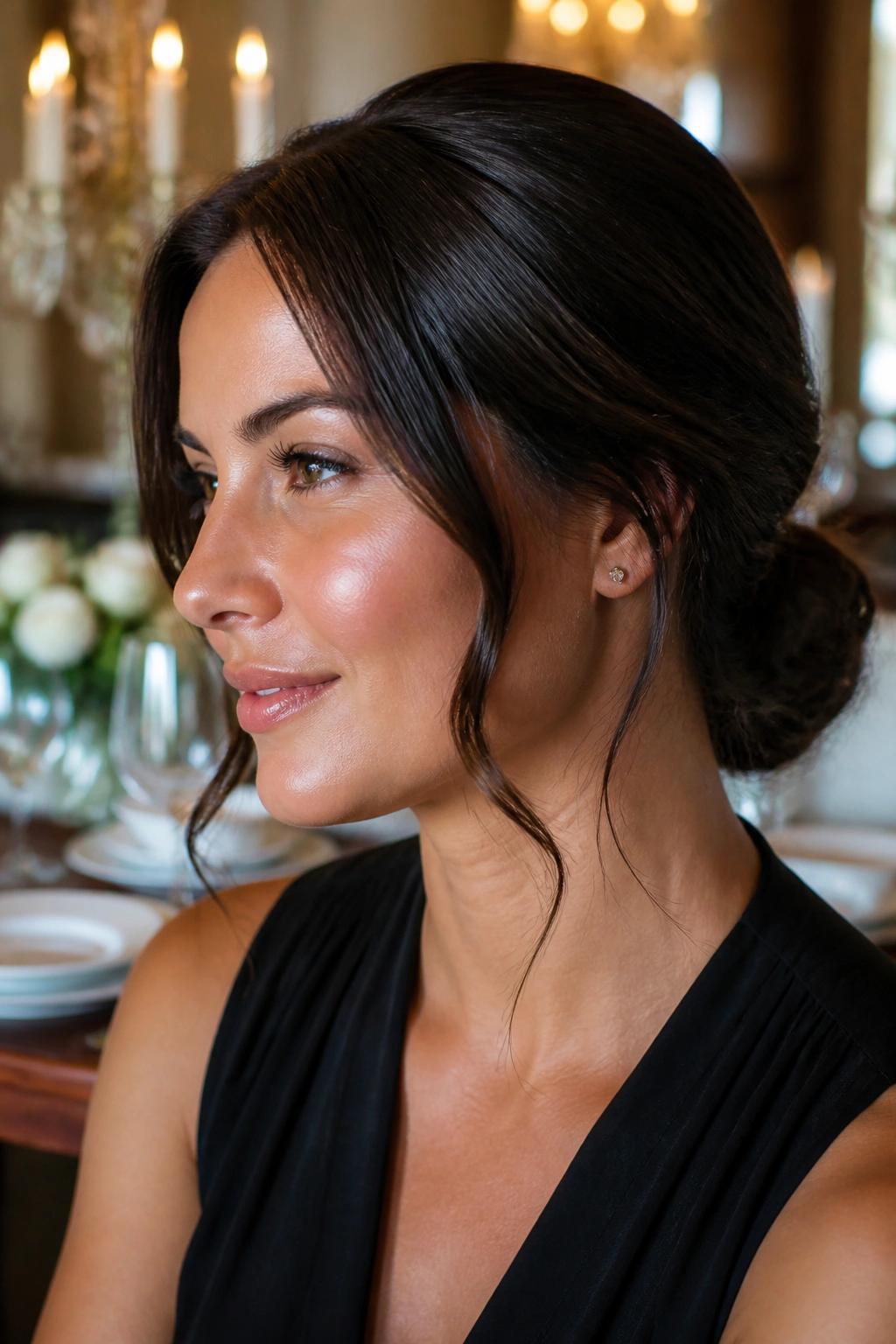
Can a low bun flatter a round face? Yes — if you do not slick every strand back like you are trying to erase your forehead. The side part and a little height at the crown keep the shape from collapsing into the cheeks.
A good low bun sits near the nape, not in the middle of the head, and the front is kept a little loose. Two soft tendrils near the temples can make a huge difference. They break up the line around the face and keep the look from feeling too severe.
What Makes It Work
- Keep the bun low and slightly off center.
- Lift the crown before pinning anything.
- Choose tendrils that sit around cheekbone length.
- Leave the bun a little textured instead of glossy and tight.
This is the kind of style that works for weddings, dinners, interviews, and those days when your hair refuses to cooperate but you still need it to look deliberate. It is calm without being bland.
If your face is very round, avoid making the bun too small. A tiny bun on a broad head can look pinched. A slightly fuller bun balances the face better.
18. Clipped-Over Front Section
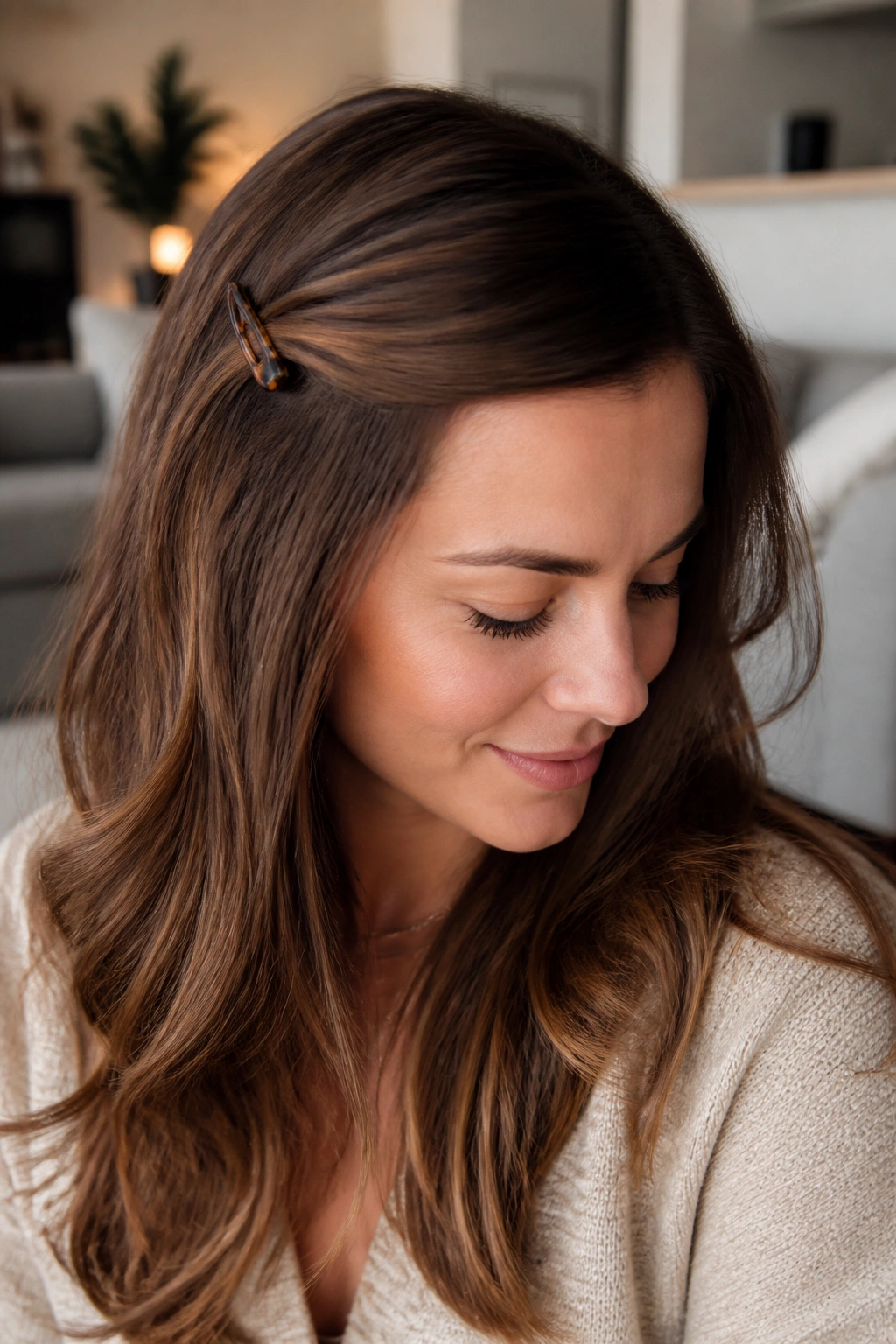
Sometimes the easiest hairstyle is not a full style at all. It is a side part with the heavier front section clipped back so the face opens up fast. That little bit of lift and direction can do more than you’d expect, especially on a round face where the front pieces want to fall straight down.
This works nicely on second-day hair, growing-out bangs, or days when you want something quick but not sloppy. Sweep the front section across the forehead, give it a small bend with your fingers or a curling iron, then pin it back with a barrette or two bobby pins hidden under the hair. The part stays visible, the face gets shape, and the whole look feels intentional.
A few things to keep in mind:
- Use a clip that holds without sliding.
- Keep the pinned section loose enough to create a curve.
- Let the rest of the hair fall in waves, bends, or a blunt lob.
- Match the clip size to your hair density; tiny clips disappear in thick hair.
This style is simple, but it is not lazy. There is a difference. The clipped-over front section gives you asymmetry, lift, and a clear line across the face in about two minutes.
Final Thoughts
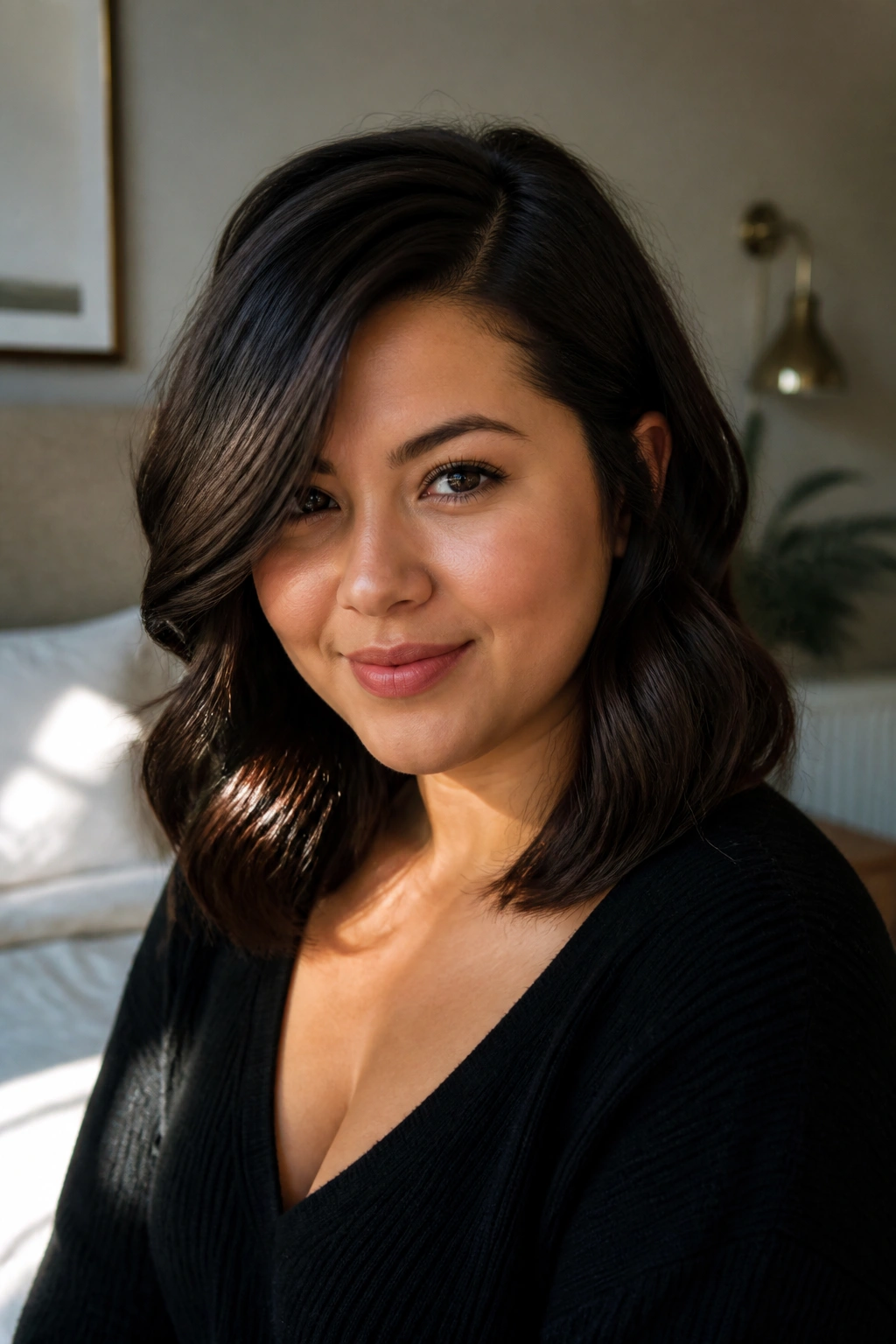
Round faces do not need to be “fixed.” They need shape choices that work with their softness instead of pretending it is a problem. A side part does that fast, but the best results come from pairing it with the right length, the right height, or a little asymmetry where it counts.
The smartest move is to match the style to your hair, not the other way around. Fine hair usually likes lift and cleaner edges. Thick hair usually needs removal of bulk so the sides do not puff out. Curly and wavy textures often look best when the part is set early and left alone instead of constantly reworked.
If you want one practical rule to keep in your pocket, use this: move the volume up, and move the line off center. That’s the real trick behind these styles, and once you see it, you start noticing it everywhere.
