



Thick hair and a round face can be a lovely pairing, but only when the cut knows where to put the weight. The wrong short cut puffs at the cheeks and turns the whole shape into one big circle. The right one uses height, diagonal lines, and a little breathing room around the face, which is why short thick hairstyles for round faces can look sharper than long hair ever did.
The trouble usually starts at the sides. Thick hair wants to sit wide, and round faces already carry width through the cheeks, so a blunt edge at chin level can feel broader than you expected when you step out of the salon. That does not mean short hair is off-limits. It means the cut has to be smarter.
I pay attention to three things with this combo: where the part sits, how much bulk stays around the jaw, and whether the top has enough lift to keep the face from looking flat. A little hidden layering does more than a lot of surface texture. And if someone reaches for thinning shears too early, that’s worth a pause.
The styles below handle those problems in different ways. Some stretch the face with length at the front, some build height at the crown, and some simply break the outline so the hair stops reading as one solid shape. The first one is the quickest fix if bulk is your main complaint.
1. Textured Pixie with Crown Lift
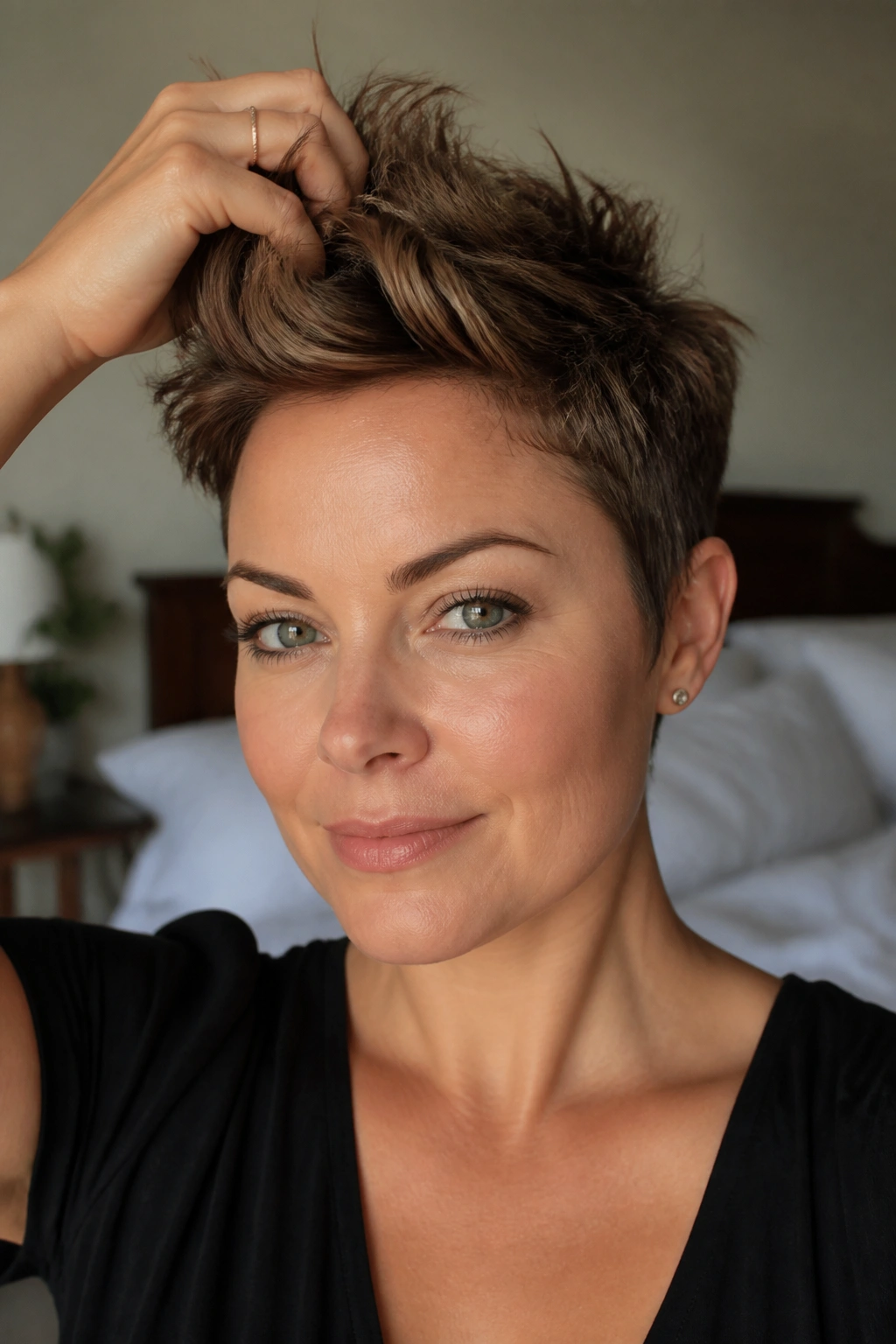
A textured pixie is the fastest way to make thick hair feel lighter without losing shape. The cut stays close at the sides and nape, then leaves enough length on top to create a little lift instead of a flat cap. On a round face, that extra height matters more than people think.
Why It Works on a Round Face
The top gives you a vertical line, which helps lengthen the face visually. The shorter sides stop the hair from flaring out right at the cheekbones, where a round face already has width. That contrast is the whole point.
Ask for 3 to 4 inches on top, softly tapered sides, and point-cut ends instead of blunt, choppy blocks. If your hair is coarse, ask for weight removal only in the interior, not all over the perimeter. The outline should stay neat.
- Keep the crown longer than the temple area.
- Taper the sideburns so the cut hugs the head.
- Use a matte paste, not a heavy cream.
- Blow-dry the top upward with your fingers, then pinch the ends for separation.
Best tip: work the styling product into dry hair, not soaking-wet hair. Thick hair can swallow product fast, and the lift disappears when the roots get slick.
2. Side-Parted French Bob for Round Faces

A French bob sounds tiny, but the good version is not boxy at all. It sits around the jaw or just below it, then uses a side part and soft bend to keep the face from feeling wider. On thick hair, the trick is to let the shape feel controlled rather than puffed.
The side part does a lot of the work. It breaks up the symmetry of a round face and creates a diagonal line that pulls the eye upward instead of straight across. If the hair falls too evenly on both sides, the whole look starts to feel rounder. That’s the part most people miss.
Keep the ends a little airy. A French bob with thick hair can go heavy fast if the bottom is cut too blunt or too full. I like this cut best when the front grazes the cheekbone and the back sits a touch shorter, so the silhouette has movement instead of weight.
The style also ages well as it grows out, which is handy if you hate frequent trims. Tuck one side behind the ear, leave the other side loose, and let the part do the framing. That tiny asymmetry changes the whole read of the haircut.
3. Layered Bixie with Curtain Bangs
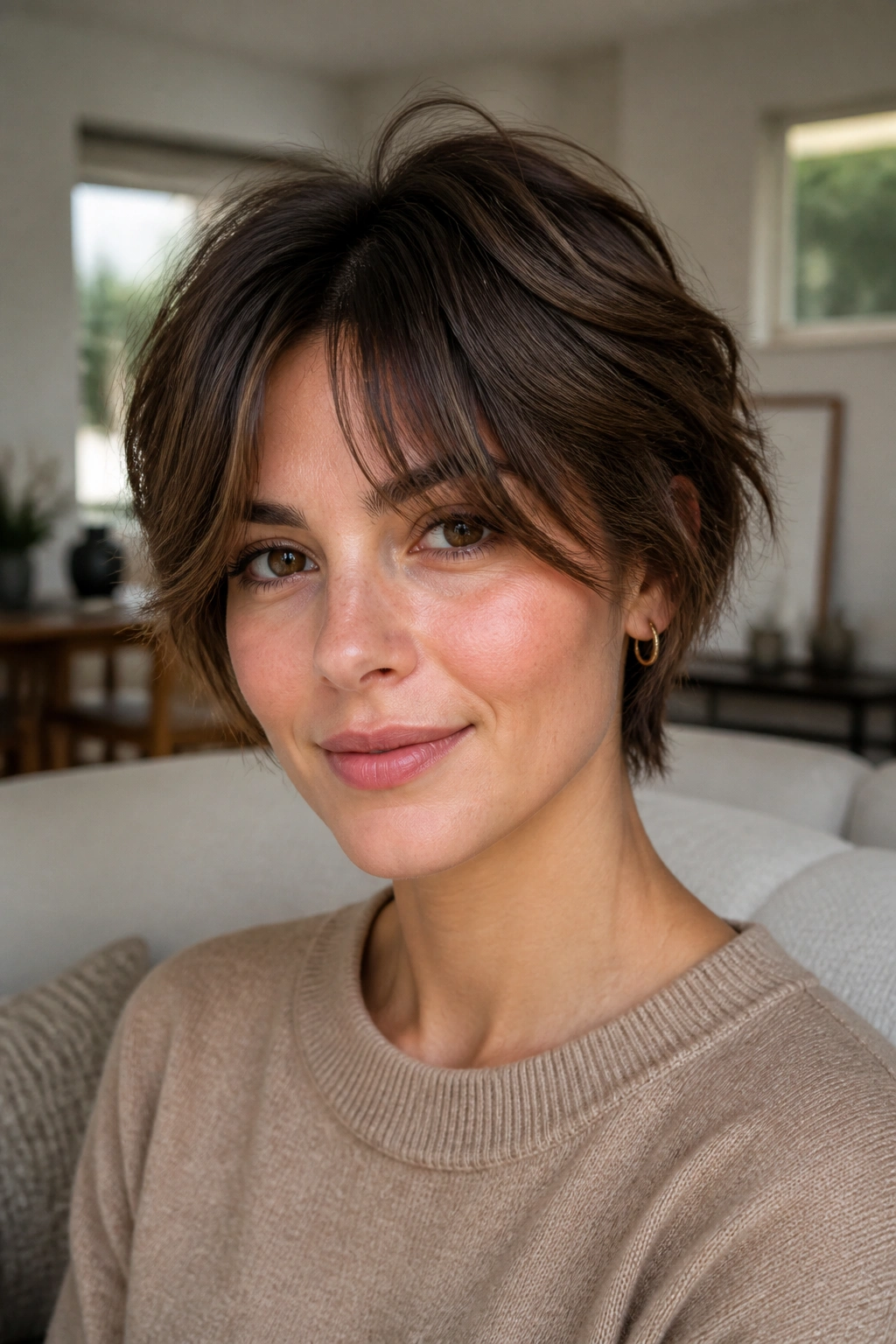
Why does the bixie keep showing up on round faces? Because it sits in that useful space between a bob and a pixie, which means you get shape without the hard stop of a chin-length line. Thick hair likes it because the layers remove bulk, and round faces like it because curtain bangs open the center of the face.
What to Ask the Stylist
Ask for a bixie that keeps the nape neat, the top piecey, and the fringe long enough to sweep away from the cheeks. If the bangs hit exactly at the widest part of your face, they’ll do the opposite of what you want. Aim for bangs that start near the brow and taper into the cheekbone area.
- Keep the crown longer than the sides.
- Ask for soft interior layers around the temples.
- Avoid a dense, straight fringe unless your forehead is long.
- Let the ends feather, not stack into a hard shelf.
How to Style It
A round brush at the roots gives the top enough lift, and a light wax on the ends keeps the pieces from clumping together. If your hair bends naturally, great — use it. If it doesn’t, a few loose turns with a small flat iron are enough. You do not need perfect curls here. A little mess is part of the appeal.
4. Choppy Chin-Length Bob
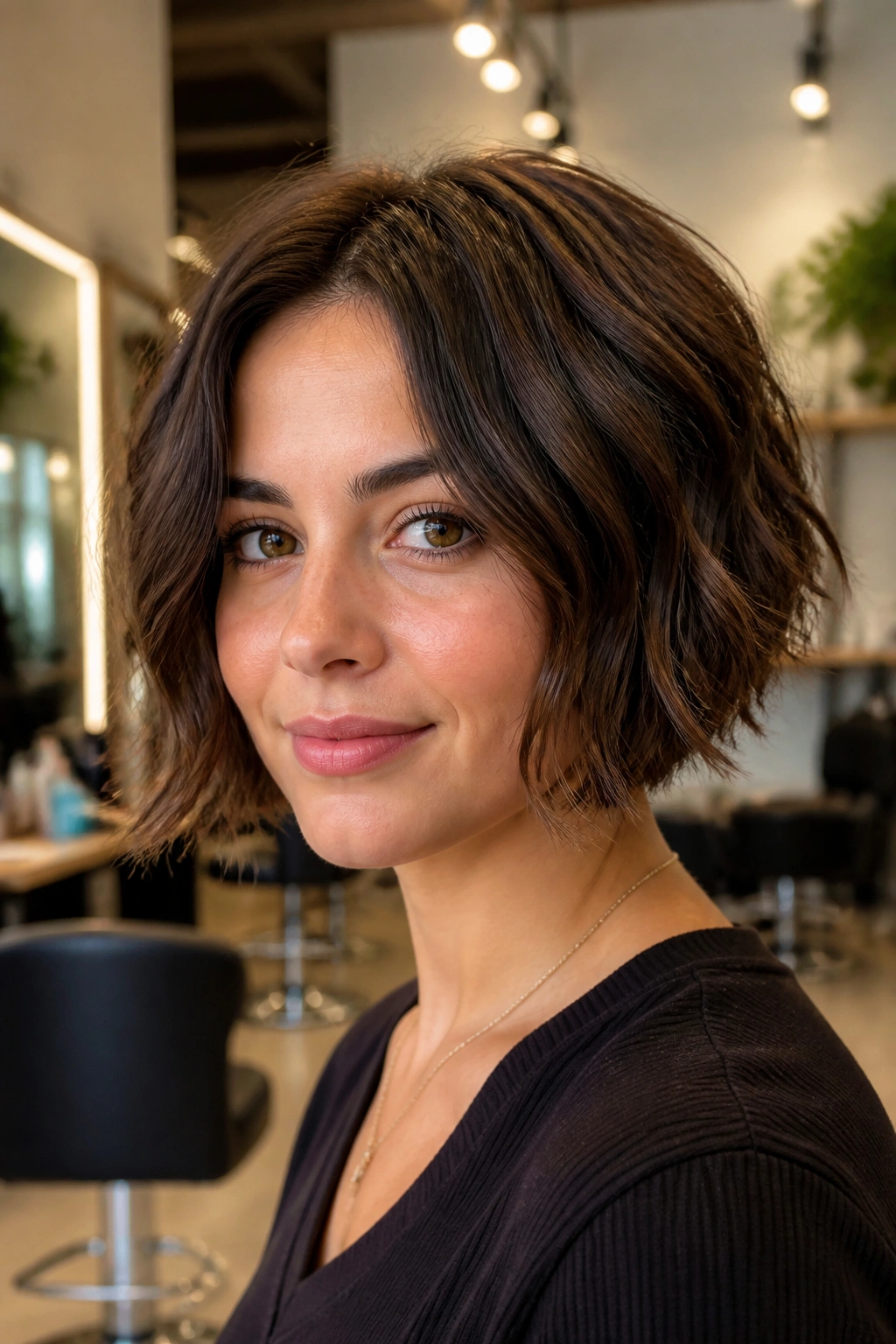
If you have ever left the salon with a chin-length bob that looked cute for ten minutes and then puffed out around the cheeks, you already know the problem. A chin-length bob on thick hair needs broken-up ends, or it sits like a helmet.
The fix is choppiness, but not the kind that looks hacked at. I mean point-cutting through the lower third of the hair so the edge moves when you move. That keeps the silhouette from drawing one hard circle around the face. On a round face, even a small change in the bottom line can matter.
The length also matters. I prefer this cut when the front lands just under the chin instead of right at it. That tiny bit of drop gives the face a longer look. If the hair is thick enough to stand away from the head, ask for internal weight removal around the mid-lengths, not the outer edge.
- Let the ends look slightly uneven.
- Dry with a paddle brush if you want a cleaner finish.
- Use a sea-salt spray only if your hair is soft enough to handle it.
- Skip blunt bangs unless you want the face to look shorter.
This cut is not fussy, but it is unforgiving when it is overbuilt. Keep it light and the shape stays honest.
5. Asymmetrical Bob with a Long Front Piece
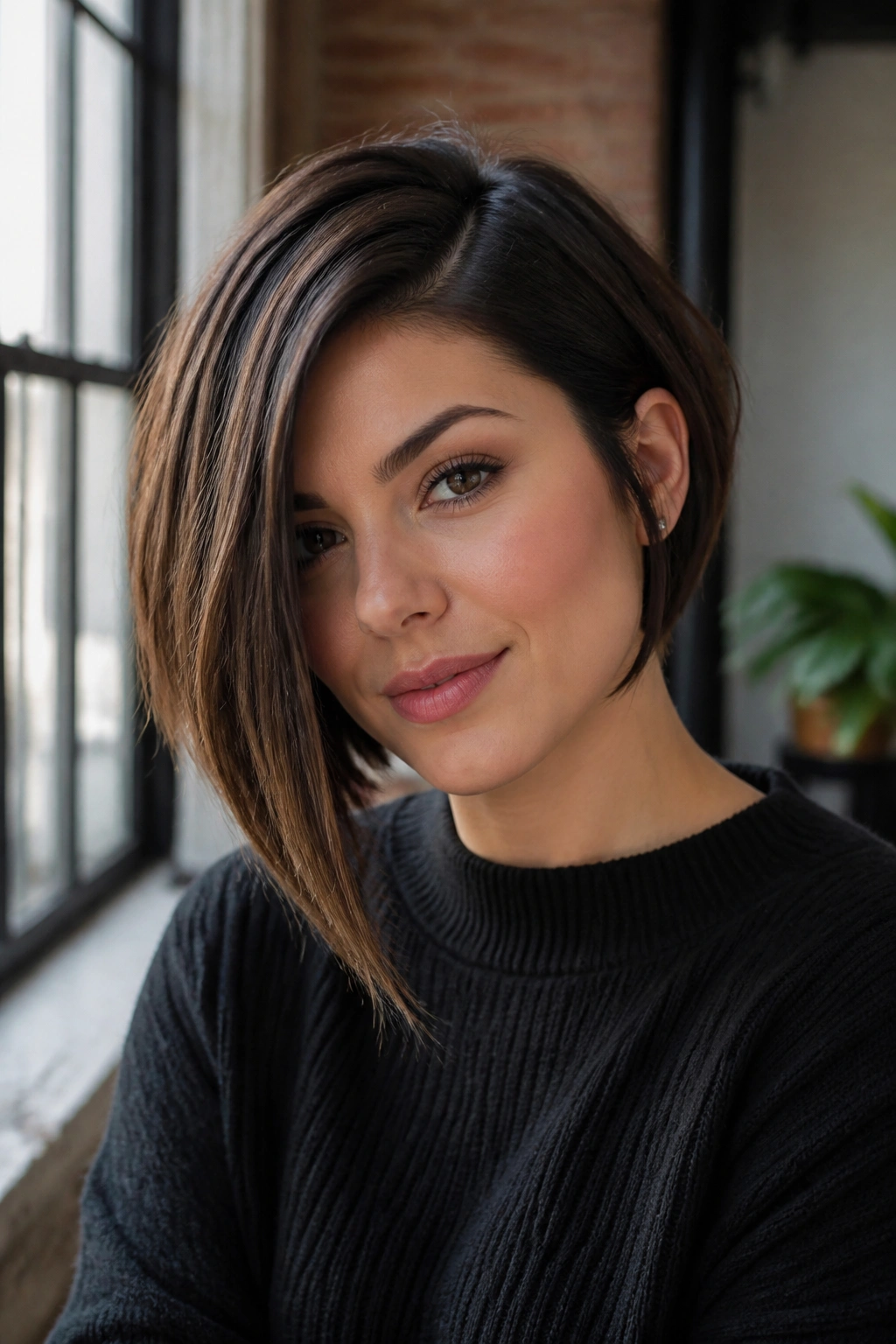
One side does the heavy lifting here. An asymmetrical bob uses a longer front panel on one side and a shorter back on the other, which creates a diagonal line across the face. That line is useful on a round face because it pulls attention downward and outward at the same time.
Thick hair can make this cut look expensive in a good way, because the extra density holds the angle instead of letting it collapse. The key is to keep the shorter side close enough to the head that the shape doesn’t balloon at the ear. If the weight sits too low, the asymmetry gets lost.
I like this style with a deep side part. It gives the longer side a little drama and prevents the haircut from feeling centered and symmetrical, which is where round faces can start looking broader. The longer front piece should graze the jaw or fall a bit below it. That extra inch buys you a lot.
It does need trims if you care about the line staying sharp. Every 5 to 7 weeks is a sensible range. Let it go much longer and the angle softens into a regular bob, which is fine if that’s what you want, but it loses the point of the cut.
6. Shaggy Crop for Round Faces
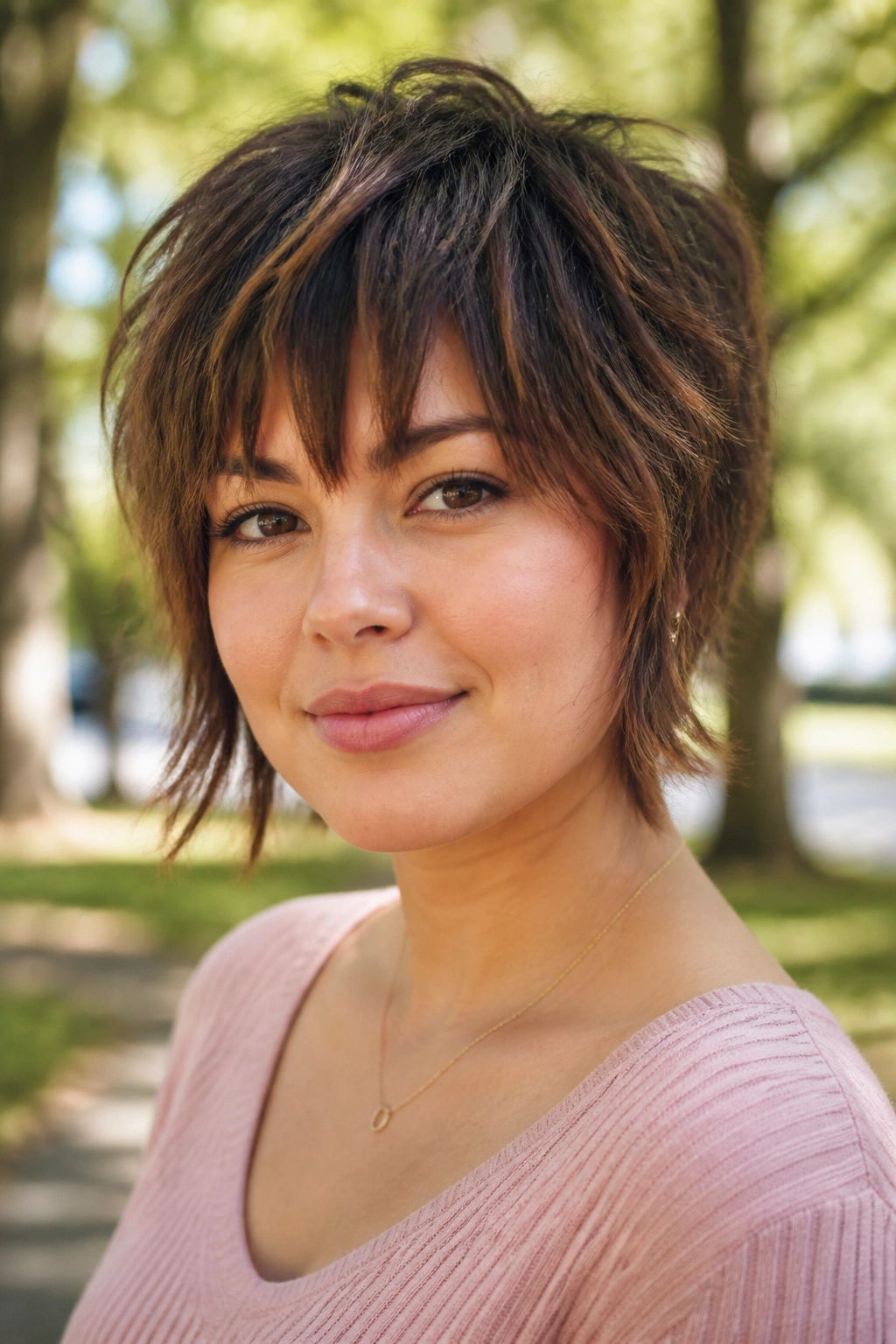
Unlike a tidy bob, this one wants movement first. A shaggy crop keeps the layers short enough to remove bulk but broken enough to stop the hair from sitting like one solid block. On thick hair, that matters. On round faces, the layered messiness gives the eye places to go other than straight across the cheeks.
The best version has shorter layers at the crown, longer pieces near the jaw, and a fringe that feels wispy instead of heavy. If the top is too flat, the whole cut loses lift. If the fringe is too dense, the face looks boxed in. The sweet spot is airy and a little uneven.
This cut works especially well with natural waves. You can rough-dry it, twist a few pieces with your fingers, and leave it alone. Straight hair can wear it too, but it usually needs a touch of styling paste or texture spray so the layers separate instead of hanging together.
A shaggy crop is not the neatest haircut in the room. That’s the point. It gives thick hair room to breathe, and it stops a round face from getting trapped inside one smooth shape.
7. Curly Pixie Cut
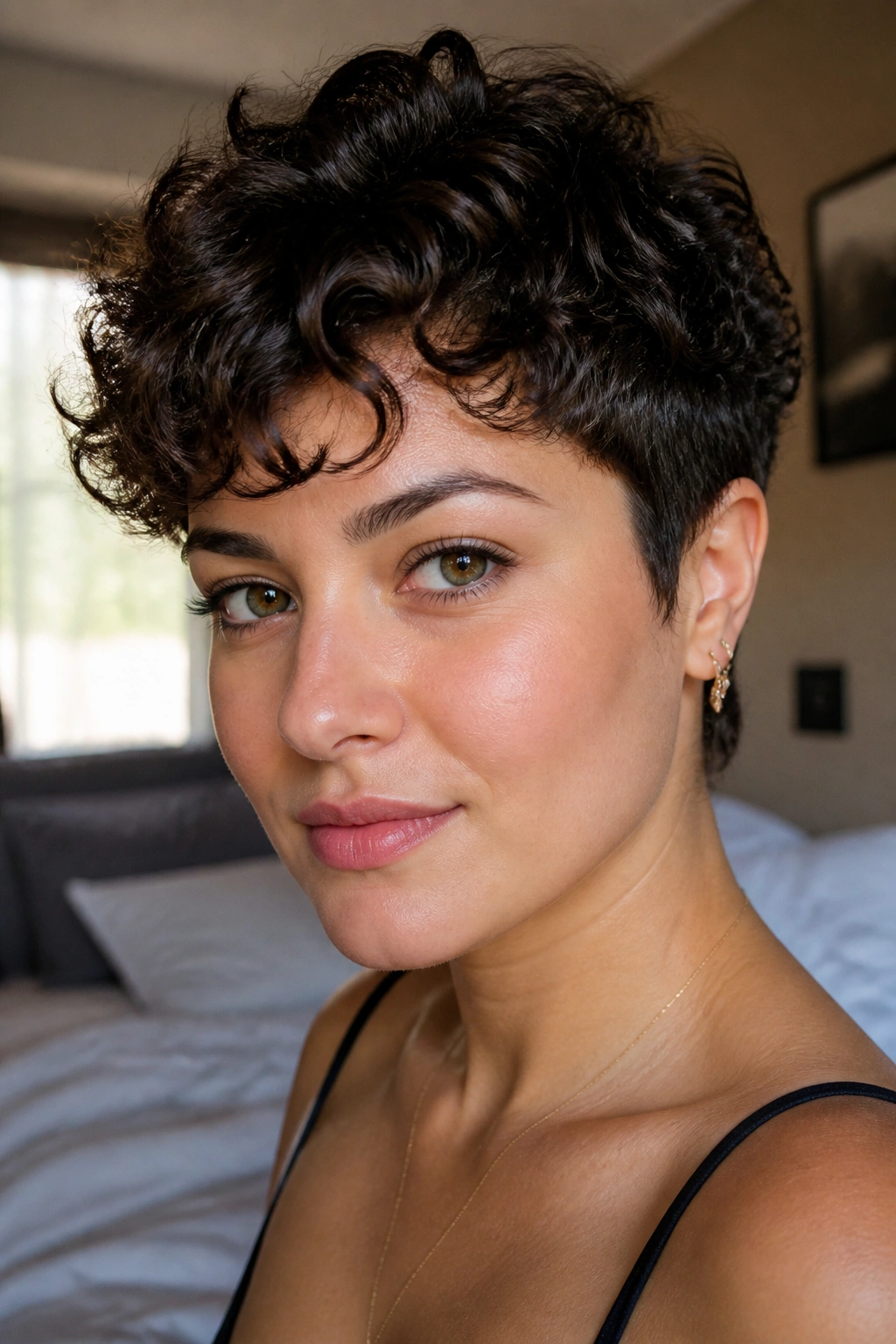
Curly hair does not need to be tamed into a square box to work as a pixie. A good curly pixie keeps enough length on top for the curl pattern to form, while the sides and nape stay tight enough to stop the shape from spreading out. That balance is what makes it work on a round face.
The Curl Pattern Matters
The cut should be done with shrinkage in mind. Curly hair can spring up more than expected, especially after drying, so a stylist who cuts it wet and too short can leave you with a much smaller shape than planned. I’d rather see a dry cut or a curl-by-curl approach on this style.
- Keep the top long enough for curls to stack upward.
- Taper the sides so they do not flare.
- Avoid cutting the temples too short.
- Ask for soft edges around the forehead rather than a hard outline.
How to Wear It
A little curl cream and a diffuser are enough for most people. Use low heat and low speed so the curl pattern keeps its shape. If you like a more piecey finish, scrunch in a tiny bit of gel at the ends once the hair is about 80 percent dry.
Do not push the curls forward onto the cheeks. That’s where the roundness compounds. Let the top rise and keep the sides close.
8. Stacked Wedge Bob
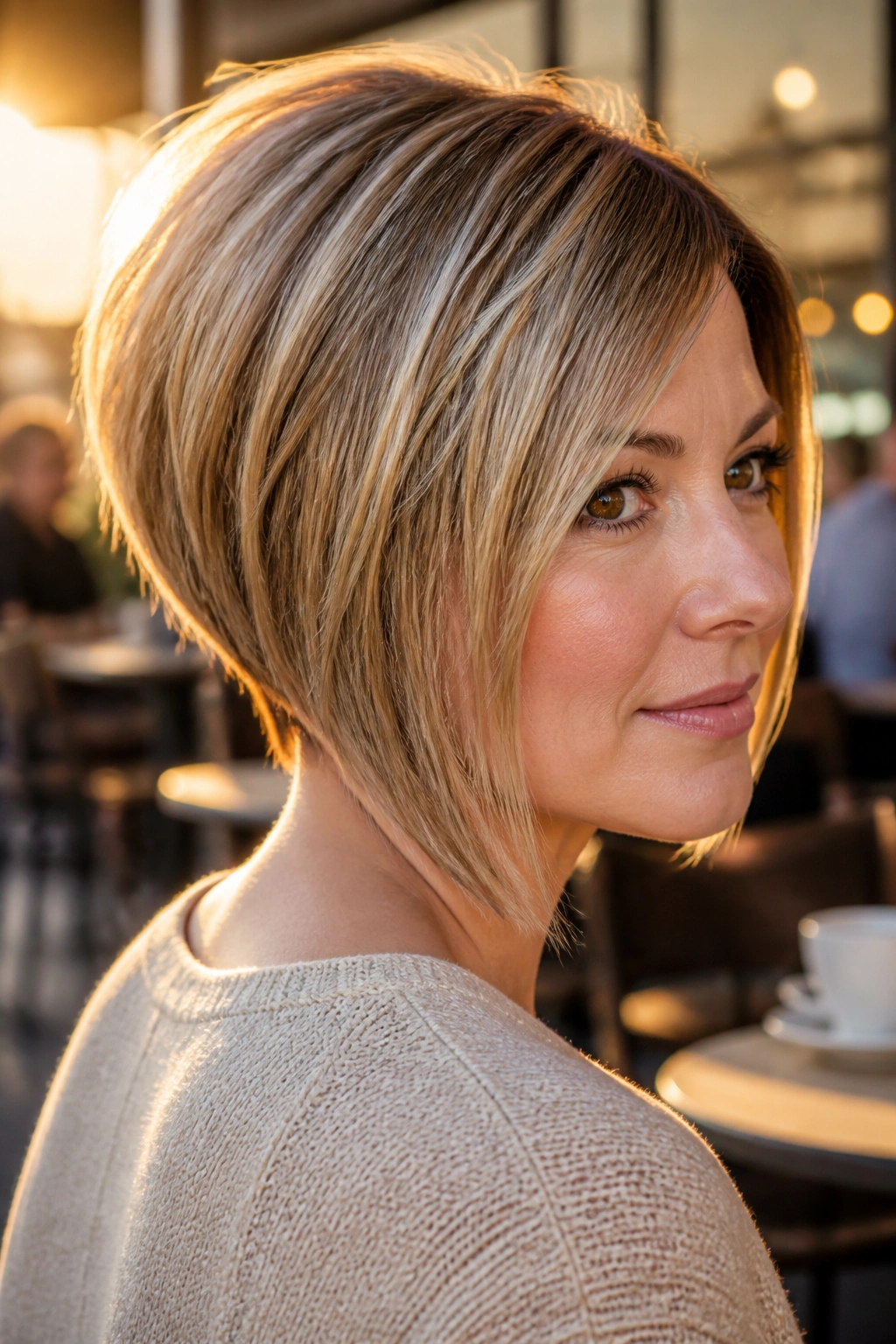
Can a stacked bob flatter a round face? Yes, if the height sits in the back and the sides stay controlled. The wedge shape gives you volume at the nape and crown, which lifts the eye upward, while the front stays a bit longer to avoid widening the face.
This cut is especially good on thick, straight hair because the stack at the back holds its shape without needing much effort. The back is cut shorter in layers, then the length angles forward. That sloping line keeps the haircut from sitting flat or boxy. It also makes the neck look longer, which is never a bad thing with a round face.
What you want to avoid is too much width near the ears. If the side layers are left heavy, the whole bob starts to look like a triangle from the front. Ask for the sides to stay lean while the back keeps its lift. That’s the clean version.
A round brush at the crown helps the stack show up. A flat iron can also sharpen the front edge if you want a smoother finish. This is one of those cuts that looks far more complicated than it is.
9. Blunt Bob with Invisible Layers
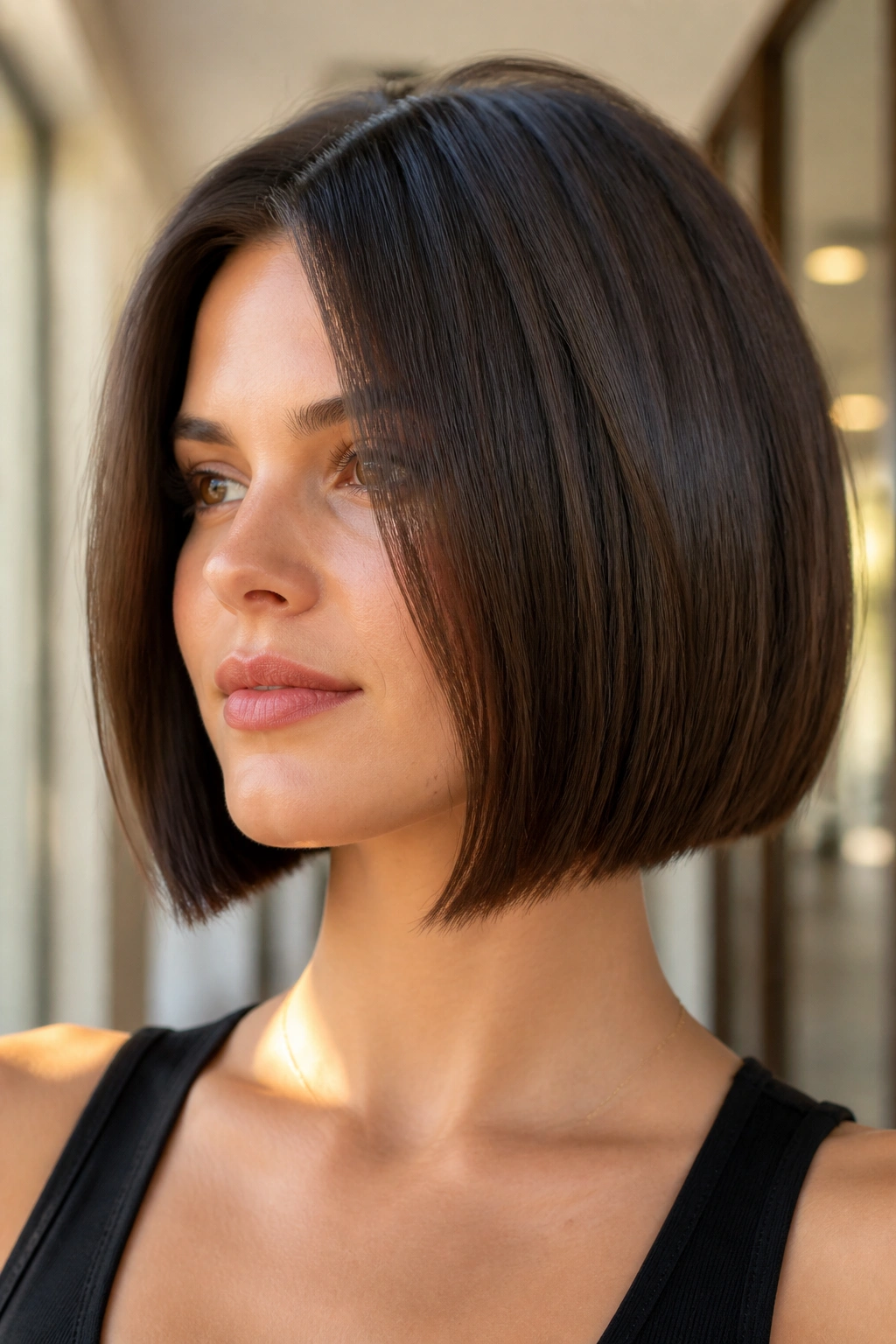
A blunt bob sounds plain until thick hair gets involved. Then it becomes a balancing act. Without hidden layers, the bottom edge can sit too heavy and make a round face look even rounder. With the right internal shaping, the blunt line stays crisp while the bulk disappears from inside.
The trick is to keep the visible line clean and remove weight underneath the surface. That means the haircut still looks polished from the outside, but it no longer bulks up around the jaw. On thick hair, that’s a real advantage. You get the structure of a blunt bob without the helmet effect.
I like this cut when the length sits one to two inches below the chin. That small drop helps stretch the face a bit. If the bob hits exactly at the chin on dense hair, it can widen the lower half of the face. A little length solves more than people expect.
Pair it with a smoothing cream and a paddle brush if you want a sleek finish. Or let it air-dry and bend a few ends inward with a flat iron if you want it softer. Either way, the invisible layers do the work quietly.
10. Feathered Crop with Side-Swept Fringe
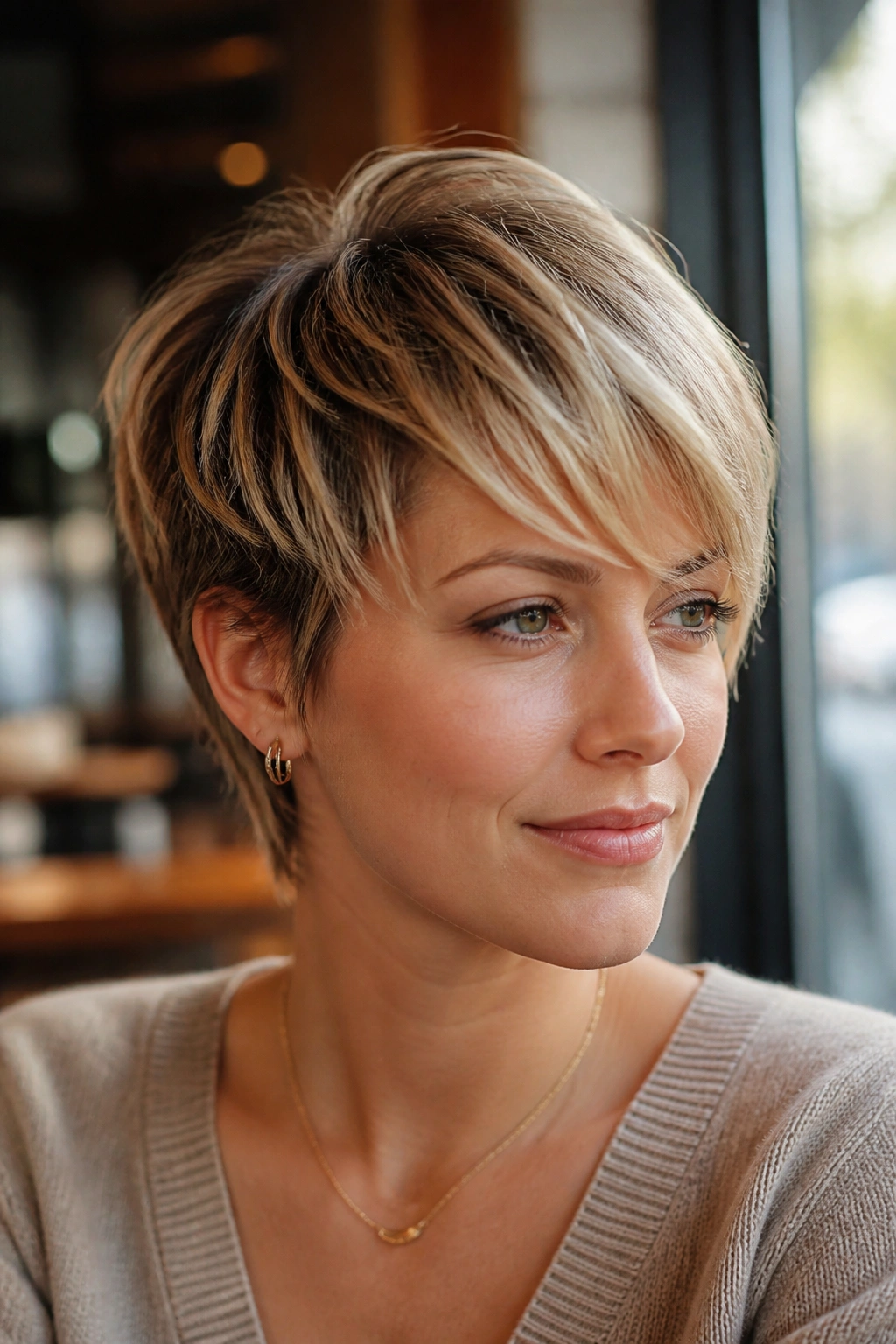
Feathered ends move when you walk. That sounds like a small detail, but on a round face it changes the whole feel of the haircut. A feathered crop breaks up the outline around the cheeks and jaw, which stops thick hair from sitting in one blunt block.
The side-swept fringe is the useful part. It creates a diagonal line across the forehead and helps the face feel less wide. If the fringe is cut too dense, the effect disappears. You want it light, soft, and a little longer at the outer corner so it can skim the temple.
One sentence matters here: the angle is everything. If the feathering happens only at the ends, the top still sits bulky. If the fringe starts too low, it draws attention right to the cheeks. The best version starts with lift at the crown and eases down toward the jaw.
This cut suits hair that has some natural bend, but it can also work on straight hair with a quick blow-dry. Use a round brush just at the front, then let the rest fall loose. Too much precision ruins the charm.
11. Short Wolf Cut
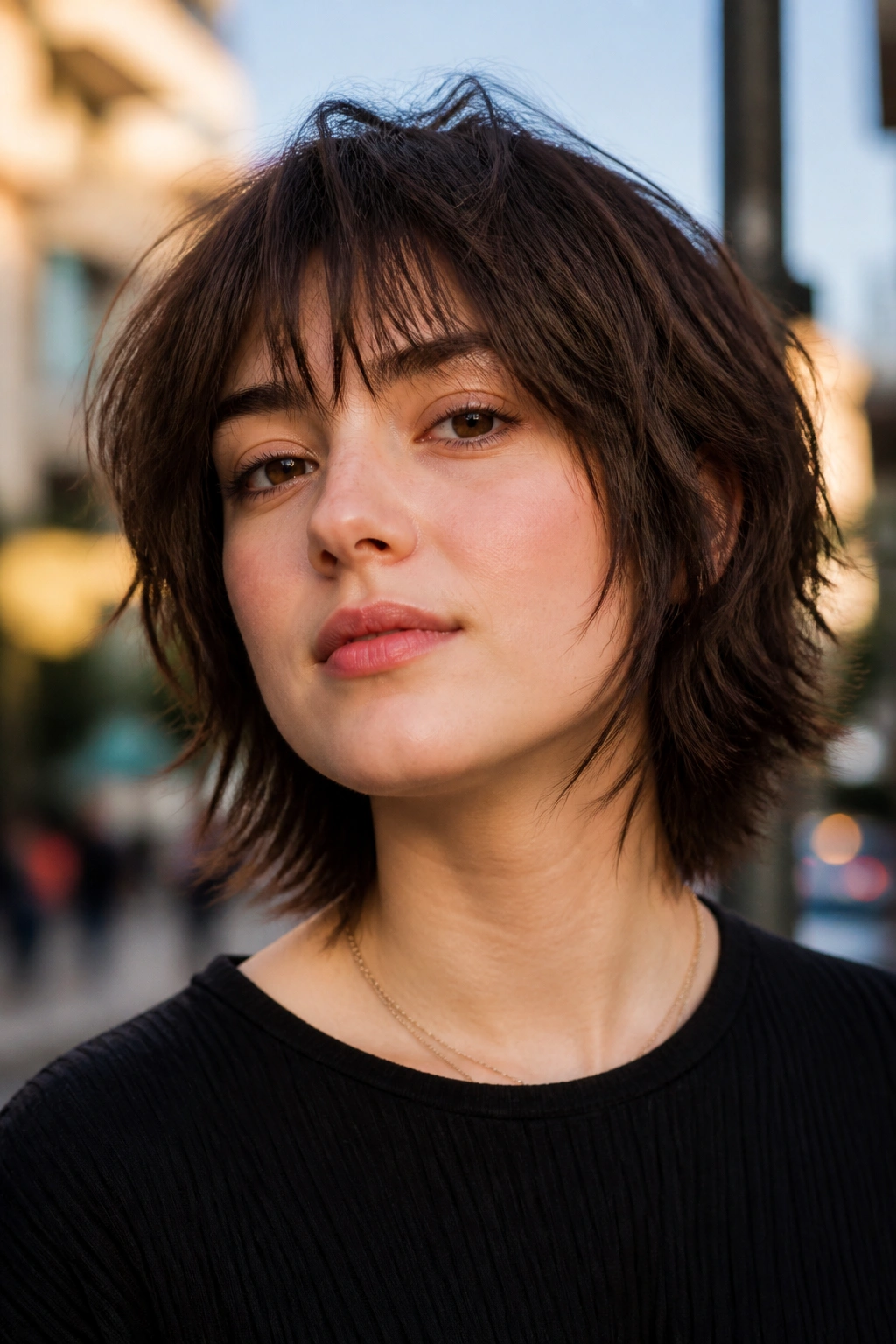
Does a wolf cut become too much on a round face? It can, if the layers flare at the cheeks. A shorter, controlled version is a different story. The crown gets height, the mid-lengths stay broken up, and the ends keep moving, which helps thick hair feel lighter without getting puffy.
How to Keep It from Ballooning
Ask for the shortest layers to stay above the ear line and the longer layers to fall below the jaw. That keeps the bulk away from the widest part of the face. If the layers stop right at the cheekbone, the cut can make the face look wider than it is.
- Keep the fringe wispy, not dense.
- Let the crown stay a little longer for lift.
- Use a diffuser if your hair has any wave or curl.
- Avoid heavy oils near the roots.
The best thing about this cut is the way it looks slightly undone without becoming messy. Thick hair helps, because it gives the layers enough substance to sit in place. A flat, fine-haired version can look limp fast. This one has enough body to hold its own.
12. Tapered Undercut Pixie
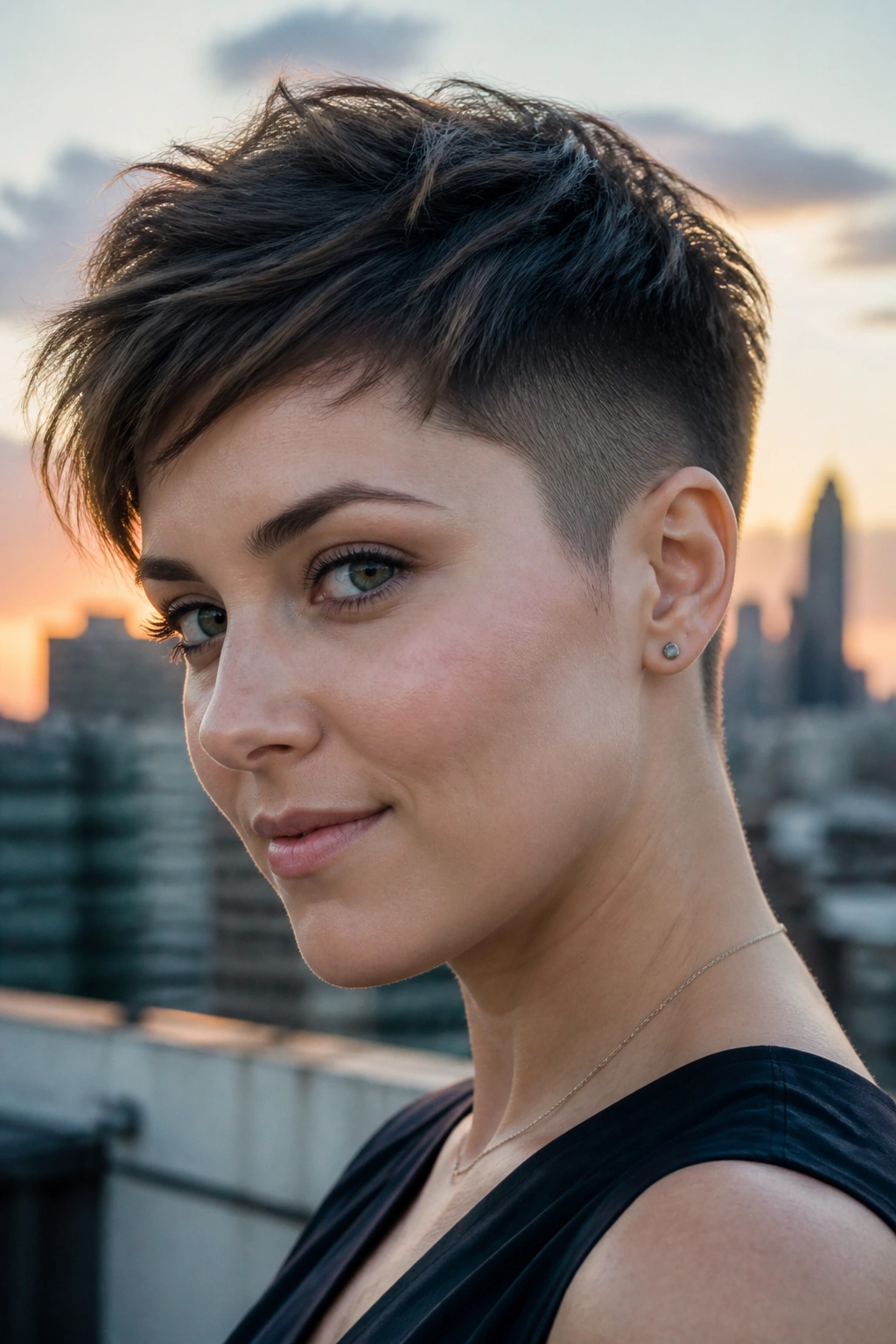
The tapered undercut pixie is not for everyone, and that’s exactly why it works so well on very thick hair. If your hair grows out wide at the sides and back, removing some of that mass underneath changes the whole profile. The top stays soft and feminine if that’s what you want, but the silhouette gets cleaner.
This cut is especially helpful if your hair is coarse or stubborn. A regular pixie can still feel bulky in the nape or behind the ears. An undercut gets rid of that issue at the root, which means the head shape looks slimmer and the top has room to sit properly. On a round face, that extra vertical space is gold.
The top length can be brushed forward, swept to one side, or left piecey and loose. I like it best when the fringe skims the brow and the sides stay tapered close. If you’re nervous about the undercut showing too much, ask for a soft taper rather than a sharp clipper line.
It does require upkeep. The undercut grows back fast, and thick hair is not shy about it. If you like a clean nape, though, this is one of the sharpest solutions on the list.
13. Rounded Bob with Face-Framing Pieces
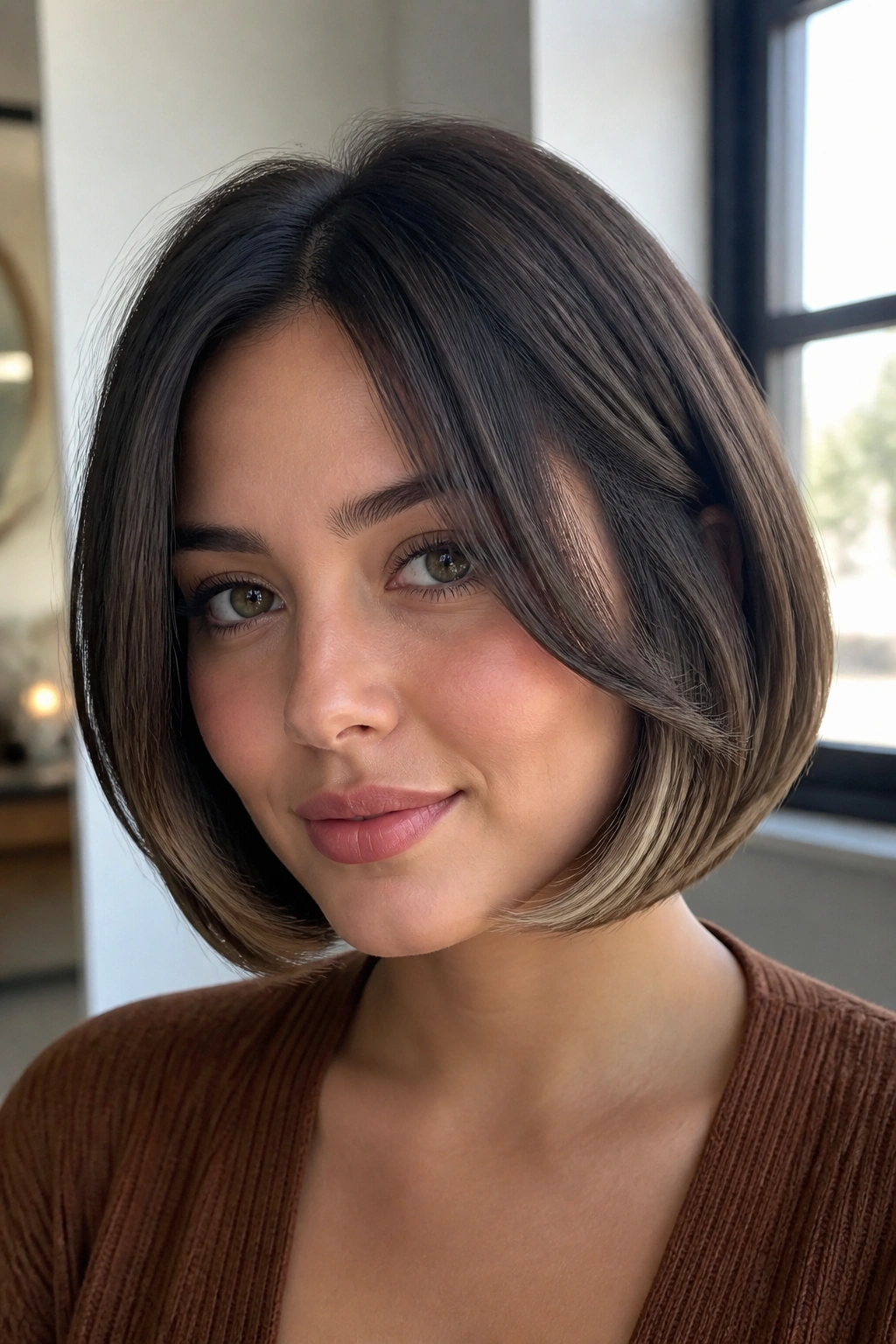
A rounded bob can look right on a round face when the line sits below the cheekbones. The mistake people make is assuming “rounded” means it has to mirror the face shape exactly. It doesn’t. The roundness here is in the overall curve of the cut, not in the width at the cheeks.
Face-framing pieces are what save it. If the front starts a little below the cheekbone and angles softly toward the jaw, the hair helps elongate the face instead of boxing it in. Thick hair does this shape well because it holds a smooth curve without collapsing into a flat shape.
The inside of the bob should still be lightened a bit so the curve doesn’t sit heavy. I’d avoid over-layering the surface, though. Too many short layers around the crown can make the top puff and destroy the clean line you want from the front.
A large round brush gives this cut its polish. A tiny bend at the front, tucked under just a little, is enough. It’s neat without feeling severe, which is a rare and useful thing.
14. Mini Lob for Round Faces
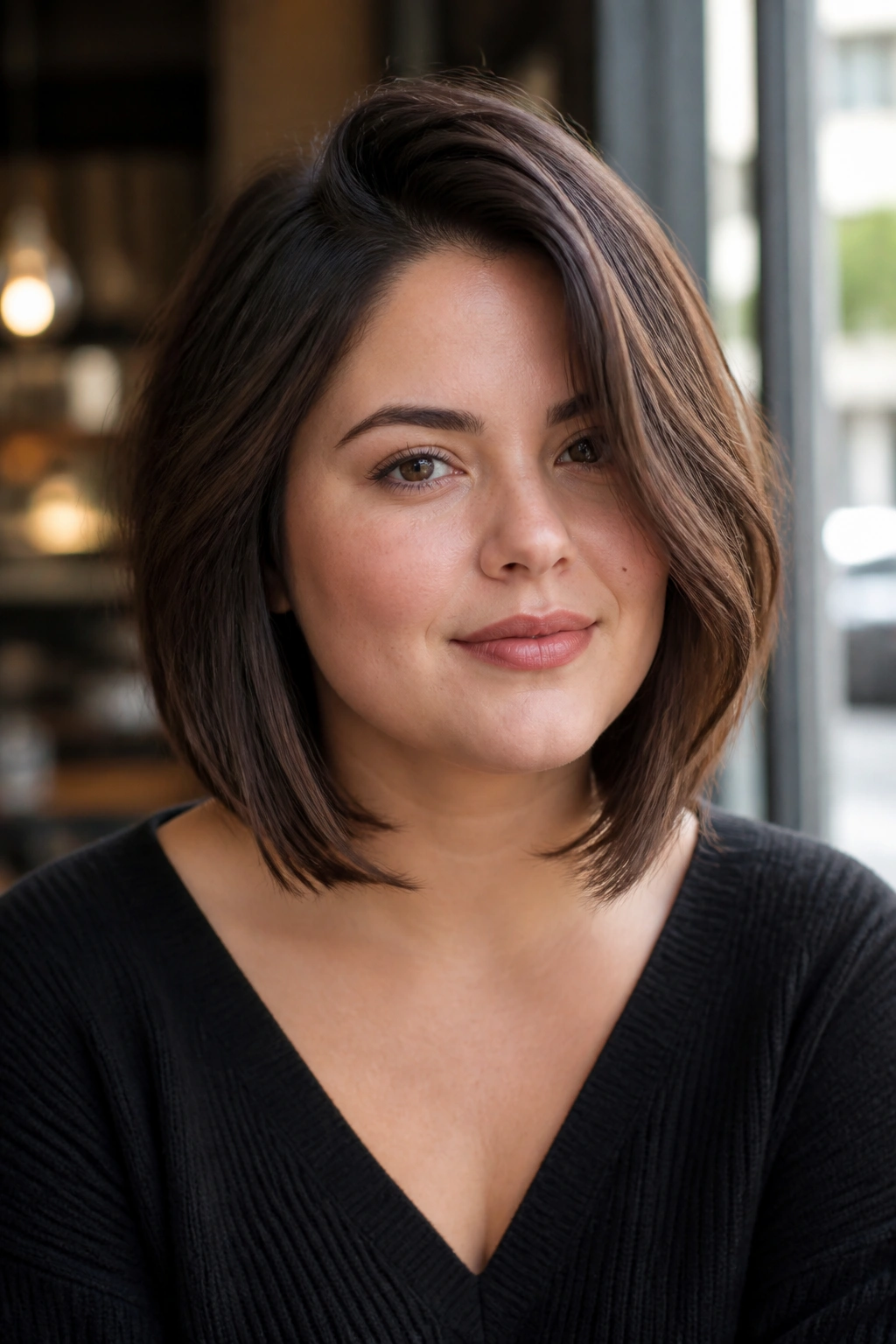
A mini lob is the safest short haircut on this list. It sits somewhere between a bob and a shoulder-length cut, which means you get the freshness of shorter hair without chopping everything off at the jaw. On a round face, that extra inch or two can make a huge difference.
Why the Extra Inch Matters
Length that sits near the collarbone keeps the face from feeling boxed in. Thick hair also behaves better when it has a bit more room to hang down. If you cut dense hair too short, it can spring outward and widen the face. A mini lob gives it weight without heaviness.
The front pieces should be just a touch longer than the back. That slight angle helps stretch the face visually. A deep side part can push the line even farther in the right direction. If you like to tuck one side behind the ear, this cut is easy to live with.
A mini lob also grows out in a graceful way. It does not hit that awkward in-between stage as fast as a chin-length bob. If you want short hair but you’re nervous about commitment, this is the one I’d point you toward first.
15. Sleek Side-Swept Pixie Bob
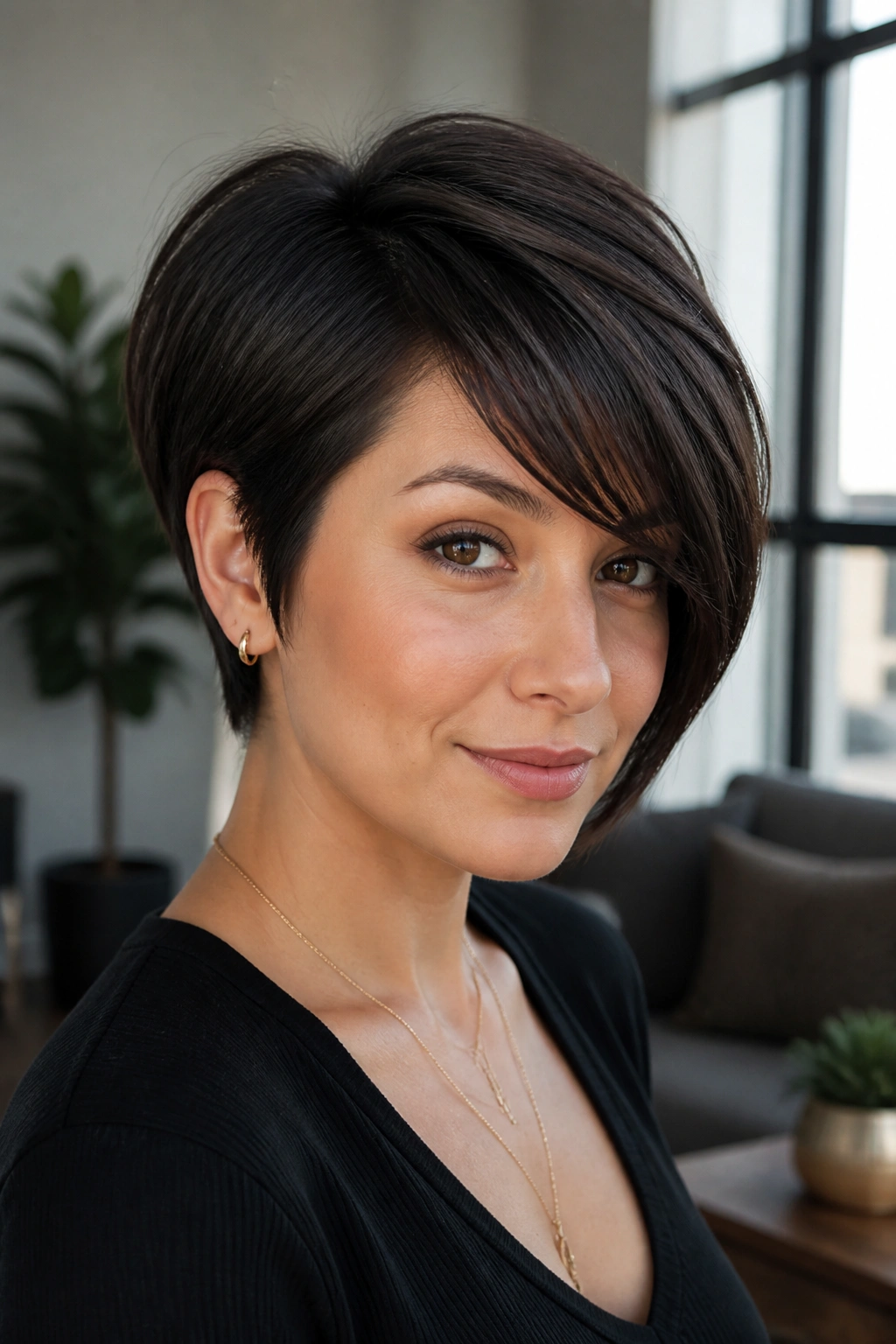
If you need hair that looks polished with minimal fuss, this hybrid cut earns its place. A pixie bob sits between the shortness of a pixie and the softness of a bob, with enough length at the front to sweep across the forehead and enough taper at the back to keep the shape neat.
The side-swept fringe matters a lot on a round face. It cuts across the width instead of mirroring it, which creates a more angled look. Thick hair helps here because the fringe has enough body to stay in place instead of floating apart. The cut looks best when the top has 4 to 5 inches of length and the nape stays close.
Five-Minute Styling
A light blow-dry cream or smoothing milk keeps the top from frizzing. Use a small flat brush to direct the fringe across the forehead, then tuck the shorter side behind the ear. A touch of flexible spray at the end keeps the shape movable.
- Keep the nape tight.
- Leave the front long enough to sweep.
- Blow-dry the fringe in the direction you want it to sit.
- Avoid heavy wax unless your hair is very coarse.
This is one of the few short cuts that can look neat without looking stiff. That’s a hard line to hit, and this cut hits it well.
16. Piecey Crop with Micro Fringe
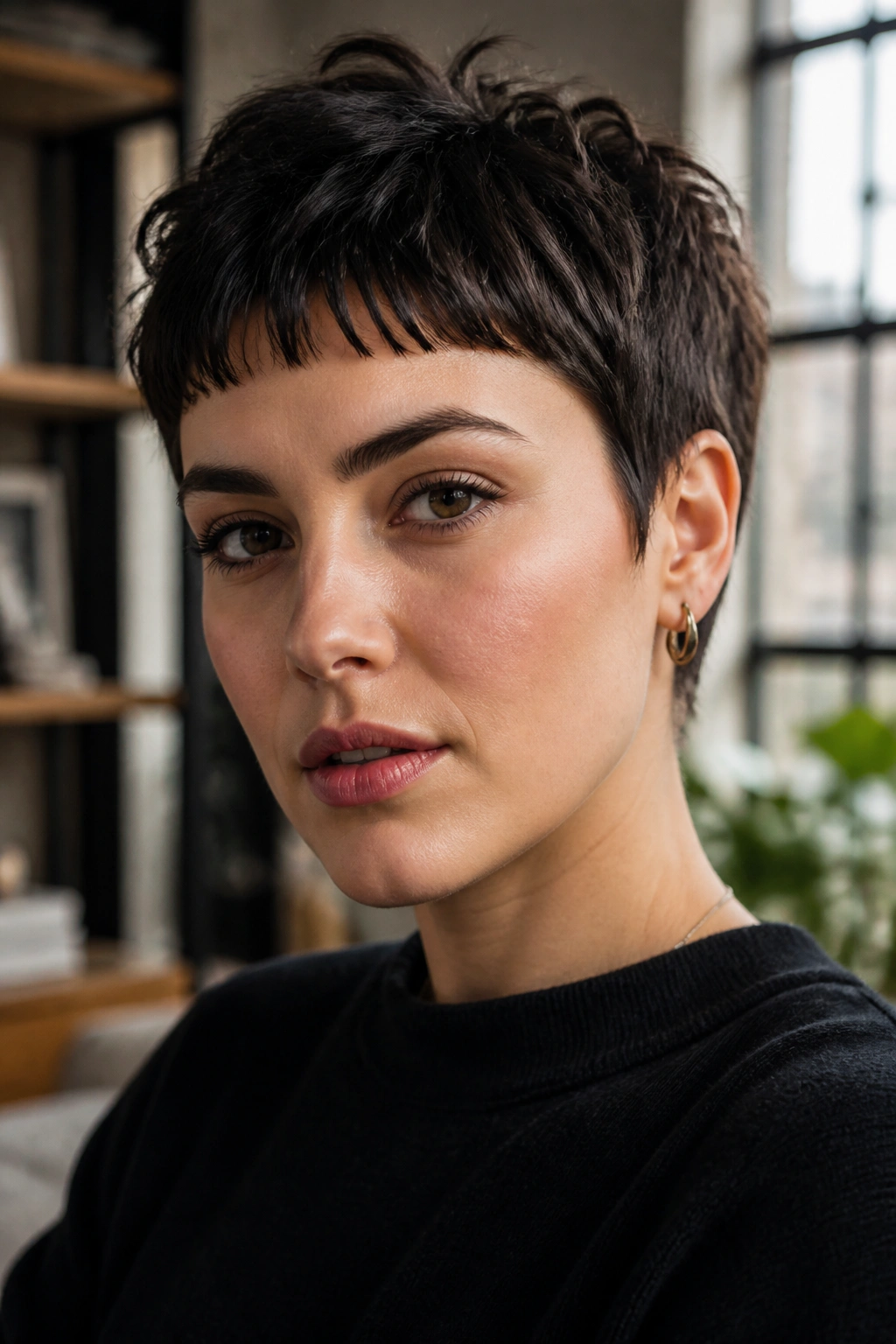
Micro bangs are a gamble, which is exactly why they can work. On a round face, a tiny fringe opens up the forehead and creates contrast, but only if the rest of the cut stays soft and piecey. Thick hair needs that texture, or the fringe starts to look like a shelf.
The crop around it should stay short, broken, and slightly irregular. That keeps the eye moving instead of stopping at one heavy line across the brow. The best version is almost mischievous. It has edge, but it still feels light enough to wear every day.
This cut is not the one I’d hand to someone who wants to hide a forehead. It is better for someone who likes a little attitude and does not mind trims every few weeks. Micro fringe grows fast, and on thick hair it can lose its shape fast too. That is the price of the look.
A small amount of texturizing spray at the crown helps the whole style breathe. Too much product makes the fringe stick up. Too little and it falls flat. There is a narrow middle ground, and once you find it, the cut gets much easier to live with.
17. Tousled Curly Bob

What if your hair already has shape? Then keep it and cut it smartly. A tousled curly bob can be one of the best short thick hairstyles for round faces because the curl pattern gives you volume where you want it and softness where you need it. The goal is not to flatten it. The goal is to stop it from turning into a triangle.
The length should usually sit below the jaw, not right at it. That keeps the curls from making the face look wider through the sides. A side part helps too, because it breaks the symmetry and gives the curls a little fall in one direction. When curls land evenly on both cheeks, the roundness is harder to ignore.
What Helps Most
A curl cream and a light gel combo can keep the shape from puffing out. Diffuse on low heat, then let the hair cool before you touch it. That cooling step matters more than most people think. If you shake it out too soon, the curls expand into a halo.
- Ask for layers that release weight, not a blunt perimeter.
- Keep the crown lifted so the face looks longer.
- Use a diffuser with low airflow.
- Scrunch only after the curls have formed.
This cut looks easy, and it should. The best curly bob does not look fought with.
18. Short Layered Lob with Soft Ends
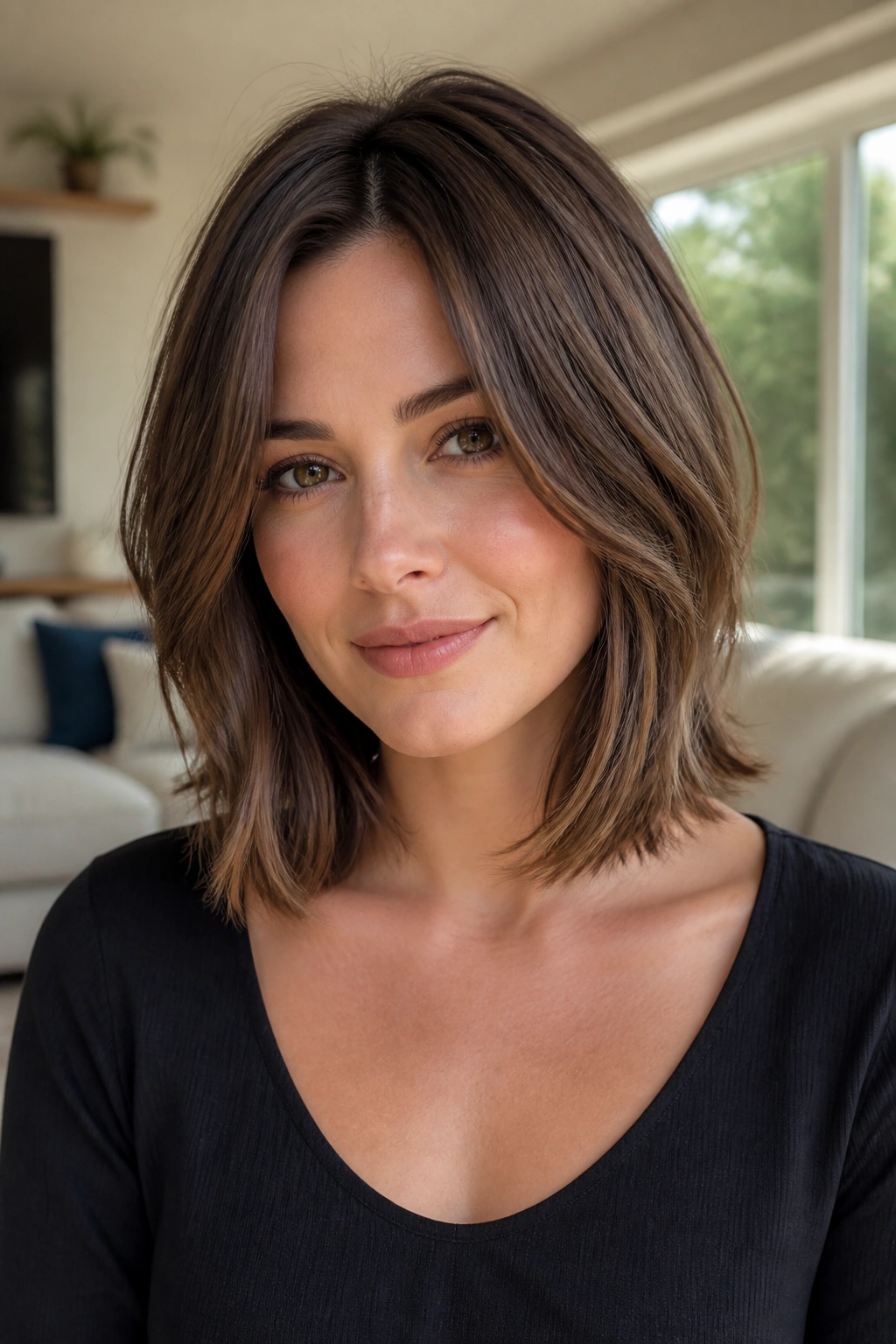
A short layered lob is what I hand people when they want to stay near short hair but not lose styling room. It sits around the collarbone or just above it, which gives thick hair enough length to move without sitting heavy at the jaw. On a round face, that extra length is the difference between “cute” and “crowding the face.”
Soft ends are the key. A hard, blunt lob on thick hair can feel boxy fast, especially if the hair is dense enough to stand out from the head. Light layering through the lower half keeps the perimeter from looking too full. The front pieces should be just long enough to graze the collarbone or brush the upper chest.
This cut is also easy to wear in different ways. Blow it smooth for a clean line, bend the ends with a flat iron for a little motion, or leave it air-dried with a cream if your texture leans wavy. It handles all three without losing its shape.
It grows out gracefully, which I like. Not every short cut does. If you want a style that gives you options — tuck it, clip it, wave it, smooth it — this one is probably the most forgiving of the bunch.
One Last Thing
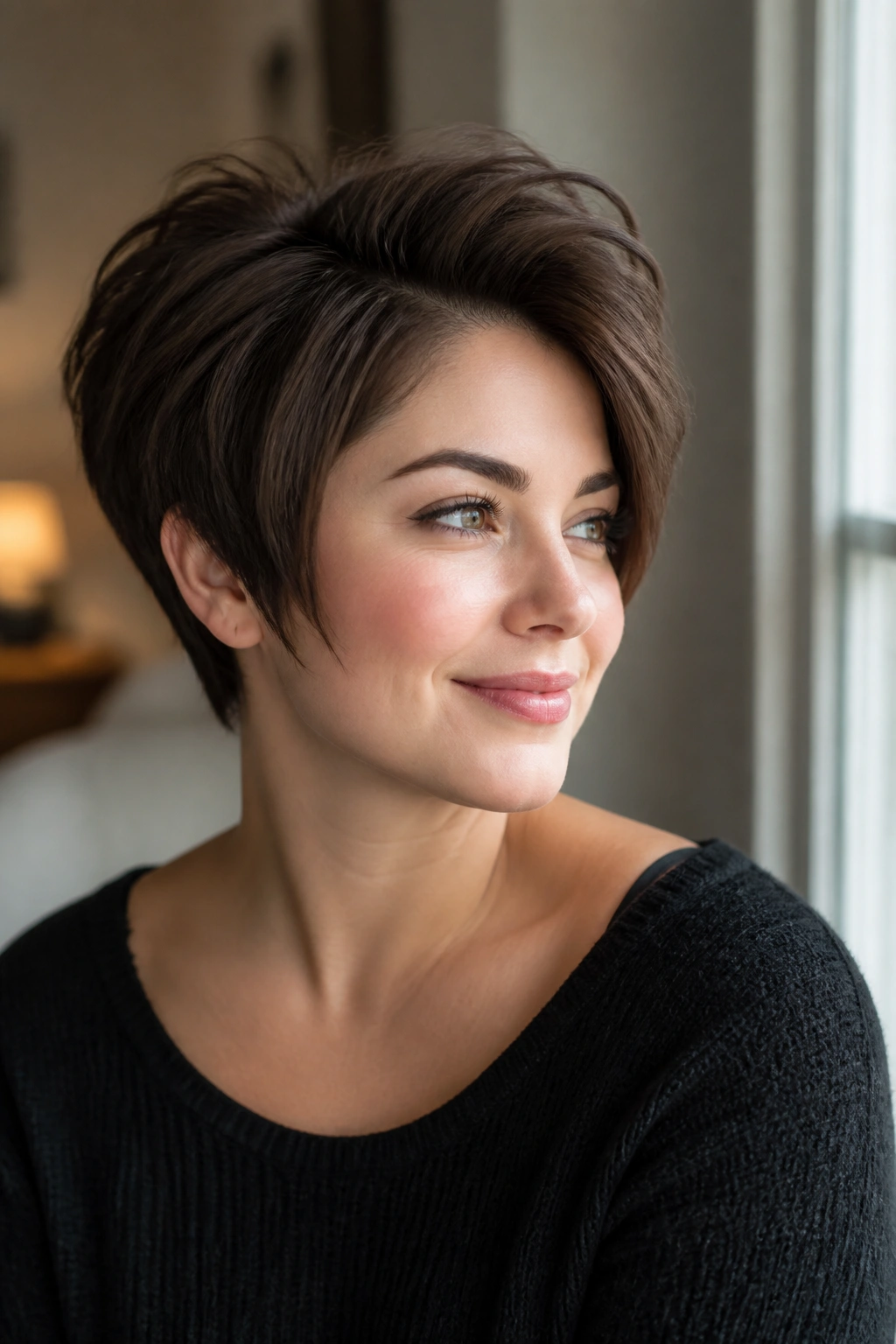
The prettiest short cut for a round face is rarely the one that hides everything. It’s the one that gives you a little height, a little angle, and enough movement so the hair doesn’t sit like a helmet. Thick hair can do that job well, but it needs direction.
Bring photos, yes, but bring specifics too. Say where you want the length to sit, ask how much bulk will come out of the sides, and make sure the front pieces are doing something on purpose. That conversation saves you from the most common bad haircut in this category: too much width at the cheeks, not enough shape everywhere else.
A good stylist can work with thick hair. A sharp one knows exactly where to take weight out and where to leave it alone. That first snip at the nape says a lot.
